Blog de Gridwise
¡Lee el blog de Gridwise para obtener consejos y sugerencias sobre cómo ganar más dinero mientras conduces para Lyft, Uber, DoorDash, GrubHub y más!

The Gridwise Job Board: Find Your Ideal Job or Gig Work
Gridwise is an essential assistant app created by gig workers for gig workers. Our mission is to support those engaged in gig work in every way possible. We understand how challenging it can be to deal with income instability, a lack of benefits, and job insecurity that often comes with gig work. The Gridwise app tracks and organizes earnings and expenses, and offers a wide array of discounts, deals, and services that make the lives of independent contractors easier and more rewarding.
We firmly believe it’s possible to make a viable living and create a gig experience that offers flexible hours, variety, and excitement. With issues such as consistent earnings and job security in mind, Gridwise is proud to offer a centralized platform that shows you how to find gig work and secure reliable opportunities. We’re proud to introduce the Gridwise Job Board.
[elementor-template id="20891"]
The Gridwise Job Board: Key features
Because Gridwise is dedicated to serving the gig worker community, we’ve filled the Gridwise Job Board with useful features that won’t waste your precious time.
- Comprehensive listings. Find part-time, full-time, temporary, and per-task work. Drive or deliver with your vehicle, utilize an employer’s vehicle, or even find non-driving gig work.
- User-friendly interface. Find the jobs that are right for you with a tap of your screen.
- Verified opportunities. We vet the jobs before they are listed to ensure you’re getting high-quality job postings.
How to get more gig work, seasonal, part-time or full-time jobs with the Gridwise Job Board
Looking specifically for “gig work apps” or “gig jobs near me?” You’re in luck. Our filters and search functions send you directly to the listings you seek.
Here’s how it works.
- Access the Job Board via the Gridwise website.
- Search for jobs by type, location, and more.
- Select the job that interests you, and read all about it.
- Scroll through the description, and if it appeals to you, click “Apply for job.”
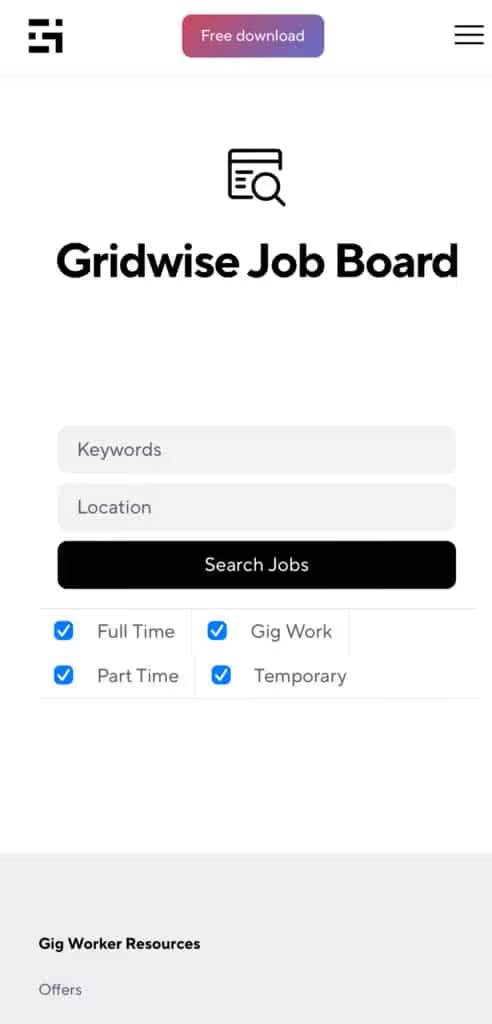
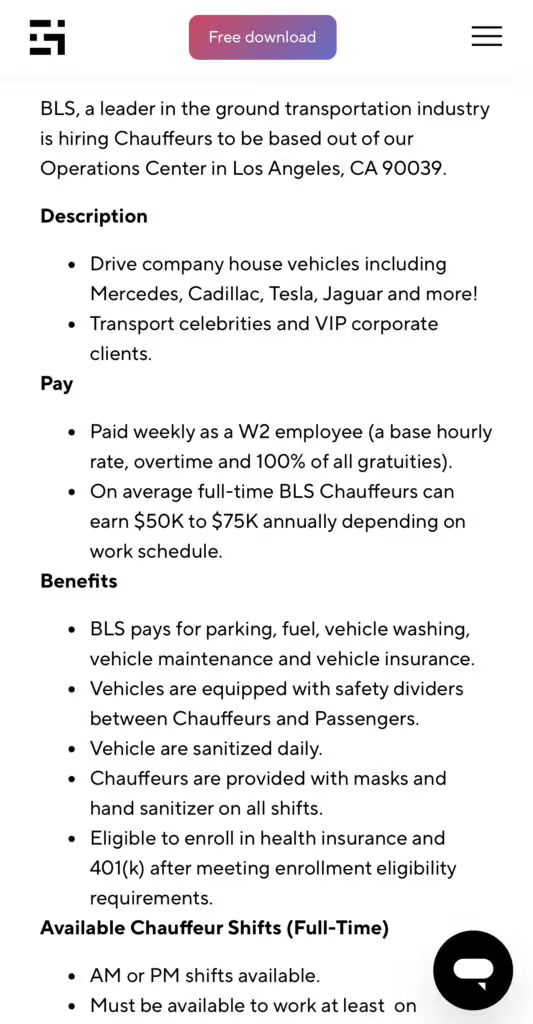
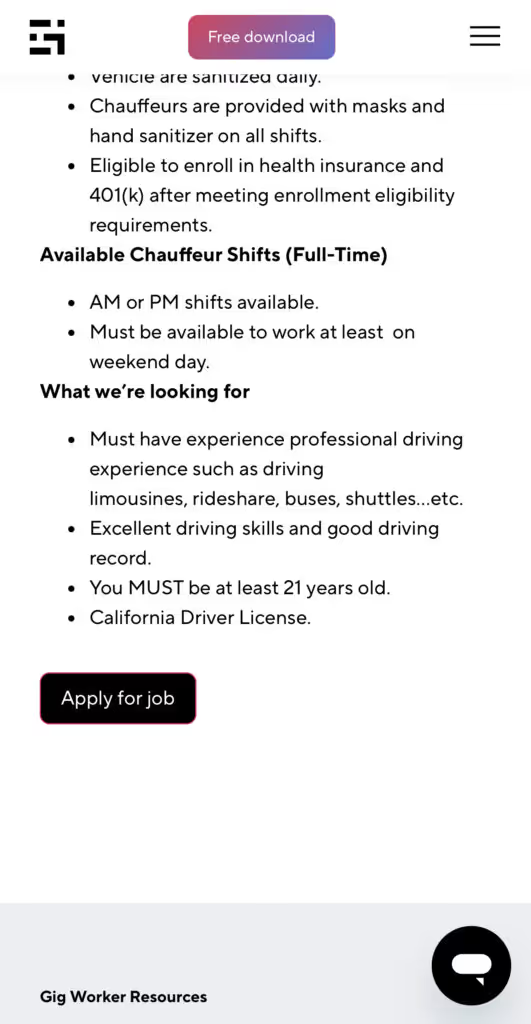
Many types of jobs are available. Adjust the search filter to see the full variety of opportunities that will let you cash in. Deliver food, set up catering, do rideshare driving, get paid for doing package delivery, and much more. You’ll find short-term gigs, long-term contracts, and part-time positions.
Perks of the Gridwise Job Board for gig workers
Gig workers who know how to make extra money will appreciate how the Gridwise Job Board lets you multiply your chances of bringing in big earnings. Here’s how:
- Increased stability. Use the Gridwise Job Board to find part-time or permanent jobs in addition to the part-time gigs you already have. Always keep a steady stream of earning opportunities flowing toward you.
- Flexibility and autonomy. Choose jobs that fit your schedule, work around other jobs and family duties, and still leave room for some fun in your life. Discover side hustles to supplement your full-time job, permanently or just for the season.
- Skill development. Find part-time work that lets you use a skill you already have, or try your hand at something new. It’s a smart way to develop a portfolio to showcase what you can do, or even to find permanent employment.
Get Gridwise and stay up to date on the Gridwise Job Board
Gig workers need plenty of information and assistance, and Gridwise is here to give it to you. Download the app and get essential features such as
- seamless earnings tracking
- mileage tracking
- expense recording, including notes
- low-cost and no-cost insurance benefits
- access to affordable medical, dental, vision, mental health, and alternative care
- professional services including legal and financial help
- deals and discounts
- weather, events, and traffic reports
- inside information on where and when to drive
[elementor-template id="20936"]
More to know about gig work:

5 Best Mileage Trackers For Gig Drivers
Many drivers ask, “Do I really need a mileage tracking app?” The answer is simple: only if you want to have an accurate count of all the miles you can legally deduct from your taxable income! You might think your rideshare or delivery driving app has got you covered. After all, they do quite a good job of logging the miles you drive while you’re on a trip or delivery. But, if you want to have the best app to track mileage for Uber, Lyft, Doordash, Instacart, or the other apps you may use, you need more. Why is that?
Without a separate tracker, you’re missing the miles you drive in between pings. Did you realize that all the miles you drive, from the moment you begin your shift until it’s over (as long as you don’t drive several miles on a break to hang with your friends), are tax deductible! That means you need something besides your driving app to keep an accurate count of your travels. Read this Gridwise post to see how important it is to keep track of every deductible mile.
You won’t be surprised to hear that there’s an app for tracking miles. In fact, there are several of them. Here, we’re going to tell you about five top mileage tracking apps, and help you figure out which one is best for you.
Before we get to the list and identify the best mileage tracker app, let’s clarify what exactly a mileage tracking app is. According to G2.com’s technology glossary, mileage tracking is done for the purpose of keeping a log of mileage that is either reimbursable or tax deductible.
And yes, of course you can track your miles simply by taking readings on your odometer. But are you really prepared to account for how many miles you drove for personal reasons and subtract them from the total to get your business mileage? Even if you can remember all that and do the arithmetic, if you want an accurate reading of the miles you drive for business, and can therefore deduct, a mileage tracking app will save you a lot of trouble and prevent you from making costly errors.
Plus, as a gig driver, you have specific needs when it comes to a mileage tracker. Ideally, you’d be able to handle mileage tracking and several other functions all in one app. It can be maddening enough to deal with driving apps, particularly if you’re an avid multi-apper. You would want your mileage tracker app to help you keep account of other aspects of your business, including income, expenses, and inside information about the art of gig driving.
Not all mileage apps are equal, to be sure! Let’s look at five of the best apps to track mileage and figure out which is the best app to track mileage with Uber and Lyft, or what mileage tracker app is best for DoorDash.
[elementor-template id="20891"]
1. Zoho Expense
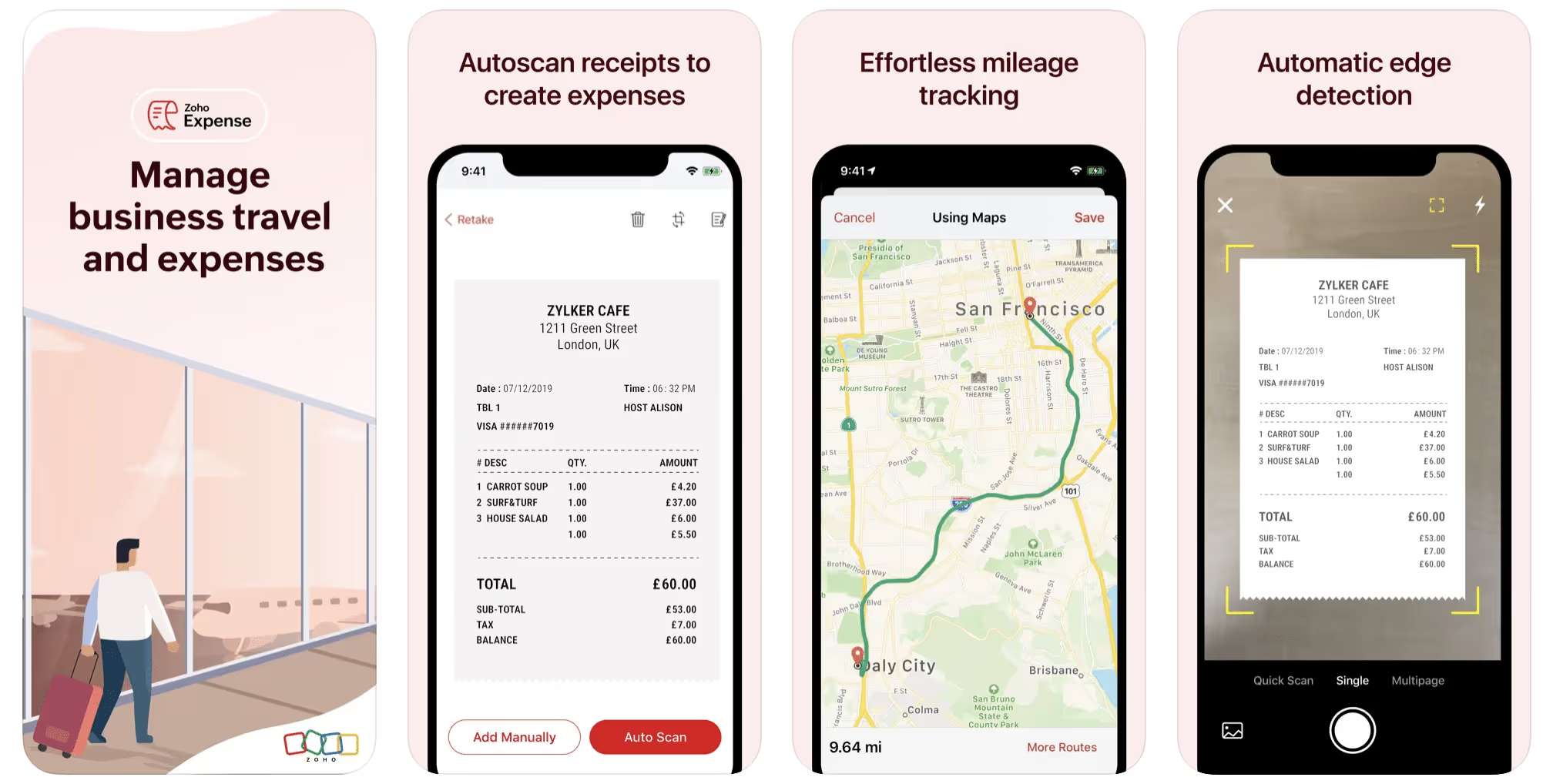
First up is Zoho Expense, which does exactly what its name says. This app is designed to allow companies to give employees a uniform way to create and submit expense reports. It can be used by individuals, including gig drivers, as well.
It includes a mileage tracker, as well as features that let you track other deductible expenses, including the ability to scan and record receipts.
Available on Android and Apple: Yes
Ratings: 4.8 stars on App Store, 4.7 stars on Google Play
Free Version: Yes
Subscription price: $3 per month, billed annually
Created specifically for gig drivers: No
2. Quickbooks Online
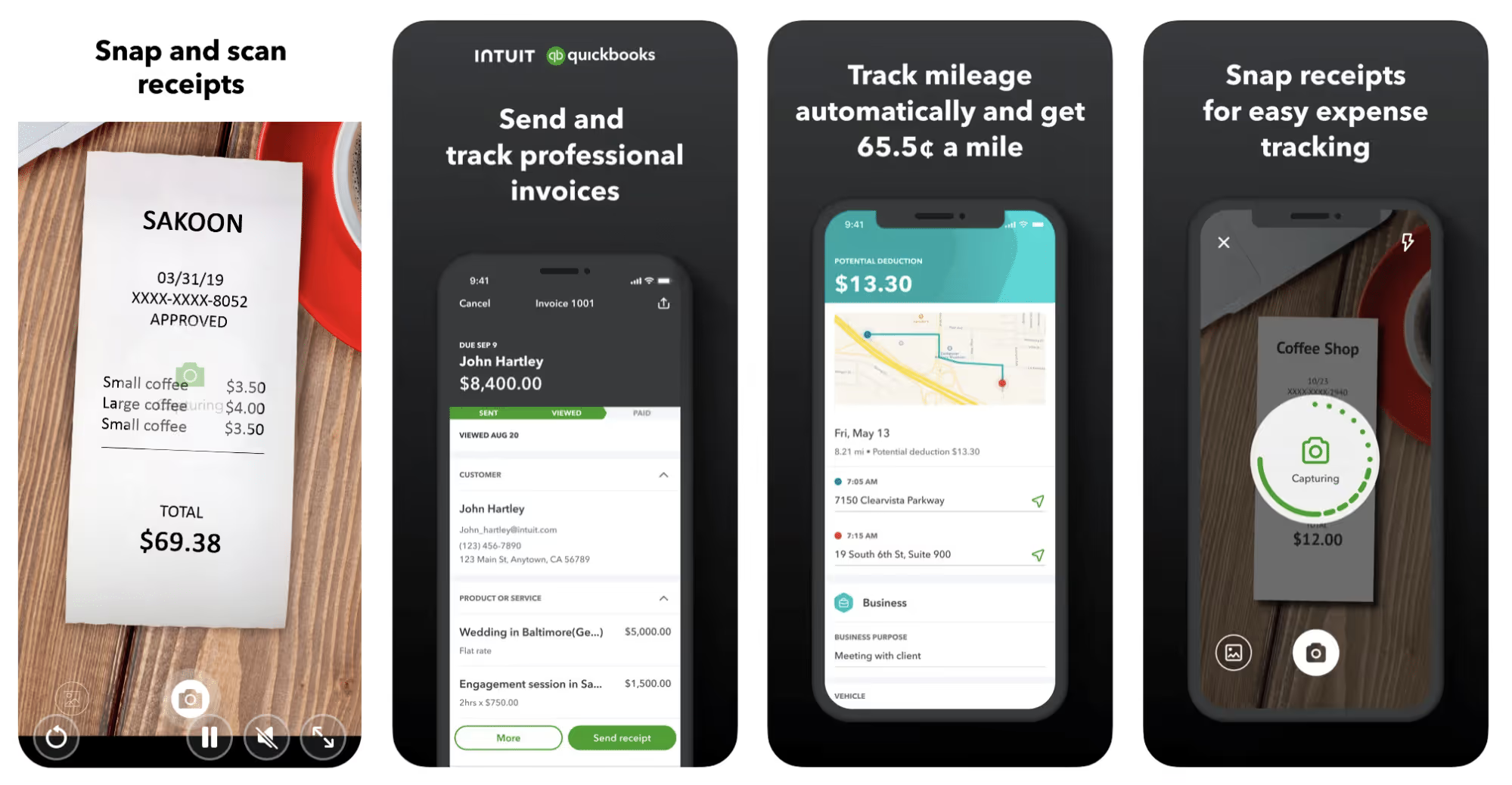
Quickbooks Online is a cloud-based app that allows you to track your mileage, earnings, and expenses. The information you enter can then be used to generate various reports that prepare you for tax time. It also allows you to create graphs that illustrate your cash flow, and includes a receipt scanner so you can instantly record deductible expenses. Quickbooks is popular, highly reliable, and designed mainly to help people keep track of their small businesses.
Available on Android and Apple: Yes
Ratings: 4.7 stars on App Store, 4.4 stars on Google Play
Free version: 30-day free trial
Subscription price: $15 per month for basic version if purchased for 3 months or more
Created specifically for gig drivers: No
Source: quickbooks.intuit.com
3. Shoeboxed
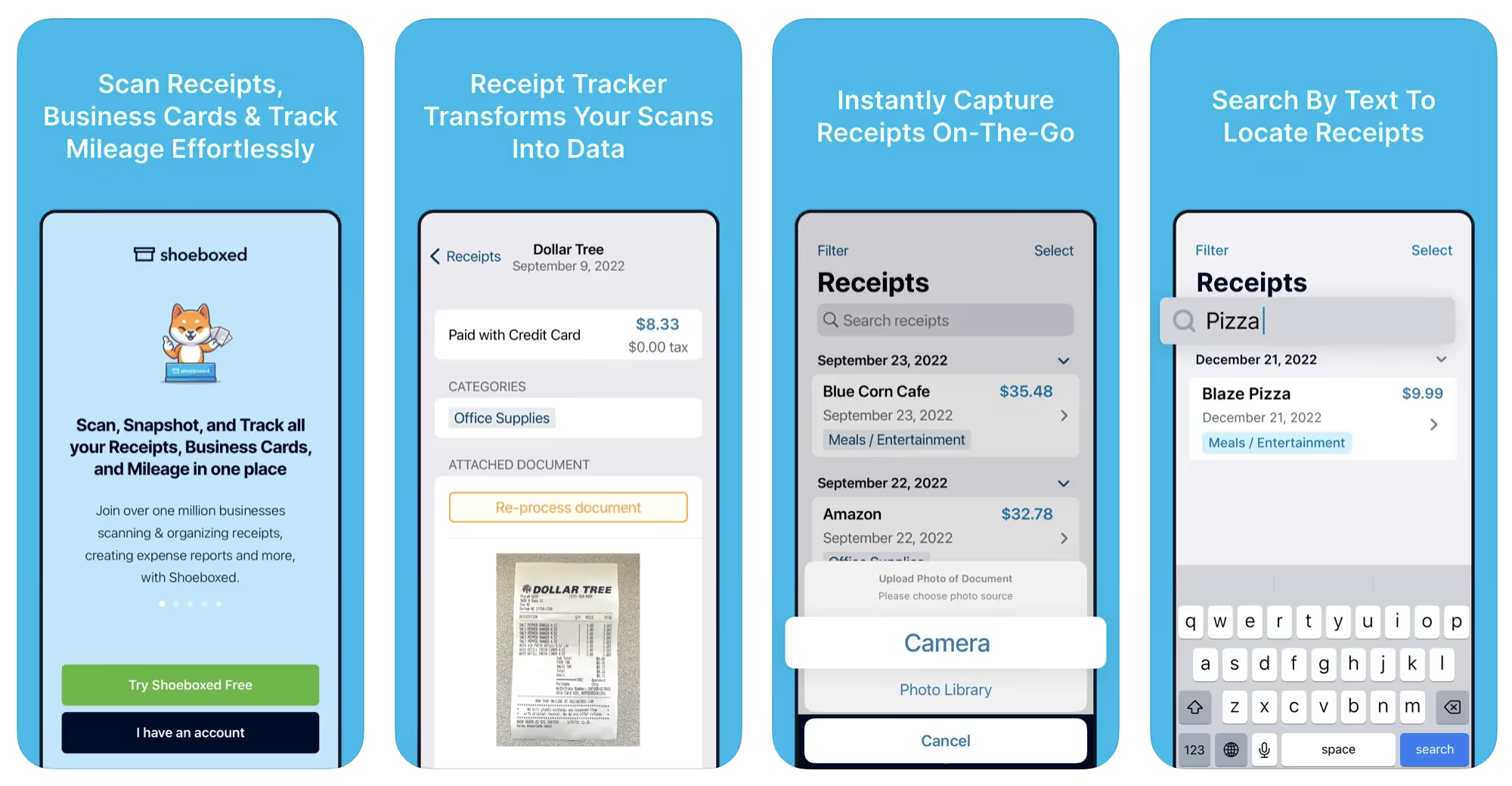
Shoeboxed started in 2007 as a service for scanning paper receipts into digital form. Now the app offers a free mileage tracker and has enabled users to scan receipts directly. It touts itself as the best mileage tracking app for DoorDash, but there are some elements missing that Dashers might like to have. While it provides features that record your expenses and prepare you for tax season, it doesn’t automatically track your earnings. The mileage tracker has a system where you can drop pins along your routes to make the tracking more precise, identifying those legs of a trip that you make for business purposes. The mileage tracker is “free” once you sign up for the basic version.
Available on Android and Apple: Yes
Ratings: 4.5 stars on App Store, 2.3 stars on Google Play
Free version: No
Subscription price: $18 per month for basic version
Created specifically for gig drivers: No
Source: blog.shoeboxed.com
4. Stride
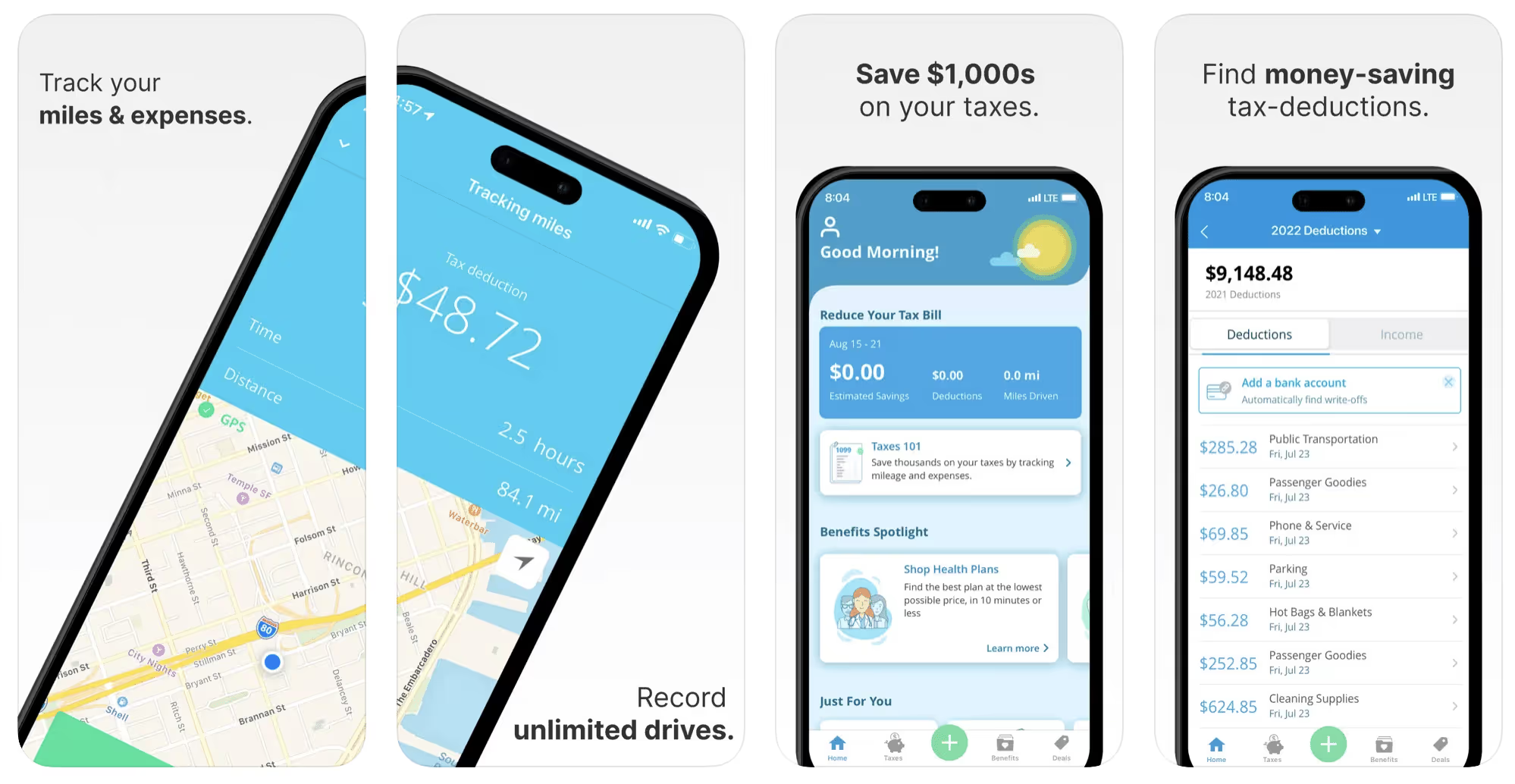
This free mileage tracker does a fair job of keeping track of the distances you rack up while gig driving, but it doesn’t automatically track earnings. It can be a big help, though, in tracking your expenses. You can link Stride to your bank account, and it will automatically scan your expenses to identify items you can potentially deduct. The app is totally free. This could make it the best free mileage tracker app, but there is a small price to pay. The app will persistently push you to consider various insurance plans that they are affiliated with. If you don’t mind that, this is a solid mileage tracker, even if it doesn’t track your earnings.
Available on Android and Apple: Yes
Ratings: 4.8 stars on App Store, 4.6 stars on Google Play
Free version: Yes
Subscription price: None. The app is free.
Created specifically for gig drivers: No
5. Gridwise
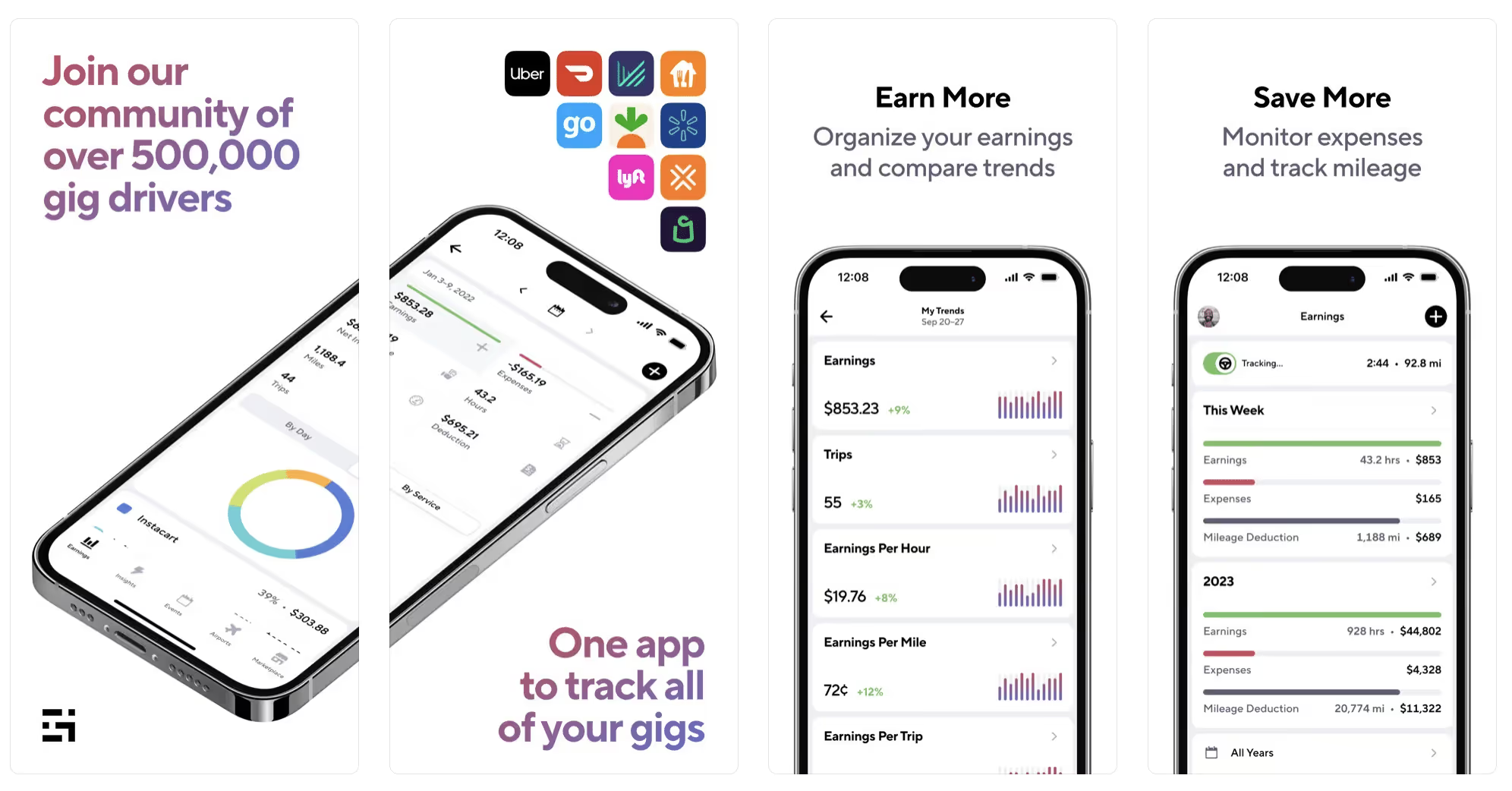
Gridwise has a free mileage tracker and free features that record your income and expenses. It gives you access to insurance and benefits, as well as insights about the best times and places to make the most money while gig driving. The Gridwise mileage tracker captures all the miles you drive while you’re on your driving shift, and it can be used if you have other trips you need to make which qualify as business travel.
Drivers love it because it is geared toward the needs of rideshare and delivery workers, providing free information about airport departures and arrivals, event start and let out times, weather, traffic, and more. The Gridwise Plus subscription adds value by providing additional insights and reports, discounts on benefits, the ability to export data in .csv format,, and more.
Available on Android and Apple: Yes
Ratings: 4.9 stars on App Store, 4.6 stars on Google Play
Free version: Yes
Subscription price: $9.95 per month for Gridwise Plus, or $95.99 per year (a $23.41 savings)
Created specifically for gig drivers: Yes!
What is the best mileage tracking app?
Now that we’ve checked them all out, we’re positive about the answer to that. Hands down, it’s Gridwise. Are we biased? You bet we are! But drivers love it too. Gridwise is the best mileage tracker app—and so much more. So many of the features are free, and the subscription to Gridwise Plus will pay for itself with additional insights to boost your earnings and deeper discounts on products and services.
Most important, Gridwise is designed specifically for gig drivers by experts who were once gig drivers themselves! Knowing what gig drivers need is a crucial step in creating an app that rideshare and delivery drivers can really use! Here are a few of the features, besides mileage tracking:
- seamless earnings tracking
- automatic, on/off toggle and manual mileage tracking
- mileage categorization
- airport, traffic, weather, and events information
- insights into where to drive and when to drive
- reports showing earnings across the platforms you use
- discounts on countless products and services for drivers
- additional resources for finding side gigs
- an informative and comprehensive blog
- affordable benefits, including insurance, medical, dental, and alternative practitioner discounts
- a community of drivers just like you
Don’t settle for just any app. Get the best mileage tracker, and so much more, from Gridwise!
[elementor-template id="21599"]

What Records Do Gig Drivers Need To Keep Track Of For Taxes?
* Gridwise does not provide tax, legal, or accounting advice. This material has been prepared for information purposes only, and is not intended to provide, and should not be relied on for tax, legal, or accounting advice. You should consult your own tax, legal, and accounting advisors before filing your return.
Record keeping? Who signed up for that? As a gig driver, it’s part of what you need to do to keep your business running. Don’t worry. It’s not as complicated as you might have been led to believe. This post will show you what you need to keep track of and the best ways to gather and preserve your tax-related records. We will cover
- How record keeping can help reduce income tax for freelancers
- Taxes and freelance work: Record keeping requirements
- Mileage tracking: Motives and methods
- More deductions and records to keep
- Make tax time easier
How record keeping can reduce income tax for freelancers
Tax time is not “fun time” for rideshare and delivery drivers. It’s easy to get used to watching your earnings pile up and come to believe they are all yours. Unfortunately, that isn’t the case. Gig work taxes can be especially painful because no one takes them out of your earnings for you, until the tax authorities insist that you do it for yourself.
You will need to show the tax authorities your income records, and they will gladly tell you to send them what they determine to be their fair share. Think that’s not fair? You’re not alone, but that doesn’t mean you’re going to get out of paying gig work taxes.
But you can find ways to pay the smallest amount that is legal and possible. The best way to defend yourself against having to pay astronomical amounts when you file your return is to know what expenses you can deduct from your gross income. When you subtract deductible expenses from your gross income, there is less left over to be taxed. This reduces the amount they can hit you with gig worker taxes. and can make your tax bill substantially lower.
While you want to keep good records so as to be in compliance with taxation entities such as the IRS, you also want to ensure you have proof of every last deductible expense you have accrued during the year. There are other records you must keep as well. Let’s look at some of the considerations you have, realizing that you now need to know how to do taxes as a freelancer.
Taxes and freelance work: Record keeping requirements
So many gig drivers fail to understand the responsibilities they have as independent contractors. Those who work part time for very few hours may even believe they don’t have to report the income they get from their driving gig payments. That would be a big mistake!
The company or companies you work for report your income to the IRS and state tax authorities. If you fail to report that income, you will risk some rather painful penalties. The IRS taxing side hustles is as much of a thing as the IRS taxing income from any other job. Your best bet is to report what you’ve earned, honestly and completely, and comply with other record keeping requirements such as
- gross income
- deductions and credits
- purchases (items you purchase and resell, such as snacks or bottled water)
- a log of all your mileage (or vehicle expenses, if greater)
- a list of all expenses and assets, such as utilities and other expenses associated with having a home office and equipment
- machinery and furniture you own, including when it was acquired, how much it cost, whether you previously took deductions on it, and selling price, if applicable (this includes your vehicle)
More things to consider:
- Pay attention to the retention of your records. You’ll need to keep all tax-return-related items— including income, deductions, and any tax credits reported— until the period of limitations runs out (3 years from date you filed, or 2 years from when you paid tax. If you have employees, keep your records for at least 4 years.)
- If you want to avoid paying self-employed taxes, you may want to set up a corporation or Limited Liability Corporation (LLC) for your business. This allows you to separate all your gig driving earnings from personal income, and permits you to take advantage of the additional advantages of working through a corporation. This includes exemption from self-employment taxes. You can learn more about how to pay self-employment taxes, if you opt for that, in this post from Keeper.
- You should always keep a separate checking account for your business, for convenience as well as clarity. While this is not a legal requirement, it is a smart move if you want to have an easier time managing your business.
- You are required, as an independent contractor, to file your taxes quarterly. Check out this Gridwise blog post for more information about quarterly tax payments and other matters that make filing delivery, Lyft and Uber taxes easier.
Mileage tracking: Motives and methods
Why you need to be meticulous about mileage
Mileage deduction, or the costs of operating your vehicle, will be the most important item to account for when you consider how to file taxes as a freelancer. While mileage is an important deduction for all independent contractors, as you might imagine, it’s even more essential for rideshare and delivery drivers.
There are two ways of keeping track of your mileage deduction. One is to use the IRS’ standard mileage deduction, which for 2022 is 58.5 cents per mile. This number takes into account the costs of operating your vehicle, from fuel and maintenance to registration, insurance, and depreciation. Alternatively, you can calculate all your own vehicle operating costs, but only after your first year of using the vehicle. You may discover that this second option allows you to have more money deducted from your taxable income. Learn more about the options for deducting your mileage in this Gridwise post.
No matter which way you decide to calculate the deductions for your mileage, you need to know what mileage you can and cannot deduct.
You can deduct
- miles driven to and from home when you go out to drive or deliver
- miles you accrue during your trips
- miles you drive on any other trips you make that are necessary as part of your business.
Examples:
- driving to return a lost cell phone or to an Uber Hub or another physical location where your company might make driver support available
- driving to pick up supplies, to get gas, or to have your car cleaned, serviced, or detailed, etc.
You cannot deduct
- miles you drive for personal trips
- miles for any trips you take that do not directly affect your business
Note: If imagining yourself becoming the not-so-proud owner of a shoebox filled with paper receipts gives you nightmares, stop worrying. Electronic records of purchases will satisfy reporting requirements. If you use cash, you can scan copies of your receipts, in some cases, right into your recording software or app. Gridwise and Keeper give you a simple to use interface that keeps all your receipts recorded without the messy pile of paper.
Mileage tracking methods
By now, you’re probably convinced that tracking mileage is important, despite all the other things drivers have to do. Now, let’s look at your options for keeping accurate records.
- Manual tracking: You can keep a logbook where you list every trip you make, starting and ending mileage, the date, and purpose of the trip. While this would work, it’s certainly not convenient. Besides, if that logbook gets lost, your plans for having a nice, fat tax deduction will go by the wayside.
- Spreadsheet: This is a bit more convenient and sophisticated way of tracking your business mileage. You’d need to be meticulous about making your entries, though. Even if you keep a spreadsheet app on your phone, it could be time consuming and inconvenient to keep doing it with all the other things going on in a rideshare or delivery driver’s day to day life.
- GPS-based mileage tracking apps: There are a bunch of apps that track mileage based on your GPS location, and most of them are pretty accurate and far more convenient than taking constant readings of your odometer. Your driving apps, such as Uber, Lyft, DoorDash, or Instacart, may also track your mileage, but be careful here. They will only track the miles you drive while you’re on a trip or delivery. They don’t count the miles you drive going to pick up a customer or when you make your move toward a restaurant or store.
Gridwise, on the other hand, will track all the miles you clock while you’re on your shift. All you need to do is make sure you start tracking the minute you leave home, and every gig driving mile will be logged. - OBD-II mileage tracking systems: There are plug-in modules that assess your vehicle’s mechanical health and track your miles. However, many authorities question the ability of OBD-II mileage tracking systems to get get accurate odometer readings. Insurance companies don’t consider them to be accurate enough gauges of odometer readings.
While mileage is a crucial deduction when you’re preparing your Uber, Lyft, or DoorDash taxes, it isn’t the only expense you’ll want to record.
More deductions and records to keep
Expenses you can deduct
You’re entitled to include the cost of other expenses that are directly related to your driving business. These include
- vehicle expenses
- equipment for your car and home office
- extra services and subscriptions
- business tools, including apps and software
You can learn much more about gig driver expenses that are eligible for deduction in this Gridwise article.
Ways to track and preserve deductible expenses
- The manual method: Just like you can with mileage, it’s possible to use a manual method, but in addition to logging each expense into a ledger, you would also need to keep physical receipts.
- Spreadsheets: You can record your expenses on a spreadsheet. This is somewhat less awkward than manually logging mileage, but there still will be plenty of room for failing to remember the case of water you bought for your customers, or losing the receipt from the thermal bag you purchased.
- Accounting software: You can use software that helps you track your expenses. This method usually interfaces well with any tax preparation software you or your tax professional might use.
- Gridwise: There are other apps that help you track your expenses, but Gridwise is designed specifically for gig drivers. It automatically tracks earnings and mileage, and lets you record your expenses the minute they come up. Gridwise’s partnership with Keeper gives you the ability to scan receipts and access a tax professional. This is a seamless way to record your expenses and a big help in learning how to file Uber taxes. Gridwise even provides .csv output, so you can feed your Gridwise data directly into tax preparation software. Check out what Gridwise and Keeper will do to super-charge your tax filing powers.
Organizing and categorizing expenses
Before you even begin to record expenses, you’ll want to set up categories for them. You can start by reviewing the categories listed above and checking out the Gridwise post that lists possible deductions.
If you’d like to learn more about how to categorize expenses, there is additional information available. This article from Motley Fool lists all possible categories any freelancer might use and also gives tips on how to customize them for your driving business.
One last tip
Using Gridwise, particularly for tracking mileage, is the easiest way to be in compliance with the IRS’ rules for deductible mileage. Gridwise tracks all the miles you drive for your gig, beyond what your company’s app might record. At the same time, you can log on and off Gridwise when you start and end your shift, so personal miles won’t be recorded. This eliminates confusion while capturing every deductible mile.
Gridwise Tax Help, a partnership with Keeper, has been created specifically to serve gig drivers. It provides affordable and easy ways to record expenses, scan receipts, and find deductions by analyzing your expenditures. Read about free resources from Keeper you can use to be fully prepared for tax season, and get all your earnings and expenses on the record.
Get the world’s best assistant for rideshare and delivery drivers, and tax help too.
Make tax time easier now!
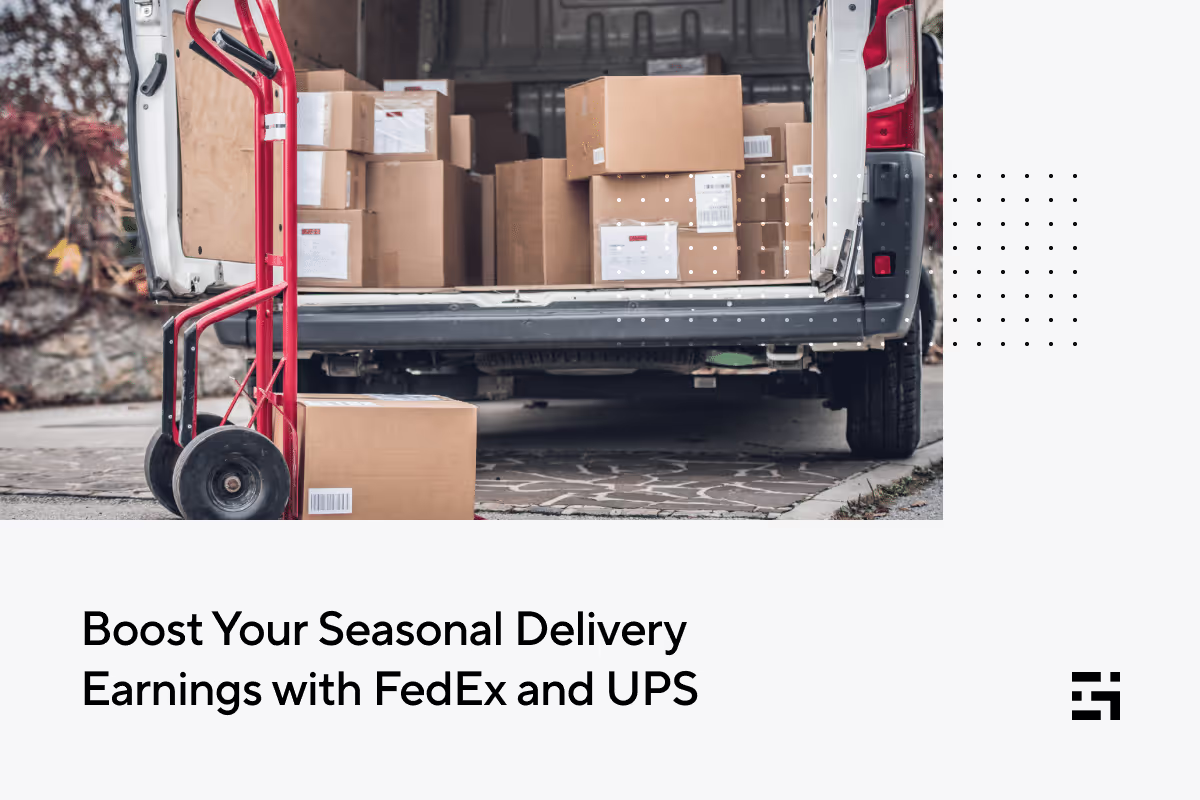
Boost Your Seasonal Delivery Earnings with FedEx and UPS
The holiday season isn’t just a time for giving—it’s also a time for earning, especially for gig workers. As delivery services like FedEx and UPS gear up for the seasonal rush, they offer a prime opportunity to earn more through temporary roles. These positions are perfect for rideshare and delivery drivers seeking to maximize their income during one of the busiest times of the year. Whether you’re looking to add another revenue stream or simply want to capitalize on the high demand, seasonal delivery work offers flexibility, competitive pay, and a chance to finish the year strong.
[elementor-template id="20891"]
Why Consider Seasonal Delivery Jobs?
Seasonal delivery jobs with FedEx and UPS stand out for several reasons. During the holiday months, these companies see a surge in package volumes, which means they’re eager to hire. Here's why it’s a great option for gig workers:
- Higher Pay Rates: Seasonal positions often pay above the standard rate for delivery jobs. Drivers and helpers can earn $20 to $25 per hour or more depending on location and experience.
- Job Flexibility: These roles cater to both part-time and full-time workers, allowing you to choose shifts that suit your lifestyle. Whether you’re free in the mornings, evenings, or weekends, there’s likely a shift that fits.
- Simple Requirements: Many roles only ask for a valid driver’s license and the ability to handle physical work. This makes it easy for new workers or those transitioning from other gigs to get started quickly.
- Steady Demand: Unlike rideshare or food delivery jobs that can experience lulls, delivery roles during the holidays are consistent. Companies guarantee shifts, so you’ll always have work.
Added Bonus: These jobs can provide valuable experience in logistics and supply chain management—skills that can open doors for future opportunities.
FedEx vs. UPS: What to Expect
When it comes to seasonal work, FedEx and UPS are the heavyweights. Both companies are reliable and offer great benefits, but they have some differences that might influence your choice.
FedEx
- Roles Available:
- Driver Helper: Assist delivery drivers with package drop-offs.
- Package Handler: Work in the warehouse loading and unloading trucks.
- Seasonal Driver: Deliver packages using FedEx vehicles.
- Pay Rates: Drivers can earn up to $25/hour. Helpers and handlers typically earn around $15-$20/hour.
- Physical Workload: Expect to walk and lift packages throughout your shift, which can be physically demanding.
- Best Fit For: Those who prefer a dynamic workday and are comfortable with a physical role.
UPS
- Roles Available:
- Seasonal Driver: Deliver packages independently.
- Package Handler: Sort packages in the warehouse.
- Driver Helper: Ride along with drivers to assist with deliveries.
- Pay Rates: Similar to FedEx, with bonuses often included for peak times.
- Unique Perks: UPS tends to offer more full-time seasonal roles, which might appeal to those looking for steady hours.
- Best Fit For: Workers who want long-term opportunities or the potential to convert into permanent positions.
Pro Tip: Both companies often reward workers with bonuses for completing the holiday season without absences or missed shifts.
Maximizing Earnings During the Holidays
While seasonal delivery work pays well, there are ways to boost your income even further. Here’s how:
- Choose Peak Shifts: Early mornings, evenings, and weekends are when demand (and pay) is highest.
- Stay Local: Deliver in areas you know well to save time and complete more deliveries per hour. Familiar routes can also reduce stress during busy shifts.
- Track Bonuses: Companies like UPS and FedEx frequently offer surge pay or bonuses for shifts during critical times, such as Christmas Eve. Sign up for alerts to grab these lucrative opportunities.
- Combine Jobs: If you’re already driving for platforms like Uber or DoorDash, consider alternating shifts. Use delivery work to fill gaps when rideshare demand slows.
- Use Efficiency Tools: Apps like Gridwise help you track mileage, optimize routes, and monitor your earnings across all your gigs. This keeps you organized and ensures you’re maximizing your time.
How Gridwise Can Help You Succeed
Seasonal delivery jobs can be fast-paced, and balancing them with other gigs or personal commitments can get tricky. That’s where Gridwise comes in:
- Optimize Your Schedule: Gridwise’s “When to Drive” feature helps you find the most profitable hours for delivery and rideshare work.
- Track Your Earnings: See exactly how much you’re earning from FedEx, UPS, and other platforms. This clarity is essential for identifying your most profitable gigs.
- Mileage Tracking: Seasonal delivery roles require a lot of driving. Gridwise logs your mileage automatically, making tax deductions easy and accurate.
- Expense Management: Beyond mileage, Gridwise lets you track fuel costs, maintenance expenses, and more, giving you a complete picture of your profitability.
Gridwise Plus Bonus: If you want advanced features like weather alerts and real-time market trends, consider upgrading to Gridwise Plus. It’s the ultimate tool for staying ahead of the game.
Gridwise: Your Ultimate Partner for Holiday Success and Year-Round Gig Optimization
The holiday season is a prime opportunity for gig workers to maximize their earnings, and seasonal delivery jobs with FedEx and UPS offer an excellent way to do just that. These positions provide competitive pay, flexible schedules, and steady demand, making them a top choice for gig drivers who want to capitalize on the busiest time of the year. But to truly unlock the full potential of seasonal work, the right tools and resources are essential.
The Gridwise App is the ultimate companion for gig workers. It’s more than just an earnings tracker—it’s a comprehensive tool designed to help you work smarter, not harder. With features like When to Drive, you can pinpoint the most profitable times to be on the road, while earnings tracking helps you keep tabs on income across multiple platforms, including FedEx, UPS, Uber, DoorDash, and more. Gridwise also streamlines expense management with automated mileage tracking, ensuring that you don’t miss out on critical tax deductions.
Additionally, the Gridwise Job Board is a powerful resource for finding new gig opportunities. From seasonal delivery positions to rideshare and food delivery roles, the job board connects you with companies actively hiring in your area. This makes it easy to diversify your income streams and find roles that align with your skills and availability.
By integrating Gridwise into your workflow, you’ll not only optimize your earnings during the holidays but also gain valuable insights to carry into the new year. Whether you’re planning your schedule, tracking your mileage, or searching for your next gig, Gridwise equips you with the tools you need to succeed in the competitive gig economy.
Get ahead this holiday season and beyond—download the Gridwise app and explore the Gridwise Job Board today. Your next big earning opportunity is just a click away!
[elementor-template id="20936"]
Already gig driving? Check out these resources:

eHealth: Simplificando el seguro de salud para trabajadores gig y conductores
Como trabajador independiente —ya seas un conductor de viajes compartidos, un profesional de entregas o un autónomo— el seguro médico puede sentirse como un rompecabezas que tienes que resolver solo. Como trabajador independiente normalmente no recibes beneficios de salud de tu empleador, por lo que debes averiguar que cobertura se ajusta tanto a tus necesidades como a tu presupuesto.
Ahí es donde entra eHealth. Con opciones de seguro médico individual, familiar y de Medicare, eHealth hace que encontrar cobertura acesible sea fácil. De hecho, podrías ahorrar hasta $2,760 al año, con algunos planes individuales y familiares que cuestan tan solo $0 por mes para las personas que califican para recibir subsidios, según un estudio de eHealth de 2024.
Así es como eHealth ayuda a trabajadores como tú a estar asegurados sin complicaciones.
Quién es eHealth?
eHealth es un mercado privado de seguros de salud diseñado para hacer que la compra de planes de salud sea rápida, segura y fácil. Cualquiera que sea el tipo de cobertura que necesites, su plataforma y equipo de agentes autorizados te guiarán en cada paso del camino.
Por Qué los Trabajadores Independientes Necesitan Seguro de Salud
Un seguro de salud no es sólo algo agradable de tener—es esencial. Desde chequeos de rutina hasta emergencias inesperadas, tu cobertura debe proteger tu salud y tus finanzas.
Lamentablemente, casi una cuarta parte de los trabajadores independientes pueden no tener seguro, lo que los expone a posibles grandes gastos.
Por esto es importante:
- Atención Preventiva: Las largas horas en carretera o en el campo pueden pasar factura. El cuidado rutinario te ayuda a mantenerte saludable y a captar problemas antes de tiempo.
- Protección Financiera: Una sola emergencia médica puede acabar con tus ingresos. El seguro podría protegerte de facturas devastadoras.
- Cobertura Familiar: Muchos trabajadores independientes son el sustento familiar principal. El seguro de salud ayuda a garantizar que sus necesidades estén cubiertas sin afectar tu bolsillo.
Con eHealth, puedes encontrar planes que cubren beneficios como salud mental, fisioterapia y medicina familiar—todos adaptados a tu situación particular.
Por Qué Elegir eHealth?
- Planes Acesibles: Encuentra planes desde $0 por mes para aquellos que califican para subsidios. eHealth podría ayudarte a ahorrar hasta $2,760 anualmente, basado en un estudio de eHealth de 2024..
- Beneficios Integrales: Busca planes que incluyan visitas al hospital, recetas médicas, servicios de salud mental, y más.
- Opciones Personalizadas: Filtra los planes para asegurarte de que tu médico de preferencia y tus recetas médicas estén cubiertos.
Inscripción Sencilla, Cero Complicaciones
la plataforma en línea de eHealth te permite comprar, comparar e inscribirte en planes desde la comodidad de tu teléfono u ordenador. Sin papel. Sin confusión. Una inscripción rápida y segura. Esto significa que puedes asegurar la cobertura antes de que el período de inscripción termine sin el problema de las aplicaciones tradicionales.
En la mayoría de los estados, necesitarás inscribirte en las siguientes fechas:
- 15 de diciembre de 2024 para coberturas a partir del 1 de enero de 2025.
- 15 de enero de 2025 para coberturas a partir del 1 de febrero de 2025.
Puedes comprobar la fecha límite específica de tu estado aquí.
Opciones para los Trabajadores Independientes Elegibles para Medicare
Si eres elegible para Médicare, eHealth te ofrece opciones como Medicare Advantage, Medicare Prescription Drug Plans (PDPs) y Medicare Supplement (Medigap). Sus agentes con licencia te ayudarán a conocer todo en detalle y encontrar el plan ideal para ti.
Obtener cobertura es fácil:
- Visita el sitio web de eHealth para explorar planes adaptados a tus necesidades.
- Compara opciones por costo, cobertura y beneficios como salud mental, recetas médicas o atención familiar.
- Inscríbete en línea o llama a los agentes de eHealth al 833-302-1395 TTY 711 para una guía individual.
¿Listo para asegurar un seguro de salud que funcione para tu estilo de vida como trabajador independiente? Comienza a comparar los planes con eHealth hoy!
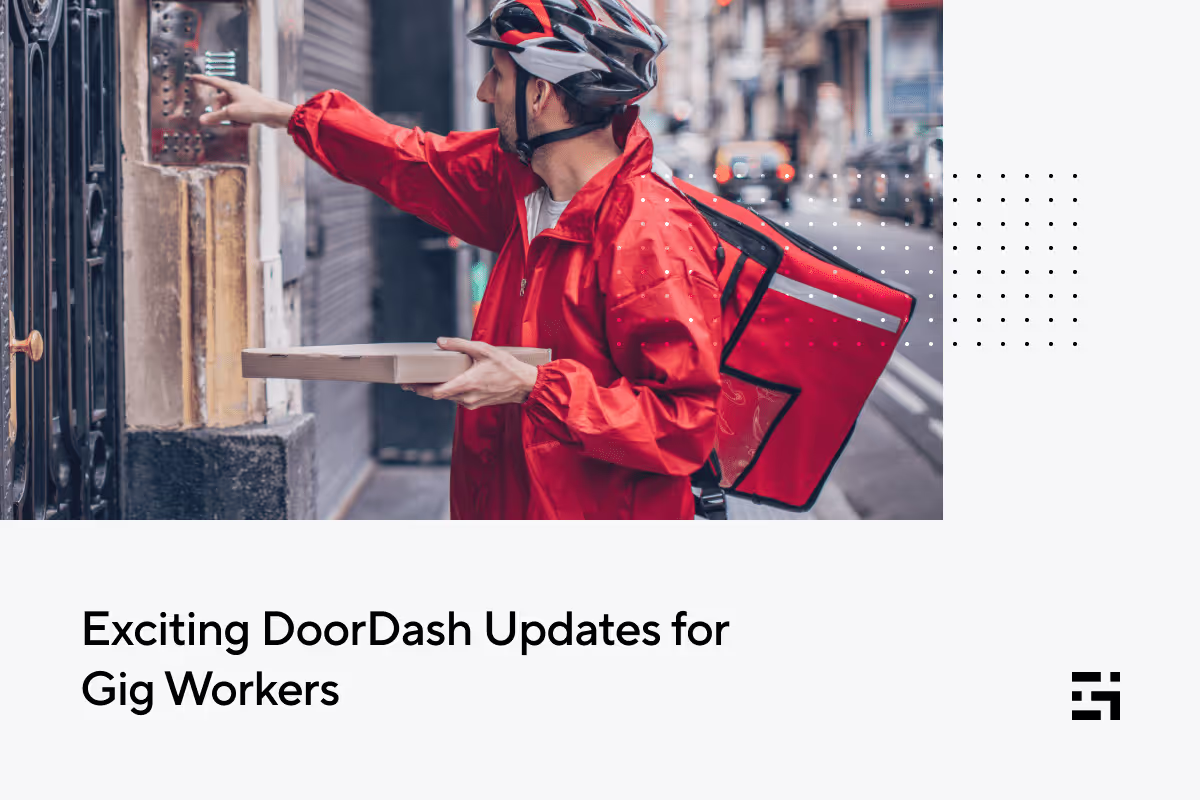
Emocionantes actualizaciones de DoorDash para trabajadores de gig
En el acelerado mundo de la entrega de alimentos, mantenerte en la vanguardia es tu entrada al éxito. Ya sea que trabajes a tiempo completo o a tiempo parcial, mantenerte al día con las actualizaciones de DoorDash transforma cómo trabajas, ganas dinero y permaneces seguro. DoorDash, líder en la economía del trabajo independiente, ha lanzado una serie de funciones revolucionarias que podrían redefinir la experiencia de los Dashers en todas partes. Desglosemos esto—porque no son sólo actualizaciones; son oportunidades para prosperar.
[elementor-template id="20891"]
Opción de Pago por Hora: La Estabilidad Conoce la Flexibilidad
Imagínate saber exactamente cuánto ganarás por hora, independientemente de cuántas entregas completes. La nueva opción de pago por hora de DoorDash estabiliza mercados selectos, gracias a las asociaciones con proveedores de entrega locales. Para estos roles, los Dashers son empleados como trabajadores W-2, lo que significa que reciben beneficios como seguro de salud, reembolso por millas, y salarios por hora garantizados (IBTimes, Business Insider).
- Dos Modelos de Pago, Un Objetivo: Puede elegir entre pago por hora (Gana por Tiempo) y pago por envío, elige la mejor opción para tu estilo de vida y metas.
- Tarifas de Pago Personalizadas: DoorDash garantiza un pago justo ajustando las tarifas por hora para reflejar las condiciones del mercado local.

Crédito de la imagen: Doordash
Por qué es Importante: Todos sabemos que el trabajo independiente a veces provoca festines a veces hambrunas. La opción de pago por hora ofrece tranquilidad durante horas más lentas manteniendo la flexibilidad que hace que el trabajo independiente sea tan atractivo. Es una victoria segura para los Dashers que valoran la consistencia.
La Seguridad es lo Primordial: DoorDash Te Respalda
Para muchos Dasher la seguridad no es sólo importante—es esencial. Ya sea que esté entregando en un nuevo vecindario o trabajando tarde en la noche, las nuevas características de seguridad de DoorDash tienen como objetivo proporcionarte una mayor seguridad en la carretera.
- SafeChat+: Anunciado en marzo de 2024, SafeChat+ funciona con AI. Esta función detecta y previene el acoso dentro de la aplicación, creando un entorno de comunicación más seguro entre tú y los clientes.
- Según el último artículo de ayuda de Doordash, tus calificaciones no se verán afectadas.

Crédito Gif: Doordash
Por qué es Importante: Funciones de seguridad como estas demuestran que DoorDash presta atención. Como trabajador independiente, mereces herramientas que protejan tu bienestar. Cuando te sientes seguro, puedes concentrarte en brindar un excelente servicio sin estresarte de más.
Aumenta Tus Ganancias: Formas Más Inteligentes de Ganar Más
Todos nos metimos en este juego para ganar más dinero, verdad? DoorDash te facilita maximizar tus ganancias y recompensas. De esta forma:
- Propinas Posteriores al Pago: Los clientes podrán darte propina hasta 30 días después de una entrega. Esto significa que tu excepcional servicio podría dar sus frutos semanas más tarde si vas un poco más allá.
- Programa de Recompensas para Dasher: Con niveles Plata, Oro y Platino, DoorDash premia a los Dashers que mantienen sólidas métricas como altas tasas de aceptación. Los beneficios incluyen prioridad para elegir horarios y descuentos exclusivos.
- Programa Crimson: Necesitas beneficios en gasolina? El Programa Crimson de DoorDash ofrece reembolsos en efectivo por gasolina y carga de vehículos eléctricos, lo que te permite tener más dinero en tu bolsillo, donde pertenece.
Por qué es Importante: Estas características recompensan el trabajo duro y la eficiencia, para que puedas trabajar de forma más inteligente. Además, a quién no le gustan los beneficios extra por hacer un gran trabajo?
Incremento de la Eficiencia: Haciendo las Órdenes de Compra Más Simples
Si hacer las compras es parte de tu rutina, apreciarás esto La nueva herramienta de importación de listas de compras de DoorDash ayuda a los clientes a agilizar sus pedidos. Mientras que esta característica está dirigida a los clientes, los Dashers también se beneficiarán de ella.
Por qué es Importante: Un proceso de compra más fluido significa menos problemas para ti durante las entregas y una demanda potencialmente mayor en las áreas suburbanas. Lo cual es una victoria para tus horarios y tu billetera.
Panorama General: Por Qué Estas Actualizaciones Son Significativas
Las últimas funciones de DoorDash aparecen en un momento crítico para los trabajadores independientes. Con cambios regulatorios, creciente competencia, y nuevas expectativas por partes de los trabajadores, la plataforma está trabajando duro para cumplir necesidades.
- Cambios Regulatorios: La clasificación de los trabajadores es un tema candente, y actualizaciones como la opción de pago por hora es la forma de DoorDash de adaptarse a la conversación (Biblioteca del Congreso).
- Retención de Conductores: Con otras plataformas compitiendo por conductores, estas actualizaciones ayudan a DoorDash a mantenerse por delante de la competencia y cuidar a sus conductores de entregas.
- Cumpliendo las Expectativas de los Trabajadores: Desde la remuneración garantizada hasta las herramientas de seguridad mejoradas, estos cambios reflejan la evolución en las necesidades de los trabajadores.
Por qué es Importante: DoorDash no solo está modificando funciones, sino que está sentando las bases para una mejor experiencia de trabajo independiente. Para ti, esto significa más control, seguridad y potencial de ganancias.
Que Puedes Hacer Hoy Para Maximizar Tu Éxito
No te limites a leer sobre estas actualizaciones—acciona! Así debes comenzar:
- Explora la Opción de Pago por Hora: ve si esta opción está disponible en tu área y pruébala durante periodos lentos.
- Utiliza Funciones de Seguridad: Familiarízate con SafeChat+ y anima a los clientes a encender las luces de sus porches.
- Potencia Tus Propinas: Brinda un servicio de primera calidad y comprueba tus propinas post-entrega para obtener sorpresas.
- Sube de Nivel de Recompensas : Apunta al estatus de Platino en el Programa de Recompensas de Dashers para desbloquear los mejores beneficios.
Los Dashers Inteligentes Utilizan Gridwise Para Que Cada Día Cuente
Las últimas actualizaciones de DoorDash son un paso hacia adelante para los trabajadores independientes porque ofrecen estabilidad, seguridad y oportunidades de ganar más. Pero para maximizar verdaderamente estas características y tu estrategia general de trabajo, necesitas tener las herramientas adecuadas a tu disposición. Ahí es donde entra Gridwise.
Con Gridwise, puedes hacer un seguimiento de tus ganancias, planificar los mejores momentos para conducir y obtener información sobre las horas de entrega más concurridas en tu área. Imagina combinar la nueva opción de pago por hora de DoorDash o las actualizaciones de propinas con las funciones basadas en datos de Gridwise para optimizar tu horario y tus ganancias. Además, Gridwise te ayuda a comparar el rendimiento entre múltiples aplicaciones de trabajo, para que puedas decidir si usar DoorDash u otra aplicación.
[elementor-template id="20949"]
La economía del trabajo independiente está cambiando, y no tienes por qué navegar esto solo. DoorDash está mejorando tu forma de trabajar y, con Gridwise, puedes llevar tu carrera profesional al siguiente nivel. Descarga la aplicación de Gridwise hoy y descubre todo el potencial de estas innovadoras actualizaciones!
[elementor-template id="20936"]

Cómo ganar $1,000 a la semana con Lyft
Con la estrategia correcta, incluyendo la información necesaria para tomar decisiones basadas en datos, podrás aprender a ganar $1000 a la semana con Lyft.
Comienza por utilizar información objetiva de una fuente en la que puedas confiar. No hay sesgos detrás de los números que verás aquí. Gridwise proporciona datos reales de conductores reales. Una vez que sepas lo que ganan los conductores en promedio, podrás formular una estrategia ganadora que te lleve al club de los $1000 semanales en poco tiempo.
[elementor-template id="20891"]
Cuáles son las ganancias promedio por hora en Lyft?
Oscilan entre los $20, pero el promedio de ganancias por hora de Lyft varía mucho. La ubicación es el factor más influyente al considerar cuánto hará un conductor por hora. $20 por hora es bajo para conductores en grandes centros urbanos y alto para aquellos que viven en zonas con tarifas poco elevadas.
Cuáles son las ganancias diarias promedio en Lyft?
En 2023 hubo una caída en las ganancias diarias, según los datos de Gridwise. Esto podría deberse a que los conductores no trabajan en Lyft a tiempo completo. Teniendo en cuenta que el salario medio por hora es de $20, un conductor podría ganar mucho más de $90 al día sin mucho esfuerzo extra.
El aumento del uso de múltiples aplicaciones, además de un incremento en la cantidad y los tipos de trabajos disponibles, podrían ser responsables de que la jornada promedio de conducción en Lyft sea más corta y menos lucrativa.
Cuánto son las ganancias semanales promedio en Lyft
En semanas flojas de ganancias, estas varían de $350 a $385, lo cual hace casi imposible llegar a ese objetivo de $1000 semanales. Es probable que los mismos factores que mantienen bajas las ganancias diarias, como la falta de consistencia en la conducción, también sea responsable de las bajas cifras que vemos aquí. Sin embargo, los conductores, perfectamente pueden mejorar esto con el enfoque correcto.
Ganancias mensuales promedio en Lyft
Las cifras mensuales también parecen desalentadoras a primera vista. Cuando los conductores no trabajan más que unas pocas horas al día, es fácil ver cómo surgen estas cifras de ingresos mensuales que oscilan entre $1,000 y $1,200, y que equivalen a $250-$300 por semana.
Cómo ganar $1000 por semana con Lyft - Plan de acción
Estrategia A: trabajar 50 horas a la semana para Lyft50 horas x $20 por hora = $1,000Estrategia B: trabajar 40 horas y añadir bonos, incentivos, y referidos40 horas x $20 por hora = $800 + $200 en incentivos y referidosEstrategia C: trabajar 35 horas en horas pico y usar múltiples aplicaciones 25 horas x $20* por hora = $500
10 horas a $25** por hora = $250
Múltiples aplicaciones entre horas pico = $250*basado en el promedio de ganancias por hora **basado en el uso de los mejores tiempos y lugares para conducir
Todas las tasas por hora, bonos, incentivos y referencias mostradas se basan en números promedios; variarán por ubicación, hora del día y los tipos de ofertas disponibles.
Estrategias Clave para Maximizar las Ganancias como un Conductor de Lyft
Si eres un conductor de Lyft que busca aumentar sus ingresos, estas estrategias pueden ayudarte a aprovechar al máximo tus horas de conducción. Desde centrarte en períodos de alta demanda hasta utilizar incentivos de bonificación, aquí te mostramos cómo aumentar tus ganancias de manera eficiente y cómo ganar $1000 a la semana con Lyft.
1. Conduce Durante Horas Pico
Conducir durante las horas pico es una de las maneras más sencillas de aumentar tus tarifas. Las horas de la mañana, la tarde y los fines de semana tienden a tener una mayor demanda, lo que a menudo resulta en mejores precios y más solicitudes de viajes.
- Horas de alta demanda a priorizar: Mañanas entre semana (7–10 a.m.), tardes de los días de semana (4–7 p.m.) y noches de Viernes/Sabado son normalmente las horas más concurridas.
- El apalancamiento del precio: Cuando la demanda es alta, Lyft implementa precios dinámicos, lo que significa que ganarás más por viaje. Utiliza esto a tu favor alineando tu agenda con estas horas pico.
- Consejo de herramientas: Usa la función "Cuándo Conducir" para obtener información en tiempo real de las horas pico de tu área, maximizando tu tiempo en el camino durante periodos de alta demanda.
2. Sé selectivo al Aceptar Viajes
No todos los viajes son igualmente rentables, por lo que es fundamental ser estratégico en cuáles aceptas. Concéntrate en viajes con un potencial de ganancias más alto basado en la distancia, el destino, y las propinas.
- Acepta viajes en función de la rentabilidad potencial.: Los viajes de larga distancia durante los períodos de tarifas altas pueden generar mayores ganancias, mientras que los viajes cortos en áreas concurridas pueden ofrecer buenas propinas.
- Evita las zonas de baja demanda: Si te encuentras con frecuencia en áreas con baja demanda o un historial de propinas deficiente, usa los datos de Gridwise para identificar estas locaciones y ajustar tus rutas.
- Maximiza las propinas: Acepta viajes en áreas de alto tráfico en las que es probable que los pasajeros den propinas, como centros urbanos o eventos.
3. Utiliza los bonos e incentivos de Lyft
Lyft ofrece regularmente bonificaciones a sus conductores, como Bonos de Ride Streak, Power Zones y promociones estacionales. Aprovechar estos incentivos puede aumentar significativamente tus ingresos semanales.
- Bonificación de Ride Streak: Completa un número específico de viajes consecutivos durante horas designadas para obtener ganancias adicionales.
- Power Zones: Conduce dentro de ciertas zonas para generar pagos adicionales por viaje. Por lo general, estas se encuentran en áreas de alta demanda o durante períodos de tiempo específicos.
- Seguimiento de bonificaciones estacionales: Lyft a menudo lanza promociones de bonificación durante las vacaciones o en grandes eventos, así que mantente actualizado para planificar tu horario alrededor de estos factores.
4. Maximiza los Viajes al Aeropuerto
Los aeropuertos son constantemente zonas de alta demanda con pasajeros que necesitan transporte de entrada y salida para tomar sus vuelos. Focalizarse en los viajes al aeropuerto, especialmente durante épocas de mucho movimiento aéreo, puede ser muy lucrativo.
- Optimiza el tiempo de espera: Lyft tiene un sistema de espera específico para recogidas en el aeropuerto. Asegúrate de estar en el área de espera designada para mantener tu lugar en la línea.
- Conoce las horas pico del aeropuerto: Utiliza los horarios de vuelo para planear alrededor de momentos de alto volumen, como temprano en la mañana y en la tarde-noche.
- Evita millas muertas: Si vas a llevar a alguien al aeropuerto, intenta programarlo de forma que estés posicionado para una recolección de vuelta, reduciendo los tiempos de inactividad y aumentando las ganancias.
5. Mejora la Experiencia del Cliente para Aumentar las Propinas
Proporcionar una experiencia memorable puede animar a los pasajeros a dar más propina. Desde un vehículo limpio hasta una actitud amistosa, un pequeño esfuerzo puede dar lugar a mejores calificaciones y mayores ganancias.
- Ofrece Comodidades: Pequeños detalles, como un cargador de teléfono o agua embotellada, pueden dejar una impresión positiva en los clientes y aumentar tus propinas.
- Enfoque en el cliente: Analiza si el pasajero quiere hablar o disfrutar de un viaje tranquilo y adáptate acorde a la situación.
- La limpieza es clave: Limpia regularmente el interior y exterior de tu vehículo para que los clientes se sientan cómodos y seguros.
6. Utiliza Lyft Eats cuando haya Baja Demanda
Cuando la demanda de los pasajeros es baja, puedes complementar tus ganancias entregando alimentos a través de Lyft Eats. Esto puede mantener tus ingresos fluyendo incluso durante horas más tranquilas.
- Rellena los huecos: Usa Lyft Eats para aprovechar al máximo las horas lentas donde hay menos solicitudes de pasajeros.
- Equilibra ambos servicios: Las solicitudes de entrega suelen ser más consistentes durante las horas de menor actividad para viajes compartidos, lo que las convierte en una fuente de ingresos alternativa ideal.
7. Rastrea los Gastos Deducibles de Impuestos
Mantener un seguimiento de tus gastos y millas te genera ahorros significativos durante la temporada de impuestos, ya que podrás reclamar deducciones que reducen tus ingresos sujetos a impuestos.
- Seguimiento de millas: Cada milla recorrida por trabajo puede ser una deducción, así que mantén un registro preciso. Gridwise puede rastrear esto automáticamente por ti.
- Guarda los recibos: Los gastos como combustible, mantenimiento y suministros para servicio al cliente (botellas de agua, cargadores) son deducibles.
- Utiliza Gridwise para simplificar el seguimiento: Registra y categoriza tus gastos fácilmente, esto te ayudará a organizarte para la temporada de impuestos y maximizar las deducciones.
Sigue tu progreso y mejora tu estrategia
Tu ventaja competitiva se fortalece cuando utilizas Gridwise para informarte y analizar tu actividad en Lyft. Porque Gridwise está diseñado por conductores paraconductores, esta increíble aplicación te da las funciones que necesitas para optimizar ganancias y gestionar todos tus trabajos.
Usa Gridwise para
- rastrear las ganancias en tiempo real y compararlas con otros conductores
- saber dónde y cuándo conducir para aprovechar al máximo las horas de trabajo en la ciudad, y ser consciente de la actividad del aeropuerto
- registrar todos tus gastos y estar listo para el momento de declarar impuestos
Decisiones basadas en datos + las herramientas correctas = $1000 por semana con Lyft
A estas alturas, probablemente no dudas de tu capacidad de ganar $1000 por semana con Lyft. El éxito está asegurado cuando utilizas el poder de las decisiones basadas en datos que puedes llevar al banco.
Pon los datos de Gridwise a trabajar con estas estrategias clave:
- Descubre las tarifas por hora reales para los conductores de tu área, y mira cómo se comparan las tuyas.
- Aumenta tus ganancias con información sobre dónde y cuándo conducir.
- Reduce las horas y aumenta tus propinas, incentivos y bonificaciones.
- Obtén toda la información que necesitas para conducir de forma eficaz, eficiente y rentable!
[elementor-template id="20936"]
Más formas de aumentar tus ganancias

Delivery Showdown: Can McDonald’s Recover Amid E. Coli Fallout?
2024 has been an interesting year for McDonald’s, the world’s leading fast-food chain. Despite its global dominance, McDonald’s is navigating a maze of challenges, from declining sales and intensifying competition to external crises that have shaken consumer confidence. For investors, financial analysts, and hedge funds, the fast-food giant’s recent struggles are more than just short-term hiccups; they reflect more profound questions about its ability to adapt to an increasingly competitive and digital-first delivery landscape.
This report takes a closer look at the dynamics shaping McDonald’s performance, from external shocks to strategic initiatives, offering a comprehensive analysis of the company’s position in the evolving fast-food delivery market.
[elementor-template id="20891"]
Unpacking the $150 Billion Global Delivery Boom: Opportunities for Investors
Fast-food delivery has undergone a seismic shift, transforming from a niche convenience into a core revenue stream for major players. For McDonald's, delivery now accounts for over 10% of sales in participating locations, with higher average transaction values than in-store purchases. According to Skift Table, the average McDonald's delivery check size is about 50% higher than the in-store check size. This shift reflects a broader trend: consumers prioritize convenience and digital accessibility in their dining choices, making delivery a critical battleground for fast-food giants.
It's It's All Goods Inc notes that 78% of consumers value convenience more now than before the pandemic, and the food delivery market is now worth more than $150 billion globally. This underscores the importance of digital ordering and delivery services for fast-food chains like McDonald's to remain competitive in the current market.
McDonald's Delivery Dilemma: Lessons in Crisis and Resilience
Declining Same-Store Sales
McDonald's same-store sales in 2024 paint a challenging picture. According to the CNBC, Global same-store sales declined by 1.5% in Q3, more than double Wall Street's expected drop of 0.6%. In the U.S., growth was a meager 0.3%, falling short of the 0.5% forecast. These figures could likely reflect weakening consumer demand for McDonald's offerings, and are raising concerns about its ability to sustain market share amid mounting competition.
The Role of Ecoli outbreak
In October 2024, a public health crisis rattled McDonald's when the Centers for Disease Control and Prevention (CDC) linked an E. coli outbreak to its locations. The fallout was immediate and severe, with foot traffic plummeting by 10% within three days. By the end of the month, 75 cases were reported, including one reported fatality.
The impact on delivery orders for McDonald’s may have been even greater. From the week of October 14 to the week of October 21, McDonald's experienced a sharp 13.6% drop in weekly delivery orders, McDonald’s experienced a sharp 13.6% drop in delivery orders. Competitors like Taco Bell (+5.3%) and Chick-fil-A (+4.7%) saw gains.
This incident highlighted the vulnerability of fast-food chains to food safety issues and the critical importance of robust crisis management strategies. While the impact of the health crisis may be short lived, it does underscore a broader issue of declining delivery sales for McDonald’s throughout all of 2024.
McDonald’s has struggled to keep consistent delivery volumes into Q4. Whether they show signs of recovery at the end of Q4 remains to be seen.
Other Factors Influencing McDonald’s Delivery Performance
1. Macroeconomic Challenges
Inflationary pressures and reduced discretionary spending have pushed consumers toward value-driven options. While McDonald’s value meals offer some relief, its profit margins seem to remain under strain, particularly in the competitive delivery segment according to Gridwise Analytics delivery analysis.
2. Shifting Consumer Behavior
The rise of deal-seeking behavior—where consumers actively compare options across platforms and restaurants to find the best value—has intensified the challenge of retaining loyal customers. In 2024, price sensitivity among consumers has grown due to inflation and economic pressures, prompting many to opt for competitors offering more attractive pricing or incentives.
McDonald’s has struggled to counter this trend effectively, mainly as rivals like Chick-fil-A, Taco Bell, and Burger King focus on delivering both value and convenience. The frequent switching of customers to competitors erodes McDonald’s delivery demand, underscoring the importance of implementing competitive pricing strategies and enhancing customer loyalty initiatives.
3. Intensifying Competition among QSRs
The competitive fast-food landscape in 2024 is fiercer than ever. Rivals such as Chick-fil-A and Taco Bell have aggressively expanded their delivery operations, leveraging operational efficiencies, superior customer service, and strategic promotions to attract new and existing customers. According to delivery data, these brands have maintained strong delivery performance and successfully captured a market share during McDonald’s periods of crisis.
Though less aggressive in its promotional strategies, Burger King has shown steady growth by focusing on incremental improvements in delivery services and maintaining a consistent value proposition. Popeyes has also made gains in the delivery space, benefiting from its strong brand equity and targeted marketing campaigns.
In this crowded market, McDonald’s faces a dual challenge: It must recover from recent setbacks and innovate to differentiate itself from competitors that have capitalized on operational excellence and customer-centric strategies.
Crisis to Opportunity: Strategic Takeaways from McDonald’s Delivery for Investors
McDonald’s 2024 performance underscores several key takeaways for investors. Leveraging data and insights, particularly from platforms like Gridwise Analytics, can provide a sharper lens into these challenges and opportunities:
- Delivery as a Growth Driver:
While delivery is a vital revenue stream, its success is consistent execution. Gridwise Analytics offers granular delivery performance data that can help investors track trends in consumer behavior, order frequency, and delivery efficiency. Investors can better evaluate McDonald’s ability to stabilize and grow its delivery channel by identifying patterns. - Operational Vulnerabilities:
External crises like the E. coli outbreak reveal gaps in operational resilience. Gridwise Analytics enables detailed analysis of market dynamics during such disruptions through its first-party gig mobility data. For example, tracking shifts in driver availability, delivery delays, and customer retention metrics could highlight areas where McDonald’s needs to strengthen its operations. - Competitive Pressures:
McDonald’s must counter competitors like Chick-fil-A, Taco Bell, and Burger King, which excel in delivery efficiency and customer loyalty. Gridwise Analytics’ benchmarking tools provide insights into competitor delivery volumes, consumer satisfaction scores, and market share trends, empowering investors to gauge McDonald’s standing against industry leaders. - Strategic Decision-Making:
Leveraging data-driven insights from Gridwise Analytics, investors can assess the impact of McDonald’s investments in technology, menu innovation, and delivery expansion. Metrics such as driver retention, geographic delivery growth, and order batching efficiency can offer a clearer picture of McDonald’s ROI on its strategic initiatives.
Leveraging Gridwise Analytics for Strategic Insights in Retail Delivery Performance
By utilizing Gridwise Analytics’ unparalleled access to comprehensive gig mobility data, investors can unlock critical insights into the delivery operations of major quick-service restaurants (QSRs) such as McDonald’s, Chick-fil-A, Taco Bell, and Burger King. The platform provides granular metrics such as delivery trip volumes, driver retention rates, geographic delivery growth, and customer behavior trends—offering a complete picture of QSR delivery performance and market dynamics.
1. Seize Market Opportunities with Consumer-Driven Insights
Gridwise Analytics equips investors with data on emerging consumer preferences, competitive positioning, and evolving delivery trends. By tracking shifts in customer behavior—such as increased demand for convenience or loyalty to brands offering superior service—investors can identify opportunities for QSRs to capture market share and stay ahead in a fast-paced delivery economy.
2. Strengthen Operational Performance to Overcome Vulnerabilities
Data on driver availability, delivery delays, and order batching efficiency allows investors to pinpoint weaknesses in QSR delivery networks. For instance, disruptions like ingredient shortages or rising operational costs can reveal vulnerabilities. Insights into how QSRs like Chick-fil-A maintain resilience during such challenges provide a roadmap for overcoming obstacles.
3. Identify Growth Potential in High-Impact Areas
Gridwise Analytics’ detailed metrics on market share and delivery efficiency enable investors to evaluate growth opportunities across the QSR sector. Identifying high-demand locations, improving delivery logistics, or deploying innovative solutions like AI-driven order management helps chains like Taco Bell and Burger King expand their operations and boost ROI.
4. Outpace Your Competitors with Targeted Benchmarking
Through Gridwise’s comparative analysis tools, investors can assess QSR delivery performance relative to competitors. For example, benchmarking Taco Bell’s promotional strategies against McDonald’s or analyzing Chick-fil-A’s customer retention rates reveals actionable insights to refine strategies and strengthen market positioning.
5. Turn Data into Winning Strategic Moves
With access to data from 400+ million trips and $4 billion in gig earnings tracked, Gridwise Analytics empowers investors to transform insights into actionable strategies. Evaluating the financial impact of delivery innovations or projecting returns on operational upgrades helps QSRs deliver measurable growth, efficiency, and profitability.
By leveraging Gridwise Analytics, investors gain a strategic advantage in understanding delivery performance across the QSR sector, ensuring that their investment decisions are backed by data-driven insights and market expertise.

Thanksgiving 2024: Craft a Personalized Strategy for Maximum Earnings
Thanksgiving week can be both a challenge and a significant opportunity for gig drivers. While earnings often fluctuate, a well-thought-out strategy can help you stay on top. In this guide, we’ll help you craft a personalized plan based on data trends and proven strategies to maximize earnings. And, of course, Gridwise will be your essential tool for success. Let's dive in and make your Thanksgiving week as profitable as possible.
[elementor-template id="20891"]
Why Thanksgiving Week is Different
Thanksgiving creates unique demand and earning patterns you won’t see any other time of the year. To give you a sense of what to expect, here’s a look at last year’s earnings across several platforms during Thanksgiving week:
- DoorDash drivers saw earnings drop to $208.82, the lowest for the season.
- Uber pay dropped from $506.48 to $450.22.
- Lyft earnings also decreased from $331.98 to $300.06.
However, the bounce-back the following week was impressive:
- Uber’s earnings jumped by nearly 20% to $539.65.
- DoorDash rose to $227.51, marking its highest in the observed period.
- Lyft earnings also increased to $317.16, up 5.7%.
This pattern—an initial dip followed by a strong recovery—is a powerful reminder that smart drivers can still make Thanksgiving week profitable with the right strategies.
Contextualizing the Fluctuations
It’s helpful to understand the reasons behind the Thanksgiving dip and subsequent rebound:
- Reduced Demand During Thanksgiving: Many people travel to be with family, potentially reducing the need for local rideshare and food delivery. Additionally, with more people cooking at home, food delivery orders may decrease during the holiday.
- Limited Business Operations: Some businesses close or reduce hours, which also limits opportunities for gig workers to provide services.
Following the holiday, the quick recovery can be explained by:
- Surge in Shopping: Black Friday and Cyber Monday spur shopping, which means increased demand for deliveries.
- Return Travel: As people return from holiday trips, rideshare demand tends to rise.
- Back to Routine: With the holiday behind them, more people resume their normal routines, often leading to an uptick in food delivery orders.
Understanding these trends can help you anticipate when and where demand will likely shift, allowing you to adjust your driving strategy accordingly.
Recognizing Local Variations and Individual Factors
It’s important to remember that your Thanksgiving driving experience will be influenced by several personal and regional factors:
- Location: Urban, suburban, and rural areas can have very different demand curves.
- Events: Local events, parades, or games can boost demand.
- Weather: Inclement weather may impact demand and safety.
- Platform Preferences: Popular platforms vary by region, so demand may differ.
- Personal Availability: Your earnings depend on when you’re available to drive.
- Competition: Higher driver saturation may affect competition.
Each of these factors can impact your strategy, so let’s look at how you can tailor your plan accordingly.
Platform-Specific Resilience
While rideshare platforms like Uber and Lyft saw earnings drop during Thanksgiving week, some platforms proved more resilient:
- Instacart: Instacart earnings held steady, even increasing slightly to $202.17 from $190.92, as people turned to grocery delivery ahead of Thanksgiving gatherings.
- Food Delivery Platforms: While Uber Eats and Grubhub saw dips, the decline was less severe compared to rideshare. This trend suggests that while rideshare demand might slow, food delivery can remain relatively steady during the holiday.
Knowing which platforms perform better during Thanksgiving week can help you make more informed choices about where to focus your efforts.
Building Your Thanksgiving Driving Strategy
1. Evaluate Platform Trends
Different platforms show varying patterns during Thanksgiving, so knowing where to focus is essential:
- Instacart remained steady, even seeing slight increases in earnings.
- Food delivery services like DoorDash and Uber Eats tended to be more stable compared to rideshare platforms like Uber and Lyft.
Gridwise Tip: Use the Earnings Tracker to compare past performance on different platforms during holiday periods and see which ones yielded the best returns for you.
2. Identify High-Demand Times and Places
While demand may dip, specific times and locations can still be very profitable. Here are some opportunities:
- Pre-Thanksgiving Airport Runs: Airports see a major spike on the Tuesday and Wednesday before Thanksgiving as people travel.
- Thanksgiving Day Deliveries: Many people order last-minute groceries or takeout, creating a potential spike for delivery drivers.
- Black Friday Demand: The day after Thanksgiving can bring strong demand for rides as shoppers hit stores early and frequently.
Gridwise Tip: Use When to Drive to pinpoint the busiest times in your area, and the Airport Demand Tracker to target profitable airport runs around peak travel hours.
3. Plan for Post-Thanksgiving Earnings Boost
While Thanksgiving week may require adaptability, the following week often sees a noticeable uptick in earnings as routines resume.
- Travelers return, normal work schedules kick back in, and demand for both rideshare and delivery services increases.
Gridwise Tip: Take advantage of the Event Tracking feature to keep up with local events that might drive post-holiday demand.
4. Adapt Your Strategy for Local Market Needs
National trends are helpful, but your local market is unique. By understanding these patterns, you can better capitalize on Thanksgiving’s ups and downs.
- Urban drivers might see high demand for short rides in the city, while suburban drivers might find more airport or long-distance opportunities.
- College towns could see quiet periods as students leave, but a busy return period when they’re back.
Gridwise Tip: Check Gridwise’s local area data to get a better understanding of what to expect based on past years in your specific location.
5. Find Your Balance: Earnings vs. Personal Time
Maximizing earnings is important, but it’s also crucial to weigh your time and well-being.
- Think about whether working on Thanksgiving Day fits into your family and holiday plans.
- Consider condensing your driving hours into high-demand windows to optimize earnings while maintaining time for yourself.
Gridwise Tip: Set personal income goals with the Earnings Tracker and monitor your progress to make sure you’re hitting your targets while also enjoying the holiday season.
Boost Your Earnings with Gridwise
Gridwise is your go-to partner for a profitable Thanksgiving-driving strategy. Here’s how to make the most of Gridwise’s tools:
- Earnings Tracker: See trends in your past holiday earnings to pinpoint peak opportunities.
- When to Drive: Access real-time insights on the best times to drive in your area, maximizing efficiency.
- Airport Demand Tracker: Use updated flight data to time airport trips and benefit from holiday travel surges.
- Event Tracking: Stay aware of local events that could lead to increased demand.
- Expense Tracker: Track your costs to keep expenses low and net earnings high.
Wrapping Up: Maximize Thanksgiving Opportunities with Smart Planning
Thanksgiving week may have its challenges, but with a clear strategy, it can still be a very profitable time for gig drivers. Using tools like Gridwise allows you to adapt to changing demand, recognize trends, and ultimately get the most out of every shift. Remember to stay flexible—real-time data and your insights will help you adjust as the week progresses.
This Thanksgiving, use Gridwise to navigate the holiday demand shifts with confidence and make this season a rewarding one for you and your goals.
Happy driving, and here’s to a profitable Thanksgiving week!
[elementor-template id="20936"]

Will Uber See a Q4 2024 Profit Surge? Here Are the Metrics to Watch
As Q4 2024 approaches, anticipation builds around Uber’s financial performance, particularly as the gig economy faces evolving regulatory, competitive, and demand-driven shifts. Investors and analysts closely monitor Uber’s ability to close the year profitably.
With data-driven insights, we can explore the underlying trends and assess what Uber’s year-end results might reveal about its strategy and resilience in a competitive landscape. This post will examine four critical metrics—Driver Base Pay, Driver Bonus Pay, Customer Charge, and Take Rate—to understand better the factors shaping Uber’s financial health and profitability potential as the year approaches.
[elementor-template id="20891"]
Driver Base Pay: Uber’s Commitment to Competitive Earnings
What is Driver Base pay?
Driver base pay represents Uber drivers' core earnings per trip, excluding bonuses and incentives.
Why Driver Base Pay Matters for Stability and Cost Management
While bonuses more directly impact driver acquisition during peak times, base pay adjustments may help shape Uber’s attractiveness as a consistent earning opportunity compared to other platforms. Tracking these trends may provide insights into how Uber adjusts its pay structure to balance driver attraction with operational efficiencies.
Changes in base pay could indicate responses to competitive or regulatory shifts, impacting driver retention and stability. Finance and investment firms can interpret this data to gauge Uber’s workforce stability and operational efficiency.
- Workforce Stability: Higher or rising base pay may indicate a response to competitive pressures or regulatory changes, affecting driver retention and overall workforce stability.
- Operational Costs: Trends in base pay offer clues about Uber’s cost management approach, particularly about maintaining driver availability without sacrificing profitability.
- Market Positioning: Consistent or increasing base pay can signal Uber’s positioning relative to competitors, highlighting whether it’s creating a more attractive earning potential for drivers.
The Impact of New Legislation: Adapting to a Shifting Gig Economy
With recent legislative changes across critical markets, Uber and other gig platforms face evolving requirements around driver classification and compensation that could influence pay structures. For example, California’s AB 5, implemented in January 2020, redefined gig worker classification criteria. More recently, in January 2024, New York State introduced the Gig Worker Transparency Law, requiring companies to disclose more detailed pay and fee information to gig workers.
In addition, Washington State’s Minimum Compensation Standard, which took effect in July 2023, established minimum per-trip pay rates for drivers. These regulations may shape Uber’s base pay adjustments as companies navigate compliance requirements while maintaining competitive market positioning. Monitoring how these legislative factors impact Uber’s base pay and operational costs in Q4 could provide insights into the company’s approach to balancing driver supply with emerging regulatory demands.
Base pay trends and what they could mean
Uber’s base pay trends for drivers, starting at $10.97 in February and peaking at $12.06 in October, offer insight into the company’s approach to stability in its workforce. Changes in base pay might reflect Uber’s response to market conditions or regulatory shifts, with potential implications for driver retention and cost efficiency.
Trends that could tell us where Uber is headed in Q4
As Q4 unfolds, monitoring driver base pay trends can offer insights into Uber’s longer-term strategies. A continued rise in base pay might suggest adjustments in Uber’s approach to stay competitive or respond to regulatory shifts, especially in regions with recent legislation impacting driver earnings. Alternatively, any stabilization or decrease in base pay could indicate a more balanced driver supply or effective management of operational costs. Observing these trends in Q4 could help reveal how Uber balances driver acquisition costs with overall profitability goals.
Driver Bonus Pay: The Pulse of Peak Demand
What is Driver Bonus pay?
Driver bonus pay represents the incentive Uber offers drivers to meet peak demand during busy periods in certain areas. Driver bonus pay is a tool Uber and other gig worker platforms use to balance short-term supply and demand, particularly in peak periods.
Why Bonus Pay can speak volumes about demand
Variations in driver bonus pay may offer insight into Uber’s strategies for managing peak demand and supply. An increase might suggest efforts to manage peak demand or respond to competitive pressures, whereas a decrease could reflect a stabilization in supply-demand dynamics.
Studying these fluctuations helps uncover how Uber might be adapting to market needs. On the other hand, an increase in paid bonuses in an area is also a healthy indication that Uber is varying their supply effectively. This can lead to higher customer satisfaction and future customer loyalty for Uber.
For finance professionals, bonus pay trends can reveal insights into demand patterns and competitive dynamics.
- Demand Fluctuations: An increase in bonus pay often reflects heightened demand in certain areas or times, such as holidays or events, and may indicate future revenue potential.
- Competitive Pressures: Higher bonuses can imply intense competition for drivers, revealing how Uber adapts to maintain adequate driver availability.
- Cost Efficiency: A decrease in bonus pay could suggest that Uber has stabilized its driver supply, leading to lower operational costs and potentially higher margins.
What are the trends that Driver Bonus pay reveals?
In 2024, Uber's bonus pay amounts showed significant fluctuations. Starting at $2.62 in January, the bonus pay peaked at $4.15 in July before dropping to $1.99 in August. It stabilized around $2.43 by October, reflecting a 22% increase from the August low. This volatility may reflect Uber's strategic adjustments to driver incentives in response to market conditions and supply dynamics.
What are the trends that Driver Bonus Frequency reveals?
The frequency of bonuses also varied throughout 2024. Beginning at 25.8% in January, it rose to 31.3% in February, then dropped to 11.9% in July. By October, the frequency increased to 34.0%, a 186% recovery from the July low. This trend suggests Uber's efforts to balance driver engagement and cost management, possibly in response to seasonal demand changes.
Bonus Trends: Is Uber Ready for the Q4 Rush?
As we approach the holiday season, demand will likely surge, potentially impacting driver availability. Monitoring bonus pay trends in Q4 will help assess how Uber addresses increased demand and supply needs in the holiday season. For example, an uptick in bonuses could indicate peak season challenges. In contrast, stable bonus levels would suggest effective supply management—both will be essential for understanding Uber’s revenue strategy this quarter.
Customer Charge: Gauging Uber’s Pricing Power
What is Customer Charge?
Customer charge is the amount Uber collects from riders per trip. Customer charge trends can reveal Uber’s pricing strategy and ability to balance operational costs with demand.
Customer Charges as a window into revenue strategy
Customer charge is the amount Uber collects from riders per trip. This metric provides insight into Uber’s pricing power and ability to cover rising operational costs. Customer charge trends offer a lens into Uber's pricing strategy. An increase may suggest the company successfully manages rising costs while maintaining demand. Understanding these patterns could reveal how consumers respond to price adjustments and what that means for Uber’s revenue potential.
The amount Uber charges customers per trip can indicate its pricing power and ability to cover operational costs. Customer charges can provide insights into Uber’s revenue generation and market strategy.
- Revenue Growth: Rising customer charges may indicate strong demand or Uber’s ability to pass on increased costs to consumers, signaling revenue growth potential.
- Pricing Flexibility: Stable or increasing customer charges can reflect Uber’s ability to sustain demand despite higher prices, showcasing its brand strength and market position.
- Competitive Market Dynamics: Any fluctuations in customer charges might reflect external market pressures, competitive pricing, or shifts in consumer behavior, helping investors assess Uber’s adaptability.
However, looking at the breakdown of customer charges to get a complete picture would be prudent. The customer charge breakdown would look at base pay, bonus, and tips. Get in touch with our team here to explore these analytics.
Some trends we see in Customer Charge Analytics
Customer Trip prices for Uber rides fluctuated throughout 2024. Starting at $19.79 in January, prices peaked at $23.57 in October, a 19% increase. There was a notable dip to $17.55 in August, a 26% decrease from the October peak. These changes likely reflect Uber's dynamic pricing strategies in response to demand fluctuations and competitive pressures.
What to watch for in Q4
As Q4 unfolds, observing any increase in customer charges could reflect higher seasonal demand, offering insights into Uber’s pricing strategy and its influence on revenue. The steady rise in customer charges provides an interesting area of study. It opens the door to exploring how Uber’s pricing power influences its ability to handle operational costs, and whether these adjustments are sustainable without dampening demand.
Take Rate: Uber’s piece
What is Take Rate, and why is it key?
The take rate—meaning the percentage of each fare Uber retains after paying drivers—is a vital indicator of the company’s profitability. Monitoring take rate trends helps investors understand how Uber balances revenue goals with driver compensation.
A note on airport-specific Take Rate:
Airport trips often have a distinct take rate, as these rides tend to be longer and can include additional fees or adjusted pricing. Data from Gridwise Analytics shows that Uber's airport take rate is typically higher than that of standard trips, reflecting both the premium nature of airport rides and the operational considerations involved, such as wait times and coordination. Tracking airport-specific take rates in Q4 may reveal how Uber approaches revenue on high-demand routes, particularly at transit hubs with unique logistical demands.
Why does Take Rate matter?
Changes in the take rate reveal Uber’s approach to managing operational margins and profitability without undermining driver incentives. An increasing take rate may signal changes in per-ride profitability as Uber retains a larger share of fares, providing a key indicator of revenue trends. Additionally, steady or increasing take rates indicate that Uber effectively manages driver compensation and costs to optimize its bottom line.
- Profitability Potential: A higher take rate indicates improved profitability per ride, making it a key metric for evaluating Uber’s earnings potential.
- Operational Efficiency: Steady or rising take rates reflect Uber’s ability to manage driver compensation relative to revenue goals.
- High-Value Routes: Airport-specific take rates provide insight into how Uber maximizes revenue on premium, high-demand routes, supporting profitability in key markets.
How Take Rate trends indicate Uber’s profitability path
Uber's take rate showed variability, starting at 15.8% in January and peaking at 22.2% in August before adjusting to 18.3% in October. This peak in August represents a notable change in the percentage cut Uber receives from rides. Various factors, including changes in pricing strategies, operational adjustments, or market conditions, could influence the specific reasons for this increase.
What to watch for in Q4:
As Q4 unfolds, monitoring Uber’s take rate can show how effectively the company manages revenue, operational costs, and driver incentives. Any continued rise in the take rate may suggest adjustments in Uber’s revenue retention strategies, which can affect both margins and driver incentives.
Observing any shifts in airport-specific, alongside airport route paid Bonuses, Take Rates could also provide insights into how Uber leverages high-demand routes to support profitability. As the year concludes, this metric will be essential in understanding Uber’s approach to sustaining a balanced and competitive model.
Trip Volume: A closer look at Uber’s Demand surge
What is trip volume?
Trip volume refers to the total number of trips completed by Uber drivers over a specific period. It is a crucial indicator of demand for Uber's services and reflects the platform's operational scale and market reach. Changes in trip volume can highlight shifts in consumer behavior, market conditions, and Uber's competitive positioning.
What Trip Volume reveals about consumer demand
Trip volume is crucial for understanding Uber's market performance and growth potential. It provides insights into consumer demand, platform efficiency, and the effectiveness of Uber's market strategies. Monitoring trip volume trends can help assess Uber's ability to attract and retain customers, manage supply-demand dynamics, and optimize operational efficiency.
- Market Demand: Increases in trip volume suggest rising consumer demand and successful market penetration, while decreases may indicate competitive pressures or changing consumer preferences.
- Operational Efficiency: Consistent or growing trip volume can reflect Uber's ability to match driver supply with rider demand efficiently, optimizing platform utilization.
- Revenue Potential: Higher trip volumes typically correlate with increased revenue opportunities, making it a critical metric for financial performance analysis.
What analysis on Trip Volume tells us
Uber's trip volume experienced fluctuations throughout 2024. Starting at 3.61 million tasks in January, it peaked around April before declining steadily, reaching a low of 3.35 million functions in September. These changes may reflect seasonal demand variations, competitive dynamics, or strategic adjustments in Uber's service offerings.
Impact of market conditions on Trip Volume
Market conditions, including economic factors, competitive actions, and consumer trends, can significantly impact trip volume. For instance, economic downturns may reduce discretionary spending on ride-hailing services, while increased competition from other platforms could affect Uber's market share. Understanding these influences is essential for predicting future trip volume trends and strategic planning.
What to watch out for in Q4
As Q4 progresses, observing trip volume trends can provide insights into Uber's market resilience and strategic effectiveness. An increase in trip volume might indicate successful holiday season promotions or improved market conditions, while a decrease could suggest challenges in maintaining consumer engagement. Monitoring these trends will be crucial for evaluating Uber's ability to sustain growth and adapt to evolving market dynamics.
The takeaways
Each of these metrics—Driver Base Pay, Driver Bonus Pay, Customer Charge, Take Rate, and Trip Volume—provides a vital perspective on Uber’s operational efficiency and potential for a profit surge in Q4 2024. As Uber continues to navigate the complexities of its cost structure, analyzing how it balances rising driver pay with its take rate and customer charges can shed light on its ability to achieve profitability. Monitoring these trends could offer valuable insights into Uber’s operational health as the year concludes.
However, these insights only scratch the surface. Gridwise Analytics provides a real-time, data-driven view into gig mobility metrics, enabling financial firms to make more informed decisions. With granular data correlated to publicly reported gig platform metrics with 98% accuracy, we provide financial firms with the insights they need to make informed decisions. Our anonymized data from millions of gig worker trips gives a comprehensive view of the operational health of companies like Uber, DoorDash, and Lyft.
In today’s data-driven world, having access to reliable, actionable data is essential. Whether you’re tracking earnings per trip, platform expansion, or driver retention, Gridwise Analytics provides the insights that make a difference. If you want an up-to-date look at how these numbers are trending and impacting companies like Uber, contact Gridwise Analytics. Data is no longer a luxury—it’s a necessity.

Manténte Organizado con la Nueva Función de Carga de Recibos de Gridwise
Mantenerse al día con tus gastos es esencial para cada conductor gig, y Gridwise hace esa tarea más sencilla que nunca. Nuestra aplicación ha ofrecido durante mucho tiempo el seguimiento de gastos para ayudarte a entender a dónde va tu dinero, pero nos emociona introducir una nueva función para los miembros de Gridwise Plus: Carga de Recibos. Con esta adición, puedes cargar y guardar fácilmente copias digitales de tus recibos, lo que permite una mejor organización y un acceso más rápido cuando lo necesites.
¿Por qué importa esto? Llevar un registro de tus recibos significa que puedes monitorear los gastos con mayor precisión, agilizar la preparación de impuestos e incluso detectar posibles deducciones que podrías haber pasado por alto. En solo unos toques, puedes mejorar el seguimiento de tus gastos y asegurarte de que ningún detalle pase desapercibido.
Sigue leyendo para descubrir cómo la Carga de Recibos puede simplificar tu mantenimiento de registros y tener un impacto positivo en tus resultados finales.
¿Por Qué Añadir Recibos a tus Gastos?
El seguimiento de gastos ayuda a los conductores a entender sus verdaderas ganancias después de costos. Así es como cargar recibos mejora tus capacidades de seguimiento existentes:
- Registros Financieros Precisos: Añadir recibos garantiza que tengas un registro confiable y verificable de cada gasto.
- Preparación de Impuestos Agilizada: No más búsqueda apresurada de recibos cuando llegue la temporada de impuestos: todo ya estará organizado en un solo lugar.
- Mejor Control de Costos: Revisar los recibos puede revelar información sobre los patrones de gasto y las áreas para ahorrar.
Con esta nueva función, tu mantenimiento de registros financieros será más completo y accesible, directamente dentro de la aplicación Gridwise.
Cómo Cargar Recibos en Gridwise
Usar la nueva función de carga de recibos es simple. Así puedes añadir recibos a cualquier gasto que registres:
- Toca el botón negro “+” en la parte superior derecha de la pantalla principal de la aplicación.
- Selecciona Gastos.
- Ingresa el Monto del Gasto: Escribe el monto en dólares de tu gasto.
- Establece la Fecha: Elige la fecha que corresponde a tu gasto.
- Toca Categoría y selecciona la categoría de gasto correcta.
- Regresa al formulario de Nuevo Gasto.
- Toca Añadir Foto para cargar tu recibo:
- Puedes tomar una foto de tu recibo o seleccionar una imagen existente de tu biblioteca.
- Añade cualquier Nota relevante si es necesario.
- Toca Guardar para registrar el gasto. Recibirás una confirmación y el gasto aparecerá en la sección de ganancias.
Nota: La función de carga de recibos está disponible exclusivamente para usuarios de Gridwise Plus en la versión 3.61 de la aplicación y superior.
Toma el Control de tus Finanzas con Gridwise
Sabemos que rastrear tus gastos ya es importante para ti. Con la nueva función de carga de recibos, tu seguimiento de gastos es ahora aún más sólido y organizado, ahorrando tiempo y ayudándote a maximizar tus ganancias netas. Actualiza a Gridwise Plus hoy y aprovecha al máximo esta función mejorada, poniéndote en control de cada dólar que ganas y gastas en el camino.
Trabaje de forma más inteligente. Gane más.
Ya sea que conduzcas, entregues o recojas turnos, Gridwise te ayuda a hacer un seguimiento de las ganancias, el kilometraje y el rendimiento para que puedas mantener el control de tu trabajo. Descarga la aplicación y toma las riendas hoy mismo.
