
Here's what we cover:
Want to Improve Gig Driver Loyalty? Use Data to Stay Competitive.
The world depends on rideshare and delivery services. Now that customers expect a ride, a meal, a package, or an entire grocery order at the swipe of a smartphone, TNCs (Transportation Network Companies) have to perform quickly and efficiently. Sophisticated apps and logistics systems make getting people and things from place to place effortless, but they aren’t the only thing you need to run your business successfully. Gig driver loyalty can help but you need additional tools to view the marketplace, including your competition, fully.
Access to real-time aggregated driver mobility data illuminates various components of the rideshare and delivery business, including one aspect of running a TNC that’s not so easy—getting and keeping drivers who are competent and loyal to your business.
Driver loyalty: Does it exist?
Many reasons exist surrounding driver behavior that could suggest loyalty to a single service or lack thereof. However, quantifiable insight lies within the data of how many drivers choose to drive for a single service over multi-apping.
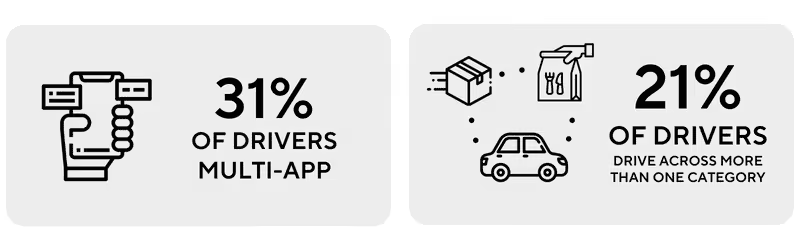
Gridwise data shows that at least 31% of drivers work across multiple service platforms over a period of 91 days or more.
Additionally, the data indicates these multi-apping drivers would move between services at different intervals - some switching apps daily, others weekly or monthly. Tracking periods could span individual days, weeks, months, or quarters.
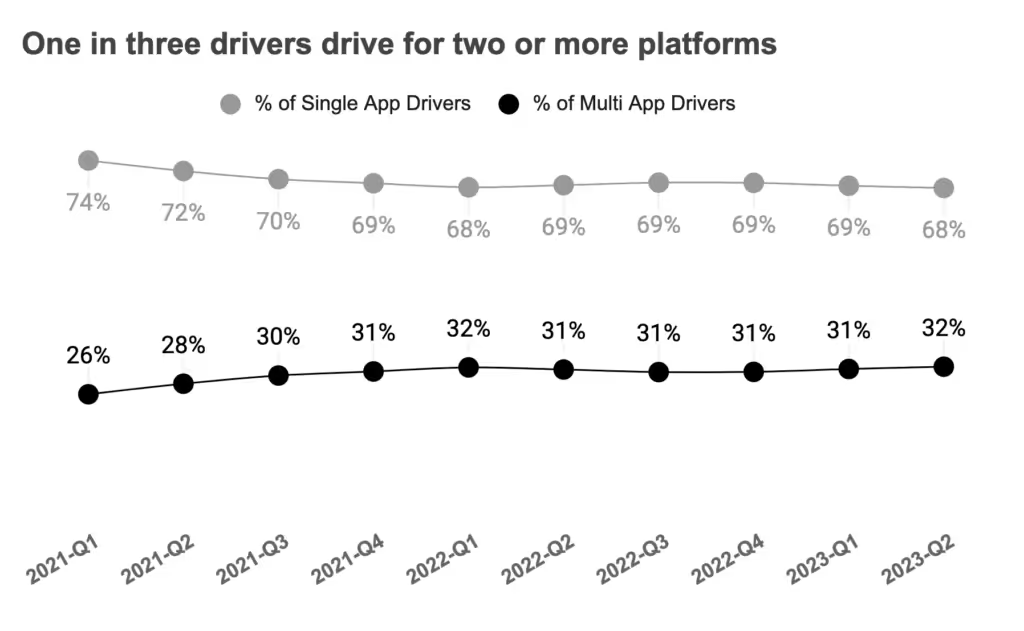
Source: Gridwise Analytics
Aggregated data also indicates that 21% of drivers will drive across service categories, that’s to say that a driver may rideshare during a given period and then switch to food delivery in another. Data indicates that this is on the rise over time.
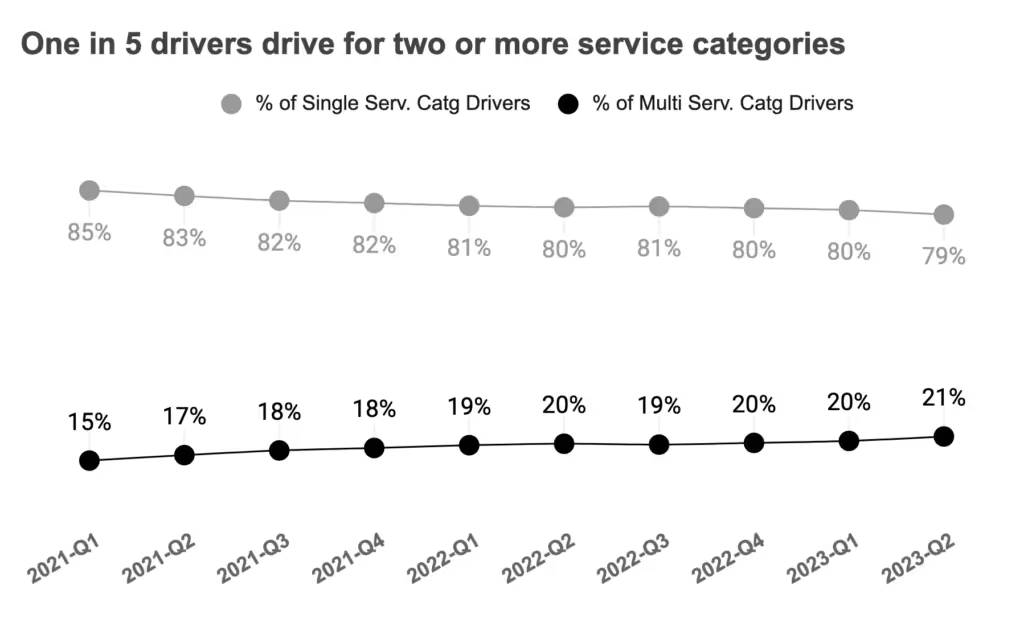
Source: Gridwise Analytics
Three plausible reasons why gig drivers multi-app using a variety of service platforms and across categories are:
- Drivers seek a variety of gig work such as rideshare, grocery deliveries, and food deliveries to reduce monotony.
- Multi-apping allows the drivers to capitalize on peak pay incentives, earning more during busy times while reducing hours on the road.
- Driving for multiple platforms allows drivers to choose from referral bonuses and flexible scheduling that are available at different times on different apps.
Drivers might move from one service platform to another to maximize earnings, and although it’s hard to blame them, platforms are left with the challenge of forecasting driver supply and demand, which can result in:
- Operational inefficiencies, longer wait times, and potentially lower customer satisfaction rates.
- Inconsistent service levels due to fluctuating driver availability in certain areas.
- Higher marketing costs to re-attract lost customers.
Around 60-65% of DoorDash drivers drove strictly for that service platform between Q2 2022 and the beginning of Q3 2023. Instacart saw a single app driver rate between 45 and 50% over the same period, and Amazon Flex drivers driving solely for the platform reached a level of about 45% by the beginning of Q2 2023.
Keeping your drivers as single service drivers for your platform can improve service levels and increase profitability, but how can you keep drivers from straying?
While your platform provides transportation analytics, such as your platforms’ current driver movements and performance, it’s only part of the story. To devise a strategy to keep drivers loyal to your platform, you need to know more about what drivers are getting from your competitors.
Where do all the drivers go?
Drivers are as concerned about their bottom line as you are. A gig driver’s ability to maximize earnings may apply to the base pay they’re getting and the incentives that are offered. A typical driver’s goal is to make as much money in as little time as possible, so many may switch to achieve this.
How can your team determine where drivers are going and how much they’re making from your competitors? Gig mobility data reveals all that information and more. Gig mobility data from Gridwise offers information your team requires to decide what you offer drivers to retain them on your platform. Leveraging gig mobility data will enable you to attract and retain top drivers and keep you ahead of the competition.
Gridwise gig mobility data reveals the big picture
Gridwise is the only platform currently capable of aggregating driver data across all major gig service platforms. Analyzing mobility trends across all the service platforms drivers use presents the big picture of the gig economy and how all the major service providers and their drivers are performing. This gives you a unified view of the on-demand workforce so you can optimize your operations, and attract more drivers to come on and stay on your platform.
Collected anonymously and aggregated across all rideshare and delivery service platforms nationwide, Gridwise gig mobility data yields details on all the many moving parts of gig driver activity and performance. Gridwise Analytics provides data insights for ride-sharing, food, grocery, and parcel delivery service platforms, including Uber, Lyft, Doordash, Grubhub, Instacart, Amazon Flex and other services.
Imagine what you can do to incentivize your drivers when you know more about:
Trip and Delivery Metrics
Get a clear idea of vehicle trip data by market location and periods for distance and duration of trip, distance and duration to pickup, maximum vehicle speed, base earnings, bonus earnings, tips, and total earnings per trip mile and trip minute.

Trip Origin and Destination Insights
Discover where the top pickup and dropoff hotspots are, and identify top origin-destination pairs.

Driver Work & Wage Metrics
Uncover details about work hours, miles driven, base earnings plus tips and bonuses per trip, per work hour, per work mile, and per trip minute.
Driver Efficiency and Batch Metrics
Get detailed information about “deadhead” work hours, batched delivery percentage, and base earnings for batches allocated to food and grocery gig shoppers and drivers.

Driver Supply Insights
View data on which service platforms drivers choose to work with over different time periods, such as week, month, and quarter. Data includes the number of service platforms drivers work with and the frequency, number of hours, and number of trips completed.
Vehicle Insights
Information such as vehicle makes, models, and years for rideshare and food delivery drivers can feed you ideas for incentives and customized to drivers’ needs.
With Gridwise gig mobility data, you’ll be empowered with knowledge about which of your competitors attract the most trips in different markets, competing surge prices and bonuses, and which platforms produce the most profitable tipping behavior from their customers.
Drill down to the details with Gridwise gig mobility data
With Gridwise Analytics, it’s seamless to see earning patterns based on various factors and to understand when and how your competitors entice drivers to work with them. Increasing gig driver revenue through performance data and maximizing gig driver earnings potential with gig driver traffic data are just some ways Gridwise gig mobility data can produce impressive results for your company, your drivers, and your customers.
Create pay, perks, and programs drivers will love
In addition, you can plan your bonus, perks, and other ways of attracting drivers by building a ridesharing demand forecasting strategy. Gridwise gig mobility data makes it possible to address drivers’ needs with pay levels and incentives that beat your competitors’ offers. You’ll know what times of the week, month, and year demand more drivers on duty and time your incentives to make the most effective impact.
Referring to data to optimize gig driver loyalty programs will help your service achieve a competitive edge. Drivers will reward your gestures of appreciation by sticking with you–because you make it possible for them to earn more money.
Rideshare and delivery are highly competitive, and customers expect top-notch service. With Gridwise gig mobility data, you’ll have access to the quantifiable insights to make decisions that attract and retain highly competent and loyal drivers and give customers every reason to choose your app as their go-to service.
Share article:
Related posts

How Much Do Uber Eats Drivers Make in 2026? (Data from 500k+ Drivers)
How much do Uber Eats drivers make? Forums and recycled blog posts say "$10 to $25 an hour." This guide uses actual 2025 earnings from 101,709 Uber Eats drivers tracked through Gridwise, part of a network of more than 500,000 gig workers, plus the platform-by-platform numbers from our annual Gigability report.
The median Uber Eats driver makes $14.07 per hour in total trip pay, including tips. Tips are $6.26 of that. On averages instead of medians, Uber Eats drivers grossed $18.06 per hour in 2025, up from $17.87 in 2024.
Uber Eats also has a low barrier to entry. You can deliver with a car, bike, or scooter, and on foot in some markets. Uber rideshare requires a qualifying vehicle.
This guide covers hourly pay, per-delivery earnings, tip income, the best times to deliver, and how Uber Eats compares to DoorDash, Grubhub, and Uber rideshare.
Quick answer: how much do Uber Eats drivers make per hour?
Uber Eats drivers earn a median of $14.07 per hour in total trip pay, based on 2025 data from 101,709 drivers tracked through Gridwise. Median means half of drivers earn more than $14.07 and half earn less. Add promotions and bonuses and the median gross pay is $15.03 per hour.
The top 25% of drivers earn $17.02 or more per hour. The top 10% earn $20.83 or more. All of these numbers are before gas, insurance, and vehicle costs.
Per delivery, the median driver earns $8.16 and completes 1.70 deliveries per hour. DoorDash drivers complete 1.51 per hour. More deliveries per hour is one reason Uber Eats drivers earn more per hour than DoorDash drivers.
Tips are a large part of Uber Eats pay. The median tip is $3.73 per delivery, which is 46% of the $8.16 median per-delivery total. Details below.
Uber Eats earnings breakdown
Here are the 2025 Gridwise numbers.
Hourly earnings
Total trip pay per work hour (base fare, surge, and tips combined):
- Median driver: $14.07/hr
- Top 25%: $17.02/hr
- Top 10%: $20.83/hr
Gross pay per work hour adds promotions and quest bonuses. The median is $15.03 per hour. That extra $0.96 per hour is $29 more over a 30-hour week, and it comes from drivers who hit quest targets and consecutive-delivery bonuses.
Per-delivery earnings
The median Uber Eats delivery pays $8.16 in total trip pay. The top 10% of drivers average $12.00 per delivery.
The range between a median delivery and a top-10% delivery is under $4. Rideshare trips vary far more: a single trip can pay $4 or $30. Uber Eats pay per delivery is more consistent, so you rarely get a big payout and you rarely get stuck with a very low one.
Deliveries per hour
Uber Eats drivers complete a median of 1.70 deliveries per hour. DoorDash drivers complete 1.51. That is 13% more deliveries per hour on Uber Eats, and more deliveries per hour means more pay per hour. The top 10% of Uber Eats drivers complete 2.28 deliveries per hour.
Want to know exactly what you make per hour, per delivery, and in tips? Download Gridwise free and track your real Uber Eats earnings automatically.
How Uber Eats pay works
Delivery pay has several parts, and it works differently from rideshare pay. Knowing the parts helps you decide which orders to take and when to log on.
Base pay
Every delivery includes a base pay amount. Uber sets it using estimated time, distance to the restaurant and then to the customer, and how desirable the order is. Uber does not publish the formula. Rideshare fares are mostly distance and time.
Base pay for a typical delivery is $2 to $8 before tips, depending on distance and complexity. Stacked orders (two restaurants or two customers on one trip) pay more per batch but less per individual delivery.
Trip supplement
Uber adds a trip supplement when nearby drivers are not accepting an order. If an order has been declined several times or involves a long drive, Uber raises the payout. If you decline a low offer, the same order may come back later at a higher price.
Surge and boost zones
During high-demand periods, Uber turns on surge pricing or boost zones for deliveries. Surge adds a multiplier or flat bonus to base pay. Boost zones are scheduled promotions shown in the app, for example "1.3x pay downtown between 6pm and 9pm." They are announced in advance, so you can plan shifts around them.
Promotions and quest bonuses
Uber offers these bonus incentives to delivery drivers:
- Quests: complete a set number of deliveries in a window (for example, 30 deliveries Friday through Sunday) for a flat bonus
- Consecutive delivery bonuses: extra pay for completing a streak of deliveries without declining
- Boost zones: scheduled multipliers in specific areas and time windows
- Sign-up and referral bonuses for new drivers
These promotions are the difference between total trip pay ($14.07/hr median) and gross pay ($15.03/hr median) in our data.
Uber's service fee
Uber takes a service fee on every delivery. It varies by market and order type, typically 15% to 30% of the delivery fee before tips. Uber does not take a cut of tips. 100% of customer tips go to you. Every earnings figure in this article is what drivers receive after Uber's fee.
How much do Uber Eats drivers make in tips?
Tips are a bigger share of pay on Uber Eats than on rideshare or most other gig platforms.
Tip earnings per delivery
- Median driver: $3.73 per delivery
- Top 10%: $6.20 per delivery
Tip earnings per hour
- Median driver: $6.26/hr
- Top 10%: $11.09/hr
The median Uber Eats driver earns $6.26 per hour in tips. The median Uber rideshare driver earns $2.08 per hour in tips. The top 10% of Uber Eats drivers earn over $11 per hour in tips.
Why tips are so high on Uber Eats
The median tip of $3.73 is 46% of the $8.16 median per-delivery pay. On Uber rideshare, tips are 6% to 7% of trip pay. Four reasons for the difference:
Customers tip at checkout, before the food arrives, and the app suggests preset amounts. Restaurant delivery has a long-standing tipping norm that rideshare never fully picked up. Order totals are often higher than a short rideshare fare, so percentage-based tip suggestions are higher too. And the customer usually sees you at their door, which keeps the tip personal.
How to maximize your Uber Eats tips
Tips are nearly half of per-delivery pay, so small changes add up. Deliver during dinner and weekend windows, when order values and tips are both higher. Skip low upfront offers from far-away pickups; the tip is usually included in the offer, so a low offer means a low tip. Keep food upright and sealed, follow the customer's drop-off notes, and send a short message when you pick up and when you arrive. Customers can change tips after delivery, and drivers who communicate are the ones who see tips go up.
Best times to deliver Uber Eats (earnings by day and time)
Gridwise tracks delivery earnings across all major platforms by day of week and time block. Here is what average gross earnings per hour look like for delivery drivers.
Dinner rush dominates (6pm to 8pm)
The highest-earning window is 6pm to 8pm. That holds every day of the week and is strongest on weekends.
Sunday 6pm to 8pm is the single best block at $18.28 per hour on average, 29% higher than the lowest weekday blocks. If you can only deliver during one window, make it Sunday evening.
Afternoon rush (3pm to 5pm)
3pm to 5pm is the second-best block on most days. Early dinner orders and snack deliveries pick up, and fewer drivers are online than at 6pm, so wait times between offers are shorter.
Late night pays well (12am to 5am)
Late-night and early-morning hours pay above average. The 3am to 5am window averages $16 to $17 per hour on most days, and midnight to 2am beats midday hours.
Fewer drivers are online late, so base pay runs higher, and late-night customers tip well. Most drivers skip this window.
Avoid midweek midday
The lowest-earning times are Tuesday through Thursday from 9am to 2pm, at $14 to $14.50 per hour.
The best block pays over $4 per hour more than the worst. Over a 20-hour week, that is $365 versus $285: $80 more per week, or more than $4,000 a year, from picking the right shifts. For more on timing, see the best times to drive for Uber Eats.
Want to find the highest-paying hours in your own market? Download Gridwise free and see the best times to deliver based on real earnings data.
How to earn more on Uber Eats
The median Uber Eats driver earns $14.07 per hour. The top 10% earn $20.83. That is a $6.76 per hour difference, and it comes down to which orders you take, where you wait, and when you work.
The video below profiles how a handful of experienced Uber Eats drivers approach the job, from which orders they skip to when they log on.
The sections below walk through each of those habits, starting with how top earners decide which orders to take.
Benchmark against the best
If you are at the median ($14.07 per hour, 1.70 deliveries per hour), the next target is the top 25% at $17.02 per hour. The top 10% earn $20.83 per hour, complete 2.28 deliveries per hour, and make $11.09 per hour in tips. Track your own numbers for two weeks and see which of those three you are furthest from. That tells you whether to work on order selection, positioning, or timing.
Multi-app to fill dead time
The fastest way to raise your hourly rate is to run multiple delivery apps at once. When Uber Eats is slow, DoorDash or Grubhub may have orders waiting. The key rules for multi-apping:
- Only accept one active order at a time unless the pickups and drop-offs are on the same route
- Pause the other apps as soon as you accept an order, so you are not declining offers and hurting your standing on the other platform
- Compare offers on pay per mile and pay per minute, not the headline dollar amount
- Keep completion rates high on every app; a cancellation costs more than a declined offer
- Track earnings across apps in one place so you know which one pays best in your market and hours
Position near restaurant clusters
Wait near dense restaurant areas such as shopping centers, downtown strips, and food courts, not residential neighborhoods. Closer to restaurants means faster pickups and more offers per hour. The top 10% of drivers complete 2.28 deliveries per hour versus the median 1.70, and much of that comes from positioning.
Be strategic about order acceptance
Not every Uber Eats order is worth taking. Experienced drivers judge each offer on dollars per mile (many use $1.50 to $2.00 per mile as a floor), total time including the restaurant wait, whether the drop-off keeps them in a busy zone, and whether the tip is already included in the upfront amount.
You can decline any order. Your acceptance rate does not affect your standing on Uber Eats the way it can on other platforms. Take the orders that pay, skip the ones that don't. Also track your deductible expenses; our guide to tax deductions for gig workers covers what counts.
Running Uber Eats alongside DoorDash or Grubhub? Download Gridwise free and track earnings across every app in one place, so you know which one pays best and when.
Uber Eats vs Uber rideshare vs DoorDash
Here is how Uber Eats compares to DoorDash and Uber rideshare using Gridwise data.
Uber Eats vs DoorDash
Uber Eats pays more per hour than DoorDash on every measure we track.
On medians, Uber Eats drivers earn $14.07 per hour in trip pay versus $11.26 on DoorDash, 25% more. Uber Eats drivers also complete more deliveries per hour (1.70 vs 1.51).
The 2025 Gigability averages show the same pattern:
- Average earnings per hour: Uber Eats $18.06, DoorDash $12.43
- Average earnings per mile: Uber Eats $1.27, DoorDash $0.94
- Average weekly gross: Uber Eats $198, DoorDash $247
- Average weekly hours: Uber Eats 11.5, DoorDash 18.8
DoorDash drivers gross more per week because they work about seven more hours. Per hour and per mile, Uber Eats pays more. For the full comparison, see Uber Eats vs DoorDash pay in 2026. Grubhub is the closest competitor on hourly pay at $18.67 average; see Grubhub vs Uber Eats pay.
Uber Eats vs Uber rideshare
Rideshare pays more per hour. The median Uber rideshare driver earns $21.18 per hour in trip pay versus $14.07 for Uber Eats. On 2025 averages, Uber rideshare drivers grossed $23.88 per hour and $522 per week over 21.2 hours. Uber Eats drivers grossed $18.06 per hour and $198 per week over 11.5 hours.
Per mile, Uber Eats pays more: $1.27 versus $0.94 on rideshare. Delivery trips are shorter, so you put fewer miles on your car for each dollar earned. Rideshare also requires a newer qualifying vehicle, passengers in your car, and usually higher insurance costs. For the rideshare numbers, see how much Uber drivers make.
When each platform makes sense
Uber Eats fits drivers who want part-time work, use a bike, scooter, or older car, and do not want passengers. The average Uber Eats driver works 11.5 hours a week. Most people use it as a supplement, not a full-time job.
Uber rideshare fits drivers with a qualifying vehicle who want the highest hourly rate and will work longer shifts at peak times.
DoorDash fits markets where Uber Eats demand is thin, and it works as the second app in a multi-app setup. Many drivers run both delivery apps and take whichever offer pays more.
Is Uber Eats worth it in 2026?
Yes, for the right driver. Uber Eats pays more per hour than DoorDash, about the same as Grubhub, and is one of the easiest gig platforms to start on.
The case for Uber Eats: average hourly earnings rose to $18.06 in 2025, average weekly gross rose 12.8% to $198, and you can start with almost any vehicle. Tips are a large, steady share of income. Your acceptance rate does not put your account at risk, so you can be selective.
The downsides: the median driver earns $14.07 per hour before gas and vehicle costs, and per-mile pay fell 2.6% year over year to $1.27. Uber does not publish the base pay formula. Nearly half of per-delivery income is tips, so a bad tipping night is a bad night. Weekly earnings are modest because most Uber Eats drivers work short weeks. If you need $500 or more a week, you will need to combine Uber Eats with another app or work the peak windows hard.
Uber Eats is best for part-time earners who want a flexible schedule, drivers without a rideshare-eligible vehicle, night owls who can work 12am to 5am, and multi-appers who want a second delivery platform with strong hourly pay.
Uber Eats driver pay FAQ
Can you make $1,000 a week doing Uber Eats?
At the median $14.07 per hour, you need about 71 hours a week to hit $1,000. At the top 25% level ($17.02/hr) it drops to about 59 hours, and at the top 10% ($20.83/hr) to about 48 hours. It is possible but takes long weeks and peak-hour focus. A realistic target for a full-time driver working 40 hours is $560 to $830 a week, depending on skill and market. See how to make $1,000 a week with Uber Eats for the strategy.
Does Uber Eats pay more than DoorDash?
Yes. The median Uber Eats driver earns $14.07 per hour versus $11.26 on DoorDash, 25% more. On 2025 averages it is $18.06 versus $12.43. Uber Eats drivers also complete more deliveries per hour (1.70 vs 1.51). See how much DoorDash drivers make for the DoorDash breakdown.
How much do Uber Eats drivers make in tips?
The median Uber Eats driver earns $3.73 per delivery in tips, or $6.26 per hour. The top 10% earn $6.20 per delivery and $11.09 per hour. Tips are 46% of per-delivery pay on Uber Eats, compared with 6% to 7% on Uber rideshare. See how much Uber Eats drivers make before tips.
Is Uber Eats better than driving Uber?
Uber rideshare pays more per hour ($21.18 median vs $14.07) but requires a newer qualifying vehicle and passengers. Uber Eats has lower vehicle requirements, lower vehicle costs, better pay per mile ($1.27 vs $0.94), and no passengers. Many drivers do both and take whichever offer pays more.
What is the best time to deliver Uber Eats?
6pm to 8pm, especially on weekends. Sunday 6pm to 8pm pays the most at $18.28 per hour on average. Late night (12am to 5am) pays $15 to $17 per hour. The lowest-paying times are Tuesday through Thursday from 9am to 2pm at $14 to $14.50 per hour. Peak hours pay over $4 per hour more than slow times.
How much do Uber Eats drivers make per week?
The average Uber Eats driver grossed $198 per week in 2025, up 12.8% from $175 in 2024, working an average of 11.5 hours. At the median hourly rate, 30 hours a week is roughly $420 to $450 before expenses.
Start tracking your Uber Eats earnings today
Uber Eats pays a median $14.07 per hour in trip pay and an average $18.06 per hour in 2025, well ahead of DoorDash. Tips are $3.73 per delivery, nearly half of per-delivery income, and $6.26 per hour. The top 10% of drivers earn $20.83 per hour by working peak windows, waiting near restaurant clusters, and declining low offers.
The way to move from the median to the top 25% is to know your own numbers: what you earn per hour, per delivery, and in tips, by day and time. Then change the one that is furthest behind.
Want to see how your Uber Eats earnings compare to 101,709 other drivers? Download Gridwise free and track your earnings, find the best times to deliver in your market, and see where you stand.
How to Become an Uber Driver in 2026: Requirements, Sign-Up, and What to Expect
Signing up to drive for Uber or deliver with Uber Eats is one of the fastest ways to start earning money on your own schedule. Whether you want to give rides, deliver food, or do both, the application process is straightforward — but there are specific requirements and steps you need to know about before you begin.
This guide walks you through the entire process from start to finish, covering both Uber rideshare and Uber Eats. We will explain what you need to qualify, how to submit your application, how long approval takes, what it costs to get started, and what to expect during your first week on the road. If you are looking for a detailed breakdown of vehicle and driver requirements specifically, check out our complete guide on Uber driver requirements before you apply.
Quick Answer — How to Sign Up for Uber in 5 Steps
Here is the short version of how to become an Uber driver or Uber Eats driver in 2026:
- Download the Uber Driver app from the App Store or Google Play
- Enter your personal information including your name, email, phone number, and Social Security number
- Upload your required documents — driver's license, vehicle registration, insurance, and a profile photo
- Consent to a background check run by Checkr (takes 3-10 business days)
- Complete a vehicle inspection (rideshare drivers only, $20-$50 depending on your market)
Estimated total time from application to first trip: 7 to 14 days.
Most of that waiting period is the background check. The actual application itself takes about 15 to 20 minutes to complete. The rest of this guide breaks down each step in detail and covers everything else you need to know, including how Uber Eats sign-up differs from rideshare.
Uber Driver vs. Uber Eats Driver — What's the Difference?
Before you sign up, it helps to understand the difference between driving for Uber (rideshare) and delivering for Uber Eats. They use the same app and the same sign-up process, but the requirements, earning potential, and day-to-day experience are different.
Uber Rideshare (UberX, Comfort, XL, etc.):
- You transport passengers from point A to point B
- Stricter vehicle requirements (4-door, must be 16 years old or newer, no cosmetic damage)
- Must be 21 or older in most markets (25 in some)
- Higher earning potential per trip
- Requires a vehicle inspection before you can start
Uber Eats (Delivery):
- You pick up food orders from restaurants and deliver them to customers
- More flexible vehicle options — you can deliver by car, bike, scooter, or even on foot in some markets
- Lower age requirement (18+ in most markets)
- No vehicle age requirement for delivery-only drivers
- No vehicle inspection required
- Lower barrier to entry overall, but tips make up a larger portion of your income
Can you do both? Yes. When you sign up through the Uber Driver app, you can choose to enable both rideshare and delivery. Once approved, you can toggle between them at any time depending on what is available and what you feel like doing. Many drivers stack Uber Eats deliveries during slow rideshare periods to keep their earnings consistent.
Which Should You Choose?
If your main goal is to maximize earnings per hour, rideshare generally pays more on a per-trip basis, especially during surge pricing. However, it requires more investment upfront (a qualifying vehicle, inspection, and insurance) and means having strangers in your car.
If you want the lowest barrier to entry and maximum flexibility, Uber Eats is the way to go. You can start with almost any vehicle — or no vehicle at all in some cities — and work at your own pace without interacting with passengers. Many drivers start with Uber Eats while they figure out whether they want to commit to rideshare.
If you are on the fence, sign up for both. There is no downside to having both options available, and you can always adjust later based on what works best in your market.
Requirements to Drive for Uber (Rideshare)
To drive for Uber's rideshare service, you need to meet requirements for both yourself and your vehicle. Here is a summary of the key qualifications — for a full deep dive, see our complete Uber driver requirements guide.
Driver requirements:
- Be at least 21 years old (some markets require 25)
- Hold a valid U.S. driver's license — you must have had it for at least one year (three years if you are under 25)
- Have a clean driving record with no major violations in the past seven years
- Pass a background check through Checkr
- Have a valid Social Security number
Vehicle requirements:
- Four-door vehicle
- Must be model year 2010 or newer (varies by city — some markets require 2012 or newer)
- No salvage or rebuilt title
- No significant cosmetic damage
- Must pass a vehicle inspection
- Must be registered and insured in your name (or you must be listed on the policy)
Insurance requirements:
- Must carry at least your state's minimum auto insurance coverage
- A rideshare endorsement or commercial policy is strongly recommended, though not always required by Uber
- Uber provides supplemental liability coverage while you are online and on trips, but it does not cover your vehicle's damage — that gap is where a rideshare endorsement matters
The specific requirements can vary by city and state, so always check Uber's website for your local market. Some cities have additional requirements like a TLC license (New York City) or specific permits.
Requirements to Deliver for Uber Eats
The requirements for Uber Eats delivery are notably less strict than rideshare:
- Age: 18 or older (compared to 21 for rideshare)
- License: Valid driver's license if delivering by car. If delivering by bike, scooter, or on foot, no driver's license is needed — just a government-issued ID
- Vehicle: Car, bike, electric bike, scooter, or on foot (availability varies by market)
- No vehicle age requirement for delivery-only sign-ups
- No vehicle inspection required for delivery drivers
- Background check: Still required, same process as rideshare
- Insurance: Required if delivering by car (same as rideshare), not required for bike or foot delivery
This lower barrier to entry is a big reason why "how to become an Uber Eats driver" is one of the most searched gig economy phrases. If you meet the basic age and background check requirements, you can likely start delivering within a week or two.
Step-by-Step Sign-Up Process
Now let's walk through the actual application process. Whether you are signing up for Uber rideshare, Uber Eats, or both, the process starts the same way.
Step 1 — Download the Uber Driver App
Search for "Uber Driver" in the Apple App Store or Google Play Store. Make sure you download the Uber Driver app, not the regular Uber rider app — they are two separate applications. The Uber Driver app has a green icon, while the rider app has a black icon.
You can also start your application online at uber.com/drive, but you will eventually need the app to complete the process and to actually accept trips once you are approved.
Step 2 — Enter Your Personal Information
Once you open the app, you will be prompted to create a driver account. You will need to provide:
- Your full legal name (must match your driver's license exactly)
- Email address
- Phone number (Uber will send a verification code)
- Social Security number (for the background check)
- Your city or market area
If you already have an Uber rider account, you can use the same email to sign up as a driver. The system will link both accounts.
At this stage, you will also choose whether you want to drive (rideshare), deliver (Uber Eats), or both. You can change this later, so if you are unsure, select both to keep your options open.
Step 3 — Upload Required Documents
This is where the process takes the most hands-on effort. You will need to upload clear photos of:
- Driver's license (front and back)
- Vehicle registration (if driving a car)
- Proof of insurance (if driving a car)
- Profile photo — a clear, front-facing photo of your face with no sunglasses or hats
Tips for getting your documents accepted on the first try:
- Take photos in good lighting with no glare or shadows
- Make sure all four corners of each document are visible in the frame
- Ensure text is legible and not blurry — hold your phone steady
- Your profile photo should be taken against a plain background with your face clearly visible
- Make sure your name matches across all documents exactly (middle name, suffixes, etc.)
- Do not crop or edit the photos before uploading
Document review typically takes one to three business days. If something is rejected, Uber will notify you in the app with a specific reason, and you can re-upload immediately. The most common rejection reasons are blurry photos, glare obscuring text, and name mismatches between documents.
Step 4 — Consent to Background Check
After your documents are submitted, Uber will prompt you to consent to a background check through Checkr, their third-party screening provider. This is a required step for both rideshare drivers and Uber Eats delivery partners.
What Uber checks:
- Criminal history (county, state, and federal records going back seven years)
- Sex offender registry
- Motor vehicle records (driving violations, suspensions, DUIs)
- SSN verification and identity confirmation
Typical timeline: 3 to 10 business days, with most applicants cleared within five business days.
You do not need to do anything during this waiting period — it runs automatically after you provide consent. You can check your status at any time in the Uber Driver app under the "Account" section.
For a complete breakdown of what the background check covers, what disqualifies you, and what to do if there is a problem, read our detailed guide on the Uber background check.
Step 5 — Complete Vehicle Inspection (Rideshare Only)
If you are signing up to drive rideshare passengers, your vehicle must pass an inspection before you can go online. Uber Eats delivery drivers can skip this step entirely.
Where to get your inspection:
- Uber-authorized inspection stations (search in the Uber Driver app for locations near you)
- Some mechanics and auto shops that are Uber-approved
- Certain Uber Greenlight Hub locations (available in larger markets)
What they check:
- Working headlights, taillights, and turn signals
- Tire condition and tread depth
- Brakes
- Seatbelts for all passenger seats
- Working horn and windshield wipers
- No significant body damage or mechanical issues
- Interior cleanliness and condition
Cost: Typically $20 to $50, depending on your market and where you go. Some markets offer free inspections at Greenlight Hubs. You pay out of pocket — Uber does not reimburse this cost.
The inspection form must be uploaded to the Uber Driver app. Once it is reviewed and approved (usually within one to two business days), you are cleared to start accepting rides.
Download Gridwise alongside the Uber Driver app to track your earnings, find peak hours, and maximize your income from day one.
How Long Does It Take to Get Approved?
From the moment you submit your application to the moment you can accept your first trip, expect the process to take 5 to 14 days in most cases.
Here is how that breaks down:
- Application and document upload: 15-20 minutes
- Document review: 1-3 business days
- Background check: 3-10 business days (runs in parallel with document review in many cases)
- Vehicle inspection review: 1-2 business days (rideshare only)
For Uber Eats delivery drivers who are not using a car, the timeline is often shorter since there is no vehicle inspection or insurance verification step. Some Uber Eats applicants are approved in as little as three to five days.
What can delay your approval:
- Blurry or rejected documents (adds 2-4 days while you re-upload)
- Background check holds — if Checkr needs to verify records across multiple counties, it can take longer
- Name mismatches between your license, registration, and insurance
- Expired documents (insurance or registration)
- High application volume in your market during peak sign-up periods
What to do while you wait:
- Use the time to set up your car (phone mount, charger, dashcam)
- Research your local market to understand peak hours and busy areas
- Read through Uber's driver policies and community guidelines
- Download Gridwise and start exploring earnings data and peak hours in your area so you are ready to hit the ground running
What If You're Denied or Waitlisted?
Not every application gets approved. Here is what you need to know if you run into issues.
Common denial reasons:
- Felony conviction within the past seven years
- DUI or major driving offense on your record
- Too many moving violations
- Suspended or revoked license
- Vehicle does not meet requirements
- Failed vehicle inspection
How to appeal through Checkr:
If your denial is based on your background check, you have the right to dispute the results directly with Checkr. Checkr will send you a copy of the report, and you can file a dispute if you believe any information is inaccurate. The dispute process typically takes 30 days.
You can start a dispute at Checkr's candidate portal (candidate.checkr.com). You will need the report ID from the email Checkr sent you.
Waitlisted — what it means:
In some markets, Uber places new applicants on a waitlist when they have enough drivers in the area. This does not mean you were denied — it means your market is temporarily saturated. Waitlists can last anywhere from a few weeks to several months. There is no way to speed up the process, but you will be notified by email and in the app when a spot opens.
If you are waitlisted for rideshare, you may still be able to start with Uber Eats in the meantime, since delivery has separate capacity limits.
How Much Does It Cost to Become an Uber Driver?
Signing up for Uber is free — there is no application fee. However, there are real costs associated with getting started, and it helps to know what you are getting into financially.
Startup cost breakdown:
- Vehicle inspection fee: $20-$50 (rideshare only; free at some Greenlight Hubs)
- Insurance upgrade (rideshare endorsement): $0-$50/month extra depending on your provider and state
- Phone mount: $10-$25
- Car phone charger: $10-$20
- Dashcam (optional but recommended): $50-$150
- First tank of gas: $40-$70
- Car wash and interior cleaning: $10-$30
Estimated total to get started: $50 to $300, depending on your market and what you already own.
If you are signing up for Uber Eats delivery only (especially by bike or on foot), your startup costs are essentially zero beyond what you already have.
What Uber provides vs. what you need:
- Uber provides the app, navigation, payment processing, and supplemental insurance while you are on a trip
- Uber does not provide a vehicle, phone, phone mount, dashcam, or personal auto insurance
- Uber does not reimburse gas, maintenance, or any startup costs
One thing to keep in mind: all of these expenses, plus your gas and car maintenance costs, are tax-deductible as business expenses since you are an independent contractor. Keep your receipts from day one.
What to Expect Your First Week
Getting approved is just the beginning. Your first week driving for Uber or delivering for Uber Eats will involve a learning curve, and knowing what to expect will help you avoid common mistakes and start earning faster.
Navigating the app for the first time:
The Uber Driver app can feel overwhelming at first. Before you go online, spend 10 to 15 minutes exploring the interface. Familiarize yourself with how to go online and offline, how to view and accept trip requests, where to find your earnings summary, and how to contact rider or customer support.
Choosing your first rides or deliveries:
For your first few trips, stick to areas you know well so you are not relying entirely on GPS navigation. This reduces stress and lets you focus on the pickup and drop-off process. If you are doing rideshare, shorter trips close to home are a good way to get comfortable before tackling airport runs or long highway trips.
Understanding surge pricing and promotions:
Uber uses dynamic pricing (called "surge") that increases fares when demand is high — think Friday and Saturday nights, morning rush hour, or during bad weather. The app shows you a heat map of surge areas in real time.
As a new driver, you may also qualify for sign-up bonuses or guaranteed earnings promotions. These vary by market and change frequently, but they can be worth hundreds of dollars if you hit the required trip count within the specified timeframe. Check the "Promotions" tab in the Uber Driver app to see what is available in your area.
Setting realistic earnings expectations:
Your first week will probably not be your highest-earning week. You are still learning the best times to drive, the most profitable areas, and how the app works. Most new Uber drivers earn between $15 and $30 per hour before expenses during their first week, depending on their market. For a detailed look at what you can expect to make, check out our guide on how much Uber drivers make.
Do not compare your earnings to what full-time veteran drivers post online. They have optimized their strategy over months or years. Focus on learning the patterns in your market during week one.
First-Week Tips from Experienced Drivers
Here are tips that experienced Uber drivers wish they had known during their first week:
- Drive during peak hours first. Friday and Saturday evenings (7 PM to 2 AM) and weekday morning rush (6 AM to 9 AM) are consistently the busiest and highest-paying times in most markets. Start there.
- Keep your car clean and stocked. For rideshare, a clean car with a phone charger available for riders goes a long way toward better ratings and tips.
- Do not chase surge. By the time you drive to a surge area, it often disappears. Instead, position yourself near bars, restaurants, or event venues where you know demand will spike.
- Accept most trips your first week. Your acceptance rate matters less than you think long-term, but early on, every trip is a learning opportunity. Get your first 20 to 30 trips under your belt before you start being selective.
- Track everything from day one. Your mileage, gas receipts, car washes, and any other driving-related expenses are all tax-deductible. Start a tracking system now so you are not scrambling at tax time.
- Download Gridwise alongside the Uber Driver app. Gridwise shows you real-time earnings data, peak demand times, and airport queue information for your specific market. Having that data from your first day gives you an advantage most new drivers do not have.
How to Maximize Your Earnings from Day One
Use Gridwise to find peak hours in your market. Gridwise aggregates earnings data from thousands of drivers in your area and shows you exactly when and where demand is highest. Instead of guessing, you can plan your shifts around proven peak windows. This alone can increase your hourly earnings by 20% or more compared to driving at random times.
Stack Uber Eats with rideshare during slow periods. If you are approved for both, toggle on Uber Eats delivery during times when rideshare requests slow down (typically mid-afternoon on weekdays). This keeps you earning instead of sitting idle.
Take advantage of new driver promotions and bonuses. Uber frequently offers sign-up bonuses, guaranteed earnings, and quest promotions for new drivers. These can range from $100 to $1,000+ depending on your market. Check the Promotions tab in the Uber Driver app and make sure you understand the requirements (usually a specific number of trips within a set timeframe). For a full breakdown of current promotions, see our guide on Uber driver bonuses.
Learn your market's patterns. Every city is different. In some markets, airport rides are the money maker. In others, it is bar close on weekends. Pay attention to where your best fares come from during your first two weeks, and build your schedule around those patterns.
Download Gridwise alongside the Uber Driver app to track your earnings, find peak hours, and maximize your income from day one.
FAQ
Can I drive for Uber and Lyft at the same time?
Yes. There is nothing preventing you from being active on both platforms simultaneously. Many drivers toggle between Uber and Lyft (and even Uber Eats and DoorDash) to maximize their trip volume and reduce downtime. Just make sure you only accept one trip at a time and that you are not double-booking rides.
Do I need a special license to drive for Uber?
In most U.S. cities, no. A standard driver's license is all you need. However, some cities have additional licensing requirements. New York City, for example, requires a TLC (Taxi and Limousine Commission) license. Check Uber's requirements page for your specific city.
Can I drive Uber with a rental car?
Yes, but only through Uber's approved rental partners. You cannot use a personal rental from Enterprise or Hertz. Uber partners with companies like Avis and Hertz through specific programs designed for rideshare drivers. These rentals typically cost $200 to $350 per week and include insurance.
How old do you have to be to drive for Uber Eats?
You must be at least 18 years old to deliver for Uber Eats. This is lower than the 21-year minimum for Uber rideshare. If you are between 18 and 20, Uber Eats delivery is your only option on the Uber platform.
Do I need my own car to deliver for Uber Eats?
No. Depending on your market, you can deliver using a bicycle, electric bike, scooter, or even on foot. Car delivery is available everywhere, but alternative modes of transportation are only available in select cities — usually larger urban markets. Check the Uber Eats section of the Uber Driver app during sign-up to see which options are available in your area.
Can I sign up for both Uber and Uber Eats at the same time?
Yes, and this is actually what Uber recommends. During the sign-up process in the Uber Driver app, you can select both rideshare and delivery. You will go through one application and one background check. Once approved, you can switch between driving passengers and delivering food at any time from within the app. There is no extra fee or separate application for adding Uber Eats to your driver account.
Curious how much you will actually make? Download Gridwise to see real-time demand in your market so you can plan your first week strategically.

Uber Deactivation: What Triggers It and How to Avoid It
Uber can deactivate your account with almost no warning, and when it happens, your income stops the same day. Most drivers don't take the risk seriously until they're already close to a threshold, and by then the options are limited.
Deactivation isn't random. It's tied to a small set of specific numbers Uber tracks on every driver: your rating, your cancellation rate, and in some markets, your acceptance rate. Serious safety incidents run on a separate track and are effectively permanent. The rating and cancellation triggers are the ones you can see coming and protect against.
This post walks through what triggers deactivation, the warning signs Uber sends before it happens, what the appeals process looks like if you're already there, and what to check regularly so you never need the appeals section.
In this post:
- What triggers Uber deactivation
- The warning signs before it happens
- What the appeals process looks like
- How to protect your account before it's a problem
This video walks through exactly what triggers a suspension or deactivation, straight from Uber's platform agreement and community guidelines.
The breakdown below covers the same ground in writing, plus what to check regularly so you never need the appeals process.
What Triggers Uber Deactivation
Three things drive most deactivations: your star rating dropping below the platform threshold, your cancellation rate rising above the limit, and in some markets, your acceptance rate.
Uber's rating threshold varies by city but generally sits around 4.6. Drop below it and your account is at risk. Cancellation rate matters more than most drivers realize, and it's calculated across every trip assigned to you, not just the ones you complete. A string of declined pings can move that number faster than a driver expects.
Serious safety incidents, complaints involving passenger safety, are on a different track entirely. Those are effectively final and don't go through the same warning system as rating or cancellation issues. The good news is that rating and cancellation-based deactivations, the ones most drivers face, are the ones you have real control over.
The Warning Signs Before It Happens
Uber sends in-app notifications when your rating or cancellation rate gets close to the threshold. A lot of drivers dismiss these or scroll past them without reading the actual number.
There's a real difference between a warning and a deactivation action. A warning gives you a window to correct course, usually by driving a run of well-rated trips or being more selective about what you cancel. Once you cross the actual line, the process moves fast, and there's no window left.
Uber doesn't always spell out exactly how close you are to the threshold in plain numbers. Often you have to check your own rating and cancellation rate in the app and calculate it yourself, rather than waiting for the app to tell you where you stand.
What the Appeals Process Looks Like
If you're already deactivated, Uber has an in-app appeals process. Response times vary, and outcomes are genuinely inconsistent from one case to the next.
What tends to work: a specific, documented explanation tied to individual trips that affected your metrics, not a general statement that you're a good driver. What doesn't work: a generic appeal with no new information for Uber to consider. While you wait, document everything, dates, trip IDs, and any context that matters, since you may need it later in the process.
Rating-based and cancellation-based deactivations have a meaningfully higher appeal success rate than safety-related ones, which are generally final. If you want the full platform-by-platform breakdown of how to build a strong appeal, our deactivation appeal guide covers DoorDash, Uber, and Lyft step by step.
How to Protect Your Account Before It's a Problem
Check your rating and cancellation rate regularly, and know the threshold in your specific market. Don't wait for a notification to tell you where you stand.
Track which trip types are driving your cancellation rate up, and think honestly about whether your acceptance patterns are creating risk you haven't noticed. If you're only taking the trips you like and declining the rest, that pattern shows up in your numbers before it shows up as a warning.
Multi-apping is also a practical safety net, separate from the account-health side of this. About 24.3% of gig workers ran more than one platform in 2025. If Uber is your only source of income, a single deactivation means your income goes to zero overnight. Running a second platform doesn't prevent deactivation, but it means one platform's decision doesn't end your ability to earn.
The hard part is knowing which second platform is actually worth your time before you need it. Gridwise tracks your earnings across every company you drive for, and Opportunity Spotting shows whether Lyft, DoorDash, or another platform is paying better in your market right now. If Uber deactivates you tomorrow, you want that answer already, not something you're figuring out for the first time with no income coming in.
Deactivation Is Largely Preventable If You're Watching the Right Numbers
The thresholds aren't a secret, and the warning signs are there before the account gets cut off. Most drivers don't check their own rating or cancellation rate until something's already gone wrong, and by then the appeals process is the only option left.
Make a habit of checking your account health the same way you'd check your earnings: regularly, not just when the app tells you to. If you're already facing a deactivation, the appeals process can work, but it works better with documentation you gathered before you needed it, not after.
Keep Reading
- What Every Driver Needs: Protection From Unfair Deactivation
- Why Rideshare and Delivery Drivers Get Deactivated and How to Get Reactivated
- How To Improve Your Rideshare Driver Ratings
Want to see your rating trends and earnings across every platform you drive for in one place? Download Gridwise free and keep an eye on your account health alongside your actual take-home pay.
Work smarter. Earn more.
Whether you drive, deliver, or pick up shifts — Gridwise helps you track earnings, mileage, and performance so you stay in control of your work. Download the app and take charge today.
