Esto es lo que cubrimos:
Last-minute judicial appeal keeps Uber and Lyft rolling in California. Here’s what this means for drivers everywhere.
It came right down to the wire, as Uber and Lyft threatened to suspend operations in California at midnight on August 21.
Hundreds of thousands of drivers would have been out of work. Passengers and delivery customers would’ve had to look elsewhere for a way to get around and have their goods brought to their doors. Chaos would have reined in the state.
If all this had happened, it would’ve been the result of a previous court order for the rideshare and delivery companies to reclassify their independent contractors (aka, drivers) as employees by August 20, 2020. The companies had five days to appeal that ruling, and they made it just in time. A decision in their favor, to hear the appeal on October 13, came down during the afternoon of the August 20 deadline.
Since a decision won’t be reached until at least a few weeks after the hearing, the October 13 date provides the companies with ample time to wait for the outcome of the November 3, 2020 election. That’s when Proposition 22, a ballot measure that could reverse parts of the California law known as AB5, will be up for a vote. (As you undoubtedly recall, AB5 orders companies to reclassify drivers as employees.)
While many are frustrated that the companies have not been forced to comply with California’s AB5, the companies, the remainder of the state’s drivers, and customers breathed a huge sigh of relief.
Although we realize this is a California case, the decisions that are ultimately reached could send San-Andreas-sized tremors across the country, shaking up all the companies and their gig workers in every state. That’s why, in this blog post, we’re going to cover:
- Why companies want drivers to be independent contractors, and not employees
- What AB5 mandates
- What Proposition 22 is, and how drivers might benefit from it … or not
- Other proposals companies have introduced to deal with drivers’ needs
- What could happen if Uber and Lyft are forced to comply with AB5, and what that means for drivers everywhere
- How drivers can protect themselves from losing their gigs
We also did a video discussing this topic on our YouTube channel. Check out the video below.
Why companies want drivers to be independent contractors, and not employees
We’ll start by saying that we know what many drivers want: to be employees rather than contractors. They want to get benefits and protection they would receive from being employed full time.
For the companies that offer app platforms for drivers, however, it’s a whole other angle.
Let’s face it. Uber, Lyft, and other driving gig companies exist for the purpose of making a profit. All of them have struggled to do that—even with the freedom to avoid paying the costs of benefits and taxes for drivers who work as independent contractors.
With the help of some law and economics professors, reporters for the website Splinter found that, even back in 2015, the costs of paying benefits to just one California driver earning about $50,000 per year would be extraordinary. Here’s an estimate of what the companies would have to lay out:
- Federal taxes for unemployment, disability, Social Security, and Medicare: $4,940 per year
- Retirement and health insurance plans (San Francisco Bay Area): $15,483 per year
- Total for one driver for one year: $20,423
Yipes! There’s no exact figure for the number of drivers in California, but we estimate around 260,000. Multiply that by $20,423 (the cost of covering employee expenses) and the companies could be looking at around $5.3 billion each year—in California alone.
Even if we don’t count the drivers who would work under 30 hours per week, and therefore not qualify for full benefits, the bill would still far exceed the $500 million in annual revenue Uber says it would lose if the company ceased operating in the state.
What AB5 mandates
In a previous post, we took you through the details of AB5. So here we’ll simply state that it requires companies to treat those who use their apps as employees. So, companies would have to pay that $20,423 figure per driver, per year.
AB5 went into effect on January 1, 2020, and the companies have not complied with it. They argue that they do not have a relationship with drivers like what is described in the law. After the state sued and the companies appealed, a judge denied the stay on the order and told the companies they’d have to institute an employee-based system by August 20, 2020.
The companies took their appeal to yet another court, and on August 20, a hearing was scheduled for October 13. Along with buying them time to prepare for the possibility of losing on appeal, this date also gets close enough to the November election to allow Proposition 22 to play a prominent role in the eventual outcome.
What Proposition 22 is, and how drivers might benefit from it … or not
On November 3, 2020, California voters will vote on whether they agree with the language in Proposition 22, such as:
- AB5 does not apply to app-based drivers;
- App-based drivers are to be classified as independent contractors;
- App-based drivers are workers who provide delivery services through an application, or use a personal vehicle to provide pre-arranged transportation services through an online-enabled application or platform;
- Other types of workers will still be governed by AB5.
Whether Proposition 22 is beneficial for drivers depends on how you look at it. If you want to be an employee, then this will not help you. If you wish to remain an independent contractor, then this proposition will allow you to do that. Obviously, the companies like it. They’ve put a lot of money behind it, too—about $110 million so far.
It appears that many drivers also support the proposition. According to a survey we recently conducted of more than 750 drivers, 64.8 percent would prefer to remain independent contractors, while only 23.4 percent would rather become employees.
The companies are well aware of driver preferences, and they also understand that some drivers need and want more support from them. In an effort to show their willingness to meet drivers halfway, they’ve taken steps toward making drivers feel more secure as independent contractors.
Other proposals companies have introduced to deal with drivers’ needs
The companies realize they must find ways to treat their drivers better. They have their image to consider. Also, it’s pretty hard to imagine what they’d do if frustrated drivers decided to walk away from the platforms en masse. Here are a few ideas the companies have floated so far, to escape the extreme measures of AB5 and any other legislation like it that could crop up in other states.
A franchise model. If the companies offered drivers the opportunity to operate as franchisees, then Uber, Lyft, and the rest of them would not be in direct control of their independent contractors. This would satisfy one of the main provisions of AB5, which uses evidence of company control to determine whether a worker is an employee.
Benefits Funds. On August 10, 2020, Dara Khosrowshahi wrote an op-ed for the New York Times titled, “I Am the C.E.O. of Uber. Gig Workers Deserve Better.” In the article, Khosrowshahi said he’d be willing to establish “benefits funds" that give workers cash to use “for the benefits they want, like health insurance or paid time off.”
Also in the article, Khosrowshahi expressed his belief that current employment laws are outdated. He doesn’t think workers should have to choose between full-time employment or being fully independent. Rather, he envisions a “third way for gig workers,” with his benefits funds idea one representation of what that might look like.
If Uber and Lyft are forced to comply with AB5, what would it mean for drivers everywhere?
AB5 is a big question mark right now. No one knows what’s going to happen with court decisions, nor does anyone know the fate of Proposition 22. That will be up to the courts, and ultimately California voters.
But we can speculate about what could happen if companies are ultimately forced to comply with the law. Here are a couple of possibilities:
- Drivers as employees may only be able to get benefits if they work 30 hours or more. The companies could limit work time by controlling the number of hours a driver is allowed access to the app. That could mean fewer drivers earning what they did when they could work as many hours as they wanted (within reason).
- Having to pay more than $20,000 per year for each driver-employee could motivate companies to find other ways of getting things done. How? Well, even though we haven’t expected to see an influx of autonomous vehicles anytime soon, we may feel differently if companies are forced to pay drivers far more than they do now. In other words, that robocar we’ve all been dreading might just roll out way ahead of schedule.
Once again, we want to stress that no matter how this situation turns out, it will have global repercussions. That’s why it’s so important to be aware of it, no matter where you live. In fact, it’s not out of the question that this and/or other state legislation pressuring companies to classify drivers as employees will be evaluated on the federal level. If you wonder how that might turn out, well ...
Decisions issued in 2019 by the US Department of Labor reflected the view that drivers are independent contractors. The author of one opinion, National Labor Relations Board associate general counsel Jayme Sophir, states:
“Drivers have virtually complete control of their cars, work schedules, and log-in locations, together with their freedom to work for competitors of Uber, provided them with significant entrepreneurial opportunity. On any given day, at any free moment, UberX drivers could decide how best to serve their economic objectives: by fulfilling ride requests through the App, working for a competing rideshare service, or pursuing a different venture altogether.”
Knowing the federal perspective, it’s hard to see how the companies wouldn’t win if they challenge state laws on the federal level. This makes it clear that the federal government’s position aligns with the companies: that drivers are independent contractors.
The Department of Labor’s opinion was issued to help settle arbitration between Uber and about 60,000 drivers, who filed arbitration demands over their employment status. Nonetheless, it will almost certainly be cited by any attorney who takes a future case like this to the federal level.
If you’re one of the drivers who would prefer to be an employee, the battle isn’t over yet in California, and may not even come close to influencing policy in other parts of the country. We’ll keep our ear to the ground for any new rumblings from the Golden State. In the meantime, here’s what you can do.
How drivers can guard against losing their gigs
We know. It seems like we’re telling you this more and more, for a variety of reasons. Sit in a comfortable position, close your eyes, take a deep breath, and chant the driver mantra:
Work. For. Multiple. Platforms.
When you’re positioned to pivot from one company to the next, you can make sure you keep working, no matter how the legal climate might change. This is always a great idea—but when there’s a possibility that a company can bail on operating in your area, you’ll need backup.
As we saw in the case of California, Uber and Lyft threatening to leave the state caused some huge ripples in the media. It was hard to watch any business news without hearing all about it. And in California, we imagine the news reports were even more numerous.
As you know, when you work for multiple platforms, Gridwise is more essential than ever. Use our amazing new features to track your earnings on all the apps you work with, and let us track your mileage for tax deduction purposes, too.
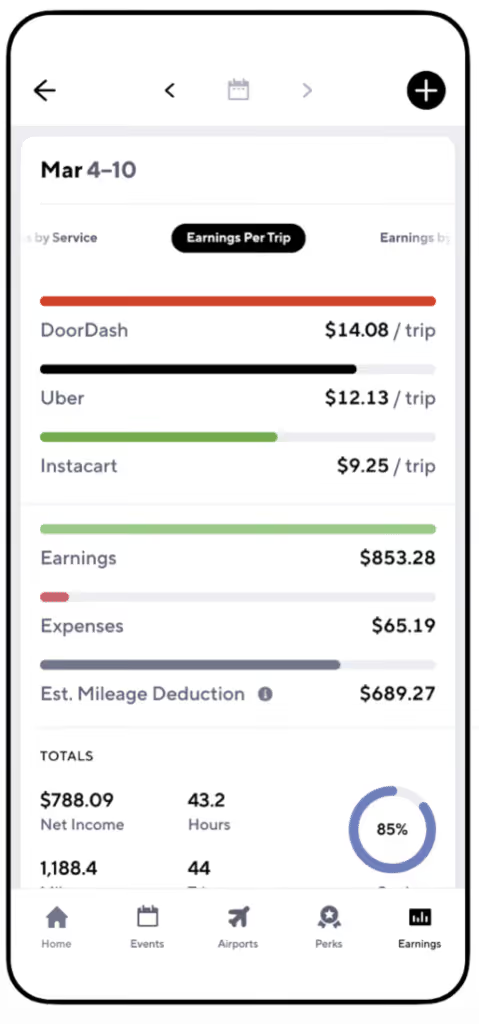
And … you get info on events, airport traffic, and lots of perks, such as easy access to our blog and the Gridwise YouTube channel, as well as driver discounts and special offers. Why would you ever drive without the ultimate rideshare and delivery assistant? Download Gridwise now.
So, what’s your preference: employee or contractor? Make a comment below, or find us on Facebook to share your thoughts with the Gridwise community.
Compartir artículo:
Publicaciones relacionadas
Thanksgiving Dilemma: Should Gig Drivers Hit the Road?
As Thanksgiving 2025 approaches, many gig drivers are asking a familiar question: Is it worth working during the holiday?
Last year’s discussions across Reddit and driver communities were divided. Some drivers described slow days and low pay, while others saw strong post-holiday surges that made the week worthwhile. The data from Gridwise’s 2024 reports paints a clearer picture — one that shows both the challenges and opportunities of the season.
Whether you drive for Uber, Lyft, DoorDash, or Instacart, understanding what happened in 2024 can help you make smarter choices this year.
[elementor-template id="20891"]
Initial Concerns and the Thanksgiving Dip
In the days leading up to Thanksgiving 2024, drivers across forums and social groups voiced familiar frustrations: long waits, slow evenings, and the sense that the holiday week wouldn’t be worth the time on the road. While those experiences were real, the nationwide averages from 2024 show a more steady picture.
Trip pay for both Uber and Lyft stayed almost unchanged during Thanksgiving week. Lyft held level, and Uber saw only a slight dip before returning to a similar range the following week.
Nationwide Average Trip Pay (All Trips)
(Rideshare Pulse – Trip Pay, Nationwide)
PlatformNov 11–17, 2024Nov 18–24, 2024 (Thanksgiving Week)Nov 25–Dec 1, 2024 (Post-Thanksgiving)% Change (11→18)% Change (18→25)Lyft$12.41$12.42$12.53+0.08%+0.89%Uber$14.49$14.43$14.56–0.41%+0.90%
Source: Gridwise
These small national shifts don’t always reflect what drivers feel on the ground. Any slowdown often comes from changes in routine—travel beginning earlier in the week, restaurants adjusting hours, and households planning meals at home. These patterns can make several days feel quieter even when nationwide averages remain stable.
Because markets behave differently, the most reliable way to understand Thanksgiving week in your area is by checking your own past trends inside the Gridwise App. Your November 2024 driving patterns—by app, by day, and by time of day—offer the clearest insight into how your city responds to the holiday.
The Post-Thanksgiving Surge
After a quieter Thanksgiving Day, many drivers hope for a strong rebound heading into the weekend. Nationwide averages from 2024 show a modest lift in trip pay the week after the holiday, with both Uber and Lyft increasing slightly from Thanksgiving week levels.
Lyft’s nationwide average rose by just under one percent, and Uber’s followed a similar pattern. While not dramatic at the national level, some cities experienced more noticeable shifts tied to return travel, shopping traffic, and people easing back into their routines.
Nationwide Average Trip Pay
(Rideshare Pulse – Trip Pay, Nationwide 2024)
PlatformThanksgiving Week (Nov 18–24)Post-Thanksgiving (Nov 25–Dec 1)% ChangeLyft$12.42$12.53+0.89%Uber$14.43$14.56+0.90%
Source: Gridwise
While these national changes were small, they don’t capture the differences drivers felt within their own cities. Markets with busy airports or active commercial districts often saw stronger post-holiday momentum than those with more subdued travel patterns.
Checking your own Thanksgiving weekend performance inside Gridwise—by app and by time of day—can help you determine whether the weekend after the holiday is typically worthwhile in your area.
[elementor-template id="20949"]
Why Thanksgiving Feels Different for rideshare drivers
Thanksgiving week often feels unpredictable, and rideshare drivers aren’t imagining it. Several factors explain why Thanksgiving week looks like a “valley” in gig earnings data:
- Travel and Family Gatherings: Many people leave town or stay home, reducing local demand.
- Home Cooking: Food Delivery Orders Dip as More Families Prepare Meals at Home
- Business Closures: Fewer rides to offices, bars, and events during the holiday itself.
Equally predictable trends drive the recovery:
- Black Friday and Cyber Monday shopping boost deliveries and trips.
- Return travel fills airport routes again.
- Post-holiday fatigue drives more food delivery orders.
What stands out is that Thanksgiving doesn’t dramatically reshape nationwide trip pay—it simply shifts demand throughout the week. Because each city behaves differently, looking at your own driving patterns in Gridwise is the best way to understand how Thanksgiving typically plays out in your specific market.
Platform-Specific Resilience
While many drivers felt the effects of a slower Thanksgiving week, the nationwide averages for Lyft and Uber showed only small changes. Lyft remained almost flat throughout the week, and Uber dipped slightly before returning to a similar range the following week. These minimal shifts suggest that the holiday’s impact varies more by city and driver behavior than by platform.
In some markets, rideshare demand held steady thanks to early-week airport traffic or weekend shopping activity. In others, Thanksgiving Day brought a more noticeable slowdown. Delivery services also varied from place to place, depending on local dining habits and how quickly households returned to normal routines.
Because these patterns aren’t consistent across regions, it’s helpful to look back at how each platform performed for you last year. Using Gridwise to compare your Lyft and Uber activity from Thanksgiving 2024 can offer clearer guidance on where to focus your time during the holiday week in 2025.
Thanksgiving 2023: A Tale of Resilience in the Gig Economy
Looking back at Thanksgiving 2023 helps put last year’s patterns into perspective. Driver conversations that year echoed many of the same concerns—slower days, uneven demand, and uncertainty about whether working through the holiday was worthwhile. Yet, just as we saw in 2024, the period surrounding Thanksgiving showed signs of stability and recovery once the holiday passed.
Rideshare drivers who approached the week with flexibility often found ways to make it work, whether by leaning into early-week travel demand, focusing on delivery in specific neighborhoods, or returning to the road once activity picked back up over the weekend. The broader lesson from both 2023 and 2024 is that Thanksgiving tends to reshape the rhythm of the week rather than dramatically shift earnings overall.
The rideshare drivers who benefited most were those who understood how their market behaved—recognizing when activity typically slowed, when it returned, and which services held up better in their area. That same approach remains useful heading into Thanksgiving 2025.
How to Plan Your Thanksgiving 2025 Strategy
Every driver’s experience during Thanksgiving week is different — what works in one city or on one platform may look completely different somewhere else. Still, looking at how Thanksgiving 2024 unfolded reveals a few consistent patterns that can help guide your approach this year. These can serve as a starting point for building a strategy that fits your habits, location, and preferred services.
StrategyWhy It Often WorksHow to Personalize ItWork Earlier in the Week (Mon–Wed)Travel activity often picks up before Thanksgiving as people head out of town.Check Gridwise trends for your local airport to see when outbound traffic is strongest.Take Thanksgiving Day Easy — or Stay FlexibleMany markets see reduced ride and delivery volume on the holiday itself.If you stay online, use Gridwise’s real-time demand view to identify areas with bonuses or steady activity.Prioritize the Weekend (Fri–Sun)Return travel and holiday shopping can create more consistent opportunities.Review your past Thanksgiving weekend in Gridwise to see which platforms performed best in your area.Use More Than One AppFlexibility can help you adjust as demand shifts across services.Compare how each app behaves in your city throughout the week using your Gridwise history.Know Your Own PatternsUnderstanding your typical earnings and trip rhythm gives you better expectations.Use your Gridwise reports to see how your Thanksgiving 2024 results compared with your normal weeks.
Source: Gridwise
While these patterns offer helpful context, the best strategy will always depend on your driving style and your city. Some markets tend to favor rideshare early in the week, while others rely more on delivery or return-travel demand after the holiday. By combining national context with your personal insights, you can design a Thanksgiving plan that’s informed and realistic for how you drive.
Key Takeaways
- Thanksgiving week can feel slower, but nationwide trip pay stayed fairly steady last year.
- The days following the holiday often bring more activity, especially in markets with strong return travel or shopping patterns.
- Using more than one app can help you adjust when demand shifts across services.
- Reviewing your own trends in Gridwise is the best way to understand how your city typically behaves during the holiday week.
[elementor-template id="20936"]
Uber vs Lyft: Which Platform Pays More for Comfort and Black Rides in 2025?
If you drive a vehicle that qualifies for Comfort or Black rides, you’ve probably wondered which platform, Uber or Lyft, will help you earn the most. These higher-end ride options come with premium fares and a more selective passenger base, which can significantly impact your overall earnings.
Recent Gridwise insights show a clear pattern: Uber drivers tend to earn more on Comfort and Black rides than Lyft drivers do. The gap is particularly high in the higher-tier ride categories, where Uber’s pricing structure and rider demand provide drivers with more consistent access to profitable trips.
For those with eligible vehicles, these findings suggest that Uber’s premium ride tiers may currently offer greater earning potential and steadier demand than Lyft’s.
[elementor-template id="20891"]
Why Compare Uber and Lyft Comfort/Black Payouts?
Comfort and Black rides pay more than standard trips, but they also attract a different type of passenger and require vehicles that meet specific standards. Many drivers buy or lease higher-end cars with these premium categories in mind, knowing they can open the door to better earnings opportunities.
If you’ve made that kind of investment, it makes sense to understand where your time brings the best return. Comparing Uber and Lyft payouts helps you decide which app deserves more of your focus, especially since both companies regularly adjust pricing, incentives, and market strategies.
When you understand how these payouts differ, you can make informed decisions about which trips fit your goals and how to get the most from the vehicle you’ve worked hard to qualify.
Vehicle Requirements: Are They the Same?
For Comfort and Black rides, Uber and Lyft set very similar standards for the vehicles that qualify. Both platforms prioritize newer cars with high-quality interiors and extra passenger comforts, such as additional legroom, smooth rides, and premium finishes.
Comfort rides usually include mid-sized sedans or SUVs that are only a few model years old and consistently receive high passenger ratings. These cars are meant to offer a quieter, more comfortable ride without being full luxury vehicles.
Black rides are in a different class. They require luxury models with black exteriors and interiors, as well as drivers who maintain a professional appearance and provide a higher level of service. These trips often appeal to business travelers and passengers who expect a top-tier experience.
If your car qualifies for Uber Comfort or Black, it almost always meets Lyft’s requirements for the same categories. In other words, the type of vehicle you drive probably won’t limit your earning potential on either platform. The real difference comes down to how each company structures its pay and how demand for premium rides varies in your market.
4. Uber vs Lyft: 2024 vs 2025 Earnings Comparison
The table below shows what we found after analyzing pay from both platforms. These averages represent total gross earnings per trip, including all rider payments, for Uber and Lyft Comfort and Black rides throughout 2024 and into 2025.
While both platforms saw fluctuations throughout the year, the overall trend is clear: Uber drivers consistently earned more per trip than Lyft drivers across the Comfort and Black tiers. The gap is especially noticeable in the higher-end ride types, where Uber’s pricing model and passenger demand helped boost payouts.
Lyft drivers still performed well in some areas, particularly during seasonal peaks, but Uber’s stronger, more consistent earnings suggest it has an edge in the premium market right now.
For drivers who already qualify for these higher-tier categories, this can be an essential factor when deciding where to focus their time.
Average gross pay per ride in Q3, 2024 vs 2025 (Uber vs Lyft).
Ride TypeQ3 2024 LyftQ3 2024 UberQ3 2025 LyftQ3 2025 UberStandard$12.09$12.75$11.95$13.01Comfort$20.00$21.61$20.48$21.30Black$31.75$39.47$28.96$39.08
Driver Observations and Feedback
Many drivers have shared consistent observations about Uber’s premium ride tiers. Their firsthand insights help explain how Comfort and Black influence ride volume, fare consistency, and overall earning potential.
Uber Comfort: Higher Fares, Lower Volume
Uber Comfort offers riders newer vehicles with extra legroom and quieter experiences. For drivers, the category introduces a modest pay premium but often less consistent demand. As The Rideshare Guy notes:
“Per trip, you’ll earn more doing Uber Comfort but there is not enough demand for you to do only Uber Comfort rides.” — The Rideshare Guy
Drivers echo this trade-off in various discussions. While Comfort trips typically pay about 20 percent more than UberX rides, that higher fare is offset by fewer requests — particularly outside major metro centers.
Similarly, Ridester underscores the need for a newer vehicle and a high driver rating to qualify, both of which raise the cost of entry:
“Comfort pays higher fares than standard Uber rides, but you’ll need a newer car, a 4.85 rating or higher, and excellent passenger reviews.” — Ridester
Key takeaway: Comfort can yield better per-trip earnings, but drivers often maintain UberX access to fill downtime and stabilize income.
Uber Black: Premium Pay, Premium Costs
At the top of Uber’s service tiers, Uber Black continues to attract experienced drivers seeking higher fares and professional clientele. Yet drivers consistently highlight the steep costs and fluctuating demand that accompany this category.
“I’ve been driving for Uber Black for about two years now. On a good week, I can make upwards of $1,500. However, I also spend more on maintenance and gas for my SUV.” — Michael, Los Angeles (Apps UK)
“The tips are definitely better with Uber Black. I’ve had passengers tip me as much as $50 for a single ride. But there are also slow days where I barely make anything.” — Sophia, Chicago (Apps UK)
Driver income reports show a broad range: $60,000 to $120,000 in gross annual revenue, depending on market size and vehicle type (TinyGrab). However, Ridesharing Driver emphasizes that operating expenses — from insurance and licensing to downtime between premium rides — can sharply reduce net profits (Ridesharing Driver).
Key takeaway: Uber Black can deliver strong earnings and generous tips, but the higher overhead means profitability hinges on efficient scheduling, location strategy, and cost control.
Strategic Insights for Drivers Considering Premium Categories
Across both Comfort and Black, consistent themes emerge from driver experiences and Gridwise performance data.
1. Understand your market dynamics. Premium ride categories perform best in areas with strong business travel, active airports, and event-driven demand. Recognizing these patterns allows drivers to plan hours more strategically.
2. Measure true profitability. Higher gross fares don’t always translate to higher take-home pay. Premium vehicles and commercial insurance raise expenses, widening the gap between gross and net income.
3. Maintain a flexible mix of ride types. Many drivers find that combining Comfort or Black rides with standard requests helps stabilize revenue during slower premium periods.
4. Prioritize service quality. Professionalism, vehicle presentation, and passenger comfort often lead to stronger tips and repeat riders.
5. Rely on local performance insights. Gridwise data pinpoints when and where premium categories generate the highest returns, enabling smarter driving schedules and market targeting.
Success in premium tiers depends not just on earning potential but also on strategic planning that understands when, where, and how to make those higher fares truly pay off.
How Gridwise Helps You Earn More on Comfort and Black Rides
Driving a high-end vehicle gives you access to premium rides—but knowing when and where to drive can make an even bigger difference in your bottom line. That’s where Gridwise comes in.
[elementor-template id="20949"]
Here’s how Gridwise helps you drive smarter:
- Know exactly when and where to work. Get personalized insights that pinpoint your city’s busiest hours and neighborhoods so you can plan shifts around real demand.
- See which app pays better right now. Compare your Uber and Lyft earnings side by side to understand which platform gives you more substantial returns in your specific market.
- Track your actual performance. Monitor your hourly and per-ride averages to spot trends, adjust your schedule, and make each shift more efficient.
- Understand your real profit. Log mileage and expenses automatically so you always know what you’re actually taking home after costs.
These data-driven insights take the guesswork out of driving, helping you plan smarter routes, reduce downtime, and increase your overall earnings efficiency.
Gridwise shows your Uber vs. Lyft averages side by side, so you can see whether your own results match national trends.
Pro tip: Drivers who regularly use Gridwise’s data insights tend to earn significantly more per hour than those who rely on trial and error.
The Point?
For drivers with vehicles that qualify for Comfort or Black rides, Uber currently provides the stronger earning potential. The gap between Uber and Lyft widened slightly from 2024 to 2025, showing that Uber’s premium ride categories continue to deliver better returns for most drivers.
Still, the platform you choose is only part of the equation. What really determines your results is how you work. Understanding when demand peaks, where high-value trips start, and how your city’s ride patterns change over time can make all the difference in your weekly totals.
[elementor-template id="20936"]
More resources for drivers

La guía de conducción gig para Halloween
La conducción en Halloween puede ser muy divertida, y también es un buen momento para que los conductores independientes ganen más dinero. Con actividades embrujadas ocurriendo durante varios días seguidos, fiestas, desfiles y otros eventos atraerán mucho trabajo, tanto para conductores de viajes compartidos como para conductores de entregas. Probablemente puedas salir como siempre y aun así ganar un poco más de lo que ganas habitualmente, pero por qué conformarte con eso?
En esta publicación te diremos cómo hacer que la conducción en Halloween sea tan gratificante como divertida. Hablaremos sobre seguridad, estrategias y cómo ganar más propinas.
[elementor-template id="20891"]
La Semana de Halloween trae consigo Aumentos en las Ganancias para los Conductores Independientes
Cuando hablamos de Halloween, no podemos ignorar el potencial de ganancias! El año pasado, los conductores de viajes compartidos ganaron más dinero en la semana anterior a Halloween. Sus ingresos aumentaron un 11,4% en comparación con lo que lograron hacer en los tres meses anteriores. Esto se debe probablemente a que las fiestas de Halloween ocurrieron antes que el propio Halloween, que cayó un martes. Durante la semana de Halloween, las ganancias cayeron un 2% por debajo de la cantidad habitual. Esto es lo que los conductores ganaron en promedio:
HoraGanancias mediasSemanas normales$531.10Semana antes de Halloween$591.37Semana de Halloween$520.68
Este año es diferente. Halloween cae en jueves, por lo que los conductores podrían ganar más dinero del 31 de octubre al 3 de noviembre. Este fin de semana podría ser más ocupado de lo habitual, dando a los conductores la oportunidad de ganar más.
Entrando en la diversión y el dinero con Lyft o Uber en Halloween
Puede que no seas un fan de Halloween, pero muchos clientes probablemente lo son. Desde padres que quieren mantener a sus pequeños sanos y salvos en camino a los eventos escolares hasta personas que aman la fiesta y se meten de lleno en el espíritu festivo de Halloween, te encontrarás con muchos pasajeros durante esta concurrida semana.
Debido a que muchos estarán muy emocionados en esta espeluznante semana, la forma en que enfoques tu trabajo como conductor en Halloween podría hacer que tus clientes sean más generosos y agradecidos. Aquí tienes algunos consejos de conductores de Lyft y Uber:
- Permanece profesional. Saluda siempre a tus pasajeros como lo harías en cualquier otro momento y evita actuar como un zombi aterrador, un asesino con hacha o un vampiro de forma demasiado dramática, especialmente si hay niños pequeños en el vehículo.
- Ofrece dulces. Incluso los viajeros de negocios que están en camino al aeropuerto pueden disfrutar de un dulce trato de Halloween. Coloca una sonrisa en la cara de tus pasajeros ofreciéndoles dulces en su empaque original para que puedan sentirse seguros al comerlos. También sería una buena idea ofrecer agua embotellada. Dosis muy altas de azúcar pueden provocar que todos los duendes, grandes y pequeños, sientan mucha sed.
- Presenta tu lista de reproducción de Halloween. Esto deberás hacerlo con cuidado, por supuesto, pero una lista detalladamente seleccionada de canciones temáticas de la temporada te hará destacar entre tus pasajeros, quienes seguro sentirán la necesidad de darte una propina por tu excelente gusto musical.
- Decora tú vehículo. Un arreglo temporal de Halloween en el exterior o algunas luces sutiles en tonos naranja y blanco en el interior podrían hacer que tú vehículo sea en el que todos quieran estar cuando celebren Halloween con Lyft o Uber.
- Repasa tus habilidades de servicio al cliente y tenlas en mente sin importar los horrores de Halloween que puedas encontrarte. Esta publicación de Gridwise te ayudará.
- Contacta a tu empresa para obtener más consejos, trucos y herramientas que puedas usar para hacer que Halloween sea seguro y rentable. Uber ofrece consejos de Halloween para conductores aquí, y encontrarás consejos de Lyft para conducir en Halloween en este artículo en su sitio web.
Consejos sobre disfraces y seguridad en halloween
Los disfraces de Halloween pueden ser una forma divertida de entrar en espíritu festivo, pero como conductor de viajes compartidos, la seguridad debe ser lo primero—tanto para ti como para tus pasajeros.
- Disfrázate de forma prudente. Si decides disfrazarte, elige opciones usando tu sentido común. Asegúrate de que tu rostro sea reconocible, y evita maquillaje, ropa o accesorios que hagan de ver claramente o moverte libremente mientras conduces algo difícil. Si no quieres ser demasiado creativo, siempre puedes montar un disfraz de Halloween de un conductor de Lyft o Uber! Ponte un cartel en el pecho que diga "Conductor terriblemente bueno" y ya estarás listo. (Más consejos abajo!)
- Consideraciones sobre Disfraces por Seguridad: Evita máscaras o grandes cabeceras que bloquean tu vista, y asegúrate de que tu traje no interfiere con el funcionamiento de tu vehículo. Disfraces simples, fáciles de usar, como sombreros o camisetas temáticas, son excelentes opciones. Y no lo olvides—tu disfraz debería permitirte presentarte profesionalmente a los clientes.
- Seguridad y Decoración en el vehículo: Decorar tu vehículo puede aumentar la diversión, pero es importante no sobrecargarlo. Si estás colocando luces de Halloween u otra decoración dentro de tú vehículo, asegúrate de que nada obstruya tus espejos, ventanas o el funcionamiento del vehículo. Opta por toques sutiles como pequeñas luces naranjas o stickers temporales en la ventana que puedas eliminar fácilmente después de Halloween.
Entrega trucos para ganar tratos
DoorDash tiene alta demanda en Halloween? Por supuesto que sí! La gente tiene que comer algo aparte de caramelos en todas esas fiestas y desfiles, verdad? Este hilo de Reddit habla de las oportunidades que esperan a los conductores de entregas de Halloween.
Hay muchas razones para creer que los conductores de entrega tendrán su propio tipo de diversión en Halloween, y de paso, se beneficien también. Aquí hay algunas estrategias que los conductores de DoorDash, Uber Eats, Instacart, Shipt y Grubhub pueden implementar para participar en el ambiente encantador y aterrador de esta celebración llena de diversión.
- Lleva dulces para los trabajadores de restaurantes. Es posible que veas a estas personas más de una vez a la semana o que solo las veas una vez. En cualquier caso, ofrecerles un dulce les alegrará y te hará conseguir mejores calificaciones del restaurante.
- Sigue el llamado del espíritu de Halloween. Si los trabajadores o clientes del restaurante parecen estar celebrando, está bien participar con un comentario espeluznante o una broma peculiar. Pero si parece que las personas con las que estás tratando no tienen idea de que hay algo especial en esta época del año, actúa como siempre lo haces, con amabilidad, gracia y profesionalismo. Lee más sobre cómo ser un conductor de reparto de 5-estrellas en esta publicación del blog de Gridwise.
- Camina con cuidado entre las decoraciones de Halloween de los jardines. Muchas personas se toman muy en serio la decoración de sus jardines con fantasmas llamativos, tumbas, esqueletos y brujas. Lo que es divertido el resto del día puede ser algo peligroso para los conductores de entregas. Es aconsejable utilizar una lámpara de frente u otro tipo de iluminación para ver lo que hay bajo tus pies, así evitarás lastimarte o dañar la tenebrosa (y estridente) decoración. Mantén tu DoorDash en Halloween seguro y divertido.
Consejos Específicos de Servicio al Cliente en Halloween
Halloween le brinda a los conductores una oportunidad única de destacar y crear una experiencia memorable para pasajeros y clientes. Excelente servicio al cliente es la clave para obtener calificaciones más altas y propinas más grandes.
- Optimiza tus calificaciones: Da la milla extra de este Halloween entrando en el espíritu con amabilidad, una conversación ligera sobre las vacaciones o elogiando a los clientes por sus disfraces. Los pasajeros aprecian un conductor que interactúa con ellos, especialmente durante épocas festivas como Halloween. Sin embargo, ten en cuenta el ánimo de tu pasajero—si no está en el espíritu de Halloween, es mejor mantener la conversación profesional.
- Temporada de Tratos por Propinas: Ofrecer dulces o golosinas pequeñas y selladas a tus pasajeros podría hacerte ganar excelentes opiniones y mayores propinas. Simplemente asegúrate de ofrecer artículos que estén en su empaque y sean seguros de consumir. Un gesto considerado y temático como este, puede dejar una impresión duradera y aumentar tus posibilidades de retroalimentación positiva.
Al centrarte en el servicio al cliente considerando la temporada, puedes convertir Halloween en una oportunidad para obtener ganancias más altas a través de excelentes calificaciones y propinas.
Los Mejores Eventos de Halloween en las Principales Ciudades para Socios Conductores
En Halloween lo importante es saber dónde está ocurriendo la acción, y como socio conductor, poder aprovechar al máximo estas zonas de tráfico alto.
- Conoce los Lugares de Interés: Ciudades más grandes como Nueva York, Los Angeles y Chicago organizan algunos de los eventos más grandes de Halloween. Los desfiles, las fiestas en las calles y las casas embrujadas atraen grandes multitudes y generan una gran demanda de viajes. Utiliza el calendario de eventos de Gridwisepara rastrear estos eventos y planificar tu ruta basándote en el. Al centrarte en áreas con mucho tráfico peatonal y lugares de eventos, maximizarás tus ganancias tanto de viajes compartidos como de entregas.
- Equilibrando las Áreas Correctas: No pongas todos los huevos en una misma canasta limitándote únicamente a las áreas de alta demanda. Las zonas populares atraerán a muchos conductores, lo que podría provocar una sobresaturación. Utiliza Gridwise para analizar los patrones de tráfico y diversifica cubriendo también vecindarios cercanos donde la competencia es menor pero la demanda sigue siendo sólida.
Al saber dónde se llevan a cabo los principales eventos de Halloween, puedes asegurarte de estar siempre en el lugar correcto en el momento correcto para obtener las mejores ofertas.
Conoce dónde conducir y cuándo conducir
Realizar un seguimiento de los eventos mientras conduces en Halloween puede ser complicado. Por eso tienes mucha suerte de tener Gridwise. No solamente es la mejor aplicación para rastrear millas. Utiliza el calendario de eventos de Gridwise para ver dónde se están llevando a cabo los desfiles, espectáculos, casas de terror y fiestas públicas. Teniendo esta información a tu alcance te permitirá crear fácilmente una estrategia de conducción ganadora para Lyft o Uber—pero Gridwise tiene aún más para ofrecer.
Las Funciones de Gridwise Donde Conducir y Cuando Conducir te proporcionan datos en tiempo real sobre dónde los conductores están facturando más en tu vecindario. Estudiando los patrones encontrados en estas funciones te permitirá saber cuándo hay mayor tráfico de pasajeros y entregas y dónde encontrar la mayor cantidad de negocios. Con Gridwise, consigues todo esto y unrastreador de millas gratis, también!
Mantente sano y salvo
La verdad sobre Halloween es que puede ser divertido, pero hay peligros ocultos e inconvenientes que querrás tener cuidado. Considera estos consejos para mantenerte a ti y a tus pasajeros seguros, y para prevenir daños en tu vehículo:
- Identifica a tus pasajeros y clientes de entrega. Disfraza a algunas personas y comenzarán a comportarse de forma realmente tonta y, a veces, hasta peligrosa. No dudes en pedirle a un pasajero que parece algo sospechoso que se retire la máscara, para que puedas asegurarte de restar recogiendo la persona correcta. Lo mismo ocurre con las entregas. La palabra “truco” es muy popular en esta época del año, y podría haber algún impostor enmascarado con la esperanza de adueñarse de esas alitas, hamburguesas y papas fritas que llevas.
- Utiliza las funciones de seguridad dentro de la app en el teléfono. En caso de que alguien esté actuando como película de acosadores de Halloween, no querrás convertirte en su presa. Lo más probable es que tu aplicación incluya funciones que permitan a un amigo o familiar seguir tus viajes y saber dónde estás, así como contactar a los servicios de emergencia con solo deslizar el dedo o con un toque. Familiarízate con estas funciones y úsalas. Es mejor ser excesivamente cauteloso que encontrarte en serios problemas.
- Demanda total visibilidad. El gracioso en el asiento trasero disfrazado de langosta gigante podrá ser lindo y creativo, pero si sus enormes pinzas te están bloqueando la vista, necesitarás pedirle que se las quite hasta que termine el viaje.
- Mantente alerta. Halloween es una época muy emocionante, especialmente para los niños. Conduce despacio y con cuidado, mirando en todas las direcciones posibles por si hay personas que puedan cruzar delante o detrás de tu vehículo. Asegúrate de que las luces estén encendidas en todo momento, incluso durante el día, porque es lo que realmente ayuda a que las personas noten que hay un vehículo cerca.
- Considera usar una lona. Esto suena un poco extremo, pero si eres creativo, puedes convertir esa lona protectora de asiento en una atractiva decoración de Halloween para tu vehículo. Querrás esto debido a más que solo los desastres mencionados anteriormente. Purpurina, pintura facial, slime verde y demás componentes de los disfraces pueden parecer fabulosos a tus clientes, pero no lucen tan bien cuando se meten en la tapicería. (Más consejos sobre como mantener tu vehículo limpio abajo!)
- Elige con cuidado los lugares de estacionamiento. Esto es principalmente para ustedes, conductores de entregas 5-estrellas, pero incluso los conductores de viajes compartidos que se detienen a tomar algo rápido o para hacer sus necesidades tienen que estacionar en algún lugar. Recuerda que la gente todavía usa Halloween como excusa para enjabonar ventanas y romper calabazas. Evita estacionarte en un lugar donde podrían hacerle este truco a tú vehículo.
- Lee más sobre seguridad para conductores en este artículo de Gridwisey sobre consejos de seguridad adicionales para conductoras en esta publicación del blog de Gridwise.
- Mantén la calma. Incluso si ves un grupo de niños tirando papel higiénico a tus pinos cuando regresas de una larga noche, intenta recordar que Halloween se trata de la diversión de ser un poco travieso. Eso de que todo el mundo sea “amable” todo el tiempo es para una festividad completamente diferente.
Cómo Preparar Tu Vehículo Para la Limpieza de Halloween
Con la emoción de Halloween, siempre existe la posibilidad de que quede algún desastre—ya sea por la purpurina de un disfraz o por los envoltorios de caramelos que dejan los pasajeros.
- Preparando el vehículo Específicamente para Halloween: Equipa tu vehículo con los suministros esenciales de limpieza para manejar cualquier derrame o desastre rápidamente. Papel toalla, spray desinfectante, aromatizantes y bolsas de basura deben estar sí o sí. Estos artículos te permitirán limpiar cualquier pequeño accidente mientras trabajas sin perder tu valioso tiempo.
- Protegiendo Tu Tapicería: Para prevenir que la purpurina, la pintura facial, u otros accesorios de Halloween dañen tus asientos, considera utilizar cubiertas temporales o una lona (mencionada arriba). Incluso puedes convertir esta solución práctica en una divertida decoración de Halloween eligiendo fundas temáticas que se adapten a ese espíritu aterrador.
- Lleva equipo de cuidado para personas ebrias. Para muchos de los fiesteros entre nosotros, Halloween es una gran oportunidad para terminar con algo más que solo un disfraz. Lleva bolsas para vómitos, un rollo o dos de papel toalla, algún producto desinfectante y bolsas de basura de plástico para cuidar de cualquier derrame o “imprevisto” que pueda ocurrir. Es conveniente tener a mano agua embotellada con gas, en momentos como este. Y recuerda, si hacen un desastre, tus pasajeros tendrán que pagar para limpiarlo. Reclama en tu empresa para cubrir los gastos detallados. Lee este post sobre cómo tratar con conductores que están, “bajo alguna influencia” para más consejos útiles.
Si preparas tú vehículo con anticipación, podrás asegurarte de que se mantenga limpio y presentable durante la ajetreada temporada de Halloween.
Cómo Lidiar con Pasajeros Ebrios Durante Halloween
A medida que Halloween atrae a los fiesteros, es inevitable que los conductores de viajes compartidos se encuentren con pasajeros intoxicados. Manejar estas situaciones adecuadamente es clave para mantener la seguridad y garantizar un viaje sin problemas.
- Cómo Lidiar con Pasajeros Intoxicados: Si notas que el pasajero está ebrio, mantente calmado y profesional. Evita involucrarte en discusiones o fomentar la conversación excesiva. Si el pasajero es molesto o potencialmente peligroso, no dudes en finalizar el viaje antes o detenerte en un lugar seguro. Pídeles amablemente que abandonen el vehículo si es necesario e informa cualquier comportamiento preocupante a la plataforma de viajes compartidos.
- Funciones de Seguridad y Reclamos: La mayoría de las aplicaciones de viajes compartidos vienen equipadas con funciones de seguridad, tales como la capacidad de compartir el viaje con la familia o amigos. Asegúrate de activarlas cuando te sientas intranquilo. Además, ten en cuenta que si un pasajero ebrio deja un desastre en tu vehículo, puedes reclamar una tarifa de limpieza a través de Uber o Lyft. Mantén tu vehículo equipado con suministros de limpieza como papel toalla desinfectante y ambientador para hacer frente a cualquier accidente.
Lidiar de forma segura con pasajeros ebrios te ayudará a evitar mayores problemas y garantizar un turno de Halloween tranquilo.
Disfruta conduciendo en Halloween, que te libres de las travesuras y te lluevan propinas, como dulces! Asegúrate de llevar a Gridwise contigo en el viaje para realizar un seguimiento de tus increíbles ganancias durante esta espeluznante época festiva!
[elementor-template id="21599"]
Trabaje de forma más inteligente. Gane más.
Ya sea que conduzcas, entregues o recojas turnos, Gridwise te ayuda a hacer un seguimiento de las ganancias, el kilometraje y el rendimiento para que puedas mantener el control de tu trabajo. Descarga la aplicación y toma las riendas hoy mismo.
