Blog de Gridwise
¡Lee el blog de Gridwise para obtener consejos y sugerencias sobre cómo ganar más dinero mientras conduces para Lyft, Uber, DoorDash, GrubHub y más!

The Gridwise Job Board: Find Your Ideal Job or Gig Work
Gridwise is an essential assistant app created by gig workers for gig workers. Our mission is to support those engaged in gig work in every way possible. We understand how challenging it can be to deal with income instability, a lack of benefits, and job insecurity that often comes with gig work. The Gridwise app tracks and organizes earnings and expenses, and offers a wide array of discounts, deals, and services that make the lives of independent contractors easier and more rewarding.
We firmly believe it’s possible to make a viable living and create a gig experience that offers flexible hours, variety, and excitement. With issues such as consistent earnings and job security in mind, Gridwise is proud to offer a centralized platform that shows you how to find gig work and secure reliable opportunities. We’re proud to introduce the Gridwise Job Board.
[elementor-template id="20891"]
The Gridwise Job Board: Key features
Because Gridwise is dedicated to serving the gig worker community, we’ve filled the Gridwise Job Board with useful features that won’t waste your precious time.
- Comprehensive listings. Find part-time, full-time, temporary, and per-task work. Drive or deliver with your vehicle, utilize an employer’s vehicle, or even find non-driving gig work.
- User-friendly interface. Find the jobs that are right for you with a tap of your screen.
- Verified opportunities. We vet the jobs before they are listed to ensure you’re getting high-quality job postings.
How to get more gig work, seasonal, part-time or full-time jobs with the Gridwise Job Board
Looking specifically for “gig work apps” or “gig jobs near me?” You’re in luck. Our filters and search functions send you directly to the listings you seek.
Here’s how it works.
- Access the Job Board via the Gridwise website.
- Search for jobs by type, location, and more.
- Select the job that interests you, and read all about it.
- Scroll through the description, and if it appeals to you, click “Apply for job.”
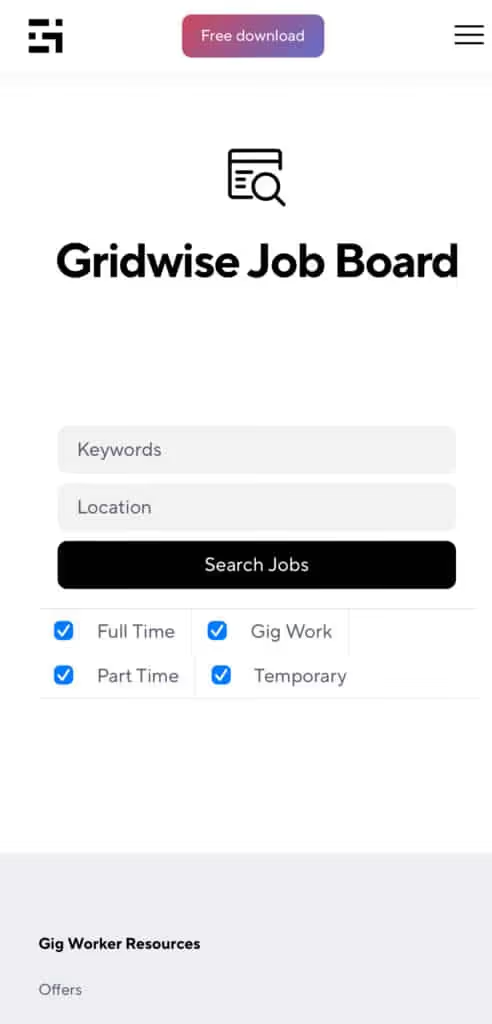
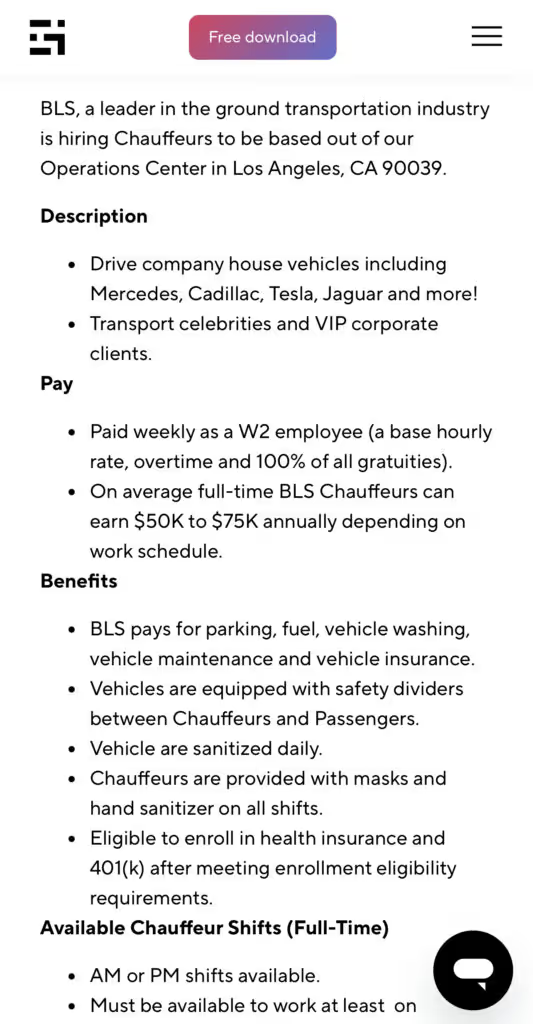
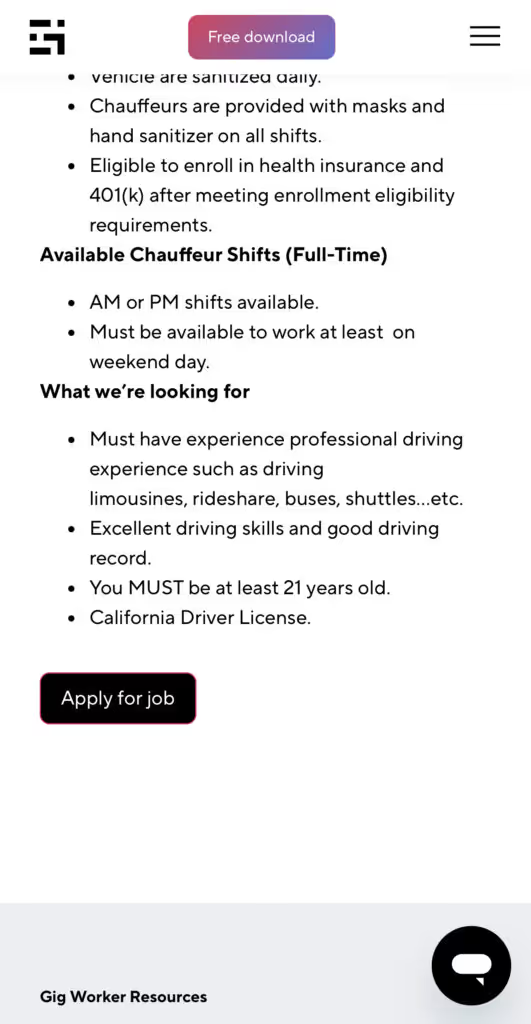
Many types of jobs are available. Adjust the search filter to see the full variety of opportunities that will let you cash in. Deliver food, set up catering, do rideshare driving, get paid for doing package delivery, and much more. You’ll find short-term gigs, long-term contracts, and part-time positions.
Perks of the Gridwise Job Board for gig workers
Gig workers who know how to make extra money will appreciate how the Gridwise Job Board lets you multiply your chances of bringing in big earnings. Here’s how:
- Increased stability. Use the Gridwise Job Board to find part-time or permanent jobs in addition to the part-time gigs you already have. Always keep a steady stream of earning opportunities flowing toward you.
- Flexibility and autonomy. Choose jobs that fit your schedule, work around other jobs and family duties, and still leave room for some fun in your life. Discover side hustles to supplement your full-time job, permanently or just for the season.
- Skill development. Find part-time work that lets you use a skill you already have, or try your hand at something new. It’s a smart way to develop a portfolio to showcase what you can do, or even to find permanent employment.
Get Gridwise and stay up to date on the Gridwise Job Board
Gig workers need plenty of information and assistance, and Gridwise is here to give it to you. Download the app and get essential features such as
- seamless earnings tracking
- mileage tracking
- expense recording, including notes
- low-cost and no-cost insurance benefits
- access to affordable medical, dental, vision, mental health, and alternative care
- professional services including legal and financial help
- deals and discounts
- weather, events, and traffic reports
- inside information on where and when to drive
[elementor-template id="20936"]
More to know about gig work:

5 Best Mileage Trackers For Gig Drivers
Many drivers ask, “Do I really need a mileage tracking app?” The answer is simple: only if you want to have an accurate count of all the miles you can legally deduct from your taxable income! You might think your rideshare or delivery driving app has got you covered. After all, they do quite a good job of logging the miles you drive while you’re on a trip or delivery. But, if you want to have the best app to track mileage for Uber, Lyft, Doordash, Instacart, or the other apps you may use, you need more. Why is that?
Without a separate tracker, you’re missing the miles you drive in between pings. Did you realize that all the miles you drive, from the moment you begin your shift until it’s over (as long as you don’t drive several miles on a break to hang with your friends), are tax deductible! That means you need something besides your driving app to keep an accurate count of your travels. Read this Gridwise post to see how important it is to keep track of every deductible mile.
You won’t be surprised to hear that there’s an app for tracking miles. In fact, there are several of them. Here, we’re going to tell you about five top mileage tracking apps, and help you figure out which one is best for you.
Before we get to the list and identify the best mileage tracker app, let’s clarify what exactly a mileage tracking app is. According to G2.com’s technology glossary, mileage tracking is done for the purpose of keeping a log of mileage that is either reimbursable or tax deductible.
And yes, of course you can track your miles simply by taking readings on your odometer. But are you really prepared to account for how many miles you drove for personal reasons and subtract them from the total to get your business mileage? Even if you can remember all that and do the arithmetic, if you want an accurate reading of the miles you drive for business, and can therefore deduct, a mileage tracking app will save you a lot of trouble and prevent you from making costly errors.
Plus, as a gig driver, you have specific needs when it comes to a mileage tracker. Ideally, you’d be able to handle mileage tracking and several other functions all in one app. It can be maddening enough to deal with driving apps, particularly if you’re an avid multi-apper. You would want your mileage tracker app to help you keep account of other aspects of your business, including income, expenses, and inside information about the art of gig driving.
Not all mileage apps are equal, to be sure! Let’s look at five of the best apps to track mileage and figure out which is the best app to track mileage with Uber and Lyft, or what mileage tracker app is best for DoorDash.
[elementor-template id="20891"]
1. Zoho Expense
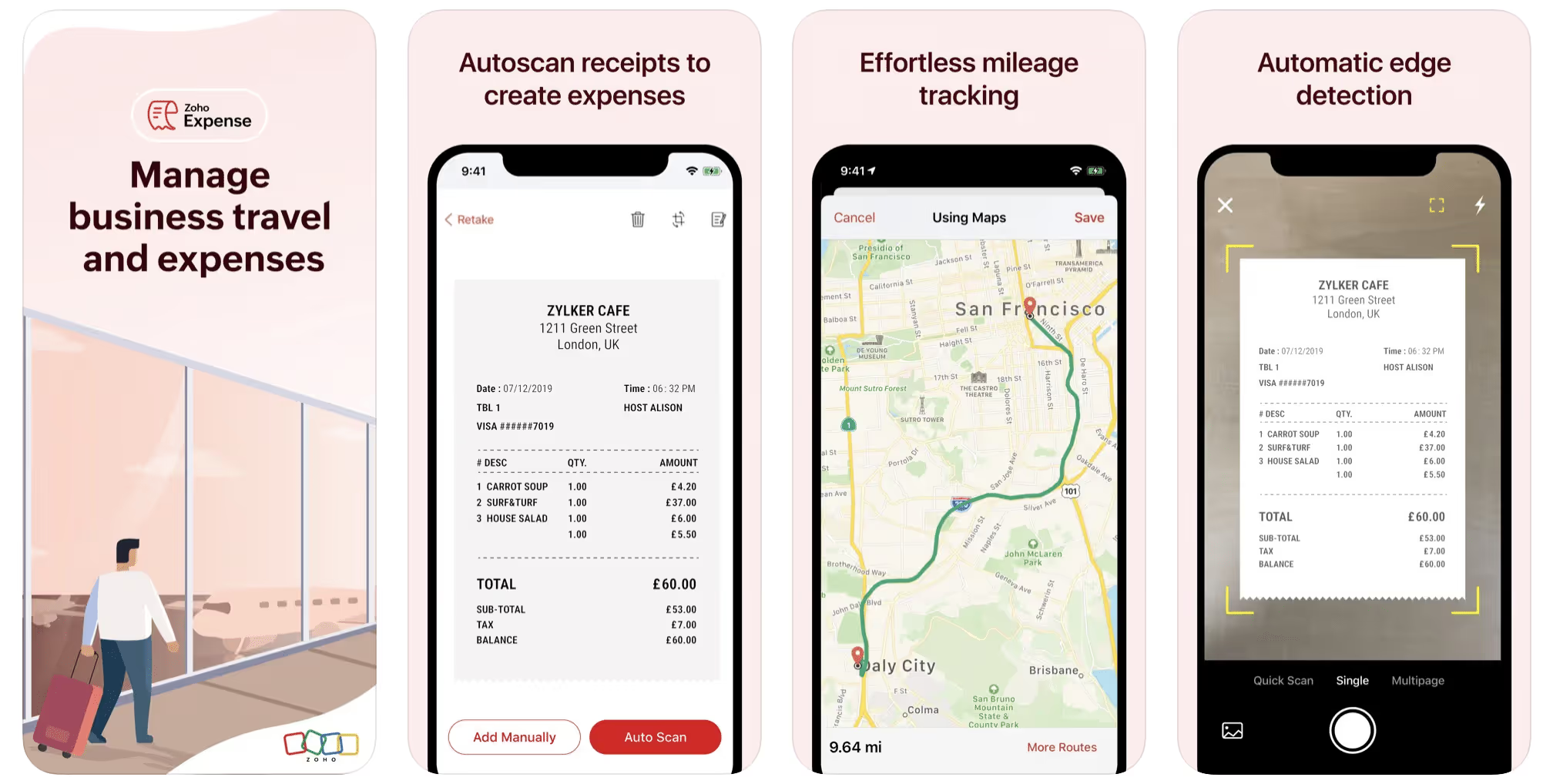
First up is Zoho Expense, which does exactly what its name says. This app is designed to allow companies to give employees a uniform way to create and submit expense reports. It can be used by individuals, including gig drivers, as well.
It includes a mileage tracker, as well as features that let you track other deductible expenses, including the ability to scan and record receipts.
Available on Android and Apple: Yes
Ratings: 4.8 stars on App Store, 4.7 stars on Google Play
Free Version: Yes
Subscription price: $3 per month, billed annually
Created specifically for gig drivers: No
2. Quickbooks Online
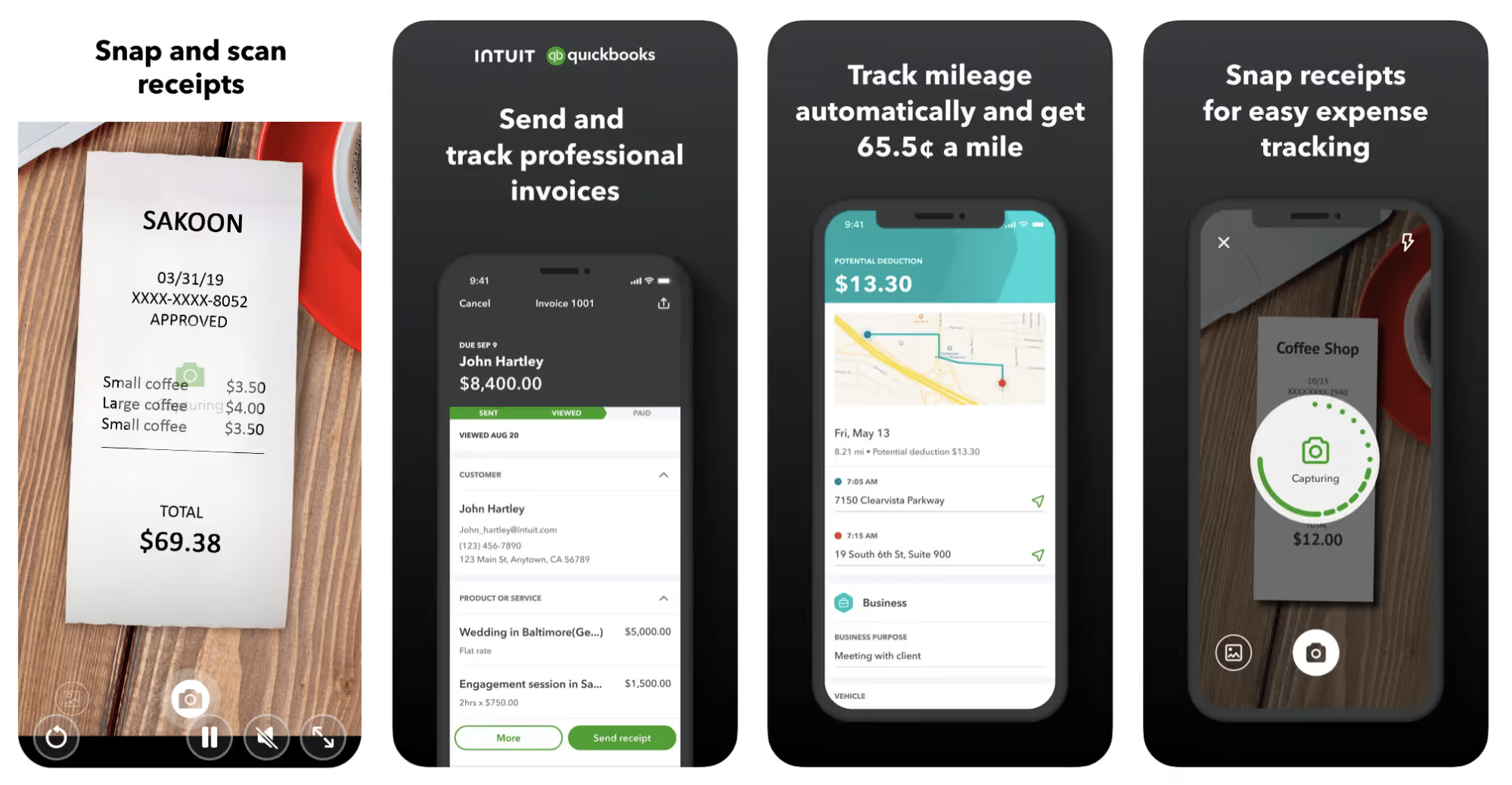
Quickbooks Online is a cloud-based app that allows you to track your mileage, earnings, and expenses. The information you enter can then be used to generate various reports that prepare you for tax time. It also allows you to create graphs that illustrate your cash flow, and includes a receipt scanner so you can instantly record deductible expenses. Quickbooks is popular, highly reliable, and designed mainly to help people keep track of their small businesses.
Available on Android and Apple: Yes
Ratings: 4.7 stars on App Store, 4.4 stars on Google Play
Free version: 30-day free trial
Subscription price: $15 per month for basic version if purchased for 3 months or more
Created specifically for gig drivers: No
Source: quickbooks.intuit.com
3. Shoeboxed
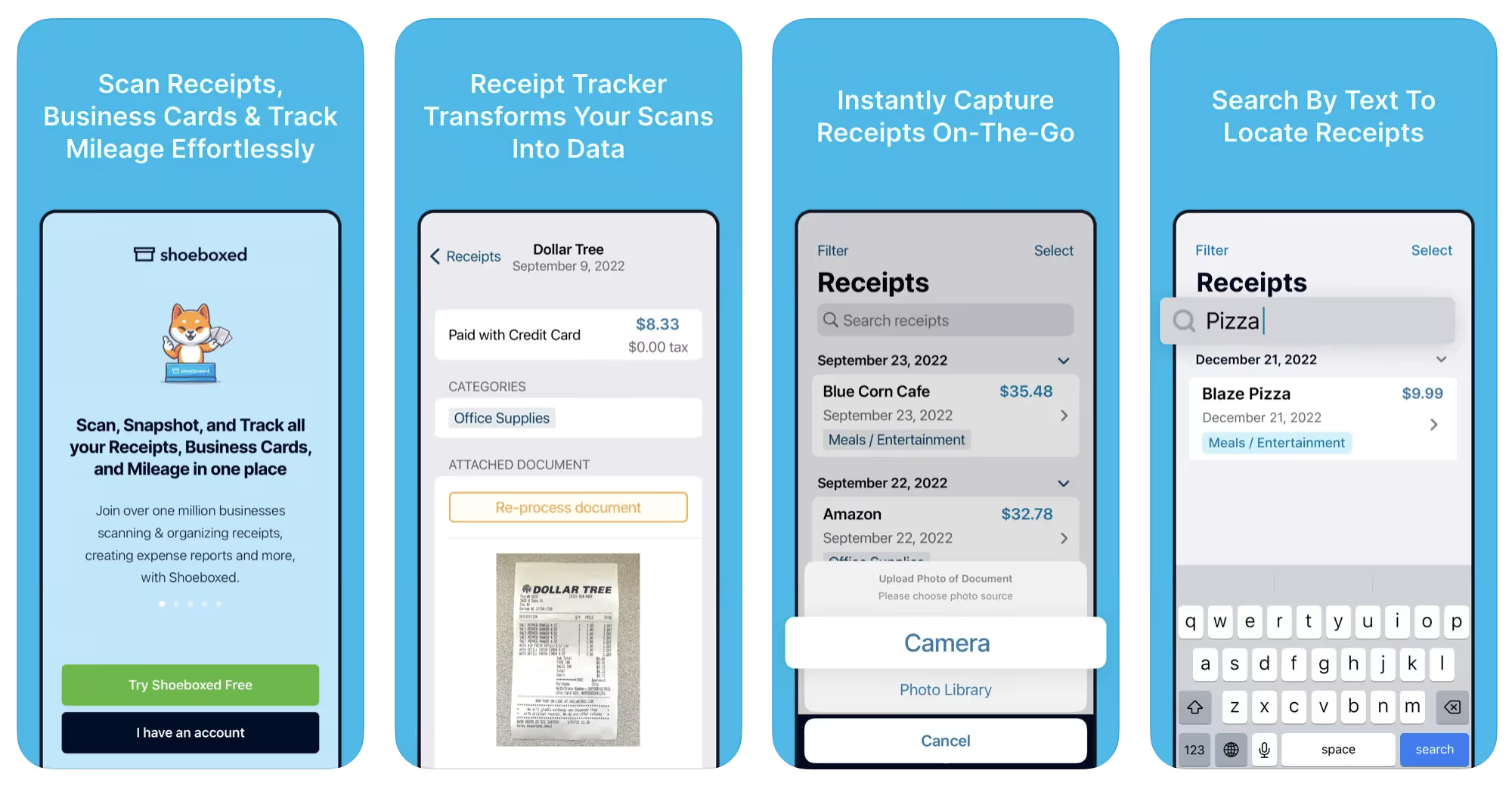
Shoeboxed started in 2007 as a service for scanning paper receipts into digital form. Now the app offers a free mileage tracker and has enabled users to scan receipts directly. It touts itself as the best mileage tracking app for DoorDash, but there are some elements missing that Dashers might like to have. While it provides features that record your expenses and prepare you for tax season, it doesn’t automatically track your earnings. The mileage tracker has a system where you can drop pins along your routes to make the tracking more precise, identifying those legs of a trip that you make for business purposes. The mileage tracker is “free” once you sign up for the basic version.
Available on Android and Apple: Yes
Ratings: 4.5 stars on App Store, 2.3 stars on Google Play
Free version: No
Subscription price: $18 per month for basic version
Created specifically for gig drivers: No
Source: blog.shoeboxed.com
4. Stride
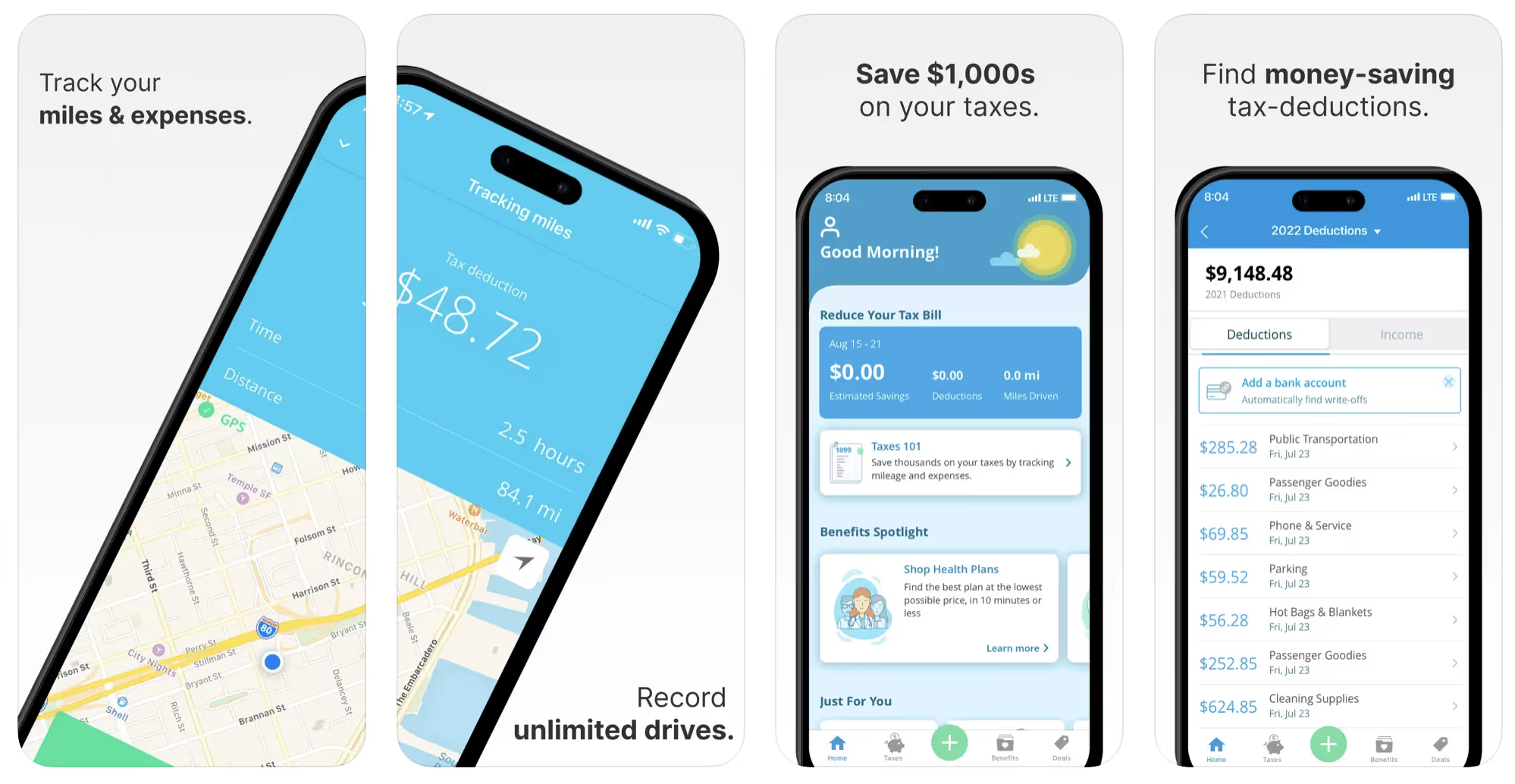
This free mileage tracker does a fair job of keeping track of the distances you rack up while gig driving, but it doesn’t automatically track earnings. It can be a big help, though, in tracking your expenses. You can link Stride to your bank account, and it will automatically scan your expenses to identify items you can potentially deduct. The app is totally free. This could make it the best free mileage tracker app, but there is a small price to pay. The app will persistently push you to consider various insurance plans that they are affiliated with. If you don’t mind that, this is a solid mileage tracker, even if it doesn’t track your earnings.
Available on Android and Apple: Yes
Ratings: 4.8 stars on App Store, 4.6 stars on Google Play
Free version: Yes
Subscription price: None. The app is free.
Created specifically for gig drivers: No
5. Gridwise
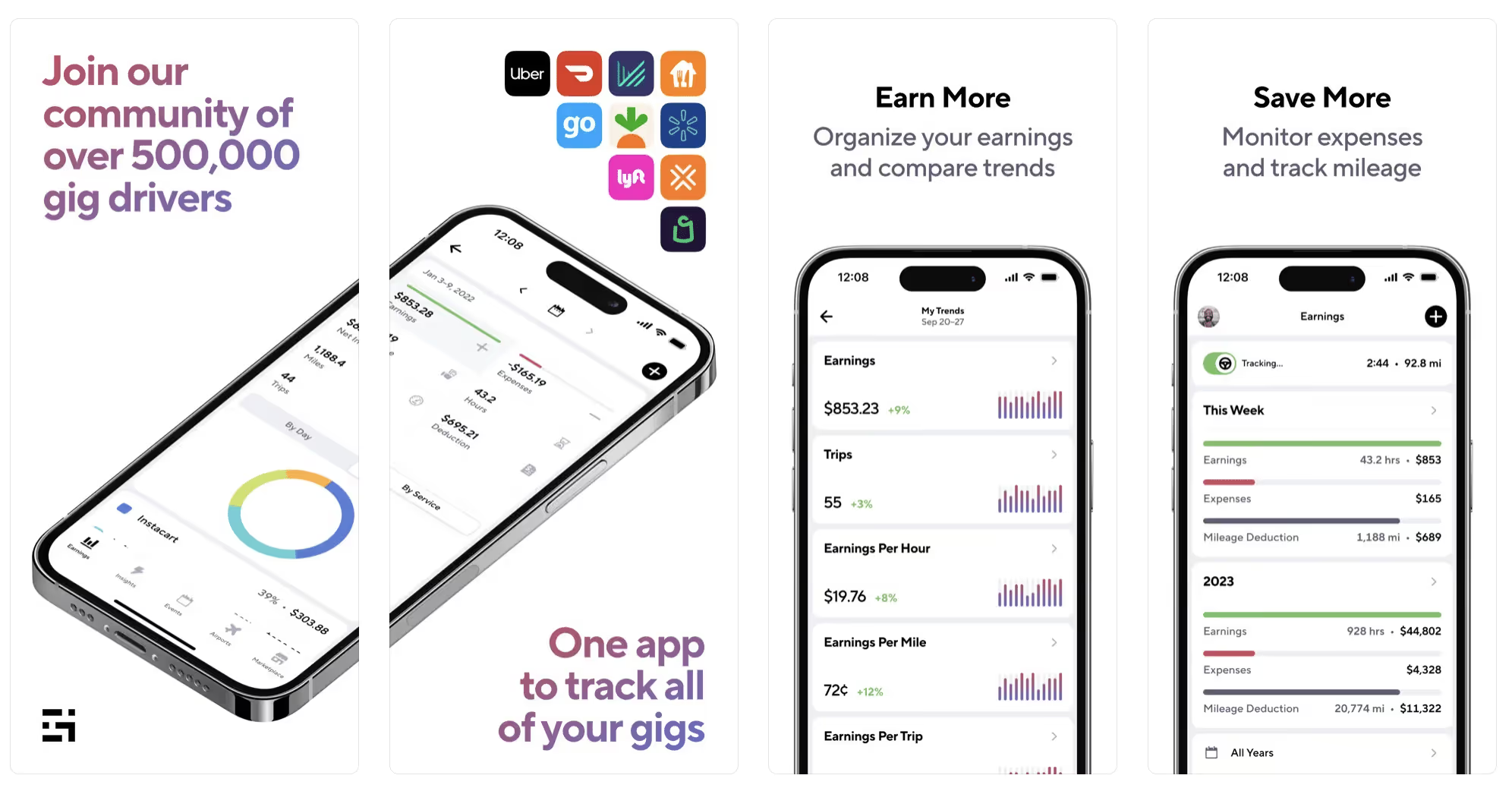
Gridwise has a free mileage tracker and free features that record your income and expenses. It gives you access to insurance and benefits, as well as insights about the best times and places to make the most money while gig driving. The Gridwise mileage tracker captures all the miles you drive while you’re on your driving shift, and it can be used if you have other trips you need to make which qualify as business travel.
Drivers love it because it is geared toward the needs of rideshare and delivery workers, providing free information about airport departures and arrivals, event start and let out times, weather, traffic, and more. The Gridwise Plus subscription adds value by providing additional insights and reports, discounts on benefits, the ability to export data in .csv format,, and more.
Available on Android and Apple: Yes
Ratings: 4.9 stars on App Store, 4.6 stars on Google Play
Free version: Yes
Subscription price: $9.95 per month for Gridwise Plus, or $95.99 per year (a $23.41 savings)
Created specifically for gig drivers: Yes!
What is the best mileage tracking app?
Now that we’ve checked them all out, we’re positive about the answer to that. Hands down, it’s Gridwise. Are we biased? You bet we are! But drivers love it too. Gridwise is the best mileage tracker app—and so much more. So many of the features are free, and the subscription to Gridwise Plus will pay for itself with additional insights to boost your earnings and deeper discounts on products and services.
Most important, Gridwise is designed specifically for gig drivers by experts who were once gig drivers themselves! Knowing what gig drivers need is a crucial step in creating an app that rideshare and delivery drivers can really use! Here are a few of the features, besides mileage tracking:
- seamless earnings tracking
- automatic, on/off toggle and manual mileage tracking
- mileage categorization
- airport, traffic, weather, and events information
- insights into where to drive and when to drive
- reports showing earnings across the platforms you use
- discounts on countless products and services for drivers
- additional resources for finding side gigs
- an informative and comprehensive blog
- affordable benefits, including insurance, medical, dental, and alternative practitioner discounts
- a community of drivers just like you
Don’t settle for just any app. Get the best mileage tracker, and so much more, from Gridwise!
[elementor-template id="21599"]

What Records Do Gig Drivers Need To Keep Track Of For Taxes?
* Gridwise does not provide tax, legal, or accounting advice. This material has been prepared for information purposes only, and is not intended to provide, and should not be relied on for tax, legal, or accounting advice. You should consult your own tax, legal, and accounting advisors before filing your return.
Record keeping? Who signed up for that? As a gig driver, it’s part of what you need to do to keep your business running. Don’t worry. It’s not as complicated as you might have been led to believe. This post will show you what you need to keep track of and the best ways to gather and preserve your tax-related records. We will cover
- How record keeping can help reduce income tax for freelancers
- Taxes and freelance work: Record keeping requirements
- Mileage tracking: Motives and methods
- More deductions and records to keep
- Make tax time easier
How record keeping can reduce income tax for freelancers
Tax time is not “fun time” for rideshare and delivery drivers. It’s easy to get used to watching your earnings pile up and come to believe they are all yours. Unfortunately, that isn’t the case. Gig work taxes can be especially painful because no one takes them out of your earnings for you, until the tax authorities insist that you do it for yourself.
You will need to show the tax authorities your income records, and they will gladly tell you to send them what they determine to be their fair share. Think that’s not fair? You’re not alone, but that doesn’t mean you’re going to get out of paying gig work taxes.
But you can find ways to pay the smallest amount that is legal and possible. The best way to defend yourself against having to pay astronomical amounts when you file your return is to know what expenses you can deduct from your gross income. When you subtract deductible expenses from your gross income, there is less left over to be taxed. This reduces the amount they can hit you with gig worker taxes. and can make your tax bill substantially lower.
While you want to keep good records so as to be in compliance with taxation entities such as the IRS, you also want to ensure you have proof of every last deductible expense you have accrued during the year. There are other records you must keep as well. Let’s look at some of the considerations you have, realizing that you now need to know how to do taxes as a freelancer.
Taxes and freelance work: Record keeping requirements
So many gig drivers fail to understand the responsibilities they have as independent contractors. Those who work part time for very few hours may even believe they don’t have to report the income they get from their driving gig payments. That would be a big mistake!
The company or companies you work for report your income to the IRS and state tax authorities. If you fail to report that income, you will risk some rather painful penalties. The IRS taxing side hustles is as much of a thing as the IRS taxing income from any other job. Your best bet is to report what you’ve earned, honestly and completely, and comply with other record keeping requirements such as
- gross income
- deductions and credits
- purchases (items you purchase and resell, such as snacks or bottled water)
- a log of all your mileage (or vehicle expenses, if greater)
- a list of all expenses and assets, such as utilities and other expenses associated with having a home office and equipment
- machinery and furniture you own, including when it was acquired, how much it cost, whether you previously took deductions on it, and selling price, if applicable (this includes your vehicle)
More things to consider:
- Pay attention to the retention of your records. You’ll need to keep all tax-return-related items— including income, deductions, and any tax credits reported— until the period of limitations runs out (3 years from date you filed, or 2 years from when you paid tax. If you have employees, keep your records for at least 4 years.)
- If you want to avoid paying self-employed taxes, you may want to set up a corporation or Limited Liability Corporation (LLC) for your business. This allows you to separate all your gig driving earnings from personal income, and permits you to take advantage of the additional advantages of working through a corporation. This includes exemption from self-employment taxes. You can learn more about how to pay self-employment taxes, if you opt for that, in this post from Keeper.
- You should always keep a separate checking account for your business, for convenience as well as clarity. While this is not a legal requirement, it is a smart move if you want to have an easier time managing your business.
- You are required, as an independent contractor, to file your taxes quarterly. Check out this Gridwise blog post for more information about quarterly tax payments and other matters that make filing delivery, Lyft and Uber taxes easier.
Mileage tracking: Motives and methods
Why you need to be meticulous about mileage
Mileage deduction, or the costs of operating your vehicle, will be the most important item to account for when you consider how to file taxes as a freelancer. While mileage is an important deduction for all independent contractors, as you might imagine, it’s even more essential for rideshare and delivery drivers.
There are two ways of keeping track of your mileage deduction. One is to use the IRS’ standard mileage deduction, which for 2022 is 58.5 cents per mile. This number takes into account the costs of operating your vehicle, from fuel and maintenance to registration, insurance, and depreciation. Alternatively, you can calculate all your own vehicle operating costs, but only after your first year of using the vehicle. You may discover that this second option allows you to have more money deducted from your taxable income. Learn more about the options for deducting your mileage in this Gridwise post.
No matter which way you decide to calculate the deductions for your mileage, you need to know what mileage you can and cannot deduct.
You can deduct
- miles driven to and from home when you go out to drive or deliver
- miles you accrue during your trips
- miles you drive on any other trips you make that are necessary as part of your business.
Examples:
- driving to return a lost cell phone or to an Uber Hub or another physical location where your company might make driver support available
- driving to pick up supplies, to get gas, or to have your car cleaned, serviced, or detailed, etc.
You cannot deduct
- miles you drive for personal trips
- miles for any trips you take that do not directly affect your business
Note: If imagining yourself becoming the not-so-proud owner of a shoebox filled with paper receipts gives you nightmares, stop worrying. Electronic records of purchases will satisfy reporting requirements. If you use cash, you can scan copies of your receipts, in some cases, right into your recording software or app. Gridwise and Keeper give you a simple to use interface that keeps all your receipts recorded without the messy pile of paper.
Mileage tracking methods
By now, you’re probably convinced that tracking mileage is important, despite all the other things drivers have to do. Now, let’s look at your options for keeping accurate records.
- Manual tracking: You can keep a logbook where you list every trip you make, starting and ending mileage, the date, and purpose of the trip. While this would work, it’s certainly not convenient. Besides, if that logbook gets lost, your plans for having a nice, fat tax deduction will go by the wayside.
- Spreadsheet: This is a bit more convenient and sophisticated way of tracking your business mileage. You’d need to be meticulous about making your entries, though. Even if you keep a spreadsheet app on your phone, it could be time consuming and inconvenient to keep doing it with all the other things going on in a rideshare or delivery driver’s day to day life.
- GPS-based mileage tracking apps: There are a bunch of apps that track mileage based on your GPS location, and most of them are pretty accurate and far more convenient than taking constant readings of your odometer. Your driving apps, such as Uber, Lyft, DoorDash, or Instacart, may also track your mileage, but be careful here. They will only track the miles you drive while you’re on a trip or delivery. They don’t count the miles you drive going to pick up a customer or when you make your move toward a restaurant or store.
Gridwise, on the other hand, will track all the miles you clock while you’re on your shift. All you need to do is make sure you start tracking the minute you leave home, and every gig driving mile will be logged. - OBD-II mileage tracking systems: There are plug-in modules that assess your vehicle’s mechanical health and track your miles. However, many authorities question the ability of OBD-II mileage tracking systems to get get accurate odometer readings. Insurance companies don’t consider them to be accurate enough gauges of odometer readings.
While mileage is a crucial deduction when you’re preparing your Uber, Lyft, or DoorDash taxes, it isn’t the only expense you’ll want to record.
More deductions and records to keep
Expenses you can deduct
You’re entitled to include the cost of other expenses that are directly related to your driving business. These include
- vehicle expenses
- equipment for your car and home office
- extra services and subscriptions
- business tools, including apps and software
You can learn much more about gig driver expenses that are eligible for deduction in this Gridwise article.
Ways to track and preserve deductible expenses
- The manual method: Just like you can with mileage, it’s possible to use a manual method, but in addition to logging each expense into a ledger, you would also need to keep physical receipts.
- Spreadsheets: You can record your expenses on a spreadsheet. This is somewhat less awkward than manually logging mileage, but there still will be plenty of room for failing to remember the case of water you bought for your customers, or losing the receipt from the thermal bag you purchased.
- Accounting software: You can use software that helps you track your expenses. This method usually interfaces well with any tax preparation software you or your tax professional might use.
- Gridwise: There are other apps that help you track your expenses, but Gridwise is designed specifically for gig drivers. It automatically tracks earnings and mileage, and lets you record your expenses the minute they come up. Gridwise’s partnership with Keeper gives you the ability to scan receipts and access a tax professional. This is a seamless way to record your expenses and a big help in learning how to file Uber taxes. Gridwise even provides .csv output, so you can feed your Gridwise data directly into tax preparation software. Check out what Gridwise and Keeper will do to super-charge your tax filing powers.
Organizing and categorizing expenses
Before you even begin to record expenses, you’ll want to set up categories for them. You can start by reviewing the categories listed above and checking out the Gridwise post that lists possible deductions.
If you’d like to learn more about how to categorize expenses, there is additional information available. This article from Motley Fool lists all possible categories any freelancer might use and also gives tips on how to customize them for your driving business.
One last tip
Using Gridwise, particularly for tracking mileage, is the easiest way to be in compliance with the IRS’ rules for deductible mileage. Gridwise tracks all the miles you drive for your gig, beyond what your company’s app might record. At the same time, you can log on and off Gridwise when you start and end your shift, so personal miles won’t be recorded. This eliminates confusion while capturing every deductible mile.
Gridwise Tax Help, a partnership with Keeper, has been created specifically to serve gig drivers. It provides affordable and easy ways to record expenses, scan receipts, and find deductions by analyzing your expenditures. Read about free resources from Keeper you can use to be fully prepared for tax season, and get all your earnings and expenses on the record.
Get the world’s best assistant for rideshare and delivery drivers, and tax help too.
Make tax time easier now!
Uber and Lyft Earnings Per Trip Are Rising in 2025
After a challenging year in 2024, many rideshare drivers are starting to see signs of a rebound—at least on a national scale.
That kind of shift suggests the market may be stabilizing. But remember—these are national trends. Your own results may vary based on when, where, and how you drive.
In this article, we’ll break down what this rebound could mean for your driving strategy. You’ll learn why pay per trip matters, how to take advantage of higher earnings, and how to track your own performance so you can drive smarter—not just longer.
[elementor-template id="20891"]
Rideshare Earnings Per Trip Are Back on the Upswing
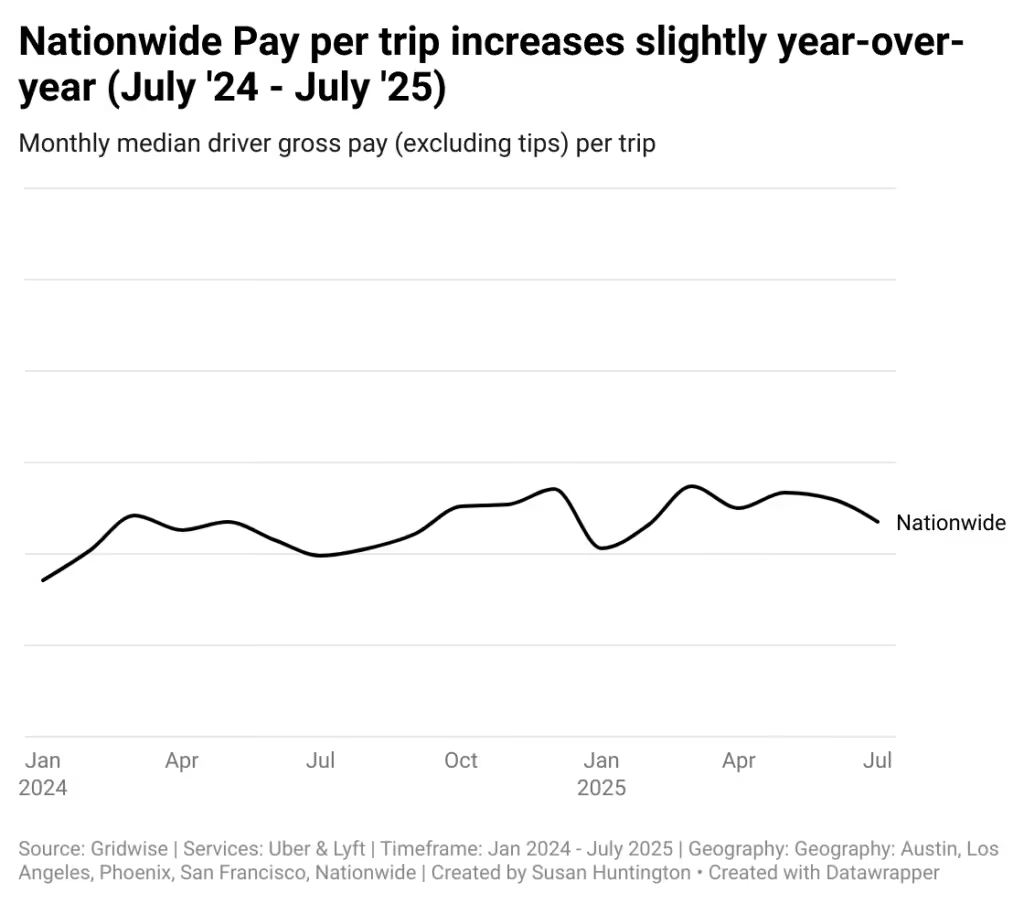
By late 2024, earnings began to recover—and the latest insights show some progress. In July 2025, average rideshare earnings per trip were 3.4% higher than in July 2024.
Why Pay Per Trip Matters
There are plenty of ways to measure gig earnings — per hour, per week, or even per mile — but pay per trip is one of the most meaningful. This single number reflects how efficiently your time translates into income. When pay per trip is higher, you need fewer rides to hit your goals, which means you can spend less time chasing low-value trips and more time driving when it counts.
On the other hand, when pay per trip falls, drivers are forced to accept more requests or stretch their shifts longer to make up the difference. That quickly leads to fatigue and burnout. This is why tracking your pay per trip is so important: it gives you a clear sense of whether your work is sustainable and rewarding, not just whether you’re scraping together enough hours.
What the Rebound Means for Your Strategy
The recent rebound in pay per trip gives workers a chance to rethink how they structure their shifts. Instead of feeling pressure to accept every request that comes through, you can be more selective and focus on the rides that truly make sense. With each trip paying more, it may not be necessary to chase sheer volume anymore.
For example, you might concentrate your efforts on peak demand periods like morning commutes, lunchtime rushes, or late-night crowds. Driving fewer but more focused shifts also delivers better results than spreading yourself thin across the whole week. And when promotions or bonuses appear, they now add even more value on top of improved base earnings. In short, the rebound means you can focus on quality over quantity and still reach your income targets.
Why Tracking Your Own Pay Is Essential
Of course, national averages only tell part of the story. Your pay per trip might look very different from someone else’s, even if they are in the same city. The difference often comes down to when you choose to work, which neighborhoods you drive in, the types of trips you accept, and how you structure your time online.
That’s why the most important question to ask isn’t whether rideshare pay in general is going up — it’s whether your own pay per trip is improving. Without keeping track, it’s almost impossible to know. When you monitor your earnings consistently, you can spot patterns, identify what works, and quickly adjust when conditions shift.
Use Gridwise to Unlock Personal Insights
The good news is that you don’t have to track everything manually. Gridwise makes it simple to see exactly how your pay per trip is trending. To get started, there’s one key step:
Step 1: Link Your Accounts
When you connect your rideshare accounts to Gridwise, the app automatically pulls in your trips and earnings. That unlocks personalized insights that show you:
- Your true pay per trip for every shift
- How your results compare across apps like Uber and Lyft
- Which days and hours deliver the best returns in your city
- How your performance stacks up against local trends
With these insights, you can plan smarter shifts, cut back on wasted time, and focus on the rides that actually move the needle.
Download Gridwise today and link your accounts to take the first step toward smarter driving and higher earnings.
[elementor-template id="20936"]
More Tips for Smarter Driving:

How Are Robotaxis Affecting Driver Pay in AV Cities?
Autonomous vehicles (AVs) aren’t just hype anymore—they’re part of daily rideshare life in a handful of big U.S. markets. And in those places, drivers have been raising concerns: since AVs showed up, many have noticed their earnings slipping.
We wanted to understand if those concerns were reflected in the numbers. Using anonymized and aggregated data, we looked at activity in AV launch markets and compared it to a national baseline. The results line up with what many drivers have already been saying: earnings in AV-active cities are under pressure. While nationwide trends show modest growth, AV markets are moving in the opposite direction.
The impacts don’t look the same everywhere, but the patterns are hard to ignore. In some cities, the drop shows up as lower hourly pay. In others, it’s fewer trips during high-demand periods, shrinking incentive offers or other factors that used to help boost weekly totals.
Ahead, we’ll break down what the numbers show in AV cities versus the national trend, and share practical strategies drivers can test to protect their income.
A quick note on the numbers you’ll see below: they reflect median results across large groups of drivers and are meant to show market-level trends, not any one person’s experience. Your results will vary based on when and where you drive, your app mix, and how quickly you pivot. That’s why we close each section with practical moves—and why we encourage you to lean on your own personalized insights as you test changes week by week.
[elementor-template id="20891"]
When AV services launched in each city
The timing of AV rollouts helps explain why driver earnings look different from city to city. Here’s a quick timeline of when autonomous rideshare started in the major AV markets:
- Phoenix: Waymo began full commercial service on October 8, 2020.
- San Francisco: Waymo expanded operations on June 25, 2024.
- Los Angeles: Waymo service launched on November 12, 2024.
- Austin: Waymo began operating through its Uber partnership on March 4, 2025, followed by Tesla’s limited Cybercab rollout on June 22, 2025
How driver earnings are shifting in AV cities
When you look closer at the numbers, it’s clear that AV markets aren’t following the same earnings trends as the rest of the country. Here’s what stands out:
How much are drivers in AV cities making per ride?
Nationwide, pay per trip rose modestly—up 3.4% year-over-year from July 2024 to July 2025. But AV cities didn’t keep pace. Austin drivers saw a 5.3% drop, San Francisco dipped 3.1%, and Phoenix was down 2.4%. Los Angeles held nearly flat with a slim 0.4% gain.

How much are drivers in AV cities earning per hour?
Hourly pay fell everywhere AVs are active, even as the nationwide average increased by 1.0%. The sharpest declines were in San Francisco (–6.9%) and Austin (–5.3%), with Los Angeles (–4.7%) and Phoenix (–3.8%) also sliding. This means drivers in those cities are making less per hour of work compared to the same time last year.

What’s happening with incentive pay in AV cities?
Platform incentives—things like streaks, quests, or non-trip bonuses—are shrinking nationwide, not just in AV markets. On average, incentive pay per trip fell 47.1% YoY. But the cuts were even deeper in Los Angeles (–65.3%) and Phoenix (–64.0%). San Francisco’s decline matched the national trend, while Austin saw a smaller, though still meaningful, drop of –33.0%. These cuts are happening everywhere, but in some AV cities they’re hitting harder.

What’s happening to monthly earnings in AV cities?
When you zoom out to total monthly pay, the picture is uneven. Los Angeles (–18.4%), Phoenix (–9.0%), and Austin (–7.0%) all saw meaningful declines, while San Francisco actually posted a 7.8% increase—close to the nationwide gain of 8.0%. That increase in San Francisco may come from drivers putting in more hours, since both hourly pay and trips per hour have declined there.

How many trips per hour are drivers in AV cities getting?
Trip volume per hour also shifted in different ways across markets. Austin (+1.3%) and Phoenix (+0.9%) saw small gains, but Los Angeles (–9.9%) and San Francisco (–5.1%) dropped sharply. Nationwide, trips per hour slipped by –2.7%. In LA and San Francisco, fewer rides per hour help explain lower hourly pay. But in Austin and Phoenix, trip counts held steady or even grew—suggesting other factors, like trip length or changes in rider mix, are driving down earnings.

City snapshots: Austin, Phoenix, Los Angeles, San Francisco
Here’s how the four AV cities in our sample are trending right now. These are median year-over-year shifts at the market level, but not a judgment on any one driver. Local events, tourism, weather, app policies, and AV rollout pace all play a role—so use this as context alongside your own week-to-week numbers.
Austin
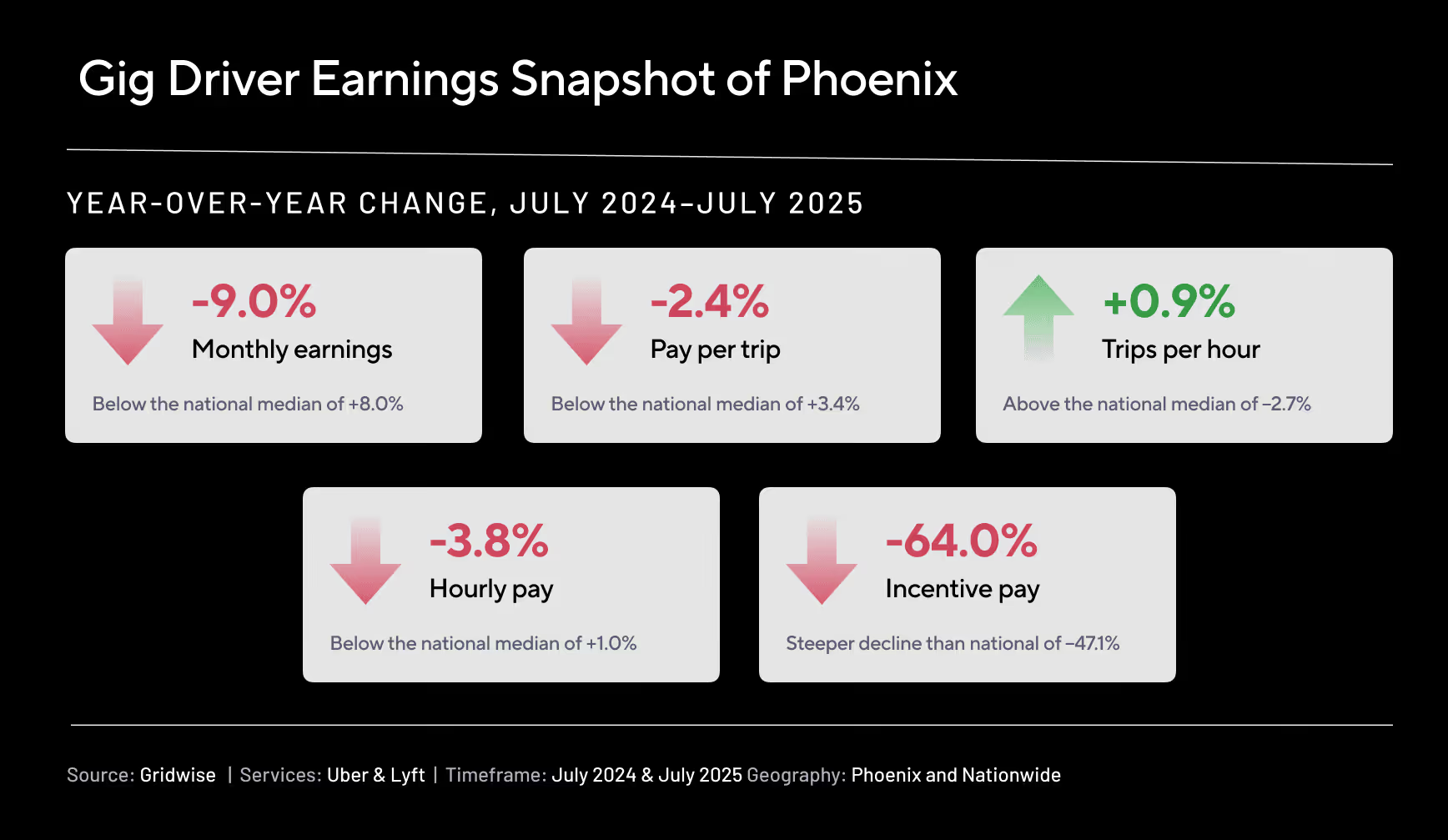
Per-trip and hourly pay are both down –5.3%, with monthly earnings –7.0%. At the same time, trips per hour +1.3% and utilization +1.3% suggest it’s a bit easier to stay busy. If this matches what you’re seeing, consider leaning into higher-value windows (airports, event nights) so the extra activity translates into stronger hourly.
Phoenix
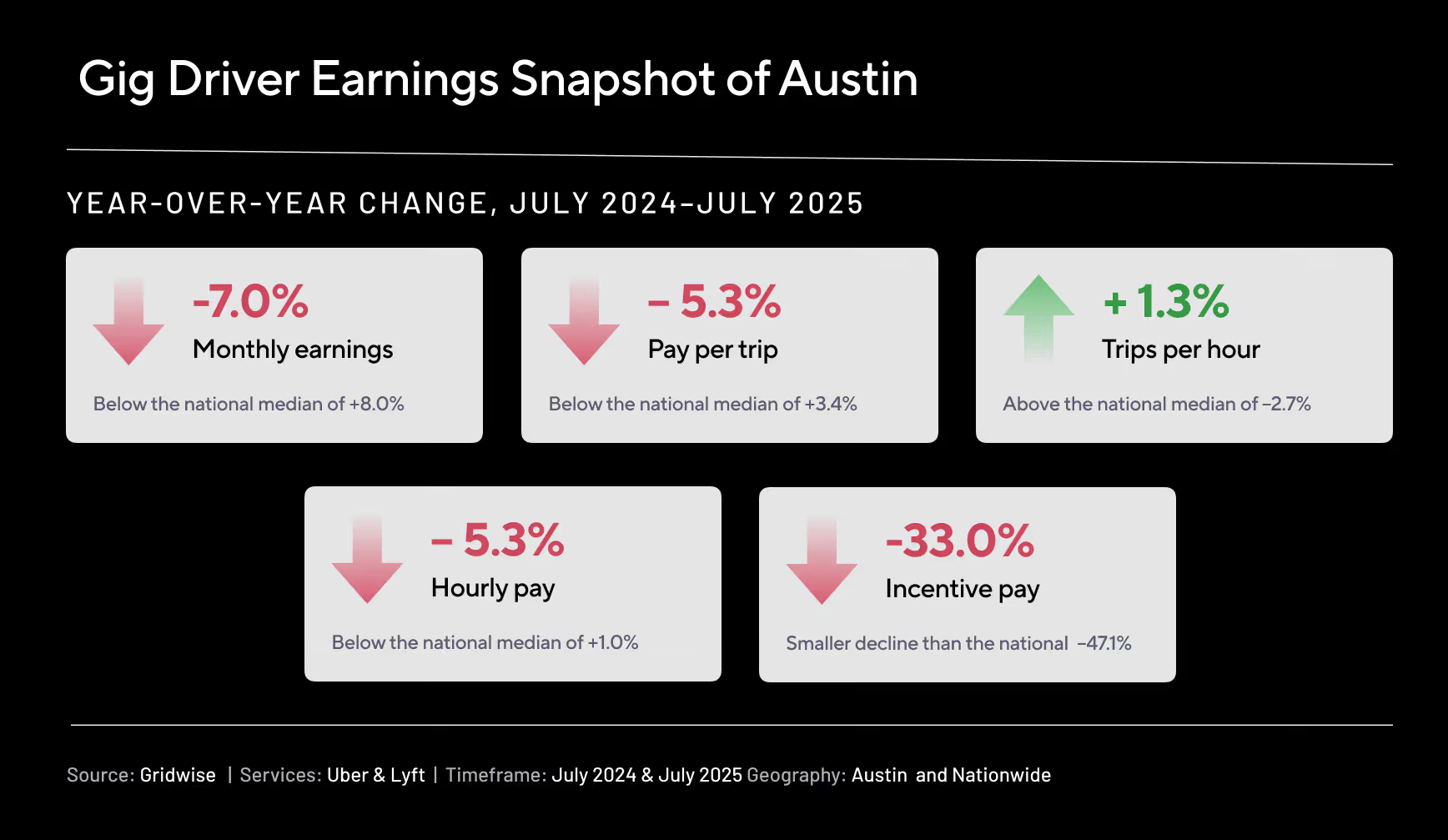
Median per-trip –2.4%, hourly –3.8%, and monthly –9.0% point to softer pay, even though trips per hour +0.9% and utilization +1.4% nudged up. In practice, that can feel like more pings but slightly thinner rides. Timing your blocks around dinner peaks, weekends, and stadium/concert surges can lift the average ticket without adding long hours.
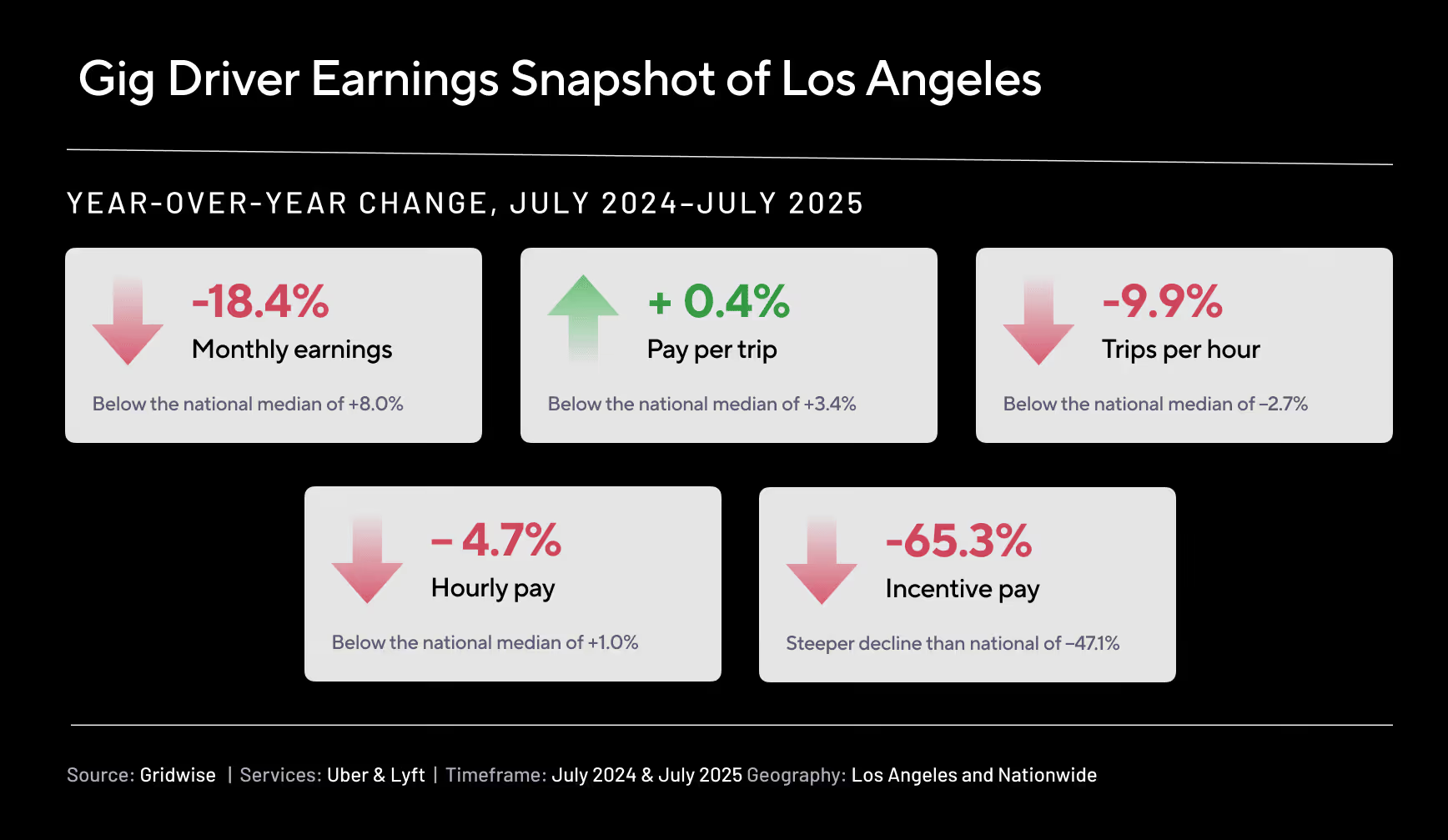
Los Angeles
LA shows the steepest pullback in this group: monthly –18.4%, with hourly –4.7%, trips per hour –9.9%, and utilization –8.6%. Promos also cooled more than the national trend. That doesn’t mean you’re doing anything wrong—it means conditions are tougher. The best counter is to be selective: focus on high-confidence demand (major events, airport windows) and keep a flexible app mix so you’re parked where base fares are strongest.
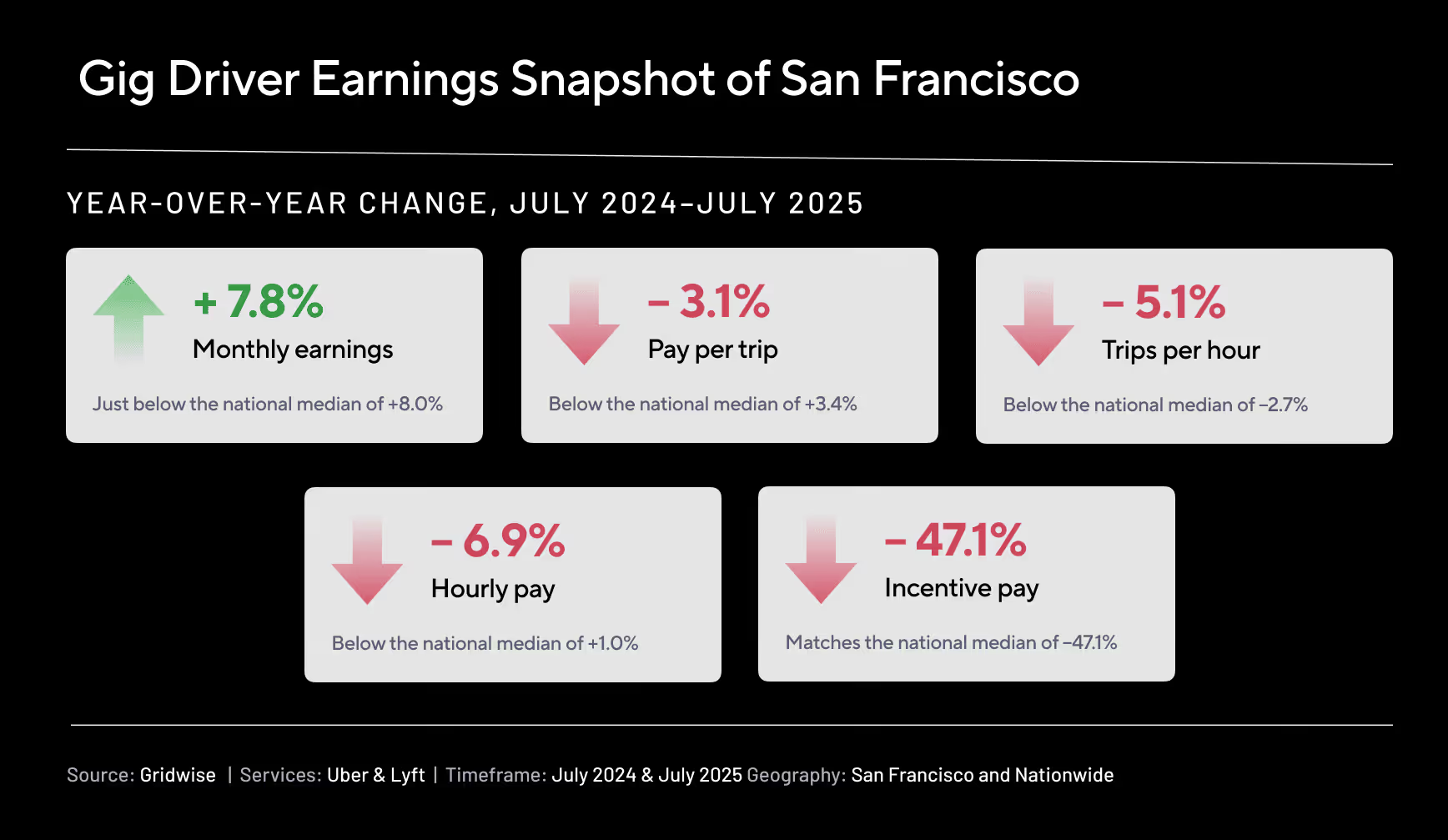
San Francisco
SF is mixed: per-trip –3.1% and hourly –6.9%, yet monthly earnings +7.8%. Many drivers appear to be offsetting lower hourly by shifting when (and sometimes how long) they work. If your hourly looks similar, zero in on the blocks that still deliver—then make those your anchors and trim the rest.
Quick reminder: These are market medians, not destinies. Your results can run above or below these lines depending on your hours, zones, and service mix. In the next section, we’ll distill the key takeaways and then share simple, low-lift adjustments you can test this week to protect—and potentially grow—your earnings. We will also show you practical ways the Gridwise app can help.
What this means for drivers in AV cities
We know every driver’s situation is different, and that’s why these strategies are meant as small tests, not rules. Medians are helpful directionally, but they won’t capture every neighborhood, shift pattern, or app mix.
1) AVs are a factor—but not the only one.
Where AVs are active, some metrics have shifted. But promos, seasonality, local events, tourism, weather, and app policy changes all move earnings too. If your city looks different from the national baseline, it’s more about market dynamics than anything drivers are doing wrong.
2) Nationally, the floor looks stable to slightly positive.
Per-trip, hourly, and monthly figures are up overall. That’s reassuring if you’re outside AV hotspots. Still, national averages smooth over local swings—use them as an anchor, then compare them with your own week-to-week results.
3) Incentives are lighter almost everywhere.
If bonuses feel thinner, you’re not imagining it. This goes beyond AV markets. The practical move: plan around base-fare demand you can count on and treat promos as a bonus when they show up.
4) Small strategy shifts can help offset headwinds.
In several AV cities, drivers seem to keep monthly totals steadier by changing when they drive or leaning into higher-value trips. That doesn’t mean working more hours—it means testing different blocks, staging near predictable peaks, or flexing your app mix to find steadier base fares.
5) Medians aren’t your destiny.
These are market-level medians. Your results can outperform them—especially if your schedule, zones, and app mix line up with local demand. Personalized insights will always be more powerful than national or city-level averages.
Your action plan: put this to work in your city
Here’s how to make the numbers practical. Think of these as small weekly experiments—keep what works in your city, and drop what doesn’t. Remember: these are medians and market trends, not verdicts on your performance.
1) Test one time block each week
Pick two windows you can actually drive (for example, Friday 6–9 p.m. vs. Tuesday 4–7 p.m.) and run each once. Then open Insights → My Trends to compare earnings per hour and trips per hour. Keep the winner next week and replace the loser with a new challenger. Over a few weeks, your schedule shifts toward the hours that pay you best.
2) Build around demand you can predict
When ride flow feels slow, proximity matters. Plan one shift around a major event or an airport bank. Gridwise surfaces Events and Airport signals so you can arrive early, stage just outside congestion, and chain rides while the wave lasts. If When to Drive is available in your market, layer that in to fine-tune start times—then confirm what worked in your Trends.
3) Nudge up your average fare
If per-trip pay has flattened, favor longer, higher-value trips (airports, weekend evenings, big venues). In My Trends, track average trip length alongside per-trip earnings by day and time. When a window reliably produces stronger trips from a certain zone, make it an anchor.
4) Let base pay guide your app choice
With incentives lighter, steady base fares matter more. In your best block, open Insights → Compare Services and filter to that day/time. Compare Uber, Lyft, and delivery by earnings per hour, per trip, and trip volume—then run the app that wins for that block. Quick promo check: bonus ÷ required trips. If the “extra per trip” is small and the window overlaps weak hours in My Trends, skip it.
5) Keep more of what you make
Turn on automatic mileage tracking in the Gridwise app so every mile is logged, including between trips. Record routine expenses like tolls, parking, and car washes as you go. Cleaner records help at tax time and protect your take-home when promos are thin. (For individual tax advice, consult a professional.)
Your weekly testing routine using Gridwise
- Early week: Connect services (if you haven’t), enable mileage, and set a realistic weekly earnings goal.
- Midweek: Run your two test blocks; check My Trends and keep the winner.
- Weekend: Add one Event or Airport window; arrive early and stage smartly.
- Sunday: Use Compare Services to pick the lead app for next week’s best block, lock in one reliable block, pick one new challenger, and log any missed expenses.
Final thoughts
We know earnings aren’t just numbers—they affect your day-to-day and your ability to plan ahead. Nationally, the data points to steady or slightly positive earnings overall, but drivers in AV cities are facing more mixed results and reduced incentives. And because these are medians, it’s natural that your week might look very different.
The best approach is to focus on what you can control. Pay attention to your own trends, try small adjustments, and keep the ones that make a difference for your hourly pay. Gridwise is here to help by showing you how different services compare, helping you plan around events and airports, and tracking miles and expenses so your take-home stays strong. Even small steps—like testing two changes this week and reviewing them on Sunday—can help ease some of the pressure and put more control back in your hands.
We also know AVs add another layer of uncertainty, and that’s why we’ll keep sharing what the data shows—so you’re never left guessing.
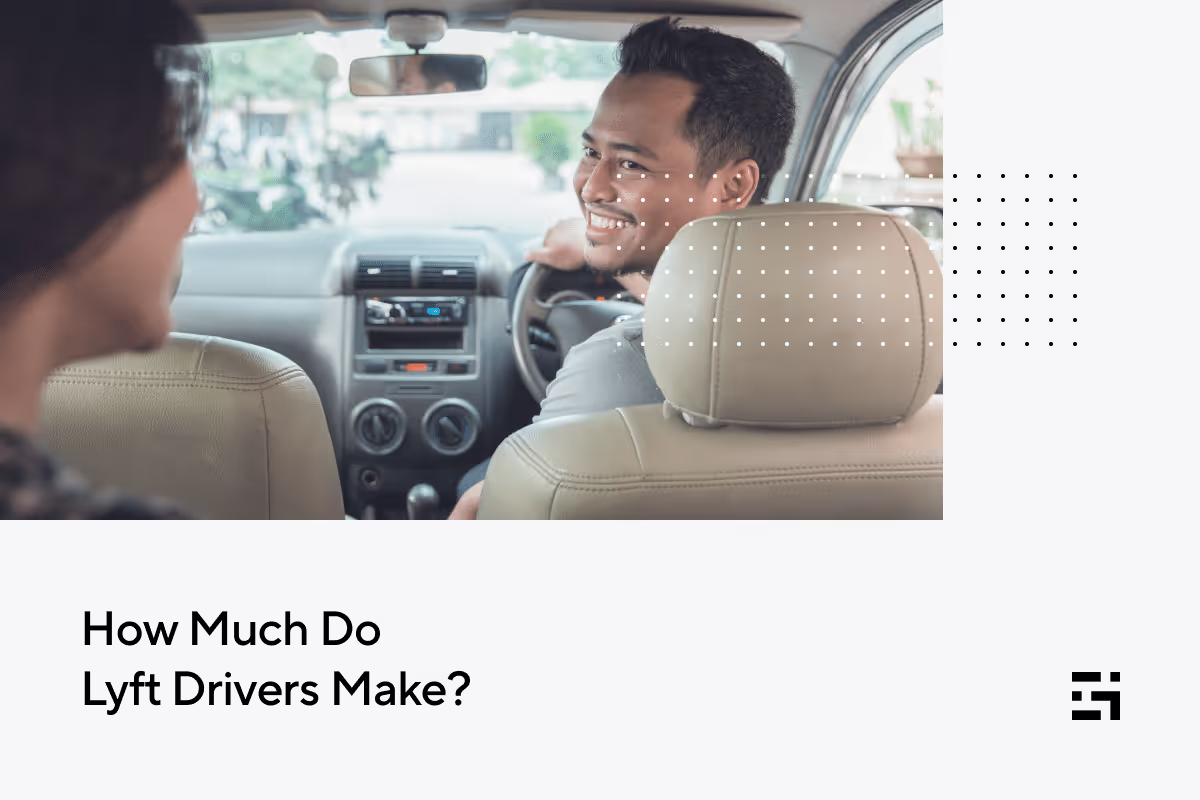
¿Cuánto ganan los conductores de Lyft?
El pago es la cuestión #1 para todos los conductores de Lyft. Entonces, cuánto ganan los conductores de Lyft? Las respuestas que obtienes varían entre los conductores, y Lyft te dará cifras que pueden ser mayores o menores de lo que realmente están ganando los conductores en tu área.
Si quieres conocer la tarifa por hora de los conductores de Lyft y cómo su salario se compara con tus expectativas de ingresos dentro del mercado del trabajo independiente, sigue leyendo. Gridwise tiene datos confiables proporcionados por conductores reales y consejos útiles sobre cómo ganar más dinero con Lyft.
[elementor-template id="20891"]
Lyft: Lo básico
Los requisitos para conductores de Lyft son aproximadamente los mismos que los de cualquier otra plataforma de viajes compartidos. Sin embargo, varían de una ciudad a otra, así que asegúrate de verificar las particularidades de tu ubicación antes de presentar la solicitud. Algunos requisitos adicionales, como licencias de la Comisión de Taxis y Limusinas y seguros adicionales, podrían hacer que convertirse en conductor de Lyft sea un poco más complicado.
El servicio de atención al cliente para los conductores Lyft es una de las muchas maneras en las que destaca Lyft. El sitio web de Lyft tiene un amplio soporte que cubre casi todos los problemas que los conductores se pueden encontrar. Se puede acceder a un centro de aprendizaje integral a través de la aplicación de Lyft.
Lyft hace todo lo posible para compensar a los conductores de manera justa. La empresa se ha comprometido con una política que garantiza que la parte del pago del pasajero que corresponde al conductor sea del 70% o más. Los conductores de Lyft pueden recibir el pago todos los martes o al instante si se inscriben en programas que permiten el acceso instantáneo a sus ganancias.
Las ganancias totales de un conductor de Lyft consisten en salario base, propinas y ofertas basadas en ganancias, que implican un pago adicional por alcanzar los objetivos de ganancias. Hay una larga lista de otros incentivos para conductores, que se otorgan a los conductores con calificaciones sobresalientes, o a los conductores dentro de horarios y zonas de alta demanda. Los bonos de Lyft también pueden venir en forma de programas de ganancias garantizadas y de referir nuevos conductores.
Lyft es una empresa sólida que tiene presencia en una amplia gama de ciudades a lo largo de Estados Unidos y Canadá. Lyft se ha mantenido como líder en el mercado de viajes compartidos y su reputación entre los pasajeros es abrumadoramente favorable. Si eliges conducir para Lyft, es probable que estés muy ocupado llevando pasajeros a sus destinos.
Ahora que conoces algunos conceptos básicos para comenzar a usar Lyft, usemos los datos de Gridwise para ver cuánto puedes ganar.
Cuánto ganan los conductores de Lyft por viaje?
El pago de los viajes de Lyft se basa en tiempo y distancia. Estos elementos, junto con los montos de las propinas, variarán según la ubicación geográfica y otros factores como la demanda y los patrones de tráfico. Los datos de Gridwise muestran el promedio nacional de lo que los conductores de Lyft ganan por viaje.
Cuánto ganan los conductores de Lyft por hora?
Las tarifas por hora a nivel nacional para los conductores de Lyft que se muestran aquí se basan en los ingresos promedio por hora antes de restar los gastos. Los conductores pueden aumentar sus ganancias por hora trabajando durante las horas pico y obteniendo grandes propinas al brindarle un excelente servicio a sus pasajeros.
Cuánto ganan los conductores de Lyft por día?
Es importante recordar que un “día” puede constar de diferentes horas, dependiendo del patrón que siga el conductor. La ubicación también contribuirá a las diferencias en las ganancias diarias y la accesibilidad a bonificaciones para conductores orientadas a la demanda. Paga bien conocer los mejores lugares y momentos para conducir.
Cuánto ganan los conductores de Lyft antes de las propinas?
Examinar las ganancias de los conductores de Lyft antes de las propinas nos ayuda a ver cuánto contribuyen típicamente a las ganancias totales. Las propinas pueden sumar entre un 10% y un 20% a los ingresos de un conductor. Los conductores deben trabajar duro para ganarse la aprobación de sus clientes y alentarlos a dejar grandes propinas, las cuales pueden compensar caídas en el salario base y ganancias.
Cómo se comparan las ganancias de Lyft en general?
Evalúa las ganancias generales de Lyft y mira tu mismo cómo se comparan con tus expectativas. Es difícil responder con precisión a preguntas como "Cuánto ganan los conductores de Lyft semanalmente?" y "Cuánto ganan los conductores de Lyft por milla?", debido a que los hábitos, las ubicaciones y las circunstancias personales varían mucho.
Por ejemplo, una “semana” podría representar cualquier número de días para un conductor, y las ganancias “por milla” pueden variar.
PeríodoPromedio de ganancias brutas diariasPromedio de ganancias brutas diarias antes de las propinasPromedio de propinas brutas diariasGanancias Brutas Por Hora de Trabajo (Promedio)Bonos + Ganancias en Propinas (Promedio)Ganancias Brutas (Promedio)Bonos + Ganancias en Propinas (Promedio Semanal)Ganancias Brutas (Promedio Semanal)2022-Primer Trimestre100.5992.8813.7919.74230.61,144.982.8372.52022-Segundo Trimestre103.0694.9215.7218.16271.81,073.389.7355.52022-Tercer Trimestre95.6187.4014.7217.32230.2947.678.9320.62022-Cuarto Trimestre95.3886.6514.3419.44235.31,027.784.1337.92023-Primer Trimestre95.1186.6413.7120.97221.61,137.775.8360.02023-Segundo Trimestre100.3191.5613.9321.44213.01,239.171.7386.32023-Tercer Trimestre91.0582.8313.3820.42176.51,092.461.5343.4
Qué hace que un conductor de Lyft tenga más éxito que otro? Dedicación, servicio al cliente y consistencia son factores que determinan lo que cualquier conductor puede lograr. El algoritmo de la aplicación de Lyft asigna la mayoría de los viajes de alto valor a conductores con altas calificaciones. Las gratificaciones irán a los conductores más corteses y supereficientes cuando sirven a los clientes de Lyft. Estos son algunos consejos para conductores de Lyft que buscan aumentar sus posibilidades de hacer el máximo dinero posible.
Cómo maximizar las ganancias de Lyft
Comienza aumentando tu eficiencia
- Conoce tu zona. Ten en cuenta las zonas de construcción, evita las áreas con cuellos de botella y mantente al tanto del flujo diario con alertas de tráfico.
- Selecciona bien los horarios para conducir para que estés en una buena ubicación y obtengas la mayor cantidad de ganancias.
- Infórmate sobre los horarios de llegada y salida de eventos.
- Organiza tu rutina de conducción y asegúrate de que tu coche esté listo para los pasajeros en cada turno.
Añade extras para fomentar las propinas
- La limpieza importa! Mantén tu vehículo limpio, por dentro y por fuera. Toma descansos y revisa el asiento trasero en busca de papeles y otros residuos que los clientes puedan haber dejado atrás.
- Sé amigable pero no demasiado. Evalúa el deseo de tus pasajeros de interactuar contigo y sígueles la iniciativa en todo momento.
- Deja que los clientes tengan cosas a su alcance mientras están en tu vehículo. Asegúrate de que la temperatura sea agradable y que la música se adapte a sus gustos. Incluso puedes aceptar solicitudes.
- Apunta siempre a tomar la ruta más eficiente, pero si el cliente tiene sugerencias, considera tomarlas en cuenta. Probablemente ellos saben más que tu sobre su entorno inmediato.
- Servicios extra, desde pañuelos de papel, pequeños snacks y agua hasta una consola de juegos y entretenimiento, pueden convertirte en el favorito de los pasajeros!
- Atiende peticiones especiales. Ayuda a cargar equipaje y paquetes; especialmente caminadores, sillas de ruedas y carritos de bebé; y cuando puedas, di que sí a clientes que viajan con mascotas.
Estate en los lugares correctos en los momentos correctos.
- Realizar viajes compartidos te ofrece horarios flexibles, pero si deseas maximizar tus ganancias, debes programar tu tiempo de conducción para que coincida con los períodos pico de demanda y poder aprovechar al máximo cada turno.
- La ubicación lo es todo. Conoce dónde está la mayor actividad durante las horas del día que elijas conducir, y viaja allí para asegurarte de tener un montón de pasajeros.
Tu ventaja estratégica: Gridwise!
Los conductores de Lyft de todo el mundo saben que el uso de Gridwise es esencial para crear estrategias de conducción exitosas. Estas son solo algunas de las formas en las que puedes beneficiarte al usar Gridwise
- Identifica los servicios más rentables. Compara todos los servicios que puedes utilizar y ve cuáles funcionan mejor en tu zona.
- Registra tus gastos a medida que ocurren. Gridwise rastrea automáticamente tus millas y te permite agregar otros gastos que acumules, desde combustible y limpieza del coche hasta refrigerios y agua para los pasajeros, directamente en la aplicación.
- Rastrea las ganancias a través de múltiples plataformas de trabajo independiente, para que puedas ver el panorama completo de tus ingresos totales.
- Facilítate la preparación de impuestos organizando las ganancias y gastos de todos tus trabajos en una aplicación práctica y útil.
- Obtén información y alertas en tiempo real sobre eventos locales y condiciones climáticas.
- Conoce cuales son los mejores lugares y los mejores momentos para conducir.
- Disfruta de ventajas exclusivas, incluyendo acceso a beneficios, descuentos y ofertas que hacen tu vida como conductor de Lyft más fácil e incluso más rentable!
La comunidad de conductores de Gridwise se beneficia de todas estas cosas y mucho más. No era ya hora de que te nos unieras?
[elementor-template id="20936"]
Más sobre tu éxito dentro de la economía independiente:
- Los mejores momentos para conducir para Lyft
- La Bolsa de Trabajo Gridwise
- Aumenta Tus Ganancias en 2024! Cómo Ganar $1000 Semanales Con Uber
- Cuánto Ganan los Conductores de Uber?
- Cuánto Ganan los Conductores de DoorDash?
- Todo Lo Que Necesitas Saber Sobre Amazon Flex
- Salario de los Conductores de Walmart Spark: Cuánto Gana Un Conductor de Walmart Spark?
- Cuánto Puedes Ganar con Instacart?
- Cuanto Ganan Los Shoppers De Shipt?
- Cuanto Ganan Los Conductores de Uber Eats?

Revealing Rideshare Trends: Multi-Apping and Airport Insights
Long wait times and higher fares are two of the most common reasons passengers switch between rideshare services. A recent passenger experience at LAX illustrates this point:
“We needed a larger vehicle for our rideshare,” he said, “which I knew would cost more. I checked both platforms. There was a 30% price differential between services. The distance I was going came to more than $60. I didn’t have to think twice about going to the less expensive service.”
Rideshare companies can use gig mobility data from Gridwise Analytics to address these challenges and optimize their operations. Our data provides insights into
- multi-apping trends among gig drivers
- airport-specific pricing patterns at major airports like ATL, JFK, LAX, and ORD
- comparisons between pickup and drop-off rides
- how these factors influence passenger satisfaction
Whether you're a rideshare company executive, an investor, or simply curious about the gig mobility industry, this blog delves into how Gridwise Analytics can impact gig company strategies in today's competitive market.
[elementor-template id="20891"]
Multi-apping trends: Insights from gig driver analytics
Multi-apping is the widespread gig driver practice of accepting rides from more than one gig platform. Drivers choose to multi-app based on personal preferences and money-making strategies.
Some gig drivers multi-app between rideshare services (e.g., Lyft drivers will also take Uber rides, and Uber drivers will also take Lyft rides). Other drivers multi-app between categories, such as rideshare drivers accepting food delivery orders during peak hours for that activity and then moving into rideshare in the later hours of the evening.
What percentage of gig drivers multi-app?
Data insights reveal that a sizable percentage of gig drivers from all major platforms engage in multi-apping.
Although the percentage of drivers from Lyft and Uber who multi-app is constantly changing, a distinct pattern of more Uber drivers engaging in the practice prevailed—until early 2023, when Lyft drivers started to multi-app more frequently. By Q4 2023, more than 55% of Lyft drivers multi-apped, as opposed to about 50% of Uber drivers.
Data has also revealed that over 60% of Uber Eats and Shipt gig drivers multi-apped. In the case of Uber Eats, drivers often multi-app because they can easily transition from one service to another on the app. A driver for one of the Uber services can also drive for the other without additional applications or requirements; working for both Uber and Uber Eats can be done from the same app on the gig drivers’ side. Multi-apping through other services, however, requires that the driver have multiple apps open, which can be complicated to manage.
Multi-apping rates between Lyft and Uber
In 2019 we saw that around 10% more Lyft drivers were multi-apping than Uber drivers. This percentage changed drastically in Q1 2022 when analysis showed Lyft drivers started to multi-app with even greater frequency. The number of Uber drivers that multi-apped dropped by more than 10% at the start of 2022. As of Q1 2024, Lyft rideshare drivers were multi-apping with the Uber platform at about 55%, while Uber drivers were multi-apping on the Lyft platform at a rate of just over 25%.
Airport-specific rideshare trends and pricing patterns
Airport rideshare activity presents unique challenges and opportunities for both drivers and companies. Our analysis of gig driver data from four major US airports—ATL (Atlanta), JFK (New York City), LAX (Los Angeles), and ORD (Chicago O'Hare)—reveals distinct patterns in pricing, profitability, and driver incentives.
These insights, drawn from Q4 2023 data with some projections into 2024, highlight the complex dynamics of airport rideshare services and their impact on both driver and passenger experiences.
Airport trip bonus insights
A review of Uber rideshare activity during Q4 2023 revealed that JFK airport has the highest fares for pickups and drop-offs. The only time frame when JFK fares approached equality with other airports was at night, from 9 pm to 6 am. O’Hare Airport in Chicago edged out LAX for the lowest rates.
In 2024, we see new ranges and patterns changing as the year progresses. Our granular, unbiased data allows us to predict future patterns based on years of market insights. Contact our team here.
A review of bonus activity during Q1 2023 at the same airports revealed that Lyft pays higher bonuses per trip on airport pickup and drop-off rides than Uber.
We can speculate that Lyft’s motivation for paying these higher bonuses is to increase driver loyalty, thus guaranteeing a more reliable pool of drivers to reduce their passenger average pickup time. When passenger pickup time is reduced, we can hypothesize that this results in a higher passenger satisfaction rate and could correlate to passenger loyalty.
Airport take rate insights
“Take rate” refers to the difference between what the passenger pays for the ride and what is left for the rideshare company after they pay the driver, plus any fees or other charges associated with the ride (some airports now charge a fee for every rideshare drop-off or pickup, which gets added to the passenger’s rideshare charge).
JFK pickup and drop-off take rate insights
Drop-offs were more profitable than pickups at all the airports reviewed, but JFK showed the widest variation between pickup and drop-off fares in Q4 2023. The average take rate at JFK was 28.4%.
LAX pickup and drop-off take rate insights
While showing less variance than JFK, LAX also had a bigger difference between pickups and drop-offs than other airports. Afternoons between 12 pm and 6pm during this time have a higher take rate.
O’Hare pickup and drop-off rate insights
O’Hare in Chicago shows more equity between pickup and drop-off activity. Pickups and drop-offs have similar take rates in the morning (6 am to 12 pm) and early afternoon (12 pm to 3 pm), with a slight difference of about two percentage points. Differentials are highest between 3 pm and early morning hours.
The best take rates are in the morning and early afternoon, averaging 35.7%.
Atlanta pickup and drop-off take rate insights
Rideshare pickups are more profitable in Atlanta than in other airports, with mornings and early afternoons showing the greatest profitability. Drop-off rides also exhibited higher profitability in Atlanta than in other airports.
Rideshare pickups are more profitable in Atlanta than in other airports, with mornings and early afternoons showing the greatest profitability. Drop-off rides also exhibited higher profitability in Atlanta than in other airports.
Would you like to learn more about the gig driver economy? Our 2024 Gridwise Gig Mobility Report offers numerous insights and data on gig workers, rideshare, food delivery, and other facets of the gig economy.
The impact of airport rideshare insights on passenger experience
1. Pricing and cost efficiency
Analytics show that airport rides often have variable pricing depending on the time of day and location. For example, JFK Airport has the highest fares for pickups and drop-offs, particularly outside night hours, whereas O’Hare in Chicago has the lowest rates.
Understanding these trends allows rideshare companies to adjust their pricing strategies to offer more competitive rates, which can attract cost-sensitive passengers.
2. Wait times and service availability
Competitive bonuses per trip for airport rides could ensure a more reliable pool of drivers. This strategy can lead to shorter wait times for passengers, enhancing their overall experience.
Many drivers engage in multi-apping, leading to longer passenger wait times if drivers regularly switch between platforms. Gig companies can ensure consistent service availability by addressing multi-apping through better incentives and loyalty programs.
3. Profitability and service quality
The profitability of pickups and drop-offs varies by airport. For instance, Atlanta shows the highest pickup profits, while JFK exhibits the widest variation between pickup and drop-off fares. By understanding these profitability trends, rideshare companies can optimize their operations to ensure high-quality service where it is most needed, thereby improving passenger satisfaction.
4. Tailored bonuses
Different airports exhibit unique patterns and can benefit from location-specific strategies. LAX, for instance, has higher take rates in the afternoons, while O’Hare shows more equity between pickup and drop-off activity in the mornings and early afternoons.
Tailoring bonuses and surge pricing to these trends can help rideshare companies more effectively meet passenger expectations by ensuring they have sufficient driver supply.
5. Predictive analytics
Granular, unbiased data allows companies to predict future patterns based on historical insights. This predictive capability enables rideshare companies to prepare for and meet passenger demands efficiently, ensuring a smoother and more satisfactory experience.
By leveraging these insights from gig driver analytics, rideshare companies can make informed decisions that enhance pricing strategies, reduce wait times, improve service quality, and tailor their offerings to specific airport trends, contributing to higher passenger satisfaction.
The value of granular data and unbiased insights for rideshare platforms
Passengers will continue to evolve into more savvy users of their rideshare services. Rideshare passengers are well aware of surge pricing and often take steps to avoid those extra surcharges. They can compare prices from providers within seconds.
Through careful analysis of this data, rideshare companies can develop pricing strategies and bonus structures that attract passengers and keep drivers happy and loyal to their platform. By developing strategies based on real-world driver data, gig platforms have the potential to improve their profit margins sustainably.
Gridwise Analytics: An unbiased source of comprehensive gig economy insights
Rideshare and delivery are highly competitive services. Passengers can quickly compare prices and wait times on their phones and select companies based on arrival time or cost. Gridwise Analytics insights give companies reliable data for making decisions that allow them to retain highly competent and loyal drivers and determine pricing strategies that passengers find attractive and economical.
Have a look at these articles to discover further insights:
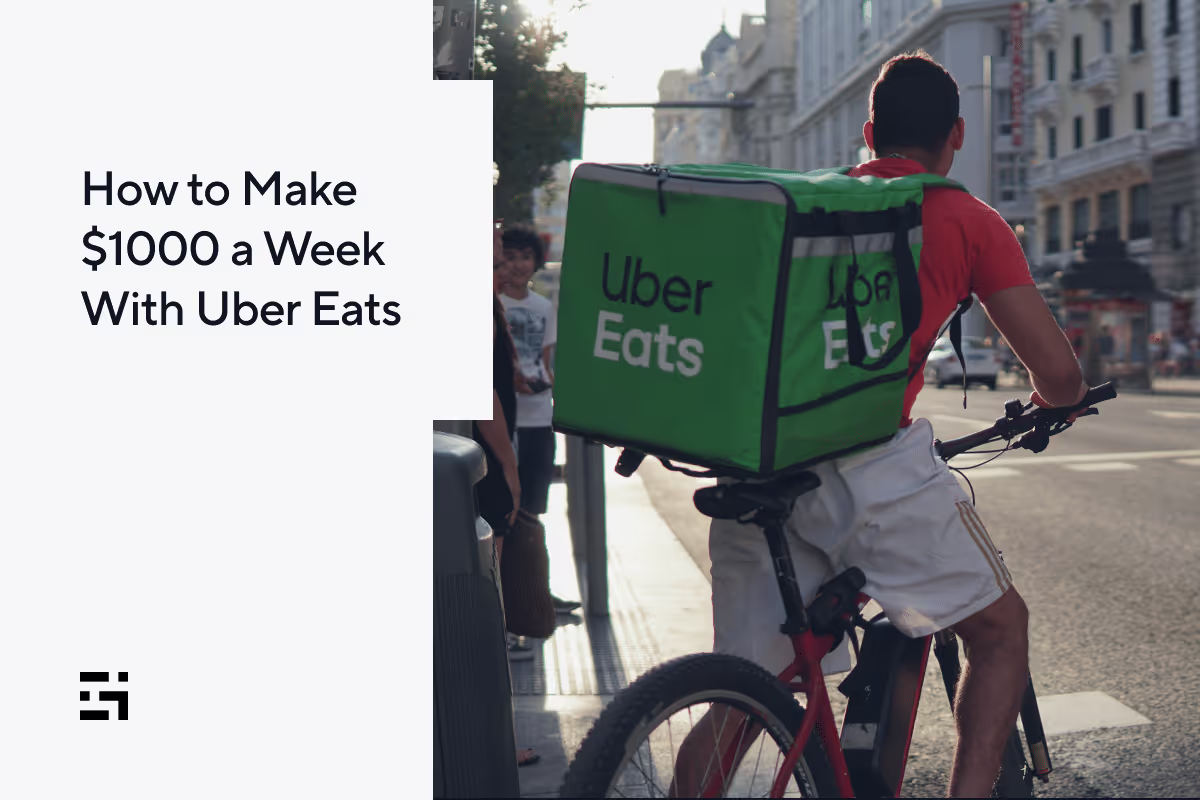
Cómo ganar $1,000 a la semana con Uber Eats
En este blog, exploraremos las estrategias y técnicas que pueden mostrarte cómo ganar $1000 por semana como conductor de entrega de Uber Eats. Cubriremos todo, desde optimizar tus zonas y horarios de entrega hasta la maximización de tus propinas y satisfacción del cliente. Ya seas un conductor con Uber Eats experimentado o si recién acabas de empezar, esta guía te proporcionará los datos y los pasos para llevar tus ganancias como conductor de Uber Eats al siguiente nivel.
Convertirse en un socio conductor de entrega de Uber Eats puede ser una oportunidad lucrativa, especialmente si logras ganar $1000 a la semana consistentemente. Al entender la plataforma, optimizar tus estrategias de entrega y centrarte en la satisfacción del cliente, puedes maximizar tus ganancias y convertir Uber Eats en una fuente confiable de ingresos.
Vamos a cubrir los siguientes temas para proporcionarte coaching e ideas para ayudarte a impulsar tus ganancias hasta ese nivel de $ 1000 por semana:
[elementor-template id="20891"]
¿Qué hacen los conductores de Uber Eats?
Los conductores de Uber Eats entregan comida preparada la mayoría de las veces, pero también pueden comprar y entregar productos de tiendas y supermercados. El trabajo es bastante sencillo. Recibes una solicitud de un pedido, conduces al restaurante o tienda para recogerlo, y luego la entregas al cliente. Si ya conduces con Uber, puede elegir tomar pedidos de envíos para Uber Eats en cualquier momento.
Si no eres un conductor de Uber Eats todavía, es bastante fácil convertirte en uno. Esta publicación de Gridwise te dice qué hacer si quieres registrarte y empezar a ganar dinero al estilo Uber Eats. Muchos conductores de viajes compartidos le dan la bienvenida a la oportunidad de entregar alimentos en vez de personas. Este artículo de Nerdwallet cubre el trabajo con Uber Eats desde ese ángulo.
Hay algunas ventajas buenísimas para trabajar con Uber Eats. En muchas ciudades ni siquiera necesitas tener un coche. Puedes usar una bicicleta o un scooter o incluso caminar para hacer tus rondas. Si utilizas coche, los requisitos de Uber Eats son mucho más fáciles de cumplir que los de Uber para viajes compartidos.
También tienes mucha flexibilidad. Usted puede comprar y entregar productos y artículos, pero no tiene que hacerlo. Y, al igual que la mayoría de los trabajos de conducción, puedes elegir tus propias horas y planear las ubicaciones donde quieres trabajar.
Usar funciones de Gridwise Cuándo conducir y Dónde conducir para ayudarte a averiguar qué horas de trabajo y qué áreas específicas van a ser las más rentables para ti. Datos reales recopilados de personas que hacen entregas te mostrarán los patrones de ingresos de los conductores en tu ciudad.
[elementor-template id="20949"]
¿Cuánto puedes ganar con Uber Eats?
La respuesta sincera a esta pregunta es: ¡básicamente, todo lo que quieras! Todo depende de cuántas horas le dediques y qué tan estratégico eres sobre tu trabajo. Las ganancias varían de una zona a otra, como señala este artículo de Entrepreneur. Para darte una línea de base, veamos las ganancias de los conductores de Uber Eats que rastrearon sus ganancias con Gridwise.
Recuerda que estos números nos muestran solo promedios de ganancias. Para hacer $1,000 por semana con Uber Eats, tendrás que ser mejor que la media y te mostraremos cómo. Por ahora, sin embargo, es bueno tener estas cifras para que consigas una idea aproximada de donde empezar.
¿Cuánto hacen los conductores con Uber Eats?
Los datos de Gridwise nos dicen lo siguiente:
- Las ganancias mensuales promedian alrededor de $444,00 por mes.
- Las ganancias brutas por viaje oscilan entre $9.00 y $10.00.
- Las propinas representan aproximadamente el 50% de los ingresos de la mayoría de los conductores de Uber Eats, lo que equivale a aproximadamente $225.00 al mes.
¿Se gana bien con Uber Eats? Puede ser. Mientras que hay otros gigs que pagan más por viaje, si usted conduce por Uber Comats, siempre estará bastante ocupado.
https://datawrapper.dwcdn.net/HPAz8/3
También puedes ver que, a diferencia de muchos otros trabajos, la propina juega un papel enorme en las ganancias de Uber Eats.

Con estos números como base, ¿qué podemos decir sobre cómo ganar $1,000 por semana con Uber Eats? Como dijimos en la introducción, va a ser un bullicio, pero es realmente posible. Para averiguar cómo hacer más dinero con Uber Eats, empecemos mirando cuántos viajes hicieron estos conductores “promedio” cada mes.
Sabemos que el promedio de ingresos brutos fue de $444.00 al mes, y los conductores obtuvieron alrededor de $10.00 por viaje. Eso significa que tomaron 44 o 45 viajes mensuales, que se dividen en 11 viajes semanales. No es un montón de entregas de Uber Eats, ¿verdad?
El hecho de que los conductores de Uber Eats promediaran tan pocos viajes nos demuestra que muchos conductores utilizan más de una aplicación al mismo tiempo. Esto se llama multi-apping, y puedes aprender más sobre él en esta publicación de Gridwise. Si quieres responder a la pregunta de cuánto puedes hacer con Uber Eats, entonces necesitas pegarte a la aplicación y seguir conectándote a esos pedidos. También necesitas estrategias sólidas, así como algunos trucos y consejos internos.
Cómo ganar el mayor dinero posible en Uber Eats: Tácticas de manejo para entregas
Llegar a esos $1,000 a la semana con Uber Eats no es tan difícil cuando recuerdas que los conductores que vimos hacer alrededor de $111 a la semana solo realizaban alrededor de 11 viajes en el mismo periodo de tiempo. ¡Eso no es gran cosa! Si trabajas la aplicación Uber Eats como un maestro, pronto tendrás muchos más viajes que eso, alcanzando fácilmente el número necesario para llegar a $1,000 por semana. Ahora, veamos algunas tácticas que vas a necesitar para llegar a ese nivel.
- Quédate con la aplicación Uber Eats y haz seguimiento de tus ganancias. Gridwise puede hacer eso fácilmente para ti. Simplemente sincroniza tu aplicación Uber Eats con Gridwisey podrás ver cuánto has ganado con Uber Eats, qué horarios fueron más rentables y tu ganancia promedio por hora. Acumular viajes con Uber Eats tiene otros beneficios, incluyendo ventajas y bonificaciones que se otorgan a los mejores conductores.
- Aprovecha los precios dinámicos y promociones. La subida de precios se aplica cuando hay mucha demanda. Cuando la subida de precio está en efecto, muchos de los viajes que hagas pagarán más de lo habitual. Se ofrecen promociones a conductores que completen un número determinado de viajes en un período determinado de tiempo. Días, noches y horas de alto tráfico te dan estas posibilidades de obtener ganancias extra. Desafíandote a completar el número correcto de viajes para promociones aumentará el número de viajes con los que puedes contar para grandes ganancias, también. Conoce más acerca de la paga, impulsos y promociones de las subidas de precios en Uber Eats en esta publicación en el blog de Gridwise.
- Dile sí a duplicar las órdenes. Con Uber Eats, puedes obtener pedidos consecutivos o por lotes. Los pedidos consecutivos se realizan cuando recibes una nueva solicitud mientras estás en camino a entregar un pedido anterior. La aplicación de Uber Eats cronograma estos viajes automáticamente, por lo que no se te enviará fuera de tu camino.
Los pedidos por lotes son la forma de Uber Eats de agrupar los pedidos o del mismo restaurante o de dos establecimientos de comida cercanos. Obtienes dinero —y crédito para el recuento de viajes— por todos los pedidos que completes, además de las propinas de clientes, sin tener que hacer un montón de viajes separados.
- Súbele al encanto y consigue propinas más grandes. Ser amable es realmente parte del trabajo del conductor de Uber Eats, y obtener propinas es una forma en la que los que maneja con Uber Eats hacen dinero más allá de su pago base. Lleva esas servilletas y condimentos extra, usa equipos que mantenga los alimentos y las bebidas a la temperatura correcta y eviten derrames y consideren las necesidades de sus clientes. Si entregas comestibles, Se extra cuidadoso con artículos delicados como pan y huevos.
Y lo más importante, sigue las direcciones de tus clientes, y mantente en contacto con ellos si van a haber retrasos, o si tienes preguntas sobre su pedido. Esta publicación de Gridwise te dirá cómo obtener propinas más grandes como conductor de entregas.
- Usa aún más encanto para mantener tus calificaciones altas. Como conductor de Uber Eats, serás calificado por el restaurante o tienda donde recojas los pedidos, así como por los clientes que están esperando la entrega. Este sistema de calificación bidireccional está diseñado para mantenerte alerta, para que Uber pueda mantener a la gente satisfecha con tu servicio. No te preocupes, tú también puedes calificarlos.
Hay otra razón por la que tu calificación como conductor es importante. No solo te mantiene en buena situación con Uber; te ayuda a calificar para el programa de incentivos Uber Eats Pro. Para obtener más información sobre Uber Eats Pro y lo que se necesita para obtener beneficios como servicios preferidos, descuentos, y ofertas, echa un vistazo a esta publicación del blog de Gridwise.
Movidas inteligentes de negocios que sellan el trato
Ahora que sabes cómo arrasar con las entregas que necesitas para hacer $1,000 a la semana con Uber Eats, va a ser sencillo llegar allí. Hagámoslo aún más fácil, con movimientos de negocios que impulsan tus ganancias y reducen tus gastos. Si las utilizas, también será fácil decir sí cuando la gente pregunte: “¿Puedes hacer buen dinero con Uber Eats?”
Minimiza gastos. Evita acumular facturas grandes de comida rápida trayendo tus propios alimentos y bebidas. Puede que no pienses que tienes hambre cuando apenas empieces tus viajes Uber Eats, pero cuando el aroma de pizza de pepperoni, hamburguesas con queso de primera calidad, y las papas fritas calientes empiezen a oler a través de su coche, eso podría cambiar. Trae un sándwich u otro alimento saludable de casa, y compra agua embotellada al por mayor para ahorrar toneladas de efectivo en comparación con lo que cuesta comprar porciones individuales.
Maximiza las deducciones de impuestos. Otra forma de minimizar tus gastos es maximizar sus deducciones fiscales. Comienza rastreando millaje con Gridwise.
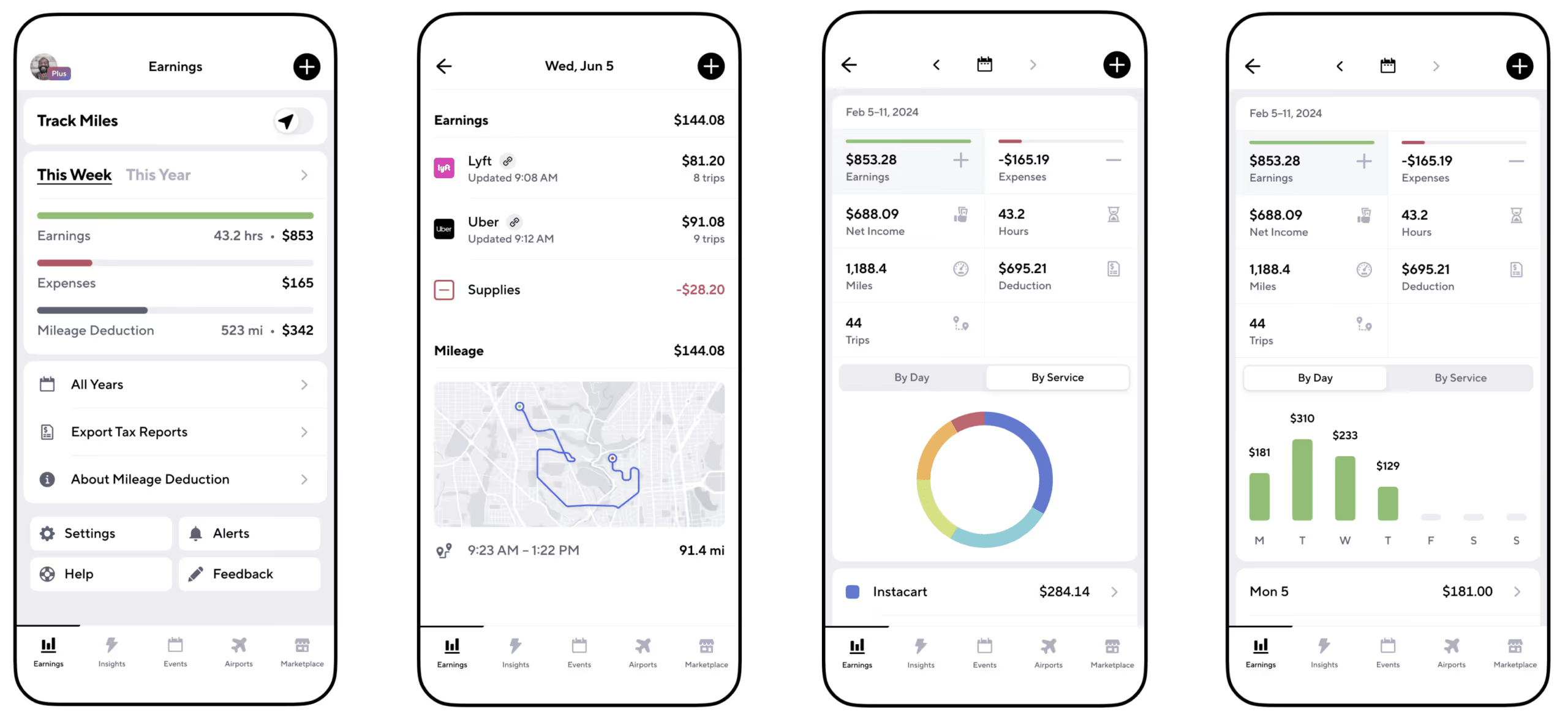
Aplicación Gridwise
Gridwise capta cada milla deducible que conduces, incluyendo la distancia que cubras entre los viajes que tu aplicación de manejo registra. Conoce qué gastos puedes deducir, y ponlos a trabajar para ti cuando llegue el momento de los impuestos. Conoce más sobre estrategias de deducción fiscal en la Guía Tributaria de Gridwise para los conductores.
Aumenta las ganancias con referidos
Como contratista independiente, probablemente estés buscando maneras de ganar aún más dinero del que puedes ganar con Uber Eats. Y la mayoría de trabajadores independientes como tú disfrutan obteniendo ingresos pasivos. Con Uber Eats, hay una manera muy fácil de hacer eso:referidos!
Todo lo que necesitas hacer es encontrar amigos y animarlos a hacer entregas para Uber Eats. Si realizan un cierto número de entregas en un tiempo especificado, ¡Recibirás un pago por no hacer nada más que haber hecho que se registren bajo tu código de referencia! Las tasas de pago varían según la ciudad, así que comprueba en tu aplicación de Uber Eats para saber cuál podría ser la oferta actual y conoce más sobre el programa de referidos en el sitio web de Uber Eats.
Recuerda también: los “amigos” no necesitan ser tus mejores amigos. Muchas personas que realizan entregas llevan tarjetas con un código QR que enlaza a su información de referencia, así que casi cualquier persona con la que encuentres puede unirse a Uber Eats y aumentar tus ganancias. Podrías encontrar una fuente de ingresos pasivos en la gasolinera, enredes sociales o en la reunión de tu escuela secundaria. Cuanto más te esfuerzas, más tienes que ganar, ¿verdad?
Domina el arte del autoempleo
Como conductor de Uber Eats, eres un contratista independiente. Eso significa que la empresa no va a retener tus impuestos, ni te va a proporcionar un seguro, ni va a llevar la cuenta de tus ingresos, ni te va a informar sobre deducciones fiscales. Tendrás que hacer todas estas cosas por tu cuenta.
Si quiere maximizar tus ventajas fiscales, abre una entidad comercial oficial. Puedes constituirte (crear una corporación) o trabajar como sociedad de responsabilidad limitada (LLC). También puede trabajar con un acuerdo "DBA" ("haciendo negocios como"), pero la corporación o LLC hará un mejor trabajo de protegerte de responsabilidad.
Establecer una corporación o LLC te ofrece mejores ventajas fiscales que ser un único propietario. Por ejemplo, si simplemente recaudas tus ganancias en tu cuenta privada, se te cobrarán impuestos por autoempleo en la mayoría de los estados. Y pagar impuestos adicionales es algo que todos queremos evitar, en la medida de lo posible, dentro de los límites legales.
Cada conductor de Uber Eats necesita aprender sobre autoempleo, y hay algunos recursos excelentes que puede revisar. Echa un vistazo al sitio web de CareerOneStop sobre autoempleo que ayudará a explicar los básico. También puedes consultar con un contador profesional, o investigar en otros sitios web para aprender más acerca de crear una empresa.
Alcanza tu mercado
Mira el área que te rodea para ver donde es más probable que consigas la mayor cantidad de entregas. ¿Dónde están todos los restaurantes? ¿Dónde podría la gente estar más inclinada a realizar pedidos? ¿Qué horas quieres conducir? ¿Qué actividades podrían estar sucediendo a esas horas? Piensa en altas horas de la noche, salida de las escuelas, así como desayunos, comidas y cenas.
Sé realista sobre el potencial de tu área y consciente de la apertura de nuevos servicios. Por ejemplo, en Nueva York, ya hay una pestaña en la aplicación Uber Eats que permite a los clientes pedir comestibles. En nuestro artículo sobre el mejor servicio de entrega de alimentos para trabajar verás que Uber Eats se compara bien respecto a otras empresas de entrega. principalmente por su potencial para expandir las oportunidades de ganancia de los conductores.
Entonces, ¿Se gana bien con Uber Eats? Como dijimos, no es una garantía automática de que todos harán $1,000 por semana con Uber Eats. ¡Probar las sugerencias que te damos aquí debería ponerle en el camino correcto! ¡Sal y empieza a sumar esas órdenes y a acumular unas ganancias impresionantes!
[elementor-template id="20936"]
Obtén más información sobre Uber Eats en estas publicaciones del blog de Gridwise:
- La guía del conductor de entrega: Usando la aplicación Uber Eats
- Todo lo que necesitas saber sobre conducir para Uber Comats
- Uber Eats Pro: Lo que los conductores necesitan saber
- ¿Buscas un trabajo distinto, a tiempo parcial o a tiempo completo? Echa un vistazo a la bolsa de trabajo Gridwise.
Preguntas frecuentes sobre Uber Eats
¿Cómo funciona la plataforma Uber Eats para los conductores?
Uber Eats es un servicio de entrega de alimentos que conecta a los clientes con restaurantes locales y socios independientes de entrega. Como conductor de Uber Eats, recibirás notificaciones de solicitudes de pedidos de entrega cercanos, que puedes aceptar y completar. La plataforma proporciona flexibilidad, permitiéndole trabajar en tus propios horarios y ganar dinero basado en el número de entregas que completes.
¿Cuáles son los requisitos para convertirse en un socio conductor de entregas de Uber Eats?
Para convertirse en un socio conductor de entrega Uber Eats, tendrás que cumplir con ciertos requisitos, como tener una licencia de conducir válida, un vehículo matriculado, y pasar una verificación de antecedentes.
¿Cómo puedo elegir la zona de entrega adecuada para maximizar mis ganancias?
Elegir la zona de entrega adecuada puede afectar significativamente sus ganancias, ya que algunas áreas pueden tener una mayor demanda y pedidos mejor pagados. Es importante investigar e identificar las zonas en tu área que tienden a tener las oportunidades de entrega más consistentes y lucrativas.
¿Cómo puedo aprovechar las horas pico de entrega y las subidas de precio?
Comprender los horarios pico de entrega, como las horas de comida y los fines de semana, y aprovechar las subidas de precio pueden aumentar tus ganancias. Ten en cuenta cuándo la demanda es más alta en tu área y ajusta tu programa acordemente para capitalizar estos periodos con picos.
¿Cuáles son algunos consejos para maximizar propinas y la satisfacción del cliente?
Ofrecer un excelente servicio al cliente y hacer el esfuerzo extra para asegurar una experiencia positiva puede llevar a más propinas y negocio repetido. Prioriza la comunicación, puntualidad y la atención al detalle para mantener a tus clientes felices y satisfechos.
¿Cómo puedo establecer metas semanales realistas para llegar a mi objetivo de $1000?
Para hacer $1000 por semana con Uber Comats, es esencial establecer objetivos semanales realistas y seguir tus ganancias y gastos. Comienza por determinar tu objetivo de ganancia y dividirlo en metas diarias o semanales alcanzables. Esto te ayudará a mantenerte en el camino y hacer ajustes según sea necesario.
¿Cuáles son algunas estrategias para la planificación eficiente de rutas y la navegación?
La planificación efectiva de rutas y navegación pueden ahorrarte tiempo y combustible, permitiéndole completar más entregas. Utiliza aplicaciones de mapeo y aprovecha características como actualizaciones de tráfico en tiempo real y direcciones paso a paso para encontrar las rutas más rápidas.
¿Cómo puedo equilibrar mis entregas de Uber Eats con otros compromisos?
Desarrolla una rutina que te permita capitalizar las horas de entrega pico manteniendo un equilibrio saludable entre trabajo y vida. Considera utilizar herramientas como aplicaciones de calendario para planificar tu disponibilidad y rastrear tus horas para asegurar que estés maximizando tu potencial de ganancias sin sacrificar tu vida personal.
¿Cuáles son las consideraciones clave para mantener mi vehículo como conductor de Uber Eats?
Mantener tu coche limpio y bien mantenido es crucial para maximizar tus ganancias de Uber Eats. Cambios de aceite programados regularmente, rotación de neumáticos y otros mantenimientos preventivos pueden ayudar a prolongar la vida de tu vehículo y minimizar el tiempo de inactividad. Adicionalmente, los gastos relacionados a los vehículos, tales como combustible, seguro y reparaciones, asegurarán que estés contabilizando estos costos y maximizando tus ganancias netas.
¿Cuáles son las obligaciones fiscales y las consideraciones legales para los conductores de Uber Eats?
Como conductor de entrega de Uber Eats, es esencial entender las obligaciones fiscales y las consideraciones legales que vienen de ser un contratista independiente. Esto incluye reportar correctamente tus ganancias, deducir los gastos de negocio elegibles y hacer pagos de impuestos estimados trimestralmente. Adicionalmente, necesitas asegurarte de que tienes la cobertura de seguro apropiada, como el seguro de automóvil personal y posiblemente seguro de automóvil comercial, para protegerte a ti mismo y a tu vehículo mientras te encuentras realizando entregas.

How a Cash Advance Can Boost Your Gig Business
This post is brought to you by Ualett.
Being your own boss comes with incredible freedom. You get to choose your hours, decide where you work, and have full control over how much you want to earn. But running your own gig business also means staying on top of expenses, planning ahead, and keeping your income as consistent as possible.
Sometimes you need extra resources to keep your business moving forward. An unexpected expense, such as a flat tire, a broken phone, or a sudden repair, can bring your gig work to a halt and lead to a drop in income. Or you might be looking to invest in better tools that can help increase your earnings. In either case, having access to fast and flexible cash can make all the difference.
That is where Ualett comes in. Ualett (pronounced “Wallet”) is a financial platform built specifically for gig workers and micro-businesses. With fast cash advances, no credit checks, and a user-friendly mobile app, Ualett helps you stay in control of your gig work and get ahead financially.
[elementor-template id="20891"]
Why Cash Flow Matters for Gig Workers
Unlike traditional jobs, gig work does not come with a predictable paycheck. You get paid based on how much you work and when. That kind of flexibility is great for setting your own schedule, but it also means you need to manage your cash flow carefully.
Here are some common reasons why drivers might need quick access to funds:
- Paying for unexpected vehicle repairs
- Covering gas costs during a slower week
- Replacing or upgrading delivery gear
- Managing personal expenses between pay periods
- Taking advantage of surge pricing or bonus opportunities that require upfront costs
When you do not have the funds you need to work, you are not just covering costs but potentially losing income. Having access to a short-term cash advance can help you stay active on the road and prevent disruptions to your earnings.
How Ualett Helps Drivers Take Control
Ualett was designed with gig workers in mind. Unlike traditional loans or credit cards, Ualett offers a flexible and supportive way to get cash when you need it, without jumping through hoops or dealing with high interest rates.
Here is how Ualett works:
- Quick and easy sign-up: The process takes just minutes through their mobile app.
- Fast funding: Get access to cash in less than 24 hours, helping you get back to work quickly.
- No credit checks: Your eligibility is based on your work, not your credit score.
- Flexible remittance schedule: Ualett’s remittance system adapts to your gig earnings, so you are not stuck with a rigid schedule.
- Trusted by gig workers: Over 300,000 drivers across the United States already use Ualett.
This is not just a cash advance app. It is a financial tool built specifically for how you work and earn in the gig economy. You can explore more about how Ualett supports gig workers here.
Smart Ways to Use a Cash Advance
Using a cash advance wisely can help you grow your business, not just cover shortfalls. Here are a few smart strategies drivers use:
- Fix urgent vehicle issues quickly: Staying off the road means missing out on income. A cash advance lets you get back to driving faster.
- Fuel up before high-demand hours: Need gas to work during a big event or surge? Get ahead of the rush without waiting for your next payout.
- Buy or replace delivery essentials: Whether it is a new phone mount, thermal bag, or portable charger, small gear investments can lead to better ratings and tips.
- Plan for high-earning days: Use the cash to ensure you are ready to take advantage of holidays, major events, or peak weekends when earnings can be much higher.
A cash advance can be part of a larger strategy to make more money, especially when paired with smart planning and the right tools.
Real Stories and Trusted Results
Ualett is not just a new idea in financial services. It is already trusted by a large community of gig workers across the country. They also have an outstanding 4.9 rating on Trustpilot and thousands of reviews.
On their blog, Ualett shares real stories from drivers who used their cash advances to stay in business and boost their income. For example, in the article “Real Stories, Real Impact: How Ualett Helps Rideshare Drivers Overcome Financial Hurdles”, rideshare drivers from Orlando discuss how Ualett provided them with fast, reliable cash advances during times of financial strain, enabling them to continue working and supporting their families.
Another piece, “How Gig Workers Keep Las Vegas Running”, highlights the essential role gig workers play in the city's economy and how Ualett's financial solutions have been instrumental in helping them navigate the unique challenges of their work.
These stories are not uncommon. Ualett was created specifically for situations like this. They understand the ups and downs of gig work and offer a solution that fits the rhythm of your business.
Combining Ualett and Gridwise for Long-Term Success
A cash advance can be a powerful tool, but combining it with the right data and planning makes it even more valuable.
Here is how Gridwise can help you maximize the impact of your Ualett advance:
- Track your income and expenses: Know exactly how much you can request and remit without stress.
- Plan your schedule with “When to Drive”: Focus on high-earning hours to get the most out of your investment.
- Compare performance across platforms: Know which app is delivering the best results so you can plan your shifts strategically.
Monitor your trends: Get insights into your long-term earnings and find ways to increase efficiency.
Together, Ualett and Gridwise give you both the financial flexibility and the strategic insights you need to grow your income and stay in control.
Final Thoughts
Access to cash when you need it can be the difference between losing a weekend of work and making your best week yet. With Ualett, gig workers have a fast, flexible, and trusted way to bridge gaps, make smart investments, and stay on the road.
If you are looking for a way to smooth out your income and keep your gig business running strong, Ualett can help. And when you pair it with the power of Gridwise, you are not just surviving the gig economy—you are thriving in it.
Ready to take control of your earnings?
Explore Ualett to see how a cash advance can support your business.

How Much Do Instawork Workers Make in 2025?
Instawork is a growing platform that connects hourly workers with shifts in hospitality, events, warehouses, and more. It appeals to those looking for flexible, on-demand jobs—but the big question for most people is: how much can you really earn?
[elementor-template id="20891"]
According to Indeed, Instawork workers earn hourly wages ranging from $12.41 for roles like Food Runner to $31.67 for Site Manager, with specific examples such as Prep Cook at $17.66/hour and Bartender at $19.95/hour
Instawork promotes itself as a way to earn up to $25/hour or more, and many experienced users do hit those numbers—especially in roles requiring specialized skills or weekend availability.
How Instawork’s Pay Model Works
Instawork isn’t a delivery or rideshare platform—it focuses on matching flexible workers to shifts in hospitality, warehouse, and light industrial work.
Here's how it works:
- Workers browse and claim shifts posted by businesses
- Pay is listed upfront for each shift (typically hourly)
- Workers are paid direct deposit or Instant Pay (with a small fee)
- You are treated as an independent contractor, responsible for your own taxes and expenses
Unlike gig platforms that rely on tips or dynamic pricing, Instawork jobs offer fixed hourly pay. This can be an advantage if you prefer consistent, predictable earnings.
What Affects Instawork Earnings
Your earnings on Instawork aren’t just about availability. Several other factors can influence your take-home pay:
Location
Instawork operates in over 40 cities across the U.S., including major metros like Los Angeles, New York, Houston, Atlanta, and Chicago. Areas with higher demand for hospitality and warehouse work generally offer more shifts and higher hourly rates.
Job Type
Pay varies based on the nature of the work. For example, basic warehouse support may pay $15/hour, while bartending, event staff, or forklift operation may pay $20–$25/hour.
Shift Availability
Being available for early mornings, weekends, or overnight shifts can unlock higher-paying opportunities. Businesses often increase pay to attract workers during off-hours or on short notice.
Experience and Ratings
Workers with a high average rating and good shift-completion history are more likely to get access to premium or exclusive gigs. Some businesses prioritize workers who’ve completed jobs with them before.
Types of Jobs and Pay Differences
Instawork covers a range of industries, and the type of shift you take has a big impact on your pay. Here are a few examples:
Job TypeTypical Pay RangeFood Runner/Busser$14–$16/hourBartender/Server$18–$25/hourWarehouse Associate$15–$18/hourForklift Operator$20–$25/hourLine Cook or Prep Cook$16–$22/hourEvent Setup Crew$17–$20/hour
Picking up roles that match your skill set—or that require certifications—can increase your hourly earnings.
Tracking Your Hours and Expenses
While Instawork provides in-app access to past shifts and pay, you’re responsible for managing your finances, taxes, and mileage if applicable (for example, if you drive to job sites).
Using a tool like Gridwise helps you:
- Track total earnings across jobs and weeks
- Monitor expenses like mileage, parking, or gear
- Organize your income for quarterly and annual taxes
- Compare Instawork earnings with other gig platforms you may use
This becomes especially helpful if you’re working across multiple job types or apps and want to see where you’re making the most money per hour.
[elementor-template id="20949"]
Disclaimer: Gridwise is not a tax advisor or financial institution. Please consult a tax professional for personalized advice.
Maximizing Earnings with Smart Scheduling
To increase your Instawork income, you need more than just availability—you need strategy. Here’s what experienced workers recommend:
- Claim shifts early. New shifts drop daily. Set alerts and check frequently.
- Build a good rating. Show up on time, follow instructions, and finish your shifts. A strong profile can unlock better-paying gigs.
Target high-demand roles. Skills like bartending, cooking, forklift operation, or AV tech often come with higher hourly rates. - Work peak periods. Holidays, weekends, and event seasons (like summer festivals) tend to bring in the most jobs.
- Track trends. Use Gridwise to analyze your performance by job type, day of week, or even location.
The more informed your approach, the more consistent your earnings.
Final Thoughts on Making Instawork Work for You
Instawork offers a flexible, scalable way to earn income—especially if you prefer hourly work over task-based apps like rideshare or delivery. In 2025, average pay sits around $17–$18/hour, with room to grow based on experience, availability, and role type.
Whether you’re working part-time or building a full schedule, your success depends on treating gig work like a business. That means showing up professionally, tracking your metrics, and finding the right shifts for your goals.
[elementor-template id="20936"]
Wondering how much other gig platforms pay?
- How To Make $1000 A Week With DoorDash
- Increase Your Earnings in 2024! How to Make $1000 per Week With Uber
- How Much Do Uber Drivers Make?
- How Much Do Lyft Drivers Make?
- Everything You Need to Know About Amazon Flex
- Walmart Spark Delivery Driver Pay: How Much Does a Walmart Spark Driver Make?
- How Much Can You Make on Instacart?
- How Much Do Shipt Shoppers Make?
- How Much Do Uber Eats Drivers Make?
- Check out the Gridwise Job Board

Multi-Apping’s Role in Pay and Platform Power
The gig economy has evolved far beyond single-platform loyalty. Today's most successful drivers strategically navigate multiple platforms, maximizing earnings through what industry insiders call "multi-apping." According to Gridwise Analytics data spanning January 2024 to December 2024, this practice has become a defining characteristic of the modern gig workforce, with profound implications for both drivers and the platforms competing for their attention.
The data reveals a compelling narrative: drivers who embrace multi-apping consistently earn more in total per week than their single-platform counterparts. At the same time, specific platforms have emerged as common denominators among drivers who multi-app. Understanding these dynamics is crucial for platform operators, investors, and anyone seeking to comprehend the strategic forces reshaping gig work.
[elementor-template id="20891"]
Multi-Apping Leads to Higher Pay
It’s no surprise that drivers switch between apps to increase their earnings, but what’s It’s no surprise that drivers switch between apps to increase their earnings, but what’s striking is how effectively they do it. Gridwise Analytics data confirms that multi-apping isn’t just common, it works. Drivers who diversify across platforms earn more, and the specific combination of services they use can shape how much that income grows.
The data reveals two key dynamics:
- Earnings rise steadily with each additional app used
- Platform-specific patterns influence how those earnings scale
Together, these insights show that drivers don’t just multi-app to stay busy, they do it strategically to grow their income of course.

Multi-Apping Helps Drivers Earn More, But the Data Tells a Deeper Story
At first glance, the chart below shows that earnings rise neatly as drivers add more apps. And that’s true—to a point. Weekly pay increases as drivers transition from using one service to two, then three, and eventually four or more. But what’s happening behind the scenes is more nuanced than a clean step-by-step climb.
The bars for each app—Uber, Lyft, DoorDash, and others—don’t represent entirely separate groups of drivers. Instead, they often include the same drivers counted multiple times, just grouped differently depending on the number of platforms they used that week.
Here’s what that means:
- A driver who used Uber and Lyft in a week is inc luded in both the “Uber + 1” and “Lyft + 1” bars.
- If that same driver adds DoorDash to their rotation, they show up again in the “Uber + 2,” “Lyft + 2,” and “DoorDash + 2” categories.
- By the time we reach the “4+ apps” group, most drivers are included in nearly every bar, because working 4 or more out of the 6 listed apps means you're showing up in at least four of the bars.
So while the data shows that drivers who work across multiple apps earn more, that convergence in the “4+” tier doesn’t mean the platforms themselves are paying more equally—it just reflects that we’re mostly seeing the same high-earning drivers across each platform’s data.
In short, this isn’t a story of platform pay leveling out. It’s a story about the power of diversification, how the most active, strategic drivers stack opportunities across multiple apps to reach higher total earnings. What we’re seeing is less about parity between platforms and more about how a small, ambitious subset of drivers is pushing their income ceiling by showing up everywhere.
How Drivers Combine Apps to Earn More
The multi-app landscape reveals distinct patterns of platform affinity and strategic positioning. Gridwise Analytics data shows which platform drivers are most likely to combine, creating a map of the gig economy's interconnected ecosystem.

Uber's Central Position in the Multi-App Economy
Uber emerges as the most connected platform in the multi-app ecosystem. Lyft drivers show the highest cross-platform usage rate, with 49% also working for Uber — the most substantial single-platform overlap in the multi-app ecosystem. Uber Eats drivers also frequently pair with Uber (36%), and Instacart drivers show a notable 20% overlap with Uber Eats. There are many other services who multi-app with Uber Eats.
This positioning reflects Uber's strategic advantage as a multi-modal platform. Drivers can seamlessly transition between rideshare and delivery services within the same ecosystem, reducing friction and maximizing utilization. The data suggests that Uber has successfully created platform gravity, attracting drivers from competing services into its broader ecosystem.
DoorDash's Isolation Challenge
In contrast, DoorDash drivers exhibit low multi-hopping rates compared to other major platforms. Only 18% of DoorDash drivers also work for Uber Eats, and just 4% work for multiple apps, including Uber, Grubhub, or Instacart. This relative isolation may reflect DoorDash's market dominance in food delivery, where drivers can achieve sufficient earnings without needing to combine platforms.
However, this isolation also represents a strategic vulnerability. If DoorDash drivers begin seeking additional income sources or flexibility, they may gravitate toward other platforms.
Peak Hours Drive Multi-App Strategy
The timing of multi-apping reveals sophisticated driver strategies that align with demand patterns across different services. Gridwise Analytics data shows how multi-apping behavior fluctuates throughout the day, peaking during high-demand periods. This highlights how drivers actively balance platforms to maximize earnings during lunch, dinner, and rush-hour rideshare windows. The data reveals distinct patterns across platforms.

Rideshare Drivers Earn More Than Delivery Drivers
The earnings advantage seen in multi-apping is also reflected in the underlying economics of individual services. As shown in the table below, rideshare platforms like Uber and Lyft consistently offer higher weekly gross earnings than food and package delivery platforms, even when drivers aren't multi-apping.

Chart from Gridwise Analytics 2025 Annual Gig Mobility Report
For drivers who don’t or can’t multi-app aggressively, platform selection alone can significantly impact earning potential. Rideshare’s higher revenue per hour and per mile provides a natural earnings floor, a key factor in driver strategy, especially in markets with fewer multi-app options.
Retention Dynamics: Long-Term Platform Loyalty in a Multi-App World
While multi-apping drives higher earnings, platform retention remains a critical factor for long-term driver engagement. Gridwise Analytics data reveals significant differences in how platforms retain drivers over extended periods.
Rideshare Platform Retention Patterns
While both Uber and Lyft start with strong initial retention, the gap widens over time. By month 11 of a driver’s tenure with the service, Uber retains 33% of its drivers compared to Lyft’s 25%, a modest but meaningful edge. Still, the broader picture is clear: long-term retention across ridesharing remains low, highlighting ongoing challenges in driver engagement and platform loyalty.

Delivery Platform Retention Patterns
The delivery sector shows even more pronounced retention differences. Gridwise Analytics data tracking cohorts from January to April 2024 reveals distinct performance patterns across major delivery platforms.
Instacart emerges as the retention leader, maintaining 41% of drivers after 11 months. This superior retention likely reflects the platform's focus on grocery delivery, which offers more predictable demand patterns and higher average order values compared to restaurant delivery.
Grubhub follows with 32% retention, while DoorDash and Uber Eats show lower retention rates at 20% and 18%, respectively. These differences highlight the importance of platform design, compensation structure, and market positioning in maintaining long-term driver engagement.

Data-Driven Insights for Strategic Decision Making
Gridwise Analytics provides the operational intelligence necessary to comprehend the competitive landscape of a multi-app economy. From revealing how platform stacking boosts driver earnings to identifying where retention strategies succeed or falter, our data surfaces the trends that matter most to operators and investors. As gig platforms vie for loyalty in an increasingly fluid landscape, insights into driver behavior, peak-time strategies, and cross-platform affinities are crucial for driving growth, enhancing retention, and establishing a long-term strategic advantage.
If you want to learn how these insights can inform your platform strategy and retention efforts, connect with our team.
Trabaje de forma más inteligente. Gane más.
Ya sea que conduzcas, entregues o recojas turnos, Gridwise te ayuda a hacer un seguimiento de las ganancias, el kilometraje y el rendimiento para que puedas mantener el control de tu trabajo. Descarga la aplicación y toma las riendas hoy mismo.
