Blog de Gridwise
¡Lee el blog de Gridwise para obtener consejos y sugerencias sobre cómo ganar más dinero mientras conduces para Lyft, Uber, DoorDash, GrubHub y más!

The Gridwise Job Board: Find Your Ideal Job or Gig Work
Gridwise is an essential assistant app created by gig workers for gig workers. Our mission is to support those engaged in gig work in every way possible. We understand how challenging it can be to deal with income instability, a lack of benefits, and job insecurity that often comes with gig work. The Gridwise app tracks and organizes earnings and expenses, and offers a wide array of discounts, deals, and services that make the lives of independent contractors easier and more rewarding.
We firmly believe it’s possible to make a viable living and create a gig experience that offers flexible hours, variety, and excitement. With issues such as consistent earnings and job security in mind, Gridwise is proud to offer a centralized platform that shows you how to find gig work and secure reliable opportunities. We’re proud to introduce the Gridwise Job Board.
[elementor-template id="20891"]
The Gridwise Job Board: Key features
Because Gridwise is dedicated to serving the gig worker community, we’ve filled the Gridwise Job Board with useful features that won’t waste your precious time.
- Comprehensive listings. Find part-time, full-time, temporary, and per-task work. Drive or deliver with your vehicle, utilize an employer’s vehicle, or even find non-driving gig work.
- User-friendly interface. Find the jobs that are right for you with a tap of your screen.
- Verified opportunities. We vet the jobs before they are listed to ensure you’re getting high-quality job postings.
How to get more gig work, seasonal, part-time or full-time jobs with the Gridwise Job Board
Looking specifically for “gig work apps” or “gig jobs near me?” You’re in luck. Our filters and search functions send you directly to the listings you seek.
Here’s how it works.
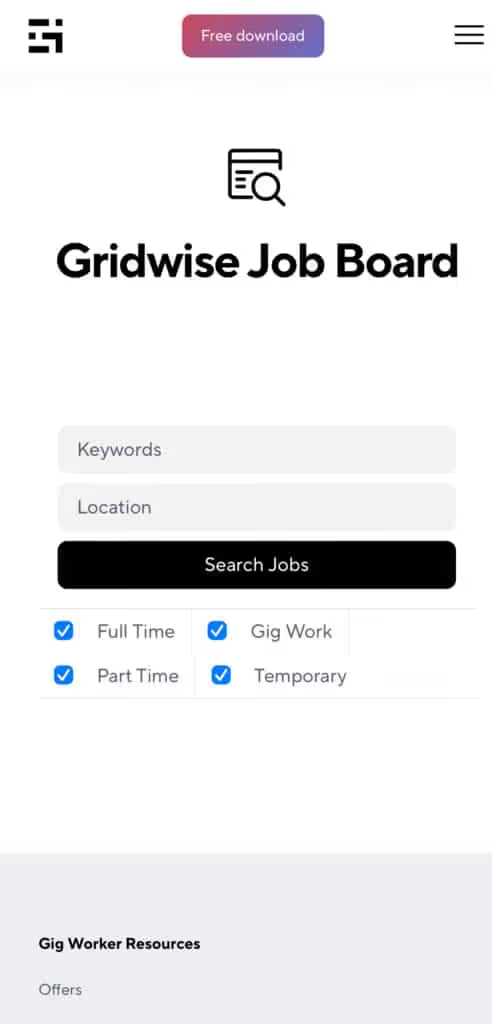
- Access the Job Board via the Gridwise website.
- Search for jobs by type, location, and more.
- Select the job that interests you, and read all about it.
- Scroll through the description, and if it appeals to you, click “Apply for job.”
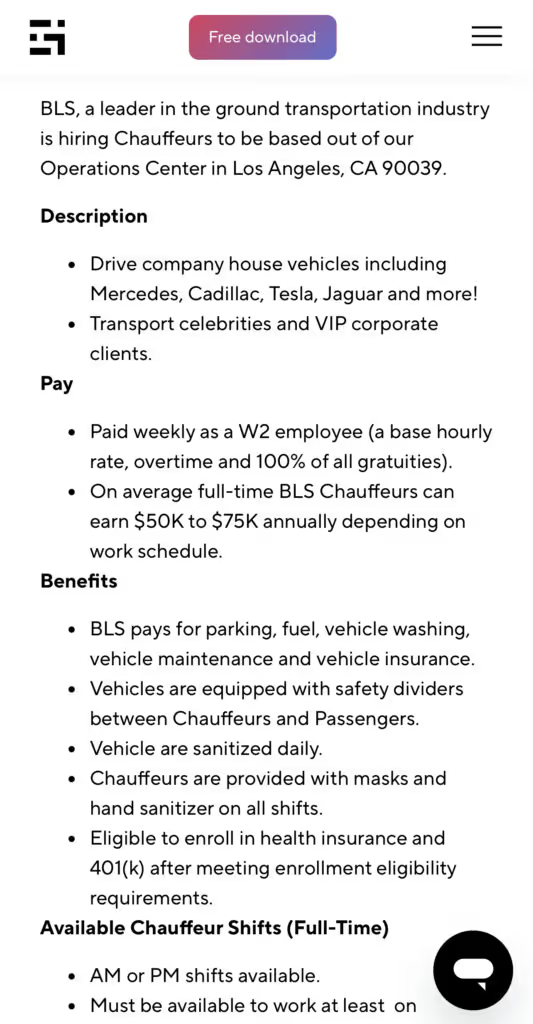
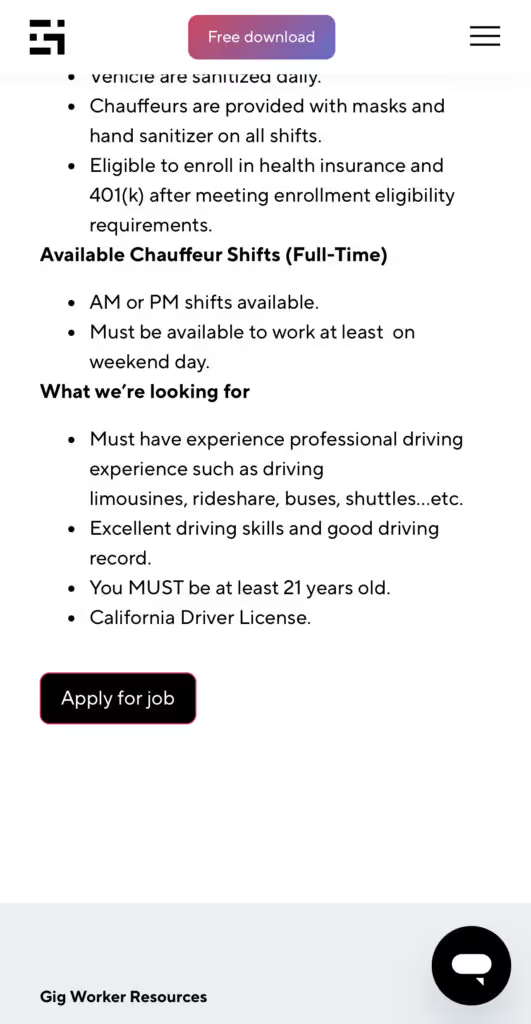
Many types of jobs are available. Adjust the search filter to see the full variety of opportunities that will let you cash in. Deliver food, set up catering, do rideshare driving, get paid for doing package delivery, and much more. You’ll find short-term gigs, long-term contracts, and part-time positions.
Perks of the Gridwise Job Board for gig workers
Gig workers who know how to make extra money will appreciate how the Gridwise Job Board lets you multiply your chances of bringing in big earnings. Here’s how:
- Increased stability. Use the Gridwise Job Board to find part-time or permanent jobs in addition to the part-time gigs you already have. Always keep a steady stream of earning opportunities flowing toward you.
- Flexibility and autonomy. Choose jobs that fit your schedule, work around other jobs and family duties, and still leave room for some fun in your life. Discover side hustles to supplement your full-time job, permanently or just for the season.
- Skill development. Find part-time work that lets you use a skill you already have, or try your hand at something new. It’s a smart way to develop a portfolio to showcase what you can do, or even to find permanent employment.
Get Gridwise and stay up to date on the Gridwise Job Board
Gig workers need plenty of information and assistance, and Gridwise is here to give it to you. Download the app and get essential features such as
- seamless earnings tracking
- mileage tracking
- expense recording, including notes
- low-cost and no-cost insurance benefits
- access to affordable medical, dental, vision, mental health, and alternative care
- professional services including legal and financial help
- deals and discounts
- weather, events, and traffic reports
- inside information on where and when to drive
[elementor-template id="20936"]
More to know about gig work:

5 Best Mileage Trackers For Gig Drivers
Many drivers ask, “Do I really need a mileage tracking app?” The answer is simple: only if you want to have an accurate count of all the miles you can legally deduct from your taxable income! You might think your rideshare or delivery driving app has got you covered. After all, they do quite a good job of logging the miles you drive while you’re on a trip or delivery. But, if you want to have the best app to track mileage for Uber, Lyft, Doordash, Instacart, or the other apps you may use, you need more. Why is that?
Without a separate tracker, you’re missing the miles you drive in between pings. Did you realize that all the miles you drive, from the moment you begin your shift until it’s over (as long as you don’t drive several miles on a break to hang with your friends), are tax deductible! That means you need something besides your driving app to keep an accurate count of your travels. Read this Gridwise post to see how important it is to keep track of every deductible mile.
You won’t be surprised to hear that there’s an app for tracking miles. In fact, there are several of them. Here, we’re going to tell you about five top mileage tracking apps, and help you figure out which one is best for you.
Before we get to the list and identify the best mileage tracker app, let’s clarify what exactly a mileage tracking app is. According to G2.com’s technology glossary, mileage tracking is done for the purpose of keeping a log of mileage that is either reimbursable or tax deductible.
And yes, of course you can track your miles simply by taking readings on your odometer. But are you really prepared to account for how many miles you drove for personal reasons and subtract them from the total to get your business mileage? Even if you can remember all that and do the arithmetic, if you want an accurate reading of the miles you drive for business, and can therefore deduct, a mileage tracking app will save you a lot of trouble and prevent you from making costly errors.
Plus, as a gig driver, you have specific needs when it comes to a mileage tracker. Ideally, you’d be able to handle mileage tracking and several other functions all in one app. It can be maddening enough to deal with driving apps, particularly if you’re an avid multi-apper. You would want your mileage tracker app to help you keep account of other aspects of your business, including income, expenses, and inside information about the art of gig driving.
Not all mileage apps are equal, to be sure! Let’s look at five of the best apps to track mileage and figure out which is the best app to track mileage with Uber and Lyft, or what mileage tracker app is best for DoorDash.
[elementor-template id="20891"]
1. Zoho Expense
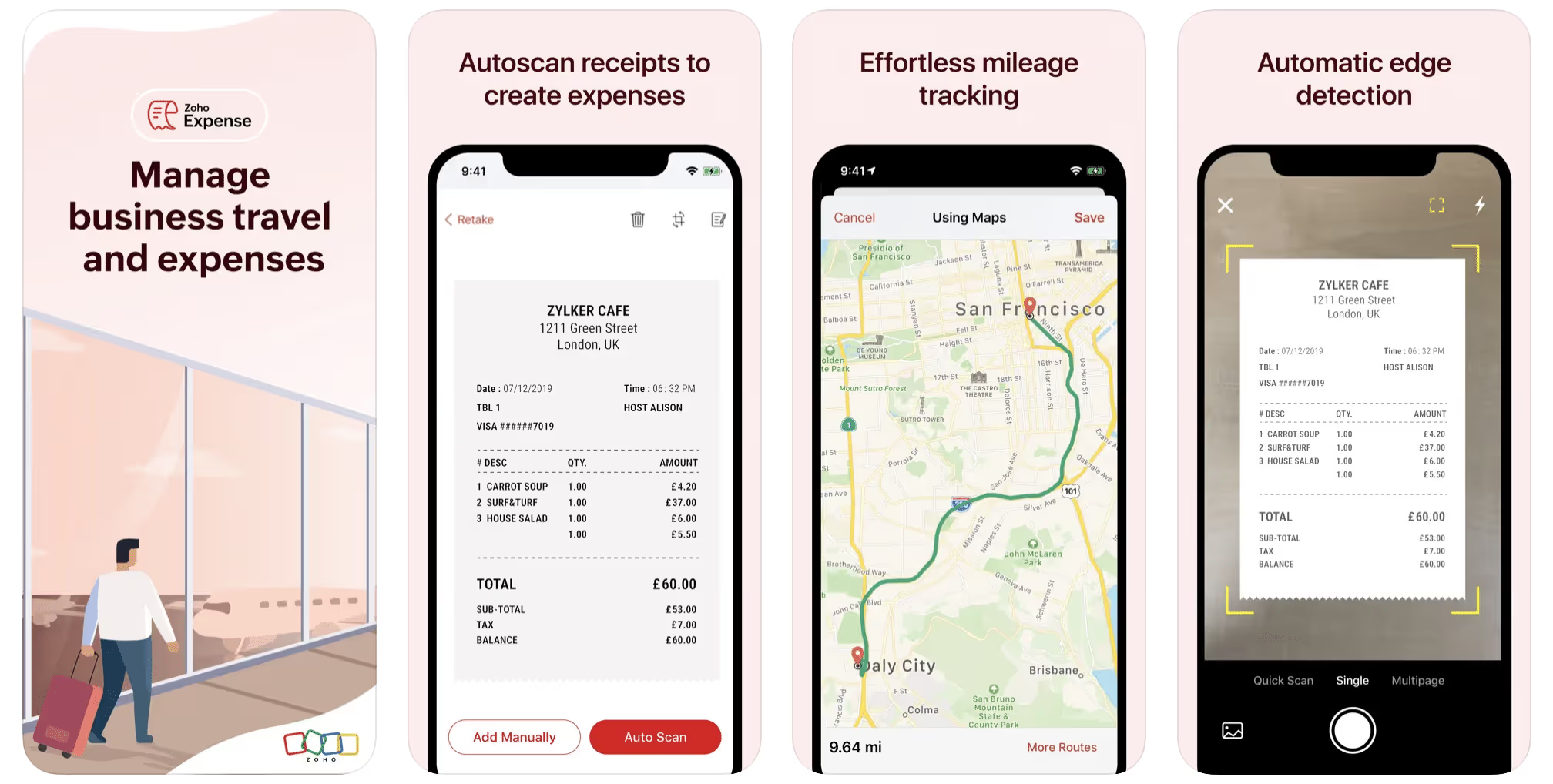
First up is Zoho Expense, which does exactly what its name says. This app is designed to allow companies to give employees a uniform way to create and submit expense reports. It can be used by individuals, including gig drivers, as well.
It includes a mileage tracker, as well as features that let you track other deductible expenses, including the ability to scan and record receipts.
Available on Android and Apple: Yes
Ratings: 4.8 stars on App Store, 4.7 stars on Google Play
Free Version: Yes
Subscription price: $3 per month, billed annually
Created specifically for gig drivers: No
2. Quickbooks Online
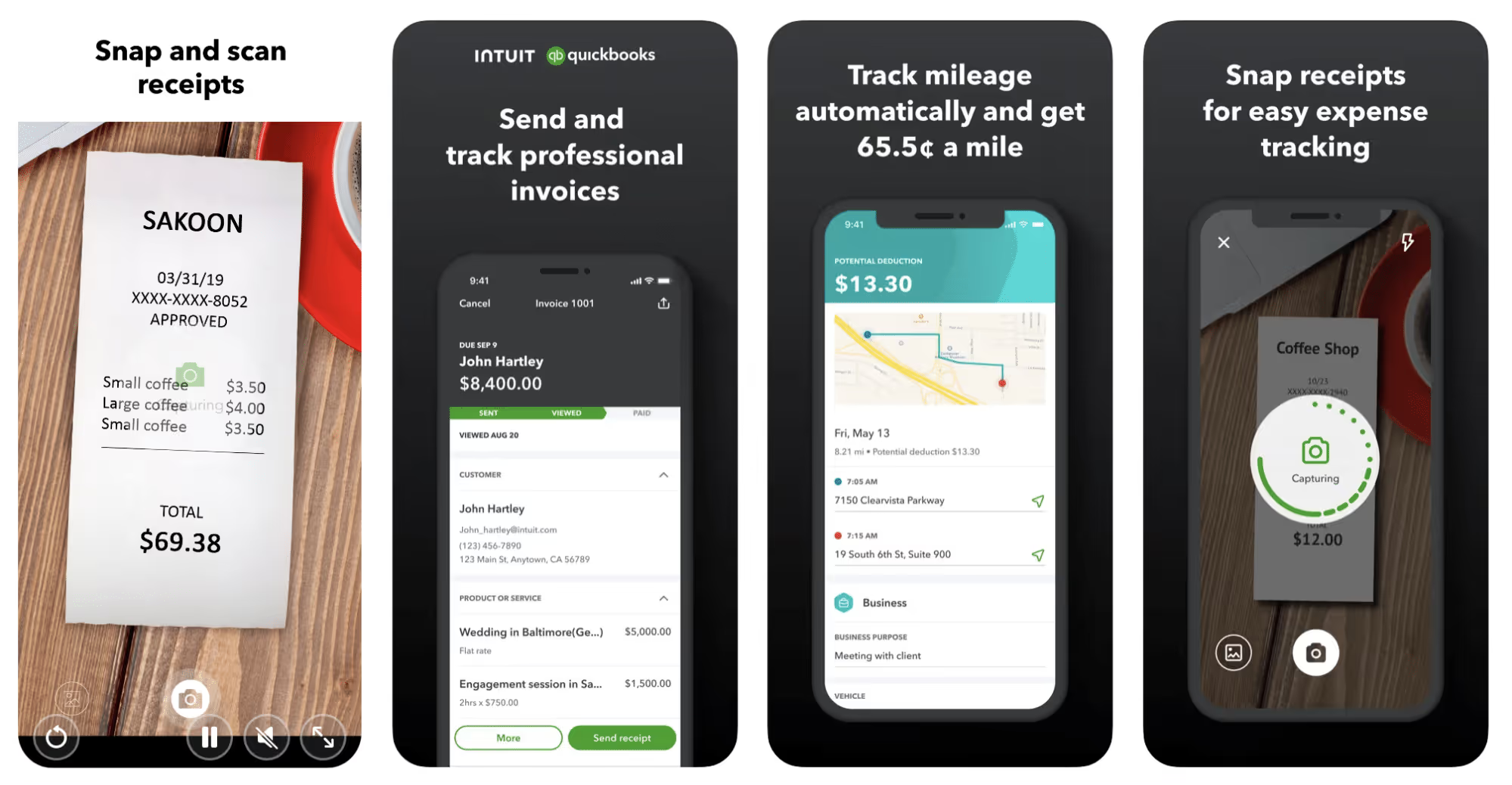
Quickbooks Online is a cloud-based app that allows you to track your mileage, earnings, and expenses. The information you enter can then be used to generate various reports that prepare you for tax time. It also allows you to create graphs that illustrate your cash flow, and includes a receipt scanner so you can instantly record deductible expenses. Quickbooks is popular, highly reliable, and designed mainly to help people keep track of their small businesses.
Available on Android and Apple: Yes
Ratings: 4.7 stars on App Store, 4.4 stars on Google Play
Free version: 30-day free trial
Subscription price: $15 per month for basic version if purchased for 3 months or more
Created specifically for gig drivers: No
Source: quickbooks.intuit.com
3. Shoeboxed
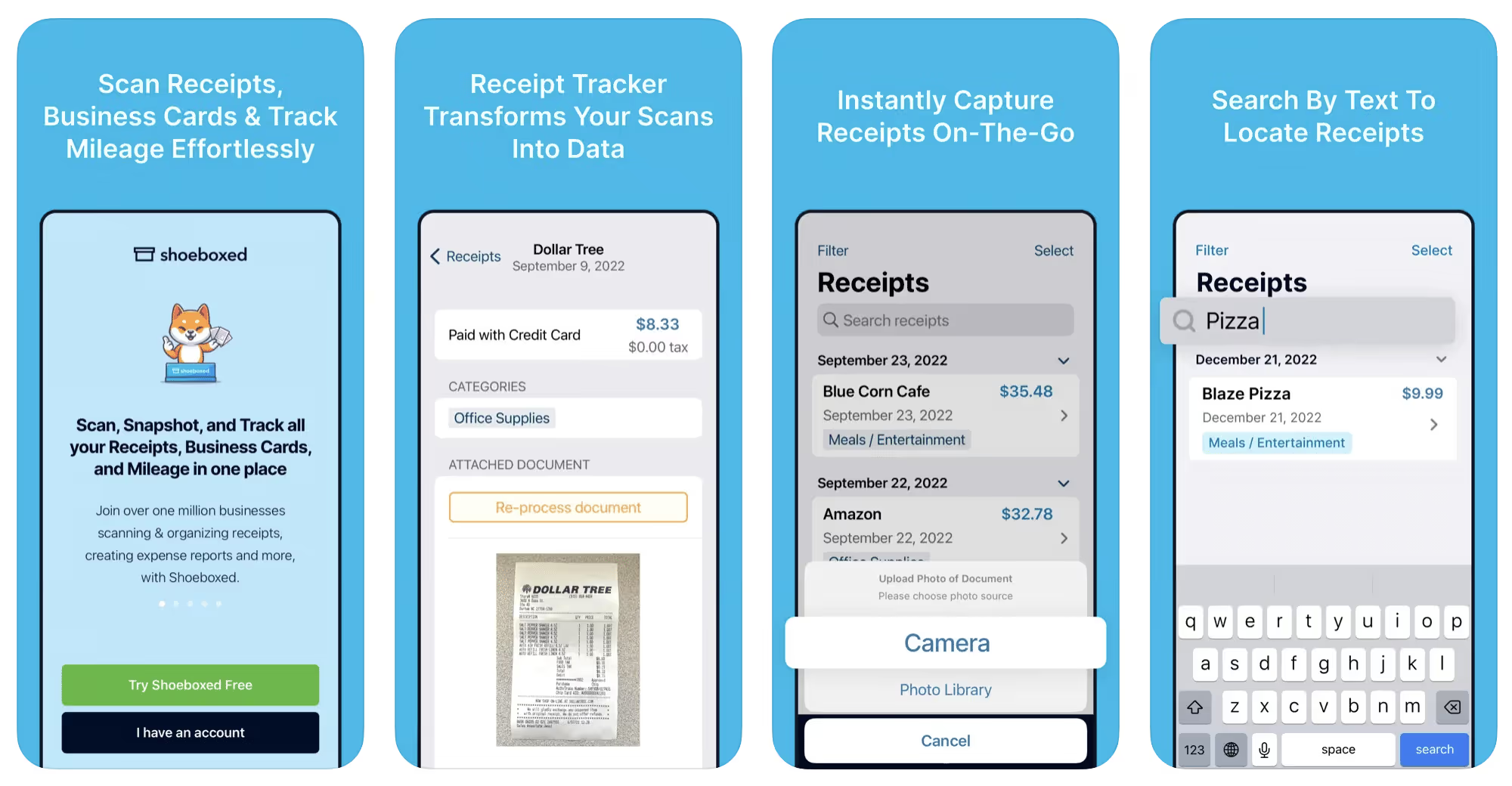
Shoeboxed started in 2007 as a service for scanning paper receipts into digital form. Now the app offers a free mileage tracker and has enabled users to scan receipts directly. It touts itself as the best mileage tracking app for DoorDash, but there are some elements missing that Dashers might like to have. While it provides features that record your expenses and prepare you for tax season, it doesn’t automatically track your earnings. The mileage tracker has a system where you can drop pins along your routes to make the tracking more precise, identifying those legs of a trip that you make for business purposes. The mileage tracker is “free” once you sign up for the basic version.
Available on Android and Apple: Yes
Ratings: 4.5 stars on App Store, 2.3 stars on Google Play
Free version: No
Subscription price: $18 per month for basic version
Created specifically for gig drivers: No
Source: blog.shoeboxed.com
4. Stride
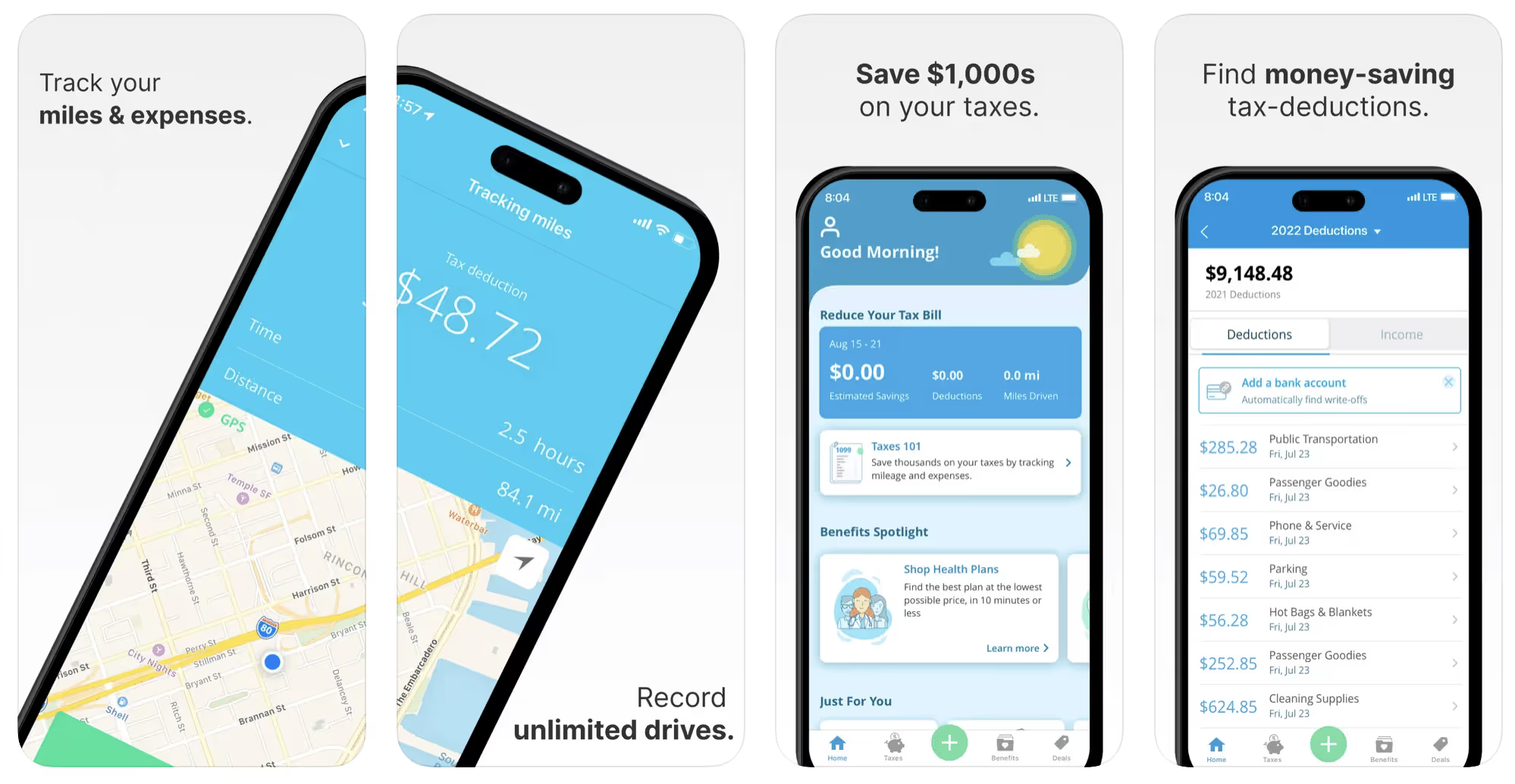
This free mileage tracker does a fair job of keeping track of the distances you rack up while gig driving, but it doesn’t automatically track earnings. It can be a big help, though, in tracking your expenses. You can link Stride to your bank account, and it will automatically scan your expenses to identify items you can potentially deduct. The app is totally free. This could make it the best free mileage tracker app, but there is a small price to pay. The app will persistently push you to consider various insurance plans that they are affiliated with. If you don’t mind that, this is a solid mileage tracker, even if it doesn’t track your earnings.
Available on Android and Apple: Yes
Ratings: 4.8 stars on App Store, 4.6 stars on Google Play
Free version: Yes
Subscription price: None. The app is free.
Created specifically for gig drivers: No
5. Gridwise
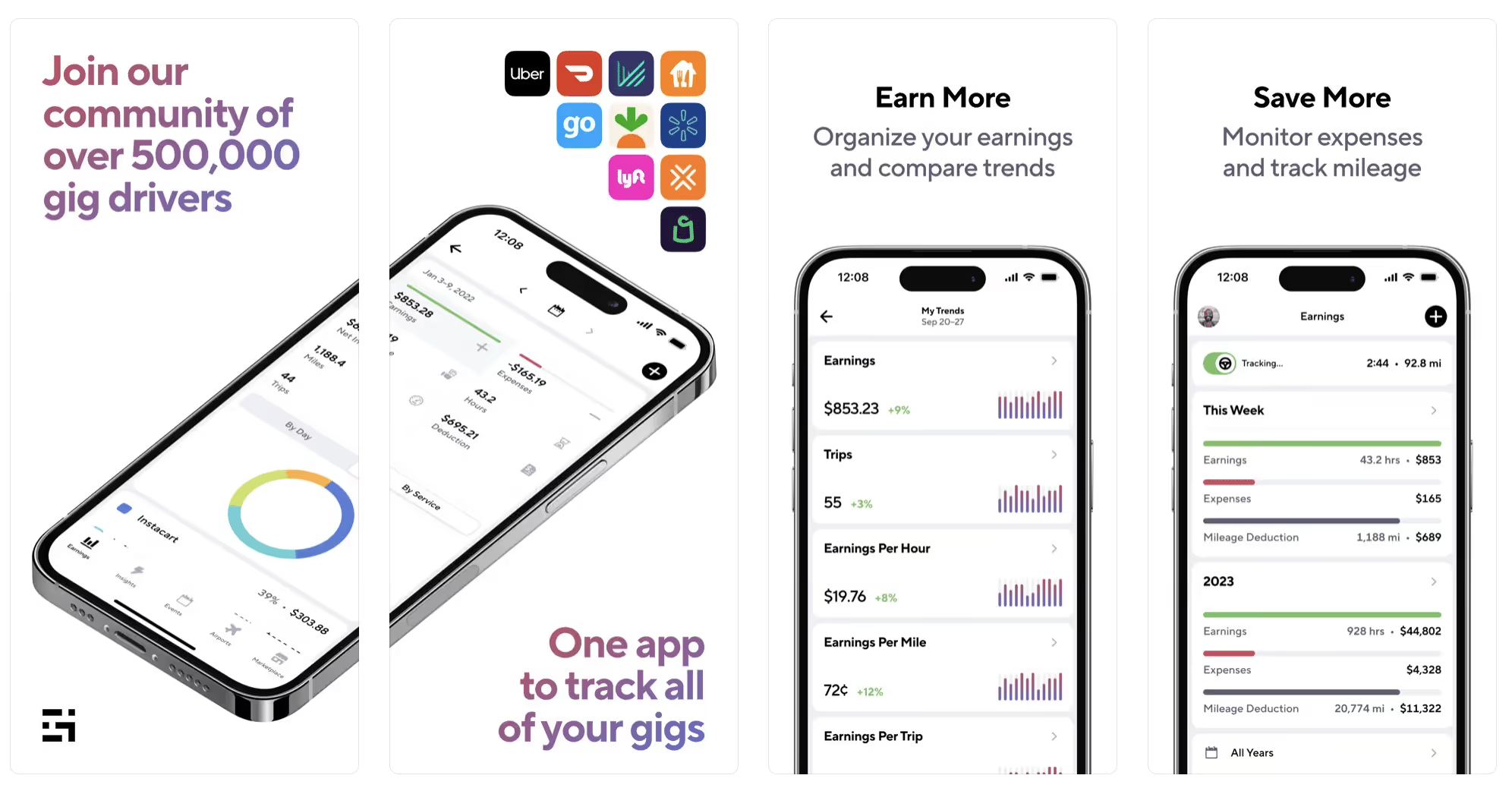
Gridwise has a free mileage tracker and free features that record your income and expenses. It gives you access to insurance and benefits, as well as insights about the best times and places to make the most money while gig driving. The Gridwise mileage tracker captures all the miles you drive while you’re on your driving shift, and it can be used if you have other trips you need to make which qualify as business travel.
Drivers love it because it is geared toward the needs of rideshare and delivery workers, providing free information about airport departures and arrivals, event start and let out times, weather, traffic, and more. The Gridwise Plus subscription adds value by providing additional insights and reports, discounts on benefits, the ability to export data in .csv format,, and more.
Available on Android and Apple: Yes
Ratings: 4.9 stars on App Store, 4.6 stars on Google Play
Free version: Yes
Subscription price: $9.95 per month for Gridwise Plus, or $95.99 per year (a $23.41 savings)
Created specifically for gig drivers: Yes!
What is the best mileage tracking app?
Now that we’ve checked them all out, we’re positive about the answer to that. Hands down, it’s Gridwise. Are we biased? You bet we are! But drivers love it too. Gridwise is the best mileage tracker app—and so much more. So many of the features are free, and the subscription to Gridwise Plus will pay for itself with additional insights to boost your earnings and deeper discounts on products and services.
Most important, Gridwise is designed specifically for gig drivers by experts who were once gig drivers themselves! Knowing what gig drivers need is a crucial step in creating an app that rideshare and delivery drivers can really use! Here are a few of the features, besides mileage tracking:
- seamless earnings tracking
- automatic, on/off toggle and manual mileage tracking
- mileage categorization
- airport, traffic, weather, and events information
- insights into where to drive and when to drive
- reports showing earnings across the platforms you use
- discounts on countless products and services for drivers
- additional resources for finding side gigs
- an informative and comprehensive blog
- affordable benefits, including insurance, medical, dental, and alternative practitioner discounts
- a community of drivers just like you
Don’t settle for just any app. Get the best mileage tracker, and so much more, from Gridwise!
[elementor-template id="21599"]

What Records Do Gig Drivers Need To Keep Track Of For Taxes?
* Gridwise does not provide tax, legal, or accounting advice. This material has been prepared for information purposes only, and is not intended to provide, and should not be relied on for tax, legal, or accounting advice. You should consult your own tax, legal, and accounting advisors before filing your return.
Record keeping? Who signed up for that? As a gig driver, it’s part of what you need to do to keep your business running. Don’t worry. It’s not as complicated as you might have been led to believe. This post will show you what you need to keep track of and the best ways to gather and preserve your tax-related records. We will cover
- How record keeping can help reduce income tax for freelancers
- Taxes and freelance work: Record keeping requirements
- Mileage tracking: Motives and methods
- More deductions and records to keep
- Make tax time easier
How record keeping can reduce income tax for freelancers
Tax time is not “fun time” for rideshare and delivery drivers. It’s easy to get used to watching your earnings pile up and come to believe they are all yours. Unfortunately, that isn’t the case. Gig work taxes can be especially painful because no one takes them out of your earnings for you, until the tax authorities insist that you do it for yourself.
You will need to show the tax authorities your income records, and they will gladly tell you to send them what they determine to be their fair share. Think that’s not fair? You’re not alone, but that doesn’t mean you’re going to get out of paying gig work taxes.
But you can find ways to pay the smallest amount that is legal and possible. The best way to defend yourself against having to pay astronomical amounts when you file your return is to know what expenses you can deduct from your gross income. When you subtract deductible expenses from your gross income, there is less left over to be taxed. This reduces the amount they can hit you with gig worker taxes. and can make your tax bill substantially lower.
While you want to keep good records so as to be in compliance with taxation entities such as the IRS, you also want to ensure you have proof of every last deductible expense you have accrued during the year. There are other records you must keep as well. Let’s look at some of the considerations you have, realizing that you now need to know how to do taxes as a freelancer.
Taxes and freelance work: Record keeping requirements
So many gig drivers fail to understand the responsibilities they have as independent contractors. Those who work part time for very few hours may even believe they don’t have to report the income they get from their driving gig payments. That would be a big mistake!
The company or companies you work for report your income to the IRS and state tax authorities. If you fail to report that income, you will risk some rather painful penalties. The IRS taxing side hustles is as much of a thing as the IRS taxing income from any other job. Your best bet is to report what you’ve earned, honestly and completely, and comply with other record keeping requirements such as
- gross income
- deductions and credits
- purchases (items you purchase and resell, such as snacks or bottled water)
- a log of all your mileage (or vehicle expenses, if greater)
- a list of all expenses and assets, such as utilities and other expenses associated with having a home office and equipment
- machinery and furniture you own, including when it was acquired, how much it cost, whether you previously took deductions on it, and selling price, if applicable (this includes your vehicle)
More things to consider:
- Pay attention to the retention of your records. You’ll need to keep all tax-return-related items— including income, deductions, and any tax credits reported— until the period of limitations runs out (3 years from date you filed, or 2 years from when you paid tax. If you have employees, keep your records for at least 4 years.)
- If you want to avoid paying self-employed taxes, you may want to set up a corporation or Limited Liability Corporation (LLC) for your business. This allows you to separate all your gig driving earnings from personal income, and permits you to take advantage of the additional advantages of working through a corporation. This includes exemption from self-employment taxes. You can learn more about how to pay self-employment taxes, if you opt for that, in this post from Keeper.
- You should always keep a separate checking account for your business, for convenience as well as clarity. While this is not a legal requirement, it is a smart move if you want to have an easier time managing your business.
- You are required, as an independent contractor, to file your taxes quarterly. Check out this Gridwise blog post for more information about quarterly tax payments and other matters that make filing delivery, Lyft and Uber taxes easier.
Mileage tracking: Motives and methods
Why you need to be meticulous about mileage
Mileage deduction, or the costs of operating your vehicle, will be the most important item to account for when you consider how to file taxes as a freelancer. While mileage is an important deduction for all independent contractors, as you might imagine, it’s even more essential for rideshare and delivery drivers.
There are two ways of keeping track of your mileage deduction. One is to use the IRS’ standard mileage deduction, which for 2022 is 58.5 cents per mile. This number takes into account the costs of operating your vehicle, from fuel and maintenance to registration, insurance, and depreciation. Alternatively, you can calculate all your own vehicle operating costs, but only after your first year of using the vehicle. You may discover that this second option allows you to have more money deducted from your taxable income. Learn more about the options for deducting your mileage in this Gridwise post.
No matter which way you decide to calculate the deductions for your mileage, you need to know what mileage you can and cannot deduct.
You can deduct
- miles driven to and from home when you go out to drive or deliver
- miles you accrue during your trips
- miles you drive on any other trips you make that are necessary as part of your business.
Examples:
- driving to return a lost cell phone or to an Uber Hub or another physical location where your company might make driver support available
- driving to pick up supplies, to get gas, or to have your car cleaned, serviced, or detailed, etc.
You cannot deduct
- miles you drive for personal trips
- miles for any trips you take that do not directly affect your business
Note: If imagining yourself becoming the not-so-proud owner of a shoebox filled with paper receipts gives you nightmares, stop worrying. Electronic records of purchases will satisfy reporting requirements. If you use cash, you can scan copies of your receipts, in some cases, right into your recording software or app. Gridwise and Keeper give you a simple to use interface that keeps all your receipts recorded without the messy pile of paper.
Mileage tracking methods
By now, you’re probably convinced that tracking mileage is important, despite all the other things drivers have to do. Now, let’s look at your options for keeping accurate records.
- Manual tracking: You can keep a logbook where you list every trip you make, starting and ending mileage, the date, and purpose of the trip. While this would work, it’s certainly not convenient. Besides, if that logbook gets lost, your plans for having a nice, fat tax deduction will go by the wayside.
- Spreadsheet: This is a bit more convenient and sophisticated way of tracking your business mileage. You’d need to be meticulous about making your entries, though. Even if you keep a spreadsheet app on your phone, it could be time consuming and inconvenient to keep doing it with all the other things going on in a rideshare or delivery driver’s day to day life.
- GPS-based mileage tracking apps: There are a bunch of apps that track mileage based on your GPS location, and most of them are pretty accurate and far more convenient than taking constant readings of your odometer. Your driving apps, such as Uber, Lyft, DoorDash, or Instacart, may also track your mileage, but be careful here. They will only track the miles you drive while you’re on a trip or delivery. They don’t count the miles you drive going to pick up a customer or when you make your move toward a restaurant or store.
Gridwise, on the other hand, will track all the miles you clock while you’re on your shift. All you need to do is make sure you start tracking the minute you leave home, and every gig driving mile will be logged. - OBD-II mileage tracking systems: There are plug-in modules that assess your vehicle’s mechanical health and track your miles. However, many authorities question the ability of OBD-II mileage tracking systems to get get accurate odometer readings. Insurance companies don’t consider them to be accurate enough gauges of odometer readings.
While mileage is a crucial deduction when you’re preparing your Uber, Lyft, or DoorDash taxes, it isn’t the only expense you’ll want to record.
More deductions and records to keep
Expenses you can deduct
You’re entitled to include the cost of other expenses that are directly related to your driving business. These include
- vehicle expenses
- equipment for your car and home office
- extra services and subscriptions
- business tools, including apps and software
You can learn much more about gig driver expenses that are eligible for deduction in this Gridwise article.
Ways to track and preserve deductible expenses
- The manual method: Just like you can with mileage, it’s possible to use a manual method, but in addition to logging each expense into a ledger, you would also need to keep physical receipts.
- Spreadsheets: You can record your expenses on a spreadsheet. This is somewhat less awkward than manually logging mileage, but there still will be plenty of room for failing to remember the case of water you bought for your customers, or losing the receipt from the thermal bag you purchased.
- Accounting software: You can use software that helps you track your expenses. This method usually interfaces well with any tax preparation software you or your tax professional might use.
- Gridwise: There are other apps that help you track your expenses, but Gridwise is designed specifically for gig drivers. It automatically tracks earnings and mileage, and lets you record your expenses the minute they come up. Gridwise’s partnership with Keeper gives you the ability to scan receipts and access a tax professional. This is a seamless way to record your expenses and a big help in learning how to file Uber taxes. Gridwise even provides .csv output, so you can feed your Gridwise data directly into tax preparation software. Check out what Gridwise and Keeper will do to super-charge your tax filing powers.
Organizing and categorizing expenses
Before you even begin to record expenses, you’ll want to set up categories for them. You can start by reviewing the categories listed above and checking out the Gridwise post that lists possible deductions.
If you’d like to learn more about how to categorize expenses, there is additional information available. This article from Motley Fool lists all possible categories any freelancer might use and also gives tips on how to customize them for your driving business.
One last tip
Using Gridwise, particularly for tracking mileage, is the easiest way to be in compliance with the IRS’ rules for deductible mileage. Gridwise tracks all the miles you drive for your gig, beyond what your company’s app might record. At the same time, you can log on and off Gridwise when you start and end your shift, so personal miles won’t be recorded. This eliminates confusion while capturing every deductible mile.
Gridwise Tax Help, a partnership with Keeper, has been created specifically to serve gig drivers. It provides affordable and easy ways to record expenses, scan receipts, and find deductions by analyzing your expenditures. Read about free resources from Keeper you can use to be fully prepared for tax season, and get all your earnings and expenses on the record.
Get the world’s best assistant for rideshare and delivery drivers, and tax help too.
Make tax time easier now!

Maximiza tus ganancias sin esfuerzo con Play Octopus
¿Te parece cada vez más difícil ganar el tipo de dinero que usaste para rastrillar como conductor del viaje? No cabe duda de que las tarifas robustas, los bonos enormes y el aumento tentador del salario son menos abundantes que antes. Ahora tienes que esforzarte por ganarte la vida con Uber, Lyft y otros servicios rideshare. Mientras tanto, sus gastos personales y de negocios siguen aumentando, lo que convierte la vida en un problema y un ajetreo.
[elementor-template id="20891"]
¿Qué puedes hacer para mantener tus ganancias en los niveles que disfrutaste una vez?
Puede que la respuesta a esto no sea tan compleja como usted piensa. Es cierto que no puedes reducir las tasas de utilización de las aplicaciones que usas. No es posible conseguir que las empresas aumenten sus tarifas cuando se quiera, y tampoco se puede manifestar de repente a los clientes de alto nivel fuera del aire. Obtener otro alboroto no es la opción más atractiva, dado que siempre es bueno tener algo de tiempo en tu vida para hacer cosas que no impliquen trabajo.
¿Qué pasaría si usted pudiera tener un ingreso pasivo de , el tipo de poder adquisitivo que no requiere su participación total? ¿Y si pudieras tener esa fuente de ingresos pasivos contigo, justo allí en tu vehículo, mientras sigues conduciendo por tu gig? ¿Qué pasaría si pudieras ganar mucho más dinero con mucho menos ansia?
Acaba y entretiene a tus jinetes mientras escoge ganancias extra
Todas estas cosas son posibles, gracias a Juega a Octubre, una experiencia interactiva para que tus pasajeros disfruten. Recibe una tableta GRATIS que se monta en la parte posterior de su asiento frontal, para que sus pasajeros en el asiento trasero puedan ser informados y entretenidos con juegos interactivos, información única, vídeos premium y premios. Tus jinetes estarán felizmente ocupados con contenido que está curado sólo para los pasajeros de Uber y Lyft, mientras usted se siente, siga conduciendo, y gane más dinero!
¿Cómo te ayuda Play Octubre a ganar más?
- Conducir con pasajeros ocupados con Octubre le da puntos. Cuanto más conduzca, más dinero gana. La mayoría de los conductores ganan hasta $50-$75 al mes con Play Octopus. Otros han aportado hasta 100 dólares e incluso más. Los ingresos pasivos hacen que ganar dinero extra como conductor de rideshare sea tan fácil. ¡Para ayudarte a empezar, Play October te da un bono de $25 una vez que empieces a conducir con tu tableta!
- Cuando sus pasajeros disfrutan jugando con Play Octopus, obtendrá consejos adicionales. Lo que ven y oyen es seguro que encenderán un convo que se pone unos pocos cuchillos que van entre ti. Después de su conexión mutuamente agradable, sus clientes sólo tienen que profundizar un poco más en sus bolsillos para dar bonito, ¡las profecías gordas a su nuevo amigo!
- Refiera a sus amigos a Jugar Octubre y recoja una cuota de $25 por cada nuevo conductor.
¿Juega a octubre tiene algún coste adjunto?
Play Octopus está disponible en todo el país y no te cuesta ni un centavo. Obtienes la tableta gratis, y reciben datos LTE de T-Mobile para mantenerla conectada sin cargo. Los equipos de montaje y carga también están incluidos en el paquete. ¿Qué pasa si quieres salir de tu gig? Si alguna vez decide dejar de conducir rideshare y ya no puede utilizar la tableta, simplemente devolverla sin ningún coste.
Para calificar, todo lo que tienes que hacer es un conductor que ha estado conduciendo por lo menos dos meses promedio de al menos 100 viajes al mes. La mayoría de los conductores activos califican fácilmente y pueden empezar a ganar más dinero sin casi ningún esfuerzo: ¡de inmediato!
Juega a Octubre es popular y lucrativo. T-Mobile adquirió recientemente Play Octopus, y este servicio de clase mundial permite a Play October ofrecer una gran cantidad de juegos, contenido y clientes a los que recurrir. Puedes contar con Play October como una fuente de ingresos extra que no requiere trabajo extra de ti, ¡bien en el futuro!
Empieza con Play Octubre
- Únete a la comunidad de más de 60.000 conductores de Play October
- Gana dinero extra mientras conduces
- Obtener consejos más grandes
- Recibir valoraciones más altas
- Haz amigos con tus clientes
- Únete a una comunidad robusta de conductores
- Disfrute de eventos exclusivos y regalos exclusivos para conductores
¿Listo para aplicar para jugar pulpo?
Simplemente complete esta solicitud, y estará en camino hacia el tipo de ganancias que los conductores de viajes compartidos merecen. Traiga los buenos viejos días de un paseo bien pagado con Play Octopus.

Grubhub’s Crossroads: A Look at Delivery Performance and Platform Resilience
Grubhub enters 2025 as a steady presence in a volatile industry. While it hasn’t matched some competitors' headline growth or diversification, it closed 2024 with a stable market share, an increasingly base-heavy pay structure, and a clear commitment to food delivery as its core.
However, trip-level data tells a deeper story that reveals how those strategic choices shaped driver engagement, earnings patterns, and consumer behavior across food, grocery, and retail segments.
This analysis is based on Gridwise Analytics ' anonymized trip and earnings data. Unlike company reports focusing on order volume, user growth, or high-level financials, Gridwise Analytics data tracks how changes land on the road: how much drivers are earning, how long they’re working, and how shifts in platform policy impact both sides of the marketplace.
It’s a ground-level look at Grubhub’s operational model and its choices for investors, gig economy partners, and the future of delivery logistics.
[elementor-template id="20891"]
Holding Steady in a Race for Scale
Grubhub’s market share stayed at approximately 3% throughout 2024, according to Gridwise Analytics' delivery trip data. While that figure trails behind DoorDash at 67% and Uber Eats at 30%, it also highlights Grubhub’s consistent presence in a highly competitive market.

Grubhub continues to serve a meaningful volume of food delivery orders, particularly in core metro markets. For partners and investors, this sustained foothold points to a platform that remains operationally focused and strategically stable.
A Category Specialist in a World of Generalists
Between 2023 and 2024, Grubhub’s delivery mix remained 96–97% food. Grocery and retail deliveries accounted for a small portion of the total volume.

While DoorDash and Uber Eats expanded their delivery mix to include grocery and retail, Grubhub’s streamlined focus offers operational clarity and category leadership in food. This specialization may allow for more refined logistics and consistent merchant support.
How Grubhub Drivers Are Hitting Higher Weekly Totals
In 2024, Grubhub drivers earned an average of $175 per week, up 6.6% year-over-year, a more substantial earnings increase than Uber Eats, Instacart, or DoorDash.
However, this figure is more notable in how Grubhub drivers achieved this. Grubhub drivers worked more hours on average, logging 12.4 hours per week, a 13% increase from 2023, the highest year-over-year jump in work hours across all major food delivery platforms. This is despite small per-mile and hourly earnings declines.

The data tells a clear story: Grubhub’s gross earnings growth is volume-driven, not incentive-driven. Rather than relying on higher tips or bonuses, drivers are putting in more hours and likely accepting more trips to increase weekly totals. The platform’s growing emphasis on base pay suggests that Grubhub is building toward a more reliable, steady-income delivery model.
For partners and investors, that has implications: a supply base that leans into platform consistency may also offer greater predictability in availability, shift planning, and fulfillment, even if peak-time efficiency is slightly lower than on bonus-heavy platforms.
How Grubhub’s Pay Model Stacks Up Across Delivery Types
Grubhub has increasingly leaned into a pay model emphasizing stability through base pay, particularly in segments like grocery and retail, where competition intensifies and earnings structures vary significantly. Gridwise Analytics data reveals how Grubhub's compensation mix evolved in 2024 and how it compares to other platforms.
Retail Delivery: Industry-Leading Base Pay, Leaner Incentives
Grubhub led all major platforms in base pay for retail deliveries in 2024, with 73% of driver earnings coming from base rates, up from 66% the year before. That’s a full seven percentage point gain year-over-year, well ahead of peers like Uber Eats (65%) and Instacart (47%).
However, that increase came with tradeoffs. Tips made up just 25% of retail delivery earnings, one of the lowest among primary services.
Bonuses dropped from 7% in 2023 to 2% in 2024, reflecting a reduced emphasis on variable incentives.
This signals a clear strategic shift: Grubhub is actively reshaping its retail delivery model to prioritize consistent, guaranteed income over short-term earnings boosts. This could appeal to drivers seeking steadier paydays and partners looking for a more predictable supply base in a segment that often fluctuates with seasonal and promotional demand.

Grocery Delivery:
Grubhub also made significant changes in its grocery delivery earnings structure. In 2024, 59% of driver pay in grocery came from base rates, up from 46% in 2023, a 13-point increase year-over-year.
Spark still leads the category with 68% base pay share compared to peers. DoorDash comes in at 54%, and Uber Eats trails at 57%
At the same time, Tips on Grubhub dropped from 43% to 35%, and bonuses reduced from 11% to 6%
Grubhub’s approach to grocery shopping mirrors its retail strategy, emphasizing stable, fixed earnings while gradually reducing reliance on bonuses and rider tips. Grubhub aims to create a more predictable earnings experience for drivers by shifting a larger portion of compensation to base pay.

Food Delivery:
Grubhub’s food delivery segment, still the core of its business, saw less dramatic change in 2024. Base pay edged up slightly, from 43% to 45%. Tips remained strong at 51%, showing continued customer engagement. Bonuses declined from 6% to 4%.
This stability positions Grubhub closely alongside DoorDash (44% base) and Uber Eats (45% base), but still behind Spark, which leads the segment at 63% base pay.

Grubhub’s food model remains competitive and balanced, holding steady in both earnings mix and driver engagement. This steady structure suggests that Grubhub is reinforcing, rather than reinventing, its core category. It prioritizes operational continuity and driver trust in the segment that maintains the most significant brand recognition and order volume.
Toward Predictability, With Tradeoffs
Across all three segments, Grubhub is evolving toward predictable, base-heavy pay. Retail and grocery saw the most significant shifts, with double-digit gains in fixed earnings. At the same time, bonuses and tips shrank, which may reduce peak-time incentives for some drivers, especially those who value short-term spikes in pay.
This move signals a more sustainable and controlled earnings model for investors, partners, and operators. It’s a strategic choice to stabilize workforce engagement, but one that may require future refinements to ensure it remains competitive in attracting flexible supply.
Drivers on the Move
Grubhub had the highest multi-apping rate among major platforms, according to Gridwise Analytics shift data. Over 70% of its drivers used another app within the same month.

Multi-apping is a common practice across the gig economy and reflects driver flexibility. This trend may suggest that many Grubhub drivers engage with multiple platforms to optimize their earning potential.
The Value Equation: How Price and Perks Shape Loyalty
What keeps a food delivery customer coming back and what sends them elsewhere? New survey data reveals the factors that shape loyalty, the tipping points that lead to churn, and how tightly price influences behavior.
What Drives Food Delivery App Loyalty?
The Gridwise Analytics 2025 Consumer Survey shows that lower delivery fees are the top reason users stay loyal to a food delivery app, followed closely by access to promotions and rewards. Speed also plays a role, with nearly half of the respondents citing faster delivery times as a key factor, along with restaurant variety. In contrast, elements like app design or usability had a much smaller influence on retention.

Why Food Delivery Consumers Switch Platforms
When users leave one app for another, price remains the most significant reason. More than half of the surveyed consumers said they switched platforms in 2024 due to better fees or pricing. Restaurant selection was the second most common reason, followed by loyalty programs. Fewer than one in five users switched based on the app experience, suggesting cost and convenience outweigh branding or UX.

Price Sensitivity Remains a Limiting Factor Among Food Delivery Consumers
While delivery is a routine convenience for many, rising fees still pose a significant risk to usage. According to the survey, 88.1% of consumers said they would cook at home more often if delivery became more expensive or slower. Half said they would switch to pickup to save money, while only 30.4% would continue using delivery services based on convenience alone.
These responses highlight a narrow margin for pricing flexibility and suggest that even modest cost increases could reduce order volume across platforms.

What this means for Grubhub: Consumer Expectations Are Evolving
Looking at the survey results, one thing becomes clear: today’s delivery users are highly value-driven. They choose platforms based on price, rewards, speed, and restaurant access, and they’ll readily switch or churn if those expectations aren’t met.
Looking Ahead: A Stable Platform in a Rapidly Shifting Market
Grubhub’s 2024 strategy emphasized consistency: a focused service offering, a predictable base-pay model, and operational steadiness in a volatile industry. Rather than chase aggressive diversification, the platform leaned into structure, particularly in compensating food, grocery, and retail drivers.
At the same time, industry pressures are growing. Consumers remain highly price-sensitive, drivers continue to multi-app to maximize earnings, and merchants seek more flexibility and transparency. In this context, Grubhub’s approach stands out not for rapid growth but for maintaining its position through measured decisions.
Gridwise’s trip-level data brings these trends into focus. It offers a ground-level view of how strategy shows up in earnings, hours, and user behavior, and where Grubhub may need to adapt as the market moves forward.
Lyft’s Shift: A Look at Recent Rideshare Performance
Lyft closed 2024 with record revenue, its first full year of profitability, and over 800 million completed rides. However, on-the-ground data tells a more complex story that reveals how drivers were impacted, how rider behavior shifted, and how platform strategy played out below the financial line.
This analysis is based on Gridwise’s proprietary trip-level data, sourced from thousands of drivers across the U.S. Unlike company earnings reports, which focus on bookings, margin, and revenue growth, Gridwise data tracks how platform shifts affect driver pay, hours, rider behavior, and engagement across platforms like Lyft and Uber.
It’s a ground-level view of operational health that helps investors and AV partners understand what a company did and how its strategy landed in the market.
[elementor-template id="20891"]
Lyft lost 6 points of U.S. rideshare market share,but still serves a national footprint
Lyft’s share of U.S. rideshare trips declined from 30% in January 2023 to 24% by December 2024, based on Gridwise trip data. Uber, meanwhile, climbed from 70% to 76%.
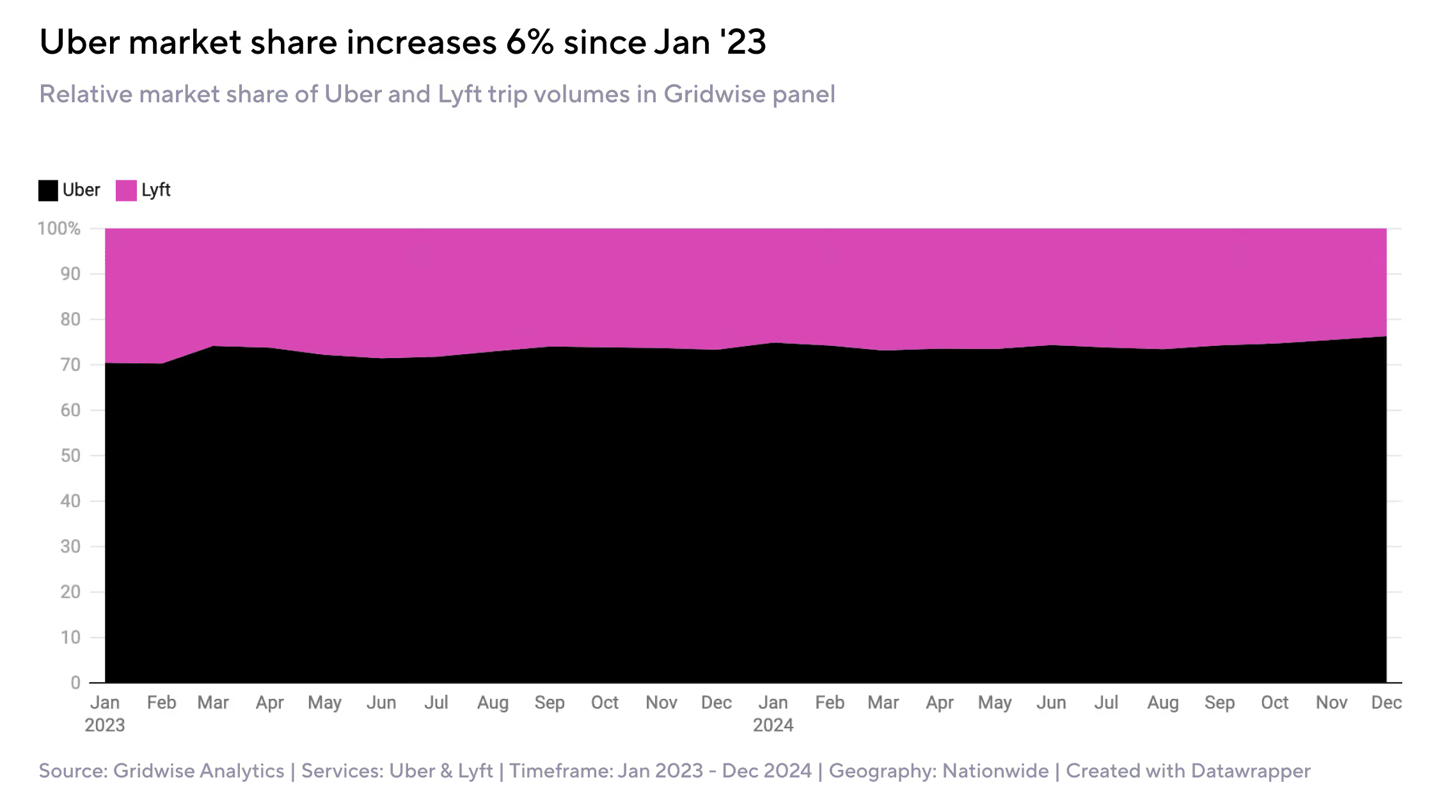
This gap tells us more than just market share — it shows platform momentum. Uber’s scale and multi-modal strategy continue to drive trip growth. But Lyft still facilitates nearly 1 in 4 rideshare trips — especially in key metro markets and airports — making it a meaningful partner or target for infrastructure and automation strategies.
Weekly earnings fell 13.9%, even as company bookings grew
In 2024, on average, Lyft drivers earned $318 per week, down from $370 in 2023 — a 13.9% decline. They also worked 5.4% fewer hours.
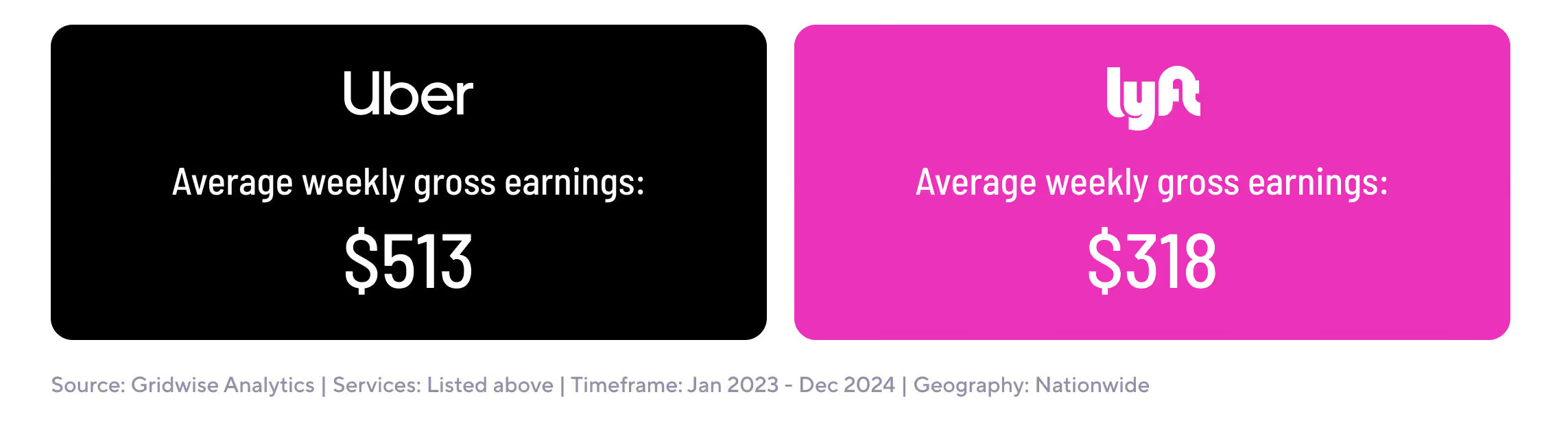
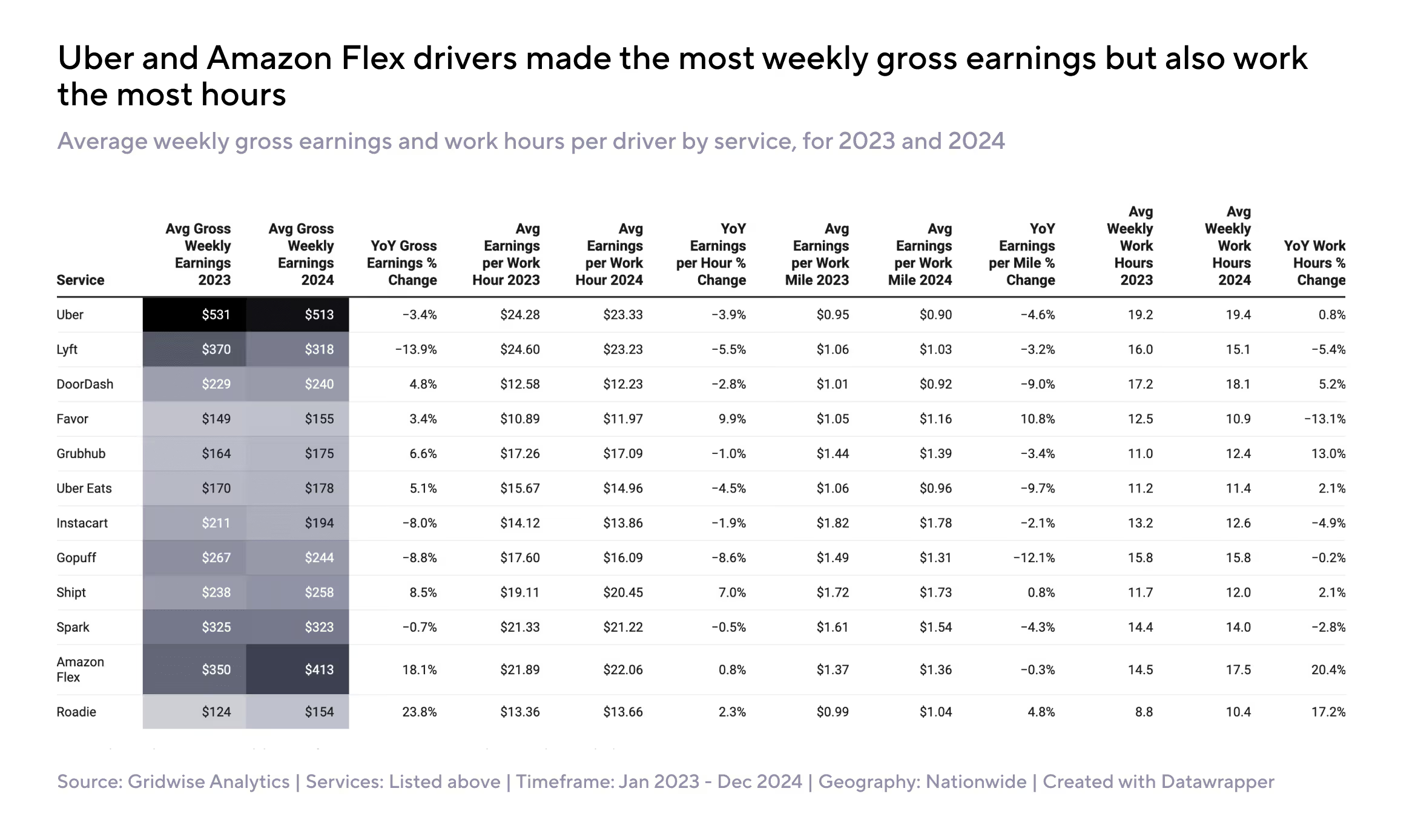
At the same time, Lyft reported record gross bookings and revenue growth. This kind of operational shift isn’t visible in quarterly reports, but it’s directly measurable through Gridwise’s driver data, which captures how each trip impacts earnings and engagement.
Hourly and per-mile pay remained stable — but only for those who stayed active
Despite lower total earnings, Lyft drivers earned $23.23 per hour and $1.03 per mile — steady versus 2023 and slightly higher than Uber on a per-mile basis.
This shows drivers who stayed on the platform could still earn efficiently — even if they worked fewer hours. From a strategic lens, it also signals that Lyft concentrated demand among a smaller driver base, reducing idle time and keeping per-trip pay competitive.
These kinds of labor efficiency signals that AV and fleet partners look for are difficult to glean from top-line company results.
Lyft relied more heavily on bonuses in 2024, reducing fixed pay commitments.
Bonuses made up 11% of Lyft driver earnings in 2024 — up from 5% the year before. Base pay dropped from 84% to 78%.
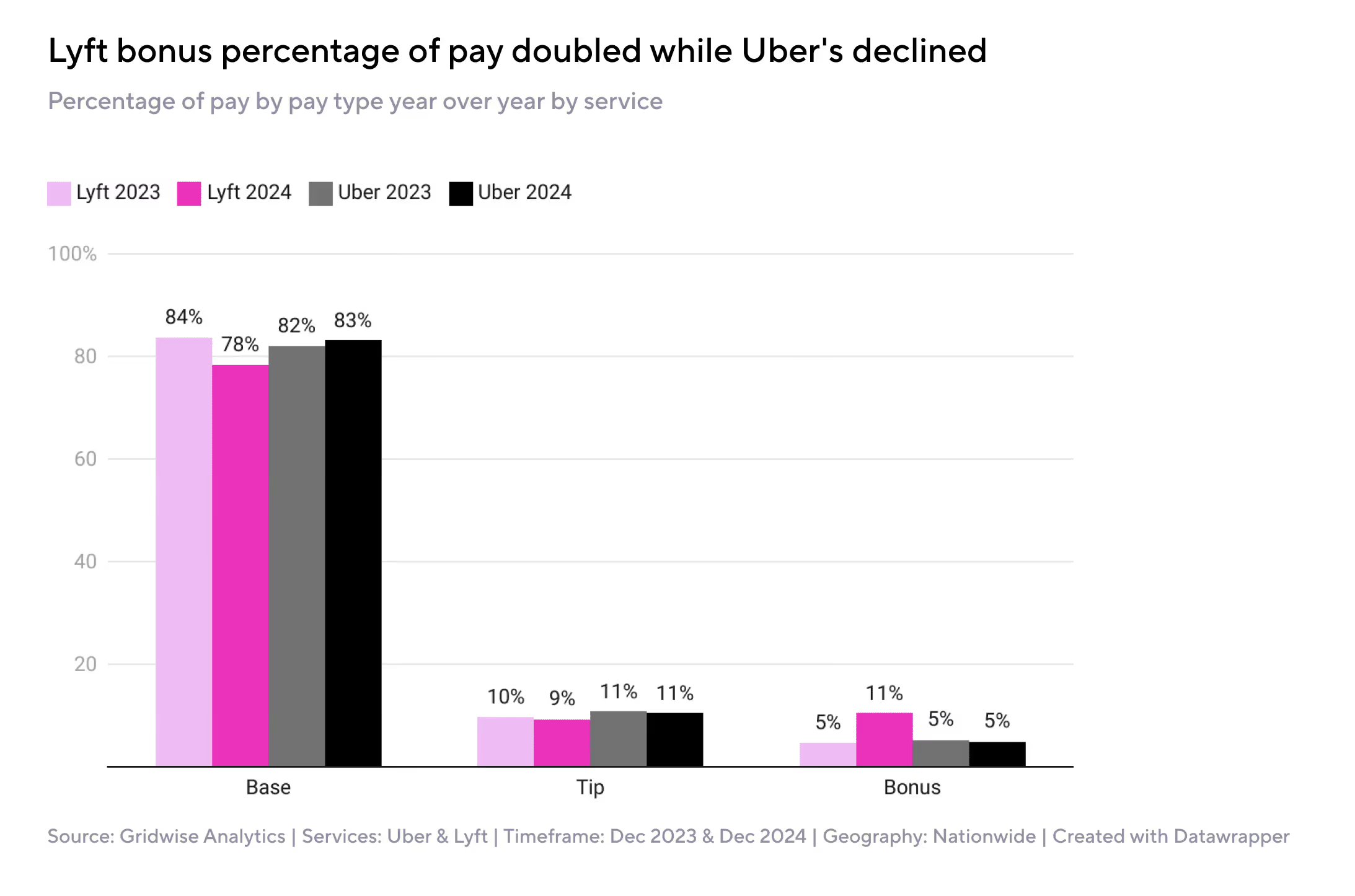
This shift marks a deliberate strategy. Lyft leaned into variable compensation rather than increasing base pay to retain drivers. It gave the platform flexibility but created more earnings volatility for drivers, a tradeoff that may not be obvious from earnings reports alone.
Gridwise driver data picked this up in real time. It shows how drivers were compensated and how Lyft’s structure shifted relative to Uber’s, which remained steadier.
Rideshare is still driven by base pay — unlike other gig segments
In 2024, 82.5% of rideshare driver earnings came from base pay, compared to 44.3% in food delivery and just 3.9% in parcel delivery.
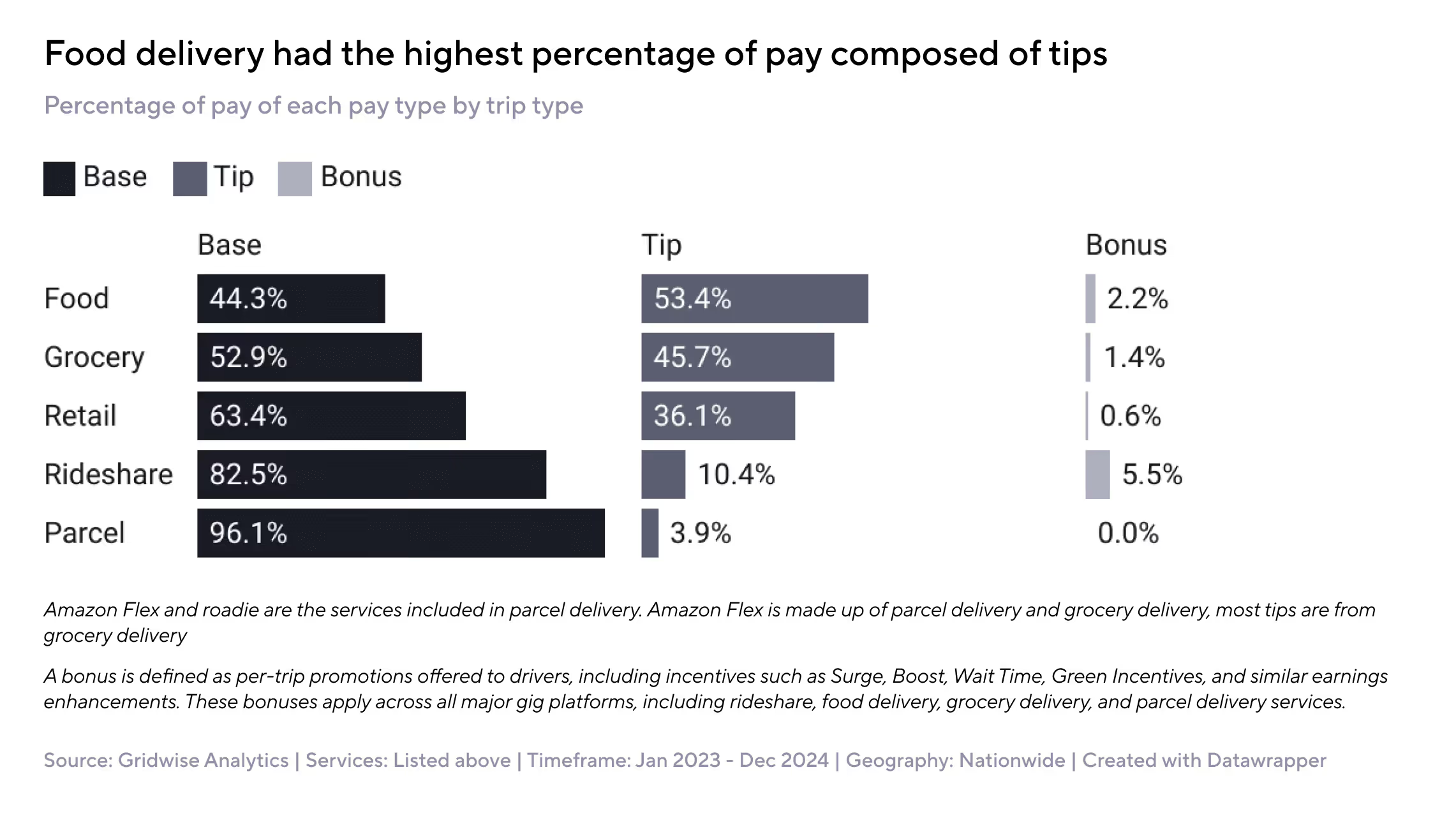
That means rideshare earnings are more sensitive to trip rates and demand levels than other gig types, where tips and bonuses cushion income. It also highlights the risk of relying too heavily on bonuses — a strategy that can work temporarily but isn’t a structural fix.
Only a trip-level dataset like Gridwise’s can uncover this mapping of how much drivers earn and what they’re earning it from.
Riders are loyal to price and pickup time — not app experience or branding
Gridwise’s 2025 rider survey showed that 55.8% of users chose their rideshare app based on lower prices, and 49.7% based on faster pickup times. Promotions and app features mattered far less.
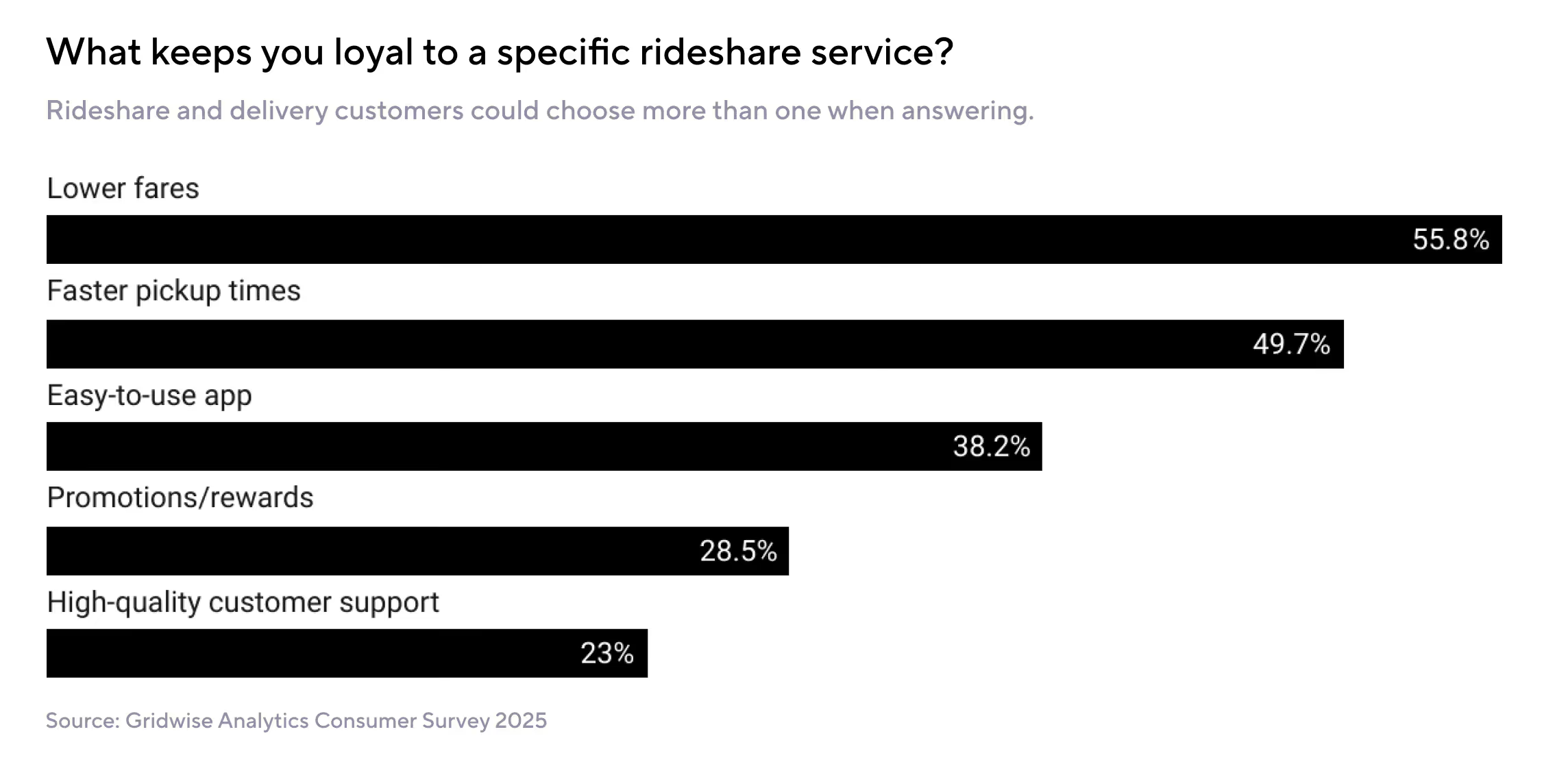
This underscores that performance, not perception, drives retention. It also creates a more straightforward path for automation: AV fleets that lower cost and reduce wait time can capture rider loyalty, even without deep consumer brand investment.
Riders are price-sensitive — and already adjusting behavior
Over 72% of riders said they would reduce or stop using rideshare if prices increased. More than half already used it less in 2024 due to cost.
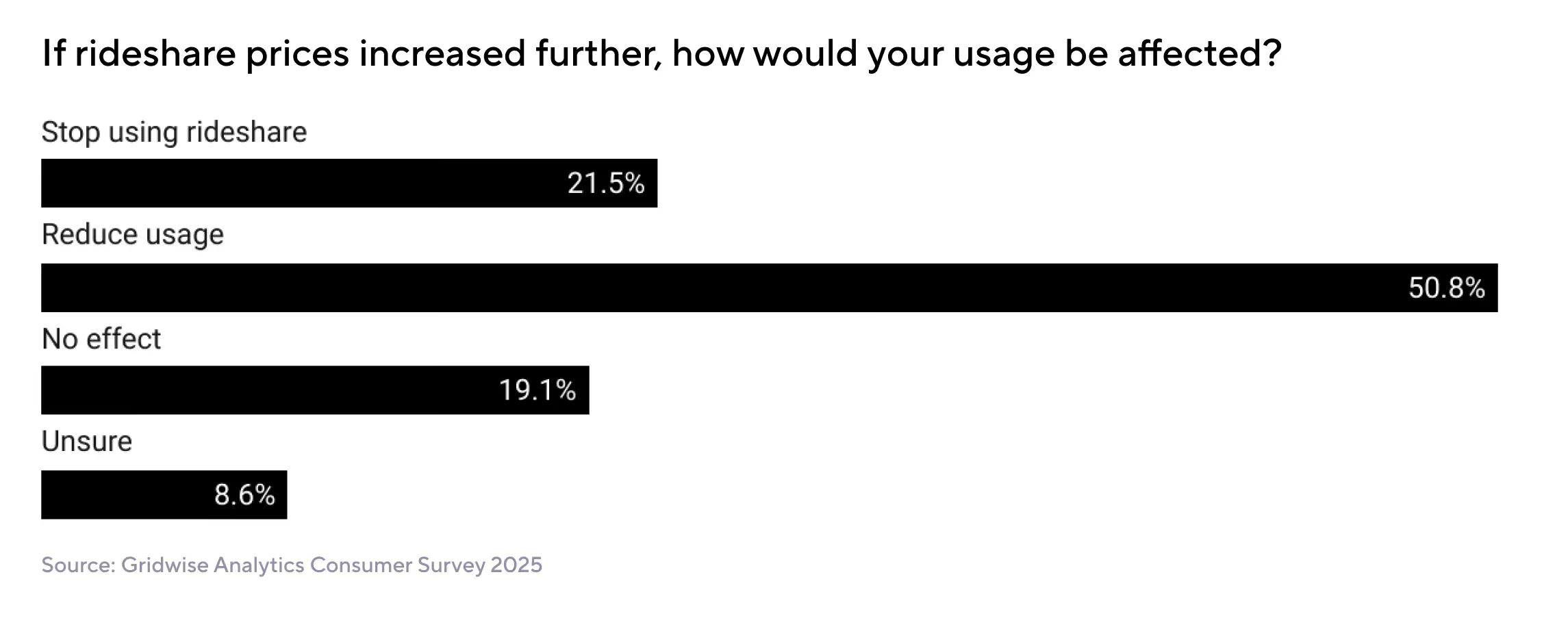
This is a clear signal: pricing power is limited.
Prices rose 7% in 2024 — despite rider sensitivity
According to Gridwise fare tracking, Lyft's average trip cost (including tips) rose from $19.88 to $21.28 — a 7% increase. Median fares (excluding tips) increased similarly.
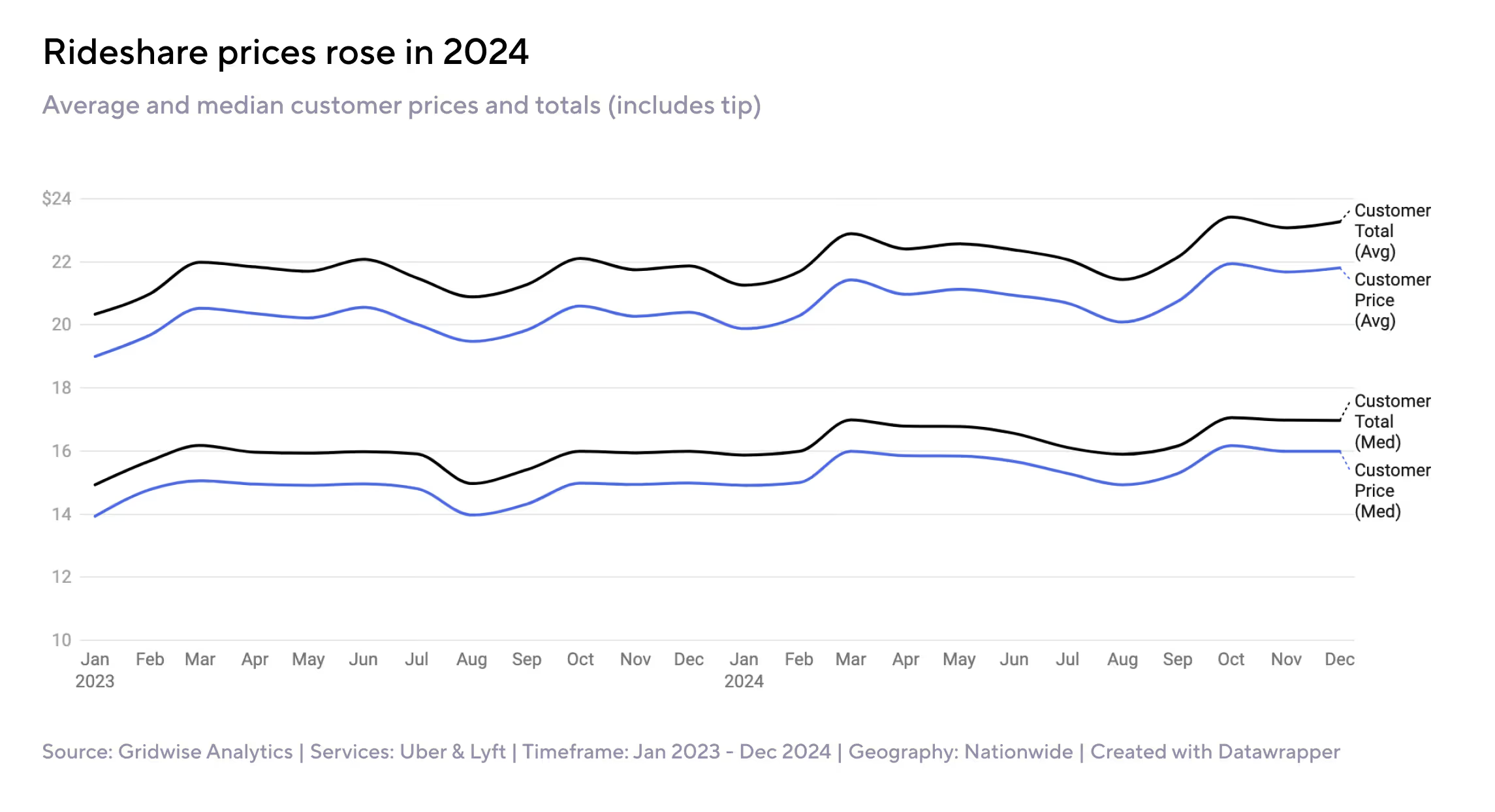
This kind of movement is modest but meaningful in a category with tight price ceilings. For fleet operators or AV entrants, it's a reminder that new models must deliver cost advantages, not just technology.
Driver engagement stayed stable — even with shifting pay
Rideshare drivers averaged 65.6 monthly hours in Q4 2024 — up slightly from 62.9 in Q1. That 4.4% increase stands out against other gig sectors like food or parcel delivery, where engagement dropped more significantly.

This suggests that despite lower weekly pay, Lyft maintained a core of active, committed drivers. It also reflects that the platform’s incentive structure — though more variable — kept the wheels turning.
That kind of insight helps assess not just what the platform pays, but how sustainable the network is.
Final Takeaway: Gridwise data reveals what platform-level reporting can’t
Lyft reported record revenue and its first full-year GAAP profit in 2024. But Gridwise data shows how those outcomes were achieved: concentrating demand among fewer drivers, lowering base pay, and increasing reliance on bonuses. At the same time, prices crept up, and riders grew more cost-sensitive.
For investors, that means Lyft is tightening — not scaling. For AV and mobility infrastructure companies, it shows a platform becoming more flexible in filling supply and potentially more open to new models that reduce idle time, lower cost, or expand fleet coverage.
Most importantly, this view wouldn’t be visible in company filings alone. Gridwise driver data shows what’s happening between the lines — how platform strategy plays out in shifts to earnings, engagement, and usage on the ground.
That kind of visibility is no longer optional — it’s essential for understanding the next phase of rideshare.

Can You Make Good Money on Rover in 2025?
If you love animals and want to earn extra income on a flexible schedule, working with Rover might be the perfect fit. Whether you're walking dogs after your 9–5 or offering overnight pet sitting on weekends, Rover gives pet lovers the tools to turn their time and care into a reliable side hustle—or even a full-time business. But before you sign up and start booking clients, it’s essential to understand how the platform works—including how much Rover workers make in 2025, what factors affect your earnings, and how to maximize your income.
[elementor-template id="20891"]
Can You Make Good Money on Rover in 2025?
Yes, you can—especially if you're consistent, responsive, and offer multiple pet care services. While Rover doesn't pay a fixed hourly wage, many workers earn solid income by setting competitive rates, building a base of repeat clients, and taking advantage of high-demand windows like holidays and weekends. In this post, we’ll break down what Rover workers earn in 2025, what affects those earnings, and how to make the most of your time on the platform.
Do Rover workers get paid per hour?
No, Rover dog walkers and pet sitters do not get paid by the hour traditionally. Instead, they're independent contractors who set their rates per service.
For example:
- Dog walks are usually priced per 30-minute or 60-minute session, not by the hour.
- Drop-in visits are also charged per visit, not hourly.
- Overnight stays are paid per night, regardless of how many hours they spend.
So while you can estimate an hourly rate when planning (like $17.25/hour for dog walking), the actual payment structure is per service, not per hour.
How Much Do Rover Workers Make in 2025?
If you’re thinking about turning your love of animals into a side hustle or part-time job, Rover is one of the most popular platforms to get started. But before you begin walking dogs or boarding pets, it’s essential to ask: How much do Rover workers make in 2025?
Rover pet sitters and dog walkers are independent contractors, meaning they set their own rates and are paid per service, not per hour. Earnings vary based on service type, experience, location, and availability.
According to Indeed, the average earnings for Rover workers in 2025 are:
- $17.25/hour for dog walking (estimated from per-walk rates; Rover does not pay hourly)
- $35–$75/night for overnight pet sitting or boarding
- $10–$20/visit for drop-in care
While those averages provide a helpful baseline, many sitters earn more—especially those who offer premium services, receive tips, and build a base of repeat clients. Understanding what influences earnings is the first step to setting realistic expectations and building a profitable pet care business.
How Does Pay Work With Rover?
Unlike traditional gig apps with flat rates, Rover gives you more control over your pricing and the services you provide. That flexibility is a big reason why many pet care providers choose Rover.
Rover allows sitters to set their own prices and offer multiple services, including:
- Dog walking
Drop-in visits - Doggy daycare
- Overnight pet sitting (in the owner’s home)
- Boarding (in your home)
As a sitter, you can set your own rates for dog walking, daycare, boarding, and drop-in visits. Rover deducts a 20% service fee from each completed booking. You keep 80% of your listed rate, plus 100% of any customer tips.
You’re paid via direct deposit two days after completing a service. While not guaranteed, Tips are optional through the app and go 100% to the sitter.
This structure allows experienced sitters to increase their rates over time and earn more per hour. Payments are sent via direct deposit within two days of completing a service, making it easy to manage cash flow.
By setting the right rates and building a strong client base, you can steadily increase your income while working on your own terms.
Rover Average Hourly, Daily, and Weekly Earnings
Because Rover services are priced by the visit or per night—not hourly—your actual earnings depend on how many jobs you complete and how efficiently you schedule them.
Service TypeEstimated PayDog Walking$15,$25 per 30-minute walkDrop-In Visit$10,$20 per visit (15,30 mins)Overnight Sitting/Boarding$35,$75+ per nightDoggy Daycare$25,$40 per dayWeekly Total (Part-Time)$200,$500Weekly Total (Full-Time)$700,$1,200+
The more services you offer and the more consistent your availability, the more likely you are to build steady weekly earnings. Many experienced Rover users also stack services, such as watching a daycare dog while boarding another overnight, to increase efficiency.
What Affects How Much You Can Earn on Rover?
Your earnings on Rover aren’t just a result of time spent working. Multiple factors affect how much you can make:
Location: Urban areas tend to have higher demand and higher rates. Sitters in cities like New York, Austin, or San Francisco often earn more than those in rural regions.
Reputation: Clients tend to book sitters with strong reviews and reliable service. A polished profile, fast response time, and consistent 5-star ratings can all help increase your bookings.
Service Type: Boarding and overnight stays are typically the most lucrative services. Walks and drop-ins are faster to complete but pay less per appointment.
Availability: Sitters who can accommodate holidays, weekends, and last-minute requests tend to see higher booking rates and can charge premium prices.
By understanding these variables and optimizing for them, you can improve both your booking volume and your hourly rate over time.
Most Profitable Rover Services
Not all services are created equal when it comes to earning potential. Some require more time or responsibility but can significantly boost your bottom line.
- Overnight Boarding: With rates often starting at $50, $75/night, this is one of the highest-earning services, especially if you're boarding multiple pets.
- Doggy Daycare: Great for sitters with a home setup, this can be stacked with other services for maximum productivity.
- Holiday Care: Clients are willing to pay more during peak travel seasons—plan ahead to capitalize on these windows.
- Multi-Pet Bookings: Charging extra per additional pet lets you increase your per-visit or per-night earnings with minimal added effort.
Offering a mix of services and positioning yourself as a reliable, full-service sitter can set you apart and help you book higher-value jobs consistently.
Expenses to Keep in Mind
Even though Rover doesn’t charge subscription fees, there are still costs to consider. Since you’re operating as an independent contractor, it’s up to you to manage expenses and track them for tax purposes.
- Pet supplies (bowls, toys, waste bags, cleaning supplies)
- Gas and travel time if you go to clients’ homes
- Pet insurance or first aid training (optional, but helpful)
- Rover’s 20% service fee on all bookings
- Time-related costs—especially for boarding and long visits
Even though Rover doesn’t charge subscription fees, there are still costs to consider. Since you’re operating as an independent contractor, it’s up to you to manage expenses and track them for tax purposes.
Tips to Maximize Your Rover Income
Want to increase your earnings without adding more hours? Here are strategies that successful Rover workers swear by:
- Keep your calendar open and current, especially for weekends and holidays.
- Respond to messages quickly. Fast replies improve your search ranking.
- Ask for reviews. After a great stay or walk, don’t be shy. Politely ask your client to leave a review.
- Offer multiple services. Walks, drop-ins, boarding, and daycare help you stay booked across different types of clients.
- Build client loyalty. Repeat customers mean less marketing and more predictable income.
By focusing on reliability, communication, and client satisfaction, you can stand out and steadily increase your bookings and rates.
Tracking Your Income and Performance
Rover provides essential booking and payout summaries but doesn’t offer deeper insights into your overall performance, profitability, or multi-app earnings, especially if you’re juggling other platforms like Wag!, Instacart, or DoorDash.
With Gridwise, you can:
- Track earnings per day, per week, or per client
- Log expenses and mileage if you drive to pet care jobs
- Analyze which services or time slots are most profitable
- Combine Rover income with other platforms for a full financial picture
This visibility helps you decide better which services to focus on and where to get the best return for your time.
[elementor-template id="20949"]
Disclaimer: Gridwise is not a tax advisor or financial institution. Please consult a certified tax professional for guidance on deductible expenses and self-employment taxes.
Making Rover Work for You: The Takeaway
Working with Rover in 2025 can be a rewarding and flexible way to earn income—especially if you love animals and prefer personalized, client-focused work over traditional gig apps.
While rates vary by service and location, sitters who provide excellent care, build strong client relationships, and treat their profile like a business often earn well above average. The more proactive you are with availability, pricing, and professionalism, the more consistent and scalable your earnings will be.
[elementor-template id="21599"]
How Much Do Skipcart Drivers Make in 2025?
If you’re considering joining Skipcart as a delivery driver, one of the first questions you probably have is, “How much do Skipcart drivers make in 2025?” With new gig platforms entering the market every year, it’s important to understand how they compare—not just in flexibility, but in real earning potential.
Skipcart offers last-mile delivery services for major retailers like Walmart and CVS, making it a solid option for drivers in suburban and mid-sized cities where other apps may have less coverage. But because Skipcart doesn’t include tips or surge pricing, understanding the pay structure and what affects your earnings is key.
In this guide, we’ll break down how Skipcart pays, what drivers are actually earning per hour and per week, and how you can use smart scheduling and tracking tools to boost your income.
[elementor-template id="20891"]
Understanding Skipcart Driver Pay in 2025
Skipcart is a growing gig platform focused on last-mile delivery for major retailers. It may not be as widely recognized as Uber Eats or DoorDash, but it has become a reliable source of flexible delivery income in many suburban and mid-sized markets.
As of 2025, driver-reported earnings place Skipcart’s hourly pay somewhere between $12 and $18 per hour, depending heavily on the number of deliveries completed, route efficiency, and market conditions. According to Indeed, Skipcart drivers report an average hourly wage of $17.48, while Glassdoor estimates it as high as $27/hour in some markets.
Skipcart does not offer in-app tipping, so your earnings are tied directly to base pay per delivery and your ability to efficiently complete routes. The company also confirms that pay is influenced by delivery duration, distance, and timing, as outlined on Skipcart's official pay policy.
Before you jump in, it’s essential to understand how Skipcart pays, what to expect from typical delivery routes, and what factors can increase or limit your income potential.
How Pay Works on Skipcart
Skipcart uses a flat-rate pay model, meaning each delivery or route has a set payout that’s visible before you accept the job. This differs from platforms that rely on dynamic pricing, tipping, or surge pay.
Each delivery typically pays between $7 and $11, with no tipping feature available in the app. However, some drivers report receiving cash tips at the door, though this isn’t guaranteed and can’t be counted on consistently.
Drivers are paid weekly via direct deposit, with some markets offering access to instant pay through partners like Branch or Stripe.
Because you’re considered an independent contractor, Skipcart does not withhold taxes or cover any expenses. That means tracking your own earnings and costs is essential if you want a clear view of what you're truly taking home.
While the simplicity of the pay model makes it predictable, it also puts more responsibility on the driver to manage time and costs carefully to stay profitable.
Average Hourly and Weekly Earnings
So what can you realistically expect to earn?
Earnings can vary widely depending on your location, the availability of routes, and how efficiently you can complete each one. Here’s a general breakdown based on driver-reported data from platforms like Indeed and Reddit forums:
TimeframeEstimated Gross EarningsPer Delivery$7–$11Hourly (active driving)$12–$18Part-Time Weekly$150–$300Full-Time Weekly$500–$750+
Because Skipcart often partners with retailers to handle pre-planned routes, you may have access to multi-stop deliveries that increase your total payout. However, waiting for dispatch, driving between stops, or returning to base can reduce your effective hourly earnings.
Tracking your time-on-task versus payout is crucial to understanding whether Skipcart is paying off relative to other gig platforms.
What Affects Skipcart Driver Pay
Skipcart’s flat-rate model doesn’t leave much room for sudden earnings spikes, so understanding what affects your base rate is even more important.
Location
The city or region you operate in makes a big difference. Markets with high demand but fewer drivers tend to offer more frequent routes and less competition. Some rural and suburban zones may have longer delivery distances but fewer active Skipcart workers, giving you more consistent access to routes.
Order Volume
Skipcart’s primary partnerships include big-box retailers like Walmart and pharmacy chains like CVS. You may receive a steady stream of route offers if those stores are active in your region. But if those locations are slow or already saturated with drivers, offers may be few and far between.
Route Type and Efficiency
Some routes involve a single delivery, while others are 6 to 12 stops bundled into a single run. Your per-hour pay can increase significantly if you can complete batch deliveries quickly and without traffic issues.
Time of Day
Like most platforms, demand fluctuates throughout the day. Late mornings, lunchtime, and early evenings tend to have more delivery volume. Being available during those windows and checking the app consistently can help you claim higher-paying routes than other drivers.
Understanding these variables helps you identify the most profitable times and locations in your area, allowing you to build your own route strategy around demand.
Common Expenses to Track
Because Skipcart doesn’t provide tips, incentives, or delivery bonuses, your profitability depends heavily on keeping costs in check. Here are a few key expenses to track:
- Fuel costs
- Wear and tear on your vehicle
- Data usage from the app
- Insurance coverage that includes delivery work
- Downtime between deliveries
While the per-delivery rate may look solid, these expenses can quietly eat into your profits. Using Gridwise to track mileage and trip-level earnings helps you see your actual take-home income and spot trends that may be affecting your bottom line.
How to Boost Your Income on Skipcart
Without surge pricing or tips, boosting your Skipcart earnings comes down to efficiency, consistency, and timing. Here’s what successful drivers focus on:
- Target high-volume partners like Walmart
- Deliver during windows with more route availability, such as late mornings and evenings
- Learn which areas consistently provide smooth routes with little traffic
- Avoid low-paying single trips, and prioritize routes with multiple stops and reasonable driving distances
- Track your effective hourly rate to evaluate whether specific routes are worth your time
Even if payouts seem fixed, the more you analyze your route efficiency and minimize downtime, the higher your overall earnings per hour can climb.
Tracking Your Income Across Apps
Many Skipcart drivers also deliver for platforms like DoorDash, Uber Eats, or Instacart to keep their schedule full. That’s why tracking performance across all apps is so important.
Gridwise lets you:
- Monitor earnings per app and per day
- Automatically log mileage for tax purposes
- Identify which platforms pay you best by the hour
- Analyze peak times, zones, and delivery types
- Keep everything organized for quarterly taxes or business planning
If you’re serious about turning gig work into a reliable income stream, multi-app tracking is essential to understanding where your time is best spent.
[elementor-template id="20949"]
Disclaimer: Gridwise is not a tax advisor or financial institution. For personalized guidance, consult a certified tax professional.
Making Skipcart Work for You
Skipcart may not have the name recognition of larger gig apps, but it can still provide meaningful income, especially for drivers in areas with active retail partnerships and low platform saturation.
Success on Skipcart comes down to efficiency over volume. Without in-app tipping or dynamic bonuses, the way to win is by choosing the right routes, staying active during peak times, and keeping close tabs on your actual per-hour earnings.
With the right tools, you can understand your costs, track your income, and combine Skipcart with other platforms to build a well-rounded delivery strategy.
[elementor-template id="21599"]

How Much Do Favor Drivers Make in 2025?
As the gig economy continues to evolve, Favor remains a unique, Texas-based delivery option offering food, groceries, and errands through a single app. But if you’re considering joining as a Runner, the most important question is: how much do favor drivers make?
[elementor-template id="20891"]
The average hourly pay for Favor drivers in Texas ranges from $12.47 to $15.15, depending on the role and market conditions, as reported by Indeed. Delivery drivers specifically earn an average annual salary of $62,000, which translates to approximately $29.81 per hour assuming full-time work. Favor runners receive a base pay starting at $2.10 per delivery, plus 100% of customer tips, with additional bonuses and promotions available during peak times or high-demand areas. On busy days, hourly earnings can range between $12 and $18, influenced by factors like delivery distance, time, and customer generosity
These are gross earnings. After expenses like gas, maintenance, and taxes, your actual take-home pay will vary—but with a smart strategy, many drivers make Favor a reliable source of weekly income.
How Favor’s Pay Model Works
Favor’s payout system differs from traditional rideshare and food delivery apps.
Instead of paying per mile or minute, Favor uses a hybrid system made up of:
- A fixed Runner pay per delivery
- 100% of tips from customers
- In some cities, a minimum guaranteed hourly rate, provided you meet criteria like acceptance rate and active time
This model puts the power in your hands. While base pay is often modest, Favor's strong tipping culture helps you earn more when you provide great service. Many drivers find that the bulk of their earnings come from tips.
You’re also paid quickly—Favor offers instant payouts via the Runner app or their optional Runner card, so you don’t have to wait for weekly direct deposits.
Average Hourly and Weekly Earnings
Here's a breakdown of what Favor drivers typically earn based on estimates and reported driver averages:
Here are the estimated gross earnings for Favor drivers:
- On average, Favor drivers in Texas earn between $12.47 and $15.15 per hour.
- Part-time Favor drivers can expect to make approximately $150 to $300 weekly.
- Full-time Favor drivers have the potential to earn around $450 to $650+ per week.
- Favor drivers can earn roughly $0.50 to $0.75 per mile.
TimeframeEstimated Gross EarningsHourly (Texas avg)$12.47 - $15.15/hourPart-Time Weekly$150 - $300Full-Time Weekly$450 - $650+Estimated per Mile$0.50 - $0.75
Note: These figures are estimates and can vary based on location, demand, time of day, and individual effort. Full-time earnings assume consistent availability and acceptance of orders. Earnings per mile are highly variable depending on the specific deliveries.
These numbers include tips but do not reflect expenses. Your real earnings depend on how far you drive, your efficiency between orders, and how you manage your time on the road.
What Affects How Much Favor Drivers Make
How much you earn as a Favor Runner isn’t just about how many hours you put in—it’s also shaped by where, when, and how you deliver. While Favor’s pay structure is relatively simple, the variables that impact your total earnings are not. Understanding these factors can help you make smarter decisions and optimize your strategy.
Market Size and Delivery Volume
The city or region you drive in plays a significant role in determining your income. Favor operates exclusively in Texas, but delivery volume and customer habits vary widely between metros like Austin, Houston, San Antonio, and smaller towns. Urban areas tend to offer:
- Higher order frequency
- More opportunities for stacked deliveries
- Greater customer density (less downtime between orders)
- Better average tips due to higher order values
Runners in suburban or lower-density zones may face longer drive times and more waiting between offers, which can impact hourly efficiency.
Time of Day and Day of Week
Like most delivery platforms, Favor experiences predictable demand spikes throughout the day and week. Lunch and dinner hours are consistently busy, while weekends often include errand-based or larger batch orders.
Delivering during peak windows generally results in:
- Shorter wait times between orders
- Higher delivery volume
- Better tip potential from larger meals or bulkier runs
Late-night orders and bad-weather days can also create high-demand surges when fewer drivers are on the road.
Type of Order
Not all Favor deliveries are created equal. You might be delivering:
- Fast food or restaurant meals
- Grocery or convenience store items
- Alcohol, prescriptions, or household goods
- Multi-stop errands or custom orders
Larger or more complex deliveries often come with higher base pay and greater tip potential, especially when they save the customer significant time or hassle.
Customer Tipping Behavior
While tipping varies from person to person, Favor’s model encourages gratuities by making tipping easy and expected. Many customers tip $5–$10 per delivery, especially on larger orders or when the service is fast and professional. Since 100% of the tip goes to the Runner, this can significantly affect your total payout for each run.
Tips can fluctuate based on:
- Order size and value
- Delivery time (lunch vs. late night)
- Driver communication and service
Geographic area (urban zones often see higher average tips)
Unlike hourly wage jobs, where your pay is fixed regardless of effort, delivery driving rewards drivers who consistently deliver great service.
Your Efficiency and Strategy
Your earnings are ultimately tied to how efficiently you work. Two Runners working the same hours can have very different results depending on how they manage their time and where they choose to deliver.
Drivers who position themselves near high-volume merchants, reduce dead miles, work during peak demand, and track their performance using tools like Gridwise tend to earn more in fewer hours than those who accept deliveries passively without a clear strategy.
Common Expenses to Track
Because you’re an independent contractor, Favor does not cover your operating costs. It’s important to track these to understand your net earnings:
- Gas: Delivery driving requires a lot of stop-and-go mileage, which burns more fuel.
- Maintenance: Frequent driving = more oil changes, tire rotations, and general wear.
- Phone & Data Plan: The app runs full-time with navigation and messaging.
- Delivery Gear: Thermal bags and secure phone mounts are essentials for speed and safety.
- Insurance: Some drivers add rideshare/delivery endorsements to their auto policy.
Using Gridwise, you can automatically log mileage and categorize your expenses, giving you a full picture of what you’re really making after costs.
Tips Matter—Here’s How to Earn More
A report by Gridwise indicates that, on average, food delivery workers earned approximately 53.4% of their total income from tips in 2024. This underscores the significant role that tips play in the overall earnings of delivery drivers.
That means customer service isn’t optional—it’s essential. Here’s how you can boost your tip totals:
- Send polite text updates to let customers know when you’re arriving or if there’s a delay
- Use a thermal bag to keep food at the proper temperature
- Handle packages carefully and leave items neatly at the door
- Say thank you or leave a friendly note on no-contact deliveries
- Be reliable, fast, and polite—every time
These small gestures build rapport with customers and encourage larger tips, which can dramatically improve your daily payout.
Best Times to Deliver with Favor
Just like other gig apps, Favor has predictable high-demand windows:
Time PeriodWhy It PaysLunch (11 AM – 2 PM)Peak orders from professionals and studentsDinner (5 PM – 8 PM)Highest volume of the day, often larger orders + better tipsWeekend AfternoonsErrand requests, retail pickups, and extra grocery demandFriday/Saturday NightsLate-night orders, alcohol runs, and high tip potential
Gridwise’s “When to Drive” feature can help you identify the most profitable shifts in your area based on past data and current conditions—so you’re never wasting time waiting on slow periods.
Track Mileage and Earnings with Gridwise
Favor’s app doesn’t give you the full picture of your earnings or expenses. That’s where Gridwise fills in the gaps.
With Gridwise, you can:
- See total earnings across shifts and apps
- Log every mile driven for tax deductions
- Record fuel and maintenance expenses
- Track tips, bonuses, and hourly trends
- Compare which times and zones pay you the most
Moving from “just driving” to running your gig work like a business is essential.
Disclaimer: Gridwise is not a tax advisor or financial institution. Tax-related information is for general guidance only. Always consult a certified tax professional for personal advice.
Making Favor Work for You: The Bottom Line
Favor offers a straightforward way to earn flexible income, especially for those looking to work on their own terms. While it may not offer the highest base rates in the gig economy, Favor’s tipping structure and fast, lightweight delivery model make it a solid option—particularly if you prioritize customer service and work during peak hours.
The key to earning more as a Favor Runner lies in understanding when and where to drive, minimizing downtime, and tracking both your income and expenses over time. Tools like Gridwise make that easy—helping you stay organized, monitor performance, and make smarter decisions about your time on the road.
Whether you’re just getting started or looking to improve your profitability, combining Favor with a data-driven approach can help you make the most of every delivery.
[elementor-template id="21599"]
Wondering how much other gig platforms pay?
- How To Make $1000 A Week With DoorDash
- Increase Your Earnings in 2024! How to Make $1000 per Week With Uber
- How Much Do Uber Drivers Make?
- How Much Do Lyft Drivers Make?
- Everything You Need to Know About Amazon Flex
- Walmart Spark Delivery Driver Pay: How Much Does a Walmart Spark Driver Make?
- How Much Can You Make on Instacart?
- How Much Do Shipt Shoppers Make?
- How Much Do Uber Eats Drivers Make?
- Check out the Gridwise Job Board
Strategies to Maximize Earnings as a DoorDasher
While DoorDash provides flexibility and freedom, consistent income depends on smart planning and strategic decision-making. Many of the factors that influence how much you earn—like base pay or local demand—are outside your control. But there are several practical steps you can take to improve your efficiency and boost your bottom line. These strategies are based on real-world driver behavior and supported by tools like Gridwise that help you stay ahead.
Focus on Peak Meal Times
DoorDash earnings are heavily tied to meal-time demand. That means your best bet for consistent, high-volume orders is during:
- Lunch hours: 11:00 AM – 2:00 PM
- Dinner hours: 5:00 PM – 9:00 PM
- Weekend brunch: Especially Sundays between 10:00 AM – 1:00 PM
- Late-night cravings: Friday and Saturday nights after 9:00 PM
Time PeriodWhy It MattersLunch Hours (11:00 AM – 2:00 PM)High order volume from office workers and remote employees ordering mealsDinner Hours (5:00 PM – 9:00 PM)Peak delivery window with larger orders and better tipping potentialWeekend Brunch (10:00 AM – 1:00 PM)Especially busy on Sundays—popular time for breakfast and brunch ordersLate-Night Cravings (After 9:00 PM)Friday and Saturday nights see strong demand from late-night diners and partygoers
These times typically come with more frequent orders, higher-value baskets, and better tips. Gridwise’s “When to Drive” feature can show you the most profitable times to be active in your specific market, based on historical and real-time demand data.
Stack Orders and Choose High-Volume Zones
One of the easiest ways to increase your hourly earnings as a Dasher is to complete multiple deliveries per trip (a.k.a. stacked orders). These reduce your downtime and mileage per dollar earned.
To improve your order flow:
- Stay near popular restaurants or commercial clusters.
- Avoid low-density neighborhoods or areas with frequent long-distance, low-pay orders.
- Use Gridwise’s “Where to Drive” tool to find zones with consistent order volume and avoid areas with too many drivers.
The more efficiently you position yourself, the less time you spend waiting—and the more you earn per hour.
Use Multiple Apps to Fill Gaps
DoorDash isn’t always consistent, especially during off-peak times. That’s why many experienced Dashers multi-app with Uber Eats, Grubhub, or Instacart.
By toggling between platforms, you can:
- Fill in the slow periods with deliveries from other apps.
- Avoid sitting idle between orders.
- Compare payouts between platforms in real time.
Gridwise helps streamline this by tracking your earnings across multiple apps, so you can evaluate which ones are worth your time—and which aren’t.
4. Prioritize High-Tipping Orders
Tips are a critical part of a Dasher’s earnings. While you can’t guarantee a good tip, you can use order data to make smarter decisions.
Look for:
- Orders from upscale restaurants or higher-priced meals.
- Repeat customers or larger basket sizes.
- Shorter distance with decent base pay + tip.
Also, keeping food hot and on time helps encourage tips. Use a quality insulated delivery bag and consider texting the customer with updates on your ETA. Small touches can go a long way.
5. Track Mileage and Expenses to Maximize Tax Deductions
Every delivery adds to your deductible expenses—but only if you’re tracking them.
Here’s what you can deduct as a DoorDasher:
- Mileage (standard IRS deduction: $0.67/mile in 2024)
- Fuel and maintenance
- Phone and data plan costs
- Delivery equipment (hot bags, mounts, etc.)
Gridwise automatically logs your mileage and lets you record your expenses—all in one place. That makes tax season easier, and ensures you're not leaving money on the table.
Disclaimer: Gridwise is not a tax advisor, accounting firm, or financial institution. Any tax-related information provided in this article is for general informational purposes only and should not be considered professional tax advice. We strongly recommend consulting a licensed tax professional or accountant for guidance specific to your situation.
Take Advantage of Promotions and Bonuses
DoorDash frequently offers Promotions, including:
- Peak Pay: Extra money per order during busy times.
- Challenges: Bonuses for completing a set number of deliveries.
- Guaranteed Earnings: Short-term boosts for new Dashers or busy markets.
These can make a noticeable difference in your weekly totals, especially when combined with smart scheduling. Gridwise allows you to track how much you're earning during bonus windows—and whether the extra time is worth it.
Limit Dead Miles and Maximize Active Time
Dead miles (miles driven without an order) can drain your gas tank and reduce your earnings. To minimize them:
- Avoid areas with limited restaurants or low demand.
- Stay in zones with high order density.
- Time your return to busy zones carefully after a long drop-off.
Gridwise shows you where other Dashers are active and where demand is building, so you can reposition smartly and reduce the downtime between deliveries.
Evaluate Your Earnings Per Hour and Per Mile
It’s easy to focus only on how much you made in a shift—but knowing what you earned per hour and per mile gives you a better picture of your efficiency.
With Gridwise, you can:
- Track earnings per trip, per mile, and per hour.
- Identify which areas or times are most profitable.
- Adjust your driving habits to boost long-term results.
This data empowers you to work smarter—not longer.
Final Thoughts on How Much DoorDashers Make
As a DoorDasher in 2025, your income depends on more than just the number of deliveries you complete. Your schedule, location, strategy, and tools all affect how much you earn.
You can increase your earnings without increasing your hours by focusing on peak hours, tracking your performance, using multiple apps, and minimizing downtime.
Gridwise is here to help every step of the way—with tools that make it easier to drive strategically, track expenses, and optimize your time on the road.
[elementor-template id="21599"]
- How To Make $1000 A Week With DoorDash
- Increase Your Earnings in 2024! How to Make $1000 per Week With Uber
- How Much Do Uber Drivers Make?
- How Much Do Lyft Drivers Make?
- Everything You Need to Know About Amazon Flex
- Walmart Spark Delivery Driver Pay: How Much Does a Walmart Spark Driver Make?
- How Much Can You Make on Instacart?
- How Much Do Shipt Shoppers Make?
- How Much Do Uber Eats Drivers Make?
- Check out the Gridwise Job Board
Strategies to Maximize Earnings as an Uber or Lyft Driver
Whether you're driving part-time or full-time, earning consistently with Uber or Lyft in 2025 comes down to strategy. While you can’t control factors like base fare pricing or demand fluctuations, you can control how you plan your time, choose your locations, and manage your costs. These strategies are designed to help you drive smarter—not harder—and improve your earnings potential across every shift.
[elementor-template id="20891"]
1. Drive During Peak Demand Hours
Some hours of the day are simply more profitable than others when driving for Uber or Lyft. Rideshare demand tends to spike around:
- Morning commutes (6–9 AM)
- Evening commutes (4–7 PM)
- Weekend nights (Friday–Saturday after 9 PM)
- Big events (concerts, sports games, festivals)
- Weather events or holidays, when fewer drivers are on the road
Uber and Lyft Peak TimeWhy It MattersMorning Commutes (6–9 AM)High demand from riders heading to work or transit stationsEvening Commutes (4–7 PM)Commuters returning home, plus overlap with dinner and early evening plansWeekend Nights (after 9 PM)Increased traffic from bars, restaurants, and nightlifeMajor EventsSurge pricing likely around concerts, sports games, and festivalsHolidays & Bad WeatherFewer drivers on the road = less competition + higher fare multipliers
Driving during these high-demand windows often unlocks surge (Uber) or Prime Time (Lyft) pricing, resulting in higher fares. Gridwise’s “When to Drive” feature helps you identify the most profitable times to go online based on historical and live data in your city.
Leverage Airport Trips for Higher Payouts
Airports are one of the most consistent sources of high-value trips for Uber and Lyft drivers. They often offer:
- Longer ride distances (especially to and from downtown or suburbs)
- Higher average fares
- More frequent tipping from travelers, especially business or out-of-town passengers
But airport pickups can also be unpredictable—long waits, queue systems, and changing flight schedules can make it difficult to know when it’s worth the trip.
Optimize Airport Trips Using Gridwise's Airport Feature
Airports are significant hubs for rideshare drivers, often providing longer trips and higher fares. However, airport pickups can lead to extended idle times and uncertainty without proper planning. Gridwise's Airport feature equips drivers with essential tools to make informed decisions about when and whether to head to the airport.
Key Features of Gridwise's Airport Tool:
- Real-Time Flight Schedules: Access up-to-date information on flight arrivals and departures to anticipate passenger demand.
- Passenger Volume Estimates: Gauge the number of potential passengers based on incoming and outgoing flights to determine optimal times for airport pickups. help.gridwise.io
- Queue Length Insights: Understand the length of rideshare queues at the airport, helping you decide whether it's worth waiting or relocating to busier areas. Gridwise
- Customizable Alerts: Set up notifications for peak arrival or departure times and significant delays, ensuring you're always informed of changes that could impact demand. help.gridwise.io
Benefits of Using the Airport Feature:
- Reduced Idle Time: By knowing when passenger demand is highest, you can minimize waiting periods and maximize active driving time.
- Informed Decision-Making: Real-time data allows you to choose strategically between waiting at the airport or seeking fares elsewhere.
- Enhanced Earnings Potential: Targeting high-demand periods and avoiding long queues can lead to more trips and increased income.
Integrating Gridwise's Airport feature into your driving strategy enables you to navigate airport pickups more efficiently, turning potential downtime into profitable opportunities.
Work Smart with Strategic Locations
Knowing where to drive is just as important as when to drive when it comes to driving for Uber or Lyft. Certain zones consistently offer:
- More ride requests
- Longer trip distances (which typically pay more)
- Higher tipping potential
- Proximity to airports, train stations, or nightlife hubs
Gridwise’s “Where to Drive” heat maps can help you avoid oversaturated zones and target high-demand areas before other drivers get there—minimizing downtime and increasing hourly earnings.
Use Multiple Apps to Stay Busy
Relying on just one app means you’re limited to one stream of ride requests. Many drivers use both Uber and Lyft (and sometimes Uber Eats or DoorDash during slower times) to avoid gaps between trips.
Multi-apping as a rideshare driver allows you to:
- Compare rates in real time
- Switch platforms during slowdowns
- Take the best-paying trip available at any given time
With Gridwise, you can track earnings across multiple apps in one place, helping you decide which platform is most profitable for you.
Maximize Ratings and Tips
Your service quality directly impacts tips and long-term earnings. Higher driver ratings can also unlock access to:
- Uber Pro or Lyft Rewards
- Trip promotions and scheduling preferences
- Rider trust (and better tips)
Here are a few proven ways to boost your tips and ratings as a rideshare driver:
- Keep your car clean and well-ventilated
- Offer phone chargers, bottled water, or music control
- Greet passengers and drive courteously
- Avoid aggressive driving or taking risky shortcuts
These small touches can significantly increase your per-trip earnings, especially over the course of a full shift.
Track Expenses to Reduce Tax Liability
Every mile you drive and dollar you spend on your rideshare business is a potential tax deduction. But you’re leaving money on the table if you're not tracking it.
Common deductible expenses include:
- Mileage (at $0.67 per mile for 2024)
- Gas and maintenance
- Car washes and cleaning supplies
- Phone plan and data usage
- Snacks or water for riders
Gridwise automatically tracks your mileage, trip logs, and expenses, giving you a clean record for tax season and helping you evaluate your true take-home pay.
Disclaimer: Gridwise is not a tax advisor or financial institution. Please consult a licensed tax professional for advice specific to your situation.
Take Advantage of Incentives and Promotions
Both Uber and Lyft offer driver incentives that can significantly boost your weekly earnings when timed right:
- Quests (Uber) – Earn bonuses for completing a set number of rides
- Streak Bonuses (Lyft) – Earn extra for completing consecutive trips
- Consecutive Trip Bonuses (Uber) – Back-to-back trips without declining
- Boost and Prime Time Zones – Earn more in specific areas during peak times
Monitor these in your driver app—and use Gridwise to see how these bonus windows align with your driving history.
Avoid Dead Miles and Idle Time
Dead miles—the distance you drive without a passenger—can eat into your earnings fast. To minimize unproductive time:
- Don’t drive too far to chase a pickup unless the trip is high-value.
- Stay in areas with consistent ride volume.
- Use Gridwise to avoid zones that are already saturated with drivers.
Staying in motion with passengers on board means more hourly revenue and better fuel efficiency.
Review Your Performance Metrics Regularly
Focusing on the number of trips is easy, but your earnings per hour and per mile are much more helpful performance indicators.
With Gridwise, you can:
- Compare earnings across platforms and time blocks
- Identify which days and zones are most profitable
- Spot patterns in downtime, trip frequency, and cost per mile
This data empowers you to continuously improve your strategy and maximize your time on the road.
Final Thoughts on Maximizing Uber and Lyft Earnings
Driving for Uber or Lyft in 2025 is still a strong income opportunity, but success depends on strategy, not just effort. You can significantly improve your earnings without increasing your hours by tracking your numbers, driving smarter during peak times, and minimizing idle time.
Gridwise is built to support rideshare drivers with tools that help you:
- Find the best times and zones to drive.
- Track your income and expenses automatically.
- Compare performance across multiple apps.
Make data-driven decisions about your driving strategy.
[elementor-template id="21599"]
- How To Make $1000 A Week With DoorDash
- Increase Your Earnings in 2024! How to Make $1000 per Week With Uber
- How Much Do Uber Drivers Make?
- How Much Do Lyft Drivers Make?
- Everything You Need to Know About Amazon Flex
- Walmart Spark Delivery Driver Pay: How Much Does a Walmart Spark Driver Make?
- How Much Can You Make on Instacart?
- How Much Do Shipt Shoppers Make?
- How Much Do Uber Eats Drivers Make?
- Check out the Gridwise Job Board
Trabaje de forma más inteligente. Gane más.
Ya sea que conduzcas, entregues o recojas turnos, Gridwise te ayuda a hacer un seguimiento de las ganancias, el kilometraje y el rendimiento para que puedas mantener el control de tu trabajo. Descarga la aplicación y toma las riendas hoy mismo.
