Blog de Gridwise
¡Lee el blog de Gridwise para obtener consejos y sugerencias sobre cómo ganar más dinero mientras conduces para Lyft, Uber, DoorDash, GrubHub y más!

The Gridwise Job Board: Find Your Ideal Job or Gig Work
Gridwise is an essential assistant app created by gig workers for gig workers. Our mission is to support those engaged in gig work in every way possible. We understand how challenging it can be to deal with income instability, a lack of benefits, and job insecurity that often comes with gig work. The Gridwise app tracks and organizes earnings and expenses, and offers a wide array of discounts, deals, and services that make the lives of independent contractors easier and more rewarding.
We firmly believe it’s possible to make a viable living and create a gig experience that offers flexible hours, variety, and excitement. With issues such as consistent earnings and job security in mind, Gridwise is proud to offer a centralized platform that shows you how to find gig work and secure reliable opportunities. We’re proud to introduce the Gridwise Job Board.
[elementor-template id="20891"]
The Gridwise Job Board: Key features
Because Gridwise is dedicated to serving the gig worker community, we’ve filled the Gridwise Job Board with useful features that won’t waste your precious time.
- Comprehensive listings. Find part-time, full-time, temporary, and per-task work. Drive or deliver with your vehicle, utilize an employer’s vehicle, or even find non-driving gig work.
- User-friendly interface. Find the jobs that are right for you with a tap of your screen.
- Verified opportunities. We vet the jobs before they are listed to ensure you’re getting high-quality job postings.
How to get more gig work, seasonal, part-time or full-time jobs with the Gridwise Job Board
Looking specifically for “gig work apps” or “gig jobs near me?” You’re in luck. Our filters and search functions send you directly to the listings you seek.
Here’s how it works.
- Access the Job Board via the Gridwise website.
- Search for jobs by type, location, and more.
- Select the job that interests you, and read all about it.
- Scroll through the description, and if it appeals to you, click “Apply for job.”
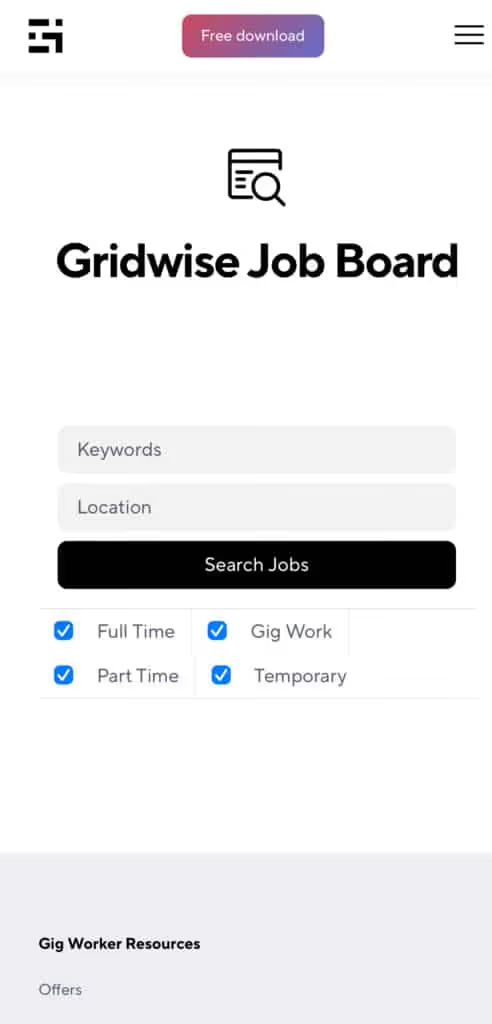
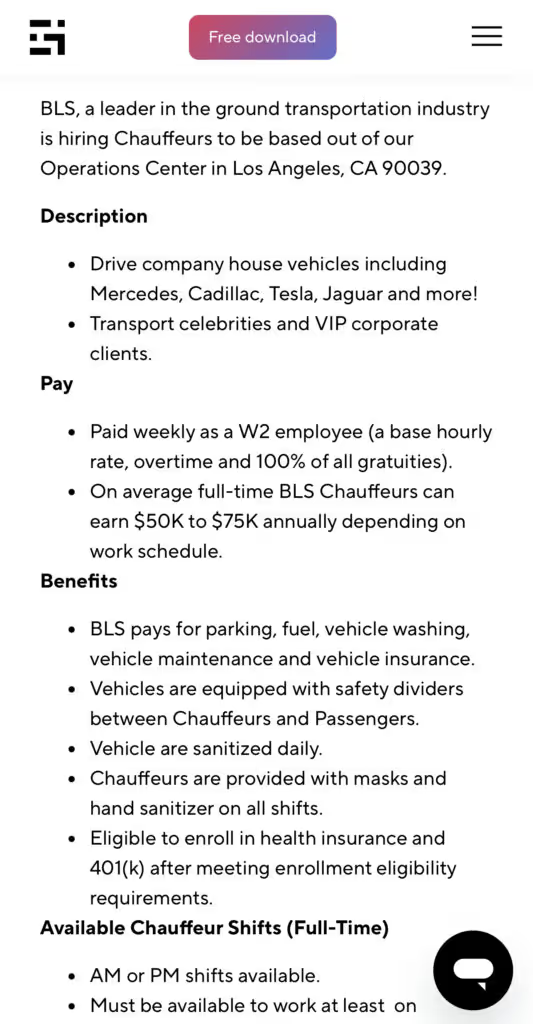
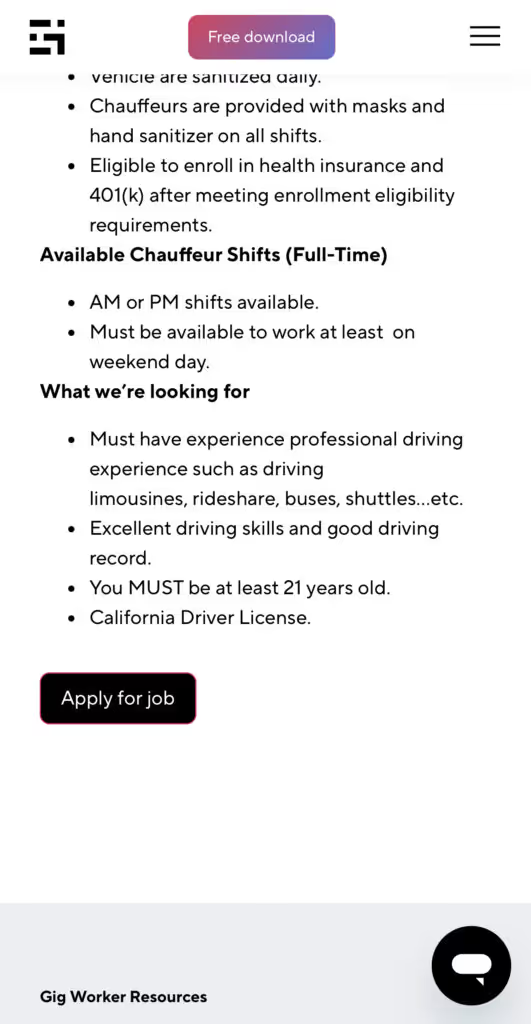
Many types of jobs are available. Adjust the search filter to see the full variety of opportunities that will let you cash in. Deliver food, set up catering, do rideshare driving, get paid for doing package delivery, and much more. You’ll find short-term gigs, long-term contracts, and part-time positions.
Perks of the Gridwise Job Board for gig workers
Gig workers who know how to make extra money will appreciate how the Gridwise Job Board lets you multiply your chances of bringing in big earnings. Here’s how:
- Increased stability. Use the Gridwise Job Board to find part-time or permanent jobs in addition to the part-time gigs you already have. Always keep a steady stream of earning opportunities flowing toward you.
- Flexibility and autonomy. Choose jobs that fit your schedule, work around other jobs and family duties, and still leave room for some fun in your life. Discover side hustles to supplement your full-time job, permanently or just for the season.
- Skill development. Find part-time work that lets you use a skill you already have, or try your hand at something new. It’s a smart way to develop a portfolio to showcase what you can do, or even to find permanent employment.
Get Gridwise and stay up to date on the Gridwise Job Board
Gig workers need plenty of information and assistance, and Gridwise is here to give it to you. Download the app and get essential features such as
- seamless earnings tracking
- mileage tracking
- expense recording, including notes
- low-cost and no-cost insurance benefits
- access to affordable medical, dental, vision, mental health, and alternative care
- professional services including legal and financial help
- deals and discounts
- weather, events, and traffic reports
- inside information on where and when to drive
[elementor-template id="20936"]
More to know about gig work:

5 Best Mileage Trackers For Gig Drivers
Many drivers ask, “Do I really need a mileage tracking app?” The answer is simple: only if you want to have an accurate count of all the miles you can legally deduct from your taxable income! You might think your rideshare or delivery driving app has got you covered. After all, they do quite a good job of logging the miles you drive while you’re on a trip or delivery. But, if you want to have the best app to track mileage for Uber, Lyft, Doordash, Instacart, or the other apps you may use, you need more. Why is that?
Without a separate tracker, you’re missing the miles you drive in between pings. Did you realize that all the miles you drive, from the moment you begin your shift until it’s over (as long as you don’t drive several miles on a break to hang with your friends), are tax deductible! That means you need something besides your driving app to keep an accurate count of your travels. Read this Gridwise post to see how important it is to keep track of every deductible mile.
You won’t be surprised to hear that there’s an app for tracking miles. In fact, there are several of them. Here, we’re going to tell you about five top mileage tracking apps, and help you figure out which one is best for you.
Before we get to the list and identify the best mileage tracker app, let’s clarify what exactly a mileage tracking app is. According to G2.com’s technology glossary, mileage tracking is done for the purpose of keeping a log of mileage that is either reimbursable or tax deductible.
And yes, of course you can track your miles simply by taking readings on your odometer. But are you really prepared to account for how many miles you drove for personal reasons and subtract them from the total to get your business mileage? Even if you can remember all that and do the arithmetic, if you want an accurate reading of the miles you drive for business, and can therefore deduct, a mileage tracking app will save you a lot of trouble and prevent you from making costly errors.
Plus, as a gig driver, you have specific needs when it comes to a mileage tracker. Ideally, you’d be able to handle mileage tracking and several other functions all in one app. It can be maddening enough to deal with driving apps, particularly if you’re an avid multi-apper. You would want your mileage tracker app to help you keep account of other aspects of your business, including income, expenses, and inside information about the art of gig driving.
Not all mileage apps are equal, to be sure! Let’s look at five of the best apps to track mileage and figure out which is the best app to track mileage with Uber and Lyft, or what mileage tracker app is best for DoorDash.
[elementor-template id="20891"]
1. Zoho Expense
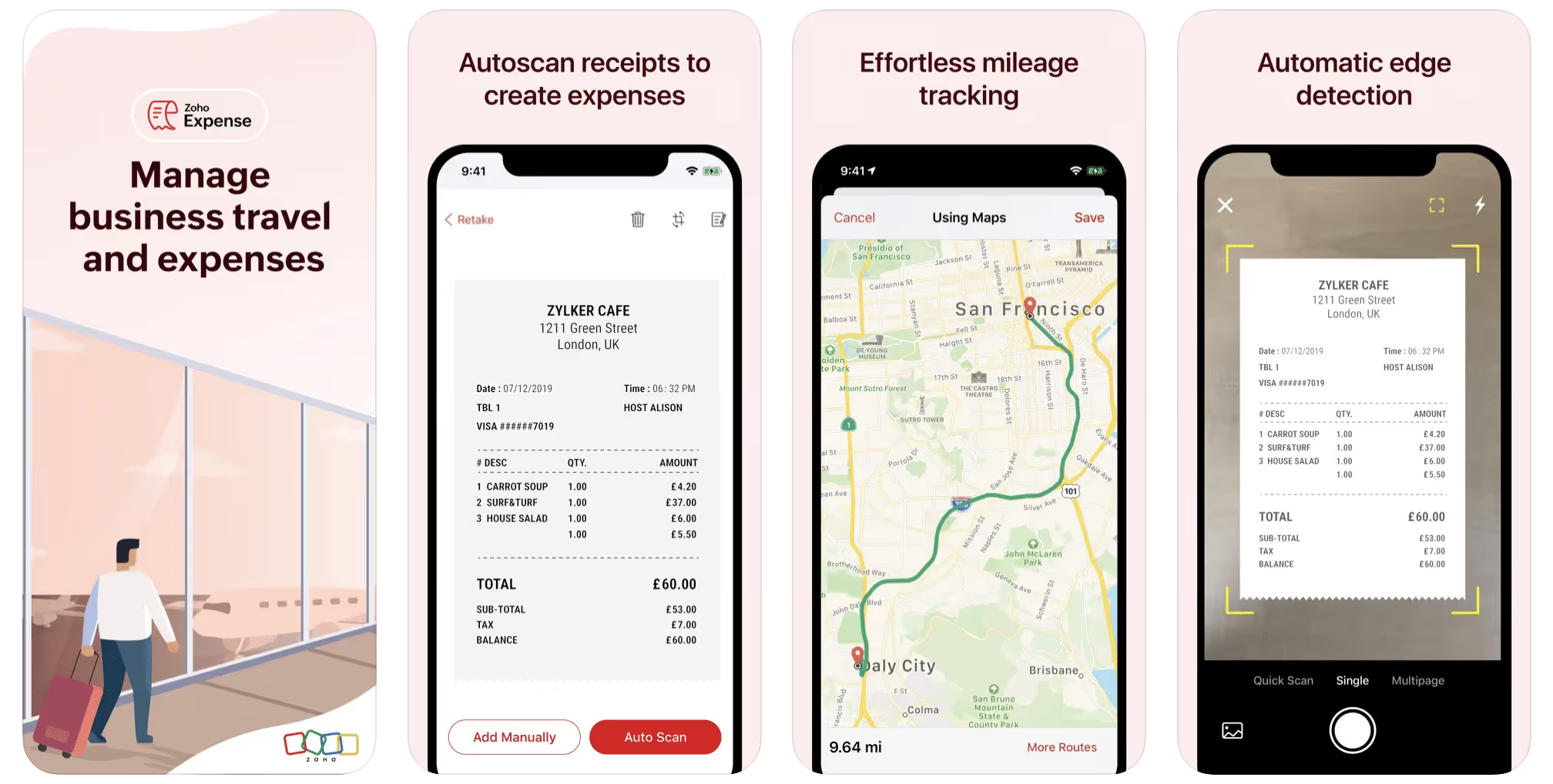
First up is Zoho Expense, which does exactly what its name says. This app is designed to allow companies to give employees a uniform way to create and submit expense reports. It can be used by individuals, including gig drivers, as well.
It includes a mileage tracker, as well as features that let you track other deductible expenses, including the ability to scan and record receipts.
Available on Android and Apple: Yes
Ratings: 4.8 stars on App Store, 4.7 stars on Google Play
Free Version: Yes
Subscription price: $3 per month, billed annually
Created specifically for gig drivers: No
2. Quickbooks Online
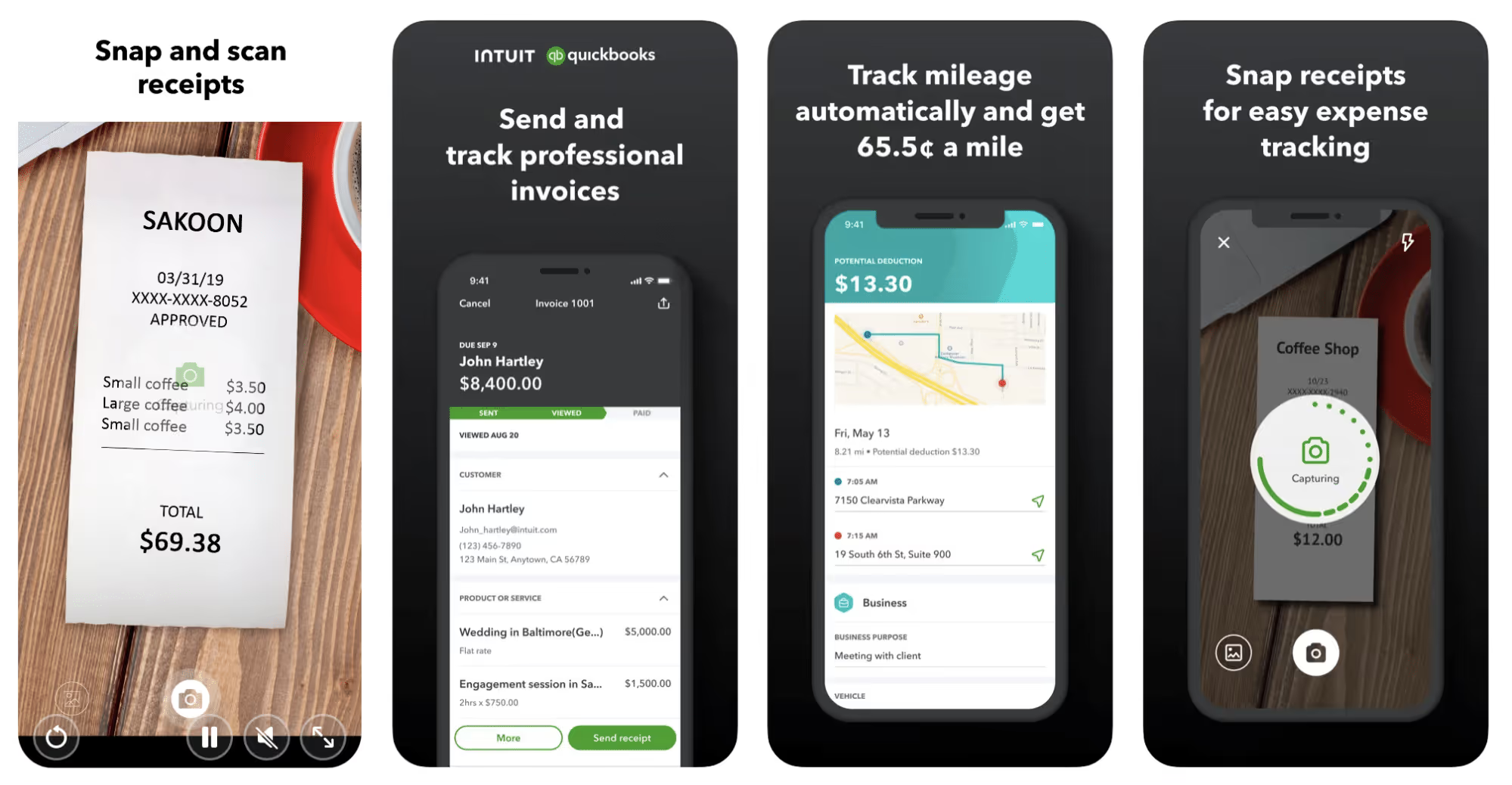
Quickbooks Online is a cloud-based app that allows you to track your mileage, earnings, and expenses. The information you enter can then be used to generate various reports that prepare you for tax time. It also allows you to create graphs that illustrate your cash flow, and includes a receipt scanner so you can instantly record deductible expenses. Quickbooks is popular, highly reliable, and designed mainly to help people keep track of their small businesses.
Available on Android and Apple: Yes
Ratings: 4.7 stars on App Store, 4.4 stars on Google Play
Free version: 30-day free trial
Subscription price: $15 per month for basic version if purchased for 3 months or more
Created specifically for gig drivers: No
Source: quickbooks.intuit.com
3. Shoeboxed
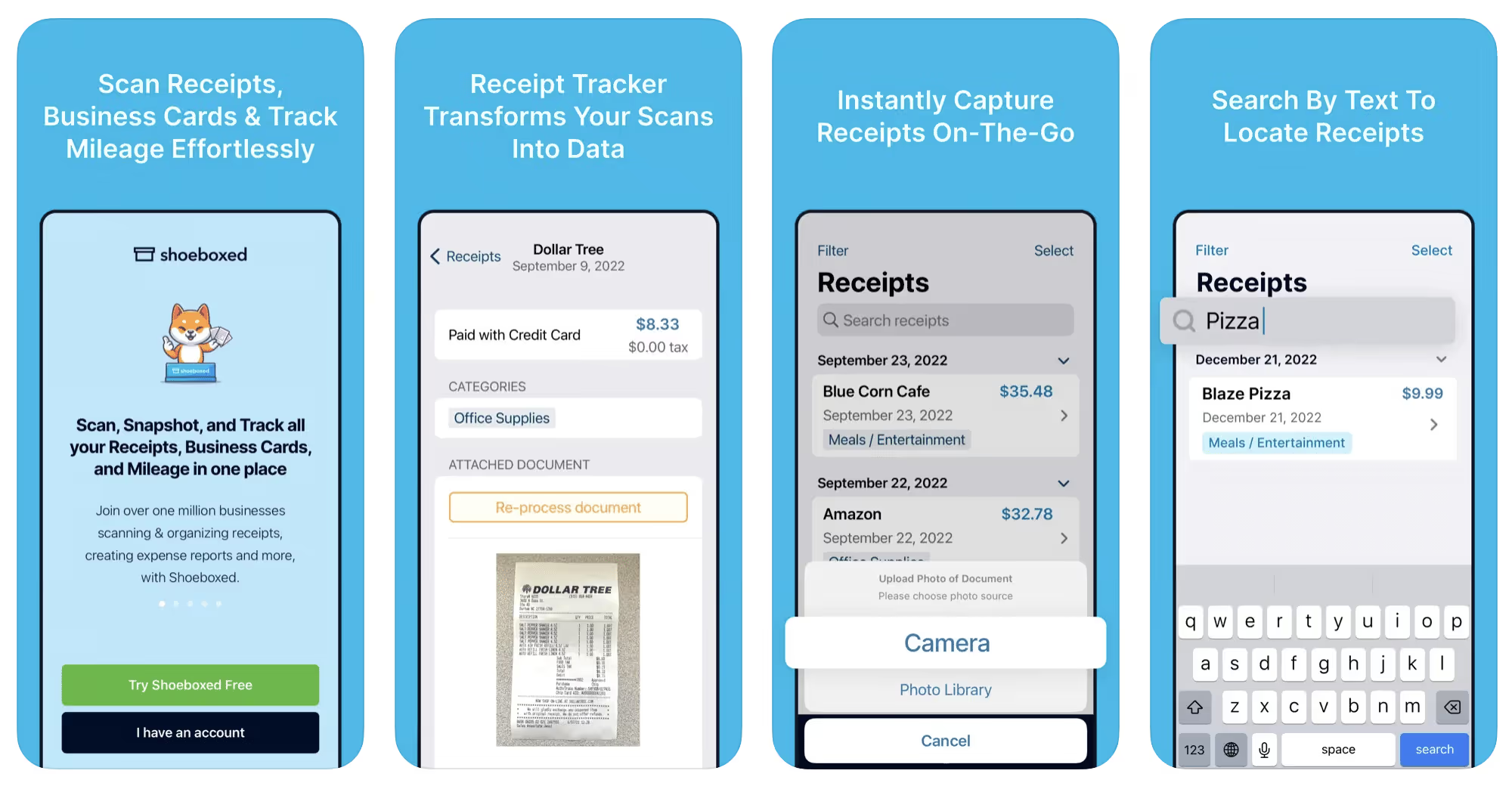
Shoeboxed started in 2007 as a service for scanning paper receipts into digital form. Now the app offers a free mileage tracker and has enabled users to scan receipts directly. It touts itself as the best mileage tracking app for DoorDash, but there are some elements missing that Dashers might like to have. While it provides features that record your expenses and prepare you for tax season, it doesn’t automatically track your earnings. The mileage tracker has a system where you can drop pins along your routes to make the tracking more precise, identifying those legs of a trip that you make for business purposes. The mileage tracker is “free” once you sign up for the basic version.
Available on Android and Apple: Yes
Ratings: 4.5 stars on App Store, 2.3 stars on Google Play
Free version: No
Subscription price: $18 per month for basic version
Created specifically for gig drivers: No
Source: blog.shoeboxed.com
4. Stride
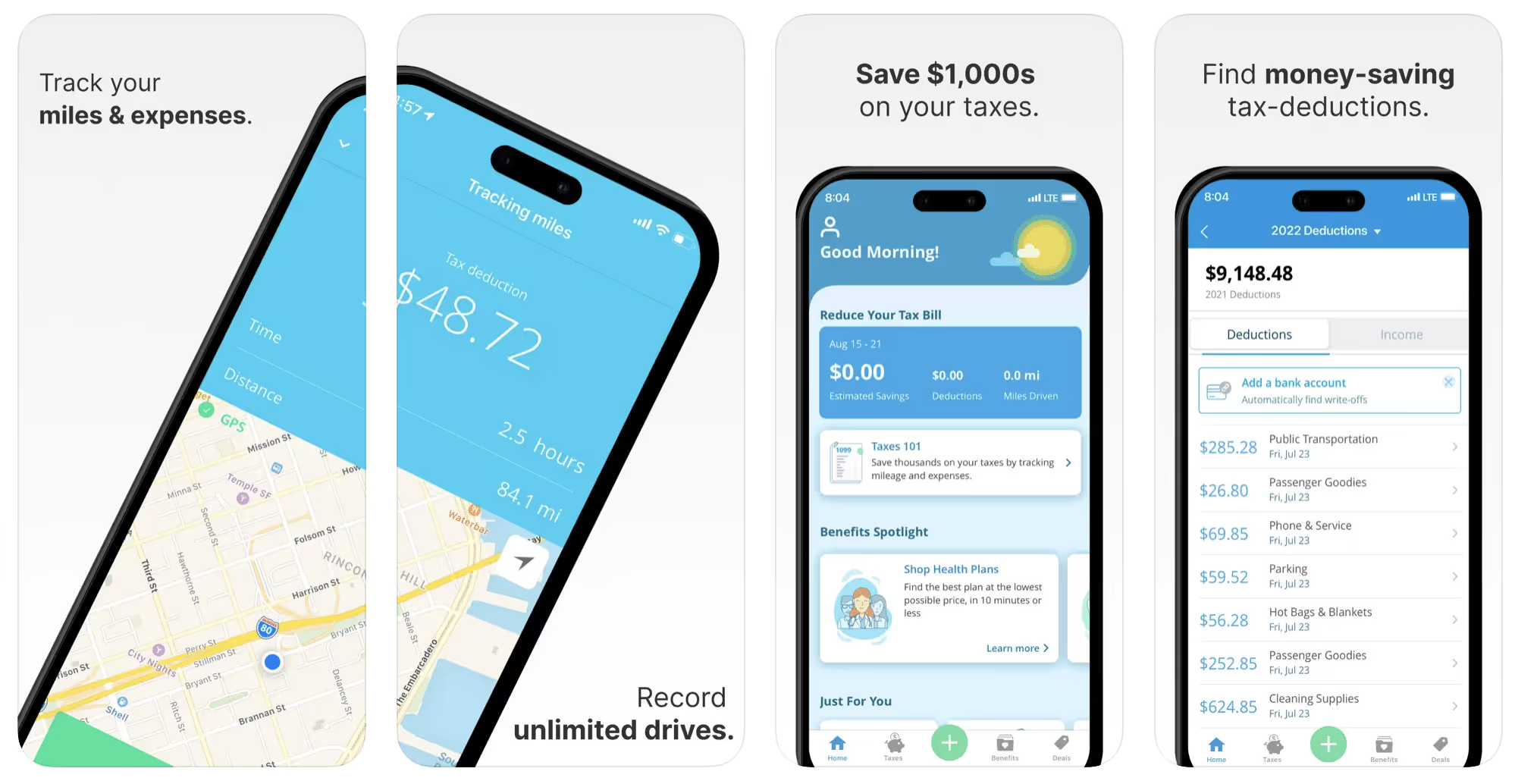
This free mileage tracker does a fair job of keeping track of the distances you rack up while gig driving, but it doesn’t automatically track earnings. It can be a big help, though, in tracking your expenses. You can link Stride to your bank account, and it will automatically scan your expenses to identify items you can potentially deduct. The app is totally free. This could make it the best free mileage tracker app, but there is a small price to pay. The app will persistently push you to consider various insurance plans that they are affiliated with. If you don’t mind that, this is a solid mileage tracker, even if it doesn’t track your earnings.
Available on Android and Apple: Yes
Ratings: 4.8 stars on App Store, 4.6 stars on Google Play
Free version: Yes
Subscription price: None. The app is free.
Created specifically for gig drivers: No
5. Gridwise
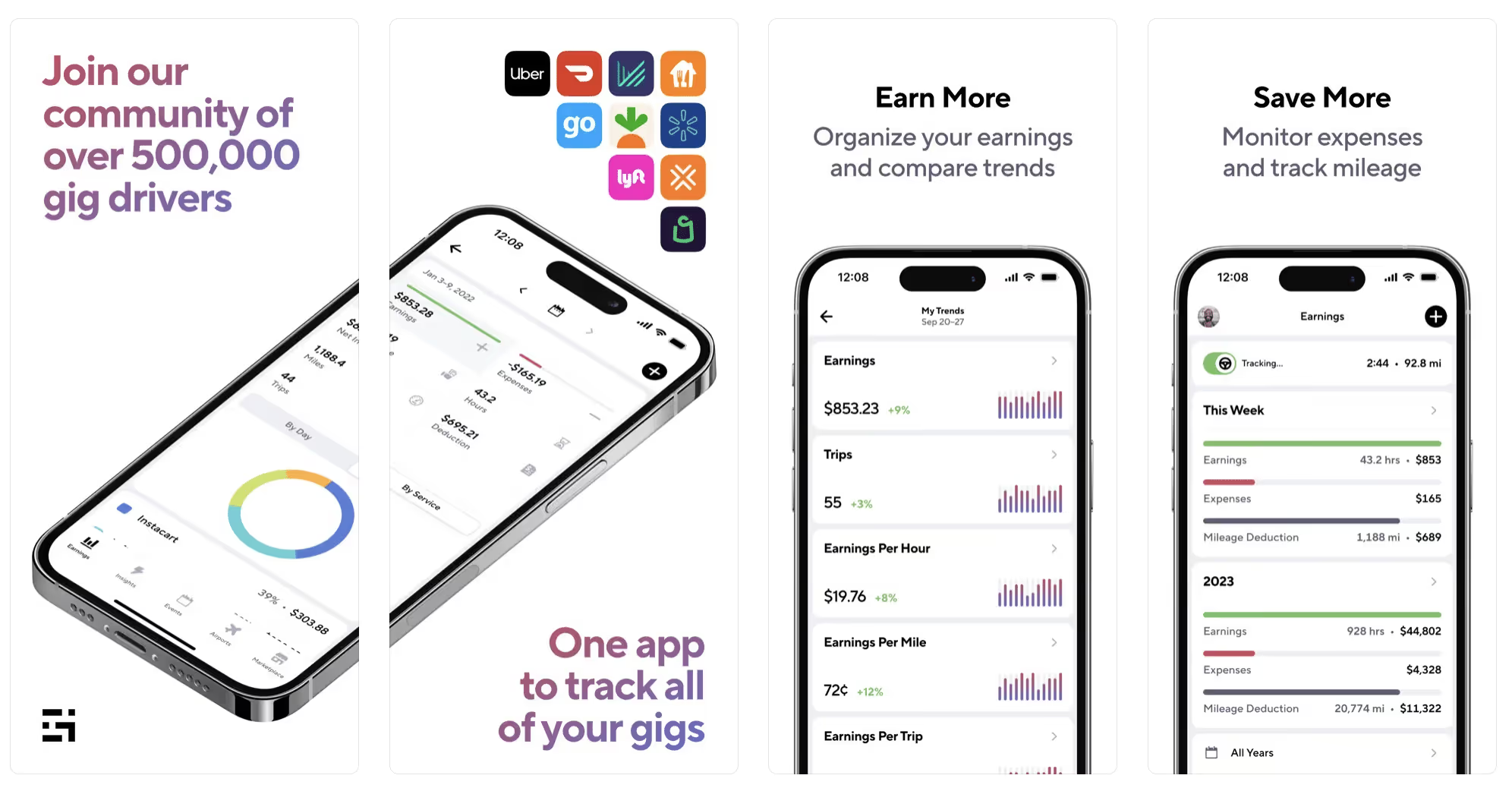
Gridwise has a free mileage tracker and free features that record your income and expenses. It gives you access to insurance and benefits, as well as insights about the best times and places to make the most money while gig driving. The Gridwise mileage tracker captures all the miles you drive while you’re on your driving shift, and it can be used if you have other trips you need to make which qualify as business travel.
Drivers love it because it is geared toward the needs of rideshare and delivery workers, providing free information about airport departures and arrivals, event start and let out times, weather, traffic, and more. The Gridwise Plus subscription adds value by providing additional insights and reports, discounts on benefits, the ability to export data in .csv format,, and more.
Available on Android and Apple: Yes
Ratings: 4.9 stars on App Store, 4.6 stars on Google Play
Free version: Yes
Subscription price: $9.95 per month for Gridwise Plus, or $95.99 per year (a $23.41 savings)
Created specifically for gig drivers: Yes!
What is the best mileage tracking app?
Now that we’ve checked them all out, we’re positive about the answer to that. Hands down, it’s Gridwise. Are we biased? You bet we are! But drivers love it too. Gridwise is the best mileage tracker app—and so much more. So many of the features are free, and the subscription to Gridwise Plus will pay for itself with additional insights to boost your earnings and deeper discounts on products and services.
Most important, Gridwise is designed specifically for gig drivers by experts who were once gig drivers themselves! Knowing what gig drivers need is a crucial step in creating an app that rideshare and delivery drivers can really use! Here are a few of the features, besides mileage tracking:
- seamless earnings tracking
- automatic, on/off toggle and manual mileage tracking
- mileage categorization
- airport, traffic, weather, and events information
- insights into where to drive and when to drive
- reports showing earnings across the platforms you use
- discounts on countless products and services for drivers
- additional resources for finding side gigs
- an informative and comprehensive blog
- affordable benefits, including insurance, medical, dental, and alternative practitioner discounts
- a community of drivers just like you
Don’t settle for just any app. Get the best mileage tracker, and so much more, from Gridwise!
[elementor-template id="21599"]

What Records Do Gig Drivers Need To Keep Track Of For Taxes?
* Gridwise does not provide tax, legal, or accounting advice. This material has been prepared for information purposes only, and is not intended to provide, and should not be relied on for tax, legal, or accounting advice. You should consult your own tax, legal, and accounting advisors before filing your return.
Record keeping? Who signed up for that? As a gig driver, it’s part of what you need to do to keep your business running. Don’t worry. It’s not as complicated as you might have been led to believe. This post will show you what you need to keep track of and the best ways to gather and preserve your tax-related records. We will cover
- How record keeping can help reduce income tax for freelancers
- Taxes and freelance work: Record keeping requirements
- Mileage tracking: Motives and methods
- More deductions and records to keep
- Make tax time easier
How record keeping can reduce income tax for freelancers
Tax time is not “fun time” for rideshare and delivery drivers. It’s easy to get used to watching your earnings pile up and come to believe they are all yours. Unfortunately, that isn’t the case. Gig work taxes can be especially painful because no one takes them out of your earnings for you, until the tax authorities insist that you do it for yourself.
You will need to show the tax authorities your income records, and they will gladly tell you to send them what they determine to be their fair share. Think that’s not fair? You’re not alone, but that doesn’t mean you’re going to get out of paying gig work taxes.
But you can find ways to pay the smallest amount that is legal and possible. The best way to defend yourself against having to pay astronomical amounts when you file your return is to know what expenses you can deduct from your gross income. When you subtract deductible expenses from your gross income, there is less left over to be taxed. This reduces the amount they can hit you with gig worker taxes. and can make your tax bill substantially lower.
While you want to keep good records so as to be in compliance with taxation entities such as the IRS, you also want to ensure you have proof of every last deductible expense you have accrued during the year. There are other records you must keep as well. Let’s look at some of the considerations you have, realizing that you now need to know how to do taxes as a freelancer.
Taxes and freelance work: Record keeping requirements
So many gig drivers fail to understand the responsibilities they have as independent contractors. Those who work part time for very few hours may even believe they don’t have to report the income they get from their driving gig payments. That would be a big mistake!
The company or companies you work for report your income to the IRS and state tax authorities. If you fail to report that income, you will risk some rather painful penalties. The IRS taxing side hustles is as much of a thing as the IRS taxing income from any other job. Your best bet is to report what you’ve earned, honestly and completely, and comply with other record keeping requirements such as
- gross income
- deductions and credits
- purchases (items you purchase and resell, such as snacks or bottled water)
- a log of all your mileage (or vehicle expenses, if greater)
- a list of all expenses and assets, such as utilities and other expenses associated with having a home office and equipment
- machinery and furniture you own, including when it was acquired, how much it cost, whether you previously took deductions on it, and selling price, if applicable (this includes your vehicle)
More things to consider:
- Pay attention to the retention of your records. You’ll need to keep all tax-return-related items— including income, deductions, and any tax credits reported— until the period of limitations runs out (3 years from date you filed, or 2 years from when you paid tax. If you have employees, keep your records for at least 4 years.)
- If you want to avoid paying self-employed taxes, you may want to set up a corporation or Limited Liability Corporation (LLC) for your business. This allows you to separate all your gig driving earnings from personal income, and permits you to take advantage of the additional advantages of working through a corporation. This includes exemption from self-employment taxes. You can learn more about how to pay self-employment taxes, if you opt for that, in this post from Keeper.
- You should always keep a separate checking account for your business, for convenience as well as clarity. While this is not a legal requirement, it is a smart move if you want to have an easier time managing your business.
- You are required, as an independent contractor, to file your taxes quarterly. Check out this Gridwise blog post for more information about quarterly tax payments and other matters that make filing delivery, Lyft and Uber taxes easier.
Mileage tracking: Motives and methods
Why you need to be meticulous about mileage
Mileage deduction, or the costs of operating your vehicle, will be the most important item to account for when you consider how to file taxes as a freelancer. While mileage is an important deduction for all independent contractors, as you might imagine, it’s even more essential for rideshare and delivery drivers.
There are two ways of keeping track of your mileage deduction. One is to use the IRS’ standard mileage deduction, which for 2022 is 58.5 cents per mile. This number takes into account the costs of operating your vehicle, from fuel and maintenance to registration, insurance, and depreciation. Alternatively, you can calculate all your own vehicle operating costs, but only after your first year of using the vehicle. You may discover that this second option allows you to have more money deducted from your taxable income. Learn more about the options for deducting your mileage in this Gridwise post.
No matter which way you decide to calculate the deductions for your mileage, you need to know what mileage you can and cannot deduct.
You can deduct
- miles driven to and from home when you go out to drive or deliver
- miles you accrue during your trips
- miles you drive on any other trips you make that are necessary as part of your business.
Examples:
- driving to return a lost cell phone or to an Uber Hub or another physical location where your company might make driver support available
- driving to pick up supplies, to get gas, or to have your car cleaned, serviced, or detailed, etc.
You cannot deduct
- miles you drive for personal trips
- miles for any trips you take that do not directly affect your business
Note: If imagining yourself becoming the not-so-proud owner of a shoebox filled with paper receipts gives you nightmares, stop worrying. Electronic records of purchases will satisfy reporting requirements. If you use cash, you can scan copies of your receipts, in some cases, right into your recording software or app. Gridwise and Keeper give you a simple to use interface that keeps all your receipts recorded without the messy pile of paper.
Mileage tracking methods
By now, you’re probably convinced that tracking mileage is important, despite all the other things drivers have to do. Now, let’s look at your options for keeping accurate records.
- Manual tracking: You can keep a logbook where you list every trip you make, starting and ending mileage, the date, and purpose of the trip. While this would work, it’s certainly not convenient. Besides, if that logbook gets lost, your plans for having a nice, fat tax deduction will go by the wayside.
- Spreadsheet: This is a bit more convenient and sophisticated way of tracking your business mileage. You’d need to be meticulous about making your entries, though. Even if you keep a spreadsheet app on your phone, it could be time consuming and inconvenient to keep doing it with all the other things going on in a rideshare or delivery driver’s day to day life.
- GPS-based mileage tracking apps: There are a bunch of apps that track mileage based on your GPS location, and most of them are pretty accurate and far more convenient than taking constant readings of your odometer. Your driving apps, such as Uber, Lyft, DoorDash, or Instacart, may also track your mileage, but be careful here. They will only track the miles you drive while you’re on a trip or delivery. They don’t count the miles you drive going to pick up a customer or when you make your move toward a restaurant or store.
Gridwise, on the other hand, will track all the miles you clock while you’re on your shift. All you need to do is make sure you start tracking the minute you leave home, and every gig driving mile will be logged. - OBD-II mileage tracking systems: There are plug-in modules that assess your vehicle’s mechanical health and track your miles. However, many authorities question the ability of OBD-II mileage tracking systems to get get accurate odometer readings. Insurance companies don’t consider them to be accurate enough gauges of odometer readings.
While mileage is a crucial deduction when you’re preparing your Uber, Lyft, or DoorDash taxes, it isn’t the only expense you’ll want to record.
More deductions and records to keep
Expenses you can deduct
You’re entitled to include the cost of other expenses that are directly related to your driving business. These include
- vehicle expenses
- equipment for your car and home office
- extra services and subscriptions
- business tools, including apps and software
You can learn much more about gig driver expenses that are eligible for deduction in this Gridwise article.
Ways to track and preserve deductible expenses
- The manual method: Just like you can with mileage, it’s possible to use a manual method, but in addition to logging each expense into a ledger, you would also need to keep physical receipts.
- Spreadsheets: You can record your expenses on a spreadsheet. This is somewhat less awkward than manually logging mileage, but there still will be plenty of room for failing to remember the case of water you bought for your customers, or losing the receipt from the thermal bag you purchased.
- Accounting software: You can use software that helps you track your expenses. This method usually interfaces well with any tax preparation software you or your tax professional might use.
- Gridwise: There are other apps that help you track your expenses, but Gridwise is designed specifically for gig drivers. It automatically tracks earnings and mileage, and lets you record your expenses the minute they come up. Gridwise’s partnership with Keeper gives you the ability to scan receipts and access a tax professional. This is a seamless way to record your expenses and a big help in learning how to file Uber taxes. Gridwise even provides .csv output, so you can feed your Gridwise data directly into tax preparation software. Check out what Gridwise and Keeper will do to super-charge your tax filing powers.
Organizing and categorizing expenses
Before you even begin to record expenses, you’ll want to set up categories for them. You can start by reviewing the categories listed above and checking out the Gridwise post that lists possible deductions.
If you’d like to learn more about how to categorize expenses, there is additional information available. This article from Motley Fool lists all possible categories any freelancer might use and also gives tips on how to customize them for your driving business.
One last tip
Using Gridwise, particularly for tracking mileage, is the easiest way to be in compliance with the IRS’ rules for deductible mileage. Gridwise tracks all the miles you drive for your gig, beyond what your company’s app might record. At the same time, you can log on and off Gridwise when you start and end your shift, so personal miles won’t be recorded. This eliminates confusion while capturing every deductible mile.
Gridwise Tax Help, a partnership with Keeper, has been created specifically to serve gig drivers. It provides affordable and easy ways to record expenses, scan receipts, and find deductions by analyzing your expenditures. Read about free resources from Keeper you can use to be fully prepared for tax season, and get all your earnings and expenses on the record.
Get the world’s best assistant for rideshare and delivery drivers, and tax help too.
Make tax time easier now!

¿Cuánto ganan los conductores de DoorDash en 2025?
¿Te preguntas si deberías ser un Doordasher? Las horas son flexibles y las tareas son diversas. Pero ¿cuál es el verdadero acuerdo para los conductores? ¿Cómo compensa DoorDash a sus conductores? ¿Qué pueden esperar los conductores de DoorDash para ganar? Sigue leyendo para descubrir consejos cruciales para los conductores de DoorDash, junto con información vital sobre el pago base de DoorDash, ganancias diarias, incentivos para conductores y más.
[elementor-template id="20891"]
Lo que necesitas saber sobre la entrega para DoorDash
Las ganancias de la economía del Gig varían de un tipo de trabajo a otro por lo que es importante saber cuánto trabajo tienes que hacer para obtener una cierta cantidad de ingresos. Con este gig, siempre y cuando alcances los requisitos de controlador DoorDash, tienes opciones sobre el tipo de trabajos que tomas.
La entrega de alimentos es el día de DoorDash, pero también puedes ir a la compra de alimentos y otros tipos de entregas. DoorDash es muy popular entre los conductores por una buena razón. Es fácil registrarse, hay mucha variedad, y puedes esperar estar ocupado la mayor parte del tiempo. No hay mucho más que un conductor de entrega puede pedir.
Echa un vistazo a algunas de las características específicas de los Dashers (los pilotos de DoorDash) disfrutan:
- Registro fácil. La elegante aplicación y el sitio web completo hacen que el registro sea sencillo, y los requisitos del conductor y del vehículo no son demasiado estrictos.
- Preparación y entrenamiento. Acceda La Guía de Nuevo Dasher para aprender cómo utilizar la aplicación y completar entregas mientras esperas a estar oficialmente a bordo.
- Muchos negocios. DoorDash opera en más de 4, 00 ciudades estadounidenses y tenían 67% de la cuota de mercado de suministro de alimentos a partir de marzo de 2024. ¡Los conductores de DoorDash están muy ocupados!
- Opciones de conducción flexibles. Programe bloques de tiempo para entregar para DoorDash, o use
Dash Now simplemente abriendo la aplicación para aceptar pedidos a medida que entran.
- Motivos de DoorDash. Bank on garantizado incentivos de pago para nuevos y Dashers existentes, más un generoso programa de recompensas.
Trabajar con DoorDash tiene mucho que ofrecer, pero ¿qué hay de tu resultado final? Cuando estás eligiendo un gig para añadir a tu repertorio o como fuente principal de ingresos, tienes que centrarte en el potencial de ganancias.
Gridwise te proporciona datos reales de los conductores reales, por lo que puedes ver exactamente lo que puedes esperar ganar como un Dasher. Desglosaremos los datos de las ganancias mediante diferentes mediciones, así podrás ver la imagen general de cuánto puedes beneficiar como Dasher.
DoorDash por ganancias de entrega
Comencemos por ver cuánto ganan los conductores en el pedido medio.
Factor de pago base, promociones y consejos en la compensación total por cada entrega. Las promociones podrían incluir un pago máximo, desafíos y rachas de entrega: ganancias extra otorgadas cuando la demanda es especialmente alta.
La distancia y el tiempo que tardará un pedido en determinar el pago base. Las propinas dependen de su capacidad para proporcionar el tipo de servicio que alienta a los clientes para recompensarle, y su generosidad, por supuesto.
Pago por hora de DoorDash
Las ganancias por hora son una medida importante de lo lucrativo que puede ser DoorDash. Estos datos incluyen los ingresos de los conductores de los 50 estados.
Tenga en cuenta que las ganancias brutas promedio no reflejan las tasas máximas que los conductores obtienen por hora de trabajo mientras utilizan estrategias efectivas. Las tarifas por hora son mucho más altas para los conductores que saben cuándo conducir y dónde conducir para aprovechar el pago de la demanda máxima y el incentivo.
Ingresos diarios de DoorDash
Los “días” consisten en un número diferente de horas, dependiendo del conductor. Es importante tener en cuenta que tus ganancias reflejarán el número de horas que pongas durante un período de 24 horas. que puede ser más o menos de lo que ves aquí.
Las estrategias efectivas de los conductores de DoorDash te permiten aprovechar al máximo cada día. Programe sus tiempos de guión o trabaje con Dash Now durante las horas punta, y sea consistente con sus hábitos de conducción. Puedes guiar a tiempo completo o a tiempo parcial pero cuánto ganas por día siempre reflejará tu capacidad para formular un plan ganador al que te apetezca.
Pagar base DoorDash antes de los consejos
Los consejos añaden mucho al ingreso total de Dashers. Recortar las ganancias de la propina del total muestra lo que puedes depender de hacer, incluso si tus clientes no siempre muestran un estado de ánimo gratis.
Servicio al cliente es el nombre del juego cuando quieres ingresos de propinas que hacen que Dashing valga tu tiempo y esfuerzo. Estar a tiempo, comunicarse con sus clientes acerca de los retrasos y cambios en sus pedidos, y traerles los alimentos a la temperatura correcta. ¡Los equipos aislados y a prueba de derrames son inversiones muy sabias!
Los comentarios y valoraciones de los conductores de DoorDash mejoran la probabilidad de obtener grandes consejos. Entrega los productos de la manera que desees que se traigan a ti, con extras como servilletas de repuesto, condimentos y pajas. Hazles recordar y mantener la puntuación de su servicio al cliente alta.
¿Cuánto ganan en general los conductores de DoorDash?
La imagen general de las ganancias de DoorDash se reúne en esta mesa.
TrituradorGanancias por entregaGanancias por horaGanancias DiariasPaga básica (Antes de Consejos)Consejos % de Ganancias TotalesP1 2022$8.25 - $8.50$18 - $19$120 - $125$12 - $1330% - 35%T2 2022$8.25 - $8.50$19 - $20$125 - $130$13 - $1430% - 35%Q3 2022$8.25 - $8.50$22$140$1435% - 40%Q4 2022$8.25 - $8.50$20 - $21$130 - $135$13 - $1435% - 40%P1 2023$8.25 - $8.50$15$110$1140%Q2 2023$8.25 - $8.50$16 - $17$115 - $120$11 - $1235% - 40%Q3 2023$8.25 - $8.50$17 - $18$120 - $125$12 - $1330% - 35%
Recuerde que las cifras diarias reflejan el número promedio de horas trabajadas por los Dashers. Muchos conductores eligen trabajar unas horas al día y sólo ciertos días a la semana. No representan las tarifas ganadas por los conductores a tiempo completo.
Incluso con esta consideración, los datos muestran que DoorDash es un gig, estable y confiable, que ha crecido para dominar la industria del suministro de alimentos. Cuanto más trabajen, más se hará, y estas son sólo cifras medias. ¿Cómo lo gestionarías para que tus ganancias alcancen mejores que los niveles promedios?
Formas de aumentar las ganancias de tus conductores de DoorDash
Las estrategias inteligentes son esenciales si quieres sacar el máximo provecho de la conducción para DoorDash. Es posible ganar algo de dinero simplemente siguiendo el flujo de cosas cada vez que Dash. Sin embargo, ganarás mucho más cuando identifiques las condiciones y variables que crean mayores oportunidades de ganancia. Estos incluyen
- ubicación. Donde conduce dicta cuán ocupado estará. Téngalo en cuenta a la hora de determinar cuántas horas y en qué áreas, usted funcionará.
- demanda de mercado. Sepa dónde están los pedidos, y cuando las horas pico de DoorDash están.
- de la semana/hora del día. Espere obtener el mayor número de ofertas cuando la gente tiene hambre. Esto no siempre es a la hora de comer. Los estudiantes de la universidad, por ejemplo, son conocidos por las rejillas nocturnas para hamburguesas, papas, pizza y artículos de cerveza.
- calificaciones de conductores. Qué tan bien puntuas con los clientes determinará cuántas ofertas recibes. Los mejores intérpretes también tienen las primeras molestias en los grandes pedidos.
- pedidos por lotes. Cuando aceptas dos o más pedidos para entregar a la vez, ganas más en menos tiempo. No sea tímido a la hora de recoger dos órdenes en el mismo lugar, o en lugares adyacentes.
Estratégica con Rejilla
Conocer lo que necesitas para maximizar las ganancias es una cosa, pero ¿cómo obtener la información y la información necesarias? Suerte para ti, Gridwise está aquí para ser la única herramienta que necesitas para crear una poderosa estrategia de conducción de DoorDash. ¡Mira lo que puedes hacer con esta poderosa aplicación de conductor!
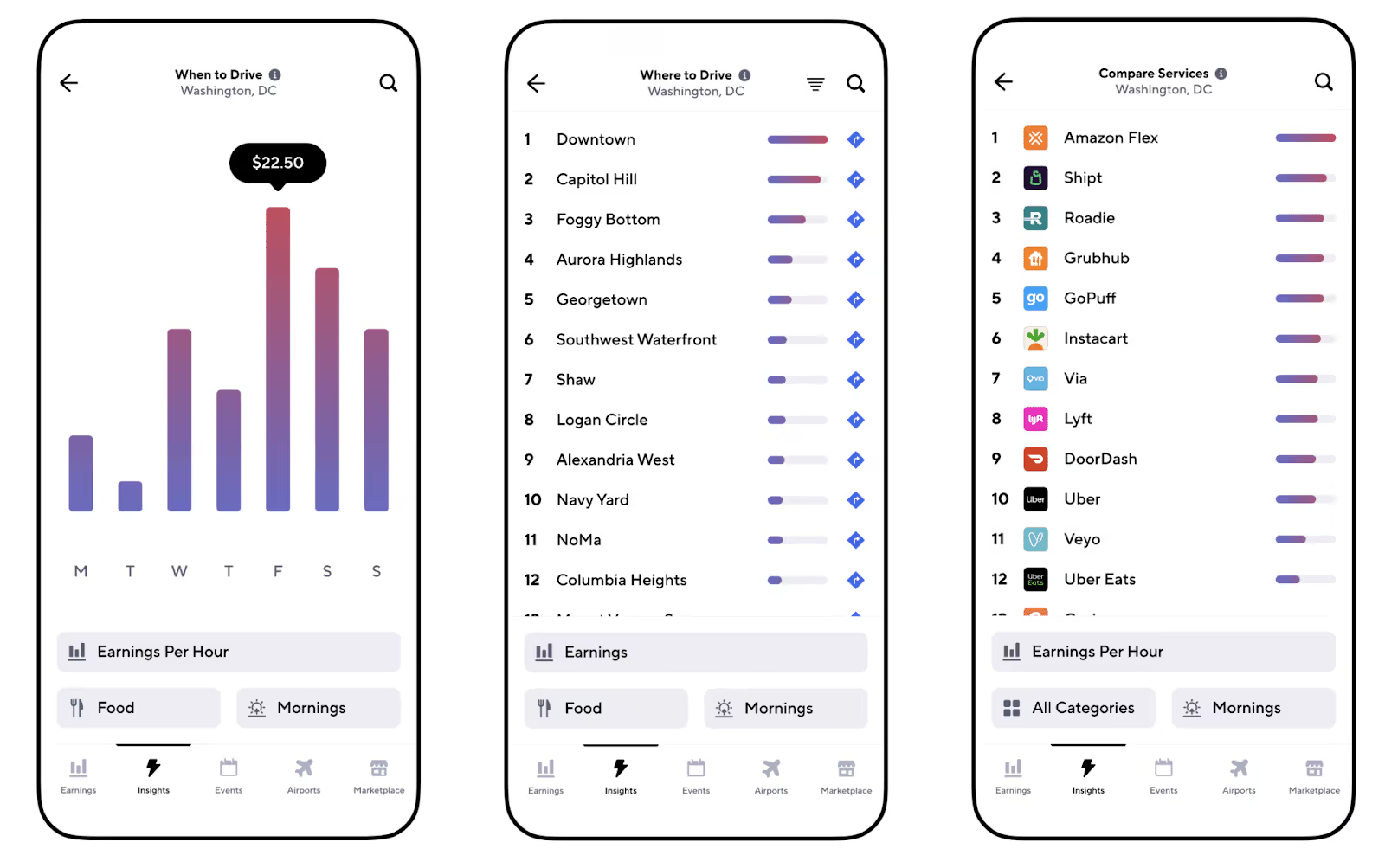
Sepa cuándo y dónde conducir. No dependa de la aplicación Dasher para enviarte dónde están los grandes pedidos. La información en tiempo real de la red proviene de los conductores como usted, en su ubicación. Características diseñadas para ayudarte a estrategiarte a informarte de los mejores lugares y las mejores épocas de DoorDash.
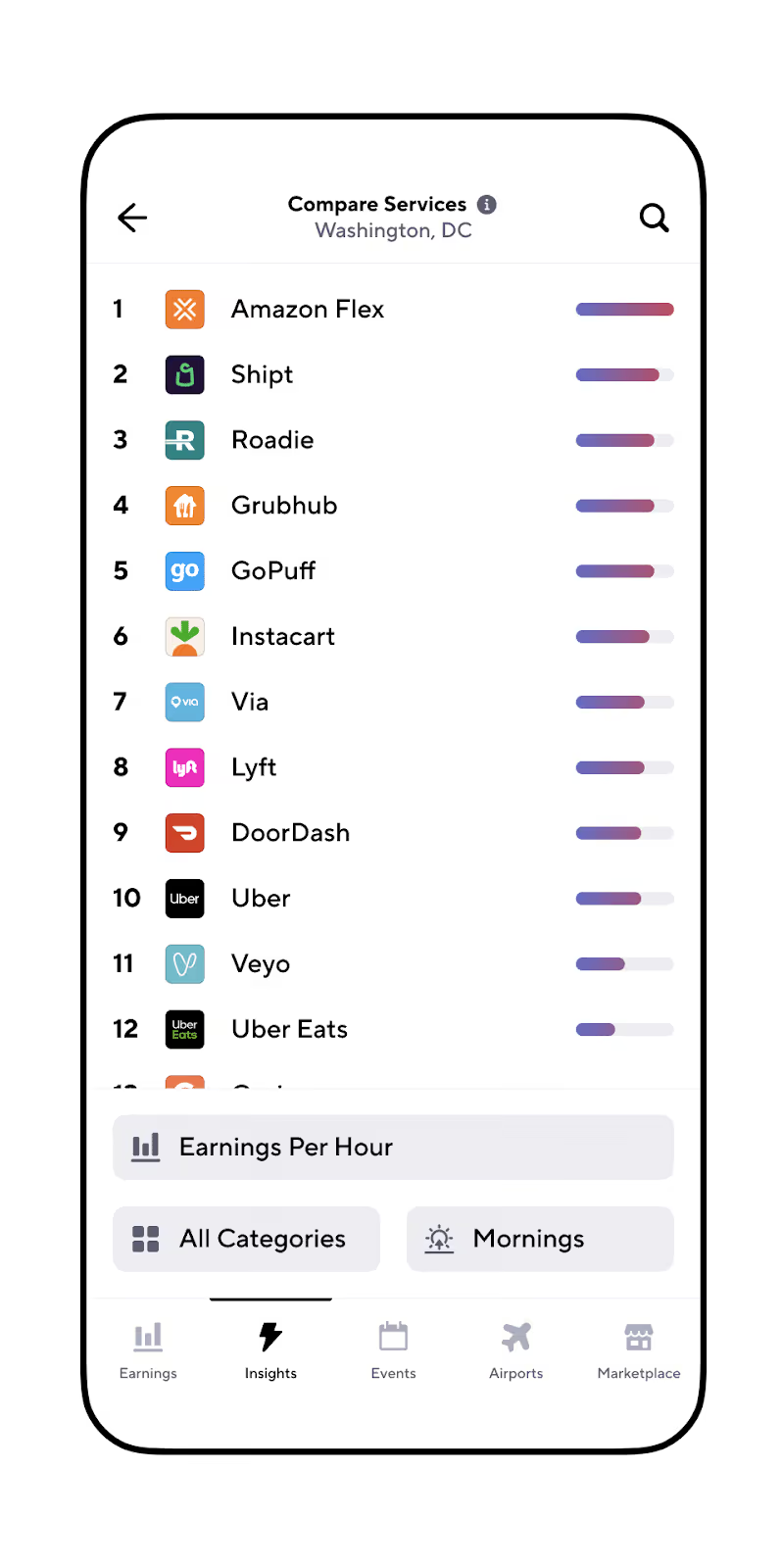
Rastrear ganancias y comparar servicios. La calculadora de ganancias Gridwise te permite registrar tus ganancias sin problemas con DoorDash y los demás servicios que utilices. Compara cuánto se añade cada servicio a tu resultado final.
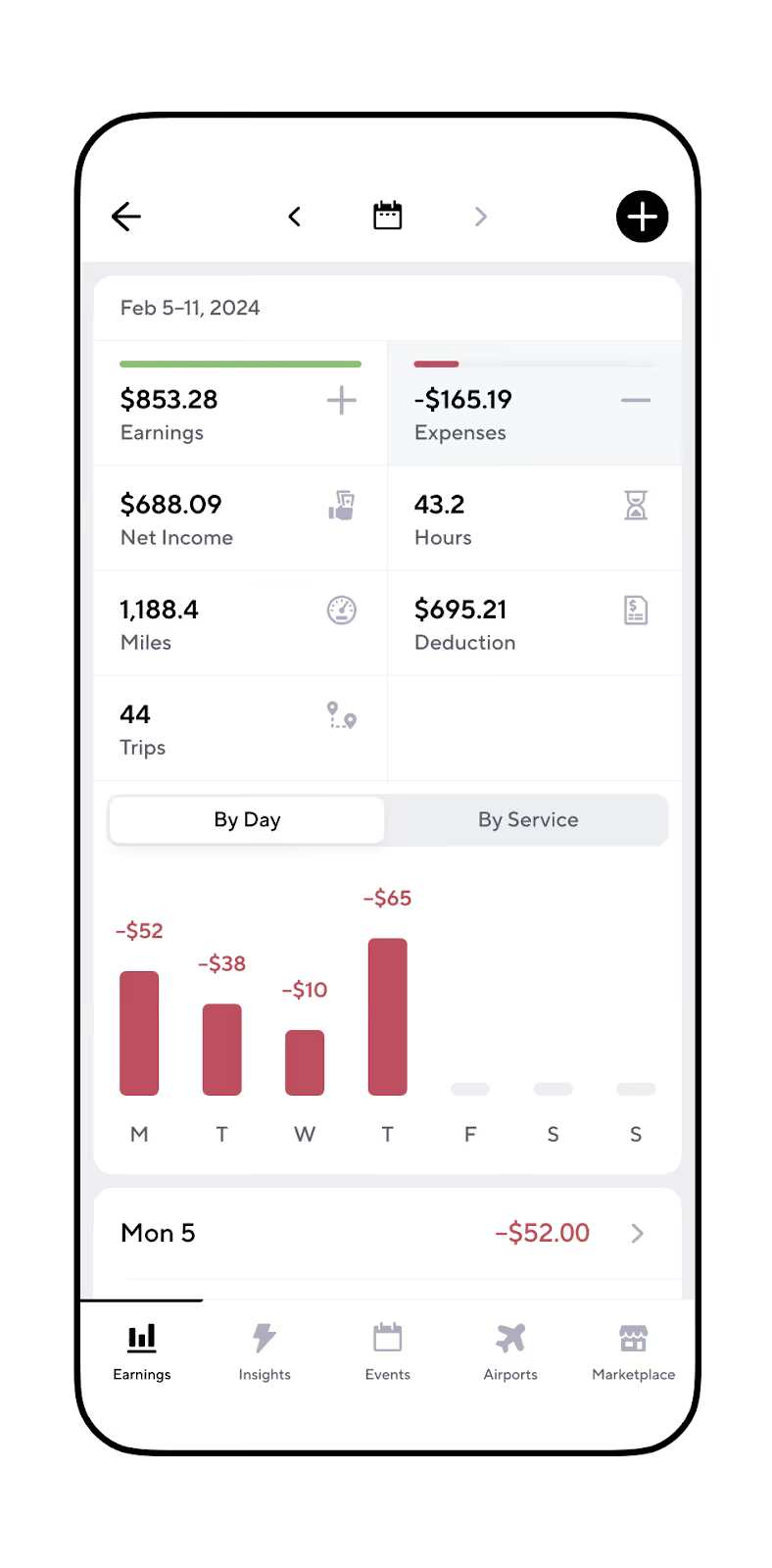
Rastrear kilometraje y otros gastos. Mantenga la información fiscal ordenada registrando las millas y los gastos a medida que se sumen. Utilice la deducción estándar de millas, o ingrese los gastos por separado si desea desglosar el mantenimiento, los costes de combustible, etc.
Ser informado sobre los eventos locales y las condiciones meteorológicas. Gridwise enumera eventos, y le avisa sobre el tiempo y la información de tráfico que impacta su día de entrega.

Perks exclusivos. Ahorre dinero en gas, mantenimiento de vehículos y alquiler de coches, y obtenga beneficios gratuitos y de bajo costo cuando se convierta en parte de la comunidad Gridwise.
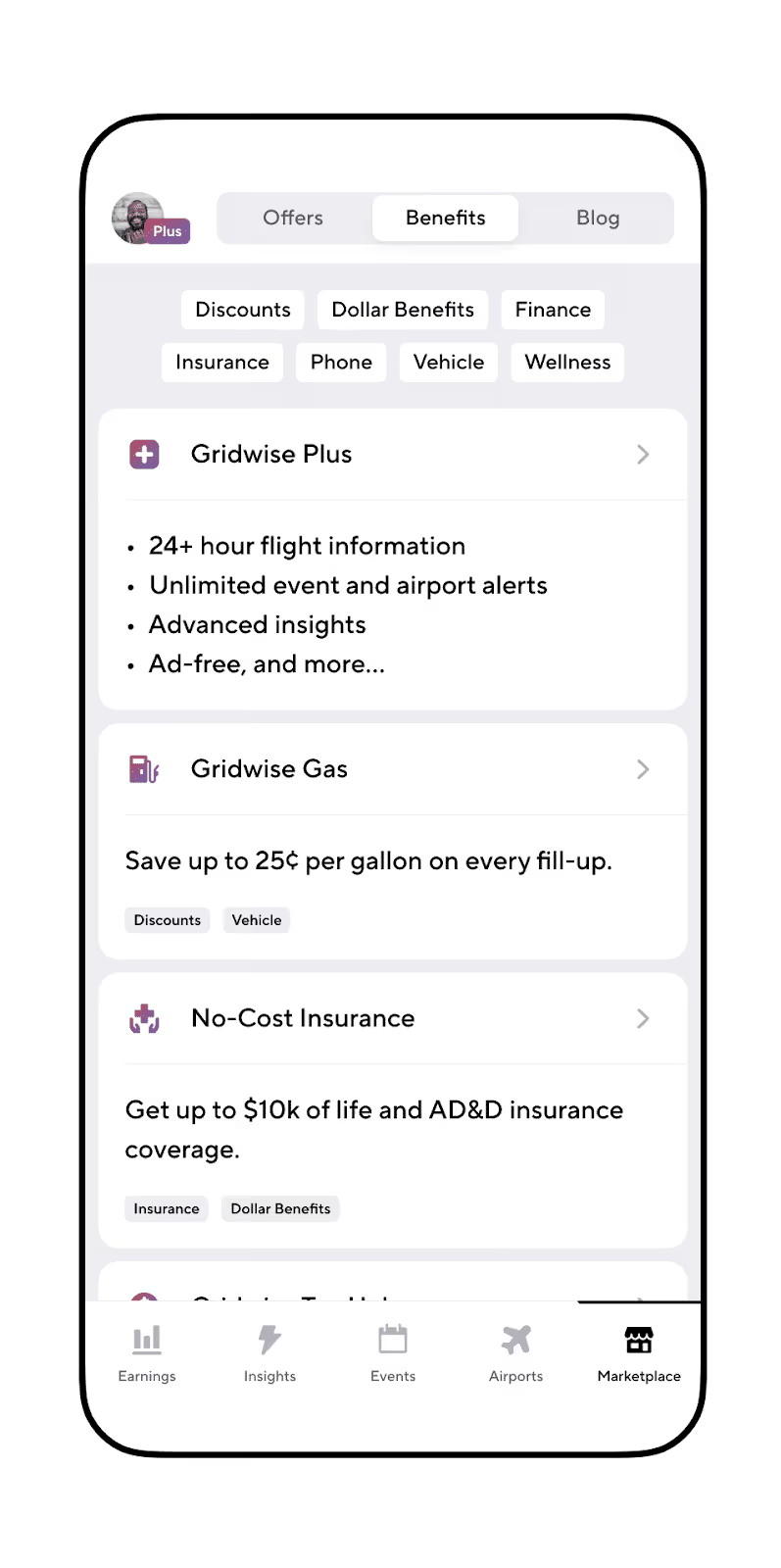
Maximiza tus ganancias con DoorDash y todas las aplicaciones que utilices, y consigue descuentos, , y beneficios que hacen que la vida como un trabajador gig sea tan gratificante como cualquier otro trabajo.
[elementor-template id="20936"]
Aquí hay más información sobre DoorDash y otros gigs que puedes apalancar para obtener ganancias sólidas.
- Cree 1.000 dólares semanales con DoorDash
- Aquí tienes cómo hacer $1000 con Uber Comats a la semana
- Comparar ganancias: DoorDash vs. Comidas Uber
- Maximizar las ganancias con funciones de Gridwise
- Más gigs laterales con el Gridwise Job Board
- ¡Descarga Gridwise ahora!

How Much Do Uber Drivers Make In 2025?
If you’ve ever wondered how much do Uber drivers make in 2025, you’re not alone. With rising costs, changing demand patterns, and updates to Uber’s pay structure, many current and aspiring drivers are looking for clear, updated information on what to expect.
This guide breaks down everything you need to know—from average hourly, weekly, and per-mile earnings, to the expenses that impact take-home pay. We’ll also explore how location, driving strategy, and tools like Gridwise can influence your bottom line. Whether you’re driving full-time or part-time, this report will help you evaluate your earnings potential and make smarter decisions on the road.
Uber Earnings in 2025
Earnings data from 2024 helps paint a clear picture of what drivers are making heading into 2025.
How much do Uber drivers earn per week in 2025?
In 2025, Uber drivers earn an average of $513 per week, making them one of the highest-earning gig workers. This reflects the significant number of hours Uber drivers tend to work and the relatively high demand for rideshare services.
How much do Uber drivers earn per hour in 2025?
On an hourly basis, Uber drivers earned an average of $23.33 per hour in 2025. While this is a competitive rate compared to other gig platforms, it also depends on surge pricing, peak demand hours, and driver availability.
How much do Uber drivers earn per mile in 2025?
Uber drivers earned approximately $0.90 per mile in 2025. This figure suggests that while Uber pays well per hour, drivers may need to cover significant distances to maintain a steady income, especially in areas with lower ride
These numbers serve as general benchmarks based on total average earnings Uber drivers earned in 2024. Individual earnings may differ depending on driver location, app usage, driving hours, and ride type.
Location-Based Earnings
Where you drive is one of the most significant factors influencing earnings. Cities with dense populations, consistent demand, and regulatory frameworks that support drivers tend to offer higher pay.
Location affects not only base fare potential but also demand cycles, surge pricing frequency, and available ride types (UberX, Comfort, XL, etc.).
Uber Driver Gross vs. Net Earnings
Uber driver earnings are often discussed in terms of gross income—the total amount earned before expenses. But for drivers looking to evaluate real profitability, it's important to focus on net income, which reflects how much you actually keep after operational costs.
Breakdown of Expenses
Uber drivers operate as independent contractors, meaning they manage their own expenses. These can vary by vehicle, location, and driving schedule, but some core categories are consistent:
Fuel
Fuel remains a primary expense for most drivers. In early 2025, the national average gas price is approximately $3.45 per gallon (AAA). Weekly fuel costs can range from $100–$200, depending on vehicle type and miles driven.
Maintenance and Repairs
Regular maintenance like oil changes, tire rotations, and brake checks is critical for vehicle longevity. These costs are typically $50–$100 per month, while occasional larger repairs may be required over time.
Insurance
Uber provides commercial insurance coverage while you're on a trip. However, most drivers carry rideshare insurance to cover gaps in personal and commercial policies. This typically adds $20–$50/month to a standard auto policy, according to Shoeboxed.
Depreciation
Driving for Uber adds substantial mileage, which accelerates vehicle depreciation. While not a direct out-of-pocket cost, it can reduce your vehicle's resale value over time.
Cleaning and Car Washes
A clean vehicle improves passenger experience and ratings. Drivers often spend $15–$40/month on cleaning supplies or car washes.
Mobile Phone and Data Plan
A reliable smartphone and data plan are essential. Data usage from Uber, GPS apps, and driver tools like Gridwise may lead to additional costs of $10–$30/month, especially if upgrading to a higher data plan.
Accurately tracking and categorizing expenses helps drivers maximize tax deductions and evaluate overall profitability.
Factors Affecting Income
Beyond location, several additional variables play into how much you can earn on a weekly or hourly basis.
Time of Day and Week
Rider demand fluctuates throughout the day. Driving during rush hours, weekend evenings, and major events typically yields higher earnings. For example, Friday and Saturday nights tend to generate longer trips and more tipping opportunities.
Surge Pricing
Uber uses surge pricing to increase fares during periods of high demand. During surge, fares can rise by 1.5x, 2x, or more. Drivers who position themselves strategically during these windows can significantly boost their income. Gridwise's “Where to Drive” feature can help identify these high-demand areas in real-time.
Acceptance Rate
Uber states that acceptance rate alone doesn’t directly impact driver standing. However, maintaining a high acceptance rate may improve eligibility for programs like Uber Pro, Quests, and Consecutive Trip Bonuses, which can add meaningful income over time.
Drivers who balance selectivity with consistent availability receive more ride requests and bonus opportunities.
Miles Driven and Ride Frequency
Understanding average trip volume helps drivers set realistic goals.
Rides per Week
Many full-time drivers complete between 50–100 weekly trips, depending on how many hours they work and the average trip length in their market.
Miles per Week
According to The Rideshare Guy, full-time drivers typically drive between 800–1,200 miles per week, while part-timers average 400–600 miles.
Tracking mileage consistently is also essential for tax deductions. Apps like Gridwise can automate this process and help drivers evaluate cost vs. earnings ratios week by week.
Uber’s Commission and Fees
Uber’s pricing model includes several components that affect driver payouts.
Base Commission
Uber takes a 25% service fee from most trips. This percentage can vary slightly depending on promotions, location, and ride type.
Booking Fee
The booking fee is charged to passengers to cover operational costs but is not included in the driver payout.
Upfront Pricing
Uber’s Upfront Pricing model means passengers see a flat fare, while drivers are paid based on estimated time and distance. Depending on traffic or route changes, the app may pay drivers less than what the passenger pays. Monitoring your trip summaries regularly helps ensure you understand how you’re being compensated.
Uber Driver Taxes: What Drivers Need to Know
As an Uber driver, you are classified as an independent contractor, not an employee. That means you're responsible for:
- Tracking and reporting income
- Paying quarterly estimated taxes if your income meets IRS thresholds
- Claiming deductible expenses, including mileage, phone plans, maintenance, and more
In 2024, the IRS standard mileage deduction was $0.67 per mile. Driving 1,000 miles a week can deduct approximately $670/week from your taxable income.
Setting aside 25–30% of your earnings for federal, state, and self-employment taxes is generally recommended. For more guidance, refer to Tax Outreach’s rideshare tax resource.
Insurance Considerations
Uber provides commercial liability insurance coverage while you’re on a trip, but there may be gaps during periods when you’re logged into the app but haven’t accepted a ride.
To ensure continuous protection, many drivers purchase rideshare gap insurance. Depending on your provider and location, this coverage typically costs an additional $20–$50/month.
Having the right insurance is not only about compliance—it also helps protect your financial well-being in the event of an accident. Learn more via Shoeboxed's insurance breakdown.
Vehicle Considerations
Your car is your most important asset as a rideshare driver. Choosing a vehicle with low operating costs and good fuel economy can directly impact your bottom line.
Recommended features for rideshare vehicles:
- Fuel efficiency: Hybrid and electric vehicles (like the Toyota Prius or Chevy Bolt) help reduce gas expenses.
- Low maintenance costs: Some makes and models are more affordable to service than others.
- Spacious and comfortable: Cars with ample legroom and clean interiors may increase rider satisfaction and tips.
The right vehicle can support your earnings goals and reduce the total cost of ownership—especially for full-time drivers.
How Gridwise Helps Uber Drivers Earn More
Every Uber driver faces daily challenges that can impact earnings, efficiency, and overall satisfaction on the road.
- When to Drive feature: Find the best times to hit the road—no more guessing or driving through slow hours.
- Where to Drive feature: Discover high-demand areas in real time—no more missed ride opportunities.
- Mileage Tracking: Log every mile automatically or manually—no more missed tax deductions.
- Airport Demand Tracking: See flight volumes and queue times—no more wasted hours waiting at terminals.
- Multi-App Earnings Tracking: View earnings across Uber, Lyft, DoorDash, and more—no more juggling numbers.
Event Alerts: Get notified about concerts, games, and local events—no more missing out on peak pay. - Expense Tracking: Keep tabs on fuel, maintenance, and other costs—no more surprise expenses at tax time.
Final Thoughts on Uber Driver Earnings in 2025
Driving for Uber in 2025 offers great income potential with flexibility—but intelligent tracking and strategy make the difference between just getting by and driving profitably. Gridwise supports that goal, giving you the tools to earn more, drive efficiently, and stay informed—no matter where or when you work.
[elementor-template id="21599"]
* Disclaimer: Gridwise is not a tax advisor, accounting firm, or financial institution. Any tax-related information provided in this article is for general informational purposes only and should not be considered professional tax advice. We strongly recommend consulting a licensed tax professional or accountant for guidance specific to your situation.
- How To Make $1000 A Week With DoorDash
- Increase Your Earnings in 2024! How to Make $1000 per Week With Uber
- How Much Do Uber Drivers Make?
- How Much Do Lyft Drivers Make?
- Everything You Need to Know About Amazon Flex
- Walmart Spark Delivery Driver Pay: How Much Does a Walmart Spark Driver Make?
- How Much Can You Make on Instacart?
- How Much Do Shipt Shoppers Make?
- How Much Do Uber Eats Drivers Make?
- Check out the Gridwise Job Board
DoorDash’s Rise: A Look at Recent Delivery Performance
DoorDash’s transformation from a Silicon Valley start-up to a dominant force in the gig economy has reshaped the food and retail delivery landscape. Once a niche service, it has expanded its reach and secured dominance across QSR, grocery, and retail sectors. For QSRs and retailers, this evolution presents unparalleled opportunities and new challenges.
[elementor-template id="20891"]
DoorDash’s Market Leadership: Maintaining Its Edge
As of late 2024, DoorDash maintains a 67% market share in food delivery, yet competitors—notably Uber Eats—have gradually gained ground. Over the past two years, Uber Eats has expanded its footprint, capturing a larger share of the delivery market, while DoorDash’s overall percentage has slightly declined.
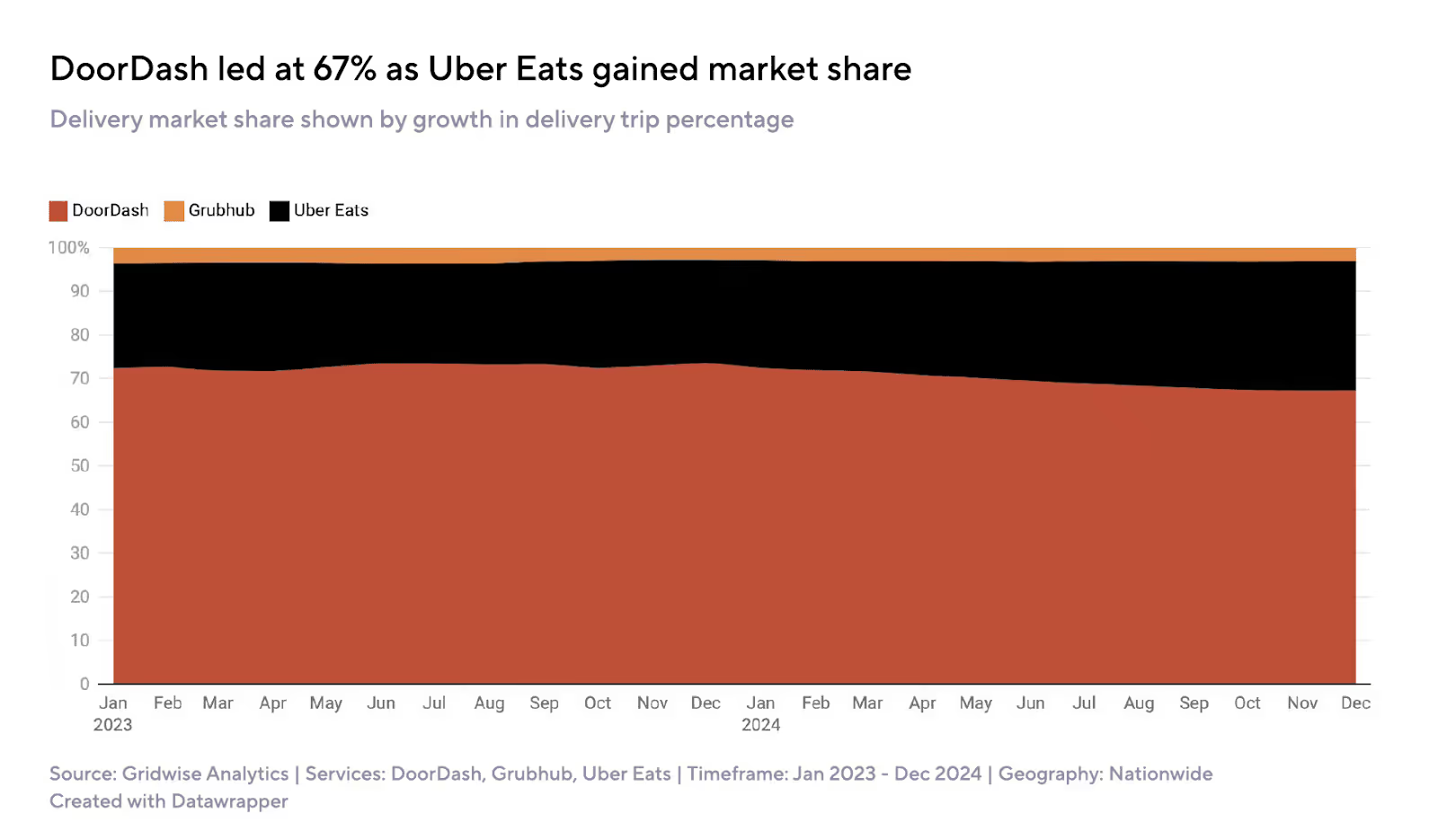
This shifting market share underscores an evolving delivery landscape where QSRs and retailers must take a strategic approach. While DoorDash remains dominant, businesses should consider a multi-platform strategy, leveraging Uber Eats’ growing presence to optimize reach. Additionally, Grubhub continues to hold a smaller but steady market share, highlighting the importance of diversified partnerships.
Understanding these shifts is crucial for QSRs to negotiate fees, optimize promotional spending, and ensure platform visibility. For retailers, the growing competition in third-party logistics presents new opportunities to engage customers increasingly using these apps for more than just food delivery.
DoorDash’s Expanding Market Share in Food, Grocery, and Retail
New data highlights how food-focused delivery services, including DoorDash, increasingly diversify into grocery and retail deliveries.
As of 2024, food delivery remains the dominant segment for services like DoorDash, Uber Eats, and Grubhub, but grocery and retail have gained significant ground. For example, while DoorDash and Uber Eats handled 86% of food deliveries in 2023, that share has declined to 82% in 2024 as more grocery and retail deliveries enter the mix. Instacart remains almost entirely grocery-focused, while Spark’s deliveries are overwhelmingly retail.

This trend signals a growing consumer appetite for multi-category delivery services for QSRs, increasing competitive pressures to offer a seamless, omnichannel experience.
The Retail Explosion: Macy’s and the DoorDash Surge
One of the most striking delivery trends of 2024 has been the meteoric rise of retail deliveries through DoorDash. From January to December 2024, Macy’s delivery volume via DoorDash skyrocketed by 4,525%, signaling an aggressive expansion of DoorDash’s retail footprint.

The surge in retail deliveries marks a pivotal shift in how consumers use third-party platforms, expanding beyond food into lifestyle and retail purchases. For retailers, this presents an opportunity to capitalize on DoorDash’s vast logistics network and customer reach. However, for QSRs, it introduces new competitive dynamics, as increased retail volume could impact fulfillment speed and prioritization for restaurant partners.
At the same time, retailers face a more complex operating environment within DoorDash’s app ecosystem. To remain competitive, they must optimize visibility, leverage in-app promotional tools, and ensure their fulfillment capabilities align with platform expectations.
Driver Loyalty and the Multi-Apping Challenge
One of the defining factors of DoorDash’s continued dominance is its ability to retain gig drivers. DoorDash has the lowest percentage of multi-apping drivers, meaning more of its workforce remains exclusive to its platform compared to Uber Eats, Grubhub, and Instacart.

This is an essential operational consideration for QSRs. Drivers who stick to a single platform tend to provide consistent service levels, reducing order delays and improving fulfillment reliability. A stable driver base for retailers translates to improved logistics efficiency and predictable last-mile fulfillment.
Comparing Driver Compensation and Pay Breakdown
An analysis of pay structure and earnings highlights key differences across major delivery and rideshare platforms. For DoorDash, the data reflects a moderate balance between base pay, tips, and minimal bonus incentives—positioning it between gig categories like rideshare and parcel delivery, which are far more reliant on fixed base pay.
DoorDash Drivers Earned More in 2024 While Working More Hours
DoorDash drivers earned an average of $240 per week in 2024, up 4.8% year-over-year. This growth came alongside a 5.2% increase in average weekly work hours—from 17.2 to 18.1 hours. Pay per hour fell slightly to $12.23, while pay per mile dropped to $0.92, down from $1.01. These shifts reflect higher total engagement on the platform, possibly driven by increased demand or improved driver activation.

DoorDash Relies Heavily on Tips to Drive Earnings
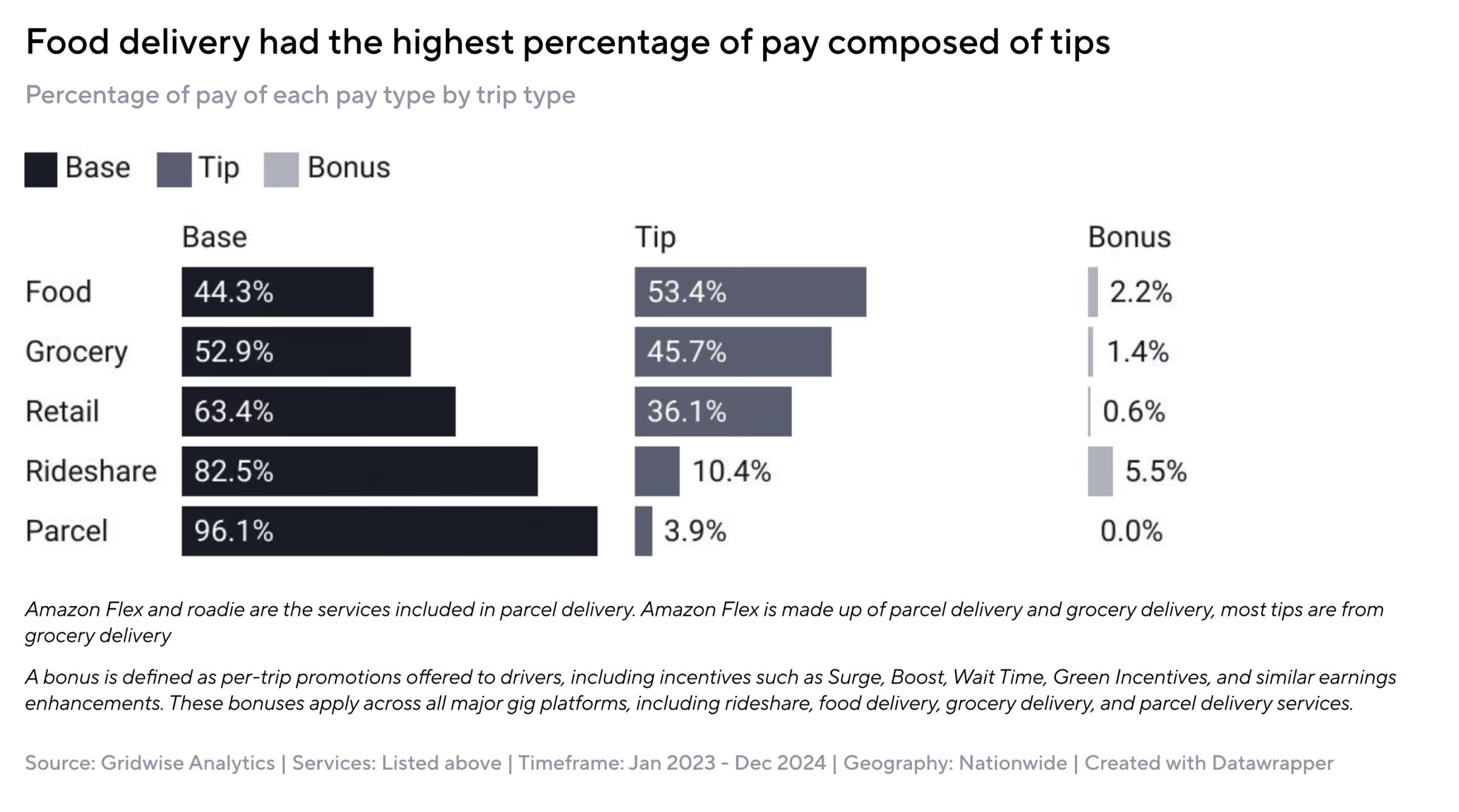
Tips accounted for 53.4% of total driver compensation on food delivery platforms—by far the highest of any gig category. Food delivery drivers on average received only 44.3% of their earnings from base pay, and 2.2% from bonuses. This compensation model emphasizes variability and highlights the importance of customer tipping behavior in sustaining earnings.

These compensation trends underscore key operational considerations for platforms. Tip-reliant models like DoorDash’s introduce variability in driver earnings, which may influence retention and engagement. Meanwhile, base-heavy models in parcel and rideshare offer greater earning predictability, albeit with less customer-facing variability.
Site Selection Insights Powered by Delivery Demand Data
ZIP-level delivery trip volume data offers valuable signals for delivery platforms to refine network operations, prioritize partnerships, and deepen geographic penetration. By analyzing neighborhood-level demand patterns, stakeholders can make smarter and more strategic decisions.
High Coffee Delivery Volumes Signal Platform Opportunity in Residential Zones
O’Hare/Dunning (60634) leads Starbucks delivery trip share at 5.3%, followed by Irving Park/Avondale (60618) at 4.7% and Uptown/Andersonville (60640) at 3.9%. These residential areas represent strong, sustained coffee demand—ideal for optimizing driver coverage, prioritizing peak-hour incentives, and identifying areas with under-onboarded café partners.

Healthy Food Demand Clusters Around Affluent Urban Hubs
River North/West Town (60654) accounts for 6.9% of healthy food delivery volume, with Lincoln Park/Old Town (60614) at 6.8% and Magnificent Mile/Streeterville (60611) at 6.1%. Delivery platforms can use this concentration to inform merchant recruitment, cross-promotions with health-focused brands, and hyperlocal marketing strategies targeting wellness-conscious consumers.

Fast Food Thrives in Youth-Dense, Social Neighborhoods
Lake View/Northalsted (60657) leads fast food delivery trip volume at 4.5%, with Wrigleyville/Buena Park (60613) at 3.9% and Uptown/Andersonville (60640) at 3.6%. These data points can guide platforms in load-balancing driver dispatch during evening hours, surfacing high-velocity fast food partners, and calibrating pricing algorithms in high-demand zones.

Delivery trip volume isn’t just a reflection of consumer behavior—it’s a strategic asset for platform operations and growth. As geographic preferences become clearer, platforms that use this intelligence effectively can deliver faster, increase order frequency, and deepen local engagement.
For QSR partners, these insights can help guide where to scale delivery operations or test new store formats.
For retail brands, trip density data can inform which neighborhoods are primed for rapid fulfillment infrastructure or exclusive promotions.
The Road Ahead: Adapting to an Evolving On-Demand Landscape
DoorDash’s expansion into grocery and retail reflects a broader industry shift toward multi-category convenience. For delivery platforms, this evolution creates new opportunities to deepen market penetration, optimize fulfillment networks, and refine geographic strategy using trip-level data.
Driver compensation trends—such as DoorDash’s high reliance on tips and modest base pay—underscore the need for platforms to balance engagement incentives with reliability. As more hours are worked and driver supply increases, platforms must continue optimizing earnings structures that sustain service levels without eroding margin.
At the same time, ZIP-level delivery volume data is becoming a critical strategic asset. Platforms can use these insights to guide driver coverage, surface merchant gaps, and enable QSR and retail partners to scale more effectively in the neighborhoods where demand is highest.
Ultimately, as consumers expect faster, more flexible service across food, retail, and beyond, delivery platforms must continue evolving from transaction enablers to localized infrastructure engines—powering the next chapter of on-demand commerce.
Insights and Strategies to Maximize Your Gig Work Income
A Practical Guide to Earning More in 2025
The gig economy is evolving rapidly, creating new opportunities and challenges for rideshare and delivery drivers. Over the past year, market conditions have shifted, leading to fluctuations in driver earnings, changes in consumer behavior, and adjustments in platform policies. As a result, it is more important than ever for gig workers to understand industry trends and adjust their strategies to maintain and grow their earnings.
This report analyzes gig economy earnings trends and offers practical recommendations to help drivers optimize their income while reducing inefficiencies. The insights in this report focus on:
- How pricing trends are affecting driver earnings and consumer demand.
- Which gig platforms offer the most stable and highest-paying opportunities
- How tipping varies across services and what drivers can do to increase gratuities.
- The best times and locations to work in order to maximize earnings.
- The impact of multi-apping on driver efficiency and overall income.
In addition to examining these trends, this report highlights practical ways gig workers can use the Gridwise app to improve their earnings, track expenses, track demand surges, and more. Using these insights, gig workers like rideshare and delivery drivers can make data-driven decisions to earn more while working smarter.
[elementor-template id="20891"]
How Earnings Compare Across Rideshare & Delivery Apps
Which Gig Platforms Pay the Most?
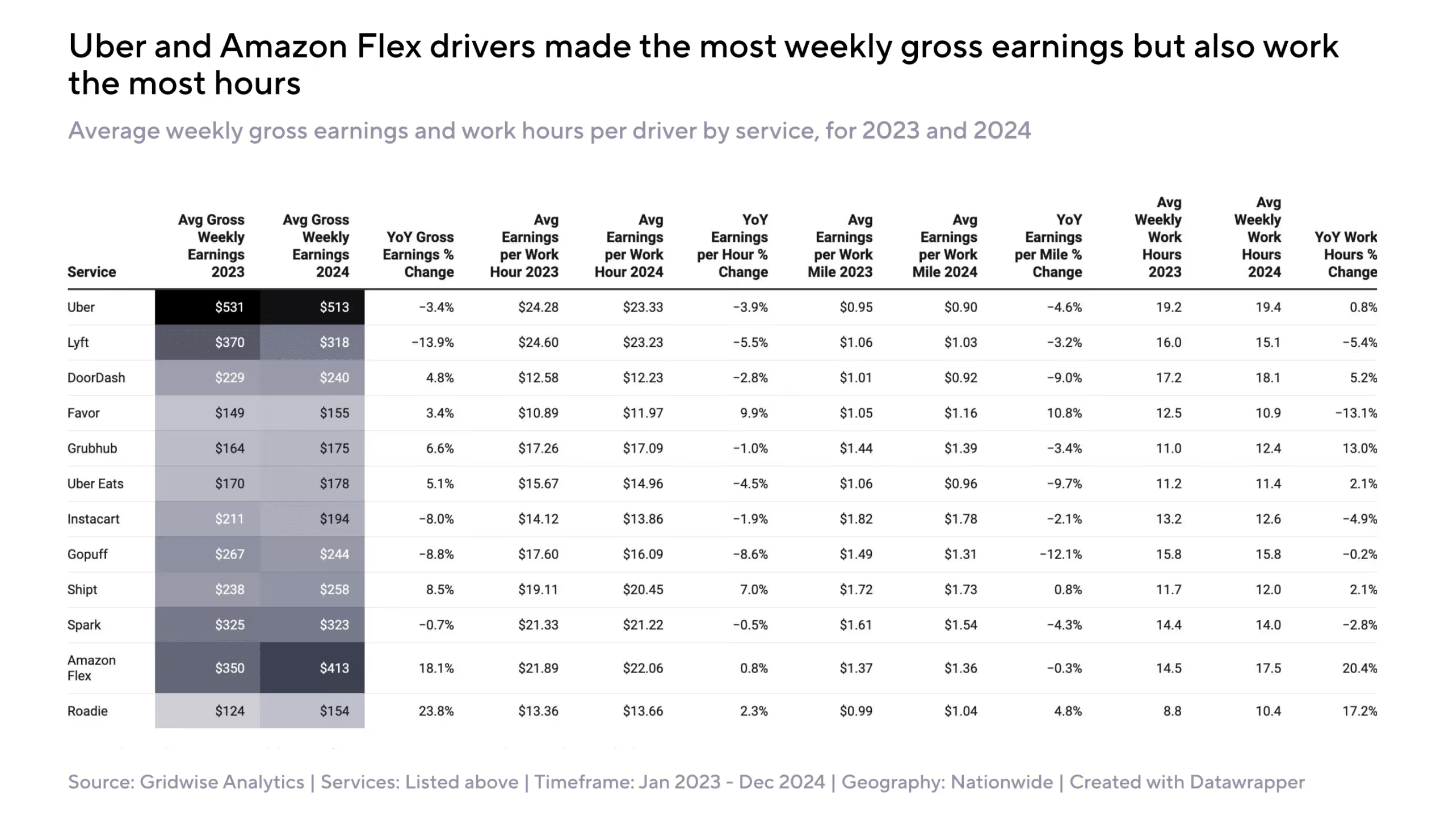
Driver earnings vary significantly across gig platforms, with some services experiencing growth while others have seen notable declines. In 2024, rideshare drivers faced earnings decreases, while many delivery services saw increases in weekly income.
Average Weekly Earnings by Platform:
- Uber drivers earned an average of $513 per week, representing a 3.4% decline from the previous year.
- Lyft drivers earned $318 per week, reflecting a 13.9% decrease in earnings.
- DoorDash drivers experienced a 4.8% increase, bringing their weekly earnings to $240.
- Uber Eats drivers saw a 5.1% rise in earnings, reaching $178 weekly.
- Amazon Flex had the most substantial growth, with weekly earnings increasing by 18.1% to $413.
- Shipt drivers earned $258 per week, an 8.5% increase from the previous year.
Key Takeaways:
- Drivers who seek stability in their earnings should consider Amazon Flex and Shipt. These platforms have demonstrated consistent growth, making them strong options for drivers looking for predictable income.
- Food delivery services such as DoorDash and Uber Eats are becoming more profitable. If rideshare demand continues to decline, these platforms can serve as effective alternatives or supplements to traditional rideshare work.
- Rideshare drivers should focus on high-demand periods and areas. Since earnings have declined, maximizing surge pricing and targeting locations with steady ride requests is essential for maintaining income.
How Gridwise Helps: Gridwise enables drivers to track earnings across multiple gig platforms, helping them determine which services offer the best pay in their specific market.
Pricing Trends: How Rising Passenger Costs Affect Gig Work
How Passenger Pricing Impacts Gig Drivers
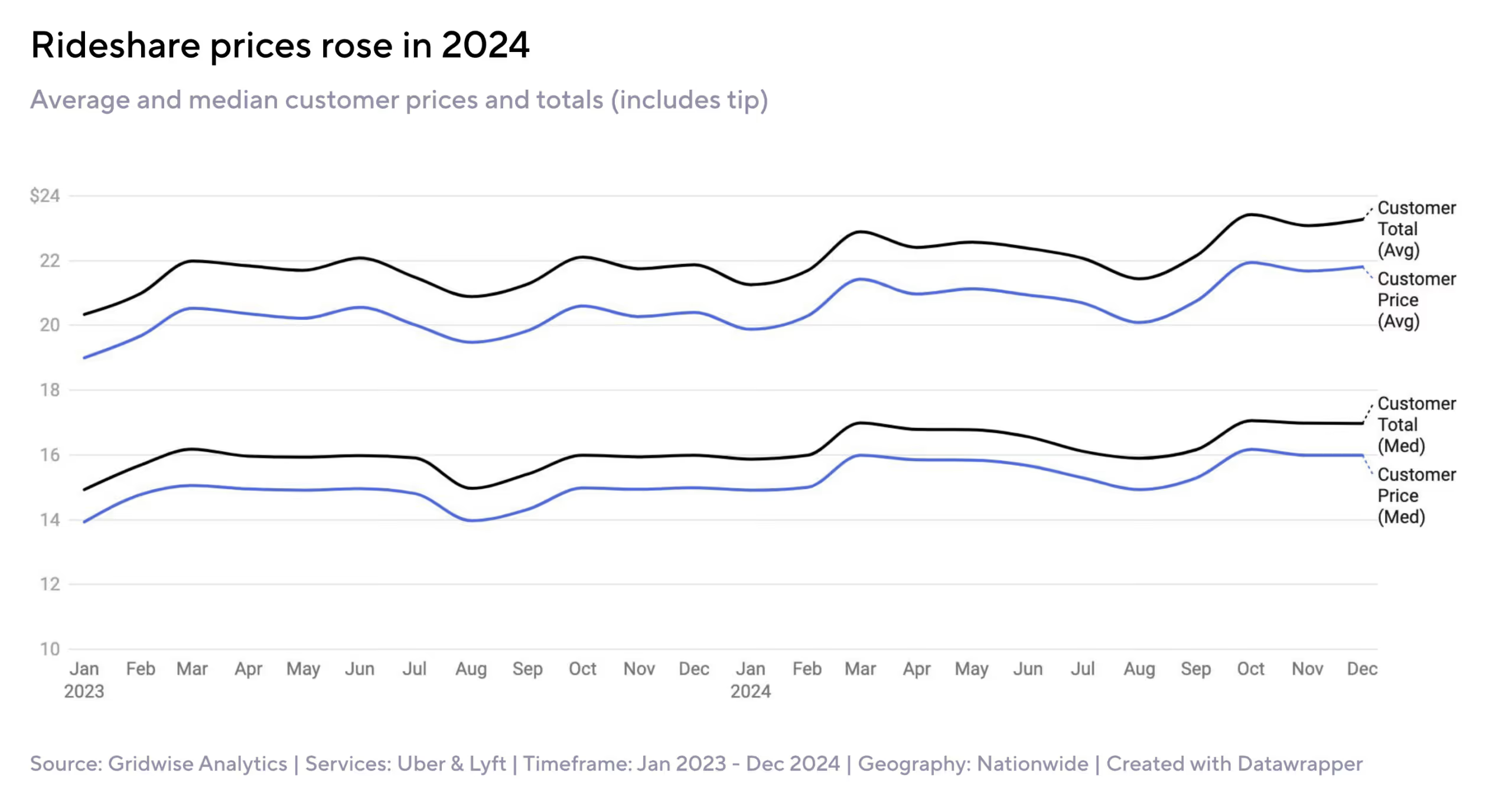
As platform pricing increases, consumer demand tends to decline. When fares become too high, many riders reduce their usage of rideshare services or switch to alternative transportation methods. This shift can have a direct impact on driver earnings, as fewer trips result in longer idle periods and reduced overall income.
In 2024, the median price of a rideshare trip increased by 7.2%, rising from $14.91 to $15.99.
Key Takeaways:
- To maintain steady earnings, drivers should focus on high-demand periods. Riders are more willing to pay higher fares when transportation alternatives are limited, such as during rush hours, major events, or late-night hours.
- Taking advantage of surge pricing and platform bonuses can help offset declines in rider volume. Drivers should monitor when platforms offer increased rates and plan their schedules accordingly.
- Exploring other gig work options, such as food and parcel delivery, may provide greater income stability. Unlike rideshare, these services are less affected by consumer price sensitivity, as customers are often willing to pay extra for convenience.
How Gridwise Helps: The Gridwise app allows drivers to identify the best times and locations to work iso that they can maximize their earnings
Maximizing Tips: What Gig Workers Need to Know
Which Platforms Have the Highest Tips?
Tips are an essential part of earnings for many gig workers, particularly those in food and grocery delivery. And some platforms rely heavily on gratuities, while others offer more consistent base pay. Depending on how you prefer to work and earn, you can decide which structure works best for you.
Tip Income by Platform:
- Favor drivers receive 73-79% of their income from tips, making it the most tip-reliant platform.
- Food delivery drivers on DoorDash, Uber Eats, and Grubhub earn between 50-60% of their pay from tips.
- Rideshare drivers using Uber and Lyft earn only 10% of their total income from tips.
- Parcel delivery drivers on Amazon Flex and Roadie receive the lowest percentage of tips, averaging 4% of total earnings.
Key Takeaways:
- Drivers working in food and grocery delivery should focus on customer service. Courteous communication, prompt delivery, and attention to detail can increase gratuities.
- Rideshare drivers shouldn't only rely on tips as a significant income source. Instead, they should focus on maximizing peak-hour earnings and incentive programs.
- Parcel delivery services offer a more stable income but provide little opportunity for additional earnings through tips.
How Gridwise Helps: Gridwise allows drivers to track earnings and their local market trends and also analyze which platforms and shifts result in the highest gratuities.
Action Steps to Earn More in 2025
The gig economy is constantly evolving, but drivers who adapt to market trends can continue to earn a good income.
If you would like to maximize your earnings, you can try the following strategies:
- Understand pricing trends by working peak hours and utilizing bonuses to offset lower demand.
- Choose the right platforms based on current earnings trends—Amazon Flex and Shipt provide stability, while food delivery platforms offer tip potential.
- Optimize work hours by strategically scheduling shifts around events, airports, and high-demand periods.
- Utilize multi-apping to minimize idle time and maximize earnings across different platforms.
Next Steps for Drivers:
- Analyze your current earnings and identify areas for improvement.
- Test different gig platforms and shift timings to determine the best mix for your work style and lifestyle.
- Use Gridwise to track earnings, optimize routes, and receive insights on the best times to drive.
[elementor-template id="21599"]

How Much Do Curri Drivers Make?
The gig economy has given drivers more ways than ever to make money. While rideshare and food delivery apps dominate the space, platforms like Curri are providing new opportunities for drivers who want to transport construction materials, industrial supplies, and large goods. Curri offers a high earning potential, especially for drivers with trucks and vans, but how much do Curri drivers make? More importantly, what can you do to maximize your income and efficiency? This guide provides a detailed breakdown of Curri driver earnings, what factors impact pay, and how tools like Gridwise can help you make the most of your time on the road.
[elementor-template id="20891"]
What is Curri?
Curri is a gig delivery platform that specializes in transporting construction-related materials. It connects businesses with on-demand couriers who use personal vehicles to deliver items such as:
- Lumber, drywall, and hardware
- Pipes, electrical supplies, and industrial equipment
- Large tools and other commercial goods
Unlike Uber, Lyft, or DoorDash, Curri drivers do not transport passengers or food. Instead, they complete scheduled and on-demand deliveries for contractors, suppliers, and manufacturers.
This niche business model creates higher-paying opportunities than standard food or package delivery, especially for drivers with the right vehicle.
How Much Do Curri Drivers Make?
Curri driver pay varies based on location, vehicle type, job availability, and workload. Here’s what the data shows:
- Curri’s per-mile earnings: $1.50 to $1.75 per mile
- Curri’s weekly earnings: Some drivers earn $150–$300 per week, completing 3–4 deliveries that each pay $60–$80.
- Curri’s monthly earnings: Some drivers report earning $1,500–$1,700 per month using just a sedan or small vehicle.
Factors That Influence Curri Driver Earnings
Curri drivers have the potential to make great money, but several factors impact their earnings.
1. Location and Demand
Cities with a high construction volume tend to have more delivery requests and better pay rates. In contrast, drivers in rural areas may have fewer jobs available.
2. Vehicle Type
Your vehicle determines which types of deliveries you qualify for:
- Sedans and SUVs can handle small packages but have lower earning potential.
- Pickup trucks can transport bulkier loads, leading to higher pay.
- Box trucks and vans get the highest-paying jobs since they can move large industrial shipments.
3. Delivery Distance and Load Size
Curri pays drivers per mile, meaning longer-distance deliveries often result in higher payouts. Similarly, transporting heavier or larger loads increases earnings.
4. Time Commitment
According to this YouTuber, Part-time Curri drivers can make decent money, but those who treat it as a full-time gig have the potential to earn over $6,000 per month.
https://www.youtube.com/watch?v=KfDYp8qLOms
5. Market Competition
If more drivers become active in your area, the number of available deliveries may decrease. Staying strategic about when and where you work can help maximize earnings.
How Does Curri Pay Its Drivers?
One of the best advantages of driving for Curri is its fast and predictable payment system. Unlike some gig platforms that pay drivers every week or require manual cash-out requests, Curri ensures that drivers get paid daily, making it a great option for those who need quick access to their earnings.
1. Curri Has Daily Payouts for Faster Cash Flow
Many gig drivers struggle with delayed payments, especially on platforms that only pay out weekly or require long processing times for direct deposits. Curri eliminates this issue by providing daily payouts for completed deliveries.
- Payments are deposited directly into your bank account, reducing the need for third-party payment services.
- Daily payouts help drivers cover fuel costs and expenses without waiting for their earnings.
- This feature makes Curri ideal for drivers who rely on immediate cash flow to manage their financial responsibilities.
If you have ever found yourself waiting days to access your earnings from other gig apps, Curri's same-day payment system offers a significant advantage.
2. Upfront Pricing – No Surprises
Unlike some gig platforms that use complex, variable pricing models, Curri provides transparent, upfront pricing on every delivery request. Drivers see exactly how much they will make before accepting a job, allowing them to make informed decisions about whether a trip is worth their time and expenses.
- Each job displays the total payout, distance, and load details before you commit.
- There are no hidden fees or last-minute adjustments to your earnings.
- This allows drivers to prioritize the most profitable jobs rather than accepting lower-paying offers unknowingly.
For gig drivers who have experienced unpredictable pay on other platforms, this level of transparency makes it easier to plan and optimize earnings.
3. No Waiting for Weekly Paychecks
Many traditional gig platforms operate on weekly payment schedules, meaning drivers have to wait several days to receive the money they earned. This can be frustrating, especially when gas, maintenance, and insurance add up quickly.
By processing payments immediately after completing deliveries, Curri removes the hassle of waiting for payouts. This means drivers can:
- Get paid every day instead of waiting for weekly disbursements.
- Use their earnings to cover expenses in real time without needing savings.
- Maintain better financial stability and budgeting.
For gig workers who rely on consistent, frequent income, Curri’s daily payout model provides a significant financial advantage over platforms that offer weekly or biweekly deposits.
4. How to Make the Most of Curri’s Payment System
To get the most benefit from Curri’s fast payment structure, drivers should:
- Schedule fuel and maintenance costs around payouts to keep expenses manageable.
- Take advantage of peak earning hours to maximize daily deposits.
- Use financial tracking tools like Gridwise to monitor daily earnings and expenses across multiple gig platforms.
By leveraging Curri’s fast payout system, transparent pricing, and daily deposits, drivers can maintain a steady income flow, making it easier to cover expenses, reinvest in their business, and grow their earnings.
How to Maximize Your Curri Earnings
While Curri offers strong earning potential, maximizing your income requires a strategic approach. Earnings can fluctuate based on location, competition, and the types of deliveries you accept. Consider these proven strategies to ensure you get the most out of your time on the road.
1. Drive a Larger Vehicle
The type of vehicle you drive significantly impacts your earning potential with Curri. The platform allows drivers with sedans and SUVs to complete smaller deliveries, but larger vehicles unlock higher-paying jobs. If you own or have access to a pickup truck, cargo van, or box truck, you will qualify for deliveries that involve transporting bulkier and heavier materials, often with better payouts.
- Pickup trucks are ideal for carrying large but manageable loads such as construction materials, pipes, and hardware.
- Cargo vans allow you to transport more oversized items while keeping them protected from weather conditions.
- Box trucks unlock some of the most lucrative deliveries on Curri, as they are needed for industrial and large-scale shipments.
If you currently drive a smaller vehicle but are serious about maximizing your earnings with Curri, consider renting or financing a larger vehicle. The higher pay from larger loads could quickly offset the cost of upgrading.
2. Choose Long-Distance Deliveries
Curri pays drivers based on mileage, meaning that longer deliveries often translate to higher earnings. While shorter, local deliveries may seem convenient, they often pay less per trip. If you are looking to increase your total earnings, consider accepting longer-distance deliveries that take you across multiple cities or even states.
- Plan efficiently: If you are taking a long-distance job, try to find another delivery that brings you back toward your starting location to avoid returning with an empty vehicle.
- Factor in fuel costs: While long trips pay more, always calculate how much gas and time will be required to ensure the job remains profitable.
Curri drivers who focus on longer hauls tend to earn more consistently, especially if they operate in areas where high-paying long-distance deliveries are frequent.
3. Work in High-Demand Areas
Not all locations provide the same volume of Curri delivery requests. If you want to maximize your earnings, position yourself in areas where demand for deliveries is high.
- Urban centers with active construction projects often generate more delivery requests for building materials.
- Industrial and commercial districts frequently require deliveries of equipment and supplies.
- Regions with a strong manufacturing presence may offer consistent long-distance delivery opportunities.
If Curri jobs are slow in your immediate area, it may be worth commuting to a nearby city with higher demand. A small adjustment in your work location could result in more frequent and better-paying jobs.
4. Use Apps to Optimize Efficiency
One of the biggest mistakes gig drivers make is failing to track their earnings, expenses, and routes. Without proper tracking, it is difficult to determine whether you are maximizing profitability. This is where Gridwise comes in.
- Track earnings across multiple platforms: Many Curri drivers also work for Uber, Lyft, or DoorDash. Gridwise allows you to see which platform is the most profitable at different times of the day.
- Optimize driving times: Gridwise provides data on when demand is highest, helping you avoid slow periods.
- Track mileage for tax deductions: Since gig drivers can write off miles driven for work, using Gridwise to track every mile ensures that you maximize deductions and keep more of your earnings.
- Find the cheapest gas prices: Fuel costs can eat into your profits, but Gridwise helps you locate the most affordable fuel options along your route.
By using Gridwise to manage your gig work, you can make data-driven decisions about when and where to drive, ensuring that you earn as much as possible while keeping expenses low.
[elementor-template id="20949"]
By following these strategies—driving a larger vehicle, prioritizing long-distance deliveries, focusing on high-demand areas, and leveraging tools like Gridwise—you can maximize your Curri earnings and operate more efficiently as a gig driver.
How Gridwise Helps Curri Drivers Earn More
Curri can be highly profitable, but drivers need the right tools to track earnings, manage expenses, and find the best delivery opportunities. Gridwise is the number one app for gig drivers, helping you:
- Track earnings from Curri and other gig apps (Uber, DoorDash, etc.)
- See peak demand times for better-paying jobs
- Automatically track mileage for big tax deductions
- Optimize fuel costs with the cheapest gas station finder
- Analyze total profit by comparing income vs. expenses
Final Thoughts on Curri
Curri offers a great alternative to food delivery and rideshare gigs. However, tracking your earnings, managing expenses, and optimizing your driving strategy is key—and that is where Gridwise makes all the difference.
If you are serious about making the most money with Curri or any gig platform, Gridwise is your go-to tool.
[elementor-template id="21599"]

How Cultural Events and Holidays Drive Gig Economy Demand
In the fast-moving gig economy, demand is anything but static. Major holidays, cultural events, and seasonal trends create predictable surges in rideshare, food delivery, and grocery orders, but these spikes don’t always occur when expected. Instead of peaking solely on the event day itself, demand often builds in the days leading up to it and lingers afterward, reflecting shifting consumer behaviors.
Recognizing these demand cycles for gig platforms and AV operators isn’t just about meeting rider and customer needs—it’s a strategic advantage. Optimizing fleet deployment, adjusting driver incentives, and refining pricing strategies based on these fluctuations can drive efficiency and profitability.
[elementor-template id="20891"]
Why is Understanding Gig Mobility Trends Around Key Dates Essential?
While significant holidays and cultural events drive increased activity in rideshare and food delivery services, demand doesn’t always follow a straightforward trajectory. Rather than peaking exclusively on the day of an event, activity builds up in the days before and tapers off afterward, creating distinct windows of opportunity.
1. Events Drive Consumer Demand Differently: Burning Man as an Example
Every event has unique characteristics that influence when and how demand surges occur. This is illustrated by looking at the impact of Burning Man 2024 on rideshare and food delivery activity in the Reno metro area.
For Burning Man, Pre-Event Demand Spikes Can Be More Intense Than Post-Event Declines
The sharp rise in airport rideshare activity before Burning Man shows that many attendees arrive in a concentrated timeframe, creating a short but intense demand window for this event. Gig platforms deploying AVs could strategically position vehicles in high-demand areas ahead of time to absorb demand without relying on human driver availability.
Rideshare Demand Declines Gradually After Events, Not Immediately
While pre-event rideshare demand spikes quickly, post-event departures are more spread out. Platforms that extend AV and human driver availability for multiple days after an event—rather than just the immediate night—can better capture lingering demand. Gig rideshare platforms leveraging AV fleets can optimize post-event deployment by dynamically adjusting supply based on real-time demand tracking.
Food Delivery Demand Fluctuates Based on Event Type and Timing
Food delivery demand during major events varies depending on the event type and timing. For example, at Burning Man, food delivery saw a few spikes and an almost 60% increase towards the end of the event in Reno. Autonomous rideshare vehicles (AVs), AV delivery bots, and gig-based delivery platforms should adjust their service deployment based on whether an event drives significant on-site food demand or remains mainly self-sufficient.
Maximizing Profitability by Aligning with Pre- and Post-Event Demand
Platforms can enhance profitability by strategically aligning operations with both pre- and post-event demand patterns. Extending AV and human-driven rideshare availability before and after major events allows platforms to capture peak traffic when consumer demand surges. For food delivery, pre-event promotions can drive orders as attendees prepare, while post-event offers keep engagement high as people return home.
Autonomous delivery fleets can also optimize deployment by positioning AV-based grocery and food delivery services near high-traffic event areas. Before an event, this meets demand from attendees stocking up, while after the event, it caters to those seeking convenience without needing to leave their location.
By shifting promotional strategies to both pre-and post-event windows, platforms can attract users actively searching for food, transportation, or convenience services. For example, an AV rideshare fleet near a stadium that increases availability before the event for incoming attendees and extends service hours post-event for departing crowds—or a delivery platform offering discounts for both pre-event meal prep and post-event recovery—can significantly boost ridership and order volume.
2. Holidays Drive Demand Differently: A Look at Food Delivery
Independence Day Drives the Highest Food Delivery Spikes
- July 4th (Independence Day night) saw the highest increase at 40% above the median, indicating a strong demand for food delivery as people celebrated.
- The night before Independence Day (July 3rd) and the night after (July 5th) also experienced elevated delivery activity (31%), suggesting a multi-day demand increase rather than a single-day spike.
New Year’s Day and Eve See Consistent High Demand
- January 1st (New Year’s Day night) recorded a 38% increase, making it one of the top food delivery days of the year.
- Afternoon demand on New Year’s Day also saw an 18% increase, likely driven by post-celebration meal orders.
Major Holidays See Elevated Nighttime and Pre-Holiday Demand
- Labor Day (September 2nd) and Memorial Day (May 27th) nights saw a 31% increase, reinforcing the trend of late-night ordering on long weekends.
- Valentine’s Day morning and evening delivery spikes (26% and 20%, respectively) suggest a mix of breakfast/brunch orders and romantic dinner deliveries.
These patterns provide valuable opportunities for gig platforms that plan accordingly. Companies that align driver incentives, fleet allocation, and pricing with these trends can improve efficiency, while AV operators can use predictive modeling to ensure sufficient vehicle supply during peak demand windows.
With real-time gig mobility analytics, businesses and investors can make more informed decisions, ensuring demand fluctuations are anticipated rather than reacted to.
Maximizing Profitability: Strategic Demand Management for Gig Platforms and AV Companies
For gig platforms and AV operators, effectively managing demand fluctuations is critical to optimizing operations, increasing profitability, and maintaining competitive positioning. Rather than reacting to spikes in demand, companies that proactively adjust driver incentives, fleet deployment, and pricing models ahead of peak periods see higher efficiency and sustained market growth.
Rideshare and AV operators can maximize revenue by aligning fleet availability with real-time demand analytics. This includes strategic AV deployment in high-traffic areas before major holidays or events, ensuring vehicles are positioned where demand will surge rather than responding after bottlenecks emerge. Additionally, platforms that use dynamic pricing strategies—balancing consumer affordability with revenue optimization—can maintain ride volume without discouraging users during peak periods.
Autonomous delivery fleets can gain a strategic edge for food delivery and last-mile logistics by expanding availability around holiday-driven demand spikes, such as pre-holiday grocery shopping and post-event meal orders.
Data-Driven Decision-Making in an Evolving Gig Economy
Understanding how demand fluctuates before, during, and after key events is essential for optimizing fleet deployment, improving pricing strategies, and ensuring customer satisfaction. For gig platforms, this requires aligning rideshare and delivery operations with pre- and post-event demand trends, leveraging autonomous vehicle technology to efficiently meet surges, and utilizing real-time analytics to anticipate and dynamically adjust service supply.
Similarly, AV operators must deploy fleets strategically around significant holidays and cultural events, ensuring that vehicles are available during peak rideshare demand windows while minimizing unnecessary idle time during lulls.
With Gridwise Analytics, gig platforms and AV companies can make data-backed decisions that enhance resource allocation, strengthen market positioning, and create a competitive edge. As the gig economy expands, those who embrace real-time analytics and fleet intelligence will lead the industry forward.

Shipt vs. Instacart: ¿Cuál es mejor para compradores y conductores?
Shipt e Instacart son dos de las plataformas de entrega de compras más grandes y ofrecen oportunidades de ingresos flexibles para trabajadores independientes. Ya sea que estés buscando un ingreso de tiempo completo o tiempo parcial, elegir entre estas dos aplicaciones puede ser desafiante. Cada plataforma tiene su propia estructura salarial, flexibilidad de horarios y experiencia laboral. Para cual es mejor trabajar: Shipt vs. Instacart? Y lo que es más importante, quién paga más? Este blog te explicará cómo funcionan ambas aplicaciones, comparará las ganancias y te ayudará a decidir qué plataforma se adapta mejor a tus necesidades.
[elementor-template id="20891"]
Shipt vs. Instacart: Cómo Funcionan?
En esencia, tanto Shipt como Instacart permiten que trabajadores independientes ganen dinero realizando y entregando la compra del supermercado. Sin embargo, existen algunas diferencias clave en cómo funciona cada aplicación:
- Shipt:
- Funciona principalmente con tiendas asociadas (Target, CVS, Meijer, etc.).
- Le permite a los compradores programar los cambios con antelación y desarrollar relaciones con clientes habituales.
- Se centra en el servicio personalizado, recompensando las buenas interacciones con los clientes.
- Instacart:
- Trabaja con múltiples tiendas de comestibles y supermercados en cada zona.
- Los trabajos se realizan bajo demanda, lo que significa que recoges los pedidos a medida que están disponibles.
- Ofrece tanto compras de servicio completo (compra + entrega) como compras dentro de la tienda (sin necesidad de entrega).
Proceso de Compras y Entrega
Los shoppers de Shipt tienen rutinas de compra más predecibles ya que a menudo trabajan en las mismas tiendas. Los shoppers de Instacart deben adaptarse a diferentes tiendas, lo que puede hacer que los pedidos sean más variados e impredecibles.
Para Cuál Es Mejor Trabajar: Shipt o Instacart?
Flexibilidad & Horarios
- Shipt: Le permite a los compradores programar turnos con anticipación, facilitando así la planificación de ganancias.
- Instacart: Tiene un modelo bajo demanda, ofreciendo trabajo cuando está disponible.
Facilidad de Compra & Entrega
- Shipt: Comprar en las mismas tiendas asociadas hace que los pedidos sean más predecibles y eficientes.
- Instacart: Las órdenes varían más, por lo que los shoppers deben estar cómodos navegando por múltiples cadenas de comestibles.
Soporte Para Conductores y Compradores
Ambas aplicaciones ofrecen soporte dentro de la aplicación, pero los shoppers han informado que el servicio al cliente de Shipt es más receptivo cuando surgen problemas, especialmente con quejas de clientes o artículos faltantes.
Shipt vs. Instacart: Quién Paga Más?
Las ganancias pueden variar significativamente dependiendo de tu ubicación, la hora del día y cuántas órdenes completas. Comparemos las estructuras salariales:
Paga Básica & Estructura de Ganancias
- Shipt:
- Pagos por pedido, con una tasa base de alrededor de $16-$22 por pedido.
- Los shoppers pueden ganar bonificaciones por gran servicio y satisfacción del cliente.
- Instacart:
- El pago varía según la complejidad del lote, la distancia y la cantidad de artículos.
- El salario base puede variar entre $7 y $20 por lote, pero los lotes grandes pueden pagar significativamente más.
Propinas e Incentivos Extra
- Shipt: Los clientes habituales suelen dar buenas propinas, y construir relaciones puede conducir a ganancias consistentes.
- Instacart: Dar propina es más común, pero puede ser inconsistente dependiendo el cliente.
Comparación de Ganancias Promedio
- Los compradores de Shipt informan de un promedio de $15-$25 por hora.
- Los shoppers de Instacart reportan un promedio de $10–$30 por hora, con potencial de ganancias altas durante las horas pico.
La clave? Instacart tiene mayor potencial de ganancias durante las horas pico, pero Shipt ofrece un pago más predecible.
Ventajas y Consideraciones de Trabajar Para Shipt vs. Instacart
FuncionesShiptInstacartFlexibilidad de HorariosEstablecer TurnosTotalmente bajo demandaVariedad de ÓrdenesLimitado a tiendas asociadasMúltiples cadenas de supermercadosRelaciones Con El ClienteFuerte (clientes habituales)Menor (clientes variados)Pago BaseEstablecido por pedidoVariable basado en el tamaño del lotePotencial de PropinasAlto con clientes habitualesPuede ser alto, pero inconsistente
Deberías Trabajar Tanto Para Shipt Como Para Instacart?
Muchos trabajadores independientes maximizan sus ganancias trabajando para ambas aplicaciones. Aquí está el por qué:
- Día lento en Shipt? Consulta Instacart para ver los pedidos disponibles.
- Necesitas un horario predecible? Utiliza Shipt para establecer turnos, y luego recoge pedidos de Instacart cuando estés libre.
- Aprovecha las horas pico cambiando entre aplicaciones basándote en la demanda.
Si realmente quieres ganar dinero entregando compras, trabajar para ambas plataformas puede ayudarle a ganar dinero de manera más consistente.
Cómo Gridwise Puede Ayudar a Shoppers de Shipt & Instacart A Ganar Más Dinero
Trabajar como shopper para Shipt o Instacart puede ser gratificante, pero manejar múltiples pedidos, rastrear millas y mantenerte al día con las ganancias puede convertirse en algo frustrante. Como trabajador independiente, no tienes el lujo de que un departamento de RR.HH. se encargue de tu trabajo administrativo—eres tu propio negocio. Ahí es donde entra Gridwise.
Gridwise es el asistente definitivo para trabajadores independientes, te ayuda a simplificar tu trabajo administrativo, realizar un seguimiento de los gastos, optimizar tus ganancias y maximizar las deducciones de impuestos—todo en una aplicación fácil de usar.
[elementor-template id="20949"]
Rastrea Tus Ganancias a Través de Ambas Plataformas
Uno de los mayores desafíos de trabajar para múltiples aplicaciones es saber cuál te permite realmente ganar más dinero. Dado que Shipt e Instacart utilizan diferentes estructuras de pago, puede ser difícil comparar las ganancias con precisión.
Con el seguimiento automático de ganancias de Gridwise, puedes:
- Ver tus ganancias totales de Shipt, Instacart, y otras aplicaciones de trabajo en un solo lugar.
- Comparar el pago por hora, por pedido y por turno para determinar qué aplicación es más rentable.
- Seguir las tendencias de ganancias con el tiempo para ajustar tu horario laboral y obtener el máximo ingreso.
Registrar Millas & Gastos para Mayores Deducciones Impositivas
Si conduces hasta las tiendas y luego para hacer las entregas, cada milla realizada es dinero que puedes deducir de tus impuestos. Pero llevar un registro manual de las millas puede ser un problema— y perder millas significa perder deducciones fiscales que podrían ahorrarte cientos o incluso miles de dólares.
Con el rastreador de millas de Gridwise, puedes:
- Registrar automáticamente las millas en segundo plano mientras trabajas.
- Registrar todos los gastos relacionados con el trabajo, como combustible, bolsas térmicas o incluso facturas del teléfono utilizado para trabajar.
- Generar informes para la temporada de impuestos, asegurándote reclamar todas las deducciones posibles.
Planifica los Mejores Horarios Para Trabajar & Maximiza Tu Salario
No todas las horas son iguales—algunos turnos y algunas ubicaciones ofrecen pagos mucho más altos que otros. Pero, ¿cómo saben cuándo y dónde trabajar?
Con los criterios de demanda de Gridwise, puede:
- Ver cuándo es mayor la demanda de entrega de compras, para poder trabajar en las horas pico y ganar más.
- Identifique lugares rentables en su área para maximizar la eficiencia.
- Evite períodos lentos programando cambios estratégicamente.
Optimizar Tu Administración con Herramientas Adaptadas Para Trabajadores Independientes
Además de hacer un seguimiento de las ganancias y gastos, Gridwise ayuda a los trabajadores a mantenerse organizados y a reducir el estrés financiero. En lugar de revisar diferentes aplicaciones, hojas de cálculo o cuadernos, puede gestionar todo en un solo lugar.
Con Rejilla puedes:
- Registrar todas las horas de trabajo automáticamente—nada de deducir turnos o perderlos.
- Registre los consejos por separado para obtener una vista clara de su pago al llevar.
- Mantente al tanto de tu horario de trabajo registrando turnos en múltiples aplicaciones de trabajo.
Por qué la Rejilla es un imperativo para el envío & Compradores Instacart
Administrar tus finanzas como trabajador independiente es un desafío, pero Gridwise lo simplifica todo—para que puedas concentrarte en lo que realmente importa: ganar dinero.
Usando la Rejilla, usted también:
- Tomar decisiones más inteligentes sobre cuándo y dónde trabajar.
- Dejar de dejar dinero sobre la mesa con el registro automático de millas y gastos.
- Obtenga claridad sobre su pago real de llevo a casa sin malabarismos con hojas de cálculo.
[elementor-template id="20936"]
Shipt vs. Instacart: Cuál Es Mejor Para Ti?
Tanto Shipt como Instacart ofrecen grandes oportunidades para los trabajadores independientes, pero elegir el correcto depende de tu estilo de trabajo, objetivos financieros y preferencias personales.
Shipt ofrece un enfoque más estructurado con horarios de compra programados, lo que brinda previsibilidad y facilita su integración en una rutina diaria. La empresa también promueve una atmósfera orientada a la comunidad y fomenta las interacciones entre shoppers, creando potencialmente un ambiente de trabajo más solidario. Adicionalmente, el programa Preferred Shopper de Shipt's le permite a los clientes seleccionar sus tiendas favoritas, fomentando una base de clientes fiable y propinas potencialmente más altas.
Por otro lado, Instacart mejora la flexibilidad laboral al ofrecer un sistema bajo demanda que le permite a los shoppers elegir turnos de forma espontánea. Esta función es ideal para aquellos que prefieren adaptar su horario de trabajo a medida que avanzan. Instacart también proporciona acceso a una variedad más amplia de tiendas y productos. Esta diversidad puede dar lugar a un mayor número de oportunidades de pedidos y a ganancias potencialmente mayores durante horas pico.
En última instancia, la elección entre Shipt e Instacart depende de las preferencias individuales sobre el estilo de trabajo, la flexibilidad de organización y las interacciones deseadas con el cliente.
Deberías Trabajar Tanto Para Instacart Como Para Shipt?
Muchos trabajadores de gig utilizan ambas plataformas para aprovechar los puntos fuertes de cada aplicación. Al trabajar con Shipt, puede asegurar pedidos programados y construir relaciones con clientes repetidos, mientras Instacart le permite llenar lagunas en su programa con trabajos de alto pago y bajo demanda.
No importa qué plataforma elija, rastrear sus ganancias, gastos y kilometrajes es clave para maximizar sus ingresos.
Tanto Shipt como Instacart ofrecen grandes oportunidades de ingresos, pero la mejor plataforma para ti depende de tus necesidades:
- Quieres ganancias más predecibles y clientes recurrentes? Elige Shipt.
- Quieres un mayor potencial de ganancias y flexibilidad bajo demanda? Elegir Instacart.
- Quieres maximizar tus ganancias? Trabaja para ambas plataformas y realiza un seguimiento de tu rendimiento con Gridwise.
[elementor-template id="21599"]
Learn more about what drivers and gig workers make:
- How Much Do Uber Drivers Make?
- How Much Do Lyft Drivers Make?
- How Much Do DoorDash Drivers Make?
- Everything You Need to Know About Amazon Flex
- Walmart Spark Delivery Driver Pay: How Much Does a Walmart Spark Driver Make?
- How Much Can You Make on Instacart?
- How Much Do Shipt Shoppers Make?
- How Much Do Uber Eats Drivers Make?

¿Cuánto paga Care.com?
Si eres un cuidador que trabaja en Care.com, probablemente te preguntas: Cuánto paga Cuidado.com? Mientras que Care.com proporciona una oportunidad para conectar con familias que necesitan tus servicios, tus ganancias dependerán de la ubicación, la experiencia y el tipo de trabajo.
Pero, al igual que los conductores de viajes compartidos y de entrega, los cuidadores en la economía del trabajo independiente necesitan herramientas inteligentes para realizar un seguimiento de sus ganancias, administrar sus horarios y optimizar sus ingresos. Es por eso que usar una aplicación de control de ingresos como Gridwise puede ayudarte a mantenerte al tanto de tus finanzas y maximizar tu salario. Analicemos cuánto paga Care.com y cómo puedes aprovechar al máximo tu trabajo como cuidador.
[elementor-template id="20891"]
Cuánto Paga Care.com?
Care.com le permite a los cuidadores establecer sus propias tarifas, pero las ganancias reales varían según el tipo de trabajo, la ubicación y la experiencia. Comprender las tasas de pago de la industria puede ayudarte a determinar cómo fijar el precio de tus servicios de manera competitiva y al mismo tiempo garantizar que recibas una compensación justa.
Tarifas Promedio en Care.com
Las tarifas para los diferentes tipos de cuidadores en Care.com dependen de varios factores, incluido el tipo de servicio, la demanda de cuidadores en el área y la experiencia del cuidador.
- Las niñeras y cuidadoras suelen ganar entre quince y veinticinco dólares por hora. Algunas cuidadoras ganan más dependiendo de su experiencia y de sus responsabilidades laborales. El promedio nacional es de alrededor de veinte dólares por hora para niñeras y veintiún dólares por hora para niñeras a tiempo parcial.
- Los cuidadores de mascotas y paseadores de perros generalmente ganan entre diez y veinte dólares por hora. Las tarifas pueden variar según el nivel de atención requerido, la cantidad de mascotas y la ubicación.
- Los cuidadores de personas mayores ganan entre dieciséis y veinticinco dólares por hora. Aquellos con formación especializada o certificaciones pueden ganar más.
- Las empleadas domésticas suelen ganar entre doce y veinticinco dólares por hora, dependiendo de la experiencia y la complejidad del trabajo.
Qué Factores Afectan Tu Salario al Utilizar Care.com?
Varios factores determinan cuánto pueden ganar los cuidadores en Care.com.
- La ubicación afecta significativamente las ganancias. Los cuidadores en estados con un costo de vida más alto, como California o Washington, generalmente ganan más que aquellos en áreas de menor costo.
- Certificaciones especializadas, tales como la formación en CPR y primeros auxilios, pueden aumentar el potencial de ganancias. Las familias a menudo están dispuestas a pagar más por cuidadores con capacitación adicional en seguridad.
- El tipo de servicio prestado afecta las ganancias. Las niñeras y cuidadoras que ofrecen tutoría, preparación de comidas o administración del hogar pueden cobrar tarifas más altas. De manera similar, los cuidadores de mascotas que brindan atención nocturna o entrenamiento de perros pueden ganar más que aquellos que solo ofrecen servicios básicos de cuidado de mascotas.
- El número de horas trabajadas juega un papel importante en las ganancias totales. Los turnos de tarde, de fin de semana y de noche suelen tener mayor demanda y pagar más.
Los cuidadores de Care.com tienen control sobre sus tarifas, pero las familias pueden negociar basándose en la demanda local y sus presupuestos. Además, algunas reservas pueden incluir tarifas de servicio que reducen ligeramente el salario neto.
Gridwise ayuda a los cuidadores a tomar decisiones financieras más inteligentes al realizar el seguimiento de los ingresos de múltiples fuentes. Muchos cuidadores trabajan en Care.com mientras realizan entregas o viajes compartidos de forma independiente. Gridwise consolida las ganancias de estos trabajos en un solo panel, brindándote un panorama completo de tus ingresos para que puedas tomar decisiones informadas sobre dónde concentrar tu tiempo.
Estructura de Pago y Deducciones de Care.com
Antes de aceptar trabajos en Care.com, es esencial comprender cómo la plataforma maneja los pagos y cualquier tarifa o costo del que puedas ser responsable.
Care.com Se Lleva un Porcentaje de Tu Salario
Care.com no se lleva un porcentaje de las ganancias de los cuidadores. En cambio, las familias pagan una suscripción para acceder a los perfiles de los cuidadores. Esto significa que los cuidadores conservan el cien por ciento de sus ganancias, a diferencia de plataformas de trabajo temporal como Uber o DoorDash, que toman una comisión de las ganancias de los trabajadores.
Costos y Deducciones Adicionales a Considerar
Si bien Care.com no toma un porcentaje de tus ganancias, los cuidadores deben tener en cuenta ciertos costos asociados con el trabajo en la plataforma.
- Tarifas de verificación de antecedentes: Care.com requiere que los cuidadores se sometan a un CareCheck básico, cubierto por la plataforma. Sin embargo, los cuidadores pueden optar por completar verificaciones de antecedentes adicionales, como una verificación de antecedentes de vehículos motorizados o una verificación de antecedentes penales más exhaustiva. Estos controles ayudan a los cuidadores a destacar y atraer a más familias, pero vienen con costos adicionales. Algunas familias podrían estar dispuestas a cubrir estos gastos si lo solicitan.
- Impuestos: Dado que los cuidadores en Care.com son contratistas independientes, son responsables de reportar sus ganancias y pagar impuestos. A diferencia de los empleados tradicionales, los contratistas independientes no tienen impuestos automáticamente retenidos de su salario, lo que significa que deben reservar dinero para pagar impuestos por cuenta propia.
Gridwise facilita la temporada de impuestos al ayudar a los cuidadores a realizar un seguimiento de sus ganancias y los gastos relacionados con el trabajo. La aplicación registra automáticamente ingresos y millas, permitiendo que los cuidadores deduzcan los costos elegibles y reduzcan su carga fiscal. Sin un sistema de seguimiento de ingresos, los cuidadores corren el riesgo de perder deducciones importantes y pagar más impuestos de lo necesario.
Cómo Le Paga Care.com A Los Cuidadores?
Care.com ofrece múltiples maneras de que los cuidadores reciban pagos.
- Muchos cuidadores reciben pagos directos de familias a través de efectivo, Venmo, PayPal o transferencias bancarias. Estos pagos a menudo se organizan directamente entre el cuidador y la familia.
- Care.com HomePay es un servicio de nómina disponible para familias que quieren contratar cuidadores como empleados del hogar y administrar retenciones fiscales en su nombre.
- Care.com proporciona una calculadora de ganancias que los cuidadores pueden utilizar para estimar sus ingresos potenciales en función de la ubicación, el tipo de trabajo y el nivel de experiencia.
Cómo Maximizar Tus Ganancias Como Cuidador de Care.com
Los cuidadores que quieren aumentar sus ingresos deben establecer un enfoque estratégico de precios, servicios y horarios.
Registra Tus Ganancias y Gastos
Muchos cuidadores realizan trabajos independientes, incluido Care.com, Uber Eats e Instacart. Hacer un seguimiento de los ingresos en múltiples plataformas puede ser un desafío y no hacerlo puede generar incertidumbre financiera.
Gridwise permite que los cuidadores administren sus ingresos mediante el seguimiento automático de las ganancias de diferentes plataformas. Con Gridwise, los cuidadores pueden ver sus ganancias totales en un solo lugar, comprender qué trabajos son los más rentables y registrar los gastos relacionados con el trabajo para la deducción de impuestos. Esto elimina el estrés de realizar un seguimiento manual de los ingresos y garantiza que los cuidadores siempre tengan una visión clara de su salud financiera.
También ofrecemos beneficios fiscales y descuentos con nuestros socios fiscales a los que se puede acceder directamente dentro de la aplicación Gridwise.
[elementor-template id="20949"]
Ofrecer Servicios Premium
Los cuidadores que brindan servicios adicionales pueden cobrar tarifas más altas.
- Obtener certificaciones en RCP y primeros auxilios hace que los cuidadores sean más competentes y les permite aumentar sus tarifas.
- Ofrecer cuidados nocturnos o turnos prolongados ayuda a los cuidadores a ganar más por reserva.
- Ofrecer servicios adicionales como tutorías, preparación de comidas o tareas domésticas ligeras también puede aumentar el salario por hora.
Optimiza Tu Horario
Los cuidadores que trabajan en horas pico suelen ganar más.
- Identificar los horarios de mayor demanda, como las tardes para las niñeras y las primeras horas de la mañana para los cuidadores de mascotas, le permite a los cuidadores aprovechar oportunidades con mejores tarifas.
- Trabajar los fines de semana, días festivos y aceptar reservas de último momento suele traducirse en salarios más altos.
- El uso de una herramienta de programación como Gridwise le permite a los cuidadores identificar las horas más rentables y ajustar su disponibilidad fácilmente.
Toma el Control de Tu Trabajo Independiente con Gridwise
Care.com ofrece oportunidades laborales flexibles, pero administrar los ingresos y los gastos como cuidador puede ser un desafío. Sin las herramientas adecuadas, es fácil perder el rastro de las ganancias, pasar por alto las deducciones fiscales y perder oportunidades para maximizar el salario.
Gridwise le facilita a los cuidadores la gestión de sus finanzas proporcionándoles seguimiento automatizado de ingresos, registro de gastos y hallazgos sobre sus ganancias. Con Gridwise, los cuidadores pueden tomar decisiones informadas, reducir el estrés financiero y aumentar sus ingresos.
[elementor-template id="21599"]
Want to know what other gig workers are making?
- How Much Do Lyft Drivers Make?
- How Much Do Uber Drivers Make?
- How Much Do DoorDash Drivers Make?
- Everything You Need to Know About Amazon Flex
- Walmart Spark Delivery Driver Pay: How Much Does a Walmart Spark Driver Make?
- How Much Can You Make on Instacart?
- How Much Do Shipt Shoppers Make?
- How Much Do Uber Eats Drivers Make?
Trabaje de forma más inteligente. Gane más.
Ya sea que conduzcas, entregues o recojas turnos, Gridwise te ayuda a hacer un seguimiento de las ganancias, el kilometraje y el rendimiento para que puedas mantener el control de tu trabajo. Descarga la aplicación y toma las riendas hoy mismo.
