Blog de Gridwise
¡Lee el blog de Gridwise para obtener consejos y sugerencias sobre cómo ganar más dinero mientras conduces para Lyft, Uber, DoorDash, GrubHub y más!

The Gridwise Job Board: Find Your Ideal Job or Gig Work
Gridwise is an essential assistant app created by gig workers for gig workers. Our mission is to support those engaged in gig work in every way possible. We understand how challenging it can be to deal with income instability, a lack of benefits, and job insecurity that often comes with gig work. The Gridwise app tracks and organizes earnings and expenses, and offers a wide array of discounts, deals, and services that make the lives of independent contractors easier and more rewarding.
We firmly believe it’s possible to make a viable living and create a gig experience that offers flexible hours, variety, and excitement. With issues such as consistent earnings and job security in mind, Gridwise is proud to offer a centralized platform that shows you how to find gig work and secure reliable opportunities. We’re proud to introduce the Gridwise Job Board.
[elementor-template id="20891"]
The Gridwise Job Board: Key features
Because Gridwise is dedicated to serving the gig worker community, we’ve filled the Gridwise Job Board with useful features that won’t waste your precious time.
- Comprehensive listings. Find part-time, full-time, temporary, and per-task work. Drive or deliver with your vehicle, utilize an employer’s vehicle, or even find non-driving gig work.
- User-friendly interface. Find the jobs that are right for you with a tap of your screen.
- Verified opportunities. We vet the jobs before they are listed to ensure you’re getting high-quality job postings.
How to get more gig work, seasonal, part-time or full-time jobs with the Gridwise Job Board
Looking specifically for “gig work apps” or “gig jobs near me?” You’re in luck. Our filters and search functions send you directly to the listings you seek.
Here’s how it works.
- Access the Job Board via the Gridwise website.
- Search for jobs by type, location, and more.
- Select the job that interests you, and read all about it.
- Scroll through the description, and if it appeals to you, click “Apply for job.”
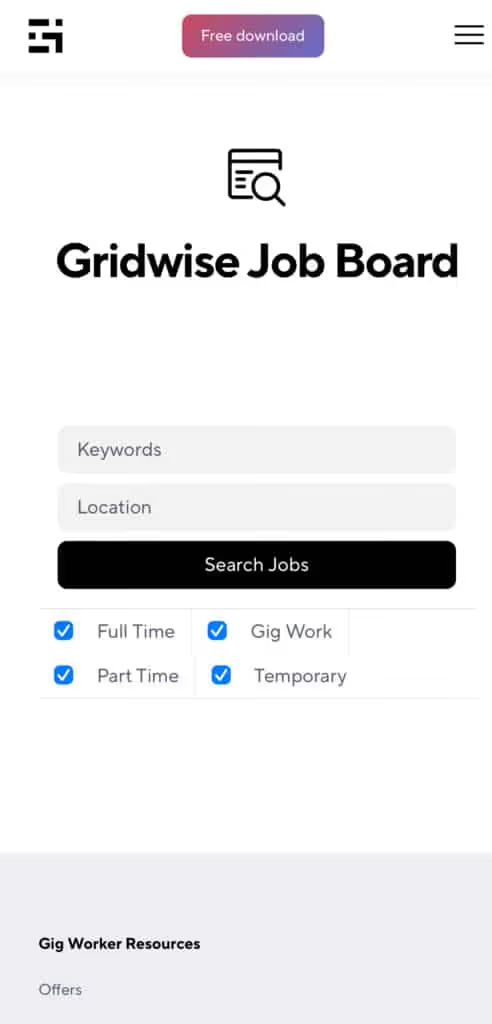
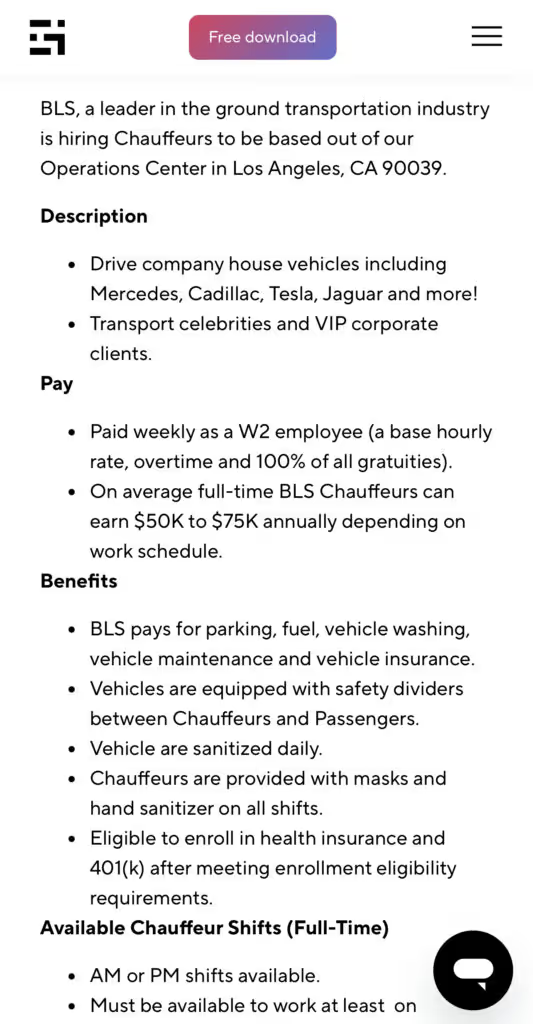
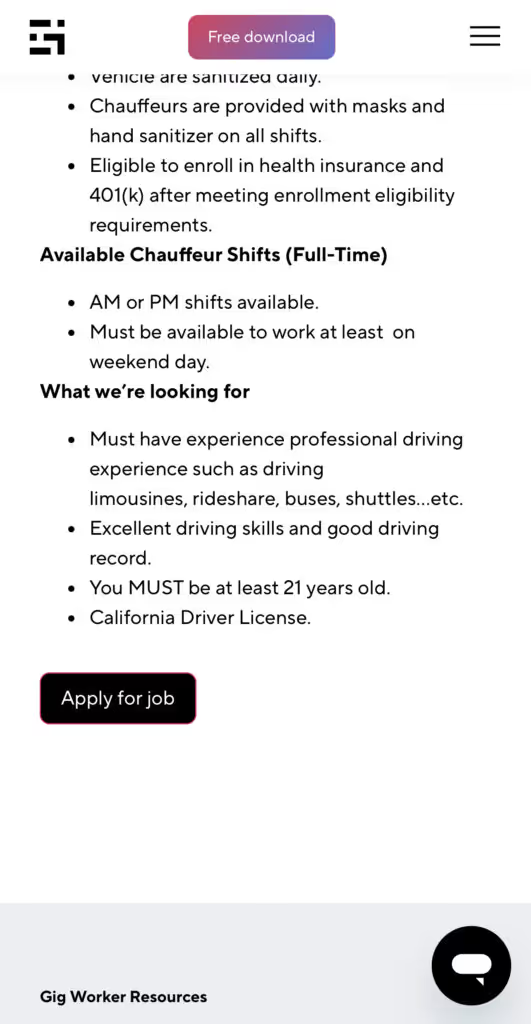
Many types of jobs are available. Adjust the search filter to see the full variety of opportunities that will let you cash in. Deliver food, set up catering, do rideshare driving, get paid for doing package delivery, and much more. You’ll find short-term gigs, long-term contracts, and part-time positions.
Perks of the Gridwise Job Board for gig workers
Gig workers who know how to make extra money will appreciate how the Gridwise Job Board lets you multiply your chances of bringing in big earnings. Here’s how:
- Increased stability. Use the Gridwise Job Board to find part-time or permanent jobs in addition to the part-time gigs you already have. Always keep a steady stream of earning opportunities flowing toward you.
- Flexibility and autonomy. Choose jobs that fit your schedule, work around other jobs and family duties, and still leave room for some fun in your life. Discover side hustles to supplement your full-time job, permanently or just for the season.
- Skill development. Find part-time work that lets you use a skill you already have, or try your hand at something new. It’s a smart way to develop a portfolio to showcase what you can do, or even to find permanent employment.
Get Gridwise and stay up to date on the Gridwise Job Board
Gig workers need plenty of information and assistance, and Gridwise is here to give it to you. Download the app and get essential features such as
- seamless earnings tracking
- mileage tracking
- expense recording, including notes
- low-cost and no-cost insurance benefits
- access to affordable medical, dental, vision, mental health, and alternative care
- professional services including legal and financial help
- deals and discounts
- weather, events, and traffic reports
- inside information on where and when to drive
[elementor-template id="20936"]
More to know about gig work:

5 Best Mileage Trackers For Gig Drivers
Many drivers ask, “Do I really need a mileage tracking app?” The answer is simple: only if you want to have an accurate count of all the miles you can legally deduct from your taxable income! You might think your rideshare or delivery driving app has got you covered. After all, they do quite a good job of logging the miles you drive while you’re on a trip or delivery. But, if you want to have the best app to track mileage for Uber, Lyft, Doordash, Instacart, or the other apps you may use, you need more. Why is that?
Without a separate tracker, you’re missing the miles you drive in between pings. Did you realize that all the miles you drive, from the moment you begin your shift until it’s over (as long as you don’t drive several miles on a break to hang with your friends), are tax deductible! That means you need something besides your driving app to keep an accurate count of your travels. Read this Gridwise post to see how important it is to keep track of every deductible mile.
You won’t be surprised to hear that there’s an app for tracking miles. In fact, there are several of them. Here, we’re going to tell you about five top mileage tracking apps, and help you figure out which one is best for you.
Before we get to the list and identify the best mileage tracker app, let’s clarify what exactly a mileage tracking app is. According to G2.com’s technology glossary, mileage tracking is done for the purpose of keeping a log of mileage that is either reimbursable or tax deductible.
And yes, of course you can track your miles simply by taking readings on your odometer. But are you really prepared to account for how many miles you drove for personal reasons and subtract them from the total to get your business mileage? Even if you can remember all that and do the arithmetic, if you want an accurate reading of the miles you drive for business, and can therefore deduct, a mileage tracking app will save you a lot of trouble and prevent you from making costly errors.
Plus, as a gig driver, you have specific needs when it comes to a mileage tracker. Ideally, you’d be able to handle mileage tracking and several other functions all in one app. It can be maddening enough to deal with driving apps, particularly if you’re an avid multi-apper. You would want your mileage tracker app to help you keep account of other aspects of your business, including income, expenses, and inside information about the art of gig driving.
Not all mileage apps are equal, to be sure! Let’s look at five of the best apps to track mileage and figure out which is the best app to track mileage with Uber and Lyft, or what mileage tracker app is best for DoorDash.
[elementor-template id="20891"]
1. Zoho Expense
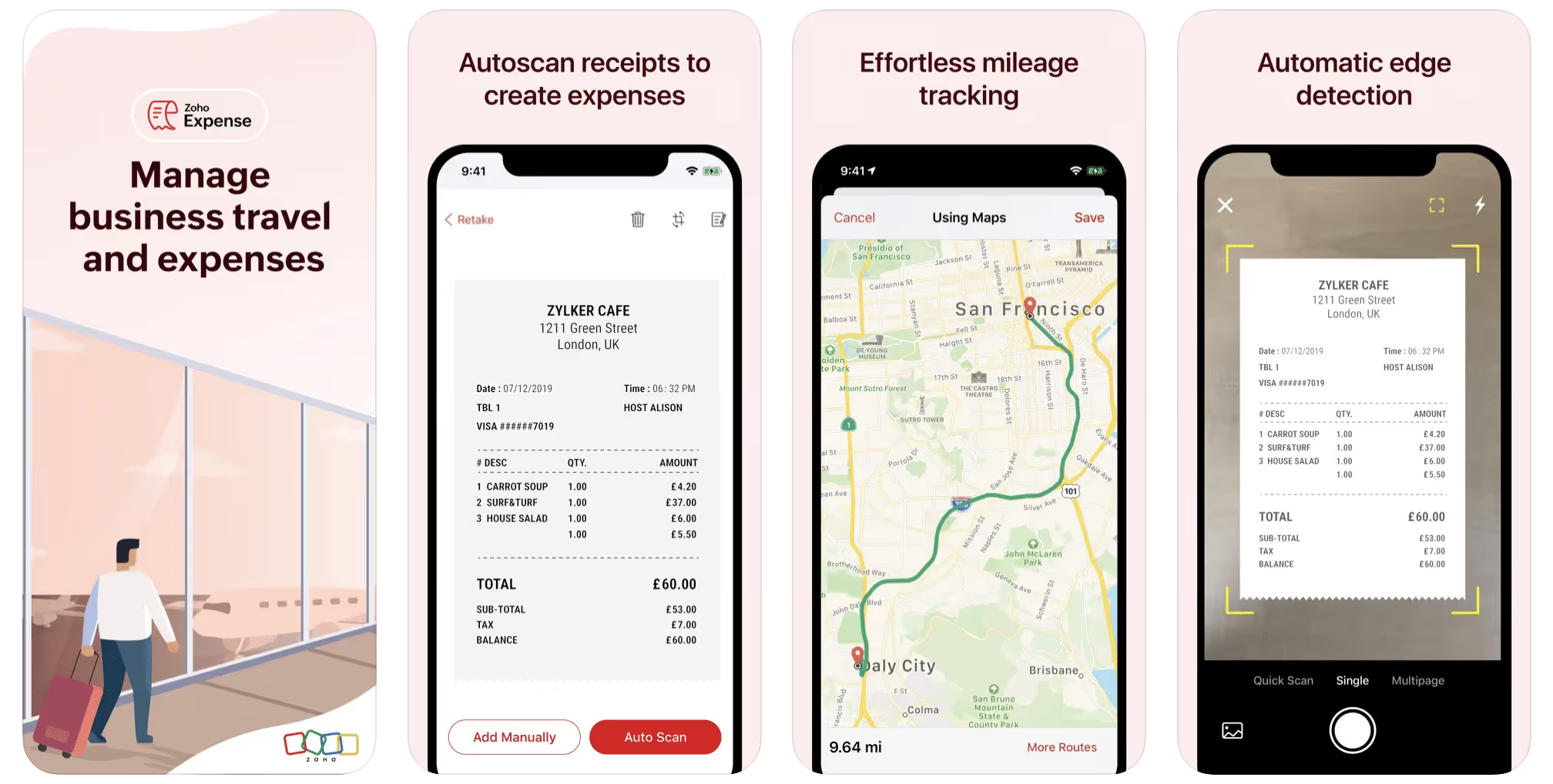
First up is Zoho Expense, which does exactly what its name says. This app is designed to allow companies to give employees a uniform way to create and submit expense reports. It can be used by individuals, including gig drivers, as well.
It includes a mileage tracker, as well as features that let you track other deductible expenses, including the ability to scan and record receipts.
Available on Android and Apple: Yes
Ratings: 4.8 stars on App Store, 4.7 stars on Google Play
Free Version: Yes
Subscription price: $3 per month, billed annually
Created specifically for gig drivers: No
2. Quickbooks Online
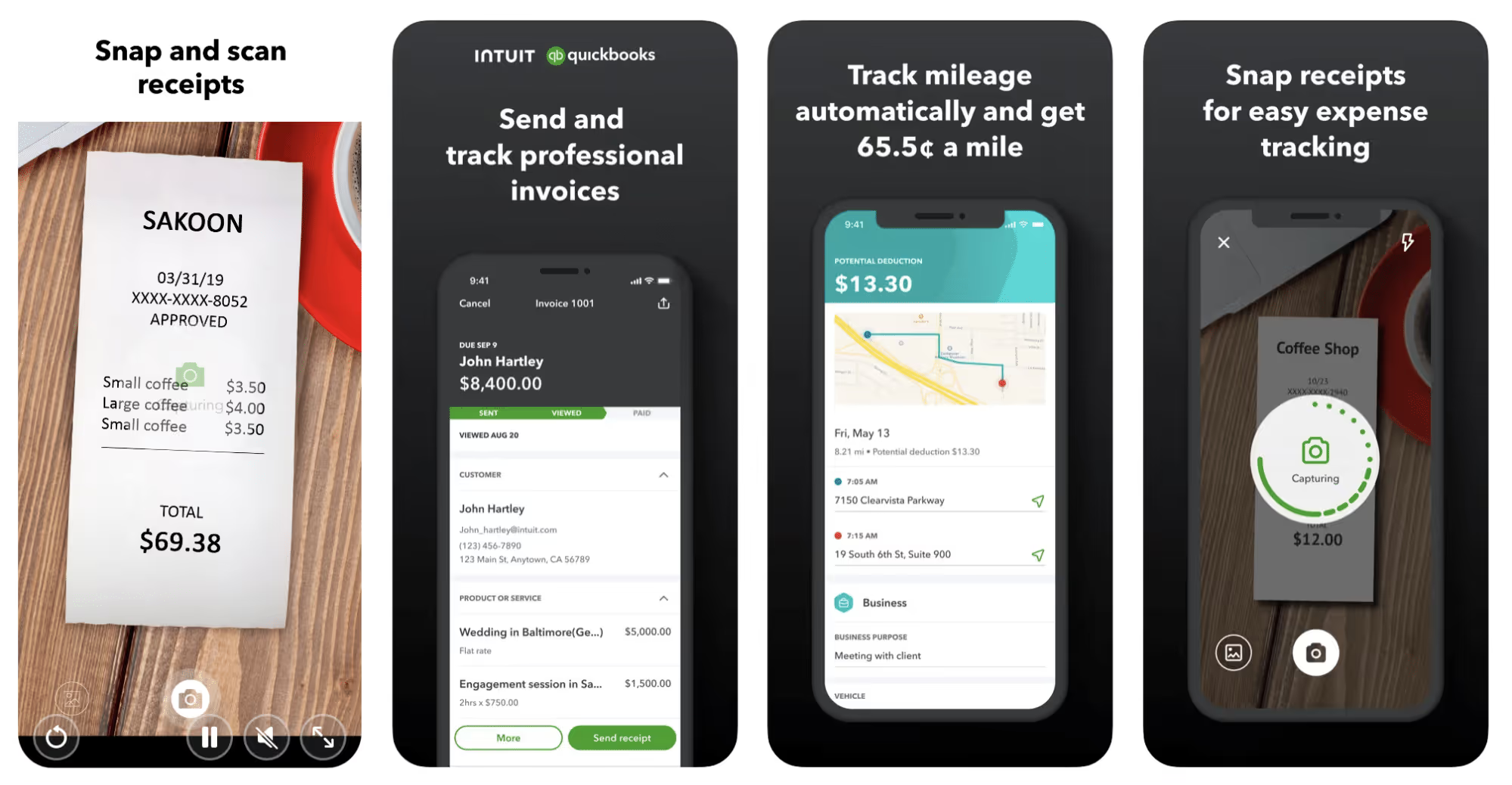
Quickbooks Online is a cloud-based app that allows you to track your mileage, earnings, and expenses. The information you enter can then be used to generate various reports that prepare you for tax time. It also allows you to create graphs that illustrate your cash flow, and includes a receipt scanner so you can instantly record deductible expenses. Quickbooks is popular, highly reliable, and designed mainly to help people keep track of their small businesses.
Available on Android and Apple: Yes
Ratings: 4.7 stars on App Store, 4.4 stars on Google Play
Free version: 30-day free trial
Subscription price: $15 per month for basic version if purchased for 3 months or more
Created specifically for gig drivers: No
Source: quickbooks.intuit.com
3. Shoeboxed
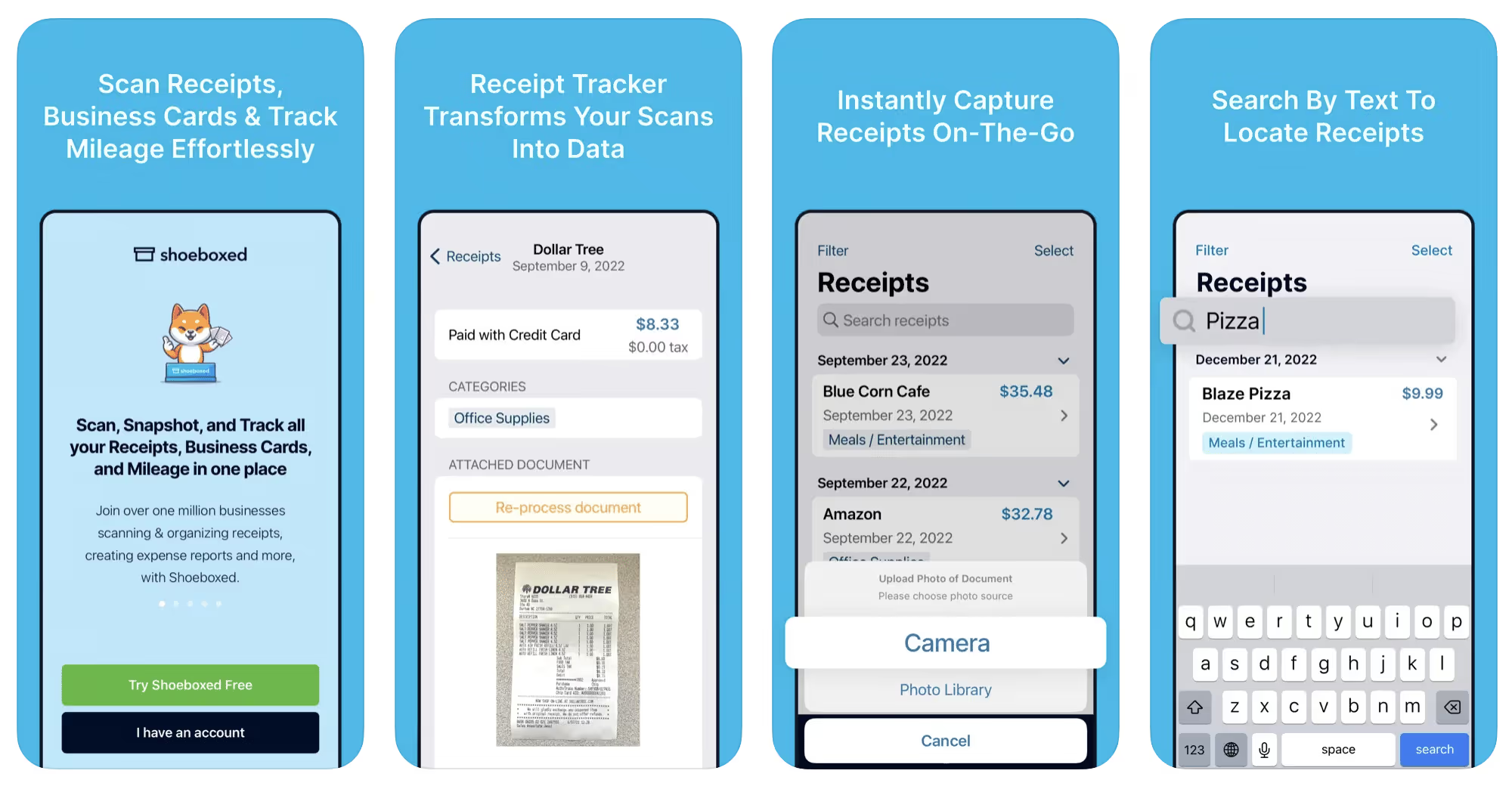
Shoeboxed started in 2007 as a service for scanning paper receipts into digital form. Now the app offers a free mileage tracker and has enabled users to scan receipts directly. It touts itself as the best mileage tracking app for DoorDash, but there are some elements missing that Dashers might like to have. While it provides features that record your expenses and prepare you for tax season, it doesn’t automatically track your earnings. The mileage tracker has a system where you can drop pins along your routes to make the tracking more precise, identifying those legs of a trip that you make for business purposes. The mileage tracker is “free” once you sign up for the basic version.
Available on Android and Apple: Yes
Ratings: 4.5 stars on App Store, 2.3 stars on Google Play
Free version: No
Subscription price: $18 per month for basic version
Created specifically for gig drivers: No
Source: blog.shoeboxed.com
4. Stride
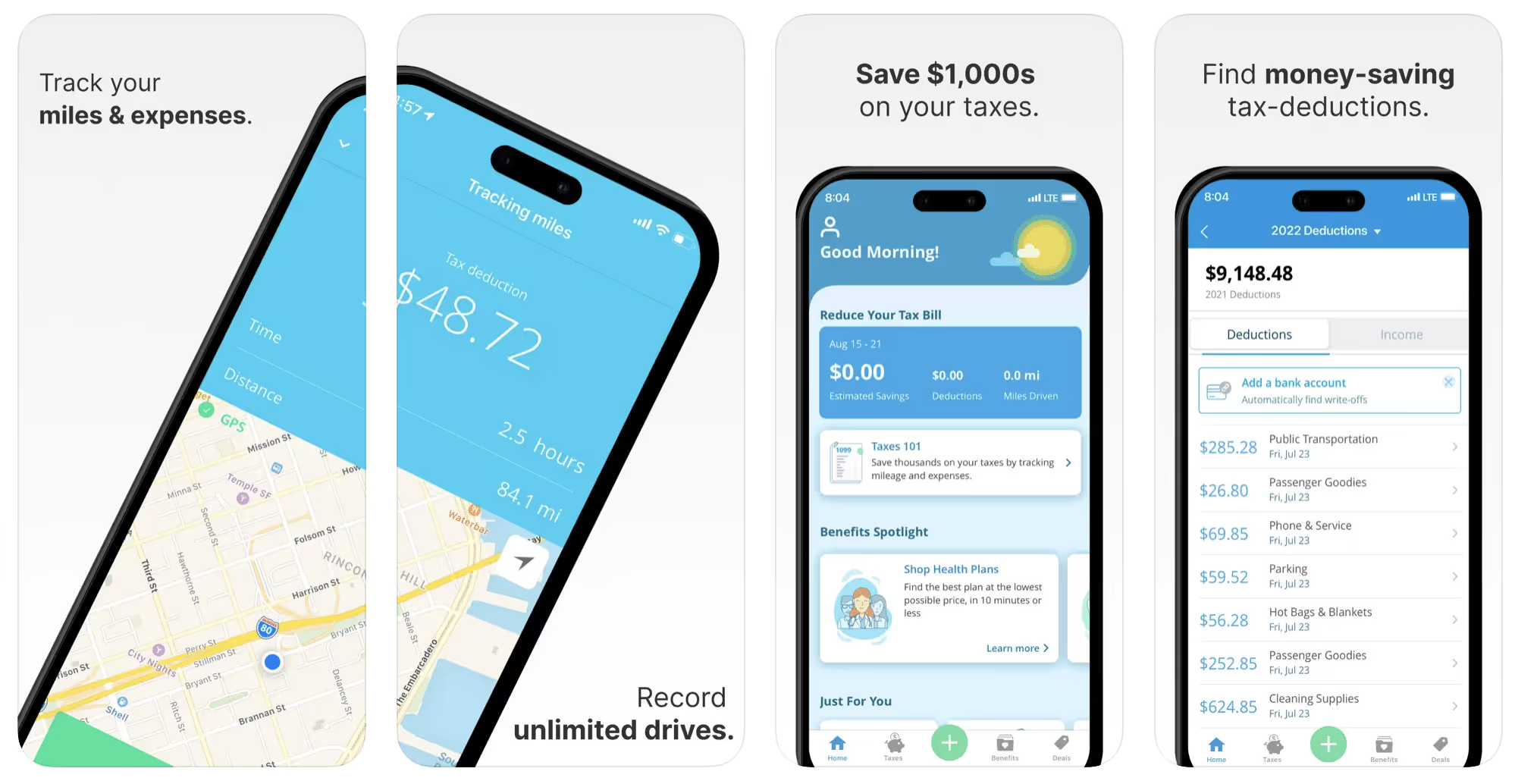
This free mileage tracker does a fair job of keeping track of the distances you rack up while gig driving, but it doesn’t automatically track earnings. It can be a big help, though, in tracking your expenses. You can link Stride to your bank account, and it will automatically scan your expenses to identify items you can potentially deduct. The app is totally free. This could make it the best free mileage tracker app, but there is a small price to pay. The app will persistently push you to consider various insurance plans that they are affiliated with. If you don’t mind that, this is a solid mileage tracker, even if it doesn’t track your earnings.
Available on Android and Apple: Yes
Ratings: 4.8 stars on App Store, 4.6 stars on Google Play
Free version: Yes
Subscription price: None. The app is free.
Created specifically for gig drivers: No
5. Gridwise
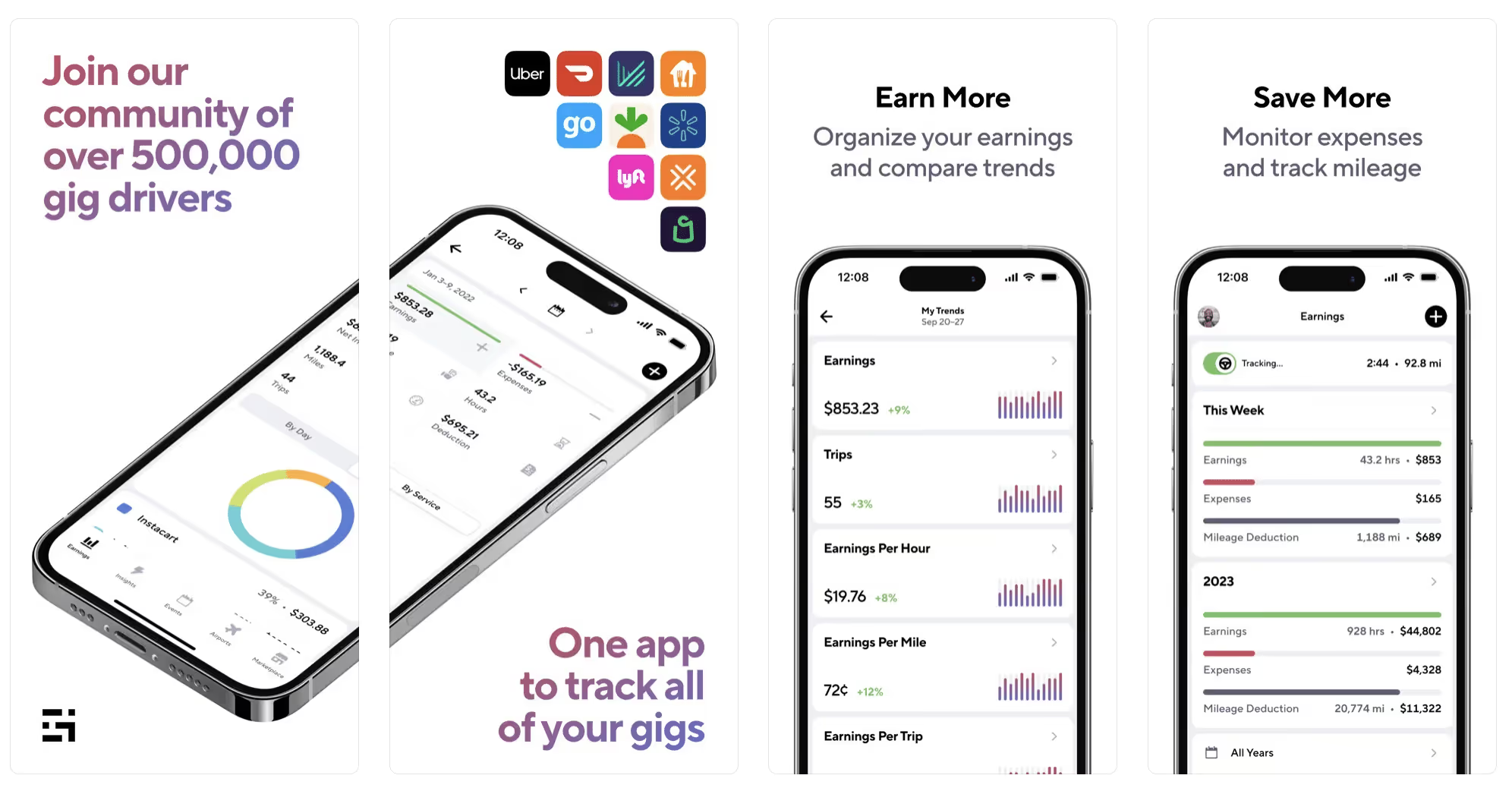
Gridwise has a free mileage tracker and free features that record your income and expenses. It gives you access to insurance and benefits, as well as insights about the best times and places to make the most money while gig driving. The Gridwise mileage tracker captures all the miles you drive while you’re on your driving shift, and it can be used if you have other trips you need to make which qualify as business travel.
Drivers love it because it is geared toward the needs of rideshare and delivery workers, providing free information about airport departures and arrivals, event start and let out times, weather, traffic, and more. The Gridwise Plus subscription adds value by providing additional insights and reports, discounts on benefits, the ability to export data in .csv format,, and more.
Available on Android and Apple: Yes
Ratings: 4.9 stars on App Store, 4.6 stars on Google Play
Free version: Yes
Subscription price: $9.95 per month for Gridwise Plus, or $95.99 per year (a $23.41 savings)
Created specifically for gig drivers: Yes!
What is the best mileage tracking app?
Now that we’ve checked them all out, we’re positive about the answer to that. Hands down, it’s Gridwise. Are we biased? You bet we are! But drivers love it too. Gridwise is the best mileage tracker app—and so much more. So many of the features are free, and the subscription to Gridwise Plus will pay for itself with additional insights to boost your earnings and deeper discounts on products and services.
Most important, Gridwise is designed specifically for gig drivers by experts who were once gig drivers themselves! Knowing what gig drivers need is a crucial step in creating an app that rideshare and delivery drivers can really use! Here are a few of the features, besides mileage tracking:
- seamless earnings tracking
- automatic, on/off toggle and manual mileage tracking
- mileage categorization
- airport, traffic, weather, and events information
- insights into where to drive and when to drive
- reports showing earnings across the platforms you use
- discounts on countless products and services for drivers
- additional resources for finding side gigs
- an informative and comprehensive blog
- affordable benefits, including insurance, medical, dental, and alternative practitioner discounts
- a community of drivers just like you
Don’t settle for just any app. Get the best mileage tracker, and so much more, from Gridwise!
[elementor-template id="21599"]

What Records Do Gig Drivers Need To Keep Track Of For Taxes?
* Gridwise does not provide tax, legal, or accounting advice. This material has been prepared for information purposes only, and is not intended to provide, and should not be relied on for tax, legal, or accounting advice. You should consult your own tax, legal, and accounting advisors before filing your return.
Record keeping? Who signed up for that? As a gig driver, it’s part of what you need to do to keep your business running. Don’t worry. It’s not as complicated as you might have been led to believe. This post will show you what you need to keep track of and the best ways to gather and preserve your tax-related records. We will cover
- How record keeping can help reduce income tax for freelancers
- Taxes and freelance work: Record keeping requirements
- Mileage tracking: Motives and methods
- More deductions and records to keep
- Make tax time easier
How record keeping can reduce income tax for freelancers
Tax time is not “fun time” for rideshare and delivery drivers. It’s easy to get used to watching your earnings pile up and come to believe they are all yours. Unfortunately, that isn’t the case. Gig work taxes can be especially painful because no one takes them out of your earnings for you, until the tax authorities insist that you do it for yourself.
You will need to show the tax authorities your income records, and they will gladly tell you to send them what they determine to be their fair share. Think that’s not fair? You’re not alone, but that doesn’t mean you’re going to get out of paying gig work taxes.
But you can find ways to pay the smallest amount that is legal and possible. The best way to defend yourself against having to pay astronomical amounts when you file your return is to know what expenses you can deduct from your gross income. When you subtract deductible expenses from your gross income, there is less left over to be taxed. This reduces the amount they can hit you with gig worker taxes. and can make your tax bill substantially lower.
While you want to keep good records so as to be in compliance with taxation entities such as the IRS, you also want to ensure you have proof of every last deductible expense you have accrued during the year. There are other records you must keep as well. Let’s look at some of the considerations you have, realizing that you now need to know how to do taxes as a freelancer.
Taxes and freelance work: Record keeping requirements
So many gig drivers fail to understand the responsibilities they have as independent contractors. Those who work part time for very few hours may even believe they don’t have to report the income they get from their driving gig payments. That would be a big mistake!
The company or companies you work for report your income to the IRS and state tax authorities. If you fail to report that income, you will risk some rather painful penalties. The IRS taxing side hustles is as much of a thing as the IRS taxing income from any other job. Your best bet is to report what you’ve earned, honestly and completely, and comply with other record keeping requirements such as
- gross income
- deductions and credits
- purchases (items you purchase and resell, such as snacks or bottled water)
- a log of all your mileage (or vehicle expenses, if greater)
- a list of all expenses and assets, such as utilities and other expenses associated with having a home office and equipment
- machinery and furniture you own, including when it was acquired, how much it cost, whether you previously took deductions on it, and selling price, if applicable (this includes your vehicle)
More things to consider:
- Pay attention to the retention of your records. You’ll need to keep all tax-return-related items— including income, deductions, and any tax credits reported— until the period of limitations runs out (3 years from date you filed, or 2 years from when you paid tax. If you have employees, keep your records for at least 4 years.)
- If you want to avoid paying self-employed taxes, you may want to set up a corporation or Limited Liability Corporation (LLC) for your business. This allows you to separate all your gig driving earnings from personal income, and permits you to take advantage of the additional advantages of working through a corporation. This includes exemption from self-employment taxes. You can learn more about how to pay self-employment taxes, if you opt for that, in this post from Keeper.
- You should always keep a separate checking account for your business, for convenience as well as clarity. While this is not a legal requirement, it is a smart move if you want to have an easier time managing your business.
- You are required, as an independent contractor, to file your taxes quarterly. Check out this Gridwise blog post for more information about quarterly tax payments and other matters that make filing delivery, Lyft and Uber taxes easier.
Mileage tracking: Motives and methods
Why you need to be meticulous about mileage
Mileage deduction, or the costs of operating your vehicle, will be the most important item to account for when you consider how to file taxes as a freelancer. While mileage is an important deduction for all independent contractors, as you might imagine, it’s even more essential for rideshare and delivery drivers.
There are two ways of keeping track of your mileage deduction. One is to use the IRS’ standard mileage deduction, which for 2022 is 58.5 cents per mile. This number takes into account the costs of operating your vehicle, from fuel and maintenance to registration, insurance, and depreciation. Alternatively, you can calculate all your own vehicle operating costs, but only after your first year of using the vehicle. You may discover that this second option allows you to have more money deducted from your taxable income. Learn more about the options for deducting your mileage in this Gridwise post.
No matter which way you decide to calculate the deductions for your mileage, you need to know what mileage you can and cannot deduct.
You can deduct
- miles driven to and from home when you go out to drive or deliver
- miles you accrue during your trips
- miles you drive on any other trips you make that are necessary as part of your business.
Examples:
- driving to return a lost cell phone or to an Uber Hub or another physical location where your company might make driver support available
- driving to pick up supplies, to get gas, or to have your car cleaned, serviced, or detailed, etc.
You cannot deduct
- miles you drive for personal trips
- miles for any trips you take that do not directly affect your business
Note: If imagining yourself becoming the not-so-proud owner of a shoebox filled with paper receipts gives you nightmares, stop worrying. Electronic records of purchases will satisfy reporting requirements. If you use cash, you can scan copies of your receipts, in some cases, right into your recording software or app. Gridwise and Keeper give you a simple to use interface that keeps all your receipts recorded without the messy pile of paper.
Mileage tracking methods
By now, you’re probably convinced that tracking mileage is important, despite all the other things drivers have to do. Now, let’s look at your options for keeping accurate records.
- Manual tracking: You can keep a logbook where you list every trip you make, starting and ending mileage, the date, and purpose of the trip. While this would work, it’s certainly not convenient. Besides, if that logbook gets lost, your plans for having a nice, fat tax deduction will go by the wayside.
- Spreadsheet: This is a bit more convenient and sophisticated way of tracking your business mileage. You’d need to be meticulous about making your entries, though. Even if you keep a spreadsheet app on your phone, it could be time consuming and inconvenient to keep doing it with all the other things going on in a rideshare or delivery driver’s day to day life.
- GPS-based mileage tracking apps: There are a bunch of apps that track mileage based on your GPS location, and most of them are pretty accurate and far more convenient than taking constant readings of your odometer. Your driving apps, such as Uber, Lyft, DoorDash, or Instacart, may also track your mileage, but be careful here. They will only track the miles you drive while you’re on a trip or delivery. They don’t count the miles you drive going to pick up a customer or when you make your move toward a restaurant or store.
Gridwise, on the other hand, will track all the miles you clock while you’re on your shift. All you need to do is make sure you start tracking the minute you leave home, and every gig driving mile will be logged. - OBD-II mileage tracking systems: There are plug-in modules that assess your vehicle’s mechanical health and track your miles. However, many authorities question the ability of OBD-II mileage tracking systems to get get accurate odometer readings. Insurance companies don’t consider them to be accurate enough gauges of odometer readings.
While mileage is a crucial deduction when you’re preparing your Uber, Lyft, or DoorDash taxes, it isn’t the only expense you’ll want to record.
More deductions and records to keep
Expenses you can deduct
You’re entitled to include the cost of other expenses that are directly related to your driving business. These include
- vehicle expenses
- equipment for your car and home office
- extra services and subscriptions
- business tools, including apps and software
You can learn much more about gig driver expenses that are eligible for deduction in this Gridwise article.
Ways to track and preserve deductible expenses
- The manual method: Just like you can with mileage, it’s possible to use a manual method, but in addition to logging each expense into a ledger, you would also need to keep physical receipts.
- Spreadsheets: You can record your expenses on a spreadsheet. This is somewhat less awkward than manually logging mileage, but there still will be plenty of room for failing to remember the case of water you bought for your customers, or losing the receipt from the thermal bag you purchased.
- Accounting software: You can use software that helps you track your expenses. This method usually interfaces well with any tax preparation software you or your tax professional might use.
- Gridwise: There are other apps that help you track your expenses, but Gridwise is designed specifically for gig drivers. It automatically tracks earnings and mileage, and lets you record your expenses the minute they come up. Gridwise’s partnership with Keeper gives you the ability to scan receipts and access a tax professional. This is a seamless way to record your expenses and a big help in learning how to file Uber taxes. Gridwise even provides .csv output, so you can feed your Gridwise data directly into tax preparation software. Check out what Gridwise and Keeper will do to super-charge your tax filing powers.
Organizing and categorizing expenses
Before you even begin to record expenses, you’ll want to set up categories for them. You can start by reviewing the categories listed above and checking out the Gridwise post that lists possible deductions.
If you’d like to learn more about how to categorize expenses, there is additional information available. This article from Motley Fool lists all possible categories any freelancer might use and also gives tips on how to customize them for your driving business.
One last tip
Using Gridwise, particularly for tracking mileage, is the easiest way to be in compliance with the IRS’ rules for deductible mileage. Gridwise tracks all the miles you drive for your gig, beyond what your company’s app might record. At the same time, you can log on and off Gridwise when you start and end your shift, so personal miles won’t be recorded. This eliminates confusion while capturing every deductible mile.
Gridwise Tax Help, a partnership with Keeper, has been created specifically to serve gig drivers. It provides affordable and easy ways to record expenses, scan receipts, and find deductions by analyzing your expenditures. Read about free resources from Keeper you can use to be fully prepared for tax season, and get all your earnings and expenses on the record.
Get the world’s best assistant for rideshare and delivery drivers, and tax help too.
Make tax time easier now!
DoorDash Driver Pay: What Do Dashers Earn in 2023?
What do you think? Have DoorDash earnings stayed solid, even now that more customers are eating in at restaurants and doing their own convenience store shopping? A look at the numbers that have come in for DoorDash driver pay tells us that customers’ appetites for delivery hasn’t slowed down much at all! Gridwise data show that DoorDash earnings have remained stable over the first three quarters of 2022.
In this post, we’ll answer all kinds of questions about DoorDash driver pay, including
- How much do DoorDashers make?
- How much do Dashers make per month?
- How does DoorDash pay you?
- Doodash pay in popular US cities
- How much do Doordashers make per hour?
- What makes driving for DoorDash worth it?
- How can you maximize DoorDash driver pay?
How much do DoorDashers make?
DoorDash drivers, or “Dashers” as they’re known, have had a very solid year in 2022. Median gross earnings remained at slightly less than $15.00 per hour for the second and third quarters. Dasher hourly pay was a few pennies less than Grubhub, and about $0.50 more than Uber Eats. If a Dasher clocks around 30 hours per week, then the answer to “How much do drivers make a week?” would be about $450, which isn’t bad at all!
How much do Dashers make per month?
When we ask “How much do drivers earn a month?” the answer tells us that not all Dashers are likely to be delivering full time. According to Gridwise data, Dashers made an average of only $223 per month from April to September of this year. That means the average driver was clocking just15 hours per month.
There could be many reasons for this. Many may see Dashing as a part-time gig and they could be using DoorDash as part of a multi-apping gig strategy. Check out this Gridwise post on the art of multi-apping, and you’ll see how that’s done.
DoorDash would be a good gig for those who benefit from multi-apping, as peak hours are clustered around mealtimes. It’s likely drivers who want to make more per month will engage in other driving gigs or another side hustle to make up the difference. Some might be doing DoorDash only at times when there are plenty of orders.
Doodash pay in popular US cities*
How much do DoorDash drivers earn in NYC?
- On average, DoorDash drivers in NYC earn $12.02 per hour.
How much do DoorDash drivers earn in LA?
- On average, DoorDash drivers in LA earn $16.34 per hour.
How much do DoorDash drivers earn in Chicago?
- On average, DoorDash drivers in Chicago earn $12.20 per hour.
How much do DoorDash drivers earn in San Francisco?
- On average, DoorDash drivers in San Francisco earn $15.49 per hour.
How much do DoorDash drivers earn in Houston?
- On average, DoorDash drivers in Houston earn $10.29 per hour.
*Doordash driver pay data cited is based on median average earnings.
How much do Doordashers make per hour?
The question, “How much do drivers make an hour?” isn’t really complete until we talk about tipping. DoorDash tips are usually a given. According to Gridwise data, Dashers raked in an average of $7.50 in tips per hour.
DoorDash tip numbers exceeded those of their food delivery competitors, including Uber Eats, Grubhub, Shipt, and Instacart. Maybe people are more familiar with DoorDash and like the service better, or it could be that Dashers receive more orders per hour than with other services. Either way, it appears that they make some decent cash with customer tips.
The app gives customers a chance to add a tip at the time of the order, and another opportunity once they receive their orders. There has been some controversy around DoorDash’s handling of driver tips. Learn more about the complaints, and how DoorDash addressed them, in this article from entrecourier.com.
How does DoorDash pay you?
The ways rideshare and delivery companies pay structure can be a key factor in their attractiveness to drivers. Dasher pay consists of the following:
- base pay: This is the contribution from DoorDash, which comes from the fee they charge the customer. The DoorDash Driver pay scale ranges from $2.00–$10.00, and is based on the estimated time, distance, and desirability of the order. DoorDash mileage pay can often make a small order seem well worth taking.
- promotions: Drivers can earn extra money on promotions that are offered for various reasons. Most of the time, the company will deploy them to get more workers to drive at peak times. Here are some examples:
- Peak pay is automatically added to orders when there is a lot of demand. This is the most common promotion you’ll see as a driver.
- Challenges give drivers the chance to earn more by completing a certain number of deliveries in a set amount of time. These incentives encourage drivers to become more efficient, and ultimately make DoorDash more appealing to customers.
- Guaranteed earnings are granted periodically, usually communicated by email or SMS, to DoorDash drivers. This offer promises that certain select drivers will earn a set amount of money within a set number of days, not including tips or other offers.
- tips: DoorDash, as we stated earlier, lets customers leave tips when they check out or after their order is delivered. Drivers keep 100% of their tips.
What makes driving for DoorDash worth it?
You probably have met at least one Dasher, if not at a party or in a class you both attend, then maybe when they brought your favorite burrito to the door. A lot of people drive for DoorDash, and there are good reasons. Here are a few.
- DoorDash is flexible. While you can schedule time blocks to work, it’s also possible, most of the time, for drivers to “Dash Now.” That means you can turn on the app and orders will come in. This works at peak times as well as when other drivers are less likely to schedule their shifts.
- DoorDash is a leader in the food delivery industry. Even if other companies go out of business, DoorDash will probably still be around. You see it in almost every town, and it serves most if not all restaurants and convenience stores in most areas. See how working with DoorDash vs. other delivery gigs compares in this Gridwise blog post.
- The DoorDash app and website are state of the art. DoorDash takes its business seriously and makes it easy for both customers and drivers to use their software. The app is easy to navigate, and the DoorDash website answers more questions than you could possibly think of.
- DoorDash earnings are relatively high. Although Dashers don’t earn as much hourly income as Amazon Flex, Lyft, or Uber drivers do, they make more than most of the drivers for other food delivery companies.
If you’re in search of more DoorDash driver advice, check out this article from Gridwise aimed at new and seasoned Dashers.
How can you maximize your DoorDash driver pay?
While DoorDash driver pay is somewhat high when compared to other food delivery gigs, no Dasher that wants to make more money will sit back and rest on their laurels. It not only pays to work as hard as you can, you can earn even more when you work “smart.”
What might this consist of? Here are some suggestions:
- Work for bigger tips. Doing more than just “your job” impresses most customers. Not only will you make more money, you’ll get more satisfaction from doing your work to the best of your ability. Read this Gridwise post for more ideas for getting bigger tips.
- Save on gas. When you’re a delivery driver, running up a high fuel bill is inevitable. Take advantage of money saving programs and challenge yourself to drive with fuel efficiency in mind. Here’s advice from Gridwise on ways to save on gas.
- Track your earnings. Get Gridwise and link it to your DoorDash account. Your earnings will be seamlessly recorded and placed into easy to read, informative graphs. Compare your earnings from month to month, or see what other drivers are making.

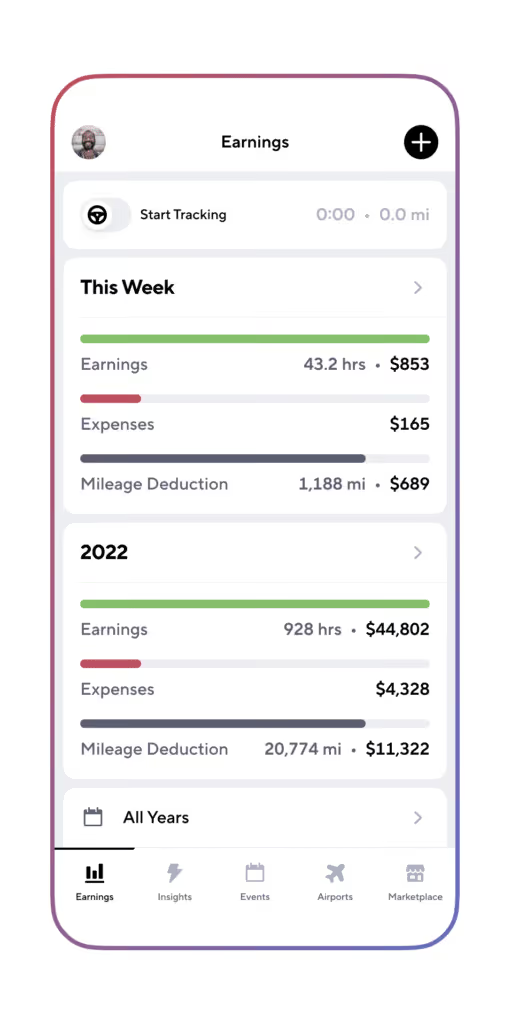
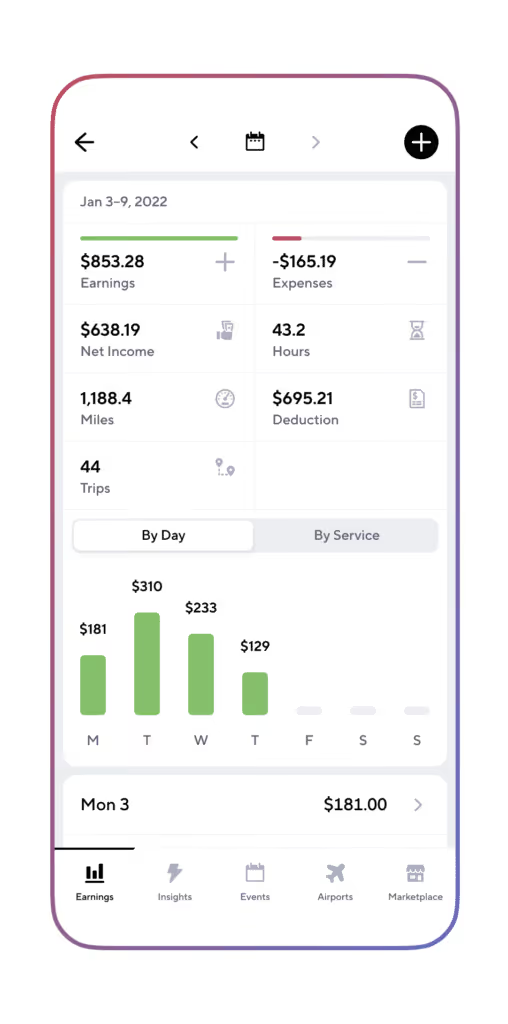
- Log your expenses. As an independent contractor, every Dasher has to keep an account of expenses such as mileage, fuel, and equipment. Gridwise is the best DoorDash mileage tracker because Gridwise is designed specifically for gig drivers. Not only can you track your total mileage, but for every app you sync with Gridwise, you’ll be able to see how much you’ve driven.
- Create a winning strategy. Don’t make your driving gig a process of trial and error. With Gridwise features Where to Drive and When to Drive, you can easily see when the peak hours for Dashing are in your area and choose your scheduled blocks or Dash Now option where and when there’s plenty of business to be had.
Gridwise also offers real-time information on weather, events, and traffic, which can save you from getting jammed up. There are also tons of deals and discounts for drivers that will make Dashing a high-earning dream!
Are you looking for more Doodash resources?
- Doordash Incentives 2023: How Do They Work?
- How to Earn $1000 a Week With Doordash
- A Guide to Dashing: DoorDash For New Drivers vs. Experienced Drivers
Download the Gridwise app now!

CrowdHealth: A Gig Driver's Alternative To Traditional Health Insurance
There are many appealing aspects of being a gig driver. Making your own hours, getting a lot of variety in your work, and never having to answer to a supervisor are a few. There are disadvantages also, and one of the biggest is having to buy your own health insurance. Health insurance for gig workers can take huge bites out of earnings.
The average health insurance policy, even for a healthy 32-year-old, can cost as much as $6,000 a year, just in premiums! No driver wants to put in the amount of work it would take to pay a bill like that. Besides, many popular health insurance policies, when you need them, don’t pay the lion’s share of the enormous bills medical care can produce.
Knowing these things, many drivers get only minimum coverage, or go without it completely. There’s no longer any need to do either of those.
In this post, you’ll be introduced to CrowdHealth, a way of getting top-notch health care without paying the high price of standard insurance premiums, deductibles, and out-of-pocket expenses. You can pay far less than health insurance and get better care. Knowing that you’ll want to learn more, here we answer the many questions you might have, including
- What is CrowdHealth?
- How does CrowdHealth differ from regular gig worker insurance?
- What makes CrowdHealth distinct from a healthshare?
- How can you join CrowdHealth?
What is CrowdHealth?
CrowdHealth is an innovative alternative to expensive insurance that draws on the power of community. Founded at a time of true need, the onset of the COVID-19 pandemic, CrowdHealth is an ideal provider of insurance for gig workers that is reasonably priced, flexible, and fair. Here’s how it works:
- Participants aged 0–54 pay a membership fee of $175.
- $40 goes toward subsidizing CrowdHealth services. The remainder ($135) goes into an account that you own.
- When other CrowdHealth members ask for contributions, you can use money from this account to contribute to their medical costs.
- While there is no obligation to fund every request, the more you participate, the more likely fellow members will be to contribute to your fund when you need their help.
- When you need to crowdfund in order to cover an expense, you will pay the first $500, and then receive the rest from the community.
In addition to organizing crowdfunding to pay for your medical expenses, CrowdHealth provides a broad range of services, including
- personal care advocates. An advocate will be available to guide you on the journey through the healthcare labyrinth. You can get all your answers when you need them, without the stress of dealing with the gigantic “help” centers you find at conventional insurance companies.
- negotiation of medical charges. CrowdHealth will negotiate with providers to reduce the cost of procedures that you’ve been informed you need. By using CrowdHealth, members have saved as much as 60% off many doctors’ visits and medical procedures.
- crowdfunding for wellness visits. Prevention is one way to avoid the need for extensive medical care, so CrowdHealth will help you fund a visit to the doctor for general checkups.
- discounted prescriptions. CrowdHealth will also help you source discounts on your prescriptions.
How does CrowdHealth differ from regular gig worker insurance?
Buying an insurance policy without the security blanket of company benefits is very expensive. While the healthcare marketplace provided by the government can help you find somewhat affordable policies, premiums are still very high. That’s just one issue that makes CrowdHealth a better option for gig economy health insurance. See for yourself below, with the side-by-side comparison of factors that make CrowdHealth a much better choice for gig drivers.
Conventional gig worker insuranceCrowdHealthSky-high insurance premiumsAt least 50% reduction in monthly paymentsRestrictions on which doctors you can see and what hospitals you can useAbility to choose your own doctors and facilitiesFrequent denial of coverageHelp with negotiating affordable prices for the medical help you needNo record of where premium money is spentComplete transparency, choice of which crowdfunds to support, and ability to take the money from your account with you should you decide to leave CrowdHealthLittle or no patient advocacyComplete assistance for members, from choosing proper doctors and hospitals to negotiating fees
What makes CrowdHealth distinct from a healthshare?
You may have heard about healthshares. They operate by creating a pool of funds from members, which is then distributed to other members in need of money to pay their healthcare bills. Christian medical sharing is a particularly popular model. While joining a healthshare that is based on faith can be compatible with the needs of many, not everyone is interested in participating in Christian health options.
CrowdHealth differs from these popular healthshares in several important ways:
- CrowdHealth raises crowdfunded money quickly, while healthshares often take much longer to reimburse members.
- CrowdHealth doesn’t ask members to contribute to each and every request. Healthshares, on the other hand, tell members that if they don’t give, they cannot stay in the community.
- CrowdHealth, unlike healthshares, doesn’t insist that members pay up front for procedures before getting reimbursed by the community. Instead, CrowdHealth will help members prepare for procedures by crowdfunding before the surgery or other treatment takes place. By paying upfront, the member is more fully able to negotiate a lower price.
- With CrowdHealth, there is no requirement to adhere to a certain set of religious, moral, or ethical beliefs. While the community embraces people of all faiths, it does not exclude those who are not part of a particular religion.
- There is no limit on the amount you can crowdfund with CrowdHealth. Many healthshares set limits, such as $250,000 per year or $1 million over a lifetime. Anyone who has had serious health problems knows that these amounts can be reached and exceeded in very short periods of time.
Even legally speaking, CrowdHealth is not a healthshare. According to federal law, healthshares are defined as entities which are
- faith-based
- non-profit
- based on a common set of ethical or religious beliefs
- formed prior to 1999
- capable of ejecting members based on medical conditions they develop
- required to perform an annual audit
CrowdHealth shares very few of the above attributes. CrowdHealth is
- not faith-based
- a for-profit corporation
- not a group that accepts members based on certain beliefs
- not formed prior to 1999
- committed to not ejecting members based on the medical conditions they develop
There are just two similarities:
- CrowdHealth welcomes members who seek Christian health insurance plans, but there is no requirement for members to be Christian, or members of any other faith. However, CrowdHealth members do share a general disliking of the conventional medical insurance system.
- CrowdHealth performs annual audits as a matter of sound business practices.
How can you join CrowdHealth?
As long as you’re reasonably healthy and don't have any current long-term health bills, all you have to do is enroll! See what being a CrowdHealth member will look like here, A fully functional app puts you in touch with your personal care advocate so you can get started right away.
Find out how much it costs to join CrowdHealth here. You’ll enter the number of people you wish to enroll and their age category. From there, you’ll instantly see the amount you’ll pay for your monthly membership fee.
If you’re sick and tired of being ripped off by high insurance premiums and denial of service, take a step up to CrowdHealth and experience the power of community!
Join the CrowdHealth community today!
Holiday gig driving: Your fun & festive guide to extra cash!
Will your driving gig bring you more cash during the holidays? In most cases, yes. Be prepared for even more hustle than usual, though. In this article about holiday gig driving, we’ll help you get through it, and even thrive, as we study the pros and cons of holiday gig driving and other considerations, including
- How driving changes around the holidays.
- Lyft driver pay vs. DoorDash driver pay: a look at earnings from popular apps
- How to earn more Uber driver tips and DoorDash tips around the holidays.
- Devising the best holiday gig driving strategy.
How driving changes around the holidays
The hustle-bustle of the holidays is hard to miss, even if you’re not a gig driver. But if you do rideshare, food delivery, or grocery and package delivery driving, the immense shifts in your workload and how almost impossible it becomes to get around are right in your face.
Here are some pros and cons of driving during the holiday season, for both rideshare and delivery:
Holiday driving prosHoliday driving consMore passengers and orders/packagesTraffic jamsGenerous tippingHurried people and short tempersMore hours of work availableHigher volume means greater time pressure for delivery drivers with scheduled blocksAdditional travelers at airports and transportation hubsHuge loads of heavy baggage filled with gifts and oversized itemsGigantic, profitable grocery orders, need for delivery and rideshare to and from stores and restaurantsPeople eating traditional meals at home, and not going out or placing delivery ordersMore parties, rideshare passengers, and catering ordersMore drunk riders, large quantities of food to carry, people demanding faster service
While the upside of driving during the holidays is exciting, the undesirable underbelly can give any driver pause. Still, very few of us can afford to stop driving completely for the holiday period. That leaves us with the choice of either simply coping, or using the holiday momentum to make more money than ever!
It’s also important to consider your lifestyle when it comes to driving during the holidays. If you have a lot of family obligations, or if you simply want to join in on holiday fun, you’ll need to find a balance that allows you to have some fun, too. That means it’s more important than ever to have a handle on what kinds of gig work will pay you the most, while involving the least amount of time and effort.
Lyft driver pay vs. DoorDash driver pay: a look at earnings from popular apps
There’s a bit of a difference between rideshare driving and food, grocery, or package delivery. It’s great that as a gig driver you can work for as few or as many apps as you like. At holiday time, you may want to switch things up. Say, for instance, you work for Amazon Flex, but you also realize there could be some issues once the gift giving time window closes. How much do Amazon Flex drivers make after that happens? Probably not a lot. Sure, there will be some returns and redeliveries, but it will probably be more difficult to get profitable schedule blocks at that point. Read more about Amazon Flex here.
The same might go for some grocery delivery gigs. Instacart shopper pay and Shipt shopper pay might be great on the run-up to those huge holiday feasts, but those surges won’t last forever. That’s when you might want to shift over to rideshare to get those New Year’s Eve party people home safely.
Before you make a decision about whether, or which, company you might want to switch to, let’s compare earnings across the board.
2022-Q22022-Q22022-Q32022-Q3ServiceGross Earnings Per Work Hour (Median)Gross Earnings Per Trip (Median)Gross Earnings Per Work Hour (Median)Gross Earnings Per Trip (Median)Uber$21.87$14.57$20.78$13.50Lyft$20.63$14.09$19.03$13.20Amazon Flex$22.75N/A$22.88N/AShipt$15.84N/A$15.21N/AGrubhub$13.93$10.58$13.86$10.19DoorDash$14.79$7.95$14.68$7.82Instacart$14.14$15.72$13.44$15.14Uber Eats$13.83$9.70$13.45$9.37
Rideshare and Amazon Flex have the highest gross earnings per hour, to be sure, but consistency will depend a lot on where you drive. For instance, if traffic in your town ebbs and flows with the number of college students, the whole holiday period might be a bust. With final exams and trips back home, university campuses and their surrounding areas will be very quiet.
If, however, you live in a place where residents are likely to be at or near their homes for the holidays, there will be quite a bit of traffic, even between Christmas and New Year’s, and certainly for New Year’s Eve. By the way, that night might be one night to put that tarp over your back seat so the upholstery can survive virtually anything, but the surges and bonuses will probably be worth it. There’s sure to be plenty of work, in most cases, for rideshare drivers.
To learn more about what these companies offer, read this comparison of Uber vs. Lyft for rideshare, and check out this comprehensive guide for delivery drivers. This information will help, but there’s more to driving than basic pay and what it takes to do the job. Especially at holiday time, bonuses from the app companies and bigger than usual tips can really add to drivers’ income.
How to earn more Uber driver tips and DoorDash tips around the holidays
Apps hand out more bonuses when business is brisk and there are not enough drivers or shoppers to cover the terrain. This might happen in the run-up to the holidays, or on the days when most people are not likely to be working because they want to commemorate the occasions.
Check out what’s happening on your app for any bonuses and incentives the company you’re with might offer. Use Where to Drive and When to Drive from Gridwise to focus on the areas and times that will be most profitable.
Tipping is something most customers will be way more generous with when the holidays come. Maybe they’ll appreciate your willingness to drive Grandpa home from a big Hanukkah party, or how diligently you shopped for all the right ingredients for a weekend of cookie baking.
When you choose which app to work for over the holidays, it will help to know what the average tips might be like. This table shows 2022 tipping figures for some popular apps.
2022-Q22022-Q3ServiceTip Earnings per HourTip Earnings per HourGrubhub$6.56$6.81Uber$2.25$2.17Lyft$1.64$1.60Uber Eats$6.51$6.69Instacart$6.43$6.22DoorDash$7.55$7.57
Obviously, tipping is one key to how to make money with Grubhub. That average hourly tipping figure is higher than most rideshare drivers’ basic earnings per hour. As for the question of how much do Instacart shoppers make on bonus and tips, the answer’s not so exciting. Let’s hope people would dole out a bit more around the holidays, but it looks like Instacart shoppers will need to bank on big orders to make their money. Uber Eats driver pay can get a boost from tipping, though, as long as drivers make plenty of trips.
On the rideshare side, Uber and Lyft drivers seem to earn about the same level of tips hourly, but Uber drivers get bigger bonuses. Holiday incentives might result in both companies paying more than they do the rest of the year. Drivers hope that will happen, anyway.
How can drivers make sure it does? It’s a matter of doing what you do all year, but a little more than usual. Especially where the weather isn’t all that welcoming, customers appreciate rideshare and delivery services even more around the holidays. They realize you could be at home lighting candles or singing around the tree, rather than taking care of their needs. Look at this article about how rideshare drivers can earn more tips, and study this post to find out how to make more money with DoorDash and other delivery apps.
Devising the best holiday gig driving strategy
Remember that the “best” strategy is actually the one that benefits you the most. If your priority is to make more money, that’s one way to build your holiday driving routine. If you want to enjoy as many celebrations as you can with your own family and friends, you’ll want to take that into consideration. Here are some things you’ll want to do to put together the delivery, Lyft, and Uber driver strategy that keeps you jolly and well compensated as the holiday season peaks.
work-life balance: Are you actually available to drive at times when people are celebrating? Do you have family obligations on the last night of Hanukkah or on Christmas Eve? Will your beloved ever forgive you for eschewing your New Year’s Eve date because you want to break the “How much do Lyft drivers make a week?” record?Before you put together your strategy, look at your life and how much of it you’re willing to give up to make a few extra bucks.
where the parties are: You want to make the most money possible while saving as much time as you can, right? That’s why it’s good to know what’s being celebrated, and where and when revelers will need rideshare and delivery driving services. Use Gridwise to find out when the holiday shows let out or what’s going on at the airport. Research places of worship, private clubs, and banquet halls where holiday parties might happen. Gridwise will tell you how to avoid heavy traffic—and if the weather decides to answer the pleas of those who sing, “Let It Snow! Let It Snow! Let It Snow!”
bonus offerings: The companies you drive for know that you might need incentives to go out to drive and deliver at this time of the year. That’s why they offer a lot of extra bonuses and incentives. Check the apps you know, and search around for other apps that you may be able to sign up with on short notice. You might just find a hefty sign-on bonus that helps pay for the hotel room you hope to rent for interfering in-laws.
strategic insight: Patterns change during the holiday season. There may not be as many drivers around as usual, or there could be more out than ever, hoping to take advantage of holiday bonuses. You need to know what’s happening for real drivers in your driving area, and Gridwise has the inside info. Use Where to Drive and When to Drive to get driver data that reflects exactly what’s going in your area.
earnings information: Some of the best Lyft and Uber driver advice available involves tracking your earnings. The same goes for delivery drivers. You can set goals and find out immediately how well you’re doing by syncing your driving apps to Gridwise. Your stats will be calculated, compiled, and presented to you in easy-to-read graphs that spell out your performance. You can also look at earnings figures from the past and determine right away if it’s worth driving over the holidays, and how much more you’re making.
minding your business: Remember to take advantage of the ability to deduct those extra expenses you might run into, including snacks and treats you offer passengers, festive clothing to wear when you’re delivering, or lights to trick out your ride to suit the season. Gridwise helps you track all your expenses, and your mileage, too. We all know what’s coming not too long after the year’s end—tax preparation time! Make sure you have your records straight with all the great features you get from Gridwise.
Download the Gridwise app now!
Rideshare And Delivery News Recap: DoorDash Layoffs Denver Driver Strike And More
- Doordash layoffs: Will they affect drivers?
- Suspended by Uber or Lyft? There’s some hope for help.
- How rideshare is transforming cities.
- About that rideshare driver strike at the Denver airport.
What happens in the world of rideshare and delivery hits home with every driver. To satisfy your need to know, we’ve curated newsworthy items and insight into the industry’s big picture.
Doordash layoffs
Should Dashers worry about the recent job slashing that went down at DoorDash? Probably not. Most sources say the elimination of 1,200 or so corporate jobs was done to correct the “over-hiring” that took place during the pandemic.
Dashers and other delivery drivers don’t have a lot to worry about here. Business is as brisk as ever in food delivery, as evidenced in this Gridwise blog post. Cutting down on corporate staff was just a way for DoorDash to improve their bottom line. It’s no surprise that, according to CNBC, DoorDash stock closed up 9.2% on the day the layoffs were announced.
Any improvement in the company’s bottom line is likely to benefit drivers. The downside might show up as less responsive Dasher service or fewer and less improvements in the app itself. Dashers will have to wait and see.
Suspended by Uber or Lyft? There’s some hope for help
Deactivation isn’t funny. This Gridwise post details how your company might take its sweet time to hear your side of the story, and how you may never find out who complained about you or what you supposedly did. It happens more often than it probably should.
The City of Portland has strived to come to the aid of drivers. By instituting an official TNC Drivers Advocacy Committee to assist drivers who have been unjustly deactivated, the city thought they could advocate for drivers and get them reinstated.
However, even the weight of a city government agency doesn’t seem to convince Uber or Lyft that it would be reasonable to disclose information about complaints and the identities of those who initiate them. The companies label this “proprietary information.”
The City of Portland even drafted a policy that would require the rideshare company to divulge this information, but it has yet to successfully clear the substantial amount of red tape involved. You can read more about the status of the program in this article.
Some drivers who have enough funding might think they have the option of suing for lost income, but the agreement drivers sign with the companies doesn’t permit them to file lawsuits against the company.
One driver has managed to use the Advocacy Committee to bargain for arbitration with a settlement in view. She may get that, but she won’t be reinstated through this action. Worse yet, there will be no change in the law. Only court battles can have that effect. The City of Portland has made a gallant and laudable effort, but Uber and Lyft have a way to go before they can say their deactivation policies are “fair.”
How rideshare is transforming cities
Have you noticed the changes in your city since rideshare became a common way for folks to get around? A group of engineering researchers at Carnegie Mellon University surely have. In a recently published study summarized by Business Wire, the researchers made some interesting observations about how rideshare companies (aka TNCs) have reshaped the nature of many cities, and how these changes might affect public policy.
While the study is quick to point out the positive aspects of the rideshare industry, including economic growth, employment, and wages for intermittent jobs, they found many unwanted side effects due to the growth of rideshare in cities, namely
- TNCs do not decrease car ownership.
- TNC use displaces public transit in high income areas and cities where there are many children.
- The use of rideshare can reduce pollutants but clog the streets.
- HIgh income areas benefit more from rideshare as a way to avoid inclement weather than do other sectors of a given city.
And, in terms of making changes through further regulations on TNCs, the study concluded that it is possible to pressure TNCs to use EVs in their fleets by imposing additional costs on vehicles that are not electric.
What does all this mean for drivers? It seems to indicate that parties are interested in curtailing the growth of TNCs in general. But for now, the continuously growing gig driving economy isn’t going to change very much.
About that rideshare driver strike at the Denver airport
Horns were blaring and the rideshare and delivery apps were turned off while Uber, Lyft, and DoorDash drivers protested at the Denver airport on November 26, the Saturday after Thanksgiving. The Colorado Independent Drivers United (CIDU) organized the demonstration, which was held for a total of four hours on this insanely busy travel day.
According to this article from Colorado Public Radio, the drivers’ demands were founded on the assertion that the TNCs help themselves to around 50% of the cost of a ride or delivery. At the demonstration, they demanded that:
- companies limit their take rate to 25%
- companies add a $2 gas surcharge per ride to cover the astronomical rise in fuel prices
- companies end unfair and unexpected driver deactivations
- the state government of Colorado enforce the TNC Act of 2014, which imposes safety and fairness regulations on companies such as Uber and Lyft
Uber sent out a message to all active drivers warning them that the demonstration violated airport regulations, and that their privilege to operate at the Denver airport could be permanently revoked if they continued to violate those rules. Uber also presented figures to the media showing that their average take rate is more like 19%.
Lyft issued a statement reflecting their concern for the welfare of their drivers. They cited company-sponsored perks programs to help cover gasoline costs and the Lyft driver council, where concerns of this nature can be aired.
Each side has a different story of what happened that day, and what should happen in the future. While the CIDU stated they had the full participation of local drivers, Uber reported that there was no impact on service at the Denver airport during the demonstration.
Obviously, in the battle between driver organizations and the TNCs, the power of the government hasn’t succeeded in pushing the TNCs with any great force. Drivers who spoke up at the Denver airport made a noble effort to be heard, and it’s easy to see that their hearts are in the right place.
Uber and Lyft will do all they can to keep the rideshare business thriving. Both parties have points and intentions that are good for drivers. It’s up to each individual to decide which side has the most credibility and is the most viable option for earning money—and to decide if and when it’s time to engage in this particular debate.
iPhone vs. Android: Which Is Better For Rideshare Drivers?
In recent blog posts on Gridwise, we’ve discussed what you need to have as a rideshare driver. This list included emesis bags for passengers who’ve had too much to drink, gum and mints for those who want to freshen their breath, and an air freshener to rid you and future passengers of the last guy that was in your car (you remember, the one with poor personal hygiene). Heck, we’ve even advised you to carry toothpicks.
But what about your phone? Your cell phone connects you to the rideshare app to get orders, passengers, find directions, and keep track of your earnings.
Your phone is an essential piece of equipment. What features do you need? Which would be great to have? Which are frivolous? You need a phone that performs, but you don’t want to spend unnecessary money.
Take a few minutes as we address the following topics:
- The minimum: What do Lyft and Uber require?
- One phone or two?
- Things to consider when evaluating cell phones for rideshare driving.
- What are the favorite models?
- Accessories to consider.
- Extra tips about cell phones and rideshare.
- Tracking shifts on iPhone or Android
The minimum: What do Lyft and Uber require?
First, you need a smartphone. This should not be a big shock. According to Statistica, 85% of cell phones in the US are smartphones.
Lyft phone requirements call for devices running at least iOS 13 on your iPhone or 7.0 Nougat on your Android. The best phone for the Uber app runs iOS 14.8 or later for your iPhone. For Android, you need 5.0 or later. If you run older versions of these systems, you can expect the phone to run slowly, freeze, or crash.
The good news is that most cell phones released within the last five years run these systems. The bad news is that rideshare companies are constantly updating their platforms with new features and capabilities. If your cell phone is on the low end of these requirements, it might be time to upgrade. If you are someone who upgrades your cell phone every two years, whether you need to or not, then you are safe.
This may come as a shock, but there are cell phones that do not run on iOS or an Android operating system. Yeah, how did the cell phone companies let them sneak in? We talked about it in The Best Phones for Rideshare (Uber and Lyft) Drivers, an early 2021 Gridwise blog post. Here is a partial list of phones that don't operate on iOS or Android:
- Motorola Moto E (Dual SIM – XT1022)
- Motorola Moto G
- Samsung Core 2 Duos (SM-G355H)
- Samsung Galaxy Core Prime
- Samsung Galaxy E5
- Samsung Galaxy Grand Prime
- Samsung entire J series
- Samsung Galaxy S Duos 3 VE
- Samsung Galaxy Star 2 Plus (SM-G350E)
- Sony devices
- Xiaomi devices
If you are evaluating a phone and have any questions about it, check the specifications in the sales literature (it should be readily available), or look it up online in the case of a private-party purchase.
One phone or two?
There are discussions out there, both online and in the coffee shops where rideshare drivers congregate, about the benefits of one phone vs. two. Some drivers like to use a dedicated phone for their rideshare activities and keep a separate phone for private use. If you have a plan that offers you an extra line and a deal on the plan, that might work, but it’s not necessary.
Another instance in which you might want to consider two phones is if you are multi-apping, running both Uber and Lyft apps at the same time. Many drivers do this. It is possible to run both apps on the same phone, but if you accept a ride on one app, then you need to turn off the other app. Handling these tasks on the same phone can be cumbersome. If you fumble too much, you might get a ride you didn’t want and have to cancel, causing your acceptance rate to suffer. A two-phone solution works nicely, allowing you to accept the ride on one app and turn off the app on the other.
If you are interested in multi-apping, you can also refer to a recent Gridwise blog post The Art of Multi-apping: How-Tos and Strategies for Gig Drivers.
Whatever your reason for maintaining a second phone, many carriers like Visible offer a buy-one-get-one special (also known as a BOGO) from time to time. Be on the lookout for these when it comes time to upgrade.
Things to consider when evaluating cell phones for rideshare
Beyond operating systems, there are some other considerations when it comes to cell phones. Below are the ones most often discussed.
Screen size
Size matters, to a point. Cell phone screen sizes are measured diagonally. A screen measuring 4.5 inches is about the minimum anyone would want to use for ridesharing. On the bigger end, there comes a point where larger screens offer diminishing returns, considering the extra price. A screen of 6.5 inches is about the maximum you need. Some people use iPads for their rideshare activities, preferring a larger screen. It’s your personal preference. What can you tolerate when allocating the real estate on your dashboard?
Battery life
Rideshare apps can be a power suck, especially when you add a music app and a few other apps you need to get through the day. The last thing you want is to see a low battery. Many drivers have their phones plugged in so that they charge whenever they are driving. There is also a school of thought that overcharging is bad for the battery. All things being equal, look for a phone with superior battery life. You don’t want to be stuck with a weak battery when your power cord stops working.
5G
Yogi Berra once said that the future ain’t what it used to be. But the future will surely include 5G, so including that feature on your phone is probably worth the extra expense. According to the IOT Solutions World Congress, the main advantages of 5G are a greater speed in transmissions and a lower latency (latency being the time it takes the phone to execute a command). A phone with 5G will come in handy when you get tied into the Internet of Things (IOT). By the way, if you have Alexa running your home, then you are using a version of IOT.
What are the favorite models?
There are a number of cell phone manufacturers, with nearly countless models. Everybody has personal preferences, too. The iPhone comes up number one in just about any evaluation, but some people don't like them. They prefer the Samsung Galaxy or another manufacturer. Besides, iPhones are expensive. Nevertheless, we’ll start with the iPhone.
iPhone
The latest iteration of the iPhone is the iPhone 14 and the iPhone 14 PRO, priced at $800 and $1,000, respectively. These are guaranteed to have all the bells and whistles you need for your rideshare business. But truthfully, either one is overkill if you want to save money. You can get an iPhone SE starting at $429. It runs on iOS 15.3. The screen, at 4.7 inches, is a little on the small side, but it will suffice.
Samsung Galaxy
Samsung is the favorite among those who would eschew the iPhone. The top-of-the-line Galaxy is the Galaxy S22 Ultra, with an almost 7-inch screen, 5G, wireless charging, and power sharing. Using this phone, you can charge your earbuds while catching an afternoon nap in preparation for rush hour. Price tag is a cool $1,200.
But if your thrifty side prevails, you can look at something like the Samsung Galaxy A51, which comes with 5G and the Android 10 operating system. It does everything you need as a gig driver, and the price tag is closer to $400.
Google Pixel
Google developed the Android operating system, so it is unlikely they will come out with a phone that is anything less than stellar. The Google Pixel 6A is a great phone, especially for the money. It starts at $449. It has everything you’ll ever need for rideshare, features the Android 12 operating system, and is available in 5G. With various options, prices run up to $600.
LG
The LG V60 ThinQ 5G Dual Screen might be the ultimate phone for a multi-apper interested in a single device. This little puppy, running on the Android 10 platform, has two screens. You can run both Uber and Lyft at the same time. You can check out a string on Reddit, If You Multi-app, You Need One of These, from drivers who have tried this phone. The price is a bit higher, in the $900 range, but hey, two screens!
Nokia
Nokia is the place to go if you are looking for the features you need in a cell phone but don’t want to pay a lot of money. The Nokia G50 is a 5G phone with an Android 11 operating system and is priced at $239. Reviews of Nokia phones cite it as a bargain, but they come with an undertone of “you get what you pay for.”
Accessories to consider
Besides your car, your phone is the largest investment you make when it comes to equipment for a rideshare driver. The best thing you can do for your phone is to take care of it.
Protective case
A good case is cheap insurance against damage when you drop your phone, and you will drop it. Look through the various Amazon offerings. There is a case style out there that you will find attractive and functional.
Screen protector
A good screen protector is another essential phone accessory. No one wants a scratched or cracked screen. Depending on the severity of the damage, your cell phone may still work, but it makes seeing the screen difficult. Besides, after you and your car, your phone is the most visible part of what you present to passengers. A scratched or cracked screen is a poor reflection on you (okay, that was a little bit of a joke) and could affect your ratings. The combination of a case and a screen protector prevent damage to the screen.
Phone Mount
You want a solid, reliable phone mount for your rideshare work. A favorite of many drivers are the magnetic mounts that attach to a thin metal plate mounted with adhesive to the back of your phone case. These mounts allow you to pull the phone off easily when needed and quickly replace it with minimum hassle.
Extra power cords
Power cords wear out quickly, especially if you handle the phone a great deal when it’s plugged in. A common problem spot is where the plug attaches to the cord, so pay a couple of extra bucks for a molded plug. Check out 4 Durable Phone Charging Cables That Actually Last, on Wellrigged.com.
Multi-port USB car charger
When you drive rideshare, your car is wired. You power a cell phone, an amp (the Lyft light) or the beacon (which is what Uber calls their light), probably a dashcam, and possibly something else. A multiport charger like the Bestek is a handy item to have. It gives you plenty of USB outlets, so everything can run simultaneously. Note that there is even a USB-C outlet, which will be more important in the next few years as that becomes the standard.
Extra tips about cell phones and rideshare
Become a regular face at the local store of your phone carrier
Check out the new phones, but more importantly, get to know a few of the salespeople on a first-name basis and visit them regularly. Occasionally, carriers will have a glut of a certain model, and the salespeople are empowered to give them away at bargain rates. They also might have a new model, and the salespeople have two or three that they can sell at a deep discount just to get them out in public. You might get one of these bargains if you are in the right place at the right time.
Look for BOGO deals
Closely related to the darn-near-free cell phone, there is also the BOGO, or buy-one-get-one deal. You see these a lot when Apple or Samsung releases a new phone. They want to get rid of their stock of the last model.
Take advantage of easy financing
A nice feature about mobile carriers is that they are more than happy to finance your phone purchase. It is easy to pay the extra tariff when it is spread over 24 months.
Question the features
If you find yourself looking at two different cell phones that are comparable in function but different in price, look at the camera. Some cell phone cameras have ridiculous capabilities, including a telephoto lens, slo-mo video features, and other things you will likely never use. When was the last time you laid down prone in the grass and took a photo of a dandelion while someone blew away those white seed heads? Probably never. Think twice before choosing that camera.
Ask around
When you run into another driver at the coffee shop or while waiting for a ride at the airport or a special event, ask them about the phone they use. You can get some good information. Also, check out Reddit and Quora for driver comments on phones, as well as Facebook and other social media sites where rideshare drivers exchange info.
Tracking shifts on iPhone or Android
When you get a new phone and use it for gig driving, you can track your miles for free - no odometer or pen/pencil required!
Gig drivers are using Gridwise's free mileage tracker on Android and iPhone to keep on top of their miles and save extra at tax time. How? Gridwise tracks miles that gig apps don't, which means you get a bigger mileage deduction using the Gridwise mileage tracker, and all you have to do is toggle a button. Easy, right?
You’ll also save on gas costs through the Gridwise Gas Program, a Gridwise benefit that saves you as much as $50/month. Learn more about how to save on gas as a gig driver in this blog post.
Try out Gridwise's free mileage tracker

How To Deal With Drunk Uber Or Lyft Passengers
Part of the fun of rideshare is that there’s no end to the types of passengers you can pick up. Every driver has a story. One driver relates that to this day he is sure he had a hit man for the mob in his car. Another favorite is a driver who picked up several players from a woman's softball squad in Palm Springs. The ladies had spent the evening toasting their tournament victory, and they still had some celebrating to do.
By the way, all these rides actually happened.
The holidays are coming, though, and ‘tis the season of office Christmas parties and celebrations. Students are home from college, relatives are visiting from out of town, and there is lots of partying. Every rideshare has picked up a passenger who has had too much to drink. Most of them are mundane and uneventful, but occasionally, a passenger is belligerent, argumentative, and combative. It happens. We’ve all seen the YouTube videos.
Just as bad is the drunk passenger who vomits in your car. The rideshare companies have policies that compensate drivers so they can get their cars clean, but often vomit is the gift that keeps on giving: you can’t rid your car of the smell.
This blog post discusses how to deal with passengers who have been drinking and become a problem, and how to avoid them altogether. Topics include
- emesis bags, a rideshare driver’s best friend
- deciding to pick up someone who has been drinking
- once they are in the car
- dealing with belligerent drunks
- other tips for dealing with passengers who have been drinking
- taking advantage of Gridwise
Emesis bags, a rideshare driver’s best friend
Recently, Gridwise ran a blog post titled Basic Business Advice for Rideshare and Delivery Drivers. One piece of Lyft and Uber driver advice was to carry emesis bags. If you are unfamiliar with them, these are disposable, heavy-duty barf bags, large and sturdy enough to handle the sickest passengers. Amazon carries packs of 50 for less than $20. Many drivers place them in the side door pockets of their car. If a passenger looks like they might get sick, get a bag in their hands.
Also, check out the car as they are getting out. One driver tells how he picked up a bachelorette party one night. The girls had all been drinking and were making a lot of noise in the car, but the driver could smell something in addition to perfume. After they got out, he discovered that one of the girls had thrown up in the storage box in the center console in the far back seat of his van. She closed the lid to hide it. The girls cleaned up the mess, and the maid of honor tipped him $40 cash so he wouldn’t report it to the rideshare company.
Deciding to pick up someone who has been drinking
There is nothing in either Lyft’s or Uber’s rideshare driver rules, terms of service, or community guidelines that require you to take all passengers. Yes, it may affect your acceptance rate (we’ll discuss how to handle that). It means the loss of income, too. But the reality is that you are free to cancel the ride if you don’t feel safe or think there is a good chance this passenger may get sick in your car. If you can, the best time to make this decision is before they enter the car.
Assessing passengers before they get into the car
Before you pick up a passenger, linger back and take a few seconds to check them out. If one of the passengers is getting sick in the gutter or they have already vomited on their clothes, it is a good indication they will continue getting sick in your car. Likewise, if they are belligerent, arguing with their friends or other people, or look as if they have been in a fight, they might carry that attitude into your car. If you have not contacted the passenger, consider canceling the ride and driving away. If you have contacted the passenger(s), politely and briefly explain your reason and drive away. Do not engage the passenger(s) any more than needed. You don’t want the hassle of an angry drunk yelling, screaming, and trying to get into your car.
What to do if a drunk slips past you and now sits in your back seat?
Sometimes, you can’t help picking up a drunk passenger. Perhaps you forget to lock your doors after the last drop-off, or in the chaos of closing time outside a crowded bar, passengers pile into your car, and you let a drunk slip through. You might also misjudge just how drunk someone is. Sooner or later, you will get a drunk passenger. If you detect this passenger before you start driving, make sure they have an emesis bag. Also, if you can, position them next to a door. If they get sick and you need to pull over, they can get out quickly. Inform passengers that if they do get sick in your car, Lyft or Uber charges them for the clean-up.
Check the car when they get out
If you have a car full of passengers who have been drinking, take the time to get out and check the car when you drop them off. Passengers who get sick in your car will often not tell you or will try to hide it. Take this time to check for items left behind, too. Passengers who have had too much to drink are likely to forget cell phones, purses, and other items.
Once they are in the car
Beyond the passenger who’s vomited in your car, how do you handle someone who’s had a few? Here are a few tips and considerations.
Take control of your car
It’s your car. You call the shots and enforce vehicle rules and etiquette for your back seat. Be confident and sure of yourself when interacting with passengers. Dress nicely. You don’t have to wear a tie or a skirt (some drivers do), but slacks and a shirt signal that you are all business and don’t have time for foolishness. If you wear cut-off sweats and a sleeveless T-shirt (some drivers dress like that), be prepared for less respect. Think about your choice of music. Head-banging rock ‘n roll may be to your tastes, but it can get someone excited who has had a few drinks. Lean towards something easy listening. A passenger who perceives you are in control of your car, even if they have been drinking, is less likely to attempt shenanigans.
Be friendly
The best drivers are personable and engage their passengers. Ask questions about them. Where have you been tonight? What was it like there? Was the band any good? How else are you spending your night out? Your goal is to form a bond and distract them from anything that appears to bother them. Likewise, keep a clean car. If someone perceives that you care about your car, they are more likely to respect it, too.
Don’t take the bait
People who have been drinking may try to goad you, challenging you to contradict them. Don’t engage. Perhaps it’s the route you’re taking, the car you’re driving, or anything else they can think of. If the conversation goes in that direction, don’t fall for it. It is best to stay calm and be polite.
“I picked up a couple from a bar one night,” said one driver. “They were going across town. After a few minutes, I realized the man had been drinking quite a bit more than the woman. I was following the GPS, but he grumbled to his girlfriend that I was taking them on the long route to rack up the fare. I wasn’t going to fall into that trap. I didn’t say a word. They got out of the car and I saw that the restaurant they were going to was closed for the night. I didn’t care. I kept on going. I fired that passenger.”
Dealing with belligerent drunks
Occasionally, despite all your best efforts, you get someone in your car who has had too much to drink. Throwing up in your car is bad enough, but even worse is a belligerent drunk. Here are some tips on how to handle one.
Lay down the rules quickly
Anyone who is a parent or a supervisor knows one thing for sure. Failure to say something about objectionable behavior is often interpreted as tacit approval. As soon as someone misbehaves in your car—yelling, kicking, or hitting the back of the seat, arguing with their fellow passengers—let them know it is unacceptable. The sooner you tell them there is no tolerance for misbehavior, the better off you are. If a passenger is yelling in your car, explain that it is important to keep the distractions down. Everyone wants this to be a safe trip. Is a passenger pounding on the seat or dashboard? Explain to them that this is your car and that you provide a service. If they break or damage something, the rideshare company will bill them for it.
Don’t hesitate to terminate the ride
This is the last resort, but if they persist, end the ride on your app and then tell them to get out. That way, they can’t tell you they will behave (because at this point, they won’t). The ride is already over. Choose a well-lit area with lots of people (witnesses). If you know where the police station is, stop there. If you get out of your car, make sure you have your keys.
Most importantly, do not hesitate to call 911. If at all possible, do not engage them physically.
Don’t hesitate to call the police
Better yet, keep 911 on speed dial.
Be familiar with self-defense
Several months ago, Gridwise featured a blog post titled How to Protect Yourself as a Rideshare Driver. Check out this piece. True, the rideshare companies forbid drivers to carry weapons, but there are other things you can use to defend yourself. For example, you can purchase a small, sturdy flashlight at a hardware store. It’s not just great for checking out addresses on a dark street; the little device is also handy to slam against someone’s hands or head if they grab you from the back seat. Women commonly carry perfume in spray bottles, which doubles as mace to blind someone temporarily. As a male driver, your explanation is that a female passenger left it in your car earlier that night.
Be cautious, though. Physical violence is always a last resort.
Other tips on dealing with passengers who have been drinking
The quiet drunk who passes out
It is rare to have a drunk passenger causing problems or attacking you. Having a passenger fall asleep in your car is much more common. If there are other passengers in the car, a spouse or a friend, let them awaken the sleeping person. If it is just you and the passenger, a change in the speed, such as when you pull off the freeway and onto city streets, is often enough to rouse them. Start calling their name when the rideshare app shows you two or three minutes away from the destination. If that doesn’t work, try shaking their arm or shoulder (by the way, this is one of those times a dashcam is vital for documenting evidence that you were not inappropriate). If you feel it is necessary, knock on the door of the home where you are taking them. This might be a problem for a late-night drop-off, so use your good judgment. Finally, you may have to call the police.
Open containers
Some states allow open containers in a car, but Lyft and Uber have policies against it. If one of your passengers has a drink, either in a glass or a party cup, ask them to dump it. If they say it is not alcohol, explain that the rideshare company has a policy of no drinks of any kind in the car.
Pay attention to passenger ratings
Both Uber and Lyft allow drivers to rate passengers, and you should pay attention to those ratings. If someone has a lower-than-average rating, there is a reason for it. Again, it is lost income, but it might save you a considerable headache. Besides, you can count on another ride if it is bar time on a weekend night.
Likewise, if you have a problem passenger, leave a rating. If you have any doubts, ask yourself, “Do I want another driver to get this problem passenger?”
Report a cancellation of a drunk passenger promptly
If you see the signs of a drunken passenger and you decide to cancel, promptly report it through the app to the rideshare company and ask them not to count it against you. They usually work with drivers in this situation.
Likewise, immediately report problem passengers to the rideshare company
If you have a particularly bad encounter with a drunk passenger, immediately report it to the rideshare company. First, they should know that it happened. Second, if that passenger complains about you, the fact that you made a report promptly after the ride is more likely to be interpreted in your favor.
Dashcams
Dashcams are vital for your car. They record what happened, especially with passengers who drank too much and are now in your car. Amazon features numerous dashcams, from simple to elaborate. Check them out.
Floor mats
The immediate problem when someone gets sick in your car is getting it cleaned. The other issue is that your shift is over. You can’t pick up more passengers in a car that reeks of vomit. That means lost money, and if it happens early in your shift, it could mean a lot of lost money. Floor mats are a solution.
“In thousands of rides, I only had two people get sick in my car,” said one California driver. “Both times, the floor mat saved me. I picked up the floor mat, put it in my trunk, and continued driving the rest of the night. I hosed the mat off the next morning. As for the smell, it wasn’t anything that half a can of Febreze couldn’t disguise.”
Keep latex or nitrile gloves in your car
This doesn’t need explanation, other than sometimes people leave something icky in your car.
Taking advantage of Gridwise
Besides offering sage advice on handling passengers who have been drinking, Gridwise may not be able to help you when you encounter these problems. Gridwise can, however, make the rest of your rideshare driving much easier - drivers across the country are using it to help inform their Uber/Lyft driving strategy!
By taking advantage of features such as When to Drive and Where to Drive, which include peak times for concerts and sporting events in your market, as well as airport arrivals and departures. You get more rides. If you have already had a successful night, you'll be in a better position to pass on those questionable passengers outside a bar at 2:15 am.
And while you're out at night, make sure you're not overspending on gas - Gridwise gives rideshare and delivery drivers a gas discount of up to $50/month!
Save more with Gridwise

4 smart ways for gig drivers to handle finances

Making money is one thing, and handling it quite another. No matter what you do for a living, taking care of your finances is important, but when you’re a driver, it’s even more crucial. As an independent contractor, there’s no big company there to take out your taxes, monitor your earnings, or provide easy access to your funds. There’s a lot to think about.
Obviously, you’re busy enough driving and delivering. And, even though you can probably out-map your GPS when you’re out on the road, when it comes to the issue of finances, you need some help with navigation. That’s why we’ve put together this blog post about managing your money in the gig economy. Here’s what we’ll cover:
- Why gig driver finance is different
- The gig driver’s wish list - financial tools drivers need
4 ways for drivers to handle finances...wisely! - Great resources for gig workers: the perfect independent contractor app
Why gig driver finance is different
Without that steady employer, and the predictable income that might come with it, you have a lot to take care of. You need to figure out how much you owe in federal and state taxes, where and when to pay them, how to deal with savings, and how to manage your monthly budget.
We can pretend, and say we all came right out of high school knowing how to do these things, but that’s not always the case. Most of us were probably texting under our desks or gazing into space when teachers or parents brought up topics such as banking, taxes, and the importance of having savings.
Now that you’re part of the gig economy, you have to pay attention to how much money you’re earning, and what you need to do in order to set up a solid financial future. For instance, do you know how much money you’re really making per hour? Have you thought about your expenses? What might happen if your earnings get skimpy for a week, or a month? Do you have a financial cushion to fall back on?
The gig driver’s wish list: financial tools drivers need
Gig driver finance is unique. You need to think about things that your W-9 employed friends don’t. Here are a few things to get you started:
Guidance on quarterly taxes. If you make more than $1,000 as an independent contractor (and as a driver, you most likely do!), then you’ll have to file estimated federal and state taxes that will count toward your total tax bills, normally due on April 15 of the following year. You’ll need to find out how much you should file, when the payments are due.
A way to put aside savings. With tax bills coming at you four times each year, you’ll have to ignore the temptation to cash in any extra earnings on sweet new gadgets and wild nights out. Most wise financial advisors say you should also have an amount equal to at least one month’s expenses set aside for emergencies. When you don’t work, you don’t get sick time or vacation pay. You need to save to cover these situations, as well as any emergencies that might arise.
Tools to maximize tax deductions. You probably already know that expenses such as fuel and mileage are tax deductible, but are you aware of all the expenses you can exclude from your taxable income? Expert help with tracking deductible expenses could offer you big savings on your tax bill.
Mobile banking. You’re almost always on the go, so stopping at a bank, even if it’s an ATM, can grab up a significant amount of your precious time. The bank you choose has to offer the ability to get account info and make deposits right from your smartphone.
A fund for retirement. Unfortunately, gig economy jobs don’t come with retirement funds. That means you have to set aside money, and either invest it on your own or put it in a retirement fund. You can set up an Individual Retirement Account, or a Roth IRA. Both have tax advantages, and they also will be there for you when you’re ready to park your vehicle for good.
There are probably more things you can put on your wish list, but this is a great start. Now that you know what you need, let’s look at ways you can obtain it by learning how to manage your finances.
4 ways for drivers to handle finances...wisely!
#1 Learn how to budget with a variable income.
The first step toward wise budgeting is knowing exactly how much money you need to cover expenses for every month of the year. When there are taxes, car insurance, home heating or air conditioning, vehicle registration, and other seasonal charges in your life, you need to know when they’re coming. Next, you’ll want to figure out your average monthly income. Look at last year’s earnings, or as many months as you have so far this year. Remember to include debt repayment in your monthly expenses, including student loans and credit cards.
#2 Create multiple streams of income.
One way to get around the “now you’ve got it, now you don’t” unpredictability of gig driver income is to diversify. If you do mostly food delivery driving, business can get slow over the holidays. Pick up a gig delivering packages, or switch to rideshare for at least part of the time. When money comes in from more than a single source, you’re almost never left without at least some kind of decent cash flow.
#3 Spend less and save more. Get in the habit of meticulously recording your business expenses, and your personal spending. Find ways of cutting back on extras, such as feeding yourself good, nutritious food from home while you’re driving. You’ll be healthier than you would be eating burgers, fries, and shakes all the time. You’ll have more money left to work with when the bills come due, too.
#4 Use apps for self-employed drivers. The rest of the world, even banks, have become so used to the gig economy, they’re going out of their way to serve the needs of drivers like you. Look for apps you can use to help you record and categorize your expenses, set aside money for taxes, help structure your savings habits, and show you how well you’re doing.
Great resources for gig workers from the perfect independent contractor app, indi®
If you’re wondering how you can get a leg up on handling your finances as a gig driver, we have a great answer for you. The indi banking app is designed to serve the needs of independent contractors - gig drivers like you!
It lets you make deposits so you can save toward your quarterly taxes. You can also track your purchases and expenses to make sure you’re getting the maximum when it comes to tax deductions.
There’s more, including:
- A personalized tax savings goal: You tell indi about your income, and indi calculates the estimated amount you should have prepared to cover federal and state taxes.
- A single account with two categories. Your indi account lets you see your bank balance in realistic terms, namely, what’s okay to spend, and what you need to save for taxes.
- Instant and automatic savings for taxes. When you set up direct deposit to fund your indi account, you can designate a percent of each deposit to tax savings.
- Access to all your money, when you need it. Even if you have money set aside for tax savings, you can still use it if you need it. When you do, indi will alert you and increase the amount deducted until you replenish your tax saving account.
- The indi card. Your debit card can be used for work and personal purchases. You can categorize your expenses as soon as you use your card.
- Receipt capture. Upload receipts directly to indi, so you don’t have to scramble for papers at tax time.
You get all of this, plus tax payment reminders, tips, and real-time notifications. There’s no fee for signup, or a monthly service fee. You don’t have to keep a minimum balance, and there are no overdraft fees.
indi also recently launched indi Rewards!
Drivers can earn money back on purchases at their favorite stores and restaurants nationwide. PLUS, indi gives drivers
unlimited 2% cash back on purchases made at gas stations with
the indi debit card. Gas, electric charges, snacks, the choice is
yours!2
View and activate offers for thousands of locations, including local and national retailers and restaurants, in the indi mobile banking app. Simply make a qualifying purchase, and the cash back you’ve earned will be deposited into your indi account as a statement credit.
indi offers drivers amazing benefits and features, including:
- Early Pay — get paid up to two days sooner with direct deposit3
- Over 60,000 fee-free ATMs throughout the United States4
- Digital debit card — access a digital debit card in the indi mobile banking app as soon as you’re approved so you can start making purchases and earning cash back right away.5
- No signup fee, no minimum balance requirement, and no overdraft fees
- Autosave for taxes — designate a percentage of each deposit to reach a customized Tax Savings Goal.6
Need more info? Learn more about indi's Rewards program.
Sign up with indi and start saving!
1 indi is a prepaid account. Your funds will be held at PNC Bank, National Association and are eligible for FDIC insurance, subject to FDIC insurance coverage limits. A supported mobile device is needed to use the mobile app. Standard message and data rates may apply.
2 Rewards for this promotion (“2% Gas Station Rewards”) are earned when an eligible indi cardholder makes a qualifying purchase using their indi card at a gas station or an electric vehicle charging station (“Qualifying Gas Station Purchase”). You will earn 2% cash back, in the form of a
rebate of a percentage of the amount of each purchase, for Qualifying Gas Station Purchases at merchants with merchant category codes for gas stations (in-store and at the pump) and electric vehicle charging station. Purchases of gas, fuel, or electric vehicle charging made at merchants with
merchant category codes in other categories will not be considered a Qualifying Gas Station Purchase and will not result in a 2% credit for your purchase. Merchants are assigned merchant category codes based on their typical products and services; indi does not assign merchant category codes to merchants. Qualifying Gas Station Purchases include purchase of goods or services minus merchant credits and plus or minus appropriate purchase adjustments posted to your indi account. Qualifying Gas Station Purchases do not include, and you will not earn cash back for, cash-like or cash-back transactions (such as purchasing gift cards, money orders, or traveler’s checks, or making loan payments or ATM disbursements). A credit will appear in your account within 30 days of the Qualifying Gas Station purchase. We may deduct amounts from your indi account in order to make
adjustments for returns and cancellations with respect to Qualifying Gas Station Purchases. We reserve the right to modify, remove, or otherwise restrict the 2% Gas Station Rewards promotion at any time, but no such change will affect any 2% Gas Station Rewards earned prior to such change.
The indi Rewards Terms and Conditions also apply to the 2% Gas Station Rewards promotion. If there is a conflict between the terms herein and the indi Rewards Terms and Conditions, the terms herein will govern in matters related to 2% Gas Station Rewards, and the indi Rewards Terms and
Conditions will govern in all other matters related to the indi Rewards program.
3. Early Pay is made available to you based on the instructions received from
the payor of the direct deposit you are receiving. We may limit availability of
Early Pay, in our discretion, pursuant to deposit limits on your account and/or
fraud and risk criteria. Direct deposits not eligible for Early Pay will be made indi’s Tax Savings Goal feature is not a substitute for individual tax planning or for legal, financial, or tax advice. This feature is intended only as a tool to provide a basic sense of your potential tax savings needs. Because indi will not know everything about your finances or your personal situation, your Tax Savings Goal may be more or less than your actual tax liability. The Tax Savings Goal does not account for local taxes.
4 Visit this locator to find a PNC or PNC Partner ATM near you where indi
customers can access money fee-free. Partner ATMs are not owned by PNC,
and may be limited to cash withdrawal functionality.
5 A Temporary Digital indi Card number is provided on the indi mobile
application prior to the activation of your physical card. Please note that this
temporary card number cannot be used at physical points of sale and will
become inactive once your physical card is activated.
6 indi’s Tax Savings Goal feature is not a substitute for individual tax planning
or for legal, financial, or tax advice. This feature is intended only as a tool to
provide a basic sense of your potential tax savings needs. Because indi will not
know everything about your finances or your personal situation, your Tax
Savings Goal may be more or less than your actual tax liability. The Tax Savings
Goal does not account for local taxes. Using funds designated as Tax Savings for other spending may leave too little money to pay your taxes.
indi is a prepaid account. Your funds will be held at PNC Bank, National
Association and are eligible for FDIC insurance, subject to FDIC insurance
coverage limits. A supported mobile device is needed to use the mobile app.
Standard message and data rates may apply.
Top US Cities For Rideshare And Delivery Driving
Gridwise recently published the numbers for the top US cities for rideshare and delivery for the quarter ending in September (Q3). It’s interesting to look at the cities on the list or those that moved up and down and speculate about the reasons.
For instance, San Francisco was fifth on the previous list, published in July (covering Q2 2022). Four months later, San Francisco achieves top spot on the list. Why? That’s hard to say without in-depth information, but the latest numbers entail most of the summer, and the City by the Bay is a major vacation spot. It is also a crazy place to drive if you don’t know the area, and finding a parking spot is challenging, too. It is much easier to navigate the city with rideshare.
What about St. Louis? This midwestern city didn’t even make the top five in Q2, but it slid into the number two spot on the most recent list. Where did that come from? Here’s a guess. The St. Louis Cardinals baseball team finished 93 and 69 this last season, good enough to take the National League Central division. Added to that, Lyft is the official rideshare of the Cardinals. Lots of baseball fans flocked to Busch Stadium, and with parking ranging from $10 to $40 a spot, rideshare looked like a good alternative.
This is all speculation, but it is interesting to muse about the reasons. Take a few minutes as Gridwise analyzes the latest information on how much rideshare drivers make in the top cities. Topics include
- Rideshare earnings in the top cities are generally down.
- Who uses rideshare services?
- The role of special events.
- Comparisons in the food delivery market.
- What’s driving the increase in food delivery earnings?
- The continued growth of food delivery and ghost kitchens.
- What do gig drivers do if they don’t live in one of these top cities?
- Make the Gridwise app part of your strategy.
Rideshare earnings in the top cities are generally down
Let’s compare the figures. These were the numbers in Q2:
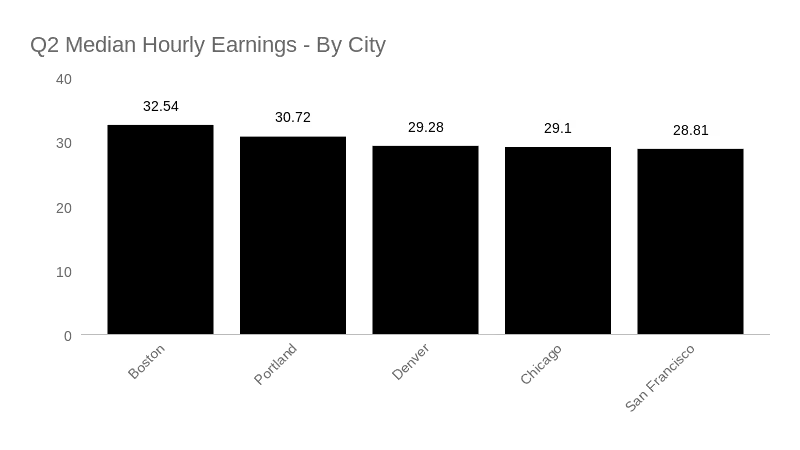
Now let’s look at the Q3 numbers:
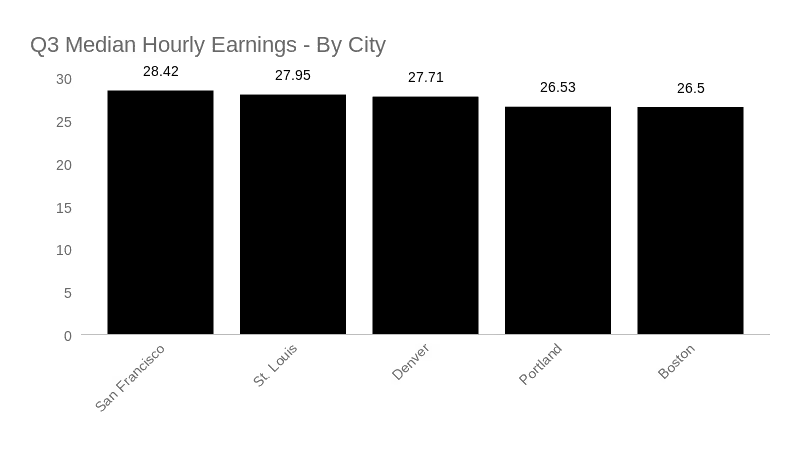
Drivers in Boston plummeted from first place in Q2 at $32.54 per hour gross to $26.50 per hour gross in Q3, taking the city from first on the July list to fifth on the most recent list. That’s more than six bucks an hour. Why the downturn?
Famous as a college town, Boston has more than 60 colleges in and around its metro area. College graduates are a top demographic for rideshare, according to Zippia. Most students travel home for the summer months, which makes a difference in rideshare earnings.
Then there is the conundrum of Denver. Drivers in the Mile High City dropped from $29.28 per hour gross to $27.71. Denver is not known as a college town, and if we look at the baseball explanation, we see that the Denver Rockies finished in the basement of the National League West.
What caused the downturn? An educated guess would be that Denver, and most of Colorado, attracts visitors in the winter for ski season.
By the way, here’s a thought: Do rideshare drivers in Colorado have ski racks mounted on their cars?
Who uses rideshare services?
According to the same Zippia report, the demographics for rideshare favor urban over rural areas and younger, college-aged people, or those with college degrees.
DemographicUrban percentage Rural percentageAges 18–2955%36%College graduates70%32%$75k annual income71%32%
Zippia offers additional proof that the use of rideshare is directly correlated to age. In the 30–49 age bracket, rideshare drops to 43%. At 50-plus, it drops to 24%.
As Gridwise concluded in its last top cities article, rideshare is popular in college-educated, younger populations with higher incomes. But as you can see from the way cities go up and down on this list, usage is also dictated by local tourism and whether colleges and universities are in session. Drivers need to consider these factors when developing their driving strategy.
The role of special events
Cities that routinely have special events are also ripe for rideshare hotspots. Rideshare drivers in Southern California, for instance, know that Palm Springs (100 miles east of Los Angeles) hosts sporting events, concerts, and other gatherings throughout the non-summer months.
“Aside from New Year’s Eve, some of my best nights have been in Palm Springs and the wider Coachella Valley,” said one driver who typically drives in LA. “Particularly when they have special events, which is frequent, Palm Springs is a great place for rideshare drivers.” Conversely, Palm Springs does not have an especially active market during the hottest summer months, when it is routinely over 100 degrees and often closer to 110.
Comparisons in the food delivery market
Unlike rideshare, food delivery numbers are up and encouraging for those gig drivers who do food delivery.
Here is how the numbers in Q2 looked:
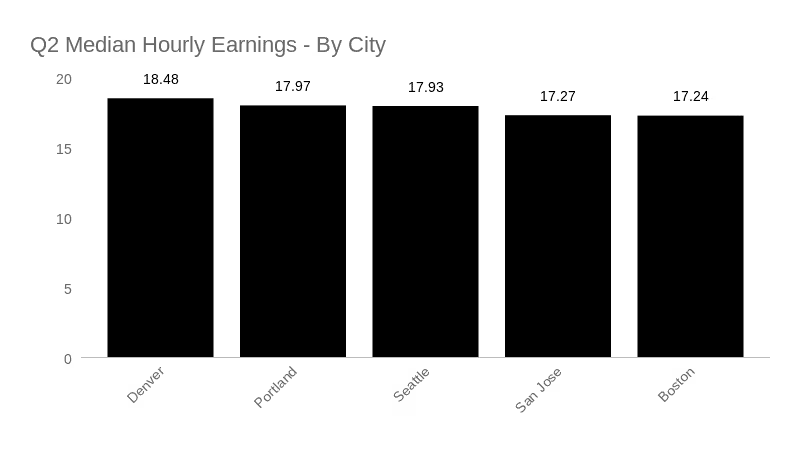
Although there has been some shuffling around in the most recently reported numbers, the Q3 numbers all point upward:
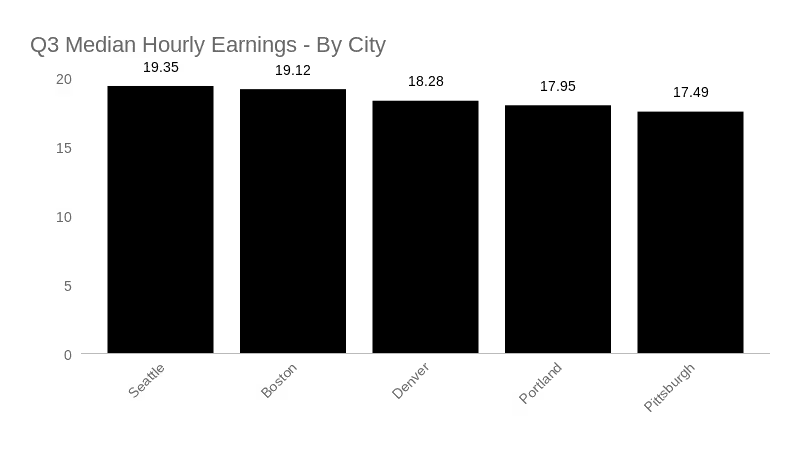
Except for Denver, and that only slightly, food delivery drivers are earning more. Some of the increases are substantial. Food delivery drivers in Boston are averaging almost $2.00 per hour more in Q3.
What’s driving the increase in food delivery earnings?
Again, there are no supporting numbers, but inflation is one of the likely factors. Higher ticket prices mean more money trickles down to the delivery drivers.
Inflation doesn’t seem to prevent individuals who use food delivery from continuing their purchasing habits, though, and that’s a good thing for food delivery drivers.
The continued growth of food delivery and ghost kitchens
Another encouraging aspect of food delivery is the continued growth of this market. Toast, a supplier of point-of-sale and hand-held hardware and technology for restaurants, anticipates revenue for food delivery services to grow by 9.18% annually. Toast expects delivery services to reach over 45 billion dollars by 2025. Driving this expansion is a maturing population of millennials and Gen Zers (63% of food delivery users fall into the 18–29 age bracket). This group will likely bring these purchasing habits with them as they age.
The consulting firm McKinsey & Company reports that another significant factor in the growth of food delivery is “the advent of appealing, user-friendly apps and tech-enabled driver networks, coupled with changing consumer expectations.”
Those changing expectations that McKinsey mentions include “ghost kitchens.” Ghost kitchens operate out of warehouse facilities (with cheaper rent than a high-profile restaurant location) and cater to the delivery-only market. These operations have no signage or bricks-and-mortar location, just a kitchen, and an aggressive online presence. They are driving incredible growth in the food market and gig-delivery services.
The California Homemade Food Act, passed in 2018, established controls on the market. Twenty-nine states have since passed similar regulations. Many metropolitan areas have large warehouses containing as many as 25 or 30 of these individual ghost kitchens in a mini-mall-type arrangement. A Los Angeles Times article reveals that the former Cordon Bleu cooking school in Pasadena, California, now hosts 20 spaces for ghost kitchens. Another warehouse on LA’s westside houses 37 brands, most of which gig drivers deliver.
In a twist on ghost kitchens, many restaurants operate delivery-only brands out of their retail kitchens. According to an article on the Modern Shipper website, Cosmic Wings is a delivery-only concept available via Uber Eats and operates in approximately 1,250 Applebee’s kitchens. The US Chamber of Commerce recently reported on It’s Just Wings, a similar brand concept, housed in the kitchens of Chili’s Grill & Bar restaurants.
What do gig drivers do if they don’t live in one of these top cities?
Many drivers across the US earn good incomes from their gig-driving activities. Rideshare drivers do it with a strategy and a keen understanding of the area where they drive. They know the professional sports venues, concerts, and other special events. They also rely on the Gridwise blog for the latest tips on how to boost rideshare earnings.
Food delivery drivers achieve the same by knowing the best food delivery restaurants and keying into the growing ghost kitchen market.
If it makes sense, rideshare drivers travel to nearby larger cities, taking advantage of the extra business. Others choose to multi-app, switching between rideshare and food delivery, depending on which is busier.
Other drivers earn good money delivering groceries. Business Insider recently woman in Las Cruces, NM (pop. 112,000), who made more than $100,000 in a year as a driver for Walmart Spark (Walmart’s in-house delivery service).
Make the Gridwise app part of your strategy
Whether you live in the city or in a small town, you can use Gridwise's free mileage and earnings tracker to manage your records and boost your income.
Rideshare and food delivery drivers use Where to Drive and When to Drive to figure out the best times and places to drive in their areas. And for rideshare drivers, the Airports and Events features will tell you exactly when you need to arrive at destinations to pick up passengers - no more time wasted waiting around!
Start earning more today
And have fun out there.
Trabaje de forma más inteligente. Gane más.
Ya sea que conduzcas, entregues o recojas turnos, Gridwise te ayuda a hacer un seguimiento de las ganancias, el kilometraje y el rendimiento para que puedas mantener el control de tu trabajo. Descarga la aplicación y toma las riendas hoy mismo.
