Blog de Gridwise
¡Lee el blog de Gridwise para obtener consejos y sugerencias sobre cómo ganar más dinero mientras conduces para Lyft, Uber, DoorDash, GrubHub y más!

The Gridwise Job Board: Find Your Ideal Job or Gig Work
Gridwise is an essential assistant app created by gig workers for gig workers. Our mission is to support those engaged in gig work in every way possible. We understand how challenging it can be to deal with income instability, a lack of benefits, and job insecurity that often comes with gig work. The Gridwise app tracks and organizes earnings and expenses, and offers a wide array of discounts, deals, and services that make the lives of independent contractors easier and more rewarding.
We firmly believe it’s possible to make a viable living and create a gig experience that offers flexible hours, variety, and excitement. With issues such as consistent earnings and job security in mind, Gridwise is proud to offer a centralized platform that shows you how to find gig work and secure reliable opportunities. We’re proud to introduce the Gridwise Job Board.
[elementor-template id="20891"]
The Gridwise Job Board: Key features
Because Gridwise is dedicated to serving the gig worker community, we’ve filled the Gridwise Job Board with useful features that won’t waste your precious time.
- Comprehensive listings. Find part-time, full-time, temporary, and per-task work. Drive or deliver with your vehicle, utilize an employer’s vehicle, or even find non-driving gig work.
- User-friendly interface. Find the jobs that are right for you with a tap of your screen.
- Verified opportunities. We vet the jobs before they are listed to ensure you’re getting high-quality job postings.
How to get more gig work, seasonal, part-time or full-time jobs with the Gridwise Job Board
Looking specifically for “gig work apps” or “gig jobs near me?” You’re in luck. Our filters and search functions send you directly to the listings you seek.
Here’s how it works.
- Access the Job Board via the Gridwise website.
- Search for jobs by type, location, and more.
- Select the job that interests you, and read all about it.
- Scroll through the description, and if it appeals to you, click “Apply for job.”
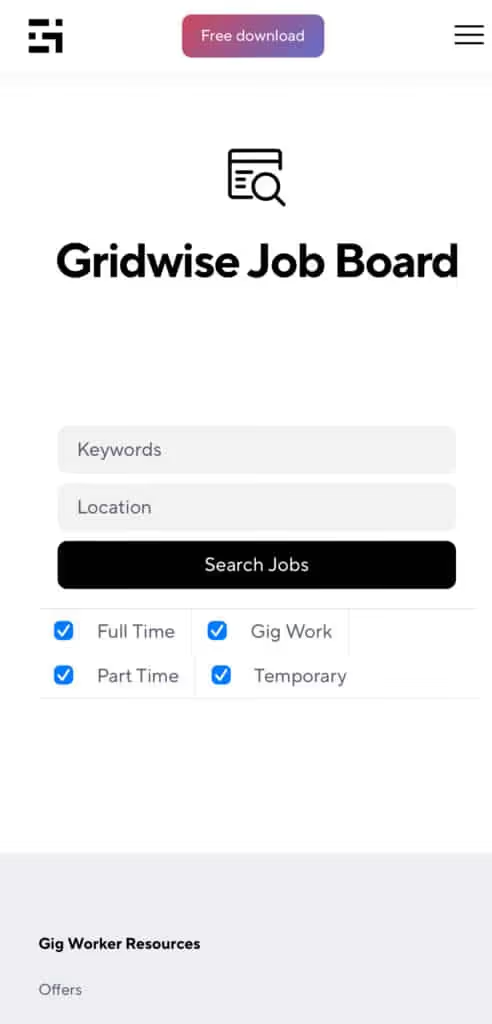
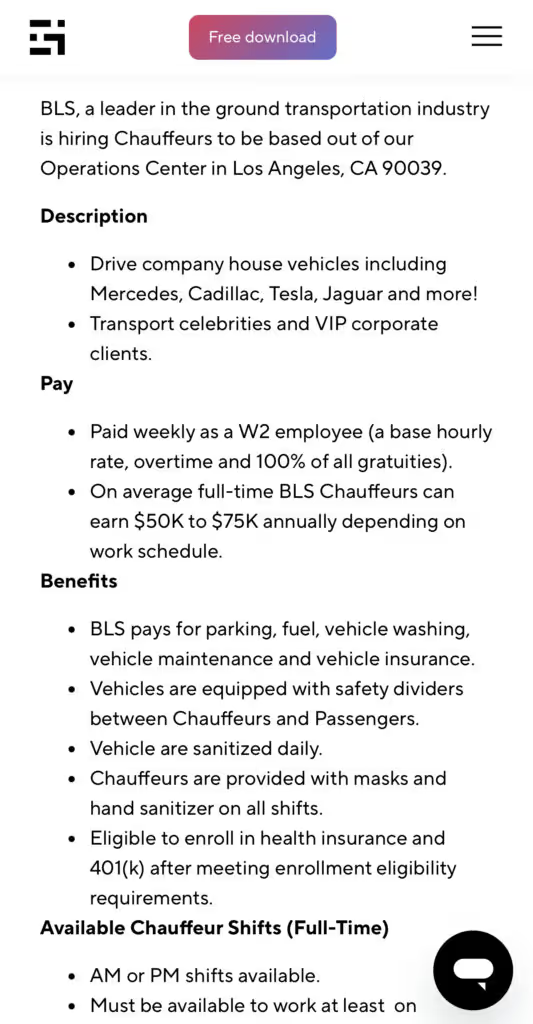
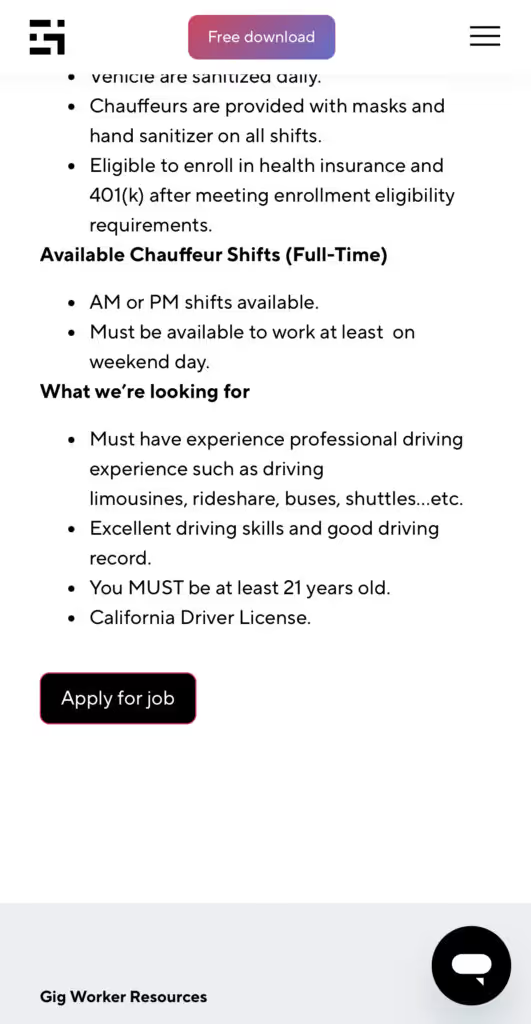
Many types of jobs are available. Adjust the search filter to see the full variety of opportunities that will let you cash in. Deliver food, set up catering, do rideshare driving, get paid for doing package delivery, and much more. You’ll find short-term gigs, long-term contracts, and part-time positions.
Perks of the Gridwise Job Board for gig workers
Gig workers who know how to make extra money will appreciate how the Gridwise Job Board lets you multiply your chances of bringing in big earnings. Here’s how:
- Increased stability. Use the Gridwise Job Board to find part-time or permanent jobs in addition to the part-time gigs you already have. Always keep a steady stream of earning opportunities flowing toward you.
- Flexibility and autonomy. Choose jobs that fit your schedule, work around other jobs and family duties, and still leave room for some fun in your life. Discover side hustles to supplement your full-time job, permanently or just for the season.
- Skill development. Find part-time work that lets you use a skill you already have, or try your hand at something new. It’s a smart way to develop a portfolio to showcase what you can do, or even to find permanent employment.
Get Gridwise and stay up to date on the Gridwise Job Board
Gig workers need plenty of information and assistance, and Gridwise is here to give it to you. Download the app and get essential features such as
- seamless earnings tracking
- mileage tracking
- expense recording, including notes
- low-cost and no-cost insurance benefits
- access to affordable medical, dental, vision, mental health, and alternative care
- professional services including legal and financial help
- deals and discounts
- weather, events, and traffic reports
- inside information on where and when to drive
[elementor-template id="20936"]
More to know about gig work:

5 Best Mileage Trackers For Gig Drivers
Many drivers ask, “Do I really need a mileage tracking app?” The answer is simple: only if you want to have an accurate count of all the miles you can legally deduct from your taxable income! You might think your rideshare or delivery driving app has got you covered. After all, they do quite a good job of logging the miles you drive while you’re on a trip or delivery. But, if you want to have the best app to track mileage for Uber, Lyft, Doordash, Instacart, or the other apps you may use, you need more. Why is that?
Without a separate tracker, you’re missing the miles you drive in between pings. Did you realize that all the miles you drive, from the moment you begin your shift until it’s over (as long as you don’t drive several miles on a break to hang with your friends), are tax deductible! That means you need something besides your driving app to keep an accurate count of your travels. Read this Gridwise post to see how important it is to keep track of every deductible mile.
You won’t be surprised to hear that there’s an app for tracking miles. In fact, there are several of them. Here, we’re going to tell you about five top mileage tracking apps, and help you figure out which one is best for you.
Before we get to the list and identify the best mileage tracker app, let’s clarify what exactly a mileage tracking app is. According to G2.com’s technology glossary, mileage tracking is done for the purpose of keeping a log of mileage that is either reimbursable or tax deductible.
And yes, of course you can track your miles simply by taking readings on your odometer. But are you really prepared to account for how many miles you drove for personal reasons and subtract them from the total to get your business mileage? Even if you can remember all that and do the arithmetic, if you want an accurate reading of the miles you drive for business, and can therefore deduct, a mileage tracking app will save you a lot of trouble and prevent you from making costly errors.
Plus, as a gig driver, you have specific needs when it comes to a mileage tracker. Ideally, you’d be able to handle mileage tracking and several other functions all in one app. It can be maddening enough to deal with driving apps, particularly if you’re an avid multi-apper. You would want your mileage tracker app to help you keep account of other aspects of your business, including income, expenses, and inside information about the art of gig driving.
Not all mileage apps are equal, to be sure! Let’s look at five of the best apps to track mileage and figure out which is the best app to track mileage with Uber and Lyft, or what mileage tracker app is best for DoorDash.
[elementor-template id="20891"]
1. Zoho Expense
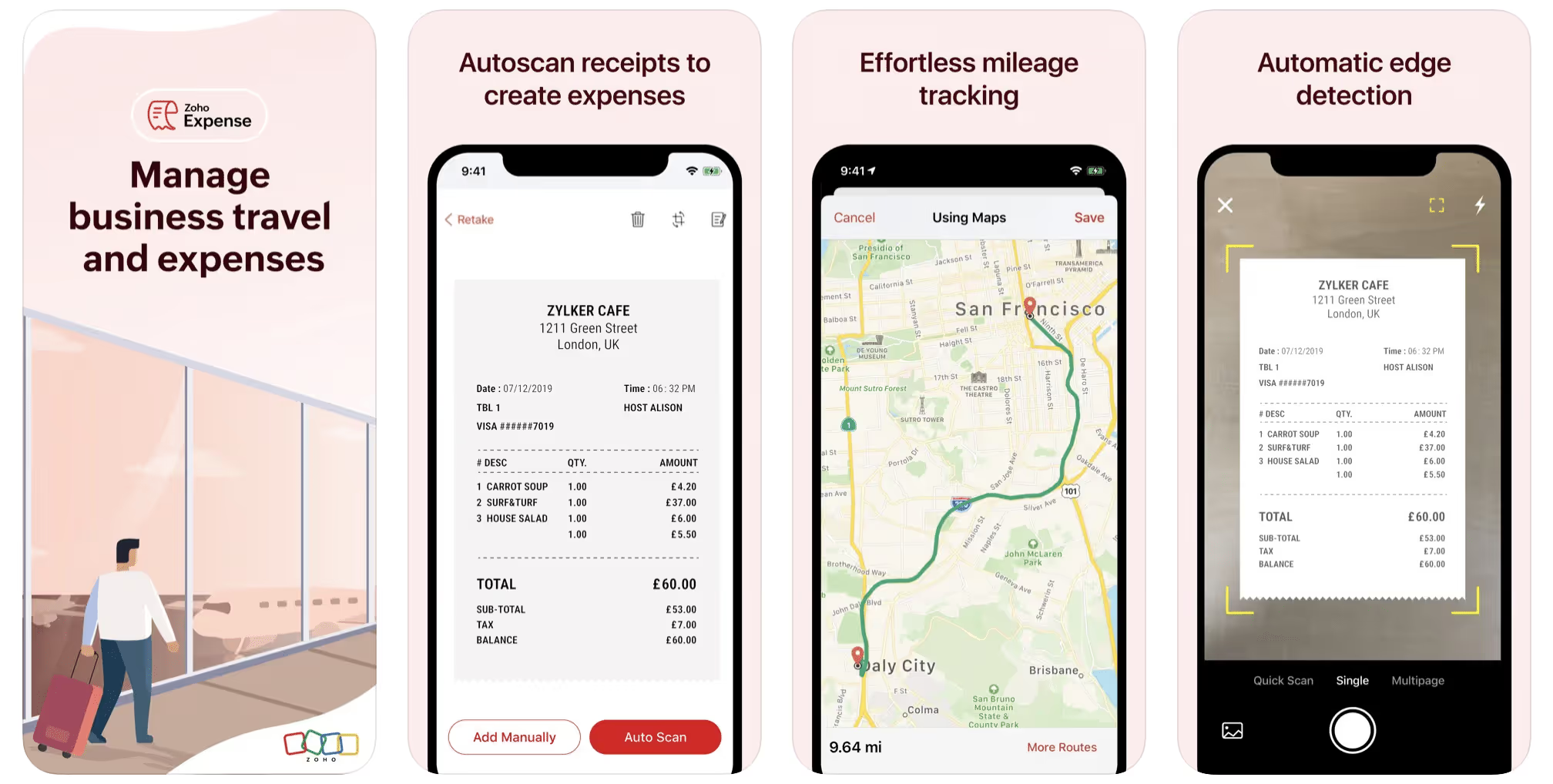
First up is Zoho Expense, which does exactly what its name says. This app is designed to allow companies to give employees a uniform way to create and submit expense reports. It can be used by individuals, including gig drivers, as well.
It includes a mileage tracker, as well as features that let you track other deductible expenses, including the ability to scan and record receipts.
Available on Android and Apple: Yes
Ratings: 4.8 stars on App Store, 4.7 stars on Google Play
Free Version: Yes
Subscription price: $3 per month, billed annually
Created specifically for gig drivers: No
2. Quickbooks Online
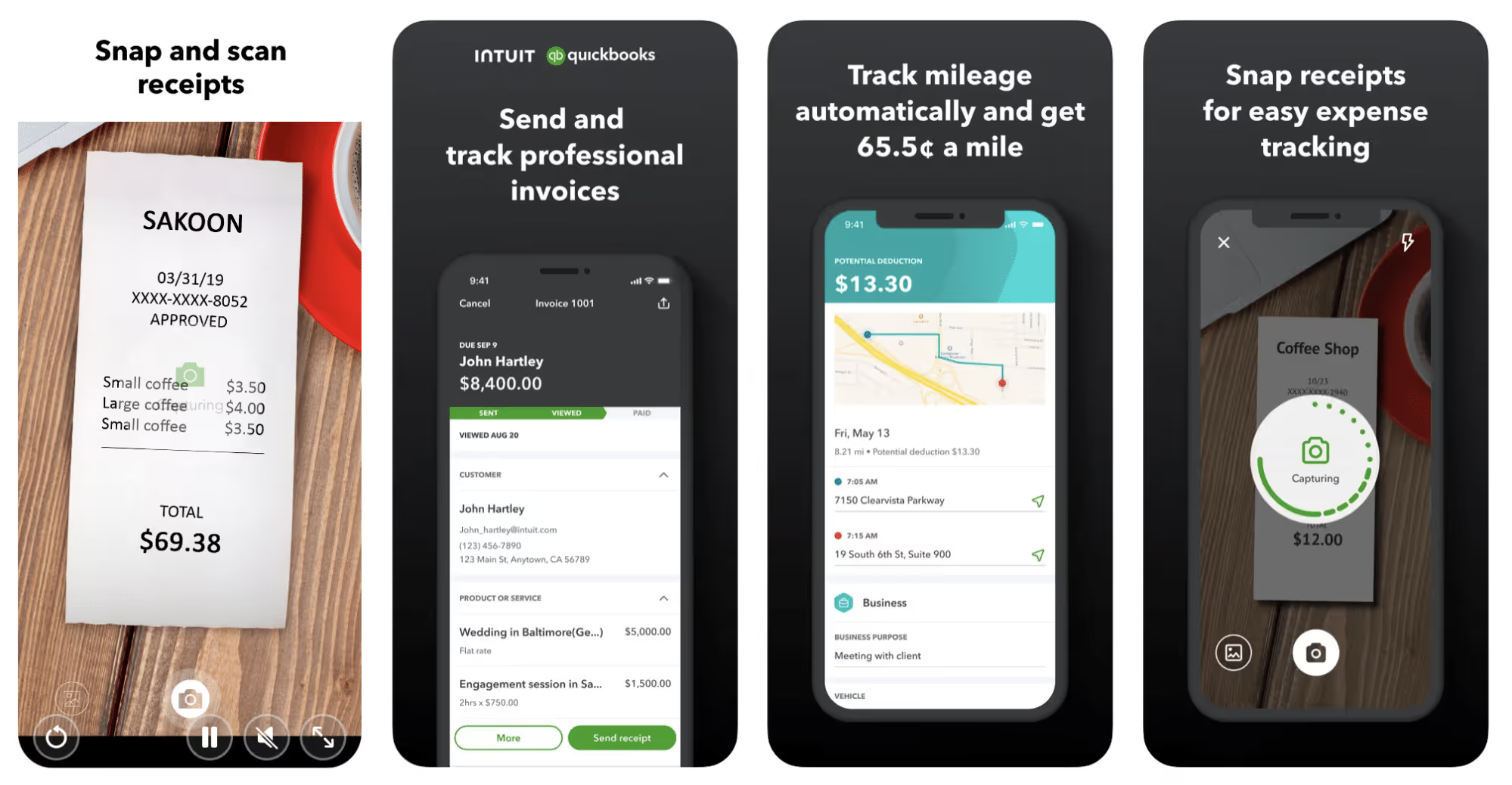
Quickbooks Online is a cloud-based app that allows you to track your mileage, earnings, and expenses. The information you enter can then be used to generate various reports that prepare you for tax time. It also allows you to create graphs that illustrate your cash flow, and includes a receipt scanner so you can instantly record deductible expenses. Quickbooks is popular, highly reliable, and designed mainly to help people keep track of their small businesses.
Available on Android and Apple: Yes
Ratings: 4.7 stars on App Store, 4.4 stars on Google Play
Free version: 30-day free trial
Subscription price: $15 per month for basic version if purchased for 3 months or more
Created specifically for gig drivers: No
Source: quickbooks.intuit.com
3. Shoeboxed
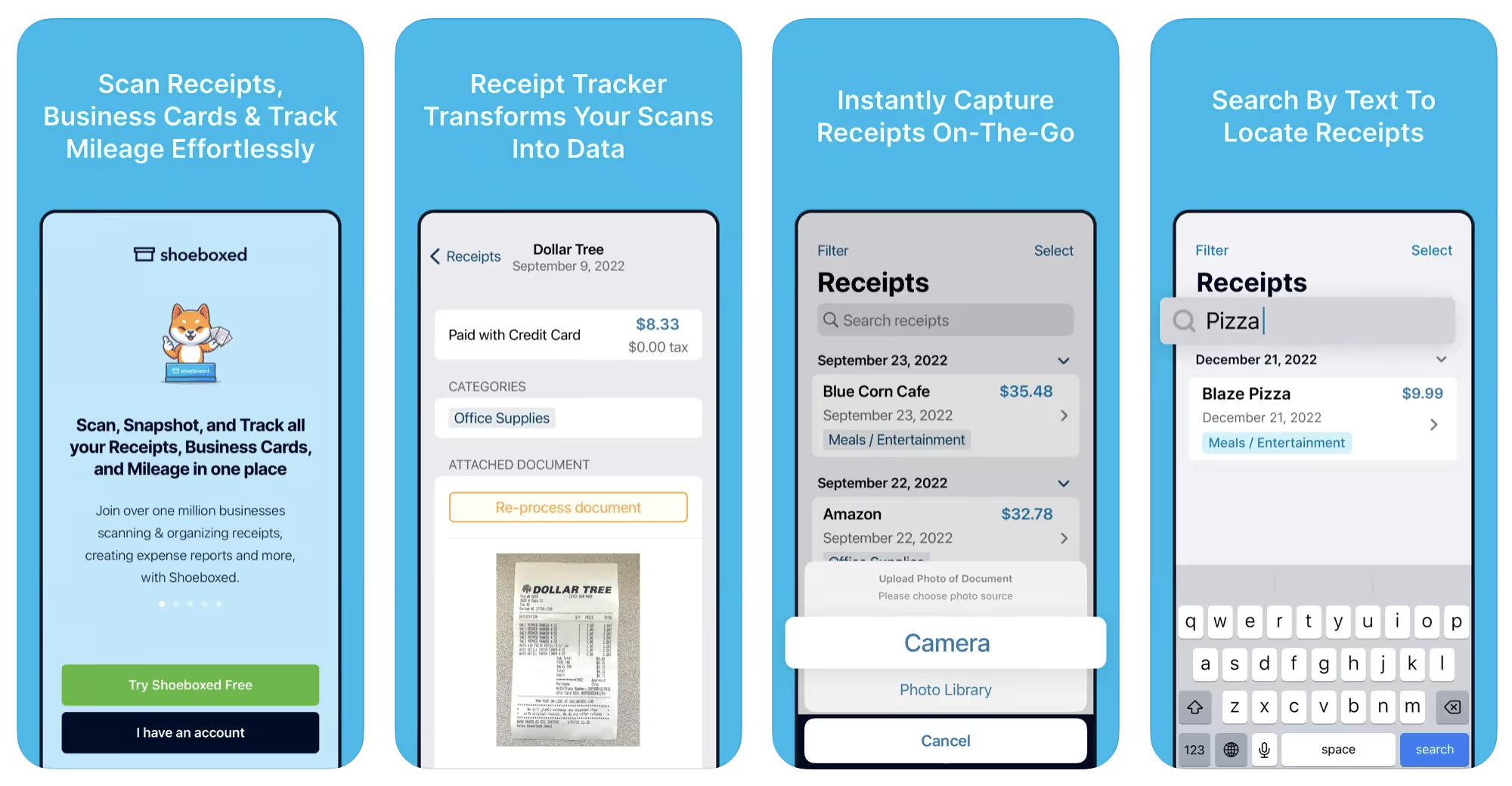
Shoeboxed started in 2007 as a service for scanning paper receipts into digital form. Now the app offers a free mileage tracker and has enabled users to scan receipts directly. It touts itself as the best mileage tracking app for DoorDash, but there are some elements missing that Dashers might like to have. While it provides features that record your expenses and prepare you for tax season, it doesn’t automatically track your earnings. The mileage tracker has a system where you can drop pins along your routes to make the tracking more precise, identifying those legs of a trip that you make for business purposes. The mileage tracker is “free” once you sign up for the basic version.
Available on Android and Apple: Yes
Ratings: 4.5 stars on App Store, 2.3 stars on Google Play
Free version: No
Subscription price: $18 per month for basic version
Created specifically for gig drivers: No
Source: blog.shoeboxed.com
4. Stride
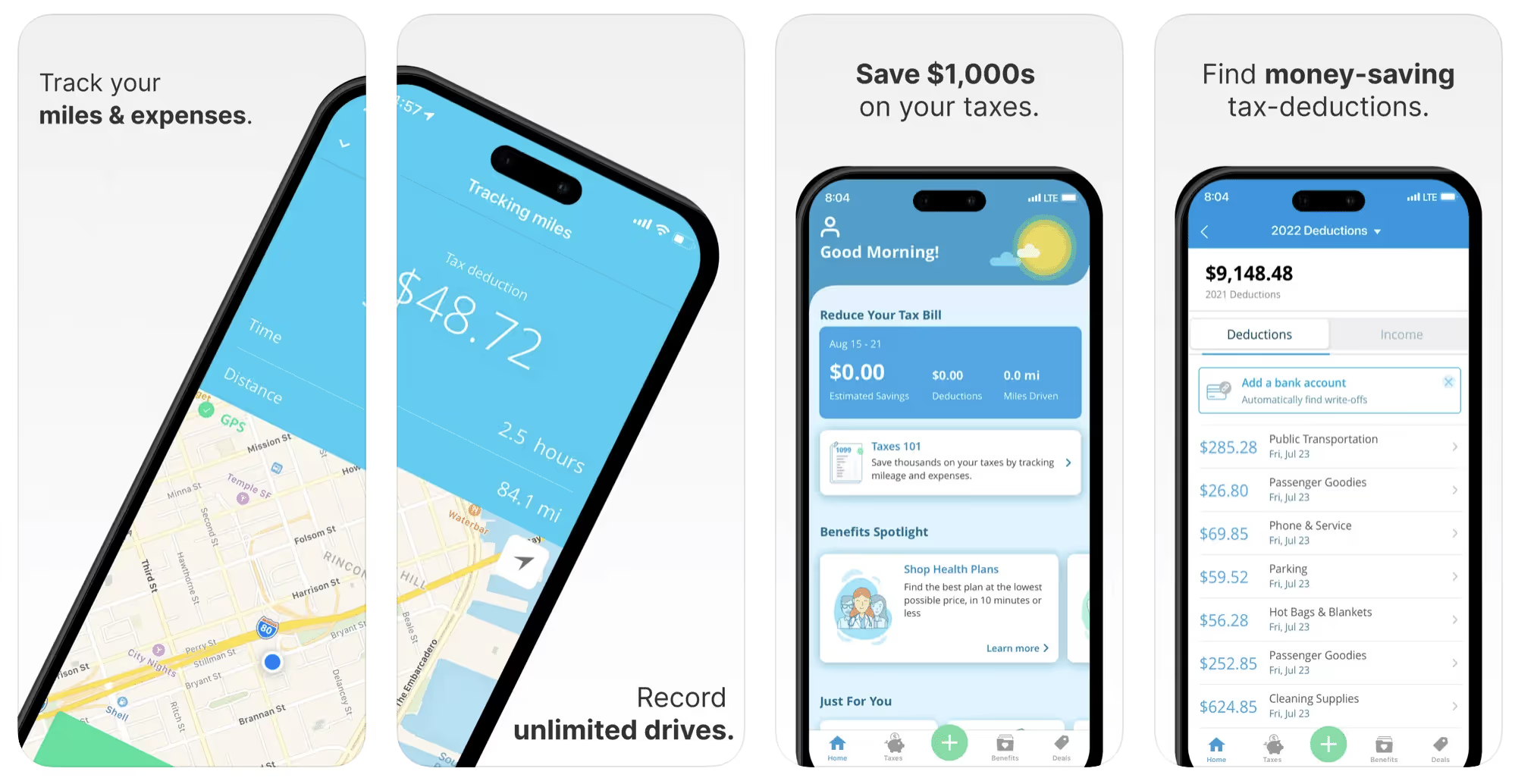
This free mileage tracker does a fair job of keeping track of the distances you rack up while gig driving, but it doesn’t automatically track earnings. It can be a big help, though, in tracking your expenses. You can link Stride to your bank account, and it will automatically scan your expenses to identify items you can potentially deduct. The app is totally free. This could make it the best free mileage tracker app, but there is a small price to pay. The app will persistently push you to consider various insurance plans that they are affiliated with. If you don’t mind that, this is a solid mileage tracker, even if it doesn’t track your earnings.
Available on Android and Apple: Yes
Ratings: 4.8 stars on App Store, 4.6 stars on Google Play
Free version: Yes
Subscription price: None. The app is free.
Created specifically for gig drivers: No
5. Gridwise
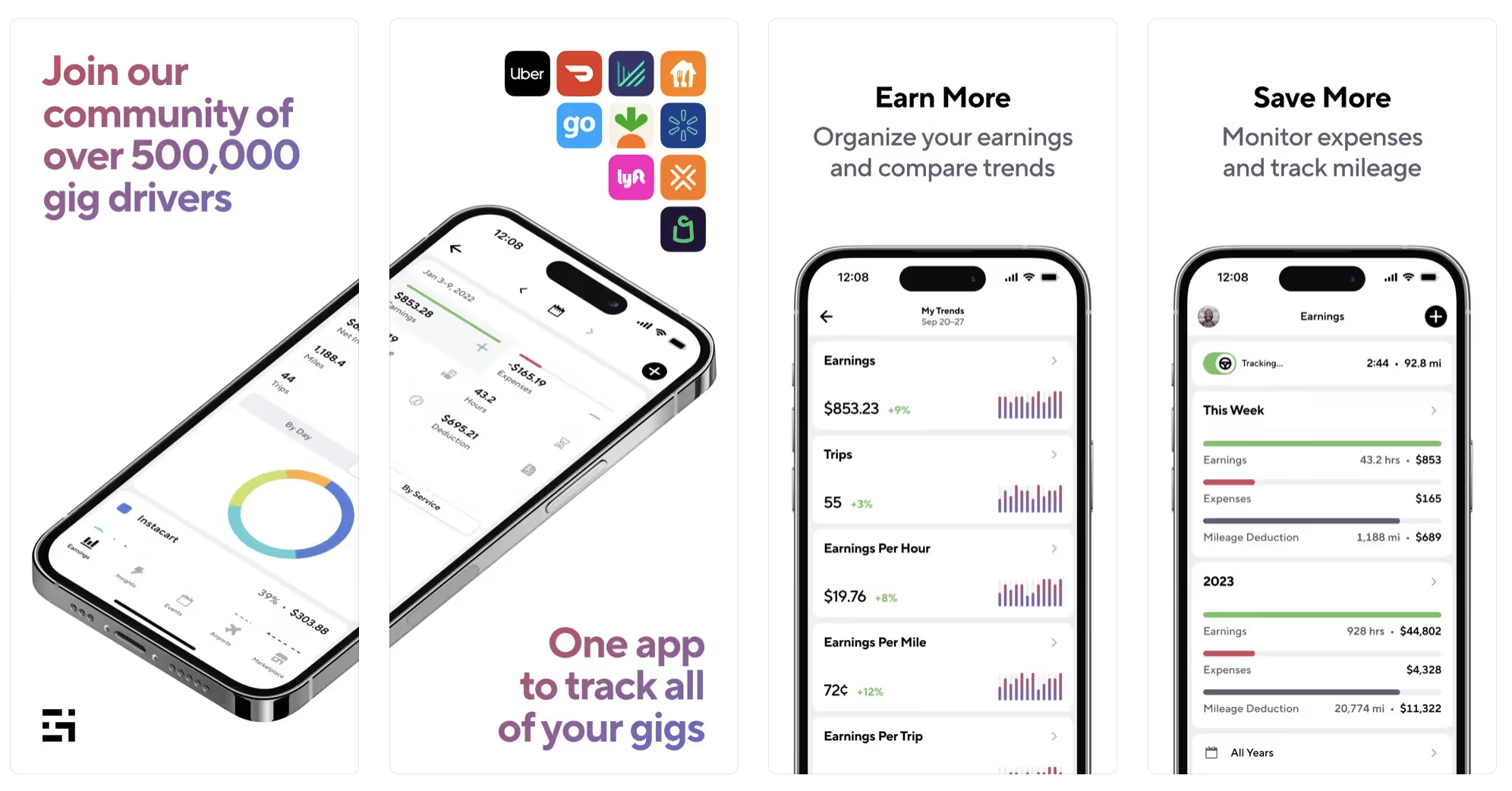
Gridwise has a free mileage tracker and free features that record your income and expenses. It gives you access to insurance and benefits, as well as insights about the best times and places to make the most money while gig driving. The Gridwise mileage tracker captures all the miles you drive while you’re on your driving shift, and it can be used if you have other trips you need to make which qualify as business travel.
Drivers love it because it is geared toward the needs of rideshare and delivery workers, providing free information about airport departures and arrivals, event start and let out times, weather, traffic, and more. The Gridwise Plus subscription adds value by providing additional insights and reports, discounts on benefits, the ability to export data in .csv format,, and more.
Available on Android and Apple: Yes
Ratings: 4.9 stars on App Store, 4.6 stars on Google Play
Free version: Yes
Subscription price: $9.95 per month for Gridwise Plus, or $95.99 per year (a $23.41 savings)
Created specifically for gig drivers: Yes!
What is the best mileage tracking app?
Now that we’ve checked them all out, we’re positive about the answer to that. Hands down, it’s Gridwise. Are we biased? You bet we are! But drivers love it too. Gridwise is the best mileage tracker app—and so much more. So many of the features are free, and the subscription to Gridwise Plus will pay for itself with additional insights to boost your earnings and deeper discounts on products and services.
Most important, Gridwise is designed specifically for gig drivers by experts who were once gig drivers themselves! Knowing what gig drivers need is a crucial step in creating an app that rideshare and delivery drivers can really use! Here are a few of the features, besides mileage tracking:
- seamless earnings tracking
- automatic, on/off toggle and manual mileage tracking
- mileage categorization
- airport, traffic, weather, and events information
- insights into where to drive and when to drive
- reports showing earnings across the platforms you use
- discounts on countless products and services for drivers
- additional resources for finding side gigs
- an informative and comprehensive blog
- affordable benefits, including insurance, medical, dental, and alternative practitioner discounts
- a community of drivers just like you
Don’t settle for just any app. Get the best mileage tracker, and so much more, from Gridwise!
[elementor-template id="21599"]

What Records Do Gig Drivers Need To Keep Track Of For Taxes?
* Gridwise does not provide tax, legal, or accounting advice. This material has been prepared for information purposes only, and is not intended to provide, and should not be relied on for tax, legal, or accounting advice. You should consult your own tax, legal, and accounting advisors before filing your return.
Record keeping? Who signed up for that? As a gig driver, it’s part of what you need to do to keep your business running. Don’t worry. It’s not as complicated as you might have been led to believe. This post will show you what you need to keep track of and the best ways to gather and preserve your tax-related records. We will cover
- How record keeping can help reduce income tax for freelancers
- Taxes and freelance work: Record keeping requirements
- Mileage tracking: Motives and methods
- More deductions and records to keep
- Make tax time easier
How record keeping can reduce income tax for freelancers
Tax time is not “fun time” for rideshare and delivery drivers. It’s easy to get used to watching your earnings pile up and come to believe they are all yours. Unfortunately, that isn’t the case. Gig work taxes can be especially painful because no one takes them out of your earnings for you, until the tax authorities insist that you do it for yourself.
You will need to show the tax authorities your income records, and they will gladly tell you to send them what they determine to be their fair share. Think that’s not fair? You’re not alone, but that doesn’t mean you’re going to get out of paying gig work taxes.
But you can find ways to pay the smallest amount that is legal and possible. The best way to defend yourself against having to pay astronomical amounts when you file your return is to know what expenses you can deduct from your gross income. When you subtract deductible expenses from your gross income, there is less left over to be taxed. This reduces the amount they can hit you with gig worker taxes. and can make your tax bill substantially lower.
While you want to keep good records so as to be in compliance with taxation entities such as the IRS, you also want to ensure you have proof of every last deductible expense you have accrued during the year. There are other records you must keep as well. Let’s look at some of the considerations you have, realizing that you now need to know how to do taxes as a freelancer.
Taxes and freelance work: Record keeping requirements
So many gig drivers fail to understand the responsibilities they have as independent contractors. Those who work part time for very few hours may even believe they don’t have to report the income they get from their driving gig payments. That would be a big mistake!
The company or companies you work for report your income to the IRS and state tax authorities. If you fail to report that income, you will risk some rather painful penalties. The IRS taxing side hustles is as much of a thing as the IRS taxing income from any other job. Your best bet is to report what you’ve earned, honestly and completely, and comply with other record keeping requirements such as
- gross income
- deductions and credits
- purchases (items you purchase and resell, such as snacks or bottled water)
- a log of all your mileage (or vehicle expenses, if greater)
- a list of all expenses and assets, such as utilities and other expenses associated with having a home office and equipment
- machinery and furniture you own, including when it was acquired, how much it cost, whether you previously took deductions on it, and selling price, if applicable (this includes your vehicle)
More things to consider:
- Pay attention to the retention of your records. You’ll need to keep all tax-return-related items— including income, deductions, and any tax credits reported— until the period of limitations runs out (3 years from date you filed, or 2 years from when you paid tax. If you have employees, keep your records for at least 4 years.)
- If you want to avoid paying self-employed taxes, you may want to set up a corporation or Limited Liability Corporation (LLC) for your business. This allows you to separate all your gig driving earnings from personal income, and permits you to take advantage of the additional advantages of working through a corporation. This includes exemption from self-employment taxes. You can learn more about how to pay self-employment taxes, if you opt for that, in this post from Keeper.
- You should always keep a separate checking account for your business, for convenience as well as clarity. While this is not a legal requirement, it is a smart move if you want to have an easier time managing your business.
- You are required, as an independent contractor, to file your taxes quarterly. Check out this Gridwise blog post for more information about quarterly tax payments and other matters that make filing delivery, Lyft and Uber taxes easier.
Mileage tracking: Motives and methods
Why you need to be meticulous about mileage
Mileage deduction, or the costs of operating your vehicle, will be the most important item to account for when you consider how to file taxes as a freelancer. While mileage is an important deduction for all independent contractors, as you might imagine, it’s even more essential for rideshare and delivery drivers.
There are two ways of keeping track of your mileage deduction. One is to use the IRS’ standard mileage deduction, which for 2022 is 58.5 cents per mile. This number takes into account the costs of operating your vehicle, from fuel and maintenance to registration, insurance, and depreciation. Alternatively, you can calculate all your own vehicle operating costs, but only after your first year of using the vehicle. You may discover that this second option allows you to have more money deducted from your taxable income. Learn more about the options for deducting your mileage in this Gridwise post.
No matter which way you decide to calculate the deductions for your mileage, you need to know what mileage you can and cannot deduct.
You can deduct
- miles driven to and from home when you go out to drive or deliver
- miles you accrue during your trips
- miles you drive on any other trips you make that are necessary as part of your business.
Examples:
- driving to return a lost cell phone or to an Uber Hub or another physical location where your company might make driver support available
- driving to pick up supplies, to get gas, or to have your car cleaned, serviced, or detailed, etc.
You cannot deduct
- miles you drive for personal trips
- miles for any trips you take that do not directly affect your business
Note: If imagining yourself becoming the not-so-proud owner of a shoebox filled with paper receipts gives you nightmares, stop worrying. Electronic records of purchases will satisfy reporting requirements. If you use cash, you can scan copies of your receipts, in some cases, right into your recording software or app. Gridwise and Keeper give you a simple to use interface that keeps all your receipts recorded without the messy pile of paper.
Mileage tracking methods
By now, you’re probably convinced that tracking mileage is important, despite all the other things drivers have to do. Now, let’s look at your options for keeping accurate records.
- Manual tracking: You can keep a logbook where you list every trip you make, starting and ending mileage, the date, and purpose of the trip. While this would work, it’s certainly not convenient. Besides, if that logbook gets lost, your plans for having a nice, fat tax deduction will go by the wayside.
- Spreadsheet: This is a bit more convenient and sophisticated way of tracking your business mileage. You’d need to be meticulous about making your entries, though. Even if you keep a spreadsheet app on your phone, it could be time consuming and inconvenient to keep doing it with all the other things going on in a rideshare or delivery driver’s day to day life.
- GPS-based mileage tracking apps: There are a bunch of apps that track mileage based on your GPS location, and most of them are pretty accurate and far more convenient than taking constant readings of your odometer. Your driving apps, such as Uber, Lyft, DoorDash, or Instacart, may also track your mileage, but be careful here. They will only track the miles you drive while you’re on a trip or delivery. They don’t count the miles you drive going to pick up a customer or when you make your move toward a restaurant or store.
Gridwise, on the other hand, will track all the miles you clock while you’re on your shift. All you need to do is make sure you start tracking the minute you leave home, and every gig driving mile will be logged. - OBD-II mileage tracking systems: There are plug-in modules that assess your vehicle’s mechanical health and track your miles. However, many authorities question the ability of OBD-II mileage tracking systems to get get accurate odometer readings. Insurance companies don’t consider them to be accurate enough gauges of odometer readings.
While mileage is a crucial deduction when you’re preparing your Uber, Lyft, or DoorDash taxes, it isn’t the only expense you’ll want to record.
More deductions and records to keep
Expenses you can deduct
You’re entitled to include the cost of other expenses that are directly related to your driving business. These include
- vehicle expenses
- equipment for your car and home office
- extra services and subscriptions
- business tools, including apps and software
You can learn much more about gig driver expenses that are eligible for deduction in this Gridwise article.
Ways to track and preserve deductible expenses
- The manual method: Just like you can with mileage, it’s possible to use a manual method, but in addition to logging each expense into a ledger, you would also need to keep physical receipts.
- Spreadsheets: You can record your expenses on a spreadsheet. This is somewhat less awkward than manually logging mileage, but there still will be plenty of room for failing to remember the case of water you bought for your customers, or losing the receipt from the thermal bag you purchased.
- Accounting software: You can use software that helps you track your expenses. This method usually interfaces well with any tax preparation software you or your tax professional might use.
- Gridwise: There are other apps that help you track your expenses, but Gridwise is designed specifically for gig drivers. It automatically tracks earnings and mileage, and lets you record your expenses the minute they come up. Gridwise’s partnership with Keeper gives you the ability to scan receipts and access a tax professional. This is a seamless way to record your expenses and a big help in learning how to file Uber taxes. Gridwise even provides .csv output, so you can feed your Gridwise data directly into tax preparation software. Check out what Gridwise and Keeper will do to super-charge your tax filing powers.
Organizing and categorizing expenses
Before you even begin to record expenses, you’ll want to set up categories for them. You can start by reviewing the categories listed above and checking out the Gridwise post that lists possible deductions.
If you’d like to learn more about how to categorize expenses, there is additional information available. This article from Motley Fool lists all possible categories any freelancer might use and also gives tips on how to customize them for your driving business.
One last tip
Using Gridwise, particularly for tracking mileage, is the easiest way to be in compliance with the IRS’ rules for deductible mileage. Gridwise tracks all the miles you drive for your gig, beyond what your company’s app might record. At the same time, you can log on and off Gridwise when you start and end your shift, so personal miles won’t be recorded. This eliminates confusion while capturing every deductible mile.
Gridwise Tax Help, a partnership with Keeper, has been created specifically to serve gig drivers. It provides affordable and easy ways to record expenses, scan receipts, and find deductions by analyzing your expenditures. Read about free resources from Keeper you can use to be fully prepared for tax season, and get all your earnings and expenses on the record.
Get the world’s best assistant for rideshare and delivery drivers, and tax help too.
Make tax time easier now!

Rideshare and Delivery Driver Rights Reversing In Europe: Is the US Next
Rideshare and delivery drivers have been campaigning for their right to benefits and a minimum pay for years - and in some locations, they've won. Drivers in some parts of Europe currently enjoy employee status, which comes with benefits and a minimum wage guarantee. In the US, the city of Seattle followed suit and guaranteed drivers in the city a minimum wage.
But independent contractor rights could lose what foothold they’ve gained so far. In this post, we’ll report on some events in Europe that don’t bode too well for gig workers here in the US, if companies here follow suit. Here’s what we’ll discuss:
- Gig worker rights reversals in Europe: What’s behind them?
- Possible setbacks for rideshare and delivery drivers in the US.
- Be proactive: protect your earnings and your economic well being.
Gig worker rights reversals in Europe: What’s behind them?
Companies like Grubhub’s parent, Just Eat Takeaway, decided that they would use employees as couriers in certain countries and challenged other companies that used gig workers to do the same. They proudly offered, and gave, benefits to their delivery couriers that ensured they were fully covered.
Gig workers, workers’ organizations, and unions pointed to this model and asked why that couldn’t happen in more companies. In California a protracted battle over this issue resulted in the gig companies putting forth Proposition 22, which gave some benefits to drivers, but defeated the state government’s attempt at pushing them to classify drivers as employees.
Now, according to this article from WIRED, the companies that were once generous with their drivers are reversing the moves. In France, Just Eat sent a July 18, 2022, email to its employees, announcing the company’s restructuring the status of couriers so that they would no longer be salaried delivery workers. The company cited pressure to turn a profit and noted that they were one of the few, if not the only, companies offering these benefits to their workers. They added that it was because regulators failed to make all driving and delivery companies classify workers as employees that they had to change their own way of paying their couriers.
Some of these workers, at least those in the city of Paris, would remain classified as employees and would be paid by the hour. Many couriers in other locations would risk losing their jobs. The company will go back to paying couriers by the delivery, just as other companies do.
Unions are looking at these events and questioning the future of gig worker rights. If Just Eat, which was so assertive about its move to make its couriers employees, could make this change, what might happen in other companies that have tried this model? Could Gorillas and Getir, two other European delivery platforms, follow suit?
It is possible because all of the companies that use app platforms and gig workers struggle to make a profit. There is tremendous pressure being applied by investors and stockholders. This pressure has been on the increase as many of these companies have grown, and gone public. They have a fiduciary responsibility to make money for their stakeholders. However, these companies also have a responsibility to treat drivers fairly.
Possible setbacks for rideshare and delivery driver rights in the US
What about all the gains that have been made for gig workers in the US? In Seattle, the city passed laws that established a minimum wage for gig drivers, and there are similar proposals in Massachusetts. The platform companies have fought tooth and nail to reverse this process, and to a large degree they succeeded with Prop 22 in California, as described in this Gridwise post.
The reasons for US companies’ pushback on any effort to resolve the employee vs. independent contractor controversy in the favor of drivers as employees are exactly the same as the explanation given by the European companies. These companies have to make a profit, and many of them are not even close. With the recession encroaching on what was once a booming business it will become even more difficult to secure investor capital.
Given all of this, the companies will probably not make any moves to grant gig workers employee status or pay for benefits in the way they do for corporate employees. There’s also the question of whether it’s better for gig workers to be employees. Employees get benefits, but they also have set hours and can only work for one platform at a time. The loss of flexibility is often a point people make when they express their preference for letting drivers and couriers retain their status as independent contractors.
Whether you want to be an employee or not, it looks less likely that companies are going to be able to afford to give their drivers and couriers set salaries and full benefits. That means if you’re committed to being a gig driver, you need to set yourself up for survival. Fortunately, there are ways of doing that.
Be proactive: protect your earnings and your economic well being
If the trends in Europe spread in the direction of the United States, rideshare and delivery drivers can expect that they will remain independent contractors for the foreseeable future. If no company is going to guarantee your wages, provide you with benefits, or contribute to workers’ compensation or disability insurance, what can you do?
Gridwise is here to support you. Maximize your earnings with features such as
Where to Drive and When to Drive, insight that tells you where and when you can make the most money.
Gridwise Benefits, which provides low-cost insurance and access to medical, mental health, and dental care. We’ve found a way to get benefits for rideshare and delivery drivers!
Discounts and deals for drivers give you an edge when it comes to keeping your costs of doing business down. This may not guarantee your minimum wage, but it surely does help to maximize your earnings.
With all this, plus airport and event info, traffic alerts, income and expense tracking, and more, there’s no doubt that Gridwise is much more than the best free mileage tracker you can get. It’s the world’s best rideshare and delivery driver assistant.
Download the free Gridwise app today!

An Alternative Delivery Gig Shakes Things Up: "Weee!" Drivers Serve a New Niche
The grind of the delivery game is enough to get to anybody. The traffic, the trips in and out of the car, and the wear and tear on your nerves from dealing with nasty restaurant workers or cranky customers can make you the gig tough. In some cases, you even have to do the shopping if you're delivering groceries.
Being a delivery driver isn't bad at all, but sometimes you might feel like switching things up with a different type of gig.
A company with a special niche has burst onto the scene. Weee! lets you deliver specialty foods without requiring you to do shopping for the items or making you deal with poor treatment from customers on both sides of the delivery. Weee! provides an alternative and supplies an encouraging answer to that persistent question: How much do delivery drivers make?
In this blog post, we’ll tell you more about Weee! and how you can hop aboard this express train to better earnings and greater job satisfaction. Here are the things we’ll share:
- how to earn more as a delivery driver with Weee!
- how to get started with Weee!
- pro tips for great Weee! driving
How to earn more as a delivery driver with Weee!
Weee! is a truly unique delivery company. As a Weee! driver, you’ll pick up foods from grocery stores that specialize in Asian and Hispanic items. You do not have to do the shopping, pack the bags, or scamper through the store looking for substitutions. Weee! drivers simply pick up orders that have been prepared inside the store or Weee! warehouse and deliver them.
That’s simple, and sounds pretty sweet, compared to what you have to do when you drive for other companies. All the Instacart driver advice in the world won’t help you avoid the hustle of doing all the shopping and delivering. With Weee! you won’t have any worries. You simply pick up and deliver, from the store or Weee! hub to the customer.
As for earnings, Weee! is way out in front of the rest of the pack. Indeed.com lists Weee! earnings at an average of $24.30 per hour! That’s 51% over the national average. Gridwise data show that Instacart shoppers earned between $15 and $16 per hour in the first months of 2022. Hourly earnings for Grubhub and DoorDash drivers hover around $15 as well, as you’ll discover in this Gridwise blog post. So, as you can see, you can earn way more with Weee!
In 2015, when Weee! started out, it focused on West Coast markets such as Seattle, Los Angeles, and the San Francisco Bay area. Its niche delivery business has boomed since then, and Weee! now delivers all over North America. People from all over love these specialty items, so Weee! has been welcomed almost everywhere. Here’s a listing of all the cities where Weee! delivers.
How to get started with Weee!
Weee! is wildly popular and as it continues to grow, the company is looking for more drivers. The job is simple and straightforward. Here’s all they want you to do:
- pick up orders from local stores and hubs, then safely load them into your personal vehicle
- deliver and unload the correct orders to delivery locations, professionally and safely
- always follow designated sanitation and safety guidelines
To drive for Weee! you’ll need to
- have a valid driver’s license
- drive an SUV or minivan
- be 21 years of age or more
- have a clean criminal and driving record
- not have any accidents caused by you in the last 3 years
- have no more than 1 moving violation in the last 4 years
- not have any DUIs or DWIs
- have a phone with iOS 11.0 or later, or current Android phone
To sign up, visit the Weee! website, download the app, and as soon as you’re approved, you’ll be ready to make so much more money, you won’t be able to stop yourself from saying “Weee!”
For those of you looking for DoorDash driver advice or Uber Eats driver advice, Weee! has great news for you. After a recent injection of investor funding, Weee! plans to expand into restaurant food delivery!
Now that you’re ready for a great experience driving with Weee!, let’s make sure you get geared up to do it right.
Pro tips for great Weee! driving
There’s no doubt that Weee! makes gig driving easy, and even fun. Still, there are some things you need that take you beyond the basics. Gig driving is your business, so you’ll need to track your earnings and log your expenses.
There’s no better way to do that than with the best mileage tracker app there is, Gridwise! This handy app counts up your miles and all your expenses. Just enter them as they come along.
On top of that, Gridwise gives you features, discounts, and offers including:
- weather and traffic alerts
- event information
- inside info on When to Drive and Where to Drive
- access to low-cost insurance
- discounts and deals for drivers
Once you’re riding with the best free mileage tracker app out there, you can get to some other items you might want to have on hand to ensure your success with Weee! These include
- insulated bags: Some deliveries from grocery stores include prepared items that need to be kept warm, as well as frozen items that need to stay that way.
- cargo area organizer: Separate your orders and keep track of what goes to whom with devices that keep your orders straight, letting the boxes and bags to remain upright.
- a dolly or wagon: Some of your Weee! orders could be on the large side, so you’ll want to be able to deliver them in a professional manner. A dolly, wagon, or cart could protect your deliverables and help you prevent injuries from trying to haul too heavy of a load.
It’s time to get psyched, drivers! You’ve got a lot of delivery talent and gig driving savvy, and Weee! has got a lot to offer, including a simple work model, a growing market, and hourly earnings that are 51% above the national average!
Sign up to drive for Weee! now!

Delivering For Gopuff: What Drivers Love About Gopuff
This relatively new company, freshly rejuvenated by an infusion of investor capital, goes out of its way to make drivers happy. In this blog post, we’ll look at what Gopuff is, what it’s like to be a Gopuff delivery driver, and why drivers love the job. Let’s take it in small bites. We'll look at:
What is Gopuff?
What is Gopuff delivery? It’s a way for customers to get all kinds of goods delivered to their doors within 30 minutes. Gopuff has an entirely different approach to delivery. Unlike companies that send drivers to retail outlets and restaurants to pick up orders, and in some cases, do the shopping, Gopuff simply has drivers pick up fulfilled orders and drive them to their destinations.
Gopuff buys products directly from manufacturers and keeps them in “micro-fulfillment centers,” warehouses that act as distribution hubs. Independent drivers then deliver the products to customers within a 30-minute time window. In a March 2021 TechCrunch article titled “‘Instant needs’ delivery startup Gopuff raises $1.15B at an $8.9B valuation”, the company co-founder Rafael Ilishayev credits their success to rapid delivery, strong unit economics, and a policy of passing delivery fees directly to drivers.
You may be rubbing your eyes to make sure you read that right, and in fact, you did! It’s rare to find a company that’s willing to pass delivery fees directly to their drivers, but that’s an integral part of Gopuff’s model.
The company is based in Philadelphia and operates in more than 650 US cities. Gopuff was founded in 2013, when Ilishayev and co-founder Yakir Gola were students at Drexel University. When they’d throw parties, they figured it took too many trips to the store to get all their supplies, from liquor and mixers to chips and dips.
From this seemingly insatiable need their ambition grew. They believed there had to be a better way to get convenience products delivered, and it appears that they’ve not only happened upon it, they’ve made it into a great company.
Gopuff makes money by reselling products purchased from manufacturers, not by cashing in on the service fees attached to getting the products delivered. That’s why they are able to pass on the entire delivery fee to their drivers.
The founders see Gopuff as being in the market of satisfying “instant needs.” This may involve pharmacy goods, convenience items, or other kinds of products. Healthy snacks and baby and beauty merchandise are on the list of soon to be available Gopuff supplies.
The common thread among all the products Gopuff carries is customer demand. When customers cry out for a type of item, Gopuff responds by supplying it for them. This creates a diverse inventory of goods and a wide audience of eager customers wanting to satisfy their desire to have all their favorite things delivered fast.
By many accounts, Gopuff has a bright future. Obviously, the surge in demand for delivery during the pandemic years has helped, but even after lockdowns have eased, the company is considered to be cutting edge and holds potential for continued growth. And remember—they pass their delivery fees on to the Gopuff delivery driver! That’s something every driver is going to want to know about. Let’s see what it takes to become a driver for Gopuff.
Becoming a Gopuff driver
Joining Gopuff is very similar to signing on with the other rideshare and delivery companies. There are not a lot of restrictions or requirements, but there are a few, including
- minimum age of 21
- high school diploma or equivalent
- valid driver’s license
- vehicle and insurance where you are listed as insured or covered
- Android 4.4.2 + 1 GB RAM or iOS 10.1 (iPhone 5 at minimum)
- clear criminal and driving records
- a checking account for getting paid
If you meet these requirements, then you can download the app and learn more about the Gopuff scheduling and delivery system. You will be tested on your knowledge of the software before you’re finally cleared to become a full-fledged Gopuff driver.
Once you’re on board, you’ll set up your shifts through the app. You do need to know that when you schedule a shift, you’re obligated to show up. Once you do, you’ll drive to the warehouse and check in with the app. You don’t have to do any shopping or packaging; warehouse workers will handle all of that. When your batch of deliveries is ready, they’ll contact you to pick it up and the app will give you all the directions for the deliveries.
You have to be fast about getting to your delivery destinations, as Gopuff promises customers that they’ll get their goods in a half hour or less. Also, you’ll need to get them to sign for their orders and upload pictures of their IDs to the app when alcohol or other items requiring ID are part of their purchases.
If you finish early enough, you return to the warehouse for additional rounds of deliveries. It’s that simple. There are no unruly passengers in your car, no surly restaurant staff to deal with, and far less hassle and hustle than other rideshare and delivery driving gigs. If Gopuff already sounds like a good deal to you, just wait ‘til you hear about even more Gopuff features drivers just have to love.
Why drivers choose Gopuff
Just for starters, Gopuff driver pay is enough for drivers to rave about. The company advertises that drivers make upwards of $15 an hour. Does that sound good to you? Well, it is pretty good for delivery driving. Here’s how Gopuff driver pay works:
- You start with a “bank” payment. This is money you get just for showing up for your shift. The amount depends on how long your shift is and can vary according to how much you can work. For example, the bank payment for a 4-hour shift is $35.
- You get the delivery fees from the orders you take, at a minimum of $3.50 per order.
- You get tips.
- You get bonuses, when they’re offered, for delivering lots of orders or for working at peak times.
Pay gets transferred into your bank account once a week, and, if for some reason your delivery fees don’t add up to meet the minimum hourly rate established in your area, Gopuff will make up the difference. That’s another thing that makes this company come across as more caring and considerate to drivers, but it’s not all that drivers love about it. There’s even more:
- There are no third parties (stores or restaurants) involved in the delivery process.
- You choose your own working hours.
- Pickup locations are convenient and always include free parking.
- Deliveries are never more than 30 minutes from the micro-fulfillment center.
Gopuff offers a simplified way to make money doing gig driving. There is so much about it to love, and as long as there’s a micro-fulfillment center near you, it’s easy to get in on it.
Would you go with Gopuff?
You might be comfortable with your current rideshare or delivery gig and have little interest in switching. On the other hand, you might be ready for a change, or to find ways to minimize the amount of gas you use in your driving gig. Gopuff certainly helps with that because you’ll never be driving more than 30 minutes away from the Gopuff micro-fulfillment center. Additionally, you can also take advantage of gas discounts for rideshare drivers with Gridwise Gas which is geared towards helping rideshare and gig drivers decrease the cost of gas.
Gopuff also seems to be taking the gig driving model to a new level. Their focus on customer demand is far more targeted than the “shotgun” approach taken by the first-generation delivery companies. Rather than being all things to all people, Gopuff knows what goods people in their area need and want, and they hire drivers to deliver them.
Their pay structure is also very fair and supportive of drivers. Because they are focused on selling the products, Gopuff doesn’t continually increase its take rate at the expense of their drivers or customers.
There surely is a lot for drivers to love about Gopuff. Find out for yourself when you give it a try!
If you want to test out how much you’re earning with Gopuff versus other driving gigs, download the #1 rideshare and delivery driver assistant! You’ll get graphic evidence of your earnings on all apps, a free mileage tracker, and tons of great features, offers, deals, and discounts for drivers. They include:
- airport and event information
- traffic and weather alerts
- Where to Drive and When to Drive features
- discounts on insurance, car maintenance, and healthcare
- news and information drivers need to know
Don’t wait! Get the best mileage tracker for Gopuff drivers now.
Download the free Gridwise app today!
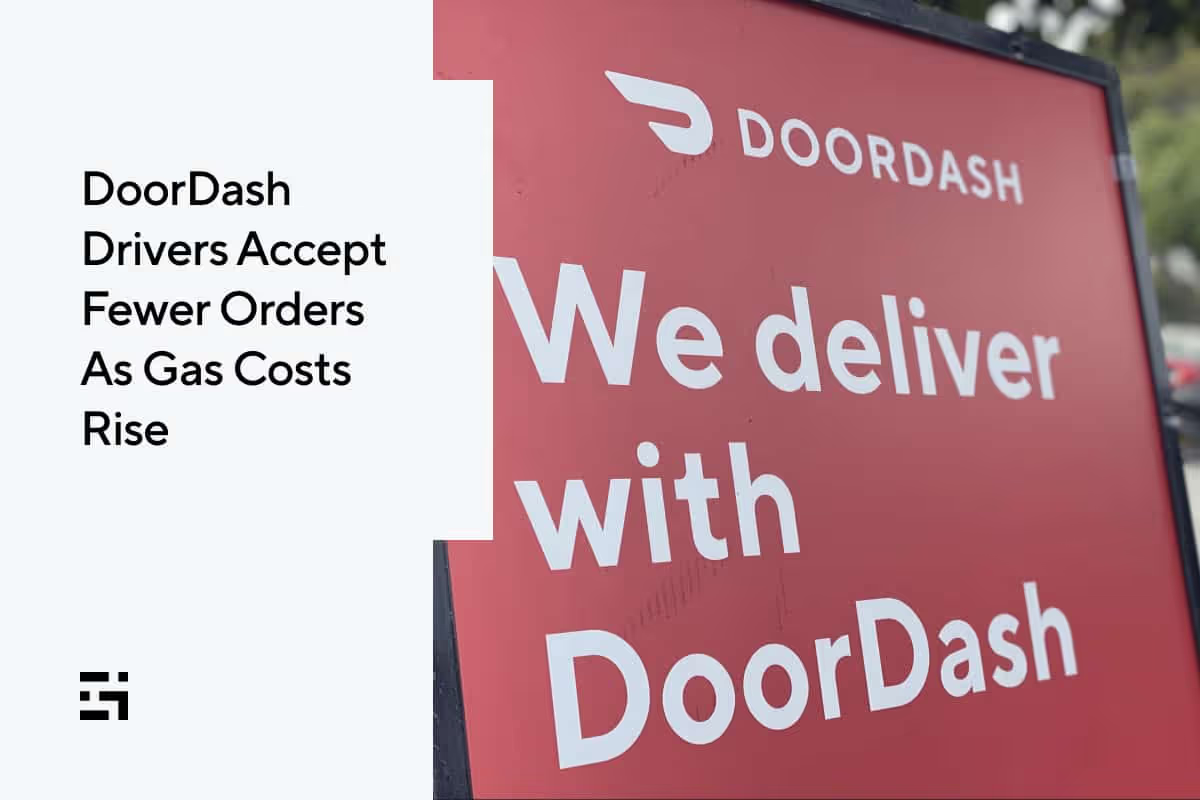
DoorDash Drivers Accept Fewer Orders As Gas Costs Rise
Nobody has to be a rocket scientist to do the math. The expenses of being a gig driver are costing some drivers more than they're being paid. We’ve got the incredible rise in fuel prices to thank for that, of course. When the cost of gas first went up in March, DoorDash placed a fuel surcharge on customer orders to help out their Dashers, who had to fork over a whole bunch more dough at the pump.
Understandably, there are limits to how long any company, or their customers, can afford to do that. At the end of April, DoorDash removed that surcharge, and drivers have been stuck holding the gas pump in one hand and an empty wallet in the other. Now, a few months later, we’re seeing some big changes in Dasher driving patterns.
It turns out that drivers are turning down more orders than they’re picking up and delivering. In this blog post, we’ll look at what’s happening and how Dashers can combat rising gas prices and keep their earnings at the highest levels possible. Here’s what we’ll explore:
- How Dasher behavior has changed since the surcharge was removed
- What Dashers can do to improve their odds of making money
- Gas rewards for rideshare and delivery drivers: Gridwise Gas
How Dasher behavior has changed since the surcharge was removed
Delivery driver gas reimbursement was sorely needed back in March when gas prices first began to soar. It isn’t any different today. Still, back on May 1st, DoorDash removed its gas surcharge, which offered Dashers $5 per 100 miles driven. Now the company offers a small gas discount for DoorDash drivers that applies only when drivers pay with the DoorDash prepaid debit card. It offers them about 10% off the price of gas.
According to some drivers, this isn’t enough to truly compensate for the surge in gas prices for DoorDash drivers. Now when low-ball food orders come in, Dashers are taking advantage of their ability to reject them. It helps that a low acceptance rate doesn’t provide grounds for deactivation. Still, it’s not a good thing that drivers can’t afford to accept the small orders that once served as the basic bread and butter of their business.
Rejecting inordinate numbers of orders takes a huge bite out of driver earnings. Drivers used to be busily delivering orders almost constantly on a given shift, but now they often sit around simply waiting for a request to come through that makes delivering it worth their while. This also affects the restaurants, where freshly cooked food grows cold and soggy while waiting for a Dasher to finally come and pick up the order.
In a Business Insider article, reposted by yahoo! news, a Dasher described new practices he’s instituted to avoid losing money by picking up low-priced deliveries. He reports declining as many as 87% of orders, nearly 9 out of 10! Another driver stated that he pays $140 for gas, which he has to take from his weekly earnings of approximately $700. That’s 20% of his weekly take. With this ridiculous ratio of gas money spent to Dasher dollars earned, it’s no wonder drivers are developing new strategies for making a few bucks.
Unless Dashers begin to formulate real, workable strategies, DoorDash, and the customers it serves, will begin to suffer. In the article cited by yahoo!, a driver on Long Island, New York, reported seeing restaurants tossing out food because no one was coming to pick up the orders.
What Dashers can do to improve their odds of making money
No one wants to see the gig driving business suffer, but as the volume of completed trips is declining, profits on food delivery could decline for all parties involved. Drivers are picking and choosing their restaurants, and carefully calculating the amount of gas it will take to complete deliveries. They’re not taking small orders, as a rule, because it just doesn’t make sense for them. Picking out specific establishments that have the higher paying orders is a good start, but there are even better ways to put together winning strategies.
Here are some alternatives drivers can employ to improve their earnings:
- Get a fuel efficient vehicle. Though they can be convenient for loading and reliable in all kinds of weather, huge SUVs and trucks literally guzzle gasoline. Not everyone can afford a hybrid or electric vehicle, but if it’s possible, drivers could benefit by thinking about a trade-in on that huge, comfy ride. Economy cars would be a more affordable, and smart, option. They’re still big enough to fit food orders, too.
- Switch to more streamlined transport. If you happen to deliver in an urban area, consider moving out of your car and onto a bicycle or scooter for your deliveries. In some markets, it’s even possible to walk your orders to their destinations. The big bonus: no gas required!
- Diversify. It could pay to alternate between delivery and rideshare driving, depending on your schedule. Rideshare driver gas reimbursement isn’t the greatest, either, but hourly rideshare earnings, on average, are somewhat higher than delivery.
- Use tech to track income potential. Where to Drive and When to Drive from Gridwise provide data from real drivers in your locale. You can put these features to work for you, so you can see which neighborhoods are producing the most money, and at what times of day the majority of the cash is rolling in. It’s a much more efficient alternative to driving all over town or guessing which restaurants will give you the biggest orders.
In any event, what would really help most of all is a break on those soaring gas prices. Rather than asking questions like “Does Uber cover gas?” or “Will DoorDash ever bring back the gas surcharge?” it pays to look to a source that will be there for you all the time.
Gas rewards for rideshare and delivery drivers: Gridwise Gas
If you’re still waiting for DoorDash, or another rideshare or delivery company to help you cover the cost of gas, you could be sitting there idle for a while. It’s unlikely that the gig companies are going to restore the ones they’ve already cut off.
That’s why you need to go to a source that will always be there for you. The Gridwise Gas program offers Gridwise users a $0.50 per gallon discount on up to 100 gallons a month. That's $50/month you can save on gas! To save more on gas, follow these easy steps:
- Download Gridwise
- Subscribe to Gridwise Plus
- Go to Benefits
- Click on Gridwise Gas and sign up
- Activate your gas card when it arrives in the mail
- Use your gas card as a debit card at the pump
- Save on all the gas you buy!
Access to Gridwise Gas, plus features that give you tools for creating a great strategy, helps you earn more money and makes your job easier. You can’t afford to drive without Gridwise!
Download the free Gridwise app now!

Top Cities For Doing Rideshare and Delivery
"Location, location, location" is just as important for drivers as it is for real estate agents. Incentives and demand in every city is constantly changing, so it's important to keep a pulse on where the pay is.
Curious to see which major cities paying their drivers top dollar? The results are in, and we've got some tips on what you can do if your city isn't listed.
In this blog post, we will cover these topics:
- Why is it good to know the top cities for food delivery and rideshare?
- Understanding who uses rideshare services
- What do the Gridwise stats say about the top rideshare cities in the US?
- Understanding who uses food and grocery delivery
- What do the Gridwise stats say about the top food delivery cities in the US?
- What if I don’t live in these cities?
Why is it good to know the top cities for food delivery and rideshare?
You may end up in another coverage area. Several urban legends exist in the Los Angeles rideshare coverage area about drivers who took passengers to Las Vegas (about 250 miles). It is good to know where to find rides in your new location.‡ If you multi-app, you might also want to know about food deliveries.
In the post-pandemic world of remote work, you may decide to keep your full-time job in one city but move to another, perhaps entirely across the country. This past March, Forbes reported that 9.3% of working people have chosen to move their homes but keep their jobs because they can work remotely. That’s nearly 20 million Americans who have relocated.
If you are one of those who maintain a side hustle driving rideshare or food delivery, then your selection of a new home city might be guided, in part, by where you can be most profitable in your driving gig.
Understanding who uses rideshare services
Here are some fast facts on rideshare demographics that Zippia reported on their website this past March:
- More than half (51%) of adults ages 18–29 are likely to use ridesharing apps.
- More than half (53%) of those who make $75K or more per year are more likely to use ridesharing services.
- The top demographic for rideshare services is college graduates, at 55%.
- Of those people who regularly walk or ride a bike, 70% also report using rideshare services.
- Of ridesharing app users, 26% report using ridesharing services monthly.
How do we interpret these statistics? Cities ripe for rideshare drivers—places where they can stay busy and make decent money—are characterized by a youthful population, well-paying jobs, and lots of college graduates.
Having a college or two in town also is good for business. More than 100 colleges and universities partner with Lyft to offer free rides to students during certain hours and within a specific radius. The college or university foots the bill. Lyft drivers get paid their standard rate. In many cases, the rides are shared rides. Many Lyft drivers report that these colleges and universities are a big part of their strategy for amassing rides and meeting requirements for incentives based on ride count.
What do the Gridwise stats say about the top rideshare cities in the US?
In developing this list, we looked at what drivers are earning per hour, but we didn’t stop there. We also considered the cost of gasoline on the AAA website and the cost of car insurance according to MoneyGeek.com. These are the two expenses affecting net pay the most. This means that even though California cities, with the most expensive gas in the US, ranked in the top five on both lists, we removed them when considering net pay after expenses.
If you are curious, San Francisco, CA, rideshare drivers ranked fifth, at $28.81 per hour. As of July 7, 2022, according to the AAA website, gas averaged $6.185 a gallon in California. The national average was $4.752 a gallon.
Here are the adjusted listings for the best cities to drive rideshare in the US according to rideshare data gleaned from the Gridwise app, ranked by how much rideshare drivers make by city.
- Boston, MA, Metro Area $32.54 per hour gross
- Portland, OR, Metro Area $30.72 per hour gross
- Denver, CO, Metro Area $29.28 per hour gross
- Chicago, IL, Metro Area $29.10 per hour gross
- Pittsburgh, PA, Metro Area $26.44 per hour gross
In a blog titled How to Earn More as a Rideshare Driver, the latest figure for driver earnings nationwide in March 2022 showed Uber drivers averaging $24.57 per hour. Lyft was a few pennies behind, with its drivers averaging $24.27 per hour. As you can see, drivers in the top five cities averaged anywhere from almost two dollars to eight dollars more per hour.
It's also important to remember that these numbers change frequently, depending on incentives and demand in the area. Cities with high hourly earnings right now might not pay as well in a couple months. That's why you need to track earning trends.
Understanding who uses food and grocery delivery
Here are some numbers on food delivery. It looks as if millennials rule that category, with a strong showing by baby boomers:
- 67% of millennials report that dining out is their second-largest spending category each month. (YPulse, January 2020)
- Three-quarters of millennials reported that they ordered takeout or delivery in the past week. (National Restaurant Association, November 2020)
- To no one’s surprise, the pandemic made a difference. The National Restaurant Association also reported that in March 2020, 41% of baby boomers ordered delivery. That same group came back at 60% when surveyed in November 2020.
These stats tell us that cities where the median age is lower tend to attract more food delivery businesses.
What do the Gridwise stats say about the top delivery cities in the US?
According to the Gridwise app, here are the top five cities for food and grocery delivery in the US. Again, we removed California cities.
We should mention, however, that San Jose, CA, ranked fifth in the US for food and grocery delivery at $17.27 per hour. Here are how the non-California cities stacked up:
- Denver, CO, Metro Area $18.48 per hour gross
- Portland, OR, Metro Area $17.97 per hour gross
- Seattle, WA, Metro Area $19.93 per hour gross
- Boston, MA, Metro Area $17.24 per hour gross
- Salt Lake City, UT Metro Area $17.12 per hour gross
Compared to these rates, this blog reports average hourly Uber Eats drivers earnings as $16.50 gross earnings per hour in March 2022. DoorDash drivers averaged $16.07 gross earnings per hour. Grubhub driver's gross earnings came in at $15.85. As you can see, the best cities came in at a range of $0.62 to almost two dollars more per hour.
What if I don’t live in these cities?
There are still things you can do to maximize your earnings as a rideshare or food delivery driver. Start with Gridwise.
The first thing you can do is visit the Gridwise blog on a regular basis. It's updated weekly with the most current information about food delivery and rideshare data. There is plenty of data about how to boost rideshare profits, as well as food delivery. For example, drivers looking for a new side gig can get paid to do non emergency medical transport with Aryv, which is available in select locations across the US
Also, download the Gridwise app, regarded as the best rideshare and delivery driver app available. You can check out the Where to Drive and When to Drive sections of the app, which will help you keep on top of important earning trends related to demand for drivers in certain neighborhoods, on different days of the week, and during specific times of day.
The Gridwise app also offers a free mileage tracker, providing you with accurate mileage tracking so that you can save the maximum amount of money when it comes to tax time.
Download Gridwise now
† If you do have a ride that takes you out of the rideshare coverage area where you are registered, you should be aware that, depending on the market area, you might be temporarily locked out with one or both of your respective rideshare apps if you accept a ride in that new region. Check with the Lyft and Uber websites for details.
‡ Be mindful that some coverage areas for both Uber and Lyft can have different requirements for drivers, which can cause you a problem. Some of these include things like different background checks or car requirements. Others are more stringent. Las Vegas requires rideshare drivers to have a business license at a cost of about $200.

A New Way For Rideshare and Delivery Drivers To Stay Healthy
Do you care for your mind and body as well as you care for your vehicle? That’s a question gig drivers have to ask themselves. Your car goes in for regular maintenance, and if it breaks down, you will go to great lengths to get it repaired as soon as possible. But what about you? Do you always go for help when your body needs attention? What about your mental health?
You can have the steadiest, most reliable vehicle imaginable, but if your body isn’t in top shape, you won’t be able to work to your greatest potential. That’s why it’s so important to care for yourself even more vigilantly than you care for your car. We know. It’s so expensive to get health care insurance, let alone pay out of pocket for the cost of visits with health care professionals.
You need to find a new way to stay healthy while you continue your work as a rideshare and/or delivery driver, and we’ve found it for you. Sesame was ranked as America’s #1 telehealth provider in 2021, and they offer affordable physical and mental health care around the clock. You’ll learn all about the health issues drivers face and how Sesame can help you avoid and overcome them in this blog post. Here’s how we’ll line things up:
- How gig driving can affect physical and mental health
- The no benefits blues: why it’s so hard for drivers to pay for health care
- Sesame: a new and affordable way to stay in good health
How gig driving can affect physical and mental health
Compared to many jobs, gig driving doesn’t have a lot of obvious occupational hazards. You don’t have to dangle from the top of a scaffold, expose yourself to poisons and biohazards, or crawl into tight spaces while breathing through a respirator. Still, there are many ways that sitting for long periods, driving, and dealing with rideshare and delivery stress can put even more wear and tear on your body and mind than what your brakes and tires suffer.
There’s plenty of great DoorDash driver advice out there about wearing the right shoes, as well as Uber driver advice and Lyft driver advice about taking breaks and stretching your legs, but even when you follow those tips, you can still develop health problems.
Here are just some of the ailments drivers commonly encounter:
- repetitive stress injury: Fingers, wrists, elbows, and shoulders get overworked; necks and legs get cramped.
- poor sleep patterns: Driving at night can trigger disruptions in your sleep cycle.
- dehydration: Many health problems are worsened when you don’t drink enough water.
- poor nutrition: Eating junk food and/or noshing on the go can lead to gastric problems, cardiovascular problems, diabetes, and other side effects of obesity.
- immune system challenges: Being around a lot of people exposes you to more diseases, placing extra stress on your immune system.
And that’s just your body! Your mental health can also suffer when you use gig driving as a way to make a living. You might need help coping with mental health issues such as
- anxiety: The stress of working with the public, plus dealing with traffic snarls, can trigger unpleasant responses ranging from fear and discomfort to agitation and road rage.
- isolation: Driving around in your car, missing out on a vibrant social life, and dealing with an array of strangers can easily lead to loneliness.
- depression: Financial worries, plus the isolation and stress of driving, can put drivers on a spiral of negative thought patterns and a sense of hopelessness.
- substance abuse: We hope you’d never drive under the influence, but what happens when you get home? Many drivers seek to escape harsh realities through unhealthy indulgences, and some even develop harmful addictions.
Obviously, mental and physical health issues can be complex and are often intertwined. For instance, dealing with chronic pain can lead to a negative frame of mind, resulting in depression. Issues such as these require the attention of professionals. The problem for drivers is consulting professionals can cost a whole lot of money.
The no benefits blues: why it’s so hard for drivers to pay for health care
If you’re a gig driver, you’re not an employee of the companies you drive for. You’re an independent contractor, and therefore you’re responsible for providing your own benefits, including health insurance. Even with the healthcare marketplace, buying an insurance policy that covers your medical and mental health can take a substantial bite out of your earnings.
If you pay directly to the provider, you’ll wind up spending even more money. The operating costs medical and mental health professionals carry are astronomical, and unfortunately, they get passed along to their patients and clients. When the costs are covered by insurance companies, a $25 or $30 co-pay doesn’t seem so bad to the person seeking help.
However, for those who don’t have insurance, a simple doctor visit at an Urgent Care facility can cost as much as $100–$150. If further treatment is required, the costs can multiply rapidly.
Now, imagine what could happen if you don’t maintain your health. When you let a seemingly small problem get out of hand, you could wind up in a lot of debt. For example, if you let high blood pressure or shortness of breath go without treatment, you could wind up with advanced heart disease or even a life-altering event such as a heart attack or stroke.
You don’t want to know how much that could cost you, but we’ll tell you anyway. In addition to your health suffering , a major medical event such as that would run you up in the range of tens of thousands of dollars. No matter how much you’ve learned about how to earn more as a rideshare driver or how to earn more as a delivery driver, it’s unlikely that your earnings would be able to cover such a catastrophe.
Prevention goes a long way toward saving you money over time. You know this from taking care of your car. You wouldn’t let an oil leak or squeaky brakes go without repair, would you? Your body is multitudes more sophisticated and intricate than any vehicle. It requires constant maintenance, and without it, the “breakdowns” can have dire consequences.
Lucky for drivers, Sesame is here to provide the kind of care you need at extremely affordable prices.
Sesame: a new and affordable way to stay in good health
One of the best unintended benefits of the recent lockdowns has been the emergence of telehealth. Now, rather than taking time off work to go to a health care professional’s office or clinic, you can “see” a doctor or counselor right from your phone! Simply go to the Sesame website, fill in the information about the service you need, and book an appointment!
Sesame is a leader in the field of telehealth, and they offer affordable options for physical and mental health care at times that suit drivers—around the clock, each and every day. With Sesame, you can
- book appointments in minutes
- pay direct at discount prices, as low as $19 per visit!
- get professional help for all kinds of conditions, including skin care, dental issues, mental health, wellness and disease prevention, care for chronic conditions, diabetes care, men’s health, and even sleep disorders
Sesame also offers affordable access for in-person visits, lab procedures, and prescription drugs. Sesame’s wide network of thousands of providers is available to you with a few taps on your phone’s screen. Book an in-person appointment or go online with a telehealth provider.
With Sesame at your fingertips, you get the health care you need, when you need it, without breaking the bank. What’s more, Sesame’s got a great partnership with your favorite free mileage tracker app, Gridwise!
If you're a Gridwise user, you receive a 20% discount on your first telehealth appointment. Use the code GRIDWISE20.
Download the Gridwise driver app now to use the free mileage tracker and access tons of driver discounts like this one!
Now that the best telehealth company has joined forces with the best mileage tracker app, you’ve got your health care needs covered!
Stay healthy by signing up with Sesame

How To Maintain Mental Health As a Rideshare Or Delivery Driver
If the title alone makes you laugh in that sad-but-funny way, you definitely need to read this post. More than a few rideshare and delivery drivers wonder, in fact, if they might be downright crazy working these kinds of gigs in the first place.
While there’s no doubt that driving for a living can be more than slightly maddening, there are ways to maintain your mental health that you need to know about. We’re going to cover this topic objectively and compassionately, and offer practical solutions. Here’s how we’ll organize things:
- Why mental health matters
- The relationship between mental health and driving
- Threats to the gig driver’s emotional stability
- How to be a gig driver and stay happy
Why mental health matters
Have you ever heard of the mind-body connection? There are volumes written on it, as well as hours of videos and innumerable academic presentations. The mind-body connection is the term psychologists use to describe the way the mind can affect the body.
Maybe you’ve noticed that when you’re feeling down or even depressed, you seem to get more colds. Or that when you’re uptight about dealing with authority figures, or even having to deal with upsetting financial issues, you get a pain in the neck or a major headache? And how many times has a large dose of emotional turmoil made you sick to your stomach?
It’s true that many physical ailments can be related to mental and emotional distress. Stress, in and of itself, can cause problems such as heart disease and debilitating muscle spasms. A lack of exercise or free movement can create musculoskeletal conditions that turn into crippling arthritis. The mind and the body are inexorably connected, and the fact that you need to take care of your body, on its own, is enough reason to tend to your mental health.
The relationship between mental health and driving
Your ability to cope, or lack of it, with your work life can really mess up your home, family, and social life. We’ve all heard of “work-life balance” among the clichéd phrases that get thrown around in the name of “mindfulness” and “wellness.”
Being unable to recover from what we put ourselves through on the average driving shift can gravely disrupt relationships with those we love. While it’s true that we have to hustle to make a good income with gig driving, we also need to take time off for the sake of our own mental health.
If we don’t do this, our performance suffers. We could make mistakes with the app, fail to pick up or deliver the right items, accidentally go through stop signs or red lights, or wind up in mishaps that involve other vehicles and injure innocent people. You can’t be a reliable driver without a brain and body that’s well rested and alert, and you can’t have a healthy body if you don’t prevent what’s going on in your mind from slowly tearing it apart.
Threats to the gig driver’s emotional stability
Gig working is challenging enough, with problems such as long hours, changing shifts , late nights and disrupted sleep, eating far too many meals alone and/or while on the run, and not sticking to a healthy diet. Doing gig driving while the driver is literally running on empty isn’t safe for the driver, potential passengers, or other people who happen to be on the road.
The stress of dealing with traffic jams, cranky passengers, restaurant employees, and delivery customers can certainly tax a driver’s ability to cope. Add in the pressure from the driving app to make double deliveries, or multiple stops for a customer whose trip isn’t going to amount to much, and you’ve got a recipe for mental meltdowns.
In addition to all that, the social lives of drivers often suffer because the best times for them to work are when everybody else is out having a good time. It’s hard to find friends who want to have a few drinks or play video games with you on random Tuesday afternoons. This can result in depression and isolation, and may even lead to drug and alcohol abuse.
No one wants to see drivers wind up as a suicide statistic, but sadly, some do. Financial pressures, considering the fluctuations in DoorDash driver pay or Instacart shopper pay, can contribute to fear, anxiety, and depression.
The risks drivers take to their personal safety can heighten hypervigilance, and further stress. Along with all this, rising costs of living and the shrinking opportunities offered by the average rideshare driver app create a disheartening combination of crushing stressors.
While these situations paint a bleak picture of the life rideshare and delivery drivers lead, you’re not destined to experience a life of stress and sadness. With the right tools and smart mental health moves, you can take control of your life, find better job satisfaction, and create a more balanced mix between work and fun.
How to be a gig driver and stay happy
There’s plenty of DoorDash driver advice out there, and certainly no shortage of Uber driver advice. Much of it simply puts more pressure on drivers: drive more hours, get two phones and use two apps at the same time, drive in the middle of the night when no one else will.
Advice like this doesn’t do a very good job at lessening stress. Here, we want to focus on ways to maintain your mental health, not lose your “stuff!” With that in mind, let’s look at some of the challenges drivers face, and find solutions that make being a driver easier and your life much happier.
Turn loneliness and isolation into engagement and socialization.
If you simply jump into your vehicle and drive around, grumpily picking up people and/or packages and meals, as though you don’t want to be there, you can become quite lonely, very fast. It’s true that any conversations you might have may be brief and not terribly meaningful, but if you take on a friendly attitude, you’ll feel so much more socially connected.
How can you do this? Go out of your way to say a few words to people you meet. Yes, even the surly burrito roller at your regular pickup spot will get way nicer when you ask how their day’s going, or even simply comment on what a nice day it is. Customers for rideshare don’t always want to talk, but many do. You’ll be amazed at the cool connections you can make and the interesting characters you’ll encounter!
Turn not knowing where to turn into finding the help you need.
If you’re feeling as though you need immediate help to get out of your funk, or overcome anxiety, be less angry, or keep clear boundaries, there’s a wonderful place for you to turn to.
Sesame, rated the #1 telehealth company in 2021, is a comprehensive resource for medical as well as mental health care. Set up an appointment with a medical or mental health specialist within minutes, and get the help you need. Visits cost as little as $19 each, and if you're a Gridwise user, you’ll receive a 20% discount when you use the code GRIDWISE20. Sesame will be there for you 365, 24/7. Book an appointment any time, at sesamecare.co, and take advantage of your Gridwise discount.
Turn driver burnout into knowing when enough is enough.
Using a delivery or rideshare driver app can easily drag you into doing more work than you originally intended. The video game-like aspect of the apps can have you chasing that one more delivery for an extra $25, or pushing your ride total up so you can reach the platinum level for Uber Pro. Pay attention to when you feel compelled by the nature of the driving game, set deadlines or financial goals for yourself, and stop before you…just can’t.
Taking more breaks can help, too. Pull over now and then, park safely, then create your own little “meditation time.” This can help you to calm down and be ready to take on more driving with a much more relaxed and balanced outlook.
Turn worries about pay into certainty about what you’re earning.
If you knew exactly how much you were earning for each day, week, and month you drive, maybe you wouldn’t give in to that compulsion to keep driving for a few extra hours. As the best earning tracker app for gig drivers, Gridwise tracks all your gig driving earnings, seamlessly. Simply sync your driving apps with Gridwise, and detailed, easy-to-read graphs, displaying how much you’re earning, magically appear.
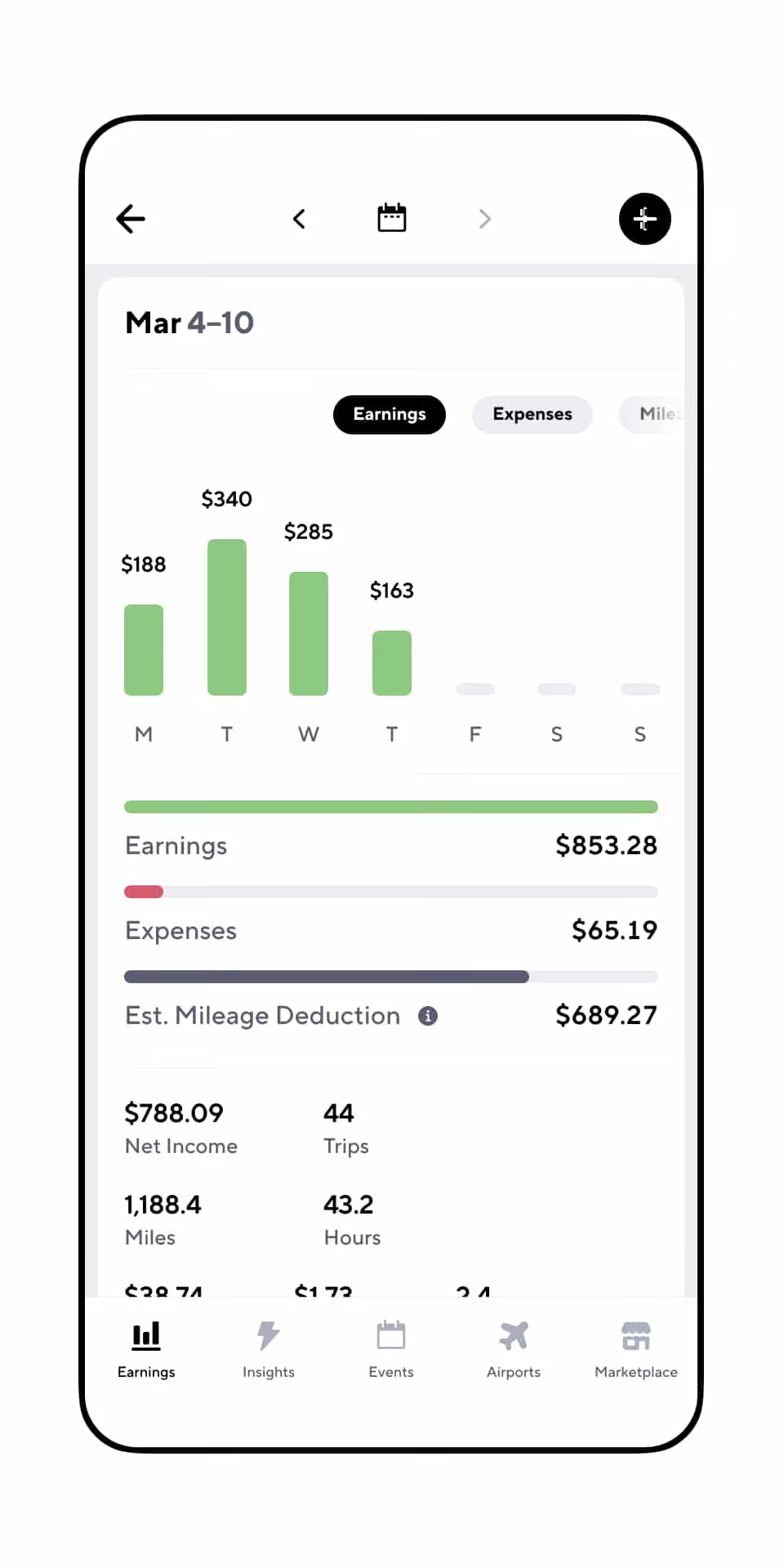
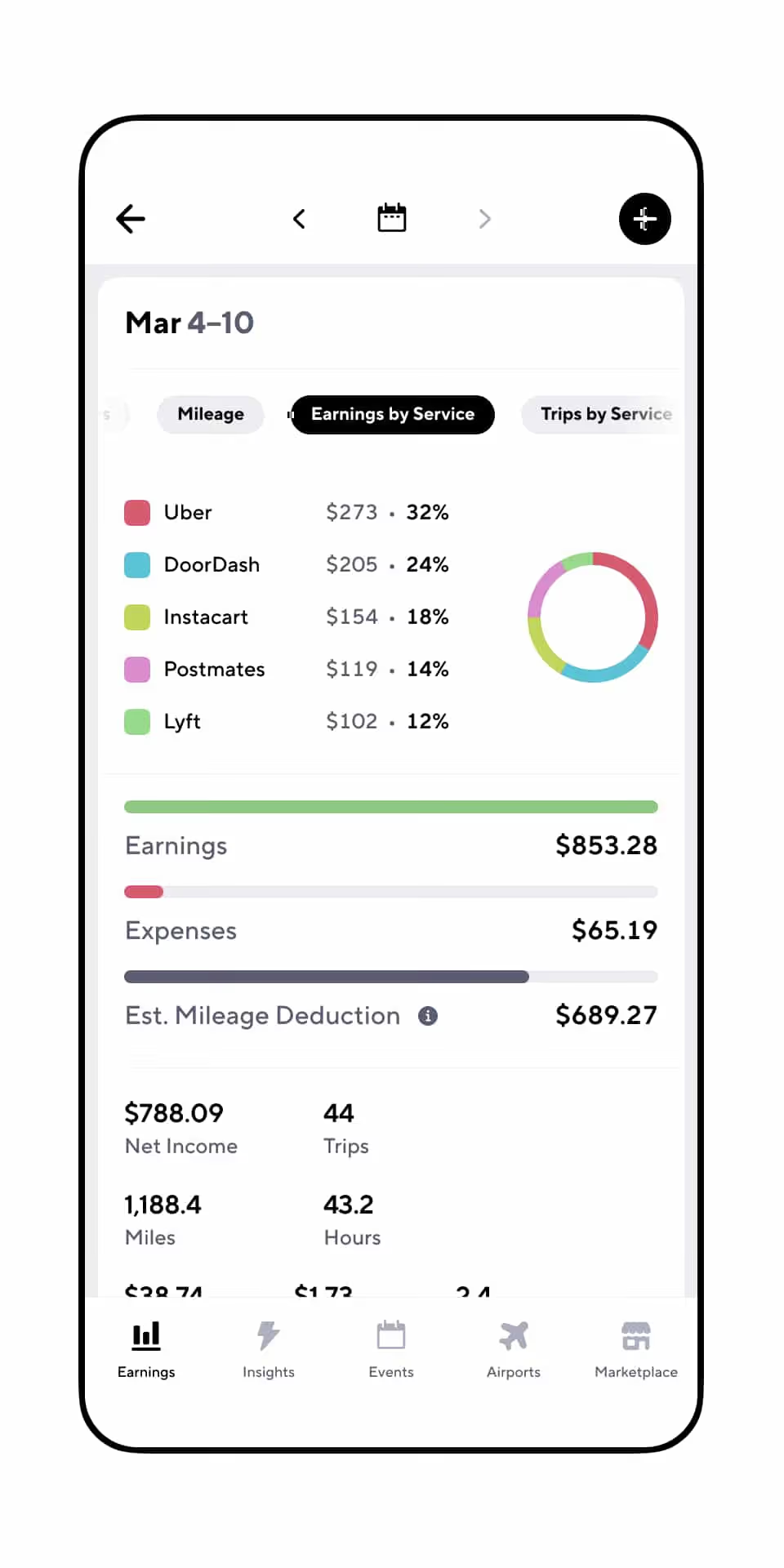
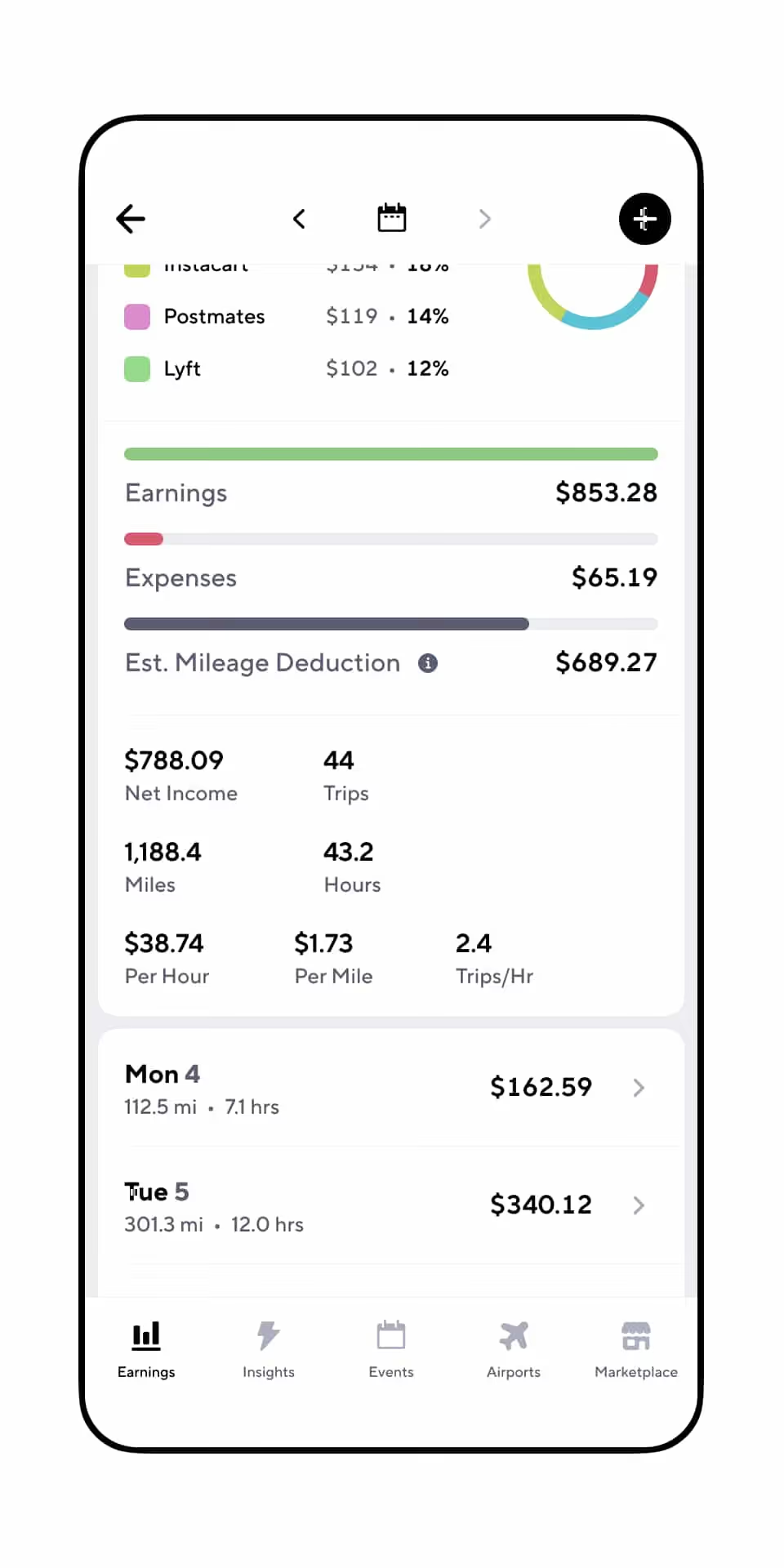
Any shrink will tell you that certainty can help alleviate anxiety, as will knowing what you can’t change, and identifying the things you can do something about.
Turn fretting about finding business into knowing where and when you can make the most money.
Driving around aimlessly looking for business, particularly with gas prices shooting through the roof, can add tons of stress to a driver’s life. That’s why Gridwise developed Where to Drive and When to Drive. These powerful features provide data based on real drivers in your area. They show you the best times and places to get the business you’re looking for, and help you plan your driving life so you can fit in some social time too.
While we’re talking about drivers’ mental health, let’s pose a rather poignant question: What happens when you really need professional help? As it turns out, it’s easier to get affordable medical and mental health coverage than you might think.
Turn the “no benefits” tightrope walk into a safety net that keeps you covered.
One of the biggest risks drivers take as independent contractors is working without getting employee benefits. Everything is fine while you’re healthy and strong, but as soon as something goes wrong, you could wind up with a major financial disaster piling on top of your substantial medical woes.
This no longer has to happen. With Gridwise Benefits, you can get coverage that makes you feel safe in almost any kind of unfortunate situation. Gridwise is so much more than an Uber mileage tracking app or Lyft mileage tracker. It’s a resource that offers tons of great benefits, including
- Gridwise Protection: covers 80% of your income when you’re unable to work
- Gridwise Dollar Benefits: offers low-cost and no-cost policies for
- accidental death & disability (AD&D) insurance
- life insurance
- telehealth visits with $0 copay
- accident medical-expense insurance
- dental insurance
- vision insurance
- critical illness insurance
- teletherapy
As you can see, Gridwise is way more than a rideshare assistant app and earnings tracker app for gig drivers. It’s the #1 assistant for rideshare and delivery drivers because it supplies drivers with all the things they need to be successful on the road, and helps drivers support and maintain their financial and mental health.
With Gridwise, you’re never out there on the road all alone. Get smart. Get Gridwise. It’s free!
Download the # 1 rideshare assistant app today!

IRS Updates Standard Mileage Deduction For Rest of 2022
A recent IRS ruling gives gig drivers a break when it comes to maximizing earnings. The IRS increased the optional standard mileage rate to $0.625 per mile.
How does this affect drivers? Read on as we address key subjects and questions in this latest development for gig drivers. Subjects include
- What is the new mileage rate for the remainder of 2022?
- How does the new policy work?
- Surcharges removed by some companies using gig drivers
- An overview of other measures to soften the blow of high fuel prices
What is the new mileage rate for the remainder of 2022?
The change to $0.625 a mile is a $0.04 increase over the current optional standard mileage rate of $0.585 per gallon. The IRS release notes that this is a rare mid-year change in the optional standard mileage rate. The last time the IRS made such a mid-year change was in 2011. The IRS typically updates the mileage rates in the fall for the next calendar year. The increase in deduction is effective July 1, 2022. Gig drivers will have to claim their mileage for the first six months of the year at the previous rate.
The IRS release made no mention of a possible readjustment of the deduction once gas prices return to lower levels.
How the new the policy works
The optional standard mileage rate is a per-mile deduction that drivers apply against their gross earnings, allowing them to reduce their taxable income. This only applies to miles driven as part of self-employment. At tax time, drivers tally up the miles driven during the year for business and multiply it by $0.585 per gallon (until July 1). They deduct that amount from their total gross income. This, along with any other deductions they take, determines their taxable income.
For drivers that average 20,000 miles a year in rideshare miles on their car (typical for a part-time rideshare driver), this increase allows them to lower their gross income by an additional $800. For some that might be enough to drop them into a lower tax bracket.
The optional standard mileage deduction is used in lieu of tracking actual costs. It covers fuel costs related to business driving, as well as other fixed and variable costs such as depreciation, insurance, repairs, and other costs.
Surcharges removed by some gig app companies
In recent months rideshare and food delivery drivers have benefitted from other measures designed to provide them with extra money to offset the cost of fuel. Most notably, both Lyft and Uber announced 55-cent-per-ride surcharges, all of which went to the driver. These surcharges took effect in mid-March. Both rideshare companies, as well as DoorDash, announced that the surcharges would be re-evaluated after 60 days.
Uber Eats and DoorDash removed the gas surcharges in May, as reported in a Gridwise blog post titled Uber Eats and DoorDash Remove Gas Incentives for Delivery Drivers. Uber kept the surcharges in effect for rideshare drivers, as did Lyft.
An overview of other measures to soften the blow of high fuel prices
So far, gig drivers are compelled to piece together a patchwork of different benefits that still probably don’t come close to offsetting the increase, but everything helps. The major measures include:
Gridwise’s mileage tracking app for delivery drivers
When used in unison with the increased IRS optional standard mileage rate deduction, the Gridwise mileage tracking app helps keep more accurate track of mileage. This allows drivers to maximize tax deductions for rideshare and food delivery driving, too. Users report that the Gridwise mileage tracker app for gig drivers is more accurate than the figures reported for the individual drivers from the rideshare companies. One driver said that at tax time he found 8,000 more miles through the Gridwise app. Many drivers refer to it as the best mileage tracking app available. The Gridwise app is also a mileage tracker for DoorDash and other food delivery drivers as well.
The rideshare fuel surcharge
For part-time rideshare drivers averaging 40 rideshare rides a week, this means extra income in their pocket. At $0.55 a ride, this computes to as much as $22 a week. Full-time drivers will realize more.
The Gridwise Gas discount for rideshare and delivery drivers
Gridwise reported in a recent blog post titled Gridwise Increases Gas Discount to Help Rideshare and Delivery Drivers that it increased the discount on its GasBuddy card from $0.10 up to as much as $0.50 a gallon. The card, which is a free benefit of Gridwise, is available to drivers when they sign up on the website.
Other Gridwise features
The Gridwise app has a number of other features providing drivers with a clear picture of where their money comes from. Gridwise also features an earnings tracker app for drivers. This is essential for those that multi-app, meaning that they drive for both Uber and Lyft, and might also incorporate food delivery into their gig driving activities. Drivers can also maximize their earnings by checking out the Where to Drive and When to Drive features in the Gridwise app. The Gridwise app also keeps drivers informed of peak times at airports and lists special events that also generate extra rides.
Being in the right place at the right time is an excellent way of avoiding useless miles and wasted gas.
Are all these measures enough?
As we mentioned earlier, even if drivers maximize their usage of all these tools, it is difficult to offset all the increases in gas prices since early this year. According to the AAA, gas prices nationwide averaged $4.955 cents per gallon as of June 22, 2022. A year ago, they were almost $2.00 less—$3.069 a gallon.
What is driving these higher prices? Any number of events both domestically and internationally affect the price of gas, but the Ukrainian-Russian conflict is seen as a major part of the problem. There is no projection as to when those hostilities will end.
Gridwise empowers gig drivers
One absolute for gig drivers is that they can benefit from using the Gridwise app. Gridwise is dedicated to helping gig drivers work smarter and protecting more of their income. In addition to keeping drivers informed about saving money on fuel, Gridwide also helps them choose the best phone plans,find the best source of service for their car, and even learn how to protect themselves from danger when they are driving.
Every gig driver can drive smarter and become more profitable. Interested?
Download Gridwise for free!
Trabaje de forma más inteligente. Gane más.
Ya sea que conduzcas, entregues o recojas turnos, Gridwise te ayuda a hacer un seguimiento de las ganancias, el kilometraje y el rendimiento para que puedas mantener el control de tu trabajo. Descarga la aplicación y toma las riendas hoy mismo.
