Blog de Gridwise
¡Lee el blog de Gridwise para obtener consejos y sugerencias sobre cómo ganar más dinero mientras conduces para Lyft, Uber, DoorDash, GrubHub y más!

The Gridwise Job Board: Find Your Ideal Job or Gig Work
Gridwise is an essential assistant app created by gig workers for gig workers. Our mission is to support those engaged in gig work in every way possible. We understand how challenging it can be to deal with income instability, a lack of benefits, and job insecurity that often comes with gig work. The Gridwise app tracks and organizes earnings and expenses, and offers a wide array of discounts, deals, and services that make the lives of independent contractors easier and more rewarding.
We firmly believe it’s possible to make a viable living and create a gig experience that offers flexible hours, variety, and excitement. With issues such as consistent earnings and job security in mind, Gridwise is proud to offer a centralized platform that shows you how to find gig work and secure reliable opportunities. We’re proud to introduce the Gridwise Job Board.
[elementor-template id="20891"]
The Gridwise Job Board: Key features
Because Gridwise is dedicated to serving the gig worker community, we’ve filled the Gridwise Job Board with useful features that won’t waste your precious time.
- Comprehensive listings. Find part-time, full-time, temporary, and per-task work. Drive or deliver with your vehicle, utilize an employer’s vehicle, or even find non-driving gig work.
- User-friendly interface. Find the jobs that are right for you with a tap of your screen.
- Verified opportunities. We vet the jobs before they are listed to ensure you’re getting high-quality job postings.
How to get more gig work, seasonal, part-time or full-time jobs with the Gridwise Job Board
Looking specifically for “gig work apps” or “gig jobs near me?” You’re in luck. Our filters and search functions send you directly to the listings you seek.
Here’s how it works.
- Access the Job Board via the Gridwise website.
- Search for jobs by type, location, and more.
- Select the job that interests you, and read all about it.
- Scroll through the description, and if it appeals to you, click “Apply for job.”
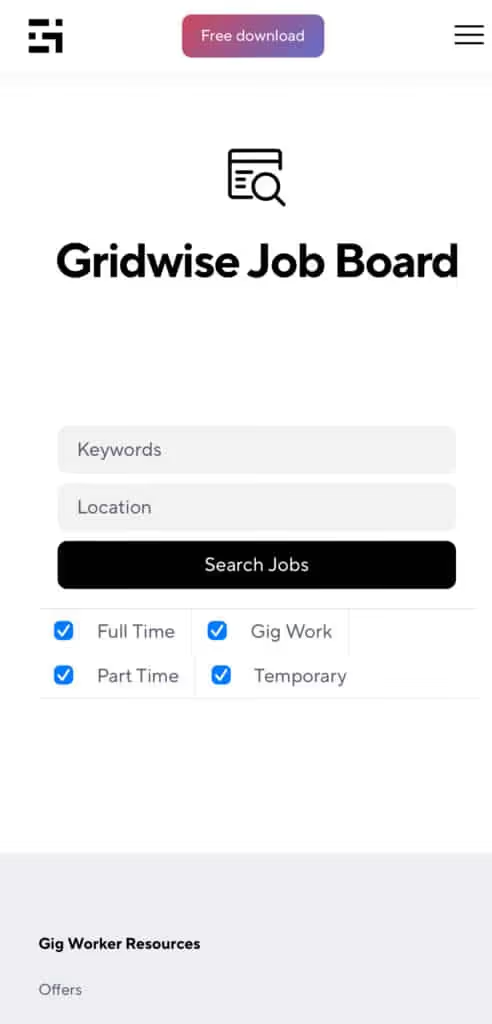
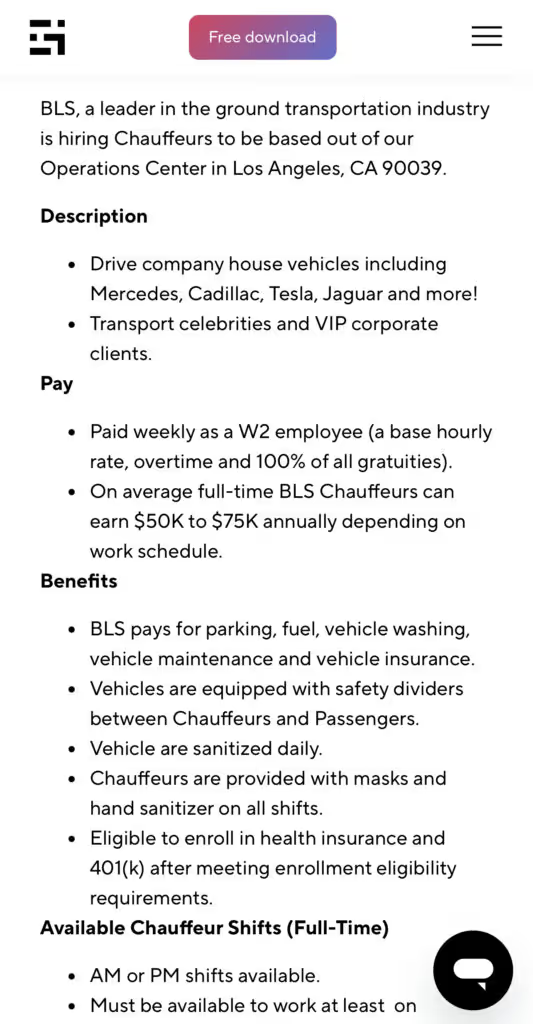
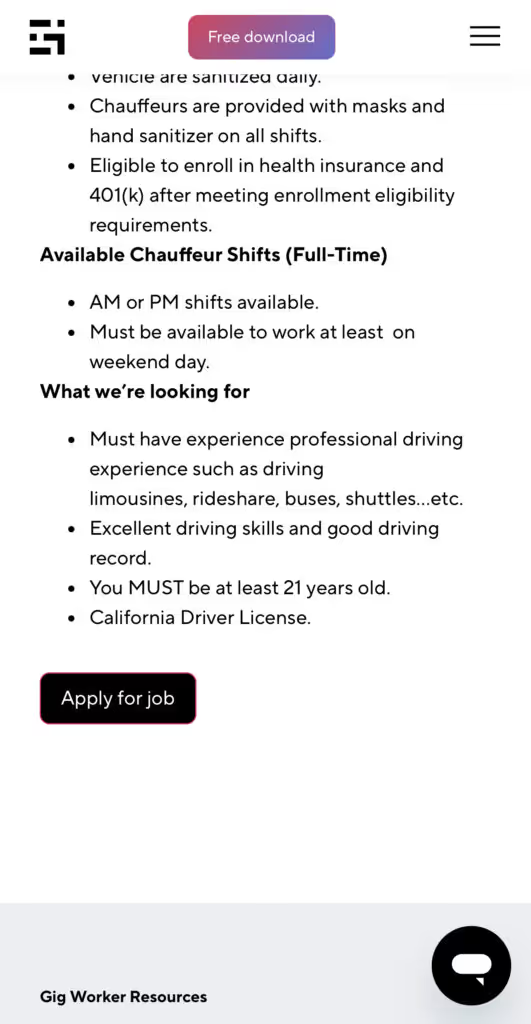
Many types of jobs are available. Adjust the search filter to see the full variety of opportunities that will let you cash in. Deliver food, set up catering, do rideshare driving, get paid for doing package delivery, and much more. You’ll find short-term gigs, long-term contracts, and part-time positions.
Perks of the Gridwise Job Board for gig workers
Gig workers who know how to make extra money will appreciate how the Gridwise Job Board lets you multiply your chances of bringing in big earnings. Here’s how:
- Increased stability. Use the Gridwise Job Board to find part-time or permanent jobs in addition to the part-time gigs you already have. Always keep a steady stream of earning opportunities flowing toward you.
- Flexibility and autonomy. Choose jobs that fit your schedule, work around other jobs and family duties, and still leave room for some fun in your life. Discover side hustles to supplement your full-time job, permanently or just for the season.
- Skill development. Find part-time work that lets you use a skill you already have, or try your hand at something new. It’s a smart way to develop a portfolio to showcase what you can do, or even to find permanent employment.
Get Gridwise and stay up to date on the Gridwise Job Board
Gig workers need plenty of information and assistance, and Gridwise is here to give it to you. Download the app and get essential features such as
- seamless earnings tracking
- mileage tracking
- expense recording, including notes
- low-cost and no-cost insurance benefits
- access to affordable medical, dental, vision, mental health, and alternative care
- professional services including legal and financial help
- deals and discounts
- weather, events, and traffic reports
- inside information on where and when to drive
[elementor-template id="20936"]
More to know about gig work:

5 Best Mileage Trackers For Gig Drivers
Many drivers ask, “Do I really need a mileage tracking app?” The answer is simple: only if you want to have an accurate count of all the miles you can legally deduct from your taxable income! You might think your rideshare or delivery driving app has got you covered. After all, they do quite a good job of logging the miles you drive while you’re on a trip or delivery. But, if you want to have the best app to track mileage for Uber, Lyft, Doordash, Instacart, or the other apps you may use, you need more. Why is that?
Without a separate tracker, you’re missing the miles you drive in between pings. Did you realize that all the miles you drive, from the moment you begin your shift until it’s over (as long as you don’t drive several miles on a break to hang with your friends), are tax deductible! That means you need something besides your driving app to keep an accurate count of your travels. Read this Gridwise post to see how important it is to keep track of every deductible mile.
You won’t be surprised to hear that there’s an app for tracking miles. In fact, there are several of them. Here, we’re going to tell you about five top mileage tracking apps, and help you figure out which one is best for you.
Before we get to the list and identify the best mileage tracker app, let’s clarify what exactly a mileage tracking app is. According to G2.com’s technology glossary, mileage tracking is done for the purpose of keeping a log of mileage that is either reimbursable or tax deductible.
And yes, of course you can track your miles simply by taking readings on your odometer. But are you really prepared to account for how many miles you drove for personal reasons and subtract them from the total to get your business mileage? Even if you can remember all that and do the arithmetic, if you want an accurate reading of the miles you drive for business, and can therefore deduct, a mileage tracking app will save you a lot of trouble and prevent you from making costly errors.
Plus, as a gig driver, you have specific needs when it comes to a mileage tracker. Ideally, you’d be able to handle mileage tracking and several other functions all in one app. It can be maddening enough to deal with driving apps, particularly if you’re an avid multi-apper. You would want your mileage tracker app to help you keep account of other aspects of your business, including income, expenses, and inside information about the art of gig driving.
Not all mileage apps are equal, to be sure! Let’s look at five of the best apps to track mileage and figure out which is the best app to track mileage with Uber and Lyft, or what mileage tracker app is best for DoorDash.
[elementor-template id="20891"]
1. Zoho Expense
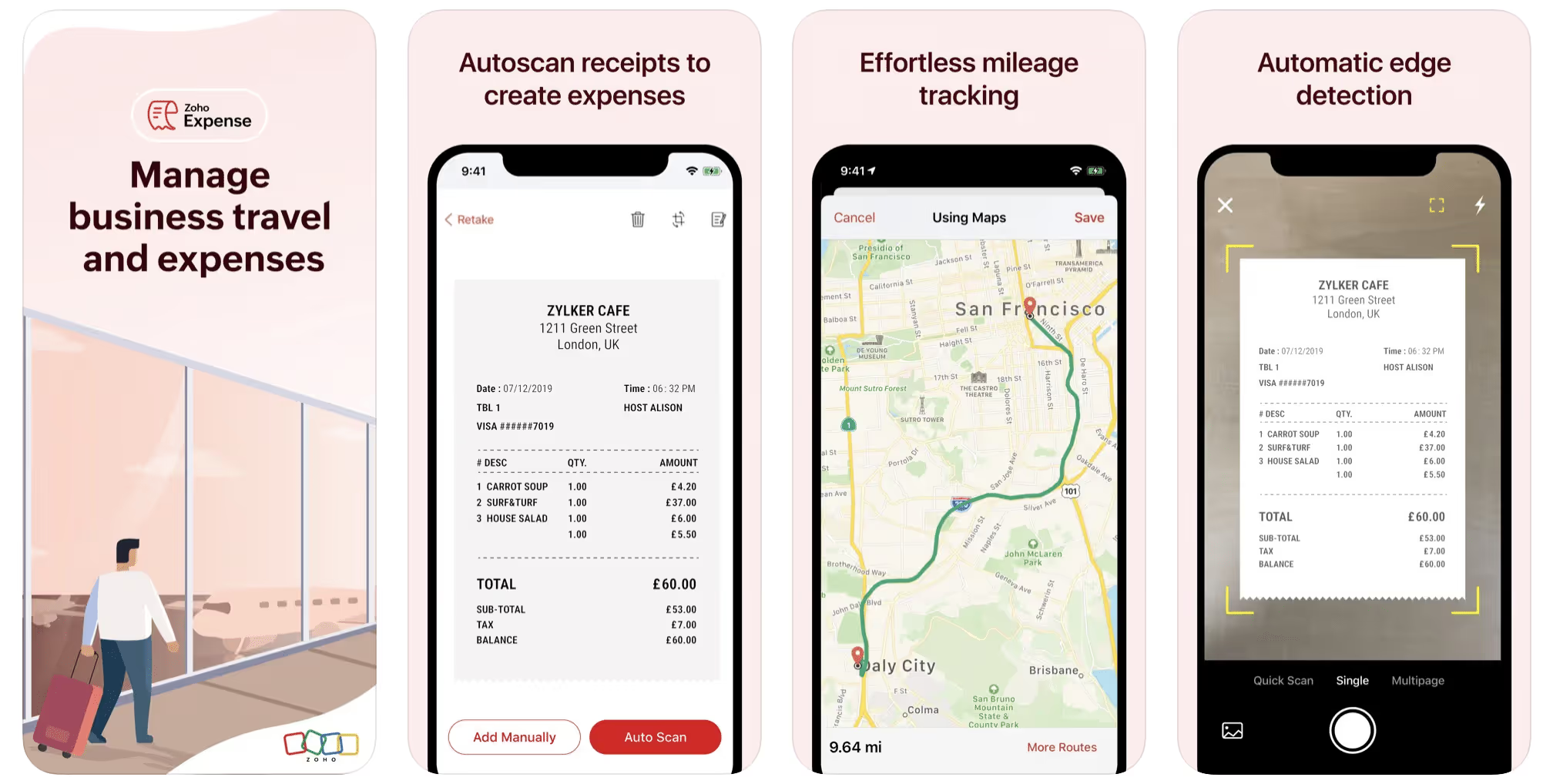
First up is Zoho Expense, which does exactly what its name says. This app is designed to allow companies to give employees a uniform way to create and submit expense reports. It can be used by individuals, including gig drivers, as well.
It includes a mileage tracker, as well as features that let you track other deductible expenses, including the ability to scan and record receipts.
Available on Android and Apple: Yes
Ratings: 4.8 stars on App Store, 4.7 stars on Google Play
Free Version: Yes
Subscription price: $3 per month, billed annually
Created specifically for gig drivers: No
2. Quickbooks Online
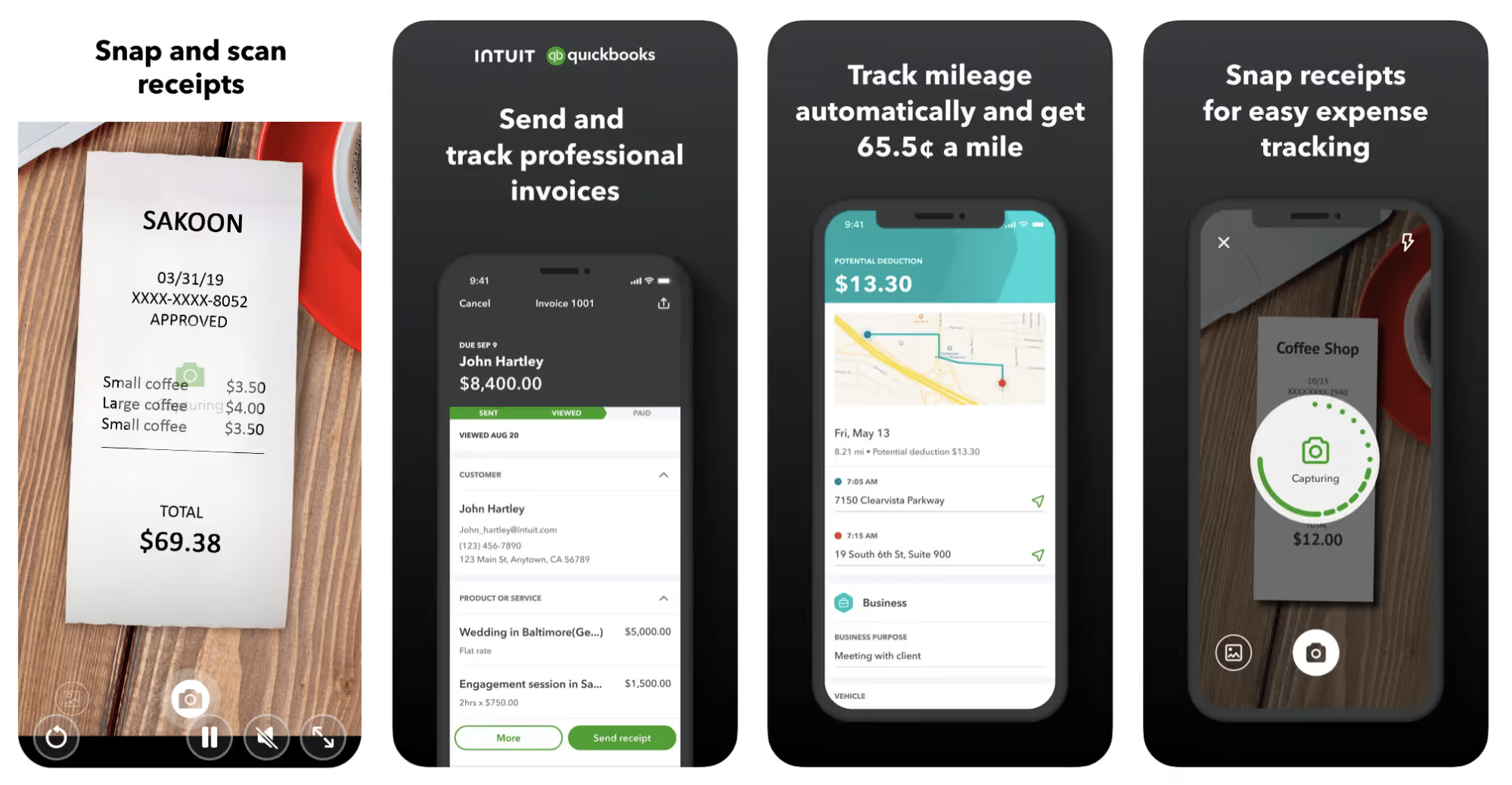
Quickbooks Online is a cloud-based app that allows you to track your mileage, earnings, and expenses. The information you enter can then be used to generate various reports that prepare you for tax time. It also allows you to create graphs that illustrate your cash flow, and includes a receipt scanner so you can instantly record deductible expenses. Quickbooks is popular, highly reliable, and designed mainly to help people keep track of their small businesses.
Available on Android and Apple: Yes
Ratings: 4.7 stars on App Store, 4.4 stars on Google Play
Free version: 30-day free trial
Subscription price: $15 per month for basic version if purchased for 3 months or more
Created specifically for gig drivers: No
Source: quickbooks.intuit.com
3. Shoeboxed
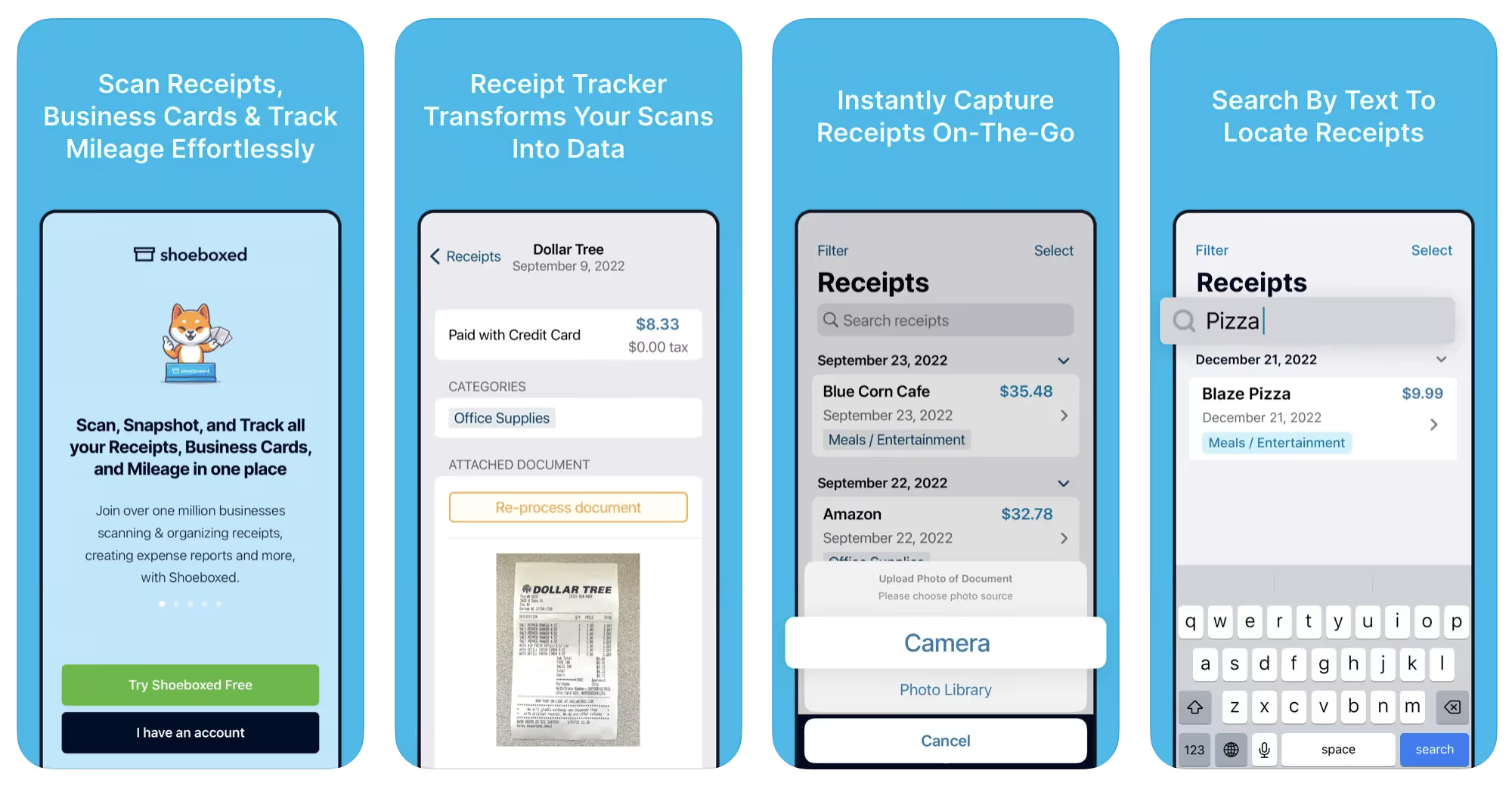
Shoeboxed started in 2007 as a service for scanning paper receipts into digital form. Now the app offers a free mileage tracker and has enabled users to scan receipts directly. It touts itself as the best mileage tracking app for DoorDash, but there are some elements missing that Dashers might like to have. While it provides features that record your expenses and prepare you for tax season, it doesn’t automatically track your earnings. The mileage tracker has a system where you can drop pins along your routes to make the tracking more precise, identifying those legs of a trip that you make for business purposes. The mileage tracker is “free” once you sign up for the basic version.
Available on Android and Apple: Yes
Ratings: 4.5 stars on App Store, 2.3 stars on Google Play
Free version: No
Subscription price: $18 per month for basic version
Created specifically for gig drivers: No
Source: blog.shoeboxed.com
4. Stride
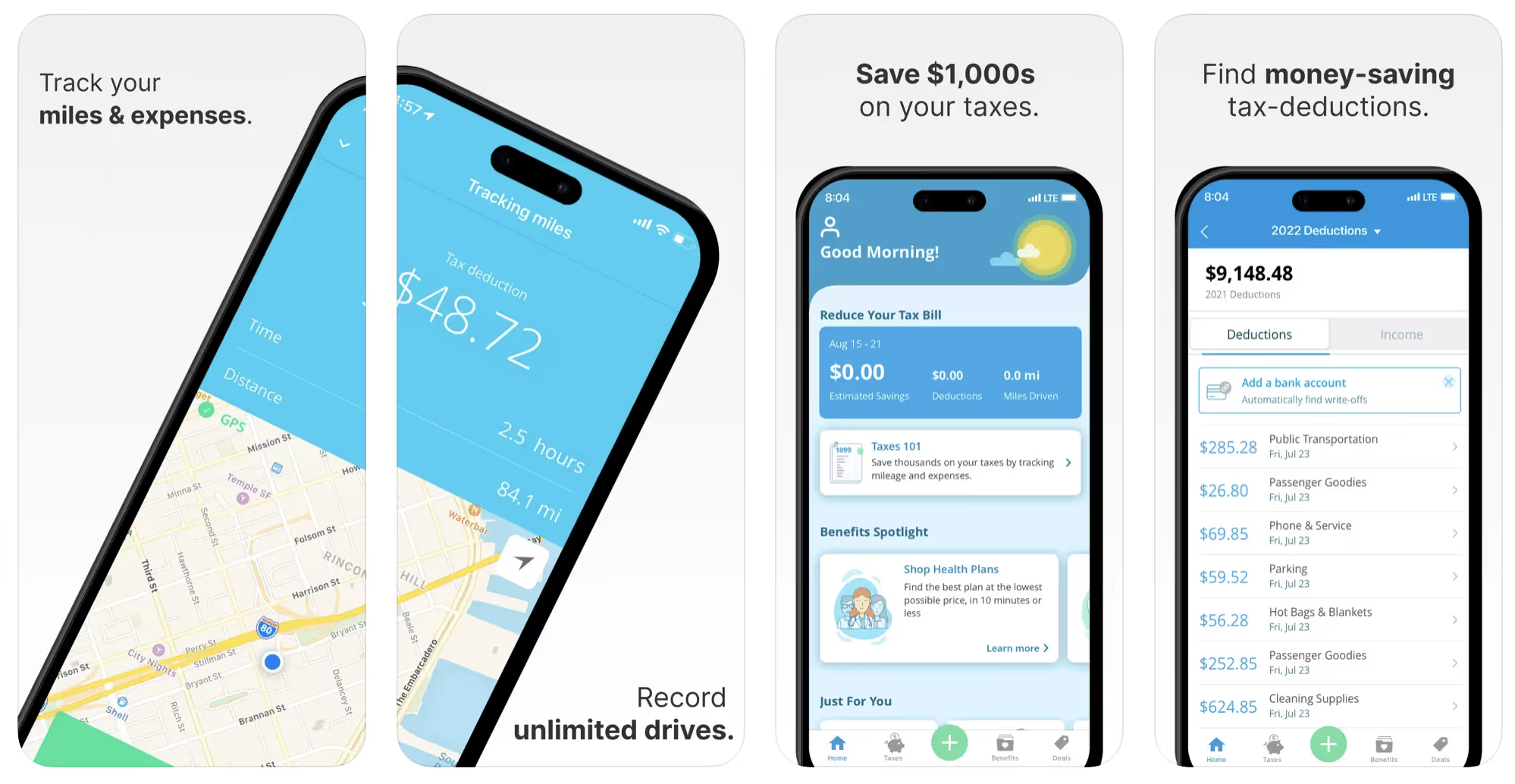
This free mileage tracker does a fair job of keeping track of the distances you rack up while gig driving, but it doesn’t automatically track earnings. It can be a big help, though, in tracking your expenses. You can link Stride to your bank account, and it will automatically scan your expenses to identify items you can potentially deduct. The app is totally free. This could make it the best free mileage tracker app, but there is a small price to pay. The app will persistently push you to consider various insurance plans that they are affiliated with. If you don’t mind that, this is a solid mileage tracker, even if it doesn’t track your earnings.
Available on Android and Apple: Yes
Ratings: 4.8 stars on App Store, 4.6 stars on Google Play
Free version: Yes
Subscription price: None. The app is free.
Created specifically for gig drivers: No
5. Gridwise
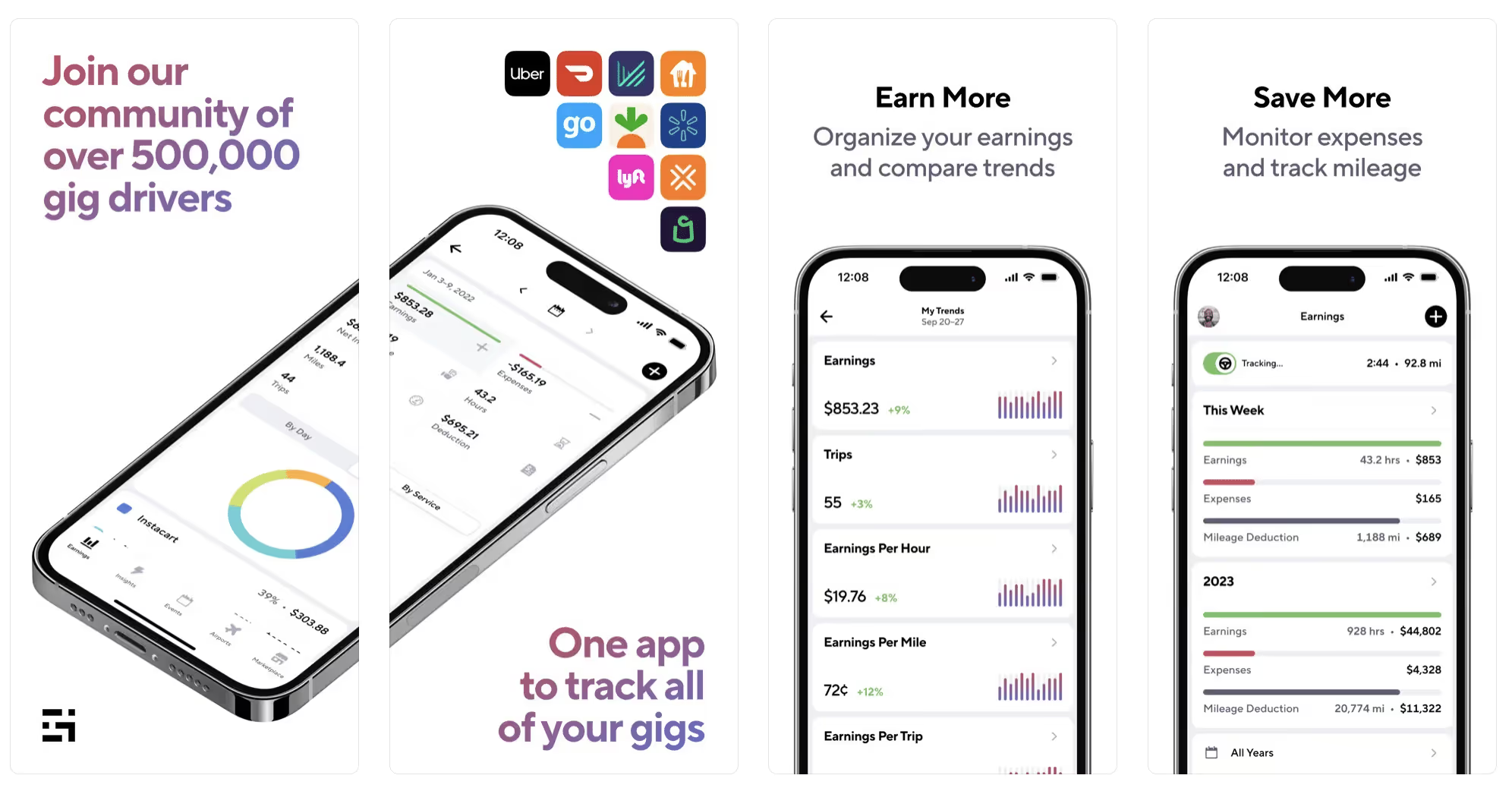
Gridwise has a free mileage tracker and free features that record your income and expenses. It gives you access to insurance and benefits, as well as insights about the best times and places to make the most money while gig driving. The Gridwise mileage tracker captures all the miles you drive while you’re on your driving shift, and it can be used if you have other trips you need to make which qualify as business travel.
Drivers love it because it is geared toward the needs of rideshare and delivery workers, providing free information about airport departures and arrivals, event start and let out times, weather, traffic, and more. The Gridwise Plus subscription adds value by providing additional insights and reports, discounts on benefits, the ability to export data in .csv format,, and more.
Available on Android and Apple: Yes
Ratings: 4.9 stars on App Store, 4.6 stars on Google Play
Free version: Yes
Subscription price: $9.95 per month for Gridwise Plus, or $95.99 per year (a $23.41 savings)
Created specifically for gig drivers: Yes!
What is the best mileage tracking app?
Now that we’ve checked them all out, we’re positive about the answer to that. Hands down, it’s Gridwise. Are we biased? You bet we are! But drivers love it too. Gridwise is the best mileage tracker app—and so much more. So many of the features are free, and the subscription to Gridwise Plus will pay for itself with additional insights to boost your earnings and deeper discounts on products and services.
Most important, Gridwise is designed specifically for gig drivers by experts who were once gig drivers themselves! Knowing what gig drivers need is a crucial step in creating an app that rideshare and delivery drivers can really use! Here are a few of the features, besides mileage tracking:
- seamless earnings tracking
- automatic, on/off toggle and manual mileage tracking
- mileage categorization
- airport, traffic, weather, and events information
- insights into where to drive and when to drive
- reports showing earnings across the platforms you use
- discounts on countless products and services for drivers
- additional resources for finding side gigs
- an informative and comprehensive blog
- affordable benefits, including insurance, medical, dental, and alternative practitioner discounts
- a community of drivers just like you
Don’t settle for just any app. Get the best mileage tracker, and so much more, from Gridwise!
[elementor-template id="21599"]

What Records Do Gig Drivers Need To Keep Track Of For Taxes?
* Gridwise does not provide tax, legal, or accounting advice. This material has been prepared for information purposes only, and is not intended to provide, and should not be relied on for tax, legal, or accounting advice. You should consult your own tax, legal, and accounting advisors before filing your return.
Record keeping? Who signed up for that? As a gig driver, it’s part of what you need to do to keep your business running. Don’t worry. It’s not as complicated as you might have been led to believe. This post will show you what you need to keep track of and the best ways to gather and preserve your tax-related records. We will cover
- How record keeping can help reduce income tax for freelancers
- Taxes and freelance work: Record keeping requirements
- Mileage tracking: Motives and methods
- More deductions and records to keep
- Make tax time easier
How record keeping can reduce income tax for freelancers
Tax time is not “fun time” for rideshare and delivery drivers. It’s easy to get used to watching your earnings pile up and come to believe they are all yours. Unfortunately, that isn’t the case. Gig work taxes can be especially painful because no one takes them out of your earnings for you, until the tax authorities insist that you do it for yourself.
You will need to show the tax authorities your income records, and they will gladly tell you to send them what they determine to be their fair share. Think that’s not fair? You’re not alone, but that doesn’t mean you’re going to get out of paying gig work taxes.
But you can find ways to pay the smallest amount that is legal and possible. The best way to defend yourself against having to pay astronomical amounts when you file your return is to know what expenses you can deduct from your gross income. When you subtract deductible expenses from your gross income, there is less left over to be taxed. This reduces the amount they can hit you with gig worker taxes. and can make your tax bill substantially lower.
While you want to keep good records so as to be in compliance with taxation entities such as the IRS, you also want to ensure you have proof of every last deductible expense you have accrued during the year. There are other records you must keep as well. Let’s look at some of the considerations you have, realizing that you now need to know how to do taxes as a freelancer.
Taxes and freelance work: Record keeping requirements
So many gig drivers fail to understand the responsibilities they have as independent contractors. Those who work part time for very few hours may even believe they don’t have to report the income they get from their driving gig payments. That would be a big mistake!
The company or companies you work for report your income to the IRS and state tax authorities. If you fail to report that income, you will risk some rather painful penalties. The IRS taxing side hustles is as much of a thing as the IRS taxing income from any other job. Your best bet is to report what you’ve earned, honestly and completely, and comply with other record keeping requirements such as
- gross income
- deductions and credits
- purchases (items you purchase and resell, such as snacks or bottled water)
- a log of all your mileage (or vehicle expenses, if greater)
- a list of all expenses and assets, such as utilities and other expenses associated with having a home office and equipment
- machinery and furniture you own, including when it was acquired, how much it cost, whether you previously took deductions on it, and selling price, if applicable (this includes your vehicle)
More things to consider:
- Pay attention to the retention of your records. You’ll need to keep all tax-return-related items— including income, deductions, and any tax credits reported— until the period of limitations runs out (3 years from date you filed, or 2 years from when you paid tax. If you have employees, keep your records for at least 4 years.)
- If you want to avoid paying self-employed taxes, you may want to set up a corporation or Limited Liability Corporation (LLC) for your business. This allows you to separate all your gig driving earnings from personal income, and permits you to take advantage of the additional advantages of working through a corporation. This includes exemption from self-employment taxes. You can learn more about how to pay self-employment taxes, if you opt for that, in this post from Keeper.
- You should always keep a separate checking account for your business, for convenience as well as clarity. While this is not a legal requirement, it is a smart move if you want to have an easier time managing your business.
- You are required, as an independent contractor, to file your taxes quarterly. Check out this Gridwise blog post for more information about quarterly tax payments and other matters that make filing delivery, Lyft and Uber taxes easier.
Mileage tracking: Motives and methods
Why you need to be meticulous about mileage
Mileage deduction, or the costs of operating your vehicle, will be the most important item to account for when you consider how to file taxes as a freelancer. While mileage is an important deduction for all independent contractors, as you might imagine, it’s even more essential for rideshare and delivery drivers.
There are two ways of keeping track of your mileage deduction. One is to use the IRS’ standard mileage deduction, which for 2022 is 58.5 cents per mile. This number takes into account the costs of operating your vehicle, from fuel and maintenance to registration, insurance, and depreciation. Alternatively, you can calculate all your own vehicle operating costs, but only after your first year of using the vehicle. You may discover that this second option allows you to have more money deducted from your taxable income. Learn more about the options for deducting your mileage in this Gridwise post.
No matter which way you decide to calculate the deductions for your mileage, you need to know what mileage you can and cannot deduct.
You can deduct
- miles driven to and from home when you go out to drive or deliver
- miles you accrue during your trips
- miles you drive on any other trips you make that are necessary as part of your business.
Examples:
- driving to return a lost cell phone or to an Uber Hub or another physical location where your company might make driver support available
- driving to pick up supplies, to get gas, or to have your car cleaned, serviced, or detailed, etc.
You cannot deduct
- miles you drive for personal trips
- miles for any trips you take that do not directly affect your business
Note: If imagining yourself becoming the not-so-proud owner of a shoebox filled with paper receipts gives you nightmares, stop worrying. Electronic records of purchases will satisfy reporting requirements. If you use cash, you can scan copies of your receipts, in some cases, right into your recording software or app. Gridwise and Keeper give you a simple to use interface that keeps all your receipts recorded without the messy pile of paper.
Mileage tracking methods
By now, you’re probably convinced that tracking mileage is important, despite all the other things drivers have to do. Now, let’s look at your options for keeping accurate records.
- Manual tracking: You can keep a logbook where you list every trip you make, starting and ending mileage, the date, and purpose of the trip. While this would work, it’s certainly not convenient. Besides, if that logbook gets lost, your plans for having a nice, fat tax deduction will go by the wayside.
- Spreadsheet: This is a bit more convenient and sophisticated way of tracking your business mileage. You’d need to be meticulous about making your entries, though. Even if you keep a spreadsheet app on your phone, it could be time consuming and inconvenient to keep doing it with all the other things going on in a rideshare or delivery driver’s day to day life.
- GPS-based mileage tracking apps: There are a bunch of apps that track mileage based on your GPS location, and most of them are pretty accurate and far more convenient than taking constant readings of your odometer. Your driving apps, such as Uber, Lyft, DoorDash, or Instacart, may also track your mileage, but be careful here. They will only track the miles you drive while you’re on a trip or delivery. They don’t count the miles you drive going to pick up a customer or when you make your move toward a restaurant or store.
Gridwise, on the other hand, will track all the miles you clock while you’re on your shift. All you need to do is make sure you start tracking the minute you leave home, and every gig driving mile will be logged. - OBD-II mileage tracking systems: There are plug-in modules that assess your vehicle’s mechanical health and track your miles. However, many authorities question the ability of OBD-II mileage tracking systems to get get accurate odometer readings. Insurance companies don’t consider them to be accurate enough gauges of odometer readings.
While mileage is a crucial deduction when you’re preparing your Uber, Lyft, or DoorDash taxes, it isn’t the only expense you’ll want to record.
More deductions and records to keep
Expenses you can deduct
You’re entitled to include the cost of other expenses that are directly related to your driving business. These include
- vehicle expenses
- equipment for your car and home office
- extra services and subscriptions
- business tools, including apps and software
You can learn much more about gig driver expenses that are eligible for deduction in this Gridwise article.
Ways to track and preserve deductible expenses
- The manual method: Just like you can with mileage, it’s possible to use a manual method, but in addition to logging each expense into a ledger, you would also need to keep physical receipts.
- Spreadsheets: You can record your expenses on a spreadsheet. This is somewhat less awkward than manually logging mileage, but there still will be plenty of room for failing to remember the case of water you bought for your customers, or losing the receipt from the thermal bag you purchased.
- Accounting software: You can use software that helps you track your expenses. This method usually interfaces well with any tax preparation software you or your tax professional might use.
- Gridwise: There are other apps that help you track your expenses, but Gridwise is designed specifically for gig drivers. It automatically tracks earnings and mileage, and lets you record your expenses the minute they come up. Gridwise’s partnership with Keeper gives you the ability to scan receipts and access a tax professional. This is a seamless way to record your expenses and a big help in learning how to file Uber taxes. Gridwise even provides .csv output, so you can feed your Gridwise data directly into tax preparation software. Check out what Gridwise and Keeper will do to super-charge your tax filing powers.
Organizing and categorizing expenses
Before you even begin to record expenses, you’ll want to set up categories for them. You can start by reviewing the categories listed above and checking out the Gridwise post that lists possible deductions.
If you’d like to learn more about how to categorize expenses, there is additional information available. This article from Motley Fool lists all possible categories any freelancer might use and also gives tips on how to customize them for your driving business.
One last tip
Using Gridwise, particularly for tracking mileage, is the easiest way to be in compliance with the IRS’ rules for deductible mileage. Gridwise tracks all the miles you drive for your gig, beyond what your company’s app might record. At the same time, you can log on and off Gridwise when you start and end your shift, so personal miles won’t be recorded. This eliminates confusion while capturing every deductible mile.
Gridwise Tax Help, a partnership with Keeper, has been created specifically to serve gig drivers. It provides affordable and easy ways to record expenses, scan receipts, and find deductions by analyzing your expenditures. Read about free resources from Keeper you can use to be fully prepared for tax season, and get all your earnings and expenses on the record.
Get the world’s best assistant for rideshare and delivery drivers, and tax help too.
Make tax time easier now!
Rideshare and Delivery Drivers Earn More By Being Neighbors
Oh, MAN! Those prices at the pump are chewing away at drivers’ earnings more and more each day. While there’s still money to be made with your driving gig, it’s hard for everybody to keep total earnings at maximum levels. Still, the fact you’re not the only one falling short of cash doesn’t change the fact that you have to make ends meet.
With high gas prices and inflation making the basic cost of living much higher than it was, it’s harder than ever to break even. When we ask, How much do delivery drivers make? or How much do rideshare drivers make? there’s an easy answer. Right now, we all need ways to make more!
There are lots of side gigs for rideshare and delivery drivers, but many of them don’t make sense because they cost more money and take more time than they’re worth. Who needs to invest in equipment or spend hours every day working on a website geared at attracting referrals and ads?
You need to find a side hustle that’s not a huge hassle, and in this blog post we’ll tell you about a gig that’s perfect for drivers. And you won’t have to buy more gas, invest extra money or time, or do any additional driving. If that sounds too good to be true, hang on. We’re going to prove that it’s really possible, right here in this blog post. Here’s how it’ll go:
- Neighbor: the Airbnb of storage
- Why Neighbor works for drivers
- How Neighbor pays
- Getting started with Neighbor
Neighbor: the Airbnb of storage
You’ve heard of renting out a living space to people who want to stay for a few days, and people do make money doing that. Good for them. But for drivers, it can be a tremendous pain to deal with the cleaning up, setting up, and schedule rearranging it takes to do that.
We bet you haven’t heard, at least not yet, about a new way to get people to pay you to rent your extra space without having them kick you out of your house every other weekend or becoming a landlord. It’s exciting, can be fun, and definitely will be profitable.
Thanks to a great new company called Neighbor, you won’t have to give strangers access to your living area or vacate it while they’re using it. You can still make money renting your extra space but with far less hassle and many more possibilities. They’re called Neighbor because, in most cases, the people who rent space from you will be from your local area.
Not all of us have a spare apartment or house, but have you got a shed, an extra parking spot, or room for storage in your basement or garage? How about a carport, attic, or empty lot?
If you let your Neighbor store their Boat or RV in your side yard, you make money each month AND everyone thinks you own a boat. Double win.
People need more local rental space, so they can
- pay up to 50% less than traditional storage and parking options for RVs, boats, and cars
- keep belongings safe while they’re waiting for construction or renovation to be completed
- have a safe place to keep their treasures if they’ve been evacuated due to a natural disaster
- have a place to keep wedding gifts, baby gear, and the like while they wait for their next home to be available
- find a place to store out–of-season clothing, sporting equipment, and other items
- Help the environment by recycling existing space
You can probably imagine even more reasons why Neighbor is such a great option for customers. Now, start to visualize what space you’ve got available so that you can begin collecting extra cash just for letting people park their stuff with you.
With Neighbor, you can turn your extra square footage into a real income boost. Not only will you be making more money, you’ll make someone’s life easier, simply by renting them some small portion of your extra square footage.
Why Neighbor works for drivers
Being a gig driver takes up a lot of time, especially now that we have to work so hard to optimize every mile we travel. Surely you’ve read Uber driver tips to earn more. There are bonuses and incentives to take more rides and deliveries, refer new drivers, and go out during rush hour and other high-traffic times of day. And of course, you’ll need to use a free mileage tracker app like Gridwise to make sure you're taking advantage of tax deductions, now more than ever before.
Making money with Neighbor is way easier, and you can do it while you’re driving. You won’t have a worry in the world when it comes to dealing with people, lease agreements, billing, or insurance. Neighbor has got you covered!
- Neighbor takes care of all the administrative work.
- Neighbor gives you $1,000,000 of insurance coverage at no charge.
- Neighbor offers the support of a super responsive customer service team.
If you have any kind of spare space, whether it’s in your home or elsewhere, you can monetize it now with Neighbor. That means that while you’re out driving, you collect rent without doing anything. It’s a “set & forget” model
Neighbor is perfect for drivers because it offers
- passive income with almost no effort
- a way to make money that doesn’t involve using gasoline
- the ability to rent as many spaces as desired
- opportunities to make life easier for people in need
Now that we know why it pays for drivers to become “Neighbors,” let’s see how Neighbor goes about getting you paid.
How Neighbor pays
Whether you’re willing to be a good neighbor by storing a box or two in the bottom of your closet, hanging someone’s bike on the bare wall in your mudroom, or letting a car fetishist park his antique Aston Martin in the spare stall of your garage, Neighbor is your way to get paid.
Much like the rideshare and delivery apps you’re so accustomed to using, Neighbor links your
bank account to the app so you’ll be all set up for payments. Neighbor’s “take,” the amount they collect for each transaction, is a $4.9% processing fee. They also charge $0.30 for every reservation made.
So if you rent that spot in your garage to the dude with the Aston Martin for $200 per month, Neighbor will take $9.80, plus the reservation fee of $0.30, for a total of $10.10. That leaves you with a sweet $189.90 a month, just for letting someone fill up space you weren’t using anyway!
It’s also great to know that you won’t have to do any of the “admin” when it comes to billing the actual customer, or collecting money for your space. When you get your request, the customer will have already paid for the first rental period. After that, Neighbor does the billing and Neighbor will pay you even if the renter fails to fork over the rental fee. That’s all thanks to the Neighbor Payment Protection Plan.
Smaller spaces, of course, will garner smaller payouts, but any money you can make, with that little effort, is going to go far toward helping you cope with rising costs. And it’s also very cool that you’ll be coming to the aid of someone by giving them an economical way to meet their storage needs.
Getting started with Neighbor
As you know by now, Neighbor runs on an app, just like the platforms you use for gig driving. It’s even easier to get started with Neighbor than it is to figure out how to become a rideshare driver or how to become a delivery driver. You simply decide what space you want to rent out, get it all ready, and list it on the Neighbor app. Signing up is totally free!
When you get a request to rent, you can decide whether or not to approve it. You also get to set the date and time for “move-in.” Neighbor promises hosts that they
- get to set the price for renting their space
- can opt to accept or reject rental offers
- determine when and how renters can gain access to their item
As you can see, Neighbor is truly a great way to create a stream of passive income with almost no effort at all! You can make money and still be free to go out and do your rideshare or delivery duties. And when you sign up with Neighbor, you’ll be able to afford the gas it takes to keep your driving gig going. You’ll also have plenty of spare cash, and time, to fill up your non-working hours with the things you love to do.
Neighbor is the answer to every rideshare and delivery driver’s plea for a safe, easy, convenient, and fast way to create passive income. Don’t wait!
Start making money as a Neighbor Host today!
Uber Connect: A Driver's Guide to Uber Package Delivery
Drivers are making more in the wake of Uber Connect’s rollout, a program developed by Uber for same-day delivery of items.
Uber expanded the program in late 2021 to more than 6,000 US cities, including all the major markets, according to a December 2021 report in The Verge, a tech blog.
It was enough to push Uber driver hourly pay to an average of $22.04 an hour in the first quarter of 2022. This was a few cents more than the $21.97 made by Lyft drivers during the same period, according to numbers in “How Much Do Uber Drivers Make: Uber Driver Pay in 2022,” a Gridwise blog post from this past April.
If you’re one of the drivers that prefer to look at earnings per trip as a measure of your success, the Q1 numbers for Uber driver pay per trip were a little higher, too. Uber drivers earned an average of $13.76 per trip in the first quarter, while Lyft drivers brought in $13.03 per trip.
In this blog post, we answer the following questions:
- What is Uber Connect?
- How does Uber package delivery work?
- How does Uber package delivery work for drivers?
- Did Uber Connect make the difference in Uber driver pay?
- What restrictions does Uber Connect place on items it transports?
- What can drivers do to improve their earnings?
What is Uber Connect?
Lets discuss what Uber Connect is. Uber Connect launched as a test program in mid-2020 as rideshare companies scrambled to generate income in the early months of the pandemic.
In May 2021, according to a New York Times article, Uber reported 3.5 million active drivers during the first quarter of that year. That number was down 22%, or close to a million drivers, from the same period a year earlier. The article also reported that Uber experienced an 11% drop in revenues for the same period.
That drop would have likely been worse had Uber not launched Uber Eats. The company quickly followed with a test launch of Uber Connect and other services. The June 2020 Gridwise post, “Uber Connect and Uber Direct: Here’s Everything Drivers Need to Know about Uber’s New Services,” reported that Uber Connect launched the program in more than two dozen markets in the US, Australia, Mexico, and India.
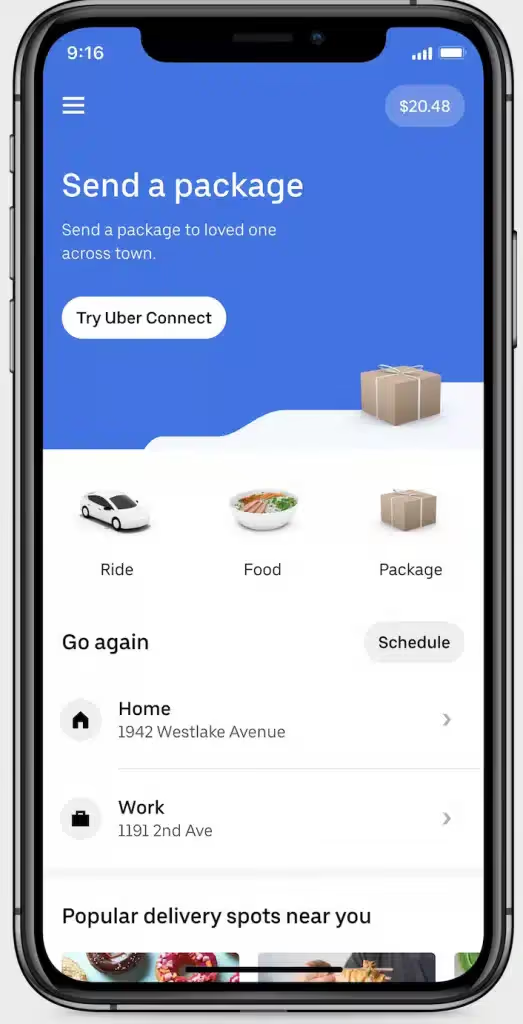
Image credit: Uber
How does Uber package delivery work?
For the shipper, ordering Uber Connect is similar to ordering a ride. When customers open the Uber app on their cell phones, they view a selection of services. Uber ridesharing and Uber Eats appear in two large tiles at the top of the screen. Packages appear below, along with other services.
The app guides the customer through the remaining steps:
- The customer indicates whether they are the sender or recipient.
- The customer enters the destination.
- The customer then selects and confirms the Uber Connect service.
- The customer confirms the pickup location.
- The customer reviews the delivery and drop-off details and the package guidelines, and confirms the information and compliance.
- The app confirms a driver and an estimated cost.
- The customer receives a cost estimate for the delivery and confirms the order. The customer also indicates whether the driver needs to come to the door and pick up the item or whether the sender will meet them on the street.
The recipient receives a PIN via text message when the delivery is near; they receive another text when the driver has arrived. The PIN must be presented to receive the package. There are also instructions available to the driver should the recipient not have the PIN or if the recipient is not at the address.
How does Uber package delivery work for drivers?
For an Uber Connect driver, the program works the same way it does for other levels of driving. Drivers select on the app whether they want to accept Uber Connect deliveries. This is done on the Driver Preferences tab. If they so choose, the app gives them Uber Connect requests in their area according to the algorithm, similar to deliveries. Uber Connect drivers follow the instructions as far as picking up deliveries and announcing their arrival.
Did Uber Connect make a difference in Uber driver pay?
That’s a tough call. Uber has yet to release numbers related specifically to income from Uber Connect, either in terms of gross earnings made by Uber, or earnings realized by drivers.
Like ridesharing services from Uber, Uber Connect driver pay is determined by mileage and time; however, the rates are not the same as the Uber rate card for ridesharing. As of this writing, we were unable to confirm any info on driver compensation for Uber Connect.
What restrictions does Uber Connect place on items drivers can transport?
The Uber website has a list of items that are prohibited from being transported on Uber Connect. There are no surprises. The list includes
- people
- firearms, weapons, ammunition, and associated parts
- alcohol
- highly perishable foods or beverages (e.g., raw meat or dairy products)
- pharmaceutical products, over-the-counter medications, vitamins, or supplements
- money, including gift cards, lottery tickets, or transferable securities
- recreational drugs, drug paraphernalia, or tobacco products
- dangerous or hazardous items, including explosives, items that are poisonous or flammable (including paints or adhesives containing a flammable liquid)
A complete listing of prohibited items is on the Uber website.
Other restrictions include that the package must be sealed, weigh no more than 30 pounds, and fit easily into the trunk of a car.
Lyft counters with its own package delivery service
Lyft has a similar program, Lyft Delivery, which is described on its website. The service is available in limited markets which had not been announced as of this writing.
According to the Lyft website, however, Lyft Delivery orders would be counted as rides when factored into Lyft ride streaks. It was not clear whether the rides would also be factored into other Lyft promotions. This information was not included on the Uber site.
Are Uber and Lyft trying to create a market that already exists?
Many rideshare drivers relate that prior to the launch of Uber Connect or Lyft Delivery, there were occasions in which they arrived for a passenger and were instead asked to deliver an item. Are the rideshare companies taking a market that already exists and giving it a different name? One Lyft driver who quit at the onset of the pandemic had this to say:
In 5,500 rides, I was asked to deliver items on a handful of instances. I delivered human hair to a beauty salon, a CD with graphic files, and once I picked up car keys from a man at his work and delivered them to his wife at their home. He had accidentally picked up her car keys when he left. Frankly, I liked these rides. Inanimate objects don’t care if you stop for a soda or go to the bathroom, and there was nothing in the Lyft Terms of Service forbidding it.
The driver added that he retired from the marketing industry before becoming an Uber driver. He speculated that perhaps the rideshare companies were looking to expand this part of the business by formalizing it. “Now they can market it,” he added. “Awareness is a big step in growing the demand for that service. I’m sure lots of people never thought about using rideshare to deliver things.”
Even with Uber Connect, drivers still must optimize their earnings
As the public becomes aware of this new service, business will increase for drivers. However, inflation and high fuel prices still require drivers to take advantage of all the tools available to protect their earnings.
You can read about new fuel discounts from Gridwise in “Gridwise Increases Gas Discount To Help Rideshare and Delivery Drivers.” Drivers can now save up to 50 cents a gallon with the GasBuddy card from Gridwise. Gridwise also offers the best mileage tracker for Uber and Lyft drivers. Drivers report that the Gridwise mileage tracker helped them realize thousands of extra miles they could deduct from their taxes.
Download Gridwise for free now!
Drivers can also maximize their earnings on the Gridwise app by checking out Where to Drive and When to Drive. Ensuring they are in the right place at the right time when demand is high means less driving around and less gas needed. The Gridwise app informs drivers of special events and surge times at the airports, and which rideshare services offer better opportunities for earnings.

Una Nueva Forma de Aumentar las Ganancias de Rideshare: Eventos de Gridwise [ACTUALIZADO]
A medida que los viajes y eventos de verano se calientan, más conductores están volviendo al camino… así que pensamos que era hora de una mejora en cómo puedes ganar con Gridwise.
La pestaña de Eventos de Gridwise en la aplicación móvil está recibiendo un diseño renovado para ayudar a los conductores de gig a ganar más. Sigue leyendo para descubrir qué significa el nuevo diseño para los conductores.
Un gran cambio: Más eventos para conductores de rideshare
Los conductores usan Gridwise para ayudarles a encontrar zonas calientes de Uber y Lyft cuando están en el camino. Ahora, la aplicación móvil hace aún más fácil encontrar áreas de alta demanda con más eventos para elegir.
Los conductores que viven fuera de las grandes ciudades finalmente pueden aprovechar los puntos calientes de Uber y Lyft sin tener que ir hasta la ciudad. Esto es gracias a una cobertura de ubicación más amplia que identifica los eventos más cercanos en tu área, no solo en tu ciudad importante más cercana.
El nuevo aspecto
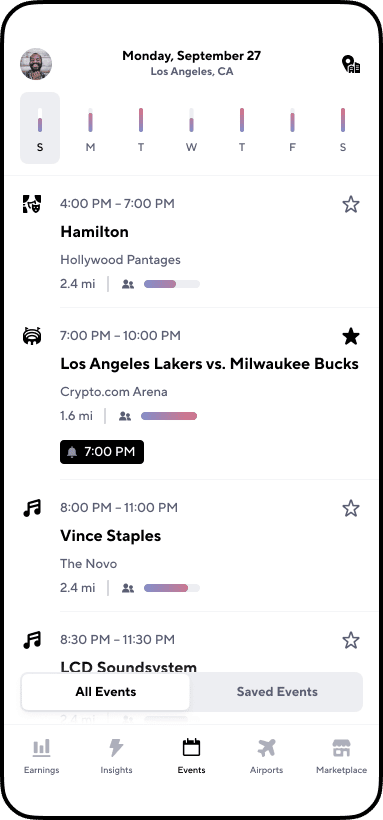
El elegante rediseño pone todos los eventos notables de música, arte, deportes y culturales que ocurren cerca de ti en un solo lugar, y te dice cuán lejos estás del lugar y cuánto se espera que el evento aumente la demanda.
La página también incluye un resumen de festivos relevantes y actualizaciones del clima que podrían afectar el tráfico o la asistencia a eventos.
Filtra y guarda fácilmente los eventos que deseas seguir directamente en la aplicación Gridwise.
Consejos para conductores de Uber y Lyft
- La pestaña actualizada de Eventos de Gridwise te permite ver, en un solo lugar, los eventos destacados que ocurren cerca de ti para que puedas planificar tu ruta de manejo y horario alrededor de las horas pico de ganancias.
- Preocúpate menos con recordatorios automáticos que te notifican cuándo salir al camino para ganar en días de eventos.
- Deja de depender de zonas calientes impredecibles; Gridwise usa datos de conductores en tiempo real para notificarte exactamente qué eventos aumentarán la demanda y cuándo.
¡No te pierdas otro evento de altas ganancias!
Descarga la aplicación gratuita de Gridwise para conductores ahora
How Gridwise’s Gig Driver Gas Discount Program Can Help Your Brand
The impact of high gas prices hits rideshare and delivery drivers really hard. If you’re wondering things like “Does Uber pay for gas?” or “Does DoorDash pay for gas?” you might be surprised at the answers. Drivers are independent contractors who pay for the cost of doing business directly out of their own pockets. To pay for gas, they are now taking nearly twice as much money out of their earnings than they did a year ago. The pain is real, and it is also quite intense.
Gridwise is an app that rideshare and delivery drivers use as an assistant. It tracks mileage, syncs with drivers’ company apps to track earnings, and allows them to record expenses. Gridwise also has features that help drivers work “smarter,” such as airport information and insight on where they can potentially get the most business. It is known as the best mileage tracking app for Uber and DoorDash, and drivers from many other rideshare and delivery services are avid users as well.
Gridwise has a close and powerful connection with the large and diverse community of gig drivers. And, as costs have been rising, we’ve noticed that drivers are looking more intensely than ever for ways to save. This makes it easier for those of us who are advertising to rideshare and delivery drivers to get more of their attention.
In this post, we will share what we’ve found about the way drivers are coping with rising costs and how this can help you promote helpful products and services that will make the lives of rideshare and delivery drivers easier.
We will look at
- gas price pain: how rising gas prices change driver behavior
- future possibilities: how gig driving could change
- how Gridwise helps drivers
- delivery driver and rideshare advertising: how your company benefits from helping drivers, and how your brand can make a direct impact
Gas price pain: how rising gas prices change driver behavior
With a network of more than 300,000 drivers, Gridwise can always get an idea of what’s going on in their world. We recently polled 1,000 rideshare and delivery drivers, and what they told us proves they are and will be changing their behavior as a result of rising costs.
While some drivers, due to gas price hikes, cut down their more active schedules to working just a few days a week, about 75% of drivers said they are driving as much as always. Driving is a matter of necessity for them, because it is their full time job. Still, they are changing the way that they do business in an attempt to defray the high cost of fuel.
The rideshare and delivery companies have tried to help with surcharges and fuel subsidies. There is no company Uber gas card or Lyft gas reimbursement, but both companies have imposed a surcharge on customers to help drivers. Uber’s surcharge varies from 45 to 55 cents per ride, depending on local gas prices. This amount, even though it reflects the companies’ recognition of the burden being placed on drivers, has a long way to go before it actually covers their costs. In a few select places, such as New York City, drivers were given a 5.3% increase in their minimum wage rate to cover the higher fuel costs, so the surcharge was not applied in that market.
Our data show that nationwide, most rideshare and delivery earnings rose over the course of the first quarter of 2022. In the case of rideshare, drivers for Uber and Lyft seem to have had healthy increases in their monthly gross earnings. Uber drivers earned $348.22 on average in January, $463.71 in February, and $537.29 in March. Lyft had similar increases, with average January earnings at $329.24, rising in February to $442.29, and peaking in March at $537.94.
Delivery drivers didn’t see the same kind of increase in gross earnings. Theirs either increased slightly, remained stable, and in some cases, decreased slightly over the three-month period. For example, DoorDash drivers earned an average of $220.16 in January, $224.26 in February, and $244.86 in March. Uber Eats drivers brought in $128.89 in January, $130.12 in February, and just $114.81 in March.
Remembering that these numbers represent gross earnings, it leads us to wonder if the increases were due to the gas surcharge or bonuses that might have been offered, particularly by the rideshare companies. There have been reports of enticing offers the companies extended to get drivers to stay on the road, or to possibly encourage new ones to get started.
Drivers don’t seem to be feeling this rise in earnings, however, and that could definitely be due to the skyrocketing price of fuel. It seems that the efforts the companies have made, to add surcharges, offer gas deals, or award bonuses, are not making drivers feel they’re getting the support they need.
In fact, a survey we conducted within our driver community told us that 70% of them don’t believe the added fee as represented by the Uber fuel surcharge is sufficient to cover the 43% rise in gas prices since last year. There is no DoorDash gas surcharge, but the company offers Dashers 10% back on their purchase of gas, as long as they pay with DasherDirect, which functions as a kind of DoorDash gas card. DoorDash extended their 10% cash back deal through August 31, 2022, having renewed it at the end of April.
While these efforts help somewhat, drivers are still showing signs that they will modify their driving habits to keep costs down. Here are some changing driver attitudes we’ve heard about and noticed after analyzing our data:
Drivers are making fewer trips. We collected data from February through March 2022 that reveals a declining trend in the number of trips drivers are making. This has been the case for virtually every rideshare and delivery service, including Lyft, Uber, Uber Eats, Grubhub, and Instacart. And, although gas prices eased some in April, they are on the rise again, and are expected to stay high for the summer driving season.
Drivers are more selective about the rideshare trips and orders they accept. When gas was cheap, drivers would pretty much take every ride or order that was offered. There was a lot of competition among a large population of drivers, so passing on a ride or delivery could bring down their driver rating. Now, with fewer drivers on the road, companies are more lenient with their policies, and drivers are viewing each ping they get with an eye to how much it will be worth. They are far less likely to drive long distances to pick up orders or passengers.
Drivers are saying no to low-paying orders and rides. There are some rides and orders that are far away, but worth it, and others that are simply not. While it’s hard to put an exact number on what “not worth it” amounts to, most drivers agree that $6.50 in earnings for traveling anything over 5 miles would be pretty close. This definitely makes sense for drivers in the short term, but turning down too many requests could potentially cause customers to turn to other ways of getting rides and deliveries.
Drivers are constantly trying to cut all costs. The need for drivers to pay more for gas, maintenance, insurance, and other running costs has made them more aggressive about looking for ways to save money. Companies that offer reasonable insurance premiums, discounts of various kinds, and reductions for subscription services can easily get drivers’ attention in these times. In fact, drivers are looking for companies that will help them to cut back on their business expenses.
There’s no doubt that the equations drivers calculate when they evaluate their gigs have changed as a result of the gas price hikes. It leads us to wonder how long this will last and how it may affect gig driving in times to come.
Future possibilities: how rising costs could alter the gig driving business
The shock to the system that rising gas prices has caused is still setting in with drivers. They appear to be maneuvering and modifying their habits to minimize the impact. For now the changes we see don’t seem to indicate an immediate crisis in the supply of drivers to the rideshare and delivery businesses, but as time passes this could change.
The high price of gas is due to factors that are difficult to control or predict. Ongoing global events, from the conflict between Russia and Ukraine to changes in policy that affect domestic oil production, have and will probably continue to keep prices high. There are no indications, as of this writing, of gas prices coming down anytime soon.
The headline “Rideshare and Delivery Driver Shortage 2022” could become a reality if gig workers decide that their driving jobs are no longer providing them with enough income to meet their expenses. With inflation increasing prices on many commodities, including basic items such as food and housing, the situation gets even more complex. Drivers might leave rideshare and delivery to pursue other side hustles that provide them with a better hourly and monthly income.
Fortunately, our current data doesn’t show a steep drop in most driver activity. Unfortunately, it does show a decline in the number of trips logged, both for rideshare and delivery, across the board. For example, as gas prices rose in the last week of March, trip volume decreased 5.29% for Uber, 6.81% for Uber Eats, and 18.72% for Instacart. Lyft and Grubhub stayed rather stable.
It’s clearly getting difficult for drivers to maintain the standard of living they’re used to, and current trends aren’t indicating the imminent arrival of permanent solutions to global economic problems. That’s why, in order to keep drivers on the road, Gridwise is creating ways to offer drivers some much-needed support.
How Gridwise helps drivers
Gridwise programs, offers, and partnerships provide drivers with opportunities to cut their costs, not only for gas, but for all their ongoing expenses. Gridwise was built on the idea of helping gig drivers earn more money, but also save money through a number of programs and features. Some include gas card giveaways, driver discounts on automotive and insurance expenses, and features that improve driver efficiency like Where and When to Drive.
However, our newest program sets us apart by giving us the opportunity to directly impact our users’ wallets with Gridwise Gas.
In partnership with GasBuddy, Gridwise now offers a significant gig driver gas discount of up to 50 cents off per gallon for our users on up to 100 gallons a month. Drivers pay with a card that is accepted at 95% of service stations.
Delivery driver and rideshare advertising: how your company benefits from helping drivers, and how you can make a direct impact
Gig drivers are feeling the pain at the pump; and Gridwise partners have an opportunity to make a direct impact on over 300,000 of them. We’ve designed a Gridwise Gas sponsorship to help your brand stand out among the rest by proving your dedication to helping gig drivers afford to stay on the road. With multiple levels of commitment available, we’ve made it easy for any brand to show their support by participating in the Gridwise Gas Program Sponsorship, and many other opportunities.
Explore the many opportunities for advertising with Gridwise here, and…
Schedule an intro call with our brand partnership team today!
Gridwise Increases Gas Discount To Help Rideshare and Delivery Drivers
Gridwise is increasing its Gridwise Gas discount from 10 cents up to 50 cents a gallon.
Why? Because we’ve heard that some of the joy is missing from gig driving.
Gig drivers know what we’re talking about. In what other job can you meet so many people in one night? What other job takes you to places you’ve never been before or even knew existed?
For rideshare drivers, there is the satisfaction of knowing you’ve delivered passengers, including essential workers, safely to their destinations, especially at night. For delivery drivers, it is the knowledge that you’re making life more bearable for those exhausted from a long day of work or still concerned about leaving the house during the pandemic.
There is also the ongoing challenge of honing your strategy to maximize earnings. Admit it. You get a charge when it works.
But high gas prices cut into this euphoria. We all know that rideshare driver gas reimbursement is a myth. Drivers are on their own for fuel costs. The same is true for delivery driver gas reimbursement.
Here are the points we cover in this blog post:
- How can gig drivers save on vehicle costs like gas?
- What gas discounts can rideshare and delivery drivers qualify for?
- What’s the biggest gas discount a gig driver can get?
Gas rewards for rideshare and delivery drivers
Gas discounts couldn’t come at a better time. Higher gas prices might be with us for a while. This is the verdict, and many point to the Russian–Ukraine war as the primary cause. Much of the world, including the US, is boycotting Russian oil exports, causing a shortage. In addition, disruption continues to characterize the supply chain. We also face an economy affected by the on-again, off-again pandemic, inflation, and interest rate hikes meant to pump the brakes on that inflation.
Most of the talking heads on television agree that the Ukrainian conflict will go on for some time, along with the other factors. High gas prices are with us for a while. According to the AAA website, as of May 26, 2022, Americans were paying an average of $4.60 per gallon. In California, where San Francisco and Los Angeles are the hottest markets, drivers are paying $6.07 a gallon, according to AAA. New York is $4.93 a gallon.
Lyft and Uber driver pay has been affected. The same is true for DoorDash driver pay and the other services.
“Before they spiked, fuel prices ate into about 20% of my earrings,” said one full-time rideshare driver who admitted that he did not take full advantage of Gridwise or other discounts. “Now that number is approaching 40%. I’m not sure how much longer this way of earning a living will make sense.”
Gridwise helps ease the burden
The ethos of Gridwise is all about empowering rideshare and delivery drivers and providing the tools to make them profitable. That’s why Gridwise, with support from companies like ACOP, has changed the gas discount available to Gridwise drivers through the Gridwise Gas program. On top of paying gig workers to take surveys, American Consumers Opinion Panel is helping drivers save money in partnership with Gridwise Gas.
To help drivers save more, the Gridwise Gas discount is increasing. Gridwise users can now save up to 50 cents a gallon on up to 100 gallons a month.
The procedure is simple.
- Download the Gridwise app
- Subscribe to Gridwise Plus to receive the guaranteed $0.50 discount
- Sign up for the gas card in the “Benefits” section of Gridwise’s “Marketplace” tab
- Activate your gas card when it arrives
- Use it at the gas station as you would a debit card and automatically receive your discount.
Drivers can also maximize their earnings by checking out the Where to Drive and When to Drive features in the Gridwise app. Being in the right place at the right time means less driving around and less gas needed. The Gridwise app informs you of special events and surge times at the airports, and which rideshare services offer better opportunities for earnings.
You can use the app to better track your mileage, allowing you to maximize your rideshare and delivery driver mileage deduction on your taxes.
Download Gridwise now to save big on gas
And have fun out there.

Becoming A Top Dasher: Is it Worth it For DoorDash Drivers
DoorDash has been running a program called Top Dasher for the last few years wherein they give certain benefits to drivers who maintain good numbers. DoorDash hasn’t released any statistics on participants, though.
What we know about the success of the Top Dasher program is all anecdotal. The internet chatter includes drivers with opinions on both sides. Drivers in Facebook groups and Reddit threads share their concerns about the program. Other drivers, however, especially those on YouTube, speak well of their experiences as Top Dashers.
So let's take a look at the Top Dasher program and discuss the pros and cons. In this post we will answer your questions, including:
- What is DoorDash’s Top Dasher program?
- Do DoorDash drivers need Top Dasher benefits?
- How to become a Top Dasher with DoorDash
- Is it worth it to be a Top Dasher?
What is DoorDash’s Top Dasher program?
DoorDash’s website explains that the Top Dasher program is “our way of recognizing and rewarding the best Dashers.” The program is open to DoorDash food-delivery drivers who meet certain requirements (which we will get to later). Sounds fair. There are Dashers out there who consider DoorDash their full-time gig, allowing them to pay rent and put food on the table. And the Top Dasher benefits are something drivers would like to have, at least some of them.
Whether you want to be a DoorDash Top Dasher, though, really comes down to your strategy as a food-delivery gig driver. Let’s look at it.
Do DoorDash drivers need Top Dasher benefits?
Before discussing whether DoorDash drivers need the program, let’s look at DoorDash’s market share. A report on the delivery-app market shows DoorDash with a commanding share of the US market, at 53%. The next biggest piece of the pie is owned by Uber Eats at 26%. GrubHub has a 12% share, and everyone else is in the single digits. These numbers are recent, too, as of March 24, 2022.
But when it comes to DoorDash driver pay, an April 11, 2022, post on the Gridwise blog entitled How Much Can You Earn as a DoorDash Driver in 2022?, DoorDash lagged behind the others. This considers base pay, tips from customers, and various promotions. Gridwise’s Q1 figures reveal that DoorDash drivers earned an average of $7.90 per trip. DoorDash hourly pay was $15.72 over the same period. Grubhub drivers earned more per trip, while Uber Eats drivers earned more per hour.
But what DoorDash drivers lacked in earnings, they made up for in enthusiasm (and probably market share, too). DoorDash drivers made an average monthly pay of $229.76, edging out both Uber Eats and GrubHub drivers.
A look at the Top Dasher program
Those who qualify for the program have the privilege of “Dash Anytime.” The DoorDash app may show that a market is closed to new drivers during a specific time slot because there are already enough drivers (indicated by the gray color of the area on the app). A driver with Top Dasher status, however, can still drive in this area, as well as adjoining markets that might be closed.
The second benefit of the program, which was available in the beta stage, is no longer listed on the website. Top Dashers were given priority status on orders of more than $35. If there were three drivers in a given area, for example, the logic is that the Top Dasher was given priority in the algorithm. The DoorDash website does have a disclaimer that “DoorDash may modify the qualification terms, rewards offered, and available markets at any time.”
How to become a Top Dasher with DoorDash
The requirements to become a Top Dasher with DoorDash include a
- customer rating of at least 4.7
- completion rate of at least 95%
- 100 completed deliveries during the previous month
- minimum 200 lifetime deliveries completed
- minimum 70% acceptance rate
The website also states that DoorDash drivers get added into the program on the second day of each month. They can meet those requirements mid-month, but they must maintain those numbers until the final day of the month in order to participate as a Top Dasher the following month.
Most drivers agree that the requirements are easy to obtain, with the exception of the last one: an acceptance rate of 70%. DoorDash’s acceptance rate refers to what percentage of deliveries offered to a driver are accepted.
The DoorDash app displays the approximate pay for each delivery. The catch is that many drivers do not accept deliveries with low pay, especially if the miles needed to complete the delivery are higher. This, of course, makes their acceptance rate go down, although a low acceptance rate on DoorDash has no consequences—other than the driver cannot participate in the Top Dasher program. Cherry-picking deliveries is a big part of the strategy for many drivers, especially for those that are multi-apping.
Is it worth it to become a Top Dasher?
This question really comes down to whether it is worth it as a driver to accept lower paying deliveries from DoorDash in order to gain Top Dasher status. One driver in Minneapolis expressed his doubts, specifically referring to the acceptance rate.
“The short answer is, no, for most people, meeting the Top Dasher requirements and getting Top Dasher status isn’t worth it. The main reason is that the main benefit of Top Dasher status – being able to Dash anytime without scheduling – is not worth meeting the high acceptance rate requirement….My acceptance rate for DoorDash usually hovers around 10-30%. If I had to accept more DoorDash orders to get Top Dasher status, my earnings would undoubtedly drop.”
The driver added that in his opinion, DoorDash developed the Top Dasher program to make lower-paying orders more attractive to Dashers. He adds that the program might be more successful for drivers in underserved areas.
Other drivers like the Top Dasher program
YouTube has several videos from DoorDash drivers who speak favorably about the Top Dasher program. A driver named Stan operates a YouTube channel called Driver Eats Delivers. He is a Top Dasher. “I can tell you it works for me,” Stan says in a video he made about the Top Dasher Program. “It gives me the flexibility to drive whenever I want.”
Stan drives in the Lancaster/Palmdale market in northern Los Angeles County. The area is less densely populated than the rest of the county, a fact that falls in line with other drivers' observations that Top Dasher is likely to be more successful in markets that are underserved.
Dennis, another DoorDash driver, runs a YouTube channel known as Ride Along 980. In a recent video he also spoke favorably about the Top Dasher program, saying that it made a difference for him. Dennis serves a community of 14,000, a small market.
Again, is it worth it to be a Top Dasher?
There are opinions on both sides. It is interesting to read the comments section from other drivers on the blogs and YouTube videos that have been referenced here. There are both positive and negative opinions about the program.
Scott Roe, a DoorDash driver, commented that the program worked for him: “I missed Top Dasher for the first time in a long time, and I must say that I can notice the difference. However, having said that, I will point out I am not multi-apping. As a Top Dasher, I rarely saw orders below $10. Even if they were, they were never lower than $8.”
It all comes down to what works for you as a driver
If the mixed opinion about DoorDash’s Top Driver program illustrates anything, it is that whether or not any benefit works for a driver comes down to strategy, personal style, and preferences. Some drivers maintain they signed up to deliver food, and they take whatever comes to them. Others maintain that the strategy that works for them is being selective about the orders they take.
One absolute for food delivery drivers is that they can benefit from using the Gridwise app. Food delivery drivers can record mileage and track their earnings, allowing them to see what times and areas work best for them.
Every delivery driver should drive smarter, and with Gridwise they can. As a driver, the first step you can take is to download the free Gridwise app to track miles and earnings, and gain insights into profitable times and areas in your area.
Download Gridwise for free now!
Uber Eats and DoorDash Remove Gas Incentives For Delivery Drivers
Were those gas surcharges companies gave drivers this spring too good to be true? It looks that way. While Uber Eats and DoorDash lent a hand to drivers as they dealt with crippling fuel costs for a limited period of time, that’s all changing. These big delivery companies are doing a whole other kind of “takeaway,” and it involves their gas incentive programs. In this post, we’ll fill you in on the details, provide insight into the companies’ rationale, and give you tools you can depend on from now on. Here’s how it will go.
- Killer gas prices and for DoorDash and Uber Eats drivers: companies pull back subsidies
- Why delivery companies are scaling back their support
- Gas rewards for rideshare and delivery drivers that won’t go away
Killer gas prices for DoorDash and Uber Eats drivers: companies pull back subsidies
The crisis created by the steep rise in fuel prices is on every driver’s mind. When the surge in gas prices first happened, the companies came to the aid of their drivers by offering bonuses to help cover their pumpside costs.They got this money from surcharges they tagged onto customer orders. Uber Eats drivers received $0.45 per order, and Dashers got weekly bonuses beginning at $5.00 if they covered 100 miles or more while making deliveries.
No one is saying these measures even came close to covering the actual burden of gas price increases, but they were at least some help. Now, though, things have changed. It appears there are limits to the good things companies like Uber, Lyft, and DoorDash can do for their drivers.
Uber announced that the Uber Eats surcharge on customers will no longer be applied as of June 15th. Similarly, DoorDash has stopped offering those weekly bonuses to help cover the cost of gas. Instead, they’re offering a cash-back program, but it has been extended only to August 31st.
Uber is keeping its $0.55 per ride surcharge on rideshare passengers. But, just like the measures taken for delivery drivers, this doesn’t come close to relieving the hurt of real, pumped-up fuel prices.
To say the impact on drivers is painful is an understatement, and the rise in prices shows no signs of letting up. According to AAA, prices for regular gas have risen from a national average of $3.041 just one year ago to $4.599. That amounts to an increase of 51%.
As we go further into summer, prices could go up even more. Pressure on drivers is mounting, so why are the companies pulling back the little bit of support they’ve offered over the last few months?
Why delivery companies are scaling back their support
Drivers might wonder why delivery companies have abandoned their efforts to help their drivers handle the high gas prices.
Company rationale rests in the business behind food delivery in the gig economy. Drivers and customers are not the only people company executives want to keep happy. There are those who have invested their money in company stock, and these investors put pressure on executives to perform.
Stockholders in Uber and DoorDash are not very happy with what’s happened to their shares so far in 2022. According to this NBC News article, the delivery business has been slowing down. This is largely the result of pandemic restrictions being lifted, and those formerly avid delivery customers going back to eating in restaurants rather than having all their prepared meals delivered.
Inflation is another reason cited for the decline of delivery orders. The perfect storm that lifted delivery to its heights in 2020 and 2021 is regrouping and bringing the delivery business down to much lower performance levels.
After reaching a high of $246 in November 2020, DoorDash shares have done a “Dash Crash” and are now down to $89 per share. That’s a 64% loss. Uber shares went into a tailspin also, falling around 31%, from $45 to $31.
For several years, shareholders in these companies have pressured executives to become profitable, and that road has been long and rough. In some cases, the companies did actually make a profit, but it’s hard to say how long their ability to stay in the black will hold out. Now it seems profitability for these businesses is going to become more difficult to achieve than ever before.
This means the companies must cut operating costs in order to do what they promised their shareholders they would do—make money. US News reports that Uber is cutting expenses across the board. That is to say, they plan to scale back the costs of their operations by slowing down their rate of hiring, slashing marketing expenditures, and ending most driver incentives.
Remember, about a year ago, when Uber and Lyft offered big bonuses to drivers brave enough to return after the pandemic? It worked. Now Uber says they have restored the pool of drivers back to what it was before the pandemic happened. Those incentives are no longer needed, so even the extra perks that haven’t already evaporated will soon disappear.
It’s worth noting that Uber, while it plans to erase the gas subsidy for Uber Eats drivers, will continue the $0.55 surcharge, as a way of offering partial rideshare driver gas reimbursement for those drivers. They probably (wisely) intuit that if they do nothing for rideshare drivers, they’ll motor away, and cruise right off the Uber platform.
As for Uber Eats drivers, the company feels confident that they can shift to doing rideshare if they’re unhappy delivering food. Conveniently for Uber, this allows them to partially divest from what is being seen as a food delivery business that’s in decline, without abandoning it completely. A shift of this kind can also boost their rideshare driver supply.
If they don’t take measures to help them, Uber’s rideshare business could lose drivers to Lyft, where executives say they are holding on to the driver incentives until they feel they’ve brought their pool of drivers up to pre-pandemic levels.
That doesn’t mean Lyft isn’t facing the need to cut back on costs, though. This article from Investor Place states that Lyft stock is at a 52-week low and that company executives will take measures to contain costs, but will still continue driver incentives, at least for now. They offer the same as Uber, $0.55 per ride, to help drivers cover their fuel costs.
Even those subsidies for rideshare drivers don’t do a lot for them, and the money comes from customers who are far less likely to give up the convenience of rideshare than they are to cook at home or go out to get their own food.
Thinking of switching to another delivery service? It may help, it may not. Unless the economy improves quickly, even more companies are likely to find themselves in the same kind of situation, where they have to cut costs if they want to make a profit.
That means that you, as a driver, need to find ways to survive in spite of the rising cost of gas and the disinclination on the part of companies to help you cover it.
Gas rewards for rideshare and delivery drivers that won’t go away
When your delivery company doesn’t bring you the kind of support you need, or your rideshare platform stops propping you up, there is a program you can always count on. Gridwise Gas offers gas rewards for rideshare and delivery drivers that won’t expire. It’s an ongoing program with a proven track record. Here’s what Gridwise Gas' partnership with GasBuddy does for you:
- offers as much as $0.25 per gallon off with every fill-up
- links your bank account to your Gridwise gas card for easy payment
- continues to offer savings, even if your gig driving company ends its gas program
Gridwise Gas is an awesome program as it is, but soon you’ll be able to save even more! Keep your eyes on Gridwise for updates to Gridwise Gas you’re going to love.
Gridwise Gas is the best gas card for Uber drivers and offers the most dependable gas discount for DoorDash drivers. Sign up now for Gridwise Gas through the free Gridwise app to get on board.
While you’re at it, be sure to use Gridwise to cash in on more actions you can take to cut costs:
- Track mileage: Track every mile to get your maximum mileage deduction, and get compensated for wear and tear.
- Record expenses: Keep an account of what you spend to keep your car running with our earnings and expense tracking tools.
- Drive smarter: Use Gridwise features When to Drive and Where to Drive to minimize your fuel usage, and maximize your earning power.
Unleash the power of the world’s best rideshare and delivery assistant.
Download the free Gridwise app now!

A Rideshare Rival For Uber and Lyft Or A Great Side Gig For Drivers
Why do Uber and Lyft customers use rideshare? To “get around,” of course! Maybe that’s what the people behind the innovative transportation business Getaround had in mind when they named the company. In the past, Getaround has been seen as a potential rival for Uber and Lyft, but things have changed. We’d say it’s a new way to be a gig driver, except you’re not always the one doing the driving when you work with this app.
Getaround has been in business since 2009. It’s recently attracted a lot of attention because it has just let loose with a public offering via a SPAC (Special Purpose Acquisition Company). From the gig driver’s perspective, the influx of funding from the deal can’t be a bad thing, especially if you’re looking for a sweet side gig in the rideshare game.
We thought we’d take a look at how this company works, and what’s in it for rideshare drivers and others who might want to give Getaround a try. Here’s what we’ll examine:
- Rideshare driver news: Does Getaround compete with Uber and Lyft?
- How Getaround works
- Uber driver news: Getaround rents to Uber drivers!
- Uber driver tips and Lyft driver advice: The pros and cons of listing or driving with Getaround
Rideshare driver news: Does Getaround compete with Uber and Lyft?
There have probably been plenty of times when you’ve posed the long list of Uber vs. Lyft questions. Which is higher, Uber driver pay or Lyft driver pay? Which is more popular? Where can I get the best bonuses? Which one has the better rewards program? There are more, but let’s get back to the comparison to Getaround.
With few exceptions, it doesn’t often occur to us to ask whether there are any Uber competitors or Lyft competitors. The two biggest rideshare companies have done a stellar job of cornering the market in most major metro areas. Now, though, with Getaround’s public offering, more people are getting curious about how the company works, how it differs from Uber and Lyft, and how it can help rideshare drivers and others make money.
Let’s be clear. Getaround could be a rival of Uber and Lyft in some ways, but in general it’s too different to be in direct competition. Most rideshare passengers call a car when they want to get from one place to another. Many times, it’s because they don’t want to drive their own vehicles. Maybe it will be too much of a pain to park where they’re going, or they want to have a few drinks while they’re out, while still keeping themselves and others who might be on the road safe.
Getaround has a whole different thing going on. Like Uber and Lyft, Getaround works on an app. However, that’s where the similarities end. With Getaround, an individual who might ordinarily be a passenger for an Uber driver or Lyft driver does all the driving! They’ll also have to be willing to park the car where they’re going; and before they get there, they’ll need to meet some pretty strict requirements to qualify to rent through Getaround.
This business model attracts a whole different kind of customer. While it might remove some rideshare runs, such as trips for groceries or home goods, it probably won’t make much of a dent in rideshare business involving airport and other travel traffic, rides to events, or trips home from a night out on the town.
Still, there are opportunities to make money with Getaround. In addition to renting your own car, you can rent Getaround cars so you can drive with Uber. This is sounding more and more like a great opportunity to score some extra scratch. Let’s look at the details.
How Getaround works
As you can see already, Getaround isn’t really a ridesharing business. It’s a car-sharing business. Getaround lets people rent cars on a short-term basis, whether it’s to run errands or take a ride out into the country for the day. Getaround has also partnered with Uber, to offer cars Uber drivers can rent! The customer picks up the car at its “home” location, unlocks and starts it with the app, and uses the car for a few hours, or a whole day.
Where do the cars come from? That’s where Getaround gets interesting for people who want to add some padding onto their rideshare driver pay. You can create a business of your own by renting your car out to Getaround users!
How is this done, and is it worth it for you? We’ll give you the facts so you can weigh the pros and cons. Then you can make your own determination.
Let’s begin by seeing what it takes, and what you get when you offer your car to be rented through Getaround, and how much Getaround pays.
What it takes:
- You’ll definitely need a car to share, and that car will have to be in a location where Getaround operates. Use a vehicle you already own, or buy one just to offer through Getaround. Your car will need to
- be a model year 2007 or newer
- have an odometer reading of 200,000 miles or less
- have no more than 10 passenger seats
- have at least 4 wheels and be a private passenger vehicle
- not be any of these ineligible vehicles: all models from BMW, Infiniti, Maserati, Mercedes, Tesla, Porsche, Bently, Chevrolet Camaro, Chevrolet Corvette, Dodge Challenger, Dodge Charger, Ford Mustang
- be shown in photos that all 4 sides have no prior or existing damage
- have a clean title, not a salvage/repair title
- Comply with Getaround’s standards involving owner documentation, cleanliness, and ongoing monitoring. You can learn more about these requirements in this Getaround post,
What you get:
- Paid! Once your car is accepted and available as a rental, you’ll collect money each time a Getaround guest chooses it.
- Regular disbursements. You’ll get paid monthly through your PayPal account.
- A dashboard-based information center that shows how your car(s) perform(s).
- The ability to adjust your price and change it from the one recommended by Getaround’s algorithms.
- Feedback from Getaround on how likely the price you set is to attract customers.
- Predictive pricing that adjusts your price based on customer demand and car availability.
How much Getaround pays:
Just like so many transportation-related gigs, your profits as a Getaround host will vary based on supply and demand. There is a minimum earnings figure of $5 per hour. Remember, though, that your car must be rented in order to receive that fee. On top of that, Getaround takes 40% of the fee you charge to offer your car for rent.
You’ll want to optimize your earning potential by refining your car’s listing and spreading the word that it’s available for hire. Read this Getaround help listing for more suggestions.
If you’re thinking about renting your car on an occasional basis, you’ll want to be aware that Getaround charges fees for listing your car(s). There is a $99 connect fee per car, and then there is a schedule of monthly subscription fees, based on the number of cars you list, that you can see in this Getaround help article. These fees can make or break your profitability, depending on how frequently your car(s) will be available to rent.
Based on all these variables, it’s difficult to say exactly how much Getaround pays. According to this post on Medium, Getaround told the blogger that he could expect to earn $500 per month if his car was available half the time, and around $1000 per month if he made it available all the time. This number doesn’t take into account the various expenses the driver incurred.
The car and the host who divulged the potential earnings quoted to him are in the City of San Francisco. You’ll have to gauge how different demand, and costs for parking, might be in your area to get a better estimate. Or you could contact Getaround to ask what potential earnings might look like for your car, based on the amount of time it can be available and where you’re located.
If you do decide to make your vehicle available for rent through Getaround, you can also benefit from their Friend Referral Bonuses Program. They’ll give you a referral link that you can distribute to friends and people you’d like to invite to join you on Getaround. Each time one of them signs up to rent their vehicle, you’ll receive $20. Lots of gig workers leverage referral links to turn them into extra income, and if you apply yourself it’s not too hard to be really successful.
On top of all that, there’s even more you can do with Getaround, now that the company has officially partnered with Uber.
Uber driver news: Getaround rents to Uber drivers!
Now in select cities you can use Getaround vehicles to drive with Uber and Uber Eats. So far the cities include Boston, San Francisco Bay Area, Washington, D.C., Atlanta, Denver, Los Angeles, Portland, Philadelphia, San Diego, Seattle, and Atlanta.
Uber’s partnership with Getaround allows for lower-cost rentals, starting at $4 per hour. Also, Uber drivers receive insurance coverage, unlimited mileage, 24/7 support, and roadside assistance with their Getaround rentals.
Naturally, you’ll need to meet the requirements of all Getaround guests, including
- being 19 years of age or older, except in LA/Orange County where you must be 22. Drivers with an International license must be 25.
- having a clean driving record.
- knowing that you will be continually monitored by Getaround to retain eligibility.
The full list of qualifications for Getaround guests is in this post. As you’ll be able to see, they are no more stringent than the requirements you must meet to drive for Uber.
Now,what if you’d like to rent your car to Uber drivers? That’s very doable, too. The vehicle must meet Uber’s requirements for your area. It must also
- be located in one of Getaround’s drive with Uber cities
- be already live on the Getaround app
- have 4 doors
- meet the vehicle age restrictions
- be registered with Getaround as a drive for Uber-eligible vehicle
Note that the car and document requirements will vary from one market to the next. Check this Getaround help article to find out more about eligibility requirements in your area. Once you are sure your car is eligible, you can proceed by registering it with the drive for Uber section in the Getaround app.
Just a piece of Lyft advice: the drive for Uber feature within Getaround is, at this point, for Uber drivers only. You’ll have to look for other options to rent a car for driving for Lyft. But you can list your car for Uber driver rental, whether you drive for Uber or not.
Uber driver tips and Lyft driver advice: The pros and cons of listing or driving with Getaround
We want to make sure you get some sound and concise information about the pros and cons of using Getaround, so here’s the deal:
Hosting on Getaround
On the plus side:
- You set your own pay, within reason.
- You make money without driving.
- You have the potential to make bonus money with referrals.
- You save on gas.
- Your insurance is covered.
The minuses:
- You can’t control who can drive your car.
- You won’t have access to the vehicle you’re offering for rent.
- You won’t get tips.
- You have to wait to be paid, once a month.
- You must use PayPal in order to be paid by Getaround.
Using Getaround to drive for Uber
On the plus side:
- No worries about wear and tear on your personal vehicle.
- Other family members can use your car while you’re driving.
- Uber-worthy insurance, customer service, and roadside assistance are included.
- You might be able to drive a car for Uber that’s nicer than the one you own.
The minuses:
- Renting for Uber isn’t available in a lot of markets.
- You will have to pay for your fuel.
- You have to pay to access the car through the app.
- You’re susceptible to late fees for late returns.
- You’ll have to get rides to and from the car’s spot.
- You’ll have to get used to a different car’s controls and features each time you drive.
Based on the pluses and minuses, and how available Getaround is in your area, you’re now equipped to decide whether it’s right for you. Keep watching Getaround, too. Because they’re going public, they might develop plans for more extensive or additional programs.
Whether you keep driving your own vehicle or rent one with Getaround, track every mile and penny earned with Gridwise!
On top of being the best free mileage tracking app, Gridwise gives you
- airport and event information
- weather and traffic alerts
- great deals and discounts for drivers
- Gridwise Dollar Benefits to cover your insurance needs
- time saving, money-making features that show you When to Drive and Where to Drive
Make your driving gig as successful as possible! Gridwise can help, so
Download the free Gridwise app today!
Trabaje de forma más inteligente. Gane más.
Ya sea que conduzcas, entregues o recojas turnos, Gridwise te ayuda a hacer un seguimiento de las ganancias, el kilometraje y el rendimiento para que puedas mantener el control de tu trabajo. Descarga la aplicación y toma las riendas hoy mismo.
