Blog de Gridwise
¡Lee el blog de Gridwise para obtener consejos y sugerencias sobre cómo ganar más dinero mientras conduces para Lyft, Uber, DoorDash, GrubHub y más!

The Gridwise Job Board: Find Your Ideal Job or Gig Work
Gridwise is an essential assistant app created by gig workers for gig workers. Our mission is to support those engaged in gig work in every way possible. We understand how challenging it can be to deal with income instability, a lack of benefits, and job insecurity that often comes with gig work. The Gridwise app tracks and organizes earnings and expenses, and offers a wide array of discounts, deals, and services that make the lives of independent contractors easier and more rewarding.
We firmly believe it’s possible to make a viable living and create a gig experience that offers flexible hours, variety, and excitement. With issues such as consistent earnings and job security in mind, Gridwise is proud to offer a centralized platform that shows you how to find gig work and secure reliable opportunities. We’re proud to introduce the Gridwise Job Board.
[elementor-template id="20891"]
The Gridwise Job Board: Key features
Because Gridwise is dedicated to serving the gig worker community, we’ve filled the Gridwise Job Board with useful features that won’t waste your precious time.
- Comprehensive listings. Find part-time, full-time, temporary, and per-task work. Drive or deliver with your vehicle, utilize an employer’s vehicle, or even find non-driving gig work.
- User-friendly interface. Find the jobs that are right for you with a tap of your screen.
- Verified opportunities. We vet the jobs before they are listed to ensure you’re getting high-quality job postings.
How to get more gig work, seasonal, part-time or full-time jobs with the Gridwise Job Board
Looking specifically for “gig work apps” or “gig jobs near me?” You’re in luck. Our filters and search functions send you directly to the listings you seek.
Here’s how it works.
- Access the Job Board via the Gridwise website.
- Search for jobs by type, location, and more.
- Select the job that interests you, and read all about it.
- Scroll through the description, and if it appeals to you, click “Apply for job.”
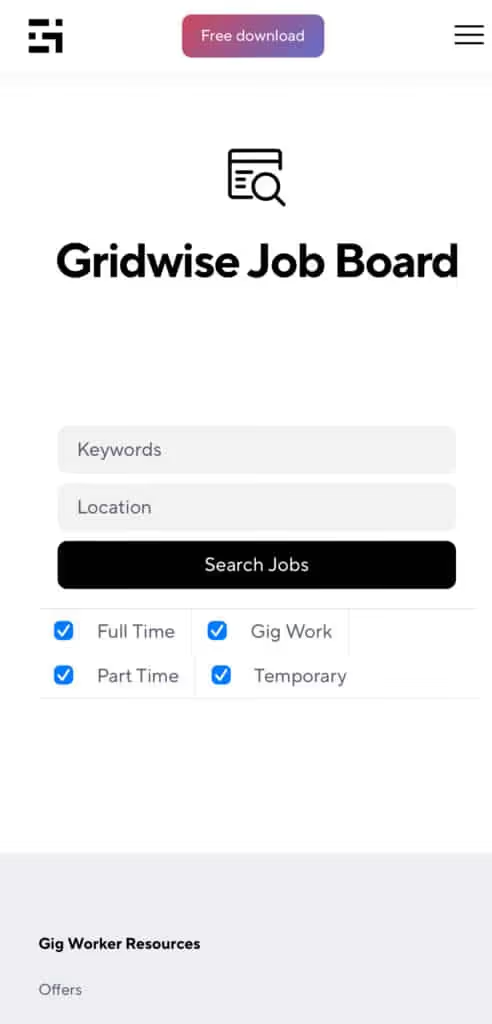
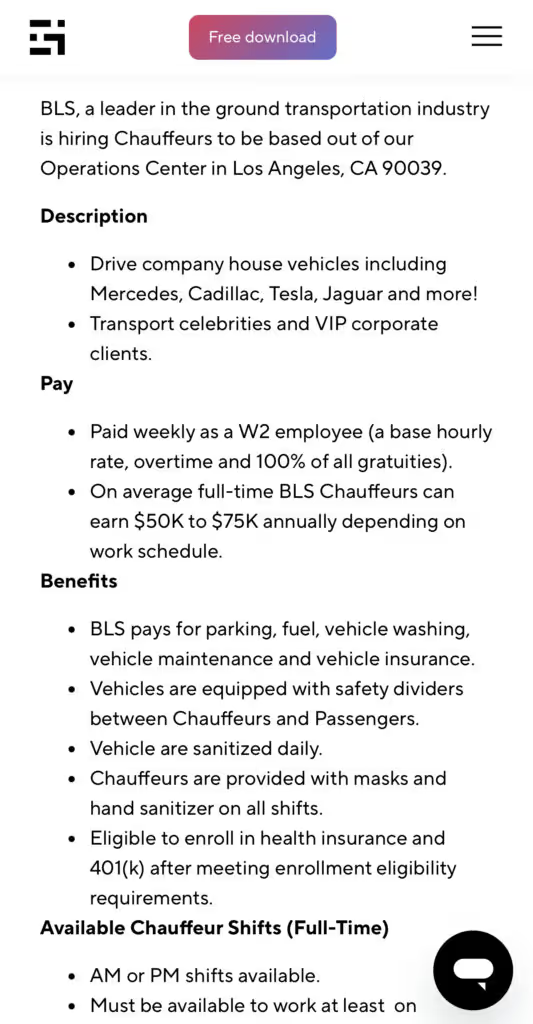
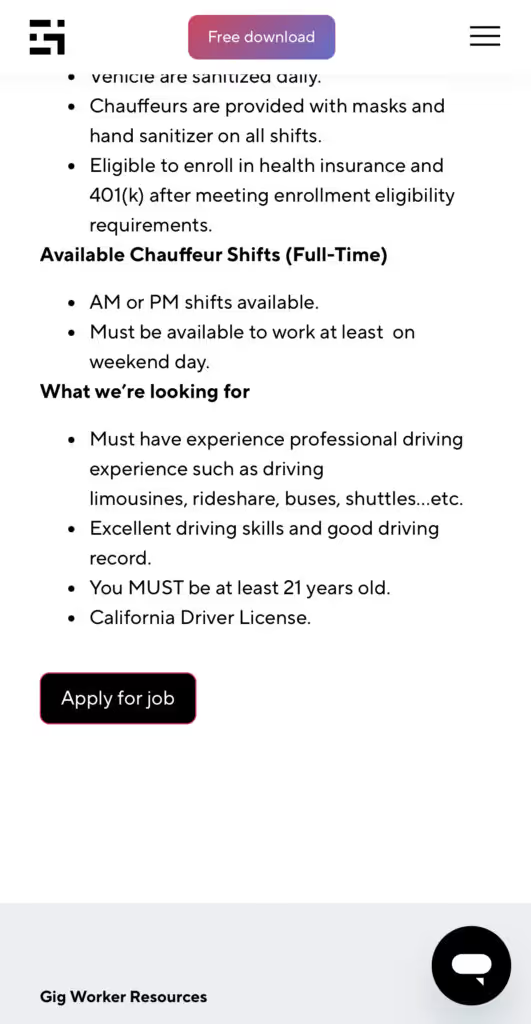
Many types of jobs are available. Adjust the search filter to see the full variety of opportunities that will let you cash in. Deliver food, set up catering, do rideshare driving, get paid for doing package delivery, and much more. You’ll find short-term gigs, long-term contracts, and part-time positions.
Perks of the Gridwise Job Board for gig workers
Gig workers who know how to make extra money will appreciate how the Gridwise Job Board lets you multiply your chances of bringing in big earnings. Here’s how:
- Increased stability. Use the Gridwise Job Board to find part-time or permanent jobs in addition to the part-time gigs you already have. Always keep a steady stream of earning opportunities flowing toward you.
- Flexibility and autonomy. Choose jobs that fit your schedule, work around other jobs and family duties, and still leave room for some fun in your life. Discover side hustles to supplement your full-time job, permanently or just for the season.
- Skill development. Find part-time work that lets you use a skill you already have, or try your hand at something new. It’s a smart way to develop a portfolio to showcase what you can do, or even to find permanent employment.
Get Gridwise and stay up to date on the Gridwise Job Board
Gig workers need plenty of information and assistance, and Gridwise is here to give it to you. Download the app and get essential features such as
- seamless earnings tracking
- mileage tracking
- expense recording, including notes
- low-cost and no-cost insurance benefits
- access to affordable medical, dental, vision, mental health, and alternative care
- professional services including legal and financial help
- deals and discounts
- weather, events, and traffic reports
- inside information on where and when to drive
[elementor-template id="20936"]
More to know about gig work:

5 Best Mileage Trackers For Gig Drivers
Many drivers ask, “Do I really need a mileage tracking app?” The answer is simple: only if you want to have an accurate count of all the miles you can legally deduct from your taxable income! You might think your rideshare or delivery driving app has got you covered. After all, they do quite a good job of logging the miles you drive while you’re on a trip or delivery. But, if you want to have the best app to track mileage for Uber, Lyft, Doordash, Instacart, or the other apps you may use, you need more. Why is that?
Without a separate tracker, you’re missing the miles you drive in between pings. Did you realize that all the miles you drive, from the moment you begin your shift until it’s over (as long as you don’t drive several miles on a break to hang with your friends), are tax deductible! That means you need something besides your driving app to keep an accurate count of your travels. Read this Gridwise post to see how important it is to keep track of every deductible mile.
You won’t be surprised to hear that there’s an app for tracking miles. In fact, there are several of them. Here, we’re going to tell you about five top mileage tracking apps, and help you figure out which one is best for you.
Before we get to the list and identify the best mileage tracker app, let’s clarify what exactly a mileage tracking app is. According to G2.com’s technology glossary, mileage tracking is done for the purpose of keeping a log of mileage that is either reimbursable or tax deductible.
And yes, of course you can track your miles simply by taking readings on your odometer. But are you really prepared to account for how many miles you drove for personal reasons and subtract them from the total to get your business mileage? Even if you can remember all that and do the arithmetic, if you want an accurate reading of the miles you drive for business, and can therefore deduct, a mileage tracking app will save you a lot of trouble and prevent you from making costly errors.
Plus, as a gig driver, you have specific needs when it comes to a mileage tracker. Ideally, you’d be able to handle mileage tracking and several other functions all in one app. It can be maddening enough to deal with driving apps, particularly if you’re an avid multi-apper. You would want your mileage tracker app to help you keep account of other aspects of your business, including income, expenses, and inside information about the art of gig driving.
Not all mileage apps are equal, to be sure! Let’s look at five of the best apps to track mileage and figure out which is the best app to track mileage with Uber and Lyft, or what mileage tracker app is best for DoorDash.
[elementor-template id="20891"]
1. Zoho Expense
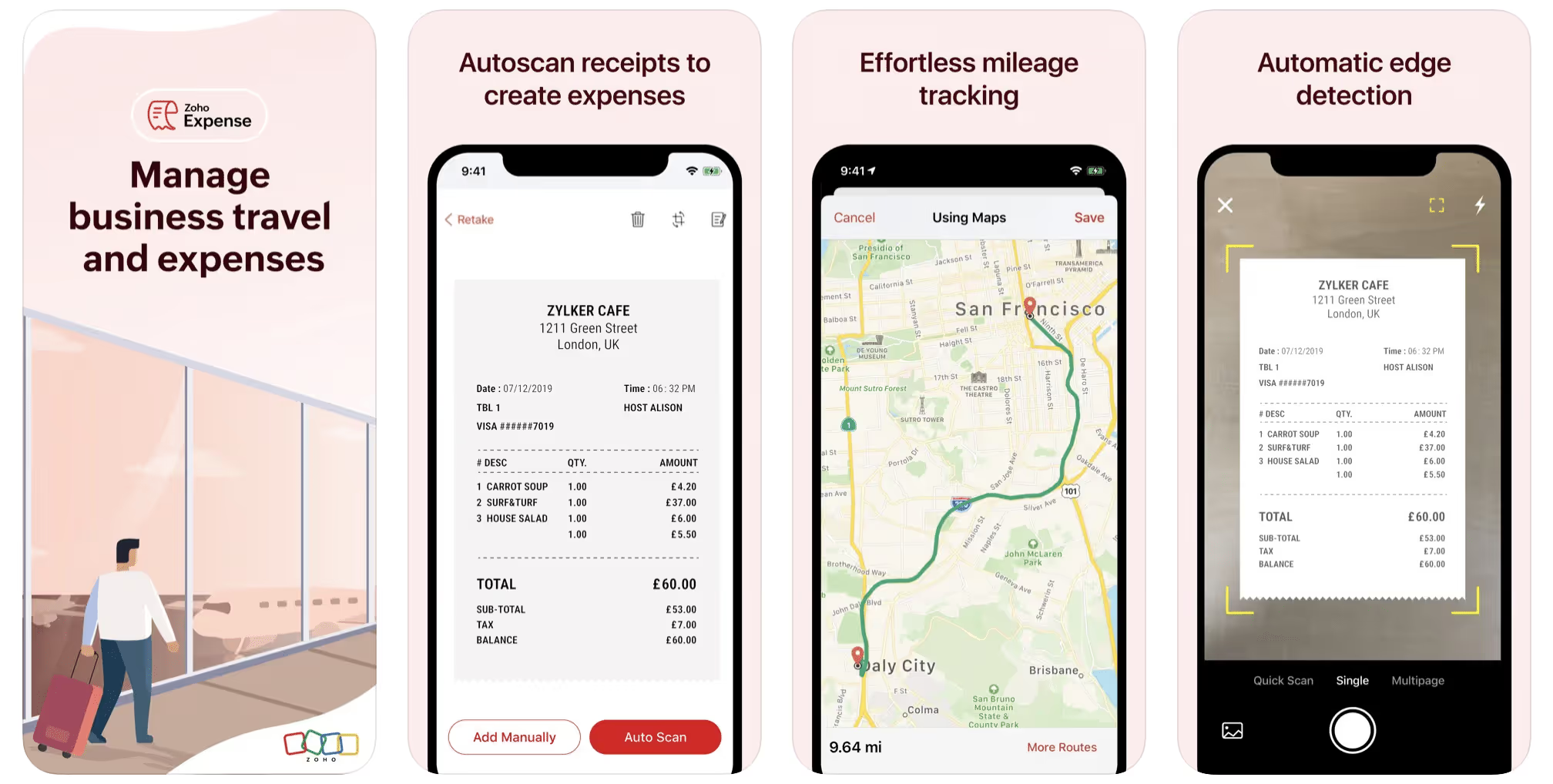
First up is Zoho Expense, which does exactly what its name says. This app is designed to allow companies to give employees a uniform way to create and submit expense reports. It can be used by individuals, including gig drivers, as well.
It includes a mileage tracker, as well as features that let you track other deductible expenses, including the ability to scan and record receipts.
Available on Android and Apple: Yes
Ratings: 4.8 stars on App Store, 4.7 stars on Google Play
Free Version: Yes
Subscription price: $3 per month, billed annually
Created specifically for gig drivers: No
2. Quickbooks Online
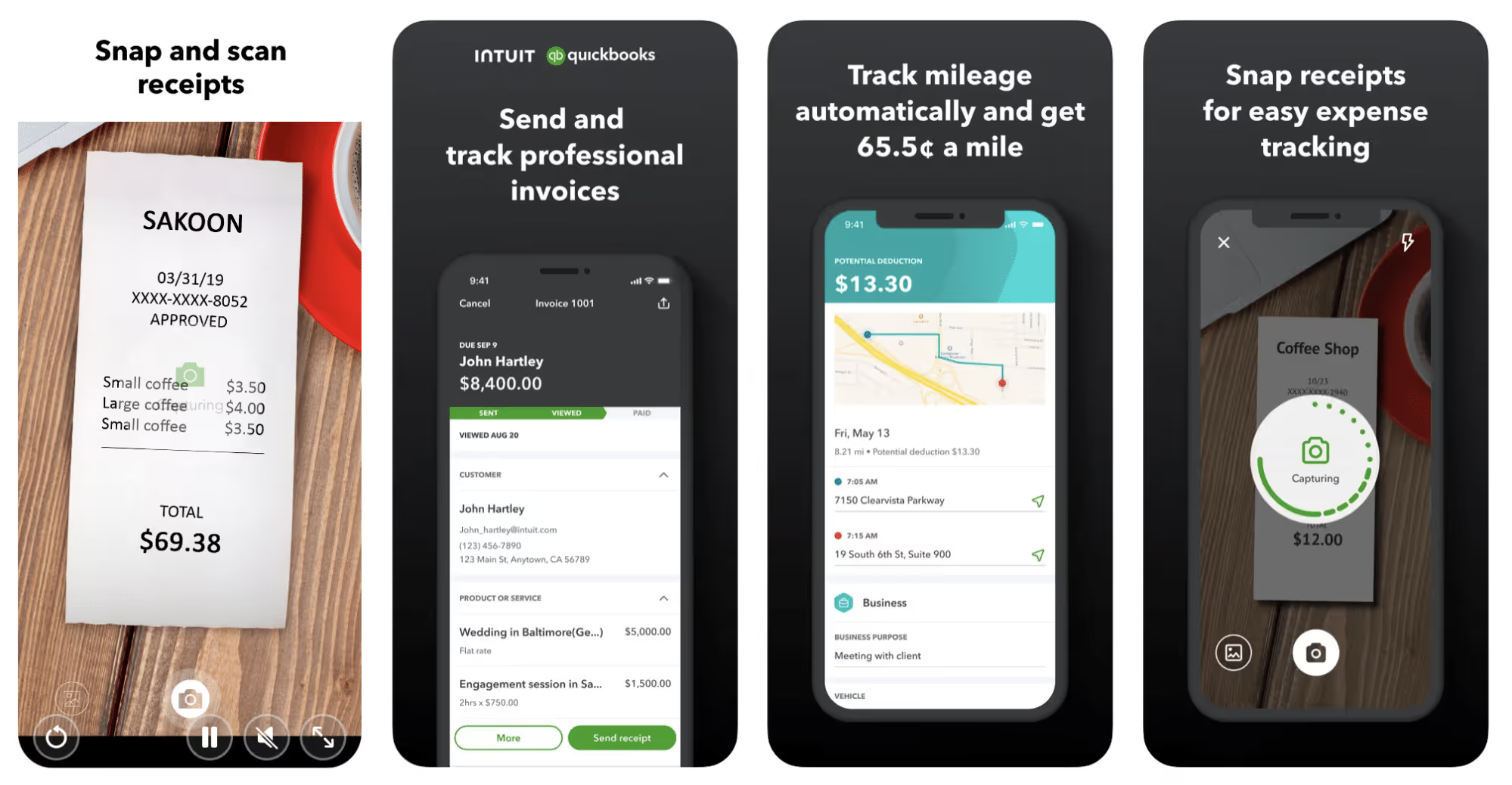
Quickbooks Online is a cloud-based app that allows you to track your mileage, earnings, and expenses. The information you enter can then be used to generate various reports that prepare you for tax time. It also allows you to create graphs that illustrate your cash flow, and includes a receipt scanner so you can instantly record deductible expenses. Quickbooks is popular, highly reliable, and designed mainly to help people keep track of their small businesses.
Available on Android and Apple: Yes
Ratings: 4.7 stars on App Store, 4.4 stars on Google Play
Free version: 30-day free trial
Subscription price: $15 per month for basic version if purchased for 3 months or more
Created specifically for gig drivers: No
Source: quickbooks.intuit.com
3. Shoeboxed
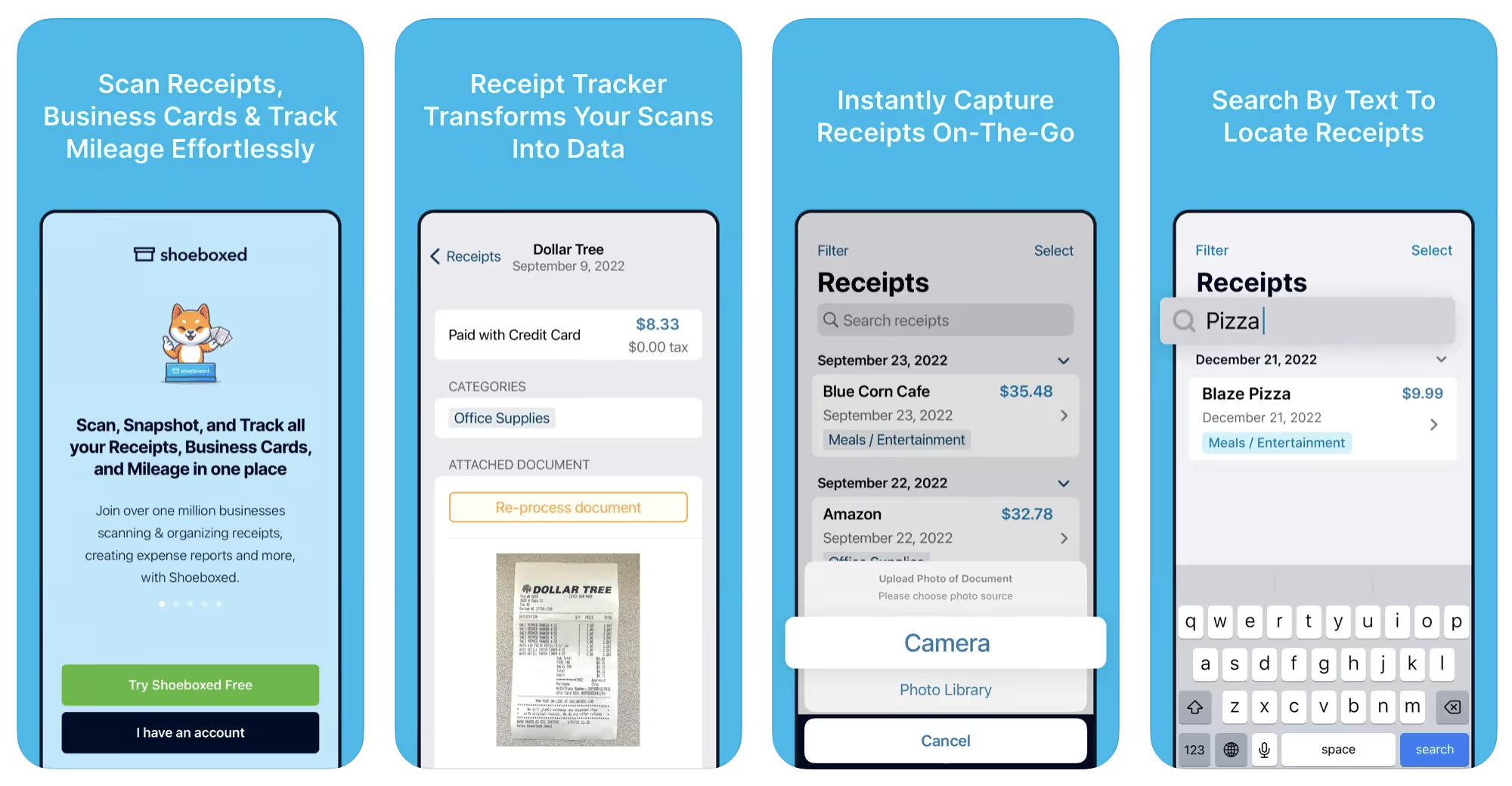
Shoeboxed started in 2007 as a service for scanning paper receipts into digital form. Now the app offers a free mileage tracker and has enabled users to scan receipts directly. It touts itself as the best mileage tracking app for DoorDash, but there are some elements missing that Dashers might like to have. While it provides features that record your expenses and prepare you for tax season, it doesn’t automatically track your earnings. The mileage tracker has a system where you can drop pins along your routes to make the tracking more precise, identifying those legs of a trip that you make for business purposes. The mileage tracker is “free” once you sign up for the basic version.
Available on Android and Apple: Yes
Ratings: 4.5 stars on App Store, 2.3 stars on Google Play
Free version: No
Subscription price: $18 per month for basic version
Created specifically for gig drivers: No
Source: blog.shoeboxed.com
4. Stride
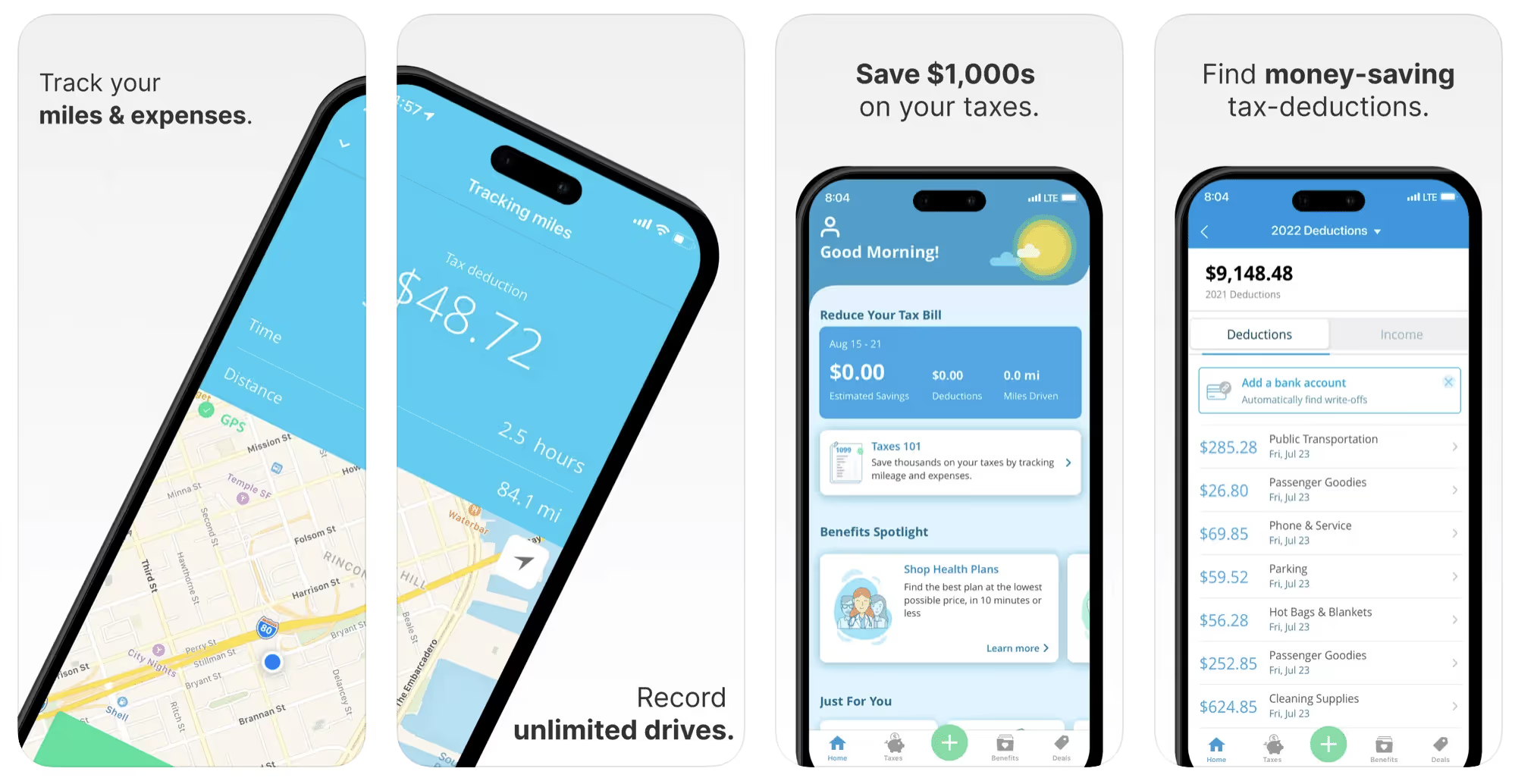
This free mileage tracker does a fair job of keeping track of the distances you rack up while gig driving, but it doesn’t automatically track earnings. It can be a big help, though, in tracking your expenses. You can link Stride to your bank account, and it will automatically scan your expenses to identify items you can potentially deduct. The app is totally free. This could make it the best free mileage tracker app, but there is a small price to pay. The app will persistently push you to consider various insurance plans that they are affiliated with. If you don’t mind that, this is a solid mileage tracker, even if it doesn’t track your earnings.
Available on Android and Apple: Yes
Ratings: 4.8 stars on App Store, 4.6 stars on Google Play
Free version: Yes
Subscription price: None. The app is free.
Created specifically for gig drivers: No
5. Gridwise
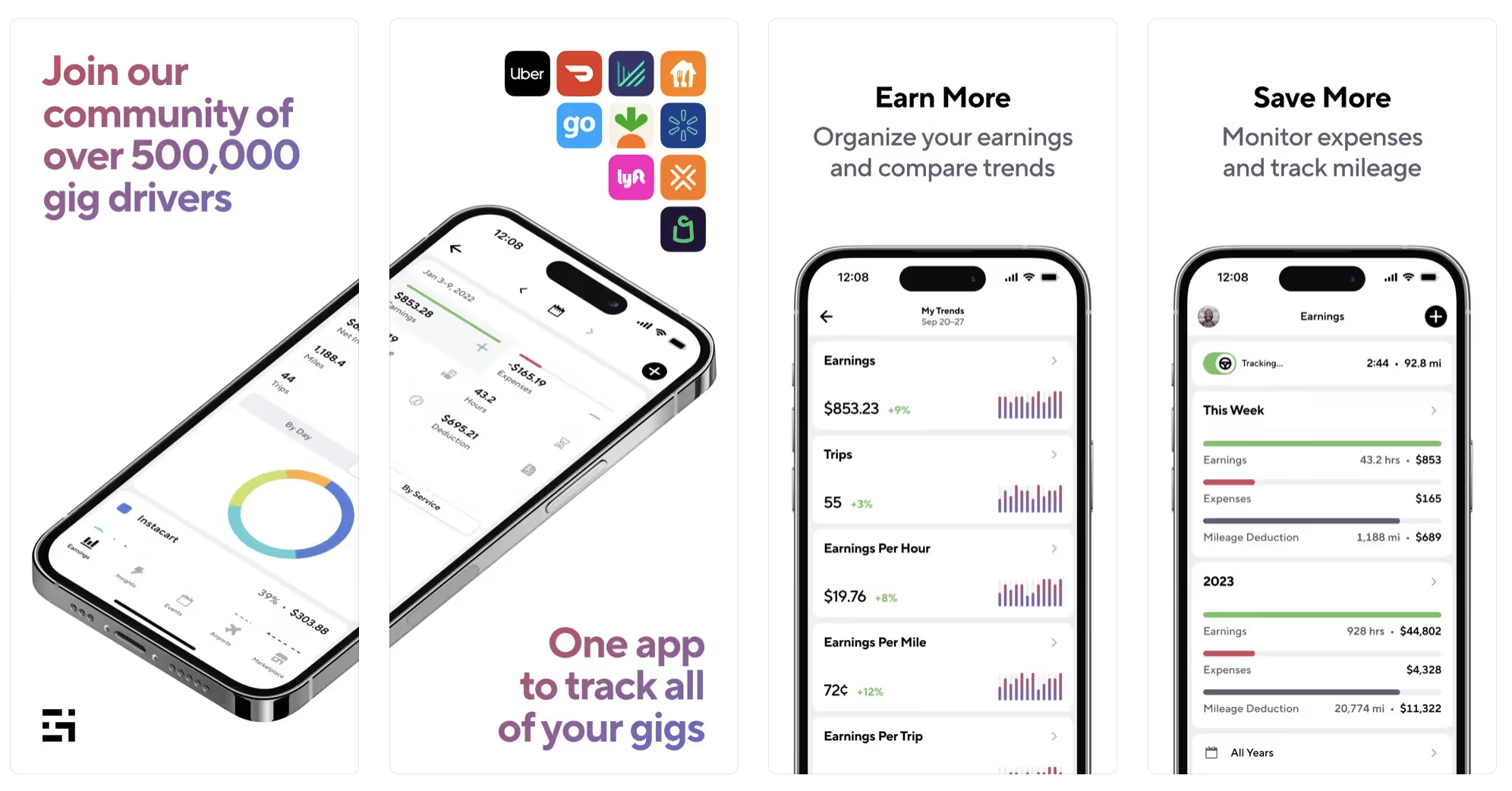
Gridwise has a free mileage tracker and free features that record your income and expenses. It gives you access to insurance and benefits, as well as insights about the best times and places to make the most money while gig driving. The Gridwise mileage tracker captures all the miles you drive while you’re on your driving shift, and it can be used if you have other trips you need to make which qualify as business travel.
Drivers love it because it is geared toward the needs of rideshare and delivery workers, providing free information about airport departures and arrivals, event start and let out times, weather, traffic, and more. The Gridwise Plus subscription adds value by providing additional insights and reports, discounts on benefits, the ability to export data in .csv format,, and more.
Available on Android and Apple: Yes
Ratings: 4.9 stars on App Store, 4.6 stars on Google Play
Free version: Yes
Subscription price: $9.95 per month for Gridwise Plus, or $95.99 per year (a $23.41 savings)
Created specifically for gig drivers: Yes!
What is the best mileage tracking app?
Now that we’ve checked them all out, we’re positive about the answer to that. Hands down, it’s Gridwise. Are we biased? You bet we are! But drivers love it too. Gridwise is the best mileage tracker app—and so much more. So many of the features are free, and the subscription to Gridwise Plus will pay for itself with additional insights to boost your earnings and deeper discounts on products and services.
Most important, Gridwise is designed specifically for gig drivers by experts who were once gig drivers themselves! Knowing what gig drivers need is a crucial step in creating an app that rideshare and delivery drivers can really use! Here are a few of the features, besides mileage tracking:
- seamless earnings tracking
- automatic, on/off toggle and manual mileage tracking
- mileage categorization
- airport, traffic, weather, and events information
- insights into where to drive and when to drive
- reports showing earnings across the platforms you use
- discounts on countless products and services for drivers
- additional resources for finding side gigs
- an informative and comprehensive blog
- affordable benefits, including insurance, medical, dental, and alternative practitioner discounts
- a community of drivers just like you
Don’t settle for just any app. Get the best mileage tracker, and so much more, from Gridwise!
[elementor-template id="21599"]
What Records Do Gig Drivers Need To Keep Track Of For Taxes?
* Gridwise does not provide tax, legal, or accounting advice. This material has been prepared for information purposes only, and is not intended to provide, and should not be relied on for tax, legal, or accounting advice. You should consult your own tax, legal, and accounting advisors before filing your return.
Record keeping? Who signed up for that? As a gig driver, it’s part of what you need to do to keep your business running. Don’t worry. It’s not as complicated as you might have been led to believe. This post will show you what you need to keep track of and the best ways to gather and preserve your tax-related records. We will cover
- How record keeping can help reduce income tax for freelancers
- Taxes and freelance work: Record keeping requirements
- Mileage tracking: Motives and methods
- More deductions and records to keep
- Make tax time easier
How record keeping can reduce income tax for freelancers
Tax time is not “fun time” for rideshare and delivery drivers. It’s easy to get used to watching your earnings pile up and come to believe they are all yours. Unfortunately, that isn’t the case. Gig work taxes can be especially painful because no one takes them out of your earnings for you, until the tax authorities insist that you do it for yourself.
You will need to show the tax authorities your income records, and they will gladly tell you to send them what they determine to be their fair share. Think that’s not fair? You’re not alone, but that doesn’t mean you’re going to get out of paying gig work taxes.
But you can find ways to pay the smallest amount that is legal and possible. The best way to defend yourself against having to pay astronomical amounts when you file your return is to know what expenses you can deduct from your gross income. When you subtract deductible expenses from your gross income, there is less left over to be taxed. This reduces the amount they can hit you with gig worker taxes. and can make your tax bill substantially lower.
While you want to keep good records so as to be in compliance with taxation entities such as the IRS, you also want to ensure you have proof of every last deductible expense you have accrued during the year. There are other records you must keep as well. Let’s look at some of the considerations you have, realizing that you now need to know how to do taxes as a freelancer.
Taxes and freelance work: Record keeping requirements
So many gig drivers fail to understand the responsibilities they have as independent contractors. Those who work part time for very few hours may even believe they don’t have to report the income they get from their driving gig payments. That would be a big mistake!
The company or companies you work for report your income to the IRS and state tax authorities. If you fail to report that income, you will risk some rather painful penalties. The IRS taxing side hustles is as much of a thing as the IRS taxing income from any other job. Your best bet is to report what you’ve earned, honestly and completely, and comply with other record keeping requirements such as
- gross income
- deductions and credits
- purchases (items you purchase and resell, such as snacks or bottled water)
- a log of all your mileage (or vehicle expenses, if greater)
- a list of all expenses and assets, such as utilities and other expenses associated with having a home office and equipment
- machinery and furniture you own, including when it was acquired, how much it cost, whether you previously took deductions on it, and selling price, if applicable (this includes your vehicle)
More things to consider:
- Pay attention to the retention of your records. You’ll need to keep all tax-return-related items— including income, deductions, and any tax credits reported— until the period of limitations runs out (3 years from date you filed, or 2 years from when you paid tax. If you have employees, keep your records for at least 4 years.)
- If you want to avoid paying self-employed taxes, you may want to set up a corporation or Limited Liability Corporation (LLC) for your business. This allows you to separate all your gig driving earnings from personal income, and permits you to take advantage of the additional advantages of working through a corporation. This includes exemption from self-employment taxes. You can learn more about how to pay self-employment taxes, if you opt for that, in this post from Keeper.
- You should always keep a separate checking account for your business, for convenience as well as clarity. While this is not a legal requirement, it is a smart move if you want to have an easier time managing your business.
- You are required, as an independent contractor, to file your taxes quarterly. Check out this Gridwise blog post for more information about quarterly tax payments and other matters that make filing delivery, Lyft and Uber taxes easier.
Mileage tracking: Motives and methods
Why you need to be meticulous about mileage
Mileage deduction, or the costs of operating your vehicle, will be the most important item to account for when you consider how to file taxes as a freelancer. While mileage is an important deduction for all independent contractors, as you might imagine, it’s even more essential for rideshare and delivery drivers.
There are two ways of keeping track of your mileage deduction. One is to use the IRS’ standard mileage deduction, which for 2022 is 58.5 cents per mile. This number takes into account the costs of operating your vehicle, from fuel and maintenance to registration, insurance, and depreciation. Alternatively, you can calculate all your own vehicle operating costs, but only after your first year of using the vehicle. You may discover that this second option allows you to have more money deducted from your taxable income. Learn more about the options for deducting your mileage in this Gridwise post.
No matter which way you decide to calculate the deductions for your mileage, you need to know what mileage you can and cannot deduct.
You can deduct
- miles driven to and from home when you go out to drive or deliver
- miles you accrue during your trips
- miles you drive on any other trips you make that are necessary as part of your business.
Examples:
- driving to return a lost cell phone or to an Uber Hub or another physical location where your company might make driver support available
- driving to pick up supplies, to get gas, or to have your car cleaned, serviced, or detailed, etc.
You cannot deduct
- miles you drive for personal trips
- miles for any trips you take that do not directly affect your business
Note: If imagining yourself becoming the not-so-proud owner of a shoebox filled with paper receipts gives you nightmares, stop worrying. Electronic records of purchases will satisfy reporting requirements. If you use cash, you can scan copies of your receipts, in some cases, right into your recording software or app. Gridwise and Keeper give you a simple to use interface that keeps all your receipts recorded without the messy pile of paper.
Mileage tracking methods
By now, you’re probably convinced that tracking mileage is important, despite all the other things drivers have to do. Now, let’s look at your options for keeping accurate records.
- Manual tracking: You can keep a logbook where you list every trip you make, starting and ending mileage, the date, and purpose of the trip. While this would work, it’s certainly not convenient. Besides, if that logbook gets lost, your plans for having a nice, fat tax deduction will go by the wayside.
- Spreadsheet: This is a bit more convenient and sophisticated way of tracking your business mileage. You’d need to be meticulous about making your entries, though. Even if you keep a spreadsheet app on your phone, it could be time consuming and inconvenient to keep doing it with all the other things going on in a rideshare or delivery driver’s day to day life.
- GPS-based mileage tracking apps: There are a bunch of apps that track mileage based on your GPS location, and most of them are pretty accurate and far more convenient than taking constant readings of your odometer. Your driving apps, such as Uber, Lyft, DoorDash, or Instacart, may also track your mileage, but be careful here. They will only track the miles you drive while you’re on a trip or delivery. They don’t count the miles you drive going to pick up a customer or when you make your move toward a restaurant or store.
Gridwise, on the other hand, will track all the miles you clock while you’re on your shift. All you need to do is make sure you start tracking the minute you leave home, and every gig driving mile will be logged. - OBD-II mileage tracking systems: There are plug-in modules that assess your vehicle’s mechanical health and track your miles. However, many authorities question the ability of OBD-II mileage tracking systems to get get accurate odometer readings. Insurance companies don’t consider them to be accurate enough gauges of odometer readings.
While mileage is a crucial deduction when you’re preparing your Uber, Lyft, or DoorDash taxes, it isn’t the only expense you’ll want to record.
More deductions and records to keep
Expenses you can deduct
You’re entitled to include the cost of other expenses that are directly related to your driving business. These include
- vehicle expenses
- equipment for your car and home office
- extra services and subscriptions
- business tools, including apps and software
You can learn much more about gig driver expenses that are eligible for deduction in this Gridwise article.
Ways to track and preserve deductible expenses
- The manual method: Just like you can with mileage, it’s possible to use a manual method, but in addition to logging each expense into a ledger, you would also need to keep physical receipts.
- Spreadsheets: You can record your expenses on a spreadsheet. This is somewhat less awkward than manually logging mileage, but there still will be plenty of room for failing to remember the case of water you bought for your customers, or losing the receipt from the thermal bag you purchased.
- Accounting software: You can use software that helps you track your expenses. This method usually interfaces well with any tax preparation software you or your tax professional might use.
- Gridwise: There are other apps that help you track your expenses, but Gridwise is designed specifically for gig drivers. It automatically tracks earnings and mileage, and lets you record your expenses the minute they come up. Gridwise’s partnership with Keeper gives you the ability to scan receipts and access a tax professional. This is a seamless way to record your expenses and a big help in learning how to file Uber taxes. Gridwise even provides .csv output, so you can feed your Gridwise data directly into tax preparation software. Check out what Gridwise and Keeper will do to super-charge your tax filing powers.
Organizing and categorizing expenses
Before you even begin to record expenses, you’ll want to set up categories for them. You can start by reviewing the categories listed above and checking out the Gridwise post that lists possible deductions.
If you’d like to learn more about how to categorize expenses, there is additional information available. This article from Motley Fool lists all possible categories any freelancer might use and also gives tips on how to customize them for your driving business.
One last tip
Using Gridwise, particularly for tracking mileage, is the easiest way to be in compliance with the IRS’ rules for deductible mileage. Gridwise tracks all the miles you drive for your gig, beyond what your company’s app might record. At the same time, you can log on and off Gridwise when you start and end your shift, so personal miles won’t be recorded. This eliminates confusion while capturing every deductible mile.
Gridwise Tax Help, a partnership with Keeper, has been created specifically to serve gig drivers. It provides affordable and easy ways to record expenses, scan receipts, and find deductions by analyzing your expenditures. Read about free resources from Keeper you can use to be fully prepared for tax season, and get all your earnings and expenses on the record.
Get the world’s best assistant for rideshare and delivery drivers, and tax help too.
Make tax time easier now!

Gig platform (Uber Lyft DoorDash Postmates) glitches are costing some drivers money
Most of the time, they work great.
Whether you’re on Uber, Lyft, Postmates, DoorDash, Grubhub, Instacart, or another, the apps we use usually work well.
They know where we are, who wants a ride or a delivery, how much it will cost, how much we’ll get, how we should get to where we’re going, and then… they give us reviews on how well the customer thought we did.
But there are times when we drivers run into the dark side of depending on apps for our driving business.
Have your tolls always been reimbursed? Has your app ever been hacked? And how about those glitches? Why is it, really, that you’re not getting your tips until three or four days later if you get them at all?
In this post, we’ll look at real stories from drivers who’ve put us onto some dastardly defects in the automated systems, and offer suggestions about what to do when the crossed wires somewhere in the system happen to affect you.
Here’s what we’ll feature:
- The glitches that get us
- Tolls
- Hacks and scams
- Phantom and random tips
- Outages and bugs in apps
- How to get a glitch fixed
The glitches that get us
Let’s start by recounting stories we’ve collected from the Gridwise community and cyberspace in general, by category.
Tolls
The apps claim they will cover the cost of our tolls, and to do our jobs efficiently, we just have to trust them.
As an example, here is Uber’s toll policy. It tells us that tolls will be paid by the customer and added to the cost of the ride.
Note, though, that if there’s a discount for electronic tolls, they’ll pay that lower price. If you want to avoid paying the difference, you’ll want to have one of those toll-paying transponders handy.
Yet even with the electronic pass, more than a few drivers have reported missing reimbursements for tolls. We got word from some Gridwise drivers that Uber wasn’t paying the tolls at all.
When the drivers noticed the omission, they had to call Uber, engage in long-winded explanations (one driver likened it to “arduous dentistry”), all to have the person with whom they spoke blame it on a “glitch in the software.”
Uber did eventually pay them back, but at what cost? Another driver said the average phone call he placed, after many incidents of disappearing tolls, took 15 minutes out of his day. That’s a rude waste of a driver’s time.
Uber’s not alone in the missing toll game. Our sources tell us that Lyft is equally culpable. The glitch seems to pop up in places like New York, where the Taxi and Limousine Commission (TLC) regulates the cost of crossing from New York into New Jersey. The drivers involved had to prove this with screenshots, and complain to the TLC.
In another case, we heard about a Lyft driver who got a bill for $5,000—for tolls, although this time it wasn’t Lyft’s fault. The driver had gone without her transponder, and the cute little camera captured her license plate and sent her a charge that she didn’t even know she had to pay.
The driver never got the notice, but as we know, the DMV never forgets. Over two years the costs continued to mount, and when she finally received the bill, it was humongous. When she went to the media to get help, the DMV responded quickly. They told her she never got the original notice due to a glitch between their system and the highway’s system, because they didn’t get her apartment number.
Fortunately, that massive amount is uncommon, but it reinforces some of the things we should keep in mind when dealing with tolls.
Toll Tips
- Don’t leave home without a toll-paying transponder. If you don’t have one, understand that you’ll have to pay more than your company will reimburse you.
- Check your earnings after each toll trip, or at least at the end of your shift, for missing tolls.
- If something’s amiss, contact the company in writing, as well as by phone. They might make a quick fix during your conversation, but a written record can build a case for forcing the company to effect a lasting solution.
- Take screenshots of your toll payments (from your electronic payment account), for proof of payment.
Hacks and scams
The apps we use have huge databases, with customer information as well as ours. While customers might get the last four digits of their credit cards exposed to nasty hackers, we also have our driver’s licenses, registration, and insurance info up there on the cloud.
If you listen to the news at all, you’ve probably heard of a hack happening to a company you use a lot. But what about the ones you don’t hear about? On August 24, 2020, the former chief security officer for Uber was hit with federal charges for allegedly covering up a hack that occurred in 2016.
This incident involved two hackers who demanded a six-figure payment in exchange for his silence. What did they have? A lot, including personally identifiable information (PII) for 57 million Uber users—and DRIVERS. Yes, it did include the driver’s license numbers for 600,000 drivers. Because the former security officer concealed and misled the Federal Trade Commission (FTC), he’s in big trouble.
In September 2019, a hack of the DoorDash app exposed the data of 4.9 million customers, and 100,000 delivery drivers—also including driver’s license numbers.
Criminal activity that homes in on data the apps collect isn’t restricted to this kind of hacking. There’s a common scam that’s been reported by almost all the apps, and it has to do with nasty people who want to get something that’s essential to us drivers … our earnings.
Here’s how it happens: You get a call, ostensibly from the customer support division of your app. They tell you it’s necessary to change your password immediately, and they offer to do it for you. Then … they get into your settings, and change the bank account from yours to theirs. After that, they hit “instant pay” to send your hard-earned dough to their bank account, and …

It might be hard to believe that a driver would fall for this, but an amazing number of them do. Check the social media groups, and you’re bound to see one or two innocent souls asking what happened, and an army of fellow drivers coming to the rescue with an explanation and instructions to change the password back immediately.
In that same spirit, we’re offering some suggestions here:
Un-hack and de-scam yourself
- Protect your PII. If you’re worried about identity theft after a hack like the one Uber covered up, check the safety of your information and secure your identity.
- Do NOT change your password for anyone on the phone. The companies will not take the time to contact you that way, so anyone who calls you for the purpose of getting you to change information in the account is likely up to no good.
Phantom and random tips
Tipping is a perk of driving that often makes the job feel more worthwhile. We like to know when we get tips, how much they are, and most of all, we want to make sure they get added to our earnings.
Alas, this doesn't always happen. Whether it’s less-than-admirable practices by the companies, as they try to withhold drivers’ tips to increase their take, or plain missteps in apps, it’s a pain for drivers when their tips don’t get delivered.
Slippery stuff
Instacart, Postmates, Grubhub and Seamless have all been caught taking portions of driver tips to make up the hourly pay they promise to drivers. The driver winds up receiving only part of the tip, and the company puts the other part of the tip toward the driver’s base pay. If you’re wondering how they got (or in some cases, may still get) away with this, you’re not alone.
The good news is, many cases like this have been exposed, and the companies have had to stop these unfair practices. Still, it pays to look out for it. Watch closely to make sure you’re getting all of your tips as well as your base pay.
Not so able apps
Glitches in the apps can also cause tips to be delayed or lost in cyberspace. A quick read of reports on Facebook pages for drivers and several Reddit threads will give you lots of evidence of the kinds of incidents that happen. In one case, the Uber Eats app removed the tip option for drivers on the customer side. The customer care specialist advised the driver that he should be patient, and that tips were not a guarantee. (Wonder if that person ever tried living on Uber Eats driving with no tips.)
For the most part, apps appear to be getting tips flowing within a few days, or even a few hours in some cases. Still, it’s frustrating. What can you do to protect yourself?
Keep track of your tips
- Don’t automatically assume that everything is correct. Check and make sure your company is acting responsibly, ethically, and that the app is working the way it should.
- Join social media groups that bring the driver community together. You can learn a lot by keeping an eye on what’s going on around the country, and the world, and join with other drivers to ensure you’re getting your tips, and fair treatment in general.
Outages and app bugs (payment, surges, customer contact, GPS)
There are times, of course, when technology just doesn’t work. Let’s look at the various ways this can happen, and how they can impact your driving gigs.
Payment glitches
This one hurts. Bad. In one case, an Instacart shopper in Tampa saw all his earnings “bounce back” from his bank to the company, due to a glitch in the system. He got some assistance from his local TV station, which helped him investigate the situation and get Instacart to fix the glitch. Needless to say, he didn’t go running back to work for Instacart after that happened.
Another form of payment glitch is the “not getting pinged” issue. An Instacart driver says that she got tricked by the system when she was told an order she wanted to pick up was already claimed by another driver. She turned off the app, and lo and behold: several more batches made a pileup on her dashboard. Unable to take the calls due to her schedule, she had to cancel a bunch of orders, which is never a good thing for a driver’s status with a company.
Surge glitches
Okay. We’re supposed to be savvy enough to know it’s not cool to follow the surge, but sometimes we do. It’s also fair to say that not all surge “glitches” are for real. While a surge is going on, for instance, Uber, tells you that a certain amount will be added to your next ride. Exciting! But then, the surge ends, or you leave the surge area, and it still says you’re getting that extra money—but you probably won’t.
Because that’s just the way the app works, it’s hard to say it’s really a “glitch,” although there are surge glitches. Once again, you’ll usually find them posted in social driver communities. For the best information, make sure you’re tuned in to social media that’s specific to your area. You can do the community a favor by posting there, too.
Customer contact and GPS issues
Probably too often, we have to get in touch with customers in order to complete a ride or delivery. This usually involves a text, because so many won’t pick up their phones, and sometimes the texting system just doesn’t work. This wouldn’t be such a big deal if customers didn’t have the ability to rate drivers, and potentially threaten their status with the company.
Lyft’s system insists that the driver be at the location of the pin in the app before the ride can start or end. Obviously, this can often cause problems. You get to where you think the customer is, but the person might not be there, or the pin might not even be accessible by car.
You have a few work-arounds here. By driving to the “real” pickup or drop off location, you can get the system to work for you. Or, you can enter the pickup manually, to override the pin situation. Just don’t do what one driver did—call Lyft every time it happened so he could still get paid.That could really ruin a good night out on the town.
Outages
Sometimes the system is just DOWN. Lyft is famous for freezing and locking out drivers. Maybe that’s why they have a whole page dedicated to what to do when the app freezes posted on their site. You might want to take some of these suggestions even if you don’t drive for Lyft, because other apps can freeze and shut down too.
You can always check the status of your app, to find out if it’s just you, or if the whole system is down by checking in with Downdetector. This link takes you to GrubHub’s status, but you can enter the app of your choice to find out what’s going on. And face it, apps and networks are run by humans, and robots, that make mistakes. There are some things we just have to live with—but we can’t live with these mistakes for very long, right?
How to get a glitch fixed
It’s a lot easier to forgive a mistake if you get at least some inkling that the people responsible are willing to fix it. Here are some suggestions for reporting and/or publicizing the kinds of problems you might have with your driving and delivery apps.
Call customer support. Always a good first move. Put your issue in writing to create a paper trail, and if all else fails, write a letter to the corporate office.
Call on your community. Check social sites to find out what other drivers are experiencing. As noted in some of the issues we covered here, there are times when a “glitch” is just a misapprehension about how the app might work. When the glitch is real, other drivers will be your best allies.
Call on the media. Although it’s unfair to accuse a company of deliberately messing up your chances for making a decent living, when you’re pretty sure you’re getting the shaft, trial by media is an effective option.
Call on us! As you can see, we at Gridwise are always eager to know what’s going on in the world drivers navigate on a daily basis. If you have an issue, just contact us. We’ll get our researchers on the case, and hopefully help you find solutions to all your rideshare and delivery driving issues.
Go with Gridwise
To keep earning all the money you can through your driving gig, use Gridwise to track and optimize your time and energy. Download the app for airport information, events in your town, weather, and the best and most comprehensive earnings and mileage tracker you can imagine.
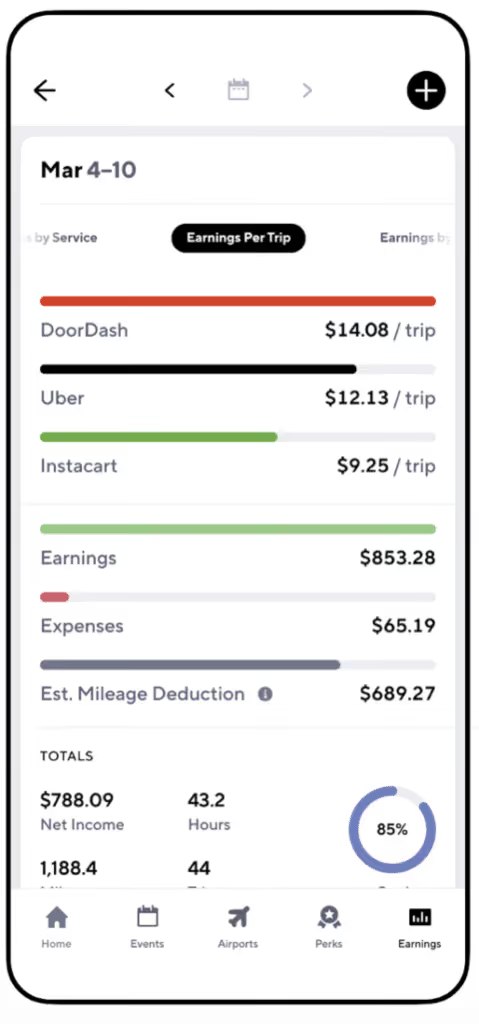
On the Perks tap you’ll get easy access to our informative blog and our awesome YouTube channel, plus deals and special offers just for drivers. Join us on Facebook for camaraderie with your fellow drivers, and participate in gas card giveaways.
Comment below if you have any questions or reports related to the problems apps can bring, and be assured that at Gridwise … we’re always on your side.

Gig platform (Uber Lyft DoorDash Postmates) background checks: Why are they taking so long
Signing up to drive for rideshare or delivery is pretty easy.
You upload your registration, driver’s license, and insurance, and let them run a background check on you. As long as this all goes smoothly, you can get up and running in a few days.
And most of the time it does work like that.
But lately we’ve been hearing reports of drivers getting held up because their background checks are taking F O R E V E R. Worse yet, you might find that your access to the app is either not granted (if you’re new), or suspended (if you’re a current driver), if the background check shows up as “pending.”
It really can make you feel paranoid. Your mind races. What did they find? Do I have a felonious doppelganger out there in the world somewhere? I didn’t do anything wrong, I know it! How does this happen? It’s enough to make you want to scream to the Universe: “What did I do now??”
You have a clean driving record, and as far as you know, you haven’t committed any felonies … so what is the hold up?
In the past, and especially now with that ever-present COVID-19 pandemic, some quirky things have been going on with the background check process. We’ll go through some war stories here, and offer suggestions for getting on top of the situation before it leaves you hanging forever. Here’s what we’ll cover:
- Why background checks get delayed
- What about your legal rights?
- What to do if your background check is past due
We also recorded a YouTube video that discusses these same topics. Check out the video below:
Why background checks get delayed
The dastardly pandemic
Right now, the biggest reason for delayed background checks is … you guessed it, COVID-19. What does that have to do with your driving and court records? Well, in many states and counties, the courts are closed. Yes, even now, almost six months after the pandemic started, that’s the case.
You might wonder why they have to go to a court to get your records; wouldn’t they in a database somewhere?
The answer is yes, in most cases—but not always. Even today, in the midst of the technology age, many courts either have no computer systems, or have systems that are not up to date. Also, the in-person check is considered to be more thorough than the online-only check.
The company performing the background check (usually an outside firm like Checkr) must physically go to the courthouse and have a clerk pull the records. A post on the Checkr website explains how the situation of closed courts is delaying their procedures.
Even if your information is in an electronic file, and an online check is adequate for your company, you could still find yourself in Pending Limbo. If a question comes up about your record, for instance, and it can only be answered by a person who works for the court, this could lead to a delay—possibly a lengthy one.
Software glitches in the app
Although the closures of courts due to COVID is a major reason for delays in background checks, it isn’t the only reason. There have also been reports of glitches on the app; i.e., it says your background check is pending, but it really isn’t. We got a report about a driver who hadn’t gotten Uber Eats pings for about a month, but couldn’t tell why that was happening.
When he examined his account profile for “documents,” it had all the checkmarks in the right boxes—except for one that said there was a “problem.” This driver remembered Uber had done one of those “continuous” background checks on him about a month before. Those involve periodically re-checking drivers to ensure there are no incidents they need to know about.
The driver knew Checkr had cleared him because he had an email that said so. It was the Uber app that had the “problem,” not him. He tried resetting the app, deleting it and re-installing, and cried out for help from other drivers. Some responded to him with similar issues, and the worst thing? None of them were able to work for as long as a month.
With the Greenlight Hubs closed (again, due to COVID), the driver is stuck trying to get help from Uber customer support. He and the other drivers he contacted didn’t get much more than the standard line: “We’re working on it.”
Another driver with a similar issue was able to get help from Uber after contacting them by email. You have to be persistent with Customer Care.
Errors in the background check
No one is perfect, including the folks that perform background checks. This August 2019 article gives an interesting account of dozens of faulty background checks by Checkr. Many of these faulty checks led drivers to either not be approved when they applied, or to lose the place they had previously had on the platform. Many drivers sued Checkr for making mistakes … big ones.
Checkr merely takes an individual driver’s name and Social Security number, and runs checks across various databases. Here are some things that can happen:
- A person with the same name could have a criminal record;
- Charges against a driver could be dropped or expunged, yet still reported;
- They might check and report records that go further back than allowed by state law.
Companies restricting the number of drivers
In some cases, companies might want to keep the number of new drivers down, or eliminate those who aren’t very active on the platform. Make sure you’re being treated fairly here, and if you’re not? Speak up—loud and clear.
What about your legal rights?
The legal climate around background checks is not exactly sunny with a chance of a few clouds. It’s more like a typhoon with driving rain and hail the size of golf balls.
There are a couple things about background checks that make them slippery in terms of legalities. For one, not passing a background check can cause a person to lose his or her livelihood. Many people have sued the rideshare and delivery companies, as well as the background check companies they use because they lost the opportunity to work.
The other side of the story involves customers’ opinions about the thoroughness of background checks on drivers.
Many riders and delivery customers have sued the rideshare and delivery companies because drivers have displayed criminal tendencies that would have been apparent on their criminal record—had it been thoroughly checked.
There are the kinds of checks we already described; namely, checking a person against criminal records by name, SSN, driver’s license number, etc.; and using fingerprints. Obviously, the fingerprint method is more accurate and exhaustive, because if a person has been arrested, the fingerprints will be on file. If the fingerprints of the driver match prints in a criminal file, there won’t be any question about mixed identities.
So … why don’t the companies use fingerprint-based background checks?
Because using fingerprints for background checks is expensive for the companies, and is considered to be inconvenient and intrusive by prospective drivers. This September 2019 article in Vox tells of what happened in 2017 when officials in Austin, Texas wanted to make Uber drivers go through fingerprint-based background checks. Uber threatened to stop operating in the area, and they did just that—until the officials gave up on the idea.
There are a lot of legal issues around background checks, but the fact is, every driver has to get more than one of them. All the companies now check and recheck drivers’ backgrounds on an ongoing basis.
What to do if your background check is past due
Before you do anything, check into the cause of the problem:
- Did you provide all the requested information?
- Is it a problem with the courts?
- Is it a software issue?
- Could it be a case of mistaken identity?
- Do you have a criminal record that extends beyond the state time limit?
If you have any questions about what kinds of things the background check company is looking for, or about the time limits for certain convictions in your state, read this earlier Gridwise post for Uber, and this one for Lyft. This page from Checkr’s site tells you more about how far back in time each state goes when making background checks.
The court problems can’t be helped, at least for now. Unfortunately, you’ll just have to wait.
If you find that there’s a software issue, however, be relentless. Don’t stop contacting Customer Care until you get an answer and/or they fix the problem. If you want to get their attention, post on social media about what you’re experiencing. They’ll catch wind of your discontent, and maybe work a little harder to get things resolved.
In the case of mistaken identity, or the check looking at your record further back than the time limit in your state, do everything you can to stand up for yourself. There are laws in place to protect you, and you might be the one who has to make sure they are properly enforced.
Our best advice is this: If you get into a delayed background check situation with your company, try to work it out with them. If you can’t, and the situation is getting between you and your ability to make a living, consider seeking legal help.
Let’s hope things will get better once COVID-19 is no longer holding everybody back, and that companies, both the gig economy apps and their background checking services, develop a more respectful attitude toward drivers.
And, oh yes, there’s one more thing you can do to protect yourself, especially when it comes to those periodic background checks: Work for multiple platforms. If you have more than one company to work with, you can move over when and if you have problems with a continuous background check. Also, if you’re a newbie, apply to at least two platforms, and see if one gets that background check done faster than the other.
The answer for multiple platform drivers: Gridwise!
When you download Gridwise, you have the ultimate assistant for rideshare and delivery drivers right there in your device. You can track earnings and mileage for all the apps you use, and display useful graphs that inform you about how each is performing in terms of putting money in your pocket.
On our Perks tab, you’ll get cool deals and discounts for drivers, and access to our incredibly insightful blog, developed just for drivers. Get easy access to the Gridwise YouTube Channel, and join us on Facebook for Gridwise Gas Giveaways.
We’ll also tell you what’s going on in town and at the airport, and give you a heads-up on weather that might affect your shift. What would you do without Gridwise? You don’t have to find out … download the app now.
Who are delivery drivers: A demographic breakdown of delivery drivers in the U.S.
What does a delivery driver do?
Delivery drivers are gig workers, meaning independent contractors who decide what job assignments, or “gigs,” they want to take on.
Gig workers choose when they work, which company (or companies) they work for, and how many hours a week they want to spend making deliveries. Groceries, prepared meals, retail purchases, Amazon finds, office supplies, and even alcoholic beverages are among the products these drivers deliver to their customers’ doors.
A number of companies and platforms use delivery drivers, including Amazon Flex, Uber Eats, Postmates, Grubhub, DoorDash, Instacart, Shipt, and others.
The job of delivery driver is performed by a diverse variety of people. Based on information we collected from a recent survey of 750 registered Gridwise drivers, we’ll share with you what we learned about them.
First, we learned that delivery drivers can’t be pigeonholed. They’re male and female, are a wide range of ages and marital statuses, and come from all walks of life. Here’s a rundown of delivery driver demographics.
Most drivers are in the 40+ age group
People often have the impression that delivery drivers are teenagers, but as you can see, most of them are older. In fact, 61% are over age 40. This means they are mature and, most likely financially responsible enough to have money they can spend on products and services they want and/or need.
More men than women deliver, but there’s a good mix
Although the audience is predominantly male, there are enough women to make this a diverse market for products and services that cater to people of both genders.
Most delivery drivers are married
As you can see, 61 percent of delivery drivers are either married or have been married at some point in their lives.
Most delivery drivers are also moms and dads
Many delivery drivers have needs that cater to their parental roles, and also to their kids. This group is family oriented, and often works during hours when they’re not tied down with their kids and their active schedules.
Delivery drivers can, and do, choose their own hours
While many drivers work full time, nearly one-half stick to part-time hours. This might mean that when they’re not out there delivering to customers, they’re working at other jobs.
Delivery drivers are educated
Many delivery drivers are well-educated, and may also be open to opportunities that allow them to expand their knowledge. They’re a great audience for marketing training programs and other sources of learning for expanding career opportunities.
What gig platforms are popular with delivery drivers?
Most drivers work for more than one gig platform and many delivery drivers are also rideshare drivers.
Vehicle ownership dominates over leasing and renting
A large majority of delivery drivers use cars they own for their delivery businesses. This means they’re going to be focused on caring for the vehicle, in terms of maintenance, and to some degree, appearance and cleanliness.
Many delivery drivers have a vehicle specifically for their driving business
Multiple vehicles means a greater need for automotive expenses. This means delivery drivers are prime contacts for services that help them procure, register, insure, and maintain their vehicles.
What car makes are popular with delivery drivers?
Toyota is by far the most popular car make, followed by Honda and Nissan.
Delivery drivers clean their cars often
Keeping a clean vehicle has always been important for drivers, but the COVID-19 pandemic has made cleanliness more crucial than ever. Cleaning up spills, and even eliminating food odors, become issues that must be dealt with, particularly if the vehicle in question is being used for both delivery and rideshare.
Financials
For obvious reasons, earnings are important to delivery drivers. Here are the questions we posed during our survey, and our drivers’ answers, to questions about the ways they motivate themselves and tend to the administrative work of running a business.
Do you set weekly goals?
Do you track your mileage?
Have you purchased rideshare insurance?
Do you use a separate bank account for your gigs?
In many ways, delivery drivers make good business decisions, but not many follow through on insurance and banking requirements for self-employment.
Not sure how you can market to delivery drivers? Let the Gridwise team build a multichannel strategy for you!
Still not 100 percent sure how you should be engaging with delivery drivers?
No problem!
At Gridwise, we have a team of marketers and designers who are experts in engaging and converting rideshare drivers across all channels and we’ll be happy to design a personalized strategy for you!
Simply reach out to sales@gridwise.io and we can set up a strategy session.
From Uber driver to radio entrepreneur: Meet the founder of TNCRadioLive
Tom Kelley is one of those guys who doesn’t just talk about getting things done—he gets things done.
So in early 2019, after being a uber driver for a few months, he had an idea for an app-based radio station just for drivers.
And he decided to make it happen.
Kelley pulled together a team of people on the move: rideshare and delivery drivers, truckers, pilots, and co-pilots, and together they created TNCRadio.Live.
A few weeks ago Kelley sat down with Gridwise and shared some intriguing behind-the-scenes information. In this blog post we’ll tell you his story, reveal more about his entrepreneurial endeavor, TNCRadio.Live, and look at what the future might hold. Here’s what this post covers:
- What is TNCRadio.Live
- Tom Kelley’s story
- Early success
- How to listen and what you’ll hear
- What’s coming next
What is TNCRadio.Live
TNCRadio.Live is an Internet and app-based station that broadcasts directly to rideshare and delivery drivers.
Like Gridwise, TNCRadio offers information about local traffic, road closures, and area events. Kelley told us he believes his new station offers drivers the information “they need to do their jobs.”
After talking with drivers, Kelley noticed they often didn’t have the slightest idea how to get this kind of information.
On top of that, he says, “They don’t know what they don’t know.” This might include how to download tax information or how to contact Uber or Lyft when all the hubs are closed.
Kelley is grateful for Gridwise and all that the app offers drivers. But he recognizes how hard, not to mention unsafe, it can be to use an app when you’re driving down the road at high speed. That’s why listening in can be helpful along with keeping your eye on Gridwise.
TNCRadio.Live broadcasts all day and night, providing the latest news about the driving business, stories covering crucial driver topics, podcasts drivers should know about, and their own interviews with people whose knowledge can help drivers. Much of the programming can be downloaded as podcasts.
To give you a flavor of what listening to TNCRadio.Live is like, here’s a sample of their daily broadcast schedule:

Kelley says the station’s programming is aimed at “anybody who spends their days (or nights) driving the streets of Houston, Texas.”
How it happened: Tom Kelley’s story
Like most of the others involved in TNCRadio.Live, Kelley has a history as a driver.
He got into rideshare in early 2019 when he opted to retire after a long career as an IT executive. He says he wanted to do something “exciting and different,” so he started rideshare driving.
Kelley has driven for both Uber and Lyft, and thoroughly enjoyed it. The flexibility of the hours, the reasonable amount of money he earned, and the satisfaction of knowing that he was doing something valuable, were exactly what he’d been looking for. He even drove for Uber Eats for a while, and found that to be a positive experience as well.
Kelley noticed, while he was out there, that the other drivers waiting for rides at the airport were hungry for information. They’d tap him for what he knew from his Gridwise app and he’d share it with them. But when he suggested they download the Gridwise app, they’d say things like, “Huh? Why do I need that? I already have the Uber app.” Obviously, drivers needed more education. How could he do that, and create a substantive side gig for himself at the same time?
Around this same time, Kelley heard about a guy who was pulling in $80,000 a year playing Led Zeppelin playlists on the Internet. Who wouldn’t want to get in on that kind of gig? Kelley called some friends in the radio business, most of whom were either driving, trucking, or piloting, and they put it all together. That’s when TNCRadio.Live was born.
The initial plan was to launch in late March 2020, but we all know what happened then.
Yes. The pandemic.
Kelley could no longer drive because he had to remain quarantined for the safety of a relative who was living with him. But being the enterprising and quick-thinking person he is, he wouldn’t stay stuck in a rut. He kept going. He threw his heart into developing TNCRadio.
Lockdowns made it impossible for the newly formed group to meet in person. Even though they could do voiceovers and production work while in isolation, live radio needs that up close and personal collaboration if it’s going to sound “real.” The time to launch just wasn’t right, but they knew that when it was time, they’d be primed and ready to go.
By summer, some signs of life were stirring around Houston. Kelley says he noticed a pick-up in traffic and action, and the group had more freedom to gather and collaborate. The moving parts started to fall into place, and the team was ready to go. On July 1, 2020, TNCRadio.Live had its official launch.

Early success
About six weeks after the launch, TNCRadio.Live had about 1,000 regular listeners. From this warm reception, Kelley and the others could see that there’s a strong demand for the kind of information this station and Gridwise send out to drivers.
Despite being off to a great start, the TNCRadio.Live team is learning that the people who need the station the most are the hardest to find. They’re committed to spreading the word, though, and it will be exciting to watch them grow.
More movement, Kelley believes, will start happening as schools open. Not only will commuting families generate traffic, but parents may also be free to go back to work. After all, many jobs can be done from home for only so long. When people do start returning to work, this could be a real boost to rideshare.
While rideshare and delivery drivers are TNCRadio.Live’s main target audience, Kelley is eager to welcome people from other industries, too. He’s hearing from nurses, contractors, truckers, and others who spend a great deal of their working hours driving from one location to the next. They appreciate the information about Houston’s streets and highways, and they also enjoy hearing the banter about sports, the rideshare business, and driver stories.
In fact… if you want to share your story with TNCRadio.Live, all you have to do is get in touch with Kelley through the website. He’s always looking for people with personality to come on the air with him and share their experiences. Although at this point TNCRadio.Live is focused on Houston, Kelley says stories from anyplace else on the planet where people drive will be warmly welcomed. Use this link to get in touch with TNCRadio.Live’s driver story reporter.
How to Listen
Also, whether you live in Houston or some other location, there’s sure to be something you’ll enjoy listening to on this new station created just for drivers. The app is free and you can download it here, although right now it’s Android-only. If you have an iPhone rather than Android, you can listen directly from the website.
Because all the talent on TNCRadio.Live are also drivers, they have their fingers on the pulse of all the goings-on in the driver community. They cover such topics as:
- Smart driving practices
- Driver classification
- Government interference in the gig economy
- Connecting people with government resources
- Driver safety
- Building a better driver community
- Serving the general community
The station offers insightful tips to drivers, and the information it provides can be a big help. For instance, Kelley sees the value in knowing how long it will take to complete a ride. Passengers tend to have more patience about a traffic jam when they’re warned about it ahead of time. Happy passengers often tip, right? And that makes every driver happy.
As an example of how TNCRadio.Live helps people in their community, Kelley shared a heartwarming story about a report of someone stuck in Houston’s oppressive heat without an air conditioner. The station was able to connect the person with the right government agency, and a new air conditioner appeared. As this shows, TNCRadio.Live is not just informative and fun. Kelley and the rest of his team have a sincere intention to build and support the driver population and the surrounding community.
What’s coming next?
When we asked Kelley what his plans are for TNCRadio.Live, he didn’t hesitate. He said they want to get “really, really good at taking care of Houston.” While he believes they have a good thing going already, there’s more that he wants to accomplish so he can take it to the next level.
Once that happens, Kelley and his partners hope to take TNCRadio.Live to more cities. When they do, they’ll be looking for drivers who have radio experience and talent. Stay tuned, and you could become a TNCRadio.Live star.
In the meantime, stick with Gridwise for more great stories about cool drivers like Tom Kelley. Our blog is just a click away, along with discounts for drivers, and links to the Gridwise YouTube channel, all on the Perks tab.
Track your earnings, monitor your mileage, get airport info, event times and places, weather, and more, when you download Gridwise. And, don’t forget to enter to win a gas card in our regular driver contests on our Facebook page.
Last-minute judicial appeal keeps Uber and Lyft rolling in California. Here’s what this means for drivers everywhere.
It came right down to the wire, as Uber and Lyft threatened to suspend operations in California at midnight on August 21.
Hundreds of thousands of drivers would have been out of work. Passengers and delivery customers would’ve had to look elsewhere for a way to get around and have their goods brought to their doors. Chaos would have reined in the state.
If all this had happened, it would’ve been the result of a previous court order for the rideshare and delivery companies to reclassify their independent contractors (aka, drivers) as employees by August 20, 2020. The companies had five days to appeal that ruling, and they made it just in time. A decision in their favor, to hear the appeal on October 13, came down during the afternoon of the August 20 deadline.
Since a decision won’t be reached until at least a few weeks after the hearing, the October 13 date provides the companies with ample time to wait for the outcome of the November 3, 2020 election. That’s when Proposition 22, a ballot measure that could reverse parts of the California law known as AB5, will be up for a vote. (As you undoubtedly recall, AB5 orders companies to reclassify drivers as employees.)
While many are frustrated that the companies have not been forced to comply with California’s AB5, the companies, the remainder of the state’s drivers, and customers breathed a huge sigh of relief.
Although we realize this is a California case, the decisions that are ultimately reached could send San-Andreas-sized tremors across the country, shaking up all the companies and their gig workers in every state. That’s why, in this blog post, we’re going to cover:
- Why companies want drivers to be independent contractors, and not employees
- What AB5 mandates
- What Proposition 22 is, and how drivers might benefit from it … or not
- Other proposals companies have introduced to deal with drivers’ needs
- What could happen if Uber and Lyft are forced to comply with AB5, and what that means for drivers everywhere
- How drivers can protect themselves from losing their gigs
We also did a video discussing this topic on our YouTube channel. Check out the video below.
Why companies want drivers to be independent contractors, and not employees
We’ll start by saying that we know what many drivers want: to be employees rather than contractors. They want to get benefits and protection they would receive from being employed full time.
For the companies that offer app platforms for drivers, however, it’s a whole other angle.
Let’s face it. Uber, Lyft, and other driving gig companies exist for the purpose of making a profit. All of them have struggled to do that—even with the freedom to avoid paying the costs of benefits and taxes for drivers who work as independent contractors.
With the help of some law and economics professors, reporters for the website Splinter found that, even back in 2015, the costs of paying benefits to just one California driver earning about $50,000 per year would be extraordinary. Here’s an estimate of what the companies would have to lay out:
- Federal taxes for unemployment, disability, Social Security, and Medicare: $4,940 per year
- Retirement and health insurance plans (San Francisco Bay Area): $15,483 per year
- Total for one driver for one year: $20,423
Yipes! There’s no exact figure for the number of drivers in California, but we estimate around 260,000. Multiply that by $20,423 (the cost of covering employee expenses) and the companies could be looking at around $5.3 billion each year—in California alone.
Even if we don’t count the drivers who would work under 30 hours per week, and therefore not qualify for full benefits, the bill would still far exceed the $500 million in annual revenue Uber says it would lose if the company ceased operating in the state.
What AB5 mandates
In a previous post, we took you through the details of AB5. So here we’ll simply state that it requires companies to treat those who use their apps as employees. So, companies would have to pay that $20,423 figure per driver, per year.
AB5 went into effect on January 1, 2020, and the companies have not complied with it. They argue that they do not have a relationship with drivers like what is described in the law. After the state sued and the companies appealed, a judge denied the stay on the order and told the companies they’d have to institute an employee-based system by August 20, 2020.
The companies took their appeal to yet another court, and on August 20, a hearing was scheduled for October 13. Along with buying them time to prepare for the possibility of losing on appeal, this date also gets close enough to the November election to allow Proposition 22 to play a prominent role in the eventual outcome.
What Proposition 22 is, and how drivers might benefit from it … or not
On November 3, 2020, California voters will vote on whether they agree with the language in Proposition 22, such as:
- AB5 does not apply to app-based drivers;
- App-based drivers are to be classified as independent contractors;
- App-based drivers are workers who provide delivery services through an application, or use a personal vehicle to provide pre-arranged transportation services through an online-enabled application or platform;
- Other types of workers will still be governed by AB5.
Whether Proposition 22 is beneficial for drivers depends on how you look at it. If you want to be an employee, then this will not help you. If you wish to remain an independent contractor, then this proposition will allow you to do that. Obviously, the companies like it. They’ve put a lot of money behind it, too—about $110 million so far.
It appears that many drivers also support the proposition. According to a survey we recently conducted of more than 750 drivers, 64.8 percent would prefer to remain independent contractors, while only 23.4 percent would rather become employees.
The companies are well aware of driver preferences, and they also understand that some drivers need and want more support from them. In an effort to show their willingness to meet drivers halfway, they’ve taken steps toward making drivers feel more secure as independent contractors.
Other proposals companies have introduced to deal with drivers’ needs
The companies realize they must find ways to treat their drivers better. They have their image to consider. Also, it’s pretty hard to imagine what they’d do if frustrated drivers decided to walk away from the platforms en masse. Here are a few ideas the companies have floated so far, to escape the extreme measures of AB5 and any other legislation like it that could crop up in other states.
A franchise model. If the companies offered drivers the opportunity to operate as franchisees, then Uber, Lyft, and the rest of them would not be in direct control of their independent contractors. This would satisfy one of the main provisions of AB5, which uses evidence of company control to determine whether a worker is an employee.
Benefits Funds. On August 10, 2020, Dara Khosrowshahi wrote an op-ed for the New York Times titled, “I Am the C.E.O. of Uber. Gig Workers Deserve Better.” In the article, Khosrowshahi said he’d be willing to establish “benefits funds" that give workers cash to use “for the benefits they want, like health insurance or paid time off.”
Also in the article, Khosrowshahi expressed his belief that current employment laws are outdated. He doesn’t think workers should have to choose between full-time employment or being fully independent. Rather, he envisions a “third way for gig workers,” with his benefits funds idea one representation of what that might look like.
If Uber and Lyft are forced to comply with AB5, what would it mean for drivers everywhere?
AB5 is a big question mark right now. No one knows what’s going to happen with court decisions, nor does anyone know the fate of Proposition 22. That will be up to the courts, and ultimately California voters.
But we can speculate about what could happen if companies are ultimately forced to comply with the law. Here are a couple of possibilities:
- Drivers as employees may only be able to get benefits if they work 30 hours or more. The companies could limit work time by controlling the number of hours a driver is allowed access to the app. That could mean fewer drivers earning what they did when they could work as many hours as they wanted (within reason).
- Having to pay more than $20,000 per year for each driver-employee could motivate companies to find other ways of getting things done. How? Well, even though we haven’t expected to see an influx of autonomous vehicles anytime soon, we may feel differently if companies are forced to pay drivers far more than they do now. In other words, that robocar we’ve all been dreading might just roll out way ahead of schedule.
Once again, we want to stress that no matter how this situation turns out, it will have global repercussions. That’s why it’s so important to be aware of it, no matter where you live. In fact, it’s not out of the question that this and/or other state legislation pressuring companies to classify drivers as employees will be evaluated on the federal level. If you wonder how that might turn out, well ...
Decisions issued in 2019 by the US Department of Labor reflected the view that drivers are independent contractors. The author of one opinion, National Labor Relations Board associate general counsel Jayme Sophir, states:
“Drivers have virtually complete control of their cars, work schedules, and log-in locations, together with their freedom to work for competitors of Uber, provided them with significant entrepreneurial opportunity. On any given day, at any free moment, UberX drivers could decide how best to serve their economic objectives: by fulfilling ride requests through the App, working for a competing rideshare service, or pursuing a different venture altogether.”
Knowing the federal perspective, it’s hard to see how the companies wouldn’t win if they challenge state laws on the federal level. This makes it clear that the federal government’s position aligns with the companies: that drivers are independent contractors.
The Department of Labor’s opinion was issued to help settle arbitration between Uber and about 60,000 drivers, who filed arbitration demands over their employment status. Nonetheless, it will almost certainly be cited by any attorney who takes a future case like this to the federal level.
If you’re one of the drivers who would prefer to be an employee, the battle isn’t over yet in California, and may not even come close to influencing policy in other parts of the country. We’ll keep our ear to the ground for any new rumblings from the Golden State. In the meantime, here’s what you can do.
How drivers can guard against losing their gigs
We know. It seems like we’re telling you this more and more, for a variety of reasons. Sit in a comfortable position, close your eyes, take a deep breath, and chant the driver mantra:
Work. For. Multiple. Platforms.
When you’re positioned to pivot from one company to the next, you can make sure you keep working, no matter how the legal climate might change. This is always a great idea—but when there’s a possibility that a company can bail on operating in your area, you’ll need backup.
As we saw in the case of California, Uber and Lyft threatening to leave the state caused some huge ripples in the media. It was hard to watch any business news without hearing all about it. And in California, we imagine the news reports were even more numerous.
As you know, when you work for multiple platforms, Gridwise is more essential than ever. Use our amazing new features to track your earnings on all the apps you work with, and let us track your mileage for tax deduction purposes, too.
And … you get info on events, airport traffic, and lots of perks, such as easy access to our blog and the Gridwise YouTube channel, as well as driver discounts and special offers. Why would you ever drive without the ultimate rideshare and delivery assistant? Download Gridwise now.
So, what’s your preference: employee or contractor? Make a comment below, or find us on Facebook to share your thoughts with the Gridwise community.
Who are rideshare drivers: A demographic breakdown of rideshare drivers in the U.S.
The people who drive vehicles for Uber, Lyft, and other transportation network companies (TNCs) are a fascinating cross section of the general population.
Their job is straightforward: to prepare their cars for riders, wait to hear from riders who call them through an app, pick up riders, and drop riders at their destinations.
Because of the nature of their jobs, rideshare drivers need many of the same products and services that make driving their cars easier.
Some essentials include accessories; equipment, such as dash cams, and safety and cleaning supplies; fuel; car maintenance; and car repairs. Drivers also need services and tools to make running their business easier. Other must-haves include help with tracking their mileage and other tax deductions, assistance with legal issues and accounting, and options for insurance.
The fascinating thing about the rideshare driver population is, while they have all these common needs, they’re incredibly diverse in terms of age, education, family life, and social status. Because of this, there are all kinds of products and services that can grab their attention—and if you know how and when to appeal to them, you can hit a very responsive target audience.
To help you envision what the rideshare population is like, let’s look at a few pertinent facts. Data from our July 2020 demographic survey of more than 750 rideshare drivers present a picture of the breadth and depth of the rideshare driver population, and this provides ideas for how you can benefit from marketing to them.
Who are rideshare drivers?
The detailed breakdown of the many characteristics of rideshare drivers is rather surprising.
Take a look at the age, gender, marital status, and other demographic data to imagine how you can leverage this driver group to market your services and wares.
Rideshare drivers are generally 30 years or older
Our survey shows that the vast majority of drivers are actually over 30 years with the highest density of users being in the 50-59 year old range.
More men than women drive, but there’s still a healthy mix
Rideshare drivers are predominantly male, but women are certainly represented.
Many are married
Rideshare drivers are split down the middle when it comes to being part of a couple or staying single.
Even more have children
Many rideshare drivers relish the flexibility of their jobs so they can work around the kids’ crazy schedules.
The majority of rideshare drivers consider themselves full-time drivers
Many gig workers consider themselves full-time workers and put in 35+ hour weeks behind the wheel regularly.
Rideshare drivers are well-educated
Rideshare drivers are a educated bunch with a many having advanced degrees. At the same time, a number of drivers would be open to learning more about trades and skills that allow them to work in jobs other than rideshare driving.
Most rideshare drivers are on multiple platforms
Drivers have options when deciding where to focus their efforts. As they adapt to new economic conditions, we see them increasingly using more than one app to find riders. Many are crossing over to mix delivery driving in with rideshare.
Most rideshare drivers work for both Uber and Lyft, but there are still sections that choose to work with only Uber or only Lyft.
Uber attracts the most drivers, to be sure, but Lyft also has a great deal of appeal. "Other" consists of apps like Juno, Roadie and Via.
Most rideshare drivers also do delivery work
Most drivers are also working for grocery and food delivery on apps like Postmates, Instacart, Grubhub, Shipt and Doordash in addition to rideshare driving.
More drivers own their cars than lease them
Most drivers do own their vehicles instead of leasing or renting from places like Hertz or HyreCar.
Many drivers have a vehicle specifically for rideshare
Surprisingly, more than half of all drivers purchased their vehicles specifically for rideshare driving. This means they likely have more than one vehicle, and could benefit from more than the average share of vehicle maintenance and care products.
Cleaning is crucial for rideshare drivers
Drivers are constantly being rated by their customers, and cleanliness is a crowd-pleaser. Here you can see that drivers clean their cars a lot, so products and services that make this easier for them will be in demand. This chart shows how frequently drivers clean their cars.
Rideshare drivers generally prefer to be independent contractors
Rideshare drivers keep close track of their earnings and goals
Drivers also keep a close eye on their rideshare miles for tax purposes
Many drivers have you purchased rideshare insurance
Most rideshare drivers do not have a separate business bank account
Drivers are conscientious about tracking information related to calculating their net income, but many would benefit from knowing more about rideshare insurance and banking. Those who market products in such areas will definitely find, in rideshare drivers, a population in need of their services.
And, as the next chart shows, the rideshare driver population has a healthy income level. This means they can afford products and services that will allow them to increase their profits and improve their lives—and even have a little fun.
Not sure how you can market to rideshare drivers? Let the Gridwise team build a multichannel strategy for you!
Still not 100 percent sure how you should be engaging with rideshare drivers?
No problem!
At Gridwise, we have a team of marketers and designers who are experts in engaging and converting rideshare drivers across all channels and we’ll be happy to design a personalized strategy for you!
Simply reach out to sales@gridwise.io and we can set up a strategy session.
Will Uber and Lyft leave California
Both Uber and Lyft are threatening to leave California as a result of the latest developments in the fight over the employment status of rideshare drivers.
This is important for rideshare drivers everywhere, not just in California.
That’s because California is often a test bed for policy on the state level, and many other states are in the process of examining the relationship between rideshare and delivery companies and their drivers. What happens in California now will tell us a lot about the future of rideshare and delivery companies and how they classify drivers all across the country, and the globe.
In a previous post, we outlined the main differences between being an independent contractor and being an employee.
In this blog post, we’ll give you an update of what’s happening in California, and discuss whether Uber and Lyft could really leave California
Here’s what we’ll cover:
- What exactly AB5 is
- What Uber and Lyft have done to fight back against AB5
- What the companies might do if they lose the fight over driver employment status
- What’s best for drivers?
- How drivers can best protect themselves
Oh, and you can also check out our YouTube video on the AB5 situation in California below.
Now let’s dig in!
What exactly is AB5
AB5 went into effect in January 2020. It decreed that Uber and Lyft, as well as all companies that hire drivers and other gig workers (independent contractors), must now treat these workers as employees. This happened, de facto, because under the terms of the legislation a worker is an employee of a company unless:
- The worker is free to perform services without the control or direction of the company;
- The worker is performing work tasks that are outside the usual course of the company’s business activities;
- The worker is customarily engaged in an independently established trade, occupation, or business of the same nature as that involved in the work performed.
Let’s look at how these three conditions of AB5 compare with the relationship of a driver to a company.
As a driver, are you free to perform services without the control or direction of the company? What would you say to this? On the one hand, you do have control over the hours you work. But on the other… there are many terms you must abide by if you want to maintain your status as a driver in good standing. What happens when you are rude to a customer, refuse a ride, or otherwise operate outside of the company’s rules and standards? Most of us would say we aren’t completely “free,” given the nature of the job.
Is your driving outside the usual course of the company’s business activities? That depends on how you look at it. Uber and Lyft are rideshare companies—right? And Postmates, DoorDash, and Grubhub are delivery services? So would you be driving for any of these companies if you didn’t help them accomplish their business? So as a driver, it’s hard to see how rideshare or delivery work is outside the usual course of business.
Uber and Lyft, however, don’t see things that way. They claim to be platforms, or entities that merely connect drivers with riders, and deliveries with customers and their favorite eateries.
This is the biggest point of contention between the rideshare and delivery companies and state lawmakers.
Are drivers “customarily” engaged in an independently established trade, occupation or business of the same nature? Uber, Lyft, and others have a good argument here as many drivers drive for multiple platforms. Some even drive taxis, limousines, or buses along with being rideshare and delivery drivers.
What Uber and Lyft have done to fight back
While they technically are competitors, Uber and Lyft didn’t hesitate to join forces in fighting back against AB5.
At first, they did very little. They simply continued to operate as they always did, treating drivers as independent contractors. Then, they got their legal teams together to get proposed legislation on the ballot for November 3, 2020. Known as Proposition 22, this measure would reverse the provisions of AB5, allowing companies such as Uber, Lyft, DoorDash, Postmates, and the rest to continue to classify their drivers as independent contractors.
The companies have poured a lot of money into a campaign to persuade voters to vote “yes” on Proposition 22.
So far, according to this August 11 Slate article, the campaign known as Yes on 22 has about $110 million in funding, with $90 million coming from Uber, Lyft, and DoorDash, and $20 million from Postmates and Instacart. That’s definitely a substantial chunk of change—but it’s not nearly as much as the companies stand to lose if the measure doesn’t pass and they have to comply with AB5.
Proposition 22 would create a new definition called “app-based drivers.” Under that definition, drivers would be categorized as workers who provide on-demand services for delivery or transportation companies through an online-based app or platform. This would enable the companies to continue to classify their drivers as independent contractors.
Rather than waiting to see how Proposition 22 fared on the November 2020 ballot, the State of California sued Uber and Lyft in early 2020—and recently won.
The injunction in their favor found the companies to be in violation of the law, and forced them to comply with it. Uber and Lyft appealed the ruling, and just a few days ago, on August 13, were struck down again. Now they must comply with AB5 by August 20.
It would be fair to say the companies should have obeyed the law from the beginning. Yet the reality is, in order to make drivers employees, there would have to be a lot of scrambling to radically change their modes of operation. The fleet of drivers would have many adjustments to make, too. Since the companies are forced into a corner now, no one should be too surprised that they’re playing hardball.
And maybe the companies (and drivers) should have been prepared for the possibility of losing the lawsuit that was filed, and in the meantime, put together a system for making drivers employees.
They didn’t, though.
From their standpoint, if they had made these provisions, it would have been easier for them to give up… and in the process, set a precedent that could literally destroy the rideshare and delivery business’s potential to make a profit.
What the companies might do if they lose it all
In this game of chicken between the State of California and the TNCs, the next step for the companies looks pretty drastic. Uber and Lyft have stated they will be forced into suspending operations in California if they have to comply by August 20.
Gulp. That’s a big step—one that could be devastating to drivers. It also won’t be convenient for riders, or for transportation and delivery systems throughout California in general. People have come to depend on these services, more than ever in this tumultuous year. What will happen if these companies simply pull out of California?
Although that seems like an unlikely outcome, it isn’t impossible. Uber and Lyft claim that, while California represents a large amount of their business, it doesn’t return much of a profit. So if the companies DO leave, it might hurt California a lot more than it would hurt Uber, Lyft, and the other companies.
Moreover, this isn’t the first time Uber and Lyft have threatened to stop operating in a state or city—and when they tried it in the past, it worked.
Uber fought against Chicago, Houston, Austin, and San Antonio over stricter background checks. Uber and Lyft both left Austin on a temporary basis, and Uber left San Antonio. The government jurisdictions revised their regulations or overturned them through legislation, which like Proposition 22, was supported by the companies.
What’s best for drivers?
At Gridwise, our chief concern is that drivers are treated fairly, and have opportunities to make as much money as possible. Because of that, we’re very concerned about what really is best for drivers, not only in the case of California, but everywhere drivers work to get people and things they need to all the right places.
We have found that while many drivers would like to be employees of the rideshare and delivery companies, many others would not. As employees, drivers would receive benefits and stability, but they’d lose the freedom and flexibility of being independent contractors.
California’s approach, making drivers employees rather than independent contractors, is one way of giving drivers a more stable work situation. In Seattle, as this Gridwise article explains, city officials intend to establish a minimum hourly wage for drivers, and make the companies pay that to them.
Earlier this week, Uber CEO Dara Khosrowshahi suggested another possibility for classifying drivers. He opined that companies who use gig workers should be required by law to create benefits funds to cover the things they want and need. This might include anything from health benefits to paid time off.
The difficulty of getting benefits and other employee entitlements is real—but so is the possibility of bankrupting the companies in the process.
What do you think is the best way to get benefits for drivers, while keeping the companies in business? Do you want to be an employee, or a contractor? Would it be enough if companies established benefits funds, like Uber’s CEO suggested?
Leave us your comments below. We want to know what you think.
And… what can you do if they do stop operating in California, or in your state?
How drivers can best protect themselves
If you’re driving for just one platform right now, you could be making a big mistake.
It would be wise to sign up with at least two different companies, and probably more. Why? Because even if you don’t drive for them all on a regular basis, you’ll be covered in case you need to shift over in a pinch.
Companies can go out of business, or like Uber and Lyft in the case of California, they could stop doing business altogether.
You’ve probably seen the “Sign up with all the apps” driver mantra on your favorite Reddit thread or Facebook group, and we’re repeating it here. Different companies will have different reactions to situations like the one in California, or wherever you are.
In the event you can no longer drive for your regular company, have a backup plan in place. Don’t let changes in the political landscape disrupt your driving, and earning, rhythm. It can take a week or more to get a background check, and in many cases the companies will wait-list you before it’s even possible to apply.
How do you track your earnings on all those different apps? Download Gridwise, if you haven’t already. On top of being able to see your stats and record your important tax deductions, you’ll get easy access to our blog and the Gridwise YouTube channel. Plus, there are driver discounts and offers, all on the Perks tab.
Don’t forget, also, to sign up for our gas card giveaways, through the app and on our Facebook page. We like you, so we’re hoping you’ll head over there and like us too. If you do … there could be real gas card-type gold in your future.
Executive order creates a $400 unemployment subsidy—but is it enough for drivers
For the last few weeks, we’ve been watching and hoping that the federal government would find a way to extend the $600 Pandemic Unemployment Assistance (PUA) subsidy that expired July 31, 2020.
But, sadly, a week after the expiration date it became apparent that White House representatives and congressional representatives from both parties couldn’t come to an agreement about extending it.
Both sides were resolute in holding their ground on many of the points in their respective versions of proposed legislation to cover pandemic relief. The Democrats, who introduced their legislation in May 2020, held fast to the $600 weekly unemployment subsidy. Republicans, who didn’t introduce their bill until July 2020, proposed reducing the subsidy to $200 per week.
Neither side would budge, and as of Friday afternoon, August 7, negotiations had stalled. President Trump responded to this impasse by signing four executive orders, one of which authorized the continuation of PUA supplemental payments at a reduced amount.
In this post, we’ll take a look at what’s been done to break the logjam created by stalled negotiations among the usual political players, and what drivers can expect, including:
- The executive order and what it offers
- What we didn’t get… yet
- When we can expect money to begin flowing again
- What might happen if Congress (or someone else) objects to these orders
- How drivers can do their part
The executive order and what it offers
The executive order, says the American Bar Association, is “a signed, written, and published directive from the President of the United States that manages operations of the federal government.” Ideally, decisions about spending for programs like the PUA are made by Congress, which is the only branch authorized to create laws.
This was a unique situation, however. Since Congress and the White House were unable to agree on what to do about extending certain provisions in the CARES Act, which addressed acute problems arising from the COVID-19 pandemic, the executive order came into play. President Trump signed four executive orders related to extending provisions in the CARES Act on Saturday afternoon, August 8, 2020.
Now, the federal government is under order by the president to execute the provisions set out in the executive orders, as of the time they were signed. The order pertaining to the extended unemployment subsidy is officially titled the “Memorandum on Authorizing the Other Needs Assistance Program for Major Disaster Declarations Related to Coronavirus Disease 2019.”
When the $600 unemployment subsidy expired on July 31, we all wondered what would happen next, and now we know. Per the executive order, the supplement will continue through December 27, 2020, but it will be $400 per week rather than $600.
The president and a number of Republican legislators are convinced that an extra $600 per week is too much. They’ve often said publicly that it was more than many people earned while working—and by earning more money for staying home, they had little incentive to return to work.
Those of us who need that money, and still find it hard or impossible to go out and drive and deliver, see things quite differently. But even though the $400 is less than we had before, it’s still $200 more per week than the Republican legislators wanted us to have.
The other provision in the order is that the federal government will only pay 75 percent of the $400. The rest, the president says, will be covered by “unspent” money that was already allocated to the states through previous legislation.
With a reduced rate and questions about whether states are going to be content (or financially able) to pay 25 percent of the supplemental pay for their unemployed workers, there could be controversy, maybe even lawsuits, that ultimately alter the effects of this executive order. For now, though, it’s what we have.
The president signed three other orders on the same day, which covered:
- A deferral on payroll taxes
- A moratorium on evictions
- Student loan payment deferments and interest rate change to 0 percent through December 2020
What we didn’t get... yet
Those of us who still haven’t been able to return to driving, as well as those who have, might be wondering… did the President also authorize a second round of those nice, useful stimulus checks? The answer is no. There was no mention of the stimulus check outside of the political discussion that preceded the signing.
From what he has said, it seems like the president would support a second round of stimulus checks, but there was no executive order issued. “Why?” you might ask.
Because executive orders, despite their reputation for being powerful and broad in scope, do have limits. Congress, in particular the House of Representatives, holds the “power of the purse,” meaning that only Congress has the ability to tax and spend public money on behalf of the federal government.
Stimulus checks, therefore, must be authorized by Congress. So… in regard to the stimulus issue, it’s back to the drawing board with the stormy negotiations.
When will money begin flowing again?
When President Trump was asked this question in an interview, his only answer was that he wants the money “to get there quickly and in a non complicated fashion.”
As vague as that answer may sound, no one, even the president, can say for sure how long it’s going to take for money to begin flowing again. It’s reasonable to expect some delays, which will probably vary from state to state. The fact that the PUA subsidy was allowed to expire before the executive order was signed will likely cause a delay in processing the extra unemployment payments.
Now that states will have to pay $100 of the $400 weekly supplement, some accounting and adjustments to computer systems will invariably be necessary. Millions of drivers who had to wait for states to get up to speed with the PUA, and to set up systems to process payments, are painfully familiar with this particular drill.
Hopefully, we’ll find out soon when money will be available. And when we at Gridwise hear the latest news, we’ll pass it along to you without delay.
What could happen if Congress (or someone else) objects to these orders?
The political climate around executive orders is rarely cool and breezy. But during an election year, and in an era when politicians are worlds apart on so many levels, the sky will be on fire. No one can say whether Congress will go along with the principle of the unemployment subsidy executive order, and work out some compromise on other elements of COVID-19 pandemic aid.
Those who remain opposed to the executive orders could take their objections to court or pass legislation that strikes them down. We can speculate about that, but it would be useless. It’s impossible to know what could happen in the current political environment.
If a lawsuit is filed, a judge could put a stay on the order, making it impossible for the money to be sent through until the case was decided. If a law is passed to knock down the order, it would be wise for the authors of such legislation to have even more money allocated for enhanced unemployment payments. People are not going to be happy if the supplemental payments are offered… and then rescinded, over political infighting.
How drivers can do their part
It’s hard to avoid becoming frustrated over this situation. While it’s good that drivers who need the money will get some payment, knowing that it’s still not a sure thing is unsettling. Also, the reduction from $600 to $400 stings.
As good citizens, we all know we’re supposed to do our part to ensure that our government puts us first when it comes to why, when, and how they enact the laws we must live by.
If you want to do your part, the best thing you can do is participate in the process of government. That means attending local meetings when an issue that affects you is being discussed, voting (of course), and letting your representatives in Congress and the Executive Branch know what you think, and what you want them to do.
Here is where you can find contact information for your congressional representatives (House and Senate).
Here is how you can contact the President and White House staff members.
You might be surprised to find that, especially in an election year, hearing loud (yet courteous) voices has a way of getting politicians to move in the desired direction.
Remember to check in with Gridwise
We’re on top of all the news that affects rideshare and delivery drivers, so visit our blog often, and tune into the Gridwise YouTube channel for the latest. And, if you’re already back out there working at your driving and delivery gig, you know how crucial Gridwise’s powerful features are when you want to maximize your income.
Track mileage, calculate earnings, use multiple apps, get airport event info, and simplify your driving life. Say what? You don’t have the Gridwise app?? Well, download it now!
Trabaje de forma más inteligente. Gane más.
Ya sea que conduzcas, entregues o recojas turnos, Gridwise te ayuda a hacer un seguimiento de las ganancias, el kilometraje y el rendimiento para que puedas mantener el control de tu trabajo. Descarga la aplicación y toma las riendas hoy mismo.
