Blog de Gridwise
¡Lee el blog de Gridwise para obtener consejos y sugerencias sobre cómo ganar más dinero mientras conduces para Lyft, Uber, DoorDash, GrubHub y más!

The Gridwise Job Board: Find Your Ideal Job or Gig Work
Gridwise is an essential assistant app created by gig workers for gig workers. Our mission is to support those engaged in gig work in every way possible. We understand how challenging it can be to deal with income instability, a lack of benefits, and job insecurity that often comes with gig work. The Gridwise app tracks and organizes earnings and expenses, and offers a wide array of discounts, deals, and services that make the lives of independent contractors easier and more rewarding.
We firmly believe it’s possible to make a viable living and create a gig experience that offers flexible hours, variety, and excitement. With issues such as consistent earnings and job security in mind, Gridwise is proud to offer a centralized platform that shows you how to find gig work and secure reliable opportunities. We’re proud to introduce the Gridwise Job Board.
[elementor-template id="20891"]
The Gridwise Job Board: Key features
Because Gridwise is dedicated to serving the gig worker community, we’ve filled the Gridwise Job Board with useful features that won’t waste your precious time.
- Comprehensive listings. Find part-time, full-time, temporary, and per-task work. Drive or deliver with your vehicle, utilize an employer’s vehicle, or even find non-driving gig work.
- User-friendly interface. Find the jobs that are right for you with a tap of your screen.
- Verified opportunities. We vet the jobs before they are listed to ensure you’re getting high-quality job postings.
How to get more gig work, seasonal, part-time or full-time jobs with the Gridwise Job Board
Looking specifically for “gig work apps” or “gig jobs near me?” You’re in luck. Our filters and search functions send you directly to the listings you seek.
Here’s how it works.
- Access the Job Board via the Gridwise website.
- Search for jobs by type, location, and more.
- Select the job that interests you, and read all about it.
- Scroll through the description, and if it appeals to you, click “Apply for job.”
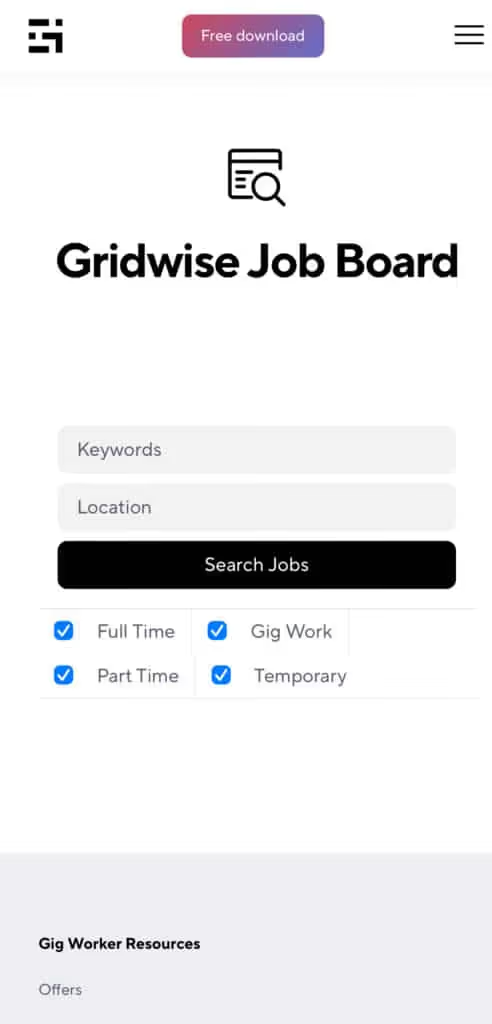
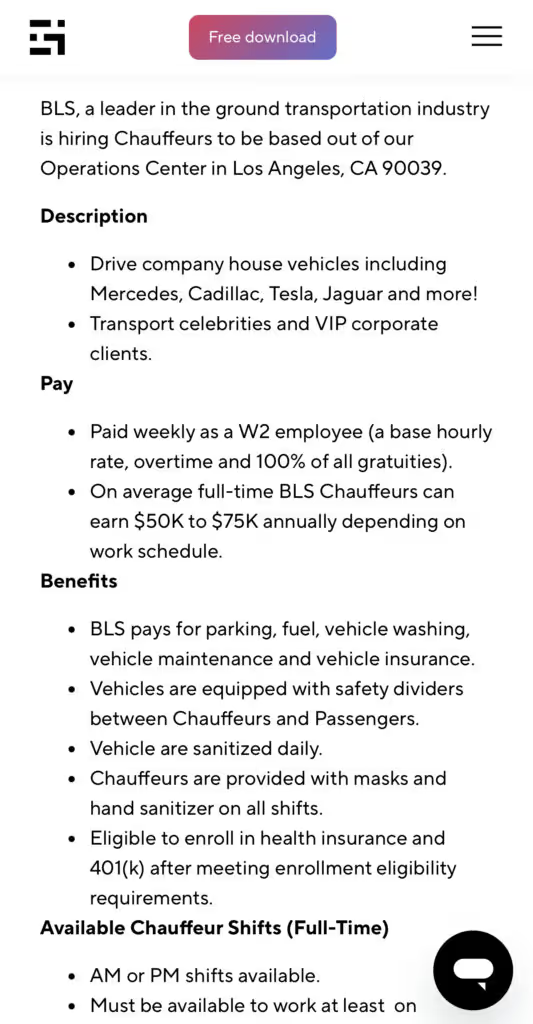
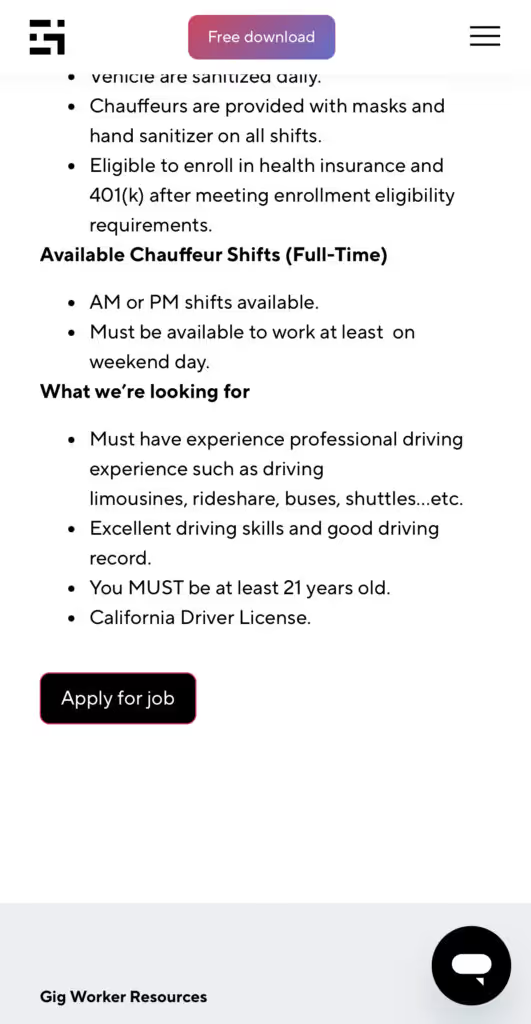
Many types of jobs are available. Adjust the search filter to see the full variety of opportunities that will let you cash in. Deliver food, set up catering, do rideshare driving, get paid for doing package delivery, and much more. You’ll find short-term gigs, long-term contracts, and part-time positions.
Perks of the Gridwise Job Board for gig workers
Gig workers who know how to make extra money will appreciate how the Gridwise Job Board lets you multiply your chances of bringing in big earnings. Here’s how:
- Increased stability. Use the Gridwise Job Board to find part-time or permanent jobs in addition to the part-time gigs you already have. Always keep a steady stream of earning opportunities flowing toward you.
- Flexibility and autonomy. Choose jobs that fit your schedule, work around other jobs and family duties, and still leave room for some fun in your life. Discover side hustles to supplement your full-time job, permanently or just for the season.
- Skill development. Find part-time work that lets you use a skill you already have, or try your hand at something new. It’s a smart way to develop a portfolio to showcase what you can do, or even to find permanent employment.
Get Gridwise and stay up to date on the Gridwise Job Board
Gig workers need plenty of information and assistance, and Gridwise is here to give it to you. Download the app and get essential features such as
- seamless earnings tracking
- mileage tracking
- expense recording, including notes
- low-cost and no-cost insurance benefits
- access to affordable medical, dental, vision, mental health, and alternative care
- professional services including legal and financial help
- deals and discounts
- weather, events, and traffic reports
- inside information on where and when to drive
[elementor-template id="20936"]
More to know about gig work:

5 Best Mileage Trackers For Gig Drivers
Many drivers ask, “Do I really need a mileage tracking app?” The answer is simple: only if you want to have an accurate count of all the miles you can legally deduct from your taxable income! You might think your rideshare or delivery driving app has got you covered. After all, they do quite a good job of logging the miles you drive while you’re on a trip or delivery. But, if you want to have the best app to track mileage for Uber, Lyft, Doordash, Instacart, or the other apps you may use, you need more. Why is that?
Without a separate tracker, you’re missing the miles you drive in between pings. Did you realize that all the miles you drive, from the moment you begin your shift until it’s over (as long as you don’t drive several miles on a break to hang with your friends), are tax deductible! That means you need something besides your driving app to keep an accurate count of your travels. Read this Gridwise post to see how important it is to keep track of every deductible mile.
You won’t be surprised to hear that there’s an app for tracking miles. In fact, there are several of them. Here, we’re going to tell you about five top mileage tracking apps, and help you figure out which one is best for you.
Before we get to the list and identify the best mileage tracker app, let’s clarify what exactly a mileage tracking app is. According to G2.com’s technology glossary, mileage tracking is done for the purpose of keeping a log of mileage that is either reimbursable or tax deductible.
And yes, of course you can track your miles simply by taking readings on your odometer. But are you really prepared to account for how many miles you drove for personal reasons and subtract them from the total to get your business mileage? Even if you can remember all that and do the arithmetic, if you want an accurate reading of the miles you drive for business, and can therefore deduct, a mileage tracking app will save you a lot of trouble and prevent you from making costly errors.
Plus, as a gig driver, you have specific needs when it comes to a mileage tracker. Ideally, you’d be able to handle mileage tracking and several other functions all in one app. It can be maddening enough to deal with driving apps, particularly if you’re an avid multi-apper. You would want your mileage tracker app to help you keep account of other aspects of your business, including income, expenses, and inside information about the art of gig driving.
Not all mileage apps are equal, to be sure! Let’s look at five of the best apps to track mileage and figure out which is the best app to track mileage with Uber and Lyft, or what mileage tracker app is best for DoorDash.
[elementor-template id="20891"]
1. Zoho Expense
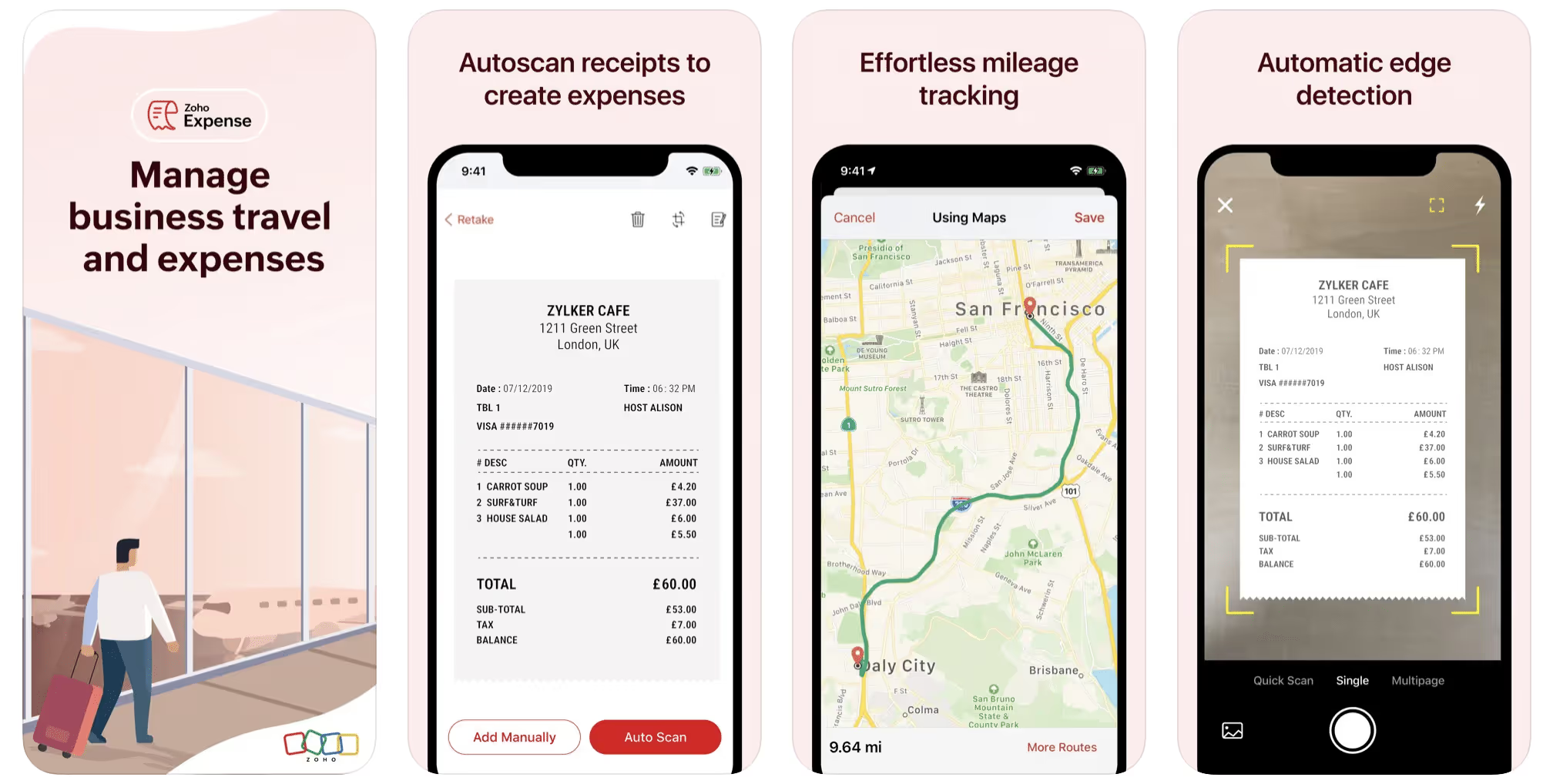
First up is Zoho Expense, which does exactly what its name says. This app is designed to allow companies to give employees a uniform way to create and submit expense reports. It can be used by individuals, including gig drivers, as well.
It includes a mileage tracker, as well as features that let you track other deductible expenses, including the ability to scan and record receipts.
Available on Android and Apple: Yes
Ratings: 4.8 stars on App Store, 4.7 stars on Google Play
Free Version: Yes
Subscription price: $3 per month, billed annually
Created specifically for gig drivers: No
2. Quickbooks Online
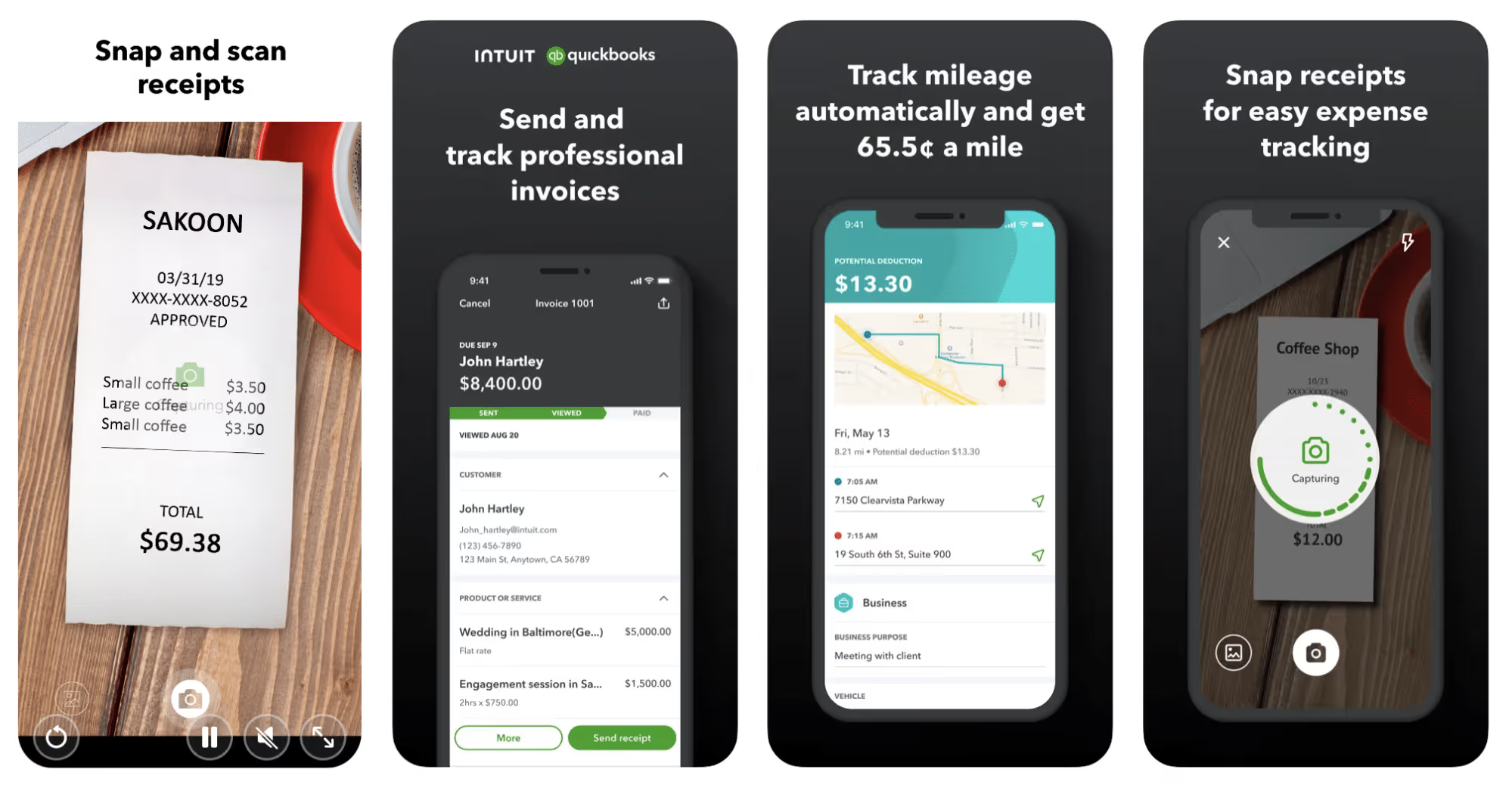
Quickbooks Online is a cloud-based app that allows you to track your mileage, earnings, and expenses. The information you enter can then be used to generate various reports that prepare you for tax time. It also allows you to create graphs that illustrate your cash flow, and includes a receipt scanner so you can instantly record deductible expenses. Quickbooks is popular, highly reliable, and designed mainly to help people keep track of their small businesses.
Available on Android and Apple: Yes
Ratings: 4.7 stars on App Store, 4.4 stars on Google Play
Free version: 30-day free trial
Subscription price: $15 per month for basic version if purchased for 3 months or more
Created specifically for gig drivers: No
Source: quickbooks.intuit.com
3. Shoeboxed
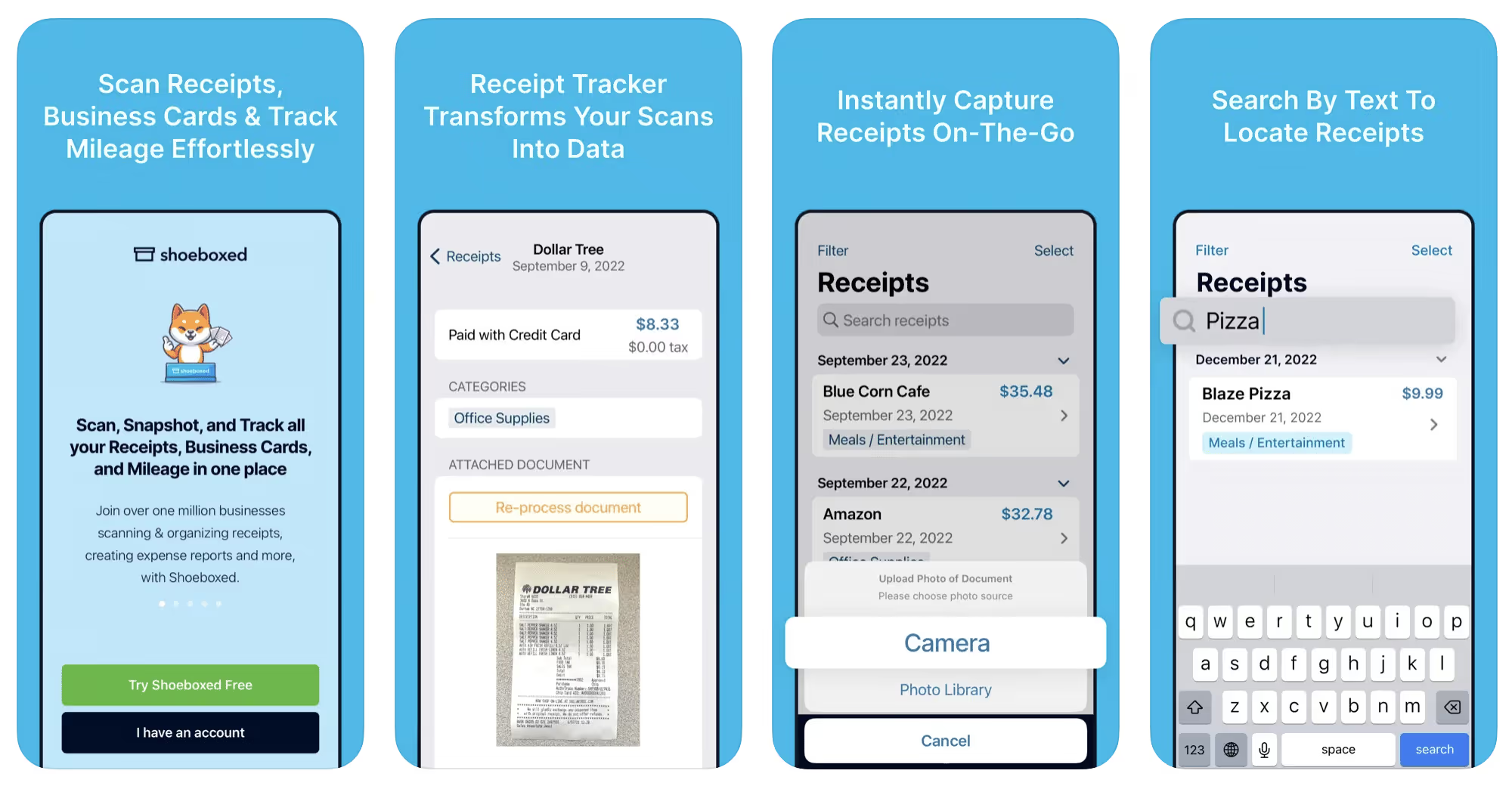
Shoeboxed started in 2007 as a service for scanning paper receipts into digital form. Now the app offers a free mileage tracker and has enabled users to scan receipts directly. It touts itself as the best mileage tracking app for DoorDash, but there are some elements missing that Dashers might like to have. While it provides features that record your expenses and prepare you for tax season, it doesn’t automatically track your earnings. The mileage tracker has a system where you can drop pins along your routes to make the tracking more precise, identifying those legs of a trip that you make for business purposes. The mileage tracker is “free” once you sign up for the basic version.
Available on Android and Apple: Yes
Ratings: 4.5 stars on App Store, 2.3 stars on Google Play
Free version: No
Subscription price: $18 per month for basic version
Created specifically for gig drivers: No
Source: blog.shoeboxed.com
4. Stride
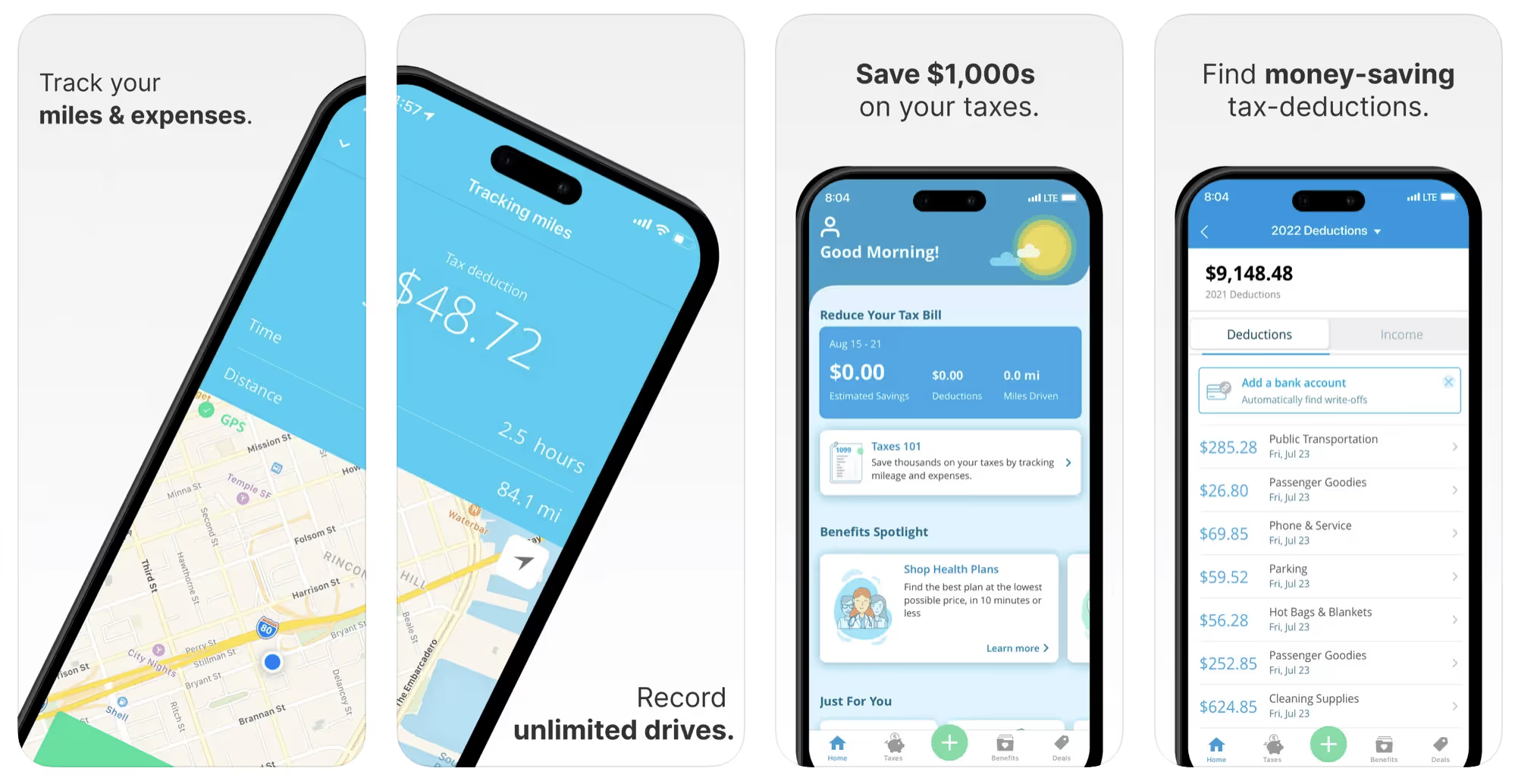
This free mileage tracker does a fair job of keeping track of the distances you rack up while gig driving, but it doesn’t automatically track earnings. It can be a big help, though, in tracking your expenses. You can link Stride to your bank account, and it will automatically scan your expenses to identify items you can potentially deduct. The app is totally free. This could make it the best free mileage tracker app, but there is a small price to pay. The app will persistently push you to consider various insurance plans that they are affiliated with. If you don’t mind that, this is a solid mileage tracker, even if it doesn’t track your earnings.
Available on Android and Apple: Yes
Ratings: 4.8 stars on App Store, 4.6 stars on Google Play
Free version: Yes
Subscription price: None. The app is free.
Created specifically for gig drivers: No
5. Gridwise
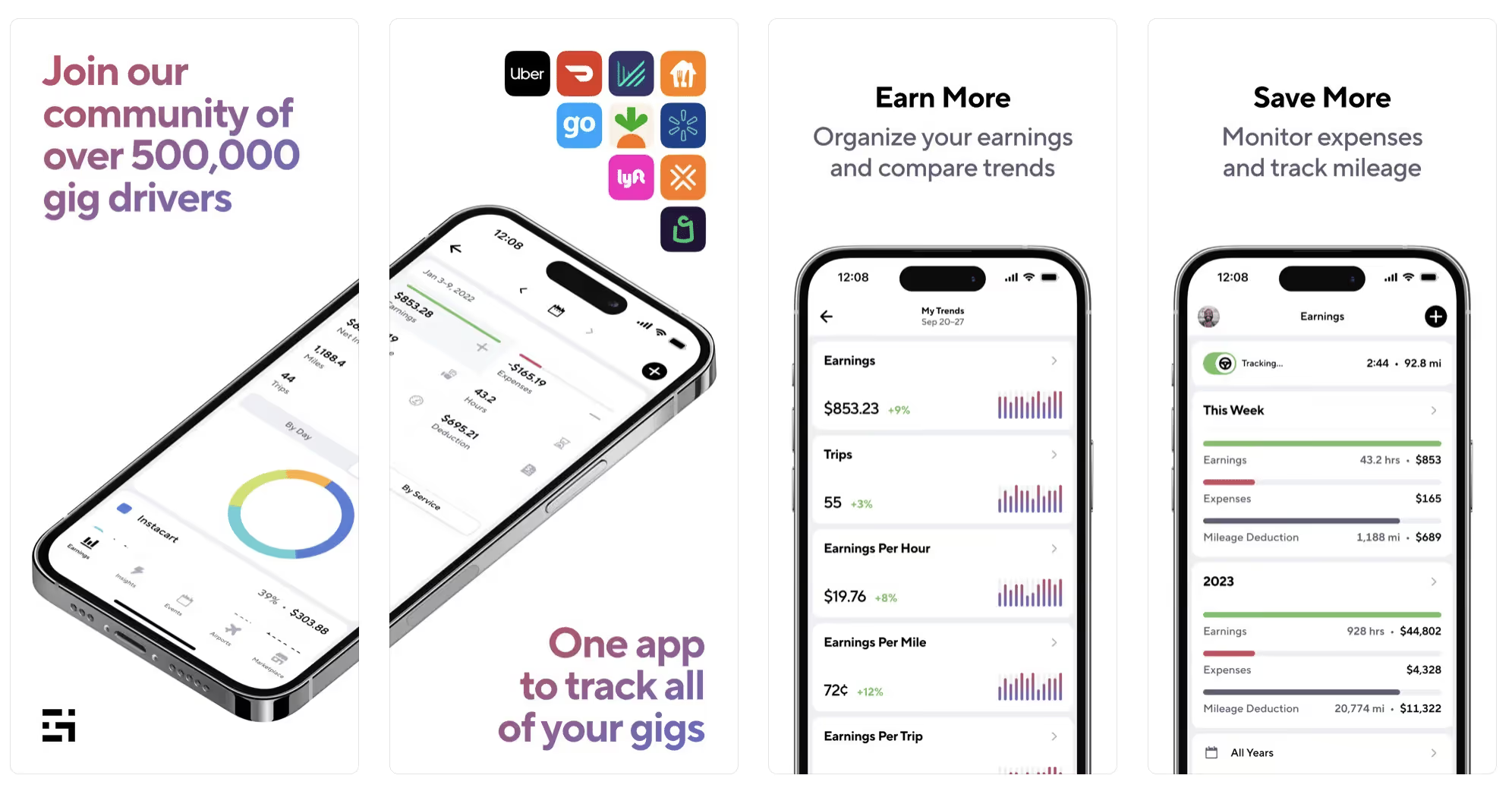
Gridwise has a free mileage tracker and free features that record your income and expenses. It gives you access to insurance and benefits, as well as insights about the best times and places to make the most money while gig driving. The Gridwise mileage tracker captures all the miles you drive while you’re on your driving shift, and it can be used if you have other trips you need to make which qualify as business travel.
Drivers love it because it is geared toward the needs of rideshare and delivery workers, providing free information about airport departures and arrivals, event start and let out times, weather, traffic, and more. The Gridwise Plus subscription adds value by providing additional insights and reports, discounts on benefits, the ability to export data in .csv format,, and more.
Available on Android and Apple: Yes
Ratings: 4.9 stars on App Store, 4.6 stars on Google Play
Free version: Yes
Subscription price: $9.95 per month for Gridwise Plus, or $95.99 per year (a $23.41 savings)
Created specifically for gig drivers: Yes!
What is the best mileage tracking app?
Now that we’ve checked them all out, we’re positive about the answer to that. Hands down, it’s Gridwise. Are we biased? You bet we are! But drivers love it too. Gridwise is the best mileage tracker app—and so much more. So many of the features are free, and the subscription to Gridwise Plus will pay for itself with additional insights to boost your earnings and deeper discounts on products and services.
Most important, Gridwise is designed specifically for gig drivers by experts who were once gig drivers themselves! Knowing what gig drivers need is a crucial step in creating an app that rideshare and delivery drivers can really use! Here are a few of the features, besides mileage tracking:
- seamless earnings tracking
- automatic, on/off toggle and manual mileage tracking
- mileage categorization
- airport, traffic, weather, and events information
- insights into where to drive and when to drive
- reports showing earnings across the platforms you use
- discounts on countless products and services for drivers
- additional resources for finding side gigs
- an informative and comprehensive blog
- affordable benefits, including insurance, medical, dental, and alternative practitioner discounts
- a community of drivers just like you
Don’t settle for just any app. Get the best mileage tracker, and so much more, from Gridwise!
[elementor-template id="21599"]

What Records Do Gig Drivers Need To Keep Track Of For Taxes?
* Gridwise does not provide tax, legal, or accounting advice. This material has been prepared for information purposes only, and is not intended to provide, and should not be relied on for tax, legal, or accounting advice. You should consult your own tax, legal, and accounting advisors before filing your return.
Record keeping? Who signed up for that? As a gig driver, it’s part of what you need to do to keep your business running. Don’t worry. It’s not as complicated as you might have been led to believe. This post will show you what you need to keep track of and the best ways to gather and preserve your tax-related records. We will cover
- How record keeping can help reduce income tax for freelancers
- Taxes and freelance work: Record keeping requirements
- Mileage tracking: Motives and methods
- More deductions and records to keep
- Make tax time easier
How record keeping can reduce income tax for freelancers
Tax time is not “fun time” for rideshare and delivery drivers. It’s easy to get used to watching your earnings pile up and come to believe they are all yours. Unfortunately, that isn’t the case. Gig work taxes can be especially painful because no one takes them out of your earnings for you, until the tax authorities insist that you do it for yourself.
You will need to show the tax authorities your income records, and they will gladly tell you to send them what they determine to be their fair share. Think that’s not fair? You’re not alone, but that doesn’t mean you’re going to get out of paying gig work taxes.
But you can find ways to pay the smallest amount that is legal and possible. The best way to defend yourself against having to pay astronomical amounts when you file your return is to know what expenses you can deduct from your gross income. When you subtract deductible expenses from your gross income, there is less left over to be taxed. This reduces the amount they can hit you with gig worker taxes. and can make your tax bill substantially lower.
While you want to keep good records so as to be in compliance with taxation entities such as the IRS, you also want to ensure you have proof of every last deductible expense you have accrued during the year. There are other records you must keep as well. Let’s look at some of the considerations you have, realizing that you now need to know how to do taxes as a freelancer.
Taxes and freelance work: Record keeping requirements
So many gig drivers fail to understand the responsibilities they have as independent contractors. Those who work part time for very few hours may even believe they don’t have to report the income they get from their driving gig payments. That would be a big mistake!
The company or companies you work for report your income to the IRS and state tax authorities. If you fail to report that income, you will risk some rather painful penalties. The IRS taxing side hustles is as much of a thing as the IRS taxing income from any other job. Your best bet is to report what you’ve earned, honestly and completely, and comply with other record keeping requirements such as
- gross income
- deductions and credits
- purchases (items you purchase and resell, such as snacks or bottled water)
- a log of all your mileage (or vehicle expenses, if greater)
- a list of all expenses and assets, such as utilities and other expenses associated with having a home office and equipment
- machinery and furniture you own, including when it was acquired, how much it cost, whether you previously took deductions on it, and selling price, if applicable (this includes your vehicle)
More things to consider:
- Pay attention to the retention of your records. You’ll need to keep all tax-return-related items— including income, deductions, and any tax credits reported— until the period of limitations runs out (3 years from date you filed, or 2 years from when you paid tax. If you have employees, keep your records for at least 4 years.)
- If you want to avoid paying self-employed taxes, you may want to set up a corporation or Limited Liability Corporation (LLC) for your business. This allows you to separate all your gig driving earnings from personal income, and permits you to take advantage of the additional advantages of working through a corporation. This includes exemption from self-employment taxes. You can learn more about how to pay self-employment taxes, if you opt for that, in this post from Keeper.
- You should always keep a separate checking account for your business, for convenience as well as clarity. While this is not a legal requirement, it is a smart move if you want to have an easier time managing your business.
- You are required, as an independent contractor, to file your taxes quarterly. Check out this Gridwise blog post for more information about quarterly tax payments and other matters that make filing delivery, Lyft and Uber taxes easier.
Mileage tracking: Motives and methods
Why you need to be meticulous about mileage
Mileage deduction, or the costs of operating your vehicle, will be the most important item to account for when you consider how to file taxes as a freelancer. While mileage is an important deduction for all independent contractors, as you might imagine, it’s even more essential for rideshare and delivery drivers.
There are two ways of keeping track of your mileage deduction. One is to use the IRS’ standard mileage deduction, which for 2022 is 58.5 cents per mile. This number takes into account the costs of operating your vehicle, from fuel and maintenance to registration, insurance, and depreciation. Alternatively, you can calculate all your own vehicle operating costs, but only after your first year of using the vehicle. You may discover that this second option allows you to have more money deducted from your taxable income. Learn more about the options for deducting your mileage in this Gridwise post.
No matter which way you decide to calculate the deductions for your mileage, you need to know what mileage you can and cannot deduct.
You can deduct
- miles driven to and from home when you go out to drive or deliver
- miles you accrue during your trips
- miles you drive on any other trips you make that are necessary as part of your business.
Examples:
- driving to return a lost cell phone or to an Uber Hub or another physical location where your company might make driver support available
- driving to pick up supplies, to get gas, or to have your car cleaned, serviced, or detailed, etc.
You cannot deduct
- miles you drive for personal trips
- miles for any trips you take that do not directly affect your business
Note: If imagining yourself becoming the not-so-proud owner of a shoebox filled with paper receipts gives you nightmares, stop worrying. Electronic records of purchases will satisfy reporting requirements. If you use cash, you can scan copies of your receipts, in some cases, right into your recording software or app. Gridwise and Keeper give you a simple to use interface that keeps all your receipts recorded without the messy pile of paper.
Mileage tracking methods
By now, you’re probably convinced that tracking mileage is important, despite all the other things drivers have to do. Now, let’s look at your options for keeping accurate records.
- Manual tracking: You can keep a logbook where you list every trip you make, starting and ending mileage, the date, and purpose of the trip. While this would work, it’s certainly not convenient. Besides, if that logbook gets lost, your plans for having a nice, fat tax deduction will go by the wayside.
- Spreadsheet: This is a bit more convenient and sophisticated way of tracking your business mileage. You’d need to be meticulous about making your entries, though. Even if you keep a spreadsheet app on your phone, it could be time consuming and inconvenient to keep doing it with all the other things going on in a rideshare or delivery driver’s day to day life.
- GPS-based mileage tracking apps: There are a bunch of apps that track mileage based on your GPS location, and most of them are pretty accurate and far more convenient than taking constant readings of your odometer. Your driving apps, such as Uber, Lyft, DoorDash, or Instacart, may also track your mileage, but be careful here. They will only track the miles you drive while you’re on a trip or delivery. They don’t count the miles you drive going to pick up a customer or when you make your move toward a restaurant or store.
Gridwise, on the other hand, will track all the miles you clock while you’re on your shift. All you need to do is make sure you start tracking the minute you leave home, and every gig driving mile will be logged. - OBD-II mileage tracking systems: There are plug-in modules that assess your vehicle’s mechanical health and track your miles. However, many authorities question the ability of OBD-II mileage tracking systems to get get accurate odometer readings. Insurance companies don’t consider them to be accurate enough gauges of odometer readings.
While mileage is a crucial deduction when you’re preparing your Uber, Lyft, or DoorDash taxes, it isn’t the only expense you’ll want to record.
More deductions and records to keep
Expenses you can deduct
You’re entitled to include the cost of other expenses that are directly related to your driving business. These include
- vehicle expenses
- equipment for your car and home office
- extra services and subscriptions
- business tools, including apps and software
You can learn much more about gig driver expenses that are eligible for deduction in this Gridwise article.
Ways to track and preserve deductible expenses
- The manual method: Just like you can with mileage, it’s possible to use a manual method, but in addition to logging each expense into a ledger, you would also need to keep physical receipts.
- Spreadsheets: You can record your expenses on a spreadsheet. This is somewhat less awkward than manually logging mileage, but there still will be plenty of room for failing to remember the case of water you bought for your customers, or losing the receipt from the thermal bag you purchased.
- Accounting software: You can use software that helps you track your expenses. This method usually interfaces well with any tax preparation software you or your tax professional might use.
- Gridwise: There are other apps that help you track your expenses, but Gridwise is designed specifically for gig drivers. It automatically tracks earnings and mileage, and lets you record your expenses the minute they come up. Gridwise’s partnership with Keeper gives you the ability to scan receipts and access a tax professional. This is a seamless way to record your expenses and a big help in learning how to file Uber taxes. Gridwise even provides .csv output, so you can feed your Gridwise data directly into tax preparation software. Check out what Gridwise and Keeper will do to super-charge your tax filing powers.
Organizing and categorizing expenses
Before you even begin to record expenses, you’ll want to set up categories for them. You can start by reviewing the categories listed above and checking out the Gridwise post that lists possible deductions.
If you’d like to learn more about how to categorize expenses, there is additional information available. This article from Motley Fool lists all possible categories any freelancer might use and also gives tips on how to customize them for your driving business.
One last tip
Using Gridwise, particularly for tracking mileage, is the easiest way to be in compliance with the IRS’ rules for deductible mileage. Gridwise tracks all the miles you drive for your gig, beyond what your company’s app might record. At the same time, you can log on and off Gridwise when you start and end your shift, so personal miles won’t be recorded. This eliminates confusion while capturing every deductible mile.
Gridwise Tax Help, a partnership with Keeper, has been created specifically to serve gig drivers. It provides affordable and easy ways to record expenses, scan receipts, and find deductions by analyzing your expenditures. Read about free resources from Keeper you can use to be fully prepared for tax season, and get all your earnings and expenses on the record.
Get the world’s best assistant for rideshare and delivery drivers, and tax help too.
Make tax time easier now!

Pandemic Unemployment Assistance update: Will Congress extend $600/wk payments
We knew this was going to happen.
When the CARES Act passed Congress in late March, drivers and other independent contractors were given the ability to collect Pandemic Unemployment Assistance (PUA) from their individual states.
On top of that, the federal government added an extra $600 per week to the compensation. This was a huge relief for many drivers.
At that time, it seemed like having the extra $600 per week through July 31 would be long enough to see us through. A look at the situation now tells us that this benefit has run out before we stopped needing it.
So what will our government do?
As of August 5th, 2020, there are high-level discussions among White House representatives, the Speaker of the House, and the Senate Majority Leader. It would be great if we could report that a deal has been struck, and it calls for an extension of PUA provisions and the federal subsidy. However, as of this writing, the negotiations are at an impasse.
The one thing all major players agree on is the need for another round of stimulus checks. The amount should be around $1,200, but like all topics related to coronavirus relief, the final number is still under negotiation... a very long, complicated, and contentious negotiation.
In this blog post, we’ll examine what drivers need, what’s happening in the negotiations, and what options remain if an agreement doesn’t get reached soon. We’ll include:
- What drivers need
- What the White House wants
- What the Democrat legislators want
- What the Republican legislators want
- What’s likely to happen
- Options if no agreement is reached
What drivers need
Many drivers have been able to go back to work, but others still need support from the PUA program and the federal subsidy. Those of us who were rescued by this safety net are very aware of how necessary this income was, and in some cases still is.
Quite a few politicians make the point that the $600 per week subsidy is often more than workers, including drivers, earn when they’re on the job. Their concern is that the extra money provides an incentive for people to stay home, rather than returning to work. Although this might be the case for some drivers, for others it certainly isn’t because they are unable to return to work.
Those who have been infected with COVID-19, are in quarantine, are part of a high risk group, or live with someone who is at elevated risk, absolutely cannot expose themselves to people who may be carrying the virus—which they certainly are while in the close quarters of their vehicles.
Delivery drivers are also exposed to risk, since they come into contact with restaurant workers and other individuals they encounter when doing pickups and deliveries.
Another consideration is the economies that are still shut down in many localities. While some states and cities are trying to open up and resume an economic rhythm that’s as close to normal as possible, most have not been able to do that.
It can be very difficult for rideshare and delivery drivers to earn money at the same levels they did before the pandemic began. It can also be challenging to come close enough to those levels to make ends meet.
So, even though fewer drivers may need unemployment compensation, the fact is that many still do. Therefore, drivers and all people who find themselves out of a job or unable to earn at acceptable levels need the executive and legislative branches to come up with a solution that will provide continued relief… soon.
What the White House wants
The White House originally proposed that PUA and federal subsidies be continued through September 30, 2020, but that the weekly supplement be reduced to $200. After September 30, the amount of PUA would drop to 70% of an individual worker’s employment income.
When negotiations actually began, the White House proposed a one-week extension of the $600 subsidy, and the Democrats (Speaker Nancy Pelosi and Senate Minority Leader Chuck Schumer) soundly rejected it.
After that, White House Chief of Staff Mark Meadows put what he called a “skinny proposal” on the table. This would have included four months of federal subsidies at $400 per week, plus $105 billion for schools, liability protections, and some amount (not specified) for the Paycheck Protection Program.
We don’t know what the final numbers will be, but we do have some idea of what the White House wants:
- Continuation of PUA with limits on the weekly subsidy and duration of payments
- Money that’s earmarked for helping schools open safely
- Provisions to utilize previously allocated funds and/or additional funds for the Paycheck Protection Program
- Extension of the eviction suspension provisions
- Funds for additional costs incurred by the US Postal Service
- Liability protection for businesses,hospitals, and other institutions, to protect them from lawsuits by workers and consumers (the White House has indicated a willingness to strike a deal without this)
What the Democrat legislators want
Speaker Pelosi and Minority Leader Schumer have articulated a broader plan for virus relief. The House of Representatives passed the Health and Economic Recovery Omnibus Emergency Solutions Act in May 2020.
Known as the HEROES Act, it would allocate some $3 trillion to the cause of supporting continued unemployment benefits, hazard pay for essential workers, suspension of student loan payments, and aid to states that face fiscal problems due to the impact of COVID-19.
Some more specific elements of the HEROES Act include:
- Continuation of PUA with the $600 weekly subsidy through January 2021
- Suspension of student loan payments, plus the excusal of up to $10,000 in student and private loans
- Rental assistance
- A ban on evictions
- Mortgage assistance
- $900 billion+ in direct aid to states and municipalities, to be allocated as needed
- Healthcare-related spending
- Small business assistance
- Reduction of tax deduction caps for individuals
- Money for the US Postal Service
- Agriculture aid
- Limits reimposed on business loss deductibility
This legislation was passed by the House of Representatives on May 15, 2020, but it is not likely to make it through the Senate without major modifications. In fact, the Republican-majority Senate found so much wrong with the HEROES Act that they introduced a plan of their own.
What the Republican legislators want
Republican legislators maintain that the HEROES Act is excessive, and that many of the allocations it includes have little or nothing to do with COVID-19 relief. In response to the House bill, the Senate passed the Health Care Economic Assistance Liability Protection and Schools, or HEALS Act.
Like all the proposals, the HEALS Act provides for a second round of stimulus checks. There’s also money for the PPP program, and a change in unemployment benefits. It is the same as the original Republican proposal: $200 per week through September 30, and then 70% of the worker’s income after that, up to the individual state cap. Here are some more specific details:
- Additional PPP loans to businesses that are still making 50% or less of previous income
- Continuation of PUA but at $200 per week, and only through September 30, then to 70% of income
- Liability protection for businesses, hospitals, and other institutions to protect them from lawsuits filed by workers and/or consumers
- Healthcare aid aimed at COVID-19 testing, treatments, and vaccines
- Protection from premium spikes for Medicare recipients
- Incentives to manufacture PPE made in the United States
- Tax breaks, including 100% deduction for meals and entertainment
- Money to help schools open safely
What’s likely to happen
At this writing, the negotiations are moving along so slowly they appear to be at a standstill—but they are moving. White House representatives went to the Republican Senate leaders to complain that they cannot get the Democrats to move. The Democrats remind Republicans that their proposed HEROES Act was available for review in mid-May and was basically ignored. So here we are.
Of course, Democrats and Republicans always see things differently, but why is this particular negotiation so difficult?
For one thing, the two parties are pretty much divided as decisively as the Hatfields and the McCoys. There isn’t much reaching across the aisle these days. The more pressing reason for the stubborn contention, though, most likely stems from the fact that this is an election year.
Each side is always jockeying for position, but now they’re pressing harder than usual to make the other side seem uncooperative, unreasonable, and of course, not worth voting for in November.
All this is getting a bit unsettling, as Congress is scheduled for its yearly August recess. But according to an August 3 CBS News report, House Majority Leader Steny Hoyer said the recess will not happen “until such time as we adopt COVID-9 legislation.”
Certainly the idea of missing August recess might motivate most of Congress… but if that doesn’t, the White House just added new incentive at the August 5 Presidential press briefing.
President Trump hinted that, if no agreement is reached, he could use executive orders to extend PUA and eviction suspension, as well as other provisions designed to help individuals who continue to be directly impacted by COVID-19.
It’s our guess that (at the eleventh hour) there will be an agreement, an unimaginable amount of tax dollars will be spent, and there will be some form of PUA for drivers in need that should extend into the foreseeable future.
The details are yet to be divulged, but as soon as they are, we’ll get them to you—just keep watching for our next post.
Keep current with Gridwise!
Not only do you get easy access to our blog and the Gridwise YouTube channel when you download Gridwise, you get the ultimate assistant for rideshare and delivery drivers at your fingertips.
Track your mileage and earnings for all the apps you work with, and get updates on airport traffic and events in your town. We’re rolling out some features that will make Gridwise even better, so if you want to get the latest updates, be sure to download Gridwise now.

Sweet Side Hustles: Companies That “Ad” Value to Your Ride
Want to Make More Money?
Who doesn’t, right? Well as a rideshare driver, you have more opportunities than you might realize to generate income just by driving your vehicle around … because your vehicle is valuable to advertisers.
There are several reasons why advertisers covet your vehicle, and the fact that everybody sees it tops the list. You drive through busy city streets, across bridges and through tunnels, past big events, schools, and hospitals. Plus, you take people with you, or you deliver food and other items to their doors.
Companies would love to have the chance to get their logos, graphics, and taglines in the public eye for even half the time your ride is visible on any given day. So, these companies have come up with what they view as a win-win situation. They get exposure by using your vehicle to carry their ads, and you get a sweet deal because they’ll pay you for the privilege.
In this article, we've rounded up the best ad-carrying options out there for drivers. Check them out and see just how much money you can make with little effort on your part.
Inside the Car
Play Octopus
Very few things catch the eyes of riders faster than video games, except maybe the chance to win cash prizes—and Play Octopus has both. You apply to get a free tablet, your customers get their games on, and you can earn up to $100 per month.
Play Octopus pays you to make their games (and the occasional ads appearing on the tablet screen) available to your passengers. The more you encourage your pax to play, the more Play Octopus pays you. There’s also a referral program that allows you to earn bonus cash by referring other drivers.
On the Outside and On Top
Mobilads
Mobilads calls itself “America's leading rideshare car-wrap advertiser,” and they pay generously. You can get up to $500 per month for carrying their creative cargo with a full wrap on your car, and $250 for letting them cover your doors.
The company’s clients are some of the gigantic advertisers, so there are plenty of dollars coming their way. There’s one condition for drivers, though: You must be on the road for at least 40 hours per week, so you'll need to be a pretty big deal driver.
Wrapify
Sounds like ads that get wrapped around your vehicle! Wait—these are ads that get wrapped around your vehicle. Don’t worry, though, Wrapify, Inc. has figured out ways to protect the paint.
You don’t have to be a rideshare driver to sport their wraparound ads on your vehicle, but if you are, you’ll do very well. Wrapify pays by the miles you log in your car. It also monitors your location to gauge local foot traffic, adjusting payment according to how many people are likely to lay eyes on your vehicle.
You can earn up to $300 a month with Wrapify. You download the app, the company comes and puts the wrap on your car, and you’re in business. Just don’t drive it into an Uber or Lyft hub while it’s wrapped, since it could violate their policies.
Nickelytics
This ad-wrap company offers you options that allow you to limit how much of your car you’ll devote to ad space. Your choices include covering just the back windshield, partial wrap, or full wrap. Hey, just like tattoos! The company claims to have cleared its wraps with both Uber and Lyft for compliance.
As long as your vehicle is a 2010 model or newer, and you drive 30 or more miles a day, you can benefit from Nickelytics. They’re in eight markets now, and are expanding in 2020. If you’re up for that full wrap option, you can rake in up to $300 per month.
Wrapping It Up and Topping It Off
We said at the beginning of this article that you have more opportunities to make money than you might realize—and now you do realize
We also want you to remember there’s another tool that can help you make more money, and drive to where the biggest crowds will see your flashy ads and play with your video games and rock out to your music players. And that tool is ...
Gridwise!
Our app keeps you on top of local events and weather, and also tracks your mileage, so you’ll always know if you’re cutting it with your mileage quota. What’s that? You don’t have Gridwise yet? Well you can remedy that right now by downloading the Gridwise app.
Uber is using drivers’ wages to pay airport fines… without telling drivers
You read that right.
If an airport official cites an Uber driver for a traffic infraction, Uber pays the fine and then deducts the fine from the driver’s pay.
Most drivers don’t have a chance to defend themselves, and some have no recollection of the incidents in question. In many cases, the incidents may never have happened at all.
We certainly don’t think that’s right, and we’re pretty sure you won’t either. In this post, we’ll explain what we know about this puzzling situation by covering the issues it raises.
- The perils of airport pickups and drops
- How Uber’s deals with airports skip over due process
- Who profits? Who pays?
- What can drivers do to stop this?
The downside of airport pickups and drops
Back before COVID consumed us (when things were normal), the average driver would say that airport runs constituted a large part of their revenues. Yet long, lucrative rides to and from the terminals don’t come without risks.
There aren’t many drivers around who don’t have a story about getting cited, scolded, and/or yelled at by surly airport cops and dispatchers.
With no-go zones, commercial curbs, no parking areas, pedestrian-only sections, Uber decals that come unstuck, and speed limits that can be exceeded even while you ride your brakes, it is hard NOT to break some kind of rule at most airports.
So what happens when you get on the wrong side of airport protocol? In most cases, you receive a citation. If you decide to admit to the infraction, you’ll pay a fine and be done with it. If you’re absolutely sure you didn’t do anything wrong, then you go to court, tell your side of the story, and hope to get the case dismissed and the fine refunded.
At least, that's what you’d think. But for drivers working at several airports, something different is going on… something that’s not quite on the up and up.
How Uber’s agreements with airports skip over due process
Specifically, this has happened to drivers working at LAX, San Francisco, and San Diego airports. Here’s the scenario …
Drivers mysteriously received notifications from Uber informing them that they had committed an infraction at the airport. The notification made it clear that there was no need for the driver to do anything, including mount a defense. Uber was simply letting the driver know that the citation was taken care of… and the amount of the fine would be taken from their wages.
How would you react if you got that message from Uber? At first you might think, “Oh good, Uber’s paying my fine for me.” But when you got to the part about money being taken from your pay? Your reaction would likely be anything but positive.
Even worse, suppose you were never told about the alleged infraction in the first place? Maybe the ticket-writing official said you did something wrong, but you’re absolutely positive you didn’t… and now, the $100 you were counting on for gas money was used to pay a bogus citation.
This happened to a driver named Tedros—not just once, but multiple times. According to a July 22, 2020 article on the website VICE, he got in touch with Uber to ask why it happened. He received a response saying that per his agreement with Uber, he was responsible for all traffic citations. Since the airport sent the citation to Uber with his license number attached to it, the cost of the fine was coming out of his wages. “There was no way for me to contest the citation,” says Tedros.
After you’re done getting fired up about that, you might start to wonder what right an airport official has to issue a citation without talking to the driver, stating what the infraction was, and giving the driver a chance to appear before an impartial party in order to dispute the charge. Yeah. We wonder that too.
Who profits, who pays?
This all comes down to contractual agreements that Uber makes with airports. Airport officials are allowed to cite drivers and then send Uber the bills—and according to the VICE article, the fees collected are quite substantial. The article cites data collected by the Mobile Workers Alliance, a SoCal advocacy group that represents gig workers. The data show that at LAX alone, the Los Angeles World Airports Authority issued 11,117 citations to drivers, and collected $3.8 million dollars from drivers between 2016 and 2018. Uber, complying with their agreement with the authority, deducted the fees from drivers’ payments.
This isn’t the only way airport authorities siphon money from the rideshare business. In Los Angeles, the airport authority charges Uber drivers $4 per ride, whether the ride is a pickup or drop-off. These fees are normally paid by the passengers.
In 2018 alone, there were 8.9 million rideshare trips involving LA airports, resulting in almost $36,000,000 in fees landing back in the authority’s coffers. San Francisco charges $5 per ride, and had more than 10 million rideshare trips involving their airport facility in 2018, making their take around $50 million.
That’s a lot of dough.
Uber also profits from the airport rides. The longer distance and extended time these airport trips normally involve add up, and so do the company’s profits. And yes, drivers benefit from the airport rides they provide. However, when they receive citations, we don’t think they should be presumed guilty and have their pay docked for the fines.
To be fair, Uber and other rideshare companies pay airport authorities for the privilege of doing business. But we can easily make the case that these costs are, at least partially, passed on.
When we examine the airport ride (and citation) dynamic closely, and answer the question we posed at the start of this section, here’s what we find:
- The airports profit
- Uber profits
- Drivers profit—and drivers pay
- Passengers pay
Where, in this dynamic, do Uber and the airports pay? We can’t seem to figure out under what circumstances that might occur.
Please understand, we’re not saying that drivers shouldn’t have to pay fines when they commit infractions. We are saying that drivers deserve the chance to defend themselves if and when they do get cited and fined. In the case of these “phantom citations,” where drivers are totally unaware of the situation, it’s even more important that they at least hear what they supposedly did wrong.
By Uber striking this deal with airports, whereby they can just admit to an infraction on a driver’s behalf and then dock the driver’s pay for the fine, they’re doing more than just being unfair. They’re actually trampling on the drivers’ rights to due process under the Fifth Amendment of the Constitution. “I think it’s a due process issue; the government is taking away their money without them understanding why,” says Veena Dubal, a law professor at UC Hastings and gig economy expert.
Fortunately, this isn’t happening everywhere. VICE reporters spoke with drivers in New York City, Chicago, Atlanta, and Sacramento, who said they are able to seek legal recourse, and that Uber doesn’t automatically deduct the fine from their wages.
What’s the situation in your city? Comment below and tell us what you know.
Can drivers stop this?
Unfortunately, there isn’t much individual drivers can do to stop Uber from taking money from your pay for fines, even if you were never informed you committed an infraction.
When you sign up to be a driver with Uber, you agree to the company’s Terms and Conditions. Yes, there is a ton of verbiage in that agreement, and we all skipped over at least some part of it. But now, read this tiny section closely. It tells you what Uber’s “rights” are with regard to tickets, citations, and other such unpleasantries. It doesn’t say much about your rights.
Deductions; Set-off. You also agree that Fares, incentives, and any gratuities may be used to satisfy a court order of garnishment against you; to reimburse us for citations, tickets, or other administrative penalties or fines assessed by governmental entities arising from your conduct; or to reimburse us for any erroneous overpayment to you.
Yet the situation isn’t completely hopeless. There are steps drivers can take to circumvent the maddening process of Uber taking your money without your consent.
- Know the ropes. Each airport has certain rules that all drivers must follow. Don’t know yours? You’re in luck, because Gridwise has them for every major US city. Visit the Gridwise blog’s airport section for current information about the rules, boundaries and obligations that apply in your town. When you know the rules, you’re far less likely to unknowingly break them.
- Petition Uber. You can always contact Uber Support. Placing a phone call will normally initiate a written exchange that you can use as documentation. There’s a chance that they’ll listen to your side of the story, and maybe even put the money back into your account. Who knows, if enough drivers do this, maybe it will motivate Uber to change their agreements with airports.
- Get a dashcam. No matter what you say was the case at the time of an alleged infraction, it’s still a “He said, she said” situation—and without proof, it can be impossible to prove your case. Having video and audio of the exchange between you and the officer involved will add weight to your argument, and possibly settle the dispute, if you get the opportunity to contest the ticket.
- Consider legal action. While it’s probably going to cost more to secure a lawyer than it will to simply pay the fine, there are principles here worth fighting for. If you can get several drivers to create a class action, you might have some success. You may not be able to reverse fines or erase infractions, but you might get Uber to change its policy about taking money directly out of driver accounts.
- Get active with drivers’ rights groups. As situations like this arise, as well as the contractor vs. employee controversy and COVID-19 safety issues, it’s more important than ever for drivers to work together. Groups all over the world are dedicated to getting fair treatment for drivers. Join one near you, and ask what you can do, together, to stop the unfair airport fine practice.
Of all these actions, “know the ropes” is probably most important.
Remember to consult the airport section of the Gridwise blog to discover what you need to know about driving at your airport. Also, the Uber app has information about your airport rules and regulations. You probably had to sign off on those at some point, but if you didn’t scrutinize them then, do it now.Information for rideshare and delivery drivers is what Gridwise is all about. Make sure you download the app to track your earnings, get airport arrival and departure information, weather conditions, events, and links to driver discounts and special offers. Also, make sure you catch the rest of the articles on the Gridwise blog, and super-informative videos on our YouTube channel!

El subsidio de desempleo de $600/semana termina el 31 de julio: Lo que los conductores necesitan saber
El COVID-19 sigue aquí… entonces, ¿por qué está desapareciendo el desempleo para los trabajadores de la economía gig?
Un vistazo rápido por tu ciudad te dirá lo poco que han cambiado las cosas desde finales de marzo, cuando el mundo del COVID-19 se preparó para su primera oleada.
La legislación aprobada en ese momento, la Ley CARES, otorgó compensación por desempleo a los contratistas independientes. El monto base era proporcionado por los estados y se complementaba con un pago adicional de $600 por semana del gobierno federal.
Esa red de seguridad se sentía bastante sólida para muchos de nosotros… pero ahora que julio está llegando a su fin en pocos días, y el pago suplementario está programado para terminar con él, ¿qué va a pasar? No sabemos qué hay en la versión final del plan, pero sí sabemos que habrá cambios en el panorama del desempleo para la mayoría de los conductores.
El lunes 27 de julio, los republicanos presentaron sus ideas, y ahora comenzará la "elaboración de la salchicha". En esta publicación te diremos lo que sabemos y lo que no sabemos. Puedes estar seguro de que, a medida que se desarrollen las noticias, te mantendremos al tanto de lo que está pasando.
Vamos a ver…
- 3 cosas que sabemos
#1 Será una batalla
#2 Habrá presión para reducir la compensación por desempleo
#3 Casi con certeza habrá otro cheque de estímulo
- 3 cosas que no sabemos
#1 Si la legislación final incluirá suplementos federales al desempleo estatal
#2 Si los conductores y otros contratistas independientes aún podrán recibir compensación por desempleo
#3 Si ambas partes llegarán a un acuerdo a tiempo para que la compensación por desempleo siga fluyendo
3 Cosas que Sabemos
#1: Será una batalla
Antes de que comience, la batalla legislativa parece un combate de boxeo, con un contingente de cada uno de los dos grandes partidos políticos en cada esquina. La campana que indicó el inicio del primer asalto sonó el 27 de julio, cuando el bando republicano presentó su visión de la posible legislación. El primer golpe, lanzado por los demócratas, fue un gancho de izquierda a las costillas, acusando a los republicanos de ser manipuladores por esperar tanto antes de revelar sus ideas al público.
Parece extraño que hayan esperado tanto, ya que las disposiciones de la Ley CARES están a punto de vencer. Los demócratas tienen muchas ideas sobre cómo quieren que se gaste el dinero y están ansiosos por comenzar las discusiones.
Los republicanos, porque este es un proyecto de ley del Senado y tienen la mayoría, armaron el paquete. Esta vez no se centra completamente en la compensación por desempleo o el éxito empresarial. Para darte una idea de hacia dónde van, se llama la Ley de Salud, Asistencia Económica, Protección de Responsabilidad y Escuelas (HEALS).
Ese título, y ciertamente el acrónimo, tiene un matiz positivo. Parece que se centrará en dinero para el sector de la salud (pruebas y rastreo), limitaciones de responsabilidad que faciliten hacer negocios (menos riesgo de demandas tipo "ese viaje con tu conductor me dio COVID"), dinero para las escuelas y sí, algo de dinero para quienes encontramos difícil conseguir efectivo durante esta pandemia.
Para ser justos con los senadores republicanos, probablemente había otras razones para su demora además de intentar asegurar una posición ventajosa. Había batallas que se libraban entre bastidores, y esas fueron bastante duras. Por ejemplo, no todos en ese lado del pasillo están contentos de gastar otro billón de dólares en nada.
#2 Habrá llamados a reducir la compensación por desempleo
Uno de los puntos más controvertidos fue el extra de $600 en beneficios de desempleo; específicamente, que sirvió como desincentivo para que las personas regresaran al trabajo. Aunque uno podría fácilmente ponerse a la defensiva ante tal comentario, si los conductores somos honestos, sería difícil decir que los beneficios que recibimos no fueron más de lo que esperábamos.
En condiciones normales, cuando una persona es empleada, solo un cierto porcentaje del salario laboral se otorga en el cheque semanal de desempleo. Fue un regalo para los contratistas independientes recibir beneficios de desempleo en absoluto, y los $600 extra cada semana fueron realmente generosos.
De hecho, con ese suplemento adicional de $600 por semana, muchos de nosotros ganábamos más de lo que habríamos ganado trabajando. Claro, gran parte de lo que recibimos de esos pagos probablemente volverá al gobierno como impuestos, pero eso es otro tema.
Lo importante es saber esto: dado que los republicanos notaron que los trabajadores ampliamente subsidiados no se entusiasman demasiado para volver al trabajo, no incluirán el subsidio de $600 como parte del nuevo paquete.
Eso no significa que no habrá ningún pago suplementario, pero probablemente será sustancialmente menor. La propuesta republicana actual es un subsidio de $200 por semana hasta el 30 de septiembre.
#3 Probablemente habrá otro cheque de estímulo
Los republicanos salieron con la oferta de otro cheque de estímulo de $1,200. Terminó siendo esta cantidad porque los senadores lo vieron (créalo o no) como una forma de mantener los costos bajos. El presidente presionaba fuerte por una reducción del impuesto sobre la nómina y un cheque de estímulo. Los menos liberales del grupo probablemente pensaron que el cheque de estímulo sería suficiente por ahora y más fácil de aprobar en ambas cámaras del Congreso.
Recuerden, los demócratas de la Cámara aprobaron su propio proyecto de ley a principios de este verano, con un precio de $3 billones, pero llegó muerto al Senado. Aun así, hay una lista de deseos de ese proyecto de ley, y los demócratas lucharán por ella y probablemente ganarán algo de lo que quieren. Pero no antes de que termine la batalla campal sobre el contenido final de la Ley HEALS.
Prepara suficientes palomitas de maíz y espera que decidan "estimularnos" más… pero ten la seguridad de que probablemente habrá un cheque en el panorama.
3 Cosas que No Sabemos
Hay buenas razones por las que el proceso de crear legislación se compara con el arte de hacer salchichas. Probablemente no queremos saber todo lo que hay en ella, y hay mucho "relleno" que realmente no es necesario.
No es nuestro lugar entrar en debates políticos sobre el gasto gubernamental, pero sí queremos señalar que este es un proceso desordenado. Con eso en mente, no esperemos que el proyecto de ley final se parezca exactamente a las propuestas republicanas o demócratas. Más bien, será un híbrido con componentes de ambas.
Aquí hay algunos factores desconocidos que aún no se han resuelto.
#1 ¿Incluirá la legislación final suplementos federales al desempleo estatal?
La Ley de Soluciones de Emergencia Omnibus para la Recuperación de la Salud y la Economía (HEROES) de los demócratas de la Cámara, que fue el proyecto de $3 billones mencionado anteriormente, pedía ayuda a los gobiernos estatales y locales. Es cierto que muchas de estas jurisdicciones gubernamentales están en problemas fiscales demasiado profundos para comprender, pero habrá una gran pelea sobre si deben ser rescatados con dólares de los contribuyentes federales.
Esto podría influir en cuánto dinero está disponible para la compensación por desempleo, especialmente para los contratistas independientes. Recuerden que nuestras empresas, Uber, Lyft, Postmates, DoorDash, Grubhub, Instacart y el resto, no están contribuyendo a las arcas fiscales estatales, lo que significa que los estados están subsidiando completamente el costo de su parte de la compensación por desempleo de los trabajadores de la economía gig.
Si los estados no reciben subsidios adicionales para cubrir este y otros costos, ¿podrán seguir pagándonos beneficios de desempleo? Entonces… si no pueden pagar esas facturas, ¿tendrá que intervenir el gobierno federal para asegurarse de que el dinero siga fluyendo hacia los conductores y otros contratistas independientes, potencialmente con ese pago suplementario? No sabemos la respuesta, pero es una pregunta en la que ciertamente tenemos un gran interés.
#2 ¿Podrán los conductores y otros contratistas independientes seguir recibiendo alguna compensación por desempleo?
Esto lleva la pregunta #1 un poco más lejos, considerando si los estados estarán dispuestos a continuar compensando a los trabajadores de la economía gig desempleados en absoluto. Recuerden que, debido al COVID-19, los estados temporalmente extendieron los beneficios de desempleo a los contratistas independientes. Si no reciben ninguna ayuda del gobierno federal, y el Congreso no incluye un pago suplementario en la Ley HEALS, dependerá de los estados pagar a los trabajadores gig.
Ahora mismo, lo que proponen los republicanos es que todos los receptores de desempleo reciban no más del 75% de sus ingresos regulares. ¿Podrán los estados gestionar eso sin asistencia federal?
Es totalmente posible que los estados recurran a nuestras empresas, con los bolsillos vacíos, diciéndoles que ya no pueden pagar la factura de los salarios perdidos de sus contratistas. Esto podría acelerar el proceso de que las empresas consideren a los conductores como empleados, o… podría dejar a los conductores sin fuente de ingresos a menos que estén dispuestos a volver al trabajo y arriesgarse a contraer COVID mientras ganan mucho menos dinero del que solían ganar.
#3 ¿Llegarán ambas partes a un acuerdo a tiempo para mantener el flujo de la compensación por desempleo?
Nadie puede estar seguro sobre la respuesta a esto, pero nuestra suposición es "probablemente". A pesar del fango verbal y los insultos que sustituyen al discurso civil en estos días, lo más probable es que haya alguna solución.
Como mencionamos, los republicanos quieren extender el pago de desempleo extra hasta el 30 de septiembre, pero reducirlo a $200 por semana. Después de eso, habría un pago de hasta $500 que, sumado al beneficio de desempleo estatal, se limitaría al 70% de los salarios perdidos. En el proyecto CARES de los demócratas, el monto se habría mantenido en $600 por semana y lo más probable es que hubiera continuado bastante tiempo después del 30 de septiembre.
Hay otros puntos en los que ambas partes deben llegar a un compromiso, incluyendo si los estados, presionados por los gastos del COVID-19 y la falta de ingresos fiscales, recibirán ayuda directa. También hay una propuesta para otorgar alivio de préstamos estudiantiles, además de cuánto se asignará para costos adicionales de atención médica y educación.
A pesar de todas las diferencias, ambas partes están motivadas para hacer algo que mantenga a sus electores a flote a pesar de la continua destrucción de la economía y la inminente incertidumbre del futuro. Y, como es un año electoral, podemos esperar de manera realista una solución, firmada y entregada para cuando el Congreso se disuelva para unas (¡otra más!) vacaciones el 4 de agosto.
Si no lo hacen, necesitaremos idear un Plan B.
¿Qué pueden hacer los conductores si la compensación por desempleo se agota?
La verdad es que el desempleo ya se ha estado agotando en ciertos lugares durante los últimos meses. En Pennsylvania, por ejemplo, apareció un mensaje en la pantalla de reclamación semanal. Decía que las regulaciones habían cambiado y que los contratistas independientes ya no serían elegibles para la compensación de la Ley CARES a menos que cumplieran ciertas condiciones.
Los nuevos requisitos incluían: tener el coronavirus, vivir con alguien que tiene el virus, estar en cuarentena a causa del virus, o tener condiciones de salud que crean un alto riesgo de contraer el virus. Se requería verificación firmada por un médico. Esto dejó a muchos conductores de vuelta en las calles, o dondequiera que pudieran ganar algo de dinero. Existe la posibilidad de que nuevas regulaciones de este tipo puedan aplicarse más estrictamente después de que se apruebe la nueva legislación.
Entonces, ¿qué puede hacer un conductor?
A menos que realmente estés en riesgo de contraer COVID-19, tendrás que encontrar formas de trabajar. Si sigues conduciendo y no quieres hacer viajes compartidos, quizás quieras optar por un modelo de entrega puro. Eso reduciría el número de personas con las que necesitarías interactuar.
Si no has salido a conducir viajes compartidos desde marzo, ten la seguridad de que existen medidas de protección para ayudar a que los conductores estén un poco más seguros. Los conductores y pasajeros deben usar mascarillas; los conductores deben desinfectar sus autos diariamente; y antes de que puedan abrir la app para viajes, deben verificar que no están portando o sufriendo síntomas de COVID-19.
En un artículo reciente de Gridwise, discutimos cómo las empresas están poniendo a disposición de sus conductores equipos de protección personal. También están haciendo algún esfuerzo para aliviar la carga de hacer cumplir las reglas a los pasajeros. Uber recientemente envió esta tarjeta para que los conductores la cuelguen en sus asientos y la muestren a sus pasajeros.

Este aviso recuerda a los pasajeros sus responsabilidades y ayuda a los conductores que tienen dificultades para hacer cumplir estas prácticas de sentido común con sus pasajeros. Ahora, no hay duda sobre cuáles son las "reglas". ¡Y AMAMOS la parte que dice "Dale propina a tu conductor"!
Seguir las medidas de seguridad, y posiblemente cambiar a entregas o hacer tuyo un gig híbrido, contribuirá en gran medida a que vuelvas a la acción y restablezcas tus ingresos.
En Gridwise, queremos que te mantengas seguro. Haz lo que sea más saludable y mejor para ti, pero esperamos que aceptes la realidad de que la compensación por desempleo no va a durar para siempre.
Cuando vuelvas a la acción, recuerda que si descargas la app de Gridwise, tendrás el asistente definitivo para conductores de viajes compartidos y entregas justo a tu lado. Obtén información sobre aeropuertos y eventos, registra tus ganancias y millaje, y aprovecha las excelentes ventajas para conductores. Además, puedes acceder directamente a nuestros increíbles artículos del blog y encontrar el camino rápido al siempre informativo y entretenido canal de YouTube de Gridwise.
¿Qué tú planeas hacer si la compensación por desempleo ya no es suficiente para ti? Déjanos tus comentarios y comparte tus grandes ideas con el resto de nosotros en la comunidad de Gridwise.

Case Study: Leveraging industry experts to generate leads in the hyper-competitive financial services industry
“The human element was key to us. We’re not experts when it comes to advertising to gig-drivers, but Clay and the Gridwise team were!” - Gridwise Client, stealth startup
Overview
Launching a new product in the hyper-competitive insurance industry can be a daunting task, especially when your target audience is a highly specialized demographic like rideshare drivers. That’s why this insurance startup decided to work with the Gridwise team. Not only were they able to engage our network of 100k rideshare drivers, but they also benefited from our expertise to build a multi-channel campaign designed to drive long-term, bottom of the funnel success. Not just clicks.
Problem
This client had enjoyed some success working with Google and Facebook ads, but as time went on, it became harder to reach their target demographic of rideshare drivers. More and more of their ads on these networks were falling on deaf ears.
Being a startup, it was essential to maximize every advertising dollar in the targeted effort to reach rideshare drivers.
The clients were looking for solutions that would allow them to work directly with rideshare drivers, and through a Techstars listing, they learned about Gridwise. Knowing they could call and get answers to their many questions was a load off their minds.
“It was difficult for us to understand all the advertising terms we came across, so we spent about two weeks trying, on our own, to decipher what was being offered. Once we talked to the Gridwise team, the whole process got way easier than dealing with Google or Facebook.” - Gridwise Client
Strategy
It’s great that Gridwise put this client in direct contact with our targeted audience, but what’s even better is how we did it. We shared our expertise as digital marketers to help the client engage rideshare drivers and create a successful campaign. Our work together is ongoing, but even in the early stages, the results are positive.
“We noticed a huge wave of traffic coming through Gridwise after the email was sent out.” - Gridwise Client
A multi-channel advertising campaign worked well for this startup, and the custom-written email was particularly effective. The startup didn’t have the in-house resources to produce the kind of creative content that grabs eyeballs and gets to hearts and minds.
Gridwise stepped up and put together the valuable creative needed to get the clients the attention they were looking for. Right away, the conversion rate surpassed what they were getting through Google, and broke even with their results from Facebook.
The clients are looking at a blog post as one of their next steps. This would, naturally, be a potent way to get even more exposure. Using the right words in a blog post boosts SEO, giving any company a greater chance of expanding its audience at almost no cost.
“We are able to crush it from SEO through blog posts. Using these as part of your multichannel approach is going to pump up your chances for success.” - Clay Moore, Growth Lead, Gridwise
It’s this kind of advice, from a real human expert, that makes the experience of working with Gridwise superior to dealing with Google, Facebook, and other large companies that don’t give clients direct answers to their questions.
Clay has spent a great deal of time speaking with the clients regarding overall marketing strategy, often using Gridwise and its efforts to expand as an example. He shared many of the insights he had gained from his digital marketing experience.
Chief among these is to put a bigger emphasis on the creative. Gridwise helped the client to design ads and come up with taglines, crafting a more out-of-the-box approach, but there’s so much more that can be done.
When the client noticed that response to ads was gradually dwindling over days and weeks, Clay expressed the need to switch up the creative from time to time. There’s a lot of “ad fatigue” that happens with rideshare drivers, as with all audiences. It’s important to keep sending messages that look and sound fresh and on-point.
This company would also benefit from using Gridwise app ads. The Gridwise app caters to rideshare drivers, and the client could be assured their ads would be seen by people in their target audience.
Results
“Clay and the team were able to help us with CPC, which is great.” - Gridwise Client
While this company is still in the early stages of working with Gridwise, the results are already apparent—and impressive. Conversion rates from the email Gridwise created for the client competed with Facebook and surpassed the Google ads they had placed in the past. In addition, the CPC came down to reasonable levels as a result of the work of Clay and his team.
By continuing to work directly with the experts at Gridwise, the startup will likely continue to see its numbers grow and its influence expand. The experience of working with experts who actually responded to calls for help was a new and very soothing experience for this client.
“The Gridwise Team was amazingly responsive to our questions.” - Gridwise Client
The world of online marketing can be complex, unwieldy, and expensive. A startup like this one has to impress investors with its ability to be effective and economical. Gridwise can definitely assist in meeting these goals.
Investors also like to see numbers—good ones. Gridwise is able to assist this client and all others in tabulating results from ads through the Gridwise Dashboard.
“The Dashboard was very straightforward. We learned more and more about it as we worked with it, too.” - Gridwise Client
Ease of use and the ability to get questions answered by a real human expert who will sit down long enough to understand your business makes working with Gridwise as easy as it is beneficial. Gridwise marketing experts know their business, and can help you drive yours.
The real power of carrying the message doesn’t always rest with the biggest brand. It can be easier and more fruitful to work with a specialized, market-specific team whose hands-on experts can help guide a company through a successful and lucrative ad campaign.
Are you ready to boost your results and get a grip on a solid population of rideshare drivers? Contact Gridwise. We’re here to help you.
How this credit card giant is using Gridwise Ads to drive qualified applications
“Gridwise knew exactly what options would best help us achieve our goals. Their responsiveness, transparency, and results made them one of our top two favorite partners to work with throughout Q4.”
- Senior Media Buyer
Gridwise recently worked with one of the largest providers of credit cards for retail outlets and other brands. Its history reaches back to the Great Depression, when a major retail bank was created to offer customers the ability to purchase GE appliances on a line of credit.
In 2014 the credit card provider was spun off from that bank. Now, the provider seeks to serve a variety of communities with credit cards that allow consumers to acquire the goods and services they need on a line of credit.
The credit card provider works alongside a full-service digital advertising agency that blends strategy, technology, media, and creative together to motivate audiences to action and achieve amazing results. With offices in California, Toronto, and Liverpool, England—and over fifteen years under its belt—the agency has handpicked the boldest, brightest minds in marketing, design, strategy, and analytics.
So when the credit card provider needed to execute a forward-thinking digital marketing campaign, it went to the agency. And the agency turned to Gridwise.
The Challenge
The credit card provider recently developed a product that’s perfect for individuals with high vehicle utilization (read: Uber drivers). Naturally, the provider wanted to reach as many rideshare drivers as possible.
The agency’s Senior Media Buyer, had previously tested various paid acquisition platforms in an effort to reach drivers. All too often, the message missed the mark because the agency was unable to isolate rideshare drivers.
That changed when the Senior Media Buyer connected with Clay from Gridwise and they started discussing a potential partnership.
Our Approach
Although Gridwise is a relatively new and rapidly growing company, we understand the rideshare driver market inside and out, and are familiar with the best ways to reach this population. For the credit card campaign, the Senior Media Buyer and Clay decided a multifaceted approach would be the best way to go.
“[We’re] especially excited to work with Gridwise because it’s a new and vibrant company. Extra enticement got tossed into the mix because Gridwise has the perfect device to reach [our] target market: an app that will be consistently accessed by people who must work with apps to conduct their business.”
- Senior Media Buyer
Strategy
The first push was an email sent to 35,000 Gridwise users. This is a tactic that rideshare drivers were already comfortable with which the Gridwise folks knew from previous campaigns. The email was partially effective, but the rest of the campaign was what made the Gridwise approach so powerful.
Gridwise knew that a blog post was the perfect placement for the credit card provider’s ad, especially a blog that informed rideshare drivers about the essentials of car maintenance.
The Senior Media Buyer was extremely impressed with how Gridwise paid attention to the client’s brand guidelines and made sure the look and feel of all the ads and banners were in sync with those guidelines.
Since Gridwise notifications are delivered via an app that drivers open multiple times on any given day, it made sense to use banner ads and in-app offers to get the right message to the right people. This was probably the most effective part of the campaign strategy, resulting in CTRs in the double digits.
Results
The Senior Media Buyer and her team produced impressive results for their client by working with Gridwise. Capturing the attention of rideshare drivers in-app provided new avenues to deliver the credit card provider’s message and showcase its brand.
Featured promos and the promo listing were helpful. But they were not as productive as the features that only Gridwise could offer because its app serves as a nationwide delivery platform.
“Gridwise not only delivered the numbers we wanted for our client, the people were super-easy to deal with and the process was seamless. Their flexibility in working with various iterations and revisions in ad copy and blog content was amazing, gracious, and highly professional.”
- Senior Media Buyer

Uber and Lyft Driver Instructions for LaGuardia Airport (LGA)
LaGuardia Airport (LGA) saw over 30 million visitors in 2019, making it one of the busiest airports in the Northeast. It’s a hub for American Airlines and Delta Air Lines and is one of three airports servicing New York City. LaGuardia is a massive airport, and that means massive earnings potential for rideshare drivers.
After all, those millions of passengers need rides to and from the aviation hub, right? And that’s where you come in.
LaGuardia allows Uber and Lyft vehicles at the pick-up and drop-off terminals, but before heading that way, there are a few rules you’ll want to know. To maximize earnings (and avoid a ticket), it’s important to understand how to navigate the airport, join the queue, and legitimize your vehicle.
To help rideshare drivers be successful at LaGuardia Airport, we put together this blog post to serve as a guide. The following topics are covered:
- What should you do before arriving at LaGuardia Airport?
- Do you need any permits to drive there?
- Where is the rideshare waiting area at LaGuardia?
- What are the passenger pick-up rules at LaGuardia?
- What are the passenger drop-off rules at LaGuardia?
- When is the best time to drive at LaGuardia?
- What is the best driving strategy at LaGuardia?
Let’s dive in!
What should you do before arriving at LaGuardia Airport and entering the airport queue?
To pick up passengers at LaGuardia, you’ll need your trade dress, which (as you know) is the Lyft or Uber decal that goes on your front passenger windshield facing outward.
Uber sends out this decal when drivers sign up. If you’ve lost yours since then, there are a few easy ways to replace it. You can request that a new one be mailed to you, pick one up at your local Greenlight Hub (be wary of recent closures), or print out a temporary version at home.
You can order a Lyft decal from your Dashboard, and print a temporary emblem to use while waiting for yours to come in the mail.
You’ll need your Taxi & Limousine Commission (TLC) license before you can drive at LaGuardia. If you don’t already have your license, you can find more information by visiting the TLC website.
Where is the Uber/Lyft waiting area at LaGuardia Airport?
There are two lots where you can wait at LaGuardia: the Bowery Bay Boulevard Wait Area for Terminal A requests, and 23rd Avenue and 90th Street Wait Area for Terminal B/C/D requests.
Check out this map for more information on the staging lot locations.
At the Terminal A waiting area, matches are determined by proximity and estimated time of arrival.
Once you get to the staging Terminal B/C/D lot, you’ll automatically be entered into the airport queue. You’ll be able to check your place in line in the Lyft or Uber app. Unfortunately, if the lot is full you’ll have to leave the airport.
How should Uber and Lyft drivers pick up passengers at LaGuardia Airport?
In the 90th Street staging lot, the driver who has been waiting the longest in the staging area gets the next rider request (the Terminal A lot doesn’t have a queue, it’s just a place to wait). Make sure not to enter out of driver mode while you wait or you’ll lose your spot in line.
For Terminal A pickups, your rideshare app will show your rider’s name and pick-up location at the arrivals’ level of his or her air carrier of choice.
For pick-ups at Terminal B, meet your rider on Level 2 of the Terminal B Garage between columns F and G. Normal pickups occur near the F column while Lyft’s Fast Match will be by the G columns.
For pickups at Terminals C and D, head to the lower level of the Delta Arrivals Road where riders will meet you in designated lanes in the pick-up area. Pick up in the Car Services Area located between Terminals C and D (Lanes L and M; stalls 1 to 3). Lyft’s Fast Match pickups will occur on either side of Island M in the Car Services Area between Terminals C and D, while all other pickups will occur in Lane L.
If you are driving for Uber, you might be navigated to a PIN area rather than matched with a specific rider. Simply proceed to the PIN-marked area, pull forward in the queue until the parking staff directs a rider to your vehicle, then meet your rider. Enter the 6-digit PIN code he or she gives you. Once the PIN is entered, your ride is ready to go.
Lyft’s Fast Match works the same way, but the code will be 4 digits rather than 6.
If you’ve ever driven at LaGuardia you know that terminal areas can be crowded. If you can't find your rider, message or call them through your app to let them know where you are.
And one more thing—while waiting for ride requests at Terminals C and D, you may receive a message directing you to head toward the terminal. While on the way, you should receive a ride request. If not, just head back to the staging area in 15 minutes and you’ll be at the front of the queue.
How should Uber and Lyft drivers drop off passengers at LaGuardia Airport?
Fortunately, dropping off passengers at LaGuardia is easier than picking them up. Just head to the departure level at the passenger’s carrier of choice and make sure not to linger in the terminal area.
That’s it, and you’re back on the road!
When is the best time to drive at LaGuardia Airport?
Turn to your Gridwise app for information about all arrivals and departures at LaGuardia, as well as delays and cancellations.
Typically, midday is the best time for airport driving. Most passenger arrivals and departures occur sometime between 10:30 a.m. and noon.
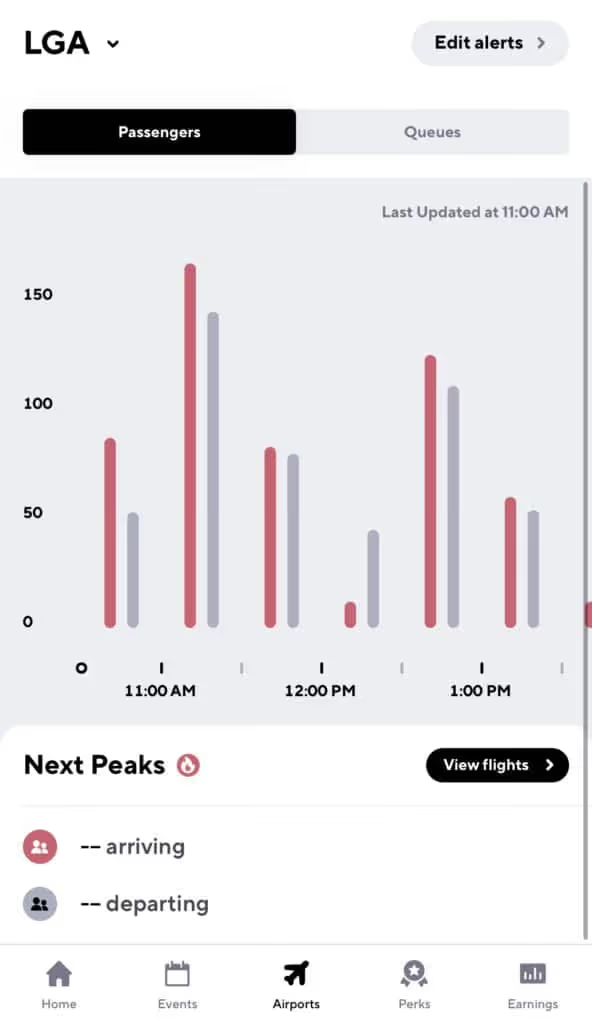
With Gridwise Plus you’ll be able to see airport data 24 hours in advance, so you can lock in a solid airport strategy the night before you head out. You’ll also be able to create custom alerts for arrivals and departures.
What are some good airport strategies?
Pick up a passenger on the way to the airport
Count on Gridwise to let you know when there’s a peak in airport departures, so you can hang around near hotels at that time to maximize your chances of an airport ride.
Do not cancel on a passenger after you’ve accepted a fare
If you do, you will be bumped to the bottom of the queue and your wait starts all over again. The good news is, if it’s a short ride some companies let you jump back in line after you’ve dropped the passenger off.
Be ready to present your waybill
A waybill is essentially a receipt of the last trip you completed. Be prepared to present this to airport officials or law enforcement while waiting for arrivals. You might also be asked by airport officials to see proof of the trip request before heading into the terminals.
Always be prepared
The fact is, you never know when law enforcement will show up. Keep your driver’s license, insurance card, and registration handy, and don’t forget to have your placard displayed.
Congrats! Now you’re all set to make some pickups and dropoffs at LaGuardia Airport. Happy driving!

Uber and Lyft Driver Instructions For Kansas City International Airport (MCI)
Kansas City International Airport (MCI) is located in Platte County, Missouri, 15 miles from downtown Kansas City. The airport averages 340 aircraft operations per day, and in 2019 saw more than 11 million visitors.
For rideshare drivers, that means high potential earnings. All those passengers need rides to and from the aviation hub, and that’s where you come in.
Kansas City International Airport allows Uber and Lyft vehicles at the pick-up and drop-off terminals, but before you head that way there are a few rules you’ll want to know. To maximize earnings (and avoid a fine), it’s important to understand how to navigate the airport, join the queue, and legitimize your vehicle.
To help rideshare drivers be successful at the Kansas City airport, we put together this blog post to serve as a guide. The following topics are covered:
- What should you do before arriving at Kansas City International Airport?
- Do you need any permits to drive there?
- Where is the rideshare waiting area at Kansas City International Airport?
- What are the passenger pick-up rules at Kansas City International Airport?
- What are the passenger drop-off rules at Kansas City International Airport?
- When is the best time to drive at the airport?
- What is the best driving strategy?
Let’s dive in!
What should you do before arriving at Kansas City International Airport and entering the airport queue?
To pick up passengers at Kansas City International, you’ll need your trade dress, which (as you know) is the Lyft or Uber decal that goes on your front passenger windshield facing outward.
Uber sends out this decal when drivers sign up. If you’ve lost yours since then, there are a few easy ways to replace it. You can request that a new one be mailed to you, pick one up at your local Greenlight Hub (be wary of recent closures), or print out a temporary version at home.
You can order a Lyft decal from your Dashboard or print a temporary emblem to use while waiting for yours to come in the mail.
Where is the Uber/Lyft waiting area at Kansas City International Airport?
The staging lot at MCI is located off of Brasilia Avenue near the Marriott Hotel. Refer to the map below for further details.
You’ll be automatically entered in the queue once you enter the lot, and you can check your place in line in the Uber or Lyft app. Unfortunately, if the lot is full you’ll have to leave the airport.
While waiting for requests, you may get a pre-match (Uber) or pre-dispatch (Lyft) message urging you to head to the pick-up terminal. While on the way, you should be matched with a rider. If not, just return to the staging lot within fifteen minutes, and you’ll be first in the queue.
How should Uber and Lyft drivers pick up passengers at Kansas City International Airport?
The driver who has been waiting the longest in the staging area gets the next rider request.
Once you accept a request, simply head to your rider’s terminal at the curbside Arrivals level.
Terminals B and C are located at the end of Cookingham Road. These terminals are roundabouts, so you’ll encounter Terminal C before Terminal B.
How should Uber and Lyft drivers drop off passengers at Kansas City International?
Drop-offs at the Kansas City airport are simple! Just head to Departures at the passenger’s carrier of choice.
You may receive a pick-up request in the next 60 seconds (part of a feature called Rematch) but if not, either head back to the road or to the staging lot.
When is the best time to drive at the Kansas City airport?
Turn to your Gridwise app for information about all arrivals and departures at MCI, as well as delays and cancellations.
Typically, midday is the best time for airport driving; most passenger arrivals and departures occur sometime between 11:00 a.m. and 3:00 p.m.
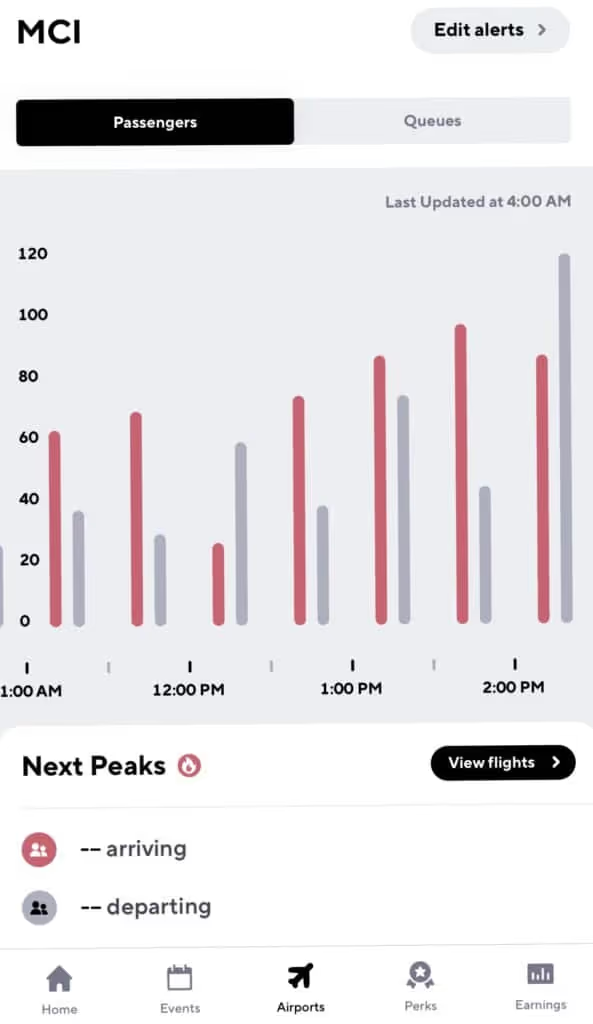
With Gridwise Plus you’ll be able to see airport data 24 hours in advance, so you can lock in a solid airport strategy the night before you head out. You’ll also be able to create custom alerts for arrivals and departures.
What are some good airport strategies?
Pick up a passenger on the way to the airport
Count on Gridwise to let you know when there’s a peak in airport departures, so you can hang around near hotels at that time to maximize your chances of an airport ride.
Do not cancel on a passenger after you’ve accepted a fare
If you do, you will be bumped to the bottom of the queue and your wait starts all over again. (This also happens if you enter out of driving mode or leave the property while in the queue.) The good news is, if it’s a short ride some companies let you jump back in line after you’ve dropped the passenger off.
Always be prepared
The fact is, you never know when law enforcement will show up. Keep your driver’s license, insurance card, and registration handy, and don’t forget to have your placard displayed.
Have your waybill ready
Your waybill is a digital receipt of your last drive, which airport officials may occasionally ask to see. Search ‘waybill’ on Lyft or click ‘Info’ on Uber to make it appear.
Congrats! Now you’re all set to make some pick-ups and drop-offs at the Kansas City International Airport—and maybe sneak a Chiefs game in between.
Trabaje de forma más inteligente. Gane más.
Ya sea que conduzcas, entregues o recojas turnos, Gridwise te ayuda a hacer un seguimiento de las ganancias, el kilometraje y el rendimiento para que puedas mantener el control de tu trabajo. Descarga la aplicación y toma las riendas hoy mismo.
