Blog de Gridwise
¡Lee el blog de Gridwise para obtener consejos y sugerencias sobre cómo ganar más dinero mientras conduces para Lyft, Uber, DoorDash, GrubHub y más!

The Gridwise Job Board: Find Your Ideal Job or Gig Work
Gridwise is an essential assistant app created by gig workers for gig workers. Our mission is to support those engaged in gig work in every way possible. We understand how challenging it can be to deal with income instability, a lack of benefits, and job insecurity that often comes with gig work. The Gridwise app tracks and organizes earnings and expenses, and offers a wide array of discounts, deals, and services that make the lives of independent contractors easier and more rewarding.
We firmly believe it’s possible to make a viable living and create a gig experience that offers flexible hours, variety, and excitement. With issues such as consistent earnings and job security in mind, Gridwise is proud to offer a centralized platform that shows you how to find gig work and secure reliable opportunities. We’re proud to introduce the Gridwise Job Board.
[elementor-template id="20891"]
The Gridwise Job Board: Key features
Because Gridwise is dedicated to serving the gig worker community, we’ve filled the Gridwise Job Board with useful features that won’t waste your precious time.
- Comprehensive listings. Find part-time, full-time, temporary, and per-task work. Drive or deliver with your vehicle, utilize an employer’s vehicle, or even find non-driving gig work.
- User-friendly interface. Find the jobs that are right for you with a tap of your screen.
- Verified opportunities. We vet the jobs before they are listed to ensure you’re getting high-quality job postings.
How to get more gig work, seasonal, part-time or full-time jobs with the Gridwise Job Board
Looking specifically for “gig work apps” or “gig jobs near me?” You’re in luck. Our filters and search functions send you directly to the listings you seek.
Here’s how it works.
- Access the Job Board via the Gridwise website.
- Search for jobs by type, location, and more.
- Select the job that interests you, and read all about it.
- Scroll through the description, and if it appeals to you, click “Apply for job.”
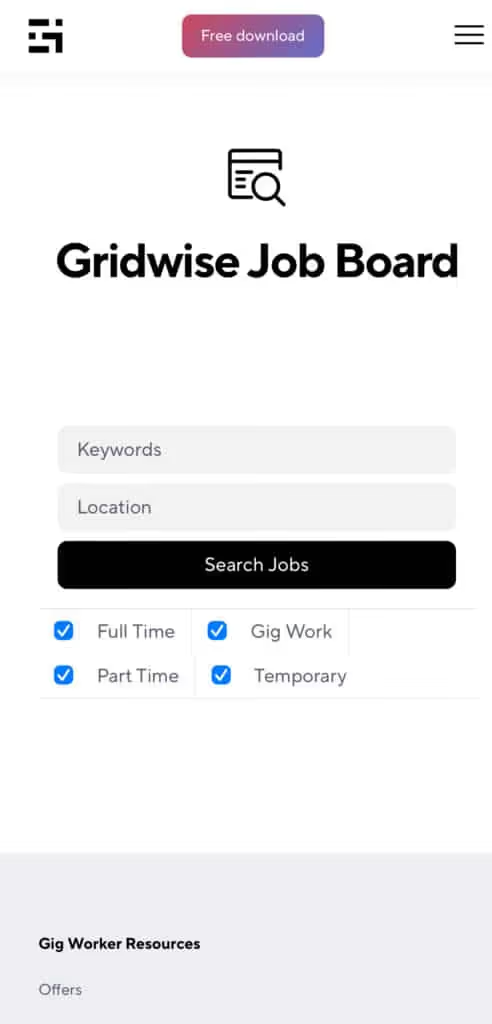
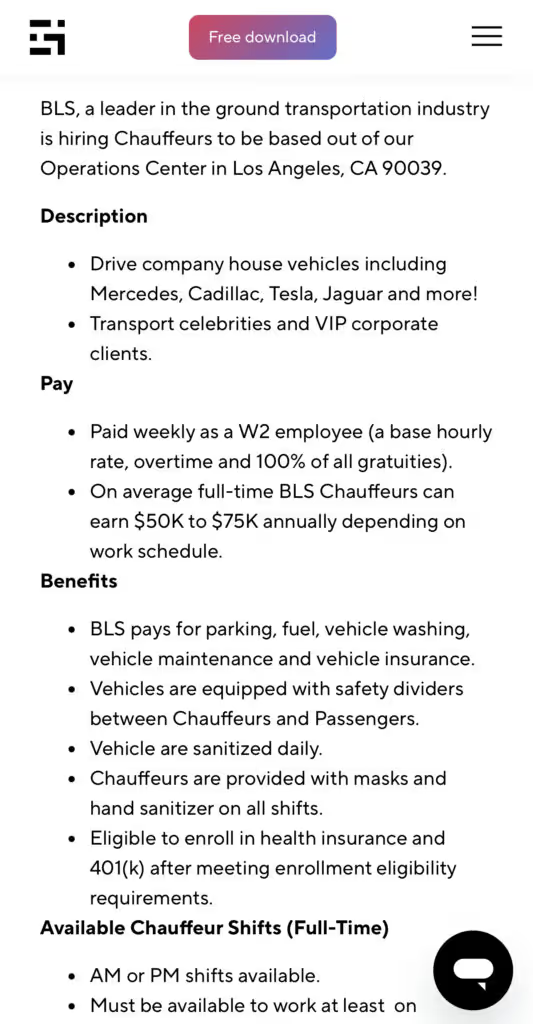
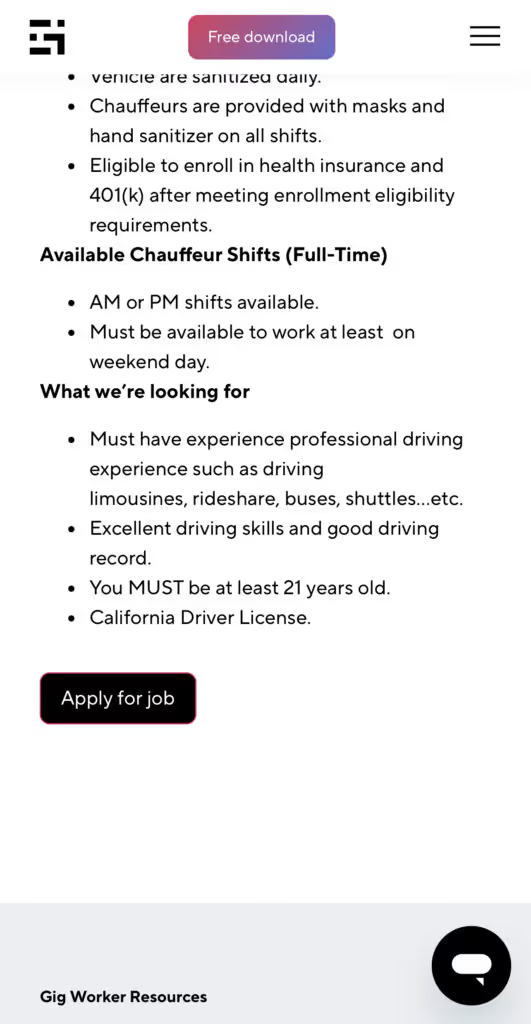
Many types of jobs are available. Adjust the search filter to see the full variety of opportunities that will let you cash in. Deliver food, set up catering, do rideshare driving, get paid for doing package delivery, and much more. You’ll find short-term gigs, long-term contracts, and part-time positions.
Perks of the Gridwise Job Board for gig workers
Gig workers who know how to make extra money will appreciate how the Gridwise Job Board lets you multiply your chances of bringing in big earnings. Here’s how:
- Increased stability. Use the Gridwise Job Board to find part-time or permanent jobs in addition to the part-time gigs you already have. Always keep a steady stream of earning opportunities flowing toward you.
- Flexibility and autonomy. Choose jobs that fit your schedule, work around other jobs and family duties, and still leave room for some fun in your life. Discover side hustles to supplement your full-time job, permanently or just for the season.
- Skill development. Find part-time work that lets you use a skill you already have, or try your hand at something new. It’s a smart way to develop a portfolio to showcase what you can do, or even to find permanent employment.
Get Gridwise and stay up to date on the Gridwise Job Board
Gig workers need plenty of information and assistance, and Gridwise is here to give it to you. Download the app and get essential features such as
- seamless earnings tracking
- mileage tracking
- expense recording, including notes
- low-cost and no-cost insurance benefits
- access to affordable medical, dental, vision, mental health, and alternative care
- professional services including legal and financial help
- deals and discounts
- weather, events, and traffic reports
- inside information on where and when to drive
[elementor-template id="20936"]
More to know about gig work:

5 Best Mileage Trackers For Gig Drivers
Many drivers ask, “Do I really need a mileage tracking app?” The answer is simple: only if you want to have an accurate count of all the miles you can legally deduct from your taxable income! You might think your rideshare or delivery driving app has got you covered. After all, they do quite a good job of logging the miles you drive while you’re on a trip or delivery. But, if you want to have the best app to track mileage for Uber, Lyft, Doordash, Instacart, or the other apps you may use, you need more. Why is that?
Without a separate tracker, you’re missing the miles you drive in between pings. Did you realize that all the miles you drive, from the moment you begin your shift until it’s over (as long as you don’t drive several miles on a break to hang with your friends), are tax deductible! That means you need something besides your driving app to keep an accurate count of your travels. Read this Gridwise post to see how important it is to keep track of every deductible mile.
You won’t be surprised to hear that there’s an app for tracking miles. In fact, there are several of them. Here, we’re going to tell you about five top mileage tracking apps, and help you figure out which one is best for you.
Before we get to the list and identify the best mileage tracker app, let’s clarify what exactly a mileage tracking app is. According to G2.com’s technology glossary, mileage tracking is done for the purpose of keeping a log of mileage that is either reimbursable or tax deductible.
And yes, of course you can track your miles simply by taking readings on your odometer. But are you really prepared to account for how many miles you drove for personal reasons and subtract them from the total to get your business mileage? Even if you can remember all that and do the arithmetic, if you want an accurate reading of the miles you drive for business, and can therefore deduct, a mileage tracking app will save you a lot of trouble and prevent you from making costly errors.
Plus, as a gig driver, you have specific needs when it comes to a mileage tracker. Ideally, you’d be able to handle mileage tracking and several other functions all in one app. It can be maddening enough to deal with driving apps, particularly if you’re an avid multi-apper. You would want your mileage tracker app to help you keep account of other aspects of your business, including income, expenses, and inside information about the art of gig driving.
Not all mileage apps are equal, to be sure! Let’s look at five of the best apps to track mileage and figure out which is the best app to track mileage with Uber and Lyft, or what mileage tracker app is best for DoorDash.
[elementor-template id="20891"]
1. Zoho Expense
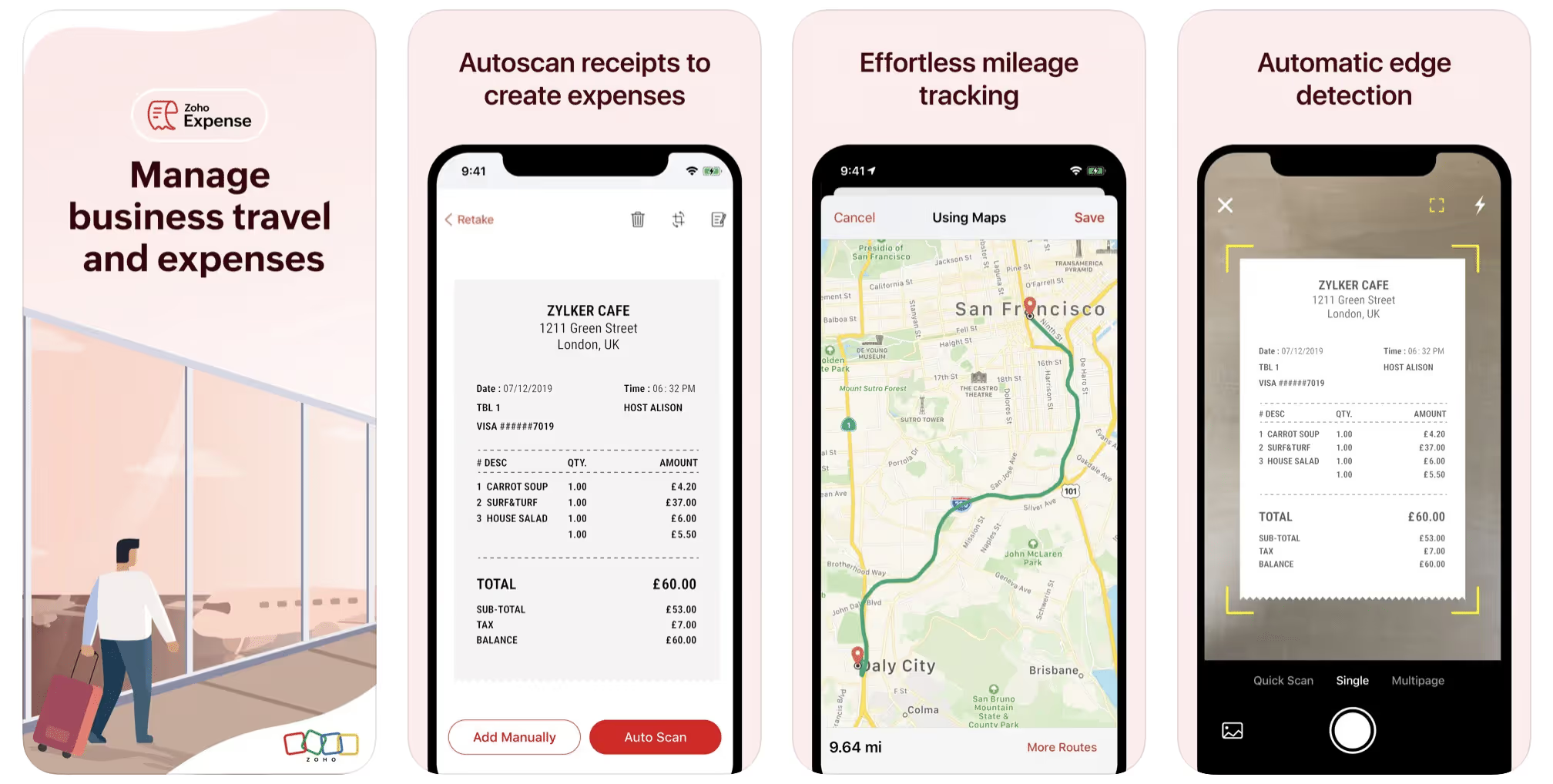
First up is Zoho Expense, which does exactly what its name says. This app is designed to allow companies to give employees a uniform way to create and submit expense reports. It can be used by individuals, including gig drivers, as well.
It includes a mileage tracker, as well as features that let you track other deductible expenses, including the ability to scan and record receipts.
Available on Android and Apple: Yes
Ratings: 4.8 stars on App Store, 4.7 stars on Google Play
Free Version: Yes
Subscription price: $3 per month, billed annually
Created specifically for gig drivers: No
2. Quickbooks Online
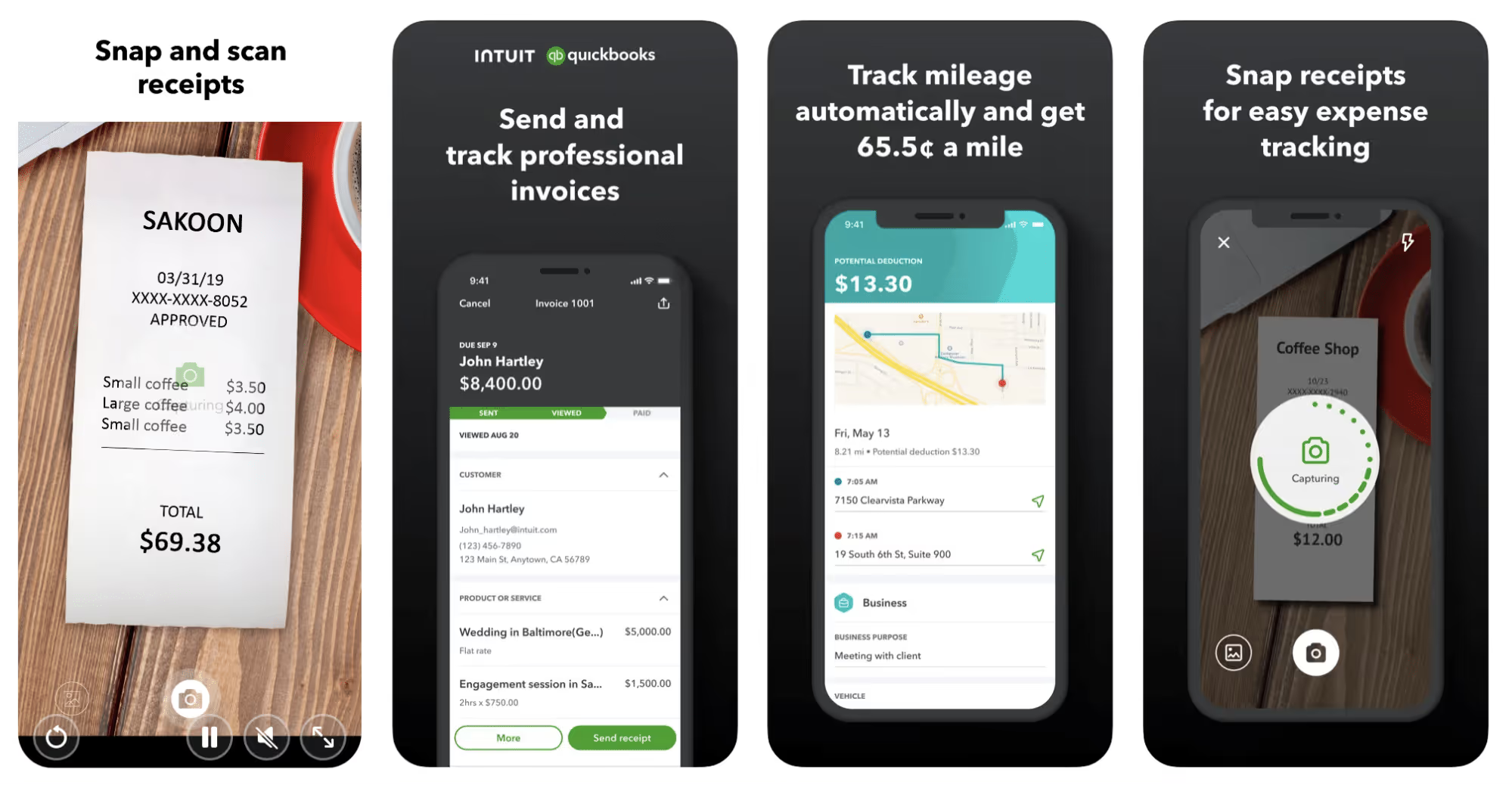
Quickbooks Online is a cloud-based app that allows you to track your mileage, earnings, and expenses. The information you enter can then be used to generate various reports that prepare you for tax time. It also allows you to create graphs that illustrate your cash flow, and includes a receipt scanner so you can instantly record deductible expenses. Quickbooks is popular, highly reliable, and designed mainly to help people keep track of their small businesses.
Available on Android and Apple: Yes
Ratings: 4.7 stars on App Store, 4.4 stars on Google Play
Free version: 30-day free trial
Subscription price: $15 per month for basic version if purchased for 3 months or more
Created specifically for gig drivers: No
Source: quickbooks.intuit.com
3. Shoeboxed
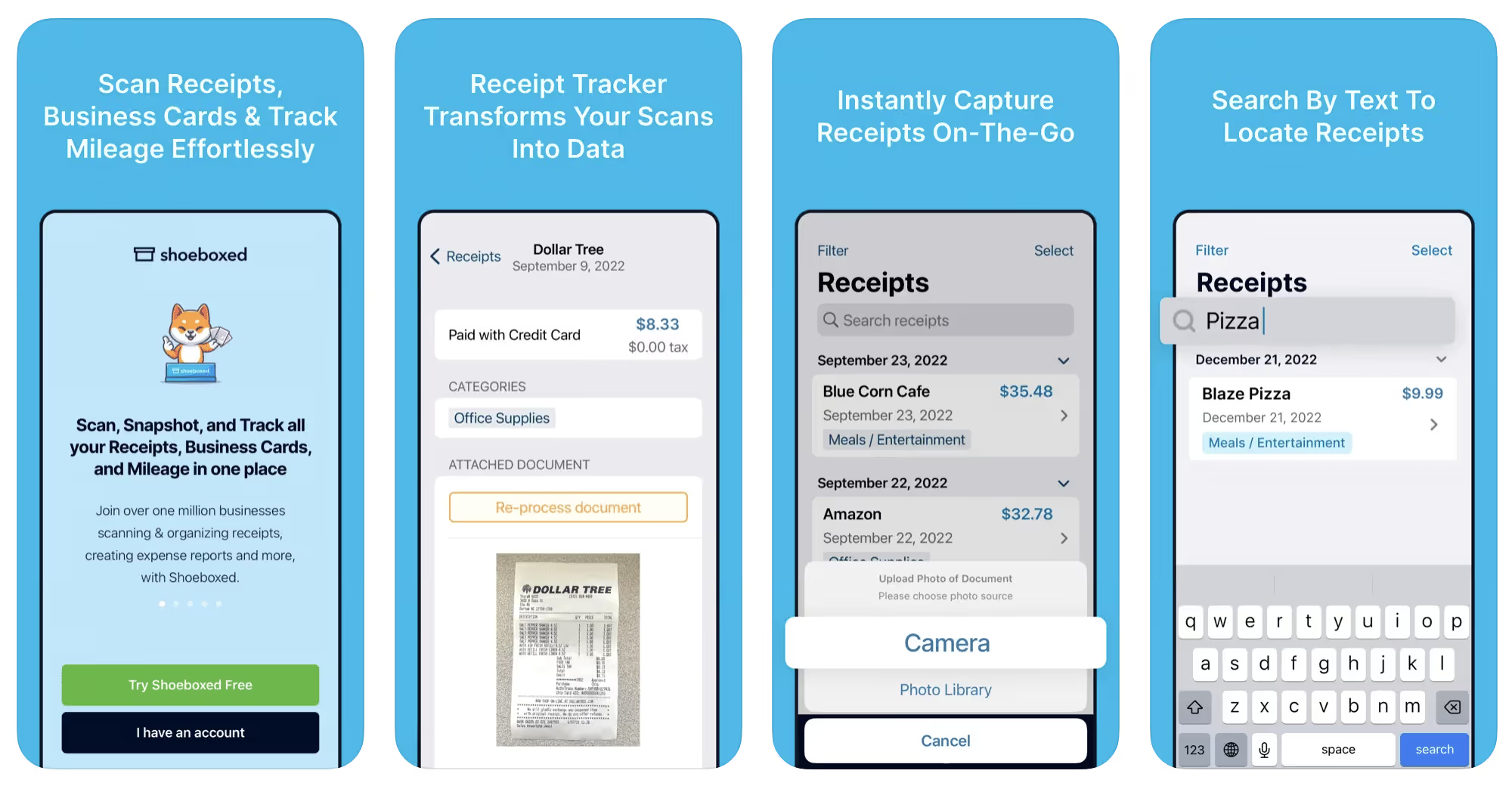
Shoeboxed started in 2007 as a service for scanning paper receipts into digital form. Now the app offers a free mileage tracker and has enabled users to scan receipts directly. It touts itself as the best mileage tracking app for DoorDash, but there are some elements missing that Dashers might like to have. While it provides features that record your expenses and prepare you for tax season, it doesn’t automatically track your earnings. The mileage tracker has a system where you can drop pins along your routes to make the tracking more precise, identifying those legs of a trip that you make for business purposes. The mileage tracker is “free” once you sign up for the basic version.
Available on Android and Apple: Yes
Ratings: 4.5 stars on App Store, 2.3 stars on Google Play
Free version: No
Subscription price: $18 per month for basic version
Created specifically for gig drivers: No
Source: blog.shoeboxed.com
4. Stride
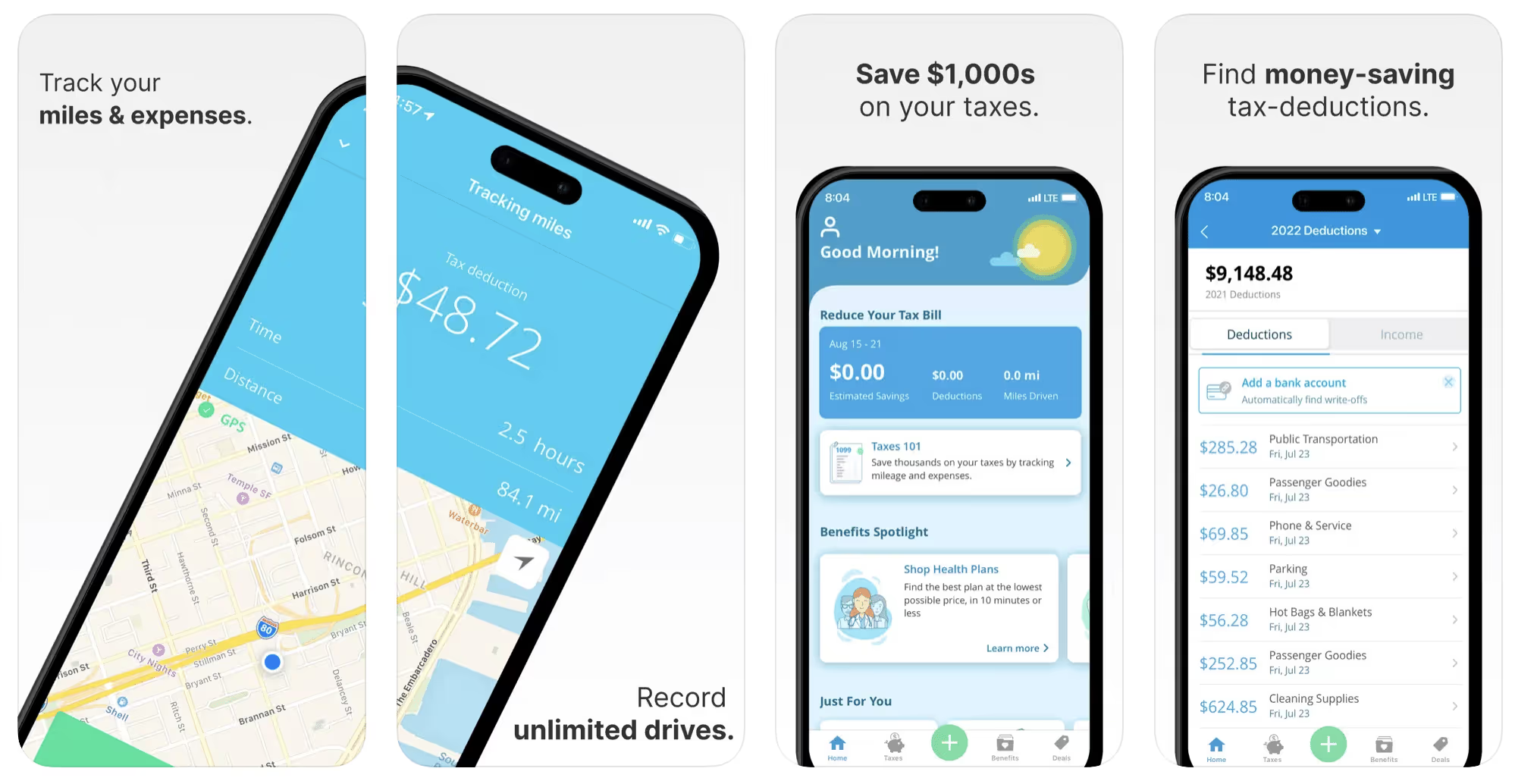
This free mileage tracker does a fair job of keeping track of the distances you rack up while gig driving, but it doesn’t automatically track earnings. It can be a big help, though, in tracking your expenses. You can link Stride to your bank account, and it will automatically scan your expenses to identify items you can potentially deduct. The app is totally free. This could make it the best free mileage tracker app, but there is a small price to pay. The app will persistently push you to consider various insurance plans that they are affiliated with. If you don’t mind that, this is a solid mileage tracker, even if it doesn’t track your earnings.
Available on Android and Apple: Yes
Ratings: 4.8 stars on App Store, 4.6 stars on Google Play
Free version: Yes
Subscription price: None. The app is free.
Created specifically for gig drivers: No
5. Gridwise
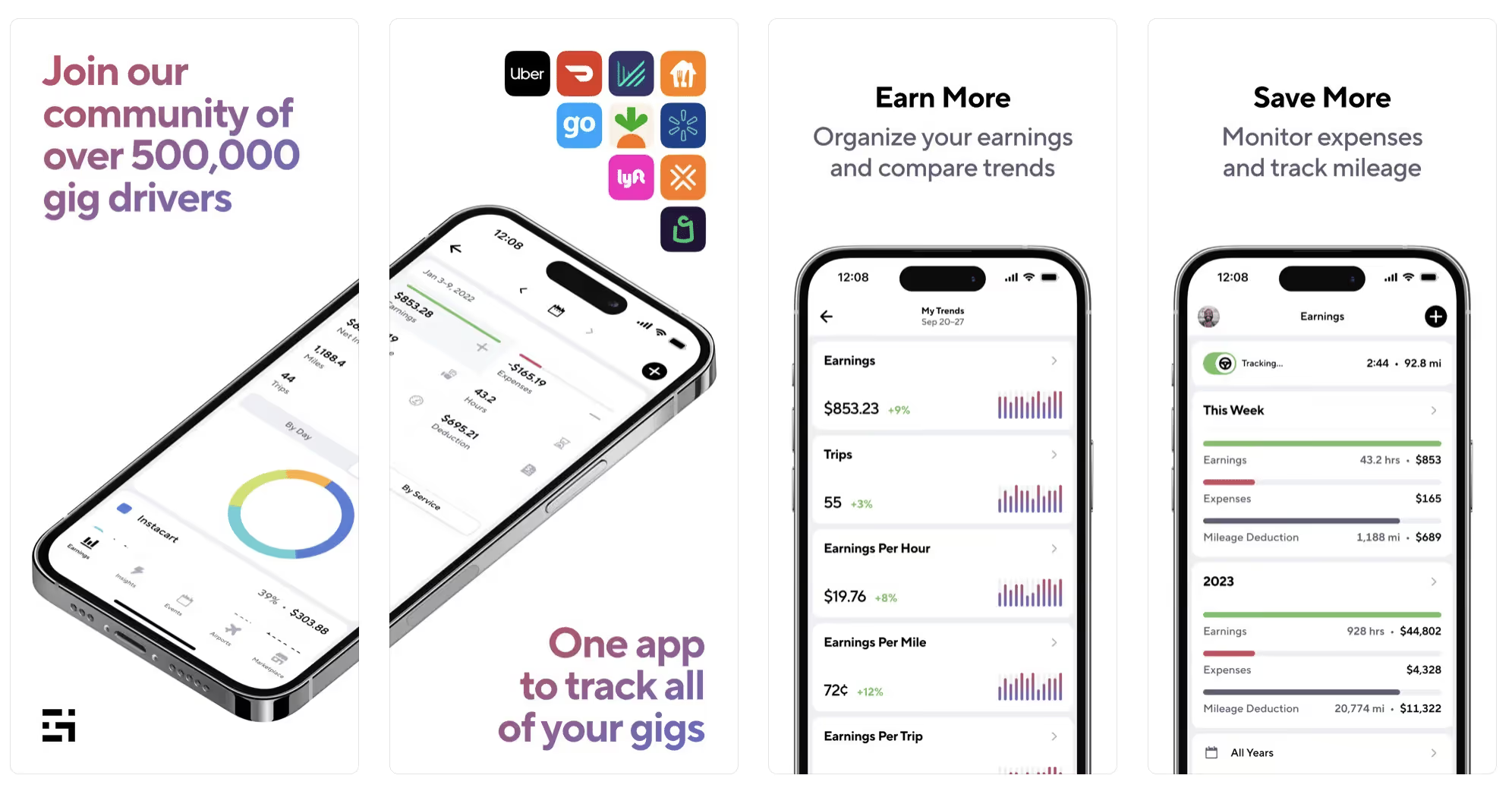
Gridwise has a free mileage tracker and free features that record your income and expenses. It gives you access to insurance and benefits, as well as insights about the best times and places to make the most money while gig driving. The Gridwise mileage tracker captures all the miles you drive while you’re on your driving shift, and it can be used if you have other trips you need to make which qualify as business travel.
Drivers love it because it is geared toward the needs of rideshare and delivery workers, providing free information about airport departures and arrivals, event start and let out times, weather, traffic, and more. The Gridwise Plus subscription adds value by providing additional insights and reports, discounts on benefits, the ability to export data in .csv format,, and more.
Available on Android and Apple: Yes
Ratings: 4.9 stars on App Store, 4.6 stars on Google Play
Free version: Yes
Subscription price: $9.95 per month for Gridwise Plus, or $95.99 per year (a $23.41 savings)
Created specifically for gig drivers: Yes!
What is the best mileage tracking app?
Now that we’ve checked them all out, we’re positive about the answer to that. Hands down, it’s Gridwise. Are we biased? You bet we are! But drivers love it too. Gridwise is the best mileage tracker app—and so much more. So many of the features are free, and the subscription to Gridwise Plus will pay for itself with additional insights to boost your earnings and deeper discounts on products and services.
Most important, Gridwise is designed specifically for gig drivers by experts who were once gig drivers themselves! Knowing what gig drivers need is a crucial step in creating an app that rideshare and delivery drivers can really use! Here are a few of the features, besides mileage tracking:
- seamless earnings tracking
- automatic, on/off toggle and manual mileage tracking
- mileage categorization
- airport, traffic, weather, and events information
- insights into where to drive and when to drive
- reports showing earnings across the platforms you use
- discounts on countless products and services for drivers
- additional resources for finding side gigs
- an informative and comprehensive blog
- affordable benefits, including insurance, medical, dental, and alternative practitioner discounts
- a community of drivers just like you
Don’t settle for just any app. Get the best mileage tracker, and so much more, from Gridwise!
[elementor-template id="21599"]

What Records Do Gig Drivers Need To Keep Track Of For Taxes?
* Gridwise does not provide tax, legal, or accounting advice. This material has been prepared for information purposes only, and is not intended to provide, and should not be relied on for tax, legal, or accounting advice. You should consult your own tax, legal, and accounting advisors before filing your return.
Record keeping? Who signed up for that? As a gig driver, it’s part of what you need to do to keep your business running. Don’t worry. It’s not as complicated as you might have been led to believe. This post will show you what you need to keep track of and the best ways to gather and preserve your tax-related records. We will cover
- How record keeping can help reduce income tax for freelancers
- Taxes and freelance work: Record keeping requirements
- Mileage tracking: Motives and methods
- More deductions and records to keep
- Make tax time easier
How record keeping can reduce income tax for freelancers
Tax time is not “fun time” for rideshare and delivery drivers. It’s easy to get used to watching your earnings pile up and come to believe they are all yours. Unfortunately, that isn’t the case. Gig work taxes can be especially painful because no one takes them out of your earnings for you, until the tax authorities insist that you do it for yourself.
You will need to show the tax authorities your income records, and they will gladly tell you to send them what they determine to be their fair share. Think that’s not fair? You’re not alone, but that doesn’t mean you’re going to get out of paying gig work taxes.
But you can find ways to pay the smallest amount that is legal and possible. The best way to defend yourself against having to pay astronomical amounts when you file your return is to know what expenses you can deduct from your gross income. When you subtract deductible expenses from your gross income, there is less left over to be taxed. This reduces the amount they can hit you with gig worker taxes. and can make your tax bill substantially lower.
While you want to keep good records so as to be in compliance with taxation entities such as the IRS, you also want to ensure you have proof of every last deductible expense you have accrued during the year. There are other records you must keep as well. Let’s look at some of the considerations you have, realizing that you now need to know how to do taxes as a freelancer.
Taxes and freelance work: Record keeping requirements
So many gig drivers fail to understand the responsibilities they have as independent contractors. Those who work part time for very few hours may even believe they don’t have to report the income they get from their driving gig payments. That would be a big mistake!
The company or companies you work for report your income to the IRS and state tax authorities. If you fail to report that income, you will risk some rather painful penalties. The IRS taxing side hustles is as much of a thing as the IRS taxing income from any other job. Your best bet is to report what you’ve earned, honestly and completely, and comply with other record keeping requirements such as
- gross income
- deductions and credits
- purchases (items you purchase and resell, such as snacks or bottled water)
- a log of all your mileage (or vehicle expenses, if greater)
- a list of all expenses and assets, such as utilities and other expenses associated with having a home office and equipment
- machinery and furniture you own, including when it was acquired, how much it cost, whether you previously took deductions on it, and selling price, if applicable (this includes your vehicle)
More things to consider:
- Pay attention to the retention of your records. You’ll need to keep all tax-return-related items— including income, deductions, and any tax credits reported— until the period of limitations runs out (3 years from date you filed, or 2 years from when you paid tax. If you have employees, keep your records for at least 4 years.)
- If you want to avoid paying self-employed taxes, you may want to set up a corporation or Limited Liability Corporation (LLC) for your business. This allows you to separate all your gig driving earnings from personal income, and permits you to take advantage of the additional advantages of working through a corporation. This includes exemption from self-employment taxes. You can learn more about how to pay self-employment taxes, if you opt for that, in this post from Keeper.
- You should always keep a separate checking account for your business, for convenience as well as clarity. While this is not a legal requirement, it is a smart move if you want to have an easier time managing your business.
- You are required, as an independent contractor, to file your taxes quarterly. Check out this Gridwise blog post for more information about quarterly tax payments and other matters that make filing delivery, Lyft and Uber taxes easier.
Mileage tracking: Motives and methods
Why you need to be meticulous about mileage
Mileage deduction, or the costs of operating your vehicle, will be the most important item to account for when you consider how to file taxes as a freelancer. While mileage is an important deduction for all independent contractors, as you might imagine, it’s even more essential for rideshare and delivery drivers.
There are two ways of keeping track of your mileage deduction. One is to use the IRS’ standard mileage deduction, which for 2022 is 58.5 cents per mile. This number takes into account the costs of operating your vehicle, from fuel and maintenance to registration, insurance, and depreciation. Alternatively, you can calculate all your own vehicle operating costs, but only after your first year of using the vehicle. You may discover that this second option allows you to have more money deducted from your taxable income. Learn more about the options for deducting your mileage in this Gridwise post.
No matter which way you decide to calculate the deductions for your mileage, you need to know what mileage you can and cannot deduct.
You can deduct
- miles driven to and from home when you go out to drive or deliver
- miles you accrue during your trips
- miles you drive on any other trips you make that are necessary as part of your business.
Examples:
- driving to return a lost cell phone or to an Uber Hub or another physical location where your company might make driver support available
- driving to pick up supplies, to get gas, or to have your car cleaned, serviced, or detailed, etc.
You cannot deduct
- miles you drive for personal trips
- miles for any trips you take that do not directly affect your business
Note: If imagining yourself becoming the not-so-proud owner of a shoebox filled with paper receipts gives you nightmares, stop worrying. Electronic records of purchases will satisfy reporting requirements. If you use cash, you can scan copies of your receipts, in some cases, right into your recording software or app. Gridwise and Keeper give you a simple to use interface that keeps all your receipts recorded without the messy pile of paper.
Mileage tracking methods
By now, you’re probably convinced that tracking mileage is important, despite all the other things drivers have to do. Now, let’s look at your options for keeping accurate records.
- Manual tracking: You can keep a logbook where you list every trip you make, starting and ending mileage, the date, and purpose of the trip. While this would work, it’s certainly not convenient. Besides, if that logbook gets lost, your plans for having a nice, fat tax deduction will go by the wayside.
- Spreadsheet: This is a bit more convenient and sophisticated way of tracking your business mileage. You’d need to be meticulous about making your entries, though. Even if you keep a spreadsheet app on your phone, it could be time consuming and inconvenient to keep doing it with all the other things going on in a rideshare or delivery driver’s day to day life.
- GPS-based mileage tracking apps: There are a bunch of apps that track mileage based on your GPS location, and most of them are pretty accurate and far more convenient than taking constant readings of your odometer. Your driving apps, such as Uber, Lyft, DoorDash, or Instacart, may also track your mileage, but be careful here. They will only track the miles you drive while you’re on a trip or delivery. They don’t count the miles you drive going to pick up a customer or when you make your move toward a restaurant or store.
Gridwise, on the other hand, will track all the miles you clock while you’re on your shift. All you need to do is make sure you start tracking the minute you leave home, and every gig driving mile will be logged. - OBD-II mileage tracking systems: There are plug-in modules that assess your vehicle’s mechanical health and track your miles. However, many authorities question the ability of OBD-II mileage tracking systems to get get accurate odometer readings. Insurance companies don’t consider them to be accurate enough gauges of odometer readings.
While mileage is a crucial deduction when you’re preparing your Uber, Lyft, or DoorDash taxes, it isn’t the only expense you’ll want to record.
More deductions and records to keep
Expenses you can deduct
You’re entitled to include the cost of other expenses that are directly related to your driving business. These include
- vehicle expenses
- equipment for your car and home office
- extra services and subscriptions
- business tools, including apps and software
You can learn much more about gig driver expenses that are eligible for deduction in this Gridwise article.
Ways to track and preserve deductible expenses
- The manual method: Just like you can with mileage, it’s possible to use a manual method, but in addition to logging each expense into a ledger, you would also need to keep physical receipts.
- Spreadsheets: You can record your expenses on a spreadsheet. This is somewhat less awkward than manually logging mileage, but there still will be plenty of room for failing to remember the case of water you bought for your customers, or losing the receipt from the thermal bag you purchased.
- Accounting software: You can use software that helps you track your expenses. This method usually interfaces well with any tax preparation software you or your tax professional might use.
- Gridwise: There are other apps that help you track your expenses, but Gridwise is designed specifically for gig drivers. It automatically tracks earnings and mileage, and lets you record your expenses the minute they come up. Gridwise’s partnership with Keeper gives you the ability to scan receipts and access a tax professional. This is a seamless way to record your expenses and a big help in learning how to file Uber taxes. Gridwise even provides .csv output, so you can feed your Gridwise data directly into tax preparation software. Check out what Gridwise and Keeper will do to super-charge your tax filing powers.
Organizing and categorizing expenses
Before you even begin to record expenses, you’ll want to set up categories for them. You can start by reviewing the categories listed above and checking out the Gridwise post that lists possible deductions.
If you’d like to learn more about how to categorize expenses, there is additional information available. This article from Motley Fool lists all possible categories any freelancer might use and also gives tips on how to customize them for your driving business.
One last tip
Using Gridwise, particularly for tracking mileage, is the easiest way to be in compliance with the IRS’ rules for deductible mileage. Gridwise tracks all the miles you drive for your gig, beyond what your company’s app might record. At the same time, you can log on and off Gridwise when you start and end your shift, so personal miles won’t be recorded. This eliminates confusion while capturing every deductible mile.
Gridwise Tax Help, a partnership with Keeper, has been created specifically to serve gig drivers. It provides affordable and easy ways to record expenses, scan receipts, and find deductions by analyzing your expenditures. Read about free resources from Keeper you can use to be fully prepared for tax season, and get all your earnings and expenses on the record.
Get the world’s best assistant for rideshare and delivery drivers, and tax help too.
Make tax time easier now!

How rideshare drivers can stay financially stable amid COVID-19
When all’s right with the world, being a rideshare driver is a great way to earn money. You’re your own boss, you get plenty of human interaction, and the wages are better than most full-time or part-time jobs that offer far less flexibility and enjoyment.
In today’s climate, with the coronavirus (COVID-19) crisis heating up from a simmer to a rolling boil, our world has changed--a lot. In an effort to curtail the virus, public officials are ordering non-essential businesses to close, bars are no longer open, and many restaurants have switched to take-out only. Schools have closed, sporting events, concerts, and other large public gatherings are canceled or postponed. To say there have been drastic changes is an understatement.
These unprecedented moves are unsettling to everyone, but for rideshare drivers they are especially disturbing. Without people moving from place to place, where will you find your business? Chances are, while these measures are being taken, the places where you routinely pick up riders look like ghost towns.
Then there’s another problem: What if you take a rideshare customer in your car, find out the person is sick, and discover you’ve picked up way more than you bargained for? Even if you don’t fall ill, you could wind up carrying the virus to someone who is especially vulnerable. Or, you might discover that you’ve been put into quarantine, because a government official found out you were exposed and ordered you to live in temporary isolation.
It’s easy to see how quickly your rideshare income can shrink and even disappear as this crisis builds. Suddenly, being an independent contractor, free of restrictions and able to take advantage of flexible hours, doesn’t seem quite so appealing.
Here at Gridwise, we take this crisis and the way it affects rideshare drivers very seriously. That’s why we developed a summary of what financial help is available to you, with up-to-the-minute information and links that could be your lifeline at this critical time.
Don’t Panic
There’s no doubt that this is a major, disruptive event, regardless of the scale of stress it’s measured against. Still, it’s important that the uncertainty of these times doesn’t push you (or any of us) to get caught up in the vortex of negative energy that’s sure to be a part of the public reaction.
There will be places to fall back on financially, whether that is your rideshare company, the companies to whom you owe money on a monthly basis, charities, or the government. Let’s look at some of them here, and give you the opportunity to form a strategy that will protect you from losing your ability to cope.
Help from Rideshare Companies
If you’re an active driver, you’ve probably already received a notice from Uber and/or Lyft telling you that they will offer support to drivers who are either diagnosed with COVID-19, or who have been quarantined by a government entity. Here are the details for both companies.
Lyft
While Lyft openly expresses a promise of financial support for drivers, there are not many details about exactly how much help will be available and how it can be procured. The company’s statement reads as follows:
“We will provide funds to drivers should they be diagnosed with COVID-19 or put under individual quarantine by a public health agency. This helps support drivers financially when they can't drive, while also protecting our riders’ health. These funds will be given to affected drivers who are identified to us by public health officials or who contact our support team to self-report and provide documentation that they have been diagnosed with COVID-19 or put under individual quarantine by a public health agency. We will provide funds to affected drivers based on the rides they provided on the Lyft platform over the last four weeks.”
If you’re eligible for the support Lyft offers via this policy, contact Lyft support here.
Uber
Uber’s policy is quite specific, which has its good and bad points. While you can know what to expect as an Uber driver, there are limits on the help that’s being offered. In general, if you have been diagnosed with COVID-19, or if you are placed under quarantine by a public health official, or if you are asked to self-isolate by a licensed medical provider, you’re eligible for help. You can also get assistance if Uber restricts your account because you have the virus, or have been exposed to someone who has been diagnosed with COVID-19.
Also, to get financial help from Uber, you must have a record of driving for the company that shows you were active within 30 days before March 6, 2020. Then, Uber will examine your average daily earnings for the previous six months, and pay you that amount of money … but only for two weeks.
This policy might evolve as the coronavirus crisis unfolds, but in any case, it makes sense to take advantage of whatever assistance Uber is offering. You can read the company’s entire policy and report your situation to Uber here.
If you are still unable to work after two weeks of compensation, there are other ways to get financial support and cope during the coronavirus crisis.
Managing Monthly Finances
It’s a fact that the economic impact of the coronavirus outbreak will affect almost everyone. Remember that you’re not alone, and asking for help or leniency isn’t going to make you a less honorable or competent human being. There are many ways you can help yourself, and get help from others.
Assess the Damage and Set Priorities
When you lose your source of income, even if the flow is only temporarily interrupted you still have bills to pay. So, you’ll need to prioritize. Take a hard look at exactly what money you have coming in, and then figure out what you must pay first, rather than looking at all your expenses at once. This helps keep you from becoming overwhelmed.
Essential Living Expenses- Mortgage & Rent
The first thing you have to pay for is a place to live. Whether this involves paying rent or making a mortgage payment, keeping a roof over your head is your first priority. If you can’t make this payment, you need to communicate with your landlord or mortgage lender so you can potentially work out an agreement of some kind.
Start by studying your lease or mortgage agreement. Maybe you can make a late payment, or work out a plan for paying less over a longer period of time. In any case, communicate your situation and ask for what you need. This gives you a far greater chance at getting a reasonable response than if you simply fail to pay anything--which could result in losing that roof over your head.
Keeping Your Place on The Grid - Utilities, Phone, Internet
The same goes for utilities. If you anticipate problems keeping your utility bills paid, contact the companies immediately to negotiate a payment plan. Here’s a timely USA Today article about how utility, phone, and Internet providers are giving consumers a break during the coronavirus crisis.
No matter what your specific financial challenges may be, the crucial element is communication. Companies, big and small, are more likely to work with you when you are open and honest about your situation, and show your willingness to pay what you can.
If your landlord, lender, or utility company can’t or won’t be flexible, there are places to get help. You can get grants from organizations such as Catholic Charities, as well as the government. Check out Lavish Green, a portal online that leads to opportunities for procuring grants that help with rent, utilities, and other basic expenses.
Staying Well-Fed
Food is a high-priority item, and there are ways to keep to a food budget manageable, even when your income is low. Preparing meals at home, of course, is the number-one way to keep food expenses under control. Make simple dishes that stretch a long way. Be prepared to serve up leftovers, and learn to like them. Your culinary creativity will come into full bloom. If you don’t know how to cook, or would like to learn more, visit your local library. You’ll be amazed at all the cookbooks that can be yours for the borrowing.
Good nutrition is crucial, because you want to keep your immune system strong and your mind nimble as the environment becomes increasingly uncertain. Make sure you’re eating enough and getting solid protein, despite the need to conserve your financial resources. Consider canned tuna, beans, and other meats and vegetables as cheap-but-practical staples that are easy to prepare.
If you are simply too short of money to buy food, you do not need to go hungry. Visit a local food bank, where you can get basic food staples at no cost. They are usually sponsored by charitable organizations, or they might receive grants from various levels of government.
Another option is the Supplemental Nutrition Assistance Program (SNAP), which was formerly known as food stamps. Along with the new name came a simpler, more private way of redeeming SNAP benefits: a debit card that looks just like any other kind of plastic you’d use to pay for groceries. Visit this website to find out more about the SNAP program, including eligibility requirements. But don’t put it off--apply as soon as you know your income will be interrupted. That way, you’ll be able to receive help before you run out of the food you have on hand.
Keeping Your Car
Reduced income can definitely affect your ability to make car payments. Similar to mortgage payments and rent, you may be able to negotiate for lower payments, or even skip them for a short period of time--and as a rideshare driver, you’ll want to take care of this as soon as possible.
While most companies allow you to miss three payments before they start the repossession ball rolling, you don’t want to take any chances with losing your means of transportation--and livelihood. Save yourself a panic situation by taking care of this sooner, rather than later.
It might also comfort you to know that as the coronavirus crisis continues to expand, auto companies are taking action to alleviate pressure from those of us who depend on our cars and are unable to handle loan payments at this time.
Ford, Nissan, GM, and Toyota said they’ll provide payment relief options such as deferred payments and extensions to people who have been affected by the virus. All these companies joined Hyundai in delaying payments on new cars. Hyundai also said it would provide up to six months of payment relief for customers who lose their jobs.
Even if you hear about your car loan company offering these relief measures, remember that you must communicate with them to let them know you need their assistance. Also, they’re awarding this support on a case-by-case basis, so your credit rating is going to be an important factor in whether you’ll get them to help you out.
The Credit Card Conundrum
Like other types of creditors, credit card companies will treat you better if you (A) communicate with them, and (B) at least try to pay something on your bill, rather than nothing at all. You must do this carefully, though, and get their consent to an alternate arrangement.
Do NOT simply skip a payment or pay less than the minimum amount due without talking with the company first. It’s important to know that if you skip payments for 60 days, your account will go into collection. After 90 days without submitting a payment, you’ll be subject to having your account closed and sold off to a collection agency--and you could wind up being sued.
The worst possible thing you can do is ignore your bills. This will have an extremely bad effect on your credit rating, and ultimately, your economic freedom.
So how can you avoid encountering the wrath of the credit card companies, when your income doesn’t provide enough to make the minimum payments? You can arrange for a “workout plan,” with the cooperation of each credit card company. This will allow you to restructure the loan, and get it paid off in increments that are easier for you to manage. The company might eliminate fees or interest to make it easier for you to manage. This arrangement, aptly, is also known as a “debt management plan.”
Depending on your situation, it might make sense for you to arrange for a hardship plan. You must have paid your bills on time up to the time your income dissipated, and you must agree to continue making payments as soon as your income is reinstated.
The hardship plan puts your account on”hold.” You won’t be charged during the time period you are unable to pay, but you won’t be allowed to use your card until you begin to make payments again. This could be good, but make sure you still have a way to pay for gas.
Without question, it’s best to communicate with the credit card companies as soon as you know you’re not going to be able to pay them. Look further into the methods outlined here, and know what will work best for you before you call. It might take some effort to get to the right supervisor or manager, but your persistence will pay off.
For more information on how credit card companies are working with consumers during the coronavirus crisis, check out this CNBC article. Here’s another article on dealing with creditors that you might also find helpful.
Help with Student Loans
It’s really difficult to get out of paying your student loans, but there are remedies available when your income trickles down to a slow drip. Again, make sure you communicate with the financial institution that gave you the loan, and if you haven’t already, you can begin to negotiate what is called an income-driven plan.
This arrangement is usually restricted to government-backed loans, and is not as easy to procure in the case of private loans. The plan allows you to set up a payment schedule based on the monies you have coming in, and would take account of your reduced income.If you already have an income driven plan, you can renegotiate it at this time.
In the case of private loans, you can try to negotiate a hardship modification for your plan. This might give you some relief, but in the future your payments could rise higher to compensate for the break you get now.
At the moment, there are no public plans to offer relief from student loans due to the coronavirus crisis. It would take an act of Congress to make changes to current laws, so it might be worth a call to your representatives to alert them to your needs, and request that they take action.
What’s Next?
The situation surrounding the COVID-19 pandemic is changing rapidly, so it’s impossible to know exactly what’s coming next. As of this writing, the U.S. Senate is reworking a bill that was originally crafted by the House of Representatives. The bill is expected to help compensate people and companies for loss of income that has resulted from the coronavirus outbreak. In addition to income supplements, there will be other accommodations, including a deferment of the April 15th tax payment deadline, for three months. This was announced by U.S. Treasury Secretary Mnuchin on March 17, 2020.
This will be good for you as a rideshare driver, as you’ll be able to put off paying your tax bill. However, if you have other employment besides driving, and think you’ll have a refund coming, it makes more sense to file before the usual deadline.
On March 16th, the President and Vice President’s task force announced recommendations that limit public gatherings to 10 people or less at least through March 31st. Although a national lockdown has not occurred, there are new guidelines that urge people to avoid unnecessary travel and eating in restaurants, food courts, and other public places.
Also, a growing number of states have passed their own restrictions, which are discussed in this March 17, 2020 article.
For now, the food to-go business seems to be in for a boom, so it could be time to branch out to one of the delivery services as a source of income--but only if you’re healthy. If you have symptoms of COVID-19, which you can learn about here in an informative article by the CDC, you will need to get help and stay isolated to keep the virus from spreading.
Pool & Share Rides Suspended
On March 17, 2020 Uber and Lyft announced they would suspend pool and share rides, to help stem the spread of the virus. It makes a lot of sense to limit the number of people who are in your car at one time, for you and your passengers.
Take Care and Stay Safe
We hope this article has given you some ideas about where you can get the help you may need. We also hope you’ll take all necessary steps to stay strong and healthy.
Uber offers these tips to keep your drives safe:
- Wash your hands before and after entering your car
- Give space by asking passengers to sit in the back seat
- Cover the mouth or nose to contain coughs or sneezes
- Consider rolling down the window to improve ventilation
Follow these and other common-sense practices, and we’ll get through this together.

The best rideshare apps for Uber and Lyft drivers in 2020
Apps are a part of life for most everyone, but for rideshare drivers they’re essential. In fact, it’s hard to imagine how we’d stay in business without them.
First and foremost, we have our rideshare apps. Uber and Lyft are both pretty sophisticated. When you think about it, the whole process of how drivers and riders find one another is miraculous and awe-inspiring.
With that said, we do a bunch of other things in our cars, from listening to music that we and our customers can live with, to knowing where and when the next thunderstorm or snow shower might blow in and totally change our driving game. Also, there are those pesky realities like the need for road service and car maintenance, and fun diversions we can deploy while we’re waiting for rides in the airport queues.
We’ve listed some of our favorite apps here, which will hopefully give you some tips that make your driving experience as profitable and enjoyable as possible.
Gas Discount apps for Uber and Lyft Drivers
There are tons of fuel payment apps, and most gas brands have their own. Some help us save a few pennies on the gallon, in addition to offering the option to pay from your phone rather than in-store or through the pad on the pump.
Here are a few others that help us find the fueling stations of our choice, save some cash, and pick up other fun freebies.
GasBuddy: Helps you find cheap gas prices near you and maps the fastest route to the station of your choice. Rewards and a “Pay with GasBuddy” card are among the perks. You can shop other brands off-road and rack up points, which you can use for more gas savings.
GetUpside: Along with locating nearby gas stations, this app gives discounts at the stations, as well as at restaurants and grocery stores. You’ll only find stations that offer cash back for gas, though, so if you’re already on empty you might want to seek out other options.
Gas Guru: If you just want to find the nearest gas station, this app is what you need. You can sort your lists by price as well as distance.
Fuelly: Assuming your car’s onboard computer doesn’t already have this capability, Fuelly will help you calculate your gas mileage.
iExit Interstate Exit Guide: Perfect for those trips that take you out on a highway you don’t know so well, iExit gives you info on what options you have for gas, food, lodging, ATMs, and other items that will comfort you on the return trip.
EVgo (network for EV): As more electric vehicles hit the road, demand for this app is sure to grow. It maps out EV charging stations and assists in the payment process.
PlugShare: Also for electric vehicle drivers, PlugShare maps out charging stations and lets you connect to a community of other EV drivers.
Music apps for Uber and Lyft Drivers
Most people know about Spotify, Pandora, Apple Music, Google Play, and Amazon Music. There’s also iHeartRadio, TuneIn, and others.
Here are a few you might not know about, plus tips on other apps that can work seamlessly with your faves.
Waze: Wait—isn’t Waze a nav app and driver community? Yes, but … it also lets you interface directly to the music app of your choice. When you connect it through your Waze settings, it will launch automatically. Just tap on the little music note on your map. Works especially well if you link to Waze through your rideshare app.
Steereo Driver: This one is, potentially, music to a driver’s ears. You play new tunes (pre-loaded by the app) for your passengers, and Steereo pays you for playing the music. There are a few caveats, but for a driver who puts in serious hours, it could make a rather rockin’ “ka-ching” sound.
Crazy Taxi City Rush: Sick of playing dorky games while you’re waiting for pax in the airport queue? Now you can play this resurrected Sega classic, and fantasize what it would be like if you could be an Uber driver and a crazy taxi pilot too.
Weather apps for Uber and Lyft Drivers
It’s virtually impossible to avoid having a weather app on your device, but not all of them are good for rideshare driving. Videos, for example, are not the optimal way to get the basic information about the weather while you’re tooling around town or driving down the highway.
Here are a few apps you can use for weather and some other conditions that might also affect your driving performance.
Dark Sky: This weather app’s specialty is alerting you to precipitation, but it’s also pretty good at giving straightforward summaries of existing conditions and forecasts. It’s simple, but extremely useful.
Weather Underground: Don’t let the subversive-sounding name fool you. This is a legitimate, legal weather app powered by IBM. This app gives more detail on its main page, offering everything from winds and air quality to moon phases and hours of sunlight.
Allergy Pollen Count: This information is nothing to sneeze at! Allergies can make us miserable, not to mention that itchy eyes and runny noses are not attractive traits for drivers. This app lets you know what’s in the air on any given day in your local area, so you can bring along the remedies you need to breathe freely.
Roadside assistance apps for Uber and Lyft Drivers
Honk: When the worst happens, and you need a tow, tire change, a jump, fuel, or lock-out service, Honk can help. Prices for service start at $49, and there are no membership fees.
AAA: Old, yes. Reliable, that too. Not bad traits. At times the waits can be long, but depending on where you live, AAA can offer great service and other benefits to members. Their app offers discounts, travel services, and mapping. TripTiks—but digital. Sweet!
Urgent.ly: Like AAA, you’ll have to join the club to benefit from its services. This provider claims to be faster, more streamlined, and less expensive.
The Swiss Army Knife of rideshare tools
GRIDWISE: So full transparency here, I’m going to plug Gridwise. That’s because the best app that a rideshare driver can have to maximize their earnings and minimize their tax deduction is Gridwise.
Gridwise users can use our airport passengers graphs and queues to know exactly when they should wait at the airport for a juicy airport ride.

And Find popular events full of potential passengers with our event listings and reminders.
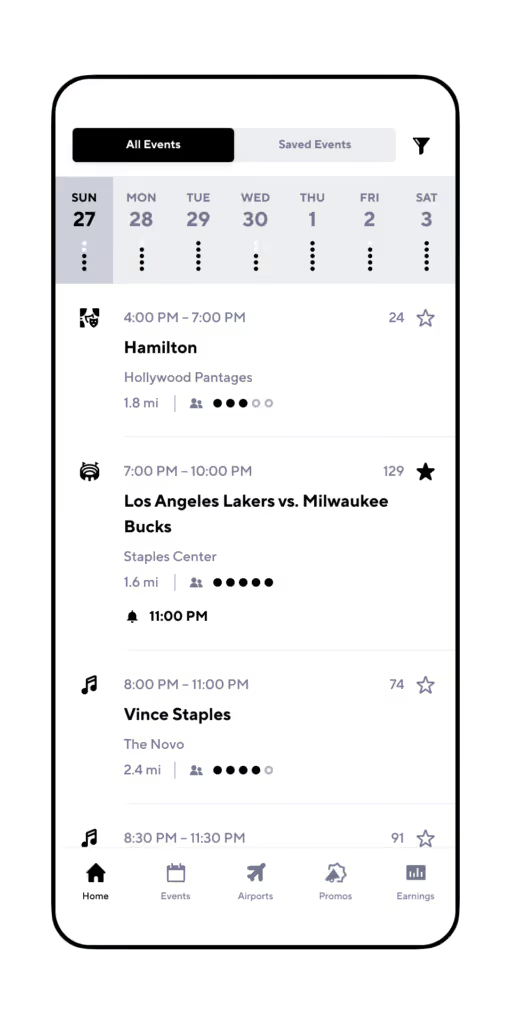
While effortlessly tracking ALL rideshare miles to maximize their tax deduction

Drivers can even compare their earnings per hour, mile, and trip across multiple platforms so you know what services are best for you

What? You don’t have Gridwise yet?
Now that we’ve shared our favorite apps for drivers, what are some of yours? If you know of one or two that make your lives easier, it’s only fair to share!
Is Rideshare Safe for Drivers
Whose Safety Is It, Anyway?
We hear a lot about Uber and Lyft rider safety in the media, but what about driver safety? Background checks and intermittent verification of IDs improve the likelihood that passengers are safe... but what about drivers?
Thus far, neither Uber nor Lyft requires a background check for passengers. Depending on which expert you ask, it may or may not be legal to investigate customers, and it certainly isn’t very practical.
Riders want to download the app and use it right away. There is no time for them to be checked to prove that they aren’t, say, a serial assault felon, a sexual predator, or… an axe murderer. Plus, the companies don’t want to pay for those millions of riders to have background checks.
The fact is, most passengers are perfectly nice, and are kind and decent people. They want a safe, comfortable, and uneventful ride to get them where they need to be, and that’s all.
Most rideshare drivers are good human beings too—and safer than many people riders are likely to meet. They’ve been background-checked, and their cars and safety records must undergo rigorous inspections to qualify to work for the rideshare company.
Of course there are inevitably a few bad apples, such as the drivers who fly off the handle when placed under stress. And, from the driver’s point of view, there is always a chance that someone who is mentally unstable, or even criminal, will get in the car.
Just as passengers have the right to know they are safe with their drivers, drivers have every right to ask just how safe working in rideshare is for them.
Some Facts About Driver Safety
If you only paid attention to media reports, you’d think the rideshare driver community was a collection of social deviants. You might also conclude that rideshare companies don’t care enough about safety, or protecting riders and drivers.
As it turns out, neither of these assumptions is true. In December 2019 Uber published its US Safety Report, which is an extensive research study covering driver and rider safety. The study examined data from 2017 and 2018—a timeframe when an average of 3.1 million trips took place each day in the United States. There were many interesting conclusions, with some that stand out more than others. Like this one:
“...our data shows that drivers report assaults at roughly the same rate as riders across the 5 most serious categories of sexual assault. Drivers are victims, too.”
If you need visual evidence of the bad things that can happen to drivers, you can watch the videos below to see a driver get attacked for not dodging traffic in Queens, New York.
If you conduct your own online video search, you’re sure to find other instances of drivers getting threatened, injured, and worse.
But wait! Before you run off to cancel your driver account out of sheer terror, you should know about an essential finding of the Uber study, as the report states: “The vast majority (99.9%) of Uber trips end without any safety-related issue at all.” Of the more than 3 million trips studied for 2017 and 2018, for example:
• 1.4 percent of trips had a support request of any kind, most frequently for issues such as lost items, refunds, or route feedback;
• 0.1 percent of trips had a support request for a safety-related concern, the majority of which were about minor safety issues such as complaints of harsh braking or a verbal argument;
• 0.0003 percent of trips had a report of a critical safety incident, which are the incidents referenced in the report.
How Do Companies Protect Drivers?
All companies are concerned about the people who work for them, even if the employees are contractors. The main reason (despite their efforts to make us believe they “love” us) is their own legal liability.
Could Uber or Lyft be sued if you are attacked by a rider? Probably. Would you win the lawsuit? Assuming you have the financial means to even start a lawsuit, you might win, but it isn’t a done deal. Because drivers are contract employees, there surely won’t be any workers’ compensation, or the opportunity to organize and push for safer working conditions.
Protective Practices
In some cases, rideshare companies protect drivers with insurance policies. For example, if you were outside your car, helping a rider with luggage, and got struck by another vehicle, your medical costs would be covered by the company’s insurance.
However, when the harm done to a driver is not accidental (such as harm caused by a rider committing a crime), the resolution is not so crystal-clear.
To protect themselves a bit better, rideshare companies have taken measures to increase the level of driver safety. Here are some of them.
In-app Assistance
Calling 911
Always call 911 for a true emergency. Along with making the call with your phone, another option is using your driver app.
Uber has an almost-instant way to contact emergency rideshare services. From any ride-related screen, the driver can tap on the blue shield icon in the lower left hand corner, and then call 911. A similar screen is available to both drivers and riders in the Lyft app.
Following Your Ride
Uber’s Follow My Ride feature allows family members or other loved ones to monitor your movements, stops, and, of course, your location.
You can set up the app to contact anyone you designate to “watch over” you. When you activate Follow My Ride, this person will be able to monitor your trip, and know exactly where you are at all times.
It’s always best to leave emergency situations to the professionals, but it can’t hurt to have someone who knows and loves you on call. This person can advocate for you, and make sure you get the right kind of help in a timely manner.
You control when Follow My Ride kicks in, so you won’t be under constant surveillance. There’s no need to let your loved ones know how many times you stopped for a milkshake—but you’ll be glad to know that when you tap the button, they can be alerted to watch your every move.
Built-In Monitoring Features
Thanks to GPS, and those clever coders who care enough to consider driver safety, there are ways for the rideshare company to detect when you might be in trouble.
Uber already has the Ride Check feature up and running. You might get a ping from it when your rider is taking an extra-long time to buy lottery tickets on the way home, or if you have a collision. If you don’t answer the ping by indicating that you’re safe, Uber will offer tools to help get you out of a serious or threatening situation.
According to representatives from Lyft, the company will roll out a similar app feature in the near future.
General Safety Guidelines
Abiding by Community Standards
Uber and Lyft stress that the purpose of their “community standards” is to ensure driver safety, as well as the safety of riders.
Physical contact, sexual assault or misconduct, discrimination, threatening language or actions, and unwanted contact after the ride, are all violations of community standards. They are also grounds for being deactivated from rideshare platforms. If you feel that you are the target of any of these acts, report it to your rideshare company.
If you are physically assaulted or threatened, you should immediately call 911. Once the authorities have processed the incident, you should also contact the rideshare company to report it. Get your side of the story on the record, right away, before the rider presents an account that is very different from yours.
Driver General Safety Practices: Do’s ... and Don’ts
There are many ways you can protect yourself as a driver, but carrying a weapon is NOT one of them. Unless you are an authorized person, such as working for the rideshare company as a security officer, you are not allowed to carry any firearm with you.
This prohibition may extend to items such as stun guns, tasers, and knives. Check with Lyft or Uber before you bring anything that might be classified as a weapon into your car while you’re on duty.
If a rider spots a weapon in your car, you could be reported, and you will be deactivated. This goes in both directions, of course. If you notice that a rider is carrying a weapon, you have every right to refuse the ride, and to report the person to the rideshare company.
Uber does have one exception to its firearms policy. If a firearm is legal under state regulations, and it is unloaded, contained in a hard case, and in the trunk of the car, Uber will allow the firearm to be carried while a driver is online.
Now, here are some tips that can help keep you safe. Some are suggested by the rideshare companies, and all really come from a reasonable application of common sense.
- Wait for riders to identify you by name before you let them in your car. This way, you know they are the person authorized (and identified) on the account.
- Don’t accept riders who are not the person on the account. For example, if the account says you’re going to pick up Marvin, and the rider announces that she’s his girlfriend, you can, and probably should, refuse the ride.
- Keep the conversation casual and consensual. Learn how to monitor how much a rider wants to talk, and follow the person’s lead. Even if you wind up having a lovely chat, don’t give out any information about yourself that could lead to unwanted contact after the ride.
- Never allow a minor (a person under the age of 18) to ride in your car without an accompanying adult. This is in violation of company policy for both Uber and Lyft, and your insurance will not cover this rider in the event of an accident.
- Stand just outside your vehicle if the parent of a minor child should leave them there, even momentarily. This helps you avoid any appearance of being less than a safe and watchful adult.
- Don’t make stops unless they are put into the app by the rider. You want the app to continue tracking your position, and how long you stay in one spot.
- Don’t be scared. Your own fear can be your biggest enemy in an unsafe situation. If you don’t already have training, consider taking a self-defense course. While you hope you never have to engage in actual hand-to-hand combat, you’ll learn how to carry yourself and be aware of your surroundings. These are the things that make you feel safe and be safe, everywhere, especially when you’re driving for Uber or Lyft.
Both rideshare companies provide a lot of features that ensure your safety as a driver. In addition to in-app safety resources, there is a lot of safety information that every driver should know before going out on the road.
Do Rideshare Companies Do Enough?
Despite the in-app assistance and general education the rideshare companies offer to their drivers, being a rideshare driver can be risky. Friends, relatives, and even riders ask questions like, “Aren’t you afraid to let strangers ride with you in your car?”
Ideally, drivers would be more certain about the backgrounds of the people they pick up as passengers. A quick criminal background check could go a long way to prevent horrendous incidents. The rider might cover it as part of the agreement to use the service, or the rideshare company could share the cost.
One solution might be a classification system for riders, just as there are for drivers. Of course, the mutual rating system is already in place—although the stars don’t really offer a lot of assurance. In the flurry and potential rush of accepting a ride, a customer would rarely have a rating that was consistently low enough for a driver to notice.
If rideshare companies created a distinctive classification for riders who have undergone a background check, this would provide some level of protection. Yet even with a system like this, there would be no guarantee that someone who passed a background check last week won’t turn into a raging maniac after a bout of raucous partying this Saturday night.
The companies’ reliance on “community guidelines” is overly optimistic. People may not read the guidelines thoroughly, and even if they do, they will likely forget much of what they learned when faced with difficult situations. From the over-caffeinated office worker who needs to vent to an impaired passenger looking for the next bar, rideshare drivers are faced with some tough customers, and are often at risk because of it.
The best way to stay safe while driving for a rideshare company is to use your own common sense, and make safety your top priority. Use the tools the companies provide, and learn how to protect yourself.
Bending the rules or going against your instincts can be far more costly than the few bucks you might make by taking rides that put you in uncomfortable or unsafe situations. While you want to please your customers and support your rideshare company, the most important thing to keep in mind is to always protect yourself.

¡UBER ahora permite a los conductores establecer sus propias tarifas! Podcast Gridwise #15
¡Algunos conductores en California ahora pueden elegir sus propias tarifas! Escucha el Podcast de Gridwise en tu plataforma de podcasting favorita y entérate de lo que este nuevo desarrollo podría significar para los conductores.
Youtube
Spotify
Otras Redes
Rideshare drivers: Stop giving your passengers free water and treats (do this instead)
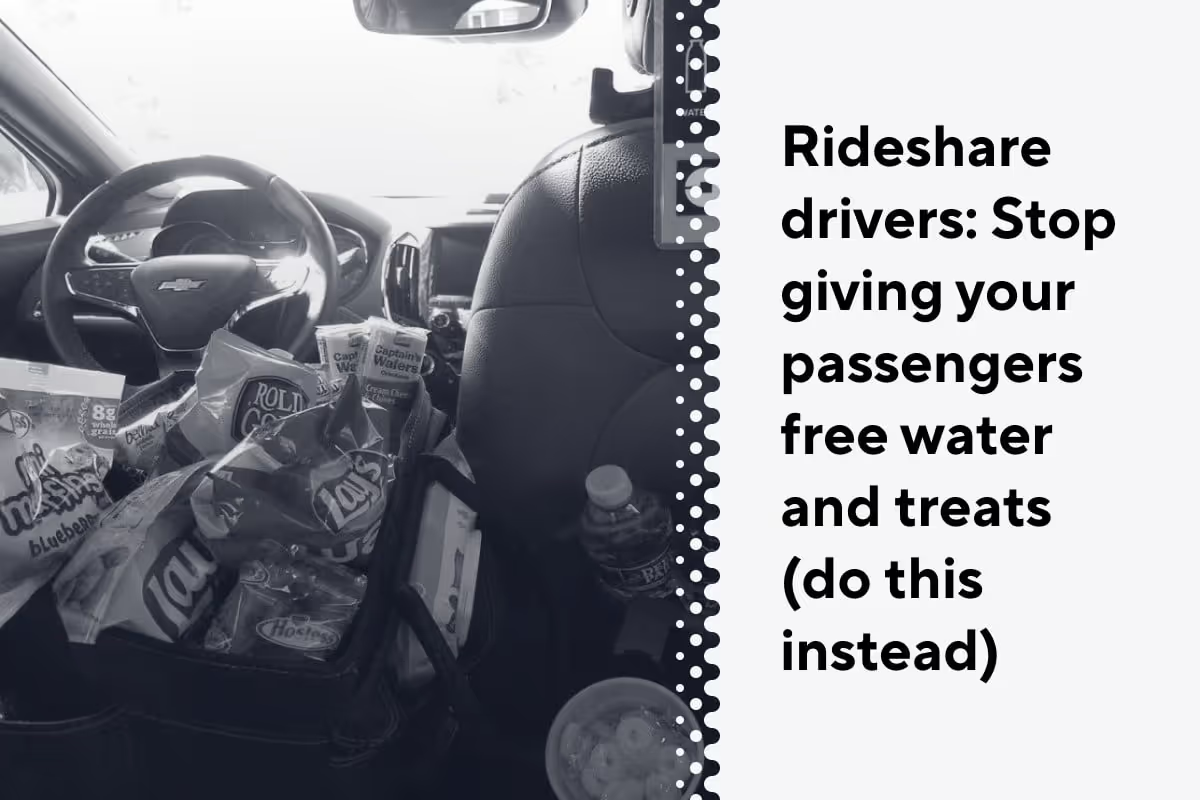
Every 3 or 4 Uber rides I take I find a driver with his car decked out like this:
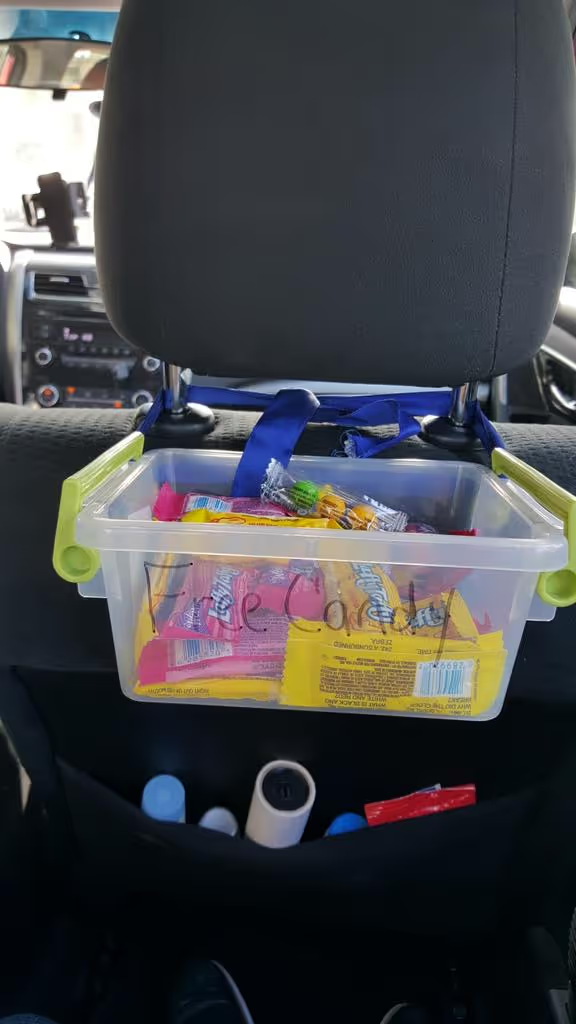
I’ve seen a few that looked like this:
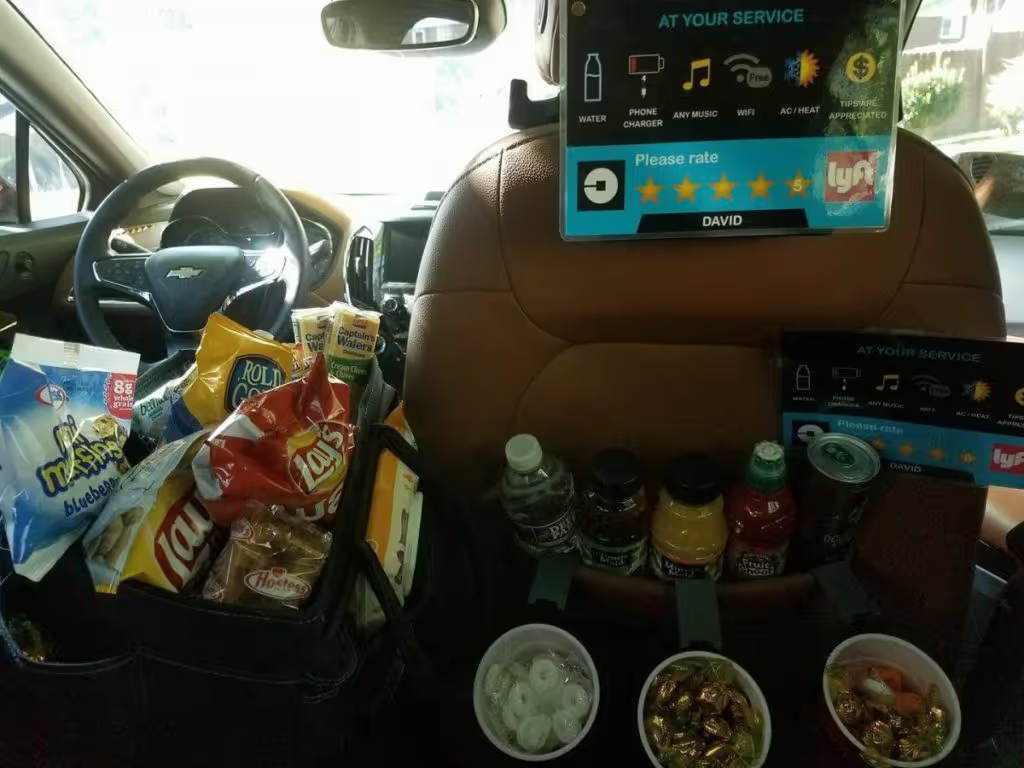
And this guy:

I get it. These drivers are just trying to make sure they have as high of a rating as possible and maybe even pull in some tips.
I understand their thought process, but for just a minute put yourselves in the shoes of a passenger and think about how much you would really care about these extra treats:
It’s Tuesday morning and you’ve already had one of those days. You woke up nearly 30-minutes late because your phone charger decided it wasn’t going to work that night and that your phone was better off dead.
So you end up rushing to get ready for an 8:00 am meeting that your boss sprung on you at the last minute, but your oh so reliable roommate forgot to pick up the dry cleaning like he promised.
Again.
So looks like you’ll be stuck trotting around the office all day in pants you haven’t washed in three wears and your dingiest white shirt.
Now, would you rather a have driver that:
- Arrives in a car equipped with no extra phone chargers and somehow finds every traffic jam in the city making you even later, and putting the final nail in your career coffin… but they offer you water and a mint!
OR
- Arrives in a clean car, offers you a charger for your phone and finds the best route to get you where you are going quickly… and no treats.
Which one are you tipping?
Still not convinced? Well, we asked 1,000 rideshare passengers if they ever take water or snacks from drivers when offered and almost 75% of them said no.
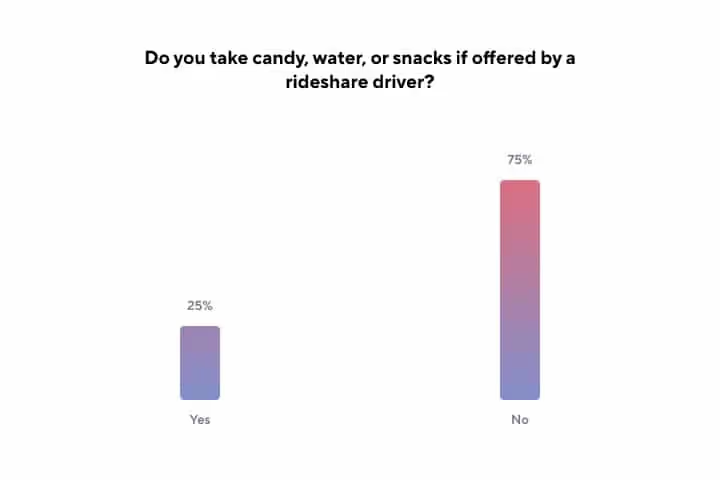
Tips and 5 Star ratings come from customer interactions
To be clear, we're not saying that rideshare drivers should never offer their passengers treats, but you shouldn't be paying for those treats out of your own pocket (more on that later) and you shouldn't expect treats to be the only driver behind your tips and 5-star ratings.
The thing to remember is that people give tips because of the driver and their vehicle, not just because of the treats that they give you.
This simply means that you need to be sure to have positive interactions with your passengers.
You can start with the first interaction. Instead of just asking them if they are the correct passenger, ask them if they are in a rush as well. If they are, see if you can find a safe route to get them to their destination more quickly.
But let's be real for a second. 95% of the time you're not going to be able to make a huge difference in how quickly you drop off a passenger, but passengers will appreciate that you put forth the effort.
Remember that your passenger's first, second, and third goal is to get where they’re going safely and quickly (in that order).
A driver that is familiar with traffic patterns and alternative routes that can help passengers arrive at their destination faster is much more valuable than a bottle of water.
Depending on who’s in your car, let your passengers know about interesting concerts, festivals, parties, or other events that are happening in your city. For tourists, simply letting them know where the must-go places in the city are is invaluable information and creates another positive interaction.
Oh, but do you know how to guarantee a positive interaction with your passengers?
Offer them a phone charger.
People are serious about not letting their phones die.
Nothing is worse than being caught with your battery at 2% when you need a ride or need to call someone, so take advantage of this opportunity to create a positive interaction.
Use Cargo To Give Away Treats (For Free!)
Again, we're not saying that giving away treats to passengers is horrible, you just shouldn't spend YOUR hard-earned money on those treats. Instead, consider using Cargo, which is essentially an in-car vending machine that drivers can use 100% for free.
Drivers can use this link to simply apply to be a driver with Cargo and receive your free Cargo box. In no time you'll receive your free Cargo box that you can install in your vehicle and passengers can purchase items or receive free items through your box.
Best of all, you NEVER have to worry about inventory. Cargo will handle refilling inventory at absolutely no charge to you.
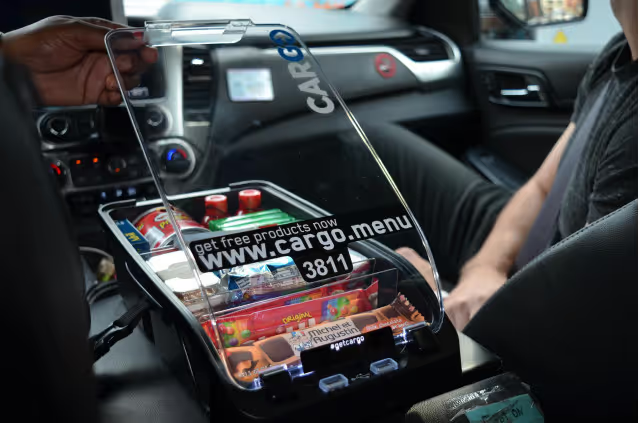
By focusing on positive interactions while letting Cargo take care of the candy and treats, you'll be better positioned to maximize your tip income and ratings!

Presentando un Nuevo Podcast para Conductores de Rideshare: ¡Gridwise Rideshare Weekly!
Estamos EMOCIONADOS de anunciar que Gridwise acaba de lanzar un nuevo podcast semanal donde Gridwise J y yo (Brandon Sellers) estaremos hablando de todo sobre rideshare, desde noticias hasta análisis de datos y estrategias de conducción.
Vamos a intentar mantener cada episodio alrededor de 20 a 25 minutos y recibirás un nuevo episodio cada jueves.
Los primeros dos episodios están listos abajo para que los conductores escuchen:
Gridwise rideshare weekly #2: EL podcast para conductores de Uber y Lyft
Gridwise rideshare weekly #1: EL podcast para conductores de Uber y Lyft
Si te gusta el podcast, ¡por favor ayúdanos!
Si disfrutas estas conversaciones sinceras, apóyanos para seguir adelante:
- Comparte el podcast con tus amigos
- Haznos saber qué temas deberíamos cubrir a continuación
- Haznos saber A QUIÉN deberíamos entrevistar a continuación
- Suscríbete en YouTube
¡Dale una escucha a nuestro podcast y cuéntanos qué piensas en los comentarios!
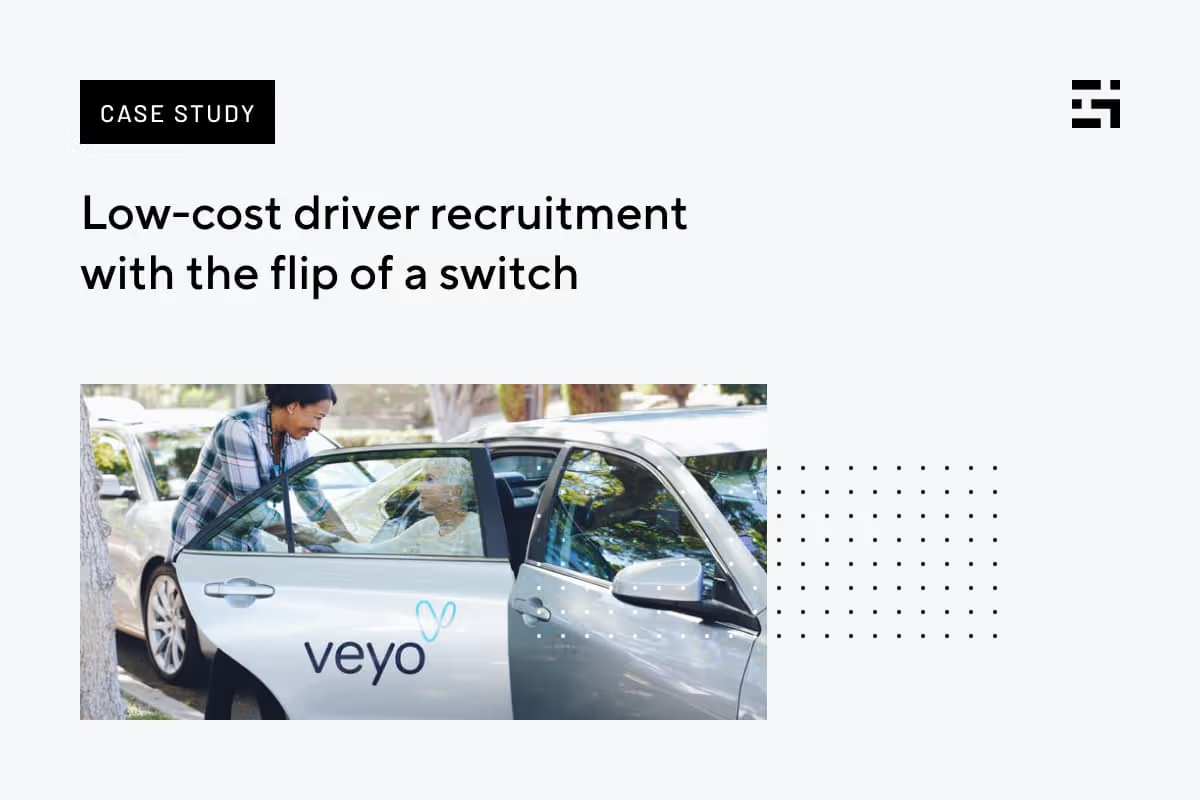
Caso de Estudio: Reclutamiento de conductores de bajo costo con solo cambiar un interruptor
¿Quién es Veyo?
Veyo está revolucionando la industria de transporte no urgente con un enfoque tecnológico en el transporte de pacientes que aprovecha a los conductores de rideshare junto con las opciones de transporte médico tradicional. Construida para la industria de la salud y diseñada para las amplias necesidades de las membresías de planes de salud, su solución integral ofrece calidad de servicio, transparencia y eficiencias incomparables para todas las regiones y todos los modos.
Su plataforma presenta una oportunidad única para los conductores de rideshare en los mercados de Phoenix y el Condado de Orange para maximizar sus ganancias durante las horas diurnas que de otro modo serían tranquilas.
Problema
Es bastante simple, necesitábamos una forma eficiente de ayudar a escalar la adquisición de conductores. - Sarah Kuntsal, Directora de Marketing en Veyo
El enfoque impulsado por tecnología de Veyo para el transporte médico se ha adoptado rápidamente y el crecimiento se ha disparado, por lo que el equipo de crecimiento de conductores de Veyo busca constantemente canales eficientes de adquisición de conductores. “La adquisición de conductores no es barata ni fácil”, dice Sarah Kuntsal. “Y dado que completamos más de 8,000 viajes al día en un solo mercado, necesitamos la adquisición de conductores más que nunca”.
Así que cuando Sarah empezó a hablar con el equipo de Gridwise, una plataforma hecha a medida para la adquisición de conductores, se entusiasmó con las posibilidades.
Estrategia
Cuando trabajas con Gridwise, no solo tienes acceso a 60,000 conductores. Estás contratando a un equipo de mercadólogos y diseñadores que son los líderes mundiales en involucrar a conductores de rideshare dedicados a garantizar el éxito de tu campaña.
Así que antes de comenzar a trabajar con Gridwise, Sarah y el equipo de Veyo trabajaron con el equipo de Gestión de Cuentas de Gridwise para desarrollar una campaña de marketing multicanal diseñada para involucrar y nutrir a los conductores de rideshare activos alrededor de la propuesta de valor única de Veyo.
Los equipos de Gridwise y Veyo acordaron que una campaña que incluyera anuncios de banner y tarjeta en la aplicación, una publicación de blog personalizada, un correo electrónico personalizado para todos los conductores de Gridwise y anuncios de correo electrónico estáticos daría a Veyo el mayor volumen y el menor costo de adquisición para sus campañas.
Los expertos en marketing y diseño de Gridwise luego ayudaron a Veyo a crear, implementar y realizar rápidamente pruebas A/B de varios diseños de anuncios que produjeron resultados casi de inmediato.
Resultados
Más de 120 registros de conductores a un líder de la industria de $15 por conductor en menos de 2 meses
En un mundo donde las grandes empresas de redes de transporte pagan hasta $300-$400 para adquirir un nuevo conductor, Veyo inmediatamente vio costos de adquisición a una fracción de eso.
En menos de dos meses, Veyo estaba registrando conductores de alta calidad por solo $15 por conductor.
Su campaña incluyó:
- Anuncios de tarjeta en línea
- Anuncios de Banner
- Promociones en la Aplicación
- Promociones de informes de ganancias
- Publicación de Blog
“Nos encanta ver los bajos costos de adquisición, pero también fue genial trabajar con Clay y el equipo de Gridwise”, dice Sarah Kuntsal, Directora de Marketing en Veyo. “Realmente entienden la industria del rideshare, por lo que pudieron ayudarnos a crear diseños y mensajes que resonaron y generaron resultados”.

Veyo: Why Rideshare drivers are switching to Veyo and avoiding late-night trips
These days, rideshare drivers have options.
We no longer need to choose between just Uber and Lyft as there are companies like Veyo that give drivers the option to maximize their day time earnings by driving Medicaid and Medicare patients.
In today’s blog post, we’re going to take a deeper dive into Veyo to understand the benefits of this TNC and how it differs from the rideshare giants.
Let’s dig in.
What is Veyo all about and how are they different?
Veyo partners with rideshare drivers to provide Non-Emergency Medical Transportation (NEMT) for Medicaid and Medicare members in the Phoenix, Tucson, Orange County, and Connecticut markets.
They’ve been helping people get to and from their health appointments for the last three and a half years and their rideshare drivers, which they call Independent Driver-Providers or IDPs, have completed over seven million trips in those three and a half years.
Who would you be driving and where?
Veyo passengers are Medicaid and Medicare members who are going to a variety of appointments, from dialysis to annual check-ups. Your passengers may have a wheelchair or special piece of equipment like an oxygen tank, but they’ll be able to walk and enter your vehicle, they just might need a bit of help from you to get in and out of the vehicle.
What are the Requirements to Drive for Veyo?
Because Veyo drivers are transporting Medicaid and Medicare members, they have a few more requirements for onboarding, including a drug screen and a background check and also require Veyo drivers to be CPR and First Aid certified - which is offered for free in the Veyo offices.
Where is Veyo available?
Currently, Veyo is looking for drivers in Orange County, California; Connecticut; and Phoenix and Tucson, Arizona, and they’reis expanding rapidly. So if you’re not in one of those markets, it would be a good idea to sign up so you are on the waiting list.
How much commission does Veyo take?
While it takes a little longer to become a Veyo driver, they do offer a higher pay rate than most of theirour competitors AND they don’t take any fees out of the rates, which means you keep everything you make.
Veyo also offers quarterly driver events with free food, giveaways, and a chance to share your feedback with the team.
What are drivers saying about Veyo?
The Veyo team recently sat down with a few of their drivers in Phoenix to learn a little bit more about their experiences driving with Veyo.
Most of the drivers had previously worked for other ridesharing companies, and several still worked for them when they weren’t driving with Veyo.
Out of the ten drivers, they’d been driving with Veyo for an average of eight months, and they drive with Veyo around 30 hours a week.
What’s your favorite thing about driving with Veyo?
“Better pay than the other options and I believe we really help the people who need it. It’s always nice to feel like you’ve really helped someone at the end of the day. I love to talk to people, so I enjoy hearing all the stories from the people I drive. They’re usually really happy to be getting a ride and they make you feel great.”
What hours do you usually drive with Veyo?
“I like to wake up early so I drive in the mornings starting at 5:30. It’s a good job to do as your own boss because I can start and stop whenever I want. I’ve already recommended six people to work with Veyo and they’re all driving too. I got a referral reward from all of them, which is great!”
What about the CPR training? It sounds difficult?
“I was a little worried about having to do the CPR training, but it was actually great. I didn’t have to pay for the training and it was pretty easy to do. I haven’t had to use it yet, but I also have three grandkids, so I’m glad I have it!”
How is it different than your other rideshare options?
“When I take Veyo trips, I’m taking people to their doctor appointments or a hospital. It is a different type of passenger that I get on other apps, but I’ve found most of them to be really friendly. The passengers I transport add value to my life and it’s nice to know I’m helping them.”
Would you recommend driving with Veyo?
“Definitely! I enjoy helping people and I feel like this service is very important to these people. I’ve told several friends about Veyo and they’re going to start driving too.”
Interested in driving for Veyo?
Interested in driving for Veyo? Learn more and sign up for Veyo with this link!
Trabaje de forma más inteligente. Gane más.
Ya sea que conduzcas, entregues o recojas turnos, Gridwise te ayuda a hacer un seguimiento de las ganancias, el kilometraje y el rendimiento para que puedas mantener el control de tu trabajo. Descarga la aplicación y toma las riendas hoy mismo.
