Blog de Gridwise
¡Lee el blog de Gridwise para obtener consejos y sugerencias sobre cómo ganar más dinero mientras conduces para Lyft, Uber, DoorDash, GrubHub y más!

The Gridwise Job Board: Find Your Ideal Job or Gig Work
Gridwise is an essential assistant app created by gig workers for gig workers. Our mission is to support those engaged in gig work in every way possible. We understand how challenging it can be to deal with income instability, a lack of benefits, and job insecurity that often comes with gig work. The Gridwise app tracks and organizes earnings and expenses, and offers a wide array of discounts, deals, and services that make the lives of independent contractors easier and more rewarding.
We firmly believe it’s possible to make a viable living and create a gig experience that offers flexible hours, variety, and excitement. With issues such as consistent earnings and job security in mind, Gridwise is proud to offer a centralized platform that shows you how to find gig work and secure reliable opportunities. We’re proud to introduce the Gridwise Job Board.
[elementor-template id="20891"]
The Gridwise Job Board: Key features
Because Gridwise is dedicated to serving the gig worker community, we’ve filled the Gridwise Job Board with useful features that won’t waste your precious time.
- Comprehensive listings. Find part-time, full-time, temporary, and per-task work. Drive or deliver with your vehicle, utilize an employer’s vehicle, or even find non-driving gig work.
- User-friendly interface. Find the jobs that are right for you with a tap of your screen.
- Verified opportunities. We vet the jobs before they are listed to ensure you’re getting high-quality job postings.
How to get more gig work, seasonal, part-time or full-time jobs with the Gridwise Job Board
Looking specifically for “gig work apps” or “gig jobs near me?” You’re in luck. Our filters and search functions send you directly to the listings you seek.
Here’s how it works.
- Access the Job Board via the Gridwise website.
- Search for jobs by type, location, and more.
- Select the job that interests you, and read all about it.
- Scroll through the description, and if it appeals to you, click “Apply for job.”
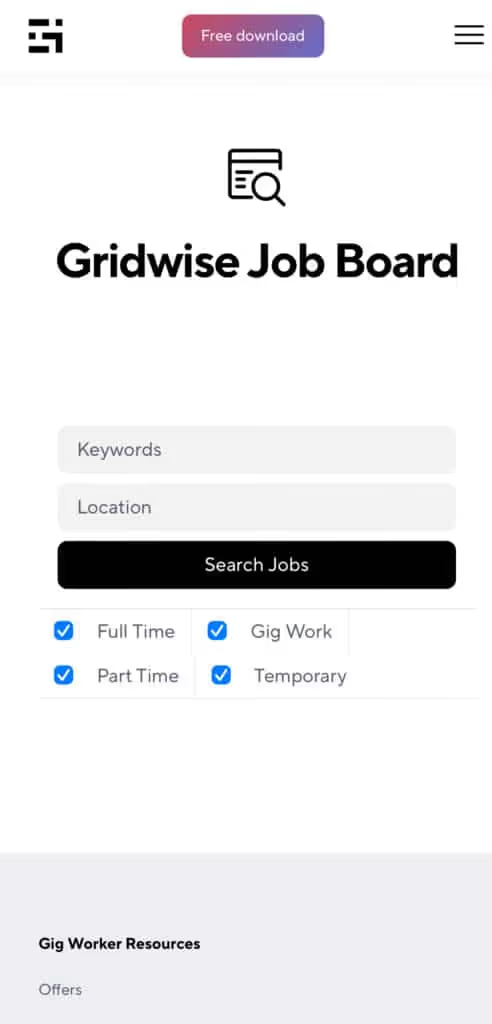
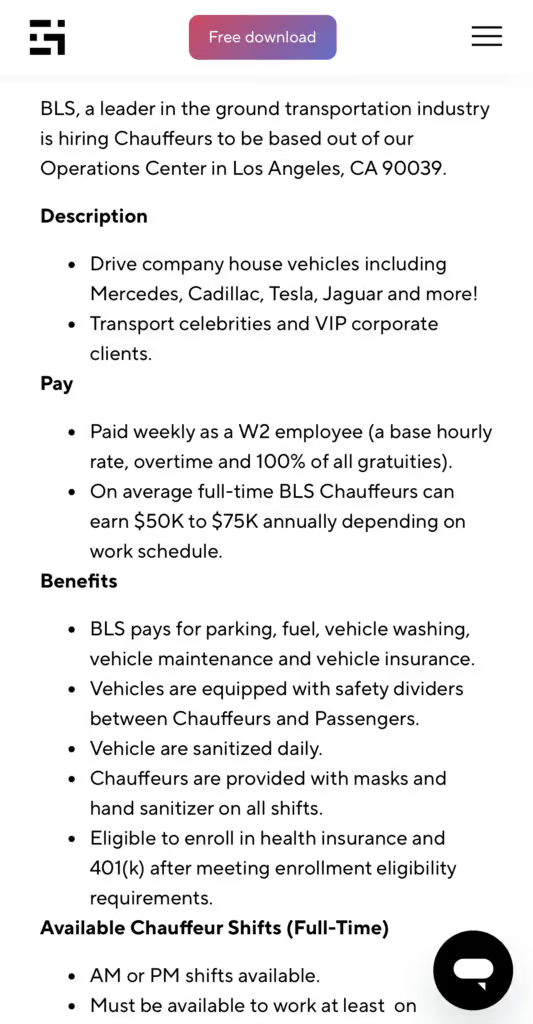
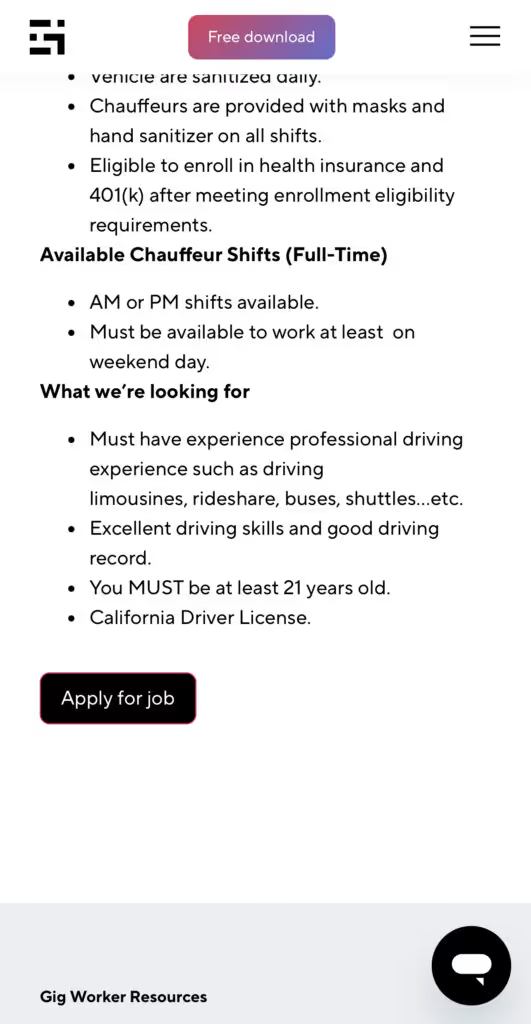
Many types of jobs are available. Adjust the search filter to see the full variety of opportunities that will let you cash in. Deliver food, set up catering, do rideshare driving, get paid for doing package delivery, and much more. You’ll find short-term gigs, long-term contracts, and part-time positions.
Perks of the Gridwise Job Board for gig workers
Gig workers who know how to make extra money will appreciate how the Gridwise Job Board lets you multiply your chances of bringing in big earnings. Here’s how:
- Increased stability. Use the Gridwise Job Board to find part-time or permanent jobs in addition to the part-time gigs you already have. Always keep a steady stream of earning opportunities flowing toward you.
- Flexibility and autonomy. Choose jobs that fit your schedule, work around other jobs and family duties, and still leave room for some fun in your life. Discover side hustles to supplement your full-time job, permanently or just for the season.
- Skill development. Find part-time work that lets you use a skill you already have, or try your hand at something new. It’s a smart way to develop a portfolio to showcase what you can do, or even to find permanent employment.
Get Gridwise and stay up to date on the Gridwise Job Board
Gig workers need plenty of information and assistance, and Gridwise is here to give it to you. Download the app and get essential features such as
- seamless earnings tracking
- mileage tracking
- expense recording, including notes
- low-cost and no-cost insurance benefits
- access to affordable medical, dental, vision, mental health, and alternative care
- professional services including legal and financial help
- deals and discounts
- weather, events, and traffic reports
- inside information on where and when to drive
[elementor-template id="20936"]
More to know about gig work:

5 Best Mileage Trackers For Gig Drivers
Many drivers ask, “Do I really need a mileage tracking app?” The answer is simple: only if you want to have an accurate count of all the miles you can legally deduct from your taxable income! You might think your rideshare or delivery driving app has got you covered. After all, they do quite a good job of logging the miles you drive while you’re on a trip or delivery. But, if you want to have the best app to track mileage for Uber, Lyft, Doordash, Instacart, or the other apps you may use, you need more. Why is that?
Without a separate tracker, you’re missing the miles you drive in between pings. Did you realize that all the miles you drive, from the moment you begin your shift until it’s over (as long as you don’t drive several miles on a break to hang with your friends), are tax deductible! That means you need something besides your driving app to keep an accurate count of your travels. Read this Gridwise post to see how important it is to keep track of every deductible mile.
You won’t be surprised to hear that there’s an app for tracking miles. In fact, there are several of them. Here, we’re going to tell you about five top mileage tracking apps, and help you figure out which one is best for you.
Before we get to the list and identify the best mileage tracker app, let’s clarify what exactly a mileage tracking app is. According to G2.com’s technology glossary, mileage tracking is done for the purpose of keeping a log of mileage that is either reimbursable or tax deductible.
And yes, of course you can track your miles simply by taking readings on your odometer. But are you really prepared to account for how many miles you drove for personal reasons and subtract them from the total to get your business mileage? Even if you can remember all that and do the arithmetic, if you want an accurate reading of the miles you drive for business, and can therefore deduct, a mileage tracking app will save you a lot of trouble and prevent you from making costly errors.
Plus, as a gig driver, you have specific needs when it comes to a mileage tracker. Ideally, you’d be able to handle mileage tracking and several other functions all in one app. It can be maddening enough to deal with driving apps, particularly if you’re an avid multi-apper. You would want your mileage tracker app to help you keep account of other aspects of your business, including income, expenses, and inside information about the art of gig driving.
Not all mileage apps are equal, to be sure! Let’s look at five of the best apps to track mileage and figure out which is the best app to track mileage with Uber and Lyft, or what mileage tracker app is best for DoorDash.
[elementor-template id="20891"]
1. Zoho Expense
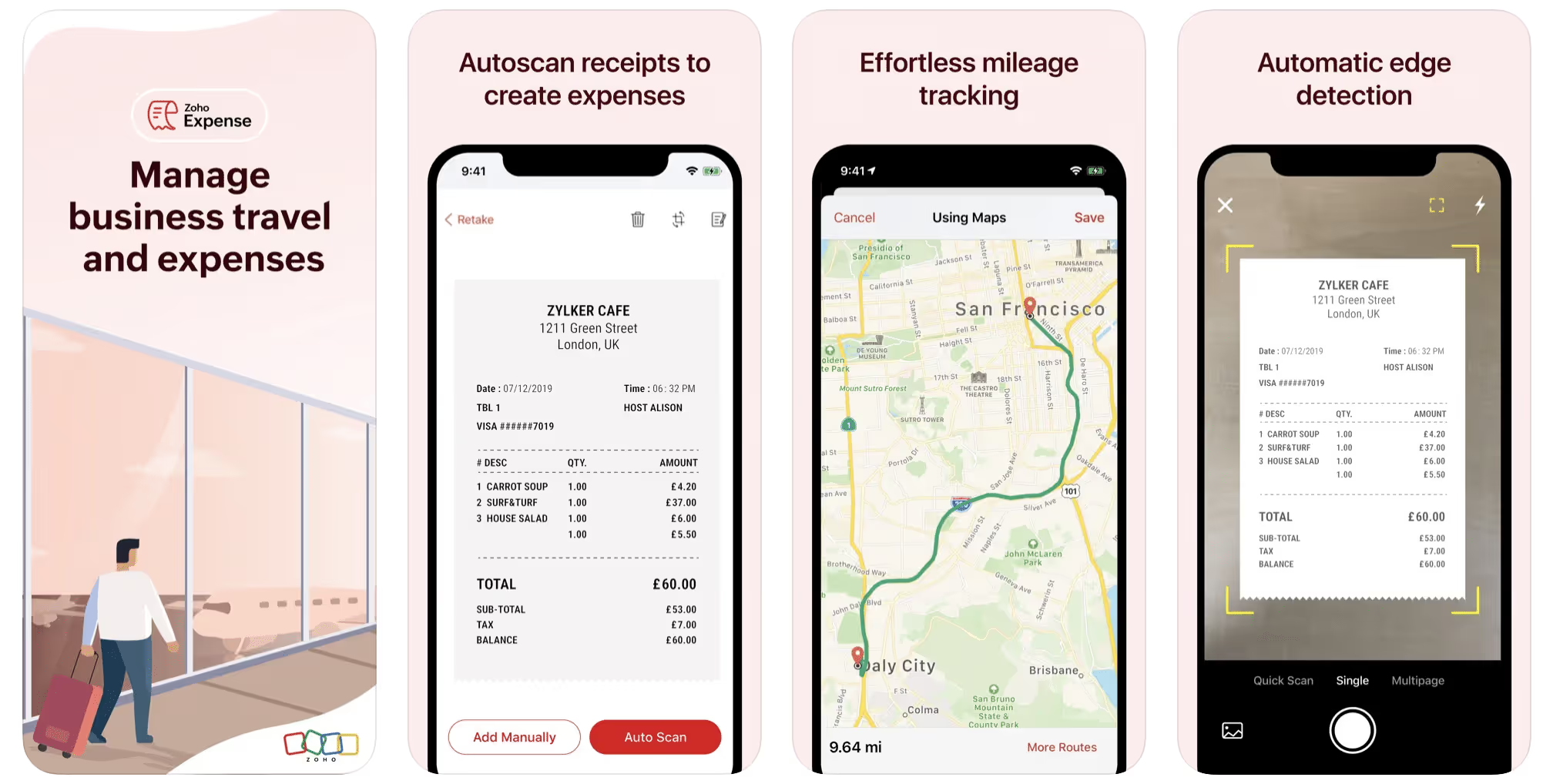
First up is Zoho Expense, which does exactly what its name says. This app is designed to allow companies to give employees a uniform way to create and submit expense reports. It can be used by individuals, including gig drivers, as well.
It includes a mileage tracker, as well as features that let you track other deductible expenses, including the ability to scan and record receipts.
Available on Android and Apple: Yes
Ratings: 4.8 stars on App Store, 4.7 stars on Google Play
Free Version: Yes
Subscription price: $3 per month, billed annually
Created specifically for gig drivers: No
2. Quickbooks Online
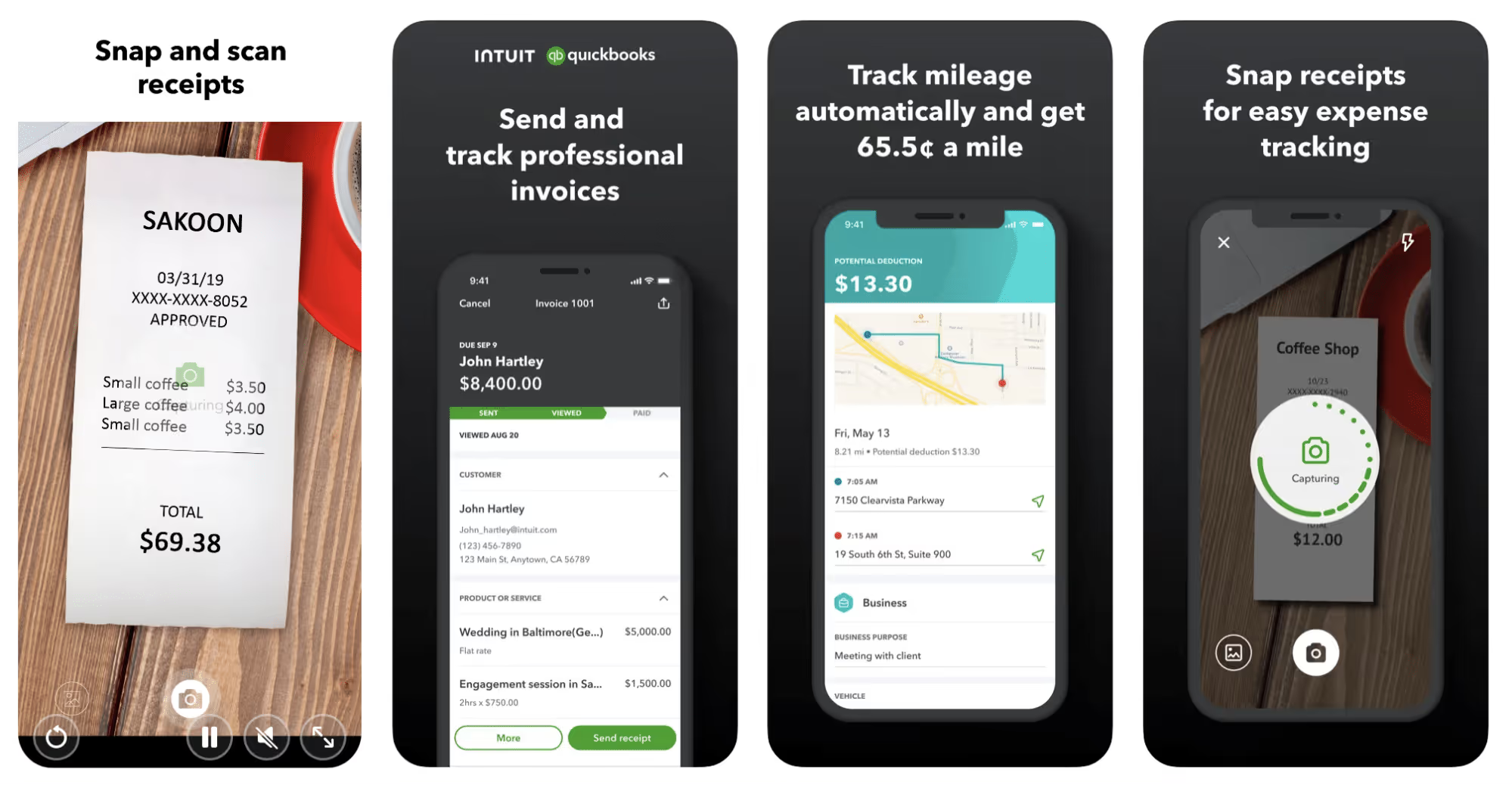
Quickbooks Online is a cloud-based app that allows you to track your mileage, earnings, and expenses. The information you enter can then be used to generate various reports that prepare you for tax time. It also allows you to create graphs that illustrate your cash flow, and includes a receipt scanner so you can instantly record deductible expenses. Quickbooks is popular, highly reliable, and designed mainly to help people keep track of their small businesses.
Available on Android and Apple: Yes
Ratings: 4.7 stars on App Store, 4.4 stars on Google Play
Free version: 30-day free trial
Subscription price: $15 per month for basic version if purchased for 3 months or more
Created specifically for gig drivers: No
Source: quickbooks.intuit.com
3. Shoeboxed
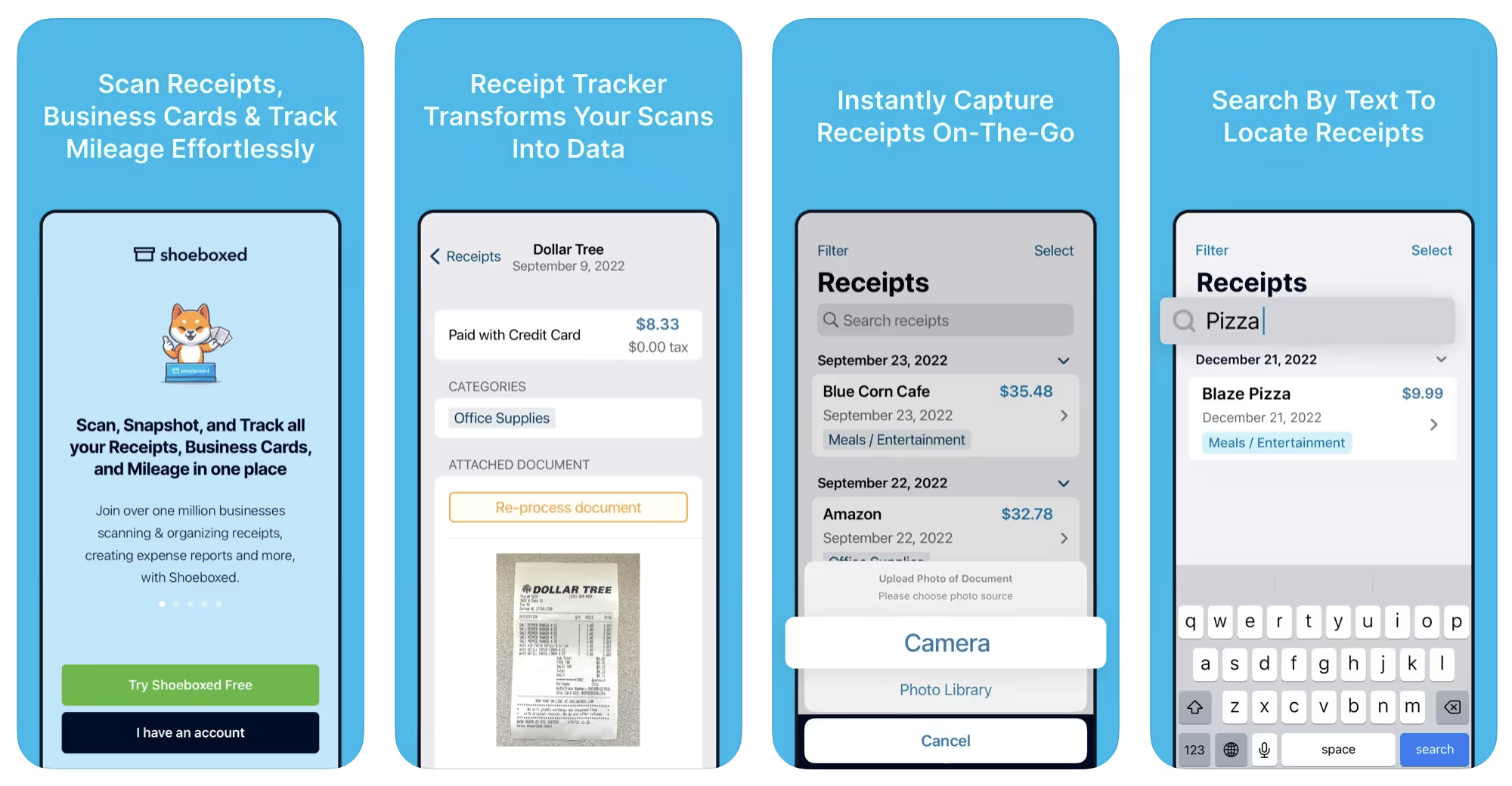
Shoeboxed started in 2007 as a service for scanning paper receipts into digital form. Now the app offers a free mileage tracker and has enabled users to scan receipts directly. It touts itself as the best mileage tracking app for DoorDash, but there are some elements missing that Dashers might like to have. While it provides features that record your expenses and prepare you for tax season, it doesn’t automatically track your earnings. The mileage tracker has a system where you can drop pins along your routes to make the tracking more precise, identifying those legs of a trip that you make for business purposes. The mileage tracker is “free” once you sign up for the basic version.
Available on Android and Apple: Yes
Ratings: 4.5 stars on App Store, 2.3 stars on Google Play
Free version: No
Subscription price: $18 per month for basic version
Created specifically for gig drivers: No
Source: blog.shoeboxed.com
4. Stride
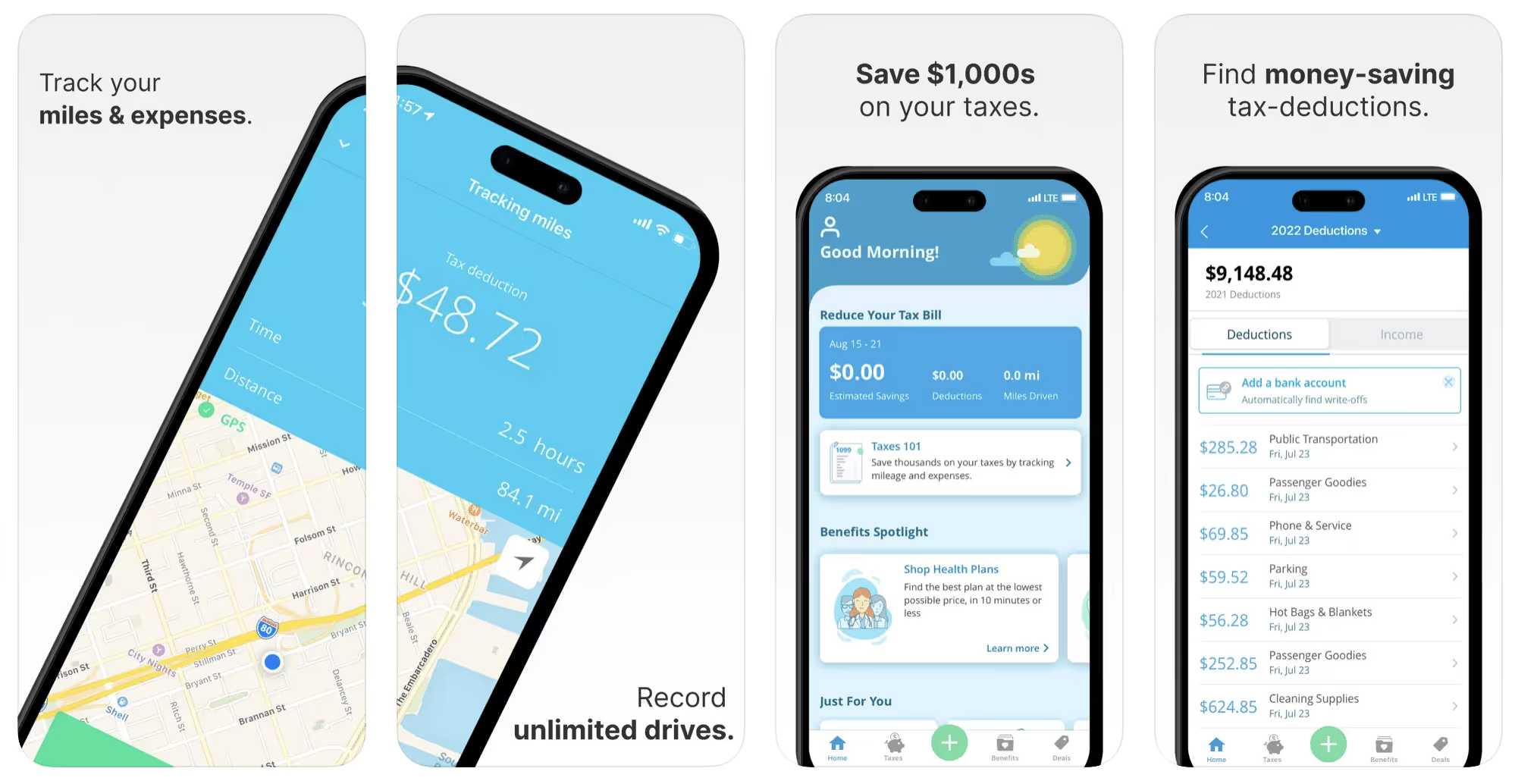
This free mileage tracker does a fair job of keeping track of the distances you rack up while gig driving, but it doesn’t automatically track earnings. It can be a big help, though, in tracking your expenses. You can link Stride to your bank account, and it will automatically scan your expenses to identify items you can potentially deduct. The app is totally free. This could make it the best free mileage tracker app, but there is a small price to pay. The app will persistently push you to consider various insurance plans that they are affiliated with. If you don’t mind that, this is a solid mileage tracker, even if it doesn’t track your earnings.
Available on Android and Apple: Yes
Ratings: 4.8 stars on App Store, 4.6 stars on Google Play
Free version: Yes
Subscription price: None. The app is free.
Created specifically for gig drivers: No
5. Gridwise
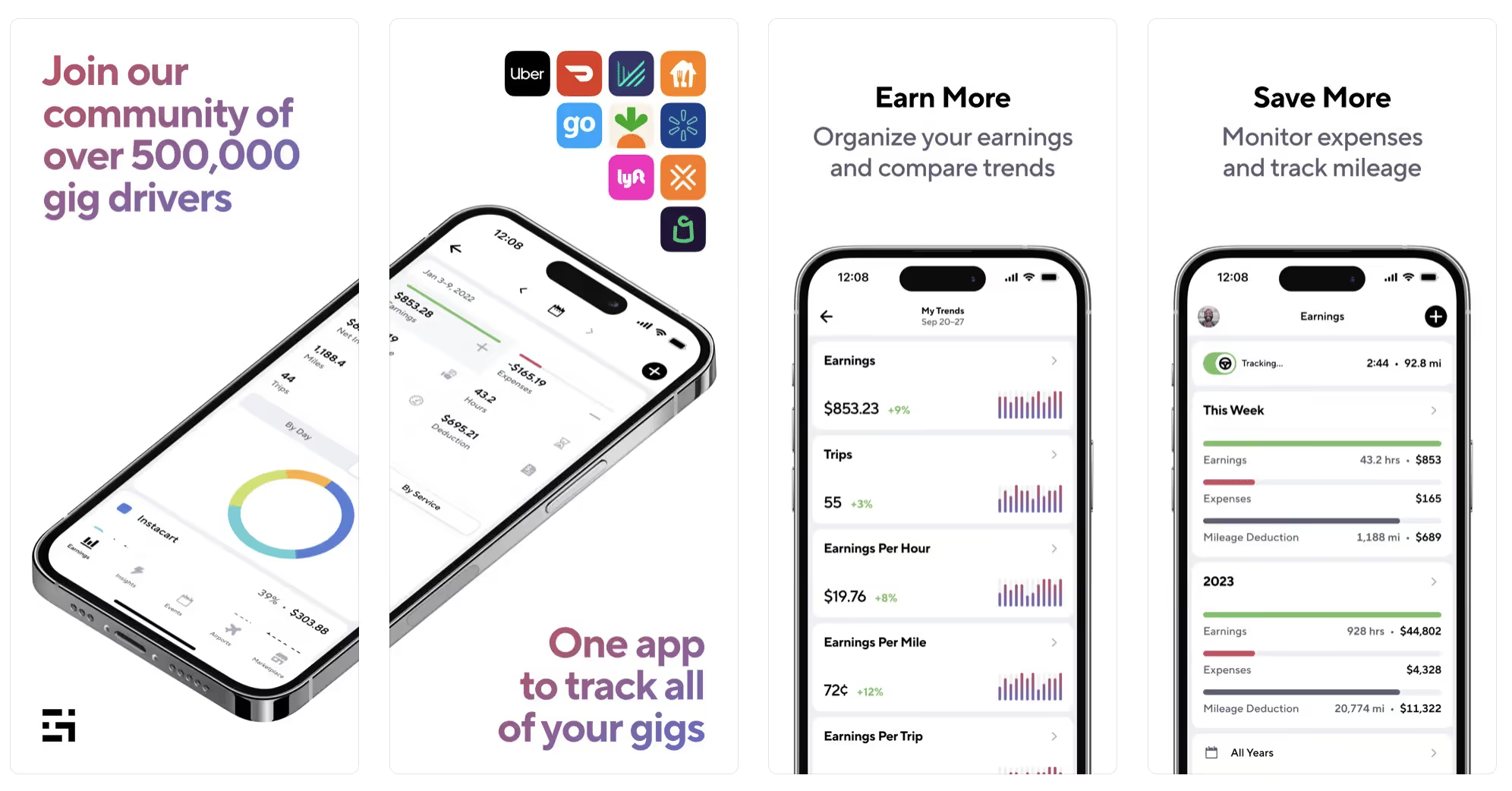
Gridwise has a free mileage tracker and free features that record your income and expenses. It gives you access to insurance and benefits, as well as insights about the best times and places to make the most money while gig driving. The Gridwise mileage tracker captures all the miles you drive while you’re on your driving shift, and it can be used if you have other trips you need to make which qualify as business travel.
Drivers love it because it is geared toward the needs of rideshare and delivery workers, providing free information about airport departures and arrivals, event start and let out times, weather, traffic, and more. The Gridwise Plus subscription adds value by providing additional insights and reports, discounts on benefits, the ability to export data in .csv format,, and more.
Available on Android and Apple: Yes
Ratings: 4.9 stars on App Store, 4.6 stars on Google Play
Free version: Yes
Subscription price: $9.95 per month for Gridwise Plus, or $95.99 per year (a $23.41 savings)
Created specifically for gig drivers: Yes!
What is the best mileage tracking app?
Now that we’ve checked them all out, we’re positive about the answer to that. Hands down, it’s Gridwise. Are we biased? You bet we are! But drivers love it too. Gridwise is the best mileage tracker app—and so much more. So many of the features are free, and the subscription to Gridwise Plus will pay for itself with additional insights to boost your earnings and deeper discounts on products and services.
Most important, Gridwise is designed specifically for gig drivers by experts who were once gig drivers themselves! Knowing what gig drivers need is a crucial step in creating an app that rideshare and delivery drivers can really use! Here are a few of the features, besides mileage tracking:
- seamless earnings tracking
- automatic, on/off toggle and manual mileage tracking
- mileage categorization
- airport, traffic, weather, and events information
- insights into where to drive and when to drive
- reports showing earnings across the platforms you use
- discounts on countless products and services for drivers
- additional resources for finding side gigs
- an informative and comprehensive blog
- affordable benefits, including insurance, medical, dental, and alternative practitioner discounts
- a community of drivers just like you
Don’t settle for just any app. Get the best mileage tracker, and so much more, from Gridwise!
[elementor-template id="21599"]

What Records Do Gig Drivers Need To Keep Track Of For Taxes?
* Gridwise does not provide tax, legal, or accounting advice. This material has been prepared for information purposes only, and is not intended to provide, and should not be relied on for tax, legal, or accounting advice. You should consult your own tax, legal, and accounting advisors before filing your return.
Record keeping? Who signed up for that? As a gig driver, it’s part of what you need to do to keep your business running. Don’t worry. It’s not as complicated as you might have been led to believe. This post will show you what you need to keep track of and the best ways to gather and preserve your tax-related records. We will cover
- How record keeping can help reduce income tax for freelancers
- Taxes and freelance work: Record keeping requirements
- Mileage tracking: Motives and methods
- More deductions and records to keep
- Make tax time easier
How record keeping can reduce income tax for freelancers
Tax time is not “fun time” for rideshare and delivery drivers. It’s easy to get used to watching your earnings pile up and come to believe they are all yours. Unfortunately, that isn’t the case. Gig work taxes can be especially painful because no one takes them out of your earnings for you, until the tax authorities insist that you do it for yourself.
You will need to show the tax authorities your income records, and they will gladly tell you to send them what they determine to be their fair share. Think that’s not fair? You’re not alone, but that doesn’t mean you’re going to get out of paying gig work taxes.
But you can find ways to pay the smallest amount that is legal and possible. The best way to defend yourself against having to pay astronomical amounts when you file your return is to know what expenses you can deduct from your gross income. When you subtract deductible expenses from your gross income, there is less left over to be taxed. This reduces the amount they can hit you with gig worker taxes. and can make your tax bill substantially lower.
While you want to keep good records so as to be in compliance with taxation entities such as the IRS, you also want to ensure you have proof of every last deductible expense you have accrued during the year. There are other records you must keep as well. Let’s look at some of the considerations you have, realizing that you now need to know how to do taxes as a freelancer.
Taxes and freelance work: Record keeping requirements
So many gig drivers fail to understand the responsibilities they have as independent contractors. Those who work part time for very few hours may even believe they don’t have to report the income they get from their driving gig payments. That would be a big mistake!
The company or companies you work for report your income to the IRS and state tax authorities. If you fail to report that income, you will risk some rather painful penalties. The IRS taxing side hustles is as much of a thing as the IRS taxing income from any other job. Your best bet is to report what you’ve earned, honestly and completely, and comply with other record keeping requirements such as
- gross income
- deductions and credits
- purchases (items you purchase and resell, such as snacks or bottled water)
- a log of all your mileage (or vehicle expenses, if greater)
- a list of all expenses and assets, such as utilities and other expenses associated with having a home office and equipment
- machinery and furniture you own, including when it was acquired, how much it cost, whether you previously took deductions on it, and selling price, if applicable (this includes your vehicle)
More things to consider:
- Pay attention to the retention of your records. You’ll need to keep all tax-return-related items— including income, deductions, and any tax credits reported— until the period of limitations runs out (3 years from date you filed, or 2 years from when you paid tax. If you have employees, keep your records for at least 4 years.)
- If you want to avoid paying self-employed taxes, you may want to set up a corporation or Limited Liability Corporation (LLC) for your business. This allows you to separate all your gig driving earnings from personal income, and permits you to take advantage of the additional advantages of working through a corporation. This includes exemption from self-employment taxes. You can learn more about how to pay self-employment taxes, if you opt for that, in this post from Keeper.
- You should always keep a separate checking account for your business, for convenience as well as clarity. While this is not a legal requirement, it is a smart move if you want to have an easier time managing your business.
- You are required, as an independent contractor, to file your taxes quarterly. Check out this Gridwise blog post for more information about quarterly tax payments and other matters that make filing delivery, Lyft and Uber taxes easier.
Mileage tracking: Motives and methods
Why you need to be meticulous about mileage
Mileage deduction, or the costs of operating your vehicle, will be the most important item to account for when you consider how to file taxes as a freelancer. While mileage is an important deduction for all independent contractors, as you might imagine, it’s even more essential for rideshare and delivery drivers.
There are two ways of keeping track of your mileage deduction. One is to use the IRS’ standard mileage deduction, which for 2022 is 58.5 cents per mile. This number takes into account the costs of operating your vehicle, from fuel and maintenance to registration, insurance, and depreciation. Alternatively, you can calculate all your own vehicle operating costs, but only after your first year of using the vehicle. You may discover that this second option allows you to have more money deducted from your taxable income. Learn more about the options for deducting your mileage in this Gridwise post.
No matter which way you decide to calculate the deductions for your mileage, you need to know what mileage you can and cannot deduct.
You can deduct
- miles driven to and from home when you go out to drive or deliver
- miles you accrue during your trips
- miles you drive on any other trips you make that are necessary as part of your business.
Examples:
- driving to return a lost cell phone or to an Uber Hub or another physical location where your company might make driver support available
- driving to pick up supplies, to get gas, or to have your car cleaned, serviced, or detailed, etc.
You cannot deduct
- miles you drive for personal trips
- miles for any trips you take that do not directly affect your business
Note: If imagining yourself becoming the not-so-proud owner of a shoebox filled with paper receipts gives you nightmares, stop worrying. Electronic records of purchases will satisfy reporting requirements. If you use cash, you can scan copies of your receipts, in some cases, right into your recording software or app. Gridwise and Keeper give you a simple to use interface that keeps all your receipts recorded without the messy pile of paper.
Mileage tracking methods
By now, you’re probably convinced that tracking mileage is important, despite all the other things drivers have to do. Now, let’s look at your options for keeping accurate records.
- Manual tracking: You can keep a logbook where you list every trip you make, starting and ending mileage, the date, and purpose of the trip. While this would work, it’s certainly not convenient. Besides, if that logbook gets lost, your plans for having a nice, fat tax deduction will go by the wayside.
- Spreadsheet: This is a bit more convenient and sophisticated way of tracking your business mileage. You’d need to be meticulous about making your entries, though. Even if you keep a spreadsheet app on your phone, it could be time consuming and inconvenient to keep doing it with all the other things going on in a rideshare or delivery driver’s day to day life.
- GPS-based mileage tracking apps: There are a bunch of apps that track mileage based on your GPS location, and most of them are pretty accurate and far more convenient than taking constant readings of your odometer. Your driving apps, such as Uber, Lyft, DoorDash, or Instacart, may also track your mileage, but be careful here. They will only track the miles you drive while you’re on a trip or delivery. They don’t count the miles you drive going to pick up a customer or when you make your move toward a restaurant or store.
Gridwise, on the other hand, will track all the miles you clock while you’re on your shift. All you need to do is make sure you start tracking the minute you leave home, and every gig driving mile will be logged. - OBD-II mileage tracking systems: There are plug-in modules that assess your vehicle’s mechanical health and track your miles. However, many authorities question the ability of OBD-II mileage tracking systems to get get accurate odometer readings. Insurance companies don’t consider them to be accurate enough gauges of odometer readings.
While mileage is a crucial deduction when you’re preparing your Uber, Lyft, or DoorDash taxes, it isn’t the only expense you’ll want to record.
More deductions and records to keep
Expenses you can deduct
You’re entitled to include the cost of other expenses that are directly related to your driving business. These include
- vehicle expenses
- equipment for your car and home office
- extra services and subscriptions
- business tools, including apps and software
You can learn much more about gig driver expenses that are eligible for deduction in this Gridwise article.
Ways to track and preserve deductible expenses
- The manual method: Just like you can with mileage, it’s possible to use a manual method, but in addition to logging each expense into a ledger, you would also need to keep physical receipts.
- Spreadsheets: You can record your expenses on a spreadsheet. This is somewhat less awkward than manually logging mileage, but there still will be plenty of room for failing to remember the case of water you bought for your customers, or losing the receipt from the thermal bag you purchased.
- Accounting software: You can use software that helps you track your expenses. This method usually interfaces well with any tax preparation software you or your tax professional might use.
- Gridwise: There are other apps that help you track your expenses, but Gridwise is designed specifically for gig drivers. It automatically tracks earnings and mileage, and lets you record your expenses the minute they come up. Gridwise’s partnership with Keeper gives you the ability to scan receipts and access a tax professional. This is a seamless way to record your expenses and a big help in learning how to file Uber taxes. Gridwise even provides .csv output, so you can feed your Gridwise data directly into tax preparation software. Check out what Gridwise and Keeper will do to super-charge your tax filing powers.
Organizing and categorizing expenses
Before you even begin to record expenses, you’ll want to set up categories for them. You can start by reviewing the categories listed above and checking out the Gridwise post that lists possible deductions.
If you’d like to learn more about how to categorize expenses, there is additional information available. This article from Motley Fool lists all possible categories any freelancer might use and also gives tips on how to customize them for your driving business.
One last tip
Using Gridwise, particularly for tracking mileage, is the easiest way to be in compliance with the IRS’ rules for deductible mileage. Gridwise tracks all the miles you drive for your gig, beyond what your company’s app might record. At the same time, you can log on and off Gridwise when you start and end your shift, so personal miles won’t be recorded. This eliminates confusion while capturing every deductible mile.
Gridwise Tax Help, a partnership with Keeper, has been created specifically to serve gig drivers. It provides affordable and easy ways to record expenses, scan receipts, and find deductions by analyzing your expenditures. Read about free resources from Keeper you can use to be fully prepared for tax season, and get all your earnings and expenses on the record.
Get the world’s best assistant for rideshare and delivery drivers, and tax help too.
Make tax time easier now!

Here’s everything Uber drivers need to know about Uber’s new face mask policy for drivers and passengers
It’s easy to understand why it’s been necessary for drivers, and riders, to stay home and maintain social distancing during the COVID-19 crisis. Slowing down the spread of the novel coronavirus and staying safe are top priorities for everyone right now.
Still … many of us are more than ready to get back on the road. And in many states, stay-at-home orders are being relaxed by government authorities. As a result, many drivers—and the riders we seek—are starting to emerge from isolation, and once again we’ll be sharing space in our rideshare vehicles.
This could be risky, so it’s important to create an environment that’s safe for everyone, even if we have to cope with some slightly inconvenient rules.
So, because health risks will continue to linger long after stay-at-home orders expire, Uber is implementing a significant safety policy. The company will require all drivers and riders to wear masks or other face coverings while using the Uber platform. Although no official policy statement has been announced, Uber confirmed the decision to CNN Business on May 3, 2020.
Have Lyft and other companies required face masks?
It appears Uber has taken the lead on this, since there’s no evidence of Lyft or any other rideshare companies making similar decisions.
Uber may want to get out in front of this issue in order to make both drivers and riders feel safer about coming back out to reanimate Uber’s bustling business.
Lyft generally follows Uber’s lead on major initiatives like this, so we would expect Lyft to implement a similar policy.
When will this policy be fully implemented?
Uber has been mum about this new policy, but drivers should expect to see official communication from Uber over the next few weeks. A spokesperson from Uber has confirmed that they will begin rolling the requirement out to markets in the coming weeks.
How will this policy be enforced?
The more rebellious among us may be thinking about how to avoid abiding by the new rule, while others are happy to comply. Enforcement of the mask-wearing rule could get extremely controversial, and we can’t help wondering what it will look like.
Uber hasn’t told us exactly how they’ll execute their new mask policy, but those of us who drive for them can probably guess. The company already has a facility on the app that’s used to identify drivers.
Sometimes when drivers tap the app to go online, a message pops up asking them to pull over, take a selfie, and submit it. They must do so before their app will open and start receiving requests. Drivers fit their faces into the circle on the screen, snap the picture, and after it’s been confirmed to match the photo on record, they can proceed. It’s possible Uber will use this same tactic to verify that drivers are wearing masks as the company has confirmed that it is in the process of developing technology to detect drivers' usage of face coverings.
This could be challenging, however, because facial recognition technology relies on face shape. If you’ve worn a mask, you’ve probably noticed your phone’s face-related lock doesn’t know it’s you until you remove it—or just give up and enter the passcode. Uber has a very clever technology department, so they may have already found a way around this.
What about the passengers? How will the policy be enforced for them?
This new policy leaves a lot of questions about passengers.
How will Uber enforce their mask-wearing rule on passengers?
Should drivers refuse to pick them up if they’re not wearing a mask, or won’t put one on? Should drivers take a photo of them to prove it?
Are drivers supposed to take the hit, both in terms of losing ride revenue and enduring verbal abuse from irate passengers? What if the customer decides to take off the mask during the ride? These and other questions will have to be answered before Uber can enforce wearing masks as a definite policy.
Since none of us has ever lived through a global pandemic before, it’s no wonder everything seems so uncertain, and sometimes downright frightening. We seriously don’t know what’s going to happen from one day to the next. So it only makes sense that widespread mask-wearing is strange to us—and we need to remember that it’s also strange for our passengers. Will they trust us more or less because we’re wearing a mask? What will happen when we inform them it’s necessary for them to wear one? What if they don’t have a mask? Even if we carry spares, how do we enforce the policy when a rider refuses to put one on?
Let’s hope we don’t run into that. Hopefully, our passengers will understand why we’re wearing masks, and why they must also wear one. That would certainly be ideal, but as we know, experience with driving people around for a living removes any preconceived notion that everyone is nice, kind, and courteous. In fact, anyone who’s ever driven rideshare has most likely had some experience with the difficult passenger.
Until Uber (and other rideshare and delivery companies) come up with clearer policies, you’re going to have to be proactive. The fact is, riders are not always thinking about your welfare. They may object when you refuse to take them because they aren’t wearing a mask. They may write to your company and complain that you’re not wearing one, even if that isn’t true.
How do you prevent your own reputation from being damaged, and protect your account from being deactivated as the result of a false report from a cantankerous customer?
The best thing you can do is be polite but firm when explaining the regulations, and communicate with your rideshare service if there’s a problem with a rider. You’re likely to get a complaint email, but you’ll also get a chance to tell your side of the story. Do that by answering the email promptly and completely.
It’s also wise to be proactive. If you can arrange it, stop driving for a few minutes and write your own complaint about what happened. As long as you stick to the facts and remain courteous throughout the interactions with the passenger and your company, chances are the company will trust that you’re doing your best to keep everyone safe.
What will wearing a mask do for your safety?
Do you feel safe while wearing a mask? Would you feel safer if your riders were wearing masks? Although they can be inconvenient, the policy of having you and your riders wear masks can help protect you and them. Still, the cloth masks you are likely to encounter are not a complete safeguard.
The Centers for Disease Control and Prevention (CDC) recommends that in addition to wearing masks, people should continue to maintain social distancing. This paragraph is from an article on the CDC’s website:
“Wearing cloth face coverings is an additional public health measure people should take to reduce the spread of COVID-19. CDC still recommends that you stay at least 6 feet away from other people (social distancing), frequent hand cleaning and other everyday preventive actions. A cloth face covering is not intended to protect the wearer, but it may prevent the spread of virus from the wearer to others. This would be especially important if someone is infected but does not have symptoms.”
As the CDC notes, even while you’re wearing a mask the recommendation for social distancing remains in effect. This can be awkward when you have passengers who want to sit in your front seat—but your first priority is safety. Your passenger should sit in the back seat, and if you do not feel safe, you don’t have to take the ride.
As long as you’re following the guidelines set forth by the CDC and your individual state/city, a disgruntled passenger would have a hard time getting your company to penalize you for protecting yourself. And once the social distancing rule is relaxed, you may then feel comfortable enough to let passengers sit in the front seat.
What more can Uber and other companies do?
It’s been a big disruption to shut down our way of life for these past weeks, and it will take big adjustments to bring us back to operating again. The companies depend on drivers to work for them, and before we all run back out, possibly exposing ourselves to the dangers of COVID-19, we need some assurances.
Here are some suggestions for the companies to consider:
- Be clear about policies, with riders as well as drivers. Drivers shouldn’t be put in the position of reminding riders to wear masks. It might be helpful for the company to warn riders they could risk losing their access to the platform if they don’t comply with the rules.
- Provide masks and materials. Uber is handing out masks, but so far they can only service the areas that have been hit hardest by the pandemic. If they can’t furnish masks to everyone, maybe they could reimburse drivers for buying a supply to keep on hand for themselves and their passengers.
- Educate drivers and riders about the importance of compliance. Sometimes it isn’t enough to just expect people to be considerate of others. In-app push notifications to passengers as well as drivers could help them to learn why it’s so important to protect one another from the scourges of COVID-19.
What more can we all do?
If we ever hope to get back to normal, we have to acknowledge and provide protection from the risks that face us now, and also convey a sense of feeling safe. As a driver, it’s up to you to protect yourself, while offering a sense of safety to your passengers. Comment and let us know how you feel about Uber’s new “mandate for masks,” and what you would like to see the companies do to protect you and your customers.
One really great way for drivers to deal with the issue of COVID-19 safety is to be supplied with face coverings and masks. Check this Gridwise article for information about where you can get them, or how you can make them. And make sure you download the Gridwise app so you can stay up to date with COVID-19 issues and everything you need to know to make the most out of your driving and delivery gigs.
COVID-19 is causing the ride-hailing industry to pump the brakes. So how should TNCs respond
COVID-19 has decimated the ride-hailing industry. So how will TNCs respond?
COVID-19, the vicious viral disease caused by the infamous novel coronavirus, has crippled the once flourishing ride-hailing industry.
As most major cities throughout the world implemented lockdowns and shelter-in-place orders to slow the infection rate of the virus, they also brought movement in cities to a near standstill — and the demand for ride-hailing with it.
On March 19th, 2020, Uber CEO Dara Khosrowshahi told analysts that Uber bookings were down some 60% to 70% in “more recently impacted markets like Seattle.” Khosrowshahi also noted that the company was expecting a rebound to begin in the middle of the second quarter, roughly near the end of April.
Things didn’t quite happen according to Dara Khosrowshahi’s plan, however, because as we write this article at the end of April 2020, most citizens are still sheltering in place.
We, of course, can understand this by simply turning on the news and seeing most major cities around the globe extend stay at home orders instead of reducing them, but we can also look to mobility data to tell us a more detailed story about how COVID-19 and stay-at-home orders have affected urban mobility.
How? One of the best ways to measure the amount of movement in a city is by understanding congestion as quantified by driving speed. Less movement in a city means less congestion, which means fewer drivers on the road.
At Gridwise, we can leverage the anonymized data of more than 105,000 ride-hail drivers to understand how people are moving around their city. When we look at the average speed of ride-hail drivers in major urban centers who’ve been hit hard by the COVID-19 pandemic, we’ve noticed a stark increase in speed for those drivers who are still out on the road.
In New York City, for instance, we saw ride-hail speeds increase by 32.29% in April when compared to January, which was a result of drivers just not being on the road.
And New York City isn’t the only city that has seen its streets go barren.
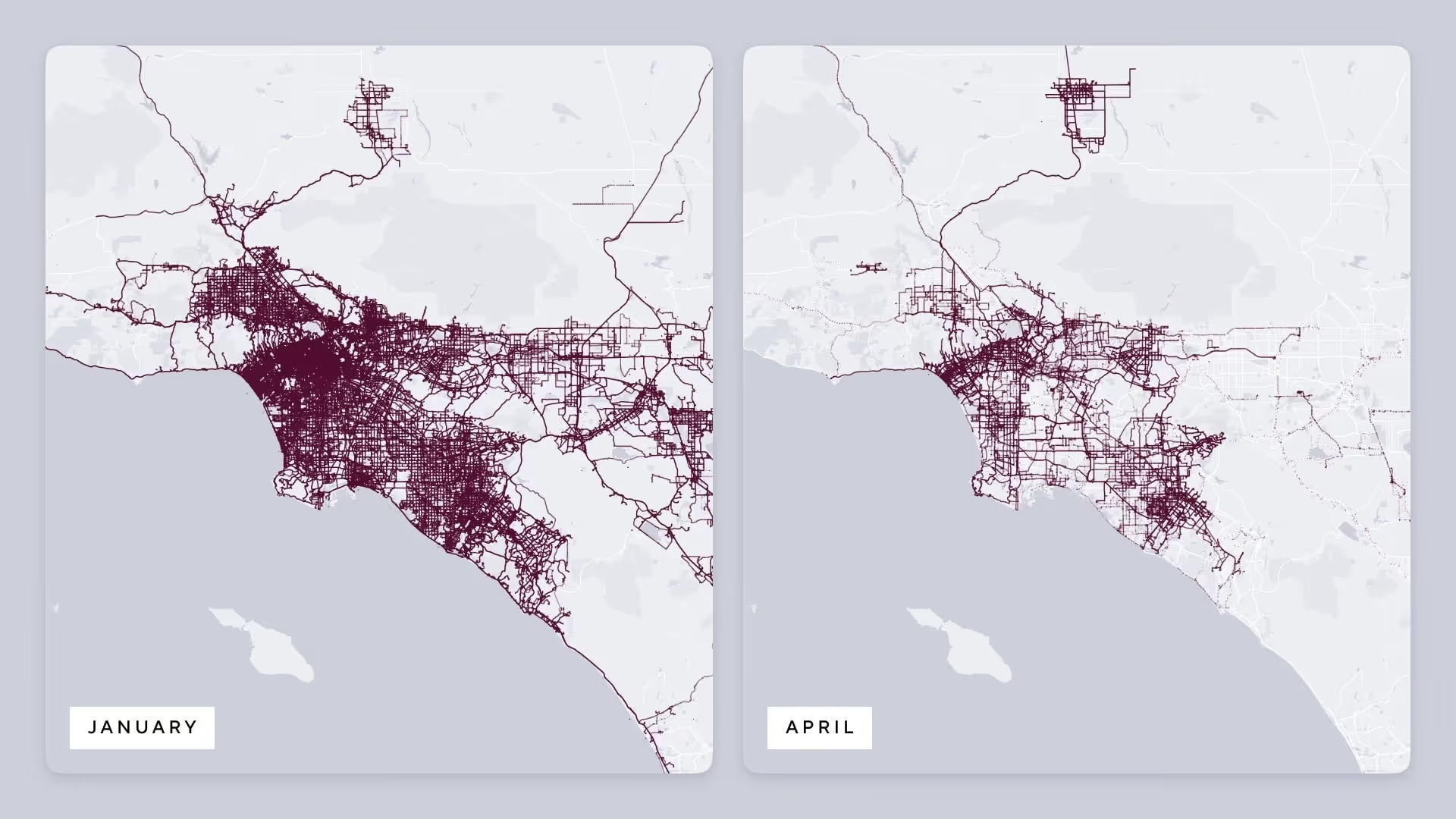
As the coronavirus pandemic tightens its grip on cities around the world, city streets have been transformed overnight. Offices, schools, businesses, and public institutions closed their doors and households buttoned up under stay-at-home and shelter-in-place orders. Roads from NYC to Chicago have become arteries without blood, and the visualizations below make this strikingly clear.

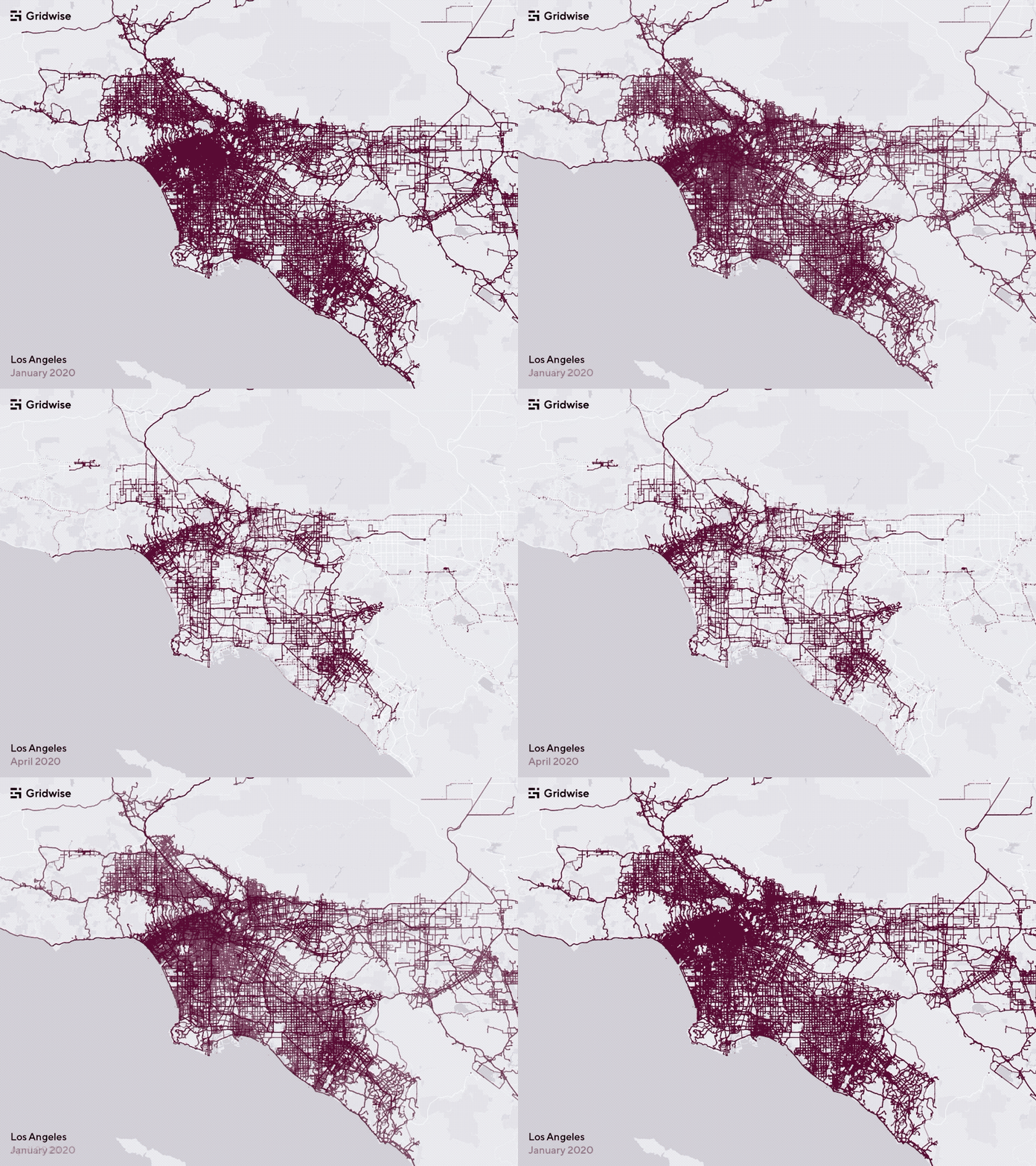
These maps show rideshare activity in New York City and Los Angeles respectively in January and April of 2020.
In the January maps, you can see that rideshare vehicles were covering every corridor of a city as activity was still persisting with strong adoption across all services as it had in previous months.
Not shown on a map (but burned into our memories) is what happened in mid-March. U.S. cities implemented lockdowns and stay-at-home orders, which brought mobility to a near halt.
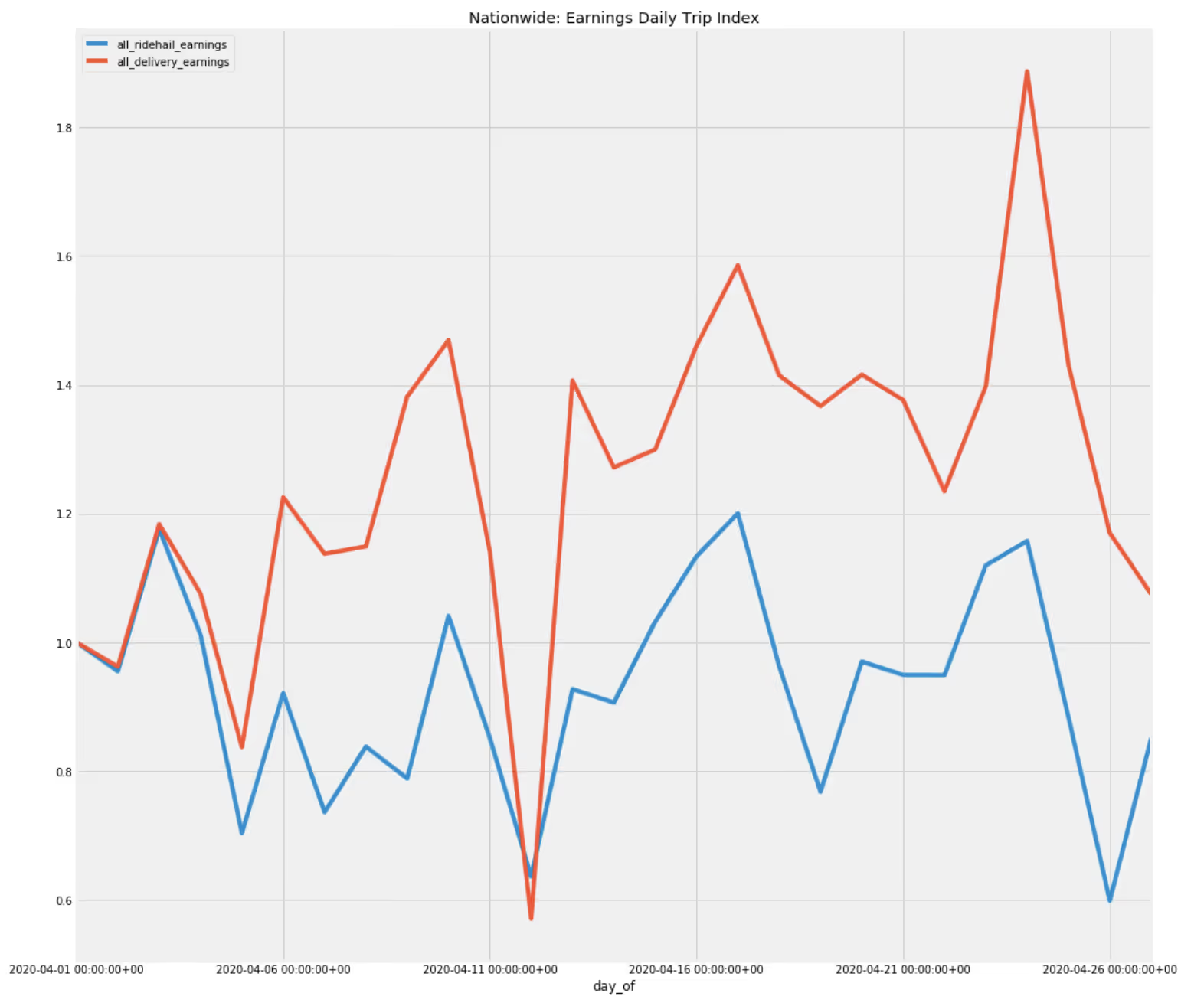
At this point in time, ride-hail trip volume had plummeted up to 70% in major cities — while at the same time delivery has started to explode in volume, with select services seeing an uptick of 87% in daily revenue.
The persistent activity has resulted from ride-hail vehicles moving essential workers, as well as deliveries.
Significant decrease in ride-hail driver earnings
From the first national broadcast about the rapid spread of COVID-19, companies and workers throughout the United States started feeling the disastrous effects of the crisis, and it’s been especially tough on ride-hail drivers.
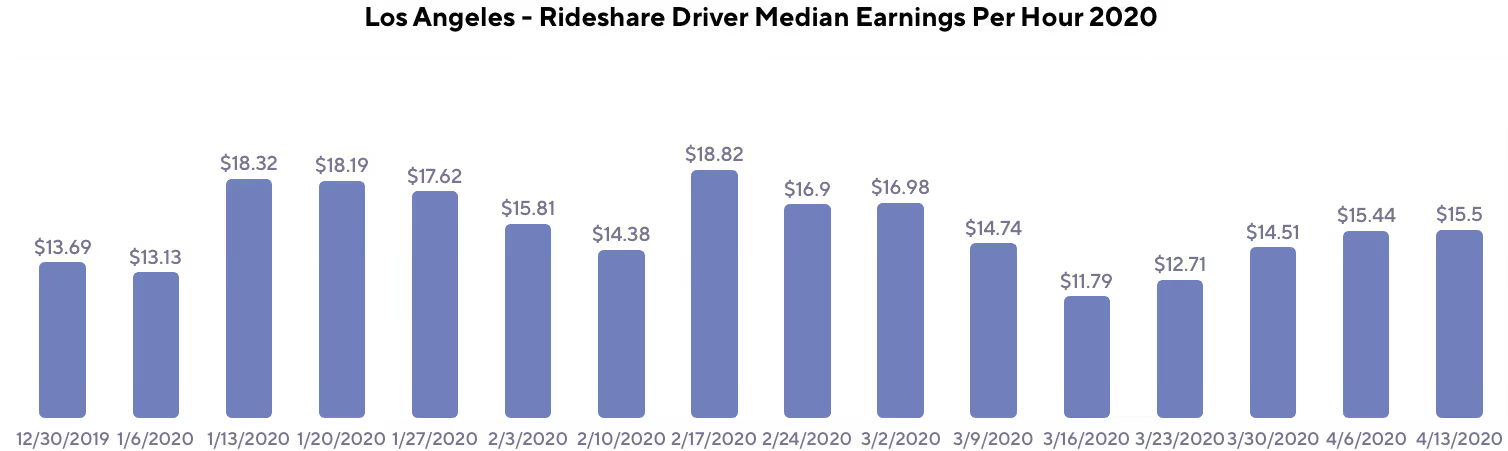
The graph below shows the volatility of median hourly wages for U.S. ride-hail drivers.
We can see that national driver earnings reached a high of $19.36 per hour on February 24, 2020 before decreasing by more than 35% to an abysmally low $12.35 per hour in mid-March.

The decline in driver earnings isn’t surprising. As demand decreases, driver earnings will inevitably decrease along with it.
So why, then, are we seeing earnings increase? Because the supply of drivers has decreased as well.
We at Gridwise wanted to know more about the supply side of the rideshare industry, so we conducted a study that included more than 2,000 of our drivers. We found that 46% of drivers stopped driving for rideshare services completely because they felt it was unsafe to keep driving with a deadly virus on the loose. When asked separately if they started driving for a delivery service, 49% said they were driving for services like DoorDash, Postmates, or Instacart.
Los Angeles is a great example of a city whose hourly earnings initially declined and then rebounded weeks after a lockdown went into effect. You can see this on the graph below. Take a look at how earnings plummeted from March 9 to March 16, and dropped even further on March 23. Then by the next week, earnings had jumped from a low of $11.79 back to $15.50.
Why? Because these earnings graphs only include the hourly earnings of drivers still on the road. Not those who have chosen not to drive.
What will happen when stay-at-home orders end?
First, let’s talk about what won’t happen. As soon as these orders are lifted, we’ll all breathe a sigh of relief — but the reality is, ride-hailing demand won’t immediately go back to pre-COVID-19 levels.
At Gridwise we conducted another study (we do that a lot). This time we surveyed 800 consumers because we wanted to better understand consumer perspectives on mobility in 2020. Our study revealed that riders plan to take an average of 25% fewer rides to work using ride-hailing services, and about 17% fewer rides with ride-hailing services for recreational purposes.
This actually makes perfect sense. Even as stay-at-home orders are lifted, most people will still be extra cautious when venturing outside.
Our study confirmed that too. Nearly half of the respondents told us that as long as COVID-19 is still a threat in 2020, they plan to go out 75% less often than they normally would, and more than one-third plan to reduce going out by anywhere from 25% to 50%.
Also not surprising is what people say about using public transportation — which in many ways will be hit even harder than ride-hail. We found that riders plan to use public transportation 23% less often to get to work and 31% less often for recreational purposes than they did before COVID-19.
Based on these insights, we expect to see frequent public transit users flock more toward ride-hailing services for their primary mode of transportation in an effort to steer clear of crowded areas.
So how can TNCs not only survive, but thrive?
By embracing delivery, of course. You already see this happening across the ride-hailing industry.
Lyft, for instance, previously had no delivery business, and in April 2020 launched a service aimed to deliver meals and groceries to essential workers.
Uber has not only doubled down on an Uber Eats business that was already larger than Grubhub, but they have also expanded their offerings. Uber now offers Uber Direct, which expands its services to include grocery and retail delivery services, and Uber Connect, which is a peer-to-peer delivery service.
You even have Alto, a Dallas-based ride-hailing service that has completely pivoted to the delivery market.
While these changes may feel abrupt, the data show that focusing on delivery is the right thing to do not only in the short term, but the medium term as well.
Our consumer sentiment analysis also shows that since the COVID-19 crisis hit, food delivery consumers have been ordering out about 16% more often than they did before the crisis. They also told us they expect to continue ordering out at about that same rate throughout 2020 as stay-at-home orders subside, but COVID-19 remains a persistent, everyday issue.
Even more interesting is the fact that customers are ordering groceries a whopping 62% more than they previously did. This will probably drop slightly after stay-at-home orders are lifted. But there will still be a huge increase in grocery deliveries compared to pre-COVID times as consumers say they will still order delivery 55% more often than they did before.
So which TNCs will win?
Using proprietary data, we have concluded that companies well equipped to focus on food, grocery, and retail product delivery are well-positioned for growth through 2020 and beyond. Uber is well-positioned in the food delivery space to continue to grow while competing with food delivery companies such as Postmates, DoorDash, Grubhub, and others.
Although late to the game, services like Lyft and Alto have started delivery segments of their business as they realize that operating a delivery segment is key for today’s survival and future growth.
Drivers who focus on delivery will also benefit throughout 2020. The graph below shows that while ride-hail drivers have unfortunately been making less through April 2020, delivery drivers are earning more each week.
But is the ride-hailing industry in trouble?
Reports of the death of the ride-hailing industry have been greatly exaggerated.
Despite COVID-19, the ride-hailing industry does appear to be well-primed for medium- and long-term success.
Uber and Lyft have around $13 billion in cash on hand and the ability to raise more funds if needed, which gives both companies plenty of runway to weather the COVID-19 storm.
But even more importantly, ride-hailing is well-positioned against public transportation when it comes to winning back recreational travelers within urban environments.
Our consumer analysis study also found that while consumers plan to use ride-hail services 17% less for recreational purposes throughout 2020 when compared to a pre-COVID-19 world, consumers also say they will use public transportation 31% less.
These data confirm the obvious: that consumers will shy away from public transportation and move toward ride-hail services when they do go out.
And you can expect ride-hail companies to lean into this by building their images around being the sanitized travel option for consumers.
Uber and Lyft also have room to decrease prices, as they have been slowly but surely increasing their prices since the beginning of 2019 as competition decreased. Unfortunately, drivers on the supply side may see their rates cut so these companies can remain profitable. But with TNCs and delivery companies receiving record numbers of driver applications, this may prove to be a non-issue.
So in the short-term, the major ride-hailing companies will certainly take a hit to their revenue — but with a $13 billion war chest between them, don’t expect them to go away anytime soon. In the short-term, they’ll focus on delivery, while picking up riders that would have otherwise taken public transportation throughout the rest of 2020. This will prime them for a strong 2021.
Everything drivers need to know about Uber Medics
One of the most gratifying things about being a rideshare driver is providing rides for people who do the type of work we literally couldn’t live without. How many times have you picked up an overworked doc, a bone-tired nurse, an EMT just coming off a long shift, or a late-night nursing home attendant, and thought how good it was to know you could help them out.
Today, no group of workers is more deserving of extra consideration and recognition than medical workers. During this pandemic, they haven’t had much of a chance (if any) to binge-watch a TV series or spend the afternoon cleaning out closets and drawers. They’ve been frantically busy, on the front lines of the war against the novel coronavirus and the vicious respiratory disease it causes, COVID-19.
Day in and day out, these people have reported faithfully to work in a potentially high-risk environment. Whether they’re actually treating COVID-19 patients, or doing their regular jobs in a facility where everyone thinks nonstop about the virus and what it can do, they need understanding and support. And, from time to time they need a ride.
Knowing that medical personnel need to get their rides quickly and safely, Uber created a new class of trips for them called Uber Medics. Like Uber X, Uber XL, Uber Eats, and other classifications, Uber Medics is a type of trip Uber will allow certain drivers to accept. People have lots of questions about Uber Medics, and we’ll do our Gridwise best to address them here.
What riders are eligible for Uber Medics trips?
Medical professionals are the passengers who are eligible for Uber Medics trips. When they enter a special code, they’ll be routed into the Uber Medics request queue. They will also receive a 25% discount from Uber.
Will drivers get more money for Uber Medics trips?
No. According to Uber, drivers will be paid the same as they are for any other ride. Drivers won’t get any less, either. Any discount given to the medical professionals will be absorbed by Uber.
What if I don’t want to risk being in close quarters with medical professionals, and don’t want to accept Uber Medics trips?
First, only top-rated drivers will be eligible to accept these trips. Drivers with excellent ratings who are deemed eligible for Uber Medics will have the option of being included in the program or not being included. You can select the kinds of trips you want to accept using the trip type filter in the app.
At this time, Uber Medics is available only in select areas. These include Denver, New York City and suburbs, Upstate NY, San Francisco, Washington D.C., Chicago, New Jersey, Boston, Philadelphia, and Sacramento. Uber generally launches services in a few markets and then expands, so if and when it is available in your area, you’ll be notified and the Uber Medics option will appear in your app settings.
What if I don’t want to be too close to medical professionals, even if they aren’t using Uber Medics?
There is a chance you’ll be called to pick up a medical professional, even outside the Uber Medics program. Not all of them will have codes, and Uber Medics isn’t available in every community, so you could definitely get ordinary requests from riders who are medical professionals.
If for any reason you feel unsafe taking a passenger in your car, including concern about exposure to the coronavirus, you can always cancel the trip. Remember, your car, your rules.
What is Uber doing to protect drivers who choose to drive for Uber Medics?
Uber is partnering with hospitals and health centers to supply drivers with masks, hand sanitizer, gloves, and disinfectant spray. Also, Uber will give extra safety training to Uber Medics drivers, emphasizing essentials such as not allowing passengers to sit in the front seat.
Uber’s actually doing another good thing: offering the use of an app to help drivers assess their health status. Through Uber’s partnership with a third-party telehealth portal called Ro, Uber drivers can list their symptoms, and if warranted, they’ll be referred to a healthcare service for further evaluation, testing, and/or treatment. A driver’s evaluation will be confidential, as with any medical examination.
New opportunities and individual choices
As with all things COVID-19, it’s important to weigh the risks to your health or the health of a high-risk loved one against the opportunities being offered. Uber Medics is a great service for a community of essential workers who deserve extra support during this crisis. You can participate if you want, but you can also opt out.
We hope this information has answered your questions about Uber Medics, but if you have some we didn’t cover, please comment below and we’ll get right on it. And … don’t forget to download the Gridwise app to keep up with current news, and to track your activity as you work your way through the COVID-19 crisis.
Can rideshare and delivery drivers work and still collect unemployment
The COVID-19 crisis has been quite a shock, and fortunately, measures are being taken to help us absorb it.
One welcome surprise was hearing that drivers are now eligible for unemployment compensation. On March 27, 2020, emergency legislation known as the Coronavirus Aid, Relief, and Economic Security (CARES) Act was signed into law. Part of the Act is a program called Pandemic Unemployment Assistance (PUA), which extends unemployment benefits to independent contractors who are not usually eligible for those benefits—like rideshare drivers and other gig workers.
If you haven’t applied yet, or want to know more about unemployment for drivers under the CARES Act, you’ll find lots of information in this Gridwise article.
The unemployment compensation train may be on its way, but in many drivers’ cases, it hasn’t made it into the station yet. One reason for the delay is the unprecedented onslaught of applications. Also, applications for benefits, including authorization for the extra $600 per week from the federal government, are being administered by individual states.
At first, turning to your state for assistance sounds much easier than going to the Feds, but in this case that isn’t necessarily true. Each state has its own rules and guidelines for unemployment, and each state’s computer system must be configured to accommodate the new rules that apply to independent contractors.
That means 50+ government entities have had to alter their computer systems, websites, and the ways they mete out money. Most states are making progress, but the first payment hasn’t even come through yet in many of them. If you’re among those who are stuck waiting, you might want to explore more ways to bring in money in the meantime. Check out this Gridwise article for some ideas.
New law brings big questions
Aside from all the snags and delays, if you do apply for unemployment compensation, it will make its way to you ... eventually. Will you get enough to pay your bills? What if you don’t? Even with the extra $600 per week, most full time drivers won’t be making as much as they did before the COVID-19 crisis knocked us flat.
Another burning question is, what happens if you work while you’re collecting unemployment? If you list this extra income in your weekly or bi-weekly claim, will your benefits be reduced? Will you still get the $600 per week from the Feds?
We at Gridwise really wish we could answer these questions for everybody with one simple answer, but unfortunately that isn’t possible. Like most everything else related to unemployment benefits, the answers you need depend on the state in which you live and work. What we can do is provide you with information we’ve collected from all the states. So read on ...
State-by-state guidelines for earning while unemployed
Right upfront, we need you to know that we are not legal experts. We’re simply conveying information to lead you toward the answers that are factual and legal in your particular case. You’re responsible for following the procedures and laws that are specific to your state when you apply.
A good place to start is your state’s unemployment website, which hopefully has been updated with the new information. Find whatever section addresses CARES Act benefits, and read what your state’s policies are. If you prefer to handle this via telephone, you should be able to find the number on the website.
In the meantime, we’re offering a glimpse at the different states’ policies. Look for yours, and you’ll find out what might happen if you work while collecting unemployment benefits, and if that’s allowed, how much you’re permitted to earn.
Note: In some states, you must first apply for regular unemployment compensation before applying for PUA.
Also, in some cases, the maximum benefits and rules for partial unemployment may not apply for PUA recipients. In many cases, the rules are more lenient. We’ve gathered some information for you here, but most of it refers to partial unemployment before the CARES law was passed.
You definitely need to refer to your state’s website for all the details, and direct any questions you have to your state authorities.
Alabama — Maximum benefits: $265 per week. Partial unemployment is calculated based on your weekly earnings report. You’ll get the difference between your weekly benefit and your wages for the week.
Arizona — Maximum benefit: $240 per week. You can earn up to $30.50 each week with no effect. After that, partial unemployment will be calculated by subtracting each dollar you earn above $30.50 from your benefit amount.
Arkansas — aximum benefit: $451 per week. If you work less than 40 hours and earn less than 140% of your weekly benefit, you’ll still get your benefits. Once earnings go up to 40% of your payment, your benefits will be reduced.
California — Maximum benefit: $450 per week. You can earn up to $25.99 without penalty. If you earn between $26 and $99.99, any amount over $25 will be deducted from your benefits. If you earn over $100, 75% of the wages will be deducted from your compensation.
Connecticut — Maximum benefit: $590 per week. Two-thirds of the amount of your earnings would be deducted from your weekly allocation.
Colorado — Maximum benefit: $529 per week. If you work more than 32 hours in a given week, you’ll be considered to be working full time, and partial benefits won’t be paid for that week. You can earn up to 25% of your benefit amount for any given week without reducing your benefits. Any earnings greater than that, but less than your benefit amount, will be subtracted dollar-for-dollar. If your earnings exceed your benefit amount, you won’t be paid for that week.
D.C. — Maximum benefit: $359 per week. 80% of your earnings plus $20 will be used as a basis for partial unemployment benefits, i.e. earnings in addition to your benefits.
Delaware — Maximum benefit: $330 per week. You can earn 50% of your benefit without penalty. Anything over that is deducted dollar for dollar.
Florida — Maximum benefit: $275 per week. Any income you make will be deducted from your payments.
Georgia — Maximum benefit: $330 per week. With partial unemployment, you can earn the amount of your payment, plus $50 and still get your full benefit amount.
Hawaii — Maximum benefit: $560 per week. Partial unemployment allows you to earn up to the level of your benefit amount, as long as you don’t work full time. You will be paid the difference between your benefit and your gross earnings, plus $150.
Idaho — Maximum benefit: $336 per week. If you earn half of your allowed amount or less, you’ll still get the full benefit. If you earn more than 50% of your benefit, your benefit will be reduced dollar for dollar. If you work full time (40 hours or more), or earn 150% of your benefit in gross earnings in one week, you won’t get a payment for that week. If you earn 150% of your benefit for two weeks in succession, you’ll have to open a new claim on the third week if you still need it.
Illinois — Maximum benefit: $418 per week. If you earn more than half of your weekly rate, your benefit will be reduced by the amount of money that is over $50% of your wages.
Indiana — Maximum benefit: $390 per week. You can work part time and earn less than your benefit amount, but dollar-for dollar deductions are made for all wages that are 20% or more of your weekly benefit amount.
Kansas — Maximum benefit: $420 per week. You can work less than full time and earn less than your benefit amount, but any money you earn over 25% of your benefit will be subtracted from your weekly unemployment compensation.
Kentucky — Maximum benefit: $415 per week. You can work less than full time and earn less than 125% of your weekly benefit. However, 80% of your gross wages will be deducted from your benefit.
Louisiana — Maximum benefit: $247 per week. You may earn less than your weekly benefit amount. Each case is reviewed individually, to determine if any reduction in benefits will be made.
Maine — Maximum benefit: $378 per week. You can earn $25 per week with no impact on your benefit. After that, anything you earn is deducted from your payment. If you earn $5 or more over your benefit, you won’t get a payment for that week.
Maryland — Maximum benefit: $430 per week. You can earn up to $50 per week before deductions go into effect. If you earn more than that, the amount you earn will be deducted from your weekly benefit.
Massachusetts — Maximum benefit: $674 per week. You can earn 33% of the amount of your benefit check. The benefit will be reduced dollar for dollar for amounts over 33%. Once the benefit is reduced to $0, you no longer qualify for benefits. Also, you must not work more than 35 hours per week, or you will be considered to be working full time and will not be eligible for that week.
Michigan — Maximum benefit: $362 per week. You can earn money, but your benefits will be reduced by 40% if you do. If your wages exceed your payment, but are less than 1.6 times your benefit, your total wages are subtracted from 1.6 times your benefit.
Minnesota — Maximum benefit: $629 per week. You can work less than 32 hours and still collect, as long as your earnings are less than your weekly payment amount, but your benefit will be reduced by 50%.
Mississippi — Maximum benefit: $325 per week. Any earnings over $40 will be deducted from the weekly payment.
Missouri — Maximum benefit: $320 per week. Earning up to 20% of your benefits won’t result in a reduction, but your benefit will be reduced dollar for dollar for earnings over 20% of the benefit amount.
Montana — Maximum benefit: $464 per week. You can work less than 40 hours a week, and as long as you’re working for all the available hours, you’ll still get a partial payment. Your earnings have to be less than twice the amount of your benefit amount. If you earn more than 25% of your benefit in any week, your payment will be reduced by $.50 for each dollar over that amount.
Nebraska — Maximum benefit: $362 per week. You can earn up to 25% of your weekly benefit, but after that, earnings are deducted dollar for dollar from the benefit amount.
Nevada — Maximum benefit: $407 per week. If your gross earnings are less than the benefit amount, 75% of that amount will be deducted from the weekly benefit. They will, at least, hold on to those funds in case you need them in the future.
New Hampshire — Maximum benefit: $427 per week. You can work less than 20 hours, and your benefit amount will be reduced by any amount that exceeds 30% of the weekly benefit.
New Jersey — Maximum benefit: $611 per week. You can earn up to 20% of your benefit amount without penalty, but beyond that, earnings will be deducted from your weekly payment.
New Mexico — Maximum benefit: $397 per week. You can earn up to 20% of your benefit amount, but if you earn more, your payment gets reduced dollar for dollar. You can’t receive any benefits if your earnings are equal to or greater than your benefit amount.
New York — Maximum benefit: $420 per week. Each hour you work is counted as working a day, so your benefits are reduced by 25%. If you work 4 days, you lose your benefits for the week.
North Carolina — Maximum benefit: $350 per week. Your payment gets reduced by the amount of any wages that exceed 20% of your benefit payment.
North Dakota — Maximum benefit: $470 per week. You may earn up to 60% of your benefit amount, but every dollar you earn after that is subtracted from your weekly payment. If your earnings exceed the amount of your benefit, you are not eligible for that week.
Ohio — Maximum benefit: $418 per week. You can earn up to 20% of your benefit amount, and then earnings will be deducted from your payment.
Oklahoma — Maximum benefit: $440 per week. As long as you work less than 32 hours, which is considered full time, and earnings are less than your weekly benefit plus $100, you qualify for your full payment.
Oregon — Maximum benefit: $538 per week. You can earn ten times the minimum wage or 33% of your weekly benefit amount before deductions are made. Deductions are the amount of earnings over that amount.
Pennsylvania — Maximum benefit: $573 per week. If you earn less than 40% of your weekly benefit rate while working part-time, you still get your full payment. If you earn more than 40% of your benefit, as long as your part-time earnings (when added to your weekly benefit) do not exceed your weekly benefit plus 40% of that amount, you’ll still be entitled to collect payments. Reductions will be made according to a formula.
Rhode Island — Maximum benefit: $566 per week. You can still collect your payment as long as your gross earnings are less than your benefit rate. Your benefit will be reduced by the difference between the payment and your earnings, plus 20% of your benefit.
South Carolina — Maximum benefit: $326 per week. Your earnings must be less than your weekly benefit amount. 25% of your eligible benefit amount will be subtracted from your earnings. Then, the rest of the earnings will be deducted from your payment.
South Dakota — Maximum benefit: $345 per week. If your earnings are equal to or greater than your benefit amount, you will not be paid your benefits. This is also the case if you worked 40 hours or more: 75% of your earnings over $25 will be taken away from your weekly benefit amount.
Tennessee — Maximum benefit: $275 per week. Earnings over $50 (or 25% of your weekly benefit) will not reduce your payment from the state. If you go over your weekly benefit amount, your claim will be suspended, and you’ll have to re-open it.
Texas — Maximum benefit: $465 per week. Part time workers can earn up to 25% of the payment before it gets reduced.
Utah — Maximum benefit: $479 per week. It’s all right to earn up to 30% of your benefit amount without getting a reduction. Once you go over that amount, your benefit will be reduced dollar for dollar. If you earn an amount that’s equal to or greater than your payment, or work full time (40 hours or more), you won’t get your payment.
Vermont — Maximum benefit: $425 per week. Any money you earn will be subtracted from your payment.
Virginia — Maximum benefits: $378 per week. You can earn up to $50 without losing your benefit. After that, deductions will be made dollar for dollar. If you earn the amount of your benefit or greater, you will not receive a payment for that week.
Washington — Maximum benefits: $637 per week. Working part time will result in a reduction in benefits. Your gross earnings, minus $5, times 75% will be deducted from your payment.
West Virginia — Maximum benefits: $424 per week. As long as your earnings aren’t greater than your benefit amount, plus $60, you’ll still receive benefits. Earnings over $60 will be deducted from the weekly payment, however.
Wisconsin — Maximum benefit: $370 per week. You can earn $30 without penalty, but for every dollar you earn after that, $.67 will be taken from your benefits. You won’t get any benefits if you work more than 32 hours in a week, or if your total gross pay is more than $500. However, not everyone has the same limit on weekly earnings. They provide a formula for calculating it.
Wyoming — Maximum benefit: $471. Once you earn 50% of your benefit amount, your weekly payment will be reduced. If you work 35 hours or more, or earn more than your weekly benefit amount, you won’t be paid benefits. If you earn more than 50% of your maximum amount, benefits will be reduced dollar for dollar.
So should you work while you’re collecting unemployment … or not?
It seems incongruous to think you might make more money by staying home than by working, but that’s how unemployment works—at least this time. Without a doubt, the state amounts alone would incentivize people to get other work. However, the additional $600 per week from the federal government adds a huge incentive to work only as much as you can without losing your benefits.
There's a good reason for that. Of course, government leaders don’t want people to be out working if they’re unhealthy, or if there’s a chance they’ll spread COVID-19. This is a very specific and unique situation, and it won’t last forever.
In some states, you can probably do some work and collect a little unemployment, and still get the $600 per week from the Feds. You’ll have to check your state’s restrictions and determine what’s best for you. No matter what you decide, we can’t emphasize enough the importance of being completely honest about your unemployment claims, and any earnings you report. The legal consequences for hiding income or trying to game the system in any other way can be deadly serious.
Make your decision, and remain informed
Whether to work or not to work during the COVID-19 crisis, and while you’re accepting unemployment, is a decision only you can make. Here at Gridwise, we like to give you the information you need to make your choice based on knowledge. Do you have any inside information about unemployment in your state, and how your state is handling PUA benefits? Tell us about it in the comments section. And—make sure you download Gridwise so you’ll continue to be in the know about the best strategies for getting the benefits you deserve until you can get back out there on the road!
Beyond Unemployment Comp: 10+ ways drivers can get more financial assistance amid COVID-19
There’s no doubt the whole COVID-19 situation has brought disaster to way too many lives. Yet, out of this turmoil, some good things have arisen.
There’s a lot more camaraderie and a spirit of appreciation for the helpers in our world. Neighbors are coming to one another’s aid, sharing resources, and doing favors for one another. If you’ve been driving or delivering, you probably noticed something else that’s pretty nice: people are tipping!
That doesn’t mean things are all that great for drivers though. As you’ve undoubtedly seen by now, being qualified and applying for unemployment compensation doesn’t mean it comes right away. And even though people are slowly coming back to business, driving is nowhere near what it once was—and for many of us, it still holds dangers. What that means, to a large degree, is that drivers are still left holding the (woefully empty) bag.
What can you do to make sure you stay afloat? There are some steps you can take … many are easy, and others require creativity. We hope to help you here with some inspiration and guidance about securing your financial integrity.
First, in case you haven’t heard yet, you can get unemployment compensation (UC). When the CARES Act was passed in March, independent contractors became eligible for the first time. Not only can drivers collect state UC now, you can also receive $600 per week in federal funds through July 2020. If you haven’t applied yet, it’s definitely something you should consider. Here’s a Gridwise article that’ll give you the information you need to put your application together.
Collecting unemployment: a slow and difficult process for drivers
It’s hard to find a driver who’s not grateful for the possibility of collecting unemployment while we wait for this crisis to end … but so far, actually getting unemployment has been difficult. A huge factor in the delay is the flood of applications that hit antiquated state computer systems, many of which had no way of handling information from independent contractors such as drivers.
Can you say n-i-g-h-t-m-a-r-e?
On top of that, the IRS website has only recently started allowing people who have not yet received their $1,200 stimulus checks to enter their bank information and get direct deposit. If you’re like many of us and are still waiting for your money, you can go to this IRS site, which is finally ready, at long last, to receive your bank information.
Before signing onto the site, have your tax return (2018 or 2019) handy. The IRS needs your adjusted gross income and the amount you owe(d). You’ll also need your bank’s routing number and your account number, and you can find that info on the bottom of one of your checks.
The delays with unemployment and the IRS payment—money we thought would be coming to us by now—have been long. In the meantime, bills continue to pile up. Sure, it’s good to know that there will be a nice amount of cash coming your way ... one day. But what about the bills you need to deal with in the meantime?
SBA loans and grants: programs to support small businesses, like yours
When the CARES Act was passed, a big part of it involved help for small businesses and independent contractors beyond unemployment. You’ve probably heard about the Paycheck Protection Program (PPP). It helps small businesses continue to keep employees on the payroll and pay their basic expenses. It was immensely popular—so much so that the program ran out of money in just two weeks because so many people applied.
You’d expect that to happen to some degree, but what no one was ready for was the way not-so-small businesses, namely restaurant chains and huge, well-endowed universities went after what they considered to be their share.
The programs have recently been replenished, as Congress passed a bill to add $484 billion to the PPP fund and other programs, and for aid to hospitals and to states doing COVID-19 testing. For you as a driver, it will be easiest if you’ve already got a business set up as a LLC, and possibly employ people to support that business. But even if you don’t, there are still some options.
If you prefer, you can apply for a PPP loan as an individual. The process for independent contractors isn’t overly clear, but provisions are in the legislation. If you get the loan, and you use it only for covering expenses that are directly related to your business such as rent and utilities, you won’t have to repay it. If you can’t or don’t use all of it for these purposes, you’ll have to pay it back within two years, with a 1% interest rate.
There is also another program that drivers might consider called the Economic Injury Disaster (EID) Program. This program administers loans during emergencies such as the one we’re dealing with now, and they carry a very low interest rate. If you apply for a loan, you can get an emergency grant, which could be up to $10,000.
Before you can get this grant, you must apply for the loan as an independent contractor. If you get the grant while you’re waiting for your application to be processed, you have no obligation to repay it. If you also have a PPP loan, the amount of the grant will be subtracted from the loan amount.
The sweet thing about the EID loan and grant program is the grant money could come to you as soon as three days after you apply for the EID loan. The less-than-reliable part of this strategy for getting aid is not knowing how much you’re going to get.
The rule of thumb the Small Business Administration uses for the PPP loan is up to 2.5 times your average monthly income for the last 12 months. It might not be very much, as you’ll be competing with businesses that need to support employees and cover expenses.
Also, doing the administrative work for a loan can be challenging for those of us who have no support staff to help with paperwork and record keeping. On top of having to allow the government to examine all your tax records, which can be quite time-consuming, your credit score will be a major factor in the approval process. You’ll want to make sure it’s pretty solid before you even think about applying. If you do get the loan, you’ll have to be impeccable about your accounting, so consider that as well.
If none of this intimidates you, go ahead and apply for the loan, and then ask for the grant. You could get some money while you’re waiting for the loan to be processed or UC payments to start coming your way.
Just do it soon. This fund is first come, first served … and as we already said, there have been some greedy companies and institutions trying to grab huge handfuls from the government cookie jar. There’s no telling how soon it will be before we’re down to the crumbs again.
Before you apply: Be very careful about double-dipping! You’ll want to inquire about whether it’s okay to get UC in addition to a loan or grant, if this is your plan. You’ll apply for the loan at your local lending institution, so it should be pretty easy to get straight answers in a reasonable amount of time.
Funds dedicated to independent contractors
If government loans don’t work for you, special funds set up by organizations that support independent contractors can give you options for a solid stopgap measure.
This organization gathered a group of corporate sponsors, most of which rely on freelancers, to create a fund for those in need. Just like the government, this fund got overwhelmed quickly by an onslaught of requests. Keep checking the site. Chances are they’ll start to take applications again once more funding appears.
Contributors support this fund, which is for those of us who are suddenly struggling to pay our bills. You can apply for help directly through the site, and hopefully one day you’ll be able to make a contribution for someone else in need.
Freelance Artists (and friends)
The Freelance Artists Emergency Fund is geared primarily toward artists (including writers). Their information is useful no matter what you do, but it’s even more helpful if you happen to be an artist in addition to being a driver, as so many of us are. The list of available funds could help keep you from falling through the cracks while you wait for your money situation to improve.
I Care if You Listen: Funds for Musicians
We know there are many musician-type drivers, so we’re listing this site for you to explore. Yours is an industry that will be disrupted by social distancing for a really long time. The site offers links to many resources for money aimed at helping out the troubadours and lutemasters of our age. But even if you can’t carry a tune in a bucket, you might still get some ideas for resources here. Don’t be afraid to look.
Oh yeah, you can do this. How many people you know have started one of these and made out pretty well? You’ve probably been a donor at some point in the past. If you’re too proud to do one just for you, consider a page for drivers in your city. Getting a fund going is a pretty smart and direct way to get the help you need.
Landlords lend a hand
Okay, maybe in some cases it was necessary to twist their arms. But it’s true that there’s some chance of rent relief, as well as forgiveness for onerous mortgage payments. The good old CARES Act has us covered here too.
Here are some facets of this new law that can help you keep a roof over your head. That’s become excruciatingly more important now that you have to stay home so much of the time.
CARES Act Eviction Protection
If you live in any kind of federally funded housing, you are now protected from eviction for 120 days. During this time, the landlord cannot charge you late fees or turn you out of your home. You’ll still be responsible for the rent, by the way, but you’ll get these four months to get caught up.
CARES Act Tenant-Based Rental Assistance
The Department of Housing and Urban Development (HUD) was allocated more than $17 billion to administer vouchers and affordable housing to those who need it. Check out the programs here.
Indirect Relief
Don’t forget you have that $1,200 check coming to you, and more if you have a partner and/or children. You can use that to help with the rent, of course. Also, your landlord is counting on you to apply for unemployment compensation.
Direct Negotiation
Most landlords understand you’re under pressure right now, so many will allow you to defer or break up your rent payments without a fee. Normally, if you can show the landlord or management company that you have applied for unemployment or some other subsidy, they’ll negotiate with you. From their point of view, getting something from you is better than getting nothing. They’ll be more strapped than usual too, so they have to understand what it feels like.
Mortgage Relief
Federally backed mortgages
Mortgages backed by the federal government are a good thing to have, especially now. The CARES Act directs lenders to suspend payments for 12 months, and suspends eviction proceedings for the duration of the COVID-19 crisis. There are other provisions that allow you to defer mortgage payments too. Learn more about them here.
Lending Institution-based Mortgages
As with landlords, banks and other lenders have to know how difficult it might be for you to make your payments on time under the current conditions. Go to your lender and ask what programs they’ve put in place to help you and others who are affected by the crisis. Even though they’re not required by law, many are putting programs in place to support your need to defer payments without penalties and late fees. It’s always better to ask for help than to stop making payments. With the lender’s help, your credit rating can remain intact.
Utilities and Insurance
Many utilities have put moratoriums on disconnecting service for nonpayment during the COVID-19 crisis. Some have even reduced their rates, or allowed customers to break their bills into separate payments.
The big phone, internet, and cable companies might need a little cajoling (or shaming) into helping people out, but it’s always worth a try. Their services may not be as essential as electricity and natural gas, so, as a rule, they feel less obligated to the public. Still, most of these companies are eliminating late fees and disconnects until we get through this crisis. (Can you imagine “staying at home” without internet service??)
Insurance companies, especially those that deal with auto insurance, have taken it upon themselves to reduce, if ever so slightly, their monthly premium charges. They figure if you’re not driving they’ll be processing fewer claims, and they’re probably right!
Medical insurance payments might be a different story, but if you can’t pay, call them and ask what they can do for you. The same goes for medical providers who may have you on a payment plan.
In all cases, the magic word is negotiate. If you’re in a spot where you can’t come up with the cash to pay in full, or pay at all, communicate your needs, and chances are you’ll get them met. At the very least, you’ll have it on record that you tried, and didn’t just default on your responsibilities.
There’s lots of help in your neighborhood
Like we said at the beginning of this article, this whole mess has brought out a lot of really good people. One obvious example of this is FindHelp.org, a website created and launched to distribute valuable information about getting help in this crisis. Just enter your zip code, and you’ll find resources for food, housing, essential supplies, transit, health, money, care, education, jobs, and even medical and legal assistance.
After entering your zip code, a map will come up with resources in your neighborhood so you’ll know where to find them. With the situation drivers are dealing with right now, seeing this much effort into getting help to the right people feels especially encouraging.
Support yourself
Drivers are very motivated people, and for many, it hurts to be out of work and out of money. Be kind to yourself during this time. Rather than falling into a state of panic or despair, rise to the occasion and get busy. Do your research, fill out the applications, and make the calls you need to make in order to keep your head above water until the crisis is over.
Gridwise app wants to support you in every way possible, and we know the best way to do that is helping drivers connect as a community. If you have comments about this article, or more suggestions about places for drivers to get financial help, leave us a comment and get the conversation started.
But remember, you can’t leave a comment or get a new tip until you download the app. So do it now.

40 ways rideshare and delivery drivers can make money from home
Beat the Coronavirus Blues
As a rideshare driver, you’re probably suffering from a severe case of Coronavirus Blues since everyone is stuck at home--including you. Even though you have your car packed and loaded with hand sanitizer and antibacterial wipes, your app just isn’t pinging you the way it used to because very few people are moving around.
Hopefully this will change before too long. But in the meantime, whether you’re a part-time driver who’s more attached to that extra income than you’d like to admit, or a full-time rideshare warrior who relies on it as your main source of cash flow, you’ll need to find some other ways to earn.
The Gridwise team doesn’t want you to feel financial pain. So we spent a lot of time pulling together a list of money-making ideas that you can work on from home, which can help you stave off financial scarcity while being productive.
Be Resourceful
When the sinking feeling of losing your passengers hits, you can get lost in negativity and ask the question, “What am I going to do now??”--but you’ll be in far better shape if you skip that and take action right away. Believe in yourself. There are other ways to make money, and some good things can happen as you find new ways to work from home. Such as ...
- Getting some cash coming in to cover expenses
- Finding out you have more talents than you thought
- Maybe discovering this new way of earning can add to your income permanently, even after the coronavirus crisis has ended.
One thing you can definitely do is make a shift from driving to delivery. Many rideshare drivers find traffic on the food and dry goods delivery apps is reaching new peaks. This is something you can do safely, and continue to bring in at least some money to meet your basic needs. Check out our article about delivery driving for more tips and tricks.
If you don’t find enough delivery traffic to keep you collecting some cash, or if you’re not in a position to take the risk of venturing out into the public, you still have alternatives.
There are plenty of jobs you can do from home, and along with making you money they might turn out to be fun. We hope this list of portals and places inspires you to explore, and find, your ideal way(s) of working from home, at least until you can get back on the road--and maybe even after that.
Surveys for Cash and Cards
There are quite a few services that pay people to complete surveys. We picked out the best below.
Survey Junkie
Yes, you really can earn money sitting at your computer, or even using your phone, to offer your opinion to companies who want to know what’s on your mind. Survey Junkie will pay you with points, which you can cash in for gift cards or payments via PayPal. All you need to do is create your profile, and you’ll be matched to surveys that match your needs and interests.
Branded Surveys
Here’s another chance for you to get paid for your opinions. You’ll be sent surveys, based on what you tell the company when you sign up and create your profile. The company pays with points, which you redeem for gift cards or cash. Some surveys might be geared toward TV shows, while others focus on brands that you love or have special knowledge about.
LifePoints
The LifePoints model is similar to the others: you earn points for completing surveys, which you can trade for cash on a card or gift cards. This company has been around since the 1940s so the topics might seem less trendy, but meatier. You could be asked about automobiles and household goods rather than shoes or nail polish, but you’ll get paid just the same.
Vindale Research
If you just want the cash and don’t want to fool around with a point system, Vindale Research could be the company for you. The hitch is, you’ll have to accumulate $50 or more before you can cash out. Since you’re collecting only $.50 to $2.00 for each survey, you’ll need to keep busy! This can still work for you, though, because the surveys are short and there are a lot of them. Besides … where do you think you’re going to go?
Swagbucks
Rideshare drivers like variety. So, because Swagbucks lets you do more than just fill out surveys, this might appeal to you more than the others. You can get paid with cards or cash, and you can watch videos, shop online, or search the web … and then give your feedback and get paid.
Survey Club
Now, if you really want to get sophisticated about your survey game, Survey Club will hook you up with just about any survey that exists in the known universe. The pay varies, and you’ll notice the site is actually an aggregator of many of the companies mentioned here. Still, this brings them all together and allows you to pick and choose what you want to do on a given day, based on what’s available in your area and for your demographic group.
GetPaidTo
This one literally involves fun and games. You can get paid for testing games, writing reviews, testing out offers, and of course, filling out surveys. When you get bored with rearranging your furniture, this can definitely help you pass the time, and make some money in the process.
Computer as Cash Cow
If you can type, even at the basic hunt-and-peck level, you can make money with your computer. Companies want you to post links, send emails, and make social media posts on their behalf. This may not be as exciting as a Saturday night rider surge, but it’s a somewhat lucrative way to pass the time while you’re holed up in the house.
Computer Purpose
You’ll get tutorials, coaching, and coaxing from this company, and word has it they do pretty well by you. Your tasks will range from posting links and opening emails to making social media posts, and you’ll put in about 60 minutes a day. You have to pay $47 to get started, but if you’re even halfway serious about developing this into a side gig, that’s a drop in the bucket. By some accounts, if you get serious enough about it you can make $500 or more a week.
Rev (Transcription Service)
If words are your thing, and you’re really, really fast with your fingers, and you’re as accurate as you are fast, you can type your way to a fatter bank balance by signing up with this service. You listen to a recording and type every word that’s said. There are very specific instructions, and if you follow them, you’ll build your confidence and be able to build up to some decent pay.
Mechanical Turk
In case you’ve ever thought computers were smarter than you, the fact that this mechanism exists will prove you wrong. Amazon (who’s behind Mechanical Turk) collects requests from a wide variety of companies. You might be asked to complete a survey, rephrase a sentence, or create a title for a video you watch. The pay isn’t so great, but it goes up as you do more work. This is one way to salvage your brain before it turns into a pool of Netflix-inflicted mush.
Freelance marketplaces
All drivers have talents that go way beyond the road. Freelance marketplaces are great places to sell your skills and services.
Upwork
Diverse is one way to describe this site. It’s also project-based. The pay might be hourly or by the piece, depending on the kind of work you can and want to do. You’ll probably be pulling a skill out of your back pocket here, such as writing or even drafting or engineering. It’s worth a try to see if you have some stuff you can offer to the huge community of employers this website serves.
LocalSolo/Comuno
It’s important to connect the right gig professional with the proper employer, and that seems to be the thing at LocalSolo. Now, they used to work solely with face-to-face relationships, but now, like most of the rest of the world these days, they’re embracing telecommuting. That will eliminate any fear you might have of not getting hired until after the social distancing rules are relaxed, at least enough to be in the same room with your team!
Guru
If you would call yourself a “guru” at something, be it web developing or legalese, this is a great sight for you to peruse. From the artistically creative to technologically imaginative, there are jobs to suit people with all different kinds of talents, and chances are you could be one of them.
Fiverr
This is a very cool electronic bulletin board, and you can put yourself on it. Fiverr offers freelance workers to the business community, so you will create a beautiful profile detailing what it is you’re able and willing to do for money. You’ll be inspired to assess yourself, identify your talents, and put your abilities to the test, as you make money engaged in things you can and enjoy doing! Write blog posts, offer consulting services, create websites, produce business cards, produce or edit videos … the possibilities are virtually endless.
Behance
“Creative “ is a word that gets thrown around a lot, but if you know you are, it’s good to find out about this site. It offers full and part time jobs to people who have visual or verbal talents. A little tech savvy-ness never hurts when you’re looking at gigs like this, either. Never say no one’s looking for someone like you, because this company has a ton of people in heavy pursuit of hot creative talent.
Freelancer.com
You know that hobby you have, or that little knack for design, writing, or coding? You might not want to do that kind of thing full-time, but there’s plenty of work out there for you to bring in a little money now. You might even get hooked on using your other-than-driving skills, and discover a whole new stream of income! Employers put up listings of what they need, and you bid the jobs. If you’re selected, you do the job...and get paid. Worth trying, right?
Jobs That Keep You Moving
If you’d be shocked to hear it’s possible to make money while doing things that actually benefit you, join the club. You might have to be self-motivated as well as eager to learn for these gigs, but there is some decent money involved; and even some gift cards and free merchandise. Plus, there are side benefits you might not have ever expected.
HealthyWage
With the painful absence of fresh sporting events, those of us who like to place a bet here and there will be happy to hear about this opportunity. Healthy Wage allows you to (get this) bet on your ability to lose weight! You tell them how much weight you want to lose, the amount of time you bet it will take you, and you’re on. You have to pay to play, which is incentive enough to stop opening your refrigerator! If you “win,” there can be serious money coming your “weigh.”
DietBet
This one brings out your competitive spirit. You sign up for challenges in exercise and weight loss, and everybody who’s “in” contributes to the pot. If you beat out all the other people in the challenge with you, you get all the money. Sound good? Start cranking out those crunches.
Runtopia
If you’re more into moving than staying in one place, this is the game for you. It’s more about self-motivation than competition, and there’s no betting involved. You simply track your progress in the running game, and set goals. Your ability to outdo yourself can win you prizes such as smartphones and gift cards. Not up for being a marathoner? You can do a walking or walk/run version, too.
Swagbucks
You don’t even really have to move a whole lot to get prizes here. You do have to let them know how you like the items they recommend for you. The other catch is you have to buy the items, which include everything from fitness wear to protein powders. Still, when you redeem your Swagbucks, you get far more than you put in, and you can cash out for gift cards from more than 200 brands.
Map My Fitness
With your wages on the downslide, it can’t hurt to get some free stuff from everybody’s favorite brand. Under Armour invented this app, and you get to sign up for challenges, prove you met expectations (possibly even by connecting to your Under Armour Smart Shoes), and then get some really useful and cool Under Armour gear.
For the Handy. Hearty, and Clean
When your head is filled with bad news, like it’s been lately, it can be very therapeutic to work with your hands. Now, some of us are better at doing work around the house than are others, but as the economy begins to open up, there will be a lot of demand for people to come by to fix leaky toilets and squeaking doors.
If you have that ability to look at something that needs to be fixed and make it work again, here are some ways you can get gigs that will hold you till they let everyone out to ride in your car once more.
Angie’s List
Trust is a big deal when people let you into their house, and this service puts that quality about its people up front. It will cost you money, but you’re almost guaranteed to get referrals for your investment. If you have the ability to do work around people’s houses, this could work for you. Gutters seem to be a big thing these days, so if you’re good at that, it looks like you could make out particularly well!
Home Advisor
You’ll need to pay for a listing on this service, but it’s very well advertised and highly trusted by the people who will ultimately be doing the hiring. It can’t hurt to have an app right there on your phone, too. Even after you go back to driving, you can pick up gigs here and there to pay for extra expenses, right?
Cleaning Gigs
Glamorous? Maybe not; but cleaning for a gig can be flexible, rewarding, and lucrative - all the things you love about driving. While you can always do this as a private, cash-only kind of thing, working with a service has its perks. One of them is insuring you, and also getting the gigs so you don’t have to exhaust yourself finding people who need your services.
Commercial Sanitizing
What kind of crazy maneuvers do you think companies will go through once they have to clean up after coronavirus? One can only imagine. But...if you happen to memorize the steps recommended by the Centers for Disease Control, and can talk some local businesses into letting you clean up for them, you can probably get a lot of work once the economy starts to open up. Here’s a cheat sheet for you, here and in the title above.
Simple Start-Ups
What do you do well? What do you like to do? Answer those two questions, and you have the key to success in starting your own side hustle/business. You don’t have to make a million bucks; all you have to do is keep the money flowing while you’re waiting for the quarantine to come to a most welcomed end.
But...as a driver, you have the incentive to make your own way through any economy, so who’s to say you won’t keep your little biz going even after we’re back to whatever “the new normal” might be?
Here are some ideas you might want to ponder:
Be a personal/virtual assistant
This isn’t always the most glamorous of jobs, but it can bring in money and keep you busy during quarantine. In essence, you’ll be in charge of keeping someone else organized. You’ll make and take calls, run errands, and be a good listener. You’ll have to know what you like to do and be honest about what you can do well, but don’t limit yourself. You’ll never believe how easily this job puts all your talents to good use.
Kiss up to being a dating consultant
Who? You? Who better than you? As a driver, how many romances have you witnessed? From first dates with all the right sparks flying, or two people who were ready to throw in the towel, they’ve all been in your vehicle, and you probably had some advice you wanted to offer. As a dating consultant or coach, you won’t have to bite your tongue any longer. You can get right in there and help people find the love that will entertain and enchant many rideshare drivers in the future.
Flip Websites for Fun
You’ve heard about flipping houses, and that would be cool...if only you had a couple of hundred grand or so to spare. Chances are, especially post-COVID, that you don’t; but there’s no need to give up. You can flip websites instead! This is the art of buying and selling urls - the names people use to attract visitors to their sites. Pick something you’re passionate about, think of some catchy names, and put them up for sale. This could be kind of addicting, come to think of it, but potentially lucrative, too.
Translate Your Way to Pay
Do you happen to be...bilingual? There are tons of drivers who speak more than one language, and we’ve taken a lot of flak for English maybe not being the one we speak best. Now...you can make money with your native language, or any you happen to be fluent in, by being a translator. This is one of those jobs that can also be really heart-warming. Picture yourself helping an older person navigate some government bureaucracy with you by his or her side, using all the right words!
Tutor Eager Pupils
You’ve got skills, so why not share them with others, and get paid? You can teach languages, math, and just about any subject or topic on line, from your home. With all the social distancing rules in effect, can you imagine the demand for people like you who can help people learn everything from academic ABCs to welding, keyboarding, or even driving? You’re a smart cookie, so let your brain leverage a little dough for you.
Cook for Corporate Sharks - in Their Homes
Sounds dangerous, but it isn’t. Can you imagine what it’s like to work from home, run a huge corporate job, manage kids, AND cook meals? People must be pulling their hair out. Keep their coifs intact by selling them your culinary skills. There are plenty of openings for you, if you’ve got the cooking chops, to provide healthy meals for families who might otherwise be living on bad pizza and burgers.
Convert Old Video to New Formats
With all that time...days on end with nothing to do but binge on trashy TV, there’s something you can do to make the most of the time and create a cash stream, too. Tons of people have video stored on old media, such as VHS tapes and even those awkward video cameras people hauled out at all those 1990s birthday parties. With a minor investment, you can make a mint converting the old stuff to new and usable formats!
Okay. People aren’t going on those three-week treks to New Zealand these days, but there still is a need for dog walkers! Think about those health care workers who are hardly ever home now, or the disabled vet down the street, whose two huge huskies are just too much for him to handle. There are no-contact ways of doing this good deed, and people pay a lot for you to do it, too. In a world where human touch is taboo, the unconditional love of a pet - even someone else’s - will brighten your day, too.
Become an Influencer
It may be some time before you become an Instagram sensation, but you have lots of that on your hands these days. “Influencers” are people with large social media followings, who then leverage all the contacts they make to get free swag. Those marketing new products, from grooming aids to masks you can wear to protect yourself while driving (hint-hint), look for people who will display them on social media, and “influence” their following to click and buy.
Get Crafty and Creative
Are you good at making useful or fun things for people to buy? You could jump on the COVID train and create your own special hand sanitizer, craft reusable gloves, or design protective masks. If you figure there’s enough competition already, maybe you have another craft you’re good at. Create a jigsaw puzzle, invent a card game, or build toys that can keep little hands busy at something besides playing video games.
The next question is, how do you find advice about being an entrepreneur of this nature? Check out this sub-reddit group, Entrepreneur Ride Along. It might have little or nothing to do with Uber or Lyft, but it sounds about right for rideshare and delivery driver types, right?
Jobs Inside, Outside, and Even Around the Town
The coronavirus crisis has left us with just a few businesses staying open so the rest of us can get essential goods and services--and this has created job openings. Your local drugstore, for example, will need help, as will local grocery stores and big box stores that remain open for business. And of course Amazon is hiring vast numbers of new workers to help them handle the surge in orders they’re suddenly dealing with.
These companies advertise job openings, part-time and otherwise, and can really be a lifesaver as you wait for your rideshare app to start pinging you again.
Steady
This job listing service works on your computer or as an app on your phone. It lists a wide variety of jobs, from work at home and work anytime, part-time, and full-time. Simply enter your zip code and the listings will populate your screen. There’s way more work out there than you might imagine, and Steady lists lots of it for you, all in one place.
Indeed
This is a wildly popular site for job seekers of all kinds. Although you’re probably already aware of it, there are some things about Indeed you might not realize. For instance, did you know there are more than a thousand delivery-type job listings? Even if you don’t decide to apply, reading through the listings can give you leads and ideas for other things you can do, with or without your car.
Glassdoor
Glassdoor runs as a phone app or a browser site. It lists jobs from just about any field you can imagine, and in every location you can think of, including your living room or car. One of the sweet features of this outfit is their company reviews. While the employer you’re applying to sweetalks you in the listing, you can get their backstory from people who actually work there - or used to!
UberWorks
Most rideshare drivers recognize that name, right? In case you didn’t notice, Uber is rolling out a way to introduce people like you to shift work in a variety of industries. You could find yourself packing stuff up part time in a warehouse, lugging chairs and tables to set up events, or logging in time as a customer service agent. Say what you want about Uber, but this outfit is pretty good at bringing people together, so chances are you might be able to meet the perfect part-time gig to fill you in till “Coronavirus” is no longer a word you hear every 3 minutes. Check and see if it’s made it to your area yet.
Task Rabbit
You have to play to the audience you’ve got, and right now people are stuck in their homes. There’s no way it’s easy to take care of a houseful of family while you’re trying to please a boss while you’re “working from home.” That’s where you come in. Task Rabbit connects you with people who need you to run the errands they can’t even think about having time to do. As a great driver who knows your way around, you’ll be every client’s favorite “bunny” runner.
Win Your Victory Over This Virus
You’re a rideshare driver--resourceful, dynamic, and ready for anything. There’s no doubt you can overcome the obstacles that might be in your way at the moment. We hope the suggestions we’ve offered here will help you rearrange your life just enough to keep money coming in until the crisis is over.
If you still find yourself falling short of the income you need, don’t forget about the new provisions in the CARES Act that allow you to collect unemployment benefits, even as an independent contractor. Here’s some insight into what’s available, and how you can apply for assistance in this recent Gridwise article.
Meanwhile, keep in touch with us on the app. If you haven’t done so already, one of the many things you do while you’re all secluded and sequestered is download Gridwise now!
An open letter to rideshare and delivery companies: Do more to help drivers through the COVID-19 crisis
The COVID-19 shockwave is still shaking the foundation of the rideshare and delivery driver community. The companies have said a lot about all the things they'll do for drivers, and they have suggested ways for you to stay safe … but what have they actually done?
Not nearly enough.
So with that in mind we’ve put together an open letter to the rideshare and delivery companies, which appears at the end of this article. As you’ll see, we covered a lot in the letter, and asked the companies to take steps that would make the lives of drivers safer and as lucrative as possible during the COVID-19 crisis.
We’re not asking for much. We’re not asking for handouts. But we are asking Uber, Lyft, DoorDash, Postmates, Instacart, and every other transportation and delivery company to be fair to the backbones of their operations.
The drivers.
The relationship between drivers and rideshare/ delivery companies
Let’s face facts. These companies need drivers. You’re the producers in this game, and without you, they wouldn’t be able to deliver their services. What would their apps be, beyond sophisticated tracking software, without you? Not much.
Sure, you benefit from having these companies to work for; but you give a lot of yourself to make it happen. That’s never been truer than it is right now.
The unique structure of rideshare and delivery companies relies on a population of gig workers like you. You work for yourself on a freelance basis. You get to choose your hours, but the companies depend on you to keep coming back from day to day.
You can see how much they need you when the companies entice you with bonuses and other perks.
While the arrangement between drivers and the companies works well most of the time, COVID-19 has changed things radically. A new factor, mainly gig workers’ health, has made its way into the cost-benefit analysis of working as a driver.
Companies acknowledge this risk. But due to the nature of the company-driver relationship, they are also well aware that their liability is somewhat limited. That’s why they may need a little reminding about how much they need their drivers.
Yes, there are benefits to being a rideshare driver. The biggest positive aspect is your freedom, the ability to to choose your own work hours (within reason), and still make decent money. The downside consists of having no unemployment insurance, retirement, or pension funds. As for medical coverage, that isn’t easy to come by either.
Drivers have been working to improve this situation for quite awhile, and now, with the pandemic and its ramifications, the need for companies to consider the needs of their drivers has become glaringly obvious.
What does the company-driver relationship look like under COVID-19 conditions?
The risks for drivers
With a very serious and highly contagious virus making its way through the rideshare population, the risks drivers are taking can be life-threatening. What might happen if you can’t work anymore, either because you’re sick with COVID-19 or have been exposed to it?
After all, even without any symptoms a driver who’s been exposed needs to be quarantined. The companies will cancel the accounts of drivers the moment they find out they have been exposed to or have tested positive for COVID-19.
Any rational person would understand why the companies must take these conditions into consideration. As for the companies, they should certainly understand the need to take care of their drivers … even if they’re thinking more about other concerns.
The exposure for companies
While drivers fear the risk of catching COVID-19 from being exposed to rideshare customers, the companies fear that if they let a driver keep working, and he or she infects a passenger, they could get slapped with a huge lawsuit.
Although it might not seem right, the companies’ motivations are not just about taking care of their drivers. A lot has to do with limiting their exposure to potential problems down the road.
How can this be fixed?
Once it became apparent that COVID-19 could escalate into a huge problem for the rideshare community, companies started introducing ways to help drivers.
One example is the latest policy updates related to protection from the virus. This included recommending that drivers wear face coverings, and making hand sanitizer and antibacterial wipes available to them.
There have been reports, however, that these “free” supplies are not readily available from the companies. As soon as Uber announced the availability of wipes and hand sanitizer, for instance, the company closed down the greenlight hubs that were supposed to hand the supplies out.
You can read more about the tactics Lyft and Uber have implemented on their websites.
Postmates and DoorDash are two of the delivery companies that have instituted contact-free delivery, whereby drivers deliver food or other items to the customer’s door and leave the packages there, without having any contact with the customer. Drivers typically take a photo before leaving to prove that the goods were delivered.
This method of delivery is compliant with social distancing rules, and it does protect both the driver and the customer … but it’s still not 100% safe.
Delivery drivers are going into restaurants, touching surfaces, and getting close to workers when the packages are handed over. Thus, the virus could conceivably be passed along from worker to driver to package—where it can survive for hours.
It would be nice, for those who choose to continue driving, to have clear policies that promote social distancing, provide cleaning and protective supplies, and offer a bit of good advice. But there are also other things drivers would like while COVID-19 continues to rage on.
What’s been missing all along—and is sorely needed—is clear communication between drivers and the companies they drive for. That’s why we’re offering this open letter to the rideshare and delivery companies: to help you, as drivers, clarify your needs and get your message across to the companies. Read it over, and then get back to us with other concerns you might want to add to it.
An open letter to rideshare and delivery companies ...
Dear rideshare and delivery companies,
It’s not easy for any of us to deal with the strange and scary world the COVID-19 pandemic has pulled us into. We know you have concerns about business, and we do too. When there are lots of rides and people are going about their normal activities, we all benefit and we all make money.
In this circumstance, though, it isn’t happening quite that way. Ridership is way down, and delivery is difficult. Many of us are unable to drive because we are sick, or in quarantine, or at risk of exposing family members. Any of these conditions leads to the same fact:
We’re not making nearly enough money.
Your company may be able to pull back on what it spends, but that's not possible for drivers. We need to pay our rent, put food on the table, and pay other bills NOW. We can't afford to wait this out.
Here are the issues we need you to address:
Increase driver rates
As drivers, we've endured pay cut after pay cut as major rideshare and delivery companies have actually increased their pricing to customers. During this time, we believe drivers should have the opportunity to make a living wage, which is why we believe rates should go back to 2014 levels.
Financial support
Deciding to drive in the midst of the COVID-19 crisis means we have to calculate the risks and possible outcomes if we were to get infected, or have to stop driving for another reason. By choosing to drive, we are literally risking our lives along with the lives of our family members. Business is already reduced so much that it’s hard to pay our bills; what can you do to help us keep making a living wage?
We understand the government has taken over to some degree, by offering us a chance to get unemployment compensation. This is complicated, and there are many delays involved. Can we get guidance for collecting unemployment under the new CARES Act? Many of us don’t carry health insurance. What happens, even if we just want to get tested for COVID-19? It would be nice if you’d help us cover these costs.
You fought hard to make sure drivers remain independent contractors rather than become employees. But remember: if we get sick, or are scared of getting sick, you’ll lose the people who normally do your driving or delivering. It’s time for you to step up and stand behind us.
If we do get sick with COVID-19, the monetary compensation you offer is nowhere near enough to carry us through an illness of this severity, especially if we develop complications. The most generous of the offers from companies is for two weeks of pay. What if we’re hospitalized, or sick for two weeks and then quarantined for two more? More flexibility and understanding in this area would do a lot to help your drivers and delivery people feel relieved, happy, and loyal to you.
Clearly communicate about policy.
Rumors fly freely during a crisis, and this one is no exception. Can you be more specific about our status as “essential employees?” Many drivers are afraid to go out at all for fear of violating stay-at-home orders, and others wonder what will happen if they’re caught driving after a curfew time.
Is my company sticker in the window enough, or should you provide a document that says it’s okay for me to be out in a car despite the stay-at-home order? If you don’t want to bother with the letter, please at least let us know our sticker, amp, or branded bag will be enough to satisfy the needs of authorities who might stop us.
These restrictions seem to be changing all the time, so knowing the rules we have to work with, from the companies we work for, would help immensely.
Show concern for our health and safety.
Even in the event we do have some business, we worry about our health and safety. You say you’ll provide us with supplies we can use to protect ourselves, such as masks, hand sanitizer, and disinfectant wipes, but it seems impossible to get those items from you. So, we’re having to use our own money to buy those items—from earnings that have already drastically declined.
We understand that you’re not doing so great now either, but the fact is you have more and better resources for procuring these things than we do. We’d like to see more consistent instructions about where to pick up the supplies you’re already distributing.
It would be wonderful if you were to deliver the supplies in accordance with the promises you make in all the PR-focused news articles we’re reading.
Show appreciation for your drivers.
When the world isn’t normal (like right now), customers who use rideshare and delivery services start making requests that make our jobs harder. We often get put in a tough position, especially with people coming into our cars and getting closer to us than they should.
A simple email thanking us for taking the risk to drive, or telling us what we can do to stay safe, would be a welcome morale booster, but it’s not enough. Hazard pay, considering the risks we take driving in these conditions, would be appropriate. It also wouldn’t hurt for you to remind customers how much of a chance we’re taking, and maybe encourage them to keep their distance and tip more than usual.
Best regards,
Review your situation
If you’re skeptical about whether the companies will ever read or hear about your concerns, you’re probably not far off the mark. However, just seeing some of the concerns that are important to you in writing might be enough to get you thinking, and taking action to ask for what you need—and deserve. At least we hope so.
Gridwise will be addressing more driver concerns about working (or not) in the COVID-19 environment. Look for future articles about payments, protecting your mental health, and other alternatives for work as we all wait for the rideshare and delivery world to return to its normal state.
Make sure you download and stick with the Gridwise app, too. We always strive to provide information and tools that will make your job easy, interesting, and profitable.

What does the coronavirus relief bill mean for rideshare drivers
The coronavirus nightmare has been especially hard on rideshare and delivery drivers. Rides are waaaaaaaay down, and even if you’ve defaulted to alternative means, such as food delivery, business is nowhere near what it was before this health crisis started.
The gig driving industry is not the only sector of our economy that’s suffering, but we’re certainly feeling a lot of financial pain. Most of us probably expected to fall between the cracks because we’re independent contractors, rather than employees. But, to our great relief (and shock), that didn’t happen this time. A miracle has apparently occurred in the halls of government, and now independent contractors are getting a BIG break.
Congress has come up with a bipartisan bill that, once fully ratified and signed by the President, will be put into law. As of this writing, the legislation has been blessed by the Senate and awaits final approval from the House of Representatives. Once it becomes law, it extends unemployment benefits to part-time workers—and yes, that includes rideshare and delivery drivers!
We know you’re champing at the bit to have the information you need to get these benefits, so we’ll cover it quickly and easily for you.
What Exactly Is the CARES Act?
The bill in question is known as CARES, the Coronavirus Aid, Relief, and Economic Securities Act. In Section 2102 of the act, there are provisions that make it possible for rideshare and delivery drivers who have lost business due to the coronavirus crisis to collect unemployment compensation.
You can read the full CARES Act here.
Do Rideshare and Delivery Drivers Qualify to Receive Benefits from the CARES Act?
Drivers will certainly recognize themselves as workers who are defined in the act as “those not traditionally eligible for Unemployment Compensation, (such as the self-employed, independent contractors, and individuals who were scheduled to begin work but are now unable)...” With this bill, which specifically relates to the coronavirus-related crisis in the United States, rideshare and delivery drivers will qualify for unemployment compensation.
So gig workers are now eligible for their respective state's unemployment benefits AND the extra $600/week bonus that is also part of the legislation.
What Benefits Will Rideshare and Delivery Drivers Get? For How Long Will We Receive Them?
For a number of reasons, benefits won’t be the same for everyone. They vary from state to state, and the amount you qualify for will depend on how much you regularly earn. Most likely, you’ll have to show your earnings statements from the company that runs your driving platform. Specific stipulations have not been fully announced as of this writing, and may vary from one state to another.
As far as what we know is being offered, the federal provisions in the legislation state:
“These individuals would be provided broad categories of eligibility such that nearly any individual whose employment is adversely impacted by COVID-19 (including individuals who quit their job), other than those able to telework or receiving paid leave, would be eligible for up to 39 weeks of benefits, fully funded by the federal government. These benefits will cover weeks of unemployment from January 27, 2020, to December 31, 2020, that are directly attributable to COVID-19.”
How Do I Apply?
Before you start stretching your hands to warm up your fingers, and fire up your device so you can fill out the online application, take a few moments to keep reading ...
First, you'll have to wait for the bill to be approved by the House of Representatives and signed by the President. Once that happens, it will become law. Then it will be time to apply for benefits.
You’ll file your application with your state’s unemployment agency. This website is a useful source with a pulldown search menu so you can check your own state’s unemployment policies.
Once the CARES Act has been signed into law, individual states should be prepared to receive and process applications for unemployment compensation from gig workers, including rideshare and delivery drivers.
Don’t be surprised if you experience some disruptions in service, because of an overwhelming demand for unemployment compensation. Your state’s website will undoubtedly be under strain. Try applying during off-hours, when traffic volume may be lower.
What If I’m Still Working?
Even if you’ve continued to work during the coronavirus crisis, your income is probably less than it usually is. You’ll have to indicate your income on your application, and check with your state about how this affects your compensation.
What Happens When It’s Safe to Go Back to the Normal Work Schedule?
When you learn more about the regulations in your individual state, you’ll see that unemployment compensation will be extended to you only as long as you’re not making more money than the maximum allowed by your state.
You will have to decide for yourself when you’re ready to go back to work, especially if you have a health condition that would make you highly susceptible to the virus and its potential effects. It may also depend on how much your area is affected by COVID-19 as the pandemic drags on.
The reality is, however, that any unemployment you receive will probably not be as bountiful as your regular earnings. So once you’re certain that the danger has passed, you’ll probably want to go back to your regular gig.
Will Rideshare and Delivery Drivers Get the $1,200 Stimulus Payment Everybody’s Talking About?
Yes--as long as certain conditions are met. There’s nothing about being a rideshare driver that would qualify or disqualify you for the cash payments being offered by the federal government. The cash payment is being awarded to the entire American population, as long as …
- You have a Social Security number (Individual Taxpayer Identification Number does not qualify)
- Your adjusted gross income is $75,000 or less ($150,000 for married couples)
- You filed a federal income tax form in 2019 or 2018
As of this writing, the stimulus check will be $1,200 for each adult in the household, $2,400 for each couple (in the case of joint filing), and $500 for each child in the household.
If you filed and received an IRS refund electronically in the past few years, your stimulus payment will be directly deposited in that same account. If this account has changed, you’ll want to report the change to the IRS. In all other cases, a check will be issued to you and sent via the U.S. Postal Service.
Has the Tax Deadline Been Pushed Back?
Yes. The normal tax filing deadline date is April 15, but this year it has been pushed back three months to July 15, 2020.
As a driver (and independent contractor) you’ll undoubtedly owe taxes when you file for 2019. So, the three-month extension might seem like a relief to you—but don’t waste that time. Instead, use it to plan and save for your tax obligations.
Note that this extension officially applies to federal taxes only. Even though it is likely that states will also extend their deadlines, you’ll want to check your state’s treasury office to understand exactly when those taxes are due. This website can help you find information for your state.
Other Benefits
The CARES Act includes a few other benefits that will be important for some rideshare drivers:
- All federal student loan payments will be suspended through Sept. 30;
- Foreclosures on federally backed mortgages are blocked for at least 60 days (if the homeowner stipulates that their finances have been affected by the coronavirus outbreak);
- Eviction filings at properties connected to the federal government are temporarily banned.
What Should Drivers Do Now?
Having the protection of unemployment compensation is a big comfort, especially at a time like this. The individual stimulus payment is pretty sweet too. It’s a nice surprise that, despite all the negative press about being independent contractors, we rideshare drivers can share in the emergency measures that are being taken—and in the process, we can rest easy about being able to pay for our essential needs.
At Gridwise, we’re always looking out for drivers, and hoping to make your lives easier. Let us know how this new legislation pans out for you, and make sure you download our app so you can continue to reap the benefits Gridwise has to offer.
Above all … be careful and be safe.
Trabaje de forma más inteligente. Gane más.
Ya sea que conduzcas, entregues o recojas turnos, Gridwise te ayuda a hacer un seguimiento de las ganancias, el kilometraje y el rendimiento para que puedas mantener el control de tu trabajo. Descarga la aplicación y toma las riendas hoy mismo.
