Blog de Gridwise
¡Lee el blog de Gridwise para obtener consejos y sugerencias sobre cómo ganar más dinero mientras conduces para Lyft, Uber, DoorDash, GrubHub y más!

The Gridwise Job Board: Find Your Ideal Job or Gig Work
Gridwise is an essential assistant app created by gig workers for gig workers. Our mission is to support those engaged in gig work in every way possible. We understand how challenging it can be to deal with income instability, a lack of benefits, and job insecurity that often comes with gig work. The Gridwise app tracks and organizes earnings and expenses, and offers a wide array of discounts, deals, and services that make the lives of independent contractors easier and more rewarding.
We firmly believe it’s possible to make a viable living and create a gig experience that offers flexible hours, variety, and excitement. With issues such as consistent earnings and job security in mind, Gridwise is proud to offer a centralized platform that shows you how to find gig work and secure reliable opportunities. We’re proud to introduce the Gridwise Job Board.
[elementor-template id="20891"]
The Gridwise Job Board: Key features
Because Gridwise is dedicated to serving the gig worker community, we’ve filled the Gridwise Job Board with useful features that won’t waste your precious time.
- Comprehensive listings. Find part-time, full-time, temporary, and per-task work. Drive or deliver with your vehicle, utilize an employer’s vehicle, or even find non-driving gig work.
- User-friendly interface. Find the jobs that are right for you with a tap of your screen.
- Verified opportunities. We vet the jobs before they are listed to ensure you’re getting high-quality job postings.
How to get more gig work, seasonal, part-time or full-time jobs with the Gridwise Job Board
Looking specifically for “gig work apps” or “gig jobs near me?” You’re in luck. Our filters and search functions send you directly to the listings you seek.
Here’s how it works.
- Access the Job Board via the Gridwise website.
- Search for jobs by type, location, and more.
- Select the job that interests you, and read all about it.
- Scroll through the description, and if it appeals to you, click “Apply for job.”
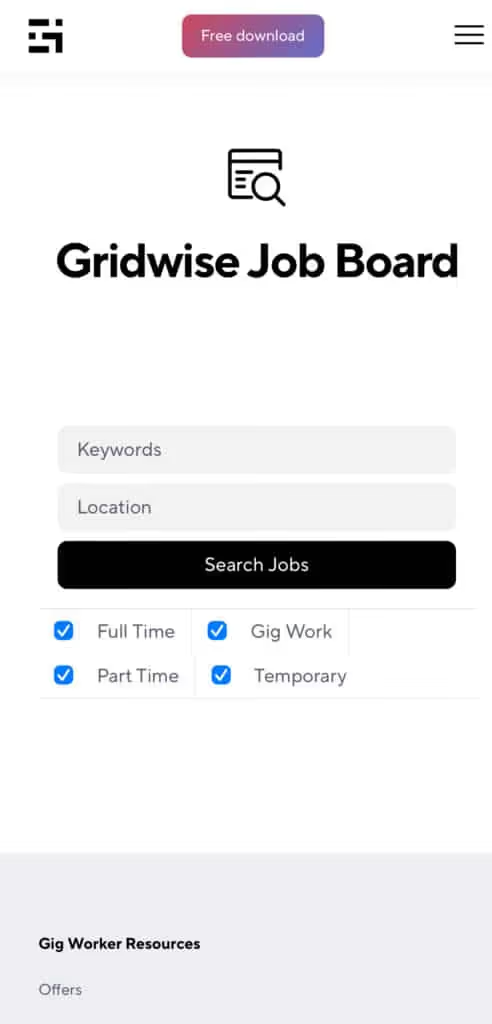
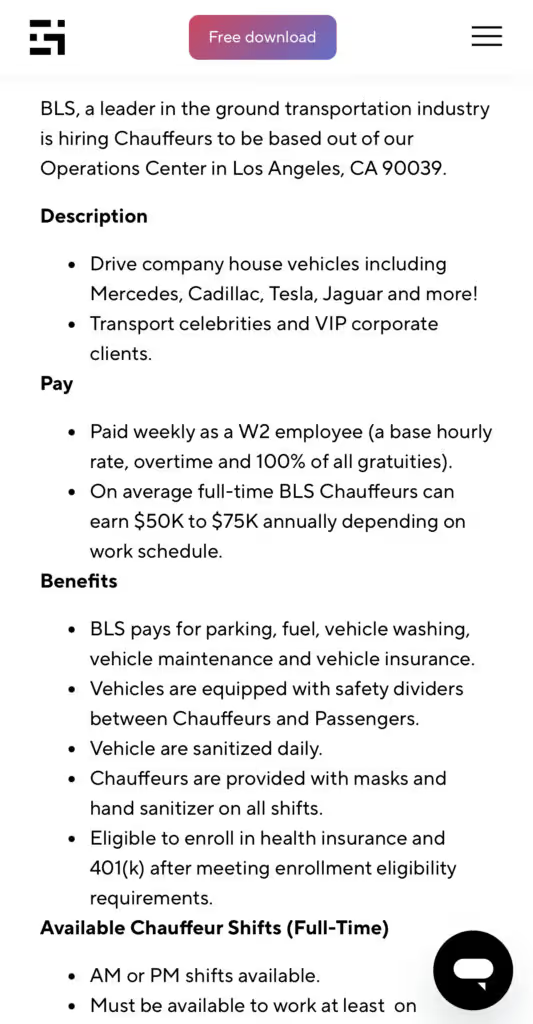
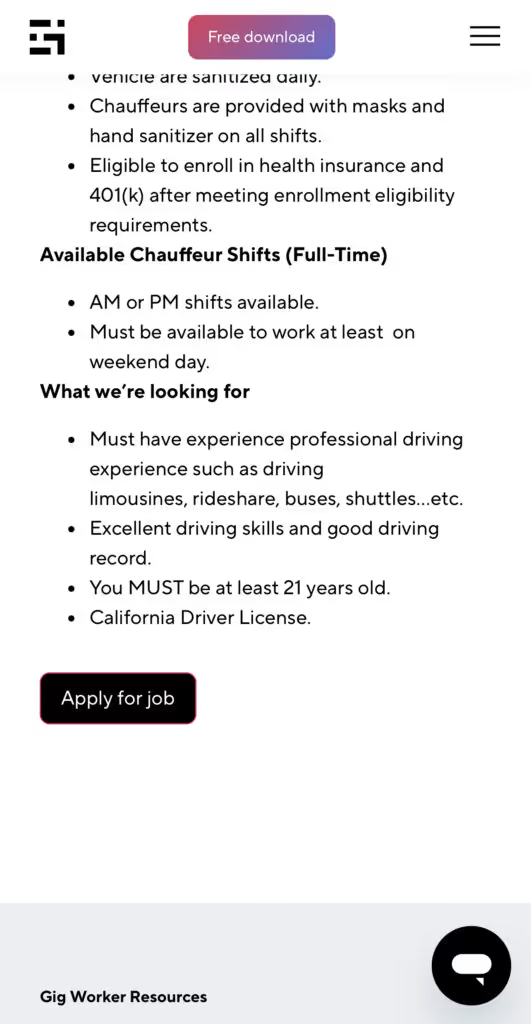
Many types of jobs are available. Adjust the search filter to see the full variety of opportunities that will let you cash in. Deliver food, set up catering, do rideshare driving, get paid for doing package delivery, and much more. You’ll find short-term gigs, long-term contracts, and part-time positions.
Perks of the Gridwise Job Board for gig workers
Gig workers who know how to make extra money will appreciate how the Gridwise Job Board lets you multiply your chances of bringing in big earnings. Here’s how:
- Increased stability. Use the Gridwise Job Board to find part-time or permanent jobs in addition to the part-time gigs you already have. Always keep a steady stream of earning opportunities flowing toward you.
- Flexibility and autonomy. Choose jobs that fit your schedule, work around other jobs and family duties, and still leave room for some fun in your life. Discover side hustles to supplement your full-time job, permanently or just for the season.
- Skill development. Find part-time work that lets you use a skill you already have, or try your hand at something new. It’s a smart way to develop a portfolio to showcase what you can do, or even to find permanent employment.
Get Gridwise and stay up to date on the Gridwise Job Board
Gig workers need plenty of information and assistance, and Gridwise is here to give it to you. Download the app and get essential features such as
- seamless earnings tracking
- mileage tracking
- expense recording, including notes
- low-cost and no-cost insurance benefits
- access to affordable medical, dental, vision, mental health, and alternative care
- professional services including legal and financial help
- deals and discounts
- weather, events, and traffic reports
- inside information on where and when to drive
[elementor-template id="20936"]
More to know about gig work:

5 Best Mileage Trackers For Gig Drivers
Many drivers ask, “Do I really need a mileage tracking app?” The answer is simple: only if you want to have an accurate count of all the miles you can legally deduct from your taxable income! You might think your rideshare or delivery driving app has got you covered. After all, they do quite a good job of logging the miles you drive while you’re on a trip or delivery. But, if you want to have the best app to track mileage for Uber, Lyft, Doordash, Instacart, or the other apps you may use, you need more. Why is that?
Without a separate tracker, you’re missing the miles you drive in between pings. Did you realize that all the miles you drive, from the moment you begin your shift until it’s over (as long as you don’t drive several miles on a break to hang with your friends), are tax deductible! That means you need something besides your driving app to keep an accurate count of your travels. Read this Gridwise post to see how important it is to keep track of every deductible mile.
You won’t be surprised to hear that there’s an app for tracking miles. In fact, there are several of them. Here, we’re going to tell you about five top mileage tracking apps, and help you figure out which one is best for you.
Before we get to the list and identify the best mileage tracker app, let’s clarify what exactly a mileage tracking app is. According to G2.com’s technology glossary, mileage tracking is done for the purpose of keeping a log of mileage that is either reimbursable or tax deductible.
And yes, of course you can track your miles simply by taking readings on your odometer. But are you really prepared to account for how many miles you drove for personal reasons and subtract them from the total to get your business mileage? Even if you can remember all that and do the arithmetic, if you want an accurate reading of the miles you drive for business, and can therefore deduct, a mileage tracking app will save you a lot of trouble and prevent you from making costly errors.
Plus, as a gig driver, you have specific needs when it comes to a mileage tracker. Ideally, you’d be able to handle mileage tracking and several other functions all in one app. It can be maddening enough to deal with driving apps, particularly if you’re an avid multi-apper. You would want your mileage tracker app to help you keep account of other aspects of your business, including income, expenses, and inside information about the art of gig driving.
Not all mileage apps are equal, to be sure! Let’s look at five of the best apps to track mileage and figure out which is the best app to track mileage with Uber and Lyft, or what mileage tracker app is best for DoorDash.
[elementor-template id="20891"]
1. Zoho Expense
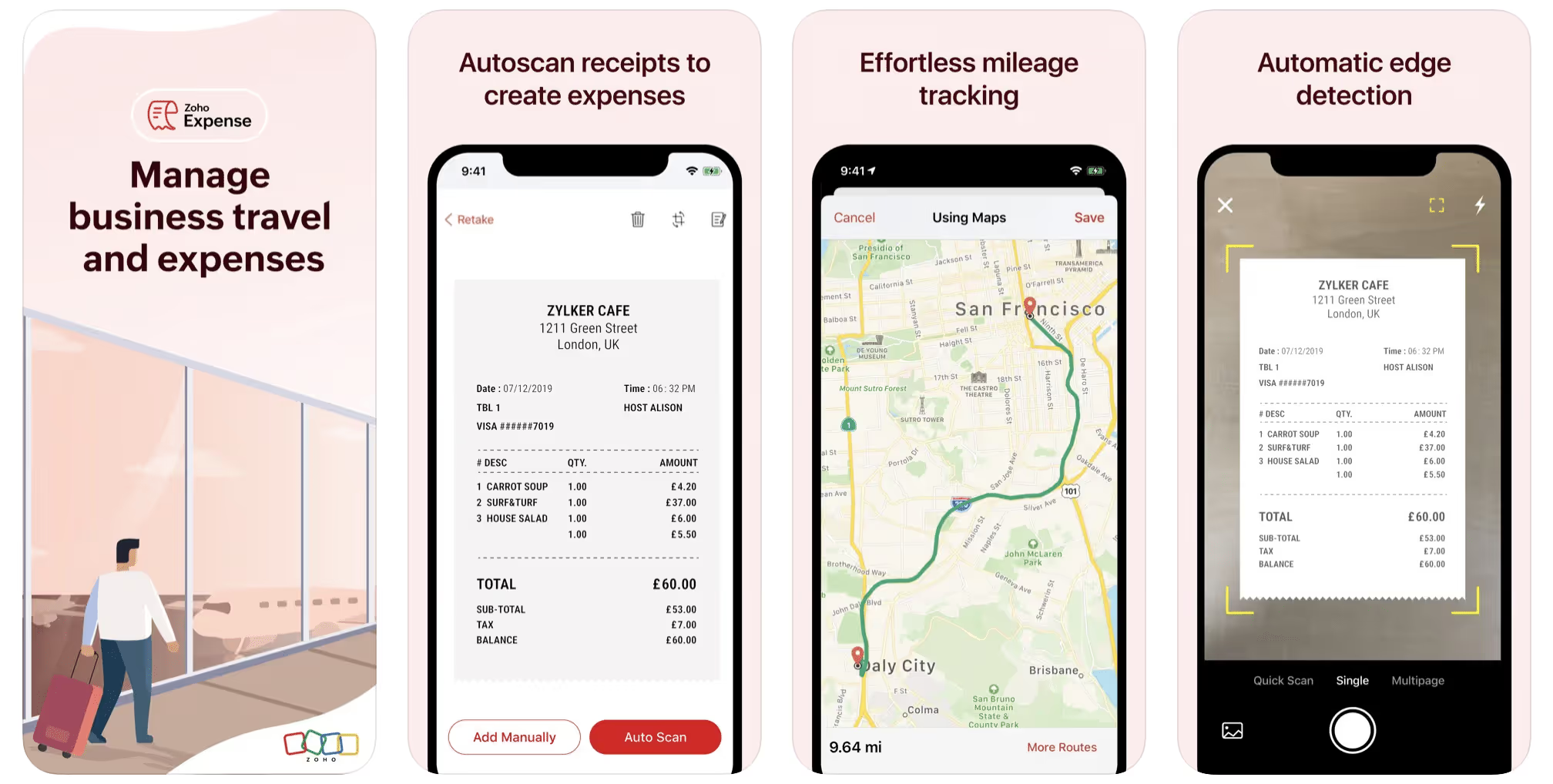
First up is Zoho Expense, which does exactly what its name says. This app is designed to allow companies to give employees a uniform way to create and submit expense reports. It can be used by individuals, including gig drivers, as well.
It includes a mileage tracker, as well as features that let you track other deductible expenses, including the ability to scan and record receipts.
Available on Android and Apple: Yes
Ratings: 4.8 stars on App Store, 4.7 stars on Google Play
Free Version: Yes
Subscription price: $3 per month, billed annually
Created specifically for gig drivers: No
2. Quickbooks Online
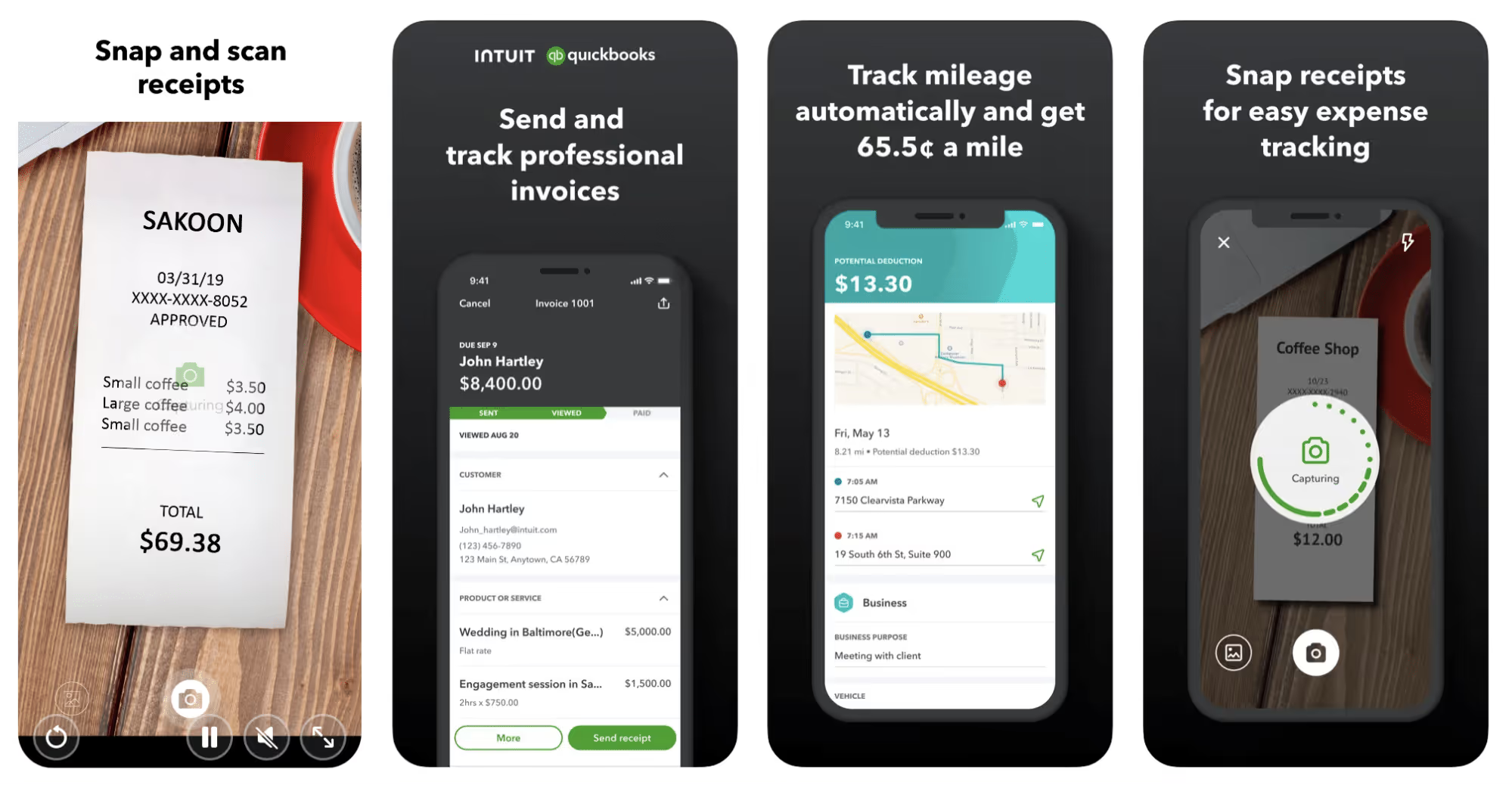
Quickbooks Online is a cloud-based app that allows you to track your mileage, earnings, and expenses. The information you enter can then be used to generate various reports that prepare you for tax time. It also allows you to create graphs that illustrate your cash flow, and includes a receipt scanner so you can instantly record deductible expenses. Quickbooks is popular, highly reliable, and designed mainly to help people keep track of their small businesses.
Available on Android and Apple: Yes
Ratings: 4.7 stars on App Store, 4.4 stars on Google Play
Free version: 30-day free trial
Subscription price: $15 per month for basic version if purchased for 3 months or more
Created specifically for gig drivers: No
Source: quickbooks.intuit.com
3. Shoeboxed
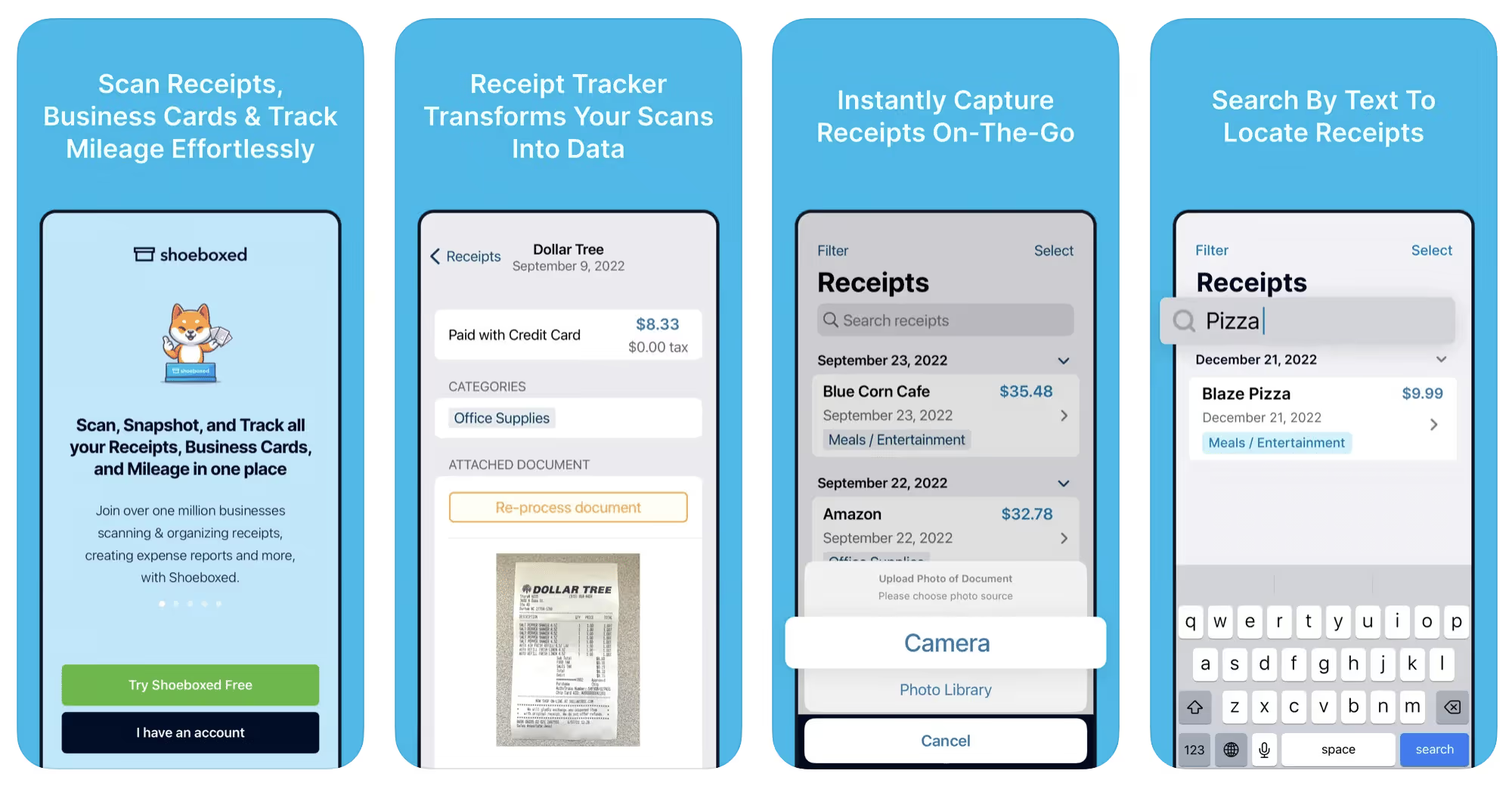
Shoeboxed started in 2007 as a service for scanning paper receipts into digital form. Now the app offers a free mileage tracker and has enabled users to scan receipts directly. It touts itself as the best mileage tracking app for DoorDash, but there are some elements missing that Dashers might like to have. While it provides features that record your expenses and prepare you for tax season, it doesn’t automatically track your earnings. The mileage tracker has a system where you can drop pins along your routes to make the tracking more precise, identifying those legs of a trip that you make for business purposes. The mileage tracker is “free” once you sign up for the basic version.
Available on Android and Apple: Yes
Ratings: 4.5 stars on App Store, 2.3 stars on Google Play
Free version: No
Subscription price: $18 per month for basic version
Created specifically for gig drivers: No
Source: blog.shoeboxed.com
4. Stride
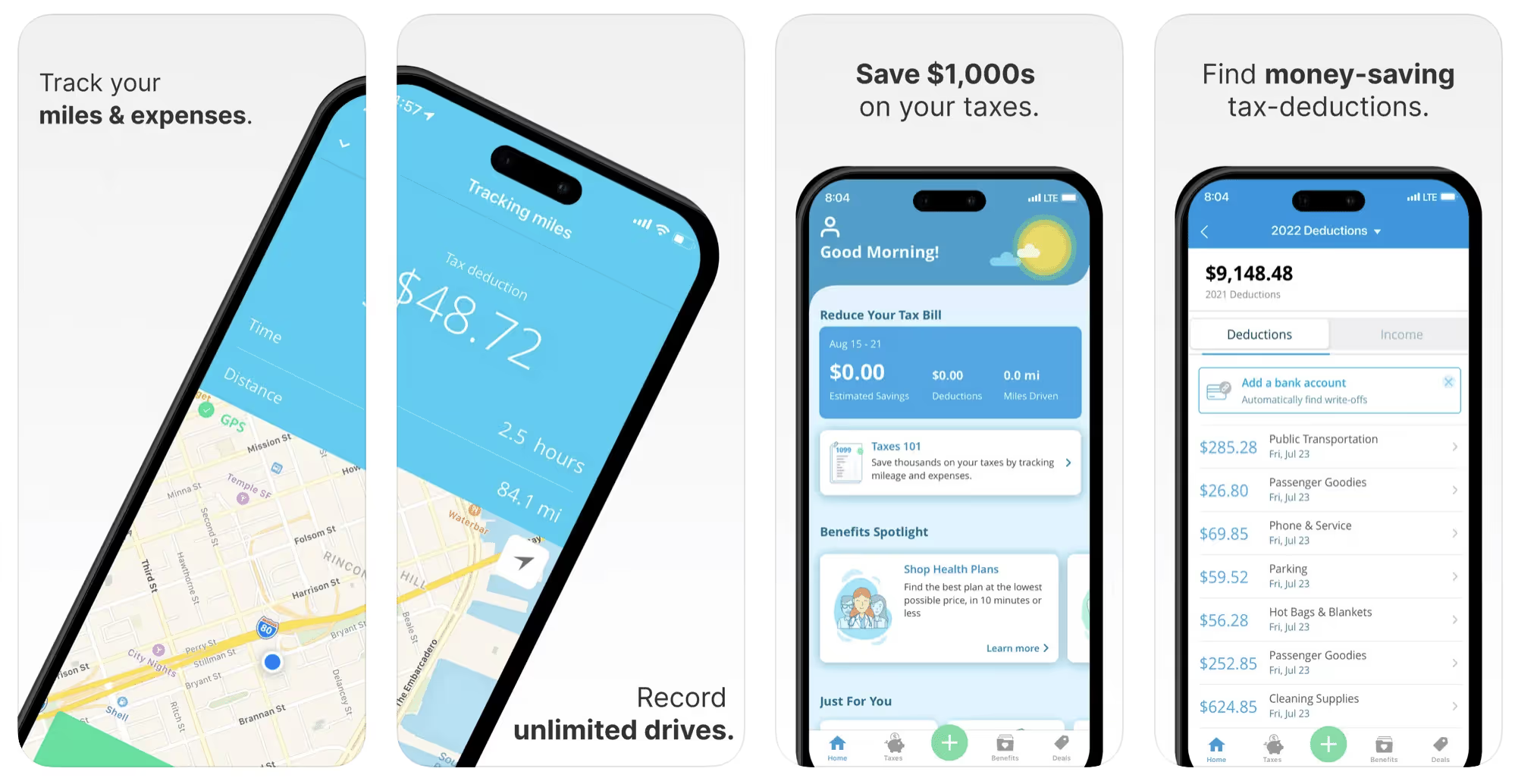
This free mileage tracker does a fair job of keeping track of the distances you rack up while gig driving, but it doesn’t automatically track earnings. It can be a big help, though, in tracking your expenses. You can link Stride to your bank account, and it will automatically scan your expenses to identify items you can potentially deduct. The app is totally free. This could make it the best free mileage tracker app, but there is a small price to pay. The app will persistently push you to consider various insurance plans that they are affiliated with. If you don’t mind that, this is a solid mileage tracker, even if it doesn’t track your earnings.
Available on Android and Apple: Yes
Ratings: 4.8 stars on App Store, 4.6 stars on Google Play
Free version: Yes
Subscription price: None. The app is free.
Created specifically for gig drivers: No
5. Gridwise
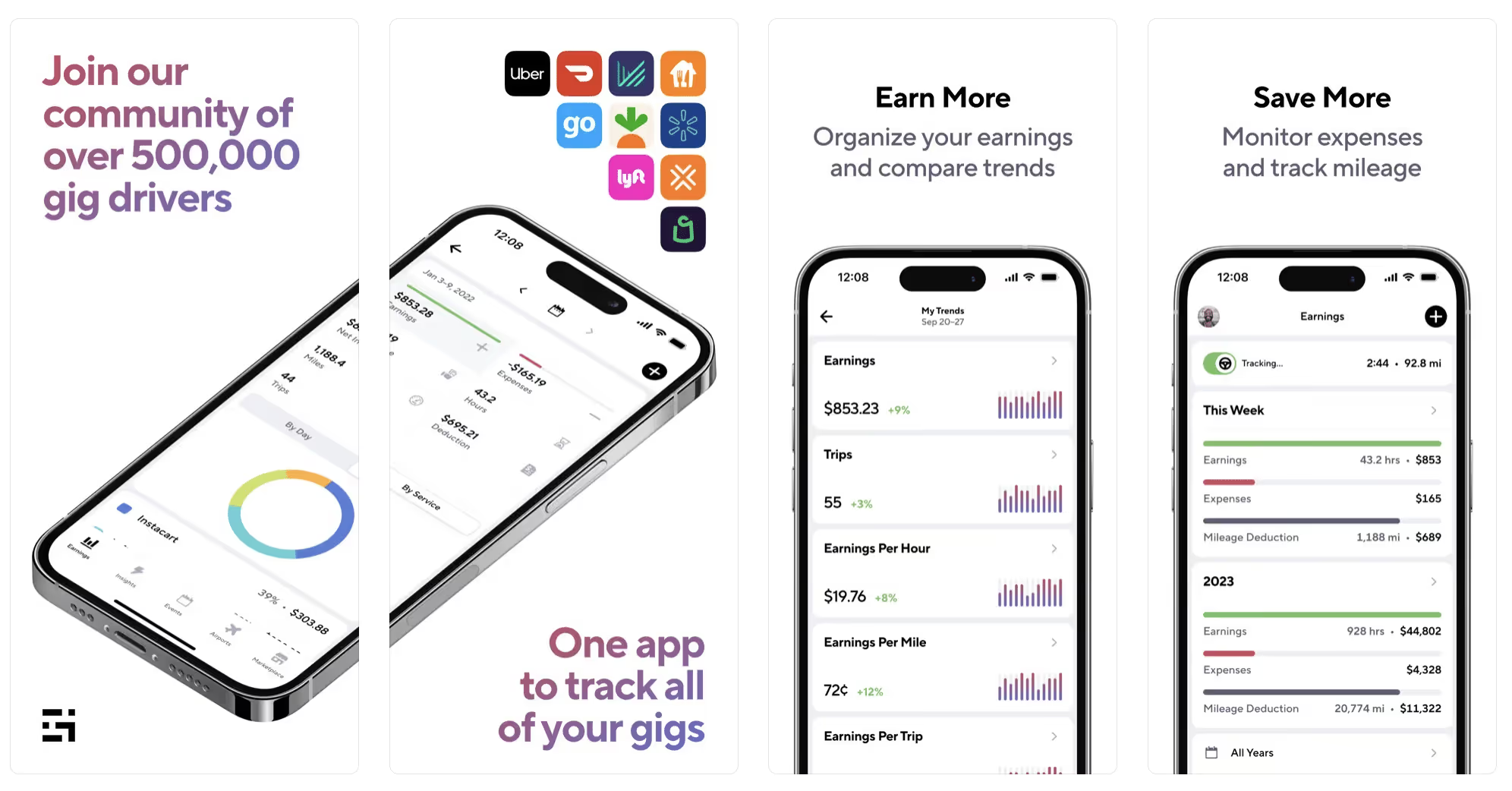
Gridwise has a free mileage tracker and free features that record your income and expenses. It gives you access to insurance and benefits, as well as insights about the best times and places to make the most money while gig driving. The Gridwise mileage tracker captures all the miles you drive while you’re on your driving shift, and it can be used if you have other trips you need to make which qualify as business travel.
Drivers love it because it is geared toward the needs of rideshare and delivery workers, providing free information about airport departures and arrivals, event start and let out times, weather, traffic, and more. The Gridwise Plus subscription adds value by providing additional insights and reports, discounts on benefits, the ability to export data in .csv format,, and more.
Available on Android and Apple: Yes
Ratings: 4.9 stars on App Store, 4.6 stars on Google Play
Free version: Yes
Subscription price: $9.95 per month for Gridwise Plus, or $95.99 per year (a $23.41 savings)
Created specifically for gig drivers: Yes!
What is the best mileage tracking app?
Now that we’ve checked them all out, we’re positive about the answer to that. Hands down, it’s Gridwise. Are we biased? You bet we are! But drivers love it too. Gridwise is the best mileage tracker app—and so much more. So many of the features are free, and the subscription to Gridwise Plus will pay for itself with additional insights to boost your earnings and deeper discounts on products and services.
Most important, Gridwise is designed specifically for gig drivers by experts who were once gig drivers themselves! Knowing what gig drivers need is a crucial step in creating an app that rideshare and delivery drivers can really use! Here are a few of the features, besides mileage tracking:
- seamless earnings tracking
- automatic, on/off toggle and manual mileage tracking
- mileage categorization
- airport, traffic, weather, and events information
- insights into where to drive and when to drive
- reports showing earnings across the platforms you use
- discounts on countless products and services for drivers
- additional resources for finding side gigs
- an informative and comprehensive blog
- affordable benefits, including insurance, medical, dental, and alternative practitioner discounts
- a community of drivers just like you
Don’t settle for just any app. Get the best mileage tracker, and so much more, from Gridwise!
[elementor-template id="21599"]

What Records Do Gig Drivers Need To Keep Track Of For Taxes?
* Gridwise does not provide tax, legal, or accounting advice. This material has been prepared for information purposes only, and is not intended to provide, and should not be relied on for tax, legal, or accounting advice. You should consult your own tax, legal, and accounting advisors before filing your return.
Record keeping? Who signed up for that? As a gig driver, it’s part of what you need to do to keep your business running. Don’t worry. It’s not as complicated as you might have been led to believe. This post will show you what you need to keep track of and the best ways to gather and preserve your tax-related records. We will cover
- How record keeping can help reduce income tax for freelancers
- Taxes and freelance work: Record keeping requirements
- Mileage tracking: Motives and methods
- More deductions and records to keep
- Make tax time easier
How record keeping can reduce income tax for freelancers
Tax time is not “fun time” for rideshare and delivery drivers. It’s easy to get used to watching your earnings pile up and come to believe they are all yours. Unfortunately, that isn’t the case. Gig work taxes can be especially painful because no one takes them out of your earnings for you, until the tax authorities insist that you do it for yourself.
You will need to show the tax authorities your income records, and they will gladly tell you to send them what they determine to be their fair share. Think that’s not fair? You’re not alone, but that doesn’t mean you’re going to get out of paying gig work taxes.
But you can find ways to pay the smallest amount that is legal and possible. The best way to defend yourself against having to pay astronomical amounts when you file your return is to know what expenses you can deduct from your gross income. When you subtract deductible expenses from your gross income, there is less left over to be taxed. This reduces the amount they can hit you with gig worker taxes. and can make your tax bill substantially lower.
While you want to keep good records so as to be in compliance with taxation entities such as the IRS, you also want to ensure you have proof of every last deductible expense you have accrued during the year. There are other records you must keep as well. Let’s look at some of the considerations you have, realizing that you now need to know how to do taxes as a freelancer.
Taxes and freelance work: Record keeping requirements
So many gig drivers fail to understand the responsibilities they have as independent contractors. Those who work part time for very few hours may even believe they don’t have to report the income they get from their driving gig payments. That would be a big mistake!
The company or companies you work for report your income to the IRS and state tax authorities. If you fail to report that income, you will risk some rather painful penalties. The IRS taxing side hustles is as much of a thing as the IRS taxing income from any other job. Your best bet is to report what you’ve earned, honestly and completely, and comply with other record keeping requirements such as
- gross income
- deductions and credits
- purchases (items you purchase and resell, such as snacks or bottled water)
- a log of all your mileage (or vehicle expenses, if greater)
- a list of all expenses and assets, such as utilities and other expenses associated with having a home office and equipment
- machinery and furniture you own, including when it was acquired, how much it cost, whether you previously took deductions on it, and selling price, if applicable (this includes your vehicle)
More things to consider:
- Pay attention to the retention of your records. You’ll need to keep all tax-return-related items— including income, deductions, and any tax credits reported— until the period of limitations runs out (3 years from date you filed, or 2 years from when you paid tax. If you have employees, keep your records for at least 4 years.)
- If you want to avoid paying self-employed taxes, you may want to set up a corporation or Limited Liability Corporation (LLC) for your business. This allows you to separate all your gig driving earnings from personal income, and permits you to take advantage of the additional advantages of working through a corporation. This includes exemption from self-employment taxes. You can learn more about how to pay self-employment taxes, if you opt for that, in this post from Keeper.
- You should always keep a separate checking account for your business, for convenience as well as clarity. While this is not a legal requirement, it is a smart move if you want to have an easier time managing your business.
- You are required, as an independent contractor, to file your taxes quarterly. Check out this Gridwise blog post for more information about quarterly tax payments and other matters that make filing delivery, Lyft and Uber taxes easier.
Mileage tracking: Motives and methods
Why you need to be meticulous about mileage
Mileage deduction, or the costs of operating your vehicle, will be the most important item to account for when you consider how to file taxes as a freelancer. While mileage is an important deduction for all independent contractors, as you might imagine, it’s even more essential for rideshare and delivery drivers.
There are two ways of keeping track of your mileage deduction. One is to use the IRS’ standard mileage deduction, which for 2022 is 58.5 cents per mile. This number takes into account the costs of operating your vehicle, from fuel and maintenance to registration, insurance, and depreciation. Alternatively, you can calculate all your own vehicle operating costs, but only after your first year of using the vehicle. You may discover that this second option allows you to have more money deducted from your taxable income. Learn more about the options for deducting your mileage in this Gridwise post.
No matter which way you decide to calculate the deductions for your mileage, you need to know what mileage you can and cannot deduct.
You can deduct
- miles driven to and from home when you go out to drive or deliver
- miles you accrue during your trips
- miles you drive on any other trips you make that are necessary as part of your business.
Examples:
- driving to return a lost cell phone or to an Uber Hub or another physical location where your company might make driver support available
- driving to pick up supplies, to get gas, or to have your car cleaned, serviced, or detailed, etc.
You cannot deduct
- miles you drive for personal trips
- miles for any trips you take that do not directly affect your business
Note: If imagining yourself becoming the not-so-proud owner of a shoebox filled with paper receipts gives you nightmares, stop worrying. Electronic records of purchases will satisfy reporting requirements. If you use cash, you can scan copies of your receipts, in some cases, right into your recording software or app. Gridwise and Keeper give you a simple to use interface that keeps all your receipts recorded without the messy pile of paper.
Mileage tracking methods
By now, you’re probably convinced that tracking mileage is important, despite all the other things drivers have to do. Now, let’s look at your options for keeping accurate records.
- Manual tracking: You can keep a logbook where you list every trip you make, starting and ending mileage, the date, and purpose of the trip. While this would work, it’s certainly not convenient. Besides, if that logbook gets lost, your plans for having a nice, fat tax deduction will go by the wayside.
- Spreadsheet: This is a bit more convenient and sophisticated way of tracking your business mileage. You’d need to be meticulous about making your entries, though. Even if you keep a spreadsheet app on your phone, it could be time consuming and inconvenient to keep doing it with all the other things going on in a rideshare or delivery driver’s day to day life.
- GPS-based mileage tracking apps: There are a bunch of apps that track mileage based on your GPS location, and most of them are pretty accurate and far more convenient than taking constant readings of your odometer. Your driving apps, such as Uber, Lyft, DoorDash, or Instacart, may also track your mileage, but be careful here. They will only track the miles you drive while you’re on a trip or delivery. They don’t count the miles you drive going to pick up a customer or when you make your move toward a restaurant or store.
Gridwise, on the other hand, will track all the miles you clock while you’re on your shift. All you need to do is make sure you start tracking the minute you leave home, and every gig driving mile will be logged. - OBD-II mileage tracking systems: There are plug-in modules that assess your vehicle’s mechanical health and track your miles. However, many authorities question the ability of OBD-II mileage tracking systems to get get accurate odometer readings. Insurance companies don’t consider them to be accurate enough gauges of odometer readings.
While mileage is a crucial deduction when you’re preparing your Uber, Lyft, or DoorDash taxes, it isn’t the only expense you’ll want to record.
More deductions and records to keep
Expenses you can deduct
You’re entitled to include the cost of other expenses that are directly related to your driving business. These include
- vehicle expenses
- equipment for your car and home office
- extra services and subscriptions
- business tools, including apps and software
You can learn much more about gig driver expenses that are eligible for deduction in this Gridwise article.
Ways to track and preserve deductible expenses
- The manual method: Just like you can with mileage, it’s possible to use a manual method, but in addition to logging each expense into a ledger, you would also need to keep physical receipts.
- Spreadsheets: You can record your expenses on a spreadsheet. This is somewhat less awkward than manually logging mileage, but there still will be plenty of room for failing to remember the case of water you bought for your customers, or losing the receipt from the thermal bag you purchased.
- Accounting software: You can use software that helps you track your expenses. This method usually interfaces well with any tax preparation software you or your tax professional might use.
- Gridwise: There are other apps that help you track your expenses, but Gridwise is designed specifically for gig drivers. It automatically tracks earnings and mileage, and lets you record your expenses the minute they come up. Gridwise’s partnership with Keeper gives you the ability to scan receipts and access a tax professional. This is a seamless way to record your expenses and a big help in learning how to file Uber taxes. Gridwise even provides .csv output, so you can feed your Gridwise data directly into tax preparation software. Check out what Gridwise and Keeper will do to super-charge your tax filing powers.
Organizing and categorizing expenses
Before you even begin to record expenses, you’ll want to set up categories for them. You can start by reviewing the categories listed above and checking out the Gridwise post that lists possible deductions.
If you’d like to learn more about how to categorize expenses, there is additional information available. This article from Motley Fool lists all possible categories any freelancer might use and also gives tips on how to customize them for your driving business.
One last tip
Using Gridwise, particularly for tracking mileage, is the easiest way to be in compliance with the IRS’ rules for deductible mileage. Gridwise tracks all the miles you drive for your gig, beyond what your company’s app might record. At the same time, you can log on and off Gridwise when you start and end your shift, so personal miles won’t be recorded. This eliminates confusion while capturing every deductible mile.
Gridwise Tax Help, a partnership with Keeper, has been created specifically to serve gig drivers. It provides affordable and easy ways to record expenses, scan receipts, and find deductions by analyzing your expenditures. Read about free resources from Keeper you can use to be fully prepared for tax season, and get all your earnings and expenses on the record.
Get the world’s best assistant for rideshare and delivery drivers, and tax help too.
Make tax time easier now!
The State of Rideshare in 2018: How Much are Drivers Really Making
The rideshare industry has come a long way since 2009 when Uber was first launched.
Dozen's of additional transportation companies have been launched including driver favorites like Via and Juno. New services like Uber Pool and Lyft Line have been championed, and unfortunately, driver fares for the most part, have gone down while the supply of drivers has skyrocketed.
These fluctuating rates and a rapidly changing industry have begged the question: How much are rideshare drivers really making? Well, over the past few months and years we've received a number of answers from various scientific studies and surveys that have come up with different answers to that question along with different reasoning.
We want to better understand what the economic landscape for rideshare drivers is, so we took a deep dive into the various studies of the rideshare industry to try to gain a complete understanding of how much rideshare drivers are making and WHY rideshare drivers make what they make.
The Studies
The Gig economy is one of the most heavily researched industries in the world today because of how little we currently know about it.
Questions like, what would happen if Uber dissolved, how does discrimination affect the gig economy, and what is the tax impact of the gig economy have economist rushing to understand who is involved and how it affects the macro and micro-economic landscapes. As a result, we can see public studies like these.
- The Gender Earnings Gap in the Gig Economy: Evidence from over a Million Rideshare Drivers
- 2018 Uber and Lyft Driver Survey Results – The Rideshare Guy
- 2018 MIT Uber earnings study
- Revised 2018 MIT Uber earnings study
- The Ridesharing Revolution: Economic Survey and Synthesis
- Labor Market Equilibration: Evidence from Uber
Each of these studies helps us piece together the past and present of the rideshare industry and gives us clues into the future of the rideshare industry.
Let's start our analysis of these reports by seeing how these reports answer everyone's most burning question.
How much do drivers make?
Over the past few weeks, Uber has found itself in a PR nightmare caused by MIT's initial study that claimed rideshare drivers made a mere $3.37 per hour after expenses with a whopping 74% of drivers making less than minimum wage.
In response, Dana Khosrowshahi, Uber's new CEO following the departure of Travis Kalanick, criticized MIT by calling it the University of "Mathematically Incompetent Theories" while noting that various other studies have significantly different findings.
MIT = Mathematically Incompetent Theories (at least as it pertains to ride-sharing). @techreview report differs markedly from other academic studies and @TheRideshareGuy recent survey. Our analysis: https://t.co/S2aAqCuDR0
— dara khosrowshahi (@dkhos) March 3, 2018
So who's correct here? Let's look at the data.
Driver Earnings Data
Various studies, reports, and surveys have found the following results:
- Rideshare guy 2018: $16.93
- Rideshare guy 2017: $15.68
- Stanford Pay Gap Study 2017: $21.07
- Princeton Labor Market Analysis 2015: $19.04
- MIT Study #1 2018: $3.37
- Revised MIT Study 2018: $8.55 - $10.00 (profit after expenses)
The differences in each one of these reports or studies can stem from a number of different factors including most notably when it was taken, who was in the sample, and survey method.
The clear outlier here is MIT's initial study that revealed that drivers were making on average $3.37 after taxes and was publically scrutinized by Uber's Chief Economist, Jonathan Hall in a medium post.
The issue that Hall pointed out in MIT's study was an unclear question which he claimed caused a $6 difference in total profit per hour.
See a deeper explanation of the claimed question error below:
The Rideshare Guy survey asks a number of questions about how much drivers earn and how many hours they work per week. The most important are questions 11, 14, and 15.
Q11: “How many hours per week do you work on average? Combine all of the on-demand services that you work for.”
Q14: “How much money do you make in the average month? Combine the income from all your on-demand activities.”
Q15: “How much of your total monthly income comes from driving?”
The problem, in this case, is inconsistent logic on the part of the paper’s authors. Consider this: for question 14, the authors assume respondents are reporting income from *all* sources, not just on-demand work. As a result of this assumption, the authors discount the earnings from Q14 by the answer to Q15, “How much of your total monthly income comes from driving?”
For example: if a driver answered $1,000 to $2,000 to Q14, the authors would interpret that as $1,420.63² according to their methodology. If the respondent then answered “Around half” to Q15, the authors conclude this driver made $710.32 driving — half what they actually earned from driving with ridesharing platforms.***
Stephen Zoepf, co-author of MIT's study, recognized that the criticism from the rideshare industry was, in fact, valid and made changes to his methodology. In his second attempt at analyzing these figures, MIT found that median after expense profit rose to $8.55 an hour.
Here is my statement regarding the recent CEEPR working paper "The Economics of Ride Hailing." pic.twitter.com/lHJkaB0frX
— Stephen Zoepf (@StephenZoepf) March 5, 2018
These figures are more in line with what previous studies have found such as those from the Rideshare Guy.
Given this data, we can see that earnings before expenses for rideshare drivers can range from around $15 per hour to $21.09 per hour according to these reports. This is an incredibly wide range, so what factors most commonly effect driver earnings?
Well, location is one of the largest factors in how much you make before and after expenses. A driver in New York has traditionally made as much as 2x more than what a driver in any other city has made. Hard city by city data has been difficult to obtain, however, we do have a 2015 survey from Sherpashare that found the following:
Aside from location, we can look to Stanford's gender pay gap study to help explain why some drivers make more than others.
Driving experience means everything
In my opinion, the most important graph for every rideshare driver to understand comes from Stanford's gender pay gap study. The graph plots total earnings against the number of trips a driver has given.
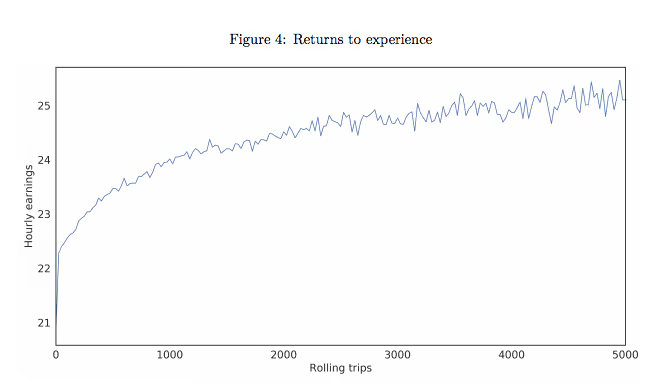
Stanford's study attempted to find out if there was a gender pay gap in the rideshare industry, and if so why? Well, the report found that there was a 7% difference in pay between men and women, however, this wasn't discriminatory in nature, it was based on experience and driving speed.
The study found that women are less likely to stick with Uber or Lyft for a long period of time. In fact, the 6-month attrition rate for women was 76.5% while the 6-month attrition for men was just 65.0%.
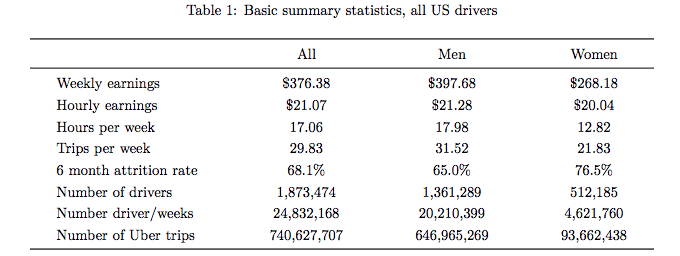
This means that women are less likely to obtain the amount of experience that a driver needs to be able to understand their city, find the best driving routes, times, and locations.
We can also see that in the Rideshare Guy's 2018 survey which finds that experience is a heavy factor in driver earnings.
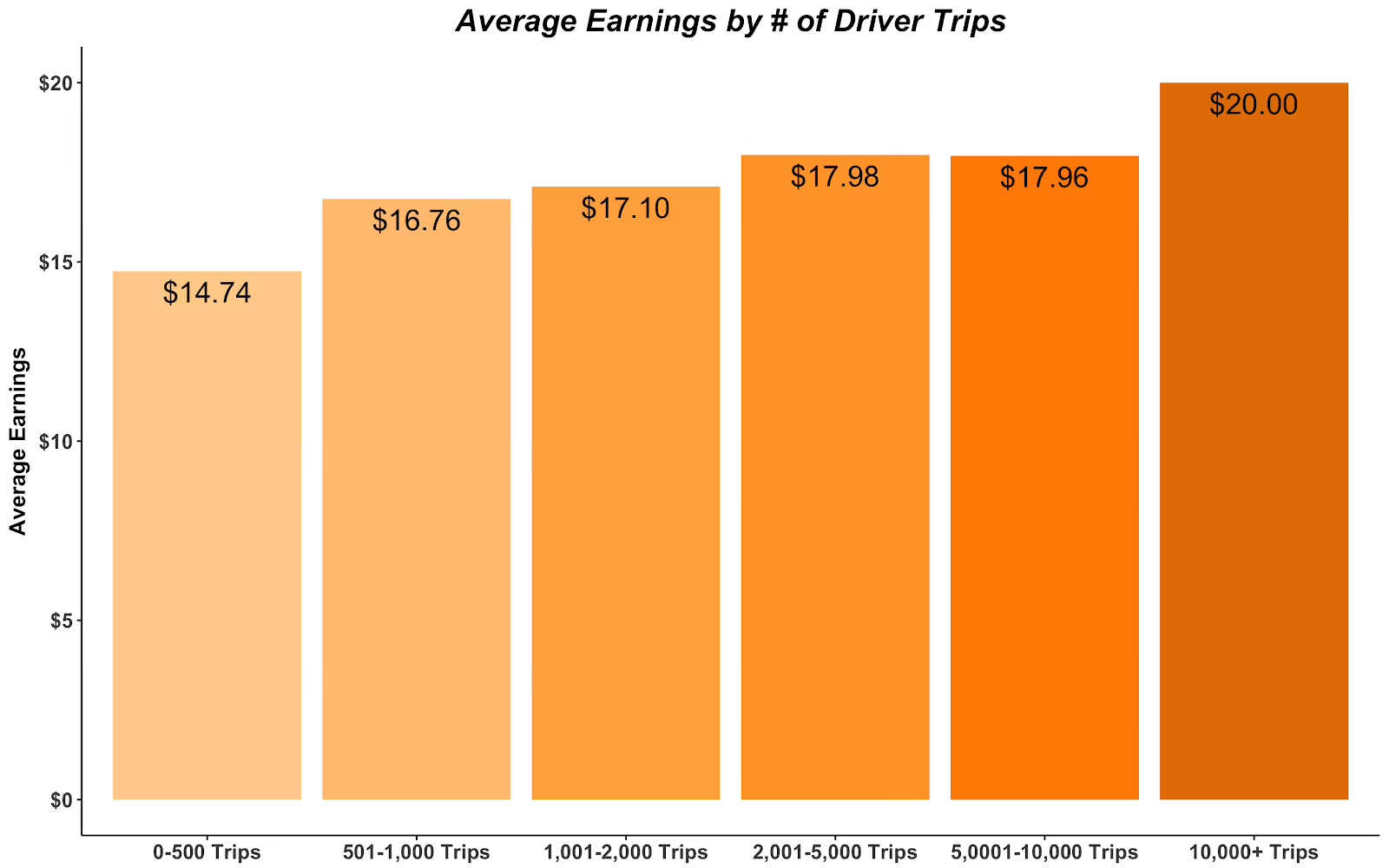
With a lack of experience comes significantly more downtime as a driver, which a study completed by NYU's John Horton with help from Uber's Jonathan Hall and Daniel Knoepfle, called “Labor Market Equilibration: Evidence from Uber" shows is extremely important.
Let me explain
Transportation companies have consistently and publicly reduced fares multiple times over the last few years. See a graphical representation of the fare reductions below.
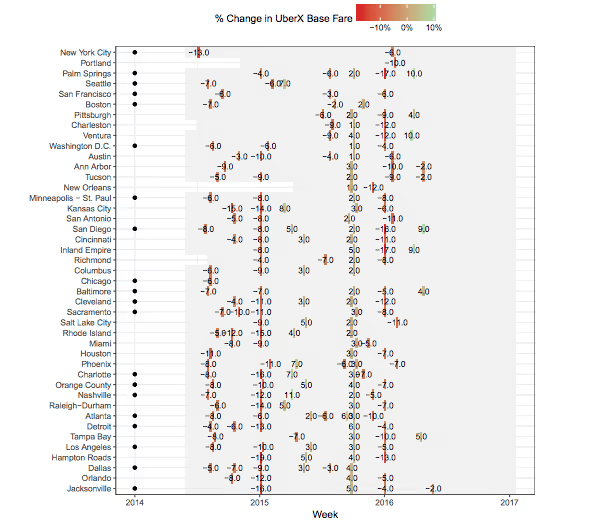
However, despite these fare decreases the Rideshare Guy's 2017 and 2018 surveys find that drivers are making slightly more. If we look at the two academic studies done by Stanford and Princeton, we again see that drivers are supposedly making more per hour despite fare decreases.
Why?
The study completed by NYU's John Horton with help from Uber's Jonathan Hall and Daniel Knoepfle, found that a change in the base fares had little to no effect on how much a driver gets paid.
This because of Supply and demand.
When fares decrease, drivers may be paid less, but there is also a flood of riders on the system which results in more available rides for drivers. If fares increase, drivers get paid more, but passengers are scared off and will find other ways to travel.
The bottom line is that when transportation companies decrease fares, driver earnings ARE NOT likely to change because drivers spend significantly less time idle than they otherwise would.
This shows that preventing idle time by understanding where you are driving will do more to increase your earnings per hour than almost anything else.
Stanford's gender pay gap study takes this even further by noting that how fast drivers travel during trips can significantly effect earnings.
Men on average drove faster than women, which means they were able to drive more miles with passengers. This resulted in men having more trips per hour and making more per hour. This is likely again due to men on average having more experience behind the wheel.
What can drivers do to stay ahead?
Now that we know how much the average driver is making and why, we can look at how drivers can stay ahead of the curve.
1. Don't sweat price hikes and increases
As we saw in a labor study report conducted in part by Uber's own Chief Economist, rate hikes, and decreases do little to effect a drivers earnings. Uber and other ride-sharing services understand that they must rely heavily on incentive payment programs like "quests" to increase driver earnings.
2. Do take advantage of bonuses
Just as the rideshare companies understand that incentive programs are the biggest factor in increasing driver income, so should you. When you have a bonus or quest opportunity that does not interfere with you making your normal amount, take it.
3. Focus on open roads
It can be tempting to always drive in downtown areas, however, if traffic is bad that may not be the best option. If the amount of traffic is slowing you down and decreasing your trips per hour, you're likely to find more success driving in another area even if that means driving Pool/Line or accepting shorter rides.
4. Track every last mile
What has often been missed in MIT's study is their reporting that up to 74% of a drivers income can go untaxed.
From the study:
On a monthly basis, mean profit is $661/month (median $310). Drivers are eligible to use a Standard Mileage Deduction for tax purposes ($0.54/mile in 2016) which far exceeds median costs per mile of $0.30/mile. Because of this deduction, most ridehailing drivers are able to declare profits that are substantially lower. Mean drivers who use a Standard Mileage Deduction would declare taxable profit of $175 rather than the $661 earned. These numbers suggest that approximately 74% of driver profit is untaxed.
This goes to show the extreme importance of tracking every last mile. Not just what Uber or Lyft sends you, not what you estimate, but every last mile that you are driving for a transportation company.
5. Drive smarter faster
As we saw time and time again when reviewing these various reports, driving experience is paramount. It is very difficult to be a profitable driver if you don't have a keen understanding of where to drive in your city and when to drive in your city. New drivers can use Gridwise to help them immediately understand their city while also taking cues from blogs like this one, Ridster and The Rideshare Guy, along with city-specific Facebook groups and forums like UberForum.
Now we're curious, are you seeing earnings in line with these various reports? What do you think is the biggest factor in your earnings success? Let us know in the comments below!
Is Traveling to a Larger City to Drive for Uber Worth it
Every now and then we come across a rideshare driver with a unique strategy that works well for them and their specific situation.
One of the most unique strategies that we have come across is used by a Gridwiser named Vegas.
Vegas is a D.C. area driver who drives the normal routes in the DMV. He frequents Dulles and Ronald Reagan airports, stays downtown for the rush hour, and sticks to the bars during late nights.
So what's unique about Vegas' strategy?
Well, Vegas lives in Newport News Virginia which is about 170 miles away from the District of Columbia. He, along with a team of 2 other drivers head to the D.C. area every week to drive.
"We pack up Thursday morning very early, around 3:00 am so that we get to near D.C. around 6:00 am." Says Vegas. "From there, we decide what airport we want to go to and just flow from there."
Why would you drive so far?!?!
Our first question, and I'm sure your first question when reading this article is why would you drive so far just to drive Uber? Well, to answer that question you have to know a bit about Vegas and why he drives.
Vegas, is a man that cares about his family who reside in Newport beach, so he likes to stay close. However, he also craves the freedom and flexibility that being a full-time rideshare driver provides.
And he's not afraid to put in some long hours to keep that freedom.
Newport News isn't a large city by any means so there just isn't enough demand to make sure that Vegas makes what he needs to on a weekly basis. So Vegas decided to take manners into his own hands.
"Instead of just waiting around for a ride in Newport News, we spend 2 or 3 days at a time to travel to D.C., drive hard, hit our numbers, and head home." Says Vegas.
As you would expect that leads to some long hours and a night or two sleeping in your car, but also a few really fun nights with his fellow drivers.
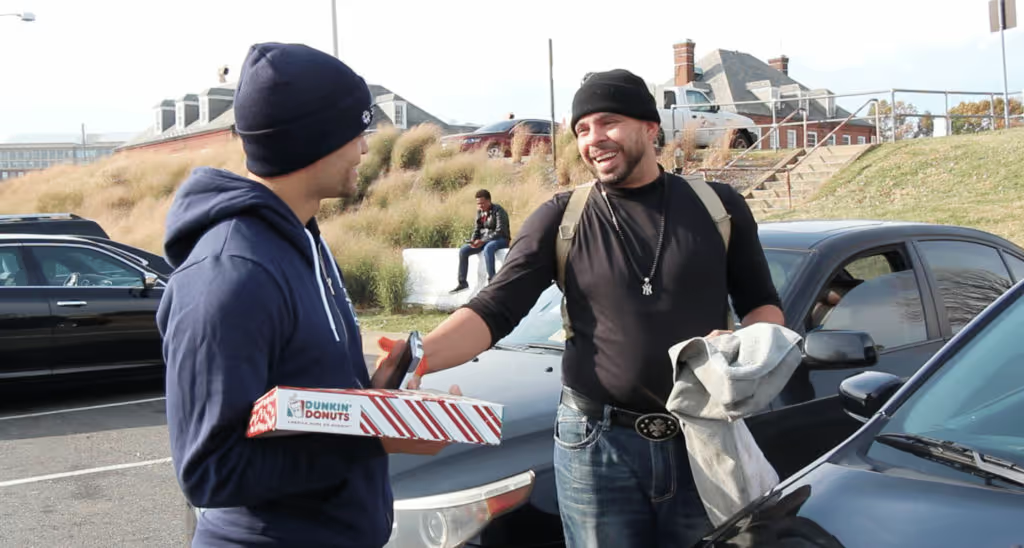
Vegas and his crew work hard, but they have a great time together
Do rideshare companies allow drivers to drive in other cities or states?
Another question we had when we first talked to Vegas was how exactly he managed to drive in multiple states with Uber and Lyft.
We knew that once a driver signs up to drive in city that he or she can drive in any city in their home state, but how do you cross state lines and drive?
Well, it turns out that Uber doesn't usually allow this. However, in certain areas where there is a lot of cross traffic like D.C., they will allow you to cross state lines for both drop-offs and pickups. Other transportation companies like Lyft will allow drivers to pick up and drop off passengers without incident across state lines.
Because Vegas and his team are Virginia drivers, they can travel all the way up to D.C. and Maryland and successfully pick up passengers.
What about insurance?
Here is where things get a bit tricky. Most insurance companies work on a state by state basis, so if you decide to drive in another state and Uber or Lyft allow you to drive in another state, that doesn't mean that your insurance company will cover you.
Many areas with a significant amount of cross traffic like the D.C./Maryland/Virginia area will build in cross state coverage, however, this is something that you would want to individually double check.
The Rideshare guy has a great list of insurance agents that specialize in Rideshare Insurance here.
How does they do it?
If you're going to drive 170 miles just to start working, you better come with a strategy, and Vegas and his team have built one that relies heavily on airports.
When Vegas starts to get close to D.C. at about 6:00am, he turns on Gridwise and figures out what airports have the most passengers coming in and the smallest queue, and that's where they head first. From there, he will focus on the morning rush hour downtown, and then meet with his team for a break at lunch before the afternoon rush hour.
If there is ever a lull in demand Vegas will look to Gridwise's airport demand feature to see what airports are peaking so he can head in that direction.
What's great about working with another driver is that you have each others back. That means that if one driver isn't getting any pings and another driver is in the middle of a surge, he can let that driver know that there is a real surge going on and that he or she should head in that direction. Working with another driver also means that if something happens like a flat tire or a dead battery, you have someone to call to give you a hand.
Is it worth it? Who should be using this strategy?
Even if you can drive across state lines, or to more populated cities in your state, that doesn't mean it will be the best strategy for you.
Vegas is in a unique position where he is able and willing to make the trek up to a larger city while also really needing to in order to meet his weekly quota. However, if you were driving in a city like Ft. Lauderdale or Tampa and considering a drive to Orlando or Miami, that may not always be worth it, unless there is a special event that you want to drive.
For instance, drivers in Atlanta frequently make the trip to Athens to be around for Georgia football games on Saturdays in the fall. This is worthwhile because Georgia football games aren't just a single event. They are an all-day marathon of tailgates, parties, and then the game.
If you're in a city that has a good amount of demand, it's probably not going to be worth your while to chase demand to other major cities. However, if you want to be in town for a certain event. That can certainly be an attractive option.
What's your strategy?
We love a unique driving strategy and the hustle that it takes to head all the way up to D.C. from Newport News is commendable. But now we want to hear from you guys, do you have a unique driving strategy? Let us know in the comments below!
Estamos regalando $100 a un conductor de rideshare cada semana
Los precios de la gasolina siempre están subiendo.
Y las empresas de transporte no están exactamente reembolsando a los conductores de rideshare ni aumentando el pago cuando llenar el tanque cuesta $55 en lugar de $45.
Queremos ayudar a poner dinero de vuelta en los bolsillos de los conductores de rideshare, así que estamos regalando una tarjeta de gasolina cada semana a un conductor de rideshare en el Sorteo de Tarjetas de Gasolina de Gridwise.

Espera... ¿Pero cuál es el truco?
Todo lo que necesitas hacer es registrarte para recibir una calcomanía GRATIS para tu auto de Gridwise, colocarla en tu auto, y luego tomar una foto con ella y enviárnosla.
Mira las fotos de nuestros ganadores de febrero:

Todo lo que necesitas hacer es completar este formulario [concurso finalizado] y te enviaremos una calcomanía para auto 100% gratis. Se ve así:
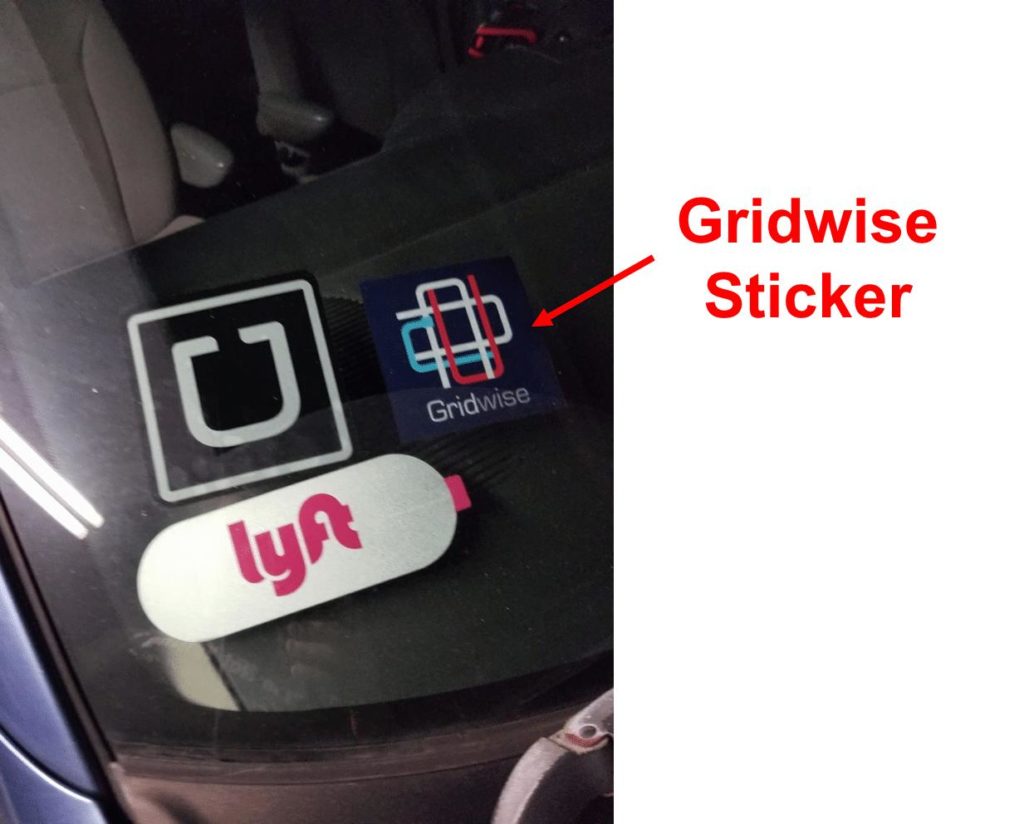
También puedes ver la calcomanía en las fotos de nuestros ganadores arriba.
Tendremos un ganador por semana, ¡así que apresúrate y participa mientras tus probabilidades aún son ALTAS! ¡Regístrate usando el enlace de abajo! [El concurso ha terminado]
[Update 2018!] Rider Interaction Strategies for When You're Stuck in Traffic
For many drivers, the absolute best part of the job is interacting with passengers.
Yes, we are in this to get paid. No, there is absolutely zero chance we would be doing this if we didn't see the direct deposit hitting our bank accounts. However, on a day to day basis, getting to know new people can be the most rewarding part of the job.
I recently got a chance to sit down and talk to a Philadelphia area driver named Valery who had just been driving for about two months but was already full of stories.
Valery drives on the south side of Philly and often finds herself with college-age passengers that are more than willing to open up, especially on a longer ride. One rider, in particular, was having a stressful day and Valery lent him her ear.
"We're kind of like bartenders." says Valery, "He was stressed about balancing classes and working and I just provided an ear."
After cathartic ride where Valery just listened and provided a few words of wisdom, she received her biggest tip to date, $20, and a hug. Valery says the tip was great, but the hug was what made her day. "I'm sure I'll get lots of tips, but it's not every day you can make a real impact on peoples lives."
Now, most drivers aren't measuring success by the number of hugs they give throughout the day, but we do appreciate meaningful interactions like these.
So in today's blog post, we're going to look at a few ways that drivers can have meaningful interactions with their customers that can lead to hugs, and maybe even a few tips!
Check their body language
Right after you confirm the identity of your passenger, take a few seconds to read their body language.
Is your passenger on their phone? Do they have headphones in? Do they look frantic? Try your best to understand the state of the passenger so you know how to move the conversation forward.
If the passenger looks a bit frantic like they may be in a rush, go ahead and ask them if they are in a hurry and assure them that you'll do your best to safely get them to their destination as quickly as possible.
Gauge their willingness to chat with small talk
Regardless of the passenger's body language, everyone isn't up for a conversation and you don't need to try and force one.
We’ve all been in the situation where we’re forced into a conversation we do not want to have. Think about the last party you went to that had people you don’t know. Even if you were invited by your friends, there was a chance that you’d end up stuck in a conversation that you didn’t want to have. It sucked, didn’t it?
Now, imagine that you’re stuck in a mid-sized sedan with a well-intentioned stranger who is trying a little too hard to force chit-chat. On top of that, you’re stuck in this car for longer than you expected because of traffic.
Don’t put anyone in that situation who doesn’t want to be in that situation. You should never feel like you absolutely need to break the ice.
Along the same lines, be ready with basic small talk responses if the customer reacts positively to your comments. Knowing how to really engage in small talk is paramount if you’re pushing for that extra tip, but can also help to increase your positive reviews.
Here are a few topics that are always great:
- Talking about the weather is always a great way to break the ice
- What's going on with the local sports team? If your passenger looks like they are into sports (Have a sports shirt, jersey, or hat) then talking sports is a great way to connect
- Does your passenger look like a tourist? Give them some information about the city. Let them know of great places to eat, drink, or have a good time
- Speaking of places to have a good time, if you're a Gridwise user you can let your passengers know of any events that you think are cool around the city by checking the event feed
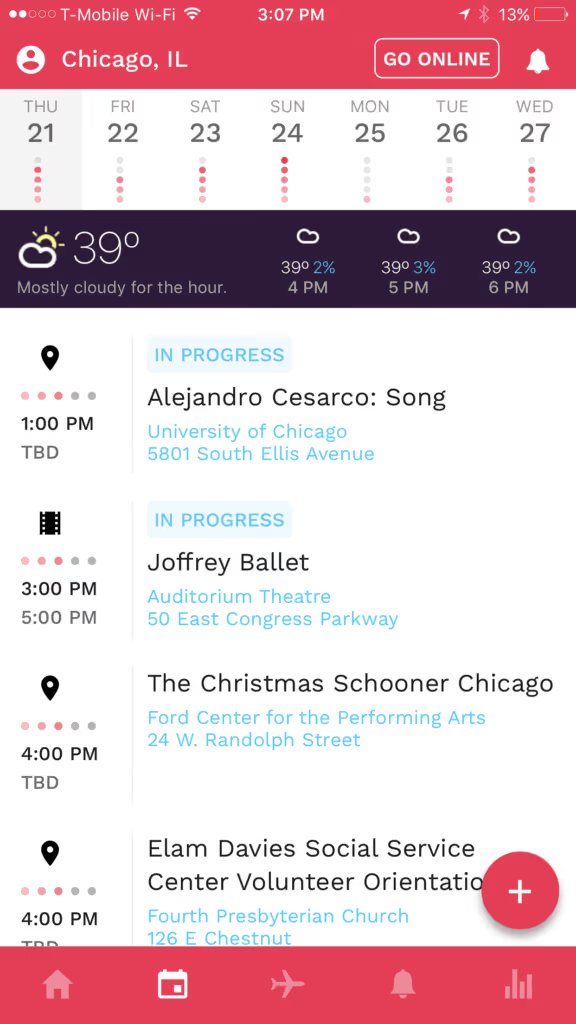
Is your passenger looking for fun? Use Gridwise to let them know what's going on around town!
Don’t be afraid to sit in silence
Silence is golden, or so they say. It may seem like a simple concept, but it can be stressful! Sitting in traffic with only horns and engines sounding in the background can be unnerving for sure. Don’t sweat it too much, though! Remember: they requested an Uber to get from point A to point B.
Tell us more about the rider interaction strategies you take when talking to customers in the comments section below!
The Rideshare Drivers Guide to Express Pool
During a recent trip to Chicago, I had the opportunity to chat with a few drivers about their experiences with Uber Pool, and they were interesting, to say the least.
You see, when Uber Pool and Lyft Line were first made available, many passengers choose to use these services without fully understanding exactly what they were.
So when they found out that they were not headed to their destination, but were actually going to pick up another passenger, riders reacted a bit like this:

One driver, we spoke with told a tale of a passenger that furiously yelled at the driver when they found out they were not getting dropped off first, and just became more infuriated with this driver after he explained that this was an Uber Pool ride and the order of dropoffs was out of his control.
After finally dropping this passenger off, the driver was notified of not just a 1-star rating, but the passenger reported them for being unprofessional!
If you're a driver then you know this was a common occurrence when Uber Pool was first released. So many drivers are a bit apprehensive about Pool Express, how it will be received by passengers, and how it will affect their pay.
We took a deep dive into Uber Pool Express and in this blog post, we're going to take a look at what Pool Express is, who can use it, and how it's resonating with riders and drivers alike.
How does Pool Express Work?
Uber Pool Express works very much like Uber Pool. Instead of driving one party, you will be matched with multiple parties that are headed more or less toward the same area.
Uber's app will automatically match you with parties and decides who will be dropped off first, second, etc.
The difference between Pool and Express Pool is that Express isn't a door to door service. There is a set location that is likely a few blocks away from your passenger's original location. This means they will need to do a bit of walking to come to you, and you will just be dropping them off at a designated location.
Uber claims that "With Express POOL, you'll earn the new flat fare for every added pickup stop, in addition to your usual POOL rates."
Uber Pool isn't available everywhere yet. The service has been available in San Francisco and Boston since last year and has just been released to Washington, D.C., Los Angeles, Miami, Philadelphia, San Diego, and Denver, with many more cities on the way.
So if you're in a large city, you should plan on needing to deal with Pool Express eventually. Though, you can, of course, opt out of Pool Express.
What do Passengers and Drivers think about Pool Express?
For rideshare drivers, it's important to stay on top of consumer sentiment for the services we provide. When someone is getting in your car, you want to know what their likely attitude is going to be.
For Pool Express, that sentiment has been mixed with the majority of people asking, is this just a bus service?
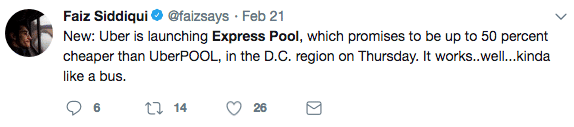

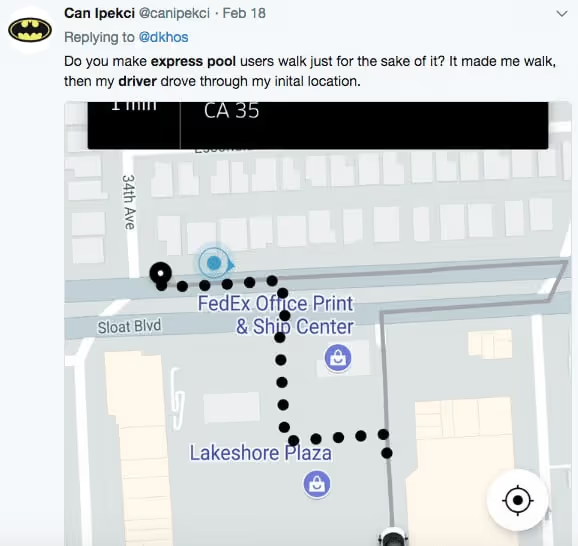
Many wondered whether it made sense to take the time to walk to the stop:

While some were optimistic for the future:


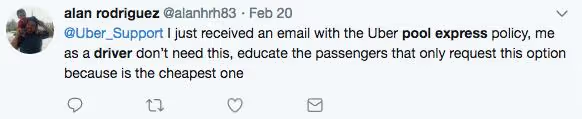
Drivers, on the other hand, are more concerned:

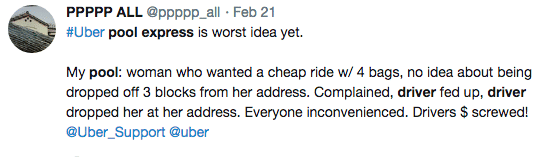
Many drivers just want Uber to ensure passengers know what they're are getting into:
What are the pros and cons for drivers?
While the sentiment is mixed, there are a few clear pros and cons for drivers.
Pros:
More trips: Yes, Pool Express would offer shorter rides that would not pay as much as a normal UberX but drivers will almost certainly get more overall pings
Easier to hit incentives: If you're going for a bonus, hitting your ride quota will be easier if you are getting more pings with Pool Express
More overall demand: Many have speculated that Uber's entire Pool service is intended to attract passengers that would otherwise not use Uber at all and stick to other Transportation Network Company's (TNCs). If this is true, that means more overall demand for drivers. Learn about what top rideshare services drivers are using.
No door to door: It can be a pain to search for passengers and find their exact drop off location, so not having to do that will certainly save drivers time
Cons:
The cons around Pool Express revolve around a number of uncertainties and issues that drivers will likely face at one point or another.
Will passengers know what they are getting into?: The big problem with Uber Pool, in the beginning, was that passengers didn't know what they were getting into. Many drivers ended up with angry passengers that were in a hurry. Uber must properly educate passengers.
Will passengers be on time?: If Express Pool is intended to save drivers time, then passengers must be on time. Will, passengers, end up making drivers wait even longer because they need to walk to their destination?
How will this affect overall pay?: Pay is a huge uncertainty right now and Uber has given little guidance about how Express Pool's pay will actually be structured.
What does this mean for UberX or UberBlack even?: Does this mean drivers will see even fewer UberX rides? Will this mean UberBlack will almost completely be eliminated?
How should drivers approach pool?
There are quite a few uncertainties around Express Pool for drivers right now, so the best thing to do is to test the service for yourself and monitor your metrics carefully.
I would suggest taking a few days where you focus completely on Pool. Track your mileage, trips per hour, and overall profitability and compare it to when you are not driving pool.
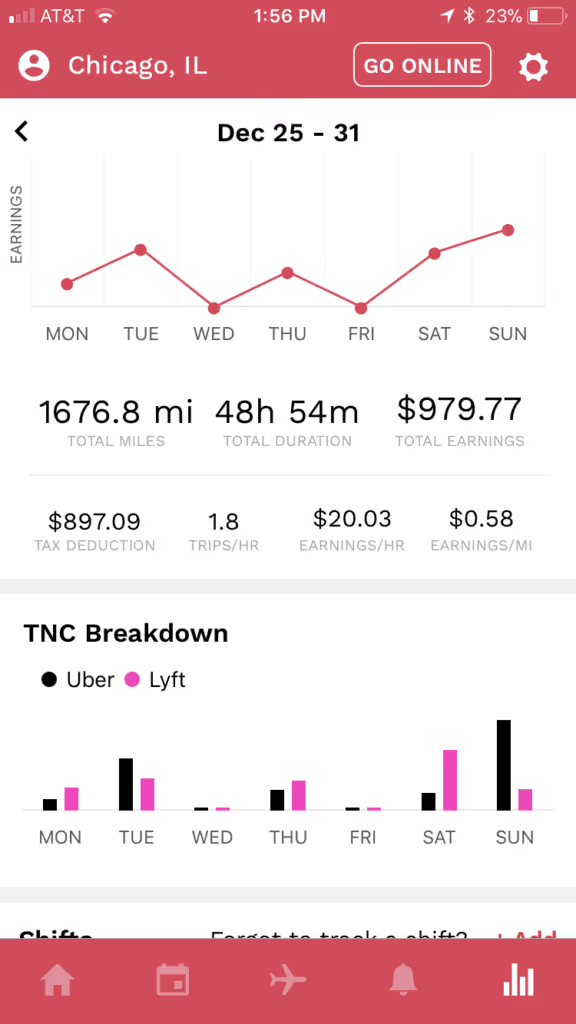
Track your metrics with Gridwise!!!
After a few days, you'll be able to see exactly how profitable the new service can be for you.
Talk to passengers
When you get a Pool Express ride, make sure that your passenger knows that they are in a Pool Express and knows what it entails before you set off.
That means confirm their name as usual, ask them if they know if they are taking a Pool Express, and let them know that you'll be picking up other passengers and dropping them off a few blocks from their location.
Don't be swayed to go door-to-door
Inevitably you'll have passengers that call you and ask you to pick them up at a different location. Don't do it, stay stern and disciplined.
This goes for drop-offs as well. As long as the dropoff location is safe, ONLY drop passengers off at the drop-off point. If they complain, make sure they know that you are not allowed to drop Pool Express passengers off anywhere but at that exact location.
Use it to hit your weekly incentive
The very best use case for drivers with Pool and Pool Express will likely be for hitting your incentives. With more passengers using Pool, a smaller pool of drivers doing Pool Express, and shorter trips, you'll receive more pings more often which will help you hit your bonus.
Only Time Will Tell
Right now, Pool Express is an uncertainty for drivers. We'll be talking to drivers and analyzing how Pool Express is affecting demand over the coming months and will be reporting best practices back to you.
In the meantime, test the service and let us know your thoughts in the comments below!
Uber says women in the rideshare bussiness are paid 7% less than men. Here’s how Gridwise helps
Uber has not had the strongest PR year, especially when it comes to women’s rights. The company has been embroidered in controversy and legal suits that ultimately helped dethrone Travis Kalanick from the Uber throne.
So when I heard that the company had invested in a Stanford led study to analyze the gender pay gap in the rideshare market, I braced myself for the worst.
What Stanford found was actually, not as egregious as one would have thought. The study did find that women are on average paid 7% less than men, but that number is considerably less than the average of 12% across all jobs in America.
You can attribute these above average gender pay figures to a market that TNC’s like Uber, Lyft, Via, and Juno tightly control. Drivers are of course paid a fare according to a completely fixed and non-negotiable formula that is consistent across a particular city. In the rideshare market, there are also significantly fewer instances of discrimination than in the broader job ecosystem.
In the rideshare market, discrimination can only come in the form of rider cancellations, and only about 2.1% of the gender pay gap is a result of passenger cancellations.
So the question then turns from, what is the pay gap, to what is causing the pay gap?
What is causing the gender pay gap?
One of the biggest reasons for the gender pay gap can be summed up in the table below:
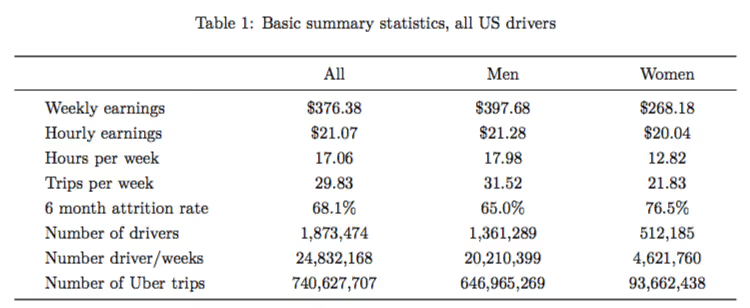
Women drive for far shorter amounts of time than men.
Driver attribution has been a problem for rideshare companies since their inception. Only about 68.5% of all drivers continue to drive for these rideshare companies for more than six months. However, as you can see in Table #1, 76.5% of women churn out in less than 6-months while 65% of men churn out in less than 6-months.
This disparity in driver attribution is a huge piece of the gender pay gap in the rideshare market.
Why?
Because the women drivers on the road today are on average less experienced than male drivers.
This is extremely important because as we know, when a driver becomes more seasoned, they become better drivers. It takes time to learn where the hotspots are in a city, when to drive those hotspots, and how to engage with passengers to maximize earnings. In fact, this Stanford study found that a driver with 2,500 hours of driving experience is likely to make $3 per hour more than a driver with no experience.
Figure 4:
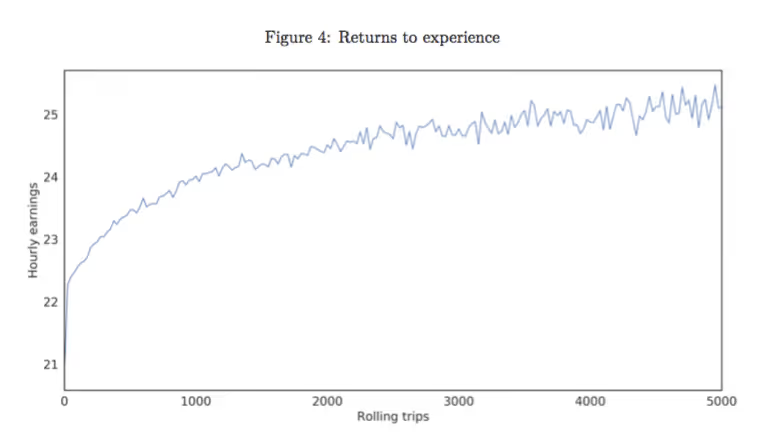
Women also on average drive less hours per week and take less trips per week than male drivers. On the surface, this doesn’t appear to be something that would decrease hourly earnings, in fact, drivers that work fewer hours tend to have higher hourly incomes because they can cherry pick when they drive. However, when we analyze the gender pay gap we can see that this actually just further decreases the amount of experience a women can get behind the wheel. As we see in Figure #4 above, less hours behind the wheel results in a decrease in effectiveness and hourly pay.
Men were more likely to drive in areas and during times in which pay is higher
Another huge reason for the pay gap is when and where women choose to drive.
Understanding where and when to drive is a skill that comes with experience, however, if you are unable to work at certain times and in certain locations than no matter how experienced you become, you won’t reap those benefits.
We are most likely seeing this with women that avoid driving at lucrative times like late-nights when you’re almost guaranteed to find intoxicated passengers. While TNC’s are generally very safe for drivers, many women are not comfortable driving intoxicated strangers in their vehicles.
Another possible time some women may be missing out on is the morning and afternoon rush. Single mothers, or mothers that take on the responsibility of getting their kids to and from school, will be unable to work the early mornings or mid-afternoons that tend to see frequent surges and steady demand for rides.
It should be noted that we see a significant amount of men that also are unable to drive during these early mornings and late afternoons.
Men drive 2.2% faster than women working for Uber.
The final reason for the gender pay gap surprisingly is all about driving speed.
Men tend to be faster drivers on average than women. This is a well documented fact that you can see by comparing how women and men pay insurance. Not only will men drive faster, but men also tend to take greater risks when out on the road.
This more aggressive driving style can actually be an asset for men because as we know, drivers are paid more by the mile than the minute. So if you can complete trips faster and pack more trips into an hour, then you’ll likely see a greater amount of profits.
How can the pay gap be tightened?
The gender pay gap among rideshare drivers is not huge, but we would like there to be no gap at all. So it’s important to think about how the pay gap can be tightened. We see three main possibilities:
- Shorten the skill ramp up time
- Help women drivers move faster by avoiding traffic
- Help women drivers find profitable routes whenever they drive
Shorten the ramp up time.
The study shows that the average rideshare driver, whether they are a man or a women, learns when and where to drive at the same pace. After about 1,500 rides, your wait times will decrease about 5% - 10% which means your income will start to increase. Drivers can decrease that ramp up time by knowing when and where to drive from the onset of their driving careers so they are getting more trips sooner.
Women can start to rapidly decrease their wait time by quickly understanding when to drive airports.
Many drivers, men and women alike, will spend a significant amount of time waiting in the queue at a airport. Instead of wasting time in a line that is too long, women can check and see how many drivers are in a airport queue before they set off.
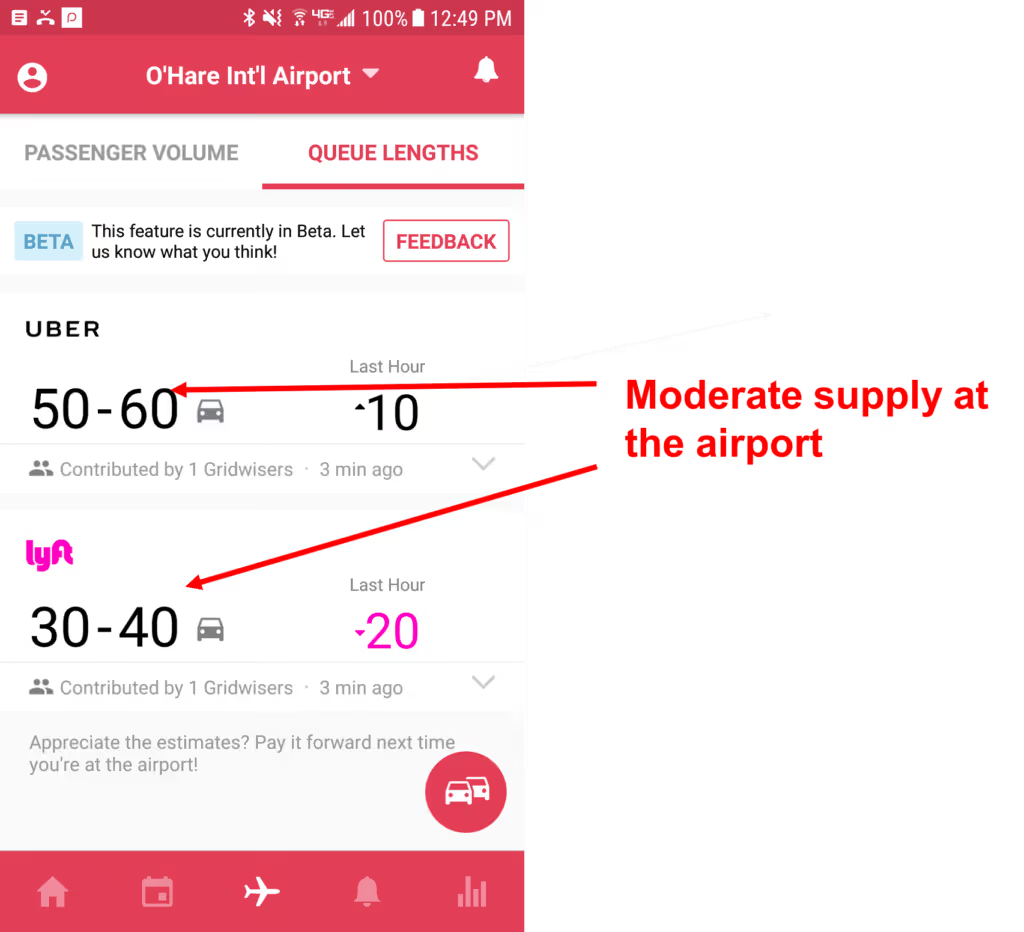
This can quickly result in a decrease in overall wait time and increase in the number of trips given per hour.
Help drivers move faster by avoiding traffic
A surprising 48% of the gender pay gap was attributed to driving speed. However, the study did not find that drivers start to drive faster as they become more seasoned.
This is likely because drivers find that more lucrative areas tend to be more congested. While this can be true, it isn’t always.
By using Gridwise traffic alerts in conjunction with the events feed, drivers can better understand where they could be driving that will help them avoid traffic instead of run right into it.
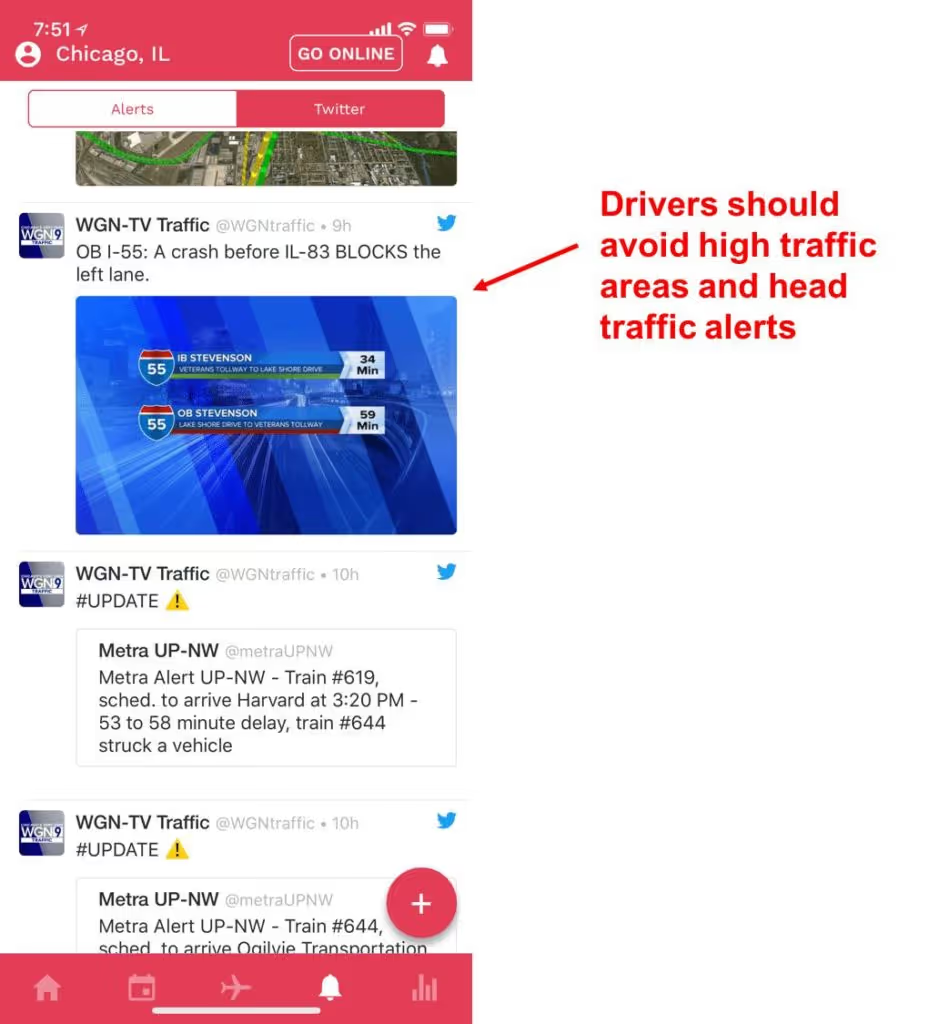
By avoiding heavy traffic while still driving high demand areas, women drivers can chip away at the speed advantage men appear to have.
Help drivers find profitable routes to drive no matter what time they are driving
Being able to find profitable rides whenever you drive is key for any rideshare driver. While there are certainly times and places that are undoubtedly more lucrative, a savvy driver can find great routes whenever he or she drivers.
Drivers can of course use Gridwise’s event feed to pick and choose when they want to drive and where they want to drive. For instance, if we can see that a college basketball game is starting at 5:00 pm and ending at 8:00 pm on a Tuesday, we can reasonably position ourselves in a residential area where college students tend to live in order to be in position for rides to the event venue.
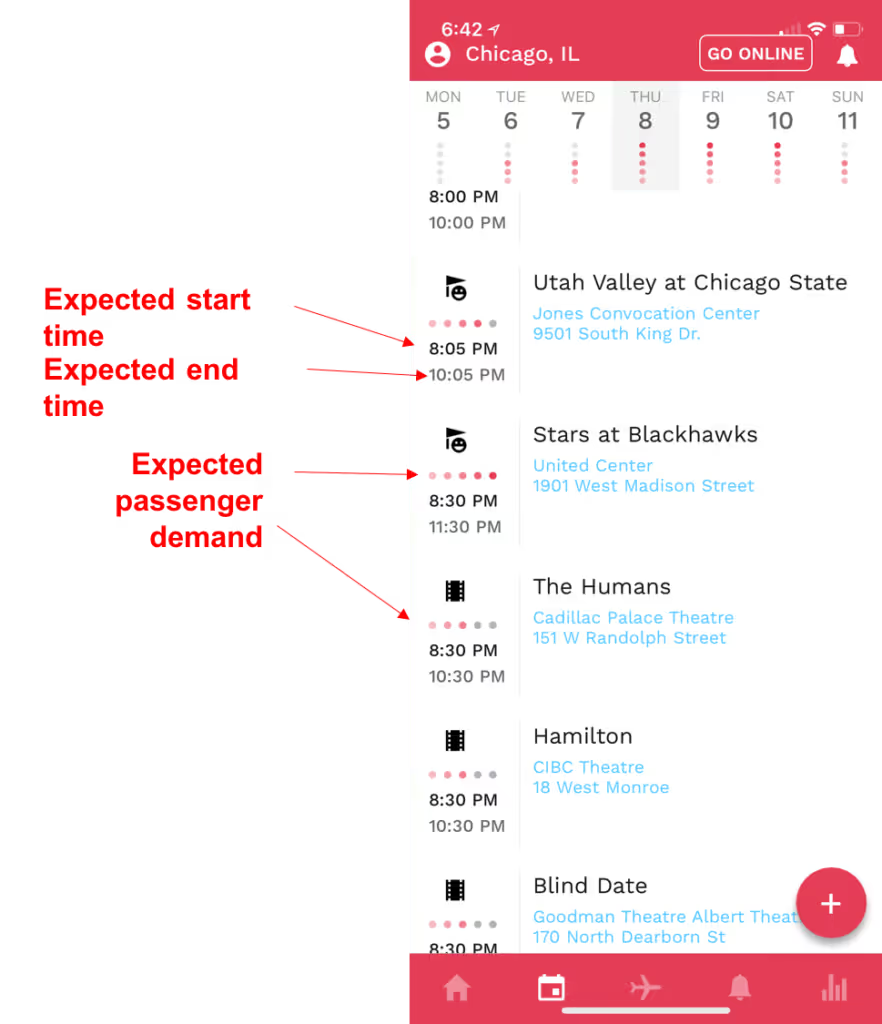
We can then check out Gridwise’s airport graph to see if there is a surge at the airport. If there is a surge of departures airport, we can set a geo-filter to a hotel, and find a ride that takes us near hotels where business people or tourist will be leaving to catch their flights.

From there, we can get a passenger from a hotel that is heading to an airport, and then decide if there is enough airport demand to justify waiting for a ride at the airport by checking the airport graphs.
Otherwise, we can just head back toward where the original game was being played and pick up passengers headed home.
This is possible even on a slow Tuesday if you know what’s going on around you in your city.
Is it a big deal?
Uber’s gender pay gap is not huge, and it is not discriminatory in nature according to Stanford’s research, however, we can always do better. At Gridwise, we hope to help alleviate this gap by giving all drivers the tools they need to be successful.
[Update!] Identifying Hotspots: Knowing When and Where to Drive
Any drivers out there remember driving circa 2012? Also known as the glory days of rideshare?
I, unfortunately, wasn't driving back then, but I routinely hear veteran drivers talk fondly about how they could turn their app on from their kitchen and get ride requests in seconds.
Not just regular requests. We're talking surges.
Well, for better or worse, the rideshare game has gotten a lot more difficult than that. Today drivers know that you can't just turn your app on and expect to get flooded with ride requests.
Drivers for Uber, Lyft, Via and other TNC's need to find the most profitable areas to drive and the most profitable times to drive. The question then becomes: how do you learn what spots in the city to spend your downtime that are likely to increase your chances of getting a ride request? Also, how do you know whether or not the spot you’re perched at is a “sweet spot”?
How do I find rideshare hot spots?
Figuring out where to drive isn't rocket science, but you do have to understand a few things like your city, your driving style, and your city's event schedule.
Know your city
When thinking about where to drive in your city, ask yourself this: What is the soul of your city? It can pay to know the events calendar in your area.
If you're in Chicago you might say it's the 2017 World Champion Cubs (Go Cubs!) and the nightlife in River North, Boys Town, and Wicker Park that comes alive in the summertime.
If you're in D.C. you may consider the tourist-laden monuments, the always busy Museum circuit, or young and lively Dupont Circle.
Whether it’s local culture, college areas, or even just a bunch of hip bars, your city is known for something. These assumptions could be monumental in increasing the number of profitable drives that you make in a given amount of time.
If you've been living in a city for awhile, you should draw upon your own knowledge to find hot spots. What do you like to do? Where do you like to go out? Chances are that a lot of other people like to do pretty much the same things as you, so start off there.
You can also check Google and Yelp if you're new to a city. For example, if your city is best known for its food, you can use Yelp to easily identify what’s getting the best reviews. This information can be used to direct your focus on the restaurants that draw the largest volume of clients. Similarly, you could use a Google Maps search to learn where the highest density of bars and restaurants are. That way, you know (for that moment and for the future) the area where a whole lot of people in your city are going to eat.
This train of thought is not only limited to restaurants, of course. Location scouting is an essential part of efficient time management as an Uber or Lyft driver. Know the most popular attractions for tourists and locals alike.
Learn about the city neighborhoods as well – especially the ones with the largest populations and foot traffic. Perhaps go a step further and learn about regular local events. The more you understand about the city you drive in, the easier it will become to strategically place yourself for your ideal rides.
Know what is going on in your city
There’s always something going on if you live in or near a city. Having a working knowledge of where the events are and when they occur can be extremely beneficial to your wallet. Some of the larger events can provide you with ample opportunities to pick up riders. Smaller events, while not as lucrative, can also still be good to know about in the long run (especially if they’re recurring).
Luckily, you don't need to search the internet for a schedule of events around town. Gridwise will pull together a list of events going on around you along with their start times and projected ending times.
Predict surges
What's the first rule every rideshare driver learns?
Don't chase the surge. Predict them.
But how do you predict a surge? In particular, how do you predict a REAL surge that you'll be able to actually get a few rides out of?
Think about when your city is most alive. For many, that is during the commuter hours of 5 am - 8 am and 4 pm - 7 pm. During those times you may see residential areas surging or business districts surging on a daily basis.
You can also talk with other drivers in the community to get a better sense of when they’re picking up rides. If you work in a college town, talk to the students you pick up. Do a bit of research into what the young folks are using Uber for. The information you gather will be useful for more than just college kids. Scenarios like coming back home from a night of drinking are extremely common not only in college areas but also throughout a city.
Know what type of driver you are
Another key to success is understanding what type of driver you are and when you can drive. If you are a part-time driver that works a late shift at your main gig, maybe those evening hours aren't going to work for you.
Have kids? Maybe you need to be home to take them to school in the morning. This may seem painfully obvious, but part of creating a rideshare driver strategy is knowing your own schedule. There’s a niche for everyone, so take some time to understand where you would fit in.
To capitalize on your time, drive over to your city’s hotspots before demand peaks. For the spot with the best bang for your buck, you’re going to want to stay as still as possible. That is to say, you need to be in the center of where the highest demand is occurring.
Know when not to drive
Uber and Lyft don’t penalize you for being picky about what rides you choose to accept, so be picky!
Avoid areas with high amounts of traffic as much as possible. Not only are you wasting time and gas, but you are not maximizing your profit as drivers paid more by the mile than by the minute.
For the most part, traffic in a city is unavoidable. What you can do, however, is understand the places and times that really back up. Large events like football games and stadium concerts tend to bring immense amounts of traffic if you don't get out early. To efficiently use your time as a rideshare driver, avoid heavy traffic and focus instead on the fares that best suit your schedule.
What are your preferred times/locations to drive? Let us know in the comments section!


How to make sure you get paid for puke mud spills and other messes
One of my most memorable/unfortunate nights as a rideshare driver came last winter when I picked up a group of guys outside a bar.
I should have thought twice about taking the ride when one of them stumbled to my car, and I should have gone ahead and canceled the trip when one of them practically dragged another one into my backseat.
But hey, a ride's a ride right?
Well, as we were coming to a stop at a red light only 2 minutes after we set off I heard the unmistakable sound of a hurl followed by multiple heaves. And that day I found out that maybe you shouldn't just take ANY ride.
That's a lesson that I learned the hard way, but many of us have either been there or heard other horror stories of passengers making messes in a drivers car.
It doesn't always have to be a late night driver that couldn't hold their alcohol. Sometime's it's the kid that for some reason has been trusted with chocolate in someone else's car.
It could be the guy headed into the office that thought it would be a great idea to open their coffee to add cream and sugar right before the car stops.
Every so often, it's the guy that wants to breakout a pizza in the back seat and ends up spreading sauce all over the back of the drivers seats.
We all like to think this wouldn't happen to us, but in reality, it happens to the best of us all the time. So it's best that you know how you can ensure that you get properly compensated for your messy passenger.
What exactly are cleaning fees for
Before we talk about how to maximize your cleaning fee, let's discuss what a cleaning fee is and what it is not.
A cleaning fee is NOT intended to be punitive by any means. It is not intended to make up for the hours that you lost driving. The sole purpose of a cleaning fee is to pay for the cost of cleaning.
Because the cleaning fee is intended to pay for the cost of cleaning, the fee is awarded based on the severity of the mess. We've seen cleaning fees range from $40 for minor messes to $250 for major puke jobs.
For a baseline, see how uber awards cleaning fees below.
$0 - items that can be thrown away or wiped up quickly;
any mess caused by water $20 - small interior mess (ex. minor food/beverage spills, dirt, etc.)
$40 - moderate exterior mess (ex. food/beverage mess on vehicle exterior)
$80 - moderate interior mess (ex. larger food/beverage spill on fabric or other hard-to-clean surface)
$100 - major mess involving bodily fluids $150 - any incident that requires cleaning between the window/door or air vents]
Via, Lyft, and Juno also have cleaning fee policies as stated below.
Lyft
If a Driver reports that you have materially damaged the Driver's vehicle, you agree to pay a “Damage Fee” of up to $250 depending on the extent of the damage (as determined by Lyft in its sole discretion), towards vehicle repair or cleaning. Lyft reserves the right (but is not obligated) to verify or otherwise require documentation of damages prior to processing the Damage Fee. Collected Damage Fees will be passed in their entirety to the Driver whose car was damaged.
Note: Lyft determines the damage fee amount, which is meant to help drivers repair, remediate, or clean affected areas of their vehicle only. We handle damage reports on a case-by-case basis. Damage fees come entirely from passengers.
Via
Our drivers work hard to maintain their vehicles and take pride in their cleanliness. A cleaning fee for damage to the interior or exterior of the vehicle incurred as a result of events such as vomiting or pet accidents may be assessed and charged when applicable. In most cases, this fee will be $100 – $200, but the exact amount will depend on the extent of the damage. Via will always notify members when such a charge is necessary.
How do I maximize my cleaning fee
Since we know that rideshare companies base the cleaning fee on the severity of the mess, we know we need to accurately document the severity of the mess.
Take a video
As soon as an incident occurs, you need to take out your camera and start recording. It would be ideal to catch the passenger in the act, but at the very least you should record the entire mess so that the rideshare company understands how large the mess is.
It's also a good idea to say the time and date in the video along with a picture of your clock. That way there is no potential for confusion about the time and date of the incident.
Take detailed pictures
In addition to video evidence, take pictures that clearly show how much of a mess was made. Make sure that all of your car lights are on and your flash. You want these pictures to clearly show the damage that was done.
Use your dashcam footage
We all know there are multiple benefits to keeping a dashcam, and catching a messy passenger is one of them. If you have a dashcam installed, you can use it to show the exact moment that a mess occurred. This will further bulster your case and ensure that there is no confusion about who made the mess.
How to report a mess on Uber
Once you’ve gathered all of your evidence, find the appropriate trip in your history and click help on that trip.
Go to earnings, trip history, and select the appropriate trip.
Click on Help at the bottom of the trip summary. Then click on rider feedback, fare adjustment, and then request a cleaning fee.
Add ALL of the details that you can about the incident here and include as many photos as you can.
If you have more photos that will help, just to go to the help section and reply to the ticket to add other photos and videos.
How to report a mess on Lyft
For Lyft, you just select help and then change the subject to damage fee. Avoid the suggestions as that will just send you to the FAQs.
Select driver, then issue with a ride, then select the ride that caused the mess. Fill in all the possible details you can think of, upload all photos you may have, and submit.
Document, Document, Document
The name of the game here is documentation. Make sure that whatever rideshare company that you are driving with understands the extent of the mess that was made clearly, and you have a great shot at maximizing your cleaning fee.
Trabaje de forma más inteligente. Gane más.
Ya sea que conduzcas, entregues o recojas turnos, Gridwise te ayuda a hacer un seguimiento de las ganancias, el kilometraje y el rendimiento para que puedas mantener el control de tu trabajo. Descarga la aplicación y toma las riendas hoy mismo.
