Blog de Gridwise
¡Lee el blog de Gridwise para obtener consejos y sugerencias sobre cómo ganar más dinero mientras conduces para Lyft, Uber, DoorDash, GrubHub y más!

The Gridwise Job Board: Find Your Ideal Job or Gig Work
Gridwise is an essential assistant app created by gig workers for gig workers. Our mission is to support those engaged in gig work in every way possible. We understand how challenging it can be to deal with income instability, a lack of benefits, and job insecurity that often comes with gig work. The Gridwise app tracks and organizes earnings and expenses, and offers a wide array of discounts, deals, and services that make the lives of independent contractors easier and more rewarding.
We firmly believe it’s possible to make a viable living and create a gig experience that offers flexible hours, variety, and excitement. With issues such as consistent earnings and job security in mind, Gridwise is proud to offer a centralized platform that shows you how to find gig work and secure reliable opportunities. We’re proud to introduce the Gridwise Job Board.
[elementor-template id="20891"]
The Gridwise Job Board: Key features
Because Gridwise is dedicated to serving the gig worker community, we’ve filled the Gridwise Job Board with useful features that won’t waste your precious time.
- Comprehensive listings. Find part-time, full-time, temporary, and per-task work. Drive or deliver with your vehicle, utilize an employer’s vehicle, or even find non-driving gig work.
- User-friendly interface. Find the jobs that are right for you with a tap of your screen.
- Verified opportunities. We vet the jobs before they are listed to ensure you’re getting high-quality job postings.
How to get more gig work, seasonal, part-time or full-time jobs with the Gridwise Job Board
Looking specifically for “gig work apps” or “gig jobs near me?” You’re in luck. Our filters and search functions send you directly to the listings you seek.
Here’s how it works.
- Access the Job Board via the Gridwise website.
- Search for jobs by type, location, and more.
- Select the job that interests you, and read all about it.
- Scroll through the description, and if it appeals to you, click “Apply for job.”
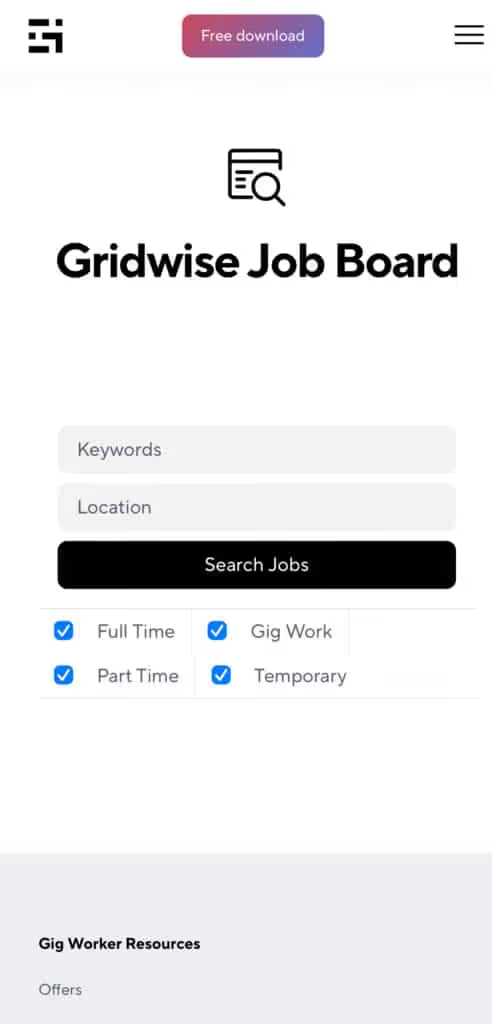
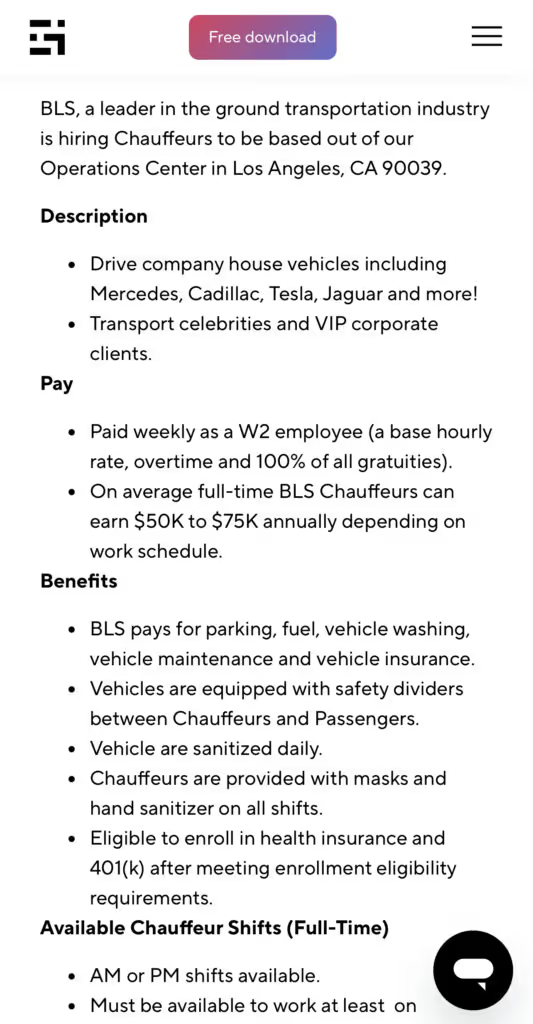
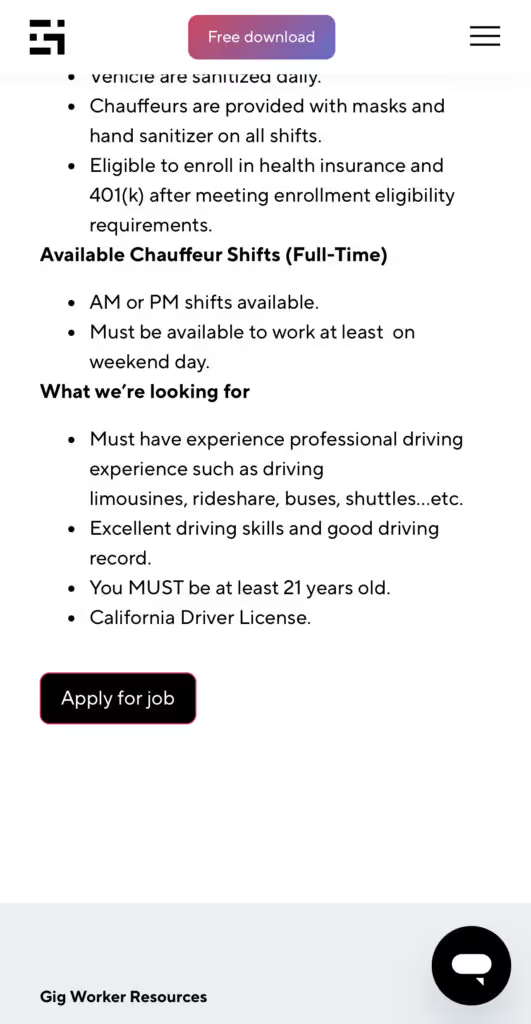
Many types of jobs are available. Adjust the search filter to see the full variety of opportunities that will let you cash in. Deliver food, set up catering, do rideshare driving, get paid for doing package delivery, and much more. You’ll find short-term gigs, long-term contracts, and part-time positions.
Perks of the Gridwise Job Board for gig workers
Gig workers who know how to make extra money will appreciate how the Gridwise Job Board lets you multiply your chances of bringing in big earnings. Here’s how:
- Increased stability. Use the Gridwise Job Board to find part-time or permanent jobs in addition to the part-time gigs you already have. Always keep a steady stream of earning opportunities flowing toward you.
- Flexibility and autonomy. Choose jobs that fit your schedule, work around other jobs and family duties, and still leave room for some fun in your life. Discover side hustles to supplement your full-time job, permanently or just for the season.
- Skill development. Find part-time work that lets you use a skill you already have, or try your hand at something new. It’s a smart way to develop a portfolio to showcase what you can do, or even to find permanent employment.
Get Gridwise and stay up to date on the Gridwise Job Board
Gig workers need plenty of information and assistance, and Gridwise is here to give it to you. Download the app and get essential features such as
- seamless earnings tracking
- mileage tracking
- expense recording, including notes
- low-cost and no-cost insurance benefits
- access to affordable medical, dental, vision, mental health, and alternative care
- professional services including legal and financial help
- deals and discounts
- weather, events, and traffic reports
- inside information on where and when to drive
[elementor-template id="20936"]
More to know about gig work:

5 Best Mileage Trackers For Gig Drivers
Many drivers ask, “Do I really need a mileage tracking app?” The answer is simple: only if you want to have an accurate count of all the miles you can legally deduct from your taxable income! You might think your rideshare or delivery driving app has got you covered. After all, they do quite a good job of logging the miles you drive while you’re on a trip or delivery. But, if you want to have the best app to track mileage for Uber, Lyft, Doordash, Instacart, or the other apps you may use, you need more. Why is that?
Without a separate tracker, you’re missing the miles you drive in between pings. Did you realize that all the miles you drive, from the moment you begin your shift until it’s over (as long as you don’t drive several miles on a break to hang with your friends), are tax deductible! That means you need something besides your driving app to keep an accurate count of your travels. Read this Gridwise post to see how important it is to keep track of every deductible mile.
You won’t be surprised to hear that there’s an app for tracking miles. In fact, there are several of them. Here, we’re going to tell you about five top mileage tracking apps, and help you figure out which one is best for you.
Before we get to the list and identify the best mileage tracker app, let’s clarify what exactly a mileage tracking app is. According to G2.com’s technology glossary, mileage tracking is done for the purpose of keeping a log of mileage that is either reimbursable or tax deductible.
And yes, of course you can track your miles simply by taking readings on your odometer. But are you really prepared to account for how many miles you drove for personal reasons and subtract them from the total to get your business mileage? Even if you can remember all that and do the arithmetic, if you want an accurate reading of the miles you drive for business, and can therefore deduct, a mileage tracking app will save you a lot of trouble and prevent you from making costly errors.
Plus, as a gig driver, you have specific needs when it comes to a mileage tracker. Ideally, you’d be able to handle mileage tracking and several other functions all in one app. It can be maddening enough to deal with driving apps, particularly if you’re an avid multi-apper. You would want your mileage tracker app to help you keep account of other aspects of your business, including income, expenses, and inside information about the art of gig driving.
Not all mileage apps are equal, to be sure! Let’s look at five of the best apps to track mileage and figure out which is the best app to track mileage with Uber and Lyft, or what mileage tracker app is best for DoorDash.
[elementor-template id="20891"]
1. Zoho Expense
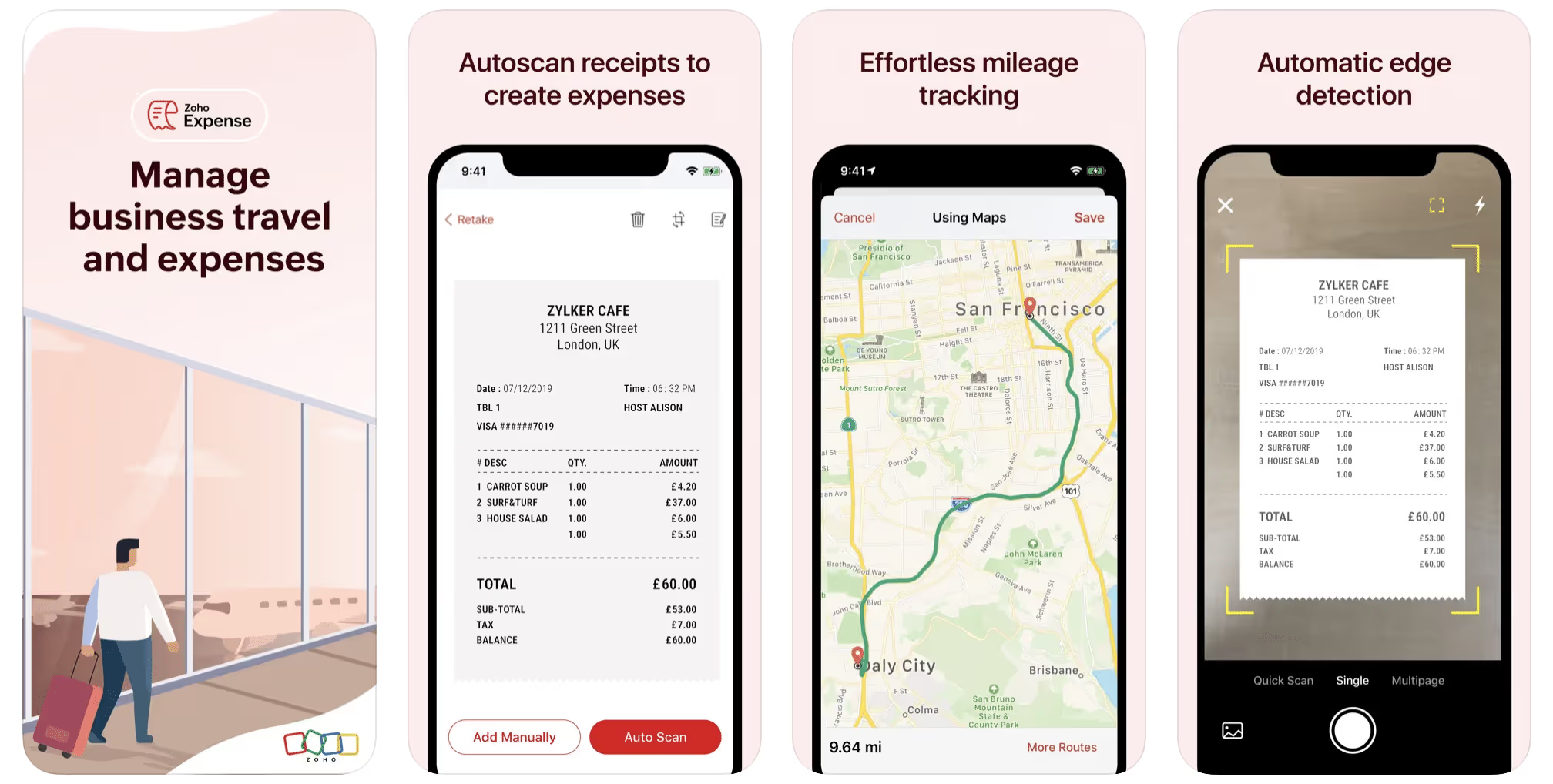
First up is Zoho Expense, which does exactly what its name says. This app is designed to allow companies to give employees a uniform way to create and submit expense reports. It can be used by individuals, including gig drivers, as well.
It includes a mileage tracker, as well as features that let you track other deductible expenses, including the ability to scan and record receipts.
Available on Android and Apple: Yes
Ratings: 4.8 stars on App Store, 4.7 stars on Google Play
Free Version: Yes
Subscription price: $3 per month, billed annually
Created specifically for gig drivers: No
2. Quickbooks Online
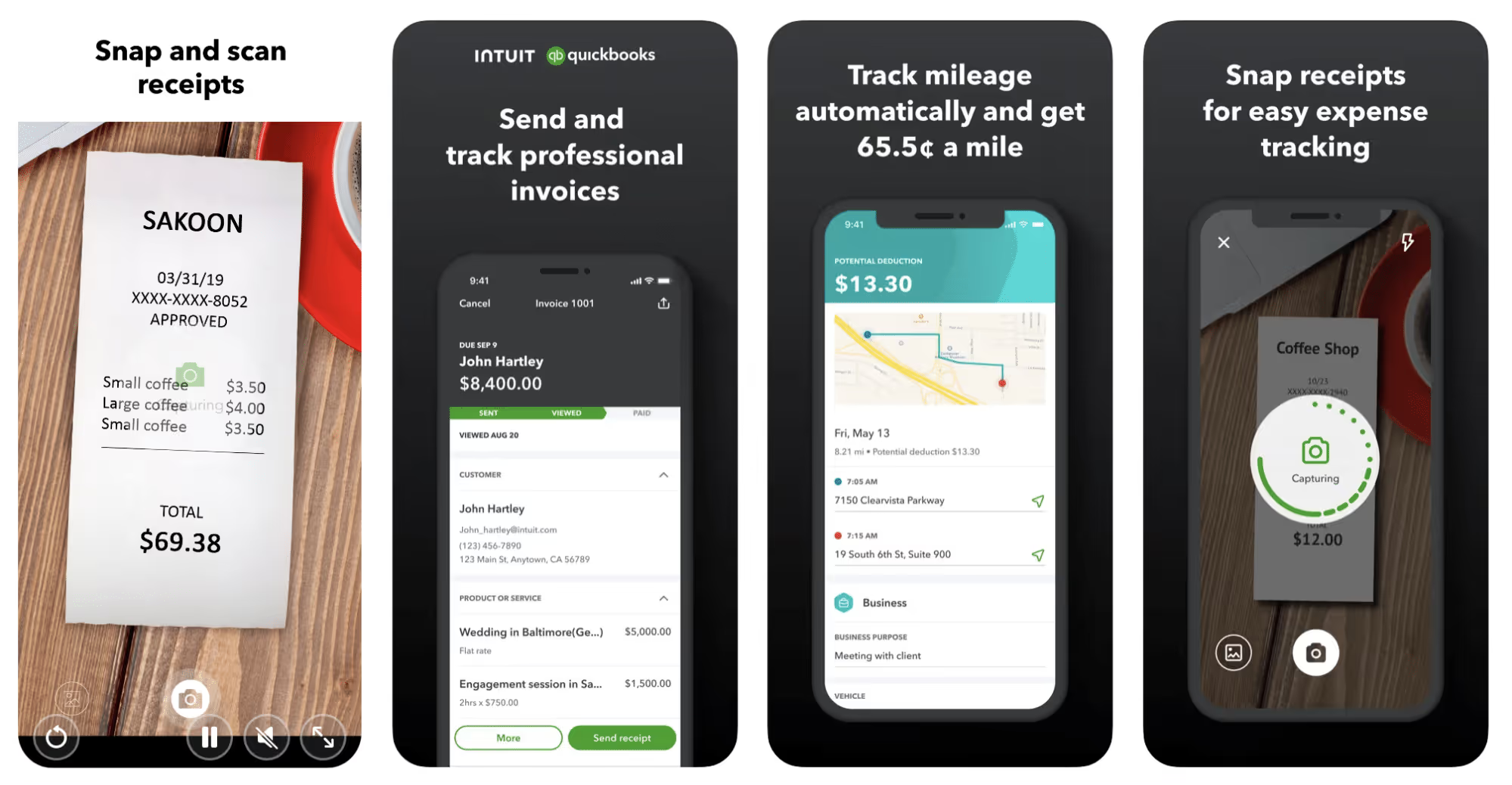
Quickbooks Online is a cloud-based app that allows you to track your mileage, earnings, and expenses. The information you enter can then be used to generate various reports that prepare you for tax time. It also allows you to create graphs that illustrate your cash flow, and includes a receipt scanner so you can instantly record deductible expenses. Quickbooks is popular, highly reliable, and designed mainly to help people keep track of their small businesses.
Available on Android and Apple: Yes
Ratings: 4.7 stars on App Store, 4.4 stars on Google Play
Free version: 30-day free trial
Subscription price: $15 per month for basic version if purchased for 3 months or more
Created specifically for gig drivers: No
Source: quickbooks.intuit.com
3. Shoeboxed
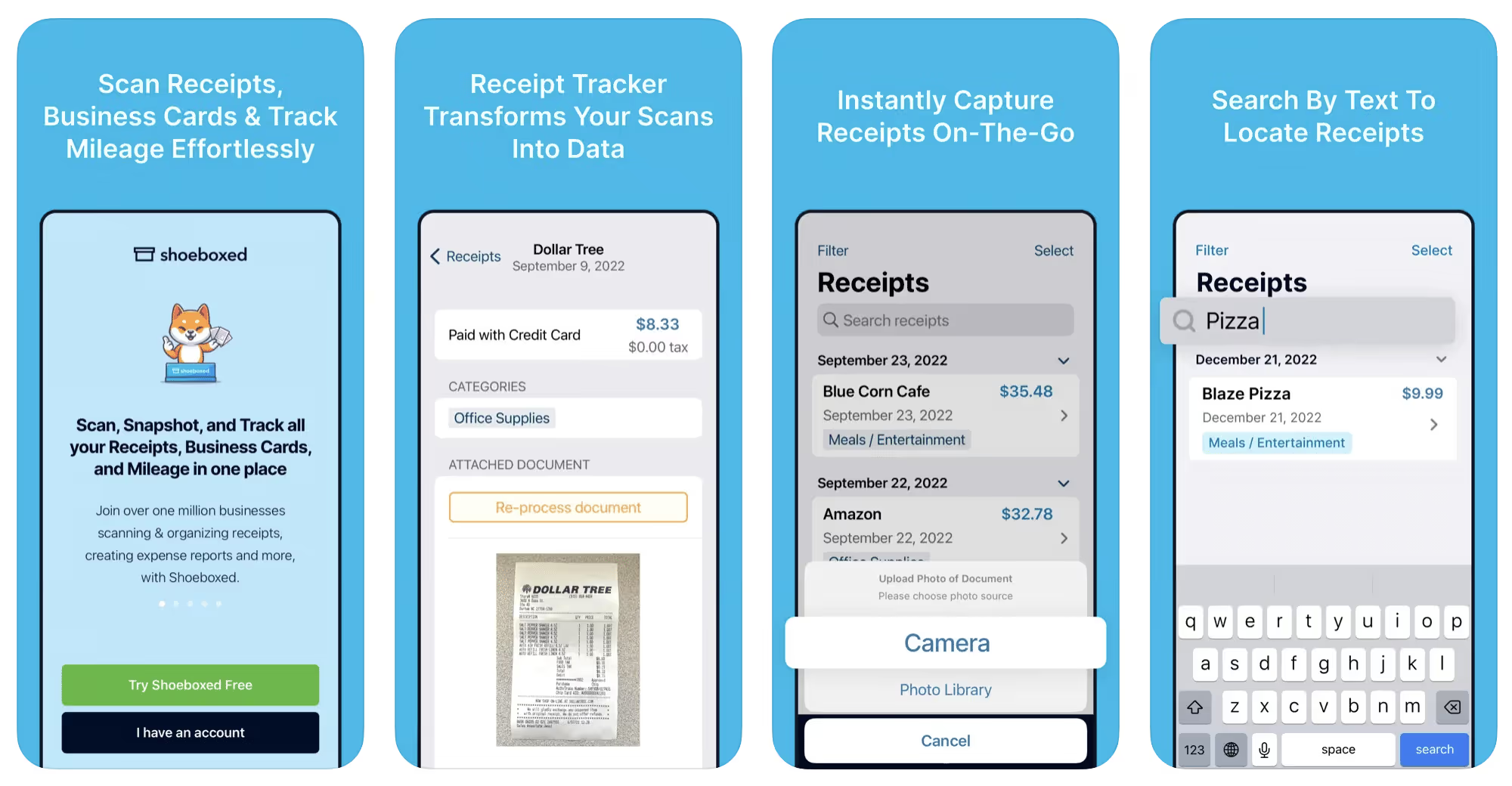
Shoeboxed started in 2007 as a service for scanning paper receipts into digital form. Now the app offers a free mileage tracker and has enabled users to scan receipts directly. It touts itself as the best mileage tracking app for DoorDash, but there are some elements missing that Dashers might like to have. While it provides features that record your expenses and prepare you for tax season, it doesn’t automatically track your earnings. The mileage tracker has a system where you can drop pins along your routes to make the tracking more precise, identifying those legs of a trip that you make for business purposes. The mileage tracker is “free” once you sign up for the basic version.
Available on Android and Apple: Yes
Ratings: 4.5 stars on App Store, 2.3 stars on Google Play
Free version: No
Subscription price: $18 per month for basic version
Created specifically for gig drivers: No
Source: blog.shoeboxed.com
4. Stride
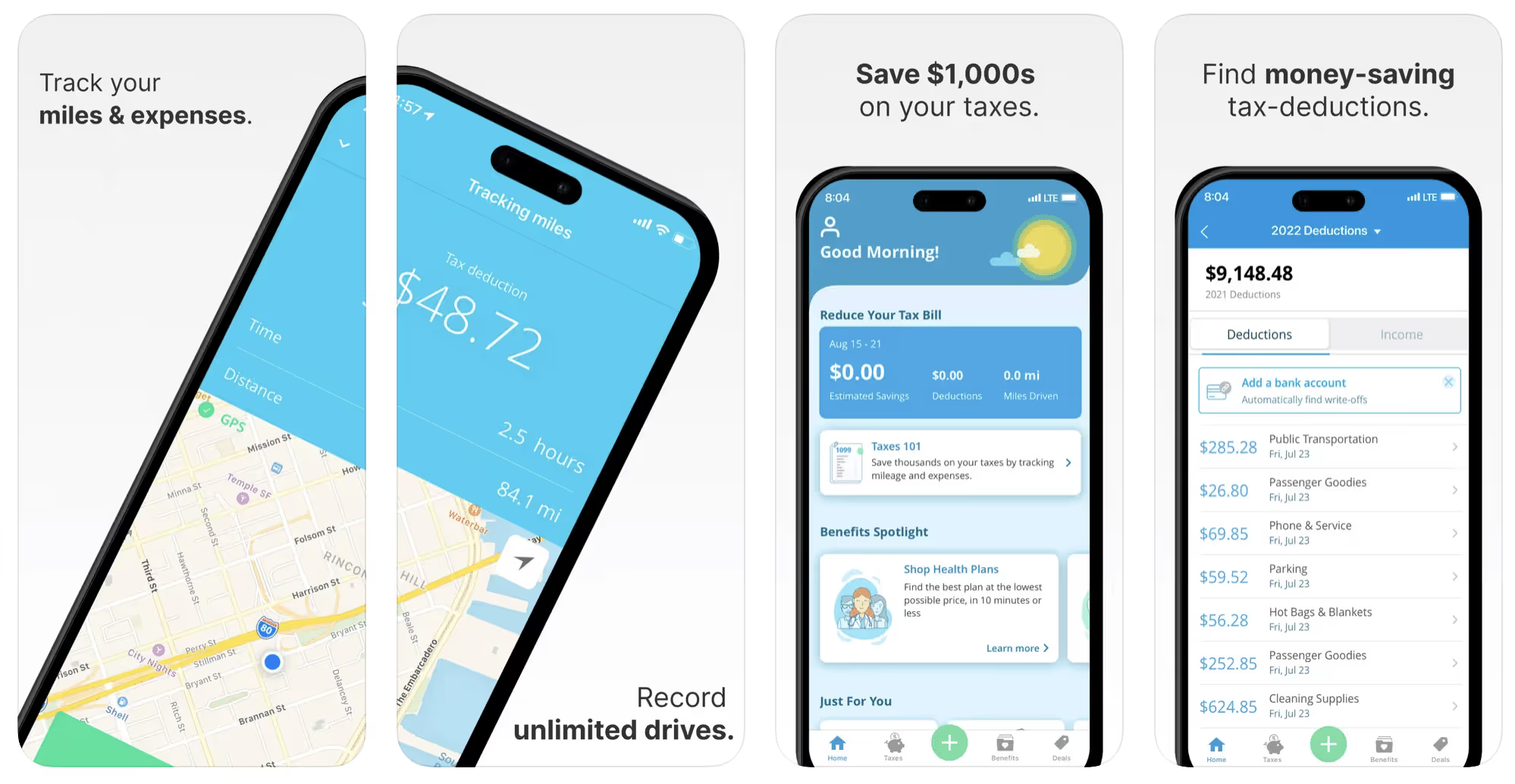
This free mileage tracker does a fair job of keeping track of the distances you rack up while gig driving, but it doesn’t automatically track earnings. It can be a big help, though, in tracking your expenses. You can link Stride to your bank account, and it will automatically scan your expenses to identify items you can potentially deduct. The app is totally free. This could make it the best free mileage tracker app, but there is a small price to pay. The app will persistently push you to consider various insurance plans that they are affiliated with. If you don’t mind that, this is a solid mileage tracker, even if it doesn’t track your earnings.
Available on Android and Apple: Yes
Ratings: 4.8 stars on App Store, 4.6 stars on Google Play
Free version: Yes
Subscription price: None. The app is free.
Created specifically for gig drivers: No
5. Gridwise
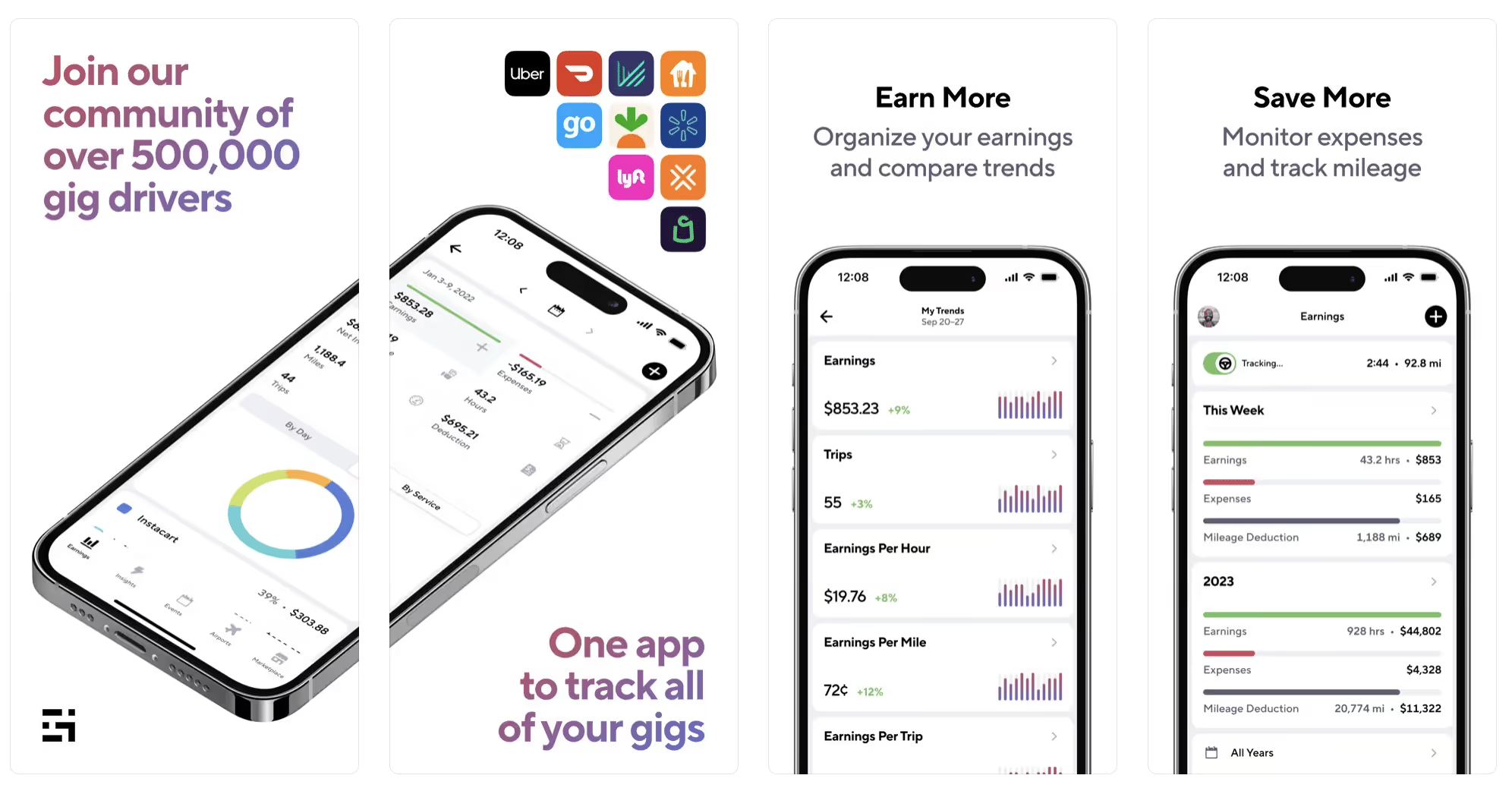
Gridwise has a free mileage tracker and free features that record your income and expenses. It gives you access to insurance and benefits, as well as insights about the best times and places to make the most money while gig driving. The Gridwise mileage tracker captures all the miles you drive while you’re on your driving shift, and it can be used if you have other trips you need to make which qualify as business travel.
Drivers love it because it is geared toward the needs of rideshare and delivery workers, providing free information about airport departures and arrivals, event start and let out times, weather, traffic, and more. The Gridwise Plus subscription adds value by providing additional insights and reports, discounts on benefits, the ability to export data in .csv format,, and more.
Available on Android and Apple: Yes
Ratings: 4.9 stars on App Store, 4.6 stars on Google Play
Free version: Yes
Subscription price: $9.95 per month for Gridwise Plus, or $95.99 per year (a $23.41 savings)
Created specifically for gig drivers: Yes!
What is the best mileage tracking app?
Now that we’ve checked them all out, we’re positive about the answer to that. Hands down, it’s Gridwise. Are we biased? You bet we are! But drivers love it too. Gridwise is the best mileage tracker app—and so much more. So many of the features are free, and the subscription to Gridwise Plus will pay for itself with additional insights to boost your earnings and deeper discounts on products and services.
Most important, Gridwise is designed specifically for gig drivers by experts who were once gig drivers themselves! Knowing what gig drivers need is a crucial step in creating an app that rideshare and delivery drivers can really use! Here are a few of the features, besides mileage tracking:
- seamless earnings tracking
- automatic, on/off toggle and manual mileage tracking
- mileage categorization
- airport, traffic, weather, and events information
- insights into where to drive and when to drive
- reports showing earnings across the platforms you use
- discounts on countless products and services for drivers
- additional resources for finding side gigs
- an informative and comprehensive blog
- affordable benefits, including insurance, medical, dental, and alternative practitioner discounts
- a community of drivers just like you
Don’t settle for just any app. Get the best mileage tracker, and so much more, from Gridwise!
[elementor-template id="21599"]

What Records Do Gig Drivers Need To Keep Track Of For Taxes?
* Gridwise does not provide tax, legal, or accounting advice. This material has been prepared for information purposes only, and is not intended to provide, and should not be relied on for tax, legal, or accounting advice. You should consult your own tax, legal, and accounting advisors before filing your return.
Record keeping? Who signed up for that? As a gig driver, it’s part of what you need to do to keep your business running. Don’t worry. It’s not as complicated as you might have been led to believe. This post will show you what you need to keep track of and the best ways to gather and preserve your tax-related records. We will cover
- How record keeping can help reduce income tax for freelancers
- Taxes and freelance work: Record keeping requirements
- Mileage tracking: Motives and methods
- More deductions and records to keep
- Make tax time easier
How record keeping can reduce income tax for freelancers
Tax time is not “fun time” for rideshare and delivery drivers. It’s easy to get used to watching your earnings pile up and come to believe they are all yours. Unfortunately, that isn’t the case. Gig work taxes can be especially painful because no one takes them out of your earnings for you, until the tax authorities insist that you do it for yourself.
You will need to show the tax authorities your income records, and they will gladly tell you to send them what they determine to be their fair share. Think that’s not fair? You’re not alone, but that doesn’t mean you’re going to get out of paying gig work taxes.
But you can find ways to pay the smallest amount that is legal and possible. The best way to defend yourself against having to pay astronomical amounts when you file your return is to know what expenses you can deduct from your gross income. When you subtract deductible expenses from your gross income, there is less left over to be taxed. This reduces the amount they can hit you with gig worker taxes. and can make your tax bill substantially lower.
While you want to keep good records so as to be in compliance with taxation entities such as the IRS, you also want to ensure you have proof of every last deductible expense you have accrued during the year. There are other records you must keep as well. Let’s look at some of the considerations you have, realizing that you now need to know how to do taxes as a freelancer.
Taxes and freelance work: Record keeping requirements
So many gig drivers fail to understand the responsibilities they have as independent contractors. Those who work part time for very few hours may even believe they don’t have to report the income they get from their driving gig payments. That would be a big mistake!
The company or companies you work for report your income to the IRS and state tax authorities. If you fail to report that income, you will risk some rather painful penalties. The IRS taxing side hustles is as much of a thing as the IRS taxing income from any other job. Your best bet is to report what you’ve earned, honestly and completely, and comply with other record keeping requirements such as
- gross income
- deductions and credits
- purchases (items you purchase and resell, such as snacks or bottled water)
- a log of all your mileage (or vehicle expenses, if greater)
- a list of all expenses and assets, such as utilities and other expenses associated with having a home office and equipment
- machinery and furniture you own, including when it was acquired, how much it cost, whether you previously took deductions on it, and selling price, if applicable (this includes your vehicle)
More things to consider:
- Pay attention to the retention of your records. You’ll need to keep all tax-return-related items— including income, deductions, and any tax credits reported— until the period of limitations runs out (3 years from date you filed, or 2 years from when you paid tax. If you have employees, keep your records for at least 4 years.)
- If you want to avoid paying self-employed taxes, you may want to set up a corporation or Limited Liability Corporation (LLC) for your business. This allows you to separate all your gig driving earnings from personal income, and permits you to take advantage of the additional advantages of working through a corporation. This includes exemption from self-employment taxes. You can learn more about how to pay self-employment taxes, if you opt for that, in this post from Keeper.
- You should always keep a separate checking account for your business, for convenience as well as clarity. While this is not a legal requirement, it is a smart move if you want to have an easier time managing your business.
- You are required, as an independent contractor, to file your taxes quarterly. Check out this Gridwise blog post for more information about quarterly tax payments and other matters that make filing delivery, Lyft and Uber taxes easier.
Mileage tracking: Motives and methods
Why you need to be meticulous about mileage
Mileage deduction, or the costs of operating your vehicle, will be the most important item to account for when you consider how to file taxes as a freelancer. While mileage is an important deduction for all independent contractors, as you might imagine, it’s even more essential for rideshare and delivery drivers.
There are two ways of keeping track of your mileage deduction. One is to use the IRS’ standard mileage deduction, which for 2022 is 58.5 cents per mile. This number takes into account the costs of operating your vehicle, from fuel and maintenance to registration, insurance, and depreciation. Alternatively, you can calculate all your own vehicle operating costs, but only after your first year of using the vehicle. You may discover that this second option allows you to have more money deducted from your taxable income. Learn more about the options for deducting your mileage in this Gridwise post.
No matter which way you decide to calculate the deductions for your mileage, you need to know what mileage you can and cannot deduct.
You can deduct
- miles driven to and from home when you go out to drive or deliver
- miles you accrue during your trips
- miles you drive on any other trips you make that are necessary as part of your business.
Examples:
- driving to return a lost cell phone or to an Uber Hub or another physical location where your company might make driver support available
- driving to pick up supplies, to get gas, or to have your car cleaned, serviced, or detailed, etc.
You cannot deduct
- miles you drive for personal trips
- miles for any trips you take that do not directly affect your business
Note: If imagining yourself becoming the not-so-proud owner of a shoebox filled with paper receipts gives you nightmares, stop worrying. Electronic records of purchases will satisfy reporting requirements. If you use cash, you can scan copies of your receipts, in some cases, right into your recording software or app. Gridwise and Keeper give you a simple to use interface that keeps all your receipts recorded without the messy pile of paper.
Mileage tracking methods
By now, you’re probably convinced that tracking mileage is important, despite all the other things drivers have to do. Now, let’s look at your options for keeping accurate records.
- Manual tracking: You can keep a logbook where you list every trip you make, starting and ending mileage, the date, and purpose of the trip. While this would work, it’s certainly not convenient. Besides, if that logbook gets lost, your plans for having a nice, fat tax deduction will go by the wayside.
- Spreadsheet: This is a bit more convenient and sophisticated way of tracking your business mileage. You’d need to be meticulous about making your entries, though. Even if you keep a spreadsheet app on your phone, it could be time consuming and inconvenient to keep doing it with all the other things going on in a rideshare or delivery driver’s day to day life.
- GPS-based mileage tracking apps: There are a bunch of apps that track mileage based on your GPS location, and most of them are pretty accurate and far more convenient than taking constant readings of your odometer. Your driving apps, such as Uber, Lyft, DoorDash, or Instacart, may also track your mileage, but be careful here. They will only track the miles you drive while you’re on a trip or delivery. They don’t count the miles you drive going to pick up a customer or when you make your move toward a restaurant or store.
Gridwise, on the other hand, will track all the miles you clock while you’re on your shift. All you need to do is make sure you start tracking the minute you leave home, and every gig driving mile will be logged. - OBD-II mileage tracking systems: There are plug-in modules that assess your vehicle’s mechanical health and track your miles. However, many authorities question the ability of OBD-II mileage tracking systems to get get accurate odometer readings. Insurance companies don’t consider them to be accurate enough gauges of odometer readings.
While mileage is a crucial deduction when you’re preparing your Uber, Lyft, or DoorDash taxes, it isn’t the only expense you’ll want to record.
More deductions and records to keep
Expenses you can deduct
You’re entitled to include the cost of other expenses that are directly related to your driving business. These include
- vehicle expenses
- equipment for your car and home office
- extra services and subscriptions
- business tools, including apps and software
You can learn much more about gig driver expenses that are eligible for deduction in this Gridwise article.
Ways to track and preserve deductible expenses
- The manual method: Just like you can with mileage, it’s possible to use a manual method, but in addition to logging each expense into a ledger, you would also need to keep physical receipts.
- Spreadsheets: You can record your expenses on a spreadsheet. This is somewhat less awkward than manually logging mileage, but there still will be plenty of room for failing to remember the case of water you bought for your customers, or losing the receipt from the thermal bag you purchased.
- Accounting software: You can use software that helps you track your expenses. This method usually interfaces well with any tax preparation software you or your tax professional might use.
- Gridwise: There are other apps that help you track your expenses, but Gridwise is designed specifically for gig drivers. It automatically tracks earnings and mileage, and lets you record your expenses the minute they come up. Gridwise’s partnership with Keeper gives you the ability to scan receipts and access a tax professional. This is a seamless way to record your expenses and a big help in learning how to file Uber taxes. Gridwise even provides .csv output, so you can feed your Gridwise data directly into tax preparation software. Check out what Gridwise and Keeper will do to super-charge your tax filing powers.
Organizing and categorizing expenses
Before you even begin to record expenses, you’ll want to set up categories for them. You can start by reviewing the categories listed above and checking out the Gridwise post that lists possible deductions.
If you’d like to learn more about how to categorize expenses, there is additional information available. This article from Motley Fool lists all possible categories any freelancer might use and also gives tips on how to customize them for your driving business.
One last tip
Using Gridwise, particularly for tracking mileage, is the easiest way to be in compliance with the IRS’ rules for deductible mileage. Gridwise tracks all the miles you drive for your gig, beyond what your company’s app might record. At the same time, you can log on and off Gridwise when you start and end your shift, so personal miles won’t be recorded. This eliminates confusion while capturing every deductible mile.
Gridwise Tax Help, a partnership with Keeper, has been created specifically to serve gig drivers. It provides affordable and easy ways to record expenses, scan receipts, and find deductions by analyzing your expenditures. Read about free resources from Keeper you can use to be fully prepared for tax season, and get all your earnings and expenses on the record.
Get the world’s best assistant for rideshare and delivery drivers, and tax help too.
Make tax time easier now!
What to do when you forgot to track your miles
It's about that time rideshare drivers. Uncle Sam has come to take his money.
Rideshare drivers can lessen the financial strain of taxes dramatically by tracking and reporting their mileage, however, what do you do if you forgot to log your miles for a day, a week, or even months?
First of all, don't panic.
Uber, Lyft, Via, Juno, or whatever TNC that you're driving with likely has kept detailed records of your driving miles and will send you that either monthly or every year. BUT if you are relying on these stats is then you don't get a full picture of how much you actually drove.
For example, Uber doesn't track the miles that you drive to go pick up a passenger, which could easily add up to 10+ miles in a given session. Lyft, on the other hand, does not track the miles that you drive when you are heading to your work area. So if you're driving from Baltimore to D.C. to work, you could be missing out on 40+ miles every time you drive.
So how do you track and deduct those miles?
The IRS will accept "supporting evidence that is sufficient to establish the element" as evidence that you drove the number of miles that you did, and there are few ways that you can create that supporting evidence.
First, let's be clear what pieces that you need to figure out.
As a rideshare driver, there are 5 points in which you can track and deduct miles as we stated in our article, "This is how much not tracking your miles is costing you".
.
- When you are logged out and positioning yourself for a ride
- When you are logged in and waiting for a ride request
- When you are driving to pickup a passenger
- When you are driving a passenger
- After you drop off a passenger and logout again to position for a ride.
Every TNC will give you your mileage that you drive with a passenger, however, Uber will not give you your miles that you drive when positioning for a ride, waiting for a ride request, driving to pick up a passenger, or repositioning yourself after a ride.
Lyft will not give you your mileage for when you are logged out and positioning yourself or repositioning yourself for a ride like when you may move to an airport or a nearby city so you can have a better chance of finding a ride.
Estimate the number of miles you drive to get to your work area
Let's tackle point #1 first as this could be a huge chunk of miles if you are coming from a suburb or another city to drive in a big city. Luckily, this can be pretty straightforward.
We just need to create an average distance that we drive each day to get to the area that you work. If you still drive in that area, you can simply turn on your mileage tracker and track your miles while driving to your usual location where you start working.
From there, estimate how many times a week that you drive to that spot and simply multiply to estimate how many miles you drive to get to your work area a week, and then again by the number of weeks in the year you have been working that spot.
It's likely that you experimented with different work areas, so you'll have to think and estimate this for each work area.
Estimate miles between pickups
Next, let's look at how we can estimate how many miles you are driving with your app on between rides.
We're again going to create a baseline based on current performance. To do this, pay attention to your mileage tracker right after you drop off a passenger and right before you pick one up.
When you drop off a passenger immediately take a screenshot of your current tracked miles, then, when you pick up your next passenger, take another screenshot of your current tracked miles. Continue to do this for about three sessions so that you can establish an average.
Also, start to track how many trips that you accept an hour, a day, and on a given shift. If you are a Gridwise user, you'll already see these numbers.
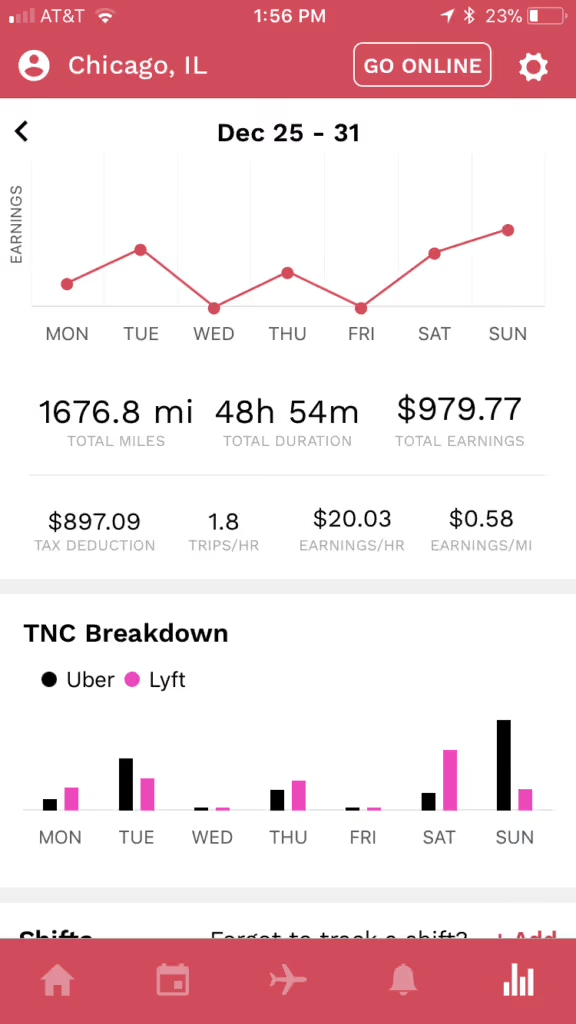
Ideally, you'll start to understand that you drive a certain number of miles on average to pick up a driver and that on an average day, you accept a certain number of trips. So if we drive 2 miles to pick up a rider and do 10 trips a session and 2 sessions a day, we just multiply to find that we drive about 40 miles per day to just pick up passengers.
We can then extrapolate this based on how many times a week/month/year we are doing full shifts or half shifts.
Compare average miles Uber tracks, vs average miles Gridwise tracks
Another great way to estimate your total miles is to build under stand the raito between the miles you drive while driving a passenger and the total miles you drive while on a shift.
You can do this by separately tracking how many miles that you drive with a passenger vs how many miles you drove in total across 10 or so sessions. The number of miles that you drive with a passenger is the number of miles that Uber would give you at year end.
Now I understand how Uber would track my mileage, and I understand my true mileage. So if I divide my true mileage by my Uber mileage or "on-trip" mileage, I will get a ratio that I can use to estimate how many more miles I should have tracked.
For example, if I track 120 on-trip miles and 150 total miles, then I can divide 150/120 and get 1.25 ratio. That means I should multiply the miles that Uber sends me in my year-end reports by 25% to get a a average.
I would suggest combining this method with the previous two methods discussed and using them all to corroborate each other.
Stay out of this sticky situation
When combined, the methods listed above will do a nice job of estimating your additional mileage, but the very best way to come up with a mileage number come tax season is to know for sure by tracking your miles.
Use Gridwise's 100% free performance tracking feature to track your miles per trip, per session, trips per hour, earnings per trip and much more.
Oh and for all of you Gridwisers that were tracking your miles in 2017, check your inbox for your mileage tracking report! The subject line will be "Your 2017 Mileage Tax Report"
It will look something like this...
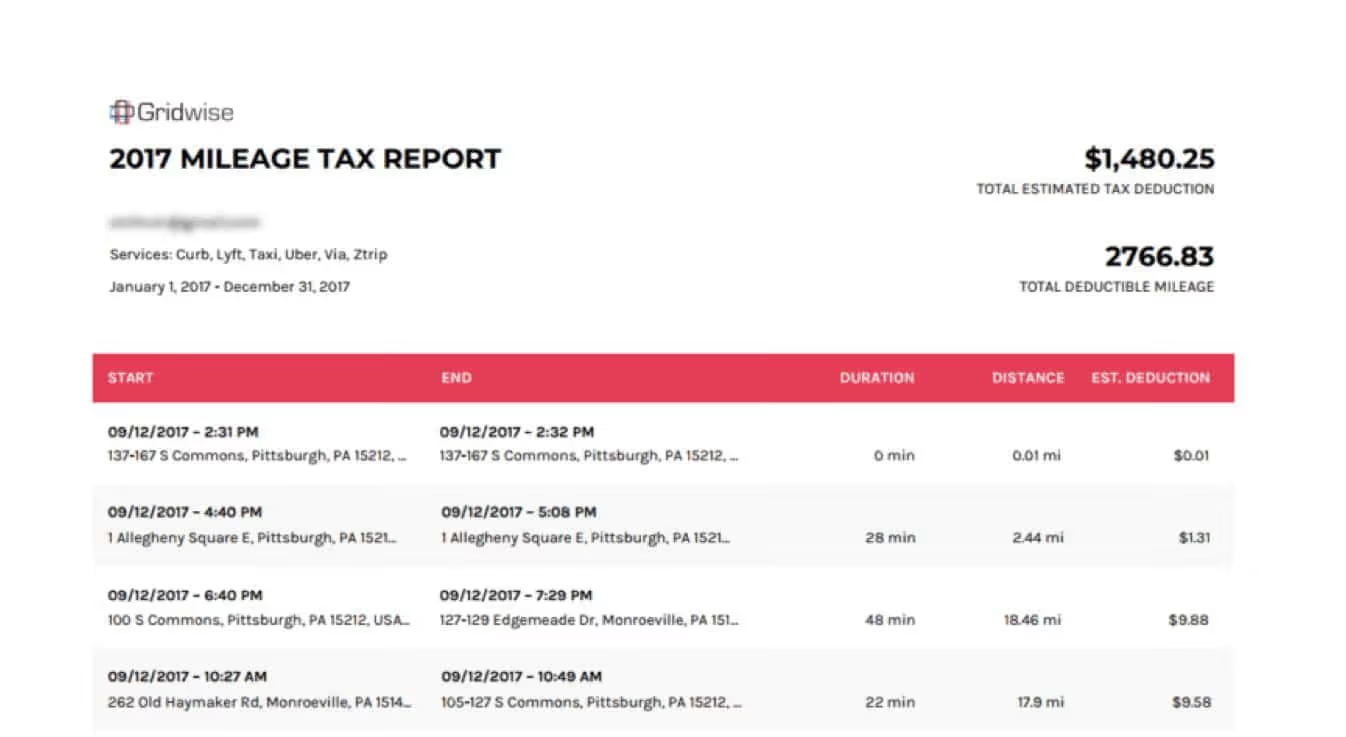
*Deduction estimates are based on the 2017 standard mileage rate of 53.5 cents per mile. Gridwise does not provide tax, legal, or accounting advice. This report has been prepared for informational purposes only. Gridwise is not responsible for the accuracy of the mileage recorded by the user or the resulting deduction estimates. You should consult your own tax or accounting professional.

The 5 Best Neighborhoods to drive in Chicago
Chicago is a city full of rider demand. People are always out and about and heading somewhere, which is great for rideshare drivers.
Unfortunately for rideshare drivers though, Chicago also has an extremely high supply of drivers, which means even with so much rider demand, it can still be difficult at times to find passengers.
There are some neighborhoods, however, that if you go at the right time you're almost always going to be able to find a ride.
In today's blog post, we're going to discuss the 5 best Chicago area neighborhoods for rideshare drivers and when you should go to them.
Lakeview/Lincoln Park
Alright, we're cheating a little bit by lumping these two neighborhoods as one, but these adjacent neighborhoods are both great for rideshare drivers.
During the morning rush, Lakeview and Lincoln Park residents are frequently looking for rides down to the loop or to DePaul, so if you're driving between 5 am - 9 am, focus on these areas.
When you do get a ride down to the loop, start making your way back up towards Lakeview to see if you can catch another rider looking to go downtown. Continue to do this and you'll stay busy all morning, you might even find yourself in the middle of a real surge during these hours.
Lakeview and Lincoln Park are also known to have great nightlife, especially in Boys Town, so if you are a late night driver you can always find a ride around here.
If you'd rather drive during the day, Cubs games that take place in Wrigleyville also are incredibly popular. Just be careful not to get stuck in traffic by venturing too close to the stadium.
Wicker Park/Logan Square
We're cheating a bit again here, but these two areas again, are right on top of each other and very similar.
Much like Lakeview and Lincoln Park, you'll be able to find rides here during the morning rush, as many professionals living out here will be looking to avoid taking the Blue Line into the loop.
Wicker Park also has some of the best bars and restaurants in the city, which means there will be a ton of evening activity here.
Navy Pier
Chicago, in general, is an extremely popular tourist destination during the summer months, and Navy Pier is one of the main attractions.
On Saturday's and Sunday's June - August, you'll be able to find a nonstop stream of riders going to, and coming from Navy Pier almost all day.
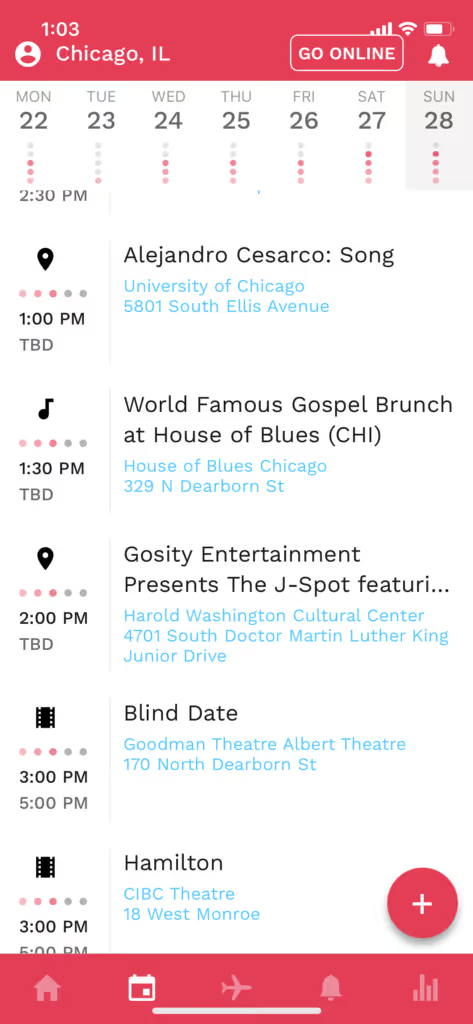
There are also always events going on at Navy Pier throughout the year like shows, haunted houses, and ice skating. Check Gridwise to see what events are going on at the Pier and the nearby River North area.
The Loop
Driving in the loop is a great option during the week when professionals are looking for rides either to or from their jobs. Usually, during the morning rush you'll be taking people from residential areas like Wicker Park and Lincoln Park to the Loop, however, in the afternoon and evenings you'll be doing the opposite.
Around 5:00 pm you can start to position yourself near the loop and within a short amount of time, you're likely to get a passenger going out to a residential area.
I recommend taking them to their destination and then heading right back downtown to reposition yourself. Using this strategy you should have a steady stream of rides from 5:00 - 7:30 each weekday evening.
Be warned, The Loop is completely empty on the weekends. So stay away unless you just need a break.
O'Hare/Midway
Ok, so technically O'Hare and Midway aren't neighborhoods so we're cheating here, but these areas can be a huge source of revenue for rideshare drivers and should absolutely not be ignored.
A lot of drivers will complain that the airports are too crowded and waste time, which can be true if you don't know when to arrive.
The best times to be at the airports tend to be early mornings on weekdays, but you can use Gridwise to check and see when the most passengers are due to arrive at the airport.
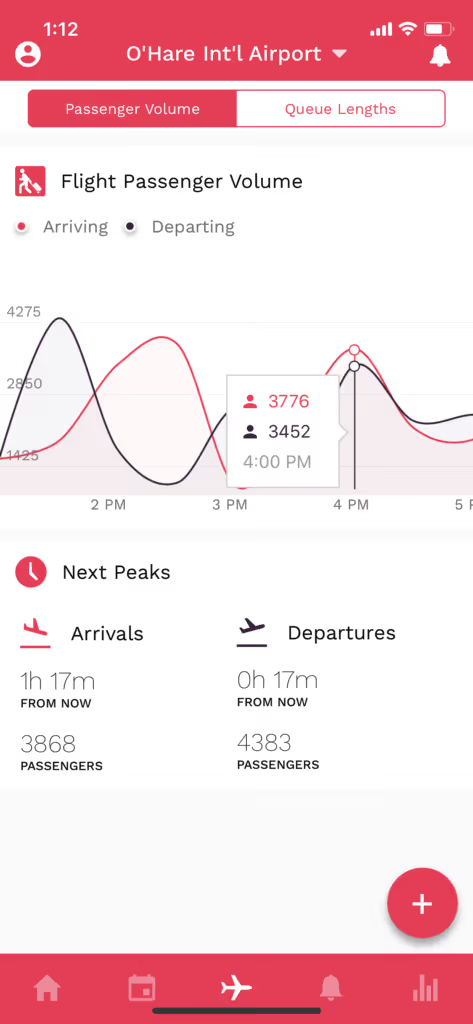
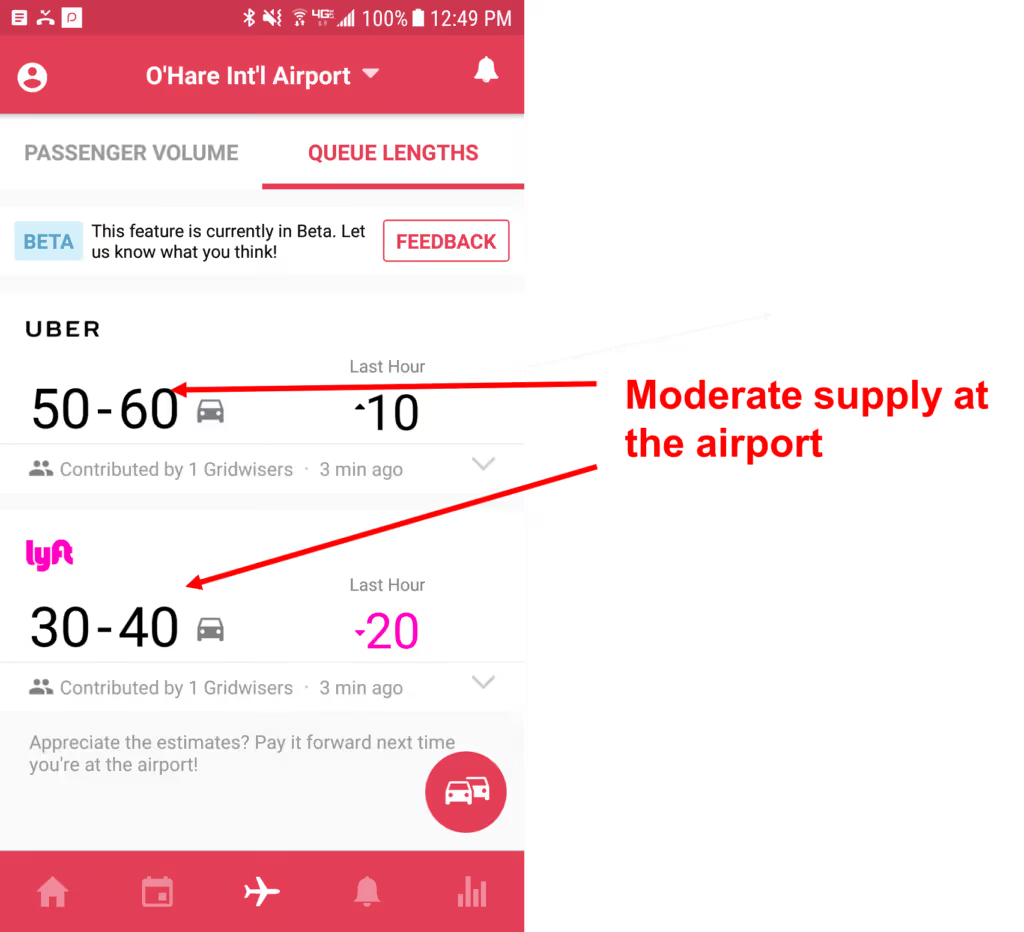
Also, don't forget to use Gridwise to check and see how many fellow drivers are at these airports. This can often be a more important statistic than how many passengers are arriving.
Where do you drive
Now that you've heard from us, we want to know where you Chicago drivers are finding the most passengers.
Let us know in the comments below!
This is how much not tracking your miles is costing you
The IRS does not play games.
When you file your taxes the IRS expects you to include every penny of your TNC earnings, tips, your full-time job, and that $20 that you made from mowing your neighbor's lawn.
If you miss ANYTHING, expect them to show up with a calculator in tow asking for their money.
The thing is, you shouldn't play games either. As a rideshare driver, you have the opportunity to save $1,000's per year if you accurately record your business miles and report them on your tax returns.
And every single dollar counts.
Let's take a look at how much you should be deducting from your taxable income per mile.
For 2018 (filing your taxes in 2019) the rates are:
- 54.5 cents per mile for business reasons.
- 18 cents per mile for medical purposes.
- 14 cents per mile for charity reasons.
For 2017 (filing your taxes in 2018) the rates were:
- 53.5 cents per mile for business reasons.
- 17 cents per mile for medical purposes.
- 14 cents per mile for charity reasons.
*The standard mileage rates can change each tax year — be sure to verify that you're using the correct rate.
That first figure is what rideshare drivers should pay attention to. Sure, it may not seem like a lot but let's take a look at how much not tracking your miles could be costing you.
Cost of not tracking miles
To calculate the cost of not tracking your miles, we'll be using a modified version of this spreadsheet. Please note that Gridwise did not create this spreadsheet. All props go to the creator!
Now, let's start by looking at how much a part-time driver could be saving by tracking their miles in a given week. We'll assume the following:
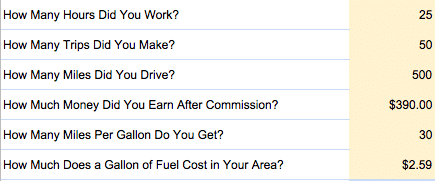
Here, we're assuming that as a rideshare driver we make 13.91 per hour, which is on par with what Chicago area drivers make on average according to Glassdoor.

We're also assuming that over 25 hours, we are giving about two trips per hour and driving roughly 10 miles per trip. This is including miles we drive between passenger pickups and while driving to pick up a passenger.
Given these figures, we can calculate the following:
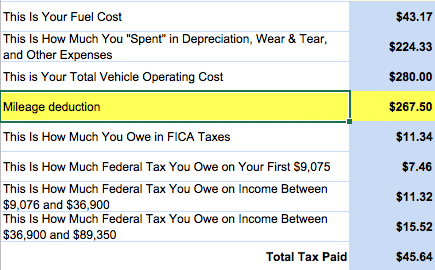
As you can see you have a total mileage deduction this week of $267.50 given a 53.5 cents per mile deduction.
We can also see that given these calculations, we will be paying roughly $45.64 in taxes.
Now let's see how much we would be paying if we had zero deduction.
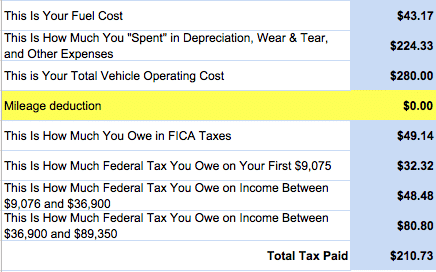
Here we can see our tax liability increases to $210.73! Why? When you spread out that $267.50 deduction across all of your potential tax brackets, you will see that it has a $165.09 net effect on your taxes.
That means as a part-time driver if you're not tracking your miles you could be losing $165.09 per WEEK.
If you're a full-time driver, the effects are even more drastic. Let's say we bump up our driving numbers to the following:
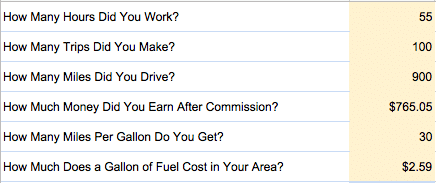
We're again assuming that we make $13.91 and average just under two trips an hour. We have ticked down miles per trip to 9.
Now let's see how our tax liability changes:
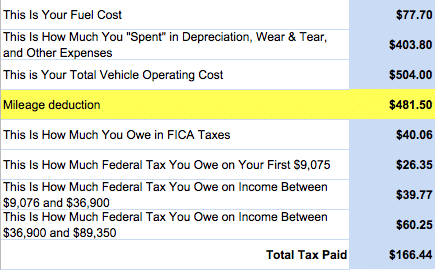
Here you can see my total deduction bumps up to $481.50 and I'm paying $166.44 in total tax.
If I did not track and deduct my miles, however, I will be paying much more.
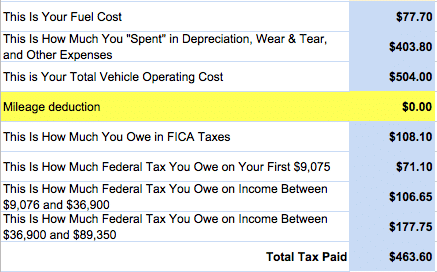
Without our deduction, we are up to $463.60 in total taxes paid! That means we'll be losing $297.16 by not tracking miles.
What about Uber's Year-End reports?
TNC's do give out year-end driving reports at the beginning of each year along with your 1099 which gives you the number of miles that you've driven with passengers, however, that does not include more than 25% of your miles.
As a rideshare driver, there are 5 points in which you can track and deduct miles according to The Rideshare Guy.
- When you are logged out and positioning yourself for a ride
- When you are logged in and waiting for a ride request
- When you are driving to pickup a passenger
- When you are driving a passenger
- After you drop off a passenger and logout again to position for a ride.
Check out the image below for further details:
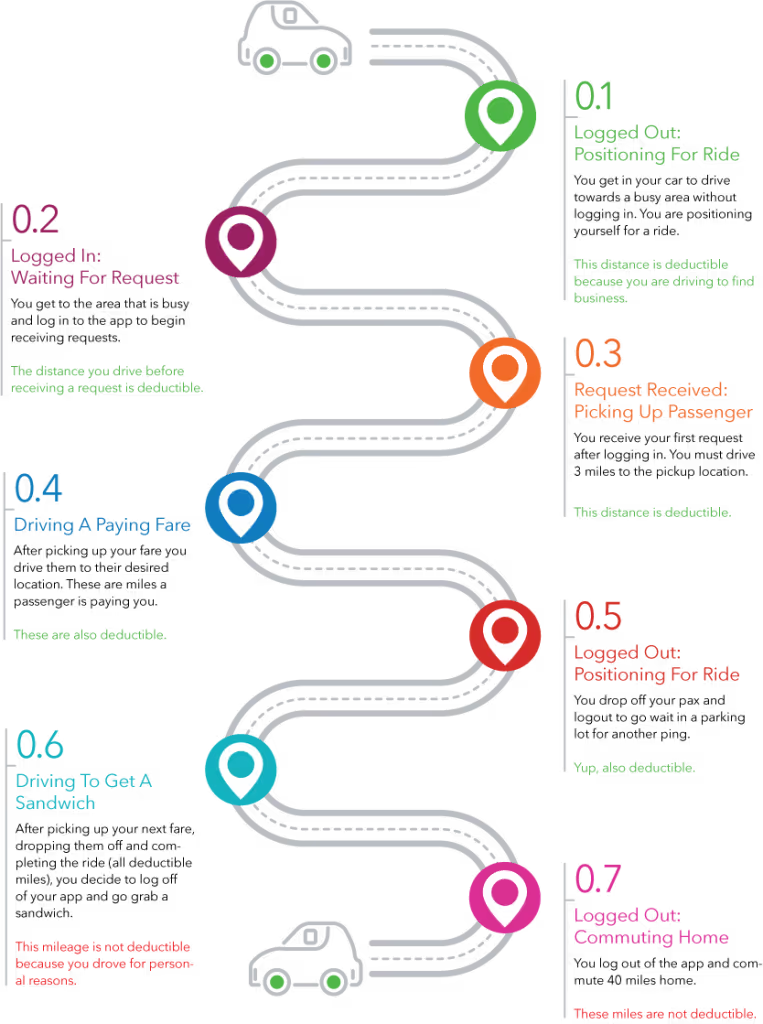
Most TNC's will only give you reports for when you are driving and paying a fare, so you could be missing out on a significant amount of mileage if you solely rely on the reports that Uber, Lyft, or another TNC gives you.
Rideshare drivers could be missing out on 25% of their potential mileage deduction or more by just relying on the reports that TNC's send out. That means of the $297.16 in potential tax savings rideshare drivers could be receiving, they could be missing out on $74.29 per week or more.
Ensure you track ALL of your miles
Make sure that you are tracking ALL of your miles with Gridwise's shift tracking feature. When you start driving, you'll automatically be alerted to start tracking your miles.
At the end of every shift, you'll be prompted to enter your earnings, and you'll be able to see how many total miles you drove (not just miles with a passenger).
You can then see a complete history of your driving miles and earnings. We'll also keep track of your current deduction.
So what are you waiting for? Start tracking your miles NOW so you can maximize your tax deduction and your earnings using the free Gridwise app!


4 Ways Chicago Rideshare drivers are earning more
Chicago rideshare drivers are crafty...
That's because they have to be.
On a recent trip to Chicago, we found out just how crafty Chicago Rideshare drivers NEED to be.
The Chicago rideshare market is booming but also saturated with drivers. So the most profitable drivers are acting strategically, planning their routes, and optimizing their driving performance.
We got a chance to catch up with numerous rideshare drivers over the last week to talk about their strategies, and we expected their tactics to be drivers in places like D.C. and Pittsburgh, but being a successful driver in Chicago requires different strategies than those other cities.
In today's blog post, we'll discuss the strategies that Chicago area rideshare drivers are using to earn more in the Chicago rideshare market.
Embrace the Suburbs
The Chicagoland area has just over 9.4 million residents, with the majority of those citizens living outside of Chicago's city limits. That means millions are living in cities like Aurora, Elgin, Joliet, and Waukegan.
Chicago's massive suburban population creates a unique scenario where rideshare drivers can make just as much driving in the suburbs as they could driving in the City. This is because there are significantly fewer drivers in the suburbs, but the large suburban population means that demand will still be strong. You'll also likely receive longer fares as riders will typically be looking for rides that last 20 minutes - 30 minutes instead of 10 minutes - 15 minutes like they would in the city.
They key to success is driving in the right suburbs at the right time.
Drivers that we spoke to that had success in the Chicago area focused on driving in or near DuPage county. These cities would include:
- Naperville
- Wheaton
- Elmhurst
- Glen Ellyn
- Aurora
- St. Charles
- Schaumburg
If you plan on tackling the suburbs, start by focusing on the early weekday mornings. Thousands of working professionals are commuting to work, or the airport during from 4:00 am - 7:00 am which means rideshare drivers have huge opportunities long trips to O'Hare, Midway, downtown Chicago, or other suburbs.
Late nights on weekends can also be just as profitable in the suburbs as they are in downtown Chicago if you focus on suburban downtown areas in affluent cities like Naperville and St. Charles.
Know the Underground
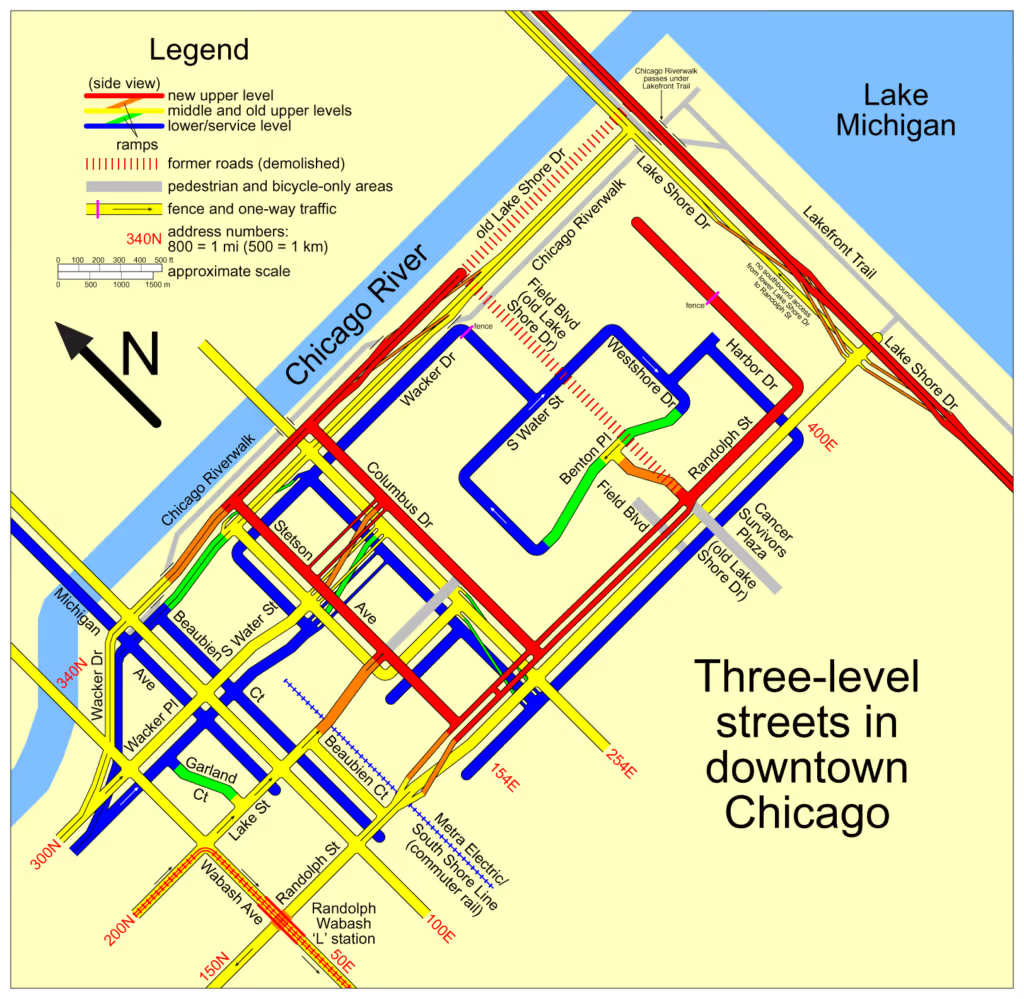
One of the biggest pieces of advice that I heard from veteran rideshare drivers in Chicago was to learn the underground roads in Chicago VERY well.
Throughout the city, there are underground streets such as Lower Wacker Michigan Ave, Kinzie, and Randolph that can be accessed from Lake Shore and Wacker.
Taking these roads can be a great time saver, and will give you a chance to impress your riders with your ability to find the fastest route. The problem with the lower streets is that your GPS won't work underground, so you'll need to learn the streets very well.
Familiarize yourself with the underground streets by taking an hour or two during the night to drive around. Learn where the entrances are, where the exits are, and how to best navigate the streets.
Taking a bit of time to learn these streets will pay off whenever you're driving in the city.
You can also check out the map below to get an idea of where the underground roads are and where they go.
Amazon Flex
No Amazon didn't get into the ridesharing business (yet), but they have started hiring independent drivers to deliver their packages from their distribution facilities to customers' homes.
Many Chicago area rideshare drivers are using Amazon Flex to supplement their income because the service pays at least $18 per hour and nearly $22 per hour on average.
The catch is that it is can be very difficult to become an independent contractor for Amazon, and when you do, it can be difficult to get more than one or two 4 hour shifts per month.
Luckily for Chicago area drivers, Chicago is one of Amazon's most popular hubs, so they are frequently hiring drivers opening up more and more shifts.
Chicago drivers should take advantage of Amazon Flex and boost their income.
Drive Via
Uber and Lyft aren't the only players in town. In Chicago, rideshare drivers can also drive for the up and coming service Via.
Via is a new rideshare company that focuses on allowing drivers to pick-up and drop-off passengers along a designated route. You will still be shuttling around multiple passengers, similar to Lyft Line or Uber Pool, however, when you get a "match" and add another passenger to your route, you will add a multiplier to the trip. It's not uncommon to see 1.5x - 2.5x multipliers for picking up multiple passengers.
Chicago area drivers are taking advantages of Via's match multiplier system, which they call Rocket Pay Multiplier, along with the lower commissions of Via. Unlike Uber and Lyft, Via only takes a 5% cut from your earnings.
What's even better is that Via currently offers a $300 signup bonus in Chicago, along with attractive referral bonus offers. Via is still a very new platform in Chicago, so getting your fellow rideshare drivers to switch over to Via can be very profitable.
How are you making more money?
We learned a ton about the Chicago rideshare game on our recent trip to the windy city, but we want to know how YOU are beating Uber and Lyft at their own game.
Let us know what tricks you're using to maximize your earnings in the comments below!
4 Crucial Metrics For Measuring Your Performance as a Rideshare Driver
Every rideshare driver wants to make more money, so we try to drive different routes, drive at different times, take advantage of events, and even chase the occasional surge.
Many of these tactics can be successful (except chasing the surge... never chase the surge), but how do we know?
The truth is that if you aren't tracking your performance metrics, you don't know if you are improving your performance and actually making more money.
But how do we actually track our performance as rideshare drivers? What metrics do we follow? These are important questions with that we hear rideshare drivers asking all the time, so we've put together a list of the 4 most important metrics that rideshare drivers should be tracking and give you insight into why they are so important and how you can improve them.
Let's take a look!
Earnings per hour
When people speak about their rideshare driving performance, they tend to speak in terms of earnings per hour, and for good reason. Your most important asset is your time, so you should always be aware of the value that you are receiving by giving your time to Uber/Lyft/Via or other TNC's.
How you can calculate earnings per hour
The calculation for earnings per hour is simple. You just need to know exactly how much you have made during a session, and how many hours you've been driving. From there, the calculation is simply:
$ made/hours spent driving
If you're tracking your performance with Gridwise, you will automatically see this figure calculated.
If you're a Gridwise user, these metrics will automatically be tracked.
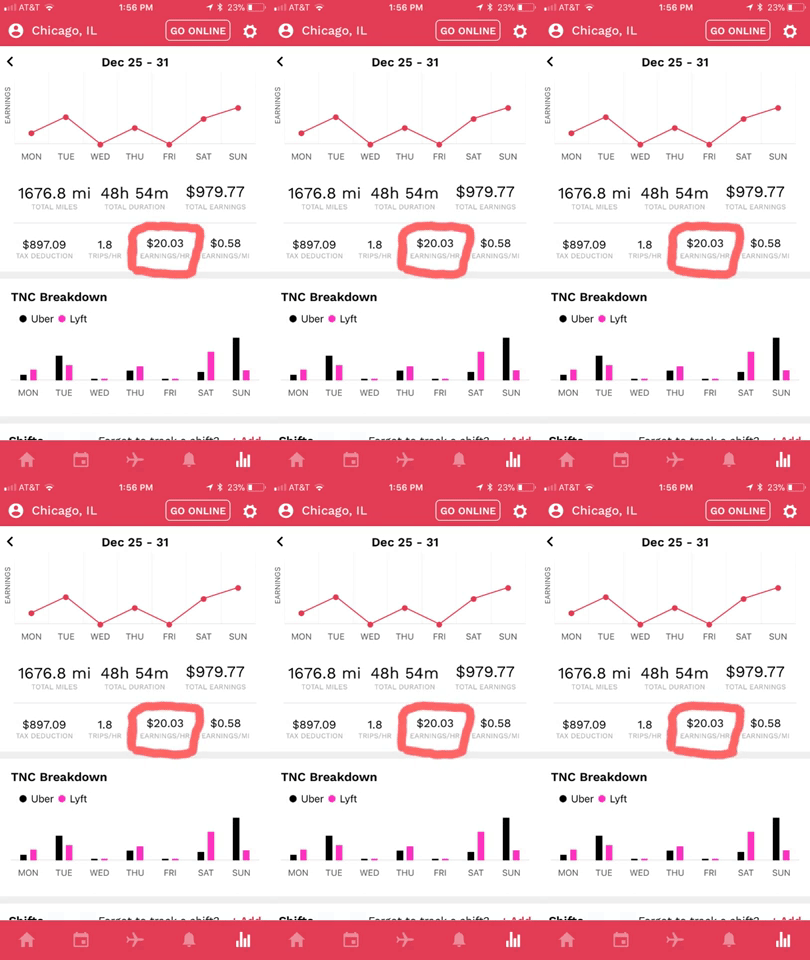
How you can improve earnings per hour
If your earnings per hour isn't where you'd like it to be, you are likely not getting enough rides and spending a lot of time idle, or you are getting many rides that are not making you enough money.
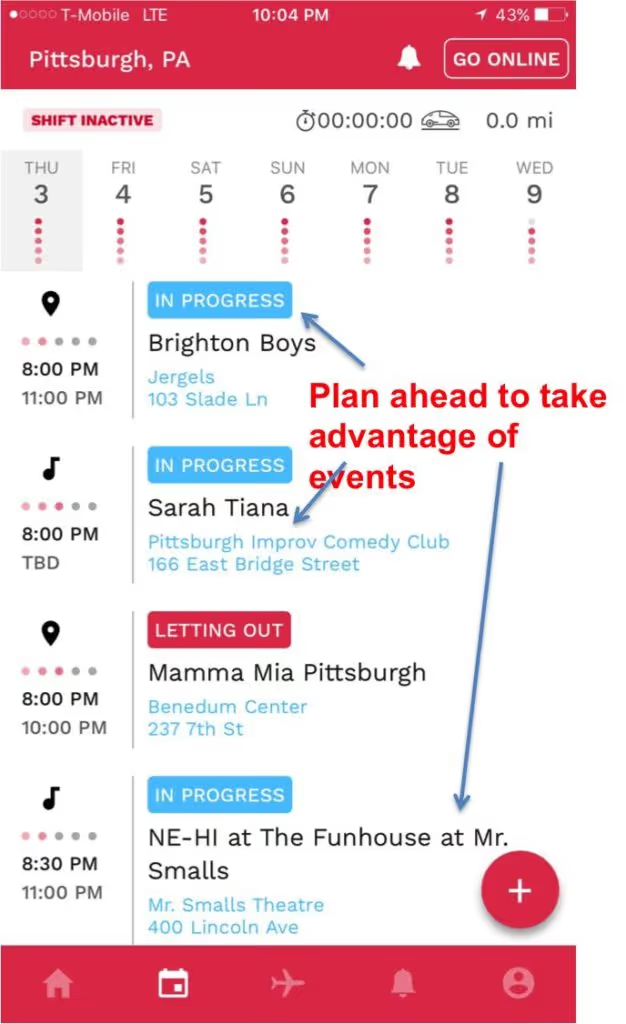
If you're not getting many rides, you need to start thinking of where the highest passenger demand with the lowest driver supply is. Start looking into what events are going on around your city to understand where and when certain areas will be ripe with potential passengers. This is a great opportunity to use your Gridwise app to check out what events are going on.
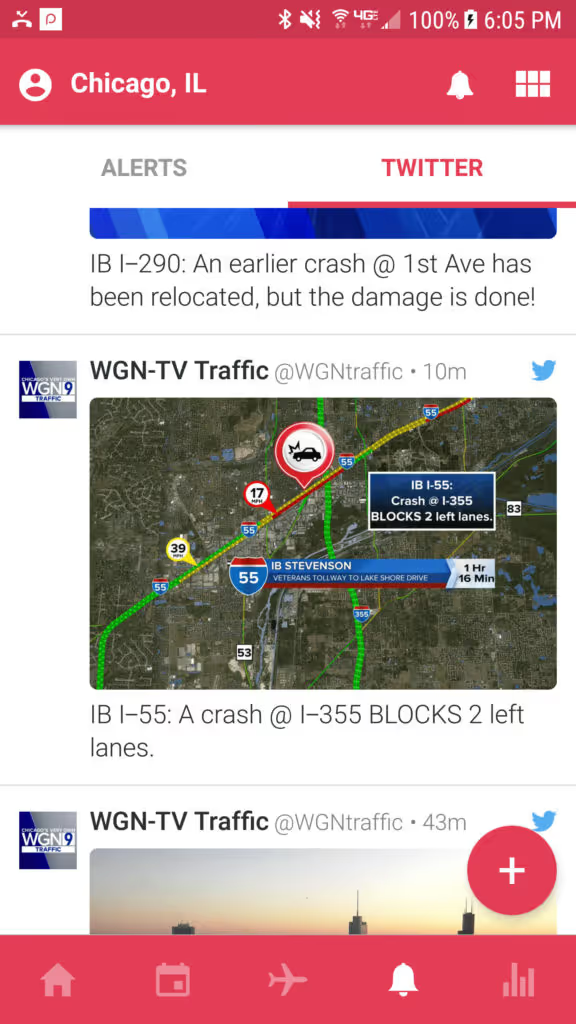
If you're not making very much when you are getting rides, this is likely because you're getting stuck in traffic. You can use Gridwise to watch out for traffic and know what locations to avoid.
Remember that you get paid more by the mile than you do by the minute!
Trips/hr
Your number of Trips/hr is an important metric that gives you insight into how much time you are spending idle, but you want to be careful when you analyze this stat.
If you are a airport driver, you should be expecting a lower trip per hour number, however, if you are driving in a city or suburb where you will be spending less time waiting for rides, you'll hopefully have a higher trip/hr number.
How to calculate trips per hour
This is another easy calculation, you simply need to know how many trips you've completed during a session and then how many hours you drove. Then the calculation is simply:
Number of trips completed/Number of hours driven
Cake!
You can also easily track this metric using Gridwise if you're tracking your performance.
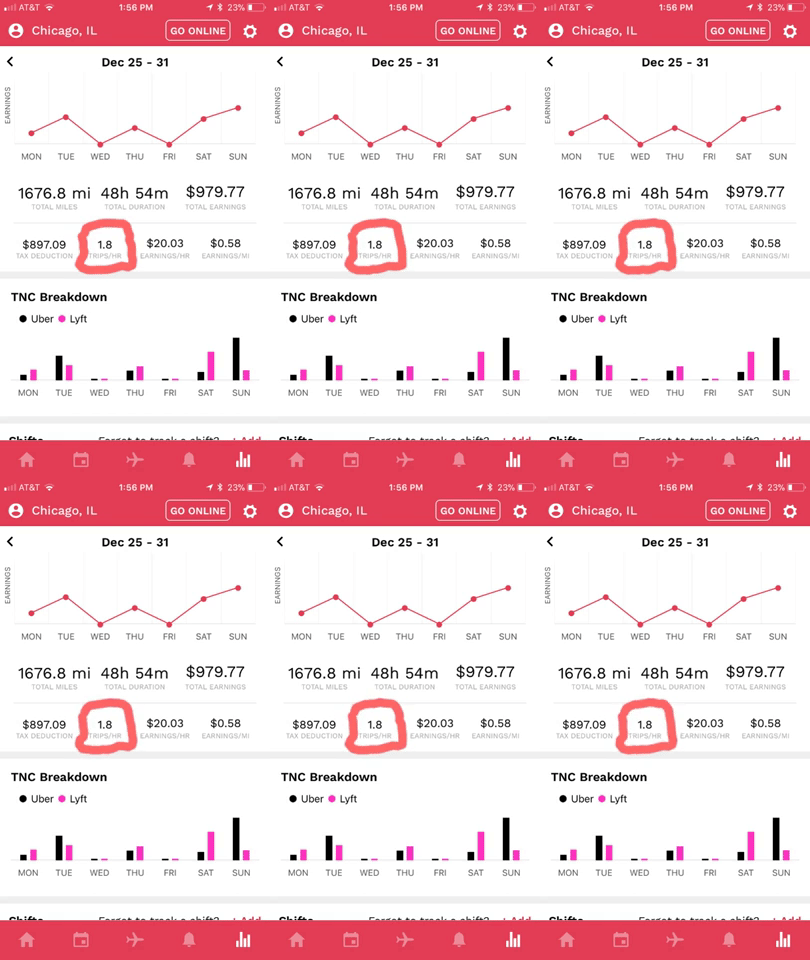
How can you increase your trips taken per hour?
If you're an airport driver, increasing your trips per hour is all about figuring out when you should be at the airport. Check your Gridwise app to understand how many drivers are in the queue before you arrive and compare that to how many passengers are expected to be coming in.
If you see that there are a significant amount of passengers and only a few drivers, you can expect a shorter wait time at the airport.
If you're driving in the city, you should be predicting surges by knowing what events are going on in your area. Be in areas where events are letting out by watching your Gridwise app for alerts.
Earnings per mile
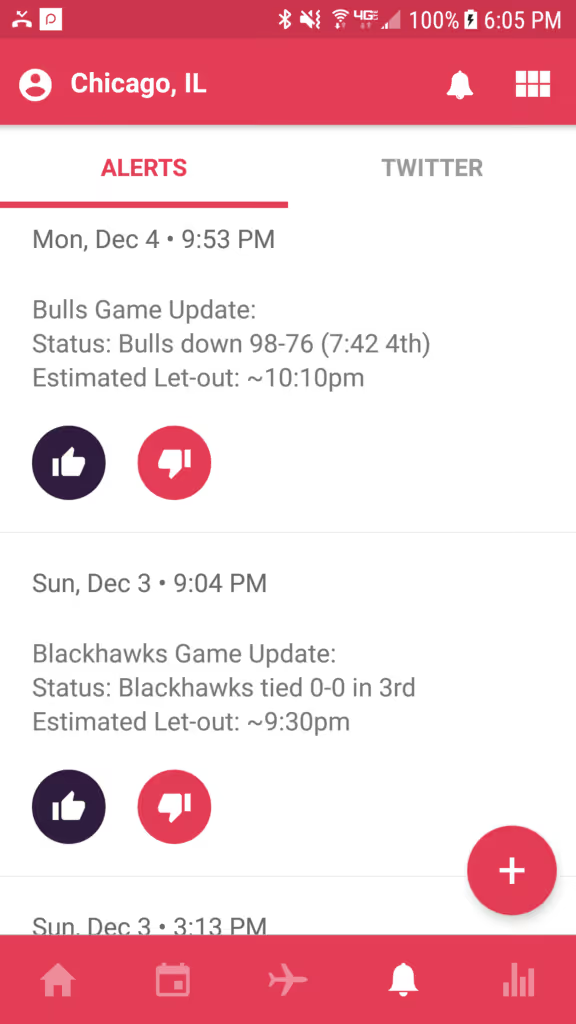
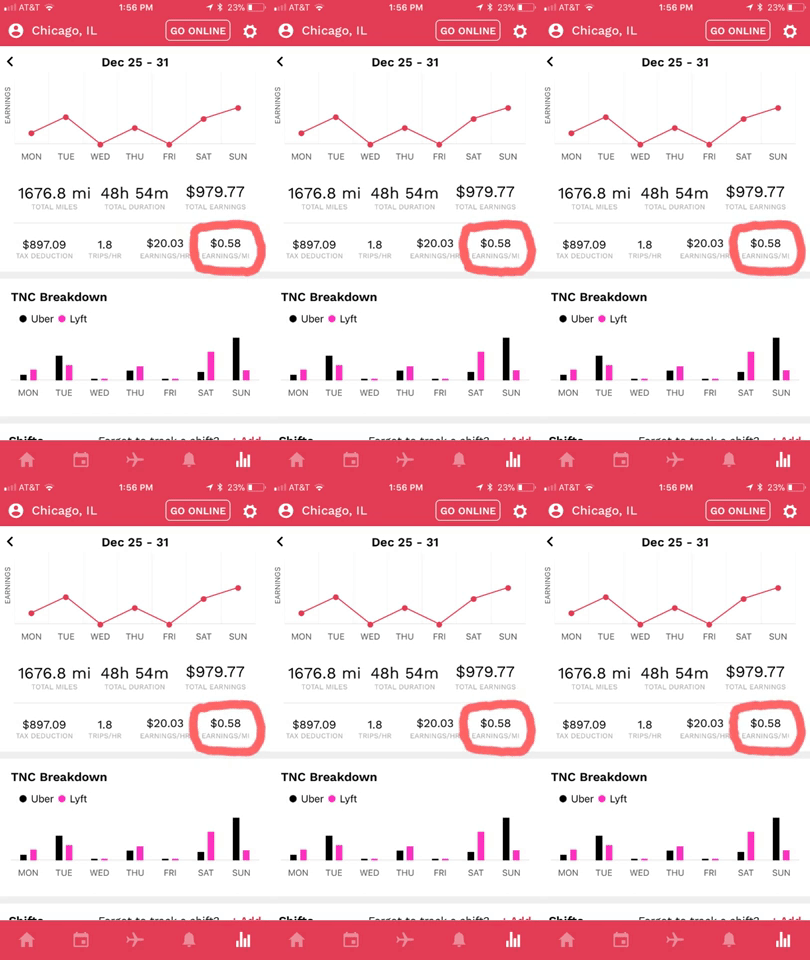
The most important metric that most drivers forget to track or think about is earnings per mile. Why is this so important? Because every mile you put on your car has a REAL cost that includes gas, maintenance, and depreciation. Check out this article by The Rideshare Guy to see how you can calculate how much your car costs to run per mile.
It is crucial for you to be making a significant amount more per mile than it is costing you to drive your car per mile because of these costs. If you are not, you're actually losing money.
How to calculate earnings per mile
Calculating earnings per mile is simple. You will need to know how many miles you drove during a given session and your earnings in a given session.
$ made/miles driven
You can also easily track this metric with Gridwise if you're tracking your performance.
How to improve earnings per mile
One of the biggest causes of low earnings per mile is driving around too much when you don't have a passenger.
When you are looking for passengers, don't drive around from one end of the city to the other searching for demand. Instead, research where passenger demand will be highest and SIT in that area. Chasing passengers around the city or chasing surges is only going to use up gas and rack up miles on your car.
Find a good spot, and SIT.
To improve earnings per mile you can also leverage airports more. By design, you will have more idle time, however, when you get rides they tend to be longer and higher paying trips.
Earnings per TNC
Do you drive for multiple TNC's? Do you know which is more profitable for you?
This metric will tell you if you what TNC you are making the most money with.
How to calculate earnings per TNC
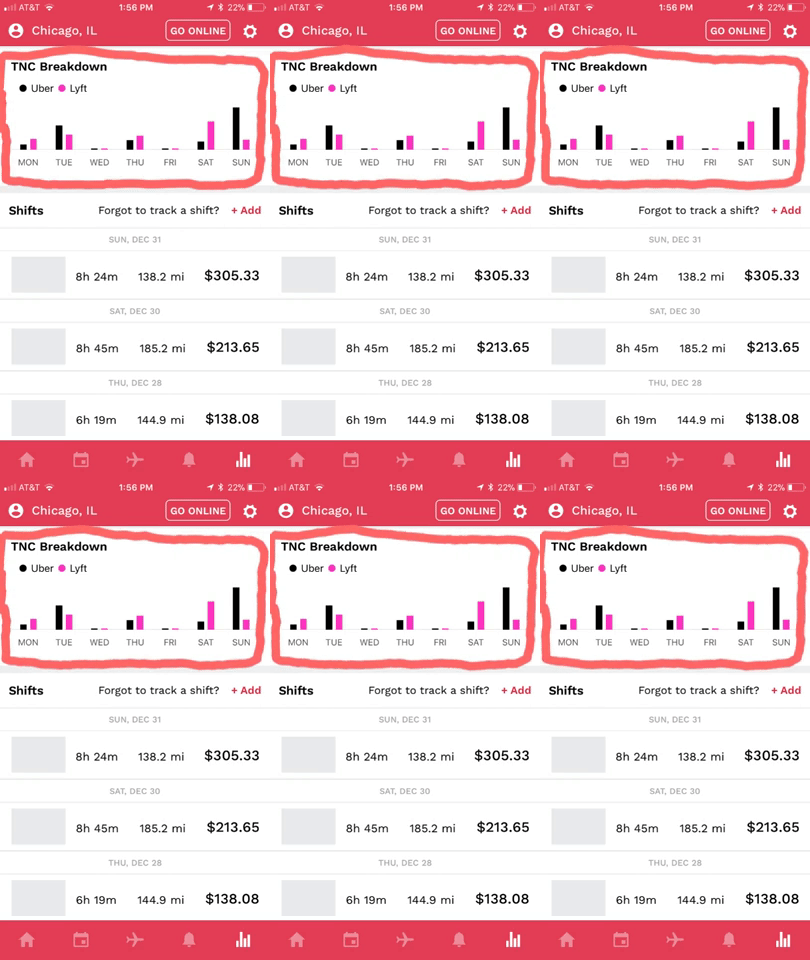
There isn't much of a calculation here. You will simply want to understand in a given session how much you made while driving for each TNC.
If you're tracking your performance with Gridwise, the app will automatically track this for you.
How should I use this metric?
Your earnings per TNC isn't a metric you should really focus on improving, but you should use it to tell you what companies you are having the most success with. You can then use this information to decide which TNC you will drive for and when.
Which metrics are you tracking?
Are you tracking your driving metrics? If so, how are you improving them? Let us know in the comments below!
4 Reasons rideshare drivers should accept rides 10+ minutes away
What has been the farthest that Uber, Lyft, or another transportation company has tried to get you to drive to pick up a passenger?
15-minutes away? 20-minutes away?
A few years ago, I was pinged a to pick up a passenger that ended up being 22 minutes away from me. I was a relatively new driver at that point and hadn't seen much action that day, so I quickly accepted the ride.
After fighting through traffic and dealing with an irate passenger calling/texting me every 5 minutes even though I was clearly on my way, I finally arrived and picked up the passenger...
For a 7-minute ride.
Experiences like this can quickly turn someone off from taking far away requests, however, there are a few situations where it makes sense to drive 15+ minutes to pick up a passenger.
In today's post, we're going to talk about the 4 most common reasons that you will want to pick up a passenger that is far from your current location.
It is a weekday morning between 4:00 am and 6:00 am
If you're an early morning driver in a city with a popular airport then you know that these are prime hours for business travelers heading out for the week. These rides are usually long fares, so it is worth it to accept a ride that is farther away because you'll likely be getting a large fare.
To make the trip even more worth your while, check your Gridwise app to see if there is a peak in demand coming in.
Then check your Gridwise app to see how many other drivers are at the airport.
If there is a peak in demand and a moderate to low amount of drivers at the airport, you'll be able to quickly catch another long ride leaving the airport. This makes accepting these pings from far away worthwhile.
Surging
If you're lucky enough to get a ping into a surge area from 15-minutes away, just take the ride! The extra that you're going to be getting because of the surge pricing will more than make-up for the fact that you have to go farther to pick up your passenger.
when it's in a location I want to go
Many drivers like to stay in their sweet spot.
That means they like to drive in certain parts of the city and don't venture out too far, too often. If you're a driver that wants to stay in a certain part of town, but a passenger has taken you away from your zone, don't hesitate to take a ride that is coming from an area close to where you want to go.
When picking up from hotel
The people that you pick up from hotels will almost always be headed out of town which means they'll want to be taken to the airport. As we discussed above, these airport trips can be very profitable, not just because of the initial long fare, but the fares leaving the airport.
Use Gridwise to check the airport stats before you accept a ride, however, most trips from a hotel to a airport should be worth your time.
Bonus: Uber Rarely (if ever) deactivates users for not accepting rides.
Many drivers are afraid to ignore ride requests because they fear being deactivated by Uber, Lyft, or whoever they may be driving for.
Actually, Uber and Lyft don't explicitly state that a driver can be deactivated for a low acceptance rate... Check out this excerpt from Uber's community guidelines.
"High acceptance rates are a critical part of reliable, high-quality service, but not accepting trip requests does not lead to permanent loss of your account.
Consistently accepting trip requests helps maximize earnings for drivers and keeps the system running smoothly. We know that sometimes things come up that prevent you from accepting every trip request, or you may want to take a break. But not accepting trip requests causes delays and degrades the reliability of the system. If you don’t want to accept trips, just log off.
If you consistently decline trip requests, we will assume you do not want to accept more trips and you may be logged out of the app. [3]"
When you don't accept a ride, Uber will put you in "time-out" for 2-30 minutes depending on your city. This means you won't be able to accept any rides.
This isn't a big deal really as most of these time-outs don't last more than five minutes. If you're on your third ping and you're about to get timed out, you can always accept the ride and cancel it. Unfortunately, a high cancellation rate IS likely to get you deactivated by Uber or Lyft. So tread lightly.
If you do happen to get locked out by Uber... just turn your Lyft app on and drive for them!
Should Uber drivers work for Postmates
Should Uber drivers work for Postmates?
In the process of dialing in your rideshare strategies and figuring out how much do rideshare drivers make, you’ve likely thought about the potential of adding a food delivery app or two to your repertoire. But is it worth it? And which services are the best ones to work for?
These, of course, are big questions. And we’re here to help you work them out. Here’s the skinny on adding DoorDash, UberEats, and Postmates to your workload.
Working for DoorDash
DoorDash is an on-demand food delivery app that hires independent drivers to do deliveries. Unlike with other rideshare and delivery apps, with DoorDash you sign up for shifts up to six days in advance instead of just logging onto the app. You can always drop into a shift without signing up in advance if slots are available, but you can’t always count on that. In other words, it’s not as on-the-fly as other platforms.
DoorDash Requirements
- Be 18 years or older
- Have access to any car, truck, motorcycle, or scooter
- Own a smartphone
- Have a driver’s license with at least two years of driving experience
- Have valid insurance
- Provide a social security number (for a background check)
- Pass a background and driving record check
- Complete an orientation online or in person
How much does DoorDash Pay
DoorDash’s website claims a driver can make up to $25/hour, but that might be a stretch. Most Dashers make $8-15 an hour, including tips. However, DoorDash guarantees you’ll make at least $10/hour, so if you make less than that, the company will pay the difference.
Ultimately, what you make depends on how many deliveries you can do per shift. Every delivery has a minimum payout of $6 per order and there are things that can bump that up. For one, you get to keep 100% of the tips, and unlike some delivery apps, DoorDash’s app encourages tipping.
On top of that, DoorDash implements a system called “pay boost,” which gives you a little extra cash based on the difficulty of the delivery, the distance, etc. Additionally, some cities give new drivers a $100 on-boarding bonus.
Pros
- Minimum hourly wage. DoorDash ensures you’re making at least $10/hour, so if it’s a slow day, you don’t have to worry too much about losing cash.
- Tips. The DoorDash app encourages tipping, so it’s more likely you’ll bring home a little extra cash with this app over others.
- Drive what you want. Unlike Uber and Lyft, driving for DoorDash does not require you to have a specific year, make or model of—or even a car at all. A motorcycle, scooter, or even bike will do.
Cons
- Set shifts. If you’re trying to supplement your rideshare driving with some deliveries peppered in between rides, DoorDash might not be right for you. When you sign up for a shift, you’re basically commiting to driving for DoorDash for a set amount of time, meaning it’s harder to drive for, say, Lyft in between.
- Set geographical areas. When you sign up for a shift, you also select a specific geographic area. You won’t get any orders outside of this area. While that’s helpful when you’re driving specifically for DoorDash (i.e. you won’t be forced to waste time driving all over town) it might hinder your ability to also give rides in between
- Ordering. While sometimes customers will order and pay directly through the app, sometimes you have to personally put in the order and pay with a Red Card, a company-provided expense card, at the time of pickup. This can take up a lot of time that could be spent driving.
Working for UberEATS
UberEATS is Uber’s food delivery arm, which is an option within the normal Uber app (as well as a stand-alone app). While some markets allow you to sign up to exclusively be an EATS driver, others require that also be an UberX driver. That can affect some of the below requirements.
UberEATS Requirements
- Be 19 years or older (21 in Canada)
- Have a driver’s license and at least 1 year of driving experience
- Have regular insurance
- Have proof of vehicle registration
- For EATS-only profiles, your car must be 1996 or newer. Otherwise, vehicle requirements are the same as UberX
How much does UberEATS pay
EATS drivers are paid for each delivery based on a pickup fee, a drop-off fee, and a mileage fee. Uber then takes a 25% cut of each order (though some markets may be 20%). If you have to do more than one drop off, you’ll get a drop-off fee for each different address that you have to deliver to.
So, using Los Angeles as an example, here’s what you’d get paid for a delivery: $2.50 for a pickup + $0.60 for mileage (3 miles at $0.20/mile) + $3.00 drop off fee = $6.10. Uber’s 25% fee would take $1.52, so your total payout would be $4.58. If you receive a tip, that’s all yours, but they are rare with EATS (see below).
That said, UberEATS drivers can expect to make around $8-12/hour
Pros
- Flexible hours. Unlike DoorDash, with EATS there is no shift scheduling format. Just sign into the app and you’re good to go. This makes it easy to incorporate EATS into your usual rideshare strategy by picking up orders between rides. Additionally, EATS deliveries count towards Quest rides, so if you’re going for that Uber bonus on a slow night for rides, EATS can help get you there.
- No ordering or PEX cards. Also unlike DoorDash, EATS will only you ping you with a pickup once the order has been placed with the restaurant. You don’t have to mess around with ordering or payment cards. Just food.
- Wider geography. EATS will send you far and wide for a delivery, but this isn’t a bad thing: because you get paid per mile, a higher-distance delivery will yield a higher fares.
Cons
- No payment for waiting time. Because you’re getting paid per order with no minimum hourly payment guarantee, waiting around for food can feel like a waste of time. Postmates pays for this time (more on that below), but EATS does not.
- No in-app tip option. The EATS app doesn’t prompt customers to give a tip, so you’re relying on relying on cash at the time of delivery. And this doesn’t happen very often.
- Vehicle requirements. Other services don’t care what you’re driving as long as it’s legal and gets you there. Uber, however, is far more picky.
- No guaranteed payout. As mentioned before, a slow night driving for EATS will take a bite out of your profits.
Working for Postmates
Like DoorDash, Postmates is an independent food delivery service that has both restaurants and stores on the platform. So unlike with the other food delivery apps, you might be stopping by a 7-Eleven on occasion to deliver someone a slurpee.
Postmates Requirements
- Be 18 years or older
- Have a valid driver’s license
- Have a car or a bicycle
- Have insurance
- Own a smartphone (or lease one from Postmates)
- Pass a background check
How much does Postmates pay
Like DoorDash, Postmates claims that “experienced” couriers can make up to $25/hour, but research suggests otherwise. To break it down, Postmates pays all drivers a base pay of $1.35 per order as soon as you accept the delivery + $0.10/minute while you wait at the restaurant + $1.03/mile between the restaurant and the drop off location. So if you drive 3 miles and wait 5 minutes, that’s $4.94 per delivery.
You do receive 100% of tips, and customers are prompted to tip inside the app after the delivery is complete.
In some markets, hourly wage guarantees are sometimes offered, but you have to accept 100% of requests to qualify.
Additionally, Postmates offers Blitz pricing, which is similar to Uber’s surge pricing and increases the delivery fees during peak hours for an opportunity to make a little extra.
All told, you can expect to make $8-15/hour in most markets.
Pros
- Tips. Having a tipping option in the app makes all the difference.
- Drive what you want. Like DoorDash, any car that will get you there is good with Postmates.
- Flexible hours. Just sign in and start delivering.
- Order stacking. Postmates allowd you to pick up several orders from restaurants at once, then focus on delivering in a way that makes sense. This can save time and boost productivity.
- Waiting time. If the restaurant is taking their sweet time, you don’t (totally) lose out on cash.
Cons
- App functionality. Unlike most on-demand apps, Postmates doesn't snap to the foreground when a ping come in. That makes it pretty easy to miss the orders and miss the money.
- Ordering. Like DoorDash, Postmates often requires that you make the order yourself (sometimes at the restaurant or shop) and pay with an expense card. This alone takes up time, but Postmates also requires you to take photos of the receipts so the card can be reimbursed. That’s a time suck and an easy step to forget.
- Long wait times. Likely the reason Postmates introduced waiting time payments is because the ordering system often requires you to wait a long time. While other delivery apps already have the restaurants cooking the food while you’re driving to them, Postmates often has you placing the order once you get there.
Who should drive courier services?
Though the companies all say it’s possible to make good money driving for their platforms, it’s clear that isn’t really the case. Even the CEO of Postmates said at a TechCrunch event: “I’d like it to be a full-time job in the future, but the reality is it’s probably a really good part-time job.”
That said, it just might be the right part-time job to supplement your ridesharing work. If you’re having a slow night, you can switch over to a courier service and see if you get any action there. Or if you’re working towards a Quest, an UberEATS delivery can quickly get you there.
Additionally, it can be taxing to deal with driving people around all day. Switching to having food as your passenger for a little while can help keep the less outgoing drivers sane.
Our best advice: Don’t bet on making all your money this way, but adding it to your action plan can yield strong results.
How to stay healthy as a rideshare driver
Being a rideshare driver isn't exactly the healthiest job in the world.You sit on your bum for 8+ hours a day while munching on what is most likely a very unhealthy snack.When finally catch a break, you likely proceed to the nearest fast food restaurant to consume about 1000 calories that you have zero chance of burning while driving around all day.When you are off, you're way too tired to even think about a gym.It's easy to see why many Uber and Lyft drivers gain a few pound after they've started driving.We want you drivers to stay healthy and fit while on the road, which is why we've put together a quick guide to staying healthy as a rideshare driver.
Eat Healthy
This is the big one.To be a healthy rideshare driver, you absolutely must eat well.That starts as soon as you wake up in the morning with breakfast.Yes, breakfast, that wonderful meal that you're probably skipping in favor of a latte is important.Eating breakfast has been proven to lower your risk of type 2 diabetes, improve your heart health, and lower your cholesterol levels according to WebMD.What's even more surprising is that people that eat breakfast tend to lose more weight.Why?Well, that's up for the debate, but many believe that people that eat breakfast are more satiated throughout the day and thus crave unhealthy snacks less.
Bring Your Lunch
You can't eat fast food everyday and expect to be any kind of healthy. It's just not going to happen.That's why you need to learn to bring your lunch (or late night snack) with you when you're driving. This doesn't mean you need to start eating kale salads right away, but simply packing a turkey sandwich on wheat (yes wheat!) bread with an apple and a yogurt will do wonders.
Bring Healthy Snacks
If you're a driver that is clocking in more than 7+ hour at a time, then just having lunch may not be enough. In that case, don't reach for a bag of chips from your nearest gas station, instead look for a healthy snack you can bring from home.Check out this list of healthy snacks from NutritionRealm.

Any one of these snacks would be a significant improvement over the processed food that you can get from your local convenience store, so when you're packing your lunch throw in one of these.
Track Your Calories
Just like with your driving stats, you can't improve what you don't measure. That's why we suggest using a calorie counting app to help you understand how much you're eating every day.You can easily use any of the following apps:- MyFitnessPal- FatSecret- Poundaweek- LifeSum
Exercise
You knew this one was coming. Eating healthy is great, but making sure you exercise is absolutely paramount.The great thing about being a rideshare driver is that you have your own little space (your car) along with a big public space (the world) that can act as your personal gym, if you know how.Let's look at a few great excerciese that you can do in your car with the help of a tennis ball... Just one tennis ball.
Chest and Shoulders
Place the tennis ball in the palm of your hands and interlace your fingers over the top of the ball. Raise your elbows up to your side, almost like you're praying, and press the tennis ball between your palms for 5 seconds and then let go.Did you feel your chest flex?Then you did this correctly.Do 3 sets of 20 of these for a complete set.
Forearms
This one is simple and could be used with a stress ball as well. Simply firmly grab your tennis ball and squeeze as tight as you can for three seconds, then relax. Do 3 sets of 20 here as well.
Abductors
Let's mix in some legs! This one is easy, you simply place the tennis ball between your legs and squeeze for a three count and then relax. 3 sets of 20 for this exercise as well.
Calves
Let's continue legs by working the calves. Place the tennis ball under one of your toes and do a complete heel raise with a nice squeeze at the top. Do one leg at a time for 3 complete sets (both legs is one set) of 30 reps.
Abs
Finally, let's work the core!You can drop the tennis ball for this one and simply sit up straight in your car seat and slowly start to draw your belly to your spine. Focus on using your abs to complete 100% of the motion and squeeze your abs tight at the top of the lift. I recommend completing 4 sets of 25.These exercises won't have you ripping your shirt off, but they'll get the blood flowing, heart rate up, and have your muscles working!
Stretch it out
One of the most important yet undrrated things you can do to manage your health as a rideshare driver is to stretch.Why?Because stretching helps you prevent muscle pains and back aches that will keep you out of the drivers seat. Check out the stretches below.
Neck rolls
Neck rolls are a great way to warm up. Simply sit up straight and drop your head to your chin. Roll your neck slowly to the right, taking your right ear to your right shoulder, your head back, and then your left ear to your left shoulder. Repeat for 10 - 15 seconds.
Shoulder Roll
Again, sit up straight with great posture. Once you're settled bring your shoulders back while trying to touch your shoulder blades and roll your shoulders around to the front of your body. Repeat this for 10 - 15 seconds.
Ankle Stretch
Sit comfortably and give yourself a bit of extra leg room. Bring your ankle and foot all the way up and try to touch your toe to your shin.Do this slowly for a count of 15 for each leg.
Seated Forward Bend
You can either do this completely in your car or with your legs hanging out your driver's side door.However you position yourself, start by raising your arms over your head and giving them a good stretch to the sky. Then bring them down under your legs as you exhale.Drop your head between your legs and let your shoulders fall. Breath deeply and let that stretch sit for 10 seconds. Repeat for 3 - 4 reps.
Lastly, let's loosen up those hips
To do a seated hip stretch you may need to let your legs hang from your open door again.Simply sit up straight, and fold your left knee over your right. Reach high into the air to get a good stretch and then let your arms fall down slowly below your legs and fold over.Your arms should be near the floor. Hold this for 5 to 10 seconds and repeat for 3 to 4 reps while alternating legs.
Don't forget your mental health!
Being health conscious isn't just about your physical health, but also your mental health, and being a rideshare driver isn't always great for your that.That's why you need be sure to take care of yourself. See your family and friends, enjoy life, and don't take the job so seriously!Remember that one bad rating isn't the end of the world and life is bigger than your little rideshare gig!So that's our advice on staying healthy as a rideshare driver and now we want to hear from you guys! What do you do to stay fit out on the road? Let's talk in the comments below!
Trabaje de forma más inteligente. Gane más.
Ya sea que conduzcas, entregues o recojas turnos, Gridwise te ayuda a hacer un seguimiento de las ganancias, el kilometraje y el rendimiento para que puedas mantener el control de tu trabajo. Descarga la aplicación y toma las riendas hoy mismo.
