Blog de Gridwise
¡Lee el blog de Gridwise para obtener consejos y sugerencias sobre cómo ganar más dinero mientras conduces para Lyft, Uber, DoorDash, GrubHub y más!

The Gridwise Job Board: Find Your Ideal Job or Gig Work
Gridwise is an essential assistant app created by gig workers for gig workers. Our mission is to support those engaged in gig work in every way possible. We understand how challenging it can be to deal with income instability, a lack of benefits, and job insecurity that often comes with gig work. The Gridwise app tracks and organizes earnings and expenses, and offers a wide array of discounts, deals, and services that make the lives of independent contractors easier and more rewarding.
We firmly believe it’s possible to make a viable living and create a gig experience that offers flexible hours, variety, and excitement. With issues such as consistent earnings and job security in mind, Gridwise is proud to offer a centralized platform that shows you how to find gig work and secure reliable opportunities. We’re proud to introduce the Gridwise Job Board.
[elementor-template id="20891"]
The Gridwise Job Board: Key features
Because Gridwise is dedicated to serving the gig worker community, we’ve filled the Gridwise Job Board with useful features that won’t waste your precious time.
- Comprehensive listings. Find part-time, full-time, temporary, and per-task work. Drive or deliver with your vehicle, utilize an employer’s vehicle, or even find non-driving gig work.
- User-friendly interface. Find the jobs that are right for you with a tap of your screen.
- Verified opportunities. We vet the jobs before they are listed to ensure you’re getting high-quality job postings.
How to get more gig work, seasonal, part-time or full-time jobs with the Gridwise Job Board
Looking specifically for “gig work apps” or “gig jobs near me?” You’re in luck. Our filters and search functions send you directly to the listings you seek.
Here’s how it works.
- Access the Job Board via the Gridwise website.
- Search for jobs by type, location, and more.
- Select the job that interests you, and read all about it.
- Scroll through the description, and if it appeals to you, click “Apply for job.”
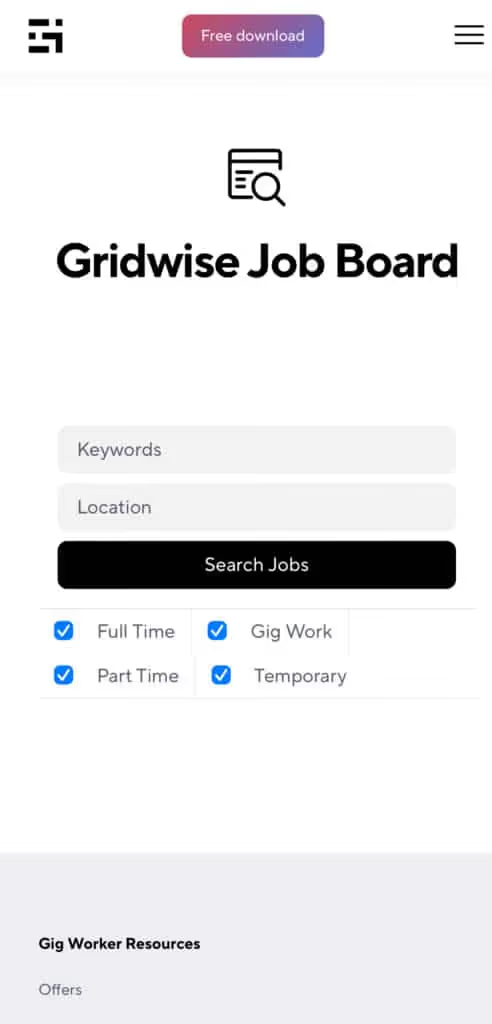
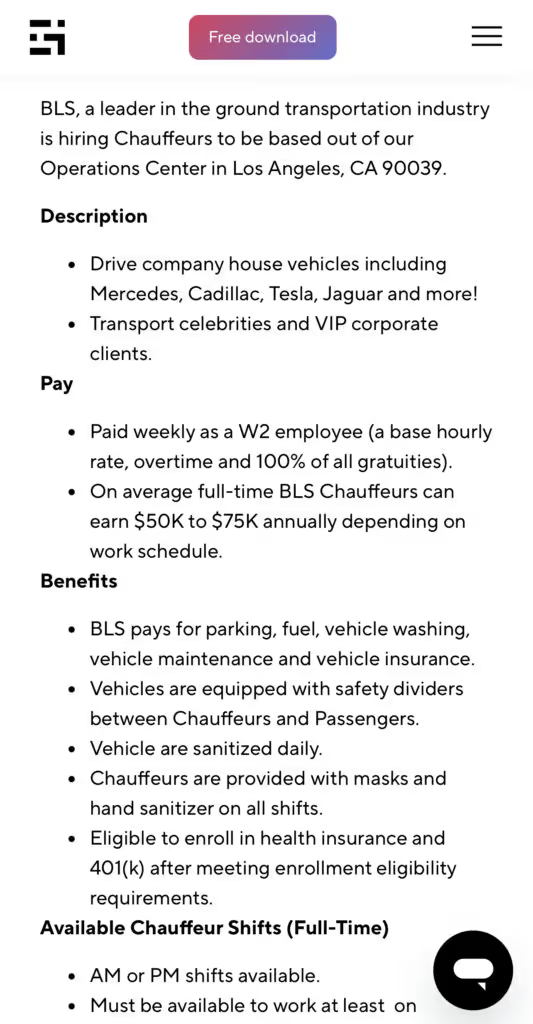
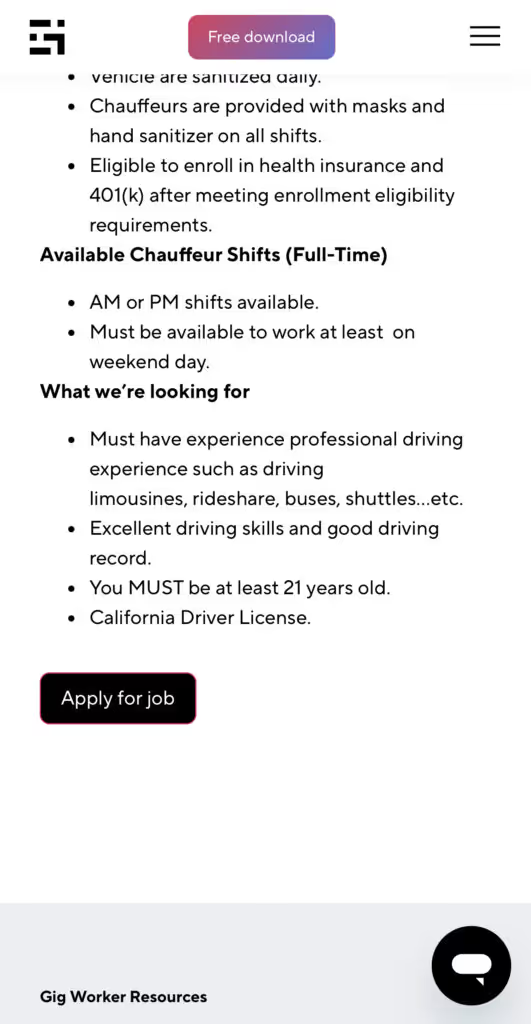
Many types of jobs are available. Adjust the search filter to see the full variety of opportunities that will let you cash in. Deliver food, set up catering, do rideshare driving, get paid for doing package delivery, and much more. You’ll find short-term gigs, long-term contracts, and part-time positions.
Perks of the Gridwise Job Board for gig workers
Gig workers who know how to make extra money will appreciate how the Gridwise Job Board lets you multiply your chances of bringing in big earnings. Here’s how:
- Increased stability. Use the Gridwise Job Board to find part-time or permanent jobs in addition to the part-time gigs you already have. Always keep a steady stream of earning opportunities flowing toward you.
- Flexibility and autonomy. Choose jobs that fit your schedule, work around other jobs and family duties, and still leave room for some fun in your life. Discover side hustles to supplement your full-time job, permanently or just for the season.
- Skill development. Find part-time work that lets you use a skill you already have, or try your hand at something new. It’s a smart way to develop a portfolio to showcase what you can do, or even to find permanent employment.
Get Gridwise and stay up to date on the Gridwise Job Board
Gig workers need plenty of information and assistance, and Gridwise is here to give it to you. Download the app and get essential features such as
- seamless earnings tracking
- mileage tracking
- expense recording, including notes
- low-cost and no-cost insurance benefits
- access to affordable medical, dental, vision, mental health, and alternative care
- professional services including legal and financial help
- deals and discounts
- weather, events, and traffic reports
- inside information on where and when to drive
[elementor-template id="20936"]
More to know about gig work:

5 Best Mileage Trackers For Gig Drivers
Many drivers ask, “Do I really need a mileage tracking app?” The answer is simple: only if you want to have an accurate count of all the miles you can legally deduct from your taxable income! You might think your rideshare or delivery driving app has got you covered. After all, they do quite a good job of logging the miles you drive while you’re on a trip or delivery. But, if you want to have the best app to track mileage for Uber, Lyft, Doordash, Instacart, or the other apps you may use, you need more. Why is that?
Without a separate tracker, you’re missing the miles you drive in between pings. Did you realize that all the miles you drive, from the moment you begin your shift until it’s over (as long as you don’t drive several miles on a break to hang with your friends), are tax deductible! That means you need something besides your driving app to keep an accurate count of your travels. Read this Gridwise post to see how important it is to keep track of every deductible mile.
You won’t be surprised to hear that there’s an app for tracking miles. In fact, there are several of them. Here, we’re going to tell you about five top mileage tracking apps, and help you figure out which one is best for you.
Before we get to the list and identify the best mileage tracker app, let’s clarify what exactly a mileage tracking app is. According to G2.com’s technology glossary, mileage tracking is done for the purpose of keeping a log of mileage that is either reimbursable or tax deductible.
And yes, of course you can track your miles simply by taking readings on your odometer. But are you really prepared to account for how many miles you drove for personal reasons and subtract them from the total to get your business mileage? Even if you can remember all that and do the arithmetic, if you want an accurate reading of the miles you drive for business, and can therefore deduct, a mileage tracking app will save you a lot of trouble and prevent you from making costly errors.
Plus, as a gig driver, you have specific needs when it comes to a mileage tracker. Ideally, you’d be able to handle mileage tracking and several other functions all in one app. It can be maddening enough to deal with driving apps, particularly if you’re an avid multi-apper. You would want your mileage tracker app to help you keep account of other aspects of your business, including income, expenses, and inside information about the art of gig driving.
Not all mileage apps are equal, to be sure! Let’s look at five of the best apps to track mileage and figure out which is the best app to track mileage with Uber and Lyft, or what mileage tracker app is best for DoorDash.
[elementor-template id="20891"]
1. Zoho Expense
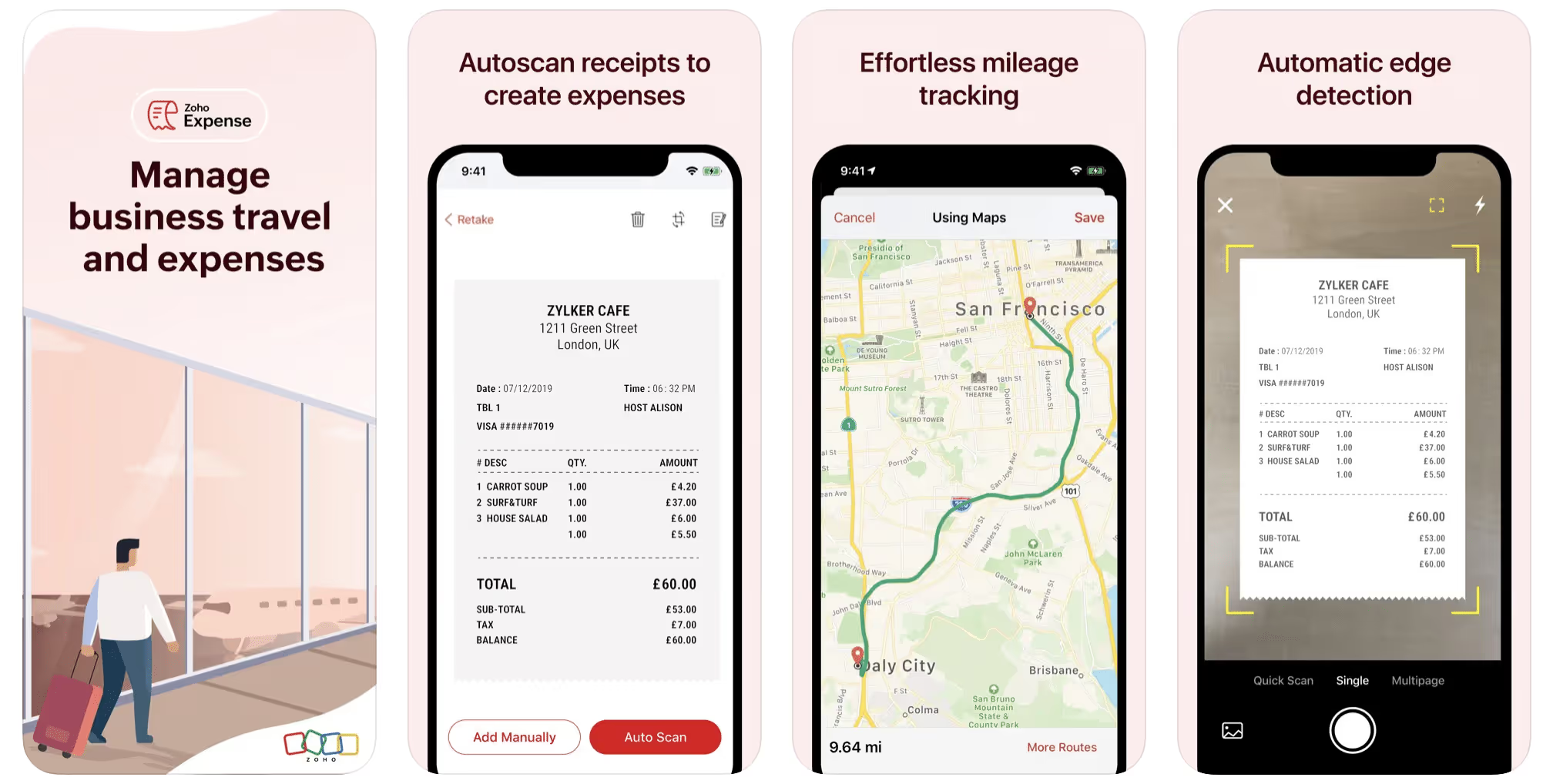
First up is Zoho Expense, which does exactly what its name says. This app is designed to allow companies to give employees a uniform way to create and submit expense reports. It can be used by individuals, including gig drivers, as well.
It includes a mileage tracker, as well as features that let you track other deductible expenses, including the ability to scan and record receipts.
Available on Android and Apple: Yes
Ratings: 4.8 stars on App Store, 4.7 stars on Google Play
Free Version: Yes
Subscription price: $3 per month, billed annually
Created specifically for gig drivers: No
2. Quickbooks Online
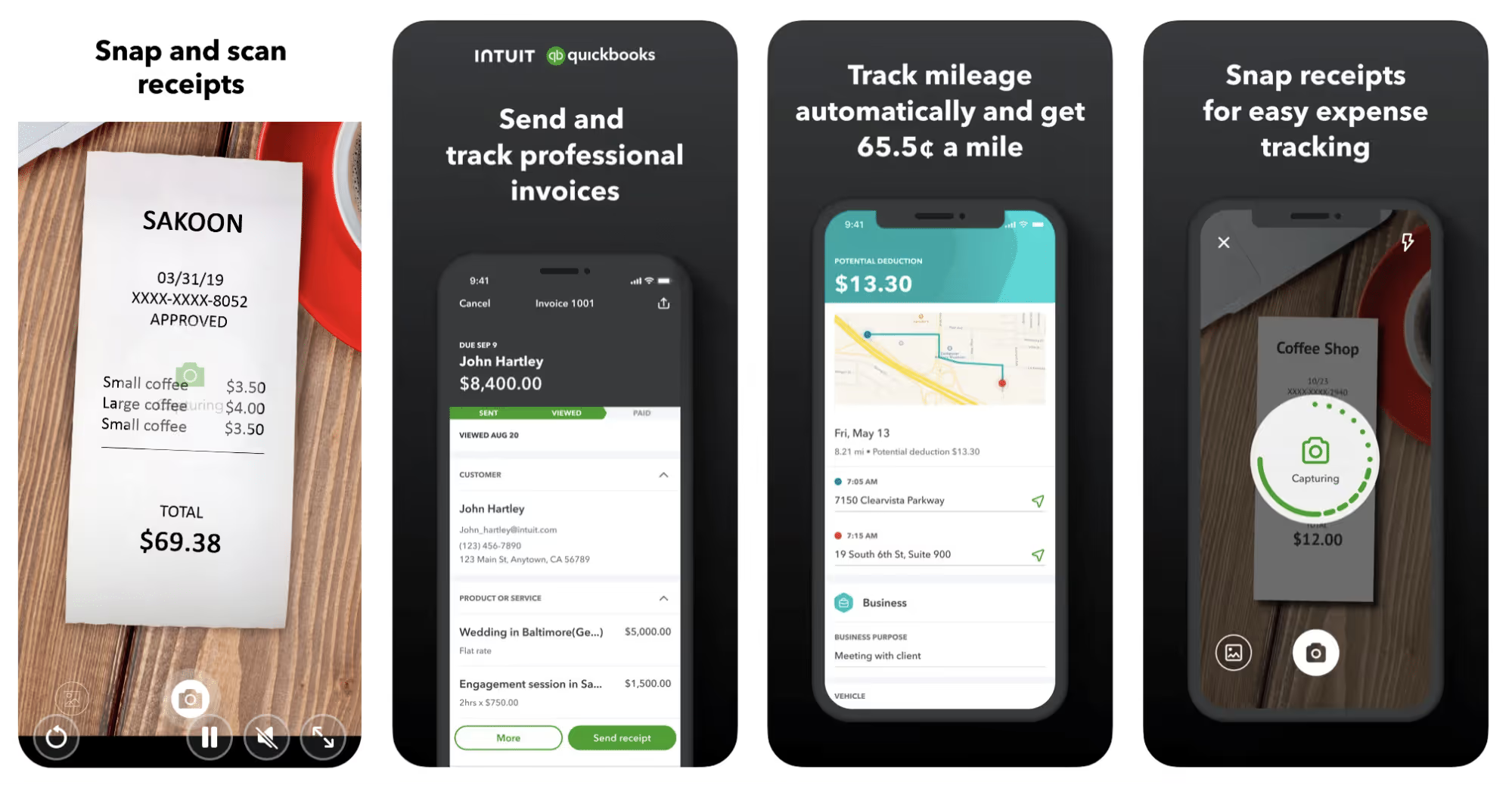
Quickbooks Online is a cloud-based app that allows you to track your mileage, earnings, and expenses. The information you enter can then be used to generate various reports that prepare you for tax time. It also allows you to create graphs that illustrate your cash flow, and includes a receipt scanner so you can instantly record deductible expenses. Quickbooks is popular, highly reliable, and designed mainly to help people keep track of their small businesses.
Available on Android and Apple: Yes
Ratings: 4.7 stars on App Store, 4.4 stars on Google Play
Free version: 30-day free trial
Subscription price: $15 per month for basic version if purchased for 3 months or more
Created specifically for gig drivers: No
Source: quickbooks.intuit.com
3. Shoeboxed
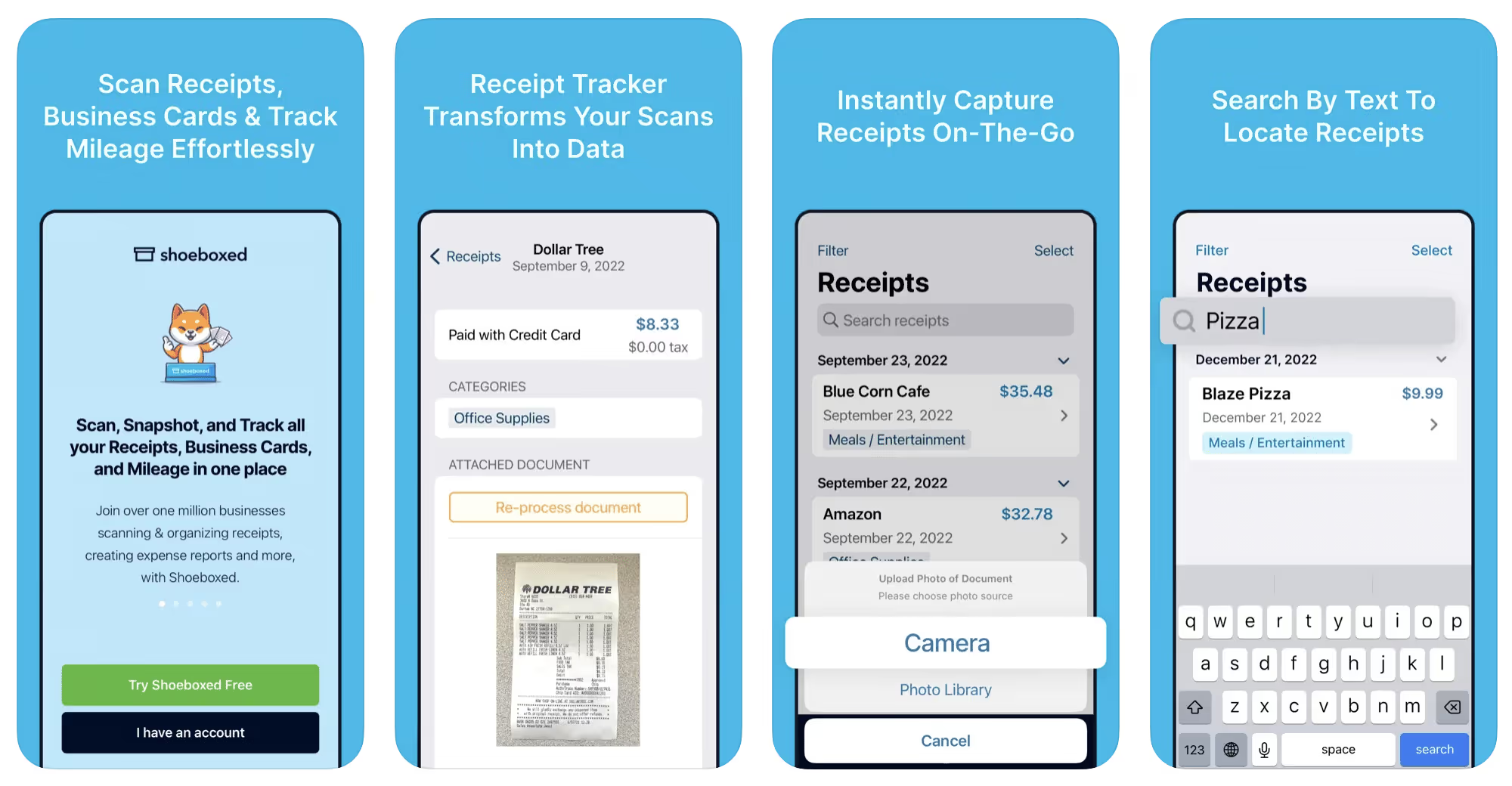
Shoeboxed started in 2007 as a service for scanning paper receipts into digital form. Now the app offers a free mileage tracker and has enabled users to scan receipts directly. It touts itself as the best mileage tracking app for DoorDash, but there are some elements missing that Dashers might like to have. While it provides features that record your expenses and prepare you for tax season, it doesn’t automatically track your earnings. The mileage tracker has a system where you can drop pins along your routes to make the tracking more precise, identifying those legs of a trip that you make for business purposes. The mileage tracker is “free” once you sign up for the basic version.
Available on Android and Apple: Yes
Ratings: 4.5 stars on App Store, 2.3 stars on Google Play
Free version: No
Subscription price: $18 per month for basic version
Created specifically for gig drivers: No
Source: blog.shoeboxed.com
4. Stride
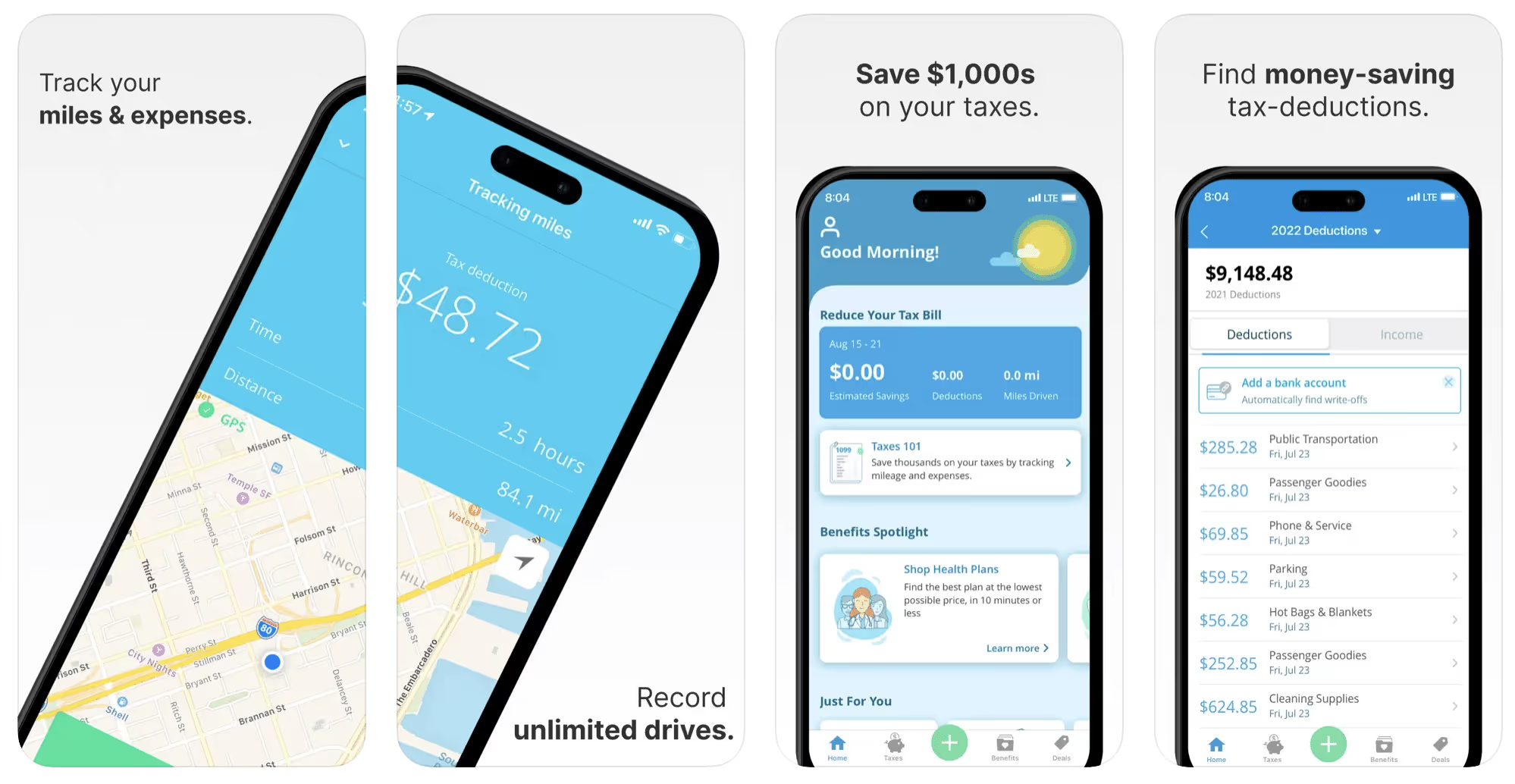
This free mileage tracker does a fair job of keeping track of the distances you rack up while gig driving, but it doesn’t automatically track earnings. It can be a big help, though, in tracking your expenses. You can link Stride to your bank account, and it will automatically scan your expenses to identify items you can potentially deduct. The app is totally free. This could make it the best free mileage tracker app, but there is a small price to pay. The app will persistently push you to consider various insurance plans that they are affiliated with. If you don’t mind that, this is a solid mileage tracker, even if it doesn’t track your earnings.
Available on Android and Apple: Yes
Ratings: 4.8 stars on App Store, 4.6 stars on Google Play
Free version: Yes
Subscription price: None. The app is free.
Created specifically for gig drivers: No
5. Gridwise
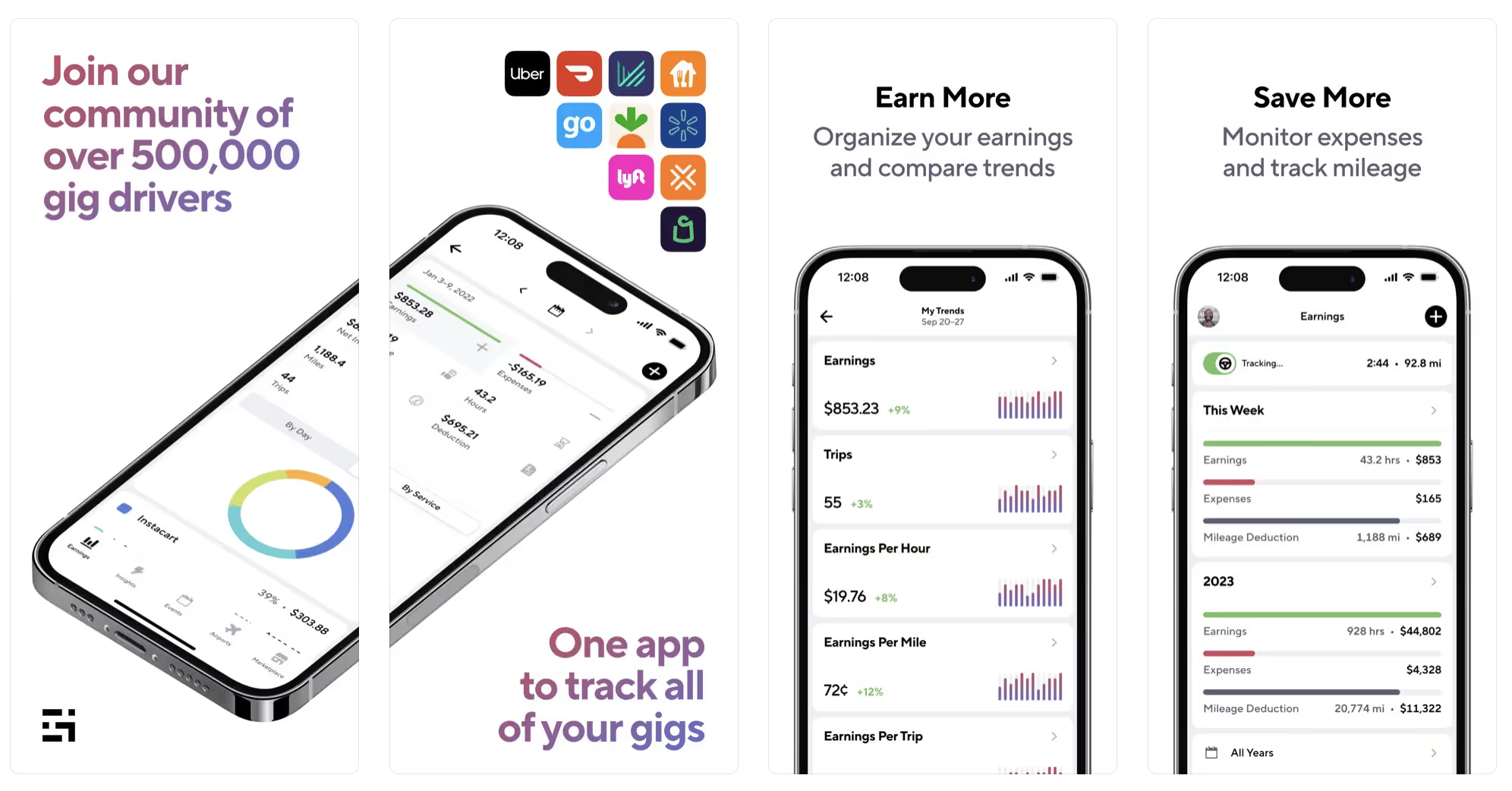
Gridwise has a free mileage tracker and free features that record your income and expenses. It gives you access to insurance and benefits, as well as insights about the best times and places to make the most money while gig driving. The Gridwise mileage tracker captures all the miles you drive while you’re on your driving shift, and it can be used if you have other trips you need to make which qualify as business travel.
Drivers love it because it is geared toward the needs of rideshare and delivery workers, providing free information about airport departures and arrivals, event start and let out times, weather, traffic, and more. The Gridwise Plus subscription adds value by providing additional insights and reports, discounts on benefits, the ability to export data in .csv format,, and more.
Available on Android and Apple: Yes
Ratings: 4.9 stars on App Store, 4.6 stars on Google Play
Free version: Yes
Subscription price: $9.95 per month for Gridwise Plus, or $95.99 per year (a $23.41 savings)
Created specifically for gig drivers: Yes!
What is the best mileage tracking app?
Now that we’ve checked them all out, we’re positive about the answer to that. Hands down, it’s Gridwise. Are we biased? You bet we are! But drivers love it too. Gridwise is the best mileage tracker app—and so much more. So many of the features are free, and the subscription to Gridwise Plus will pay for itself with additional insights to boost your earnings and deeper discounts on products and services.
Most important, Gridwise is designed specifically for gig drivers by experts who were once gig drivers themselves! Knowing what gig drivers need is a crucial step in creating an app that rideshare and delivery drivers can really use! Here are a few of the features, besides mileage tracking:
- seamless earnings tracking
- automatic, on/off toggle and manual mileage tracking
- mileage categorization
- airport, traffic, weather, and events information
- insights into where to drive and when to drive
- reports showing earnings across the platforms you use
- discounts on countless products and services for drivers
- additional resources for finding side gigs
- an informative and comprehensive blog
- affordable benefits, including insurance, medical, dental, and alternative practitioner discounts
- a community of drivers just like you
Don’t settle for just any app. Get the best mileage tracker, and so much more, from Gridwise!
[elementor-template id="21599"]

What Records Do Gig Drivers Need To Keep Track Of For Taxes?
* Gridwise does not provide tax, legal, or accounting advice. This material has been prepared for information purposes only, and is not intended to provide, and should not be relied on for tax, legal, or accounting advice. You should consult your own tax, legal, and accounting advisors before filing your return.
Record keeping? Who signed up for that? As a gig driver, it’s part of what you need to do to keep your business running. Don’t worry. It’s not as complicated as you might have been led to believe. This post will show you what you need to keep track of and the best ways to gather and preserve your tax-related records. We will cover
- How record keeping can help reduce income tax for freelancers
- Taxes and freelance work: Record keeping requirements
- Mileage tracking: Motives and methods
- More deductions and records to keep
- Make tax time easier
How record keeping can reduce income tax for freelancers
Tax time is not “fun time” for rideshare and delivery drivers. It’s easy to get used to watching your earnings pile up and come to believe they are all yours. Unfortunately, that isn’t the case. Gig work taxes can be especially painful because no one takes them out of your earnings for you, until the tax authorities insist that you do it for yourself.
You will need to show the tax authorities your income records, and they will gladly tell you to send them what they determine to be their fair share. Think that’s not fair? You’re not alone, but that doesn’t mean you’re going to get out of paying gig work taxes.
But you can find ways to pay the smallest amount that is legal and possible. The best way to defend yourself against having to pay astronomical amounts when you file your return is to know what expenses you can deduct from your gross income. When you subtract deductible expenses from your gross income, there is less left over to be taxed. This reduces the amount they can hit you with gig worker taxes. and can make your tax bill substantially lower.
While you want to keep good records so as to be in compliance with taxation entities such as the IRS, you also want to ensure you have proof of every last deductible expense you have accrued during the year. There are other records you must keep as well. Let’s look at some of the considerations you have, realizing that you now need to know how to do taxes as a freelancer.
Taxes and freelance work: Record keeping requirements
So many gig drivers fail to understand the responsibilities they have as independent contractors. Those who work part time for very few hours may even believe they don’t have to report the income they get from their driving gig payments. That would be a big mistake!
The company or companies you work for report your income to the IRS and state tax authorities. If you fail to report that income, you will risk some rather painful penalties. The IRS taxing side hustles is as much of a thing as the IRS taxing income from any other job. Your best bet is to report what you’ve earned, honestly and completely, and comply with other record keeping requirements such as
- gross income
- deductions and credits
- purchases (items you purchase and resell, such as snacks or bottled water)
- a log of all your mileage (or vehicle expenses, if greater)
- a list of all expenses and assets, such as utilities and other expenses associated with having a home office and equipment
- machinery and furniture you own, including when it was acquired, how much it cost, whether you previously took deductions on it, and selling price, if applicable (this includes your vehicle)
More things to consider:
- Pay attention to the retention of your records. You’ll need to keep all tax-return-related items— including income, deductions, and any tax credits reported— until the period of limitations runs out (3 years from date you filed, or 2 years from when you paid tax. If you have employees, keep your records for at least 4 years.)
- If you want to avoid paying self-employed taxes, you may want to set up a corporation or Limited Liability Corporation (LLC) for your business. This allows you to separate all your gig driving earnings from personal income, and permits you to take advantage of the additional advantages of working through a corporation. This includes exemption from self-employment taxes. You can learn more about how to pay self-employment taxes, if you opt for that, in this post from Keeper.
- You should always keep a separate checking account for your business, for convenience as well as clarity. While this is not a legal requirement, it is a smart move if you want to have an easier time managing your business.
- You are required, as an independent contractor, to file your taxes quarterly. Check out this Gridwise blog post for more information about quarterly tax payments and other matters that make filing delivery, Lyft and Uber taxes easier.
Mileage tracking: Motives and methods
Why you need to be meticulous about mileage
Mileage deduction, or the costs of operating your vehicle, will be the most important item to account for when you consider how to file taxes as a freelancer. While mileage is an important deduction for all independent contractors, as you might imagine, it’s even more essential for rideshare and delivery drivers.
There are two ways of keeping track of your mileage deduction. One is to use the IRS’ standard mileage deduction, which for 2022 is 58.5 cents per mile. This number takes into account the costs of operating your vehicle, from fuel and maintenance to registration, insurance, and depreciation. Alternatively, you can calculate all your own vehicle operating costs, but only after your first year of using the vehicle. You may discover that this second option allows you to have more money deducted from your taxable income. Learn more about the options for deducting your mileage in this Gridwise post.
No matter which way you decide to calculate the deductions for your mileage, you need to know what mileage you can and cannot deduct.
You can deduct
- miles driven to and from home when you go out to drive or deliver
- miles you accrue during your trips
- miles you drive on any other trips you make that are necessary as part of your business.
Examples:
- driving to return a lost cell phone or to an Uber Hub or another physical location where your company might make driver support available
- driving to pick up supplies, to get gas, or to have your car cleaned, serviced, or detailed, etc.
You cannot deduct
- miles you drive for personal trips
- miles for any trips you take that do not directly affect your business
Note: If imagining yourself becoming the not-so-proud owner of a shoebox filled with paper receipts gives you nightmares, stop worrying. Electronic records of purchases will satisfy reporting requirements. If you use cash, you can scan copies of your receipts, in some cases, right into your recording software or app. Gridwise and Keeper give you a simple to use interface that keeps all your receipts recorded without the messy pile of paper.
Mileage tracking methods
By now, you’re probably convinced that tracking mileage is important, despite all the other things drivers have to do. Now, let’s look at your options for keeping accurate records.
- Manual tracking: You can keep a logbook where you list every trip you make, starting and ending mileage, the date, and purpose of the trip. While this would work, it’s certainly not convenient. Besides, if that logbook gets lost, your plans for having a nice, fat tax deduction will go by the wayside.
- Spreadsheet: This is a bit more convenient and sophisticated way of tracking your business mileage. You’d need to be meticulous about making your entries, though. Even if you keep a spreadsheet app on your phone, it could be time consuming and inconvenient to keep doing it with all the other things going on in a rideshare or delivery driver’s day to day life.
- GPS-based mileage tracking apps: There are a bunch of apps that track mileage based on your GPS location, and most of them are pretty accurate and far more convenient than taking constant readings of your odometer. Your driving apps, such as Uber, Lyft, DoorDash, or Instacart, may also track your mileage, but be careful here. They will only track the miles you drive while you’re on a trip or delivery. They don’t count the miles you drive going to pick up a customer or when you make your move toward a restaurant or store.
Gridwise, on the other hand, will track all the miles you clock while you’re on your shift. All you need to do is make sure you start tracking the minute you leave home, and every gig driving mile will be logged. - OBD-II mileage tracking systems: There are plug-in modules that assess your vehicle’s mechanical health and track your miles. However, many authorities question the ability of OBD-II mileage tracking systems to get get accurate odometer readings. Insurance companies don’t consider them to be accurate enough gauges of odometer readings.
While mileage is a crucial deduction when you’re preparing your Uber, Lyft, or DoorDash taxes, it isn’t the only expense you’ll want to record.
More deductions and records to keep
Expenses you can deduct
You’re entitled to include the cost of other expenses that are directly related to your driving business. These include
- vehicle expenses
- equipment for your car and home office
- extra services and subscriptions
- business tools, including apps and software
You can learn much more about gig driver expenses that are eligible for deduction in this Gridwise article.
Ways to track and preserve deductible expenses
- The manual method: Just like you can with mileage, it’s possible to use a manual method, but in addition to logging each expense into a ledger, you would also need to keep physical receipts.
- Spreadsheets: You can record your expenses on a spreadsheet. This is somewhat less awkward than manually logging mileage, but there still will be plenty of room for failing to remember the case of water you bought for your customers, or losing the receipt from the thermal bag you purchased.
- Accounting software: You can use software that helps you track your expenses. This method usually interfaces well with any tax preparation software you or your tax professional might use.
- Gridwise: There are other apps that help you track your expenses, but Gridwise is designed specifically for gig drivers. It automatically tracks earnings and mileage, and lets you record your expenses the minute they come up. Gridwise’s partnership with Keeper gives you the ability to scan receipts and access a tax professional. This is a seamless way to record your expenses and a big help in learning how to file Uber taxes. Gridwise even provides .csv output, so you can feed your Gridwise data directly into tax preparation software. Check out what Gridwise and Keeper will do to super-charge your tax filing powers.
Organizing and categorizing expenses
Before you even begin to record expenses, you’ll want to set up categories for them. You can start by reviewing the categories listed above and checking out the Gridwise post that lists possible deductions.
If you’d like to learn more about how to categorize expenses, there is additional information available. This article from Motley Fool lists all possible categories any freelancer might use and also gives tips on how to customize them for your driving business.
One last tip
Using Gridwise, particularly for tracking mileage, is the easiest way to be in compliance with the IRS’ rules for deductible mileage. Gridwise tracks all the miles you drive for your gig, beyond what your company’s app might record. At the same time, you can log on and off Gridwise when you start and end your shift, so personal miles won’t be recorded. This eliminates confusion while capturing every deductible mile.
Gridwise Tax Help, a partnership with Keeper, has been created specifically to serve gig drivers. It provides affordable and easy ways to record expenses, scan receipts, and find deductions by analyzing your expenditures. Read about free resources from Keeper you can use to be fully prepared for tax season, and get all your earnings and expenses on the record.
Get the world’s best assistant for rideshare and delivery drivers, and tax help too.
Make tax time easier now!
This is how to maximize your earnings from boost & quest bonus incentives
If you’ve been driving for rideshare services for a while, you probably know that Uber and Lyft are trying to incentivize you at every turn. Sign up bonuses, Quests, Boosts, Surges – these can be beneficial, or just plain distracting.
The trick is to know exactly how to use the promotions on all these apps to your advantage, and to weave them into the strategies you’ve already cultivated. And as you know, we've combined multiple studies and reviews to find out exactly which are the top promotions and top rideshare driving services.
So, if you don’t already know, here’s a quick intro to Uber’s Boost and Quest promotions.
How Boost works
The idea behind Boost is to guarantee drivers higher fares in certain locations at certain times. Essentially, it’s a way for Uber to get drivers where they’re most needed, and to “boost” your fare to make it worth it.
Unlike Surge, Boost isn’t dependent on an unexpected increase in rider demand. Instead, it’s a more predictable uptick, which means you can factor Boosts into your day in advance if you look in the promotions tab of your Uber app.
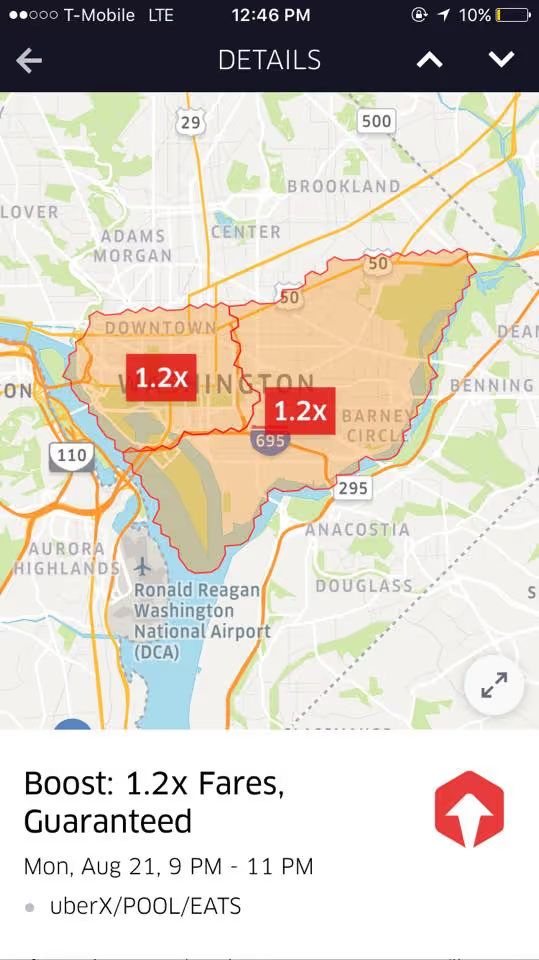
The app will tell you exactly when and where the Boost is going to happen, and exactly how much of increase you’ll see in fare price. But generally, the Boosts happen in expected areas and windows of time: Commuter hours in your city’s downtown district, for instance.
These higher fares increase in multiples, so 2x, 1.3x, etc. That means if you’d normally make $10 for a trip, and your Boost is 2x, you’d make $20. At 1.3x, you’d get $13.
The Boost applies to your fares as long as the rider requests within the Boost zone, and it applies to UberX and UberPOOL rides.
Also, Boost doesn’t cancel out Surge fares – if Surge pricing is ever higher than the Boost multiple, you’ll make the Surge amount.
How Quest works
Quest’s are Uber’s goal-setting promotions, which incentivize you to take a certain number of trips in a certain time period by dangling a bonus at the end of the stick.
An example might be, take 10 trips between 9pm and midnight on Friday and get an extra $20. Some are bigger, some are smaller. It all depends on the demand in your city, and likely your previous behaviors in the app – how many trips you’ve completed, when you’ve completed them, etc.
Unlike Boost, getting these bonuses is completely dependent upon completing the required number of trips within the designated time period. But there are some other requirements to factor in, too. The Rideshare Guy lists the following requirements:
- Completion rates: To get your bonus, you have to complete 25 percent of your accepted rides. This should be an easy one for a regular driver.
- Acceptance rates: You also have to accept at least 80 percent of the rides offered to you. This is where it can get tricky. If it’s busy and you’re getting pings from distant locations that you don’t want to accept, you could lose your Quest by denying them. On the other hand, you could up your driving time and cut down the total number of rides, jeopardizing the Quest from the other side.
- Types of trips: Quest generally applies to most types of trips, including UberX, UberPOOL, UberEATS and other location-specific trips.
- Excluded trips: Quest doesn’t apply to destination trips, rider cancellations or driver cancellations. So you can’t accept a trip then cancel it just to meet your quest.
Keep in mind that Quests are mostly offered in larger Uber markets, where the demand for rides is strong and rideshare companies are constantly competing for drivers’ services. If you’re in a smaller city, you might not get these offers.
Building your Quest strategy
When building your strategy, the first thing you want to ask yourself is, “Is this worth it?”
If you’re being offered $20 for 20 rides, is that amount of money really worth the extra effort? If it’s not, it never hurts to accept the quest anyway, but don’t overextend yourself or throw away your strategy to try and beat a quest.
If it is worth it, there are some tactics you can use to make sure you reach that goal.
- Know where and when to drive.
The key to unlocking those bonuses is knowing where and when to find shorter rides and frequent requests. Depending on the city, this is most likely in the downtown area, near universities, and near the bar and restaurant hotspots. Here are a few handy guides to the best places to drive in D.C. and Pittsburgh: - It goes without saying, too, that you have to hit these spots at the right time. If you’re going downtown, do it during commuter or lunch hours. Go to the university later at night and on the weekends when the students are going out to drink.Late night is always good if you’re in the right spot. If you’re looking for something other than the usual bar scene, check your Gridwise app to see where some events might be letting out soon.
- Consider airport rides with caution.
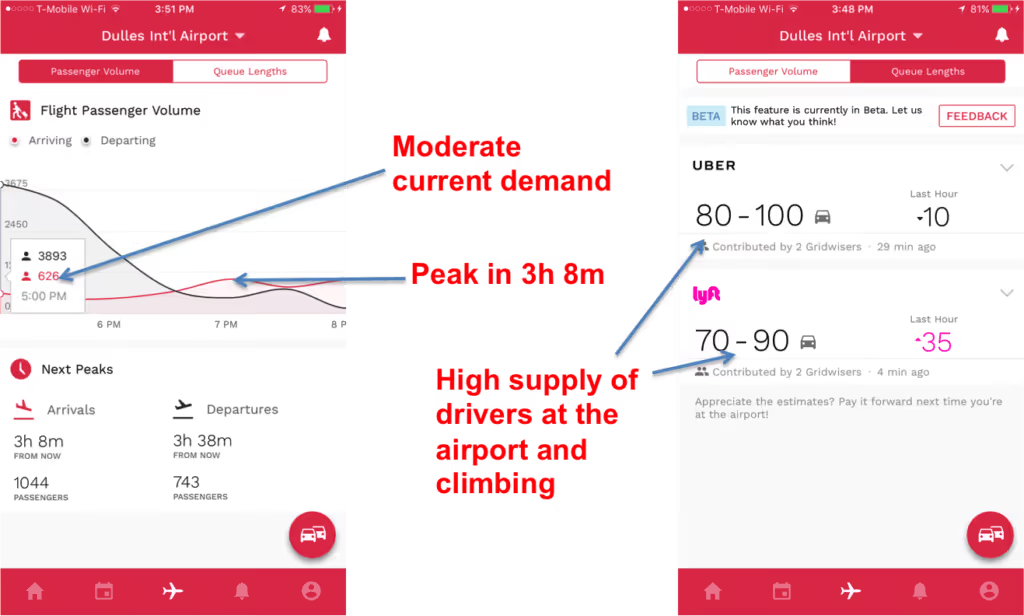
To reach a Quest goal, you probably want to avoid the airport. While those can be meaty fares, you don’t have that kind of time when you’re pushing up against a quest deadline.However, some cities – like D.C. – have centrally located airports (DCA). If you can do airport rides without losing out on the distance, it’s always a safe bet. Just remember to check the airport queue with Gridwise to maximize your time.
- Don’t forget about UberPOOL and UberEATS.
Using UberPOOL and EATS is a great way to up your ride count. You know as well as we do that POOL can be a headache, but because you can get up to three rides in as little as 10 minutes, it can really help nudge you towards a Quest goal.UberEATS can factor into your strategy, too. For one, EATS rides are generally pretty short, so when you accept one, you can be pretty sure you’re not getting way off track. Also, you can easily sandwich EATS between your commuter and late-night hours, so you minimize your downtime.
Building your Boost strategy
Taking advantage of Boost seems pretty straightforward. You see the zone with the highest fare increase, go to it, and wait for the requests to pour in.
Of course, it’s not so simple. As you know, there’s going to be more competition in a Boost zone, and that means all the rides could be snapped up before any of them reach you. So here’s how you can try to get around that.
- Get a head start.
Uber will alert you ahead of time to let you know the Boost zones and times for the entire week and weekend. Typically you’ll get an email Sunday night letting you know the Boosts for Monday through Thursday, and another email on Thursday detailing the Friday through Sunday Boosts.Also, they are typically pretty predictable: The boosts will be where the most people are going.So get there early. If you’re going for a morning rush hour Boost that starts at 7am, get there a few minute early to catch the first rides. - Check your positioning.
You’ve probably had it happen before where you’re sitting in a Boost or Surge zone and you’re not getting any rides. What’s the deal?Turn on your rider app and check out the activity around you. On the map, you can see if you’re in a swarm of drivers. If there are more than two other cars around you, it’s going to take longer to get a ride.Even worse, if you’re in the middle of the swarm, the cars on the edges will get the requests first because they will likely be closer to the passenger. So remember to check your position and repark to optimize your location. - Know when it isn’t worth it.
Permanent Boost zones can be more of a headache than a help sometimes. If you’re not having luck getting frequent rides in the zone, it can be best to go outside the limits and focus on ride quantity instead of fare – especially if you’re trying to complete a quest.
Use Boost and Quest together
Of course, the best way to optimize any promotion is to combine it with another. While Quest is a good way to consistently get bonuses, and Boost is harder to predict, pursuing both simultaneously can really help you pull in extra cash for doing the same amount of work.
However, there are risks with this method. Because Boost zones are so competitive and it’s harder to predict the distance you’re going to travel, you can lose out on the frequency required to get a Quest goal.
Additionally, if you are chasing a Quest and a Boost ride comes in that you don’t want to take because of the distance (i.e. to the airport), not accepting the ride can hurt your chances of getting your Quest bonus.
Clearly, it’s all a delicate balance. The key, then, is to stick to your strategy. If you’re going to go for a few Boost rides, make up that potential time lost by running a few UberEATS rides, or going for a POOL.
No matter your action plan, stick to what works for you, weave in the promotions and don’t be wooed by incentives that don’t fit your style.
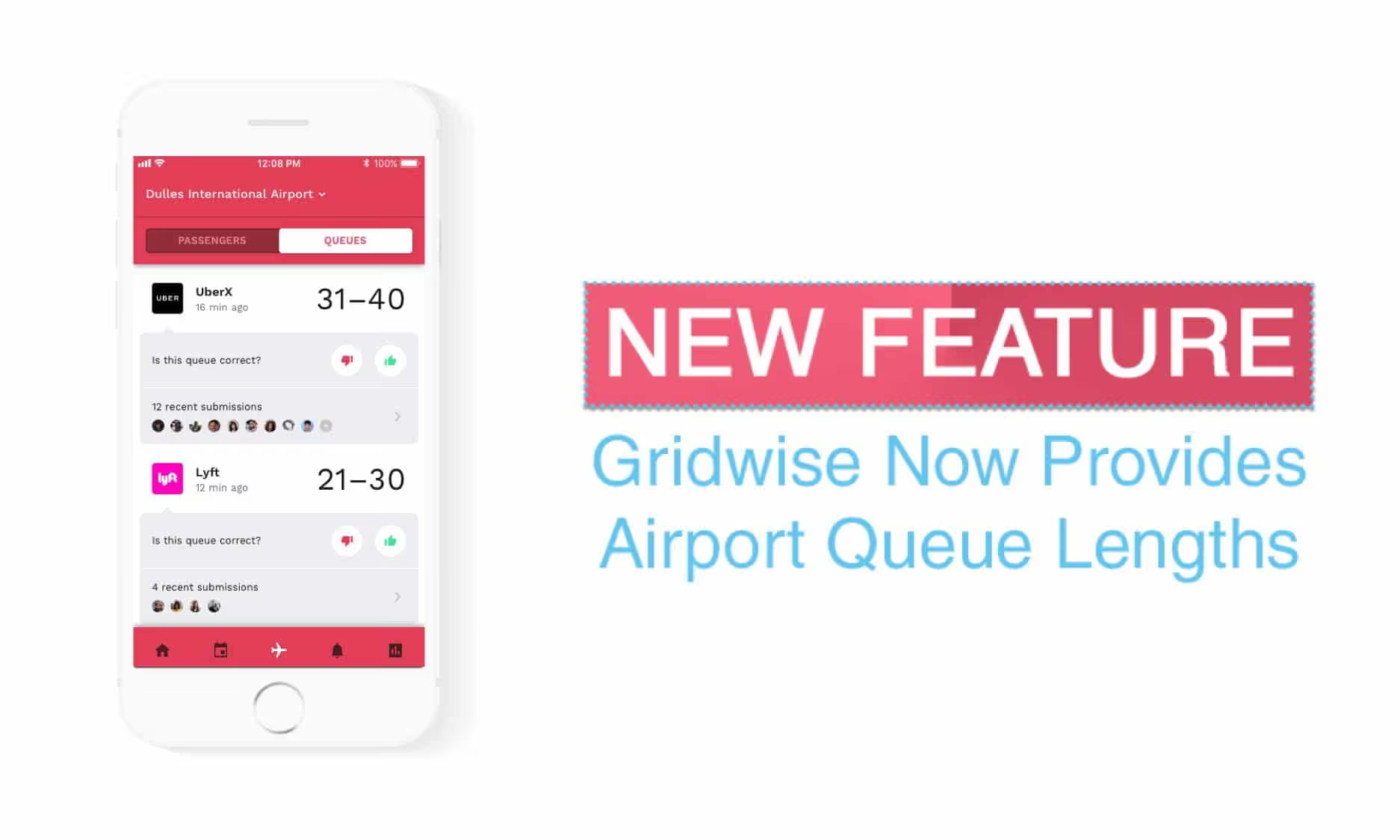
Pasa Menos Tiempo Esperando en las Colas del Aeropuerto - Gridwise Ahora Proporciona la Longitud de las Colas en el Aeropuerto
Los conductores en todos los mercados ahora pueden ver cuántos otros conductores de rideshare están en la cola del aeropuerto para cada sub-servicio.
Sí.
Esto significa que antes de decidir ir al aeropuerto puedes revisar Gridwise y ver si hay más que suficientes conductores en el aeropuerto para satisfacer la demanda.

Cuando hablamos con los conductores, escuchamos que los pasajeros del aeropuerto pueden ser muy rentables porque los viajes son más largos, lo que puede aumentar la cantidad que ganan los conductores de rideshare. Pero a veces simplemente no vale la pena esperar en el aeropuerto durante 90+ minutos por un viaje.
Bueno, decidimos hacer algo al respecto.
Ahora los conductores pueden comparar el número de conductores en el aeropuerto y decidir si es un buen momento para estar allí.
Por ejemplo:

Podemos ver que hay entre 31 y 40 conductores de Uber y entre 21 y 30 conductores de Lyft en la cola, y el aeropuerto está actualmente con un pico de 1,449 pasajeros llegando en los próximos 30 minutos.
No hay muchos conductores en el aeropuerto y hay muchos pasajeros llegando, así que yo entraría en la corta cola si estuviera cerca.
¿Entonces... cómo sabe Gridwise la longitud de las colas en el aeropuerto?
En pocas palabras… los conductores nos lo dicen.
Los conductores tienen la capacidad de ingresar su posición en la cola usando la pestaña “Longitud de Colas” en la sección del aeropuerto de tu aplicación Gridwise. Los conductores pueden ingresar su posición en la cola incluso si no están en el estácionamiento del aeropuerto, y para cualquier sub-servicio individual como UberX y UberXL.
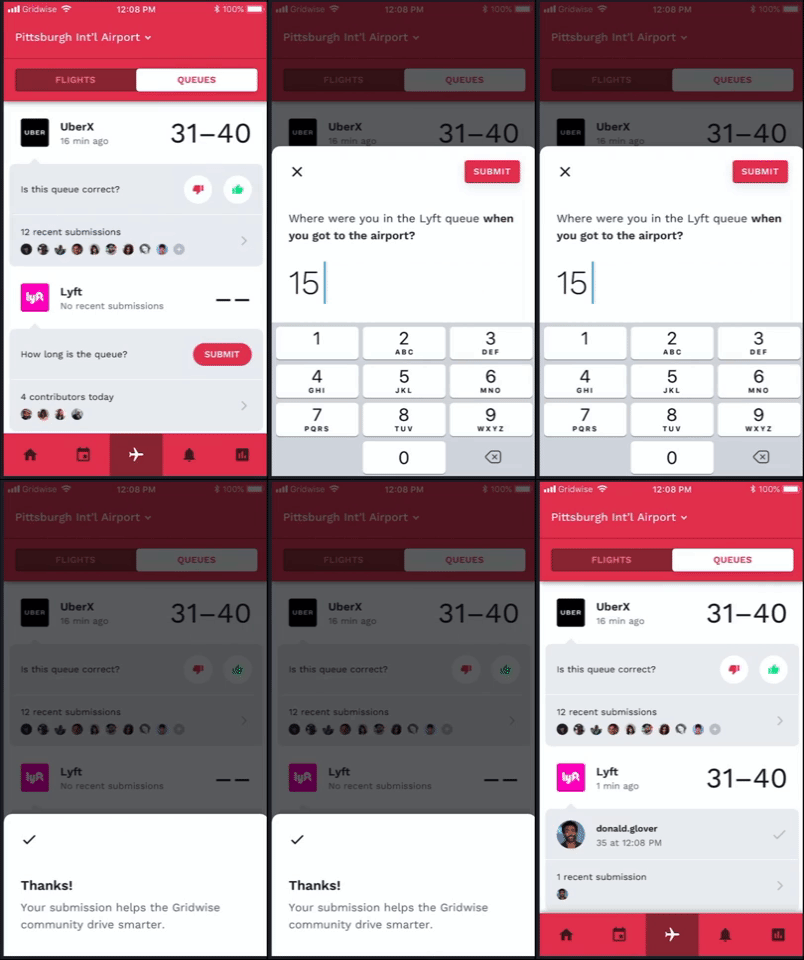
Esto le informa a tus compañeros conductores qué tan ocupada o vacía está la cola del aeropuerto.
Siempre será nuestra misión mejorar la vida y la experiencia de rideshare para todos los usuarios de Gridwise y ayudar a cada conductor a trabajar mejor juntos. Por eso también hemos dado a los conductores la capacidad de ver una lista de cada conductor que ha enviado una cola durante el día.
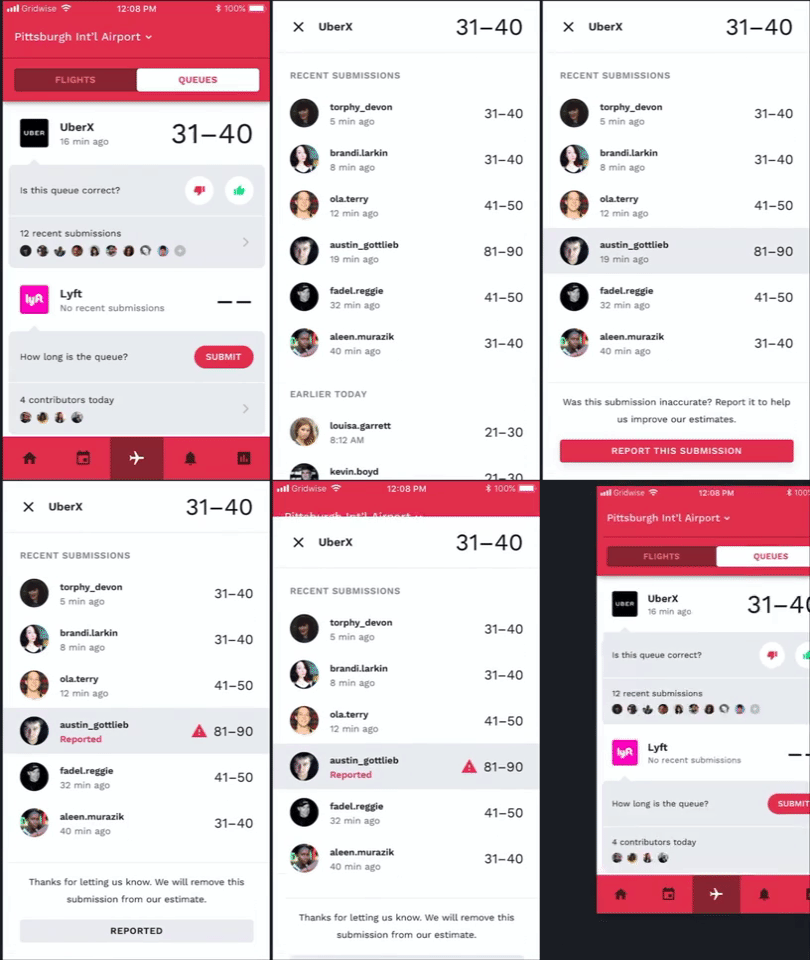
Esto garantiza que los conductores sepan quién está proporcionando información, y permite un mecanismo para reportar a alguien que esté enviando reportes falsos o engañosos.
Más que nunca, Gridwise ayuda a los conductores a trabajar mejor juntos. Así que descarga la aplicación móvil de Gridwise y ¡comienza a usar la nueva función de Longitud de Colas en el Aeropuerto hoy!
How rideshare drivers can start conversations that lead to tips and 5-star ratings
Let’s not fool ourselves here… As a rideshare driver, you’re not expecting to make much money from tips.
Sure, tips are a perk that pads your wallet (and maybe your ego), but they’re not a guarantee. But still – wouldn’t it be nice to get more of them?
The trick to more tips – and more 5-Star ratings – is to give your riders a reason to like you. And that has nothing to do with the water and candy you stock your car with, and everything to do with good old-fashioned conversation.
“People don’t want to give out five stars by default,” said Mike, a driver in Baltimore and D.C. that pulls in over $1000 per week. “I think that they’re looking for a memorable experience. That means, ‘This uber driver was different than my prior experiences.’ And how you set yourself apart from that can be a lot of different things, but everyone likes to talk.”
Sure, not every rider is going to be your next best friend, and not every rider is going to want to chat, but making a connection is an important part of the job. So whether you’re a pro talker or still getting comfortable with it, here are some tips to help you up your conversation game – and your take-home.
Make a Great First Impressions
It helps to read your passenger right when they get in the car. Is their heart racing? Did they give just a quick hello? They might be in a hurry. And even though the car ride lasts as long as it lasts with or without conversation, passengers that are running late usually prefer to concentrate on the ride and skip the small talk.
If it seems like they might be open to conversation, first impressions are still important. Analyze their clothes. Are they wearing a sports team shirt? Strike up a conversation about the game last night.
Are they dressed as a comic book character? Chances are they’re at a Comic-Con conference, and there’s got to be something interesting there to talk about.
If they’re wearing a suit and it’s 5pm, you can assume they’re just getting off of work. This can open up a few avenues of conversation: a simple “Heading home?” or, “So you made it through Monday,” or, “Any weekend plans?”
You can also see if they’re carrying a camera or looking attentively out the window. These could be signs that they’re a tourist. Ask them what they’re doing in town, if they’re enjoying the city, or even give some impromptu tour guiding. They may be in need of a good restaurant recommendation, or might enjoy knowing the history of the neighborhood they’re staying in.
Breaking the Ice
If first impressions aren’t giving much away, it’s time to pull out the tried-and-true icebreakers – but try to shake them up a little bit.
Everyone’s first instinct is to talk about the weather, and that’s not a bad thing. But rather than the usual, “Wow, how about this weather?” try to think of funny or unusual lines to make it more interesting.
Something as simple as “What are you going to do to enjoy this beautiful weather?” or “What’s your favorite way to escape the cold?” can immediately take a conversation away from the weather and into plans, interests and hobbies – the things that actually get a conversation going.
Another easy icebreaker is to talk about ridesharing itself. It’s something you both obviously have in common, and you can even sneak some work tips out of the conversation.
For instance, ask your passenger about their best, worst or most memorable rideshare experience. When they launch into a story about the guy that blasted country music, or the car that smelled like hot dogs, take note.
Another safe conversation bet is to steer the conversation back to the passenger. People like to talk about themselves, and the usual “What do you do?” “Where are you from” and “How long have you lived here?” can get people talking.
If your passenger lives in the area, it can also be informative for you. Maybe they’re craft beer buffs, or just heard of a great new restaurant opening. These are things you can use in your personal life, or that you can pass on to other passengers to up those stars and tips.
Remember though: the dinner party rule applies in the car, too. Don’t bring up religion or politics, unless you have positive confirmation that the conversation will go smoothly.
Sometimes, STOP Talking
Knowing when keep quiet is just as important as knowing when to engage. Conversations are important, but only when the passenger is in the mood. Otherwise, you run the risk of doing the opposite of what you intended – your rider might give you a bad rating because of how much you talked.
Luckily, there are some simple ways to read whether someone is open to engaging or not: If they get in the car and keep their eyes on their phone, chances are they want to keep doing that.
If they put their phone away but lean their head back against the headrest, take it as a sign that they want to be left alone – especially if they close their eyes.
If none of these signs are there but your attempts at small talk are falling flat, take it as your cue to turn on a little music and give your rider their space.
However, there are still things you can do to be a standout driver and get those ratings high. Offer them a charging cord for their phone. Ask if the temperature in the car is OK. Offer to let them pick the music.
Even if they decline all of the above, you’re bound to stand out as a top-notch driver, and your ratings will show it.
Make the Ask
After all of that positive customer interaction, you still have to make sure that riders know how much you would appreciate tips and a 5-star rating.
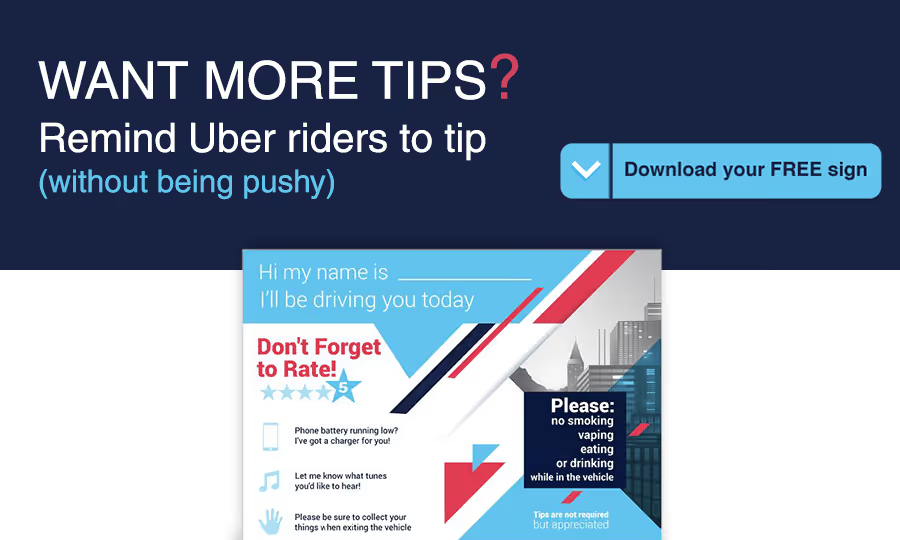
Use a rideshare sign to politely remind passengers that you’d appreciate tips and 5-star ratings without being pushy.
25 Tips for Uber drivers from fellow rideshare drivers
If you’re in the rideshare business, you know it’s a tough game. We have to deal with road conditions, bad passengers, traffic, surges that aren’t really surges, and we even have to deal with the TNC’s themselves.
That’s a lot to master, so we enlisted some help from our favorite rideshare groups around the internet to help out our fellow drivers. Below are words of wisdom from 25 rideshare drivers around the country. See the comments section for additional tips!
Shout out to the following Rideshare Facebook communities for their input.
Pittsburgh Uber Driver Lounge
DC Uber Drivers - Uber/Lyft DC
UBER DRIVERS
Uber and Lyft Drivers - DC, MD and VA
We've blurred the names of contributors to protect their privacy, however if you see a tip that you contributed, give us a shout out and let us know which tip you contributed so we can send you a $10 Gas Card!
Let's dive in!
1. Never forget the Golden Rule: Don’t Chase the Surge



2. If you want tips, sell your personality

3. But know who you should be talking to..

4. And who just wants to get somewhere really fast.
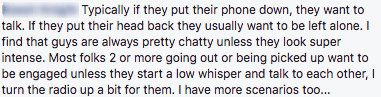
5. Be prepared for the worst if you’re a late night driver

6. Even out your mood because there will be ups and there will be downs

7. Don’t drive yourself crazy by checking your earnings too much

8. Definitely Keep a dashcam in tow


A dashcam helped save this driver from a ticket
[embed]https://youtu.be/EkJUo5DZfxo[/embed]
9. Keep your car looking spiffy



10. If you’re driving full-time, split up your hours
11. Set goals and stick to them...


12. But once you’re hitting your goals, push yourself to do more.
13. Don’t mess around with your auto insurance.


14. And don’t drive around aimlessly looking for pings. You'll just waste gas..
15. Instead, be prepared and know where to drive.
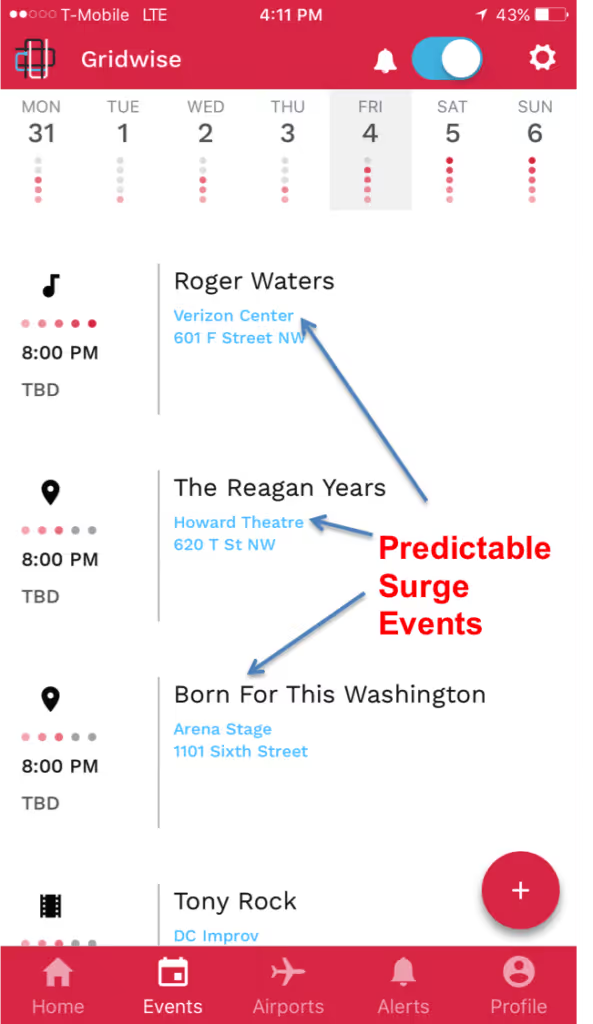
[su_note note_color="#fefedf"]Free Bonus: Always know what events are going on in your city using theFREE Gridwise app.[/su_note]
16. And invest in a EZ-Pass or commuter plan for the tolls..

17. Keep a positive attitude...




18. Find a way to connect with your passengers..

19. Hang out with the right crowd.
20. Tickets ain’t cheap... So know the rules and follow the rules!

21. Choose your music wisely

22. And remember It’s not all about the money

23. Because sometimes you just gotta go with the flow

24. Cherry pick passengers at your own risk

25. And above all else:
Bonus: This guy said it all:
If you could tell a new rideshare driver one tip, what would it be? Let us know in the comments below!
The Ultimate Airport Guide: Pittsburgh
I have the same conversation with rideshare drivers waiting at Pittsburgh International all the time.
Driver: “Man there are no pings coming in AT ALL… It’s going to take more than an hour to get a ride”
Me: “How many passengers are coming in?”
Driver: “I’m not sure but it’s 7:00 so there should be some planes coming in”
Me: “Ok, did you check the queue length before you drove up here”
Driver: “No… I was just hoping it is low”
Now, these drivers aren’t really wrong. Sometimes waiting at Pittsburgh International is just a waste of time, unless you just like hanging out at airport parking lots (we hear you can run over to the Sunco for a bathroom break).
If you have a strategy however, you can make a lot of money driving airports with rideshare services.
You Need an Airport Strategy
Yes, it can be frustrating to sit in the TNC lot surrounded by other drivers doing the exact same thing. But creating an airport strategy gives you an advantage they don't have.
The first step is thinking ahead. You need to understand how the airport works, how to navigate it correctly, and probably most importantly, when to arrive. I’m going to cover all those topics in more detail, but there’s something else you might not have thought of.
If you’re going to be driving to Pittsburgh International anyway, why not try to pick up someone headed that way? Hang around downtown hotels a few hours before peak hours and you might luck out and find passengers who need a ride to Pittsburgh International. If you want to really increase your chances of getting a ride to the airport then set your desired destination to airport. Nothing’s better than making money on your way to make even more.
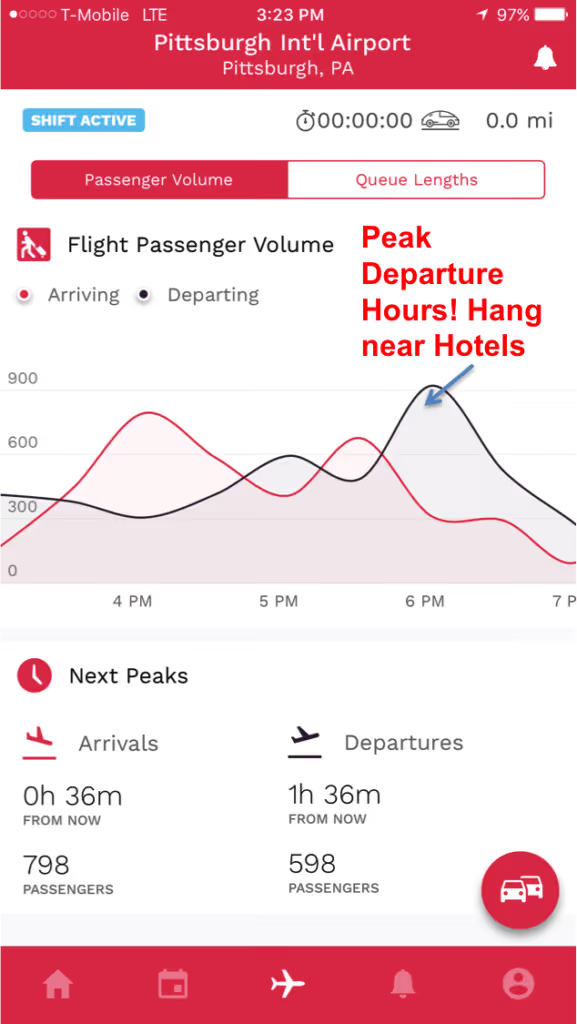
You also need to decide in advance how long you are willing to wait - and what time it currently is. It’s not too bad to wait an extra 30 minutes if more flights are landing soon but you don’t want to realize you’ve wasted hours because there aren’t any more flights coming in until morning!
Having a solid airport strategy is the key to making money at PIT, so let’s learn more about how things work there.
How PIT Works
Uber, Lyft, and other TNC’s specially designate airports with a geofence that tightly defines the airport area. As a driver, if you have an app on in those areas, you’ll be placed in a queue that acts as a virtual driver line, kind of like traditional taxi lines.
As you wait in the queue, you’ll cycle through the line (sometimes quickly but it can be painfully slow, I know) and finally be pinged by a rider.
PIT has a designated pickup area (more on that below) which is the only place TNC drivers are allowed to wait. You’ll also want to always clearly display your TNC’s sign in your passenger window.
How to Navigate Pittsburgh International Airport
Some people don't like going to PIT because it can be a little tricky to navigate. Pittsburgh International, like most airports, has a ton of rules and regulations.
Where to Wait
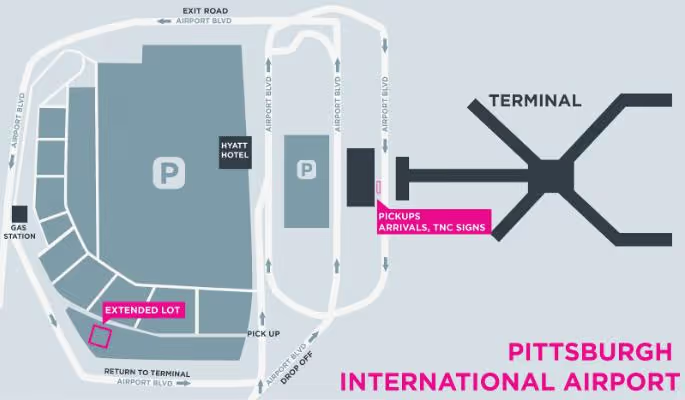
PIT has pretty strict regulations for TNC drivers. We are all required to wait in the TNC lot located in extended parking. To get there, take a left turn off the Return to Terminal Roadway (behind the Sunoco) down to the sloped area.
Some people like to push the limits a bit, but to avoid getting booted from the queue it’s best to stay put here.
I know, you might be tempted to snag a prime spot in the cell lot if you see it. But if you do, you won't actually be in the queue. You could find yourself waiting and waiting and waiting with nothing ever happening. So stick to the cell lot and save yourself some time - and some gas.
Where to Pick Up
PIT has a designated pick up zone for TNC drivers. Once you've been pinged, you’ll need to go to the landside terminal and use the commercial curb. It’s easy to find. Follow the yellow sign that says “Deliveries, Rental Car Return” and then “Commercial Curb Arrivals”.
Your passengers should be waiting outside Baggage Claim Door #4. Make sure to pull up to the furthest space available. And remember that you can’t pick up from the Public Curb.
When to Go to the Airport
The biggest problem TNC drivers seem to have is understanding when to go the airport. You show up too early and you’re waiting for hours. You show up too late and you’ve missed all the fares - and the surge fees.
Finding the right time to go to the airport isn’t as tricky as you might think.
There are patterns in flight traffic that are easily identifiable, if you know what you’re looking for. You’ll usually see an influx of business passengers on Monday and Tuesday mornings, flying in for meetings or work trips. Those same passengers leave on Thursday afternoons or Friday mornings.
Maybe driving is a second job for you and you aren’t available during those times. That’s ok, there are other tricks for you too!
Travel picks up around holidays, sports games, and other big events like:
- Christmas and Thanksgiving
- Spring Break
- Memorial Day, Labor Day, and 4th of July
- Steelers or Penguins games
Plan to spend some time near the airport around these events to make the most of the additional passengers. You can use the free Gridwise App to help you know when the flights are coming in. Arriving to the cell lot around 10-15 minutes before the peak is the perfect way to snag a great spot in the queue and hopefully get pinged by a passenger needing a long ride.
Can't Miss Tips
If you’ve been paying for parking at PIT, STOP!
There’s no need to pay or to leave and circle the airport every hour. Simply sign the lot ticket and tell the attendant at the lot exit that you’re a TNC driver and they’ll waive the fee. You may need to show proof, but usually having your company’s placard displayed is enough.
Consider driving for more than one TNC
The queues can get long, especially during peak hours. Driving for more than one TNC is a good way to open yourself up to more requests. While you might be 33rd in line at Uber, you could be 15th with Lyft.
Do not cancel on a passenger after you’ve accepted a fare
If you do, you will be bumped to the bottom of the queue and your wait starts all over again. The good news is that if it’s a short ride, some companies let you jump back in line after you’ve dropped that passenger off.
Always be prepared
You never know when law enforcement will show up, so always keep your driver’s license, insurance card, and registration handy. And don’t forget to have your placard displayed.
Now you should be ready to make that drive to PIT and actually earn money instead of snacking on candy from Sunoco. I’m not the only one who does that, right?
Some Rideshare Drivers are Making $50+ in Tips in a Day and We're Going to Show You How
Uber has been really proud of the fact that their drivers were tipped $50 million during the first 50 days that the Uber tip feature was available.
We’re talking shout it from the rooftops, Tom Cruise on a couch levels of excited about this.
Unfortunately, this leaves some of us wondering who exactly got those tips… because it wasn’t us.
The hard truth is that it’s really difficult to consistently receive tips because so much is out of the driver's control. Unlike the hospitality industry or even the taxi industry where tipping is the norm and expected, many rideshare passengers see tipping as an option they rarely need to take.
So how can you maximize your chances of making a significant amount of tip revenue?
We sat down with a few rideshare drivers over the past week that have had success getting tips and drilled them on the strategies and techniques they use. Some of them have even had days where they made $50 in tips.
Today we’re going to share with you what works best!
Be a great driver
These are table stakes folks, if you want any opportunity to make a significant amount of tip revenue or even get a decent rating, you need to be a great driver.
Know where you’re going
At the end of the day, riders want to get from point A to point B. If you can’t do this quickly, get lost along the way, or make too many wrong turns you’re not going to receive tips and your rating will most likely suffer.
Lucky for you all you need to do is make sure you have a great navigation system running and follow the directions. Most drivers like to go beyond Uber’s navigation system. Learn more about Google Maps vs Waze for rideshare drivers to see how they fare against the available built in navigation systems.
Drive Safely
Every driver knows that if you get into an accident with a passenger in your car, you’re going to have a lot of issues. The last of your worries is how much that passenger tips you.
The thing that many drivers fail to consider however is how safe you are making your passengers feel.
This means pay attention to the more subtle things you may find yourself doing like:
- Avoid speeding or excessive lane changing
- Don’t roll through stop signs
- Be extremely cautious around pedestrians
- Never, and I do mean never, give in to road rage
Save the call for later
The issue with taking a call isn’t really that it’s unsafe. Most drivers have hands-free systems that allow them to keep both hands on the wheel and eyes on the road if they are on a phone call. The problem is that you miss out on opportunities to interact with your customer.
When you’re on a call, the opportunity to spark a nice conversation, offer them a service or extra, or just inquire about their day just isn’t there, and as you’ll see in the section below, these opportunities for positive customer interactions are important factors in whether you’ll get tipped or not.
Have great customer interactions
“If you want to get tips, you have to stand out” says James, a Pittsburgh rideshare driver and Gridwise user, “If you don’t leave an impression so the rider doesn't forget you as soon as they step out of the car, then they aren’t going to remember why they should tip you.”
If you want to consistently receive tips, you need to make an impression on your passengers that cause them to remember you.
How?
Have extremely positive interactions with customers from the moment they call you to the moment they leave your car.
Keep your car clean
The very first interaction most riders are going to have with your rideshare business (yes you should think of yourself as a business) is with your car.
In this crucial first interaction, passengers will decide whether they are open to giving you a tip or not and if your car is messy or smells in any way you’re going to pay for it.
You don’t need to go get your car detailed every other week, but make sure that it’s vacuumed, washed, and odor free to make sure your first interaction with your customer is a positive one.
One rideshare driver in D.C. recommends spraying Ozium Original after every ride to maintain a fresh smell in your car.

Offer them a charger
In my opinion, the most valuable thing that a rideshare driver can offer a passenger is a chance to charge their phone.
Almost every passenger you pick up will take a charged phone over a free water or mint any day of the week. So give the people what they want!
You can pick up a dual tip charger from Amazon on the cheap along to offer your passengers a charge.
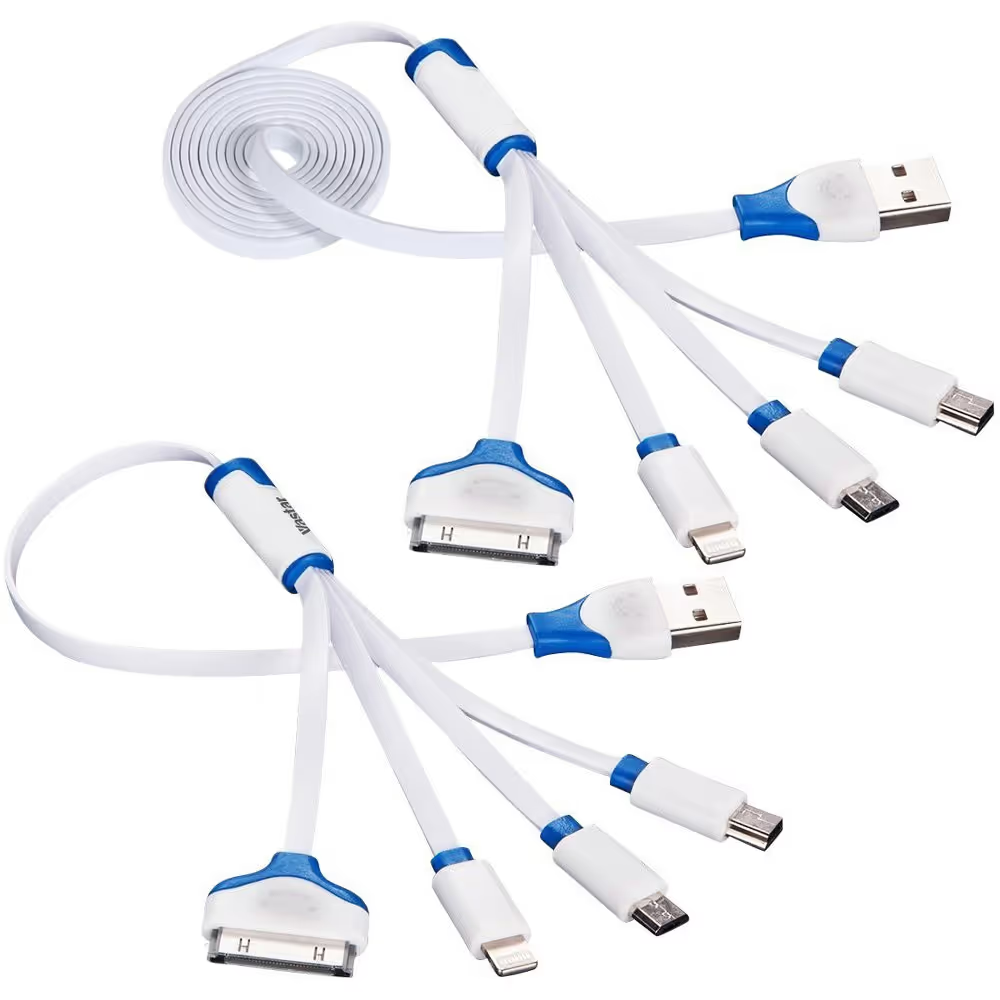
Grab this charger from Amazon for $10.99
This one gesture will make your passengers day.
Ask if they are in a rush
This is my favorite trick to make sure that I have at least one positive interaction with each of my passengers and requires very little effort.
All you need to do is simply ask your passenger if they are in a rush at all after your passenger has gotten settled into your car and you’ve confirmed their identity. If they are in a rush, you can do your best to find the fastest alternative route, and keep your passenger up to date on when your estimated time of arrival is.
Most passengers are going to politely say no, they aren’t in much of a rush, but this simple gesture gives the impression that you actually care about your passengers.
If they are up for it, spark a conversation
I love a talkative passenger.
People are incredibly interesting and one of the best perks of being a rideshare driver is that you get to meet and chat with dozens of people each week. However, not every passenger wants to start a full blown conversation with you.
“You need to read the room,” says Kate, a Lyft driver in NYC says. “Sparking conversations certainly help with tips, but some passengers just want to sit there and think about nothing. I respect that.”
If a passenger has headphones in, is working, have their eyes closed, or just looks preoccupied, be cautious when sparking up a conversation. You can throw out a question or two to test the waters, but don’t be pushy.
Let them be the DJ
Music is a big part of the in car experience so asking a passenger if they want to listen to a certain radio station is a great way to make them more comfortable. If you want to take things a step further, offer an auxiliary cord to your passengers and let them completely choose the music you listen to during the ride.
Letting the passenger play DJ also gives you the opportunity to connect with them. Some passengers will have similar tastes in music as you and you can share your experiences or recommendations with them. This is a great way to spark an enjoyable conversation.
Let them know tips are appreciated (subtly)
Passengers will often forget that tips are an important source of income for rideshare drivers, so you need to find a way to remind them, but you don’t want to be distasteful or pushy about it.
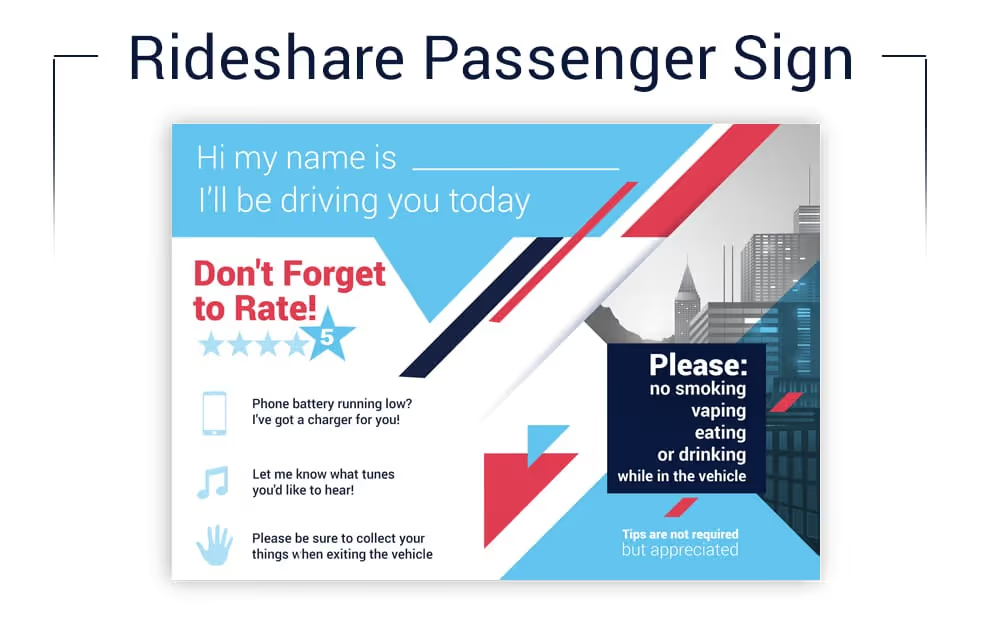
You can use a rideshare passenger sign to let your passengers know that they can choose their music and charge their phones while subtly reminding them that you’d appreciate a tip.
Check out the one below:
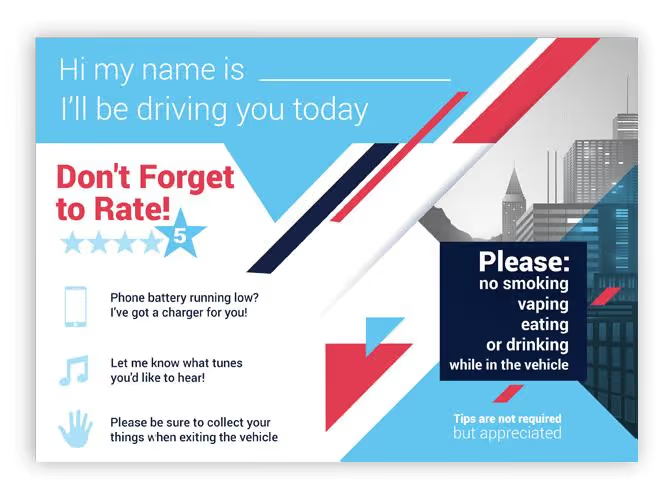
[su_note note_color="#fefedf"]Free Bonus: Download this rideshare passenger and post it in your car for FREE.[/su_note]
Your results will vary!
As a driver, you don’t have much control over how many tips you receive. The drivers that received tips of $50+ in a day usually work very long days or catch a lucky big tipper. You can however make $7 - $15 per day with a solid strategy like we laid out above which certainly adds up over the weeks and months.
Did we miss anything? Are there any other secrets to getting tips (and 5-star ratings) that drivers should take advantage of?
Let us know in the comments below!
Pittsburgh Driving Strategy: Your Guide to Peak Driving Hours
As a rideshare driver in Pittsburgh, you get a first-hand view of everything our city has to offer.
Sure, Pittsburgh is considered a small, mid-market city when compared to the likes of New York or Chicago, but look at all we have to offer.
Our world class airport welcomes musical artists like Bruno Mars Bon Jovi, Eric Church, and Run the Jewels to play at Stage AE in Northshore, Rex Theatre on the South Side and of course, PPG Paints Arena.
Iconic bars like Jack's on the South Side headline one of the best bar scenes that the Midwest has to offer and our cultural district boasts theatre after theatre that is home to award winning shows.
Let's not forget our renowned universities that are driving technological boom rarely seen outside of Silicon Valley, and let's not forget that we do love our Steelers, Penguins, and the Pirates.
This city has A LOT to offer, so a smart rideshare driver has A LOT to take advantage of even in a "mid-market" city. So in today's post I'm going to walk you through all of the best times and places to drive in Pittsburgh.
Let's get to it!
Weekdays (Monday – Wednesday)
The morning rush (4 am – 10 am)
The morning rush starts early on Monday and Tuesday mornings thanks to business travelers looking to catch their red eye flights. If you can wake up and hit the road early, you'll want to hang out downtown near the hotels like the Fairmont and the Double Tree. During the early morning hours from 4-6, you're very likely to pick up a rider headed to the airport.
From the airport, you'll then have a great opportunity to catch a traveler coming into the city. These are also likely to be business travelers as well, so most of them will need some transportation back into the city to check into their hotel or head to the office. You can use your Gridwise app to check the airport queue before you set off to the airport to ensure there aren't too many drivers already there.
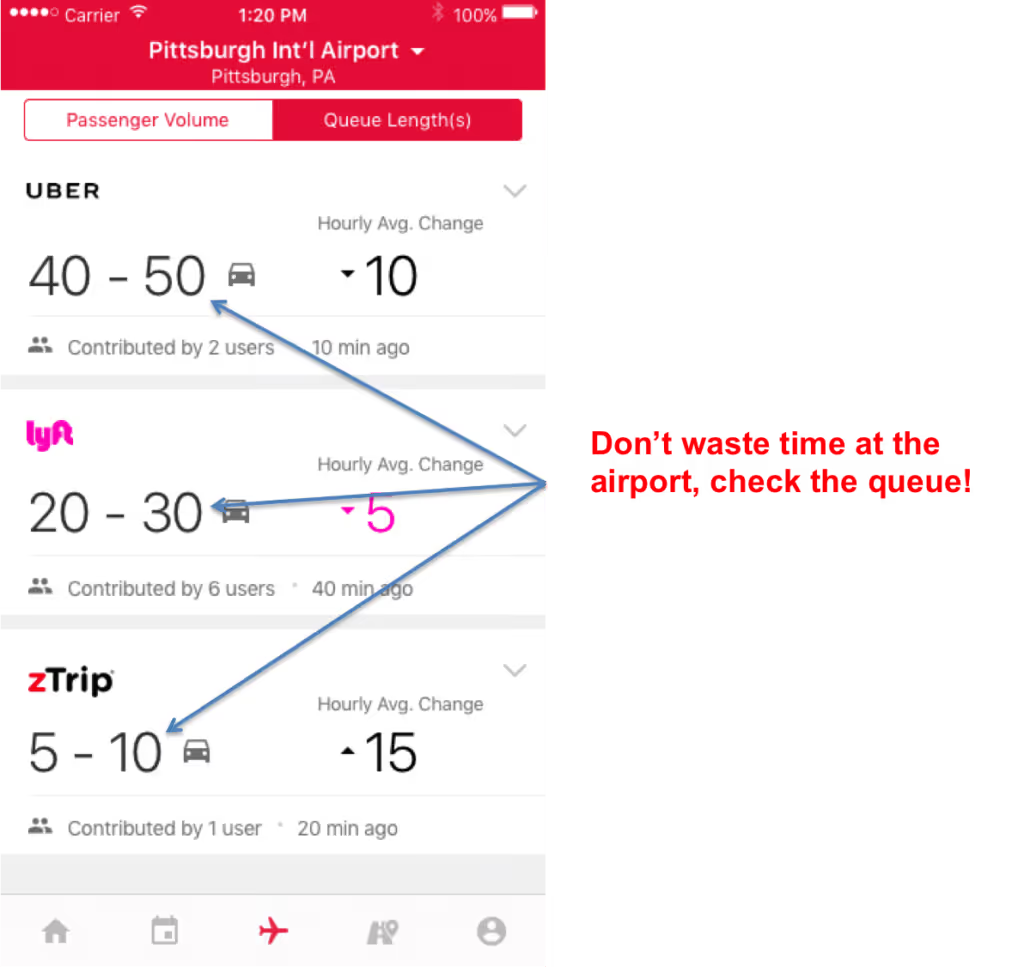
[su_note note_color="#fefedf"]Free Bonus: Know how many other drivers are in the airport before you arrive using theFREE Gridwise app.[/su_note]
If you're coming from the suburbs, especially North Hills, around 7:00, it's worth it to stick around for awhile as you'll most likely get called for a ride to either the airport or the city.
From 7:00 - 10:00 most of the city will see a good amount of demand. Sticking close to the downtown area will result in another trip and depending on the time of the year driving near Carnegie Mellon University can yield great results.
The afternoon rush hour (3-6)
The afternoon rush is another great time to focus on business heavy areas and professionals looking for rides either from office to office or from their offices back home.
It's not uncommon for the entire central business district to light up with surges, especially when the weather becomes a factor. This predictable surge is a great opportunity for a long ride to the suburbs and even the airport.
Late night (10 – 3)
Late nights during weekdays are relatively quiet since the bars won't be flooded. Smart drivers can still find great opportunities, however.
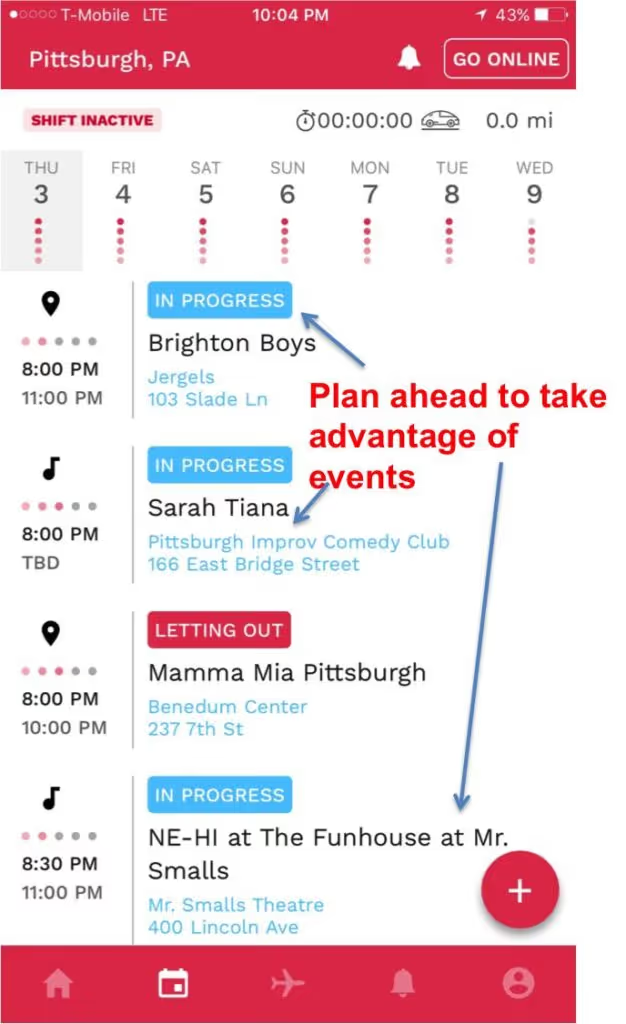
You can start by knowing what events are going on in town. Theatres like The Rex and Mr. Smalls regularly have shows that end around 11:00 and the entire theatre district will often be buzzing, especially in the summer time.
Plan out your week using the Gridwise app in order to take advantage of the biggest and most profitable events in town.
Around 11:30 during the fall if you drive near the Carnegie Mellon Library you'll get a pickup from one or a group of students getting in a late night study session.
Weekends (Thursday – Saturday)
The morning rush (4 am – 10 am)
Thursday and Friday mornings are going to be similar to Monday - Wednesday mornings. The exception is that you'll likely see a boost of riders heading to the airport for their weekend trips. You can predict airport demand again using your Gridwise app.
Rider demand on Saturday mornings tends to be light, aside from a few ultra late night passengers. One of the most common places to find these passengers is near the Rivers Casino. Rivers is a 24-hour casino, however, there tends to be an exodus at around 4:00 - 5:00 am.
If you're not going for the ultra late night passengers, Saturday morning would be a great time to relax and sleep in!
Daytime hours (10 - 3)
Daytime hours on Thursday and Friday in Pittsburgh are relatively quiet. Save your gas unless there is a compelling event going on.
During the daytime, the city of Pittsburgh is buzzing with events going on all around town. In the summer you can find festivals, shows, tastings, meet ups, showcases, and other events all around the city.
If you're coming from a suburb you shouldn't have a hard time finding a rider that's headed into the city. So wait around for a good ride. From there plan your riding schedule by understanding what events are going on around town.
The afternoon rush hour (3-7)
Thursday and Friday's rush hours are similar to Monday - Wednesday. Stick to your common business area's and you'll find a rider demand.
On Saturday's you need to again be strategic and focus on areas that are hotbeds for events. Around 7:00 many people will just start to go out to bars and restaurants around town.
This is again a great time to come into the city from areas like North Hill as you'll find passengers looking to come into the city.
You'll also want to keep an eye on airport traffic. During the fall you'll find an increase in airport demand due to the fans of Steelers opponents arriving to watch their team get smacked around.
Late night (10 – 3)
Late nights on the weekend are prime time hours for rideshare drivers.
When students are in town you can start your nights focusing on areas like Oakland and Squirrel Hill to take advantage of the students that will be wanting rides to the bars of the South Side, Lawrenceville, and Bloomfield.
From there you have a few options on where you want to focus. You can stick to popular bar areas and get plenty of trips. The downside is that you'll likely spend a good amount of time in traffic.
If you want to try and focus on a less saturated area of the city, again, check out what events are going on. If there are big events going on at Studio AE or the PPG Paints Arena, don't be afraid to venture toward those areas.
As the night comes to an end, you'll, of course, get your fair share of intoxicated passengers. Be a courteous driver and I would recommend engaging less than you would during the daytime. If you've invested in a dashboard camera, make sure it's just to protect yourself from fraudulent passenger claims.
With so many options for late night driving, it's hard to go wrong driving from 10pm-3am on Thursday, Friday, or Saturday nights.
Sunday
The morning rush (4 am – 10 am)
Pittsburgh likes to sleep in Sunday mornings and you should too. Especially if you were driving the bar scene late Saturday night. Later in the mornings, you can catch a few riders headed to brunch, but this is generally a quiet time.
Daytime hours (10 - 3)
You'll find Sunday's during the daytime can be lazy when there isn't much going on in the city. There are some popular attractions like the Carnegie Science Center, the Andy Warhol Museum, and the Carnegie Museum of Art that usually yield groups of riders. However, your biggest Sunday's in Pittsburgh come in the fall.
8-weeks out of the year (probably more) during the fall you'll find about 60,000 people flocking from their homes and hotels to watch our Pittsburgh Steelers beat on some poor team from out of town. These are big time opportunities for rideshare drivers both before and after the games.
The afternoon rush hour (3-7)
Sunday afternoons are event driven in Pittsburgh. Whether it be a show, concert, Penguins game, or Steelers Game, events should be your main focus.
You'll also start to see airport demand start to creep up for both departing and arriving passengers. Keep an eye on your Gridwise app so you don' miss crucial airport peaks.
Late night (10 – 3)
Sunday nights in Pittsburgh are event driven as well. You’ll continue to find business travelers looking to come into or leave out of the city on Sunday evenings, so check your flight schedules using the Gridwise app. Gravitating toward the downtown area where popular business hotels are located will commonly yield you a ride to one of Pittsburgh's airports.
With any luck, you’ll arrive at a peak airport time and can catch a ride back into the city.
Pittsburgh is a city where it's important to always drive strategically to maximize your hourly earnings. There are a few times where you can count on rider demand as long as you drive in popular areas. During slower hours it’s important to be strategic and have a plan before you get out on the road. Use apps like Gridwise to help you understand what’s going on in your city and develop a solid driving plan in just a few minutes.
Now, what’s your favorite time to drive in Pittsburgh? Share in the comments below!
The Ultimate Airport Guide for RideShare Drivers: The DMV
A few weeks back I was sitting in the Uber airport queue right when a big wave of travelers was coming in. I arrived a bit early so I was chatting with a few drivers that I had come to know while waiting in the TNC lot. After 10-15 minutes there a few planes with big passenger counts come in and BOOM! Surge. A surge at the airport is like the holy grail. After just 15 minutes of waiting I was going to get a long ride with a surge, I’m expecting a $75+ ride right now. Pretty considerable jump from the ~$17/hour median rate for DC drivers. So I jump back in my car, excited about the cash I was about to stack, when I finally got pinged.From outside the airport surge zone… 15 minutes outside the airport surge zone.

What…After a few seconds of fury, panic, crying, and acceptance, I accepted the ride. I just couldn’t let go of my 100% acceptance rate. After licking my wounds I got back to the airport and started talking to my fellow drivers about how to tackle D.C. and Baltimore’s three airports and how to avoid the dreaded non-airport airport ping of death. I’m going to share what I learned in today’s blog post including:
- How to navigate each of D.C./Baltimore’s airports
- When to go to each airport
- How to mitigate your non-airport airport ping risk
Let’s get to it!
How it works
Uber, Lyft, and other TNC’s specially designate airports with a geofence that tightly defines the airport area. As a driver, if you have an app on in those areas, you’ll be placed in a queue that acts as a virtual driver line. As you wait in the queue, you’ll cycle through the line (hopefully quickly) and finally be pinged by a rider.Most airports will have a designated pickup area which, will be the only place TNC drivers are allowed to wait. You’ll also want to always clearly display your TNC’s sign in your passenger window.
Navigating BWI, DCA, & IAD
Your first few times at an airport as a rideshare driver can be a bit disorienting because of all of the rules and regulations that differ from city to city and airport to airport.Let’s first talk about what those rules are at each airport and how you can comply.
Dulles International Airport (IAD)
First off, can someone please explain to me why Dulles International Airport’s acronym is IAD? I thought there were three DC based airports for the first 3-weeks I lived here!Anyways… Let’s first talk about IAD specific rules
Where to wait
The Dulles airport TNC lot is at the intersection of Autopilot Dr and Rudder Rd.
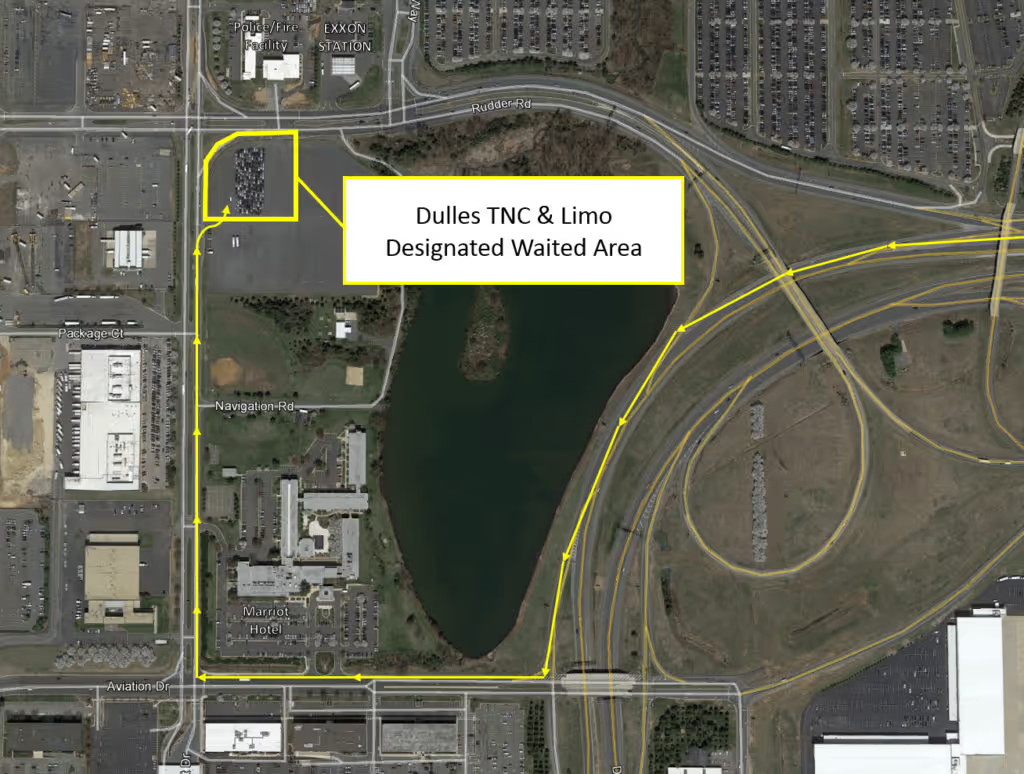
Where to pick up
Many airports add a significant layer of confusion for picking up passengers. Dulles is thankfully very straight forward. You can just pick passengers up along the lower level outer curb of the arrivals area.
Ronald Reagan International Airport (DCA)
Much like IAD, Ronald Reagan has fairly straightforward rideshare rules.
Where to wait
Ronald Reagan airport has two designated TNC lots. The main staging lot is pictured below just off of Airport access road. There is another area meant for overflow that is off of 26th street, below Airport Access road.
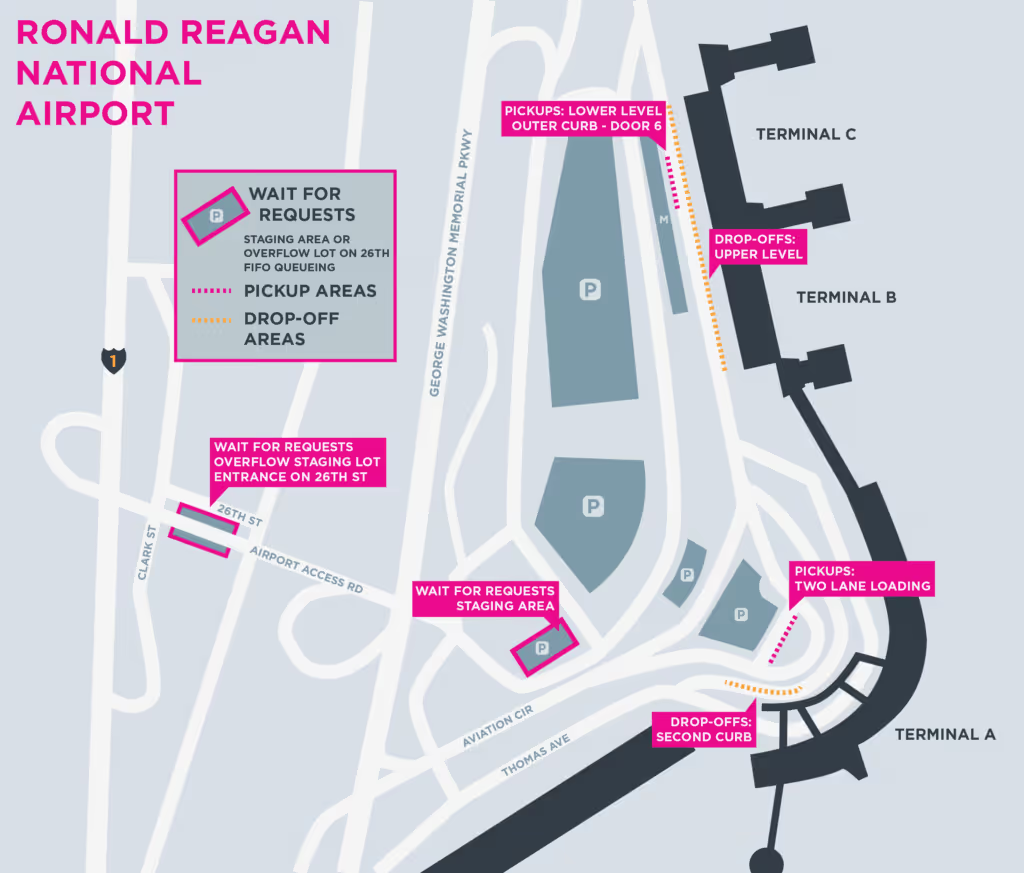
There is even a bathroom across from the lot in the parking garage which can be useful. You are only allowed to leave your car for 15 minutes to use the facilities, however, and if you are gone 16 minutes don’t be surprised if you come back to an MWAA officer writing you a ticket.
Where to pick up
Again like IAD, DCA has a relatively simple pick up procedure. You can simply find and pick up passengers on the lower level, outside curb of the arrivals area. If you are pooling you may have to do a lap or two.
Baltimore-Washington International Airport (BWI)
Finally an airport with an acronym I can get behind! In the past, waiting at BWI was tricky because of Maryland’s rules and regulations which didn’t specifically let drivers wait on airport property. This means that Uber/Lyft drivers technically were not allowed to wait on airport property to pick up riders.Recently BWI and the TNC companies have come together to strike a deal that will officially allow rideshare drivers at the airport. So expect changes to come quickly!
Where to wait
Currently, there is still no official wait area at BWI airport property, so the geofence’s that Uber and Lyft have created are large enough to accommodate drivers waiting outside the property. You can wait at a few places along Elkridge Landing Rd along with a small lot off Elkridge road that Lyft has started to designate for drivers.
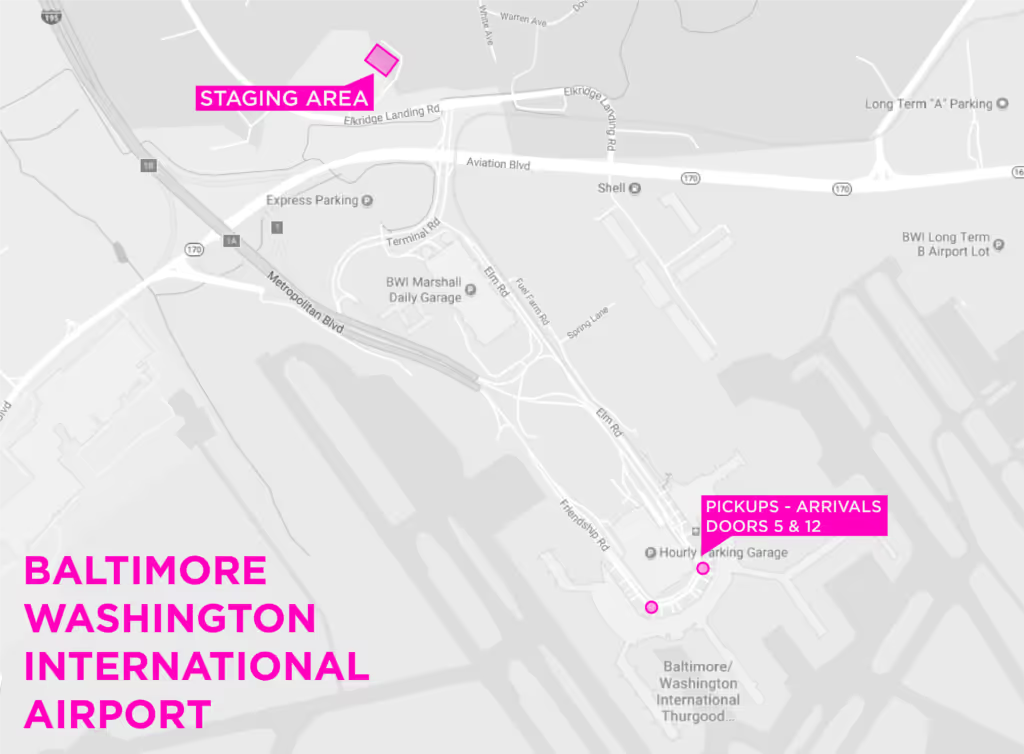
It’s also a good idea to move to the shell to wait for a ride request as you get closer to having your number called.
Where to pick up
Arrivals are a bit more restricted at BWI as you can only pick up passengers from arrivals (lower level) from Door 5 or Door 12. You may have to do a lap around if you are pooling.
When to go
Being at the airport at the right time is crucial for success. Otherwise, you risk waiting around for hours for a rush of travelers to land. You can avoid this by understanding when the most passengers are both arriving and departing.There are a lot of common times when you can count on passengers coming into the airport. It’s very common on Monday and Tuesday mornings for business travelers to be arriving for a work week in Baltimore, D.C., or Virginia. At the end of the week, on Thursday afternoons and Friday mornings, there is a surge of those same business travelers leaving to go home or coming back.Other busy times for travel include:
- Christmas and Thanksgiving Holidays
- 4th of July
- Saturday’s before Ravens or Redskins games
- The week of large parades
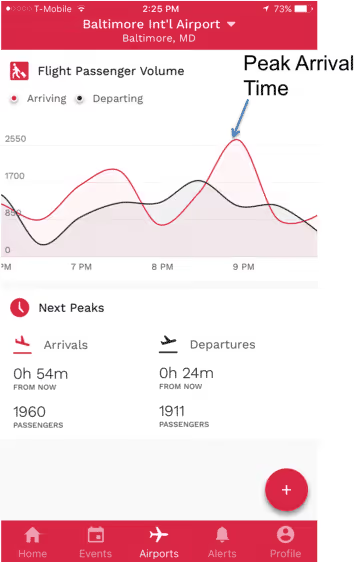
Take advantage of these travel heavy times by positioning yourself in the queue 10 - 15 minutes before there is a peak in arriving airports. You can easily predict when these times will be using the free Gridwise App.
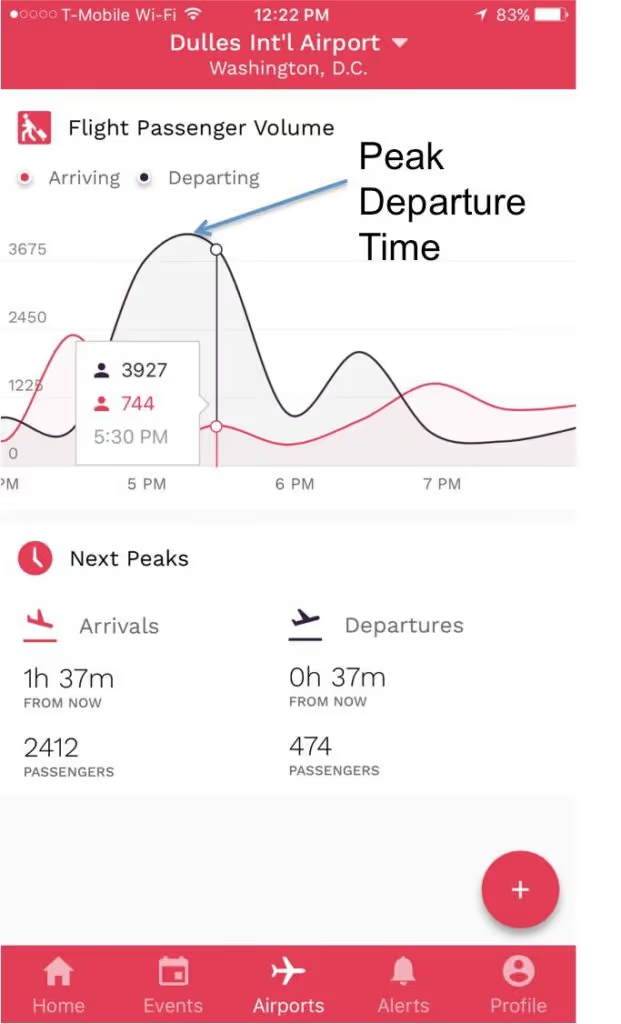
Don’t forget to pay attention to departures as well. You can take advantage of peak departure hours by positioning yourself near hotels to maximize your chances of getting a long airport fare.
Use your timeouts wisely
Remember that heartbreaking tale that I told you to start this blog post? Well, the truth is there is no way to guarantee this won’t happen to you. You can, however, decrease your chances of getting pulled out of the queue for another ride by using your cancels wisely and positioning yourself well within the airport zone.Uber and Lyft’s algorithms are still under lock and key so it’s difficult to completely understand how drivers are selected, however, we do know that drivers are supposed to be selected based on proximity to the rider.So that stands to reason that if you move closer to the airport and away from the surrounding city that you’ll decrease your chances of being pinged from outside the airport. The TNC lots are great for this, the cell lots would be better, however rideshare drivers are not officially allowed in those lots. So approach at your own risk.Your next strategy is to be fully loaded with “timeouts” so you can ignore a call at least once without being sent to the back of the line. Remember, you only need about a 90% acceptance rate to stay in good standing with the TNC and get your weekly driver rewards, so use the few timeouts you have at the airport if you know you’re going to incorporate them into your strategy for the day.
Things to remember
A great airport strategy can lead to a consistent and predictably high hourly income for the smart rideshare driver. We recently wrote a story about Jeff who has been conquering rideshare up in Pittsburgh for the last year by leveraging his local airport, so you can take his strategy and make it your own. Just remember a few extra things:
- Always reach out to your passenger and confirm their location right before you depart
- DO NOT cancel on a passenger after you’ve accepted a fare. You’ll be moved to the bottom of the queue and could face deactivation by your TNC
- Be mindful of law enforcement and don’t risk getting a ticket by hanging out in the cell lots
- Because of the heavy MWAA presence, be prepared when you come to the airport. This means trade dress displayed, insurance card and registration available and don’t forget your driver's license
Alright, that’s it! Everything you need to know to get started at the airports in the DMV. Are you an experienced TNC airport warrior? Did we miss any great airport tips? Let us know and we’ll add them to the list!
Trabaje de forma más inteligente. Gane más.
Ya sea que conduzcas, entregues o recojas turnos, Gridwise te ayuda a hacer un seguimiento de las ganancias, el kilometraje y el rendimiento para que puedas mantener el control de tu trabajo. Descarga la aplicación y toma las riendas hoy mismo.
