Blog de Gridwise
¡Lee el blog de Gridwise para obtener consejos y sugerencias sobre cómo ganar más dinero mientras conduces para Lyft, Uber, DoorDash, GrubHub y más!

The Gridwise Job Board: Find Your Ideal Job or Gig Work
Gridwise is an essential assistant app created by gig workers for gig workers. Our mission is to support those engaged in gig work in every way possible. We understand how challenging it can be to deal with income instability, a lack of benefits, and job insecurity that often comes with gig work. The Gridwise app tracks and organizes earnings and expenses, and offers a wide array of discounts, deals, and services that make the lives of independent contractors easier and more rewarding.
We firmly believe it’s possible to make a viable living and create a gig experience that offers flexible hours, variety, and excitement. With issues such as consistent earnings and job security in mind, Gridwise is proud to offer a centralized platform that shows you how to find gig work and secure reliable opportunities. We’re proud to introduce the Gridwise Job Board.
[elementor-template id="20891"]
The Gridwise Job Board: Key features
Because Gridwise is dedicated to serving the gig worker community, we’ve filled the Gridwise Job Board with useful features that won’t waste your precious time.
- Comprehensive listings. Find part-time, full-time, temporary, and per-task work. Drive or deliver with your vehicle, utilize an employer’s vehicle, or even find non-driving gig work.
- User-friendly interface. Find the jobs that are right for you with a tap of your screen.
- Verified opportunities. We vet the jobs before they are listed to ensure you’re getting high-quality job postings.
How to get more gig work, seasonal, part-time or full-time jobs with the Gridwise Job Board
Looking specifically for “gig work apps” or “gig jobs near me?” You’re in luck. Our filters and search functions send you directly to the listings you seek.
Here’s how it works.
- Access the Job Board via the Gridwise website.
- Search for jobs by type, location, and more.
- Select the job that interests you, and read all about it.
- Scroll through the description, and if it appeals to you, click “Apply for job.”
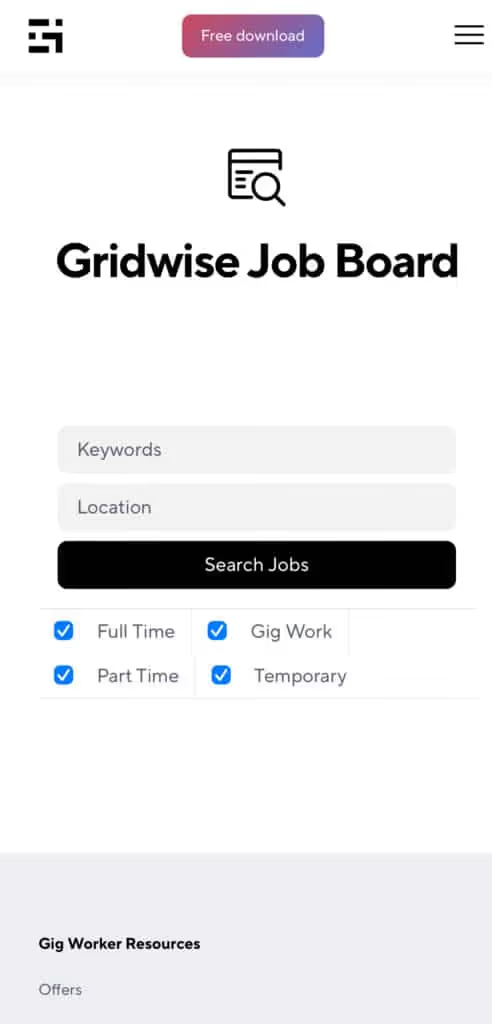
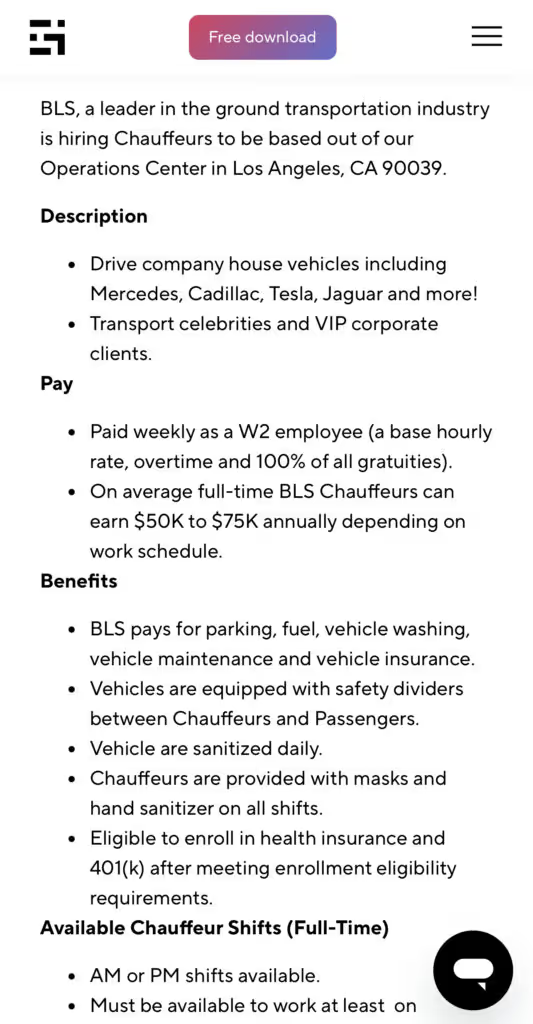
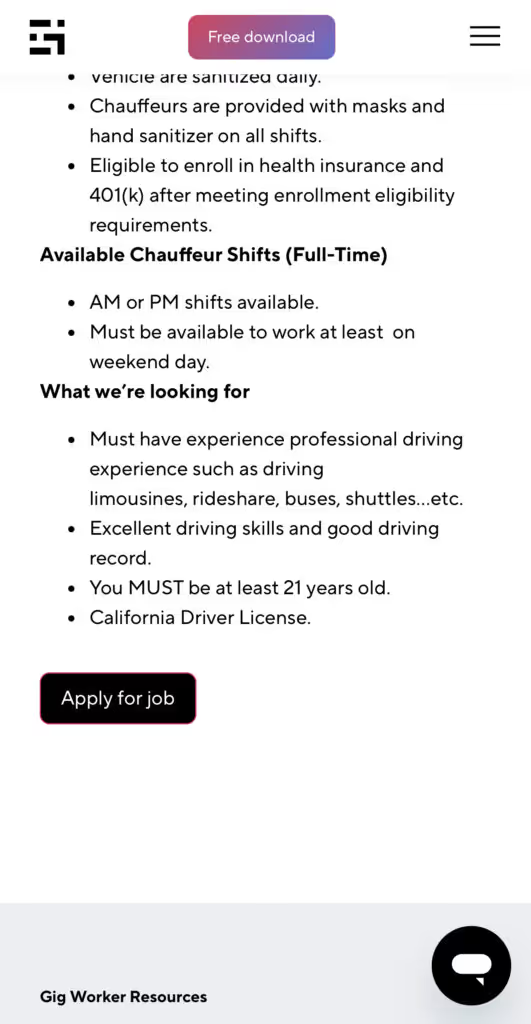
Many types of jobs are available. Adjust the search filter to see the full variety of opportunities that will let you cash in. Deliver food, set up catering, do rideshare driving, get paid for doing package delivery, and much more. You’ll find short-term gigs, long-term contracts, and part-time positions.
Perks of the Gridwise Job Board for gig workers
Gig workers who know how to make extra money will appreciate how the Gridwise Job Board lets you multiply your chances of bringing in big earnings. Here’s how:
- Increased stability. Use the Gridwise Job Board to find part-time or permanent jobs in addition to the part-time gigs you already have. Always keep a steady stream of earning opportunities flowing toward you.
- Flexibility and autonomy. Choose jobs that fit your schedule, work around other jobs and family duties, and still leave room for some fun in your life. Discover side hustles to supplement your full-time job, permanently or just for the season.
- Skill development. Find part-time work that lets you use a skill you already have, or try your hand at something new. It’s a smart way to develop a portfolio to showcase what you can do, or even to find permanent employment.
Get Gridwise and stay up to date on the Gridwise Job Board
Gig workers need plenty of information and assistance, and Gridwise is here to give it to you. Download the app and get essential features such as
- seamless earnings tracking
- mileage tracking
- expense recording, including notes
- low-cost and no-cost insurance benefits
- access to affordable medical, dental, vision, mental health, and alternative care
- professional services including legal and financial help
- deals and discounts
- weather, events, and traffic reports
- inside information on where and when to drive
[elementor-template id="20936"]
More to know about gig work:

5 Best Mileage Trackers For Gig Drivers
Many drivers ask, “Do I really need a mileage tracking app?” The answer is simple: only if you want to have an accurate count of all the miles you can legally deduct from your taxable income! You might think your rideshare or delivery driving app has got you covered. After all, they do quite a good job of logging the miles you drive while you’re on a trip or delivery. But, if you want to have the best app to track mileage for Uber, Lyft, Doordash, Instacart, or the other apps you may use, you need more. Why is that?
Without a separate tracker, you’re missing the miles you drive in between pings. Did you realize that all the miles you drive, from the moment you begin your shift until it’s over (as long as you don’t drive several miles on a break to hang with your friends), are tax deductible! That means you need something besides your driving app to keep an accurate count of your travels. Read this Gridwise post to see how important it is to keep track of every deductible mile.
You won’t be surprised to hear that there’s an app for tracking miles. In fact, there are several of them. Here, we’re going to tell you about five top mileage tracking apps, and help you figure out which one is best for you.
Before we get to the list and identify the best mileage tracker app, let’s clarify what exactly a mileage tracking app is. According to G2.com’s technology glossary, mileage tracking is done for the purpose of keeping a log of mileage that is either reimbursable or tax deductible.
And yes, of course you can track your miles simply by taking readings on your odometer. But are you really prepared to account for how many miles you drove for personal reasons and subtract them from the total to get your business mileage? Even if you can remember all that and do the arithmetic, if you want an accurate reading of the miles you drive for business, and can therefore deduct, a mileage tracking app will save you a lot of trouble and prevent you from making costly errors.
Plus, as a gig driver, you have specific needs when it comes to a mileage tracker. Ideally, you’d be able to handle mileage tracking and several other functions all in one app. It can be maddening enough to deal with driving apps, particularly if you’re an avid multi-apper. You would want your mileage tracker app to help you keep account of other aspects of your business, including income, expenses, and inside information about the art of gig driving.
Not all mileage apps are equal, to be sure! Let’s look at five of the best apps to track mileage and figure out which is the best app to track mileage with Uber and Lyft, or what mileage tracker app is best for DoorDash.
[elementor-template id="20891"]
1. Zoho Expense
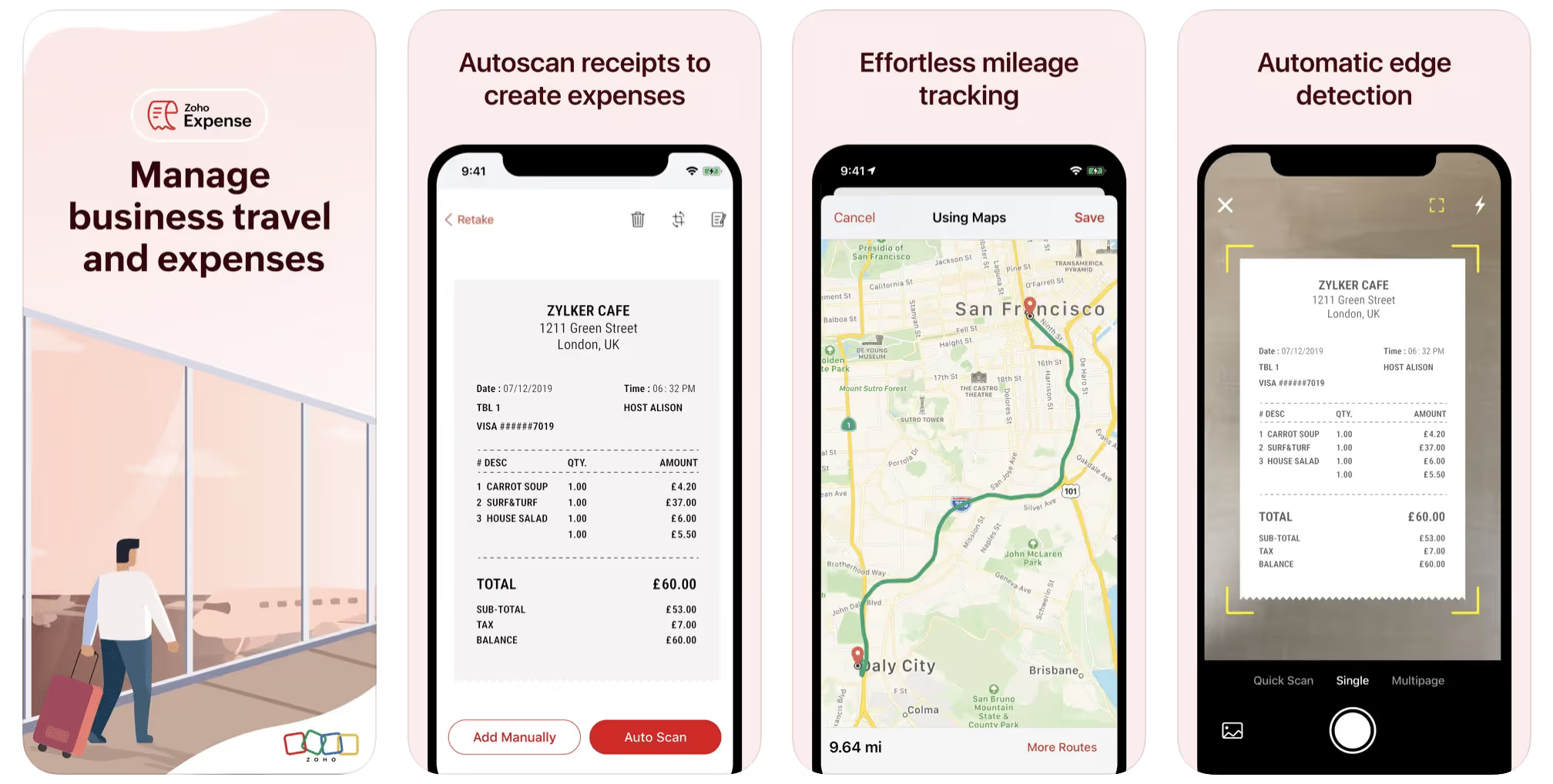
First up is Zoho Expense, which does exactly what its name says. This app is designed to allow companies to give employees a uniform way to create and submit expense reports. It can be used by individuals, including gig drivers, as well.
It includes a mileage tracker, as well as features that let you track other deductible expenses, including the ability to scan and record receipts.
Available on Android and Apple: Yes
Ratings: 4.8 stars on App Store, 4.7 stars on Google Play
Free Version: Yes
Subscription price: $3 per month, billed annually
Created specifically for gig drivers: No
2. Quickbooks Online
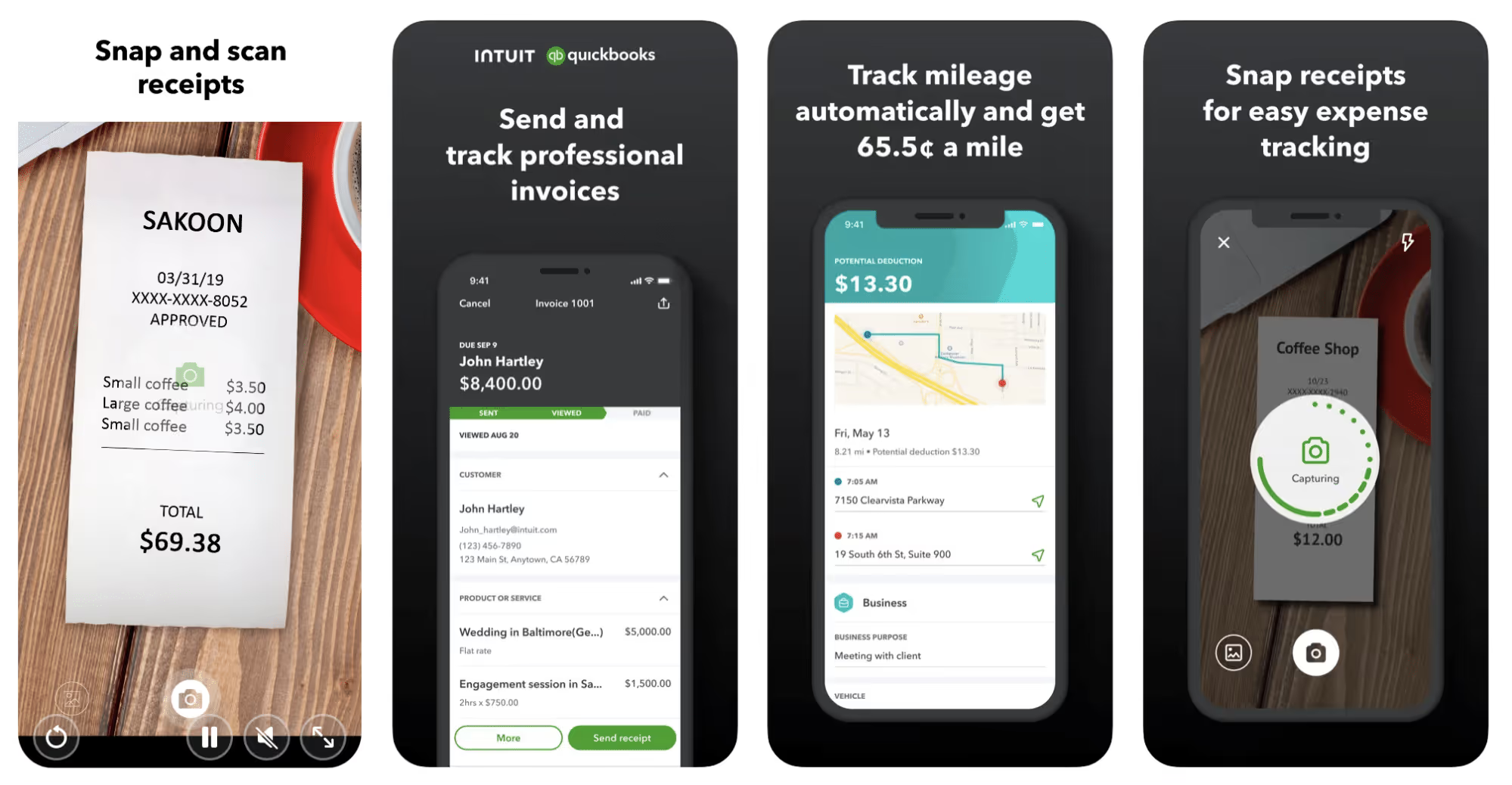
Quickbooks Online is a cloud-based app that allows you to track your mileage, earnings, and expenses. The information you enter can then be used to generate various reports that prepare you for tax time. It also allows you to create graphs that illustrate your cash flow, and includes a receipt scanner so you can instantly record deductible expenses. Quickbooks is popular, highly reliable, and designed mainly to help people keep track of their small businesses.
Available on Android and Apple: Yes
Ratings: 4.7 stars on App Store, 4.4 stars on Google Play
Free version: 30-day free trial
Subscription price: $15 per month for basic version if purchased for 3 months or more
Created specifically for gig drivers: No
Source: quickbooks.intuit.com
3. Shoeboxed
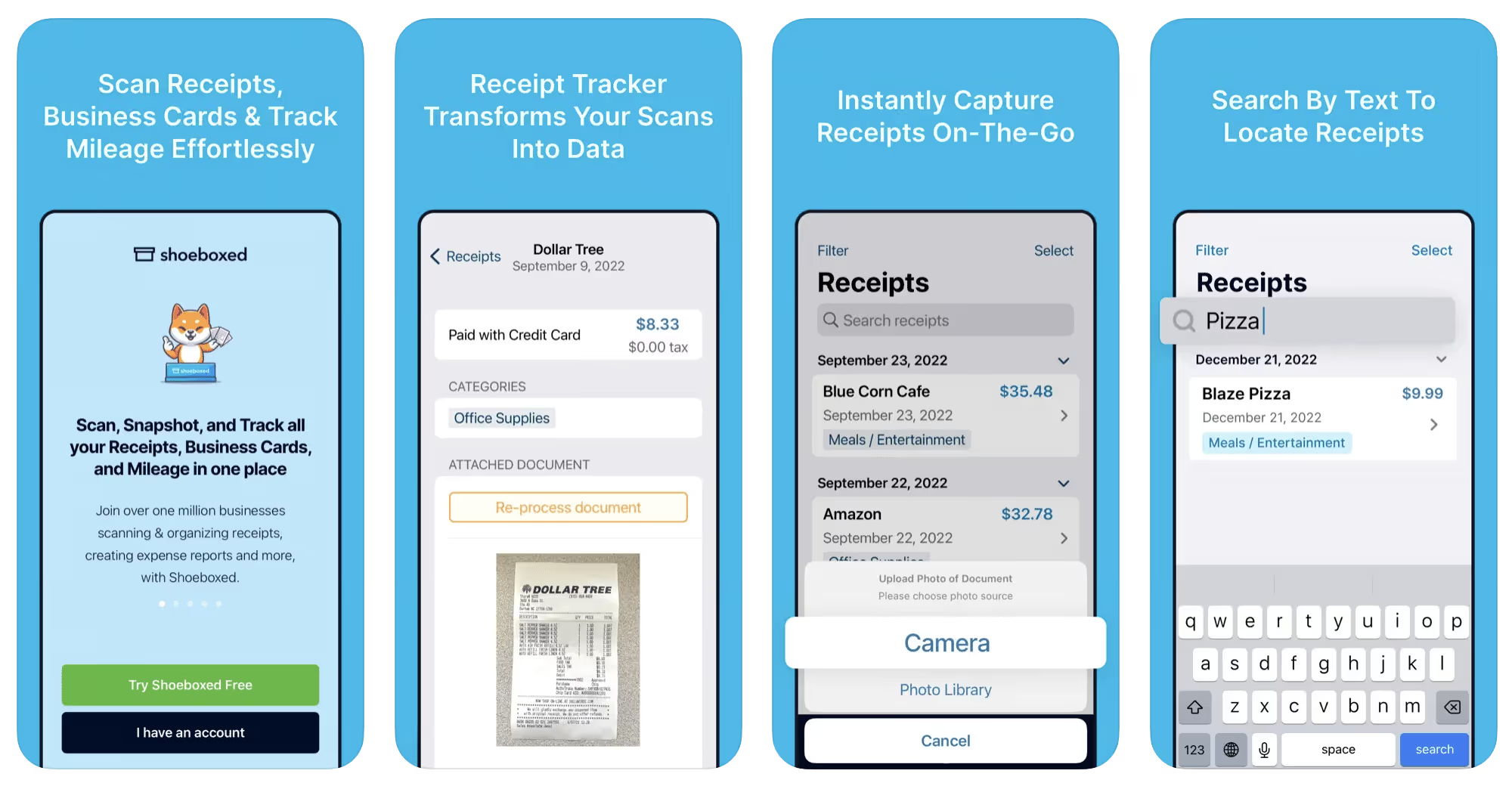
Shoeboxed started in 2007 as a service for scanning paper receipts into digital form. Now the app offers a free mileage tracker and has enabled users to scan receipts directly. It touts itself as the best mileage tracking app for DoorDash, but there are some elements missing that Dashers might like to have. While it provides features that record your expenses and prepare you for tax season, it doesn’t automatically track your earnings. The mileage tracker has a system where you can drop pins along your routes to make the tracking more precise, identifying those legs of a trip that you make for business purposes. The mileage tracker is “free” once you sign up for the basic version.
Available on Android and Apple: Yes
Ratings: 4.5 stars on App Store, 2.3 stars on Google Play
Free version: No
Subscription price: $18 per month for basic version
Created specifically for gig drivers: No
Source: blog.shoeboxed.com
4. Stride
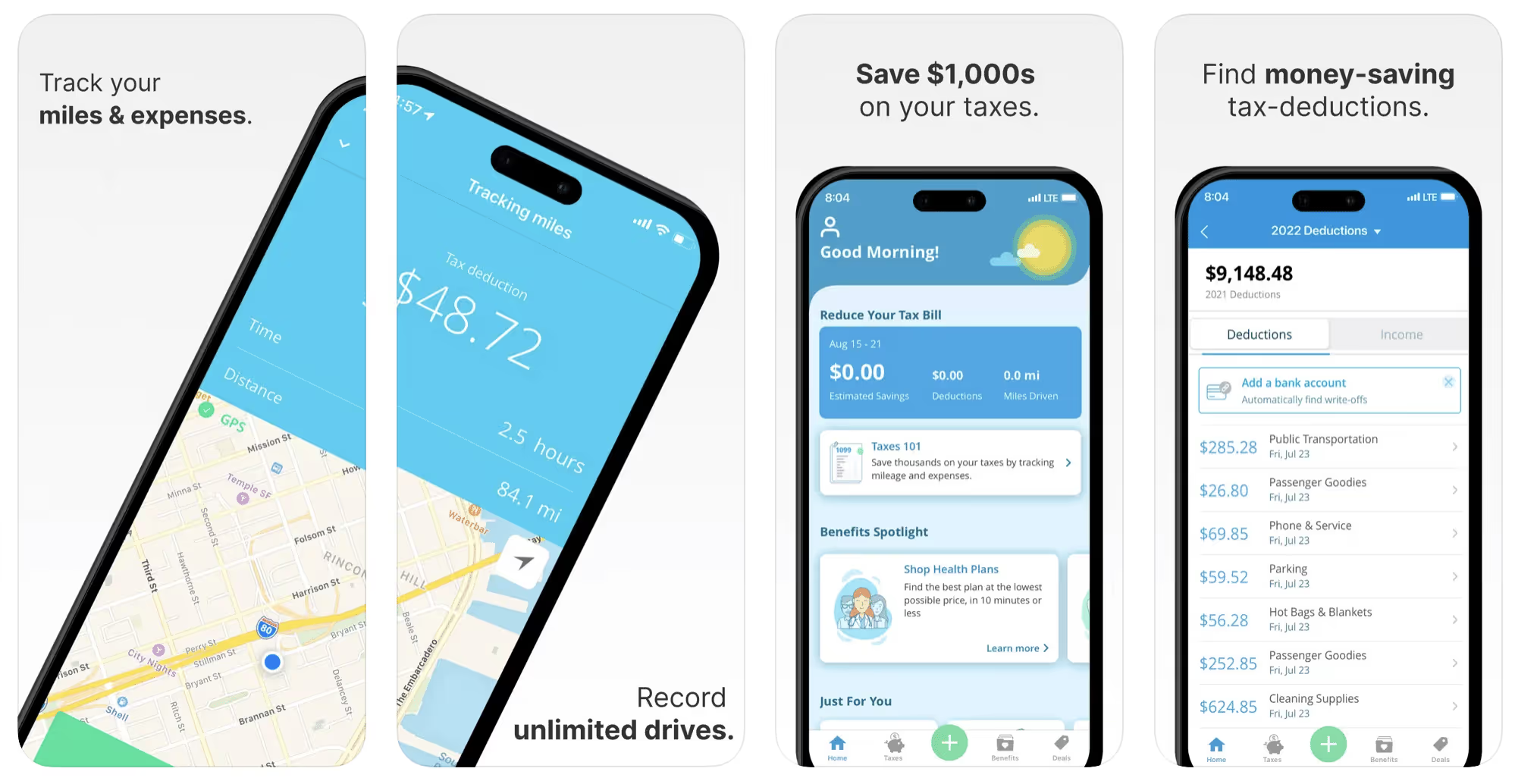
This free mileage tracker does a fair job of keeping track of the distances you rack up while gig driving, but it doesn’t automatically track earnings. It can be a big help, though, in tracking your expenses. You can link Stride to your bank account, and it will automatically scan your expenses to identify items you can potentially deduct. The app is totally free. This could make it the best free mileage tracker app, but there is a small price to pay. The app will persistently push you to consider various insurance plans that they are affiliated with. If you don’t mind that, this is a solid mileage tracker, even if it doesn’t track your earnings.
Available on Android and Apple: Yes
Ratings: 4.8 stars on App Store, 4.6 stars on Google Play
Free version: Yes
Subscription price: None. The app is free.
Created specifically for gig drivers: No
5. Gridwise
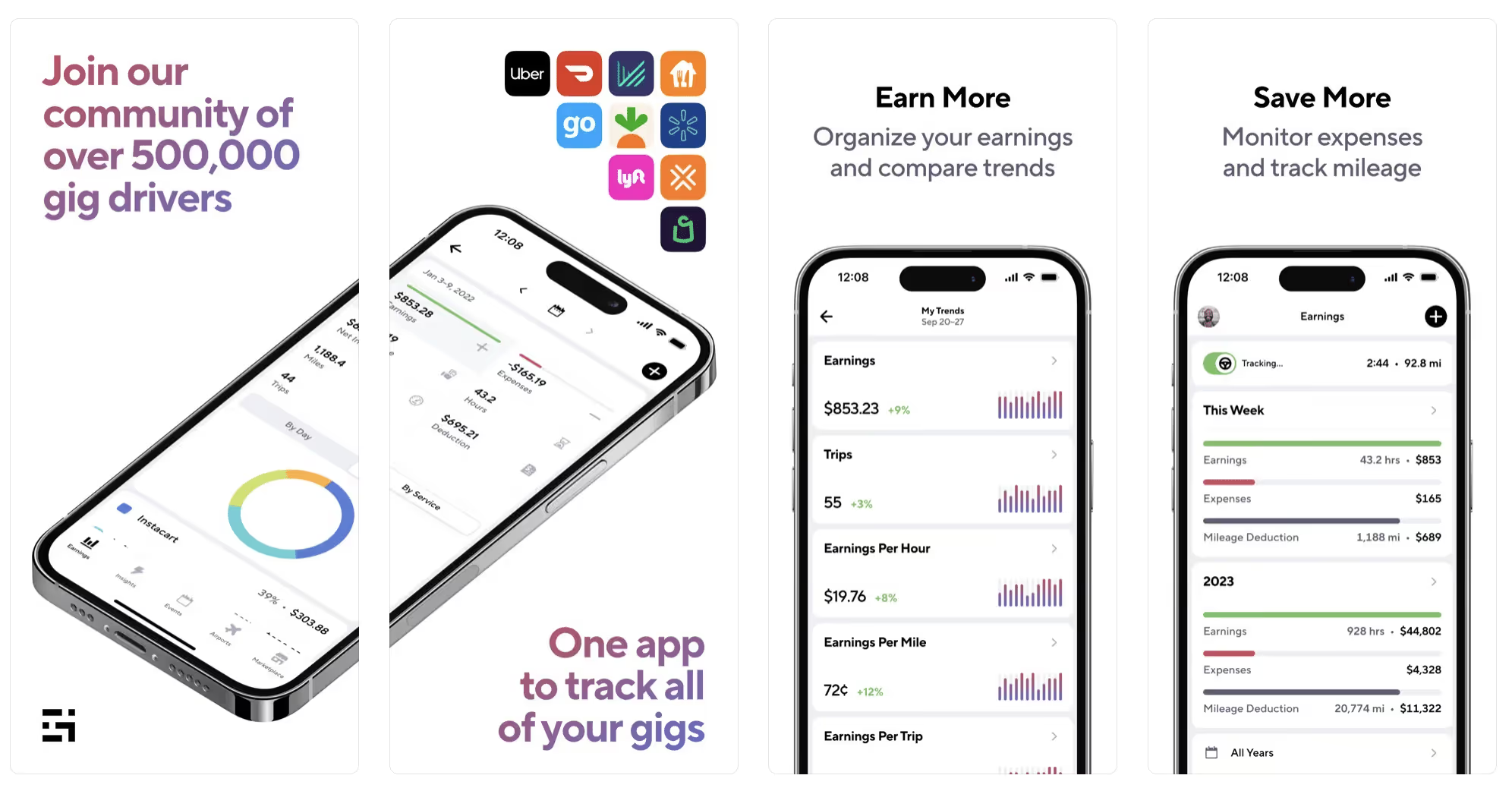
Gridwise has a free mileage tracker and free features that record your income and expenses. It gives you access to insurance and benefits, as well as insights about the best times and places to make the most money while gig driving. The Gridwise mileage tracker captures all the miles you drive while you’re on your driving shift, and it can be used if you have other trips you need to make which qualify as business travel.
Drivers love it because it is geared toward the needs of rideshare and delivery workers, providing free information about airport departures and arrivals, event start and let out times, weather, traffic, and more. The Gridwise Plus subscription adds value by providing additional insights and reports, discounts on benefits, the ability to export data in .csv format,, and more.
Available on Android and Apple: Yes
Ratings: 4.9 stars on App Store, 4.6 stars on Google Play
Free version: Yes
Subscription price: $9.95 per month for Gridwise Plus, or $95.99 per year (a $23.41 savings)
Created specifically for gig drivers: Yes!
What is the best mileage tracking app?
Now that we’ve checked them all out, we’re positive about the answer to that. Hands down, it’s Gridwise. Are we biased? You bet we are! But drivers love it too. Gridwise is the best mileage tracker app—and so much more. So many of the features are free, and the subscription to Gridwise Plus will pay for itself with additional insights to boost your earnings and deeper discounts on products and services.
Most important, Gridwise is designed specifically for gig drivers by experts who were once gig drivers themselves! Knowing what gig drivers need is a crucial step in creating an app that rideshare and delivery drivers can really use! Here are a few of the features, besides mileage tracking:
- seamless earnings tracking
- automatic, on/off toggle and manual mileage tracking
- mileage categorization
- airport, traffic, weather, and events information
- insights into where to drive and when to drive
- reports showing earnings across the platforms you use
- discounts on countless products and services for drivers
- additional resources for finding side gigs
- an informative and comprehensive blog
- affordable benefits, including insurance, medical, dental, and alternative practitioner discounts
- a community of drivers just like you
Don’t settle for just any app. Get the best mileage tracker, and so much more, from Gridwise!
[elementor-template id="21599"]

What Records Do Gig Drivers Need To Keep Track Of For Taxes?
* Gridwise does not provide tax, legal, or accounting advice. This material has been prepared for information purposes only, and is not intended to provide, and should not be relied on for tax, legal, or accounting advice. You should consult your own tax, legal, and accounting advisors before filing your return.
Record keeping? Who signed up for that? As a gig driver, it’s part of what you need to do to keep your business running. Don’t worry. It’s not as complicated as you might have been led to believe. This post will show you what you need to keep track of and the best ways to gather and preserve your tax-related records. We will cover
- How record keeping can help reduce income tax for freelancers
- Taxes and freelance work: Record keeping requirements
- Mileage tracking: Motives and methods
- More deductions and records to keep
- Make tax time easier
How record keeping can reduce income tax for freelancers
Tax time is not “fun time” for rideshare and delivery drivers. It’s easy to get used to watching your earnings pile up and come to believe they are all yours. Unfortunately, that isn’t the case. Gig work taxes can be especially painful because no one takes them out of your earnings for you, until the tax authorities insist that you do it for yourself.
You will need to show the tax authorities your income records, and they will gladly tell you to send them what they determine to be their fair share. Think that’s not fair? You’re not alone, but that doesn’t mean you’re going to get out of paying gig work taxes.
But you can find ways to pay the smallest amount that is legal and possible. The best way to defend yourself against having to pay astronomical amounts when you file your return is to know what expenses you can deduct from your gross income. When you subtract deductible expenses from your gross income, there is less left over to be taxed. This reduces the amount they can hit you with gig worker taxes. and can make your tax bill substantially lower.
While you want to keep good records so as to be in compliance with taxation entities such as the IRS, you also want to ensure you have proof of every last deductible expense you have accrued during the year. There are other records you must keep as well. Let’s look at some of the considerations you have, realizing that you now need to know how to do taxes as a freelancer.
Taxes and freelance work: Record keeping requirements
So many gig drivers fail to understand the responsibilities they have as independent contractors. Those who work part time for very few hours may even believe they don’t have to report the income they get from their driving gig payments. That would be a big mistake!
The company or companies you work for report your income to the IRS and state tax authorities. If you fail to report that income, you will risk some rather painful penalties. The IRS taxing side hustles is as much of a thing as the IRS taxing income from any other job. Your best bet is to report what you’ve earned, honestly and completely, and comply with other record keeping requirements such as
- gross income
- deductions and credits
- purchases (items you purchase and resell, such as snacks or bottled water)
- a log of all your mileage (or vehicle expenses, if greater)
- a list of all expenses and assets, such as utilities and other expenses associated with having a home office and equipment
- machinery and furniture you own, including when it was acquired, how much it cost, whether you previously took deductions on it, and selling price, if applicable (this includes your vehicle)
More things to consider:
- Pay attention to the retention of your records. You’ll need to keep all tax-return-related items— including income, deductions, and any tax credits reported— until the period of limitations runs out (3 years from date you filed, or 2 years from when you paid tax. If you have employees, keep your records for at least 4 years.)
- If you want to avoid paying self-employed taxes, you may want to set up a corporation or Limited Liability Corporation (LLC) for your business. This allows you to separate all your gig driving earnings from personal income, and permits you to take advantage of the additional advantages of working through a corporation. This includes exemption from self-employment taxes. You can learn more about how to pay self-employment taxes, if you opt for that, in this post from Keeper.
- You should always keep a separate checking account for your business, for convenience as well as clarity. While this is not a legal requirement, it is a smart move if you want to have an easier time managing your business.
- You are required, as an independent contractor, to file your taxes quarterly. Check out this Gridwise blog post for more information about quarterly tax payments and other matters that make filing delivery, Lyft and Uber taxes easier.
Mileage tracking: Motives and methods
Why you need to be meticulous about mileage
Mileage deduction, or the costs of operating your vehicle, will be the most important item to account for when you consider how to file taxes as a freelancer. While mileage is an important deduction for all independent contractors, as you might imagine, it’s even more essential for rideshare and delivery drivers.
There are two ways of keeping track of your mileage deduction. One is to use the IRS’ standard mileage deduction, which for 2022 is 58.5 cents per mile. This number takes into account the costs of operating your vehicle, from fuel and maintenance to registration, insurance, and depreciation. Alternatively, you can calculate all your own vehicle operating costs, but only after your first year of using the vehicle. You may discover that this second option allows you to have more money deducted from your taxable income. Learn more about the options for deducting your mileage in this Gridwise post.
No matter which way you decide to calculate the deductions for your mileage, you need to know what mileage you can and cannot deduct.
You can deduct
- miles driven to and from home when you go out to drive or deliver
- miles you accrue during your trips
- miles you drive on any other trips you make that are necessary as part of your business.
Examples:
- driving to return a lost cell phone or to an Uber Hub or another physical location where your company might make driver support available
- driving to pick up supplies, to get gas, or to have your car cleaned, serviced, or detailed, etc.
You cannot deduct
- miles you drive for personal trips
- miles for any trips you take that do not directly affect your business
Note: If imagining yourself becoming the not-so-proud owner of a shoebox filled with paper receipts gives you nightmares, stop worrying. Electronic records of purchases will satisfy reporting requirements. If you use cash, you can scan copies of your receipts, in some cases, right into your recording software or app. Gridwise and Keeper give you a simple to use interface that keeps all your receipts recorded without the messy pile of paper.
Mileage tracking methods
By now, you’re probably convinced that tracking mileage is important, despite all the other things drivers have to do. Now, let’s look at your options for keeping accurate records.
- Manual tracking: You can keep a logbook where you list every trip you make, starting and ending mileage, the date, and purpose of the trip. While this would work, it’s certainly not convenient. Besides, if that logbook gets lost, your plans for having a nice, fat tax deduction will go by the wayside.
- Spreadsheet: This is a bit more convenient and sophisticated way of tracking your business mileage. You’d need to be meticulous about making your entries, though. Even if you keep a spreadsheet app on your phone, it could be time consuming and inconvenient to keep doing it with all the other things going on in a rideshare or delivery driver’s day to day life.
- GPS-based mileage tracking apps: There are a bunch of apps that track mileage based on your GPS location, and most of them are pretty accurate and far more convenient than taking constant readings of your odometer. Your driving apps, such as Uber, Lyft, DoorDash, or Instacart, may also track your mileage, but be careful here. They will only track the miles you drive while you’re on a trip or delivery. They don’t count the miles you drive going to pick up a customer or when you make your move toward a restaurant or store.
Gridwise, on the other hand, will track all the miles you clock while you’re on your shift. All you need to do is make sure you start tracking the minute you leave home, and every gig driving mile will be logged. - OBD-II mileage tracking systems: There are plug-in modules that assess your vehicle’s mechanical health and track your miles. However, many authorities question the ability of OBD-II mileage tracking systems to get get accurate odometer readings. Insurance companies don’t consider them to be accurate enough gauges of odometer readings.
While mileage is a crucial deduction when you’re preparing your Uber, Lyft, or DoorDash taxes, it isn’t the only expense you’ll want to record.
More deductions and records to keep
Expenses you can deduct
You’re entitled to include the cost of other expenses that are directly related to your driving business. These include
- vehicle expenses
- equipment for your car and home office
- extra services and subscriptions
- business tools, including apps and software
You can learn much more about gig driver expenses that are eligible for deduction in this Gridwise article.
Ways to track and preserve deductible expenses
- The manual method: Just like you can with mileage, it’s possible to use a manual method, but in addition to logging each expense into a ledger, you would also need to keep physical receipts.
- Spreadsheets: You can record your expenses on a spreadsheet. This is somewhat less awkward than manually logging mileage, but there still will be plenty of room for failing to remember the case of water you bought for your customers, or losing the receipt from the thermal bag you purchased.
- Accounting software: You can use software that helps you track your expenses. This method usually interfaces well with any tax preparation software you or your tax professional might use.
- Gridwise: There are other apps that help you track your expenses, but Gridwise is designed specifically for gig drivers. It automatically tracks earnings and mileage, and lets you record your expenses the minute they come up. Gridwise’s partnership with Keeper gives you the ability to scan receipts and access a tax professional. This is a seamless way to record your expenses and a big help in learning how to file Uber taxes. Gridwise even provides .csv output, so you can feed your Gridwise data directly into tax preparation software. Check out what Gridwise and Keeper will do to super-charge your tax filing powers.
Organizing and categorizing expenses
Before you even begin to record expenses, you’ll want to set up categories for them. You can start by reviewing the categories listed above and checking out the Gridwise post that lists possible deductions.
If you’d like to learn more about how to categorize expenses, there is additional information available. This article from Motley Fool lists all possible categories any freelancer might use and also gives tips on how to customize them for your driving business.
One last tip
Using Gridwise, particularly for tracking mileage, is the easiest way to be in compliance with the IRS’ rules for deductible mileage. Gridwise tracks all the miles you drive for your gig, beyond what your company’s app might record. At the same time, you can log on and off Gridwise when you start and end your shift, so personal miles won’t be recorded. This eliminates confusion while capturing every deductible mile.
Gridwise Tax Help, a partnership with Keeper, has been created specifically to serve gig drivers. It provides affordable and easy ways to record expenses, scan receipts, and find deductions by analyzing your expenditures. Read about free resources from Keeper you can use to be fully prepared for tax season, and get all your earnings and expenses on the record.
Get the world’s best assistant for rideshare and delivery drivers, and tax help too.
Make tax time easier now!
How To Improve Your Lyft Driver Rating
“In some ways, Lyft is the best job I’ve ever had,” says one Lyft driver. “I can meet 20 or 30 people in an eight-hour shift and have meaningful conversations with them. I’ve had homeless people in my car, and I’ve had billionaires in my car, and they all share their stories, great stories! I love this job!”
This quote comes from a veteran Lyft driver, and guess what? He has a five-star rating, and it seldom drops from that top spot. He loves his job and shares his enthusiasm with every passenger he meets.
The other strategy this driver uses, and it’s the same with all five-star drivers, is delivering top-drawer service. It’s not difficult, either. Given the number of Lyft drivers that consistently rank at 4.95 stars and above, it’s obvious that many drivers have discovered the secret. It all boils down to remembering a few things. In this article we’ll cover
- understanding the Lyft driver rating system
- tips on how to improve Lyft driver ratings
- disputing a rating
- how Gridwise can help you improve your rating
Understanding the Lyft driver rating system
As Gridwise reported in a recent blog post, Lyft Ratings–How Do You Rate?, Lyft and Uber use a five-star rating to track driver performance. After a Lyft ride, the passenger receives an email asking them to rate their Lyft driver on a scale of one to five stars (five being the highest), in four main areas:
- the quality of your driving
- the cleanliness of your car
- whether you were pleasant and friendly
- if you were professional
We go into more detail in our blog that covers how Lyft ratings work. Check it out if you need more detail!
How are ratings calculated for the Lyft driver rating system?
Lyft averages the star ratings you receive in the individual categories to give you an overall rating for that ride. The app then averages these overall ratings from your last 100 rides to give you a driver rating. You can see this rating on the Lyft app.
You should also know that if a passenger does not leave a rating, Lyft translates that into an automatic five-star rating.
How to check your driver rating
Your Lyft driver rating is always available on the Lyft driver app. Accessing it is easy.
- Open your app (you can be online or offline when you do this).
- Select the menu icon, those stacked three horizontal lines in the top left-hand corner.
- The app takes you to your profile page. At the top, right under your photo, you’ll see your total career rides, your Lyft driver rating, and how long you have been driving. The passenger sees a similar rating for you on their app when you accept their ride.
Does your Lyft driver rating make a difference?
Most assuredly, it does. Lyft frequently offers driver bonuses and incentive programs, and participating often requires a rating of 4.9 or above. Don’t forget that passengers can also see your Lyft driver rating. A low rating might prompt them to cancel. It’s to your benefit to keep your ratings high.
Lyft sees ratings as a reflection of driver performance. If your rating drops to the 4.6 range, you can expect communication from Lyft. The company has the right to deactivate drivers from the app for low ratings. It’s in their best interest to also protect their customers from low quality drivers, so this is understandable. And by helping protect their customers and their reputation, they protect driver income by ensuring demand.
Tips on how to improve Lyft driver ratings
One of the downsides of the Lyft driver rating system is that one or two bad days or nights transporting passengers can affect your rating. Even the most courteous and careful driver, one who does all the right things, can get those customers that can’t be pleased or want to share their misery by giving you a bad rating. “Every driver has had the moment when they check their app and say aloud, My Lyft driver rating is bad!
Warning: You’re not going to change your ratings overnight, but if you incorporate the following suggestions and work hard, you will see your Lyft driver rating gradually track upward. Your target is anything higher than a 4.90. This range may seem high, but the majority of Lyft drivers are at 4.95 or above. It is a standard that every driver is held to.
- Drive as much as you can
We’ve already covered this. The Lyft driver rating system computes your average based on your last 100 rides. As rides pass the 100 mark in your ride history, they fall off (for rating purposes), and the app recomputes your rating. The more rides you give, the quicker you can get a bad rating off your history and raise your Lyft driver rating.
- Realize you’re an actor
You’re on set whenever you have a passenger in the car, and the camera never blinks. Everything you say and do dictates what kind of star rating you receive. You need to be in character as the best Lyft driver, and you need to be in that role from the moment they get in to the moment they get out.
- Remember, first impressions matter
Greet the passenger warmly, as if they are the only thing that matters. If they have suitcases, offer to help with them. Ask if they’re okay with music. Do they have a preference, a radio station they might want to listen to?
- Confirm the destination
The Lyft passenger app retains the most frequently visited locations of individual passengers. Occasionally a passenger will touch the wrong address when ordering a new ride. The app tells you to take them to the airport, but they are actually going to a job interview. This is a rare problem, but it does happen, especially in the evening when people have been drinking, and their coordination is off. Be sure to confirm your passenger’s destination.
- Keep your car clean
Remember #3, first impressions matter. Keep your car gleaming. Drive-through car washes, where you never get out of your car, are popular and inexpensive. Many will sell you a month-long pass for unlimited washes. Wash your car before beginning your shift. Make sure to make a quick run-through with the vacuum as well. Too many rideshare drivers are picking up passengers with last night’s dinner crumbs in the cup holder and an empty water bottle rolling around on the floorboard.
- Dress for success
We're not saying you have to wear a button-down and tie (although there are some drivers that do), but make sure you're wearing something clean.
- Be well supplied with amenities
The most frequent passenger request is a cell phone charging cord. Most Androids use USB-C chargers. iPhones use the proprietary iPhone charger. Have them plugged into a power source that is long enough to reach the back seat (if your car doesn’t have enough ports to accommodate the extra cables, consider a multi-port adapter available on Amazon).
Keep a supply of gum and candy, and offer passengers water (don’t forget to check your car after every ride and pick up discarded wrappers and empty plastic bottles). Toothpicks are a rare request, but they can make you a hero. The type that are individually wrapped in cellophane are the best.
- Be a great conversationalist
Many passengers have just spent the day alone in their cubicle without much interaction, or they just got off a plane where it was too noisy to hear. They crave conversation, and you can give it to them. Keep the conversation light, though. Another piece of good advice is to avoid talking about sex and politics.
- Be a good listener
Any man who has been a husband for any length of time can tell you that when the wife comes home from work or her sister’s house complaining about some impossible situation, the last thing she wants is for someone to preach solutions. She wants someone to listen and agree with her. Many passengers are the same way. They want someone to listen to them.
It’s a little tricky sometimes to determine whether you need to talk or just listen, but if you know there is a difference, you can be more attuned to it. Some passengers want to talk; others want you to listen.
- Learn how to read passengers
Develop a feel for what a passenger wants. Some passengers have material to review, or they’re listening to a podcast and they would rather not talk. They might be on a phone call or have someone with them that they need to discuss business with. Be sensitive to this and respond appropriately.
- Have great music playlists
This is an area where you can score real points with customers, and it’s not all about rock ‘n’ roll. A good playlist built around jazz, big band, and swing is always a hit. Even younger kids enjoy Sinatra and the duets of Lady Gaga and Tony Bennett. One Los Angeles driver picked up a carload of music fans on their way to a concert by a well-known Latin band. He pulled their songs up on the music app on his phone and played them all the way to the concert venue. The passengers were awestruck by this and left him a big tip.
- Pay attention to navigation
Watch the app for directions. Understandably, passengers get distressed when you miss an offramp or overshoot a turn.
- Make sure women passengers get to the door at night
If you pick up a solo woman passenger at night, watch to make sure she gets in the door safely when you drop her off. It’s always a good idea to tell her what you’re doing so that she doesn’t think you’re being weird. This tactic is also great for a tip. Women really appreciate it.
- Pay attention to passenger ratings
When a ride request pops up on your app, pay attention to the passenger rating given by other drivers. A low passenger rating indicates someone who has a problematic history with rideshare drivers. They might be belligerent, overly demanding, have a bad attitude, or be a troublesome drunk. Think twice before picking them up. Your acceptance rate can take the hit.
- Anticipate passengers that might complain
If you get a passenger that’s a problem and you think they might give you an undeservedly bad rating, be proactive and send a message to Lyft on the app, telling them your side of the story. Read on for more information on how to dispute a rating.
- Avoid road rage
Driving can often be frustrating, especially in congested downtown areas, but nothing freaks out a passenger more than a driver in the throes of road rage. Focus on controlling your emotions. Remember, your job is to deliver the passenger safely and happily to their destination.
- Maintain an in-car camera
There are passengers that make unreasonable demands or try to take advantage of you and then threaten bad ratings when you don’t give them what they want. Passengers will be less likely to make false allegations if they know there is a record of the ride. Make sure to check with your state or other jurisdiction about the legalities of an in-car camera.
- Learn the dominant second language in your market
You don’t need to be fluent in the language, but the ability to confirm a destination and exchange courtesies in a passenger’s native language gets noticed. People who are uncomfortable speaking English are genuinely touched when they see you went to the trouble to learn the basics of their language. Apps such as Babbel are inexpensive and the lessons are short, making them ideal for that downtime between rides.
How do you dispute a bad Lyft driver rating?
Ratings are anonymous, but if you maintain a high rating and you have a bad passenger experience, it’s not hard to link a bad rating to the source. Lyft prefers that you work through the app to resolve ratings issues. If you’re a five-star driver and you have a bad experience, there is a chance they will listen to you. It helps your case if you can send Lyft a video from your in-car camera. If, however, you consistently get less than stellar ratings, don’t be surprised if they rule against you.
Gridwise can help maintain your Lyft driver rating
Gridwise is dedicated to helping gig drivers in all areas of their job, including maintaining high marks in the Lyft driver rating system. The Gridwise app provides information on When to Drive and Where to Drive, directing drivers to the best earning opportunities.
The Gridwise app also has information on peak times for arrivals and departures at the airports and upcoming events, including concerts and sporting events.
With Gridwise's demand data and free mileage and earning trackers, you'll only need one app to help you drive.
We help you stress less so you can spend more energy offering the best customer service to your passengers, and in turn maintain a great Lyft driver rating.
Download Gridwise to see for yourself!
Following the suggestions outlined in this article will help you deliver the best service to the passenger so that never again will you catch yourself saying, “My Lyft driver rating is bad.”
Check out the Gridwise website today for this and many other features!
And have fun out there.

Demystified: Your Guide To Amazon Flex Standings
Being an Amazon Flex delivery driver is one of the darling jobs of gig driving. Based on Gridwise numbers, gig drivers earn as much as $36 per hour delivering for the online retail service. You can read about it in two recent Gridwise blog posts: Amazon Flex Driver Pay [2023] and How to Make $1,000 a Week with Amazon Flex.
Drivers soon find there are downsides to Amazon Flex. The most prominent is their Amazon Flex standing, the performance metric used to monitor gig drivers. Too many bad ratings, and you can get deactivated.
And then, no more Amazon Flex or their perks for you.
However, if you understand the guidelines, you can live in the same world as the Amazon Flex standing system. These are the things we’ll cover.
- What is the Amazon Flex standing?
- How is your Amazon Flex standing measured?
- Factors outside your control.
- Know how to improve your Amazon flex standing.
- What happens if you get deactivated?
- Gridwise can help.
What is the Amazon Flex standing?
The Amazon flex standing is how Amazon evaluates the performance of its gig drivers. Most gig driving services use a rating system. Rideshare drivers are familiar with the five-star system used by Uber and Lyft. Amazon is different. They rate drivers at four levels:
- Fantastic. You’re doing a bang-up job!
- Great. You’re doing a good job. It could be better.
- Fair. You need to get focused. There are some issues.
- At-risk. You’re in danger of deactivation.
The first two ratings are a good place to be. An Amazon Flex fair standing is more concerning. You should identify and work on your problems. Then there is the dreaded Amazon Flex at-risk standing. This is bad and means that your days as an Amazon Flex driver are numbered if you're not careful.
According to reports, most Amazon Flex delivery drivers keep their ratings in the top two tiers. You get extra scrutiny if you fall into the fair or at-risk levels.
How to determine your Amazon Flex rating
Open your Amazon Flex driver app. Go to the menu and navigate to the activity hub. Your status is updated every day. If Amazon sees a problem with your ratings, such as an abrupt downward slide or even a gradual decline, you will receive notices through the app. According to some drivers, though, this doesn’t always happen. Deactivation can sometimes be swift and, in some cases, ruthless.
A bad standing can cost you money and Amazon Flex bonuses
Letting your Amazon Flex standing fall below great costs you money. It affects the blocks’ quality on the Amazon Flex driver app. Experienced Amazon Flex drivers know it’s all about the quality of the blocks.
Amazon also gives perks to their drivers, those with fantastic or great ratings. You can earn up to 6% cash back on all fuel and EV charging, 2% cash back on Amazon.com and Whole Foods Market purchases, and 1% on all other purchases through an Amazon Flex Debit Card. Read about it on the Amazon Flex delivery driver website.
How is your Amazon Flex standing measured?
The folks that run the delivery side of Amazon are interested in two broad categories. First, they want the system to work well. Second, they want customers to receive their orders as promised. According to the Amazon Flex website for drivers, these categories include
- on-time arrival
- on-time cancel
- delivery completion
- on-time delivery
- delivered and received
These five categories fall into two larger areas: reliability rating and delivery quality. According to some Amazon Flex delivery drivers on Quora and Reddit, how Amazon judges these factors varies from situation to situation. There is no set number that moves you from one category to another in your Amazon Flex standing. Drivers grumble that the standings are a capricious system based on a logic Amazon does not share. Drivers also report not always getting satisfactory answers to all their rating questions.
Welcome to the life of a self-employed contract worker. Understanding these topics, however, can give you insight into maintaining good ratings.
Reliability rating
On-time arrival. As mentioned earlier, Amazon wants their delivery system to work well. For Amazon Flex delivery drivers, this means showing up on time for reserved blocks. Amazon requires you to arrive at the warehouse within five minutes of your block start time. This is what they call on-time arrival. If you miss that time slot, you will not be allowed to start your block, and it gets marked as a no-show. Not showing up on time means that the Amazon Flex delivery department folks have to make that block available online again, and they might have to attach a premium price to it to attract a delivery driver.
On-time cancel. Amazon realizes that life happens. You might have a family emergency, experience car problems, or get sick. You can cancel a scheduled block, which Amazon calls forfeiting, without harming your ratings if you cancel more than 45 minutes before the start of that block. This is called on-time cancel and ordinarily does not get counted against you. If you realize you will be a no-show within that 45-minute window, you can still cancel, but it will go against you.
Amazon does not state on its website how many blNo set number movesating average, but reports say that they look at your performance on the last 20 blocks you completed.
The key to maintaining your reliability rating is to show up in that five-minute-arrival window, and if you have to cancel, do it no later than 45 minutes before your block time. The best advice, though, is just don’t cancel.
Delivery quality
Delivery quality is divided into three areas.
Delivery completion. Amazon looks at delivery completion based on how many packages in your block were delivered. There will be times you cannot deliver a package: it has an insufficient address, there is a mean dog in the yard, you can’t get access to a building, or it might be a business delivery and the business is closed. These situations are out of your control, so it’s frustrating. Amazon records every package you don’t deliver, which might count against your Amazon Flex standing. Your solution is to document everything on the app. Amazon Flex delivery drivers must drop off undelivered packages to the originating Amazon hub by 10:00 AM the following day. If they arrive after that time, they get marked against you.
On-time delivery. Pay attention to the packages in your block and note any that indicate a specific delivery time. Even if you have sorted your packages and this delivery is not until the middle of your block, you might have to go straight to that delivery location to meet the time requirement. The same goes for packages going to a business when it's getting toward closing time. Deliver them out of order if you need to meet that deadline.
Delivered and received. This can be frustrating because now we’re dealing with porch pirates, those thieves that follow both Amazon Flex delivery drivers and regular drivers and steal the packages after they are delivered. You take a photo of a delivered package using the Amazon app. This photo gets transmitted to the recipient as proof of delivery. But if a porch pirate comes along after you and steals the package, it can count against you as a missed delivery, and there is very little you can do about it.
An active porch pirate on your block on a particular day can drastically affect your standing on Amazon Flex. Do your best to place the package where the recipient can easily see it, but it’s unseen from the street. Porch pirates rarely walk up and check for packages near the door. They cruise around and look for what they can see from the street. If you suspect a porch pirate is trailing you as you complete your block, call the police.
As with reliability issues, Amazon is closemouthed about how many delivery issues will alter your standing with Amazon Flex. Industry sources say that the average is based on your most recent 500 deliveries. This sounds like a big number, but 500 deliveries represents about two weeks of work if you're a regular on Amazon Flex, less if you're a busy driver completing lots of blocks.
Other factors that can get you deactivated
Bots. The internet is full of bots that help you procure more and better quality blocks on the Amazon Flex driver app. Amazon prohibits these, as stated in the Amazon Flex Site Terms under the License and Site Access heading. Amazon purportedly incorporates algorithms into their app that detect drivers using bots. ThisOnlineWorld.com reports that bot developers are getting better and better at making their bots unrecognizable. Using a bot, however, is still a risk.
Driver photos. Amazon requires drivers to take a selfie of themselves before the commencement of each block. The app compares this photo to your profile photo using facial recognition technology to ensure that it’s you picking up the block, not your Uncle Fred, your cousin Goober, or a porch pirate who has figured out a new scam. Drivers find that getting the photo to fill as much of the frame as possible works best. Although facial recognition uses biometrics, changing your appearance (growing a beard, coloring your hair, etc.) might fool the software into thinking you’re someone else. You can’t start your block, it counts against you, and you could get deactivated.
Safety. Amazon is a business, and all businesses take safety seriously. When you're picking up your block in the hub, follow all rules and don’t engage in horseplay. Safety violations will get you deactivated quickly.
Factors outside your control
This is a reality, and it's frustrating for Amazon Flex delivery drivers. There are all sorts of scenarios that you have no control over.
- The warehouse might be running late or have other problems that set you back.
- Some drivers report that the Amazon Flex driver app navigation is notoriously bad (Tip: regularly update the app to ensure you're running the latest version).
- A porch pirate operates in your area and is incredibly adept at finding packages.
These are only a few of the things that can happen to an Amazon Flex delivery driver, and the resolution department might not see your side of the issue. You have to live with it, but so do other drivers. And remember that most Amazon Flex delivery drivers manage to stay in the higher standings.
Know how to improve your Amazon Flex standing
There are two ways to move your rating out of the Amazon Flex fair standing or the dreaded Amazon Flex at-risk standing, and they’re most effective if done in unison.
First, look at your ratings and see what things you're getting dinged for. Do you have issues with being on time at the hub? Did you forget that you reserved a block last week and were a no-show? You need to correct that.
What about delivery quality? Good Amazon Flex delivery drivers circle back at the end of their block, revisiting undeliverable addresses. Something might have changed. Maybe they can now get access to a building or gated community. Perhaps that big dog keeping you away is now in the backyard.
Pay attention to addresses, especially in private communities. They’re often confusing. It’s easy to deliver to the correct address number but on the wrong street. Good drivers always double-check.
Second, although the exact formula for determining the Amazon Flex standing is unknown, it’s safe to assume that these numbers are based on averages. Doing more blocks is an excellent way to move the needle on your average.
Don’t let a bad rating freak you out and upset your rhythm. Like they say in the rodeo, “You gotta get right back on that horse!”
What if you do get deactivated?
What can you do if, despite your best efforts, you get deactivated from the Amazon Flex driver app? It happens.
Be proactive. There is a path on the Amazon Flex driver app that allows you to appeal deactivations. Use it. You might have a phone number for Amazon, but the people overseeing deactivations for Amazon Flex like electronic correspondence. They are not interested in multilayered storylines, elaborate plot twists, and multiple characters. Keep it simple. They may reconsider your case if you have been a good Amazon Flex delivery driver and have the history to show it. If you're falsely accused of using a bot, the algorithm could be wrong, or it could be a case of mistaken identity.
Gridwise can help
A vital part of your gig driving insurance policy is to use the Gridwise app. Gridwise has convenient features allowing you to maximize earnings in many gig driving jobs - including free mileage and earnings trackers! Using Gridwise also helps when you multi-app for other services, give us a try!
Download Gridwise to get more out of your gigs
And have fun out there.

Moves: Banking Designed Exclusively for Gig Workers
Income and expense tracking, investment opportunities, and access to cash advances—these are but a few of the financial opportunities that most gig drivers consider out of reach. After all, banking products understand the life and business challenges of being a successful gig driver.
That is, until now.
Moves, a banking and financial app developed specifically for gig drivers, understands and appreciates that you have created a career by identifying the app-based gig driving jobs that, when combined, make you a good income and give you the lifestyle you want. Take a few minutes to learn about Moves. Topics we will cover include
- What is Moves?
- What kinds of services does Moves offer?
- How do I get started with Moves?
- What gig services does Moves encompass?
- What are others saying about Moves?
- Moves and Gridwise: a smart combination for any gig driver.
- How did Moves originate?
What is Moves?
Moves is an app-based banking product that helps you maximize the return on your gig income streams, provides you with the services you need (including cash advances), and has the potential to give you a say with the gig companies you work for. Moves is best for multi-appers, and is designed for both new drivers who are learning about their job and knowledgeable veteran drivers. Downloading the Moves app gives you access to financial services typically reserved for business owners, with the focus on the unique needs of gig workers.
Moves recognizes that gig drivers are business owners. Better yet, they are gig entrepreneurs in a burgeoning economic sector that many don’t understand.
What kinds of services does Moves offer?
Moves is more than just a place drivers keep their money. It’s a suite of financial services that help gig drivers gain financial stability by optimizing their incomes, making business-related payments, moving money, and putting that money to its best use.
Below are just a few of the services offered by Moves.
Moves Spending Account
Many of the gig companies offer drivers branded debit cards for their earnings, creating the hassle of monitoring the balance on each card. While they offer their own advantages, gig workers often feel like their earnings are spread out in too many places, making it hard to track their total earnings.
Moves’ Spending Account combines those earnings into one place. Here, you’ll see the latest early deposits, transactions for day-to-day expenses, and where you're in paying back a handy Moves Cash Advance. The Moves Visa Debit card works at 55,000 fee-free ATMs across the US.
Earnings Tracking
One of the first things you will do when you download the Moves app is link your gig accounts you work for. As money is deposited into your Moves account, it’s automatically labeled by its source, whether it comes from Lyft and Uber, DoorDash and Grubhub, or Instacart and Shipt, or up to any of twenty different gig companies.
Income is broken down into earnings, tips, and bonuses–and you’re able to set weekly earnings goals to easily stay on track while on the road. When you look at the app, you see what you're earning from each gig job and also your total for the week. There’s no juggling from app to app, writing down the individual totals on a scrap of paper, then adding everything up. It’s all there on one screen.
Real-time notifications when earnings appear in your account
For multi-app drivers, we know that different gig services pay on different days of the week. Moves tracks this and sends you notifications when funds get deposited.
Up to $2,000 in Cash Advances
Business owners have credit lines to help deal with unexpected expenses and cash crunches. Moves, as well, offers gig drivers cash advances to help you deal with unexpected mechanical failures, new tires, or even a new phone.
With your first deposit of gig earnings of $100 or more, you're automatically eligible for a cash advance of $100. As you continue to work with Moves, your cash advance limit can go as high as $2,000 for business-related expenses. This is based on your frequency of gig work and earnings deposits in into your Moves Spending Account in app. Moves members make repayments as weekly earnings arrive in their account. Business cash advances from Moves are fee-based. Forget those exorbitant interest rates.
Two-day early access to earnings
Companies using gig drivers routinely inform them of their weekly earnings at the conclusion of the pay period, but payments come until several days later and are often delayed depending on the interface between the gig company and your financial institution. The Moves app, however, tracks earnings, and in most cases, those earnings are available two days before they regularly appear in your account.
Added Income from Referrals
All Moves members have access to additional income streams through Moves via referral bonuses. If you rank among the smart gig drivers, you have your referral link or QR code (found in the app) ready to recruit new drivers.
When you refer someone to Moves and they sign up using your link, you earn $10. It adds up. Next time you print business cards, add your Moves referral link and share it with your local community of gig workers.
Earning income verification reports
In the market for a new car? Looking for a new home? Need proof of income to qualify for rent? What about preparing for taxes at the end of the year?
Moves helps you prove that Gig Work is real work. When you’re a Moves Member, you automatically get access to a verified Annual Earnings and Income Report. This gives you quick and easy proof of your gig work income history.
Stock ownership
Moves believes in helping drivers gain a larger say in how gig companies operate. Whenever you make an eligible purchase with your Moves Spending Account Visa Debit Card, a percentage of that purchase goes towards earning you Stock Rewards. You can redeem Stock Rewards to purchase stocks in the gig companies you work for. Moves drivers control more than 200 shares in companies that use gig drivers.
The Gig Life
Knowledge is power. Check out the Moves newsletter, The Gig Life, reporting on developments in the gig industry. Some of these are serious, others are lighthearted. All of them are informative.
How do I get started with Moves?
Click here to download the Moves app and start accelerating your gig work!
What gig platforms does Moves work with?
Moves accommodates more than 20 app platforms, including
Uber
Uber Eats
Amazon Flex
Lyft
GoPuff
DoorDash
Shift
Grubhub
Rover
Roadie
Wonolo
Cornershop
Point Pickup
Favor Delivery
Angi Services
ASAP
Instawork
Skipcart
TaskRabbit
Shiftsmart
Curri
Moves is adding platforms every day, so check back regularly to see who else has joined the Moves family.
What are others saying about Moves?
If you judge entities by the company they keep, then Moves is with a great group.
FDIC Insurance
The FDIC (Federal Deposit Insurance Corporation) was created by Congress to oversee banking and guarantee the public’s trust in the financial system. Every account on the Moves platform is insured for up to $250,000. The FDIC also conducts regular and mandatory audits to monitor the soundness of financial insurance. Moves is subject to all FDIC regulations and requirements.
Fast Company
Moves was a finalist in the app category in Fast Company’s 2022 World Changing Ideas Awards.
Around the Coin
Around the Coin is a recognized podcast about crypto, fintech, and tech start-ups. Check out Around the Coin’s interview with Moves founder and CEO Matt Spokes.
BetaKit
BetaKit, an online site that reports on Canadian start-ups and tech innovation news, named Moves one of eleven tech companies to watch in 2022.
Moves and Gridwise: a smart combination for any gig driver
Gridwise is dedicated to making gig drivers successful, both behind the wheel and when managing their money. That’s why we bring you news about companies like Moves. Gig driving is in its infancy, and more and more companies are developing products to help drivers be more effective. Watch the Gridwise website to learn the latest about businesses serving gig drivers, and the business of gig driving.
And have fun out there.
How did Moves originate?
Moves was founded in August 2020 in Toronto by Matt Spoke. As a millennial, Spoke grew up embracing technology and understanding its advantages. He became a CPA and quickly immersed himself in financial services, digital businesses, and the blockchain industry. Spoke is a founding board member of the Enterprise Ethereum Alliance and a founding director of the Blockchain Technology Coalition of Canada. He has consulted with governments on the regulatory implications of new technologies like blockchain on the future world of finance.
Spoke has also been an avid user of rideshare and food delivery and has appreciated the effects the gig economy, especially gig drivers, has on society. He describes the idea of Moves coming to him after a series of encounters with rideshare drivers and food delivery workers.
“I was in an Uber, and started talking to the driver about how difficult it was to plan for his family, the rent, and things like that,” said Spoke in a 2021 interview in an Around the Coin podcast. “I stopped food delivery people at my door and said, ‘I’ll give you an extra five dollar tip if you answer a couple of questions for me.’ I like the idea of democratizing access to financial services.”
Spoke learned there are consequences to being a gig worker that go unaddressed. He saw that gig services, especially food delivery and rideshare, were designed for the customer, without much consideration given to drivers.
Spoke likens Moves to a credit union, in that credit unions were created to cater to a group of people who make their living similarly. Credit unions have a better understanding of their client base and can offer tailored financial products. Spoke also realized that gig drivers are comfortable with app-based services, and any financial service catering to their needs should ideally be app-based.
Thus was born Moves.

The 2023 COVID-19 Resurgence: What Can Drivers Do?
COVID-19 isn’t funny, and neither is its resurgence, but sometimes you need to look on the lighter side.
It’s sort of like that scene in The Godfather III when Al Pacino’s character, Michael Corleone, bemoans the latest gangland war and how it affects him:
“Just when I thought I was out, they pull me back in.”
That’s what it’s coming down to as students from kindergarten to college crowd into the classrooms this year just as two new variants raise their heads.
So far, there have been no lockdowns or suggestions to shelter in place. Government bodies have not issued new COVID protocols for 2023, but people are concerned about becoming infected. They question their daily patterns and examine how they can avoid exposure.
How will the COVID-19 resurgence in 2023 affect rideshare drivers and the broader population of gig drivers? No one knows, but there are some things you can do as a rideshare driver to protect yourself from infection. There are also ways to ensure a steady income if these variants cause a more significant problem as they spread through the population.
In this article, Gridwise examines these topics:
- Is COVID resurging in 2023?
- What COVID protocols can drivers implement in 2023?
- Rideshare drivers need to be cautious.
Is COVID-19 resurging in 2023?
An online Newsweek article from August 29 reports that two new COVID-19 variants have recently emerged, known as EG.5 and BA.2.86. The World Health Organization (WHO) pronounced EG.5 as a “variant of interest” but judged it poses little risk to public health. According to Global News, researchers in Denmark first discovered the BA.2.86 variant, part of the Omicron variant, in July. WHO is concerned that the BA.2.86 variant is more likely to infect those who have acquired a previous immunity, whether from vaccinations or a prior infection. Newsweek reports that hospitals, colleges, and at least one private corporation have re-instituted mask requirements.
CBS News reported that researchers identified another variant, XBB.1.5, which was dominant earlier this year and is part of the COVID-19 resurgence in 2023. Immunologists developed the upcoming fall booster shots to combat XBB.1.5. They are hopeful that this booster will also provide immunity to BA.2.86. In the meantime, the Newsweek article said there were 15,000 hospital admissions in the US for COVID-19 in the third week of August, a far cry from 2020 numbers, but still a problem.
So far, none of these variants carry the lethality of the first days of the pandemic in March 2020. There is an element of unpredictability in COVID-19, though, and no one wants to test it.
What COVID protocols can drivers implement in 2023?
Rideshare drivers can expect challenges in the final months of 2023 as we move into the busy holiday season alongside a COVID-19 resurgence. Passengers will be concerned about infection, and drivers should be concerned, too. The rideshare and food delivery companies haven’t decreed policy decisions regarding this resurgence, but there are new COVID protocols drivers can implement in 2023.
Carry and use facemasks
Most riders will see it as a sign of reassurance that you, as a driver, care. Carry additional facemasks for your passengers, although you should not require their use until and unless the rideshare companies start to require them.
Make hand sanitizer available
Keep a large container for yourself and use it, and make sure passengers see you using it. Have smaller ones in the back seat for passengers. Wipe off the containers regularly so that they are clean and presentable.
Follow up with disinfectant wipes
Wipe down your car’s back seat, including the door panels, after each passenger. This takes a minute, but the next passenger who enters your car will appreciate the smell of disinfectant. And you can protect yourself in the process.
Drive with the windows down
The best hindrance to pathogens is airflow that moves them out of an enclosed space, such as your car. Roll down the windows between rides and keep the air moving in your vehicle. Ask passengers if they mind an open window.
Grumpy passengers
If the COVID-19 resurgence in 2023 reaches a critical mass (let's hope not), it will compel some drivers to give up rideshare for safer employment. Fewer drivers on the road translate to longer pick-up wait times, and passengers become stressed. COVID-19 is also a frequent lightning rod for people with divergent opinions. Put on a smile and prepare to deal with grumpy passengers.
Stock up on COVID-19 tests
If you're one of those populations (teachers, seniors, etc.) with access to free or low-cost tests, take advantage and stock up. Use those tests if you feel sick. According to the CBS News article, early analysis suggests that current tests should reveal infections of the BA.2.86 variant. You can check the FDA’s website in future weeks and months to see if the FDA has listed test brands and batches that show reduced performance in detecting the new strains.
Make the front seat off-limits
Lyft or Uber haven’t yet set restrictions prohibiting passengers from the front seat, but it is a good policy to follow. Politely explain that in light of the COVID-19 resurgence in 2023, you feel more comfortable if passengers sit in the back. This is for their protection as much as yours.
Get vaccinated
This is still one of the best defenses. If you still need the latest booster, check with your healthcare provider or local health department to find out where you can get vaccinated. Make sure you have all the vaccinations and boosters, too.
Drink lots of fluids and get enough sleep
Don’t forget to stay healthy yourself. Drink lots of fluids, especially those abundant in vitamin C, such as citrus juices. Get enough sleep. Getting rundown reduces your body’s ability to fight off potential infections.
One driver recalls that as COVID-19 descended on the US in March 2020, a passenger who was a nurse admonished him, “Make sure to eat your vegetables.”
Ensure your health insurance is up-to-date
Check your health insurance and make sure all payments are up-to-date. If you get health insurance through a spouse or partner, check with them.
Watch your stress level
Rideshare driving is stressful enough between the anxiety of earning enough, the kinds of people you have in your car, and the challenge of navigating on congested streets and freeways. Concern about COVID-19 resurgence in 2023 takes it to a whole new level. Having near accidents, forgetfulness, and road rage are all signs that you're approaching dangerous stress levels. Check out a Gridwise blog post from last year, How to Maintain Mental Health as a Rideshare or Delivery Driver. If you find yourself suffering from stress, take a break from rideshare driving.
Work food delivery and other gig driving jobs
Speaking of taking a break from rideshare driving, the COVID-19 resurgence in 2023 is a good argument for why you should have more than a passing familiarity with the other rideshare services. Driving Lyft or Uber puts you in the same car, breathing the same air, of as many as 20 to 30 people each shift. If you're concerned about this exposure, you can change to food delivery with DoorDash, Uber Eats, or any of the other services. The food delivery business took off during the initial pandemic. Package delivery with services such as Roadie or Amazon Flex, or grocery delivery with Instacart or Shipt are options, too.
Revisit previous Gridwise blog posts about driving during COVID-19
Gridwise has been an authoritative source for rideshare drivers since the early days of the pandemic. With the prospect of a COVID-19 resurgence in 2023, Gridwise will continue to be a source of information. Go to the Gridwise website, select Blog, and enter COVID-19 into the search bar. Helpful articles include
- How Rideshare and Delivery Drivers Can Prepare for a COVID-19 Surge
- 4 Ways Drivers Can Shield Themselves from COVID-19
- Some Rideshare Drivers Are Making $50+ in Tips per Day Amid COVID-19. We’re Going to Show You How
Check out the Gridwise website to see what benefits are available
Gridwise is a source of invaluable benefits to drivers. Visit the Gridwise website benefits page to see what might pertain to you. Services include telemedicine, alternative medicine, critical illness insurance, and much more.
Rideshare drivers need to be cautious
Continue to follow Gridwise and other news sources to monitor the COVID-19 resurgence in 2023. Watch your interactions with passengers and others during the next few months. Plenty of alternative streams of gig driving income are available. You don’t want to take chances with your health.
And be careful out there.

Rideshare And Delivery News: Will Mrsool Change The Delivery World?
What is Mrsool?
You might not have heard of Mrsool, unless you live in one of the three Middle Eastern countries where it operates, that is. Why is it relevant to your driving gig? Mrsool is changing the way deliveries are done.
While Mrsool, which means “to send” in Arabic, has drivers and provides food delivery services just like other apps, it is moving in new directions. This delivery app crowd-sources couriers for virtually any errand. This might involve retrieving a forgotten passport for an airport traveler, delivering spare parts, or fetching documents or medicine.
Here’s how it works:
- Customers post almost any sort of delivery request on the platform.
- Freelance drivers put in competing bids for the job.
- The customer and driver settle on a price and get the delivery done.
Customers literally chat directly with the couriers who are interested in the job and negotiate the price. In a September 2023 WIRED magazine interview with Mrsool’s founder Ayman Alsanad, he said, “Our crowd-sourced model also means that we can offer delivery to areas that might not be accessible by other providers. We make it easy to match couriers looking for an extra-flexible source of income with customers who need on-demand help.”
Is Mrsool an industry disruptor?
Mrsool seems to have taken the best aspects of delivery service and coupled them with increased flexibility and a broader customer base. A glance at Mrsool’s website for business partners shows what they are willing to do for their customers. They will even allow companies to display their products in the Mrsool app, so customers can order directly from there.
Here is what the Mrsool app images look like:
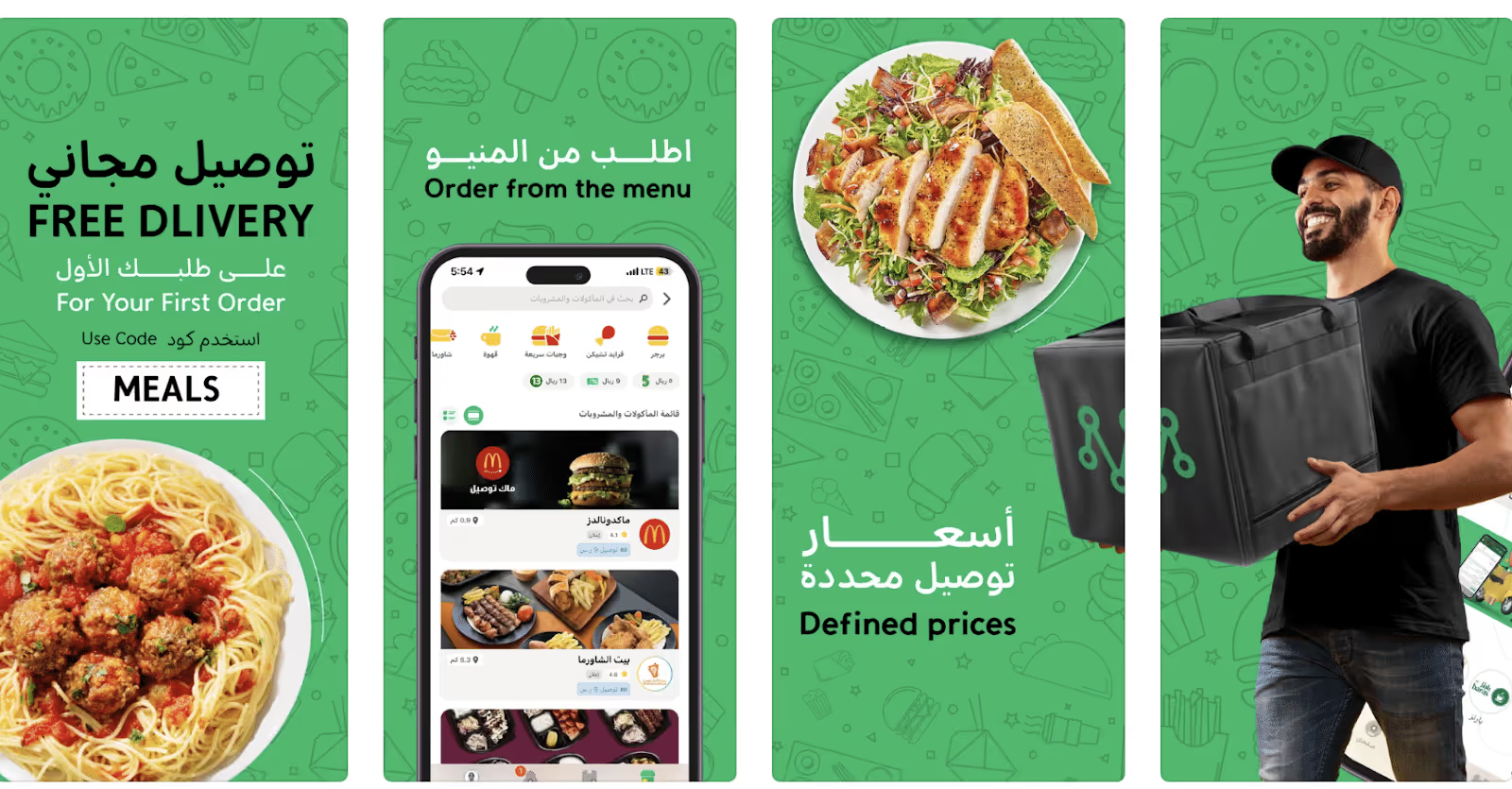
As you can see, the colorful, lively images are much like the ones customers would see on DoorDash or Uber Eats. Businesses as well as customers will be well served by Mrsool’s high quality app presentation. See more about what Mrsool offers businesses on their website.
It should be noted that restaurant meal delivery rates on Mrsool are nonnegotiable. The prices for these services are defined before the order is accepted and are not subject to change.
Apart from that, though, all bets are off! Drivers compete for customers’ deliveries, and customers have their choice of which driver would be the best fit for them and their needs. Can you imagine what this could become, particularly if Mrsool’s model were to be adopted in the United States? You’d have to haggle with your customers and try to underbid the next driver, potentially underselling yourself in the process.
It’s hard to tell if Mrsool’s way of doing business would ever make it in North America, but the company is certainly expanding. In addition to adding new features to the app, Alsanad said in his WIRED interview that geographic expansion is in the works. They would like to develop from where they are now (Saudi Arabia, Bahrain, and Egypt) and move into other Gulf Cooperation Council countries such as Kuwait, Qatar, and Oman.
It certainly appears that Mrsool is working quite well in the Middle East, and the company deserves a tip of the hat for innovating and adapting to fluid and lucrative markets. What’s more, WIRED reports that Mrsool is on its second round of venture capitalist funding and hoping for a successful IPO in the next few years.
It seems that Mrsool is quite successful indeed! Will it change the delivery world? That’s hard to tell right now, but it’s equally difficult to know what the future may hold. Start working on your bidding and negotiation skills!
Want to Improve Gig Driver Loyalty? Use Data to Stay Competitive.
The world depends on rideshare and delivery services. Now that customers expect a ride, a meal, a package, or an entire grocery order at the swipe of a smartphone, TNCs (Transportation Network Companies) have to perform quickly and efficiently. Sophisticated apps and logistics systems make getting people and things from place to place effortless, but they aren’t the only thing you need to run your business successfully. Gig driver loyalty can help but you need additional tools to view the marketplace, including your competition, fully.
Access to real-time aggregated driver mobility data illuminates various components of the rideshare and delivery business, including one aspect of running a TNC that’s not so easy—getting and keeping drivers who are competent and loyal to your business.
Driver loyalty: Does it exist?
Many reasons exist surrounding driver behavior that could suggest loyalty to a single service or lack thereof. However, quantifiable insight lies within the data of how many drivers choose to drive for a single service over multi-apping.
Gridwise data shows that at least 31% of drivers work across multiple service platforms over a period of 91 days or more.
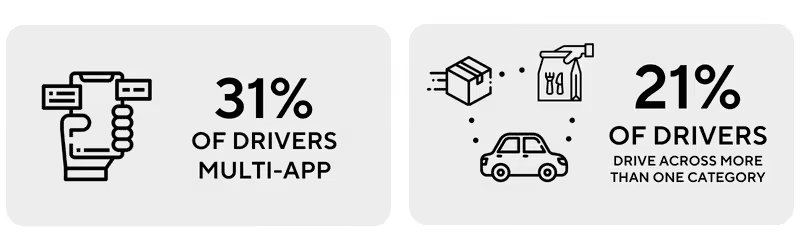
Additionally, the data indicates these multi-apping drivers would move between services at different intervals - some switching apps daily, others weekly or monthly. Tracking periods could span individual days, weeks, months, or quarters.
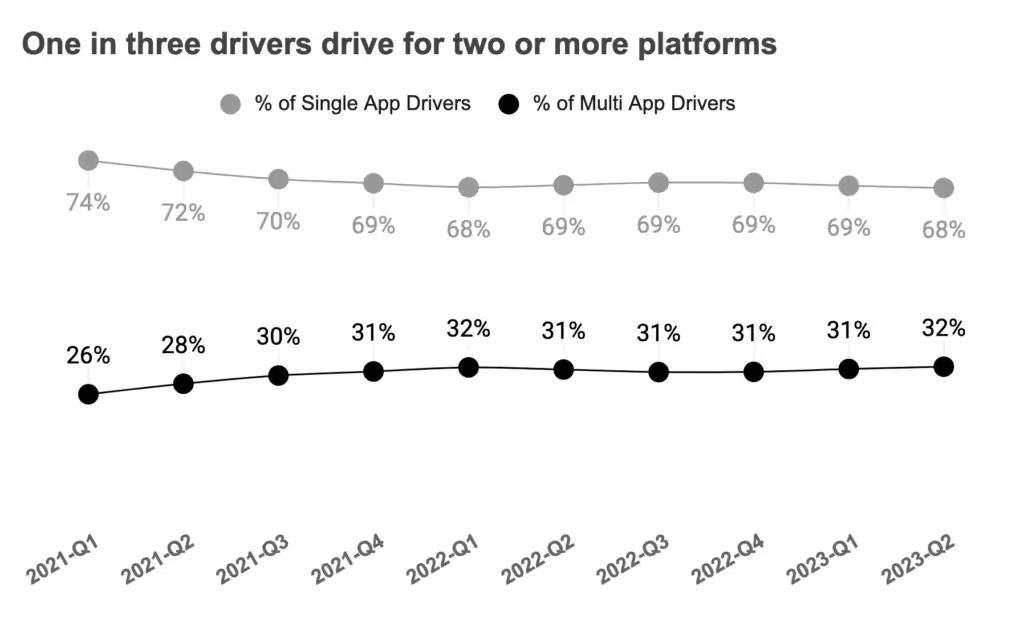
Source: Gridwise Analytics
Aggregated data also indicates that 21% of drivers will drive across service categories, that’s to say that a driver may rideshare during a given period and then switch to food delivery in another. Data indicates that this is on the rise over time.
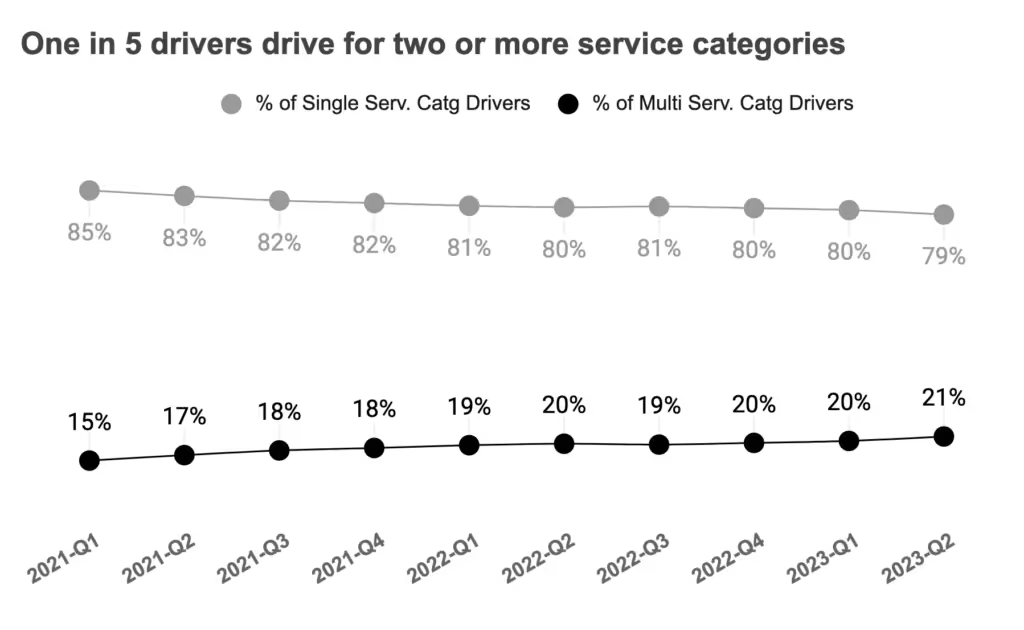
Source: Gridwise Analytics
Three plausible reasons why gig drivers multi-app using a variety of service platforms and across categories are:
- Drivers seek a variety of gig work such as rideshare, grocery deliveries, and food deliveries to reduce monotony.
- Multi-apping allows the drivers to capitalize on peak pay incentives, earning more during busy times while reducing hours on the road.
- Driving for multiple platforms allows drivers to choose from referral bonuses and flexible scheduling that are available at different times on different apps.
Drivers might move from one service platform to another to maximize earnings, and although it’s hard to blame them, platforms are left with the challenge of forecasting driver supply and demand, which can result in:
- Operational inefficiencies, longer wait times, and potentially lower customer satisfaction rates.
- Inconsistent service levels due to fluctuating driver availability in certain areas.
- Higher marketing costs to re-attract lost customers.
Around 60-65% of DoorDash drivers drove strictly for that service platform between Q2 2022 and the beginning of Q3 2023. Instacart saw a single app driver rate between 45 and 50% over the same period, and Amazon Flex drivers driving solely for the platform reached a level of about 45% by the beginning of Q2 2023.
Keeping your drivers as single service drivers for your platform can improve service levels and increase profitability, but how can you keep drivers from straying?
While your platform provides transportation analytics, such as your platforms’ current driver movements and performance, it’s only part of the story. To devise a strategy to keep drivers loyal to your platform, you need to know more about what drivers are getting from your competitors.
Where do all the drivers go?
Drivers are as concerned about their bottom line as you are. A gig driver’s ability to maximize earnings may apply to the base pay they’re getting and the incentives that are offered. A typical driver’s goal is to make as much money in as little time as possible, so many may switch to achieve this.
How can your team determine where drivers are going and how much they’re making from your competitors? Gig mobility data reveals all that information and more. Gig mobility data from Gridwise offers information your team requires to decide what you offer drivers to retain them on your platform. Leveraging gig mobility data will enable you to attract and retain top drivers and keep you ahead of the competition.
Gridwise gig mobility data reveals the big picture
Gridwise is the only platform currently capable of aggregating driver data across all major gig service platforms. Analyzing mobility trends across all the service platforms drivers use presents the big picture of the gig economy and how all the major service providers and their drivers are performing. This gives you a unified view of the on-demand workforce so you can optimize your operations, and attract more drivers to come on and stay on your platform.
Collected anonymously and aggregated across all rideshare and delivery service platforms nationwide, Gridwise gig mobility data yields details on all the many moving parts of gig driver activity and performance. Gridwise Analytics provides data insights for ride-sharing, food, grocery, and parcel delivery service platforms, including Uber, Lyft, Doordash, Grubhub, Instacart, Amazon Flex and other services.
Imagine what you can do to incentivize your drivers when you know more about:
Trip and Delivery Metrics
Get a clear idea of vehicle trip data by market location and periods for distance and duration of trip, distance and duration to pickup, maximum vehicle speed, base earnings, bonus earnings, tips, and total earnings per trip mile and trip minute.

Trip Origin and Destination Insights
Discover where the top pickup and dropoff hotspots are, and identify top origin-destination pairs.

Driver Work & Wage Metrics
Uncover details about work hours, miles driven, base earnings plus tips and bonuses per trip, per work hour, per work mile, and per trip minute.
Driver Efficiency and Batch Metrics
Get detailed information about “deadhead” work hours, batched delivery percentage, and base earnings for batches allocated to food and grocery gig shoppers and drivers.

Driver Supply Insights
View data on which service platforms drivers choose to work with over different time periods, such as week, month, and quarter. Data includes the number of service platforms drivers work with and the frequency, number of hours, and number of trips completed.
Vehicle Insights
Information such as vehicle makes, models, and years for rideshare and food delivery drivers can feed you ideas for incentives and customized to drivers’ needs.
With Gridwise gig mobility data, you’ll be empowered with knowledge about which of your competitors attract the most trips in different markets, competing surge prices and bonuses, and which platforms produce the most profitable tipping behavior from their customers.
Drill down to the details with Gridwise gig mobility data
With Gridwise Analytics, it’s seamless to see earning patterns based on various factors and to understand when and how your competitors entice drivers to work with them. Increasing gig driver revenue through performance data and maximizing gig driver earnings potential with gig driver traffic data are just some ways Gridwise gig mobility data can produce impressive results for your company, your drivers, and your customers.
Create pay, perks, and programs drivers will love
In addition, you can plan your bonus, perks, and other ways of attracting drivers by building a ridesharing demand forecasting strategy. Gridwise gig mobility data makes it possible to address drivers’ needs with pay levels and incentives that beat your competitors’ offers. You’ll know what times of the week, month, and year demand more drivers on duty and time your incentives to make the most effective impact.
Referring to data to optimize gig driver loyalty programs will help your service achieve a competitive edge. Drivers will reward your gestures of appreciation by sticking with you–because you make it possible for them to earn more money.
Rideshare and delivery are highly competitive, and customers expect top-notch service. With Gridwise gig mobility data, you’ll have access to the quantifiable insights to make decisions that attract and retain highly competent and loyal drivers and give customers every reason to choose your app as their go-to service.
¡Pon tus Millas a Trabajar: Gana $1000 en Premios en Efectivo con el Desafío Maratón de Millas de Agosto!
¿Estás listo para tener la oportunidad de ganar dinero extra? ¡No busques más! Gridwise se complace en anunciar el Desafío Maratón de Millas, donde tienes la oportunidad de ganar una parte de $1,000 en premios simplemente haciendo algo que ya es una decisión inteligente: ¡rastrear tus millas con Gridwise! Este desafío está abierto a todos los conductores de Gridwise, así que regístrate aquí para participar y llévate ventaja.
El Desafío Maratón de Millas se desarrollará durante todo el mes de agosto de 2023. Cuatro afortunados ganadores se llevarán $250 en sus bolsillos. ¡Pero eso no es todo! Los diez conductores principales en agosto que se registren para el desafío también recibirán tres meses de Gridwise Plus gratis. Esto es lo que puedes hacer para ser parte de la acción:
- Regístrate aquí para participar
- Gana una entrada cada vez que rastrees tus millas en el mes de agosto
- BONO: comparte en Facebook, Twitter, Instagram o Reddit una captura de pantalla de tu página de insights de la aplicación Gridwise con el hashtag #GridwiseMileageMarathon para CINCO entradas adicionales por cada publicación (máximo 20 entradas adicionales).
Pero eso no es todo. Rastrear tus millas con Gridwise trae aún más beneficios más allá de la oportunidad de ganar $250:
- Manténte organizado: Tendrás registros de tus ganancias, horas trabajadas y perspectivas sobre tu conducción gig que te ayudarán a planificar tu horario de manera eficiente y efectiva.
- Maximiza las ganancias: Gana más dinero con perspectivas que te dicen dónde conducir, cuándo conducir y qué aplicaciones están pagando más.
- Prepárate para los impuestos: Aprovecha una deducción fiscal crucial.* Gridwise realiza un seguimiento de cada milla deducible y te proporciona la información que necesitarás para tu declaración de impuestos con unos pocos deslizamientos en tu teléfono inteligente.
¡Comienza a rastrear tus millas con Gridwise ahora!
Gridwise rastrea las millas deducibles que tus aplicaciones de conducción no cuentan para ayudarte a ahorrar hasta $3,000 por año en deducciones fiscales de millas. ¡No te pierdas las millas que acumulas de camino a tu lugar de trabajo y entre viajes y/o entregas! ¡Convierta a Gridwise en tu experto en rastreo de millas! Así es cómo hacerlo:
- Activa el botón “Comenzar Rastreo” cuando empieces tu día.
- Deja que Gridwise rastree tu kilometraje en cada viaje durante el día.
- Asegúrate de desactivar el botón “Rastreo” una vez que estés de vuelta en casa y hayas terminado de conducir.
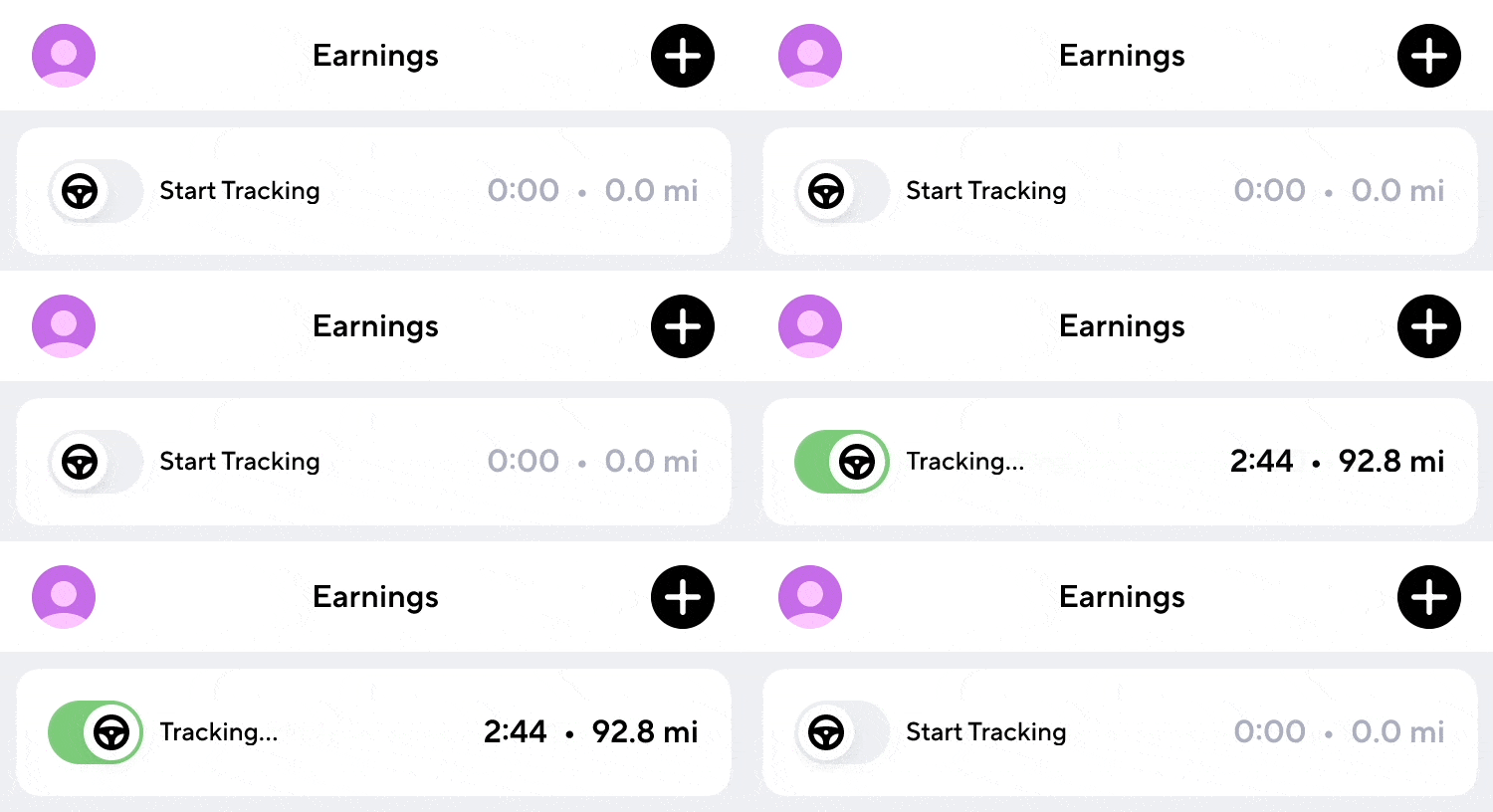
¡Únlate al Desafío Maratón de Millas de Agosto!
*Gridwise no es asesor fiscal personal. Dependemos de ti para rastrear solo los gastos comerciales para una declaración fiscal precisa. La información anterior está destinada únicamente a orientación y no como asesoramiento profesional, legal o fiscal. Además, la información anterior no proporciona asesoramiento legal, fiscal, de inversión ni ningún otro asesoramiento empresarial en general.

Does Your Uber Acceptance Rate Matter?
Should you really be sweating your Uber acceptance rate? What do you know about the Uber acceptance rate and what that means for Uber drivers? Does your Uber acceptance rate affect your standing with surges, bonuses, or incentive programs? What about earnings or the way the app algorithm sends calls for rides and deliveries to you?
[elementor-template id="20936"]
Let’s get started.
What is the Uber acceptance rate, and how is it calculated?
The acceptance rate is exactly what it sounds like. The figure, expressed in a percentage, reflects the number of ride or delivery requests sent to you divided by the number you choose to accept.
There was a time when Uber would deactivate drivers for low acceptance rates, but they no longer do this. In the past, they would also send more requests for rides to drivers who had high acceptance rates. These policies, quite understandably, were anything but popular with drivers.
Even though there are no longer severe penalties for having a low acceptance rate, Uber does encourage drivers to keep their rideshare and Uber Eats acceptance rate as high as possible.
Passengers and delivery customers must be able to rely upon drivers to be there when they are needed. If too many drivers refuse too many rides and orders, Uber’s business, and therefore drivers business, would most definitely suffer. That’s why there are still some incentives left in place that encourage drivers to accept more offers for rides and deliveries.
What does the acceptance rate do for drivers?
Uber acknowledges there are reasons why drivers would refuse offers. They might be ready to go offline to take a break or go home, or they might be wary about going to unsafe or congested areas. Rides and deliveries that have a lot of distance involved, or which ask drivers to get to a place or person that is unacceptable, get rejected by drivers a lot as well.
Before the rollout of Uber upfront fares, as described in this Gridwise blog post, some drivers, namely those with high ratings and acceptance rates, were not able to see how much they’d be paid, and where the ride or order would take them. This was an incentive for driers to improve their acceptance rates. Now, the upfront fares feature gives this ability to all Uber and Uber Eats drivers.
There are still a few things that acceptance rates can affect, though. Uber Pro is the brand’s rewards program for drivers. It’s a tiered system, which means that drivers must earn certain privileges, such as higher quest rates, a free year of Costco membership, better deals on cash back credit cards, and bigger discounts on gas and EV charging.
If you want to maintain the higher Gold, Platinum, or Diamond status privileges, you also must keep your cancellation rate between 4.1% and 10% . If you fail to do so, depending on the level at which you start, you won’t be able to reach a higher status by earning more points. Instead, you’ll remain at your current tier. Uber further states that if your cancellation rate rises above 10%, you will lose access to Gold, Platinum, and Diamond rewards immediately. You’ll have to bring it down to 4% to earn back your rewards.
Does Uber driver acceptance rate matter all that much?
What happens if your Uber acceptance rate is low? Aside from losing certain driver statuses, not a whole lot. The acceptance rate Uber Eats drivers have isn’t all that important, either. Unless you plan to use the perks offered by Uber’s rewards plan, you won’t be adversely impacted by a low acceptance rate. However, the other thing you’ll miss is higher payment for quests. If this is something you use to help you maintain high earnings, then it’s worth keeping your acceptance rate, and your Uber Pro status, high.
Even though you don’t need to worry as much about getting and keeping a high acceptance rate, there are some aspects of your driving patterns and performance that will help you earn more.
- Driver rating. Your customers get to rate you after every ride. If you deliver, the restaurant or company can also give you a star rating. A higher rating will make you more appealing to riders who have more than one driver to choose from, for example. Plus, if you get consistently low ratings, you could be marked for deactivation. No one wants that!
- Cancellation rate. As we said in the last section, keeping a low cancellation rate will help you keep your rewards. It will also hold you in good standing with Uber.
- How much you drive. Obviously, if you drive more, you stand a chance to make more. The added bonus for driving more is more access to rewards through the Uber Pro program. The number of rides or deliveries you complete will be tallied and considered as a qualification for the various tiers of this rewards program.
Now that the upfront fares feature is in place, you may not need to get nervous about having a low acceptance rate. There are lots of ways to earn more as a rideshare driver, and Gridwise makes them easy for you to find.
[elementor-template id="20936"]
Check out this collection of insight and ideas in the Gridwise Rideshare Guide, and discover all the different things you can do to put your driving gig to work for you.
Trabaje de forma más inteligente. Gane más.
Ya sea que conduzcas, entregues o recojas turnos, Gridwise te ayuda a hacer un seguimiento de las ganancias, el kilometraje y el rendimiento para que puedas mantener el control de tu trabajo. Descarga la aplicación y toma las riendas hoy mismo.
