Blog de Gridwise
¡Lee el blog de Gridwise para obtener consejos y sugerencias sobre cómo ganar más dinero mientras conduces para Lyft, Uber, DoorDash, GrubHub y más!

The Gridwise Job Board: Find Your Ideal Job or Gig Work
Gridwise is an essential assistant app created by gig workers for gig workers. Our mission is to support those engaged in gig work in every way possible. We understand how challenging it can be to deal with income instability, a lack of benefits, and job insecurity that often comes with gig work. The Gridwise app tracks and organizes earnings and expenses, and offers a wide array of discounts, deals, and services that make the lives of independent contractors easier and more rewarding.
We firmly believe it’s possible to make a viable living and create a gig experience that offers flexible hours, variety, and excitement. With issues such as consistent earnings and job security in mind, Gridwise is proud to offer a centralized platform that shows you how to find gig work and secure reliable opportunities. We’re proud to introduce the Gridwise Job Board.
[elementor-template id="20891"]
The Gridwise Job Board: Key features
Because Gridwise is dedicated to serving the gig worker community, we’ve filled the Gridwise Job Board with useful features that won’t waste your precious time.
- Comprehensive listings. Find part-time, full-time, temporary, and per-task work. Drive or deliver with your vehicle, utilize an employer’s vehicle, or even find non-driving gig work.
- User-friendly interface. Find the jobs that are right for you with a tap of your screen.
- Verified opportunities. We vet the jobs before they are listed to ensure you’re getting high-quality job postings.
How to get more gig work, seasonal, part-time or full-time jobs with the Gridwise Job Board
Looking specifically for “gig work apps” or “gig jobs near me?” You’re in luck. Our filters and search functions send you directly to the listings you seek.
Here’s how it works.
- Access the Job Board via the Gridwise website.
- Search for jobs by type, location, and more.
- Select the job that interests you, and read all about it.
- Scroll through the description, and if it appeals to you, click “Apply for job.”
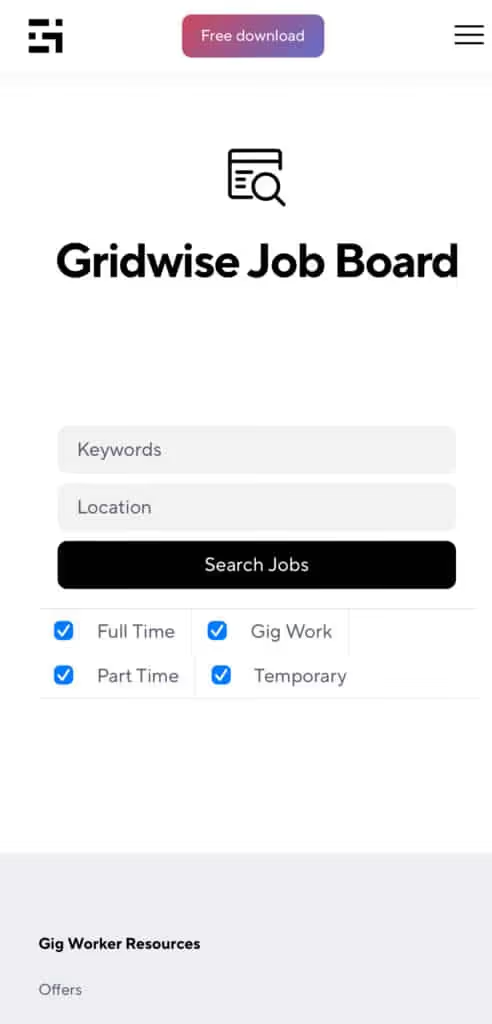
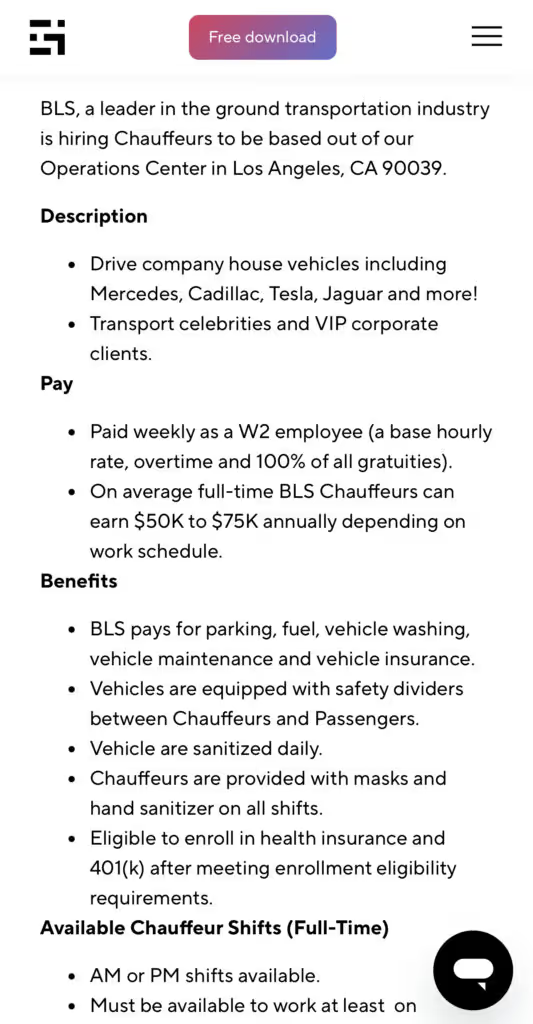
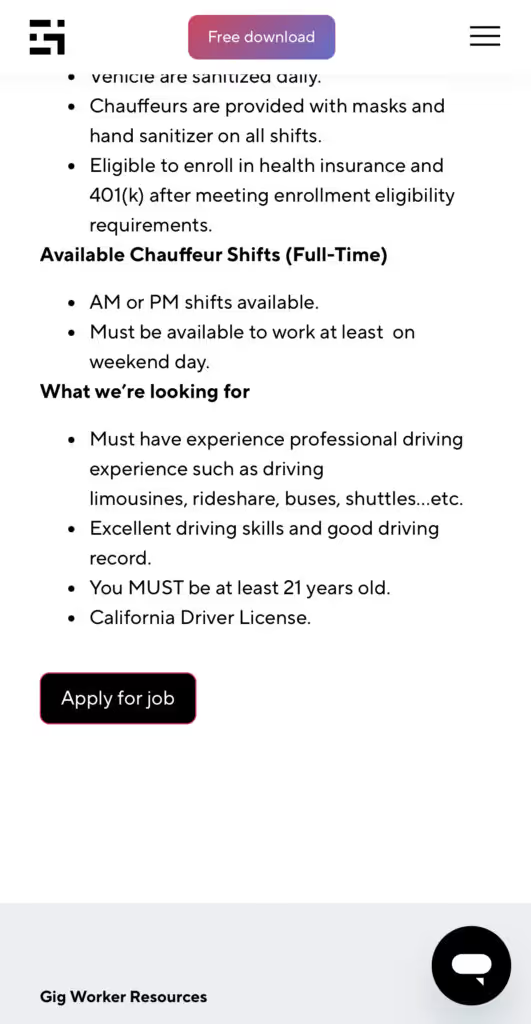
Many types of jobs are available. Adjust the search filter to see the full variety of opportunities that will let you cash in. Deliver food, set up catering, do rideshare driving, get paid for doing package delivery, and much more. You’ll find short-term gigs, long-term contracts, and part-time positions.
Perks of the Gridwise Job Board for gig workers
Gig workers who know how to make extra money will appreciate how the Gridwise Job Board lets you multiply your chances of bringing in big earnings. Here’s how:
- Increased stability. Use the Gridwise Job Board to find part-time or permanent jobs in addition to the part-time gigs you already have. Always keep a steady stream of earning opportunities flowing toward you.
- Flexibility and autonomy. Choose jobs that fit your schedule, work around other jobs and family duties, and still leave room for some fun in your life. Discover side hustles to supplement your full-time job, permanently or just for the season.
- Skill development. Find part-time work that lets you use a skill you already have, or try your hand at something new. It’s a smart way to develop a portfolio to showcase what you can do, or even to find permanent employment.
Get Gridwise and stay up to date on the Gridwise Job Board
Gig workers need plenty of information and assistance, and Gridwise is here to give it to you. Download the app and get essential features such as
- seamless earnings tracking
- mileage tracking
- expense recording, including notes
- low-cost and no-cost insurance benefits
- access to affordable medical, dental, vision, mental health, and alternative care
- professional services including legal and financial help
- deals and discounts
- weather, events, and traffic reports
- inside information on where and when to drive
[elementor-template id="20936"]
More to know about gig work:

5 Best Mileage Trackers For Gig Drivers
Many drivers ask, “Do I really need a mileage tracking app?” The answer is simple: only if you want to have an accurate count of all the miles you can legally deduct from your taxable income! You might think your rideshare or delivery driving app has got you covered. After all, they do quite a good job of logging the miles you drive while you’re on a trip or delivery. But, if you want to have the best app to track mileage for Uber, Lyft, Doordash, Instacart, or the other apps you may use, you need more. Why is that?
Without a separate tracker, you’re missing the miles you drive in between pings. Did you realize that all the miles you drive, from the moment you begin your shift until it’s over (as long as you don’t drive several miles on a break to hang with your friends), are tax deductible! That means you need something besides your driving app to keep an accurate count of your travels. Read this Gridwise post to see how important it is to keep track of every deductible mile.
You won’t be surprised to hear that there’s an app for tracking miles. In fact, there are several of them. Here, we’re going to tell you about five top mileage tracking apps, and help you figure out which one is best for you.
Before we get to the list and identify the best mileage tracker app, let’s clarify what exactly a mileage tracking app is. According to G2.com’s technology glossary, mileage tracking is done for the purpose of keeping a log of mileage that is either reimbursable or tax deductible.
And yes, of course you can track your miles simply by taking readings on your odometer. But are you really prepared to account for how many miles you drove for personal reasons and subtract them from the total to get your business mileage? Even if you can remember all that and do the arithmetic, if you want an accurate reading of the miles you drive for business, and can therefore deduct, a mileage tracking app will save you a lot of trouble and prevent you from making costly errors.
Plus, as a gig driver, you have specific needs when it comes to a mileage tracker. Ideally, you’d be able to handle mileage tracking and several other functions all in one app. It can be maddening enough to deal with driving apps, particularly if you’re an avid multi-apper. You would want your mileage tracker app to help you keep account of other aspects of your business, including income, expenses, and inside information about the art of gig driving.
Not all mileage apps are equal, to be sure! Let’s look at five of the best apps to track mileage and figure out which is the best app to track mileage with Uber and Lyft, or what mileage tracker app is best for DoorDash.
[elementor-template id="20891"]
1. Zoho Expense
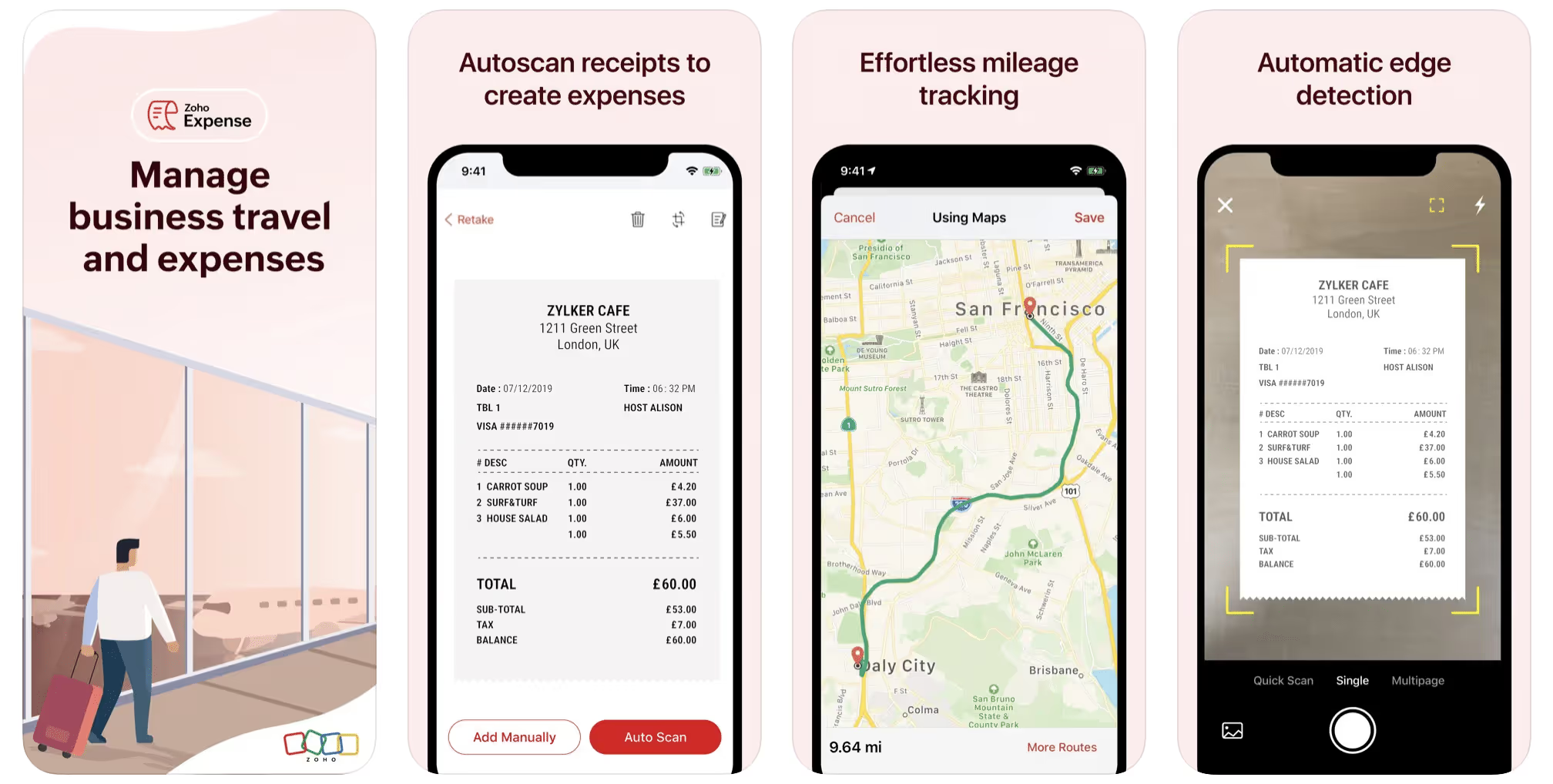
First up is Zoho Expense, which does exactly what its name says. This app is designed to allow companies to give employees a uniform way to create and submit expense reports. It can be used by individuals, including gig drivers, as well.
It includes a mileage tracker, as well as features that let you track other deductible expenses, including the ability to scan and record receipts.
Available on Android and Apple: Yes
Ratings: 4.8 stars on App Store, 4.7 stars on Google Play
Free Version: Yes
Subscription price: $3 per month, billed annually
Created specifically for gig drivers: No
2. Quickbooks Online
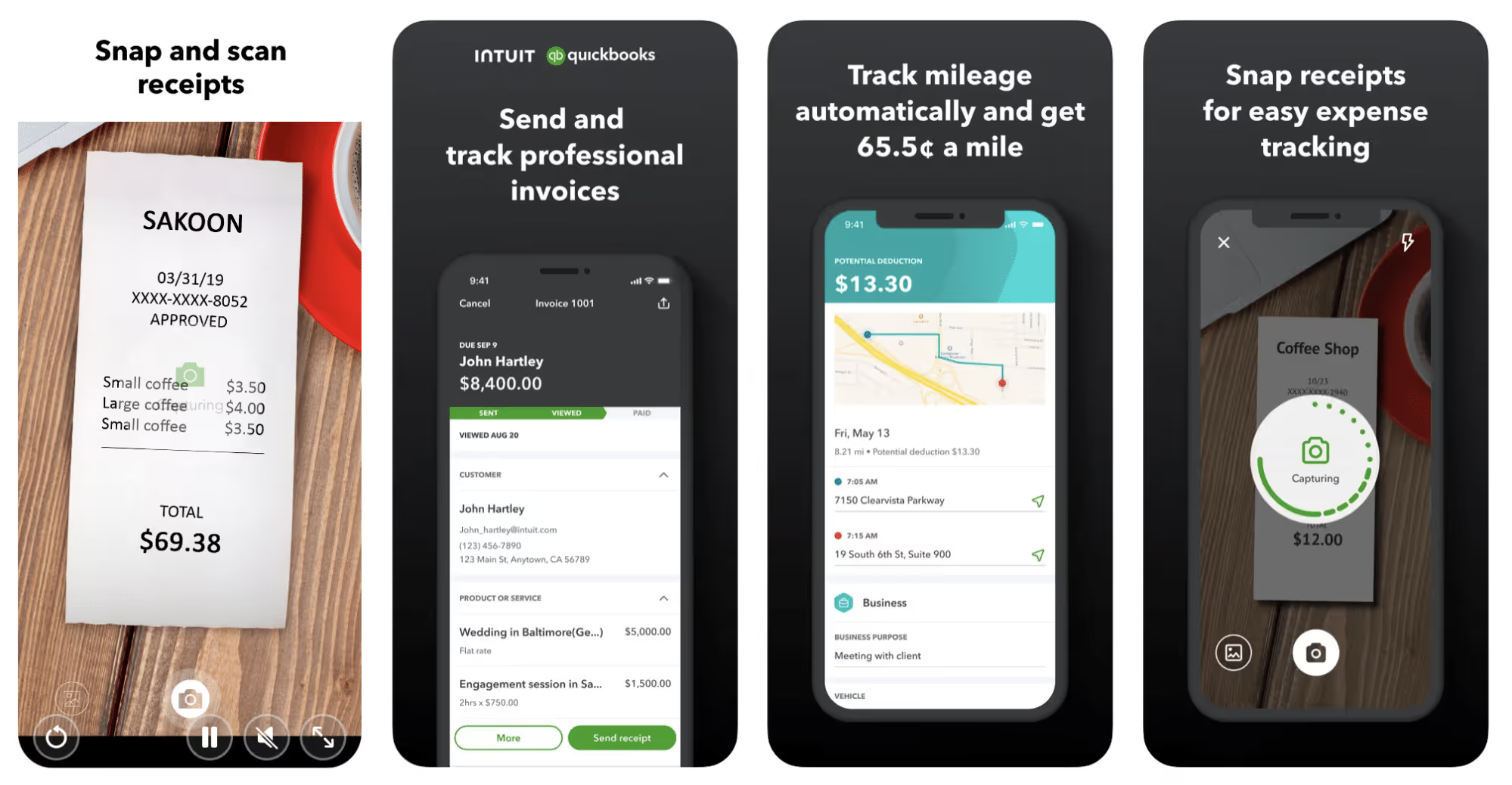
Quickbooks Online is a cloud-based app that allows you to track your mileage, earnings, and expenses. The information you enter can then be used to generate various reports that prepare you for tax time. It also allows you to create graphs that illustrate your cash flow, and includes a receipt scanner so you can instantly record deductible expenses. Quickbooks is popular, highly reliable, and designed mainly to help people keep track of their small businesses.
Available on Android and Apple: Yes
Ratings: 4.7 stars on App Store, 4.4 stars on Google Play
Free version: 30-day free trial
Subscription price: $15 per month for basic version if purchased for 3 months or more
Created specifically for gig drivers: No
Source: quickbooks.intuit.com
3. Shoeboxed
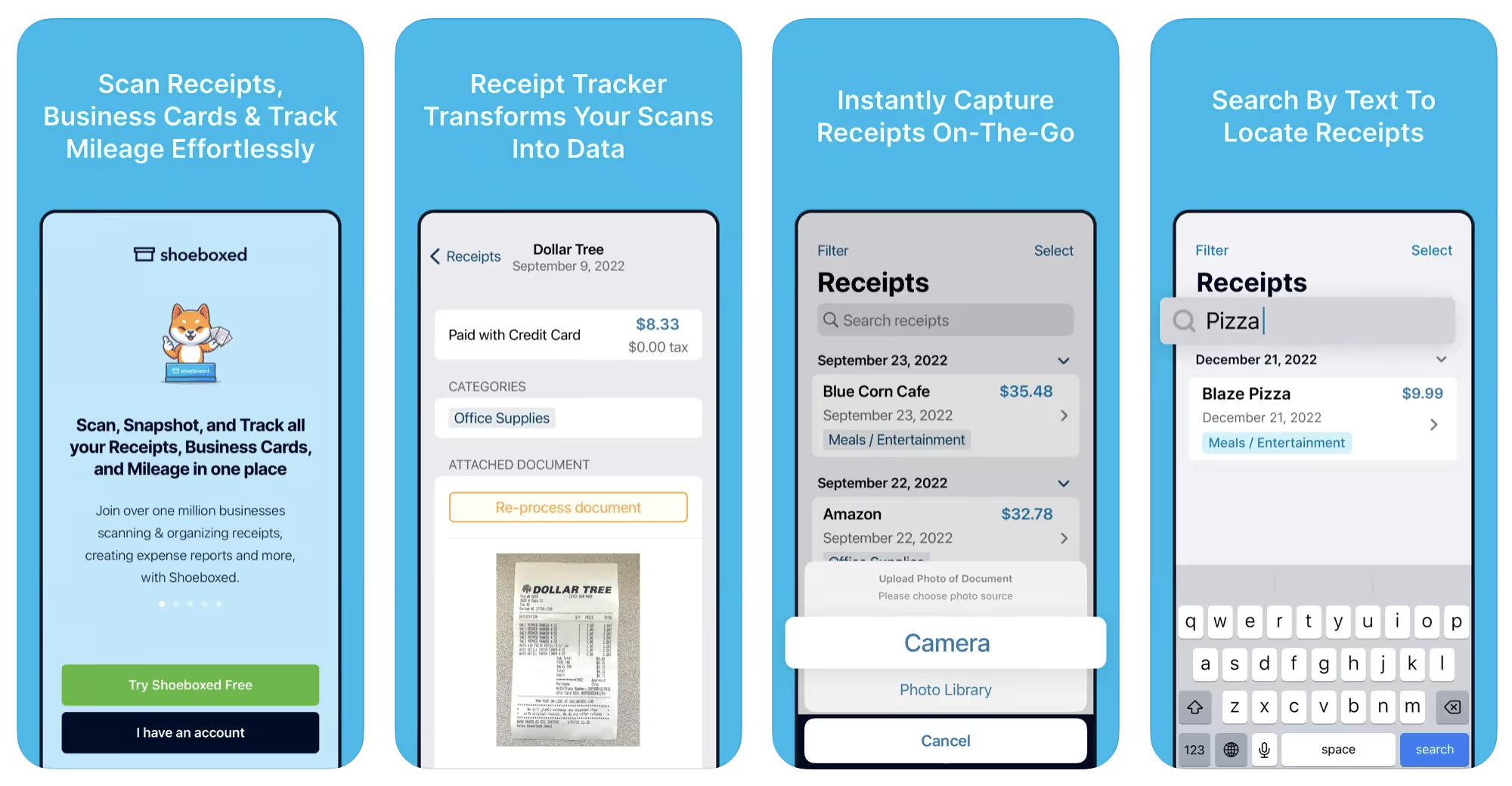
Shoeboxed started in 2007 as a service for scanning paper receipts into digital form. Now the app offers a free mileage tracker and has enabled users to scan receipts directly. It touts itself as the best mileage tracking app for DoorDash, but there are some elements missing that Dashers might like to have. While it provides features that record your expenses and prepare you for tax season, it doesn’t automatically track your earnings. The mileage tracker has a system where you can drop pins along your routes to make the tracking more precise, identifying those legs of a trip that you make for business purposes. The mileage tracker is “free” once you sign up for the basic version.
Available on Android and Apple: Yes
Ratings: 4.5 stars on App Store, 2.3 stars on Google Play
Free version: No
Subscription price: $18 per month for basic version
Created specifically for gig drivers: No
Source: blog.shoeboxed.com
4. Stride
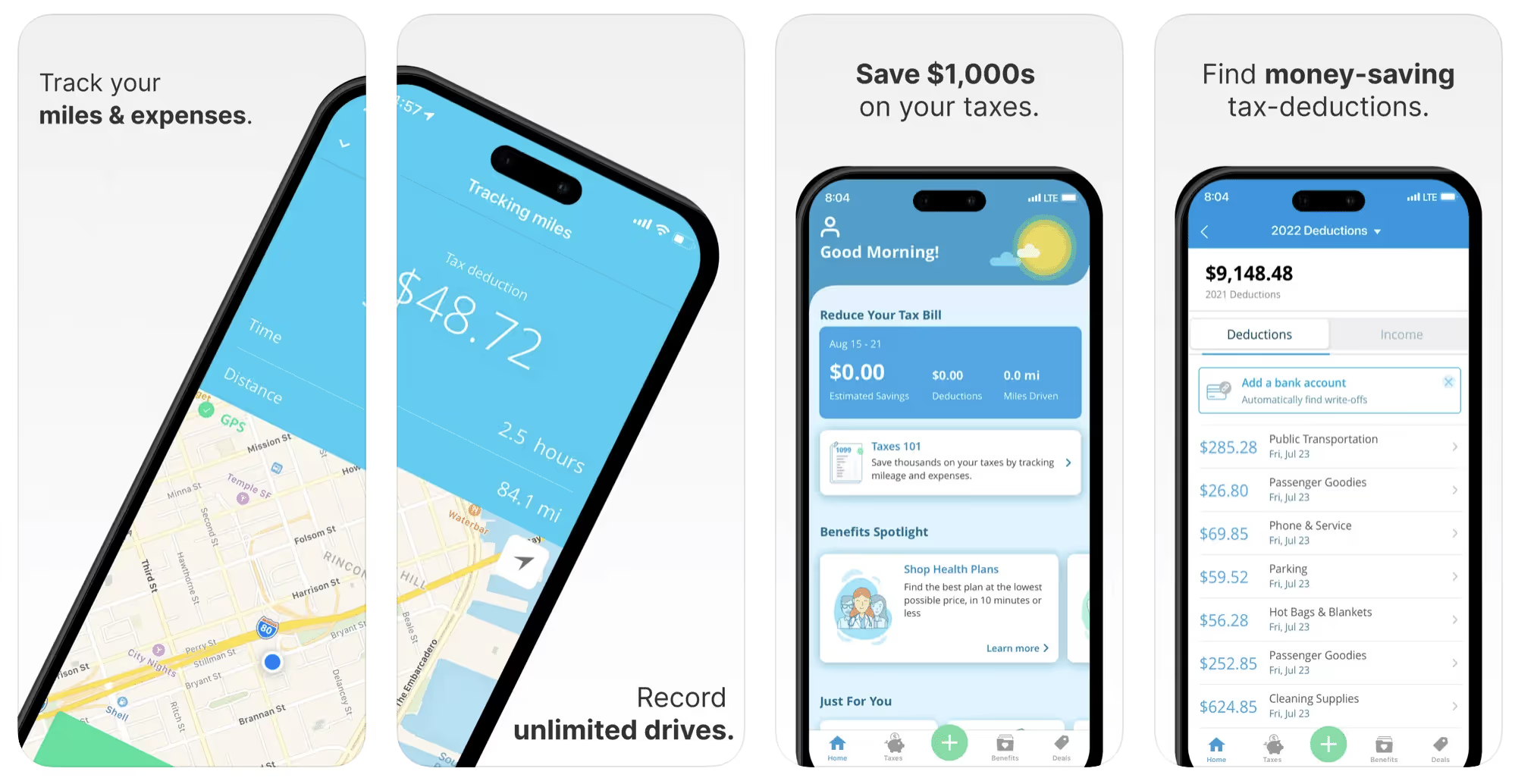
This free mileage tracker does a fair job of keeping track of the distances you rack up while gig driving, but it doesn’t automatically track earnings. It can be a big help, though, in tracking your expenses. You can link Stride to your bank account, and it will automatically scan your expenses to identify items you can potentially deduct. The app is totally free. This could make it the best free mileage tracker app, but there is a small price to pay. The app will persistently push you to consider various insurance plans that they are affiliated with. If you don’t mind that, this is a solid mileage tracker, even if it doesn’t track your earnings.
Available on Android and Apple: Yes
Ratings: 4.8 stars on App Store, 4.6 stars on Google Play
Free version: Yes
Subscription price: None. The app is free.
Created specifically for gig drivers: No
5. Gridwise
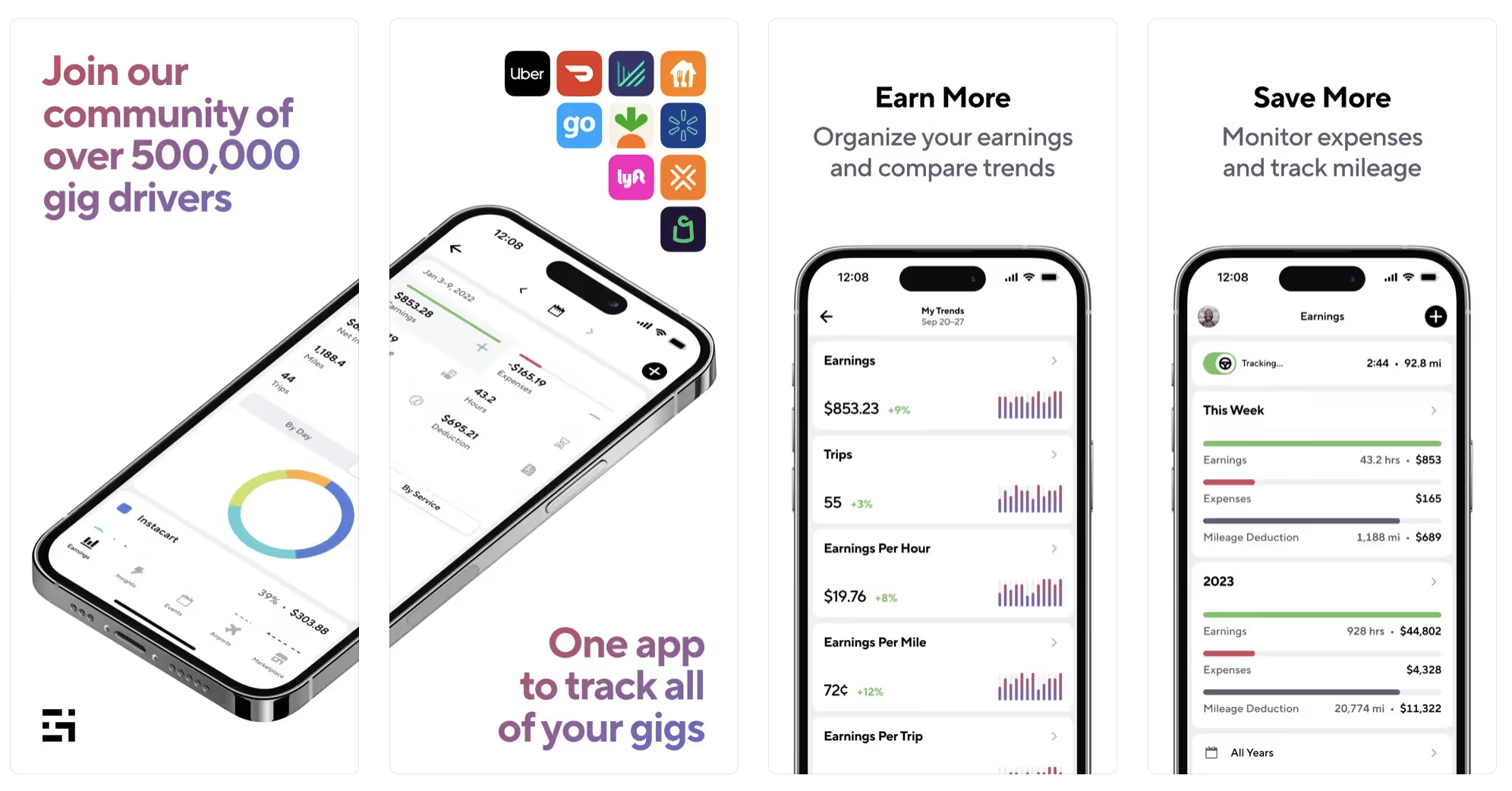
Gridwise has a free mileage tracker and free features that record your income and expenses. It gives you access to insurance and benefits, as well as insights about the best times and places to make the most money while gig driving. The Gridwise mileage tracker captures all the miles you drive while you’re on your driving shift, and it can be used if you have other trips you need to make which qualify as business travel.
Drivers love it because it is geared toward the needs of rideshare and delivery workers, providing free information about airport departures and arrivals, event start and let out times, weather, traffic, and more. The Gridwise Plus subscription adds value by providing additional insights and reports, discounts on benefits, the ability to export data in .csv format,, and more.
Available on Android and Apple: Yes
Ratings: 4.9 stars on App Store, 4.6 stars on Google Play
Free version: Yes
Subscription price: $9.95 per month for Gridwise Plus, or $95.99 per year (a $23.41 savings)
Created specifically for gig drivers: Yes!
What is the best mileage tracking app?
Now that we’ve checked them all out, we’re positive about the answer to that. Hands down, it’s Gridwise. Are we biased? You bet we are! But drivers love it too. Gridwise is the best mileage tracker app—and so much more. So many of the features are free, and the subscription to Gridwise Plus will pay for itself with additional insights to boost your earnings and deeper discounts on products and services.
Most important, Gridwise is designed specifically for gig drivers by experts who were once gig drivers themselves! Knowing what gig drivers need is a crucial step in creating an app that rideshare and delivery drivers can really use! Here are a few of the features, besides mileage tracking:
- seamless earnings tracking
- automatic, on/off toggle and manual mileage tracking
- mileage categorization
- airport, traffic, weather, and events information
- insights into where to drive and when to drive
- reports showing earnings across the platforms you use
- discounts on countless products and services for drivers
- additional resources for finding side gigs
- an informative and comprehensive blog
- affordable benefits, including insurance, medical, dental, and alternative practitioner discounts
- a community of drivers just like you
Don’t settle for just any app. Get the best mileage tracker, and so much more, from Gridwise!
[elementor-template id="21599"]

What Records Do Gig Drivers Need To Keep Track Of For Taxes?
* Gridwise does not provide tax, legal, or accounting advice. This material has been prepared for information purposes only, and is not intended to provide, and should not be relied on for tax, legal, or accounting advice. You should consult your own tax, legal, and accounting advisors before filing your return.
Record keeping? Who signed up for that? As a gig driver, it’s part of what you need to do to keep your business running. Don’t worry. It’s not as complicated as you might have been led to believe. This post will show you what you need to keep track of and the best ways to gather and preserve your tax-related records. We will cover
- How record keeping can help reduce income tax for freelancers
- Taxes and freelance work: Record keeping requirements
- Mileage tracking: Motives and methods
- More deductions and records to keep
- Make tax time easier
How record keeping can reduce income tax for freelancers
Tax time is not “fun time” for rideshare and delivery drivers. It’s easy to get used to watching your earnings pile up and come to believe they are all yours. Unfortunately, that isn’t the case. Gig work taxes can be especially painful because no one takes them out of your earnings for you, until the tax authorities insist that you do it for yourself.
You will need to show the tax authorities your income records, and they will gladly tell you to send them what they determine to be their fair share. Think that’s not fair? You’re not alone, but that doesn’t mean you’re going to get out of paying gig work taxes.
But you can find ways to pay the smallest amount that is legal and possible. The best way to defend yourself against having to pay astronomical amounts when you file your return is to know what expenses you can deduct from your gross income. When you subtract deductible expenses from your gross income, there is less left over to be taxed. This reduces the amount they can hit you with gig worker taxes. and can make your tax bill substantially lower.
While you want to keep good records so as to be in compliance with taxation entities such as the IRS, you also want to ensure you have proof of every last deductible expense you have accrued during the year. There are other records you must keep as well. Let’s look at some of the considerations you have, realizing that you now need to know how to do taxes as a freelancer.
Taxes and freelance work: Record keeping requirements
So many gig drivers fail to understand the responsibilities they have as independent contractors. Those who work part time for very few hours may even believe they don’t have to report the income they get from their driving gig payments. That would be a big mistake!
The company or companies you work for report your income to the IRS and state tax authorities. If you fail to report that income, you will risk some rather painful penalties. The IRS taxing side hustles is as much of a thing as the IRS taxing income from any other job. Your best bet is to report what you’ve earned, honestly and completely, and comply with other record keeping requirements such as
- gross income
- deductions and credits
- purchases (items you purchase and resell, such as snacks or bottled water)
- a log of all your mileage (or vehicle expenses, if greater)
- a list of all expenses and assets, such as utilities and other expenses associated with having a home office and equipment
- machinery and furniture you own, including when it was acquired, how much it cost, whether you previously took deductions on it, and selling price, if applicable (this includes your vehicle)
More things to consider:
- Pay attention to the retention of your records. You’ll need to keep all tax-return-related items— including income, deductions, and any tax credits reported— until the period of limitations runs out (3 years from date you filed, or 2 years from when you paid tax. If you have employees, keep your records for at least 4 years.)
- If you want to avoid paying self-employed taxes, you may want to set up a corporation or Limited Liability Corporation (LLC) for your business. This allows you to separate all your gig driving earnings from personal income, and permits you to take advantage of the additional advantages of working through a corporation. This includes exemption from self-employment taxes. You can learn more about how to pay self-employment taxes, if you opt for that, in this post from Keeper.
- You should always keep a separate checking account for your business, for convenience as well as clarity. While this is not a legal requirement, it is a smart move if you want to have an easier time managing your business.
- You are required, as an independent contractor, to file your taxes quarterly. Check out this Gridwise blog post for more information about quarterly tax payments and other matters that make filing delivery, Lyft and Uber taxes easier.
Mileage tracking: Motives and methods
Why you need to be meticulous about mileage
Mileage deduction, or the costs of operating your vehicle, will be the most important item to account for when you consider how to file taxes as a freelancer. While mileage is an important deduction for all independent contractors, as you might imagine, it’s even more essential for rideshare and delivery drivers.
There are two ways of keeping track of your mileage deduction. One is to use the IRS’ standard mileage deduction, which for 2022 is 58.5 cents per mile. This number takes into account the costs of operating your vehicle, from fuel and maintenance to registration, insurance, and depreciation. Alternatively, you can calculate all your own vehicle operating costs, but only after your first year of using the vehicle. You may discover that this second option allows you to have more money deducted from your taxable income. Learn more about the options for deducting your mileage in this Gridwise post.
No matter which way you decide to calculate the deductions for your mileage, you need to know what mileage you can and cannot deduct.
You can deduct
- miles driven to and from home when you go out to drive or deliver
- miles you accrue during your trips
- miles you drive on any other trips you make that are necessary as part of your business.
Examples:
- driving to return a lost cell phone or to an Uber Hub or another physical location where your company might make driver support available
- driving to pick up supplies, to get gas, or to have your car cleaned, serviced, or detailed, etc.
You cannot deduct
- miles you drive for personal trips
- miles for any trips you take that do not directly affect your business
Note: If imagining yourself becoming the not-so-proud owner of a shoebox filled with paper receipts gives you nightmares, stop worrying. Electronic records of purchases will satisfy reporting requirements. If you use cash, you can scan copies of your receipts, in some cases, right into your recording software or app. Gridwise and Keeper give you a simple to use interface that keeps all your receipts recorded without the messy pile of paper.
Mileage tracking methods
By now, you’re probably convinced that tracking mileage is important, despite all the other things drivers have to do. Now, let’s look at your options for keeping accurate records.
- Manual tracking: You can keep a logbook where you list every trip you make, starting and ending mileage, the date, and purpose of the trip. While this would work, it’s certainly not convenient. Besides, if that logbook gets lost, your plans for having a nice, fat tax deduction will go by the wayside.
- Spreadsheet: This is a bit more convenient and sophisticated way of tracking your business mileage. You’d need to be meticulous about making your entries, though. Even if you keep a spreadsheet app on your phone, it could be time consuming and inconvenient to keep doing it with all the other things going on in a rideshare or delivery driver’s day to day life.
- GPS-based mileage tracking apps: There are a bunch of apps that track mileage based on your GPS location, and most of them are pretty accurate and far more convenient than taking constant readings of your odometer. Your driving apps, such as Uber, Lyft, DoorDash, or Instacart, may also track your mileage, but be careful here. They will only track the miles you drive while you’re on a trip or delivery. They don’t count the miles you drive going to pick up a customer or when you make your move toward a restaurant or store.
Gridwise, on the other hand, will track all the miles you clock while you’re on your shift. All you need to do is make sure you start tracking the minute you leave home, and every gig driving mile will be logged. - OBD-II mileage tracking systems: There are plug-in modules that assess your vehicle’s mechanical health and track your miles. However, many authorities question the ability of OBD-II mileage tracking systems to get get accurate odometer readings. Insurance companies don’t consider them to be accurate enough gauges of odometer readings.
While mileage is a crucial deduction when you’re preparing your Uber, Lyft, or DoorDash taxes, it isn’t the only expense you’ll want to record.
More deductions and records to keep
Expenses you can deduct
You’re entitled to include the cost of other expenses that are directly related to your driving business. These include
- vehicle expenses
- equipment for your car and home office
- extra services and subscriptions
- business tools, including apps and software
You can learn much more about gig driver expenses that are eligible for deduction in this Gridwise article.
Ways to track and preserve deductible expenses
- The manual method: Just like you can with mileage, it’s possible to use a manual method, but in addition to logging each expense into a ledger, you would also need to keep physical receipts.
- Spreadsheets: You can record your expenses on a spreadsheet. This is somewhat less awkward than manually logging mileage, but there still will be plenty of room for failing to remember the case of water you bought for your customers, or losing the receipt from the thermal bag you purchased.
- Accounting software: You can use software that helps you track your expenses. This method usually interfaces well with any tax preparation software you or your tax professional might use.
- Gridwise: There are other apps that help you track your expenses, but Gridwise is designed specifically for gig drivers. It automatically tracks earnings and mileage, and lets you record your expenses the minute they come up. Gridwise’s partnership with Keeper gives you the ability to scan receipts and access a tax professional. This is a seamless way to record your expenses and a big help in learning how to file Uber taxes. Gridwise even provides .csv output, so you can feed your Gridwise data directly into tax preparation software. Check out what Gridwise and Keeper will do to super-charge your tax filing powers.
Organizing and categorizing expenses
Before you even begin to record expenses, you’ll want to set up categories for them. You can start by reviewing the categories listed above and checking out the Gridwise post that lists possible deductions.
If you’d like to learn more about how to categorize expenses, there is additional information available. This article from Motley Fool lists all possible categories any freelancer might use and also gives tips on how to customize them for your driving business.
One last tip
Using Gridwise, particularly for tracking mileage, is the easiest way to be in compliance with the IRS’ rules for deductible mileage. Gridwise tracks all the miles you drive for your gig, beyond what your company’s app might record. At the same time, you can log on and off Gridwise when you start and end your shift, so personal miles won’t be recorded. This eliminates confusion while capturing every deductible mile.
Gridwise Tax Help, a partnership with Keeper, has been created specifically to serve gig drivers. It provides affordable and easy ways to record expenses, scan receipts, and find deductions by analyzing your expenditures. Read about free resources from Keeper you can use to be fully prepared for tax season, and get all your earnings and expenses on the record.
Get the world’s best assistant for rideshare and delivery drivers, and tax help too.
Make tax time easier now!
How to Buy a Car to Drive for Rideshare (Uber and Lyft) Companies
Driving for Uber, Lyft, or any other rideshare service requires the ability to think critically and plan like a champ. As a self-employed contractor, your focus has to be on maximizing your earnings and becoming profitable—and for obvious reasons, your car plays an essential role in both.
As a rideshare driver you spend a great deal of time in your car, and put thousands of miles on it each year. As a result, your car takes a beating, with wear and tear, deterioration, and the effects of passengers who are oblivious to what their muddy boots do to your car’s carpeting and upholstery. If you’re thinking about buying a car to drive for Uber or Lyft, remember these important considerations.
To help you get through the (often) arduous task of purchasing a vehicle, we’re put together this little guide with some tips you might find useful.
Let’s begin!
Getting started
Before you venture out to go car shopping, you’ll want to keep a few important points in mind. One of the most basic (but essential) considerations is your price range, based on what kind of car you can afford. If your budget is most suitable for a Ford Fusion or Honda Civic, for instance, you probably don’t want to be looking at Lexus SUVs. Other important features include good gas mileage, ample legroom for passengers, and a vehicle that is comfortable for your passengers.
Of course, while shopping for a car that you’ll use while driving for Uber or Lyft, you need to pay close attention to these requirements by the companies:
- Must have four doors and be able to transport a minimum of four passengers;
- The age of vehicle differs by state; check Lyft’s and Uber’s websites to find yours;
- The title cannot be salvaged, reconstructed, or rebuilt;
- Rental vehicles are not allowed on the Uber and Lyft platforms;
- Cannot have any cosmetic damage, missing pieces, commercial branding, or taxi paint jobs.
Having a fuel-efficient vehicle is important as it can help keep your expenses down. Spacious interiors with lots of leg room can ensure comfortable passengers, which could lead to good tips and higher ratings. You might have other wants on your list as well, such as Apple Carplay, Android Auto, or even a good stereo system. Additionally, you may be interested in using an electric car to receive "going green" bonuses.
Once you’ve taken all these factors and variables into consideration, you’re ready to go out and shop for your car.
Finding the right vehicle for your driving gig
So, where do you begin? You can take several approaches. Armed with all the information you’ve collected, you could get online and start surfing the web—although you’d better set aside a large chunk of time to do so. Or, if you’re in the mood for some in-person haggling with car salespeople, you could drive from dealership to dealership to see what kind of deal you can get.
Or, if you want to make it really easy on yourself, check out a digital automotive marketplace called Truecar, whose tagline is, “Car buying at its easiest.” Truecar is a great resource for finding new or used vehicles, and the site also furnishes an astounding amount of information about them; hence, its other tagline, “Everything you need in one place.”
Choosing your car
To help you in your vehicle search, there are some vehicle lists that are great for Uber and Lyft drivers.
According to U.S. News and World Report, some of the most popular cars to drive for rideshare in 2020 are the Toyota Camry, Honda Accord, Honda Civic, and Ford Fusion. While doing your search, you’ll undoubtedly find these listed under “good cars to buy for Uber and Lyft drivers.”
Remember, also, not to lose sight of your budget during the shopping process. It’s frightfully easy to be seduced by a luscious car that is in your dreams but very much NOT in your budget.
If you use Truecar, you’ll be able to easily find what car makes and models are available in your zip code. The website will help you find all of the bells and whistles that you want for your car, and also allow you to search and compare other cars that you might be interested in.
What if I want to sell or trade-in my old car?
If you have a car you need to offload before you can buy a new one, again, Truecar is the ideal website for you. You can sell or trade in a vehicle on this safe and secure site. You’ll be able to quickly receive an estimate of your vehicle’s value, and work with nearby dealers through Truecar to get your cash offer as smoothly and quickly as possible. This keeps the selling and trade-in process easy and stress-free, which allows you to focus on your real goal: buying that new car for your rideshare business.
Ready to buy a new car now?
The information we’ve included in this guide will hopefully give you everything you need to get started on your search for the right vehicle. Buying a car is a big deal, and we know that. With all these tips and ideas, you’ll be able to shop wisely and make the best buying decision for you.
Find your ideal rideshare car with TrueCar
3 steps to making more money as a gig driver: track your metrics set goals and stash the cash!
Driving for a living may sound easy, but in many ways it’s not.
Every driver knows there are certain things you have to do if you really want to make money and rely on your driving business as a means of support.
In this post we’ll examine how important it is to set goals—and meet them on a regular basis—to keep your earnings sufficient and consistent. Here are the topics we’ll hit:
- Why goals work
- How to know what your goals should be
- How to set your goals
- How to work with the apps to optimize earnings
- How to meet your goals
- How to track your progress
If you follow these suggestions, and create a goal-driven system that works for you, you’ll definitely be in a position to stash the cash!
Why goals work for rideshare and delivery drivers
One of the things we all love about rideshare and delivery driving is the relative flexibility of our work hours. While there’s no doubt we need to drive a certain number of hours, and we need to make those hours count, we still have choices. We can weave our driving work around family and personal obligations, as well as other jobs, social events, and side gigs.
For most drivers, flexibility and a lack of pressure are big pluses. If you’re a driver who has an easy time creating structure in your life, and you have a lot of self-discipline, it’s easy to stay on track. If you don’t happen to fall into that category… well, you probably need to create regular driving habits that will work for you in more ways than one.
In either case, it will pay to set concrete goals for your rideshare and delivery driving. Here are some ways that goal-setting will work for you
- Incentive to “report to work.” When you know you want to make a certain amount of money on a given day, motivation to get out there and drive on schedule comes more naturally;
- Determination to stick with driving. There are times when you might think, “Can’t I go home now?” When you have goals, it’s easier to realize that being persistent will (in 99% of cases) pay off;
- Positive reinforcement. When you reach—or exceed—your goals, it makes you feel good! In this job, the only way you get a good review or a raise is when you see the results in how much there is to cash out at the end of the day.
How to know what your goals should be
Each rideshare and delivery driver’s business is unique and individual, so you’ll need to design goals that fit your specific needs. Start by asking yourself some questions:
- Why do I want to make money? Is it to pay your bills, or for something extra? Maybe you want to pay your bills and make money for extra items, like special occasions, credit card bills, college tuition, etc.
- How much money do I need to make? Be honest here. You don’t want to set a goal that’s too hard to reach, nor do you want one that isn’t going to meet your financial needs. Closely related to this category is ...
- How much money will go to expenses? You’ll have to take some “definite” ones into consideration: taxes, fuel, depreciation on your car (including mileage), rental of your car (if you go that route), cleaning and sanitizing the car, etc.
- How much money do I want to make? You might want to make more money than you need to make—nothing wrong with that! Just make sure you have a reasonable idea of what that number is. If you set your mind on that goal, and use smart strategies to reach it, you can definitely expand your possibilities.
- Will rideshare and delivery driving be enough to meet my needs? This is where you take a realistic view of how much money you can make driving, what your expenses will be, and evaluate whether driving is going to be the best way for you to fill your financial needs.
How to set your goals
Now that you know what you want, you’ll need to investigate and see how rideshare and delivery driving can benefit you the most. Many people create goals by the day, week, or month. That can work, but an even better way is to have an overview of your month, and then set goals for each week. From there you can set goals for each day, and then you need to understand your performance goals. That means you’ve got more focus on your earnings per hour, earnings per mile, and trips per hour.
Let’s walk through an example:
Let’s say a driver wants to make $2,000 a month. Let’s add that this driver has a part-time job working about 15 hours a week, on Monday afternoons, Thursday mornings, and Friday nights.
The driver is going to have to work around those scheduled times. If s/he sets a goal of $500 per week, the goal of $2,000 per month is within reach.
First, though, the driver needs to understand how much s/he’s pulling in per hour. The best way to do this is to track driving and earning metrics. Does that sound like a lot of work? It isn’t, not at all! Gridwise does it all, incredibly well! Check out this example scenario:
The driver sees an hourly rate of $20.17 driving rideshare and/or delivery. This means it will take at least 25 hours’ work to meet the “ultimate” goal of $2,000 per month.
This driver’s goals, then, are:
- $2,000 a month
- $500 a week
- $20 an hour
Knowing this, the driver has more insight as to how to formulate an effective strategy and a reasonable schedule. Here’s the scenario:
- On Mondays, Thursdays and Fridays, work four or five hours, depending on other obligations. Weekday evenings aren’t usually peak times, so start out driving in the daytime hours, maybe deliver for dinner, then try rideshare during early evenings.
- Saturdays are usually good for getting passengers, so work at least five hours on Saturdays, either days or evenings.
- Work the remaining five hours on Sunday or Tuesday, with one of those days off; or just split the time, depending on other obligations and passenger volume.
This example showed one way for putting a schedule together, but there are other possibilities too. It all depends on an individual’s financial and scheduling needs,
Now, what about you? Use Gridwise to track your metrics! It’s best to give yourself at least one week to see what earning patterns emerge. From there, you can set hourly, daily, weekly, and monthly goals. Paying attention to your patterns and earnings is really going to help, and so will these additional actions:
- Know your schedule. Be clear about what times you have available to drive. If you have other jobs or family responsibilities, factor them in so you know what hours can be dedicated to driving.
- Look at your market. Where do you live? Your location will have everything to do with who you’ll get as customers and the times of day they’ll call for you. If you live in or close to a city, learn that city’s rhythms. If you’re in the suburbs or the country, take note of the areas where the most riders might be.
- Learn about high passenger volume times. You can do this by observing traffic in your locale, but that’s not so easy. You won’t always know when someone is using rideshare, and food deliveries can also be hard to spot. A much more effective way is to monitor traffic volumes that are shown on your app. High-volume times show up as surge patterns at different times of day. They will vary, but there are usually certain times that are consistently busy.
- Know how patterns change. Stay savvy to what’s going on with events in your city, and pay attention to weather. Requests for rides and deliveries go way up when the weather gets unpleasant.
- Know when to quit. Sometimes you’ll go out and there won’t be ONE PING for a long period of time. There’s no need to keep wasting fuel and getting frustrated. Run some errands, visit with a friend, and try going out again later.
And...in case you forgot...
- Track your metrics! Gridwise will do all the calculations for you. Just set the app up to track each shift, and you’ll get a full picture of your activity, and the dollar amounts you’re earning by the month, week, day, and hour. You’ll find more details in the section below that says: “How to track your progress.”
How to work with the apps to optimize earnings
Both rideshare and delivery apps have “premiums,” “quests,” “surges,” and other incentives that pay you extra for performing certain feats. For instance, you might get a push notification from your Postmates app telling you there’s a $3 premium on deliveries on a given day between 5:00 and 7:00 p.m.
Rideshare driving apps will often add on significant bonuses to give drivers the incentive to stay out there making money. You might get paid an extra $50 or $60, for instance, for completing 40 trips over a four-day period. Or, if you make three consecutive trips in a high-traffic zone, you could make $7, $8, or even $10 extra each time you do.
You’ll also want to keep your driver ratings high. This is achieved by providing great service to the passengers you pick up and the deliveries you make, but that’s not always enough. Your rating with your company can sometimes be based on what percentage of requests you accept, and how many you cancel.
If your rates in these categories are high, you won’t be sent as many pings by the app. To avoid this, make sure you go offline when you’re not paying attention to the app, such as when you take a break or stop to make a phone call. Also, if you do cancel a trip or delivery, make sure you note the reason. Sometimes it won’t count against you, like if you have car trouble or if you can’t find the passenger.
The other thing you should know is the premiums we mentioned often take place at peak customer times. If you have a job that requires you to work on Friday and Saturday nights, you may miss out on some of these. You can still benefit from similar rewards for making a certain number of trips, though, if you’re willing to hustle the rest of the time.
How to meet your goals
To meet your goals, you mainly have to follow the steps we’ve outlined for you, but there are a few more things to think about.
- Be committed. Driving isn’t for everybody, but many people find it to be a fun and profitable way to work. Try very hard to make a schedule and stick to it.
- Be flexible. You may not always be able to drive at peak times, or you might decide at the spur of the moment to go out because you see it IS a peak time. It isn’t always a good idea to chase those surges, but if your app’s colors change to indicate there’s a lot of business around, it’s probably accurate.
- Stay safe! Be watchful of weather conditions and other perils that may make it dangerous to drive. You might miss your goal for the day, but you’ll live to see many more.
- Treat driving like a business—because it is. Driving won’t make money for you if you just dabble in it. You have to be aware of your expenses, make sure you’re making enough to offset them, and track your metrics so you know at any given time what your profits look like.
How to track your progress
Now that you know how to keep yourself honest and motivated, by setting your goals and tracking your metrics, you may need some extra information about where you can get the data that lets you track your daily earnings and expenses.
The driving and delivery apps offer some help, by listing your daily and weekly earnings, showing how long you spent with the app on, and adding up your mileage so you can deduct it at tax time. But they are not focused on making it simple for you (to say the least).
Also, if you’re working on more than one platform, like maybe Uber, Lyft, and Grubhub, you’d have to tally up all the mileage from each app, AND record the earnings. Visions of an unwieldy spreadsheet that you can never keep up with come to mind. <shudder>
So how can you simplify the process of tracking your business and maximize your earning potential? Use Gridwise! Once you download the app, it will prompt you each time you go out by asking “Are you on a shift?” If you tap “Yes,” the app opens and you can start tracking.
Now, here’s the really great part. As long as Gridwise is tracking your mileage and time, you don’t have to worry about adding any of that up. At the end of your shift, you tell Gridwise to stop tracking. Then, your earnings for all the apps you worked with during that shift sync to your Gridwise app and are displayed in a single dashboard!
But wait—there’s more. Gridwise analyzes your earnings, showing how much you made per hour, and even how your earnings compare with other drivers in your area. You can also see how much you make on each app, which will tell you how you can best spend your time.
The mileage from each of your shifts will be tallied up and placed in a tax deduction report you can use when it’s time to file your income taxes.
Note: As an independent contractor, it often pays to make quarterly tax payments. Talk to an accounting professional for the details, and let Gridwise help you compile the stats you’ll need.
Gridwise can also help you by showing you where the passengers are—at airports and events—and by offering helpful deals for drivers, access to our chatty blog, and a thriving gig driver community on Facebook.
Do YOU have more ideas about setting and making driving and delivery goals? We’d love to hear them—and so would the rest of the Gridwise community. Send us a comment and get the party started!
A Beginner’s Guide to Package Delivery
Are you thinking about making the switch to package delivery? Many drivers are, and now that the new year has arrived, package delivery looks like a great move. Consumer behavior has made what seems to be a permanent shift away from brick-and-mortar shopping, and the package delivery business is projected to be even more robust in the coming year.
With that sunny forecast in mind, we put together this blog post to give you, our drivers, all the information you need to get into package delivery and how to make your lives easier once you get started. Here’s what we’ve got for you:
- What it takes to be a package delivery driver
- How to build a stash of cash with a package delivery gig
- The costs of being a package delivery driver
- Ways to reduce costs and maximize earnings
What it takes to be a package delivery driver
Being a package delivery driver rather than a rideshare or food delivery driver will take some adjustment. Depending on your personal preference, you may come to like delivering packages much better. The time you spend with people will be far less than if they were passengers in your car, and you won’t have to wait at restaurants for backed-up kitchens to bring the orders you’re there to pick up.
There are some things that are the same, though, and one of them is paying for tolls. It’s often difficult to track and estimate how much you’ll need to pay to drive the fastest routes. With the Uproad app you can calculate the cost of tolls then pay them as you go, a crucial component of your parcel delivery driver assistance package.
Uproad enables you to take the fastest routes to make more money, and lets you take the fast lanes at tolls and not have to wait in lines to pay cash. You’ll also avoid fines and penalties that come with getting caught unaware that you were supposed to pay tolls. It makes the parcel delivery driver much easier, and lets you be more efficient.
Most jobs that especially interest drivers (and the jobs we’re covering here) entail what’s known as last-mile delivery. In short, last-mile delivery refers to the final step of the delivery process when a package is moved from a transportation hub to its final destination (typically a personal residence or business). Check out this Gridwise blog post for more information about that type of driving gig.
In most cases, you’ll go to a drop point like a warehouse or other facility to get the packages you’ll be delivering. There will be some human interaction on both the pick-up and delivery sides. Sometimes you may be in a rush, but you’ll typically be paid by the hour or by the delivery. In general, you probably won’t be pushed to hustle very often.
Some package delivery companies provide vehicles, while others require you to use your own. Some will insist that you work full time, while others will allow you to choose your own hours and work as much or as little as you want, within reason.
Your first step, naturally, is to decide which company you might want to work for – and there’s a vast assortment of package delivery companies. Here’s a sampling of what’s out there. You can learn about specific requirements for drivers by clicking the company names.
This well-known company has a range of driver jobs, from private vehicle delivery to full-time truck delivery and long-haul trucking. If you choose last-mile delivery, either as a full-time driver or a private vehicle delivery driver, you can expect to have plenty of contact with customers, but it will mostly be brief. You’ll have to apply with UPS to see if there is a need for drivers in your town, and many of the jobs are seasonal.
If you have a larger vehicle and physical strength is one of your many attributes, driving for Curri could be your dream job. This company handles last-mile building materials and equipment – and the value of the loads you’ll deliver with Curri will tower over what you’ll get for delivering meals to hungry customers. But you will need to physically handle the materials. It might also help to know a thing or two about construction and general contracting. You can download the Curri app to see if the company is looking for drivers in your area.
One thing we can say about Amazon is you’re almost guaranteed to find driving gigs in your area, because … the company is everywhere. You can work full time for one of Amazon’s Delivery Service Partners, or set your own hours and use your own vehicle working for Amazon Flex. You probably won’t have to lift anything that’s too heavy. But among the Amazon Flex driver tips you’ll find here, check the driver requirements to make sure you and your vehicle qualify, and that you’re physically strong enough to handle the loads.
For the most part, drivers for FedEx work either for the company or for companies that buy FedEx delivery routes. There are some instances where gig drivers can deliver for FedEx, but demand is created by a need for seasonal personal vehicle package drivers. This article dishes the details about what it’s really like to work as a FedEx delivery driver. When you go through the driver requirements, be sure to note that you’ll be expected to handle a lot of heavy packages. If you want this job, it might be wise to double the reps on your bicep curls.
This new and unique company is focused on improving the environment while offering drivers opportunities to expand their horizons. The company is committed to reducing carbon emissions through the use of sophisticated logistics and electric vehicles. GoFor also offers opportunities for drivers to build out their own fleets, and in the process, make even more money than they would by simply driving. The company is also offering a $500 bonus if you use an electric vehicle. Not a bad deal at all. You get to make money and do your part to help Mother Earth.
Build a stash of cash with a package delivery gig
When you first start out as a package delivery driver, the job can seem overwhelming. No matter what company you choose to work for, the name of the game will be delivering the largest number of packages in the shortest amount of time. In some instances, you might get tips from customers, but don’t count on them. This isn’t food delivery, and your customers might not even be around when you show up with their goods.
Therefore, your ability to be successful at this gig will hinge on your ability to be super-efficient. Here are some things to do once you get started:
Deliver quickly!
As previously mentioned, package delivery drivers either get paid by the hour or by the package drop. Either way, you’ll make more money if you learn how to make the most of your time. When you make a drop, for instance, you can grab the next package from your trunk or cargo area, and put it up in the front with you so you’re ready for the next stop. Also, you don’t want to dawdle. Walk like you’re out to get exercise. Not only will you get more done in less time, you’ll keep your endorphins flowing and boost your spirits.
Know the lay of the land
It would be nice if you could do nothing but deliver for your entire shift, but you are human after all. And, if you’re smart, you’ll stay hydrated and well-nourished. That means you’ll have to find places to eat, drink, and take bathroom breaks. Learn where they are along your route, and schedule them around the delivery windows for your packages. Don’t forget about your vehicle – it gets hungry too. Knowing the right spots to refuel or charge up in advance will save you from wasting time looking for them.
Dress the part
Some companies ask you to wear a uniform, but if yours doesn’t, check out the uniforms you see. They’re comfortable, yet neat. The colors match, and they’re right for the weather conditions. Because you’ll be getting in and out of your vehicle a lot, make sure you have outerwear, especially rain gear, so you can safely and comfortably deliver in wet weather. Among your most important articles of clothing are comfortable shoes or boots that give you traction and protection from (depending on the climate where you live) mud, snow, and ice.
Pack the right stuff
We mentioned making sure you get enough to eat and stay hydrated. While it might be tempting to stop at a local eatery or drive-thru, you’ll save time if you pack your own food and drinks. Other items you might want to take along include a pad and paper and a marking pen for packages. You may also need a flashlight to navigate darkened lawns, and safety equipment for your vehicle such as straps to secure packages, a tire gauge, windshield washer fluid, etc.
Be friendly
If you feel the least bit nervous when you first start your gig as a package delivery driver, you’ll get over that quickly with the right attitude. You don’t have to make best friends with the people you meet along the way, but it pays to be friendly. If you notice a cute child or an adorable dog, make a nice comment. Of course, you’ll want to avoid getting too personal, but you can always comment on how nice the weather is, or how much you enjoy meeting people while you work. A positive attitude will drive you straight to a highly successful package delivery gig.
The costs of being a package delivery driver
If you decide to work the kind of gig that requires you to use your own vehicle, you’ve got some things to consider. You’ll need to talk to an insurance expert to find out if the coverage your company offers is sufficient to protect you in case of an accident or theft.
Chances are you’ll have to pay extra for coverage due to using your personal vehicle for commercial purposes. But it’s far better to do that than be tripped up by a clause in your policy that says you’re not covered while using your private vehicle for work purposes.
The reason your insurance company is concerned about this has less to do with your general welfare, and more to do with the wear and tear on your vehicle. Extra mileage equates to reduced valuation, and insurance companies don’t like that. You won’t be too happy when you go to make a trade-in, either. On top of that issue, there’s the lifespan of your brakes and tires to consider. So, you need to weigh the consequences of wear and tear before you dive into package delivery driving.
Fuel is a major expense that you’ll need to factor in when you determine your actual earnings. If you drive a larger vehicle, you know how much it can cost to keep filling the tank. You’ll be doing a lot of stopping and starting, which eats up the contents of your fuel tank, but you can minimize this by being careful about the way you drive between stops.
Ease off the accelerator when you see you’re about to hit a red light, and go easy on the brakes. Don’t push for speed on city streets, for more reasons than one. You’ll use less gas and avoid the extreme costs of traffic citations. Who doesn’t want to avoid that?
Tolls are often unavoidable. Taking the long way around to save yourself from spending a few dollars isn’t worth the few pennies you might save – you need to deliver as fast as possible, remember? Since you can’t afford to take the long way around, you’ll have to jump on the toll road or use the toll bridge or tunnel to make a crossing more than once a day. And …
There are ways to make tolls easier that don't have you dealing with a windshield-mounted transponder that’s sure to affect your view of the road. One of the very best tools for this is Uproad.
How to make tolls easier and maximize earnings
Uproad is a crucial component of your parcel delivery driver assistance package. It enables you to take the fastest routes to make more money, and lets you cut costs with the lower toll rates that come from paying electronically as compared to cash rates. You’ll also avoid fines and penalties that come with getting caught off guard on the toll road.
Uproad will ping you with Toll Alerts, so not even the sneakiest toll agency-collecting sensor can get one over on you. You’ll be notified when you’ve passed a toll area, and how much you’ll be charged.
Uproad negotiates the rate you pay for tolls with the jurisdictions that set them. The company’s payment plans make toll issues more transparent and convenient. You can link your account to a credit or debit card, PayPal, Venmo, Apple Pay, Google Pay, or all of the above.
Additionally, you can use Uproad’s free toll calculator to plan your trips ahead of time and see how much they’re going to cost you. Uproad has mapped out every toll road, bridge, and tunnel, so you never have to question where the tolls are.
And as an added benefit for gig drivers, you can compare your tolling expenses and reimbursements from companies like Uber, Lyft, and more.
Ready to start doing some package delivery driving?
Download the Uproad app now
Then you can look forward to mobile, cashless solutions for stress-free toll road travel. And speaking of stress-free …
If you’re not already using Gridwise, you can track earnings for all your apps, log your mileage automatically, and record expenses as they occur. Where to Drive and When to Drive provide data from real drivers, so you choose your preferred routes and schedule your shifts when services are in high demand.
Make sure you’re maximizing your savings and convenience while you’re on those toll roads - download Gridwise and Uproad to get where you’re going without a bump in the road.

Health insurance for gig drivers: everything you need to know
Yes, you read it right… we mentioned money for health expenses and more funds to cover your future. The reality is, gig workers don’t have the umbrella of a corporation providing us with health insurance, among other benefits. We have to plan ahead, and many of us don’t wind up with a whole lot set aside for retirement.
Sure, you might get another job someday, but what are the chances that that company will cover you with all the benefits you need? And even if you’re one of the lucky ones, and that new employer offers all the bells and whistles, right now, you’re a gig worker. It’s on you to think about how you can acquire adequate coverage for your health costs, and, ideally, start working on building that retirement fund.
Luckily, you have options for making all of the above a reality.
The goal of this post is to make this (sometimes confusing) process easier, and help you get coverage now, and save for later.
Here’s what we’ll discuss:
- Health insurance and gig driving
- How to save for health emergencies
- Starship: the HSA option with the true essentials
- Covering health expenses and securing your future with a health savings account from Starship
Health insurance and gig driving
Even if your rideshare or delivery company doesn’t offer health insurance, it is possible to get a great plan. And there are many available with premiums that are based on factors like your health risks and how much money you make.
Depending on your particular situation, coverage may be well-priced, or it could consume a large chunk of your income. It’s also important to note that it might not cover everything... which is why studying up on the basics of health insurance, and keeping all options open for extra coverage, is crucial.
How to save for health emergencies
Many independent contractors look for the least expensive coverage. In order to get those low premium payments, they must often choose plans with high deductibles.
Having a high deductible health plan (HDHP) means that you’ll have to spend quite a bit of your own money toward your pre-determined deductible before your insurance company pays any money toward a claim. In the event of a major health problem, this type of insurance comes in handy. But when something not-so-serious occurs, you’ll end up paying for it out of pocket.
There are some big benefits to opting for an HDHP, though. Enter: the health savings account (HSA). An HSA lets you set aside money pre-tax to be used for health-related expenses. An HDHP that qualifies for an HSA will mean that your deductible is at least $1,400 for individuals, and $2,800 if you have a family health plan. Your plan must also have a maximum annual out-of-pocket expense of $6,900 for individuals and $13,800 for families.
According to the IRS, HSA qualified HDHPs must have:
- A higher deductible than typical individual health insurance plans.
- A maximum limit on the annual deductible and medical expense costs, including copays and other items.
- No insurance coverage until the deductible is met, except for the following expenses:
- Health insurance premiums
- Long-term care premiums
- Dental expenses
- Vision expenses
If your deductible and out-of-pocket expenses are at least that high, then you can open an HSA. For 2021, individuals can make an annual contribution of up to $3,600, and those carrying insurance for the whole family can put aside up to $7,200 in their HSA! Then, at any time after that, if you need money to cover health-care costs, you can take it out of the HSA without penalty or taxes… as long as you follow a few more rules.These amounts change from year to year so be sure to check your plan!
HSA 101
The money in your HSA can be used only for qualified medical expenses. These expenses, as defined by the IRS, include medical care, vision and dental care, copays and deductibles, prescription drugs, and payments for long-term care services, among others.
If you don’t use all (or any) of the money in your HSA in a given year, that money can stay in your account and “roll over” for the next year. No taxes will be charged on that money unless you contribute more than the annual maximum, or withdraw it for any other purpose than the aforementioned identified medical expenses before age 65. And yes, you can still contribute up to the maximum amount annually. To find out what that amount is each year, see this IRS publication.
Starship: the best HSA for gig workers
Choosing the right HSA is important. You want to establish a few essential pieces of your HSA puzzle before signing up with just anyone. It’s wise to make sure that:
- Your money will be invested wisely and create gains, and
- You can get access to your money quickly, and when you need it.
Fortunately, there’s an HSA out there that gives you these two essentials and much more.
Enter: Starship. They’re the most modern HSA on the market, and every one of their services fits in the palm of your hand.
As an app, Starship is always available to you. They’ve solved one of the greatest and most long standing HSA pain points by offering you flexible and constant access to your HSA funds.
When you’re sick or injured, you won’t want to jump through several hoops just to gain access to the money you put aside for health emergencies. Starship has a solution for you: The Starship Visa® card.
The Starship Visa® card allows you to pay for HSA-eligible expenses on the spot. Tap or swipe your card at the point of sale or service, and you’re done. There’s no need to shift the money from the HSA to another account, or wait for transfers to clear.
As you can see, Starship has combined up-to-the-nanosecond innovation and hyper-savvy intuition to supply exactly what drivers need when it comes to an HSA. Now you can have a health savings account that can increase in size, and be available for you to use as quickly and easily as you’d swipe any debit or credit card.
Cover health expenses and secure your future – with Starship
With Starship, you can rest assured that your health expenses are covered, even without the umbrella of a huge corporation to give you benefits. By setting aside a small portion of your gig driving income in an HSA, you’ll have a nest egg that you can either put toward the costs of the high deductible on your health plan, pay towards extra medical costs… or save for later when you retire.
Once you turn 65, your HSA is treated like a traditional IRA. That is to say: if you withdraw money for non-medical expenses, withdrawals are subject to income tax. That’s true for a traditional IRA as well. And that's exactly how it works if you’re 65+ and using the account for non-medical expenses. For more information on how this works, check out this blog.
As you can see, the combination of a high-deductible, low-premium health-care plan coupled with an HSA can be a great way to save for health emergencies and invest in your retirement. Cover the expenses that arise from health emergencies with Starship, and you’ll be set up for a “stellar” future!
Starship Investing
Starship is the first HSA option to offer integrated investing. That means the money you set aside is invested on your behalf, and you control it all directly from the Starship app.
What’s more, Starship goes all-out with high-tech “robo-advisors” that will choose wise investments for you. You won’t have to struggle with conflicting reports about the hot stocks, crypto, or commodities of the week, or lose sleep worrying about watching your investments’ every move.
The robo-advisors pick investments for you using AI, and base choices on your preferences, such as whether you want to be bullish or bearish with your investments. They’ll also mind the store, making sure you’re staying in the right investments, and pulling out of the ones that don’t work for you.
Over time, if you decide you’d rather be in charge of choosing your own investments, you can switch your account to put those decisions under your complete control. And of course, if you think you’re going to need to use the money in your HSA in the immediate future, you won’t want to invest it right away, and you don’t have to.
With all this state-of-the-art investment assistance and the convenience of your own Starship VISA® card, Starship covers the two most important parts of getting the right HSA: sound investments and convenience.
Sign up with Starship today, and start saving for your healthcare expenses and investing in a nest egg that will be there waiting for you when you hang up your car keys and move on from gig driving.
Get started with Starship
[2022 Update] 7 Rideshare (Uber/Lyft) Driver Strategies & How They Can Work For You
Working as a rideshare driver can be fun and profitable, but it comes with some challenges.
The COVID-19 pandemic is old news at this point, but as new variants evolve, passenger behavior changes along with it. While one weekend might bring in high earnings from concerts, sporting events, and driving people to the bar, the next two weekends could be pretty dry.
We’ve reached a hybrid situation where some people are going out, others are staying in, and each restaurant, bar, and arena has its own new hours and rules of operation.
Despite all this change and uncertainty, rideshare has continued to improve since the pandemic brought everything to a halt. Uber and Lyft sales show that more people returned to rideshare in 2021, a trend that is carrying over into 2022.
All these changes and potential changes don’t have to throw off your driving groove. Learn how to minimize certain costs like toll road expenses while boosting your driving earnings. Here are some of the driving tips and strategies that might help you in 2022:
- The travel trawler
- The weather watcher
- The hybrid driver
- The nighttime shape-shifter
- The date-saving “pumpkin coach” driver
- The rescue ride for essential workers
- The grocery wagon
Uber and Lyft drivers strategy #1: The travel trawler
Even though business travel has largely been replaced by Zoom meetings, and a quick trip to the Caribbean isn’t as easy as it used to be, there is still airport traffic. While you might not have as much luck as you once did sitting in the cell phone lot waiting for your number in the queue to be called, it’s still a smart idea to swing by the airport to see who might need a ride.
For one thing, people who work there might need a lift home from work. Also, where a decent number of flights are in operation, you stand a good chance of picking up inbound passengers. As always, check Gridwise for airport traffic info—although the airports have slowed down, this handy app has not. You can still find out who’s coming and going by clicking on the “Airports” tab from your Gridwise screen.
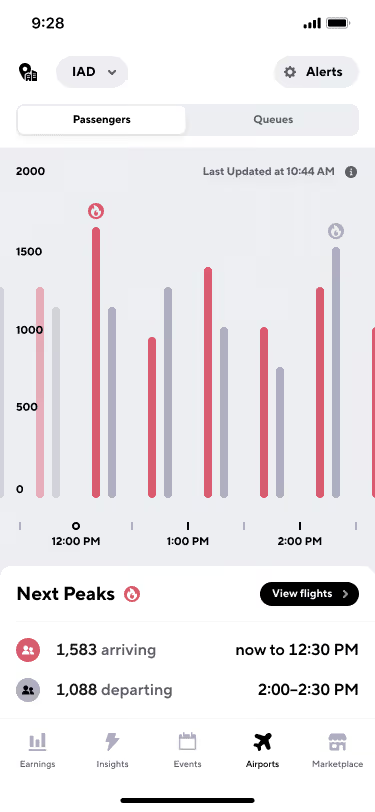
Airport driving can be especially effective if you happen to be driving past your local landing pad. But… until more action appears, you wouldn’t want to sit there for long. And don’t forget about all those small airports around you, the regional facilities that service small planes and private jets. In your travels, you might find passengers, pilots, and other workers pinging you as you drive by.
Airports aren’t the only place to find travelers in need of rides. In these days of restrictive air travel, many people are traveling from state to state on trains and buses. Don’t be surprised to find there’s more traffic at your local stations than there used to be, and capitalize on it.
Travel trawling is good for drivers who...
- Live in or near a relatively large urban area
- Don’t mind dealing with luggage
- Can squeeze in and out of tight pick-up and drop-off points competently
- Know where the travel hubs are and can easily drive by them
Forget travel trawling if you ...
- Live in a city that is fully locked down
- Are leery of the germs people may carry from out-of-state
Uber and Lyft drivers strategy #2: The weather watcher
Bad weather brings out big volume in rideshare requests. People who are afraid to drive under poor road conditions and low visibility will look to you to get them safely where they need to go. Also, when the weather is bad, those who might normally walk to the corner bistro or liquor store are often willing to splurge and open up their apps so they can ride instead.
While most of the time we think of “bad” weather being wind, rain, snow, ice, and/or fog, many people also seek rides when it’s too hot outside. Always make sure your vehicle’s cabin is comfortable and inviting. You’ll keep your customers contented and be able to maintain your own good health as well.
Bad weather driving is for you if ...
- You drive a vehicle that’s capable of handling rough road conditions
- Your ride is equipped with a workable comfort control system
- You don’t mind wet, muddy, or sweaty passengers
- You have equipment on board for “just in case” situations
Stay inside if ...
- You’re the least bit nervous about losing control of your car in bad weather
- You don’t have plenty of experience driving in less-than-ideal conditions
Uber and Lyft drivers strategy #3: The hybrid driver
If you’re a regular Gridwise blog reader, you know we use the term “hybrid” to refer to a driving gig that includes rideshare and delivery. The population of hybrid drivers has grown exponentially over the course of the pandemic because so many have turned to delivery as an option for a second or third kind of driving gig.
The hybrid driver almost always has business because even when traffic for rideshare cools down at suppertime, the delivery business will be hot. One of the good things about freelancing for rideshare and delivery services is they allow you to work for either or both of them, whenever it best suits you.
That means you can work for as many driving and delivery apps as you wish; when it’s tough to get rideshare trips, you can opt to do some delivery. And don’t believe everything you hear about the lower rates for delivery drivers. In truth, they make almost as much per hour as the average rideshare driver—because these days, people tip much more for delivery than they do for a ride.
You can deliver food, snacks, groceries, and even liquor. If your vehicle is big enough, you could even deliver packages for Amazon. Believe it or not, some rideshare drivers have flipped totally and now do delivery full-time.
Doing double driving is perfect for you if ...
- You have a vehicle that’s suitable for carrying the commodity you choose to deliver
- You have the patience to park your car every time you pick up and drop off items
- You are able to carry packages and bags, even in nasty weather
Don’t do the hybrid thing if ...
- Juggling two kinds of work on the same shift makes your head explode
- You don’t like getting in and out of your vehicle several times on a shift
- You don’t want to have the smell of food in your car
Uber and Lyft drivers strategy #4: The nighttime shape-shifter
For many reasons, rideshare drivers have often loved to work late at night. The most obvious reason, of course, is the money. This is the time of day when surge pricing was customarily meted out for drivers daring enough to drive around with the drunk, dazed, and confused passengers rattling around in the back seat.
Now that bars are at very limited capacity, the business of driving people to and from those establishments has been drastically reduced. If you want to drive at night for another reason, maybe because it fits your work schedule and allows you to balance your driving with other gigs, there are other passengers to watch for.
While you may have been accustomed to ferrying around misguided and misbehaving passengers, how about doing a full 180? Check out some of the other places that generate riders at night, such as nursing homes and other long-term care facilities.
The staff that provide love and care to seniors and disabled people often stop working at midnight and later, so you could make it a point to research where their workplaces are, and when the shifts begin and end. They’ll appreciate you, and you’ll love driving around these angels on earth.
Other potential nighttime passengers include people who work in bakeries, grocery stores, restaurants, and the kinds of establishments that operate around the clock. Even if the storefront is closed, there are probably people working inside. They could be emptying trucks, stocking shelves, or doing all that extra cleaning that’s needed for COVID compliance.
For those of you who love working weekend nights, and miss getting your kicks from witnessing the follies and foibles of the bar crowd, there’s still a lot of business delivering midnight meals meant for soaking up the excess alcohol they’re drinking at home. This strategy leaves you lots of room to stick with wee-hour work, and still make good money.
The night shift is for you if ...
- You can be resourceful about finding rides
- You are willing to add delivery to your gig mix
- You have to make the night shift work because of the rest of your schedule
Stay home and get some sleep if ...
- They roll up your town’s sidewalks at 8 p.m.
- You don’t want to deliver food, packages, or bottles of booze
- Your town doesn’t have the kinds of businesses that generate night riders
- You’re not a night owl
Uber and Lyft drivers strategy #5: The date-saving “pumpkin coach” driver
People might not be gathering in large mobs inside bars, restaurants, and clubs, but on most weekend nights couples are still going out on dates. Along with the usual singles out for a night on the town, there are married couples who covet time to themselves, away from the kids. You might also encounter some BFFs headed out for a night of catching up and kibitzing. In all cases, they’re probably headed to a quiet restaurant for some nice food and a few glasses of wine.
They will need you, their “pumpkin coach” driver, to save them the hassle of finding a spot next to the establishment of their choice, and to permit them to enjoy a few drinks while you do the driving. Scope out the restaurants in your area, and see what times they seem to be busiest. Then, cruise the neighborhoods that house the places couples and good friends like to go when they need a few hours away, and can pretend there is no stinkin’ pandemic.
Date driving is for you if ...
- You have a good eye for hot spots and ride-rich neighborhoods
- You’re available to drive during time periods when restaurants are serving customers
- You enjoy seeing people have fun, despite the pandemic
Steer clear of the pumpkin coach game if ...
- You don’t have a clear idea of where people go for fun in your town
- Your schedule keeps you busy during the times people go out
- You don’t feel comfortable dropping people off where there might be extra traffic
Uber and Lyft drivers strategy #6: The rescue ride for essential workers
For quite a while the world was hyper-aware of the people who went out there and worked, even if it meant exposing themselves to the risks of the pandemic. Medical personnel, first responders, municipal workers, custodial workers, and home aides are among the people we see in our minds when we think of essential workers.
Because drivers are essential workers too, you probably have a special appreciation for all the people we mentioned above. Have you considered that they could be a great group to have as passengers?
At one time or another, most drivers have picked up someone at a hospital or fire station and not thought a lot about it. Now, as these wonderful workers are taxed by the stress of dealing with the pandemic, taking extra precautions, and enduring scenes most of us would rather avoid, you, the driver, can come to their rescue.
Take note of when the shifts begin and end at your local hospitals, municipal buildings, or police precincts. Then, make sure you’re in the vicinity when workers are ready for a ride home. Another consideration is that these trips, during which you ferry workers back to their homes, are often longer than the usual jaunt around town, which is always good for your earnings.
This population often feeds the delivery business as well. Most essential workers don’t have the luxury of going out for food on their breaks—if they even get breaks. You’ll find that there is a lot of need for delivery services in all facilities where essential workers hang out, and they’re hungry for your help.
Rescuing essential workers is for you if ...
- Your driving schedule meshes with the shifts most of these people work
- You know where the facilities are located in your town
- Helping the helpers makes you feel good
Don’t delve into driving essential workers if ...
- Your timing doesn’t mesh with their shifts
- You don’t have many hospitals or public service facilities in your area
Uber and Lyft drivers strategy #7: The grocery wagon
Since the pandemic struck almost a year ago, have you noticed that there are things we drivers used to dread that now don’t seem so bad? So it is with the grocery run. No one here is trying to sell you on dropping passengers off and waiting hours for them to do their shopping so you can drive them back home … but one-way grocery runs are a big thing these days, and they can add to your driving income.
Before you wince, the next time you get a call that’s pinned at the local grocery hub, think about the opportunities. For one, you just got a ride, which isn’t as common as it used to be. And you get a chance to turn on the charm with your customer. You can help load and unload, and make it easier for the person to do the needed shopping even though he or she might not own a car.
Don’t forget, there are plenty of people doing their shopping at big box stores these days. You might get called to the local strip mall more often than you’d expect to help people tote their fruits, veggies, snacks, and small lamps and mops when they buy all their stuff in one very large place.
What’s in it for you? Well, there’s a warm, fuzzy feeling of doing nice things for people during the pandemic … and there’s also a strong possibility of getting an awesome tip.
Of course, you know there are options for the delivery driver here, but we’ll remind you anyway. You can work for an outfit like Instacart or DoorDash, and do the shopping and grocery delivery for customers who want to get their goods delivered to the doorstep, contact-free.
Go with grocery work if ...
- You’re okay with your car being filled with bags, bottles, and cans
- You have the patience to wait for people to load and unload their stuff
- You have lots of stores in your area, and a population that may need rides
Shun the grocery run if ...
- You really, truly hate having loads of stuff in your car
- There aren’t enough stores in your area to make looking for grocery customers worth your while
Protect your earnings from expenses and deactivation
Now that you know how to make extra money in 2022, how can you keep your income safe?
Gridwise works with companies like Uproad to help you minimize on the job costs incurred from driving on toll roads. Uproad provides drivers with free toll credits, which means less of your earnings get eaten.
There are other costs to driving you’ll want to prepare for. Life happens, and there will be times - a hospitalization, a wait for collision repair - or an unfair deactivation - when you’ll have to be idle for a few days or even longer,
When you don’t drive or deliver, your cash flow comes to a dead stop. That’s why Gridwise put together a way for you to keep your cash flow going: Gridwise Protection! This innovative plan for drivers allows you to collect 80% of your regular income in case the life events we just listed happen to you.
On top of that, you get 24/7 telehealth services, a way to pay for sick leave, and even legal help, should you need it to contest an unfair deactivation. All of this protection for your hard-earned income can be yours for around $7 per month! Click here to learn more, and get a quote.
One of the main beefs about being a gig driver is the companies’ failure to give drivers benefits. Now, you have a way to get coverage, even though you’re an independent contractor. You’ll find that Gridwise Protection gives you a high level of confidence at a very low cost. If you’re serious about your driving or delivery gig, you won’t want to go without Gridwise Protection - it’s the #1 best strategy you can use to create safety and security in your gig driving life.
And another must: Gridwise
Now that you’re ready to try these strategies, we wouldn’t want you to go out there without the ultimate rideshare and delivery assistant - Gridwise! Download the app to receive airport and weather information, and get your earnings tracked automatically. Link your driving apps to Gridwise, log on at the beginning of your shift, and all your earnings, miles, and time will be collected and tabulated for you. Then, you can look at your performance on every app you use in slick graphs like these:
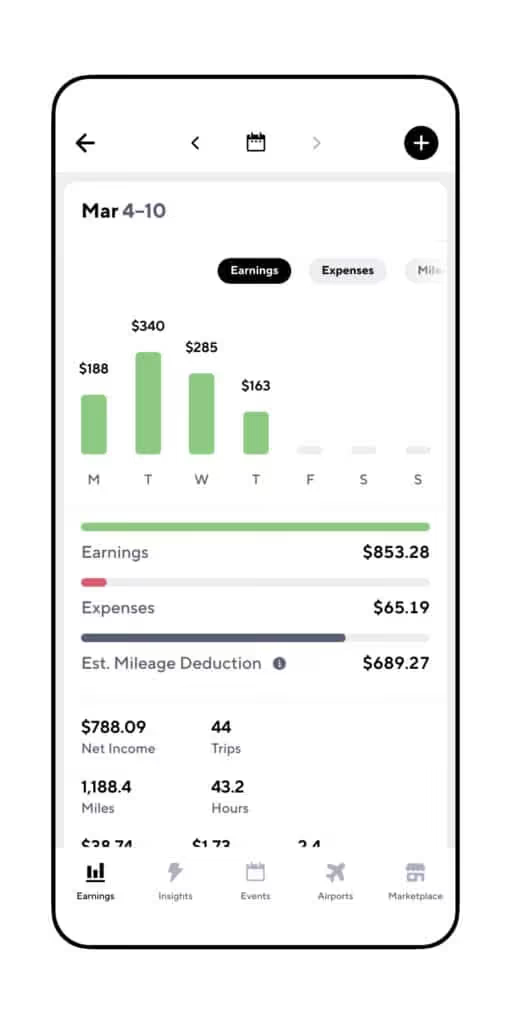
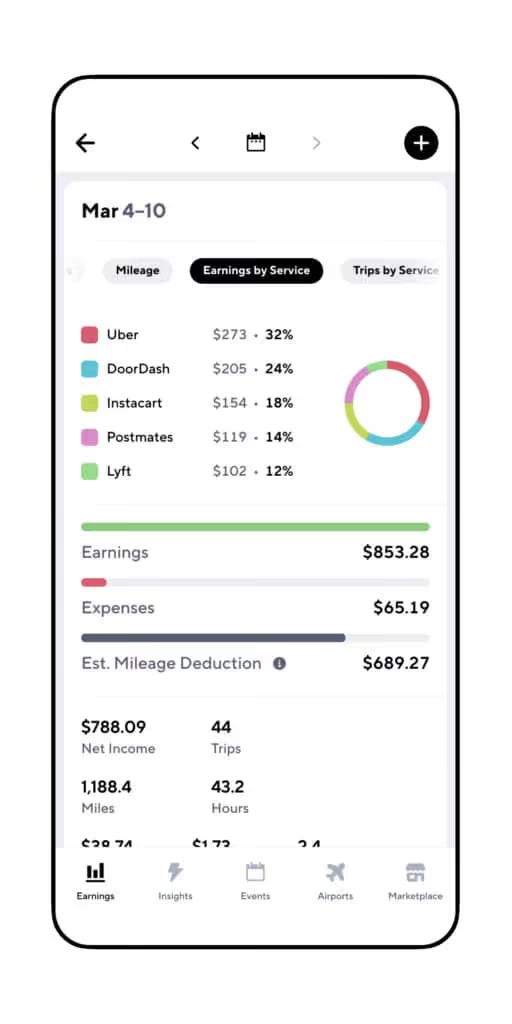
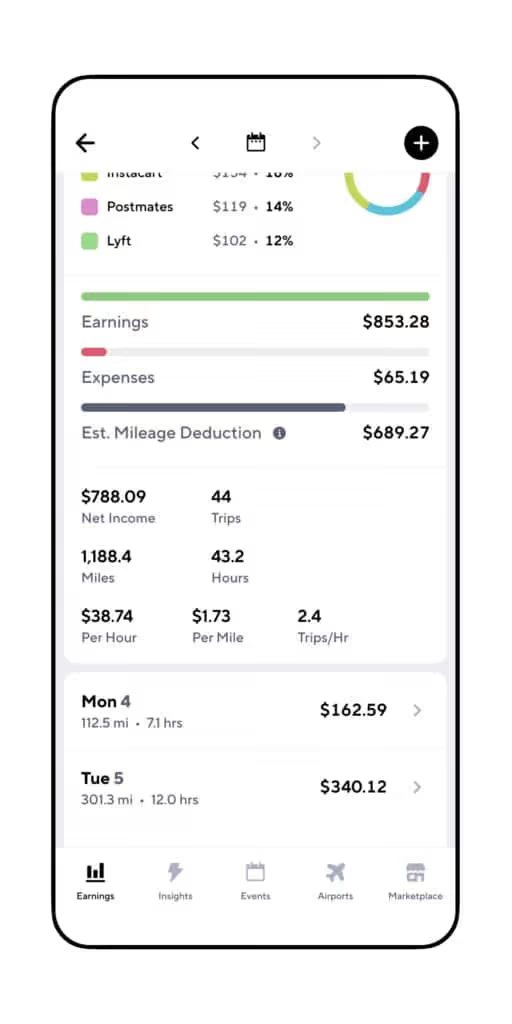
What’s more, you can enter all your expenses, making Gridwise your go-to app for recording all the data for your driving business. It’s good to keep track of where you’re making the most money, and the whole system is great for tax time!
Click on the Marketplace tab to get deals and discounts designed just for drivers, plus easy access to our blog and the Gridwise YouTube channel! Join us on Facebook for fun with the driving community, and to get a chance at winning a gas card in one of our giveaways.
What strategy works for you? Let us know in the comments below.
Meanwhile, if you haven’t done so already, it’s about time: download the Gridwise app now!
For more discussion about rideshare driving strategies, check out our strategy video below!
Lyft se Adentra en la Entrega de Comida: Lo que Significa para los Conductores
¿Lyft entrega comida? Bueno… ahora sí. Así es, Lyft se está adentrando en la entrega de comida. Pero no te emociones demasiado todavía. Siempre enfocando los negocios desde un ángulo único, Lyft no pretende convertirse en un clon, ni siquiera en rival, de Uber Eats.
Lyft jugará el juego de la entrega de comida a su manera
En lugar de crear su propio servicio de entrega de comida orientado al consumidor, Lyft se unirá con Olo, una empresa de interfaz de restaurantes. El producto de Olo, Dispatch, hace exactamente lo que esa palabra implica. Los clientes hacen pedidos en el sitio web de un restaurante, luego Dispatch envía la solicitud de entrega al mensajero más cercano. El conductor de entrega de comida hace la recogida y lleva la entrega a su destino, pero con un giro.
A diferencia de Uber Eats, DoorDash, Grubhub y los otros grandes negocios de entrega de comida, este tipo de servicio omite esas altas tarifas de servicio que los grandes cobran a los restaurantes y otros establecimientos de comida. En su lugar, el cliente paga la tarifa de entrega y también dará propinas a los conductores.
Aquí es donde la inteligencia del movimiento de Lyft se vuelve más visible. En lugar de competir con Uber Eats, DoorDash o cualquiera de los otros, Lyft contribuirá a un esfuerzo para socavar su negocio y proporcionar soluciones de entrega más económicas a los restaurantes. Así es cómo.
Las grandes empresas de entrega de comida cobran mucho a los restaurantes por usar sus servicios, golpeándoles con tarifas “limitadas” al 30 por ciento. Hay grandes márgenes en la comida preparada, sin duda, pero eso es un recorte que la mayoría de los restaurantes no puede permitirse realmente.
Así que cuando Lyft se una al grupo de mensajeros que trabajarán con Dispatch de Olo, la empresa proporcionará entrega de última milla sin cobrar una tarifa a los restaurantes. Es poco probable que los consumidores noten la diferencia porque los restaurantes generalmente trasladan al menos parte de la tarifa a las personas que hacen pedidos y los reciben en sus puertas.
Algunos otros transportistas que ya trabajan con Dispatch de Olo incluyen DoorDash, Uber Eats y Grubhub. Sin embargo, los restaurantes probablemente favorecerán a Lyft, así como a sus propios conductores de entrega si los tienen.
¿Qué significa esto para los conductores?
Lyft ve este movimiento como parte de la expansión de su servicio de entrega de empresa a empresa. La empresa ya opera con Dispatch de Olo en 25 mercados de EE. UU. y espera extenderse a varios cientos en poco tiempo.
Lyft tendrá acceso a una enorme red al asociarse con Olo, que cubre más de 500 marcas de restaurantes en más de 76,000 ubicaciones. Aunque no todas ellas usan Dispatch, este acuerdo entre las dos empresas permitirá a Lyft capturar mucho negocio.
¿Cómo puedes convertirte en conductor de entrega de comida para Lyft? Verifica tu aplicación del conductor de Lyft para ver si tienes acceso a las entregas de Lyft. Si lo tienes, puedes ajustar tu configuración para aceptar entregas de comida de Lyft. Aunque puede ser un desafío lidiar con el estacionamiento, el clima y largas esperas en los restaurantes, la entrega podría agregar variedad a tu vida de conducción gig y también hacerte ganar más dinero.
Si decides asumir el desafío de las entregas de Lyft, asegúrate de sincronizar tu aplicación de Lyft con Gridwise. Puedes rastrear tus ganancias y descubrir si realmente vale la pena para ti.
Gridwise también te brinda información sobre aeropuertos y eventos, alertas de tráfico y clima, y grandes ofertas y descuentos para conductores. Usa nuestras funciones de Dónde Conducir y Cuándo Conducir para maximizar tu rentabilidad y eficiencia de conducción, ¡y sacar el máximo provecho de la mejor aplicación de rideshare y entregas!
¡Descarga Gridwise hoy!

How Much Did Shipt Shoppers Make in 2021
Shipt is a shopping and delivery service that operates in 260 cities across the U.S. Although it’s not as large as its major competitor, Instacart, Shipt offers a great opportunity for gig drivers. With Shipt, you receive orders, shop for the items, and deliver the orders with your vehicle. Shipt handles orders from many different grocery stores and retailers who see the obvious advantages of having the means to get their goods to customers quickly and efficiently.
Many drivers, burned out on rideshare and food delivery, wonder about the high earnings claims made by grocery delivery companies like Shipt – and so do we. So, we put together this blog post to examine how well Shipt shopper pay fits the company’s claims, as well as what it’s like and what it takes to be a Shipt shopper. Here’s what we’ve got:
- The Shipt shopper gig: What it’s like
- Shipt shopper pay: How it breaks down
- How much do Shipt shoppers make?
- The future of grocery delivery
- Why you might (or might not) want to be a Shipt shopper
The Shipt shopper gig: What it’s like
Being a shopper for Shipt is pretty straightforward, but it takes a certain set of skills and personality traits. For one, you’ll want to like shopping. You’ll be asked not only to pick up a bunch of bananas, but to find the right bunch, the one that’s reached the exact stage of ripeness the customer wants.
Shipt prides itself on customer service, so the shopping end of this is somewhat more involved than picking up a bag of prepared food and running off to deliver it. Also, you’ll need to be good at the art of delivery. This means paying attention to the details of the order, dropping it off safely, and treating customers with the kind of respect that will earn you big tips.
To shop for Shipt, you’ll need to meet a few requirements, including:
- Proof of being 18 years of age or older;
- A valid U.S. driver’s license;
- A vehicle (1997 model or newer) that’s registered and insured in your state of residence;
- A smartphone equipped with iOS 10 or higher, or Android 5.1 or higher;
- Knowledge of how to select produce;
- The ability to lift up to 40 pounds;
- A complete application, including a clean background check;
- A positive interview, conducted online and on video.
As mentioned, Shipt puts a strong emphasis on customer service, but don’t worry about knowing every last detail right away. Assuming you clear the hurdles of the application, you can get additional video training from the company before you start. You’ll get a Shipt shirt and a card to use when you pay for orders.
Shipt is a totally flexible gig, in that there aren’t blocks or set shifts to worry about. You can choose zones where you’d prefer to work, but you don’t have to. There is no minimum number of orders, so you can work when it’s convenient for you, without penalty if you don’t work at all.
To get started with Shipt, download the app, open it up to receive your orders, and you’ll be sent on your way. Once you arrive at the store, you’ll shop for the items, communicate with the customer via cell phone (if necessary) while you shop, check out with your Shipt card (prepaid by the customer), and deliver the order.
Tips are added to the order after you deliver it. Shipt strongly recommends that customers tip shoppers – but as you probably know, when you get tipped after doing the shopping and making the delivery, customer service skills become even more important.
Keep in close communication with your customer at all times, and make sure to be honest if you’re running late. One of Shipt’s major selling points is prompt delivery, and you won’t have the kinds of delivery windows that leave you much leeway. You’ll need to work quickly and efficiently, and have a big smile on your face when you greet your customers, too.
Shipt shopper pay: How it breaks down
Tips are nice, but it’s also good to know how your base pay is going to be calculated with this particular shopping gig. You are paid by the order, and will not be paid extra for waiting time or for your fuel costs.
Shipt’s payment system is based on $5 per order, plus 7.5 percent of the order total. The amount is based on what you actually paid for the items at the store and does not include any applicable delivery fees or service charges.
This way of calculating earnings, while very consistent, doesn’t take into account factors such as how difficult the order was to put together, or how heavy the bags and boxes were to manage. Shipt states they do take the level of difficulty into account, but other services (including Instacart) operate with more nuanced algorithms that definitely take these and other aspects of the delivery process into consideration.
Shoppers are paid weekly by direct deposit. The work week runs from Monday through Sunday, and you’ll be paid the following Fridayt You have a little bit of a wait for your money, but Shipt does give shoppers 100 percent of their tips. All tips will be included with your payment.
You can arrange for an instant payout with Shipt, but first you’ll need to have one successful payout. Then, you can agree to the terms with Stripe within the app, and arrange to have instant payout after that. You can get further details here.
Shipt is very clear about shoppers being independent contractors who are responsible for paying their own taxes, paying their own expenses, and not being entitled to any benefits that would come with being an employee. Gig drivers are used to this, but it’s refreshing to see Shipt’s transparency on the subject.
How much do Shipt shoppers make?
Shipt says that shoppers can make “up to $22 per hour,” and for the most part, that’s what we found in the data we collected. According to Gridwise data, Shipt shopper hourly earnings averaged $18.33 from January to November 2021. It’s no surprise that the winter months saw the highest earnings: $19.01 in January, and $19.81 in February. The lowest earnings were recorded in June ($17.86), but rates crept back up to $18.33 in November.
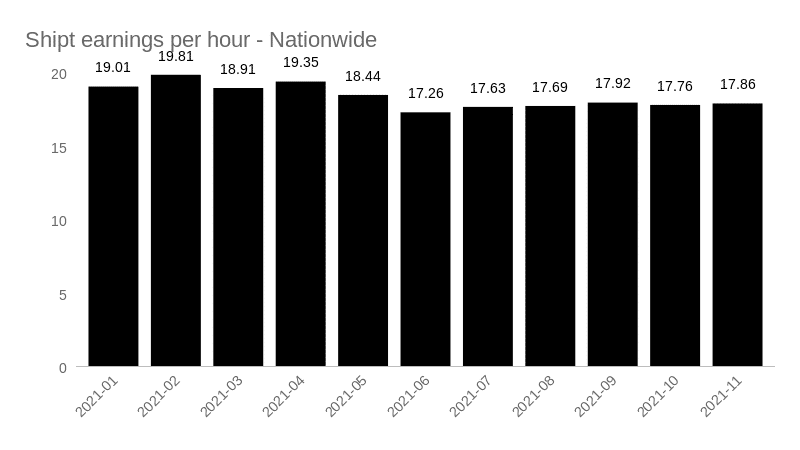
How much do Shipt shoppers make per order? The January to November 2021 average comes out to $17.03. The seasonal patterns were the same, with per-trip earnings ranging from around $16 to just over $18, the highest numbers during the winter, some dips in the summer, and then back up to the $17 mark in the fall.
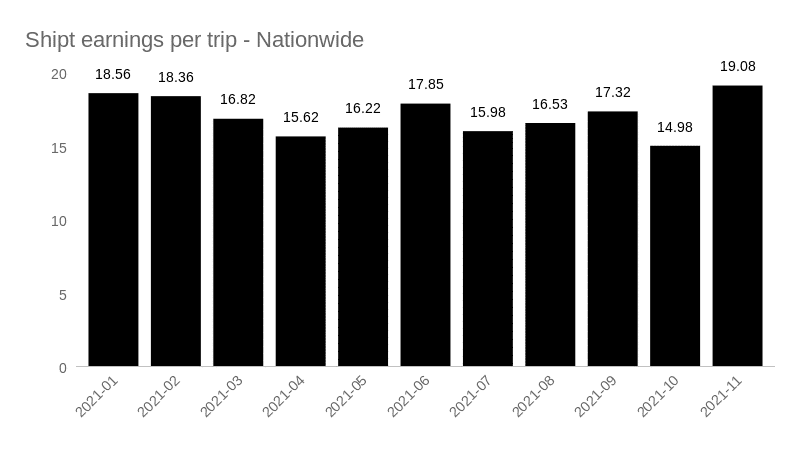
How would we rate Shipt vs. Instacart pay? In this Gridwise post we discussed that in 2021, earnings dropped from $18.12 in July to $14.85 in September. Even though Shipt earnings fluctuated some during the year, they never went that low. As the post states, the dip in Instacart earnings could be due to either fewer orders or more drivers competing for orders. In either event, Shipt shoppers seem to be bringing in more “bacon.”
The future for Shipt shoppers: 2022 and beyond
There’s no question that grocery delivery has caught on and is here to stay. According to this Edison Trends article, delivery in general had increased by 225 percent as of mid-July 2021. While this trend seems likely to continue in 2022, there are some things to consider.
Uber Eats, DoorDash, and other big delivery companies are starting to dabble in grocery delivery. This Gridwise article describes how DoorDash is creating innovative options for fast deliveries, and it’s likely that other companies will follow suit.
Shipt, as a subsidiary of Target, is well-positioned in terms of standing up to the competition. According to Target’s earnings reports, the corporation’s sales rose by double digits in Q3 of 2021. Target has leveraged the ability to provide online ordering and customer pickup and delivery in ways that are extremely appealing to consumers.
The combination of the general rise in demand for delivery, coupled with Target’s admirable growth, puts Shipt shoppers in a secure place when it comes to the future. But, now that you’ve heard what it takes to be a Shipt shopper, and how much you’re likely to make, do you think you want to try it out?
Why you might (or might not) want to be a Shipt shopper
Shipt is a pretty good gig. But before you get involved with it, here are some questions you might want to consider.
How do you feel about shopping?
For many people, shopping is something they enjoy – almost like a sport. For others … it’s a nuisance, one of those “I only shop when I absolutely have to” activities. Make no mistake. If you work for Shipt, you’re going to be shopping a lot, and you’re going to have to learn the finer points of choosing ripe melons and picking out the perfect parsley.
Are you satisfied with the amount of money you can earn with Shipt?
While there’s no guarantee you’ll make as much as the average Shipt shopper, the earnings are pretty fair. However, you can probably make at least as much as a rideshare driver with a lot less running around. While shopping can be fun, it also takes a lot more parking, getting in and out of your vehicle, and lifting heavy loads than rideshare does.
Do you like dealing with people?
Shipt’s intense focus on customer service means you’ll have to wear a smile even when you’re faced with surly grocery store workers and unpleasant customers. But if you're a relatively easygoing type with a talent for schmoozing, you should fit right in.
Do you mind wearing a Shipt shirt?
Shipt likes it when shoppers don their green T-shirts with the company logo so customers can easily identify shoppers — and people roaming through the store can spot one, and think, “Gee, you mean that person will do this shopping for me and deliver it to my door? I’ll download Shipt right now!” This article features a Shipt shopper who takes his dressing up for Shipt to extremes. It seems to help his earnings to say the least!
All in all, Shipt is a pretty good deal. So, if you want to try it in your town, make sure you link your Shipt app to Gridwise so you can track your earnings and see for yourself if it’s worth it for you. You can also rely on Gridwise to let you know …
- Where to Drive so you can choose profitable driving routes
- When to Drive so you drive during peak hours
- Airport information for picking up passengers
- Event start and ending times
- Traffic and weather alerts
- Great deals and discounts for drivers to cut down on costs
Check out the best rideshare and delivery assistant and get up and running! If you haven’t already…
Download Gridwise now!
Earnings recap: Amazon Flex driver pay 2021
You’re always on the lookout for new ways to make more money as drivers, and so are we. Gridwise also keeps an eye on earnings, so we can tell you what it’s like to drive for a service like Amazon Flex. So … we’ve gathered up some facts and compiled our real-driver data in a package that gives you the latest information on this popular gig driving opportunity. In this post, we’ll tell you:
- How Amazon Flex works
- How Amazon Flex differs from other delivery services
- What the Amazon Flex pay rate is like
- How to decide if it’s worth it to drive for Amazon Flex
Let’s dive in!
How Amazon Flex works
You’ve probably seen those slick-looking Amazon delivery trucks in just about every neighborhood you’ve visited. These drivers are not always employees of Amazon, nor are they independent contractors. They might be employed by Delivery Service Partners (DSPs) that have contracts with Amazon, or Amazon might hire them as Amazon Logistics Delivery Associates. Amazon delivery driver pay varies, depending on the contractor the driver works for. Indeed.com reports that the average Amazon driver earns around $17 per hour.
Amazon Flex drivers are different types of delivery workers. They are independent contractors who use their own vehicles to deliver packages and other items for Amazon. There are several different kinds of packages Amazon Flex drivers deliver.
Besides the familiar boxes and large envelopes, drivers may work with Prime Now orders, which must be delivered expediently, usually in bags rather than boxes; Amazon Locker, a service that leaves packages for customers to pick up at a convenient location; and Merchant Pickups, a way to speed up delivery by having the driver pick up the goods from a merchant and deliver them for Amazon.
Amazon Flex drivers might also make attended deliveries, which require the customer or another authorized person to be present when the delivery is made; chilled and frozen orders that require special handling; and in some instances, alcoholic beverages, which require the customer to present proof of being over the age of 21 at the time of delivery.
Amazon Flex drivers are free to schedule flexible hours, but they must make their deliveries in blocks, most often four-hour shifts. They then find their way to the Amazon warehouse (or another location), pack their vehicles with delivery items, and set off to drop them on the customers’ doorsteps.
Driver requirements for Amazon Flex are rather simple, and include:
- Living in a city where Flex operates
- Being at least 21 years old
- Holding a valid U.S. driver’s license
- Having a mid-sized or larger vehicle
- Passing a background check
- Owning a smartphone capable of handling the Flex app
As long as you meet these requirements, it’s easy to get started … simply download the app and apply. Once you’re accepted, you can schedule your Amazon Flex blocks and get out there to do your Amazon Flex thing. Visit the “Let’s Drive” website to get more details directly from Amazon Flex and sign up to drive.
How Amazon Flex differs from other delivery services
Depending on your point of view, Amazon Flex has more to offer than most other delivery driving jobs. With FedEx or UPS, for example, you have to work during hours that are pre-set for you. And, you may or may not get paid as much as you could for Amazon Flex or another kind of gig driving. Some drivers are paid a flat daily rate, such as $150 per day. For that amount, they might be expected to make as many as 100–150 stops during a day, depending on location.
Working for a carrier such as UPS or FedEx can mean long hours, and physically demanding work as well. Drivers deliver everything from small parcels to full-sized furniture and equipment. UPS drivers must be able to lift up to 70 pounds, and meet a slew of other qualifications, including being able to drive a standard transmission truck in all kinds of weather conditions, pass a physical exam, wear only small earrings (if any at all), and have no tattoos that cannot be covered by the uniform.
Full-time UPS drivers get many benefits, including health insurance, eye care and dental coverage, life insurance, vacation, and (if required) family leave. They also must belong to the Teamsters Union.
At FedEx, driver requirements are somewhat less stringent. They include at least one year of verifiable driving experience in the last three years, or five years of driving experience in the last 10 years. You also must pass a criminal and motor vehicle records check, clear a drug test, and pass a physical given by the US Department of Transportation.
FedEx does not classify its drivers as employees; rather, its drivers are independent contractors, so they do not get employee benefits. Pay ranges widely, but the average is around $19 per hour. You can work full- or part-time as a FedEx driver, but your routes and hours will be predetermined, leaving you very little in the way of flexibility. To be fair, though, it’s a little more lenient than UPS when it comes to you being allowed to show your best-loved tatts.
What the Amazon Flex pay rate is like
With Amazon Flex, you can get a pay rate that’s as good or better than that of UPS or FedEx. Our real-driver data show that nationwide median earnings from January to November 2021 averaged $20.22 per hour. Average earnings per trip were set at $5.90, which is also quite respectable.
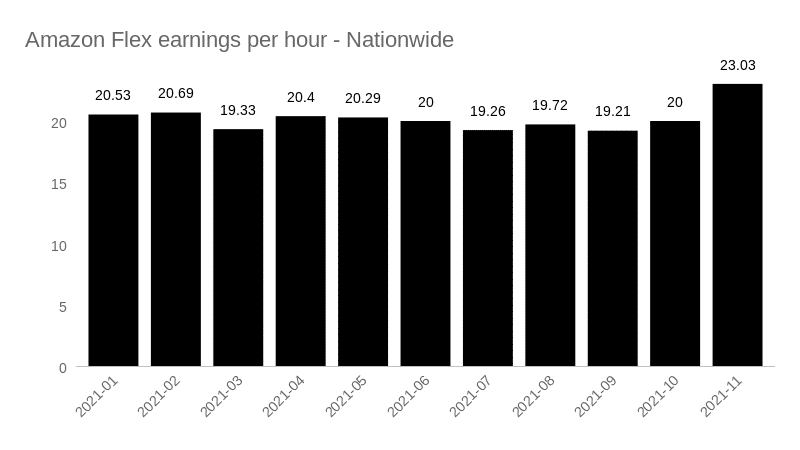
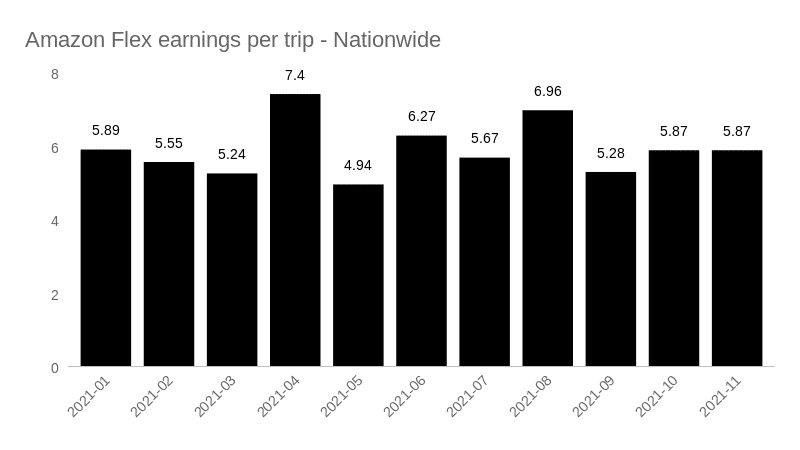
You might be thinking that Amazon Flex earnings will shrink when taking into account the average driver’s expenses. Keep in mind, however, that the other services also deduct taxes from earnings, and in the case of UPS, there’s the extra expense of union dues. Plus, Amazon Flex offers you the flexibility of gig driving along with the high probability of a constant stream of work.
There are seasonal peaks and valleys, to be sure. For example, the numbers we gave you here don’t even include the holiday volume, which is sure to bring much more work for Flex drivers. November figures began to show this upsurge, and earnings were also high during the winter months of 2021. Another peak came in the spring, as seasonal merchandise became more appealing to shoppers.
In general, the pay for Amazon Flex is decent, and comparable if not better than donning a uniform to work for UPS or FedEx. Amazon Flex drivers also earn about 15 percent more than if they worked directly for Amazon or one of its contractors. Also: If you want to make more money, there’s plenty of time to pick up another driving gig.
How to decide if it’s worth it to drive for Amazon Flex
Flexibility is probably the #1 reason you’d choose to drive for Amazon Flex, but it’s also nice to know the earnings are comparable, if not better than, the rates employed drivers might receive. Still, there are some aspects of the job you’ll need to consider to see if it’s worth it for you to work for Amazon Flex.
- Are you prepared to fill your vehicle with packages and bags, and deal with the inevitable wear and tear?
- What about vehicle maintenance? Will all the stop-and-go driving take a toll on your brakes?
- Would you mind driving in all kinds of weather, and getting in and out of your vehicle multiple times a shift?
- Do you mind having to rush to finish your deliveries within the time limit of your block?
Depending on how you answer these questions, you could achieve a lot as an Amazon Flex driver. Another way to decide for sure would be to compare your earnings as a Flex driver with your other driving gigs.
The ideal way to get a handle on what you’re earning from the services for which you drive is to use Gridwise. You’ll be able to sync your driving apps with Gridwise to track your earnings, and then produce graphs that tell you how much you’ve earned by the hour, the trip, and the mile. You can also record expenses so you can see which apps are earning you the most:
Plus, you’ll learn how to maximize your driving efficiency and earnings using Insights features like Where to Drive and When to Drive, and get inside info on:
- Weather and traffic alerts;
- Awesome deals and discounts for drivers, and more.
Download Gridwise now!
Trabaje de forma más inteligente. Gane más.
Ya sea que conduzcas, entregues o recojas turnos, Gridwise te ayuda a hacer un seguimiento de las ganancias, el kilometraje y el rendimiento para que puedas mantener el control de tu trabajo. Descarga la aplicación y toma las riendas hoy mismo.
