Blog de Gridwise
¡Lee el blog de Gridwise para obtener consejos y sugerencias sobre cómo ganar más dinero mientras conduces para Lyft, Uber, DoorDash, GrubHub y más!

The Gridwise Job Board: Find Your Ideal Job or Gig Work
Gridwise is an essential assistant app created by gig workers for gig workers. Our mission is to support those engaged in gig work in every way possible. We understand how challenging it can be to deal with income instability, a lack of benefits, and job insecurity that often comes with gig work. The Gridwise app tracks and organizes earnings and expenses, and offers a wide array of discounts, deals, and services that make the lives of independent contractors easier and more rewarding.
We firmly believe it’s possible to make a viable living and create a gig experience that offers flexible hours, variety, and excitement. With issues such as consistent earnings and job security in mind, Gridwise is proud to offer a centralized platform that shows you how to find gig work and secure reliable opportunities. We’re proud to introduce the Gridwise Job Board.
[elementor-template id="20891"]
The Gridwise Job Board: Key features
Because Gridwise is dedicated to serving the gig worker community, we’ve filled the Gridwise Job Board with useful features that won’t waste your precious time.
- Comprehensive listings. Find part-time, full-time, temporary, and per-task work. Drive or deliver with your vehicle, utilize an employer’s vehicle, or even find non-driving gig work.
- User-friendly interface. Find the jobs that are right for you with a tap of your screen.
- Verified opportunities. We vet the jobs before they are listed to ensure you’re getting high-quality job postings.
How to get more gig work, seasonal, part-time or full-time jobs with the Gridwise Job Board
Looking specifically for “gig work apps” or “gig jobs near me?” You’re in luck. Our filters and search functions send you directly to the listings you seek.
Here’s how it works.
- Access the Job Board via the Gridwise website.
- Search for jobs by type, location, and more.
- Select the job that interests you, and read all about it.
- Scroll through the description, and if it appeals to you, click “Apply for job.”
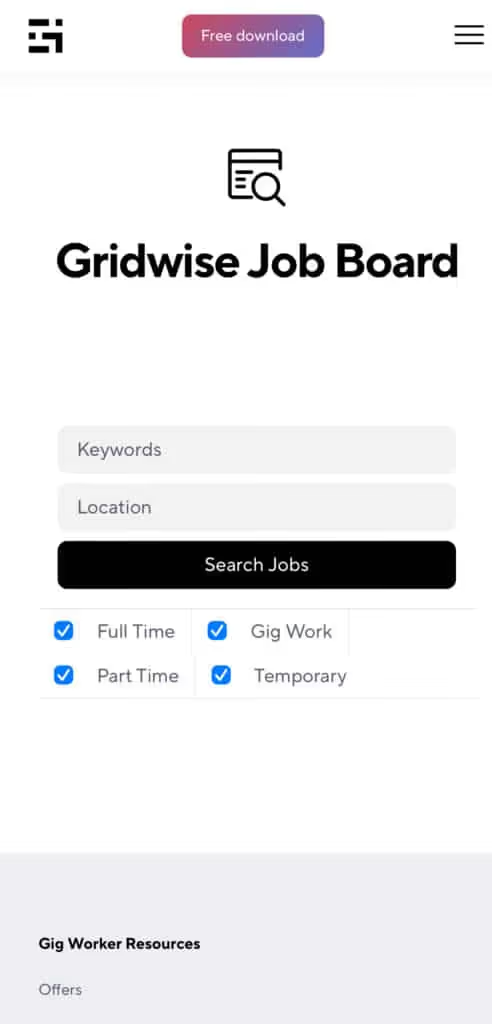
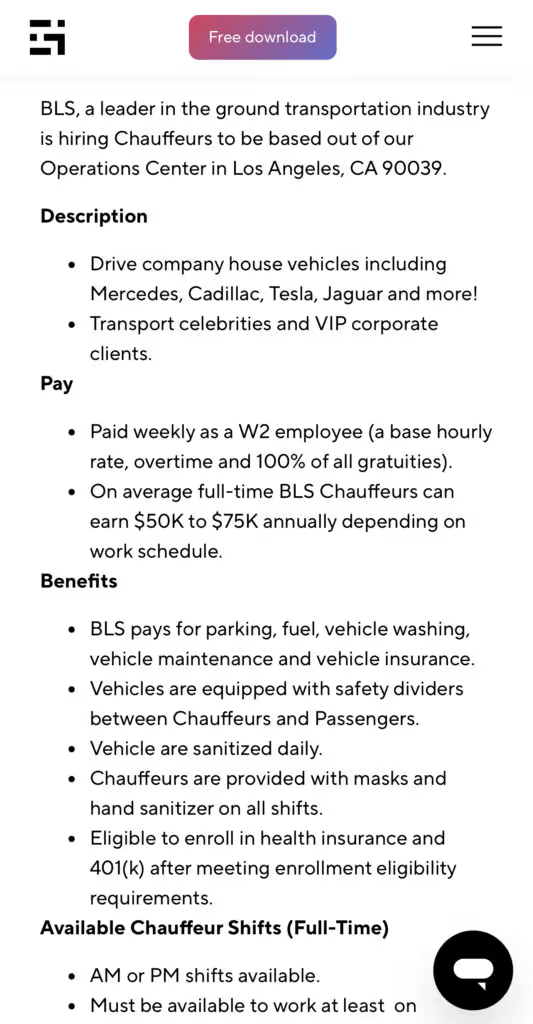
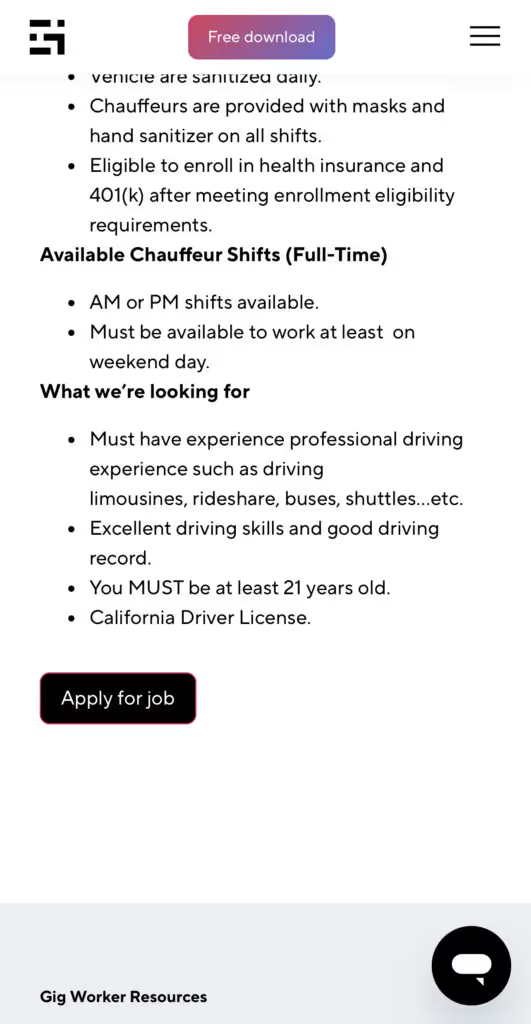
Many types of jobs are available. Adjust the search filter to see the full variety of opportunities that will let you cash in. Deliver food, set up catering, do rideshare driving, get paid for doing package delivery, and much more. You’ll find short-term gigs, long-term contracts, and part-time positions.
Perks of the Gridwise Job Board for gig workers
Gig workers who know how to make extra money will appreciate how the Gridwise Job Board lets you multiply your chances of bringing in big earnings. Here’s how:
- Increased stability. Use the Gridwise Job Board to find part-time or permanent jobs in addition to the part-time gigs you already have. Always keep a steady stream of earning opportunities flowing toward you.
- Flexibility and autonomy. Choose jobs that fit your schedule, work around other jobs and family duties, and still leave room for some fun in your life. Discover side hustles to supplement your full-time job, permanently or just for the season.
- Skill development. Find part-time work that lets you use a skill you already have, or try your hand at something new. It’s a smart way to develop a portfolio to showcase what you can do, or even to find permanent employment.
Get Gridwise and stay up to date on the Gridwise Job Board
Gig workers need plenty of information and assistance, and Gridwise is here to give it to you. Download the app and get essential features such as
- seamless earnings tracking
- mileage tracking
- expense recording, including notes
- low-cost and no-cost insurance benefits
- access to affordable medical, dental, vision, mental health, and alternative care
- professional services including legal and financial help
- deals and discounts
- weather, events, and traffic reports
- inside information on where and when to drive
[elementor-template id="20936"]
More to know about gig work:

5 Best Mileage Trackers For Gig Drivers
Many drivers ask, “Do I really need a mileage tracking app?” The answer is simple: only if you want to have an accurate count of all the miles you can legally deduct from your taxable income! You might think your rideshare or delivery driving app has got you covered. After all, they do quite a good job of logging the miles you drive while you’re on a trip or delivery. But, if you want to have the best app to track mileage for Uber, Lyft, Doordash, Instacart, or the other apps you may use, you need more. Why is that?
Without a separate tracker, you’re missing the miles you drive in between pings. Did you realize that all the miles you drive, from the moment you begin your shift until it’s over (as long as you don’t drive several miles on a break to hang with your friends), are tax deductible! That means you need something besides your driving app to keep an accurate count of your travels. Read this Gridwise post to see how important it is to keep track of every deductible mile.
You won’t be surprised to hear that there’s an app for tracking miles. In fact, there are several of them. Here, we’re going to tell you about five top mileage tracking apps, and help you figure out which one is best for you.
Before we get to the list and identify the best mileage tracker app, let’s clarify what exactly a mileage tracking app is. According to G2.com’s technology glossary, mileage tracking is done for the purpose of keeping a log of mileage that is either reimbursable or tax deductible.
And yes, of course you can track your miles simply by taking readings on your odometer. But are you really prepared to account for how many miles you drove for personal reasons and subtract them from the total to get your business mileage? Even if you can remember all that and do the arithmetic, if you want an accurate reading of the miles you drive for business, and can therefore deduct, a mileage tracking app will save you a lot of trouble and prevent you from making costly errors.
Plus, as a gig driver, you have specific needs when it comes to a mileage tracker. Ideally, you’d be able to handle mileage tracking and several other functions all in one app. It can be maddening enough to deal with driving apps, particularly if you’re an avid multi-apper. You would want your mileage tracker app to help you keep account of other aspects of your business, including income, expenses, and inside information about the art of gig driving.
Not all mileage apps are equal, to be sure! Let’s look at five of the best apps to track mileage and figure out which is the best app to track mileage with Uber and Lyft, or what mileage tracker app is best for DoorDash.
[elementor-template id="20891"]
1. Zoho Expense
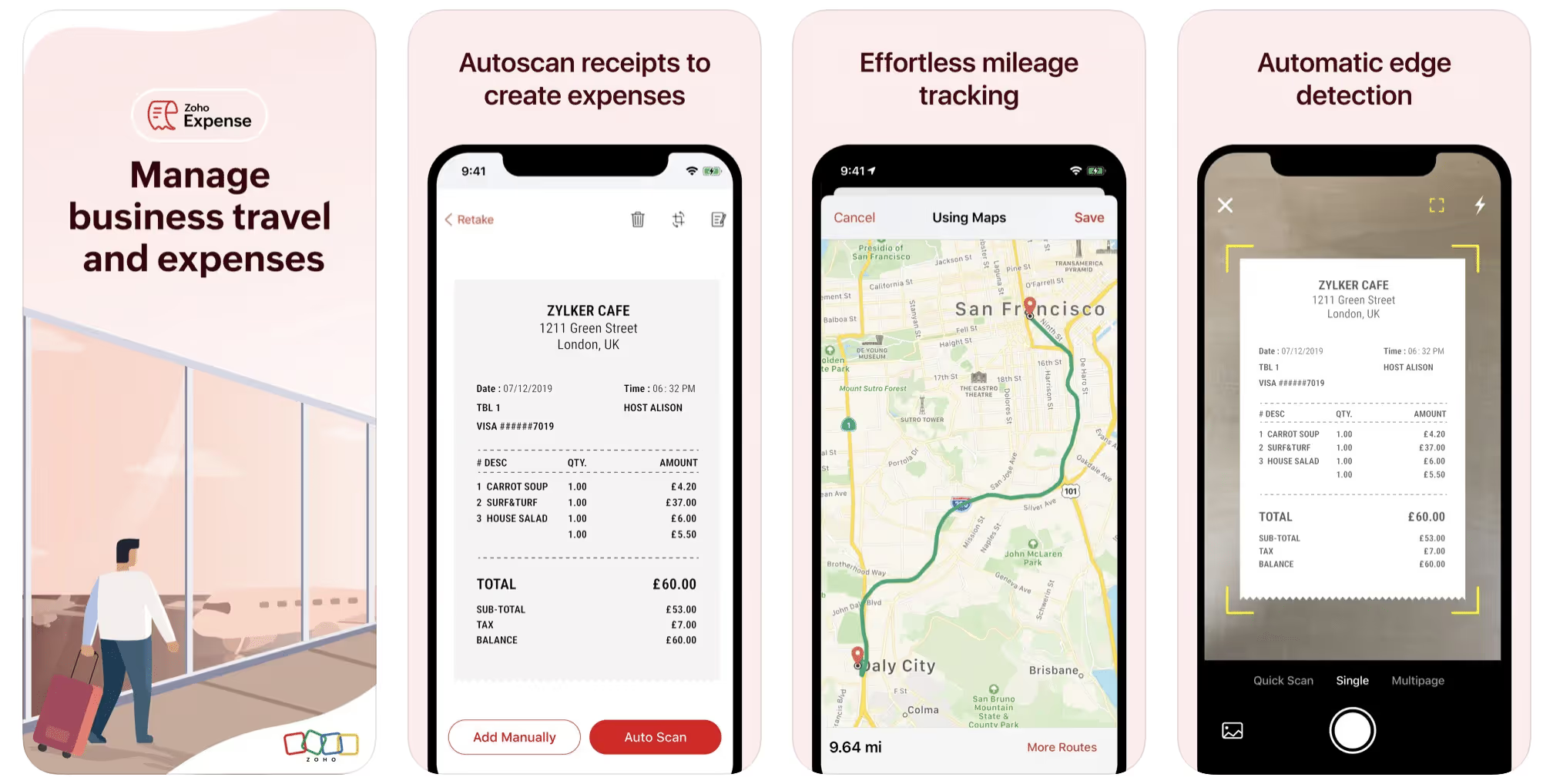
First up is Zoho Expense, which does exactly what its name says. This app is designed to allow companies to give employees a uniform way to create and submit expense reports. It can be used by individuals, including gig drivers, as well.
It includes a mileage tracker, as well as features that let you track other deductible expenses, including the ability to scan and record receipts.
Available on Android and Apple: Yes
Ratings: 4.8 stars on App Store, 4.7 stars on Google Play
Free Version: Yes
Subscription price: $3 per month, billed annually
Created specifically for gig drivers: No
2. Quickbooks Online
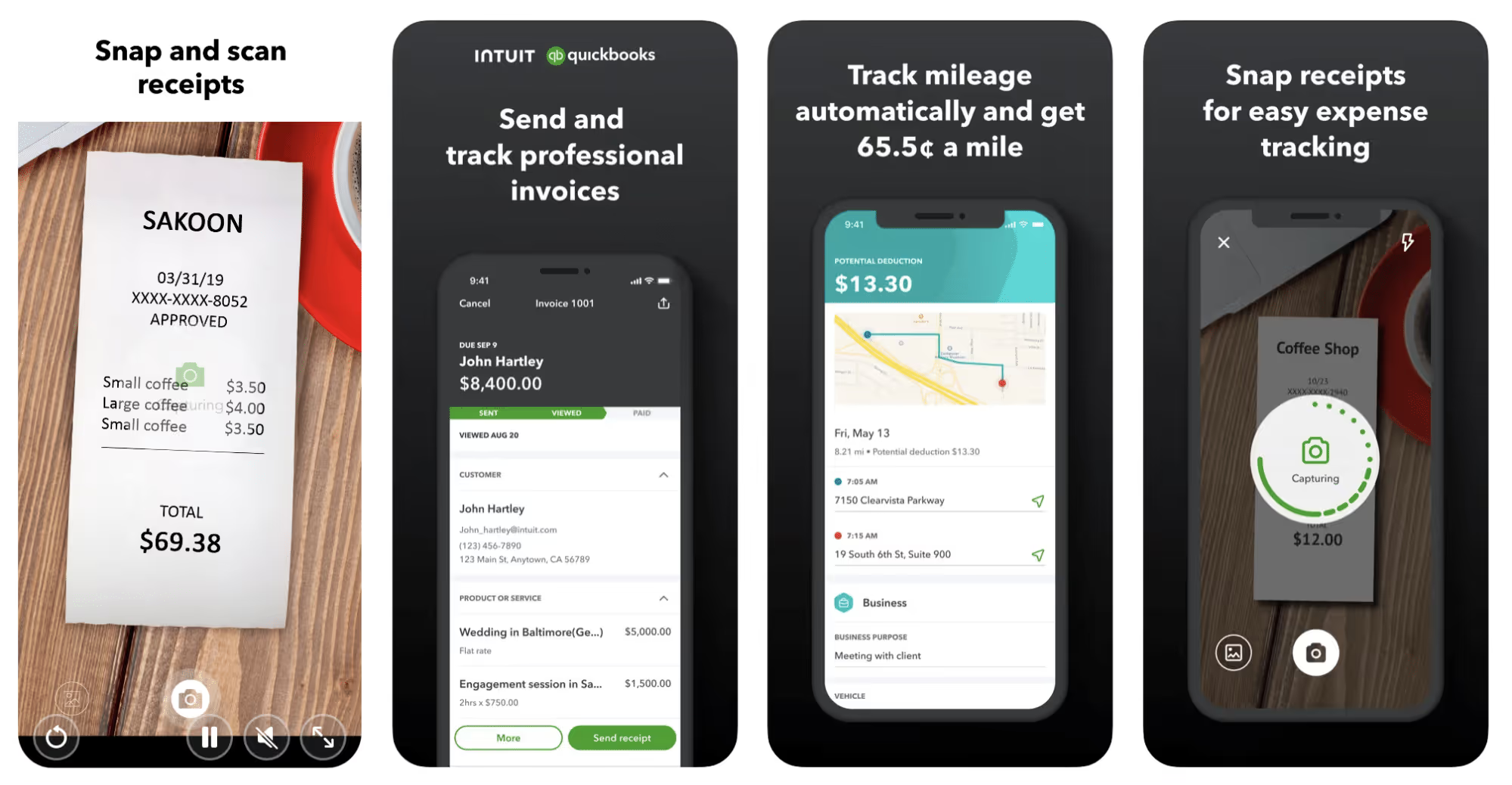
Quickbooks Online is a cloud-based app that allows you to track your mileage, earnings, and expenses. The information you enter can then be used to generate various reports that prepare you for tax time. It also allows you to create graphs that illustrate your cash flow, and includes a receipt scanner so you can instantly record deductible expenses. Quickbooks is popular, highly reliable, and designed mainly to help people keep track of their small businesses.
Available on Android and Apple: Yes
Ratings: 4.7 stars on App Store, 4.4 stars on Google Play
Free version: 30-day free trial
Subscription price: $15 per month for basic version if purchased for 3 months or more
Created specifically for gig drivers: No
Source: quickbooks.intuit.com
3. Shoeboxed
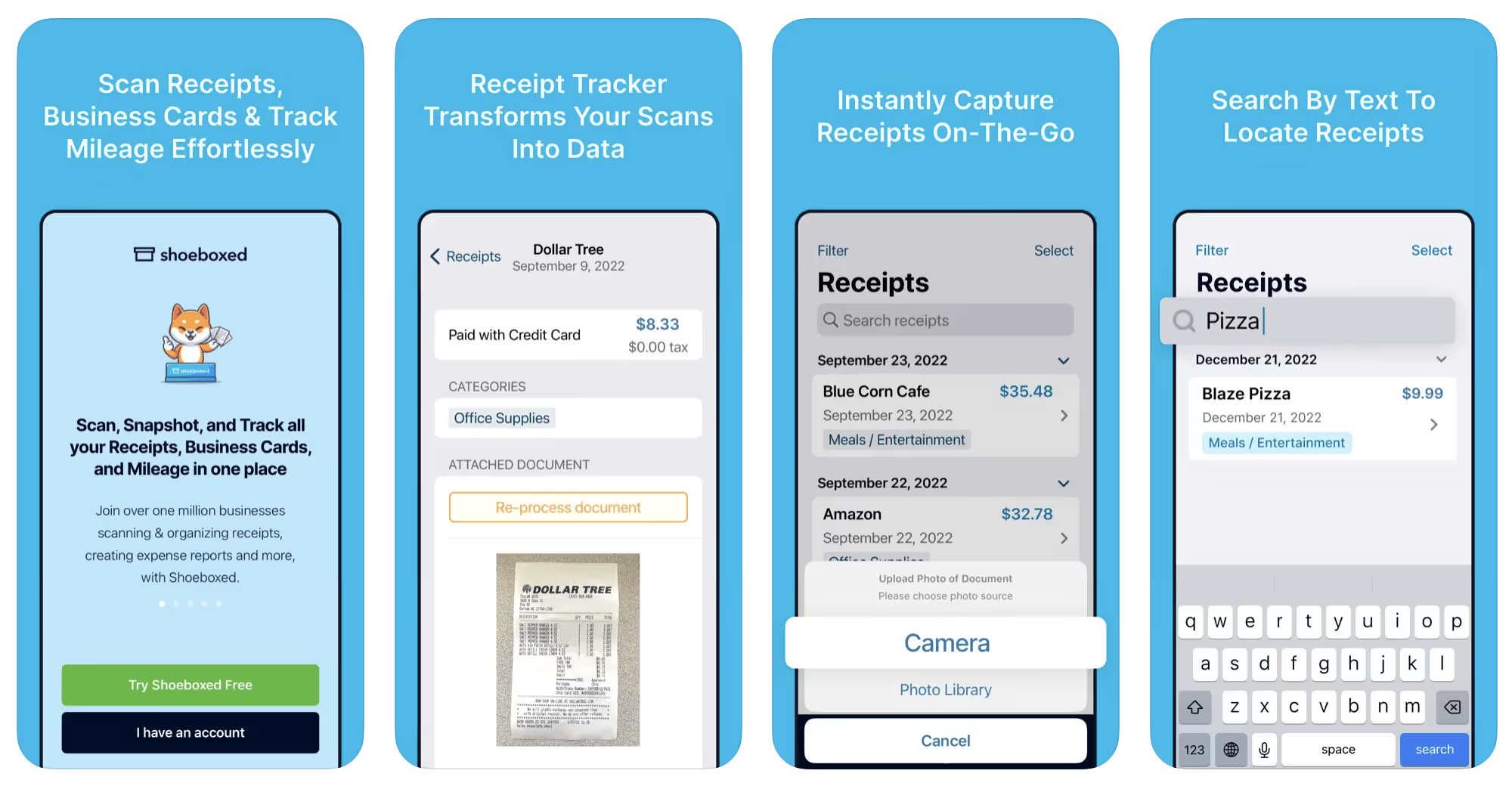
Shoeboxed started in 2007 as a service for scanning paper receipts into digital form. Now the app offers a free mileage tracker and has enabled users to scan receipts directly. It touts itself as the best mileage tracking app for DoorDash, but there are some elements missing that Dashers might like to have. While it provides features that record your expenses and prepare you for tax season, it doesn’t automatically track your earnings. The mileage tracker has a system where you can drop pins along your routes to make the tracking more precise, identifying those legs of a trip that you make for business purposes. The mileage tracker is “free” once you sign up for the basic version.
Available on Android and Apple: Yes
Ratings: 4.5 stars on App Store, 2.3 stars on Google Play
Free version: No
Subscription price: $18 per month for basic version
Created specifically for gig drivers: No
Source: blog.shoeboxed.com
4. Stride
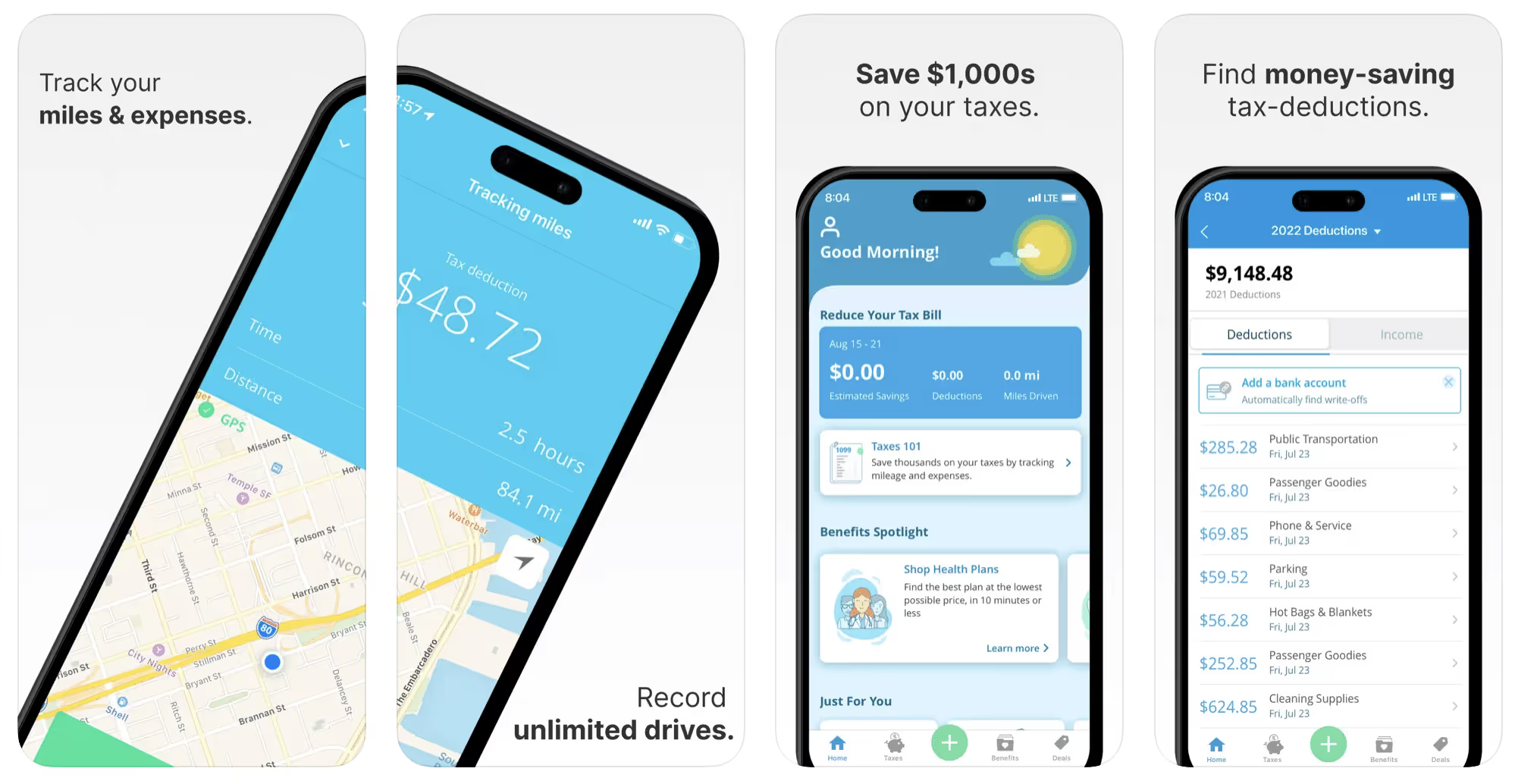
This free mileage tracker does a fair job of keeping track of the distances you rack up while gig driving, but it doesn’t automatically track earnings. It can be a big help, though, in tracking your expenses. You can link Stride to your bank account, and it will automatically scan your expenses to identify items you can potentially deduct. The app is totally free. This could make it the best free mileage tracker app, but there is a small price to pay. The app will persistently push you to consider various insurance plans that they are affiliated with. If you don’t mind that, this is a solid mileage tracker, even if it doesn’t track your earnings.
Available on Android and Apple: Yes
Ratings: 4.8 stars on App Store, 4.6 stars on Google Play
Free version: Yes
Subscription price: None. The app is free.
Created specifically for gig drivers: No
5. Gridwise
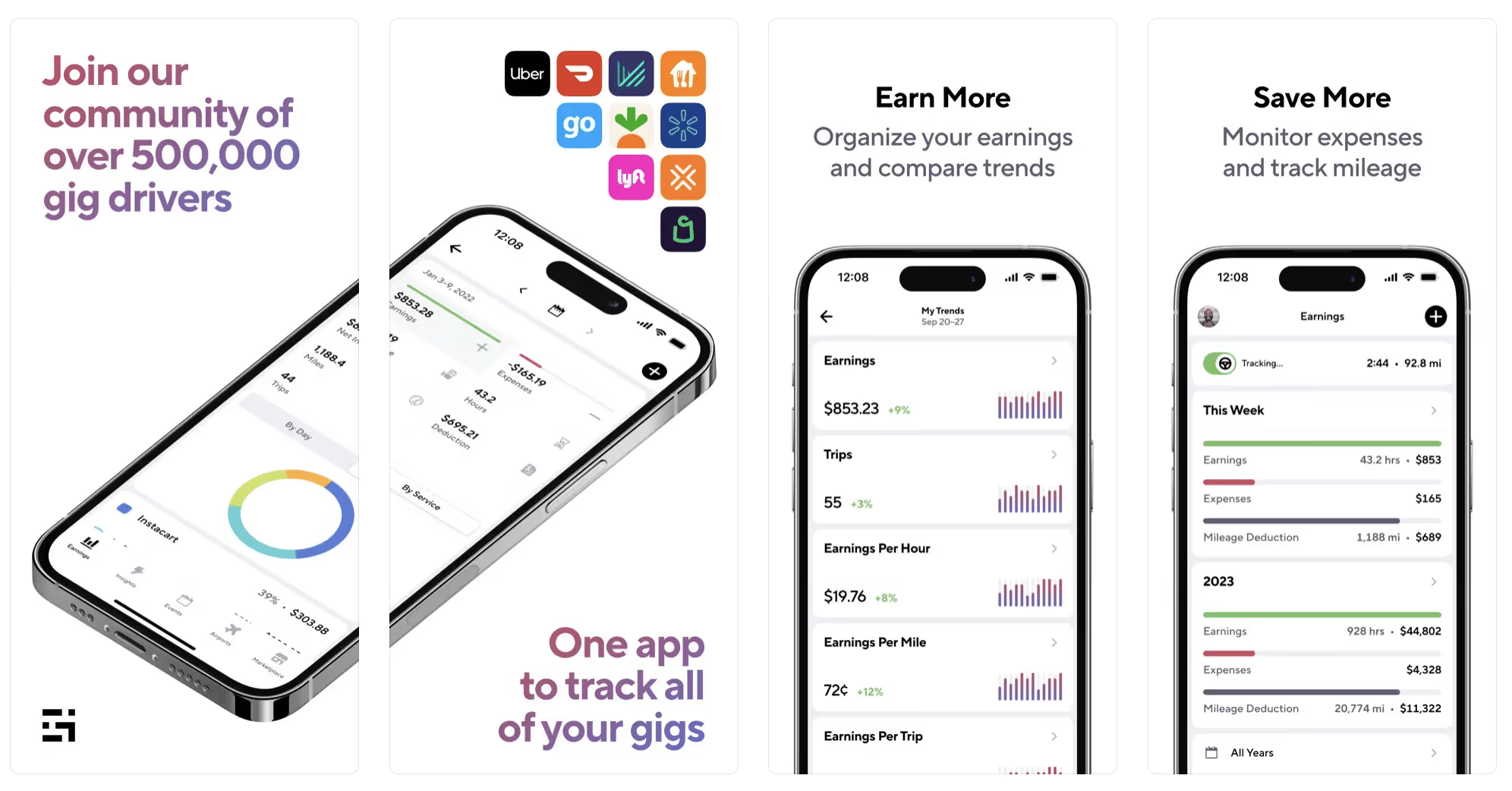
Gridwise has a free mileage tracker and free features that record your income and expenses. It gives you access to insurance and benefits, as well as insights about the best times and places to make the most money while gig driving. The Gridwise mileage tracker captures all the miles you drive while you’re on your driving shift, and it can be used if you have other trips you need to make which qualify as business travel.
Drivers love it because it is geared toward the needs of rideshare and delivery workers, providing free information about airport departures and arrivals, event start and let out times, weather, traffic, and more. The Gridwise Plus subscription adds value by providing additional insights and reports, discounts on benefits, the ability to export data in .csv format,, and more.
Available on Android and Apple: Yes
Ratings: 4.9 stars on App Store, 4.6 stars on Google Play
Free version: Yes
Subscription price: $9.95 per month for Gridwise Plus, or $95.99 per year (a $23.41 savings)
Created specifically for gig drivers: Yes!
What is the best mileage tracking app?
Now that we’ve checked them all out, we’re positive about the answer to that. Hands down, it’s Gridwise. Are we biased? You bet we are! But drivers love it too. Gridwise is the best mileage tracker app—and so much more. So many of the features are free, and the subscription to Gridwise Plus will pay for itself with additional insights to boost your earnings and deeper discounts on products and services.
Most important, Gridwise is designed specifically for gig drivers by experts who were once gig drivers themselves! Knowing what gig drivers need is a crucial step in creating an app that rideshare and delivery drivers can really use! Here are a few of the features, besides mileage tracking:
- seamless earnings tracking
- automatic, on/off toggle and manual mileage tracking
- mileage categorization
- airport, traffic, weather, and events information
- insights into where to drive and when to drive
- reports showing earnings across the platforms you use
- discounts on countless products and services for drivers
- additional resources for finding side gigs
- an informative and comprehensive blog
- affordable benefits, including insurance, medical, dental, and alternative practitioner discounts
- a community of drivers just like you
Don’t settle for just any app. Get the best mileage tracker, and so much more, from Gridwise!
[elementor-template id="21599"]

What Records Do Gig Drivers Need To Keep Track Of For Taxes?
* Gridwise does not provide tax, legal, or accounting advice. This material has been prepared for information purposes only, and is not intended to provide, and should not be relied on for tax, legal, or accounting advice. You should consult your own tax, legal, and accounting advisors before filing your return.
Record keeping? Who signed up for that? As a gig driver, it’s part of what you need to do to keep your business running. Don’t worry. It’s not as complicated as you might have been led to believe. This post will show you what you need to keep track of and the best ways to gather and preserve your tax-related records. We will cover
- How record keeping can help reduce income tax for freelancers
- Taxes and freelance work: Record keeping requirements
- Mileage tracking: Motives and methods
- More deductions and records to keep
- Make tax time easier
How record keeping can reduce income tax for freelancers
Tax time is not “fun time” for rideshare and delivery drivers. It’s easy to get used to watching your earnings pile up and come to believe they are all yours. Unfortunately, that isn’t the case. Gig work taxes can be especially painful because no one takes them out of your earnings for you, until the tax authorities insist that you do it for yourself.
You will need to show the tax authorities your income records, and they will gladly tell you to send them what they determine to be their fair share. Think that’s not fair? You’re not alone, but that doesn’t mean you’re going to get out of paying gig work taxes.
But you can find ways to pay the smallest amount that is legal and possible. The best way to defend yourself against having to pay astronomical amounts when you file your return is to know what expenses you can deduct from your gross income. When you subtract deductible expenses from your gross income, there is less left over to be taxed. This reduces the amount they can hit you with gig worker taxes. and can make your tax bill substantially lower.
While you want to keep good records so as to be in compliance with taxation entities such as the IRS, you also want to ensure you have proof of every last deductible expense you have accrued during the year. There are other records you must keep as well. Let’s look at some of the considerations you have, realizing that you now need to know how to do taxes as a freelancer.
Taxes and freelance work: Record keeping requirements
So many gig drivers fail to understand the responsibilities they have as independent contractors. Those who work part time for very few hours may even believe they don’t have to report the income they get from their driving gig payments. That would be a big mistake!
The company or companies you work for report your income to the IRS and state tax authorities. If you fail to report that income, you will risk some rather painful penalties. The IRS taxing side hustles is as much of a thing as the IRS taxing income from any other job. Your best bet is to report what you’ve earned, honestly and completely, and comply with other record keeping requirements such as
- gross income
- deductions and credits
- purchases (items you purchase and resell, such as snacks or bottled water)
- a log of all your mileage (or vehicle expenses, if greater)
- a list of all expenses and assets, such as utilities and other expenses associated with having a home office and equipment
- machinery and furniture you own, including when it was acquired, how much it cost, whether you previously took deductions on it, and selling price, if applicable (this includes your vehicle)
More things to consider:
- Pay attention to the retention of your records. You’ll need to keep all tax-return-related items— including income, deductions, and any tax credits reported— until the period of limitations runs out (3 years from date you filed, or 2 years from when you paid tax. If you have employees, keep your records for at least 4 years.)
- If you want to avoid paying self-employed taxes, you may want to set up a corporation or Limited Liability Corporation (LLC) for your business. This allows you to separate all your gig driving earnings from personal income, and permits you to take advantage of the additional advantages of working through a corporation. This includes exemption from self-employment taxes. You can learn more about how to pay self-employment taxes, if you opt for that, in this post from Keeper.
- You should always keep a separate checking account for your business, for convenience as well as clarity. While this is not a legal requirement, it is a smart move if you want to have an easier time managing your business.
- You are required, as an independent contractor, to file your taxes quarterly. Check out this Gridwise blog post for more information about quarterly tax payments and other matters that make filing delivery, Lyft and Uber taxes easier.
Mileage tracking: Motives and methods
Why you need to be meticulous about mileage
Mileage deduction, or the costs of operating your vehicle, will be the most important item to account for when you consider how to file taxes as a freelancer. While mileage is an important deduction for all independent contractors, as you might imagine, it’s even more essential for rideshare and delivery drivers.
There are two ways of keeping track of your mileage deduction. One is to use the IRS’ standard mileage deduction, which for 2022 is 58.5 cents per mile. This number takes into account the costs of operating your vehicle, from fuel and maintenance to registration, insurance, and depreciation. Alternatively, you can calculate all your own vehicle operating costs, but only after your first year of using the vehicle. You may discover that this second option allows you to have more money deducted from your taxable income. Learn more about the options for deducting your mileage in this Gridwise post.
No matter which way you decide to calculate the deductions for your mileage, you need to know what mileage you can and cannot deduct.
You can deduct
- miles driven to and from home when you go out to drive or deliver
- miles you accrue during your trips
- miles you drive on any other trips you make that are necessary as part of your business.
Examples:
- driving to return a lost cell phone or to an Uber Hub or another physical location where your company might make driver support available
- driving to pick up supplies, to get gas, or to have your car cleaned, serviced, or detailed, etc.
You cannot deduct
- miles you drive for personal trips
- miles for any trips you take that do not directly affect your business
Note: If imagining yourself becoming the not-so-proud owner of a shoebox filled with paper receipts gives you nightmares, stop worrying. Electronic records of purchases will satisfy reporting requirements. If you use cash, you can scan copies of your receipts, in some cases, right into your recording software or app. Gridwise and Keeper give you a simple to use interface that keeps all your receipts recorded without the messy pile of paper.
Mileage tracking methods
By now, you’re probably convinced that tracking mileage is important, despite all the other things drivers have to do. Now, let’s look at your options for keeping accurate records.
- Manual tracking: You can keep a logbook where you list every trip you make, starting and ending mileage, the date, and purpose of the trip. While this would work, it’s certainly not convenient. Besides, if that logbook gets lost, your plans for having a nice, fat tax deduction will go by the wayside.
- Spreadsheet: This is a bit more convenient and sophisticated way of tracking your business mileage. You’d need to be meticulous about making your entries, though. Even if you keep a spreadsheet app on your phone, it could be time consuming and inconvenient to keep doing it with all the other things going on in a rideshare or delivery driver’s day to day life.
- GPS-based mileage tracking apps: There are a bunch of apps that track mileage based on your GPS location, and most of them are pretty accurate and far more convenient than taking constant readings of your odometer. Your driving apps, such as Uber, Lyft, DoorDash, or Instacart, may also track your mileage, but be careful here. They will only track the miles you drive while you’re on a trip or delivery. They don’t count the miles you drive going to pick up a customer or when you make your move toward a restaurant or store.
Gridwise, on the other hand, will track all the miles you clock while you’re on your shift. All you need to do is make sure you start tracking the minute you leave home, and every gig driving mile will be logged. - OBD-II mileage tracking systems: There are plug-in modules that assess your vehicle’s mechanical health and track your miles. However, many authorities question the ability of OBD-II mileage tracking systems to get get accurate odometer readings. Insurance companies don’t consider them to be accurate enough gauges of odometer readings.
While mileage is a crucial deduction when you’re preparing your Uber, Lyft, or DoorDash taxes, it isn’t the only expense you’ll want to record.
More deductions and records to keep
Expenses you can deduct
You’re entitled to include the cost of other expenses that are directly related to your driving business. These include
- vehicle expenses
- equipment for your car and home office
- extra services and subscriptions
- business tools, including apps and software
You can learn much more about gig driver expenses that are eligible for deduction in this Gridwise article.
Ways to track and preserve deductible expenses
- The manual method: Just like you can with mileage, it’s possible to use a manual method, but in addition to logging each expense into a ledger, you would also need to keep physical receipts.
- Spreadsheets: You can record your expenses on a spreadsheet. This is somewhat less awkward than manually logging mileage, but there still will be plenty of room for failing to remember the case of water you bought for your customers, or losing the receipt from the thermal bag you purchased.
- Accounting software: You can use software that helps you track your expenses. This method usually interfaces well with any tax preparation software you or your tax professional might use.
- Gridwise: There are other apps that help you track your expenses, but Gridwise is designed specifically for gig drivers. It automatically tracks earnings and mileage, and lets you record your expenses the minute they come up. Gridwise’s partnership with Keeper gives you the ability to scan receipts and access a tax professional. This is a seamless way to record your expenses and a big help in learning how to file Uber taxes. Gridwise even provides .csv output, so you can feed your Gridwise data directly into tax preparation software. Check out what Gridwise and Keeper will do to super-charge your tax filing powers.
Organizing and categorizing expenses
Before you even begin to record expenses, you’ll want to set up categories for them. You can start by reviewing the categories listed above and checking out the Gridwise post that lists possible deductions.
If you’d like to learn more about how to categorize expenses, there is additional information available. This article from Motley Fool lists all possible categories any freelancer might use and also gives tips on how to customize them for your driving business.
One last tip
Using Gridwise, particularly for tracking mileage, is the easiest way to be in compliance with the IRS’ rules for deductible mileage. Gridwise tracks all the miles you drive for your gig, beyond what your company’s app might record. At the same time, you can log on and off Gridwise when you start and end your shift, so personal miles won’t be recorded. This eliminates confusion while capturing every deductible mile.
Gridwise Tax Help, a partnership with Keeper, has been created specifically to serve gig drivers. It provides affordable and easy ways to record expenses, scan receipts, and find deductions by analyzing your expenditures. Read about free resources from Keeper you can use to be fully prepared for tax season, and get all your earnings and expenses on the record.
Get the world’s best assistant for rideshare and delivery drivers, and tax help too.
Make tax time easier now!

Gridwise Academy - Finding Rides
Table of Contents
https://youtu.be/aDRYtCkxDyc
Lecture 1: The best times to drive
Follow the movement patterns of the people in your city.
- Morning rush hour
- Evening rush hour
- Sports, concerts, and shows
- Airport schedule
- Follow the alcohol
Rush Hour
The morning rush hour is a great time to find riders because many have to get to work. Next is lunchtime as hungry office workers head out for food, and others look to delivery. As the workday comes to an end, the evening rush hour is another great time to find rides as the same workers you drove to work have to get back home.
Sports, Concerts, and Shows
Think about the weekends in your city. What events are happening around you this weekend that the people in your city will need transportation to and from? Sporting events and concerts are major drivers of demand.
Airports
Go even further by studying your airport arrival and departure flights to get a sense of how many people are coming into or out of town.
Follow the Alcohol
Follow the drinking and nightlife scene in your city. Rather than risk a DUI many revelers opt for rideshare solutions. You’ll most likely find increased demands around last calls in areas of your city where the bars and nightclubs are. The best times to drive are the times where the people in your city are moving and in need of transportation. Once you understand this concept the question of when should you drive becomes less daunting.
Gridwise Events List
Check our events list to see the events happening near you Click Here
If you aren’t sure of the movement patterns of your city, take a clue from the driver apps. They basically tell you when and where the rides are from the surge map. Study when and where surge happens in your city and write down these locations and times. By keeping track of the surge pattern, you’ll be able to pinpoint the demand spots in your market. Try this in your driver app now!
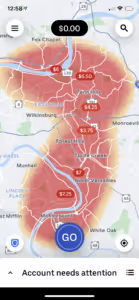
Take Action for Lecture 1
- Look at the events happening in your city this weekend in the Gridwise app
- Take note of your airport arrivals and departure numbers in the next 4 hours in the Gridwise app
- Write down the top events that may attract out of town visitors and the peak arrivals and departure times at your airport
- Write down the times you think are the best to drive based on step 3 above
- Let us know in the comments section below!
Lecture 2: How the Surge Works
Ideally, the number of drivers in a given area will be exactly equal to the number of riders in a given area. So whenever there are more riders than drivers, rideshare services will launch a surge. This doesn’t necessarily mean there are a ton of potential riders, there is just an imbalance. So the surge is simply meant to do one thing: Redistribute drivers.
The surge is a way to get drivers onto the road when passengers are looking for rides. Random Uber Employee Tweet
How to Spot Surge In Your Driver App
The surge will be displayed as colored areas on the map in both the Uber & Lyft driver apps. Take a look at the below images for examples of what this looks like in-app.
The surge is a way to get drivers onto the road when passengers are looking for rides. When there are too many people looking for trips, for example when a sporting event lets out, there can be a sudden spike of wait times as all the available drivers nearby are booked.
By temporarily increasing prices, surge can boost the supply of drivers in that area. This increase in driver supply can be from a combination of drivers logging on for the surge payouts, and drivers from surrounding areas relocating to catch the surge.
As more and more drivers flock to the surge the number of passengers looking for rides balances out and demand stabilizes. When this happens the surge will slowly decrease and eventually disappear. The entire system is automated and completely dynamic, which means it adapts to the current situation. Think about how you can use this knowledge to your advantage.
The dynamic design of the surge system allows you to use this to your advantage. By understanding the supply and demand patterns across your city, you can predict when and where surge happens. So how do you do it?
- Brave the bars
- Wake up for the morning rush
- Know about big events
- Get out in the rain
Brave the bars
The late-night bar crowd on Thursday’s, Friday’s, and Wednesday’s can be a gold mine for the driver willing to deal with a more “exuberant” crowd. From about 9:00 – 11:00 you can find riders that are headed to the bars from the more docile parts of the city. Then from 1:30 – 3:00 you can catch riders in popular going-out areas who will need a designated driver to get them back home. These areas will almost always have big increases in demand which turn into predictable and sustainable surges.
Wake up for the morning rush
Demand during the early morning hours from 6:00 – 10:00 is very high in most cities because of the high volume of commuters either going to work, going to the airport, or leaving the airport. Depending on your city, you can find workers either coming from the suburbs or more residential parts of the city into the downtown areas.
Mornings are also a great time to catch business travelers going to and coming from airports. You can use your Gridwise app to know when flights are coming in and catch a big fare at the airport. Or hang near hotels and find a traveler catching their early flight.
Know about big events
If you want to predict rider demand look no further than your local sporting, concert, and theatre venues. When they are having some of their bigger events, hundreds to thousands of people will be looking for rides to their next destination after the event is over.
You can spend an hour looking through multiple websites for events or you can check the Gridwise events list.
Get out in the rain
Many drivers have a love/hate relationship with the rain. While it can be a pain to drive in a downpour, there is almost always a significant amount of demand during a rainstorm because riders who may have otherwise taken a long walk to their destination will decide to take a ride, while some drivers will decide it’s not worth it to try and drive.
Take Action for Lecture 2
- Open up your driver app and see if there are any surges happening in your area
- Check out the events listing for compound events in your city
- Check out the airport graph for arrivals and departure peaks
- Write down your weekend surge predictions by listing the hours you expect peak demand, and the areas you expect these to happen
Academia Gridwise - Navegación
Tabla de Contenidos
Lección 1: Aplicaciones de Navegación
Cada una tiene sus pros y contras, así que comencemos con cómo se parecen y difieren las herramientas de navegación. Cada herramienta de navegación funciona usando la ubicación GPS de tu teléfono inteligente para mostrarte indicaciones giro a giro.
- Navegación de Uber
- Navegación de Lyft
- Google Maps
- Apple Maps
- Waze
Navegación de Uber
Ya integrada en la aplicación del conductor para una experiencia de usuario fluida. Esto es muy conveniente cuando estás al volante ya que tienes menos cosas con las que lidiar en tu teléfono, aunque puede que no esté tan actualizada en las mejores rutas como las principales aplicaciones de navegación como Google o Waze. Esto es especialmente evidente cuando hay mucho tráfico o cuando hay cierres de carreteras y importantes retrasos por construcciones.
Navegación de Lyft
Al igual que la navegación de Uber, la navegación de Lyft también está integrada en la aplicación del conductor de Lyft para que puedas usarla sin problemas en cada viaje. La diferencia principal es que Lyft agregará pasajeros adicionales a tu cola automáticamente. Esto no es siempre lo que el conductor desea, así que asegúrate de desactivar nuevos viajes rápidamente después de aceptarlos para evitar esto.
Google Maps
Google Maps es familiar para muchos conductores, especialmente aquellos que trabajan con teléfonos inteligentes Android. Esta puede ser una elección natural de aplicación de navegación para quienes conocen Google. Una diferencia importante entre esta aplicación de navegación y las aplicaciones de conductor nativas son las actualizaciones de reducción de tráfico que pueden ser útiles cuando conduces en horas pico. Una desventaja es cambiar constantemente entre las aplicaciones del conductor y Google Maps porque esto no está integrado en las aplicaciones del conductor.
Navegación Waze
Utiliza datos de colaboración multitudinaria para predecir las mejores rutas en tiempo real, permitiéndote evitar atascos, policía, construcción u otros peligros viales. No está integrado con la aplicación del conductor, lo que significa que tienes que salir y cambiar de la aplicación del conductor a otra para usarla. Esto puede ser torpe, especialmente si estás al volante enfocándote en conducir.
Recomendamos usar las herramientas de navegación integradas cuando empiezas a conducir rideshare para mantener las cosas lo más simples posible. Ya tienes demasiadas cosas en marcha a la vez cuando comienzas a conducir para preocuparte por cambiar entre aplicaciones. Simplemente usa la navegación integrada en las aplicaciones del conductor para que puedas concentrarte en aprender el proceso de viaje. Primero domina el arte de aceptar notificaciones, recoger a tu pasajero y dejarlo de forma segura, todo dentro de la aplicación del conductor. Una vez que te sientas cómodo con el proceso de viaje, entonces explora las otras opciones disponibles para ti.
Acción para la Lección 1
- Descarga todas las aplicaciones de navegación anteriores y explora con ellas
- Encuentra la mejor herramienta de navegación que disfrutes y quédate con ella
Academia Gridwise - Tu Primer Viaje
Tabla de Contenidos
Lección 1: Qué esperar en tu primer viaje
Está bien estar nervioso en tu primer viaje
Muchos conductores nuevos están nerviosos en su primer viaje. Puede parecer intimidante manejar la aplicación del conductor, encontrar el camino por la ciudad, y luego recoger a un completo extraño. Sentir ansiedad es normal, así que no te preocupes por cometer errores porque la gente generalmente es amable y mejorarás con el tiempo.
Esto es lo que puedes esperar en tu primer viaje:
- Usar la aplicación del conductor
- Navegar hasta el lugar de recogida
- Saludar a tu primer pasajero
- Dejar a tu pasajero
- Prepararse para tu siguiente viaje
Entendiendo la aplicación del conductor
Uber hace que la experiencia de recogida sea muy sencilla en la aplicación. Cuando tocas Ir, se te emparejará con un pasajero y la aplicación cambiará a una vista de navegación que te dará indicaciones giro a giro en un mapa hacia el lugar de recogida.
Navegando hacia el lugar de recogida
Sigue las indicaciones en tu aplicación y una vez que llegues cerca de tu lugar de recogida, la aplicación iniciará un temporizador de espera y te dará la opción de iniciar el viaje. ¡No inicies el viaje hasta que el pasajero esté confirmado y en tu auto!
Saludando a tu primer pasajero
Antes de dejar entrar al pasajero a tu auto, aségúrate de identificarlo positivamente por el nombre que aparece en tu aplicación del conductor, y que también confirme tu nombre y placa. Asegúrate de hacerle saber que este es tu primer viaje, ya que esto les permite a ambos aligerar el ambiente, romper el hielo y, lo más importante, decirle al pasajero que tenga más paciencia contigo como conductor nuevo.
Dejando a tu pasajero
A medida que te acerques al punto de entrega, la aplicación del conductor te dará la opción de finalizar el viaje. Díle adiós a tu pasajero y simplemente finaliza el viaje para ver tu pago. Es importante finalizar el viaje solo cuando el pasajero salga de tu vehículo.
Preparándote para tu siguiente viaje
Finalizar un viaje te colocará automáticamente en la cola para aceptar el siguiente aviso disponible, así que asegúrate de ir Sin Conexión tocando el botón X si deseas tomar un descanso. Tomar un breve descanso después de tu primer viaje es importante para recomponerte y revisar tu auto en busca de artículos perdidos o basura.
Acción para la Lección 1
- Famíliarizate con tu aplicación del conductor
- Reúne tu kit de conductor como se describe en nuestra lección de limpieza y mantenimiento
- ¡Toma tu primer viaje!
20 Tips to help you make more money as a delivery (DoorDash Postmates Uber Eats Grubhub) driver
Being a delivery driver seems simple enough.
You get a ping on the app, you go to the restaurant, you pick up the order, and you drop it at the customer’s door. Easy, right? Well ... it can be. But the truth is, there’s a lot more to it than that.
Ask anyone who’s used to working rideshare and suddenly switches to deliveries in an attempt to make up for a severe passenger shortage. Those annoying riders you love to hate can seem far more appealing after you get up-close-and-personal with the broken bags, spilled food, slow service at restaurants, and complicated directions—not to mention inconsistent and often inadequate pay—that come with the delivery game.
Yet even with all those worries and inconveniences, there’s a lot to like about delivery driving.
For one thing, the business is on a huge upswing now. The COVID-19 crisis fueled the rocket that got delivery off the ground, and now that people are used to it, they’ll probably want to keep enjoying it.
Also, delivery is an almost-perfect alternative (or augmentation) to your rideshare gig. You still have flexible hours, you’re still in your car, and you still get to collect fees and tips. And if you want, you can even switch back and forth between rideshare and delivery, all on one shift.
Are you ready to become a delivery driver?
The companies you hear about most, Grubhub, DoorDash, Postmates, Instacart, and Uber Eats, are easy to join as a driver. If you already drive for Uber, all you have to do is change your settings to include deliveries.
Working for the other companies is a simple matter of downloading the app, signing up, and waiting for the background check and the rest of the application to clear.
Unless there’s some kind of problem, you’ll be a full-fledged delivery driver in a day or three. You’ll be provided with some essential supplies, one of which is a thermal bag, usually decorated with the company logo.
Who needs a fancy thermal bag?
You do.
Sure, most restaurants bag their wares, but those sacks aren’t very strong. They sometimes break, and often they don’t have enough insulation to keep food and drinks at the right temperatures like nice, thick thermal bags do.
Those bags can also stop spills from spreading, and prevent nasty smells and stains from seeping into your upholstery and taking up residence.
Along with the bag, you may receive a company credit card of sorts. But don’t salivate yet; as nice as it would be, you’re not getting a lush expense account.
The card is for paying the restaurant for your customer’s purchase through the company’s app. The restaurant will swipe it and that will be it. You can’t charge anything else. (#%&!#&$!)
You can use the app for delivery without using the card, at least while you wait for it to arrive so you can activate it. Until then, you’ll only be called for deliveries that are prepaid through to the eatery.
That’s a good way to start out until you catch on to the delivery game, but it does restrict the number of deliveries available. You’ll be much busier once you activate the card, so you’ll want to do that as soon as you receive it.
Common issues to watch out for
If everything goes smoothly, you should be up and running in a fairly short amount of time. But like all endeavors, there are variables. Besides human error and navigation snafus, some other stuff can make your delivery run unusual.
For instance, there’s the driving distance between your car and the restaurant, plus the trip from the restaurant to the customer’s door to consider. When you take the call, you might not have all that information.
In many cases you do get it, and the app will actually show you how long the delivery should take—if all goes as planned. But do deliveries always run so smoothly? The keyword there is always, and the answer is of course not. Here are some other snafus to be prepared for.
The restaurant takes an ungodly amount of time to serve you
This happens a lot since at peak times, there can be tons of people in one place picking up their meals.
Also, restaurants (like humans) have bad days. They could be short-staffed, or working with one functioning fryer or grill instead of two or three. Don’t get short-tempered, but do take this possibility into consideration when you accept the call.
Whoops! You have to place the order for the customer
Who expected that, right? This can happen with some of the apps. You’ll be cruising down a highway when you accept a call, adjust your route to drive to the restaurant, and then discover ... the customer hasn’t placed the order yet.
Usually you can see this in the app when you go through the screens, but that’s not something you want to do while driving 65 mph, or while driving at all, for that matter.
You obviously have to pull over to see what the situation is. If you don’t catch it in time, you could arrive at the restaurant before you realize you have to place the order. Then you’ll have to wait 20 or 30 extra minutes for the food to be prepared.
Time is money, and you don’t get paid very much for waiting. On top of that, your customer could grow pretty hangry by the time you get that food delivered.
Some portion of the order spills in your car
We know what you’re thinking: If you avoid driving drunk people around, you’re protecting your car from disgusting smells—right? Wrong.
That spilt gorgonzola and garlic salad dressing your customer is salivating for, once dumped on your back seat, will offend your sense of smell and leave your customer hungry—and possibly mad at you.
Other items, like coffee and cola, can spill in the bag(s) and soak the food, rendering the comestibles you’re delivering worthless. Even though the spills aren’t on your vehicle’s pristine surfaces, the loss of the item (in the customer’s mind) will be ... on you.
You need ID from your customer, but he/she asked for contact-free delivery
Most of the time you won’t have to ask for ID unless the customer orders alcohol. If that is part of the order, you’ll typically know it in advance, and the customer will realize that ID needs to be shown.
Now you’ll probably laugh, but this actually happened. A customer asked for contact-free delivery, but the app wouldn’t close without a picture of her ID because it said she ordered alcohol. There was no booze in the order, but there was ... wait for it ... WINE VINEGAR DRESSING.
The AI in these apps is getting good, but the little robots in there need to work on their discernment skills. The driver had to shut down the app and call the company to get the order to clear. The customer got the order, but she didn’t get billed until the next day. Lucky for the driver, she left an awesome tip.
And now for your 20 helpful hints!
After reading this far, you may be starting to see the not-so-simple part of delivery driving. You’ll want to do things that avoid wasting time and not leave room for confusion or messes. The best delivery drivers out there are well-prepared, and they work smart, fast, and thoroughly. Here are 20 things you can do to be one of them.
- Get a bag. If your company provides one, great, but get another one. If the company doesn’t provide any, buy at least two. You won’t believe how much food people can order. It might not fit in a single bag, and we already told you what can happen if you don’t use one.
- Get a box or crate. This is how you keep everything upright and prevent spills. It can also help to keep food away from the other stuff in your vehicle, such as windshield washer fluid and motor oil.
- Get a tarp. Some food orders (like deluxe-sized pizzas and 4-foot hoagies) won’t fit in your thermal bag OR your crate. Drape the tarp to cover the floor of your cargo area or the back seat to prevent damage to your vehicle.
- Activate the company card. If you don’t, you’re going to miss out on a lot of orders.
- Bring foul weather gear. You’re going to be in and out of your vehicle far more than you’ve ever been with rideshare.
- Equip your car with cleaning supplies. If that gorgonzola-garlic spill happens, you’ll want to mop up as much as you can ... ASAP.
- Un-bag beverages and put them in your cup holders. That way, they’re far less likely to spill all over the place.
- Carry an oven glove or better yet, two. Some orders, especially soups, stews, or trays of lasagna, can be hot enough to burn your hands—and are easy to drop.
- Make cleanliness a priority. Check your bag and crate often for spills and smears, and keep them clean. They may not stink right away, but a foul stench could develop within hours.
- Keep your hands on the wheel. If you’re doing anything more complicated than accepting a ping, PULL OVER to interact with the app.
- Observe your app. If you’re not sure whether you have to place the order, check it out before you travel to the restaurant. And what about alcohol and ID?
- Scan the restaurant. Many have pickup sections that are separate from the food service area. Don’t stand in a line unless you know it’s the right one.
- Observe all policies within the restaurant. For instance, you might have to wear a mask and/or abide by social distancing in the space.
- Watch the app for combined orders. The company will often double you up with two or more deliveries in one trip, if they’re coming from the same eatery or a place nearby, and/or are being delivered in close proximity. Don’t miss picking up the extra food or knowing where it goes.
- Carry a sharpie pen with you to mark the bags, especially when you’re making a run for two or more customers. Would you want to get Kung Pao chicken when you ordered vegetarian chop suey? Didn’t think so.
- Watch for cancellations. They will almost always come before you get to the restaurant, but you won’t want to be there picking up a bag of food nobody’s going to pay for.
- Pack up some extra napkins, utensils, straws, and condiments. When you go out of your way to keep your customers happy, they’ll be more likely to give you big tips.
- If there’s too much to carry in one trip, make as many as it takes. There’s no award for carrying the most bags with two arms ... and then dropping three containers of soup in the driveway.
- Always bring your insulated bag(s) or a crate with you when you’re picking up a large order. This will make it easier to manage, and lessens the risk of broken paper or plastic bags.
- Follow the customer’s instructions, always. If you have questions, CALL THEM. If you communicate clearly, and graciously honor their wishes (within reason, of course), you’re going to make lots of great tips—and you’ll be that best driver out there.
But most importantly, track your earnings!
You simply cannot improve what you don’t measure. That’s why it’s important for every driver to understand how much they’re earning per service.
Drivers can use Gridwise to track their mileage, and earnings, for free, so you can understand what apps are making you the most money.
So if you don’t already have Gridwise app, download it now for free!
So what are you waiting for? Download Gridwise and start tracking your earnings now!!!!

The Uber Background Check...What They’re Looking For How Long It Takes and Everything Else You Need to Know
It’s part of the preliminaries
Signing up with Uber is fairly simple, and you’re in control of most of it. Upload your license, registration, and proof of insurance, and you’re almost there.
But the final part of applying to be a driver, the background check, is a little more complex and isn’t something you can find out about on the spot. You’ll have to wait until Uber has completed a full check of your driving history and criminal record to make sure letting you drive for the company isn’t a risky proposition.
The wait, in most cases, isn’t that long. You’ll usually hear back from Uber within three to five days unless there are delays, such as county records that aren’t available electronically.
Who’s looking into your background?
Uber uses a third party company, Checkr, to perform background checks on potential drivers. If your check comes back clean, an Uber representative will contact you after the company has had time to review it. Be patient. Once Uber is confident that your background doesn’t pose a risk, if everything else is in order they will be happy to welcome you as a driver.
Uber will also contact you if anything turns up on your record that could make you an unsafe driver.
While you’re waiting for the results of your background check, you can log into Checkr’s Candidate Portal, fill out a brief online form, and find out your status.
What are they looking for?
You may have heard that Uber often gets sued by riders, drivers, and even the states where the company operates. Because of the litigation risk, Uber must protect itself from any liability associated with exposing a potentially dangerous person to the public. Background checks vastly reduce that liability.
Equally or even more important than the threat of litigation is Uber’s responsibility to keep riders and drivers safe. That’s why your DMV records, as well as any criminal records, will be thoroughly reviewed during this phase of your onboarding with Uber.
To pass the background check, you must have a valid driver’s license from a U.S. state for at least one year, and for at least three years if you’re 22 or younger. (Just in case you were wondering, this time requirement doesn’t include learner’s permit driving time.)
Your license must not have any disqualifying records, which might include:
- Major moving violations, such as driving under the influence of alcohol or drugs (DUI) or reckless driving, within the last seven years
- More than three minor moving violations in the past three years, such as speeding tickets (20+ mph over the speed limit), or failure to obey traffic laws
If you have a criminal record, it must be free of:
- Felony convictions
- Violent crimes
- Sexual offenses for the last seven years
- Outstanding charges that haven’t yet been resolved in your favor
Note that this is a general list of qualifications; some states have stricter standards than others. In California, for example, you must not have had a DUI conviction within the last ten years.
In New York City, rather than background checks being performed by Checkr, the Taxi and Limousine Commission (TLC) will perform the check as part of its licensing procedure. You must be licensed by the TLC to drive for Uber in New York City.
Check your locality for the standards and the number of years required for Uber to clear your background check and allow you to drive.
Will they check my credit?
No, Uber will not check your credit unless you’re renting a car through them. If you’re using your own car to drive for Uber, you won’t need to worry about a credit check.
Is all this checking confidential?
Yes, background checks are completely confidential. Personnel at Checkr, as well as those at Uber who review the results, are forbidden from sharing information about you outside the purpose of conducting the background check and determining if you qualify to be a driver.
What’s this background check going to cost me?
The background check is totally covered by Uber. It won’t cost you anything except the time and trouble of submitting your information and waiting for the results.
Can I monitor the background check process?
Uber won’t usually contact you until the background check is complete. If you’re curious about how it’s coming along, you can visit Checkr’s Candidate Portal, or check your status in the Uber app by tapping My Profile. You’ll be able to see what your status is based on the word used to describe it. For instance …
- Onboarding is Uber’s way of saying your documents and background check are under review;
- Waitlisted can mean there are issues with your documents. Or, if you’re already a driver, Uber might be re-running your background check;
- Consider is a yellow light that could turn red. It means your background check is being closely reviewed because there are issues;
- Active means you’re good to go. You can move into driver mode and start earning money;
- Rejected is exactly what the word implies: you didn’t get accepted, or you were deactivated. You can try to reapply, but your first step is finding out why you weren’t approved.
What can I do if I get rejected?
First, don’t panic; mistakes can be made during the background check. If you believe that you meet all the qualifications to be a driver, and you’ve been rejected, it’s worth contacting both Uber and Checkr to find out what’s going on.
If a problem is found with the background report, you’ll receive an email from Checkr, so you can first try replying to that. Checkr doesn’t have the last word, though, when it comes to whether or not you’ll be activated.
If you can get Checkr to amend the report by correcting the error, you’ll then have to re-submit it to Uber.
Remember, however, that Uber cannot do anything to change the results of your background check. Rather, the company uses the findings to make a determination as to whether you’re eligible to drive.
If you want an explanation about why you’ve been rejected, you can request that by getting in touch with Uber. You can call or email, but for something this personal and important, you may want to visit an Uber Hub in person. Here’s a list of all the hubs with addresses, driving directions, phone numbers, and business hours.
Although it’s important to advocate for yourself, Uber officials won’t change their minds about the results unless there really is something incomplete or inaccurate in your original background report.
Once it’s over, will I have to go through the background check again?
Uber will repeat the background check at least once a year. They’ll want to know whether you’ve received any recent citations or if any new criminal charges have been filed against you.
As long as Uber’s standards remain the same from year to year, and you haven’t had any new citations or criminal charges, you’ll remain in good standing with the company. If, on the other hand, Uber does change its standards and your record doesn’t meet them, you could be deactivated.
It is also possible that another employee could review your background check after the first review, and make a different decision. It always pays to contact Uber if you have questions about your status as a driver, and why it might have changed.
Be safe, stay safe
Being a rideshare driver requires you to be safe and responsible, both on and off the road. Protect yourself, protect your riders, and keep the Uber community safe.
Instacart’s on a hiring spree! What’s in it for you
There’s nothing like stating the obvious: The gig economy has been turned upside-down these past few months. Most drivers prefer carrying passengers over doing deliveries, mainly because passenger rides are more lucrative and easier to come by. Delivering food involves parking, getting in and out of the car, carrying sometimes heavy loads, possibly spilling potent-smelling foodstuffs in your nice, clean car, and after all that … not getting much money. Before COVID-19, most drivers weren’t all that excited to work for delivery companies because they didn’t have to. But now, everything is different.
The big gig shift
There’s still a lot of fear over COVID-19 and all the risks associated with its spread. That, combined with government stay-at-home and shelter-in-place orders, has decimated much of the driving business. While we certainly expect that the day will come when people resume going to and from work, then out to dinner, drinks, and/or large events, right now driving is a very sporadic and challenging way to generate income.
Where are our passengers? Most of them are at home, either working from there or furloughed from their jobs. Whereas they once ran their own errands and did their own shopping, they’re now willing to pay for the privilege of staying huddled in their houses—which means they’re shelling out extra money to get their purchases delivered. And they’re tipping pretty well, too.
This situation makes working for delivery services much more attractive than it was when driving passengers was profitable. The restaurants our riders used to frequent are now takeout only. The bars where they met their friends after work are shuttered. So, people are looking for ways to get their favorite foods and beverages delivered to their homes.
This shift in customer activity has done more than just make delivery companies seem more attractive than before. It’s created a business boom for these companies, as well as a demand for more gig workers to keep their machinery moving. One in particular is making a splash due to an immense amount of expansion: Instacart.
An app-based service for grocery, pharmacy, and pet-supply shopping, Instacart has hired more than 300,000 shoppers and delivery drivers in the last few months alone, and plans to hire 250,000 more. Just like the coronavirus itself, no one saw the staggering demand for new workers coming. Even Instacart didn’t anticipate this level of growth. In an April 2020 interview, Instacart president Nilam Ganenthiran said that because of the coronavirus pandemic, “Every day is a new Black Friday for us.”
When every day feels like the busiest shopping day of the year, you know there are employment opportunities galore at Instacart. There are a few different ways you can work for the company. You can shop and then deliver, pick up and deliver only, or simply be a shopper. This flexibility might make it easier for rideshare drivers to adjust to working for an outfit like Instacart.
What about Instacart worker safety?
It’s pretty obvious why customers (including our past and future riders) enjoy getting their groceries and other items delivered; it’s always convenient to use a service like this one. But with the COVID-19 scare it has become, quite literally, a life-saver. The main reason people use this shopping service so much and so often is they don’t want to go into the stores and risk being infected with the coronavirus.
One of the difficulties Instacart has faced recently is directly related to worker safety. After making recent promises to provide hand sanitizer and other safety equipment to their drivers, they were unable to deliver the goods. Drivers and shoppers also felt let down in other ways too, and they were unhappy with Instacart’s response to their demands. So, in late March 2020, Instacart workers went on strike.
Although the company didn’t meet all demands, they did take measures to help protect the shoppers and drivers who work for them. They have instituted safety programs, and even worked with a third-party manufacturer to create their own line of hand sanitizer. They began providing safety kits to all workers that contain a reusable cotton mask, a thermometer, and hand sanitizer.
Another safety precaution implemented in April 2020 involves shoppers and drivers participating in mandatory wellness checks before starting work. They take an in-app survey about whether they’re having any COVID-19 symptoms such as fever, coughing, or shortness of breath. If they have no symptoms, they can begin their day’s work. But if they do have symptoms, they’ll be temporarily deactivated and told to call their doctor.
While this is a step in the right direction, there’s no guarantee workers will be honest about that fever or nagging cough, and the app can’t take workers’ temperatures—not yet, anyway. Still, it probably does comfort shoppers and their customers to know these precautionary measures are in place.
Is working for Instacart worth it?
Until the rideshare business comes back, most drivers need to consider other ways to make money. As long as you’re healthy, and don’t have any high-risk considerations to factor in, a job like this one might work out for you. Sure, unemployment is available for gig workers during the COVID-19 crisis, but we’ve heard from many drivers who say they’re facing long and frustrating delays.
What are the risks with COVID-19 and beyond?
Once the novel coronavirus is finally under control and the “all-clear” sounds, the economy will inevitably be different. Will rideshare come back to the way it was before the coronavirus crisis? Maybe, maybe not. If it doesn’t, it would be a good idea to have a Plan B in place, like working for Instacart to back you up and supplement your income.
The other side of the after-COVID equation is whether Instacart’s services will still be in demand when the fear of catching the viral disease dies down. It’s hard to know for sure—but our research tells us that people have grown fond of having someone else do their grocery shopping, so the demand for this service is likely to remain strong.
It’s a huge timesaver, and many people consider it well worth the extra money Instacart tacks on for its fee. The ebb and flow of economic trends seems to indicate business may not be as brisk as it is right now, but it will probably remain much stronger than it was before the outbreak.
What about money?
Feedback on working for Instacart is mixed. There are many reports of big tippers. There are also complaints that people put the big tip on the order, and then remove it just as it's been completed. Drivers left holding the bag are stuck with the average $15 per delivery. Those who get big tips, however, can make as much as $25.
Just as with rideshare, delivery pay will vary according to the market where you work. Your take will be bigger in more densely populated areas, and you’ll make more at certain times of the day. Also remember that if you decide to be a full-fledged shopper, you’ll be spending time inside the store, standing in line to get in and to get checked out, on top of driving there and delivering the items to the customer.
Overall, if you can make some money, that’s preferable to making NO money while you sit and wait for the rideshare business to pick up again. Right?
Is Instacart for you?
Once you’ve binged yourself numb on TV series and old movies, you could come to the point where you either want or need to get out of your house and get to work for a service like Instacart.
So here’s a link to help you get started. When the future is uncertain, it’s always a good idea to keep your options open. And remember—with Gridwise, you can track your earnings, as well as your rideshare stats, right on the app. Download it now!
Great Ways to Save Gas While Driving Rideshare
Tell me this … who doesn’t want to save gas? As far as I know, the answer is “no one.”
In high school, I would scrounge around my cup holder and jacket pockets in search of spare bills and coins to buy some gas.The words “fill ‘er up” seldom left my lips, since I usually managed to find just enough for a gallon or two to putz around town.
Things have certainly changed over the years. Now, as a rideshare driver, I fill my tank multiple times a week to keep up with the demands of passengers with places to go. As you undoubtedly know, car payments, insurance, maintenance, and gas are the major costs that make up a driver’s expenses. Depending on your vehicle and how often you drive, these costs can really add up—meaning less money for you at the end of the day.
How can you cut back on gas costs while driving for rideshare?
I’m glad you asked. “Drive less” is the obvious answer, but since that’s not an option, there are some simple tips and tricks to help you cut down on usage and maximize your tank of gas. Read on to learn more.
Let’s take a step back ... what do you drive?
I’m sure you’ve heard the term “gas guzzler” to describe a car that gets terrible gas mileage. If that’s what you’re driving, it’s probably the reason you’re burning through so much gas. But before you go out and buy a Toyota Prius (50 MPG fuel economy, in case you’re wondering), here are some things to consider about the vehicle you purchase and how you maintain it.
Focus on fuel economy
Basically, fuel economy is defined as the number of miles you can drive on a single tank of gas—which is why that Prius may be sounding pretty good right now. The higher the miles per gallon (MPG), the lower the number of weekly tank fill-ups, which means more money in your pocket. When comparing vehicles for purchase, fuel economy is the most important factor to consider.
Bigger isn’t always better
Unless you plan on driving for UberXL or Lyft Plus, you don’t necessarily need a big car. That’s good, since larger cars usually come with higher price tags and lower fuel economy. In contrast, a four-seater like a Honda Civic or a Ford Fusion can provide you with enough spacious seating, as well as good fuel economy.
It’s not the age, it’s the maintenance
There is a common perception that that old cars burn more gas, but that isn’t always true. The MPG largely depends on the type of vehicle and how it’s been maintained. So if you’re thinking about buying a car, keep in mind that a used car could save you a lot of money on your monthly expenses.
If you do decide to go the used car route, be sure to talk to the dealership about prior maintenance and learn all you can about how well the car has been maintained. Even one that’s ten to fifteen years old can hold its original fuel economy when properly taken care of.
If you opt to buy a new car, take care to preserve your fuel economy by performing routine maintenance and keeping the car’s fluids topped off.
Go ahead and fill ‘er up
So you have your fuel-efficient vehicle, and now it’s time to hit the road. But first, you need to buy gas. Here are a few things to consider before filling your tank.
Get the right kind of gas
For obvious reasons, I can’t write an article about saving money on gas without mentioning the various fuel types available at the pump. First, be aware of what level of octane your car requires. Most vehicles require 87 to 91 octane, with some luxury vehicles requiring an octane level of 91 to 95, or diesel. The driver’s manual in your vehicle will explain what you need. Unleaded, regular gasoline with an octane level of 87 is typically the cheapest fuel you can buy, and what most drivers today use in their vehicles.
Don’t overfill
We may not cry over spilled milk, but we can cry over spilled gas when it costs more than $3 a gallon. Most cars will automatically stop the pump once the tank is about full, and I’ll be the first to admit I’ve squeezed the lever once or twice more to get every last drop. What we don’t realize is that topping off can cause liquid gas to enter the charcoal canister, which in turn affects your car’s performance and causes it to run less efficiently. This can ultimately result in damage to your car’s engine. So try to resist topping off the tank.
Consolidate and conserve!
Running out to get gas before your workday can be a pain, but running out of gas (especially while driving) is worse. Consolidate trips and stop while you’re already on the road to keep from burning more gas. Pro tip: If you fill up during the cooler hours of the day, there will be less evaporation loss. It may seem a bit ridiculous, but in the long run it can add up. #science
Check your tires
Another way to make sure you’re getting the most out of your tank of gas is by making sure your tires are properly inflated. In fact, studies have revealed that you can save 0.6 percent of each tank of gas by driving with tires that are inflated to the proper pressure.
While you’re driving
Now that we’ve covered the things to consider while buying a car, as well as what to know and remember about gas, what comes next? The actual driving! Here are some suggestions to consider.
Avoid idling
As drivers, we often find ourselves sitting in our cars with the radio and AC on, awaiting the next ride. Depending on how quickly this happens, we sometimes end up sitting for up to an hour—burning fuel and not making any money. During slow parts of the day, wait for rides with your vehicle off and the windows down. If the weather is bad, you could wait in a coffee shop instead.
Avoid quick starts and sudden stops
We’ve all been there. We’re sitting at a red light, with a merging lane ahead, fervently waiting for the light to change so we can beat the car next to us as though we’re racing in the Daytona 500. As satisfying as this may be, it takes a toll on gas mileage—especially if you don’t end up beating that other car and end up having to slam on your brakes.
Drive at moderate speeds
Just like sudden starts and stops can burn fuel faster, so can driving at high speeds. Avoid pushing your engine to its limit and burning an excessive amount of gas (and possibly getting a ticket) by staying within the speed limit.
Avoid traffic when possible
Although this is much easier said than done, sitting in traffic is basically sitting idle for extended periods of time with quick starts and stops every couple of minutes. If possible, seek alternate routes and avoid heavy traffic.
Learn the art of cruising
One of the first lessons I learned about driving is that I didn’t always need to have my foot on the gas pedal. By taking your foot off the gas and just cruising when going downhill or at an appropriate speed, you’ll save fuel and avoid sudden starts and stops.
Other ways to save
Fuel rewards programs
A variety of credit cards offer gas benefits that can save you quite a bit of money when filling up. Depending on the type of reward, you can earn anything from points toward discounted gas to gift cards.
If a credit card doesn’t seem like the right fit, some grocery store chains offer gas rewards for shopping at their store, which can add up to some pretty great discounts on fuel purchases.
GasBuddy
The GasBuddy app will show you where the lowest gas prices in the city are. While it doesn’t make sense to drive miles and miles to fill up just to save a couple cents, it is good to keep in mind in case you’re driving in the area. GasBuddy is available on iOS and Android.
Rideshare fuel rewards
We’ve talked about the benefits of Uber Rewards, and that includes a specific Visa card that gives you up to 3 percent cash back depending on your level within the program. Lyft also offers a rewards program called Accelerate, with silver, gold, and platinum tiers that allow participants to earn up to $0.07 off per gallon at participating Shell gas stations.
The bottom line
Apart from a car payment, gas is the top rideshare expense that reduces your hard earned profits. By being conscious of the little things we do to waste gas and trying to minimize them, you can maximize your profits and hopefully make less stops at the gas station.
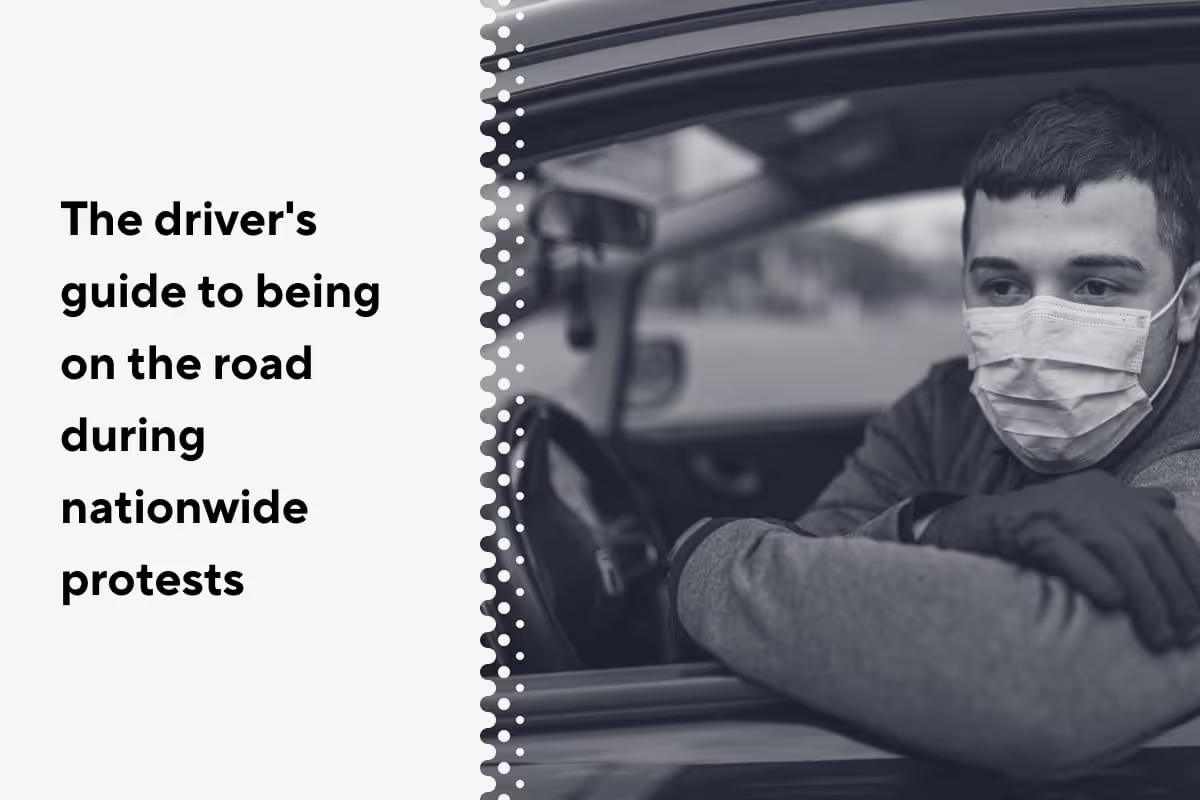
The driver's guide to being on the road during nationwide protests
There are no words to fully describe the tragedy that has characterized the events of this last week in the United States. The seriousness of this situation makes what we do here seem trivial—yet we know it's affecting individual drivers professionally as well as personally.
Although Gridwise is by no means a political group, we are a group that’s devoted to drivers; in fact, our sole mission is helping all drivers reach their potential both on and off the road. And a huge part of that mission is our commitment to stand with every driver who has experienced injustice or inequality—along with our strong condemnation of all acts of racism, discrimination, and senseless violence.
So with that, we’re going to do everything possible to help drivers navigate this extremely difficult time.
There’s no doubt that the civil unrest itself, and its aftermath, will have a huge impact on rideshare and delivery drivers. The instability of the environment created by civil unrest, along with the looming COVID-19 pandemic, make it tough to do your job.
If you decide to work in areas where there could be unrest, we want every driver to be safe, so we put together this post which details what drivers need to know about driving amid protests.
In this article we will cover …
- Why this situation is so difficult
- Measures you should take to protect yourself
- How the rideshare and delivery companies are reacting
- Actions you drivers can take to prepare for a more prosperous future
The wild ride of 2020—wasn’t COVID hard enough?
The COVID-19 shutdowns have already decimated business for many, maybe even most of us. If you asked, “What else can happen?” you may have your answer by now.
It’s especially tough to deal with yet another condition that makes it difficult for drivers to function fully, but deal with it we must. We’re going to have to think smart and take self-protective actions.
If you work anywhere near a city, you’ve seen demonstrations before. Protesters gather, possibly blocking a road or a bridge, or spilling out into the streets around a park. There might be spatterings of violence, but it typically gets handled, it stops, and before too long life comes back to normal.
Well, that was then. We’re in entirely new territory now. For one thing, the unrest is not confined to one or two cities—it’s countrywide. And along with peaceful protestors come bad actors who never cared about what the protests stand for, but simply want to cause destruction and looting.
Also, protests are not restricted to residential neighborhoods. The most activity is taking place in the central business districts of the urban areas we normally serve as drivers, and in some cases it is spreading to the suburbs.
Ideally, you won’t have to drive anywhere near any of these bad actors—but these days, they’re not easy to avoid.
We’re not about to tell you to go out there and drive, nor will we advise you to stay home. What we will do is respect your right to make your own decisions about whether you will or won’t drive, and in both cases, we’ll offer some items to ponder.
Measures you should take to protect yourself
Check your insurance
- Have you taken a look at your insurance policy lately? Would it cover something like vandalism? When bad actors who don’t represent peaceful protestors, are picking out cars at random to set on fire, you don’t have to drive your car anywhere for it to be damaged or even destroyed. Make sure your policy will cover it if that happens.
- This might be the moment when you recognize that your ability to make a living as a driver depends on your car. Make sure you are insured, both while driving for rideshare and when you’re not. If you haven’t yet, you may want to come clean with your primary insurance company and get a policy that doesn’t get nullified the moment they find out you’re a rideshare driver. Most policies won’t cover you for using your vehicle commercially—don’t get caught in that situation! Consider paying the extra money for your own peace of mind.
- If you don’t have it yet, consider getting gap insurance. This is a policy that covers the difference between the value of your vehicle and what you still owe on it. For example, if your vehicle with a $10,000 value is totaled, and you still owe $15,000 or $20,000 to your bank or finance company that holds the car loan, you’re stuck with owing the difference. Gap insurance will cover that amount, and it can be a life saver.
- When or if you do decide to drive for a rideshare or delivery company in this environment, you might want to check what’s in the policy that goes into effect when you drive for them. What would happen if you were to get caught in a situation where bad actors are stopping vehicles and smashing windows and kicking in side panels? You’ll want to be fully insured, with coverage for your passengers as well as yourself.
Abide by curfews
- If you decide to drive or deliver, please be aware of your local curfews. We would be delighted to list every city that has a curfew and tell you if it’s okay to be out driving while they’re in effect, but that’s impossible. There are just too many cities with curfews in effect, and their rules are not only different, they change constantly.
As an example let’s look at June 1, 2020, in three different cities:
- Pittsburgh’s curfew went into effect at 8:30 p.m. local time. The terms of the curfew were that if you entered the downtown area, you would be stopped by law enforcement. The rest of the city was not affected.
- In Los Angeles, the starting time for the curfew changed throughout the day, and wound up being 5:00 p.m. Other districts, such as Beverly Hills, began their curfew at 1:00 p.m. Under the terms of this restriction, no one was allowed to be on the streets at all after curfew.
- In Washington, D.C., curfew began at 7:00 p.m., and during the curfew no one, unless designated as an essential worker by the mayor, was permitted to be on any street or in any park or public place. The “essential workers” mentioned in the mayor’s statement included credentialed media and healthcare personnel, when engaged in essential functions.
Most curfews end at 6:00 a.m., but some end at 6:30 a.m. Obviously, it’s different everywhere, just as curfew starting times differ.
- Be aware of the curfews in your area, and know that if you don’t abide by them, you could be arrested.
- You can find out about your curfew through local news outlets on the Internet, or on radio or TV, and “311” services that might give you up-to-the-minute details on restrictions in effect for your locale.
- We can’t stress enough the seriousness of abiding by curfews. If you violate it, and get slapped with a misdemeanor, you’ll have to worry about taking time off for a court appearance AND clearing future background checks. Another thing to consider is that unlike the COVID-19 curfews, these restrictions are being enforced not only by local police, but in some cases also sheriffs, state troopers, and even the National Guard may be involved.
As we said, your decision to drive is yours alone.
We just want you to know about the risks, and what you could be up against if you decide to take them.
How are rideshare and delivery companies responding?
In compliance with city orders, Uber suspended services in Los Angeles, Oakland, San Francisco and parts of Minneapolis during curfew hours, according to a CNBC report.
Uber CEO Dara Khosrowshahi tweeted Sunday that the company would donate $1 million to the Equal Justice Initiative and Policing Equity "to support their important work in making criminal justice in America more just for all."
Similarly, Lyft confirmed to USA TODAY that it is following local guidance "when relevant." Lyft also donated $500,000 in ride credit to national civil rights organizations.
According to a Buzzfeed news article, DoorDash is “tailoring operations based on the guidance they have received from governments,”.
A Postmates spokesperson said the company is “adhering to curfew orders” and “working directly with Mayoral administrations to balance our essential services designations with the curfew orders as each municipality has a distinct approach.”
A spokesperson for Seamless and Grubhub said the company is “evaluating the situation in each city individually and making decisions based on" input from “local officials, restaurants and drivers.” The company said it is suspending operations when curfew begins in some cities, but declined to name specific locations, citing the “fluidity” of the situation.
Given how fluid the situation is, drivers will need to be diligent about checking to see what apps have shut down and where.
This is when it pays off to be on multiple platforms.
Now, let’s turn our attention to what might happen, and how you might shield yourself from the impact.
Take action to make sure you’ll stay solvent
This situation is a tragedy, no matter how you look at it.
If the protests along with COVID-19 force you off the road, you’ll need to take some self-protective measures. Here are a few suggestions.
- Unemployment compensation. If you haven’t applied for Pandemic Unemployment Assistance yet, consider doing so. Because of COVID-19, business is not really back to normal anywhere. Even if you’ve been driving all along, you can still file claims for future weeks, since complications from the unrest could prevent you from making much money. Check out how rideshare drivers and delivery drivers can file for unemployment.
- Additional sources of financial aid. There are other ways to receive compensation. Most of these funds have been set up for COVID-19, but as the ripple effects of the pandemic continue to impact the rideshare business, you can still look to these sources for help. Learn more about how rideshare drivers can get more financial assistance.
- Find some side hustles. As an independent contractor you’re highly motivated and capable of disciplining yourself to go to work, even when there’s no boss telling you to be there. That makes you an ideal candidate for the many freelance jobs that are available. Learn more about how there are many, many ways to make money from your home.
- Volunteer to help with cleanup. This is an act of kindness, rather than a money-maker, but it’s a way to get out and do something good for your community. It will make you feel good, and it can help to get things moving faster, too. Plus … you never know who you might meet. There could be an employer in need right there who offers you a part-time gig to tide you over until happier and more wholesome times return.
Less stressful horizons ahead
It’s been a sad time in our world, and so far 2020 has brought more than its share of trials and challenges. Still, it’s up to us to make the most out of even the worst situations. We hope this post helps you think about your options, so you can do what’s best for you.
Whether business comes back right away or not, here at Gridwise we’ll continue to look out for the rideshare and delivery driver community, giving you our best ideas and advice in blog posts and in J & Brandon’s amazing podcast.
We also love to hear from you! Comment below if you have any further ideas or contributions to make. Also, be sure to download the app to have instant access to information, income tracking, and discounts and deals for drivers.
Trabaje de forma más inteligente. Gane más.
Ya sea que conduzcas, entregues o recojas turnos, Gridwise te ayuda a hacer un seguimiento de las ganancias, el kilometraje y el rendimiento para que puedas mantener el control de tu trabajo. Descarga la aplicación y toma las riendas hoy mismo.
