Blog de Gridwise
¡Lee el blog de Gridwise para obtener consejos y sugerencias sobre cómo ganar más dinero mientras conduces para Lyft, Uber, DoorDash, GrubHub y más!

The Gridwise Job Board: Find Your Ideal Job or Gig Work
Gridwise is an essential assistant app created by gig workers for gig workers. Our mission is to support those engaged in gig work in every way possible. We understand how challenging it can be to deal with income instability, a lack of benefits, and job insecurity that often comes with gig work. The Gridwise app tracks and organizes earnings and expenses, and offers a wide array of discounts, deals, and services that make the lives of independent contractors easier and more rewarding.
We firmly believe it’s possible to make a viable living and create a gig experience that offers flexible hours, variety, and excitement. With issues such as consistent earnings and job security in mind, Gridwise is proud to offer a centralized platform that shows you how to find gig work and secure reliable opportunities. We’re proud to introduce the Gridwise Job Board.
[elementor-template id="20891"]
The Gridwise Job Board: Key features
Because Gridwise is dedicated to serving the gig worker community, we’ve filled the Gridwise Job Board with useful features that won’t waste your precious time.
- Comprehensive listings. Find part-time, full-time, temporary, and per-task work. Drive or deliver with your vehicle, utilize an employer’s vehicle, or even find non-driving gig work.
- User-friendly interface. Find the jobs that are right for you with a tap of your screen.
- Verified opportunities. We vet the jobs before they are listed to ensure you’re getting high-quality job postings.
How to get more gig work, seasonal, part-time or full-time jobs with the Gridwise Job Board
Looking specifically for “gig work apps” or “gig jobs near me?” You’re in luck. Our filters and search functions send you directly to the listings you seek.
Here’s how it works.
- Access the Job Board via the Gridwise website.
- Search for jobs by type, location, and more.
- Select the job that interests you, and read all about it.
- Scroll through the description, and if it appeals to you, click “Apply for job.”
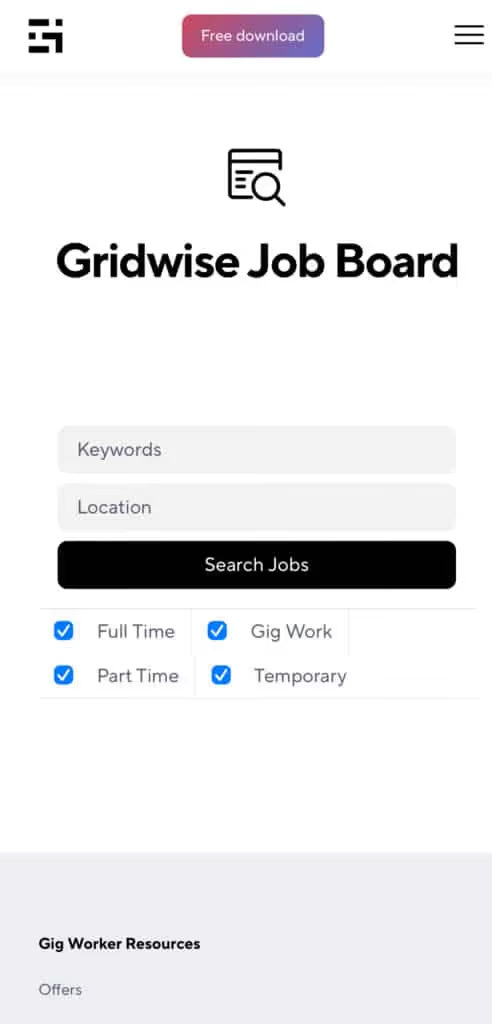
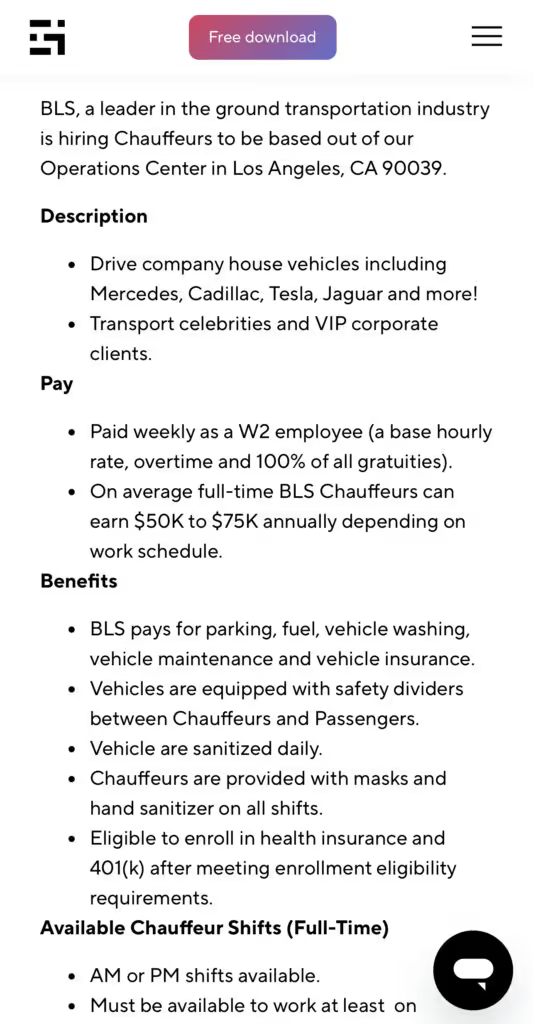
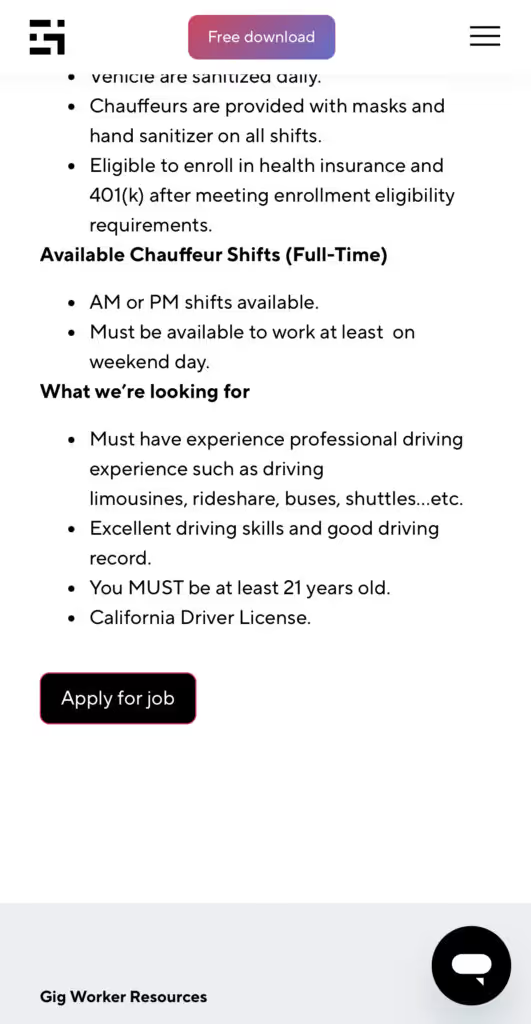
Many types of jobs are available. Adjust the search filter to see the full variety of opportunities that will let you cash in. Deliver food, set up catering, do rideshare driving, get paid for doing package delivery, and much more. You’ll find short-term gigs, long-term contracts, and part-time positions.
Perks of the Gridwise Job Board for gig workers
Gig workers who know how to make extra money will appreciate how the Gridwise Job Board lets you multiply your chances of bringing in big earnings. Here’s how:
- Increased stability. Use the Gridwise Job Board to find part-time or permanent jobs in addition to the part-time gigs you already have. Always keep a steady stream of earning opportunities flowing toward you.
- Flexibility and autonomy. Choose jobs that fit your schedule, work around other jobs and family duties, and still leave room for some fun in your life. Discover side hustles to supplement your full-time job, permanently or just for the season.
- Skill development. Find part-time work that lets you use a skill you already have, or try your hand at something new. It’s a smart way to develop a portfolio to showcase what you can do, or even to find permanent employment.
Get Gridwise and stay up to date on the Gridwise Job Board
Gig workers need plenty of information and assistance, and Gridwise is here to give it to you. Download the app and get essential features such as
- seamless earnings tracking
- mileage tracking
- expense recording, including notes
- low-cost and no-cost insurance benefits
- access to affordable medical, dental, vision, mental health, and alternative care
- professional services including legal and financial help
- deals and discounts
- weather, events, and traffic reports
- inside information on where and when to drive
[elementor-template id="20936"]
More to know about gig work:

5 Best Mileage Trackers For Gig Drivers
Many drivers ask, “Do I really need a mileage tracking app?” The answer is simple: only if you want to have an accurate count of all the miles you can legally deduct from your taxable income! You might think your rideshare or delivery driving app has got you covered. After all, they do quite a good job of logging the miles you drive while you’re on a trip or delivery. But, if you want to have the best app to track mileage for Uber, Lyft, Doordash, Instacart, or the other apps you may use, you need more. Why is that?
Without a separate tracker, you’re missing the miles you drive in between pings. Did you realize that all the miles you drive, from the moment you begin your shift until it’s over (as long as you don’t drive several miles on a break to hang with your friends), are tax deductible! That means you need something besides your driving app to keep an accurate count of your travels. Read this Gridwise post to see how important it is to keep track of every deductible mile.
You won’t be surprised to hear that there’s an app for tracking miles. In fact, there are several of them. Here, we’re going to tell you about five top mileage tracking apps, and help you figure out which one is best for you.
Before we get to the list and identify the best mileage tracker app, let’s clarify what exactly a mileage tracking app is. According to G2.com’s technology glossary, mileage tracking is done for the purpose of keeping a log of mileage that is either reimbursable or tax deductible.
And yes, of course you can track your miles simply by taking readings on your odometer. But are you really prepared to account for how many miles you drove for personal reasons and subtract them from the total to get your business mileage? Even if you can remember all that and do the arithmetic, if you want an accurate reading of the miles you drive for business, and can therefore deduct, a mileage tracking app will save you a lot of trouble and prevent you from making costly errors.
Plus, as a gig driver, you have specific needs when it comes to a mileage tracker. Ideally, you’d be able to handle mileage tracking and several other functions all in one app. It can be maddening enough to deal with driving apps, particularly if you’re an avid multi-apper. You would want your mileage tracker app to help you keep account of other aspects of your business, including income, expenses, and inside information about the art of gig driving.
Not all mileage apps are equal, to be sure! Let’s look at five of the best apps to track mileage and figure out which is the best app to track mileage with Uber and Lyft, or what mileage tracker app is best for DoorDash.
[elementor-template id="20891"]
1. Zoho Expense
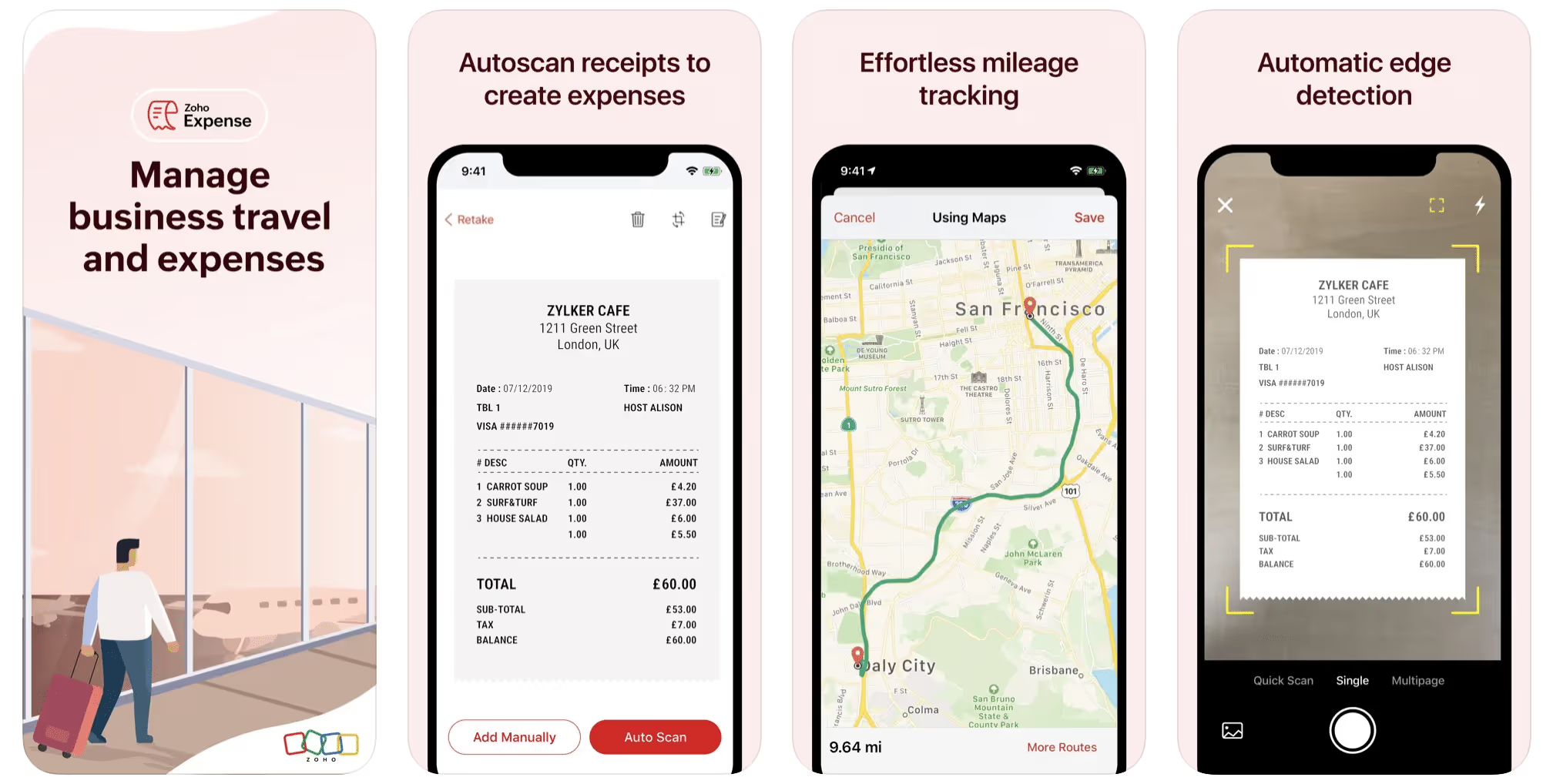
First up is Zoho Expense, which does exactly what its name says. This app is designed to allow companies to give employees a uniform way to create and submit expense reports. It can be used by individuals, including gig drivers, as well.
It includes a mileage tracker, as well as features that let you track other deductible expenses, including the ability to scan and record receipts.
Available on Android and Apple: Yes
Ratings: 4.8 stars on App Store, 4.7 stars on Google Play
Free Version: Yes
Subscription price: $3 per month, billed annually
Created specifically for gig drivers: No
2. Quickbooks Online
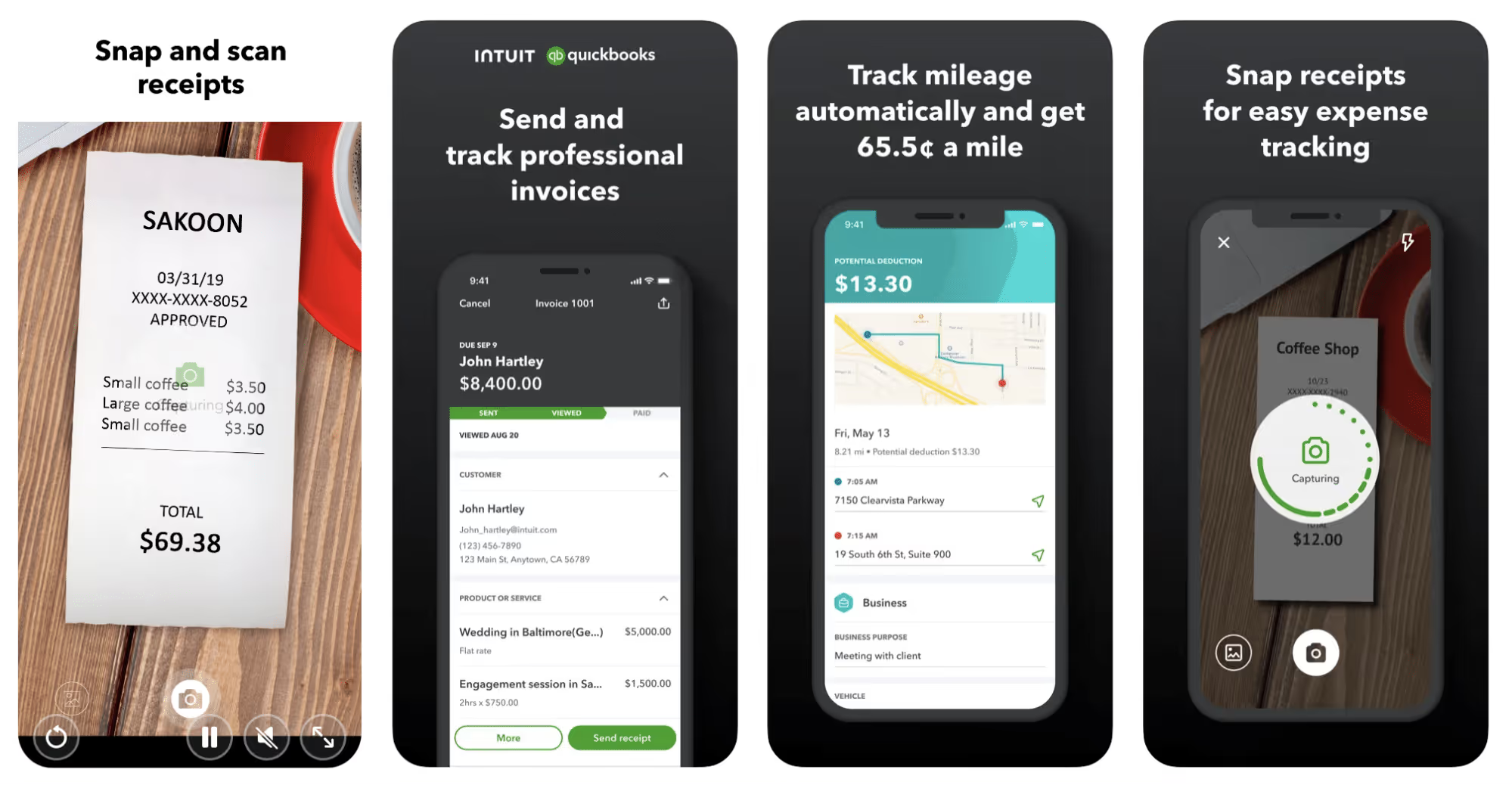
Quickbooks Online is a cloud-based app that allows you to track your mileage, earnings, and expenses. The information you enter can then be used to generate various reports that prepare you for tax time. It also allows you to create graphs that illustrate your cash flow, and includes a receipt scanner so you can instantly record deductible expenses. Quickbooks is popular, highly reliable, and designed mainly to help people keep track of their small businesses.
Available on Android and Apple: Yes
Ratings: 4.7 stars on App Store, 4.4 stars on Google Play
Free version: 30-day free trial
Subscription price: $15 per month for basic version if purchased for 3 months or more
Created specifically for gig drivers: No
Source: quickbooks.intuit.com
3. Shoeboxed
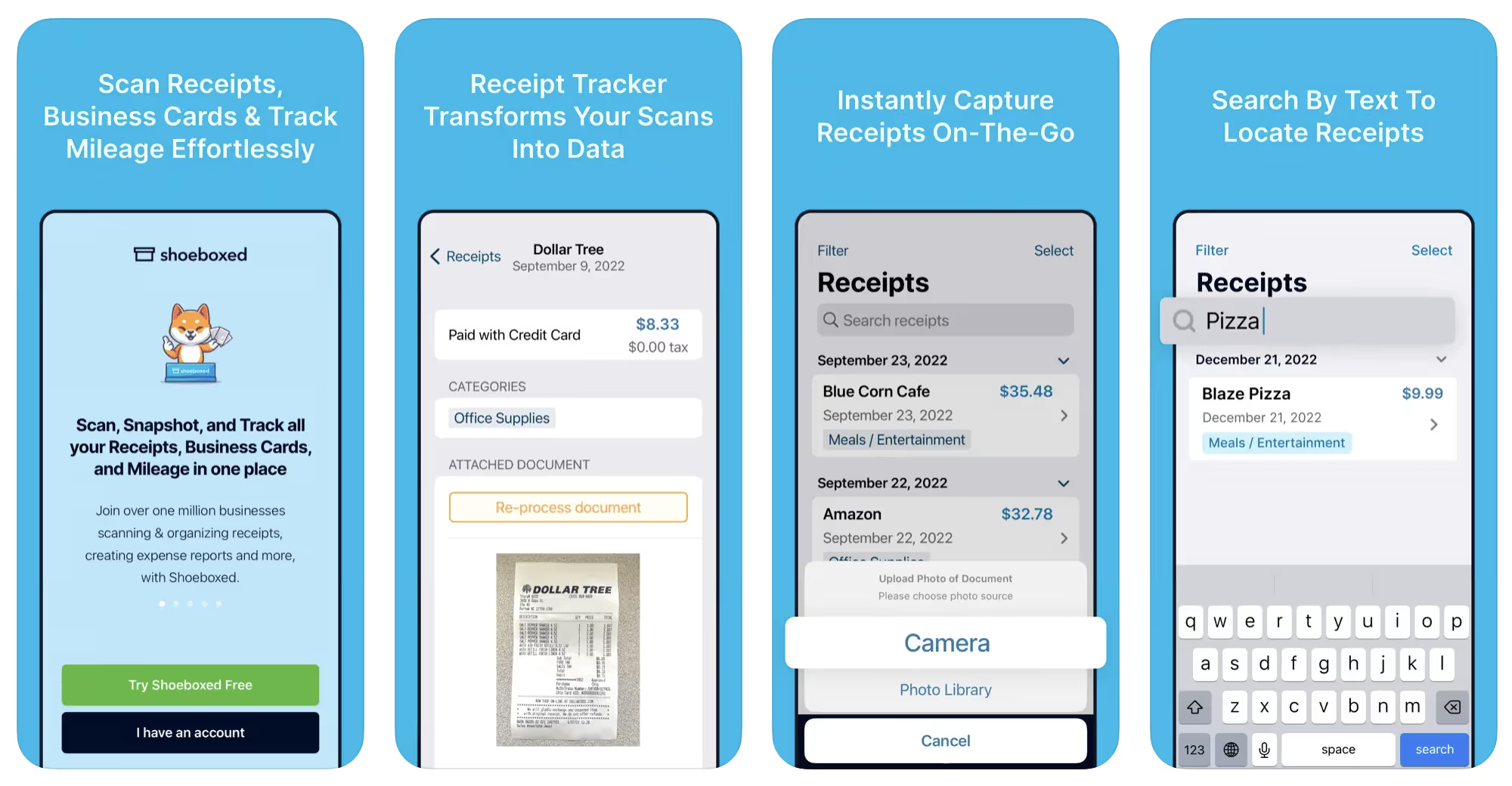
Shoeboxed started in 2007 as a service for scanning paper receipts into digital form. Now the app offers a free mileage tracker and has enabled users to scan receipts directly. It touts itself as the best mileage tracking app for DoorDash, but there are some elements missing that Dashers might like to have. While it provides features that record your expenses and prepare you for tax season, it doesn’t automatically track your earnings. The mileage tracker has a system where you can drop pins along your routes to make the tracking more precise, identifying those legs of a trip that you make for business purposes. The mileage tracker is “free” once you sign up for the basic version.
Available on Android and Apple: Yes
Ratings: 4.5 stars on App Store, 2.3 stars on Google Play
Free version: No
Subscription price: $18 per month for basic version
Created specifically for gig drivers: No
Source: blog.shoeboxed.com
4. Stride
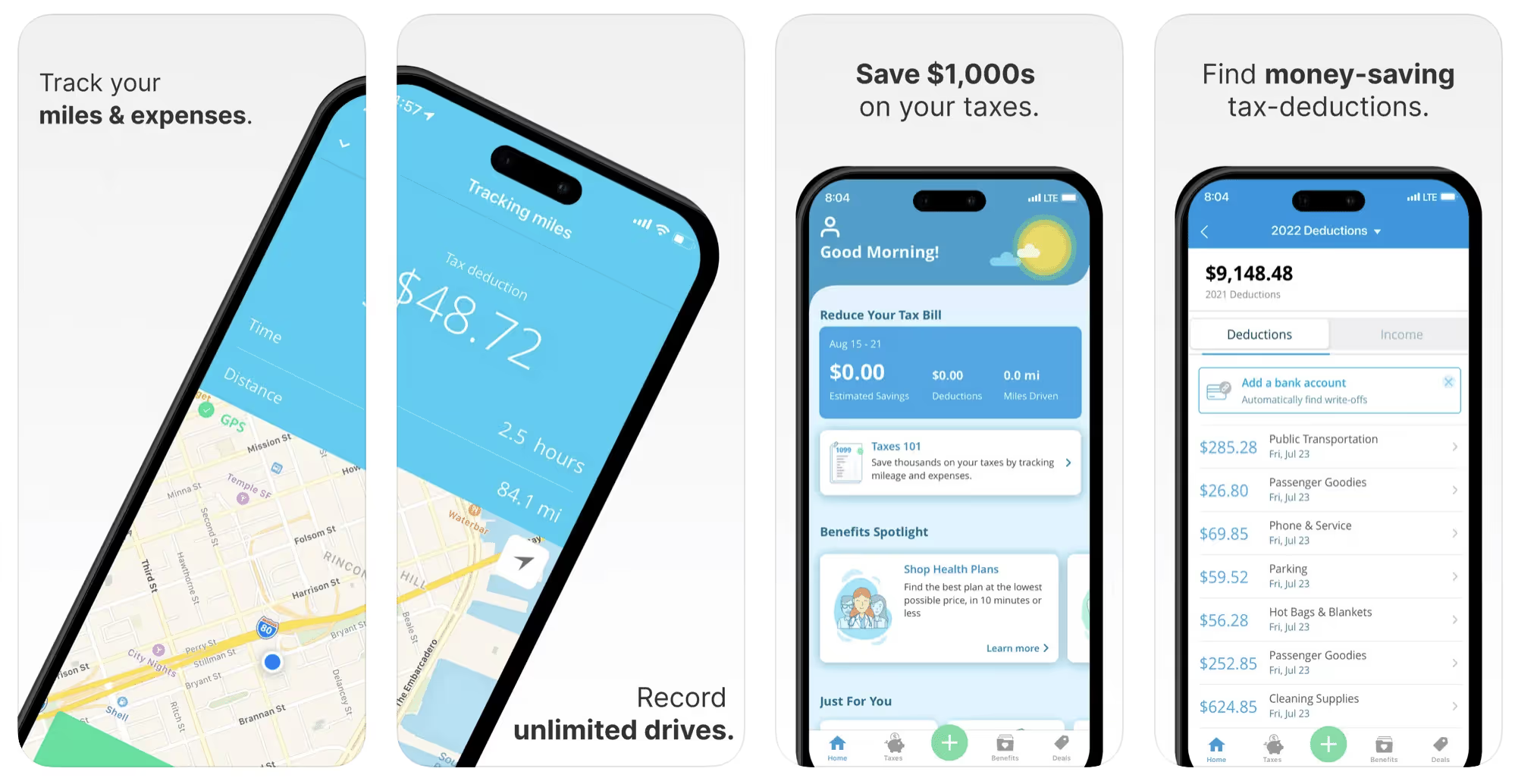
This free mileage tracker does a fair job of keeping track of the distances you rack up while gig driving, but it doesn’t automatically track earnings. It can be a big help, though, in tracking your expenses. You can link Stride to your bank account, and it will automatically scan your expenses to identify items you can potentially deduct. The app is totally free. This could make it the best free mileage tracker app, but there is a small price to pay. The app will persistently push you to consider various insurance plans that they are affiliated with. If you don’t mind that, this is a solid mileage tracker, even if it doesn’t track your earnings.
Available on Android and Apple: Yes
Ratings: 4.8 stars on App Store, 4.6 stars on Google Play
Free version: Yes
Subscription price: None. The app is free.
Created specifically for gig drivers: No
5. Gridwise
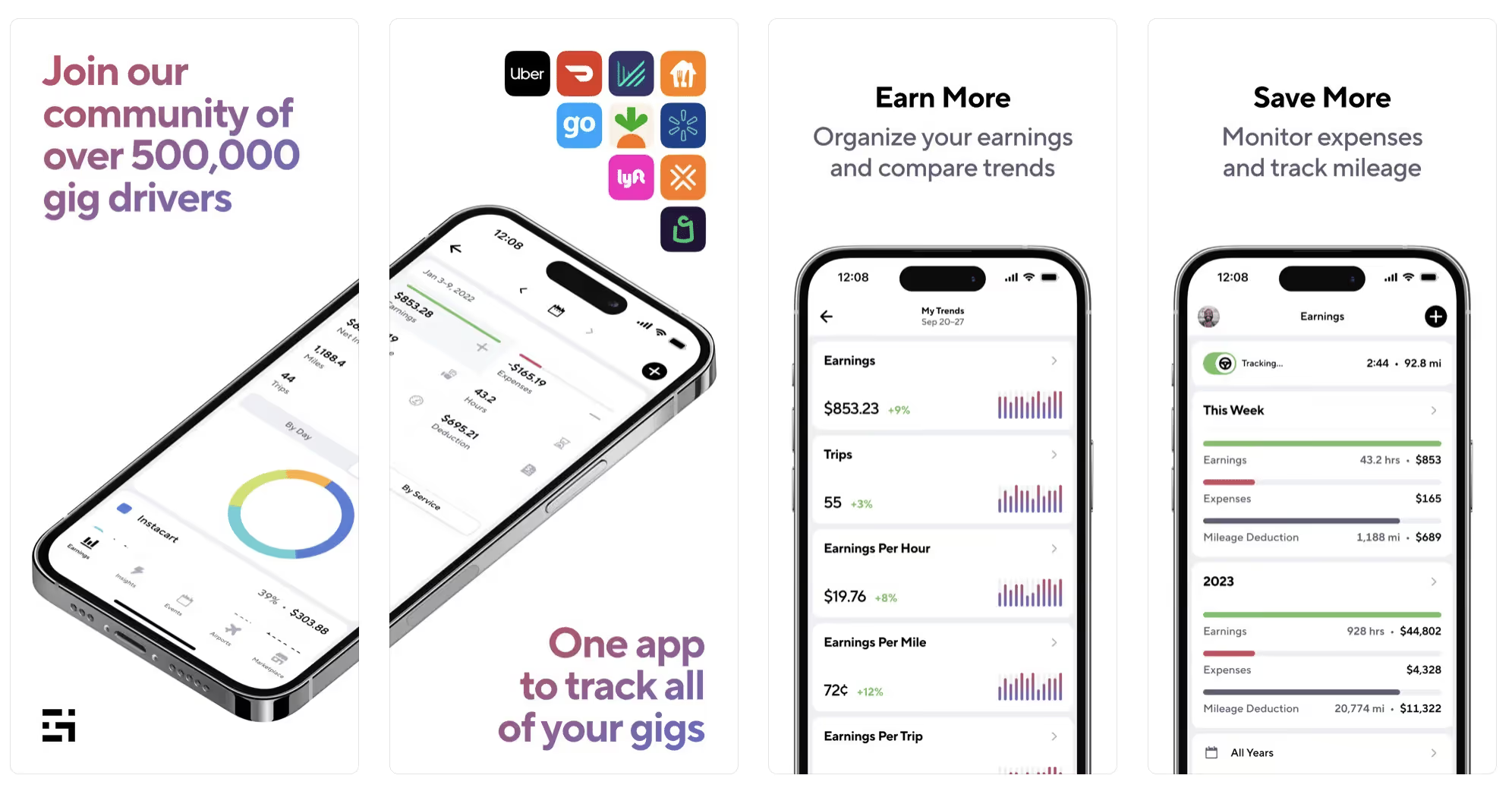
Gridwise has a free mileage tracker and free features that record your income and expenses. It gives you access to insurance and benefits, as well as insights about the best times and places to make the most money while gig driving. The Gridwise mileage tracker captures all the miles you drive while you’re on your driving shift, and it can be used if you have other trips you need to make which qualify as business travel.
Drivers love it because it is geared toward the needs of rideshare and delivery workers, providing free information about airport departures and arrivals, event start and let out times, weather, traffic, and more. The Gridwise Plus subscription adds value by providing additional insights and reports, discounts on benefits, the ability to export data in .csv format,, and more.
Available on Android and Apple: Yes
Ratings: 4.9 stars on App Store, 4.6 stars on Google Play
Free version: Yes
Subscription price: $9.95 per month for Gridwise Plus, or $95.99 per year (a $23.41 savings)
Created specifically for gig drivers: Yes!
What is the best mileage tracking app?
Now that we’ve checked them all out, we’re positive about the answer to that. Hands down, it’s Gridwise. Are we biased? You bet we are! But drivers love it too. Gridwise is the best mileage tracker app—and so much more. So many of the features are free, and the subscription to Gridwise Plus will pay for itself with additional insights to boost your earnings and deeper discounts on products and services.
Most important, Gridwise is designed specifically for gig drivers by experts who were once gig drivers themselves! Knowing what gig drivers need is a crucial step in creating an app that rideshare and delivery drivers can really use! Here are a few of the features, besides mileage tracking:
- seamless earnings tracking
- automatic, on/off toggle and manual mileage tracking
- mileage categorization
- airport, traffic, weather, and events information
- insights into where to drive and when to drive
- reports showing earnings across the platforms you use
- discounts on countless products and services for drivers
- additional resources for finding side gigs
- an informative and comprehensive blog
- affordable benefits, including insurance, medical, dental, and alternative practitioner discounts
- a community of drivers just like you
Don’t settle for just any app. Get the best mileage tracker, and so much more, from Gridwise!
[elementor-template id="21599"]

What Records Do Gig Drivers Need To Keep Track Of For Taxes?
* Gridwise does not provide tax, legal, or accounting advice. This material has been prepared for information purposes only, and is not intended to provide, and should not be relied on for tax, legal, or accounting advice. You should consult your own tax, legal, and accounting advisors before filing your return.
Record keeping? Who signed up for that? As a gig driver, it’s part of what you need to do to keep your business running. Don’t worry. It’s not as complicated as you might have been led to believe. This post will show you what you need to keep track of and the best ways to gather and preserve your tax-related records. We will cover
- How record keeping can help reduce income tax for freelancers
- Taxes and freelance work: Record keeping requirements
- Mileage tracking: Motives and methods
- More deductions and records to keep
- Make tax time easier
How record keeping can reduce income tax for freelancers
Tax time is not “fun time” for rideshare and delivery drivers. It’s easy to get used to watching your earnings pile up and come to believe they are all yours. Unfortunately, that isn’t the case. Gig work taxes can be especially painful because no one takes them out of your earnings for you, until the tax authorities insist that you do it for yourself.
You will need to show the tax authorities your income records, and they will gladly tell you to send them what they determine to be their fair share. Think that’s not fair? You’re not alone, but that doesn’t mean you’re going to get out of paying gig work taxes.
But you can find ways to pay the smallest amount that is legal and possible. The best way to defend yourself against having to pay astronomical amounts when you file your return is to know what expenses you can deduct from your gross income. When you subtract deductible expenses from your gross income, there is less left over to be taxed. This reduces the amount they can hit you with gig worker taxes. and can make your tax bill substantially lower.
While you want to keep good records so as to be in compliance with taxation entities such as the IRS, you also want to ensure you have proof of every last deductible expense you have accrued during the year. There are other records you must keep as well. Let’s look at some of the considerations you have, realizing that you now need to know how to do taxes as a freelancer.
Taxes and freelance work: Record keeping requirements
So many gig drivers fail to understand the responsibilities they have as independent contractors. Those who work part time for very few hours may even believe they don’t have to report the income they get from their driving gig payments. That would be a big mistake!
The company or companies you work for report your income to the IRS and state tax authorities. If you fail to report that income, you will risk some rather painful penalties. The IRS taxing side hustles is as much of a thing as the IRS taxing income from any other job. Your best bet is to report what you’ve earned, honestly and completely, and comply with other record keeping requirements such as
- gross income
- deductions and credits
- purchases (items you purchase and resell, such as snacks or bottled water)
- a log of all your mileage (or vehicle expenses, if greater)
- a list of all expenses and assets, such as utilities and other expenses associated with having a home office and equipment
- machinery and furniture you own, including when it was acquired, how much it cost, whether you previously took deductions on it, and selling price, if applicable (this includes your vehicle)
More things to consider:
- Pay attention to the retention of your records. You’ll need to keep all tax-return-related items— including income, deductions, and any tax credits reported— until the period of limitations runs out (3 years from date you filed, or 2 years from when you paid tax. If you have employees, keep your records for at least 4 years.)
- If you want to avoid paying self-employed taxes, you may want to set up a corporation or Limited Liability Corporation (LLC) for your business. This allows you to separate all your gig driving earnings from personal income, and permits you to take advantage of the additional advantages of working through a corporation. This includes exemption from self-employment taxes. You can learn more about how to pay self-employment taxes, if you opt for that, in this post from Keeper.
- You should always keep a separate checking account for your business, for convenience as well as clarity. While this is not a legal requirement, it is a smart move if you want to have an easier time managing your business.
- You are required, as an independent contractor, to file your taxes quarterly. Check out this Gridwise blog post for more information about quarterly tax payments and other matters that make filing delivery, Lyft and Uber taxes easier.
Mileage tracking: Motives and methods
Why you need to be meticulous about mileage
Mileage deduction, or the costs of operating your vehicle, will be the most important item to account for when you consider how to file taxes as a freelancer. While mileage is an important deduction for all independent contractors, as you might imagine, it’s even more essential for rideshare and delivery drivers.
There are two ways of keeping track of your mileage deduction. One is to use the IRS’ standard mileage deduction, which for 2022 is 58.5 cents per mile. This number takes into account the costs of operating your vehicle, from fuel and maintenance to registration, insurance, and depreciation. Alternatively, you can calculate all your own vehicle operating costs, but only after your first year of using the vehicle. You may discover that this second option allows you to have more money deducted from your taxable income. Learn more about the options for deducting your mileage in this Gridwise post.
No matter which way you decide to calculate the deductions for your mileage, you need to know what mileage you can and cannot deduct.
You can deduct
- miles driven to and from home when you go out to drive or deliver
- miles you accrue during your trips
- miles you drive on any other trips you make that are necessary as part of your business.
Examples:
- driving to return a lost cell phone or to an Uber Hub or another physical location where your company might make driver support available
- driving to pick up supplies, to get gas, or to have your car cleaned, serviced, or detailed, etc.
You cannot deduct
- miles you drive for personal trips
- miles for any trips you take that do not directly affect your business
Note: If imagining yourself becoming the not-so-proud owner of a shoebox filled with paper receipts gives you nightmares, stop worrying. Electronic records of purchases will satisfy reporting requirements. If you use cash, you can scan copies of your receipts, in some cases, right into your recording software or app. Gridwise and Keeper give you a simple to use interface that keeps all your receipts recorded without the messy pile of paper.
Mileage tracking methods
By now, you’re probably convinced that tracking mileage is important, despite all the other things drivers have to do. Now, let’s look at your options for keeping accurate records.
- Manual tracking: You can keep a logbook where you list every trip you make, starting and ending mileage, the date, and purpose of the trip. While this would work, it’s certainly not convenient. Besides, if that logbook gets lost, your plans for having a nice, fat tax deduction will go by the wayside.
- Spreadsheet: This is a bit more convenient and sophisticated way of tracking your business mileage. You’d need to be meticulous about making your entries, though. Even if you keep a spreadsheet app on your phone, it could be time consuming and inconvenient to keep doing it with all the other things going on in a rideshare or delivery driver’s day to day life.
- GPS-based mileage tracking apps: There are a bunch of apps that track mileage based on your GPS location, and most of them are pretty accurate and far more convenient than taking constant readings of your odometer. Your driving apps, such as Uber, Lyft, DoorDash, or Instacart, may also track your mileage, but be careful here. They will only track the miles you drive while you’re on a trip or delivery. They don’t count the miles you drive going to pick up a customer or when you make your move toward a restaurant or store.
Gridwise, on the other hand, will track all the miles you clock while you’re on your shift. All you need to do is make sure you start tracking the minute you leave home, and every gig driving mile will be logged. - OBD-II mileage tracking systems: There are plug-in modules that assess your vehicle’s mechanical health and track your miles. However, many authorities question the ability of OBD-II mileage tracking systems to get get accurate odometer readings. Insurance companies don’t consider them to be accurate enough gauges of odometer readings.
While mileage is a crucial deduction when you’re preparing your Uber, Lyft, or DoorDash taxes, it isn’t the only expense you’ll want to record.
More deductions and records to keep
Expenses you can deduct
You’re entitled to include the cost of other expenses that are directly related to your driving business. These include
- vehicle expenses
- equipment for your car and home office
- extra services and subscriptions
- business tools, including apps and software
You can learn much more about gig driver expenses that are eligible for deduction in this Gridwise article.
Ways to track and preserve deductible expenses
- The manual method: Just like you can with mileage, it’s possible to use a manual method, but in addition to logging each expense into a ledger, you would also need to keep physical receipts.
- Spreadsheets: You can record your expenses on a spreadsheet. This is somewhat less awkward than manually logging mileage, but there still will be plenty of room for failing to remember the case of water you bought for your customers, or losing the receipt from the thermal bag you purchased.
- Accounting software: You can use software that helps you track your expenses. This method usually interfaces well with any tax preparation software you or your tax professional might use.
- Gridwise: There are other apps that help you track your expenses, but Gridwise is designed specifically for gig drivers. It automatically tracks earnings and mileage, and lets you record your expenses the minute they come up. Gridwise’s partnership with Keeper gives you the ability to scan receipts and access a tax professional. This is a seamless way to record your expenses and a big help in learning how to file Uber taxes. Gridwise even provides .csv output, so you can feed your Gridwise data directly into tax preparation software. Check out what Gridwise and Keeper will do to super-charge your tax filing powers.
Organizing and categorizing expenses
Before you even begin to record expenses, you’ll want to set up categories for them. You can start by reviewing the categories listed above and checking out the Gridwise post that lists possible deductions.
If you’d like to learn more about how to categorize expenses, there is additional information available. This article from Motley Fool lists all possible categories any freelancer might use and also gives tips on how to customize them for your driving business.
One last tip
Using Gridwise, particularly for tracking mileage, is the easiest way to be in compliance with the IRS’ rules for deductible mileage. Gridwise tracks all the miles you drive for your gig, beyond what your company’s app might record. At the same time, you can log on and off Gridwise when you start and end your shift, so personal miles won’t be recorded. This eliminates confusion while capturing every deductible mile.
Gridwise Tax Help, a partnership with Keeper, has been created specifically to serve gig drivers. It provides affordable and easy ways to record expenses, scan receipts, and find deductions by analyzing your expenditures. Read about free resources from Keeper you can use to be fully prepared for tax season, and get all your earnings and expenses on the record.
Get the world’s best assistant for rideshare and delivery drivers, and tax help too.
Make tax time easier now!
What Pittsburgh Drivers Do That Other Drivers Don't
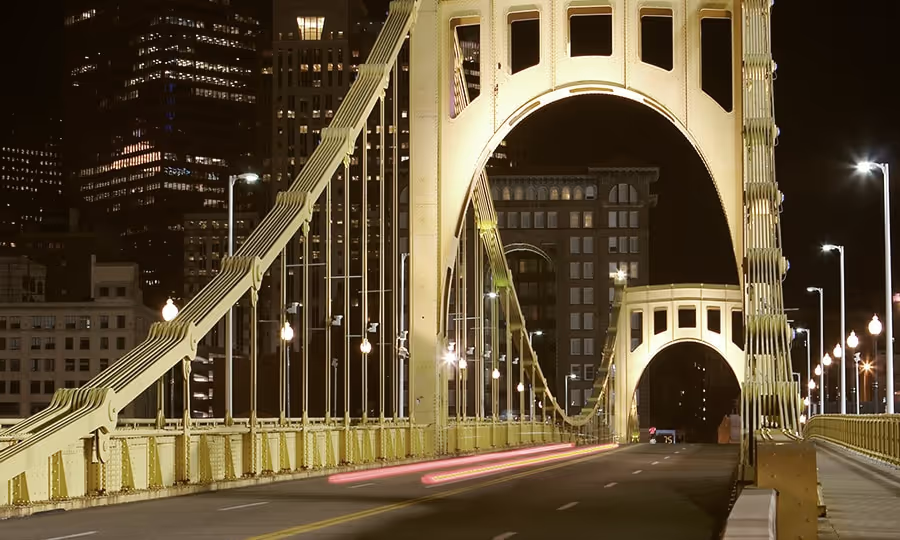
Pittsburgh drivers are a unique breed. Mostly because they have to be in order to navigate Pittsburgh’s infamous one-lane streets, crazy steep hills, narrow tunnels that seem more like neverending black holes, and hundreds of bridges. Yes, there are hundreds of bridges in Pittsburgh, 446 to be exact. They didn’t name it “The City of Bridges” for nothing, right?
Whether you are new to the Pittsburgh area or just passing through, it’s helpful to know what Pittsburgh drivers do that other drivers don’t. To prepare for your travels through the city-- and to keep your earnings up-- keep scrolling to learn more about the local quirks of Pittsburgh drivers.
The Infamous “Pittsburgh Left”
As mentioned above, much of Pittsburgh, especially the downtown area, is made up of narrow, one-lane streets. And even if the street does have two lanes, one lane is guaranteed to be lined with parked cars since driveways and parking lots were not in the plans when Pittsburgh was built. Subsequently, most intersections are lacking left-turn-only lanes, which can hold up traffic when a car is attempting to turn left since the cars behind it cannot proceed through the intersection. Thus the “Pittsburgh Left” developed.
The Pittsburgh Left starts with two cars facing one another at a red traffic light: one driver is turning left (and is in a lane without a protected left turn) and the other driver is going straight. The left-turning driver is attentively awaiting the change of light from red to green because once the light turns green, the driver is ready to quickly proceed left before the opposing traffic begins driving straight. If the left-turning car can accomplish this they have saved themselves as well as the drivers behind them from waiting for an entire light cycle to turn left.
Some may read this and think it is simply the left-turning driver’s way of cutting someone off, but the Pittsburgh Left is a known driving practice in this city. So much so that often the driver that plans to proceed straight through the intersection will often expect the opposing car to perform a Pittsburgh Left. The driver will wave them on or flash their lights to indicate the anticipation of the Pittsburgh Left. (CMU) Furthermore, the oncoming cars will typically accelerate slowly enough to allow the turn to be completed without anyone slowing down or being delayed at all.
The Pittsburgh Turn Signal
The Pittsburgh Turn Signal (or lack thereof) is another practice that Pittsburgh drivers do that other drivers don’t. It involves delaying activation of a turn signal until just beginning to make the turn. Picture this: you’re sitting behind a car at a red light, but it’s not until the light turns green and the car in front of you starts to move that you’ll see the turn signal start flashing. Gregg Podnar of CMU explains, “It has been suggested this custom originated with thrifty drivers trying to save the turn signal lamps.” Whether this habit is due to thrifty drivers or just something Pittsburgh drivers have been accustomed to, this driving practice is something to keep in mind when driving the streets of Pittsburgh.
Poor Pittsburgh Driving Habits
While The Pittsburgh Left and The Pittsburgh Turn Signal are two customs that most likely originated many years ago as more and more cars came into the city, a report from April of 2017 revealed a few negative habits of Pittsburgh drivers.
EverQuote Inc., an online insurance marketplace, examined the driving habits of 150,000 drivers who used the company’s EverDrive cellphone app over the course of 11 months. During this time, 20 million trips were recorded by the app, which categorized rankings based on five driving activities: speeding, cellphone use, excess acceleration, hard braking, and hard turning.
According to the Pittsburgh Post-Gazette, Pittsburgh drivers tied with New York City residents for the worst drivers in the country. Out of the five ranking categories, the app found that Pittsburgh drivers use their cell phones while driving and drive too fast. Specifically, the data revealed that drivers in Pennsylvania were found to be using their cell phones 37 percent of their driving time and speeding during 47 percent of their trips.
It may be tempting to watch the Pens playoff game during your bumper to bumper drive home on the Parkway, but to ditch the poor reputation and start driving more safely, Pittsburgh drivers will need to put down their cell phones.
In summary
It’s easy to see that Pittsburgh drivers do many unique things during their commutes that other drivers don’t. If you aren’t a Pittsburgh native, being aware of these driving characteristics can make travelling through the City of Bridges more pleasant and less stressful. And it can help prevent some of the road rage you may feel when you are faced with an unexpected Pittsburgh Left. You can’t say we never warned you!
Using the Gridwise Driver Taskbar to Your Advantage
According to emarketer.com, a 2015 survey conducted by Research Now found that 49 percent of US residents with smartphones use between six and ten different apps each week. While the survey didn’t share which specific apps were most popular among smartphone users, a more recent statistic from March 2017 revealed that some of the most popular app categories are games, business, lifestyle, utilities, and travel.
At Gridwise, we understand that while using multiple resourceful apps as a rideshare driver is necessary, it can also be a pain in the you know what. Switching between different apps, such as Uber, Lyft, and navigation apps, can lead to a lot of wasted time. And as a rideshare driver you know that wasted time can mean missed opportunities to earn money. Which is why Gridwise created the Driver Taskbar feature. This feature improves your efficiency, minimizes distractions, and increases profitability. So how do you start using Gridwise Driver Taskbar to your advantage?
The Driver Taskbar will improve your efficiency
As app-based ride sharing becomes the norm in the ride hailing economy, making a career out of driving for a rideshare service can be a great source of income. If you do it right, that is.
Most successful rideshare drivers know that driving for more than one service provider can help to maximize profits. However, time can be wasted trying to bounce between all the different apps for rideshare services as well as the apps for navigation.
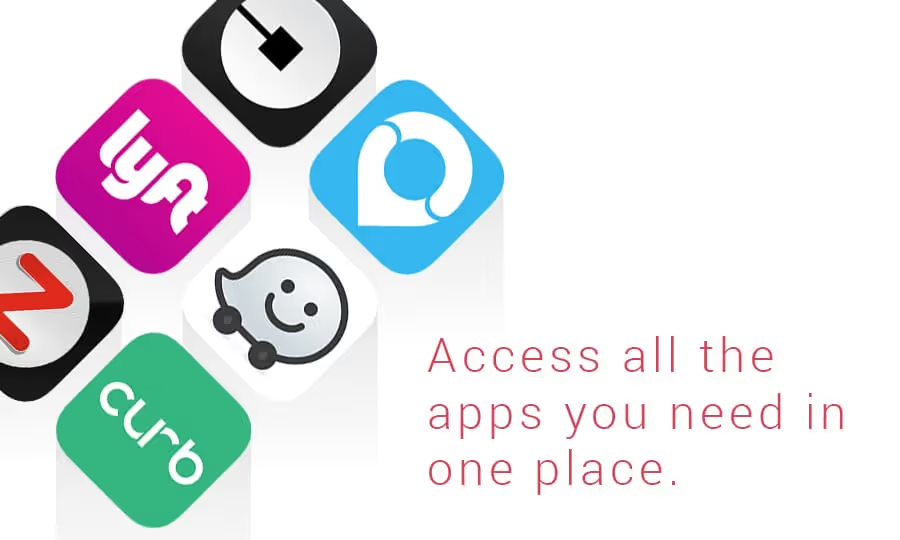
That’s where the Gridwise Driver Taskbar feature is extremely beneficial. This feature allows you to experience the convenience of using just one app while still working for the various rideshare service providers. With a simple tap of a finger you can bounce back and forth between different driver tools like navigation, driver services, and the rideshare apps themselves.
Cutting the time typically wasted bouncing between different services improves your efficiency by bundling individual apps into just the one.
The Driver Taskbar will help to minimize distractions
Let’s face it, the platforms for rideshare services are not designed with drivers in mind. Distractions come in many forms: communicating with potential riders while simultaneously checking navigation to see which turn to make next, then switching apps to search for your next rider is just one of the many multitasking scenarios that drivers face everyday.
When you download the Gridwise app, you’ll instantly see that the Driver Taskbar feature helps to minimize distractions. Instead of bouncing back and forth between apps while attempting to follow the navigation to your next pickup, a single tap on the Driver Taskbar takes you to what you need at the moment.
By minimizing distractions, your riders will be happy to see that safety is your top priority. Happy passengers means higher driver ratings which ultimately increases your likelihood of getting new passengers in the future. When you don’t have anyone in the car, however, fewer distractions means more focused time to find potential riders, thus helping you to make more money!
The Driver Taskbar will help you to be more profitable
In order to be more profitable as a rideshare driver, you need to have a strategy in place. Daily driving strategies vary based on location and time of day, but staying organized, efficient, and on track is an essential ongoing strategy for any profitable business.
Real-time Alerts, Events and Endtime Updates, and Airport Demand Data features will help you craft your specific day-to-day strategy. It’s the Gridwise Driver Taskbar feature that will help you to perfect your overall strategy, however.
For example, let’s say you already drive for Uber but want to also start driving for Lyft so you can increase your earnings. The Driver Taskbar enables you to use both of these rideshare services in one app. Therefore, as you expand your reach by working for multiple rideshare services, the Gridwise Driver Taskbar can keep all of your important information organized in one place. Simplicity combined with efficiency helps you to be more profitable!
Download the Gridwise app to start using the Gridwise Driver Taskbar feature to your advantage today!

DC Sports Stadiums and Arenas
As a rideshare driver, understanding the ins and outs of DC sports stadiums and arenas can help you to capitalize on surge pricing and ultimately bring in more money at the end of the day.
While the large DC venues like FedEx Field, Nationals Park, RFK Stadium, and the Verizon Center that host thousands of people may seem like an easy way to find passengers, big events can often be an enigma for many rideshare drivers. See, with major events like concerts or a Washington Redskins game, The Rideshare Guy explains that it can become difficult to locate passengers as thousands of people drunkenly attempt to locate their drivers.
What’s even more frustrating for rideshare drivers is the number of potential customers that will request a driver from the middle of the Verizon Center, for example. The Wizards just claimed victory and in all of the excitement, people will request a driver right then and there. Of course, they expect you to predict where they will exit from the venue and to arrive there promptly in order to escort them to the after party. Plus, with all of the other drivers hoping to profit from the crowds at DC sports stadiums and arenas, there’s bound to be traffic. Quite honestly, this can all lead to a headache if you don’t have the right strategy in place.
To make driving passengers to and from DC sports stadiums and arenas less of a headache and more profitable, we’ve outlined some simple tips you can follow during your next drive:
- Take advantage of tailgating and pre-game functions that will start a few hours before the game.Redskins fans, along with most other sports fans, enjoy a cold beer and good barbecue to kick off their game day. During the pregame hours, rides will originate from a wider area with people trying to get closer to the game. Many potential clients will be coming from house parties, bars, hotels, and popular areas. Even though the demand is more spread out, you can still use this time to make some extra money.
- Use the Gridwise app to receive real-time alerts on game updates and end times.Upon downloading the Gridwise app, you’ll be able to easily navigate the Events and End time Updates feature in the bottom menu of the app. This feature lists all local events along with their start/end times and a status that tells you if the event is in progress. Plus, this feature can notify you if a game goes into overtime, for example, giving you the opportunity to squeeze in a few extra rides before heading to the stadium or arena. By monitoring this list, you can be ready at the pickup spot before the event actually ends.
- Determine if your service has designated pickup locations.Another aspect of being ready to pick up your passengers outside DC sports stadiums and arenas is to determine if your service has designated pickup locations. Uber offers tips for drivers on how to beat the traffic at popular DC venues, including the Verizon Center, FedEx Field, and Nationals Park. For example, since Uber has partnered with the Washington Redskins to make it easy to catch a ride to and from games at FedExField, there are specific locations called Uber Zones for all dropoffs and pickups to occur. This makes it easier for both the driver and the rider because the areas are clearly marked and easy to locate. Similarly, Uber has suggested pickup points for the Verizon Center and Nationals Park.
- Call your passengers to coordinate your exit strategy.It is not recommended to wait at the entrance before the event ends. While you will benefit from the surge priced trip, you may become trapped by the flood of pedestrians exiting the event. Try to park a few blocks away in an area where you will still get a request from the stadium or arena, but where you can avoid much of the traffic. Then, once you have arrived at your pickup position, call your client to coordinate your exit strategy. This is crucial because people will often make a request and then start walking away from the event, which can lead to confusion. By calling your potential passengers, you can figure out their current location and coordinate the best place for pickup.
Along with implementing these tips for your drives to and from DC sports stadiums and arenas, it’s always important to remain calm, patient, and flexible amidst the chaos of these large events. You’ll most likely have to deal with passengers that have been drinking, which can make communication a challenge. Try to be patient and remember that if a ride falls through there will still be a plethora of other riders exiting the game and searching for a driver.
Plus, by using the Gridwise platform you can have an edge over the competition by staying updated on the game’s end time along with real-time traffic and weather alerts.
Download the Gridwise app to get ready for gameday and start making your drives to and from DC sports stadiums and arenas more profitable!

4 Driver Personas of Rideshare Drivers
As rideshare increases in popularity around the globe, more and more people are getting involved as drivers. Those folks who meet the rideshare driving qualifications can get started pretty quickly. Due to the low barriers to entry, many different types of people decide to take on this line of work. Drivers start working with Uber, Lyft, Curb, Via etc. from any and all possible backgrounds.
Each rideshare driver exhibits a persona that reflects their level of experience and the scope of their work. These aren’t exclusive in any way, but for the most part rideshare drivers typically fall into one of these 4 categories:
Know-It-All
You might think that being a know-it-all is associated with being annoying or bothersome in some way. But in this case, the know-it-alls are the people who are literally the most knowledgeable. These are the rideshare drivers who have spent a significant amount of time as a professional driver.
Most are veteran drivers who have spent 3 years or more driving professionally before moving into working rideshare. Former taxi drivers also fit into this rideshare description if they’ve switched over to driving for Uber/Lyft/other TNCs. These drivers are efficient and completely capable when seeking the information they need to make a drive.
For some professional drivers, this became a chance for a brand new start. There are options now for people who are trying to breach the ridesharing industry, and further opportunities for those who are experienced and have their CDL. Those ex-taxi drivers who choose to venture into the world of rideshare come in already fully prepared with all of the tools. They are disciplined in their approach to driving and are essentially experts in their craft.
In Transition
Not all full-time drivers are created equal. While there are a number of drivers who chose this life from the get go, many come to it from another career. These people might have gone through a rough patch in their career and need a reset. Others were simply tired of the work they were doing before and looking for a fresh opportunity or change of pace.
Either way, the rideshare industry has full-on created an avenue for the people who come into driving from doing something else. These newly minted Uber and Lyft partners see driving as an opportunity to start their own business. The amount they earn is entirely up to them as a rideshare contractor, so they end up working as many or as few hours as they need. To earn a living from it, full-time drivers (including in transition drivers) typically drive over 40 hours a week.
Supplemental
When their main gig isn’t enough to keep them afloat financially, people seek out other means to bring in extra cash. Or, if they’re looking for a bit of spending cash or travel money, driving for a rideshare TNC could be an attractive option. Outside their regular work hours, folks take the free time they would have had and turn it into money by driving. They may be creative types relying on freelance work to satisfy their creative thirst, while others might work at a restaurant/bar or another nighttime establishment. Extra income from driving is just as viable an option as any other.
Rideshare drivers seeking supplemental income are in the business either because they need to be or because they like the freedoms that come with supplemental income earned at their own pace. There will always be folks who truly enjoy the work, but often, driving is just a means to an end. That’s nobody’s fault; the need for a sustainable income is universal. Everyone has something that they need to support, whether it’s a family, a dog or a lifestyle.
Part-time drivers may work in the rideshare industry because they need the flexibility. Freelancers, entrepreneurs, and all sorts of creatives work best without a stringent 9-5 sort of job. In this way, setting a personally-optimized schedule for supplemental income allows people to do things they couldn’t otherwise accomplish in restricted time frames.
Pin Money
These people don’t really need the money. They work as a rideshare driver to make pocket change and have a little extra cash flow. They may drive a few hours each week whenever they decide to make the time. Since their livelihood isn’t affected by how much they drive, pin money rideshare drivers work without real obligations and may not project any sense of urgency.
Reliability is not the mantra with pin money drivers. They tend to be fickle, changing their level of commitment based on whether they feel a “need” for the money at the moment. For these part-time drivers, their freedom to decide when and where to drive is more important than having a set schedule.There’s also some element of preparation that you tend to miss with these Uber and Lyft drivers. Since this income is disposable to the driver, the work they do requires less strategy and considerably less effort (as is the nature of a side job).
Which one of these categories do you fall under? Let us know in the comments below!
General Rules and Regulations for Rideshare Drivers in Pittsburgh
Rideshare services and companies hold Pittsburgh to a certain standard. Uber chose this city to become the flagship for testing its innovative self-driving car, and even poached a number of Carnegie Mellon University robotics PhD students to work for Uber. With the industry frontrunners taking an invested interest in the city, Pittsburgh is a key location for professional and casual drivers seeking work.
As the rideshare driver population continues to increase and new innovations appear, it’s more important than ever that regulations follow suit. Many of the same rules and issues from other cities also apply to drivers in Pittsburgh.
Basic Vehicle Requirements in Pittsburgh
The vehicle requirements vary only slightly between the two major services Uber and Lyft, with the majority of the difference being the required age for your rideshare car. The vehicle age could also vary according to the city you’re working in. For Pittsburgh:
Uber
Lyft
zTrip
Model Year 2006 or Newer (hybrids 2004 or newer)Model Year 2007 or NewerVehicle is Provided4-door car or minivan4-door car, 5-8 seats (including driver)Taxicab or 4-door black sedanGood condition with no cosmetic damage Vehicle maintenance includedPass vehicle inspectionPass DMV check and background checkPass DMV check and background checkDriver’s License Required (>21 years old)Driver’s License Required (>21 years old)Driver’s License Required (>21 years old)Current official (or temporary) registrationCurrent official (or temporary) registrationCurrent official (or temporary) registrationState/locally-accepted vehicle insuranceState/locally-accepted vehicle insuranceState/locally-accepted vehicle insuranceNo commercial branding
Legislative Regulations (according to the Public Vehicle-for-hire Innovation Act)
For a time, both Lyft and Uber were deemed illegal by the state of Pennsylvania and asked to pay fines as reparations. In an ongoing fight to remedy this, Uber and Lyft operate under a two-year experimental license agreement granted by the Public Utility Commission. For current legislation (from PIT rules in the above Innovation Act):
Disclaimer – this is not a comprehensive list of rules and regulations, but is an aggregate created for simplicity and is subject to change in the upcoming years.
- Privately owned vehicles may be used for public transportation, so long as the drivers are notified electronically or through an app.
- Along the same lines, rideshare drivers may not pick up passengers that hail them from the street.
- Rideshare drivers with companies such as Uber and Lyft may not solicit fares at taxi stands specified for Pittsburgh taxi services.
- If there is suspicion of illegal street hailing, the rideshare operator must provide law enforcement with access to their electronic trip records.
- Background checks and minimal levels of insurance are required for all drivers before they begin driving for the TNC (transportation network company).
- Companies must provide passengers with photographic access of the vehicle driver and the vehicle license plate before pickup.
- Drivers must successfully pass a criminal background check, sex offender database check, and driver history check.
- App-based services must provide primary insurance coverage of minimum $50,000 per person per accident, with up to $100,000 available to all and $25,000 available for property damage
- A private rideshare vehicle operator may affiliate with more than one rideshare service (unless specified by the company)
PIT (Pittsburgh International Airport) Regulations
As a rideshare driver in Pittsburgh, you’re likely going to make a few trips to and from the airport (unless you specifically choose to avoid these rides). So that you don’t make any mistakes or jeopardize the integrity of the ride, here’s a combined set of rules described by both Uber and Lyft:
- All ride pickups happen at the specified “Uber Loading Zone.” Without halting or disrupting any traffic, head toward Door 4 of the commercial curb to the designated area. Be courteous and pull up to the furthest available space to allow other drivers the opportunity for easy access to a space.
- To wait for a ride, you must do so in the designated Cell Phone Lot staging area. If the lot is full, then you can’t wait around and need to leave the property. Note also that parking is only free for an hour, so adjust your driver schedule accordingly.
- Drivers are required to display the TNC trade dress on the passenger side of your windshield
- Rider cancellations do not affect your place in line through Lyft. Driver cancellations, however, take you off of the queue and back to the end of the line. The Same rule applies for leaving the airport property, missing a passenger request, or going offline on the app.
- The queue works on a first come first served basis. The driver who has been in line the longest is also the one who will be given the next available ride.

Qualities of a Great DC Rideshare Driver
Driving professionally is an acquired skill. With rideshare industry breakouts like Uber and Lyft, it is now easier than ever to get started. Gone is the need for a CDL or in-depth driver training. Owning a new-enough vehicle affords you the chance to earn a living from driving. Just because it’s that easy to get started, doesn’t mean it’s as easy to do well. Anything worth doing is worth doing well; driving for a rideshare company requires some forethought in order to be great. The best rideshare drivers have some of the same shared qualities, which include the following:
They Know the Best Way Around
The best DC rideshare drivers know what roads to take and which ones are best avoided. Congestion is so bad that most of the infrastructure projects strive to make travel bearable rather than creating actual improvements. A driver’s experience living in the city gives insight into the roads that most frequently give the worst traffic headaches.
Within the city borders, the Key Bridge has the highest congestion index, with typical speeds of only about 8 miles per hour. Depending on the time of day, the Southeast Freeway could have traffic just as bad. Commuter roads like the Chain Bridge and New York Avenue tend to build up during the morning and evening rushes. Understanding when traffic will get in the way of rideshare driving and steering clear of these roads is a good strategy.
During busy travel seasons, such as the summer or during elections, it's best to avoid I-95 when possible. The parkway almost always backs up on Friday afternoons and Monday mornings, so great drivers will steer clear especially during those times. They will consider alternate routes if they need to leave the city via I-295.
You can actually use Gridwise for up to date traffic & road conditions around Washington DC. With the easy-to-use alerts tab, you can immediately familiarize yourself with what the roads look like in your driving radius.
They Strategically Plan Ahead of Local Events
Navigating a city becomes markedly different when taking large crowds into consideration.
Redskins home games can bring in an average of about 78,000 people. Although the numbers aren’t the same across all major sports in DC, the idea here is that there are a lot of people centralized in one place. Other events with large volumes of people (although likely not all have as high attendance) include bar crawls, food/music festivals and public city events like parades.
Many of the folks who live within the DC metro area use ridesharing to go to and from stadiums and events. With so much local traffic already, great DC rideshare drivers know when to arrive at events and what the best departure strategies are. They keep up-to-date with any scheduling changes that might occur, such as game delays or overtime (see Identifying Hotspots: Knowing Where and When to Drive to learn how to use Gridwise for event tracking).
Use Gridwise to centralize all of the event information into one convenient app. That way, you won’t waste any time waiting when you could be driving! It’s highly efficient and will typically generate more money for you in the long run.
They Provide Great Customer Service
In some of these more populated and metropolitan U.S. cities, people can come across as somewhat rude to one another. It’s not as much a personality tic as it is a consequence of the fast-paced lifestyle. Everyone has somewhere to be and everyone else is in their way.
While Washington DC certainly has its fair share of rude passengers, it also has a number of happy-go-lucky riders who are easy to work with. The best drivers know how to cater to any sort of rider who comes into their vehicle. This isn’t to say that a driver must always go above and beyond to please a customer. It may be more appropriate to leave the passenger alone rather than speaking to them or trying to help. The best DC rideshare drivers read their situations well and choose what they do accordingly.
Always try to be as helpful as you can. Holding doors open, placing luggage in the trunk, and greeting passengers promptly can go a long way.
They Keep Up with Current Events
There's always something noteworthy happening in the nation’s capital. It’s literally where the country’s politicians work. From Capitol Hill to the White House, there’s a lot of relevant news and information flying around DC. At the very least, this information is a great way to spark conversation. A great driver will interact appropriately with their passengers.
If politics are not of interest, just being knowledgeable in current media is incredibly useful. Not only does it provide information useful to your day-to-day, but it also provides avenues to be a more well-rounded driver. The more you know about what’s happening locally and in the country, the easier it is to tailor your drives to the customer’s needs.
What other traits can you think of for great rideshare drivers that aren’t already on the list? Write us a comment below.
Google Maps vs. Waze: Which Should You Use as a Rideshare Driver
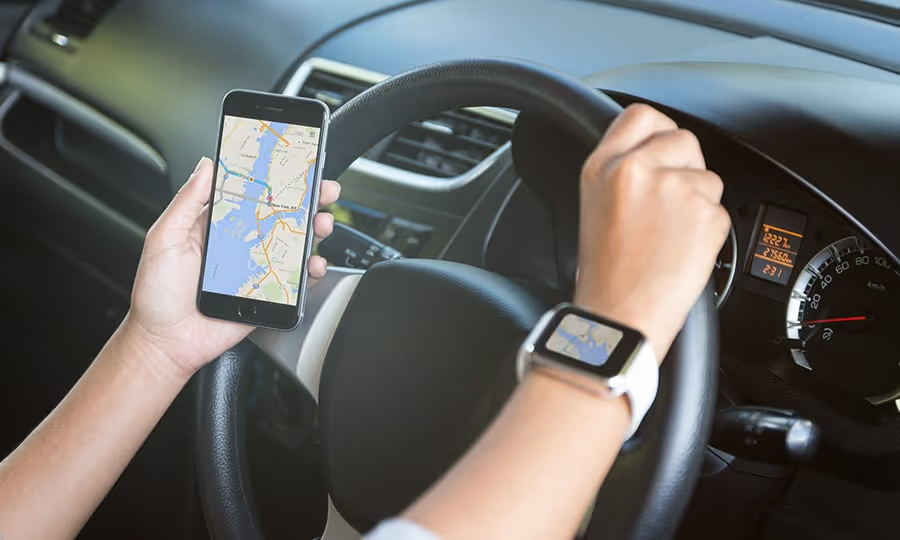
Utilizing a GPS navigation service is essential when it comes to being a successful rideshare driver. Even for drivers who were born and raised in the city where they find passengers can benefit from the new technology and features offered by many navigation services.
While Uber does provide its drivers with in-app navigation, this mapping system has been described as “severely lacking when compared to these two third party options.” Subsequently, drivers usually choose between the two biggest players in the field of third-party navigation apps: Google Maps and Waze.
Lifehacker shares that Google Maps is more akin to a traditional map whereas Waze is a turn-by-turn navigation app that focuses on a social network where drivers provide the traffic information.
Interestingly, Google purchased Waze back in 2013 for $1.1 billion, but has kept the two apps completely separate. Both have different functions and capabilities, which leads some drivers to prefer one app over the other. Thus, the debate has been created between Google Maps vs Waze. So which should you use as a rideshare driver?
Google Maps vs. Waze: How do the apps differ?
First, the two apps differ in how they calculate the best route based on the driver’s destination, although they both use real-time traffic data.
Google obtains its real-time traffic data through road sensors and speed data from drivers using the app. On the other hand, Waze relies on its users (like you and me) to provide information based on what is witnessed on the road during daily commutes.
The Waze app allows users to report accidents, police activity, and other obstructions by placing a pin exactly where the incident was seen. This gives other drivers the heads up so they can find alternative routes in order to avoid the traffic. With Google Maps, however, there are limited route customization options, which include avoiding tolls, highways, and ferries.
When it comes to navigation options, Google Maps provides information for driving, biking, walking, and using public transportation, while Waze is solely for driving.
How Google Maps can benefit a Rideshare Driver
When it comes down to navigation and interface, makeuseof.com describes Google Maps as “the cleanest and most professional” out of all the navigation apps currently available. The article continues by saying, “The interface is minimal, routes are easy to set up and navigate, and it’s quite intuitive to use.”
The minimal interface of Google Maps presents traffic data in three easy-to-read colors: green (cars are moving), yellow (traffic is starting to slow), and red (you’re going to be stuck here for a while). Additionally, users also find Google Maps less distracting than Waze because it is free from advertising. Conversely, Waze has quite a few ways of trying to grab your attention with an ad, such as businesses pinned with logos and banners that pop up while you’re at a red light.
If your goal is to have the least amount of distractions while driving, Google Maps takes the cake over Waze.
How Waze can benefit a Rideshare Driver
Waze has many unique features for drivers that can help save time and money. In addition to the turn-by-turn navigation, Waze offers “reports” on traffic jams, police sightings, crashes or hazards on route, map chat, saved locations, and gas prices.
Out of those reports, one that can particularly help rideshare drivers to save some money is the gas price report, which enables you to quickly search for the cheapest gas on a route. We all know that even ten cents extra per gallon can add up over time, so being able to easily locate the cheapest gas is ideal for rideshare drivers. Or if you use a different gas type (i.e. Midgrade, Premium, Diesel), the app lets you store your preferred gas type.
Additionally, the reports for traffic jams, construction zones, crashes, and hazards in the road (like those potholes the size of small children) can be updated by any user. Although Google has similar real-time traffic updates, makeuseof.com describes Waze as more aggressive and explains that, “Google Maps will try to take the fastest path using main roads, Waze won’t hesitate to take you through back routes. As such, driving with Waze can be a bit hectic, but it often saves more time than Google Maps.” For rideshare drivers, saving time means improved efficiency, and thus, the potential for making a greater profit.
Which app should you use as a rideshare driver?
When comparing Google Maps and Waze, it’s clear that each app has unique features and perks on top of the real-time road information that both provide. What’s not so clear, however, is which is better for rideshare drivers. Ultimately, it comes down to personal preference and what kind of navigation experience you’re looking for. If you can’t decide between the two, don’t worry, here at Gridwise we give you the ability to use either one!
Let us know which navigation app you prefer, and why, in the comments section below.
6 Tips for New Rideshare Drivers
Everyone has to start somewhere. Within the ridesharing economy, anyone who meets the baseline qualifications can start earning money through driving. Additionally, driving for Uber, Lyft, or any other transportation network company (TNC) can be something you decide to do on a whim. You may have jumped right into the ridesharing business without any prior experience or true knowledge of what you were getting into. There isn’t an in-depth orientation; there isn’t any real training. You could easily start this new job and suddenly be bogged down; as rookie mistakes can cause you to earn less-than-spectacular reviews or below par earnings. Just the same, there are lessons you can learn ahead of time that would make your life as a driver that much easier. If you’d like to avoid making some of the classic mistakes that rookie drivers make, let’s go ahead and talk about 5 tips/tricks to get you started as a new rideshare driver.
Have Patience
Recognize that, even if you’ve been driving for many years, driving professionally is its own skill. You’re thrown into the fire quickly, so it may be helpful to keep things simple as you start to get the hang of rideshare driving.
Learn your best practices for driving by completing a bunch of drives. Do not be afraid to let a passenger know that you’re new to the practice; they’re more likely to be forgiving of any mistakes you might make. Understand that, depending on when you choose to drive, customers could be either drunk enough to puke or tired enough to spill coffee all over the back seat. You’ll know, after your first few drives, what to keep with you as you move around. Drive often and reflect on what works for you and what doesn’t.
Don’t Chase Surges
The biggest rookie mistake that drivers make is to chase down surges. Although it may seem like a better idea in the short run because of the higher multipliers, chasing down surge prices will lead to disappointment if there’s no strategy involved. When you sporadically chase surges, it’s possible that the multiplier will disappear as you arrive. TNC surge algorithms are dynamically changing each minute, so chasing multipliers one-by-one isn’t going to help you earn money.
This isn’t to say that surges aren’t good for making you money; they’re clearly more worthwhile financially than driving without surges. However, instead of chasing them, you should plan ahead and position yourself in areas where surges are likely to occur during a given time frame. This strategy maximizes your time by putting you in the right place at the right time to boost your earnings in the long run.
Plan Out Your Drives
The best rideshare drivers have an outline of what they’re doing in advance. One of the most eye-catching benefits of rideshare driving is having the ability to set your own schedule. It’s best to know when your best and worst times to drive are so that you can plan around anything else you have going on in your life.
Some people plan just a few hours in advance. Every city is different, so it’s important that you know when traffic is heavy and when surge prices are at their peaks.
Others take the time to plan a bit further ahead. Platforms like our own Gridwise centralize the information you need to be a successful driver into one location, with useful information like road conditions, airport demand, and event information. Taking the time to know where and when you’ll be driving saves you both money and time in the long run.
Join Driver Communities
Drivers who communicate with one another usually have the upper hand over a driver who is isolated from other drivers. By leveraging the power of the crowd, you can learn at a quicker pace and have a better pulse for what is going on in the city.
Join Facebook groups and other online communities. There are over 150 driver groups nationwide on Facebook, including both US groups and city-specific groups. Text groups in apps like whats app and groupme can also prove useful to new and veteran rideshare drivers alike. Walkie Talkie apps like zello and voxer work well to actively put drivers in contact with one another in real time. Online forums such as uber people are a great place to seek answers to most of your rideshare questions. You should also engage with some blogs and vlogs, including the rideshare guy, the simple driver and our very own blog at Gridwise.
Invest in Your Phone
Your phone is your one-stop shop for everything rideshare. In fact, outside of the face-to-face, you get with your customers inside of the car, every other interaction you’re a part of during your drives is connected to your phone.
Everything that has to do with your phone has to be set up optimally for driving. First off, ensure that your phone is reliable. It’s part of your job to have a communication channel open, so poor equipment can result in issues that you really can’t afford to have happen. Your drives become considerably easier if you have a phone mount for your dashboard or your windshield. You have full visibility of what’s happening on the road, on the GPS and on your driver resources. Invest in a phone charger; a dead phone battery is a nightmare when you’re in the middle of a pickup. Have everything you need to drive successfully at the ready.
Keep Your Vehicle as Clean as Possible
A clean car goes a long way. Riders expect the vehicle they ping to be basically pristine, or at least close to. Hold yourself to a certain standard of cleanliness when handling your rideshare vehicle. Don’t roll out of bed and into your vehicle looking like a mess. Give your riders the comfort of knowing that they’re working with a professional. If there’s trash left on your floor, pick it up as soon as you have the time and throw it away.
Keep the interior of your car spotless. That means wiping down the door interiors and windows (outside and inside) as well as vacuuming the seats and floors. Get regular car washes to keep the exterior of your vehicle presentable. During the winter months, when city streets are covered in snow and salt, riders may be more forgiving of a slightly dirty exterior. Don’t let that make you lazy, though! Have your vehicle’s cleanliness be a priority during the hours when you’re driving.
Have any more tips? Talk to us in the comments section!
Trabaje de forma más inteligente. Gane más.
Ya sea que conduzcas, entregues o recojas turnos, Gridwise te ayuda a hacer un seguimiento de las ganancias, el kilometraje y el rendimiento para que puedas mantener el control de tu trabajo. Descarga la aplicación y toma las riendas hoy mismo.
