Blog de Gridwise
¡Lee el blog de Gridwise para obtener consejos y sugerencias sobre cómo ganar más dinero mientras conduces para Lyft, Uber, DoorDash, GrubHub y más!

The Gridwise Job Board: Find Your Ideal Job or Gig Work
Gridwise is an essential assistant app created by gig workers for gig workers. Our mission is to support those engaged in gig work in every way possible. We understand how challenging it can be to deal with income instability, a lack of benefits, and job insecurity that often comes with gig work. The Gridwise app tracks and organizes earnings and expenses, and offers a wide array of discounts, deals, and services that make the lives of independent contractors easier and more rewarding.
We firmly believe it’s possible to make a viable living and create a gig experience that offers flexible hours, variety, and excitement. With issues such as consistent earnings and job security in mind, Gridwise is proud to offer a centralized platform that shows you how to find gig work and secure reliable opportunities. We’re proud to introduce the Gridwise Job Board.
[elementor-template id="20891"]
The Gridwise Job Board: Key features
Because Gridwise is dedicated to serving the gig worker community, we’ve filled the Gridwise Job Board with useful features that won’t waste your precious time.
- Comprehensive listings. Find part-time, full-time, temporary, and per-task work. Drive or deliver with your vehicle, utilize an employer’s vehicle, or even find non-driving gig work.
- User-friendly interface. Find the jobs that are right for you with a tap of your screen.
- Verified opportunities. We vet the jobs before they are listed to ensure you’re getting high-quality job postings.
How to get more gig work, seasonal, part-time or full-time jobs with the Gridwise Job Board
Looking specifically for “gig work apps” or “gig jobs near me?” You’re in luck. Our filters and search functions send you directly to the listings you seek.
Here’s how it works.
- Access the Job Board via the Gridwise website.
- Search for jobs by type, location, and more.
- Select the job that interests you, and read all about it.
- Scroll through the description, and if it appeals to you, click “Apply for job.”
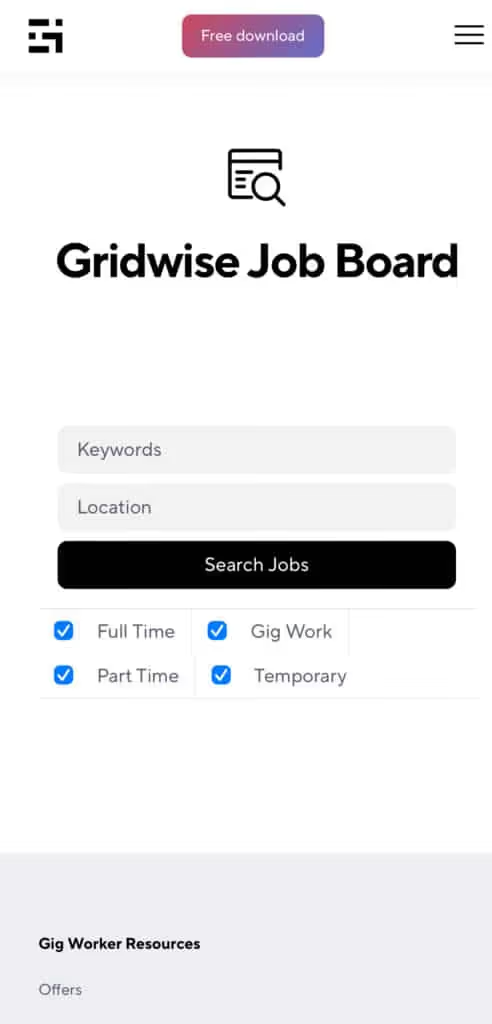
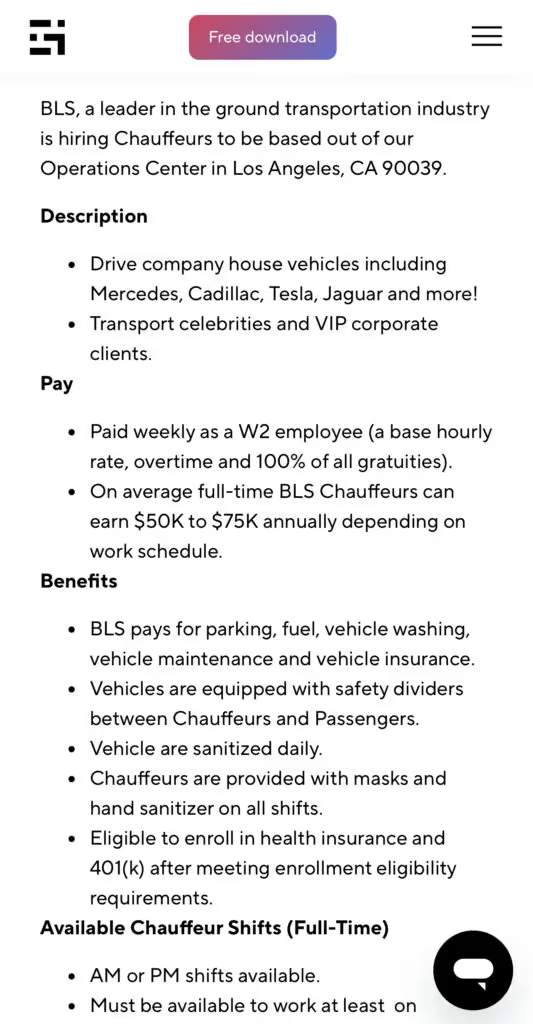
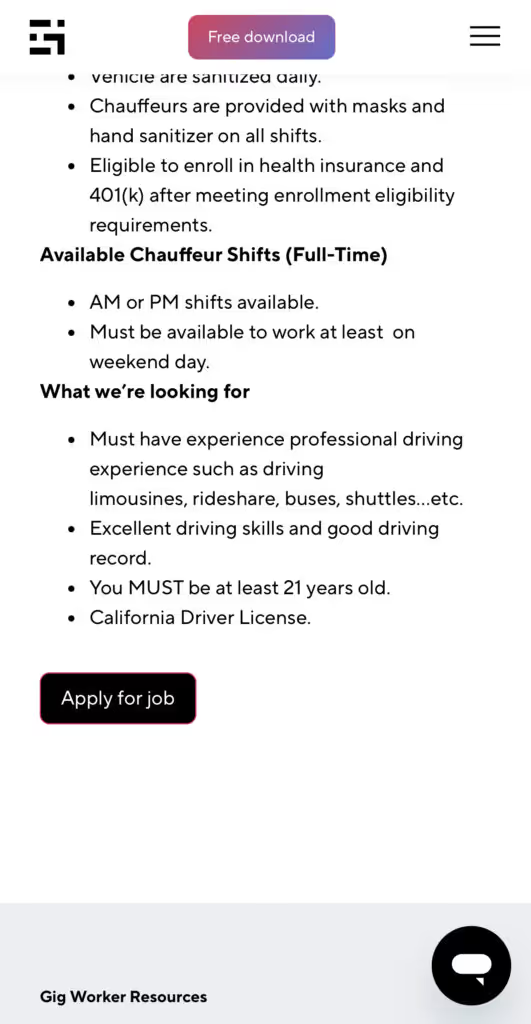
Many types of jobs are available. Adjust the search filter to see the full variety of opportunities that will let you cash in. Deliver food, set up catering, do rideshare driving, get paid for doing package delivery, and much more. You’ll find short-term gigs, long-term contracts, and part-time positions.
Perks of the Gridwise Job Board for gig workers
Gig workers who know how to make extra money will appreciate how the Gridwise Job Board lets you multiply your chances of bringing in big earnings. Here’s how:
- Increased stability. Use the Gridwise Job Board to find part-time or permanent jobs in addition to the part-time gigs you already have. Always keep a steady stream of earning opportunities flowing toward you.
- Flexibility and autonomy. Choose jobs that fit your schedule, work around other jobs and family duties, and still leave room for some fun in your life. Discover side hustles to supplement your full-time job, permanently or just for the season.
- Skill development. Find part-time work that lets you use a skill you already have, or try your hand at something new. It’s a smart way to develop a portfolio to showcase what you can do, or even to find permanent employment.
Get Gridwise and stay up to date on the Gridwise Job Board
Gig workers need plenty of information and assistance, and Gridwise is here to give it to you. Download the app and get essential features such as
- seamless earnings tracking
- mileage tracking
- expense recording, including notes
- low-cost and no-cost insurance benefits
- access to affordable medical, dental, vision, mental health, and alternative care
- professional services including legal and financial help
- deals and discounts
- weather, events, and traffic reports
- inside information on where and when to drive
[elementor-template id="20936"]
More to know about gig work:

5 Best Mileage Trackers For Gig Drivers
Many drivers ask, “Do I really need a mileage tracking app?” The answer is simple: only if you want to have an accurate count of all the miles you can legally deduct from your taxable income! You might think your rideshare or delivery driving app has got you covered. After all, they do quite a good job of logging the miles you drive while you’re on a trip or delivery. But, if you want to have the best app to track mileage for Uber, Lyft, Doordash, Instacart, or the other apps you may use, you need more. Why is that?
Without a separate tracker, you’re missing the miles you drive in between pings. Did you realize that all the miles you drive, from the moment you begin your shift until it’s over (as long as you don’t drive several miles on a break to hang with your friends), are tax deductible! That means you need something besides your driving app to keep an accurate count of your travels. Read this Gridwise post to see how important it is to keep track of every deductible mile.
You won’t be surprised to hear that there’s an app for tracking miles. In fact, there are several of them. Here, we’re going to tell you about five top mileage tracking apps, and help you figure out which one is best for you.
Before we get to the list and identify the best mileage tracker app, let’s clarify what exactly a mileage tracking app is. According to G2.com’s technology glossary, mileage tracking is done for the purpose of keeping a log of mileage that is either reimbursable or tax deductible.
And yes, of course you can track your miles simply by taking readings on your odometer. But are you really prepared to account for how many miles you drove for personal reasons and subtract them from the total to get your business mileage? Even if you can remember all that and do the arithmetic, if you want an accurate reading of the miles you drive for business, and can therefore deduct, a mileage tracking app will save you a lot of trouble and prevent you from making costly errors.
Plus, as a gig driver, you have specific needs when it comes to a mileage tracker. Ideally, you’d be able to handle mileage tracking and several other functions all in one app. It can be maddening enough to deal with driving apps, particularly if you’re an avid multi-apper. You would want your mileage tracker app to help you keep account of other aspects of your business, including income, expenses, and inside information about the art of gig driving.
Not all mileage apps are equal, to be sure! Let’s look at five of the best apps to track mileage and figure out which is the best app to track mileage with Uber and Lyft, or what mileage tracker app is best for DoorDash.
[elementor-template id="20891"]
1. Zoho Expense
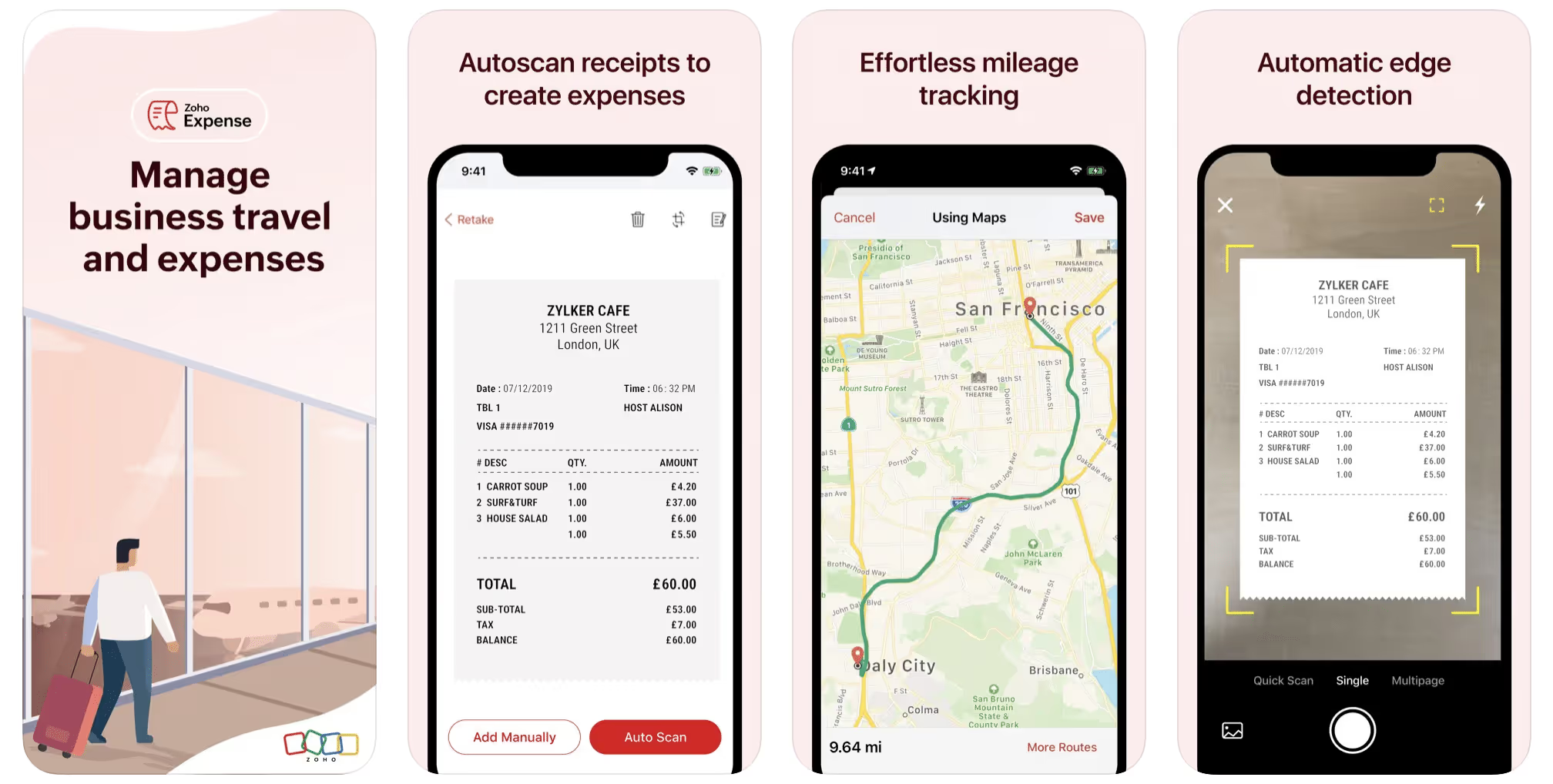
First up is Zoho Expense, which does exactly what its name says. This app is designed to allow companies to give employees a uniform way to create and submit expense reports. It can be used by individuals, including gig drivers, as well.
It includes a mileage tracker, as well as features that let you track other deductible expenses, including the ability to scan and record receipts.
Available on Android and Apple: Yes
Ratings: 4.8 stars on App Store, 4.7 stars on Google Play
Free Version: Yes
Subscription price: $3 per month, billed annually
Created specifically for gig drivers: No
2. Quickbooks Online
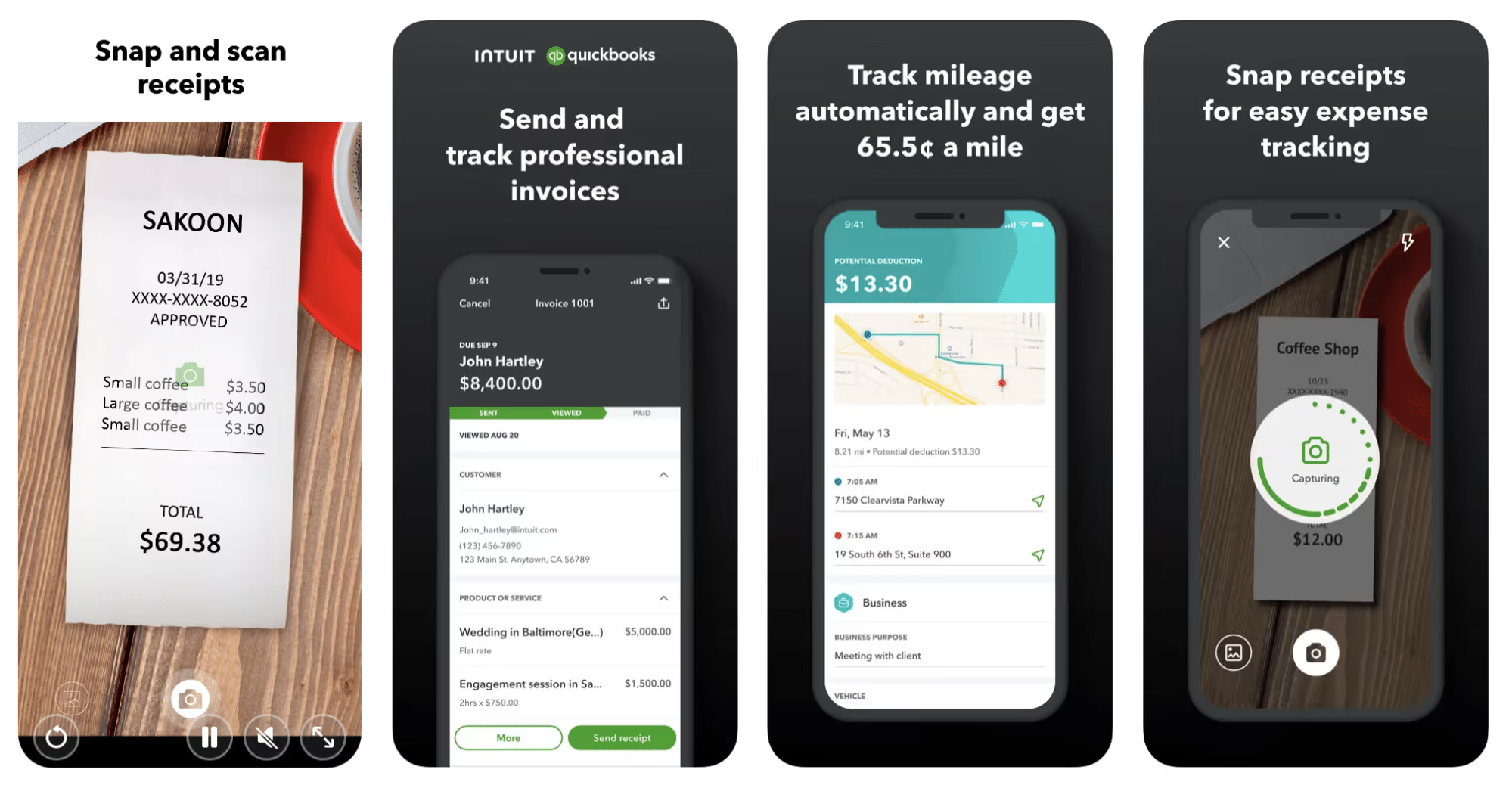
Quickbooks Online is a cloud-based app that allows you to track your mileage, earnings, and expenses. The information you enter can then be used to generate various reports that prepare you for tax time. It also allows you to create graphs that illustrate your cash flow, and includes a receipt scanner so you can instantly record deductible expenses. Quickbooks is popular, highly reliable, and designed mainly to help people keep track of their small businesses.
Available on Android and Apple: Yes
Ratings: 4.7 stars on App Store, 4.4 stars on Google Play
Free version: 30-day free trial
Subscription price: $15 per month for basic version if purchased for 3 months or more
Created specifically for gig drivers: No
Source: quickbooks.intuit.com
3. Shoeboxed
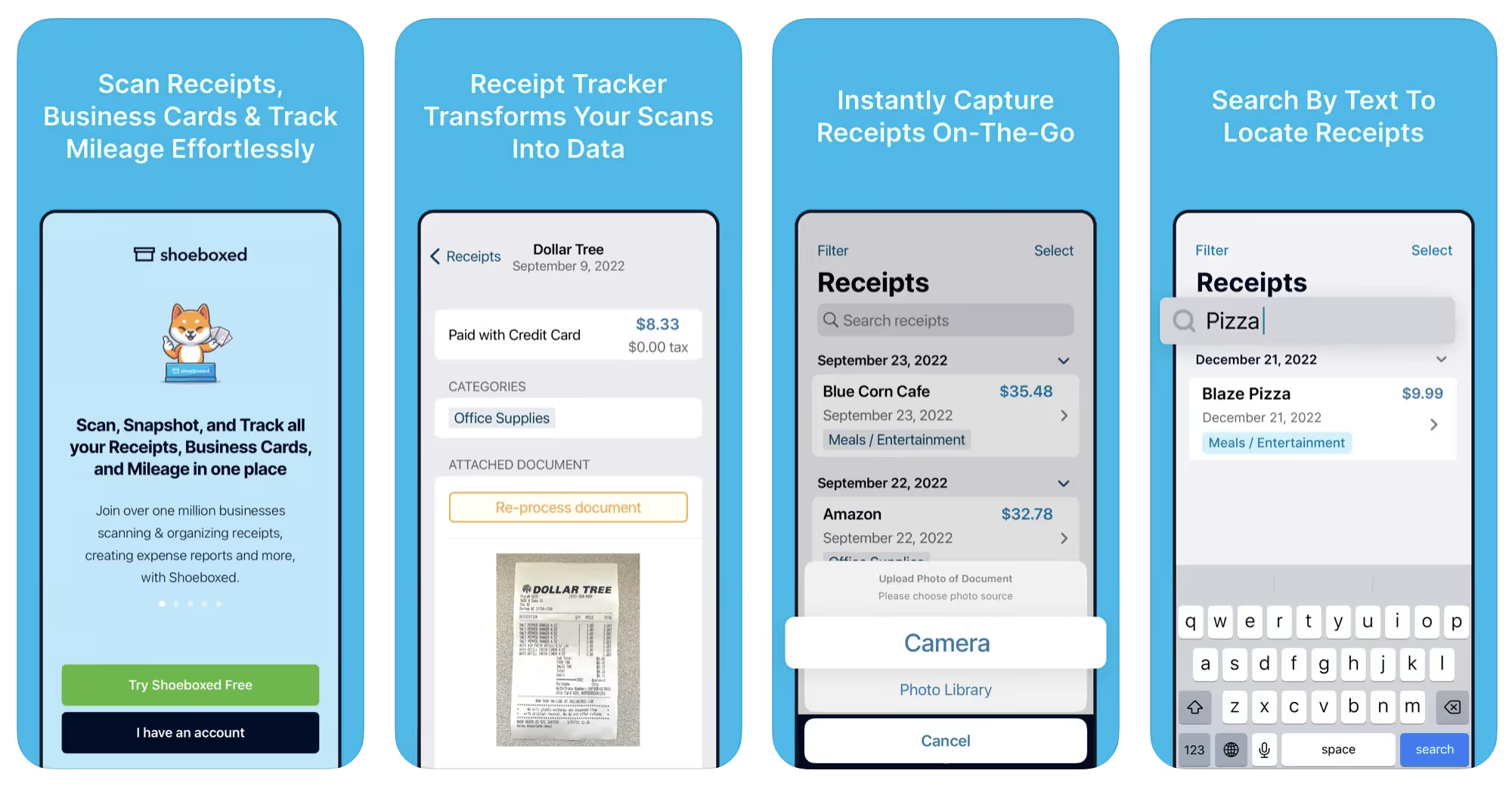
Shoeboxed started in 2007 as a service for scanning paper receipts into digital form. Now the app offers a free mileage tracker and has enabled users to scan receipts directly. It touts itself as the best mileage tracking app for DoorDash, but there are some elements missing that Dashers might like to have. While it provides features that record your expenses and prepare you for tax season, it doesn’t automatically track your earnings. The mileage tracker has a system where you can drop pins along your routes to make the tracking more precise, identifying those legs of a trip that you make for business purposes. The mileage tracker is “free” once you sign up for the basic version.
Available on Android and Apple: Yes
Ratings: 4.5 stars on App Store, 2.3 stars on Google Play
Free version: No
Subscription price: $18 per month for basic version
Created specifically for gig drivers: No
Source: blog.shoeboxed.com
4. Stride
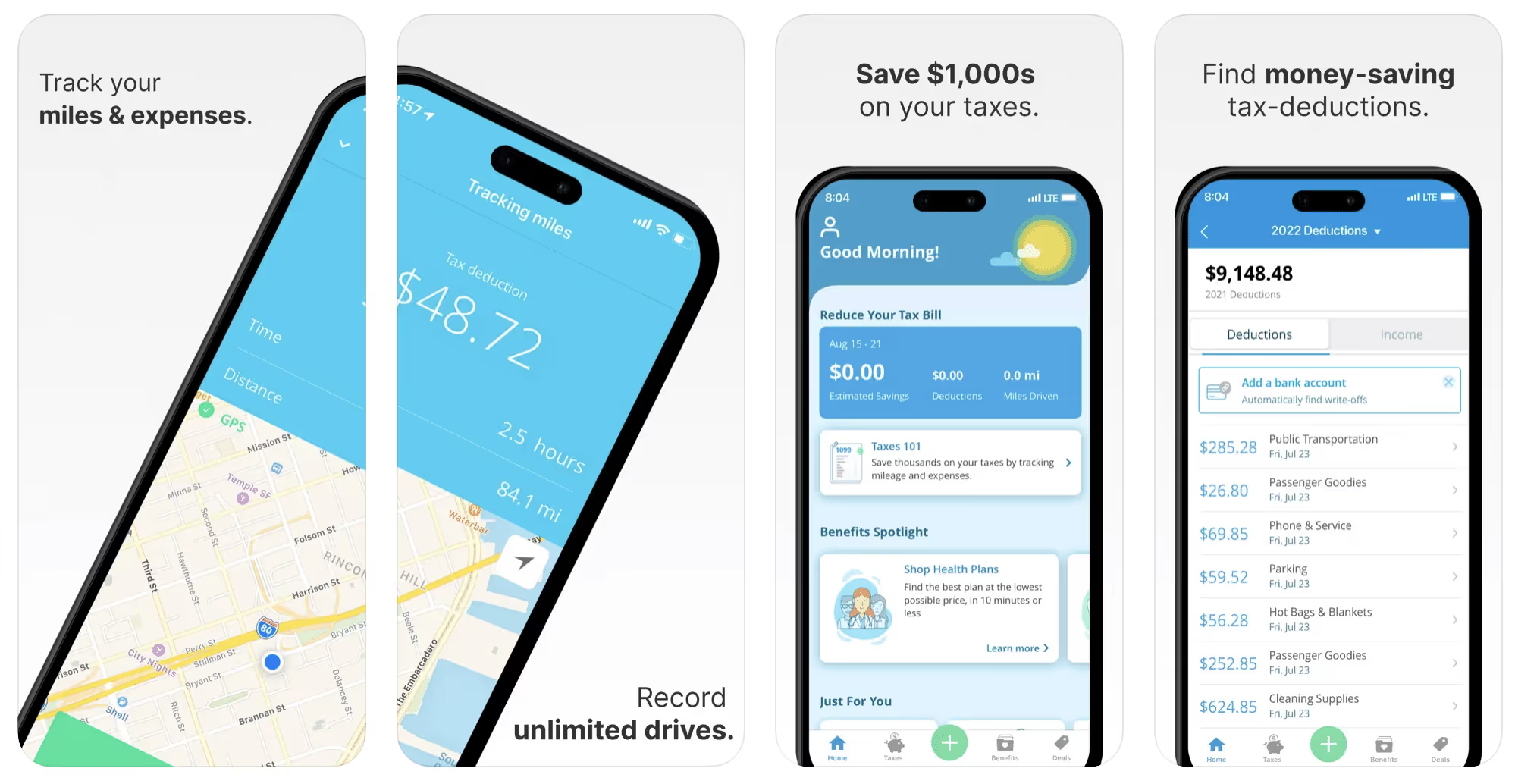
This free mileage tracker does a fair job of keeping track of the distances you rack up while gig driving, but it doesn’t automatically track earnings. It can be a big help, though, in tracking your expenses. You can link Stride to your bank account, and it will automatically scan your expenses to identify items you can potentially deduct. The app is totally free. This could make it the best free mileage tracker app, but there is a small price to pay. The app will persistently push you to consider various insurance plans that they are affiliated with. If you don’t mind that, this is a solid mileage tracker, even if it doesn’t track your earnings.
Available on Android and Apple: Yes
Ratings: 4.8 stars on App Store, 4.6 stars on Google Play
Free version: Yes
Subscription price: None. The app is free.
Created specifically for gig drivers: No
5. Gridwise
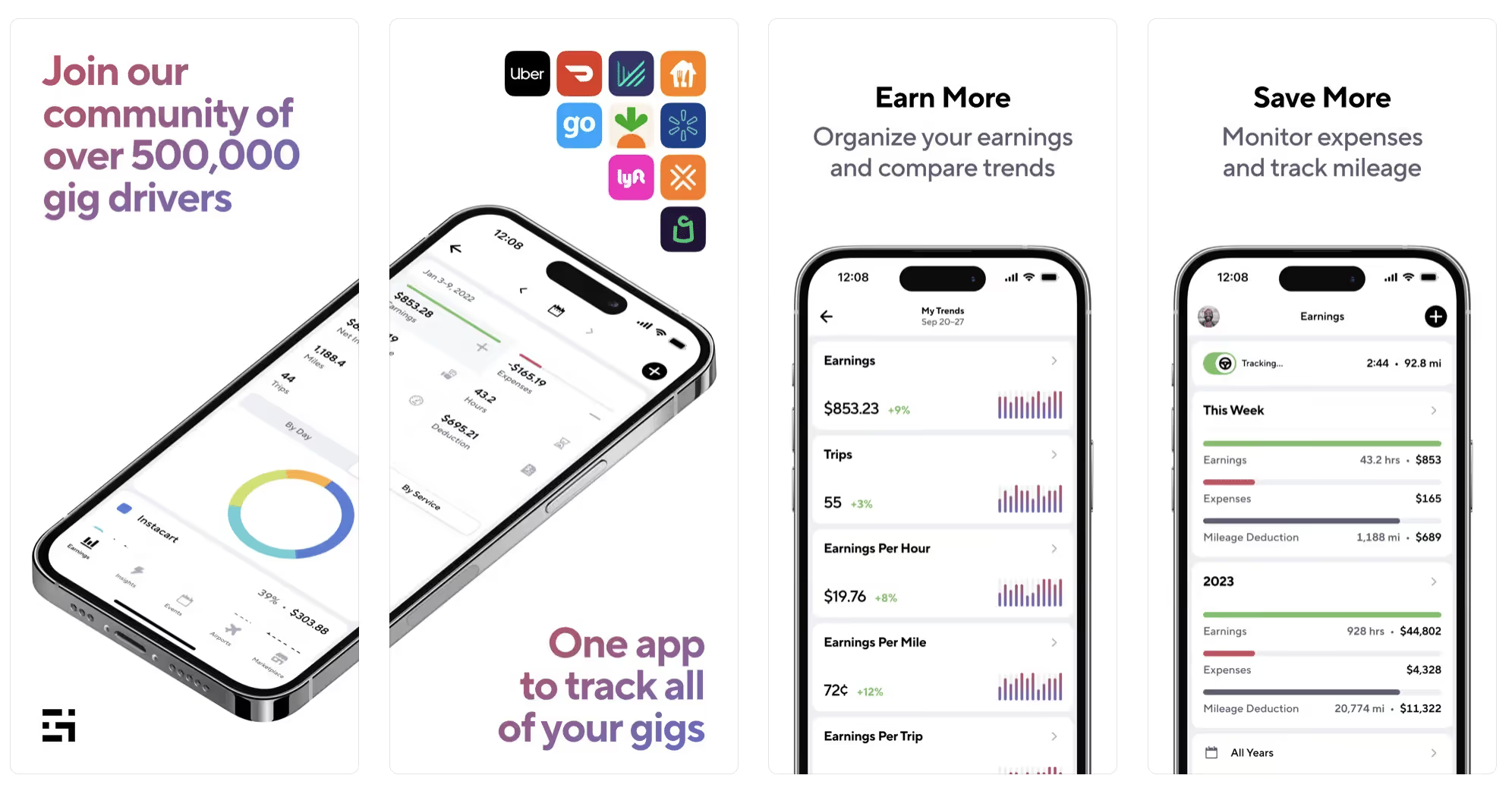
Gridwise has a free mileage tracker and free features that record your income and expenses. It gives you access to insurance and benefits, as well as insights about the best times and places to make the most money while gig driving. The Gridwise mileage tracker captures all the miles you drive while you’re on your driving shift, and it can be used if you have other trips you need to make which qualify as business travel.
Drivers love it because it is geared toward the needs of rideshare and delivery workers, providing free information about airport departures and arrivals, event start and let out times, weather, traffic, and more. The Gridwise Plus subscription adds value by providing additional insights and reports, discounts on benefits, the ability to export data in .csv format,, and more.
Available on Android and Apple: Yes
Ratings: 4.9 stars on App Store, 4.6 stars on Google Play
Free version: Yes
Subscription price: $9.95 per month for Gridwise Plus, or $95.99 per year (a $23.41 savings)
Created specifically for gig drivers: Yes!
What is the best mileage tracking app?
Now that we’ve checked them all out, we’re positive about the answer to that. Hands down, it’s Gridwise. Are we biased? You bet we are! But drivers love it too. Gridwise is the best mileage tracker app—and so much more. So many of the features are free, and the subscription to Gridwise Plus will pay for itself with additional insights to boost your earnings and deeper discounts on products and services.
Most important, Gridwise is designed specifically for gig drivers by experts who were once gig drivers themselves! Knowing what gig drivers need is a crucial step in creating an app that rideshare and delivery drivers can really use! Here are a few of the features, besides mileage tracking:
- seamless earnings tracking
- automatic, on/off toggle and manual mileage tracking
- mileage categorization
- airport, traffic, weather, and events information
- insights into where to drive and when to drive
- reports showing earnings across the platforms you use
- discounts on countless products and services for drivers
- additional resources for finding side gigs
- an informative and comprehensive blog
- affordable benefits, including insurance, medical, dental, and alternative practitioner discounts
- a community of drivers just like you
Don’t settle for just any app. Get the best mileage tracker, and so much more, from Gridwise!
[elementor-template id="21599"]

What Records Do Gig Drivers Need To Keep Track Of For Taxes?
* Gridwise does not provide tax, legal, or accounting advice. This material has been prepared for information purposes only, and is not intended to provide, and should not be relied on for tax, legal, or accounting advice. You should consult your own tax, legal, and accounting advisors before filing your return.
Record keeping? Who signed up for that? As a gig driver, it’s part of what you need to do to keep your business running. Don’t worry. It’s not as complicated as you might have been led to believe. This post will show you what you need to keep track of and the best ways to gather and preserve your tax-related records. We will cover
- How record keeping can help reduce income tax for freelancers
- Taxes and freelance work: Record keeping requirements
- Mileage tracking: Motives and methods
- More deductions and records to keep
- Make tax time easier
How record keeping can reduce income tax for freelancers
Tax time is not “fun time” for rideshare and delivery drivers. It’s easy to get used to watching your earnings pile up and come to believe they are all yours. Unfortunately, that isn’t the case. Gig work taxes can be especially painful because no one takes them out of your earnings for you, until the tax authorities insist that you do it for yourself.
You will need to show the tax authorities your income records, and they will gladly tell you to send them what they determine to be their fair share. Think that’s not fair? You’re not alone, but that doesn’t mean you’re going to get out of paying gig work taxes.
But you can find ways to pay the smallest amount that is legal and possible. The best way to defend yourself against having to pay astronomical amounts when you file your return is to know what expenses you can deduct from your gross income. When you subtract deductible expenses from your gross income, there is less left over to be taxed. This reduces the amount they can hit you with gig worker taxes. and can make your tax bill substantially lower.
While you want to keep good records so as to be in compliance with taxation entities such as the IRS, you also want to ensure you have proof of every last deductible expense you have accrued during the year. There are other records you must keep as well. Let’s look at some of the considerations you have, realizing that you now need to know how to do taxes as a freelancer.
Taxes and freelance work: Record keeping requirements
So many gig drivers fail to understand the responsibilities they have as independent contractors. Those who work part time for very few hours may even believe they don’t have to report the income they get from their driving gig payments. That would be a big mistake!
The company or companies you work for report your income to the IRS and state tax authorities. If you fail to report that income, you will risk some rather painful penalties. The IRS taxing side hustles is as much of a thing as the IRS taxing income from any other job. Your best bet is to report what you’ve earned, honestly and completely, and comply with other record keeping requirements such as
- gross income
- deductions and credits
- purchases (items you purchase and resell, such as snacks or bottled water)
- a log of all your mileage (or vehicle expenses, if greater)
- a list of all expenses and assets, such as utilities and other expenses associated with having a home office and equipment
- machinery and furniture you own, including when it was acquired, how much it cost, whether you previously took deductions on it, and selling price, if applicable (this includes your vehicle)
More things to consider:
- Pay attention to the retention of your records. You’ll need to keep all tax-return-related items— including income, deductions, and any tax credits reported— until the period of limitations runs out (3 years from date you filed, or 2 years from when you paid tax. If you have employees, keep your records for at least 4 years.)
- If you want to avoid paying self-employed taxes, you may want to set up a corporation or Limited Liability Corporation (LLC) for your business. This allows you to separate all your gig driving earnings from personal income, and permits you to take advantage of the additional advantages of working through a corporation. This includes exemption from self-employment taxes. You can learn more about how to pay self-employment taxes, if you opt for that, in this post from Keeper.
- You should always keep a separate checking account for your business, for convenience as well as clarity. While this is not a legal requirement, it is a smart move if you want to have an easier time managing your business.
- You are required, as an independent contractor, to file your taxes quarterly. Check out this Gridwise blog post for more information about quarterly tax payments and other matters that make filing delivery, Lyft and Uber taxes easier.
Mileage tracking: Motives and methods
Why you need to be meticulous about mileage
Mileage deduction, or the costs of operating your vehicle, will be the most important item to account for when you consider how to file taxes as a freelancer. While mileage is an important deduction for all independent contractors, as you might imagine, it’s even more essential for rideshare and delivery drivers.
There are two ways of keeping track of your mileage deduction. One is to use the IRS’ standard mileage deduction, which for 2022 is 58.5 cents per mile. This number takes into account the costs of operating your vehicle, from fuel and maintenance to registration, insurance, and depreciation. Alternatively, you can calculate all your own vehicle operating costs, but only after your first year of using the vehicle. You may discover that this second option allows you to have more money deducted from your taxable income. Learn more about the options for deducting your mileage in this Gridwise post.
No matter which way you decide to calculate the deductions for your mileage, you need to know what mileage you can and cannot deduct.
You can deduct
- miles driven to and from home when you go out to drive or deliver
- miles you accrue during your trips
- miles you drive on any other trips you make that are necessary as part of your business.
Examples:
- driving to return a lost cell phone or to an Uber Hub or another physical location where your company might make driver support available
- driving to pick up supplies, to get gas, or to have your car cleaned, serviced, or detailed, etc.
You cannot deduct
- miles you drive for personal trips
- miles for any trips you take that do not directly affect your business
Note: If imagining yourself becoming the not-so-proud owner of a shoebox filled with paper receipts gives you nightmares, stop worrying. Electronic records of purchases will satisfy reporting requirements. If you use cash, you can scan copies of your receipts, in some cases, right into your recording software or app. Gridwise and Keeper give you a simple to use interface that keeps all your receipts recorded without the messy pile of paper.
Mileage tracking methods
By now, you’re probably convinced that tracking mileage is important, despite all the other things drivers have to do. Now, let’s look at your options for keeping accurate records.
- Manual tracking: You can keep a logbook where you list every trip you make, starting and ending mileage, the date, and purpose of the trip. While this would work, it’s certainly not convenient. Besides, if that logbook gets lost, your plans for having a nice, fat tax deduction will go by the wayside.
- Spreadsheet: This is a bit more convenient and sophisticated way of tracking your business mileage. You’d need to be meticulous about making your entries, though. Even if you keep a spreadsheet app on your phone, it could be time consuming and inconvenient to keep doing it with all the other things going on in a rideshare or delivery driver’s day to day life.
- GPS-based mileage tracking apps: There are a bunch of apps that track mileage based on your GPS location, and most of them are pretty accurate and far more convenient than taking constant readings of your odometer. Your driving apps, such as Uber, Lyft, DoorDash, or Instacart, may also track your mileage, but be careful here. They will only track the miles you drive while you’re on a trip or delivery. They don’t count the miles you drive going to pick up a customer or when you make your move toward a restaurant or store.
Gridwise, on the other hand, will track all the miles you clock while you’re on your shift. All you need to do is make sure you start tracking the minute you leave home, and every gig driving mile will be logged. - OBD-II mileage tracking systems: There are plug-in modules that assess your vehicle’s mechanical health and track your miles. However, many authorities question the ability of OBD-II mileage tracking systems to get get accurate odometer readings. Insurance companies don’t consider them to be accurate enough gauges of odometer readings.
While mileage is a crucial deduction when you’re preparing your Uber, Lyft, or DoorDash taxes, it isn’t the only expense you’ll want to record.
More deductions and records to keep
Expenses you can deduct
You’re entitled to include the cost of other expenses that are directly related to your driving business. These include
- vehicle expenses
- equipment for your car and home office
- extra services and subscriptions
- business tools, including apps and software
You can learn much more about gig driver expenses that are eligible for deduction in this Gridwise article.
Ways to track and preserve deductible expenses
- The manual method: Just like you can with mileage, it’s possible to use a manual method, but in addition to logging each expense into a ledger, you would also need to keep physical receipts.
- Spreadsheets: You can record your expenses on a spreadsheet. This is somewhat less awkward than manually logging mileage, but there still will be plenty of room for failing to remember the case of water you bought for your customers, or losing the receipt from the thermal bag you purchased.
- Accounting software: You can use software that helps you track your expenses. This method usually interfaces well with any tax preparation software you or your tax professional might use.
- Gridwise: There are other apps that help you track your expenses, but Gridwise is designed specifically for gig drivers. It automatically tracks earnings and mileage, and lets you record your expenses the minute they come up. Gridwise’s partnership with Keeper gives you the ability to scan receipts and access a tax professional. This is a seamless way to record your expenses and a big help in learning how to file Uber taxes. Gridwise even provides .csv output, so you can feed your Gridwise data directly into tax preparation software. Check out what Gridwise and Keeper will do to super-charge your tax filing powers.
Organizing and categorizing expenses
Before you even begin to record expenses, you’ll want to set up categories for them. You can start by reviewing the categories listed above and checking out the Gridwise post that lists possible deductions.
If you’d like to learn more about how to categorize expenses, there is additional information available. This article from Motley Fool lists all possible categories any freelancer might use and also gives tips on how to customize them for your driving business.
One last tip
Using Gridwise, particularly for tracking mileage, is the easiest way to be in compliance with the IRS’ rules for deductible mileage. Gridwise tracks all the miles you drive for your gig, beyond what your company’s app might record. At the same time, you can log on and off Gridwise when you start and end your shift, so personal miles won’t be recorded. This eliminates confusion while capturing every deductible mile.
Gridwise Tax Help, a partnership with Keeper, has been created specifically to serve gig drivers. It provides affordable and easy ways to record expenses, scan receipts, and find deductions by analyzing your expenditures. Read about free resources from Keeper you can use to be fully prepared for tax season, and get all your earnings and expenses on the record.
Get the world’s best assistant for rideshare and delivery drivers, and tax help too.
Make tax time easier now!
How Much Do DoorDash Drivers Make?
Do you include DoorDash as one of the platforms for your gig driving activities? If so, then congratulations. DoorDash commands a 65% market share of the food delivery industry, more than two-and-a-half times larger than second-place Uber Eats (24%).
Even though you’re working for the top app on the food delivery platform, there is room to earn more. At Gridwise, we believe that what can be measured can be improved. That’s why we have broken down DoorDash earnings so that you can understand the numbers from every perspective. So when someone asks you “How much do DoorDash drivers make?,” you have the answer.
You can rely on the accuracy of Gridwise numbers. More than 500,000 gig drivers have downloaded the Gridwise app. They pair Gridwise to all their gig apps to monitor their earnings, spot trends, and see where they can improve. Gridwise aggregates these collective numbers into an industry-wide picture of earnings that’s not available anywhere else. This knowledge will improve your earnings.
[elementor-template id="20891"]
How much do DoorDashers make per delivery?
Want to know more about how much DoodDash drivers make per delivery? Some drivers prefer to look at earnings on a per-delivery basis. Check out this article that gives you detailed information about per-delivery earnings and how to make more in this Gridwise post, How Much Do DoorDash Drivers Make Per Delivery?
How much do DoorDash drivers make per hour?
Many DoorDash drivers work full-time, and others work part-time, making it difficult to find common ground for comparing earnings. How much DoorDash drivers make per hour is the great equalizer. If you’re doing it all right, implementing the best tactics and strategies, you can tell by per-hour earnings. For a closer look, check out the Gridwise blog post How Much Do DoorDash Drivers Make Per Hour?
How much do DoorDash drivers make per day?
What are the best days of the week for maximizing DoorDash earnings? Look at the information on the chart. There might be some surprises. For a closer look, check out the Gridwise blog post, How Much Do DoorDash Drivers Make Per Day?
How Much Do DoorDash Drivers Make Before Tips?
Inflation affects everything, including how much customers pay for the food you deliver as a DoorDash driver. Sometimes that translates into smaller tips. This is a concern because tips make up a large part of a DoorDash driver’s earnings. See what DoorDash earnings look like before tips. Then click over to a recent Gridwise post, How Much Do DoorDash Drivers Make Before Tips?, where we include pointers for increasing those tips. You can also get a perspective on DoorDash driver earnings from another Gridwise blogpost, DoorDash Driver Pay: What do Dashers earn in 2023?
Download the Gridwise app
Gridwise is the #1 companion app for DoorDash drivers, and for all those that make their living as gig drivers. Besides monitoring your earnings from the various gig platforms you drive, the DoorDash app also has the best mileage tracker for gig drivers, as well as the best expense tracker in the industry. Gridwise also provides valuable information about where business is with their When to Drive and Where to Drive features.
[elementor-template id="20936"]
Get more DoorDash Dasher earnings insights from Gridwise
Check out these Gridwise articles to learn more about DoorDash earnings:
How Much Do DoorDash Drivers Make Per Hour?
DoorDash hourly earnings are the great equalizer, an even playing field for comparing full-time and part-time drivers. For this reason, we are taking a close look at, how much do DoorDash drivers make per hour?
As we look at these numbers, you should know that they come from the over 500,000 gig drivers, both full-time and part-time, who have downloaded the Gridwise app. Gridwise aggregates and anonymizes the numbers to give you the best picture of DoorDash driver earnings.
[elementor-template id="20891"]
This blog post has lots of good information, but if you want to know more, you can check out the Gridwise post 2023 Doordash Earnings Report. You can also compare your earnings to what other drivers earned in 2022 in this Gridwise blog post, DoorDash Driver Pay: What Do Dashers Earn in 2023? While this blog post focuses on how much DoorDash drivers make per hour, high-performing drivers find it important to understand all aspects of Dasher earnings. Gridwise examines these aspects in other blog posts.
- How much do DoorDash drivers earn per day?
- How much do DoorDash drivers earn per delivery?
- How much do DoorDash drivers earn before tips?
DoorDash driver earning numbers per hour
Source: Gridwise Analytics. Graph also appears in 2023 Doordash Earnings Report.
How much do DoorDash drivers make? DoorDash hourly earnings for the last seven quarters, ending in Q3 of this year, averaged $15.20 to $16.00 per hour. Notice that rates increased during the first and fourth quarters, which run concurrently with the football season and the holidays. We don’t see the same increases during March Madness or baseball season for DoorDash drivers (or Dashers, as DoorDash refers to them).
Food delivery is one of many gig driver jobs that sees a positive impact from football season. A recent Gridwise post, The Impact of Pro Football Home Kickoff Games on Gig Mobility Demand, shows a marked increase in rideshare business.
Keep in mind that these numbers represent the average. High-performing DoorDash Dashers, those in the 90th percentile, earn as much as $20 or more per hour. Dashers in the largest metropolitan areas earn even more. Becoming a high-performing driver may answer your question, Is DoorDash worth it?
As we said in the first paragraph, hourly earnings are the great equalizer between all DoorDash drivers, full- and part-time. For a different perspective on how to look at DoorDash earnings, see the Gridwise post, 2023 Doordash Earnings Report.
DoorDash driver earnings averages across cities per hour
{insert chart}
The per-hour numbers you saw in the first chart represent a national average. Earnings at all levels for gig drivers vary geographically, and Gridwise can break it down per city. The major metropolitan cities have the highest earning rates because of their sheer density. The volume and variety of restaurants also drive this higher rate.
Large suburbs, carpeted with homes, surround many of these cities. These smaller, densely packed communities attract many restaurants, too.
For those drivers not based in a major metropolitan area, DoorDash launched an Earn by Time feature for drivers this past June 27. Read about it in the Gridwise blog post Gig Worker News: DoorDash Offers Hourly Pay to Dashers.
Busiest times of the day for DoorDash drivers
DoorDash peak timesTotal hoursEarningsCommentsLunch (11:30 am–1:30 pm)2 hrs. × 5 days a week = 10 hrs. $200Weekends tend to eliminate the business lunch crowd. Dinner (5:00 pm–9:00 pm)4 hrs. × 7 days a week = 28 hrs. $560Hours may vary in your region. Late night1.5 hrs. × 7 days a week = 10.5 hrs.$210If your territory includes colleges and universities, you’ll get good results in this time block. Totals48.5 hours$970
Chart initially published in How to Make $1000 a Week with DoorDash
Food delivery is not a 24/7 job. Yes, there are those odd orders at 4:00 in the morning or 3:00 in the afternoon, but you can generally rely on lunch and dinner as your peak times.
The exception to this is when there are major sporting events. These are more likely to carry the food delivery demand through a Saturday or Sunday afternoon. Also, remember that football is a weekend-long pursuit. College games are on Saturdays, professional games on Sundays, and football games on Monday and Thursday nights.
What do food delivery drivers do in the afternoon hours or after 9:00 pm? This is where multi-apping comes in. You can get in several hours of rideshare in the afternoon rush hour or late at night. Check out the Gridwise blog post on multi-apping, The Art of Multi-apping: How-Tos and Strategies for Gig Drivers.
If you familiarize yourself with Amazon Flex, for example, you can also squeeze in a delivery block from that company. Check out these recent Gridwise blog posts on the parcel carrier:
You can also see how hourly earnings fit into the wider perspective of DoorDash earnings in this blog post, 2023 Doordash Earnings Report.
Tips for maximizing hourly DoorDash driver earnings
As a DoorDash Dasher, there are some things you can do to increase your profits.
Take advantage of DoorDash double orders
There are scattered reports that the DoorDash app is good at doubling up on orders, meaning that you can, on your way to pick up an order, get a second order going in the same general direction. According to this Quora page on DoorDash double orders, drivers have mixed reviews of this. You can also read more about DoorDash double orders on the DoorDash website.
Communicate with the customer
It’s better to let the customer know in advance that there’s a hold-up at the restaurant or you’re stuck in traffic. Alternatively, they get upset, look for someone to blame, and the delivery driver becomes the likely target.
Double-check those orders
Make sure the restaurant gets the complete order. You don’t have to open dishes or unwrap sandwiches to verify what they are, but at least count the components and ensure nothing is missing. Someone might be counting on those onion rings.
Remember all the condiments
Some restaurants could be better regarding including extra ketchup or mustard. Make sure you include some. Drop in an extra handful of napkins and some plastic forks, knives, and spoons. If you’re picking up beef dip sandwiches, ensure someone at the restaurant remembers the au jus.
Familiarize yourself with DoorDash incentives
DoorDash offers you ways to make more money. Learn about Peak Pay promotions, DoorDash driver Challenges, and the Dash Now program—all described in a recent Gridwise blog post, DoorDash Incentives 2023: How Do They Work?
Work those tips
Tips are a significant source of income for DoorDash Dashers. If you do a lot of dashing, consider getting cards printed that thank people for allowing you to bring them their delivery. Include your information for PayPal, Zelle, or any of the other electronic cash-handling services. Some people would rather tip you directly. Drop one in every bag.
Check out Gridwise for more information on DoorDash
Visit the Gridwise blog and type “DoorDash” into the search bar. You’ll get a host of excellent blog posts about DoorDash. Recent ones include A Guide to Dashing: DoorDash for New Drivers vs. Experienced Drivers.
Download the Gridwise app
Gridwise is the place to go regarding the latest information on DoorDash or other food delivery, rideshare, and parcel delivery gig jobs. Download the Gridwise app and check out When to Drive and Where to Drive on the Gridwise app. You can also save money at tax time using the Gridwise mileage tracker, the best mileage tracker app for gig drivers, and the Gridwise expense tracker.
[elementor-template id="20936"]
Gridwise also maintains one of the most authoritative blogs in the gig industry. Check out our recent blog post, 2023 Doordash Earnings Report, for a more encompassing look at DoorDash earnings, and once again, also read DoorDash Driver Pay: What Do Dashers Earn in 2023?.
Get more DoorDash Dasher earnings insights from Gridwise
Check out these Gridwise articles to learn more about Uber Eats earnings:
How Much Do Lyft Drivers Make Per Ride?
Are you making as much money as other Lyft drivers? Is it worth it for you to work for Lyft? Working alone as a Lyft driver sure does beat having a micromanaging supervisor breathing down your back, but there are some things you have to sacrifice.
One is the camaraderie that comes with working around your peers. From time to time, you may bump into other Lyft drivers and ask them things like how much they’re making per day. Sadly, you’ll rarely get any realistic intel, outside of their opinions about what Lyft driver earnings are like. But are they telling the truth?
Gridwise has data that reflects actual figures from other drivers, without the need to fact-check your airport cell phone lot buddies’ boasts, or to guess whether they drive the same way you do. On top of data, this article gives you tips for out-earning all your peers. Here are some questions we’ll shed light on:
[elementor-template id="20891"]
What is Lyft driver base pay like?
Lyft calculates base pay by adding together the base fare plus the time and distance you will clock during the ride. Besides these variables, you’ll have to take into consideration bonus and tip pay, and your expenses, including gas, car maintenance, and job-related equipment. The wide range of base pay numbers account for differences in location, as well. A ride that takes place in New York or San Francisco, for instance, will be more profitable than a short ride in the suburbs of Butte, Montana.
Gridwise data illustrates base pay ranges across the country:
How much do Lyft drivers make per ride?
When you ask this question, you’re likely to get a whole lot of different answers. Business Insider asked a number of drivers, who reported figures ranging from $22 to $40 per hour. It’s hard to know how many rides a driver makes in an hour, and it can definitely vary. Other sources estimate that median per trip earnings hover around $10.
It’s important to look more closely at how much you’re making with every ride, and then you can begin to estimate how much you can make in a day. This data from Gridwise gives you actual numbers that reflect the nationwide experience of per trip earnings of Lyft drivers.
What cities offer the biggest per ride earnings?
Cities such as New York and Seattle have laws that set minimum wages for drivers, so on the whole, their per trip earnings will be high. Other cities, where demand is less and cost of living lower, will show per trip earnings for Lyft drivers that match that situation.
This data shows how much Gridwise drivers make per ride in key cities.
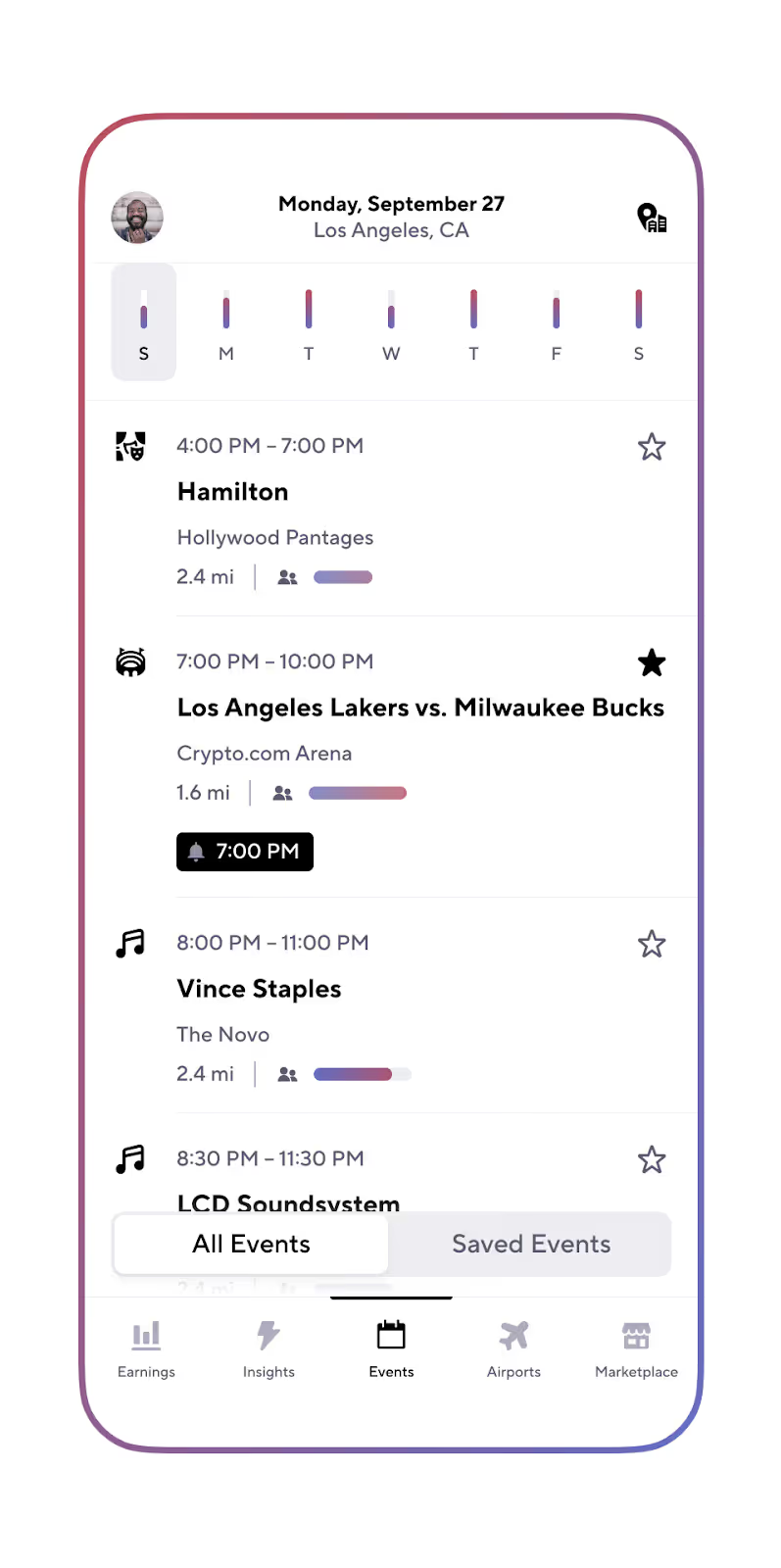
In all cities and in less populated areas as well, trips involving big events, rush hours, and bad weather will yield more profitable rides. Download Gridwise to get information about events, traffic, and weather when you need it most.
How can Lyft drivers make more with every ride?
When you work with Lyft, there’s a big difference between simply taking the rides as they come, and strategic driving. Here are some action items that are sure to help you make the most out of every ride you take.
- Download Gridwise and use When to Drive. Each ride you make will be more profitable once you know the best times to drive. When to Drive gives you intel that is sure to boost your earnings. It shows you the days and times when rides are really paying off.
- Use multi-apping to make the most of your time. When Lyft rides don’t come one after the other, you can jump on another app to keep your cash flow going.
- Work for more customer tips. By being efficient and pleasant, you’ll garner more tips from your passengers. Use these pointers and watch your earnings soar!
- Track your mileage and expenses. Your Lyft app only tracks the miles you travel while you’re on a ride. Download Gridwise to keep an account of the miles you drive in between. This lets you take full advantage of your deductible mileage allowance. Gridwise also tracks your other expenses, putting you in the perfect position for tax time.
[elementor-template id="20936"]
More earnings insights for Lyft drivers

Mobility Data: What Gig Driver Loyalty Reveals to Investors
Uber Technologies, the parent company of Uber and Uber Eats, set the tone for gig platforms in early February when it posted a $1.87 billion profit for 2023.
That number comes on the heels of two years of solid growth figures. According to mobility data from Gridwise, Uber's trips increased 66.3% from Q1 2022 to the end of 2023. While not as high, Lyft's numbers rose 52.1%. DoorDash, the giant of the food delivery companies, saw trips soar 34% in almost the same period.
But investors and hedge fund managers know Uber’s profit comes at a cost. Uber’s annual numbers also revealed that the rideshare leader spent a whopping $529 million on driver incentives, which they label contra revenue. That’s more money that could have gone back to the bottom line.
How can investors tell if the gig platforms are wisely investing in boosting driver loyalty? How can Uber and the other gig platforms get ground truth data on what works? The answer lies in transportation analytics from the Gridwise Annual Gig Mobility Report.
[elementor-template id="20891"]
Mobility data is a gateway to understanding gig driver loyalty
When evaluating a gig platform, investors should ask, “Do their programs attract and keep drivers?” Gig companies can quickly expand their apps to handle the added demand. It's more challenging, however, to scale the number of drivers needed to meet the demand. A shortage of available drivers leads to long waits for the customer. It can diminish the gig platform’s reputation and compel end users to seek other options, either driving themselves or using public transportation, and in the case of food delivery, picking it up themselves.
The various incentive programs gig platforms use to get and retain drivers include
- Driver referral bonuses—Many gig companies, especially rideshare, offer current drivers bonuses for referring new drivers. The amount of these bonuses and other requirements vary by region and the need for new drivers. In the past, they’ve been as high as $500, according to a post by SmartWallet.
- Guaranteed incomes—A gig company will guarantee a certain level of earnings for new drivers in a specified period. The gig company will make up the difference if the driver fulfills the requirements but does not reach the amount.
- Returning-driver incentives—Many drivers quit driving during the pandemic or for other reasons. The gig companies often email these drivers with a bonus offer for returning and meeting specific goals.
- Driver retention programs—The gig companies regularly offer bonuses to drivers for completing a specific amount of rides during a specified period or in a defined region. Examples of these include the Uber Quest bonus and Lyft Sprints.
These are the most common programs, but there are others. They all cost the gig platforms money (more than half a billion in Uber’s case), with some being more effective than others. Ground truth information in the form of mobility insights and delivery data paves the way for smarter, more equitable decisions by all stakeholders.
Why should investors be concerned about driver loyalty?
Driver loyalty translates into benefits for a gig platform, all of which can affect the bottom line. These benefits include
- a fleet of loyal drivers, which means the gig company can meet growing demand.
- increased driver loyalty, which means less money spent on driver incentives.
- drivers who are more likely to recommend the platform to others, resulting in lower acquisition costs.
- happy drivers, who are more likely to deliver better service, which reflects positively on the company and its brand.
Data analysis of driver earnings across all platforms
How much are drivers making across the various gig platforms? This chart, part of the Gridwise Annual Gig Mobility Report, provides accurate insight into that question.
Gross monthly earnings for gig drivers (rideshare and food delivery, 2022–2023)
ServiceGross Earnings (Avg, 2022)Gross Earnings (Avg, 2023)YoY Change (%, Gross Earnings)Work Hours (Avg, 2022)Work Hours (Avg, 2023)YoY Change (%, Work Hours)Uber$1,699.58$1,409.71−17.1%5856−2.9%Lyft$1,032.23$1,058.320.0255144-12.90%DoorDash$704.04$703.17-0.10%49500.032Instacart$661.60$606.50-8.30%3836-4.50%Uber Eats$558.49$472.72-15.40%2827-3.80%Grubhub$445.07$471.770.0625280.136
Source: Gridwise Analytics
It’s not all about compensation
The report also reveals what attracts drivers to gig work. Compensation actually comes in second place. What attracts drivers the most is the ability to have flexible hours.
The leading motivators in choosing gig driving work

Source: Gridwise Driver Survey 2023
Gig driving is also increasingly seen as a permanent occupation. Almost half (45%) of drivers surveyed see it as a long-term plan.
The draw of multi-apping
The gig driver alternative to driver loyalty is multi-apping, the driver practice of operating and responding to several apps at once. There are several methods of multi-apping, all which affect driver loyalty in different ways.
- Multi-apping within a category—Drivers have apps open in the same category, such as rideshare, and pick and choose rides based on perceived profitability and other factors. According to a Gridwise blog post, Want to Improve Gig Driver Loyalty? Use Data to Stay Competitive, 31% of drivers multi-app.
- Multi-apping across categories—Drivers have apps open in rideshare and food delivery, again picking and choosing based on their preferences. According to the previously mentioned Gridwise blog post, 21% of drivers multi-app in this fashion.
- Switching between apps—Peak demand for food delivery is between 12:00 pm and 2:00 pm, and 5:00 pm and 9:00 pm. Some drivers work food delivery during those hours, and then switch to rideshare, which is often more profitable in the later evening hours.
Multi-apping is a tool that drivers use to increase profitability. Gig companies, however, would rather have drivers loyal to their platform. To encourage this, they often structure retention programs to encourage drivers to remain on the app to accept rides or orders. Uber Eats Pro and the DoorDash Top Dasher programs are examples of retention programs that encourage drivers to remain on one app.
The gig platforms also take other measures. Uber and Lyft often void Quests and Sprint promotions if a driver ignores a ride or turns off the app during a prescribed period.
Mobility data shows delivery wins the loyalty contest
Mobility data analysis in a Gridwise Analytics blog, Want to Improve Gig Driver Loyalty? Use Data to Stay Competitive, indicates delivery platforms get the highest driver loyalty ratings.
Here are some of the findings:
- From Q2 2022 and the beginning of Q3 2023, 60%–65% of DoorDash drivers drove strictly for that service platform.
- Between 45% and 50% of drivers were loyal to Instacart during that period.
- By the beginning of Q2 2023, Amazon Flex drivers who drove solely for that platform reached about 45%.
More broadly, data analysis shows that over 75% of drivers stick to one gig type during a working period. Only 24.3% of drivers switch between apps. Nevertheless, there remains a high level of interest in multi-apping, as data shows that 41.7% of drivers have experimented with different gigs.
The impact of tips on driver loyalty
Tipping is a big part of the gig driver economy. A recent review of gig driver platforms reveals that all allow the customer to tip the driver through the app, and all companies pass on 100% of the tips to the drivers.
Tipping serves two purposes:
- Tipping augments the driver’s income, and 78.4% of drivers agree that tips matter significantly to their overall income.
- Tipping also reinforces that drivers are doing a good job, with 68.6% of drivers indicating that tips affect their enthusiasm and job satisfaction.
What is interesting to note is the disparity between tips by rideshare drivers and those in food delivery. Rideshare drivers receive an average of about 10% of their income in tips, whereas food delivery drivers receive 51% of their income in tips.
Also notable is the frequency of tipping in the different categories:
- 28% of rideshare passengers give their drivers a tip.
- 74.5% of grocery delivery customers give their drivers a tip.
- 88.5% of food-service customers give their drivers a tip.
Investors can learn from Gridwise mobility insights
Mobility insights and transportation analytics can inform the decisions of investment researchers and hedge fund managers who are eager to provide healthy returns for their clients and investor base.
It's interesting to note that DoorDash and Instacart have a solid lock on market share in their categories, and their drivers have the highest monthly earnings. These same companies also have the highest driver loyalty rates in those categories, indicating that driver loyalty figures into the battle for market share in the gig industry.
Investors can also use Gridwise Analytics to determine whether the various platforms' driver incentive programs contribute to driver loyalty. Gig platforms with lower driver loyalty rates need to be using the most successful incentive programs.
Gridwise Analytics provides mobility data and transportation analytics, affording unique insights to companies involved in the broader transportation infrastructure, and demonstrating how people and goods move from one location to another. The data shows where trips originate, where they end, and the primary travel corridors. This data also reveals the success of the gig platforms in building market share and increasing driver loyalty.
Gridwise Analytics’ partners marvel at the data's clean nature, allowing them to integrate the findings into their existing datasets with little or no manipulation.
For a demonstration of how Gridwise Analytics' vehicle trip data can sharpen your transportation analytics, contact Gridwise Analytics.
Check out these articles to learn more about Gridwise Analytics:
How Much Do Lyft Drivers Make Before Tips?
Most passengers think that tips are optional, but for drivers they can make or break the profitability of their gig. Lyft passengers respect the company for its reputation as a gentler, more caring corporation than its competition. But is this friendlier corporate culture enough to make Lyft passengers tip generously?
Let’s examine real data from Gridwise drivers that tells us just how much Lyft drivers make as base pay and how important tips are for drivers.
[elementor-template id="20891"]
What does Lyft pay look like? How much does base pay vary?
First of all, it’s important to note that the numbers most sources provide vary widely. Unlike the data Gridwise uses, earnings can be self-reported, yet not documented. Also, pay can differ depending on where drivers are, what hours they work, and how frequently they drive. Glassdoor, for example, says Lyft driver base pay ranges from $17–$29 per hour. Meanwhile, Solo Traveller estimates earnings before tips to be $15–25 per hour.
Lyft says that it has taken measures to increase driver pay before tips by compensating drivers for wait time and increasing their earnings on long trips. Has this had an impact on before-tip pay? This actual data from Gridwise shows trends in Lyft driver pay before tips:
What’s an average tip, and how can drivers do better?
As you might expect, tip amounts are dependent on the price of rides.That means drivers need to work harder to get riders to feel extra generous. To make this easier for riders, Lyft offers options to add a percentage of the cost of their rides either at the end of or after their trips.
Passengers can even set a default tip percentage that is added for all of their rides. This can definitely help to improve what Lyft drivers make per hour, or the daily rate Lyft drivers can expect.
Some sources say the average tip of $5 per ride is reasonable. This represents 25%–33% of a $15–$20 ride. In addition to tips, bonus pay that includes surge pricing and other incentives plays into the total add-ons to Lyft driver income. Data from Gridwise shows us what drivers can expect to earn before tips.
You can improve your chances for getting bigger tips by going out of your way to accommodate your customers. There are lots of ways to get more tips, and one of the best is to use Gridwise. You’ll get insight about your driving habits that puts you in the perfect position to increase your earnings and hang on to them.
Hot spots for the biggest tips
Tip and bonus amounts go up and down depending on a lot of different factors. One of the most important is location. The Lyft blog provides a thorough breakdown of regional tipping patterns and identifies some of the cities where you can expect to get bigger tips.
This Gridwise data shows median tip earnings in major cities. Once you see what “average” or “median” tip amounts are like in your area, you’ll know how much harder you’ll have to hustle to make the kind of income you want to get from your Lyft driving gig.
Maximize your tip earnings with shrewd strategies
Because tip earnings vary so widely for so many different reasons, it’s important to be aware of your particular situation and how it affects your prospects for getting extra compensation from your passengers. Here are some strategies you can deploy:
- Use When to Drive from Gridwise. Every driver needs to know at what times all the big tipping takes place. That’s why Gridwise developed this amazing resource. You’ll see what drivers are making in your area at different times of day, so you’ll be clued in on when you can get out there and make the most money—both in terms of basic pay and tips.
- Use multi-apping. Not sure if Lyft is the right app for you? Shop around! As an independent contractor, you’re entitled to work for any app you choose. Once you master the art of multi-apping, you’ll know which app is best for you, based on your needs and your schedule.
- Hang on to your earnings. Don’t let your cash flow get eaten up by excessive taxes. Use Gridwise to account for every deductible mile, and record every gig-related expense, to trim your tax bill. The Gridwise app keeps tabs on it all, and makes preparation for tax time a breeze.
[elementor-template id="20936"]
Get more earnings insights for Lyft drivers
¿Cómo Son las Ganancias de los Conductores de Lyft?
Descubrir exactamente cuánto puedes ganar conduciendo para Lyft puede resultar un desafío. Todo el mundo tiene una opinión, y es casi imposible descubrir cuáles podrían ser los números reales. El problema con muchas de las opiniones ofrecidas es que se basan en encuestas informales y suposiciones fundamentadas de conductores de Lyft.
Los números que verás aquí son diferentes. Provienen directamente de los conductores de Gridwise y no están manipulados de ninguna manera. Nadie está presumiendo ni minimizando. Los datos no mienten, y toda la verdad está aquí en esta publicación.
Ganancias por hora de Lyft
La forma más común de ver las ganancias es por tarifas por hora, así que veamos eso primero. Estas cifras reflejan el pago bruto promedio registrado por conductores en todo el país.
Obtén más detalles sobre las ganancias por hora de Lyft.
Ganancias semanales de Lyft
Para tener una idea completa de qué tan fácil podría ser ganar un ingreso funcional conduciendo para Lyft, necesitas ver cuánto es probable que ganes en una semana. Recuerda que “una semana” puede significar un número diferente de días u horas para diferentes conductores. Estos datos provienen de conductores en todo el país y reflejan las ganancias brutas semanales promedio.
Obtén aún más información mirando las ganancias diarias de los conductores de Lyft.
Ganancias mensuales de Lyft
¿Cómo se comparan las ganancias de Lyft cuando vemos las ganancias brutas mensuales? De nuevo, necesitamos considerar cuántas horas, días y semanas trabajan los conductores, pero estas cifras promedio nos dan una idea de cuánto puedes ganar en un mes.
Bono promedio nacional de Lyft + propinas por mes
La cifra de pago bruto incluye el bono y las propinas, por lo que es importante estar al tanto de las tendencias de este componente clave del pago de los conductores de Lyft. Esto es lo que las tendencias actuales nos muestran sobre lo que puedes esperar de bonos y propinas en el transcurso de un mes.
Veamos cómo las propinas contribuyen al total de ganancias de los conductores de Lyft.
Bono promedio nacional de Lyft + propinas por hora
Por último, esta vista del bono y las propinas por hora te mostrará qué esperar de estos aumentos necesarios a las ganancias base en una base horaria.
Más información sobre las ganancias de los conductores de Lyft
How Much Do Lyft Drivers Make Per Day?
Are you making the most money you can with your Lyft driving gig? The best way to find out is to discover what Lyft earnings are like, and what you can expect to make from a day’s work. Let’s explore some numbers to provide more insight into your Lyft gig, and consider some advice for maximizing your daily earnings.
[elementor-template id="20891"]
What are Lyft earnings like per day?
Some sources state that Lyft drivers will have to work 6–8 hours to earn from $96–$136 in any given 24-hour period. The accuracy of a figure such as this depends on a lot of factors, including who is reporting the numbers, the driver’s geographic location, and how well the data is curated to ensure that it reflects a true picture of a Lyft driver’s day.
Most of the figures we see come from a general consensus derived from surveys that have been conducted by employment companies, or even the rideshare and delivery apps themselves. These don’t always tell the whole story, or provide accurate data, about driver earnings. At best they are guesstimates.
Lyft driver pay is calculated by adding tips and bonuses to base pay, which is what Lyft charges for the ride minus the “take” Lyft keeps for their part in making the rides happen. This is the gross amount of driver pay, meaning that expenses for gas, car maintenance, and the like aren’t accounted for.
The biggest variable involved in calculating daily pay is solid information about hourly earnings, and how long drivers’ shifts actually are. How many hours would be considered “a day” for the typical Lyft driver? Some drivers work full time, at least 8 hours a day, while others have more sporadic hours, possibly varying their hours from one day to the next, or perhaps by using more than one app at a time during the day.
These variables may or may not be taken into account when calculating daily earnings. It’s most likely that the numbers are averaged out so that “a day” consists of an average number of daily hours.
What do the numbers say about Lyft daily earnings?
Some drivers claim they make much more, while others report much lower daily earnings. Data from Gridwise reflects actual earnings information from drivers just like you, so it creates a more realistic picture of Lyft daily earnings.
This picture of Lyft daily earnings reflects the experience of drivers nationwide, but there is more to the story.
No matter where you live, it pays to know where events, traffic jams, and weather problems might be. Download Gridwise to get specific information about these items, plus airport information for your locality.
Pick your best days to drive for Lyft
Your Lyft driving day might be two hours or as many as ten, but if you want to optimize your driving time, it’s wise to choose the best days to drive. Lots of factors combine to create the best days. Most authorities will say that early mornings, along with Friday and Saturday nights, are the times when drivers can make the most money.
This might be a good general guideline, but it isn’t the whole story. What if you can’t arrange your schedule so you’re available to drive at these times? Or what if these patterns don’t hold true in your area? You need more detailed information that applies directly to you.
You get exactly that with When to Drive from Gridwise! This amazing in-app feature gives you actual data about real Lyft drivers in your area. You’ll be able to see the best times of day to drive, as well as the days when drivers are making the most money in the places where you drive.
Maximize your daily Lyft earnings with these pointers
- Download Gridwise and use When to Drive. Driving for Lyft isn’t complicated, but it’s far more profitable when you use this powerful tool to maximize your daily earnings.
- Use multi-apping to increase your odds for success. If you notice Lyft business lulls on certain days, consider using different apps to fill in the gaps.
- Track your mileage and expenses. Hang on to more of your money and be in good shape for tax time. Download Gridwise to catch those deductible in-between miles your app doesn’t count, and enter your expenses to minimize your taxable income.
[elementor-template id="20936"]
Get more earnings insights for Lyft drivers
How Much Do Lyft Drivers Make Per Hour?
Are you a Lyft driver, or are you considering getting started with this popular driving gig? If so, it’s only reasonable to wonder How much do Lyft drivers make per day? Or how much do Lyft drivers make per hour? Gridwise has the numbers, and we reveal them here, along with other helpful information.
[elementor-template id="20891"]
Lyft driver earnings per hour
Estimates of what Lyft drivers make are all over the board. Salary.com lists Lyft hourly earnings between $15 and $23, while Glassdoor’s figures range from $19 to $33 per hour. Gridwise figures are based on actual driver earnings, and here’s what they tell us:
While hourly earnings have had their ups and downs over the course of the last several months, actual earnings demonstrate that Lyft can be a very solid source of hourly earnings.
Hourly Lyft earnings across key cities
Gridwise data tells us a lot about how much Lyft drivers earn. The Gridwise figures we’ve already shown you reflect average earnings nationwide. It makes sense that the actual hourly earnings where you are located may vary. Drivers make the most money, for instance, when they live in a big city such as San Francisco.
The busiest times of day to drive
Location is just one of the reasons it’s not easy to pinpoint exactly how much the average Lyft driver makes per hour. The times of day that you choose to drive will also have a big effect on what you earn.
Daily averages can give you some idea about when the best times to work your Lyft gig might be, but there is a more effective way to know for sure when demand for Lyft rides is high where you live and work.
With When to Drive from Gridwise, you’ll be equipped with up-to-the-minute information, as well as historic data, that show you what real drivers are making at different times of day in your area.

You might get messages from your app that try to get you to go to certain areas for surge pricing or boosted rates, but this Gridwise feature is different. Because it’s based on actual data from real drivers, When to Drive directs you to the spots where you know you can consistently make the most money.
[elementor-template id="20936"]
Download Gridwise now to get personalized and more detailed information about the best places to drive. Upgrade to Gridwise Plus to get granular detail that will truly boost your Lyft earnings!
How to maximize your hourly earnings with Lyft
You need to strategize in order to make sure you’re making the most money per hour as possible, and you also need to know what you can do to keep as much of it as possible. Make your Lyft driving gig as profitable as you can with these savvy tips.
Use When to Drive from Gridwise. Get actual data from real drivers so you can plan your gig to make the most of each and every hour you work.
Master multi-apping. Maybe the times you can drive aren’t always the most profitable ones. Keep making money by switching between apps. One of the biggest perks of being an independent contractor is the freedom you have to work as many gigs as you can humanly handle. That means you can multiply your earnings with multi-apping. Business Insider is very much aware of this growing trend, and you should be too.
Track your mileage and deductible expenses. Adding up all your deductible expenses is crucial if you want to keep more money at tax time. An accurate count of every mile you drive on your gigs, for every trip and the time in between, is crucial if you want to deduct the IRS 2024 $0.67 per mile allowance from your income. That number really adds up, so track every mile and record your deductible expenses with the Gridwise app
[elementor-template id="20936"]
Get more earnings insights for Lyft drivers
Trabaje de forma más inteligente. Gane más.
Ya sea que conduzcas, entregues o recojas turnos, Gridwise te ayuda a hacer un seguimiento de las ganancias, el kilometraje y el rendimiento para que puedas mantener el control de tu trabajo. Descarga la aplicación y toma las riendas hoy mismo.
