Blog de Gridwise
¡Lee el blog de Gridwise para obtener consejos y sugerencias sobre cómo ganar más dinero mientras conduces para Lyft, Uber, DoorDash, GrubHub y más!

The Gridwise Job Board: Find Your Ideal Job or Gig Work
Gridwise is an essential assistant app created by gig workers for gig workers. Our mission is to support those engaged in gig work in every way possible. We understand how challenging it can be to deal with income instability, a lack of benefits, and job insecurity that often comes with gig work. The Gridwise app tracks and organizes earnings and expenses, and offers a wide array of discounts, deals, and services that make the lives of independent contractors easier and more rewarding.
We firmly believe it’s possible to make a viable living and create a gig experience that offers flexible hours, variety, and excitement. With issues such as consistent earnings and job security in mind, Gridwise is proud to offer a centralized platform that shows you how to find gig work and secure reliable opportunities. We’re proud to introduce the Gridwise Job Board.
[elementor-template id="20891"]
The Gridwise Job Board: Key features
Because Gridwise is dedicated to serving the gig worker community, we’ve filled the Gridwise Job Board with useful features that won’t waste your precious time.
- Comprehensive listings. Find part-time, full-time, temporary, and per-task work. Drive or deliver with your vehicle, utilize an employer’s vehicle, or even find non-driving gig work.
- User-friendly interface. Find the jobs that are right for you with a tap of your screen.
- Verified opportunities. We vet the jobs before they are listed to ensure you’re getting high-quality job postings.
How to get more gig work, seasonal, part-time or full-time jobs with the Gridwise Job Board
Looking specifically for “gig work apps” or “gig jobs near me?” You’re in luck. Our filters and search functions send you directly to the listings you seek.
Here’s how it works.
- Access the Job Board via the Gridwise website.
- Search for jobs by type, location, and more.
- Select the job that interests you, and read all about it.
- Scroll through the description, and if it appeals to you, click “Apply for job.”
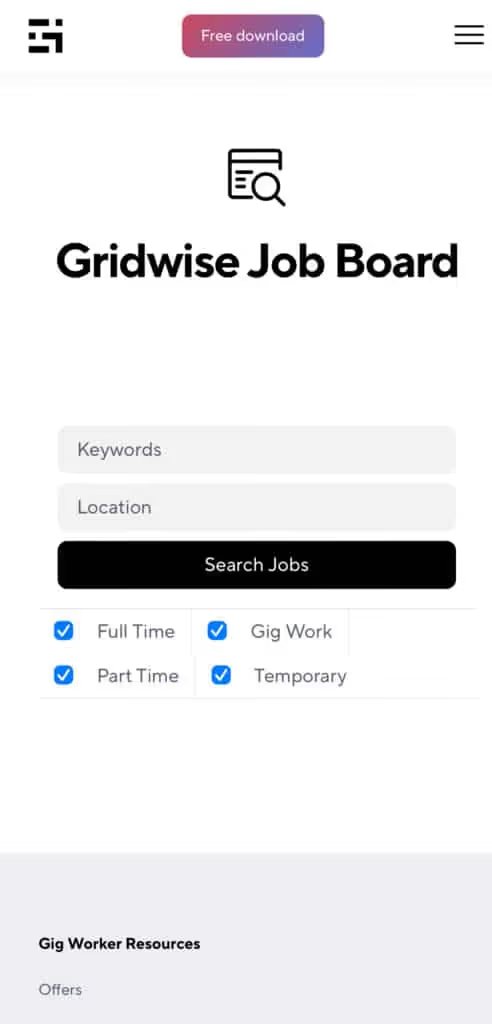
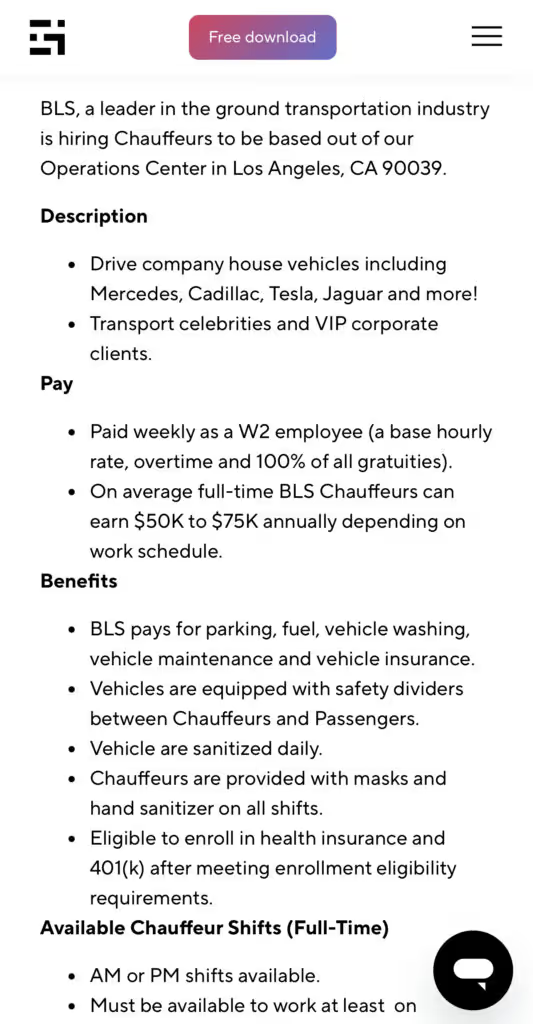
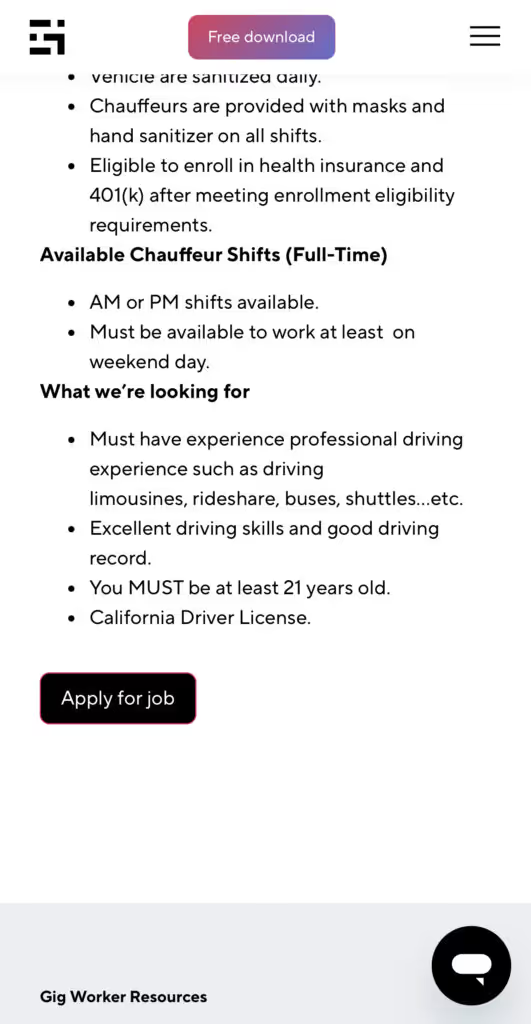
Many types of jobs are available. Adjust the search filter to see the full variety of opportunities that will let you cash in. Deliver food, set up catering, do rideshare driving, get paid for doing package delivery, and much more. You’ll find short-term gigs, long-term contracts, and part-time positions.
Perks of the Gridwise Job Board for gig workers
Gig workers who know how to make extra money will appreciate how the Gridwise Job Board lets you multiply your chances of bringing in big earnings. Here’s how:
- Increased stability. Use the Gridwise Job Board to find part-time or permanent jobs in addition to the part-time gigs you already have. Always keep a steady stream of earning opportunities flowing toward you.
- Flexibility and autonomy. Choose jobs that fit your schedule, work around other jobs and family duties, and still leave room for some fun in your life. Discover side hustles to supplement your full-time job, permanently or just for the season.
- Skill development. Find part-time work that lets you use a skill you already have, or try your hand at something new. It’s a smart way to develop a portfolio to showcase what you can do, or even to find permanent employment.
Get Gridwise and stay up to date on the Gridwise Job Board
Gig workers need plenty of information and assistance, and Gridwise is here to give it to you. Download the app and get essential features such as
- seamless earnings tracking
- mileage tracking
- expense recording, including notes
- low-cost and no-cost insurance benefits
- access to affordable medical, dental, vision, mental health, and alternative care
- professional services including legal and financial help
- deals and discounts
- weather, events, and traffic reports
- inside information on where and when to drive
[elementor-template id="20936"]
More to know about gig work:

5 Best Mileage Trackers For Gig Drivers
Many drivers ask, “Do I really need a mileage tracking app?” The answer is simple: only if you want to have an accurate count of all the miles you can legally deduct from your taxable income! You might think your rideshare or delivery driving app has got you covered. After all, they do quite a good job of logging the miles you drive while you’re on a trip or delivery. But, if you want to have the best app to track mileage for Uber, Lyft, Doordash, Instacart, or the other apps you may use, you need more. Why is that?
Without a separate tracker, you’re missing the miles you drive in between pings. Did you realize that all the miles you drive, from the moment you begin your shift until it’s over (as long as you don’t drive several miles on a break to hang with your friends), are tax deductible! That means you need something besides your driving app to keep an accurate count of your travels. Read this Gridwise post to see how important it is to keep track of every deductible mile.
You won’t be surprised to hear that there’s an app for tracking miles. In fact, there are several of them. Here, we’re going to tell you about five top mileage tracking apps, and help you figure out which one is best for you.
Before we get to the list and identify the best mileage tracker app, let’s clarify what exactly a mileage tracking app is. According to G2.com’s technology glossary, mileage tracking is done for the purpose of keeping a log of mileage that is either reimbursable or tax deductible.
And yes, of course you can track your miles simply by taking readings on your odometer. But are you really prepared to account for how many miles you drove for personal reasons and subtract them from the total to get your business mileage? Even if you can remember all that and do the arithmetic, if you want an accurate reading of the miles you drive for business, and can therefore deduct, a mileage tracking app will save you a lot of trouble and prevent you from making costly errors.
Plus, as a gig driver, you have specific needs when it comes to a mileage tracker. Ideally, you’d be able to handle mileage tracking and several other functions all in one app. It can be maddening enough to deal with driving apps, particularly if you’re an avid multi-apper. You would want your mileage tracker app to help you keep account of other aspects of your business, including income, expenses, and inside information about the art of gig driving.
Not all mileage apps are equal, to be sure! Let’s look at five of the best apps to track mileage and figure out which is the best app to track mileage with Uber and Lyft, or what mileage tracker app is best for DoorDash.
[elementor-template id="20891"]
1. Zoho Expense
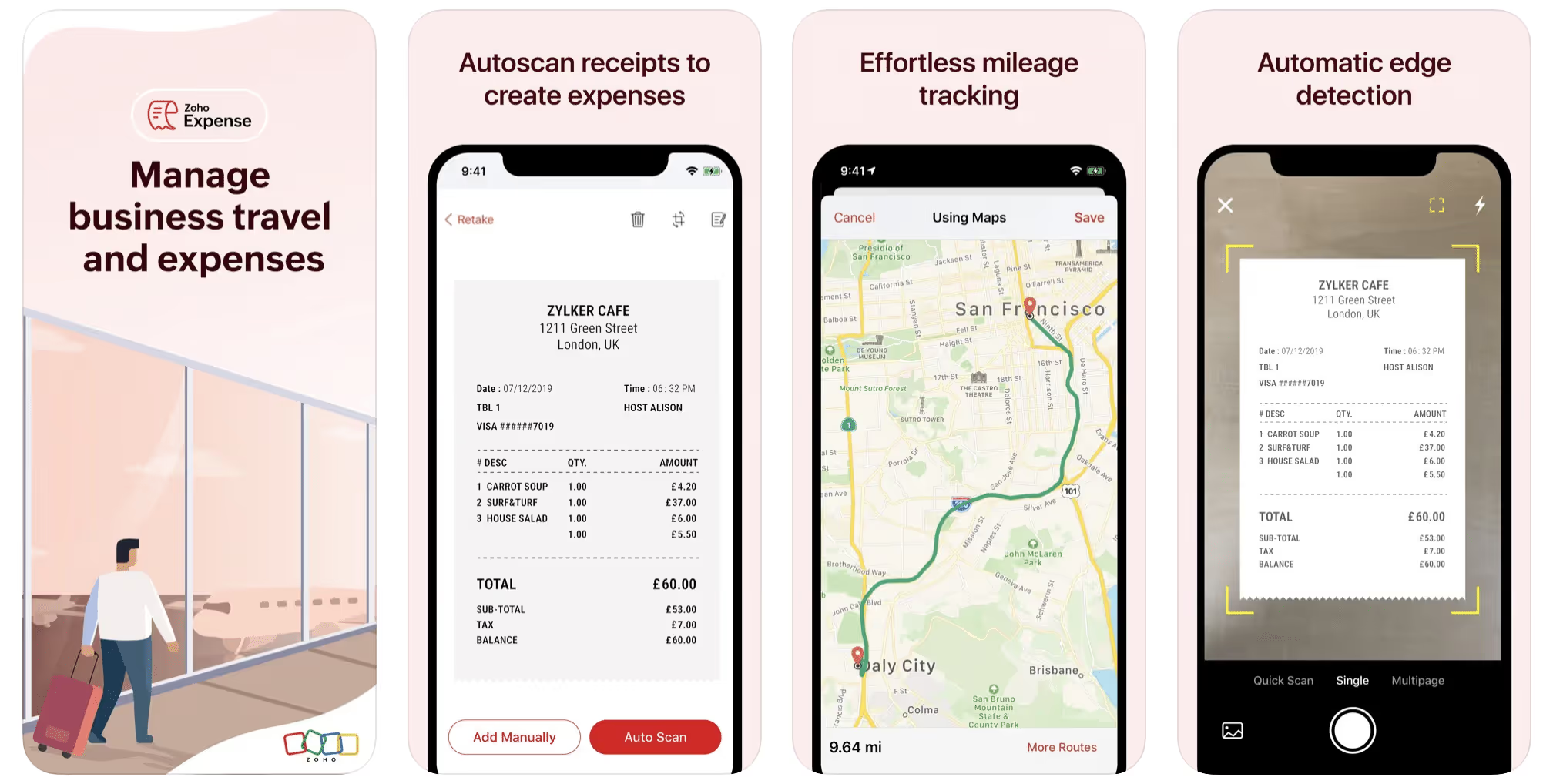
First up is Zoho Expense, which does exactly what its name says. This app is designed to allow companies to give employees a uniform way to create and submit expense reports. It can be used by individuals, including gig drivers, as well.
It includes a mileage tracker, as well as features that let you track other deductible expenses, including the ability to scan and record receipts.
Available on Android and Apple: Yes
Ratings: 4.8 stars on App Store, 4.7 stars on Google Play
Free Version: Yes
Subscription price: $3 per month, billed annually
Created specifically for gig drivers: No
2. Quickbooks Online
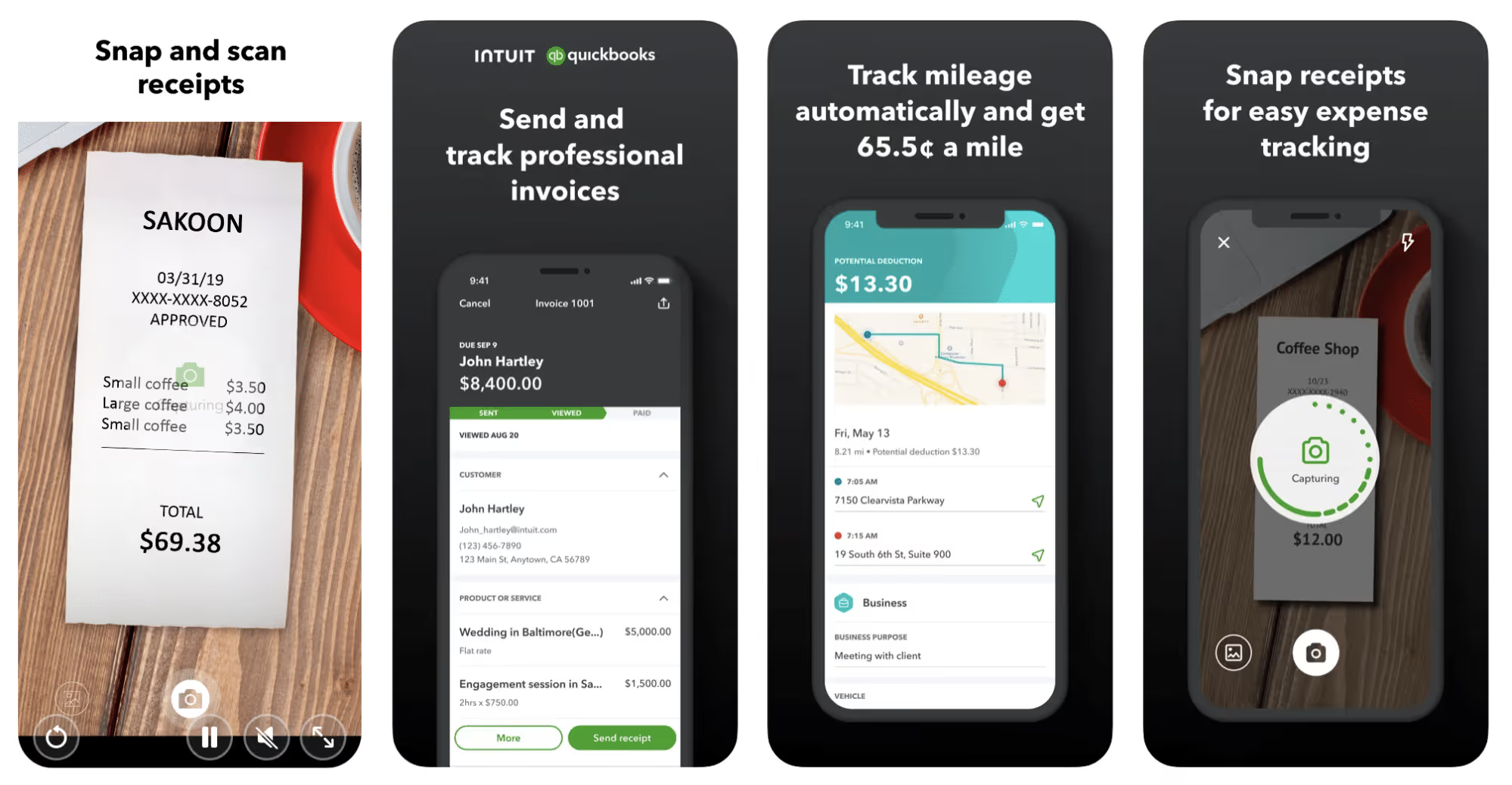
Quickbooks Online is a cloud-based app that allows you to track your mileage, earnings, and expenses. The information you enter can then be used to generate various reports that prepare you for tax time. It also allows you to create graphs that illustrate your cash flow, and includes a receipt scanner so you can instantly record deductible expenses. Quickbooks is popular, highly reliable, and designed mainly to help people keep track of their small businesses.
Available on Android and Apple: Yes
Ratings: 4.7 stars on App Store, 4.4 stars on Google Play
Free version: 30-day free trial
Subscription price: $15 per month for basic version if purchased for 3 months or more
Created specifically for gig drivers: No
Source: quickbooks.intuit.com
3. Shoeboxed
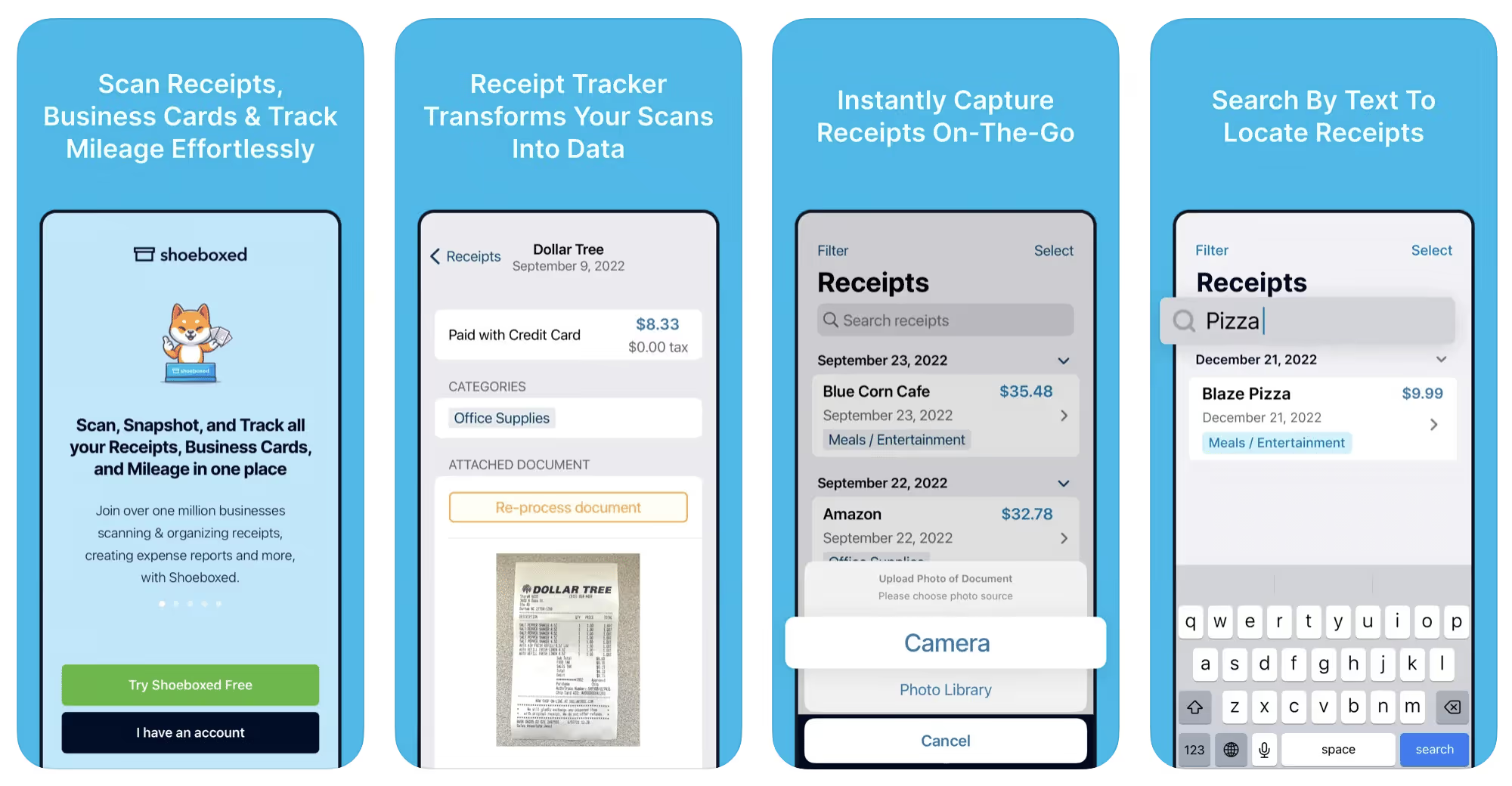
Shoeboxed started in 2007 as a service for scanning paper receipts into digital form. Now the app offers a free mileage tracker and has enabled users to scan receipts directly. It touts itself as the best mileage tracking app for DoorDash, but there are some elements missing that Dashers might like to have. While it provides features that record your expenses and prepare you for tax season, it doesn’t automatically track your earnings. The mileage tracker has a system where you can drop pins along your routes to make the tracking more precise, identifying those legs of a trip that you make for business purposes. The mileage tracker is “free” once you sign up for the basic version.
Available on Android and Apple: Yes
Ratings: 4.5 stars on App Store, 2.3 stars on Google Play
Free version: No
Subscription price: $18 per month for basic version
Created specifically for gig drivers: No
Source: blog.shoeboxed.com
4. Stride
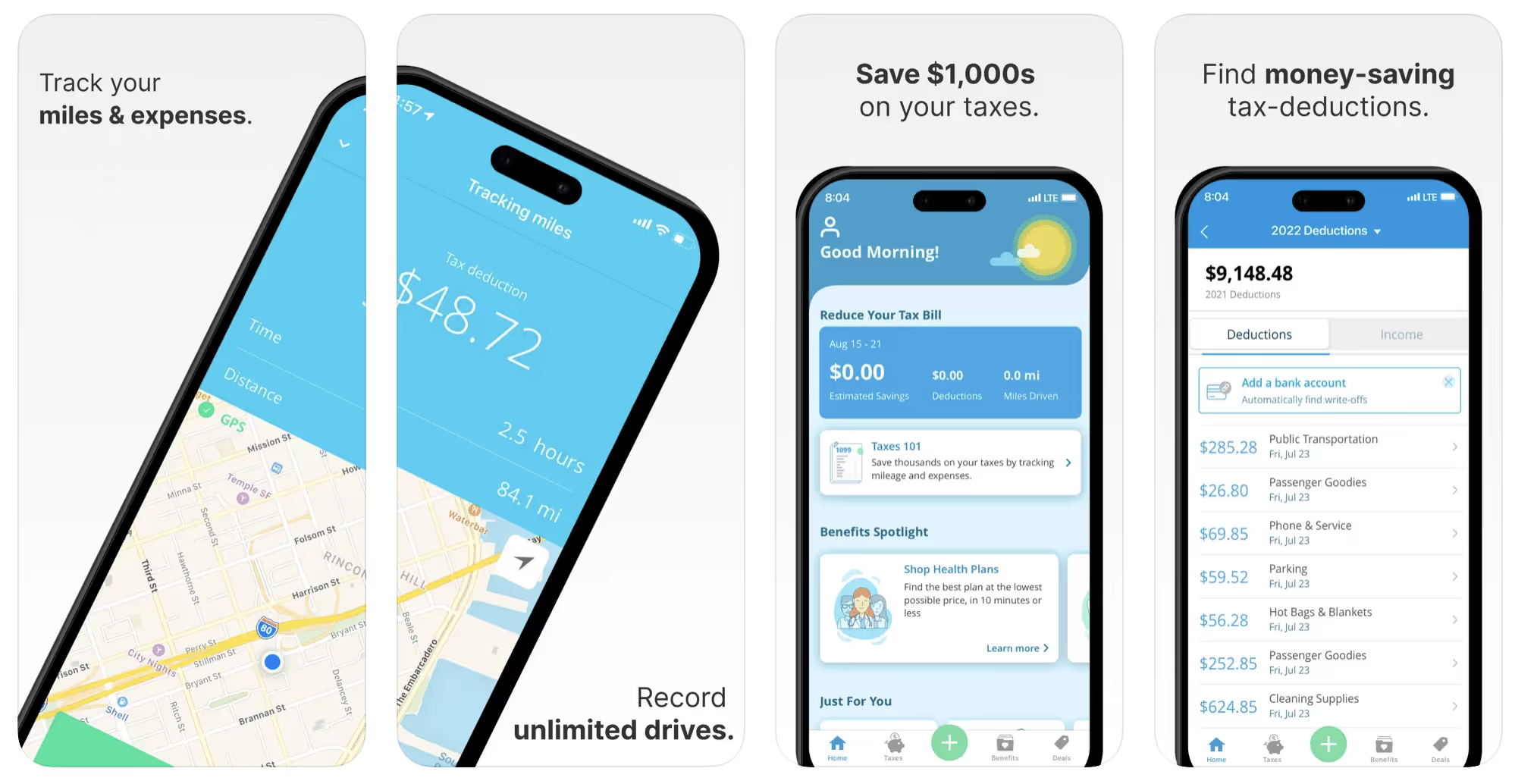
This free mileage tracker does a fair job of keeping track of the distances you rack up while gig driving, but it doesn’t automatically track earnings. It can be a big help, though, in tracking your expenses. You can link Stride to your bank account, and it will automatically scan your expenses to identify items you can potentially deduct. The app is totally free. This could make it the best free mileage tracker app, but there is a small price to pay. The app will persistently push you to consider various insurance plans that they are affiliated with. If you don’t mind that, this is a solid mileage tracker, even if it doesn’t track your earnings.
Available on Android and Apple: Yes
Ratings: 4.8 stars on App Store, 4.6 stars on Google Play
Free version: Yes
Subscription price: None. The app is free.
Created specifically for gig drivers: No
5. Gridwise
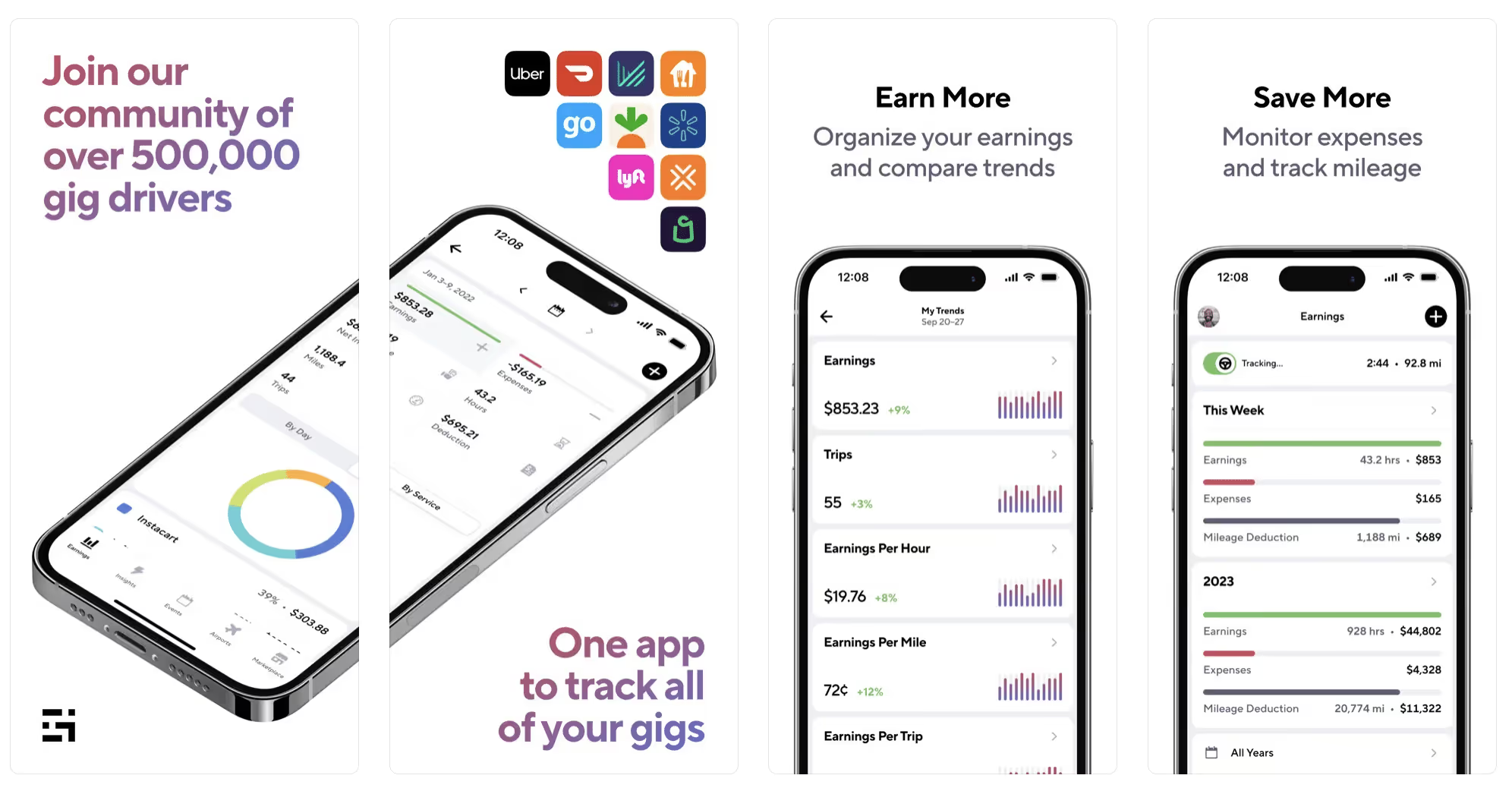
Gridwise has a free mileage tracker and free features that record your income and expenses. It gives you access to insurance and benefits, as well as insights about the best times and places to make the most money while gig driving. The Gridwise mileage tracker captures all the miles you drive while you’re on your driving shift, and it can be used if you have other trips you need to make which qualify as business travel.
Drivers love it because it is geared toward the needs of rideshare and delivery workers, providing free information about airport departures and arrivals, event start and let out times, weather, traffic, and more. The Gridwise Plus subscription adds value by providing additional insights and reports, discounts on benefits, the ability to export data in .csv format,, and more.
Available on Android and Apple: Yes
Ratings: 4.9 stars on App Store, 4.6 stars on Google Play
Free version: Yes
Subscription price: $9.95 per month for Gridwise Plus, or $95.99 per year (a $23.41 savings)
Created specifically for gig drivers: Yes!
What is the best mileage tracking app?
Now that we’ve checked them all out, we’re positive about the answer to that. Hands down, it’s Gridwise. Are we biased? You bet we are! But drivers love it too. Gridwise is the best mileage tracker app—and so much more. So many of the features are free, and the subscription to Gridwise Plus will pay for itself with additional insights to boost your earnings and deeper discounts on products and services.
Most important, Gridwise is designed specifically for gig drivers by experts who were once gig drivers themselves! Knowing what gig drivers need is a crucial step in creating an app that rideshare and delivery drivers can really use! Here are a few of the features, besides mileage tracking:
- seamless earnings tracking
- automatic, on/off toggle and manual mileage tracking
- mileage categorization
- airport, traffic, weather, and events information
- insights into where to drive and when to drive
- reports showing earnings across the platforms you use
- discounts on countless products and services for drivers
- additional resources for finding side gigs
- an informative and comprehensive blog
- affordable benefits, including insurance, medical, dental, and alternative practitioner discounts
- a community of drivers just like you
Don’t settle for just any app. Get the best mileage tracker, and so much more, from Gridwise!
[elementor-template id="21599"]

What Records Do Gig Drivers Need To Keep Track Of For Taxes?
* Gridwise does not provide tax, legal, or accounting advice. This material has been prepared for information purposes only, and is not intended to provide, and should not be relied on for tax, legal, or accounting advice. You should consult your own tax, legal, and accounting advisors before filing your return.
Record keeping? Who signed up for that? As a gig driver, it’s part of what you need to do to keep your business running. Don’t worry. It’s not as complicated as you might have been led to believe. This post will show you what you need to keep track of and the best ways to gather and preserve your tax-related records. We will cover
- How record keeping can help reduce income tax for freelancers
- Taxes and freelance work: Record keeping requirements
- Mileage tracking: Motives and methods
- More deductions and records to keep
- Make tax time easier
How record keeping can reduce income tax for freelancers
Tax time is not “fun time” for rideshare and delivery drivers. It’s easy to get used to watching your earnings pile up and come to believe they are all yours. Unfortunately, that isn’t the case. Gig work taxes can be especially painful because no one takes them out of your earnings for you, until the tax authorities insist that you do it for yourself.
You will need to show the tax authorities your income records, and they will gladly tell you to send them what they determine to be their fair share. Think that’s not fair? You’re not alone, but that doesn’t mean you’re going to get out of paying gig work taxes.
But you can find ways to pay the smallest amount that is legal and possible. The best way to defend yourself against having to pay astronomical amounts when you file your return is to know what expenses you can deduct from your gross income. When you subtract deductible expenses from your gross income, there is less left over to be taxed. This reduces the amount they can hit you with gig worker taxes. and can make your tax bill substantially lower.
While you want to keep good records so as to be in compliance with taxation entities such as the IRS, you also want to ensure you have proof of every last deductible expense you have accrued during the year. There are other records you must keep as well. Let’s look at some of the considerations you have, realizing that you now need to know how to do taxes as a freelancer.
Taxes and freelance work: Record keeping requirements
So many gig drivers fail to understand the responsibilities they have as independent contractors. Those who work part time for very few hours may even believe they don’t have to report the income they get from their driving gig payments. That would be a big mistake!
The company or companies you work for report your income to the IRS and state tax authorities. If you fail to report that income, you will risk some rather painful penalties. The IRS taxing side hustles is as much of a thing as the IRS taxing income from any other job. Your best bet is to report what you’ve earned, honestly and completely, and comply with other record keeping requirements such as
- gross income
- deductions and credits
- purchases (items you purchase and resell, such as snacks or bottled water)
- a log of all your mileage (or vehicle expenses, if greater)
- a list of all expenses and assets, such as utilities and other expenses associated with having a home office and equipment
- machinery and furniture you own, including when it was acquired, how much it cost, whether you previously took deductions on it, and selling price, if applicable (this includes your vehicle)
More things to consider:
- Pay attention to the retention of your records. You’ll need to keep all tax-return-related items— including income, deductions, and any tax credits reported— until the period of limitations runs out (3 years from date you filed, or 2 years from when you paid tax. If you have employees, keep your records for at least 4 years.)
- If you want to avoid paying self-employed taxes, you may want to set up a corporation or Limited Liability Corporation (LLC) for your business. This allows you to separate all your gig driving earnings from personal income, and permits you to take advantage of the additional advantages of working through a corporation. This includes exemption from self-employment taxes. You can learn more about how to pay self-employment taxes, if you opt for that, in this post from Keeper.
- You should always keep a separate checking account for your business, for convenience as well as clarity. While this is not a legal requirement, it is a smart move if you want to have an easier time managing your business.
- You are required, as an independent contractor, to file your taxes quarterly. Check out this Gridwise blog post for more information about quarterly tax payments and other matters that make filing delivery, Lyft and Uber taxes easier.
Mileage tracking: Motives and methods
Why you need to be meticulous about mileage
Mileage deduction, or the costs of operating your vehicle, will be the most important item to account for when you consider how to file taxes as a freelancer. While mileage is an important deduction for all independent contractors, as you might imagine, it’s even more essential for rideshare and delivery drivers.
There are two ways of keeping track of your mileage deduction. One is to use the IRS’ standard mileage deduction, which for 2022 is 58.5 cents per mile. This number takes into account the costs of operating your vehicle, from fuel and maintenance to registration, insurance, and depreciation. Alternatively, you can calculate all your own vehicle operating costs, but only after your first year of using the vehicle. You may discover that this second option allows you to have more money deducted from your taxable income. Learn more about the options for deducting your mileage in this Gridwise post.
No matter which way you decide to calculate the deductions for your mileage, you need to know what mileage you can and cannot deduct.
You can deduct
- miles driven to and from home when you go out to drive or deliver
- miles you accrue during your trips
- miles you drive on any other trips you make that are necessary as part of your business.
Examples:
- driving to return a lost cell phone or to an Uber Hub or another physical location where your company might make driver support available
- driving to pick up supplies, to get gas, or to have your car cleaned, serviced, or detailed, etc.
You cannot deduct
- miles you drive for personal trips
- miles for any trips you take that do not directly affect your business
Note: If imagining yourself becoming the not-so-proud owner of a shoebox filled with paper receipts gives you nightmares, stop worrying. Electronic records of purchases will satisfy reporting requirements. If you use cash, you can scan copies of your receipts, in some cases, right into your recording software or app. Gridwise and Keeper give you a simple to use interface that keeps all your receipts recorded without the messy pile of paper.
Mileage tracking methods
By now, you’re probably convinced that tracking mileage is important, despite all the other things drivers have to do. Now, let’s look at your options for keeping accurate records.
- Manual tracking: You can keep a logbook where you list every trip you make, starting and ending mileage, the date, and purpose of the trip. While this would work, it’s certainly not convenient. Besides, if that logbook gets lost, your plans for having a nice, fat tax deduction will go by the wayside.
- Spreadsheet: This is a bit more convenient and sophisticated way of tracking your business mileage. You’d need to be meticulous about making your entries, though. Even if you keep a spreadsheet app on your phone, it could be time consuming and inconvenient to keep doing it with all the other things going on in a rideshare or delivery driver’s day to day life.
- GPS-based mileage tracking apps: There are a bunch of apps that track mileage based on your GPS location, and most of them are pretty accurate and far more convenient than taking constant readings of your odometer. Your driving apps, such as Uber, Lyft, DoorDash, or Instacart, may also track your mileage, but be careful here. They will only track the miles you drive while you’re on a trip or delivery. They don’t count the miles you drive going to pick up a customer or when you make your move toward a restaurant or store.
Gridwise, on the other hand, will track all the miles you clock while you’re on your shift. All you need to do is make sure you start tracking the minute you leave home, and every gig driving mile will be logged. - OBD-II mileage tracking systems: There are plug-in modules that assess your vehicle’s mechanical health and track your miles. However, many authorities question the ability of OBD-II mileage tracking systems to get get accurate odometer readings. Insurance companies don’t consider them to be accurate enough gauges of odometer readings.
While mileage is a crucial deduction when you’re preparing your Uber, Lyft, or DoorDash taxes, it isn’t the only expense you’ll want to record.
More deductions and records to keep
Expenses you can deduct
You’re entitled to include the cost of other expenses that are directly related to your driving business. These include
- vehicle expenses
- equipment for your car and home office
- extra services and subscriptions
- business tools, including apps and software
You can learn much more about gig driver expenses that are eligible for deduction in this Gridwise article.
Ways to track and preserve deductible expenses
- The manual method: Just like you can with mileage, it’s possible to use a manual method, but in addition to logging each expense into a ledger, you would also need to keep physical receipts.
- Spreadsheets: You can record your expenses on a spreadsheet. This is somewhat less awkward than manually logging mileage, but there still will be plenty of room for failing to remember the case of water you bought for your customers, or losing the receipt from the thermal bag you purchased.
- Accounting software: You can use software that helps you track your expenses. This method usually interfaces well with any tax preparation software you or your tax professional might use.
- Gridwise: There are other apps that help you track your expenses, but Gridwise is designed specifically for gig drivers. It automatically tracks earnings and mileage, and lets you record your expenses the minute they come up. Gridwise’s partnership with Keeper gives you the ability to scan receipts and access a tax professional. This is a seamless way to record your expenses and a big help in learning how to file Uber taxes. Gridwise even provides .csv output, so you can feed your Gridwise data directly into tax preparation software. Check out what Gridwise and Keeper will do to super-charge your tax filing powers.
Organizing and categorizing expenses
Before you even begin to record expenses, you’ll want to set up categories for them. You can start by reviewing the categories listed above and checking out the Gridwise post that lists possible deductions.
If you’d like to learn more about how to categorize expenses, there is additional information available. This article from Motley Fool lists all possible categories any freelancer might use and also gives tips on how to customize them for your driving business.
One last tip
Using Gridwise, particularly for tracking mileage, is the easiest way to be in compliance with the IRS’ rules for deductible mileage. Gridwise tracks all the miles you drive for your gig, beyond what your company’s app might record. At the same time, you can log on and off Gridwise when you start and end your shift, so personal miles won’t be recorded. This eliminates confusion while capturing every deductible mile.
Gridwise Tax Help, a partnership with Keeper, has been created specifically to serve gig drivers. It provides affordable and easy ways to record expenses, scan receipts, and find deductions by analyzing your expenditures. Read about free resources from Keeper you can use to be fully prepared for tax season, and get all your earnings and expenses on the record.
Get the world’s best assistant for rideshare and delivery drivers, and tax help too.
Make tax time easier now!

11 Tax Deduction FAQs For Gig Drivers
* Gridwise does not provide tax, legal, or accounting advice. This material has been prepared for information purposes only, and is not intended to provide, and should not be relied on for tax, legal, or accounting advice. You should consult your own tax, legal, and accounting advisors before filing your return.
It’s March. We’re about a month away from tax time. By midnight on April 15, we all need to have our annual income taxes completed and submitted (April 15 falls on a Saturday this year, which means you have until midnight April 17, ensuring many will spend that final weekend frantically doing their taxes).
We understand. No one likes taxes, and as a self-employed gig driver, you almost invariably owe money to the government. Gridwise has joined forces with Keeper to bring you little-known facts about gig-worker taxes. Keeper helps gig workers and creator economy workers discover tax-deductible expenses. Keeper also helps gig workers file their taxes.
[elementor-template id="20949"]
Let’s dive right in and answer some of the more frequently asked questions about taxes for freelance work and gig driving.
1 - Are gig drivers considered self-employed?
Absolutely. As a gig driver, you are a self-employed business owner.
Any time you get a paycheck that doesn’t have taxes deducted, you are in business for yourself and responsible for paying taxes on that income. You must complete a Schedule C (Profit or Loss from Business–Sole Proprietorship) as part of your taxes. According to a blog post from our partner Keeper, How to Handle Taxes on Side Hustle Income, this applies whether you are a full-time gig driver, or if your gig driving is a side hustle in addition to a regular job.
The other bad news is that you must pay Social Security and Medicare taxes on that side hustle income, which totals 15.3% of what you earned after deductions.
2 - What can I deduct related to my car
As a gig driver, your most significant delivery driver or rideshare tax deduction is your mileage. The IRS gives you a choice about how you can write off your car expenses: actual expenses or the standard mileage rate (sometimes referred to as the rideshare mileage deduction). Both approaches consider mileage and other auto expenses, including oil changes, tires, and repairs.
If you use actual expenses, you record all car-related expenditures, saving receipts throughout the year for every purchase. If you drive an electric vehicle, you keep the receipts for EV charging. This is a paperwork nightmare. Any car-related expense, even a burned-out taillight, is deductible. If you use your car for personal use and your gig driving, you must establish what percentage of use is for gig work and apply that portion of the expenses as a delivery or rideshare tax write-off.
Using the standard mileage rate, you record your total miles as part of your gig-driving job and write it off. This last tax year, 2022, is different than most, however. The IRS, in acknowledgement of the high gas prices, changed the rate mid-year. Write off all miles driven before July 1 at 58.5 cents per mile. After July 1, increase the rate to 62.5 cents per mile. See the Gridwise blog post, IRS 2023 Mileage Rate Increase: Good News for Gig Drivers, for a full explanation of the IRS increase in the standard mileage rate.
3 - Which method of writing off car expenses is better for Lyft and Uber driver accounting, and delivery work?
When it comes to filing taxes for Uber drivers, Lyft drivers, and delivery drivers, your best option is the standard mileage rate. For example, a driver whose gross earnings were $45,000 in 2022 easily drove 50,000 miles to earn that money. If you split that mileage evenly between the previous rate and the new rate, you come up with a tax deduction of $30,250 off your Schedule C. When you subtract that from your gross taxable income of 45,000, it drops to $14,750. That is a significantly lower tax bracket, achieved with just one deduction.
If you were to claim actual expenses, you would likely come up with a far smaller number to write off your income.
The actual expense method is best for a self-employed person who uses their car for business, but who drives far fewer miles than a rideshare driver.
4 - Is the mileage report I get at the end of the year from Uber, Lyft, or other delivery company adequate for my taxes?
The IRS will accept the report, however it reflects far fewer miles than you actually drove. You would be seriously shorting yourself. The report only details your mileage from the time you were assigned a passenger or delivery until you completed that task. Those numbers don’t accurately reflect the miles you covered while your apps were on but didn’t have an assignment. The miles you drive each shift before receiving your first passenger or delivery, between each passenger or delivery, and the drive home at the end of the shift are all tax-deductible. The Stride Health blog suggests that these extra miles can often double your deductible mileage.
How can you easily record these miles? The Gridwise Mileage Tracker is the best mileage tracker for rideshare and delivery drivers. It is a vital part of Lyft or Uber driver accounting, automatically working in the background on your cell phone and recording all your miles for tax purposes. Later, you can download the records into an Excel file (or another format) for tax preparation. For a more thorough explanation of how the mileage tracker works, check out this Gridwise video.
5 - Are any automotive-related expenses not covered in the standard mileage rate?
According to a KeeperTax.com blog post titled Ultimate Guide to Car Tax Deductions and Mileage, there are other expenses you can write off separately if you claim the standard mileage rate. These include
- parking fees
- tolls
- car washes
- DMV registration fees
6 - Can I claim the standard mileage rate on the car I rent for Uber or Lyft?
Nope. You can only claim the standard mileage rate for a car you own or lease. In the case of rental cars, the owner is the rental agency. Most rental agreements place the financial responsibility of maintenance and upkeep (tires, brakes, etc.) on the rental agency. In the case of a rental car, you will have to claim actual expenses, meaning you can only claim fuel purchases.
You can, however, claim the cost of renting the car as a deduction.
7 - Can I write off my clothes for work?
For gig drivers, clothing is a deduction you will probably have to pass on. Put simply, the IRS rule is that you can write it off if you have to wear it to get paid. The other rule is that you can only wear it for work.
In a November 2022 Gridwise blog post, A Shopper’s Guide to Being a Shipt Shopper in 2022, Gridwise introduced readers to Robert Woldhuis, who made more than $100,000 a year as a Shipt shopper. Robert’s trademark was wacky costumes, oversized glasses, and brightly colored wigs. Can Robert write those expenses off on his taxes? That’s debatable. A clear-text reading of the IRS rule would not be in his favor.
8 - Are meals tax-deductible when I am ridesharing?
According to the IRS, there are specific instances in which you can write off a meal. These include
- taking a client out to lunch
- wooing a prospective client
- A meal with a coworker, which includes a discussion of business
- meeting with a potential referral
- a networking opportunity with anyone
As a gig driver, whether you are ridesharing, or delivering food or groceries, the opportunity to have lunch with a passenger or recipient of delivered goods will likely not meet one of these requirements. You also can’t claim meals or snacks that you consume in the course of a shift.
There is a Lyft Driver Advisory Council. If you are a member of the group and you meet with a fellow member to discuss council business, such a meal could be tax deductible. Aside from that, there are few opportunities to write off a meal as a gig driver.
9 - Can I write off supplies for my car?
You can write off water, candy, and other snack purchases that you make for your passengers. This is typically done in furtherance of getting a tip or a good rating, which moves it into the area of a legitimate write-off. Do you entertain your passengers with music from Spotify or Amazon Music? That is also tax deductible. The Gridwise Expense Tracker is vital to Lyft or Uber driver accounting. This app feature keeps all your records in one place. You still need to keep your receipts in case of an audit, but Gridwise tracks the numbers and computes the totals. At tax time, all the numbers are at your fingertips. Learn more about the expense tracker function by watching this Gridwise video or checking out this article about the expense tracking features of the Gridwise app.
10 - Can I write off car payments?
You cannot write off car payments as a tax deduction for delivery or rideshare tax earnings. But you can write off the interest payment on a car loan, even if you take the standard mileage deduction. It is one of three exceptions allowed by the IRS.
Can you write off all the interest on that car loan? Probably not. Some of that driving will be for personal use. To determine the percentage of interest that you can write off, divide the miles reported from your Gridwise app by the total mileage on your car for that year. Let’s say it comes out to 55,743 miles and 82,805 miles, respectively. Divide 55,743 (the miles reported on your Gridwise app) by 82,805 (the total miles you drove for that tax year). Your deductible percentage is 67%.
11 - As a gig driver, can I claim a home office deduction or write off my home internet?
That’s a tough one. IRS rules allow you, as a freelancer, to take a deduction for a home office, but the rules require that the home is your principal place of business. If you are a gig driver, your principal place of business is your car. Aside from possibly sitting at a desk in your office analyzing a spreadsheet to see trends in your gig-driving activity, it will be difficult to sell office-in-the-home as a full-time expense. The same goes for home internet.
What if you diversify and start a blog about gig driving, or film, edit, and produce videos for posting on YouTube? Let’s add that you monetize this online activity. Now you can probably claim a home office—and you might have more money to claim on your taxes.
Gridwise can help guide you in your gig driving activities
Whatever expenses you're tracking, keep them all in one place with Gridwise. At tax time, you'll be able to export your income and expenses from last year into a handy report. Want to make tax time easier?
Start tracking your expenses with Gridwise
[elementor-template id="20936"]

6 Common Mileage Tracking Mistakes That Gig Drivers Make
Why is tracking your mileage so important? In this article, you’ll find out why this simple-seeming aspect of being a gig driver can be a big factor in your profit or loss from rideshare driving or delivery work. Mileage tracking deserves your full attention because it’s a major source of tax deductions for gig workers.
You’ll see why when you discover what either a complete lack of or inadequate mileage tracking can cost you. Here are some of the most common mileage tracking mistakes drivers commit, and smart ways to avoid making them.
[elementor-template id="20891"]
#1 - Totally neglecting to track your mileage
Let’s start with the biggest mistake. You want to track your mileage because you can deduct it from your income and reduce your taxable income. If you fail to do track mileage, you could end up paying much more in taxes than necessary.
For example, using the IRS rate of 62.5 cents per mile (in effect from July–December 2022), a part-time driver who put in around 17,000 miles over six months would be able to deduct $10,625 from their income. A full-time driver, clocking about 25,000 miles in six months, would receive a deduction of $15,625. And that’s just for half of the year.
There is no way any driver would want to miss out on such a sizable Lyft, DoorDash, or Uber tax deduction! The point is clear: you definitely want to track your mileage.
But, for the sake of argument, let’s say that you neglected or forgot to do so. It’s possible to wait until you’re preparing your taxes to start calculating your mileage, but it’s not a good idea. For one thing, it will be hard to reconstruct your entire year of driving, particularly if you work with more than one app. As we all know, dealing with gig economy taxes is painful enough, and not having solid records would make it all that much more excruciating.
The Fix: Create consistent records of your business mileage, using anything from a pen and notebook to a sophisticated app like Gridwise. Record all the miles you clock while you are on your driving app, whether it’s with a pencil and paper or a state-of-the-art mileage tracking app.
When you use Gridwise to track your gig driving mileage, every mile from every shift is recorded into an exportable file that you can use when filing your taxes. Read more about how to track your mileage with Gridwise in this post.
[elementor-template id="20949"]
#2 - Failing to keep detailed records
Keeping track of the number of miles you drive while you’re working your gig helps you know how much you can deduct from your income—but that’s not always enough. When you are dealing with the IRS, it’s always good to act as if they’ll decide to audit you.
IRS agents are notorious for questioning the deductions independent contractors take, so if yours becomes the return an agent decides to dig deeper into, those mileage numbers might not suffice. They will want the details, and they won’t stop squeezing you until they get them.
You will need to have access to the date, destination, and purpose for each trip notated. That’s not so difficult when you’re a gig driver, because the destination and purpose are pretty much the same for every shift. With that said, you still have to be very thorough about ensuring that you have an accurate account of your mileage.
You might wonder, does Uber keep track of mileage? The answer is “yes, but…” and that goes for all the other apps you drive for as well. Keep in mind that the mileage the driving apps track are those for which they pay you. So if you go to a destination and the customer cancels the trip or delivery, that mileage won’t be included in the apps’ calculation.
The Fix: Use Gridwise to track each and every deductible mile you travel while you are on your shift. Simply log on when you begin driving and log off when you’re done for the day.
#3 - Mixing personal and professional mileage
This is a big no-no, and if you get caught doing it, you will be penalized. It’s very important to distinguish between the miles you drive for business and those you rack up for your personal needs.
This is why taking manual readings from your odometer is not a safe or adequate way to monitor mileage. Sure, you can hope that you’ll remember to record your mileage when you pause your gig driving to pick up your child from school. In reality, that’s really hard to do, and you probably won’t remember every time. This can result in inaccurate readings, and that can lead to—IRS trouble.
The Fix: Use Gridwise to track your mileage and eliminate this kind of confusion from your life. Simply log in when you start gig driving and log out when you’re done. That way, you won’t still be logging business miles when you begin a personal trip. You won’t be racking your brain trying to calculate the mileage you incurred, particularly if that after school run involved a moment at the local snack shop or an extra stop to do a friend a favor.
#4 - Losing receipts and other documentation of expenses
How many times have you stuck your hand in the pocket of your jeans or coat and found a bunch of crumpled up receipts in there? If this is something that you experience with regularity, you may want to consider getting more serious about saving receipts for items that can be considered tax deductible.
It’s a lot to ask, in an age when we do almost everything on some kind of electronic device, to actually file away little slips of paper in any semblance of reasonable order. Still, you never know when you’re going to have to present a receipt for those candy bars you bought to hand out to your customers on Halloween, or prove that the trip you’re claiming as a deduction was really for business purposes.
The Fix: You probably have ways of tracking your spending through the debit or credit card you use. It is, after all, wise to keep a separate account for personal and business expenses, so they are easier for you to track.
You also can use a slick tool to help you keep a running account of all those little expenses, as well as pricier items such as car maintenance and repair. Gridwise has two ways to help you.
- Record your expenses as they arise, right in the app.
- Use Gridwise Tax Help, powered by Keeper Tax. Gridwise Tax Help features automatic receipt tracking, so you can jettison the nightmarish image of that shoebox overflowing with wrinkled slips of paper. This feature caters directly to the specific issues that come up with taxes for gig workers.
#5 - Rounding your mileage numbers
Tax auditors look for certain “flags” that indicate a taxpayer might be exaggerating, or even pulling from thin air, the numbers on a return, especially when it comes to Lyft, Amazon Flex, or Uber mileage deduction.
Therefore, if they see numbers that are rounded off, they’re going to begin to dig deeper, and before you know it you could hear that you’re about to be the subject of an IRS or state audit. That’s why you don’t want to guesstimate your mileage, or even innocently round the numbers off.
The Fix: Keeping honest, exact, and documentable records of your mileage is your safest best when it comes to preparing your deductions. When auditors see “real” numbers, they’re likely to assume that all your reporting is on the up and up.
When you use Gridwise, you’ll ride with the best mileage tracker for delivery drivers and rideshare pros. Let Gridwise record all the numbers you need to keep you free from unwelcome scrutiny.
#6 - Ignoring tax laws and regulations
Many gig workers, when they begin as independent contractors, believe that filing taxes isn’t going to be any more complicated than submitting information from a 9–5 full-time corporate job. That’s a huge mistake.
The nuances of filing taxes as an independent contractor can easily get you caught up in errors that cost you money. For instance, are you aware that you can be penalized if you don’t file your taxes quarterly? And how would you answer if someone said “Quick, tell me the IRS gas mileage rate USA 2023”? Fortunately, you can read this Gridwise blog post on the topic of the 2023 gas mileage rate, but that’s not the only thing you’ll need to be aware of.
The Fix: Get professional help.
You need to know a lot of little bits of information, and be up to date with all the tax laws and regulations that affect your life as a gig driver. It’s possible to do this all on your own, but you don’t have to. Gridwise Tax Help, powered by Keeper Tax gives you
- access to a tax professional
- algorithms that scan your transactions for deductible expenses you might have missed
- automatic mileage reports from shifts tracked with Gridwise
- the ability to e-file your taxes, right from the app
You can’t afford to use anything but the best mileage tracking app out there—Gridwise!
[elementor-template id="21599"]

How To Find The Best Times And Places To Drive For Uber Lyft
You sign up for Lyft or Uber, go through the app so you understand it, put the decals on your car, and hook up the Uber beacon or Lyft Amp, and you’re ready to make money.
Except that’s not happening, at least for you.
Sure, you get some rides, but you’re not making the $250 or $300 a night you hear others talking about. It looks as if there are a lot of rideshare drivers out there, and they all have passengers. You don’t have as many. It’s no wonder that out of every 100 rideshare drivers who download the app and go out for the first time, a year later only four drivers are still at it.
If you're stubborn enough to stick it out, after a month or so you’ll see your earnings increase. They’re not exactly where you want them to be, but the money gets better. You’ve learned a few tricks. You’ve also discovered what are general peak times for driving Uber and Lyft.
Do you know all of them, though? Take a few minutes as Gridwise reveals the best times to drive rideshare and earn money.
[elementor-template id="20891"]
Strategies and tactics for rideshare drivers
There is more to being a successful driver than turning on the app and waiting for ride requests to appear. You can strategically position yourself at the right place and at the right time to get rides.
Gridwise has published several blog posts on how to be more successful as a gig driver. Take a few minutes and click on these links:
- How To Be A Rideshare Driver: A Gridwise Driver Guide
- How To Earn More As a Rideshare Driver
- 12 Ways Rideshare Drivers Can Earn More Tips
You can also download the Gridwise app and start reaping the benefits of the best app on the market for rideshare drivers.
The Gridwise app includes useful features, such as When to Drive and Where to Drive. Drivers can see where the business is in real time. If you like airport rides, you can monitor arrivals and departures at local airports. Sporting events and concerts also appear on the app, telling drivers when these events conclude and where they can find spectators who need transportation to their next destination.
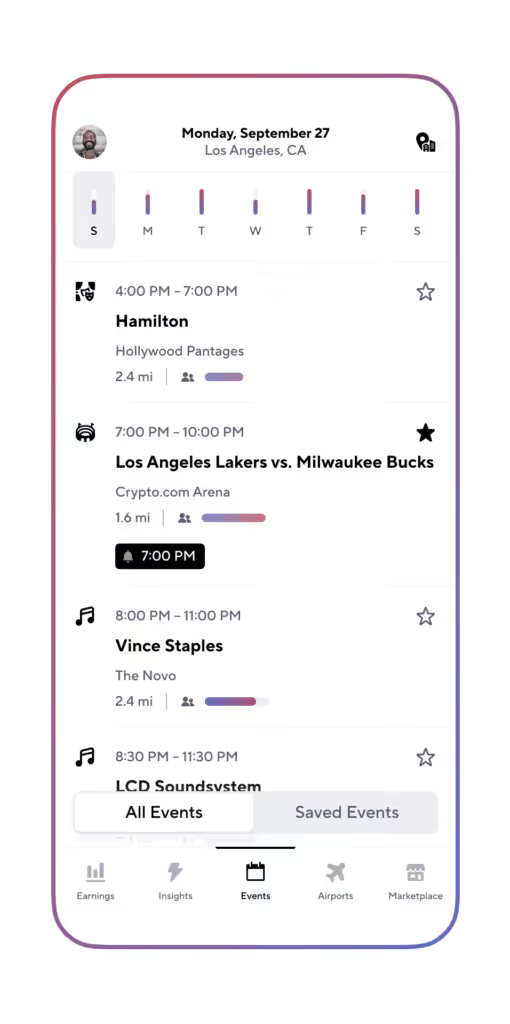


When to drive and Airport features on the gridwise app
The Gridwise app also has the best mileage tracker for gig drivers. This, coupled with an expense tracker, lets drivers maximize their tax deductions, keeping even more money in their pockets.
[elementor-template id="20949"]
But there is more …
What are the best times and places to drive?
As you’ve figured out, there are ideal times and places to drive. What are general peak times for driving Uber and Lyft? Time is important, but so is location. Some of those places and times show up on the rideshare and Gridwise apps. Others are well-guarded secrets. Taking full advantage of those locations requires knowledge that only a few drivers have. Here is a list, and we will start with one that few drivers are aware of.
After-hours clubs
After-hours clubs are an opportunity that won’t appear on a rideshare app. The liquor laws in every state are different. In California, bars and stores cannot sell liquor after 2:00 am, and they can start up again at 6:00 am. In the meantime, alcohol (and other substances) flows freely at after-hours clubs in many downtown areas, often located in side-street warehouses or other large spaces. If you stay out late enough, you will get ride requests to and from these locations. These rides can often go throughout the night and continue after sunrise. Take note of them. You might also ask your passengers if they know of any after-hours clubs. One nice perk: the clientele can be exclusive, such as celebrities and the well-heeled, making for a heftier tip. The downside: your passengers are often quite inebriated. Have a supply of emesis bags.
Early morning airport runs
What are Lyft peak times in the morning, and for that matter, what are morning peak times for Uber? If you live in the suburbs of a major metro area with a large airport, such as Los Angeles, New York, or Chicago, take advantage of those early morning airport runs. One Southern California rideshare driver reports that he hits the road at 4:00 am, sets his destination on the app toward LAX, and 90% of the time, he has a ride to the airport by 4:30 am.
“There are days I turn on my app while I’m still in the kitchen drinking my final cup of coffee,” he says, “and within minutes, I’m going 50 miles to LAX. Mondays are especially good peak times for Lyft and Uber, but this happens just about any day of the week. And after I drop off my ride, I’m in Los Angeles at the beginning of the morning rush hour. There is no end to the business.”
Gridwise offers a detailed airport feature for rideshare drivers, try it out!
[elementor-template id="20949"]
If you have access to the outer suburbs of a metro area served by a major airport, early morning airport runs are the best time to drive for Uber on weekdays. The same applies to Lyft.
Thirsty Thursdays
With the advent of four-day workweeks, and other folks who just want to get an early jump on the weekend, Thursdays are a busy night and have been dubbed “Thirsty Thursdays.” Thirsty Thursdays are even more intense in large towns with colleges, as no self-respecting college student schedules Friday classes.
On Thirsty Thursday, the best time for Uber drivers, as well as Lyft drivers, starts during rush hour and can last until the wee hours. In some cities, Thursday nights often rival Friday nights in the volume of rideshare business.
Weekends
Weekend nights are the busiest, with Lyft and Uber peak hours starting early. Hit the road at 5 pm, and you often get ride requests from groups going out for drinks before dinner or those who want to beat the traffic to a concert or sporting event. You can expect business to steadily increase throughout the night, with a noticeable spike about two hours before the bars close. This is when FOMO sets in, otherwise known as fear of missing out. Young people, and older folks, too, panic, thinking they're not at the hottest bar in town, and they want to go someplace else. FOMO settles down about midnight, and the next spike hits when the bars close. The increased demand at closing hour can last as long as 60 minutes, as many make their way to nearby restaurants before going home. There are lots of rides.
Colleges and universities
University of Southern California, near downtown Los Angeles, has an arrangement with Lyft. The university picks up the tab for all student rideshares from 7:00 pm until 1:30 am, as long as they are within a certain radius of the campus. The beginning and the end of this period are peak times for Lyft. The rides are shared, meaning each pickup counts as a ride. The students use it like water. The policy takes a lot of people off the street who might have had too much to drink and keeps concerned parents happy. In the last full year before the pandemic, USC paid for 35,000 rides, according to a father who attended freshman parent orientation.
Some drivers don’t like shorter, shared rides, but if you're aiming for a goal for a Lyft sprint, USC is a great way to get ten rides in an hour. Check out your local colleges and see if they have similar policies, such asAssumption College in Worcester, MA; Lesley University in Cambridge, MA; and College of San Mateo, near San Diego, CA. There are many others. Do the research and make sure you know the details.
Special events
Parades, large street fairs, celebrations, conventions, and trade shows offer opportunities for countless rideshare requests. The first weekend of June 2023 saw 100,000 participants and spectators descend on West Hollywood’s Santa Monica Blvd. to celebrate gay pride. There are trade shows, too. Because these are business-related events, attendees charge their rides, and correspondingly large tips, to their company credit cards.
If you live near a town like Palm Springs, CA, there are celebrations throughout the year, including Dinah Shore Weekend, the Coachella Music Festival, and tennis and golf tournaments.
Some of the larger concert events are accompanied by after-parties, which draw people seeking more good times. Some are well-publicized, while others are more exclusive. Ask your passengers if they know of any. These events can extend the peak driving period that night by several hours.
Holidays
The last few weeks before Christmas often see a dip in rideshare requests. People are spending time at home getting ready for the holidays. New Year's Eve, though, is often a rideshare driver’s biggest night. Super Bowl Sunday and St. Patrick’s Day prompt lots of demand for rideshare, too.
Bad weather
Some rideshare drivers don’t like to go out in the rain. That means fewer rideshare drivers to compete against, and grateful passengers more apt to tip. Check your windshield wipers and get out there when it’s raining.
Other tips for earning more
Being at the right place at the right time is only part of what you need to be a top rideshare earner. Here are some other tips so that you can take advantage of general peak times for driving Uber and Lyft.
Be a peripheral driver
A problem with large events is that the crowds and demand are so great that rideshare drivers report spending inordinate amounts of time in giant traffic jams. Many drivers don’t earn that much more than a regular night, even with the bonuses offered by Lyft and Uber.
“The Coachella Music Festival is in Indio, twenty-five miles from Palm Springs,” a Lyft XL driver said. “Many large groups of kids rent Airbnb homes near the festival in gated communities, but you spend hours in the congestion, only to go a few miles. It’s often bumper to bumper for 45 minutes to pick up a ride. I found much better earnings hanging around downtown Palm Springs, picking up larger groups there, and transporting them to the festival. At the end of the night, I hang out on the periphery of the traffic jam with my app off and follow the large tour buses that are leaving. I turn on my app when the buses drop off passengers in empty parking lots. Folks still need a ride from there, and that’s when I pick them up. I don’t do the festival traffic jam. Even with bonuses, it’s a waste of time.”
Other drivers advise that they have good experiences cruising around the bars and restaurants surrounding sports stadiums, but they wait at least an hour after the game concludes. “People walk to a nearby bar after the game to wait out the traffic and have a drink,” said one driver. “After an hour or so, they're ready to go home.”
Upgrade to a larger vehicle
If you own an SUV that holds six to eight passengers, holidays and special events are the night to take it out. The higher fares you command by driving Lyft XL or UberXL more than offset the extra money for gas. If you rent a car for rideshare, investigate the possibility of getting a larger car for special events. Reserve early, though, as many drivers have the same idea.
Carry extra supplies
A downside of working rideshare at special events and weekend nights is picking up passengers who have been drinking. You risk a passenger misbehaving or getting sick in your car. Gridwise addressed this issue in a recent blog post, How To Deal With Drunk Uber Or Lyft Passengers. Brush up on your people skills for handling these types of passengers, and also carry an extra supply of emesis bags.
Carry extra water, too. At outdoor events, spectators often don’t drink as much water as they should. Having a second case of water in your trunk makes you popular and earns you larger tips. Your preparedness can avert a few incidents of dehydration.
Understand surge fares
If you drive weekend evenings and during weekday rush hour, then you are familiar with surge pricing. This is indicated on your app by heat overlays, showing areas where demand for rideshare exceeds the available drivers during the busiest Uber times, and Lyft, too. Surges can boost your earnings on a ride by 50% to 100%. But if you are more than a few minutes away from a surge area, think twice before chasing it. Surges are transitory. By the time you get there, they might be gone.
The other approach is to take note of when and where you see surges. They often recur. If you find yourself in that area again, position yourself so that when the surge hits, you are in the middle of it.
Update your rideshare apps regularly
This is one of the things they don’t tell you when you sign up to be a rideshare driver. Lyft and Uber regularly update the app to fix bugs and add new features. If you don’t update your rideshare app regularly, it will become slow and unresponsive. It can even quit working altogether. Update your apps at least once weekly, and before large events and heavy demand periods. You don’t want to miss maximum earnings because your app isn’t running at peak performance.
Maintain several cash apps on your phone
When you get larger groups in your car, especially young people, they often agree to split the costs. One puts the rideshare on their bank card, while the other agrees to pay the tip. You can make third-party tipping much easier with a selection of cash apps on your phone. This happens more often than you may think. PayPal, Venmo, Cash App, and Zelle are the most popular cash apps, according to The Balance, a personal finance website.
Constantly experiment
High-earning rideshare drivers recognize that they don’t have all the answers about the best time for Uber or Lyft drivers. A Southern California rideshare driver confesses that he accidentally discovered Thirsty Thursday one evening when there was a large traffic accident on the major freeway he took home. He decided to hang around downtown Los Angeles for a few extra hours and was surprised by the volume of ride requests.
“I added Thursday nights to my regular driving schedule,” he said, “and it has paid off.”
Gridwise can help
The best rideshare drivers with the highest earnings are always looking for an edge. That edge includes Gridwise. In addition to helping you find profitable times/places to drive, there is also the Gridwise blog, full of important information for gig drivers, including the latest strategies and tactics, how to save money on taxes and expenses, and news about the gig driving industry.
Gridwise also breaks down your earnings by time and location so you can see what strategies work the best!
[elementor-template id="20936"]

Todo lo que necesitas saber sobre conducir para Uber Eats
Según las cifras, el futuro promete grandes cosas para el envío de comida.
¿Qué está impulsando esta expansión? Principalmente Millenials y la Generación Z; el 63% de los consumidores de comida caen en el grupo de 18 a 29 años. Aún mejor, a medida que este grupo envejece, probablemente traerán consigo estos hábitos de compra, transmitiéndolos a sus hijos.
BusinessofApps.com informa de que Uber Eats controla el 26% del mercado de entrega de alimentos. También afirman otro 8% a través de Postmates, que Uber compró en 2020.
En este post descubrirás por qué deberías hacer de Uber Eats parte de tu servicio de entrega de comidas. Temas incluyen
- ¿Por qué deberías considerar Uber Eats?
- Otras razones para convertirse en un conductor de Uber Eats.
- Inscríbete como conductor para Uber Comats.
- ¿Qué pasa una vez que te aprueban?
- Recibiendo propinas en la aplicación Uber Eats.
- Incentivos para conductores de Uber Eats.
- Usando una bicicleta para entregar Uber Eats.
- Uber Eats asesora a los conductores para ganar más.
- Haz que Gridwise sea parte de tu caja de herramientas Uber Eats.
¿Por qué deberías considerar Uber Eats?
Ya hemos presentado números que muestran la cuota de mercado considerablemente mejor de DoorDash. Sin embargo, más grande no siempre es mejor.
De acuerdo con una publicación en el blog de Gridwise de Julio, DoorDash vs.Grubhub: ¿Cuál es mejor para los conductores en 2022?, los conductores de DoorDash promediaron $15.28 por hora; los conductores de Grubhub llegaron a $15.49 por hora (cifras recogidas en la aplicación Gridwise). Sin embargo, a principios de año, Gridwise publicó las cifras del primer trimestre de Uber Eats en otra publicación de blog, ¿Cómo se ve la paga de los conductores de Uber Eats en 2022?, que mostró a los conductores de Uber Eats ganando $15,84 por hora.
Otras razones para convertirse en conductor de Uber Eats
Hay más beneficios para trabajar con Uber Eats.
- Uber Eats puede ser el servicio de entrega de comidas más dominante en tu zona. Los números de acciones de mercado a nivel nacional no siempre se traducen en cuota de mercado a nivel local. Hay algunos mercados regionales en los que Uber Eats desempeña un papel más dominante.
- Si ya trabajas como conductor de viajes compartidos para Uber y te gustaría trabajar para Uber Eats, entonces registrarte será aún más sencillo para ti.
- Puedes ser uno de los muchos conductores independientes que hacen multi-app, usando más de una aplicación a la vez. Si estas multi-appeando servicios de envío de comidas, entonces Uber Eats se merece un lugar en tu lista. (Para más vistazos hacia el multi-apping, echa un vistazo a la publicación de Gridwise El Arte del Multi-apping: Cómo hacer y Estrategias para Conductores Independientes).
- Si alquilas un coche a través de Uber para trabajar, puedes utilizar el coche de alquiler para Uber Eats sin violar el contrato de alquiler. Los términos de los contratos de alquiler a través de Lyft o Uber típicamente te impiden usar ese coche de alquiler para otros servicios de trabajo independiente.
- Uber Eats también te permite hacer entregas en bicicleta. Esto es altamente rentable, dependiendo de tu mercado (hablaremos de esto más adelante).
Registrarse como conductor para Uber Eats
Todo comienza con la aplicación de conductor de Uber Eats. Puedes registrarte en una laptop o computadora, pero eventualmente tendrás que descargar la aplicación de entregas de Uber Eats de todos modos. A partir de ahí, implica responder a algunas preguntas y proporcionar la información solicitada.
Según el sitio web de Uber, estos son sus requerimientos:
Para entrega en coche
- tener al menos 19 años de edad
- tener un coche de dos puertas o de cuatro puertas
- poseer una licencia de conducir válida a tu nombre
- poseer un número de Seguro Social, para que Uber Eats pueda realizar una verificación de antecedentes
Para entrega por scooter
- tener al menos 19 años de edad
- tener un scooter motorizado con un motor inferior a 50cc
- poseer una licencia de conducir válida
- poseer un número de Seguro Social, para que Uber Eats pueda realizar una verificación de antecedentes
- indica que estarás realizando el envío por scooter, bajo el método de transporte
Entrega a pie o en bicicleta
- tener al menos 18 años de edad
- poseer una identificación emitida por el gobierno (no se requiere licencia de conductor)
- poseer un número de Seguro Social para que Uber Eats pueda realizar una verificación de antecedentes
- elegir entrega en bicicleta o a pie (solo en determinadas ciudades), bajo el método de transporte
Sube una foto de ti mismo (la foto de carnet estándar), licencia de conducir o identificación gubernamental, y prueba del seguro de vehículo y registro si corresponde—es posible que también tengas que presentar una inspección de vehículo.
La aprobación toma de tres a diez días.
¿Qué pasa una vez que eres aprobado?
Existen servicios de entrega de comidas que limitan el número de conductores activos en cualquier área determinada. Si intentas entrar y ese servicio ya ha alcanzado la capacidad de conductores en tu área, no se te permitirá entrar en la aplicación. No es así con Uber Eats. Puede iniciar sesión en cualquier momento.
Acto seguido, recibes ofertas para pedidos que requieren entrega. La oferta en la aplicación para conductores de Uber incluye la ubicación del restaurante para recoger el pedido, la zona general del lugar de entrega, el tiempo estimado que requiere la entrega y cuánto ganarás. Esta cifra es un número total, incluyendo el precio de entrega, cualquier bono de incentivo, y la propina del cliente.
A diferencia de rideshare, Uber Eats no registra tasas de aceptación. Los conductores son libres de elegir qué órdenes quieren recoger y entregar; un tema abordado más adelante en este blog.
Dicho esto, Uber Eats le dice a los conductores en la página de soporte Uber que "Es importante mantener una tasa de aceptación alta para proporcionar un servicio confiable a los restaurantes y clientes" Puede que quieras ser cuidadoso con rechazar muchos pedidos.
Una vez que aceptas un pedido, conduces al restaurante y lo recoges. Una vez que hayas completado el recojo, deslizarás la aplicación y recibirás la dirección exacta para la entrega.
El cliente puede indicar si desea que dejes el pedido en la puerta o si desea toques la puerta. Una vez entregado el pedido, desliza la aplicación nuevamente y el proceso se completa. ¡Y al siguiente pedido.
Recibiendo propinas en la aplicación Uber Eats
La propina es uno de los inconvenientes de Uber Eats. La aplicación Uber Eats insta al cliente a introducir una cantidad de propina cuando realizan el pedido. La cantidad de ganancias que la aplicación muestra al conductor incluye esa propina. La aplicación Uber Eats, sin embargo, le permite al cliente una hora para cambiarla. Si hay un problema con el pedido, el cliente puede reducir o eliminar la propina.
También hay propinas carnada, en la que los clientes indican una gran propina para atraer al conductor a prestar un servicio extraordinario o aceptar un pedido que requiere un viaje largo. Después de la entrega de la comida, el cliente reduce o elimina la propina. Las propinas carnada no son tan comunes, pero sí suceden. Como conductor de Uber Eats, te hará gruñir.
Incentivos para conductores de Uber Eats
Hay tres estructuras de bonificación por las que Uber Eats para incentivar a los conductores.
Incentivos con misiones
Uber Eats ofrece incentivos con misiones para completar una cantidad específica de entregas en un período determinado. Un ejemplo de incentivo con misiones podría ser que completes 10 entregas de comida entre las 5:00 pm y las 9:00 pm un sábado y recibas un bono de $50. Normalmente se va a informar de los incentivos con misiones con antelación.
Subida de precios
La subida de precios para Uber Eats funciona de la misma manera que para otros trabajos de conducción independiente. Cuando la demanda de envíos de comida es alta, Uber Eats ofrece un bono por demanda para atraer a conductores adicionales. Los tiempos pico para los Uber Eats a menudo son:
- Almuerzo: 11:00 am a 1:00 pm
- Cena: de 5:30 pm–9:00 pm
- Días: Viernes, Sábados y Domingos, o cuando hay un evento especial, como los partidos de fútbol de jueves en la noche en la televisión
Incentivos Boost
Los incentivos de impulso son como las subidas de precio, excepto que se basan en la ubicación y no en el tiempo. La aplicación Uber Eats mostrará incentivos para áreas específicas, tal vez un campus universitario o un parque de negocios durante la hora del almuerzo.
Para más consejos sobre cómo ganar más como conductor de Uber Eats, échale un vistazo a la publicación del blog de GridwiseCómo hacer 1.000 dólares por semana con Uber Eats.
Utilizando una bicicleta para entregar Uber Eats
Los principales servicios de entrega de comidas permiten el uso de bicis en áreas específicas. Algunas personas realizan envíos para Uber Eats y limitan sus entregas a bicicleta solamente. Un "conductor" explica en una publicación de blog en su sitio que usar una bicicleta es ideal en áreas urbanas densamente pobladas. Él solamente selecciona las entregas a las que puede llegar en unos minutos en una bicicleta. A pesar de la congestión del centro de la ciudad, las bicicletas permiten a los repartidores de Uber Eats evitar un gran problema: el tráfico. Su pago depende de la cantidad de entregas que pueda realizar. Algunos afirman que sus ganancias en la aplicación de entregas Uber Eats oscilan entre $30.00 y $40.00 por hora.
“Si puedes completar 5 entregas por hora y hacer $6 por entrega, harás $30 por hora. Obtén 6 entregas por hora a $8 por entrega y harás $48 por hora. Lo más probable es que estés entre esos dos números (asumiendo que eres estratégico sobre qué órdenes aceptas y cómo haces tus entregas).”
Según los números de Gridwise, los conductores de Uber Eats ganaban un promedio de 9,37 dólares por viaje.
El ciclista también señaló que Uber Eats no suministra a los conductores de entrega bolsas aislantes. Algunos de los otros servicios de entrega de comidas lo hacen. Compraron una bolsa de entrega con marca de Uber Eats. Amazon lleva una amplia selección de bolsas, incluyendo los tipos preferidos por los conductores de entrega en bicicleta.
Otros conductores incluyen a Uber Eats como parte de su estrategia de múltiples aplicaciones junto con Uber. Como hemos mencionado anteriormente, ambas actividades son para Uber, así que también puedes aprovechar la oportunidad de alquilar un coche a través de Uber. Dale una mirada a la publicación del blog Gridwise Guía para conductores independientes: Alquilar un coche para viajes compartidos o envíos.
Consejos para conductores de Uber Eats para ganar más
Como en cualquier trabajo de conducción, existe una estrategia de éxito para Uber Eats. Perfeccionar esa estrategia puede maximizar tus ganancias. Aquí van algunas sugerencias sobre tácticas. Recuerda siempre que una estrategia eficaz varía en función del tipo de conductor de entrega de comida que seas y tu mercado.
Entiende la cultura culinaria en tu mercado
La escena de restaurantes, con todas sus variaciones, está evolucionando mientras que lees esto. Los restaurantes no son los únicos actores en el negocio de comidas preparadas hoy en día. Hay innumerables camiones de comida, stands temporales y otros puntos de venta. Un artículo del Los Angeles Times describe varios almacenes en Los Ángeles que albergan múltiples “cocinas fantasma”. Son cocinas que atienden al mercado de distribución de comidas solamente (y a veces al mercado de recojo en puerta). También hay numerosas marcas que operan desde las cocinas de restaurantes establecidos. El sitio web de Modern Shipper informa de que las cocinas de alrededor de 1,250 restaurantes de Applebee albergan a Cosmic Wings, un concepto con un acuerdo exclusivo de entrega con Uber Eats. Hay muchas otras, según un artículo en CNBC.com. Por ejemplo:
- Wingstop ofrece Thighstop.
- Chuck E. Cheese opera Pasqually’s Pizza & Wings.
- Hooters tiene tres marcas virtuales: Hootie’s Burger Bar, Hootie’s Bait and Tackle, y Hootie’s Chicken Tenders.
No tienen muros, ni escaparate. Todo es entrega, respaldado por marketing digital agresivo para hacerse conocer.
El mensaje: investiga tu mercado y conoce lo que sale de las puertas traseras de algunos de estos restaurantes o almacenes. Pasa cerca de vez en cuando y mira si puedes recoger un pedido.
Haz que Uber Eats forme parte de una estrategia multi aplicaciones
Hay muchos conductores de alto rendimiento que creen que hacer multi apping es clave para su éxito. Determina qué aplicaciones son dominantes en tu mercado y trabaja con todas ellas. Ten en cuenta las subidas de precio e incentivos por misión con la aplicación de entrega Uber Eats, sin embargo. Si estás trabajando para lograr un incentivo por misión, es probable que quieras permanecer con Uber Eats hasta alcanzar el objetivo. ¿Quieres conocer más sobre el multi apping? ¡No te olvides! Dale una mirada a la publicación del blog Gridwise El Arte del Multi-apping: Cómo hacer y Estrategias para Conductores Independientes.
Mantén tu círculo de entrega lo más pequeño posible
Toma una lección del Financial Panter y date cuenta de que cuanto más entregas completes, más ganas. Una cuenta más grande puede pagar más, pero puede comerse tu tiempo debido a la conducción extra. Dibuja un círculo apretado alrededor de un área que conozcas por experiencia sea rentable y quédate ahí. Un pequeño círculo de entrega también significa que ahorrarás combustible.
Conoce a los restaurantes notorios por hacerte esperar el pedido
El tiempo es dinero, y no sete paga para esperar a que una cocina con falta de personal o caótica aliste el pedido. Si un restaurante te ha dejado esperando, recuerda la próxima vez que veas un pedido de ellos y pasa.
Pon en práctica esos consejos
Los conductores informan de que hasta la mitad de sus ganancias de Uber Eats provienen de propinas. Asegúrate de entregar con rapidez. Sonríe para la cámara de la puerta, incluso si dejas la comida en el piso frente a la puerta, tocas el timbre, y te vas. Sigue el ejemplo de los repartidores de comestibles que dejan una nota escrita a mano con cada pedido. Puedes pre-escribirlos con un mensaje genérico la noche anterior.
Revisa todos tus pedidos
Recibir el artículo equivocado es una queja frecuente de los clientes de entrega de comidas. Incluso los mejores restaurantes cometen errores. Revisa el pedido al recogerlo, antes de salir. Asegúrate de que alguien no confundiera las papas fritas de queso chili con las papas fritas regulares. Más importante aún, asegúrate de tener el pedido correcto, no el de alguien más.
CONSEJO PRO: Una vez que hayas comprobado el pedido, envía un mensaje al cliente que lo has hecho y estás en camino. La comunicación es clave.
No tengas miedo a experimentar
Los restaurantes cambian y los mercados evolucionan. Mezcla todo, prueba cosas nuevas y modifica estrategias exitosas. Específicamente en este entorno de cocinas fantasma, es fácil que un error se cometa desapercibido. Si puede preguntarle casualmente al cliente lo que le gusta, podrías encontrar un nuevo restaurante o cocina que no conocías. De nuevo, puede valer la pena conducir si puedes recoger una orden.
Autoeducación
Hay blogs y videos de YouTube disponibles sobre cómo mejorar los ingresos por envío de comida. Síguelos regularmente. Echa un vistazo también a las páginas de Gridwise para ver actualizaciones. Tómate el tiempo para leer entradas en el blog Gridwise.
Haz a Gridwise parte de tu caja de herramientas Uber Eats
Si conduces para Uber Eats, asegúrate de rastrear tus ganancias, millas y gastos. Puedes hacer todo eso en un solo lugar con Gridwise mientras le sacas más a la deducción de millaje con el rastreador de millaje de Gridwise. También obtendrás información crucial sobre los horarios pico para la entrega de alimentos.
Si los costos de combustible aún se comen tus ganancias, ¡puedes obtener hasta $50/mes de descuento con Gridwise Gas!
Empieza a ahorrar más con Gridwise
¡Y diviértete ahí fuera!

The Tax Write-Offs All Gig Drivers Should Know
Gridwise does not provide tax, legal, or accounting advice. This material has been prepared for information purposes only, and is not intended to provide, and should not be relied on for tax, legal, or accounting advice. You should consult your own tax, legal, and accounting advisors before filing your return.
You might be a seasoned driver or completely new at the business of shuttling people and the things they love to where they belong. In any case, you need to understand the ins and outs of being a gig worker and how that affects your status as a taxpayer.
This post will tell you what you need to do to responsibly pay your taxes and get the most out of all the tax deductions you can take as a gig worker.
[elementor-template id="20891"]
What does it mean to be a gig worker?
Before we do anything else, let’s look at what it means to be a gig worker or part of the gig economy. According to this piece from Corporate Finance Institute, the gig economy is flexible and involves the exchange of labor, goods, and services through digital platforms that match buyers and sellers.Companies hire independent contractors and freelancers instead of full-time employees. Work is assigned on a temporary basis and allows gig workers to largely choose their own hours.
That sounds about right. As a gig driver, you have flexible hours and use an app to connect with people who want to use your services. You are not an employee of any of the companies you work with.
But, because you are an independent contractor, the company or companies you do work with will not take taxes out of your pay. That sounds good at first hearing, because you get to keep all the money you earn, at least until tax time!
Being an independent contractor also means you are totally responsible for paying your own taxes and knowing when and to which government entities to pay. This Gridwise blog post offers more details about the basics of paying your taxes, and how the Uber, Lyft, and DoorDash mileage reimbursement can reduce your taxable income. This is not the only deduction to consider, however.
What you can deduct as a gig driver
When Gridwise was created, it was built specifically for gig drivers, by people who had been in the business themselves. They knew how many things a driver needs to keep track of so that they can deduct the costs of doing business from their gross income, and therefore not have to pay as much at tax time. This list from Keeper details 23 things you can write off as a Lyft and Uber driver.
- Vehicle expenses
No one needs to be told how much it costs to keep a vehicle running and in working order. It’s a lot. When it comes to deducting these expenses, drivers have to be careful. For the first year you operate a vehicle for business, the IRS requires you to use the standard mileage rate in order to calculate the deductions you can take for operating it. You must be able to prove that you use your vehicle for business, and document miles accrued for your gig as opposed to personal purposes.
Most vehicle expenses are covered, by and large, by the IRS mileage reimbursement rate. Once you make it through the first year using the IRS standard mileage rate, you can opt to calculate the actual costs of operating your vehicle, and see which method yields the larger deduction. These expenses would include
- fuel/charging
- vehicle maintenance (See this Gridwise maintenance checklist for all that this entails)
- insurance
- registration
- inspection
- tolls
- cleaning the car (car washes, detailing)
- vehicle depreciation
- car lease payments
- repairs
- parking costs
The IRS provides rules and guidelines for using the actual cost method in this tax document. Be sure to read these requirements before filing your tax return, or better yet, consult with a tax professional to avoid making errors that could turn out costing you more than you’ll ever save by using the actual cost method.
Note: If you’re wondering, Can Uber drivers deduct their car payment? we have to dash your hopes on that one. You can’t list your car payments as part of your Uber expenses because you cannot deduct payments on an item that will eventually become your asset.
- Equipment
Your vehicle isn’t the only thing that makes your gig work possible, to be sure. There are plenty of other items you use in the course of your rideshare and delivery work, such as
- the portions of your cell phone and phone plan costs that you use for your gig
- accessories such as mounts and phone chargers that you’ve purchased for your riders’ use
- delivery gear like insulated bags, beverage carriers, dollies, pushcarts, and crates
- floor mats and seat covers
- Extra services
If you’re a rideshare driver, there are certain things you know will make your customers happy, and you want to provide them. If you deliver, you also make purchases related to your work that you might not purchase otherwise. That means there are more tax deductions for Uber drivers and DoorDash tax write-offs to benefit from than there are for people who aren’t gig drivers. These may include
- subscriptions, including satellite radio and music streaming platforms
- bottled water and snacks provided to customers
- sanitizing equipment, from hand cleaner to sneeze guards
- enhanced car sound systems
- Business tools
Your driving gig might be quite diverting, and even fun, but never forget that it’s a business. Because there is so much to managing a business, there are more expenses you might run into as you go along. Be sure to deduct the costs of running your business, such as
- Home office expenses, such as the software, supplies, and equipment used for recordkeeping. This expert advice from Keeper will help you choose the right items to deduct. As always, though, it pays to get “final answers” from a tax pro.
- Contributions to your IRA.
- Legal, accounting, or tax advisor fees.
- The cost of productivity apps such as navigation tools, parking assistants, GridwisePlus, and Keeper all count to your tax deductible costs.
Now that you know about the things you can deduct from your gross income, set up a system to record these expenses so you’ll be equipped to put them to work for you when tax time comes.
Documenting your deductible expenses
There are two solid reasons for keeping a full and accurate account of your Lyft, Uber, Instacart, and DoorDash expenses. First, you will want to be able to take advantage of everything you can deduct. Second, in the event your return is questioned via an audit by your “friendly” federal, state, or local tax officials, you’ll be able to produce evidence that could save you a lot of trouble.
What do you need to pay special attention to, and how can you best ensure you have accurate records? Here are a few important behaviors to institute:
- Keep receipts and invoices organized.
- Record odometer readings and trip details, or use a mileage tracking app such as Gridwise.
- Keep a log of the hours you drove and how much you made.
- Calculate the actual expenses of using your vehicle and compare that to the deduction you would get using the IRS standard mileage rate.
- Clearly differentiate your income and expense records so they concur with your 1099 information.
Organization is a huge part of getting what’s coming to you in terms of tax deductions. And the more money you make, the more you’ll be looking for Lyft driver tax deductions and Uber tax advice to help shave down your taxable income figure.
It’s crucial to keep track of your driver tax deductible expenses. It’s not likely, unless you’ve overpaid your quarterlies, that you’ll come up with reduced rideshare tax or a Lyft refund, but maximizing deductions will keep you on the right road toward driving taxes down.
Gridwise has good news for drivers who might be struggling to understand how to calculate and use DoorDash expenses and Uber driver tax deductions. Gridwise Tax Help, powered by Keeper, isn’t designed for just anyone. It’s engineered specifically to assist gig drivers as they collect their income and expenses information, and prepare and file their tax returns. Gridwise Tax Help gives you:
- automatic mileage tracking for shifts logged with Gridwise—we do the math
- automatic receipt tracking—no more piles of paper to sort through
- extra tax deduction finder—the app scans your expenses for deductions you might miss
- access to your very own tax professional—someone is there to answer all your questions
Do yourself a favor. Download Gridwise and sign up for Gridwise Tax Help to save big on your taxes.
[elementor-template id="20936"]
8 estrategias para maximizar las deducciones fiscales de rideshare y entregas
Eres ese tipo de personas que cree que buscar deducciones fiscales es más para problema que para beneficio? Puede que cambies de opinión esta temporada de impuestos. Con el aumento los precios en casi todo –especialmente la gasolina y otros combustibles– se ha vuelto más caro que nunca dirigir un negocio como trabajador independiente.
Una forma de contrarrestar esos crecientes costos es reducir tu ingreso imponible, disminuyendo la cantidad de impuestos que debes pagar. Seguramente has oído hablar de "lagunas fiscales" y otras formas en las que las grandes corporaciones logran hacer esto. Ahora es el mejor momento para aprovechar las deducciones de impuestos que están disponibles para los socios conductores, legalmente y éticamente. Miremos estas 8 estrategias que te muestran como hacerlo.
[elementor-template id="20891"]
1. Agrupa gastos y aprovecha las deducciones en un año de altos ingresos
Los conductores no ganan la misma cantidad de dinero cada año. Tienes muy claro cuando estás ganando bien, y cuando desearías estar haciéndolo mejor. Cuando eres un conductor ocupado, es difícil concentrarte en tu trabajo, pensar en cuánto estás ganando—y encima de esto pensar en asuntos relacionados con Uber e impuestos. Sin embargo, cuando estas en medio de un año de altos ingresos, deberías considerar cuánto te costarán los impuestos de Uber, los impuestos de Lyft y el resto de impuestos generales.
Asegúrate de aprovechar las deducciones, especialmente las relacionadas con tu jubilación y salud. En épocas de escasez, tendrás menos ingresos que proteger de los impuestos, por lo que podrás reducir tus contribuciones.
También puedes "agrupar" gastos para aprovechar sus deducciones en años de altos ingresos. Por ejemplo, si planeas comprar artículos deducibles que necesitarás el año siguiente, comprarlos en un año donde estes ganando mucho te permitirá deducir ese gasto de tus ingresos. Lee este artículo de Northwestern Mutual para obtener más detalles sobre agrupar gastos. Puedes aplicar la estrategia de agrupar gastos para los impuestos sobre una propiedad y los gastos de atención médica. Pagar estos elementos por adelantado puede reducir considerablemente tus impuestos por realizar entregas y viajes compartidos.
En cualquier caso, querrás verificar si los montos que puedes utilizar como deducciones superan los límites de deducción estándar establecidos por el IRS. Este es uno de los primeros pasos que deberías dar cuando abordas tu estrategia de deducción fiscal.
2. Ten claras las deducciones que puedes realizar como conductor
Probablemente te sorprenda la cantidad de deducciones disponibles para los socios conductores, más allá de aquellas disponibles para quienes no tienen este tipo de trabajo. Entiendes como funciona la deduccion por millas para los conductores de viajes compartidos y entregas así como hacer para aprovecharla? Consulta esta publicación para ver todas las deducciones fiscales que los conductores independientes pueden aprovechar. Mientras tanto, te enumeraremos algunas:
- gastos del vehículo (o utilizar la deducción estándar por millas del IRS)
- suscripciones, incluyendo radio satelital y plataformas de streaming de música
- agua y snacks para los clientes
- equipo de protección, desde desinfectante de manos hasta pantallas protectoras
- sistemas mejorados de sonido para el coche
- gastos para tu oficina en casa
- aplicaciones de productividad como herramientas de navegación, asistentes de estacionamiento, GridwisePlusy Keeper
3. Utilizar las inversiones deducibles de impuestos
Debido a que eres un trabajador independiente, no hay ninguna empresa benevolente y comprensiva que pague tu pensión. Tendrás que establecer inversiones como un IRA o un 401(k) para ti si esperas tener dinero para vivir cuando te jubiles.
Los Planes de Jubilación Individual (Ira son sus siglas en inglés) y los planes 401(k) son formas de reservar ahorros para la jubilación o dinero para gastos de atención médica. Las contribuciones que haces, la mayoría de las veces, son deducibles de impuestos. Más allá de la conveniencia que da reducir impuestos para los conductores de Lyft o demás trabajadores independientes, establecer fondos para la jubilación y la atención médica es una forma inteligente de atender necesidades presentes y futuras. Estas son algunas opciones que tienes como trabajador independiente:
- SEP IRA: El Plan de Pensión para Empleados Simplificado es una Cuenta de Retiro Individual que las empresas pueden crear para sus empleados. Y adivina qué? Tú también puedes crear una, como autónomo. Aprende más detalles sobre cómo funciona esto desde el IRS aquí.
- Solo 401(k): Con este plan, el trabajador independiente contribuye al fondo como empleado y empleador. Un 401(k) reduce los ingresos imponibles? Sí, pero lo que pensamos como la deducción de impuestos 401(k) no es exactamente eso. El dinero que usted pone se resta de sus ingresos imponibles, pero no se contabiliza técnicamente como una deducción fiscal. El IRS dice que las contribuciones pueden hacerse en ambas capacidades, empleador y empleado, como verás en esta página de información .
- SIMPLE IRA: Llaman a esto "Ahorro de plan de partidas incisivas para empleados" o SIMPLE porque es muy fácil de establecer. El hecho de que, según el IRS, no haya costes operativos o de puesta en marcha también lo hace atractivo. El SIMPLE IRA puede ser una excelente adición a la deducción de impuestos freelancer.
- IRA: La cuenta estándar de retiro es administrada por instituciones de inversión. El IRS te permite hacer contribuciones y deducirlas de tus ingresos imponibles. Mientras esperes hasta que tengas 59 años. años de edad, usted puede retirar de la cuenta y simplemente pagar impuestos sobre ella a medida que vaya. Sin embargo, si se toman las distribuciones anticipadamente, habrá sanciones sustanciales.
Si bien un IRA bien dotado es algo bueno para tenerte a la hora de la jubilación, a menudo tiene costos de puesta en marcha asociados con él. Hay algunas opciones disponibles que le permiten comenzar con una pequeña o ninguna inversión inicial. pero la mayoría de las instituciones de inversión querrán que usted comience su cuenta con una contribución de $1,000 o más.
Esta información del IRS proporciona más detalles relacionados con el IRA y también compara el IRA estándar con el Roth IRA. Las IRAs de Roth actúan como una fuente de ahorros para la jubilación, pero debido a que las contribuciones a Roth IRA se gravan por adelantado, no son deducibles de impuestos.
- HSA: Las contribuciones a un Plan de Ahorro de Salud pueden ser otra forma de deducir de sus ingresos imponibles y protegerle de gastos médicos excesivos. Debes cumplir varios requisitos, como se muestra en este artículo de Investopedia, pero si ya tienes un plan de seguro de salud con deducible alto, probablemente te beneficiarás de una HSA, tanto como plan de ahorro como de deducción de impuestos.
No tiene que utilizar su plan de retiro para reducir su impuesto de conductor de entrega o de viaje. Lo que decida hacer en última instancia con respecto al ahorro de jubilación dependerá de factores como su edad, situación familiar, y si usted puede darse el lujo de crear una cuenta y hacer contribuciones. Las opciones sugeridas aquí le ayudarán a resolver lo que es mejor para usted, así como el asesoramiento de un profesional de impuestos.
4. Utilice las funciones de Gridwise que ayudan a los conductores
La red sabe lo que necesitan los conductores. ¿Por qué? Porque Gridwise fue desarrollado y es apoyado por personas que eran (y en algunos casos todavía lo son) conductores gig .
Gridwise le advierte de que se trata de gastos de automoción y seguros, y ofrece ayuda fiscal para DoorDash, Instacart, Lyft, Uber conductores, y más.
[elementor-template id="20949"]
Aquí hay un resumen rápido de lo que Gridwise ofrece a los conductores:
- Rastreador de millas: una herramienta sencilla que cuenta esas millas para ayudarlo a maximizar su deducción de impuestos
- Rastreador de ganancias: una forma inteligente y sencilla de rastrear las ganancias, simplemente sincronizando sus aplicaciones de trabajo con la aplicación Gridwise
- rastreador de gastos: un método fácil y sin papel de registrar los gastos y categorizarlos
- generador de informes tributarios: un recurso elegante y organizado para informes como ganancias detalladas, gastos, y kilometraje todo en un solo lugar, presentado en gráficos fáciles de leer
- interfaz CSV: el sueño de un preparador de impuestos, toda su información fiscal puesta en formato CSV para que se pueda enviar fácilmente, por usted o por su profesional fiscal
5. Obtén 1099 impuestos con Gridwise
Cada conductor sabe cuánto tiempo puede tardar en prepararse para el tiempo de impuestos y cuánto tiempo adicional hay que repartir. Ahora, Gridwise ofrece Ayuda fiscal Gridwise en asociación con Keeper. Al igual que en Gridwise, la aplicación de registro de impuestos de Keeper está adaptada a las necesidades de los conductores gig.
Cuando recibes la aplicación de impuestos de Keeper a través de Gridwise, recibirás automáticamente un 30% de descuento. Si eres un usuario de Gridwise Plus, obtendrás un 50% de descuento en el precio habitual, lo que significa que no tiene que hacer shell de $100s sólo para presentar impuestos! La aplicación de Keeper ayuda a 1099 trabajadores dándoles:
- detección de cancelaciones: Una vez conectado a su banco, la aplicación de impuestos Keeper buscará deducciones que pueda usar para reducir sus impuestos.
- predicción de la factura de impuestos: Debido a que Keeper tiene un manejo de tus ganancias, gastos y deducciones, puede predecir tu factura de impuestos durante todo el año. Nadie necesita sorpresa a la hora de pagar más de lo que creía que tendría que pagar.
- presentación de impuestos: ¡Puede presentar sus impuestos electrónicamente, directamente desde la aplicación Keeper!
- ayuda fiscal profesional: Chatea con un real viva profesional de impuestos en cualquier momento para asegurarse de que está haciendo las cosas legalmente, aprovechando todas las cancelaciones que pueda.
6. Consulte a un profesional de impuestos
La experiencia de un profesional de impuestos le pondrá en la mejor posición fiscal posible, y mejor, sin embargo, Si surge alguna pregunta del IRS o del departamento de ingresos del estado, su contable fiscal le ayudará a trabajar con ellos. Cómo evitar o hacer frente a una auditoría es el tipo de asesoramiento fiscal de Lyft y Uber que necesita el conductor de viajes y de entrega.
La asociación de Gridwise con Keeper significa que usted puede ponerse en contacto con profesionales de impuestos ¡GRATIS! Normalmente se te cobraría una tarifa por ese tipo de asesoramiento fiscal.
Los profesionales de los impuestos pueden salvarle literalmente del tipo de problemas que comportan los errores de la devolución de impuestos. Si tienes dudas, vale la pena consultar a un experto. Y a través de Ayuda impositiva, puedes hacerlo de forma gratuita. ¡Ganar!
7. Haz tu devolución con anticipación
El IRS establece una fecha cada año antes de la cual no aceptarán su devolución. Sin embargo, si archivas antes, puedes cosechar algunas ventajas:
- Si usted tiene una venida, su reembolso llegará antes.
- Te protegerás de un ladrón de identidad presentando tu devolución (y obteniendo tu reembolso) antes de que lo hagas.
- Tendrá tiempo para resolver cualquier problema relacionado con su devolución y podrá rectificarlos a tiempo para el plazo de presentación de impuestos.
- Podrás ver cuánto tendrás que pagar y ahorrar el dinero que necesites.
- Será obvio si usted necesitará ayuda profesional para presentar su regreso antes de la fecha límite.
8. Manténgase experto en cualquier cambio en las leyes tributarias que se apliquen a los trabajadores de trabajo
Si bien no siempre resulta atractivo aprender lo que está pasando en el mundo de los impuestos, Gridwise lo hace fácil. Nuestro blog está lleno de la información que usted necesita, y las noticias sobre los impuestos a menudo serán cubiertas.
También puede mantenerse actualizado usando Ayuda fiscal y Keeper. La aplicación estará justo encima de cualquier noticia sobre las deducciones para los controladores gig, y siempre puede charlar con un profesional fiscal para preguntar acerca de los cambios en la forma en que el gobierno impuestos freelance trabaja.
¿Listo para hacer el tiempo de impuestos una brisa?

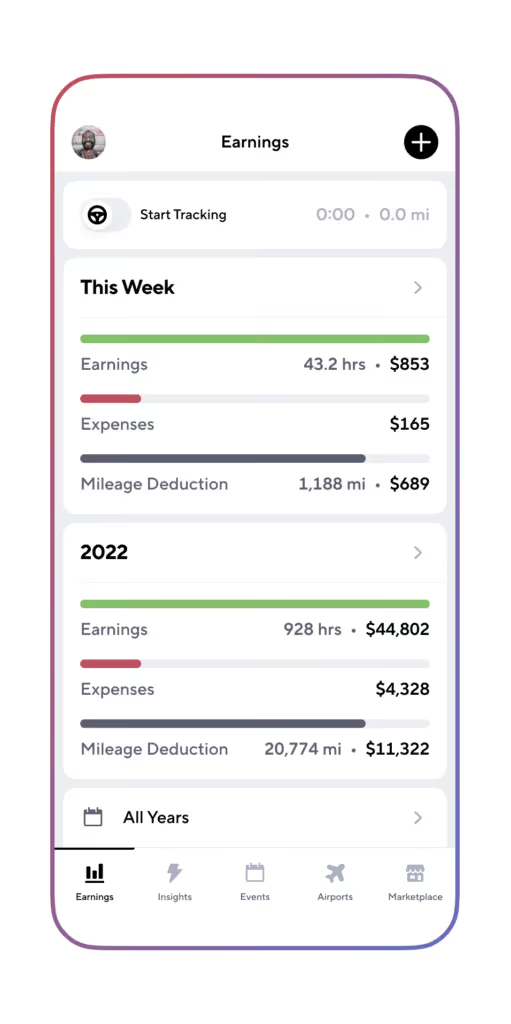
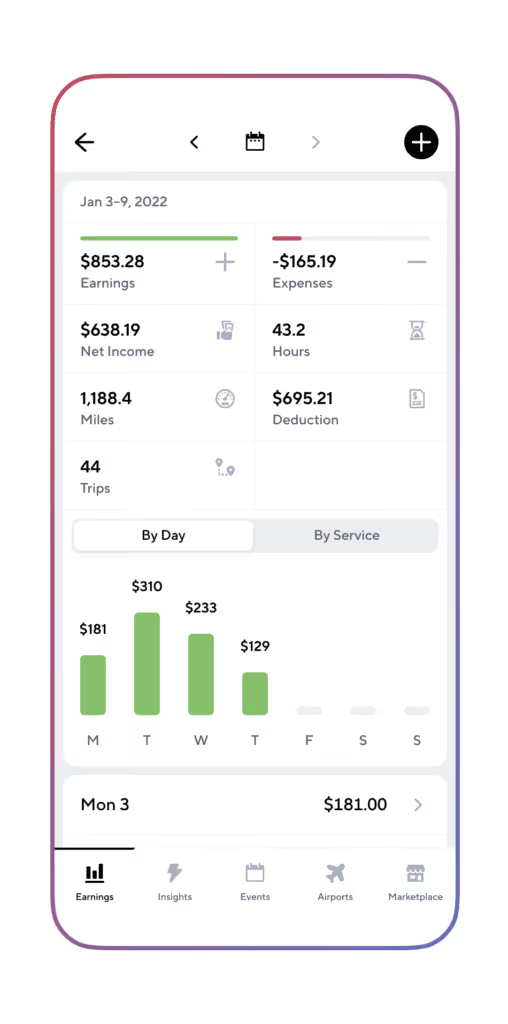
[elementor-template id="20936"]
* No proporciona asesoramiento fiscal, legal o contable. Este material ha sido preparado sólo para fines informativos y no tiene la intención de proporcionar, y no se debe confiar en el asesoramiento fiscal, legal o contable. Usted debe consultar a sus propios asesores fiscales, legales y contables antes de presentar su devolución.

How Much Do DoorDash Drivers Make Per Day?
One of the reasons gig driving jobs, including DoorDash food delivery, are so convenient is that you can make your own hours. The only set schedule you work is the one you’ve developed on your own, based on your market (because every market is different), your other responsibilities, your other gigs, and your nine-to-five job if you have one. Many gig drivers work multiple platforms, so working the right gigs at the right time for maximum profit is always a delicate balance. If you’re limited to only a few days to drive DoorDash, what are the best days to maximize DoorDash pay?
So when someone asks, “How much do DoorDash drivers make per day?” your response is, “It depends on what day of the week it is.”
Gridwise, though, has looked at the numbers, and we can tell you the best days. They come from over 500,000 Gridwise drivers who have downloaded the Gridwise app and tracked their earnings, mileage, and expenses. Gridwise aggregates and anonymizes this data and then presents it to drivers so that they can see trends in their business. If you want to maximize your DoorDash pay, this is the article you need to read.
[elementor-template id="20891"]
How much DoorDash drivers make daily is not the only barometer of DoorDash earnings, though. There are also per-hour and per-delivery earnings. To look at all facets of DoorDash earnings, see the Gridwise blog post 2023 Doordash Earnings Report. You can also see another perspective of DoorDash earnings from another Gridwise blog post, DoorDash Driver Pay: What Do Dashers Earn in 2023?
How much do DoorDash drivers make per day?
Source: Gridwise Analytics. Graph also appears in 2023 Doordash Earnings Report.
Between Q1 2022, DoorDash gross daily earnings, including tips and bonuses, ranged in average from slightly more than $61.00 to more than $63 per day. The numbers are average and include both full-time and part-time drivers.
What is the best day to drive for optimum DoorDash pay?
BizFluent reports that Mondays and Tuesdays are the least busy days for restaurant delivery and takeout. Many independent restaurants are closed on one of these days for that reason. Conversely, you can also argue that Mondays aren’t bad because many people are in the doldrums from the weekend, and a delivered meal sounds like a heck of an idea. It depends on your market. And let’s not forget Monday Night Football and Thursday Night Football.
The weekends, starting on Friday night, are the busiest days. People like to start their weekend relaxing, and there is no better way to kick that off than with a great meal ordered in. When Saturday rolls around, it’s college games, and then Sunday is NFL day. You can learn more about the impact of football from this Gridwise blog post, The Impact of Pro Football Home Kickoff Games on Gig Mobility Demand.
The women in the house especially appreciate home delivery of meals. USA Today reported last year that 46% of the NFL fanbase is female. That’s even more pressure to open the DoorDash app.
There is one last reveal that you should know. According to SportsBusinessJournal.com, while sporting events dominate the airwaves and attract the most viewers, the president’s State of the Union address is number one. The Academy Awards (held on a Sunday night) comes in fourteenth. Don’t forget those other special events, including the Grammys, The Golden Globes, the Country Music Awards, and others.
Tips for maximizing DoorDash pay per day
Your earnings as a DoorDash driver are in your control. There are things you can do to make food delivery more profitable.
Slice and dice earnings for a better perspective
Daily DoorDash earnings are important, but it is also important to understand earnings from an hourly perspective (what would happen if a special event such as the Super Bowl lengthened the dinner hour?). You also need to ask yourself what it would do to earnings if you could squeeze in another delivery per hour? To get the answer to all these questions, check out the Gridwise blog post 2023 DoorDash Earnings Report.
Determine if DoorDash is the best choice in your city or region
It may not be. DoorDash certainly seems the best choice for a food delivery driver. DoorDash has dominated the food delivery platforms for several years, commanding 65% of the US food delivery market. That’s a far cry from second place Uber Eats, at 24% of the market. The other competitors, including Grubhub, are down in the single digits.
But food delivery is a competitive business and can vary from city to city. DoorDash has less than a 50% market share in San Diego, Los Angeles, Chicago, and New York, according to Ordering in: The Rapid Evolution of Food Delivery, a 2021 report by McKinsey. The report goes on to say,
Geographic competition among delivery platforms will be one of the most significant battlegrounds over the coming years. Rival platforms will continue to fight one another for customers, restaurants, and drivers in each individual market, potentially leading to further consolidation over time. This battle will extend into new verticals beyond restaurants, as platforms widen the scope of services they provide.
Look at the McKinsey report and see if your city is listed and how it looks for market share among the food delivery platforms. Depending on where you live, you might be better off delivering for another service. We should point out that the McKinsey report, dated September 2021, is more than two years old. The market for food delivery is constantly changing.
Don’t look at your DoorDash earnings from one perspective
It is necessary to see DoorDash earnings from a 360-degree perspective to fully understand how you can make more money. An excellent place to start is the recent Gridwise blog post 2023 DoorDash Earnings Report.
It is also important to understand and appreciate all aspects of Dasher earnings. Gridwise examines these perspectives in other blog posts:
- How much do DoorDash drivers earn per delivery?
- How much do DoorDash drivers earn per hour?
- How much do DoorDash drivers earn before tips?
Select the best hours for DoorDash pay
Food delivery is not a 24/7 job. Yes, there are those odd orders at 4:00 in the morning or 3:00 in the afternoon, but you can generally rely on lunch and dinner as your peak times.
DoorDash peak timesTotal hoursEarningsCommentsLunch (11:30 am–1:30 pm)2 hrs. × 5 days a week = 10 hrs. $200Weekends tend to eliminate the business lunch crowd. Dinner (5:00 pm–9:00 pm)4 hrs. × 7 days a week = 28 hrs. $560Hours may vary in your region. Late night1.5 hrs. × 7 days a week = 10.5 hrs.$210If your territory includes colleges and universities, you’ll get good results in this time block. Totals48.5 hours$970
Chart initially published in How to Make $1000 a Week with DoorDash
The afternoon gap or after 9:00 pm is where multi-apping comes in. You can take advantage of afternoon rush hours or late nights by driving rideshare. You can also run two or three platforms simultaneously. Check out the Gridwise blog post on multi-apping, The Art of Multi-apping: How-Tos and Strategies for Gig Drivers.
You can also look at the When to Drive and Where to Drive features on the Gridwise app, which provide you with the most up-date-date information in your region.
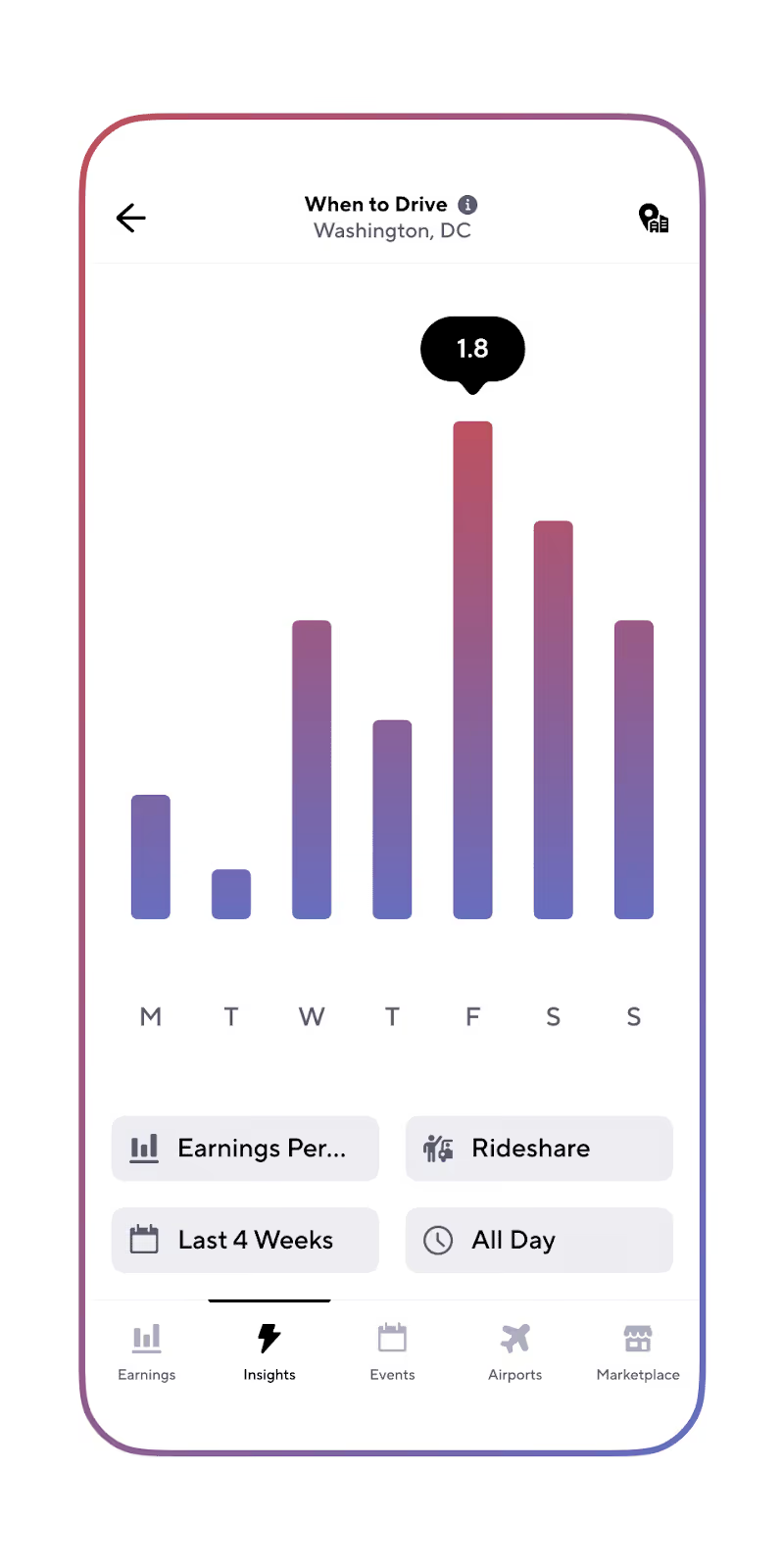
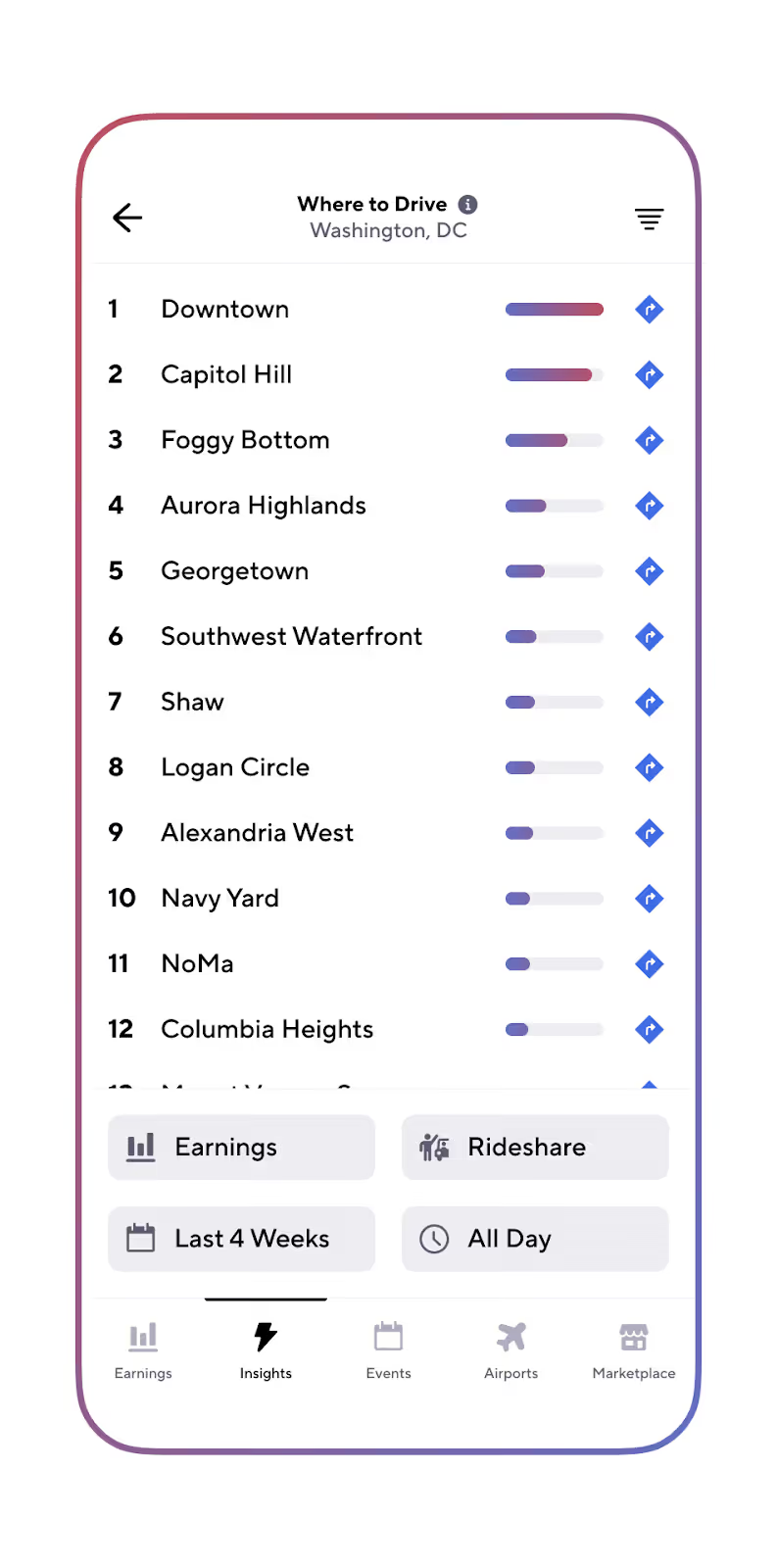
If you familiarize yourself with Amazon Flex, you can also squeeze in a delivery block from that company. Check out these recent Gridwise blog posts on the parcel carrier:
Make it easy for customers to tip you
Tipping waiters and waitresses is a US thing (not so much in Europe). Although many tip their food delivery driver, others don’t. You should make it easy for them. Spend a few dollars and have business cards printed, thanking them for their business, and include one with each delivery. You might even include your personal information for a few electronic cash-handling apps—PayPal, Zelle, Venmo, etc. DoorDash passes on 100% of tips to drivers, but some people don’t like to tip on the app.
Be bright and cheerful
You don’t always see the customer, but porch cameras are ubiquitous. You should always consider yourself to be on camera. From the moment you get out of the car, all the way to the door and back, you should exude enthusiasm and good cheer. Smile a lot! Optimism is catching, and people will reward their DoorDash driver for it.
Communicate with customers
Text customers along the way, giving them a running commentary on your progress. “Just got your order on my app, on the way to pick it up.” “Getting out at the restaurant.” “Headed for your place. Three minutes away.” People love communication, which is all the more true if something goes wrong, such as an order that needs correcting (especially if you caught the error) or problems with traffic.
Remember all the condiments
Some restaurants could be better regarding including extra ketchup or mustard. Make sure to drop in additional packets. Drop in an extra handful of napkins and some plastic forks, knives, and spoons. If you’re picking up beef dip sandwiches, ensure someone at the restaurant remembers the au jus.
Familiarize yourself with DoorDash incentives
DoorDash offers you ways to make more money. Learn about Peak Pay promotions, DoorDash Driver Challenges, and the Dash Now program—all described in a recent Gridwise blog post, DoorDash Incentives 2023: How Do They Work?
Download the Gridwise app
Gridwise is the place to go regarding the latest information on DoorDash or other food delivery, rideshare, and parcel delivery gig jobs. Download the Gridwise app and check out the When to Drive and Where to Drive features. You can also save money at tax time using the Gridwise mileage tracker, the best mileage tracker for gig drivers, and the Gridwise expense tracker.
[elementor-template id="20936"]
Get more insights into DoorDash pay from Gridwise
Check out these Gridwise articles to learn more about DoorDash earnings:
How Much Do DoorDash Drivers Make Before Tips?
Food delivery is a service business, and in the US, it’s often customary to tip service workers, especially when there’s food involved. Food delivery drivers will tell you tips are a big part of their income. Are you wondering, How much do DoorDash drivers make before tips?
With inflation up as much as it has been, customers are paying more for food and are thus more apt to skimp when tipping their DoorDash driver. You have to earn those tips.
You can rely on Gridwise to give you real-world numbers. More than 500,000 gig drivers have downloaded the Gridwise app to track their earnings. Gridwise has aggregated these earnings from various gig platforms—including income from bonuses, incentives, and tips—to provide an accurate picture of DoorDash pay. You can view all the numbers in this recent Gridwise blog post, 2023 Doordash Earnings Report.
[elementor-template id="20891"]
For another perspective on DoorDash aenings, you can also read another Gridwise blog post, DoorDash Driver Pay: What Do Dashers Earn in 2023?
Breakdown of DoorDash driver pay before tips
How much do DoorDash drivers earn? It all starts with base pay. That’s what you see on your app when you get the order. The time, the distance you need to travel, and the desirability of the order all go into computing base pay.
Top Dashers look for at least a dollar a mile in base pay. Some DoorDash drivers will only accept orders that are closer to two dollars. But other factors can increase this dollar amount.
How to enhance DoorDash pay
DoorDash pays beyond the base compensation through a couple of other ways.
Peak Pay.
Peak Pay is the equivalent of surge pay for rideshare drivers. When things get busy, the app will institute Peak Pay for DoorDash drivers. This is an add-on to the payment you see on the app when the order appears. Peak Pay differs depending on what region you drive in. Go to the Promotions tab on your app to see what your region pays. You can find out more about Peak Pay on the DoorDash website.
Challenges.
Challenges are a way DoorDash tries to keep its drivers loyal to the app. You will see a Challenge on your app, offering a bonus for a set number of deliveries completed in a certain amount of time. For instance, complete 15 deliveries in one night and receive a $20 incentive payment. You might also receive Challenge offers through SMS or email. To find out more about DoorDash Challenges, see the DoorDash website.
Average daily DoorDash driver earnings before tips
Source: Gridwise Analytics. Graph also appears in the 2023 Doordash Earnings Report.
Between Q1 2022 and Q3 2023, DoorDash driver gross daily earnings before tips ranged from about $30.50 to more than $32.00.
Tips are an important component of a food delivery driver earnings, but Gridwise realizes that the best drivers want to see the entire income picture, so we’ve collected and analyzed that data. See it all in this Gridwise blog post, 2023 Doordash Earnings Report.
The most common food delivery complaints from end consumers
A quick Google search can give you the most common complaints from end consumers about their food delivery experience. If you’re committing any of the following errors, as listed in this BusinessofApps.com article, it will affect your tips.
- Late deliveries (50%). Communication between the DoorDash driver and the end customer is critical. If the restaurant doesn’t have the order ready, or you encounter any other delay, text the customer and let them know.
- Wrong order (37%). Did you check the order to make sure it’s correct? You don’t have to open every dish or unwrap every sandwich, but at least ensure the number of items is right and the labels correspond with the order.
- Cold food or food that isn’t fresh (36%). This is usually the restaurant’s fault, but you can prevent cold food by making the delivery promptly and having enough thermal bags to hold everything.
- Driver needing directions (33%). Your GPS is usually correct, but some neighborhoods fall into a black hole with sketchy internet service. If you get a chance, check Google GPS against Waze.
- Food not arriving (26%). Restaurants drop the ball, or drivers who are multi-apping get distracted by a better opportunity to make money.
- Bad attitude of the driver (14%). Food delivery is a customer service job. This means a good mood all the time. Your parents paid a lot of money to straighten your teeth, so you should always show them off by smiling. Make sure you have a spring in your step. Porch cameras are ubiquitous these days, so even if you don’t have to contact the customer, act like you’re on top of the world. It’s contagious.
Another complaint that pops up regularly is drivers eating customer food. According to RestaurantBusinessOnline.com, 54% of customers have suspected a delivery driver of sampling their food. This is not an outlier report. Earlier this year, RetailBrew.com reported that 79% of food delivery drivers admitted to filching a few fries or other food from an order. Other accounts have that number a bit lower, but any percentage above zero is unacceptable. Don’t be surprised if restaurants start coming out with tamper-proof containers for food delivery.
Gridwise also provides you precise numbers on DoorDash earnings. We break it down to show you not only how tips matter, but how much drivers average per hour, per delivery, and per day.
- How much do DoorDash drivers earn per hour?
- How much do DoorDash drivers earn per delivery?
- How much do DoorDash drivers earn per day?
See all the information in this Gridwise blog post, 2023 Doordash Earnings Report.
How to earn better tips while driving for DoorDash
With tips comprising as much as 50% of DoorDash pay, doing whatever you can to increase them is imperative. With that in mind, what can you do to earn more?
Learn the restaurants in your area that are good for Dashers
We know that one of the chief complaints of customers is late orders or cold food. Some restaurants are poorly managed. Orders are never ready for the Dasher, and you’re left to cool your heels and surf TikTok. Other restaurants don’t package their food well. It’s either cold or smashed (that’s another customer complaint). When you see an order from a restaurant where you have had this experience, pass on it. Look for orders from restaurants that appreciate you and make the Dasher life easy.
Dress for success
You don’t have to wear a button-down and tie, but look nice. Too many food delivery drivers wear sleeveless T-shirts, cutoff sweats, and grungy sandals. Look like someone you would want handling your food.
Dress for specific events
Another version of this considers football, baseball, and basketball seasons. Wear the home team jersey. You can take a page from Robert Woldhuis. USA Today reported that he made $100,000 in one year delivering groceries for Shipt. Part of his schtick was wearing colorful wigs and outlandish costumes. Hey, it worked for Robert!
You’re judged by your attitude
Yes, maybe you had to shell out $300 for new front tires, or you just paid top dollar for gas. Maybe your significant other just moved out and took everything but one place setting so you can eat a meal. No one wants to know your problems, and they sure don’t want to see them reflected on your face. What they want to know is why that DoorDash driver is in such a good mood. It might motivate them to toss you a tip.
Surprise your customers
Take another lesson from top-earning grocery delivery people and give your clients something they didn’t expect. A pack of seeds for the lady of the house or small boxes of crayons for the kids goes a long way (you can get 250 packs of four crayons, each wrapped in cellophane, very inexpensively on Amazon). Make sure they’re visible by stapling them to the outside of the bag containing the food. You want to blow away customers with your service.
Deliver in the rain
No one wants to go out in the rain or snow, including customers and other DoorDash drivers. But you do, and you’re smiling the whole time. People will appreciate you—and usually tip you accordingly.
Watch YouTube videos, read the blogs
Other DoorDash drivers are hustling as hard as you, and sometimes they come up with good tip-earning ideas. Be the first to discover them. If you haven’t read the Gridwise blog post How to Make $1000 a Week with DoorDash, read it now.
Have a couple of electronic cash-handling accounts for tips off the app
Sometimes you get a group of people ordering off one person’s credit card, but another agrees to handle the tip. You want to make it easy for them. Print some cards with your PayPal handle, or Venmo, Cash App, or Zelle. You should have multiple ways that people can give you money.
What can be measured can be improved
Sign up for the Gridwise app, link to DoorDash, and monitor your earnings. Track your tip activity and see what works. Then do more of it. And while you’re at it, use the Gridwise app to track your mileage and expenses, and save at tax time. You can also check out When to Drive and Where to Drive, valuable features on the Gridwise app.
[elementor-template id="20936"]
Take advantage of your free access to the Gridwise blog, a source for the most current information on gig driving, including DoorDash. Click over now to see a full review of DoorDash earnings in the 2023 Doordash Earnings Report, and also read this Gridwise blogpost, DoorDash Driver Pay: What Do Dashers Earn in 2023?
Get more earnings insights for DoorDash
Check out these Gridwise articles to learn more about DoorDash earnings:
Trabaje de forma más inteligente. Gane más.
Ya sea que conduzcas, entregues o recojas turnos, Gridwise te ayuda a hacer un seguimiento de las ganancias, el kilometraje y el rendimiento para que puedas mantener el control de tu trabajo. Descarga la aplicación y toma las riendas hoy mismo.
