Blog de Gridwise
¡Lee el blog de Gridwise para obtener consejos y sugerencias sobre cómo ganar más dinero mientras conduces para Lyft, Uber, DoorDash, GrubHub y más!

The Gridwise Job Board: Find Your Ideal Job or Gig Work
Gridwise is an essential assistant app created by gig workers for gig workers. Our mission is to support those engaged in gig work in every way possible. We understand how challenging it can be to deal with income instability, a lack of benefits, and job insecurity that often comes with gig work. The Gridwise app tracks and organizes earnings and expenses, and offers a wide array of discounts, deals, and services that make the lives of independent contractors easier and more rewarding.
We firmly believe it’s possible to make a viable living and create a gig experience that offers flexible hours, variety, and excitement. With issues such as consistent earnings and job security in mind, Gridwise is proud to offer a centralized platform that shows you how to find gig work and secure reliable opportunities. We’re proud to introduce the Gridwise Job Board.
[elementor-template id="20891"]
The Gridwise Job Board: Key features
Because Gridwise is dedicated to serving the gig worker community, we’ve filled the Gridwise Job Board with useful features that won’t waste your precious time.
- Comprehensive listings. Find part-time, full-time, temporary, and per-task work. Drive or deliver with your vehicle, utilize an employer’s vehicle, or even find non-driving gig work.
- User-friendly interface. Find the jobs that are right for you with a tap of your screen.
- Verified opportunities. We vet the jobs before they are listed to ensure you’re getting high-quality job postings.
How to get more gig work, seasonal, part-time or full-time jobs with the Gridwise Job Board
Looking specifically for “gig work apps” or “gig jobs near me?” You’re in luck. Our filters and search functions send you directly to the listings you seek.
Here’s how it works.
- Access the Job Board via the Gridwise website.
- Search for jobs by type, location, and more.
- Select the job that interests you, and read all about it.
- Scroll through the description, and if it appeals to you, click “Apply for job.”
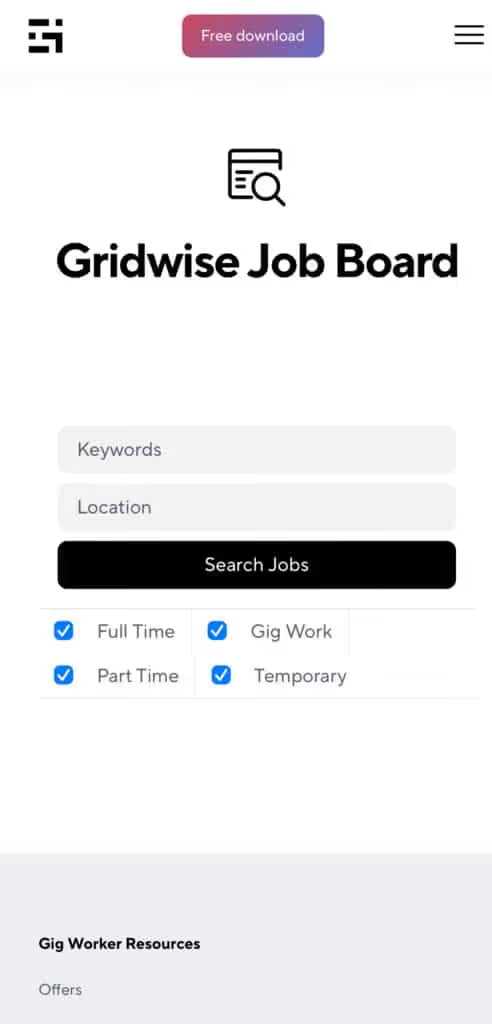
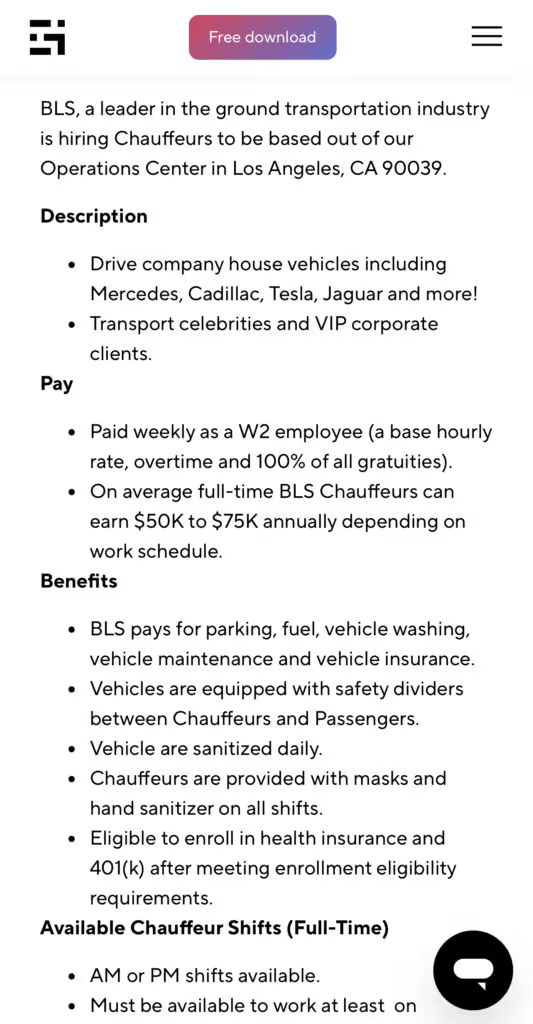
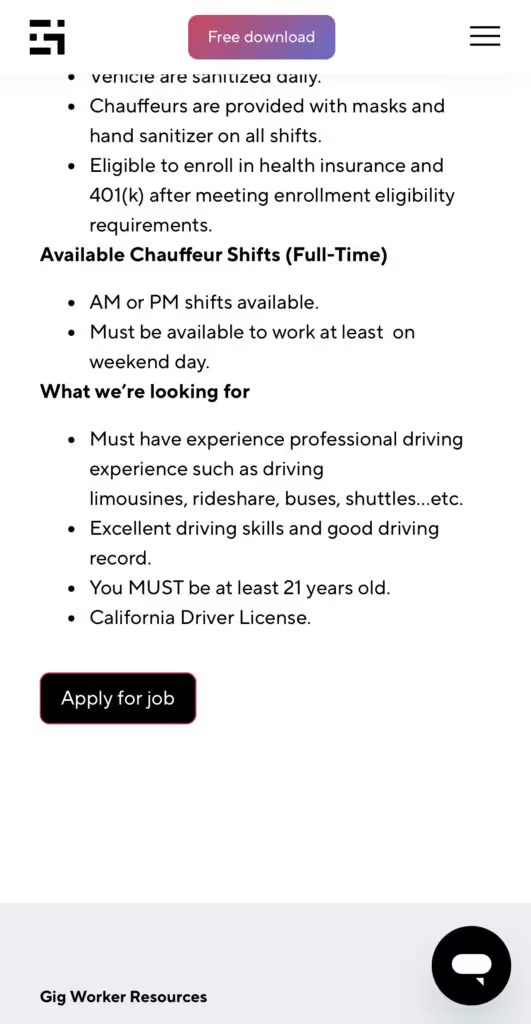
Many types of jobs are available. Adjust the search filter to see the full variety of opportunities that will let you cash in. Deliver food, set up catering, do rideshare driving, get paid for doing package delivery, and much more. You’ll find short-term gigs, long-term contracts, and part-time positions.
Perks of the Gridwise Job Board for gig workers
Gig workers who know how to make extra money will appreciate how the Gridwise Job Board lets you multiply your chances of bringing in big earnings. Here’s how:
- Increased stability. Use the Gridwise Job Board to find part-time or permanent jobs in addition to the part-time gigs you already have. Always keep a steady stream of earning opportunities flowing toward you.
- Flexibility and autonomy. Choose jobs that fit your schedule, work around other jobs and family duties, and still leave room for some fun in your life. Discover side hustles to supplement your full-time job, permanently or just for the season.
- Skill development. Find part-time work that lets you use a skill you already have, or try your hand at something new. It’s a smart way to develop a portfolio to showcase what you can do, or even to find permanent employment.
Get Gridwise and stay up to date on the Gridwise Job Board
Gig workers need plenty of information and assistance, and Gridwise is here to give it to you. Download the app and get essential features such as
- seamless earnings tracking
- mileage tracking
- expense recording, including notes
- low-cost and no-cost insurance benefits
- access to affordable medical, dental, vision, mental health, and alternative care
- professional services including legal and financial help
- deals and discounts
- weather, events, and traffic reports
- inside information on where and when to drive
[elementor-template id="20936"]
More to know about gig work:

5 Best Mileage Trackers For Gig Drivers
Many drivers ask, “Do I really need a mileage tracking app?” The answer is simple: only if you want to have an accurate count of all the miles you can legally deduct from your taxable income! You might think your rideshare or delivery driving app has got you covered. After all, they do quite a good job of logging the miles you drive while you’re on a trip or delivery. But, if you want to have the best app to track mileage for Uber, Lyft, Doordash, Instacart, or the other apps you may use, you need more. Why is that?
Without a separate tracker, you’re missing the miles you drive in between pings. Did you realize that all the miles you drive, from the moment you begin your shift until it’s over (as long as you don’t drive several miles on a break to hang with your friends), are tax deductible! That means you need something besides your driving app to keep an accurate count of your travels. Read this Gridwise post to see how important it is to keep track of every deductible mile.
You won’t be surprised to hear that there’s an app for tracking miles. In fact, there are several of them. Here, we’re going to tell you about five top mileage tracking apps, and help you figure out which one is best for you.
Before we get to the list and identify the best mileage tracker app, let’s clarify what exactly a mileage tracking app is. According to G2.com’s technology glossary, mileage tracking is done for the purpose of keeping a log of mileage that is either reimbursable or tax deductible.
And yes, of course you can track your miles simply by taking readings on your odometer. But are you really prepared to account for how many miles you drove for personal reasons and subtract them from the total to get your business mileage? Even if you can remember all that and do the arithmetic, if you want an accurate reading of the miles you drive for business, and can therefore deduct, a mileage tracking app will save you a lot of trouble and prevent you from making costly errors.
Plus, as a gig driver, you have specific needs when it comes to a mileage tracker. Ideally, you’d be able to handle mileage tracking and several other functions all in one app. It can be maddening enough to deal with driving apps, particularly if you’re an avid multi-apper. You would want your mileage tracker app to help you keep account of other aspects of your business, including income, expenses, and inside information about the art of gig driving.
Not all mileage apps are equal, to be sure! Let’s look at five of the best apps to track mileage and figure out which is the best app to track mileage with Uber and Lyft, or what mileage tracker app is best for DoorDash.
[elementor-template id="20891"]
1. Zoho Expense
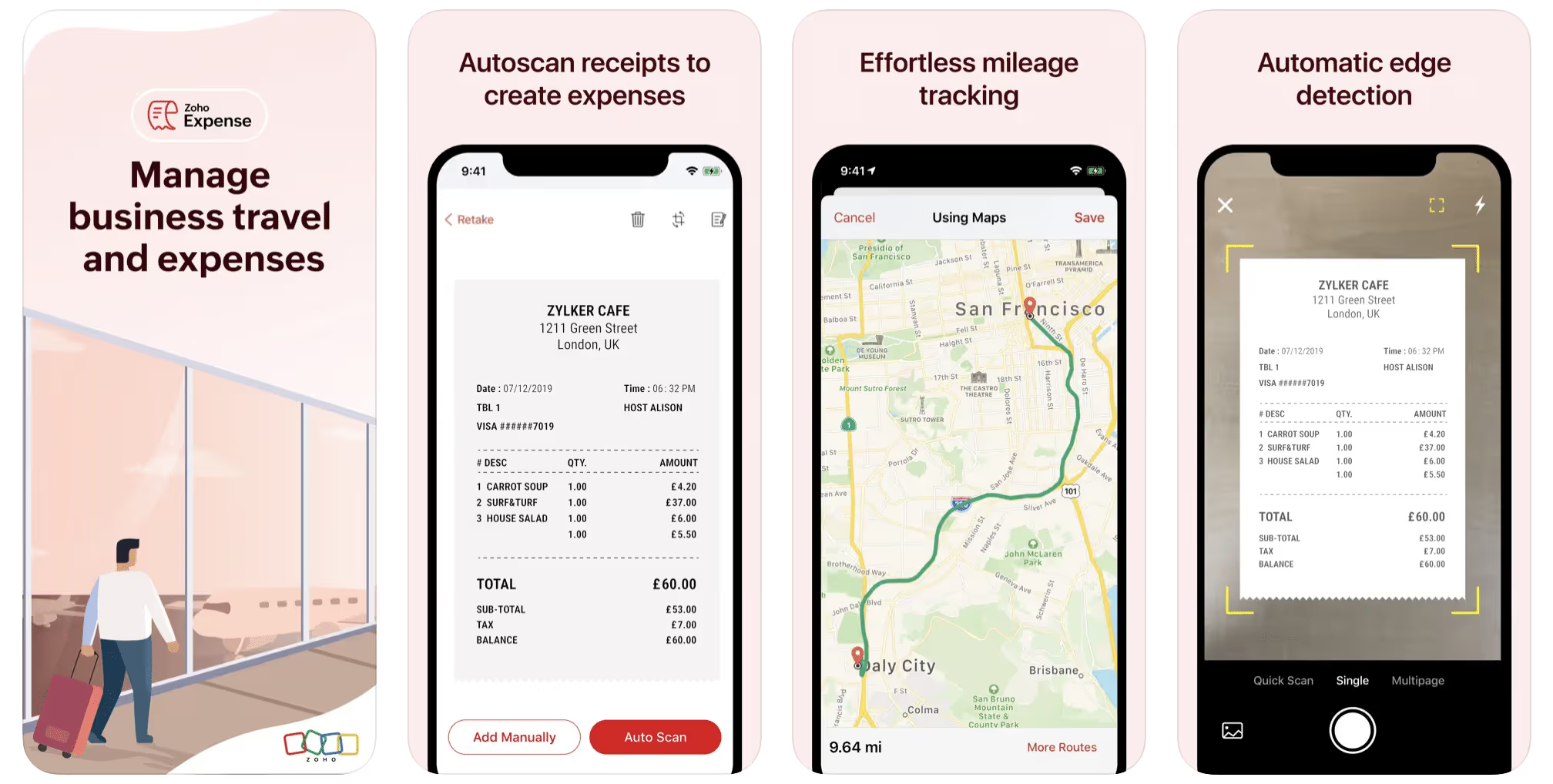
First up is Zoho Expense, which does exactly what its name says. This app is designed to allow companies to give employees a uniform way to create and submit expense reports. It can be used by individuals, including gig drivers, as well.
It includes a mileage tracker, as well as features that let you track other deductible expenses, including the ability to scan and record receipts.
Available on Android and Apple: Yes
Ratings: 4.8 stars on App Store, 4.7 stars on Google Play
Free Version: Yes
Subscription price: $3 per month, billed annually
Created specifically for gig drivers: No
2. Quickbooks Online
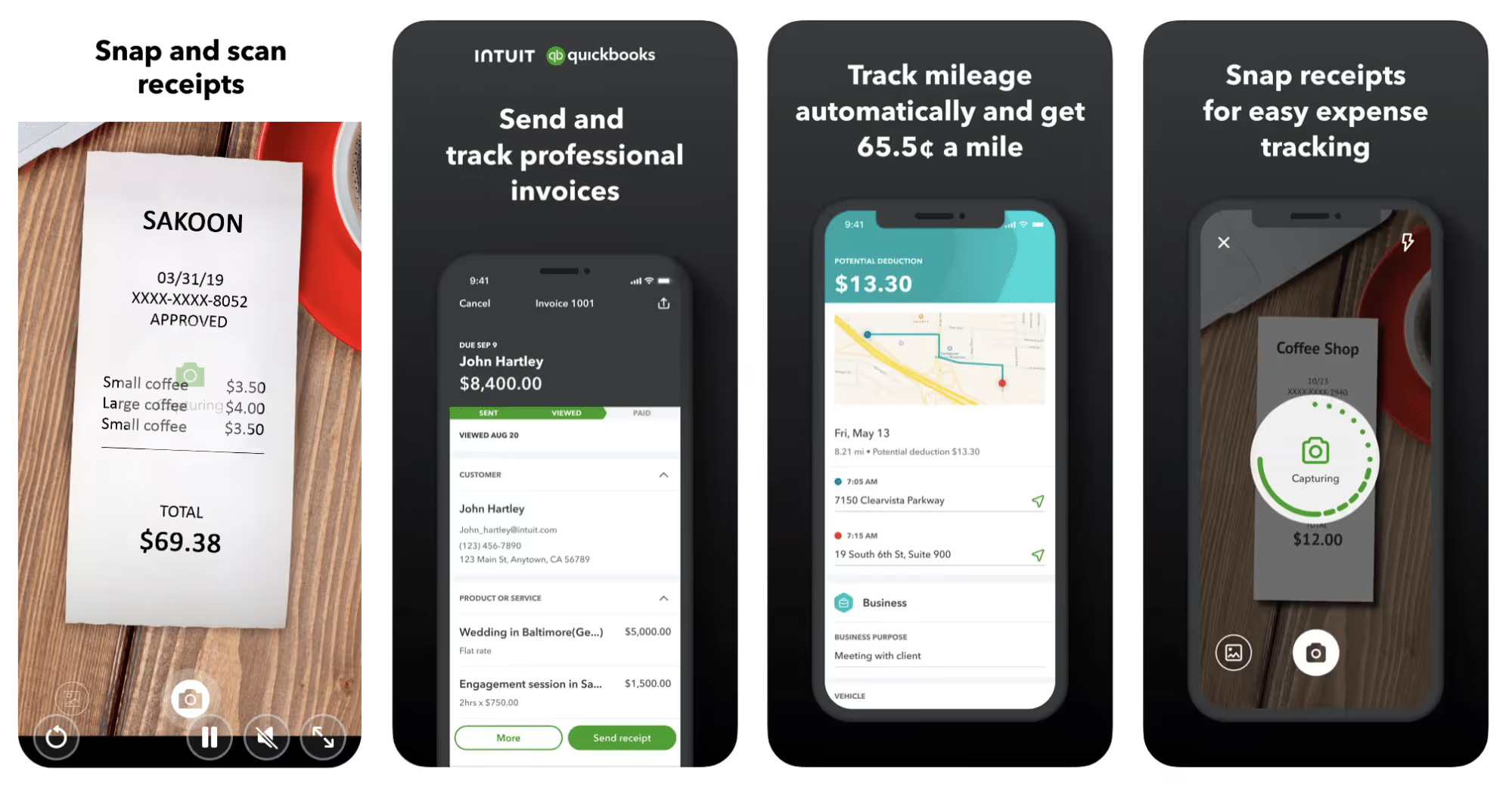
Quickbooks Online is a cloud-based app that allows you to track your mileage, earnings, and expenses. The information you enter can then be used to generate various reports that prepare you for tax time. It also allows you to create graphs that illustrate your cash flow, and includes a receipt scanner so you can instantly record deductible expenses. Quickbooks is popular, highly reliable, and designed mainly to help people keep track of their small businesses.
Available on Android and Apple: Yes
Ratings: 4.7 stars on App Store, 4.4 stars on Google Play
Free version: 30-day free trial
Subscription price: $15 per month for basic version if purchased for 3 months or more
Created specifically for gig drivers: No
Source: quickbooks.intuit.com
3. Shoeboxed
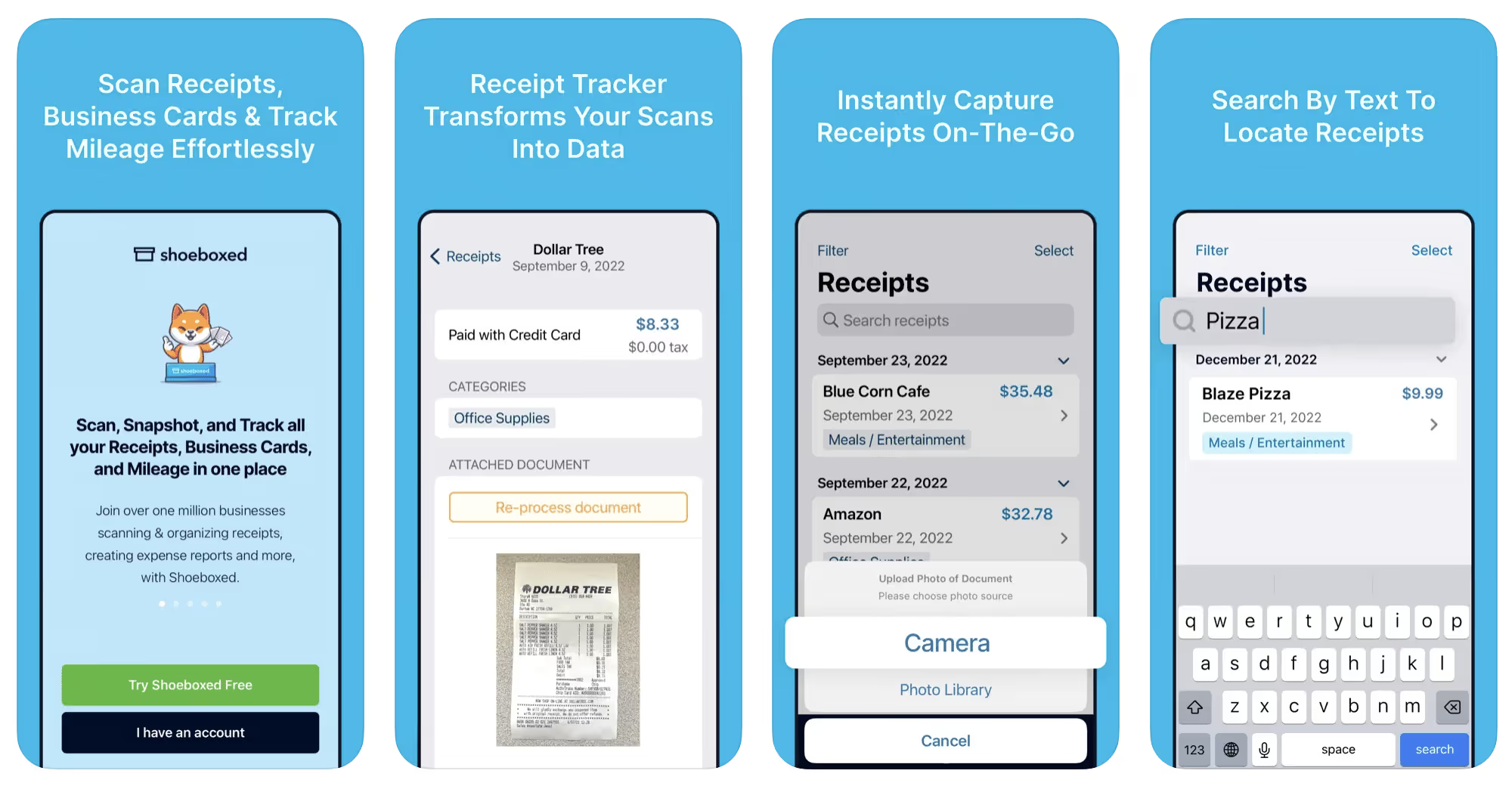
Shoeboxed started in 2007 as a service for scanning paper receipts into digital form. Now the app offers a free mileage tracker and has enabled users to scan receipts directly. It touts itself as the best mileage tracking app for DoorDash, but there are some elements missing that Dashers might like to have. While it provides features that record your expenses and prepare you for tax season, it doesn’t automatically track your earnings. The mileage tracker has a system where you can drop pins along your routes to make the tracking more precise, identifying those legs of a trip that you make for business purposes. The mileage tracker is “free” once you sign up for the basic version.
Available on Android and Apple: Yes
Ratings: 4.5 stars on App Store, 2.3 stars on Google Play
Free version: No
Subscription price: $18 per month for basic version
Created specifically for gig drivers: No
Source: blog.shoeboxed.com
4. Stride
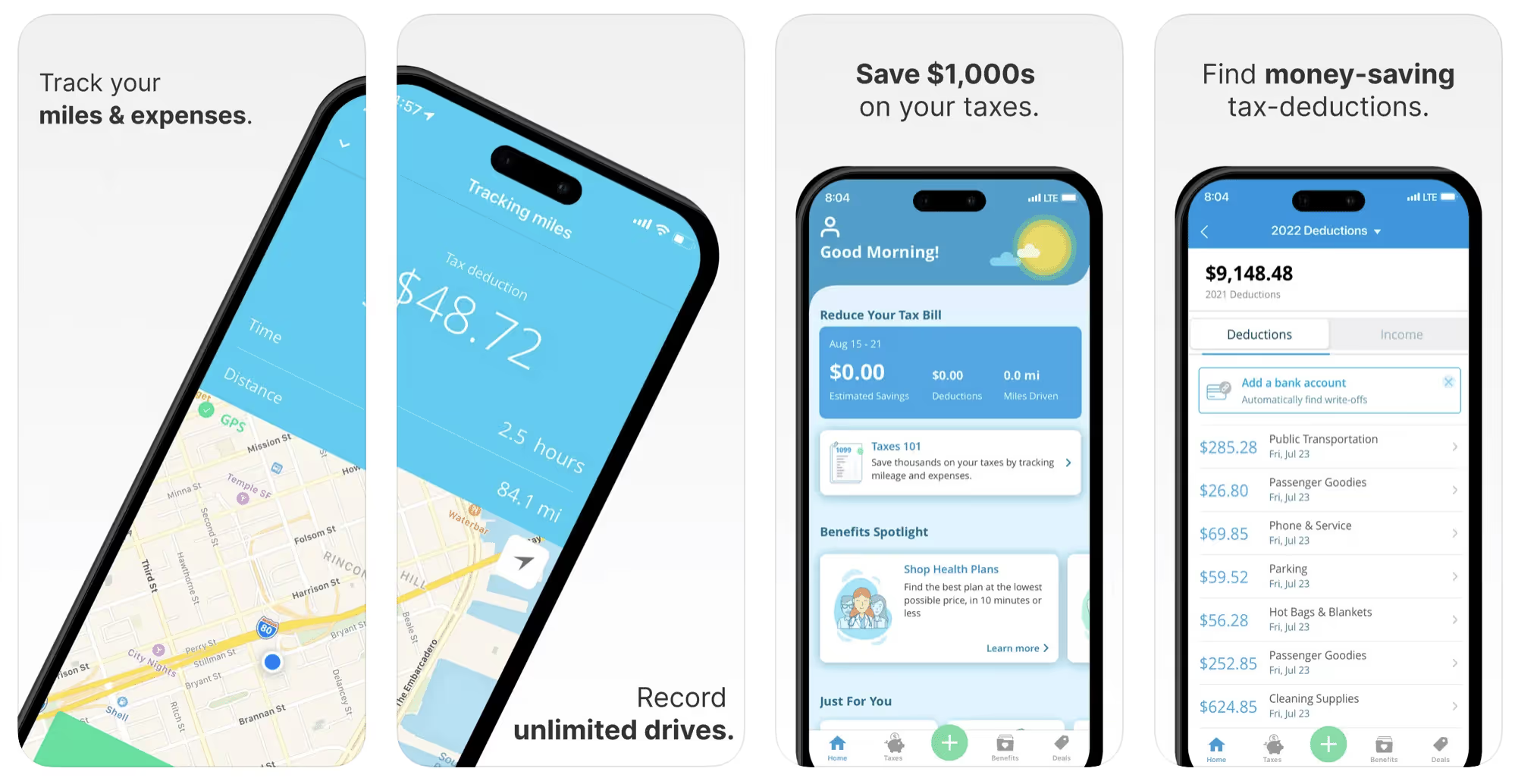
This free mileage tracker does a fair job of keeping track of the distances you rack up while gig driving, but it doesn’t automatically track earnings. It can be a big help, though, in tracking your expenses. You can link Stride to your bank account, and it will automatically scan your expenses to identify items you can potentially deduct. The app is totally free. This could make it the best free mileage tracker app, but there is a small price to pay. The app will persistently push you to consider various insurance plans that they are affiliated with. If you don’t mind that, this is a solid mileage tracker, even if it doesn’t track your earnings.
Available on Android and Apple: Yes
Ratings: 4.8 stars on App Store, 4.6 stars on Google Play
Free version: Yes
Subscription price: None. The app is free.
Created specifically for gig drivers: No
5. Gridwise
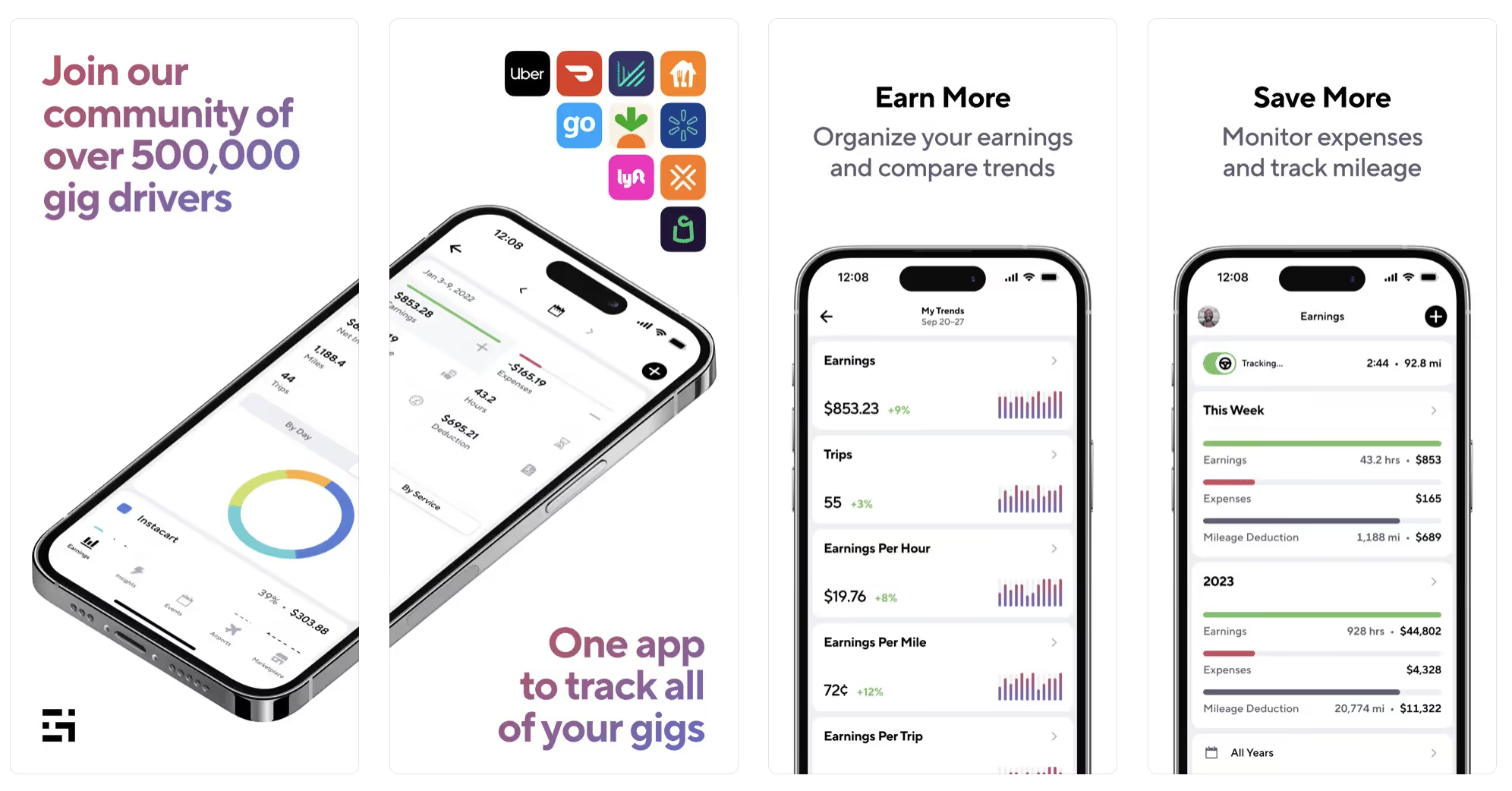
Gridwise has a free mileage tracker and free features that record your income and expenses. It gives you access to insurance and benefits, as well as insights about the best times and places to make the most money while gig driving. The Gridwise mileage tracker captures all the miles you drive while you’re on your driving shift, and it can be used if you have other trips you need to make which qualify as business travel.
Drivers love it because it is geared toward the needs of rideshare and delivery workers, providing free information about airport departures and arrivals, event start and let out times, weather, traffic, and more. The Gridwise Plus subscription adds value by providing additional insights and reports, discounts on benefits, the ability to export data in .csv format,, and more.
Available on Android and Apple: Yes
Ratings: 4.9 stars on App Store, 4.6 stars on Google Play
Free version: Yes
Subscription price: $9.95 per month for Gridwise Plus, or $95.99 per year (a $23.41 savings)
Created specifically for gig drivers: Yes!
What is the best mileage tracking app?
Now that we’ve checked them all out, we’re positive about the answer to that. Hands down, it’s Gridwise. Are we biased? You bet we are! But drivers love it too. Gridwise is the best mileage tracker app—and so much more. So many of the features are free, and the subscription to Gridwise Plus will pay for itself with additional insights to boost your earnings and deeper discounts on products and services.
Most important, Gridwise is designed specifically for gig drivers by experts who were once gig drivers themselves! Knowing what gig drivers need is a crucial step in creating an app that rideshare and delivery drivers can really use! Here are a few of the features, besides mileage tracking:
- seamless earnings tracking
- automatic, on/off toggle and manual mileage tracking
- mileage categorization
- airport, traffic, weather, and events information
- insights into where to drive and when to drive
- reports showing earnings across the platforms you use
- discounts on countless products and services for drivers
- additional resources for finding side gigs
- an informative and comprehensive blog
- affordable benefits, including insurance, medical, dental, and alternative practitioner discounts
- a community of drivers just like you
Don’t settle for just any app. Get the best mileage tracker, and so much more, from Gridwise!
[elementor-template id="21599"]

What Records Do Gig Drivers Need To Keep Track Of For Taxes?
* Gridwise does not provide tax, legal, or accounting advice. This material has been prepared for information purposes only, and is not intended to provide, and should not be relied on for tax, legal, or accounting advice. You should consult your own tax, legal, and accounting advisors before filing your return.
Record keeping? Who signed up for that? As a gig driver, it’s part of what you need to do to keep your business running. Don’t worry. It’s not as complicated as you might have been led to believe. This post will show you what you need to keep track of and the best ways to gather and preserve your tax-related records. We will cover
- How record keeping can help reduce income tax for freelancers
- Taxes and freelance work: Record keeping requirements
- Mileage tracking: Motives and methods
- More deductions and records to keep
- Make tax time easier
How record keeping can reduce income tax for freelancers
Tax time is not “fun time” for rideshare and delivery drivers. It’s easy to get used to watching your earnings pile up and come to believe they are all yours. Unfortunately, that isn’t the case. Gig work taxes can be especially painful because no one takes them out of your earnings for you, until the tax authorities insist that you do it for yourself.
You will need to show the tax authorities your income records, and they will gladly tell you to send them what they determine to be their fair share. Think that’s not fair? You’re not alone, but that doesn’t mean you’re going to get out of paying gig work taxes.
But you can find ways to pay the smallest amount that is legal and possible. The best way to defend yourself against having to pay astronomical amounts when you file your return is to know what expenses you can deduct from your gross income. When you subtract deductible expenses from your gross income, there is less left over to be taxed. This reduces the amount they can hit you with gig worker taxes. and can make your tax bill substantially lower.
While you want to keep good records so as to be in compliance with taxation entities such as the IRS, you also want to ensure you have proof of every last deductible expense you have accrued during the year. There are other records you must keep as well. Let’s look at some of the considerations you have, realizing that you now need to know how to do taxes as a freelancer.
Taxes and freelance work: Record keeping requirements
So many gig drivers fail to understand the responsibilities they have as independent contractors. Those who work part time for very few hours may even believe they don’t have to report the income they get from their driving gig payments. That would be a big mistake!
The company or companies you work for report your income to the IRS and state tax authorities. If you fail to report that income, you will risk some rather painful penalties. The IRS taxing side hustles is as much of a thing as the IRS taxing income from any other job. Your best bet is to report what you’ve earned, honestly and completely, and comply with other record keeping requirements such as
- gross income
- deductions and credits
- purchases (items you purchase and resell, such as snacks or bottled water)
- a log of all your mileage (or vehicle expenses, if greater)
- a list of all expenses and assets, such as utilities and other expenses associated with having a home office and equipment
- machinery and furniture you own, including when it was acquired, how much it cost, whether you previously took deductions on it, and selling price, if applicable (this includes your vehicle)
More things to consider:
- Pay attention to the retention of your records. You’ll need to keep all tax-return-related items— including income, deductions, and any tax credits reported— until the period of limitations runs out (3 years from date you filed, or 2 years from when you paid tax. If you have employees, keep your records for at least 4 years.)
- If you want to avoid paying self-employed taxes, you may want to set up a corporation or Limited Liability Corporation (LLC) for your business. This allows you to separate all your gig driving earnings from personal income, and permits you to take advantage of the additional advantages of working through a corporation. This includes exemption from self-employment taxes. You can learn more about how to pay self-employment taxes, if you opt for that, in this post from Keeper.
- You should always keep a separate checking account for your business, for convenience as well as clarity. While this is not a legal requirement, it is a smart move if you want to have an easier time managing your business.
- You are required, as an independent contractor, to file your taxes quarterly. Check out this Gridwise blog post for more information about quarterly tax payments and other matters that make filing delivery, Lyft and Uber taxes easier.
Mileage tracking: Motives and methods
Why you need to be meticulous about mileage
Mileage deduction, or the costs of operating your vehicle, will be the most important item to account for when you consider how to file taxes as a freelancer. While mileage is an important deduction for all independent contractors, as you might imagine, it’s even more essential for rideshare and delivery drivers.
There are two ways of keeping track of your mileage deduction. One is to use the IRS’ standard mileage deduction, which for 2022 is 58.5 cents per mile. This number takes into account the costs of operating your vehicle, from fuel and maintenance to registration, insurance, and depreciation. Alternatively, you can calculate all your own vehicle operating costs, but only after your first year of using the vehicle. You may discover that this second option allows you to have more money deducted from your taxable income. Learn more about the options for deducting your mileage in this Gridwise post.
No matter which way you decide to calculate the deductions for your mileage, you need to know what mileage you can and cannot deduct.
You can deduct
- miles driven to and from home when you go out to drive or deliver
- miles you accrue during your trips
- miles you drive on any other trips you make that are necessary as part of your business.
Examples:
- driving to return a lost cell phone or to an Uber Hub or another physical location where your company might make driver support available
- driving to pick up supplies, to get gas, or to have your car cleaned, serviced, or detailed, etc.
You cannot deduct
- miles you drive for personal trips
- miles for any trips you take that do not directly affect your business
Note: If imagining yourself becoming the not-so-proud owner of a shoebox filled with paper receipts gives you nightmares, stop worrying. Electronic records of purchases will satisfy reporting requirements. If you use cash, you can scan copies of your receipts, in some cases, right into your recording software or app. Gridwise and Keeper give you a simple to use interface that keeps all your receipts recorded without the messy pile of paper.
Mileage tracking methods
By now, you’re probably convinced that tracking mileage is important, despite all the other things drivers have to do. Now, let’s look at your options for keeping accurate records.
- Manual tracking: You can keep a logbook where you list every trip you make, starting and ending mileage, the date, and purpose of the trip. While this would work, it’s certainly not convenient. Besides, if that logbook gets lost, your plans for having a nice, fat tax deduction will go by the wayside.
- Spreadsheet: This is a bit more convenient and sophisticated way of tracking your business mileage. You’d need to be meticulous about making your entries, though. Even if you keep a spreadsheet app on your phone, it could be time consuming and inconvenient to keep doing it with all the other things going on in a rideshare or delivery driver’s day to day life.
- GPS-based mileage tracking apps: There are a bunch of apps that track mileage based on your GPS location, and most of them are pretty accurate and far more convenient than taking constant readings of your odometer. Your driving apps, such as Uber, Lyft, DoorDash, or Instacart, may also track your mileage, but be careful here. They will only track the miles you drive while you’re on a trip or delivery. They don’t count the miles you drive going to pick up a customer or when you make your move toward a restaurant or store.
Gridwise, on the other hand, will track all the miles you clock while you’re on your shift. All you need to do is make sure you start tracking the minute you leave home, and every gig driving mile will be logged. - OBD-II mileage tracking systems: There are plug-in modules that assess your vehicle’s mechanical health and track your miles. However, many authorities question the ability of OBD-II mileage tracking systems to get get accurate odometer readings. Insurance companies don’t consider them to be accurate enough gauges of odometer readings.
While mileage is a crucial deduction when you’re preparing your Uber, Lyft, or DoorDash taxes, it isn’t the only expense you’ll want to record.
More deductions and records to keep
Expenses you can deduct
You’re entitled to include the cost of other expenses that are directly related to your driving business. These include
- vehicle expenses
- equipment for your car and home office
- extra services and subscriptions
- business tools, including apps and software
You can learn much more about gig driver expenses that are eligible for deduction in this Gridwise article.
Ways to track and preserve deductible expenses
- The manual method: Just like you can with mileage, it’s possible to use a manual method, but in addition to logging each expense into a ledger, you would also need to keep physical receipts.
- Spreadsheets: You can record your expenses on a spreadsheet. This is somewhat less awkward than manually logging mileage, but there still will be plenty of room for failing to remember the case of water you bought for your customers, or losing the receipt from the thermal bag you purchased.
- Accounting software: You can use software that helps you track your expenses. This method usually interfaces well with any tax preparation software you or your tax professional might use.
- Gridwise: There are other apps that help you track your expenses, but Gridwise is designed specifically for gig drivers. It automatically tracks earnings and mileage, and lets you record your expenses the minute they come up. Gridwise’s partnership with Keeper gives you the ability to scan receipts and access a tax professional. This is a seamless way to record your expenses and a big help in learning how to file Uber taxes. Gridwise even provides .csv output, so you can feed your Gridwise data directly into tax preparation software. Check out what Gridwise and Keeper will do to super-charge your tax filing powers.
Organizing and categorizing expenses
Before you even begin to record expenses, you’ll want to set up categories for them. You can start by reviewing the categories listed above and checking out the Gridwise post that lists possible deductions.
If you’d like to learn more about how to categorize expenses, there is additional information available. This article from Motley Fool lists all possible categories any freelancer might use and also gives tips on how to customize them for your driving business.
One last tip
Using Gridwise, particularly for tracking mileage, is the easiest way to be in compliance with the IRS’ rules for deductible mileage. Gridwise tracks all the miles you drive for your gig, beyond what your company’s app might record. At the same time, you can log on and off Gridwise when you start and end your shift, so personal miles won’t be recorded. This eliminates confusion while capturing every deductible mile.
Gridwise Tax Help, a partnership with Keeper, has been created specifically to serve gig drivers. It provides affordable and easy ways to record expenses, scan receipts, and find deductions by analyzing your expenditures. Read about free resources from Keeper you can use to be fully prepared for tax season, and get all your earnings and expenses on the record.
Get the world’s best assistant for rideshare and delivery drivers, and tax help too.
Make tax time easier now!
Amazon Flex Driver Pay
The news keeps getting better and better for gig drivers. It used to be that rideshare was the highest-paying gig job. But now there’s something that pays even better, according to numbers from Gridwise. When was the last time you looked at working for Amazon Flex?
How much do Amazon Flex drivers make? Are you sitting down? In 2022, for the entire year, taking in an Amazon Prime Day and the holiday season, Flex drivers averaged $39 per hour. For the first quarter of 2023, without the benefit of the major Amazon buying events, drivers are averaging $36 an hour.
In this blog post, we will take a closer look at earnings for Amazon delivery drivers and reveal some tips to help you get there. Topics we will cover include
- How much do Amazon Flex delivery drivers make?
- What more do you need to know about Amazon Flex?
- How does Amazon Flex work?
- What kind of rewards does Amazon Flex offer?
- Other useful tips for Amazon Flex?
- Don’t forget Gridwise.
How much do Amazon Flex drivers make?
There are two types of Amazon delivery drivers: Amazon Fresh and Amazon Flex (there are additional types of Amazon Flex deliveries, which we’ll discuss later). Amazon Fresh is the delivery service of Whole Foods, which Amazon owns. Some drivers do one or the other, or they blend the two. Gridwise reports numbers from a combination of Amazon Fresh and Amazon Flex drivers.
According to reports by drivers, Amazon Flex delivery driver salary is more reliable and predictable. Drivers sign up for blocks of deliveries, listed on the app with how much they will pay, so drivers know how much they’ll earn. There are occasional tips from customers with Amazon Flex, but they are minimal.
Because of the demographic of Whole Foods customers (higher income households), tips often run toward the upper end, but they are still less predictable.
How much do Amazon Flex drivers make per week? Amazon Flex says on its website that drivers make between $18 and $25 an hour. Let’s look at earnings Gridwise has collected for 2022 and 2023.
Amazon Flex compensation 2022–2023 comparison
Measurement20222023Gross earnings/month$1,026$971Tip earnings/month$237$228Total hours/month2627Work miles/month505520Per hour earnings$39$36
Based on per-hour earnings, Amazon Flex driver pay is in the upper reaches of gig driving jobs.
Did you notice the other interesting piece of information? Drivers work about 27 hours a month. This makes Amazon Flex jobs a great side hustle to supplement your nine-to-five job or as a part of your overall mix of gig-driving work.
Keep in mind that these numbers represent the median of Amazon Flex drivers. Some drivers work two or three blocks a week. Others work as many blocks as they can get. The highest-performing Amazon Flex drivers can make $1,000 a week.
What else do you need to know about Amazon Flex?
According to the Amazon website, Amazon Flex operates out of more than 100 cities in the US. They are always recruiting someplace—all of which are listed on their website. As of this writing, they are looking for drivers in
- Altoona, PA
- Champaign/Peoria/Springfield, IL
- Columbia/Jefferson City, MO
- Franklin/Highlands, NC
- Idaho Falls, ID
- Williamsport–Montgomery, PA
If you are in another region of the country, you may be able to get on a waiting list for Amazon Flex jobs.Things change daily.
Driver Requirements
In addition to living in a region where Amazon Flex is active, to become a driver you must
- be 21 years or older
- possess a valid driver’s license
- have a mid-sized or larger vehicle
- own an iPhone or Android smartphone
- have proof of car insurance (Amazon has a policy for covering Amazon Flex drivers, but you need to read the fine print; it may not cover all your driving activities for Amazon Flex)
- pass a background check
Getting Paid
A nice thing about Amazon Flex jobs is that, like most gig-driving apps, you get paid directly into your bank account electronically, but Amazon also allows you to indicate which day you want to get paid. Since most gig-driving jobs pay on Wednesday or Thursday, this allows you to schedule Amazon Flex pay at another time of the week to float you over the hump. Another option to consider is to route the funds into a separate account that’s off-limits except for retirement or vacation savings.
How does Amazon Flex work?
Once you become an Amazon Flex driver, download the app, if you have not done so already. You get work by reserving blocks of deliveries from a warehouse (you indicate which warehouses you want to work from). Amazon Flex determines how long the block will take, ranging from three to six hours. The app also lists the pay you will receive for that block. If a block is deemed a four-hour block, you receive the full compensation listed, even if you complete it in three hours. Conversely, you normally don't receive extra pay if it takes you seven or eight hours.
The Warehouses
Amazon generally runs two types of warehouses. One is the warehouse that serves regular Amazon and Flex drivers. These facilities put a priority on the regular Amazon drivers. Flex drivers are allowed in afterward.
The other warehouses service Amazon Flex drivers only. Experiment with both types of warehouses to determine which makes better sense for you.
When looking at warehouses, you want to focus on those close to your home. This cuts down on mileage, and you are more apt to get a block that is geographically close to you. If you choose a warehouse farther away, your delivery areas will also be farther away from your home.
The Deliveries
Sara Elizabeth, an Amazon Flex driver and producer of YouTube content (and also a Gridwise user), says that each warehouse is different. Some direct the drivers to get in line, driving one at a time into the warehouse to get their load, and they’re out. Others direct the drivers to special parking. The drivers walk into the warehouse, get their block of packages in a rolling cart, and bring it to their car for loading. Sara also adds that specific blocks are not reserved for you. Instead, if you have signed up for a three-hour block, Amazon gives you a cart from the three-hour line. The exact location of your deliveries is arbitrary.
Sorting
The Amazon Flex app lists your deliveries in order. Take a few minutes before you start your deliveries to sort the packages (check out the many YouTube videos to see how drivers do this). Sorting saves you time later. Each delivery includes special instructions (a code for the gate, leaving the package behind the planter, etc.).
Undeliverables
At the end of your shift, you might have packages that are, for whatever reason, undeliverable. These must go back to the Amazon warehouse where you picked them up, either at the end of your shift or before 10:00 am the following day.
Scanning
Amazon Flex requires a lot of scanning. You scan your packages at the warehouse and scan them again when they are delivered. Amazon Flex drivers do everything through their mobile phones. It’s not rocket science, but it is detail oriented.
Types of Deliveries
As an Amazon Flex driver, these are the common deliveries you will get.
Amazon Locker. This goes to an electronic Amazon locker, usually in front of a retail location. These are easy. One stop, and you might get rid of a dozen packages. You scan the package through the app, and a door opens. Place it inside, close the door, and make sure it is locked, and you’re on to the next delivery.
Amazon Prime. These deliveries go to businesses and homes. They are always time-sensitive. Prime members are the meat-and-potato customers for Amazon, and the company urges drivers to take extra care when they get an Amazon Prime delivery block.
Prime Now. Like Amazon Prime, these are time-sensitive. Most deliveries from Prime Now come in bags instead of boxes.
Merchant Pickups. Most Amazon delivery drivers collect packages from Amazon pick-up stations. Sometimes, however, you’ll need to pick up the item directly from a retailer. Amazon Fresh falls into this category. All these deliveries should be ready to pick up when you arrive; you don’t have to do the shopping.
What kind of rewards does Amazon Flex offer?
Each time you make a delivery, you receive a point toward Amazon Flex Rewards. Occasionally, Amazon Flex will have specials where you earn extra points. As you amass points, you unlock different levels.
Check out this table explaining points and rewards:
Reward LevelLevel 11–649 pointsLevel 2650–2,999 pointsLevel 33,000–6,499 pointsLevel 46,500–plus pointsAmazon Flex debit cardCash back on fuel and EV chargingnot eligible2%4%6%Cash back on Amazon.com and Whole Foods purchases2%2%2%2%Cash back on all other purchases1%1%1%1%Preferred schedulingDelivery preferencesPreferred station or warehouse, day of the week, time of dayPreferred station or warehouse, day of the week, time of dayPreferred station or warehouse, day of the week, time of dayPreferred station or warehouse, day of the week, time of dayTime to choose and schedule deliveries10 min.15 min.20 min. 30 min. DiscountsDiscounts on fuel, tires, auto maintenance, dining, apparel, and moreExpense & mileage trackingTools to track mileage and expensesInsuranceAccess to the Stride app for low-cost health, dental, and vision coverage
Surge Pricing
You will also see surge pricing. These are typically blocks Flex drivers reserved, but they were either a no-show or canceled at the last minute. Surges also happen when a regular Amazon driver calls in sick. Either way, these surges often include a 25% to 100% premium on a block. Watch a YouTube video titled How I Make $1,000 PER WEEK as an Amazon Flex Worker–PART TIME to learn how to boost your Flex earnings.
Other useful tips for Amazon Flex
Some additional knowledge will make your life easier as an Amazon Flex driver.
- Get a free mileage tracker to log your Amazon Flex shifts by downloading Gridwise. Gridwise's free mileage tracker tracks your miles so you can deduct every mile possible during tax season.
- Sync your Amazon Flex account with the Gridwise app to get a full picture and better reports about your earnings
- If your area has highway and bridge tolls, keep extra change on hand, or get an EZ Pass. Otherwise, you’ll waste time stopping at convenience stores for a soda and a roll of quarters.
- You might have several deliveries in one building. Keep a collapsible wagon or dolly in your car so you can take multiple packages at once.
- Packages can weigh upwards of thirty pounds or more. Make sure you can handle the weight.
- The challenge to making Amazon Flex profitable is in getting the best blocks. Many veteran Amazon Flex drivers use bots and automation tools, downloadable as apps that link to your Amazon Flex account and will pick blocks for you. For a full explanation, watch this YouTube video by Gig App Chad.
- You can use a truck for deliveries, but Amazon will likely require that the bed is covered. You can get a tonneau cover for your truck and quickly install it. These covers cost anywhere from $200 to more than $2,000. Check out https://tonneaucovershub.com/ for a full review of covers. Some of the models on the lower end of the price range will do a good job keeping packages dry and safe from the elements.
- If you run multiple driving gigs, you can finish with Amazon Flex, then move on to rideshare. Boxes and bags can be dirty and dusty, though. You should use seat covers when you are driving for Amazon Flex. Remove them in a snap, and your car is clean for rideshare. At the most, you’ll have to vacuum the car.
Interested in getting more info on driving for Amazon Flex? Check out these articles:
- Should Gig Drivers Try Delivering for Amazon Flex? What Are Flex’s Perks?
- 13 Tricks to Earn More as an Amazon Flex Driver
- Amazon Fresh: a Ripe New Delivery Job for Gig Drivers
And have fun out there!

Rideshare And Delivery Insurance In 2023
Too many drivers don’t find out until it’s too late that the auto insurance coverage they purchased for their vehicle doesn’t always cover damages that occur when delivery or rideshare driving. As a gig driver, you need to be aware not only of what the companies you drive for require of you, but what your average auto insurance policy will or won’t do for you in the event of an accident.
In this post, we explain the role insurance plays in your driving gig, and offer options that ensure you get all the protection you need. Here’s how we’ve lined things up:
- Why do drivers need rideshare and food delivery insurance?
- Don’t rideshare and delivery companies offer insurance?
- What exactly is rideshare insurance?
- How much is rideshare insurance?
- Where can drivers get affordable insurance?
Why do drivers need rideshare and food delivery insurance?
When you sign up with an app to drive or deliver, all you have to do is show that you carry an insurance policy on your vehicle. Theoretically, you’re good to go. But are you, really?
Start by asking, “Does being a rideshare driver affect my insurance?” In short, yes. When you put your car to work so that you can do a rideshare or delivery driving gig, the companies that insure you begin to look at the risk they’re taking in a different way. Now you’re not just driving to and from work, and here and there for social reasons. You’re going to be driving a lot, and no matter how careful you are, the extra driving time raises the probability that you will be in an accident.
Read your insurance policy carefully! If you have an average auto policy, it’s likely that there are limits to how much it will cover if you have an accident while you’re driving for rideshare or delivery. In some cases, your policy can be canceled if you have not revealed that you are using the vehicle to make money.
Don’t rideshare and delivery companies offer insurance?
It’s true that rideshare and/or delivery companies provide coverage for drivers, as well as any passengers that might be involved if you’re in an accident while you’re on the app. There are certain conditions, though, that you should know about.
Below we outline the three tiers of coverage offered by most apps, a framework borrowed from the Uber website. You need to check the insurance stipulations of all the apps you drive for to see exactly what coverage you will have in the event of an accident.
- When you go offline, or your driver app is off, you must rely on your individual insurance policy.
- When you go online and are available for rides or orders, the coverage is as follows:
- third-party liability if your personal auto insurance doesn’t apply
- $25,000 in property damage per accident
- $50,000 in bodily injury per person
- $100,000 in bodily injury per accident
- The following coverage applies when you are en route to pick up/drop off deliveries or executing a rideshare trip:
- $1,000,000 third-party liability
- contingent comprehensive and collision (excluding accidents occurring in New York State) up to the actual cash value of the vehicle, with a $2,500 deductible
While the coverage from Uber might be adequate in most cases, you should take note of the very high deductible ($2,500) involved. This can put you in a precarious financial position should you be unfortunate enough to experience an accident. It’s certainly something to consider when you weigh the pros and cons of investing in your own insurance coverage.
What are the advantages of rideshare insurance? There are more than a few, and once you learn about them, you’ll see why rideshare insurance is so important.
What is rideshare insurance?
Rideshare or food delivery car insurance is coverage over and above what your personal auto policy provides. It is known in the insurance business as an endorsement. It ensures that you will be covered in the event of an accident, even though you are using your car to make money. This article from Forbes.com gives a thorough overview of what rideshare insurance is, why you need it, and where you can find it.
Not every insurance company offers rideshare or delivery endorsements. You will have to check with your insurance company and shop around with others, so you can get an endorsement without paying unaffordable premiums.
For some gigs, especially Amazon Flex, commercial insurance is required. Most US drivers are covered by the commercial policy Amazon Flex holds. Drivers in the State of New York, however, must purchase their own commercial insurance; state law does not allow them to be covered by Amazon’s policy. Drivers overseas must also procure their own hire and reward insurance, which is the same or similar to a commercial policy.
Don’t get complacent, though, believing that working for Flex covers all your bases. You also need to have your personal auto policy, and you must tell your insurance company that you will be using your vehicle to deliver for Amazon Flex. If you don’t, just like with other driving gigs, you can wind up being charged with insurance fraud. Honesty really is the best policy, particularly when you’re working with insurance companies.
How much is rideshare insurance?
There is no straight answer to this question. Costs vary based on the state in which you live, and the particular insurance company that offers endorsements for rideshare and delivery drivers. In general, according to Nerdwallet, Mercury offers the endorsement for an extra $27 per month, and Safeco’s cost is “likely” under $10 per month. State Farm, Nerdwallet reports, charges as much as 10–20% of the premium above the basic rate.
If you can get an inexpensive policy, that is certainly to your advantage. However, it isn’t always possible to find a low cost auto policy whose underwriter is willing to add a rideshare endorsement. Often, drivers find that they have to take a more expensive policy, and then add on the cost of the endorsement.
Despite the possible expense, getting insurance for food delivery or rideshare is a wise investment. Relying on your rideshare or delivery company for extra coverage could mean you pay a deductible that exceeds what you would have paid for that extra insurance over the course of the entire year.
Accidents happen more frequently to rideshare and delivery drivers—the most obvious reason being that because they drive more, the probability of being involved in a traffic mishap is higher than for less mileage-intensive drivers. This article from Market Business News points out that delivery drivers who are under pressure to make the maximum number of trips within small time frames are particularly at risk. They are more likely to run red lights and ignore traffic signs, in hope of shortening their delivery times. Rideshare drivers, as well, may want to race from one ride to the next to maximize their earnings.
New business practices that companies have rolled out over the past year have put some delivery drivers under increased pressure. DoorDash, Gopuff, Gorilla, Joker, and other delivery services are competing for a market that demands delivery in 15 minutes or less. Read this Gridwise post to learn more about how this impacts driver safety, and the need for proper insurance coverage.
Where can drivers get affordable insurance?
When it comes to procuring auto insurance plus delivery or rideshare insurance, there’s a tremendous amount to consider. It’s important to put yourself in a position where you’re fully protected. This Gridwise post provides details about auto policies and what you need to ensure that you’re covered thoroughly.
Gridwise offers drivers the opportunity to find comprehensive and affordable auto insurance through the Gridwise Auto Insurance Marketplace, part of Gridwise Benefits.
While it’s possible to find fair deals on auto insurance with rideshare and delivery endorsements, it can still be quite costly. So now what do you do about the other kinds of insurance you might need? What if you can’t work for a while because your car is in the shop? Or what if you become disabled? Worse yet, what will your family do if you are separated from them by accidental death?
Gridwise has your back. We realize that you have to lay out a great deal of money for your gig driving business, and that as an independent contractor, you don’t receive company benefits that would cover concerns such as those just mentioned. Gridwise Benefits offers a full menu of insurance options along with medical, dental, and vision care. You can pick and choose the coverage you want, and pay very low prices for them. Gridwise has formed its own group, comprised of drivers like you, to receive maximum savings on insurance, including
- life insurance
- accidental death and disability insurance (AD&D)
- identity theft protection
- telemedicine
- dental insurance
- vision care insurance
- accident medical expense insurance
- critical illness insurance
- discounts on alternative medical treatments, chiropractic visits, and teletherapy
- a risk advisor that constantly monitors your home and personal safety
Gridwise designs programs and services specifically for gig drivers like you.
Pay less for insurance with Gridwise Benefits
The City of Seattle says ride-hail drivers earn $9.63 an hour Uber says $23.30. So who’s right
As concerns about driver pay and employment status have taken center stage, many cities and states are perplexed by a simple question: “How much do ride-hail drivers earn?”
Finding an answer should be simple.
You start by understanding how much drivers earn, then estimate how much money they spend on their driving business. From there, a few math calculations should give you a straightforward answer.
Simple enough, right?
Wrong.
As the City of Seattle is learning, estimating just how much ride-hail drivers make can be a complicated matter.
Just like cities and states across the country, the City of Seattle is investigating whether Seattle ride-hail drivers need a minimum wage standard, and if so, what that standard should be.
They turned to economists James A. Parrott, from the Center for New York City Affairs at the New School; and Michael Reich, of the University of California, Berkeley, and commissioned them to conduct a study of ride-hail wages. The study took place during the entire month of October 2019, and its goal was to determine just how much ride-hail drivers in Seattle were making.
Meanwhile, Uber and Lyft decided to conduct their own study. They hired a team from Cornell University that was led by economic historian Louis Hyman. The Cornell study was conducted during one week in October 2019, and was delivered to the City of Seattle about a week before the Parrott-Reich study was published.
As it turns out, the two studies produced vastly different results.
In their report, Parrott and Reich demonstrated that drivers were making much less than the minimum hourly wage for workers in Seattle, which is $16.39 per hour. Based on data they collected, Parrott and Reich calculated that after subtracting expenses, drivers earned approximately $9.73 per hour.
In stark contrast, the Cornell University study concluded that drivers in the Seattle market were netting $23.25 per hour — significantly more than the minimum hourly wage.
So who is correct here? And how could academic studies from two reputable institutions arrive at such different conclusions?
The disparities between these two studies boil down to data, and data-backed assumptions. In this report we will review the methodologies and findings of both studies, and do the following:
- Explain how differences in earnings data used by the two teams contributed to the vastly different results;
- Examine the differences between the two teams’ calculations of driver expenses;
- Provide a recalculation of driver earnings over the course of a few months, incorporating ground truth data obtained by Gridwise directly from drivers through our app.
Different earnings data leads to different results
One of the reasons Uber and Lyft claimed their study was the more fact-based of the two was the quality of their information.
The Cornell researchers who conducted the Uber/Lyft study used ground truth data obtained from 14,000 ride-hail drivers. The data wereharvested directly from the records of drivers operating on the Uber and Lyft platforms.
Unfortunately for Parrott and Reich, they did not have access to this ground truth data. According to media reports, they requested it, but were told by Uber and Lyft that due to reasons of confidentiality, the companies could not share the information.
With no access to ground truth data, Parrott and Reich had to rely on survey data from some 7,400 drivers in the Seattle market, and from that data they determined how much money drivers were making.
Although surveys can offer good insight, they are inherently less accurate than data obtained directly from the source. So, the survey data collected by Parrott and Reich provided an opening for Uber and Lyft to criticize the study. When it was released, Uber’s spokesperson was quick to offer a harsh, pointed critique. As a July 12, 2020 New York Times article states:
“Uber said the Parrott-Reich study “is based on incomplete data and flawed assumptions about drivers’ experiences that are unsupported by facts, evidence or reality.”
Different perspectives on driver expenses create wide variations
The two studies made very different assumptions about driver expenses, which led to radical differences in driver earnings calculations. We’ll explore these differences, and leverage our data to help shed light on what assumptions should be made.
Fuel
The Cornell and Parrott-Reich studies used a similar per-mile estimate for fuel expenses.
Cornell Study: Median price $0.089 per mile, based on the average price for gas in Seattle ($3.255) during one week in October 2019.
Parrott-Reich Study: $0.094 per mile, based on a variety of vehicles (including SUVs), an average MPG rate for cities over three years, and an average annual mileage of 35,000.
The two studies used different methodologies, but came to a similar result.
Maintenance
The Cornell and Parrott-Reich studies used a similar per-mile estimate for fuel expenses. In fact, unlike many other expenses, the Cornell study estimated per-mile maintenance expenses to be higher than the Parrott-Reich study did.
Cornell Study: $0.08 per mile, based on standards set by the American Automobile Association (AAA), using a car owned for five years averaging approximately 75,000 miles of use.
Parrott-Reich Study: $0.0646 per mile, based on actual driver surveys and standard numbers produced by Seattle area car dealers and service centers.
From this point forward, the two studies get further and further apart.
Insurance
While Parrott and Reich believe that insurance costs add up to $.07 per mile, the Cornell researchers did not include any per-mile expenses for insurance.
Cornell Study: Not included, because Seattle requires transportation network companies (TNCs) to provide it. This study maintains that supplemental insurance is “not a necessity.”
Parrott-Reich Study: $0.07 per mile, based on their driver survey.
Uber and Lyft assert that buying additional insurance is not necessary; however, many drivers do indeed purchase additional insurance for their ride-hailing businesses.
To be clear, drivers purchase outside insurance for good reason. If those who haven’t told their insurance companies about their ride-hail driving are involved in an accident, they can face stiff penalties. Drivers are also left uninsured in Periods 0 and 1 if they don’t buy additional insurance.
As flawed as survey data may be, we at Gridwise think understanding how many drivers purchase ride-hail insurance via a survey can be helpful.
We interviewed 734 ride-hail drivers and found that 40% do indeed purchase outside insurance.
This is to ensure they are protected during the periods of time when they don’t have passengers in the vehicle with them, as well as when they are driving outside the platform. Almost all insurance companies charge additional premium amounts for ride-hail drivers.
Here, it seems that having some per-mile expense for additional car insurance would be called for.
Vehicle Acquisition/Depreciation
The biggest single per-mile expense difference between the Cornell and Parrott-Reich studies is the cost of vehicle acquisition/depreciation.
While the Cornell study used a figure of just $0.02 per mile, the Parrott-Reich study used $0.23 per mile.
Cornell Study: $0.02 per mile. The researchers maintain that the ride-hail fleet does not reflect the same types of vehicles normally taken into consideration by the IRS when estimating depreciation. The vehicles most commonly used for ride-hail in Seattle tend to be less expensive, and thus, carry a lower loan or lease payment, and depreciate less. It is also assumed that the driver would have the car even if s/he were not driving for a TNC, so the expense is not due directly to driving for a TNC.
Parrott-Reich Study: $0.23 per mile. These economists used the price of acquisition rather than the price of depreciation. They acknowledge that drivers normally use up the value of a four-year car loan by driving more than they would without working for a TNC.
The key difference here is that the Cornell study assumes that drivers are likely to have their cars already, and spend most of their time driving recreationally, while the Parrott-Reich study assumes many drivers truly invest in their ride-hailing vehicle.
To get a better idea of how ride-hail drivers actually think about their vehicles, we can look to our latest Gridwise study.
We found that 47% of drivers purchased their vehicle strictly for their gig work, meaning most, if not all expenses for their vehicle should be allocated to business use, not personal use.
Our survey also found that of the time drivers are on the road, 71% of that time is spent driving for gig work. This again shows that much of the expense for their vehicle should be allocated to their business.
Cell Phone
The Cornell study does not take cell phone usage into account.
Cornell Study: This study does not take cell phone expenses into consideration when calculating driver expenses.
Parrott-Reich Study: $0.045 per mile, included because drivers require a recent vintage, large-format cell phone with an unlimited plan in order to efficiently perform their duties.
The Cornell study assumes that drivers will have the same cell phones and cell phone plans whether they were driving or not. Understanding how drivers adjust their cell phone expenses because they’re driving is difficult, but should be considered in future studies.
Vehicle Cleaning
The Cornell study does not take vehicle cleaning into account.
Cornell Study: This study does not take cleaning the driver’s car into consideration when calculating driver expenses.
Parrott-Reich Study: $0.04 per mile, included because drivers must keep their vehicles clean in order to ensure high ratings from riders.
While vehicle cleaning isn’t a huge expense, it is a real one for drivers.
While Gridwise is unable to leverage actual vehicle cleaning data for the purposes of this article, we can leverage data from a recent study. Of the 734 drivers we interviewed, more than 53% said they clean their cars every day, and another 27% clean their cars every few days.
Drivers clean their vehicles often because they understand how important having a clean vehicle is to keeping their ratings and tips high. As Ray, a driver in Boston, told Business Insider during an interview: “I want to make passengers feel good, because when they’re feeling good, I get more tips.”
Another driver, Al Castillo from New York City, is also serious about keeping his car clean. “When [passengers] see that your car is clean,” says Castillo, “they know that you know what you’re doing. When they see that, they just relax.”
Licensing Fees
The Cornell study does not take licensing fees into account..
Cornell Study: This study does not take licensing fees into consideration when calculating driver expenses.
Parrott-Reich Study: $0.16 per mile, included because of the regular and extra fees drivers must pay in Seattle.
The Parrott-Reich study lays out various vehicle expenses that only drivers would incur, including:
- A business license that is required by the City of Seattle ($110 per year)
- Washington State vehicle registration fees (estimated cost $148.25)
- TNC vehicle inspection fees ($55 per year)
The Parrott-Reich study also includes driver’s license and vehicle registration fees that drivers may incur whether they were ride-hail drivers or not.
Given that many of these fees are exclusive to ride-hail drivers, and many drivers would not have their vehicles if they were not ride-hail drivers, it seems appropriate to have some licensing fees accounted for in the per-mile expense calculation.
Health Insurance
The Cornell study does not take into account health insurance costs.
Cornell Study: This study does not take health insurance costs into consideration when calculating driver expenses.
Parrott-Reich Study: $0.1076 per mile, included because many drivers (27 percent) do not have health insurance, and an additional 37 percent have incomes low enough to qualify for Medicaid coverage. In the final report of the study, Parrott and Reich assert that drivers should be able to purchase life insurance, and the cost must be included as a driver expense.
In the City of Seattle, wages are calculated as follows:
Wages include salary, hourly pay, piece rate pay, commissions, and non-discretionary performance bonuses. Tips and employer payments toward medical benefits plans are not wages.
This definition makes it clear that Seattle’s $16.39 per hour minimum wage is to be calculated without medical benefits plans. Given this definition, it does appear that health insurance costs should be deducted as an expense as Parrott-Reich do in their study.
Independent Contractor Taxes
The Cornell study does not take into account independent contractor taxes.
Cornell Study: This study does not take independent contractor taxes into consideration when calculating driver expenses.
Parrott-Reich Study: $0.0835 per mile for payroll taxes, and $0.0112 per mile for the state business tax, included because TNCs view their drivers as independent contractors. Under this arrangement, taxes are a driver expense and must be paid, ultimately, out of driver gross earnings.
Ride-hail drivers would certainly not face independent contractor taxes if they were not drivers, so it does seem appropriate for these taxes to be included in driver expenses.
Recalculating the Parrott-Reich study using ground truth data
To address Uber’s and Lyft’s issue that the Parrott-Reich study does not use ground truth data, we’ve recalculated driver earnings using their formula and Gridwise’s ground truth data.
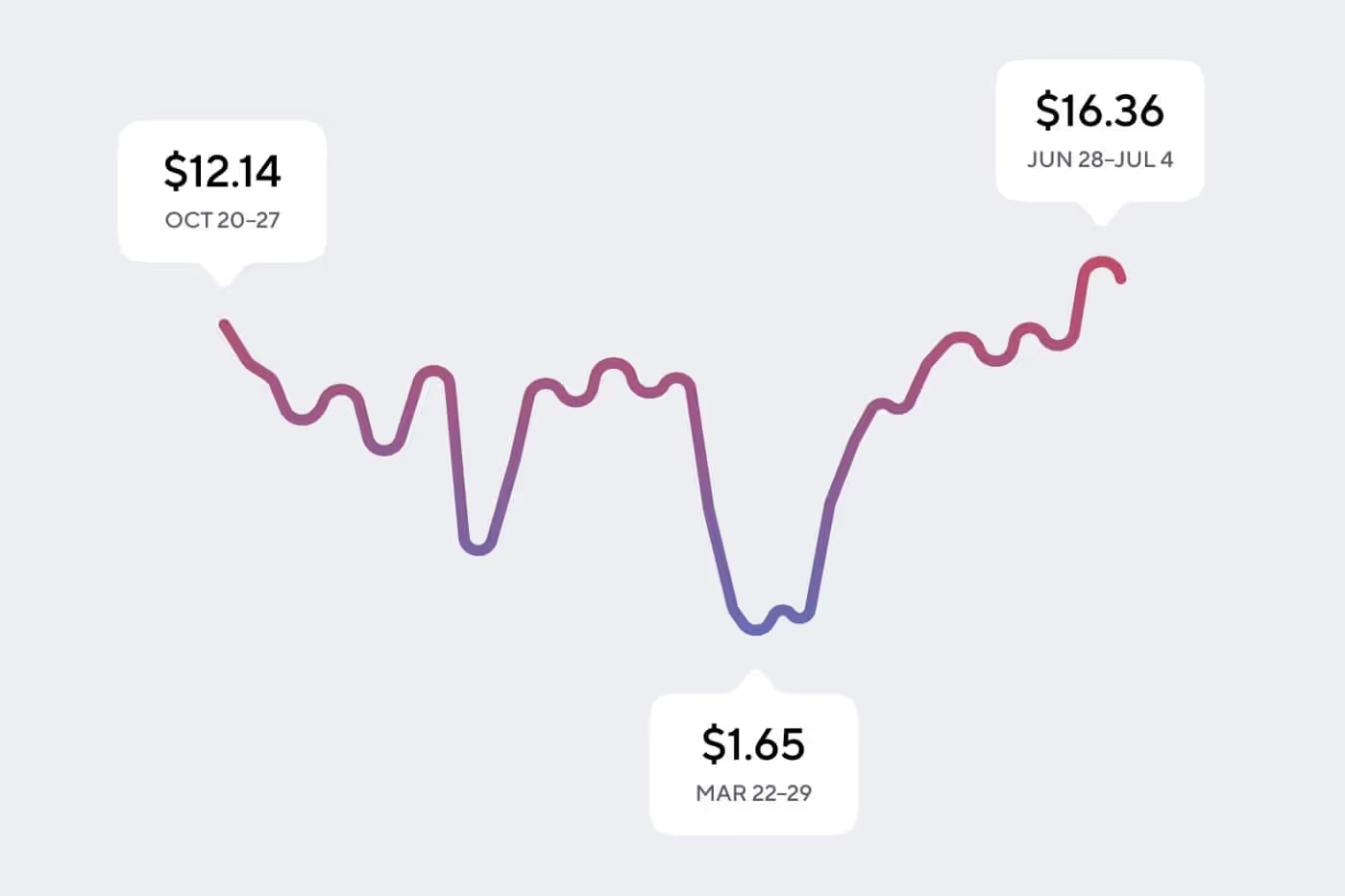
Additionally, we’ve calculated per-hour earnings not just for October 2019, but October 2019 through June 2020. This will better show the true earnings per hour, and frequent fluctuations of earnings per hour that drivers face.
See a Seattle week-by-week breakdown of ride-hail driver earnings below.
Please note that driver earnings plummeted in March 2020 because of COVID-19 — and then quickly rebounded to be even higher than pre-COVID-19 as the vast majority of drivers stopped driving even as demand somewhat rebounded.
How can cities and states gain a better understanding of ride-hail driver earnings?
Unfortunately for cities and states across the country, one-off surveys, studies, and interviews are inherently biased and can have holes easily poked in them. Without a significant amount of ground truth data across a wide timeframe, cities and states may find it difficult to convince policymakers they have the clean and accurate data.
As concerns about securing minimum hourly rates for ride-hail drivers continue to multiply, cities and states will need to be able to leverage the same ground truth data used by TNCs. Gridwise is uniquely positioned to provide ground truth data that will allow cities and states to build objective driver earnings models that stand up to scrutiny.
Gridwise is an independent data source that can be used to support labor studies related to gig-drivers, or even those related to understanding other ride-hailing and delivery insights such as utilization, origin and destination patterns, and much more.
Not only does Gridwise have insights for Uber and Lyft, but also for DoorDash, Uber Eats, Postmates, Instacart, and most other major gig service companies.
If you or your company would benefit from gaining access to ground truth ride-hailing and delivery analytics, reach out to us at data@gridwise.io.

What Uber And Lyft Drivers Need To Know About Driving Disabled Passengers
“It's not a faith in technology. It's faith in people.”—Steve Jobs
Uber and Lyft are technology companies, disseminating information to both passengers and drivers, bringing the two together thousands of times a day and allowing people to safely get to their destination. As with anything involving technology, though, things change and develop at audacious speed. Growth happens quickly, making it easy to overlook things.
One of the things that was overlooked as rideshare quickly grew was the way rideshare drivers, and the companies they worked for, addressed disabled passengers. It created a lot of bad feelings in the disabled communities.
This is where it comes back to faith in people.
The 2020 US Census Bureau reports that almost one in five Americans has a disability. There are those that rely on a wheelchair, walker, or crutches for support, but other disabilities include the sight-impaired, hearing-impaired, epileptic, depressed, and anxious (notice that not all of these disabilities are readily apparent).
It’s incumbent on drivers, as the front-line contact in the rideshare industry, to recognize these disabilities and create amazing experiences for these passengers, as they do for all their passengers.
In this blog post, we cover the following:
- Just a few bad experiences are enough.
- Lyft and Uber are proactive about how disabled passengers are treated.
- What can drivers do?
- You can make a difference.
- Gridwise can help.
Just a few bad experiences are enough
There have been several instances where the interactions between drivers for Lyft or Uber and disabled passengers were inexcusable. In 2019, Joshua Foster, a 35-year-old paraplegic from Concord, CA, called for a rideshare. Foster related what happened in an article on ABCNews.com.
"He looked at me and he just literally went, 'No-o-o-o-o-o. No. No. No. No. No. I can't do this,' " Foster recalled, shaking his head vigorously as the driver did. "I was like, 'Are you sure?'''
Foster tried to explain he didn't need help, that he could get in and out of the car himself.
"I was like, 'Hey man this is how it goes. I'm gonna hop on the seat, the wheels come off, the cushion comes off, I'll fold it and it sits right behind me 'cause, I drive my own self.'" Foster recalled saying. "He goes, 'No! Shut the door.' He just backed up and I'm like-- wow."
The Uber driver took off, leaving Foster in the driveway.
It’s enough to make any conscientious rideshare driver wince in shame and disbelief.
There have been other missteps. In July 2022, as reported by the New York Times, the justice department settled a lawsuit for more than $2 million with Uber over its alleged failure to adjust wait times for disabled passengers. Uber denied the claims in the settlement agreement, pointing to their efforts in adjusting wait times for disabled passengers and developing other programs for them.
TechCrunch reported that Lyft settled a lawsuit in 2020 involving drivers that would not accommodate passengers with folding wheelchairs. There have also been other legal actions against both companies.
Lyft and Uber are proactive about how disabled passengers are treated
The rideshare companies understand that in many cases drivers encounter situations for which they have not been prepared. It is difficult to enforce policies for hundreds of thousands of gig workers.
In the past few years, both companies have developed programs, including videos and other materials, for drivers who encounter disabled passengers.
They have also established policies. A Lyft or Uber driver refusing a disabled passenger can, in some cases, be deactivated from the platform.
Let’s take a closer look at the programs from Lyft and Uber for handicapped passengers.
Lyft
Policies have been developed by Lyft for handicapped passengers. These include
Foldable wheelchairs. Lyft requires drivers to transport passengers who use foldable mobility devices. They also inform drivers on their website that the law requires drivers to transport these passengers. Watch Lyft’s videos for how to fold these wheelchairs.
If you as a driver encounter a passenger in a wheelchair and you are not quite sure how to fold it, don’t hesitate to ask. This is a question a wheelchair-bound person regularly encounters.
Service animals. Lyft also has a video on service animals.
Wheelchair-accessible vehicles. Lyft has a wheelchair-accessible vehicle (WAV) program. Riders can register on the app. When they call for a ride, the options available (Lyft, Lyft XL, Lyft Black, etc.) to them also include Lyft ACCESS, which summons a wheelchair car. Lyft operates the program in nine US cities: Boston, Chicago, Dallas, Los Angeles, New York City, Philadelphia, Phoenix, Portland, and San Francisco. The program accepts both regular wheelchairs and motorized ones. No word if Lyft plans to roll out the program in additional cities.
According to a Lyft spokesperson, “Lyft estimates that over 3 million riders with a disability use the Lyft platform, eighty-two percent of riders with a disability report that Lyft has increased their independence, and 94% report that Lyft has increased their access to transportation.”
The spokesperson also states that those drivers who deny or otherwise discriminate against rides can be removed from the Lyft platform.
Lyft Assisted. Last year Lyft launched Lyft Assisted, a program that helps passengers with health challenges get to routine medical appointments. Lyft Assisted rides resulted in about 20% fewer no-shows than standard concierge healthcare ride services.
Uber
Wheelchair-accessible vehicles. Uber has a similar program to Lyft, also called WAV, which operates in eleven test cities, including Austin, Boston, Chicago, Houston, Los Angeles, New York, Philadelphia, Phoenix, Portland,San Francisco, and Washington, DC. Like Lyft, Uber’s WAV vehicles can accommodate both regular and motorized wheelchairs. Rates for the Uber WAV are similar to UberX.
Driver outreach. Uber’s website advises drivers that they must do everything possible to help transport disabled passengers, that it is both Uber policy and federal law.
Partnerships
To ensure their efforts answer the needs of the disabled community, both Uber and Lyft have partnered with the Open Doors Organization, a nonprofit based in Chicago that addresses accessibility issues for disabled people.
What can drivers do?
If you drive for any length of time, you'll probably get a rideshare request from a disabled passenger, specifically someone in a wheelchair. Let’s look at some guidelines to keep in mind.
- Pull as close to the curb or the person’s location as possible
This will make things easier for both you and your passenger. Disabled people are not purposely trying to make life difficult for rideshare drivers. Barriers, such as broken pavement, cannot be crossed.
Greet them as you would any other passenger
Most disabled people, especially those in wheelchairs, prefer to be treated the same as anyone else. That’s the best way to start.
- Ask the passenger for guidance
No one expects you to know everything. Chances are the disabled passenger has used rideshare before. They can help you through the process. Many disabled people can transfer themselves into your car. Most of them, however, need you to collapse or break down the wheelchair and put it in your trunk. If you ask, they can talk you through the process.
Expect that you will have to reverse the process when you arrive at their destination.
- Talk to the disabled person
Address the disabled person, even if they have a companion. No one wants to be ignored. Depending on the disability, communication might be difficult. Remember that a smile, a gesture, and a warm hello can go a long way. This is your opportunity to be awesome.
- Keep space in your trunk for a folded wheelchair
Given all the things a rideshare driver needs onboard in case of emergency (first aid kit, emergency road kit, etc.), there is often little trunk room left, but you always have space for suitcases for airport runs, so there should be enough room for a wheelchair.
- Keep in mind that not all disabilities are visible
Many people suffer from debilitating conditions such as depression, anxiety, or epilepsy—none of which may be readily apparent. And oftentimes these individuals do not communicate their disability. Be sensitive to this. Occasionally you may get a passenger that requests no communication. For some disabled people, getting through the day is a trying experience. They might need to take advantage of any chance to sit back and relax. Look for disabled bracelets on passengers that might clue you in to their disability.
- If you do have a medical emergency, call 911
Because not all disabilities are visible, and because disabled people don’t always reveal their conditions, there are occasional problems. If a passenger is having a medical issue, a seizure, or is otherwise non-responsive, don’t hesitate to call 911.
- Rideshare drivers must accommodate seeing-eye dogs and other service animals
These are well-trained animals that will usually sit or lay quietly on your car’s floorboard. Not allowing one in your vehicle is a violation of the law as well as the terms of service for both Uber and Lyft.
- Carry a blanket in your car
You might want to create a place for a service animal to lie, making them more comfortable while protecting your car from fur. A blanket can also be used to drape over a wheelchair in your trunk or back seat, helping to prevent damage. Carry a lint brush for removing fur, too.
- Accommodate special requests
For disabled people who suffer from migraines, even the most innocuous thing in your car can pose a problem. Individuals with allergic disorders might be sensitive to your air freshener. Others cannot tolerate loud music. Be prepared, too, that a disabled person might ask that you drop them off at a special entrance at their destination.
- At all times be patient
You will occasionally get a disabled passenger who has never used a rideshare, or does not go out much because of their disability. The process is as foreign to them as it is to you. Be patient and accommodating, knowing this ride may take more time than normal.
It is important to remember that a disabled passenger’s ride with you could be their first attempt at interacting with the world since becoming disabled.
You can make a difference
When it comes to Lyft and Uber handicapped transportation, one or two positive experiences can make an enormous difference.
"We need companies to provide and require accessibility training to its drivers that includes people with disabilities,” said Carol Tyson, a government affairs liaison for the Disability Rights, Education & Defense Fund, “and for the drivers to follow all the accessibility and nondiscrimination policies. Sometimes, drivers need to pull over to the curb and be patient when people with disabilities are trying to locate the car. We need more drivers with wheelchair-accessible vehicles and drivers that do not discriminate by giving lower ratings or canceling trips for wheelchair users or people with service animals, or any other protected class."
A training video by Lyft was more to the point when it told drivers, “You’re empowering these passengers to live more independent lives in an often difficult-to-navigate, fast-paced world.”
Gridwise can help
If you purchase things like blankets or first aid kits to have for your passengers, you can write those expenses off. Gridwise will keep your gig earnings, business expenses, and miles in one place.
Whatever you do, be kind and courteous to all passengers - and have fun out there!
The Gridwise Guide To Maximum Driver Earnings
“Make more money” is often at the top many rideshare driver’s wish list. It’s easy to earn just enough cash to get by, but if you want to achieve maximum driver earnings, you need a game plan. It’s just as crucial to know how to conserve your earnings and protect yourself from catastrophic losses as to devise strategies that lead to better driver ratings and tips.
Gridwise created this guide so you can easily pick out the topics that call to you. Then, all you need to do is click through to our articles packed with information and insight that can help you make more money.
Insurance for gig drivers
You might wonder why we’d kick off a guide about making money with a topic that usually results in you doing the opposite. Insurance can be a big ticket item, but you’ll be stuck with bills you’ll never pay in a thousand years if you’re caught without coverage. We’d say that makes insurance pretty important.
- Looking for a “just the facts” kind of piece that covers insurance basics? Here you can learn what drivers need, beyond Lyft or Uber driver insurance and what coverages delivery companies offer their drivers.
- Drivers make a lot of smart insurance-type moves, but they can also be led astray. This article helps you swerve away from the insurance-related mistakes gig drivers can make.
- Treat your driving gig like what it really is—your business! This basic business advice teaches you how to get your act together and eliminate losses that can hurt your bottom line.
Better Lyft driver ratings, bigger Uber driver tips, and bonuses for delivery drivers.
Here’s where things get slick and profitable! Possible add-ons to your basic Uber Eats driver pay or Amazon Flex driver pay may not be all that obvious. Once you start digging, you’ll find there are more ways to augment your earnings than you thought. From being the best driver possible to cash in on bonuses, perks, and referrals, you need to know a fair amount.
- Whether you do rideshare, delivery, or both, getting tips is no longer something “extra” that you may or may not get. You don’t have to kiss up to every customer for a few extra bucks, but you can develop a gift for making yourself irresistibly tippable with the ideas in this article.
- Every customer has a chance to rate you, so make sure they give you the stars you deserve! You’ll find insight here on how to keep your ratings high so you can benefit from top-notch treatment from future customers and get extra perks from the company you drive for.
- Amazon Flex drivers rarely see their customers, so tipping is unusual. The extra money is made with slick moves and heartfelt hustle, as you’ll see in this article.
Lyft and Uber driver strategy, plus best delivery trips
- Every city, town, or rural area has its own flavor, culture, and distinctive “personality.” What does your location have to do with the rideshare and delivery business? A lot. You’ll see when you check out the list of top places for rideshare and delivery driving.
- The best place to drive isn’t always a city or town. Old school companies such as UPS and FedEx are updating their business models to offer gig drivers new opportunities you can discover here.
- Nothing beats data collected from real drivers when it comes to finding the best places and times to drive. And yes, it’s possible to find out where exactly, and when, drivers make the most money in your area. Gridwise shows you where the cash is lurking, with aptly named features Where to Drive and When to Drive.
- When you set goals and stick to them, getting the income you want becomes much easier. Read about 3 steps to making more money as a gig driver, and see how setting your sights on what you want makes the elusive utterly achievable.
Delivery, Lyft, and Uber driver advice: Make the most of your app
You use your gig driving app every day, but do you take advantage of all its features? If you play your cards right, you can up the ante and redefine answers to questions like “How much does Uber Eats pay per delivery?” and “How much do Lyft drivers make a week?” The trick is to know every possible way you can generate multiple income streams and keep money flowing your way.
- If you think making $1000 a week with Instacart sounds impossible, you might change your mind when you see all the ways you can expand your Instacart earning power. It’s all about devising ingenious plans for your Instacart hustle.
- A simple-seeming gig like DoorDash can turn into a cash cow, if you learn how to work it right. Picking the right orders to accept is just one pro tip you’ll find in this article about maximizing DoorDash driver pay.
- Grubhub drivers bring home more bacon than they deliver when they deploy the proper strategies. Here you’ll see how to use driver promotions, scheduling, and location to make the most out of your Grubhub gig.
- That elusive $1000 a week for rideshare driving gets much easier to achieve when you follow the right Lyft and Uber driver advice. Here’s insight into sound, professional business practices and strategies that keep costs low and earnings high. That cool grand a week can be yours in a flash!
- If you want to know how to make more money with Uber Eats, this piece dishes all the details, including how to organize your business, control expenses, get bigger tips, and generate passive income with an effective referral strategy.
Multi-apping: Double (or triple) your chances for maximum earnings as a gig driver
Ever wonder what might happen if you were to use more than one app on a given shift? Let’s say you’re in a neighborhood where Uber Eats is slow, but Lyft driving is hot. Can you switch between apps? As long as you color within the lines, so to speak, you sure can! If you don’t violate any of the rules, or do things that lower your ratings by creating confusion or delays, working more than one app is a strategy that can definitely work in your favor.
- Food delivery drivers need to look at angles for earning more, because this gig is so dependent on making the most money in the least amount of time. There are lots of options that can be mixed into a sound food delivery strategy, as shown in this post.
- If you really want to get into multi-apping, you have to think it through and work out the kinks in the system by trial and error. In all cases, you need to know what each app can do and have an idea when and where they’re going to pay off, and what rules you need to follow. Read more about the art of multi-apping and how it adds to earnings.
Cut costs and earn more in your business
Saving on expenses is a sure way to boost the total amount of your earnings. There are plenty of costs you incur as a part of doing business, but they don’t have to take huge chunks out of your pay. Get savvy about saving money, and watch your incoming cash flow rush in.
- A big cost of doing business is your fuel bill. There are many ways to avoid wasting a bunch of money on gas. It’s good for the environment, as well as for you, to keep your fuel consumption down and your costs as low as possible. Here are 13 ways you can save on gas.
- There are a lot of costs involved in getting insurance, and the biggest one shows itself when you make mistakes when getting it or not having enough coverage. Discover the mistakes drivers make with insurance, so you can avoid them.
More ways to save money as a rideshare or delivery driver
When you’re an independent contractor, no one is going to pay you when you’re not working. You have to create your own funds for the things you’d expect to get from a lot of other jobs. How do you arrange for paid sick time, retirement savings, or vacations? We know you’re disciplined and smart enough to do these things right, but here’s some extra help.
- Start with these 4 smart ways for gig drivers to handle finances. You already know that managing your money as a gig driver is different than it would be in other job situations. Find out exactly what those distinctive factors are and how you can manage them to your best advantage.
- Vacation pay? Are you kidding? Your gig company might not have a plan to send you away for a well-deserved break, but you can create one of your own. This piece shows you how to put together a strategy for getting the vacation time you need, with no economic pain.
- Insurance is a big cost, but saving on it is easy, especially when you learn to avoid the mistakes gig drivers make with insurance. Once you discover exactly what you need and how to get it most economically, you’ll stop losing money by paying too much or taking risks that could leave you penniless.
- One way to gather up the funds to start a savings account is to stop wasting money on gas. Sure, prices are high, but there’s no need to lose your shirt every time you visit the pump. Here are some tips for saving on gas.
Vehicle-related advice for rideshare and delivery drivers
Without your vehicle, your job would be impossible. That’s why you have to pay special attention to getting the right ride for your gig, and then take care of it the same way you expect it to take care of you. Here are some suggestions for keeping you and your car rolling, so you can continue watching your earnings pile up.
- Rule #1 when you work a rideshare or delivery driving gig is never skimp on maintenance. Do it yourself or pay a professional, but do it. Check out this maintenance schedule every gig driver should follow, and decide which approach is going to work best for you.
- Buying a new car, or one that’s “new to you,” can be overwhelming. Get sound advice and suggestions about choosing the right vehicle to fit your rideshare or delivery gig.
- If you’re sick of using your own vehicle into the ground with your driving gig, you might want to rent one that’s perfect for the job. Here’s some information that tells you the dos, don’ts, and hows to secure a rental.
Tax tips for gig drivers
One of the most important and annoying, things drivers need to do is take care of their taxes. It can be challenging to do this on your own, but it gets easier when you use tax tips that apply specifically to gig drivers. From knowing what is deductible and tracking it, to finding the right kind of tax specialist to help you, there are a lot of territories to cover.
- The trick to keeping most of your money at tax time is knowing how much you can deduct for your business expenses. This piece fills you in on the tax write-offs all gig drivers should know.
- Your tax return should always be honest, legal, and complete. This guide to current tax changes will help you prepare for compiling your return, as will this feature that contains updates on important deductions.
- Income tax paperwork can be overwhelming for anyone, so qualified people to assist you should be right at your fingertips. When you’re a driver, having a tax pro with insight into your business is priceless. Here’s how you can get someone to help you with your filing, and maximize your deductions too.
- A big part of any driver’s tax deductions comes from the mileage they rack up while they’re on the job. Here you’ll find the different ways to track mileage, and get suggestions for keeping accurate and complete mileage figures that you’ll need for tax time.
Gridwise features that help you save money and earn more
No guide to maximum driver earnings would be complete without listing the many features Gridwise has to offer. The app is designed to help you gain control of your business, optimize your time on the road, and benefit from deals and discounts geared toward drivers. Here’s a list of features and links to articles that describe the many reasons why every smart gig driver needs the Gridwise app.
- Earnings tracking: Sync your driving apps to Gridwise and track your earnings, compare results, and keep records of your income.
- Mileage tracking: Use the best Uber and Lyft mileage tracker there is. Gridwise gives you the exact figures for all the apps you use.
- Driving strategy: Gridwise’s features Where to Drive and When to Drive point you to the places and times you can make the most money with the least effort.
- Gridwise benefits: Insurance, affordable health care, and discounts on car maintenance, phones, phone plans, banking, legal help, and more come as part of being a member of the Gridwise community.
- Driver information: Part of achieving maximum driver earnings is knowing what’s going on around you. Gridwise lists area events and airport activity, and alerts you to traffic issues, weather, and start and end times of games and concerts.
If you want to achieve maximum driver earnings, you can’t afford to run your driving gig without this amazing app!
Download Gridwise today!

What If You Forget To Track Your Miles On A Shift?
* Gridwise does not provide tax, legal, or accounting advice. This material has been prepared for information purposes only, and is not intended to provide, and should not be relied on for tax, legal, or accounting advice. You should consult your own tax, legal, and accounting advisors before filing your return.
It’s easy to make mistakes. And, if you’re new at rideshare or delivery driving, it’s really easy to miss out on some things all drivers need to know. As a driver, tracking mileage is super important. Why? Well, because as a gig driver, you are entitled to deduct the cost of your vehicle’s wear and tear —which is based on your mileage—from your taxable income.
This can result in huge savings on your tax bill. This Gridwise post gives you an idea of some of the numbers involved and how the IRS mileage rates compare from one year to the next. With the possibility of deducting 58.5 cents per mile for the first six months of 2022, and 62.5 cents per mile for the last six months of the year, you can see how tracking miles for taxes is a smart thing to do.
Even as a rookie driver, you have most likely racked up a whole lot of miles over the year. Obviously, from now on, you’re going to want to be meticulous about keeping a mileage log for taxes that accounts for each and every mile you drive in support of your gig. There are different ways of doing that, as this Gridwise article shows, and you’ll want to put them into practice for 2023. What can you do right now if, say, you forgot to log miles for Instacart or neglected to keep mileage records for your Shipt gig?
Recreating mileage logs the IRS will accept
If you find yourself asking “What if I didn’t keep track of my mileage?” the first thing to do is a “don’t.” Under no circumstances should you panic. While it’s true that you might have missed some of the miles you could have used to add to your deductions, you will still get a chance to create a mileage log for taxes.
You’ll have to come up with a reasonable and verifiable mileage estimate, of course. For instance, it wouldn’t be acceptable to use your total mileage for the year, because you’ve most likely used your vehicle for personal as well as business-related purposes. Mileage accrued for personal purposes is not tax deductible
Still, there are some ways to backtrack and put together mileage records that are good enough to please even the seemingly unforgiving IRS. They require you to bear the burden of proof and back up any claims you make about mileage used for business. The IRS statement on this policy can be found in this article. You will need to make a statement that is as truthful as it is accurate, so be very virtuous here!
The task of recapturing Uber, Lyft, or DoorDash mileage taxes drivers, but it can be done. You can start by going to the apps you drive for. In almost every case, they will have recorded the miles you clocked while you were rideshare driving and/or delivering. This is a good start, but it isn’t going to cover everything.
You’ll be missing the miles you drove in between your trips, as in leaving your car’s home base and making your way to where you get business, and driving home from a far flung food or passenger drop off. How can you recover your records of these miles? Here are some suggestions:
- Start with the mileage listed on the tax statement provided by your driving or delivery app.
- Take one month’s worth of trips, and calculate the mileage between trips (hint: access your trip logs in the apps you use). Then multiply by 12, or as many months as you drove for the year.
- In a similar way, calculate the mileage you accumulated driving to and from the places where you began working during an average month, and multiply by the appropriate number of months.
- Add on any trips you may have taken that were directly relevant to your rideshare or delivery work. These might include driving to the car wash or detailers, traveling to shop for equipment or supplies, or returning a cell phone or hat one of your passengers left behind.
- Describe how you put together your calculations and how they fulfill the burden of proof.
This article from Keeper spells out how to recapture your mileage records in additional detail.
Avoid rookie mistakes: Track each and every deductible mile
So you missed some deductible miles this year, and now you have to do a whole bunch of work to figure out how to track miles for taxes. Get on top of tracking your miles ASAP with Gridwise's top rated mileage tracker.
When you download the Gridwise app, you’ll see how it
- tracks your mileage automatically. All you need to do is log in at the beginning of your shift and log off when you’re done driving and delivering for the day.Let Gridwise log miles. The app captures every mile you travel on your trips and all the mileage you rack up in between.
- takes the pressure off. You won’t even have to think about looking through all your trips, estimating the miles you drove in between, and performing annoying calculations. Gridwise takes the stress out of your mileage tracking tasks.
- lets you keep more of your money. When you are able to track each and every mile eligible for deduction, you reduce your taxable income and hold onto as much of your earnings as possible.
- provides tons of features, offers, and support. Gridwise has been designed by drivers for drivers. Take advantage of income-boosting driving aids, special deals and discounts for drivers, and important information such as airport activity, traffic alerts, and weather reports.
Maximize your mileage deduction with Gridwise

Un Tribunal de CA Resuelve que los Conductores de Uber y Lyft son Contratistas Independientes
Hay más noticias de California sobre el estado de contratista independiente versus empleado de los conductores de rideshare y entrega, además de la expansión de una característica clave de seguridad de Uber. Sigue leyendo para mantenerte al día con las últimas noticias de Uber y Lyft, con especial atención a lo que significa para conductores como tú.
El tribunal decide que la iniciativa de California mantiene a los conductores como contratistas
El lunes 13 de marzo, un tribunal de apelaciones rvirtió un fallo anterior de un tribunal inferior que declaró que la Propuesta 22 era ilegal. Eso significa que las empresas de rideshare y entrega pueden continuar con su práctica de usar el modelo de contratista independiente de Lyft, DoorDash y Uber para operar sus negocios.
La Propuesta 22, votada por los californianos a finales de 2020, exime a las empresas de rideshare y entrega de cumplir con la AB 5, una ley estatal que clasificaba a los trabajadores gig de California como empleados. Esto habría obligado a las empresas a suministrar seguros y otros beneficios a los contratistas independientes si no hubieran presionado para que se aprobara la Propuesta 22. Puedes ver una descripción más completa de la Propuesta 22 y su impacto en los conductores en esta publicación de Gridwise.
La Propuesta 22 fue desafiada por el Estado, y en agosto de 2021 el Tribunal Superior de California la declaró inconstitucional. Esta publicación de Gridwise detalla ese fallo. Las empresas de rideshare y entrega apelaron, y este fallo más reciente fue a favor del estatus de conductor independiente.
La ley de Uber de California no se aplica a todos los conductores, por supuesto. Sin embargo, lo que suceda con este tira y afloja entre los legisladores del estado de California y las empresas que los trabajadores gig usan para ganarse la vida puede influir en lo que suceda en otros estados. Muchos trabajadores gig creen que hay puntos positivos en ser clasificados como empleados, pero igual cantidad de conductores han declarado que prefieren la flexibilidad de trabajar como contratistas independientes.
Afortunadamente para los conductores gig, es posible obtener seguro y beneficios a través de otras vías que atienden las necesidades de los contratistas independientes. Gridwise ofrece opciones asequibles e integrales para conductores con Gridwise Benefits.
Con esta nueva decisión del tribunal de apelaciones, los conductores seguirán clasificados como contratistas. Eso podría cambiar si el Estado y/o la SEIU (Unión Internacional de Empleados de Servicios) llevan el caso al Tribunal Supremo de California y ganan. ¡Manténte al día con las últimas noticias para conductores consultando el blog de Gridwise!
10 Business Tips For Rideshare And Delivery Drivers
When you signed up to become a rideshare driver, there were things you didn’t consider. Oh sure, you thought to yourself, I’m now a gig driver. What you probably didn’t realize is that you are now also self-employed. You’re running your own company. As the boss, there are some things which you need to pay attention to.
That you’re reading this blog post means you’re thinking ahead. Your job is not just about driving someone from point A to point B or delivering food. In this post, we bring you the top financial tips for working in the gig economy. These bits of wisdom make you a smarter businessperson.
We cover the following topics:
- Keep up on what’s happening in your selected gig.
- Always be evaluating.
- Set up a schedule.
- Track business expenses.
- Set up bookkeeping and get tax help.
- Protect yourself with insurance, or set up an LLC.
- Save for retirement.
- Prepare for the unknown.
- Always look behind and always look ahead.
- Use tools to drive smarter
Know the world is constantly changing
We see some of these changes coming, like the gradual transition to electric cars. There are others we don’t see, like in March of 2020 when the pandemic hit and the whole world screeched to a stop.
But you can train yourself to be prepared for the obvious, as well as the not-so-obvious.
1. Keep up on what’s happening in your selected gig
There are numerous blogs and YouTube channels devoted to gig driving. What are the latest developments? Are the rideshare companies releasing new incentive programs? What about the cost of fuel? How do you develop a driving strategy? Believe it or not, it isn’t all willy-nilly out there. The more you know about your business (remember, you are self-employed), the more profitable you can be.
Check out Airport Pickups: Rules for Uber and Lyft Drivers, or 13 Tricks to Earn More as an Amazon Flex Driver. Another blog worth checking out is FinancialPanther.com. Creator Kevin Ha is a gig-driving enthusiast, among other things, and he writes honest reviews. Kevin is also full of money tips to thrive in the gig economy.
2. Always be evaluating
This is closely related to no.1. There are a lot of gig driving jobs, and you should at least be familiar with the opportunities. As a driver, you might get burned out on food delivery, so having a familiarity with rideshare or package delivery gives you options for something else to do. Many drivers maintain a selection of three or four gig driving apps so that if they need to make a change, it’s seamless. They are already approved to drive that app, have the necessary inspections and paperwork, and know how it works.
Check out The Art of Multi-apping: How-Tos and Strategies for Gig Drivers, or Delivering for Gopuff: What Drivers Love about Gopuff.
3. Set up a driving schedule
Part of developing a strategy for gig driving is identifying the most profitable times to be on the road. This can vary depending on your particular gig, the region you drive in, and the kind of driver you are. A flexible schedule allows you to set up time for office hours when you can look after the business of rideshare driving, which includes bookkeeping, reviewing blogs and YouTube videos, and monitoring sites like Reddit and Quora. You can also check trends through the Gridwise app and study your gig activity for patterns that might warrant a change in strategy.
“I used to drive on Thursdays during the daytime in Los Angeles,” said one driver, “but then I noticed that Thursday evening business, when I was going home, was brisk. I checked around and discovered ‘thirsty Thursdays.’ Many people don’t work on Fridays, or they start their weekend on Thursday, and no self-respecting college student ever signs up for a Friday class. After a few weeks of reviewing the numbers, I found Thursday nights were far more profitable than Thursday daytime.”
Check out 3 Steps to Making More Money as a Gig Driver: Track Your Metrics, Set Goals, and Stash the Cash! to learn more.
4. Track business expenses
Everything you purchase in furtherance of your gig driving business is tax deductible. Everything. This includes seat covers, snacks for passengers, and a flashlight for checking early morning or nighttime addresses. Become a hoarder of receipts and don’t forget mileage. Track it mercilessly. The best way to do it is with the mileage tracking feature on the Gridwise app. It is the best Lyft and Uber mileage tracker, and it works for delivery drivers, too. Constantly evaluate your expenditures and look for less expensive alternatives.
Check out 4 Smart Ways for Gig Drivers to Handle Finances.
5. Set up bookkeeping and get tax help
If your financial control consists of going online every other day to see if you have money in your checking account, then you’re headed for trouble. The key to operating any successful business is keeping track of your dollars. If you check your records and see you have a scheduled car service coming up, that can affect your decision whether you want to take the weekend off or purchase that spiffy 360-degree dashcam—or maybe put it off for a while. Keeping track of expenses and income helps prevent those problems.
Keeping track of your money also means maintaining records for taxes. If you are knowledgeable about taxes, or you catch on quickly, entertain doing it yourself, but it might be a good idea to employ a competent tax person. You can also check the Gridwise app for tax help. It is designed specifically for gig drivers.
Check out Taxes for Rideshare Drivers, and How to Set and Achieve Goals as a Rideshare or Delivery Driver. Tip no. 3 in that blog post is particularly pertinent.
6. Protect yourself with insurance, or set up an LLC
It’s a litigious world. That’s a fact, and it is often unfortunate. Astute business owners make sure they have insurance coverage that is as all-encompassing as possible, without crossing the line into unneeded expenses. Although the rideshare companies cover drivers in the case of an accident, you need to read the fine print. You are not covered all the time when you are on the app. Car insurance for gig workers is important.
Most people carry the minimum coverage limits (it differs from state to state) for automobile insurance . You should consider increasing those limits, especially if you have set aside savings for retirement, you own a home, or your name is attached to an asset of considerable size. Some people are committed to the gig economy and have several different activities underway at once. It takes discipline and commitment. If you are as committed to gig work, you might consider setting up an LLC to further protect yourself and your assets.
Check out The Complete Guide to LLC Costs in California, and What to Do If You’re in an Accident as an Uber or Lyft Driver.
7. Save for retirement
It comes quicker than you think. Somebody has told you this before, and you didn’t believe it, but we are reinforcing it. Yes, the inheritance business is very profitable, but it is difficult to break into, and the work is not steady. The key to saving for retirement is to start, regardless of how old you are, and keep at it. While you are saving for retirement, you might also consider having a separate fund in the event you get sick and another fund for planning a vacation.
Check out 3 Steps to Saving for Retirement as a Rideshare or Delivery Driver, and The Best Reasons and Ways for Drivers to Invest.
8. Prepare for the unknown
This is a big one. You don’t know what you don’t know. Three years ago, only a few people knew the word pandemic. Now everyone knows it. If you were a rideshare driver in March 2020, you know that business dried up overnight. Rental companies recalled cars. The few drivers that went out installed shields between the front and back seats. It took a lot of fun out of rideshare. But for those eager and entrepreneurial drivers, opportunities such as Instacart became very profitable. The same with Uber Eats, DoorDash, and others.
The other catastrophe that could impact you is, if for some reason, you get suspended from the app you work for. This is the best argument for multi-apping and evaluating the viability of other gig driving opportunities. You can appeal your suspension if you think it is unreasonable, but in the meantime, you want your ability to transfer to another app to be as seamless as possible.
9. Always look behind and always look ahead
Any savvy business person is looking ahead. What’s the next trend over the horizon? A lot has been made of driverless vehicles. That could devastate the rideshare business, or maybe not. You never know. In 2019 there was a teachers’ strike in the Los Angeles Unified School District. Concern grew that 30,000 out-of-work teachers would oversaturate the ranks of gig drivers. We’ll never know because the strike ended six days later. You always need to look toward diversification. Some people believe strongly in multiple streams of income. Remember, you are self-employed and many of you work multiple gigs. That makes you an entrepreneur.
Review the last year. What did you do last year as a gig driver that worked? What didn’t work? When you worked on your taxes, did you catch yourself saying, “Geez, I wish I’d kept better track of my mileage" or "I wish I'd been more organized"?
10. Use tools to drive smarter
One of the best business moves you can make is to use Gridwise. Gridwise's free app keeps gig drivers organized with its free mileage and automatic earning trackers. It also offers essential resources for gig workers, no matter what gig app you drive for!
Drivers are also earning more and improving their driving strategy by using Gridwise to see peak times and locations to do rideshare or delivery.
Being a gig driver often means you don't have time to research the best benefits available - and even if you find health insurance for 1099 workers, it can be expensive. That's why Gridwise provides drivers with a carefully curated list of affordable gig driver benefits like roadside assistance, dental and vision insurance opportunities, and - gas discounts. Rideshare and delivery drivers save up to $50/month with the Gridwise Gas program!
Don't wait to make your business more profitable.
Download Gridwise now
And have fun out there.
Trabaje de forma más inteligente. Gane más.
Ya sea que conduzcas, entregues o recojas turnos, Gridwise te ayuda a hacer un seguimiento de las ganancias, el kilometraje y el rendimiento para que puedas mantener el control de tu trabajo. Descarga la aplicación y toma las riendas hoy mismo.
