Blog de Gridwise
¡Lee el blog de Gridwise para obtener consejos y sugerencias sobre cómo ganar más dinero mientras conduces para Lyft, Uber, DoorDash, GrubHub y más!

The Gridwise Job Board: Find Your Ideal Job or Gig Work
Gridwise is an essential assistant app created by gig workers for gig workers. Our mission is to support those engaged in gig work in every way possible. We understand how challenging it can be to deal with income instability, a lack of benefits, and job insecurity that often comes with gig work. The Gridwise app tracks and organizes earnings and expenses, and offers a wide array of discounts, deals, and services that make the lives of independent contractors easier and more rewarding.
We firmly believe it’s possible to make a viable living and create a gig experience that offers flexible hours, variety, and excitement. With issues such as consistent earnings and job security in mind, Gridwise is proud to offer a centralized platform that shows you how to find gig work and secure reliable opportunities. We’re proud to introduce the Gridwise Job Board.
[elementor-template id="20891"]
The Gridwise Job Board: Key features
Because Gridwise is dedicated to serving the gig worker community, we’ve filled the Gridwise Job Board with useful features that won’t waste your precious time.
- Comprehensive listings. Find part-time, full-time, temporary, and per-task work. Drive or deliver with your vehicle, utilize an employer’s vehicle, or even find non-driving gig work.
- User-friendly interface. Find the jobs that are right for you with a tap of your screen.
- Verified opportunities. We vet the jobs before they are listed to ensure you’re getting high-quality job postings.
How to get more gig work, seasonal, part-time or full-time jobs with the Gridwise Job Board
Looking specifically for “gig work apps” or “gig jobs near me?” You’re in luck. Our filters and search functions send you directly to the listings you seek.
Here’s how it works.
- Access the Job Board via the Gridwise website.
- Search for jobs by type, location, and more.
- Select the job that interests you, and read all about it.
- Scroll through the description, and if it appeals to you, click “Apply for job.”
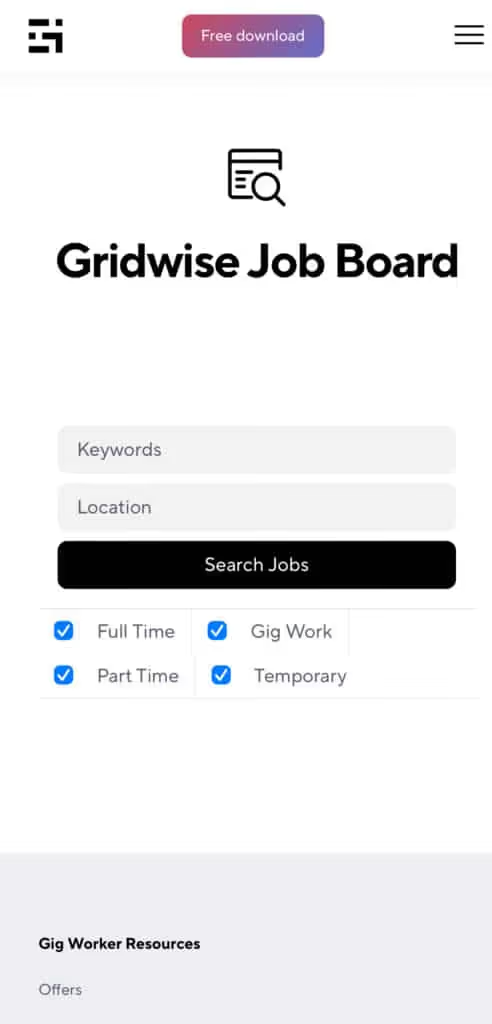
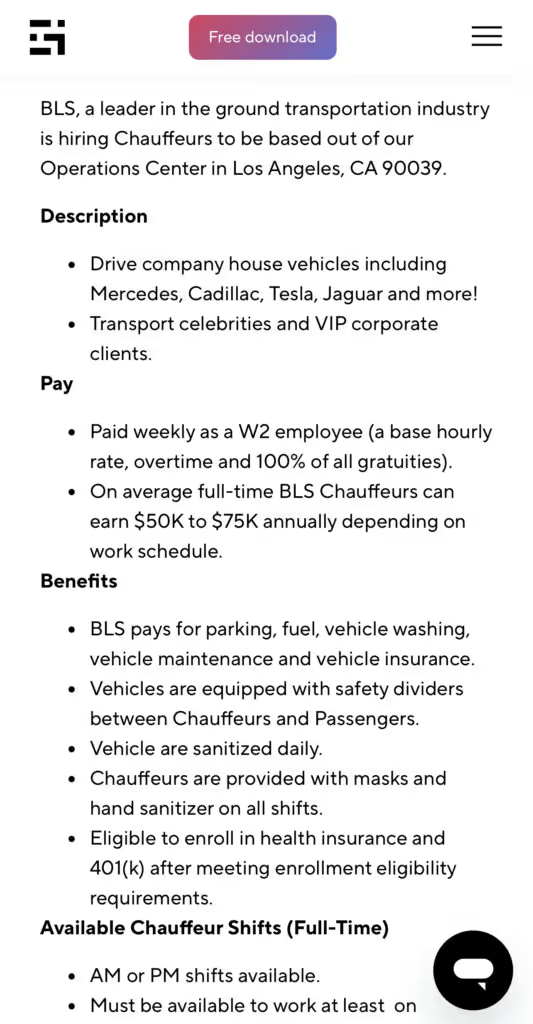
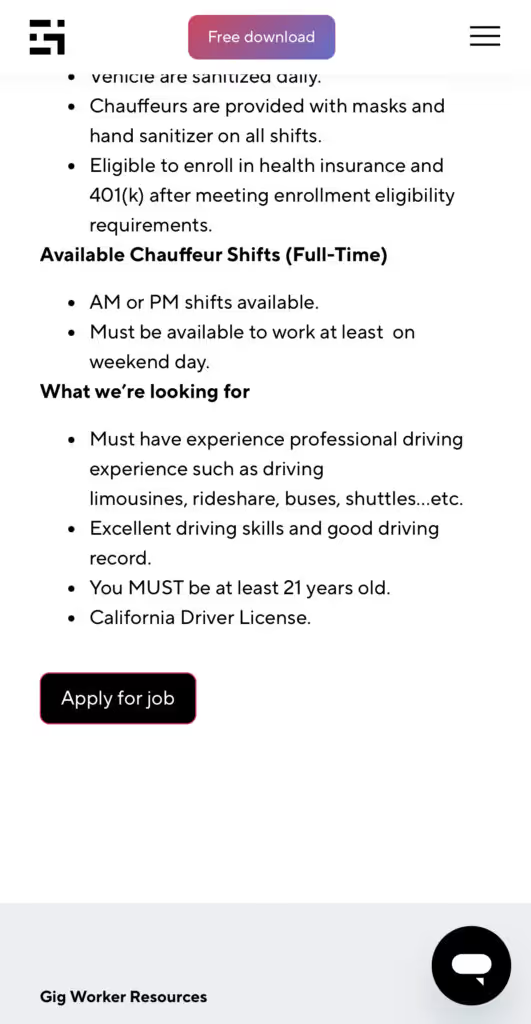
Many types of jobs are available. Adjust the search filter to see the full variety of opportunities that will let you cash in. Deliver food, set up catering, do rideshare driving, get paid for doing package delivery, and much more. You’ll find short-term gigs, long-term contracts, and part-time positions.
Perks of the Gridwise Job Board for gig workers
Gig workers who know how to make extra money will appreciate how the Gridwise Job Board lets you multiply your chances of bringing in big earnings. Here’s how:
- Increased stability. Use the Gridwise Job Board to find part-time or permanent jobs in addition to the part-time gigs you already have. Always keep a steady stream of earning opportunities flowing toward you.
- Flexibility and autonomy. Choose jobs that fit your schedule, work around other jobs and family duties, and still leave room for some fun in your life. Discover side hustles to supplement your full-time job, permanently or just for the season.
- Skill development. Find part-time work that lets you use a skill you already have, or try your hand at something new. It’s a smart way to develop a portfolio to showcase what you can do, or even to find permanent employment.
Get Gridwise and stay up to date on the Gridwise Job Board
Gig workers need plenty of information and assistance, and Gridwise is here to give it to you. Download the app and get essential features such as
- seamless earnings tracking
- mileage tracking
- expense recording, including notes
- low-cost and no-cost insurance benefits
- access to affordable medical, dental, vision, mental health, and alternative care
- professional services including legal and financial help
- deals and discounts
- weather, events, and traffic reports
- inside information on where and when to drive
[elementor-template id="20936"]
More to know about gig work:

5 Best Mileage Trackers For Gig Drivers
Many drivers ask, “Do I really need a mileage tracking app?” The answer is simple: only if you want to have an accurate count of all the miles you can legally deduct from your taxable income! You might think your rideshare or delivery driving app has got you covered. After all, they do quite a good job of logging the miles you drive while you’re on a trip or delivery. But, if you want to have the best app to track mileage for Uber, Lyft, Doordash, Instacart, or the other apps you may use, you need more. Why is that?
Without a separate tracker, you’re missing the miles you drive in between pings. Did you realize that all the miles you drive, from the moment you begin your shift until it’s over (as long as you don’t drive several miles on a break to hang with your friends), are tax deductible! That means you need something besides your driving app to keep an accurate count of your travels. Read this Gridwise post to see how important it is to keep track of every deductible mile.
You won’t be surprised to hear that there’s an app for tracking miles. In fact, there are several of them. Here, we’re going to tell you about five top mileage tracking apps, and help you figure out which one is best for you.
Before we get to the list and identify the best mileage tracker app, let’s clarify what exactly a mileage tracking app is. According to G2.com’s technology glossary, mileage tracking is done for the purpose of keeping a log of mileage that is either reimbursable or tax deductible.
And yes, of course you can track your miles simply by taking readings on your odometer. But are you really prepared to account for how many miles you drove for personal reasons and subtract them from the total to get your business mileage? Even if you can remember all that and do the arithmetic, if you want an accurate reading of the miles you drive for business, and can therefore deduct, a mileage tracking app will save you a lot of trouble and prevent you from making costly errors.
Plus, as a gig driver, you have specific needs when it comes to a mileage tracker. Ideally, you’d be able to handle mileage tracking and several other functions all in one app. It can be maddening enough to deal with driving apps, particularly if you’re an avid multi-apper. You would want your mileage tracker app to help you keep account of other aspects of your business, including income, expenses, and inside information about the art of gig driving.
Not all mileage apps are equal, to be sure! Let’s look at five of the best apps to track mileage and figure out which is the best app to track mileage with Uber and Lyft, or what mileage tracker app is best for DoorDash.
[elementor-template id="20891"]
1. Zoho Expense
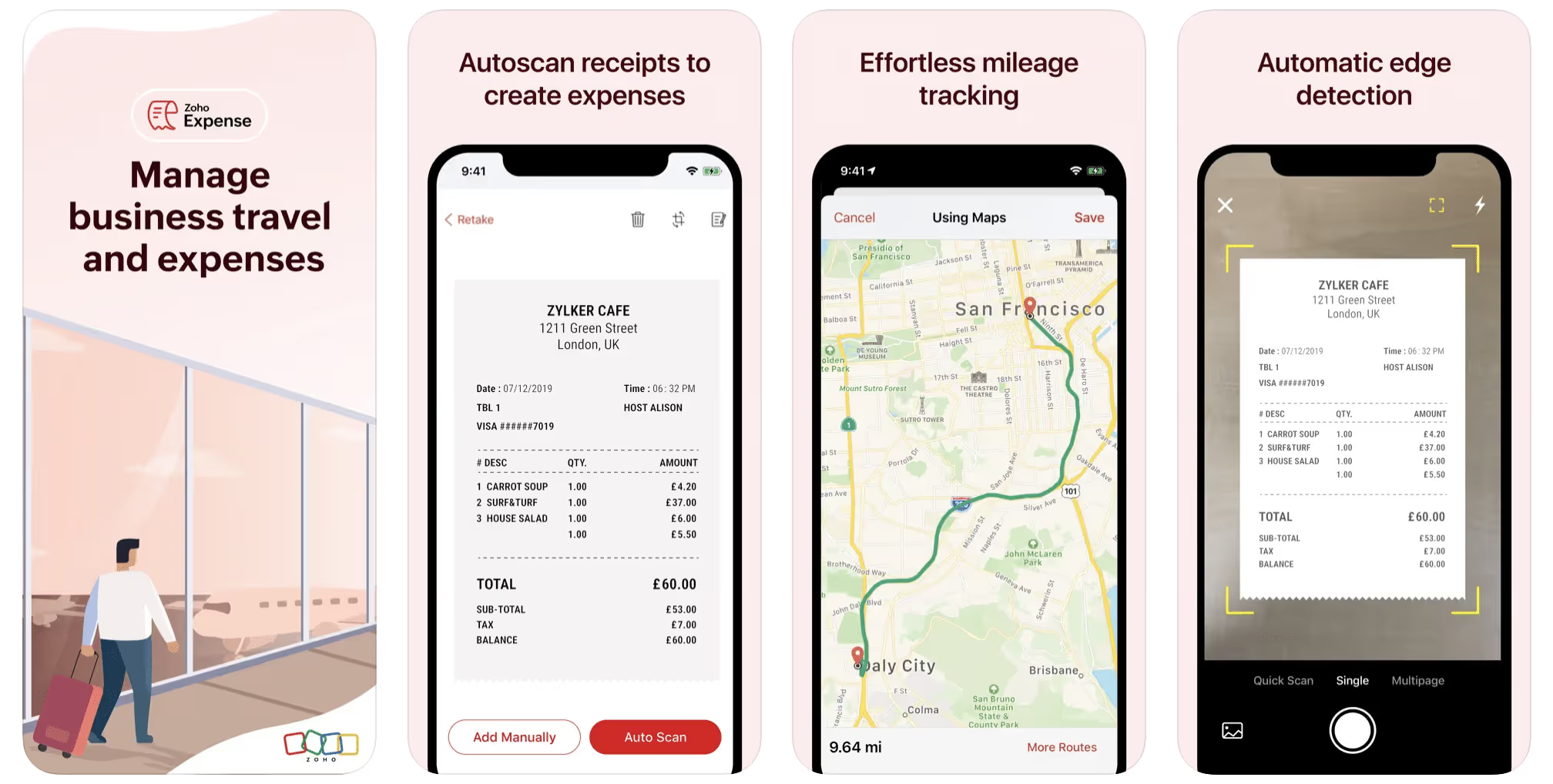
First up is Zoho Expense, which does exactly what its name says. This app is designed to allow companies to give employees a uniform way to create and submit expense reports. It can be used by individuals, including gig drivers, as well.
It includes a mileage tracker, as well as features that let you track other deductible expenses, including the ability to scan and record receipts.
Available on Android and Apple: Yes
Ratings: 4.8 stars on App Store, 4.7 stars on Google Play
Free Version: Yes
Subscription price: $3 per month, billed annually
Created specifically for gig drivers: No
2. Quickbooks Online
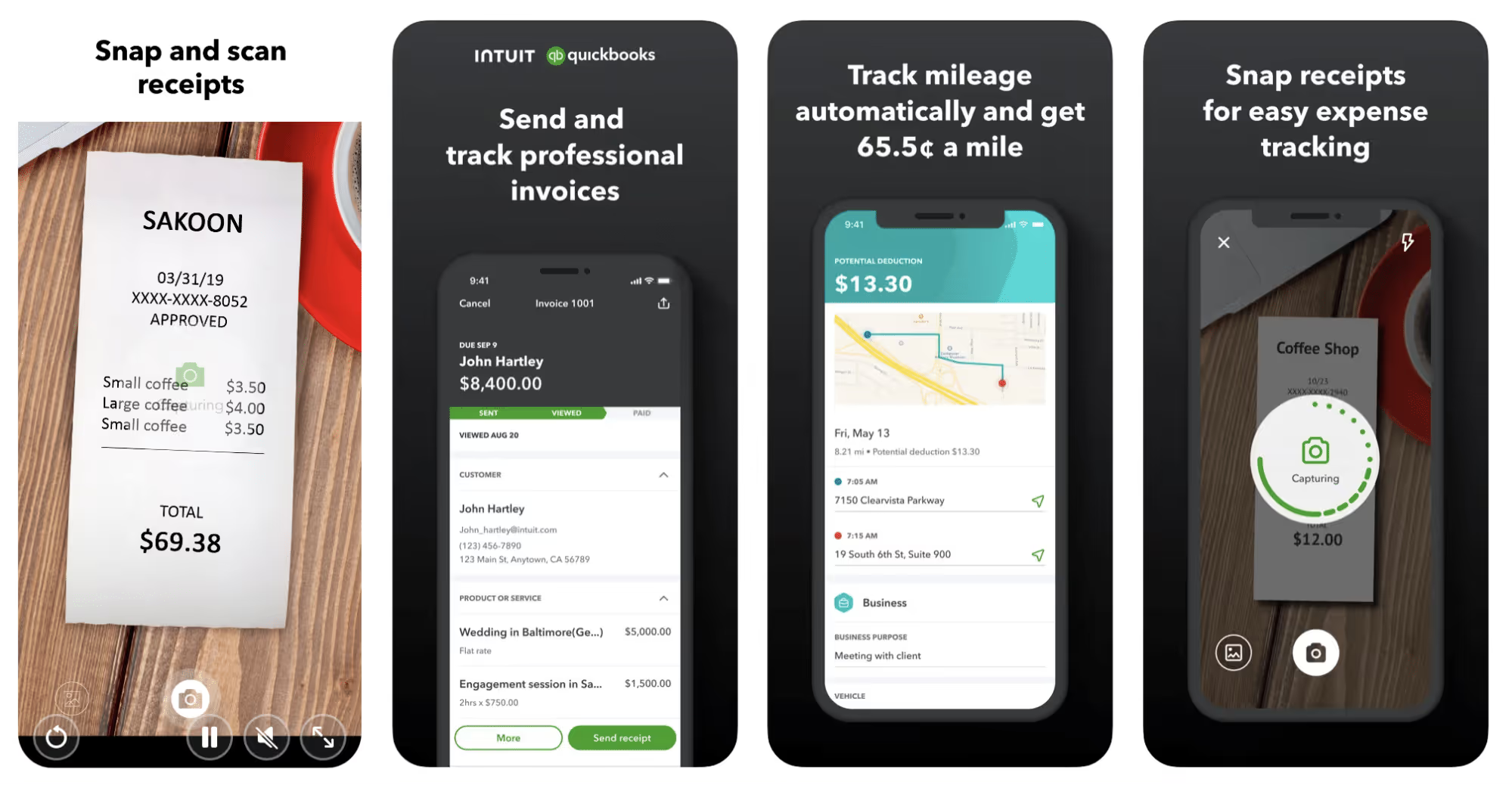
Quickbooks Online is a cloud-based app that allows you to track your mileage, earnings, and expenses. The information you enter can then be used to generate various reports that prepare you for tax time. It also allows you to create graphs that illustrate your cash flow, and includes a receipt scanner so you can instantly record deductible expenses. Quickbooks is popular, highly reliable, and designed mainly to help people keep track of their small businesses.
Available on Android and Apple: Yes
Ratings: 4.7 stars on App Store, 4.4 stars on Google Play
Free version: 30-day free trial
Subscription price: $15 per month for basic version if purchased for 3 months or more
Created specifically for gig drivers: No
Source: quickbooks.intuit.com
3. Shoeboxed
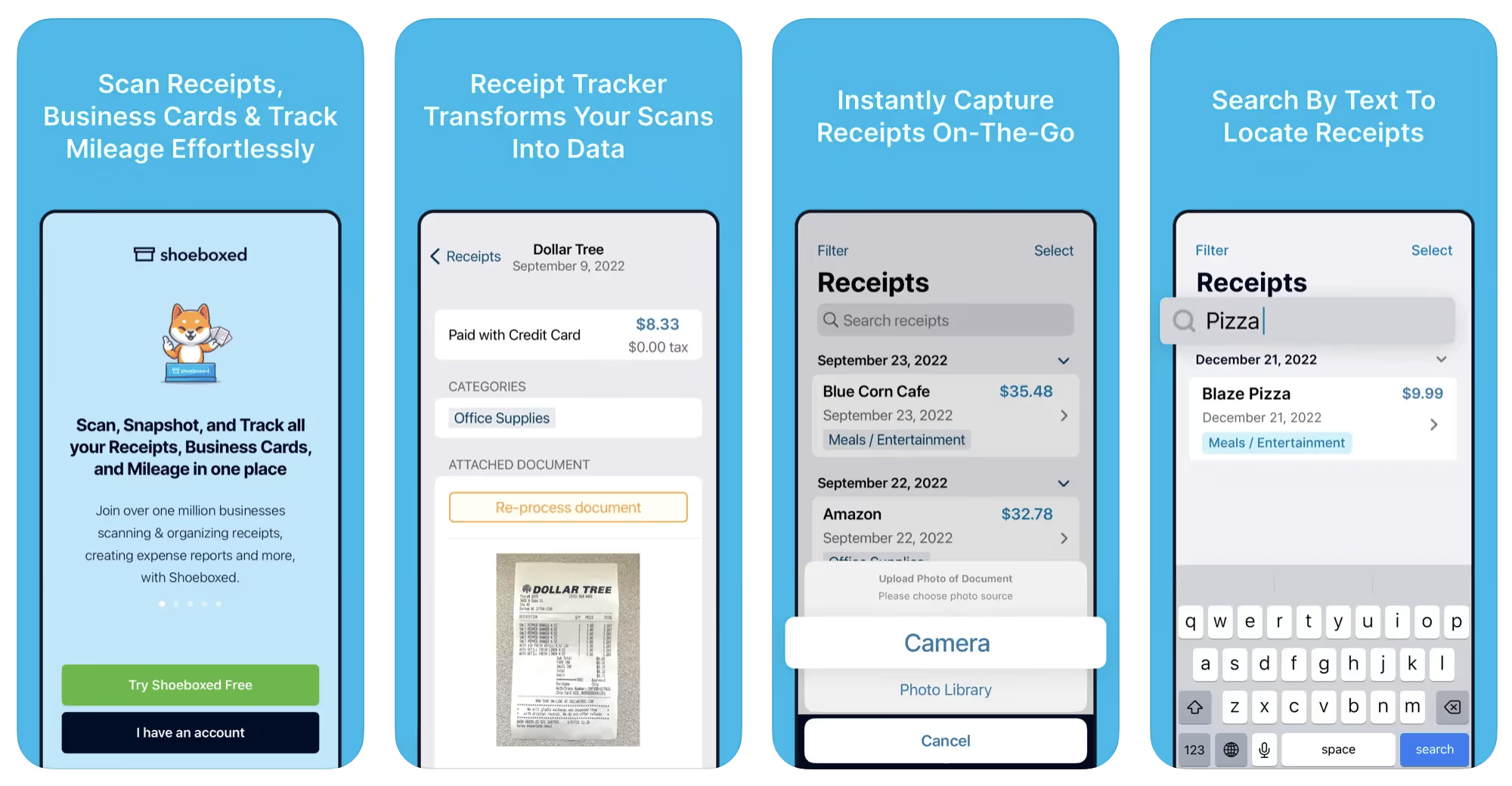
Shoeboxed started in 2007 as a service for scanning paper receipts into digital form. Now the app offers a free mileage tracker and has enabled users to scan receipts directly. It touts itself as the best mileage tracking app for DoorDash, but there are some elements missing that Dashers might like to have. While it provides features that record your expenses and prepare you for tax season, it doesn’t automatically track your earnings. The mileage tracker has a system where you can drop pins along your routes to make the tracking more precise, identifying those legs of a trip that you make for business purposes. The mileage tracker is “free” once you sign up for the basic version.
Available on Android and Apple: Yes
Ratings: 4.5 stars on App Store, 2.3 stars on Google Play
Free version: No
Subscription price: $18 per month for basic version
Created specifically for gig drivers: No
Source: blog.shoeboxed.com
4. Stride
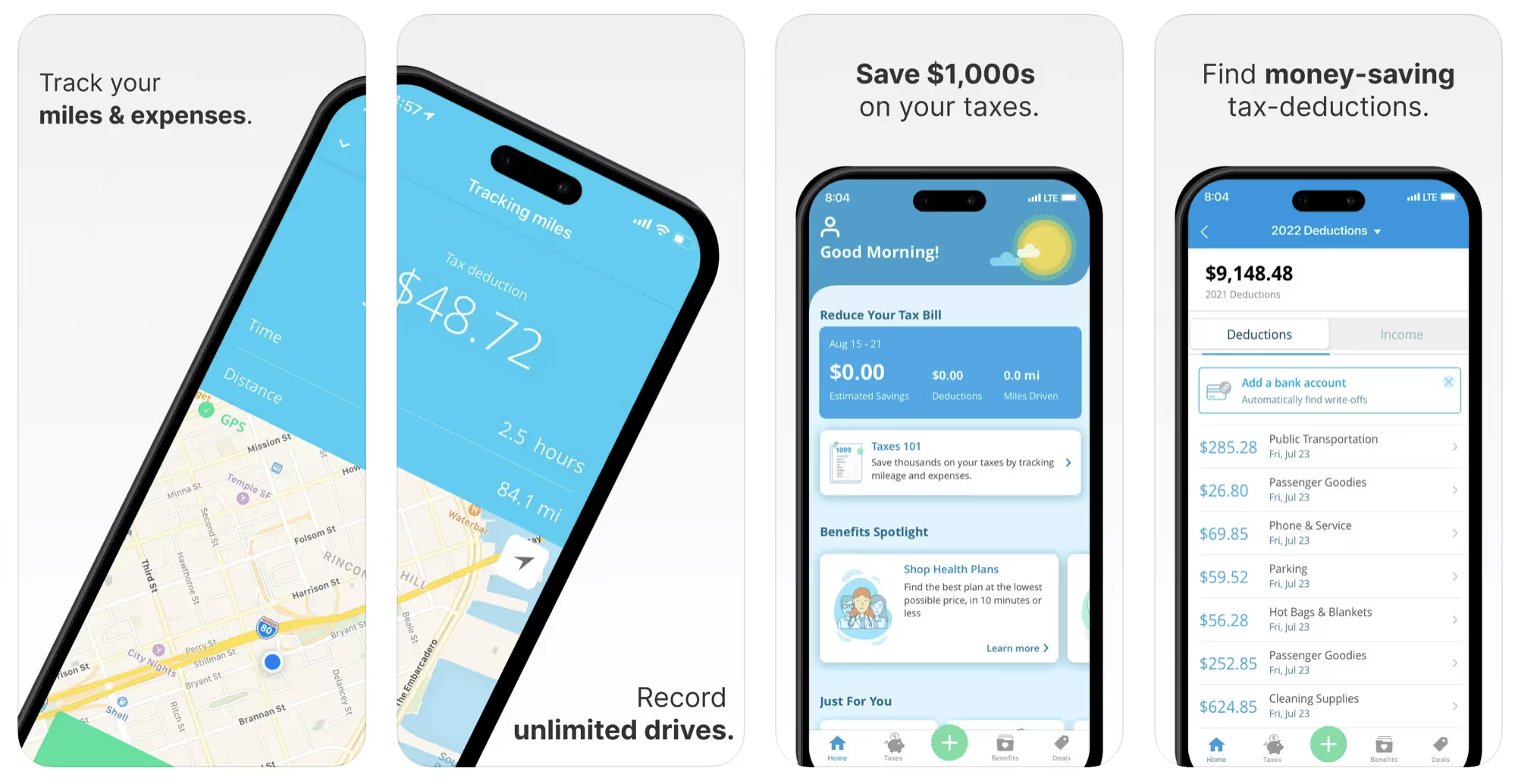
This free mileage tracker does a fair job of keeping track of the distances you rack up while gig driving, but it doesn’t automatically track earnings. It can be a big help, though, in tracking your expenses. You can link Stride to your bank account, and it will automatically scan your expenses to identify items you can potentially deduct. The app is totally free. This could make it the best free mileage tracker app, but there is a small price to pay. The app will persistently push you to consider various insurance plans that they are affiliated with. If you don’t mind that, this is a solid mileage tracker, even if it doesn’t track your earnings.
Available on Android and Apple: Yes
Ratings: 4.8 stars on App Store, 4.6 stars on Google Play
Free version: Yes
Subscription price: None. The app is free.
Created specifically for gig drivers: No
5. Gridwise
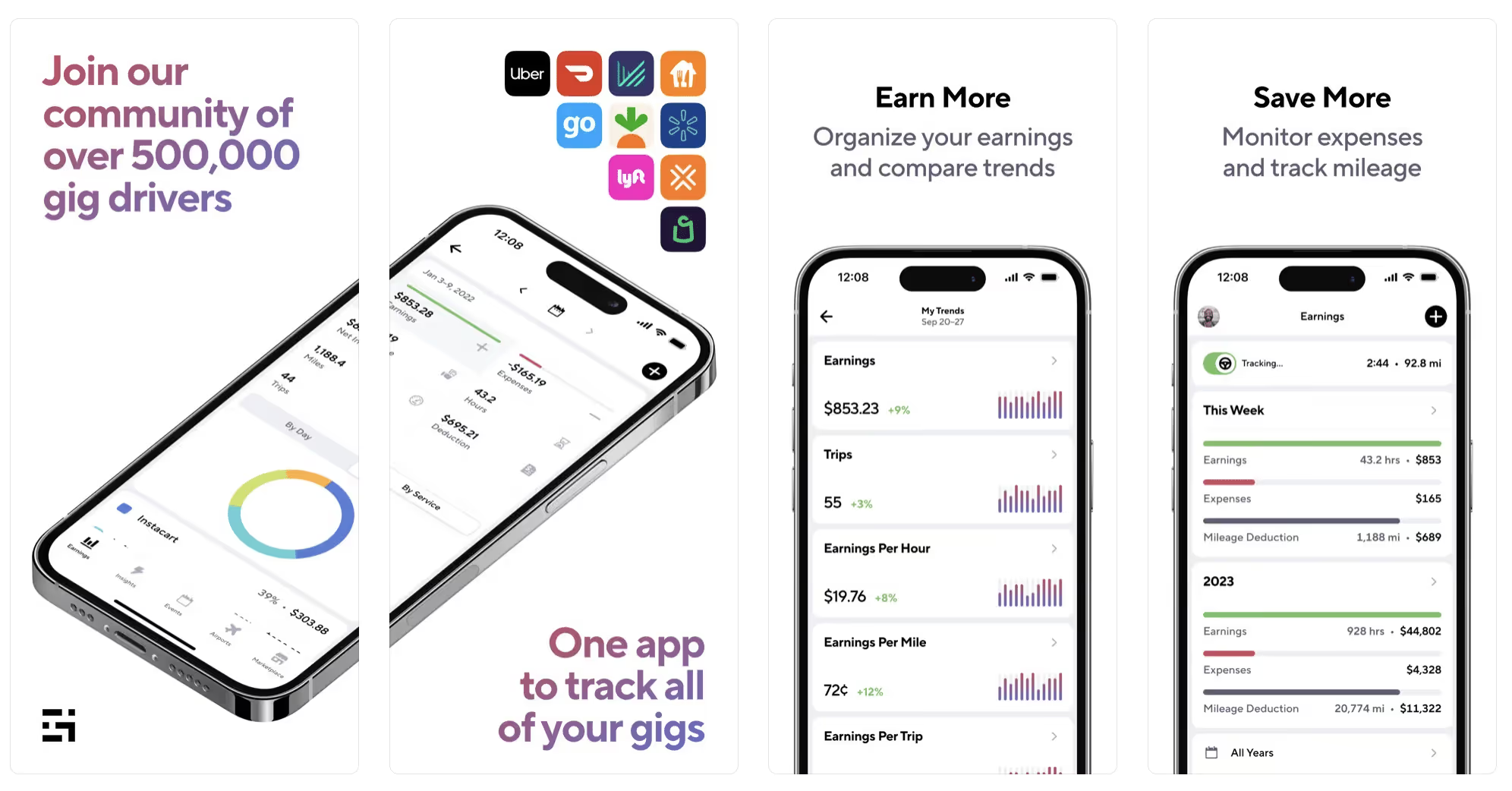
Gridwise has a free mileage tracker and free features that record your income and expenses. It gives you access to insurance and benefits, as well as insights about the best times and places to make the most money while gig driving. The Gridwise mileage tracker captures all the miles you drive while you’re on your driving shift, and it can be used if you have other trips you need to make which qualify as business travel.
Drivers love it because it is geared toward the needs of rideshare and delivery workers, providing free information about airport departures and arrivals, event start and let out times, weather, traffic, and more. The Gridwise Plus subscription adds value by providing additional insights and reports, discounts on benefits, the ability to export data in .csv format,, and more.
Available on Android and Apple: Yes
Ratings: 4.9 stars on App Store, 4.6 stars on Google Play
Free version: Yes
Subscription price: $9.95 per month for Gridwise Plus, or $95.99 per year (a $23.41 savings)
Created specifically for gig drivers: Yes!
What is the best mileage tracking app?
Now that we’ve checked them all out, we’re positive about the answer to that. Hands down, it’s Gridwise. Are we biased? You bet we are! But drivers love it too. Gridwise is the best mileage tracker app—and so much more. So many of the features are free, and the subscription to Gridwise Plus will pay for itself with additional insights to boost your earnings and deeper discounts on products and services.
Most important, Gridwise is designed specifically for gig drivers by experts who were once gig drivers themselves! Knowing what gig drivers need is a crucial step in creating an app that rideshare and delivery drivers can really use! Here are a few of the features, besides mileage tracking:
- seamless earnings tracking
- automatic, on/off toggle and manual mileage tracking
- mileage categorization
- airport, traffic, weather, and events information
- insights into where to drive and when to drive
- reports showing earnings across the platforms you use
- discounts on countless products and services for drivers
- additional resources for finding side gigs
- an informative and comprehensive blog
- affordable benefits, including insurance, medical, dental, and alternative practitioner discounts
- a community of drivers just like you
Don’t settle for just any app. Get the best mileage tracker, and so much more, from Gridwise!
[elementor-template id="21599"]

What Records Do Gig Drivers Need To Keep Track Of For Taxes?
* Gridwise does not provide tax, legal, or accounting advice. This material has been prepared for information purposes only, and is not intended to provide, and should not be relied on for tax, legal, or accounting advice. You should consult your own tax, legal, and accounting advisors before filing your return.
Record keeping? Who signed up for that? As a gig driver, it’s part of what you need to do to keep your business running. Don’t worry. It’s not as complicated as you might have been led to believe. This post will show you what you need to keep track of and the best ways to gather and preserve your tax-related records. We will cover
- How record keeping can help reduce income tax for freelancers
- Taxes and freelance work: Record keeping requirements
- Mileage tracking: Motives and methods
- More deductions and records to keep
- Make tax time easier
How record keeping can reduce income tax for freelancers
Tax time is not “fun time” for rideshare and delivery drivers. It’s easy to get used to watching your earnings pile up and come to believe they are all yours. Unfortunately, that isn’t the case. Gig work taxes can be especially painful because no one takes them out of your earnings for you, until the tax authorities insist that you do it for yourself.
You will need to show the tax authorities your income records, and they will gladly tell you to send them what they determine to be their fair share. Think that’s not fair? You’re not alone, but that doesn’t mean you’re going to get out of paying gig work taxes.
But you can find ways to pay the smallest amount that is legal and possible. The best way to defend yourself against having to pay astronomical amounts when you file your return is to know what expenses you can deduct from your gross income. When you subtract deductible expenses from your gross income, there is less left over to be taxed. This reduces the amount they can hit you with gig worker taxes. and can make your tax bill substantially lower.
While you want to keep good records so as to be in compliance with taxation entities such as the IRS, you also want to ensure you have proof of every last deductible expense you have accrued during the year. There are other records you must keep as well. Let’s look at some of the considerations you have, realizing that you now need to know how to do taxes as a freelancer.
Taxes and freelance work: Record keeping requirements
So many gig drivers fail to understand the responsibilities they have as independent contractors. Those who work part time for very few hours may even believe they don’t have to report the income they get from their driving gig payments. That would be a big mistake!
The company or companies you work for report your income to the IRS and state tax authorities. If you fail to report that income, you will risk some rather painful penalties. The IRS taxing side hustles is as much of a thing as the IRS taxing income from any other job. Your best bet is to report what you’ve earned, honestly and completely, and comply with other record keeping requirements such as
- gross income
- deductions and credits
- purchases (items you purchase and resell, such as snacks or bottled water)
- a log of all your mileage (or vehicle expenses, if greater)
- a list of all expenses and assets, such as utilities and other expenses associated with having a home office and equipment
- machinery and furniture you own, including when it was acquired, how much it cost, whether you previously took deductions on it, and selling price, if applicable (this includes your vehicle)
More things to consider:
- Pay attention to the retention of your records. You’ll need to keep all tax-return-related items— including income, deductions, and any tax credits reported— until the period of limitations runs out (3 years from date you filed, or 2 years from when you paid tax. If you have employees, keep your records for at least 4 years.)
- If you want to avoid paying self-employed taxes, you may want to set up a corporation or Limited Liability Corporation (LLC) for your business. This allows you to separate all your gig driving earnings from personal income, and permits you to take advantage of the additional advantages of working through a corporation. This includes exemption from self-employment taxes. You can learn more about how to pay self-employment taxes, if you opt for that, in this post from Keeper.
- You should always keep a separate checking account for your business, for convenience as well as clarity. While this is not a legal requirement, it is a smart move if you want to have an easier time managing your business.
- You are required, as an independent contractor, to file your taxes quarterly. Check out this Gridwise blog post for more information about quarterly tax payments and other matters that make filing delivery, Lyft and Uber taxes easier.
Mileage tracking: Motives and methods
Why you need to be meticulous about mileage
Mileage deduction, or the costs of operating your vehicle, will be the most important item to account for when you consider how to file taxes as a freelancer. While mileage is an important deduction for all independent contractors, as you might imagine, it’s even more essential for rideshare and delivery drivers.
There are two ways of keeping track of your mileage deduction. One is to use the IRS’ standard mileage deduction, which for 2022 is 58.5 cents per mile. This number takes into account the costs of operating your vehicle, from fuel and maintenance to registration, insurance, and depreciation. Alternatively, you can calculate all your own vehicle operating costs, but only after your first year of using the vehicle. You may discover that this second option allows you to have more money deducted from your taxable income. Learn more about the options for deducting your mileage in this Gridwise post.
No matter which way you decide to calculate the deductions for your mileage, you need to know what mileage you can and cannot deduct.
You can deduct
- miles driven to and from home when you go out to drive or deliver
- miles you accrue during your trips
- miles you drive on any other trips you make that are necessary as part of your business.
Examples:
- driving to return a lost cell phone or to an Uber Hub or another physical location where your company might make driver support available
- driving to pick up supplies, to get gas, or to have your car cleaned, serviced, or detailed, etc.
You cannot deduct
- miles you drive for personal trips
- miles for any trips you take that do not directly affect your business
Note: If imagining yourself becoming the not-so-proud owner of a shoebox filled with paper receipts gives you nightmares, stop worrying. Electronic records of purchases will satisfy reporting requirements. If you use cash, you can scan copies of your receipts, in some cases, right into your recording software or app. Gridwise and Keeper give you a simple to use interface that keeps all your receipts recorded without the messy pile of paper.
Mileage tracking methods
By now, you’re probably convinced that tracking mileage is important, despite all the other things drivers have to do. Now, let’s look at your options for keeping accurate records.
- Manual tracking: You can keep a logbook where you list every trip you make, starting and ending mileage, the date, and purpose of the trip. While this would work, it’s certainly not convenient. Besides, if that logbook gets lost, your plans for having a nice, fat tax deduction will go by the wayside.
- Spreadsheet: This is a bit more convenient and sophisticated way of tracking your business mileage. You’d need to be meticulous about making your entries, though. Even if you keep a spreadsheet app on your phone, it could be time consuming and inconvenient to keep doing it with all the other things going on in a rideshare or delivery driver’s day to day life.
- GPS-based mileage tracking apps: There are a bunch of apps that track mileage based on your GPS location, and most of them are pretty accurate and far more convenient than taking constant readings of your odometer. Your driving apps, such as Uber, Lyft, DoorDash, or Instacart, may also track your mileage, but be careful here. They will only track the miles you drive while you’re on a trip or delivery. They don’t count the miles you drive going to pick up a customer or when you make your move toward a restaurant or store.
Gridwise, on the other hand, will track all the miles you clock while you’re on your shift. All you need to do is make sure you start tracking the minute you leave home, and every gig driving mile will be logged. - OBD-II mileage tracking systems: There are plug-in modules that assess your vehicle’s mechanical health and track your miles. However, many authorities question the ability of OBD-II mileage tracking systems to get get accurate odometer readings. Insurance companies don’t consider them to be accurate enough gauges of odometer readings.
While mileage is a crucial deduction when you’re preparing your Uber, Lyft, or DoorDash taxes, it isn’t the only expense you’ll want to record.
More deductions and records to keep
Expenses you can deduct
You’re entitled to include the cost of other expenses that are directly related to your driving business. These include
- vehicle expenses
- equipment for your car and home office
- extra services and subscriptions
- business tools, including apps and software
You can learn much more about gig driver expenses that are eligible for deduction in this Gridwise article.
Ways to track and preserve deductible expenses
- The manual method: Just like you can with mileage, it’s possible to use a manual method, but in addition to logging each expense into a ledger, you would also need to keep physical receipts.
- Spreadsheets: You can record your expenses on a spreadsheet. This is somewhat less awkward than manually logging mileage, but there still will be plenty of room for failing to remember the case of water you bought for your customers, or losing the receipt from the thermal bag you purchased.
- Accounting software: You can use software that helps you track your expenses. This method usually interfaces well with any tax preparation software you or your tax professional might use.
- Gridwise: There are other apps that help you track your expenses, but Gridwise is designed specifically for gig drivers. It automatically tracks earnings and mileage, and lets you record your expenses the minute they come up. Gridwise’s partnership with Keeper gives you the ability to scan receipts and access a tax professional. This is a seamless way to record your expenses and a big help in learning how to file Uber taxes. Gridwise even provides .csv output, so you can feed your Gridwise data directly into tax preparation software. Check out what Gridwise and Keeper will do to super-charge your tax filing powers.
Organizing and categorizing expenses
Before you even begin to record expenses, you’ll want to set up categories for them. You can start by reviewing the categories listed above and checking out the Gridwise post that lists possible deductions.
If you’d like to learn more about how to categorize expenses, there is additional information available. This article from Motley Fool lists all possible categories any freelancer might use and also gives tips on how to customize them for your driving business.
One last tip
Using Gridwise, particularly for tracking mileage, is the easiest way to be in compliance with the IRS’ rules for deductible mileage. Gridwise tracks all the miles you drive for your gig, beyond what your company’s app might record. At the same time, you can log on and off Gridwise when you start and end your shift, so personal miles won’t be recorded. This eliminates confusion while capturing every deductible mile.
Gridwise Tax Help, a partnership with Keeper, has been created specifically to serve gig drivers. It provides affordable and easy ways to record expenses, scan receipts, and find deductions by analyzing your expenditures. Read about free resources from Keeper you can use to be fully prepared for tax season, and get all your earnings and expenses on the record.
Get the world’s best assistant for rideshare and delivery drivers, and tax help too.
Make tax time easier now!
Case Study: How Gridwise helped a research company leverage the diverse Gridwise driver audience
“It was seamless, they kept on top of everything, and it was so easy to get onboarded and start seeing results!”
- Jennifer Parker, Panel Recruiting Manager for ACOP
Background
Gridwise recently partnered with American Consumer Opinion, a global market research firm that helps its clients, including a variety of Fortune 500 Companies, gather feedback on new offerings and advertising messaging. American Consumer Opinion (ACOP) manages a survey panel of people from all different backgrounds, ethnicities, and locations to gather unique insights. The company is constantly looking for qualified members to staff their panel, which provides feedback on products through testing, online surveys, and focus groups.
The demographics of gig drivers are also extremely diverse, making the Gridwise audience an ideal fit as panelists. The brand partnerships team noticed the alignment between the two companies and recognized the opportunity for Gridwise users to make extra money, and proactively reached out.
Jennifer Parker, the Panel Recruiting Manager at ACOP, set up an intro meeting with the Gridwise team to discuss a potential approach to a campaign and was impressed by their preparedness and range of advertisement placement offerings.
“The team showed all of the examples of everything they were going to do to promote us, which was amazing!”
Goals
The Gridwise team felt strongly that ACOP’s value proposition would resonate with their drivers based on the response to other earning opportunities, so they crafted a strategic campaign, mapping back to their client’s acquisition goals.
Gridwise users are located all over the country and their demographics are extremely varied in age, education, interests, and buying behavior. These vast differences can be especially valuable to ACOP as the panelists can qualify for multiple studies.
The ACOP team leaned on Gridwise’s expertise in creating effective messaging and partnered to launch content across several different channels with a goal of onboarding a target number of new panelists.
Action plan
To achieve this goal, Clay Moore and Alex Egan, Gridwise’s brand partnerships team, headed up the initiative. Alex took point on coordinating in-app ads, email content, a dedicated blog post, and even social media retargeting.
“Our best performing campaigns make a point of reaching drivers across different media, at different points of their daily journey as a driver,” said Alex, “...and we were confident this offering could be a hit with our drivers - so it was up to us to make that a reality.”
To ensure the campaign was quick to drive results, Alex and Clay quickly designed unique in-app display ads, which were approved and launched the same week. In the meantime, the content team began drafting the long-form direct response channels such as blog and email to help tell the compelling story of how drivers can supplement their driving income by becoming an ACOP panelist.
ACOP had never targeted the gig worker audience, so Jennifer felt she was taking a gamble - and she hit the jackpot. "I was really nervous at first, but once the first email blast went out, it clicked for me,” Jennifer says, “because the audience is so engaged; they really are reading the emails and the blog posts. And the way the team interacted with me was really reassuring."
“I could tell that the team had really done their research when creating content for us, they nailed the messaging!”
Results
By the end of the first 3-month phase of the campaign, ACOP had received almost double the target number of signups, with conversion rates higher than any other marketing channel. The team’s strategy for targeting Gridwise users resulted in drivers responding enthusiastically to the company’s value proposition, leading to a $10 acquisition cost per panelist, below ACOP’s original goal.
Jennifer is excited to continue working with the Gridwise team, leveraging new placements to acquire even more panel members, while maintaining the low acquisition cost as her campaign continues.
“I was really impressed with all the different locations in the app where we would be placed in the sponsorship plan, and they checked in on us regularly....it was a holistic experience from beginning to end."

The best reasons and ways for drivers to invest
What does it mean to “invest?” In essence, it refers to spending money with the expectation of achieving a profit or some other kind of financial gain. As a driver, you might not think you even have enough money to invest, but keep reading and you’ll see why that’s not true.
In this blog post, we’ll tell you some good reasons why you should invest a portion of your earnings, and offer you a way to do it that will surprise and excite you. Here’s how we’ll break it down:
- Why should drivers invest?
- Ways and places to set aside money
- What about the stock market?
- Public: A stock market solution drivers will love
Why should drivers invest?
First of all, who wouldn’t want to be able to put money aside and make a profit on it? The simple idea of being able to watch your account balance grow without having to do much outside of making a few smart decisions should be enough to convince you that investing is a great idea.
If that’s not doing it for you, think about what you could use that “extra” money for. What if something happens to your driving business, and you can’t make money for a few months? You may not be aware that, for independent contractors, worker’s comp and unemployment insurance will not automatically kick in. You’re going to need some backup.
Having money set aside, and watching it grow to make more money, is the kind of security blanket you need to feel financially safe as you happily go about making money with your driving gigs. Also, if you have a goal such as buying a house or taking the vacation you’ve always yearned for, investing your money is a smart way to gather up the kind of cash you’re going to need to bankroll your dreams.
Ways and places to set aside money
There are two avenues that will lead you toward the healthy habit of setting some of your earnings aside, aka, “paying yourself first.” The first is to save on expenses. Is there an extravagance in your life you could really live without? There probably is. Overpriced coffee, buying rounds at the bar, and eating out more often than you actually need to are three expenses you could eliminate right away. Each time you pass on spending for the money-sucking habits in your life, put away the money you would have spent.
You could put it into a special savings account, or even keep it in something as simple as a cookie jar. Once it adds up, you’ll be able to do something meaningful with it.
The other element you’ll need to effectively start saving is discipline. Let’s say you set a goal of putting aside 15 percent of your income every week. You do okay for the first few weeks, and then … something comes up. Friends come in from out of town and want you to party with them at a club after your shift. Or, let’s say you fall madly in love and want to take a romantic and pricey getaway trip together, but you just can’t afford it … unless you stop setting that money aside.
It will be up to you to set your priorities, but if you truly want to have money for a rainy day that will probably come one day, you’ll have to keep working and hustling to earn those extras. You can also be disciplined enough to remind yourself that your goal to save is more important than fleeting pleasures.
If you have trouble disciplining yourself to set the money aside on your own, you can get automatic withdrawals taken from your account. To make it harder to withdraw on impulse, you can start an account you can’t touch without having to pay a penalty. Look into an IRA (Individual Retirement Account) or 401 (k), which is a retirement account you can open as an independent contractor. An article in MyBankTracker will help you navigate the ins and outs of this option.
Another way to invest money is to purchase real estate or collect high-value items, such as art, coins, or sports memorabilia. This can be risky. If items lose rather than gain value, and these options can also come with a rather high price. You can still start small, though, as long as you’re investing money you might not otherwise need.
What about the stock market?
The stock market is certainly a good way to make money, sometimes quickly, and often over an extended period. Investing in the stock market, if you have the right combination of knowledge, skill, and good fortune can be quite rewarding.
That can be a problem, though. People spend hundreds of thousands of dollars and many years getting the education they need to make money in the stock market, so there’s no shortage of overly trained analysts and traders. Still, it’s becoming more possible every day for people with little or no formal training to trade stocks with far less money than you might think.
In many cases, the profits you can make in the stock market are eye-popping. Yet, as with all investments, there are risks involved with buying and selling stocks. You’ll probably find that, as long as you invest money that you can truly afford to set aside, and that you won’t need for life’s essentials, it’s worth taking your chances.
You might be wondering about the other expenses that can be involved in trading stocks. What about the huge brokers’ commissions, and the possibility of being charged to make trades based on your broker’s latest hunch, rather than your own instincts and desires?
There’s no longer a need to feed high-priced traders and brokers just to get a piece of today’s stock market action. A movement that is allowing the stock market to become far less stuffy and way more accessible is definitely afoot now, and is gaining steam.
Just like so many other facets of life, stock trading is becoming something ordinary people can do, and quite easily. All it takes is a little bit of money to invest, a network of people who can give you great tips and ideas, and a platform through which you can make your trades.
Does that sound like a lot to ask for? It’s not. As it turns out, there’s an app that does all that, and more: Public.
Public: A stock market solution drivers will love
Public is a cutting-edge app that lets you get in on the stock trading game in a way that’s not only efficient and inexpensive, but interesting, exciting, and fun. Public is more than just a platform for trading – it’s a social investing experience. It turns investing into a collaborative effort by providing a social network where you can:
- Follow friends and experts on certain subject matters
- Hop onto a messaging system designed to give investors lots to DM about
- Use social sharing to publish your trades to other social platforms
- Browse stocks by curated themes such as entertainment, cannabis, diversity, small businesses, and health and healing.
By joining Public’s community of investors, you’ll get to watch what others are doing, collaborate, and show off your own progress to your friends.
There are many other reasons to love Public as well, such as:
- No commission charge for trades. Instead, there’s an optional tipping system you can use to show your appreciation for the trading service. There are no deposit or withdrawal fees, either.
- No minimum amount needed to invest. You can begin trading stocks with literally any amount of money.
- Investing with a swipe. Buy “slices” of stock that are offered by Public, and choose the amount you want to put in.
- Debit card funding. Add money to your account and make deposits with your profits, quickly and with great ease. Security is assured by Public’s partnership with Wells Fargo and Braintree (a PayPal subsidiary).
- Long-term investment capability. Build a portfolio designed to pay off in the long term, automatically reinvest dividends, and get safety labels that inform you about the risk levels of the stocks you choose.
- No day trading. Public plays it safe by banning day trading and other sketchy practices like margin accounts.
- Referral program. Share your referral link with friends, and if they successfully open accounts with Public, you and any referred friends get a free slice of stock!
- Super Security. Insured by Securities Investor Protection Corporation (SIPC), Public customers are protected for up to $500,000 in securities, and up to $250,000 in cash. Data is secured via AES 128-bit encryption and TLS 1.2. All your transactions are completely protected with state-of-the-art data security technology.
Opening an account with Public is easy, as long as you:
- Are at least 18 years old
- Have a valid Social Security number,
- Have a legal U.S. residential address
- Are a U.S. citizen or have permanent residence or a visa
If you meet these requirements, go ahead and give investing a try with Public. Learn more here, and then download the app today!
The 3 best companies for package and materials delivery drivers
The advantages of gig driving are hard to beat. Freedom to pick your hours, higher than average hourly earnings, and sheer variety are just a few of them. Still, there’s a grind to delivering food and groceries, and more than a few hassles to rideshare driving. Most of these involve...dealing with people!
Have you had it with getting complaints about not including enough ranch dressing with a customer’s order? Are you completely sick of passengers putting their feet up on your seats and then reporting to your company that your car is dirty? If you want to escape these and any other irritations that arise when your delivering and driving involve prickly individuals, this blog post is for you.
Here, we’ll explore the three best options for delivering parcels. That’s right. With this kind of gig, all you have to do is pick up packages and materials and deliver them, usually to a doorstep or a company office, storefront, or job site. Additionally, your deliveries will take place during normal store hours - 6 a.m. to 6 p.m. No more drunken revelers or rancid french fries smell in your vehicle, ever again! Here’s what we’ll examine:
- The good & the bad of delivering parcels and materials
- What you need to get started
- The 3 best options for drivers
- Which parcel & material delivery job works the best for rideshare and delivery drivers?
The good & the bad of delivering parcels and materials
We’ve already touched on the biggest advantage to delivering packages and “stuff” that isn’t food-related. Eliminating the need to deal directly with people from the equation certainly removes the aggravation out of your driving life. There are other perks, as well:
- Predictable routes - You will know exactly where you need to go within your shift hours.
- Can use your own or a company vehicle - Depending on the company you choose, you can use the vehicle you already own, or a company car or truck.
- Physical exercise - The days of sitting in one place and doing nothing will be over when you move into loading and unloading parcels and materials.
- Not stuck in an office - The freedom of “being on the road” sure does beat being locked in a stuffy room filled with cubicles and ringing telephones.
- Decent earnings - Parcel and delivery companies, in general, pay as well or better than rideshare and food delivery.
There are some downsides to working in this part of the mobility industry, though. They will, again, depend on which company you wind up working for.
- Set hours - With some companies, you may have to work as many as 50 hours per week.
- Rules and restrictions - Some companies have rules about your appearance and personal style.
- Limited hours - In some cases, you may not be offered as many hours as you would like in order to make decent money.
- Pressure to complete lots of deliveries in a short time - Companies often lay heavy loads on drivers, expecting them to cover a lot of ground in a limited amount of time.
- Expenses reduce total earnings - Fuel costs, wear and tear on your vehicle, and other “hidden” costs could make those juicy earnings dry up fast.
What you need to get started
Depending on the company you choose, you’ll have to meet a certain set of standards and possibly comply with requirements that involve things such as the cleanliness of your car interior. This is certainly something you’ll want to think about before you get too excited about the prospects of delivering parcels and materials, but if you’re game, the opportunity to earn is there.
Here are the things you’ll need, pretty much across the board, but specific requirements will vary by company.
If you use a company truck or have your own vehicle, you may need to:
- Hold a valid driver’s license in your state of residence
- Pass a background check
- Pass a drug test
- Have the ability to drive a manual transmission
- Training from the company
- Meet age requirements
- Have a valid SSN, TIN, or EIN
- Be able to lift as much as 70 pounds
If you use your own vehicle you’ll have to:
- Have insurance (You may need to carry extra in your state. Check with your provider.)
- Be able to use a car, but consider using a truck or van for large loads.
There’s a big difference between the kinds of parcel delivery jobs you can choose from. Some are gig-oriented, much like Uber or DoorDash for packages and dry goods. Others involve taking on a full-time, employee position.
The 3 best options for drivers
Let’s look at what’s available, and see what the three best options for gig drivers might be. We’ll look at the option of working for a large company as an employee, and then at two companies that are more oriented to the gig driving lifestyle.
- UPS or FedEx. Working for one of these companies would require you to become an employee. While this would give you many benefits (including things such as insurance and a pension plan), there are some disadvantages to this kind of position. Your schedule would not be flexible, for one thing. Also, this is where you might run into those rules and regulations that prohibit long hair, facial hair, tattoos, and insist on the 21-year old age minimum and the like. The other thing is, to work for one of these companies, you’d have to wait for there to be an opening, interview for the position, and get it. You can’t just sign up and start driving.
- Amazon Flex. Driving for Amazon Flex allows you to download the app and begin to drive for them. You will be delivering packages for Amazon Prime, Prime Now, or even shopping for groceries from Whole Foods. You would schedule blocks when you make yourself available for a given time period. This gives you more flexibility, but also requires more of a hustle. There have been lots of complaints recently about Amazon Flex offering fewer hours, as more drivers come on board. You might have trouble making enough money to meet your needs. You would probably have to look at your stint with Amazon Flex as being a part-time kind of thing. As a driver, you’d go to the warehouse when your scheduled block begins, pick up your packages, and strive to deliver them all by the time your block ends. While this works out for many drivers, there are some who complain they often struggle to make all the deliveries on time, and also have trouble making ends meet.
- Curri. This is a comparatively new company, with an entirely different type of delivery service. With Curri, you deliver construction materials for that essential “last mile.” They will give you orders that fit into the average sedan, and some that would allow you to put your van or truck to good use. As a driver with Curri, you’ll pick up and transport items for prompt delivery, return pick-ups from customers, handle multiple pick-ups and drop-off deliveries, and perform multi-stop, “Daily Routes,” as you supply companies and individuals with the goods they need on a regular basis.
Which parcel & material delivery job works the best for rideshare and delivery drivers?
Let’s look at the problem you’re trying to solve, and which of these three options offers the best solution. If you’re sick of dealing with people either in your car or on the other end of those small food orders, you need a gig that takes those interactions off the table. If you need to make good money, but don’t want to commit to full-time employment, UPS and FedEx won’t work for you. Also, Amazon Flex doesn’t pay the kind of money it used to.
To get flexible hours, a minimum of requirements, respectable earnings, rewarding work, and no hassles with passengers or food delivery customers, Curri is definitely your best bet. Here are the advantages that make it the top choice for rideshare and delivery drivers who are looking for a change of pace:
- Ability to choose your own hours
- No unreasonable requirements & no cosmetic restrictions
- Consistent, full shifts and reliable income levels
- Variety in kinds of deliveries
- No need to take people into your car
- Reasonable hours (no late night runs to sketchy neighborhoods)
- State of the art routing and delivery app
- Large demand for drivers
The only “spare” equipment you need to drive for Curri might be a pair of sturdy closed-toe shoes. You’ll find them handy when you go to visit all those job sites! And - you’ll only be rated based on your punctuality. No more worrying about pleasing picky passengers!
Curri is easy to get for Android and Apple. Download the app and get started with Curri: The Standard in Materials Delivery.
The 3 hottest delivery gigs in Texas
Texas is a great place to be a delivery driver. Not only are there lots of friendly people, but there are also lots of friendly people in need of getting their items delivered! In this post, we’re going to explore three unique, local options and our top pick for the best delivery gig in Texas.
Delivering in Texas: why go local?
Unlike national companies like DoorDash, Uber Eats, and GrubHub, local delivery services are focused on supporting their communities—including providing opportunities for locals to make quick, easy cash while helping their neighbors.
Here are some good reasons to stay local while delivering in Texas:
- Deliver with companies focused on local needs
- Share tips and tricks with other delivery drivers in your area
- Feel like you’re an important part of your local community
3 awesome options for Texas delivery drivers
Delivering with companies that share Texas values like friendliness and hospitality is just one benefit of staying local.
Some others include:
- Quick, easy cash on your terms
- Flexible hours
- Friendly customers
- Serving customers in unique and useful ways
- Opportunities to earn more through bonuses and referrals
Now, let’s take a look at three Texas delivery companies and see how well they measure up against the typical driver’s wish list.
Favor
Favor is a whole different kind of delivery service. Favor’s name comes from the idea of, “Hey, can you do me a favor?” With Favor, you’ll deliver everything from balloons for a party to dry cleaning. You not only get to make money, you get to do favors that make your community a better and happier place.
To run with Favor, you have to be 18 years or older, have an iPhone or Android, and have access to reliable transportation, whether it’s a car or a scooter. You’ll also have to pass a background check because you wouldn’t want anyone who didn’t pass to deliver a birthday cake to a kid’s party, right?
Favor is a Texas-born and Texas-focused delivery service, so you have the option to run for Favor in Austin, Dallas, Fort/Ft. Worth, Houston, San Antonio, and many of the smaller communities surrounding these larger cities. These deliveries are focused on personalized customer service, different types of deliveries, plus the fact that Favor is so into local, community service, means you won’t be tripping over a bunch of other drivers or big company delivery services.
Farmhouse
You can’t get more local than this company because Farmhouse delivers local food, including meat, groceries, produce and more - all sourced from organic farmers and based on sustainable practices. So far the company operates in Austin, Dallas, Houston, San Antonio, and surrounding areas.
Farmhouse likes to make it fun to work with its delivery service, and that means you can have a pretty low-key and relaxed experience. You’ll deliver a van packed with goodies to businesses like local restaurants and hotels. You’ll use the Farmhouse delivery driver app to report when each delivery is complete.
To qualify, you’ll need to be at least 21 years of age, have a valid driver’s license and insurance, and the kind of personality that’s friendly and outgoing, because in addition to delivering, you’ll be promoting local food in Texas.
Dropoff
Although their operations aren’t just in Texas, Dropoff was founded in Austin and is very strong throughout the state and beyond. Founded in 2014 to compete in the same-day delivery market, Dropoff has found itself outperforming bigger companies. Their expansion has outpaced that of Uber’s same-day service, and now Dropoff is available in 16 states and between 20 and 30 cities.
In Texas, Dropoff operates in Austin, Dallas, Fort Worth, Houston, and San Antonio. One of the things that makes this gig fun and unique is that you might do anything from delivering a small package to completing a catering setup for an office event. Dropoff has expanded into the medical field, training its drivers in HIPAA compliance, and having its drivers deliver medical supplies.
To qualify, you’ll have to have a solid knowledge of your city, be 21 years of age or older, Have a car, SUV, pickup truck, or van that’s less than 10 years old and also registered, insured, and inspected. You’ll need a current driver’s license and a clean driving record, of course, and you’re going to have to be able to operate a smartphone and apps. Your iPhone or Android phone must be no more than four years old.
Our pick for “Favor-ite” delivery gig in Texas
Looking at these three hot gigs, the one that sizzles most for drivers is Favor. The biggest reason is that it’s so flexible and accessible. Drivers can jump right in and start earning without getting hung up on taking a truckload of food or delivering different goods all over town.
With Favor, you’ll be able to stay in local neighborhoods, where you’ll deliver something everyone wants: a sense of relief and gratitude. You know what that means, right? You’re also likely to do quite well with tips. Think about it—how grateful would you be to the person who delivered your dry cleaning just in time for you to be able to pack for a weekend wedding?
As a Favor Runner, you’ll do more than drop off dinner—you’ll make life easier and better for people in your community.
Sign up for Favor today!

Help for Flex drivers: how to get results from Amazon Flex driver support
If you’re a “pick it up and deliver it” road warrior, you know just how much you want to get your deliveries done and get paid for completing them, as quickly and as effectively as possible. Because of the nature of this job, though, unexpected trouble can arise. For example, app glitches, lost packages and missed scans can mean calling on Amazon Flex driver support to help complete deliveries.
We put together this blog post to take a look at the issues Flex drivers face, and offer the best, fastest ways to get results from Amazon Flex driver support.
Here’s how we lined it up:
- The problem: why Flex drivers need reliable support
- Amazon Flex driver support: how it works
- What can happen when support fails you
- The potential for improvement: Amazon Flex and drivers
The problem: why Flex drivers need reliable customer service
More so than in most other driving gigs, including rideshare and food delivery, Amazon Flex drivers run into situations that need swift action from responsive support reps. Packages can be damaged or undeliverable, a traffic jam could delay deliveries, and there can be problems with the app, or a customer.
While it’s comparatively easy to drive for Amazon Flex, it’s also important to maintain a good rating. Whether a driver needs help with an active or completed delivery, the driver’s status with Amazon is at stake.
Amazon prides itself on providing nearly everything a person could desire, and delivering it in a timely manner. Amazon Flex drivers work with scheduled blocks and have a set number of packages to deliver in a given timeframe.
When a problem arises, drivers need to communicate about it to Amazon support. Amazon support can then inform customers of potential delays.
Amazon Flex driver support: how it works
With so much at stake, drivers need to know how Amazon Flex driver support works, and when and how they can make contact in order to get the best results.
How you contact Amazon Flex driver support will depend on the nature of the problem at hand.
There are three ways to contact Amazon Flex driver support:
- Email: amazonflex-support@amazon.com
- In-app phone call: press the “?” and request a call back. Responses normally come within 30 seconds of your call.
- Call Amazon driver support directly at either of these numbers: (877) 212-6150 or (888) 281-6901
Now, let’s look at three common issues and the recommended method of contacting support for each one:
You have trouble completing the delivery due to car trouble, dangerous road conditions, personal safety concerns:
- Call through the app. If you don’t call in to report your potential lateness, you will be held accountable. Your call to support will be recorded and time stamped, so you can prove that you tried your very best to provide notice.
You have app problems such as a crash, nonresponsiveness, failure to record a completed delivery, or the GPS not working:
- Call through the app if possible, or call on the toll-free lines. Notify Amazon of these problems, particularly if they interfere with a delivery, but also if they are causing system-wide issues.
If you need navigation services, the rep on the other end of the call will be able to direct you to your destination, as long as the GPS software used to track your position is working. If the app is not functioning at all, you’ll have to use the direct phone lines. The response time may not be as fast, but help will eventually arrive.
You have a question or issue that’s unrelated to a current delivery route -
- Contact support via email. You may not get an immediate response, but if you continue to send email requests, you’ll eventually get an answer.
Examples of issues that fall into this category are:
- A report that a delivery was not received by the customer. In this case, you’ll be responding to a notification sent through the Amazon app.
- Any other kind of customer complaint that might have been received.
- The need to appeal a deactivation.
What can happen when support fails you
When support fails you, perhaps the biggest problems for drivers would be being accused of not delivering a package, delaying a delivery, or being unable to find the customer’s location.
If you’re unable to dispute a notification that one of the packages you were supposed to deliver didn’t get there, or you can’t get your side of the story across when a customer complains about your service, there could be big trouble.
Here are eight reasons Amazon might strip you of your right to be a Flex driver:
- “Double dipping” - delivering for another app while on an Amazon Flex block
- Frequent cancellation of scheduled blocks, especially if 45 minutes or less before the start time
- Verbal or physical assault on either end of the delivery
- Interfering with the packages - opening, tampering, and, of course, stealing
- Delivering under the influence - showing any evidence of being impaired by drugs or alcohol
- Giving up too easily - returning too many packages or failing to return undelivered packages
- Breaking the law, failing to carry proper insurance, losing your driver’s license, or not renewing your registration
- Lateness and absences - don’t miss or be late for scheduled blocks, but if you can’t avoid it, be sure to call driver support!
You can always appeal your deactivation, but it would be far better to avoid it in the first place, so follow the rules, and always notify Amazon when you’re going to be late or have a problem.
The potential for improvement: Amazon Flex and drivers
How effective is Amazon Flex driver support? Drivers who call through the app often get almost immediate responses. However, email communication is reported to be slower.
On the driver side, it’s wise to document everything that happens. If you take pictures of your deliveries with the app, and they don’t go through, then take an extra photo with your own camera, or get a screenshot of the app.
This will give you surefire proof that you delivered the goods. If the item gets stolen after that, or the customer tries to pull a fast one on Amazon, it would be hard for them to hold you responsible.
Since you’re going to be evaluated based on your metrics and given a certain rating, you need to make sure you’re following the rules. This includes contacting driver support any time you’re going to be late with a package, absent or running behind when it comes to starting your block.
Also, courtesy is something drivers should always carry along. Be kind to the warehouse workers, and be especially respectful of any customers you might encounter. If you treat your Flex gig with respect, you’ll probably get more respect from the people you interact with too.
Additional help all Flex drivers can use: Gridwise!
Gridwise keeps track of all your Amazon Flex earnings and mileage.
Gridwise is the ultimate assistant for rideshare and delivery drivers. Compare your Amazon Flex earnings to income from other apps and gigs. Simply sync your driving apps with Gridwise, and earnings will be seamlessly tracked, along with mileage.
No more making your own spreadsheets to compare your earnings anymore. Instead, your results will come up in easy to read and useful graphs like these:
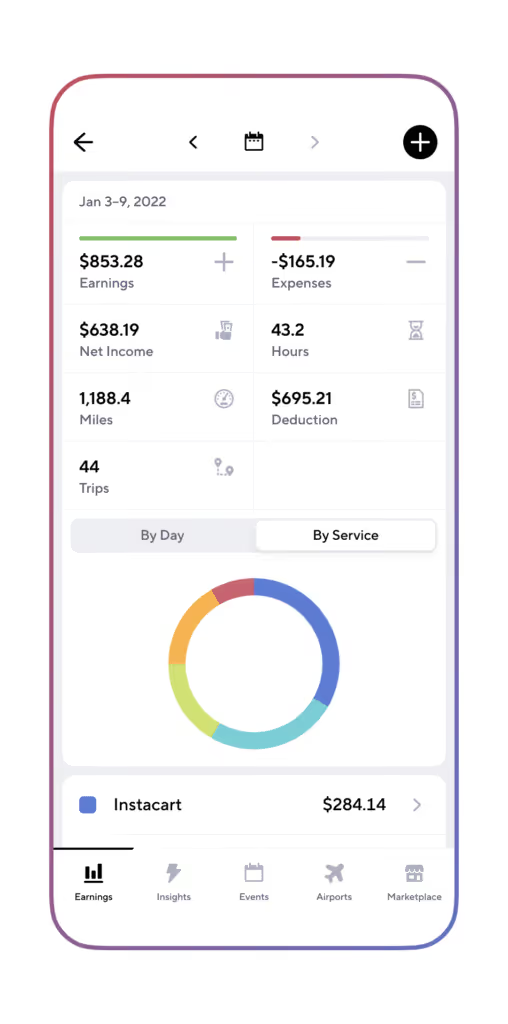
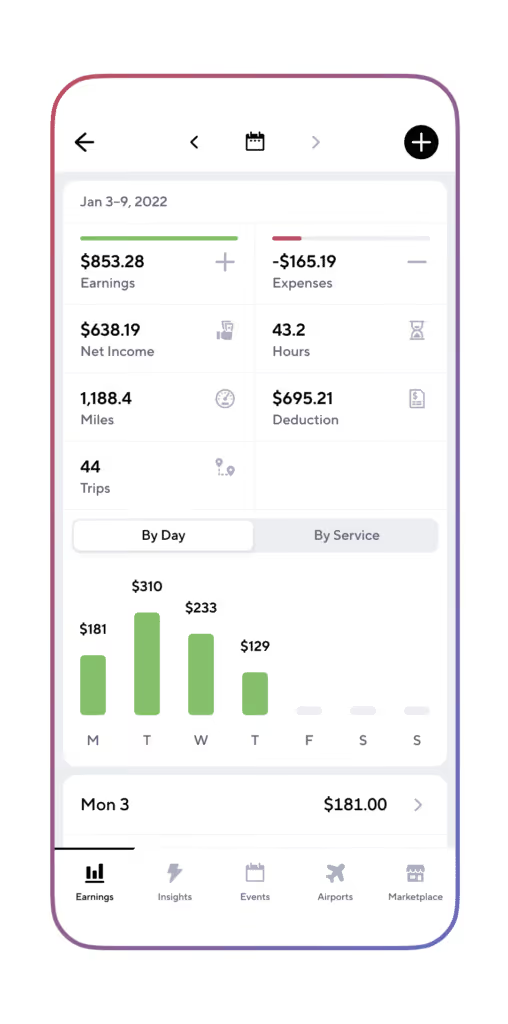
Gridwise App Screenshots
Gridwise also keeps track of your expenses. Simply enter them as you spend. Repairs, fuel, accessories, and more can add up to some sweet tax deductions at the end of the year.
This is all pretty amazing, but there’s even more! With Gridwise, you’ll know about road conditions, traffic, and crowd creators such as concerts and sporting events. You’ll also be able to see if there are any snarls around the airport, thanks to the Gridwise airport traffic feature.
In the Perks tab, you’ll find deals and discounts for drivers, easy access to our info-packed blog and our informative yet entertaining Gridwise YouTube channel. Get in on the gas card giveaways that are part of the fun in our Facebook community!
Gridwise is always there for you, helping you maximize profits and be the best driver for Flex, and all the gigs you run! Download the Gridwise app today.
Are you looking for more delivery resources?

Need a break from driving The best side gig for drivers
Driving is a great way to make a living. You are, for the most part, your own boss. You can earn a reasonable amount of money in short periods of time. And the work can be fun and engaging, especially if you like people and enjoy being of service to others.
There are downsides to driving, though. What if your car’s in the shop, or you can’t drive until you resolve a deactivation dispute, or you have a minor injury that puts you out of commission?
Another downside to driving is that it can be seasonal. When people go out on the town, need to get to and from their work, or travel through airports, train stations, and hotels, business is great. But what happens when business isn’t so great? Putting all your earning eggs into the single basket of driving for rideshare and/or delivery isn’t all that wise.
It’s a proven fact that creating multiple streams of income is a smart financial move. So, we’re offering some ideas for developing a life that lets you continue driving, but doesn’t leave you without any cash flow when driver incentives fizzle and surge prices are nowhere to be found.
Here’s what we’ll cover:
- Multiple streams of income: things to consider
- Three side gigs that can help you stash cash
- The best side gig for drivers
Multiple streams of income: Things to consider
Creating more than one way to make money is a smart move for drivers. Not only could you find yourself falling short when business is bad; you could simply get sick of the driving grind. Schedule changes, family obligations, or just the need to crank out more money to pay for unexpected expenses are other good reasons for developing side gigs that keep you out of the car and still earning money.
Once you decide this is something you want to do, you’ll have to choose jobs that help you make money fast, and are easy or interesting enough to make you want to do them. Here are some points you’ll want to think about:
- Use your skills. Rather than having to take extensive training, choose something that you already are well qualified to do.
- Convert crafting and tinkering to cash. Take a hobby, from making whimsical picture frames to playing music or detailing cars, and get it to make money for you.
- Keep it basic. Choose a side hustle that doesn’t take a tremendous amount of effort or marketing to do. This is probably the most important element you’ll want from that extra stream of income you’re creating.
Three kinds of side gigs that can help you stash cash
“Second career” gigs. There’s an enormous number of online, work-from-home type opportunities for people with skills these days. Consider bookkeeping, being a virtual assistant, translating, or transcribing. Or, you could teach English, write for blogs, develop websites, or venture into social media marketing. The benefit of these gigs is the high-income potential – but remember, you have to be fully qualified to do any of them. If you have to take an expensive training course, this tier of side gigs might require a hefty upfront investment.
“Roll up your sleeves” gigs. These jobs require your willingness to use your hands, your strength, and/or your artistic talents. Some examples include performing odd jobs, pet sitting, moving, cleaning, house painting, car detailing, or even child care. The plus side here is that you might already have the equipment you need, especially if you have a hobby that’s similar to the work you’d be doing. The potential downside is the physical energy you’ll need to do any of these kinds of jobs. If you’re doing this and driving, you might run out of energy faster than you thought possible.
“Sit back and watch the money flow” gigs. This kind of work is good for people with varying credentials who don’t want to exert much physical effort. You could, for instance, be an affiliate for a company. All that’s required of you is to set up a website for people to click through, and you’ll receive commissions on purchases that are made.
If you’d like to engage yourself more, another option is being a panelist for a product tester or survey firm. You’ll be amazed when you find out how much money you can make with this kind of gig. You work as little or as much as you want, you can be your own boss, and you participate in work that interests and engages you. Sounds like driving, without the driving, right? That’s the positive aspect of this kind of gig. The negative is, so many that are available aren’t trustworthy. You need to be careful and discerning before you get involved.
The best side gig for drivers: ACOP
Let’s recap what we discussed earlier – criteria for the best side gig for drivers. You’ll want something that allows you to:
- Use skills you already have
- Convert a hobby into a side job; and/or
- Keep it basic
Of all the side gigs we can envision, the one that brings all these attributes together is being a panelist for a survey firm. Why? One big reason is flexibility. Being a panelist is one of the “sit back and watch the money flow” gigs, meaning that hours are flexible; you are your own boss, and you can choose to work with areas that interest you and allow you to use your skills and talents.
Our cautionary words from earlier still apply, however. If being a panelist interests you, it’s essential to find a firm that’s honest, pays well, and has a sterling reputation. We’ve searched through multiple survey companies, and found one that fits the criteria needed to be the best side gig for drivers: American Consumer Opinion Panel (ACOP).
Gridwise has partnered with ACOP so we can offer great opportunities for drivers. It’s a dynamic company that offers a wide range of products and services for drivers to choose from. And best of all, ACOP passes our test for reliability, honesty, and fairness.
One of the best examples of American Consumer Opinion being a great company is what they don’t do. Based on a list of criteria included in a Balance Everyday article, reputable firms like American Consumer Opinion, will never:
- Require you to pay a membership fee
- Guarantee you a set income
- Mislead you about how you’ll be compensated
- Ask for personal information that is not necessary for the task(s)
- Request credit card numbers, bank account info, or Social Security numbers
- Sell member information to third parties
On its website, American Consumer Opinion posts a privacy policy you can rely on, and it’s a member in good standing of the Better Business Bureau.
Also, ACOP is highly rated by SurveyPolice, a group that offers honest assessments of online paid survey sites. Referring to American Consumer Opinion as a “research powerhouse,” SurveyPolice writes: “The website has been online for more than 20 years and with millions of survey takers worldwide and millions of dollars in payments, ACOP is a safe and legit survey site.”
American Consumer Opinion gives drivers looking for a side gig exactly what they’re looking for. Here’s how it works:
- Sign up for FREE.
- Answer a few questions about yourself (this will tell ACOP what kinds of surveys to send).
- Follow a link sent to your email to navigate to your ACOP Dashboard.
- Select surveys you want to take; points are listed, so you’ll know they’re worth your time.
- Opt in to receive emails alerting you to surveys you might like, or just use the dashboard.
- Earn points for your time, and get cash rewards.
ACOP surveys are interesting and quick, and the points add up rapidly. The average survey takes only 10 minutes to complete – you could do that while waiting for the airport queue to dwindle down. And, if you want, you can expand into product testing and evaluating marketing campaigns.
With ACOP, you get everything you need in a viable side gig, especially a way to create a whole new stream of income while you continue to drive. Sign up for ACOP today, get your voice heard, and make your opinion count … while getting paid for doing so.
10 Must-Have (and Nice-to-Have) Items for Drivers - Own It Now & Pay Over Time!
What are the items drivers need, and what are just nice to have? There are a few basic items we can’t do our jobs without - and some items that simply make our jobs easier and more fun, both in the car and at home.
In this post, we’re going to look at some of the stuff drivers need and crave, and show you how to get them, even if you think you don’t have the cash or can’t get the credit to get them now. Here’s how it will go:
- 5 must-have items
- 5 nice-to-have things for your car- and beyond
- Zebit: An easy way to buy today and pay over time for what you need...and what you want
5 must-have items
We’re giving you some general descriptions of here - but if you click on the links you’ll see the many choices available for all the items we mention.
- Tires. We can’t think of anything drivers need more than good tires. For one thing, rideshare and delivery drivers have their rubber meeting the road a lot more than most. Plus, if you get a flat tire, it can be a two-tire expense to ensure your car is aligned properly. Tires: do you need them? Oh, yeah. You bet! Need help affording them? Check out Zebit and pay over time without any hidden fees.
- Phone. This is the runner-up in must-haves, because without a decent smartphone, working is impossible! Unless you find a deal that’s as rare as it is sweet, you’re probably going to pay a substantial amount of cash to get one that will do the things you need. Next to your car itself, a decent smartphone, along with a serviceable phone plan, will be among the most important assets you’ll invest in as a driver.
- Smartphone car mount. You can try to drive without a car mount for your phone, but it wouldn’t be very safe or convenient. A good smartphone car mount is secure and flexible, in that it sticks to the windshield or dash, and it can be adjusted within easy reach. You will touch that phone more as a driver than you thought possible, so having it will make a huge difference to your safety and productivity. Translation: you need to get a car mount!
- Protective mats. All it takes is one spill on a delivery run or a “whoops” moment from a drunk passenger in your back seat to remind you how important it is to protect your car’s floor. Match the color of your vehicle or buy some that show your team spirit. Loyalty is something you can count on from a nice set of mats - they’ll faithfully protect your car from damage and smells that just won’t go away.
- Media receiver. This one might not seem like a “must-have” but if your car’s system isn’t serving you well, you need to have one that gives you decent sound and reception that you can count on. Would you want to go for a rideshare trip without some decent tunes? Your passengers won’t either. And...if you’re delivering, you’ll be far less lonely if you have the ability to play music, podcasts, and sports broadcasts to keep you company while you’re driving around.
5 nice-to-have items
- Remote car starter. If you’ve ever sat in a car that’s cold enough to freeze your fingers or hot enough to burn your “buns,” you know why you’d want a remote car starter. From the comfort of your home, you can get the vehicle going, let the engine warm up, and allow the heat or A/C do its thing until the car reaches a reasonable level of climate comfort. Once purchased, this “nice-to-have” item becomes something you can’t live without.
- Radar detector. Who needs to get speeding tickets? No one, really, but when you drive for a living, you can’t afford to get them. A radar detector can make things much easier for you. They’re legal everywhere in the US except Washington, D.C. and Virginia, and you can’t use them on military bases - but the rest of the states are fair game. Your radar detector will pay for itself the first time it saves you from a 3-digit fine and a point on your insurance.
- TVs and appliances. While you don’t need a nice TV or any appliances in your vehicle, you do need them at home! These high-cost items are not always so easy to afford, but they are the kind of thing you might have to buy on the spur of the moment. No household is going to run very smoothly when a TV, refrigerator, or clothes dryer bites the dust. It’s good to know where you can get replacements, fast - and how you can find ways to afford the unexpected expense. Zebit is a great way to get them without stretching our budget - or credit - to the limit.
- Electronics. While some of us may think of electronics as a “must-have,” the truth is we don’t need a great gaming system, high-powered laptop, or our very own little drone to do our job. But...having these things makes our jobs a lot more fun, especially during downtime. The problem with electronics is, again...they’re pricey! Can we always afford them? In many cases, no. That’s why we recommend Zebit, an awesome way to get what you need, when you need it.
- Gift cards and gift items. Most of the time, drivers do well when it comes to pulling in money, but we all know that some months are better than others. When we have a slow month that happens to coincide with a gifting occasion, say a holiday, birthday, or special occasion, it’s hard to give the way we want. This is especially true when it comes to babies and children. Try telling a tot that the tipping was slow last month, and that’s why they can’t have the boots they wanted for their birthday! It’s nice to be able to give gifts, and with fluctuations in earnings, we need to find ways that make it easy.
Zebit: An easy way buy what you need...and what you want
For both the must-have and nice-to-have items in our lives, money is always a factor. With things as they are these days, it’s not easy to get or maintain a high enough credit rating to finance big purchases such as the ones we’ve mentioned here. What can you do when you need tires, or a child you love just has to get the latest video game console - and you’re suffering from “funds-are-low” syndrome?
You won’t want to apply for yet another credit card, particularly if you’re going to have it ding your credit score. You won’t want to go without these things, either, and now...you don’t have to!
Zebit is here to rescue you when you need help getting the things you want. Pay for big ticket items over time, without any hidden fees! With Zebit, you could get a max of $2,500 in credit to shop Zebit’s site containing thousands of products, so you can get the important things you need...and some stuff you just want, too.
Shop for what you want on the Zebit site, and if approved, use your credit from Zebit to pay over time.
When you can’t pay in full for large purchases, then make them through Zebit. Worried about applying and getting hit on your FICO score? Don’t. Zebit’s application process is easy. Zebit verifies your information using certain specialty credit reporting agencies, which does not pull or affect your FICO score. They simply verify your identity and your income.
Register for Zebit today and you could get the purchasing power you need to buy your must-have and nice-to-have items without hidden fees! Do you have an item that you really need or want to buy? Sign up - and you could get it with Zebit today!
Case Study: How a courier company rapidly expanded their fleet at a low driver acquisition cost
“I loved it, it was super fast and super efficient.”
What Is Curri?
Curri is a new innovator in the world of goods delivery. Specializing in construction and industrial supplies delivery, Curri focuses on the B2B side of the industry. They’ve described themselves as “the Uber for construction material delivery” and “a one-stop-shop construction delivery service with flatbeds, trucks and cars available for hotshot, scheduled, daily routes and LTL/FTL deliveries.”
Drivers who use the Curri app perform a wide range of services, including:
- Picking up and transporting items that need prompt deliveries
- Returning pick-ups from customers
- Doing branch transfers
- Handling multiple pick-up and drop-off deliveries
- Recurring multi-stop deliveries, known as “Daily Routes”
Curri offers itself to drivers as an alternative to rideshare or food delivery. The recurring “Daily Routes” and long-distance deliveries can ensure a consistent and reliable stream of income for drivers – something neither rideshare driving nor food delivery can always provide.
Problem
As a relative newcomer to the delivery scene, Curri is seeking to expand its driver base and quickly start fulfilling orders. But it has stiff competition from well-established competitors like Uber, Lyft, and DoorDash, just to name a few. In fact, the market is saturated with employment opportunities for drivers.
Curri needed a way to advertise to drivers while keeping driver acquisition cost low. They’d been advertising using Facebook, Google Ads, and Indeed, but weren’t seeing the results they wanted. Also, their driver acquisition cost across the three platforms was high.
Then a Curri sales representative came across a Gridwise Facebook ad featuring Gridwise’s advertising services. When he brought it up to his team, they knew they were on to something.
Solution
Gridwise knows their target audience extremely well and is able to connect with them in a way that gets their attention. Through the Gridwise app, drivers can be targeted by region and by demographic. The Gridwise team has experience with crafting compelling emails, banners, and ads for both specifically targeted and national audiences.
Alice Warnier, the Growth Marketing Manager at Curri, headed up the project along with Alex and Clay on the Gridwise Brand Partnership team. She deeply appreciated the cost-effective solutions and the quick turnaround time for deliverables. Alice was especially happy with the messaging that Gridwise created for the Curri emails and ads.
“They really understood what we wanted and what we needed the tone of the brand voice to be.”
Results
Within 10 days, Alex and Clay had campaigns for Alice up and running. The Gridwise content team designed ads, emails, in-app banners, and a blog post to encourage drivers to sign up with Curri.
The campaigns were a huge and instant success.
“By advertising with Gridwise, our CPA was better than Facebook’s!”
Gridwise was able to help Curri meet and exceed their initial conversions goal within the first week of the campaigns being launched. Additionally, Curri kept their cost per acquisition well under their original threshold. Hundreds of drivers downloaded the app within 20 days of the launch.
Alice and the rest of the Curri team look forward to growing their fleet as Gridwise continues to expand its user base.
Trabaje de forma más inteligente. Gane más.
Ya sea que conduzcas, entregues o recojas turnos, Gridwise te ayuda a hacer un seguimiento de las ganancias, el kilometraje y el rendimiento para que puedas mantener el control de tu trabajo. Descarga la aplicación y toma las riendas hoy mismo.
