Blog de Gridwise
¡Lee el blog de Gridwise para obtener consejos y sugerencias sobre cómo ganar más dinero mientras conduces para Lyft, Uber, DoorDash, GrubHub y más!

The Gridwise Job Board: Find Your Ideal Job or Gig Work
Gridwise is an essential assistant app created by gig workers for gig workers. Our mission is to support those engaged in gig work in every way possible. We understand how challenging it can be to deal with income instability, a lack of benefits, and job insecurity that often comes with gig work. The Gridwise app tracks and organizes earnings and expenses, and offers a wide array of discounts, deals, and services that make the lives of independent contractors easier and more rewarding.
We firmly believe it’s possible to make a viable living and create a gig experience that offers flexible hours, variety, and excitement. With issues such as consistent earnings and job security in mind, Gridwise is proud to offer a centralized platform that shows you how to find gig work and secure reliable opportunities. We’re proud to introduce the Gridwise Job Board.
[elementor-template id="20891"]
The Gridwise Job Board: Key features
Because Gridwise is dedicated to serving the gig worker community, we’ve filled the Gridwise Job Board with useful features that won’t waste your precious time.
- Comprehensive listings. Find part-time, full-time, temporary, and per-task work. Drive or deliver with your vehicle, utilize an employer’s vehicle, or even find non-driving gig work.
- User-friendly interface. Find the jobs that are right for you with a tap of your screen.
- Verified opportunities. We vet the jobs before they are listed to ensure you’re getting high-quality job postings.
How to get more gig work, seasonal, part-time or full-time jobs with the Gridwise Job Board
Looking specifically for “gig work apps” or “gig jobs near me?” You’re in luck. Our filters and search functions send you directly to the listings you seek.
Here’s how it works.
- Access the Job Board via the Gridwise website.
- Search for jobs by type, location, and more.
- Select the job that interests you, and read all about it.
- Scroll through the description, and if it appeals to you, click “Apply for job.”
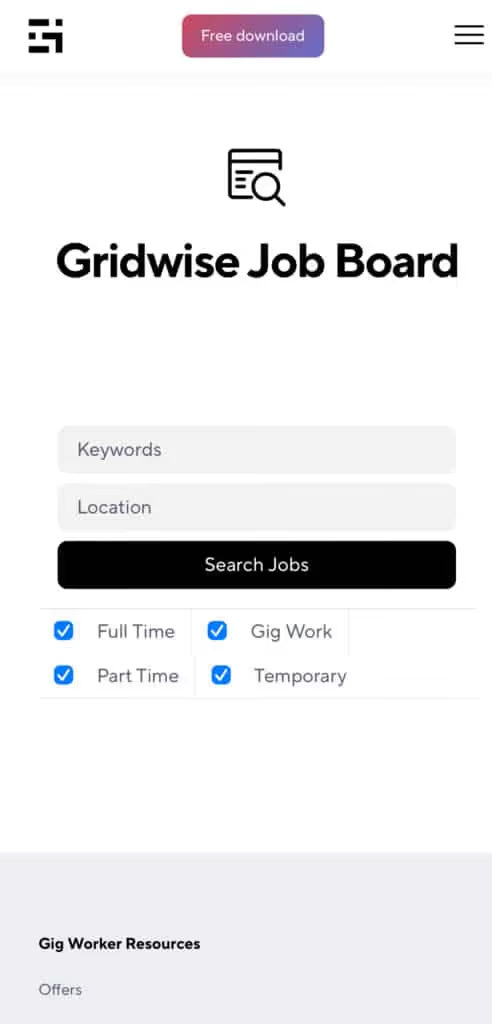
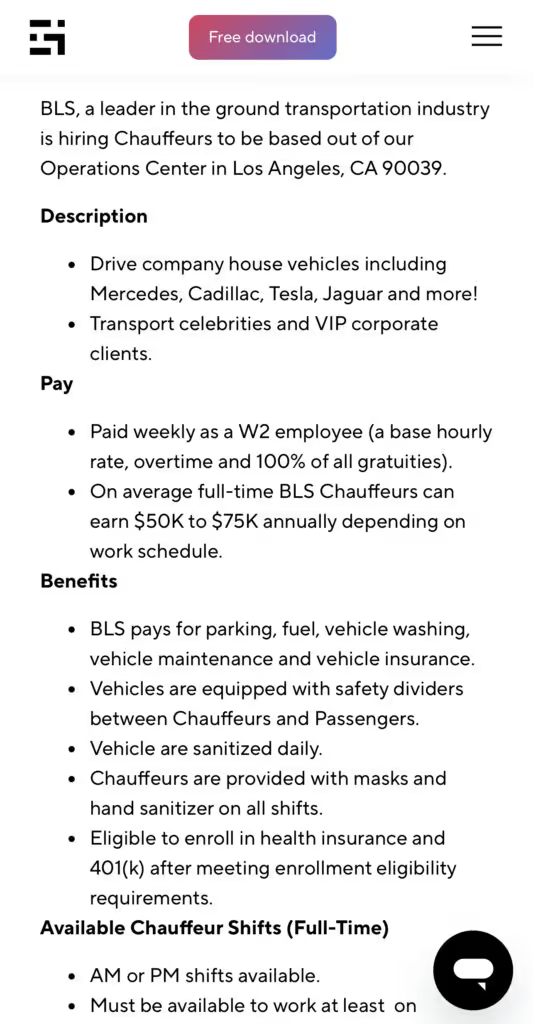
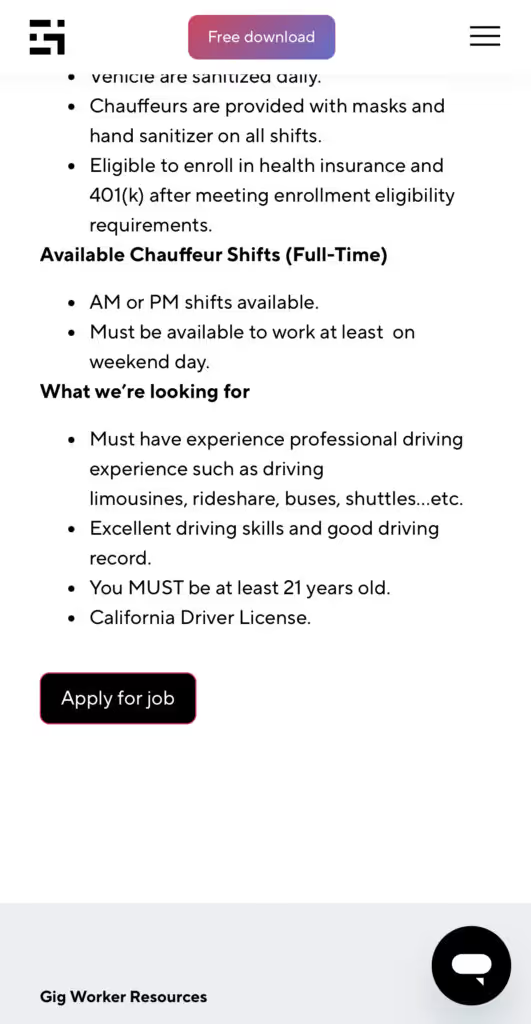
Many types of jobs are available. Adjust the search filter to see the full variety of opportunities that will let you cash in. Deliver food, set up catering, do rideshare driving, get paid for doing package delivery, and much more. You’ll find short-term gigs, long-term contracts, and part-time positions.
Perks of the Gridwise Job Board for gig workers
Gig workers who know how to make extra money will appreciate how the Gridwise Job Board lets you multiply your chances of bringing in big earnings. Here’s how:
- Increased stability. Use the Gridwise Job Board to find part-time or permanent jobs in addition to the part-time gigs you already have. Always keep a steady stream of earning opportunities flowing toward you.
- Flexibility and autonomy. Choose jobs that fit your schedule, work around other jobs and family duties, and still leave room for some fun in your life. Discover side hustles to supplement your full-time job, permanently or just for the season.
- Skill development. Find part-time work that lets you use a skill you already have, or try your hand at something new. It’s a smart way to develop a portfolio to showcase what you can do, or even to find permanent employment.
Get Gridwise and stay up to date on the Gridwise Job Board
Gig workers need plenty of information and assistance, and Gridwise is here to give it to you. Download the app and get essential features such as
- seamless earnings tracking
- mileage tracking
- expense recording, including notes
- low-cost and no-cost insurance benefits
- access to affordable medical, dental, vision, mental health, and alternative care
- professional services including legal and financial help
- deals and discounts
- weather, events, and traffic reports
- inside information on where and when to drive
[elementor-template id="20936"]
More to know about gig work:

5 Best Mileage Trackers For Gig Drivers
Many drivers ask, “Do I really need a mileage tracking app?” The answer is simple: only if you want to have an accurate count of all the miles you can legally deduct from your taxable income! You might think your rideshare or delivery driving app has got you covered. After all, they do quite a good job of logging the miles you drive while you’re on a trip or delivery. But, if you want to have the best app to track mileage for Uber, Lyft, Doordash, Instacart, or the other apps you may use, you need more. Why is that?
Without a separate tracker, you’re missing the miles you drive in between pings. Did you realize that all the miles you drive, from the moment you begin your shift until it’s over (as long as you don’t drive several miles on a break to hang with your friends), are tax deductible! That means you need something besides your driving app to keep an accurate count of your travels. Read this Gridwise post to see how important it is to keep track of every deductible mile.
You won’t be surprised to hear that there’s an app for tracking miles. In fact, there are several of them. Here, we’re going to tell you about five top mileage tracking apps, and help you figure out which one is best for you.
Before we get to the list and identify the best mileage tracker app, let’s clarify what exactly a mileage tracking app is. According to G2.com’s technology glossary, mileage tracking is done for the purpose of keeping a log of mileage that is either reimbursable or tax deductible.
And yes, of course you can track your miles simply by taking readings on your odometer. But are you really prepared to account for how many miles you drove for personal reasons and subtract them from the total to get your business mileage? Even if you can remember all that and do the arithmetic, if you want an accurate reading of the miles you drive for business, and can therefore deduct, a mileage tracking app will save you a lot of trouble and prevent you from making costly errors.
Plus, as a gig driver, you have specific needs when it comes to a mileage tracker. Ideally, you’d be able to handle mileage tracking and several other functions all in one app. It can be maddening enough to deal with driving apps, particularly if you’re an avid multi-apper. You would want your mileage tracker app to help you keep account of other aspects of your business, including income, expenses, and inside information about the art of gig driving.
Not all mileage apps are equal, to be sure! Let’s look at five of the best apps to track mileage and figure out which is the best app to track mileage with Uber and Lyft, or what mileage tracker app is best for DoorDash.
[elementor-template id="20891"]
1. Zoho Expense
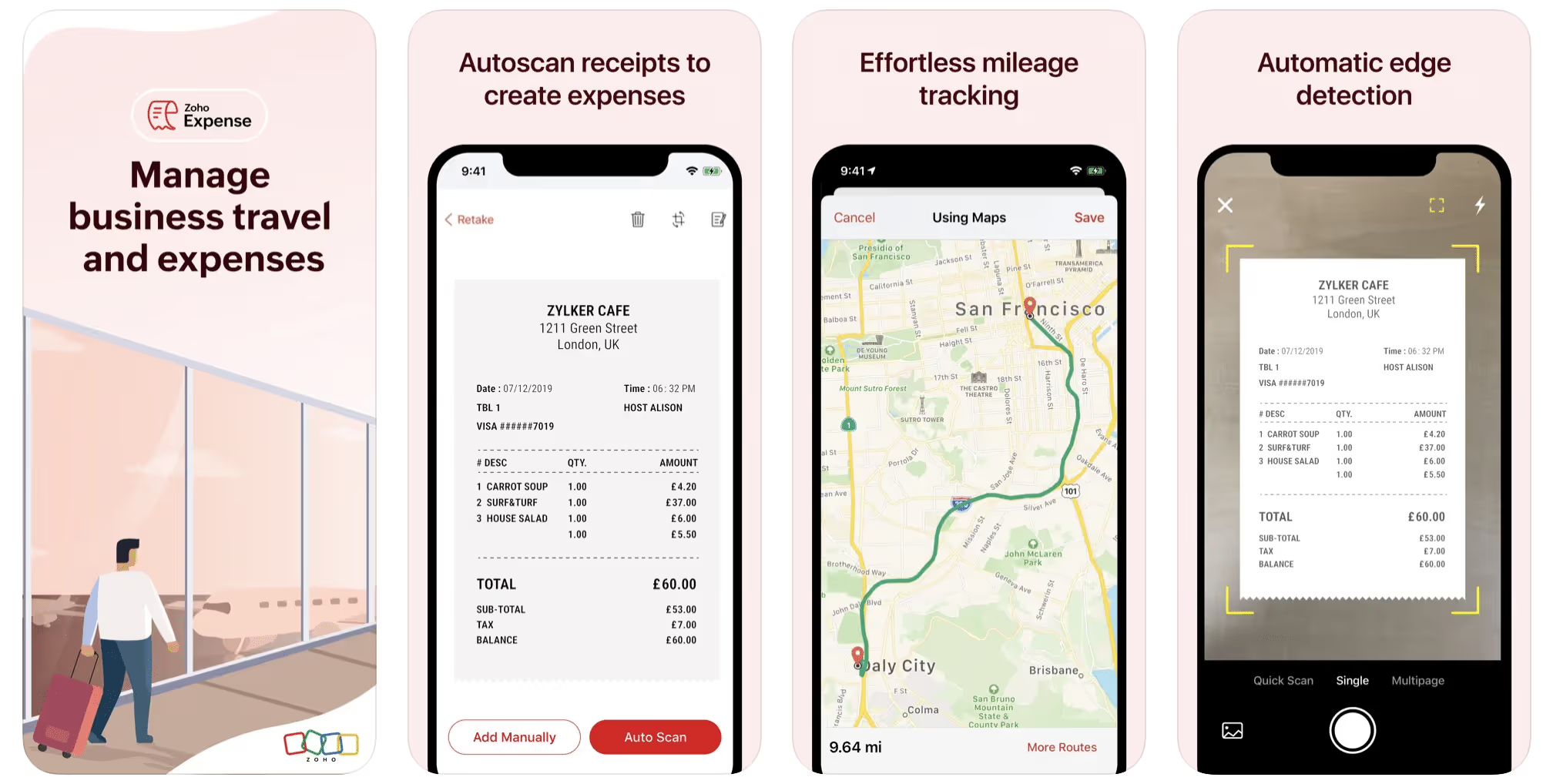
First up is Zoho Expense, which does exactly what its name says. This app is designed to allow companies to give employees a uniform way to create and submit expense reports. It can be used by individuals, including gig drivers, as well.
It includes a mileage tracker, as well as features that let you track other deductible expenses, including the ability to scan and record receipts.
Available on Android and Apple: Yes
Ratings: 4.8 stars on App Store, 4.7 stars on Google Play
Free Version: Yes
Subscription price: $3 per month, billed annually
Created specifically for gig drivers: No
2. Quickbooks Online
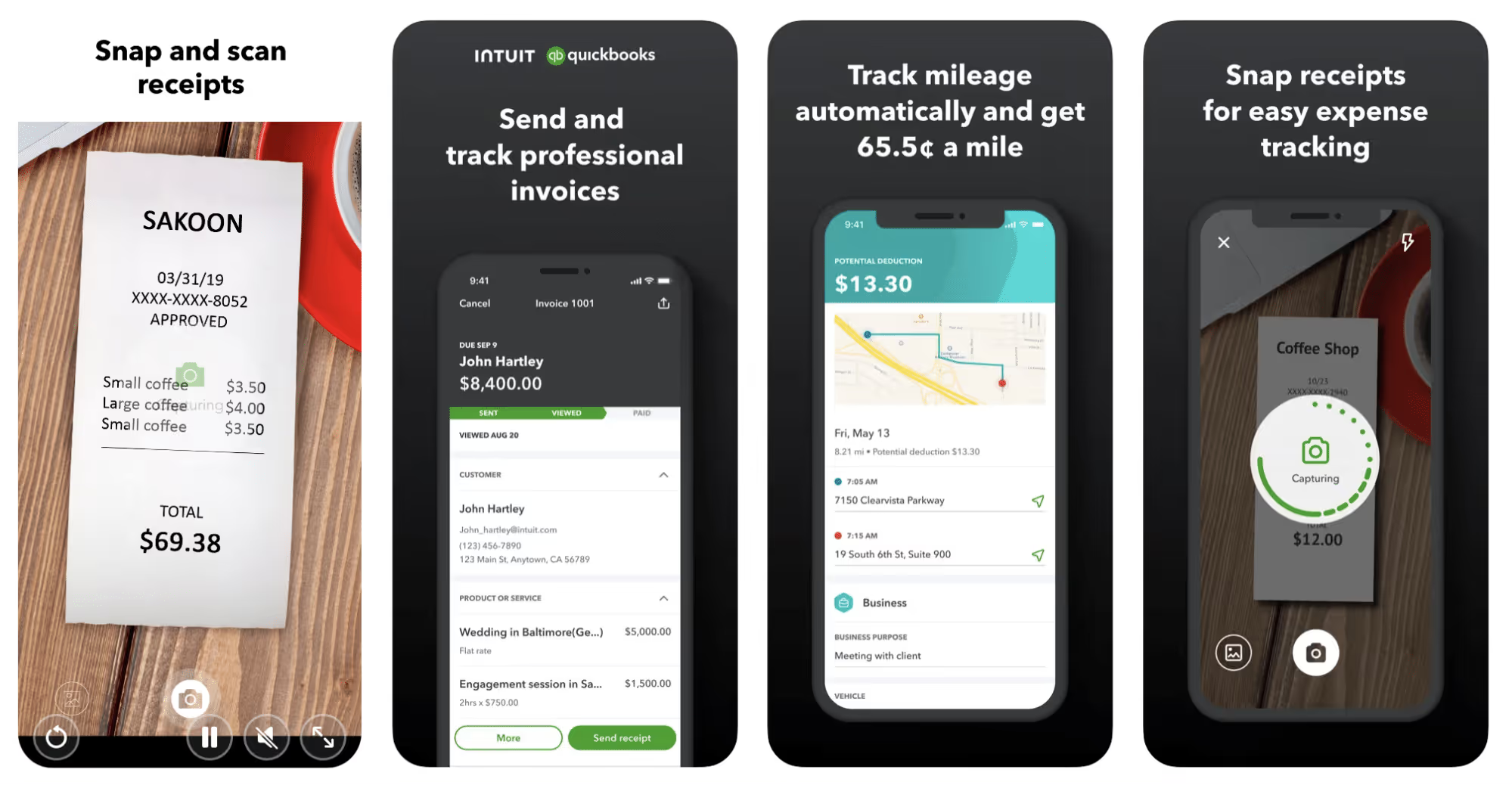
Quickbooks Online is a cloud-based app that allows you to track your mileage, earnings, and expenses. The information you enter can then be used to generate various reports that prepare you for tax time. It also allows you to create graphs that illustrate your cash flow, and includes a receipt scanner so you can instantly record deductible expenses. Quickbooks is popular, highly reliable, and designed mainly to help people keep track of their small businesses.
Available on Android and Apple: Yes
Ratings: 4.7 stars on App Store, 4.4 stars on Google Play
Free version: 30-day free trial
Subscription price: $15 per month for basic version if purchased for 3 months or more
Created specifically for gig drivers: No
Source: quickbooks.intuit.com
3. Shoeboxed
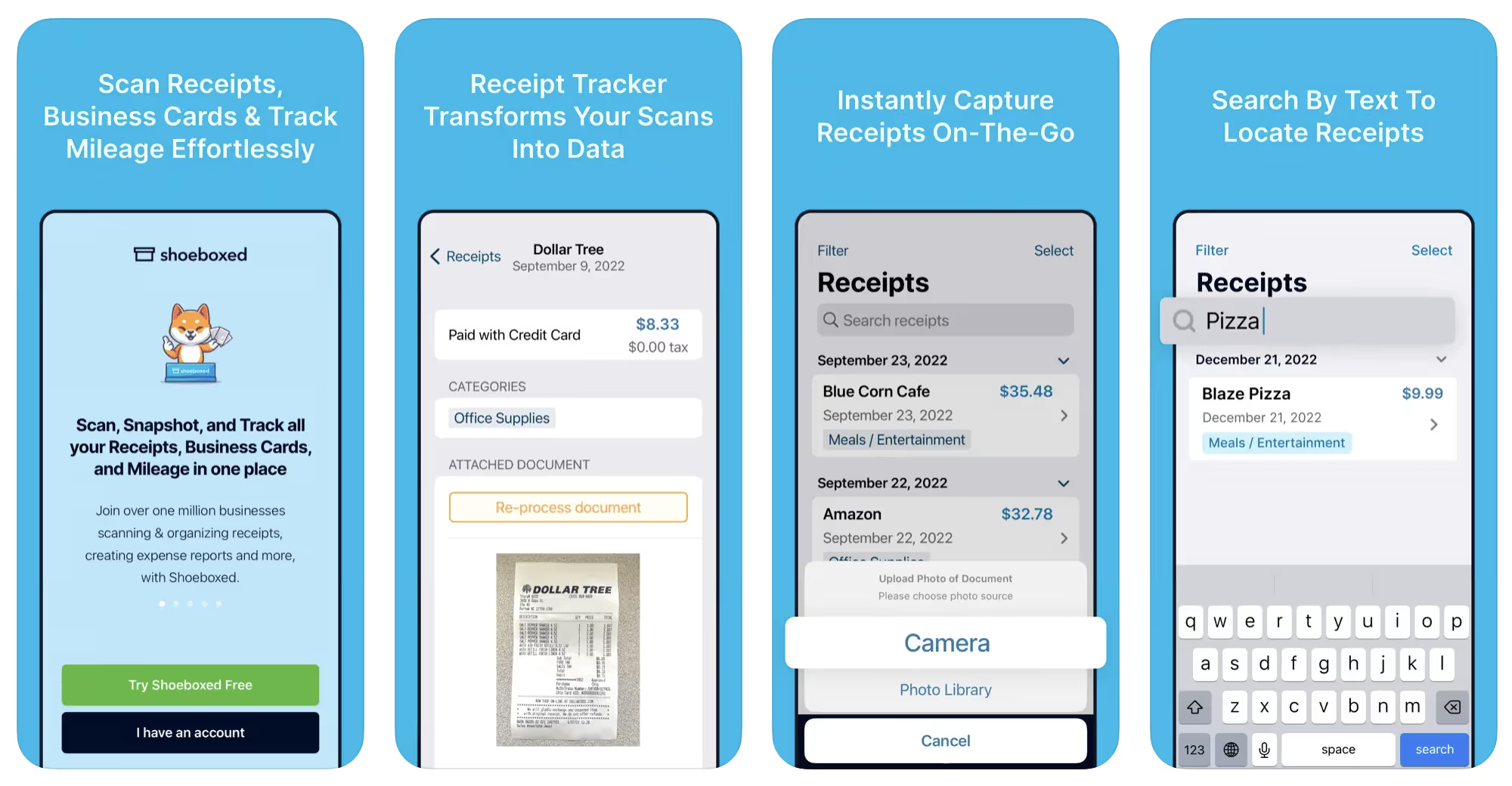
Shoeboxed started in 2007 as a service for scanning paper receipts into digital form. Now the app offers a free mileage tracker and has enabled users to scan receipts directly. It touts itself as the best mileage tracking app for DoorDash, but there are some elements missing that Dashers might like to have. While it provides features that record your expenses and prepare you for tax season, it doesn’t automatically track your earnings. The mileage tracker has a system where you can drop pins along your routes to make the tracking more precise, identifying those legs of a trip that you make for business purposes. The mileage tracker is “free” once you sign up for the basic version.
Available on Android and Apple: Yes
Ratings: 4.5 stars on App Store, 2.3 stars on Google Play
Free version: No
Subscription price: $18 per month for basic version
Created specifically for gig drivers: No
Source: blog.shoeboxed.com
4. Stride
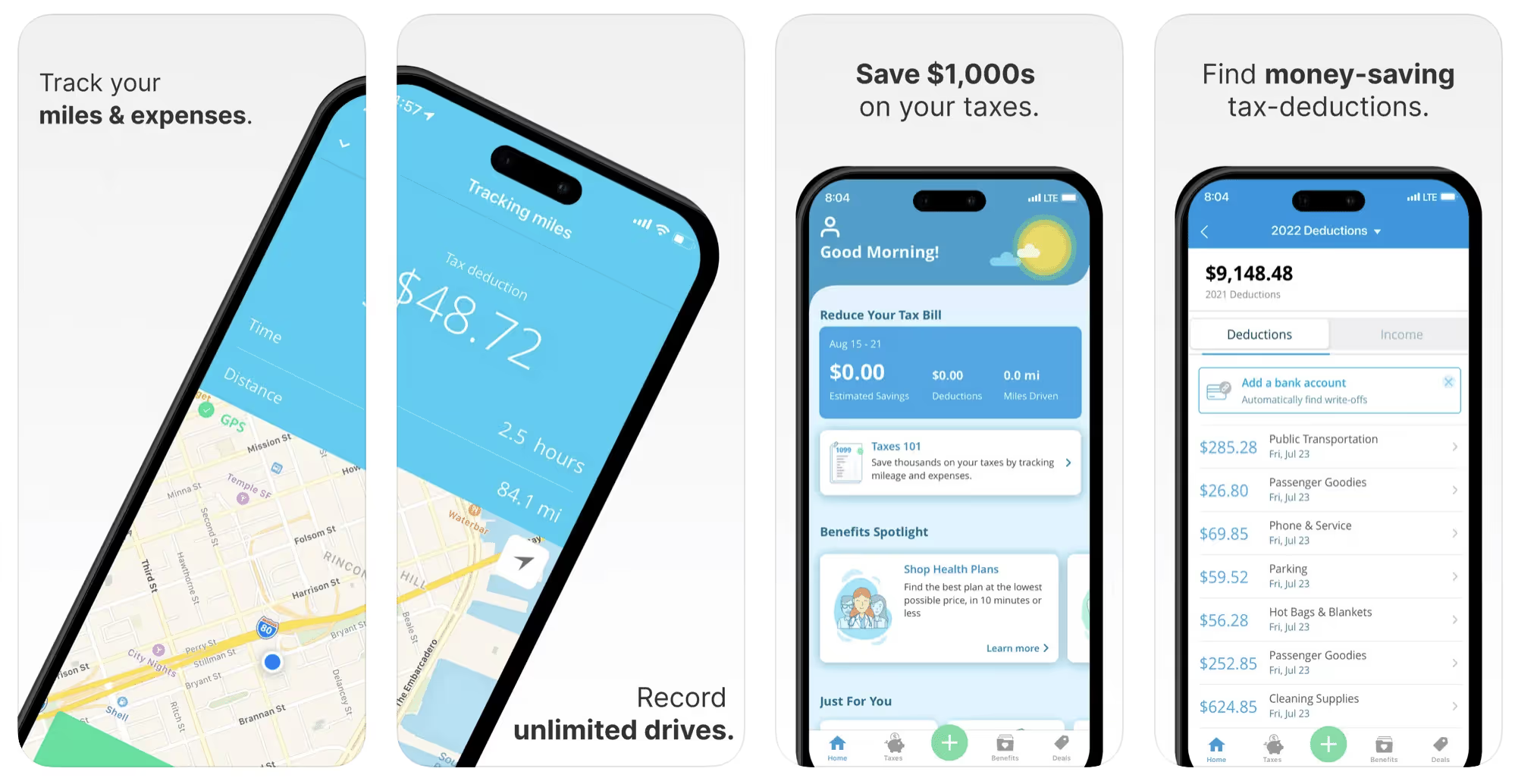
This free mileage tracker does a fair job of keeping track of the distances you rack up while gig driving, but it doesn’t automatically track earnings. It can be a big help, though, in tracking your expenses. You can link Stride to your bank account, and it will automatically scan your expenses to identify items you can potentially deduct. The app is totally free. This could make it the best free mileage tracker app, but there is a small price to pay. The app will persistently push you to consider various insurance plans that they are affiliated with. If you don’t mind that, this is a solid mileage tracker, even if it doesn’t track your earnings.
Available on Android and Apple: Yes
Ratings: 4.8 stars on App Store, 4.6 stars on Google Play
Free version: Yes
Subscription price: None. The app is free.
Created specifically for gig drivers: No
5. Gridwise
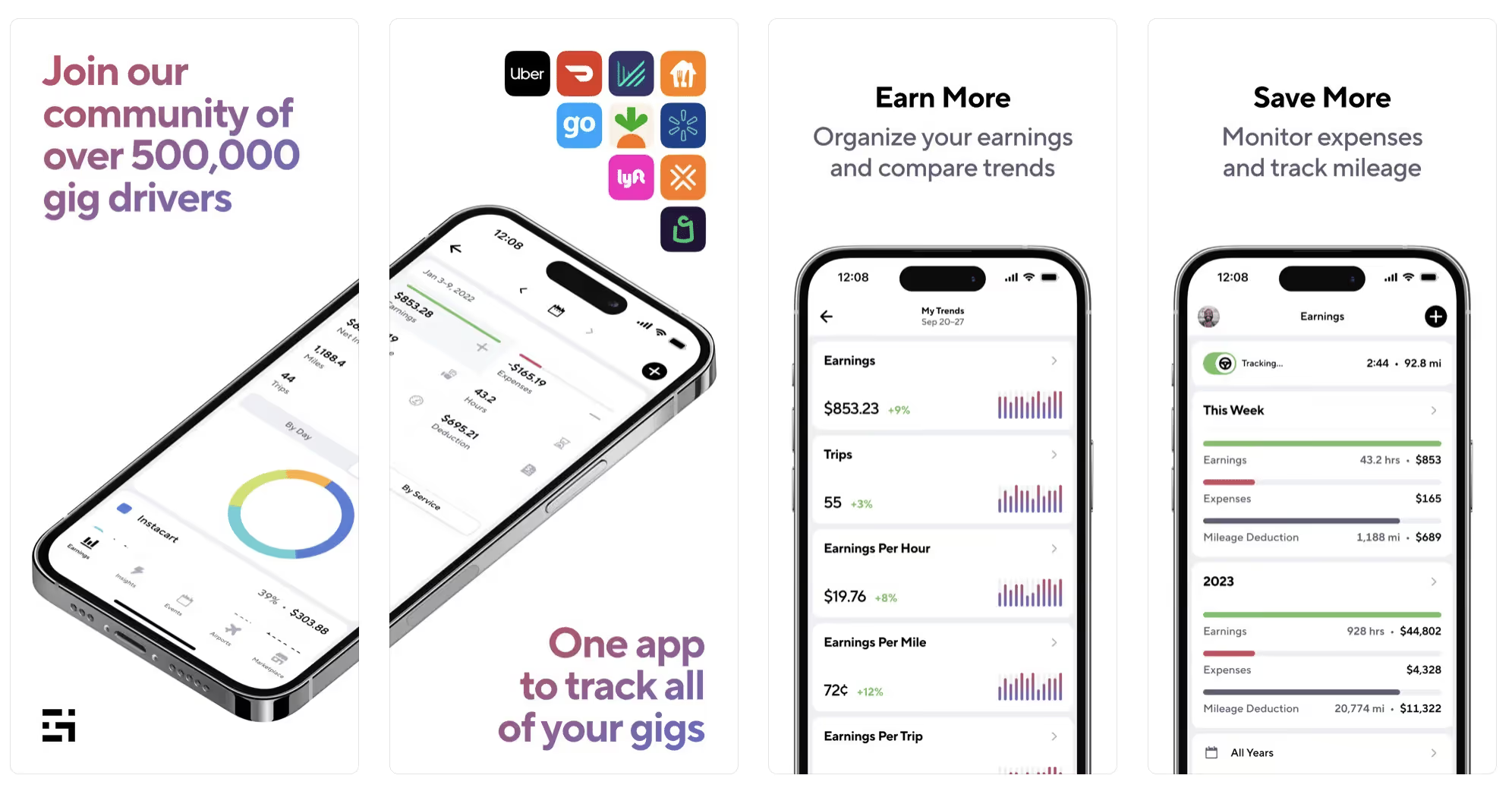
Gridwise has a free mileage tracker and free features that record your income and expenses. It gives you access to insurance and benefits, as well as insights about the best times and places to make the most money while gig driving. The Gridwise mileage tracker captures all the miles you drive while you’re on your driving shift, and it can be used if you have other trips you need to make which qualify as business travel.
Drivers love it because it is geared toward the needs of rideshare and delivery workers, providing free information about airport departures and arrivals, event start and let out times, weather, traffic, and more. The Gridwise Plus subscription adds value by providing additional insights and reports, discounts on benefits, the ability to export data in .csv format,, and more.
Available on Android and Apple: Yes
Ratings: 4.9 stars on App Store, 4.6 stars on Google Play
Free version: Yes
Subscription price: $9.95 per month for Gridwise Plus, or $95.99 per year (a $23.41 savings)
Created specifically for gig drivers: Yes!
What is the best mileage tracking app?
Now that we’ve checked them all out, we’re positive about the answer to that. Hands down, it’s Gridwise. Are we biased? You bet we are! But drivers love it too. Gridwise is the best mileage tracker app—and so much more. So many of the features are free, and the subscription to Gridwise Plus will pay for itself with additional insights to boost your earnings and deeper discounts on products and services.
Most important, Gridwise is designed specifically for gig drivers by experts who were once gig drivers themselves! Knowing what gig drivers need is a crucial step in creating an app that rideshare and delivery drivers can really use! Here are a few of the features, besides mileage tracking:
- seamless earnings tracking
- automatic, on/off toggle and manual mileage tracking
- mileage categorization
- airport, traffic, weather, and events information
- insights into where to drive and when to drive
- reports showing earnings across the platforms you use
- discounts on countless products and services for drivers
- additional resources for finding side gigs
- an informative and comprehensive blog
- affordable benefits, including insurance, medical, dental, and alternative practitioner discounts
- a community of drivers just like you
Don’t settle for just any app. Get the best mileage tracker, and so much more, from Gridwise!
[elementor-template id="21599"]

What Records Do Gig Drivers Need To Keep Track Of For Taxes?
* Gridwise does not provide tax, legal, or accounting advice. This material has been prepared for information purposes only, and is not intended to provide, and should not be relied on for tax, legal, or accounting advice. You should consult your own tax, legal, and accounting advisors before filing your return.
Record keeping? Who signed up for that? As a gig driver, it’s part of what you need to do to keep your business running. Don’t worry. It’s not as complicated as you might have been led to believe. This post will show you what you need to keep track of and the best ways to gather and preserve your tax-related records. We will cover
- How record keeping can help reduce income tax for freelancers
- Taxes and freelance work: Record keeping requirements
- Mileage tracking: Motives and methods
- More deductions and records to keep
- Make tax time easier
How record keeping can reduce income tax for freelancers
Tax time is not “fun time” for rideshare and delivery drivers. It’s easy to get used to watching your earnings pile up and come to believe they are all yours. Unfortunately, that isn’t the case. Gig work taxes can be especially painful because no one takes them out of your earnings for you, until the tax authorities insist that you do it for yourself.
You will need to show the tax authorities your income records, and they will gladly tell you to send them what they determine to be their fair share. Think that’s not fair? You’re not alone, but that doesn’t mean you’re going to get out of paying gig work taxes.
But you can find ways to pay the smallest amount that is legal and possible. The best way to defend yourself against having to pay astronomical amounts when you file your return is to know what expenses you can deduct from your gross income. When you subtract deductible expenses from your gross income, there is less left over to be taxed. This reduces the amount they can hit you with gig worker taxes. and can make your tax bill substantially lower.
While you want to keep good records so as to be in compliance with taxation entities such as the IRS, you also want to ensure you have proof of every last deductible expense you have accrued during the year. There are other records you must keep as well. Let’s look at some of the considerations you have, realizing that you now need to know how to do taxes as a freelancer.
Taxes and freelance work: Record keeping requirements
So many gig drivers fail to understand the responsibilities they have as independent contractors. Those who work part time for very few hours may even believe they don’t have to report the income they get from their driving gig payments. That would be a big mistake!
The company or companies you work for report your income to the IRS and state tax authorities. If you fail to report that income, you will risk some rather painful penalties. The IRS taxing side hustles is as much of a thing as the IRS taxing income from any other job. Your best bet is to report what you’ve earned, honestly and completely, and comply with other record keeping requirements such as
- gross income
- deductions and credits
- purchases (items you purchase and resell, such as snacks or bottled water)
- a log of all your mileage (or vehicle expenses, if greater)
- a list of all expenses and assets, such as utilities and other expenses associated with having a home office and equipment
- machinery and furniture you own, including when it was acquired, how much it cost, whether you previously took deductions on it, and selling price, if applicable (this includes your vehicle)
More things to consider:
- Pay attention to the retention of your records. You’ll need to keep all tax-return-related items— including income, deductions, and any tax credits reported— until the period of limitations runs out (3 years from date you filed, or 2 years from when you paid tax. If you have employees, keep your records for at least 4 years.)
- If you want to avoid paying self-employed taxes, you may want to set up a corporation or Limited Liability Corporation (LLC) for your business. This allows you to separate all your gig driving earnings from personal income, and permits you to take advantage of the additional advantages of working through a corporation. This includes exemption from self-employment taxes. You can learn more about how to pay self-employment taxes, if you opt for that, in this post from Keeper.
- You should always keep a separate checking account for your business, for convenience as well as clarity. While this is not a legal requirement, it is a smart move if you want to have an easier time managing your business.
- You are required, as an independent contractor, to file your taxes quarterly. Check out this Gridwise blog post for more information about quarterly tax payments and other matters that make filing delivery, Lyft and Uber taxes easier.
Mileage tracking: Motives and methods
Why you need to be meticulous about mileage
Mileage deduction, or the costs of operating your vehicle, will be the most important item to account for when you consider how to file taxes as a freelancer. While mileage is an important deduction for all independent contractors, as you might imagine, it’s even more essential for rideshare and delivery drivers.
There are two ways of keeping track of your mileage deduction. One is to use the IRS’ standard mileage deduction, which for 2022 is 58.5 cents per mile. This number takes into account the costs of operating your vehicle, from fuel and maintenance to registration, insurance, and depreciation. Alternatively, you can calculate all your own vehicle operating costs, but only after your first year of using the vehicle. You may discover that this second option allows you to have more money deducted from your taxable income. Learn more about the options for deducting your mileage in this Gridwise post.
No matter which way you decide to calculate the deductions for your mileage, you need to know what mileage you can and cannot deduct.
You can deduct
- miles driven to and from home when you go out to drive or deliver
- miles you accrue during your trips
- miles you drive on any other trips you make that are necessary as part of your business.
Examples:
- driving to return a lost cell phone or to an Uber Hub or another physical location where your company might make driver support available
- driving to pick up supplies, to get gas, or to have your car cleaned, serviced, or detailed, etc.
You cannot deduct
- miles you drive for personal trips
- miles for any trips you take that do not directly affect your business
Note: If imagining yourself becoming the not-so-proud owner of a shoebox filled with paper receipts gives you nightmares, stop worrying. Electronic records of purchases will satisfy reporting requirements. If you use cash, you can scan copies of your receipts, in some cases, right into your recording software or app. Gridwise and Keeper give you a simple to use interface that keeps all your receipts recorded without the messy pile of paper.
Mileage tracking methods
By now, you’re probably convinced that tracking mileage is important, despite all the other things drivers have to do. Now, let’s look at your options for keeping accurate records.
- Manual tracking: You can keep a logbook where you list every trip you make, starting and ending mileage, the date, and purpose of the trip. While this would work, it’s certainly not convenient. Besides, if that logbook gets lost, your plans for having a nice, fat tax deduction will go by the wayside.
- Spreadsheet: This is a bit more convenient and sophisticated way of tracking your business mileage. You’d need to be meticulous about making your entries, though. Even if you keep a spreadsheet app on your phone, it could be time consuming and inconvenient to keep doing it with all the other things going on in a rideshare or delivery driver’s day to day life.
- GPS-based mileage tracking apps: There are a bunch of apps that track mileage based on your GPS location, and most of them are pretty accurate and far more convenient than taking constant readings of your odometer. Your driving apps, such as Uber, Lyft, DoorDash, or Instacart, may also track your mileage, but be careful here. They will only track the miles you drive while you’re on a trip or delivery. They don’t count the miles you drive going to pick up a customer or when you make your move toward a restaurant or store.
Gridwise, on the other hand, will track all the miles you clock while you’re on your shift. All you need to do is make sure you start tracking the minute you leave home, and every gig driving mile will be logged. - OBD-II mileage tracking systems: There are plug-in modules that assess your vehicle’s mechanical health and track your miles. However, many authorities question the ability of OBD-II mileage tracking systems to get get accurate odometer readings. Insurance companies don’t consider them to be accurate enough gauges of odometer readings.
While mileage is a crucial deduction when you’re preparing your Uber, Lyft, or DoorDash taxes, it isn’t the only expense you’ll want to record.
More deductions and records to keep
Expenses you can deduct
You’re entitled to include the cost of other expenses that are directly related to your driving business. These include
- vehicle expenses
- equipment for your car and home office
- extra services and subscriptions
- business tools, including apps and software
You can learn much more about gig driver expenses that are eligible for deduction in this Gridwise article.
Ways to track and preserve deductible expenses
- The manual method: Just like you can with mileage, it’s possible to use a manual method, but in addition to logging each expense into a ledger, you would also need to keep physical receipts.
- Spreadsheets: You can record your expenses on a spreadsheet. This is somewhat less awkward than manually logging mileage, but there still will be plenty of room for failing to remember the case of water you bought for your customers, or losing the receipt from the thermal bag you purchased.
- Accounting software: You can use software that helps you track your expenses. This method usually interfaces well with any tax preparation software you or your tax professional might use.
- Gridwise: There are other apps that help you track your expenses, but Gridwise is designed specifically for gig drivers. It automatically tracks earnings and mileage, and lets you record your expenses the minute they come up. Gridwise’s partnership with Keeper gives you the ability to scan receipts and access a tax professional. This is a seamless way to record your expenses and a big help in learning how to file Uber taxes. Gridwise even provides .csv output, so you can feed your Gridwise data directly into tax preparation software. Check out what Gridwise and Keeper will do to super-charge your tax filing powers.
Organizing and categorizing expenses
Before you even begin to record expenses, you’ll want to set up categories for them. You can start by reviewing the categories listed above and checking out the Gridwise post that lists possible deductions.
If you’d like to learn more about how to categorize expenses, there is additional information available. This article from Motley Fool lists all possible categories any freelancer might use and also gives tips on how to customize them for your driving business.
One last tip
Using Gridwise, particularly for tracking mileage, is the easiest way to be in compliance with the IRS’ rules for deductible mileage. Gridwise tracks all the miles you drive for your gig, beyond what your company’s app might record. At the same time, you can log on and off Gridwise when you start and end your shift, so personal miles won’t be recorded. This eliminates confusion while capturing every deductible mile.
Gridwise Tax Help, a partnership with Keeper, has been created specifically to serve gig drivers. It provides affordable and easy ways to record expenses, scan receipts, and find deductions by analyzing your expenditures. Read about free resources from Keeper you can use to be fully prepared for tax season, and get all your earnings and expenses on the record.
Get the world’s best assistant for rideshare and delivery drivers, and tax help too.
Make tax time easier now!

Carbon Health virtual care — a real lifesaver
Drivers work hard, and even with our flexible schedules, there’s not always enough time for all the things we need to do. Taking care of ourselves can fall between the cracks as we work to rack up the drives and deliveries that keep our gig businesses going.
But self-care is more important than anything we do. If we’re not healthy, physically and mentally, we won’t be able to take care of our families and customers to the best of our abilities. Especially now, drivers need a healthcare solution that keeps up with our busy, unpredictable schedules.
That’s where Carbon Health comes in.
Get seamless, affordable care
Virtual care from Carbon Health is the perfect healthcare solution for drivers. It’s fast, convenient, and affordable. There’s no membership fee, and Carbon Health works with most insurance plans.
Carbon Health serves drivers’ unique needs in key ways:
- Convenient scheduling: You can book a same-day appointment up to 15 minutes before you start a virtual visit — in case you need to reschedule because of a last-minute ride or delivery request.
- Affordable access: For virtual visits, Carbon Health accepts most insurance in California. Carbon Health virtual care is also available in 23 other states, and out-of-pocket fees are only $69 if you are not insured.
- Immediate attention: You can speak to a provider in a matter of minutes, in most cases.
- Help guaranteed: If the provider can’t help you virtually, or needs to refer you to a physical location for an in-person visit, you won’t be charged.
How Carbon Health virtual care works
All you need to get started is your ID, your smartphone, and your insurance information (if you have insurance). Then visit CarbonHealth.com or download the Carbon Health app.
Select “Book An Appointment'' on the website, or open the app and tap the green “Get Care” button. You can choose from the following options:
- Primary Care: Care for your day-to-day health, with no membership fees!
- Urgent Care: Immediate attention for injuries, infections, and other unexpected medical issues.
- Mental Health: Video-based therapy for common mental health concerns like anxiety and depression.
Before your appointment, the healthcare provider will review your registration information. If they determine that you need care beyond what can be achieved in a virtual visit, someone from Carbon Health will reach out immediately and suggest another course of action.
At your appointment time, you’ll get a call from the provider through the Carbon Health app. The provider will confirm your registration information and ask some questions. Then they will create a plan for your care and send it to you through the app. The plan will provide:
- A summary of what you discussed.
- Next steps for care or treatment.
- Relevant educational materials, if applicable.
- A link for booking any in-person appointments you may need.
- Prescriptions, which can be filled through the app, by the pharmacy of your choice. You can also have your meds delivered to your home.
Once your appointment is complete, you’ll be able to access everything you need through your Carbon Health account. You’ll have all your health records in one place, including the care plan, prescriptions, referrals, lab results, X-rays, and charts.
Your provider will reach out a few days after your appointment to see how you’re doing. Of course, you can contact the provider before that if you have further questions or concerns.
It’s that simple — healthcare that meets you where you are.
Are you ready to experience world-class health care that’s as convenient as using your phone or home computer? Book a virtual visit with Carbon Health today!
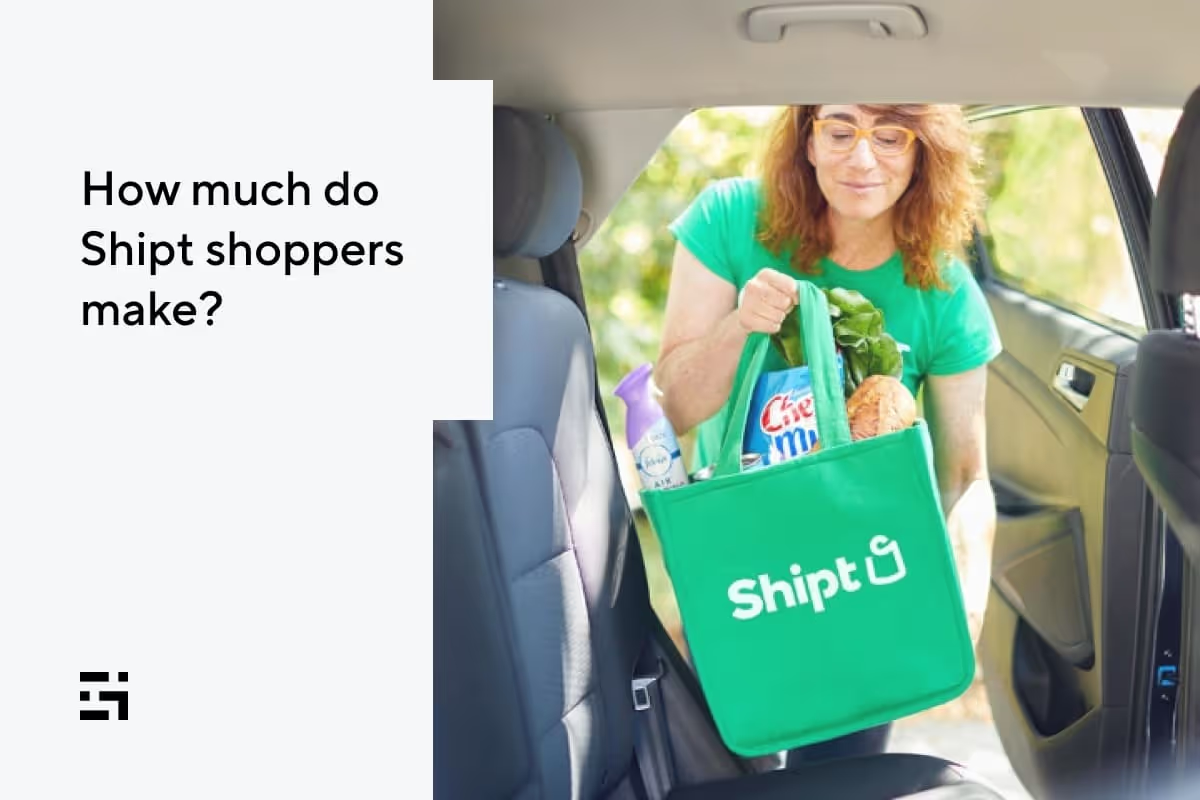
How much do Shipt shoppers make
Want to know how much Shipt shoppers are making? In this article, we leverage insights from our network of more than 250k rideshare and delivery drivers to understand how much Shipt shoppers are making arcross the country.
Shipt may not be the first delivery company that pops into your mind, but it’s one of the biggest and it’s growing. There’s plenty to like about working for Shipt, and in this article, we’ll tell you all about it and share with you the bottom line, namely… how Shipt shopper earnings shape up.
Here’s what we’ll cover:
- The ABCs of working for Shipt
- How much do Shipt shoppers make?
- Trends for Shipt earnings in 2021
- The costs Shipt shoppers need to know about
The ABCs of working for Shipt
Shipt shoppers are full-service shoppers and delivery drivers. They get the order through the app, go to the store to select the customer’s items, and make the purchase with their prepaid Shipt card. They then load the items in their vehicles and drive to their ultimate destination to make the delivery.
You might already know that Shipt is a wholly owned subsidiary of Target. But even though Target sends a lot of Shipt shoppers on delivery runs, it’s not the only company Shipt services. Big-name stores such as Bed Bath & Beyond, CVS, Costco, and others also use Shipt shoppers to get their customers’ orders into the right hands.
That means there’s a lot of business to be had when you work for Shipt. But before you run out to start your first shift, you’ll need to know how to qualify.
According to the Shipt website, here’s what you’ll need:
- Be at least 18 years old
- Have a valid mailing address
- Have a valid U.S. driver’s license and auto insurance
- Own a reliable vehicle that’s a 1997 model or newer
- Knowledge of produce selection
- Pass a comprehensive background check
- Own an iPhone (iOS 10 or newer) or Android (5.1 or newer) smartphone
- Be able to lift 40 pounds
You saw the part about knowing how to choose good produce, right? Shipt prides itself on being able to curate the best fruits and vegetables available so its customers will be satisfied with what they get in their orders.
In addition, Shipt shoppers may be asked to add to an order, or just run for one or two items. One of the things Shipt tells customers is that when it comes to the company’s service, no order is too small. You’ll need to keep this in mind if you go to work for Shipt. Even with the need to be extra attentive to customers, though, there are rewards. A look at the earnings data will show you what we mean.
How much do Shipt shoppers make?
According to Gridwise data, Shipt shoppers do very well. Like all delivery services, the earnings per hour peaked at the beginning of the pandemic, but they’re still going strong. The average earnings per hour in April 2021, for instance, was more than $19 per hour.
Let's also look at the important metric of earnings per trip. This is definitely a number you’ll want to know about, because it shows that all the work of being an expert produce picker and ace Shipt shopper really pays off.
While earnings aren’t quite as high as they were during the height of hoarding in March 2020, earnings per trip remain very respectable, remaining at over $15 per hour.
You can also view how much Shipt shoppers are making using the table below
Trends for Shipt Shoppers in 2021
While we might have expected delivery companies such as Shipt to expand and continue to grow throughout the pandemic, what we didn’t expect is how persistent the success of these companies has been. As you can see from the Gridwise data, the world has become quite used to delivery, and people show few or no signs of going back to the way things were before.
This is a good sign for all delivery drivers, especially Shipt shoppers. As Shipt continues to expand to serve additional stores, there will be growing opportunities to earn. And, while people don’t seem to be hoarding as much as during the pandemic, they are still keenly aware of the importance of having their refrigerators, freezers, and cabinets stocked – especially since so many are still working and studying from home.
The convenience of having everything from groceries and nonprescription drugs to cleaning supplies and bulk packs of snacks delivered to their doors is likely to keep pushing the numbers of delivery-loving consumers in an upward direction.
The costs Shipt shoppers need to know about
While all this news about Shipt shopper earnings is encouraging, we can’t leave you thinking you’ll get to keep it all. As with every driving gig, there are costs that you need to take into account to get a full idea of what you’ll be taking home.
Your biggest expense, most likely, will be your car. You’ll have to cover all the costs, including paying for it and maintaining it, as well as the costs of insurance and registration.
If you want to rent or lease a car, be aware that there are restrictions that may not allow you to use a rental vehicle to shop for Shipt. There are special arrangements that you can make with certain companies to get a rental. You will have to do a lot of shopping and driving to make it worth your while, but it’s possible.
Here’s a list of car-related expenses with some more detail about how it might affect you and your earnings.
Extra insurance
You might need to get commercial insurance for your vehicle when you shop for Shipt. Using your car in this way takes it to a new level of use beyond the “personal” level of wear and tear your insurance company is normally covering with a minimal policy.
If you’re thinking “They’ll never find out, so why bother?” think again. It’s an enormous risk to have your insurance company discover you were using the vehicle for delivery without telling them. They have every right to refuse your claim in such a case, even if you have a mishap while driving for personal reasons.
Learn all about the importance of having the right insurance in this Griwise blog post. Shop around for the best policy for you, and if you get confused, you can always use a good insurance broker.
Fuel
You don’t have to drive for a living to know how much fuel can cost, but when you do, it gets to be even more important. Prices fluctuate, so there’s no way to come up with one number when you’re calculating your fuel costs. You can use Gridwise to enter your fuel purchases, though, and let the app keep track of how much you’re actually spending.
Another way to account for your fuel costs is to use the IRS standard deduction, which is $0.56 per mile in 2021. You’ll still need to track how many miles you put in, so make sure to keep Gridwise online and tracking whenever you’re on a Shipt shift.
Depreciation
Your vehicle will decline in value the moment you drive it brand-new off the lot. When you drive for a living, it will continue to depreciate at a rate that is reflective of how many miles you put in while delivering.
If you want to know the current value of your car, check out the Kelley Blue Book website. It has a feature that tells you how much extra your vehicle might depreciate when you’re using it for delivery driving.
Maintenance and repairs
If you don’t have your vehicle up and running, you can’t work. That means taking good care of your car is no longer something you can afford to neglect. Keep a solid maintenance program together and make sure that parts and systems are in working order.
Check your car owner’s manual to determine your maintenance schedule, and stick to it. Find a good mechanic who will be honest enough to help you avoid unneeded and expensive repairs, but straightforward enough to let you know when you need to make an investment in your car’s future.
Check this Gridwise post to learn about the maintenance items you should do for yourself between visits to the shop. If you’re the kind of plan-ahead person you should be when you drive for a living, use the advice on the Edmunds website to find out how much you’ll need to set aside for repairs and maintenance. It will also help with figuring out the depreciation number you’ll want to use at tax time.
Taxes
Yes, we mentioned that dreaded word. Taxes are a substantial expense, and all gig drivers have to be prepared to pay them. Most tax accountants will tell you that paying estimated taxes on a quarterly basis is a good way to do it. That way, you’re not stuck with a huge bill when tax day comes.
The forms you’ll need to do this are available on the IRS website, but you might want to consider calling in a CPA or another tax advisor for professional advice. Yes, it’s not cheap, but compared to what you might wind up paying if you make a mistake and get charged penalties and interest, it can be a bargain.
Shipt shoppers love Gridwise!
It’s true. Driving for Shipt can be a really great way to make a living, and knowing more about your earning patterns and expense levels is going to make it even better. That’s why Shipt shoppers love Gridwise.
Just sync your Shipt app to Gridwise and watch the magic happen. The app seamlessly records your earnings and mileage, and you enter your expenses as you rack them up. Then … these information-packed graphs customized with your driving data will appear before your eyes.
The Perks tab offers quick access to our blog and the Gridwise YouTube Channel, and also turns you on to great deals and discounts for drivers. Traffic and weather information will make your delivery shifts go smoothly, too. Join us on Facebook to tell us all about your Shipt shopping life, and share in our vast community of drivers from across all the platforms.
You can also leave your comments about Shipt, or anything else you think drivers would want to know in the comments below.
But… before you go anywhere – download the Gridwise app to get all these good things and more.
Read other earnings articles and gig worker resources here
- How To Make $1000 A Week With Amazon Flex
- Check out the Gridwise Job Board
- How Much Do Uber Drivers Make?
- How Much Do Lyft Drivers Make?
- How Much Do DoorDash Drivers Make?
- Everything You Need to Know About Amazon Flex
- Walmart Spark Delivery Driver Pay: How Much Does a Walmart Spark Driver Make?
- How Much Can You Make on Instacart?
The US Secretary of Labor supports classifying rideshare and delivery drivers as employees: Here’s what you need to know
Should rideshare and delivery drivers be employees or remain independent contractors?
This is a question that’s been hanging in the air for years. When Proposition 22 passed in November 2020, the rideshare and delivery companies overturned a California law that sought to make the companies treat drivers and delivery people as employees. There's also been continued debate regarding employee vs. contractor issue which calls for better wages for gig drivers.
So far, activity surrounding this issue has arisen on the local and state levels. New York and Seattle set minimum wages for drivers, while in California, the controversy played out on the state level.
Recently, though, US Secretary of Labor Marty Walsh spoke up, and what he had to say did not bode well for rideshare and delivery companies who are against an employee model. This post will take you through the controversy that’s been brewing, and present some points worth consideration, including:
- What did Secretary Walsh say?
- What happened after the Secretary spoke?
- What this might mean for rideshare and delivery companies
- Other related activity that’s taking place around the country and the world
- What federal intervention could mean for drivers and the future of the gig economy
What did Secretary Walsh say?
In an April 29, 2021 interview with Reuters, Secretary Walsh didn’t say anything definite, nor did he cite specific rules that would take effect. He made it clear, however, that he feels gig employees are not being treated fairly in all cases, and he believes the federal government should do something to change that. “We are looking at it but in a lot of cases gig workers should be classified as employees... in some cases [gig workers] are treated respectfully and in some cases they are not,” Walsh said, “and I think it has to be consistent across the board.”
Even before Walsh was appointed, there was a proposal to rescind a rule that would have made it easier to classify workers as independent contractors. In the Reuters interview, Walsh said his department would have conversations with companies that utilize gig workers, to make sure these workers get consistent wages, sick pay, health care, and “all of the things that an average employee in America can access.”
Beyond that, Secretary Walsh didn’t say much more about the gig economy… but what he did say caused a whole lot of controversy.
What happened after the Secretary spoke?
In the immediate aftermath, Uber, Lyft, and DoorDash all took substantial hits on their stock prices. The price of Uber shares dipped 6%, and Lyft plummeted by almost 10%. DoorDash shares closed down 7.6%. Why would this be?
As we all know, these companies have struggled to become profitable. The costs of making rideshare and delivery drivers employees would be high, and it would set them back even further in their collective efforts to swim out of a sea of red ink.
Company spokespeople reacted quickly and with resolve, according to the Reuters article.
They emphasized that gig workers value their independence to choose when and where they will work, and regulations that required them to be classified and treated as employees would take that away from them. Uber’s spokesman said the United States should be encouraging companies to use independent workers, not make it harder for people who want this kind of work to get it.
The other side of the argument, also emanating from Walsh’s Reuters interview, is that if the federal government had not stepped in with supplemental unemployment compensation during the pandemic, these workers would have suffered even more than they already have.
Rideshare and delivery drivers are caught in the middle of this argument. Although there are many ways they might benefit from being classified as employees, the ensuing stress on the companies could mean that many drivers won’t have any work at all.
What this might mean for the rideshare and delivery companies
Federal regulations on companies almost always mean higher costs and lower profits. In the case of the companies that depend on gig workers, they have yet to make a profit as it is. Making rideshare and delivery drivers employees would mean companies would have to deal with some gigantic costs.
The companies, for example, would have to cover higher pay to meet minimum wage standards, unemployment insurance, HR compliance, liability (insurance and possible litigation costs), software development, and driver supply disruptions. They would also have to deal with the risk of being fined if they don’t meet government requirements. Read more to learn everything you need to know about rideshare drives and Proposition 22.
The business community’s perspective is that the federal government should, within limits, stay out of a company’s business, including when it comes to how they classify workers. The gig economy has created revolutionary new opportunities for many people, and these could be lost if regulations make it harder for gig companies to operate.
While Uber, Lyft, and a few other gig companies were successful in beating back the State of California, we can’t help wondering if they would be as successful battling the US Government.
Other related activity that’s taking place around the country and the world
In March 2021, the UK Supreme Court forced Uber to provide drivers with minimum wage payments and other benefits. And the battle rages in other parts of the world as well, with labor movements seeking more security for drivers. Again, while it’s true that drivers could benefit from these changes, there’s a delicate balance that must be achieved.
Even though rideshare and delivery drivers are aware that companies might have difficulty achieving profitability, many still believe they should be treated like other organizations treat employees.
In the US, here are a few examples of groups that are actively pursuing employee status for gig workers:
- In Philadelphia, the city council fought to include gig workers in a bill that provided extra sick leave during the COVID-19 pandemic.
- In Massachusetts, there is an active debate about how the commonwealth should treat gig workers.
- In Colorado, this organization is bringing gig workers together so they can fight for protections under the law.
- In New York, the service workers' union (SEIU 32BJ) backed food delivery workers in an April 22, 2021 protest in which more than 2,000 of them biked through the city demanding fair treatment from the “tech giants” that run the gig industry.
Obviously, even with the success the companies had with Proposition 22 in California, they face opposition from many different factions. This latest salvo from the federal government, if it ever translates into policy or law, will probably be the most formidable of all.
What federal intervention could mean for drivers and the future of the gig economy
Although what Secretary Walsh had to say affected the companies’ stocks, it doesn’t mean very much to the rest of us… yet. However, if the federal government does indeed impose regulations that require the companies to treat all workers as employees, it will have a huge impact on the gig economy.
While rideshare and delivery drivers would benefit greatly from benefits such as health insurance and guaranteed wages, they would come with a steep price tag. Not only would drivers lose their ability to choose when they wanted to work and for how long – they could also lose the opportunity to work for these companies at all.
More stringent background checks, Human Resources compliance issues, and a limit to the number of employees (due to the companies’ inability to pay for an unnamed number of them) could literally kill the gig driving business.
This is the concern the companies have, and many drivers share it – as our September 2020 survey proved. One finding: 65% of polled drivers prefer to remain as independent contractors. You can see the exact figures in our article about gig drivers and what these changes will mean to rideshare flexibility.
If drivers are no longer able to work as independent contractors, the gig companies will suffer, and so will the rideshare drivers, the delivery drivers, and the customers they serve. While it’s easy to welcome any ideas that support the wellbeing of gig workers, it’s essential to look at both sides of the issue … the cons as well as the pros.
How do you feel about the federal government stepping in to decide how gig companies should treat their workers? Leave us a comment and share your thoughts.
Track your gig driving income with Gridwise!
Whether you’re gung-ho for leaving the gig economy as it is, or you’d rather see the government make sure you get the benefits of an employee, you still need to track your earnings and record your expenses.
Gridwise does all this for you, seamlessly. Simply link your driving and delivery apps to Gridwise, log on at the beginning of every shift, record your expenses, and the mighty Gridwise app will do the rest. The results come out in impressive graphs like these:
These facts and figures come in handy at tax time, but they’re also useful to have if you’re wondering which of your gigs is making you the most money, or how close you are to your total weekly earnings goals.
Not only does Gridwise do all this, the Perks tab dishes out deals and discounts for drivers, news from our blog and YouTube channel, airport and event info, plus traffic and weather alerts! All of these features let you be more informed, and when you know your stuff, you make more money!
Find us on Facebook, too, and meet our community of gig workers who, just like you, want to get the most out of their rideshare and delivery work. Our gas card giveaways are a huge hit too.
It’s hard to believe any driver would want to go out on a shift without the ultimate assistant for rideshare and delivery running at all times, but in case you haven’t done so yet, download the app now.
Getting schooled: 5 things drivers need from career training bootcamps
As drivers, we constantly get pummelled with recruitment materials and ads for training academies of all different kinds. Why do these companies want to get our attention?
Maybe because they know that being a full-time driver isn’t easy, and most of us don’t intend to drive forever. It’s just something we do until the next big thing comes along.
For many of us, training in a new field makes a lot of sense, and right now the most popular kinds of training academies are coding bootcamps. In this blog post, we’ll focus on these bootcamps, and talk about what drivers should look for when they choose one. We’ll also learn more about the decision process from one of our drivers, Jim, who recently chose a school and enrolled in a program.
Here’s how we’ll break it down:
- Why coding?
- Jim’s story
- 5 things drivers need in a coding bootcamp
- Coding Dojo: the winning choice
Why coding?
Coding, or the art and science of creating the software and apps that run the engine of today’s economy, covers a lot of ground. You can learn everything from how to make an app more pleasant to use, to how to design a database and make it easier for a company to contact its customers.
People who know how to code are very popular with job recruiters these days – and are also well-paid. According to a July 2020 report on Career Karma, coders earned an average annual salary of $63,903 during 2020. Beginning coders got an average of $50,000, and experienced coders pulled in around $85,000. And of course, there’s always room to earn even more.
You don’t have to be a natural-born computer genius to make coding your new profession. All you need is an ability to focus, a desire to solve problems, and the determination to see projects through. It also helps if you like to work with others, because most projects that coders work on require a lot of cooperation.
If you’re reading this while you’re on a break from driving passengers or making food deliveries, you might think there’s a big leap between what you’re doing now and becoming a full-fledged IT professional. While it won’t happen overnight, it’s definitely something many drivers can do. A conversation with a real driver-turned-coder might show you that this kind of game-changing career switch is truly within your reach.
Jim’s story
Jim drives and delivers for Uber, and began doing so straight out of college. He studied psychology in a four-year program, but shortly after graduation he discovered that his career prospects weren’t good. He didn’t want to go on to grad school to become a therapist, and he didn’t see how he could make a lot of money in his field. Just about the only jobs available were research assistant spots at the university he attended, and they paid about $10 per hour.
Driving for Uber made sense because he didn’t like the other options he had – sales and customer service – and he could make more as a driver. Plus, he could choose his hours and get his pay in his pocket within minutes of finishing his shift.
After four years of driving, though, Jim got tired of the grind. He also saw that his income was stuck at a level that wasn’t going to rise unless he worked 50 or 60 hours a week.
Also, he missed the intellectual challenge of being in school, working on group projects and solving problems. He was looking for something exciting, a new path that would lead him toward a career he could count on.
Jim heard about coding through ads he saw for various coding bootcamps. He knew there were a lot of different options and it took some time to figure out which one was right for him, his skillset, and his talents. Also, he wanted a school that would give him the training he needed to jump into a career right away and to be the best at what he does.
There are schools that offer training in user interface, graphics, data management, and software engineering. Many of them provide access to top-notch training, employers, and six-figure salaries. Some require full-time, onsite attendance, while others allow students to study online, and in some cases at their own pace.
Jim’s situation, like that of many drivers, had its limitations. He couldn’t really manage to work full-time and go to school full-time, and he also needed to consider the costs involved. Ideally, he would find a school that allowed him to continue driving when he wasn’t in class or completing assignments.
From our talk with Jim, a real driver, we gained firsthand insight into what to look for in a coding bootcamp. He honed in on the major points that you can utilize for any search for the right bootcamp.
5 things drivers need in a coding bootcamp
Here’s what Jim looked for in his bootcamp search and what you might want to look for, too. These suggestions are not in any particular order, so you can decide for yourself which are most important to you.
- Focus on marketable skills. There are many functions coding professionals can perform in a company, and some schools address all of them. Jim wanted to attend a school that was less concerned about theories, history, or other tertiary topics. He wanted a school that taught him applicable and marketable job skills, as well as one that would give him the ability to be among the best in his field.
- Affordable. Tuition is never cheap, whether at a full-time college or a bootcamp. Since Jim had already gone through college and was still paying off hefty student loans, he needed to go to a school that was reasonably priced, and offered scholarships and/or payment plans.
- Real-world orientation. Jim didn’t want to get stuck in a school that was lost in an academic cloud, with little or no real connection to the real world. While he thought it would be fun to design programs with futuristic or idealistic aspects, he knew that if he wanted to work right away, he’d need something different. He needed a school that knew what employers wanted, and also had connections to people who could get him a real job.
- Fast and flexible. Jim didn’t have another four years of his life to spend in school; he had to have a program that gave him fast results. At the same time, he wanted to continue driving while he was in training so he could still pay his bills. That meant the program of his choice would have to allow him the flexibility to attend class and work at the same time.
- A balance of personalized training and collaboration with other students. While Jim met plenty of people when he was out on his driving gigs, it had been a long time since he’d been involved in a meaningful group project. He missed the days of gathering together with others who were passionate about what they were learning, and who enjoyed sharing their findings.
He also knew he’d need personalized attention from time to time because coding would be so new to him. It would be great if he could have access to instructors in case he got lost at sea while navigating his way through the program.
Coding Dojo: the winning choice
There are numerous coding bootcamps, but few really offer everything drivers need. We’ve looked through the offerings of a ton of bootcamps, and we can see that Coding Dojo is the one school that hit all five of the basic requirements for drivers, and offers even more.
Coding Dojo was founded by Michael Choi, whose entrepreneurial projects in Silicon Valley revealed to him how hard it was to find top-notch software engineers. He opened Coding Dojo because he knew how much he needed skilled professionals. He knew that other companies were looking for them too. He designed the Coding Dojo curriculum around the goal of giving students what they needed to be as competent and successful as possible, with his real-world knowledge of what makes good software engineers.
Choi used scientifically based learning technologies to build Coding Dojo. This makes this coding bootcamp one that not only provides information, but also teaches students in ways they can truly learn and apply the teachings. Here’s how Coding Dojo measured up to the rest of the items on what we see as the driver’s must-have list:
Coding Dojo has a software engineering focus. Coding Dojo is oriented toward the more technical end of the coding continuum. Programs give graduates expertise in three stacks, which are combinations of programming skills that ensure familiarity with the front and back ends of a program, as well as the database. Students are taught what each has to offer, how they differ, how they are similar, and most importantly -- how to use them to create digital products, which makes it possible for students to apply their knowledge in the real world. Coding Dojo’s programs in software engineering and data science are dedicated to keeping the focus on the high-tech, in-demand skills drivers need to create new careers.
Coding Dojo is affordable. At a price of $7,700, Coding Dojo’s 2-stack online program is within reach for most drivers. Available onsite options go into even deeper depth, but starting with the online option and then later investing in more training might make sense for many drivers. It’s easier to know what you need to learn once you get into the field and start making money. Also, with scholarships and payment plans, there’s no need to pile on student debt in order to pay for tuition.
Coding Dojo is oriented toward the real world. With real-world experience driving the design and execution of the Coding Bootcamp program, Coding Dojo students learn skills that are applicable in the workplace, and also in high demand. In fact, 89.1% of Coding Dojo graduates find relevant jobs within six months, and 95.3% find relevant jobs within one year.
Coding Dojo is fast and flexible. With on-campus and immersive online programs that teach three stacks in 14 weeks, full-time bootcamp students can get done in just a few short months. The online flex program goes for 28 weeks is a great one for drivers, too, because they would only need to be in classes for 10–15 hours per week. With the online flex program, you could continue driving, and making money, while you’re in training.
Coding Dojo offers personal attention and group interaction
Even in the online program, it’s always possible to get one-on-one attention from an instructor whenever it’s needed. Also, the program assigns students to teams as they set out to solve problems they are sure to encounter in the real-world, team oriented workplace.
Change your life with Coding Dojo!
Could it be that you’re growing weary of the driving routine? If so, take action now. Jump into coding bootcamp with Coding Dojo. It’s definitely a winning choice.
Get a course packet here, and before long, you could be on your way toward a lucrative, challenging, and fulfilling coding career that will get you out of the gig driving grind - and change your life.


How much do Instacart shoppers make
How much do Instacart shoppers make? Like all delivery services, Instacart surged throughout 2020, due to COVID-19 shutdowns and the new work-from-home culture that emerged as a result.
We analyzed anonymized data from over 250K gig workers to see what the average Instacart shopper has been earning. In this article, we’ll address that question in the context of what it’s like to be an Instacart shopper, and why you might want to consider signing up with this dynamic company. Here’s what we’ll cover:
- How does Instacart work, and what is its pay structure like?
- How much do Instacart full-service shoppers make?
- What are Instacart’s earning trends in 2023?
- What costs do Instacart gig workers have to consider?
How does Instacart work, and what is its pay structure like?
Instacart was founded in June 2012. It’s an app that facilitates shopping and delivery services throughout the United States and Canada by connecting customers and shoppers. Customers order their goods online from local stores, and Instacart shoppers shop for the items and deliver them to the shoppers’ doors.
Customers can purchase a variety of essentials through Instacart. In addition to groceries, they can order prescriptions, over-the-counter drugs, medical supplies, and pet supplies.
But customers aren’t limited to essential products. Instacart shoppers often deliver junk food, soft drinks, and alcoholic beverages. Also, Instacart serves the large warehouse stores, and those places sell just about everything.
The variety of stores served, and the extraordinary number of available items, translates into great opportunities for Instacart shoppers. The two kinds of available work opportunities are:
1. Shopper only. These workers are part-time employees of Instacart (as opposed to gig workers). They work scheduled shifts inside a store of their choosing, selecting and packaging items for pickup by Instacart full-service shoppers.
2. Full-service shopper. This is a gig-worker position and entails shopping for and delivering items. The advantage of being a full-service shopper is that you have a totally flexible schedule, and you are likely to earn a higher average hourly pay, and you’ll get tips. The independent contractor status that comes with gig work leaves you without company benefits and the expenses that come with using your car for business, but as you’ll see, this can be a rather rich gig.
To see just how much Instacart shoppers make when they serve as full-service shoppers, let’s look at some Gridwise data.
How much do Instacart full-service shoppers make?
The answer to that is, more than you probably think. Take a look at these anonymized Gridwise numbers from January 2020 through early April 2021.
Instacart Shopper Earnings: January 2020–April 2021
2020Earnings per tripEarnings per hourJanuary 2020$16.97$12.31February 2020$15.97$10.88March 2020$21.67$16.71April 2020$23.43$16.65May 2020$21.23$15.93June 2020$19.18$14.54July 2020$18.54$16.14August 2020$18.72$14.66September 2020$20.00$16.10October 2020$19.97$14.63November 2020$20.52$15.51December 2020$20.50$15.69January 2021$22.38$17.08February 2021$24.33$16.81March 2021$23.20$16.71
These numbers should erase any doubt you might have that Instacart is here to stay. Not only did earnings take off at the start of the COVID-19 shutdowns, they continued to grow throughout the year and into 2021.
The April 2021 rate of $17.18 per hour represents a whopping 39.56% jump in earnings from $12.31 in January 2020. Over the same time frame, earnings per trip grew by 31%, from $16.97 to $24.80. The graph below depicts a pattern that tells us Instacart continues to grow, even as many cities and states are reopening after COVID.
With earnings on such a dramatic upswing, we can’t help but wonder what plans Instacart has for the future. As it turns out, there are strong indications that the full-service shopper gig for Instacart will retain its super-sweet status.
What are Instacart’s earning trends in 2023?
Back at the beginning of the COVID-19 pandemic, it was widely believed that the delivery boom would go bust once stores and other businesses began to reopen. But as the actual numbers demonstrate, this isn’t what we’re seeing. Instacart has pulled one major coup after another, cornering the delivery market for many major chains, and this has sent driver earnings through the roof.
Instacart is growing remarkably fast. It’s doing so well, in fact, that Instacart will likely go public this year. The company has hired two high-powered executives from Silicon Valley to join its board of directors, and according to this CNBC article has secured the services of Goldman Sachs to do the Initial Public Offering (IPO).
At this writing, Instacart’s valuation is $30 billion. Man, that’s a lot of delivery trips.
What might this mean for Instacart full-service shoppers? When Uber and Lyft went public in 2019, they offered some rewards to loyal drivers, including bonuses and options to buy stock in the companies at IPO prices. Although we can’t be certain, the same thing could happen with Instacart. So ... if you haven’t done so yet, you might want to sign up now to get in on the potential bag of IPO benefits.
As for earnings, there’s every indication they will continue to rise as the company receives an influx of funding, from both private investors and the public.
Now that we’ve explored what a potentially lucrative gig Instacart can be for drivers, let’s look at some of the costs involved so you can see how much Instacart full-service shoppers make after expenses.
What costs do Instacart gig workers have to consider?
In order to be a full-service shopper for Instacart, you have to have your own vehicle. That means, of course, that it’s up to you to cover all costs that come with owning and maintaining it.
For those who lease a car, be mindful of the legal ramifications of violating the terms of the lease when using the vehicle for commercial purposes. It’s possible to rent a car to work for Instacart, but there are limitations. This car rental blog will give you an idea of how that works, and how much renting would potentially cost.
For gig drivers (including full-service shoppers), vehicle-related expenses include:
Extra insurance
If you don’t have commercial insurance for your vehicle, you’ll want to get it when you drive for a delivery app. This use of your car takes it beyond the realm of “personal,” and your insurance company will want you to pay for the risks that come along with that.
If you don’t have a commercial policy or add-on, the claims for any accident you might have while you’re working—and even when you’re not—could be denied. It’s your responsibility to tell your company that you’re using your vehicle for commercial purposes and to pay a little more to ensure that you’re fully covered. You can learn more about it in this Gridwise blog post on the best insurance options for rideshare and delivery drivers.
You will have to shop around for the best policies and prices in your area. You can also contact a trustworthy insurance broker.
Fuel
As anyone who drives knows, gasoline prices go up and down all the time, which means your fuel costs for being a full-service Instacart shopper will vary too. There’s no way to come up with just one number; besides general fuel fluctuations, prices also vary depending on your state’s gas tax and your proximity to fuel supplies.
Currently, the IRS allows a fuel deduction of $0.56 per mile (down 1.5 cents from 2020) when your vehicle is used for business purposes.
You can track your mileage easily with Gridwise to estimate how much money you’re spending on fuel while you deliver. Also, you can estimate how much gas you’re using while performing deliveries, and enter the amounts as expenses on the Gridwise app.
Depreciation
When you drive for a living, depreciation is an important consideration. The value of your car declines the more you use it, so keep that in mind when you evaluate the expenses you’ll incur as a full-service shopper for Instacart.
If you want to know the current value of your car, check out the Kelley Blue Book website. It has a feature that tells you how much extra your vehicle might depreciate when you’re using it for delivery driving.
Maintenance and repairs
When you depend on your vehicle to make a living, maintenance is an essential consideration. If your car breaks down due to neglect, or for any reason, you won’t be able to work. That’s why getting regular maintenance makes good sense.
You’ll need to factor in the costs of maintaining your vehicle, and make sure you stick to the schedule recommended by your manufacturer. Check out this Gridwise post on the car maintenance schedule every rideshare driver should follow to get a more in-depth idea of what kinds of services your vehicle will need, and how you can save money by doing some of the tasks yourself.
If you’re wondering how much you should set aside for maintenance, check out this online estimator from the Edmunds website. This same site will also help you figure out what your actual depreciation rate might be.
Even when you total all these costs, working for Instacart is a good bet. It’s producing nice earnings, it’s a growing business, and seems to be on track to become even more lucrative for drivers in the future.
One last thing: Taxes
As you already know (but we’ll remind you anyway), as an independent contractor you are self-employed. No one is going to withhold your taxes from your earnings, so you have to make sure you do that. It’s a good idea to pay the IRS on a quarterly basis.
You can find the forms on the IRS website, but it’s a good idea to consult with a CPA or another professional who can give you tax advice. Although this may sound like an extravagance, it could save you from making a mistake that costs you more taxes and penalties than if you’d paid for advice in the first place.
We have one more piece of good advice for you, and here it is...
Track your earnings, mileage, and expenses the easy way, with Gridwise
As you’ve seen from all that we covered in this article, keeping track of what you’re earning, and your expenses, is crucial to the proper management of your gig driving business. And that’s why you need Gridwise.
You can track your earnings for Instacart and all the companies you drive for, merely by syncing your apps to Gridwise. When you start your shift, go online with Gridwise and all your mileage and earnings will be recorded—automatically. Enter your expenses as they come up, and when you’re ready, you can see the results in slick graphs like these.


Whether you’re driving for rideshare, or delivery, or both, Gridwise is your ultimate assistant. So make sure you take advantage of all the great features we’ve stuffed into this app. Airport and event information can help you schedule your driving times, and our Perks tab takes you to deals and discounts for drivers. Plus, you get easy access to our information-packed blog and the always entertaining Gridwise YouTube Channel. Join our Facebook group for fun conversations and gas card giveaways.
With all this great stuff happening at Gridwise, can you think of a reason why you shouldn’t download the app? Neither can we—so do it now!
Want to earn more as a delivery driver? Here are some great reads:

The best insurance options for rideshare (Uber and Lyft) and delivery drivers
Are you an Uber or Lyft driver looking for car insurance?
Or, perhaps you’re a food delivery driver working for DoorDash, Uber Eats, Postmates, or Instacart, and need car insurance?
No matter which applies to you, there’s a lot about insurance that drivers need to know.
We at Gridwise want to make sure you get information in a way that’s honest, balanced, and focused on you, the rideshare and delivery drivers who keep the world moving, well-fed, and amply equipped.
That’s why in this post, we’ll help you understand the best auto insurance options by talking through the following points:
- What is basic insurance?
- Is basic insurance enough?
- What about rideshare insurance?
- What should drivers demand from an insurance company?
- How can drivers find the right insurance company?
- How much drivers can expect to pay for insurance and 10 top companies
- Are there other add-ons that can help drivers?
What is basic insurance?
The term “basic requirements” refers to the minimum amount of insurance required by your state. The basics almost always consist of two types of liability: bodily harm and property damage. For instance, according to a June 2020 article by Michelle Megna, editorial director of carinsurance.com, this requirement is expressed in the following format: 20/40/10. The first two numbers refer to bodily injury liability limits, and the third number indicates property damage liability.
The example shown translates to $20,000 liability per person per accident, $40,000 maximum coverage per accident for bodily injury, and $10,000 for property damages.
In some states, such as Kentucky, drivers are required to carry Personal Injury Protection (PIP), which is coverage for your personal injuries and lost wages regardless of who is at fault. You may want to investigate including PIP coverage in your policy, even if your state doesn’t require it.
Depending on where you live, you may also need insurance to cover losses in case you’re involved in an accident with an uninsured motorist. Twenty-two states require this coverage, which is aptly named Uninsured Motorist (UM) coverage. It might be something worth considering, in light of an alarming fact: Even though driving without insurance is illegal in nearly every state, according to the Insurance Research Council, 1 in 8 drivers are not insured.
if you have an accident caused by an uninsured motorist, you could get stuck paying your own medical and vehicle repair bills. Being hurt is bad enough; being caught without coverage for the costs of your care could be catastrophic.
This article shows you the minimum (aka, basic) liability coverage for each state.
Is basic insurance enough?
In most cases, the state minimum will provide enough insurance to take care of your needs. To determine if this is true for you, take an honest look at your vehicle, consider how much it would cost to replace, and how much you might really need to cover your medical expenses, and those of others in the accident, should you get involved in a bad mishap.
Also, if you finance your vehicle, it’s a smart idea to purchase gap insurance, which takes care of the difference between the vehicle’s book value and the amount you owe on the loan. Suppose, for example, two years after you buy the car you’re in an accident and total it. The insurance company will write it off and reimburse you for what it’s worth. It’s entirely possible for your car to be worth $15,000, whereas you owe $20,000 on the loan. You will be responsible for paying that balance, even if you no longer have a car. That’s where gap insurance can be a godsend because it will cover that $5,000.
These are some of the concerns that relate to you as an individual driver and auto insurance policyholder. When considering your rideshare and/or delivery business, things become even more complex.
What about rideshare or delivery insurance?
When you’re a rideshare driver, you have passengers in your car much of the time. You’ll want to make sure you have coverage for your passengers that includes bodily injury. This protects you from having to dig deeply into your pockets in order to compensate them after a lawsuit. If you deliver, you have to make sure that your policy will cover losses incurred in the course of your work.
Fortunately, most rideshare and delivery platforms provide extra insurance, but it only works while you’re online with the app. If you have an accident while you are on the app, coverage provided by your rideshare or delivery company will kick in. This covers you as well as your passengers and third parties who might be involved.
Here are three scenarios to illustrate how insurance coverage typically works:
Period 1: You’re not on the app, meaning you’re driving for personal reasons. There is no coverage from your rideshare or delivery company; rather, your personal auto insurance applies.
Period 2: You’re on the app, but have not accepted a trip. You’re covered for third-party liability, but only if your personal policy doesn’t apply. You’re not covered for collision.
Period 3: You’re on the app and either riding with a passenger or in the process of executing a delivery: Your company covers you for personal injury, 3rd party liability, and collision. Note: The collision aspect may be covered only if you carry personal insurance on the vehicle that covers you while you’re not on the app.
Please note, the companies are notorious for their high deductibles. Both Uber and Lyft set theirs at $2,500, with the exception of vehicles offered through their marketplace.
You can learn a lot more about exactly what coverage companies offer through our informative rideshare insurance article.
Delivery companies offer coverage similar to what’s offered by rideshare platforms. Amazon Flex, DoorDash, Postmates, and Uber Eats all offer generous policies that cover you at varying levels, depending on the phase of delivery you’re in if and when you have a loss, at a maximum of $1 million in benefits. At this time, neither Grubhub nor Instacart offers an insurance policy for drivers, so you’ll want to make sure your personal policy can provide adequate coverage.
On the subject of that personal policy … if you use your vehicle for rideshare or delivery, you must inform your insurance company that you are doing so. If you neglect to notify them, and they find out you’re using your vehicle for gig driving, and you’re in an accident, your personal auto insurance may not cover you—even when you’re not on the app.
To ensure that you’re covered under all circumstances, you’ll need to purchase a rideshare and/or delivery endorsement to add to your basic auto insurance policy. Not all companies offer endorsements; many will simply refuse to cover you if you are a rideshare or delivery driver. In some cases, you may be required to carry commercial insurance, which applies to drivers in New York City and in certain other areas of the country.
Why would you need this? Remember, insurance companies, when they agree to sell you coverage, calculate risk. As a gig driver, you’re out and about far more than you would be otherwise, and you’re accruing more mileage and wear and tear than vehicles that are not being used for rideshare or delivery. For those reasons, they want you to pay for the possibility of extra loss of value on the vehicle, as well as the enhanced risk of carrying passengers and making all the extra trips that are required of delivery drivers.
Rideshare and delivery endorsements are not typically that expensive. Some cost as little as $20 per year, with an average of $94 for six months.
Two other extras you’ll want to consider are reimbursement for a rental car and towing, and road assistance. Many companies include these extras in the price, while others consider them add-ons. Even if you already belong to a separate service, it does no harm to have an extra source of roadside help to call upon in an emergency.
What should drivers demand from an insurance company?
Now that we’ve reviewed the various types of coverage, here are some factors to consider when deciding on an insurance company:
- Adequate coverage. Make sure the company can provide a policy with enough coverage to meet your needs.
- Endorsements for gig drivers. Although many companies accommodate gig drivers, not all of them do, so be sure to ask.
- Ease of communication. You want a company that will be responsive to you, whether it’s a question about your coverage or a claim you need to make. If you have an accident, you’ll need immediate attention—along with some verbal reassurance. Make sure your company offers abundant support.
- Solid financial standing. Insurance companies come and go, so don’t fall for the cheap outfit that goes belly up when you need it. Most companies are reputable; if you run into an insurer that is not mainstream, be sure to examine the company’s financial situation.
- Reasonable price. Choose a company that isn’t going to overcharge you for premiums, and offers a deductible you can manage—and remember, the biggest companies aren’t necessarily the best. Because they spend so much money on corporate overhead and large-scale ad campaigns, they often pass the cost on to their customers.
How can drivers find the right insurance company?
It’s probably obvious that you have to shop around to get the right insurance policy, but how do you do that? There are three main ways:
- Do your own research. Online services, such as The Zebra, Coverage.com, and Insurance Panda, offer instructions on how to research insurance policies on your own. They even provide price comparisons. Most of the listings offered by these companies do not cater to drivers, so you’ll have to be persistent about learning more from the individual companies.
- Call an insurance company directly. Of course, this will put you in touch with someone who is motivated to sell you on their company’s policies. But if you have your facts straight, and you’ve done some comparison shopping, this can be a good way to evaluate a company’s responsiveness and compatibility with your needs.
- Contact an insurance broker. An insurance broker is a professional who can sometimes save you money and always save you headaches. Not only can your broker assess what you need and do comparison shopping on your behalf, this type of pro can also serve as your liaison in the event you need to file a claim or change policies or providers. Brokers work on commission, so if this results in an extra cost you’ll have to decide if it’s worth it for you.
How much drivers can expect to pay for insurance and 10 top companies
The most important thing you need to know about shopping for insurance is this: The companies, policies, rates, and coverage vary by state. You also need to remember that your premiums will be calculated based on your driving record, your age, the value of your car, and other metrics that tell the company how risky it might be to insure you.
With all those factors in mind, we’ll share our ten top companies that have all of the attributes we listed above: adequate coverage, endorsements for rideshare and delivery, ease of communication, solid financial foundation, and reasonable price. They are listed in alphabetical order, along with the advantages and disadvantages of each. Click on the company name to learn about the features each one has to offer.
Remember, you’ll have to investigate which of these companies is available in your state, and how costs vary based on your location and other factors. The costs shown, where available, are average costs calculated by The Zebra.
- AAA (average 6-month premium with endorsement: $1,042). This is a very well-known and established company with a wide variety of benefits. While GPS has made many of its services obsolete, the company still has a great app, good customer service, and coverage in many states. Its rates, however, are on the high side.
- Allstate/Esurance (average 6-month premium with endorsement: $920). Allstate owns Esurance, and although the company sells endorsements in only three states, this is expanding rapidly. Allstate covers drivers with endorsements in most states. On the higher end cost-wise, but also well-established with a huge corporate infrastructure to support its operations.
- Erie (average 6-month premium with endorsement: available with quote). Erie offers coverage in just a few states, but its premiums and deductibles are reasonable. You’ll deal with an independent agent, which can be convenient when you need an advocate.
- Farmers (average 6-month premium with endorsement: $1,104). Farmers is another well-endowed insurance company. While it serves rideshare and delivery drivers with endorsements in about 30 states, its prices are rather high. Still, you’ll probably get a lot of good coverage for your dollar.
- GEICO (average 6-month premium with endorsement: available with quote). GEICO offers a hybrid policy. Rather than offering the endorsement, the company gives you a policy that covers you whether you’re on-app or not. GEICO claims it won’t cost you much more than a regular auto policy, but you’ll have to check with a rep to find out the exact amount.
- Kemper (average 6-month premium with endorsement: available with quote). This is not a widely known insurance carrier, but it’s a pretty solid one. Its biggest advantage is a willingness to insure those of us who might have problems in our financial or driving histories. A February 2021 review from Coverage.com explains more about that. Kemper offers a rideshare endorsement, but note that it does not include delivery.
- Mercury (average 6-month premium with endorsement: available with quote). Mercury is popular in areas with dense concentrations of drivers, such as California, Nevada, and Illinois. Rideshare insurance is sold as an add-on to an existing Mercury auto insurance policy.
- Nationwide (average 6-month premium: available with quote; usage-based rideshare policy). Nationwide is just beginning to roll out its rideshare and delivery insurance so it can, true to its name, eventually go nationwide. It is different from most other rideshare insurance coverage since it’s based on usage. You log into the Nationwide app while you’re driving for your gig, and it charges you based on how far and for how long you drive.
- Progressive (average 6-month premium with endorsement: $958). You’re undoubtedly familiar with this company, at least partly due to its fictional salesperson, Flo. The premium isn’t as high as some others, and the endorsement covers both rideshare and delivery.
- State Farm (average 6-month premium with endorsement: $777). State Farm falls under the category of “old reliable,” and it is available in most states. Its attitude toward handling accidents while you have passengers seems comforting. For example, if your deductible for State Farm is less than the one your TNC requires (and it usually is), you pay the lower amount.
Are there other add-ons that can help drivers?
Yes, there are. For example, your TNC may offer additional benefits. Uber, for instance, offers Optional Injury Protection for driver medical expenses, temporary total disability, continuous total disability, accidental death, survivor benefit, and accidental dismemberment. Drivers can enroll in the program and will be charged $0.15 per trip.
Gridwise Protection is another option for drivers who want coverage that’s more comprehensive than their auto policies alone provide. This plan provides protection against lost income due to hospitalization, collision repair, and unfair deactivation; 24/7 telehealth services; sick leave; and access to a rideshare legal team, all for as little as $7 per month.
Your insurance needs will vary depending upon your life situation and your personal preferences. We at Gridwise want to ensure that you’re well-informed about your options, and protected against any kind of catastrophic loss that could cause you to fall through the cracks of the system.
We hope you’ll use this post as a point of departure for your journey into a full discovery of your insurance needs, and that you get them filled as completely and inexpensively as possible.
The ultimate assistant for rideshare and delivery drivers has got you covered, too
Insurance is only one way to make sure you’re protected against all kinds of losses so you can keep working and earning a living.
And speaking of earning, you also have Gridwise watching out for you. Track your earnings automatically by linking your gig apps to Gridwise. Every trip, tip, mile, and minute will be tracked from the moment you go online at the beginning of each shift.
When you want to see how much you’re earning by the hour and mile, as well as which app is making you the most money (and when), the Gridwise app creates gorgeous and informative graphs like these.

Life after gig driving: 4 exit options for drivers
So… you’re sick of the gig driving life. You’re finding it too much work for too little money, or business just isn’t what it used to be. Maybe you’re road-weary from the miles and miles you travel on a daily basis, or just plain tired of working your tail off and not having benefits like worker’s comp and health insurance.
You can probably list at least a dozen more reasons for being sick of gig driving, but no matter what your reasons are, when you’ve finally had it, you’re done and you need some exit options.
But before you permanently delete your driving app and toss your Dasher bag in the dumpster, you’ll need to do some pondering.
First, if there is life after gig driving, what does it look like?
In this blog post, we’ll share info from some brave drivers who’ve made their way out from behind the wheel. Hearing their stories might help you examine some options that would work for you. Here’s how it will break down:
- Is there life after gig driving? What’s it like?
- Craig: Muscle in motion
- Chelsea and Tom: The joy of caregiving
- Matt and Brenda: Hard work and big pay
- Jasper: From coffee runs to coding
Is there life after gig driving? What’s it like?
First, you’ll be relieved to know that life after gig driving does indeed exist. As for what it looks like, that will be entirely up to you. There are numerous opportunities for work, even in an economy that’s crawling back from a major economic slowdown.
If you decide to stop gig driving, you’ll need to ask yourself what you’ve liked about it and what you don’t like about it. For example, do you like the flexible hours? Then you won’t like being tied to a desk or standing in one spot, the way an office worker or security guard would be.
You’ll also have to decide if you want a full-time job or one that’s part-time. With full-time jobs you often get benefits, whereas working part-time offers the benefit of flexibility for family time, studies, and/or another job.
When we spoke to people in our driver community, we found that they had different ideas about what their life after gig driving was going to look like. Let’s see what they had to say.
Craig: Muscle in motion
Craig hails from L.A., and he’s spent a lot of time and a small fortune working out so he can succeed on a national scale as a competitive bodybuilder. He used to like gig driving because he could make money and still have time to fit in workouts with his favorite coach, almost whenever he wanted.
What he hated about driving was that he was stuck behind the wheel all the time. He could almost feel his deltoids atrophy as he sat stuck in traffic. Then when he’d get breaks, he’d grab a bite—usually of something disgusting enough to undo all the nutritional effort he was putting into building muscle.
When Craig looked around for a job, he found that most of them kept his body still and his mind idle. He absolutely wanted to keep the work-when-you-want schedule gig driving offered him. He was getting tempted to bench press extra-heavy orders from Grubhub when he came across a job that rang all his bells: being a mover.
Now, working for a moving company isn’t always that flexible. Sometimes there are long hauls, and you don’t get a choice about which job you’re willing to take. But with gig work becoming so common, Craig was able to find a moving job he could deal with through an app that lets him choose his moving jobs.
Today he can set his own schedule and has time to follow his passion as a bodybuilder. He’s using his muscles while he works, and is developing great business skills at the same time. Craig is in an urban area, where people are typically moving short distances, so when he puts his available hours in the schedule, he can almost always find work.
The downside is that it’s still not a gig with benefits, and he only makes about $15 to $20 per hour. Still, it gets him away from the driving grind and allows him to use his weightlifting skills while he’s working—a win-win.
Chelsea and Tom: The joy of caregiving
Chelsea and Tom live together in Manassas, Virginia. Both have been gig driving for the last seven years, ever since the afterschool program they ran for the public schools shut its doors due to lack of funding.
Driving in the D.C. area used to be easy and fun—until the pandemic and the current precarious situation in the nation’s capital put a damper on business.
Chelsea and Tom love children and have years of experience working with them. They have two of their own, and until recently their driving schedules allowed them to alternate shifts watching the kids and doing the gig driving. It worked well when they could depend on office commuting and business travel to feed their driving work, and when they could work while the kids were in school or were otherwise occupied.
Now, with homeschooling and only virtual afterschool activities, parental duties have doubled. Someone has to be at home all the time, so they had to cut back on their driving hours. That also meant the hourly rates they were earning for driving, from $15 to $20 per hour, just weren’t cutting it anymore.
Chelsea and Tom needed a gig that gave them the same flexibility as gig driving, but at much higher hourly rates. They looked around, but most jobs didn’t offer the schedule or the rates they needed. Then … they discovered a caretaker service.
Now, they work as highly paid sitters for children in such diverse settings as Airbnb accommodations, hotel rooms, and even their own home. Like Craig, Chelsea and Tom use an app-based company, and technology matches them with children in their areas.
They get to choose their jobs, and when it’s a last-minute assignment, they can name their rates. A bonus for Chelsea was being chosen as a “favorite” with one of the families, meaning they call her at least twice or three times a week.
Even though they face some challenges, like having to purchase their own insurance and work that isn’t always steady, they’ve fared pretty well.
Matt and Brenda: Hard work and good pay
Matt and Brenda fall somewhere between the other driver scenarios we’ve covered so far. Neither is big on brawn, but they both like working with their hands.
Driving just wasn’t working out for them once the pandemic set in. Living in the outer suburbs of Oklahoma City, they relied on business travel and commutes to the city to feed their driving gigs, and that all but dried up. Matt drove for Lyft and Brenda drove for Uber until she switched to Uber Eats.
While the switch to delivery let Brenda continue to earn close to what she made before, it was still not enough. She and Matt wanted to have a nice wedding and buy a house, so they needed to make far more money than they ever could from gig work.
They also wanted more action in their lives, and to be able to roll up their sleeves and put in really hard work. Driving around all the time seemed boring and like a dead-end. Their solution? To get some trade training, which they financed using some of their stimulus money and Matt’s unemployment supplement. After seven months Matt became a welder. Brenda took up a career as a pastry chef, and now works for a local boutique bakery chain.
The great thing about this career combo is that once they decide to start a family, they can work opposite shifts so one of them will always be able to take care of their children.
The tough part? They’re stuck with quite a bit of debt. Matt’s accelerated welding training, and Brenda’s stint in culinary school racked up quite a bill.
With the high salaries they’re earning, though, they should be able to make it. Brenda will pull in around $50K each year, while Matt stands to make around the same. As long as they can both work full time, as they do now, they have awesome company benefits so they won’t have to buy their own insurance. The downside is paying off the tuition for both of them and less flexibility in their schedules.
Jasper: From coffee runs to coding
Working for Grubhub and DoorDash was never Jasper’s dream job, but it covered his rent and let him have a decent life. He always had enough cash to hang with his friends and buy the gaming equipment he craved, and his flexible hours allowed plenty of time to tinker with his motorcycle.
Still, he felt that while driving deliveries around his hometown of Charlotte, North Carolina, carrying those double-shot Americanos and Teavana Oprah’s Chai Teas to customers, he was just driving in circles.
Jasper wanted a bigger life, a real career that would let him use his brain without making him sit through four years of college, taking courses he’d never need. He also wanted a job that matched his interests in technology and problem-solving.
Jasper didn’t see a lot of places where he could get this kind of training without tearing him away from the city he loved. Then he heard about Kenzie Academy from Southern New Hampshire University, and he knew he’d found the right avenue to take.
Kenzie offers programs in user experience design and software engineering online. In less than a year, he could learn coding, software engineering, and all the hot skills that would put him in one of the most in-demand fields on the planet. Rather than just playing video games and appreciating entertaining apps, he could learn how to develop them—and make a great living too.
Jasper enrolled at Kenzie, and after completing the program, he got a great job right away: working from home for an app developer that’s one of Kenzie’s employer partners. Kenzie helped match him with a job he has come to love—one with a salary that’s 250 percent more money than he earned as a delivery driver.
Jasper says the tuition for his training at Kenzie was one of the best investments he’s ever made. With his new salary, and Kenzie’s generous payment plan, he’ll have it all paid off in no time.
Instead of driving in circles, Jasper has now got it all: a dynamic new career that lets him use his brain power, a secure income, benefits, and the ability to work as a freelancer if he ever feels confined working a full-time job for one company.
His training at Kenzie has empowered Jasper, so he now has a career that offers upward mobility on top of challenge and intrigue. In his first six months, his state-of-the-art training helped him earn a promotion. Now it’s Jasper who’s ordering those double-shot Americanos … and when the Grubhub driver drops it off, Jasper gladly adds on a generous tip.
So, if you’re scanning for the exits that will get you out of the driving grind… check out Kenzie Academy. As Jasper will tell you, it’s worth every penny you spend and the rewards are awesome.

How to set and achieve goals as a rideshare or delivery driver
Everything we do, inside and outside of our roles as rideshare and delivery drivers, is more successful when we are following a plan. It’s so easy to stop what we’re doing when we get distracted or discouraged, or when we get in a rut. What can we do to keep going until we reach the success that we want, and need?
Most successful people will tell you that before they got to where they are now, they had a goal in mind. You’ve undoubtedly thought about where you’d like to be in a year, or five, or ten years. Even though you might be perfectly happy as a driver right now, it’s always a good idea to have a plan that lets you look beyond the view from the driver’s seat.
At Gridwise, we want to help drivers be as successful as you can possibly be. That’s why we’ve gathered what we know about setting and achieving goals and have shared it in this blog post. Here’s what we’ll discuss:
- How to set goals—and why it’s a good idea
- 4 goals to up your driving game
- 1 goal that takes you beyond the driver’s seat
How to set goals—and why it’s a good idea
Early in the 20th century, an author named Napoleon Hill wrote books such as The Law of Success and Think and Grow Rich. Although these books were published a long time ago, the ideas in Hill’s works are still very relevant, and helpful, to anyone who wants to be successful.
Hill gathered the elements of his theory of success from some of the most noted giants of industry during his era. Henry Ford and Andrew Carnegie are just two of the extraordinary people Hill interviewed in his effort to come up with a formula for success. One of the many lessons he learned from them is the importance of goal-setting.
Hill summarized the process of setting goals as a six-step process, and listed them in his book, Think and Grow Rich. His goals were specifically related to earning more money—and most of us will undoubtedly relate to that. But because not all goals are money-related, we’ve used Hill’s basic concepts to create a more general six-step process:
- Get clear on what it is you want.
- Determine what you’re willing to do to achieve it.
- Set a deadline when you expect to accomplish this.
- Create a definite plan, and start working on it immediately.
- Write out a clear concise statement of the above four steps.
- Read your statement aloud twice daily: first thing in the morning, and before retiring at night; attempt to see, feel, and believe that you already possess it.
There’s a big difference between saying you want something and actually putting a plan in motion to get what you want. So, while you might visualize how to make more money, buy a better car, or buy your first home, none of these dreams are likely to come true unless you set goals, develop a plan, and follow it—just as Hill’s process suggests.
By setting goals to improve our lives, we create milestones for our progress toward those goals. We’re also motivated to do more, and to do better.
You have your own unique goals, of course, depending on what you want from life. Here are four goals we put together that might interest you.
4 goals to up your driving gig game
1. Make more money
While this is something every driver wants to do, few of us actually set out with the right kind of plan. That’s where Hill’s prescribed goal-setting process can help. So try this exercise, inserting your own numbers and dates into the plan:
- I want to make more money while driving – $(x) per week.
- In order to accomplish this, I will work more hours and/or pick up a second rideshare or delivery gig.
- I will accomplish this in (x) weeks, by (MM/DD/YYYY).
- I will set a schedule whereby I’m driving a (x) hours each day, at times when I will get a lot of passengers and/or food and other delivery orders.
- My written statement: By (MM/DD/YYYY) I will be making $(x) per week. I will make this happen by expanding my earning opportunities with additional driving gigs, and keeping to a schedule that has me driving at least (x) hours a day during times when I can make the most money in the least amount of time.
- Write this down and read it aloud to yourself … first thing in the morning and last thing at night, every day.
You can easily see that by specifying certain numbers, for the amount of earnings or the number of work hours, how you can easily set up a plan that will lead you to your goal of making more money. We’re willing to bet you can make this work.
2. Be a better conversationalist while gig driving
This may not seem terribly important, or something that could impact your driving life, but in fact it does. For one thing, being more sensitive and engaged with your passengers will get you better ratings … and more tips. But remember, being a better conversationalist doesn’t necessarily mean you talk a lot.
Mastering the right interaction with your passengers also includes gauging their moods, and paying attention to whether they’re already busy talking on the phone or just want to be left alone. This skill is important for delivery too, especially if you want to get on the good side of the people who work in a restaurant or store you work with all the time. Now, let’s take this goal through the basic six-part process, giving you a month (or a timeframe that works for you) to do it:
- I want to be a better conversationalist so I can get more respect and rewards, including tips, from rideshare passengers, delivery customers, and service personnel.
- I will be conscious and aware of what other people need in terms of engagement, and wherever possible and with appropriate interpersonal boundaries, express my genuine interest in them.
- I will accomplish this by (MM/DD/YYYY), which is one month (or your established timeframe) from today.
- I will use the training resources in my gig driving app to learn more about how to relate to my customers and service personnel, and practice techniques with each and every interaction, no matter how brief.
- My written statement: I will become a better conversationalist while gig driving by being sensitive to the needs of my customers and others I work with, setting appropriate interpersonal boundaries, and expressing my genuine interest in people, using resources available to me through my driving app.
- When you read this twice a day, every day, it will be easier to reach your goal.
3. Be a better bookkeeper for your driving business
It’s hard enough to keep track of where we’re going and what or whom we’re carrying with us when we’re driving, so bookkeeping often falls between the cracks. But keeping track of your earnings and expenses is good not only for determining how close you are to achieving your goals. It will also make planning for and paying your taxes at the end of each quarter much easier.
It’s not that difficult to keep track of your income and expenses, especially when there are tools you can use to track them automatically. One of those tools is Gridwise, an incredible app that you can learn about here. Still, even a handy tool like this won’t do you any good unless you use it; so let’s look at your goal-setting process on this task, setting a reasonable deadline for completion:
- I will be a better bookkeeper for my driving business.
- I will do this by recording my earnings and expenses for all the apps I use, and all potential tax deductions.
- I will accomplish this by (MM/DD/YYYY), which is one week from today.
- I will either record my information daily on a spreadsheet, or use a tool such as Gridwise to do the calculations for me every time I go online to drive.
- My written statement: I will be a better bookkeeper for my driving business within one week, by recording all income and expenses on a spreadsheet or with the help of a tool that assists me in this process.
- When you read this out loud twice a day, you’ll find it hard to forget to keep good records.
4. Create a better balance between your driving gig and your personal life
Being a driver offers a lot more flexibility than a full-time 9 to 5 job, but it often encroaches on the time you want to spend with your partner, family, and friends. How can you go out to dinner when you’re driving people out and about on their dates? If you’re driving and working full-time, then the balancing act gets even more complicated. For all drivers, that “three more rides until I get the bonus” trap can often leave our loved ones at home, waiting for us, feeling frustrated and neglected.
Creating a healthy balance between gig driving and your personal life is possible, however. You simply have to look at your needs, be able to structure your work schedule, and also know when it’s time to take a break. Let’s see how you can apply Hill’s method to this very important effort. We’ll give you a week, but if you can do it in less time, or need longer, use your discretion.
- I want to create a better balance between my driving gig and my personal life.
- I will do this by structuring my driving time, and sticking to a schedule, and by setting time aside when I am not working so I can have a personal life.
- I will accomplish this by (MM/DD/YYYY), which is one week from today.
- I will set a realistic work schedule, and avoid the temptation to extend my driving time to make a few extra dollars. I will honor the commitments I make to myself and the significant others who are part of my personal life.
- My written statement: I will have a better balance between my driving gig and my personal life in one week by structuring my driving time, sticking to a schedule, and setting time aside to cultivate and enhance my private life.
- When your loved ones hear you say this out loud twice a day, like clockwork, you’ll probably hear a lot of “woot-woot’s” coming your way.
1 goal that takes you beyond the driver’s seat
Like we’ve said before, being a driver is great, but there are other endeavors that can take you beyond the gig life. What if you could jump in and catch the wave that’s carrying people like you into a stable, stimulating, and lucrative tech career?
That can happen right now, through a training academy called Galvanize. More than just a coding bootcamp, Galvanize is made for drivers like you. In fact, Gridwise has partnered with Galvanize to offer rideshare and delivery drivers a way to score a six-figure salary through their industry-leading Hack Reactor Software Engineering program.
You can make your move from driver to coder in 12 weeks. Or, if you’d rather study part-time, continue to earn with your driving gig while learning to code in 9 months. Take classes online or at a Galvanize campus in your town. There are so many ways to cash in on this opportunity to get upskilled with Galvanize and Gridwise… how could Napoleon Hill not approve?
There’s only one thing left to do; let’s put this goal through Hill’s process:
- I will earn a six-figure income by becoming a coder.
- I will achieve this by enrolling in the Hack Reactor Software Engineering program offered by Galvanize and Gridwise.
- I will accomplish this goal by 9/10/21, which is 12 weeks after the next program start date of 6/14/21.
- I will apply to the Galvanize program, complete it, and use their networking and community resources to secure a job in the software engineering field.
- My written statement: I will be upskilled from driver to coder, and earn a six-figure salary, in as little as 12 weeks by enrolling in the Hack Reactor Software Engineering program offered by Galvanize and Gridwise.
- Recite this goal first thing in the morning and before falling asleep at night (and as many times in between as you think of it). You’ll be amazed at how fast you can put your old life behind you and embark on an exciting new career path.
Trabaje de forma más inteligente. Gane más.
Ya sea que conduzcas, entregues o recojas turnos, Gridwise te ayuda a hacer un seguimiento de las ganancias, el kilometraje y el rendimiento para que puedas mantener el control de tu trabajo. Descarga la aplicación y toma las riendas hoy mismo.
