Gridwise blog
Tips, insights, and advice to help you earn more and work smarter, whether you do gig work, hourly, or shift work.

How to Make $1,000 a Week With Uber Eats in 2026 (Tips + Hourly Data)
In this blog, we'll explore the strategies and techniques that can show you how to earn $1000 per week as an Uber Eats delivery driver. We'll cover everything from optimizing your delivery zones and schedules to maximizing your tips and customer satisfaction. Whether you're a seasoned Uber Eats driver or just starting out, this guide will provide you with the insights and actionable steps to take your Uber Eats driver earnings to the next level.
Becoming an Uber Eats delivery partner can be a lucrative opportunity, especially if you're able to consistently earn $1000 a week. By understanding the platform, optimizing your delivery strategies, and focusing on customer satisfaction, you can maximize your earnings and turn Uber Eats into a reliable source of income.
We’ll cover the following topics to provide coaching and ideas to help you push your earnings up to that $1000 per week level:
What do Uber Eats drivers do?
Uber Eats drivers deliver prepared food most of the time, but they also might shop for and deliver goods from convenience outlets and grocery stores. The job is pretty simple. You get a request for an order, you drive to the restaurant or store to pick it up, and then you deliver it to the customer. If you already drive for Uber, you can choose to take orders for Uber Eats delivery any time.
If you’re not an Uber Eats driver yet, it’s pretty easy to become one. This Gridwise post tells you what you need to do if you want to sign up and start making money Uber Eats style. Many rideshare drivers welcome the chance to deliver food rather than people. This article from Nerdwallet covers the Uber Eats gig from that angle.
There are some sweet advantages to working with Uber Eats. In lots of cities you don’t even need to have a car. You can use a bike or a scooter, or even walk, to make your rounds. If you do use a car, Uber Eats’ requirements are a lot easier to meet than they are for Uber rideshare driving.
You also have a lot of flexibility. You can shop and deliver convenience items and groceries, but you don’t have to. And, like most driving gigs, you can choose your own hours, and map out the locations where you want to work.
Use Gridwise features When to Drive and Where to Drive to help you figure out what work hours and which specific areas will be the most profitable for you. Real data from real delivery people will show you earning patterns for drivers in your town.
How much can you earn doing Uber Eats?
The honest answer to this question is: basically, as much as you want! It all depends on how many hours you put in and how strategic you are about your gig. Earnings vary from one area to another, as this article from Entrepreneur points out. To give you a baseline, let’s look at the earnings of Uber Eats drivers who tracked their earnings with Gridwise.
Remember that these numbers show us only average earnings. To make $1,000 a week with Uber Eats, you’re going to have to be better than average, and we’ll show you how. For now, though, it’s good to have these figures so you get a ballpark number of where to start.
How much do Uber Eats drivers make?
Gridwise data tell us the following:
- Monthly earnings average around $444.00 per month.
- Gross earnings per trip are between $9.00 and $10.00.
- Tips make up about 50% of most Uber Eats drivers’ income, which amounts to about $225.00 per month.
Is Uber Eats good money? It can be. While there are other gigs that pay more per trip, if you drive for Uber Eats, you’ll always be pretty busy.
https://datawrapper.dwcdn.net/HPAz8/3
You can also see that, unlike many other gigs, tips play a huge role in Uber Eats earnings.

With these numbers as a baseline, what can we say about how to earn $1,000 a week with Uber Eats? As we said in the introduction, it’s going to be a hustle, but it’s really possible. To figure out how to make the most money with Uber Eats, let’s start by looking at how many trips these “average” drivers made each month.
We know that average gross earnings were $444.00 per month, and drivers got around $10.00 per trip. That means they took 44 or 45 trips per month, which breaks down to 11 trips per week. That’s not a lot of Uber Eats delivery, is it?
The fact that Uber Eats drivers averaged so few trips shows us that many drivers use more than one app at the same time. This is called multi-apping, and you can learn more about it in this Gridwise post. If you want to answer the question of how much you can make with Uber Eats, then you need to stick with the app and keep plugging away at those orders. You also need solid strategies, as well as some inside tips and tricks.
How to make the most money on Uber Eats: Delivery driving tactics
Getting to that $1,000 a week with Uber Eats isn’t so hard when you remember that the drivers we saw making about $111 a week were only taking around 11 trips in the same time period. That’s not much at all! If you work the Uber Eats app like a boss, you’ll soon have many more trips than that, easily reaching the number needed to get you to $1,000 a week. Now, let’s get to some tactics you’ll need to make that kind of bank.
- Stay with the Uber Eats app, and track your earnings. Gridwise can easily do that for you. Simply sync your Uber Eats app with Gridwise, and you’ll be able to see how much you’ve earned with Uber Eats, what times were most profitable, and your average hourly pay. Racking up trips with Uber Eats has other benefits, including perks and bonuses that are awarded to top drivers.
- Leverage surge pricing and promotions. Surge pricing is applied when there is a lot of demand. When surge pricing is in effect, many of the trips you make will pay more than usual. Promotions are offered to drivers who complete a given number of trips in a certain time period. High traffic volume days, nights, and times give you these chances to get extra earnings. Challenging yourself to complete the right number of trips for promotions will add to the number of trips you can count on for big bucks, too. Learn more about Uber Eats surge pay, boosts, and promotions in this Gridwise blog post.
- Say yes to doubling up on orders. With Uber Eats, you can get back-to-back orders or receive batched orders. Back-to-back orders happen when you receive a new request while you’re on the way to deliver an original order. The Uber Eats app routes these trips automatically, so you won’t be sent out of your way.
Batched orders are Uber Eats’ way of bundling together orders from either the same restaurant, or two nearby eating establishments. You get money, and trip count credit, for all the orders you complete, plus customer tips, without having to make a bunch of separate trips.
- Turn on the charm and get bigger tips. Being nice really is part of the Uber Eats driver’s job, and getting tips is one way people who drive for Uber Eats make money beyond their basic pay.. Bring along those extra napkins and condiments, use equipment that keeps food and drinks at the right temperatures and prevents spilling, and consider your customers’ needs. If you deliver groceries, be extra careful with delicate items such as bread and eggs.
And, most important, follow your customers’ directions, and stay in communication with them if you are going to be delayed, or if you have questions about their order. This Gridwise post will tell how to get bigger tips as a delivery driver.
- Use even more charm to keep your ratings high. As an Uber Eats driver, you will be rated by the restaurant or store where you pick up the orders as well as the customers who are waiting for the deliveries. This two-way rating system is designed to keep you on your toes, so Uber can keep people satisfied with your service. Don’t worry, you get to rate them, too.
There’s another reason why your rating as a driver is important. It not only keeps you in good standing with Uber; it helps you to qualify for the Uber Eats Pro incentive program. To learn more about Uber Eats Pro, and what it takes to earn perks such as preferred services, discounts, and deals, check out this Gridwise blog post.
Smart business moves that seal the deal
Now that you know how to gobble up the deliveries you need to make $1,000 a week with Uber Eats, it’s going to be a breeze to get there. Let’s make it even easier, with business moves that boost your earnings and shrink your expenses. If you use these, it will also be easy to say yes when people ask, “Can you make good money with Uber Eats?”
Minimize expenses. Avoid racking up big fast-food bills by bringing your own food and beverages. You might not think you’re hungry when you first start your Uber Eats run, but once the aroma of pepperoni pizza, premium cheeseburgers, and piping hot fries start wafting through your car, that might change. Bring a sandwich or other healthy food from home, and buy bottled water in bulk to save tons of cash compared to what it costs to buy single servings.
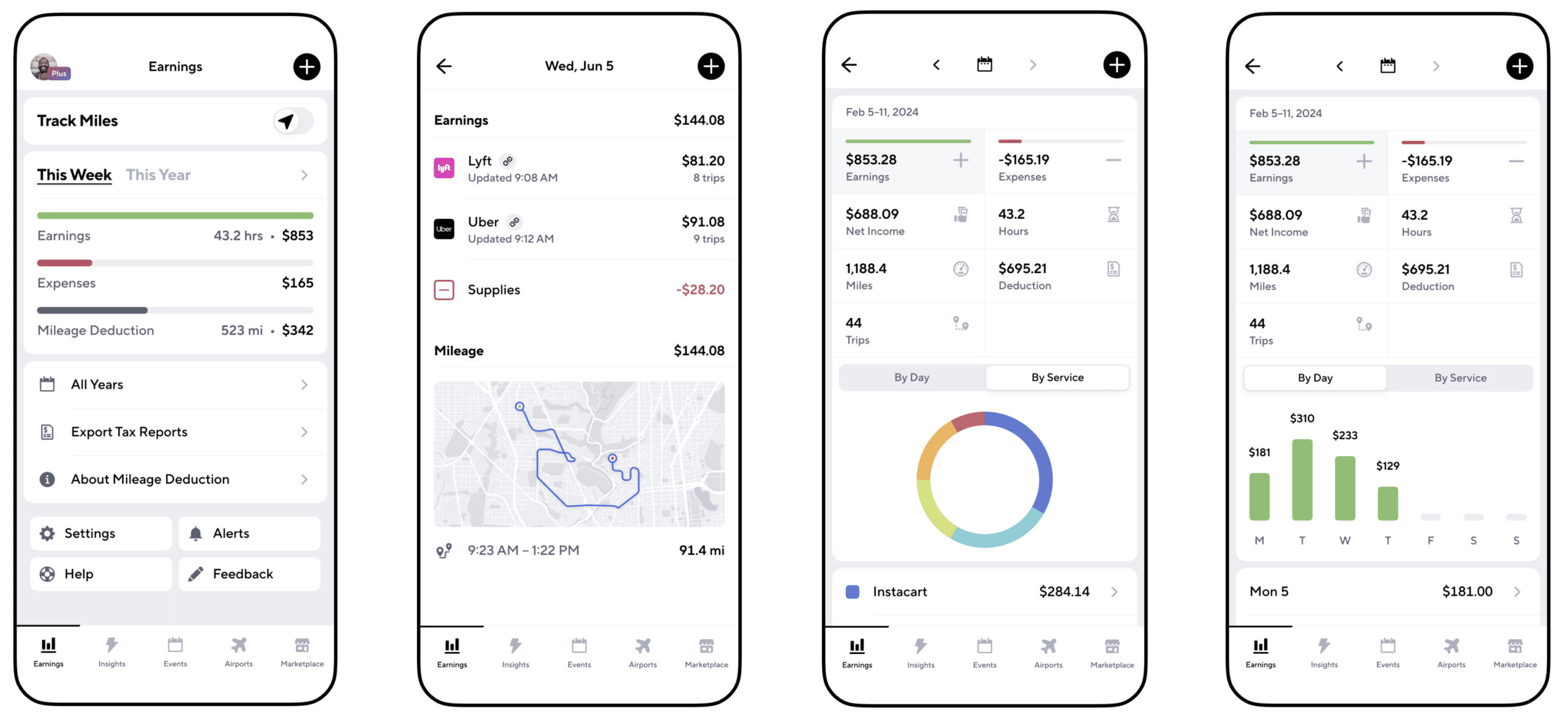
Maximize tax deductions. Another way to minimize your expenses is to maximize your tax deductions. Start by tracking mileage with Gridwise.
Gridwise App
Gridwise captures every deductible mile you drive, including the distance you cover between the trips your driving app records. Know what expenses you can deduct, and put them to work for you when tax time comes. Learn more about tax deduction strategies in the Gridwise Tax Guide for drivers.
Boost earnings with referrals
As an independent contractor, you’re probably looking for ways to make even more money than you can with Uber Eats. And most gig workers like you enjoy getting passive income. With Uber Eats, there’s a really easy way to do that, referrals!
All you need to do is find friends and encourage them to deliver for Uber Eats. If they make a certain number of deliveries within a specified time, you will get paid for doing nothing more than having them sign up under your referral code! Rates of pay vary by city, so check your Uber Eats app to find out what the current deal might be, and learn more about the referral program on the Uber Eats website.
Also remember: “friends” don’t have to be your best buds. Many delivery people carry cards with a QR code linking to their referral information, so just about anyone you encounter can join Uber Eats and boost your earnings. You could meet a source of passive income at the gas station, on social media, or at your high school reunion. The more you hustle, the more there is to gain, right?
Master the art of self-employment
As an Uber Eats driver, you’re an independent contractor. That means the company isn’t going to withhold your taxes, provide insurance, keep track of your earnings, or tell you about tax deductions. You’ll have to do all these things for yourself.
If you want to maximize your tax advantages, open an official business entity. You can incorporate (create a corporation) or you can work as a limited liability corporation (LLC). You can also work with a DBA (Doing Business As) arrangement, but the corporation or LLC will do a better job of protecting you from liability.
Establishing a corporation or LLC offers better tax advantages than being a sole proprietor. For instance, if you simply collect your earnings into your private account, you’ll be charged self-employment taxes in most states. And paying extra taxes is something we all want to avoid, within legal limits, as much as possible.
Every Uber Eats driver needs to learn about self-employment, and there are some great resources you can review. Check out the CareerOneStop website about self employment which will help explain the basics. You can also check with a professional tax accountant, or look other websites to learn more about actually creating a business.
Scope out your market
Look at the area around you to see where you’re likely to get the most deliveries. Where are all the restaurants? Where might people be more inclined to order deliveries? What hours do you want to drive? What activities might be going on around those times? Think about late-night and after-school times as well as breakfast, lunch, and dinner times.
Be realistic about the potential for your area and aware of new services opening up. For example, in New York, there is already a tab on the Uber Eats app that allows customers to order groceries. In our article about the best food delivery service to work for you’ll see that Uber Eats stacks up well against other delivery companies, mainly because of its potential for expanded opportunities for drivers to earn.
So, is Uber Eats good money? As we said, it isn’t an automatic guarantee that everyone will make $1,000 a week with Uber Eats. Trying out the suggestions we give you here, though, should put you on the right track! Go out there and start stacking up those orders and raking in some impressive earnings!
Get more inside information on Uber Eats in these posts from the Gridwise blog:
- The delivery driver guide: Using the Uber Eats app
- Everything you need to know about driving for Uber Eats
- Uber Eats Pro: What drivers need to know
- Looking for a different gig, part-time or full time job? Check out the Gridwise Job board.
Uber Eats FAQ
How does the Uber Eats platform work for drivers?
Uber Eats is a food delivery service that connects customers with local restaurants and independent delivery partners. As an Uber Eats driver, you'll receive notifications of nearby delivery requests, which you can accept and complete. The platform provides flexibility, allowing you to work on your own schedule and earn money based on the number of deliveries you complete.
What are the requirements to become an Uber Eats delivery partner?
To become an Uber Eats delivery partner, you'll need to meet certain requirements, such as having a valid driver's license, a registered vehicle, and passing a background check.
How can I choose the right delivery zone to maximize my earnings?
Selecting the right delivery zone can significantly impact your earnings, as some areas may have higher demand and better-paying orders. It's important to research and identify the zones in your area that tend to have the most consistent and lucrative delivery opportunities.
How can I take advantage of peak delivery hours and surge pricing?
Understanding peak delivery hours, such as mealtimes and weekends, and taking advantage of surge pricing can boost your earnings. Be aware of when demand is highest in your area and adjust your schedule accordingly to capitalize on these peak periods.
What are some tips for maximizing tips and customer satisfaction?
Providing excellent customer service and going the extra mile to ensure a positive experience can lead to more tips and repeat business. Prioritize communication, timeliness, and attention to detail to keep your customers happy and satisfied.
How can I set realistic weekly goals to reach my $1000 target?
To make $1000 a week with Uber Eats, it's essential to set realistic weekly goals and track your earnings and expenses. Start by determining your target earnings and breaking it down into achievable daily or weekly goals. This will help you stay on track and make adjustments as needed.
What are some strategies for efficient route planning and navigation?
Effective route planning and navigation can save you time and fuel, allowing you to complete more deliveries. Utilize mapping apps and take advantage of features like real-time traffic updates and turn-by-turn directions to find the quickest routes.
How can I balance my Uber Eats deliveries with other commitments?
Develop a schedule that allows you to capitalize on peak delivery hours while still maintaining a healthy work-life balance. Consider using tools like calendar apps to plan your availability and track your hours to ensure you're maximizing your earning potential without sacrificing your personal life.
What are the key considerations for maintaining my vehicle as an Uber Eats driver?
Keeping your car clean and well-maintained is crucial for maximizing your Uber Eats earnings. Regularly scheduled oil changes, tire rotations, and other preventive maintenance can help extend the life of your vehicle and minimize downtime. Additionally, budgeting for vehicle-related expenses, such as fuel, insurance, and repairs, will ensure you're accounting for these costs and maximizing your net earnings.
What are the tax obligations and legal considerations for Uber Eats drivers?
As an Uber Eats delivery driver, it's essential to understand the tax obligations and legal considerations that come with being an independent contractor. This includes properly reporting your earnings, deducting eligible business expenses, and making quarterly estimated tax payments. Additionally, you'll need to ensure you have the appropriate insurance coverage, such as personal auto insurance and possibly commercial auto insurance, to protect yourself and your vehicle while on the road making deliveries.

The Gridwise Job Board: Find Your Ideal Job or Gig Work
Gridwise is an essential assistant app created by gig workers for gig workers. Our mission is to support those engaged in gig work in every way possible. We understand how challenging it can be to deal with income instability, a lack of benefits, and job insecurity that often comes with gig work. The Gridwise app tracks and organizes earnings and expenses, and offers a wide array of discounts, deals, and services that make the lives of independent contractors easier and more rewarding.
We firmly believe it’s possible to make a viable living and create a gig experience that offers flexible hours, variety, and excitement. With issues such as consistent earnings and job security in mind, Gridwise is proud to offer a centralized platform that shows you how to find gig work and secure reliable opportunities. We’re proud to introduce the Gridwise Job Board.
The Gridwise Job Board: Key features
Because Gridwise is dedicated to serving the gig worker community, we’ve filled the Gridwise Job Board with useful features that won’t waste your precious time.
- Comprehensive listings. Find part-time, full-time, temporary, and per-task work. Drive or deliver with your vehicle, utilize an employer’s vehicle, or even find non-driving gig work.
- User-friendly interface. Find the jobs that are right for you with a tap of your screen.
- Verified opportunities. We vet the jobs before they are listed to ensure you’re getting high-quality job postings.
How to get more gig work, seasonal, part-time or full-time jobs with the Gridwise Job Board
Looking specifically for “gig work apps” or “gig jobs near me?” You’re in luck. Our filters and search functions send you directly to the listings you seek.
Here’s how it works.
- Access the Job Board via the Gridwise website.
- Search for jobs by type, location, and more.
- Select the job that interests you, and read all about it.
- Scroll through the description, and if it appeals to you, click “Apply for job.”
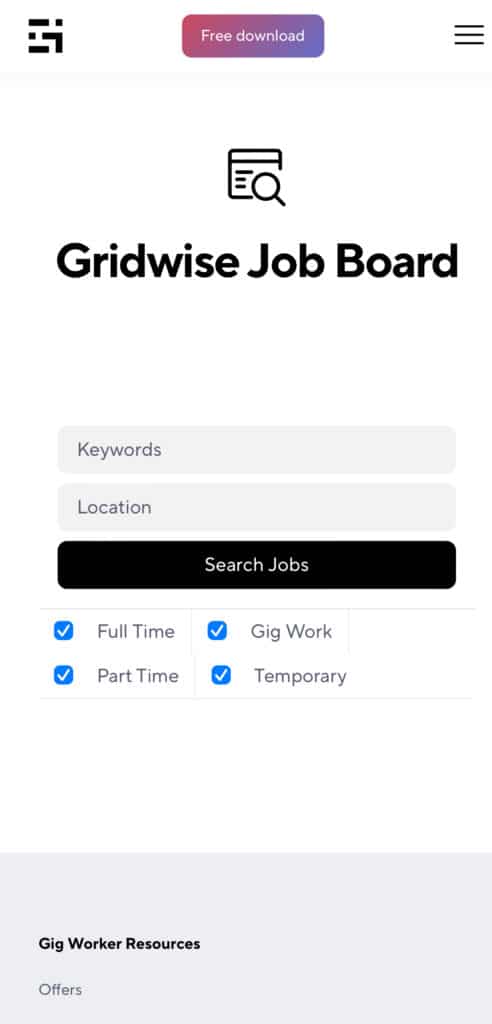
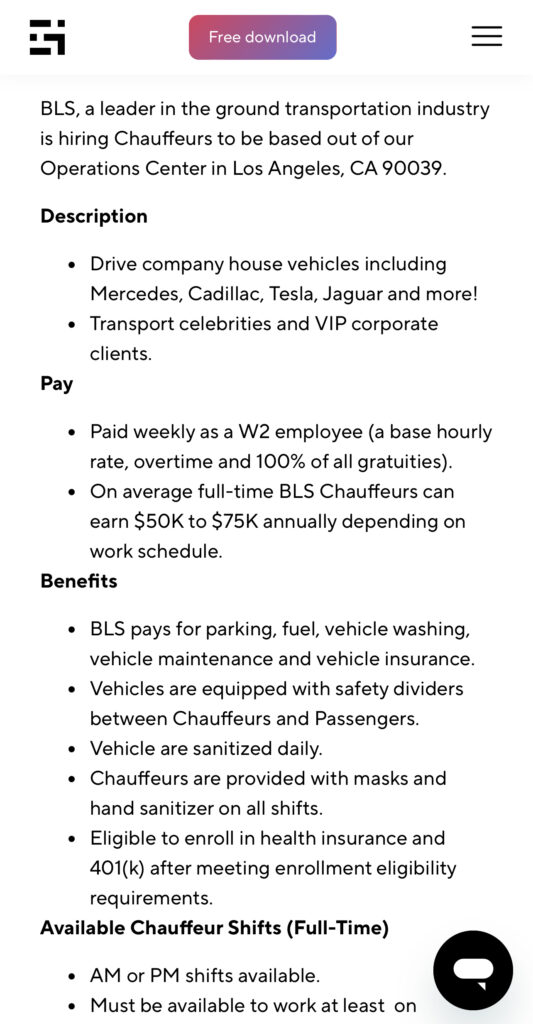
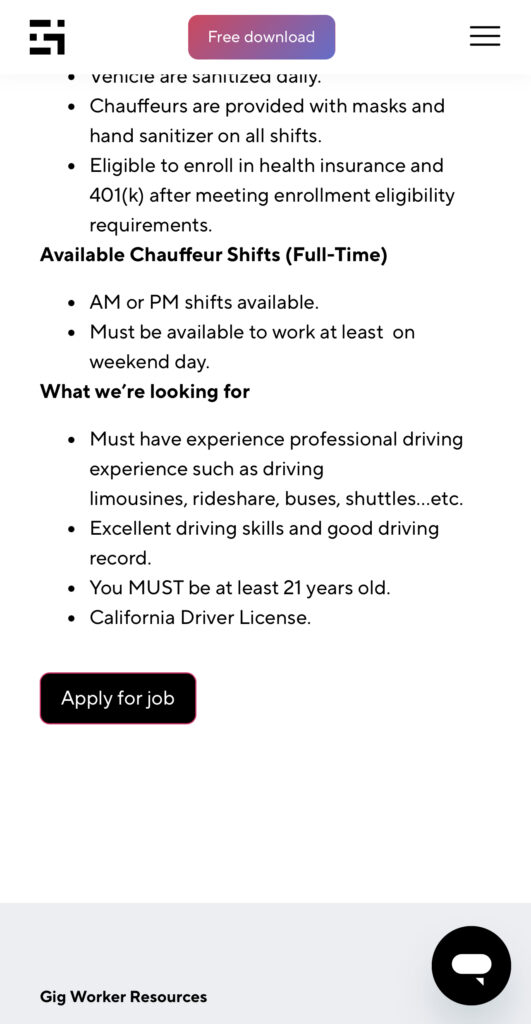
Many types of jobs are available. Adjust the search filter to see the full variety of opportunities that will let you cash in. Deliver food, set up catering, do rideshare driving, get paid for doing package delivery, and much more. You’ll find short-term gigs, long-term contracts, and part-time positions.
Perks of the Gridwise Job Board for gig workers
Gig workers who know how to make extra money will appreciate how the Gridwise Job Board lets you multiply your chances of bringing in big earnings. Here’s how:
- Increased stability. Use the Gridwise Job Board to find part-time or permanent jobs in addition to the part-time gigs you already have. Always keep a steady stream of earning opportunities flowing toward you.
- Flexibility and autonomy. Choose jobs that fit your schedule, work around other jobs and family duties, and still leave room for some fun in your life. Discover side hustles to supplement your full-time job, permanently or just for the season.
- Skill development. Find part-time work that lets you use a skill you already have, or try your hand at something new. It’s a smart way to develop a portfolio to showcase what you can do, or even to find permanent employment.
Get Gridwise and stay up to date on the Gridwise Job Board
Gig workers need plenty of information and assistance, and Gridwise is here to give it to you. Download the app and get essential features such as
- seamless earnings tracking
- mileage tracking
- expense recording, including notes
- low-cost and no-cost insurance benefits
- access to affordable medical, dental, vision, mental health, and alternative care
- professional services including legal and financial help
- deals and discounts
- weather, events, and traffic reports
- inside information on where and when to drive
More to know about gig work:

5 Best Mileage Trackers For Gig Drivers
Many drivers ask, “Do I really need a mileage tracking app?” The answer is simple: only if you want to have an accurate count of all the miles you can legally deduct from your taxable income! You might think your rideshare or delivery driving app has got you covered. After all, they do quite a good job of logging the miles you drive while you’re on a trip or delivery. But, if you want to have the best app to track mileage for Uber, Lyft, Doordash, Instacart, or the other apps you may use, you need more. Why is that?
Without a separate tracker, you’re missing the miles you drive in between pings. Did you realize that all the miles you drive, from the moment you begin your shift until it’s over (as long as you don’t drive several miles on a break to hang with your friends), are tax deductible! That means you need something besides your driving app to keep an accurate count of your travels. Read this Gridwise post to see how important it is to keep track of every deductible mile.
You won’t be surprised to hear that there’s an app for tracking miles. In fact, there are several of them. Here, we’re going to tell you about five top mileage tracking apps, and help you figure out which one is best for you.
Before we get to the list and identify the best mileage tracker app, let’s clarify what exactly a mileage tracking app is. According to G2.com’s technology glossary, mileage tracking is done for the purpose of keeping a log of mileage that is either reimbursable or tax deductible.
And yes, of course you can track your miles simply by taking readings on your odometer. But are you really prepared to account for how many miles you drove for personal reasons and subtract them from the total to get your business mileage? Even if you can remember all that and do the arithmetic, if you want an accurate reading of the miles you drive for business, and can therefore deduct, a mileage tracking app will save you a lot of trouble and prevent you from making costly errors.
Plus, as a gig driver, you have specific needs when it comes to a mileage tracker. Ideally, you’d be able to handle mileage tracking and several other functions all in one app. It can be maddening enough to deal with driving apps, particularly if you’re an avid multi-apper. You would want your mileage tracker app to help you keep account of other aspects of your business, including income, expenses, and inside information about the art of gig driving.
Not all mileage apps are equal, to be sure! Let’s look at five of the best apps to track mileage and figure out which is the best app to track mileage with Uber and Lyft, or what mileage tracker app is best for DoorDash.
1. Zoho Expense
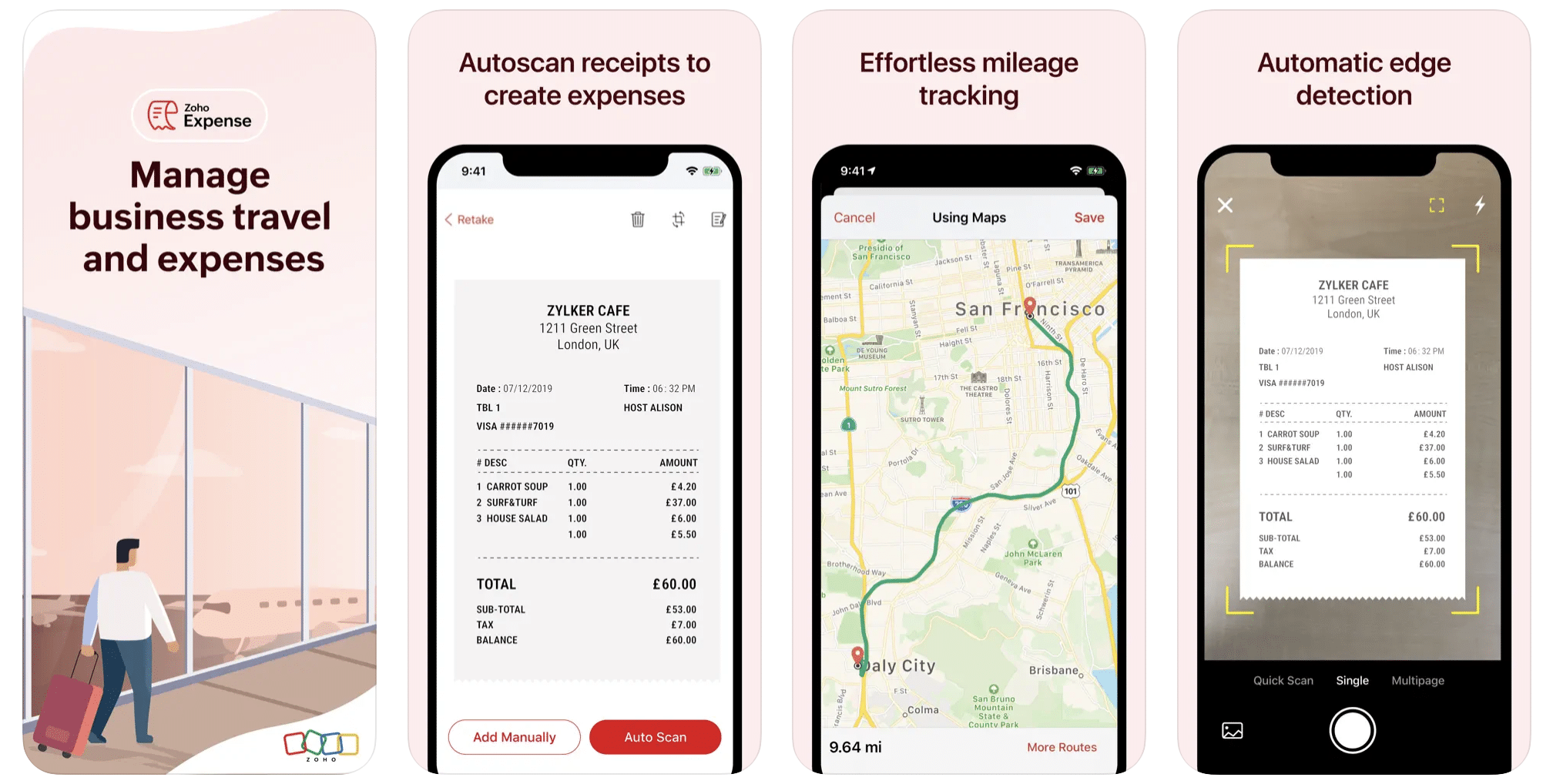
First up is Zoho Expense, which does exactly what its name says. This app is designed to allow companies to give employees a uniform way to create and submit expense reports. It can be used by individuals, including gig drivers, as well.
It includes a mileage tracker, as well as features that let you track other deductible expenses, including the ability to scan and record receipts.
Available on Android and Apple: Yes
Ratings: 4.8 stars on App Store, 4.7 stars on Google Play
Free Version: Yes
Subscription price: $3 per month, billed annually
Created specifically for gig drivers: No
2. Quickbooks Online
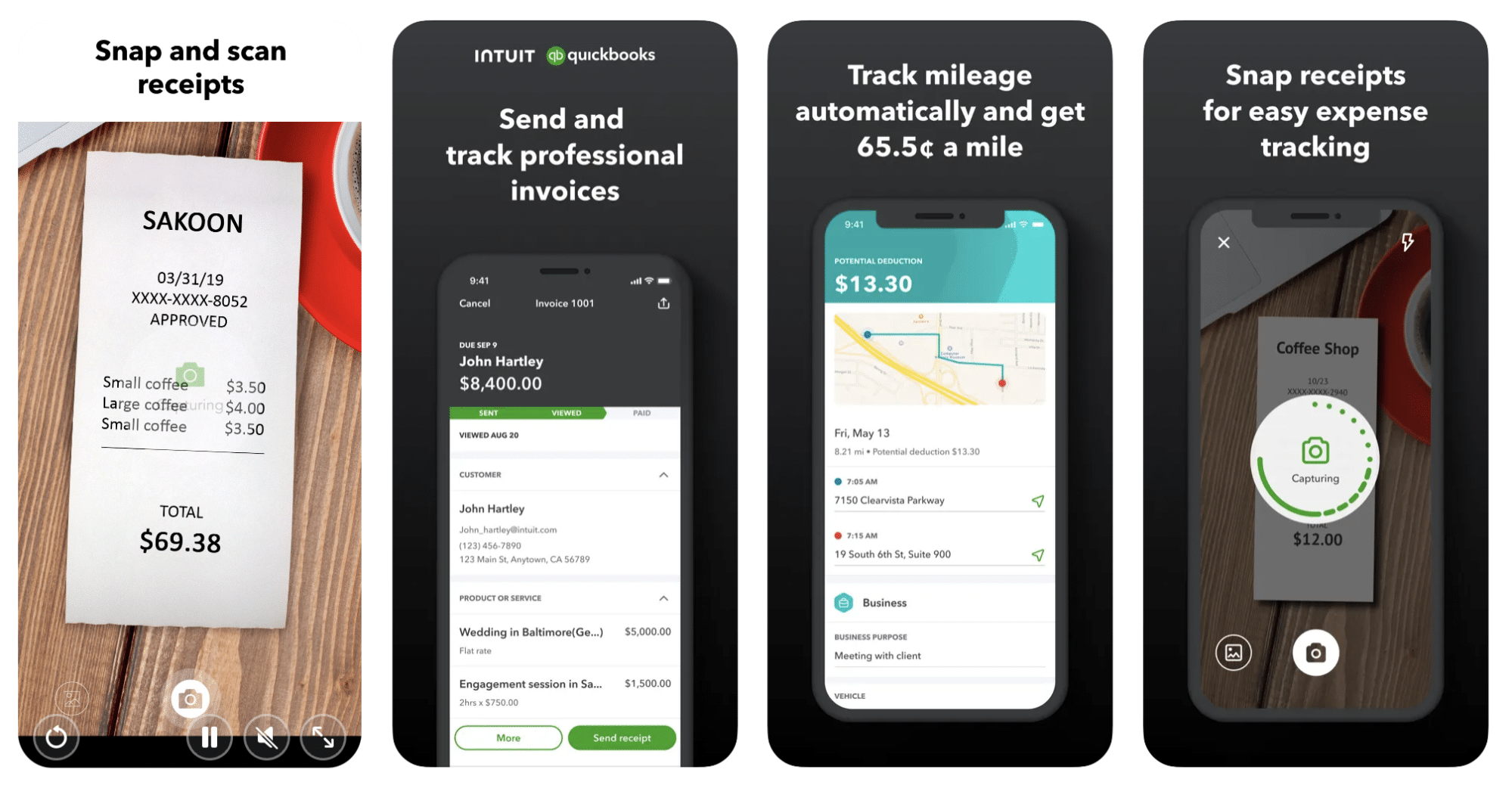
Quickbooks Online is a cloud-based app that allows you to track your mileage, earnings, and expenses. The information you enter can then be used to generate various reports that prepare you for tax time. It also allows you to create graphs that illustrate your cash flow, and includes a receipt scanner so you can instantly record deductible expenses. Quickbooks is popular, highly reliable, and designed mainly to help people keep track of their small businesses.
Available on Android and Apple: Yes
Ratings: 4.7 stars on App Store, 4.4 stars on Google Play
Free version: 30-day free trial
Subscription price: $15 per month for basic version if purchased for 3 months or more
Created specifically for gig drivers: No
Source: quickbooks.intuit.com
3. Shoeboxed
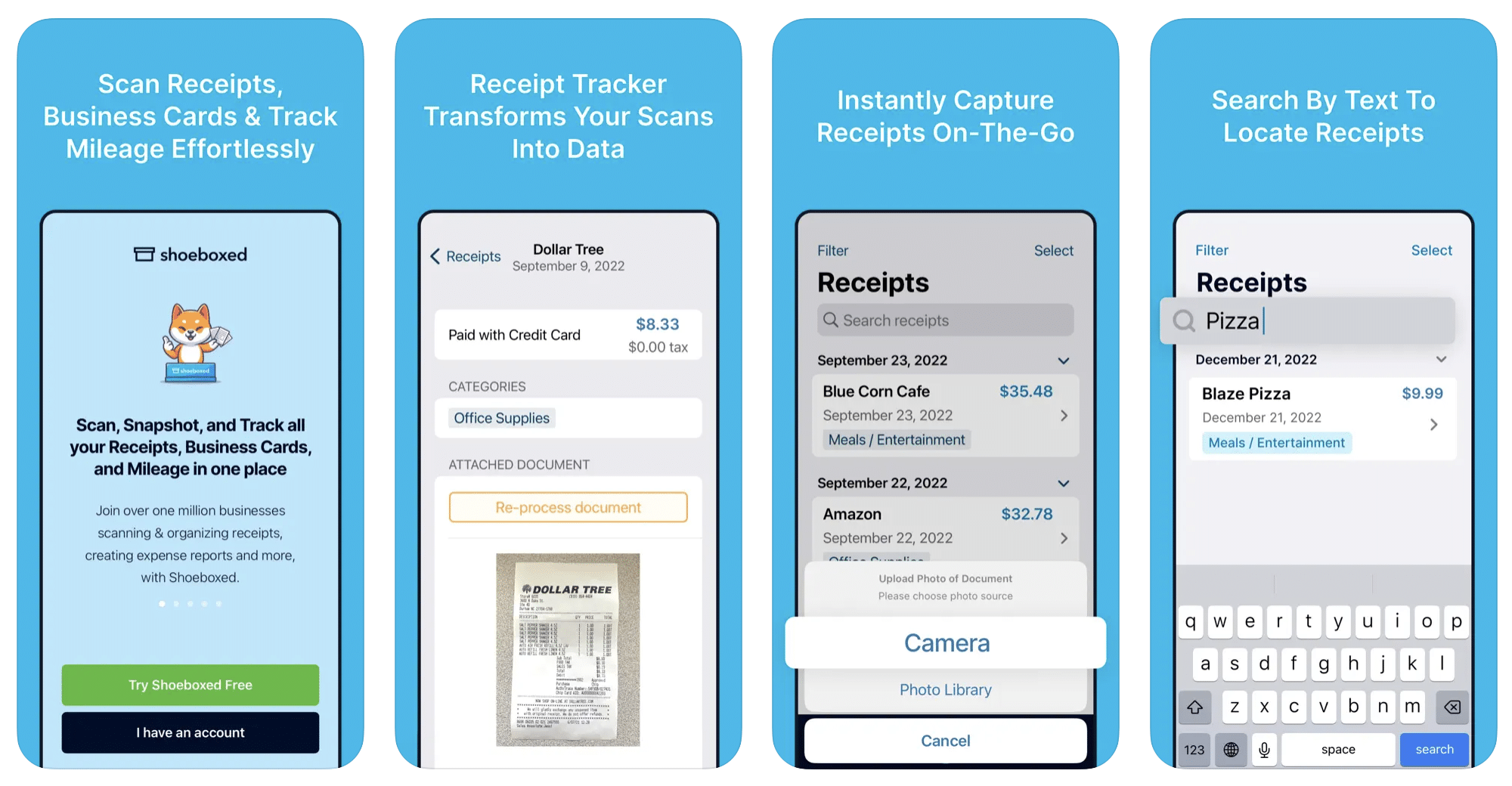
Shoeboxed started in 2007 as a service for scanning paper receipts into digital form. Now the app offers a free mileage tracker and has enabled users to scan receipts directly. It touts itself as the best mileage tracking app for DoorDash, but there are some elements missing that Dashers might like to have. While it provides features that record your expenses and prepare you for tax season, it doesn’t automatically track your earnings. The mileage tracker has a system where you can drop pins along your routes to make the tracking more precise, identifying those legs of a trip that you make for business purposes. The mileage tracker is “free” once you sign up for the basic version.
Available on Android and Apple: Yes
Ratings: 4.5 stars on App Store, 2.3 stars on Google Play
Free version: No
Subscription price: $18 per month for basic version
Created specifically for gig drivers: No
Source: blog.shoeboxed.com
4. Stride
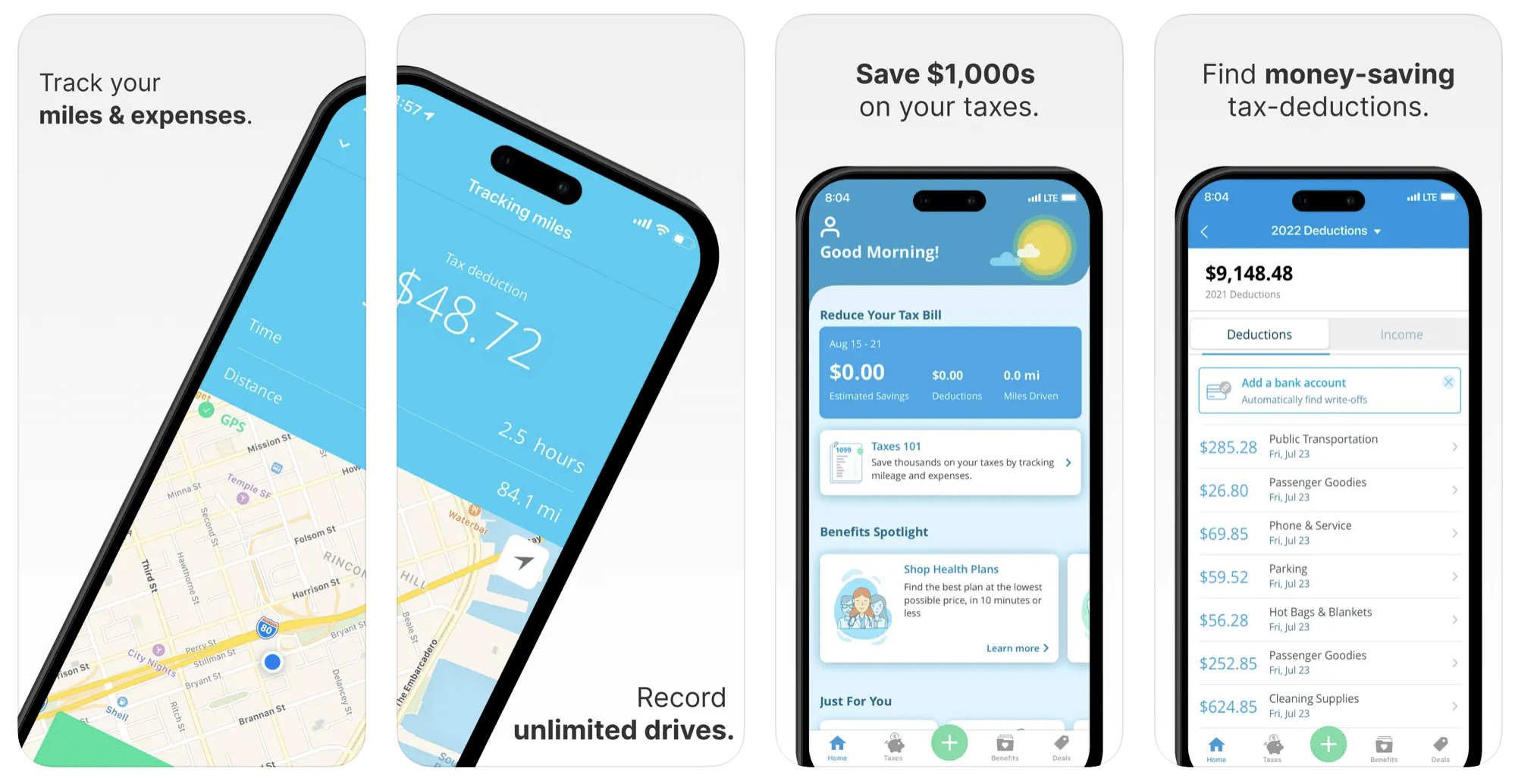
This free mileage tracker does a fair job of keeping track of the distances you rack up while gig driving, but it doesn’t automatically track earnings. It can be a big help, though, in tracking your expenses. You can link Stride to your bank account, and it will automatically scan your expenses to identify items you can potentially deduct. The app is totally free. This could make it the best free mileage tracker app, but there is a small price to pay. The app will persistently push you to consider various insurance plans that they are affiliated with. If you don’t mind that, this is a solid mileage tracker, even if it doesn’t track your earnings.
Available on Android and Apple: Yes
Ratings: 4.8 stars on App Store, 4.6 stars on Google Play
Free version: Yes
Subscription price: None. The app is free.
Created specifically for gig drivers: No
5. Gridwise
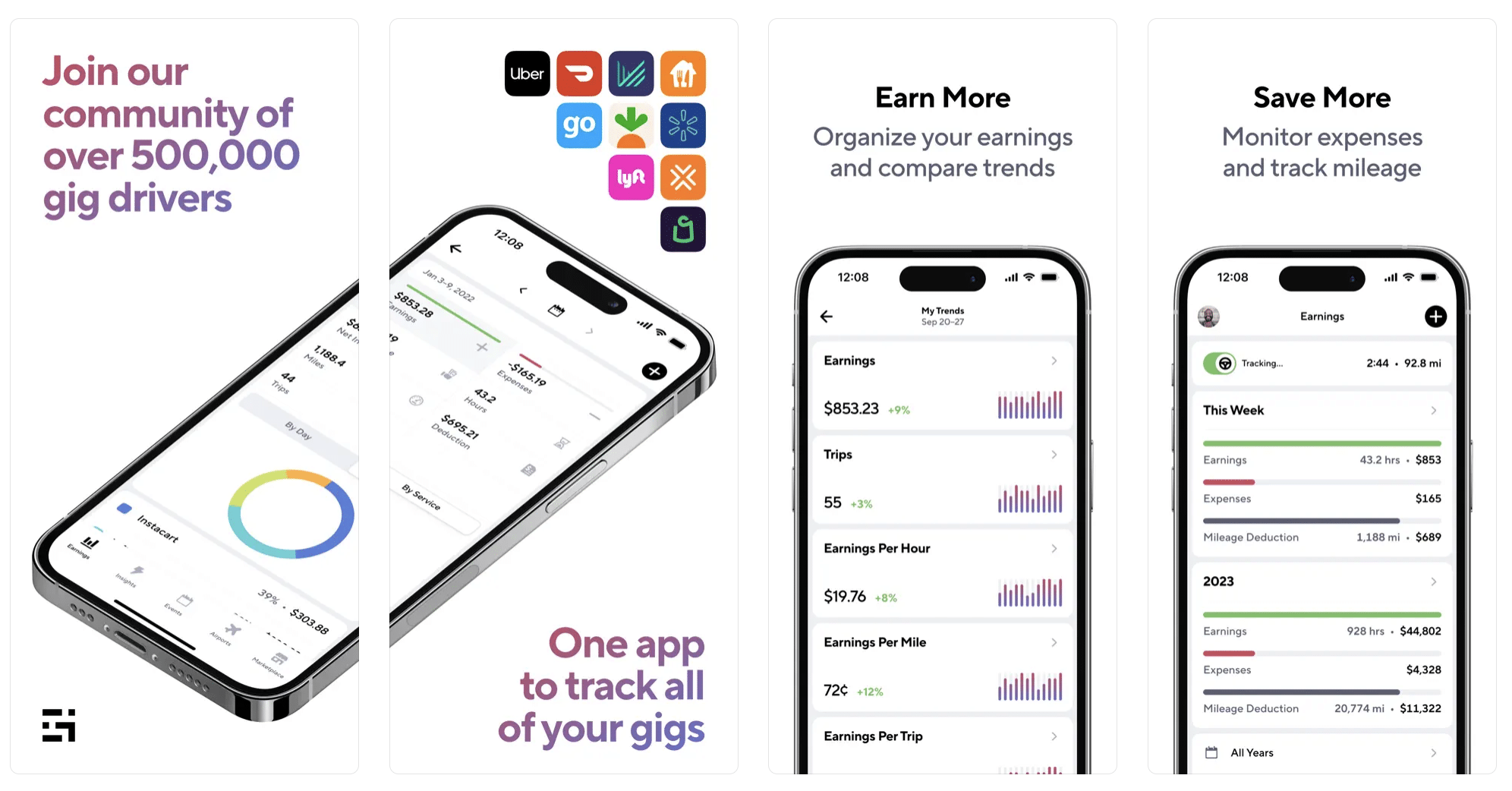
Gridwise has a free mileage tracker and free features that record your income and expenses. It gives you access to insurance and benefits, as well as insights about the best times and places to make the most money while gig driving. The Gridwise mileage tracker captures all the miles you drive while you’re on your driving shift, and it can be used if you have other trips you need to make which qualify as business travel.
Drivers love it because it is geared toward the needs of rideshare and delivery workers, providing free information about airport departures and arrivals, event start and let out times, weather, traffic, and more. The Gridwise Plus subscription adds value by providing additional insights and reports, discounts on benefits, the ability to export data in .csv format,, and more.
Available on Android and Apple: Yes
Ratings: 4.9 stars on App Store, 4.6 stars on Google Play
Free version: Yes
Subscription price: $9.95 per month for Gridwise Plus, or $95.99 per year (a $23.41 savings)
Created specifically for gig drivers: Yes!
What is the best mileage tracking app?
Now that we’ve checked them all out, we’re positive about the answer to that. Hands down, it’s Gridwise. Are we biased? You bet we are! But drivers love it too. Gridwise is the best mileage tracker app, and so much more. So many of the features are free, and the subscription to Gridwise Plus will pay for itself with additional insights to boost your earnings and deeper discounts on products and services.
Most important, Gridwise is designed specifically for gig drivers by experts who were once gig drivers themselves! Knowing what gig drivers need is a crucial step in creating an app that rideshare and delivery drivers can really use! Here are a few of the features, besides mileage tracking:
- seamless earnings tracking
- automatic, on/off toggle and manual mileage tracking
- mileage categorization
- airport, traffic, weather, and events information
- insights into where to drive and when to drive
- reports showing earnings across the platforms you use
- discounts on countless products and services for drivers
- additional resources for finding side gigs
- an informative and comprehensive blog
- affordable benefits, including insurance, medical, dental, and alternative practitioner discounts
- a community of drivers just like you
Don’t settle for just any app. Get the best mileage tracker, and so much more, from Gridwise!

Wendy's Pay Guide: Hourly Wages, Benefits & Hiring (2026)
Wendy's pays most hourly crew members between $10 and $17 per hour, depending on location, role, and franchise operator. Like most major fast food chains, Wendy's is approximately 95% franchised, individual operators set pay, which means wages vary by market and there is no company-wide minimum above state law. This guide covers current pay ranges by position and state, compares Wendy's to other fast food employers, and explains what benefits and hiring look like across the franchise system.
What Does Wendy's Pay Per Hour?
Here is a quick snapshot of what Wendy's pays for its most common hourly positions in 2026:
- Crew Member / Cashier: $10–$17/hr: national average approximately $12–$14/hr; range reflects the gap between low-minimum-wage states and high-wage markets like California
- Shift Supervisor: $13–$19/hr: average approximately $15–$16/hr; responsible for crew and operations during a shift
- Assistant Manager: $16–$24/hr: average approximately $18/hr; day-to-day operational oversight below the General Manager
- General Manager: $45,000–$75,000/yr: average approximately $55,000/yr; full P&L and staffing responsibility for the location
Wendy's corporate does not set a minimum wage for franchise locations beyond what state and local law requires. In practice, most Wendy's franchise operators pay at or near the local minimum for crew-level roles, with premiums in markets where labor competition is higher.
Wendy's Hourly Pay by Position
Wendy's crew roles are structured around the same three tiers as most QSR chains, entry-level crew, shift-level leadership, and store management. Pay variation between franchise locations in the same city is common, and the difference between a corporate-owned Wendy's and a franchise-operated one can be meaningful in terms of pay and benefits.
Entry-Level Roles
- Crew Member: $10–$17/hr: covers the front counter, drive-through, food prep, and grill; the core entry-level role at every Wendy's; average nationally approximately $12–$14/hr
- Cashier / Front Counter: $10–$16/hr: at many locations this is not a distinct role from general crew; associates rotate between positions based on volume and scheduling
- Drive-Through Operator: $10–$16/hr: same pay tier as general crew; high-volume drive-through locations may offer a small premium or faster advancement for experienced operators
- Grill / Kitchen Associate: $11–$17/hr: back-of-house food prep, grill, and assembly; some operators pay a small premium for kitchen roles at high-volume stores
Shift-Level Leadership
- Shift Supervisor: $13–$19/hr: the first step up from crew; manages floor operations during a shift, handles cash, and supervises crew members; average approximately $15–$16/hr nationally
- Crew Leader / Team Lead: $12–$17/hr: an intermediate role between crew and Shift Supervisor at some franchise groups; not all operators use this title
Management Roles
- Assistant Manager: $16–$24/hr: average approximately $18/hr; responsible for opening or closing duties, staffing decisions on shift, and operational reporting to the General Manager
- General Manager: $45,000–$75,000/yr: average approximately $55,000/yr; runs the full operation of the location; large-volume franchise stores at higher-paying operators can approach the upper end of this range
Wendy's Pay by State
State and local minimum wage laws drive pay at Wendy's more directly than at retailers with internal company minimums. In most franchise locations, the starting wage for crew is at or close to the state minimum. Labor market tightness in specific cities and markets can push pay above the floor, but this is operator-driven, not policy-driven.
Higher-Paying States
- California: Crew members average approximately $20/hr following the FAST Act minimum wage of $20/hr for fast food workers (effective April 2024); California Wendy's franchise operators are required by state law to pay at least $20/hr, making California the highest pay floor in the national system
- New York / New York City: Most crew roles pay $16–$19/hr; New York's fast food minimum wage of $16/hr (statewide as of January 2025) establishes the floor; NYC locations often pay above the state minimum due to local cost of living
- Washington State: Crew members typically earn $16–$20/hr; Washington's $16.28/hr minimum (2024) applies to all restaurant workers; Seattle-area locations tend to pay toward the upper end of the state range
- Colorado / Connecticut: Consistent premiums of 10–15% above the national average for crew-level roles; both states have minimum wages above $14/hr with active enforcement
Lower-Paying States
In states like Mississippi, Alabama, Georgia, and Tennessee, where no state minimum above the federal $7.25/hr exists, Wendy's franchise operators in low-competition markets may start crew at $10–$12/hr. In those same states, operators near college campuses, suburban retail corridors, or areas with multiple competing employers often pay $13–$15/hr to stay competitive. The within-state range can be substantial depending on location type.
To find the starting pay at a specific Wendy's location, the most reliable method is applying through wendys.com/careers or asking directly when you walk in. Indeed aggregates self-reported pay data for Wendy's positions by city and can give you a reasonable sense of what a particular market pays.
How Does Wendy's Pay Compare to Similar Employers?
Wendy's sits at the lower end of the fast food pay spectrum nationally. It pays comparably to Burger King and below Chick-fil-A, Raising Cane's, and many corporate-operated QSR chains. Here is how it stacks up against key competitors for entry-level hourly work:
- McDonald's: $10–$18/hr for crew members, similar range to Wendy's; McDonald's corporate-owned stores pay higher and more consistently; franchise locations vary as widely as Wendy's
- Burger King: $10–$16/hr for crew members, nearly identical pay structure and range to Wendy's; both are predominantly franchised and pay at or near local minimums in most markets
- Chick-fil-A: $13–$19/hr for team members, consistently pays above Wendy's in most markets; franchise operators tend to invest more in pay to support the brand's culture; closed Sundays also differentiates the schedule
- Taco Bell: $11–$17/hr for crew members, broadly similar range to Wendy's; franchise-dependent pay; some large franchise groups (like Pacifica) pay above average nationally
- Home Depot: $15–$21/hr for entry-level associates, a common move for workers leaving fast food looking for higher and more stable base pay; see the Home Depot pay guide for a full breakdown of pay, benefits, and advancement opportunities
Wendy's does not have a clear pay advantage over its direct fast food competitors. The practical differentiator for employees is the Dave Thomas Foundation scholarship program: a genuine education benefit funded by Wendy's founder's foundation that pays up to $2,500 per year for eligible hourly employees. In a sector where meaningful benefits for crew are rare, that program stands out.
Wendy's Employee Benefits
Pay is only part of the picture. Wendy's benefits vary significantly by whether the location is corporate-owned or franchise-operated, and franchise benefits are entirely at the operator's discretion.
Earn more from every shift. Gridwise shows you what you're really making and how to grow it. Download for free →
Part-Time Employees
- Discounted or free meals: Most franchise locations provide free or reduced-price meals during shifts; terms set by operator
- Dave Thomas Scholars program: Eligible hourly employees at participating Wendy's franchise locations can apply for annual scholarships through the Dave Thomas Foundation, up to $2,500 per year; this is one of the more concrete and accessible benefits for part-time crew members pursuing education
- Employee Assistance Program (EAP): Some franchise operators offer EAP services covering mental health counseling, financial support, and crisis resources; availability varies by operator
- Flexible scheduling: Most locations accommodate part-time scheduling requests, particularly for students; this is a practical norm rather than a formal policy at most franchise locations
Full-Time Employees
- Health insurance: Corporate-owned Wendy's locations (a small percentage of total) offer standard medical, dental, and vision for full-time employees; franchise operators vary widely, some offer full health coverage, others offer nothing beyond legally required minimums; confirm availability before accepting a full-time role
- 401(k): Corporate-owned locations offer 401(k) with some employer contribution; franchise locations vary; this is not a standard benefit across the franchise system
- Paid time off: Full-time employees at many locations accumulate PTO; amount and accrual rate are set by the operator
- All part-time benefits: Full-time employees retain access to the Dave Thomas Scholars program, meal benefits, and any EAP services offered at their location
Getting Hired at Wendy's
Wendy's is one of the faster-hiring employers in the fast food sector. The application process is minimal, interviews are informal, and same-day or next-day offers are common for crew-level roles at most locations.
- Where to apply: wendys.com/careers routes to franchise-level applications by location; walking into the store and asking to speak with a manager is equally effective and often faster at franchise locations
- Timeline: Same-day to three-day offers are common for crew positions; Shift Supervisor and management roles take longer, typically one to two weeks with multiple interviews
- Interview format: Typically one round, an informal conversation with a manager or shift supervisor. Questions focus on availability, basic customer service orientation, and any relevant food service experience. Behavioral questions are uncommon at the crew level.
- Background check: Most Wendy's franchise locations do minimal background checks for crew-level roles, if any. Background checks are more common for management positions. Corporate-owned stores may have more consistent screening policies.
- Drug test: Pre-employment drug testing is generally not required for crew at most franchise Wendy's locations. Policy varies by operator and state; confirm if this matters for your situation.
- Best positions to target first: Crew Member is the standard entry point; volume of openings is highest for this role. Operators who see reliable performance typically promote to Shift Supervisor within 6–12 months, which comes with a meaningful hourly increase.
Most Wendy's stores hire on a rolling basis, if a position shows as open, it is being actively filled.
Frequently Asked Questions
Does Wendy's pay weekly or biweekly?
Most Wendy's franchise locations pay on a biweekly schedule. Some operators pay weekly. Because each location is independently operated, pay frequency is set by the franchise owner, confirm the schedule during your first interview or before your start date.
What is Wendy's starting wage in 2026?
There is no single Wendy's starting wage because approximately 95% of locations are independently franchised. In practice, most franchise operators start crew at or near the local minimum wage, which ranges from $10/hr in low-minimum states to $20/hr in California under the FAST Act. In markets with significant competition for fast food workers, some operators start at $14–$16/hr voluntarily.
Does Wendy's give raises?
Raises at Wendy's franchise locations are entirely at the operator's discretion. There is no corporate-mandated raise schedule. At most locations, raises are reviewed informally after 90 days or annually. The most reliable path to a meaningful pay increase is moving from Crew to Shift Supervisor, a promotion that typically comes with $2–$4/hr more in most markets.
What is the Dave Thomas Foundation scholarship?
The Dave Thomas Foundation for Adoption's Wendy's Wonderful Kids and Dave Thomas Scholars programs provide scholarships up to $2,500 per year for eligible Wendy's employees pursuing higher education. Eligibility is open to hourly employees at participating franchise and corporate locations who are enrolled in or planning to enroll in an accredited program. It is one of the few concrete, corporate-backed benefits that applies broadly across the Wendy's system regardless of franchise.
Do part-time Wendy's employees get benefits?
Outside of the Dave Thomas Scholars scholarship, benefits for part-time crew at franchise locations are minimal. Meal discounts during shifts are common, but health insurance and retirement accounts are generally only available at corporate-owned stores or at franchise groups that voluntarily offer them. If benefits beyond the scholarship are important, confirm before accepting the role, availability varies significantly by operator.
Is Wendy's a good place to work for hourly employees?
Wendy's is a reasonable entry-level food service job in markets where the pay is competitive, and the Dave Thomas scholarship is a genuine differentiator for employees pursuing education. The experience varies significantly by franchise operator, a well-run franchise with good management can be a stable and fast-moving environment; a poorly managed one carries the same downsides as any understaffed fast food location. Pay ranks at the lower end of fast food nationally, which is the most common point of dissatisfaction in employee reviews. Workers primarily considering pay should compare Wendy's to higher-paying QSR options like Chick-fil-A or local corporate-operated chains before committing.
Pay rates at Wendy's vary by franchise operator and state. Enter your email below to get a free weekly update when Wendy's operators in your area adjust wages, we track changes by role and market so you always have current numbers.
Know exactly what you earn
Gridwise tracks your pay and expenses across every job, so you always see what you really make.

Chick-fil-A Pay Guide: Hourly Wages, Benefits & Hiring (2026)
Chick-fil-A pays most hourly team members between $13 and $22 per hour, depending on location, role, and franchise operator. Unlike most major chains, Chick-fil-A is almost entirely franchised, individual operators set their own pay, which means wages can vary substantially from one location to the next. This guide covers current pay ranges by position and state, explains what the franchise model means for your paycheck, compares Chick-fil-A to other fast food employers, and walks through benefits and the hiring process.
What Does Chick-fil-A Pay Per Hour?
Here is a quick snapshot of what Chick-fil-A pays for its most common hourly positions in 2026:
- Team Member (Crew): $13–$19/hr: national average approximately $15/hr; range is wide due to franchise variation; high-volume operators often pay above market to reduce turnover
- Shift Leader: $16–$22/hr: average approximately $18/hr; responsible for crew management and operations during a shift
- Assistant Director / Manager: $20–$28/hr: average approximately $23/hr; full operational responsibility below the franchise Director of Operations
- Director of Operations: $45,000–$75,000/yr: top salaried role at the store level; equivalent to a General Manager at most other QSR chains
Chick-fil-A corporate does not set a company-wide minimum wage above local law. Each franchise operator sets pay independently, which means there is no single floor that applies across all locations. In states with higher minimum wages, local law establishes the effective floor.
Chick-fil-A Hourly Pay by Position
Because each Chick-fil-A is independently franchised, pay at one location may differ significantly from another in the same city. Operators who invest in higher pay tend to see lower turnover, a well-documented pattern in the QSR industry, so many high-volume franchise locations pay above the local market average to retain experienced team members.
Entry-Level Roles
- Team Member (Crew): $13–$19/hr: the core front-line role covering the counter, drive-through, food prep, and dining room; national average approximately $15/hr; operators in competitive labor markets often start at $16–$17/hr or higher
- Cashier / Front Counter: $13–$18/hr: at some locations this is a distinct role from general crew; at others it rotates among all team members; average aligns with general Team Member pay
- Drive-Through Operator: $13–$19/hr: same pay tier as general crew at most locations; fast-paced and high-volume role at drive-through-dominant stores
- Kitchen / Prep Team Member: $13–$18/hr: back-of-house food prep, breading, and cooking; some operators pay a small premium for kitchen roles due to the skill and speed required
Skilled and Specialized Roles
- Shift Leader: $16–$22/hr: manages crew during a shift, handles opening or closing duties, and serves as the on-floor supervisor; average approximately $18/hr nationally
- Trainer / Team Leader: $15–$20/hr: responsible for onboarding and training new team members; a step above general crew without the full Shift Leader responsibilities at some locations
- Catering / Events Coordinator: $15–$21/hr: manages catering orders and large event fulfillment; available at higher-volume franchise locations that emphasize catering revenue
Management Roles
- Assistant Director / Assistant Manager: $20–$28/hr: average approximately $23/hr; handles day-to-day operations, staffing, and reporting for the franchise operator; title varies by operator
- Director of Operations: $45,000–$75,000/yr: the top salaried position at the store level; manages all operational, staffing, and financial aspects of the franchise location under the operator
Chick-fil-A Pay by State
State minimum wage laws and local labor market conditions drive the pay range more than corporate guidelines at Chick-fil-A, since each franchise operator sets pay independently. In states with a higher minimum wage, the state floor is the effective starting point. In states with no minimum above federal law, operators in competitive markets often pay above the floor voluntarily to attract and retain workers.
Higher-Paying States
- California: Crew members average $20–$22/hr following the FAST Act minimum wage of $20/hr for fast food workers (effective April 2024); California Chick-fil-A operators are required by state law to pay at least $20/hr for all crew-level roles, making California locations among the highest-paying in the system
- New York / New York City: Most crew roles pay $17–$21/hr; New York's fast food minimum wage of $16/hr (statewide as of January 2025) sets the floor; NYC operators often pay above that due to local cost of living
- Washington State: Crew members typically earn $17–$21/hr; Washington's $16.28/hr minimum (2024) applies to all fast food roles; Seattle operators tend to pay toward the upper end
- Colorado / Connecticut: Consistent 10–15% premium above the national average; minimum wages in both states exceed $14/hr and apply to all restaurant workers
Lower-Paying States
In states like Georgia, Alabama, Mississippi, and Tennessee, where no state minimum wage law exists above the federal $7.25/hr, Chick-fil-A franchise operators in less competitive markets may start crew at $13–$15/hr. Operators in those same states who face active competition for workers often pay $15–$17/hr voluntarily. The range within a single state can be substantial depending on whether the location is in a suburban mall, a highway interchange, or a dense urban market.
To find pay at a specific Chick-fil-A, the most reliable method is applying directly, each franchise listing on chick-fil-a.com/careers routes to the operator's application and often lists pay or discloses it during the interview. Indeed also aggregates location-level pay reports for Chick-fil-A positions by city.
How Does Chick-fil-A Pay Compare to Similar Employers?
Chick-fil-A sits at the higher end of the QSR pay spectrum in most markets. It consistently pays above the fast food average for crew-level roles, particularly at high-volume franchise locations that invest in pay to reduce turnover. Here is how it compares to key competitors for entry-level hourly work:
- McDonald's: $10–$18/hr for crew members, range reflects the gap between corporate-owned and franchise-owned stores; average crew pay nationally is approximately $13–$14/hr; lower floor than Chick-fil-A in most markets
- Wendy's: $10–$16/hr for crew members, approximately 95% franchised; pay tends to run at the lower end of fast food nationally; see the Wendy's pay guide for a full breakdown
- Burger King: $10–$16/hr for crew members, mostly franchised; pay is similar to Wendy's; less competitive than Chick-fil-A on average in most markets
- Raising Cane's: $14–$18/hr for crew members, company-owned model means more consistent pay across locations; Cane's has a reputation for paying above fast food average; direct competitor to Chick-fil-A for workers
- Home Depot: $15–$21/hr for entry-level associates, a common alternative for workers who want to move from QSR into retail; see the Home Depot pay guide for a side-by-side benefits comparison
Chick-fil-A's clearest advantages over most fast food competitors are the work environment (consistently rated cleaner and more organized than peer chains) and the guaranteed Sunday closure. Every Chick-fil-A in the country is closed on Sunday, this is a corporate mandate honored by all franchise operators. For workers managing school, family, or a second job, that guaranteed day off is a structural scheduling benefit that no other major QSR chain offers.
Chick-fil-A Employee Benefits
Pay is only part of the picture. Chick-fil-A franchise operators vary widely in what benefits they offer, which means there is no single benefits package that applies across all locations. What follows reflects what is available at many locations, with notes on where variation is common.
Know exactly what you earn. Gridwise tracks your pay and expenses across every job, so you always see what you really make. Download for free →
Part-Time Employees
- Closed Sundays: All Chick-fil-A locations are closed every Sunday, a guaranteed day off that applies to every employee regardless of status; this is the most consistent benefit across the entire franchise system
- Meal discount / free meals: Most franchise locations provide free or heavily discounted meals during shifts; specific terms are set by the operator
- Scholarship program (True Inspiration Awards): Chick-fil-A corporate offers scholarships through the True Inspiration Awards, up to $25,000 for eligible employees pursuing higher education; this is a corporate program available to employees at participating franchise locations
- Tuition assistance (operator-level): Many franchise operators offer their own tuition assistance programs on top of the corporate scholarship; amount and eligibility vary by location
- Flexible scheduling: Most operators accommodate school schedules for part-time crew; this is a practical benefit for the large student demographic that works at Chick-fil-A
Full-Time Employees
- Health insurance: Availability depends on the franchise operator; some operators offer medical, dental, and vision for full-time employees; others do not, this is a meaningful point to confirm before accepting a full-time role
- 401(k): Some operators offer a 401(k) plan for full-time employees; others do not; Chick-fil-A corporate does not mandate a retirement benefit at the franchise level
- Paid time off: Full-time employees at many locations accumulate PTO; terms are set by the operator and are not standardized
- All part-time benefits: Full-time employees retain access to the closed Sundays schedule, scholarship programs, and meal benefits
Getting Hired at Chick-fil-A
Chick-fil-A is known for a hiring process that is slightly more rigorous than other fast food employers, operators tend to be selective about team culture fit and work ethic. In practice, this means the interview process is taken more seriously, but offers can still come quickly for qualified applicants.
- Where to apply: chick-fil-a.com/careers routes to the individual franchise operator's application for each location; you can also walk in and apply in person at most stores, which is often the fastest path
- Timeline: Many operators make same-day or next-day offers for crew-level roles after a single interview; higher-volume locations may interview multiple candidates before deciding, but the process is generally faster than traditional retail
- Interview format: Typically one round, an in-person conversation with the operator or a manager. Questions focus on customer service orientation, availability, and work ethic. Chick-fil-A operators commonly ask situational questions about how you handle a busy or difficult moment with a customer.
- Background check: Varies by franchise operator; many Chick-fil-A locations do not run formal background checks for entry-level crew roles; more likely for supervisory or management positions
- Drug test: Most franchise locations do not require pre-employment drug testing for crew-level roles; this is more common in markets where operators have had past issues or for higher-level positions
- Best positions to target first: Team Member is the standard entry point; starting there and demonstrating reliability is the typical path to Shift Leader, which carries a meaningful pay increase
Frequently Asked Questions
Does Chick-fil-A pay weekly or biweekly?
Most Chick-fil-A franchise locations pay on a biweekly schedule, though some operators pay weekly. Because each location is independently operated, pay frequency is set by the franchise owner. Confirm the schedule during the interview or before your first day.
What is Chick-fil-A's starting wage in 2026?
There is no single Chick-fil-A starting wage, each franchise operator sets pay independently. In practice, most locations start crew at $13–$15/hr in lower-cost markets and $16–$20/hr in high-wage states. California locations must pay at least $20/hr under the FAST Act. In competitive markets, operators often pay above the floor to attract workers.
Does Chick-fil-A give raises?
Raises at Chick-fil-A are entirely at the discretion of the franchise operator. There is no corporate-mandated raise schedule. Operators who value retention tend to offer regular small increases, often after 90 days and then annually. Shift Leader promotions come with a meaningful pay increase that is more predictable than merit raises for crew.
Is every Chick-fil-A really closed on Sundays?
Yes, every Chick-fil-A location in the country is closed on Sunday. This is a corporate policy that all franchise operators agree to as a condition of holding a Chick-fil-A franchise license. It applies universally, including locations in airports, college campuses, and stadiums. For employees, it means a guaranteed day off every week regardless of scheduling demands.
Do part-time Chick-fil-A employees get benefits?
The most reliable part-time benefit is access to the True Inspiration Awards scholarship program (up to $25,000) and the Sunday closure. Beyond that, benefits for part-time crew depend entirely on the franchise operator. Some operators offer tuition assistance, reduced-cost meals, and flexible scheduling accommodations; others offer only what state and federal law require. The Sunday guarantee is the one consistent benefit across all locations.
Is Chick-fil-A a good place to work for hourly employees?
Chick-fil-A consistently ranks above average in fast food for work environment quality, customer interaction, and schedule predictability. Pay tends to run above the QSR average in competitive markets, and the Sunday closure is a genuine quality-of-life advantage. The experience varies significantly by operator, a well-run franchise with a strong operator can be one of the better hourly food service jobs in a given market. A poorly managed franchise is no different from any other fast food job.
Pay rates at Chick-fil-A vary by franchise operator and state. Enter your email below to get a free weekly update when Chick-fil-A operators in your area adjust wages, we track changes by role and market so you always have current numbers.
Track your earnings the smart way
Thousands of workers use Gridwise to see their real pay and earn more.

Lowe's Pay Guide: Hourly Wages, Benefits & Hiring (2026)
Lowe's pays most hourly associates between $15 and $24 per hour, depending on the role, location, and department. The company set a $15 per hour company-wide minimum in 2022, which means every Lowe's store in the country starts above the federal minimum wage floor. This guide covers current pay rates by position and state, compares Lowe's to Home Depot and other competitors, and walks through the benefits package, hiring process, and common questions about working there.
What Does Lowe's Pay Per Hour?
Here is a quick snapshot of what Lowe's pays for its most common hourly positions in 2026:
- Cashier / Customer Service Associate: $15–$21/hr: most entry-level roles start at or near the $15 company minimum; national average approximately $16–$17/hr
- Lumber / Building Materials Associate: $15–$22/hr: product knowledge expected; physical demand of the role is above average for retail
- Plumbing / Electrical / Hardware Specialist: $16–$24/hr: trade knowledge commands a premium; these are among the highest-paying non-management hourly roles in most stores
- Pro Sales Specialist: $18–$28/hr: serves contractor and professional customers; similar to the Home Depot Pro Desk role in scope and pay
- Department Supervisor: $17–$26/hr: average approximately $21/hr; manages a department and hourly associates within that section
- Assistant Store Manager: $55,000–$95,000/yr: average approximately $72,000/yr; first full management tier above hourly roles
Lowe's company-wide minimum wage is $15 per hour, established in 2022. In states with a higher minimum wage, the state floor applies and sets a higher effective starting point.
Lowe's Hourly Pay by Position
Pay at Lowe's varies by role type, department, and market. Entry-level positions cluster between $15 and $19/hr. Specialized trade roles, plumbing, electrical, hardware, push into the $20–$24 range. Management compensation is salaried but converts to $26–$72+ on an hourly equivalent basis depending on store volume and region.
Entry-Level Roles
- Cashier: $15–$19/hr: most new cashiers start at $15 in lower-cost markets and $17–$18 in high-minimum-wage states; average approximately $16–$17/hr nationally
- Customer Service Associate: $15–$20/hr: covers the sales floor in general merchandise departments; responsible for customer assistance, stocking, and basic product knowledge
- Loader / Receiver: $15–$19/hr: handles freight receipt and loading assistance for large purchases; physically demanding; one of the higher-volume entry-level roles
- Lumber / Building Materials Associate: $15–$22/hr: lumber is a high-volume, physically demanding department; pay often reflects experience with materials and safety protocols
- Seasonal / Part-Time Associate: $15–$17/hr: spring and fall seasonal hiring is significant at Lowe's due to lawn, garden, and outdoor categories; most seasonal roles have a path to permanent hire
Skilled and Specialized Roles
- Plumbing / Electrical Specialist: $16–$24/hr: Lowe's staffs dedicated trade specialists in larger stores; applicants with licensed trade backgrounds or strong DIY expertise earn toward the higher end
- Hardware / Tools Specialist: $16–$22/hr: product knowledge and ability to assist on technical purchases is expected; this role is a step up from general associate in most stores
- Pro Sales Specialist: $18–$28/hr: manages contractor and professional customer accounts; drives bulk order sales; the highest-paying non-management hourly role in most locations
- Department Supervisor: $17–$26/hr: manages a department section including scheduling, stocking, and associate oversight; average approximately $21/hr nationally
- Installation Coordinator: $16–$23/hr: manages Lowe's third-party installation projects (flooring, appliances, cabinets); requires strong organizational skills and customer follow-through
Management Roles
- Assistant Store Manager: $55,000–$95,000/yr: average approximately $72,000/yr; equivalent to approximately $26–$46/hr; oversees store operations, manages department supervisors, and handles staffing for assigned departments
- Store Manager: $80,000–$150,000/yr: average approximately $105,000/yr; total compensation often includes performance bonuses; high-volume stores in metro markets trend toward the upper end
Lowe's Pay by State
State and local minimum wage laws create meaningful pay variation across Lowe's locations. In states where the state minimum exceeds $15/hr, every Lowe's hourly role pays at or above that higher floor. In states that rely on the federal minimum, Lowe's $15/hr company minimum functions as the effective starting point.
Higher-Paying States
- California: Associates average $18–$21/hr; California's $16/hr state minimum (effective 2024) raises the starting point for all hourly roles; large-market premium applies in Los Angeles, the Bay Area, and San Diego
- New York / New York City: Most hourly roles pay $19–$23/hr; NYC cost of living and New York's $16/hr minimum wage (effective January 2025) create a consistent premium over the national average
- Washington State: Associates in Seattle-area stores typically earn $20–$24/hr; Washington's $16.28/hr minimum (2024) keeps all Lowe's hourly roles well above the national starting range
- Colorado / Connecticut: Consistent 10–15% premium above the national average for comparable roles; both states have minimum wages above $14/hr and active enforcement
Lower-Paying States
In states like Mississippi, Alabama, Arkansas, and Georgia, which have no state minimum wage above the federal floor, Lowe's $15/hr company minimum is the effective floor for all hourly roles. Most positions in these markets pay $15–$18/hr for entry-level and $18–$22/hr for specialized roles, compared to $18–$24/hr in high-cost states.
To find the pay range for a specific Lowe's location, search for open roles on Lowe's careers page: each listing shows a pay range for that store's market. Indeed and Glassdoor also publish store-level salary data filtered by city.
How Does Lowe's Pay Compare to Similar Employers?
Lowe's sits in the middle of the home improvement and general retail pay range, above fast food and discount retail, roughly even with Home Depot, and below Costco and some warehouse roles at the top end. Here is how it compares to key competitors for entry-level hourly work:
Know exactly what you earn. Gridwise tracks your pay and expenses across every job, so you always see what you really make. Download for free →
- Home Depot: $15–$21/hr for entry-level associates, nearly identical pay floors and ranges; see the Home Depot pay guide for a full comparison of roles, benefits, and advancement
- Menards: $14–$19/hr for hourly associates. Menards operates primarily in the Midwest and pays slightly below Lowe's and Home Depot in most markets; no company-wide minimum matching $15/hr in all states
- Ace Hardware: $13–$19/hr for store associates, independently franchised stores set their own pay; averages run below Lowe's nationally, but some high-performing franchise locations pay competitively
- Target: $15–$24/hr for hourly team members, Target's $15 minimum matches Lowe's floor; urban Target stores in high-wage markets often pay toward the upper end of this range
- Amazon Warehouse: $18–$22/hr for fulfillment center associates, Amazon's $15 minimum plus productivity incentives places it above Lowe's for warehouse-style hourly work; the trade-off is a more physically demanding and fast-paced environment
Lowe's and Home Depot are functionally tied on pay in most markets. The main differentiator is Lowe's 401(k) match structure, which is slightly stronger, 100% match up to 3% plus 50% on the next 2%, effectively up to a 4% employer contribution. For workers focused on long-term compensation including retirement savings, that difference is meaningful over time.
Lowe's Employee Benefits
Pay is only part of the picture. Lowe's offers a benefits package to both part-time and full-time employees, with the full suite available to those working 30 or more hours per week.
Part-Time Employees
- 401(k): Part-time associates become eligible to participate in the 401(k) after one year of service; match applies upon eligibility
- Employee discount: 10% off most Lowe's merchandise for all employees regardless of part-time or full-time status; applies in-store and online
- Dental and vision: Available to part-time employees at the employee's cost; access to group rates without employer subsidy
- Employee assistance program: Mental health, financial counseling, and support resources available to all employees
Full-Time Employees (30+ hours per week)
- Medical insurance: Available after 30 days of employment; Lowe's subsidizes a portion of the premium for full-time associates and their dependents
- Dental and vision: Company-subsidized for full-time employees; included in the standard benefits enrollment
- 401(k) with company match: 100% match on the first 3% of contributions, plus 50% match on the next 2%, an effective employer contribution of up to 4% of salary; one of the stronger 401(k) match structures in retail
- Employee Stock Purchase Plan (ESPP): Opportunity to purchase Lowe's stock at a discount through payroll deduction
- Paid time off: Accrual begins from the start date; rate increases with tenure
- Life insurance: Basic coverage provided at no cost to full-time employees
- Tuition assistance: Available for eligible degree programs; Lowe's has partnerships with specific online education providers for associates pursuing further education
- Paid parental leave: Available for qualifying life events after meeting tenure requirements
Getting Hired at Lowe's
Lowe's hires on a rolling basis for most hourly positions year-round, with increased volume in spring (lawn and garden season) and fall (home improvement projects). If a role is listed on their careers page, it is actively being filled.
- Where to apply: careers.lowes.com: filter by location and job type. The application is straightforward and takes approximately 15–20 minutes for most hourly roles.
- Timeline: Most entry-level applicants hear back within one to two weeks. High-demand spring seasonal roles may move faster, particularly in garden center and outdoor departments.
- Interview format: One to two rounds for hourly roles. Typical questions focus on customer service scenarios, product or trade knowledge (for specialist roles), and availability. Behavioral questions in the format of "Tell me about a time..." are common.
- Background check: Standard background check required for all positions. Criminal history is reviewed on a case-by-case basis.
- Drug test: Pre-employment drug screening is standard for most Lowe's positions. Policy may vary by state for certain substances.
- Best positions to target first: Cashier, Loader, and Seasonal Associate have the highest hiring volume and fastest offer timelines. Pro Sales Specialist and specialist trade roles (plumbing, electrical) typically require relevant knowledge and are filled more selectively.
Most Lowe's stores hire on a rolling basis, if a position shows as open on their careers page, it is actively being filled.
Frequently Asked Questions
Does Lowe's pay weekly or biweekly?
Lowe's pays on a biweekly schedule: every two weeks. Paydays fall on the same day each cycle; your store's HR associate can confirm the specific schedule for your location during onboarding.
What is Lowe's starting wage in 2026?
Lowe's company-wide starting minimum is $15 per hour for all hourly roles in every U.S. market. In states with a higher minimum wage, California, Washington, New York, Colorado, and others, the state minimum applies and sets a higher effective floor. Most entry-level roles start between $15 and $18/hr depending on location and department.
Does Lowe's give raises?
Lowe's reviews hourly pay on an annual basis as part of its standard performance cycle. Merit increases are not fixed amounts, they vary by store, market, and individual performance review. Associates who move into specialist or supervisor roles typically receive a pay adjustment at the time of the role change. There is no published fixed raise schedule for hourly employees.
Can you get benefits working part-time at Lowe's?
Part-time Lowe's associates have access to the 10% employee merchandise discount and the employee assistance program from day one. Dental and vision coverage is available at the employee's own cost. The 401(k) plan becomes available after one year of service for part-time employees. Full medical insurance requires full-time status (30 or more hours per week).
How does Lowe's compare to Home Depot for hourly workers?
The two companies are closely matched on pay, both have a $15/hr floor, both offer roughly the same entry-level range ($15–$22/hr), and both have comparable benefits suites. Lowe's 401(k) match structure is slightly stronger. Home Depot generally has higher store traffic, which can mean more scheduling hours available in many markets. The best choice between the two often comes down to which store is closer and which specific management team is stronger at a given location.
Is Lowe's a good place to work for hourly employees?
Lowe's ranks consistently above average for large-format retail in terms of pay stability and benefits access. The skilled trades path, from associate to specialist to department supervisor, offers a genuine earnings progression without requiring a move into salaried management. The work is physically demanding, and the pace varies significantly by season and store volume. Whether it is the right fit depends largely on the specific store's management and the department you land in.
Pay rates at Lowe's change throughout the year. Enter your email below to get a free weekly update when Lowe's adjusts wages in your area, we track changes by role and state so you always have current numbers.
Track your earnings the smart way
Thousands of workers use Gridwise to see their real pay and earn more.

Kroger Pay Guide: Hourly Wages, Benefits & Hiring (2026)
Kroger pays most hourly grocery workers between $12 and $24 per hour, depending on the banner, role, location, and whether the store operates under a union contract. Unlike retailers with a single company-wide minimum, Kroger operates under dozens of regional banners, Kroger, Fred Meyer, King Soopers, Ralphs, Harris Teeter, and others, and pay is set at the banner and market level. This guide covers current pay rates by position and state across Kroger's banners, how union membership affects earnings, what benefits are available, and how to get hired.
What Does Kroger Pay Per Hour?
Here is a quick snapshot of what Kroger pays across its most common hourly positions in 2026:
- Cashier / Courtesy Clerk: $12–$19/hr: national average approximately $14/hr; Fred Meyer associates in Washington average closer to $19/hr
- Grocery Clerk / Stock Associate: $13–$20/hr: varies by banner and seniority; union stores often have scheduled step increases built into the contract
- Deli / Bakery / Meat Clerk: $14–$21/hr: national average approximately $16/hr; skilled prep roles command a premium over general clerk pay
- Pharmacy Technician: $16–$24/hr: average approximately $19/hr; certification and licensure requirements support the higher pay floor
- Department Manager: $18–$28/hr: covers department leads in produce, deli, grocery, and similar sections
- Store Manager: $55,000–$95,000/yr: average approximately $75,000/yr; total compensation varies by banner and store volume
Kroger does not publish a single company-wide minimum wage. Pay floors are set at the banner level and are governed by local labor market conditions and, in many markets, union contracts with the UFCW (United Food and Commercial Workers) or Teamsters.
Kroger Hourly Pay by Position
Kroger's pay structure is more complex than most large retailers because the company operates under many regional banners, each with its own wage scales. In unionized stores, which represent a significant share of Kroger locations, pay rates and progression timelines are set by collective bargaining agreements, not manager discretion.
Entry-Level Roles
- Cashier: $12–$19/hr: national average approximately $14/hr; range reflects the gap between non-union markets in the Southeast and UFCW-contracted stores in California, Washington, and the mid-Atlantic
- Courtesy Clerk / Bagger: $12–$16/hr: typically the starting point for new hires; often a stepping stone to clerk roles within 6–12 months
- Grocery Clerk / Stock Associate: $13–$20/hr: responsible for stocking shelves, rotating product, and maintaining department appearance; union contracts typically include step increases every 6 months
- Produce Clerk: $13–$20/hr: similar range to grocery clerk; some markets pay a slight premium for produce department knowledge
- Fuel Center Associate: $13–$18/hr: operates Kroger fuel stations; schedule is typically part-time with variable hours
Skilled and Specialized Roles
- Deli Clerk: $14–$21/hr: responsible for food preparation, slicing, and customer service at the deli counter; higher skill requirement than general clerk roles
- Bakery Clerk: $14–$20/hr: includes cake decorating and fresh baking prep at larger banner stores; avg approximately $15–$16/hr nationally
- Meat Clerk: $15–$21/hr: cutting and packaging fresh meat; some markets require a journeyman meat cutter certification for the upper end of this range
- Pharmacy Technician: $16–$24/hr: requires state registration and in many cases national PTCB certification; average approximately $19/hr; Kroger Pharmacy is one of the larger pharmacy employers in the country
- Senior Clerk (UFCW Top Rate): $22–$25/hr: in UFCW-contracted stores, experienced clerks who reach the top of the wage scale can earn $22–$25/hr; this rate is the product of contract-mandated step increases, not merit raises
Management Roles
- Department Manager: $18–$28/hr: covers department leads across produce, grocery, deli, and similar sections; pay varies significantly by banner and market
- Assistant Store Manager: $45,000–$70,000/yr: equivalent to approximately $22–$34/hr; oversees operations and department supervisors
- Store Manager: $55,000–$95,000/yr: average approximately $75,000/yr; high-volume Kroger and Fred Meyer stores at higher-performing markets can reach or exceed the upper end; compensation typically includes bonus potential
Kroger Pay by State
Location matters more at Kroger than at most large retailers because pay is determined at the banner and market level rather than by a single national minimum. State minimum wage laws set the floor, and union contracts often push rates well above that floor in organized markets. In states without a higher minimum wage, non-union Kroger store pay tends to cluster at the lower end of the national range.
Higher-Paying States
- California (Ralphs, Food 4 Less): Cashiers and clerks average $18–$22/hr; California's $16/hr state minimum applies to all grocery roles, and many California Kroger banner stores operate under UFCW contracts that push rates higher; large-metro premium applies in Los Angeles and the Bay Area
- Washington (Fred Meyer): Clerks average $18–$22/hr; Fred Meyer cashiers average approximately $19/hr; Washington's state minimum of $16.28/hr (2024) plus UFCW contracts create one of the highest pay floors in the Kroger network
- New York / New York City (no Kroger banner presence, context for comparison): Kroger does not operate stores in New York, but Harris Teeter and other Kroger banners in the mid-Atlantic run $15–$20/hr for most clerk roles
- Colorado (King Soopers): Clerks and cashiers average $15–$20/hr; King Soopers UFCW Local 7 contract establishes step progression for all hourly roles; Colorado's minimum wage of $14.42/hr (2024) sets the floor
Lower-Paying States
In states like Georgia, Alabama, and Virginia, where Kroger operates non-union or lightly organized stores under the Kroger banner, entry-level clerk and cashier pay tends to start at $13–$15/hr. Without union contracts governing step increases, pay progression depends on individual store management and annual review cycles. These stores typically follow Kroger corporate's regional wage guidance rather than contract schedules.
To find pay rates at a specific store, check the position listing on Kroger's careers site or the banner-specific careers page, each listing includes a pay range by location. Indeed and Glassdoor also show store-level self-reported wage data filtered by city and banner.
How Does Kroger Pay Compare to Similar Employers?
Kroger competes for hourly grocery workers against a mix of traditional supermarkets, discount grocers, and large-format retailers. Pay comparisons vary significantly by market and whether a store is unionized, but here is how the national ranges stack up for entry-level hourly work:
Know exactly what you earn. Gridwise tracks your pay and expenses across every job, so you always see what you really make. Download for free →
- Albertsons / Safeway: $14–$21/hr for entry-level clerk and cashier roles, many markets are also UFCW-organized; pay structures are comparable to Kroger banners in the same regions
- Publix: $14–$20/hr for customer service and stocking roles. Publix is employee-owned and non-union; known for promotion-from-within culture; pay is competitive in the Southeast
- Whole Foods Market: $17–$25/hr for store team members, Amazon ownership has raised pay floors; Whole Foods consistently pays above traditional grocery for entry-level roles
- Walmart: $14–$19/hr for hourly associates, non-union; Walmart's $15/hr floor applies nationally; grocery associates are Walmart general associates, not specialty clerks
- Home Depot: $15–$21/hr for entry-level associates, see the Home Depot pay guide for a complete breakdown of how retail pay compares across departments
Kroger's key differentiator is the union path. In UFCW-organized stores, pay progression is contractually defined, clerks receive $0.25–$0.50 raises every six months on a set schedule until they reach the top rate, which can hit $22–$25/hr for senior clerks. That kind of predictable, contract-backed wage growth is rare in retail and gives Kroger a meaningful edge over non-union competitors for workers who stay long-term.
Kroger Employee Benefits
Pay is only part of the picture. Kroger offers a range of benefits to both part-time and full-time employees, with union-represented employees often accessing a stronger benefit package than what standard corporate plans offer.
Part-Time Employees
- UFCW health coverage: In many UFCW-contracted stores, part-time employees become eligible for union health coverage after accumulating sufficient hours, typically 400–600 hours over a qualifying period; coverage terms are set by the union trust fund, not Kroger corporate
- Dental and vision: Often available to part-time employees covered under a union plan; non-union part-time employees typically access dental and vision at their own cost
- 401(k): Part-time employees may participate in Kroger's 401(k) plan; union stores may have separate pension plan participation rules
- Employee discount: Varies by banner, some banners offer 10% off store brand (Kroger private label) products; others offer 15% off; discount applies at the specific banner, not cross-banner
Full-Time Employees
- Medical / dental / vision insurance: Full-time employees in UFCW stores are covered under union-negotiated health plans, which are often more comprehensive than standard corporate plans; non-union full-time employees access Kroger's standard group health plan
- Pension plan (UFCW multi-employer): Full-time UFCW members participate in a multi-employer pension plan; vesting schedules vary by local agreement, this is a defined benefit plan, which is rare in retail outside of union-organized environments
- 401(k) with company match: Available to full-time employees; match percentage varies by market and contract terms
- Paid vacation: Accrual begins after a qualifying period; union contracts typically specify vacation accrual rates by seniority tier
- Paid holidays: Number of paid holidays varies by banner and contract; typically 6–8 per year for full-time employees
- Employee discount: Full-time employees receive the same banner-specific discount as part-time employees
Getting Hired at Kroger
Kroger hires continuously across its banners. Store-level hiring volume is high for cashier, clerk, and courtesy clerk roles year-round, with seasonal spikes around major holidays. Union stores have seniority-based scheduling and advancement rules that differ from non-union stores, understanding whether a store is organized before you apply is useful context.
- Where to apply: jobs.kroger.com covers all Kroger-owned banners in one application portal, you can filter by banner and location. Some banners (Fred Meyer, Harris Teeter) also have dedicated careers pages; applying through the main portal routes correctly regardless.
- Timeline: Most entry-level applicants hear back within one to two weeks; courtesy clerk and cashier roles at high-volume stores may move faster. Union stores may have a brief waiting period for UFCW membership processing after hire.
- Interview format: Typically one round for hourly roles, an in-store interview with a department manager or assistant store manager. Common questions cover availability, customer service scenarios, and experience handling food safety or cash handling if applicable.
- Background check: Standard background check required for all positions. Pharmacy Technician roles require additional credentialing verification.
- Drug test: Policy varies by banner and state. Pharmacy roles require pre-employment drug screening. General store roles, cashier, clerk, stocking, may or may not require a drug test depending on the specific store and market.
- Best positions to target first: Courtesy Clerk and Cashier have the highest hiring volume and fastest timelines. In union stores, starting as a Courtesy Clerk and moving to Clerk status puts you on the union wage progression scale, which is where the long-term pay advantage compounds.
Frequently Asked Questions
Does Kroger pay weekly or biweekly?
Most Kroger banners pay on a weekly schedule. This is one of Kroger's practical advantages over retailers like Walmart and Target that pay biweekly. Specific pay cycle details may vary by banner, confirm with your store's HR contact during onboarding.
What is Kroger's starting wage in 2026?
Kroger does not publish a single starting wage across all banners. In practice, most entry-level roles, cashier, courtesy clerk, grocery clerk, start between $13 and $16/hr depending on the banner and market. In unionized stores, the starting rate is set by the labor contract for that region. California and Washington banner stores start significantly higher due to state minimum wage laws and union agreements.
Does Kroger give raises?
In UFCW-organized Kroger stores, raises are governed by the union contract, typically $0.25–$0.50 every six months on a defined schedule until the employee reaches the contract's top rate. This is not merit-based; progression is automatic based on hours worked. In non-union stores, raises are performance-reviewed annually, and the amount is not standardized across stores.
Can you get benefits working part-time at Kroger?
In many UFCW-contracted stores, yes, part-time employees become eligible for union health coverage after meeting an hours threshold. In non-union stores, part-time benefits are more limited and typically include dental, vision, and 401(k) access at the employee's cost. Eligibility specifics depend on the banner, the union local, and how many hours you work per week.
How does union membership work at Kroger?
Many Kroger banner stores operate under UFCW or Teamsters collective bargaining agreements. When you are hired into a union store, you typically have a brief grace period before union membership and dues kick in. Union membership means your pay progression, scheduling seniority, and benefits are governed by the contract, not by individual manager decisions. For workers planning a long career in grocery, the structured wage scale in union stores is a significant financial advantage over time.
Is Kroger a good place to work for hourly employees?
Kroger consistently ranks as one of the larger and more stable grocery employers in the country. The experience varies considerably by banner and market, a unionized Fred Meyer or King Soopers store in a high-wage state is a materially different environment than a non-union Kroger banner store in the Southeast. For workers in organized markets, the predictable pay progression and pension access make it one of the stronger long-term hourly opportunities in retail grocery.
Pay rates at Kroger vary by banner, market, and contract cycle. Enter your email below to get a free weekly update when Kroger adjusts wages in your area, we track changes by role, banner, and state so you always have current numbers.
Track your earnings the smart way
Thousands of workers use Gridwise to see their real pay and earn more.

McDonald's Pay Guide: Hourly Wages, Benefits & Hiring (2026)
McDonald's pays most crew members and cashiers between $10 and $18 per hour nationally, but that range understates how much location determines what you actually earn. McDonald's is approximately 95% franchised, which means wages are set by individual franchise operators rather than by McDonald's corporate, and they vary more than at any other large employer covered in this series. California is the major exception: a 2024 state law set a $20/hr minimum for fast food workers at large chains, pushing California McDonald's crew pay well above the national average. This guide covers current pay rates by position and state, how McDonald's compares to Burger King, Chick-fil-A, and Wendy's, what benefits corporate and franchise employees receive, and how the hiring process works.
What Does McDonald's Pay Per Hour?
Here is a quick snapshot of what McDonald's pays for its most common positions in 2026:
- Crew Member / Cashier: $10–$18/hr: national average approximately $12–$14/hr; California average approximately $20/hr following the FAST Act
- Shift Manager: $13–$20/hr: average approximately $16/hr nationally; supervises crew during a specific shift
- Assistant Manager: $16–$25/hr: average approximately $19/hr; helps manage daily restaurant operations
- General Manager: $45,000–$80,000/yr: average approximately $55,000/yr; responsible for full restaurant P&L; compensation varies significantly between corporate and franchise locations
- Corporate-Owned (McOpCo) Crew Member: $13–$20/hr: corporate stores consistently pay above the franchise average nationally and offer structured benefits
McDonald's does not set a single company-wide minimum wage, wages are set by individual franchise operators and corporate-owned restaurants separately. Most locations pay at or slightly above local and state minimum wages. California sets a $20/hr floor for fast food workers under AB 1228 (the FAST Recovery Act), effective April 2024, which applies to McDonald's and other chains with 60 or more locations nationally.
McDonald's Hourly Pay by Position
The franchise structure creates a wider pay range at McDonald's than at most large employers. Two McDonald's locations in the same city can pay meaningfully different wages. Corporate-owned (McOpCo) restaurants generally pay more and offer more structured benefits. Franchise restaurants, the vast majority of locations, set their own rates within local labor market conditions.
Entry-Level Roles
- Crew Member / Cashier: $10–$18/hr: average approximately $12–$14/hr nationally for franchise locations; corporate stores average closer to $15–$16/hr; responsible for taking orders, food preparation, and maintaining the restaurant; the physical pace is high during peak hours
- Drive-Thru Crew: $10–$18/hr: same pay range as general crew; speed and accuracy are tracked metrics at most locations; no pay differential for drive-thru assignment at most franchises
- Maintenance / Overnight Crew: $11–$19/hr: overnight cleaning and stocking roles; some franchises pay a modest shift differential for overnight hours; often the easiest entry point for adults seeking evening work
Skilled and Specialized Roles
- Shift Manager: $13–$20/hr: average approximately $16/hr nationally; supervises crew members during a specific shift (opening, mid, closing); responsible for cash handling, crew direction, and basic operations; the first step up from crew at most locations
- Trainer / Crew Trainer: $12–$18/hr: experienced crew members who train new hires; small pay bump above standard crew in most locations; no formal separate title at all franchises
Management Roles
- Assistant Manager: $16–$25/hr: average approximately $19/hr nationally; manages daily operations, scheduling, and food safety compliance; compensation is significantly higher at corporate locations than at most franchise stores
- General Manager: $45,000–$80,000/yr: average approximately $55,000/yr nationally; responsible for full restaurant profitability, staffing, and operations; General Manager pay at franchise locations varies widely based on franchise owner resources and store volume; corporate General Managers receive a more standardized compensation package including bonuses
- Franchise Owner / Operator: Not a wage role. McDonald's franchise owners invest $1–$2.3 million in their restaurant; their income is derived from the restaurant's profitability after royalties and fees
McDonald's Pay by State
No employer in this series shows more geographic pay variation than McDonald's. The combination of franchise discretion and widely varying state minimum wages creates a range from approximately $10/hr (in states defaulting to the federal minimum) to $20+/hr (in California post-FAST Act). The state you work in matters more at McDonald's than at almost any other major employer.
Higher-Paying States
- California: Crew members earn a minimum of $20/hr following the FAST Recovery Act (AB 1228), which took effect April 2024 and set a $20/hr floor for fast food workers at chains with 60 or more locations. This is the most significant state-level fast food wage law in U.S. history. California McDonald's crew wages were approximately $16–$17/hr before the law; they jumped to $20+ immediately after enactment. The FAST Food Council can raise the minimum annually by up to 3.5% or the rate of inflation, whichever is lower, meaning the California floor will continue to increase.
- New York / New York City: Crew members average $17–$20/hr in New York state; NYC-area locations are at the upper end. New York's $16/hr general minimum wage (effective Jan 2025) sets a strong floor; NYC also has ongoing political pressure toward higher fast food minimums.
- Washington State: Crew members typically earn $17–$20/hr at Seattle-area locations. Washington's $16.28/hr state minimum (2024) and Seattle's even higher city minimum keep McDonald's wages well above the national average in this market.
- Colorado / Connecticut: Crew members earn 10–20% above the national average in these states; both have minimum wages above $14/hr and active legislative environments pushing wages higher.
Lower-Paying States
In states that default to the federal minimum wage of $7.25/hr, including Mississippi, Alabama, Georgia, and South Carolina, McDonald's franchise operators are not bound by a state minimum above the federal floor. In practice, most McDonald's locations in these states pay between $10 and $13/hr for crew, due to market pressure to attract workers even at low minimums. However, $10/hr is a real starting wage at some franchise locations in the lowest-cost markets, compared to the $20/hr California minimum that took effect in 2024.
To find the exact wage at a specific McDonald's location, search on careers.mcdonalds.com or visit the restaurant directly, many post starting wages on signs in the window or at the counter. Indeed and Glassdoor show location-specific data but may lag recent adjustments at franchise locations.
How Does McDonald's Pay Compare to Similar Employers?
McDonald's sits in the middle of the fast food pay range nationally, above some smaller chains, below a few premium fast casual brands, and broadly in line with Burger King and Wendy's. The California-adjusted figure is a meaningful outlier. Here is how it compares:
- Burger King: $10–$16/hr for crew-level roles nationally, comparable to McDonald's franchise pay; similar franchise model means similar geographic variation
- Wendy's: $10–$16/hr for crew-level roles, broadly similar to McDonald's and Burger King; slightly higher average at company-owned locations in some markets
- Chick-fil-A: $13–$18/hr for crew-level roles. Chick-fil-A consistently pays above McDonald's nationally; franchise operators are held to higher service and staffing standards, which tends to push wages higher
- Taco Bell: $11–$17/hr for crew-level roles, slightly wider range than McDonald's but similar midpoint; Taco Bell's franchisee pay practices are comparable to McDonald's
- Five Guys: $13–$18/hr for crew-level roles, higher average than McDonald's, consistent with Five Guys' positioning as a premium fast casual brand; stores also tend to tip, which McDonald's does not
- Home Depot: $15–$21/hr for entry-level retail associates, for workers considering fast food vs. retail, see the Home Depot Pay Guide; retail hours tend to be more consistent and the physical intensity is lower than fast food during peak service periods
McDonald's advantage over most fast food competitors is scale, it has more open positions at any given time than any other fast food employer, making it the most accessible option if you need to start quickly. The Archways to Opportunity tuition program at corporate-owned locations is a genuine differentiator. The main disadvantage is pay predictability: at franchise locations, your wage depends heavily on the individual operator's practices, which can vary significantly even within the same city.
McDonald's Employee Benefits
Pay is only part of the picture, but the benefit picture at McDonald's is complicated by the franchise structure. Corporate-owned (McOpCo) locations offer a structured benefits package. Franchise restaurants set their own benefits, and many offer little beyond what is legally required. The gap between corporate and franchise benefits is wider at McDonald's than at most large employers in this series.
Track your earnings the smart way. Thousands of workers use Gridwise to see their real pay and earn more. Download for free →
Part-Time Employees
- Free or discounted meals during shift: Standard at virtually all locations, corporate and franchise; exact policy (free vs. discounted, what's included) varies by operator
- Employee discount: Some franchise operators offer discounts at their specific locations; not a universal McDonald's-wide benefit
- Archways to Opportunity (corporate / McOpCo locations): Tuition assistance of up to $3,000 per year for eligible education programs; also includes English language courses and high school completion support; available at corporate stores; franchise participation is voluntary and inconsistent
- Basic benefits at franchise locations: Most franchise operators provide only what is legally required (workers' compensation, unemployment insurance, legally mandated sick leave in applicable states); medical, dental, and vision are not guaranteed at franchise restaurants
Full-Time Employees at Corporate-Owned (McOpCo) Locations
- Medical, dental, and vision insurance: Available to full-time associates at corporate stores; McDonald's subsidizes a portion of the premium
- 401(k) with company match: Available at corporate locations; match rate and vesting schedule are part of the McOpCo package
- Paid time off: Accrual for full-time associates at corporate stores; not standard at most franchise locations
- Archways to Opportunity: Up to $3,000/yr in tuition assistance; also covers discounted college credits through partnerships with educational institutions
- Life and disability insurance: Basic coverage at no cost at corporate locations
Getting Hired at McDonald's
McDonald's has one of the fastest and most accessible hiring processes of any large employer. Many locations hire crew members the same day they apply, and walk-in applications are accepted at most restaurants. There is no formal multi-round interview process for crew-level roles at most locations.
- Where to apply: careers.mcdonalds.com for corporate and most franchise locations; many restaurants also accept walk-in applications or post "Now Hiring" contact information in the window. Applications are short, typically 10–15 minutes.
- Timeline: Faster than any employer covered in this series, many locations contact applicants within 24–48 hours, and some make offers the same day. Crew hiring is often needs-based and immediate, particularly for evening and weekend availability.
- Interview format: Minimal for crew roles at most locations, a brief conversation with a manager about availability, previous experience, and why you want to work there. Many McDonald's locations do not conduct a formal structured interview for entry-level crew.
- Background check: Varies by franchise and role. Corporate stores conduct standard background checks. Many franchise operators do not conduct background checks for crew-level positions, though individual operators may set their own policies.
- Drug test: Generally no pre-employment drug test for crew-level roles at most McDonald's locations, corporate or franchise. Some operators may test for management-level positions.
- Best roles to target first: Crew Member is the universal entry point and the fastest to hire. If you have prior food service experience, Shift Manager is worth applying for directly, many operators will consider external candidates with experience. If benefits matter, search specifically for corporate-owned (McOpCo) locations in your area.
Most McDonald's locations hire on a rolling, needs-based basis. If you are flexible on shift hours, especially evenings and weekends, you will have the fastest path to an offer.
Frequently Asked Questions
Does McDonald's pay weekly or biweekly?
Pay frequency at McDonald's depends on the individual franchise operator. Many locations pay biweekly; some franchise operators pay weekly. Corporate-owned (McOpCo) locations follow a consistent schedule that varies by market. Ask about the pay schedule during the hiring process, it is not standardized across all locations the way it is at Walmart or Target.
What is McDonald's starting wage in 2026?
There is no single national starting wage at McDonald's. Most franchise locations pay $10–$14/hr for new crew members in states without a higher minimum; the national average for entry-level crew is approximately $12–$14/hr. In California, the minimum is $20/hr for all crew at large fast food chains, effective April 2024. Corporate-owned stores typically pay more than franchise locations in the same market. The actual starting wage at a specific restaurant is best confirmed by applying or calling directly.
Does McDonald's give raises?
Raise policies at McDonald's are set by individual franchise operators and are not standardized across the system. At corporate locations, performance reviews and pay adjustments follow a more structured schedule. At franchise restaurants, raises depend entirely on the operator's practices, which range from annual merit increases to no structured raise process at all. Asking about the raise schedule is a reasonable question to raise during the hiring conversation at any franchise location.
Can you get benefits working part-time at McDonald's?
At franchise locations, the vast majority of McDonald's, part-time associates typically receive discounted or free meals during their shift and little else beyond legally required benefits. At corporate-owned (McOpCo) locations, part-time associates have access to the Archways to Opportunity tuition program and some benefit options. Full medical, dental, and vision coverage at corporate stores requires full-time status.
What is the California FAST Act and how does it affect McDonald's pay?
AB 1228 (the FAST Recovery Act) took effect April 2024 and established a $20/hr minimum wage for fast food workers at chains with 60 or more locations nationally, a category that includes McDonald's. The law created a Fast Food Council with the authority to raise the minimum annually by up to 3.5% or the rate of CPI inflation, whichever is lower. This means the California minimum will increase incrementally each year. For crew members in California, this was a 20–25% overnight wage increase at the time of enactment. It is the most impactful state wage law for fast food workers in the country and has made California McDonald's jobs among the highest-paying crew positions in the system.
Is it better to work at a corporate McDonald's or a franchise?
For most hourly workers, corporate-owned (McOpCo) locations offer better pay, more structured benefits (including medical and 401k), and more reliable HR processes. Franchise locations make up roughly 95% of McDonald's restaurants, so McOpCo stores are rarer, but worth seeking out if benefits access matters. Search for "McDonald's company-owned" or "McOpCo" on Indeed to identify corporate locations in your area. In practice, the day-to-day work experience and management quality vary significantly even within corporate stores, so reading location-specific reviews on Indeed and Glassdoor is worthwhile before applying.
McDonald's pay varies more by location than almost any other employer, and California wages in particular are moving targets. Enter your email below to get a free weekly update when McDonald's adjusts wages in your area, we track changes by state, operator type, and role so you always have current numbers.
Earn more from every shift
Gridwise shows you what you're really making and how to grow it.

Walmart Pay Guide: Hourly Wages, Benefits & Hiring (2026)
Walmart pays most hourly associates between $14 and $28 per hour, depending on role, location, and whether you are working a standard or overnight shift. The company's $14/hr company minimum, $15/hr at Sam's Club, is the effective floor for all store-level hourly workers across the U.S., though market conditions push starting wages higher in many urban and high-cost locations. This guide covers Walmart's current pay rates by position and state, how it compares to Target, Amazon, and Costco, the benefits structure for part-time and full-time employees, and how to get hired quickly.
What Does Walmart Pay Per Hour?
Here is a quick snapshot of what Walmart pays for its most common hourly positions in 2026:
- Cashier / Front End Associate: $14–$19/hr: national average approximately $15–$16/hr; the most common entry-level role
- Sales Associate / Stocker: $14–$19/hr: similar range to front-end roles; pay reflects location and tenure more than role differentiation at this level
- Personal Shopper / Curbside Associate: $14–$18/hr: picks and stages online grocery orders for pickup
- Overnight Stocker: $15–$20/hr: same base range as day-shift stocking plus approximately $1/hr overnight shift differential
- Department Manager: $19–$28/hr: national average approximately $22/hr; the primary hourly management step
- Assistant Store Manager: $65,000–$110,000/yr: salaried; national average approximately $85,000/yr
Walmart's company-wide minimum wage is $14 per hour for Walmart stores and $15 per hour for Sam's Club. In states with a higher minimum wage, the applicable state or city minimum applies. Some markets already pay above the company minimum due to local labor competition.
Walmart Hourly Pay by Position
Walmart's pay structure is relatively flat at the entry level, most frontline roles cluster between $14 and $19/hr regardless of department. The first meaningful pay step comes at the Department Manager level, which can reach $28/hr at high-volume stores. Store Manager compensation is notably strong and worth understanding if you are thinking about a long-term retail career.
Entry-Level Roles
- Cashier / Front End Associate: $14–$19/hr: average approximately $15–$16/hr nationally; covers checkout, returns, and self-checkout oversight; the high end of the range typically reflects high-cost markets or significant tenure
- Sales Associate / General Merchandise: $14–$19/hr: average approximately $15/hr nationally; stocking, zoning, and customer assistance across departments; pay range is largely identical to cashier roles at the same store
- Personal Shopper / Grocery Pickup Associate: $14–$18/hr: picks and stages online grocery orders for curbside pickup; metrics-tracked role with daily order completion targets; average approximately $15/hr nationally
- Cart / Lot Associate: $14–$17/hr: retrieves carts from the parking lot and assists with outdoor areas; typically the lowest-paying role in the store; average approximately $14.50–$15/hr nationally
- Overnight Stocker: $15–$20/hr: works during overnight hours to stock shelves before store opening; Walmart provides a shift differential of approximately $1/hr for overnight hours; average approximately $16–$17/hr for overnight roles nationally
Skilled and Specialized Roles
- Auto Care Center Associate: $14–$22/hr: performs oil changes, tire rotations, and basic vehicle maintenance inside Walmart's automotive service centers; requires some mechanical knowledge; average approximately $16/hr nationally
- Pharmacy Technician: $15–$24/hr: assists the pharmacist with prescription processing and patient interactions; often requires state certification; significantly higher ceiling than general store roles
- Vision Center Associate: $14–$21/hr: assists customers with optical services; some roles require licensing or certification depending on state law
- Asset Protection / Loss Prevention: $15–$22/hr: monitors store security and conducts investigations of theft; average approximately $17/hr nationally
Management Roles
- Department Manager: $19–$28/hr: national average approximately $22/hr; manages a specific department (grocery, electronics, sporting goods, etc.) and supervises associates; this is the first real leadership tier for hourly workers
- Assistant Store Manager: $65,000–$110,000/yr: salaried; national average approximately $85,000/yr; oversees store operations across departments; Walmart's salaried management path is one of the stronger compensation ladders in retail
- Store Manager: $117,000–$215,000/yr: one of the highest Store Manager compensation ranges in all of retail; includes base salary plus profit sharing; top performers at high-volume Supercenters reach the upper end; this is a meaningful career path for those who start as hourly associates
Walmart Pay by State
Walmart's pay varies significantly by state and city, driven primarily by minimum wage laws and local labor competition. The company's $14/hr floor applies in states where no higher minimum exists, but in markets where the state minimum exceeds $14, Walmart pays at or above the applicable minimum.
Higher-Paying States
- California: Entry-level associates average $17–$20/hr; Los Angeles and Bay Area stores are at the upper end. California's $16/hr state minimum (2024) raises Walmart's effective floor above the national minimum; some California Walmart stores post starting wages of $17–$18/hr in job listings.
- New York / New York City: Associates average $17–$21/hr statewide; NYC stores are at the upper end. New York's $16/hr minimum (effective Jan 2025) sets the floor; NYC local cost of living and labor competition push wages higher for most hourly roles.
- Washington State: Associates typically earn $18–$22/hr at Seattle-area stores. Washington's $16.28/hr state minimum (2024) keeps all Walmart roles well above the national company floor.
- Colorado / Connecticut: Consistent premiums of 10–15% above national averages; both states have minimum wages above $14/hr and competitive labor markets that keep entry-level retail wages elevated.
Lower-Paying States
In states like Mississippi, Alabama, Georgia, and Arkansas, where no state minimum wage law exists above the federal floor, Walmart's $14/hr company minimum is the effective starting point for all hourly roles. Most entry-level positions in these markets pay $14–$16/hr, compared to $17–$21/hr in high-cost states. Department Manager roles also tend to pay at the lower end of their national range in these markets.
To find the exact pay range at a specific Walmart store, search the position at careers.walmart.com: each listing includes the pay range for that location. Indeed and Glassdoor also show store-specific salary data filtered by city.
How Does Walmart Pay Compare to Similar Employers?
Walmart's entry-level pay floor is slightly lower than most of its major retail competitors, but its Store Manager compensation is one of the strongest in all of retail. Here is how it compares for hourly roles:
- Target: $15–$24/hr for entry-level hourly roles, Target's $15 floor is slightly higher than Walmart's in states where Walmart's $14 minimum applies; Target also has a more defined hourly Team Lead path
- Amazon: $18–$22/hr for warehouse associates, Amazon's guaranteed floor significantly exceeds Walmart's for physically demanding roles; weekly pay at Amazon vs. biweekly at Walmart is also a practical difference
- Costco: $19–$26/hr for warehouse associates. Costco consistently pays above Walmart across every comparable role; the gap is most visible at the entry level, where Costco's floor is $5/hr or more above Walmart's
- Dollar General: $10–$15/hr for store associates, Walmart's floor is meaningfully higher than Dollar General in most markets; Dollar General's lean staffing model also means fewer hours available per associate
- Home Depot: $15–$21/hr for entry-level associates. Home Depot's $15 floor matches or beats Walmart's in most markets; see the Home Depot Pay Guide for a complete breakdown; Home Depot's skilled trades path also offers a clearer hourly ceiling for experienced workers who don't pursue management
Where Walmart stands out is at the management level. Store Manager compensation at $117,000–$215,000/yr, including profit sharing, is exceptional for retail and creates a meaningful long-term path for associates willing to stay and advance. The Live Better U program (college for $1/day) is also a genuine differentiator for associates who want to pursue a degree while working.
Walmart Employee Benefits
Pay is only part of the picture, Walmart offers a comprehensive benefits package for full-time associates, with some benefits extending to part-time workers after a tenure threshold. The 10% employee discount and the Live Better U college program are available broadly.
Track your earnings the smart way. Thousands of workers use Gridwise to see their real pay and earn more. Download for free →
Part-Time Employees
- 10% employee discount: Available on most Walmart merchandise; an additional 20% discount applies to fresh produce; discount card activates after 90 days of employment
- Walmart MoneyCard / Even app: Early access to earned wages before payday; available to all hourly associates regardless of status
- Associate Stock Purchase Plan: Ability to purchase Walmart stock at a 15% discount through payroll deductions
- EAP (Employee Assistance Program): Mental health, financial counseling, and legal support resources
- Limited benefits eligibility: Part-time associates become eligible for some benefits (dental, vision, life insurance) after six months of employment
Full-Time Employees (34+ hours per week)
- All part-time benefits, plus:
- Medical, dental, and vision insurance: Full coverage with low-cost premiums; Walmart subsidizes a portion of the premium for hourly associates; coverage available after meeting eligibility requirements
- 401(k) with company match: Walmart matches dollar-for-dollar on the first 3% of contributions, and 50 cents per dollar on the next 3%, effectively a 4.5% company contribution when you contribute 6%; one of the stronger retail 401(k) matches available
- Live Better U (College for $1/Day): Walmart subsidizes tuition at partner universities and community colleges; associates pay $1/day (approximately $365/yr) for eligible programs; available to full-time associates after 90 days; degrees, certificates, and skills programs all qualify
- Paid time off: Accrual begins immediately; the rate increases with tenure; protected PTO (PPTO) is also available for unexpected absences
- Life insurance: Basic coverage at no cost; supplemental options available for purchase
- Paid parental leave: Available for qualifying birth or adoption events after meeting tenure requirements
Getting Hired at Walmart
Walmart is one of the fastest hiring retail employers in the country. Many stores process applications and make offers within the same week. The volume of open roles nationally means that if you are willing to work multiple available shifts, getting hired is relatively straightforward.
- Where to apply: careers.walmart.com: search by zip code and filter by job type. Applications take approximately 20–30 minutes. Walmart also accepts in-store applications at the customer service desk at most locations.
- Timeline: Many stores contact applicants within two to three days of applying. The full process, application, interview, background check, and orientation, often completes within one week for entry-level roles.
- Interview format: Typically one round for hourly roles, a brief in-store interview with a store manager or department manager. Common questions focus on availability, schedule flexibility, and basic customer service scenarios. The process is more conversational than formal for most entry-level positions.
- Background check: Standard background check required for all positions. Some markets may also require a drug test, though policy varies by state and role.
- Drug test: Walmart's drug testing policy for hourly store associates varies by location and state. Pre-employment drug testing is not universal for all store-level roles, but it is required for some positions (auto care, pharmacy, asset protection). Confirm with the specific store during the offer process.
- Best positions to target first: Stocker and Grocery Pickup Associate have among the highest hiring volume nationally. Overnight roles are often easier to secure and include the shift differential. If you are interested in the pharmacy or auto care track, those roles require relevant credentials but pay meaningfully more.
Most Walmart stores hire on a rolling basis for most hourly positions. If a role is listed on the careers page, it is actively being filled.
Frequently Asked Questions
Does Walmart pay weekly or biweekly?
Walmart pays on a biweekly schedule: every two weeks. Walmart does offer the Even app and Walmart MoneyCard, which allow associates to access a portion of earned wages before the official payday. Your store manager can confirm the specific pay cycle at hire.
What is Walmart's starting wage in 2026?
Walmart's company-wide minimum is $14 per hour for Walmart store associates and $15 per hour for Sam's Club. In states with a higher minimum wage, the applicable state or city floor applies. Most new hires in high-cost markets start between $16 and $19/hr. The exact rate for a specific store is listed in the job posting.
Does Walmart give raises?
Walmart conducts annual performance reviews for hourly associates, with merit increases typically processed in early spring. The amount varies by store, role, and individual performance evaluation. Associates who advance to Department Manager or complete tenure milestones may also receive structured pay increases as part of the role change. There is no guaranteed fixed raise percentage across all locations.
Can you get benefits working part-time at Walmart?
Part-time Walmart associates have access to the 10% employee discount (after 90 days), the Even app early pay access, and the associate stock purchase plan. Some benefits, including dental, vision, and life insurance, become available after six months of employment. Full medical coverage and 401(k) access require full-time status (34 or more hours per week) and meeting eligibility requirements.
How much does Walmart's Store Manager make?
Walmart Store Managers earn between $117,000 and $215,000 per year, including base salary and profit sharing. This is one of the highest Store Manager compensation ranges in all of U.S. retail, meaningfully above Target, Home Depot, and most comparable employers. High-volume Supercenters and stores in premium markets tend to pay at the upper end. The path typically runs from hourly associate to Department Manager to Assistant Store Manager to Store Manager over several years.
What is Walmart's Live Better U program?
Live Better U is Walmart's subsidized college program, associates pay $1 per day (approximately $365/year) for tuition at partner universities and community colleges. Walmart covers the rest. The program covers bachelor's degrees, associate degrees, certificates, and skills-based programs in areas including business, technology, and supply chain management. It is available to full-time associates after 90 days of employment. This is one of the most accessible tuition benefit programs available in retail and a significant differentiator over most comparable employers.
Walmart's pay rates shift throughout the year, and vary more by location than most retailers. Enter your email below to get a free weekly update when Walmart adjusts wages in your area, we track changes by role, shift, and market so you always have current numbers.
Earn more from every shift
Gridwise shows you what you're really making and how to grow it.

Target Pay Guide: Hourly Wages, Benefits & Hiring (2026)
Target pays most hourly team members between $15 and $24 per hour, with the specific number determined by role, store location, and market cost of living. The company set a company-wide minimum of $15 in 2020, one of the earlier commitments among major retailers, and urban stores in New York City and Los Angeles routinely pay $20–$23/hr for the same roles that start at $15 in lower-cost markets. This guide covers Target's pay rates by position and state, how it compares to Walmart, Amazon, and Costco, what benefits part-time and full-time employees receive, and how the hiring process works.
What Does Target Pay Per Hour?
Here is a quick snapshot of what Target pays for its most common hourly positions in 2026:
- Cashier / Guest Advocate: $15–$24/hr: national average approximately $16–$17/hr; NYC and LA stores typically pay $20–$23/hr
- Sales Floor Team Member: $15–$22/hr: covers softlines, hardlines, and general merchandise departments
- Fulfillment / Drive Up Associate: $15–$21/hr: handles online order picking and curbside delivery; same floor as other entry-level roles
- Style / Beauty Team Member: $15–$22/hr: specialty floor roles in apparel and beauty; same pay range as other sales floor positions
- Team Lead (department): $20–$30/hr: first leadership tier; national average approximately $24/hr; manages a team within a specific department
- Store Executive Team Lead (ETL): $65,000–$85,000/yr: entry-level salaried management; Target's fast-track path for college graduates into store leadership
Target's company-wide minimum wage is $15 per hour, set in 2020 as part of a multi-year commitment to raise wages. In states and cities with a higher minimum wage, the applicable local minimum applies and Target pays at or above it.
Target Hourly Pay by Position
Pay at Target clusters tightly at the entry level, most frontline roles start at $15 and top out at $22–$24 without a Team Lead title. The jump to Team Lead is the most significant hourly pay increase available without moving into salaried management.
Entry-Level Roles
- Cashier / Guest Advocate: $15–$24/hr: average approximately $16–$17/hr nationally; this role handles checkout, returns, and guest service; the high end of the range reflects high-cost metro stores with competitive local labor markets
- Sales Floor Team Member: $15–$22/hr: general merchandise stocking, zoning, and guest assistance; average approximately $16/hr nationally; departments vary (hardlines, softlines, food and beverage) but pay ranges are similar
- Fulfillment / Drive Up Associate: $15–$21/hr: picks and packs online orders for in-store pickup or Drive Up; often the starting role for new hires during peak seasons; physically active and metrics-tracked
- Starbucks Barista (in-store Target Starbucks): $15–$22/hr: Target-employed baristas working within licensed Starbucks locations inside Target stores; pay is set by Target, not Starbucks; schedule tied to store hours
- Style / Beauty Team Member: $15–$22/hr: specialty role in apparel and beauty departments; same pay range as other sales floor positions but requires more product knowledge and styling competency
Skilled and Specialized Roles
- Specialty Sales Team Member (electronics, sporting goods): $15–$22/hr: slightly elevated expectations for product expertise; pay range is the same as general sales floor, but experience in the category helps at hire and during performance reviews
- Asset Protection Specialist: $16–$23/hr: loss prevention role; average approximately $18/hr nationally; requires strong observation skills and conflict de-escalation training
- Inbound / Overnight Stock Associate: $15–$21/hr: unloads trucks and stocks shelves during overnight or early morning shifts; some stores offer a modest shift differential for overnight hours
Management Roles
- Team Lead (department): $20–$30/hr: national average approximately $24/hr; manages a department or functional area within the store; this is the most significant hourly pay step available without moving to salaried status
- Executive Team Lead (ETL): $65,000–$85,000/yr: entry-level salaried manager; oversees a major area of store operations; Target's ETL program is a deliberate fast-track for college graduates into store leadership, with a defined path to Store Director
- Store Director: $90,000–$130,000/yr: manages the full store P&L and team; total compensation at high-volume stores includes performance bonuses that push toward the upper end of the range
Target Pay by State
Target's pay varies more by city than by state, a store in downtown San Francisco and a store in Fresno are both in California, but pay meaningfully differently due to local labor market conditions and city-specific minimum wages. State minimum wage laws set the floor, and local ordinances sometimes push it higher.
Higher-Paying States
- California: Entry-level associates average $18–$22/hr; Los Angeles and Bay Area stores typically pay $20–$23/hr for Guest Advocate roles. California's $16/hr state minimum (2024) is the floor; major metros add further pressure through local minimum wages and competition for labor.
- New York / New York City: Associates average $19–$24/hr statewide; NYC stores are at the upper end. New York's $16/hr minimum (effective Jan 2025) applies statewide, with NYC often exceeding it due to the local cost of living and dense labor competition.
- Washington State: Associates typically earn $19–$23/hr at Seattle-area stores. Washington's $16.28/hr state minimum (2024) keeps all Target roles above the national average; Seattle city minimum adds additional pressure in that market.
- Colorado / Connecticut: Consistent premiums of 10–15% above national averages for comparable roles; both states have minimum wages above $14/hr and strong urban labor markets.
Lower-Paying States
In states without a higher minimum wage floor, including Mississippi, Alabama, and Arkansas, Target's $15/hr company minimum is the effective starting point. Entry-level roles in these markets generally pay $15–$17/hr, compared to $18–$24/hr in high-cost states. Team Lead and ETL roles also tend to pay at the lower end of their national ranges in these markets.
To find the exact starting wage at a specific Target store, check jobs.target.com: each listing includes a pay range for that location. Indeed and Glassdoor also show store-specific data filtered by city and role.
How Does Target Pay Compare to Similar Employers?
Target sits in the mid-to-upper range for general retail pay. It consistently outpays Walmart and TJ Maxx at the entry level, matches Home Depot's floor, and is outpaced by Costco and Amazon in most markets. Here is how it compares for entry-level hourly work:
Know exactly what you earn. Gridwise tracks your pay and expenses across every job, so you always see what you really make. Download for free →
- Walmart: $14–$19/hr for hourly store associates, Walmart's floor is slightly lower than Target's in some markets; see Walmart's pay structure for a full comparison
- Amazon: $18–$22/hr for warehouse associates, Amazon's guaranteed floor exceeds Target's in most markets for physically demanding warehouse roles; Target wins on store environment and no productivity quota pressure
- Costco: $19–$26/hr for warehouse associates. Costco consistently pays above Target across the board; starting wages are meaningfully higher, and Costco's part-time benefits are also stronger
- TJ Maxx: $12–$18/hr for entry-level store associates, Target's $15 floor is a clear advantage over TJ Maxx in most markets
- Home Depot: $15–$21/hr for entry-level associates, nearly identical floor; see the Home Depot Pay Guide for a full breakdown; Home Depot's skilled trades path offers a higher hourly ceiling for experienced associates who don't move into management
Target's clearest advantages over comparable retail employers are its store environment, absence of a pre-employment drug test for store-level roles, and a well-defined management path. The Executive Team Lead (ETL) program is one of the more structured fast-tracks in retail for college graduates who want to move into store management without a multi-year wait.
Target Employee Benefits
Pay is only part of the picture, Target offers benefits to both part-time and full-time employees, with one of the broader part-time benefit packages in mass retail. The 10% employee discount is available to all team members regardless of hours worked.
Part-Time Employees
- 10% employee discount: Available on most Target merchandise from day one; applies to both in-store and Target.com purchases
- 20% discount on Target-brand wellness products: Applies to Good & Gather food, Up & Up household items, and similar owned brands
- Dental and vision insurance: Available to part-time employees at their own cost through Target's benefits portal
- Dayforce Wallet: Early access to earned wages before the standard payday; available to all hourly team members regardless of status
- EAP (Employee Assistance Program): Mental health, financial counseling, and legal support resources
Full-Time Employees (32+ hours per week)
- All part-time benefits, plus:
- Medical, dental, and vision insurance: Full coverage available after meeting eligibility requirements; Target subsidizes a portion of the premium
- 401(k) with company match: Target matches 5% of eligible compensation, one of the stronger matches among major retailers; this is a dollar-for-dollar match up to 5%
- Paid time off: Accrual begins based on hours worked; increases with tenure and position level
- Life and disability insurance: Basic coverage provided at no cost; supplemental coverage available for purchase
- Paid parental leave: Available for qualifying events after meeting tenure requirements
Getting Hired at Target
Target hires on a rolling basis for most hourly positions. The process is faster than many comparable retailers, most applicants for entry-level roles complete the process within one to two weeks.
- Where to apply: jobs.target.com: filter by location and job type. Applications take approximately 15–20 minutes and include a work history section and availability disclosure. Some applicants report being contacted within 24–48 hours of applying.
- Timeline: One to two weeks is the typical window from application to offer for entry-level roles. High-demand stores (urban flagships, high-traffic suburban locations) may move faster during peak hiring periods.
- Interview format: Typically one round for hourly roles, an in-store interview with a team lead or store manager. Expect behavioral questions focused on guest service, teamwork, and schedule flexibility. Common questions include: "Tell me about a time you helped a customer solve a problem" and "How do you handle a fast-paced environment?"
- Background check: Standard background check required for all positions. Criminal history is reviewed on a case-by-case basis.
- Drug test: Target does not conduct a pre-employment drug test for store-level hourly roles. This is one of the more guest-friendly policies among major retailers and a practical advantage for applicants in states where marijuana is legal.
- Best positions to target first: Fulfillment and Drive Up have the highest volume of open roles and the fastest hiring timelines. Guest Advocate (cashier) and Sales Floor Team Member are also consistently open. Team Lead roles are more competitive and typically require retail experience.
Most Target stores hire on a rolling basis, if a position appears open on the careers page, it is actively being filled. There is no batch hiring cycle for most entry-level roles.
Frequently Asked Questions
Does Target pay weekly or biweekly?
Target pays on a biweekly schedule: every two weeks. Target does offer Dayforce Wallet, which allows team members to access a portion of earned wages before the standard payday. Your store's HR team or onboarding materials will confirm the specific pay cycle dates.
What is Target's starting wage in 2026?
Target's company-wide minimum is $15 per hour for all hourly team members in every U.S. market. In states and cities with a higher minimum, California, Washington, New York, and others, the applicable local minimum applies. Most new hires in high-cost metro areas start between $18 and $22/hr.
Does Target give raises?
Target conducts annual performance reviews that may result in merit increases for hourly team members. The timing and percentage vary by store and role. Associates who move into Team Lead roles receive a meaningful pay bump as part of the role change. There is no published fixed raise schedule or guaranteed annual increase for hourly workers.
Can you get benefits working part-time at Target?
Yes. Part-time Target team members receive the 10% employee discount, 20% off Target-brand wellness products, dental and vision insurance options, Dayforce Wallet early pay access, and EAP resources from day one. Full medical and 401(k) access requires full-time status and meeting eligibility requirements.
Does Target drug test before hiring?
Target does not conduct a pre-employment drug test for store-level hourly positions. This policy applies to Guest Advocate, Sales Floor, Fulfillment, and most other hourly roles. Drug testing may be required for certain roles or under specific circumstances (post-incident, for example), but it is not a standard step in the hiring process for most applicants.
What is Target's Executive Team Lead (ETL) program?
The ETL program is Target's primary path for college graduates into store management. ETLs are salaried from day one ($65,000–$85,000/yr), placed in a specific store, and assigned to manage a major functional area (guest experience, operations, specialty sales, etc.). The program is designed to develop Store Directors over several years. It is competitive, Target recruits ETLs on college campuses and through direct applications, and the role is not typically available to internal hourly associates without a degree.
Target's pay rates vary by store and shift throughout the year. Enter your email below to get a free weekly update when Target adjusts wages in your area, we track changes by role and market so you always have current numbers.
Track your earnings the smart way
Thousands of workers use Gridwise to see their real pay and earn more.

Walgreens Pay Guide: Hourly Wages, Benefits & Hiring (2026)
Walgreens pays most hourly retail and pharmacy employees between $12 and $25 per hour, depending on the role, location, and whether you hold a pharmacy technician certification. Cashier and customer service associates start at $12–$19/hr depending on state; certified pharmacy technicians average $17–$25/hr and represent the clearest path to higher pay within the company. Walgreens does not maintain a company-wide minimum above the federal level, which means pay varies more by geography than at employers like Costco or Target. This guide covers current pay rates by position and state, compares Walgreens to CVS, Rite Aid, and other competitors, and explains the benefits, hiring process, and how to move from a cashier role to a certified tech role.
What Does Walgreens Pay Per Hour?
Here is a quick snapshot of what Walgreens pays for its most common hourly positions in 2026:
- Cashier / Customer Service Associate: $12–$19/hr: national average approximately $14–$15/hr; California locations average approximately $19/hr due to the state minimum wage floor
- Pharmacy Technician (non-certified): $14–$20/hr: average approximately $16/hr nationally; assists pharmacists with prescription processing and customer pickup
- Pharmacy Technician (certified, CPhT): $17–$25/hr: average approximately $20/hr nationally; the CPhT credential is worth $3–$5/hr above non-certified rate at most Walgreens locations
- Shift Lead: $15–$22/hr: supervises store operations during a shift; manages cashier staff and handles customer escalations
- Assistant Store Manager: $18–$28/hr: salaried equivalent; oversees store sections, inventory, and staff scheduling under the store manager
- Store Manager: $55,000–$90,000/yr: average approximately $70,000/yr nationally; responsible for all store operations, staffing, and financial performance
Walgreens does not have a formal company-wide minimum wage above the federal minimum of $7.25/hr. Starting pay in any given market is determined primarily by the applicable state or city minimum wage, which means pay at Walgreens varies more significantly by location than at competitors that have set their own internal floors.
Walgreens Hourly Pay by Position
Pay at Walgreens clusters in two distinct tracks: retail/front-end roles (cashier, shift lead, assistant manager) and pharmacy roles (technician, certified technician, pharmacist). The pharmacy tech track pays meaningfully more than front-end retail, and the CPhT certification is the most actionable lever for hourly employees looking to increase their pay without moving into management.
Entry-Level Roles
- Cashier / Customer Service Associate (CSA): $12–$19/hr: the most common entry-level role; handles checkout, customer service, and front-of-store merchandising; average approximately $14–$15/hr nationally; California and New York locations average $18–$20/hr driven by state minimums
- Service Clerk / Beauty Advisor: $12–$18/hr: supports the beauty and personal care sections; product knowledge is valued; pay tracks with CSA rates in most markets
- Inventory / Stock Associate: $13–$18/hr: manages backroom inventory, restocking shelves, and receiving deliveries; more physically demanding than cashier roles; average approximately $14–$16/hr nationally
- Pharmacy Technician (non-certified): $14–$20/hr: processes prescriptions under pharmacist supervision; handles customer pickup and medication inventory; average approximately $16/hr; does not require CPhT credential but most Walgreens locations prefer or require eventual certification
Skilled and Specialized Roles
- Pharmacy Technician (certified, CPhT): $17–$25/hr: the CPhT credential (from PTCB or NHA) adds $3–$5/hr above the non-certified rate in most Walgreens markets; average approximately $20/hr nationally; California CPhT roles average $22–$26/hr; Walgreens actively encourages non-certified techs to pursue the credential and will often support the exam cost
- Shift Lead: $15–$22/hr: supervises front-end and pharmacy operations during a shift; handles manager-on-duty responsibilities including safe management, overrides, and customer resolution; average approximately $17–$18/hr nationally
- Photo Specialist / Senior Beauty Advisor: $14–$20/hr: specialized product knowledge roles; pay is modest above general CSA rates but provides a development path
- Pharmacist: $55–$70/hr: licensed pharmacist role requiring a Doctor of Pharmacy (PharmD) degree; briefly noted here for context; well above all hourly roles in pay but a separate career path from entry-level hiring
Management Roles
- Assistant Store Manager: $18–$28/hr: salaried equivalent; average approximately $23–$25/hr equivalent nationally; manages specific store sections and fills in for the store manager; pathway role for hourly employees moving toward store manager
- Store Manager: $55,000–$90,000/yr: average approximately $70,000/yr; responsible for all store operations, team management, and financial performance; top-performing managers in high-volume markets approach $90,000/yr base
- District Manager: $90,000–$130,000+/yr: oversees a cluster of stores within a region; typically requires several years of store manager experience
Walgreens Pay by State
Walgreens pay is more sensitive to state minimum wage variation than most competitors that have set their own internal floors. In states with a high minimum wage, Walgreens entry-level pay rises accordingly. In states that default to the federal minimum of $7.25/hr, Walgreens starting pay for cashier roles can be among the lowest in the pharmacy and retail sector, though most Walgreens stores in practice pay above $12/hr even in low-wage states due to local labor market competition.
Higher-Paying States
- California: Cashier and CSA roles average approximately $19/hr; CPhT roles average $22–$26/hr. California's $16/hr retail minimum (effective 2024) establishes a meaningful floor across all Walgreens positions in the state. Los Angeles, San Francisco, and San Diego locations consistently pay at the top of the California range.
- New York / New York City: CSA roles average approximately $18–$20/hr; pharmacy techs average $20–$24/hr with CPhT. New York's $16/hr statewide minimum (effective Jan 2025) raises all entry-level roles; NYC locations typically pay $1–$2/hr above the state average.
- Washington State: Entry-level roles average $19–$21/hr; Washington's $16.28/hr minimum (2024) is among the highest state floors in the country and applies to all Walgreens positions.
- Colorado / Connecticut: Consistent 10–20% premiums above the national average for comparable roles; both states have minimums above $14/hr that directly lift Walgreens entry-level pay.
Lower-Paying States
In states like Mississippi, Alabama, Georgia, and Texas, where no state minimum wage law exists above the federal floor, Walgreens cashier and CSA roles may start as low as $12–$13/hr. Pharmacy technician roles in these markets tend to be less affected since they are driven by specialized skill demand; CPhT roles typically start at $16/hr or above even in low-wage states. The gap between high-wage and low-wage state Walgreens pay is more pronounced than at employers like Costco, Target, or Amazon that have set their own floors.
To find the exact pay range for a specific Walgreens store, search the position on jobs.walgreens.com: each listing includes the pay range for that location. Indeed and Glassdoor also show store-specific salary data filtered by city.
How Does Walgreens Pay Compare to Similar Employers?
Walgreens sits at the lower end of major retail pay ranges for entry-level cashier and front-end roles, but the pharmacy technician track, particularly once certified, puts Walgreens tech pay on par with or above many general retail competitors. The CPhT premium is Walgreens' most significant differentiator from a pay standpoint.
Know exactly what you earn. Gridwise tracks your pay and expenses across every job, so you always see what you really make. Download for free →
- CVS: $13–$21/hr for hourly retail and pharmacy tech roles. CVS and Walgreens are direct competitors with nearly identical store formats and pay structures; CVS has set a $15/hr company minimum nationally, which gives it a slight edge over Walgreens in low-wage states for entry-level roles
- Rite Aid: $13–$18/hr for comparable roles. Rite Aid's pay is generally lower than both Walgreens and CVS; the chain has faced significant financial challenges and has fewer stores than it did five years ago
- Target: $15–$24/hr for hourly associates, Target's $15 company minimum is higher than what Walgreens pays in many markets for entry-level roles; Target also has a more consistent benefits package for part-time workers
- Walmart: $14–$19/hr for hourly associates, Walmart's $15 internal minimum is above what Walgreens pays in low-wage states; comparable for pharmacy tech roles
- Amazon: $18–$22/hr for warehouse and fulfillment associates, Amazon's minimum is well above Walgreens' entry-level cashier pay in most markets; a common alternative for workers seeking higher-paying hourly work outside of retail pharmacy
Where Walgreens competes most effectively is the pharmacy technician career path. A certified tech at $20–$25/hr is earning more than most entry-level positions at Target, Walmart, or Home Depot. For workers willing to invest in the CPhT certification, which can be completed while employed, the Walgreens tech track is one of the cleaner hourly career paths in retail. See the Home Depot pay guide for a comparison with another major retail employer.
Walgreens Employee Benefits
Pay is only part of the picture. Walgreens offers a structured benefits package that covers both part-time and full-time employees, with meaningful differences between the two tiers. The employee discount on Walgreens-brand products is one of the stronger discounts in the drugstore category.
Part-Time Employees
- Medical insurance: Available after a waiting period for qualifying part-time employees; coverage is more limited than full-time options and requires meeting minimum hours thresholds
- Dental and vision insurance: Available to part-time employees, typically at employee expense
- Employee discount: 25% off Walgreens-brand products (including Nice! food and household products); 15% off other in-store merchandise, this is a genuine benefit for employees who regularly shop at Walgreens
- 401(k): Part-time employees can participate in the 401(k) plan; the company match (4% for full-time after 1 year) applies on different terms for part-time; confirm eligibility at hire
- Life insurance: Basic coverage available at low cost for part-time employees
Full-Time Employees
- All part-time benefits, plus:
- Medical insurance (subsidized): Full medical coverage with company-subsidized premiums after meeting the waiting period; Walgreens offers several plan tiers including high-deductible options with HSA contributions
- Dental and vision insurance (subsidized): Company contributes to premiums for full-time employees; comprehensive dental and vision plans available
- 401(k) with 4% company match: Walgreens matches up to 4% of eligible earnings after one year of service, a competitive match rate relative to other pharmacy and retail employers
- Employee Stock Purchase Plan: Opportunity to purchase Walgreens Boots Alliance stock at a discount
- Paid time off: Accrual begins upon hire; rate increases with tenure
- Life insurance: Company-paid basic life insurance for full-time employees
- Pharmacy technician certification support: Walgreens supports non-certified techs in pursuing the CPhT credential, including covering exam fees in some markets; this is a direct financial incentive tied to the pharmacy tech career path
Getting Hired at Walgreens
Walgreens hires on a rolling basis for both retail and pharmacy roles. Cashier and CSA positions fill quickly, typically within one to two weeks of application. Pharmacy technician roles take longer because they involve additional screening, and some locations prefer to hire candidates who are already pursuing or have completed the CPhT credential.
- Where to apply: jobs.walgreens.com: filter by location and job category (retail vs. pharmacy). Applications take approximately 15–20 minutes. Pharmacy tech applications ask about prior experience and certification status.
- Timeline: Cashier and CSA roles: one to two weeks from application to offer is typical. Pharmacy tech roles: two to three weeks, sometimes longer if background checks or state pharmacy board registration is involved.
- Interview format: Most Walgreens hourly roles involve a single in-store interview, typically 30–45 minutes covering availability, customer service scenarios, and work history. Pharmacy tech interviews may include questions about medication handling protocols and prior experience with pharmacy software.
- Background check: Yes, required for all positions. Pharmacy roles include additional checks for state pharmacy board compliance; felony drug convictions may disqualify candidates for pharmacy tech roles under state law.
- Drug test: Yes, Walgreens conducts pre-employment drug testing for most positions; pharmacy roles are required. Policy specifics vary by state.
- Best roles to target first: Cashier and CSA roles have the highest hiring volume and fastest offer timelines. If you have any interest in the pharmacy tech path, even without prior experience, applying directly to pharmacy technician (non-certified) roles is worth doing; Walgreens will train you and support CPhT certification once hired.
Most Walgreens stores hire on a rolling basis throughout the year, if a role is listed as open on the careers page, it is actively being filled. High-turnover front-end positions open frequently, and pharmacy tech positions are consistently in demand across most markets.
Frequently Asked Questions
Does Walgreens pay weekly or biweekly?
Walgreens pays on a biweekly schedule: every two weeks. Most store locations process payroll on the same cycle, with payday typically on Friday. Your store manager can confirm the specific payday schedule at your location.
What is Walgreens' starting wage in 2026?
Walgreens does not have a published company-wide minimum above the federal level. Starting pay depends almost entirely on your state's minimum wage and local labor market. In low-wage states, cashier and CSA roles may start as low as $12–$13/hr. In California, New York, and Washington, starting pay is $17–$20/hr or above. Pharmacy technicians (non-certified) typically start at $14–$16/hr in most markets regardless of state minimum.
Does Walgreens give raises?
Walgreens reviews hourly pay on an annual basis, with merit increases tied to performance reviews. There is no fixed raise percentage, amounts vary by store, manager, and individual review. The most reliable pay increase path at Walgreens is obtaining the CPhT certification if you are in a pharmacy tech role, this typically results in an immediate $3–$5/hr increase rather than a small annual percentage raise.
Can you get benefits working part-time at Walgreens?
Yes, with limitations. Part-time employees have access to the employee discount (25% off Walgreens-brand products), 401(k) participation, and basic life insurance. Medical coverage for part-time employees is available after a waiting period but requires meeting minimum hours thresholds. Full medical subsidies and the full 401(k) match require full-time status.
Is the pharmacy technician certification worth getting at Walgreens?
The CPhT certification is one of the clearest pay levers available to hourly employees at Walgreens. The certified rate is $3–$5/hr above the non-certified rate in most markets, and Walgreens supports exam preparation and will often cover exam fees. The PTCB exam (Pharmacy Technician Certification Board) is the most widely recognized credential. If you are already working as a non-certified tech and averaging 30+ hours per week, the hourly increase from certification pays for the exam cost within a matter of weeks.
How does Walgreens pharmacy tech pay compare to CVS?
Walgreens and CVS pay pharmacy technicians at nearly identical rates nationally, both average approximately $16/hr for non-certified and $20/hr for certified techs. CVS has a slight edge in entry-level cashier pay in low-wage states because of its $15/hr company minimum, but the pharmacy tech pay scales are comparable between the two chains. Store culture and proximity are more likely to differentiate your experience than pay rates.
Pay rates at Walgreens change throughout the year and vary significantly by state. Enter your email below to get a free weekly update when Walgreens adjusts wages, we track changes by role and state so you always have current numbers.
Track your earnings the smart way
Thousands of workers use Gridwise to see their real pay and earn more.
Work smarter. Earn more.
Whether you drive, deliver, or pick up shifts — Gridwise helps you track earnings, mileage, and performance so you stay in control of your work. Download the app and take charge today.
