Here's what we cover:
How to Make $1,000 a Week With DoorDash in 2026 (Data-Backed Strategies)
Make $1000 A Week With DoorDash? Is that possible? Earning $1,000 a week is regarded by many as the magic number. Depending on where you live, you can afford an apartment (a roommate makes it easier), a car payment, some utilities, and generally get by.
If you can earn $1,000 a week delivering restaurant food on a DoorDash driver salary, that’s even better because we all know how much fun gig driving is.
[elementor-template id="20891"]
What’s the 411 on DoorDash?
Three Stanford college students—Andy Fang, Tony Xu, and Stanley Tang—founded Doordash in 2013. Gridwise’s blog post Uber Eats vs. DoorDash Pay: How Much Did Drivers Earn in 2022? describes how the trio took a gamble and sidestepped the competition, focusing on the larger suburban markets as opposed to the urban centers. Their research told them that the more family-oriented neighborhoods generated orders with a larger ticket size.
The strategy worked; by 2019 DoorDash had a 59% market share. The rest of the competition was playing catch-up. Statistica reported that in early 2023 DoorDash’s market share grew to 65%. Uber Eats has 23%; the rest are in the single digits.
Is it possible to make $1000 a week with DoorDash?
Achieving these earnings as a DoorDash driver certainly requires dedication and strategic planning, but it can be achieved. According to our analysis, drivers aiming for about $970 per week will need to commit to approximately 48.5 hours, strategically distributed across peak periods including lunch, dinner, and late-night shifts. This level of income means longer hours, but also smart work—choosing the right times and places to drive.
While the hours needed and the strategic approach required might seem daunting, with the right mindset and optimization of one's schedule and tactics, driving for DoorDash can indeed be a lucrative gig. It's about working smarter with the hours you have, ensuring that each decision and action taken is geared towards maximizing your earnings potential.
Read on as we discuss the strategies you can try. We also explore the pay and hour breakdown.
How can you earn $1000 in a week with DoorDash?
We have to do the math to see how much you can make in DoorDash weekly. Let’s start with, how much do DoorDashers make an hour? There is good news here. According to recent numbers, based on driver input, DoorDash driver earnings reached an average of $19 an hour in December 2022 through Q1 2023. This includes base pay and tips. That puts Dashers at the top compared to other restaurant food delivery services. (By the way, when you become a DoorDash driver, you're called a Dasher.)
Remember, your goal is $1,000 a week. To accomplish this, it helps to be a top-performing driver. According to Gridwise numbers, the average salary for a DoorDash driver in the 90th percentile (meaning the top 10% of earners) is $20 an hour. This is what we will use for the breakdown.
So to make $1,000 a week on a DoorDash driver salary, you need to work 50 hours a week earning a higher than average hourly rate. The problem? There may not be 50 hours of prime DoorDash time available. You will have to work seven days a week, and even then, you might fall short.
Here is one way it could work out—and this is with a broad brush, based on the earnings of a top-performing driver (based on $20 an hour driving in a higher earning zone):
DoorDash peak timesTotal hoursEarningsCommentsLunch (11:30 am–1:30 pm)2 hrs. X 5 days a week = 10 hrs. $200Weekends tend to eliminate the business lunch crowd. Dinner (5:00 pm–9:00 pm)4 hrs. X 7 days a week = 28 hrs. $560Hours may vary for your region. Late night1.5 hrs. X 7 days a week = 10.5 hours$210You’ll get good results in this time block if your territory includes colleges and universities. Total48.5 hours$970
At $970.00 a week, that’s close to your goal. But there are some considerations here. First, you're working seven days a week. That’s tough. Second, you're counting on everything going well, and it doesn’t always happen that way. Nonetheless, some drivers claim they hit and often exceed $1,000 weekly in DoorDash driver earnings. We have seen figures go as high as $23 an hour.
To answer "How much can you make on DoorDash", let’s take a closer look at the Gridwise numbers. These represent a weekly average from December 2022 to Q1 2023. Again, these Gridwise numbers are based on driver input.
Gridwise earnings—How much does DoorDash pay?
Understanding the Earnings Potential for DoorDash Drivers
DoorDash drivers' earnings can vary, and often they are influenced by factors such as location, the number of hours worked, and delivery efficiency. On average, drivers earn around $15 per hour. These earnings can also surge during peak times or within high-demand areas, reflecting the dynamic nature of gig economy opportunities.
DoorDash drivers earn a combination of base pay, promotions, and customer tips, with typical earnings per delivery ranging from $7 to $10—although this can vary with the distance and size of the order.
When looking at Doordash daily earnings, it's important to note that these hours are average and most drivers do not work a full day driving for DoorDash.
However, it’s crucial to account for expenses like gas and vehicle maintenance, which can significantly affect take-home pay. Consequently, to optimize earnings, experienced drivers often adopt strategies such as working during peak demand hours, selectively choosing orders that offer better pay per mile, and delivering exceptional customer service to enhance tip potential. By understanding and leveraging these aspects, DoorDash drivers can effectively maximize their earnings while navigating the challenges of gig work.
Some drivers report that the DoorDash app is especially good at giving drivers two or three orders at a time. This makes it incredibly productive.
How can drivers make $1,000 a week on DoorDash?
According to the screenshots of driver apps we see online, making $1,000 a week delivering Doordash is possible. But to bring in that kind of money, you will need to use everything in your gig driving bag of tricks and tips. Here are 19 of our favorite tactics.
- You have to hustle
You're pushing the envelope of how much you can make with DoorDash. The above chart shows how difficult it is to make $1,000 weekly on DoorDash. You will work hard. But it is do-able with the right strategies.
- Verify you’re in a DoorDash region
DoorDash has a commanding market share nationally, but that doesn’t always play out at a regional level. A 2021 report by McKinsey and Company describes the restaurant food delivery market in the US as “complex,” with dominant companies at a local level changing rapidly as the platforms battle for local markets. There are some regions where Uber Eats might command the local market share. There is no way to discern if your area is strong for DoorDash other than to go out and experiment. If your market is not good for DoorDash, you're fighting an unwinnable war.
- Understand the evolving food business
Technology brought innovation to the restaurant food business. Lunch wagons morphed into food trucks, and those food trucks posted their daily location on social media. At the same time, the restaurant food delivery business became a thing. Then came the advent of virtual or ghost kitchens, which are kitchens without bricks and mortar, and some are pretty good. Now you have warehouses that have been subdivided, plumbed, and have HVAC installed, capable of supporting 20 of these operations or even more. It’s either pickup or delivery. As a Dasher, it's gold if you can locate a ghost kitchen market like this in your region. Check out this article in the Los Angeles Times about the growth of this restaurant industry sector.
- Work the right hours
You saw it in our chart. To make $1,000 a week in DoorDash driver earnings, you have two hours around lunch and four hours in the evening. It’s a split shift, and those are the hours you have to work, with maybe some variation from market to market.
- Become a different type of sports or TV fan
The Super Bowl, March Madness, the Grammy Awards, the Oscars, and the season finale of Game of Thrones are all television events that generate higher-than-average DoorDash orders. You'll have to watch the reruns if you want to make $1,000 a week in DoorDash earnings.
- Do you have colleges and universities in your area?
You know those crazy college kids. They’re up at all hours of the night, cramming for finals and coming home from parties at 2:00 am. They can be a good source of business in the late night and wee hours of the morning. Again, experiment and figure it out in your area.
- Schedule your dashes
DoorDash allows you to schedule your dashes up to five days in advance, starting at midnight. You should do this. It guarantees you a slot to work. The alternative is what Dashers call the Dash Now button, and the app might not let you on. Smart Dashers schedule in advance.
- Become a Top Dasher
Dashers with the highest acceptance rates, completion rates, and customer ratings attain what is referred to as Top Dasher status. If you achieve this, you can schedule your dashes a day earlier than regular Dashers. Check out the DoorDash website to see how you can qualify.
- Look for DoorDash promotions
DoorDash Challenges let you collect bonuses for completing a designated number of deliveries during a specified window. Periodically check the Dash Now panel of the Dasher app home screen for these challenges. There is also the DoorDash Large Order program. This allows top-performing Dashers to accept high-value orders in their area (that hopefully have commensurate tips). Check out the link for details on how this program works.
- Learn the restaurants in your area that are good for Dashers
Some restaurants are poorly managed. Orders are never ready for the Dasher, and you're left to cool your heels and surf TikTok. Avoid these establishments. When you see an order from a restaurant where you have had this experience, pass on it. They are a waste of time. Look for orders from the restaurants that appreciate you and make the Dasher life easy.
- Work those tips
Remember the table. Tips make up half your income and are what set many Dashers apart. You have to work for them. Communicate with the customer about their delivery. Tell them when you're on your way and if there is a holdup. Even if there is a problem with the delivery or it’s running late, they will forgive you if you keep in contact. Include lots of condiments, napkins, and the free goodies. Even if the customer indicates they want a no-contact delivery, smile as you walk up to the door, a big one with lots of teeth. People like happy Dashers, and they tip them.
- When it rains, be a mudder
That’s what they call racehorses that run well in the rain (it’s a golf term, too). Everyone is considering staying in when it rains, including customers and other DoorDash drivers. You need to get out your raincoat and galoshes. You’ll find fewer drivers and more deliveries.
- Update and restart your DoorDash app regularly
The companies that use gig apps continually update them, add features, and fix bugs. Updating your app ensures you have the latest and best version. Some drivers claim you can refresh the DoorDash app more efficiently by turning the app on and off.
- Be selective about your orders
Ask yourself two questions when evaluating orders on the app. Do they pay enough (top drivers suggest you set a minimum of at least a dollar per mile driven)? Also, does the order take you too far from your region? You’ll spend too much time getting back to where the business is. Pass on orders that have either one of these red flags.
- Monitor Reddit and YouTube for tips and advice
There’s a lot of good information on new strategies for making $1,000 a week on DoorDash. Once or twice perusing YouTube, and you’ll find your favorites. There is lots of complaining on Reddit, but you can also find good information.
- Make extra money with referrals
When you sign up for DoorDash, you receive a referral code. You get a referral bonus when someone uses that code to sign up as a Dasher. Print business cards for a minimal investment and hand them out to friends, family, restaurant workers looking for a side hustle, and anyone else that asks. Not every region offers referrals all the time. It depends on whether that region needs more drivers. The bonus amount also varies, but sometimes it's as much as $300.
- Practice fuel economy
Fuel is your major expense. Every dollar you save on fuel is another dollar in your pocket and another dollar saved for your DoorDash driver earnings. Downloading the Gridwise app might be the best way to save on gas as a gig driver. Once you’ve downloaded the app, you can sign up for Gridwise Gas and save up to $50/month on fuel. You can also check out the Gridwise blog post 13 Ways to Save Money on Gas as a Rideshare or Delivery Driver. Every little bit helps.
- Maximize your tax deductions
Like fuel, the less you pay in taxes, the more money remains in your pocket. The Gridwise app includes the best mileage tracker for gig drivers. It provides an accurate record of all the miles you drive. The Gridwise Expense Tracker is another feature that helps you to easily keep track of your expenses. Both tools are invaluable. As a gig driver, mileage is your most significant write-off, and Gridwise gives you the best record of it.
[elementor-template id="20949"]
- Multi-app
This article primarily details how to make $1,000 a week on DoorDash, but we would be remiss if we didn’t recommend that you multi-app. Here are four reasons you should do so:
- You might be unjustly suspended from the app while DoorDash investigates an erroneous customer complaint. It happens. Multi-apping means you have exposure to other apps and services, so you can continue earning.
- We’ve already mentioned that restaurant food delivery is a shifting market. Companies regularly trade the top spot in select regions. Multi-apping allows you to monitor the activity on other apps.
- If you are a high-performing driver, you’re likely to find success, and more business and income, on other apps, too.
- There are gaps between primetime hours for DoorDash. Instead of going home, you can drive another gig for a few hours. That’s one of the secrets of a top-performing driver.
For more information on multi-apping, check out the Gridwise blog post, The Art of Multi-apping: How-Tos and Strategies for Gig Drivers.
How do Doordashers get paid?
The Dasher workweek is from 12:01 am Monday to midnight the following Sunday (Monday morning to Sunday night). Payment usually hits your bank account Wednesday night, which means you will see it Thursday morning.
The final tip–use the Gridwise app
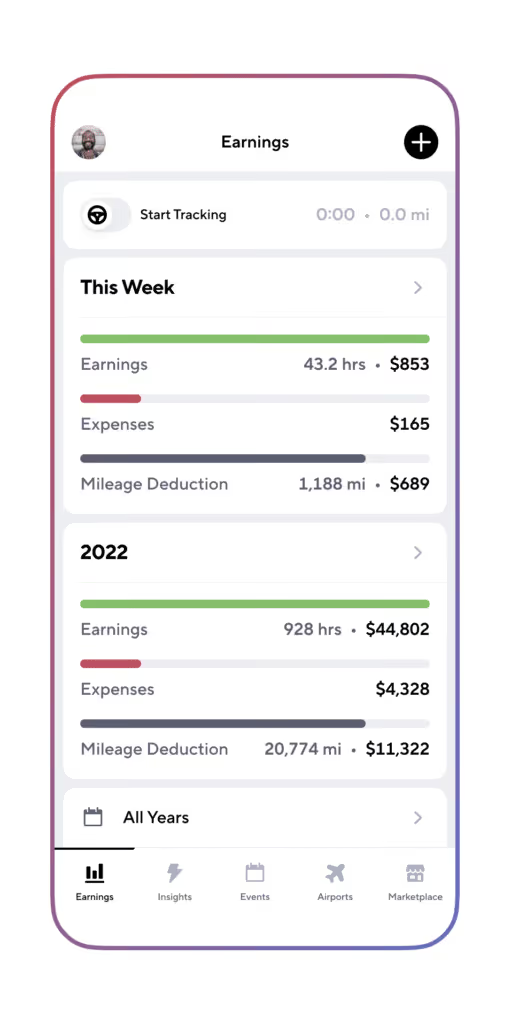
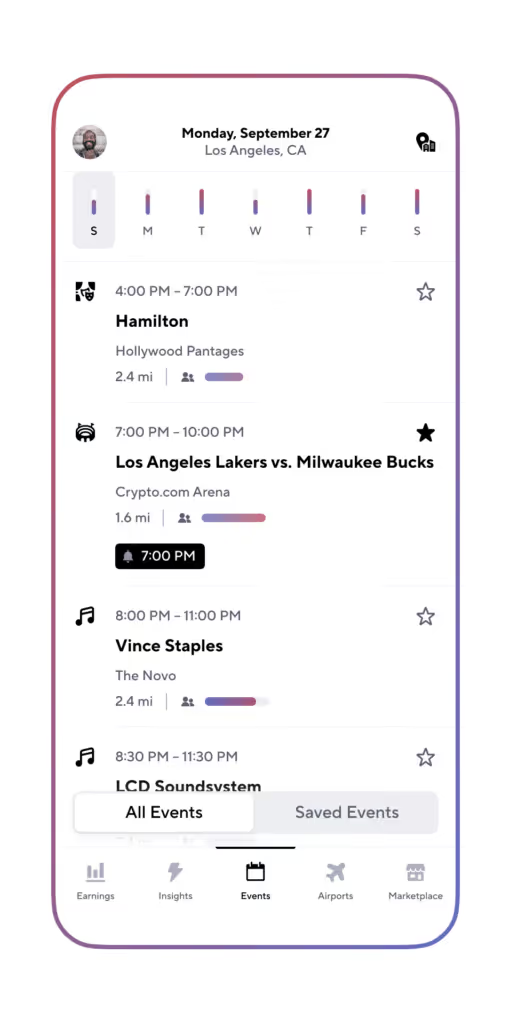
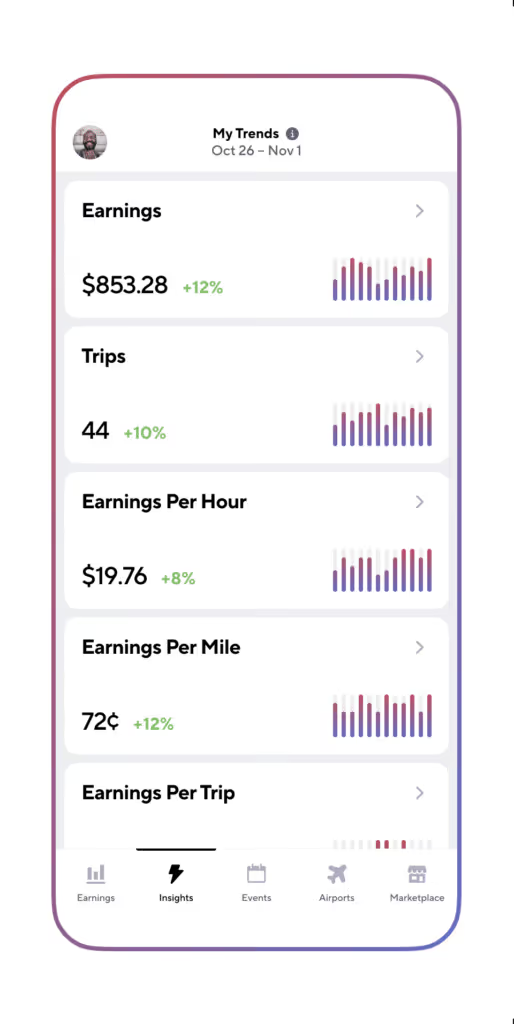
DoorDash drivers are getting more out of their earnings by tracking everything in one place for FREE with Gridwise. On top of getting free trackers to organize your info for tax season, you'll also get data on hot neighborhoods and profitable days of the week to drive (so you can hit that goal of $1000 a week!).
Are you looking for more Doordash articles or looking to earn more as a Doordash driver? Look at these articles:
- How to make $1000 a week with Amazon Flex
- Here's how to make $1000 with Uber Eats a week
- Compare earnings: DoorDash vs. Uber Eats
- Maximize earnings with Gridwise features
- Check out the Gridwise Job Board
[elementor-template id="21599"]
*Actual earnings may differ and depend on factors like number of deliveries you accept and complete, time of day,
location, and any costs. Hourly pay is calculated using average Dasher payouts while on a delivery (from the time you accept an order until the time you drop it off) over a 90 day period and includes compensation from tips, peak pay, and other incentives.
Share article:
Related posts
Uber and Lyft Gas Perks in 2026: What Drivers Need to Know
Fuel is one of the most significant costs you carry as a rideshare driver. Unlike most job-related expenses, it hits your bank account every few days, tracks directly with how much you drive, and moves with the market whether you're ready for it or not. When gas prices rise, the impact on your weekly take-home is immediate.
Over the past year, both Uber and Lyft have sent communications to drivers promoting gas relief programs: discounts at the pump, cashback cards, and partnerships with fuel apps. For drivers watching their margins, that sounds meaningful. Understanding what these programs actually include helps you decide how much weight to give them.
An active rideshare driver with over 3,600 Uber trips across markets from Miami to Atlanta recently broke this down in a Gridwise video. The breakdown below builds on that analysis with the underlying math and a practical look at how to use what's available.
In this post:
- How Uber and Lyft's gas perk programs are structured
- How status tiers affect what you can access
- What the savings actually add up to
- How fuel perks interact with per-mile earnings
- How to use Gridwise to know whether a perk is moving your numbers
The host of Fares and Frustrations covers what these programs include and where the limits are. The analysis below goes deeper on the numbers and what to actually do with them.
Most Gas Perks Are Third-Party Programs Surfaced Through the Platform
The programs Uber and Lyft promote in their gas communications — Upside, Shell Fuel Rewards, and similar offers — are not Uber or Lyft programs. They are independent services with their own apps, their own terms, and their own cashback rates. Drivers can sign up for Upside or Shell Fuel Rewards directly, without any connection to a rideshare platform.
What both platforms do is surface these existing partnerships inside their driver apps or reward emails. That makes them easier to discover, which is useful. But the discount itself comes from the partner program, not from the platform. The cashback rate, the station availability, and the payout timing are all determined by the third party.
This distinction matters practically: if a program changes its terms or removes a station from its network, that has nothing to do with your platform relationship. The programs are worth using, but they are separate tools.
Status Tiers Affect Access to the Best Rates
Both Uber and Lyft attach their most valuable gas-related perks to driver status tiers. The higher cashback rates on the Uber Pro Card, for example, are available at higher Pro tiers. The same applies to some of the Lyft Direct debit card benefits.
This means that accessing the best version of a perk is linked to driving volume and platform loyalty. A driver who completes fewer trips per week may find that the top-tier rates are out of reach, at least in the short term.
The practical implication is that the benefit scales with how much you're already driving. If you're a high-mileage driver, the programs are most accessible and most valuable. If you're part-time, the math is more modest.
What the Savings Actually Add Up To
For a high-mileage driver who stacks multiple programs consistently, saving $10-20 per week on fuel is achievable. That range assumes active use of Upside, a fuel rewards card, and any platform-specific cashback available at your status level.
Over a full year, $15 per week compounds to $780. That is real money and worth capturing if you are buying gas anyway. The programs require some setup and habit change — checking the app before each fill-up, using the right card — but the friction is low once the routine is in place.
The ceiling matters too. If you drive 40,000 miles a year and your effective per-mile earnings have shifted by two cents per mile, that gap is $800 annually — roughly equivalent to a year of stacked fuel savings. The programs address expenses at the margin. Whether they offset broader shifts in your earnings depends on your specific numbers, which is where tracking becomes important.
How Fuel Perks Interact With Per-Mile Earnings
Gas prices fluctuate with the market. Per-mile and per-minute earnings on rideshare platforms are set rates that adjust on a different timeline, if they adjust at all. When fuel costs rise sharply, there is typically a lag before driver pay reflects the change.
The programs described above operate on the expense side of the equation. They reduce what you spend per gallon. They do not change what you earn per mile. A driver experiencing a cost squeeze may find that fuel savings help at the edges without closing the gap fully.
Understanding this distinction helps you read platform announcements with appropriate context. A new perk partnership and a change to base earnings per mile are different things with different impacts on take-home pay. Knowing which is which lets you calibrate your expectations before committing to a new program.
How to Use Gridwise to Know If a Perk Is Actually Working
The practical challenge with gas perks is that without data, it is difficult to tell whether a program is making a meaningful difference to your bottom line or just adding a small positive number that gets absorbed by other variables.
Gridwise tracks earnings across Uber and Lyft in one place alongside your mileage and fuel costs, so you can see your actual profit per mile and profit per hour week over week. When you activate a new gas perk, you can look at whether your weekly profit moved in a direction you would expect, or whether the change is too small to see in the numbers.
That kind of visibility is more useful than any promo code on its own. It turns a general sense that this should help into a data point you can actually act on.
Key Takeaways
- Most platform gas perks surface existing third-party programs (Upside, Shell Fuel Rewards, etc.) — you can sign up for these directly, outside of any platform relationship.
- The best rates are often tied to driver status tiers, meaning higher-volume drivers get more access.
- High-mileage drivers stacking available programs can realistically save $10-20 per week on fuel — worth doing if you are driving anyway.
- Fuel savings address the expense side of your margins. They are separate from per-mile earnings, which move on a different schedule.
- Tracking actual profit per mile with Gridwise is the clearest way to know whether a perk is having a measurable impact on your take-home.
Want to see what your actual profit per mile looks like right now? Download Gridwise free and track your earnings, mileage, and fuel costs across all your platforms in one place.
.png)
Gridwise vs Solo: Which Gig Driver App Is Worth It in 2026?
If you're deciding between Gridwise and Solo, you're already ahead of most drivers. Tracking your earnings, mileage, and expenses isn't optional if you want to keep more of what you make, and both apps are built to help you do exactly that.
But these two apps take very different approaches. Solo focuses heavily on scheduling optimization and income predictions, with a unique Pay Guarantee that will cover the difference if you don't hit your projected earnings for the day. Gridwise focuses on giving you real-time market intelligence: airport queues, local events, optimal driving zones. That means better decisions on the fly and more control over your shift.
On paper, both offer mileage tracking, expense logging, and platform integrations. But the features that separate them are the ones that actually move the needle on your weekly take-home. That's where this comparison focuses.
We've dug into both apps, checked the current pricing and ratings, and laid out what each does well and where each falls short. Here's what drivers need to know in 2026.
In this post:
- What Solo offers and how it's priced
- What Gridwise offers and how it's priced
- A side-by-side feature comparison
- Why Solo's Pay Guarantee has real limitations
- Why Gridwise comes out ahead for most drivers
Solo Covers the Basics and Adds a Scheduling Layer on Top
Solo has been around since 2020 and has built a solid product for gig workers who drive for multiple platforms. The app earns 4.7 stars on the App Store (13K ratings) and 4.27 on Google Play, which reflects a genuinely useful tool with a loyal user base.
At its core, Solo tracks your income, mileage, and expenses across platforms like Uber, Lyft, DoorDash, Instacart, GrubHub, and GoPuff. The free tier gives you automatic mileage tracking and manual income entry. Step up to a paid plan and you get automatic income syncing, Smart Schedule, and market-level pay insights.
The marquee feature is the Pay Guarantee. Once you build your schedule using Solo's Smart Schedule tool, you can use credits to lock in an earnings floor for each hour. If you work the hour and earn less than predicted, Solo pays the difference. Pro Plus subscribers get 60 free credits per month; additional credits run $0.40 each.
Current Solo pricing:
| Plan | Monthly | Annual (per month) | Annual total |
|---|---|---|---|
| Free | $0 | $0 | $0 |
| Basic | $10 | $8 | $96 |
| Pro | $15 | $10 | $120 |
| Pro Plus | $20 | $15 | $180 |
Annual Pro and Pro Plus subscribers get free federal and state tax filing through the app, which is a genuine perk. Basic subscribers pay $30 to file, and non-subscribers pay $50.
Gridwise Was Built by Gig Drivers and the Feature Set Shows It
Gridwise earns a 4.9 on the App Store and 4.6 on Google Play: the highest ratings of any app in this category. It started as a rideshare-focused tool and has expanded to support delivery drivers across every major platform, including Uber Eats, DoorDash, Instacart, Amazon Flex, and more.
Where Solo leans on scheduling predictions, Gridwise leans on real-time market intelligence. Where to Drive shows you which neighborhoods are generating demand right now. When to Drive helps you plan around historical earnings patterns in your city. The airport feature goes beyond a simple queue indicator: it surfaces live flight arrivals and departures, delay alerts, and wait time estimates so you can decide whether the airport is worth your time before you head there.
Gridwise Plus also includes event notifications that let you set alerts for concerts, games, and other demand spikes in your area, performance benchmarking against other drivers in your market, and a benefits marketplace with access to health, dental, vision, and accident coverage. Solo offers none of those.
Current Gridwise pricing:
| Plan | Monthly | Annual (per month) | Annual total |
|---|---|---|---|
| Basic | Free | Free | Free |
| Gridwise Plus | $15 | $9 | $108 |
Both plans include a free trial: 14 days for Gridwise, 7 days for Solo.
At the annual level, Gridwise Plus ($108/year) is actually cheaper than Solo Pro ($120/year) and comes with features Solo Pro doesn't include.
Gridwise vs Solo: Side-by-Side Comparison
| Feature | Gridwise | Solo |
|---|---|---|
| App Store Rating | ⭐ 4.9 | ⭐ 4.7 |
| Google Play Rating | ⭐ 4.6 | ⭐ 4.27 |
| Free Tier | Yes | Yes (mileage + manual tracking) |
| Paid Plan Starting Price (Annual) | $9/mo ($108/yr) | $8/mo ($96/yr, Basic only) |
| Free Trial | 14 days | 7 days |
| Automatic Income Tracking | Yes (Plus) | Yes (Basic and above) |
| Automatic Mileage Tracking | Yes | Yes |
| Automatic Expense Tracking | Yes (Plus) | Yes (Pro and above, via Plaid) |
| CSV + PDF Tax Reports | Yes (Plus) | Yes (Basic and above) |
| In-App Tax Filing | No (KeeperTax integration) | Yes (free for annual Pro/Pro+) |
| Real-Time Market Insights | Yes: Where to Drive, When to Drive (Plus) | Yes: Smart Schedule (Pro and above) |
| Airport Queue Info | Yes: live flights, delays, wait estimates (Plus) | Limited |
| Event Notifications | Yes: set custom alerts (Plus) | No |
| Performance Benchmarking | Yes: vs. drivers in your city (Plus) | Leaderboard only |
| Pay Guarantee | No | Yes: Pro Plus (60 credits/mo); extra credits $0.40 each |
| Driver Benefits (Insurance, Perks) | Yes: health, dental, vision, accident, and more (Plus) | No |
| Ad-Free Experience | Yes (Plus) | Yes |
| Supported Platforms | Uber, Lyft, DoorDash, Instacart, Amazon Flex, and more | Uber, Lyft, DoorDash, Instacart, GrubHub, GoPuff, and more |
Solo's Pay Guarantee Has Real Restrictions Most Flexible Drivers Will Hit
The Pay Guarantee is Solo's most talked-about feature, and for good reason. The concept is genuinely compelling: use Solo's Smart Schedule, lock in your hours with credits, and if you earn less than predicted, Solo pays the difference. To date, Solo has guaranteed over $14 million in earnings across their user base.
But the fine print matters. To qualify for a payout, you have to work only the platform you scheduled: no multi-apping during a guaranteed hour. You have to stay within your designated city boundary at least 70% of the time. You have to complete at least one job per hour. And the guarantee only applies in 100-plus metro areas where Solo has enough data to make reliable predictions.
For drivers who stick to one platform and work in a major market, the Pay Guarantee can function as a genuine safety net. For drivers who flex between platforms depending on where the money is, which is how most experienced drivers actually work, the restrictions make it much harder to benefit. Locking yourself into one platform for a guaranteed hour means passing on the Lyft surge that just started while you're sitting at the DoorDash hot zone.
Gridwise's market intelligence is designed for exactly that kind of flexibility. Where to Drive and When to Drive aren't tied to a schedule or a platform. They're live data you can act on whenever and however you want.
Gridwise Comes Out Ahead for Most Gig Drivers
Solo is a legitimate app with a loyal user base. If you're a full-time driver who sticks to one or two platforms in a major city and you like the idea of predictable daily earnings, the Pay Guarantee is a feature worth paying for.
But for the majority of rideshare and delivery drivers, Gridwise covers more ground at a lower annual cost. The airport feature alone, with live flight arrivals, delay alerts, and wait time estimates, is the kind of real-time intelligence that can save you 30 minutes on a slow afternoon. Event notifications mean you're not caught off guard by a stadium crowd or a downtown concert. Performance benchmarking against other drivers in your city gives you context that raw earnings numbers don't.
The ratings tell part of the story too. Gridwise's 4.9 on iOS compared to Solo's 4.7 reflects not just satisfaction, but the trust that comes from an app built specifically for gig drivers from day one. Gridwise Plus members also earn 30% more on average within their first month, a result that comes from better market decisions, not from avoiding multi-apping.
At $108 a year, Gridwise Plus costs less than Solo Pro ($120/year) and significantly less than Solo Pro Plus ($180/year). You get a longer free trial, a richer feature set, and driver benefits that Solo doesn't touch. For expense tracking and mileage, both apps do the job. For earning more while you drive, Gridwise gives you more to work with.
Key Takeaways
- Gridwise rates higher than Solo on both the App Store (4.9 vs 4.7) and Google Play (4.6 vs 4.27).
- Gridwise Plus costs less per year than Solo Pro ($108/yr vs $120/yr), and comes with features Solo Pro doesn't include.
- Solo's Pay Guarantee requires you to stick to one platform per hour, stay within your city 70% of the time, and spend credits earned through a paid plan.
- Gridwise Plus includes live airport intelligence, custom event notifications, and a driver benefits marketplace that Solo does not offer at any price.
- Gridwise gives you a 14-day free trial to test the full feature set; Solo offers 7 days.
Ready to see how your earnings, mileage, and costs stack up right now? Download Gridwise free and start tracking everything in one place, with a 14-day trial of Gridwise Plus included.

Uber and Lyft Airport Tips: Know Before You Go
The airport feels like a safe bet. Busy terminal, steady demand, good fares. But if you've ever sat in the waiting lot for 45 minutes and rolled away with a $28 ride, you know the math doesn't always work out.
Not every airport day is equally busy. Not every airport in every city has consistent demand. And the signals the apps give you, "high earnings," "few cars," "short wait," aren't the same as actually knowing what's happening with flights.
Here's how to check real arrival and departure data before you commit to the airport, and the positioning strategy that makes airport runs worth it when they are busy.
In this post:
- Why the apps' demand signals aren't enough
- How to read real flight data before you drive there
- Departures vs. arrivals: which number actually tells you what to do
- The real cost of waiting in the lot
- The smarter play: catch a ride to the airport instead
An active Uber driver and Gridwise contributor based in Jacksonville, FL, with two years of Gridwise use before ever creating content for the channel, walks through exactly how he checks airport data in real time before deciding whether it's worth his drive. The breakdown below adds the specific steps, the math on waiting, and when to walk away.
The Apps Tell You It's Busy. They Don't Tell You If It's Actually Worth It.
Uber and Lyft want drivers in the queue. Short wait times for passengers are good for their business, so their incentive is to get you to the lot and keep you there. "High earnings area" and "few cars nearby" are real signals, but they're designed to move you toward the airport, not to help you decide whether today specifically is a good day to go.
What those alerts don't tell you: how many flights are actually landing in the next hour, how many have been cancelled, whether a delay just pushed 200 passengers 90 minutes further back, or whether the lot is already stacked with drivers waiting for the same flights you are.
That gap between what the app shows and what's actually happening is where a lot of airport time gets wasted.
How to Check Real Flight Data Before You Drive There
Gridwise's airport feature pulls live flight data and shows you arrivals and departures in 30-minute increments. Here's how to use it before you commit to the airport:
- Open Gridwise and tap the airport icon. It auto-selects the closest airport to your current location.
- Pull up the arrivals and departures graph. Each bar represents a 30-minute window. You can see, at a glance, whether the next few hours are heavy or light.
- Tap into the detail view for the full flight list. This shows you the status of individual flights: landed, scheduled, delayed, in route, or cancelled. Delayed and in route means passengers are coming, just later. Cancelled means those passengers aren't coming at all.
- Check the time. Passengers typically head to the airport 1.5 to 2 hours before departure. If the big departure push was at 6 p.m. and it's now 7:30 p.m., that window has passed.
The whole check takes about 60 seconds and tells you more than the app surge indicators will.
Departures Tell You When to Position, Arrivals Tell You When to Wait
These two numbers answer different questions, and mixing them up is a common mistake.
Departures tell you when people need rides TO the airport. If there's a big departure window at 7 p.m., passengers start requesting rides from 4:30 to 5:30 p.m. That's when you want to be positioned near residential and hotel areas, not sitting in the lot. You can often catch one or two departure rides and arrive at the airport naturally, which means you skip the waiting lot entirely and are already there when the return queue opens up.
Arrivals tell you when people are landing and need rides FROM the airport. A high arrivals count in the next 30-minute window is a good signal that the lot will be active. A low count, or a string of cancellations, means you may be waiting for a long time.
The departure graph is the one most drivers overlook. It's actually the more useful number for planning your positioning at the start of a shift.
The Real Cost of Waiting in the Lot
A $40 airport fare is a good ride. But the total picture depends on how long you waited for it.
If you sat in the lot for 50 minutes before getting that fare, and the ride itself takes 25 minutes, you've spent 75 minutes to earn $40. That works out to about $32 per hour before expenses, and you were parked and earning nothing for more than half of it.
During an active period in a decent market, most drivers average $25 to $40 per hour moving. Waiting in the lot doesn't just pause your earnings. It locks you into a single outcome when other opportunities are passing by.
The rule of thumb: if you drop someone off at the airport and don't get a return trip within 10 minutes, leave. You can always come back. You might even get a ride that brings you back to the airport, and by then the lot will have cleared out.
Catch a Ride to the Airport Instead of Driving There Cold
The most efficient airport strategy isn't showing up and waiting. It's positioning yourself in a zone where you're likely to pick up a passenger heading to the airport, ride along with them, and arrive already in the system without having sat in the lot at all.
Here's why this works:
- You're earning during the drive to the airport instead of deadheading
- You arrive with a fare already completed, which can improve your queue position
- If the lot is stacked when you get there, you haven't wasted time getting there empty
- If you don't get a return trip quickly, you've already been paid for the trip in
Departure data is what makes this work. Check the departure graph, identify when the outbound push starts, and position yourself in residential or hotel areas 60 to 90 minutes before that window. You don't need to be at the airport to catch airport rides.
Key Takeaways
- Uber and Lyft's demand alerts tell you they want drivers available, not whether today's airport volume is actually strong.
- Gridwise's airport feature shows real arrival and departure data in 30-minute windows, including flight status (landed, delayed, cancelled).
- Check departures to plan your positioning before the shift. Check arrivals when deciding whether to wait in the lot.
- Cancelled flights mean no passengers. Delayed flights mean passengers are coming later than the lot expects.
- If you don't get a return trip within 10 minutes of a drop-off, leave. Sitting longer turns good fares into mediocre hourly earnings.
- The smartest airport move is catching a ride to the airport so you arrive with a completed fare and skip the cold wait.
The Gridwise airport feature is one of the clearest ways to see whether a shift decision is based on real data or just a hunch. Download Gridwise free to check live flight arrivals, departures, and cancellations before you decide whether the airport is worth your time today.
Work smarter. Earn more.
Whether you drive, deliver, or pick up shifts — Gridwise helps you track earnings, mileage, and performance so you stay in control of your work. Download the app and take charge today.
