Gridwise blog
Tips, insights, and advice to help you earn more and work smarter, whether you do gig work, hourly, or shift work.
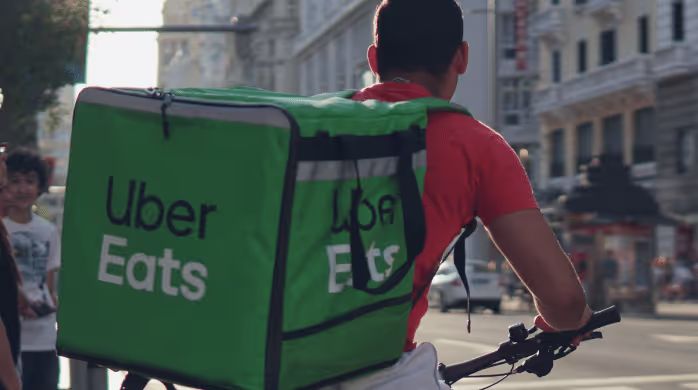
How to Make $1,000 a Week With Uber Eats in 2026 (Tips + Hourly Data)
In this blog, we'll explore the strategies and techniques that can show you how to earn $1000 per week as an Uber Eats delivery driver. We'll cover everything from optimizing your delivery zones and schedules to maximizing your tips and customer satisfaction. Whether you're a seasoned Uber Eats driver or just starting out, this guide will provide you with the insights and actionable steps to take your Uber Eats driver earnings to the next level.
Becoming an Uber Eats delivery partner can be a lucrative opportunity, especially if you're able to consistently earn $1000 a week. By understanding the platform, optimizing your delivery strategies, and focusing on customer satisfaction, you can maximize your earnings and turn Uber Eats into a reliable source of income.
We’ll cover the following topics to provide coaching and ideas to help you push your earnings up to that $1000 per week level:
What do Uber Eats drivers do?
Uber Eats drivers deliver prepared food most of the time, but they also might shop for and deliver goods from convenience outlets and grocery stores. The job is pretty simple. You get a request for an order, you drive to the restaurant or store to pick it up, and then you deliver it to the customer. If you already drive for Uber, you can choose to take orders for Uber Eats delivery any time.
If you’re not an Uber Eats driver yet, it’s pretty easy to become one. This Gridwise post tells you what you need to do if you want to sign up and start making money Uber Eats style. Many rideshare drivers welcome the chance to deliver food rather than people. This article from Nerdwallet covers the Uber Eats gig from that angle.
There are some sweet advantages to working with Uber Eats. In lots of cities you don’t even need to have a car. You can use a bike or a scooter, or even walk, to make your rounds. If you do use a car, Uber Eats’ requirements are a lot easier to meet than they are for Uber rideshare driving.
You also have a lot of flexibility. You can shop and deliver convenience items and groceries, but you don’t have to. And, like most driving gigs, you can choose your own hours, and map out the locations where you want to work.
Use Gridwise features When to Drive and Where to Drive to help you figure out what work hours and which specific areas will be the most profitable for you. Real data from real delivery people will show you earning patterns for drivers in your town.
How much can you earn doing Uber Eats?
The honest answer to this question is: basically, as much as you want! It all depends on how many hours you put in and how strategic you are about your gig. Earnings vary from one area to another, as this article from Entrepreneur points out. To give you a baseline, let’s look at the earnings of Uber Eats drivers who tracked their earnings with Gridwise.
Remember that these numbers show us only average earnings. To make $1,000 a week with Uber Eats, you’re going to have to be better than average, and we’ll show you how. For now, though, it’s good to have these figures so you get a ballpark number of where to start.
How much do Uber Eats drivers make?
Gridwise data tell us the following:
- Monthly earnings average around $444.00 per month.
- Gross earnings per trip are between $9.00 and $10.00.
- Tips make up about 50% of most Uber Eats drivers’ income, which amounts to about $225.00 per month.
Is Uber Eats good money? It can be. While there are other gigs that pay more per trip, if you drive for Uber Eats, you’ll always be pretty busy.
https://datawrapper.dwcdn.net/HPAz8/3
You can also see that, unlike many other gigs, tips play a huge role in Uber Eats earnings.

With these numbers as a baseline, what can we say about how to earn $1,000 a week with Uber Eats? As we said in the introduction, it’s going to be a hustle, but it’s really possible. To figure out how to make the most money with Uber Eats, let’s start by looking at how many trips these “average” drivers made each month.
We know that average gross earnings were $444.00 per month, and drivers got around $10.00 per trip. That means they took 44 or 45 trips per month, which breaks down to 11 trips per week. That’s not a lot of Uber Eats delivery, is it?
The fact that Uber Eats drivers averaged so few trips shows us that many drivers use more than one app at the same time. This is called multi-apping, and you can learn more about it in this Gridwise post. If you want to answer the question of how much you can make with Uber Eats, then you need to stick with the app and keep plugging away at those orders. You also need solid strategies, as well as some inside tips and tricks.
How to make the most money on Uber Eats: Delivery driving tactics
Getting to that $1,000 a week with Uber Eats isn’t so hard when you remember that the drivers we saw making about $111 a week were only taking around 11 trips in the same time period. That’s not much at all! If you work the Uber Eats app like a boss, you’ll soon have many more trips than that, easily reaching the number needed to get you to $1,000 a week. Now, let’s get to some tactics you’ll need to make that kind of bank.
- Stay with the Uber Eats app, and track your earnings. Gridwise can easily do that for you. Simply sync your Uber Eats app with Gridwise, and you’ll be able to see how much you’ve earned with Uber Eats, what times were most profitable, and your average hourly pay. Racking up trips with Uber Eats has other benefits, including perks and bonuses that are awarded to top drivers.
- Leverage surge pricing and promotions. Surge pricing is applied when there is a lot of demand. When surge pricing is in effect, many of the trips you make will pay more than usual. Promotions are offered to drivers who complete a given number of trips in a certain time period. High traffic volume days, nights, and times give you these chances to get extra earnings. Challenging yourself to complete the right number of trips for promotions will add to the number of trips you can count on for big bucks, too. Learn more about Uber Eats surge pay, boosts, and promotions in this Gridwise blog post.
- Say yes to doubling up on orders. With Uber Eats, you can get back-to-back orders or receive batched orders. Back-to-back orders happen when you receive a new request while you’re on the way to deliver an original order. The Uber Eats app routes these trips automatically, so you won’t be sent out of your way.
Batched orders are Uber Eats’ way of bundling together orders from either the same restaurant, or two nearby eating establishments. You get money, and trip count credit, for all the orders you complete, plus customer tips, without having to make a bunch of separate trips.
- Turn on the charm and get bigger tips. Being nice really is part of the Uber Eats driver’s job, and getting tips is one way people who drive for Uber Eats make money beyond their basic pay.. Bring along those extra napkins and condiments, use equipment that keeps food and drinks at the right temperatures and prevents spilling, and consider your customers’ needs. If you deliver groceries, be extra careful with delicate items such as bread and eggs.
And, most important, follow your customers’ directions, and stay in communication with them if you are going to be delayed, or if you have questions about their order. This Gridwise post will tell how to get bigger tips as a delivery driver.
- Use even more charm to keep your ratings high. As an Uber Eats driver, you will be rated by the restaurant or store where you pick up the orders as well as the customers who are waiting for the deliveries. This two-way rating system is designed to keep you on your toes, so Uber can keep people satisfied with your service. Don’t worry, you get to rate them, too.
There’s another reason why your rating as a driver is important. It not only keeps you in good standing with Uber; it helps you to qualify for the Uber Eats Pro incentive program. To learn more about Uber Eats Pro, and what it takes to earn perks such as preferred services, discounts, and deals, check out this Gridwise blog post.
Smart business moves that seal the deal
Now that you know how to gobble up the deliveries you need to make $1,000 a week with Uber Eats, it’s going to be a breeze to get there. Let’s make it even easier, with business moves that boost your earnings and shrink your expenses. If you use these, it will also be easy to say yes when people ask, “Can you make good money with Uber Eats?”
Minimize expenses. Avoid racking up big fast-food bills by bringing your own food and beverages. You might not think you’re hungry when you first start your Uber Eats run, but once the aroma of pepperoni pizza, premium cheeseburgers, and piping hot fries start wafting through your car, that might change. Bring a sandwich or other healthy food from home, and buy bottled water in bulk to save tons of cash compared to what it costs to buy single servings.
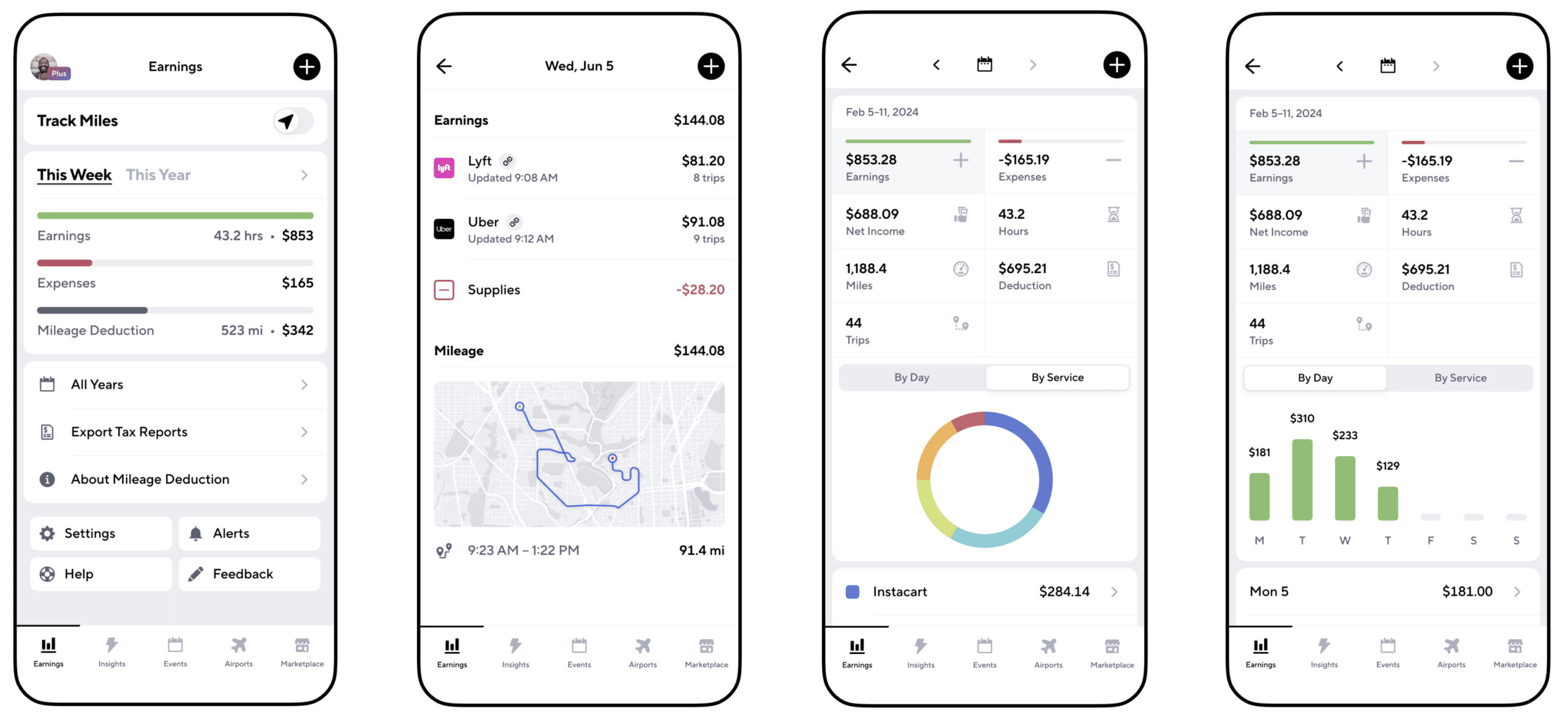
Maximize tax deductions. Another way to minimize your expenses is to maximize your tax deductions. Start by tracking mileage with Gridwise.
Gridwise App
Gridwise captures every deductible mile you drive, including the distance you cover between the trips your driving app records. Know what expenses you can deduct, and put them to work for you when tax time comes. Learn more about tax deduction strategies in the Gridwise Tax Guide for drivers.
Boost earnings with referrals
As an independent contractor, you’re probably looking for ways to make even more money than you can with Uber Eats. And most gig workers like you enjoy getting passive income. With Uber Eats, there’s a really easy way to do that, referrals!
All you need to do is find friends and encourage them to deliver for Uber Eats. If they make a certain number of deliveries within a specified time, you will get paid for doing nothing more than having them sign up under your referral code! Rates of pay vary by city, so check your Uber Eats app to find out what the current deal might be, and learn more about the referral program on the Uber Eats website.
Also remember: “friends” don’t have to be your best buds. Many delivery people carry cards with a QR code linking to their referral information, so just about anyone you encounter can join Uber Eats and boost your earnings. You could meet a source of passive income at the gas station, on social media, or at your high school reunion. The more you hustle, the more there is to gain, right?
Master the art of self-employment
As an Uber Eats driver, you’re an independent contractor. That means the company isn’t going to withhold your taxes, provide insurance, keep track of your earnings, or tell you about tax deductions. You’ll have to do all these things for yourself.
If you want to maximize your tax advantages, open an official business entity. You can incorporate (create a corporation) or you can work as a limited liability corporation (LLC). You can also work with a DBA (Doing Business As) arrangement, but the corporation or LLC will do a better job of protecting you from liability.
Establishing a corporation or LLC offers better tax advantages than being a sole proprietor. For instance, if you simply collect your earnings into your private account, you’ll be charged self-employment taxes in most states. And paying extra taxes is something we all want to avoid, within legal limits, as much as possible.
Every Uber Eats driver needs to learn about self-employment, and there are some great resources you can review. Check out the CareerOneStop website about self employment which will help explain the basics. You can also check with a professional tax accountant, or look other websites to learn more about actually creating a business.
Scope out your market
Look at the area around you to see where you’re likely to get the most deliveries. Where are all the restaurants? Where might people be more inclined to order deliveries? What hours do you want to drive? What activities might be going on around those times? Think about late-night and after-school times as well as breakfast, lunch, and dinner times.
Be realistic about the potential for your area and aware of new services opening up. For example, in New York, there is already a tab on the Uber Eats app that allows customers to order groceries. In our article about the best food delivery service to work for you’ll see that Uber Eats stacks up well against other delivery companies, mainly because of its potential for expanded opportunities for drivers to earn.
So, is Uber Eats good money? As we said, it isn’t an automatic guarantee that everyone will make $1,000 a week with Uber Eats. Trying out the suggestions we give you here, though, should put you on the right track! Go out there and start stacking up those orders and raking in some impressive earnings!
Get more inside information on Uber Eats in these posts from the Gridwise blog:
- The delivery driver guide: Using the Uber Eats app
- Everything you need to know about driving for Uber Eats
- Uber Eats Pro: What drivers need to know
- Looking for a different gig, part-time or full time job? Check out the Gridwise Job board.
Uber Eats FAQ
How does the Uber Eats platform work for drivers?
Uber Eats is a food delivery service that connects customers with local restaurants and independent delivery partners. As an Uber Eats driver, you'll receive notifications of nearby delivery requests, which you can accept and complete. The platform provides flexibility, allowing you to work on your own schedule and earn money based on the number of deliveries you complete.
What are the requirements to become an Uber Eats delivery partner?
To become an Uber Eats delivery partner, you'll need to meet certain requirements, such as having a valid driver's license, a registered vehicle, and passing a background check.
How can I choose the right delivery zone to maximize my earnings?
Selecting the right delivery zone can significantly impact your earnings, as some areas may have higher demand and better-paying orders. It's important to research and identify the zones in your area that tend to have the most consistent and lucrative delivery opportunities.
How can I take advantage of peak delivery hours and surge pricing?
Understanding peak delivery hours, such as mealtimes and weekends, and taking advantage of surge pricing can boost your earnings. Be aware of when demand is highest in your area and adjust your schedule accordingly to capitalize on these peak periods.
What are some tips for maximizing tips and customer satisfaction?
Providing excellent customer service and going the extra mile to ensure a positive experience can lead to more tips and repeat business. Prioritize communication, timeliness, and attention to detail to keep your customers happy and satisfied.
How can I set realistic weekly goals to reach my $1000 target?
To make $1000 a week with Uber Eats, it's essential to set realistic weekly goals and track your earnings and expenses. Start by determining your target earnings and breaking it down into achievable daily or weekly goals. This will help you stay on track and make adjustments as needed.
What are some strategies for efficient route planning and navigation?
Effective route planning and navigation can save you time and fuel, allowing you to complete more deliveries. Utilize mapping apps and take advantage of features like real-time traffic updates and turn-by-turn directions to find the quickest routes.
How can I balance my Uber Eats deliveries with other commitments?
Develop a schedule that allows you to capitalize on peak delivery hours while still maintaining a healthy work-life balance. Consider using tools like calendar apps to plan your availability and track your hours to ensure you're maximizing your earning potential without sacrificing your personal life.
What are the key considerations for maintaining my vehicle as an Uber Eats driver?
Keeping your car clean and well-maintained is crucial for maximizing your Uber Eats earnings. Regularly scheduled oil changes, tire rotations, and other preventive maintenance can help extend the life of your vehicle and minimize downtime. Additionally, budgeting for vehicle-related expenses, such as fuel, insurance, and repairs, will ensure you're accounting for these costs and maximizing your net earnings.
What are the tax obligations and legal considerations for Uber Eats drivers?
As an Uber Eats delivery driver, it's essential to understand the tax obligations and legal considerations that come with being an independent contractor. This includes properly reporting your earnings, deducting eligible business expenses, and making quarterly estimated tax payments. Additionally, you'll need to ensure you have the appropriate insurance coverage, such as personal auto insurance and possibly commercial auto insurance, to protect yourself and your vehicle while on the road making deliveries.

The Gridwise Job Board: Find Your Ideal Job or Gig Work
Gridwise is an essential assistant app created by gig workers for gig workers. Our mission is to support those engaged in gig work in every way possible. We understand how challenging it can be to deal with income instability, a lack of benefits, and job insecurity that often comes with gig work. The Gridwise app tracks and organizes earnings and expenses, and offers a wide array of discounts, deals, and services that make the lives of independent contractors easier and more rewarding.
We firmly believe it’s possible to make a viable living and create a gig experience that offers flexible hours, variety, and excitement. With issues such as consistent earnings and job security in mind, Gridwise is proud to offer a centralized platform that shows you how to find gig work and secure reliable opportunities. We’re proud to introduce the Gridwise Job Board.
The Gridwise Job Board: Key features
Because Gridwise is dedicated to serving the gig worker community, we’ve filled the Gridwise Job Board with useful features that won’t waste your precious time.
- Comprehensive listings. Find part-time, full-time, temporary, and per-task work. Drive or deliver with your vehicle, utilize an employer’s vehicle, or even find non-driving gig work.
- User-friendly interface. Find the jobs that are right for you with a tap of your screen.
- Verified opportunities. We vet the jobs before they are listed to ensure you’re getting high-quality job postings.
How to get more gig work, seasonal, part-time or full-time jobs with the Gridwise Job Board
Looking specifically for “gig work apps” or “gig jobs near me?” You’re in luck. Our filters and search functions send you directly to the listings you seek.
Here’s how it works.
- Access the Job Board via the Gridwise website.
- Search for jobs by type, location, and more.
- Select the job that interests you, and read all about it.
- Scroll through the description, and if it appeals to you, click “Apply for job.”
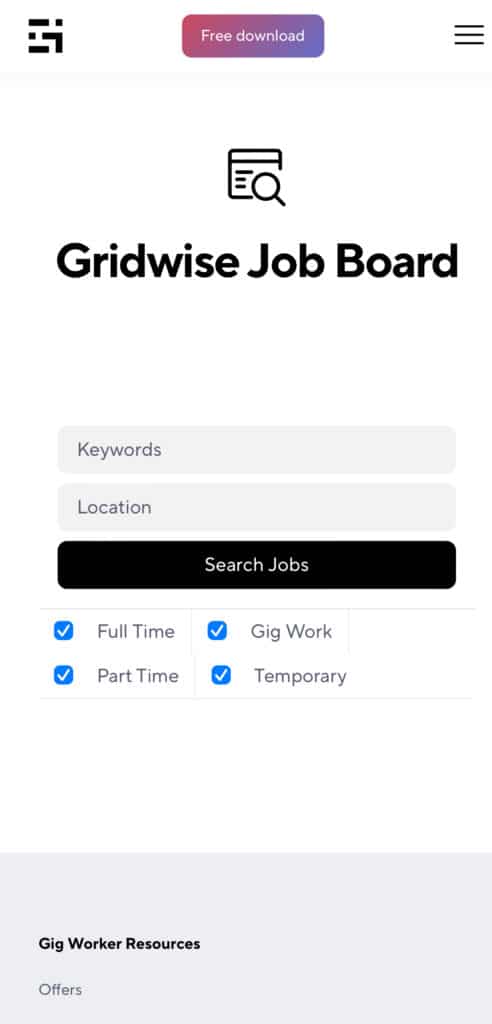
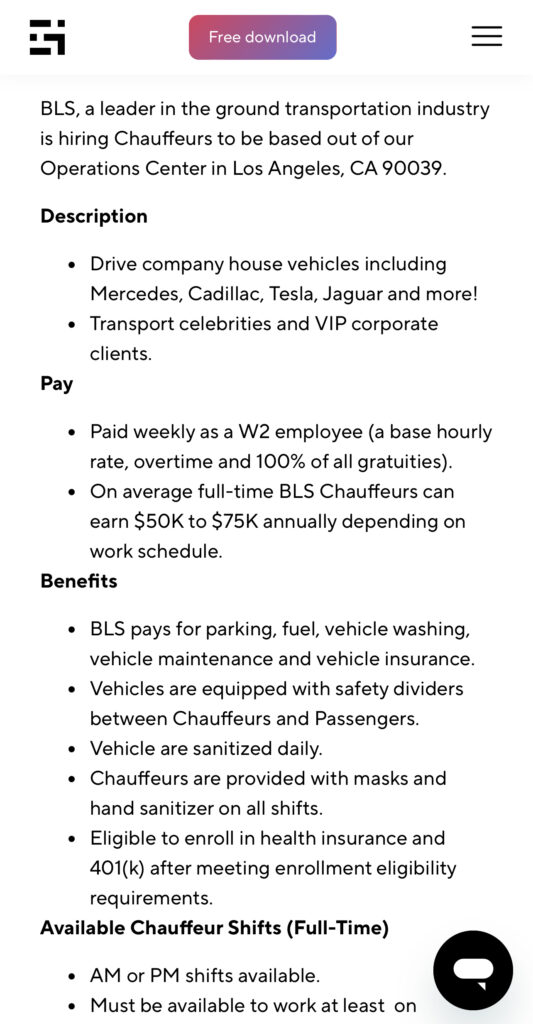
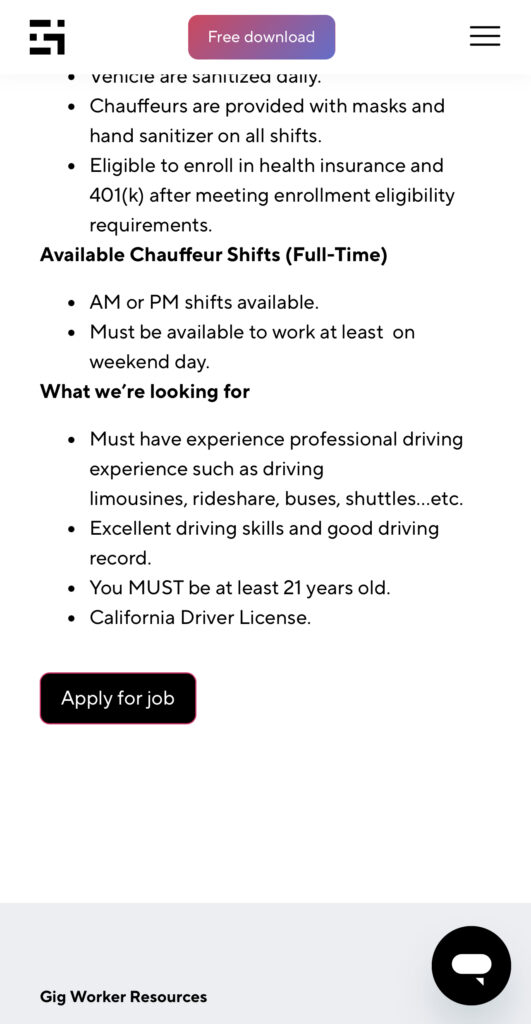
Many types of jobs are available. Adjust the search filter to see the full variety of opportunities that will let you cash in. Deliver food, set up catering, do rideshare driving, get paid for doing package delivery, and much more. You’ll find short-term gigs, long-term contracts, and part-time positions.
Perks of the Gridwise Job Board for gig workers
Gig workers who know how to make extra money will appreciate how the Gridwise Job Board lets you multiply your chances of bringing in big earnings. Here’s how:
- Increased stability. Use the Gridwise Job Board to find part-time or permanent jobs in addition to the part-time gigs you already have. Always keep a steady stream of earning opportunities flowing toward you.
- Flexibility and autonomy. Choose jobs that fit your schedule, work around other jobs and family duties, and still leave room for some fun in your life. Discover side hustles to supplement your full-time job, permanently or just for the season.
- Skill development. Find part-time work that lets you use a skill you already have, or try your hand at something new. It’s a smart way to develop a portfolio to showcase what you can do, or even to find permanent employment.
Get Gridwise and stay up to date on the Gridwise Job Board
Gig workers need plenty of information and assistance, and Gridwise is here to give it to you. Download the app and get essential features such as
- seamless earnings tracking
- mileage tracking
- expense recording, including notes
- low-cost and no-cost insurance benefits
- access to affordable medical, dental, vision, mental health, and alternative care
- professional services including legal and financial help
- deals and discounts
- weather, events, and traffic reports
- inside information on where and when to drive
More to know about gig work:

5 Best Mileage Trackers For Gig Drivers
Many drivers ask, “Do I really need a mileage tracking app?” The answer is simple: only if you want to have an accurate count of all the miles you can legally deduct from your taxable income! You might think your rideshare or delivery driving app has got you covered. After all, they do quite a good job of logging the miles you drive while you’re on a trip or delivery. But, if you want to have the best app to track mileage for Uber, Lyft, Doordash, Instacart, or the other apps you may use, you need more. Why is that?
Without a separate tracker, you’re missing the miles you drive in between pings. Did you realize that all the miles you drive, from the moment you begin your shift until it’s over (as long as you don’t drive several miles on a break to hang with your friends), are tax deductible! That means you need something besides your driving app to keep an accurate count of your travels. Read this Gridwise post to see how important it is to keep track of every deductible mile.
You won’t be surprised to hear that there’s an app for tracking miles. In fact, there are several of them. Here, we’re going to tell you about five top mileage tracking apps, and help you figure out which one is best for you.
Before we get to the list and identify the best mileage tracker app, let’s clarify what exactly a mileage tracking app is. According to G2.com’s technology glossary, mileage tracking is done for the purpose of keeping a log of mileage that is either reimbursable or tax deductible.
And yes, of course you can track your miles simply by taking readings on your odometer. But are you really prepared to account for how many miles you drove for personal reasons and subtract them from the total to get your business mileage? Even if you can remember all that and do the arithmetic, if you want an accurate reading of the miles you drive for business, and can therefore deduct, a mileage tracking app will save you a lot of trouble and prevent you from making costly errors.
Plus, as a gig driver, you have specific needs when it comes to a mileage tracker. Ideally, you’d be able to handle mileage tracking and several other functions all in one app. It can be maddening enough to deal with driving apps, particularly if you’re an avid multi-apper. You would want your mileage tracker app to help you keep account of other aspects of your business, including income, expenses, and inside information about the art of gig driving.
Not all mileage apps are equal, to be sure! Let’s look at five of the best apps to track mileage and figure out which is the best app to track mileage with Uber and Lyft, or what mileage tracker app is best for DoorDash.
1. Zoho Expense
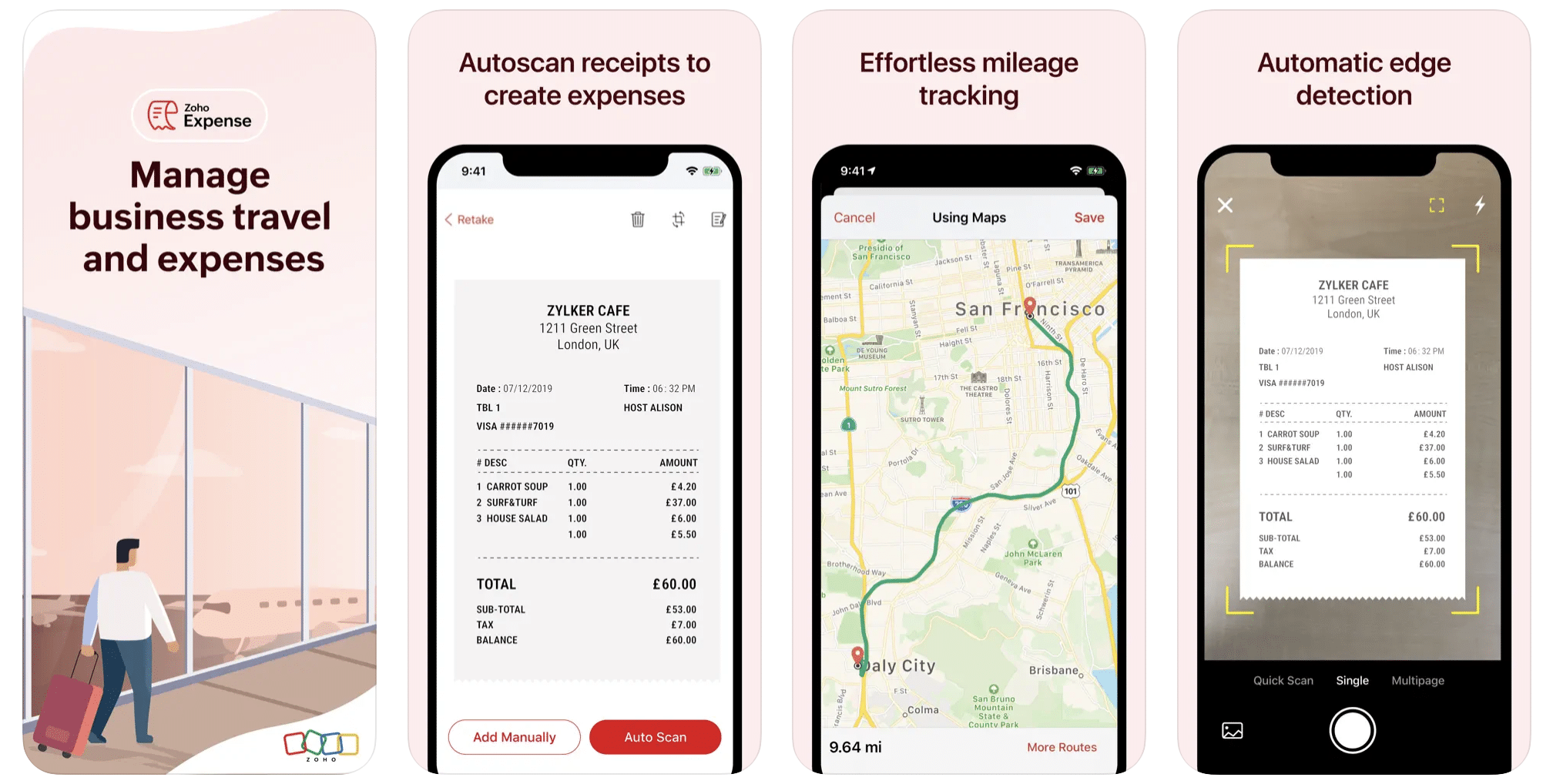
First up is Zoho Expense, which does exactly what its name says. This app is designed to allow companies to give employees a uniform way to create and submit expense reports. It can be used by individuals, including gig drivers, as well.
It includes a mileage tracker, as well as features that let you track other deductible expenses, including the ability to scan and record receipts.
Available on Android and Apple: Yes
Ratings: 4.8 stars on App Store, 4.7 stars on Google Play
Free Version: Yes
Subscription price: $3 per month, billed annually
Created specifically for gig drivers: No
2. Quickbooks Online
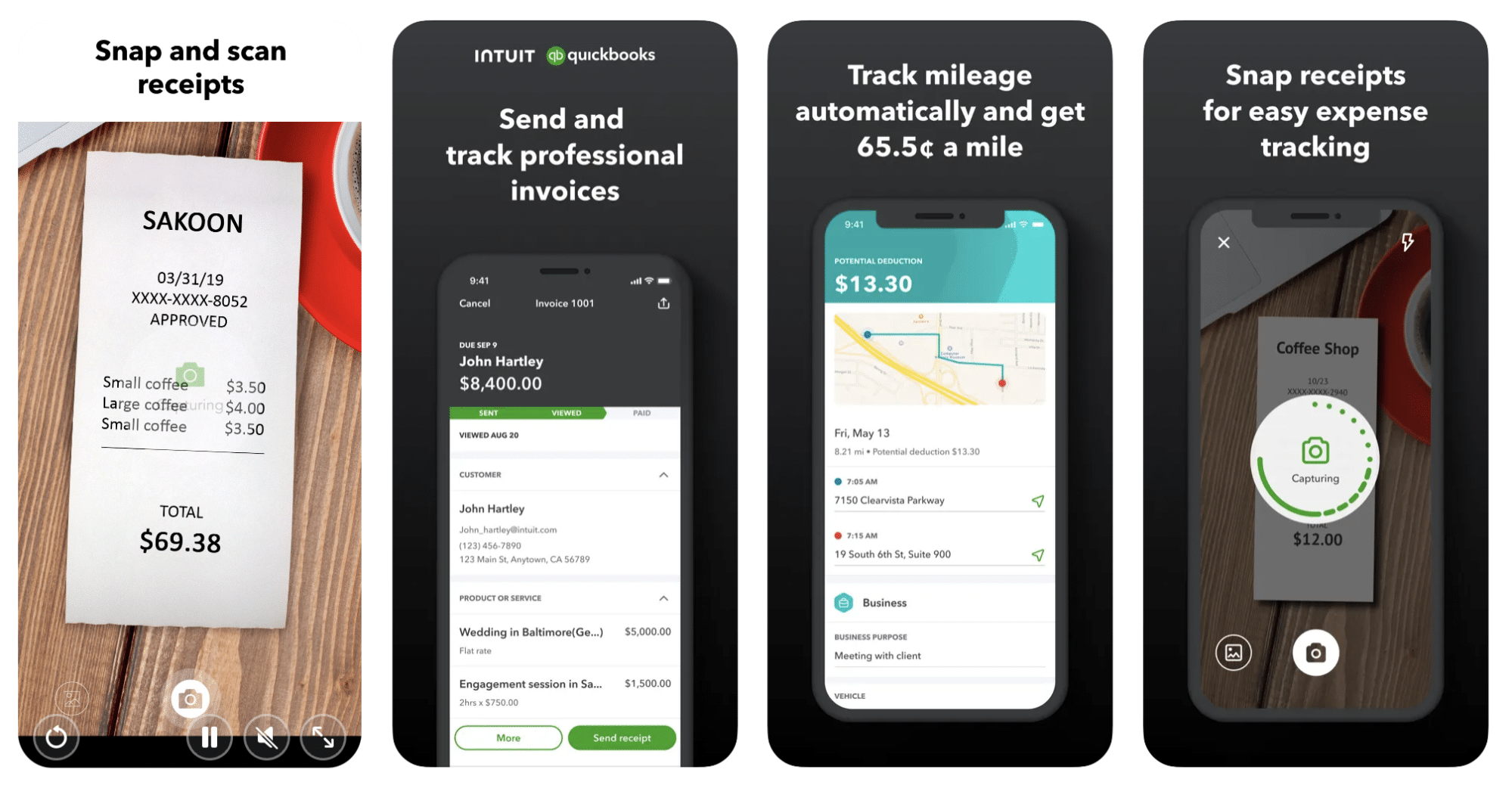
Quickbooks Online is a cloud-based app that allows you to track your mileage, earnings, and expenses. The information you enter can then be used to generate various reports that prepare you for tax time. It also allows you to create graphs that illustrate your cash flow, and includes a receipt scanner so you can instantly record deductible expenses. Quickbooks is popular, highly reliable, and designed mainly to help people keep track of their small businesses.
Available on Android and Apple: Yes
Ratings: 4.7 stars on App Store, 4.4 stars on Google Play
Free version: 30-day free trial
Subscription price: $15 per month for basic version if purchased for 3 months or more
Created specifically for gig drivers: No
Source: quickbooks.intuit.com
3. Shoeboxed
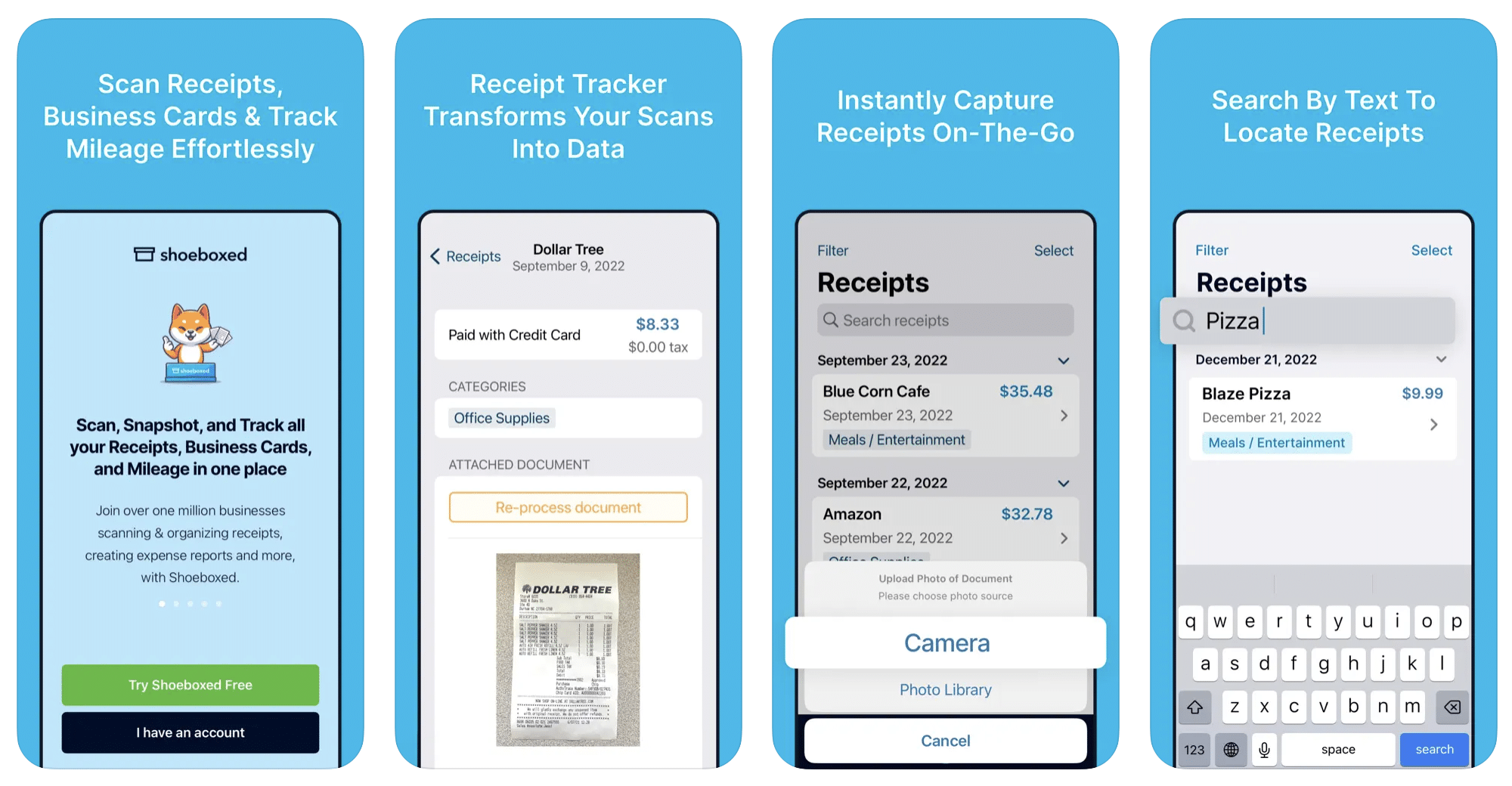
Shoeboxed started in 2007 as a service for scanning paper receipts into digital form. Now the app offers a free mileage tracker and has enabled users to scan receipts directly. It touts itself as the best mileage tracking app for DoorDash, but there are some elements missing that Dashers might like to have. While it provides features that record your expenses and prepare you for tax season, it doesn’t automatically track your earnings. The mileage tracker has a system where you can drop pins along your routes to make the tracking more precise, identifying those legs of a trip that you make for business purposes. The mileage tracker is “free” once you sign up for the basic version.
Available on Android and Apple: Yes
Ratings: 4.5 stars on App Store, 2.3 stars on Google Play
Free version: No
Subscription price: $18 per month for basic version
Created specifically for gig drivers: No
Source: blog.shoeboxed.com
4. Stride
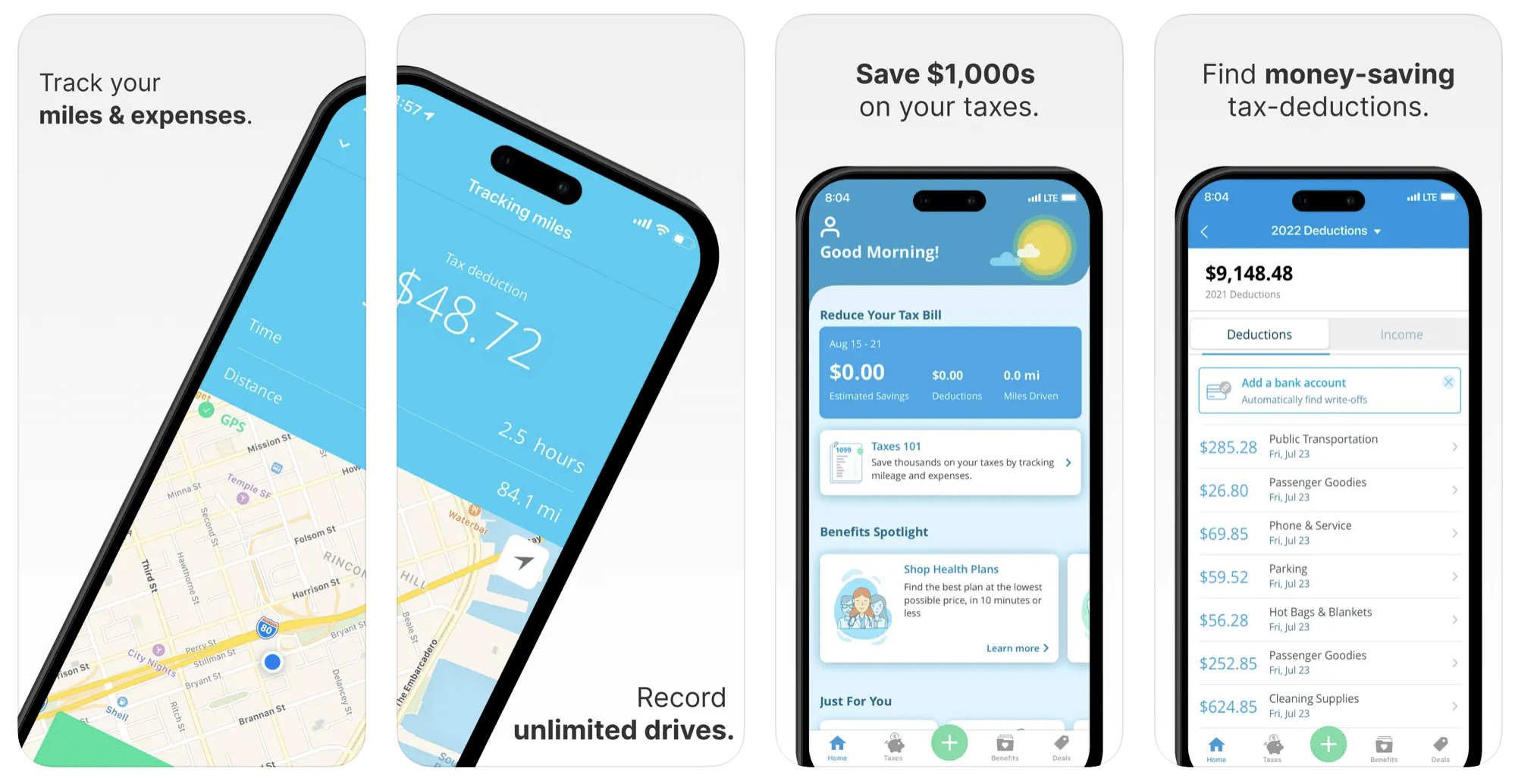
This free mileage tracker does a fair job of keeping track of the distances you rack up while gig driving, but it doesn’t automatically track earnings. It can be a big help, though, in tracking your expenses. You can link Stride to your bank account, and it will automatically scan your expenses to identify items you can potentially deduct. The app is totally free. This could make it the best free mileage tracker app, but there is a small price to pay. The app will persistently push you to consider various insurance plans that they are affiliated with. If you don’t mind that, this is a solid mileage tracker, even if it doesn’t track your earnings.
Available on Android and Apple: Yes
Ratings: 4.8 stars on App Store, 4.6 stars on Google Play
Free version: Yes
Subscription price: None. The app is free.
Created specifically for gig drivers: No
5. Gridwise
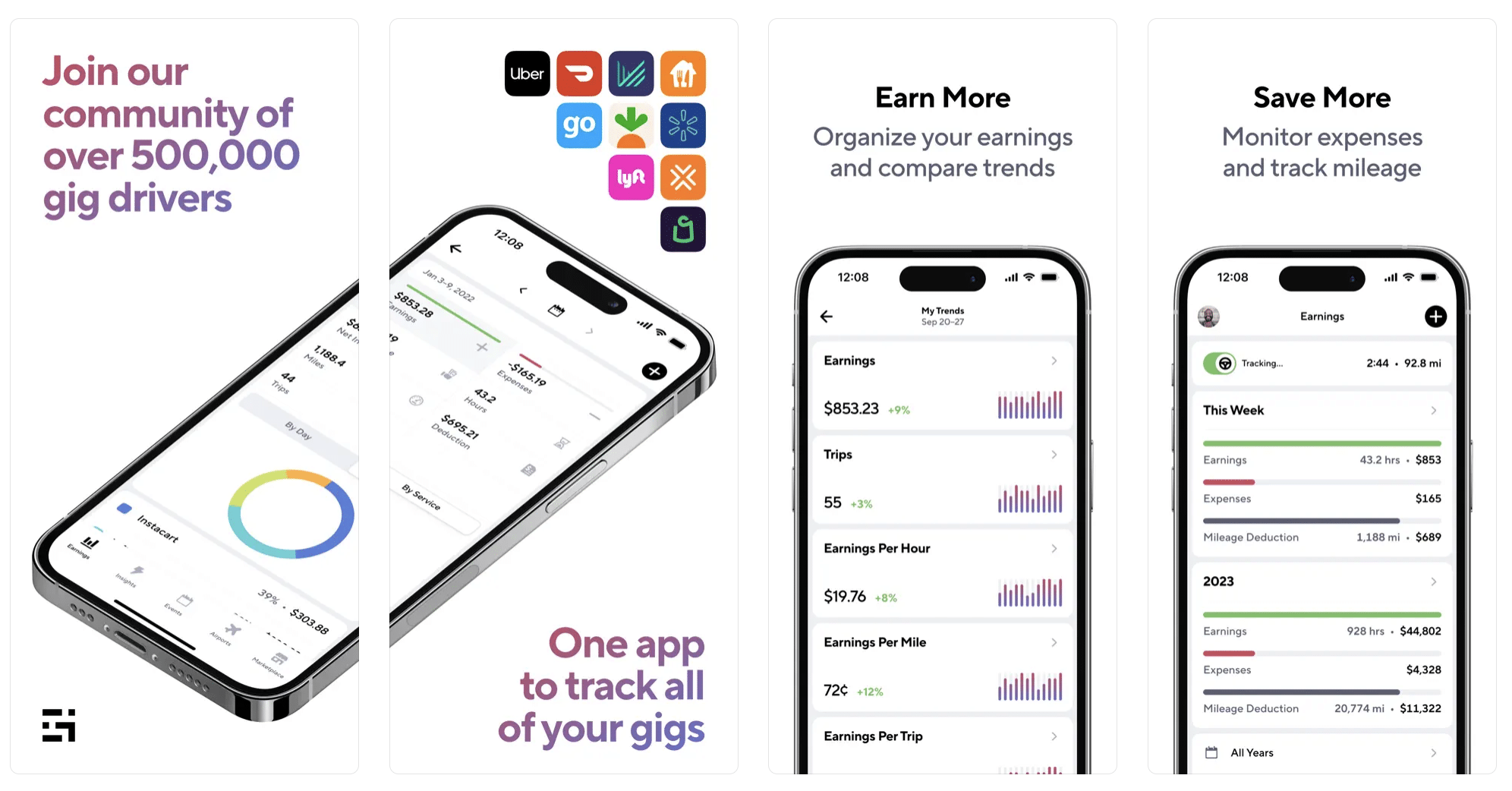
Gridwise has a free mileage tracker and free features that record your income and expenses. It gives you access to insurance and benefits, as well as insights about the best times and places to make the most money while gig driving. The Gridwise mileage tracker captures all the miles you drive while you’re on your driving shift, and it can be used if you have other trips you need to make which qualify as business travel.
Drivers love it because it is geared toward the needs of rideshare and delivery workers, providing free information about airport departures and arrivals, event start and let out times, weather, traffic, and more. The Gridwise Plus subscription adds value by providing additional insights and reports, discounts on benefits, the ability to export data in .csv format,, and more.
Available on Android and Apple: Yes
Ratings: 4.9 stars on App Store, 4.6 stars on Google Play
Free version: Yes
Subscription price: $9.95 per month for Gridwise Plus, or $95.99 per year (a $23.41 savings)
Created specifically for gig drivers: Yes!
What is the best mileage tracking app?
Now that we’ve checked them all out, we’re positive about the answer to that. Hands down, it’s Gridwise. Are we biased? You bet we are! But drivers love it too. Gridwise is the best mileage tracker app, and so much more. So many of the features are free, and the subscription to Gridwise Plus will pay for itself with additional insights to boost your earnings and deeper discounts on products and services.
Most important, Gridwise is designed specifically for gig drivers by experts who were once gig drivers themselves! Knowing what gig drivers need is a crucial step in creating an app that rideshare and delivery drivers can really use! Here are a few of the features, besides mileage tracking:
- seamless earnings tracking
- automatic, on/off toggle and manual mileage tracking
- mileage categorization
- airport, traffic, weather, and events information
- insights into where to drive and when to drive
- reports showing earnings across the platforms you use
- discounts on countless products and services for drivers
- additional resources for finding side gigs
- an informative and comprehensive blog
- affordable benefits, including insurance, medical, dental, and alternative practitioner discounts
- a community of drivers just like you
Don’t settle for just any app. Get the best mileage tracker, and so much more, from Gridwise!
Some Rideshare Drivers are Making $50+ in Tips in a Day and We're Going to Show You How
Uber has been really proud of the fact that their drivers were tipped $50 million during the first 50 days that the Uber tip feature was available.
We’re talking shout it from the rooftops, Tom Cruise on a couch levels of excited about this.
Unfortunately, this leaves some of us wondering who exactly got those tips… because it wasn’t us.
The hard truth is that it’s really difficult to consistently receive tips because so much is out of the driver's control. Unlike the hospitality industry or even the taxi industry where tipping is the norm and expected, many rideshare passengers see tipping as an option they rarely need to take.
So how can you maximize your chances of making a significant amount of tip revenue?
We sat down with a few rideshare drivers over the past week that have had success getting tips and drilled them on the strategies and techniques they use. Some of them have even had days where they made $50 in tips.
Today we’re going to share with you what works best!
Be a great driver
These are table stakes folks, if you want any opportunity to make a significant amount of tip revenue or even get a decent rating, you need to be a great driver.
Know where you’re going
At the end of the day, riders want to get from point A to point B. If you can’t do this quickly, get lost along the way, or make too many wrong turns you’re not going to receive tips and your rating will most likely suffer.
Lucky for you all you need to do is make sure you have a great navigation system running and follow the directions. Most drivers like to go beyond Uber’s navigation system. Learn more about Google Maps vs Waze for rideshare drivers to see how they fare against the available built in navigation systems.
Drive Safely
Every driver knows that if you get into an accident with a passenger in your car, you’re going to have a lot of issues. The last of your worries is how much that passenger tips you.
The thing that many drivers fail to consider however is how safe you are making your passengers feel.
This means pay attention to the more subtle things you may find yourself doing like:
- Avoid speeding or excessive lane changing
- Don’t roll through stop signs
- Be extremely cautious around pedestrians
- Never, and I do mean never, give in to road rage
Save the call for later
The issue with taking a call isn’t really that it’s unsafe. Most drivers have hands-free systems that allow them to keep both hands on the wheel and eyes on the road if they are on a phone call. The problem is that you miss out on opportunities to interact with your customer.
When you’re on a call, the opportunity to spark a nice conversation, offer them a service or extra, or just inquire about their day just isn’t there, and as you’ll see in the section below, these opportunities for positive customer interactions are important factors in whether you’ll get tipped or not.
Have great customer interactions
“If you want to get tips, you have to stand out” says James, a Pittsburgh rideshare driver and Gridwise user, “If you don’t leave an impression so the rider doesn't forget you as soon as they step out of the car, then they aren’t going to remember why they should tip you.”
If you want to consistently receive tips, you need to make an impression on your passengers that cause them to remember you.
How?
Have extremely positive interactions with customers from the moment they call you to the moment they leave your car.
Keep your car clean
The very first interaction most riders are going to have with your rideshare business (yes you should think of yourself as a business) is with your car.
In this crucial first interaction, passengers will decide whether they are open to giving you a tip or not and if your car is messy or smells in any way you’re going to pay for it.
You don’t need to go get your car detailed every other week, but make sure that it’s vacuumed, washed, and odor free to make sure your first interaction with your customer is a positive one.
One rideshare driver in D.C. recommends spraying Ozium Original after every ride to maintain a fresh smell in your car.

Offer them a charger
In my opinion, the most valuable thing that a rideshare driver can offer a passenger is a chance to charge their phone.
Almost every passenger you pick up will take a charged phone over a free water or mint any day of the week. So give the people what they want!
You can pick up a dual tip charger from Amazon on the cheap along to offer your passengers a charge.
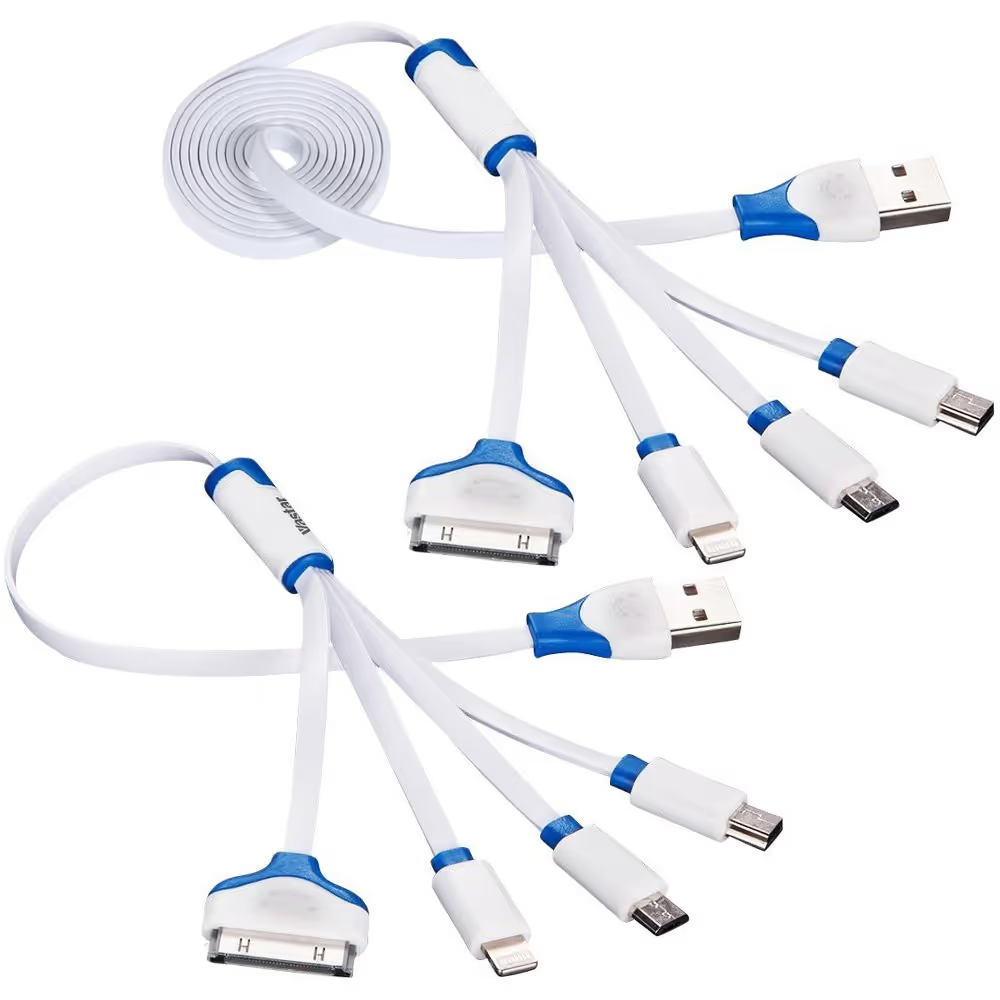
Grab this charger from Amazon for $10.99
This one gesture will make your passengers day.
Ask if they are in a rush
This is my favorite trick to make sure that I have at least one positive interaction with each of my passengers and requires very little effort.
All you need to do is simply ask your passenger if they are in a rush at all after your passenger has gotten settled into your car and you’ve confirmed their identity. If they are in a rush, you can do your best to find the fastest alternative route, and keep your passenger up to date on when your estimated time of arrival is.
Most passengers are going to politely say no, they aren’t in much of a rush, but this simple gesture gives the impression that you actually care about your passengers.
If they are up for it, spark a conversation
I love a talkative passenger.
People are incredibly interesting and one of the best perks of being a rideshare driver is that you get to meet and chat with dozens of people each week. However, not every passenger wants to start a full blown conversation with you.
“You need to read the room,” says Kate, a Lyft driver in NYC says. “Sparking conversations certainly help with tips, but some passengers just want to sit there and think about nothing. I respect that.”
If a passenger has headphones in, is working, have their eyes closed, or just looks preoccupied, be cautious when sparking up a conversation. You can throw out a question or two to test the waters, but don’t be pushy.
Let them be the DJ
Music is a big part of the in car experience so asking a passenger if they want to listen to a certain radio station is a great way to make them more comfortable. If you want to take things a step further, offer an auxiliary cord to your passengers and let them completely choose the music you listen to during the ride.
Letting the passenger play DJ also gives you the opportunity to connect with them. Some passengers will have similar tastes in music as you and you can share your experiences or recommendations with them. This is a great way to spark an enjoyable conversation.
Let them know tips are appreciated (subtly)
Passengers will often forget that tips are an important source of income for rideshare drivers, so you need to find a way to remind them, but you don’t want to be distasteful or pushy about it.
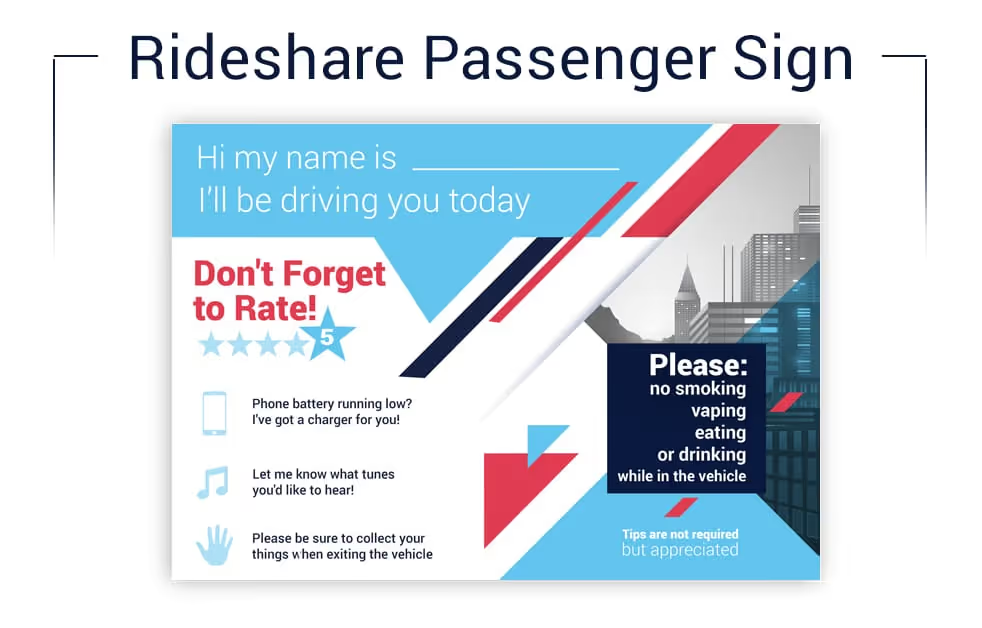
You can use a rideshare passenger sign to let your passengers know that they can choose their music and charge their phones while subtly reminding them that you’d appreciate a tip.
Check out the one below:
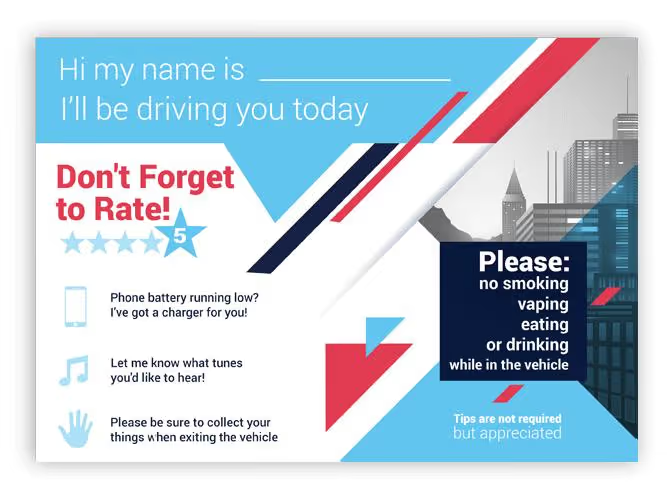
[su_note note_color="#fefedf"]Free Bonus: Download this rideshare passenger and post it in your car for FREE.[/su_note]
Your results will vary!
As a driver, you don’t have much control over how many tips you receive. The drivers that received tips of $50+ in a day usually work very long days or catch a lucky big tipper. You can however make $7 - $15 per day with a solid strategy like we laid out above which certainly adds up over the weeks and months.
Did we miss anything? Are there any other secrets to getting tips (and 5-star ratings) that drivers should take advantage of?
Let us know in the comments below!
Pittsburgh Driving Strategy: Your Guide to Peak Driving Hours
As a rideshare driver in Pittsburgh, you get a first-hand view of everything our city has to offer.
Sure, Pittsburgh is considered a small, mid-market city when compared to the likes of New York or Chicago, but look at all we have to offer.
Our world class airport welcomes musical artists like Bruno Mars Bon Jovi, Eric Church, and Run the Jewels to play at Stage AE in Northshore, Rex Theatre on the South Side and of course, PPG Paints Arena.
Iconic bars like Jack's on the South Side headline one of the best bar scenes that the Midwest has to offer and our cultural district boasts theatre after theatre that is home to award winning shows.
Let's not forget our renowned universities that are driving technological boom rarely seen outside of Silicon Valley, and let's not forget that we do love our Steelers, Penguins, and the Pirates.
This city has A LOT to offer, so a smart rideshare driver has A LOT to take advantage of even in a "mid-market" city. So in today's post I'm going to walk you through all of the best times and places to drive in Pittsburgh.
Let's get to it!
Weekdays (Monday – Wednesday)
The morning rush (4 am – 10 am)
The morning rush starts early on Monday and Tuesday mornings thanks to business travelers looking to catch their red eye flights. If you can wake up and hit the road early, you'll want to hang out downtown near the hotels like the Fairmont and the Double Tree. During the early morning hours from 4-6, you're very likely to pick up a rider headed to the airport.
From the airport, you'll then have a great opportunity to catch a traveler coming into the city. These are also likely to be business travelers as well, so most of them will need some transportation back into the city to check into their hotel or head to the office. You can use your Gridwise app to check the airport queue before you set off to the airport to ensure there aren't too many drivers already there.
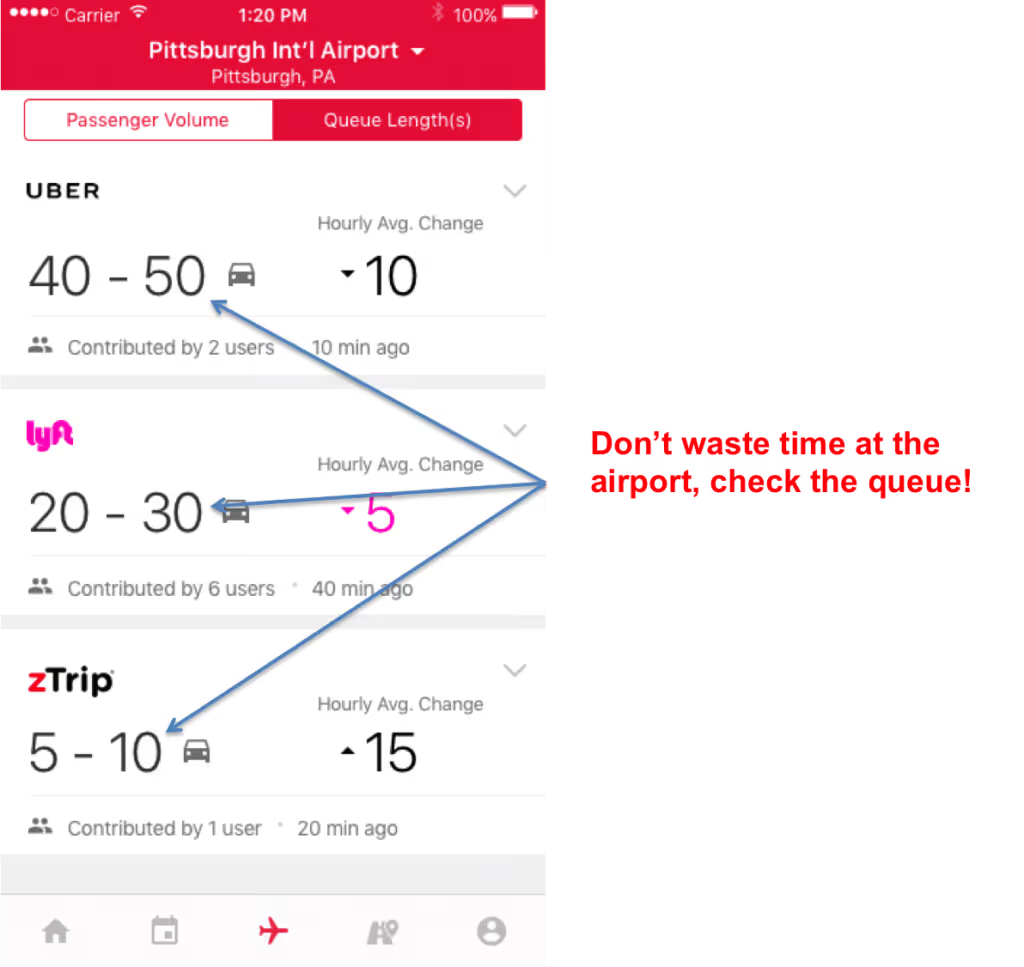
[su_note note_color="#fefedf"]Free Bonus: Know how many other drivers are in the airport before you arrive using theFREE Gridwise app.[/su_note]
If you're coming from the suburbs, especially North Hills, around 7:00, it's worth it to stick around for awhile as you'll most likely get called for a ride to either the airport or the city.
From 7:00 - 10:00 most of the city will see a good amount of demand. Sticking close to the downtown area will result in another trip and depending on the time of the year driving near Carnegie Mellon University can yield great results.
The afternoon rush hour (3-6)
The afternoon rush is another great time to focus on business heavy areas and professionals looking for rides either from office to office or from their offices back home.
It's not uncommon for the entire central business district to light up with surges, especially when the weather becomes a factor. This predictable surge is a great opportunity for a long ride to the suburbs and even the airport.
Late night (10 – 3)
Late nights during weekdays are relatively quiet since the bars won't be flooded. Smart drivers can still find great opportunities, however.
You can start by knowing what events are going on in town. Theatres like The Rex and Mr. Smalls regularly have shows that end around 11:00 and the entire theatre district will often be buzzing, especially in the summer time.
Plan out your week using the Gridwise app in order to take advantage of the biggest and most profitable events in town.
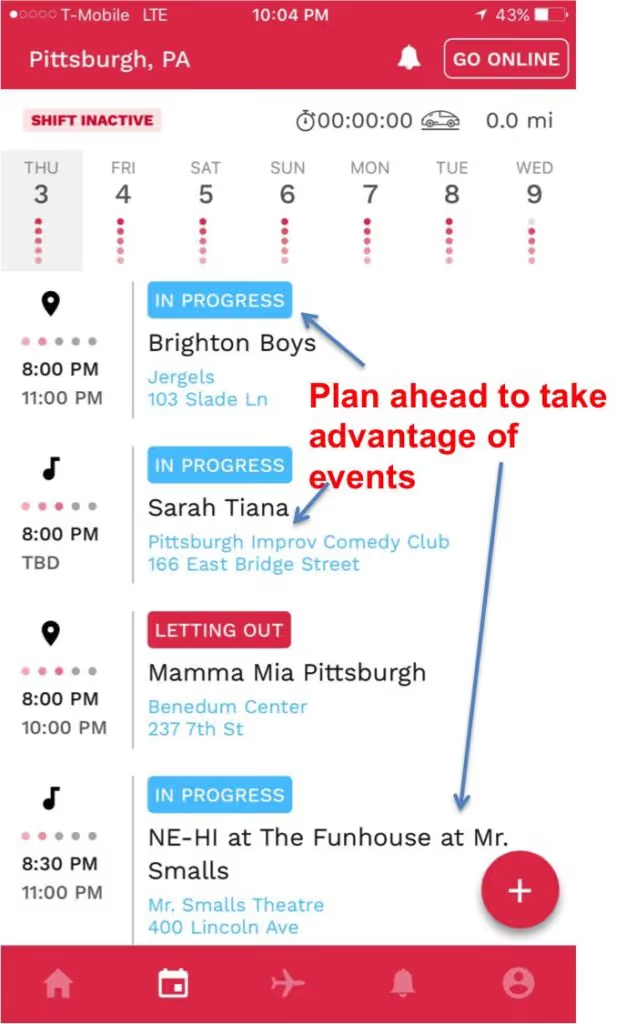
Around 11:30 during the fall if you drive near the Carnegie Mellon Library you'll get a pickup from one or a group of students getting in a late night study session.
Weekends (Thursday – Saturday)
The morning rush (4 am – 10 am)
Thursday and Friday mornings are going to be similar to Monday - Wednesday mornings. The exception is that you'll likely see a boost of riders heading to the airport for their weekend trips. You can predict airport demand again using your Gridwise app.
Rider demand on Saturday mornings tends to be light, aside from a few ultra late night passengers. One of the most common places to find these passengers is near the Rivers Casino. Rivers is a 24-hour casino, however, there tends to be an exodus at around 4:00 - 5:00 am.
If you're not going for the ultra late night passengers, Saturday morning would be a great time to relax and sleep in!
Daytime hours (10 - 3)
Daytime hours on Thursday and Friday in Pittsburgh are relatively quiet. Save your gas unless there is a compelling event going on.
During the daytime, the city of Pittsburgh is buzzing with events going on all around town. In the summer you can find festivals, shows, tastings, meet ups, showcases, and other events all around the city.
If you're coming from a suburb you shouldn't have a hard time finding a rider that's headed into the city. So wait around for a good ride. From there plan your riding schedule by understanding what events are going on around town.
The afternoon rush hour (3-7)
Thursday and Friday's rush hours are similar to Monday - Wednesday. Stick to your common business area's and you'll find a rider demand.
On Saturday's you need to again be strategic and focus on areas that are hotbeds for events. Around 7:00 many people will just start to go out to bars and restaurants around town.
This is again a great time to come into the city from areas like North Hill as you'll find passengers looking to come into the city.
You'll also want to keep an eye on airport traffic. During the fall you'll find an increase in airport demand due to the fans of Steelers opponents arriving to watch their team get smacked around.
Late night (10 – 3)
Late nights on the weekend are prime time hours for rideshare drivers.
When students are in town you can start your nights focusing on areas like Oakland and Squirrel Hill to take advantage of the students that will be wanting rides to the bars of the South Side, Lawrenceville, and Bloomfield.
From there you have a few options on where you want to focus. You can stick to popular bar areas and get plenty of trips. The downside is that you'll likely spend a good amount of time in traffic.
If you want to try and focus on a less saturated area of the city, again, check out what events are going on. If there are big events going on at Studio AE or the PPG Paints Arena, don't be afraid to venture toward those areas.
As the night comes to an end, you'll, of course, get your fair share of intoxicated passengers. Be a courteous driver and I would recommend engaging less than you would during the daytime. If you've invested in a dashboard camera, make sure it's just to protect yourself from fraudulent passenger claims.
With so many options for late night driving, it's hard to go wrong driving from 10pm-3am on Thursday, Friday, or Saturday nights.
Sunday
The morning rush (4 am – 10 am)
Pittsburgh likes to sleep in Sunday mornings and you should too. Especially if you were driving the bar scene late Saturday night. Later in the mornings, you can catch a few riders headed to brunch, but this is generally a quiet time.
Daytime hours (10 - 3)
You'll find Sunday's during the daytime can be lazy when there isn't much going on in the city. There are some popular attractions like the Carnegie Science Center, the Andy Warhol Museum, and the Carnegie Museum of Art that usually yield groups of riders. However, your biggest Sunday's in Pittsburgh come in the fall.
8-weeks out of the year (probably more) during the fall you'll find about 60,000 people flocking from their homes and hotels to watch our Pittsburgh Steelers beat on some poor team from out of town. These are big time opportunities for rideshare drivers both before and after the games.
The afternoon rush hour (3-7)
Sunday afternoons are event driven in Pittsburgh. Whether it be a show, concert, Penguins game, or Steelers Game, events should be your main focus.
You'll also start to see airport demand start to creep up for both departing and arriving passengers. Keep an eye on your Gridwise app so you don' miss crucial airport peaks.
Late night (10 – 3)
Sunday nights in Pittsburgh are event driven as well. You’ll continue to find business travelers looking to come into or leave out of the city on Sunday evenings, so check your flight schedules using the Gridwise app. Gravitating toward the downtown area where popular business hotels are located will commonly yield you a ride to one of Pittsburgh's airports.
With any luck, you’ll arrive at a peak airport time and can catch a ride back into the city.
Pittsburgh is a city where it's important to always drive strategically to maximize your hourly earnings. There are a few times where you can count on rider demand as long as you drive in popular areas. During slower hours it’s important to be strategic and have a plan before you get out on the road. Use apps like Gridwise to help you understand what’s going on in your city and develop a solid driving plan in just a few minutes.
Now, what’s your favorite time to drive in Pittsburgh? Share in the comments below!
The Ultimate Airport Guide for RideShare Drivers: The DMV
A few weeks back I was sitting in the Uber airport queue right when a big wave of travelers was coming in. I arrived a bit early so I was chatting with a few drivers that I had come to know while waiting in the TNC lot. After 10-15 minutes there a few planes with big passenger counts come in and BOOM! Surge. A surge at the airport is like the holy grail. After just 15 minutes of waiting I was going to get a long ride with a surge, I’m expecting a $75+ ride right now. Pretty considerable jump from the ~$17/hour median rate for DC drivers. So I jump back in my car, excited about the cash I was about to stack, when I finally got pinged.From outside the airport surge zone… 15 minutes outside the airport surge zone.

What…After a few seconds of fury, panic, crying, and acceptance, I accepted the ride. I just couldn’t let go of my 100% acceptance rate. After licking my wounds I got back to the airport and started talking to my fellow drivers about how to tackle D.C. and Baltimore’s three airports and how to avoid the dreaded non-airport airport ping of death. I’m going to share what I learned in today’s blog post including:
- How to navigate each of D.C./Baltimore’s airports
- When to go to each airport
- How to mitigate your non-airport airport ping risk
Let’s get to it!
How it works
Uber, Lyft, and other TNC’s specially designate airports with a geofence that tightly defines the airport area. As a driver, if you have an app on in those areas, you’ll be placed in a queue that acts as a virtual driver line. As you wait in the queue, you’ll cycle through the line (hopefully quickly) and finally be pinged by a rider.Most airports will have a designated pickup area which, will be the only place TNC drivers are allowed to wait. You’ll also want to always clearly display your TNC’s sign in your passenger window.
Navigating BWI, DCA, & IAD
Your first few times at an airport as a rideshare driver can be a bit disorienting because of all of the rules and regulations that differ from city to city and airport to airport.Let’s first talk about what those rules are at each airport and how you can comply.
Dulles International Airport (IAD)
First off, can someone please explain to me why Dulles International Airport’s acronym is IAD? I thought there were three DC based airports for the first 3-weeks I lived here!Anyways… Let’s first talk about IAD specific rules
Where to wait
The Dulles airport TNC lot is at the intersection of Autopilot Dr and Rudder Rd.
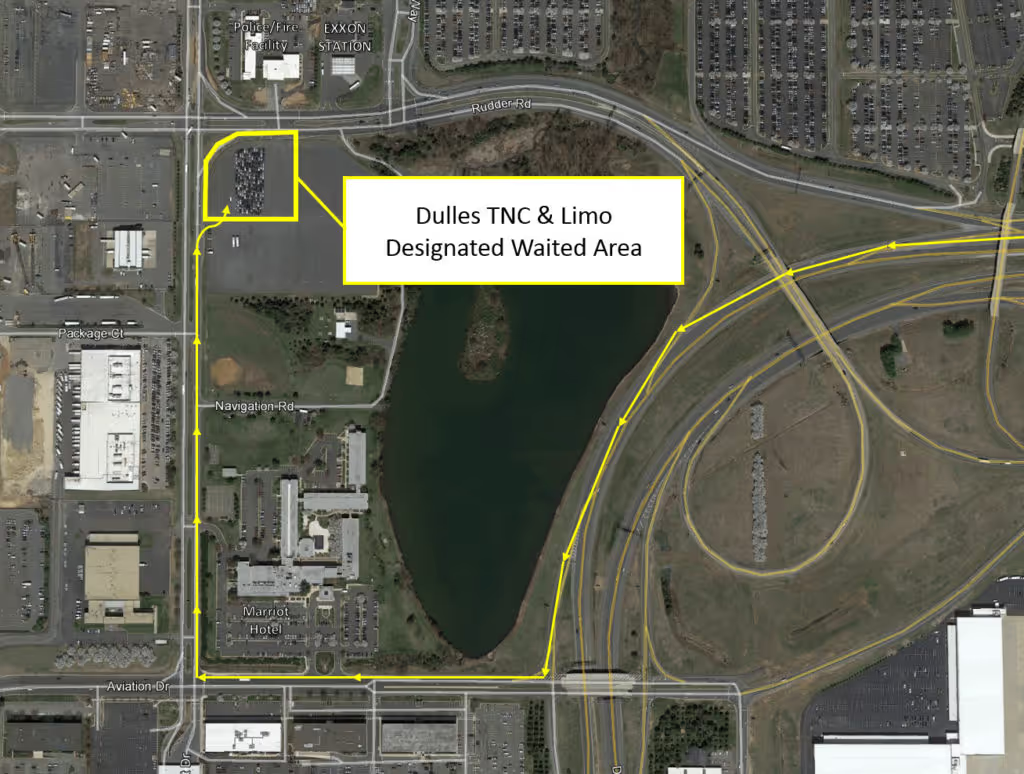
Where to pick up
Many airports add a significant layer of confusion for picking up passengers. Dulles is thankfully very straight forward. You can just pick passengers up along the lower level outer curb of the arrivals area.
Ronald Reagan International Airport (DCA)
Much like IAD, Ronald Reagan has fairly straightforward rideshare rules.
Where to wait
Ronald Reagan airport has two designated TNC lots. The main staging lot is pictured below just off of Airport access road. There is another area meant for overflow that is off of 26th street, below Airport Access road.
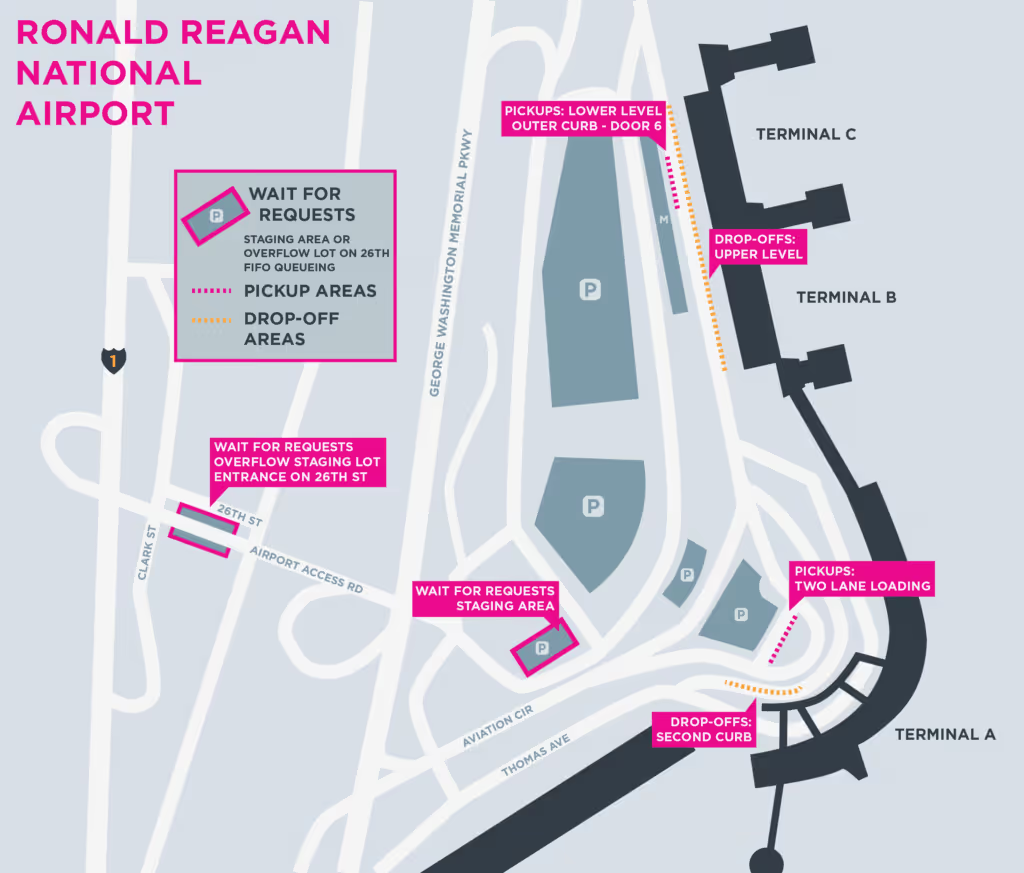
There is even a bathroom across from the lot in the parking garage which can be useful. You are only allowed to leave your car for 15 minutes to use the facilities, however, and if you are gone 16 minutes don’t be surprised if you come back to an MWAA officer writing you a ticket.
Where to pick up
Again like IAD, DCA has a relatively simple pick up procedure. You can simply find and pick up passengers on the lower level, outside curb of the arrivals area. If you are pooling you may have to do a lap or two.
Baltimore-Washington International Airport (BWI)
Finally an airport with an acronym I can get behind! In the past, waiting at BWI was tricky because of Maryland’s rules and regulations which didn’t specifically let drivers wait on airport property. This means that Uber/Lyft drivers technically were not allowed to wait on airport property to pick up riders.Recently BWI and the TNC companies have come together to strike a deal that will officially allow rideshare drivers at the airport. So expect changes to come quickly!
Where to wait
Currently, there is still no official wait area at BWI airport property, so the geofence’s that Uber and Lyft have created are large enough to accommodate drivers waiting outside the property. You can wait at a few places along Elkridge Landing Rd along with a small lot off Elkridge road that Lyft has started to designate for drivers.
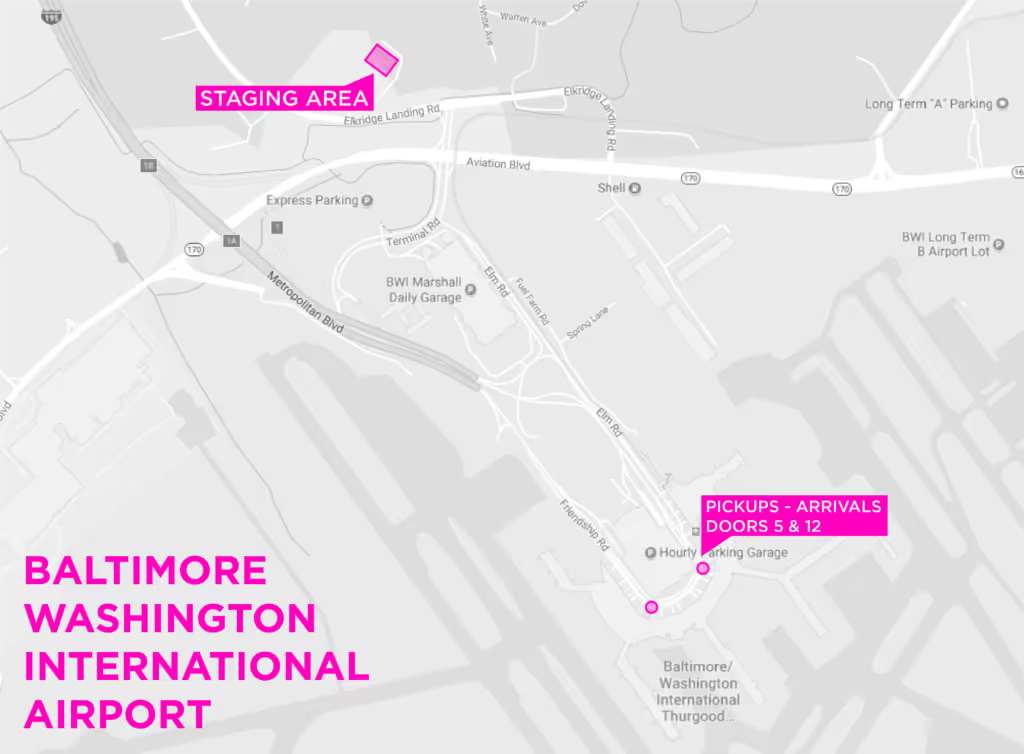
It’s also a good idea to move to the shell to wait for a ride request as you get closer to having your number called.
Where to pick up
Arrivals are a bit more restricted at BWI as you can only pick up passengers from arrivals (lower level) from Door 5 or Door 12. You may have to do a lap around if you are pooling.
When to go
Being at the airport at the right time is crucial for success. Otherwise, you risk waiting around for hours for a rush of travelers to land. You can avoid this by understanding when the most passengers are both arriving and departing.There are a lot of common times when you can count on passengers coming into the airport. It’s very common on Monday and Tuesday mornings for business travelers to be arriving for a work week in Baltimore, D.C., or Virginia. At the end of the week, on Thursday afternoons and Friday mornings, there is a surge of those same business travelers leaving to go home or coming back.Other busy times for travel include:
- Christmas and Thanksgiving Holidays
- 4th of July
- Saturday’s before Ravens or Redskins games
- The week of large parades
Take advantage of these travel heavy times by positioning yourself in the queue 10 - 15 minutes before there is a peak in arriving airports. You can easily predict when these times will be using the free Gridwise App.
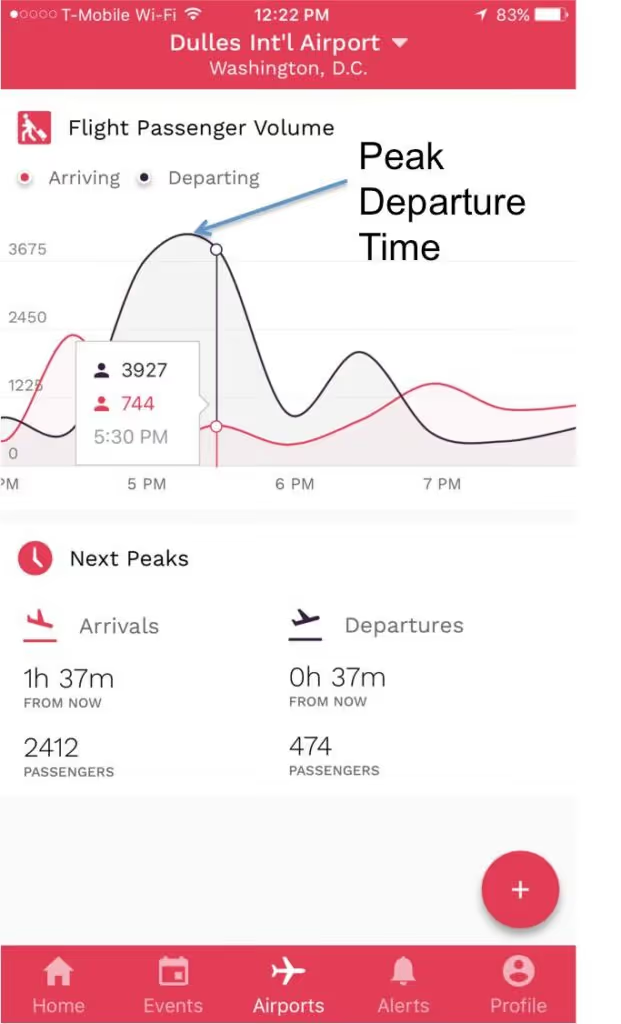
Don’t forget to pay attention to departures as well. You can take advantage of peak departure hours by positioning yourself near hotels to maximize your chances of getting a long airport fare.
Use your timeouts wisely
Remember that heartbreaking tale that I told you to start this blog post? Well, the truth is there is no way to guarantee this won’t happen to you. You can, however, decrease your chances of getting pulled out of the queue for another ride by using your cancels wisely and positioning yourself well within the airport zone.Uber and Lyft’s algorithms are still under lock and key so it’s difficult to completely understand how drivers are selected, however, we do know that drivers are supposed to be selected based on proximity to the rider.So that stands to reason that if you move closer to the airport and away from the surrounding city that you’ll decrease your chances of being pinged from outside the airport. The TNC lots are great for this, the cell lots would be better, however rideshare drivers are not officially allowed in those lots. So approach at your own risk.Your next strategy is to be fully loaded with “timeouts” so you can ignore a call at least once without being sent to the back of the line. Remember, you only need about a 90% acceptance rate to stay in good standing with the TNC and get your weekly driver rewards, so use the few timeouts you have at the airport if you know you’re going to incorporate them into your strategy for the day.
Things to remember
A great airport strategy can lead to a consistent and predictably high hourly income for the smart rideshare driver. We recently wrote a story about Jeff who has been conquering rideshare up in Pittsburgh for the last year by leveraging his local airport, so you can take his strategy and make it your own. Just remember a few extra things:
- Always reach out to your passenger and confirm their location right before you depart
- DO NOT cancel on a passenger after you’ve accepted a fare. You’ll be moved to the bottom of the queue and could face deactivation by your TNC
- Be mindful of law enforcement and don’t risk getting a ticket by hanging out in the cell lots
- Because of the heavy MWAA presence, be prepared when you come to the airport. This means trade dress displayed, insurance card and registration available and don’t forget your driver's license
Alright, that’s it! Everything you need to know to get started at the airports in the DMV. Are you an experienced TNC airport warrior? Did we miss any great airport tips? Let us know and we’ll add them to the list!
Why You Should Never Chase Surges (and what to do instead)
As I write this article I am no less than a week past committing the cardinal sin of driving for a rideshare service.
Yes… I chased a surge.
Don't laugh at me! We've all been hypnotized by that beautiful dark shade of red. I also had just dropped off a 3x surge rider so I was feeling lucky. Like today was my day! So with a glimmer of hope and determination in my eye, I set off to go conquer another surge!
What a bad idea that was.
Not only did I miss the surge, but I wasted 30-minutes stuck in traffic all while a surge appeared from the EXACT area that I had just come from.

As rideshare drivers, we must face the fact that surges just are not worth it. So in today’s post, we’ll examine why chasing surges is a no-no for good rideshare drivers and 4 tactics you should use instead.
Let’s dive in!
What surge prices REALLY do
Uber and Lyft’s surge algorithms remain somewhat of a mystery, however, our friends over at Cornell have done a great job of decoding and explaining how Uber’s Surge pricing works… But let me explain this it to you in English.
Ideally, the number of drivers in a given area will be exactly equal to the number riders in a given area. So whenever there are more riders than drivers, rideshare services will launch a surge.
This doesn’t necessarily mean there are a ton of potential riders, there is just an imbalance. So the surge is simply meant to do one thing:
Redistribute drivers.
The problems with Surging
This model wouldn’t be so bad in a perfect world, however, two things happen that work against the rideshare driver.
- Riders can easily game the system multiple ways
- MANY more drivers than necessary will flock to a surge area.
Now let's pause for a quick question.
If I offered to give you a 50% discount on your steak dinner tonight if you wait ten minutes, would you do it?
Yep, you would in a heartbeat.
Riders are the exact same way. If they can just wait for 10-minutes for a cheap ride, they will wait out the surge. This means while you and 50 other drivers are headed to an area, riders will actually stop requesting rides.
“I’ve sat right in the middle of surges downtown for 15 - 20 minutes and never received a call,” says D.C. rideshare driver David. “I used to chase surges, wait there for 20 minutes and get nothing. I stopped making that mistake pretty quick.”
By simply waiting a few minutes and even checking other apps, riders can “game” the system and wait until Uber pulls all of us drivers to their area and subsequently drops prices. So while you’re chasing the big red zone, your riders are just waiting until it disappears before calling you.
You end up driving across town for a normal fare. Not great.
Riders are also becoming more aware of the predefined surge zones that rideshare services have created, which means they can simply walk a few blocks and be in a non-surging zone. It’s not uncommon to get pinged from just outside a surge zone while you are driving IN a surge zone. Again, not great.
What’s the impact of surges?
While income from surges can add a nice boost to your daily payouts, it certainly won’t make up the bulk of your earnings. In fact, a 2017 report from RideSharingDriver indicated that less than 10% of uber driver earnings came as a result of incremental income from surges.
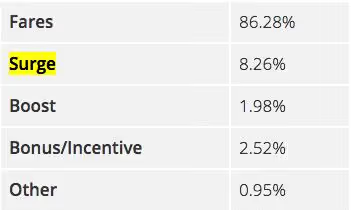
Given these numbers, if you’re a part time driver averaging $1,500 per month driving Uber or Lyft, you can expect surge charges to make up less than $150 of your monthly pay.
Not. Great.
Find demand, don’t chase surges
With only a small piece of our earnings coming from surges, not to mention the fact that Uber is constantly considering doing away with surges, drivers need to be maximizing earnings by minimizing ideal time and maximizing their chances for long rides. So how do you do it?
- Brave the bars
- Wake up for the morning rush
- Know about big events
- Get out in the rain
Brave the bars
The late night bar crowd on Thursday’s, Friday’s, and Wednesday’s can be a gold mine for the driver willing to deal with a more “exuberant” crowd. From about 9:00 - 11:00 you can find riders that are headed to the bars from the more docile parts of the city. Then from 1:30 - 3:00 you can catch riders in popular going out area’s who will need a designated driver to get them back home. These areas will almost always have big increases in demand which turn into predictable and sustainable surges.
You’ll have to deal with riders that may have had too much to drink so come prepared with a barf bag and a few cleaning supplies to ensure that you can get back on the road quickly. Puke related accidents don’t always happen though.
“I’ve completed more than 3000 rides over the past 4 years for Uber and Lyft and have never had someone vomit in my ride.” says one of our Gridwisers Jeff. “I could just be lucky, but people for the most part just fall asleep”
Wake up for the morning rush
If you’re not a night owl then you better be an early bird if you want to maximize your earnings from ridesharing services like Uber and Lyft. Demand during the early morning hours from 6:00 - 10:00 is very high in most cities because of the high volume of commuters either going to work, going to the airport, or leaving the airport.
Depending on your city, you can find workers either coming from the suburbs or more residential parts of the city into the downtown areas.
Mornings are also a great time to catch business travelers going to and coming from airports. You can use your Gridwise app to know when flights are coming in and catch a big fare at the airport. Or hang near hotels and find a traveler catching their early flight.
Know about big events
If you want to predict rider demand look no further than your local sporting, concert, and theatre venues. When they are having some of their bigger events, hundreds to thousands of people will be looking for rides to their next destination after the event is over.
You can spend an hour so looking through multiple websites for events or you can check use Gridwise to see a listing of events in your area.
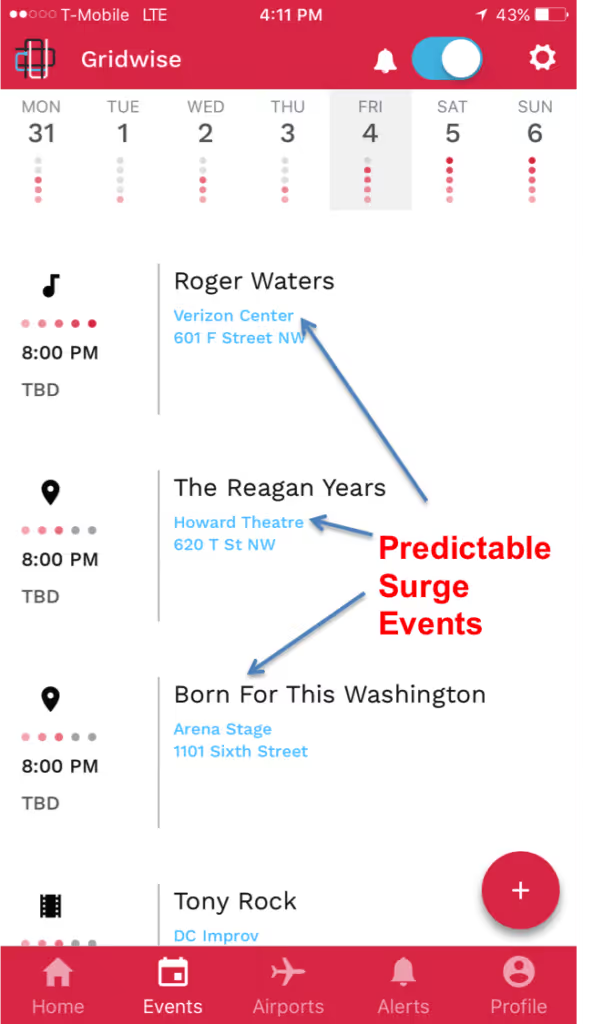
[su_note note_color="#fefedf"]Free Bonus: Know what events are going on in your city in seconds using theFREE Gridwise app.[/su_note]
Get out in the rain
Many drivers have a love/hate relationship with the rain. While it can be a pain to drive in a downpour, there is almost always a significant amount of demand during a rainstorm because riders who may have otherwise taken a long walk to their destination will decide to take a ride, while some drivers will decide it’s not worth it to try and drive.
As a driver, you’ll need to take precautions to ensure that you are driving safely and deal with a bit of extra traffic, but you’ll likely be rewarded with a nice surge fair.
Incorporating demand PREDICTION into your strategy
There is no single strategy that works for all drivers because with every driver comes a unique circumstance. While you may not be able to incorporate all of the above tactics in your strategy, you can use them as inspiration.
If you are a suburban driver that goes into the city, do your best to catch a ride from the airport into the city in the morning, or possibly a commuter making their way to their downtown office. Alternatively, if you are a single dad in the city and can't drive during the mornings, find events that in the evenings and get out there on Friday and Saturday nights.
Every city is different and every driver is different, so what's different about your strategy? We want to know!
Sound off in the comments below
[Update!] Peak Rideshare Driving Times in DC
I found out the hard way that the time of day that you’re driving for rideshare services like Uber and Lyft can be the difference between making $30 per hour, and heading home having made $40 from a 5-hour shift. I want to make sure that none of my fellow DC rideshare drivers go through the agony (yes agony) of an unprofitable driving session, so I’ve listed out the best times to drive rideshare in DC.
Weekdays (Monday - Wednesday)
The morning rush (6 am - 10 am)
The D.C. metro system is possibly the cleanest mass transit system in America, and those sparkling benches come in handy when the infamous Red Line has been delayed 30 minutes.Again.Because of how unreliable, and expensive, the DC metro is, commuters often turn to rideshare partners to provide transportation to work. There are tons of riders who regularly ride Uber or Lyft to get to work, however, there are many riders that rely on rideshare services when their train has been delayed.Follow twitter accounts like @wmata, @Metrorailinfo, and my personal favorite @unsuckdcmetro for key alerts about metro service. When you see tweets like these:
Go ahead and gravitate toward those areas.Many commuters from places like Silver Spring, Bethesda, and the Virginia Suburbs are going to be looking for rides into the downtown area. If you live in these areas, it is worth it to stick around and try to find a ride into the city. Otherwise, your best bet is to stay in areas of the city like DuPont Circle, Adams Morgan, and Georgetown to find students and workers getting to work.Monday’s and Tuesday’s are also busy days for business travelers, so use your Gridwise app to identify the best times to hit which airports to maximize your earnings.
The afternoon rush hour (3-6)
The afternoon rush hour is similar to the morning rush hour because the bulk of the rider demand stems from riders who are leaving work. The great thing about this rush hour is that these commuters tend to be more centrally located in areas like McPherson, NoMa, and Downtown, so if you hang near those areas you’re likely to find a rider trying to get home.Always be on the lookout for weather alerts as bad weather almost always causes train delays and many riders will forgo even attempting to ride the Metro in the rain.
[su_note note_color="#fefedf"]Free Bonus: To get instant weather and traffic alerts tailored to D.C. rideshare drivers download the FREE Gridwise app here.[/su_note]
Late night (10 - 3)
The late night hours early in the week rarely end up having much rider demand. That doesn’t mean you should completely give up on this block of time. You’ll just need to be strategic! Check your Gridwise app for events going on around town. The Kennedy Center, Verizon Center, and Lincoln Theater will all regularly have significant sized events that you should keep an eye on.
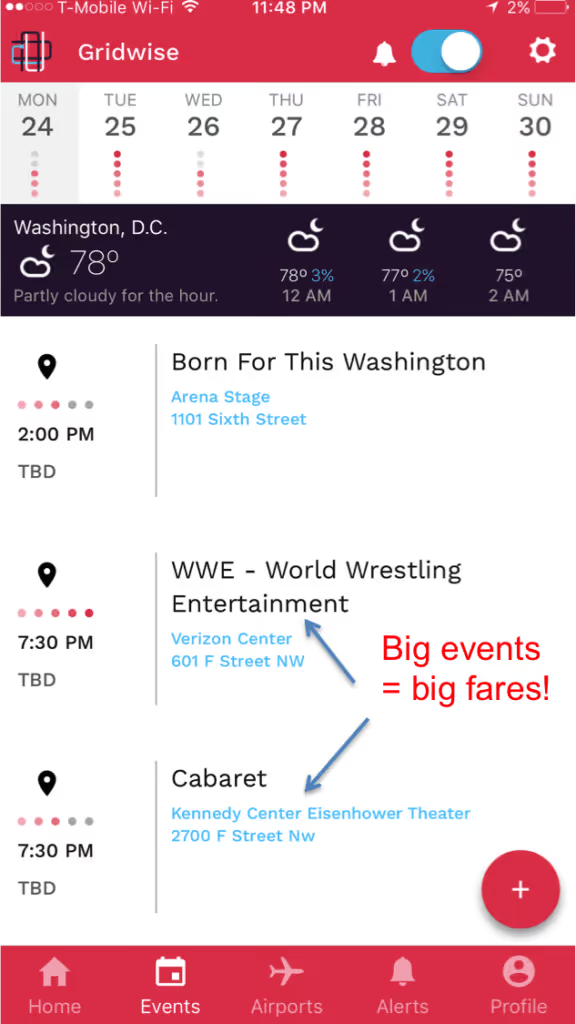
Also, be sure to check the airport schedule. Business travelers often come in on Monday nights and will need rides from the airport to their hotels.
Weekends (Thursday - Saturday)
The morning rush (6 am - 10 am)
Expect the morning rush hours to be just as lucrative on Thursday and Friday in DC as they are Monday - Wednesday as these are still peak hours for Lyft and Uber demand. You can also look for business travelers to be heading home from some of the downtown hotels Friday morning, so check the airport departure schedules.
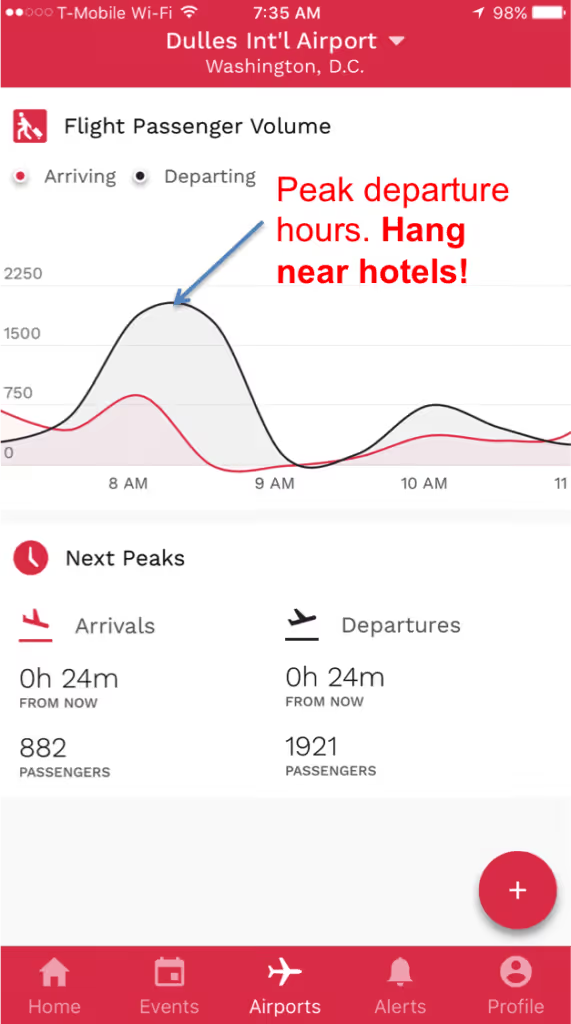
Rider demand on Saturday mornings is usually very low unless you’re taking advantage of an event. Otherwise, sleep in and prepare for the late night rush.
The afternoon rush hour (3-6)
Tourists are plentiful on Saturday’s in D.C., especially around the downtown area where many hotels are and near the monuments. These locations can be your bread and butter on most Saturday afternoons, but watch your alerts for any parades that are going on. You don’t want to get stuck trying to cross parade traffic.Also be mindful of Nationals Park near Navy Yard. Saturday games have the potential for 100’s of rides.
Late night (10 - 3)
For the weekend driver, late night rides are where you will make the bulk of your money. D.C. is full of young transplants and students that flock to places like Adams Morgan, DuPont Circle, and H Street to hit the bar and club scenes.Students coming from Georgetown and Foggy Bottom will make up a large bulk of your rides, so when school is in session hang near those neighborhoods early in the night around 9:00 o’clock and catch a ride into the more popular bar neighborhoods.From there, you’ll likely be able to give bar goers rides as they cross town going from bar to bar or party to party.The Verizon center while often have Saturday night events as well, however, keep an eye on your Gridwise app to monitor traffic. You don’t want to get stuck in gridlock traffic picking up a ride at the Verizon center when there are plenty of rides in other parts of town.
Sunday
The morning rush (6 am - 10 am)
While Saturday night is usually a frenzy of activity, Sunday morning is going to be downright boring for Uber drivers on most days. You may find a few folks heading back from clubs, parties, or bars but for the most part, you’ll see a heavy drop in rider demand.Take this time to sleep in!
The afternoon rush hour (1-6)
There is a mini afternoon rush hour caused by one of D.C.’s most popular pastimes.Brunch!Local’s will frequent the common bar areas to find the best bottomless mimosa deals, which means they’ll be looking for safe rides to and from restaurants. You won’t see the same amount of activity as a Saturday night unless there is a big event going on, but if you stick to popular areas like DuPont Circle you won’t have a problem finding a rider.
Late night (10 - 3)
Sunday nights in D.C. are relatively slow. You’ll find that business travelers often come into or leave out of the city on Sunday evenings, so check your flight schedules using the Gridwise app. Gravitating toward the downtown area where popular business hotels are located will commonly yield you a ride to one of D.C.’s airports. With any luck, you’ll arrive at a peak airport time and can catch a ride back into the city. Also, check for events going on at the Kennedy Center and local theaters. Always plan before you drive! There are a few times where you can count on a ton of rider demand as long as you drive in popular areas. During slower hours it’s important to be strategic and have a plan before you get out on the road. Use apps like Gridwise to help you understand what’s going on in your city and develop a solid driving plan in just a few minutes. Now, what’s your favorite time to drive in D.C.? Share in the comments below!
Qualifications Needed to Drive for Various TNCs
At Gridwise, our mission is to increase performance, efficiency, and earnings for all ride-hailing drivers by empowering the drivers of today and the future. To accomplish this mission, the Gridwise app provides a service-agnostic solution for drivers of any rideshare service.
Additionally, we want to equip drivers with knowledge so that they can make informed decisions-- which leads to greater earnings. Therefore, this article will provide you with the qualifications needed to drive for various TNC’s so that you can make the best decision when it comes to choosing a rideshare service to drive for. Specifically, we will be discussing the top 6 rideshare services that the majority of drivers are using: Uber, Lyft, Via, Gett, Curb, and zTrip.
Uber
As the most popular and widespread rideshare service, Uber has set forth an extensive list of requirements if you wish to start driving for them. However, the qualifications needed to drive for Uber may not be difficult for most people to attain.
First, let’s start with the driver requirements. To drive for Uber you must be at least 21 years of age and have 3 years of driving experience in the US, or you can be 23 years of age or older with 1 or more years of US driving experience. An Uber driver must have an in-state driver’s license, in-state personal auto insurance with your name listed on the insurance card.
Another qualification needed to drive for Uber is to pass a name-based background check, which requires a clean driving record and a Social Security number in order to process it. The background check is processed by a company called Checkr and looks over your driving record over the past 7 years for:
- No DUI or drug related offenses
- No history of reckless driving
- No fatal accidents
- No criminal record
Moving on to the vehicle requirements, in order to drive for Uber your car must be registered in-state, however, it does not need to be in your name. Whether your car is owned or leased, it must meet the following UberX vehicle requirements:
- 4-door sedan with a total of five seatbelts
- Year 2001 or newer in most cities
- In-state license plates
- No marked, taxi, or salvaged vehicles
- Pass the Uber vehicle inspection
- Up to date registration
Lyft
The qualifications needed to drive for Lyft are fairly similar to Uber. Drivers must be 21 years of age at the time of application with a valid in-state driver’s license and at least one year of driving experience.
Similar to Uber, driver applicants must have a clean driving record and complete a background check. However, Lyft is not as strict as Uber when they say “clean” driving record. Here is what you can/can’t have on your driving record in order to qualify for Lyft:
- No more than 3 moving violations in the last 3 years (seatbelts, traffic lights, fender benders).
- No major violations in the last three years (Driving on a suspended license, driving recklessly).
- No DUI’s or drug related violations in the last 7 years.
- No extreme infractions within the last 7 years (hit and run, felonies involving a vehicle).
Lyft uses a different company than Uber to process applicants’ background checks called SterlingBackcheck. The check is pretty thorough and ensures the applicants have not been convicted of any of the following within the past 7 years: felonies, violent crimes, sexual offenses, theft, property damage, and drug related offenses. Additionally, Lyft also does not allow anyone who is registered on the National Sex Offender Registry and DOJ 50-State Sex Offender Registry at the time that their background check is conducted, regardless of how long ago the individual was put on that registry.
As for the vehicle qualifications needed to drive for Lyft, they are surprisingly more stringent than Uber.
- Model: 2005 or newer (in most markets)
- Four doors: all four need to be able to open and close from the interior and the exterior, and passengers need to be able to unlock and lock their own doors
- All lights (i.e. turn signals, high beams, etc.) must work
- A/C and heat must work
- All car windows must roll up and down fully
- No cracks in windshield, windows, or mirrors with the exception of minor damage as long as it does not obstruct driver’s field of vision
- Working horn
- Tire tread depth must pass the penny test
- 5 functioning seat-belts
In addition to the standard driver and vehicle requirements, both Uber and Lyft have pretty strict requirements on their drivers’ ratings, according to The Rideshare Guy. In order to remain active on either platform, drivers must keep their rating above 4.6 (on a scale of 1 to 5). The difference between the two companies is how they calculate the ratings. With Lyft, only your last 100 rides count towards your rating and older ratings are dismissed. On the other hand, Uber takes into account your last 500 rides, which can make it difficult to redeem yourself if you get a low rating.
Via
The Via rideshare service is actually about passengers sharing rides. Currently, Via is only in New York, Chicago, and Washington DC. Via requires their drivers’ vehicles to be 2010 model year or newer, have leather or fabric seats, and to be approved for the Via System.
There is also a list of approved vehicles on the Via website. However, keep in mind that it is not a comprehensive list. If you own a vehicle which is not on this list, and you’re still interested in driving for Via, you can contact Via Customer Service to determine if your car is eligible.
Other qualifications needed to drive for Via are split between vehicles with livery plates and vehicles with private plates. For vehicles with livery plates, Via requires DMV registration, PPVL (front and back), and vehicle insurance. For vehicles with private plates, Via requires DMV registration, a valid insurance card, completion of a vehicle inspection form, and photos of the vehicle (rear exterior and interior).
Gett
With the promise of up to 25% higher pay than Uber, Gett can be an appealing rideshare option for drivers in NYC. Gett is a global network that serves over 100 cities across four countries, however, New York City is the only location for this service in the US.
When it comes to qualifications needed to drive for Gett, along with standard driver requirements, you must have a higher level of driving expertise to be considered as a Gett driver. However, with a higher level of expertise comes a higher paycheck: sedans get $0.70/min net plus tip where SUV’s get about $0.85/min, plus there are generous referral bonuses. Overall, the money drivers can make with Gett can be significantly higher than with driving for Uber or Lyft.
According to Gett, vehicles must be at least 2011 or newer and it must be black, dark blue, grey, silver or white. It should also be registered with the NYC Taxi & Limousine Commission.
Curb
The Curb app is available in 65 US cities and focuses on their speed of service by claiming that a ride can be requested in seconds and a driver will arrive in minutes. Besides using quick, convenient service to their advantage the company also homes in on safety by only working with professional taxi drivers. Every time you ride with Curb you’ll ride with a fully licensed, insured driver without any exceptions.
Curb is the solution for the ever-growing popularity of rideshare services that have seemingly taken over the traditional taxi. The company employs over 100,000 drivers.
So what are the qualifications needed to drive for Curb? As stated above, Curb only hires professional drivers with a valid license to drive a for-hire vehicle (taxi, sedan, or other). Besides that, the requirements are pretty standard: the driver must have a valid government ID and receive approval from the Curb Team.
zTrip
The zTrip app allows drivers to choose between a black car or taxi, customize their pickup options, and pay up-front. zTrip is available in over 30 cities and services over 70 airports. Drivers are given two options for vehicles: they can choose the Yellow Z service, which allows them to use their own car, or they can lease a zTrip car to prevent wear and tear on their personal vehicles.
The zTrip driver application will ask you the following questions:
- Are you over 23 years old?
- Are you a citizen or permanent resident authorized to work in the US?
- What is your name, address, and phone number?
- Which city would you like to drive in?
- Have you been convicted of a felony?
After reading the requirements for these 6 rideshare services, which one do you think sounds the most appealing as a driver? Leave us your thoughts in the comment section below!
4 Ways to Increase Your Tip Earnings
Ride-hailing has traditionally been a tipping industry. When you took a ride in a taxi you were expected to tip your driver. Then, Uber stepped into the game and put an end to this expectation. From the very beginning, Uber promoted itself for offering a cashless experience to riders. All payments could be completed through the app, yet the app failed to include a way for riders to tip their driver. The company claimed that tips were already calculated and added to the driver’s fare (although most drivers would argue that this was not the case).
At first, this helped Uber gain traction over cabs. Riders liked that cash tipping was not part of the equation. Even though riders were pleased, quite the opposite was true for Uber drivers. Especially when rivals such as Lyft released an in-app tipping feature, which started to win over frustrated Uber drivers. In order to stay on top of the game, Uber announced that they would finally be adding a tipping feature to their app.
According to The Verge, the Uber tipping feature will debut in three cities (Seattle, Minneapolis, and Houston) and will be extended to the rest of Uber's American service areas by the end of July. The Uber tipping feature gives passengers the opportunity to tip their driver after a ride with either a pre-determined amount of $1, $3, or $5, or they can choose to enter a custom amount.
Since Uber has trained customers for almost a decade that tipping is optional and maybe not even necessary, what can you do to start bringing in those tips and increasing your earnings? The new Uber tipping feature opens up the door for all rideshare drivers to start thinking about ways to increase tip earnings. To get you started, we have gathered some of the secrets we’ve learned from drivers and experts on how you can start increasing your tip earnings regardless of which TNC you drive for.
1. Change your mindset
By clicking on this post, we know that you’re interested in how to increase your tip earnings so that you can maximize your income as a rideshare driver. A simple way to accomplish this is by changing your mindset, meaning instead of thinking about driving as a job start thinking about it as a business.
HyreCar suggests that the question to ask yourself should not be “How do I make more money,” it should be “How do I run a better business?” By changing your mindset, you’ll start considering and planning for how you can make money come in longer, more often, and in bigger numbers. The ideas below will go further into detail on how you can start running a better business and how you can set yourself apart from your competitors.
2. Anticipate your passenger’s needs
Whether your passengers are tipping through an app or handing you cash, you may notice that you’re often only receiving a few bucks, if that. According to Psychology Today, customers only tip the minimum because they feel obligated by social norms. However, customers will tip more if they like the people who serve them.
It goes without saying that your passengers will be more inclined to like you (and tip you) if you always remain friendly and courteous. Smile, introduce yourself by name, and exchange the typical pleasantries when your passenger enters the car. However, be sure to look for cues that might suggest he or she may need some quiet time during the ride. On the other hand, if your conversation begins to flow easily, stay engaged in conversation with your passenger. Understanding the level of interaction that your passenger needs is important so that you don’t offend or bother them, which could deter them from leaving a tip.
Another way you can anticipate your passenger’s needs is by creating a comfortable environment. In fact, Psychology Today says that “the key to receiving higher tips is to create an environment that predisposes customers to be more generous.” A comfortable environment starts with keeping your vehicle clean and organized. Offer water bottles and snacks. Plus, you can almost guarantee that an airport passenger who has just spent the whole day travelling is going to love you if they find an extra phone charger in your car. It’s the small details that encourage your customers’ delight and increase your tip earnings.
3. Add a sign
Even with the new Uber tipping feature and other in-app tipping features, adding a sign asking for tips can help to increase your tip earnings. The Rideshare Guy explained that many drivers are a little bit shy about using a tip sign because they fear that it will affect their ratings. However, many experienced drivers that have added tip signs say that it has not negatively impacted their rating. Of course, you should always make sure your sign politely solicits tips. Remind customers that tips are not required, but they are always appreciated.
Keep in mind, though, that if you’re going to ask for tips, you should provide a level of service or amenities that other drivers aren’t. As mentioned above, this improves your likeability and will help you stand out from the pack.
4. Don’t act entitled
Even though the new Uber tipping feature gives riders the opportunity to tip their driver, it doesn’t mean that tips are required. If your passenger starts talking to you about tips, The Rideshare Guy reminds drivers that it’s important not to seemed entitled to receiving a tip. Once again, if your goal is to increase your tip earnings, you have to offer value to your passengers. Going above and beyond your passenger’s expectation of just getting from point A to point B will increase your likelihood of receiving a nice tip.
In conclusion
With the announcement of the Uber tipping feature on everyone’s mind, it’s more important than ever for drivers to implement new ways to start bringing in tips. As always, our goal at Gridwise is to help increase your performance on the road by providing recommendations like these as well as all of the resources and features in our app. Download the app now to see everything it can offer you as a rideshare driver!

How Much Do TNCs Pay Drivers in DC
If you are considering a career as a rideshare driver in Washington DC, knowing how much the various TNCs pay drivers in DC can be helpful. Of course, your actual salary depends largely on how many hours you put in behind the wheel. But if you would like to estimate your salary based on the number of hours you can commit to driving, this article will give you an overview of how much TNCs pay drivers in DC.
Uber
Fortunately, Uber posts on their website driver salary projections for various cities, including Washington DC, and updates the numbers frequently.
As an Uber driver, when someone takes a ride with you they are charged a fare plus a “Rider Fee”. The fare for UberX in Washington DC is currently $0.17 per minute plus $1.02 per mile. On top of that, there is a $1.15 base fare plus a $1.55 booking fee. Thus, according to Uber the average Washington trip pay out for an UberX driver is $13.73. Since Uber drivers on average make about 2 rides per hour, the hourly earnings for an UberX driver equates to approximately $27.46.
Assuming an average Uber driver commits to work about 30 hours per week, the overall per-week earnings would be $824 — making annual salary for Washington UberX drivers equal to $42,838.
However, this estimation does not include if you drive during a time when “surge pricing” is available. Surge pricing means Uber increases the fare prices during certain times of higher demand, making these hours more attractive for drivers. If you drive during surge pricing, then the entire fare is multiplied by that number.
Uber often advertises that they only charge a 25% commission of the fares. According to The Rideshare Guy, however, these figures ignore the “Booking Fee” that the company adds on top of each ride, which goes solely to the TNC. The booking fee amount varies from city to city. The resulting effects of this fee and the 25% commission mean that when passengers step outside of their Uber and only see a $5 charge, the driver will receive around half of that.
Lyft
Similar to Uber, there are advertisements about Lyft taking only 25% commission, but once again this company does not include the “Trust and Service Fee” which they take for each trip.
According to Lyft, driver pay includes time spent waiting, starting one minute after you’ve confirmed your arrival. The ride fare includes base fare, cost per mile, and cost per minute. In Washington DC, the base fare is $1.15, the cost per mile is $1.02, and the cost per minute is $0.17.
Alvia.com shares methodology for calculating the earnings of a Lyft driver in Washington DC based on the following:
An average trip for a Lyft driver pays out approximately $11.26 in the Washington D.C. area, and Lyft drivers are able to complete about two full trips per hour (i.e., a total of $22.52). Since an average Lyft driver works about 30 hours per week, the total per-week earnings are $675.60 per week — making a year’s salary for a driver $35,131.20.
Additionally, at times of high demand your fare may be subject to a ‘Prime Time’ multiplier to keep vehicles available. The multiplier, if any, will be communicated to you at the time of your ride request.
Via
Even though Via is the new rideshare app on the block, it turns out this TNC pays drivers considerably more than both Uber and Lyft. As mentioned above, both Uber and Lyft take a 25% commission from their drivers. Whereas Via takes only a 10% commission from drivers in DC.
The Rideshare Guy reports that Via will pay per trip in a similar manner to other rideshare companies, with rate cards similar to Uber or Lyft. Via has also recently announced Rocket Rates, which are equivalent to surge pricing with Uber and prime-time pricing with Lyft. The Via website explains that during high demand hours, fares will be multiplied by the “Rocket Rate” that will be announced to drivers through text message. Multipliers have been in the range of 1.3 to 2.5 times the fare, which can make trips more profitable. However, one Via driver shares that the rocket rates only operate during Flex mode hours, which fall between midnight and 6am.
At all other hours, Via has an undisclosed, guaranteed hourly rate for drivers that fluctuates throughout the day. For example, during peak hours (i.e., from 7-9am and 5-8pm) Via offers $30/hour while online. This means that drivers can be paid regardless of how many passengers they pick up. The rate also varies based on the type of car you drive. It has been reported that luxury SUV driver earnings start at $1,800 per week and those who drive a sedan can make $1,200 per week.
One key difference, though, is that Via will automatically apply a pay boost to rides that are “matched” with other riders. This incentivizes drivers to get matching rides in order to increase their earnings. The premium ranges between 5% and 20% depending on what city you drive in or how many matches you get.
Curb
Curb only employs professional drivers for their service, which can be hailed through the Curb app. The Ride Guru explains that since Curb drivers are traditional taxi drivers their payout is based on the standard average taxi cab driver payout. However, the Curb app does take $2 from each payout for using the app.
To estimate how much this TNC pays drivers in DC we can look at salary reports for the average DC taxi driver. According to Salary.com, the annual base salary for taxi drivers in DC is $36,547. Therefore, it can be projected that Curb pays drivers in DC approximately the same minus the $2 Curb fee. Unlike other rideshare services, though, cabs have traditionally been a tipping industry, so receiving a tip is more common through this service than all of the others.
As a rideshare driver, what do you think about how TNCs pay drivers in DC? Leave us your thoughts in a comment below!
Work smarter. Earn more.
Whether you drive, deliver, or pick up shifts — Gridwise helps you track earnings, mileage, and performance so you stay in control of your work. Download the app and take charge today.
