Gridwise blog
Tips, insights, and advice to help you earn more and work smarter, whether you do gig work, hourly, or shift work.
How to Make $1,000 a Week With Uber Eats in 2026 (Tips + Hourly Data)
In this blog, we'll explore the strategies and techniques that can show you how to earn $1000 per week as an Uber Eats delivery driver. We'll cover everything from optimizing your delivery zones and schedules to maximizing your tips and customer satisfaction. Whether you're a seasoned Uber Eats driver or just starting out, this guide will provide you with the insights and actionable steps to take your Uber Eats driver earnings to the next level.
Becoming an Uber Eats delivery partner can be a lucrative opportunity, especially if you're able to consistently earn $1000 a week. By understanding the platform, optimizing your delivery strategies, and focusing on customer satisfaction, you can maximize your earnings and turn Uber Eats into a reliable source of income.
We’ll cover the following topics to provide coaching and ideas to help you push your earnings up to that $1000 per week level:
What do Uber Eats drivers do?
Uber Eats drivers deliver prepared food most of the time, but they also might shop for and deliver goods from convenience outlets and grocery stores. The job is pretty simple. You get a request for an order, you drive to the restaurant or store to pick it up, and then you deliver it to the customer. If you already drive for Uber, you can choose to take orders for Uber Eats delivery any time.
If you’re not an Uber Eats driver yet, it’s pretty easy to become one. This Gridwise post tells you what you need to do if you want to sign up and start making money Uber Eats style. Many rideshare drivers welcome the chance to deliver food rather than people. This article from Nerdwallet covers the Uber Eats gig from that angle.
There are some sweet advantages to working with Uber Eats. In lots of cities you don’t even need to have a car. You can use a bike or a scooter, or even walk, to make your rounds. If you do use a car, Uber Eats’ requirements are a lot easier to meet than they are for Uber rideshare driving.
You also have a lot of flexibility. You can shop and deliver convenience items and groceries, but you don’t have to. And, like most driving gigs, you can choose your own hours, and map out the locations where you want to work.
Use Gridwise features When to Drive and Where to Drive to help you figure out what work hours and which specific areas will be the most profitable for you. Real data from real delivery people will show you earning patterns for drivers in your town.
How much can you earn doing Uber Eats?
The honest answer to this question is: basically, as much as you want! It all depends on how many hours you put in and how strategic you are about your gig. Earnings vary from one area to another, as this article from Entrepreneur points out. To give you a baseline, let’s look at the earnings of Uber Eats drivers who tracked their earnings with Gridwise.
Remember that these numbers show us only average earnings. To make $1,000 a week with Uber Eats, you’re going to have to be better than average, and we’ll show you how. For now, though, it’s good to have these figures so you get a ballpark number of where to start.
How much do Uber Eats drivers make?
Gridwise data tell us the following:
- Monthly earnings average around $444.00 per month.
- Gross earnings per trip are between $9.00 and $10.00.
- Tips make up about 50% of most Uber Eats drivers’ income, which amounts to about $225.00 per month.
Is Uber Eats good money? It can be. While there are other gigs that pay more per trip, if you drive for Uber Eats, you’ll always be pretty busy.
https://datawrapper.dwcdn.net/HPAz8/3
You can also see that, unlike many other gigs, tips play a huge role in Uber Eats earnings.

With these numbers as a baseline, what can we say about how to earn $1,000 a week with Uber Eats? As we said in the introduction, it’s going to be a hustle, but it’s really possible. To figure out how to make the most money with Uber Eats, let’s start by looking at how many trips these “average” drivers made each month.
We know that average gross earnings were $444.00 per month, and drivers got around $10.00 per trip. That means they took 44 or 45 trips per month, which breaks down to 11 trips per week. That’s not a lot of Uber Eats delivery, is it?
The fact that Uber Eats drivers averaged so few trips shows us that many drivers use more than one app at the same time. This is called multi-apping, and you can learn more about it in this Gridwise post. If you want to answer the question of how much you can make with Uber Eats, then you need to stick with the app and keep plugging away at those orders. You also need solid strategies, as well as some inside tips and tricks.
How to make the most money on Uber Eats: Delivery driving tactics
Getting to that $1,000 a week with Uber Eats isn’t so hard when you remember that the drivers we saw making about $111 a week were only taking around 11 trips in the same time period. That’s not much at all! If you work the Uber Eats app like a boss, you’ll soon have many more trips than that, easily reaching the number needed to get you to $1,000 a week. Now, let’s get to some tactics you’ll need to make that kind of bank.
- Stay with the Uber Eats app, and track your earnings. Gridwise can easily do that for you. Simply sync your Uber Eats app with Gridwise, and you’ll be able to see how much you’ve earned with Uber Eats, what times were most profitable, and your average hourly pay. Racking up trips with Uber Eats has other benefits, including perks and bonuses that are awarded to top drivers.
- Leverage surge pricing and promotions. Surge pricing is applied when there is a lot of demand. When surge pricing is in effect, many of the trips you make will pay more than usual. Promotions are offered to drivers who complete a given number of trips in a certain time period. High traffic volume days, nights, and times give you these chances to get extra earnings. Challenging yourself to complete the right number of trips for promotions will add to the number of trips you can count on for big bucks, too. Learn more about Uber Eats surge pay, boosts, and promotions in this Gridwise blog post.
- Say yes to doubling up on orders. With Uber Eats, you can get back-to-back orders or receive batched orders. Back-to-back orders happen when you receive a new request while you’re on the way to deliver an original order. The Uber Eats app routes these trips automatically, so you won’t be sent out of your way.
Batched orders are Uber Eats’ way of bundling together orders from either the same restaurant, or two nearby eating establishments. You get money, and trip count credit, for all the orders you complete, plus customer tips, without having to make a bunch of separate trips.
- Turn on the charm and get bigger tips. Being nice really is part of the Uber Eats driver’s job, and getting tips is one way people who drive for Uber Eats make money beyond their basic pay.. Bring along those extra napkins and condiments, use equipment that keeps food and drinks at the right temperatures and prevents spilling, and consider your customers’ needs. If you deliver groceries, be extra careful with delicate items such as bread and eggs.
And, most important, follow your customers’ directions, and stay in communication with them if you are going to be delayed, or if you have questions about their order. This Gridwise post will tell how to get bigger tips as a delivery driver.
- Use even more charm to keep your ratings high. As an Uber Eats driver, you will be rated by the restaurant or store where you pick up the orders as well as the customers who are waiting for the deliveries. This two-way rating system is designed to keep you on your toes, so Uber can keep people satisfied with your service. Don’t worry, you get to rate them, too.
There’s another reason why your rating as a driver is important. It not only keeps you in good standing with Uber; it helps you to qualify for the Uber Eats Pro incentive program. To learn more about Uber Eats Pro, and what it takes to earn perks such as preferred services, discounts, and deals, check out this Gridwise blog post.
Smart business moves that seal the deal
Now that you know how to gobble up the deliveries you need to make $1,000 a week with Uber Eats, it’s going to be a breeze to get there. Let’s make it even easier, with business moves that boost your earnings and shrink your expenses. If you use these, it will also be easy to say yes when people ask, “Can you make good money with Uber Eats?”
Minimize expenses. Avoid racking up big fast-food bills by bringing your own food and beverages. You might not think you’re hungry when you first start your Uber Eats run, but once the aroma of pepperoni pizza, premium cheeseburgers, and piping hot fries start wafting through your car, that might change. Bring a sandwich or other healthy food from home, and buy bottled water in bulk to save tons of cash compared to what it costs to buy single servings.
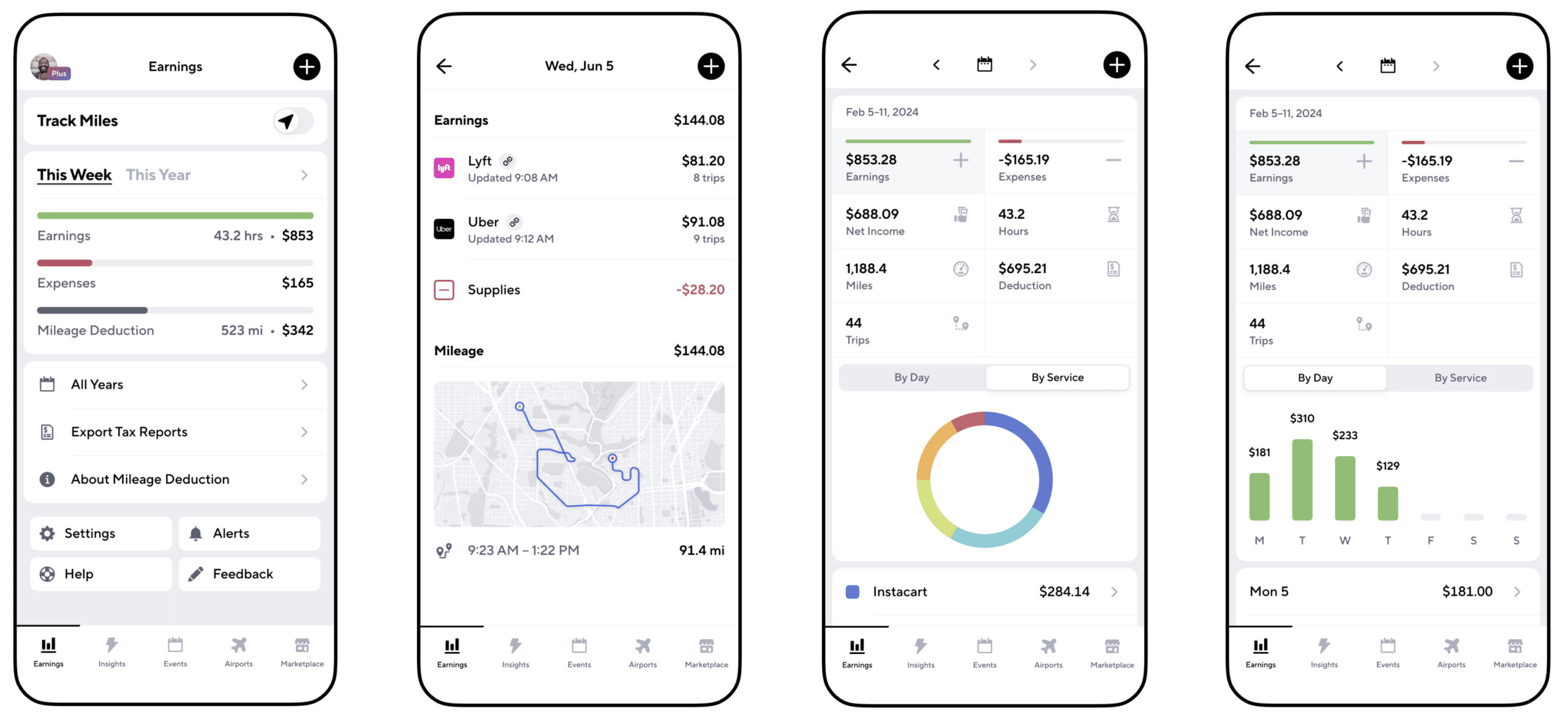
Maximize tax deductions. Another way to minimize your expenses is to maximize your tax deductions. Start by tracking mileage with Gridwise.
Gridwise App
Gridwise captures every deductible mile you drive, including the distance you cover between the trips your driving app records. Know what expenses you can deduct, and put them to work for you when tax time comes. Learn more about tax deduction strategies in the Gridwise Tax Guide for drivers.
Boost earnings with referrals
As an independent contractor, you’re probably looking for ways to make even more money than you can with Uber Eats. And most gig workers like you enjoy getting passive income. With Uber Eats, there’s a really easy way to do that, referrals!
All you need to do is find friends and encourage them to deliver for Uber Eats. If they make a certain number of deliveries within a specified time, you will get paid for doing nothing more than having them sign up under your referral code! Rates of pay vary by city, so check your Uber Eats app to find out what the current deal might be, and learn more about the referral program on the Uber Eats website.
Also remember: “friends” don’t have to be your best buds. Many delivery people carry cards with a QR code linking to their referral information, so just about anyone you encounter can join Uber Eats and boost your earnings. You could meet a source of passive income at the gas station, on social media, or at your high school reunion. The more you hustle, the more there is to gain, right?
Master the art of self-employment
As an Uber Eats driver, you’re an independent contractor. That means the company isn’t going to withhold your taxes, provide insurance, keep track of your earnings, or tell you about tax deductions. You’ll have to do all these things for yourself.
If you want to maximize your tax advantages, open an official business entity. You can incorporate (create a corporation) or you can work as a limited liability corporation (LLC). You can also work with a DBA (Doing Business As) arrangement, but the corporation or LLC will do a better job of protecting you from liability.
Establishing a corporation or LLC offers better tax advantages than being a sole proprietor. For instance, if you simply collect your earnings into your private account, you’ll be charged self-employment taxes in most states. And paying extra taxes is something we all want to avoid, within legal limits, as much as possible.
Every Uber Eats driver needs to learn about self-employment, and there are some great resources you can review. Check out the CareerOneStop website about self employment which will help explain the basics. You can also check with a professional tax accountant, or look other websites to learn more about actually creating a business.
Scope out your market
Look at the area around you to see where you’re likely to get the most deliveries. Where are all the restaurants? Where might people be more inclined to order deliveries? What hours do you want to drive? What activities might be going on around those times? Think about late-night and after-school times as well as breakfast, lunch, and dinner times.
Be realistic about the potential for your area and aware of new services opening up. For example, in New York, there is already a tab on the Uber Eats app that allows customers to order groceries. In our article about the best food delivery service to work for you’ll see that Uber Eats stacks up well against other delivery companies, mainly because of its potential for expanded opportunities for drivers to earn.
So, is Uber Eats good money? As we said, it isn’t an automatic guarantee that everyone will make $1,000 a week with Uber Eats. Trying out the suggestions we give you here, though, should put you on the right track! Go out there and start stacking up those orders and raking in some impressive earnings!
Get more inside information on Uber Eats in these posts from the Gridwise blog:
- The delivery driver guide: Using the Uber Eats app
- Everything you need to know about driving for Uber Eats
- Uber Eats Pro: What drivers need to know
- Looking for a different gig, part-time or full time job? Check out the Gridwise Job board.
Uber Eats FAQ
How does the Uber Eats platform work for drivers?
Uber Eats is a food delivery service that connects customers with local restaurants and independent delivery partners. As an Uber Eats driver, you'll receive notifications of nearby delivery requests, which you can accept and complete. The platform provides flexibility, allowing you to work on your own schedule and earn money based on the number of deliveries you complete.
What are the requirements to become an Uber Eats delivery partner?
To become an Uber Eats delivery partner, you'll need to meet certain requirements, such as having a valid driver's license, a registered vehicle, and passing a background check.
How can I choose the right delivery zone to maximize my earnings?
Selecting the right delivery zone can significantly impact your earnings, as some areas may have higher demand and better-paying orders. It's important to research and identify the zones in your area that tend to have the most consistent and lucrative delivery opportunities.
How can I take advantage of peak delivery hours and surge pricing?
Understanding peak delivery hours, such as mealtimes and weekends, and taking advantage of surge pricing can boost your earnings. Be aware of when demand is highest in your area and adjust your schedule accordingly to capitalize on these peak periods.
What are some tips for maximizing tips and customer satisfaction?
Providing excellent customer service and going the extra mile to ensure a positive experience can lead to more tips and repeat business. Prioritize communication, timeliness, and attention to detail to keep your customers happy and satisfied.
How can I set realistic weekly goals to reach my $1000 target?
To make $1000 a week with Uber Eats, it's essential to set realistic weekly goals and track your earnings and expenses. Start by determining your target earnings and breaking it down into achievable daily or weekly goals. This will help you stay on track and make adjustments as needed.
What are some strategies for efficient route planning and navigation?
Effective route planning and navigation can save you time and fuel, allowing you to complete more deliveries. Utilize mapping apps and take advantage of features like real-time traffic updates and turn-by-turn directions to find the quickest routes.
How can I balance my Uber Eats deliveries with other commitments?
Develop a schedule that allows you to capitalize on peak delivery hours while still maintaining a healthy work-life balance. Consider using tools like calendar apps to plan your availability and track your hours to ensure you're maximizing your earning potential without sacrificing your personal life.
What are the key considerations for maintaining my vehicle as an Uber Eats driver?
Keeping your car clean and well-maintained is crucial for maximizing your Uber Eats earnings. Regularly scheduled oil changes, tire rotations, and other preventive maintenance can help extend the life of your vehicle and minimize downtime. Additionally, budgeting for vehicle-related expenses, such as fuel, insurance, and repairs, will ensure you're accounting for these costs and maximizing your net earnings.
What are the tax obligations and legal considerations for Uber Eats drivers?
As an Uber Eats delivery driver, it's essential to understand the tax obligations and legal considerations that come with being an independent contractor. This includes properly reporting your earnings, deducting eligible business expenses, and making quarterly estimated tax payments. Additionally, you'll need to ensure you have the appropriate insurance coverage, such as personal auto insurance and possibly commercial auto insurance, to protect yourself and your vehicle while on the road making deliveries.

The Gridwise Job Board: Find Your Ideal Job or Gig Work
Gridwise is an essential assistant app created by gig workers for gig workers. Our mission is to support those engaged in gig work in every way possible. We understand how challenging it can be to deal with income instability, a lack of benefits, and job insecurity that often comes with gig work. The Gridwise app tracks and organizes earnings and expenses, and offers a wide array of discounts, deals, and services that make the lives of independent contractors easier and more rewarding.
We firmly believe it’s possible to make a viable living and create a gig experience that offers flexible hours, variety, and excitement. With issues such as consistent earnings and job security in mind, Gridwise is proud to offer a centralized platform that shows you how to find gig work and secure reliable opportunities. We’re proud to introduce the Gridwise Job Board.
The Gridwise Job Board: Key features
Because Gridwise is dedicated to serving the gig worker community, we’ve filled the Gridwise Job Board with useful features that won’t waste your precious time.
- Comprehensive listings. Find part-time, full-time, temporary, and per-task work. Drive or deliver with your vehicle, utilize an employer’s vehicle, or even find non-driving gig work.
- User-friendly interface. Find the jobs that are right for you with a tap of your screen.
- Verified opportunities. We vet the jobs before they are listed to ensure you’re getting high-quality job postings.
How to get more gig work, seasonal, part-time or full-time jobs with the Gridwise Job Board
Looking specifically for “gig work apps” or “gig jobs near me?” You’re in luck. Our filters and search functions send you directly to the listings you seek.
Here’s how it works.
- Access the Job Board via the Gridwise website.
- Search for jobs by type, location, and more.
- Select the job that interests you, and read all about it.
- Scroll through the description, and if it appeals to you, click “Apply for job.”
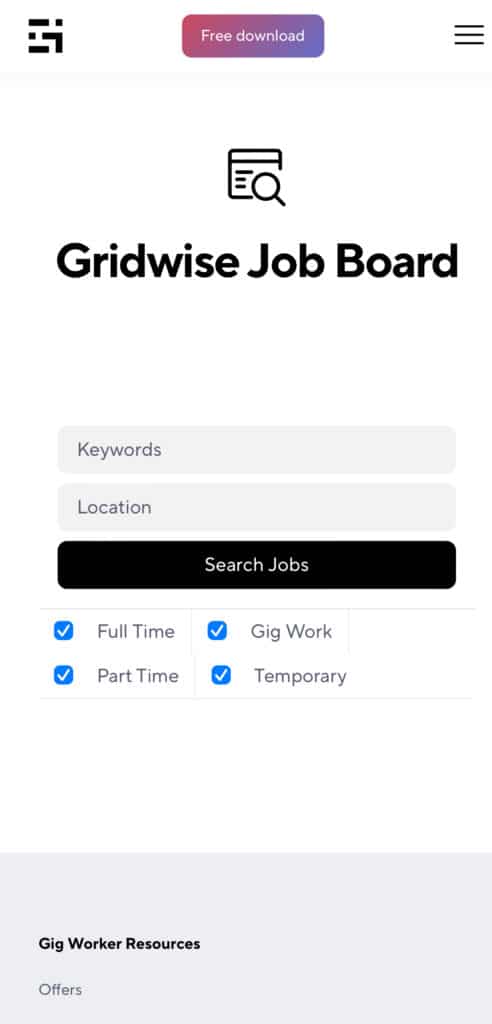
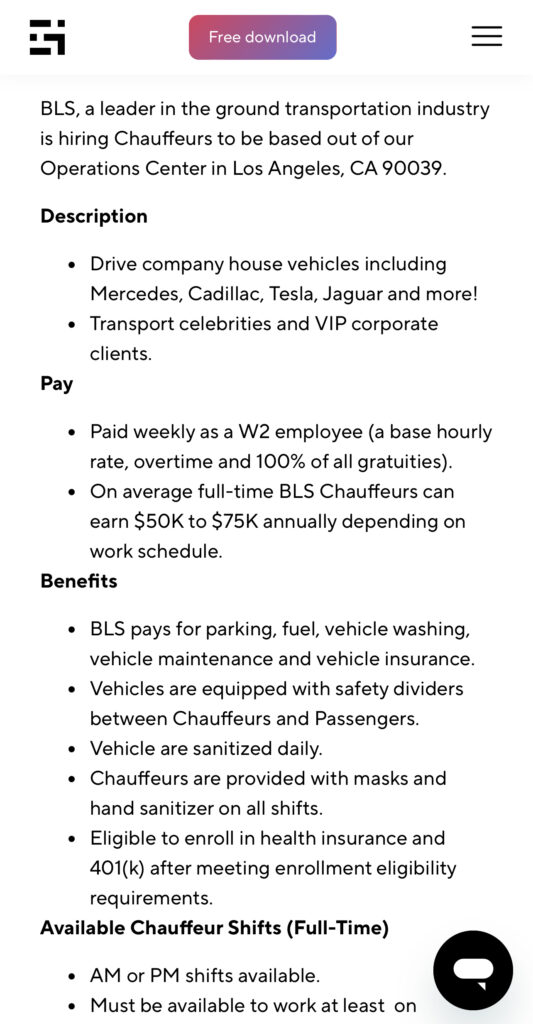
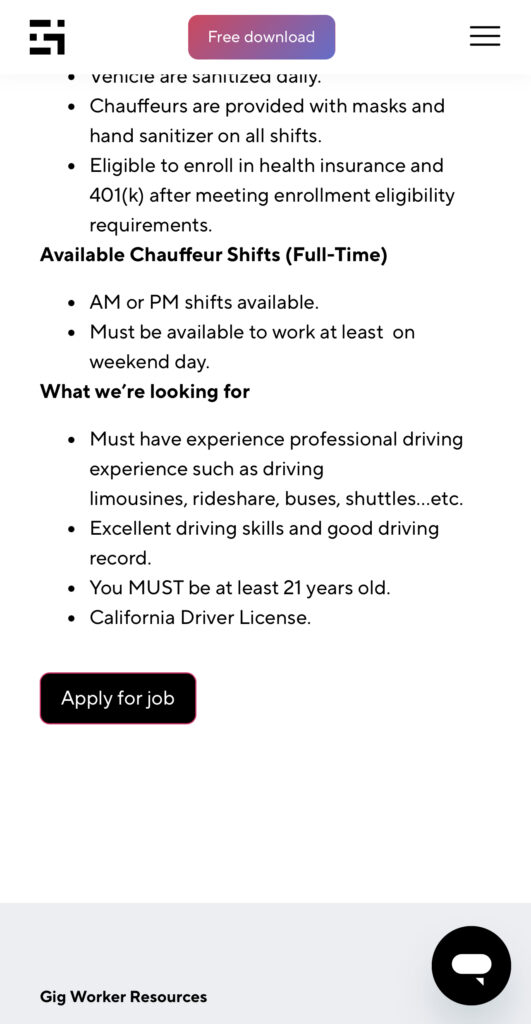
Many types of jobs are available. Adjust the search filter to see the full variety of opportunities that will let you cash in. Deliver food, set up catering, do rideshare driving, get paid for doing package delivery, and much more. You’ll find short-term gigs, long-term contracts, and part-time positions.
Perks of the Gridwise Job Board for gig workers
Gig workers who know how to make extra money will appreciate how the Gridwise Job Board lets you multiply your chances of bringing in big earnings. Here’s how:
- Increased stability. Use the Gridwise Job Board to find part-time or permanent jobs in addition to the part-time gigs you already have. Always keep a steady stream of earning opportunities flowing toward you.
- Flexibility and autonomy. Choose jobs that fit your schedule, work around other jobs and family duties, and still leave room for some fun in your life. Discover side hustles to supplement your full-time job, permanently or just for the season.
- Skill development. Find part-time work that lets you use a skill you already have, or try your hand at something new. It’s a smart way to develop a portfolio to showcase what you can do, or even to find permanent employment.
Get Gridwise and stay up to date on the Gridwise Job Board
Gig workers need plenty of information and assistance, and Gridwise is here to give it to you. Download the app and get essential features such as
- seamless earnings tracking
- mileage tracking
- expense recording, including notes
- low-cost and no-cost insurance benefits
- access to affordable medical, dental, vision, mental health, and alternative care
- professional services including legal and financial help
- deals and discounts
- weather, events, and traffic reports
- inside information on where and when to drive
More to know about gig work:

5 Best Mileage Trackers For Gig Drivers
Many drivers ask, “Do I really need a mileage tracking app?” The answer is simple: only if you want to have an accurate count of all the miles you can legally deduct from your taxable income! You might think your rideshare or delivery driving app has got you covered. After all, they do quite a good job of logging the miles you drive while you’re on a trip or delivery. But, if you want to have the best app to track mileage for Uber, Lyft, Doordash, Instacart, or the other apps you may use, you need more. Why is that?
Without a separate tracker, you’re missing the miles you drive in between pings. Did you realize that all the miles you drive, from the moment you begin your shift until it’s over (as long as you don’t drive several miles on a break to hang with your friends), are tax deductible! That means you need something besides your driving app to keep an accurate count of your travels. Read this Gridwise post to see how important it is to keep track of every deductible mile.
You won’t be surprised to hear that there’s an app for tracking miles. In fact, there are several of them. Here, we’re going to tell you about five top mileage tracking apps, and help you figure out which one is best for you.
Before we get to the list and identify the best mileage tracker app, let’s clarify what exactly a mileage tracking app is. According to G2.com’s technology glossary, mileage tracking is done for the purpose of keeping a log of mileage that is either reimbursable or tax deductible.
And yes, of course you can track your miles simply by taking readings on your odometer. But are you really prepared to account for how many miles you drove for personal reasons and subtract them from the total to get your business mileage? Even if you can remember all that and do the arithmetic, if you want an accurate reading of the miles you drive for business, and can therefore deduct, a mileage tracking app will save you a lot of trouble and prevent you from making costly errors.
Plus, as a gig driver, you have specific needs when it comes to a mileage tracker. Ideally, you’d be able to handle mileage tracking and several other functions all in one app. It can be maddening enough to deal with driving apps, particularly if you’re an avid multi-apper. You would want your mileage tracker app to help you keep account of other aspects of your business, including income, expenses, and inside information about the art of gig driving.
Not all mileage apps are equal, to be sure! Let’s look at five of the best apps to track mileage and figure out which is the best app to track mileage with Uber and Lyft, or what mileage tracker app is best for DoorDash.
1. Zoho Expense
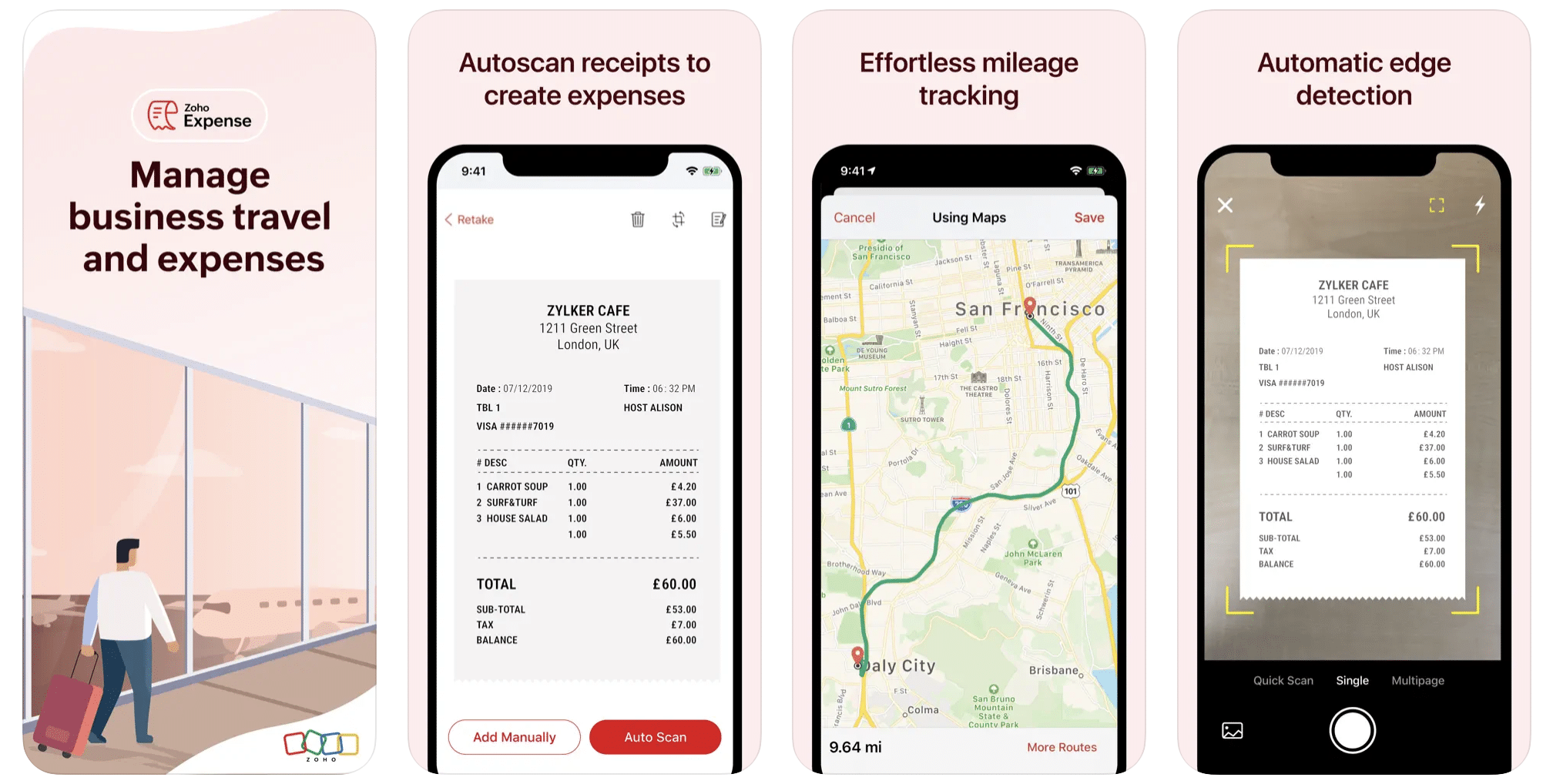
First up is Zoho Expense, which does exactly what its name says. This app is designed to allow companies to give employees a uniform way to create and submit expense reports. It can be used by individuals, including gig drivers, as well.
It includes a mileage tracker, as well as features that let you track other deductible expenses, including the ability to scan and record receipts.
Available on Android and Apple: Yes
Ratings: 4.8 stars on App Store, 4.7 stars on Google Play
Free Version: Yes
Subscription price: $3 per month, billed annually
Created specifically for gig drivers: No
2. Quickbooks Online
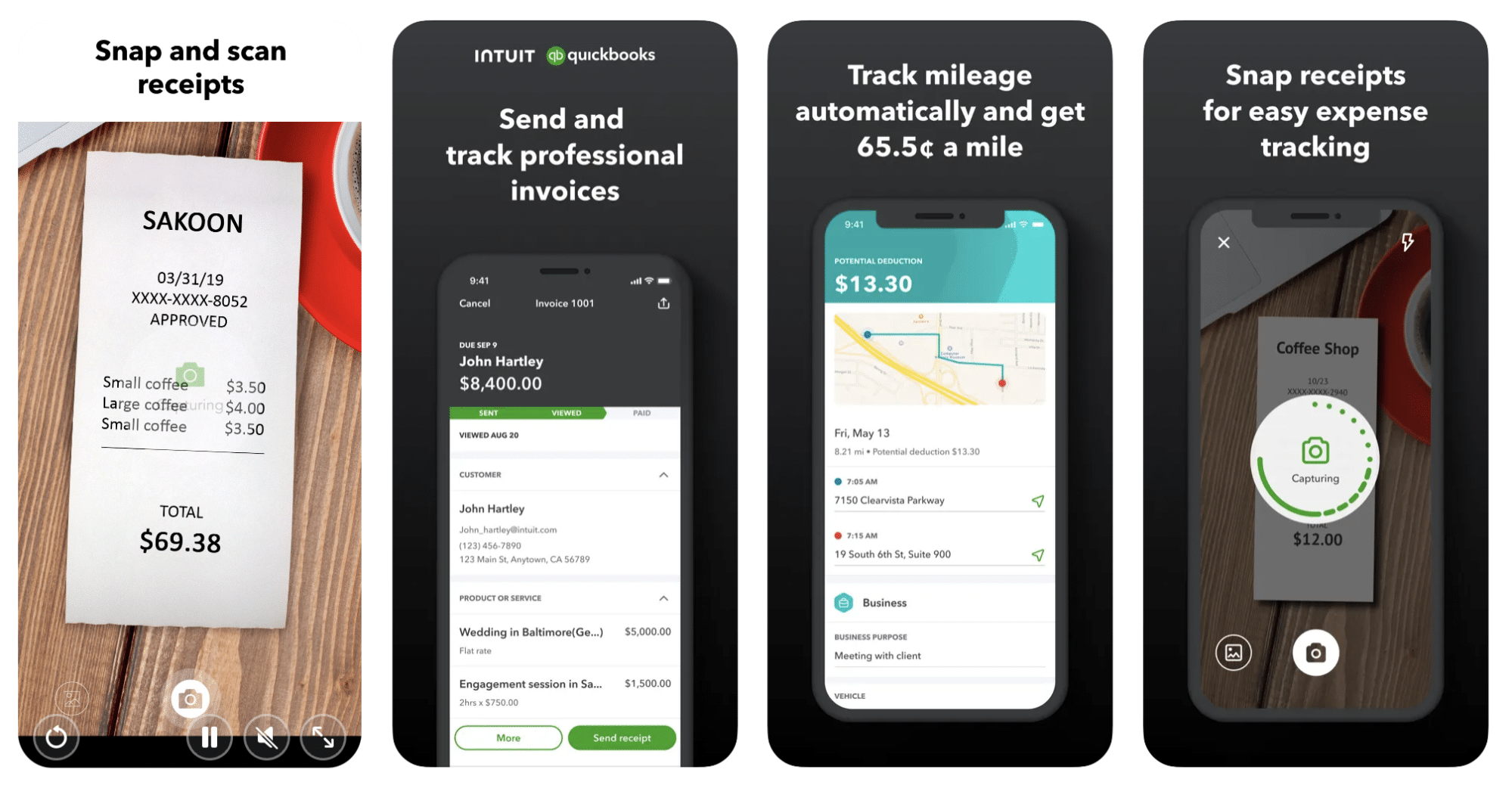
Quickbooks Online is a cloud-based app that allows you to track your mileage, earnings, and expenses. The information you enter can then be used to generate various reports that prepare you for tax time. It also allows you to create graphs that illustrate your cash flow, and includes a receipt scanner so you can instantly record deductible expenses. Quickbooks is popular, highly reliable, and designed mainly to help people keep track of their small businesses.
Available on Android and Apple: Yes
Ratings: 4.7 stars on App Store, 4.4 stars on Google Play
Free version: 30-day free trial
Subscription price: $15 per month for basic version if purchased for 3 months or more
Created specifically for gig drivers: No
Source: quickbooks.intuit.com
3. Shoeboxed
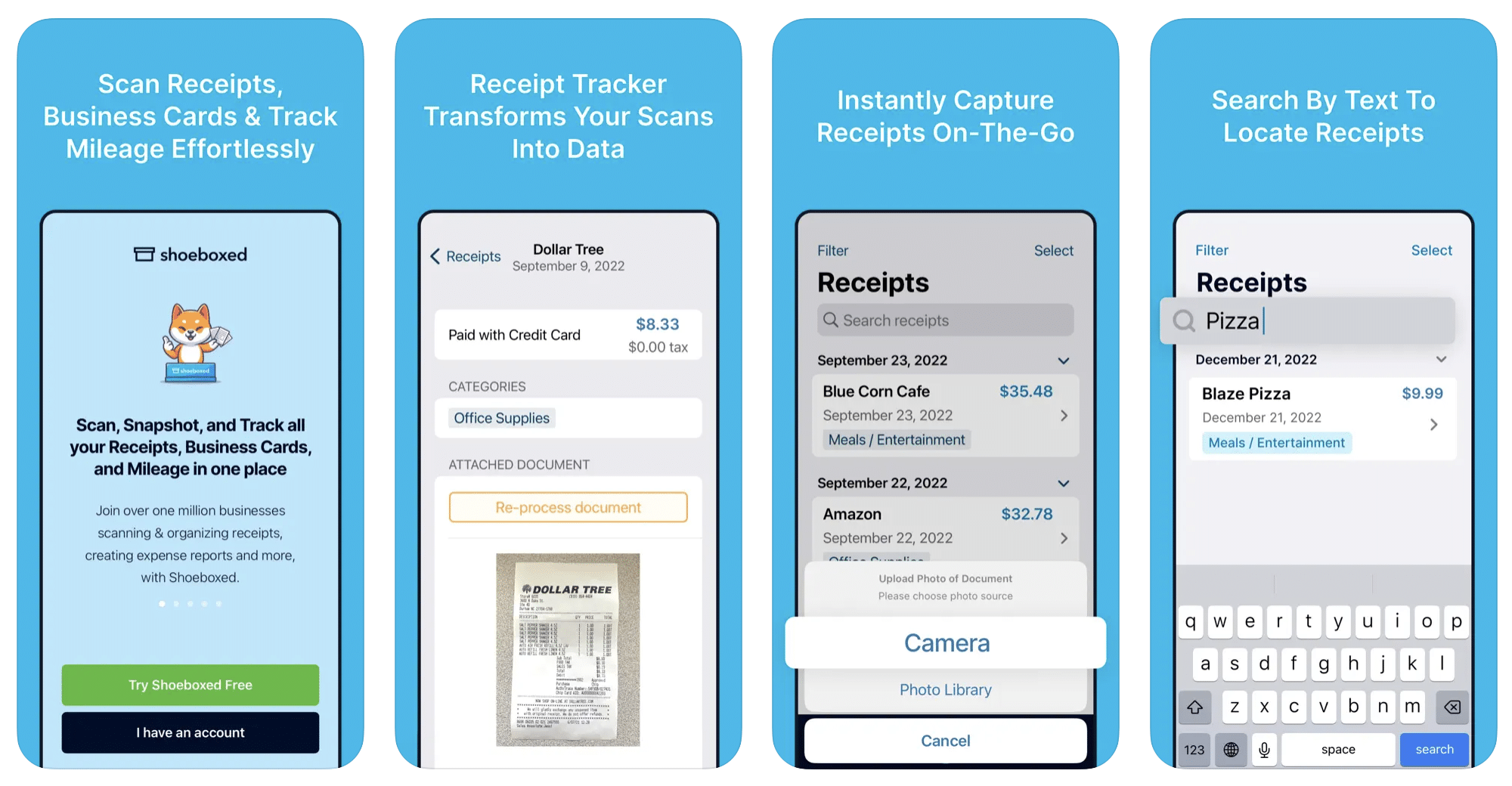
Shoeboxed started in 2007 as a service for scanning paper receipts into digital form. Now the app offers a free mileage tracker and has enabled users to scan receipts directly. It touts itself as the best mileage tracking app for DoorDash, but there are some elements missing that Dashers might like to have. While it provides features that record your expenses and prepare you for tax season, it doesn’t automatically track your earnings. The mileage tracker has a system where you can drop pins along your routes to make the tracking more precise, identifying those legs of a trip that you make for business purposes. The mileage tracker is “free” once you sign up for the basic version.
Available on Android and Apple: Yes
Ratings: 4.5 stars on App Store, 2.3 stars on Google Play
Free version: No
Subscription price: $18 per month for basic version
Created specifically for gig drivers: No
Source: blog.shoeboxed.com
4. Stride
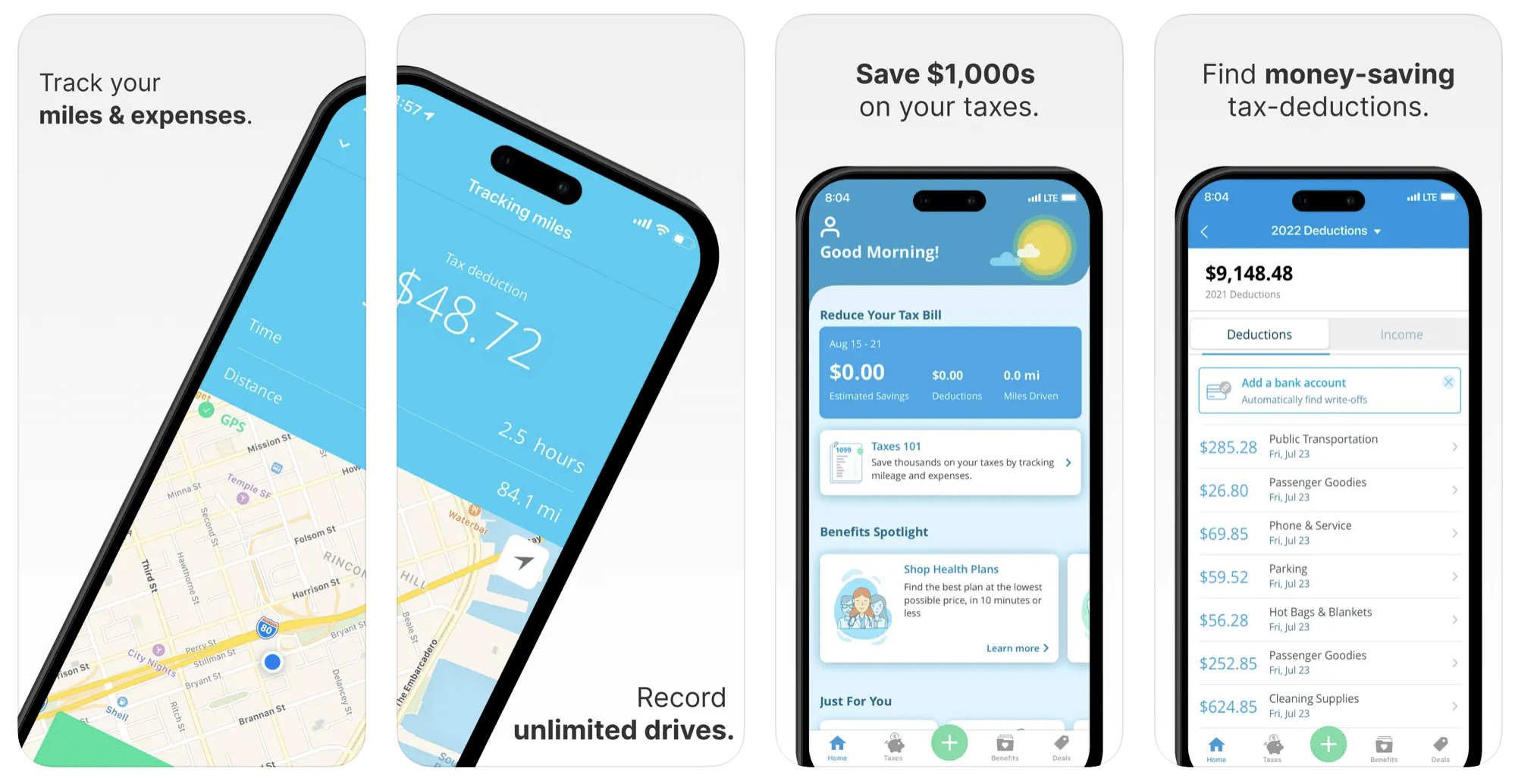
This free mileage tracker does a fair job of keeping track of the distances you rack up while gig driving, but it doesn’t automatically track earnings. It can be a big help, though, in tracking your expenses. You can link Stride to your bank account, and it will automatically scan your expenses to identify items you can potentially deduct. The app is totally free. This could make it the best free mileage tracker app, but there is a small price to pay. The app will persistently push you to consider various insurance plans that they are affiliated with. If you don’t mind that, this is a solid mileage tracker, even if it doesn’t track your earnings.
Available on Android and Apple: Yes
Ratings: 4.8 stars on App Store, 4.6 stars on Google Play
Free version: Yes
Subscription price: None. The app is free.
Created specifically for gig drivers: No
5. Gridwise
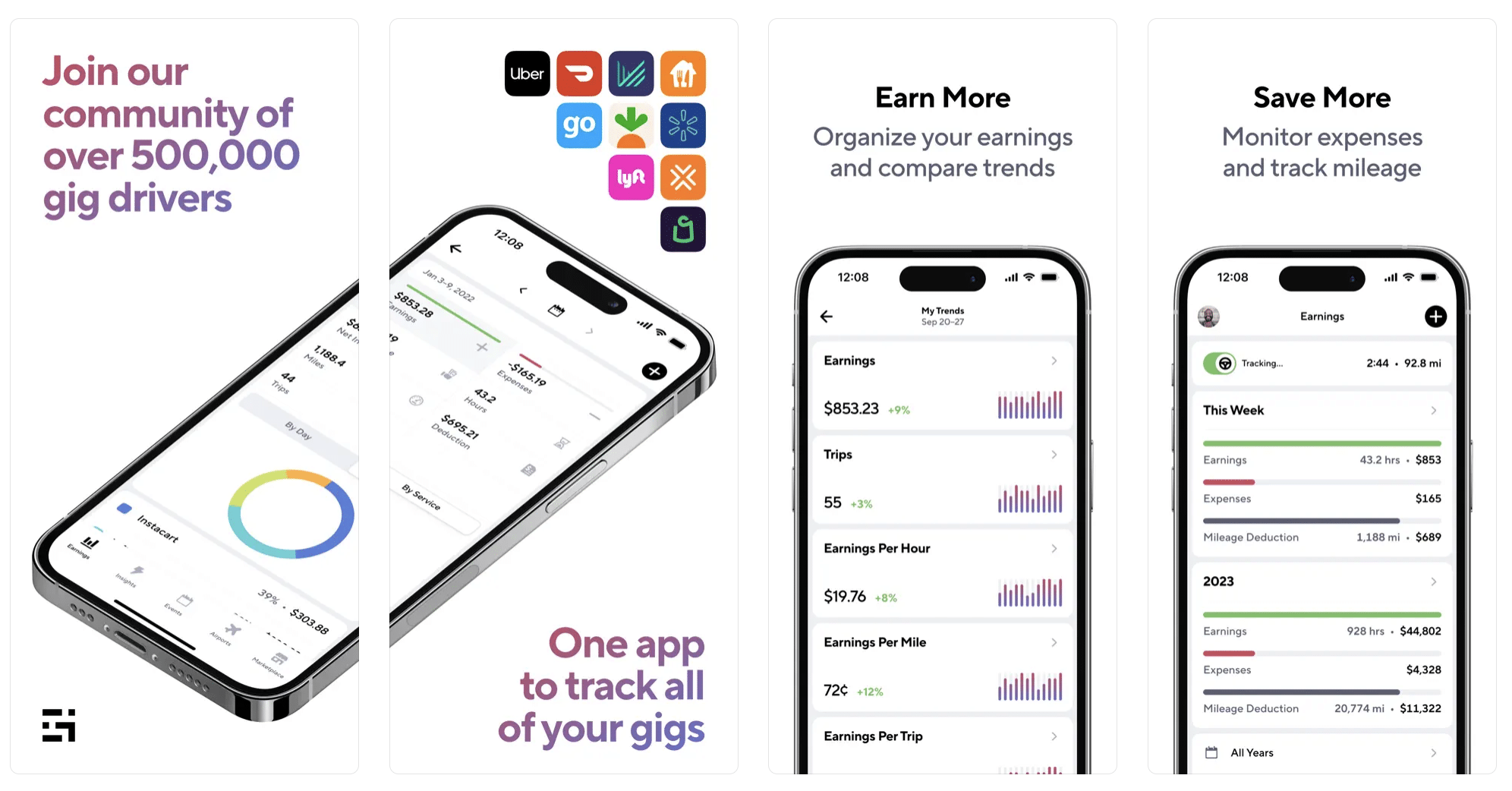
Gridwise has a free mileage tracker and free features that record your income and expenses. It gives you access to insurance and benefits, as well as insights about the best times and places to make the most money while gig driving. The Gridwise mileage tracker captures all the miles you drive while you’re on your driving shift, and it can be used if you have other trips you need to make which qualify as business travel.
Drivers love it because it is geared toward the needs of rideshare and delivery workers, providing free information about airport departures and arrivals, event start and let out times, weather, traffic, and more. The Gridwise Plus subscription adds value by providing additional insights and reports, discounts on benefits, the ability to export data in .csv format,, and more.
Available on Android and Apple: Yes
Ratings: 4.9 stars on App Store, 4.6 stars on Google Play
Free version: Yes
Subscription price: $9.95 per month for Gridwise Plus, or $95.99 per year (a $23.41 savings)
Created specifically for gig drivers: Yes!
What is the best mileage tracking app?
Now that we’ve checked them all out, we’re positive about the answer to that. Hands down, it’s Gridwise. Are we biased? You bet we are! But drivers love it too. Gridwise is the best mileage tracker app, and so much more. So many of the features are free, and the subscription to Gridwise Plus will pay for itself with additional insights to boost your earnings and deeper discounts on products and services.
Most important, Gridwise is designed specifically for gig drivers by experts who were once gig drivers themselves! Knowing what gig drivers need is a crucial step in creating an app that rideshare and delivery drivers can really use! Here are a few of the features, besides mileage tracking:
- seamless earnings tracking
- automatic, on/off toggle and manual mileage tracking
- mileage categorization
- airport, traffic, weather, and events information
- insights into where to drive and when to drive
- reports showing earnings across the platforms you use
- discounts on countless products and services for drivers
- additional resources for finding side gigs
- an informative and comprehensive blog
- affordable benefits, including insurance, medical, dental, and alternative practitioner discounts
- a community of drivers just like you
Don’t settle for just any app. Get the best mileage tracker, and so much more, from Gridwise!

Tax Deductions for Uber, DoorDash & Gig Workers: Complete List (2026)
Disclaimer: This article is for informational purposes only and does not constitute tax, legal, or financial advice. Tax laws change frequently. Consult a qualified tax professional for guidance specific to your situation.
If you drive for Uber, deliver for DoorDash, or juggle multiple gig apps, you already know the hustle is real. But here is something that might sting even more than a slow Tuesday lunch shift: most gig drivers overpay their taxes by thousands of dollars every year because they miss deductions they are legally entitled to claim.
As a 1099 independent contractor, you do not get taxes withheld from your earnings the way a W-2 employee does. That means you owe both income tax and self-employment tax on your gig income. The good news? You also get access to a long list of business deductions that can dramatically lower what you owe.
This is the most complete list of tax deductions for gig workers you will find online, covering rideshare drivers, delivery drivers, and anyone earning 1099 income in the gig economy. Every deduction includes a real dollar example so you can see exactly how much it could save you. Whether you are filing DoorDash taxes, Uber taxes, or taxes for any other platform, this guide has you covered.
How Tax Deductions Work for Gig Workers
Before we dive into the full list, let us make sure you understand how deductions actually save you money. When you are self-employed, your business deductions reduce the income you report on Schedule C of your tax return. That reduced number is what the IRS uses to calculate both your income tax and your self-employment tax (the 15.3% you pay for Social Security and Medicare).
Here is the math that matters: every $1 you deduct saves you roughly $0.30 to $0.40 in taxes, depending on your tax bracket. That is the combined savings from income tax plus self-employment tax. So a $10,000 mileage deduction does not just reduce your taxable income, it puts $3,000 to $4,000 back in your pocket.
A few things gig drivers often get wrong:
- You do not need an LLC to claim deductions. Sole proprietors (which is what you are if you just signed up and started driving) claim every deduction on this list using Schedule C.
- Business deductions and the standard deduction are different things. You get both. The standard deduction ($15,000 for single filers in 2026) reduces your income tax. Business deductions on Schedule C reduce your self-employment income. They stack.
- You can deduct expenses even if you did not make a profit. If your deductions exceed your gig income, that loss can offset other income like a W-2 job.
Now let us get into every deduction you can claim.
Vehicle and Mileage Deductions
Your car is your biggest business asset, and vehicle-related deductions are by far the largest write-off most gig drivers have. You have two options for deducting vehicle costs: the standard mileage rate or the actual expense method. You must pick one for each tax year.
1. Standard Mileage Rate (72.5 Cents, Then 76 Cents, per Mile in 2026)
The IRS standard mileage rate for 2026 changed mid-year. It is $0.725 per mile for miles driven January 1 through June 30, and $0.76 per mile for miles driven July 1 through December 31. This is the simplest method and the one most gig drivers should use. You multiply the business miles from each half of the year by that half's rate and add the two together. No need to track individual gas receipts, repair bills, or insurance premiums.
What counts as a business mile:
- Driving to pick up a passenger or delivery order
- The trip itself (passenger in the car, food in the back seat)
- Driving between gigs (heading from your last Uber drop-off to a DoorDash zone)
- Driving home from your last gig of the day
What does not count:
- Personal errands (stopping at the grocery store on the way home)
- Commuting to a W-2 job
- Driving to a gig app sign-up event (this is technically a startup cost, not mileage)
Dollar example: You drove 18,000 business miles in 2026, 9,000 in each half of the year. That is (9,000 x $0.725) + (9,000 x $0.76), so your deduction is $13,365. At a 30% combined tax rate, that saves you roughly $4,010 in taxes.
The catch: you must track your miles as you drive them. The IRS requires a "contemporaneous" log, meaning you cannot reconstruct your mileage from memory at tax time. This is where a mileage tracker app becomes essential.
2. Actual Expense Method
Instead of the per-mile rate, you can deduct the actual costs of operating your vehicle and multiply them by your business-use percentage. Eligible expenses include:
- Gas and oil
- Tires
- Repairs and maintenance
- Car insurance premiums
- Registration and license fees
- Depreciation (or lease payments, if you lease)
- Car loan interest
Dollar example: Your total vehicle expenses for the year are $14,000. You use your car 60% for gig work. Your deduction is $14,000 x 60% = $8,400. That could save you roughly $2,520 in taxes.
Which Method Should You Choose?
For most gig drivers, the standard mileage rate wins. Here is a simple decision framework:
Choose standard mileage if:
- You drive a reliable, fuel-efficient vehicle
- You rack up a lot of business miles (15,000+)
- You do not want to keep track of every gas receipt and repair bill
- Your car is relatively new or in good shape (low repair costs)
Choose actual expenses if:
- You drive an expensive or luxury vehicle (higher depreciation value)
- Your repair costs are unusually high (older car needing frequent work)
- You have very high insurance premiums (rideshare endorsement, etc.)
- Your business-use percentage is very high (80%+) AND your total car costs are high
Quick comparison for a typical gig driver:
- Standard mileage: 18,000 miles split across both rates = $13,365 deduction
- Actual expenses: $14,000 total costs x 60% business use = $8,400 deduction
- Winner in this scenario: Standard mileage, by $4,965
One important rule: if you want to use the standard mileage rate, you must use it in the first year you use your car for business. You can switch to actual expenses later, but once you start with actual expenses, you generally cannot switch back to standard mileage for that vehicle.
3. Tolls and Parking
Here is a bonus: tolls and parking fees are deductible regardless of which mileage method you choose. They are separate from both the standard mileage rate and the actual expense method.
- Airport pickup tolls
- Bridge and highway tolls during gig trips
- Parking meters or garage fees while waiting for orders in a delivery zone
Dollar example: You spend $600 per year on tolls and $200 on parking during gig work. That is an extra $800 deduction on top of your mileage, saving you roughly $240 in taxes.
Phone and Technology Deductions
Your phone is your dispatch center, your GPS, and your connection to every gig app. The costs of using it for business are deductible.
4. Cell Phone Bill
You can deduct the business-use percentage of your monthly cell phone bill. If you estimate that 60% of your phone usage is for gig work (running apps, GPS navigation, communicating with customers), you deduct 60% of the bill.
Dollar example: Your phone bill is $85/month ($1,020/year). At 60% business use, your deduction is $612, saving you roughly $184 in taxes.
5. Phone Purchase or Upgrade
Bought a new phone this year? The business-use percentage of the cost is deductible. Under Section 179, you can usually deduct the full business portion in the year of purchase rather than depreciating it over several years.
Dollar example: You bought a $900 phone and use it 60% for gig work. Your deduction is $540, saving you roughly $162 in taxes.
6. Phone Accessories
Phone mounts, car chargers, extra charging cables, portable battery packs: these are all deductible if you use them for gig work.
Dollar example: You spent $75 on a phone mount, car charger, and cables. Deduction: $75, saving you roughly $23.
7. Dash Cam
A dash cam protects you in case of accidents or disputes with passengers. If you bought one for your gig work, the full cost is deductible.
Dollar example: A quality dash cam costs around $120. Deduction: $120, saving you roughly $36.
8. Data Plan or Mobile Hotspot
If you pay for a separate data plan or mobile hotspot specifically for gig driving, the business portion is deductible.
Dollar example: A mobile hotspot at $30/month costs $360/year. If 100% for business, your deduction is $360, saving you roughly $108.
9. Apps and Subscriptions
Paid subscriptions to tools you use for gig work are deductible. This includes navigation apps (like a Waze or Google Maps premium feature), gig optimization tools, accounting software, or tax preparation apps.
Dollar example: You spend $120/year on various app subscriptions for gig work. Deduction: $120, saving you roughly $36.
Supplies and Equipment Deductions
The stuff you buy to do the job counts as a business expense. Here is what qualifies.
10. Insulated Delivery Bags
If you deliver food, insulated bags and hot bags are a must. Whether your app gave you one or you bought upgrades, any bags you purchased are deductible.
Dollar example: You bought two insulated bags for a total of $45. Deduction: $45, saving you roughly $14.
11. Water, Snacks, and Mints for Passengers
Rideshare drivers who offer water bottles, gum, or snacks to passengers can deduct these as a business expense. These amenities boost your ratings and they are a legitimate write-off.
Dollar example: You spend $15/month on water and mints ($180/year). Deduction: $180, saving you roughly $54.
12. Car Cleaning Supplies and Car Washes
A clean car means better ratings and more tips. Interior cleaning supplies, air fresheners, car wash subscriptions, and detailing services used for your gig vehicle are all deductible (business-use percentage if you also drive personally).
Dollar example: A $25/month car wash subscription ($300/year) at 60% business use gives you a $180 deduction, saving you roughly $54.
13. Safety Equipment
First aid kits, reflective vests for late-night driving, emergency roadside kits, and fire extinguishers are all deductible if purchased for your gig work.
Dollar example: You spent $60 on a first aid kit and roadside emergency kit. Deduction: $60, saving you roughly $18.
14. Personal Protective Equipment
Masks, hand sanitizer, disinfectant wipes, and sneeze guards purchased for gig work are deductible. Even though pandemic-era requirements have eased, many drivers still use PPE, and the deduction still stands.
Dollar example: You spent $90 on sanitizer, wipes, and masks over the year. Deduction: $90, saving you roughly $27.
Insurance Deductions
Insurance is a major expense for gig workers, and several types of coverage are deductible.
15. Self-Employed Health Insurance
This is one of the most valuable and most overlooked deductions for gig workers. If you pay for your own health insurance (medical, dental, or vision) and you are not eligible for a plan through a spouse's employer, you can deduct 100% of your premiums. This is an "above-the-line" deduction, meaning it reduces your adjusted gross income directly, not just your Schedule C income.
Dollar example: You pay $450/month for a health insurance plan ($5,400/year). Your deduction is $5,400, saving you roughly $1,620 in taxes. This is a deduction many gig drivers miss entirely.
16. Rideshare or Commercial Vehicle Insurance
If you use the actual expense method, the business portion of your car insurance is already included. But if you pay extra for a rideshare endorsement or a commercial auto policy specifically because you drive for Uber, Lyft, or a delivery platform, that additional premium is deductible even under the standard mileage method (as a separate business expense, not a vehicle expense).
Dollar example: Your rideshare insurance endorsement costs an extra $40/month ($480/year). Deduction: $480, saving you roughly $144.
17. Liability or Umbrella Insurance
If you purchased a liability or umbrella insurance policy specifically to cover your gig work, the premium is deductible as a business expense.
Dollar example: An umbrella policy runs $300/year. If you purchased it for gig work, your deduction is $300, saving you roughly $90.
The Qualified Tips Deduction (New for 2026 Filing)
This is a big one that most gig workers do not know about yet. Starting with tax year 2025 (the return you file in early 2026), there is a new deduction for qualified tips earned by service workers, including rideshare and delivery drivers.
Here is how it works:
- You can deduct up to $25,000 in qualified tips from your taxable income
- Qualified tips include cash tips and in-app tips from rideshare, delivery, and other service work
- The deduction phases out starting at $150,000 for single filers and $300,000 for married filing jointly
- You claim this deduction on your federal return as an adjustment to income (above-the-line)
This means your tips effectively become tax-free up to the $25,000 cap, as long as your income stays below the phase-out threshold. For most gig drivers, that is a massive new benefit.
Dollar example: You earned $8,000 in tips from Uber and DoorDash in 2025. Under the qualified tips deduction, that full $8,000 is deductible. At a 30% combined rate, you save roughly $2,400 in taxes. A driver who earns $15,000 in tips could save $4,500 or more.
To claim this deduction, keep detailed records of your tip income. Your 1099 forms from each platform will show tip amounts, but it helps to have your own records as backup, especially for cash tips.
Retirement Contribution Deductions
Just because you do not have an employer-sponsored 401(k) does not mean you cannot save for retirement tax-free. In fact, self-employed gig workers have access to some of the most generous retirement account options available. Contributions reduce your taxable income dollar-for-dollar.
18. SEP IRA
A Simplified Employee Pension (SEP) IRA lets you contribute up to 25% of your net self-employment income, with a maximum of $70,000 for 2026. It is easy to set up, has low fees, and you can open one at any major brokerage. The best part: you can make your contribution all the way up until your tax filing deadline (including extensions).
Dollar example: Your net self-employment income is $40,000. You can contribute up to $10,000 (25%) to a SEP IRA. That $10,000 deduction saves you roughly $3,000 in taxes, and the money grows tax-deferred for your retirement.
19. Solo 401(k)
A Solo 401(k) offers even higher contribution limits because you can make both employee and employer contributions. For 2026, you can defer up to $23,500 as an employee contribution (plus a $7,500 catch-up contribution if you are 50 or older), and add up to 25% of net self-employment income as an employer contribution, up to a combined max of $70,000 ($77,500 if 50+).
Dollar example: You earn $50,000 in net gig income. You defer $15,000 as your employee contribution and add $12,500 (25%) as the employer contribution. Total deduction: $27,500, saving you roughly $8,250 in taxes.
20. Traditional IRA
If you do not want to set up a SEP or Solo 401(k), a Traditional IRA is the simplest option. You can contribute up to $7,000 for 2026 ($8,000 if you are 50 or older). The deductibility depends on your income and whether you have access to another retirement plan, but for most gig-only workers, the full amount is deductible.
Dollar example: You contribute the maximum $7,000 to a Traditional IRA. Deduction: $7,000, saving you roughly $2,100 in taxes.
Other Commonly Missed Deductions
These are the deductions that fly under the radar. Many gig drivers have no idea they can claim these, which means they leave real money on the table every year.
21. Half of Self-Employment Tax
This one is automatic but worth understanding. The IRS lets you deduct 50% of your self-employment tax as an above-the-line adjustment. You do not have to do anything special to claim it; your tax software (or your CPA) will calculate it on Schedule SE. But it is a real deduction that reduces your adjusted gross income.
Dollar example: Your self-employment tax is $5,600. You deduct half: $2,800. At a 22% income tax bracket, that saves you an additional $616 in income taxes.
22. Tax Preparation Fees
Whether you use tax software like TurboTax or hire a CPA, the cost of preparing your business tax return is deductible. This includes the cost of the self-employed version of tax software or the portion of your CPA's fee related to your Schedule C.
Dollar example: You pay $120 for TurboTax Self-Employed. Deduction: $120, saving you roughly $36.
23. Home Office Deduction
If you use a dedicated space in your home regularly and exclusively for gig work activities like bookkeeping, scheduling, managing your apps, or trip planning, you can claim the home office deduction. The simplified method lets you deduct $5 per square foot, up to 300 square feet ($1,500 max).
Dollar example: You use a 100-square-foot area as your home office. Using the simplified method: 100 x $5 = $500 deduction, saving you roughly $150.
24. Continuing Education and Training
Courses or certifications that improve your skills for gig work are deductible. Defensive driving courses, CPR or first aid certification, customer service training, or even a class on small business tax management all qualify.
Dollar example: You take a defensive driving course for $40 and a CPR certification for $60. Deduction: $100, saving you roughly $30.
25. Roadside Assistance Memberships
AAA or similar roadside assistance memberships are deductible at your business-use percentage. If a flat tire during a delivery shift would leave you stranded, this is a legitimate business expense.
Dollar example: AAA Plus costs $115/year. At 60% business use, your deduction is $69, saving you roughly $21.
26. Bank and Payment Processing Fees
Fees charged by payment services, instant-cash-out fees from gig apps, and the cost of a separate business bank account or business credit card annual fee are deductible.
Dollar example: You use instant pay on DoorDash and Uber, paying $0.50 per cash-out, roughly 5 times per week. That is $130/year. Deduction: $130, saving you roughly $39.
27. State and Local Business Licenses or Permits
Some cities and states require gig drivers to hold a business license, a for-hire vehicle permit, or a specific registration. These fees are fully deductible.
Dollar example: Your city requires a $75 business license. Deduction: $75, saving you roughly $23.
Record-Keeping Requirements: How to Protect Your Deductions
Claiming deductions is only half the battle. If the IRS questions your return, you need records to back up every deduction. Here is what you need to know.
Mileage logs: The IRS requires a contemporaneous mileage log for your vehicle deduction. This means a record created at or near the time of each trip, including the date, destination, business purpose, and miles driven. Reconstructing your mileage from memory at tax time does not meet IRS standards. The easiest way to stay compliant is to use an automatic mileage tracking app that logs trips in real time.
Receipts: Keep receipts for any individual expense over $75 (and for all lodging expenses regardless of amount). For smaller expenses, a bank or credit card statement showing the charge is generally sufficient, but having the actual receipt is always better.
How long to keep records: The IRS recommends keeping tax records for at least 3 years from the date you filed your return. If you significantly underreported income, the window extends to 6 years. When in doubt, keep everything for 6 years.
What happens without records: In an audit, the IRS can disallow any deduction you cannot substantiate. Drivers who guessed at their mileage or lost their records have had five-figure deductions completely wiped out. Do not let that happen to you.
Best practices:
- Use an app like Gridwise to track miles automatically so every trip is logged without manual entry
- Photograph receipts with your phone right after each purchase
- Use a separate bank account or credit card for business expenses to keep personal and business spending separate
- Review your records quarterly to make sure nothing is missing
If you are comparing mileage tracking options, check out our comparison of Gridwise vs. Everlance vs. Stride to find the right fit for your driving style.
How to Claim Your Deductions: A Step-by-Step Overview
When you sit down to file your taxes (or hand everything off to a CPA), here is where your deductions go:
Schedule C (Profit or Loss From Business):
- Line 9, Car and truck expenses: Your mileage deduction (standard mileage rate) or actual vehicle expenses
- Line 15, Insurance: Business liability insurance, rideshare endorsement premiums
- Line 22, Supplies: Delivery bags, cleaning supplies, PPE, safety equipment
- Line 25, Utilities: Business portion of your cell phone bill
- Line 27a, Other expenses: Everything else, including tolls, parking, subscriptions, training, bank fees, licenses, and more. List each one on a separate line of Part V
Above-the-line deductions (Schedule 1):
- Half of self-employment tax
- Self-employed health insurance premiums
- SEP IRA, Solo 401(k), or Traditional IRA contributions
- Qualified tips deduction (new)
If you drive for multiple apps, you report all your gig income and all your deductions on a single Schedule C. You do not need separate schedules for Uber, DoorDash, Instacart, and Lyft. Just combine your 1099 income and your deductions into one return.
Use tax software designed for self-employed filers. It will walk you through each line and make sure you do not miss anything. If your tax situation is more involved (for example, you have significant retirement contributions, estimated tax payments, or state-specific requirements), consider hiring a CPA who works with self-employed clients.
Total Savings: What This All Adds Up To
Let us put it all together for a typical full-time gig driver. Here is what the deductions on this list could look like in a real tax year:
- Standard mileage (18,000 miles): $13,365
- Tolls and parking: $800
- Cell phone bill (60%): $612
- Phone accessories and dash cam: $195
- Supplies (delivery bags, cleaning, PPE, safety): $375
- Self-employed health insurance: $5,400
- Rideshare insurance endorsement: $480
- Qualified tips deduction: $8,000
- SEP IRA contribution: $5,000
- Half of SE tax: $2,800
- Other (tax software, home office, licenses, roadside, fees): $1,014
Total deductions: approximately $38,041
At a 30% combined tax rate, that is roughly $11,412 in tax savings. Even a part-time driver claiming just mileage, phone expenses, and the tips deduction could easily save $3,000 to $5,000 per year.
The drivers who miss out on these savings are the ones who do not track their miles, do not keep receipts, and do not know what they can deduct. You now have the full list. The only thing left is to make sure you are tracking everything.
Frequently Asked Questions
Can I deduct gas AND mileage?
No. You must choose one method. If you use the standard mileage rate ($0.725/mile through June 30, $0.76/mile after), gas costs are already built into that rate. If you use the actual expense method, you deduct gas as part of your total vehicle expenses. You cannot double-dip by claiming both.
Can I deduct my car payment or lease payment?
Not under the standard mileage method. If you use the actual expense method, you can deduct depreciation (for a car you own) or the business-use portion of your lease payments. Your car loan payment itself is not deductible, but the interest on the loan is (at your business-use percentage) under the actual expense method.
Do I need receipts for everything?
The IRS requires receipts for individual expenses over $75 and for all lodging. For smaller purchases, a credit card or bank statement is usually sufficient. However, having actual receipts is always the safest approach. Take a photo with your phone right after each purchase.
Can I deduct food I buy while working?
Generally, no. Meals you buy for yourself during a shift are considered personal expenses, not business expenses. The only exception would be food you provide to passengers or food purchased during overnight travel away from your tax home.
What if I use my car for both personal and gig driving?
You can only deduct the business-use portion. With the standard mileage method, you only count miles driven for gig work. With the actual expense method, you calculate your business-use percentage (business miles divided by total miles) and apply that percentage to your total car expenses. Accurate mileage tracking is essential for determining this split.
How do I handle deductions if I drive for multiple apps?
All your gig income and expenses go on one Schedule C. You do not need to separate deductions by app. Your total business miles, total phone expenses, and total supply costs are all combined. Just make sure you report the income from every 1099 you receive.
Is the qualified tips deduction available in my state?
The qualified tips deduction is a federal deduction. Whether your state conforms to it depends on your state's tax laws. Some states automatically follow federal deductions while others decouple from certain provisions. Check with your state's tax authority or a local tax professional.
When should I make estimated tax payments?
The IRS expects you to make quarterly estimated payments if you will owe $1,000 or more in taxes for the year. The due dates for 2026 are April 15, June 15, September 15, and January 15 (of the following year). Missing these deadlines can result in penalties, even if you pay the full amount at tax time.
Stop Leaving Money on the Table
The average gig driver leaves $2,000 to $5,000 in deductions on the table every single year. Usually, it comes down to one thing: they did not track their miles. Your mileage deduction alone can be worth $10,000 or more, but only if you have the records to prove it.
You now have the complete list of every deduction available to you as a gig worker. Print this page, bookmark it, share it with your driver friends. And most importantly, start tracking everything today so you are ready when tax season rolls around.

Uber Driver Car Rental Program 2026: Cost, Partners, and Is It Worth It?
Uber's car rental program lets you drive without owning a car, but the weekly cost means you need to drive enough hours to make it worthwhile. Here is everything you need to know about the program's costs, partners, and whether it makes financial sense for you in 2026.
Is Renting a Car for Uber Worth It?
The short answer: it depends on your market and how many hours you drive per week.
Renting a car through Uber's official rental program can make financial sense in the right circumstances, but it is not a guaranteed path to profit. Here is a quick breakdown:
- Break-even point: Most drivers need to drive 25 to 35 hours per week to cover the rental cost and start earning a real income
- Weekly rental cost: $260 to $330 per week depending on the vehicle and partner, with potential discounts for completing 75 rides per week
- Best for: Drivers who do not own a qualifying vehicle, new drivers testing rideshare before buying a car, and drivers who want access to Comfort or Black-tier vehicles without purchasing a luxury car
- Not ideal for: Part-time drivers working fewer than 20 hours per week, or drivers in low-demand markets where gross earnings are under $20 per hour
The math works when you drive enough hours to cover the fixed rental cost and still take home meaningful income. The math fails when the rental eats most of your gross earnings.
How the Uber Car Rental Program Works
Uber partners with several rental companies to offer vehicles specifically designed for rideshare use. These vehicles come pre-approved for the Uber platform, meaning you skip the vehicle inspection process and can start driving immediately after picking up the car.
Here is what the rental typically includes:
- Basic insurance coverage for rideshare use (liability and collision during active trips)
- Maintenance and routine repairs handled by the rental partner
- Roadside assistance for breakdowns and flat tires
- Flexible terms ranging from daily to weekly rentals depending on the partner
You are responsible for fuel (or charging for EVs), tolls, cleaning, and returning the vehicle on time.
Who Is Eligible for Uber Rental Programs?
Not everyone qualifies. Here are the standard eligibility requirements:
- Active Uber driver account: You must be approved as an Uber driver before you can access rental options
- Age requirements: Most rental partners require you to be at least 21 years old, and some require 25+
- Valid driver's license: Must be current and in good standing
- Clean driving record: Rental partners run their own driving record check in addition to Uber's
- Credit card: Required for the rental deposit and weekly charges, debit cards may not be accepted by all partners
- Some partners require a deposit ranging from $200 to $500, which is refundable when you return the vehicle
If you have not yet been approved as an Uber driver, start with our Uber driver requirements guide to get set up first.
Uber Rental Partners Compared
Uber works with several rental partners, each offering different pricing, vehicle selection, and terms. Here is how they compare:
Hertz
Hertz is Uber's largest and most established rental partner.
- Pricing: Electric vehicles start at $265 per week. Comfort-eligible vehicles start at $280 per week after an initial 7-week period at a higher introductory rate.
- Vehicle types: Sedans, SUVs, and a growing fleet of EVs
- Markets: Widely available across major US cities
- Ride credit: Complete 75 rides in a week and your rental cost may be reduced to $0 for that week
- Insurance: Basic liability and collision coverage included
- Mileage: Unlimited rideshare miles
Avis
Avis offers a similar program with competitive pricing in select markets.
- Pricing: Typically $250 to $300 per week depending on vehicle type and market
- Vehicle types: Primarily sedans and midsize vehicles
- Markets: Available in fewer cities than Hertz, check availability in your area
- Insurance: Basic coverage included with the rental
- Terms: Weekly rentals with flexible return options
Getaround (Formerly HyreCar)
Getaround operates as a peer-to-peer car sharing platform, connecting vehicle owners with rideshare drivers who need a car.
- Pricing: Varies widely by vehicle and market, typically $200 to $350 per week
- Vehicle types: Broader selection since vehicles come from individual owners, sedans, SUVs, minivans, and sometimes luxury vehicles
- Markets: Available in most major cities
- Insurance: Commercial rideshare insurance included through Getaround
- Pros: More vehicle variety, potentially lower prices, and more flexibility
- Cons: Vehicle quality varies since cars come from individual owners, inspect carefully before committing
Kinto Share
Kinto Share is Toyota's car-sharing platform, offering primarily Toyota and Lexus vehicles.
- Pricing: Competitive with Hertz and Avis, varies by vehicle
- Vehicle types: Primarily Toyota and Lexus models, including hybrids
- Markets: Limited availability, currently in select cities only
- Insurance: Coverage included
- Advantage: Access to reliable Toyota vehicles and potential Lexus models for Uber Black eligibility
How the Partners Compare at a Glance
- Widest availability: Hertz
- Lowest potential cost: Getaround (but variable quality)
- Best vehicle reliability: Kinto Share (Toyota/Lexus fleet)
- Best ride-credit discount: Hertz (75 rides per week for potential $0 cost)
- Most vehicle variety: Getaround
The Real Cost of Renting for Uber
The weekly rental fee is just the starting point. Here is a complete picture of what renting for Uber actually costs:
What is included in the rental fee:
- Basic liability and collision insurance for rideshare use
- Scheduled maintenance (oil changes, tire rotations, brake service)
- Roadside assistance
- No mileage limits for rideshare driving
What is NOT included:
- Fuel or charging costs: Expect $100 to $200 per week depending on your vehicle and driving volume
- Tolls: Your responsibility, though Uber reimburses some tolls through fare calculations
- Cleaning fees: You must return the vehicle in clean condition or face charges
- Late return fees: Returning the vehicle past your scheduled time incurs penalties, often $25 to $50 per hour
- Damage deposits: $200 to $500 upfront, refundable if you return the vehicle undamaged
- Wear charges: Excessive wear beyond normal use may result in charges at return
Can You Actually Make Money Renting a Car for Uber?
Let us run the real numbers for a typical full-time driver:
Sample weekly calculation:
- Gross earnings (40 hours driving, $25 per hour average): $1,000
- Rental fee: -$260
- Fuel: -$150
- Tolls and miscellaneous: -$40
- Net weekly income: $550
That works out to roughly $13.75 per hour after rental and fuel costs. Not spectacular, but viable, especially as a way to get started in rideshare without buying a car.
When the math gets better:
- Driving in a high-demand market where gross earnings exceed $28 to $30 per hour
- Qualifying for the 75-ride weekly discount, which can reduce your rental to $0
- Renting an EV to cut fuel costs by 50 percent or more
- Driving during surge hours to boost gross earnings
When the math falls apart:
- Driving fewer than 25 hours per week, the fixed rental cost eats your earnings
- Working in a low-demand market where average earnings are under $20 per hour
- Paying the higher introductory rate during your first 7 weeks with Hertz
- Taking too many low-paying short rides instead of higher-value trips
The 75-ride discount, how realistic is it? Completing 75 rides in a week requires roughly 50 to 60 hours of driving (assuming 1.3 to 1.5 rides per hour). This is aggressive and only sustainable for full-time drivers in busy markets. For most drivers, reaching 75 rides is aspirational rather than a reliable weekly target.
Not sure if renting makes financial sense in your market? Download Gridwise to see average earnings per hour in your city so you can run the numbers before committing.
The $4,000 Go Electric Incentive
Uber's Go Electric program offers a $4,000 incentive for qualifying drivers who switch to an electric vehicle. Here are the details:
- Eligibility: Available to Platinum and Diamond Uber Pro drivers in California, Colorado, Massachusetts, and New York
- Requirement: Switch to an EV and complete 100 eligible rides by April 30, 2026
- Payout: The $4,000 incentive is paid after completing the required rides
- Combined with EV rental: If you rent an electric vehicle through Hertz or another partner, the incentive can offset several weeks of rental costs, significantly improving your profitability
This incentive is particularly valuable for drivers who are already renting, the $4,000 payout effectively covers 15 or more weeks of rental costs for an EV, making the economics of electric rideshare much more attractive.
Check Uber's Go Electric page for current eligibility requirements, as the program terms may update.
Uber Rental vs. Buying a Car for Rideshare
The rent vs. buy decision is the most important financial calculation for any driver considering the rental program.
When Renting Makes More Sense
- Testing rideshare before committing: If you are unsure whether driving for Uber is right for you, renting lets you try it with no long-term financial obligation
- Short-term or seasonal driving: If you plan to drive for a few months (summer break, holiday season, saving for a specific goal), renting avoids the commitment of a car purchase
- No qualifying vehicle: If your current car does not meet Uber's requirements and you cannot finance a qualifying vehicle, renting gets you on the road immediately
- Access to premium tiers: Renting a Comfort or Black-eligible vehicle lets you earn premium fares without buying a $30,000+ car
- Avoiding maintenance headaches: The rental partner handles all scheduled maintenance and repairs, so you never lose driving days to unexpected shop visits
When Buying Makes More Sense
- Driving full-time (30+ hours per week consistently): At $260 per week, renting costs $13,520 per year. A used Toyota Camry Hybrid can be purchased for $18,000 to $22,000, the car pays for itself in under 2 years compared to renting.
- Planning to drive for 1 or more years: The longer your time horizon, the more buying saves you
- Ability to finance a qualifying used vehicle: Monthly payments on a used car are typically $250 to $400 per month, compared to $1,040 to $1,320 per month for a rental
- Building equity: A purchased car is an asset you can sell. Rental payments build no equity.
- Flexibility: A car you own can be used for personal trips, other gig platforms, and daily life without restrictions
Break-even timeline: For most full-time drivers, buying becomes cheaper than renting within 12 to 18 months. If you are confident you will drive for at least a year, buying a used vehicle is almost always the better financial move. For help choosing the right vehicle, see our guide on the best cars for Uber and Lyft.
Uber Rental vs. Lyft Rental Programs
If you are considering rental options, you may wonder how Uber's program compares to Lyft's.
- Lyft's Express Drive program partners with Hertz and FlexDrive to offer similar weekly rental options for Lyft drivers
- Pricing is comparable to Uber's rental partnerships, typically $250 to $300 per week
- Platform restriction: You generally cannot use an Uber rental car for Lyft, or a Lyft rental car for Uber, the rental agreements restrict use to the specific platform
- This means no multi-apping with a rental car, which limits your earning potential compared to drivers who own their vehicle and can switch between platforms freely
If multi-apping is important to your earnings strategy, owning your vehicle is the clear advantage over renting from either platform.
Tips for Success with a Rental Car
If you decide renting is the right move, these strategies will help you maximize your earnings and avoid common pitfalls:
- Maximize your hours to offset the fixed weekly cost. The more you drive, the lower your effective hourly rental cost becomes. Aim for at least 30 hours per week.
- Target premium rides if your rental qualifies for Comfort or XL. The higher per-trip earnings make the rental cost easier to absorb.
- Drive during peak hours: morning commute, evening commute, weekend nights, and airport runs tend to offer the best earnings per hour.
- Track every expense with Gridwise for accurate tax deductions. Rental fees, fuel, tolls, and phone expenses are all deductible.
- Return the vehicle on time every single week. Late return fees of $25 to $50 per hour add up fast and eat into your profit margin.
- Document the vehicle condition with photos at both pickup and return. This protects you from being charged for pre-existing damage.
- Understand your insurance coverage: know what the rental insurance covers and what it does not. Consider whether you need supplemental coverage for the gaps.
- Keep the vehicle clean inside and out. Cleaning fees at return are avoidable expenses, and a clean car earns better passenger ratings and tips.
How to Sign Up for an Uber Rental
Getting started with the rental program is straightforward:
- Step 1: Get approved as an Uber driver first, you must have an active driver account before accessing rental options
- Step 2: Open the Uber Driver app and navigate to the Vehicles tab, or visit Uber's Vehicle Solutions page online
- Step 3: Browse available rental partners in your market, not all partners are available in every city
- Step 4: Select a vehicle and rental term that fits your budget and driving plan
- Step 5: Complete the rental partner's requirements, including providing your driver's license, credit card, and deposit
- Step 6: Schedule your vehicle pickup at the rental partner's location
- Step 7: Inspect the vehicle, document its condition with photos, and start driving
The entire process from browsing to pickup can typically be completed within 1 to 3 days, depending on vehicle availability in your market.
FAQ
Can you rent a car to drive for Uber without owning one?
Yes. That is exactly what Uber's rental program is designed for. You do not need to own any vehicle to participate. You just need to be approved as an Uber driver and meet the rental partner's eligibility requirements (age, license, credit card).
How much does it cost to rent a car for Uber per week?
Weekly rental costs range from $250 to $330 depending on the vehicle type and rental partner. Electric vehicles through Hertz start at $265 per week. Comfort-eligible vehicles start at approximately $280 per week. Getaround pricing varies more widely based on the specific vehicle and market.
Does Uber pay for your rental car?
Not directly. However, Uber offers ride-credit programs through certain partners. With Hertz, completing 75 rides in a week can reduce your rental cost to $0 for that week. The $4,000 Go Electric incentive can also offset rental costs for qualifying EV drivers.
Can you use an Uber rental car for personal use?
Policies vary by rental partner, but most allow limited personal use. The vehicle is primarily intended for rideshare driving, and you are responsible for any additional mileage, fuel, and wear from personal trips. Check your specific rental agreement for details.
What happens if you damage an Uber rental car?
The included rental insurance covers most collision and liability claims during rideshare use. For damage outside of rideshare driving, your personal auto insurance or the rental partner's supplemental coverage would apply. You may be responsible for a deductible (typically $500 to $1,000). Always document the vehicle's condition at pickup to avoid disputes.
Can you rent a car for Uber Black?
In some markets, yes. Hertz and Kinto Share occasionally offer luxury vehicles that qualify for Uber Black. Availability is limited and pricing is higher than standard rental vehicles. Check your local rental options through the Uber Driver app for current Black-eligible rentals.
Do you need insurance if you rent through Uber's program?
The rental fee includes basic rideshare insurance (liability and collision during active trips). You do not need to carry separate personal auto insurance for the rental vehicle. However, the included coverage may not protect you during personal use of the vehicle or during certain phases of rideshare driving (waiting for a ride request, for example). Review the insurance details with your rental partner carefully.
Make the Right Decision for Your Situation
Renting a car for Uber is a viable path into rideshare driving, but it is not free money. The key is running honest numbers for your specific market before you commit.
If you are new to rideshare and want to test the waters without a major financial commitment, renting for a few weeks is a low-risk way to see if the work suits you. If you are already driving and your car does not qualify for premium tiers, a short-term rental of a Comfort or Black-eligible vehicle can help you determine whether the earnings upgrade is worth a vehicle purchase.
For long-term, full-time drivers, buying a used vehicle almost always makes more financial sense than renting. The break-even typically happens within 12 to 18 months, after which every dollar you would have spent on rental fees stays in your pocket.
For more on choosing the right vehicle if you decide to buy, read our guide on the best cars for Uber and Lyft. And for a complete overview of what you need to get started, check out our Uber driver requirements guide.
Renting for Uber? Download Gridwise to track every ride's earnings against your rental cost, so you always know if you are in the green.

Best Car for Uber and Lyft in 2026: Top Picks by Budget, Tier, and Fuel Type
Top Picks at a Glance
Choosing the right car for rideshare is one of the most important financial decisions you will make as a driver. Here are our top recommendations for 2026, organized by category:
- Best overall: Toyota Camry Hybrid, the ideal balance of fuel economy, reliability, passenger comfort, and resale value
- Best budget option: Hyundai Elantra, lowest entry cost with solid reliability and good fuel economy
- Best for Uber Comfort: Honda Accord Hybrid, qualifies for Comfort in most markets, excellent fuel economy, spacious back seat
- Best electric vehicle: Chevrolet Bolt EV, lowest cost per mile of any EV, affordable purchase price
- Best for Uber Black: Lexus ES Hybrid, luxury brand eligibility at the most affordable price point
- Best for UberXL: Kia Carnival, best value minivan with seating for 7 to 8 passengers
Every recommendation below is evaluated through the lens of rideshare profitability, not just how the car drives, but how it earns.
What to Look for in a Rideshare Car
Before comparing specific models, understand the factors that separate a good rideshare car from a money pit:
- Fuel economy is your single largest ongoing expense after the vehicle itself. Every MPG matters when you are driving 30,000 to 50,000 miles per year. Hybrids and EVs have a massive advantage here.
- Reliability directly affects your income. Every day your car is in the shop is a day you earn nothing. Toyota and Honda consistently lead reliability rankings for a reason.
- Passenger comfort influences your tips and ratings. A clean, spacious back seat with smooth ride quality earns you more money over time than a cramped, noisy cabin.
- Depreciation rate is the hidden cost most drivers ignore. A car that loses $5,000 in value per year costs you $14 per day whether you drive it or not. Toyotas and Hondas depreciate the slowest.
- Insurance cost varies significantly by model. Sports cars and luxury vehicles cost more to insure, and you will need a rideshare endorsement on top of your base policy.
- Uber and Lyft eligibility has specific requirements, your vehicle generally must be a four-door sedan, SUV, or minivan, meet the model year cutoff for your market, and be in good condition with no cosmetic damage.
New vs. Used: What Makes More Sense for Rideshare?
For most drivers, a well-maintained used car is the smarter financial choice. Here is why:
- Depreciation: New cars lose 20 to 30 percent of their value in the first two years. A 2 to 3-year-old used car lets someone else absorb that hit.
- Insurance: Used cars are cheaper to insure than new ones.
- Break-even timeline: A used car at $15,000 reaches profitability much faster than a new car at $30,000.
- Risk management: If rideshare does not work out, you have less financial exposure with a used vehicle.
When new makes sense: If you want to qualify for Uber Comfort or higher tiers that require newer model years, or if you plan to drive full-time for 3 or more years and want the reliability of a factory warranty.
Best Cars for UberX and Lyft Standard
These are the workhorses of rideshare, affordable, fuel-efficient vehicles that maximize your take-home pay on standard rides.
Under $15,000 (Used)
- Toyota Prius (2018 to 2021): The undisputed king of rideshare fuel economy at 50+ MPG combined. Parts are cheap, mechanics know them inside and out, and they routinely last 200,000+ miles. The back seat is adequate but not spacious. This is the car that launched a thousand rideshare careers.
- Hyundai Elantra (2019 to 2022): The lowest entry cost on this list, often available under $12,000 with reasonable mileage. Gets 33 to 37 MPG combined depending on the year. Reliability has improved significantly in recent model years. A strong choice if budget is your primary concern.
- Honda Civic (2018 to 2021): Reliable, comfortable, and holds its value better than almost anything in this price range. Gets 32 to 36 MPG combined. The back seat is more comfortable than the Prius, which can translate to better passenger ratings.
- Toyota Corolla Hybrid (2020+): Budget hybrid option at 52 MPG combined. Slightly smaller than the Camry but significantly cheaper. Toyota reliability at the lowest hybrid price point. Often available used for $14,000 to $16,000.
$15,000 to $25,000 (New or Low-Mileage Used)
- Hyundai Elantra Hybrid (new): Best value new hybrid on the market. Gets 54 MPG combined, which rivals the Prius at a lower sticker price. Strong warranty (5-year/60,000-mile basic, 10-year/100,000-mile powertrain).
- Toyota Corolla Hybrid (new): Toyota's most affordable hybrid, delivering 52 MPG combined with the brand's legendary reliability. Starting MSRP under $24,000 makes it accessible for drivers who want a new car without breaking the bank.
- Kia Forte (new): Most features for the price in this segment. Gets 33 to 35 MPG combined (gas only, no hybrid option). Strong warranty matches Hyundai. The back seat is surprisingly roomy for a compact sedan.
Best Cars for Uber Comfort and Lyft Extra Comfort
Uber Comfort and Lyft Extra Comfort pay a premium of $2 to $5 per trip because passengers are paying for a better experience. Qualifying vehicles typically need to be newer model years with features like extra legroom, leather or leatherette seats (in some markets), and a quieter cabin.
The 2026 Uber Comfort Car List
Uber's Comfort eligible vehicle list varies by market, but these models consistently qualify across most cities:
- Honda Accord Hybrid: Our top Comfort pick. Gets 48 MPG combined, has one of the most spacious back seats in the midsize segment, and qualifies for Comfort in virtually every market. The Accord's smooth ride and quiet cabin earn consistently high passenger ratings.
- Toyota Camry Hybrid: A close second. Gets 46 to 51 MPG combined depending on trim, with Toyota's reliability advantage. The Camry outsells the Accord nationally, so parts and service are widely available and affordable.
- Hyundai Sonata Hybrid: Strong value pick for Comfort. Gets 47 to 52 MPG combined and typically costs $2,000 to $4,000 less than the Accord or Camry. The 10-year powertrain warranty provides peace of mind for high-mileage rideshare use.
- Subaru Legacy: The AWD specialist. If you drive in a market with harsh winters, the Legacy's standard all-wheel drive is a significant advantage. Fuel economy (27 to 32 MPG) is lower than the hybrids, but you will not lose driving days to snow and ice.
The Comfort premium of $2 to $5 per trip adds up quickly. If you complete 20 Comfort rides per day, that is an extra $40 to $100 in daily revenue. Over a year of full-time driving, the upgrade can easily pay for a more expensive vehicle.
Best Cars for UberXL and Lyft XL
XL rides require a vehicle that seats at least 6 passengers (7 to 8 preferred). These are typically minivans or three-row SUVs. The XL premium can be significant, especially for airport runs and group trips.
Top XL Picks
- Kia Carnival: Best value minivan on the market. Seats 7 to 8, looks more like an SUV than a traditional minivan (passengers appreciate this), and costs significantly less than the Honda Odyssey or Toyota Sienna. Gets 22 to 26 MPG combined.
- Honda Odyssey: The most reliable minivan you can buy. Holds its value exceptionally well, has a cavernous interior, and the Magic Slide second-row seats make passenger entry and exit easy. Gets 22 to 28 MPG combined.
- Toyota Highlander Hybrid: SUV option with the best fuel economy in the three-row segment at 35 to 36 MPG combined. Seats 7 to 8 depending on configuration. Toyota reliability and strong resale value make it a smart long-term investment, though the third-row is tight for adults.
- Chrysler Pacifica Hybrid: The only plug-in hybrid minivan available. Gets 30 miles of electric-only range plus 30 MPG combined on gas. If you can charge at home, your fuel costs on short trips drop dramatically. The Pacifica's Stow 'n Go seats fold flat into the floor.
The XL trip premium is typically 50 to 100 percent above standard UberX rates. Airport runs and weekend night rides are where XL vehicles earn the most.
Best Cars for Uber Black and Lyft Lux
Uber Black and Lyft Lux have the strictest vehicle requirements: luxury brand, newer model year (typically within the last 3 to 5 years), black exterior, and premium interior with leather seats. The earnings premium is the highest of any tier, but so are the vehicle and insurance costs.
Top Black and Lux Picks
- Lexus ES Hybrid: Our top pick for Uber Black. It is the most affordable way to enter the luxury tier, with Toyota reliability underneath the Lexus badge. Gets 43 to 44 MPG combined, which is extraordinary for a luxury sedan. Depreciation is slower than German competitors.
- Lincoln MKZ Hybrid (used): An affordable used luxury option that qualifies for Black in many markets. Gets 40+ MPG combined as a hybrid. These can be found for $20,000 to $28,000 with reasonable mileage, making the barrier to entry much lower.
- Mercedes-Benz E-Class: Premium earnings potential and high passenger appeal. The E-Class commands the highest tips in the Black tier. However, maintenance and insurance costs are substantially higher than Lexus or Lincoln.
- Genesis G80: The underrated luxury option. Genesis (Hyundai's luxury brand) offers a premium experience with a 10-year powertrain warranty and lower purchase price than comparable BMW or Mercedes models. Availability as a Uber Black eligible vehicle varies by market.
Before investing in a Black-tier vehicle, calculate whether the earnings premium in your specific market justifies the significantly higher vehicle, insurance, and maintenance costs. In smaller markets, Black ride volume may be too low to make financial sense.
Best Electric Cars for Rideshare in 2026
Uber Green is now EV-only in most markets, meaning only fully electric vehicles qualify for the Green tier premium. With charging infrastructure expanding and EV prices dropping, electric rideshare is increasingly viable.
Top EV Picks
- Chevrolet Bolt EV / EUV: Lowest cost per mile of any EV on the market. The Bolt EV offers 259 miles of range, and the slightly larger EUV provides 247 miles with more rear legroom (better for passengers). Purchase prices have dropped significantly, with used models available under $18,000.
- Hyundai Kona Electric: Excellent range (258 miles), strong reliability, and a comfortable ride. The Kona Electric is slightly more refined than the Bolt and comes with Hyundai's comprehensive warranty. A strong all-around EV for rideshare.
- Tesla Model 3: High passenger appeal thanks to brand recognition and the spacious, minimalist interior. Access to the Supercharger network is a genuine advantage for fast charging between rides. The Model 3 holds its resale value better than any other EV. However, insurance and repair costs are higher than the Bolt or Kona.
- Nissan Leaf Plus: The budget EV option with 212 miles of range. Often available used for under $15,000, making it the cheapest way to get into an electric rideshare vehicle. The shorter range means more charging stops on long driving days, but for part-time or urban drivers, it can work well.
EV vs. Hybrid vs. Gas: Cost Per Mile Comparison
Here is how the three powertrains compare for a typical rideshare driver covering 40,000 miles per year:
Fuel or charging cost per mile:
- Electric (Bolt EV): Approximately $0.04 per mile (home charging at national average electricity rates)
- Hybrid (Camry Hybrid): Approximately $0.07 per mile (at $3.50 per gallon, 50 MPG)
- Gas (Elantra): Approximately $0.10 per mile (at $3.50 per gallon, 35 MPG)
Maintenance cost per mile:
- Electric: Approximately $0.03 per mile (no oil changes, fewer brake replacements, simpler drivetrain)
- Hybrid: Approximately $0.05 per mile (standard maintenance plus battery system)
- Gas: Approximately $0.06 per mile (oil changes, brakes, transmission service)
Annual savings of EV over gas: Roughly $3,600 in fuel plus $1,200 in maintenance, totaling approximately $4,800 per year. That savings can offset a higher purchase price within 2 to 3 years.
The break-even point for switching to an EV depends on your local electricity rates, gas prices, and how much you drive. For full-time drivers in markets with affordable electricity, the math strongly favors electric.
Total Cost of Ownership: What a Rideshare Car Really Costs
The sticker price is just the beginning. Here is what a rideshare car actually costs you per mile when you account for everything:
Depreciation is your biggest hidden expense. A car driven 40,000 miles per year for rideshare depreciates faster than a typical personal vehicle. Estimated depreciation per mile:
- Toyota Camry Hybrid: $0.08 to $0.10 per mile
- Hyundai Elantra: $0.07 to $0.09 per mile
- Chevrolet Bolt EV: $0.06 to $0.08 per mile
- Honda Accord Hybrid: $0.09 to $0.11 per mile
- Lexus ES Hybrid: $0.12 to $0.15 per mile
Insurance for rideshare use (personal policy plus rideshare endorsement) typically runs $200 to $400 per month depending on your market, driving history, and vehicle. That translates to $0.06 to $0.12 per mile at 40,000 miles per year.
Total estimated cost per mile for top picks:
- Hyundai Elantra (used): $0.29 to $0.35 per mile
- Toyota Prius (used): $0.27 to $0.33 per mile
- Toyota Camry Hybrid (new): $0.30 to $0.38 per mile
- Chevrolet Bolt EV (used): $0.22 to $0.28 per mile
- Lexus ES Hybrid (new): $0.38 to $0.48 per mile
How to Calculate If a Car Upgrade Pays for Itself
Before upgrading your vehicle, run this calculation:
- Step 1: Determine your current earnings per mile using your Gridwise data
- Step 2: Estimate the new vehicle's total cost per mile (fuel + insurance + depreciation + maintenance)
- Step 3: Estimate the earnings increase from qualifying for a higher tier (Comfort, XL, or Black)
- Step 4: Subtract the cost difference from the earnings increase to find your net benefit
- Step 5: Calculate how many months it takes for the earnings increase to cover the higher vehicle cost
If the upgrade pays for itself within 6 to 12 months, it is generally worth considering. If the break-even is 18 months or more, the financial risk increases significantly.
Track your cost per mile and earnings per trip with Gridwise to know exactly whether a car upgrade will pay for itself.
Financing and Buying Tips for Rideshare Drivers
Making a smart purchase decision can save you thousands over the life of your rideshare career.
New vs. used vs. CPO (Certified Pre-Owned):
- Used (2 to 4 years old) is the sweet spot for most rideshare drivers, the steepest depreciation has already occurred, but the car still has years of reliable service ahead
- CPO offers a manufacturer-backed warranty on a used car, which provides peace of mind for high-mileage rideshare use at a moderate premium over standard used pricing
- New makes sense only if you need a specific model year for Comfort or Black eligibility, or if you plan to drive full-time for 3 or more years
Rideshare-specific financing tips:
- Credit unions often offer lower rates than dealership financing
- Avoid loans longer than 60 months, rideshare mileage will outpace the loan term on a longer note
- Put at least 10 to 20 percent down to avoid being upside-down on the loan
- Factor the monthly payment into your weekly earnings requirement before committing
When leasing makes sense (and when it does not):
- Leasing rarely makes sense for rideshare because of mileage limits (typically 10,000 to 12,000 miles per year). Rideshare drivers easily exceed 30,000 miles per year, and the per-mile overage charges are steep.
- The exception is Uber's rental partnerships, which offer lease-like flexibility without mileage penalties. See our guide on Uber driver car rental programs for details.
Tax deductions: In 2026, you can deduct the standard mileage rate of $0.725 per mile for all rideshare miles driven. Alternatively, you can deduct actual vehicle expenses (gas, insurance, maintenance, depreciation). Most drivers find the standard mileage rate simpler and more advantageous, especially with a fuel-efficient vehicle.
FAQ
What is the cheapest car I can drive for Uber?
The cheapest qualifying vehicle depends on your market's model year requirement. In most markets, a 2010 or newer four-door sedan qualifies for UberX. A used Hyundai Elantra or Nissan Sentra from that era can be purchased for $5,000 to $8,000. Check Uber's vehicle requirements for your specific city before buying.
Can I drive Uber with a salvage title?
No. Uber and Lyft both require a clean title. Vehicles with salvage, rebuilt, or flood titles are not eligible for rideshare in any market. This is a firm policy with no exceptions.
What year car do I need for Uber Comfort?
Uber Comfort typically requires a vehicle from the last 5 to 7 model years, depending on your market. For 2026, that generally means a 2019 or newer vehicle. The specific eligible vehicles list varies by city, check Uber's website for your market's Comfort car list.
Is it worth buying a new car for rideshare?
For most part-time drivers, no. The depreciation hit on a new car is difficult to justify unless you are driving full-time and plan to continue for at least 3 years. A 2 to 3-year-old used car offers the best balance of cost, reliability, and eligibility. If you need a newer model for Comfort or Black tier access, a CPO vehicle is a smart middle ground.
Can I use a rental car for Uber?
Yes, but only through Uber's official rental partnerships with Hertz, Avis, Getaround, and Kinto Share. You cannot use a personal rental from Enterprise or Budget for rideshare, the rental agreement prohibits it. For full details on rental options, read our guide on Uber driver car rental programs.
What is the best car for Uber in a cold climate?
The Subaru Legacy (AWD standard) is the top choice for cold-climate rideshare. If you want better fuel economy, the Toyota Camry Hybrid with snow tires performs well in winter. For XL drivers in cold markets, the Toyota Highlander Hybrid offers AWD capability. All-wheel drive is not a requirement for Uber, but it gives you an advantage during winter months when other drivers may stay home.
Find the Right Car for Your Market
The best rideshare car is the one that maximizes your profit per mile in your specific market. A Prius is perfect for a part-time UberX driver in a temperate city, but a full-time Uber Black driver in New York needs a Lexus ES. Your budget, target service tier, local gas and electricity prices, and planned driving hours should all factor into your decision.
Start with the total cost of ownership analysis above, check Uber and Lyft's eligible vehicle lists for your market, and use real earnings data to determine what you can afford. For current Uber vehicle requirements, visit our Uber driver requirements guide. For current earnings benchmarks, check our Uber earnings breakdown.
Wondering if upgrading to Uber Comfort or Black is worth it in your market? Download Gridwise to see real earnings data by service tier and track your cost per mile, so every car decision is backed by numbers, not guesswork.

Instacart Shopper Requirements 2026: How to Sign Up, What You Need, and What to Expect
Instacart Shopper Requirements at a Glance
Here is everything you need to start shopping for Instacart in 2026:
- Age 18 or older (21+ to deliver orders containing alcohol)
- Authorized to work in the United States
- Smartphone with the Instacart Shopper app (iOS 17+ or Android 8.0+)
- Ability to lift at least 50 pounds
- Clean background check (criminal and driving record)
- Vehicle, valid driver's license, and auto insurance (full-service shoppers only)
Instacart offers two distinct roles, full-service shopper and in-store shopper, each with different requirements and earning potential. No prior grocery or delivery experience is needed for either role.
Full-Service Shopper vs. In-Store Shopper: Which Role Is Right for You?
Unlike most gig platforms, Instacart has two separate roles you can apply for. Understanding the differences is essential before you sign up.
Full-Service Shopper Requirements
Full-service shoppers handle the entire order from start to finish. You shop for groceries in-store, then deliver them to the customer's door. This role requires:
- A valid driver's license issued by your state
- A reliable vehicle with adequate cargo space for grocery orders
- Personal auto insurance meeting your state's minimum requirements
- A smartphone with the Instacart Shopper app
- Ability to lift at least 50 pounds
Full-service shoppers work as independent contractors with complete schedule flexibility. You choose when to go online, which batches to accept, and how many hours to work. Earning potential is higher because you receive both batch pay and customer tips.
In-Store Shopper Requirements
In-store shoppers work only inside the store. You pick and prepare orders for pickup or for full-service shoppers to deliver. This role requires:
- A valid state-issued photo ID
- A smartphone with the Instacart Shopper app
- Ability to lift at least 50 pounds
- Availability to work scheduled shifts
No vehicle, driver's license, or auto insurance is needed. In-store shoppers are classified as part-time employees in most markets, which means scheduled shifts rather than on-demand flexibility. The trade-off is consistent hours but lower earning potential since you do not receive delivery tips.
How the Two Roles Compare
- Pay structure: Full-service shoppers earn batch pay plus tips. In-store shoppers earn an hourly wage.
- Flexibility: Full-service shoppers set their own schedule. In-store shoppers work assigned shifts.
- Vehicle needed: Full-service yes, in-store no.
- Tips: Full-service shoppers receive customer tips. In-store shoppers typically do not.
- Availability: Full-service is available in most markets. In-store positions are limited and depend on store partnerships.
Age and Eligibility Requirements
The basic eligibility requirements for Instacart are straightforward:
- Minimum age: 18 years old for both full-service and in-store roles
- Alcohol delivery: You must be 21 or older to accept and deliver orders containing alcohol
- Work authorization: You must be legally authorized to work in the United States
- Documentation: You will need to provide documents verifying your identity and work eligibility during the application process
If you are under 21, you can still shop for Instacart, you simply will not see batches that include alcohol. This does not significantly limit your earning potential in most markets.
Vehicle and Driver's License Requirements
Vehicle requirements depend entirely on which role you choose.
Full-service shoppers need:
- A valid driver's license issued by your state, current and in good standing
- A reliable vehicle capable of safely transporting groceries
- Adequate cargo space, you will regularly carry multiple bags, cases of water, and bulky items
- Your vehicle does not need to meet specific age or model requirements, but it must be in safe operating condition
What kind of vehicle works best? Sedans with large trunks work well for standard orders, but SUVs, hatchbacks, and minivans give you an advantage for larger batches. Avoid two-seat vehicles or sports cars with minimal trunk space.
Can You Do Instacart Without a Car?
Yes, through several paths:
- In-store shopper role: No vehicle needed at all
- Bicycle delivery: Available in select dense urban markets like New York City, Chicago, and San Francisco
- Scooter delivery: Some urban markets allow motorized scooter delivery
- Walking delivery: A few extremely dense markets offer walking delivery for short-distance orders
If you do not have a car but want to earn with Instacart, the in-store shopper role is your most reliable option since it is available in more markets than alternative delivery methods.
Smartphone and Technology Requirements
Your smartphone is your primary tool for finding batches, navigating stores, scanning items, and communicating with customers. Here are the specifications:
- iPhone: iOS 17 or newer
- Android: Version 8.0 or newer
- Storage: Sufficient space for the Instacart Shopper app and regular updates
- Data plan: A reliable cellular data connection is required, the app uses data for real-time batch notifications, GPS navigation, in-app chat, and barcode scanning
- Battery life: Your phone must stay charged throughout your shift, a car charger or portable battery pack is strongly recommended
Older phones that meet the minimum OS requirements will technically work, but a faster phone with a good camera makes barcode scanning and item replacement communication significantly smoother.
Background Check and Approval Process
Every Instacart applicant, both full-service and in-store, must pass a background check before they can start shopping.
The background check reviews:
- Criminal history at the federal, state, and county level
- Driving record (primarily for full-service shoppers)
- Identity verification through your Social Security number and personal information
The background check is typically the longest part of the application process, taking 5 to 10 business days to complete.
What Disqualifies You from Instacart?
The following will generally prevent you from being approved:
- Serious criminal offenses including violent crimes, sexual offenses, and felony theft
- Major driving violations such as DUIs, reckless driving, or hit-and-run incidents
- Failed identity verification where your provided information does not match available records
- Multiple recent offenses that suggest a pattern of criminal activity
Instacart uses a lookback period when reviewing criminal records. Minor offenses from many years ago are less likely to result in disqualification than recent ones.
What If Your Background Check Fails?
If your background check results in a denial:
- You will receive a notification explaining the decision
- You can request a copy of your background check report from the screening provider
- If you believe there is an error, you can dispute the findings directly with the background check company
- After a dispute is resolved, Instacart may reconsider your application
- In some cases, you can reapply after a waiting period, though Instacart does not guarantee approval on reapplication
Physical Requirements
Instacart shopping is more physically demanding than most delivery gig work. You are not just driving, you are walking through stores, reaching for products, carrying heavy items, and loading groceries into your car. Here is what to expect:
- Lifting: Must be able to lift at least 50 pounds, with or without reasonable accommodation, think cases of water, bags of dog food, and multiple grocery bags at once
- Standing and walking: Extended periods on your feet, often 2 to 4 hours per shopping session depending on batch size
- Bending and reaching: Grabbing items from bottom shelves, top shelves, and refrigerator/freezer cases
- Carrying: Transporting bags from your car to the customer's door, which may involve stairs, long walkways, or apartment complexes without elevators
- Weather exposure: Walking through parking lots and making doorstep deliveries in all weather conditions
If you have physical limitations, the in-store shopper role may be more manageable since you do not handle the delivery portion, though the in-store shopping itself is still physically active.
Insurance Requirements
Full-service shoppers must carry personal auto insurance that meets your state's minimum coverage requirements. Instacart will ask you to verify your insurance during the application process.
Instacart provides limited occupational accident insurance for full-service shoppers while they are actively working on a batch. This covers certain injuries sustained during shopping and delivery, but it is not a substitute for personal health insurance or comprehensive auto coverage.
A delivery or commercial endorsement on your auto policy is recommended. This fills the gap between your personal coverage and Instacart's occupational insurance, ensuring you are protected during the drive to the store and between batches. Expect to pay an additional $10 to $30 per month for this endorsement.
In-store shoppers do not need vehicle insurance since the role does not involve driving.
Equipment and Supplies You Will Need
Instacart does not require much upfront investment, but having the right gear makes your shifts more efficient and comfortable:
- Insulated bags ($15 to $30). Essential for keeping frozen and refrigerated items at the right temperature during delivery. Instacart may provide bags in some markets, but many shoppers prefer to buy their own higher-quality options.
- Phone mount and car charger ($15 to $25). Your phone runs constantly during batches. A mount keeps navigation visible, and a charger prevents your battery from dying mid-delivery.
- Comfortable walking shoes ($0 if you already own them). You will walk thousands of steps per shift. Supportive shoes with good cushioning are a must.
- Reusable shopping bags ($5 to $10). Required in some markets and helpful for organizing orders in your vehicle.
- Optional extras: A hand cart for heavy orders ($20 to $40), a flashlight for nighttime deliveries, and a small cooler for long multi-batch runs.
Estimated total startup cost: $30 to $75, depending on what you already own.
How to Sign Up for Instacart Step by Step
The application process is straightforward and completed entirely online:
- Step 1: Visit shoppers.instacart.com or download the Instacart Shopper app from the App Store or Google Play
- Step 2: Choose your role, full-service shopper or in-store shopper (availability varies by market)
- Step 3: Enter your personal information, including name, email, phone number, and address
- Step 4: Upload your driver's license or state ID and enter your Social Security number
- Step 5: Consent to the background check
- Step 6: Wait for approval, the background check typically takes 5 to 10 business days
- Step 7: Complete any required onboarding tutorials in the app
- Step 8: Start accepting batches and shopping
Once you are approved, download Gridwise to track your Instacart earnings and find the best shopping hours in your market.
Ongoing Requirements and the Cart Star Program
Getting approved is just the first step. Instacart has ongoing performance standards that directly affect your access to the best batches and your ability to stay active on the platform.
Customer rating: Your rating is one of the most important metrics on Instacart. A rating of 4.7 or higher is recommended for consistent access to high-paying batches. Shoppers with lower ratings may see fewer batches or be offered lower-paying orders.
Order accuracy: Instacart tracks how accurately you shop, including correct items, proper replacements, and undamaged goods. Poor accuracy leads to refund requests and lower ratings.
Delivery quality: Timely deliveries, proper communication with customers, and careful handling of groceries all factor into your standing.
The Cart Star Program: Instacart's rewards and recognition system for shoppers, organized into tiers based on your performance metrics:
- Tiers are based on customer rating, order accuracy, and shopping speed
- Benefits include priority batch access, higher batch visibility, and special promotions
- Higher tiers give you first access to the most profitable batches in your market
- Tier status is evaluated regularly, so consistent performance is key to maintaining your level
What can get you deactivated:
- Customer rating that falls below Instacart's minimum threshold
- Repeated order accuracy issues or missing items
- Safety violations or inappropriate customer interactions
- Fraud, including falsely marking items as unavailable
- Failure to maintain valid documents (license, insurance)
How to maintain and improve your rating:
- Communicate proactively with customers about replacements and out-of-stock items
- Handle produce and fragile items carefully
- Use insulated bags for temperature-sensitive products
- Deliver to the correct location and follow customer instructions
- Be courteous and professional in all interactions
FAQ
Can you do Instacart at 17?
No. Instacart requires all shoppers to be at least 18 years old. There are no exceptions, even with parental consent.
Do you need your own car for Instacart?
Not necessarily. The in-store shopper role does not require a vehicle. Some urban markets also allow full-service delivery by bicycle, scooter, or on foot. However, the full-service shopper role in most markets requires a personal vehicle.
Does Instacart provide shopping bags?
Instacart may provide insulated delivery bags in some markets during onboarding. For regular shopping bags, you use the store's bags or bring your own reusable bags depending on local requirements. Many experienced shoppers invest in their own high-quality insulated bags for better performance.
Can you do Instacart and DoorDash at the same time?
Yes. As a full-service shopper (independent contractor), you are free to work for other gig platforms simultaneously. Many shoppers multi-app between Instacart and DoorDash, Uber Eats, or Shipt to maximize earnings. Just be careful not to accept overlapping orders that could cause delivery delays. For more on how these platforms compare, check out our Instacart vs DoorDash guide.
How much do Instacart shoppers make?
Earnings vary widely based on market, hours worked, batch selection strategy, and tips. Most full-service shoppers report earning between $15 and $25 per hour before expenses. For a detailed breakdown, read our Instacart earnings guide.
Is there a dress code for Instacart shoppers?
Instacart does not have a formal dress code, but you should dress appropriately for a grocery store environment. Avoid clothing with offensive graphics or language. Clean, comfortable clothing and supportive shoes are the practical standard. Some shoppers wear an Instacart lanyard or shirt for credibility at store checkout, but it is not required.
Start Shopping with Instacart
Instacart's shopper requirements are accessible for most adults, especially if you choose the in-store role that does not require a vehicle. The biggest factors in your application are the background check and your ability to meet the physical demands of grocery shopping and delivery.
The key requirements to remember: be at least 18, have a smartphone that meets the app requirements, pass a background check, and be able to lift 50 pounds. Full-service shoppers additionally need a vehicle, license, and insurance.
Once you start shopping, your success depends on maintaining a strong customer rating, shopping accurately, and taking advantage of the Cart Star program to access the best batches.
For more on what you can expect to earn, check out our Instacart earnings guide. If you are trying to decide whether the platform is right for you, read our analysis of whether Instacart is worth it.
Ready to start shopping? Download Gridwise to track your Instacart earnings, compare pay across gig platforms, and find the most profitable hours in your market.

Grubhub Driver Requirements 2026: Age, Vehicle, Background Check, and Sign-Up Guide
Grubhub is one of the easiest food delivery platforms to join, but there are specific requirements you need to meet before you can start earning. This guide covers everything from age and vehicle requirements to background checks and the sign-up process, so you know exactly what to expect in 2026.
Grubhub Driver Requirements Checklist
Before diving into the details, here is a quick overview of what you need to deliver for Grubhub in 2026:
- Age 18 or older (21+ in Las Vegas)
- Valid driver's license with specific experience requirements, or a state ID for bicycle delivery
- Reliable vehicle, bicycle, scooter, or motorcycle
- Smartphone with the Grubhub for Drivers app
- Social Security number for tax purposes
- Clean background check (criminal and driving record)
- Checking account for direct deposit payments
No interview, no resume, and no prior delivery experience required. Grubhub has some of the lowest barriers to entry of any food delivery platform, making it a popular choice for first-time gig workers.
Age and Experience Requirements
The minimum age to deliver for Grubhub is 18 years old. If you are in Las Vegas, the minimum age is 21.
What sets Grubhub apart from platforms like DoorDash is its license tenure requirement. You cannot just have a valid license, you need to have held it for a minimum period:
- If you are 18: You must have held your valid driver's license for at least 1 year
- If you are 19 or older: You must have held your valid driver's license for at least 2 years
This means an 18-year-old who just got their license cannot start delivering for Grubhub right away, even though they meet the age requirement. DoorDash, by comparison, does not have this license tenure rule, making Grubhub slightly stricter on this front.
If you plan to deliver by bicycle, you do not need a driver's license at all. A valid state-issued photo ID is sufficient.
Vehicle Requirements for Grubhub
Grubhub offers more delivery mode flexibility than most food delivery platforms. Depending on your market, you can deliver by car, bicycle, scooter, or motorcycle.
Delivering by Car
If you plan to deliver by car, you will need:
- A valid driver's license meeting the tenure requirements above
- A vehicle that is no older than 20 years from the current model year
- A car in safe, working condition with no major cosmetic damage
- No commercial branding or advertising wraps on your vehicle
That 20-year vehicle age limit is notably more generous than what Uber and Lyft require for rideshare. If your car is too old for rideshare, it may still qualify for Grubhub delivery.
Delivering by Bicycle
Bicycle delivery is available in select urban markets and comes with a completely different set of requirements:
- A valid state-issued photo ID (no driver's license needed)
- A reliable bicycle in good working condition
- A helmet is strongly recommended
Advantages of bicycle delivery:
- No fuel costs
- No vehicle insurance needed
- No parking headaches in busy city areas
- Lower startup costs overall
Drawbacks to consider:
- Smaller delivery radius limits your available orders
- Physically demanding, especially during long shifts
- Weather exposure can make deliveries uncomfortable or unsafe
- Earnings may be lower due to fewer and shorter-distance deliveries
Delivering by Scooter or Motorcycle
In some markets, Grubhub allows delivery by motorized scooter or motorcycle. You will need a valid driver's license with the appropriate endorsement for your vehicle type, and your vehicle must meet the same 20-year age limit as cars.
Required Documents
When you apply to deliver for Grubhub, you should have these documents ready:
- Valid driver's license (or state ID for bicycle couriers)
- Social Security number for identity verification and tax reporting
- Checking account details for setting up direct deposit
- Smartphone running a current operating system (iPhone or Android)
Smartphone and App Requirements
Your phone is your primary work tool as a Grubhub driver. Here is what you need:
- Operating system: The latest iOS or Android version is recommended, though Grubhub supports recent prior versions as well
- Data plan: A reliable cellular data connection is essential, you will use data constantly for receiving orders, GPS navigation, and communicating with customers
- GPS: Location services must be enabled at all times while you are active on the platform
- Storage: Enough space to run the Grubhub for Drivers app smoothly
A phone mount and car charger are not required by Grubhub, but experienced drivers consider them essential gear for safe and efficient deliveries.
Background Check and Screening
Grubhub runs a background check on every applicant. This includes:
- Criminal background check covering federal, state, and county records
- DMV record check reviewing your driving history
- Social Security number verification confirming your identity
No resume, interview, or prior experience is needed. The background check is the primary screening tool Grubhub uses.
What Disqualifies You from Grubhub?
While Grubhub does not publish an exhaustive list of disqualifying offenses, the following will generally prevent you from being approved:
- Serious criminal offenses such as violent crimes or sexual offenses
- Major driving violations including DUIs, reckless driving, or a pattern of moving violations
- Failed identity verification where your SSN or personal information does not match records
- Recent offenses within the past seven years carry more weight than older records
Grubhub uses a lookback window when evaluating criminal records, so older offenses may not automatically disqualify you.
How Long Does Grubhub Approval Take?
The approval timeline varies, but here is what to expect:
- Best case: Approval within 1 to 2 days if your background check comes back clean quickly
- Typical timeline: 2 to 7 business days for the background check to complete
- Possible delays: Incomplete documents, common names requiring additional verification, or records in multiple states can slow the process
You will receive a notification in the app or via email once your background check clears.
Insurance Requirements
If you deliver by car, you must carry personal auto insurance that meets your state's minimum coverage requirements. Grubhub verifies that you have active insurance during the application process.
Grubhub provides limited commercial liability coverage while you are on an active delivery. This covers third-party claims during the time you are transporting food from the restaurant to the customer. However, it does not cover damage to your own vehicle, personal injuries, or incidents that happen while you are waiting for orders.
A delivery or commercial endorsement on your personal policy is recommended but not required by Grubhub. Adding this endorsement typically costs $10 to $30 per month and ensures you have no coverage gaps.
Bicycle couriers do not need vehicle insurance, though personal health insurance and a good helmet are strongly recommended.
How to Sign Up for Grubhub Step by Step
Getting started with Grubhub is straightforward. Here is the process:
- Step 1: Visit driver.grubhub.com or download the Grubhub for Drivers app from the App Store or Google Play
- Step 2: Enter your personal information, including your name, email, phone number, and delivery zone preference
- Step 3: Select your delivery mode, car, bicycle, scooter, or motorcycle
- Step 4: Upload your driver's license (or state ID for bike couriers) and enter your Social Security number
- Step 5: Consent to the background check and identity verification
- Step 6: Wait for approval, you will receive a notification once your background check clears
- Step 7: Set up your payment method (direct deposit to your checking account)
- Step 8: Start accepting delivery offers in your market
Do You Need to Attend an Orientation?
Grubhub no longer requires in-person orientation in most markets. The entire onboarding process is completed online through the app. You may be asked to watch a brief introductory video or complete a short tutorial, but there is no mandatory in-person session.
Once approved, download Gridwise to track your Grubhub earnings and find the best delivery hours in your area.
Ongoing Requirements to Stay Active
Getting approved is just the beginning. Grubhub has ongoing performance expectations that affect your standing on the platform:
- Acceptance rate: While you can decline orders, your acceptance rate affects your ability to schedule delivery blocks. Higher acceptance rates give you priority access to the most profitable time slots.
- Customer ratings: Consistently low ratings can lead to warnings and eventual deactivation
- Delivery completion: Dropping orders after accepting them hurts your standing
- Document currency: Your driver's license and insurance must remain valid. Grubhub will notify you when documents are approaching expiration.
Block scheduling vs. open availability: Grubhub uses a scheduling system where drivers with higher program levels (based on acceptance rate and other metrics) get first access to delivery blocks. You can also go online without a scheduled block, but you may receive fewer offers during peak times.
What can get you deactivated:
- Consistently low customer ratings
- High order cancellation rate
- Safety violations or customer complaints
- Fraud or misuse of the platform
- Expired or invalid documents
How Grubhub Requirements Compare to DoorDash
If you are weighing Grubhub against DoorDash, here is how their requirements stack up:
- Minimum age: Grubhub requires 18+ (21+ in Las Vegas). DoorDash requires 18+.
- Vehicle age limit: Grubhub allows vehicles up to 20 years old. DoorDash has no specific vehicle age limit.
- License tenure: Grubhub requires 1 to 2 years of license history depending on your age. DoorDash has no license tenure requirement.
- Delivery modes: Grubhub allows car, bike, scooter, and motorcycle. DoorDash allows car, bike, scooter, and walking in select markets.
- Background check: Both platforms run criminal and driving record checks.
- Insurance: Both require personal auto insurance for car deliverers.
- Orientation: Neither requires in-person orientation in most markets.
The biggest differences are Grubhub's license tenure requirement (stricter) and its 20-year vehicle age limit (more lenient than rideshare but more defined than DoorDash). For a deeper earnings comparison, check out our guide on DoorDash vs Grubhub.
Delivering for both Grubhub and DoorDash? Gridwise tracks all your gig earnings in one place.
FAQ
Can you do Grubhub at 17?
No. Grubhub requires all drivers to be at least 18 years old. There are no exceptions, even with parental consent. In Las Vegas, the minimum age is 21.
Do you need a car to deliver for Grubhub?
No. Grubhub allows delivery by bicycle, scooter, or motorcycle in addition to car. Bicycle delivery is available in select urban markets and does not require a driver's license.
Does Grubhub do a drug test?
No. Grubhub does not require a drug test as part of the application process. The screening consists of a criminal background check, DMV record check, and identity verification.
Can you deliver for Grubhub and DoorDash at the same time?
Yes. You are free to work for multiple delivery platforms simultaneously. Many drivers multi-app between Grubhub and DoorDash to maximize their earnings and minimize downtime between orders.
How old can your car be for Grubhub?
Your vehicle can be up to 20 years old from the current model year. For 2026, that means vehicles from 2006 and newer are eligible. This is significantly more lenient than Uber and Lyft's rideshare requirements.
Does Grubhub provide delivery bags?
Grubhub typically provides a branded insulated delivery bag to new drivers during the onboarding process, though availability varies by market. Many experienced drivers purchase their own higher-quality insulated bags for better food temperature management.
Start Earning with Grubhub
Grubhub's requirements are among the most accessible in the gig economy. With no interview, no experience requirement, and multiple delivery mode options, most adults with a clean background can get approved within a week.
The key requirements to remember: be at least 18, have a valid license with the required tenure (or a state ID for bike delivery), pass a background check, and have a reliable vehicle and smartphone.
Once you are on the road, staying active means maintaining solid customer ratings, keeping your acceptance rate healthy for block scheduling access, and ensuring your documents stay current.
For more on what you can expect to earn, check out our Grubhub earnings guide. And if you are still deciding whether the platform is right for you, read our breakdown of whether Grubhub is worth it.
Ready to start delivering? Download Gridwise to track your Grubhub earnings, compare pay across platforms, and find the busiest hours in your market.
Spark Driver Requirements 2026: Vehicle, Age, Background Check, and How to Sign Up
Spark Driver is one of the easiest delivery platforms to get started with. If you have a car, a valid license, and a clean background, you are probably already qualified. But before you sign up, you need to know exactly what Walmart requires so you do not waste time on an application that gets rejected.
This guide covers every Spark Driver requirement in detail, walks you through the sign-up process step by step, and explains what to expect once you are approved.
Quick Answer — Spark Driver Requirements at a Glance
Here is what you need to become a Spark Driver:
- Age: 18 years or older
- License: Valid, REAL ID-compliant driver's license
- Vehicle: Any reliable car, SUV, truck, or van (no bikes, motorcycles, or scooters)
- Insurance: Proof of auto insurance meeting your state's minimum requirements
- Background check: Must pass a screening through Checkr (criminal history and driving record)
- Smartphone: iPhone or Android with the Spark Driver app installed
- Work authorization: Must be authorized to work in the United States
- SSN: Valid Social Security number
That is it. Spark has one of the lowest barriers to entry among gig delivery platforms. There is no experience requirement, no minimum education, and no specific vehicle year or model restriction. If you are looking for your first delivery gig, this is one of the simplest places to start.
Age and Eligibility Requirements
The minimum age to drive for Spark is 18 years old. That makes it more accessible than several competitors. Amazon Flex requires drivers to be 21, and Uber requires 25 for some vehicle categories.
Beyond age, you must meet the following eligibility criteria:
- US work authorization. You must be legally authorized to work in the United States as an independent contractor. Spark does not sponsor work visas.
- Valid Social Security number. You will need to provide your SSN during the application for tax reporting purposes and identity verification.
- REAL ID-compliant driver's license. This is one requirement that catches people off guard. Spark specifically requires a REAL ID-compliant license, not just any valid state license. If your license does not have the REAL ID star marking in the upper corner, you may need to visit your local DMV to upgrade before applying. Most states now issue REAL ID-compliant licenses by default, but it is worth checking yours before you start the application.
- Valid US phone number. You need a phone number with a US country code tied to a working smartphone.
If you meet these basic requirements, you are eligible to apply. The next step is making sure your vehicle qualifies.
Vehicle Requirements
Spark does not have strict vehicle requirements compared to rideshare platforms like Uber or Lyft. You do not need a car that is less than 10 years old, and there is no restriction on make or model.
Here is what qualifies:
- Any reliable car, SUV, truck, or van
- The vehicle must be clean, safe, and in good working condition
- No bikes, motorcycles, or scooters are allowed
- No specific year, make, or model restrictions
Your vehicle does not need to be registered in your name, but it does need to be roadworthy. If it has visible safety issues like broken lights, cracked windshields, or bald tires, you could run into problems during the verification process or while delivering.
What Vehicles Work Best for Spark?
You can technically deliver with any qualifying vehicle, but some are better suited for the job than others.
SUVs and larger vehicles tend to work best for Spark deliveries because Walmart orders are often bulky. You might be picking up 10 bags of groceries, cases of water, or large household items from Walmart.com. A sedan with a small trunk can handle standard grocery runs, but you will struggle with larger dotcom orders.
Here is what experienced Spark drivers recommend:
- Mid-size SUVs (like a Toyota RAV4 or Honda CR-V) offer the best balance of cargo space and fuel efficiency
- Minivans are ideal if you plan to take larger dotcom orders regularly
- Trucks with covered beds work well, especially with a tonneau cover or cap to protect orders from weather
- Sedans are fine for standard curbside grocery pickups but limit the size of orders you can accept
Trunk and cargo space matter more than vehicle age or appearance. Focus on having enough room to safely transport large Walmart orders without stacking items on top of each other or cramming them into tight spaces.
Insurance and Financial Requirements
You need proof of auto insurance that meets your state's minimum liability requirements. This is non-negotiable. You will upload a photo of your insurance card or declaration page during the application process.
There are a few important details to understand about insurance and Spark:
- Spark does not provide supplemental commercial coverage. Unlike DoorDash and Uber, which offer limited commercial insurance while you are on an active delivery, Spark provides no additional coverage. If you get into an accident while delivering, your personal auto insurance is your only protection.
- A delivery or commercial endorsement is strongly recommended. Most personal auto insurance policies exclude coverage during commercial delivery activity. If your insurer finds out you were delivering when an accident happened, they could deny your claim. Adding a delivery endorsement or commercial rider to your existing policy typically costs $15 to $30 per month and closes this gap.
- You need a bank account for direct deposit. Spark pays drivers weekly through the Branch app. You will need to set up a Branch account and link a bank account to receive your earnings. There is no option for check payments or cash payouts.
Take the insurance piece seriously. Being underinsured while delivering is a risk that can cost you thousands if something goes wrong.
Background Check and Driving Record
Spark uses Checkr, a third-party screening company, to run background checks on all applicants. The check reviews two things: your criminal history and your driving record.
Timeline: Most background checks are completed within 1 to 7 business days. Some take longer if records need to be pulled from multiple jurisdictions or if there are common-name delays.
You will receive an email from Checkr when your background check begins and another when it is complete. You can also track the status directly through Checkr's candidate portal.
What Disqualifies You from Spark Driver?
Spark does not publish an exact list of disqualifying offenses, but based on their general guidelines and driver reports, the following will likely result in a denied application:
- Serious criminal offenses. Felony convictions, especially those involving violence, theft, or sexual offenses, are typically disqualifying. Spark generally looks back 7 years for criminal history, though this can vary by state.
- Major driving violations. DUI or DWI convictions, reckless driving charges, and hit-and-run incidents within the past 7 years will likely disqualify you.
- Too many minor violations. Multiple speeding tickets, at-fault accidents, or moving violations within the past 3 years can also be a problem, even if none of them are individually serious.
- Active warrants or pending charges. If you have outstanding legal issues, your background check will likely be flagged.
Minor infractions like a single speeding ticket or a parking violation generally will not disqualify you. Spark is looking for patterns of unsafe behavior or serious offenses, not perfection.
What If Your Background Check Is Denied?
If your background check comes back with issues, you have options.
Step 1: Review the Checkr report. Checkr is required by law to send you a copy of any report that leads to an adverse action. Review it carefully for errors. Background check reports sometimes contain mistakes, including records that belong to someone else with a similar name or offenses that should have been expunged.
Step 2: Dispute inaccuracies. If you find errors in your Checkr report, you can file a dispute directly through Checkr's candidate portal. Checkr is legally required to investigate disputes within 30 days under the Fair Credit Reporting Act.
Step 3: Wait and reapply. If your background check was denied for legitimate reasons, you can reapply after a waiting period. The standard recommendation is to wait at least 6 months before reapplying, as your record may have changed or older offenses may have aged out of the lookback window.
Do not give up after one denial. Errors in background checks are more common than you might think, and the dispute process exists for a reason.
How to Sign Up for Spark Driver — Step by Step
The Spark Driver application process is straightforward and mostly happens on your phone. Here is exactly how to do it.
Step 1: Visit the Spark Driver website or download the app. Go to sparkdriverapp.com or search for "Spark Driver" in the App Store or Google Play. Download the app and open it.
Step 2: Enter your personal information. You will provide your full legal name, Social Security number, email address, phone number, and home address. Make sure everything matches your official documents exactly.
Step 3: Upload your license photo and selfie. Spark uses identity verification to confirm you are who you say you are. You will take a photo of the front and back of your REAL ID-compliant driver's license, then take a selfie for facial matching.
Step 4: Provide your insurance documentation. Upload a clear photo of your insurance card or declaration page. Make sure it shows your name, policy number, coverage dates, and that it is current.
Step 5: Consent to the background check. You will review and sign a consent form authorizing Spark (through Checkr) to run your background check.
Step 6: Wait for approval. Once you have submitted everything, your application enters the review process. Most drivers hear back within 1 to 7 business days. You will receive an email notification when your application is approved or if additional information is needed.
Once approved, you can start accepting delivery offers immediately through the Spark Driver app.
Once you are approved, download Gridwise to track your Spark earnings and compare them with other delivery platforms in your market. Knowing what you actually earn per hour and per mile is the first step to making smarter decisions about where and when to drive.
Is There a Spark Driver Waitlist?
Yes, some markets have a waitlist. Spark limits the number of active drivers in each zone to ensure there are enough delivery offers to go around. If your market is full, you will be placed on a waitlist after your application is approved.
Waitlist times vary widely. Some drivers report getting activated within a few days, while others wait weeks or even months. There is no way to skip the line, but here are a few things to know:
- You will receive an email or app notification when a spot opens up
- Suburban and rural areas tend to have shorter waitlists than major cities
- New Walmart store openings in your area can create sudden openings
- Staying active on the waitlist (keeping your app updated and documents current) ensures you are ready when your turn comes
While you wait, consider signing up for other delivery platforms like DoorDash or Instacart to start earning. You can always add Spark to your rotation once you are activated.
Types of Spark Deliveries Explained
Understanding the different delivery types on Spark helps you know what you are signing up for. Not all Spark deliveries are the same, and the type of order affects your pay, your time commitment, and the physical demands of the job.
You're not driving alone. Thousands of drivers use Gridwise to track earnings and find the best times to drive. Download for free →
Curbside Pickup and Delivery
This is the most common Spark delivery type. A customer places a grocery order through Walmart's website or app, a Walmart employee picks and packs the order, and you pick it up from the store's curbside area and deliver it to the customer's door.
What to expect:
- Orders are pre-packed and loaded into your vehicle by Walmart staff
- Typical delivery distance is 3 to 10 miles from the store
- You unload and deliver bags to the customer's door
- Average time per delivery: 20 to 40 minutes including drive time
Curbside orders are the bread and butter of Spark driving. They are predictable, relatively quick, and do not require you to shop for items yourself.
Dotcom Deliveries
Dotcom deliveries are Walmart.com orders, which often include larger, heavier items. Think furniture, electronics, cases of beverages, household supplies, and bulk goods.
What to expect:
- Orders can include large or heavy items (appliances, furniture, bulk goods)
- Deliveries may go farther from the store than curbside orders
- Higher pay per delivery due to size and distance
- More physical effort required for loading and unloading
Dotcom orders are where having a larger vehicle really pays off. These deliveries tend to pay more, but they also require more physical effort and cargo space.
Want to know which Spark delivery types pay the most in your area? Gridwise helps you track and optimize your earnings across every delivery type and platform.
Express Deliveries
Express deliveries are time-sensitive orders that need to reach the customer quickly. These are typically smaller orders where the customer has paid for expedited delivery.
What to expect:
- Shorter delivery windows with tighter deadlines
- Usually smaller orders (a few items)
- Often pay more per delivery due to urgency
- Speed and reliability matter more than vehicle size
Express orders are a good way to earn more per hour if you can consistently deliver on time. They tend to be lighter and faster than dotcom orders but require you to be efficient with your time.
How Offer Distribution Works
Spark uses two methods to distribute delivery offers to drivers:
- Round robin. Offers are sent to one driver at a time based on factors like proximity to the store, acceptance rate, and customer rating. You have a limited time to accept before the offer moves to the next driver.
- First-come, first-served (FCFS). Some offers are posted to all eligible drivers in the area at once. The first driver to claim the offer gets it.
During busy periods, you may also see surge offers with higher pay. Maintaining a high acceptance rate and customer rating improves your position in the round robin rotation, which means you see better offers more often.
Physical Requirements and What to Expect
Spark driving is more physically demanding than most people expect, especially compared to food delivery apps. Walmart orders are heavier and bulkier than restaurant meals.
Here is what you should be prepared for:
- Lifting up to 60 pounds. Walmart orders frequently include heavy items like cases of water, bags of dog food, cat litter, and bulk cleaning supplies. You need to be able to lift and carry these from your vehicle to the customer's door.
- Loading and unloading repeatedly. On a busy day, you might complete 8 to 12 deliveries. That means loading and unloading your vehicle multiple times, which adds up physically over a full shift.
- Navigating stairs and apartment complexes. Not every delivery goes to a house with a front porch. You may need to carry heavy bags up flights of stairs, through apartment hallways, or across large complexes to find the right unit.
- Working in all weather conditions. Rain, heat, cold, and snow do not stop Walmart orders. You will be walking between your car, the store, and the customer's door regardless of weather.
None of this requires exceptional fitness, but it does require being honest with yourself about your physical capabilities. If you have back issues or cannot lift 40 to 60 pounds comfortably, the heavier dotcom orders may not be a good fit. Curbside grocery deliveries are generally lighter and more manageable.
Ongoing Requirements and Staying Active
Getting approved is only the first step. Spark has ongoing requirements that determine whether you stay active on the platform and how often you receive delivery offers.
Acceptance Rate
Spark tracks how often you accept delivery offers. While there is no published minimum acceptance rate, drivers with higher acceptance rates consistently report getting more and better offers through the round robin system. Letting your acceptance rate drop too low can reduce the number of offers you see.
Completion Rate
Once you accept an order, you need to complete it. Dropping orders after acceptance hurts your standing on the platform. Repeated cancellations can lead to warnings and eventually deactivation.
Customer Ratings
Customers rate their delivery experience, and your average rating affects your standing. Maintaining a rating above 4.7 out of 5 is generally considered safe. Dropping below that threshold can reduce your offer priority and eventually trigger a deactivation review.
Tips for keeping your rating high:
- Communicate with customers if there are delays
- Handle items carefully, especially fragile groceries
- Follow delivery instructions precisely (door placement, knocking vs. not knocking)
- Keep your vehicle clean so orders are not damaged in transit
What Triggers Deactivation?
Spark can deactivate drivers for several reasons:
- Consistently low customer ratings (below 4.0)
- High cancellation or order-drop rate
- Failure to complete deliveries or repeated no-shows
- Violations of Spark's terms of service (fraud, misuse of the platform, safety issues)
- Expired or invalid insurance, license, or other required documents
How to Dispute a Deactivation
If you are deactivated and believe it was a mistake, you can appeal through the Spark Driver app or by contacting Spark Driver support. Include any evidence that supports your case, such as screenshots, timestamps, or communication records. For a detailed walkthrough of the process, see our deactivation appeal guide.
Keeping Documents Current
Your driver's license and insurance must remain valid and current at all times. Spark will notify you when documents are approaching expiration. If they expire without being updated, your account will be temporarily suspended until you upload new documentation.
Spark Driver vs. Other Delivery Platforms
Spark stands out for its low barriers to entry, but how does it compare to other delivery platforms on requirements?
- Age: Spark requires 18+. DoorDash requires 18+. Amazon Flex requires 21+. Uber Eats requires 18+ (19+ in some states).
- Vehicle: Spark requires a car, SUV, truck, or van. DoorDash allows bikes and scooters for food delivery. Uber Eats allows bikes and scooters. Amazon Flex requires a mid-size sedan or larger.
- Experience: None of these platforms require prior delivery experience.
- Insurance: Spark provides no supplemental coverage. DoorDash and Uber provide limited coverage during active deliveries. Amazon Flex provides commercial coverage while on-block.
- Background check: All platforms require one. Spark and DoorDash use Checkr. Uber uses their own screening process.
For a more detailed comparison, check out our full breakdown of DoorDash vs. Spark or our deep dive into whether Spark is worth it compared to other gig platforms.
The short version: if you are 18 or older, have any reliable vehicle, and can pass a background check, Spark is one of the fastest platforms to get started with. The lack of vehicle age restrictions and the lower age requirement give it an edge over several competitors.
FAQ
How old do you have to be to be a Spark driver?
You must be at least 18 years old. This is lower than Amazon Flex (21) and some Uber vehicle categories (25), making Spark one of the most accessible delivery platforms for younger drivers.
Does Spark Driver require a specific type of car?
No. Any reliable car, SUV, truck, or van qualifies. There are no year, make, or model restrictions. The vehicle must be clean, safe, and in working condition. Bikes, motorcycles, and scooters are not allowed.
How much do Spark drivers make?
Spark Driver earnings vary by market, delivery type, and how many hours you work. Most drivers report earning between $15 and $25 per hour before expenses. Dotcom and express deliveries typically pay more per order than standard curbside pickups. Tips from customers can significantly increase your take-home pay.
Can you do Spark Driver and DoorDash at the same time?
Yes. Spark drivers are independent contractors and are free to work for other delivery platforms simultaneously. Many drivers multi-app with DoorDash, Uber Eats, Instacart, or Amazon Flex to maximize their earnings and fill gaps between Spark offers. Just make sure you can complete each accepted order on time without conflicts.
Does Spark provide bags or equipment?
No. Spark does not provide insulated bags, dollies, or any delivery equipment. Most drivers invest in a set of reusable insulated grocery bags ($15 to $25) to keep items fresh and organized during transport. A folding hand cart or dolly is also useful for heavier dotcom orders.
Is Spark Driver available in my area?
Spark is available in all 50 US states with over 17,000 pickup points, but coverage is tied to Walmart store locations. If there is a Walmart near you, there is a good chance Spark operates in your area. You can check availability by visiting sparkdriverapp.com and entering your zip code.
Once you are approved and start delivering, download Gridwise to track every Spark delivery, see your real earnings per hour, and compare Spark with other platforms in your market. The more data you have, the smarter you can work.

Amazon Flex Requirements 2026: Vehicle, Age, Background Check, and How to Apply
Amazon Flex lets you earn money delivering packages, groceries, and other orders using your own vehicle. But before you start grabbing delivery blocks, you need to meet a specific set of requirements, and Amazon Flex has higher barriers to entry than most gig delivery platforms. The minimum age is 21, there are strict vehicle standards, and many markets have waitlists that can delay your start by weeks or even months.
This guide covers every Amazon Flex requirement in detail for 2026, including what vehicle you need, what the background check looks for, and what to do if your market has a waitlist. If you want to know exactly what it takes to get approved before you download the app, you are in the right place.
Quick Answer -- Amazon Flex Requirements Checklist
Here is everything you need to qualify for Amazon Flex at a glance:
- Age: 21 years or older (no exceptions)
- Work authorization: Must be legally authorized to work in the United States
- Social Security number: Valid SSN required
- Driver's license: Valid US driver's license
- Vehicle: 4-door midsize sedan or larger, registered and insured in your state
- Smartphone: iPhone or Android with the Amazon Flex app installed
- Background check: Must pass a criminal and driving record screening
- Insurance: Personal auto insurance meeting or exceeding your state's minimum requirements
If you meet all of these, you are eligible to apply. However, meeting the requirements does not guarantee immediate approval, many markets currently have waitlists for new drivers. More on that below.
Age & Eligibility Requirements
Amazon Flex requires all drivers to be at least 21 years old. There are no exceptions to this rule, and it is notably higher than many competing platforms. DoorDash, Spark, and Instacart all allow drivers as young as 18, while Uber Eats requires drivers to be 19. If you are under 21, Amazon Flex is not an option until your birthday.
Beyond the age requirement, you must also meet these eligibility criteria:
- US work authorization. You must be legally authorized to work in the United States. Amazon verifies this during the application process.
- Valid Social Security number. Required for identity verification and tax reporting purposes. Amazon reports your earnings to the IRS, and you will receive a 1099 form at tax time.
- No prior delivery experience needed. Amazon Flex does not require previous delivery or driving experience. The app provides navigation and delivery instructions for every route.
These eligibility requirements are straightforward and non-negotiable. If you meet them, the next step is making sure your vehicle qualifies, and that is where Amazon Flex gets more selective than other platforms.
Amazon Flex Vehicle Requirements
Vehicle requirements are where Amazon Flex differs most from other delivery platforms. While DoorDash and Uber Eats accept almost any car, Amazon Flex has specific size and condition standards because you are transporting packages that need to fit safely in your vehicle.
The baseline vehicle requirements are:
- 4-door midsize sedan or larger. Compact cars, 2-door coupes, and hatchbacks smaller than midsize typically do not qualify.
- Registered in your state. Your vehicle registration must be current and match the state where you are applying.
- Good operating condition. The vehicle must be safe and reliable for daily delivery work.
- No motorcycles, scooters, or bicycles. Unlike DoorDash or Uber Eats, Amazon Flex does not offer two-wheel delivery options.
- Trucks only with covered beds. If you drive a pickup truck, it must have a camper shell, tonneau cover, or enclosed bed to protect packages from weather.
Which Vehicles Qualify for Amazon Flex?
If you are wondering whether your specific vehicle qualifies, here is a breakdown by category:
- Midsize sedans: Honda Accord, Toyota Camry, Nissan Altima, Hyundai Sonata, and similar. These meet the minimum size requirement for standard delivery blocks. Trunk space matters, you will be loading multiple packages per route.
- SUVs and crossovers: Honda CR-V, Toyota RAV4, Ford Escape, Hyundai Tucson, and similar. These are the sweet spot for most Amazon Flex drivers because they offer more cargo space without the fuel costs of a full-size vehicle.
- Minivans and full-size vans: Honda Odyssey, Toyota Sienna, Ford Transit, Ram ProMaster, and similar. These qualify for standard blocks and may qualify for higher-paying Large Vehicle blocks.
- Trucks with covered beds: Ford F-150, Toyota Tacoma, and similar, but only if the bed is covered with a tonneau cover or camper shell. An open truck bed does not qualify because packages need weather protection.
If your car is borderline on size, the safest approach is to apply and see if Amazon accepts your vehicle information. The app will ask for your vehicle details during signup, and Amazon will let you know if your car qualifies.
Large Vehicle Blocks -- What They Are and Why They Pay More
One of the biggest advantages Amazon Flex offers over other delivery platforms is the Large Vehicle block program. If you have a qualifying large vehicle, you can access delivery blocks that pay approximately 15% more than standard blocks.
Large Vehicle blocks typically involve more packages per route, which is why they pay a premium. To qualify, you generally need:
- A full-size van (Ford Transit, Ram ProMaster, Mercedes Sprinter, etc.)
- A large SUV with significant cargo space (Chevrolet Suburban, Ford Expedition, etc.)
- A minivan with seats folded down for maximum cargo capacity
Is it worth buying or renting a larger vehicle just for the premium? For most drivers, the answer is no. The 15% pay increase usually does not offset the cost of a vehicle purchase or lease. However, if you already own a qualifying large vehicle, opting into Large Vehicle blocks is an easy way to earn more per block. The extra packages add minimal time to your route, so the hourly rate improvement is real.
Delivering for multiple apps? Gridwise tracks earnings from Amazon Flex, DoorDash, Uber Eats, and more in one place, so you can see which platform is actually paying you the most per hour.
Smartphone & Technology Requirements
Amazon Flex is entirely app-based, so your smartphone is your primary work tool. Here is what you need:
- iPhone or Android. The Amazon Flex app is available on both iOS (App Store) and Android (Google Play). Your phone must be running a current or recent operating system version, Amazon periodically drops support for older OS versions.
- Reliable data plan. You need a consistent cellular data connection throughout your delivery route. Wi-Fi-only devices will not work. If you frequently deliver in areas with poor cell coverage, consider a carrier with strong coverage in your market.
- GPS capability. Your phone must have functioning GPS for turn-by-turn navigation during deliveries.
- Sufficient storage. The Amazon Flex app itself is not huge, but you need enough free storage for app updates and cached data. At least 2 to 3 GB of free space is a safe bet.
- Camera capability. You will need to take delivery confirmation photos at nearly every stop. Your phone's camera must support the high-resolution photo captures that the app requires for proof of delivery.
Beyond the phone itself, two accessories are strongly recommended:
- Phone mount. You will be navigating constantly, and holding your phone while driving is both dangerous and illegal in most states. A dashboard or vent mount is essential.
- Car charger. GPS navigation and the Flex app running simultaneously will drain your battery fast. A quality car charger or a portable battery pack is a must for longer blocks.
Amazon does not provide any equipment. Your phone, your mount, your charger, it is all on you.
Background Check & Driving Record
Every Amazon Flex applicant must pass a background check before they are approved to deliver. Amazon uses a third-party screening provider to run these checks, and the process covers three main areas.
Criminal history. Amazon screens for felony and misdemeanor convictions. The check typically covers the past seven years, though certain serious offenses may have no time limitation. Amazon checks county, state, and federal criminal databases.
Driving record. Your motor vehicle record (MVR) is pulled from the DMV to review your driving history. Amazon looks at license status, moving violations, accidents, DUIs, and suspensions.
Identity verification. Your Social Security number and personal information are verified to confirm your identity.
What Disqualifies You from Amazon Flex?
Amazon does not publish an exhaustive list of disqualifying offenses, but based on their policies and driver experiences, here is what will likely prevent you from being approved:
- Serious criminal offenses. Felony convictions involving violence, sex offenses, or drug trafficking within the lookback period will disqualify you.
- DUI or DWI. A conviction for driving under the influence within the past seven years is typically a disqualifier. Multiple DUI convictions at any point in your history may also result in denial.
- Pattern of unsafe driving. Multiple moving violations, at-fault accidents, or reckless driving charges within the past three to five years.
- Suspended or revoked license. You must have a valid, active driver's license at the time of application and throughout your time as a Flex driver.
- Sex offender registry. Any listing on the national sex offender registry is a permanent disqualifier.
A single old speeding ticket or a minor fender bender is unlikely to cause issues. Amazon is primarily looking for patterns of dangerous behavior or serious offenses that suggest a safety risk.
If your background check comes back with something flagged, Amazon will typically notify you by email. You have the right to dispute inaccurate findings with the screening provider under the Fair Credit Reporting Act (FCRA). The dispute process can take up to 30 days, but it is worth pursuing if the information is wrong.
How Long Does the Amazon Flex Background Check Take?
The Amazon Flex background check typically takes 2 to 5 business days. Here is what to expect:
- Best case: 1 to 2 business days for applicants with clean records in a single state
- Typical: 2 to 5 business days
- Delayed: 1 to 2 weeks if records need to be pulled from multiple jurisdictions or if there are court backlogs
- With disputes: Up to 30 additional days if you contest inaccurate findings
If your background check has been pending for more than 10 business days with no update, contact Amazon Flex support through the app or by email. Delays are sometimes caused by administrative backlogs rather than issues with your record.
Insurance Requirements
Amazon Flex requires you to carry personal auto insurance that meets or exceeds your state's minimum liability requirements. You will need to provide proof of insurance during the application process, and your coverage must remain active as long as you are delivering.
Here is what you need to know about insurance as a Flex driver:
- Amazon provides supplemental commercial coverage. While you are actively on a delivery block (meaning you have accepted a block and are picking up or delivering packages), Amazon provides supplemental commercial liability insurance. This coverage applies from the time you pick up packages at the station until you complete your last delivery.
- Your personal policy may not cover delivery work. Most standard personal auto insurance policies exclude coverage during commercial activity like delivery driving. If you get into an accident while delivering and your insurer finds out you were working, they may deny your claim.
- Consider a delivery or commercial endorsement. Adding a rideshare or delivery endorsement to your personal policy typically costs $15 to $40 per month, depending on your insurer and state. This fills the gap between your personal coverage and Amazon's supplemental coverage.
- Gaps to watch for. Amazon's supplemental coverage kicks in during active blocks, but it does not cover you while you are driving to the pickup station or driving home after your last delivery. Your personal policy (with a delivery endorsement) covers those periods.
Do not skip the endorsement to save money. One uncovered accident could cost you far more than the $20 to $40 monthly premium.
Physical & Equipment Requirements
Amazon Flex delivery is physical work. While it is not as demanding as warehouse labor, you need to be comfortable with the following:
- Lifting packages up to 50 pounds. Most packages are lighter, but you will occasionally handle heavier items. Prime Now and Whole Foods routes tend to include heavier grocery orders.
- Extended driving. A typical delivery block is 3 to 5 hours of nearly continuous driving with frequent stops.
- Walking at delivery locations. You will walk to front doors, apartment buildings, office lobbies, and other delivery points. Some routes involve stairs, long driveways, or large apartment complexes.
- Loading and organizing your vehicle. At the start of each block, you load packages into your car at the delivery station and organize them for efficient delivery. This involves bending, reaching, and fitting packages into your trunk and back seat.
Amazon does not provide any equipment. Here is what you need (and what is optional but recommended):
- Required: Your own vehicle, smartphone, and phone charger
- Recommended: Phone mount, dolly or hand truck (especially for heavy or bulk routes), flashlight (for night deliveries and finding addresses in the dark), insulated bags (for grocery deliveries), comfortable shoes for walking
The dolly recommendation is not just nice to have, on high-volume routes, a folding hand truck can save your back and speed up your deliveries significantly.
How to Apply for Amazon Flex -- Step by Step
The application process is straightforward and done entirely through the Amazon Flex app. Here is what to expect at each step.
Step 1: Download the Amazon Flex app. Search for "Amazon Flex" in the Apple App Store or Google Play Store and download the official app. Make sure you are downloading the Amazon Flex driver app, not the regular Amazon shopping app.
Step 2: Create your account. Open the app and sign in with your existing Amazon account or create a new one. You will enter your personal information including your full legal name, date of birth, Social Security number, and phone number.
Step 3: Enter your vehicle information. Provide your vehicle's year, make, model, and license plate number. The app will confirm whether your vehicle meets the size requirements.
Step 4: Upload your driver's license. Take a clear photo of the front and back of your valid US driver's license. Make sure the photo is well-lit and all text is legible.
Step 5: Consent to the background check. Review and agree to the background check authorization. Amazon will run the screening through their third-party provider.
Step 6: Wait for approval. If your market is accepting new drivers, you will receive an approval notification once your background check clears (typically 2 to 5 business days). If your market is full, you will be placed on a waitlist.
Once you are approved, use Gridwise to track your Amazon Flex block earnings and find the most profitable delivery windows in your market. Gridwise shows you exactly how much you are making per hour, per block, and per week, so you can optimize your schedule from day one.
The Amazon Flex Waitlist -- What to Know
Here is the reality that most guides do not mention: many Amazon Flex markets have waitlists, and getting off the waitlist can take weeks or months. This is one of the biggest differences between Amazon Flex and platforms like DoorDash or Uber Eats, which typically approve new drivers within days.
Why do waitlists exist? Amazon carefully manages the number of drivers in each market to ensure there are enough delivery blocks to go around. When a market has enough active drivers, Amazon stops accepting new ones and puts applicants on a waiting list.
Here is what you need to know about the waitlist:
- There is no way to skip the line. No amount of calling support or resubmitting your application will move you up. The waitlist is managed by Amazon's internal algorithms based on driver supply and demand in your area.
- Waitlist times vary wildly by market. Some markets clear in a few weeks, while others have waitlists lasting 3 to 6 months or longer. Dense urban areas with high driver interest tend to have the longest waits.
- You will receive an email when it is your turn. Amazon sends an email notification when a spot opens for you. Make sure the email address on your account is one you check regularly, and check your spam folder periodically.
- Your background check may not start until you clear the waitlist. In some cases, Amazon delays the background check until a spot is available in your market, which means there is an additional wait after clearing the waitlist.
- Check if your area is accepting drivers. When you download the app and enter your zip code, it will tell you whether your market is currently accepting new drivers or has a waitlist. This can save you time if you are in a high-demand market.
If you are placed on a waitlist, do not put all your eggs in one basket. Consider signing up for other delivery platforms like DoorDash, Uber Eats, or Instacart in the meantime. You can always add Amazon Flex to your rotation once you are approved. For a detailed comparison of Amazon Flex versus other platforms, check out our Amazon Flex vs DoorDash guide.
Ongoing Requirements to Stay Active
Getting approved is just the first step. Amazon Flex has ongoing performance and compliance standards that you need to maintain to keep your account active.
Reliability rating. Amazon tracks whether you show up for the delivery blocks you schedule. Your reliability rating drops if you miss blocks, arrive late, or cancel at the last minute. Consistently poor reliability can lead to reduced block offers or deactivation.
Delivery completion standards. You are expected to deliver all packages on your route. Returning undelivered packages lowers your standing. While there are legitimate reasons a delivery might not be completed (customer not home, unsafe location, access issues), a pattern of incomplete deliveries raises red flags.
Document maintenance. Your driver's license, vehicle registration, and insurance must remain current at all times. Amazon periodically prompts you to re-upload these documents. Failing to update expired documents will result in your account being paused until the issue is resolved.
Customer feedback. Customers can rate their delivery experience, and consistent negative feedback can impact your account standing. Following delivery instructions, handling packages carefully, and taking clear delivery photos all help maintain good ratings.
What gets you deactivated. The most common reasons for Amazon Flex deactivation include:
- Consistently low reliability ratings (missing or canceling blocks)
- Pattern of undelivered or misdelivered packages
- Failing to meet delivery completion thresholds
- Safety violations or customer complaints
- Fraudulent activity (marking packages as delivered when they were not)
- Expired documents that are not updated
How to appeal a deactivation. If your account is deactivated, Amazon sends an email explaining the reason. You can appeal by responding to that email with an explanation. Amazon reviews appeals on a case-by-case basis, and some drivers do get reactivated, especially if the deactivation was due to a system error or a temporary performance dip. The appeal process typically takes 7 to 14 days.
Continuous monitoring. Amazon may periodically re-run background checks on active drivers. If a new offense appears on your record that would have disqualified you initially, Amazon can deactivate your account even if you have been delivering for months or years.
FAQ
Can you do Amazon Flex with a small car?
It depends on how small. A midsize sedan like a Honda Accord or Toyota Camry is the minimum. Compact cars like a Honda Civic or Toyota Corolla may not qualify, and very small cars (Fiat 500, Mini Cooper, Smart Car) will not be accepted. The main concern is cargo space, you need to fit 30 to 50 packages in your vehicle for a typical route.
Does Amazon Flex provide a vehicle?
No. Amazon Flex is an independent contractor program, and you must use your own vehicle. Amazon does not provide, lease, or rent vehicles to Flex drivers. You are also responsible for all vehicle expenses including gas, maintenance, and insurance.
Can you do Amazon Flex part-time?
Yes, and most drivers do. Amazon Flex is designed around flexible scheduling. You pick up delivery blocks that fit your schedule, there are no minimum hours or shifts required. Blocks are typically 3 to 5 hours long and are available at various times throughout the day and night.
Is Amazon Flex available in my city?
Amazon Flex is available in most major US metropolitan areas, but not in every city. The easiest way to check is to download the Amazon Flex app and enter your zip code. The app will tell you whether your area is active, expanding, or has a waitlist. Amazon continues to expand to new markets, so if your city is not available now, it may be in the future.
Can you do Amazon Flex and DoorDash at the same time?
You can be signed up for both platforms, but you cannot deliver for both simultaneously. When you are on an active Amazon Flex block, you are expected to dedicate that time to completing your assigned deliveries. Between blocks, you are free to drive for DoorDash, Uber Eats, or any other platform. Many drivers run multiple apps to maximize their earnings, and Gridwise makes it easy to track earnings across all of them. For a side-by-side comparison, read our Amazon Flex vs DoorDash breakdown.
Do you need a CDL for Amazon Flex?
No. Amazon Flex does not require a commercial driver's license (CDL). A standard, valid US driver's license is all you need. CDLs are required for large commercial vehicles (typically over 26,000 pounds), and no Amazon Flex delivery vehicle comes close to that threshold.
How much does it cost to start Amazon Flex?
There is no sign-up fee or application cost. However, there are real costs to consider before you start:
- Vehicle. You need a qualifying vehicle, which you likely already own. If not, purchasing one is a significant upfront cost.
- Smartphone. A compatible iPhone or Android device. Most people already have one.
- Phone mount and car charger. Budget $20 to $40 for a quality mount and charger.
- Insurance endorsement. A delivery or rideshare endorsement costs approximately $15 to $40 per month.
- Gas and vehicle wear. These are ongoing costs. Amazon Flex delivery involves significant driving, so budget for increased fuel and maintenance expenses.
Unlike some gig platforms, Amazon does not deduct fees from your earnings. You keep your full block pay, but you are responsible for all expenses as an independent contractor.
For a deeper look at what you can expect to earn, check out our full guide on Amazon Flex earnings.
Once you are approved and delivering, Gridwise helps you track every Amazon Flex block, see your true hourly earnings after expenses, and compare your Amazon Flex income against other platforms, all in one app. Download Gridwise and start optimizing your delivery earnings today.

Lyft Driver Requirements 2026: Age, Car, Background Check, and How to Apply
Thinking about driving for Lyft? Before you download the app and start accepting ride requests, you need to make sure you actually qualify. Lyft has specific requirements for your age, vehicle, driving record, insurance, and background, and some of these vary depending on where you live.
This guide breaks down every Lyft driver requirement for 2026 so you know exactly what to expect before you apply. We cover the age minimums that trip people up, vehicle standards for every service tier, the background check process, insurance rules, and the full sign-up timeline. If you are also considering Uber, we include a side-by-side comparison so you can see how the two platforms stack up.
Quick Answer -- Do You Qualify to Drive for Lyft?
Here is the short version. To drive for Lyft in 2026, you need:
- Age: At least 21 in most markets (25 in some, 19 in NYC with a TLC license)
- Driver's license: A valid U.S. driver's license with at least one year of licensed driving history (three years if you are under 23)
- Vehicle: A 4-door car that is 2009 or newer in most markets, with no salvage or rebuilt title
- Insurance: Personal auto insurance that meets your state's minimum requirements
- Background check: A clean criminal history and driving record that passes Lyft's screening through Checkr
- Smartphone: An iPhone or Android device capable of running the Lyft Driver app
If you check every box above, you are likely eligible. But the details matter, especially around age and vehicle year, which vary by city. Keep reading for the full breakdown.
Lyft Driver Age Requirements
The minimum age to drive for Lyft is not the same everywhere, and this is one of the most confusing parts of the application process. Depending on your market, Lyft requires drivers to be anywhere from 19 to 25 years old.
Here is how age requirements break down by major market:
- Age 19: New York City (with an active TLC license)
- Age 21: Most U.S. markets including Los Angeles, Chicago, Houston, Phoenix, San Antonio, Dallas, San Diego, and the majority of cities nationwide
- Age 23: Select markets with stricter local regulations
- Age 25: New York City (without a TLC license), certain jurisdictions with commercial licensing requirements
In most of the country, you need to be at least 21 years old to drive for Lyft. This is higher than the 18-year-old minimum some people expect, and it catches a lot of applicants off guard.
There is also a driving experience requirement tied to age. If you are between 21 and 22, Lyft requires at least three years of licensed driving experience. If you are 23 or older, you need at least one year of experience. This means that even if you meet the age minimum, you could still be ineligible if you got your license recently.
Why Does Lyft's Age Requirement Vary So Much?
Lyft does not set these age limits arbitrarily. In most cases, the variation comes down to local and state regulations. Cities and states that require a commercial or for-hire license (like New York City's TLC license) set their own age thresholds, and Lyft must comply.
In markets without specific rideshare regulations, Lyft defaults to a 21-year minimum. This is partly an insurance consideration, commercial auto insurance policies and Lyft's own liability coverage are structured around the assumption that drivers are at least 21.
If you are under 21 and want to start earning with gig work, rideshare is not your only option. Delivery platforms like DoorDash and Instacart have lower age requirements (18 in most markets), and you can track earnings from those platforms with Gridwise just like you would with Lyft.
Lyft Vehicle Requirements
Your car needs to meet specific standards before Lyft will approve it for the platform. These are the baseline vehicle requirements that apply in most U.S. markets:
- Doors: Must be a 4-door vehicle
- Seatbelts: Minimum of 5 passenger seatbelts, maximum of 8
- Vehicle year: 2009 or newer in most markets (some cities require newer)
- Title status: No salvage titles, no rebuilt titles, no lemon titles
- Cosmetic condition: No significant exterior damage, no missing bumpers, no excessive rust
- Branding: No commercial branding, taxi markings, or government plates
- Safety features: Working air conditioning, power windows (all four), functioning headlights, taillights, brake lights, turn signals, horn, and mirrors
- Tires: All four tires must have adequate tread depth and match in size
Lyft is strict about the cosmetic and safety standards. Even if your vehicle is mechanically sound, visible damage like large dents, cracked windshields, or torn upholstery can result in a failed inspection.
Lyft Car Requirements by Service Tier
Lyft operates multiple service tiers, and each one has its own vehicle requirements. Here is what qualifies for each level:
Lyft Standard (Basic Rideshare)
- 4-door sedan, SUV, or minivan
- 2009 or newer (varies by market)
- 5-8 passenger seatbelts
- No special vehicle requirements beyond the baseline
Lyft XL
- Must seat at least 7 passengers (including the driver)
- Typically requires a full-size SUV or minivan
- 2009 or newer
- All standard requirements apply
Lyft Extra Comfort (formerly Lyft Lux)
- Vehicle must be 2017 or newer
- Must have leather or leatherette interior
- Must score 4.85 or higher driver rating
- Vehicle must be from Lyft's approved Extra Comfort vehicle list
Lyft Black
- Commercial registration or livery plates required
- Must be a luxury sedan from Lyft's approved Black vehicle list (examples: BMW 5 Series, Mercedes E-Class, Audi A6, Tesla Model S, Cadillac CT5)
- 2017 or newer
- Black exterior required
- Leather interior required
- Driver must maintain a 4.85 or higher rating
Lyft Black SUV
- All Lyft Black requirements plus minimum 6 passenger seats
- Must be a luxury SUV from the approved list (examples: Cadillac Escalade, Lincoln Navigator, Chevrolet Suburban, GMC Yukon XL, Mercedes GLS)
- Commercial registration or livery plates required
- Black exterior and leather interior required
If your vehicle qualifies for a higher service tier, you can accept rides at that tier and earn more per trip. You will still receive standard Lyft ride requests as well.
2026 Vehicle Age Updates
Lyft periodically adjusts its vehicle age requirements, and 2026 brought changes in several markets. Here are the key updates:
- California: Vehicles must now be 2011 or newer (previously 2009) in Los Angeles, San Francisco, and San Diego
- New York City: Vehicles must be 2012 or newer for standard Lyft service
- Chicago: Moved from 2009 to 2010 as the cutoff year
- Seattle: Now requires vehicles to be 2010 or newer
- National default: Most other markets remain at 2009 or newer, but Lyft has indicated that the national cutoff will move to 2010 by late 2026
These cutoffs typically shift by one year annually, so if your vehicle is right on the edge, plan ahead. A car that qualifies today may not qualify when your annual vehicle review comes up.
Does My Car Qualify for Lyft? How to Check
The fastest way to confirm whether your specific vehicle qualifies is to use Lyft's online vehicle eligibility tool. Visit the Lyft driver application page at lyft.com/driver, enter your city, and the tool will show you which vehicles are accepted in your market.
You can also check Lyft's premium vehicle list at lyft.com/driver/eligible-premium-vehicles if you think your car qualifies for Extra Comfort, Black, or Black SUV service.
Driver's License and Documentation Requirements
Beyond your vehicle, Lyft requires several personal documents before you can be approved:
- Valid U.S. driver's license: Must be issued by the state where you plan to drive. Lyft does not accept temporary paper licenses, international driving permits, or out-of-state licenses in most cases.
- Driving experience: At least one year of licensed driving history (three years if under 23)
- Vehicle registration: Current and up-to-date registration in the driver's name or with the driver listed as an authorized operator
- Proof of insurance: Personal auto insurance that meets your state's minimum liability coverage requirements
- Profile photo: A clear, front-facing photo of your face taken through the Lyft Driver app. No sunglasses, hats, or filters. Lyft uses this photo for identity verification and passenger safety.
All documents are uploaded directly through the Lyft Driver app during the application process. Lyft's system will tell you immediately if a document is illegible or does not meet requirements, so you can re-upload before it causes a delay.
Do You Need a Special License or Permit?
In most U.S. cities, a standard driver's license is all you need. However, certain markets require additional licensing:
- New York City: You must hold an active Taxi and Limousine Commission (TLC) license. This is a separate application process through the NYC TLC that includes its own background check, drug test, and defensive driving course. The TLC license process can take several weeks and costs approximately $250 in fees.
- Philadelphia: Requires a Certificate of Public Convenience (CPC) from the Philadelphia Parking Authority
- Massachusetts: Requires drivers to pass a state-administered background check in addition to Lyft's Checkr screening
- Other markets: Some cities require a business license, vehicle-for-hire permit, or specific rideshare registration. Check your local government's transportation authority website for requirements in your area.
Lyft also requires all new drivers to complete a Community Safety Education course. This is a short online module that covers topics like preventing discrimination, recognizing signs of human trafficking, and interacting safely with passengers. It takes about 30 minutes and is completed within the Lyft Driver app.
Background Check and Driving Record
Lyft uses Checkr, the same third-party screening company used by Uber, to conduct background checks on all driver applicants. The background check examines two main areas: your criminal history and your driving record.
What Lyft's background check screens:
- County, state, and federal criminal records (typically using a 7-year lookback period)
- National Sex Offender Registry
- SSN trace to verify identity and associated addresses
- Motor vehicle report (driving record) from your state's DMV
- Terrorism watchlist and sanctions databases
The background check begins automatically once you submit your application and consent to screening through the Lyft Driver app.
What Disqualifies You from Driving for Lyft?
Lyft's disqualification criteria are similar to Uber's, and they fall into two categories: criminal history disqualifiers and driving record disqualifiers.
Criminal history disqualifiers (permanent):
- Convictions for violent felonies including murder, assault with a deadly weapon, and kidnapping
- Sexual offenses of any kind
- Registration on the National Sex Offender Registry
- Terrorism-related offenses
Criminal history disqualifiers (7-year lookback):
- Felony convictions (including drug offenses, theft, fraud, and property crimes)
- Violent misdemeanors
- Drug-related convictions
- DUI or DWI (also flagged on driving record)
Driving record disqualifiers:
- Four or more moving violations within the past three years
- Any major moving violation within the past three years (reckless driving, hit-and-run, fleeing the scene, racing)
- DUI or DWI within the past seven years
- Driving on a suspended or revoked license within the past three years
- Any serious driving conviction within the past seven years
A single speeding ticket or minor moving violation will not disqualify you. Lyft is looking for patterns of unsafe driving or serious individual offenses that indicate elevated risk.
How Long Does the Lyft Background Check Take?
The Lyft background check typically takes 3 to 7 business days. Most applicants receive results within five business days.
Here is what affects the timeline:
- Faster processing (2-3 days): You have lived in one or two states, have a clean record, and all courts in your area use electronic records
- Standard processing (3-7 days): You have lived in multiple states or counties, which requires more searches
- Delayed processing (7-14+ days): You have a common name that generates false matches, you have lived in jurisdictions that rely on manual courthouse searches, or there are records that require additional verification
You can check your background check status at any time through the Checkr candidate portal at candidate.checkr.com. Lyft will also notify you through the app once results are in.
How to Appeal a Background Check Rejection
If your background check comes back with a result that Lyft considers disqualifying, you have options:
- Review the report: Checkr is required by law (under the Fair Credit Reporting Act) to send you a copy of the report that led to the adverse decision. Review it carefully for errors.
- Dispute inaccuracies: If the report contains incorrect information, wrong conviction, mistaken identity, records that should have been expunged, you can file a dispute directly with Checkr through their candidate portal. Checkr must investigate and respond within 30 days.
- Provide documentation: Gather court documents, expungement orders, or certificates of rehabilitation that support your dispute.
- Reapply after resolution: If the dispute results in corrected information, you can ask Lyft to reconsider your application with the updated report.
Be aware that if the information in the report is accurate and falls within Lyft's disqualification criteria, the dispute process will not change the outcome. Lyft's policies are firm on the offenses listed above.
Insurance Requirements for Lyft Drivers
Insurance is one of the most misunderstood parts of driving for Lyft. Here is how it actually works.
What you need before you start: Lyft requires you to carry personal auto insurance that meets your state's minimum liability coverage. You must upload proof of this insurance during the application process. Lyft will not approve you without it.
What Lyft provides while you are driving: Lyft maintains a commercial insurance policy that provides coverage during active rideshare trips. However, this coverage only activates in specific phases:
- App off: Lyft provides no coverage. Your personal insurance is your only protection.
- App on, waiting for a ride request: Lyft provides limited liability coverage ($50,000 per person for bodily injury, $100,000 per accident for bodily injury, $25,000 for property damage). This does not cover damage to your own vehicle.
- En route to pick up a passenger or during a trip: Lyft provides up to $1,000,000 in third-party liability coverage, plus contingent comprehensive and collision coverage (subject to a $2,500 deductible) if you already carry comp and collision on your personal policy.
The coverage gap: The problem is that most personal auto insurance policies exclude rideshare activity. If you get into an accident while the Lyft app is on but you are not on an active trip, your personal insurer could deny the claim, and Lyft's limited Phase 1 coverage may not be enough.
The solution, rideshare endorsement: Most major insurers now offer a rideshare endorsement (sometimes called a TNC endorsement) that you can add to your personal policy. This fills the gap between your personal coverage and Lyft's commercial policy. The typical cost is $15 to $30 per month, and it is well worth it for the peace of mind.
Some states (California, Colorado, and others) actually require rideshare drivers to carry a rideshare endorsement or commercial policy. Check with your insurance provider to understand what is required and available in your state.
Vehicle Inspection Requirements
Most markets require your vehicle to pass a physical inspection before you can start driving for Lyft. Here is what you need to know.
What inspectors check:
- Brakes (pedal feel, stopping power, parking brake)
- Tires (tread depth, condition, matching size)
- Headlights, taillights, brake lights, and turn signals
- Horn functionality
- Windshield condition (no major cracks in the driver's line of sight)
- Seatbelts (all must be present and functional)
- Steering and suspension
- Exhaust system (no leaks)
- Mirrors (interior and both exterior)
- Doors (all four must open, close, and lock properly)
- Air conditioning functionality
Where to get inspected:
- Lyft-approved inspection stations (search within the Lyft Driver app for locations near you)
- Participating auto repair shops (Lyft partners with national chains like Jiffy Lube, Meineke, and Pep Boys in many markets)
- Certified mechanics on Lyft's approved list
Cost:
- Free at some Lyft-partnered locations
- $0 to $50 at independent shops, depending on your market
- California: Inspections are conducted through the Bureau of Automotive Repair and are typically free
How often you need to re-inspect:
- Most markets require annual re-inspection
- Some states (like California) require inspection only at initial signup
- Lyft may request a new inspection if your vehicle information changes or if a passenger reports a safety concern
If your vehicle fails inspection, you will receive a list of items that need to be addressed. Fix the issues and schedule a re-inspection, there is no penalty for failing the first time, and Lyft does not limit the number of attempts.
How Lyft Requirements Compare to Uber
If you are deciding between Lyft and Uber, or planning to drive for both, here is how their requirements compare side by side:
- Minimum age: Lyft: 21 in most markets / Uber: 21 in most markets (25 for UberX in NYC without TLC)
- Minimum driving experience: Lyft: 1 year (3 years if under 23) / Uber: 1 year (3 years if under 23)
- Vehicle year: Lyft: 2009+ (varies by city) / Uber: 2009+ (varies by city)
- Vehicle doors: Lyft: 4-door required / Uber: 4-door required
- Salvage or rebuilt title: Lyft: Not allowed / Uber: Not allowed
- Background check provider: Lyft: Checkr / Uber: Checkr
- DUI lookback period: Lyft: 7 years / Uber: 7 years
- Moving violations limit: Lyft: 4+ in 3 years disqualifies / Uber: 3+ in 3 years disqualifies
- Vehicle inspection: Lyft: Required in most markets / Uber: Required in most markets
- Insurance requirement: Lyft: State minimum personal auto / Uber: State minimum personal auto
- Application timeline: Lyft: 7-14 days typical / Uber: 7-14 days typical
The requirements are nearly identical across both platforms. The most notable difference is in the moving violation threshold, Uber disqualifies at three violations in three years, while Lyft allows up to three before disqualifying at four. This means a driver with exactly three recent moving violations could be approved by Lyft but denied by Uber.
Since the requirements are so similar, most drivers who qualify for one platform qualify for the other. Many gig drivers drive for both Lyft and Uber simultaneously to maximize their earnings.
Driving for both Lyft and Uber? Gridwise tracks earnings from both platforms in one dashboard so you can see which one pays better in your market.
For a deeper comparison of pay, features, and driver experience, check out our full Uber vs Lyft guide.
How to Sign Up for Lyft -- Step by Step
Once you have confirmed that you meet all the requirements, here is the sign-up process from start to finish.
Step 1: Start your application
Visit lyft.com/driver or download the Lyft Driver app from the App Store or Google Play. Tap "Apply to drive" and enter your phone number to get started.
Step 2: Enter your personal information and upload documents
You will provide your full legal name, date of birth, Social Security number, and driver's license number. Upload photos of your driver's license (front and back), vehicle registration, and proof of insurance. Take a profile photo through the app.
Step 3: Complete the background check
After you submit your information, Lyft automatically initiates the background check through Checkr. You will receive an email from Checkr confirming the process has started. This stage typically takes 3 to 7 business days.
Step 4: Add your vehicle and pass inspection
Enter your vehicle's year, make, model, and license plate number. Upload exterior photos of your car. Schedule and pass a vehicle inspection at an approved location if required in your market.
Step 5: Complete the Community Safety Education course
This short online course takes about 30 minutes and covers passenger safety, anti-discrimination policies, and recognizing signs of human trafficking. You complete it directly in the Lyft Driver app.
Step 6: Receive approval and start driving
Once your background check clears, your documents are verified, and your vehicle passes inspection, Lyft will activate your driver account. You will receive a notification in the app, and you can start accepting rides immediately.
Total timeline: Most applicants are approved and ready to drive within 7 to 14 days. The background check is usually the longest step. If your documents are clean and your market does not require a lengthy inspection process, some drivers are approved in as little as five days.
Once approved, download Gridwise to track your Lyft earnings and find the best hours to drive in your city. Gridwise shows you real-time demand data so you can make more per hour from day one.
FAQ
Can I drive for Lyft at 18?
No. Lyft's minimum age is 21 in most markets. The only exception is New York City, where drivers as young as 19 can qualify if they hold an active TLC license. There is no market where Lyft accepts 18-year-old drivers.
What is the oldest car Lyft accepts?
In most markets, the oldest vehicle Lyft accepts is a 2009 model year. However, this varies by city, some markets like Los Angeles and New York City require newer vehicles (2011 or 2012, respectively, as of 2026). The national cutoff is expected to shift to 2010 later in 2026. Check the Lyft driver application page for your specific city's requirement.
Can I drive for Lyft and Uber at the same time?
Yes. There is no exclusivity requirement for either platform. Many drivers run both apps simultaneously and accept whichever ride request comes first or pays better. This is one of the most effective ways to reduce downtime and increase hourly earnings. You can use Gridwise to track and compare earnings across both platforms.
Does Lyft require a vehicle inspection every year?
In most markets, yes. Lyft requires an annual vehicle re-inspection to ensure your car continues to meet safety standards. Some states only require an inspection at initial sign-up. If you are unsure about your market, check the Lyft Driver app or contact Lyft support for your local inspection schedule.
Can I drive for Lyft in a different state than my license?
Generally, no. Lyft requires your driver's license to be issued by the state where you plan to drive. If you move to a new state, you will need to update your license to that state and update your information in the Lyft Driver app. There are limited exceptions in some border-area markets, but the standard policy is same-state licensing.
Do I need commercial insurance for Lyft?
In most states, you do not need a full commercial insurance policy. You do need personal auto insurance that meets your state's minimum requirements, and Lyft's commercial policy provides additional coverage during active trips. However, adding a rideshare endorsement to your personal policy (typically $15 to $30 per month) is strongly recommended to cover the gap between personal and commercial coverage. A few states require rideshare-specific insurance by law.
How much does it cost to start driving for Lyft?
There is no application fee to become a Lyft driver. Your main costs are the vehicle inspection ($0 to $50 depending on your market), any vehicle repairs needed to pass inspection, and the optional but recommended rideshare insurance endorsement ($15 to $30 per month). If you are in a market like NYC that requires a TLC license, factor in approximately $250 in licensing fees plus the cost of a defensive driving course.
What happens if my Lyft background check is taking too long?
If your background check has been pending for more than 10 business days, check your status at candidate.checkr.com first. Common causes of delays include living in multiple states (which requires more county searches), having a common name that generates potential matches requiring manual review, and jurisdictions that use manual courthouse records rather than electronic databases. If the status shows "complete" on Checkr but Lyft has not updated your app status, contact Lyft support directly.
Can I drive for Lyft with a DUI on my record?
It depends on when the DUI occurred. Lyft applies a 7-year lookback period for DUI and DWI convictions. If your DUI conviction was more than seven years ago and you have no other disqualifying offenses, you may be eligible. If the DUI occurred within the past seven years, it will likely disqualify you. State laws may also affect how DUI records are reported and considered.
Work smarter. Earn more.
Whether you drive, deliver, or pick up shifts — Gridwise helps you track earnings, mileage, and performance so you stay in control of your work. Download the app and take charge today.
