Gridwise blog
Tips, insights, and advice to help you earn more and work smarter, whether you do gig work, hourly, or shift work.
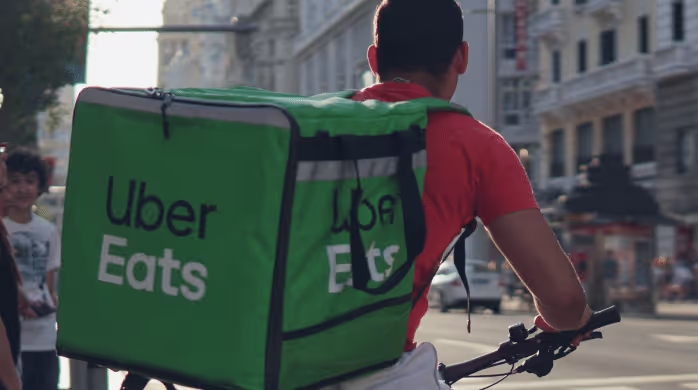
How to Make $1,000 a Week With Uber Eats in 2026 (Tips + Hourly Data)
In this blog, we'll explore the strategies and techniques that can show you how to earn $1000 per week as an Uber Eats delivery driver. We'll cover everything from optimizing your delivery zones and schedules to maximizing your tips and customer satisfaction. Whether you're a seasoned Uber Eats driver or just starting out, this guide will provide you with the insights and actionable steps to take your Uber Eats driver earnings to the next level.
Becoming an Uber Eats delivery partner can be a lucrative opportunity, especially if you're able to consistently earn $1000 a week. By understanding the platform, optimizing your delivery strategies, and focusing on customer satisfaction, you can maximize your earnings and turn Uber Eats into a reliable source of income.
We’ll cover the following topics to provide coaching and ideas to help you push your earnings up to that $1000 per week level:
What do Uber Eats drivers do?
Uber Eats drivers deliver prepared food most of the time, but they also might shop for and deliver goods from convenience outlets and grocery stores. The job is pretty simple. You get a request for an order, you drive to the restaurant or store to pick it up, and then you deliver it to the customer. If you already drive for Uber, you can choose to take orders for Uber Eats delivery any time.
If you’re not an Uber Eats driver yet, it’s pretty easy to become one. This Gridwise post tells you what you need to do if you want to sign up and start making money Uber Eats style. Many rideshare drivers welcome the chance to deliver food rather than people. This article from Nerdwallet covers the Uber Eats gig from that angle.
There are some sweet advantages to working with Uber Eats. In lots of cities you don’t even need to have a car. You can use a bike or a scooter, or even walk, to make your rounds. If you do use a car, Uber Eats’ requirements are a lot easier to meet than they are for Uber rideshare driving.
You also have a lot of flexibility. You can shop and deliver convenience items and groceries, but you don’t have to. And, like most driving gigs, you can choose your own hours, and map out the locations where you want to work.
Use Gridwise features When to Drive and Where to Drive to help you figure out what work hours and which specific areas will be the most profitable for you. Real data from real delivery people will show you earning patterns for drivers in your town.
How much can you earn doing Uber Eats?
The honest answer to this question is: basically, as much as you want! It all depends on how many hours you put in and how strategic you are about your gig. Earnings vary from one area to another, as this article from Entrepreneur points out. To give you a baseline, let’s look at the earnings of Uber Eats drivers who tracked their earnings with Gridwise.
Remember that these numbers show us only average earnings. To make $1,000 a week with Uber Eats, you’re going to have to be better than average, and we’ll show you how. For now, though, it’s good to have these figures so you get a ballpark number of where to start.
How much do Uber Eats drivers make?
Gridwise data tell us the following:
- Monthly earnings average around $444.00 per month.
- Gross earnings per trip are between $9.00 and $10.00.
- Tips make up about 50% of most Uber Eats drivers’ income, which amounts to about $225.00 per month.
Is Uber Eats good money? It can be. While there are other gigs that pay more per trip, if you drive for Uber Eats, you’ll always be pretty busy.
https://datawrapper.dwcdn.net/HPAz8/3
You can also see that, unlike many other gigs, tips play a huge role in Uber Eats earnings.

With these numbers as a baseline, what can we say about how to earn $1,000 a week with Uber Eats? As we said in the introduction, it’s going to be a hustle, but it’s really possible. To figure out how to make the most money with Uber Eats, let’s start by looking at how many trips these “average” drivers made each month.
We know that average gross earnings were $444.00 per month, and drivers got around $10.00 per trip. That means they took 44 or 45 trips per month, which breaks down to 11 trips per week. That’s not a lot of Uber Eats delivery, is it?
The fact that Uber Eats drivers averaged so few trips shows us that many drivers use more than one app at the same time. This is called multi-apping, and you can learn more about it in this Gridwise post. If you want to answer the question of how much you can make with Uber Eats, then you need to stick with the app and keep plugging away at those orders. You also need solid strategies, as well as some inside tips and tricks.
How to make the most money on Uber Eats: Delivery driving tactics
Getting to that $1,000 a week with Uber Eats isn’t so hard when you remember that the drivers we saw making about $111 a week were only taking around 11 trips in the same time period. That’s not much at all! If you work the Uber Eats app like a boss, you’ll soon have many more trips than that, easily reaching the number needed to get you to $1,000 a week. Now, let’s get to some tactics you’ll need to make that kind of bank.
- Stay with the Uber Eats app, and track your earnings. Gridwise can easily do that for you. Simply sync your Uber Eats app with Gridwise, and you’ll be able to see how much you’ve earned with Uber Eats, what times were most profitable, and your average hourly pay. Racking up trips with Uber Eats has other benefits, including perks and bonuses that are awarded to top drivers.
- Leverage surge pricing and promotions. Surge pricing is applied when there is a lot of demand. When surge pricing is in effect, many of the trips you make will pay more than usual. Promotions are offered to drivers who complete a given number of trips in a certain time period. High traffic volume days, nights, and times give you these chances to get extra earnings. Challenging yourself to complete the right number of trips for promotions will add to the number of trips you can count on for big bucks, too. Learn more about Uber Eats surge pay, boosts, and promotions in this Gridwise blog post.
- Say yes to doubling up on orders. With Uber Eats, you can get back-to-back orders or receive batched orders. Back-to-back orders happen when you receive a new request while you’re on the way to deliver an original order. The Uber Eats app routes these trips automatically, so you won’t be sent out of your way.
Batched orders are Uber Eats’ way of bundling together orders from either the same restaurant, or two nearby eating establishments. You get money, and trip count credit, for all the orders you complete, plus customer tips, without having to make a bunch of separate trips.
- Turn on the charm and get bigger tips. Being nice really is part of the Uber Eats driver’s job, and getting tips is one way people who drive for Uber Eats make money beyond their basic pay.. Bring along those extra napkins and condiments, use equipment that keeps food and drinks at the right temperatures and prevents spilling, and consider your customers’ needs. If you deliver groceries, be extra careful with delicate items such as bread and eggs.
And, most important, follow your customers’ directions, and stay in communication with them if you are going to be delayed, or if you have questions about their order. This Gridwise post will tell how to get bigger tips as a delivery driver.
- Use even more charm to keep your ratings high. As an Uber Eats driver, you will be rated by the restaurant or store where you pick up the orders as well as the customers who are waiting for the deliveries. This two-way rating system is designed to keep you on your toes, so Uber can keep people satisfied with your service. Don’t worry, you get to rate them, too.
There’s another reason why your rating as a driver is important. It not only keeps you in good standing with Uber; it helps you to qualify for the Uber Eats Pro incentive program. To learn more about Uber Eats Pro, and what it takes to earn perks such as preferred services, discounts, and deals, check out this Gridwise blog post.
Smart business moves that seal the deal
Now that you know how to gobble up the deliveries you need to make $1,000 a week with Uber Eats, it’s going to be a breeze to get there. Let’s make it even easier, with business moves that boost your earnings and shrink your expenses. If you use these, it will also be easy to say yes when people ask, “Can you make good money with Uber Eats?”
Minimize expenses. Avoid racking up big fast-food bills by bringing your own food and beverages. You might not think you’re hungry when you first start your Uber Eats run, but once the aroma of pepperoni pizza, premium cheeseburgers, and piping hot fries start wafting through your car, that might change. Bring a sandwich or other healthy food from home, and buy bottled water in bulk to save tons of cash compared to what it costs to buy single servings.
Maximize tax deductions. Another way to minimize your expenses is to maximize your tax deductions. Start by tracking mileage with Gridwise.
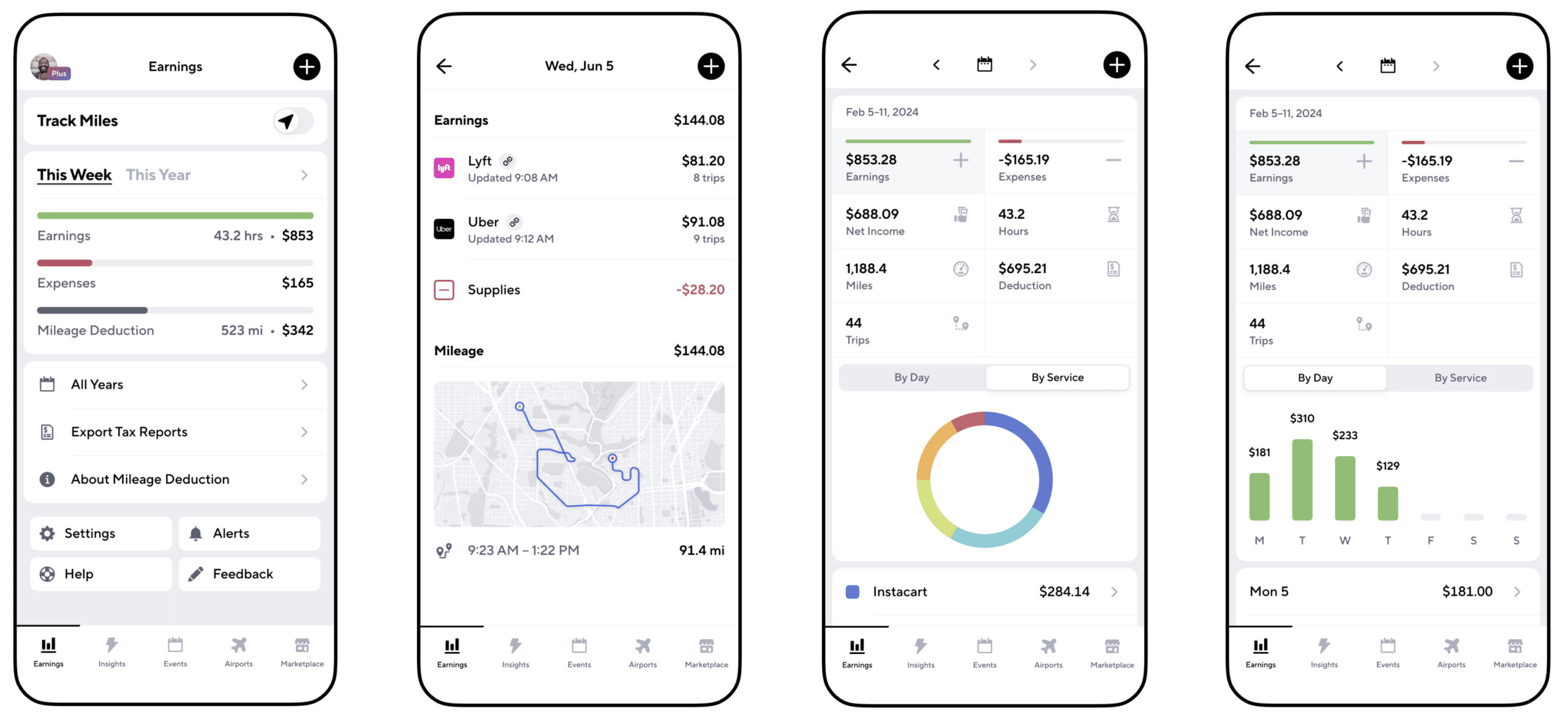
Gridwise App
Gridwise captures every deductible mile you drive, including the distance you cover between the trips your driving app records. Know what expenses you can deduct, and put them to work for you when tax time comes. Learn more about tax deduction strategies in the Gridwise Tax Guide for drivers.
Boost earnings with referrals
As an independent contractor, you’re probably looking for ways to make even more money than you can with Uber Eats. And most gig workers like you enjoy getting passive income. With Uber Eats, there’s a really easy way to do that, referrals!
All you need to do is find friends and encourage them to deliver for Uber Eats. If they make a certain number of deliveries within a specified time, you will get paid for doing nothing more than having them sign up under your referral code! Rates of pay vary by city, so check your Uber Eats app to find out what the current deal might be, and learn more about the referral program on the Uber Eats website.
Also remember: “friends” don’t have to be your best buds. Many delivery people carry cards with a QR code linking to their referral information, so just about anyone you encounter can join Uber Eats and boost your earnings. You could meet a source of passive income at the gas station, on social media, or at your high school reunion. The more you hustle, the more there is to gain, right?
Master the art of self-employment
As an Uber Eats driver, you’re an independent contractor. That means the company isn’t going to withhold your taxes, provide insurance, keep track of your earnings, or tell you about tax deductions. You’ll have to do all these things for yourself.
If you want to maximize your tax advantages, open an official business entity. You can incorporate (create a corporation) or you can work as a limited liability corporation (LLC). You can also work with a DBA (Doing Business As) arrangement, but the corporation or LLC will do a better job of protecting you from liability.
Establishing a corporation or LLC offers better tax advantages than being a sole proprietor. For instance, if you simply collect your earnings into your private account, you’ll be charged self-employment taxes in most states. And paying extra taxes is something we all want to avoid, within legal limits, as much as possible.
Every Uber Eats driver needs to learn about self-employment, and there are some great resources you can review. Check out the CareerOneStop website about self employment which will help explain the basics. You can also check with a professional tax accountant, or look other websites to learn more about actually creating a business.
Scope out your market
Look at the area around you to see where you’re likely to get the most deliveries. Where are all the restaurants? Where might people be more inclined to order deliveries? What hours do you want to drive? What activities might be going on around those times? Think about late-night and after-school times as well as breakfast, lunch, and dinner times.
Be realistic about the potential for your area and aware of new services opening up. For example, in New York, there is already a tab on the Uber Eats app that allows customers to order groceries. In our article about the best food delivery service to work for you’ll see that Uber Eats stacks up well against other delivery companies, mainly because of its potential for expanded opportunities for drivers to earn.
So, is Uber Eats good money? As we said, it isn’t an automatic guarantee that everyone will make $1,000 a week with Uber Eats. Trying out the suggestions we give you here, though, should put you on the right track! Go out there and start stacking up those orders and raking in some impressive earnings!
Get more inside information on Uber Eats in these posts from the Gridwise blog:
- The delivery driver guide: Using the Uber Eats app
- Everything you need to know about driving for Uber Eats
- Uber Eats Pro: What drivers need to know
- Looking for a different gig, part-time or full time job? Check out the Gridwise Job board.
Uber Eats FAQ
How does the Uber Eats platform work for drivers?
Uber Eats is a food delivery service that connects customers with local restaurants and independent delivery partners. As an Uber Eats driver, you'll receive notifications of nearby delivery requests, which you can accept and complete. The platform provides flexibility, allowing you to work on your own schedule and earn money based on the number of deliveries you complete.
What are the requirements to become an Uber Eats delivery partner?
To become an Uber Eats delivery partner, you'll need to meet certain requirements, such as having a valid driver's license, a registered vehicle, and passing a background check.
How can I choose the right delivery zone to maximize my earnings?
Selecting the right delivery zone can significantly impact your earnings, as some areas may have higher demand and better-paying orders. It's important to research and identify the zones in your area that tend to have the most consistent and lucrative delivery opportunities.
How can I take advantage of peak delivery hours and surge pricing?
Understanding peak delivery hours, such as mealtimes and weekends, and taking advantage of surge pricing can boost your earnings. Be aware of when demand is highest in your area and adjust your schedule accordingly to capitalize on these peak periods.
What are some tips for maximizing tips and customer satisfaction?
Providing excellent customer service and going the extra mile to ensure a positive experience can lead to more tips and repeat business. Prioritize communication, timeliness, and attention to detail to keep your customers happy and satisfied.
How can I set realistic weekly goals to reach my $1000 target?
To make $1000 a week with Uber Eats, it's essential to set realistic weekly goals and track your earnings and expenses. Start by determining your target earnings and breaking it down into achievable daily or weekly goals. This will help you stay on track and make adjustments as needed.
What are some strategies for efficient route planning and navigation?
Effective route planning and navigation can save you time and fuel, allowing you to complete more deliveries. Utilize mapping apps and take advantage of features like real-time traffic updates and turn-by-turn directions to find the quickest routes.
How can I balance my Uber Eats deliveries with other commitments?
Develop a schedule that allows you to capitalize on peak delivery hours while still maintaining a healthy work-life balance. Consider using tools like calendar apps to plan your availability and track your hours to ensure you're maximizing your earning potential without sacrificing your personal life.
What are the key considerations for maintaining my vehicle as an Uber Eats driver?
Keeping your car clean and well-maintained is crucial for maximizing your Uber Eats earnings. Regularly scheduled oil changes, tire rotations, and other preventive maintenance can help extend the life of your vehicle and minimize downtime. Additionally, budgeting for vehicle-related expenses, such as fuel, insurance, and repairs, will ensure you're accounting for these costs and maximizing your net earnings.
What are the tax obligations and legal considerations for Uber Eats drivers?
As an Uber Eats delivery driver, it's essential to understand the tax obligations and legal considerations that come with being an independent contractor. This includes properly reporting your earnings, deducting eligible business expenses, and making quarterly estimated tax payments. Additionally, you'll need to ensure you have the appropriate insurance coverage, such as personal auto insurance and possibly commercial auto insurance, to protect yourself and your vehicle while on the road making deliveries.

The Gridwise Job Board: Find Your Ideal Job or Gig Work
Gridwise is an essential assistant app created by gig workers for gig workers. Our mission is to support those engaged in gig work in every way possible. We understand how challenging it can be to deal with income instability, a lack of benefits, and job insecurity that often comes with gig work. The Gridwise app tracks and organizes earnings and expenses, and offers a wide array of discounts, deals, and services that make the lives of independent contractors easier and more rewarding.
We firmly believe it’s possible to make a viable living and create a gig experience that offers flexible hours, variety, and excitement. With issues such as consistent earnings and job security in mind, Gridwise is proud to offer a centralized platform that shows you how to find gig work and secure reliable opportunities. We’re proud to introduce the Gridwise Job Board.
The Gridwise Job Board: Key features
Because Gridwise is dedicated to serving the gig worker community, we’ve filled the Gridwise Job Board with useful features that won’t waste your precious time.
- Comprehensive listings. Find part-time, full-time, temporary, and per-task work. Drive or deliver with your vehicle, utilize an employer’s vehicle, or even find non-driving gig work.
- User-friendly interface. Find the jobs that are right for you with a tap of your screen.
- Verified opportunities. We vet the jobs before they are listed to ensure you’re getting high-quality job postings.
How to get more gig work, seasonal, part-time or full-time jobs with the Gridwise Job Board
Looking specifically for “gig work apps” or “gig jobs near me?” You’re in luck. Our filters and search functions send you directly to the listings you seek.
Here’s how it works.
- Access the Job Board via the Gridwise website.
- Search for jobs by type, location, and more.
- Select the job that interests you, and read all about it.
- Scroll through the description, and if it appeals to you, click “Apply for job.”
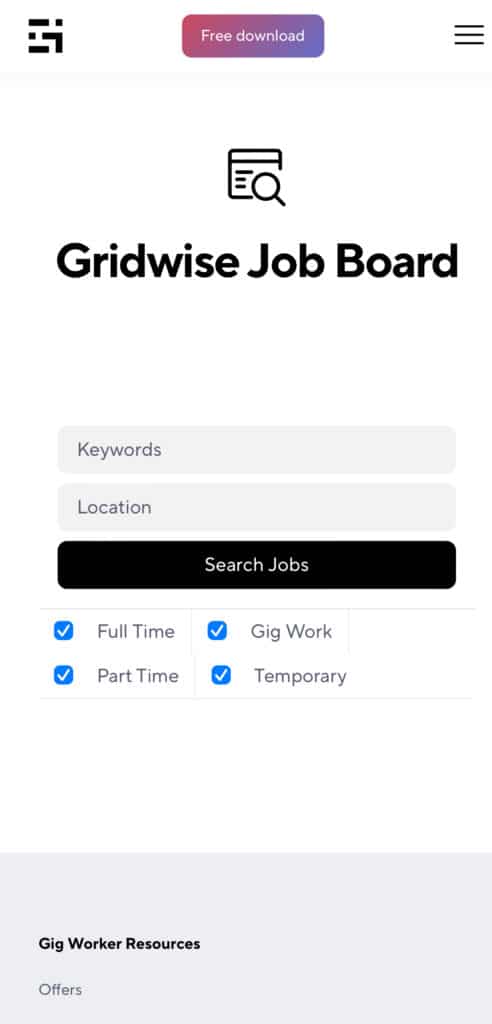
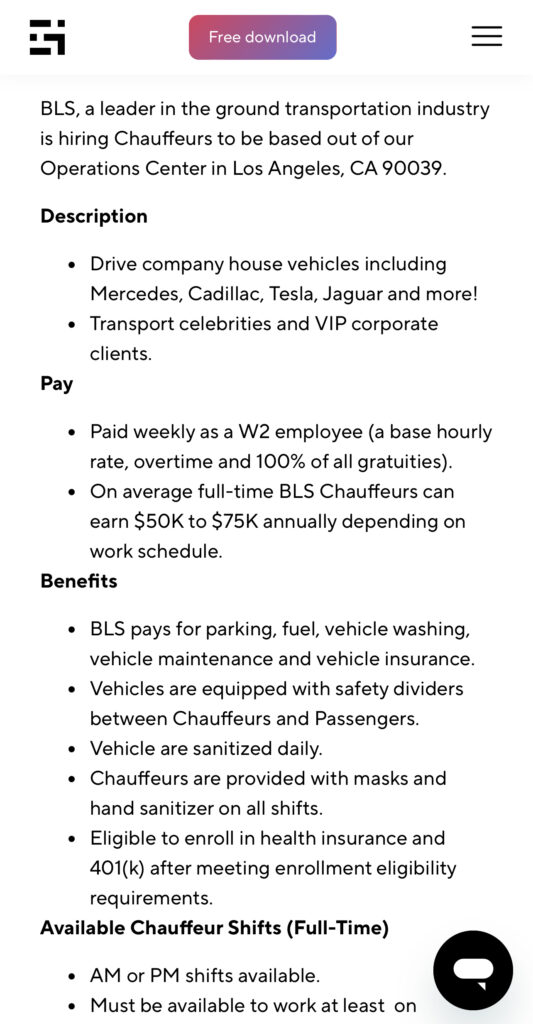
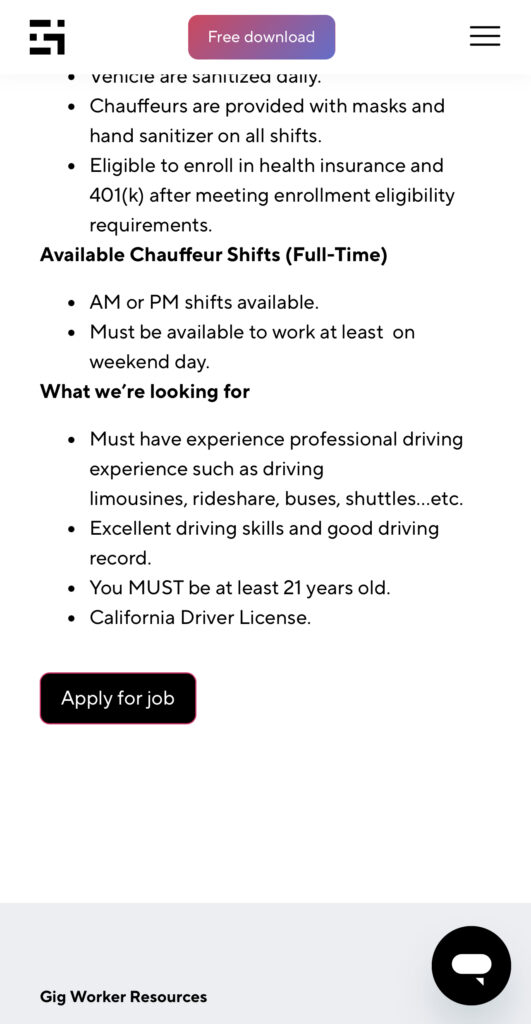
Many types of jobs are available. Adjust the search filter to see the full variety of opportunities that will let you cash in. Deliver food, set up catering, do rideshare driving, get paid for doing package delivery, and much more. You’ll find short-term gigs, long-term contracts, and part-time positions.
Perks of the Gridwise Job Board for gig workers
Gig workers who know how to make extra money will appreciate how the Gridwise Job Board lets you multiply your chances of bringing in big earnings. Here’s how:
- Increased stability. Use the Gridwise Job Board to find part-time or permanent jobs in addition to the part-time gigs you already have. Always keep a steady stream of earning opportunities flowing toward you.
- Flexibility and autonomy. Choose jobs that fit your schedule, work around other jobs and family duties, and still leave room for some fun in your life. Discover side hustles to supplement your full-time job, permanently or just for the season.
- Skill development. Find part-time work that lets you use a skill you already have, or try your hand at something new. It’s a smart way to develop a portfolio to showcase what you can do, or even to find permanent employment.
Get Gridwise and stay up to date on the Gridwise Job Board
Gig workers need plenty of information and assistance, and Gridwise is here to give it to you. Download the app and get essential features such as
- seamless earnings tracking
- mileage tracking
- expense recording, including notes
- low-cost and no-cost insurance benefits
- access to affordable medical, dental, vision, mental health, and alternative care
- professional services including legal and financial help
- deals and discounts
- weather, events, and traffic reports
- inside information on where and when to drive
More to know about gig work:

5 Best Mileage Trackers For Gig Drivers
Many drivers ask, “Do I really need a mileage tracking app?” The answer is simple: only if you want to have an accurate count of all the miles you can legally deduct from your taxable income! You might think your rideshare or delivery driving app has got you covered. After all, they do quite a good job of logging the miles you drive while you’re on a trip or delivery. But, if you want to have the best app to track mileage for Uber, Lyft, Doordash, Instacart, or the other apps you may use, you need more. Why is that?
Without a separate tracker, you’re missing the miles you drive in between pings. Did you realize that all the miles you drive, from the moment you begin your shift until it’s over (as long as you don’t drive several miles on a break to hang with your friends), are tax deductible! That means you need something besides your driving app to keep an accurate count of your travels. Read this Gridwise post to see how important it is to keep track of every deductible mile.
You won’t be surprised to hear that there’s an app for tracking miles. In fact, there are several of them. Here, we’re going to tell you about five top mileage tracking apps, and help you figure out which one is best for you.
Before we get to the list and identify the best mileage tracker app, let’s clarify what exactly a mileage tracking app is. According to G2.com’s technology glossary, mileage tracking is done for the purpose of keeping a log of mileage that is either reimbursable or tax deductible.
And yes, of course you can track your miles simply by taking readings on your odometer. But are you really prepared to account for how many miles you drove for personal reasons and subtract them from the total to get your business mileage? Even if you can remember all that and do the arithmetic, if you want an accurate reading of the miles you drive for business, and can therefore deduct, a mileage tracking app will save you a lot of trouble and prevent you from making costly errors.
Plus, as a gig driver, you have specific needs when it comes to a mileage tracker. Ideally, you’d be able to handle mileage tracking and several other functions all in one app. It can be maddening enough to deal with driving apps, particularly if you’re an avid multi-apper. You would want your mileage tracker app to help you keep account of other aspects of your business, including income, expenses, and inside information about the art of gig driving.
Not all mileage apps are equal, to be sure! Let’s look at five of the best apps to track mileage and figure out which is the best app to track mileage with Uber and Lyft, or what mileage tracker app is best for DoorDash.
1. Zoho Expense
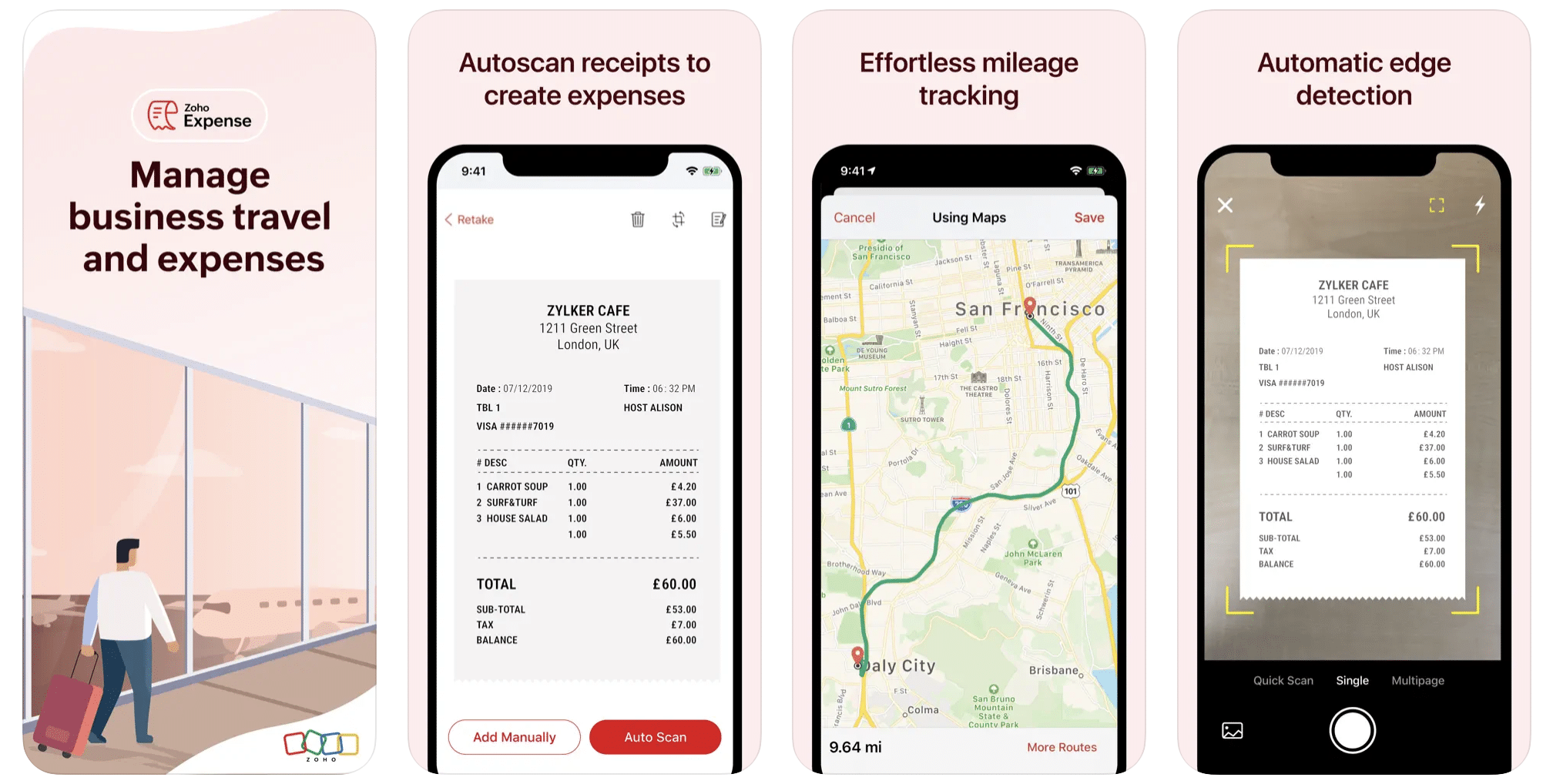
First up is Zoho Expense, which does exactly what its name says. This app is designed to allow companies to give employees a uniform way to create and submit expense reports. It can be used by individuals, including gig drivers, as well.
It includes a mileage tracker, as well as features that let you track other deductible expenses, including the ability to scan and record receipts.
Available on Android and Apple: Yes
Ratings: 4.8 stars on App Store, 4.7 stars on Google Play
Free Version: Yes
Subscription price: $3 per month, billed annually
Created specifically for gig drivers: No
2. Quickbooks Online
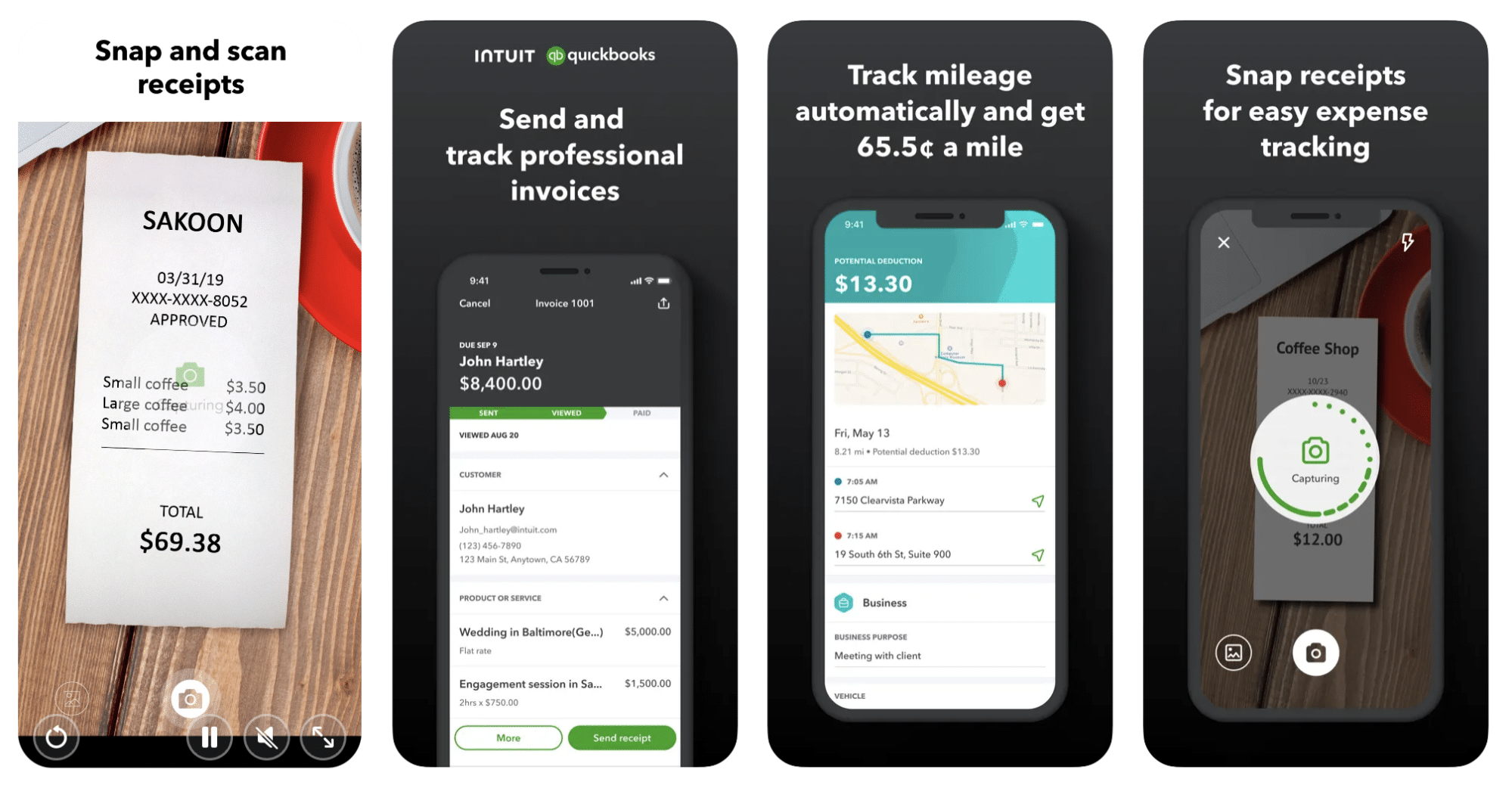
Quickbooks Online is a cloud-based app that allows you to track your mileage, earnings, and expenses. The information you enter can then be used to generate various reports that prepare you for tax time. It also allows you to create graphs that illustrate your cash flow, and includes a receipt scanner so you can instantly record deductible expenses. Quickbooks is popular, highly reliable, and designed mainly to help people keep track of their small businesses.
Available on Android and Apple: Yes
Ratings: 4.7 stars on App Store, 4.4 stars on Google Play
Free version: 30-day free trial
Subscription price: $15 per month for basic version if purchased for 3 months or more
Created specifically for gig drivers: No
Source: quickbooks.intuit.com
3. Shoeboxed
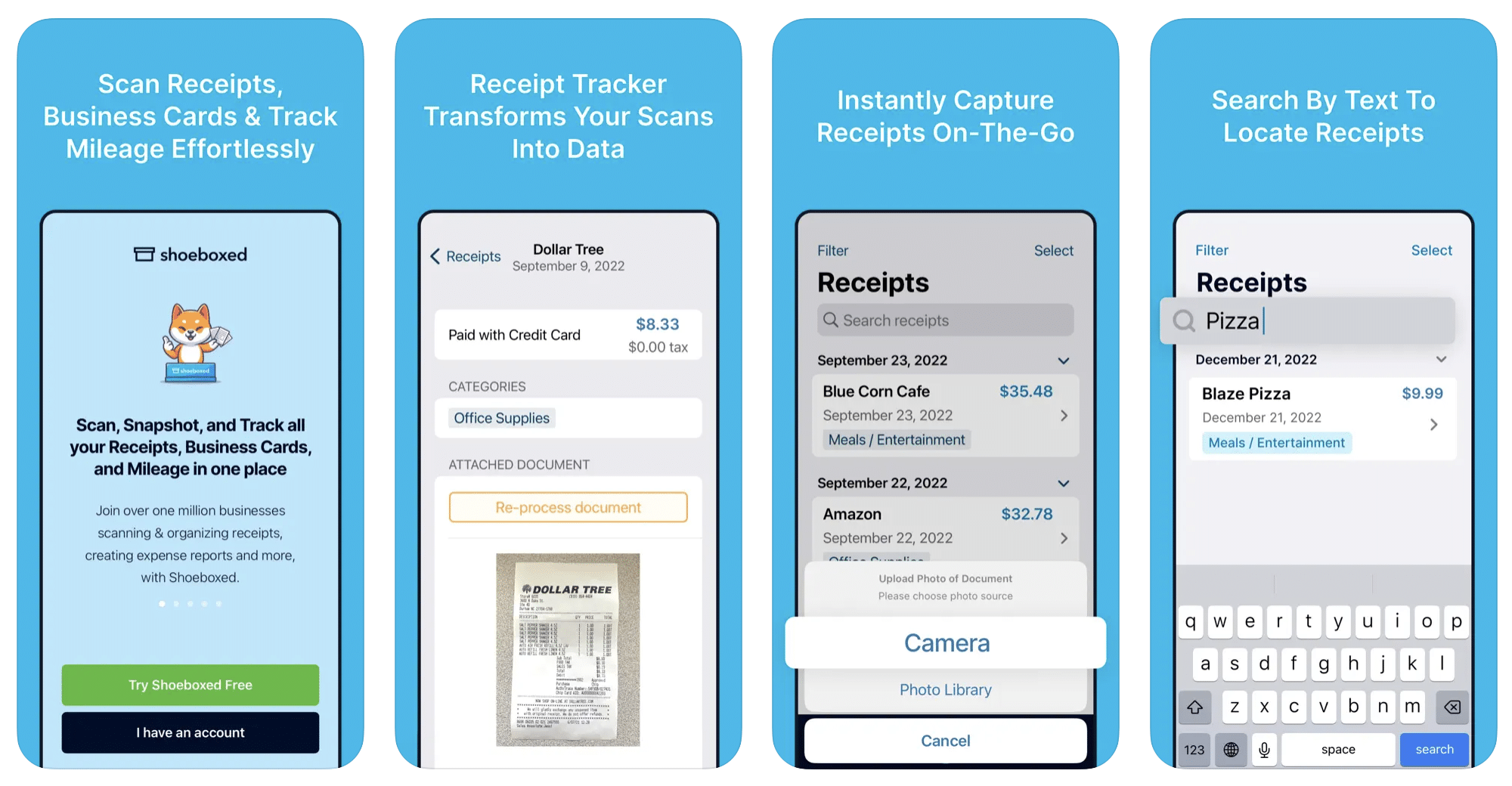
Shoeboxed started in 2007 as a service for scanning paper receipts into digital form. Now the app offers a free mileage tracker and has enabled users to scan receipts directly. It touts itself as the best mileage tracking app for DoorDash, but there are some elements missing that Dashers might like to have. While it provides features that record your expenses and prepare you for tax season, it doesn’t automatically track your earnings. The mileage tracker has a system where you can drop pins along your routes to make the tracking more precise, identifying those legs of a trip that you make for business purposes. The mileage tracker is “free” once you sign up for the basic version.
Available on Android and Apple: Yes
Ratings: 4.5 stars on App Store, 2.3 stars on Google Play
Free version: No
Subscription price: $18 per month for basic version
Created specifically for gig drivers: No
Source: blog.shoeboxed.com
4. Stride
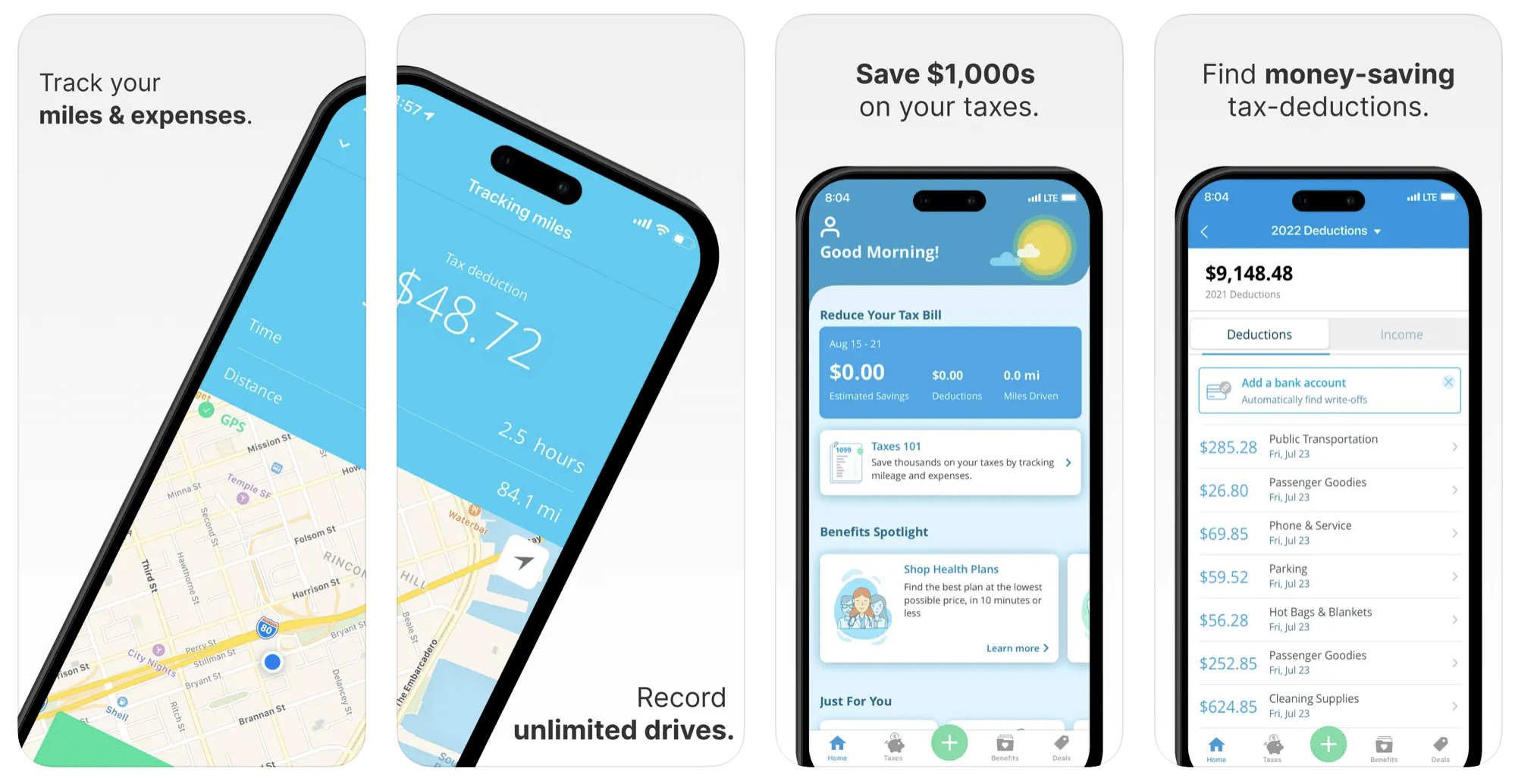
This free mileage tracker does a fair job of keeping track of the distances you rack up while gig driving, but it doesn’t automatically track earnings. It can be a big help, though, in tracking your expenses. You can link Stride to your bank account, and it will automatically scan your expenses to identify items you can potentially deduct. The app is totally free. This could make it the best free mileage tracker app, but there is a small price to pay. The app will persistently push you to consider various insurance plans that they are affiliated with. If you don’t mind that, this is a solid mileage tracker, even if it doesn’t track your earnings.
Available on Android and Apple: Yes
Ratings: 4.8 stars on App Store, 4.6 stars on Google Play
Free version: Yes
Subscription price: None. The app is free.
Created specifically for gig drivers: No
5. Gridwise
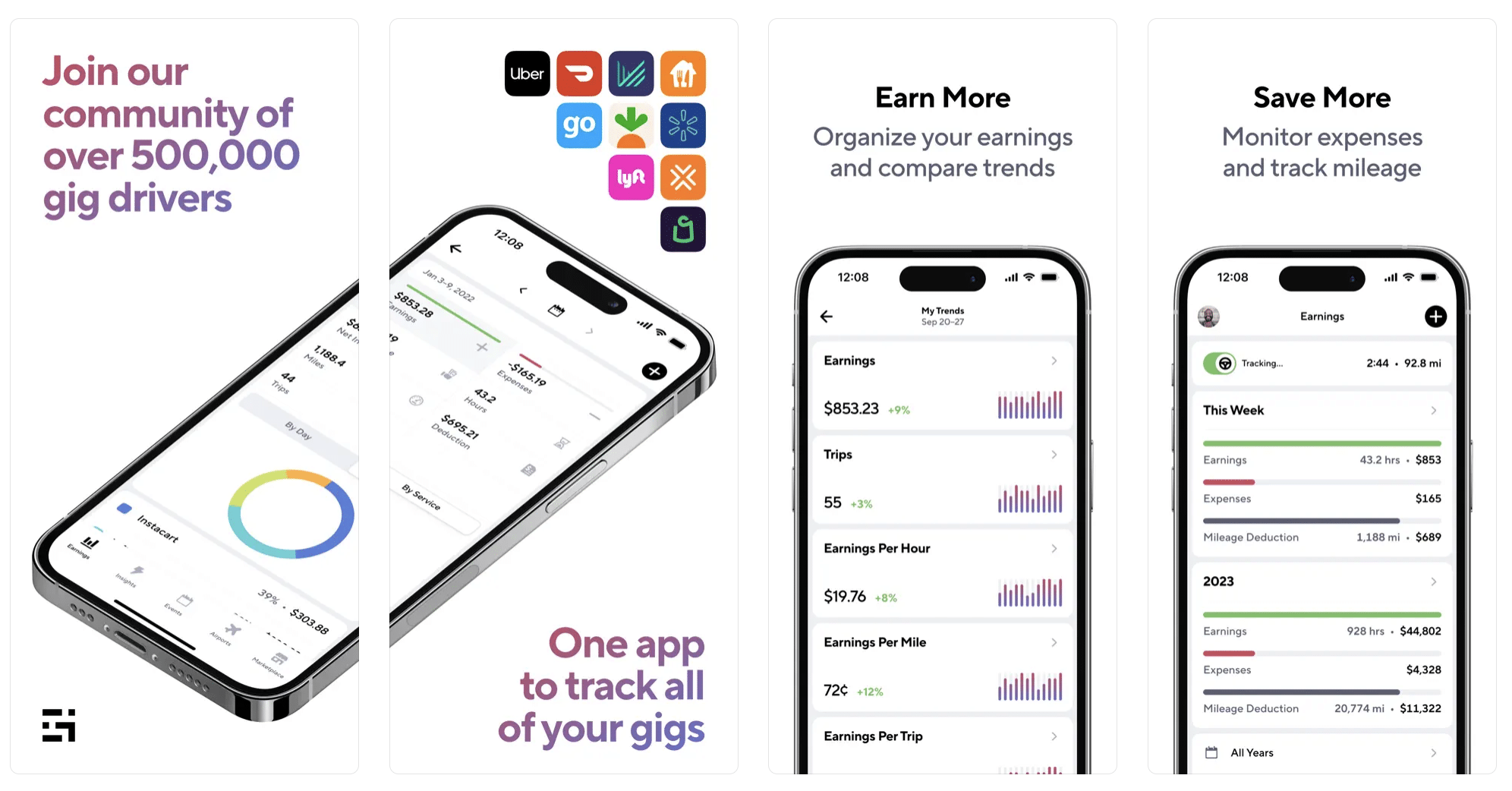
Gridwise has a free mileage tracker and free features that record your income and expenses. It gives you access to insurance and benefits, as well as insights about the best times and places to make the most money while gig driving. The Gridwise mileage tracker captures all the miles you drive while you’re on your driving shift, and it can be used if you have other trips you need to make which qualify as business travel.
Drivers love it because it is geared toward the needs of rideshare and delivery workers, providing free information about airport departures and arrivals, event start and let out times, weather, traffic, and more. The Gridwise Plus subscription adds value by providing additional insights and reports, discounts on benefits, the ability to export data in .csv format,, and more.
Available on Android and Apple: Yes
Ratings: 4.9 stars on App Store, 4.6 stars on Google Play
Free version: Yes
Subscription price: $9.95 per month for Gridwise Plus, or $95.99 per year (a $23.41 savings)
Created specifically for gig drivers: Yes!
What is the best mileage tracking app?
Now that we’ve checked them all out, we’re positive about the answer to that. Hands down, it’s Gridwise. Are we biased? You bet we are! But drivers love it too. Gridwise is the best mileage tracker app, and so much more. So many of the features are free, and the subscription to Gridwise Plus will pay for itself with additional insights to boost your earnings and deeper discounts on products and services.
Most important, Gridwise is designed specifically for gig drivers by experts who were once gig drivers themselves! Knowing what gig drivers need is a crucial step in creating an app that rideshare and delivery drivers can really use! Here are a few of the features, besides mileage tracking:
- seamless earnings tracking
- automatic, on/off toggle and manual mileage tracking
- mileage categorization
- airport, traffic, weather, and events information
- insights into where to drive and when to drive
- reports showing earnings across the platforms you use
- discounts on countless products and services for drivers
- additional resources for finding side gigs
- an informative and comprehensive blog
- affordable benefits, including insurance, medical, dental, and alternative practitioner discounts
- a community of drivers just like you
Don’t settle for just any app. Get the best mileage tracker, and so much more, from Gridwise!
Data-Driven Strategy: How Gig Mobility Drove Fleet Efficiency in an Autonomous Vehicle Company's Strategy
About the collaboration
At Gridwise, our focus is, and always has been, to empower gig drivers as part of our mission of Improving the way people work and goods move. With autonomous vehicles introducing a new type of gig mobility driver, we want to ensure these vehicles can best operate alongside human drivers in our efforts to enable the most efficient mobility system.
About the customer
In 2016, a team of Google engineers founded a top autonomous vehicle company specializing in developing and deploying self-driving vehicles for last-mile delivery, gaining recognition for its innovative approach to autonomous technology.
The company's primary focus is creating safe and efficient solutions for transporting local goods, helping to improve the lives of all drivers. The vehicles are purpose-built to navigate urban environments and provide reliable, contactless delivery services. These compact, low-speed vehicles are explicitly designed to transport goods rather than passengers.
This company has developed advanced sensor systems, including LiDAR and cameras, to perceive and understand its surroundings, enabling the vehicles to navigate complex traffic scenarios and safely interact with pedestrians and other road users. The company also leverages artificial intelligence and machine learning to improve its vehicles’ capabilities and decision-making processes continuously.
The company has successfully conducted autonomous delivery trials in select regions by partnering with various retailers, grocery chains, and delivery service providers. Its goal has been to streamline and enhance the delivery experience while reducing congestion, emissions, and overall transportation costs.
The company’s commitment to advancing autonomous technology and transforming the logistics industry has positioned it as a key player in the autonomous vehicle space, with the potential to revolutionize the way goods are delivered in urban environments.
The challenge
As this company built toward commercializing its fleet of autonomous vehicles, it needed to efficiently prioritize which markets it should launch in and which areas of the city it should map. This meant the company needed an in-depth understanding of the current unit economics of its non-autonomous competitors in a given market to understand what it should expect in terms of efficiency and profitability.
As a delivery service provider, the company recognized the delivery market's complexity and rapidly changing nature. It required a more profound understanding of delivery dynamics, metrics, and market variations to scale its operations efficiently.
Before engaging with Gridwise, the company’s data was insufficient, relying on partnerships, casual conversations, and online research. It lacked the granular insight into real-world delivery dynamics that come from aggregating actual driver activity and performance data. Metrics like miles per delivery, outbound time and demand volume by zip code were needed to accurately model unit economics.
To be confident in their go-to-market plan, this customer needed a complete data set that told the full story of delivery in multiple markets, which is why a partnership with Gridwise Analytics made sense.
A collaborative solution
“Gridwise Analytics data is a unique dataset that enabled our team with a powerful go-to-market strategy to drive our fleet efficiency, geo-expansion strategy, and introductions in new verticals that we would otherwise have no visibility in.”
—Chief of Staff, Strategy & Business Operations Lead
As soon as this customer connected with Gridwise, the two teams closely collaborated to build a package that provided access to real-world data and analytics capabilities to address their challenges. Based on human-driven deliveries, Gridwise provided unique and reliable aggregated and anonymized data sets, supplying exclusive granular insights into the delivery market.
The collaboration involved frequent communication, thought leadership, and feedback exchanges. Once this was defined, our analytics team did their best to go above and beyond to build and deliver the metrics this customer needed while frequently meeting to discuss strategy and data optimizations.
What are the results of our collaboration?

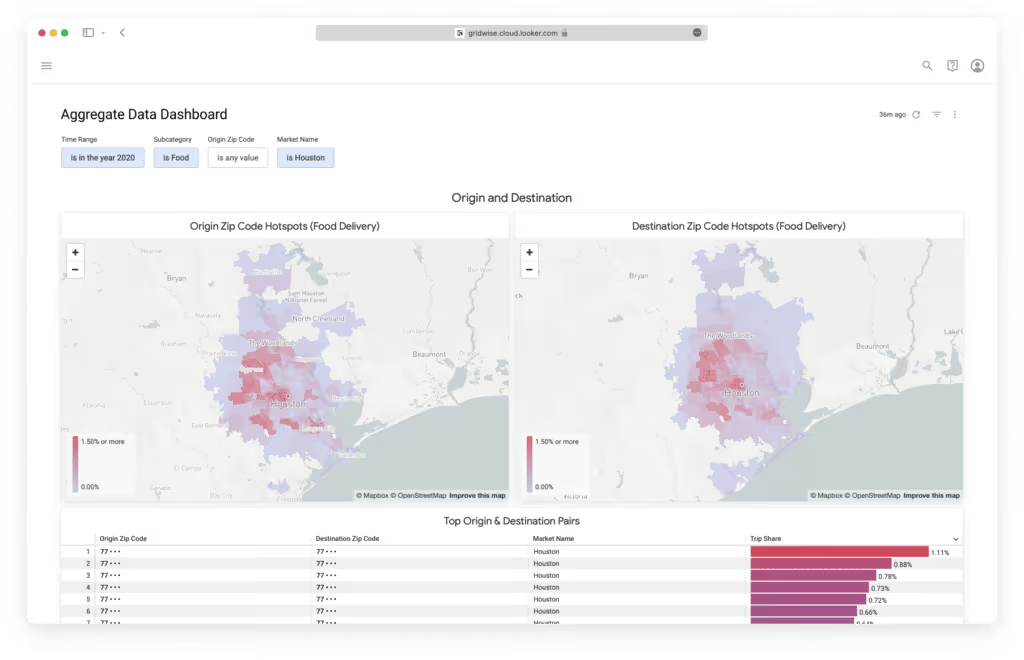
Houston Food Delivery Trips O&D Points. Source: Gridwise Analytics
The customer has been thrilled with Gridwise’s Analytics capabilities. They have used our resources to effectively model out mobility patterns to drive fleet efficiency and pricing across various markets, which has helped them feel confident about their go-to-market strategy. Gridwise Analytics insights have been used to:
Support Market Expansion and Go-to-Market Strategies
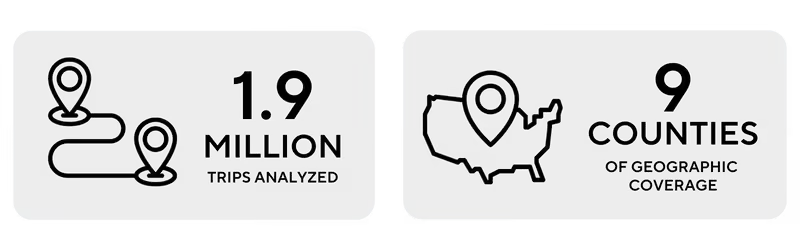
- Gridwise Analytics supported market expansion plans by providing valuable insights for each new market. Through the data provided, the company could identify variations in demand volume, miles per delivery, and other metrics across 3 metropolitan statistical areas (MSAs), which encompassed 9 counties. This enabled it to develop targeted go-to-market strategies and prioritize its approach to different markets, resulting in more effective market entries.
Enable Fleet Efficiency and Operations Optimization
- Gridwise Analytics played a crucial role in optimizing fleet operations. By analyzing over 1.9 million aggregated trips to understand fleet efficiency, miles per day, and other relevant metrics, the company gained insights into the efficient utilization of its fleet. These insights helped it plan for delivery operations, fleet balancing, supply allocation, and other operational decisions. The company was able to visualize the distribution of metrics and perform scenario planning, enhancing its ability to optimize fleet operations and allocate resources effectively.
Enhance Planning and Decision-Making
- With Gridwise Analytics, the company gained a more accurate understanding of delivery dynamics, enabling it to make informed decisions regarding its go-to-market strategies and fleet operations. The real-world data provided by our team helped validate assumptions and build a more reliable mental model for each market. This led to improved planning, optimized resource allocation, and more efficient delivery service.
Foster Collaborative Relationships and Continuous Improvement
- A collaborative relationship with the Gridwise team proved to be valuable. Regular check-ins, feedback exchanges, and the availability of Gridwise's co-founders during meetings fostered a productive partnership. Gridwise demonstrated a commitment to addressing the company's specific needs, enhancing its product based on feedback, and continuously updating data to align with evolving requirements.
What’s next?
Partnering with Gridwise Analytics has empowered the company to make data-driven decisions, optimize their go-to-market strategies, and enhance fleet operations. By leveraging anonymized real-world data and collaborating closely with the Gridwise team, it has achieved improved market planning, and operational efficiency. The company sees tremendous potential in further leveraging Gridwise Analytics for its expansion plans and introducing new verticals.
As the company continues expanding into new markets, Gridwise Analytics capabilities will provide crucial insights for planning and decision-making. Additionally, it looks forward to exploring more granular metrics and additional data verticals to enhance its go-to-market strategies and fleet operations further.
Your Guide to Becoming a Walmart Spark Driver
If you’ve been in a Walmart lately, you’ve undoubtedly seen Walmart employees poring over lists on handheld electronic devices and pushing carts loaded with bins full of groceries and other items. Welcome to Walmart Spark, Walmart’s home delivery service. And guess what? It’s a gig driving job.
At the end of 2023, there were more than 4,600 Walmarts in the US. However, your goal in becoming a Walmart Spark driver is to narrow your focus to a few strategically located Walmart stores. This strategy reduces driving time, distance, and wear and tear on your car. You can also earn good money—higher than almost every gig driving job, except for the top rideshare companies.
Check out this recent Gridwise blog post, How to Make $1000 a Week with Walmart Spark, to get on the road to greater earnings. You can also be more profitable by downloading the Gridwise app. It’s free and has features invaluable to all drivers.
What is a Walmart Spark driver?
Like so many other societal changes in the last few years, you can point to the pandemic as the cause. Even though grocery delivery services were around before the pandemic, they gained lots of traction in Q1 and Q2 2020 as we all hunkered down. Walmart Spark was no different.
The industry's growth didn’t stop with the end of the pandemic. In early 2023, Zion Market Research released a study in which they forecasted a compounded annual growth rate (CAGR) of 26% for the grocery delivery business, extending to 2030.
Walmart had already developed a proprietary service in 2018 called Walmart Spark. They used a firm, Delivery Drivers, Inc. (DDI), to administrate the program. Walmart Spark drivers worked for DDI. There was also a relationship with DoorDash to handle some of the deliveries. In August 2022, Walmart ended its relationship with DoorDash and purchased DDI, making Walmart Spark an in-house operation.
Walmart Spark drivers are gig drivers. They receive and accept orders through the Walmart Spark driver app, directing them to a Walmart store to pick up a delivery. In most cases, a Walmart employee has selected the items; the driver needs only to load the items into their car and deliver them to the customer's residence.
Is being a Walmart Spark driver for you?
In deciding if Walmart Spark can be truly profitable, you should determine if you're reasonably close to a cluster of Walmarts.
What is meant by a cluster of Walmarts? Very simply, how many Walmarts surround you within a few minutes’ drive? For instance, in a seven-square-mile area in the California suburban cities of Upland and Ontario (about 35 miles east of Los Angeles), there is a Walmart Supercenter, a Neighborhood Walmart, and a standard Walmart. The farthest distance between any of these stores is 4.4 miles, making this area heaven for a Walmart Spark driver. Three Walmarts in an area means that a Spark driver will stay busy. It is unlikely they will receive an order from a Walmart farther away. The result is that they drive less and spend less time traveling back to their home territory.
If you live in a densely populated suburb, there is a good chance of a similar network of Walmarts in your area. This is great because you can draw from every one of them. If you live in a more rural area, you'll need to drive farther to make deliveries.
Brenda Brown, a Walmart Spark driver in Las Cruces, NM, was highlighted in a 2020 article in Business Insider, telling how she made $113,000 in one year as a Walmart Spark driver. It wasn’t easy. Brenda says she averaged 80 hours a week and drove 48,000 miles making those deliveries. Her earnings came out to about $25 an hour, not counting fuel costs and car wear and tear. You should also note that Las Cruces, where Brenda delivered for Walmart Spark, is a town of around 113,000 people on the edge of the Chihuahuan Desert. That’s a far cry from the suburbs of larger cities with many Walmarts.
There are a few other details to Brenda’s story. She claimed about $95 in tips for every $100 in Walmart Spark earnings. Brenda’s territory included three Walmart stores, the farthest ones being 14 miles apart, and she said she made the trip between them several times daily.
How to become a Walmart Spark delivery driver
Start with the Walmart Spark website. The requirements for Spark are that you have
- a registered vehicle
- a valid driver's license showing you're at least 18 years old
- a valid Social Security number
- a smartphone
- a clean background record
You complete the application online, which takes about a week for processing, and then you get a return email. The return email comes from Walmart, but also look at anything from DDI, because they still administer the program internally. Upon being hired, you become a contract employee. You go through an orientation program and download the Walmart Spark app.
You can check this FAQ page on the Walmart Spark site to answer additional questions.
How much do Walmart Spark drivers make?
What do Walmart Spark drivers get paid? Spark delivery drivers receive pay on a per-delivery basis, depending on how many deliveries they make per hour. Every delivery shows your approximate earnings once you have completed it.
Take a look at this chart recently published in the Gridwise blog, How to Make $1000 a Week with Walmart Spark.
YearAverage Gross Earnings Per Work HourAverage Gross Earnings Per Week2022$19.48$353.22023$17.81$322.5Source: Gridwise
As we have discussed before, if you find a region where several Walmart stores are clustered in a small area, you can make more and keep your expenses relatively low for a gig driver. The above are also based on averages and largely depend on the individual and orders.
Walmart Spark drivers can also earn more money through incentives, surges, and referral programs for referring other drivers. These offers are constantly changing, so check your app for the current incentives. Also, you get to keep 100% of your tips, whether they’re in cash or through the app.
When does Walmart Spark pay? Earnings are electronically deposited into your bank account each Friday.
Perks and considerations for being a Spark driver for Walmart
Walmart Spark offers gig drivers some unique benefits, but there are also challenges to consider. Here’s a breakdown of the pros and cons to help you decide if Spark is the right gig for you.
Perks
- Potential for High Earnings
With access to a busy market and a willingness to work consistently, you can earn good money as a Walmart Spark driver. Spark pays based on distance and order size, so well-planned schedules can pay off. - Reduced Wear and Tear on Your Car
If you’re in an area with several Walmart stores, you’ll be able to pick up more orders without driving excessive miles. This can save on gas, maintenance, and overall vehicle depreciation. - No Passengers to Deal With
Unlike rideshare driving, you won’t have to entertain passengers or keep your car immaculate for customer satisfaction. Spark drivers only interact with store employees during pickups, making the work more low-maintenance. - Flexible and Daytime Hours
Spark operates during Walmart store hours, meaning you won’t need to work late into the night like many rideshare drivers. You can maintain a better work-life balance by working mostly during the day, with evenings free for other gigs if you choose. - Perfect Complement to Other Gigs
Since peak times for Spark deliveries often occur during the day, you can still take advantage of evening peak hours for other gig platforms like rideshare or food delivery.
Considerations
- Driver Saturation and Long Waitlists
Due to its popularity, many areas have long waitlists to become a Spark driver. Some drivers report waiting months before they can even start, making it a slow process in saturated markets. However, you can multi-app on another platform until you make it through. - High Demand Can Lead to Long Wait Times
Spark’s popularity can sometimes outpace the store’s ability to fulfill orders quickly. - Bot Concerns in Competitive Markets
Reports from drivers, including those on Reddit, indicate that some drivers are using bots to grab the most profitable offers quickly. Walmart has stated that bot usage violates their terms, and drivers caught using them face deactivation. - Contract Work Comes with Financial Responsibility
Like all gig jobs, you’re considered a contractor, which means you’re responsible for your own taxes, insurance, and benefits. Be sure to track your expenses and set aside funds for tax payments.
By weighing these factors, you can decide if Walmart Spark is a gig that fits your driving strategy and financial goals.
How Gridwise can help
Gridwise is dedicated and committed to making all gig drivers as successful as possible, and Walmart Spark drivers are no different. The Gridwise mileage tracker is the best mileage tracker app for Walmart Spark drivers, saving you hundreds and often thousands of dollars in taxes at the end of the year.
If you multi-app, like many other drivers, you can link all your apps to the Gridwise platform. There are invaluable tools such as Where to Drive and When to Drive. You can see these features and more when downloading the Gridwise app for free. You can also track earnings and determine the best driving times and places, all for free!
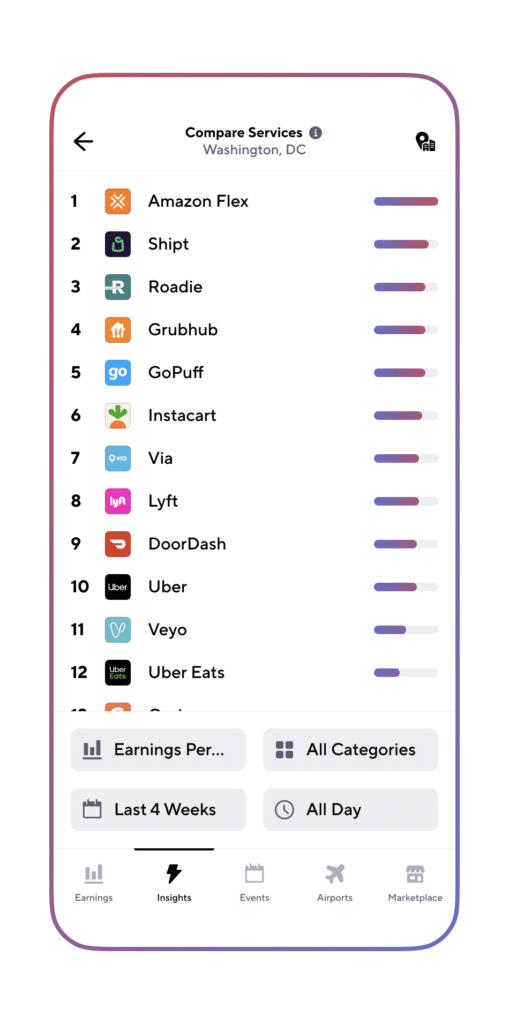
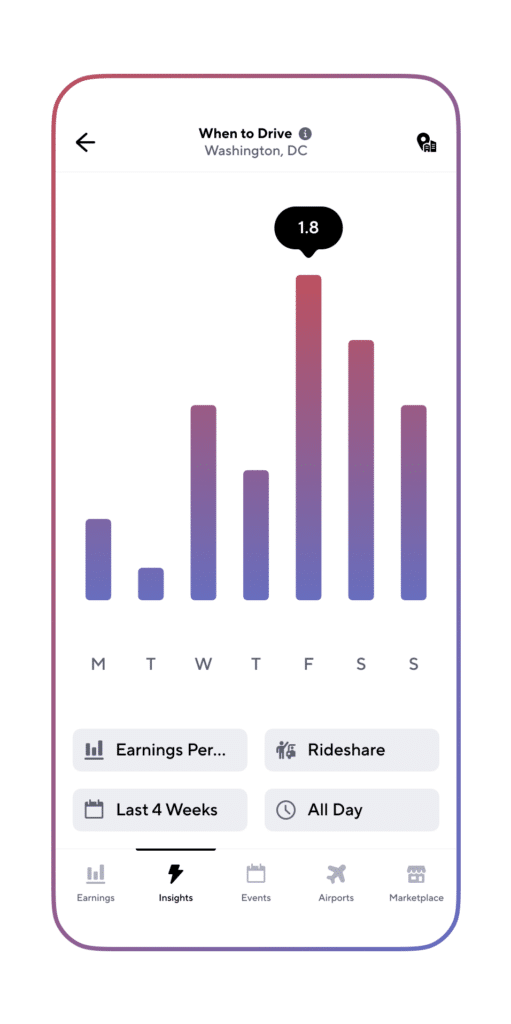
Try the Gridwise app today to start driving smarter.
And have fun out there!
Check out these Gridwise articles to learn about Walmart Spark opportunities:

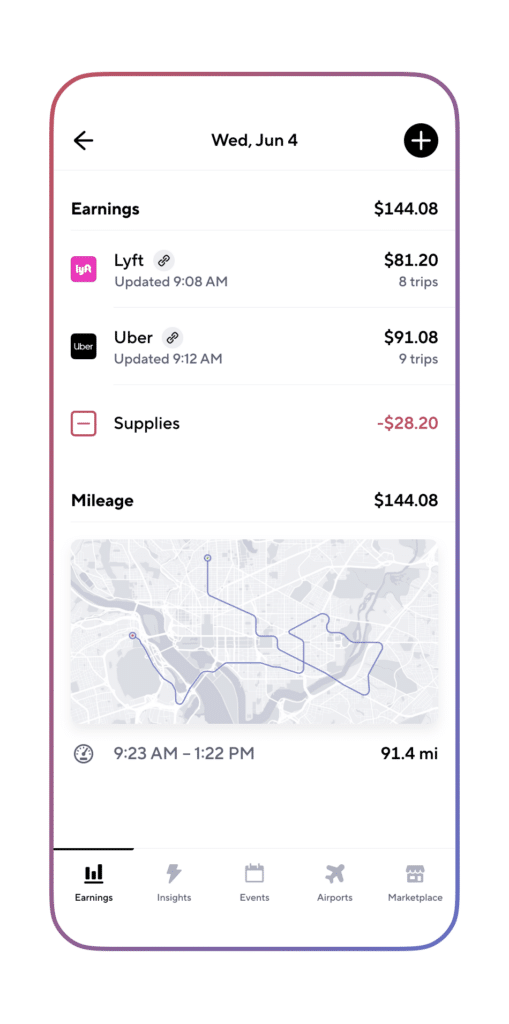
New Gridwise Mileage Feature: Assign Mileage to a Service
We have just launched an update to Gridwise’s mileage tracking feature! Basic and Plus users can now assign miles driven during a specific period to specific gig services, whether it’s Uber, Lyft, DoorDash, or others. Whether using manual or automatic tracking, this update makes managing your tax-deductible mileage easier and more accurate.
Why is this feature important?
As a gig worker, you receive 1099 forms for each platform, and reporting expenses like mileage separately is crucial. By assigning miles to specific services, you can streamline this process and better understand your vehicle utilization. This means more accurate records and maximum tax deductions since only business miles are deductible.
Check out our complete guide to dive into the details of using automatic mileage tracking.
How to categorize mileage for automatic tracking users
For automatic tracking, it’s just as easy to review and categorize:
- Go to the Earnings tab.
- Tap on Recently tracked mileage at the top of the screen.
- Swipe right to mark business-related trips and left for personal trips.
- After categorizing your mileage as “business”, select your mileage, select the service (Uber, Lyft, etc.) you drove for then.
- Tap Done to save your entry.
You can also edit mileage entries by tapping on them and updating the details as needed. Here is the full tutorial for how to use automatic mileage tracking.
https://vimeo.com/1010716836?share=copy#t=0
How to use the shift tracker for mileage tracking
If you prefer to track mileage using our shift tracker, follow these steps:
Tap the Arrow button at the top of your Earnings screen. The button will turn green to indicate that tracking is active.
- Start working your shift as usual. The tracker will automatically record your mileage in the background.
- When you’re done for the day, tap the same arrow button again. It will turn grey to show that tracking has stopped.
- To assign services, tap on Edit at the top of the End Shift screen.
- Tap on Purpose to assign the shift’s mileage to the appropriate service.
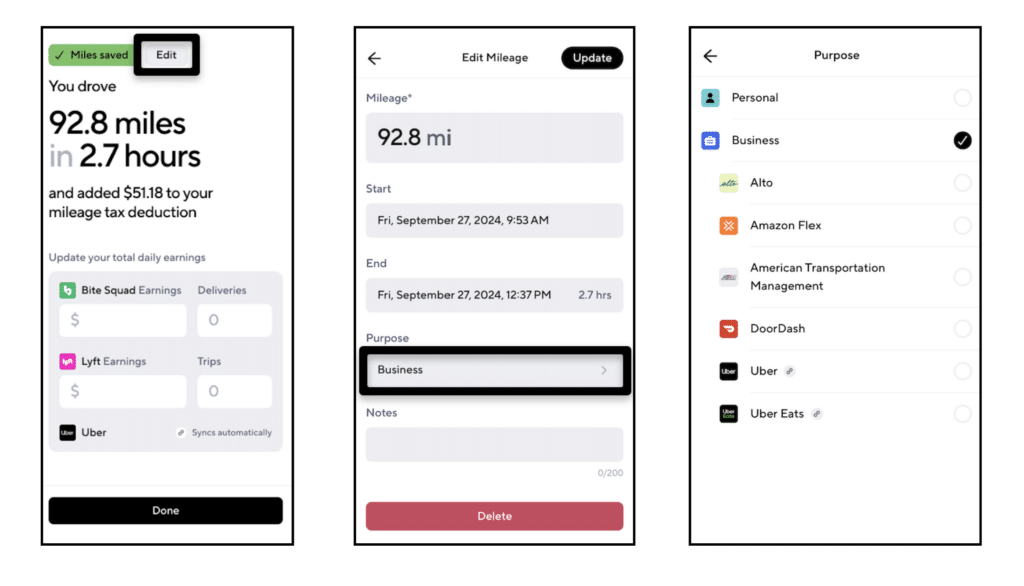
How to manually add mileage in Gridwise
For manual mileage entry, follow these steps:
- Tap the black (+) button in the top right corner.
- Select Add mileage.
- Choose a start and end date and time.
- Enter the mileage.
- Select a purpose for assigning the trip to a specific service.
- (Optional) Add a note.
- Tap Save to finalize your entry.
Your manual entry on the earnings tab will reflect your daily totals. Again, you will find the full tutorial for how to use Gridwise manual mileage tracking here.
https://vimeo.com/1013582539?share=copy#t=0
Mileage tracking: Your key to maximum tax savings
Mileage tracking is essential for gig workers, not just for staying organized but also for maximizing your tax deductions. With the ability to accurately categorize miles for each service, you’ll:
- Ensure you're claiming all eligible tax-deductible miles.
- Keep personal and business miles clearly separated.
- Avoid overpaying during tax season by staying organized year-round.
- Gain a better understanding of your vehicle utilization.
This new feature in Gridwise makes tracking and filing taxes easier than ever. Whether you prefer automatic or manual tracking, you control your gig work miles.
Ready to get started?
DoorDash Drivers: Avoid a “Saucey” New DoorDash Scam
A DoorDash driver recently alerted the community about a DoorDash scam. The suspicious order involved a single packet of avocado salsa from Taco Bell. This immediately raised red flags for the driver. While this may seem harmless, it was part of a growing fake DoorDash delivery scam targeting gig workers.
How the scam works
It’s an unfortunate scam that preys on workers who are often already striving to make ends meet. To make matters worse, it can lock Dashers out of their accounts. This leaves them unable to work for hours or even days, resulting in lost income.
- Unusual order size: Scammers place an order for something insignificant, like a single sauce packet. This fake DoorDash order is often a vital indicator of a potential scam.
- Driver accepts the order: Many drivers will accept it without questioning it.
- Fake support call: While en route, the driver receives a call from someone claiming to be DoorDash support. This is a common tactic in DoorDash scam calls.
- Security warning: The caller claims a security issue or the driver’s account has been flagged. This is a critical step in any DoorDash fraud.
- Request for verification: The scammer asks for a DoorDash verification code sent to the driver’s phone to verify their identity.
- Account takeover: Once the driver shares the code, the scammer can gain access to their account. Potentially stealing sensitive information or earnings.
Why this scam works
- Plausibility: The call feels real because drivers are often alert for potential security risks. These DoorDash scam calls play on the driver's need to act quickly.
- Distraction: Drivers usually multitask while delivering and might need help fully seeing the warning signs.
- Order ambiguity: The system doesn’t always clarify that the order is for a trivial item like a sauce packet. This confusion aids the DoorDash scam.
How to spot a scam early
- Unusual order size: Orders with tiny items like a single sauce packet or orders that don’t make sense (e.g., a beverage with no food).
- Sudden contact from “support”: Real DoorDash support usually contacts drivers through official app notifications. If drivers get calls outside the app, they should be suspicious of DoorDash scam calls.
- Urgent requests for personal information: Scammers often create a sense of urgency, asking for quick action. In this case asking you for a verification code. DoorDash will never ask for personal info over a call.
Steps to take if you think you’re being scammed
- Hang up immediately: If you suspect you are talking to a scammer, hang up and call DoorDash support directly through the app.
- Report the incident: Use the official app to report any suspicious activity or possible DoorDash fraud.
- Change your password: If you’ve shared your DoorDash verification code or any other account info, immediately change your password and enable two-factor authentication for added security.
Best practices for protecting your DoorDash account
- Enable two-factor authentication: This extra security layer ensures that even if scammers obtain your login credentials, they can’t access your account without the second verification step.
- Keep your phone secure: Use strong passwords or biometric authentication (fingerprint, face recognition) to lock your phone. This protects any incoming DoorDash verification codes from being accessed by anyone but you.
- Monitor account activity: Regularly check your account for any unusual login attempts or changes to settings. Promptly report any suspicious activity related to DoorDash fraud.
DoorDash’s official guidance on avoiding scams
DoorDash provides clear guidelines to help drivers avoid falling victim to scams:
- DoorDash never asks for codes via phone: Always remember that DoorDash will never ask you to provide sensitive information, such as a DoorDash verification code, over a phone call.
- Use official support channels: Always communicate with DoorDash support through the in-app help center or official channels. Do not trust support requests that come via phone calls or emails. For more information, visit DoorDash's official help page on scams.
Community advice on avoiding the scam
Delivery drivers on Reddit have shared their thoughts on how to avoid DoorDash scams:
- Decline suspicious orders: If you receive a fake DoorDash order for a single sauce packet or another trivial item, it’s best to decline it to avoid a scam.
- Report it: Instead of simply declining, some drivers suggest going to the restaurant, contacting DoorDash support from there, and requesting half-pay for a canceled order.
- Legitimate small orders: Some small orders are legitimate, so double-check before declining an order. However, remain cautious of any DoorDash scam calls.
Stories from other drivers
Many drivers have shared their experiences of either avoiding or falling victim to DoorDash scams:
- Driver experiences: One driver received a suspicious call from someone claiming to be DoorDash support but hung up after realizing they were being asked for their DoorDash verification code. By reporting the incident immediately, they could secure their account and prevent unauthorized access.
- Lessons learned: These stories emphasize the importance of being cautious, recognizing the warning signs of a fake DoorDash delivery, and never sharing personal information with anyone claiming to be support outside of the app.
What to do if your account is compromised
If your account has been compromised due to DoorDash fraud, here’s what to do:
- Contact support: Immediately report the issue to DoorDash’s official support team through the app.
- Change your password: Lock your account by changing your password and enabling two-factor authentication.
- Monitor earnings: Regularly check your earnings and ensure no unauthorized transactions have occurred. DoorDash may assist in recovering stolen earnings if the fraud is reported promptly.
Work smart and stay safe
As a delivery driver, staying alert and cautious is critical to protecting your earnings and personal information. Scammers are becoming more sophisticated, but by recognizing the red flags—such as suspicious orders or unsolicited calls claiming to be support—you can avoid falling victim to their tactics.
Always trust your instincts, verify any unusual requests through official channels, and never share personal information or verification codes with anyone. Protecting yourself from scams ensures you can focus on what matters most: making deliveries and maximizing your earnings safely. Stay vigilant, stay informed, and keep driving wise.
Check out some great articles for gig workers
Medical Courier Jobs: Everything You Need to Know
Are you interested in a fulfilling job that plays a critical role in the healthcare industry? For gig wokrers, finding medical courier jobs are an excellent way to make a difference by ensuring that vital medical supplies, specimens, and medications are delivered on time and intact. Whether you’re looking for a career change or exploring new gig opportunities, medical courier jobs are in high demand, with healthcare providers relying heavily on drivers to transport life-saving materials. In this post, we'll walk you through what it takes to become a medical delivery driver, where you can find work, and how to thrive in this growing field.
What does a medical courier do?
A medical courier is responsible for transporting important medical items such as lab specimens, blood, prescription medications, and healthcare documents between medical facilities, laboratories, pharmacies, and patients. Unlike standard delivery drivers, medical couriers must follow strict protocols to ensure the safety and confidentiality of the items they deliver.
Key responsibilities include:
- Delivering medical supplies and specimens on time.
- Handling materials carefully to avoid contamination or damage.
- Maintaining patient and provider confidentiality, often in compliance with HIPAA regulations.
The stakes are high in medical delivery jobs, making attention to detail and reliability essential traits for anyone considering this role.
What are the requirements to become a medical delivery driver?
You’ll need more than just a vehicle and a valid driver’s license to qualify for most medical supply delivery jobs. Here are the typical requirements:
- Clean driving record: Companies expect their medical drivers to be safe and responsible.
- Background check: A thorough background check is often required because medical couriers handle sensitive information and high-value items.
- Specialized training: Some positions may require you to complete training on handling medical specimens or become familiar with medical transport regulations.
- Customer service skills: Good communication skills can set you apart from other candidates since you’ll be interacting with healthcare professionals and patients.
You don’t always need a degree, but certifications related to healthcare logistics or HIPAA compliance can make you more attractive to employers.
How much can you earn as a medical courier?
The earnings for medical courier jobs can vary depending on location, your company, and whether you’re working part-time or full-time. On average, medical couriers can earn between $30,000 and $45,000 annually.
Key factors that influence earnings:
- Location: Larger cities tend to offer higher wages due to increased demand for deliveries.
- Number of hours worked: Many medicine delivery jobs are flexible, allowing you to set your hours. Working more shifts or during high-demand times can boost your income.
- Gig work vs. full-time employment: Gig platforms often allow you to take on more deliveries and earn more than salaried positions.
Many medical couriers can maximize their earnings with strategic driving and careful planning.
Which companies hire medical couriers?
There are numerous companies and platforms actively seeking medical delivery drivers. Here are some of the top employers to consider:
- Dropoff.com: A leading on-demand same-day delivery service for the healthcare industry. Dropoff specializes in transporting medical supplies and specimens, and you can apply directly on their website.
- Medical Logistic Solutions: This company provides medical courier services to hospitals and labs. They often hire independent contractors for deliveries.
- Labcorp: As a large diagnostics company, Labcorp frequently hires medical couriers to transport specimens between their facilities.
- FedEx and UPS Healthcare: These logistics giants offer healthcare delivery services, and their job boards often feature opportunities for medical supply delivery jobs.
- AmeriPharma: Specializing in pharmacy deliveries, AmeriPharma provides medicine delivery jobs across the United States.
In addition to these companies, local hospitals, clinics, and pharmacies often hire medical drivers directly, making it worthwhile to network in your local area.
Where can you find medical supply delivery jobs?
If you’re ready to start your search for medical courier jobs, there are several places you can look:
- Job boards: Websites like Indeed, Glassdoor, and LinkedIn regularly post medical delivery driver positions listings.
- Dropoff.com: As mentioned earlier, this platform is dedicated to medical and healthcare deliveries, making it a great starting point.
- Courier Exchange: A platform that connects couriers with delivery jobs, including medical transport.
- Direct applications: Don’t hesitate to contact local hospitals, clinics, labs, and pharmacies directly. Many healthcare providers prefer hiring medical couriers who are local and familiar with the area.
Gig platforms are another excellent option if you’re looking for flexibility. Services like Dropoff.com allow you to work on your own schedule, taking on as many or as few deliveries as you like.
What’s the day-to-day like for medical couriers?
A typical day for a medical courier involves picking up and delivering sensitive medical items, often under strict time constraints. Your deliveries might range from prescription medications to lab specimens and even life-saving equipment.
Here’s what you can expect on the job:
- Planning routes: Efficiency is key in medical delivery driver jobs. Many couriers use apps like Gridwise to plan their routes and avoid delays.
- Handling urgent deliveries: Medical couriers often deal with time-sensitive materials, so there’s little room for error.
- Following protocols: You’ll need to maintain the integrity of the items you're transporting, ensuring nothing gets damaged or contaminated.
While challenging, the role is highly rewarding, knowing you’re critical in patient care.
Looking for medical courier jobs? Check out our job board!
If you’re ready to take the next step and start your career as a medical courier, we’ve got you covered! Gridwise offers a comprehensive job board with listings for medical courier jobs, medical supply delivery jobs, and medicine delivery jobs in your area.
Our job board is updated regularly with the latest opportunities from top companies like Dropoff.com, FedEx, and local hospitals and pharmacies. You can apply directly through our platform and take advantage of additional tools that will help you maximize your earnings as a gig worker.
Are there opportunities for career growth as a medical courier?
Yes! Medical courier jobs can lead to various career paths within the healthcare logistics sector. You might start as a delivery driver, but with experience, you can move into supervisory roles or logistics management.
Here are a few ways to grow your career:
- Obtain certifications in healthcare logistics or medical transportation.
- Transition into roles such as logistics manager or dispatch coordinator.
- Develop specialized skills in handling specific types of medical deliveries, such as organ transport or pharmaceutical shipments.
If you’re looking for long-term opportunities, this field offers significant growth potential.
Ready to try this service?
Becoming a medical courier is a great way to be part of the healthcare system while enjoying a flexible, in-demand job. With companies like Dropoff.com, Labcorp, and local healthcare providers always looking for reliable drivers, there’s no shortage of opportunities. Whether you’re looking for part-time medicine delivery jobs or a full-time career, this field offers something.If you’re ready to maximize your earnings as a medical courier, check out platforms like Dropoff.com and use tools like Gridwise to streamline your deliveries and track your income. And don’t forget to visit our job board to find the latest medical courier job listings!
More blogs we think you will enjoy

The nose knows: How to keep your car smelling clean and feeling luxurious
The moment you become a gig driver, your relationship with your vehicle is transformed. No longer can you get away with leaving old receipts, candy wrappers, or day-old coffee cups lying around. You’ll also need to clean up after passengers and pick up food items you carry in your car. Suddenly, you’re forced to keep your car neat enough to pass inspection by the most persnickety of riders.
This, as you know, isn’t always easy. Cleaning out your car can take up valuable time you could have spent making money with your driving gig. However, if you don’t have a clean place for your passengers or take care of the mess food creates in your car, you won’t be very successful.
How can you get high ratings from your customers about the condition of your car? Try these basic ways to can keep your vehicle in better-than-presentable condition:
- Clean as you go. You can’t wait to clean your car when it is a hot mess. Check for litter after every passenger or delivery, and spot clean as much as possible.
- Visit your local car wash. Many car wash companies now offer inexpensive monthly memberships featuring unlimited washes and free vacuum access. You’ll make up the money you spend keeping clean in tips, and also retain the value of your vehicle.
- Carry disinfecting wet wipes. Pick up a package of disposable cleaning cloths so you can keep surfaces clear and free of germs. Remember those fastidious routines of pandemic days gone by? Disinfecting and keeping your car free of contagions is still a good idea, and doing so improves the appearance of your interior, too.
- Avoid food and beverage spills. If you’re a delivery driver, get yourself some equipment that protects your vehicle from the stains that come with food and liquids that won’t stay put. Beverage holders and insulated food bags put you and your delivery business in a much better position.
- Take along a mini vacuum that plugs into your car’s power supply. This helps you to clean up little messes (like the glitter on that little kid’s artwork), and clean out the nooks and crannies in and around the dashboard and doors.
Now that your car has passed the clean inspection, are you totally ready to present your vehicle to the public? There’s one more thing.
Breathe some fresh air outside, exhale, then step into your vehicle and take a good whiff. What does your nose tell you? If your car doesn’t smell fresh and clean, your customers are going to turn up their noses, and probably give you a thumbs-down when it comes time for tips and ratings.
At this point, you are probably intensely aware that gig driving takes a toll on your vehicle in more ways than one. You’ve got to worry about mileage, wear and tear, cleanliness, and…the smells that come with rideshare driving and delivery work.
Faced with the job of ferrying customers coming not-so-fresh from the gym, not to mention riders who leave behind a plume of skunky weed stench, rideshare drivers fight a constant battle to keep their cars smelling clean. Delivery drivers have it even harder. With a maddening mixture of cuisines loaded in and out of the car daily, the aromatic result can become a cacophony of malodorous stale food smells that can take away anybody’s appetite.
Aera Go Diffuser: The best-smelling solution
What can you do when the unappealing smells that inevitably find their way into your vehicle’s ventilation system just won’t go away?
You can drive with the windows down, but that won’t be very effective. Plus, if it’s hot, cold, or wet outside, you and/or your passengers could become quite miserable. There’s always the option of fumigating the car cabin with pungent air freshener, but you might discover the cure is worse than the disease.
Don’t give up, because now there’s a company that recognizes your plight, and they created the perfect solution. Aera Go is a smart fragrance diffuser designed especially for your vehicle! It fits right into your cup holder, automatically eliminates the bad stuff, and emanates pleasant aromas that will make you and your passengers enjoy the ride!
Aera Go elevates your rideshare and delivery driving to a 5-star experience with:
- up to 350 hours of pleasant smells from each cartridge
- 10 settings to accommodate individual needs and sensibilities
- sustainably sourced, cruelty-free, and clean fragrance that eliminates odors naturally
- scents that are safe for children and pets
- a refillable unit providing a delightful variety of olfactory “flavors”
- auto on-off technology
Aera Go is incredibly easy to use. Simply plug the unit into your vehicle’s USB, place it in your cup holder, pop in your favorite fragrance capsule, and adjust the strength to your liking. The efficient, flexible, and all-natural Aera Go will get right to work at what it does best, including living up to its reputation for being a major tip magnet!
Transform stale smells from too many differently perfumed passengers into the awesome aromas of beach house or crisp breeze. Or eliminate that fast-food stench with fresh citrus or the floral bouquet of Hawaii in minutes. All this becomes possible when you own Aera Go, the #1-rated vehicle diffuser for rideshare and delivery!
The creators of Aera Go understand the needs of gig drivers, so they’re showing some love with a substantial discount! Purchase Aera Go and use the code RIDESHARE to get 30% off. Your nose—and all your passengers—will thank you!
Guide to Being a Bird Charger aka Fleet Manager
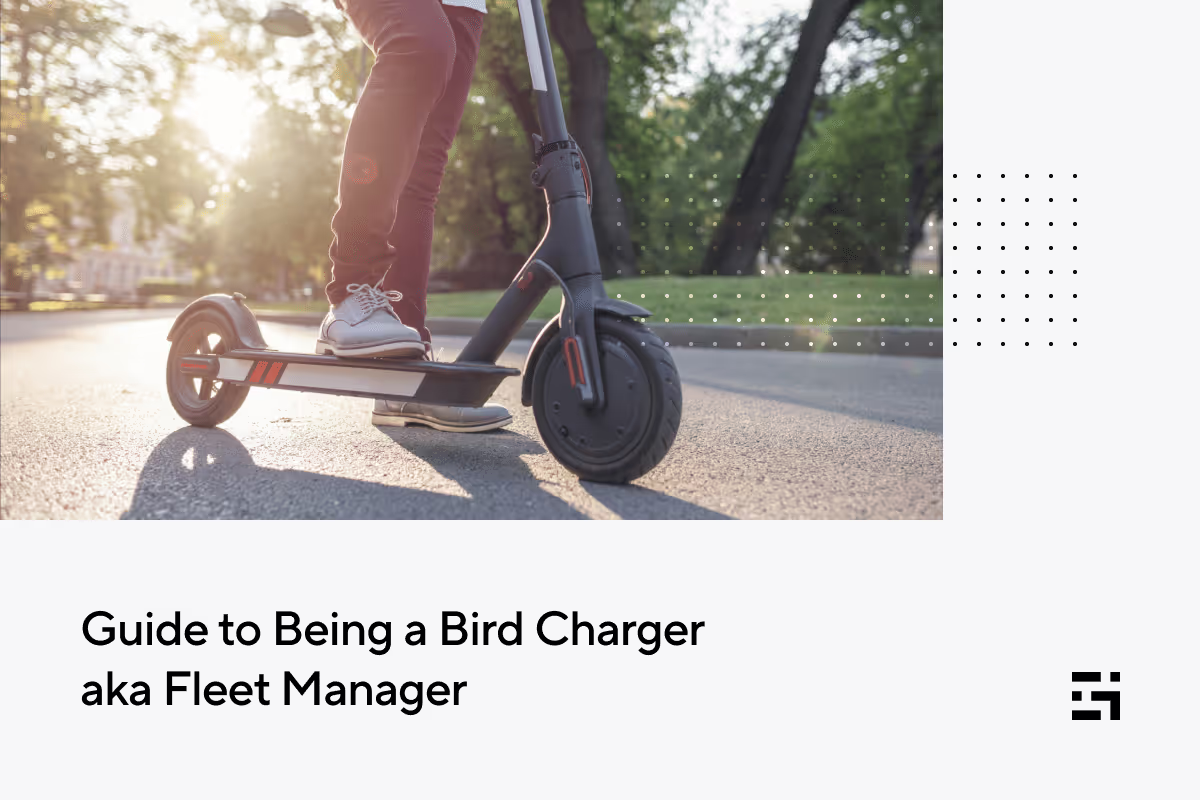
Following our deep dive into Lime charging, we're now turning our attention to another major player in the scooter industry with our Guide to Being a Bird Charger.The gig economy is ripe with opportunities for those willing to hustle, and becoming a Bird Fleet Manager is one that stands out. This role, which involves charging and maintaining Bird scooters, can be particularly rewarding for savvy individuals.Despite recent changes at Bird, the potential for fleet managers remains promising. Let's unpack this opportunity and explore strategies to maximize your earnings in this dynamic role.
What is Bird, and what's been going on with the company?
Bird was founded in Santa Monica, California, in 2017, as a micromobility company specializing in last-mile transportation. They started with ten e-scooters. Within a year the company raised $300 million in funding and was valued at $2 billion. Bird was flying high.
In the last few years, Bird has undergone many changes, including eliminating most of its fleet of gig workers who served as Bird chargers and recreating the position of Bird fleet manager. There was also a bankruptcy, but Bird emerged earlier this year with a renewed focus and a streamlined business model.
A new business model
Bird’s bankruptcy was spurred by the pandemic. Sales plummeted 50% in 2020, as they did for many gig workers and companies in the community mobility sector (while food and grocery delivery cleaned up). Bird declared bankruptcy in 2022, acquired Spin (another e-scooter company) somewhere along the way, and went through a corporate realignment. They re-emerged from bankruptcy earlier this year as Third Lane Mobility, the largest micromobility company in North America, of which both Bird and Spin are subsidiaries.
Bird and Spin remain a force, though, according to a recent Third Lane Mobility release. In 2023,
- Bird and Spin riders traveled over 51 million miles globally, which equates to circling the earth more than 2,050 times.
- Bird and Spin users were responsible for millions of motor vehicle trips that were not taken.
- Bird and Spin users also prevented 10,191 metric tons of C02 emissions from entering the atmosphere.
Bird fleet managers appear
During the pandemic, one significant problem was the collapse of the Bird scooter charger network. This network consisted of gig workers who collected as many Bird scooters as they could each night, charged them overnight at home, and redistributed them to specified locations (called nests) for customer use. With fewer Bird chargers available, the e-scooters couldn’t be charged, leading to a decline in ridership.
Bird’s response to the charger problem was to eliminate the Bird charger position, which put their remaining fleet out of work. They recreated the charger position as a Bird fleet manager, rehiring some former chargers for these new roles.
What is a Bird fleet manager? Fleet managers are assigned a fleet of Bird e-scooters (anywhere from 50 to 100), which remained owned by Bird. Every night, the managers use an app to locate the e-scooters, collect them, and take them to a central location for charging. Each morning, the fleet managers redistribute the scooters to predetermined locations.
Bird fleet managers are also responsible for repairing and maintaining the e-scooters. Sometimes, this is at Bird's expense, and other times, the managers absorb the cost. Missing, stolen, and vandalized scooters are also a problem. Fleet managers are often financially responsible for these losses.
There is also a report card
Fleet managers start out making about 40% to 45% of the revenue generated by each scooter assigned to them. Successful managers follow the performance of each scooter using Bird’s app-based fleet management software. A fleet manager can acquire additional scooters if they excel at the job. Some have fleets of several hundred. High performance often means a higher percentage of earnings, too.
According to a 2023 article in Wired, the Bird fleet manager’s app highlights underperforming scooters. You risk losing the fleet if that number exceeds 10% of your e-scooters.
How can you become a Bird fleet manager?
Like most gig positions, the Bird application process is online. You start by filling in your name and some personal information on the Bird website; then wait for a phone call. Depending on where you live, that phone call may take a while.
One of the characteristics of the e-scooter and micromobility business is that it does well in good weather. This is great if you’re in the southwestern US or the sunbelt states, where the sun shines most days and the roads don’t get covered with ice. Business is more seasonal in areas with harsher winters. If you’re in a good market, there is likely a waiting list to be a Bird fleet manager. If you live where there is snow, your winter may involve some side hustles to make ends meet.
Scooters and micromobility are more prevalent in urban settings and less common in the suburbs. Some cities have also legislated against e-scooters or limited their hours of operation.
Things and skills you’ll need to be a Bird fleet manager
Being a Bird fleet manager takes a commitment. Here are some things you’ll need that will be considered when you interview for the position.
Business experience. Most Bird fleet managers are business people who understand business decisions, possessing management and organizational skills. Some fleet managers even have full-time employees.
Large van or truck. When you go out at night to collect your fleet, you’ll need a good-sized vehicle to transport them. A load of 50 to 100 scooters, averaging 40 pounds each, won’t fit in the back of the family SUV. Bird doesn’t have vehicle requirements, but you’ll need a suitable vehicle for the business.
Mechanical abilities. Fleet managers are responsible for maintaining the scooters. According to the Wired story, the company changed the brake mechanism on one model of Bird scooter, and the changeover fell to fleet managers.
Warehouse space. You’ll need space for your Bird scooter maintenance operations, and the space required to store them while they charge. This will likely exceed the capacity of most garages.
Familiarity with analytics. Successful fleet managers understand data analysis. They have access to app-based tools, fleet management software, and analytics that help monitor the performance of individual e-scooters, identify opportunities for increased usage, and locate e-scooters for retrieval.
Knowledge of the community mobility market. The gig mobility market is little more than a decade old, and in that time, it has undergone waves of change. Successful gig drivers and e-scooter chargers will tell you that understanding the market is vital.
You will need to consider these things if being a Bird fleet manager appeals to you.
How much is the Bird fleet manager salary?
According to multiple sources, Bird fleet managers earn a minimum of $1,500 a week, although that is not guaranteed. If you do a good job and grow your fleet, you can acquire more scooters, which increases your income. Of course, with a larger fleet comes the need for more space and more time to maintain the scooters.
Anecdotally, some Bird fleet managers talk about making more than $100,000 a year, but those are often fleet managers with employees.
Bird fleet managers are contract employees, so they are responsible for taxes. As contract employees, there is no vacation or sick time from Bird, so someone will have to ensure that things get done 365 days a year.
For every successful Bird fleet manager, there are those who aren’t. Profitable Bird fleet managers admit that it comes down to good location, business savvy, and hard work.
A final word about managing Bird scooters
Any student of micromobility and last-mile transportation will tell you that the market is constantly changing. Bird is a good example. Like most companies in the shared mobility market, they faced challenges during the pandemic.In some phases, bird charger jobs were eliminated or redefined. When Bird scooter charger jobs disappeared, many gig workers had to find a different side hustle or identify other gig economy opportunities.
Now Bird has successfully re-emerged into the market, and they have created new opportunities for those experienced in community mobility.
In some areas, Bird has contracts with cities to provide e-scooters. Cities regularly evaluate the contracts, and sometimes they change or drop them to go with another e-scooter provider. Bird fleet managers can lose part or all of their business overnight.
Gridwise can help
The Gridwise app is an invaluable tool for the gig industry. The Gridwise mileage tracker helps Bird fleet managers track business miles; the same is true for the Gridwise expense tracker. These features make tax time a breeze. There are also other benefits and even discounts on gasoline.
Check out these Gridwise articles to learn more about being a Bird fleet manager and other opportunities in the gig industry:

How To Stay Safe As A Woman Driver
Not all gig drivers are women, by a long shot. However, women do make up a hefty proportion of the driver population. Gridwise data indicates that approximately 41% of the Gridwise community identify as female.
Women drivers come from all age groups and have a variety of reasons for choosing gig driving. Many of them drive because it can be a fun way to bring in extra money, while others relish the way flexible hours let them choose their shifts.
Women in the gig economy
A fair number of women drivers do their gig full time, and use their ambition and determination to make a very good living in the gig economy. In general, women drivers have the same reasons for working in rideshare and delivery that men do.
Yet there are some differences in the way they experience interactions while doing their jobs. Men are, at times, subjected to sexual harassment, but incidents of this kind happen to women far more frequently.
According to the National Sexual Violence Resource Center, 43% of men and 81% of women have experienced some form of sexual harassment and/or assault. So if you’re a male and have stayed with us this far, you may want to keep reading. But more so for women, the potential for sexual harassment and assault, along with the likelihood of being robbed or attacked, could explain why the friends and family members of so many women Uber drivers are constantly dogging them about the safety of rideshare driving and delivery.
You can put their minds at ease, and take care of any concerns of your own, by using some of these tips on to make driving for DoorDash, Instacart, Lyft, and Uber as safe as it is profitable and convenient.
Personal safety: Keep smart options at your fingertips
How safe is Uber for women drivers? The more you know, the safer you’ll be. In the event of an emergency, or in a moment when you’re in danger, what would you do? You can always call 911, of course. In addition to that option, rideshare and delivery companies are pretty diligent about providing one-button options for getting help. Here are some examples:
Uber's safety features
- In-app emergency assistance button calls for help and shows your trip details.
- “Follow my ride” feature lets family and friends track your movements and watch for irregularities.
- RideTrack will alert Uber if your trip goes drastically off-course; and if they don’t hear from you, the company will call to check your status.
See more about Uber’s safety features for drivers on the Uber website.
Lyft's safety features
- In-app button gives access to ADT, who will get you instant assistance.
- You can share your location with trusted friends and family.
- Lyft provides videos for drivers to learn more about keeping themselves safe.
The Lyft Website provides further details about the safety features Lyft offers.
Is DoorDash safe for female drivers?
This and other delivery companies definitely do their part to make it that way. The delivery apps DoorDash, Instacart, Shipt, and Grubhub have features that instantly connect drivers to emergency services via ADT or RapidSOS, training videos, plus other features that promote safety while driving, such as allowing fewer notifications from customers.
There is no doubt that these features can be helpful, and you should definitely use them.
Get a dashcam for your car
Above and beyond the tools offered by your rideshare or delivery company, though, we recommend that you get a dashcam.
When a Pittsburgh area Uber driver was shot and killed by a passenger in the fall of 2021, police were able to follow her attacker’s trail through her phone’s Uber activity, but her dashcam gave them even more information. The video evidence of the incident not only enabled authorities to identify the attacker, it will also be used to support the state’s case against him. This CNN article provides the details of the aftermath of this terrible tragedy, and the role the driver’s dashcam played in it.
Make sure that you protect yourself with all the available technology. Read more about what a dashcam can do to protect you.
Bodycams are a good idea for delivery work
Obviously, this was an extreme case, and one that nobody deserves or wants to see repeated. In a similar way, no driver deserves to be the victim of sexual harassment. If you encounter a passenger who comes across as suggestive, or downright creepy and aggressive, having that recording can seal your case against them. If you do delivery work, wearing a body cam can deter attackers or harassers from selecting you to be their next victim.
Read more about how to deflect unwanted passenger behavior in this article from The Conversation.
In addition to taking basic safety measures, there are other things you can do to ensure that you enjoy being a female Uber driver without being harmed, and become a poster person for female Lyft driver safety.
9 more tips for women rideshare and delivery drivers
These tips are geared to women (and men) who take their personal safety seriously. Use them like your life depends on it, because it just might.
On every trip
- Before a trip, check your passengers. Look at their ratings, and if they’re low, consider letting the opportunity pass you by. Plus, make sure the person getting into your car is the same person who is on the passenger account.
- During a trip, keep doors locked and windows up. Be aware of your surroundings, especially when walking outside your car. Trust your instincts. If your gut tells you something doesn’t feel safe, it probably isn’t.
- After a trip, check for belongings that might get left behind before the passenger leaves, so you won’t be called back to a sketchy address to return them.
Throughout your shifts
- Stay alert and follow your instincts
- Trust your gut. Don’t ignore those messages or remarks that make you feel unsafe. If a potential passenger looks dangerous or even a little bit creepy, keep your distance. Don’t be afraid to cancel a ride. Your safety is far more important than your cancellation rate. You can always report your reason for canceling to your company.
- Maintain a “strictly business” attitude. The way you present yourself as a driver can speak volumes about what you will, and absolutely will not, tolerate.
- Be alert. If you’re parked on a lonely street, look all around you to make sure there’s no one suspicious who might mark you as a target.
- Carry yourself with confidence. Whether you’re walking to your vehicle or dropping off a delivery, keep your head up and walk with a purpose; don’t let yourself be distracted. When it looks like you know where you’re going, and that you have a strong sense of self-confidence, you’re far less likely to be marked as a victim.
- Consider self-defense training. It is against company policy, and in many cases illegal, to carry weapons while you’re doing rideshare or delivery driving, so that’s not what we mean here. We’re talking self-defense classes and martial arts schools that can help you develop skills and “street smarts.” You’ll learn as much or more about how to prevent or get out of a situation as you will about actual bodily defense or hand-to-hand combat, something that’s well worth the money and effort. Plus, it can be a great way to stay in shape!
- Report any and all incidents to your driving platform. If a passenger harasses or touches you, report it to your company. They will deal with the customer and probably terminate their app privileges. You have the right to refuse a ride or ask a passenger to leave your vehicle if you feel the least bit unsafe. Your company should, and probably will, support your decision. Read more about how to deal with troublesome customers.
- Know where safe areas are and assess your surroundings
Learn street names and localities of safer neighborhoods, and try your best to stay in them. Stick to the busiest parts of town where more people are around. Beware of simply following “surges.” Often, the rates are highest in those areas that most drivers would rather not go. Use Where to Drive to see where the best areas to drive are, and where drivers are getting the most money for their time.
- Drive at safe times
Is Uber safe for women at night? Well, it can be. If you know you will be around large crowds or otherwise familiar territory, you don’t have so much to worry about. How do you know when the safest times to drive are?
It might be all right to be out on a weekend at midnight, when people need you to take them to and from bars, restaurants, and cultural events. Late on a Tuesday or Wednesday evening, though, the same areas that seemed so lively might be deserted, and even dangerous.
You could try figuring out the good and not-so-great times to drive by trial and error, or you could get the facts right away when you use When to Drive from Gridwise. This feature graphs out data from real Gridwise drivers to show you when the best (and safest) times to drive are in your town.
- Use Gridwise and its many features to help you navigate other information and services that could impact your earnings and your safety, such as
- airport information: arrivals, departures, and queue lengths at your location
- weather: current information and weather alerts
- traffic alerts: where the bottlenecks are and how to avoid them
- gas deals: save on fuel costs with Gridwise Gas
- event information: start times, end times, locations, everything you need to know about local events
Using Gridwise features is a wise way to stay safe, and the following tidbit is just one more thing we’d like you to consider.
Important tip from a successful women gig driver: Always have your car or phone’s GPS programmed to take you to a busy place, such as the cultural district or an area with a lot of restaurants and bars. That way, if you have to drop off a passenger or delivery in a quiet, dangerous-looking place, you can turn off your driving app and get to a safer location with ease.
- Maintain your vehicle and call for help when needed
Nobody wants to have their vehicle break down in the middle of a gig driving shift, but it can happen. When it happens to women, it can pose additional safety risks. Getting a flat or discovering your battery is dead on a lonely country road takes on new meaning when there’s a greater possibility of encounters with people whose intentions are not-so-good.
It’s true that proper car maintenance can cost money, but it’s an investment you can’t afford not to make. Stay fully informed about what it takes to keep your car running. You might already know how to perform many of these tasks, and you may be able to change a tire in just a few minutes…flat. But in the event you’re not an automotive whiz, or you definitely need a tow, there is help you can always call on.
There are affordable roadside assistance programs for drivers, and some programs help drivers get reduced prices on car maintenance (including up to 44% off certain maintenance services!).
- Be prepared and well equipped
Because you’re driving so much and to so many different places as a gig driver, it’s more important than ever to carry equipment that you might need when emergencies arise. Here are some suggestions:
- jumper cables or battery charger
- tire gauge
- spare tire (and knowledge of how to change a flat)
- tool kit
- hand warmers
- water
- snack food
- wiper fluid
- motor oil
- a blanket and/or an extra coat
- snow shovel/brush
- safety cones and/or flares
- flashlight or headlamp
Even though these supplies will take up room in your vehicle, the fact they can save your life is worth it. Weather is important to keep in mind too. Waiting for the tow truck in the middle of a hot desert road or blizzard-blocked highway could make you see how that water, snacks, or thermal blanket can earn their keep.
Make Gridwise your on-the-road partner
Using Gridwise as a female driver offers numerous benefits that can significantly enhance your experience and efficiency on the road. With features like real-time tracking of earnings and mileage, you can better plan your routes and avoid less safe areas. The app also provides insights into the best times and places to drive, helping you stay in busier, safer neighborhoods.
Additionally, Gridwise offers exclusive benefits such as discounted vehicle maintenance and roadside assistance, which are crucial for avoiding breakdowns in potentially unsafe situations. By using Gridwise, you can maximize your earnings while ensuring a safer and more secure driving experience.
Work smarter. Earn more.
Whether you drive, deliver, or pick up shifts — Gridwise helps you track earnings, mileage, and performance so you stay in control of your work. Download the app and take charge today.
