Gridwise blog
Tips, insights, and advice to help you earn more and work smarter, whether you do gig work, hourly, or shift work.
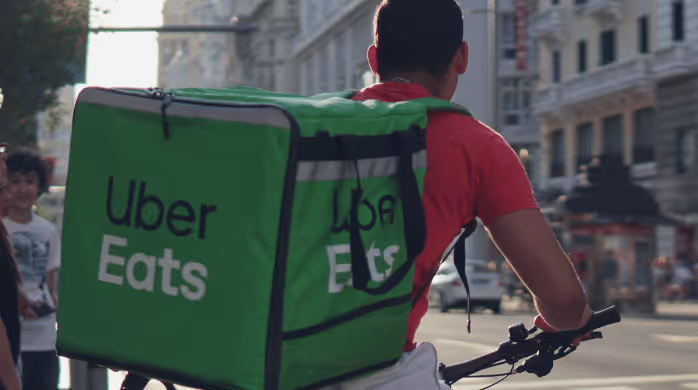
How to Make $1,000 a Week With Uber Eats in 2026 (Tips + Hourly Data)
In this blog, we'll explore the strategies and techniques that can show you how to earn $1000 per week as an Uber Eats delivery driver. We'll cover everything from optimizing your delivery zones and schedules to maximizing your tips and customer satisfaction. Whether you're a seasoned Uber Eats driver or just starting out, this guide will provide you with the insights and actionable steps to take your Uber Eats driver earnings to the next level.
Becoming an Uber Eats delivery partner can be a lucrative opportunity, especially if you're able to consistently earn $1000 a week. By understanding the platform, optimizing your delivery strategies, and focusing on customer satisfaction, you can maximize your earnings and turn Uber Eats into a reliable source of income.
We’ll cover the following topics to provide coaching and ideas to help you push your earnings up to that $1000 per week level:
What do Uber Eats drivers do?
Uber Eats drivers deliver prepared food most of the time, but they also might shop for and deliver goods from convenience outlets and grocery stores. The job is pretty simple. You get a request for an order, you drive to the restaurant or store to pick it up, and then you deliver it to the customer. If you already drive for Uber, you can choose to take orders for Uber Eats delivery any time.
If you’re not an Uber Eats driver yet, it’s pretty easy to become one. This Gridwise post tells you what you need to do if you want to sign up and start making money Uber Eats style. Many rideshare drivers welcome the chance to deliver food rather than people. This article from Nerdwallet covers the Uber Eats gig from that angle.
There are some sweet advantages to working with Uber Eats. In lots of cities you don’t even need to have a car. You can use a bike or a scooter, or even walk, to make your rounds. If you do use a car, Uber Eats’ requirements are a lot easier to meet than they are for Uber rideshare driving.
You also have a lot of flexibility. You can shop and deliver convenience items and groceries, but you don’t have to. And, like most driving gigs, you can choose your own hours, and map out the locations where you want to work.
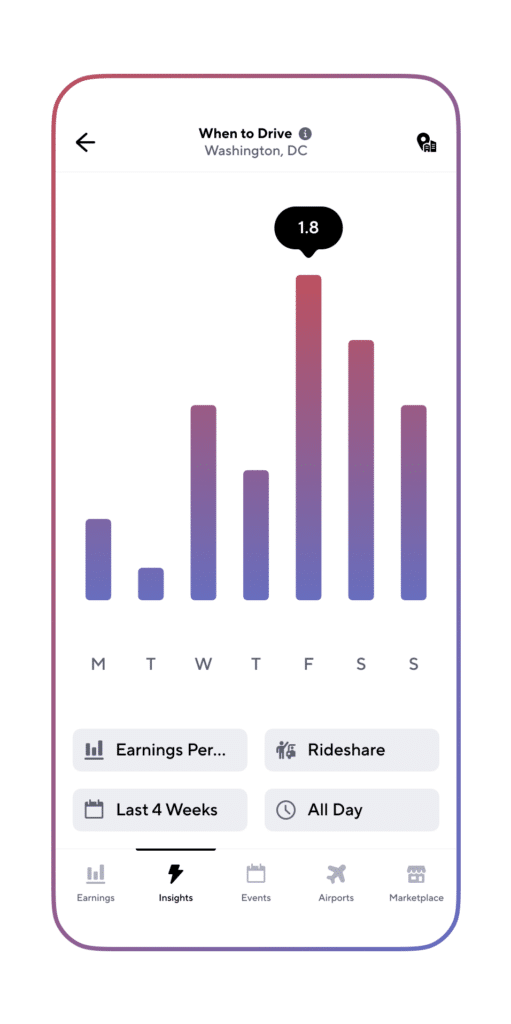
Use Gridwise features When to Drive and Where to Drive to help you figure out what work hours and which specific areas will be the most profitable for you. Real data from real delivery people will show you earning patterns for drivers in your town.
How much can you earn doing Uber Eats?
The honest answer to this question is: basically, as much as you want! It all depends on how many hours you put in and how strategic you are about your gig. Earnings vary from one area to another, as this article from Entrepreneur points out. To give you a baseline, let’s look at the earnings of Uber Eats drivers who tracked their earnings with Gridwise.
Remember that these numbers show us only average earnings. To make $1,000 a week with Uber Eats, you’re going to have to be better than average, and we’ll show you how. For now, though, it’s good to have these figures so you get a ballpark number of where to start.
How much do Uber Eats drivers make?
Gridwise data tell us the following:
- Monthly earnings average around $444.00 per month.
- Gross earnings per trip are between $9.00 and $10.00.
- Tips make up about 50% of most Uber Eats drivers’ income, which amounts to about $225.00 per month.
Is Uber Eats good money? It can be. While there are other gigs that pay more per trip, if you drive for Uber Eats, you’ll always be pretty busy.
https://datawrapper.dwcdn.net/HPAz8/3
You can also see that, unlike many other gigs, tips play a huge role in Uber Eats earnings.

With these numbers as a baseline, what can we say about how to earn $1,000 a week with Uber Eats? As we said in the introduction, it’s going to be a hustle, but it’s really possible. To figure out how to make the most money with Uber Eats, let’s start by looking at how many trips these “average” drivers made each month.
We know that average gross earnings were $444.00 per month, and drivers got around $10.00 per trip. That means they took 44 or 45 trips per month, which breaks down to 11 trips per week. That’s not a lot of Uber Eats delivery, is it?
The fact that Uber Eats drivers averaged so few trips shows us that many drivers use more than one app at the same time. This is called multi-apping, and you can learn more about it in this Gridwise post. If you want to answer the question of how much you can make with Uber Eats, then you need to stick with the app and keep plugging away at those orders. You also need solid strategies, as well as some inside tips and tricks.
How to make the most money on Uber Eats: Delivery driving tactics
Getting to that $1,000 a week with Uber Eats isn’t so hard when you remember that the drivers we saw making about $111 a week were only taking around 11 trips in the same time period. That’s not much at all! If you work the Uber Eats app like a boss, you’ll soon have many more trips than that, easily reaching the number needed to get you to $1,000 a week. Now, let’s get to some tactics you’ll need to make that kind of bank.
- Stay with the Uber Eats app, and track your earnings. Gridwise can easily do that for you. Simply sync your Uber Eats app with Gridwise, and you’ll be able to see how much you’ve earned with Uber Eats, what times were most profitable, and your average hourly pay. Racking up trips with Uber Eats has other benefits, including perks and bonuses that are awarded to top drivers.
- Leverage surge pricing and promotions. Surge pricing is applied when there is a lot of demand. When surge pricing is in effect, many of the trips you make will pay more than usual. Promotions are offered to drivers who complete a given number of trips in a certain time period. High traffic volume days, nights, and times give you these chances to get extra earnings. Challenging yourself to complete the right number of trips for promotions will add to the number of trips you can count on for big bucks, too. Learn more about Uber Eats surge pay, boosts, and promotions in this Gridwise blog post.
- Say yes to doubling up on orders. With Uber Eats, you can get back-to-back orders or receive batched orders. Back-to-back orders happen when you receive a new request while you’re on the way to deliver an original order. The Uber Eats app routes these trips automatically, so you won’t be sent out of your way.
Batched orders are Uber Eats’ way of bundling together orders from either the same restaurant, or two nearby eating establishments. You get money, and trip count credit, for all the orders you complete, plus customer tips, without having to make a bunch of separate trips.
- Turn on the charm and get bigger tips. Being nice really is part of the Uber Eats driver’s job, and getting tips is one way people who drive for Uber Eats make money beyond their basic pay.. Bring along those extra napkins and condiments, use equipment that keeps food and drinks at the right temperatures and prevents spilling, and consider your customers’ needs. If you deliver groceries, be extra careful with delicate items such as bread and eggs.
And, most important, follow your customers’ directions, and stay in communication with them if you are going to be delayed, or if you have questions about their order. This Gridwise post will tell how to get bigger tips as a delivery driver.
- Use even more charm to keep your ratings high. As an Uber Eats driver, you will be rated by the restaurant or store where you pick up the orders as well as the customers who are waiting for the deliveries. This two-way rating system is designed to keep you on your toes, so Uber can keep people satisfied with your service. Don’t worry, you get to rate them, too.
There’s another reason why your rating as a driver is important. It not only keeps you in good standing with Uber; it helps you to qualify for the Uber Eats Pro incentive program. To learn more about Uber Eats Pro, and what it takes to earn perks such as preferred services, discounts, and deals, check out this Gridwise blog post.
Smart business moves that seal the deal
Now that you know how to gobble up the deliveries you need to make $1,000 a week with Uber Eats, it’s going to be a breeze to get there. Let’s make it even easier, with business moves that boost your earnings and shrink your expenses. If you use these, it will also be easy to say yes when people ask, “Can you make good money with Uber Eats?”
Minimize expenses. Avoid racking up big fast-food bills by bringing your own food and beverages. You might not think you’re hungry when you first start your Uber Eats run, but once the aroma of pepperoni pizza, premium cheeseburgers, and piping hot fries start wafting through your car, that might change. Bring a sandwich or other healthy food from home, and buy bottled water in bulk to save tons of cash compared to what it costs to buy single servings.
Maximize tax deductions. Another way to minimize your expenses is to maximize your tax deductions. Start by tracking mileage with Gridwise.
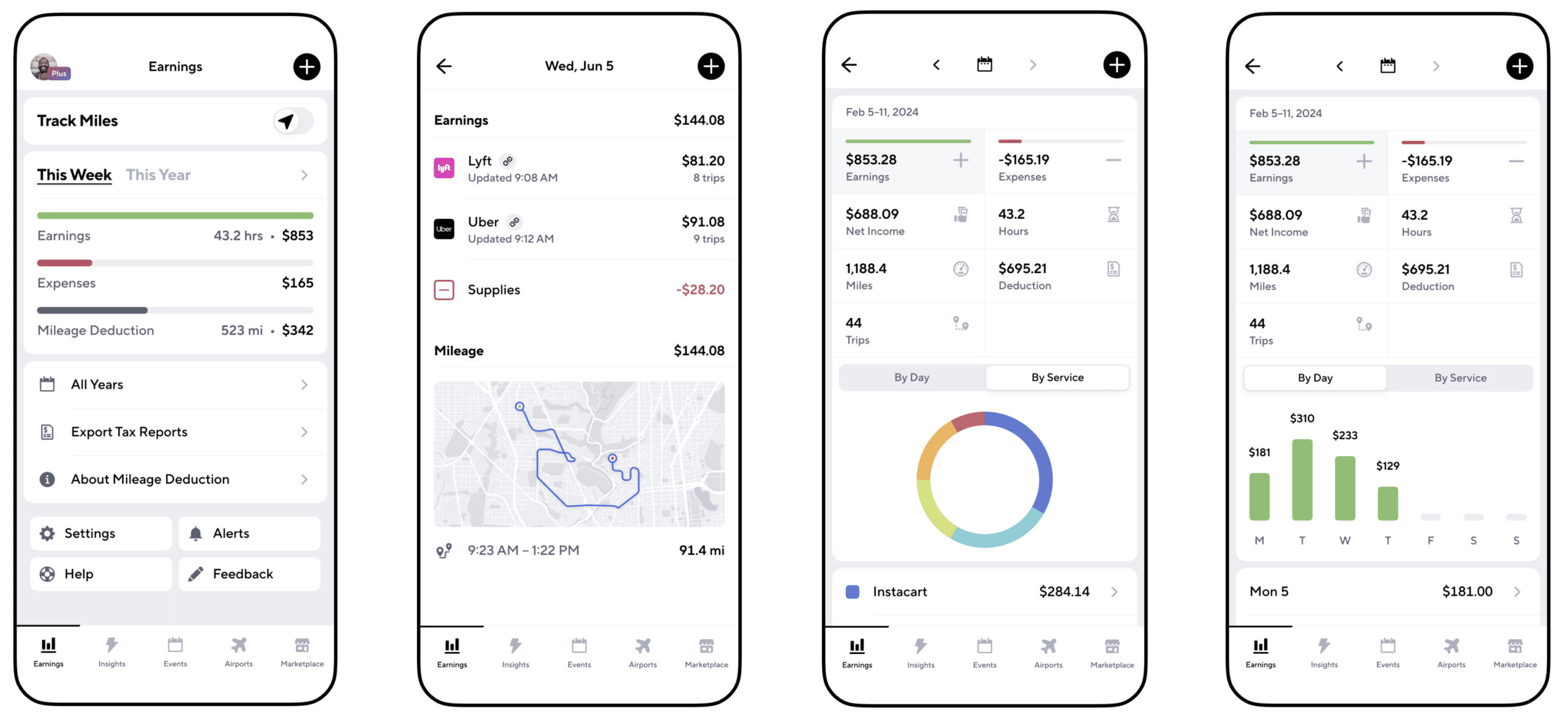
Gridwise App
Gridwise captures every deductible mile you drive, including the distance you cover between the trips your driving app records. Know what expenses you can deduct, and put them to work for you when tax time comes. Learn more about tax deduction strategies in the Gridwise Tax Guide for drivers.
Boost earnings with referrals
As an independent contractor, you’re probably looking for ways to make even more money than you can with Uber Eats. And most gig workers like you enjoy getting passive income. With Uber Eats, there’s a really easy way to do that, referrals!
All you need to do is find friends and encourage them to deliver for Uber Eats. If they make a certain number of deliveries within a specified time, you will get paid for doing nothing more than having them sign up under your referral code! Rates of pay vary by city, so check your Uber Eats app to find out what the current deal might be, and learn more about the referral program on the Uber Eats website.
Also remember: “friends” don’t have to be your best buds. Many delivery people carry cards with a QR code linking to their referral information, so just about anyone you encounter can join Uber Eats and boost your earnings. You could meet a source of passive income at the gas station, on social media, or at your high school reunion. The more you hustle, the more there is to gain, right?
Master the art of self-employment
As an Uber Eats driver, you’re an independent contractor. That means the company isn’t going to withhold your taxes, provide insurance, keep track of your earnings, or tell you about tax deductions. You’ll have to do all these things for yourself.
If you want to maximize your tax advantages, open an official business entity. You can incorporate (create a corporation) or you can work as a limited liability corporation (LLC). You can also work with a DBA (Doing Business As) arrangement, but the corporation or LLC will do a better job of protecting you from liability.
Establishing a corporation or LLC offers better tax advantages than being a sole proprietor. For instance, if you simply collect your earnings into your private account, you’ll be charged self-employment taxes in most states. And paying extra taxes is something we all want to avoid, within legal limits, as much as possible.
Every Uber Eats driver needs to learn about self-employment, and there are some great resources you can review. Check out the CareerOneStop website about self employment which will help explain the basics. You can also check with a professional tax accountant, or look other websites to learn more about actually creating a business.
Scope out your market
Look at the area around you to see where you’re likely to get the most deliveries. Where are all the restaurants? Where might people be more inclined to order deliveries? What hours do you want to drive? What activities might be going on around those times? Think about late-night and after-school times as well as breakfast, lunch, and dinner times.
Be realistic about the potential for your area and aware of new services opening up. For example, in New York, there is already a tab on the Uber Eats app that allows customers to order groceries. In our article about the best food delivery service to work for you’ll see that Uber Eats stacks up well against other delivery companies, mainly because of its potential for expanded opportunities for drivers to earn.
So, is Uber Eats good money? As we said, it isn’t an automatic guarantee that everyone will make $1,000 a week with Uber Eats. Trying out the suggestions we give you here, though, should put you on the right track! Go out there and start stacking up those orders and raking in some impressive earnings!
Get more inside information on Uber Eats in these posts from the Gridwise blog:
- The delivery driver guide: Using the Uber Eats app
- Everything you need to know about driving for Uber Eats
- Uber Eats Pro: What drivers need to know
- Looking for a different gig, part-time or full time job? Check out the Gridwise Job board.
Uber Eats FAQ
How does the Uber Eats platform work for drivers?
Uber Eats is a food delivery service that connects customers with local restaurants and independent delivery partners. As an Uber Eats driver, you'll receive notifications of nearby delivery requests, which you can accept and complete. The platform provides flexibility, allowing you to work on your own schedule and earn money based on the number of deliveries you complete.
What are the requirements to become an Uber Eats delivery partner?
To become an Uber Eats delivery partner, you'll need to meet certain requirements, such as having a valid driver's license, a registered vehicle, and passing a background check.
How can I choose the right delivery zone to maximize my earnings?
Selecting the right delivery zone can significantly impact your earnings, as some areas may have higher demand and better-paying orders. It's important to research and identify the zones in your area that tend to have the most consistent and lucrative delivery opportunities.
How can I take advantage of peak delivery hours and surge pricing?
Understanding peak delivery hours, such as mealtimes and weekends, and taking advantage of surge pricing can boost your earnings. Be aware of when demand is highest in your area and adjust your schedule accordingly to capitalize on these peak periods.
What are some tips for maximizing tips and customer satisfaction?
Providing excellent customer service and going the extra mile to ensure a positive experience can lead to more tips and repeat business. Prioritize communication, timeliness, and attention to detail to keep your customers happy and satisfied.
How can I set realistic weekly goals to reach my $1000 target?
To make $1000 a week with Uber Eats, it's essential to set realistic weekly goals and track your earnings and expenses. Start by determining your target earnings and breaking it down into achievable daily or weekly goals. This will help you stay on track and make adjustments as needed.
What are some strategies for efficient route planning and navigation?
Effective route planning and navigation can save you time and fuel, allowing you to complete more deliveries. Utilize mapping apps and take advantage of features like real-time traffic updates and turn-by-turn directions to find the quickest routes.
How can I balance my Uber Eats deliveries with other commitments?
Develop a schedule that allows you to capitalize on peak delivery hours while still maintaining a healthy work-life balance. Consider using tools like calendar apps to plan your availability and track your hours to ensure you're maximizing your earning potential without sacrificing your personal life.
What are the key considerations for maintaining my vehicle as an Uber Eats driver?
Keeping your car clean and well-maintained is crucial for maximizing your Uber Eats earnings. Regularly scheduled oil changes, tire rotations, and other preventive maintenance can help extend the life of your vehicle and minimize downtime. Additionally, budgeting for vehicle-related expenses, such as fuel, insurance, and repairs, will ensure you're accounting for these costs and maximizing your net earnings.
What are the tax obligations and legal considerations for Uber Eats drivers?
As an Uber Eats delivery driver, it's essential to understand the tax obligations and legal considerations that come with being an independent contractor. This includes properly reporting your earnings, deducting eligible business expenses, and making quarterly estimated tax payments. Additionally, you'll need to ensure you have the appropriate insurance coverage, such as personal auto insurance and possibly commercial auto insurance, to protect yourself and your vehicle while on the road making deliveries.

The Gridwise Job Board: Find Your Ideal Job or Gig Work
Gridwise is an essential assistant app created by gig workers for gig workers. Our mission is to support those engaged in gig work in every way possible. We understand how challenging it can be to deal with income instability, a lack of benefits, and job insecurity that often comes with gig work. The Gridwise app tracks and organizes earnings and expenses, and offers a wide array of discounts, deals, and services that make the lives of independent contractors easier and more rewarding.
We firmly believe it’s possible to make a viable living and create a gig experience that offers flexible hours, variety, and excitement. With issues such as consistent earnings and job security in mind, Gridwise is proud to offer a centralized platform that shows you how to find gig work and secure reliable opportunities. We’re proud to introduce the Gridwise Job Board.
The Gridwise Job Board: Key features
Because Gridwise is dedicated to serving the gig worker community, we’ve filled the Gridwise Job Board with useful features that won’t waste your precious time.
- Comprehensive listings. Find part-time, full-time, temporary, and per-task work. Drive or deliver with your vehicle, utilize an employer’s vehicle, or even find non-driving gig work.
- User-friendly interface. Find the jobs that are right for you with a tap of your screen.
- Verified opportunities. We vet the jobs before they are listed to ensure you’re getting high-quality job postings.
How to get more gig work, seasonal, part-time or full-time jobs with the Gridwise Job Board
Looking specifically for “gig work apps” or “gig jobs near me?” You’re in luck. Our filters and search functions send you directly to the listings you seek.
Here’s how it works.
- Access the Job Board via the Gridwise website.
- Search for jobs by type, location, and more.
- Select the job that interests you, and read all about it.
- Scroll through the description, and if it appeals to you, click “Apply for job.”
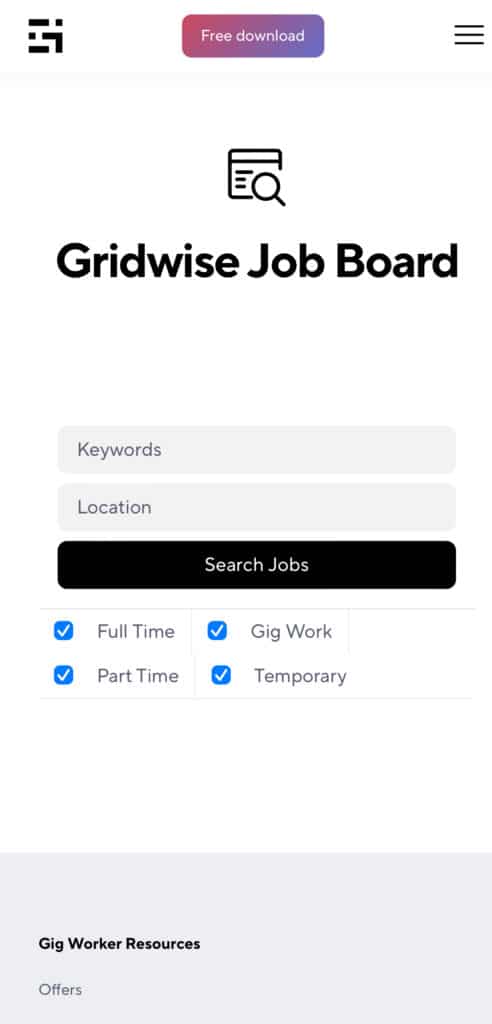
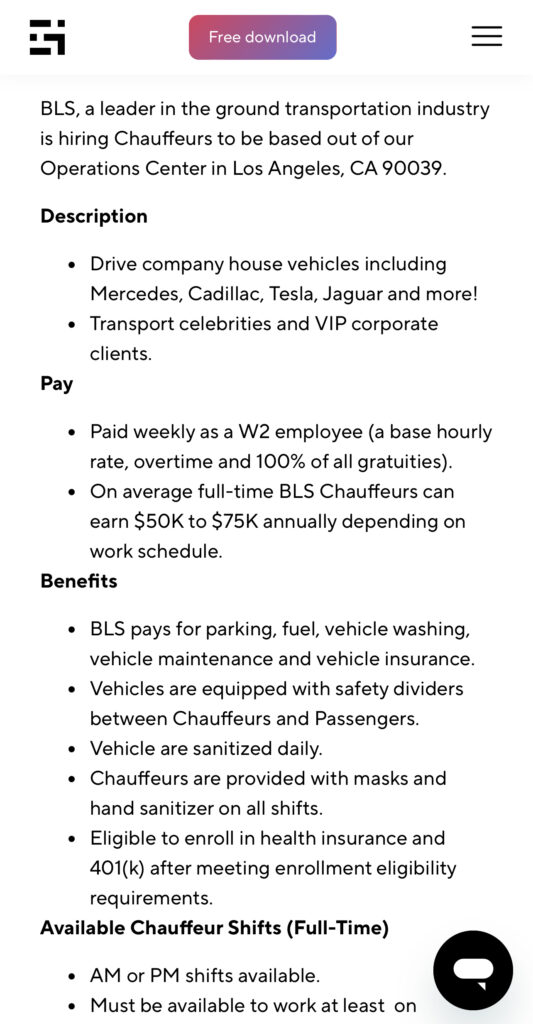
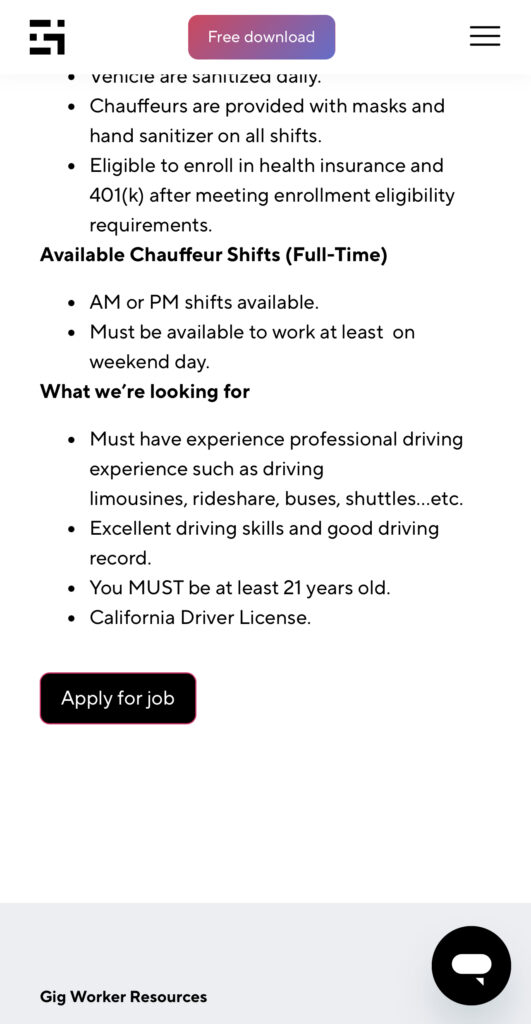
Many types of jobs are available. Adjust the search filter to see the full variety of opportunities that will let you cash in. Deliver food, set up catering, do rideshare driving, get paid for doing package delivery, and much more. You’ll find short-term gigs, long-term contracts, and part-time positions.
Perks of the Gridwise Job Board for gig workers
Gig workers who know how to make extra money will appreciate how the Gridwise Job Board lets you multiply your chances of bringing in big earnings. Here’s how:
- Increased stability. Use the Gridwise Job Board to find part-time or permanent jobs in addition to the part-time gigs you already have. Always keep a steady stream of earning opportunities flowing toward you.
- Flexibility and autonomy. Choose jobs that fit your schedule, work around other jobs and family duties, and still leave room for some fun in your life. Discover side hustles to supplement your full-time job, permanently or just for the season.
- Skill development. Find part-time work that lets you use a skill you already have, or try your hand at something new. It’s a smart way to develop a portfolio to showcase what you can do, or even to find permanent employment.
Get Gridwise and stay up to date on the Gridwise Job Board
Gig workers need plenty of information and assistance, and Gridwise is here to give it to you. Download the app and get essential features such as
- seamless earnings tracking
- mileage tracking
- expense recording, including notes
- low-cost and no-cost insurance benefits
- access to affordable medical, dental, vision, mental health, and alternative care
- professional services including legal and financial help
- deals and discounts
- weather, events, and traffic reports
- inside information on where and when to drive
More to know about gig work:

5 Best Mileage Trackers For Gig Drivers
Many drivers ask, “Do I really need a mileage tracking app?” The answer is simple: only if you want to have an accurate count of all the miles you can legally deduct from your taxable income! You might think your rideshare or delivery driving app has got you covered. After all, they do quite a good job of logging the miles you drive while you’re on a trip or delivery. But, if you want to have the best app to track mileage for Uber, Lyft, Doordash, Instacart, or the other apps you may use, you need more. Why is that?
Without a separate tracker, you’re missing the miles you drive in between pings. Did you realize that all the miles you drive, from the moment you begin your shift until it’s over (as long as you don’t drive several miles on a break to hang with your friends), are tax deductible! That means you need something besides your driving app to keep an accurate count of your travels. Read this Gridwise post to see how important it is to keep track of every deductible mile.
You won’t be surprised to hear that there’s an app for tracking miles. In fact, there are several of them. Here, we’re going to tell you about five top mileage tracking apps, and help you figure out which one is best for you.
Before we get to the list and identify the best mileage tracker app, let’s clarify what exactly a mileage tracking app is. According to G2.com’s technology glossary, mileage tracking is done for the purpose of keeping a log of mileage that is either reimbursable or tax deductible.
And yes, of course you can track your miles simply by taking readings on your odometer. But are you really prepared to account for how many miles you drove for personal reasons and subtract them from the total to get your business mileage? Even if you can remember all that and do the arithmetic, if you want an accurate reading of the miles you drive for business, and can therefore deduct, a mileage tracking app will save you a lot of trouble and prevent you from making costly errors.
Plus, as a gig driver, you have specific needs when it comes to a mileage tracker. Ideally, you’d be able to handle mileage tracking and several other functions all in one app. It can be maddening enough to deal with driving apps, particularly if you’re an avid multi-apper. You would want your mileage tracker app to help you keep account of other aspects of your business, including income, expenses, and inside information about the art of gig driving.
Not all mileage apps are equal, to be sure! Let’s look at five of the best apps to track mileage and figure out which is the best app to track mileage with Uber and Lyft, or what mileage tracker app is best for DoorDash.
1. Zoho Expense
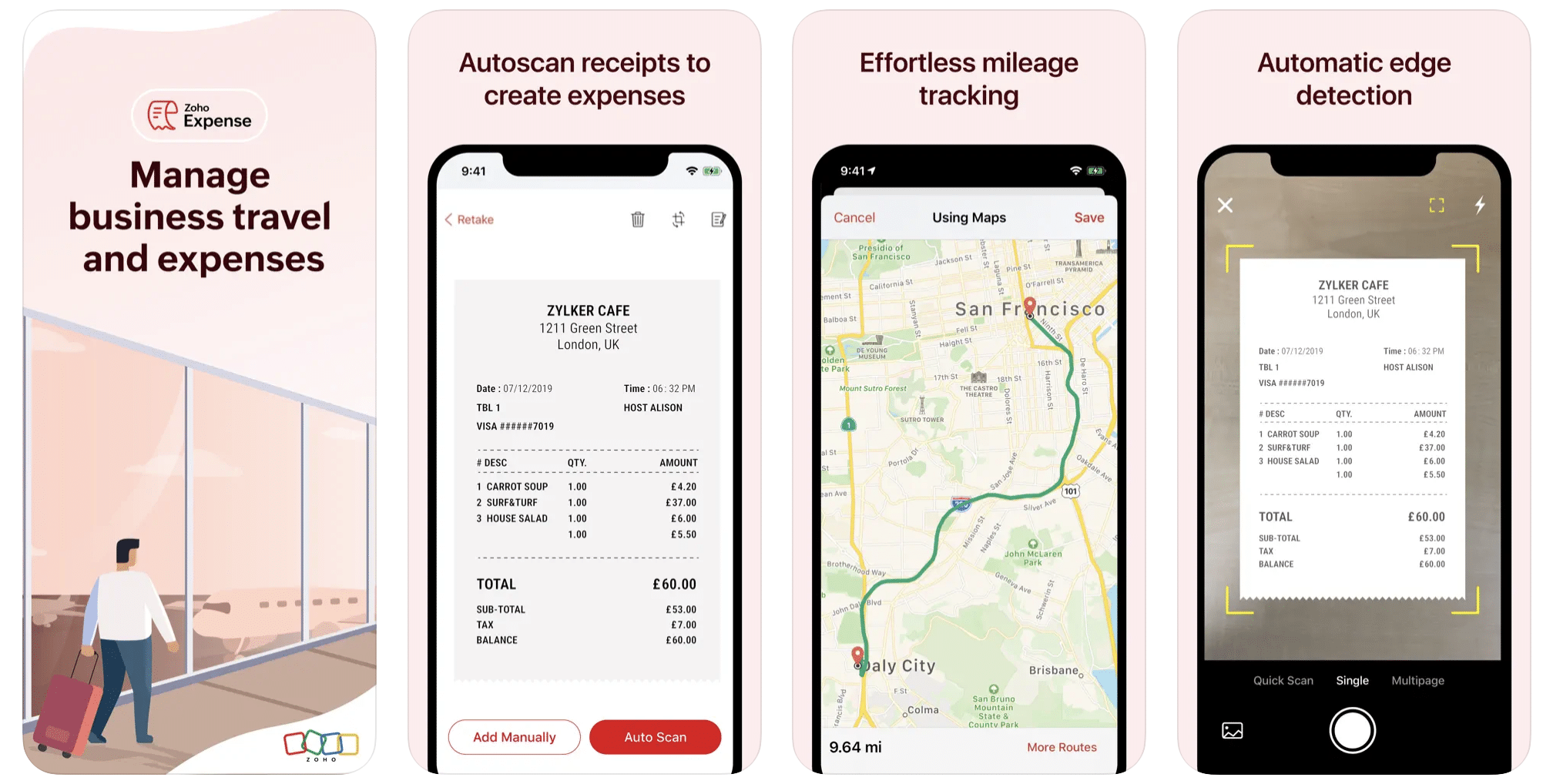
First up is Zoho Expense, which does exactly what its name says. This app is designed to allow companies to give employees a uniform way to create and submit expense reports. It can be used by individuals, including gig drivers, as well.
It includes a mileage tracker, as well as features that let you track other deductible expenses, including the ability to scan and record receipts.
Available on Android and Apple: Yes
Ratings: 4.8 stars on App Store, 4.7 stars on Google Play
Free Version: Yes
Subscription price: $3 per month, billed annually
Created specifically for gig drivers: No
2. Quickbooks Online
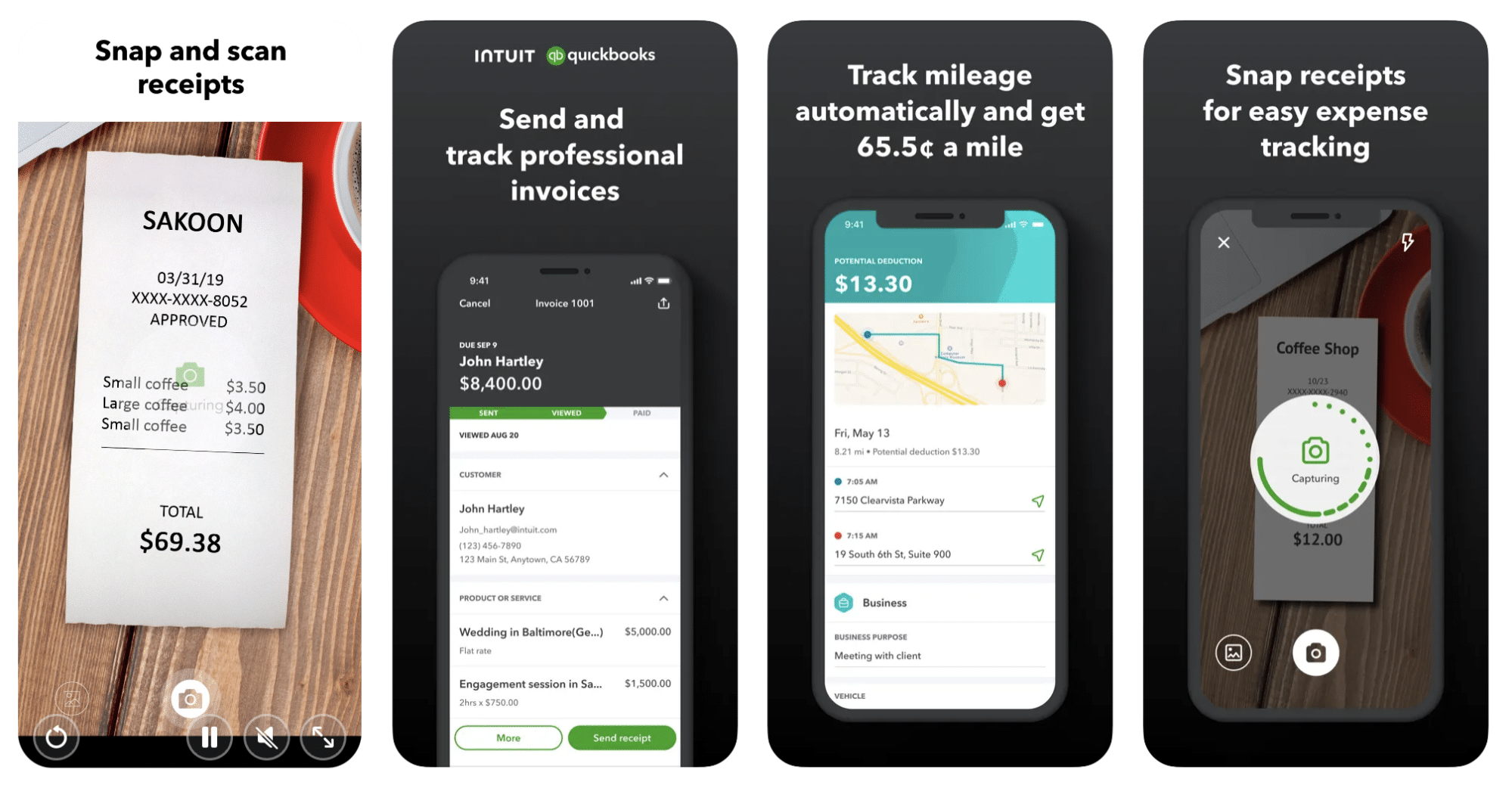
Quickbooks Online is a cloud-based app that allows you to track your mileage, earnings, and expenses. The information you enter can then be used to generate various reports that prepare you for tax time. It also allows you to create graphs that illustrate your cash flow, and includes a receipt scanner so you can instantly record deductible expenses. Quickbooks is popular, highly reliable, and designed mainly to help people keep track of their small businesses.
Available on Android and Apple: Yes
Ratings: 4.7 stars on App Store, 4.4 stars on Google Play
Free version: 30-day free trial
Subscription price: $15 per month for basic version if purchased for 3 months or more
Created specifically for gig drivers: No
Source: quickbooks.intuit.com
3. Shoeboxed
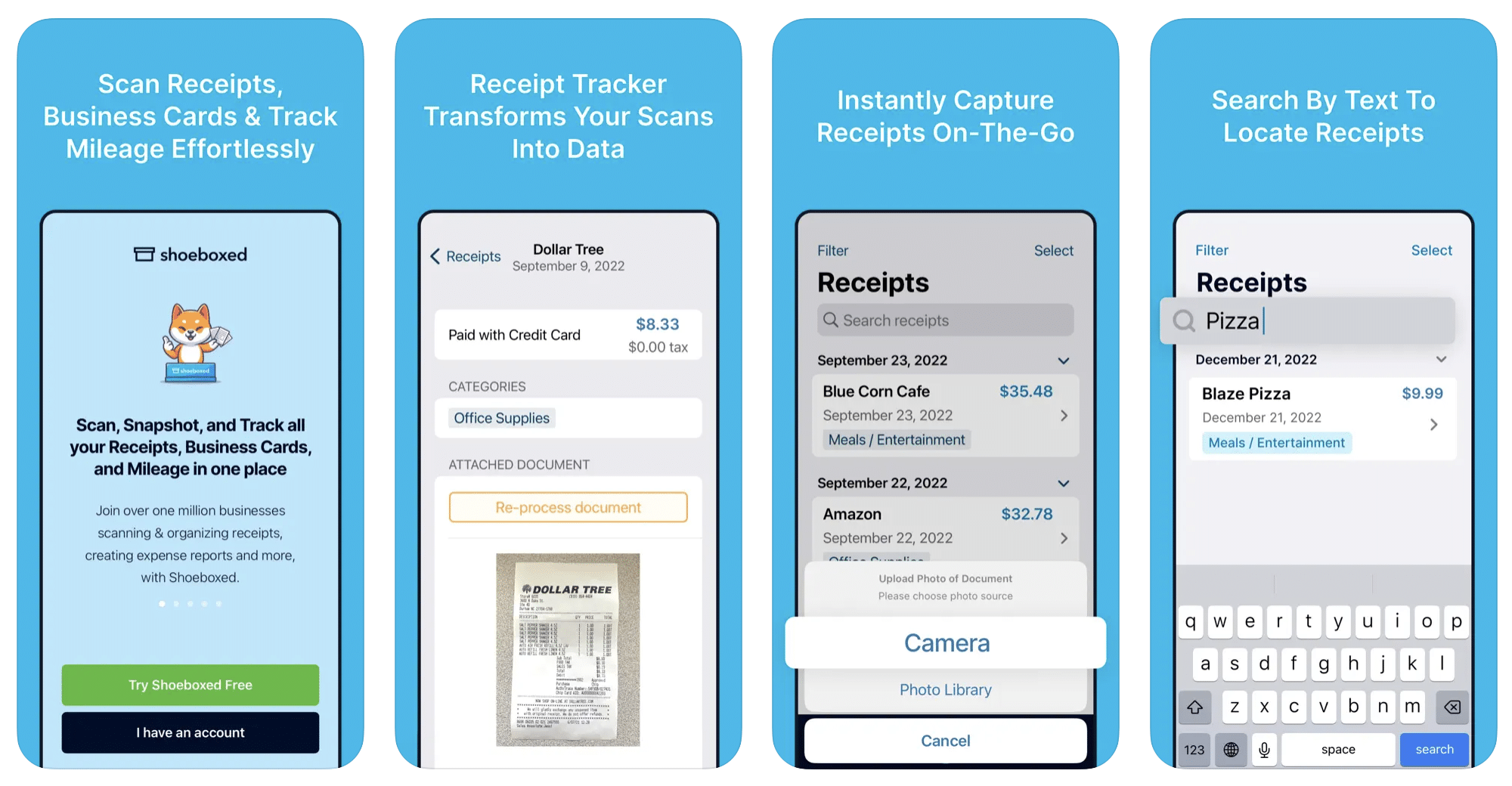
Shoeboxed started in 2007 as a service for scanning paper receipts into digital form. Now the app offers a free mileage tracker and has enabled users to scan receipts directly. It touts itself as the best mileage tracking app for DoorDash, but there are some elements missing that Dashers might like to have. While it provides features that record your expenses and prepare you for tax season, it doesn’t automatically track your earnings. The mileage tracker has a system where you can drop pins along your routes to make the tracking more precise, identifying those legs of a trip that you make for business purposes. The mileage tracker is “free” once you sign up for the basic version.
Available on Android and Apple: Yes
Ratings: 4.5 stars on App Store, 2.3 stars on Google Play
Free version: No
Subscription price: $18 per month for basic version
Created specifically for gig drivers: No
Source: blog.shoeboxed.com
4. Stride
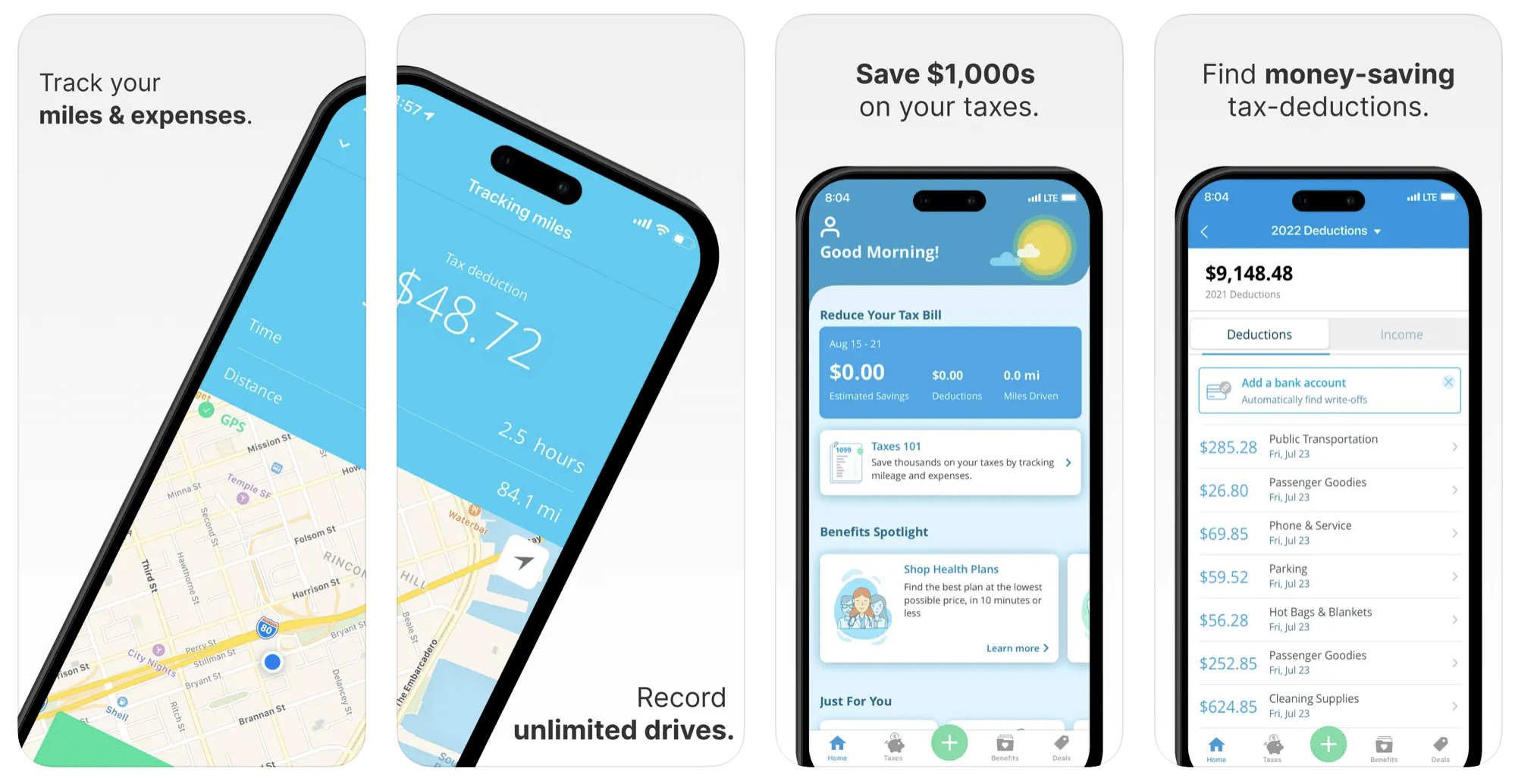
This free mileage tracker does a fair job of keeping track of the distances you rack up while gig driving, but it doesn’t automatically track earnings. It can be a big help, though, in tracking your expenses. You can link Stride to your bank account, and it will automatically scan your expenses to identify items you can potentially deduct. The app is totally free. This could make it the best free mileage tracker app, but there is a small price to pay. The app will persistently push you to consider various insurance plans that they are affiliated with. If you don’t mind that, this is a solid mileage tracker, even if it doesn’t track your earnings.
Available on Android and Apple: Yes
Ratings: 4.8 stars on App Store, 4.6 stars on Google Play
Free version: Yes
Subscription price: None. The app is free.
Created specifically for gig drivers: No
5. Gridwise
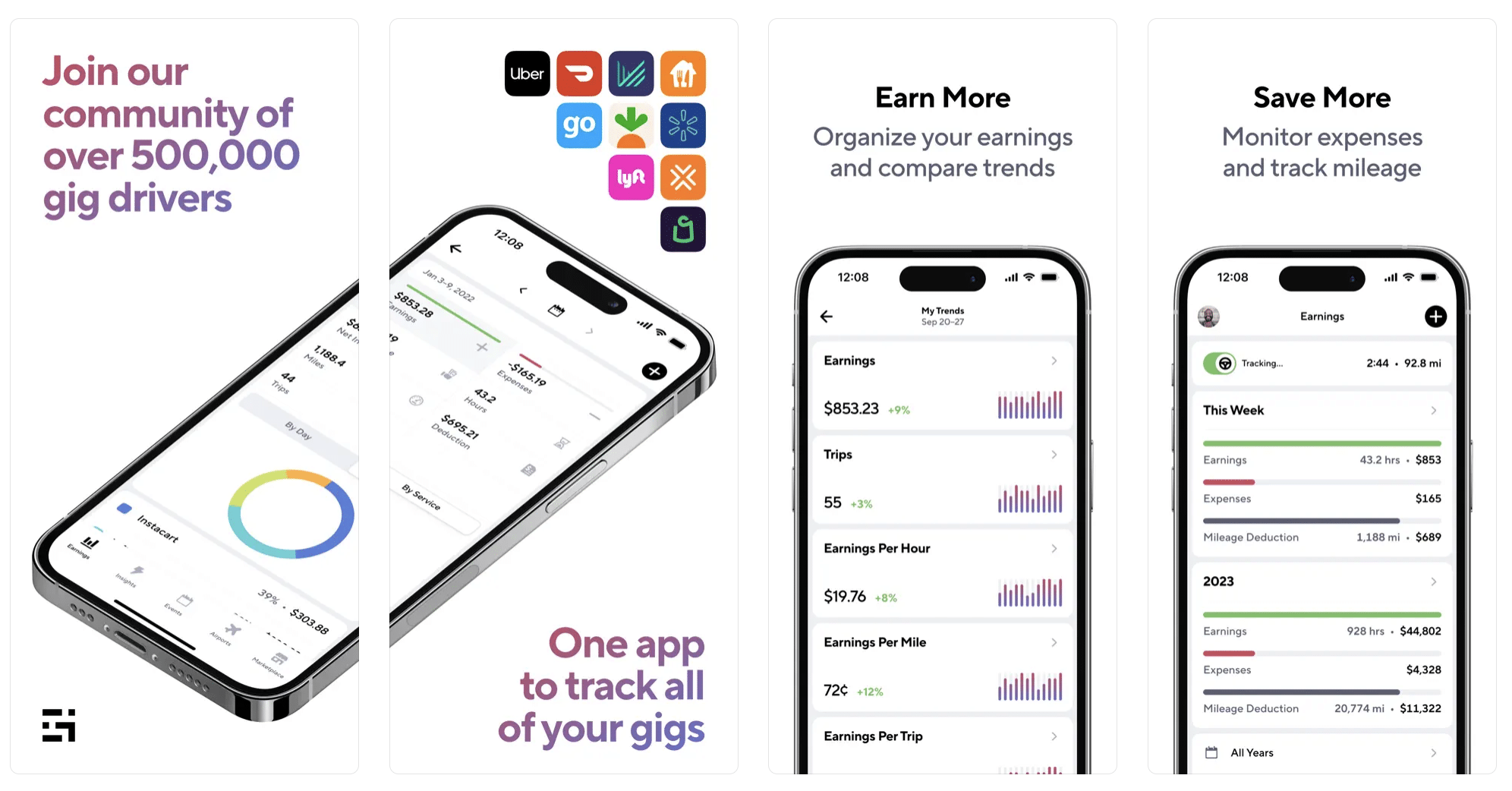
Gridwise has a free mileage tracker and free features that record your income and expenses. It gives you access to insurance and benefits, as well as insights about the best times and places to make the most money while gig driving. The Gridwise mileage tracker captures all the miles you drive while you’re on your driving shift, and it can be used if you have other trips you need to make which qualify as business travel.
Drivers love it because it is geared toward the needs of rideshare and delivery workers, providing free information about airport departures and arrivals, event start and let out times, weather, traffic, and more. The Gridwise Plus subscription adds value by providing additional insights and reports, discounts on benefits, the ability to export data in .csv format,, and more.
Available on Android and Apple: Yes
Ratings: 4.9 stars on App Store, 4.6 stars on Google Play
Free version: Yes
Subscription price: $9.95 per month for Gridwise Plus, or $95.99 per year (a $23.41 savings)
Created specifically for gig drivers: Yes!
What is the best mileage tracking app?
Now that we’ve checked them all out, we’re positive about the answer to that. Hands down, it’s Gridwise. Are we biased? You bet we are! But drivers love it too. Gridwise is the best mileage tracker app, and so much more. So many of the features are free, and the subscription to Gridwise Plus will pay for itself with additional insights to boost your earnings and deeper discounts on products and services.
Most important, Gridwise is designed specifically for gig drivers by experts who were once gig drivers themselves! Knowing what gig drivers need is a crucial step in creating an app that rideshare and delivery drivers can really use! Here are a few of the features, besides mileage tracking:
- seamless earnings tracking
- automatic, on/off toggle and manual mileage tracking
- mileage categorization
- airport, traffic, weather, and events information
- insights into where to drive and when to drive
- reports showing earnings across the platforms you use
- discounts on countless products and services for drivers
- additional resources for finding side gigs
- an informative and comprehensive blog
- affordable benefits, including insurance, medical, dental, and alternative practitioner discounts
- a community of drivers just like you
Don’t settle for just any app. Get the best mileage tracker, and so much more, from Gridwise!

How To Make $1000 A Week With Walmart Spark
Just about everyone buys something from Walmart or Sam’s Club, whether it’s food, supplies, or novelty items, and many people like to have their goods delivered. That’s why Walmart Spark drivers are so busy, and Walmart Spark delivery driver pay is so high.
In this post, we’ll show you just how well you can be paid as a Walmart Spark delivery driver and how you can make $1000 a week with the app.
How much does Walmart Spark delivery pay?
Spark is really coming on strong in 2023. By tripling the number of pickup areas it launched this year compared to last year, the Spark app now covers 84% of American households through 15,000 pickup points. In addition to Walmart and Sam’s Club stores, these points include Walmart GoLocal client locations, which provide delivery services for businesses of all kinds.
Obviously, there is a lot of opportunity for Spark delivery driving, and Gridwise data show that Walmart Spark delivery drivers can not only count on solid business,but also receive good pay.
Here’s the rundown:
Walmart Spark Driver Earnings Data
December 2022–February 2023
Average hourly earnings$24.10Median hourly earnings$23.7090th percentile hourly earnings$24.50Average earnings per week$323.00 (average of 13 hours of work/week)
Source: Gridwise
Walmart Spark delivery pay is on the high side compared to most other rideshare and delivery services. Notably, earnings of $323 per week are based on just 13 hours of work. Drivers in the 90th percentile, who earned an average of $755 per week, put in about 31 work hours.
When you consider that kind of return on a driver’s investment in time and work, it becomes easy to see how a number like $1000 a week can be more than just a distant dream. Before we go into some strategies that will help you achieve super high earnings with Walmart Spark, let’s get some insight about how Walmart spark delivery driver pay works.
How does Walmart Spark pay?
Walmart Spark pays drivers for each delivery they complete. There are a few different options with Spark, including picking up from Walmart and Sam’s Club curbside areas and GoLocal points, going inside the store to make the pickups, and shopping and delivering for certain orders. The pay for each order will be displayed on your Spark app screen when the offer for the order comes through.
It’s important to note that when you receive a Spark app request, the deliveries may be stacked. That is to say, a single request might cover one delivery with just two items, and another delivery with eighty things to get to the customer. Even though they may go to different destinations, the pay represents what you will get for doing both deliveries in a single bundle. In most cases, the deliveries are going in the same general direction, but sometimes they don’t. You’ll have to look closely at the options before deciding to accept any offer.
While many drivers don’t mind getting stacked orders, because they may pay more, it does make each order take longer to deliver. This can become an issue when a driver is looking to complete a certain number of orders within a certain time period to qualify for the incentive programs Spark offers to drivers from time to time.
This brings us to exactly to what goes into Walmart Spark delivery driver pay. There is the per order basic pay rate, but there is more. Walmart Spark drivers can also count on
- tips: Most reviews from Walmart Spark drivers tell us that customers tip well. Data collected from Gridwise drivers corroborates this view, indicating the following tip rates:
- median: 29% over base pay
- average: 32% over base pay
- 90th percentile: 34% over base pay
This is a very healthy tip rate! Spark drivers can count on earning above and beyond their base rate, thanks to their customers’ hefty tipping tendencies.
- lump sum incentives: The driver earns a lump sum on top of their basic earnings for completing a certain number of deliveries. Here’s where those stacked orders can become problematic.
- tiered incentives: This rewards drivers who want to achieve by getting more trips. There might be an offer for $20 extra for 4 trips, $30 extra for 8 trips, and $40 extra for 12 trips.
- confirmed payment incentives: These are offered occasionally to get drivers to deliver more. For instance, drivers might be guaranteed to make $400 if they complete 25 or more trips over a single time period, usually a few days. If they earn less, the Spark app will cover the difference.
- per trip incentives: These might be offered as an incentive to get drivers to deliver during off-hours, such as rush hour or late at night. Drivers are given extra money for each trip they complete.
- surges: When volume is extremely high and there are not enough drivers to handle demand, the app will raise the earnings on the offers in order to incentivize drivers to take them.
Read more about Walmart Spark incentive programs on their website.
- referrals: After completing a given number of orders, drivers are eligible to refer friends to become drivers. If the referred friend meets the requirements of order volume within a given time period, both parties will be rewarded. Learn more about the Walmart Spark Driver Referral program on the Spark website.
Strategies for making $1000 a week with Walmart Spark
As you can see from the $755 per week earnings for 31 hours of work (reported from Gridwise Spark drivers who are in the 90th percentile), it is possible to earn a lot with Spark. But to hit $1000 a week, you’re going to have to push just a little bit harder.
One woman in New Mexico earned $100,000 in one year by driving for Spark, according to Your Driver Mike’s YouTube video. She worked from 10–12 hours per day, however, and was extremely perceptive. She also learned how to work in ways that optimized her chances for making as much as $400 per day. Here are some strategies she might have employed.
- Put in the time. If you want high earnings, you will have to work more than 10 hours per week. It might not take a lot to hit the $1000 a week mark if you were to work 40 hours per week or slightly more.
- Create passive income. Refer friends to work for Walmart Spark, and use your referral link in as many places as possible. Your email signature, a website, or YouTube channel could all bring in people you can refer and collect on when they join and drive for Walmart Spark.
- Position yourself right. Check out where the Walmart and Sam’s Club locations are in your area, and drive to where you could be pinged for orders by either (or both) of them. Being close to a potential pickup location will cut down on the miles you need to drive in order to complete deliveries.
- Bank on incentives. Keep checking your Spark app for incentives, and participate in as many as possible.
- Don’t decline too many orders. Although it might make sense to decline an order, when you do, there could be consequences. The app may not go to you right away when the next one comes in, and you could be stuck waiting a long time for the next one.
- Get familiar with time and location patterns. Take notice of when there seems to be the largest numbers of orders and where they tend to come from. While you can do this by trial and error, there are ways to get help, too. Gridwise, as you see below, will give you exactly what you need!
- Consider multi-apping. Fill in the gaps between heavy delivery hours with more driving for other apps. Check out how multi-apping can earn you more in this Gridwise blog article.
Work smart and use brilliant resources
If you want to get insight into the best times to drive for Spark, and get a slew of other amazing tools, you need Gridwise!
Gridwise allows you to:
Track every mile you drive for your gig. Don’t miss out on the miles you can deduct while driving to and from each delivery. Gridwise logs your mileage from the second you sign on at the beginning of each shift.
Get information on delivery demand. When to Drive and Where to Drive from Gridwise show you data from real drivers indicating where and when you’re likely to get the most business, and the biggest earnings.
Track your earnings. Watch your progress as you work your way toward earning $1000 a week ! You can sync your Walmart Spark app to Gridwise, and let Gridwise hold on to the data. Then you’ll be able to see how much you’re making, based on a variety of factors. Gridwise shows it all to you in elegantly formatted, easy-to-read graphs.
Find out about traffic, events, and weather. Gridwise keeps you in the know with happenings in your town, so you can navigate the lay of the land and know what to expect as you drive your delivery routes.
Get benefits, deals, and discounts for drivers. As an independent contractor, a lack of insurance coverage, and other perks you might get as an employee, becomes a concern. You’ll be glad to know that Gridwise Benefits has you covered! From no- and low-cost life insurance to telehealth, mental health, dental, and visual care, you can take care of all these needs for you and your family.
Be sure to download the app and check out the other deals and discounts Gridwise has secured for drivers.
Now that you know how to make $1000 with Walmart Spark, you won’t want to do it without Gridwise!
Now that you know how to make $1000 with Walmart Spark, you won’t want to do it without Gridwise!
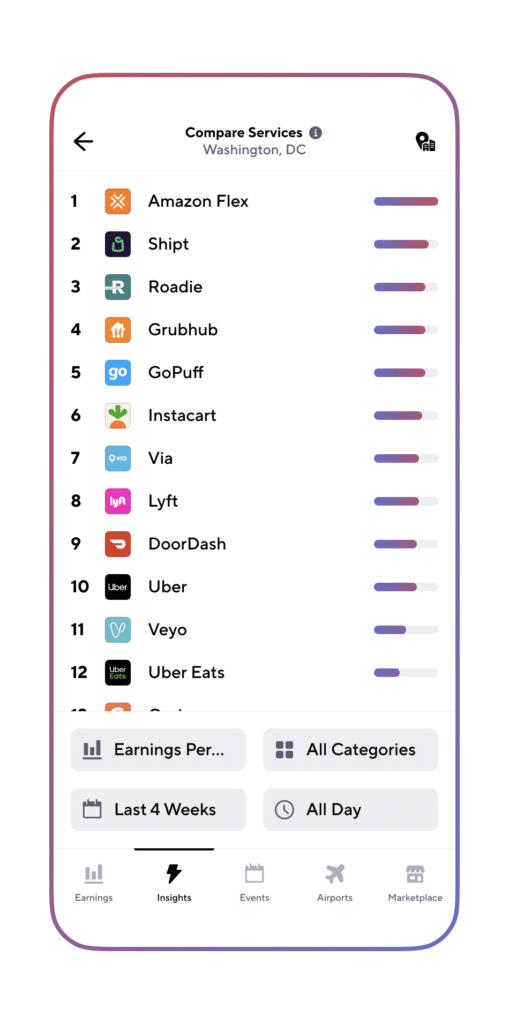
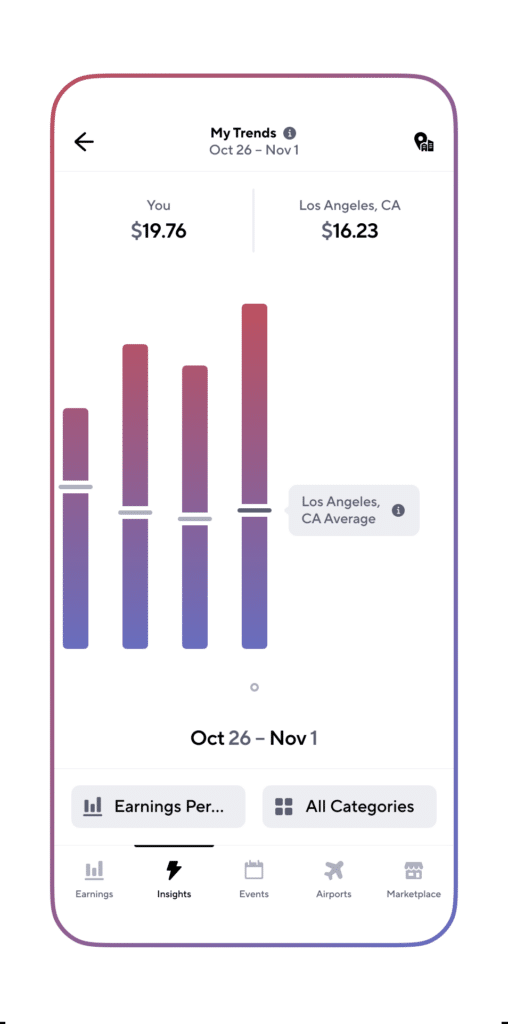
Brush up on your Walmart Spark gig knowledge
- Rideshare vs Delivery: How Much Did Drivers Earn In 2022?
- How To Be A Delivery Driver: A Gridwise Driver Guide
- 5 Best Mileage Trackers For Gig Drivers
- Looking for a different gig, part-time or full time job? Check out the Gridwise Job board.
- How much can you make on Instacart?
Which Is the Better Gig Driver Tracking App? Gridwise vs. Everlance
Gridwise and Everlance are two popular apps designed to assist gig drivers by tracking mileage and optimizing earnings. Unsure of which one to choose? Look no further than this blog post for a detailed comparison.
The key to a great mileage app for rideshare or food delivery is its ability to alleviate the burden on gig drivers. Gone are the days of labor-intensive, easily forgotten, handwritten mileage logbooks. App-based mileage trackers are the way to go. However, with so many options available, it's natural to wonder, "Which mileage tracker is the best for gig drivers?" There are numerous possibilities, most of which can be downloaded onto your phone.
You might be wondering, "What features should I look for in a mileage tracker? Which miles incurred during my gig driving are tax deductible? What other factors should I consider? And why is one tracker superior to the others?"
This blog post provides a side-by-side comparison of Gridwise and Everlance mileage trackers. By outlining the reasons, you will discover why Gridwise stands out as the premier tool for gig drivers.
You can also jump to the Gridwise website to explore how their mileage tracker fares against other major competitors.
Why do gig drivers need a mileage tracker?
Rideshare, food delivery, and many parcel delivery drivers are contract workers for gig platforms. They are solely responsible for paying federal and state taxes on their income. Rideshare companies don’t withhold taxes for you. It's incumbent upon gig drivers to minimize that tax liability as much as possible. As gig drivers, your most significant tax deduction is the mileage you put on your car every time you gig drive.
The IRS increased the standard deduction for business mileage in 2024 to 67 cents a mile. That means for every 10,000 miles of gig driving you put on your car, you can reduce your taxable income by $6,700. Gig drivers in metropolitan areas commonly put between 50,000 to 60,000 miles a year on their vehicles. Deducting accurate mileage makes a big difference in the money you’ll owe the IRS.
Why not use the mileage figure the gig company gives me?
We’re glad you asked that question. At the end of the year, you get an earnings statement from the gig platforms with a mileage figure. That figure reflects the miles you traveled from when you received your order or ride request to when you picked up the passenger or order and then concluded when you dropped off the passenger or delivered the order.
It does not include the miles you traveled before receiving your first assignment, the miles you traveled between assignments, and the miles you traveled at the end of your shift on your way home. Those are all tax deductible because they are business-related. The Gridwise mileage tracker records these additional tax deductible miles for you.
For a complete look at how Gridwise performs against some of the most popular mileage trackers in addition to Everlance, check out this Gridwise page.
What if I get audited?
You can download the electronic mileage records from the Gridewise app. They are Excel-compatible so that you can make computations in minutes. You can also have a hard copy that serves as proof of your miles. Gridwise programmers carefully researched the IRS requirements for mileage reporting, and the Gridwise mileage tracker meets them.
What are the features you need to look for in a mileage tracker?
When evaluating mileage trackers for gig drivers, the chief thing to remember is whether the mileage tracker is designed primarily for gig driving. Gridwise was founded by gig drivers for gig drivers. The founders realized there had to be a better way to track mileage. The Gridwise mileage tracker is part of the Gridwise app, a companion app designed for gig drivers. Now let’s look at the features you need as a gig driver.
- An accurate tracker. As a gig driver, you want to track every mile to ensure an accurate record for tax preparation. Gridwise links to your cell phone's GPS.
- Automatic turn-on/turn-off reminder. If you forget to turn on the Gridwise mileage tracker, it senses that you’re driving and sends a message to your phone asking you if you want to activate it. The same thing happens at the end of your shift: if when you stop driving you forget to turn off the tracker, Gridwise sends you another message.
- Syncs all your gig platforms. High-performing gig drivers work on multiple platforms. Synchronizing them on the Gridwise app is simple, and you can easily pull up a collective report, showing in real-time which apps are the most profitable for you.
- Tracks your expenses. You might have bought a flashlight to see addresses or gum and mints for your rideshare passengers. Those are all deductible. The Gridwise mileage tracker includes a feature that allows you to quickly photograph receipts and enter a brief description.
- Downloadable reports. You can quickly and easily download your mileage into an Excel file for easy handling. Print it out for a hard copy. Drop in an easy-to-use Excel formula to add up a year’s mileage in seconds.
- Audit acceptable. IRS audits are always a possibility, especially for the self-employed. An orderly printout detailing your mileage will satisfy any tax examiner.
While this blog post compares Gridwise to Everlance, you can also see how Gridwise matches up to all the best mileage tracking apps.
A closer look at Gridwise vs. Everlance
Everlance review
Google score: 4.4
Apple score: 4.8
Versions: free, $10, and $33
An overview of Everlance reveals that it aims to attract gig drivers. However, if you dig deeper, you will find features aimed at companies with multiple employees and mileage payments. Everlance wants to be all things to all businesspeople rather than specifically focusing on the needs of gig drivers or gig workers. The result is an app cluttered with many features that can lead you down a confusing rabbit hole.
You can manually enter your earnings into the Everlance app, but that's time-consuming when you consider that Gridwise automatically tracks income from all your platforms and then presents it in an easy-to-understand format. Gig drivers need to see all their earnings at a glance, simplifying the analysis process.
There are paid versions of Everlance, but most drivers can get by on the free version. Even so, gig drivers will be left looking for the additional features that are so important to them.
The Gridwise review
Google score: 4.7
Apple score: 4.9
Versions: free and paid ($9.99 a month with a 20% discount if paid annually)
The Gridwise mileage tracker was designed and intended for gig drivers as well as gig workers. Its features relieve the administration burden so gig drivers can concentrate on building their earnings. Every tab and button has a purpose for the gig driver, all based on efficiency, saving time, and increasing profits.
The Gridwise mileage tracker features a reminder that detects when you begin to drive and sends a message asking if you want to track your miles. The only miles you track are gig-related ones. That’s a powerful point to make to an IRS auditor.
Gridwise, like Everlance, has an expense tracking function, but Gridwise lets you take receipt photos and place them in a report and a brief description. Compute mileage and expense reports in minutes at tax time.
Where the Gridwise mileage tracker really shines, though, is in the unique features that make you a more productive gig driver. These include:
- Trends at a glance. The Gridwise mileage tracker quickly displays earnings and history to show you where you make the most money.
- Where to drive. The Where to Drive tab monitors all the platforms you drive, letting you know in real time where the greatest demand is for rideshare, food, and grocery delivery.
- When to drive. The When to Drive tab on the Gridewise app provides a mix of historical and real-time data on when demand is the greatest.
- Gridwise messaging. With Gridwise messaging, you’ll receive the latest information on when and where a concert, sporting event, or other activity is happening, ensuring you won’t miss out.
- The Gridwise blog. The Gridwise blog, updated regularly, provides you with rideshare, food delivery, and grocery delivery information. Learn the latest strategies and secrets, helping you save time and boost earnings.
- Airport features. Unravel the mystery of airports with Gridwise. Know when flights are arriving so you can be ready for passengers.
- Traffic and weather reports. Weather and traffic can change in minutes. Gridwise monitors the reporting sources and lets you know when these factors affect your productivity.
Side-by-side comparison: Everlance vs. Gridwise
There is much confusion about the best mileage app, but Gridwise cuts through the clutter. The following table looks at premium features available on paid Gridwise vs. Everlance apps.

Benefits of Gridwise membership
Gridwise offers benefits that gig drivers find difficult to locate anywhere else. Here are just a few:
- health insurance
- dental insurance
- vision insurance
- life insurance
- disability insurance
- disability coverage
- accident coverage
- tax help
- auto insurance marketplace
- no-cost and low-cost life insurance coverage
- accidental death coverage
- identity theft protection
- chiropractic and alternative medicine benefits
- telemedicine and teletherapy
- credit and debt counseling services
Gridwise is always adding benefits. Subscribe to Gridwise today for the deepest discounts on these services. Learn why Gridwise stands out in our comprehensive guide to the top 5 gig worker apps.
Gridwise comes out on top
Many apps claim to be for gig drivers, but they are often an afterthought. Everlance ranks well as a financial app for freelancers and self-employed professionals, but it lacks the services that top-earning gig drivers need to maintain their productivity.
When it comes to gig drivers, Gridwise has the most complete selection of features to make your work more profitable and keep your tax liabilities at a minimum.
Check out these Gridwise articles to learn more about the Gridwise mileage tracker:
- Discover how Gridwise ranks among the top gig worker apps by exploring our detailed comparison
- Gridwise vs. Stride: Which works better for you?
- What’s the best rideshare assistant/mileage tracking app?
- Gridwise is the all-in-one assistant for gig workers
- Gridwise vs. Solo: A look at gig worker expense tracking apps

11 Tax Deduction FAQs For Gig Drivers
* Gridwise does not provide tax, legal, or accounting advice. This material has been prepared for information purposes only, and is not intended to provide, and should not be relied on for tax, legal, or accounting advice. You should consult your own tax, legal, and accounting advisors before filing your return.
It’s March. We’re about a month away from tax time. By midnight on April 15, we all need to have our annual income taxes completed and submitted (April 15 falls on a Saturday this year, which means you have until midnight April 17, ensuring many will spend that final weekend frantically doing their taxes).
We understand. No one likes taxes, and as a self-employed gig driver, you almost invariably owe money to the government. Gridwise has joined forces with Keeper to bring you little-known facts about gig-worker taxes. Keeper helps gig workers and creator economy workers discover tax-deductible expenses. Keeper also helps gig workers file their taxes.
Let’s dive right in and answer some of the more frequently asked questions about taxes for freelance work and gig driving.
1 - Are gig drivers considered self-employed?
Absolutely. As a gig driver, you are a self-employed business owner.
Any time you get a paycheck that doesn’t have taxes deducted, you are in business for yourself and responsible for paying taxes on that income. You must complete a Schedule C (Profit or Loss from Business–Sole Proprietorship) as part of your taxes. According to a blog post from our partner Keeper, How to Handle Taxes on Side Hustle Income, this applies whether you are a full-time gig driver, or if your gig driving is a side hustle in addition to a regular job.
The other bad news is that you must pay Social Security and Medicare taxes on that side hustle income, which totals 15.3% of what you earned after deductions.
2 - What can I deduct related to my car
As a gig driver, your most significant delivery driver or rideshare tax deduction is your mileage. The IRS gives you a choice about how you can write off your car expenses: actual expenses or the standard mileage rate (sometimes referred to as the rideshare mileage deduction). Both approaches consider mileage and other auto expenses, including oil changes, tires, and repairs.
If you use actual expenses, you record all car-related expenditures, saving receipts throughout the year for every purchase. If you drive an electric vehicle, you keep the receipts for EV charging. This is a paperwork nightmare. Any car-related expense, even a burned-out taillight, is deductible. If you use your car for personal use and your gig driving, you must establish what percentage of use is for gig work and apply that portion of the expenses as a delivery or rideshare tax write-off.
Using the standard mileage rate, you record your total miles as part of your gig-driving job and write it off. This last tax year, 2022, is different than most, however. The IRS, in acknowledgement of the high gas prices, changed the rate mid-year. Write off all miles driven before July 1 at 58.5 cents per mile. After July 1, increase the rate to 62.5 cents per mile. See the Gridwise blog post, IRS 2023 Mileage Rate Increase: Good News for Gig Drivers, for a full explanation of the IRS increase in the standard mileage rate.
3 - Which method of writing off car expenses is better for Lyft and Uber driver accounting, and delivery work?
When it comes to filing taxes for Uber drivers, Lyft drivers, and delivery drivers, your best option is the standard mileage rate. For example, a driver whose gross earnings were $45,000 in 2022 easily drove 50,000 miles to earn that money. If you split that mileage evenly between the previous rate and the new rate, you come up with a tax deduction of $30,250 off your Schedule C. When you subtract that from your gross taxable income of 45,000, it drops to $14,750. That is a significantly lower tax bracket, achieved with just one deduction.
If you were to claim actual expenses, you would likely come up with a far smaller number to write off your income.
The actual expense method is best for a self-employed person who uses their car for business, but who drives far fewer miles than a rideshare driver.
4 - Is the mileage report I get at the end of the year from Uber, Lyft, or other delivery company adequate for my taxes?
The IRS will accept the report, however it reflects far fewer miles than you actually drove. You would be seriously shorting yourself. The report only details your mileage from the time you were assigned a passenger or delivery until you completed that task. Those numbers don’t accurately reflect the miles you covered while your apps were on but didn’t have an assignment. The miles you drive each shift before receiving your first passenger or delivery, between each passenger or delivery, and the drive home at the end of the shift are all tax-deductible. The Stride Health blog suggests that these extra miles can often double your deductible mileage.
How can you easily record these miles? The Gridwise Mileage Tracker is the best mileage tracker for rideshare and delivery drivers. It is a vital part of Lyft or Uber driver accounting, automatically working in the background on your cell phone and recording all your miles for tax purposes. Later, you can download the records into an Excel file (or another format) for tax preparation. For a more thorough explanation of how the mileage tracker works, check out this Gridwise video.
5 - Are any automotive-related expenses not covered in the standard mileage rate?
According to a KeeperTax.com blog post titled Ultimate Guide to Car Tax Deductions and Mileage, there are other expenses you can write off separately if you claim the standard mileage rate. These include
- parking fees
- tolls
- car washes
- DMV registration fees
6 - Can I claim the standard mileage rate on the car I rent for Uber or Lyft?
Nope. You can only claim the standard mileage rate for a car you own or lease. In the case of rental cars, the owner is the rental agency. Most rental agreements place the financial responsibility of maintenance and upkeep (tires, brakes, etc.) on the rental agency. In the case of a rental car, you will have to claim actual expenses, meaning you can only claim fuel purchases.
You can, however, claim the cost of renting the car as a deduction.
7 - Can I write off my clothes for work?
For gig drivers, clothing is a deduction you will probably have to pass on. Put simply, the IRS rule is that you can write it off if you have to wear it to get paid. The other rule is that you can only wear it for work.
In a November 2022 Gridwise blog post, A Shopper’s Guide to Being a Shipt Shopper in 2022, Gridwise introduced readers to Robert Woldhuis, who made more than $100,000 a year as a Shipt shopper. Robert’s trademark was wacky costumes, oversized glasses, and brightly colored wigs. Can Robert write those expenses off on his taxes? That’s debatable. A clear-text reading of the IRS rule would not be in his favor.
8 - Are meals tax-deductible when I am ridesharing?
According to the IRS, there are specific instances in which you can write off a meal. These include
- taking a client out to lunch
- wooing a prospective client
- A meal with a coworker, which includes a discussion of business
- meeting with a potential referral
- a networking opportunity with anyone
As a gig driver, whether you are ridesharing, or delivering food or groceries, the opportunity to have lunch with a passenger or recipient of delivered goods will likely not meet one of these requirements. You also can’t claim meals or snacks that you consume in the course of a shift.
There is a Lyft Driver Advisory Council. If you are a member of the group and you meet with a fellow member to discuss council business, such a meal could be tax deductible. Aside from that, there are few opportunities to write off a meal as a gig driver.
9 - Can I write off supplies for my car?
You can write off water, candy, and other snack purchases that you make for your passengers. This is typically done in furtherance of getting a tip or a good rating, which moves it into the area of a legitimate write-off. Do you entertain your passengers with music from Spotify or Amazon Music? That is also tax deductible. The Gridwise Expense Tracker is vital to Lyft or Uber driver accounting. This app feature keeps all your records in one place. You still need to keep your receipts in case of an audit, but Gridwise tracks the numbers and computes the totals. At tax time, all the numbers are at your fingertips. Learn more about the expense tracker function by watching this Gridwise video or checking out this article about the expense tracking features of the Gridwise app.
10 - Can I write off car payments?
You cannot write off car payments as a tax deduction for delivery or rideshare tax earnings. But you can write off the interest payment on a car loan, even if you take the standard mileage deduction. It is one of three exceptions allowed by the IRS.
Can you write off all the interest on that car loan? Probably not. Some of that driving will be for personal use. To determine the percentage of interest that you can write off, divide the miles reported from your Gridwise app by the total mileage on your car for that year. Let’s say it comes out to 55,743 miles and 82,805 miles, respectively. Divide 55,743 (the miles reported on your Gridwise app) by 82,805 (the total miles you drove for that tax year). Your deductible percentage is 67%.
11 - As a gig driver, can I claim a home office deduction or write off my home internet?
That’s a tough one. IRS rules allow you, as a freelancer, to take a deduction for a home office, but the rules require that the home is your principal place of business. If you are a gig driver, your principal place of business is your car. Aside from possibly sitting at a desk in your office analyzing a spreadsheet to see trends in your gig-driving activity, it will be difficult to sell office-in-the-home as a full-time expense. The same goes for home internet.
What if you diversify and start a blog about gig driving, or film, edit, and produce videos for posting on YouTube? Let’s add that you monetize this online activity. Now you can probably claim a home office—and you might have more money to claim on your taxes.
Gridwise can help guide you in your gig driving activities
Whatever expenses you're tracking, keep them all in one place with Gridwise. At tax time, you'll be able to export your income and expenses from last year into a handy report. Want to make tax time easier?
Start tracking your expenses with Gridwise

6 Common Mileage Tracking Mistakes That Gig Drivers Make
Why is tracking your mileage so important? In this article, you’ll find out why this simple-seeming aspect of being a gig driver can be a big factor in your profit or loss from rideshare driving or delivery work. Mileage tracking deserves your full attention because it’s a major source of tax deductions for gig workers.
You’ll see why when you discover what either a complete lack of or inadequate mileage tracking can cost you. Here are some of the most common mileage tracking mistakes drivers commit, and smart ways to avoid making them.
#1 - Totally neglecting to track your mileage
Let’s start with the biggest mistake. You want to track your mileage because you can deduct it from your income and reduce your taxable income. If you fail to do track mileage, you could end up paying much more in taxes than necessary.
For example, using the IRS rate of 62.5 cents per mile (in effect from July–December 2022), a part-time driver who put in around 17,000 miles over six months would be able to deduct $10,625 from their income. A full-time driver, clocking about 25,000 miles in six months, would receive a deduction of $15,625. And that’s just for half of the year.
There is no way any driver would want to miss out on such a sizable Lyft, DoorDash, or Uber tax deduction! The point is clear: you definitely want to track your mileage.
But, for the sake of argument, let’s say that you neglected or forgot to do so. It’s possible to wait until you’re preparing your taxes to start calculating your mileage, but it’s not a good idea. For one thing, it will be hard to reconstruct your entire year of driving, particularly if you work with more than one app. As we all know, dealing with gig economy taxes is painful enough, and not having solid records would make it all that much more excruciating.
The Fix: Create consistent records of your business mileage, using anything from a pen and notebook to a sophisticated app like Gridwise. Record all the miles you clock while you are on your driving app, whether it’s with a pencil and paper or a state-of-the-art mileage tracking app.
When you use Gridwise to track your gig driving mileage, every mile from every shift is recorded into an exportable file that you can use when filing your taxes. Read more about how to track your mileage with Gridwise in this post.
#2 - Failing to keep detailed records
Keeping track of the number of miles you drive while you’re working your gig helps you know how much you can deduct from your income—but that’s not always enough. When you are dealing with the IRS, it’s always good to act as if they’ll decide to audit you.
IRS agents are notorious for questioning the deductions independent contractors take, so if yours becomes the return an agent decides to dig deeper into, those mileage numbers might not suffice. They will want the details, and they won’t stop squeezing you until they get them.
You will need to have access to the date, destination, and purpose for each trip notated. That’s not so difficult when you’re a gig driver, because the destination and purpose are pretty much the same for every shift. With that said, you still have to be very thorough about ensuring that you have an accurate account of your mileage.
You might wonder, does Uber keep track of mileage? The answer is “yes, but…” and that goes for all the other apps you drive for as well. Keep in mind that the mileage the driving apps track are those for which they pay you. So if you go to a destination and the customer cancels the trip or delivery, that mileage won’t be included in the apps’ calculation.
The Fix: Use Gridwise to track each and every deductible mile you travel while you are on your shift. Simply log on when you begin driving and log off when you’re done for the day.
#3 - Mixing personal and professional mileage
This is a big no-no, and if you get caught doing it, you will be penalized. It’s very important to distinguish between the miles you drive for business and those you rack up for your personal needs.
This is why taking manual readings from your odometer is not a safe or adequate way to monitor mileage. Sure, you can hope that you’ll remember to record your mileage when you pause your gig driving to pick up your child from school. In reality, that’s really hard to do, and you probably won’t remember every time. This can result in inaccurate readings, and that can lead to—IRS trouble.
The Fix: Use Gridwise to track your mileage and eliminate this kind of confusion from your life. Simply log in when you start gig driving and log out when you’re done. That way, you won’t still be logging business miles when you begin a personal trip. You won’t be racking your brain trying to calculate the mileage you incurred, particularly if that after school run involved a moment at the local snack shop or an extra stop to do a friend a favor.
#4 - Losing receipts and other documentation of expenses
How many times have you stuck your hand in the pocket of your jeans or coat and found a bunch of crumpled up receipts in there? If this is something that you experience with regularity, you may want to consider getting more serious about saving receipts for items that can be considered tax deductible.
It’s a lot to ask, in an age when we do almost everything on some kind of electronic device, to actually file away little slips of paper in any semblance of reasonable order. Still, you never know when you’re going to have to present a receipt for those candy bars you bought to hand out to your customers on Halloween, or prove that the trip you’re claiming as a deduction was really for business purposes.
The Fix: You probably have ways of tracking your spending through the debit or credit card you use. It is, after all, wise to keep a separate account for personal and business expenses, so they are easier for you to track.
You also can use a slick tool to help you keep a running account of all those little expenses, as well as pricier items such as car maintenance and repair. Gridwise has two ways to help you.
- Record your expenses as they arise, right in the app.
- Use Gridwise Tax Help, powered by Keeper Tax. Gridwise Tax Help features automatic receipt tracking, so you can jettison the nightmarish image of that shoebox overflowing with wrinkled slips of paper. This feature caters directly to the specific issues that come up with taxes for gig workers.
#5 - Rounding your mileage numbers
Tax auditors look for certain “flags” that indicate a taxpayer might be exaggerating, or even pulling from thin air, the numbers on a return, especially when it comes to Lyft, Amazon Flex, or Uber mileage deduction.
Therefore, if they see numbers that are rounded off, they’re going to begin to dig deeper, and before you know it you could hear that you’re about to be the subject of an IRS or state audit. That’s why you don’t want to guesstimate your mileage, or even innocently round the numbers off.
The Fix: Keeping honest, exact, and documentable records of your mileage is your safest best when it comes to preparing your deductions. When auditors see “real” numbers, they’re likely to assume that all your reporting is on the up and up.
When you use Gridwise, you’ll ride with the best mileage tracker for delivery drivers and rideshare pros. Let Gridwise record all the numbers you need to keep you free from unwelcome scrutiny.
#6 - Ignoring tax laws and regulations
Many gig workers, when they begin as independent contractors, believe that filing taxes isn’t going to be any more complicated than submitting information from a 9–5 full-time corporate job. That’s a huge mistake.
The nuances of filing taxes as an independent contractor can easily get you caught up in errors that cost you money. For instance, are you aware that you can be penalized if you don’t file your taxes quarterly? And how would you answer if someone said “Quick, tell me the IRS gas mileage rate USA 2023”? Fortunately, you can read this Gridwise blog post on the topic of the 2023 gas mileage rate, but that’s not the only thing you’ll need to be aware of.
The Fix: Get professional help.
You need to know a lot of little bits of information, and be up to date with all the tax laws and regulations that affect your life as a gig driver. It’s possible to do this all on your own, but you don’t have to. Gridwise Tax Help, powered by Keeper Tax gives you
- access to a tax professional
- algorithms that scan your transactions for deductible expenses you might have missed
- automatic mileage reports from shifts tracked with Gridwise
- the ability to e-file your taxes, right from the app
You can’t afford to use anything but the best mileage tracking app out there—Gridwise!

How To Find The Best Times And Places To Drive For Uber Lyft
You sign up for Lyft or Uber, go through the app so you understand it, put the decals on your car, and hook up the Uber beacon or Lyft Amp, and you’re ready to make money.
Except that’s not happening, at least for you.
Sure, you get some rides, but you’re not making the $250 or $300 a night you hear others talking about. It looks as if there are a lot of rideshare drivers out there, and they all have passengers. You don’t have as many. It’s no wonder that out of every 100 rideshare drivers who download the app and go out for the first time, a year later only four drivers are still at it.
If you're stubborn enough to stick it out, after a month or so you’ll see your earnings increase. They’re not exactly where you want them to be, but the money gets better. You’ve learned a few tricks. You’ve also discovered what are general peak times for driving Uber and Lyft.
Do you know all of them, though? Take a few minutes as Gridwise reveals the best times to drive rideshare and earn money.
Strategies and tactics for rideshare drivers
There is more to being a successful driver than turning on the app and waiting for ride requests to appear. You can strategically position yourself at the right place and at the right time to get rides.
Gridwise has published several blog posts on how to be more successful as a gig driver. Take a few minutes and click on these links:
- How To Be A Rideshare Driver: A Gridwise Driver Guide
- How To Earn More As a Rideshare Driver
- 12 Ways Rideshare Drivers Can Earn More Tips
You can also download the Gridwise app and start reaping the benefits of the best app on the market for rideshare drivers.
The Gridwise app includes useful features, such as When to Drive and Where to Drive. Drivers can see where the business is in real time. If you like airport rides, you can monitor arrivals and departures at local airports. Sporting events and concerts also appear on the app, telling drivers when these events conclude and where they can find spectators who need transportation to their next destination.
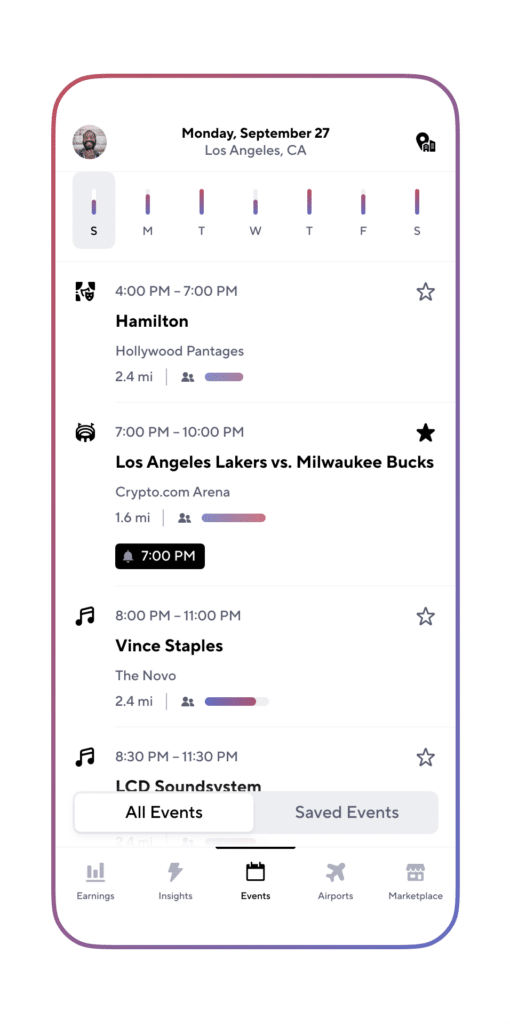
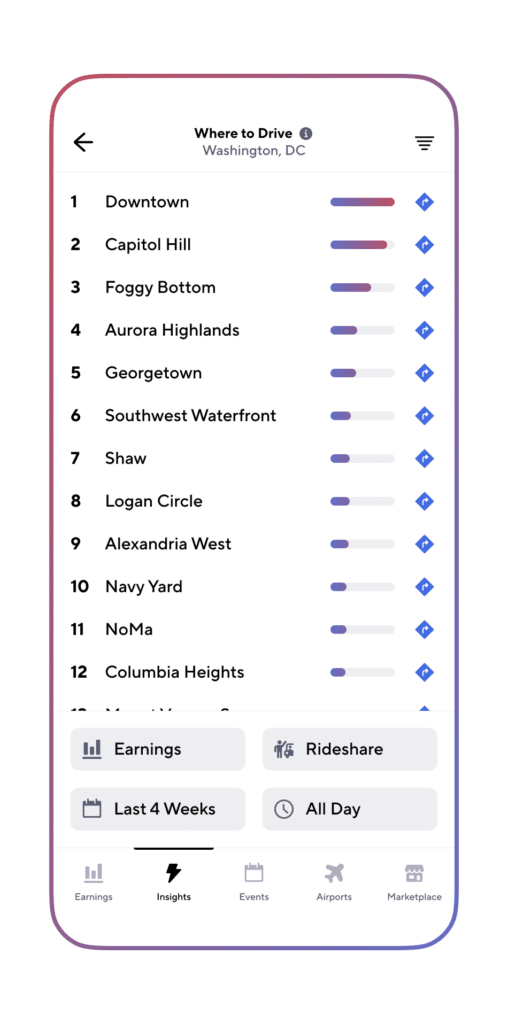
When to drive and Airport features on the gridwise app
The Gridwise app also has the best mileage tracker for gig drivers. This, coupled with an expense tracker, lets drivers maximize their tax deductions, keeping even more money in their pockets.
But there is more …
What are the best times and places to drive?
As you’ve figured out, there are ideal times and places to drive. What are general peak times for driving Uber and Lyft? Time is important, but so is location. Some of those places and times show up on the rideshare and Gridwise apps. Others are well-guarded secrets. Taking full advantage of those locations requires knowledge that only a few drivers have. Here is a list, and we will start with one that few drivers are aware of.
After-hours clubs
After-hours clubs are an opportunity that won’t appear on a rideshare app. The liquor laws in every state are different. In California, bars and stores cannot sell liquor after 2:00 am, and they can start up again at 6:00 am. In the meantime, alcohol (and other substances) flows freely at after-hours clubs in many downtown areas, often located in side-street warehouses or other large spaces. If you stay out late enough, you will get ride requests to and from these locations. These rides can often go throughout the night and continue after sunrise. Take note of them. You might also ask your passengers if they know of any after-hours clubs. One nice perk: the clientele can be exclusive, such as celebrities and the well-heeled, making for a heftier tip. The downside: your passengers are often quite inebriated. Have a supply of emesis bags.
Early morning airport runs
What are Lyft peak times in the morning, and for that matter, what are morning peak times for Uber? If you live in the suburbs of a major metro area with a large airport, such as Los Angeles, New York, or Chicago, take advantage of those early morning airport runs. One Southern California rideshare driver reports that he hits the road at 4:00 am, sets his destination on the app toward LAX, and 90% of the time, he has a ride to the airport by 4:30 am.
“There are days I turn on my app while I’m still in the kitchen drinking my final cup of coffee,” he says, “and within minutes, I’m going 50 miles to LAX. Mondays are especially good peak times for Lyft and Uber, but this happens just about any day of the week. And after I drop off my ride, I’m in Los Angeles at the beginning of the morning rush hour. There is no end to the business.”
Gridwise offers a detailed airport feature for rideshare drivers, try it out!
If you have access to the outer suburbs of a metro area served by a major airport, early morning airport runs are the best time to drive for Uber on weekdays. The same applies to Lyft.
Thirsty Thursdays
With the advent of four-day workweeks, and other folks who just want to get an early jump on the weekend, Thursdays are a busy night and have been dubbed “Thirsty Thursdays.” Thirsty Thursdays are even more intense in large towns with colleges, as no self-respecting college student schedules Friday classes.
On Thirsty Thursday, the best time for Uber drivers, as well as Lyft drivers, starts during rush hour and can last until the wee hours. In some cities, Thursday nights often rival Friday nights in the volume of rideshare business.
Weekends
Weekend nights are the busiest, with Lyft and Uber peak hours starting early. Hit the road at 5 pm, and you often get ride requests from groups going out for drinks before dinner or those who want to beat the traffic to a concert or sporting event. You can expect business to steadily increase throughout the night, with a noticeable spike about two hours before the bars close. This is when FOMO sets in, otherwise known as fear of missing out. Young people, and older folks, too, panic, thinking they're not at the hottest bar in town, and they want to go someplace else. FOMO settles down about midnight, and the next spike hits when the bars close. The increased demand at closing hour can last as long as 60 minutes, as many make their way to nearby restaurants before going home. There are lots of rides.
Colleges and universities
University of Southern California, near downtown Los Angeles, has an arrangement with Lyft. The university picks up the tab for all student rideshares from 7:00 pm until 1:30 am, as long as they are within a certain radius of the campus. The beginning and the end of this period are peak times for Lyft. The rides are shared, meaning each pickup counts as a ride. The students use it like water. The policy takes a lot of people off the street who might have had too much to drink and keeps concerned parents happy. In the last full year before the pandemic, USC paid for 35,000 rides, according to a father who attended freshman parent orientation.
Some drivers don’t like shorter, shared rides, but if you're aiming for a goal for a Lyft sprint, USC is a great way to get ten rides in an hour. Check out your local colleges and see if they have similar policies, such asAssumption College in Worcester, MA; Lesley University in Cambridge, MA; and College of San Mateo, near San Diego, CA. There are many others. Do the research and make sure you know the details.
Special events
Parades, large street fairs, celebrations, conventions, and trade shows offer opportunities for countless rideshare requests. The first weekend of June 2023 saw 100,000 participants and spectators descend on West Hollywood’s Santa Monica Blvd. to celebrate gay pride. There are trade shows, too. Because these are business-related events, attendees charge their rides, and correspondingly large tips, to their company credit cards.
If you live near a town like Palm Springs, CA, there are celebrations throughout the year, including Dinah Shore Weekend, the Coachella Music Festival, and tennis and golf tournaments.
Some of the larger concert events are accompanied by after-parties, which draw people seeking more good times. Some are well-publicized, while others are more exclusive. Ask your passengers if they know of any. These events can extend the peak driving period that night by several hours.
Holidays
The last few weeks before Christmas often see a dip in rideshare requests. People are spending time at home getting ready for the holidays. New Year's Eve, though, is often a rideshare driver’s biggest night. Super Bowl Sunday and St. Patrick’s Day prompt lots of demand for rideshare, too.
Bad weather
Some rideshare drivers don’t like to go out in the rain. That means fewer rideshare drivers to compete against, and grateful passengers more apt to tip. Check your windshield wipers and get out there when it’s raining.
Other tips for earning more
Being at the right place at the right time is only part of what you need to be a top rideshare earner. Here are some other tips so that you can take advantage of general peak times for driving Uber and Lyft.
Be a peripheral driver
A problem with large events is that the crowds and demand are so great that rideshare drivers report spending inordinate amounts of time in giant traffic jams. Many drivers don’t earn that much more than a regular night, even with the bonuses offered by Lyft and Uber.
“The Coachella Music Festival is in Indio, twenty-five miles from Palm Springs,” a Lyft XL driver said. “Many large groups of kids rent Airbnb homes near the festival in gated communities, but you spend hours in the congestion, only to go a few miles. It’s often bumper to bumper for 45 minutes to pick up a ride. I found much better earnings hanging around downtown Palm Springs, picking up larger groups there, and transporting them to the festival. At the end of the night, I hang out on the periphery of the traffic jam with my app off and follow the large tour buses that are leaving. I turn on my app when the buses drop off passengers in empty parking lots. Folks still need a ride from there, and that’s when I pick them up. I don’t do the festival traffic jam. Even with bonuses, it’s a waste of time.”
Other drivers advise that they have good experiences cruising around the bars and restaurants surrounding sports stadiums, but they wait at least an hour after the game concludes. “People walk to a nearby bar after the game to wait out the traffic and have a drink,” said one driver. “After an hour or so, they're ready to go home.”
Upgrade to a larger vehicle
If you own an SUV that holds six to eight passengers, holidays and special events are the night to take it out. The higher fares you command by driving Lyft XL or UberXL more than offset the extra money for gas. If you rent a car for rideshare, investigate the possibility of getting a larger car for special events. Reserve early, though, as many drivers have the same idea.
Carry extra supplies
A downside of working rideshare at special events and weekend nights is picking up passengers who have been drinking. You risk a passenger misbehaving or getting sick in your car. Gridwise addressed this issue in a recent blog post, How To Deal With Drunk Uber Or Lyft Passengers. Brush up on your people skills for handling these types of passengers, and also carry an extra supply of emesis bags.
Carry extra water, too. At outdoor events, spectators often don’t drink as much water as they should. Having a second case of water in your trunk makes you popular and earns you larger tips. Your preparedness can avert a few incidents of dehydration.
Understand surge fares
If you drive weekend evenings and during weekday rush hour, then you are familiar with surge pricing. This is indicated on your app by heat overlays, showing areas where demand for rideshare exceeds the available drivers during the busiest Uber times, and Lyft, too. Surges can boost your earnings on a ride by 50% to 100%. But if you are more than a few minutes away from a surge area, think twice before chasing it. Surges are transitory. By the time you get there, they might be gone.
The other approach is to take note of when and where you see surges. They often recur. If you find yourself in that area again, position yourself so that when the surge hits, you are in the middle of it.
Update your rideshare apps regularly
This is one of the things they don’t tell you when you sign up to be a rideshare driver. Lyft and Uber regularly update the app to fix bugs and add new features. If you don’t update your rideshare app regularly, it will become slow and unresponsive. It can even quit working altogether. Update your apps at least once weekly, and before large events and heavy demand periods. You don’t want to miss maximum earnings because your app isn’t running at peak performance.
Maintain several cash apps on your phone
When you get larger groups in your car, especially young people, they often agree to split the costs. One puts the rideshare on their bank card, while the other agrees to pay the tip. You can make third-party tipping much easier with a selection of cash apps on your phone. This happens more often than you may think. PayPal, Venmo, Cash App, and Zelle are the most popular cash apps, according to The Balance, a personal finance website.
Constantly experiment
High-earning rideshare drivers recognize that they don’t have all the answers about the best time for Uber or Lyft drivers. A Southern California rideshare driver confesses that he accidentally discovered Thirsty Thursday one evening when there was a large traffic accident on the major freeway he took home. He decided to hang around downtown Los Angeles for a few extra hours and was surprised by the volume of ride requests.
“I added Thursday nights to my regular driving schedule,” he said, “and it has paid off.”
Gridwise can help
The best rideshare drivers with the highest earnings are always looking for an edge. That edge includes Gridwise. In addition to helping you find profitable times/places to drive, there is also the Gridwise blog, full of important information for gig drivers, including the latest strategies and tactics, how to save money on taxes and expenses, and news about the gig driving industry.
Gridwise also breaks down your earnings by time and location so you can see what strategies work the best!
Everything You Need To Know About Driving For Uber Eats
According to the numbers, the future promises big things for meal delivery.
What’s driving this expansion? Millennials and Gen Zers mostly; 63% of meal delivery consumers fall into the 18–29 age bracket. Even better, as this group ages, they will likely bring these purchasing habits with them, passing them on to their children.
The BusinessofApps.com reports that Uber Eats commands 26% of the food delivery market. They also claim another 8% through Postmates, which Uber purchased in 2020.
In this blog post you’ll discover why you should make Uber Eats part of your meal-delivery game. Topics include
- Why should you consider Uber Eats?
- Other reasons to become an Uber Eats driver.
- Signing up as a driver for Uber Eats.
- What happens once you are approved?
- Receiving tips on the Uber Eats app.
- Incentives for Uber Eats drivers.
- Using a bicycle for delivering Uber Eats.
- Uber Eats driver advice for earning more.
- Make Gridwise part of your Uber Eats toolbox.
Why should you consider Uber Eats?
We’ve already presented numbers showing DoorDash's substantially better market share. Bigger is not always better, though.
According to a Gridwise blog post from July, DoorDash vs.Grubhub: Which Is Better for Drivers in 2022?, DoorDash drivers averaged $15.28 per hour; Grubhub drivers came in at $15.49 per hour ( figures collected through the Gridwise app). Earlier in the year, though, Gridwise published Q1 Uber Eats numbers in another blog post, What Does Uber Eats Driver Pay Look Like in 2022?, showing Uber Eats drivers earning $15.84 per hour.
Other reasons to become an Uber Eats driver
There are other benefits to Uber Eats.
- Uber Eats may be the more dominant meal delivery service in your area. Market share numbers on a national level don’t always translate to market share at a local level. There are some regional markets where Uber Eats plays a more dominant role.
- If you already work as a rideshare driver for Uber and would like to work for Uber Eats, too, then signing up will be even simpler for you.
- You might be one of the many gig drivers who multi-app, running more than one app at a time. If you are multi-apping meal delivery services, then Uber Eats deserves a place in the lineup. (For extra insight into multi-apping, take a look at the Gridwise post The Art of Multi-apping: How-Tos and Strategies for Gig Drivers).
- If you rent a car through Uber for your rideshare gig, you can use the rental car for Uber Eats without violating the rental agreement. The terms of rental agreements through Lyft or Uber typically preclude you from using that rental car for other gig services.
- Uber Eats also allows you to deliver on a bicycle. This is highly profitable, depending on your market (we’ll talk about this later).
Signing up as a driver for Uber Eats
Everything starts with the Uber Eats driver app. You can sign up on a laptop or desktop computer, but eventually you’ll have to download the Uber Eats delivery app anyway. From there, it involves answering a few questions and supplying the requested information.
According to the Uber website, these are their qualifications:
Delivery by car
- be at least 19 years old
- have a two-door or a four-door car
- possess a valid driver’s license in your name
- possess a Social Security number, so Uber Eats can run a background screening
Delivery by scooter
- be at least 19 years old
- have a motorized scooter with an engine under 50cc
- possess a valid driver’s license
- possess a Social Security number, so Uber Eats can run a background screening
- indicate that you will be delivering by scooter, under the transportation method
Delivery by bicycle or on foot
- be at least 18 years old
- possess a government-issued ID (no driver’s license is required)
- possess a Social Security number so Uber Eats can run a background screening
- choose delivery by bicycle or foot (only in certain cities), under transportation method
Upload a photo of yourself (the standard mug shot), driver’s license or government ID, and proof of vehicle insurance and registration if applicable, you might also need to submit a vehicle inspection.
Approval takes three to ten days.
What happens once you are approved?
There are meal delivery services that limit the number of drivers active in any given area. If you try to get on and that service has already reached driver capacity in your area, you won’t be allowed onto the app. Not so with Uber Eats. You can log on at any time.
You then get offers for orders that need delivering. The offer on the Uber driver app includes the restaurant’s location for order pickup, the general area (cross streets) of the delivery location, the estimated time the delivery requires, and how much you will earn. This figure is a total number, including the delivery price, any incentive bonus, and the customer tip.
Unlike rideshare, Uber Eats does not track acceptance rates. Drivers are free to choose which orders they want to pick up and deliver; a subject addressed later in this blog.
That said, Uber Eats does tell drivers on the Uber support page that "It is important to maintain a high acceptance rate to provide a reliable service to restaurants and customers." You may want to be careful about turning down lots of orders.
Once you accept an order, you drive to the restaurant and pick it up. Once pickup is complete, you’ll swipe the app and then receive the exact address for the delivery.
The customer can indicate if they want the order left on the doorstep or if they want you to knock on the door. Once the order is delivered, you swipe the app again and the process is completed. Off to the next order you go.
Receiving tips on the Uber Eats App
Tipping is one of the drawbacks of Uber Eats. The Uber Eats app prompts the customer to enter a tip amount when they place the order. The amount the app shows the driver for earnings includes that tip. The Uber Eats app, however, allows the customer one hour to change it. If there is a problem with the order, the customer might reduce or eliminate the tip.
There is also tip baiting, in which customers indicate a handsome tip to lure the driver into providing extraordinary service or accepting an order that requires a long drive. After the meal is delivered, the customer then reduces or eliminates the tip. Tip baiting is not that common, but it does happen. As an Uber Eats driver, it will make you groan.
Incentives for Uber Eats drivers
There are three bonus structures for Uber Eats to incentivise drivers.
Quest incentives
Uber Eats offers quest incentives for completing a specific amount of deliveries within a given period. An example of a quest incentive might be that you complete 10 meal deliveries between 5:00 pm and 9:00 pm on a Saturday and receive a $50 bonus. You are typically informed of quest incentives ahead of time.
Surge pricing
Surge pricing for Uber Eats works the same way it does for other gig-driving jobs. When demand for meal deliveries is high, Uber Eats offers a surge bonus to attract additional drivers. Peak times for Uber Eats often are:
- Lunch: 11:00 am–1:00 pm
- Dinner: 5:30 pm–9:00 pm
- Days: Fridays, Saturdays, and Sundays, or when there is a special event, such as Thursday night football games on television
Boost incentives
Boost incentives are like Surge pricing, except that they are based on location rather than time. The Uber Eats app will show boost incentives for specific areas, perhaps a college or university campus or a business park during the lunch hour.
For additional tips on earning more as an Uber Eats driver, check out the Gridwise blogpost How to Make $1,000 a Week with Uber Eats.
Using a bicycle to deliver Uber Eats
The major meal delivery services allow the use of bicycles in specific areas. Some people deliver for Uber Eats and limits their delivery to bicycle-only. One "driver" explains in a blog post on his site that using a bicycle is ideal in densely populated urban areas. He selects only those deliveries he can reach within minutes on a bike. Despite the congestion of downtown areas, bicycles allow Uber Eats delivery people to avoid a big problem: traffic. Your pay depends on how many deliveries you can make. Some claim earnings on the Uber Eats delivery app ranging between $30.00 and $40.00 an hour.
“If you can complete 5 deliveries per hour and make $6 per delivery, you’ll make $30 per hour. Hit 6 deliveries per hour at $8 per delivery and you’ll make $48 per hour. Most likely, you’ll be somewhere in between those two numbers (assuming you’re strategic about which orders you accept and how you do your deliveries).”
According to the numbers from Gridwise, Uber Eats drivers were earning an average of $9.37 per trip.
The biker also noted that Uber Eats does not supply delivery drivers with insulated bags. Some of the other meal delivery services do. They purchased a branded Uber Eats delivery bag. Amazon carries a wide selection of bags, including the types favored by bicycle delivery drivers.
Other drivers include Uber Eats as part of their multi-apping strategy along with Uber. As we mentioned earlier, both activities are for Uber, so you can also take advantage of renting a car through Uber. Check out the Gridwise blog post, Gig Driver Guide: Renting a Car for Rideshare or Delivery.
Uber Eats driver advice for earning more
As with any gig driving job, there is a success strategy for Uber Eats. Perfecting that strategy can maximize your earnings. Here are some suggestions on tactics. Always remember that an effective strategy varies depending on what type of meal delivery driver you are and your market.
Understand the food culture in your market
The restaurant scene, with all its variations, is evolving as you read this. Restaurants are not the only players in today’s prepared meal business. There are countless food trucks, pop-up stands, and other outlets. A Los Angeles Times article describes several warehouses in LA that host multiple “ghost kitchens.” These are kitchens servicing the meal delivery market only (and sometimes the pickup market). There are also numerous brands that operate from the kitchens of established restaurants. The Modern Shipper website reports that the kitchens of about 1,250 Applebee’s restaurants host Cosmic Wings, a concept with an exclusive delivery agreement with Uber Eats. There are many others, according to an article on CNBC.com. For example:
- Wingstop offers Thighstop.
- Chuck E. Cheese operates Pasqually’s Pizza & Wings.
- Hooters has three virtual brands: Hootie’s Burger Bar, Hootie’s Bait and Tackle, and Hootie’s Chicken Tenders.
They have no bricks and mortar, no storefront. It is all delivery, backed by aggressive digital marketing to get the word out.
The message: do a little research in your market and know what’s coming out of the back door of some of these restaurants or warehouses. Cruise by every once in a while and see if you can pick up an order.
Make Uber Eats part of a multi-apping strategy
There are many high-earning gig drivers who believe multi-apping is key to their success. Determine which apps are dominant in your market and work with all of them. Be aware of surge bonuses and quest incentives with the Uber Eats delivery app, though. If you are working toward a quest incentive, you will likely want to stay with Uber Eats until you meet the goal. Want to learn more about multi-apping? Don’t forget! Check out the Gridwise blog post, The Art of Multi-apping: How-Tos And Strategies For Gig Drivers.
Keep your delivery circle as small as possible
Take a lesson from the Financial Panther and realize that the more deliveries you complete, the more you earn. A larger ticket may pay more but can eat into your time because of the extra driving. Draw a tight circle around an area that you know from experience is profitable and stick with it. A small delivery circle also means you’ll save on gas.
Be familiar with restaurants that are notorious for making you wait for the order
Time is money, and you don’t get paid to wait around for an understaffed or chaotic kitchen to get an order ready. If a restaurant has kept you waiting, remember that next time you see an order from them and pass.
Work those tips
Drivers routinely report that as much as half of their Uber Eats earnings come from tips. Make sure you deliver promptly. Smile for the Ring camera, even if you drop the food off at the doorstep, push the doorbell, and walk away. Take a cue from the grocery delivery drivers who leave a handwritten note card with each order. You can pre-write them with a generic message the night before.
Check all orders
Getting the wrong item is a frequent complaint of meal delivery customers. Even the best restaurants make mistakes. Check the order when you pick it up, before you leave. Make sure somebody didn’t confuse chili-cheese fries with regular fries. More important, ensure you have the correct order, not someone else’s.
PRO TIP: Once you have checked the order, message the customer that you have done so and are on your way. Communication is key.
Don’t be afraid to experiment
Restaurants change, and markets evolve. Mix it up, try new things, and tweak successful strategies. Especially in this environment of ghost kitchens, it’s easy for something to slide by unnoticed. If you can casually ask the customer what they like, you may find a new restaurant or kitchen you didn’t know about. Again, it may be worth driving by if you can pick up an order.
Self-education
There are blogs and YouTube videos available on improving meal delivery earnings. Follow them regularly. Check out the pages of Gridwise for updates, too. Take time to read Gridwise blog posts.
Make Gridwise part of your Uber Eats toolbox
If you drive for Uber Eats, make sure you track your earnings, miles, and expenses. You can do all that in one place with Gridwise while getting more out of your mileage deduction with Gridwise's mileage tracker. You'll also get crucial info on peak times to do food delivery.
If gas costs are still eating into your profits, you can get up to $50/month off with Gridwise Gas!
Start saving more with Gridwise
And have fun out there!

The Tax Write-Offs All Gig Drivers Should Know
Gridwise does not provide tax, legal, or accounting advice. This material has been prepared for information purposes only, and is not intended to provide, and should not be relied on for tax, legal, or accounting advice. You should consult your own tax, legal, and accounting advisors before filing your return.
You might be a seasoned driver or completely new at the business of shuttling people and the things they love to where they belong. In any case, you need to understand the ins and outs of being a gig worker and how that affects your status as a taxpayer.
This post will tell you what you need to do to responsibly pay your taxes and get the most out of all the tax deductions you can take as a gig worker.
What does it mean to be a gig worker?
Before we do anything else, let’s look at what it means to be a gig worker or part of the gig economy. According to this piece from Corporate Finance Institute, the gig economy is flexible and involves the exchange of labor, goods, and services through digital platforms that match buyers and sellers.Companies hire independent contractors and freelancers instead of full-time employees. Work is assigned on a temporary basis and allows gig workers to largely choose their own hours.
That sounds about right. As a gig driver, you have flexible hours and use an app to connect with people who want to use your services. You are not an employee of any of the companies you work with.
But, because you are an independent contractor, the company or companies you do work with will not take taxes out of your pay. That sounds good at first hearing, because you get to keep all the money you earn, at least until tax time!
Being an independent contractor also means you are totally responsible for paying your own taxes and knowing when and to which government entities to pay. This Gridwise blog post offers more details about the basics of paying your taxes, and how the Uber, Lyft, and DoorDash mileage reimbursement can reduce your taxable income. This is not the only deduction to consider, however.
What you can deduct as a gig driver
When Gridwise was created, it was built specifically for gig drivers, by people who had been in the business themselves. They knew how many things a driver needs to keep track of so that they can deduct the costs of doing business from their gross income, and therefore not have to pay as much at tax time. This list from Keeper details 23 things you can write off as a Lyft and Uber driver.
- Vehicle expenses
No one needs to be told how much it costs to keep a vehicle running and in working order. It’s a lot. When it comes to deducting these expenses, drivers have to be careful. For the first year you operate a vehicle for business, the IRS requires you to use the standard mileage rate in order to calculate the deductions you can take for operating it. You must be able to prove that you use your vehicle for business, and document miles accrued for your gig as opposed to personal purposes.
Most vehicle expenses are covered, by and large, by the IRS mileage reimbursement rate. Once you make it through the first year using the IRS standard mileage rate, you can opt to calculate the actual costs of operating your vehicle, and see which method yields the larger deduction. These expenses would include
- fuel/charging
- vehicle maintenance (See this Gridwise maintenance checklist for all that this entails)
- insurance
- registration
- inspection
- tolls
- cleaning the car (car washes, detailing)
- vehicle depreciation
- car lease payments
- repairs
- parking costs
The IRS provides rules and guidelines for using the actual cost method in this tax document. Be sure to read these requirements before filing your tax return, or better yet, consult with a tax professional to avoid making errors that could turn out costing you more than you’ll ever save by using the actual cost method.
Note: If you’re wondering, Can Uber drivers deduct their car payment? we have to dash your hopes on that one. You can’t list your car payments as part of your Uber expenses because you cannot deduct payments on an item that will eventually become your asset.
- Equipment
Your vehicle isn’t the only thing that makes your gig work possible, to be sure. There are plenty of other items you use in the course of your rideshare and delivery work, such as
- the portions of your cell phone and phone plan costs that you use for your gig
- accessories such as mounts and phone chargers that you’ve purchased for your riders’ use
- delivery gear like insulated bags, beverage carriers, dollies, pushcarts, and crates
- floor mats and seat covers
- Extra services
If you’re a rideshare driver, there are certain things you know will make your customers happy, and you want to provide them. If you deliver, you also make purchases related to your work that you might not purchase otherwise. That means there are more tax deductions for Uber drivers and DoorDash tax write-offs to benefit from than there are for people who aren’t gig drivers. These may include
- subscriptions, including satellite radio and music streaming platforms
- bottled water and snacks provided to customers
- sanitizing equipment, from hand cleaner to sneeze guards
- enhanced car sound systems
- Business tools
Your driving gig might be quite diverting, and even fun, but never forget that it’s a business. Because there is so much to managing a business, there are more expenses you might run into as you go along. Be sure to deduct the costs of running your business, such as
- Home office expenses, such as the software, supplies, and equipment used for recordkeeping. This expert advice from Keeper will help you choose the right items to deduct. As always, though, it pays to get “final answers” from a tax pro.
- Contributions to your IRA.
- Legal, accounting, or tax advisor fees.
- The cost of productivity apps such as navigation tools, parking assistants, GridwisePlus, and Keeper all count to your tax deductible costs.
Now that you know about the things you can deduct from your gross income, set up a system to record these expenses so you’ll be equipped to put them to work for you when tax time comes.
Documenting your deductible expenses
There are two solid reasons for keeping a full and accurate account of your Lyft, Uber, Instacart, and DoorDash expenses. First, you will want to be able to take advantage of everything you can deduct. Second, in the event your return is questioned via an audit by your “friendly” federal, state, or local tax officials, you’ll be able to produce evidence that could save you a lot of trouble.
What do you need to pay special attention to, and how can you best ensure you have accurate records? Here are a few important behaviors to institute:
- Keep receipts and invoices organized.
- Record odometer readings and trip details, or use a mileage tracking app such as Gridwise.
- Keep a log of the hours you drove and how much you made.
- Calculate the actual expenses of using your vehicle and compare that to the deduction you would get using the IRS standard mileage rate.
- Clearly differentiate your income and expense records so they concur with your 1099 information.
Organization is a huge part of getting what’s coming to you in terms of tax deductions. And the more money you make, the more you’ll be looking for Lyft driver tax deductions and Uber tax advice to help shave down your taxable income figure.
It’s crucial to keep track of your driver tax deductible expenses. It’s not likely, unless you’ve overpaid your quarterlies, that you’ll come up with reduced rideshare tax or a Lyft refund, but maximizing deductions will keep you on the right road toward driving taxes down.
Gridwise has good news for drivers who might be struggling to understand how to calculate and use DoorDash expenses and Uber driver tax deductions. Gridwise Tax Help, powered by Keeper, isn’t designed for just anyone. It’s engineered specifically to assist gig drivers as they collect their income and expenses information, and prepare and file their tax returns. Gridwise Tax Help gives you:
- automatic mileage tracking for shifts logged with Gridwise—we do the math
- automatic receipt tracking—no more piles of paper to sort through
- extra tax deduction finder—the app scans your expenses for deductions you might miss
- access to your very own tax professional—someone is there to answer all your questions
Do yourself a favor. Download Gridwise and sign up for Gridwise Tax Help to save big on your taxes.
8 Strategies For Maximizing Rideshare And Delivery Tax Deductions
Are you one of those people who believes chasing down tax deductions is more trouble than it’s worth? You might change your mind this tax season. With costs rising on just about everything—especially gas and other energy items—it has become more expensive than ever to run your gig driving business.
One way to counteract those rising costs is to cut your taxable income figure so you can reduce the amount of tax you need to pay. Surely you’ve heard of “tax loopholes” and other ways big corporations do this. Now is a smarter time than ever for you to take advantage of tax deductions that are available to gig drivers, legally and ethically. Let’s look at 8 smart strategies that show you how.
1. Bunch expenses and take advantage of deductions in high-income year
Drivers don’t make the same amount of money each year. You know when you’re raking it in at a nice pace, and when you wish you were doing better. As a busy driver, it’s hard to focus on your work and think about how much you’re earning—and worry about Uber and tax matters at the same time. When you’re in the middle of a high earning year, though, you’ll need to consider what Uber taxes, Lyft tax, and delivery driver taxes are going to cost you.
Be sure to take advantage of deductions, especially retirement and health care investments. In leaner times, you’ll have less income to protect from taxation, so you can cut back on your contributions.
You can also use “bunching” to take advantage of deductions in high income years. For instance, if you plan to purchase deductible items you will need in the following year, purchasing them in a year where you’re making a lot will allow you to deduct the expense from your income. Read this article from Northwestern Mutual for more details about bunching. You can use bunching with items such as property tax and health care expenses. Paying these items in advance can substantially reduce your delivery and rideshare taxes.
In all cases, you’re going to want to see whether the amounts you can use as deductions exceed the standard deduction limits set by the IRS. That is one of the first steps you should take when you deal with your tax deduction strategy.
2. Know what deductions drivers can use
You will probably be surprised at just how many deductions are available to gig drivers, above and beyond what’s available to those with non-gig jobs. Do you know about the delivery and rideshare mileage deduction and how to take advantage of it? Check out this post to see all the tax write-offs all gig drivers can take advantage of. In the meantime, we will list a few for you:
- vehicle expenses (or use the IRS standard mileage deduction)
- subscriptions, including satellite radio and music streaming platforms
- bottled water and snacks provided for customers
- sanitizing equipment, from hand cleaner to sneeze guards
- enhanced car sound systems
- home office expenses
- productivity apps such as navigation tools, parking assistants, GridwisePlus, and Keeper
3. Make use of tax deductible investments
Because you’re an independent contractor, there is no benevolent, all-caring company to pay for your pension. You will need to set up investments such as an IRA or 401(k) for yourself if you expect to have money to live on when you retire.
Individual Retirement Arrangements (or accounts) and 401(k) plans are ways of setting aside retirement savings or money for health care costs. The contributions you make, most of the time, are tax deductible. Beyond the convenience of reducing tax for Lyft drivers and other gig workers, setting up retirement and health care funds are wise ways of taking care of your present and future needs. Here are some options you have as a freelance worker:
- SEP IRA: The Simplified Employee Pension Plan is an Individual Retirement Account that businesses can set up for their employees. And guess what? You can set one up too, as a self-employed individual. See more details about how this works from the IRS here.
- Solo 401(k): With this plan, the self-employed individual acts and contributes to the fund as both employer and employee. Does a 401(k) reduce taxable income? Yes, but what we think of as the 401(k) tax deduction is not exactly that. The money you put in is subtracted from your taxable income, but it isn’t counted technically as a tax deduction. The IRS says contributions can be made in both capacities, employer and employee, as you'll see in this information page.
- SIMPLE IRA: They call this “Saving Incentive Match Plan for Employees” or SIMPLE because it’s very easy to establish. The fact that, according to the IRS, there are no start-up or operating costs involved makes it appealing as well. The SIMPLE IRA can be an excellent addition to your freelancer tax deductions.
- IRA: The standard Individual Retirement Account is managed by investment institutions. The IRS allows you to make contributions and deduct them from your taxable income. As long as you wait until you are 59.5 years of age, you can withdraw from the account and simply pay tax on it as you go. If you take distributions early, however, there will be substantial penalties.
While a well-endowed IRA is a nice thing to have waiting for you when retirement comes, it often has start-up costs associated with it. A few options are available that let you begin with a small or even no initial investment, but most investment institutions will want you to start your account with a contribution of $1,000 or more.
This information from the IRS provides further IRA-related details and also compares the standard IRA to the Roth IRA. Roth IRAs act as a source of retirement savings, but because Roth IRA contributions are taxed up front, they are not tax deductible.
- HSA: Contributions to a Health Savings Plan can be another way to deduct from your taxable income and protect you from excessive medical expenses. You must meet several requirements, as shown in this article from Investopedia, but if you already have a high deductible health insurance plan, you will probably benefit from an HSA, both as a savings plan and a tax deduction.
You don’t have to use your retirement plan to reduce your delivery driver or rideshare tax. What you ultimately decide to do about retirement savings will depend on factors such as your age, family situation, and whether you can afford to start an account and make contributions. The options suggested here will help you sort out what is best for you, as will the advice of a tax professional.
4. Use Gridwise features that help drivers
Gridwise knows what drivers need. Why? Because Gridwise was developed and is supported by people who were (and in some cases still are) gig drivers.
Gridwise alerts you to deals on automotive expenses and insurance, and offers tax help for DoorDash, Instacart, Lyft, Uber drivers, and more.
Here's a quick rundown of what Gridwise offers drivers:
- mileage tracker: a hassle-free tool that counts up those miles up to help maximize your tax deduction
- earnings tracker: a seamless and smart way to track earnings, simply by syncing your gig apps with the Gridwise app
- expense tracker: an easy and paperless method of logging expenses and categorizing them
- tax report generator: an elegant and organized resource for reports such as itemized earnings, expenses, and mileage all in one place, presented in easy-to-read graphs
- CSV interface: a tax preparer’s dream—all your tax info put into CSV format so it can be easily submitted, by you or your tax professional
5. Get 1099 tax help with Gridwise
Every driver knows how much time it can take to get ready for tax time, and how little extra time there is to spare. Now, Gridwise offers Gridwise Tax Help, in partnership with Keeper. Like Gridwise, Keeper's tax filing app is tailored to the needs of gig drivers.
When you get the Keeper tax app through Gridwise, you automatically receive a 30% discount. If you’re a Gridwise Plus user, you get a 50% discount on the regular price, which means you don't have to shell out $100s just to file taxes! Keeper's app helps 1099 workers by giving them:
- write-off detection: Once connected to your bank, the Keeper tax app will search for deductions you can use to reduce your taxes.
- tax bill prediction: Because Keeper has a handle on your earnings, expenses, and deductions, it can predict your tax bill throughout the year. No one needs a surprise when it comes to paying more than you thought you’d have to!
- tax filing: You can file your taxes electronically, right from the Keeper app!
- professional tax help: Chat with a real, live tax professional any time to make sure you’re doing things legally, by taking advantage of every write-off you can.
6. Consult a tax professional
A tax professional’s expertise will put you in the very best tax position possible, and better yet, if any questions from the IRS or your state department of revenue do come up, your tax accountant will help you work with them. How to avoid or deal with an audit is the kind of Lyft and Uber tax advice every rideshare and delivery driver needs.
Gridwise's partnership with Keeper means you can get in touch with tax professionals for FREE! Normally you'd be charged a fee for that kind of tax advice.
Tax professionals can literally save you from the kind of trouble that tax return errors bring. If you're in doubt, it's worth consulting an expert. And through Gridwise Tax Help, you can do it for free. Win-win!
7. Do your return in advance
The IRS sets a date each year before which they will not accept your return. However, if you file early, you can reap a few advantages:
- If you have one coming, your refund will arrive sooner.
- You’ll protect yourself from an identity thief filing your return (and getting your refund) before you do.
- You’ll have time to deal with any problems involving your return and be able to rectify them in time for the tax filing deadline.
- You’ll be able to see how much you will have to pay and save the cash you need.
- It’ll be obvious whether you’ll need professional help to file your return before the deadline.
8. Stay savvy to any changes in tax laws that apply to gig workers
While it isn’t always appealing to learn about what’s going on in the world of taxes, Gridwise makes it easy. Our blog is filled with the information you need, and news items about taxes will often be covered.
You can also keep current by using Gridwise Tax Help and Keeper. The app will be right on top of any news about deductions for gig drivers, and you can always chat with a tax professional to ask about changes in the way the government taxes freelance work.
Ready to make tax time a breeze?
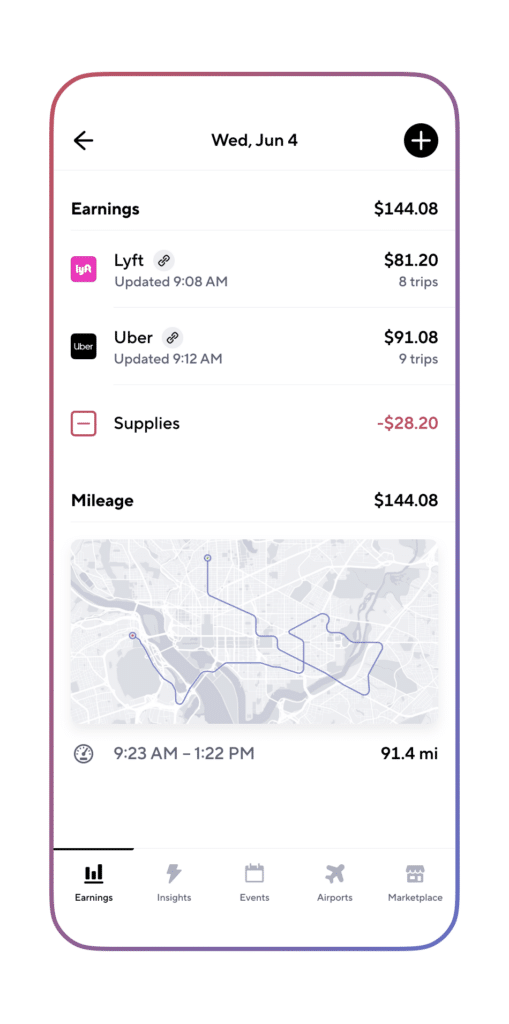
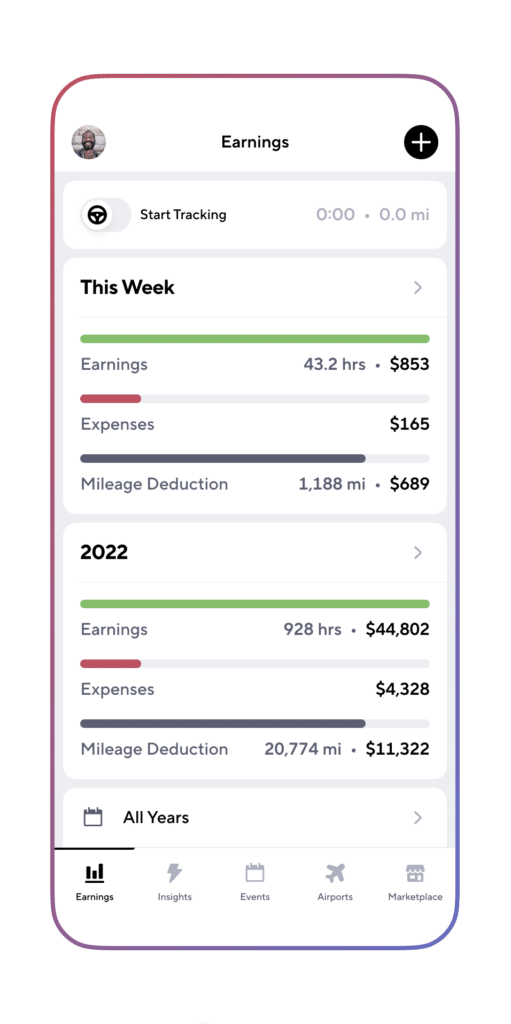
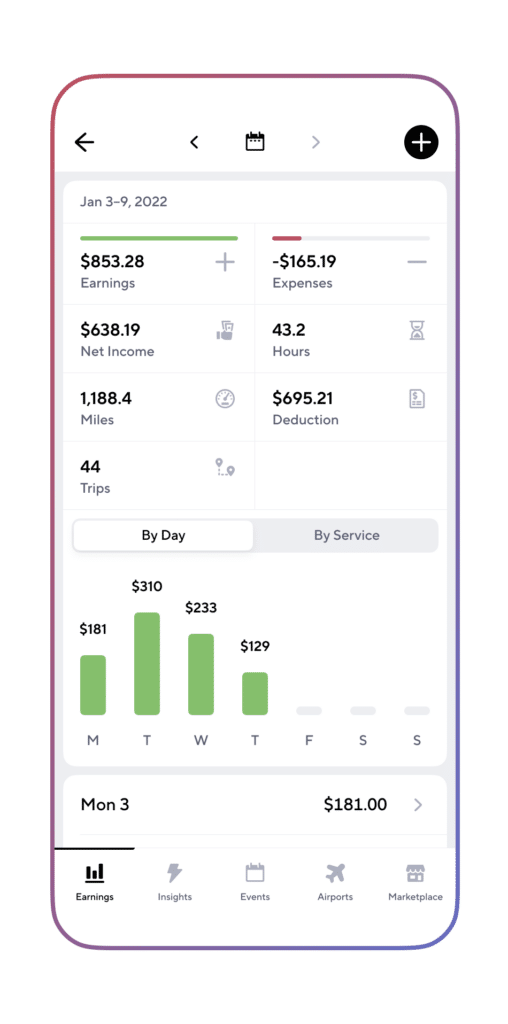
* Gridwise does not provide tax, legal, or accounting advice. This material has been prepared for information purposes only, and is not intended to provide, and should not be relied on for tax, legal, or accounting advice. You should consult your own tax, legal, and accounting advisors before filing your return.
Work smarter. Earn more.
Whether you drive, deliver, or pick up shifts — Gridwise helps you track earnings, mileage, and performance so you stay in control of your work. Download the app and take charge today.
