Gridwise blog
Tips, insights, and advice to help you earn more and work smarter, whether you do gig work, hourly, or shift work.
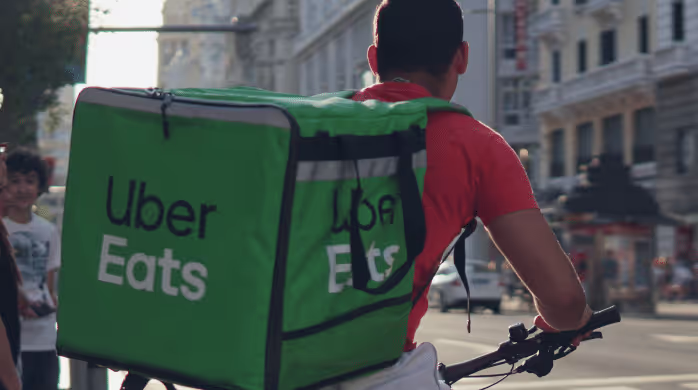
How to Make $1,000 a Week With Uber Eats in 2026 (Tips + Hourly Data)
In this blog, we'll explore the strategies and techniques that can show you how to earn $1000 per week as an Uber Eats delivery driver. We'll cover everything from optimizing your delivery zones and schedules to maximizing your tips and customer satisfaction. Whether you're a seasoned Uber Eats driver or just starting out, this guide will provide you with the insights and actionable steps to take your Uber Eats driver earnings to the next level.
Becoming an Uber Eats delivery partner can be a lucrative opportunity, especially if you're able to consistently earn $1000 a week. By understanding the platform, optimizing your delivery strategies, and focusing on customer satisfaction, you can maximize your earnings and turn Uber Eats into a reliable source of income.
We’ll cover the following topics to provide coaching and ideas to help you push your earnings up to that $1000 per week level:
What do Uber Eats drivers do?
Uber Eats drivers deliver prepared food most of the time, but they also might shop for and deliver goods from convenience outlets and grocery stores. The job is pretty simple. You get a request for an order, you drive to the restaurant or store to pick it up, and then you deliver it to the customer. If you already drive for Uber, you can choose to take orders for Uber Eats delivery any time.
If you’re not an Uber Eats driver yet, it’s pretty easy to become one. This Gridwise post tells you what you need to do if you want to sign up and start making money Uber Eats style. Many rideshare drivers welcome the chance to deliver food rather than people. This article from Nerdwallet covers the Uber Eats gig from that angle.
There are some sweet advantages to working with Uber Eats. In lots of cities you don’t even need to have a car. You can use a bike or a scooter, or even walk, to make your rounds. If you do use a car, Uber Eats’ requirements are a lot easier to meet than they are for Uber rideshare driving.
You also have a lot of flexibility. You can shop and deliver convenience items and groceries, but you don’t have to. And, like most driving gigs, you can choose your own hours, and map out the locations where you want to work.
Use Gridwise features When to Drive and Where to Drive to help you figure out what work hours and which specific areas will be the most profitable for you. Real data from real delivery people will show you earning patterns for drivers in your town.
How much can you earn doing Uber Eats?
The honest answer to this question is: basically, as much as you want! It all depends on how many hours you put in and how strategic you are about your gig. Earnings vary from one area to another, as this article from Entrepreneur points out. To give you a baseline, let’s look at the earnings of Uber Eats drivers who tracked their earnings with Gridwise.
Remember that these numbers show us only average earnings. To make $1,000 a week with Uber Eats, you’re going to have to be better than average, and we’ll show you how. For now, though, it’s good to have these figures so you get a ballpark number of where to start.
How much do Uber Eats drivers make?
Gridwise data tell us the following:
- Monthly earnings average around $444.00 per month.
- Gross earnings per trip are between $9.00 and $10.00.
- Tips make up about 50% of most Uber Eats drivers’ income, which amounts to about $225.00 per month.
Is Uber Eats good money? It can be. While there are other gigs that pay more per trip, if you drive for Uber Eats, you’ll always be pretty busy.
https://datawrapper.dwcdn.net/HPAz8/3
You can also see that, unlike many other gigs, tips play a huge role in Uber Eats earnings.

With these numbers as a baseline, what can we say about how to earn $1,000 a week with Uber Eats? As we said in the introduction, it’s going to be a hustle, but it’s really possible. To figure out how to make the most money with Uber Eats, let’s start by looking at how many trips these “average” drivers made each month.
We know that average gross earnings were $444.00 per month, and drivers got around $10.00 per trip. That means they took 44 or 45 trips per month, which breaks down to 11 trips per week. That’s not a lot of Uber Eats delivery, is it?
The fact that Uber Eats drivers averaged so few trips shows us that many drivers use more than one app at the same time. This is called multi-apping, and you can learn more about it in this Gridwise post. If you want to answer the question of how much you can make with Uber Eats, then you need to stick with the app and keep plugging away at those orders. You also need solid strategies, as well as some inside tips and tricks.
How to make the most money on Uber Eats: Delivery driving tactics
Getting to that $1,000 a week with Uber Eats isn’t so hard when you remember that the drivers we saw making about $111 a week were only taking around 11 trips in the same time period. That’s not much at all! If you work the Uber Eats app like a boss, you’ll soon have many more trips than that, easily reaching the number needed to get you to $1,000 a week. Now, let’s get to some tactics you’ll need to make that kind of bank.
- Stay with the Uber Eats app, and track your earnings. Gridwise can easily do that for you. Simply sync your Uber Eats app with Gridwise, and you’ll be able to see how much you’ve earned with Uber Eats, what times were most profitable, and your average hourly pay. Racking up trips with Uber Eats has other benefits, including perks and bonuses that are awarded to top drivers.
- Leverage surge pricing and promotions. Surge pricing is applied when there is a lot of demand. When surge pricing is in effect, many of the trips you make will pay more than usual. Promotions are offered to drivers who complete a given number of trips in a certain time period. High traffic volume days, nights, and times give you these chances to get extra earnings. Challenging yourself to complete the right number of trips for promotions will add to the number of trips you can count on for big bucks, too. Learn more about Uber Eats surge pay, boosts, and promotions in this Gridwise blog post.
- Say yes to doubling up on orders. With Uber Eats, you can get back-to-back orders or receive batched orders. Back-to-back orders happen when you receive a new request while you’re on the way to deliver an original order. The Uber Eats app routes these trips automatically, so you won’t be sent out of your way.
Batched orders are Uber Eats’ way of bundling together orders from either the same restaurant, or two nearby eating establishments. You get money, and trip count credit, for all the orders you complete, plus customer tips, without having to make a bunch of separate trips.
- Turn on the charm and get bigger tips. Being nice really is part of the Uber Eats driver’s job, and getting tips is one way people who drive for Uber Eats make money beyond their basic pay.. Bring along those extra napkins and condiments, use equipment that keeps food and drinks at the right temperatures and prevents spilling, and consider your customers’ needs. If you deliver groceries, be extra careful with delicate items such as bread and eggs.
And, most important, follow your customers’ directions, and stay in communication with them if you are going to be delayed, or if you have questions about their order. This Gridwise post will tell how to get bigger tips as a delivery driver.
- Use even more charm to keep your ratings high. As an Uber Eats driver, you will be rated by the restaurant or store where you pick up the orders as well as the customers who are waiting for the deliveries. This two-way rating system is designed to keep you on your toes, so Uber can keep people satisfied with your service. Don’t worry, you get to rate them, too.
There’s another reason why your rating as a driver is important. It not only keeps you in good standing with Uber; it helps you to qualify for the Uber Eats Pro incentive program. To learn more about Uber Eats Pro, and what it takes to earn perks such as preferred services, discounts, and deals, check out this Gridwise blog post.
Smart business moves that seal the deal
Now that you know how to gobble up the deliveries you need to make $1,000 a week with Uber Eats, it’s going to be a breeze to get there. Let’s make it even easier, with business moves that boost your earnings and shrink your expenses. If you use these, it will also be easy to say yes when people ask, “Can you make good money with Uber Eats?”
Minimize expenses. Avoid racking up big fast-food bills by bringing your own food and beverages. You might not think you’re hungry when you first start your Uber Eats run, but once the aroma of pepperoni pizza, premium cheeseburgers, and piping hot fries start wafting through your car, that might change. Bring a sandwich or other healthy food from home, and buy bottled water in bulk to save tons of cash compared to what it costs to buy single servings.
Maximize tax deductions. Another way to minimize your expenses is to maximize your tax deductions. Start by tracking mileage with Gridwise.
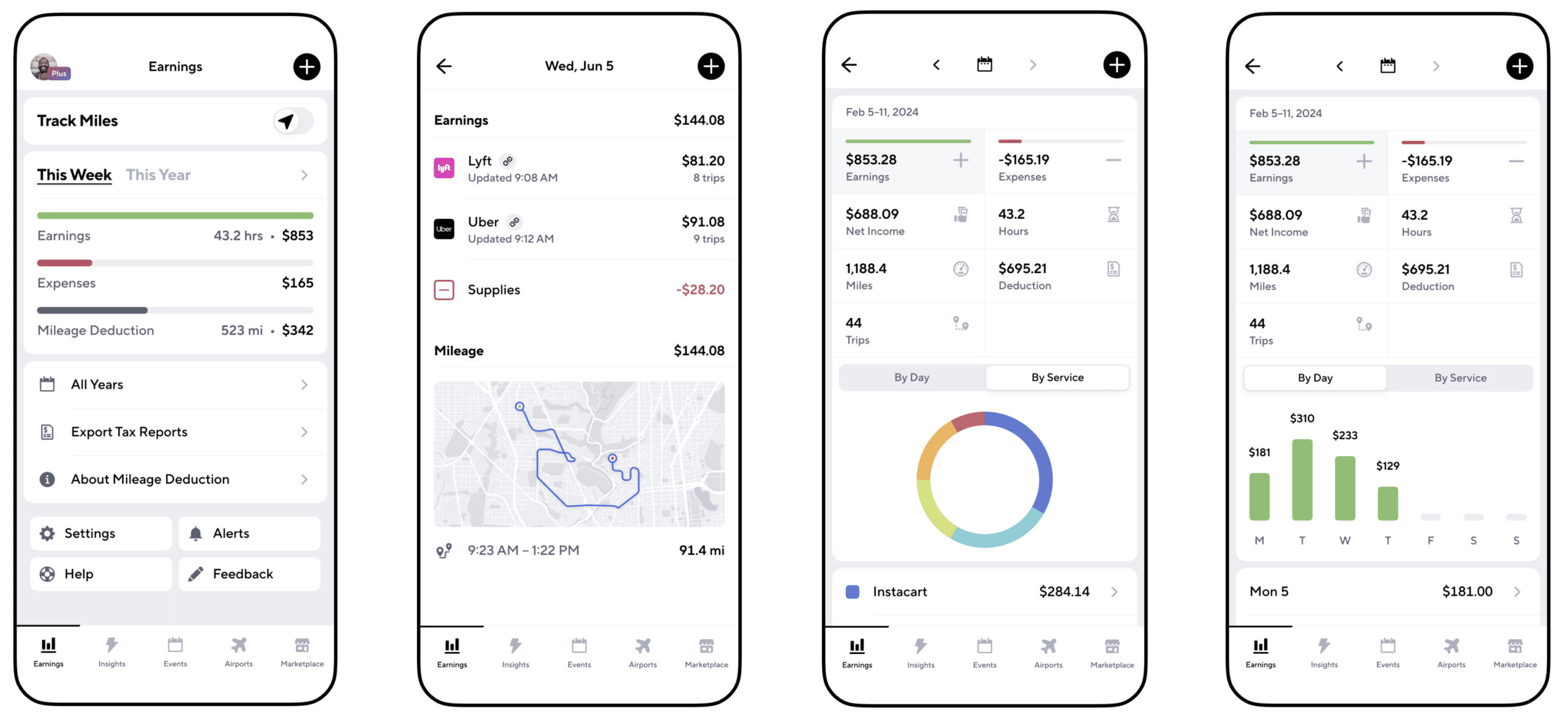
Gridwise App
Gridwise captures every deductible mile you drive, including the distance you cover between the trips your driving app records. Know what expenses you can deduct, and put them to work for you when tax time comes. Learn more about tax deduction strategies in the Gridwise Tax Guide for drivers.
Boost earnings with referrals
As an independent contractor, you’re probably looking for ways to make even more money than you can with Uber Eats. And most gig workers like you enjoy getting passive income. With Uber Eats, there’s a really easy way to do that, referrals!
All you need to do is find friends and encourage them to deliver for Uber Eats. If they make a certain number of deliveries within a specified time, you will get paid for doing nothing more than having them sign up under your referral code! Rates of pay vary by city, so check your Uber Eats app to find out what the current deal might be, and learn more about the referral program on the Uber Eats website.
Also remember: “friends” don’t have to be your best buds. Many delivery people carry cards with a QR code linking to their referral information, so just about anyone you encounter can join Uber Eats and boost your earnings. You could meet a source of passive income at the gas station, on social media, or at your high school reunion. The more you hustle, the more there is to gain, right?
Master the art of self-employment
As an Uber Eats driver, you’re an independent contractor. That means the company isn’t going to withhold your taxes, provide insurance, keep track of your earnings, or tell you about tax deductions. You’ll have to do all these things for yourself.
If you want to maximize your tax advantages, open an official business entity. You can incorporate (create a corporation) or you can work as a limited liability corporation (LLC). You can also work with a DBA (Doing Business As) arrangement, but the corporation or LLC will do a better job of protecting you from liability.
Establishing a corporation or LLC offers better tax advantages than being a sole proprietor. For instance, if you simply collect your earnings into your private account, you’ll be charged self-employment taxes in most states. And paying extra taxes is something we all want to avoid, within legal limits, as much as possible.
Every Uber Eats driver needs to learn about self-employment, and there are some great resources you can review. Check out the CareerOneStop website about self employment which will help explain the basics. You can also check with a professional tax accountant, or look other websites to learn more about actually creating a business.
Scope out your market
Look at the area around you to see where you’re likely to get the most deliveries. Where are all the restaurants? Where might people be more inclined to order deliveries? What hours do you want to drive? What activities might be going on around those times? Think about late-night and after-school times as well as breakfast, lunch, and dinner times.
Be realistic about the potential for your area and aware of new services opening up. For example, in New York, there is already a tab on the Uber Eats app that allows customers to order groceries. In our article about the best food delivery service to work for you’ll see that Uber Eats stacks up well against other delivery companies, mainly because of its potential for expanded opportunities for drivers to earn.
So, is Uber Eats good money? As we said, it isn’t an automatic guarantee that everyone will make $1,000 a week with Uber Eats. Trying out the suggestions we give you here, though, should put you on the right track! Go out there and start stacking up those orders and raking in some impressive earnings!
Get more inside information on Uber Eats in these posts from the Gridwise blog:
- The delivery driver guide: Using the Uber Eats app
- Everything you need to know about driving for Uber Eats
- Uber Eats Pro: What drivers need to know
- Looking for a different gig, part-time or full time job? Check out the Gridwise Job board.
Uber Eats FAQ
How does the Uber Eats platform work for drivers?
Uber Eats is a food delivery service that connects customers with local restaurants and independent delivery partners. As an Uber Eats driver, you'll receive notifications of nearby delivery requests, which you can accept and complete. The platform provides flexibility, allowing you to work on your own schedule and earn money based on the number of deliveries you complete.
What are the requirements to become an Uber Eats delivery partner?
To become an Uber Eats delivery partner, you'll need to meet certain requirements, such as having a valid driver's license, a registered vehicle, and passing a background check.
How can I choose the right delivery zone to maximize my earnings?
Selecting the right delivery zone can significantly impact your earnings, as some areas may have higher demand and better-paying orders. It's important to research and identify the zones in your area that tend to have the most consistent and lucrative delivery opportunities.
How can I take advantage of peak delivery hours and surge pricing?
Understanding peak delivery hours, such as mealtimes and weekends, and taking advantage of surge pricing can boost your earnings. Be aware of when demand is highest in your area and adjust your schedule accordingly to capitalize on these peak periods.
What are some tips for maximizing tips and customer satisfaction?
Providing excellent customer service and going the extra mile to ensure a positive experience can lead to more tips and repeat business. Prioritize communication, timeliness, and attention to detail to keep your customers happy and satisfied.
How can I set realistic weekly goals to reach my $1000 target?
To make $1000 a week with Uber Eats, it's essential to set realistic weekly goals and track your earnings and expenses. Start by determining your target earnings and breaking it down into achievable daily or weekly goals. This will help you stay on track and make adjustments as needed.
What are some strategies for efficient route planning and navigation?
Effective route planning and navigation can save you time and fuel, allowing you to complete more deliveries. Utilize mapping apps and take advantage of features like real-time traffic updates and turn-by-turn directions to find the quickest routes.
How can I balance my Uber Eats deliveries with other commitments?
Develop a schedule that allows you to capitalize on peak delivery hours while still maintaining a healthy work-life balance. Consider using tools like calendar apps to plan your availability and track your hours to ensure you're maximizing your earning potential without sacrificing your personal life.
What are the key considerations for maintaining my vehicle as an Uber Eats driver?
Keeping your car clean and well-maintained is crucial for maximizing your Uber Eats earnings. Regularly scheduled oil changes, tire rotations, and other preventive maintenance can help extend the life of your vehicle and minimize downtime. Additionally, budgeting for vehicle-related expenses, such as fuel, insurance, and repairs, will ensure you're accounting for these costs and maximizing your net earnings.
What are the tax obligations and legal considerations for Uber Eats drivers?
As an Uber Eats delivery driver, it's essential to understand the tax obligations and legal considerations that come with being an independent contractor. This includes properly reporting your earnings, deducting eligible business expenses, and making quarterly estimated tax payments. Additionally, you'll need to ensure you have the appropriate insurance coverage, such as personal auto insurance and possibly commercial auto insurance, to protect yourself and your vehicle while on the road making deliveries.

The Gridwise Job Board: Find Your Ideal Job or Gig Work
Gridwise is an essential assistant app created by gig workers for gig workers. Our mission is to support those engaged in gig work in every way possible. We understand how challenging it can be to deal with income instability, a lack of benefits, and job insecurity that often comes with gig work. The Gridwise app tracks and organizes earnings and expenses, and offers a wide array of discounts, deals, and services that make the lives of independent contractors easier and more rewarding.
We firmly believe it’s possible to make a viable living and create a gig experience that offers flexible hours, variety, and excitement. With issues such as consistent earnings and job security in mind, Gridwise is proud to offer a centralized platform that shows you how to find gig work and secure reliable opportunities. We’re proud to introduce the Gridwise Job Board.
The Gridwise Job Board: Key features
Because Gridwise is dedicated to serving the gig worker community, we’ve filled the Gridwise Job Board with useful features that won’t waste your precious time.
- Comprehensive listings. Find part-time, full-time, temporary, and per-task work. Drive or deliver with your vehicle, utilize an employer’s vehicle, or even find non-driving gig work.
- User-friendly interface. Find the jobs that are right for you with a tap of your screen.
- Verified opportunities. We vet the jobs before they are listed to ensure you’re getting high-quality job postings.
How to get more gig work, seasonal, part-time or full-time jobs with the Gridwise Job Board
Looking specifically for “gig work apps” or “gig jobs near me?” You’re in luck. Our filters and search functions send you directly to the listings you seek.
Here’s how it works.
- Access the Job Board via the Gridwise website.
- Search for jobs by type, location, and more.
- Select the job that interests you, and read all about it.
- Scroll through the description, and if it appeals to you, click “Apply for job.”
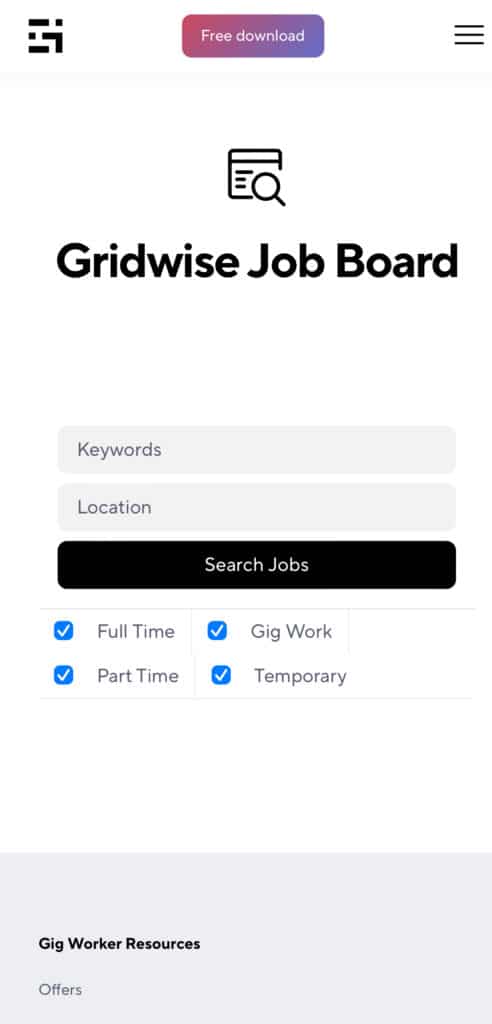
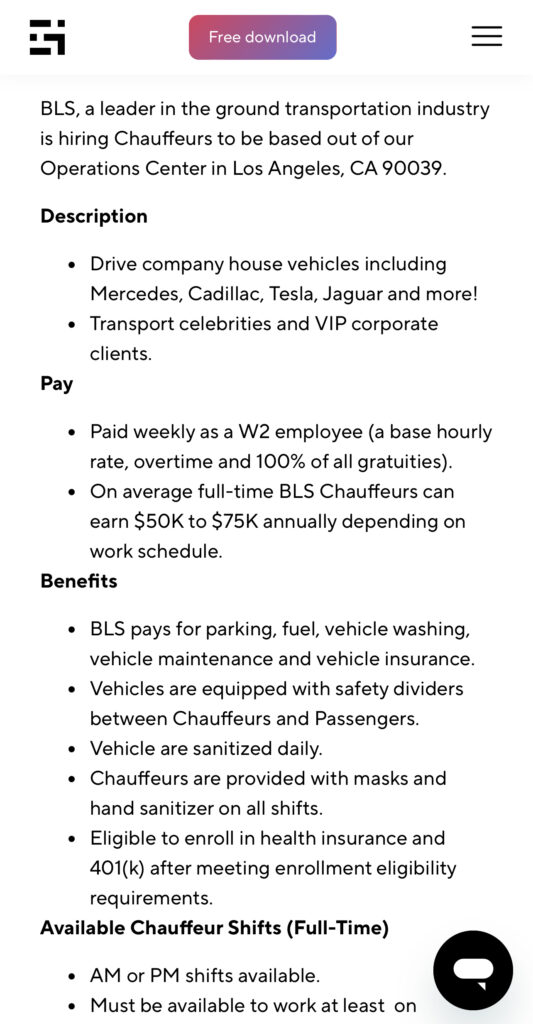
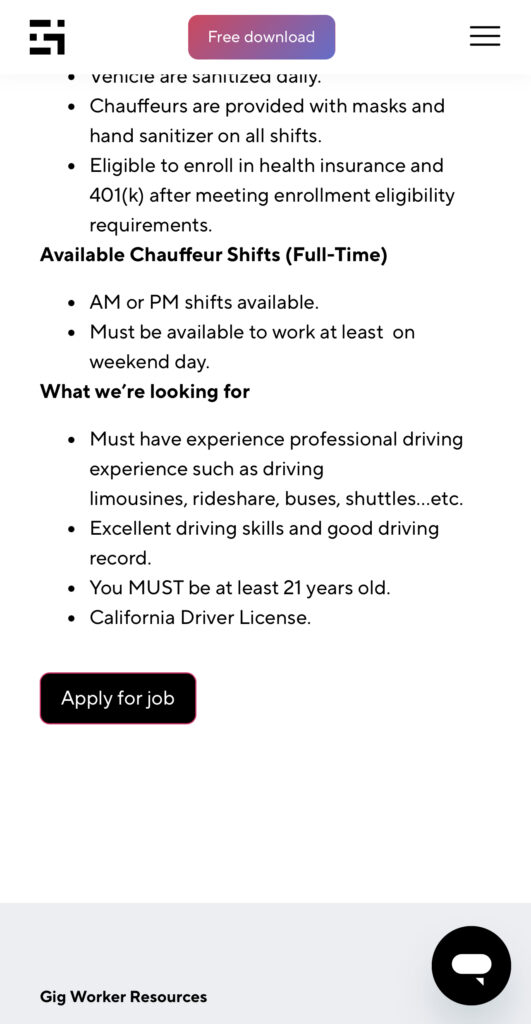
Many types of jobs are available. Adjust the search filter to see the full variety of opportunities that will let you cash in. Deliver food, set up catering, do rideshare driving, get paid for doing package delivery, and much more. You’ll find short-term gigs, long-term contracts, and part-time positions.
Perks of the Gridwise Job Board for gig workers
Gig workers who know how to make extra money will appreciate how the Gridwise Job Board lets you multiply your chances of bringing in big earnings. Here’s how:
- Increased stability. Use the Gridwise Job Board to find part-time or permanent jobs in addition to the part-time gigs you already have. Always keep a steady stream of earning opportunities flowing toward you.
- Flexibility and autonomy. Choose jobs that fit your schedule, work around other jobs and family duties, and still leave room for some fun in your life. Discover side hustles to supplement your full-time job, permanently or just for the season.
- Skill development. Find part-time work that lets you use a skill you already have, or try your hand at something new. It’s a smart way to develop a portfolio to showcase what you can do, or even to find permanent employment.
Get Gridwise and stay up to date on the Gridwise Job Board
Gig workers need plenty of information and assistance, and Gridwise is here to give it to you. Download the app and get essential features such as
- seamless earnings tracking
- mileage tracking
- expense recording, including notes
- low-cost and no-cost insurance benefits
- access to affordable medical, dental, vision, mental health, and alternative care
- professional services including legal and financial help
- deals and discounts
- weather, events, and traffic reports
- inside information on where and when to drive
More to know about gig work:

5 Best Mileage Trackers For Gig Drivers
Many drivers ask, “Do I really need a mileage tracking app?” The answer is simple: only if you want to have an accurate count of all the miles you can legally deduct from your taxable income! You might think your rideshare or delivery driving app has got you covered. After all, they do quite a good job of logging the miles you drive while you’re on a trip or delivery. But, if you want to have the best app to track mileage for Uber, Lyft, Doordash, Instacart, or the other apps you may use, you need more. Why is that?
Without a separate tracker, you’re missing the miles you drive in between pings. Did you realize that all the miles you drive, from the moment you begin your shift until it’s over (as long as you don’t drive several miles on a break to hang with your friends), are tax deductible! That means you need something besides your driving app to keep an accurate count of your travels. Read this Gridwise post to see how important it is to keep track of every deductible mile.
You won’t be surprised to hear that there’s an app for tracking miles. In fact, there are several of them. Here, we’re going to tell you about five top mileage tracking apps, and help you figure out which one is best for you.
Before we get to the list and identify the best mileage tracker app, let’s clarify what exactly a mileage tracking app is. According to G2.com’s technology glossary, mileage tracking is done for the purpose of keeping a log of mileage that is either reimbursable or tax deductible.
And yes, of course you can track your miles simply by taking readings on your odometer. But are you really prepared to account for how many miles you drove for personal reasons and subtract them from the total to get your business mileage? Even if you can remember all that and do the arithmetic, if you want an accurate reading of the miles you drive for business, and can therefore deduct, a mileage tracking app will save you a lot of trouble and prevent you from making costly errors.
Plus, as a gig driver, you have specific needs when it comes to a mileage tracker. Ideally, you’d be able to handle mileage tracking and several other functions all in one app. It can be maddening enough to deal with driving apps, particularly if you’re an avid multi-apper. You would want your mileage tracker app to help you keep account of other aspects of your business, including income, expenses, and inside information about the art of gig driving.
Not all mileage apps are equal, to be sure! Let’s look at five of the best apps to track mileage and figure out which is the best app to track mileage with Uber and Lyft, or what mileage tracker app is best for DoorDash.
1. Zoho Expense
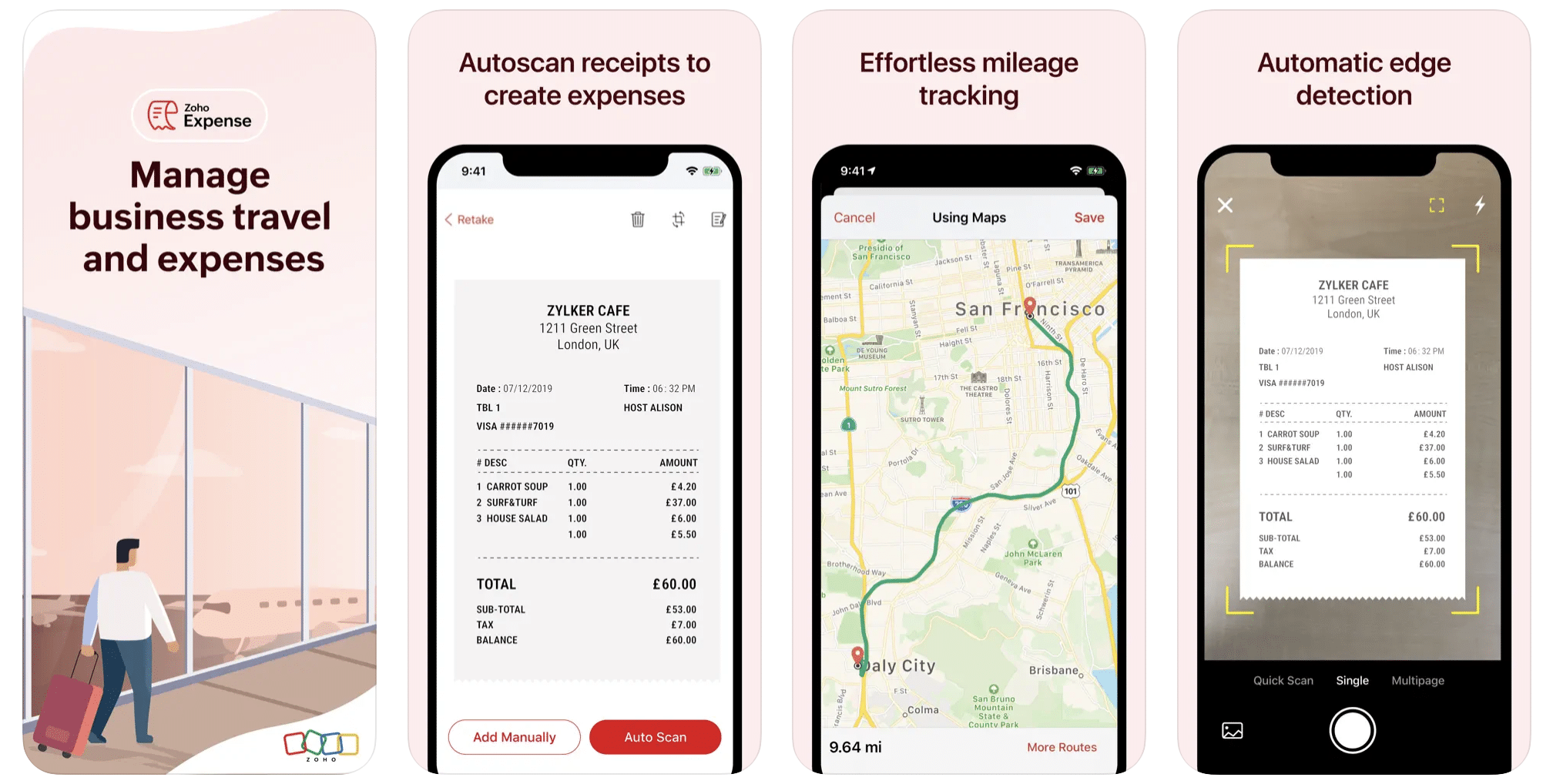
First up is Zoho Expense, which does exactly what its name says. This app is designed to allow companies to give employees a uniform way to create and submit expense reports. It can be used by individuals, including gig drivers, as well.
It includes a mileage tracker, as well as features that let you track other deductible expenses, including the ability to scan and record receipts.
Available on Android and Apple: Yes
Ratings: 4.8 stars on App Store, 4.7 stars on Google Play
Free Version: Yes
Subscription price: $3 per month, billed annually
Created specifically for gig drivers: No
2. Quickbooks Online
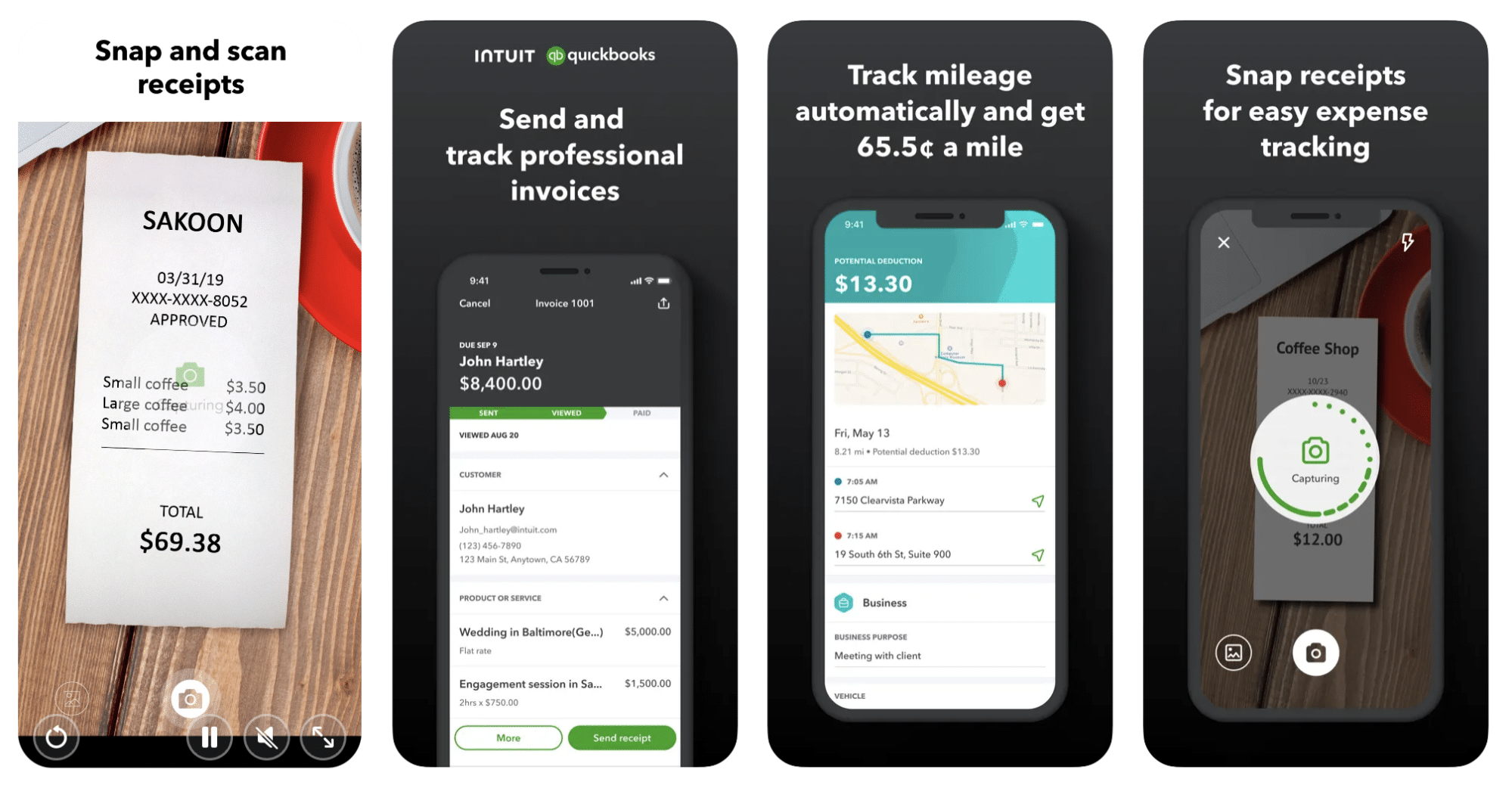
Quickbooks Online is a cloud-based app that allows you to track your mileage, earnings, and expenses. The information you enter can then be used to generate various reports that prepare you for tax time. It also allows you to create graphs that illustrate your cash flow, and includes a receipt scanner so you can instantly record deductible expenses. Quickbooks is popular, highly reliable, and designed mainly to help people keep track of their small businesses.
Available on Android and Apple: Yes
Ratings: 4.7 stars on App Store, 4.4 stars on Google Play
Free version: 30-day free trial
Subscription price: $15 per month for basic version if purchased for 3 months or more
Created specifically for gig drivers: No
Source: quickbooks.intuit.com
3. Shoeboxed
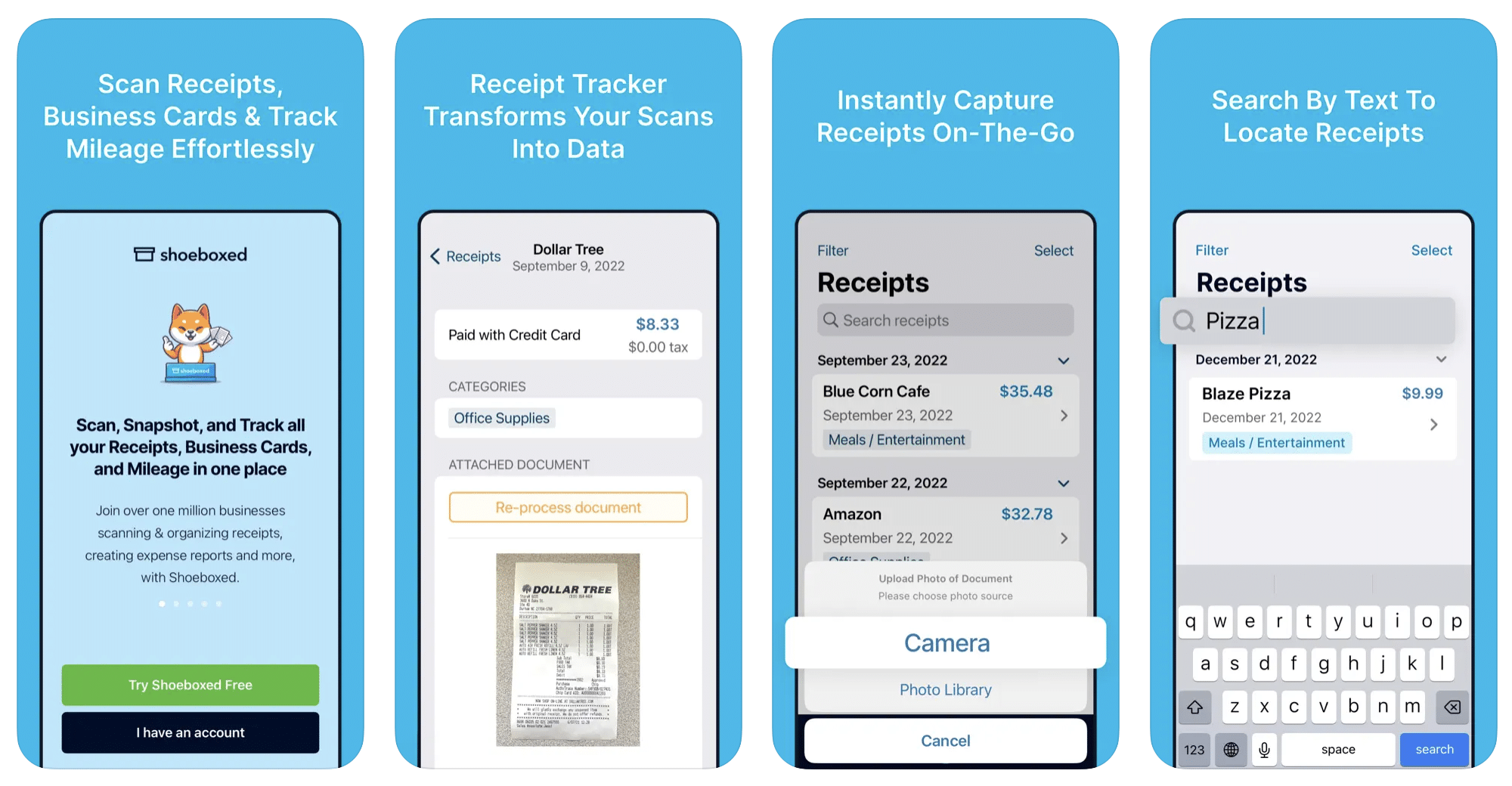
Shoeboxed started in 2007 as a service for scanning paper receipts into digital form. Now the app offers a free mileage tracker and has enabled users to scan receipts directly. It touts itself as the best mileage tracking app for DoorDash, but there are some elements missing that Dashers might like to have. While it provides features that record your expenses and prepare you for tax season, it doesn’t automatically track your earnings. The mileage tracker has a system where you can drop pins along your routes to make the tracking more precise, identifying those legs of a trip that you make for business purposes. The mileage tracker is “free” once you sign up for the basic version.
Available on Android and Apple: Yes
Ratings: 4.5 stars on App Store, 2.3 stars on Google Play
Free version: No
Subscription price: $18 per month for basic version
Created specifically for gig drivers: No
Source: blog.shoeboxed.com
4. Stride
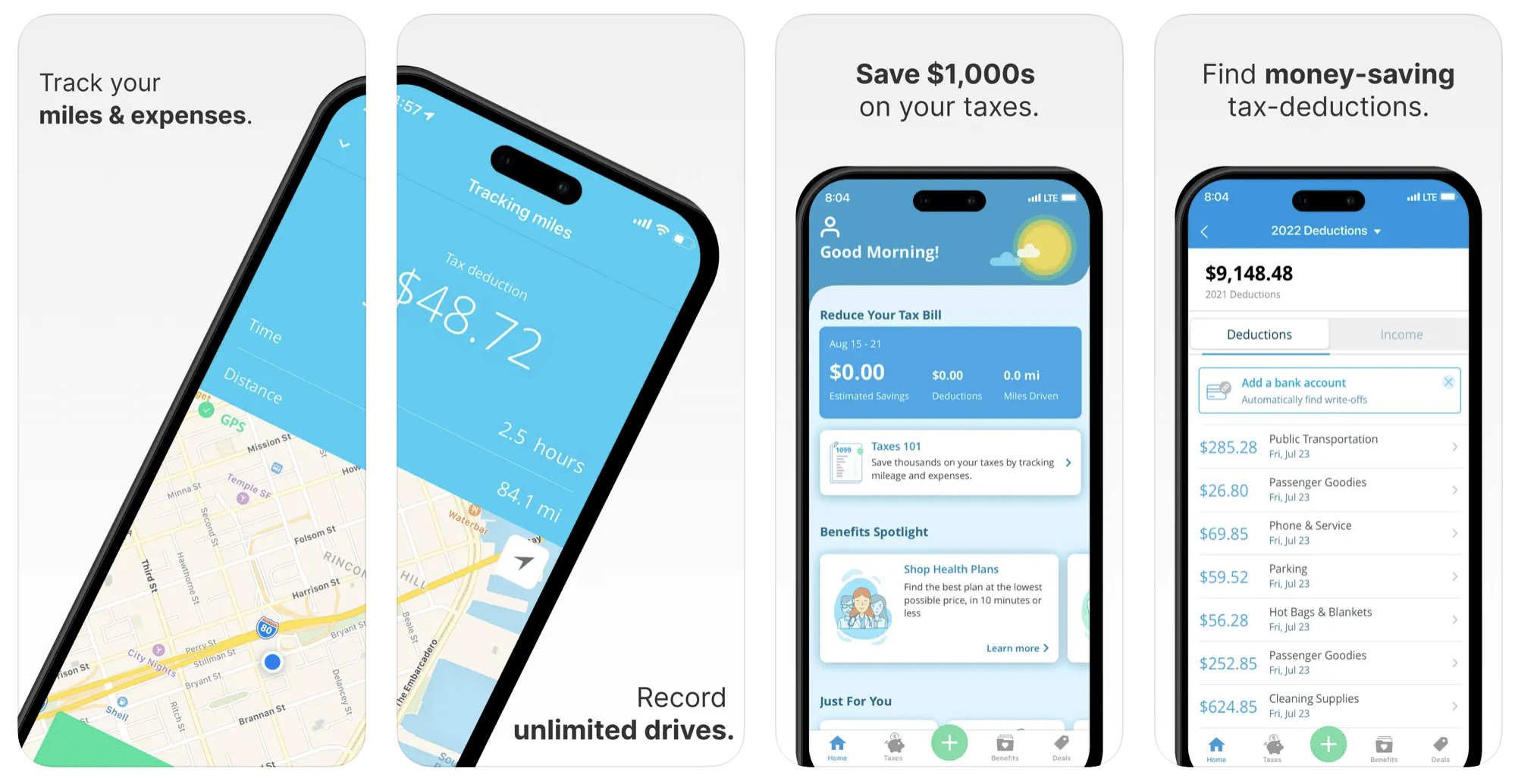
This free mileage tracker does a fair job of keeping track of the distances you rack up while gig driving, but it doesn’t automatically track earnings. It can be a big help, though, in tracking your expenses. You can link Stride to your bank account, and it will automatically scan your expenses to identify items you can potentially deduct. The app is totally free. This could make it the best free mileage tracker app, but there is a small price to pay. The app will persistently push you to consider various insurance plans that they are affiliated with. If you don’t mind that, this is a solid mileage tracker, even if it doesn’t track your earnings.
Available on Android and Apple: Yes
Ratings: 4.8 stars on App Store, 4.6 stars on Google Play
Free version: Yes
Subscription price: None. The app is free.
Created specifically for gig drivers: No
5. Gridwise
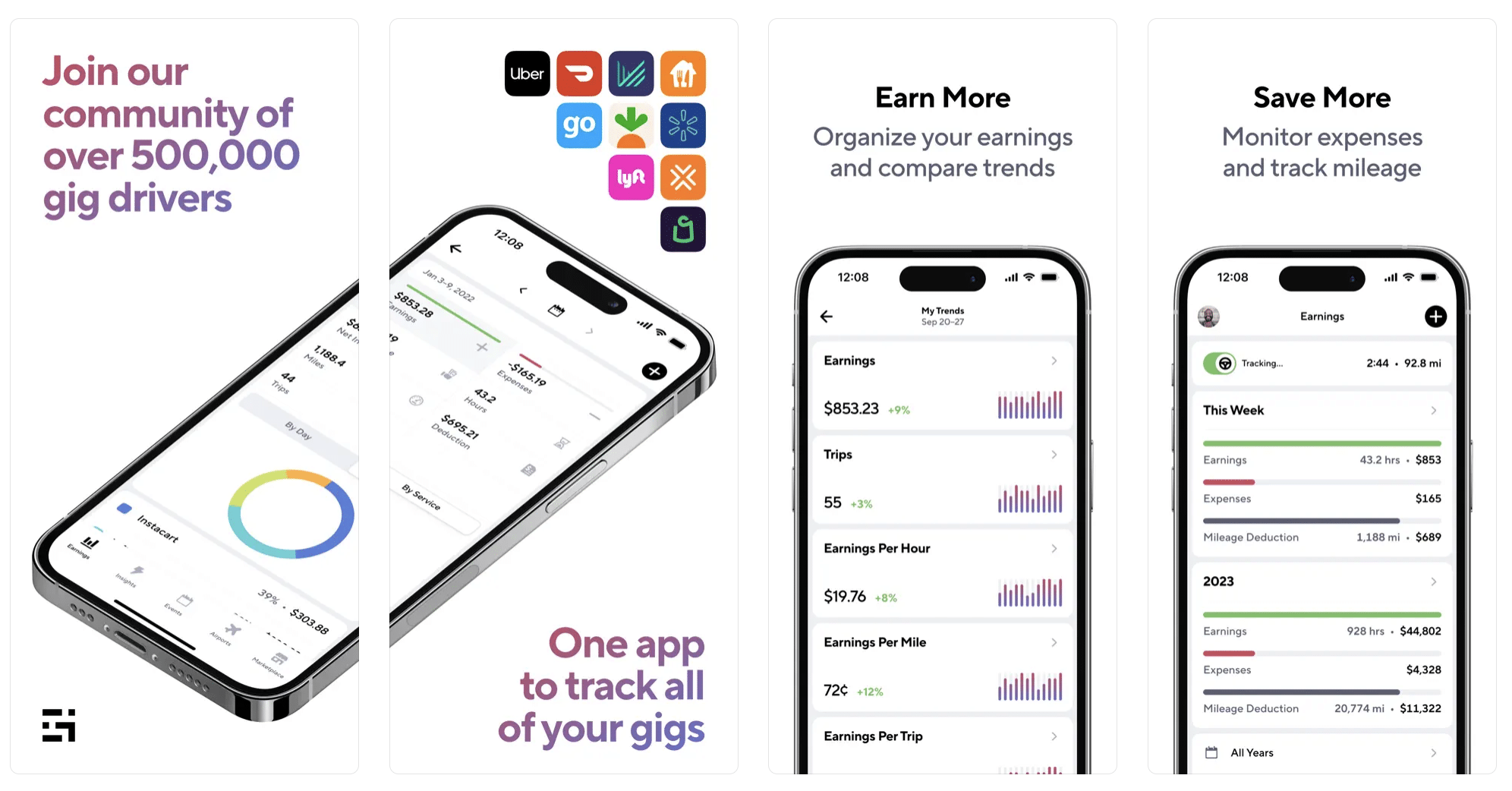
Gridwise has a free mileage tracker and free features that record your income and expenses. It gives you access to insurance and benefits, as well as insights about the best times and places to make the most money while gig driving. The Gridwise mileage tracker captures all the miles you drive while you’re on your driving shift, and it can be used if you have other trips you need to make which qualify as business travel.
Drivers love it because it is geared toward the needs of rideshare and delivery workers, providing free information about airport departures and arrivals, event start and let out times, weather, traffic, and more. The Gridwise Plus subscription adds value by providing additional insights and reports, discounts on benefits, the ability to export data in .csv format,, and more.
Available on Android and Apple: Yes
Ratings: 4.9 stars on App Store, 4.6 stars on Google Play
Free version: Yes
Subscription price: $9.95 per month for Gridwise Plus, or $95.99 per year (a $23.41 savings)
Created specifically for gig drivers: Yes!
What is the best mileage tracking app?
Now that we’ve checked them all out, we’re positive about the answer to that. Hands down, it’s Gridwise. Are we biased? You bet we are! But drivers love it too. Gridwise is the best mileage tracker app, and so much more. So many of the features are free, and the subscription to Gridwise Plus will pay for itself with additional insights to boost your earnings and deeper discounts on products and services.
Most important, Gridwise is designed specifically for gig drivers by experts who were once gig drivers themselves! Knowing what gig drivers need is a crucial step in creating an app that rideshare and delivery drivers can really use! Here are a few of the features, besides mileage tracking:
- seamless earnings tracking
- automatic, on/off toggle and manual mileage tracking
- mileage categorization
- airport, traffic, weather, and events information
- insights into where to drive and when to drive
- reports showing earnings across the platforms you use
- discounts on countless products and services for drivers
- additional resources for finding side gigs
- an informative and comprehensive blog
- affordable benefits, including insurance, medical, dental, and alternative practitioner discounts
- a community of drivers just like you
Don’t settle for just any app. Get the best mileage tracker, and so much more, from Gridwise!
Uber Eats Driver Pay: How much do drivers earn?
Is Uber Eats worth it? What does Uber Eats driver pay look like? For many drivers, Uber Eats is a staple of their gig business. Others use Eats as part of a multi-apping system, where they toggle back and forth with other rideshare or delivery apps.
There are many factors that make driving for Uber Eats worth the effort. The earnings for 2022 show that there is definitely money to be made by delivering food for Uber. In this blog post we’ll do some delivering, too.
How much do Uber Eats drivers make?
How much does Uber Eats pay? Like all answers to questions about driver earnings, it depends on a few different things. Gridwise data show us that while Uber Eats isn’t the highest paying delivery service, it is still very stable and very convenient.
How much can you make with Uber Eats? The fairest way to answer that is to look at actual earnings, directly from the results of Uber Eats drivers who use Gridwise. The first thing worth noting is that total hourly earnings (basic pay + tips) have remained stable for the first three quarters of 2022, at around $13.50. Then, in Q4, the median gross hourly earnings came in at $14.01. That means Uber Eats is sustaining its popularity, holding on to its market share, and paying well for drivers.
How much do Uber Eats drivers make a week? This answer rides on how many hours a week a person drives for Uber Eats. It’s not easy for drivers to put in a full 30 or 40 hours delivering meals, but it isn’t impossible. You’d have to be willing to dig into the demographics in your area and find out where the chow orders are coming from, even when it isn’t peak meal time.
If a driver were to deliver for 30 hours a week, they’d pull in around $405. Keep in mind, though, that many Uber Eats drivers don’t use Eats as their only gig. Drivers, if they’re qualified, can switch back and forth between Eats and rideshare, depending on how busy they might be with each type of driving at different times of day.
That could be part of the explanation for Uber Eats monthly earnings coming in between $200 and $260 per month. This is on par with other delivery apps, such as Instacart and Grubhub, where drivers appear to work only part time.
Tips are very high with Uber Eats, around $6.50 per hour. Customers tend to tip delivery drivers more. Could it be because they’re hungry? Maybe so. As an Uber Eats driver, you’ll want to encourage customers to notice the careful and efficient way you bring them what they want. We’ll say more about that in a later section.
Uber Eats driver pay is just one good reason to work with the Uber Eats app.The flexibility of going between Uber rideshare driving and delivering for Uber Eats is unique, and a good feature for Uber drivers.
What does it take to drive for Uber Eats?
If you choose to do Uber Eats delivery only (that is, unless you’re already a rideshare driver for Uber) there are some requirements. To do delivery by car, you will need to
- be at least 19 years old
- drive a 2-door or 4-door car
- have a valid driver’s license in your name
- submit your Social Security number so Uber can run a background screening
You can also deliver, in some areas, on a scooter or bicycle, and even on foot. See the Uber website for specific requirements for these modes of transportation, and check what the site has to say about your city for any special considerations there might be.
Read this Gridwise blog post for more about what it takes to drive for Uber Eats.
Want to deliver with Uber Eats as an Uber driver?
If you’re an Uber driver, you already qualify to deliver for Uber Eats. All you need to do is turn on the option to receive delivery requests in the Uber driver app. This is extremely convenient if you want to mix up your driving activity and capitalize on the opportunity to make more money when delivery is in demand. Then you can switch back to rideshare when more people need you to take them from one place to another.
The requirements for rideshare drivers are a bit harder to meet than the ones for Uber Eats delivery only, but not by much. See the Uber website if you’re not yet an Uber rideshare driver, and want to learn more about the requirements in your city.
What are the perks and considerations of delivering for Uber Eats?
What reasons might you have for choosing to drive for Uber Eats, or not? If you’re looking for delivery only, Uber Eats is a very easy gig to work. It’s popular and can be found in most locations. If you’re thinking of mixing Eats with Uber rideshare, you’ll find food delivery to be a pleasant diversion from your usual work, and it can also be a lucrative one.
This table lists some pros and cons you can consider, in either case.
Uber Eats PerksUber Eats ConsiderationsApp is easy to use and toggle back and forth from rideshare to deliveryFor rideshare drivers, the mix of rideshare and delivery requests can be distractingGood pay for food deliveryMight not be as lucrative as rideshareEasy to qualifyYou may need to clock in a lot of mileage to make good money No scheduling necessary, drive anytimeYou may have lots of competition from other drivers
There are many factors you need to take into account when you choose which service or services to drive for. Uber Eats is very popular among drivers, so it seems the pros must outweigh the cons. Of course, you can always increase your chances of making more money when you learn how to strategize wisely.
What’s the best Uber Eats driver advice for maximizing earnings?
This Gridwise post tells you how it’s possible to earn $1000 a week with Uber Eats, and it contains a lot of wise advice. The core point of the article is that you have to treat your Uber Eats gig like the serious business that it is. That means you need to
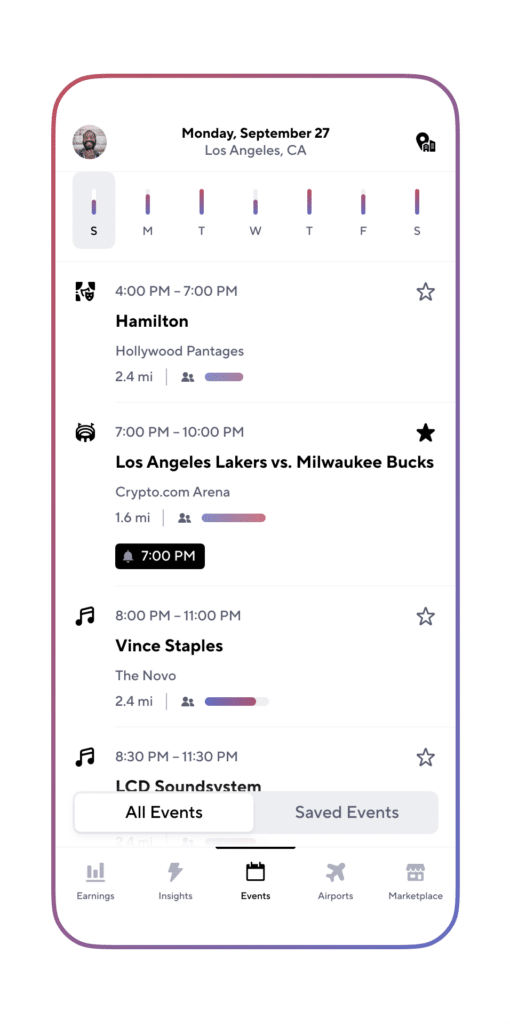
- track your earnings. To properly manage your business, you need to know how much you’re making. Sync your Uber Eats activity to Gridwise, and the earnings data will seamlessly be tabulated and displayed in easy to read and useful graphs.
- track your mileage. Your tax-deductible mileage is recorded for each app you sync with Gridwise, making it easy to find at tax crunch time.
- record your expenses. Gridwise makes it easy to keep track of your expenses, tax-deductible and otherwise. Just enter them as they come in.
- cut your operating expenses. Once you record your expenses, and see how high they are, you might want to look for ways to cut them down. Check out the amazing deals and discounts from Gridwise on everything from gas and car maintenance to life insurance and healthcare.
- know when and where the best deliveries will take place. Gridwise driver data informs the features Where to Drive and When to Drive, so you can avoid playing “trial and error” with your driving patterns.
- get familiar with the areas and patterns in your town. You can learn a lot about your area when you do gig driving. Know where offices, universities, hospitals, and high-delivery neighborhoods are, and be alert to what’s happening, when shifts change and people get home from work.
- set up a schedule and stick to it. Making a good living as a gig driver requires you to drive at times when you might not really feel like it. You are your own boss, so apply the necessary discipline and get your job done. A schedule is a huge help.
- use multi-apping: You can go from one app to another, within the rules, of course, and bring more earning opportunities your way. Read this Gridwise post on multi-apping to get more ideas that will increase your income.
- be aware of events, weather, and traffic. You can always know what’s going on in your town with Gridwise event alerts, weather advisories, and traffic information.
These are just a few of the things you need to do to make the maximum as an Uber Eats driver. And, as you can see, Gridwise can be a big part of your success..
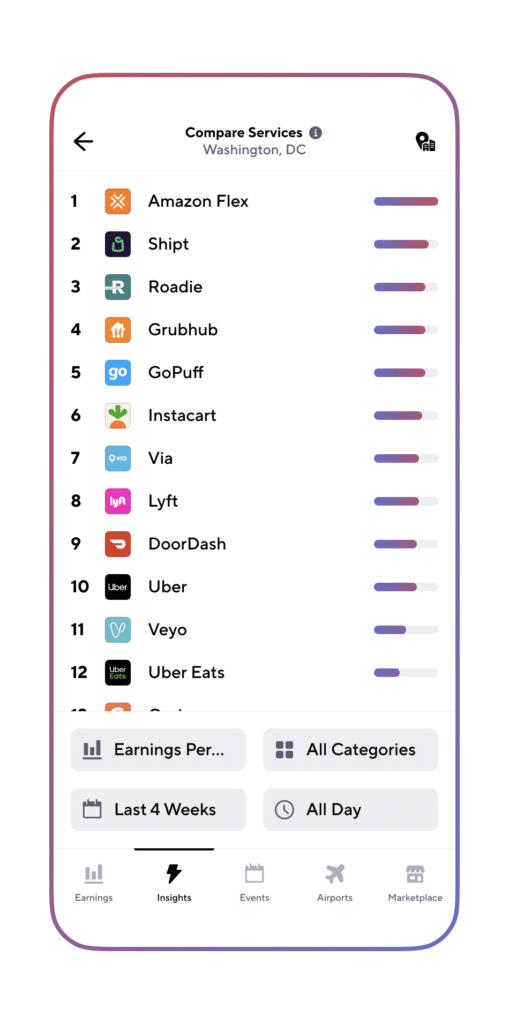
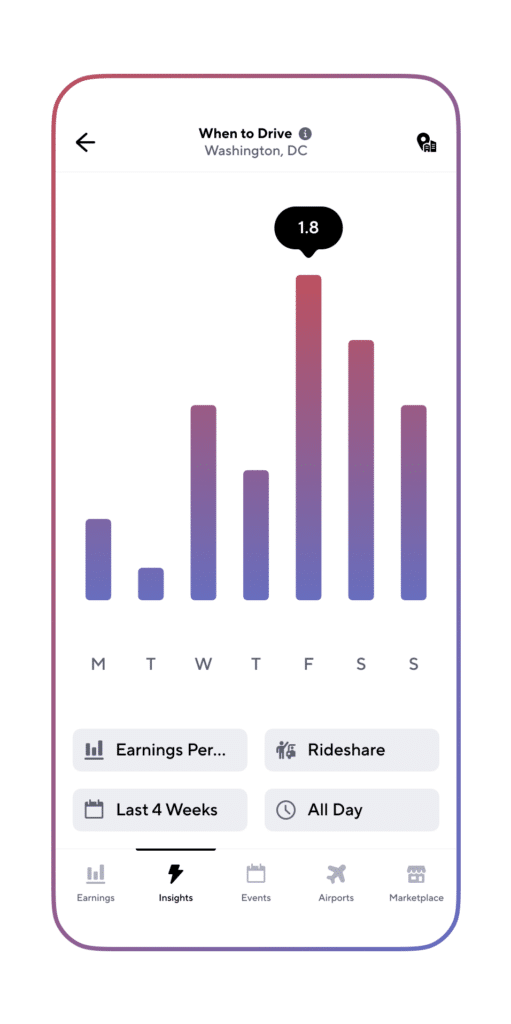
Here are some more Uber Eats articles we think you will enjoy:
Instacart vs DoorDash for Drivers in 2026: Which Pays More?
How much do Instacart drivers make? What are the pros and cons of DoorDash? If you’ve been wondering about issues like these for Instacart vs. DoorDash, you’re not alone. Whether you’re starting your first driving gig, or considering a switch, knowing what these two popular services have to offer is crucial. In this blog post, we’ll cover the territory, including
Instacart vs. DoorDash: Main differences
The gig economy and the services it offers to consumers and workers are in a state of constant flux. There was a time when stark distinctions could be drawn regarding what the different companies required of drivers, but those days are behind us.
These two companies are a case in point. Instacart is, for the most part, a grocery delivery service, as you can read in this article from Millenial Money Man. There are options to deliver groceries only, shop and deliver groceries, or stay in a store and do the shopping and packing, preparing the items for a driver to deliver. Instacart is diversifying. Read about the company’s foray into prepared food delivery in this Gridwise blog post. You’ll find that the deliveries involve prepared foods found in grocery stores.
DoorDash is mainly a prepared food delivery service. You will most often be called to various restaurants to pick up meals and deliver them to customers. However, there will be times when you’ll be asked to go to stores and pick up items, pay for them with your DoorDash-issued red card, and take them to customers. Yes, that means Dashers may have to do some shopping. Read more about the DoorDash driving gig in this post from EntreCourier.
While the lines between the two companies are somewhat blurred, you’ll find that there’s less shopping when working for DoorDash than with Instacart. This Gridwise post gives you information on how to be a DoorDash delivery driver. Those who choose Instacart have the options that are more oriented toward shopping, but can possibly find gigs that don’t involve anything besides driving and delivery. Learn more about the details of driving for Instacart in this Gridwise blog post.
Now let’s look at each service and what they have to offer.
What you need to know about Instacart delivery driving
How much do Instacart shoppers make? What’s the job really like? How easy is it to earn money with Instacart? Is Instacart worth it?These are just some of the questions you might have about becoming a shopper/driver for this popular grocery delivery service. Here are some answers, plus an easy comparison table that lays out the good and bad points for you.
Instacart full-service shoppers, according to Gridwise data, make around $15–16 per hour. Instacart in-store shoppers, who are part-time employees of the company, make an average of $14 per hour. The total amount you make working for Instacart will depend, obviously, on how many hours you work for them, how many batches are available, and what times of day you decide to schedule your blocks, but it’s a hustle.
What do Instacart Shoppers do?
The job itself, as you might guess, will involve some or all facets of grocery shopping, packing, and/or delivery. You will need to be able to manage the weight of the packages. as well as carry them from the store to your vehicle. Then you’ll need to convey them to the customer’s delivery destination. You will also be asked to find everything on your customer’s list, and if you can’t find an item, you’ll consult with them about possible substitutes.
Instacart earnings
Instacart earnings are consistent, and don’t show signs of declining. People have adopted the habit of shopping online for their groceries with Instacart, and you’re quite likely to notice a steady flow of business at all times of the year. Shoppers average around $16.50 per trip before tips, which is really pretty solid.
Instacart driver tip rates
Tips are pretty good with Instacart, too. The average shopper received about $6.50 in tips per trip. A hidden bonus about getting tips is that it’s an area you can always work on. Get inspiration from this Gridwise post, which tells you how to make $1000 per week with Instacart.
Instacart requires some people skills
Shopping and driving for Instacart is a reliable gig, but it’s best for those who like to hustle, and do it with a smile. Many drivers switch to grocery delivery from rideshare, hoping to get a break from the demands of dealing with their passengers. Shopping for people, or even just driving and delivering, is a little bit less stressful, to be sure. There are situations, though, that can create some frustrations. Finicky customers, grumpy grocery store workers, and difficulties dealing with other drivers create the need to use your customer service skills and take traffic snarls and bad drivers in your stride.
The pros and considerations of Instacart delivery driving
Let’s look at what life as an Instacart shopper is like in a nutshell:
Instacart ProsInstacart ConsiderationsWork is consistent; hours are flexible.Pay can be lower in comparison.Ability to choose blocks of time to work.Requirement to work a minimum of two consecutive hours; scheduling is required ahead of time.Job offers variety.Potentially too many tasks associated with each order.Lots of short-lived contact with other humans, and possibilities for big tips!Challenging interactions can stem from contact with surly people in the store, traffic madness, and nasty customers.Company innovating with food delivery and nano-fulfillment.New company practices could create more demands on shoppers and drivers.Bonuses offered for high performance, sign-on and referrals; some extra pay for peak orders.Fee for instant cashout.Company constantly improving its app and method of payment. Recently increased minimum earnings per batch.Complicated (and not very transparent) payment algorithm.
What you need to know about Doordash delivery driving
DoorDash calls its delivery drivers “Dashers,” and for good reason. The job consists of getting requests for deliveries, traveling to food establishments (and sometimes stores) to retrieve them, and delivering them to the customers. The job is fairly simple and doesn’t require much work on the “supply side,” apart from when the shopping part kicks in.
The Dasher job does require customer service savvy and a bit of patience, as you’ll need to deal with occasional delays. Always communicate with your customers to keep them up to date on where you are and how long they might have to wait.
DoorDash is expanding its services to include delivery of convenience items, and this side of the business could continue to expand. Before long, shopping could be as much a part of a Dasher’s job as it is for Instacart workers, which can be exciting and rewarding for Dashers.
How much does Doordash pay?
Dasher gross hourly pay runs between $15 and $16, according to data collected by Gridwise. This includes the basic delivery fee, peak pay, challenges, and promotions for drivers. Your total earnings will depend, of course, on how many hours you drive for DoorDash, how busy you are during the time you’re delivering, and what bonuses might be in effect during your shift.
Because hourly pay for DoorDash can vary to such a great degree, it can be tricky to choose the best times to work.
How much does Doordash tip?
Tips are the norm rather than the exception for Dashers, averaging around $4.28 per trip. Because a Dasher could make as many as three or four trips per hour, that can add up, which is pretty decent. Dashers need to invest in equipment such as beverage carriers and thermal bags if they expect to keep their customers happy, and earn big tips.
What else should you know about Doordash?
Most Dashers love the flexibility DoorDash offers. It’s possible to schedule blocks of time in advance or to operate under “Dash Now,” which will let you pick up and deliver orders on demand, whenever you wish. Also, Dashers have the option of declining orders that don’t seem to be worth the trouble.
The DoorDash app does a good job of informing drivers where the most business is and incentivizes them to work in busier areas offering more pay per order. Although this isn’t the most glamorous or high-paying gig, DoorDash drivers who learn how to work the gig to their advantage can easily pull in enough money to make a good living.
The pros and considerations of DoorDash delivery driving
Just like we did for Instacart, let’s look at the pros and cons of DoorDash delivery driving at a glance.
The pros of being a DasherThe considerations of being a DasherFlexible hours; can choose whether to accept orders.Variable demand. Weekly pay; high fee for instant cash out.More focus on delivery and less on shopping means more trips per hour and potentially more money.Lots of driving from one place to the next could lead to higher gas costs and more vehicle wear and tear.The “thrill of the chase” can arise from knowing where to go and when to make the most money.Requires some hustle, particularly in areas that don’t have restaurants with big money orders.No passengers and only limited interaction with others.Waiting at restaurants and constantly communicating with customers, so they don’t get impatient or blame you for delays.Company diversifying with delivery of non-prepared food items.Possible need to learn the art of speedily shopping for convenience and grocery items.Bonuses and incentives for peak pay, challenges, and promotions.Comparatively low pay for a lot of intense, fast-paced work.Well-established, popular company.The popularity of DoorDash leads to competition with other Dashers for delivery business..
Instacart or DoorDash? Which is your better gig?
There’s no way to ignore the fact that Instacart pay and DoorDash earnings are less than stellar, but if you fit either of these gigs into your work schedule, you’ll have some solid sources of income. Choosing the gig that’s best for you involves being honest about what you’re willing to do, what your preferences are, and how much you need to work.
Both Instacart and DoorDash demand a lot from drivers. If you’re an Instacart full-service shopper, you’re guaranteed to be spending a lot of time navigating your way through grocery stores to select items. Working for DoorDash requires a lot more quick action, and much more running around from place to place.
For now, though, much of the difference between the two companies, and whether you might want to work with them, revolves around how much you like to shop. If you want a more leisurely but less income-intensive and part-time gig, Instacart would probably win out over DoorDash. If you want to make more money in less time and have the option of working exactly when you want, your best bet is to be a Dasher.
You can also try multi-apping
Before you make a decision, though, consider this third option. Multi-apping, as you’ll read in this Gridwise post, is the art of working more than one gig at a time, and it’s a growing trend among gig workers. You could Dash at peak meal times, and do Instacart in the evenings and on weekends, when most people like to place and receive their grocery orders. And, if you really want to mix it up, you could throw some rideshare driving into the mix!
There are so many options in today’s gig economy, but there’s one thing you’ll need no matter how you choose to cobble your gig together, Gridwise!
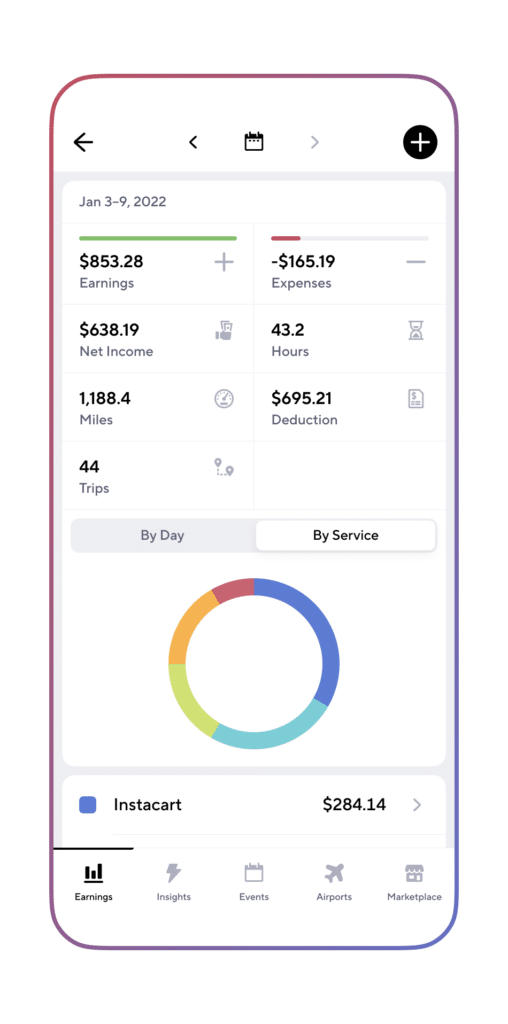
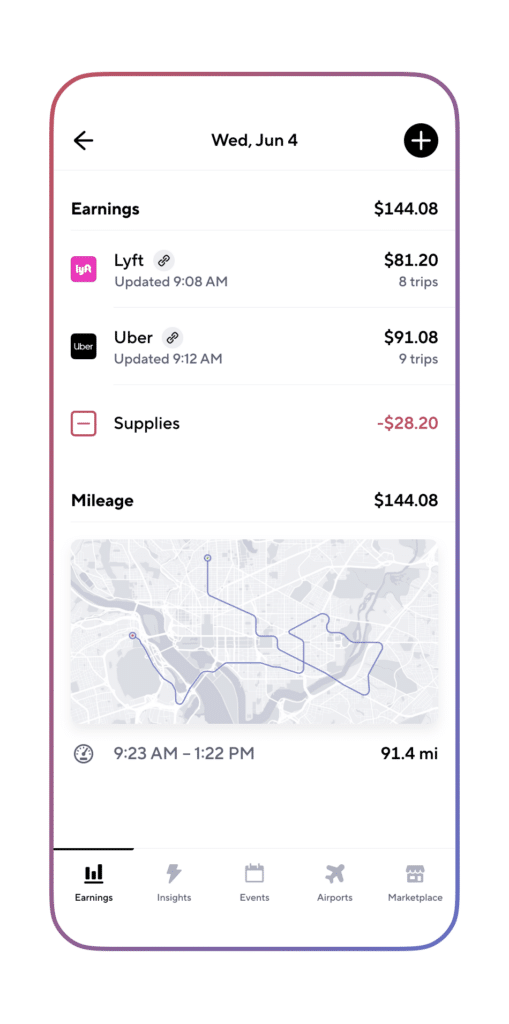
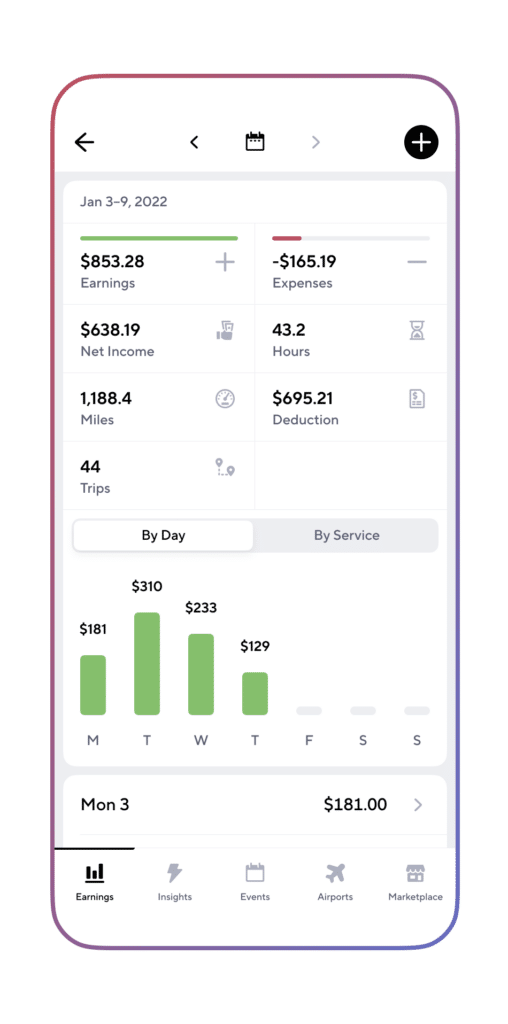
Gridwise gives you everything you need to put together a great driving gig, including
- a mileage tracker that accounts for every mile you drive on your gig
- traffic and weather alerts that keep you abreast of driving conditions
- seamless earnings tracker lets you sync and let Gridwise do the work
- expense recording to make sure you get all your deductions down
- informative graphs showing earnings and expenses for all the gig apps you use to see where you’re making them most money
- insight into when to drive and where to drive so you can make the most of your gig driving time
- access to affordable insurance to keep you covered
- deals and discounts for drivers, such as the cost-savings of Gridwise Gas
- a community of like-minded gig workers who supply pro tips and support
Find out more about Instacart, DoorDash, and Gridwise in these articles from the Gridwise blog:
Postmates: What delivery drivers need to know
What’s the deal with Postmates? Is it still around? Wondering how to become a driver for Postmates? We’ve got some important news you’ll need before you set out to work with the Postmates delivery app, and we’ll cover it all in this post, including:
- What is Postmates, and who owns Postmates?
- What app do you use as a Postmates driver?
- What are the requirements for Postmates drivers?
- How can you streamline your gig driving experience?
What is Postmates, and who owns Postmates?
Postmates is a delivery service that allows customers to order prepared food, groceries, convenience items, dry goods, and even flowers. Orders are placed through the Postmates app, but they are no longer fulfilled by Postmates drivers.
Uber acquired Postmates in December 2020 for $2.65 million. Over a transition period of several months, Uber incorporated the fulfillment of Postmates orders into Uber Eats. With Postmates now owned by Uber, customers still order from Postmates, but the deliveries are executed by Uber Eats drivers.
Is Postmates and Uber Eats the same? On the customer side, Postmates’ appearance hasn’t changed, but in fact, Uber has migrated everything but the user-facing web page and branding to Uber Eats. For restaurants and drivers, Postmates and Uber Eats are very much the same. Given these facts, if you want to know how to become a Postmates driver, you’ll need to work with the Uber Eats app.
What app do you use as a Postmates driver?
Uber allowed qualified drivers to continue delivering for Postmates via Uber Eats, but the Postmates Fleet app for drivers was phased out July 2021.
It’s still possible to go to your app store and search for the Postmates Fleet app, but this is the screen that will appear:
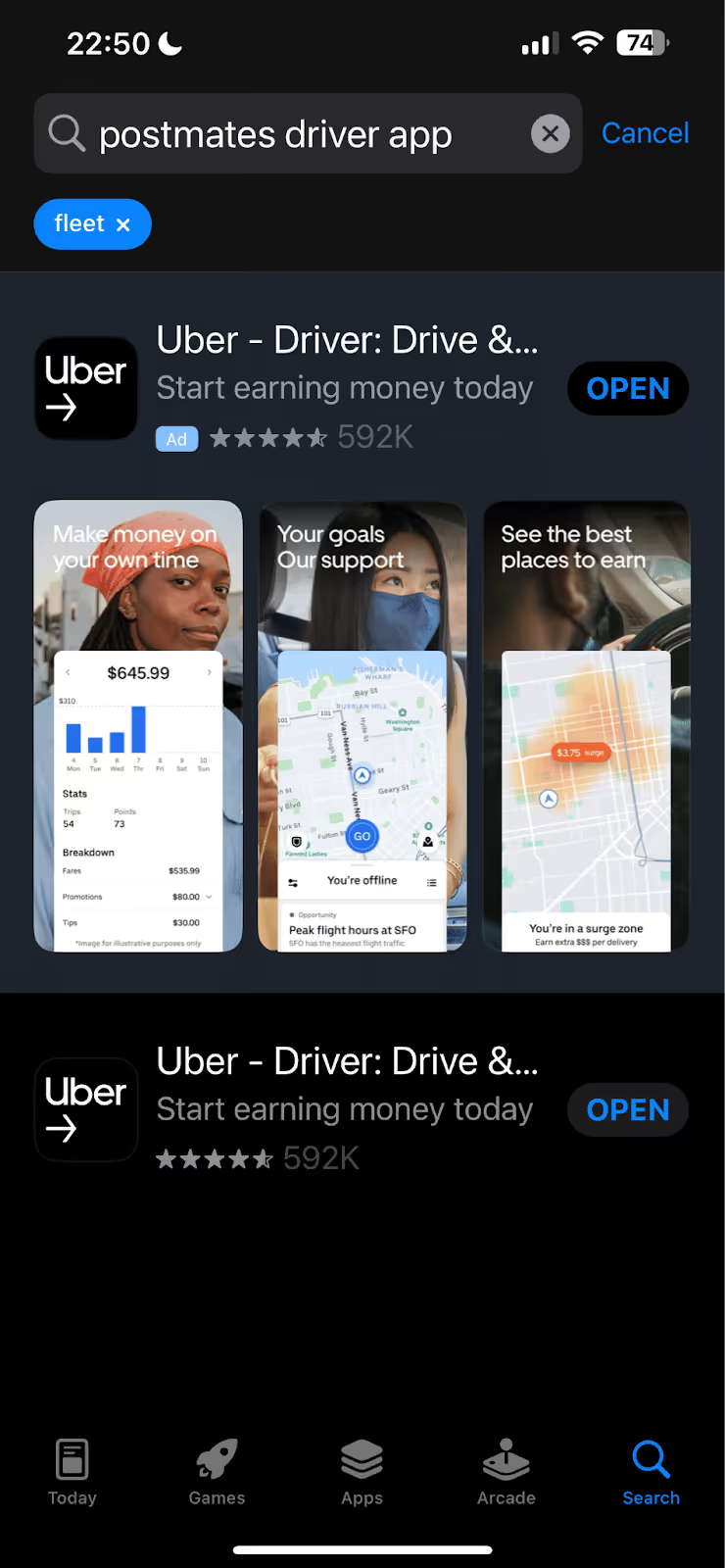
You can sign up at this time through Uber and, possibly, make deliveries ordered through the Postmates app. If you were a Postmates driver in the past, you could/should have used a link in that app which allowed you to automatically migrate your account to Uber Eats. More about that will be detailed in the next section.
There is still an app for Postmates customers. It provides them with access to all the things they always loved about the Postmates user experience. But their delivery drivers will now be part of Uber Eats.
What are the requirements for Postmates drivers?
One of the more frustrating things for former Postmates drivers has been the differences between the requirements for Postmates vs. Uber Eats. Postmates drivers went through background checks, but they were not as stringent as those required by Uber. Uber Eats conducts a more thorough criminal background check and disqualifies drivers with recent major violations or several small violations. If former Postmates drivers couldn’t pass these checks, they were unable to drive for Uber Eats.
All drivers, whether formerly part of the Postmates Fleet or not, must meet the following qualifications to work with Uber Eats:

Source: Gridwise Post:Delivery Driver Guide: Using the Uber Eats app
Note that it’s possible to deliver for Uber Eats on foot, or by bicycle and scooter in many locations. This expands opportunities for many Uber Eats food and package couriers.
For those drivers who used to be part of the Postmates Fleet and were able to qualify for Uber Eats, the migration process was easy and fair. All the trips that counted toward their rewards were migrated and shown in their Uber accounts, once they linked them. Completed Uber deliveries got added to the lifetime total of completed Postmates trips.
Some other information, including trip details and 1099 tax documents for 2020, was available from the Postmates app only. Drivers would have needed to recover them prior to August 9, 2021.
If you want to know how to work Postmates, you can hope to deliver for some of their customers through your Uber Eats orders. If you were once a Postmates Fleet member and haven’t checked out the changes, Uber’s FAQ page detailing migration from Postmates issues provides a wide range of information for former Postmates drivers.
How can you streamline your gig driving experience?
There are some gig drivers who are happy about the merger between Postmates and Uber Eats. Additional deliveries came in for those Uber Eats drivers, and Postmates workers probably found more opportunities and restaurants available once Postmates became part of Uber Eats. Marrying the two companies allowed many drivers to reduce the hassle of working with more than one app at a time, too.
Multi-apping is also a great way to make the most of your time while you’re driving. You can still do this working with Uber Eats and another delivery app, such as DoorDash, Shipt, or Instacart. But, since you will have the challenge of tracking your earnings, expenses, and mileage on each of the apps you use, you’ll need to find a way to streamline your gig driving experience.
Boost your earnings
Boost your earnings while you consolidate all your gig driving activities—with Gridwise! The best-ever app for gig drivers has everything you need to keep an account of essential information for every bit of your driving!
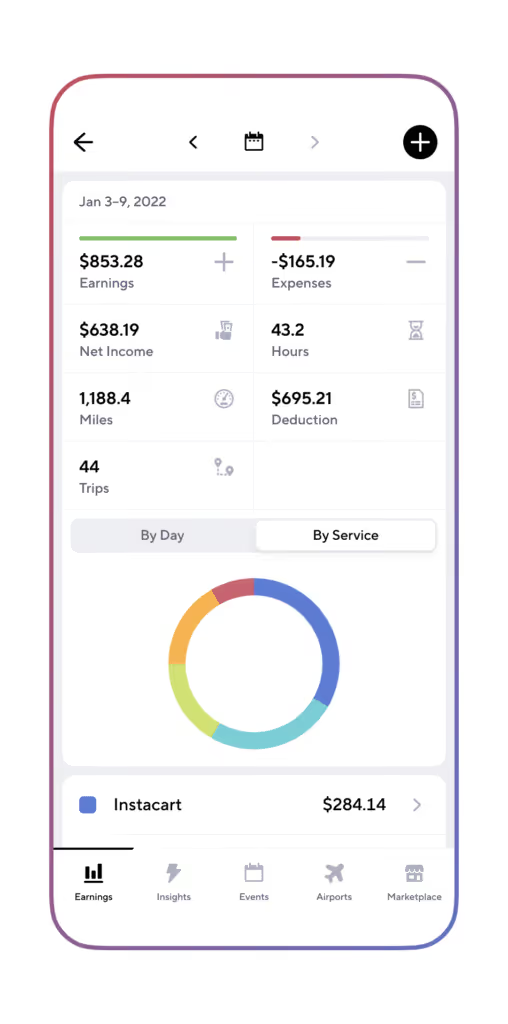
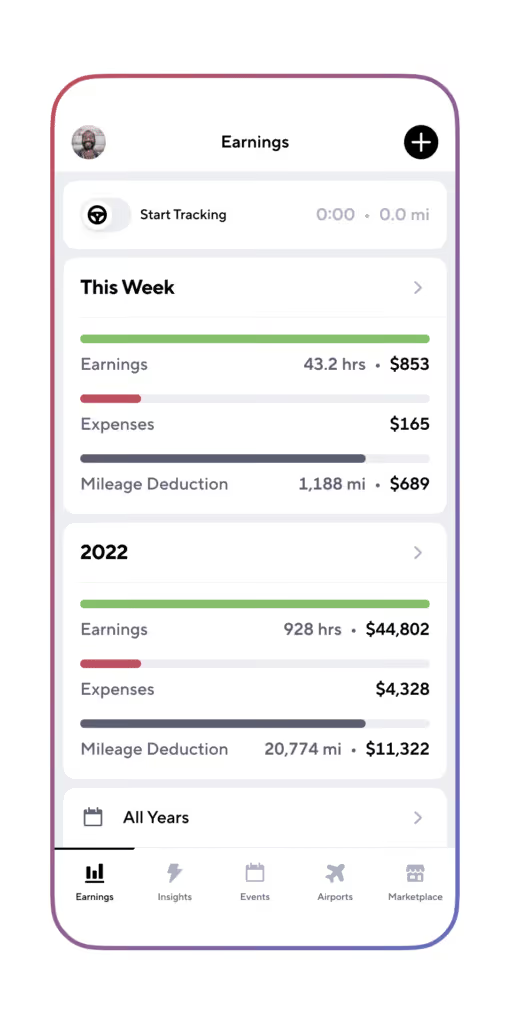
Simply start tracking with Gridwise the moment you start your shift. Gridwise will log every mile you drive, including the distance you cover between rides. None of your driving apps let you capture these valuable, deductible miles!
Keep an accurate account of your earnings for all your apps by syncing your driving platforms with Gridwise. The Gridwise app seamlessly tracks your earnings and allows you to view them in clear, concise, and attractive graphic form.

Why choose Gridwise?
Because Gridwise is designed specifically for gig drivers, it includes all the information drivers need in the course of a shift. You won’t have to keep going back and forth from one app to the other to find out what’s happening with the weather or traffic alerts in your area. Gridwise has them for you, right at your fingertips!
You’ll also get more information drivers need, such as stats on the number of airport arrivals and departures, and the starting and let out times for games, concerts, and other events in your area.
Plus, you can stop driving yourself crazy looking at all your apps for the best times and places to drive. Gridwise has all the information, curated from the experience of drivers on your apps in your area! Sit back, check Where to Drive and When to Drive from Gridwise, and plan out your gig driving schedule!
Gridwise is designed by gig drivers for gig drivers. With these great streamlining features, plus deals, discounts, and offers for health care and insurance that make living as an independent contractor more secure, you can’t afford to drive without it.
Download Gridwise now!
We have additional resources for delivery drivers you may enjoy:
How Holidays Are Impacting Airport Rideshare Demand
How many people fly each year during the Thanksgiving holidays? Try 30 million. That’s how many people the Transportation Security Administration (TSA) reported to screen this year in the twelve days between Friday, November 17, and Tuesday, November 28. It’s a daunting challenge for rideshare companies as they determine the incentives and bonuses needed to lure drivers away from their families to the major airports.
Thanks to Gridwise Analytics and more than 500,000 reporting gig drivers, we now have a clearer picture of airport traffic data and what happens during this peak travel season and other major travel holidays. This information benefits the mobility companies as they grapple with adequately compensating those with gig economy jobs and how best to incentivize drivers. The other beneficiaries are hedge funds, equity research firms, and venture capital firms, as they evaluate investments in mobility companies.
What’s inside this blog post:
- How Gridwise Analytics provides airport traffic data
- What Gridwise airport traffic data tells us about the holidays
- Driver tips also a factor in holiday gig driver earnings
- The value of traffic data services and mobility analytics
- Traffic data services and mobility analytics aid the investment community
- How other companies can benefit from mobility analytics and traffic data services
How Gridwise Analytics provides airport traffic data
Gridwise is a companion app for more than 500,000 US part-time and full-time rideshare, food delivery, and parcel delivery drivers. Gridwise interfaces with these drivers’ apps, providing information and tips on maximizing earnings. The Gridwise app also provides a mileage and expense tracker, which ensures drivers get the tools they need to maximize their earnings potential.
Gridwise aggregates and anonymizes data from these gig drivers, making it possible to convert the information into data points. For example, Gridwise reports where trips originate, where they end, and the major transportation corridors—vital information for companies involved in the growing mobility field. Since Gridwise also serves food and parcel delivery drivers, this intel holds potential for companies engaged in those sectors as well.
What Gridwise airport traffic data tells us about the holidays
Our airport passenger traffic data, starting with Thanksgiving 2022, provides a unique and reliable picture of airport travel.
Thanksgiving 2022
In 2022, we saw the first significant spike in Thanksgiving holiday travel activity two Mondays before the holiday. Gridwise Analytics airport traffic data showed a surge across the US that spiked 18% higher than a typical Monday night.
The increase in traffic continued to the following Saturday (the weekend before Thanksgiving). Airport passenger traffic data showed a 17% increase in the morning and evening compared to the usual numbers. By Wednesday, the day before Thanksgiving, we saw another spike, with a 12% increase over the average Wednesday.
There was a dip the Friday after Thanksgiving of nearly half (49% lower) than what's typically observed on a standard Friday morning. We can likely attribute that to the lack of business travel during the holiday. The post-holiday rush came the Monday night following Thanksgiving with a 32% increase in travel activity as people returned home.
Christmas 2022
Airport passenger traffic data from Gridwise Analytics showed airport activity in the US surged during the Christmas holiday, reaching 12% above the expected levels on December 17 (data is adjusted to the day of the week to account for the variations from one year to another). After this spike and a small bump on December 22, there was a decrease until Tuesday, January 3, 2023, when traffic jumped 17% over a typical Monday as travelers returned home.
Memorial Day 2023
There was a gradual increase in activity at the airports on Memorial Day, peaking at a 16% increase over a standard day's activity between 5 p.m. and 11 p.m. on May 23, a week before the holiday, and then another peak of about 5% during the same time frame, on Memorial Day itself. Following this peak, there was a noticeable decrease, with trip activity dropping to 31% below the expected levels.
Independence Day 2023
Approaching Independence Day, there was an increase in activity from July 1 to July 2. We saw an overnight increase in activity of 21% above the norm for a typical day. Travel patterns shifted downward by 34% in the evening of July 3, continuing into the 4th of July, which, again, we can likely attribute to the lack of business travel.
Driver tips also play a factor in holiday gig driver earnings
Tips from passengers through the Gridwise app average between 10% and 14% of rideshare driver pay during the regular year. As holiday periods approach, there's an increase of slightly over 2% in the proportion of trips receiving tips, compared to usual patterns based on time of day and week.
This surge is then followed by a decline, with the number of rides that include tips dropping by 11%. After the holiday, there is a resurgence in tipping, with tipping rates rising about 3% above the normal levels.
Although tips are lower, our data suggests that holidays do not significantly affect earnings overall. As a result, drivers do not experience a considerable increase in earnings beyond the usual expectations.
The value of traffic data services and mobility analytics
These numbers and charts give rideshare companies a clearer picture of demand during the holidays beyond their own data. Companies face the challenge of designing gig driver incentives that lure drivers away from holiday dinners and activities and into their cars to provide rides.
For Uber, these include Uber Quests and Uber Boost+. Uber Quests rewards drivers with an additional bonus for taking consecutive rides in a specific time frame. An Uber Boost+ is more pinpointed, attracting drivers with bonuses on rides in an area where demand will increase within a few hours. Drivers become particularly adept at taking advantage of these incentives to increase their Uber driver income.
For Lyft, these incentives come in the form of Lyft Sprints, similar to Uber Quests.
Both Uber and Lyft also offer surge pricing. These incentives kick in when ride-sharing demand exceeds the supply of rideshare drivers available.
Lyft and Uber want to offer bonuses that create lucrative rideshare driver pay that attracts drivers out during the holidays, but at the same time, they do not want to drive up passenger fares to the point that it affects usage. More accurate airport traffic data allow rideshare companies to achieve this.
Traffic data services and mobility analytics aid the investment community
Earlier this year, McKinsey & Company’s article Shared Mobility: Sustainable Cities, Shared Destinies predicted that by 2030, “shared mobility could generate up to $1 trillion in consumer spending.” The article also reported that private investors, technology companies, and others have invested more than $100 billion into shared-mobility companies over the past decade.
Firms in the investment sector are increasingly using data analytics from sources such as Gridwise Analytics to test their theses and determine the potential of mobility-related companies. Gridwise Analytics is able to provide accurate data in real-time so that venture capitalists, equity research firms, and hedge fund managers can make sound decisions about the best opportunities.
This is especially true as the US expands its airline infrastructure. Airports are usually in areas characterized by high-cost real estate. It is important to make the best decisions and use this real estate to its maximum benefit.
How other companies can benefit from mobility analytics and traffic data services
Gridwise Analytics shows where and when people and items move through a city. Companies in other business sectors have benefited or can benefit from this type of traffic data.
Electrical vehicle chargers
EV chargers are essential to the growth of electric vehicles. The challenge is that the upfront cost for a charger is considerable, and payback is slow. This means EV charger companies must be selective in where they place these chargers to ensure maximum payback. Learn the story behind one company’s success in this Gridwise Analytics article, Gridwise Mobility Data Analytics Pinpoint EV Charger Locations.
Autonomous vehicles
A firm designing autonomous vehicles to deliver smaller items was ready to test their service. However, they were still determining which market would be the most beneficial. They needed a dataset that told the story. Learn about their successful partnership with Gridwise in Data-Driven Strategy: How Gig Mobility Drove Fleet Efficiency in an Autonomous Vehicle Company’s Strategy.
Other transportation analytics companies
No one company has the corner on the best information when it comes to traffic data. Replica, a transportation analytics company, provides models to help companies and municipalities understand how transportation functions. Replica called upon Gridwise Analytics to sharpen its picture. Read the story in this Gridwise post, Replica: Enhancing Mobility Insights with Gridwise TNC Data.
Partner with Gridwise
Gridwise Analytics offers traffic data services with unique insights for companies involved in the broader transportation infrastructure, demonstrating how people and goods move from one location to another. The data show where trips originate, where they end, and the primary travel corridors. Gridwise Analytics’ partners marvel at the data's clean nature, allowing them to integrate the data into their existing datasets with little or no manipulation.
For a demonstration of how Gridwise Analytics vehicle trip data can sharpen your transportation analytics, contact Gridwise Analytics.
Are you looking for more articles about Gridwise Analytics?
Uber Eats vs. DoorDash: Which is the better company for drivers
As drivers, we know there are good points and bad points about each of the companies we drive for. Delivery driving is a bit different from rideshare, and every company has its own policies and potential for driver profit. It’s good to know what companies have to offer, so you can figure out how they fit into your hybrid driving gig.
That’s why we put this blog post together, to help you see the advantages and disadvantages of working for two of the most popular delivery services, Uber Eats and DoorDash. We’re going to look at some of the key aspects of working for them, and compare the two companies as we go along. Topics to be covered include:
- Signing up on Uber Eats vs Doordash: how easy is it?
- How do these companies pay, and how much can you earn?
- What does each company expect from drivers?
- How do these companies make room for earnings to grow?
- How can you fit Uber Eats and DoorDash into your hybrid gig mix?
Signing up on Uber Eats vs Doordash: how easy is it?
If you’re totally new to delivery driving, here’s a Gridwise article that will help you understand what services you can drive for and get started.
If you’re new to Uber Eats, read this Gridwise article for basic info.
Becoming a Dasher (a DoorDash driver) is pretty easy. In fact, it’s less difficult than qualifying to be a rideshare driver. For instance, you don’t have to worry about having a perfect vehicle; cars, SUVs, and trucks don’t have any specific hurdles to clear. As long as your ride moves and you have it registered and insured, you’re good to go. If you live in a place where it’s practical, you can use a motorcycle, scooter, or bicycle. In some areas, you can even walk.
Before you start working as a Dasher, though, you might have to wait for an invitation. DoorDash doesn’t like to overcrowd the market with too many people out there making deliveries. You may have to wait up to a few weeks before you’re invited to go through the registration process. Once you receive that notice, all you have to do is fulfill these requirements:
- Be 18 years of age or older
- Have an iPhone or Android phone capable of running the Dasher software
- Have a current, domestic driver’s license
- Present a valid Social Security number
- Pass a background check (no felonies or DUI violations in the past 7 years, and if you’re using a motor vehicle, no more than 3 driving violations in the past 3 years)
Signing up for Uber Eats is easy too. You can use any 2- or 4-door vehicle. You cannot use a rental car to deliver unless you get it through Uber, and, of course, your car must be registered and insured in your name.
You can use a scooter for Uber Eats, but it has to meet some minimum requirements; namely, two wheels and under 50cc, and you must have it insured. You can also walk if you work in a place where that’s practical. Here are the rest of the requirements:
- Be 19 years of age or older (18 if you want to ride a bike or walk)
- Have one year of experience driving (if you drive)
- Have a valid driver’s license
- Be capable of carrying at least 30 pounds
- Pass the Uber Eats background check (no record of violent crime or DUI for the last 7 years; no more than 3 major motor vehicle violations in the past 3 years)
If you meet these requirements, Uber will allow you to sign up as an Uber Eats driver, and there is no waiting list. If you’re already approved as a rideshare driver for Uber, you just have to opt in to receive deliveries. You can set your app to receive just delivery requests, just rideshare requests, or both rideshare and delivery trips.
You cannot, however, sign up as an Uber Eats driver and automatically be accepted as a rideshare driver. Your vehicle needs to meet more stringent requirements.
How do Doordash and Uber Eats pay, and how much can you earn?
A Dasher’s cash
You can make money with DoorDash in one of two ways: either “dash now,” which means you make yourself available through the app immediately; or schedule blocks of time when you can be available. DoorDash rewards top drivers by giving them early and anytime access to delivery trips.
As with all apps of this type, you will be pinged when a delivery becomes available.
Once you get a delivery, whether it’s through a dash now or a scheduled block, be sure to look carefully at what’s required. In most cases, the customer will have placed the order with the restaurant or store, but there are times when you’ll have to be the one to place it. In those cases, you’ll want to pull over and put the order in before heading to the pick-up location so the merchant can have the order ready before you arrive.
You might get pinged for two orders at one place, or at establishments that are close to one another. It’s usually a good idea to take these multiple orders because you’ll make more money for that one trip.
You’ll know the minimum amount you’re going to make for a delivery before you accept the trip. If there’s more wait time, or the trip takes longer, the final amount may be higher. When this happens, DoorDash will adjust your payment accordingly.
Your basic driver pay from DoorDash is calculated based on the time, distance, and desirability of the order. Drivers are very likely to get tips over and above this amount. Sometimes, customer tips are tacked onto the basic driver pay, and sometimes they add it after you complete the delivery. There are also opportunities for additional earnings through driver promotions.
These promotions include Peak Pay, which is doled out when business is exceptionally brisk and drivers are scarce; Challenges, or specific rewards for reaching a certain earning level or completing a set number of trips in a given time period; and Drive, large orders that are available for drivers who qualify.
Drivers are paid weekly, but if you need cash instantly, you can use DoorDash Fast Pay, which allows you to transfer your earnings into your bank account on the spot. The charge for this service is $1.99 per transaction.
Learn more about how much DoorDash drivers can make here.
The Uber Eats experience
Uber Eats orders come into the Uber app like any other trip request. There is no option for setting out blocks of time. You turn on the app when you’re available, and if you sign on at a time when there are deliveries needed, you’ll get pings.
Uber allows the customer to place orders directly through the app so there is no need to worry about placing an order. Trips may include more than one delivery, and the driver doesn’t have a choice about accepting them or not. Both must be accepted, and in the order the Uber app indicates. Your delivery route will also be set up by the app.
At times, you may get a second order at the same restaurant where you’re already picking up, or at a nearby eatery. With those orders you can choose to accept or decline.
Uber pays drivers based on the pick-up, the drop-off, and the distance involved in completing the delivery. You will also be paid for wait time at the pick-up point. And in most cases, customers will tip you after the delivery is complete.
Uber Eats driver incentives can help increase earnings. These include Boost Zones, which are areas where driver payments can be multiplied by a certain factor. They are established by Uber when drivers are needed in certain locales. Surge pricing works out to be a bonus for drivers during peak hours, where demand for delivery is exceedingly high. This is determined by area as well as by time of day, and of course, demand.
Uber Eats drivers are paid by the week, but they can cash out earnings up to five times per day for a fee of $.50 per transaction.
See more about how much Uber Eats drivers can earn here.
What does each company expect from drivers?
Getting on board and performing delivery duties are only the beginning. You also have to keep up with certain expectations in order to retain your right to deliver.
Doordash requirements
For Dashers, it’s necessary to keep a rating of 4.2 out of 5 stars. Not every customer will rate you, but when they do, you’d better hope they are generous. DoorDash will disregard poor ratings (below 5.0) in the event of the following:
- Long wait times at restaurants (>10 minutes)
- Missing or incorrect items when bags are sealed (as a reminder, merchants and customers request that you do not open any sealed bags you receive)
- When you accept a delivery knowing it is expected to be >15 minutes late
- When multiple Dashers before you unassign (or cancel), causing you to be >15 minutes late
- When the delivery is late due to multiple batched orders (3 or more)
- Extreme weather conditions (e.g., a snowstorm)
- Uniquely challenging delivery situations related to unforeseen events that cause delays
- System-wide outages
Doordash requirements
Dashers also have to maintain a completion rate of 80 percent. That means drivers must follow through with the deliveries they accept, without canceling them, four-fifths of the time. There is no minimum acceptance rate, but drivers who accept a greater percentage of calls will receive higher priority when the system sends out pings.
DoorDash also monitors drivers for lateness. The company doesn’t specify a limit, but if you make a habit of being late for any reason beyond those listed above, you could be deactivated.
Uber Eats delivery drivers deal with a rating system that’s more intricate. Along with customers being able to give their opinion about your service, the restaurant or other establishment can rate you too. Also, you can rate your pick-up experience as well as your drop-off experience with customers.
Uber Eats is less specific about what it would take for them to deactivate a delivery driver. The company merely states that it’s important to monitor your ratings, and if you receive consistently low marks, you can watch videos with information about providing top-rated service. If a pattern of negative ratings develops, you will be notified by Uber, and deactivation is a real possibility if it persists.
Uber suggests that you pay attention to these aspects of giving good service in order to maintain high ratings:
- Speed and efficiency: If you’re going to be late due to traffic or another issue, communicate through the app to restaurants and customers;
- Always be courteous and respectful;
- Follow the customer’s instructions for handoff. For instance, if it says, “Leave on the porch,” don’t ring the doorbell;
- Deliver with care. As long as the bags aren’t sealed, make sure that the package contains all the items the customer ordered. Adding extra napkins and condiments is a good idea too;
- Clear communication. If you have questions or problems, don’t hesitate to contact the restaurant, the customer, or Uber Support with your concerns.
Uber also has Uber Pro, which is a system of perks and privileges tied to performance. Based on your acceptance rate, cancellation rate, and the number of trips you complete in a quarter, you will be given a designation that reflects your status in Uber Pro, and what kinds of goodies you will get.
Drivers with higher status receive first priority for trips, the ability to get more information about the trips, and discounts on certain services. If you drive for Uber Eats and also do rideshare with Uber, your delivery and driver ratings are combined for the purpose of this program.
How do these companies make room for earnings to grow?
So far, we’ve touched on restaurant delivery with DoorDash and Uber Eats, but that isn’t the only way to earn with them. Both companies are moving toward other types of deliveries as well. Also, through referral programs and sign-on bonuses, you can really boost your earnings by doing delivery for these two companies.
DoorDash
DoorDash has partnered with Walmart to deliver groceries to customers in select areas. In most cases, you’ll go to a designated spot in the parking lot, or just inside the store. You can find more details about this option on the Dasher Support section of the DoorDash website. Grocery deliveries come up on the app, and you can opt to take them or not.
Clyde, a driver friend of ours in Pittsburgh, says there’s even more to come. In his market, requests come in from an array of stores, including pharmacies, bodegas, and even mall retail stores. Some of these requests are for the driver to go through the store and shop for the items, just like an Instacart shopper would do.
The good thing about DoorDash is, after you see what’s going to be involved, you can decide to accept or decline an order. Your acceptance rate will not affect your overall DoorDash rating, so if it doesn’t seem worth it to you, you can refuse the request without any huge consequence to your status as a highly rated driver.
Uber
The expansion into grocery delivery hasn’t escaped Uber’s tentacles in the least. Since acquiring Cornershop in 2020, Uber offers grocery shopping and delivery through the customer side of the app. For the time being, the delivery driver apps remain separate. Customers order through Uber Eats, but a Cornershop team member does the delivering. The same goes for Uber’s acquisition of liquor delivery service Drizly in January 2021, which widens Uber’s reach even more.
Plans are also in the works for Uber Connect, a courier service and package delivery service. You’ll have to check your local market to discover what’s available to you. Without a doubt, both companies seek to make delivery even bigger than it already is.
How can you fit Uber Eats and DoorDash into your hybrid gig mix?
Now that you have a better idea of what these two companies have to offer, you can begin to sort out how you might want to work them both into your hybrid, or mixed, delivery gig. Of course, along with all the other issues we’ve covered here, knowing which markets each of these services covers more fully is a key factor.
Doordash markets
DoorDash is available in more than 4,000 cities and towns across the U.S. You can find out if yours is included by visiting the DoorDash network.
Uber Eats markets
Uber Eats has an even wider reach, serving more than 6,000 cities across 45 countries. Here are all the U.S. cities where Uber Eats is available.
DoorDash is the most popular service in many locations, and that could mean there is more business, or it might indicate there are already enough drivers to meet demand. The same goes for Uber Eats. You’ll have to explore what’s going on in your location, and create your driving strategy accordingly.
Considerations
There are many things to consider when you’re looking for the right companies to incorporate into your gig driving life. We hope we’ve inspired you to look at a few of them.
But of all the aspects of working for a delivery company, most certainly, what matters most is your bottom line. Which one is helping you to make the most money, and how can you tell?
There’s a really great way to do that! Track...and compare your earnings with Gridwise!
Track your earnings (and more) with Gridwise
Gridwise gives you a huge advantage, because you can see all your earnings from all your apps, at a glance. Link your accounts to the Gridwise app, and your earnings and mileage will be seamlessly (and anonymously) logged. When you want to compare earnings among your gigs, Gridwise produces easy-to-read, informative graphs.
And now, Gridwise allows you to enter expenses too. You can create your own categories, and record those deductible items right into the app. This gives you even deeper insight into what you’re earning.
The Perks tab is filled with all kinds of good stuff. There’s easy access to the informative Gridwise blog and up-to-the minute news from the Gridwise YouTube channel. You can also check out the many products, discounts, and deals our partners have to offer.


Say what? You don’t have Gridwise yet? Download the app today!
Looking for more delivery resources? Check these out!
A Guide to The Lyft Driver App
Most riders and drivers enjoy driving for Lyft because they have a reputation for valuing their customers and drivers. If you want to drive for Lyft, or even if you already do, this post about the Lyft driver app will show you all the ways you can benefit from driving for Lyft. We will look at
- How to become a Lyft driver
- What the app for Lyft drivers can do
- How to use the Lyft driver app
- Lyft driver ratings: where to find them
- How to manage your account on the Lyft rideshare and Lyft delivery driver app
- Elevate your Lyft earnings with Gridwise
How to become a Lyft driver
Start by downloading the Lyft app, available on both the Apple and Google Play stores. From there, you’ll quickly discover how Lyft has established its reputation of being friendly to its drivers and customers. The sign-up process is laid out for you, step by step. Because you must first pass a background check, it will take a few days to be fully signed up—so don’t expect to get to work right away.
You will need to let the Lyft app know where you plan to drive as requirements vary from one state or city to the next. In some places, you may need to get special licenses or go through a Lyft vehicle inspection. The Lyft website will tell you everything you need in terms of your vehicle, driver qualifications, and any other documentation required, based on where you live.
What the app for Lyft drivers can do
Once you sign up for Lyft driver duty, you’ll be ready to learn more about the app. The Lyft app’s features are extensive, but the UI (user interface) is intuitively designed. There are many features that you will need as a driver. While you may learn a lot about them during the sign-up process, it will take some trial and error to know about and use them all.
These features include
- driving and delivery information
- earnings
- bonuses and promotions
- safety
- ride history
- rewards
- app settings
- customer feedback
- information about your vehicle and devices
- car rentals
You can visit Lyft’s YouTube channel and take advantage of their extensive library of videos to get some idea of just how comprehensive the apps’ services are.
There’s a wealth of information within the Lyft app as well. Tap on the home screen’s menu icon at the upper left, go to “Support and Safety,” and select the “Learning Center.” There you will find numerous tutorials that cover just about every issue you are likely to encounter when learning how to use the Lyft driver app.

How to use the Lyft driver app
Once you’re ready to fly solo, so to speak, the first thing you’ll notice about the Lyft app is how sleek and functional its design is. You can use the same app to drive or deliver as you do to request rides. You can toggle between the Lyft rider side of the app and the app for Lyft driver simply by choosing the icon you want on the bottom of the screen.

Click on the search button (magnifying glass) to be a passenger and the bus icon to access information about public transportation. The key icon sends you to Lyft’s car rental partner, and the steering wheel directs you to the Lyft app for driving.
In addition to the choice of driving or being driven, Lyft offers delivery services in certain cities. Currently delivery services are available in only 12 larger US markets. Delivery items include packages under 50 lbs, food delivery from restaurants that have relationships with Lyft, prescriptions, and retail items. If it is available in your locality, it will show up on your app.
There is no separate Lyft delivery driver app. Drivers in markets where Lyft delivery operates will receive requests through the regular driver app. Drivers don’t have to deliver; if they want to opt out of receiving delivery requests, they must contact Lyft (as it’s not possible to opt out of deliveries in the app itself).
Drivers can, however, opt in or out of accepting carpool rides, which allow you to pick up more than one passenger along a given route, and drop them off at select destinations. Drivers can also choose to pick up reserved rides, where the customer arranges to be picked up at an exact location and time.
All Lyft drivers, whether they opt for rideshare, delivery, or both, must complete Lyft’s education program before being fully qualified to drive. Topics covered include safety, community standards, and food safety for food delivery drivers. This article from Mashable tells you more about the mandatory, video-based program.
The Lyft driver app also houses a Lyft learning center.
Once you are fully approved, you will see a map and a button in the app inviting you to go online. Now you can start earning money with Lyft!
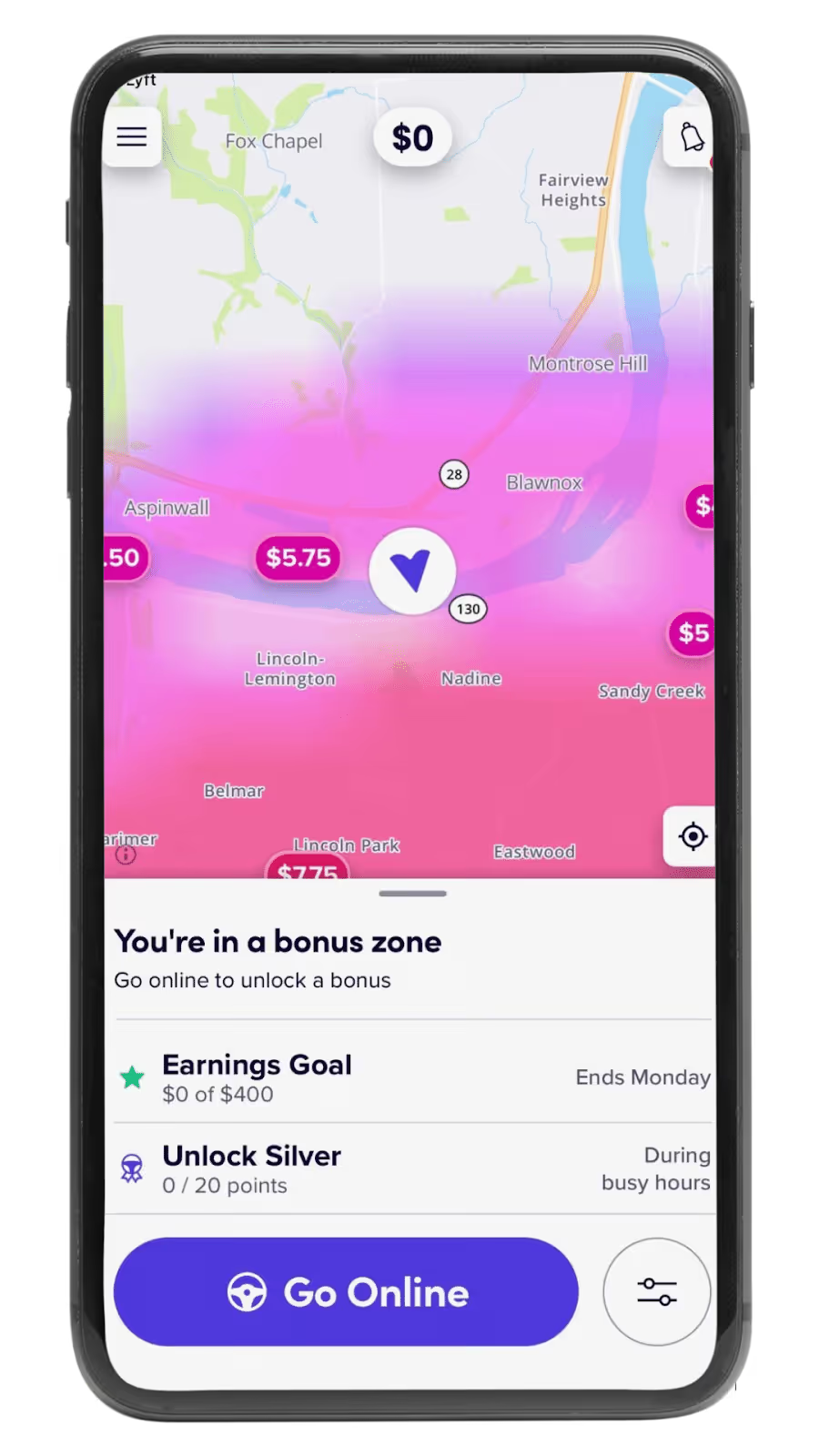
The map will show where there will be extra money added to your payments, due to increased demand. These areas are known as bonus zones.
Make sure you’re ready to drive when you tap that button, because before long, you’ll receive a ride or delivery request. When you receive the request, you’ll see how much it will pay. You have 15 seconds to decide whether to accept it. To accept, swipe, and a map will appear showing you where to pick up your rider or make your delivery.
The Lyft app will automatically provide the route you’ll need to take. If you want to use a different GPS service, namely Waze, you can do so by indicating this in your settings under “Navigation.” Here you’ll note, too, that Google Maps can be used within the Lyft app.
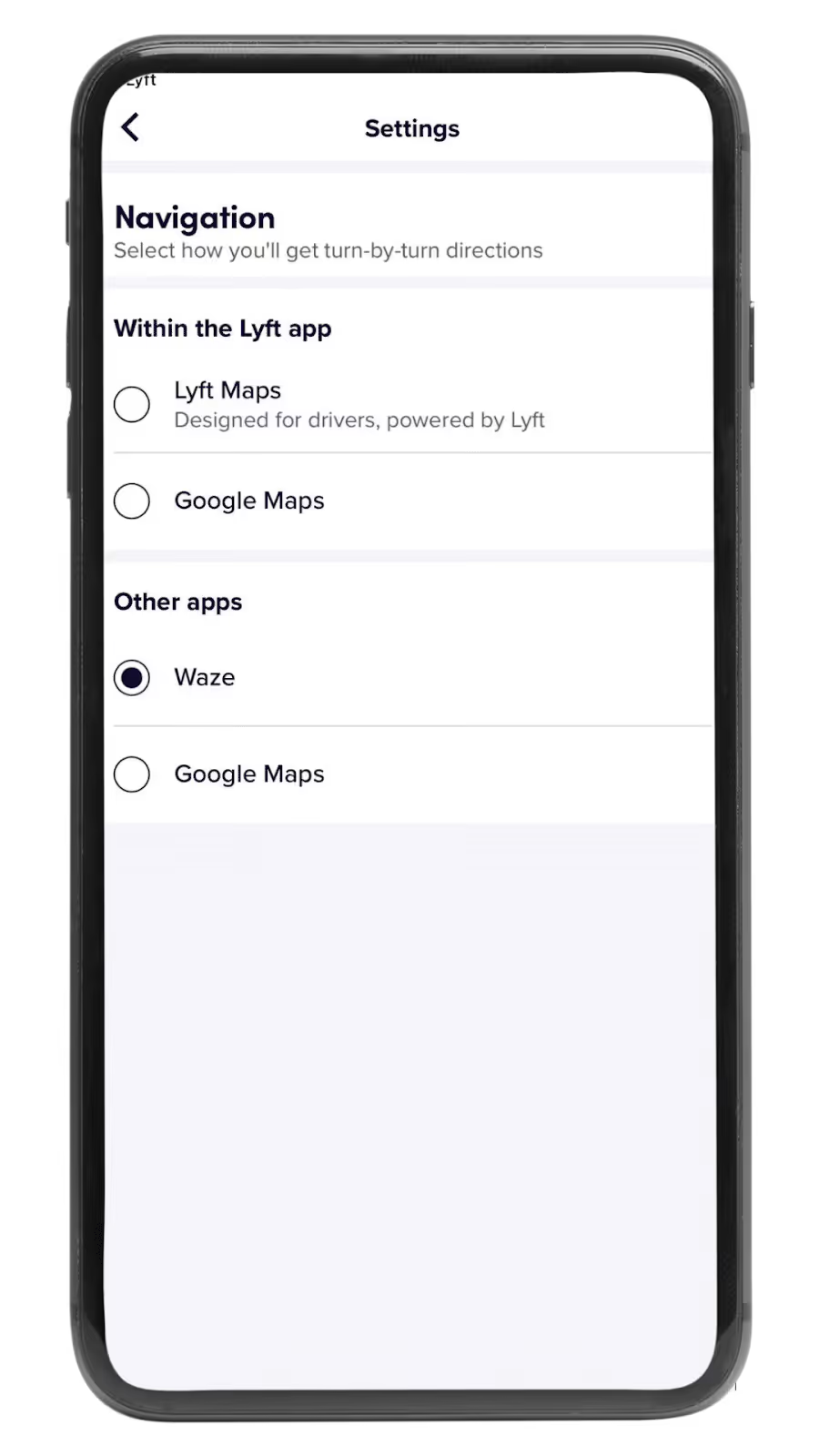
No matter which GPS service you choose, the map will show you the exact pickup location. After you get the passenger or delivery item, swipe again, and the map will change, directing you to your destination. When you arrive, drop off either your passenger or delivery, and end the trip. At that point, you’ll see how much you will be paid for the trip. A tip might be included, or tips may become visible later, after the customer adds them.
If, during or after a ride, it becomes apparent that there are issues with a customer, it’s always best to inform Lyft as soon as possible. Pull over, and go to your app under “Help.” Tap on “Ride and payment issues,” and a list of options will appear. You can report anything from being rated unfairly to a car seat issue, as you’ll see on the screenshot below.
Lyft driver ratings: where to find them
After each ride or delivery, you and your customers will get a chance to rate one another. It is very important to maintain high driver ratings. If you have a lot of negative ratings from your customers, Lyft may deactivate you and retract your right to work on the platform. When you have good ratings, you also will benefit by getting more offers for rides and deliveries.
You can find your Lyft driver ratings under your profile, which is an item on the menu that appears when you tap the menu icon in the upper left hand corner of the Lyft driver app home screen.
Also displayed will be badges, earned when your customers make additional comments about the high quality of your service. Ratings are much more important than you might think.
How to manage your account on the Lyft rideshare and Lyft delivery driver app
When you sign up to become a Lyft driver, you’ll have to upload documents for your car, including registration and insurance, and, if it applies in your state, proof of inspection. You may drive along for around a year, and then discover you have to update this information, or, you may get a new vehicle that needs to be registered with Lyft.
All you need to do to update your account is click on the menu icon on the home screen, then tap “Account.” Another page will open that allows you to update your information. Tap on “Insurance,” for example, and you can upload your latest insurance card.
Here is also where you can get more detailed information about your earnings, obtain tax documents, and even upload a new profile picture.
The Lyft app is quite impressive, both for its sophistication as well as its ease of use. It is also visually appealing, with colors that attract the eye and emphasize what’s most important on the screen at any given time.
As a driver, you will probably agree with many of your colleagues that the Lyft app is easy to work with. That’s true, and there is a way to make the experience of being a driver for Lyft even better.
Elevate your Lyft earnings with Gridwise
Gridwise improves on what the Lyft app has to offer in a few very important ways. It provides you with
- complete mileage tracking. Lyft tracks only the miles you drive while you are picking up and dropping off people and/or packages. Gridwise tracks every mile you drive from the time you start your shift. Now you can collect the valuable tax deduction for all the miles you drive to and from trips, and in between. When you deduct more mileage, you get to keep more of your earnings.
- comprehensive earnings reports. When you sync your Lyft app to Gridwise, your earnings will be recorded for each shift. Then when you want to find out how well Lyft is working for you, Gridwise produces attractive and easy to read graphs that allow you to see all the data that’s relevant to your Lyft driving gig.
- Gridwise Benefits. This feature, designed to meet the needs of gig drivers, gives you access to low-cost insurance, affordable health care, deals on car maintenance and rentals, and more.
- updates on weather, traffic and local events. Know what’s going on around you so you can be the most efficient, aware, and available Lyft driver out there.
- insight into where business will be. Gridwise features When to Drive and Where to Drive show you data based on real driver earnings in your area. Now you’ll be able to plan your driving shifts for the times and places that bring you the most money.
When you make Gridwise your Lyft partner, you don’t just make your life easier; you make it so you can maximize your earnings, too!
Make the most of your Lyft driving gig with these practical posts from Gridwise:
- Lyft driver payments: How do they work?
- Lyft driver ratings: How do they work?
- How to improve your Lyft driver rating?
- Lyft and Uber driver skills: How to improve your customer service
Download the Gridwise app now!
Grubhub vs. DoorDash pay: How do earnings compare?
The demand for food delivery shot up during the pandemic and has remained solid ever since. Restaurants have found that it’s easier to operate with less seating and more takeout, and customers got hooked on the ease of ordering in.
This is good news for delivery drivers. There are several options, with Grubhub and DoorDash being two of the most popular. In this post, we’ll look at Grubhub vs. DoorDash pay and add other insight and information to help you determine which of these two would be best for you to drive for.
Grubhub vs. DoorDash: structures and payouts
The pay structure for Grubhub vs. Doordash is similar. Both offer the opportunity either to schedule blocks of time or to work on demand. This flexibility is automatically offered to Grubhub drivers, but DoorDash drivers need to earn the privilege by completing a certain number of deliveries.
Drivers for both Grubhub and DoorDash are paid by the delivery, and will know how much each order will yield before accepting the trip. This video will take you through a Grubhub delivery driver’s run, so you can see exactly what it’s like to drive for Grubhub. And this video covers just about everything there is to know about the DoorDash app and how to execute deliveries.
Payout options for DoorDash vs. Grubhub.
- Dashers can get paid weekly—or, for a fee, get paid daily. They may also choose to be paid on a Visa card they obtain through DoorDash, which is attached to a bank account. In some instances, they may be paid by the customer in cash, in which case, the cash is deducted from the driver’s payout. Read more about the details of Dasher payouts on the DoorDash website.
- With Grubhub, the options are just weekly pay or daily cash-out. Daily cashout is free for Chase customers, but a fee is charged for others. Also, it’s possible to cash out directly to your debit card for a fee.
How much does DoorDash pay you? What about Grubhub?
So then, what about Grubhub vs. DoorDash pay? Gridwise recieves anonymous earnings data from drivers, which we can use to compare how well drivers do in terms of earnings for Grubhub vs. DoorDash.
For Grubhub, drivers averaged a little over $14.00 per working hour in the first half of 2023. This number is consistent with earnings from 2022, proving that Grubhub earnings are not on a downward trend. The figures below show, in fact, the earnings went up slightly from the end of the first quarter to the end of the second.
Grubhub driver earnings Q1 and Q2 2023
Average Gross EarningsAverage Work HoursAverage Total TripsQ1 $993.004197Q2 $1055.9743.44104Source: Gridwise
On the whole, hourly earnings for Dashers are solid, if not spectacular. Based on Gridwise data, the average driver pulled in about $15.00 per working hour. This includes tips and incentives as well as base pay. Here are some more statistics for the first half of 2023.
DoorDash driver data for Q1 and Q2 2023
Average Gross EarningsAverage Work HoursAverage Total TripsQ1 $1,463.1351178Q2 $1,511.1757191Source: Gridwise
Tips and incentives: two key components of delivery earnings
Don’t forget, when you look at Grubhub vs. DoorDash driver pay, to consider the opportunities for tips, and how well the companies do at reminding customers to remember to recognize your hard work. Tips can really let your earnings add up, as can incentives. Incentive earnings consist of opportunities to make a fixed number of deliveries in a certain time period.
How much does Grubhub vs. DoorDash pay in tip earnings? In the first two quarters of 2023, both tip and incentive pay were higher for Dashers than for Grubhub drivers.
GrubhubDoorDashQ1–Q2 2023 Average Tip Pay: $510.51 Q1–Q2 2023 Average Tip Pay: $759.24Q1–Q2 2023 Average Incentive Pay: $41.64 Q1–Q2 2023 Average Incentive Pay: $172.48 Source: Gridwise
Why are DoorDash numbers for tip and incentive pay higher than those for Grubhub? A lot could have to do with the comparative popularity of the two companies and the greater number of trips Dashers make on average. Also, the DoorDash app experience presents many opportunities for customers to tip, both before and after the delivery is complete.
Incentives for DoorDash are higher, possibly also due to the demand for drivers. Especially with the many items Dashers can deliver, DoorDash needs more drivers, so they offer many enticing incentives to drive for the company.
It’s important to weigh all these considerations before making the choice of which company you would want to work for. It’s really not possible to say that one is “better” than the other.
DoorDash might be more active in your area, while Grubhub might offer more opportunities overall. Look at both carefully and consider working for one, the other, or even both! You can do that by learning the art of multi-apping. Learn more about multi-apping in this post from Gridwise.
Perks: another way to cash in on your delivery gig
There’s one more thing. It pays to get savvy to the driver rating-related privileges each company has. DoorDash and Grubhub offer similar perks for their drivers. These include discounts and priority for scheduling and being sent larger, more lucrative orders.
Most of the discounts are the same for all drivers, but the other perks require high driver ratings and a high volume of completed deliveries. Find out more about the Grubhubs perk program, or see what Dashers get on the DoorDash website.
Making the most of your delivery gig
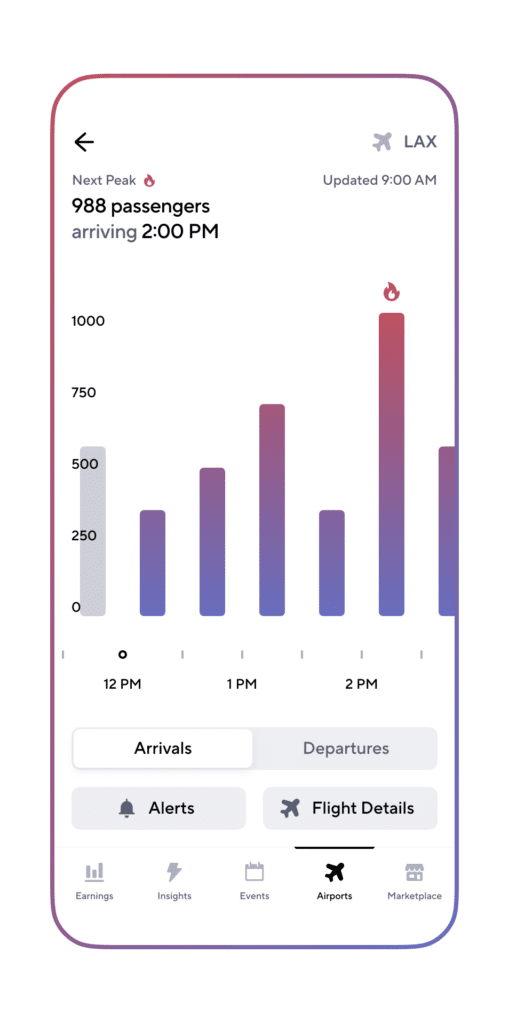
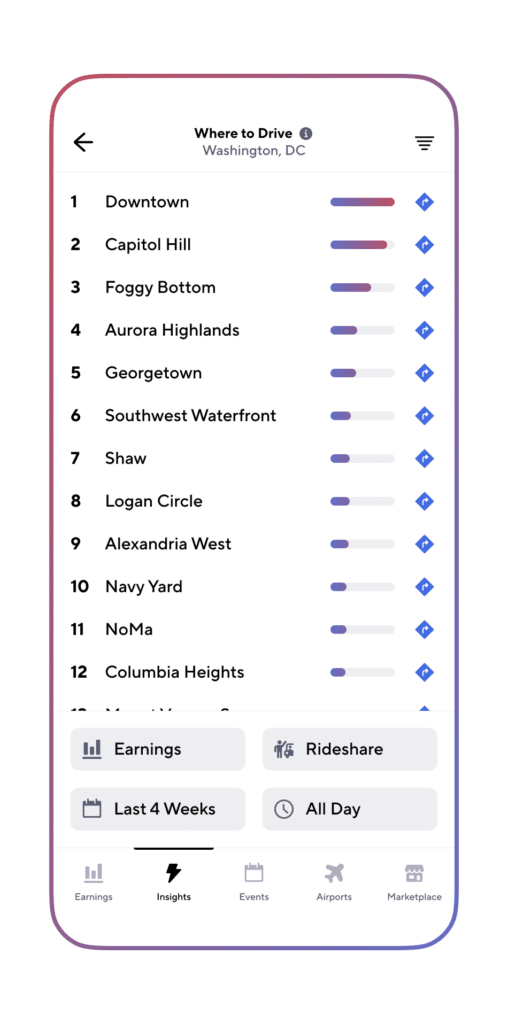
While both DoorDash and Grubhub have a lot to offer, there’s a way to get even more out of both. Use Gridwise! With Gridwise, you can
- track your mileage and maximize your tax deductions
- get real-time airport and event information
- record your earnings and see which app is performing best for you
- make more money by discovering Where to Drive and When to Drive
- gain access to affordable insurance and health care, tax help, deals, and discounts designed for gig drivers
- get inside information on all the delivery apps in this Gridwise delivery driver guide
With all these functions and features at your fingertips, Gridwise gives you every advantage you need to do what you want to do most: make more money with your driving gig.
The State of Gig Driver Pay: A Look at Gig Driver Earnings Data
The statistic from the Pew Research Center is astounding. As of 2021, 16% of the US population has at least experimented with earning money from an online gig platform. That’s almost one out of every six people in the US who has worked for a gig platform. Driver earnings data, however, tells an additional story.
There are numerous reports that many drivers don’t even earn minimum wage. The post-COVID-19 impact of inflation on gig work has devastated many drivers. Gig worker earnings have not kept up with inflation.
In this report, Gridwise Analytics looks at gig driver pay. It’s an accurate picture because the Gridwise app captures aggregated and anonymized data from over 500,000 gig drivers across the various gig apps they work for. This intel allows analysts to see the volume of trips and wages drivers earn, including tips. Gridwise Analytics breaks it down based on hourly earnings and earnings per trip.
The topics we will cover include
- Driver earnings data: What are gig drivers making?
- What are the other factors affecting driver pay?
- What kinds of gig driver regulations are we seeing from states and municipalities?
- What do gig platforms say regarding higher wages for gig workers?
Driver earnings data: What are gig drivers making?
Rideshare
This driver earnings data, derived from aggregated data, is from major gig driving platforms in the rideshare industry, covering 2022 and the first nine months of 2023.
Rideshare driver hourly wages started about $21.00 an hour in 2022. By the end of Q1, earnings were almost $24.00 an hour. By June, however, hourly earnings dropped to $19.70 by Q3 2023 (a decline of 6.2% from the start of the period). As of September 2023, earnings increased to just over $20.00 an hour.
The average number of trips to earn this money had ups and downs but began and ended the period at about the same level. For example, drivers averaged 117 rides a month in January 2022 and 120 rides a month in September 2023.
Rideshare drivers faced an 8% decline in gross earnings per hour year-over-year while the number of trips remained fairly steady.
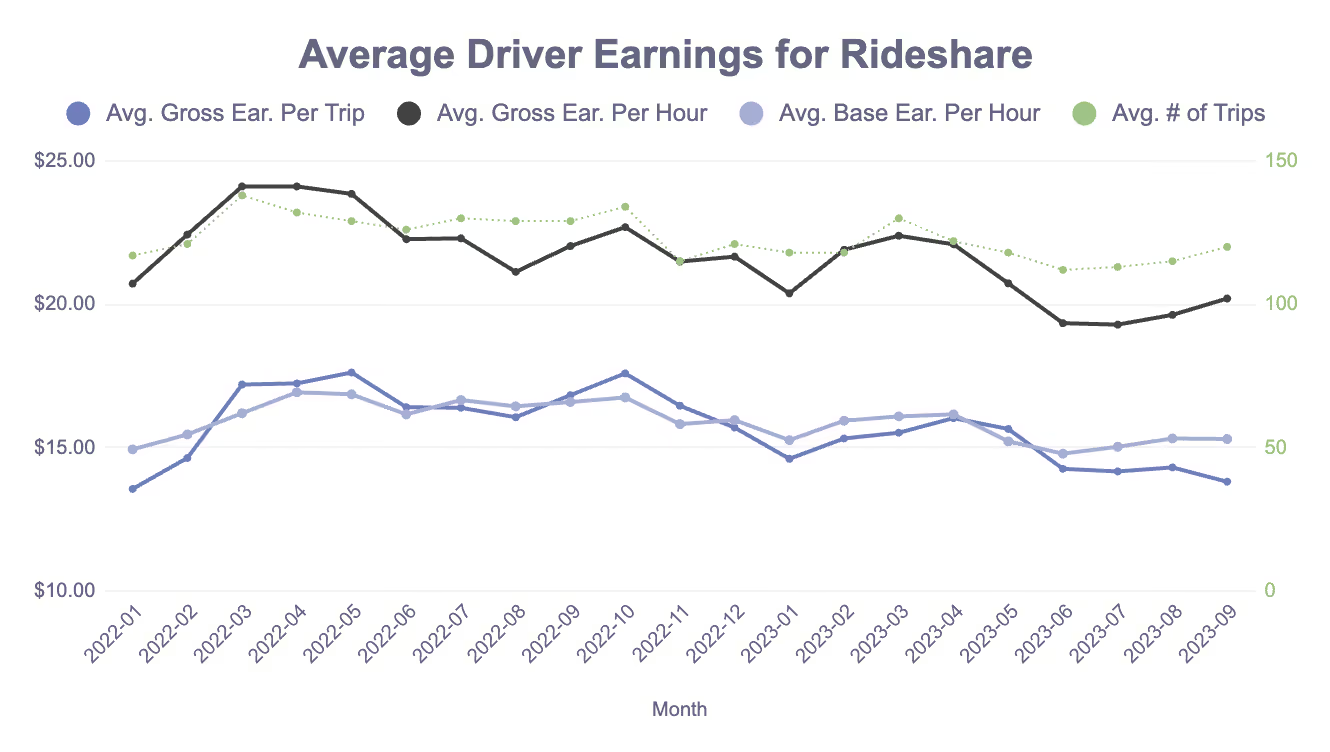
Gridwise Analytics 2023
Food delivery
These figures reflect driver earnings data in the form of average gross earnings for food delivery drivers over the same period. Our data is recorded from all major food delivery services across the US.
Although demand went up and down throughout the period, it began and ended at almost the same level. Driver earnings went down, however, starting at over $17 an hour and ending at less than $16 an hour. As with rideshare, drivers are driving the same but earning less money.
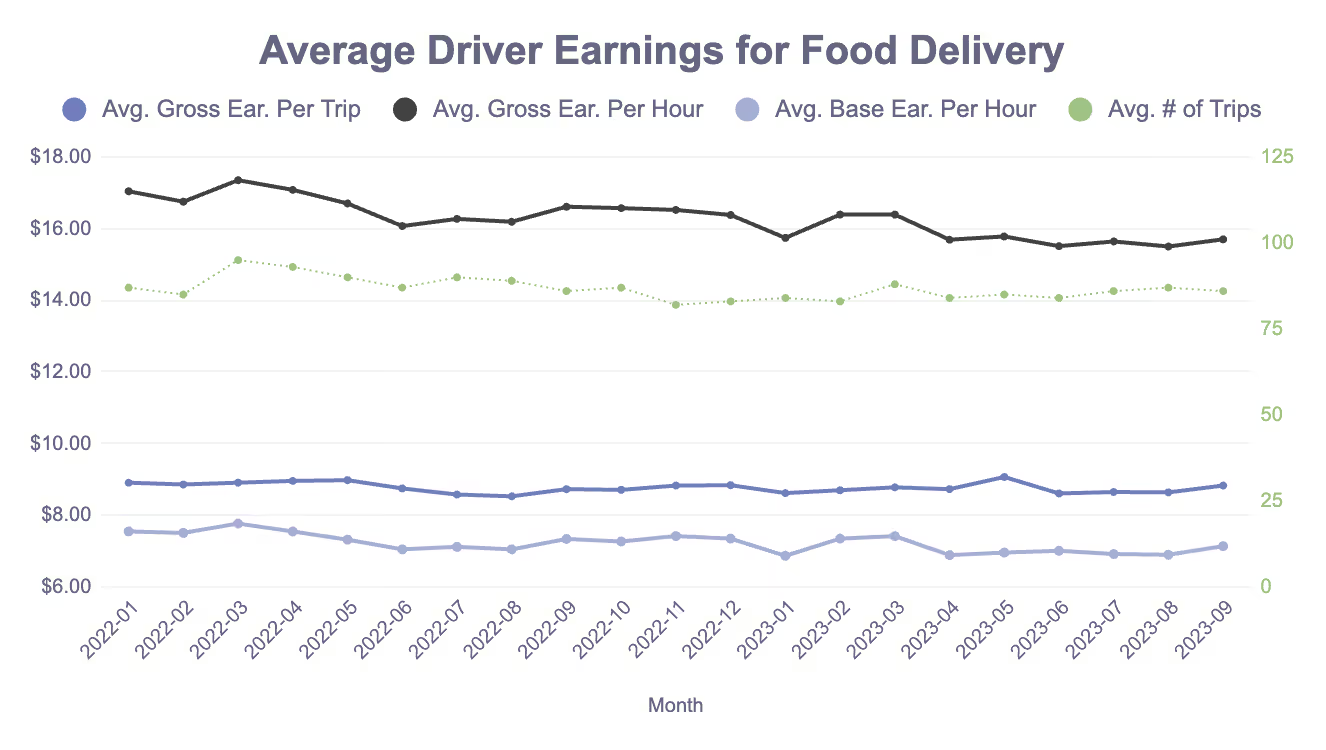
Gridwise Analytics 2023
Grocery delivery
Pulled from Gridwise Analytics driver earnings data, figures for major grocery delivery services show average gross earnings across the US, including Shipt, Walmart Spark, and Instacart, again covering the same period.
Many thought that the end to the most severe part of the pandemic would spell doom for the grocery delivery industry, but quite the opposite is true. Trips for grocery food delivery during this period of inflation increased 44% from January 2022 through September 2023. Driver pay, however, declined about $1.00 an hour.
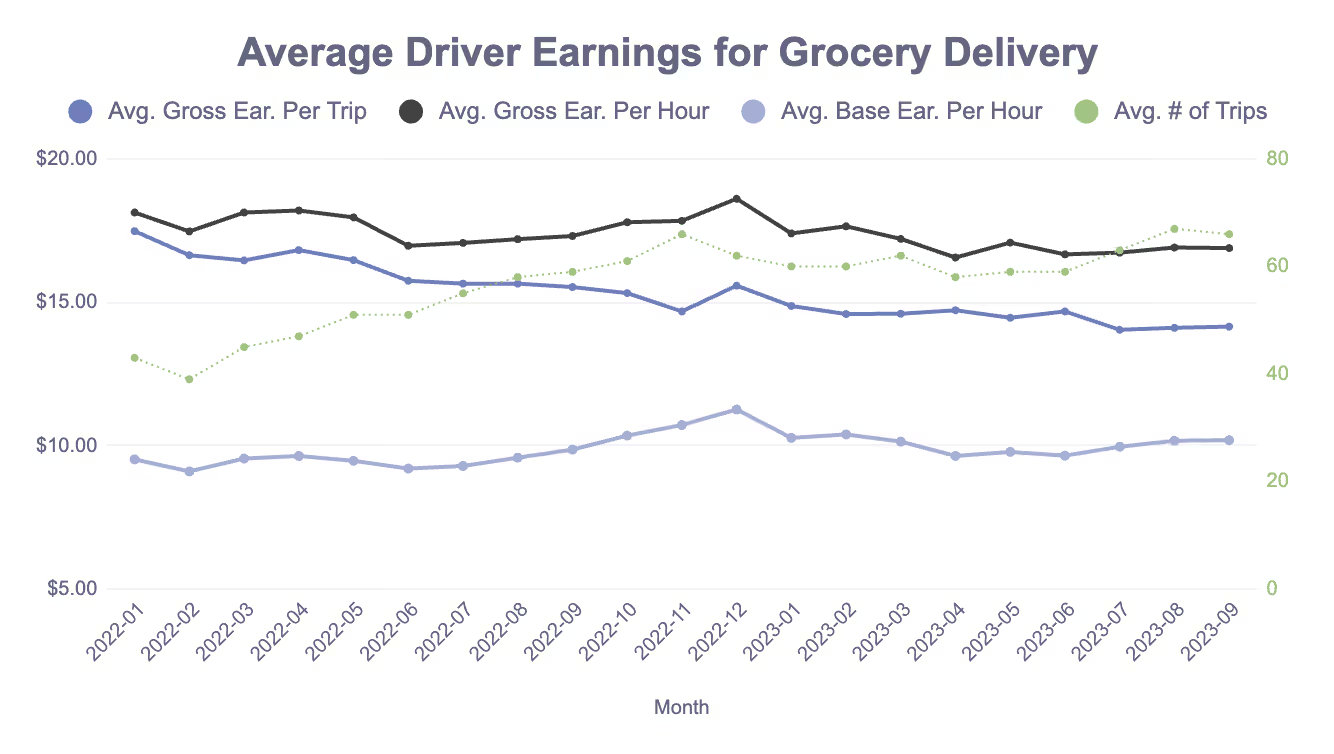
Gridwise Analytics 2023
Summary
Gig drivers across all categories worked harder to see their earnings remain the same—or worse, decrease. In the meantime, inflation during these 21 months was up 9.5%.
Fuel costs are also high, with the national average price of $3.584 per gallon, recorded by AAA on October 17, 2023. The average per-gallon price in California was $5.589. In New York, it was $4.149. By the time gig drivers subtract fuel costs and depreciation on their cars from the massive number of miles, many are lucky if they make minimum wage in the area where they live.
Conversely, the data show that the trip volume for rideshare and food delivery remains almost unchanged. In addition, inflation and higher fuel prices mean net earnings after expenses are considerably lower.
- 29% of gig workers do not even earn minimum wage in their state (Economic Policy Institute).
- Many New York delivery drivers report earning an average of $11.12 per hour after expenses, again below minimum wage (New York City Department of Consumer and Worker Protection).
- Chicago Uber and Lyft drivers average $12.72 hourly after expenses (Illinois Economic Policy Institute and the University of Illinois at Urbana-Champaign).
What are the other factors affecting driver pay?
The issue of more compensation for gig drivers and other benefits is complicated. Both the drivers and tech companies employing gig drivers make important points.
Drivers and the companies employing them like the freedom and flexibility
Gig driver stories almost uniformly tell how the flexibility and freedom of their work are key benefits. They drive when they want to and don’t drive when they don’t want to. Drivers are motivated by earning as much as possible and keeping their customer ratings at or near five stars.
I went on a three-week vacation that my wife and I had been planning for a long time,” said one Southern California driver. “I didn’t have to ask for the time. I just shut the app off. When I turned it back on three weeks later, it was as if I was never gone. And the freedom was great. In the fifteen months I drove, ending with the pandemic, I never talked to a supervisor. There are no supervisors. I occasionally texted about a found item or a difficult customer through the app, but that was it.
Gig platforms prefer the freedom and flexibility, too. Letting drivers have their autonomy bypasses the requirement for a field-management crew.
There are concerns about how employee status for drivers would change that dynamic, both for drivers and the companies. There are many questions and few answers.
Gig drivers have limited access to benefits commonly enjoyed by regular employees
Since before the pandemic, labor groups and driver advocates have been pushing companies to employ gig drivers to fund benefits packages, and there is frequent mention of a gig worker minimum wage.
What kinds of gig driver regulations are we seeing from states and municipalities?
Reports of low earnings, driver deactivations, and other occurrences have created many activist drivers, gig worker rights groups, and other advocates. They have made significant inroads in legislation affecting gig workers.
Seattle gig laws. In 2022, the Seattle City Council passed minimum pay rules for food delivery apps, requiring a minimum wage of $17.27 an hour. This follows other City Council legislation passed in 2019, and later statewide legislation that guarantees rideshare drivers are paid wages equivalent to Seattle’s minimum wage.
More recently, the Seattle City Council followed up with legislation that placed specific requirements for gig platforms before they deactivate drivers, including a 14-day notice and a review process by a human rather than solely relying on artificial intelligence. Washington State is also considering legislation addressing portable benefits for gig workers.
New York gig law. Proposed legislation in New York City would grant food delivery drivers a minimum wage of $17.96 an hour. The food delivery companies requested and received a temporary restraining order that kept the ordinance from going into effect. This follows 2019 legislation guaranteeing rideshare drivers a minimum wage equivalent to that of other New York City workers.
Chicago gig law. Crain’s Chicago Business reports that the Chicago City Council is considering an ordinance that would guarantee rideshare drivers a minimum of $7.00 per ride, allowing for higher rates if a per-mile or per-minute rate dictates a fee greater than $7.00. The minimum per-mile rate would be $1.85, with a minimum per-minute rate of $0.65. Rates would increase annually based on inflation. You can view the proposed ordinance on the web page of the Chicago Gig Alliance.
California’s AB5 gig-worker law. Gig drivers across the US celebrated the passage of AB5 in 2019 in the California State Legislature. The law restructured the California Labor Code and moved toward making gig workers eligible for employee status.
For those curious about how California's AB5 law affected Uber and Lyft driver pay, we’ve yet to see. In 2020, Proposition 22 passed by voter referendum, exempting Uber and Lyft from AB5. The battle over Prop. 22 was the costliest in California history, with more than $181 million spent to pass it, according to the Los Angeles Times. Also, according to the Times, Uber contributed $52 million toward passing the measure, Lyft spent $49 million, DoorDash contributed $48 million, and Instacart pitched in $28 million.
Nolo.com reports that in 2021, California’s Supreme Court ruled Prop. 22 unconstitutional. An appeals court turned over much of that decision two years later. Major rideshare and food delivery companies are still free from any AB5 limitations.
These are just the significant pieces of legislation in the US. There are others, far too numerous to report in this blog post.
What do gig platforms say regarding higher wages for gig workers?
Many rideshare and delivery companies maintain that increasing gig driver pay, including administrative costs, will require them to raise prices to the end user. CFRA research analyst Angelo Zino told CNBC.com that the increase would likely be from 10 percent to 30 percent.
Will rate increases create a drop in business for technology companies?
Gridwise Analytics data shows that even with the Seattle gig law and the New York gig law requiring a gig worker minimum wage, the percentage of demand for each of those respective cities has not appreciably changed in almost three years. Minimum wage requirements appear not to have had any affect on demand in these areas.
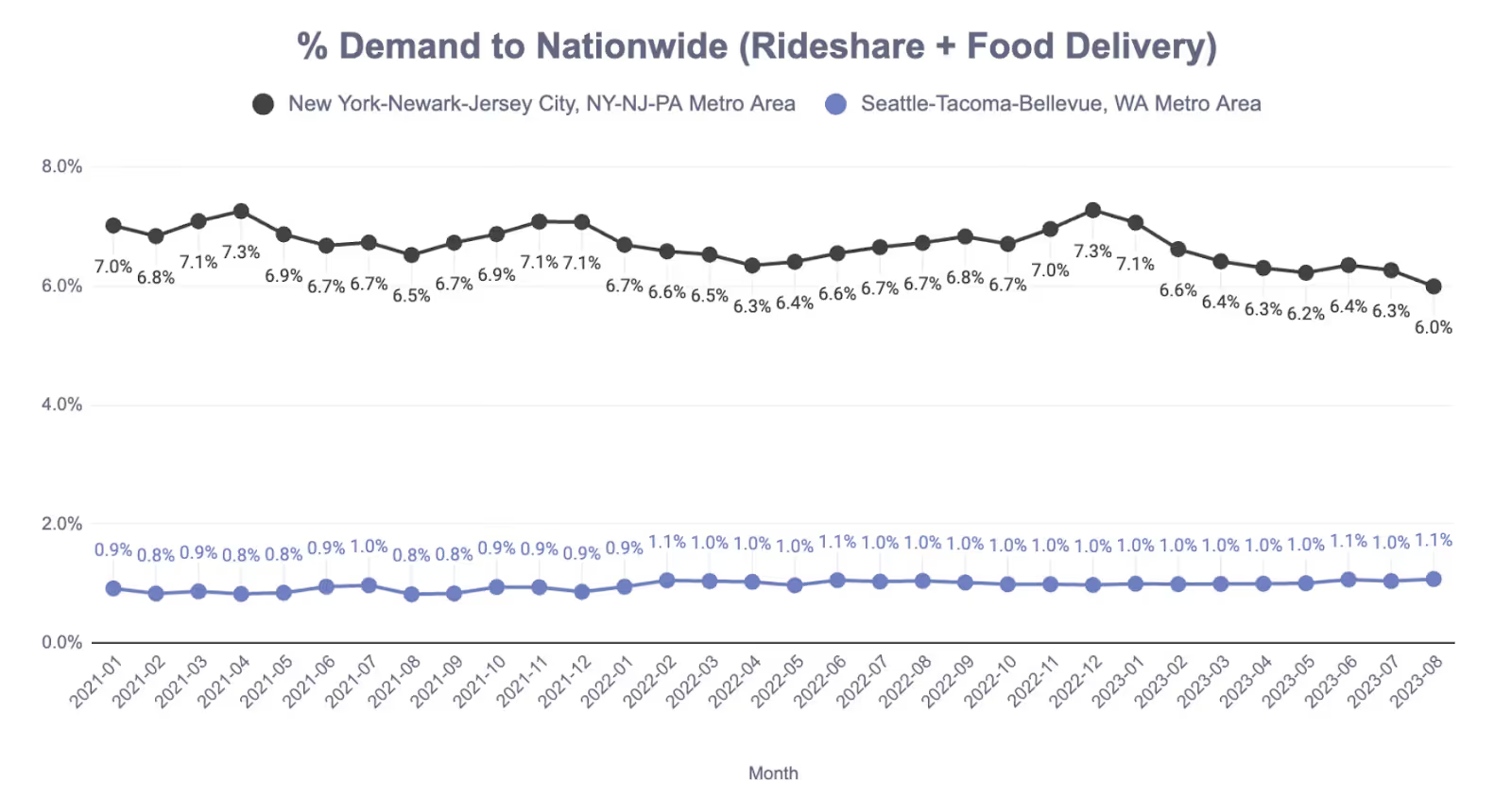
Gridwise Analytics 2023
One aspect to consider is how much rideshare and food delivery has become a part of American life. Here are a few statistics:
- Lyft revenue of $1.021 billion in Q2 2023 represented a 3% year-over-year increase. Rideshare rides were up 18% year-over-year (Lyft second quarter financial highlights).
- For Q2 2023, Uber Technologies, Inc. posted a net profit of $394 million (Uber second quarter financial results).
- DoorDash orders total orders for 2023 Q2 were 532 million, an increase of 25% year to year. Gross order value jumped to $16.5 billion, a 26% year-to-year increase (DoorDash second quarter financial results).
- New installs of the consumer apps for the food delivery companies peaked during the pandemic. Although they have decreased since then, they are still higher than pre-pandemic levels (Adjust).
Americans have come to rely on rideshare. In their daily routines, they use it to get to work, the airport, entertainment spots, and other destinations.
As for consumer delivery ordering habits, these show little impact during the recent high inflation, as illustrated by the DoorDash numbers. Whether a rate increase by these companies will make a difference remains to be seen.
Partner with Gridwise Analytics
“What can be measured can be managed.” —Peter Drucker
Thanks to accurate data from Gridwise Analytics, we see a much clearer picture of the state of gig driver pay.
Decision-makers within various gig platforms have access to well-rounded information, helping them determine how to structure compensation and create programs to increase driver loyalty, optimize driver recruitment, and deliver even better service and value to end users.
Hedge fund managers, venture capitalists, and equity research firms can better understand how driver earnings impact costs and consumer demand for gig platforms. They can leverage Gridwise’s unique dataset to predict quarterly business volume for public companies, identify the fastest-growing private companies to invest in, or determine the most and least used gig services by region to improve investment decisions.
This data also provides unique and valuable insights for companies serving the broader transportation infrastructure, showing how people and goods move from one location to another. Indeed, companies involved in electric vehicle charging, autonomous vehicles, and highway and city planning have benefited from Gridwise Analytics transportation analytics.
Analysts can see where trips originate and end, and the primary travel corridors. Data researchers can sort this information to reflect daily, monthly, and annual patterns.
For a demonstration of how Gridwise Analytics vehicle trip data can sharpen your transportation analytics, contact us below.
Work smarter. Earn more.
Whether you drive, deliver, or pick up shifts — Gridwise helps you track earnings, mileage, and performance so you stay in control of your work. Download the app and take charge today.
