Gridwise blog
Tips, insights, and advice to help you earn more and work smarter, whether you do gig work, hourly, or shift work.
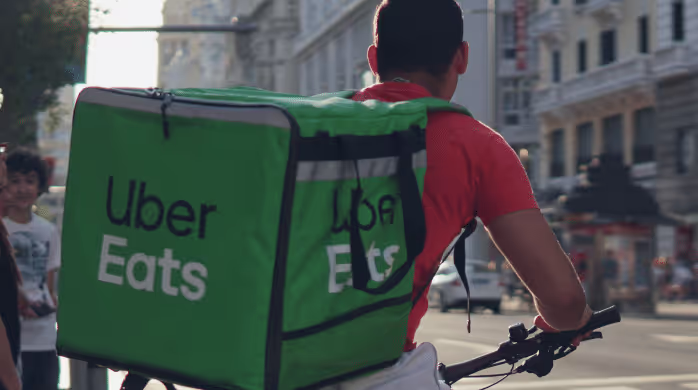
How to Make $1,000 a Week With Uber Eats in 2026 (Tips + Hourly Data)
In this blog, we'll explore the strategies and techniques that can show you how to earn $1000 per week as an Uber Eats delivery driver. We'll cover everything from optimizing your delivery zones and schedules to maximizing your tips and customer satisfaction. Whether you're a seasoned Uber Eats driver or just starting out, this guide will provide you with the insights and actionable steps to take your Uber Eats driver earnings to the next level.
Becoming an Uber Eats delivery partner can be a lucrative opportunity, especially if you're able to consistently earn $1000 a week. By understanding the platform, optimizing your delivery strategies, and focusing on customer satisfaction, you can maximize your earnings and turn Uber Eats into a reliable source of income.
We’ll cover the following topics to provide coaching and ideas to help you push your earnings up to that $1000 per week level:
What do Uber Eats drivers do?
Uber Eats drivers deliver prepared food most of the time, but they also might shop for and deliver goods from convenience outlets and grocery stores. The job is pretty simple. You get a request for an order, you drive to the restaurant or store to pick it up, and then you deliver it to the customer. If you already drive for Uber, you can choose to take orders for Uber Eats delivery any time.
If you’re not an Uber Eats driver yet, it’s pretty easy to become one. This Gridwise post tells you what you need to do if you want to sign up and start making money Uber Eats style. Many rideshare drivers welcome the chance to deliver food rather than people. This article from Nerdwallet covers the Uber Eats gig from that angle.
There are some sweet advantages to working with Uber Eats. In lots of cities you don’t even need to have a car. You can use a bike or a scooter, or even walk, to make your rounds. If you do use a car, Uber Eats’ requirements are a lot easier to meet than they are for Uber rideshare driving.
You also have a lot of flexibility. You can shop and deliver convenience items and groceries, but you don’t have to. And, like most driving gigs, you can choose your own hours, and map out the locations where you want to work.
Use Gridwise features When to Drive and Where to Drive to help you figure out what work hours and which specific areas will be the most profitable for you. Real data from real delivery people will show you earning patterns for drivers in your town.
How much can you earn doing Uber Eats?
The honest answer to this question is: basically, as much as you want! It all depends on how many hours you put in and how strategic you are about your gig. Earnings vary from one area to another, as this article from Entrepreneur points out. To give you a baseline, let’s look at the earnings of Uber Eats drivers who tracked their earnings with Gridwise.
Remember that these numbers show us only average earnings. To make $1,000 a week with Uber Eats, you’re going to have to be better than average, and we’ll show you how. For now, though, it’s good to have these figures so you get a ballpark number of where to start.
How much do Uber Eats drivers make?
Gridwise data tell us the following:
- Monthly earnings average around $444.00 per month.
- Gross earnings per trip are between $9.00 and $10.00.
- Tips make up about 50% of most Uber Eats drivers’ income, which amounts to about $225.00 per month.
Is Uber Eats good money? It can be. While there are other gigs that pay more per trip, if you drive for Uber Eats, you’ll always be pretty busy.
https://datawrapper.dwcdn.net/HPAz8/3
You can also see that, unlike many other gigs, tips play a huge role in Uber Eats earnings.

With these numbers as a baseline, what can we say about how to earn $1,000 a week with Uber Eats? As we said in the introduction, it’s going to be a hustle, but it’s really possible. To figure out how to make the most money with Uber Eats, let’s start by looking at how many trips these “average” drivers made each month.
We know that average gross earnings were $444.00 per month, and drivers got around $10.00 per trip. That means they took 44 or 45 trips per month, which breaks down to 11 trips per week. That’s not a lot of Uber Eats delivery, is it?
The fact that Uber Eats drivers averaged so few trips shows us that many drivers use more than one app at the same time. This is called multi-apping, and you can learn more about it in this Gridwise post. If you want to answer the question of how much you can make with Uber Eats, then you need to stick with the app and keep plugging away at those orders. You also need solid strategies, as well as some inside tips and tricks.
How to make the most money on Uber Eats: Delivery driving tactics
Getting to that $1,000 a week with Uber Eats isn’t so hard when you remember that the drivers we saw making about $111 a week were only taking around 11 trips in the same time period. That’s not much at all! If you work the Uber Eats app like a boss, you’ll soon have many more trips than that, easily reaching the number needed to get you to $1,000 a week. Now, let’s get to some tactics you’ll need to make that kind of bank.
- Stay with the Uber Eats app, and track your earnings. Gridwise can easily do that for you. Simply sync your Uber Eats app with Gridwise, and you’ll be able to see how much you’ve earned with Uber Eats, what times were most profitable, and your average hourly pay. Racking up trips with Uber Eats has other benefits, including perks and bonuses that are awarded to top drivers.
- Leverage surge pricing and promotions. Surge pricing is applied when there is a lot of demand. When surge pricing is in effect, many of the trips you make will pay more than usual. Promotions are offered to drivers who complete a given number of trips in a certain time period. High traffic volume days, nights, and times give you these chances to get extra earnings. Challenging yourself to complete the right number of trips for promotions will add to the number of trips you can count on for big bucks, too. Learn more about Uber Eats surge pay, boosts, and promotions in this Gridwise blog post.
- Say yes to doubling up on orders. With Uber Eats, you can get back-to-back orders or receive batched orders. Back-to-back orders happen when you receive a new request while you’re on the way to deliver an original order. The Uber Eats app routes these trips automatically, so you won’t be sent out of your way.
Batched orders are Uber Eats’ way of bundling together orders from either the same restaurant, or two nearby eating establishments. You get money, and trip count credit, for all the orders you complete, plus customer tips, without having to make a bunch of separate trips.
- Turn on the charm and get bigger tips. Being nice really is part of the Uber Eats driver’s job, and getting tips is one way people who drive for Uber Eats make money beyond their basic pay.. Bring along those extra napkins and condiments, use equipment that keeps food and drinks at the right temperatures and prevents spilling, and consider your customers’ needs. If you deliver groceries, be extra careful with delicate items such as bread and eggs.
And, most important, follow your customers’ directions, and stay in communication with them if you are going to be delayed, or if you have questions about their order. This Gridwise post will tell how to get bigger tips as a delivery driver.
- Use even more charm to keep your ratings high. As an Uber Eats driver, you will be rated by the restaurant or store where you pick up the orders as well as the customers who are waiting for the deliveries. This two-way rating system is designed to keep you on your toes, so Uber can keep people satisfied with your service. Don’t worry, you get to rate them, too.
There’s another reason why your rating as a driver is important. It not only keeps you in good standing with Uber; it helps you to qualify for the Uber Eats Pro incentive program. To learn more about Uber Eats Pro, and what it takes to earn perks such as preferred services, discounts, and deals, check out this Gridwise blog post.
Smart business moves that seal the deal
Now that you know how to gobble up the deliveries you need to make $1,000 a week with Uber Eats, it’s going to be a breeze to get there. Let’s make it even easier, with business moves that boost your earnings and shrink your expenses. If you use these, it will also be easy to say yes when people ask, “Can you make good money with Uber Eats?”
Minimize expenses. Avoid racking up big fast-food bills by bringing your own food and beverages. You might not think you’re hungry when you first start your Uber Eats run, but once the aroma of pepperoni pizza, premium cheeseburgers, and piping hot fries start wafting through your car, that might change. Bring a sandwich or other healthy food from home, and buy bottled water in bulk to save tons of cash compared to what it costs to buy single servings.
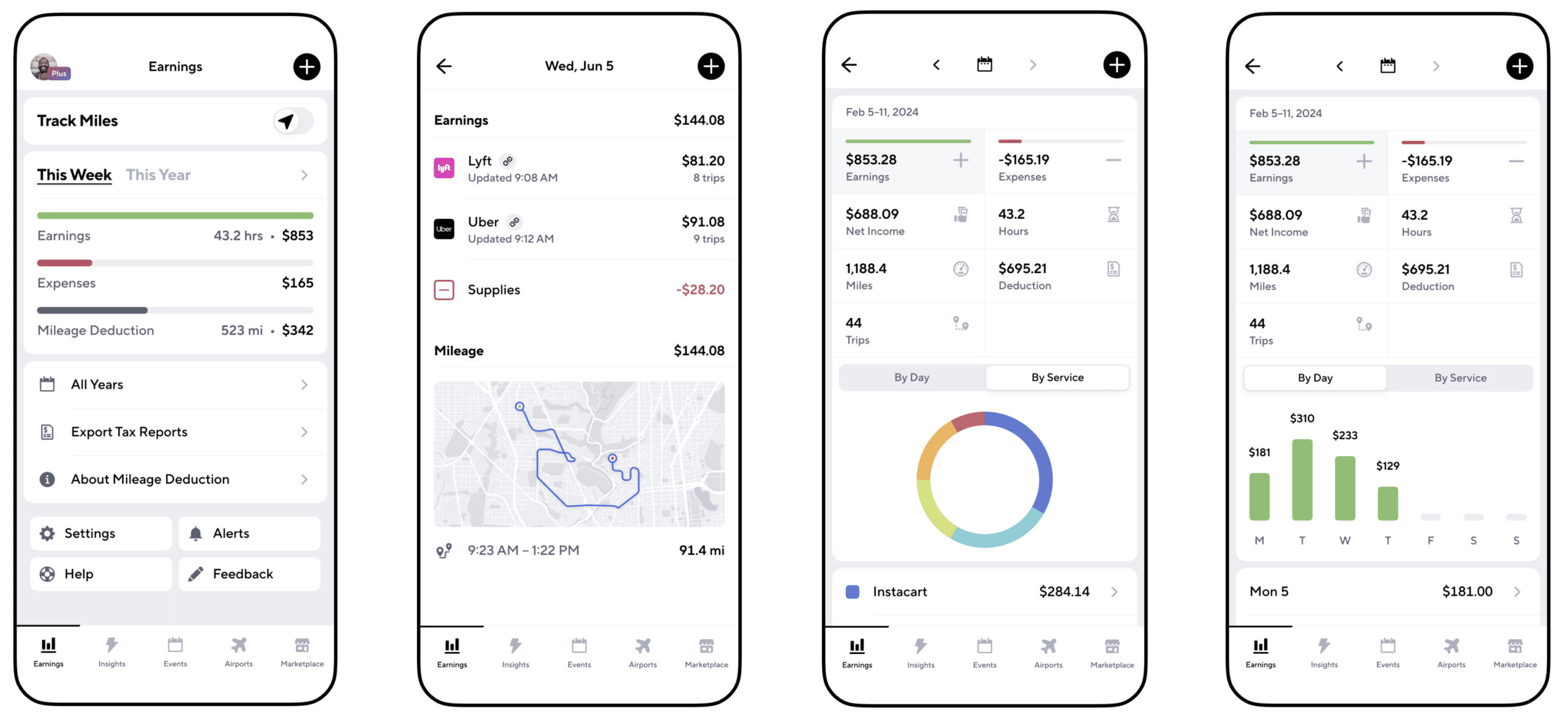
Maximize tax deductions. Another way to minimize your expenses is to maximize your tax deductions. Start by tracking mileage with Gridwise.
Gridwise App
Gridwise captures every deductible mile you drive, including the distance you cover between the trips your driving app records. Know what expenses you can deduct, and put them to work for you when tax time comes. Learn more about tax deduction strategies in the Gridwise Tax Guide for drivers.
Boost earnings with referrals
As an independent contractor, you’re probably looking for ways to make even more money than you can with Uber Eats. And most gig workers like you enjoy getting passive income. With Uber Eats, there’s a really easy way to do that, referrals!
All you need to do is find friends and encourage them to deliver for Uber Eats. If they make a certain number of deliveries within a specified time, you will get paid for doing nothing more than having them sign up under your referral code! Rates of pay vary by city, so check your Uber Eats app to find out what the current deal might be, and learn more about the referral program on the Uber Eats website.
Also remember: “friends” don’t have to be your best buds. Many delivery people carry cards with a QR code linking to their referral information, so just about anyone you encounter can join Uber Eats and boost your earnings. You could meet a source of passive income at the gas station, on social media, or at your high school reunion. The more you hustle, the more there is to gain, right?
Master the art of self-employment
As an Uber Eats driver, you’re an independent contractor. That means the company isn’t going to withhold your taxes, provide insurance, keep track of your earnings, or tell you about tax deductions. You’ll have to do all these things for yourself.
If you want to maximize your tax advantages, open an official business entity. You can incorporate (create a corporation) or you can work as a limited liability corporation (LLC). You can also work with a DBA (Doing Business As) arrangement, but the corporation or LLC will do a better job of protecting you from liability.
Establishing a corporation or LLC offers better tax advantages than being a sole proprietor. For instance, if you simply collect your earnings into your private account, you’ll be charged self-employment taxes in most states. And paying extra taxes is something we all want to avoid, within legal limits, as much as possible.
Every Uber Eats driver needs to learn about self-employment, and there are some great resources you can review. Check out the CareerOneStop website about self employment which will help explain the basics. You can also check with a professional tax accountant, or look other websites to learn more about actually creating a business.
Scope out your market
Look at the area around you to see where you’re likely to get the most deliveries. Where are all the restaurants? Where might people be more inclined to order deliveries? What hours do you want to drive? What activities might be going on around those times? Think about late-night and after-school times as well as breakfast, lunch, and dinner times.
Be realistic about the potential for your area and aware of new services opening up. For example, in New York, there is already a tab on the Uber Eats app that allows customers to order groceries. In our article about the best food delivery service to work for you’ll see that Uber Eats stacks up well against other delivery companies, mainly because of its potential for expanded opportunities for drivers to earn.
So, is Uber Eats good money? As we said, it isn’t an automatic guarantee that everyone will make $1,000 a week with Uber Eats. Trying out the suggestions we give you here, though, should put you on the right track! Go out there and start stacking up those orders and raking in some impressive earnings!
Get more inside information on Uber Eats in these posts from the Gridwise blog:
- The delivery driver guide: Using the Uber Eats app
- Everything you need to know about driving for Uber Eats
- Uber Eats Pro: What drivers need to know
- Looking for a different gig, part-time or full time job? Check out the Gridwise Job board.
Uber Eats FAQ
How does the Uber Eats platform work for drivers?
Uber Eats is a food delivery service that connects customers with local restaurants and independent delivery partners. As an Uber Eats driver, you'll receive notifications of nearby delivery requests, which you can accept and complete. The platform provides flexibility, allowing you to work on your own schedule and earn money based on the number of deliveries you complete.
What are the requirements to become an Uber Eats delivery partner?
To become an Uber Eats delivery partner, you'll need to meet certain requirements, such as having a valid driver's license, a registered vehicle, and passing a background check.
How can I choose the right delivery zone to maximize my earnings?
Selecting the right delivery zone can significantly impact your earnings, as some areas may have higher demand and better-paying orders. It's important to research and identify the zones in your area that tend to have the most consistent and lucrative delivery opportunities.
How can I take advantage of peak delivery hours and surge pricing?
Understanding peak delivery hours, such as mealtimes and weekends, and taking advantage of surge pricing can boost your earnings. Be aware of when demand is highest in your area and adjust your schedule accordingly to capitalize on these peak periods.
What are some tips for maximizing tips and customer satisfaction?
Providing excellent customer service and going the extra mile to ensure a positive experience can lead to more tips and repeat business. Prioritize communication, timeliness, and attention to detail to keep your customers happy and satisfied.
How can I set realistic weekly goals to reach my $1000 target?
To make $1000 a week with Uber Eats, it's essential to set realistic weekly goals and track your earnings and expenses. Start by determining your target earnings and breaking it down into achievable daily or weekly goals. This will help you stay on track and make adjustments as needed.
What are some strategies for efficient route planning and navigation?
Effective route planning and navigation can save you time and fuel, allowing you to complete more deliveries. Utilize mapping apps and take advantage of features like real-time traffic updates and turn-by-turn directions to find the quickest routes.
How can I balance my Uber Eats deliveries with other commitments?
Develop a schedule that allows you to capitalize on peak delivery hours while still maintaining a healthy work-life balance. Consider using tools like calendar apps to plan your availability and track your hours to ensure you're maximizing your earning potential without sacrificing your personal life.
What are the key considerations for maintaining my vehicle as an Uber Eats driver?
Keeping your car clean and well-maintained is crucial for maximizing your Uber Eats earnings. Regularly scheduled oil changes, tire rotations, and other preventive maintenance can help extend the life of your vehicle and minimize downtime. Additionally, budgeting for vehicle-related expenses, such as fuel, insurance, and repairs, will ensure you're accounting for these costs and maximizing your net earnings.
What are the tax obligations and legal considerations for Uber Eats drivers?
As an Uber Eats delivery driver, it's essential to understand the tax obligations and legal considerations that come with being an independent contractor. This includes properly reporting your earnings, deducting eligible business expenses, and making quarterly estimated tax payments. Additionally, you'll need to ensure you have the appropriate insurance coverage, such as personal auto insurance and possibly commercial auto insurance, to protect yourself and your vehicle while on the road making deliveries.

The Gridwise Job Board: Find Your Ideal Job or Gig Work
Gridwise is an essential assistant app created by gig workers for gig workers. Our mission is to support those engaged in gig work in every way possible. We understand how challenging it can be to deal with income instability, a lack of benefits, and job insecurity that often comes with gig work. The Gridwise app tracks and organizes earnings and expenses, and offers a wide array of discounts, deals, and services that make the lives of independent contractors easier and more rewarding.
We firmly believe it’s possible to make a viable living and create a gig experience that offers flexible hours, variety, and excitement. With issues such as consistent earnings and job security in mind, Gridwise is proud to offer a centralized platform that shows you how to find gig work and secure reliable opportunities. We’re proud to introduce the Gridwise Job Board.
The Gridwise Job Board: Key features
Because Gridwise is dedicated to serving the gig worker community, we’ve filled the Gridwise Job Board with useful features that won’t waste your precious time.
- Comprehensive listings. Find part-time, full-time, temporary, and per-task work. Drive or deliver with your vehicle, utilize an employer’s vehicle, or even find non-driving gig work.
- User-friendly interface. Find the jobs that are right for you with a tap of your screen.
- Verified opportunities. We vet the jobs before they are listed to ensure you’re getting high-quality job postings.
How to get more gig work, seasonal, part-time or full-time jobs with the Gridwise Job Board
Looking specifically for “gig work apps” or “gig jobs near me?” You’re in luck. Our filters and search functions send you directly to the listings you seek.
Here’s how it works.
- Access the Job Board via the Gridwise website.
- Search for jobs by type, location, and more.
- Select the job that interests you, and read all about it.
- Scroll through the description, and if it appeals to you, click “Apply for job.”
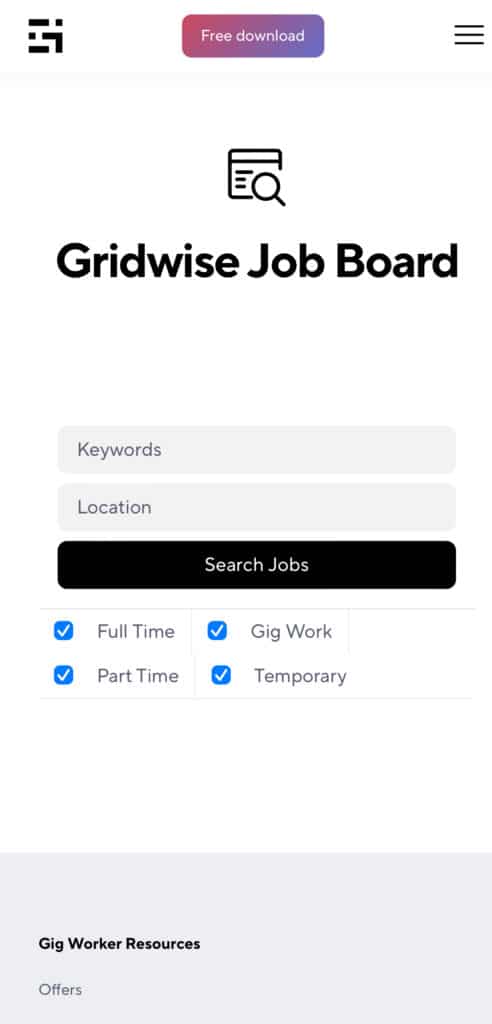
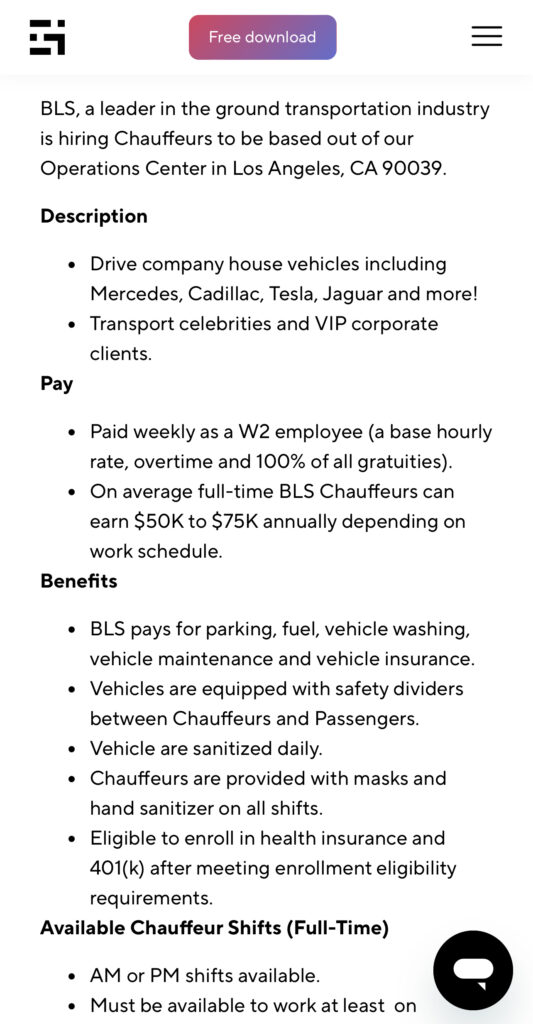
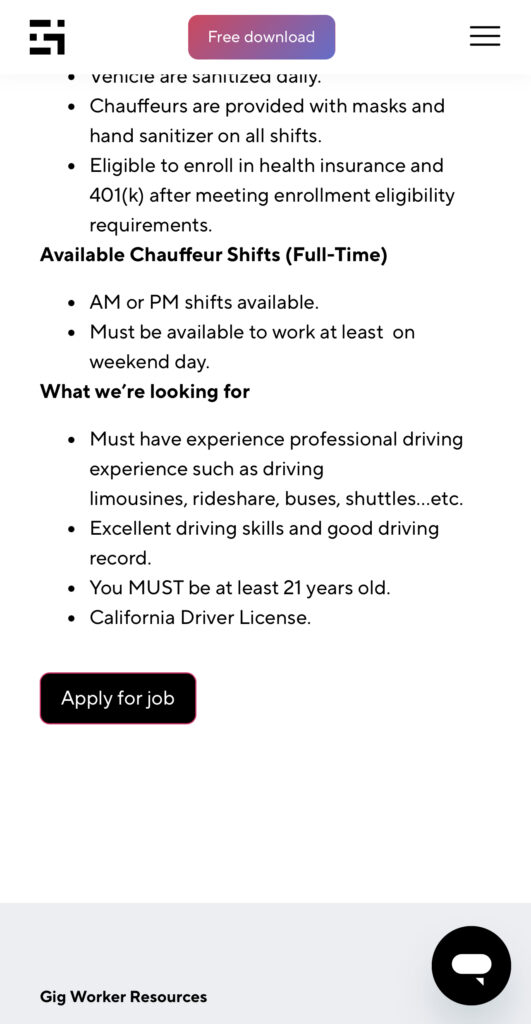
Many types of jobs are available. Adjust the search filter to see the full variety of opportunities that will let you cash in. Deliver food, set up catering, do rideshare driving, get paid for doing package delivery, and much more. You’ll find short-term gigs, long-term contracts, and part-time positions.
Perks of the Gridwise Job Board for gig workers
Gig workers who know how to make extra money will appreciate how the Gridwise Job Board lets you multiply your chances of bringing in big earnings. Here’s how:
- Increased stability. Use the Gridwise Job Board to find part-time or permanent jobs in addition to the part-time gigs you already have. Always keep a steady stream of earning opportunities flowing toward you.
- Flexibility and autonomy. Choose jobs that fit your schedule, work around other jobs and family duties, and still leave room for some fun in your life. Discover side hustles to supplement your full-time job, permanently or just for the season.
- Skill development. Find part-time work that lets you use a skill you already have, or try your hand at something new. It’s a smart way to develop a portfolio to showcase what you can do, or even to find permanent employment.
Get Gridwise and stay up to date on the Gridwise Job Board
Gig workers need plenty of information and assistance, and Gridwise is here to give it to you. Download the app and get essential features such as
- seamless earnings tracking
- mileage tracking
- expense recording, including notes
- low-cost and no-cost insurance benefits
- access to affordable medical, dental, vision, mental health, and alternative care
- professional services including legal and financial help
- deals and discounts
- weather, events, and traffic reports
- inside information on where and when to drive
More to know about gig work:

5 Best Mileage Trackers For Gig Drivers
Many drivers ask, “Do I really need a mileage tracking app?” The answer is simple: only if you want to have an accurate count of all the miles you can legally deduct from your taxable income! You might think your rideshare or delivery driving app has got you covered. After all, they do quite a good job of logging the miles you drive while you’re on a trip or delivery. But, if you want to have the best app to track mileage for Uber, Lyft, Doordash, Instacart, or the other apps you may use, you need more. Why is that?
Without a separate tracker, you’re missing the miles you drive in between pings. Did you realize that all the miles you drive, from the moment you begin your shift until it’s over (as long as you don’t drive several miles on a break to hang with your friends), are tax deductible! That means you need something besides your driving app to keep an accurate count of your travels. Read this Gridwise post to see how important it is to keep track of every deductible mile.
You won’t be surprised to hear that there’s an app for tracking miles. In fact, there are several of them. Here, we’re going to tell you about five top mileage tracking apps, and help you figure out which one is best for you.
Before we get to the list and identify the best mileage tracker app, let’s clarify what exactly a mileage tracking app is. According to G2.com’s technology glossary, mileage tracking is done for the purpose of keeping a log of mileage that is either reimbursable or tax deductible.
And yes, of course you can track your miles simply by taking readings on your odometer. But are you really prepared to account for how many miles you drove for personal reasons and subtract them from the total to get your business mileage? Even if you can remember all that and do the arithmetic, if you want an accurate reading of the miles you drive for business, and can therefore deduct, a mileage tracking app will save you a lot of trouble and prevent you from making costly errors.
Plus, as a gig driver, you have specific needs when it comes to a mileage tracker. Ideally, you’d be able to handle mileage tracking and several other functions all in one app. It can be maddening enough to deal with driving apps, particularly if you’re an avid multi-apper. You would want your mileage tracker app to help you keep account of other aspects of your business, including income, expenses, and inside information about the art of gig driving.
Not all mileage apps are equal, to be sure! Let’s look at five of the best apps to track mileage and figure out which is the best app to track mileage with Uber and Lyft, or what mileage tracker app is best for DoorDash.
1. Zoho Expense
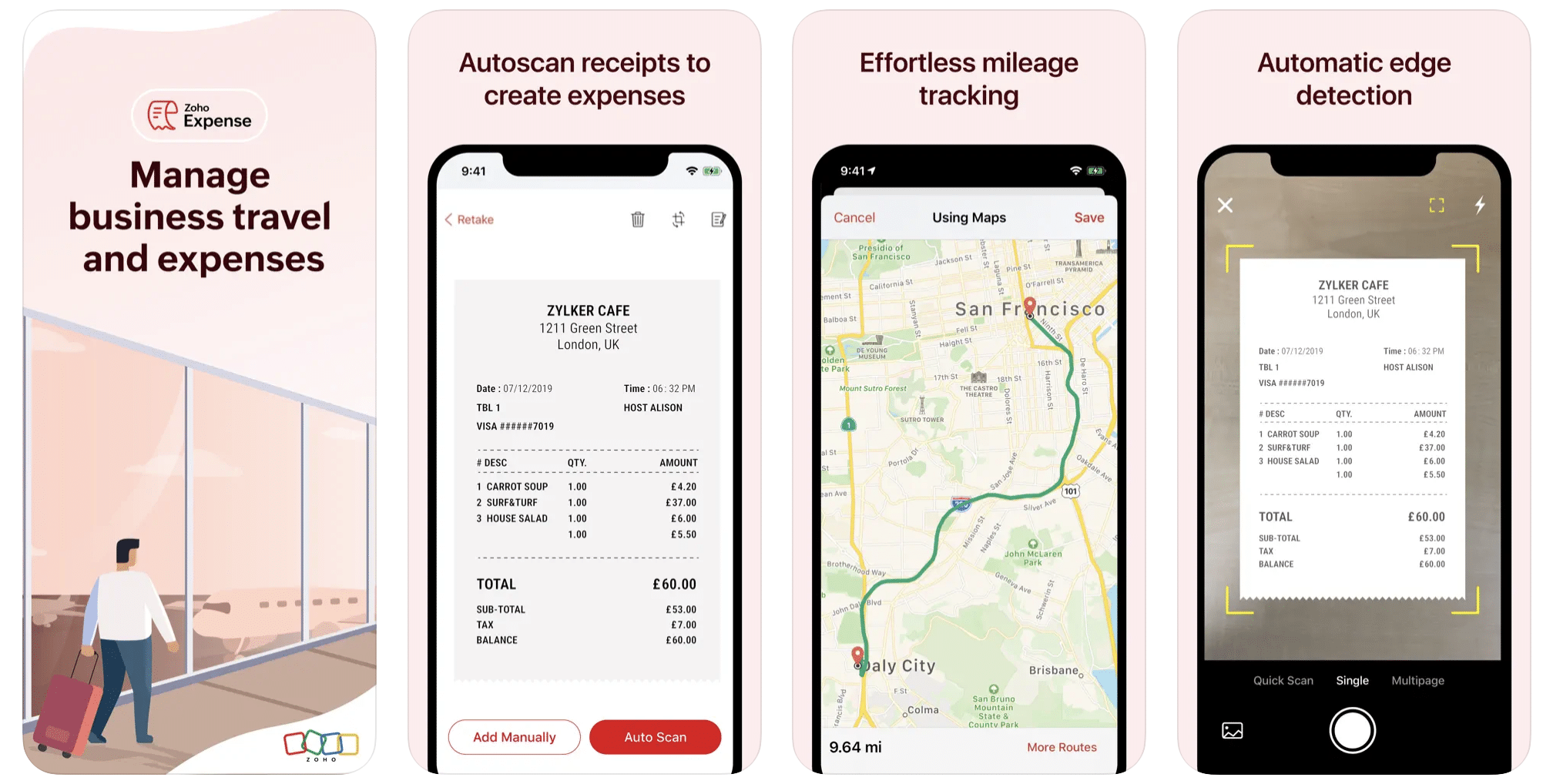
First up is Zoho Expense, which does exactly what its name says. This app is designed to allow companies to give employees a uniform way to create and submit expense reports. It can be used by individuals, including gig drivers, as well.
It includes a mileage tracker, as well as features that let you track other deductible expenses, including the ability to scan and record receipts.
Available on Android and Apple: Yes
Ratings: 4.8 stars on App Store, 4.7 stars on Google Play
Free Version: Yes
Subscription price: $3 per month, billed annually
Created specifically for gig drivers: No
2. Quickbooks Online
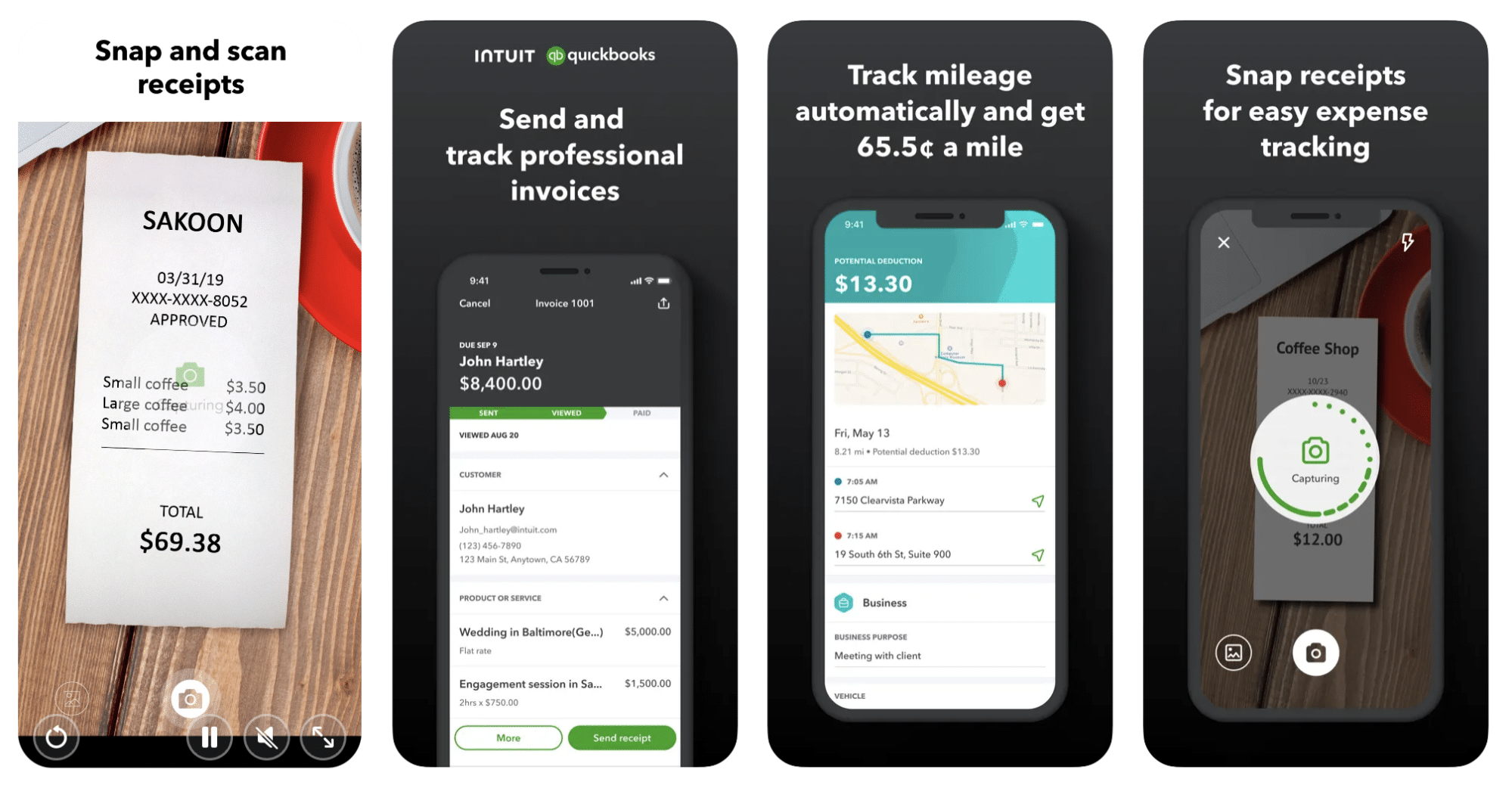
Quickbooks Online is a cloud-based app that allows you to track your mileage, earnings, and expenses. The information you enter can then be used to generate various reports that prepare you for tax time. It also allows you to create graphs that illustrate your cash flow, and includes a receipt scanner so you can instantly record deductible expenses. Quickbooks is popular, highly reliable, and designed mainly to help people keep track of their small businesses.
Available on Android and Apple: Yes
Ratings: 4.7 stars on App Store, 4.4 stars on Google Play
Free version: 30-day free trial
Subscription price: $15 per month for basic version if purchased for 3 months or more
Created specifically for gig drivers: No
Source: quickbooks.intuit.com
3. Shoeboxed
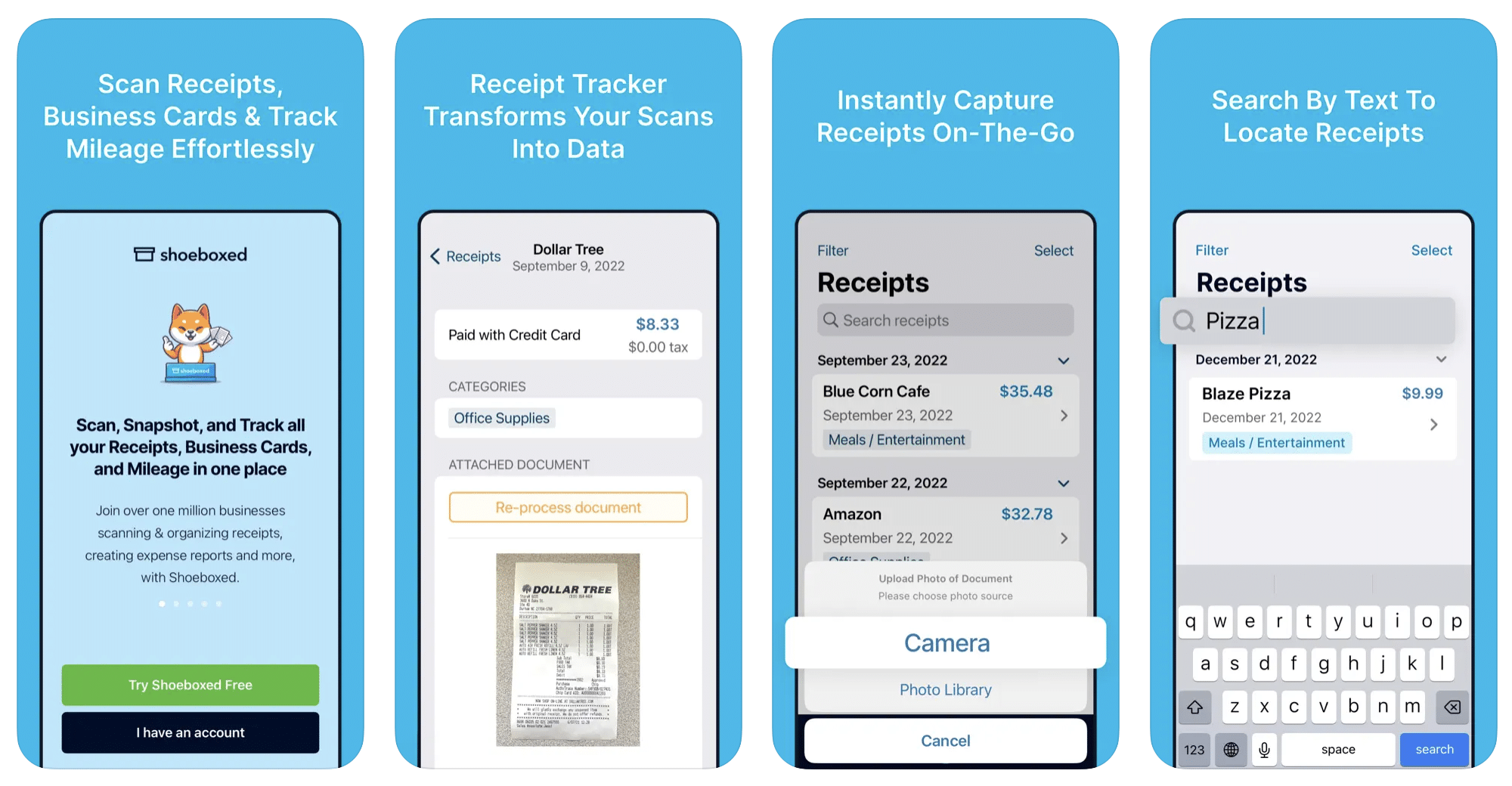
Shoeboxed started in 2007 as a service for scanning paper receipts into digital form. Now the app offers a free mileage tracker and has enabled users to scan receipts directly. It touts itself as the best mileage tracking app for DoorDash, but there are some elements missing that Dashers might like to have. While it provides features that record your expenses and prepare you for tax season, it doesn’t automatically track your earnings. The mileage tracker has a system where you can drop pins along your routes to make the tracking more precise, identifying those legs of a trip that you make for business purposes. The mileage tracker is “free” once you sign up for the basic version.
Available on Android and Apple: Yes
Ratings: 4.5 stars on App Store, 2.3 stars on Google Play
Free version: No
Subscription price: $18 per month for basic version
Created specifically for gig drivers: No
Source: blog.shoeboxed.com
4. Stride
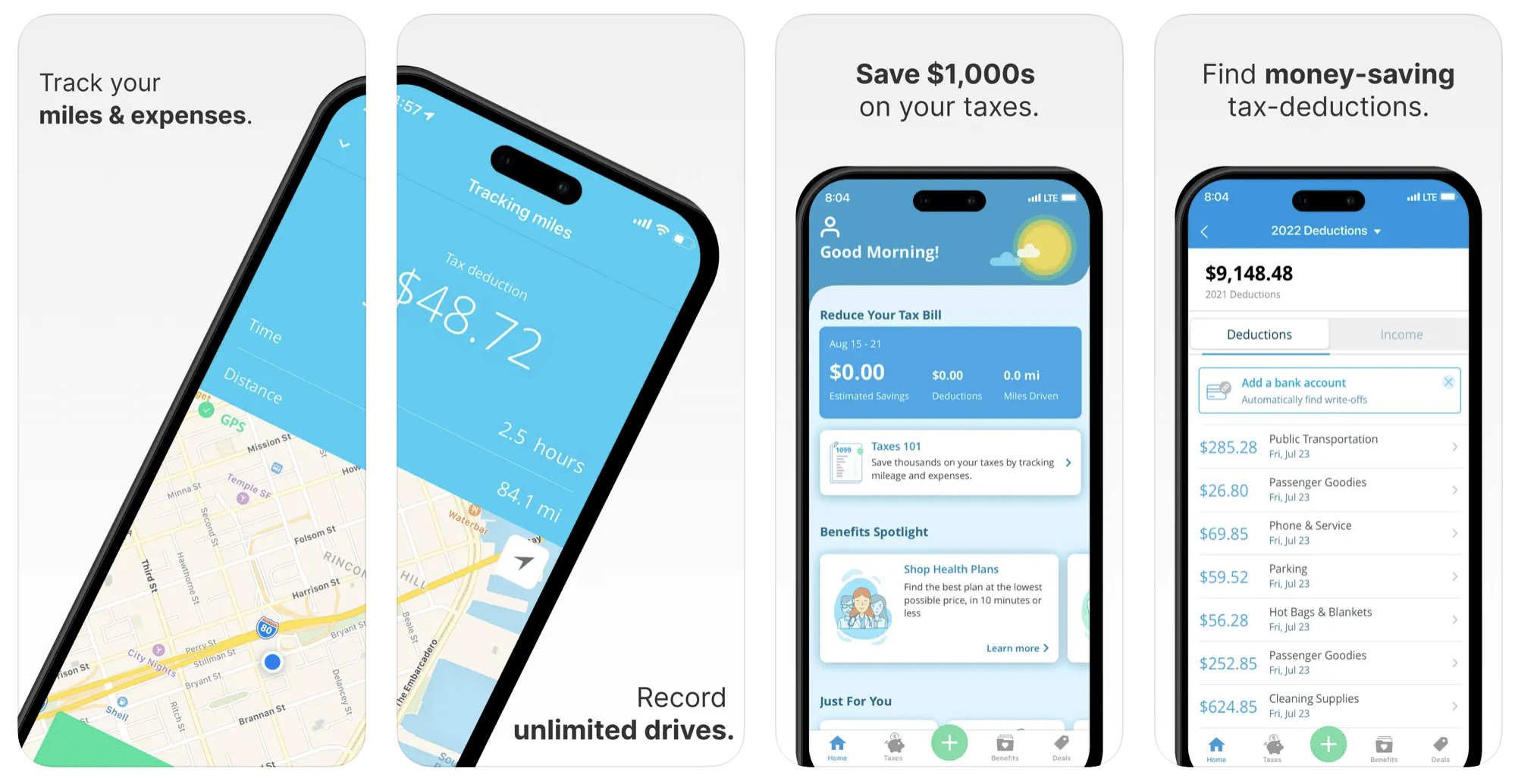
This free mileage tracker does a fair job of keeping track of the distances you rack up while gig driving, but it doesn’t automatically track earnings. It can be a big help, though, in tracking your expenses. You can link Stride to your bank account, and it will automatically scan your expenses to identify items you can potentially deduct. The app is totally free. This could make it the best free mileage tracker app, but there is a small price to pay. The app will persistently push you to consider various insurance plans that they are affiliated with. If you don’t mind that, this is a solid mileage tracker, even if it doesn’t track your earnings.
Available on Android and Apple: Yes
Ratings: 4.8 stars on App Store, 4.6 stars on Google Play
Free version: Yes
Subscription price: None. The app is free.
Created specifically for gig drivers: No
5. Gridwise
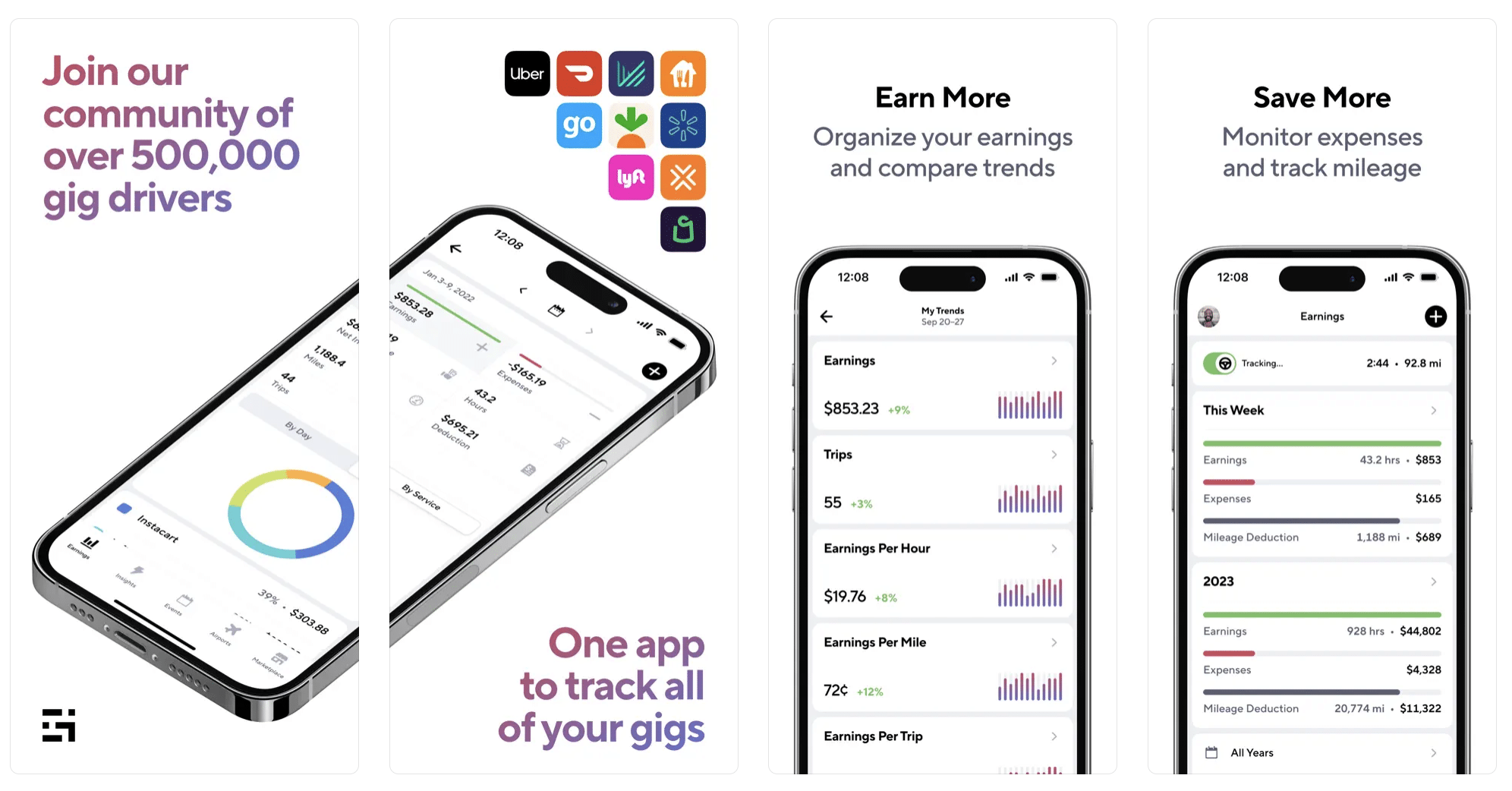
Gridwise has a free mileage tracker and free features that record your income and expenses. It gives you access to insurance and benefits, as well as insights about the best times and places to make the most money while gig driving. The Gridwise mileage tracker captures all the miles you drive while you’re on your driving shift, and it can be used if you have other trips you need to make which qualify as business travel.
Drivers love it because it is geared toward the needs of rideshare and delivery workers, providing free information about airport departures and arrivals, event start and let out times, weather, traffic, and more. The Gridwise Plus subscription adds value by providing additional insights and reports, discounts on benefits, the ability to export data in .csv format,, and more.
Available on Android and Apple: Yes
Ratings: 4.9 stars on App Store, 4.6 stars on Google Play
Free version: Yes
Subscription price: $9.95 per month for Gridwise Plus, or $95.99 per year (a $23.41 savings)
Created specifically for gig drivers: Yes!
What is the best mileage tracking app?
Now that we’ve checked them all out, we’re positive about the answer to that. Hands down, it’s Gridwise. Are we biased? You bet we are! But drivers love it too. Gridwise is the best mileage tracker app, and so much more. So many of the features are free, and the subscription to Gridwise Plus will pay for itself with additional insights to boost your earnings and deeper discounts on products and services.
Most important, Gridwise is designed specifically for gig drivers by experts who were once gig drivers themselves! Knowing what gig drivers need is a crucial step in creating an app that rideshare and delivery drivers can really use! Here are a few of the features, besides mileage tracking:
- seamless earnings tracking
- automatic, on/off toggle and manual mileage tracking
- mileage categorization
- airport, traffic, weather, and events information
- insights into where to drive and when to drive
- reports showing earnings across the platforms you use
- discounts on countless products and services for drivers
- additional resources for finding side gigs
- an informative and comprehensive blog
- affordable benefits, including insurance, medical, dental, and alternative practitioner discounts
- a community of drivers just like you
Don’t settle for just any app. Get the best mileage tracker, and so much more, from Gridwise!
Uber Connect: A Driver's Guide to Uber Package Delivery
Drivers are making more in the wake of Uber Connect’s rollout, a program developed by Uber for same-day delivery of items.
Uber expanded the program in late 2021 to more than 6,000 US cities, including all the major markets, according to a December 2021 report in The Verge, a tech blog.
It was enough to push Uber driver hourly pay to an average of $22.04 an hour in the first quarter of 2022. This was a few cents more than the $21.97 made by Lyft drivers during the same period, according to numbers in “How Much Do Uber Drivers Make: Uber Driver Pay in 2022,” a Gridwise blog post from this past April.
If you’re one of the drivers that prefer to look at earnings per trip as a measure of your success, the Q1 numbers for Uber driver pay per trip were a little higher, too. Uber drivers earned an average of $13.76 per trip in the first quarter, while Lyft drivers brought in $13.03 per trip.
In this blog post, we answer the following questions:
- What is Uber Connect?
- How does Uber package delivery work?
- How does Uber package delivery work for drivers?
- Did Uber Connect make the difference in Uber driver pay?
- What restrictions does Uber Connect place on items it transports?
- What can drivers do to improve their earnings?
What is Uber Connect?
Lets discuss what Uber Connect is. Uber Connect launched as a test program in mid-2020 as rideshare companies scrambled to generate income in the early months of the pandemic.
In May 2021, according to a New York Times article, Uber reported 3.5 million active drivers during the first quarter of that year. That number was down 22%, or close to a million drivers, from the same period a year earlier. The article also reported that Uber experienced an 11% drop in revenues for the same period.
That drop would have likely been worse had Uber not launched Uber Eats. The company quickly followed with a test launch of Uber Connect and other services. The June 2020 Gridwise post, “Uber Connect and Uber Direct: Here’s Everything Drivers Need to Know about Uber’s New Services,” reported that Uber Connect launched the program in more than two dozen markets in the US, Australia, Mexico, and India.
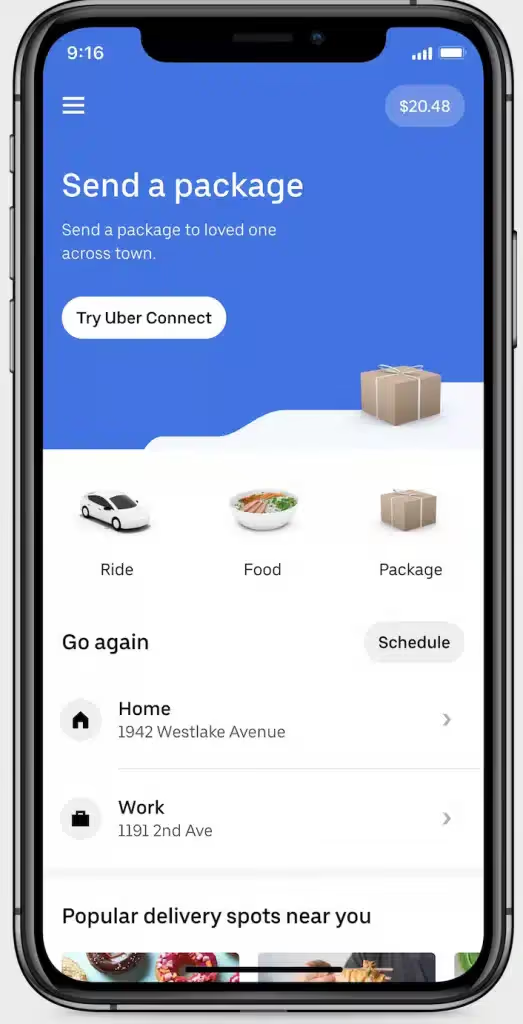
Image credit: Uber
How does Uber package delivery work?
For the shipper, ordering Uber Connect is similar to ordering a ride. When customers open the Uber app on their cell phones, they view a selection of services. Uber ridesharing and Uber Eats appear in two large tiles at the top of the screen. Packages appear below, along with other services.
The app guides the customer through the remaining steps:
- The customer indicates whether they are the sender or recipient.
- The customer enters the destination.
- The customer then selects and confirms the Uber Connect service.
- The customer confirms the pickup location.
- The customer reviews the delivery and drop-off details and the package guidelines, and confirms the information and compliance.
- The app confirms a driver and an estimated cost.
- The customer receives a cost estimate for the delivery and confirms the order. The customer also indicates whether the driver needs to come to the door and pick up the item or whether the sender will meet them on the street.
The recipient receives a PIN via text message when the delivery is near; they receive another text when the driver has arrived. The PIN must be presented to receive the package. There are also instructions available to the driver should the recipient not have the PIN or if the recipient is not at the address.
How does Uber package delivery work for drivers?
For an Uber Connect driver, the program works the same way it does for other levels of driving. Drivers select on the app whether they want to accept Uber Connect deliveries. This is done on the Driver Preferences tab. If they so choose, the app gives them Uber Connect requests in their area according to the algorithm, similar to deliveries. Uber Connect drivers follow the instructions as far as picking up deliveries and announcing their arrival.
Did Uber Connect make a difference in Uber driver pay?
That’s a tough call. Uber has yet to release numbers related specifically to income from Uber Connect, either in terms of gross earnings made by Uber, or earnings realized by drivers.
Like ridesharing services from Uber, Uber Connect driver pay is determined by mileage and time; however, the rates are not the same as the Uber rate card for ridesharing. As of this writing, we were unable to confirm any info on driver compensation for Uber Connect.
What restrictions does Uber Connect place on items drivers can transport?
The Uber website has a list of items that are prohibited from being transported on Uber Connect. There are no surprises. The list includes
- people
- firearms, weapons, ammunition, and associated parts
- alcohol
- highly perishable foods or beverages (e.g., raw meat or dairy products)
- pharmaceutical products, over-the-counter medications, vitamins, or supplements
- money, including gift cards, lottery tickets, or transferable securities
- recreational drugs, drug paraphernalia, or tobacco products
- dangerous or hazardous items, including explosives, items that are poisonous or flammable (including paints or adhesives containing a flammable liquid)
A complete listing of prohibited items is on the Uber website.
Other restrictions include that the package must be sealed, weigh no more than 30 pounds, and fit easily into the trunk of a car.
Lyft counters with its own package delivery service
Lyft has a similar program, Lyft Delivery, which is described on its website. The service is available in limited markets which had not been announced as of this writing.
According to the Lyft website, however, Lyft Delivery orders would be counted as rides when factored into Lyft ride streaks. It was not clear whether the rides would also be factored into other Lyft promotions. This information was not included on the Uber site.
Are Uber and Lyft trying to create a market that already exists?
Many rideshare drivers relate that prior to the launch of Uber Connect or Lyft Delivery, there were occasions in which they arrived for a passenger and were instead asked to deliver an item. Are the rideshare companies taking a market that already exists and giving it a different name? One Lyft driver who quit at the onset of the pandemic had this to say:
In 5,500 rides, I was asked to deliver items on a handful of instances. I delivered human hair to a beauty salon, a CD with graphic files, and once I picked up car keys from a man at his work and delivered them to his wife at their home. He had accidentally picked up her car keys when he left. Frankly, I liked these rides. Inanimate objects don’t care if you stop for a soda or go to the bathroom, and there was nothing in the Lyft Terms of Service forbidding it.
The driver added that he retired from the marketing industry before becoming an Uber driver. He speculated that perhaps the rideshare companies were looking to expand this part of the business by formalizing it. “Now they can market it,” he added. “Awareness is a big step in growing the demand for that service. I’m sure lots of people never thought about using rideshare to deliver things.”
Even with Uber Connect, drivers still must optimize their earnings
As the public becomes aware of this new service, business will increase for drivers. However, inflation and high fuel prices still require drivers to take advantage of all the tools available to protect their earnings.
You can read about new fuel discounts from Gridwise in “Gridwise Increases Gas Discount To Help Rideshare and Delivery Drivers.” Drivers can now save up to 50 cents a gallon with the GasBuddy card from Gridwise. Gridwise also offers the best mileage tracker for Uber and Lyft drivers. Drivers report that the Gridwise mileage tracker helped them realize thousands of extra miles they could deduct from their taxes.
Download Gridwise for free now!
Drivers can also maximize their earnings on the Gridwise app by checking out Where to Drive and When to Drive. Ensuring they are in the right place at the right time when demand is high means less driving around and less gas needed. The Gridwise app informs drivers of special events and surge times at the airports, and which rideshare services offer better opportunities for earnings.
A New Way to Boost Rideshare Earnings: Gridwise Events [UPDATED]
As summer travel and events heat up, more drivers are getting back on the road … so we thought it was time for an upgrade to how you can earn with Gridwise.
The Gridwise Events tab in the mobile app is getting a redesign to help gig drivers earn more. Read on to find out what the new design means for drivers.
One big change: More events for rideshare drivers
Drivers use Gridwise to help them find Uber and Lyft hotspots when they’re on the road. Now, the mobile app makes it even easier to find high-demand areas with more events to choose from.
Drivers who live outside major cities can finally take advantage of Uber and Lyft hot spots without trekking into the city. This is thanks to broader location coverage that identifies the closest events in your area, not just in your nearest major city.
The new look
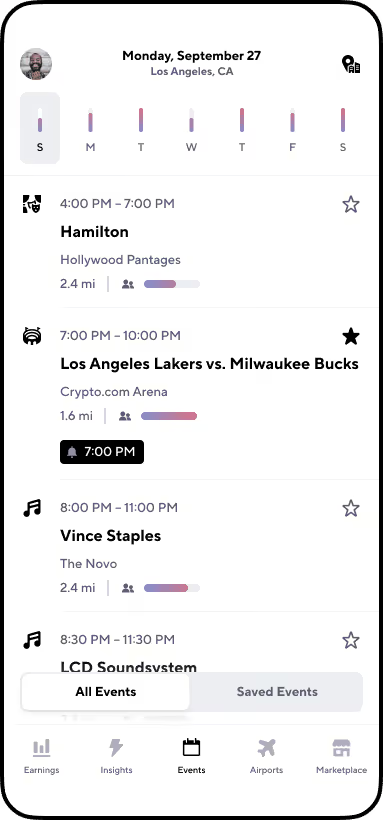
The sleek redesign puts all the notable music, art, sports, and cultural events happening near you in one place – and lets you know how far you are from the venue and how much the event is expected to increase demand.
The page also includes a snapshot of relevant holidays and weather updates that might affect traffic or event attendance.
Easily filter and save the events that you want to track right in the Gridwise app.
Tips for Uber and Lyft drivers
- The updated Gridwise Events tab lets you see, all in one place, the hot events happening near you so you can plan your driving route and schedule around peak earning hours.
- Stress less with automatic reminders that notify you when to get on the road to earn on event days.
- Stop relying on unpredictable hot spots; Gridwise uses real-time driver data to notify you exactly what events will drive up demand and when.
Don't miss another high-earning event!
Download the free Gridwise driver app now
How Gridwise’s Gig Driver Gas Discount Program Can Help Your Brand
The impact of high gas prices hits rideshare and delivery drivers really hard. If you’re wondering things like “Does Uber pay for gas?” or “Does DoorDash pay for gas?” you might be surprised at the answers. Drivers are independent contractors who pay for the cost of doing business directly out of their own pockets. To pay for gas, they are now taking nearly twice as much money out of their earnings than they did a year ago. The pain is real, and it is also quite intense.
Gridwise is an app that rideshare and delivery drivers use as an assistant. It tracks mileage, syncs with drivers’ company apps to track earnings, and allows them to record expenses. Gridwise also has features that help drivers work “smarter,” such as airport information and insight on where they can potentially get the most business. It is known as the best mileage tracking app for Uber and DoorDash, and drivers from many other rideshare and delivery services are avid users as well.
Gridwise has a close and powerful connection with the large and diverse community of gig drivers. And, as costs have been rising, we’ve noticed that drivers are looking more intensely than ever for ways to save. This makes it easier for those of us who are advertising to rideshare and delivery drivers to get more of their attention.
In this post, we will share what we’ve found about the way drivers are coping with rising costs and how this can help you promote helpful products and services that will make the lives of rideshare and delivery drivers easier.
We will look at
- gas price pain: how rising gas prices change driver behavior
- future possibilities: how gig driving could change
- how Gridwise helps drivers
- delivery driver and rideshare advertising: how your company benefits from helping drivers, and how your brand can make a direct impact
Gas price pain: how rising gas prices change driver behavior
With a network of more than 300,000 drivers, Gridwise can always get an idea of what’s going on in their world. We recently polled 1,000 rideshare and delivery drivers, and what they told us proves they are and will be changing their behavior as a result of rising costs.
While some drivers, due to gas price hikes, cut down their more active schedules to working just a few days a week, about 75% of drivers said they are driving as much as always. Driving is a matter of necessity for them, because it is their full time job. Still, they are changing the way that they do business in an attempt to defray the high cost of fuel.
The rideshare and delivery companies have tried to help with surcharges and fuel subsidies. There is no company Uber gas card or Lyft gas reimbursement, but both companies have imposed a surcharge on customers to help drivers. Uber’s surcharge varies from 45 to 55 cents per ride, depending on local gas prices. This amount, even though it reflects the companies’ recognition of the burden being placed on drivers, has a long way to go before it actually covers their costs. In a few select places, such as New York City, drivers were given a 5.3% increase in their minimum wage rate to cover the higher fuel costs, so the surcharge was not applied in that market.
Our data show that nationwide, most rideshare and delivery earnings rose over the course of the first quarter of 2022. In the case of rideshare, drivers for Uber and Lyft seem to have had healthy increases in their monthly gross earnings. Uber drivers earned $348.22 on average in January, $463.71 in February, and $537.29 in March. Lyft had similar increases, with average January earnings at $329.24, rising in February to $442.29, and peaking in March at $537.94.
Delivery drivers didn’t see the same kind of increase in gross earnings. Theirs either increased slightly, remained stable, and in some cases, decreased slightly over the three-month period. For example, DoorDash drivers earned an average of $220.16 in January, $224.26 in February, and $244.86 in March. Uber Eats drivers brought in $128.89 in January, $130.12 in February, and just $114.81 in March.
Remembering that these numbers represent gross earnings, it leads us to wonder if the increases were due to the gas surcharge or bonuses that might have been offered, particularly by the rideshare companies. There have been reports of enticing offers the companies extended to get drivers to stay on the road, or to possibly encourage new ones to get started.
Drivers don’t seem to be feeling this rise in earnings, however, and that could definitely be due to the skyrocketing price of fuel. It seems that the efforts the companies have made, to add surcharges, offer gas deals, or award bonuses, are not making drivers feel they’re getting the support they need.
In fact, a survey we conducted within our driver community told us that 70% of them don’t believe the added fee as represented by the Uber fuel surcharge is sufficient to cover the 43% rise in gas prices since last year. There is no DoorDash gas surcharge, but the company offers Dashers 10% back on their purchase of gas, as long as they pay with DasherDirect, which functions as a kind of DoorDash gas card. DoorDash extended their 10% cash back deal through August 31, 2022, having renewed it at the end of April.
While these efforts help somewhat, drivers are still showing signs that they will modify their driving habits to keep costs down. Here are some changing driver attitudes we’ve heard about and noticed after analyzing our data:
Drivers are making fewer trips. We collected data from February through March 2022 that reveals a declining trend in the number of trips drivers are making. This has been the case for virtually every rideshare and delivery service, including Lyft, Uber, Uber Eats, Grubhub, and Instacart. And, although gas prices eased some in April, they are on the rise again, and are expected to stay high for the summer driving season.
Drivers are more selective about the rideshare trips and orders they accept. When gas was cheap, drivers would pretty much take every ride or order that was offered. There was a lot of competition among a large population of drivers, so passing on a ride or delivery could bring down their driver rating. Now, with fewer drivers on the road, companies are more lenient with their policies, and drivers are viewing each ping they get with an eye to how much it will be worth. They are far less likely to drive long distances to pick up orders or passengers.
Drivers are saying no to low-paying orders and rides. There are some rides and orders that are far away, but worth it, and others that are simply not. While it’s hard to put an exact number on what “not worth it” amounts to, most drivers agree that $6.50 in earnings for traveling anything over 5 miles would be pretty close. This definitely makes sense for drivers in the short term, but turning down too many requests could potentially cause customers to turn to other ways of getting rides and deliveries.
Drivers are constantly trying to cut all costs. The need for drivers to pay more for gas, maintenance, insurance, and other running costs has made them more aggressive about looking for ways to save money. Companies that offer reasonable insurance premiums, discounts of various kinds, and reductions for subscription services can easily get drivers’ attention in these times. In fact, drivers are looking for companies that will help them to cut back on their business expenses.
There’s no doubt that the equations drivers calculate when they evaluate their gigs have changed as a result of the gas price hikes. It leads us to wonder how long this will last and how it may affect gig driving in times to come.
Future possibilities: how rising costs could alter the gig driving business
The shock to the system that rising gas prices has caused is still setting in with drivers. They appear to be maneuvering and modifying their habits to minimize the impact. For now the changes we see don’t seem to indicate an immediate crisis in the supply of drivers to the rideshare and delivery businesses, but as time passes this could change.
The high price of gas is due to factors that are difficult to control or predict. Ongoing global events, from the conflict between Russia and Ukraine to changes in policy that affect domestic oil production, have and will probably continue to keep prices high. There are no indications, as of this writing, of gas prices coming down anytime soon.
The headline “Rideshare and Delivery Driver Shortage 2022” could become a reality if gig workers decide that their driving jobs are no longer providing them with enough income to meet their expenses. With inflation increasing prices on many commodities, including basic items such as food and housing, the situation gets even more complex. Drivers might leave rideshare and delivery to pursue other side hustles that provide them with a better hourly and monthly income.
Fortunately, our current data doesn’t show a steep drop in most driver activity. Unfortunately, it does show a decline in the number of trips logged, both for rideshare and delivery, across the board. For example, as gas prices rose in the last week of March, trip volume decreased 5.29% for Uber, 6.81% for Uber Eats, and 18.72% for Instacart. Lyft and Grubhub stayed rather stable.
It’s clearly getting difficult for drivers to maintain the standard of living they’re used to, and current trends aren’t indicating the imminent arrival of permanent solutions to global economic problems. That’s why, in order to keep drivers on the road, Gridwise is creating ways to offer drivers some much-needed support.
How Gridwise helps drivers
Gridwise programs, offers, and partnerships provide drivers with opportunities to cut their costs, not only for gas, but for all their ongoing expenses. Gridwise was built on the idea of helping gig drivers earn more money, but also save money through a number of programs and features. Some include gas card giveaways, driver discounts on automotive and insurance expenses, and features that improve driver efficiency like Where and When to Drive.
However, our newest program sets us apart by giving us the opportunity to directly impact our users’ wallets with Gridwise Gas.
In partnership with GasBuddy, Gridwise now offers a significant gig driver gas discount of up to 50 cents off per gallon for our users on up to 100 gallons a month. Drivers pay with a card that is accepted at 95% of service stations.
Delivery driver and rideshare advertising: how your company benefits from helping drivers, and how you can make a direct impact
Gig drivers are feeling the pain at the pump; and Gridwise partners have an opportunity to make a direct impact on over 300,000 of them. We’ve designed a Gridwise Gas sponsorship to help your brand stand out among the rest by proving your dedication to helping gig drivers afford to stay on the road. With multiple levels of commitment available, we’ve made it easy for any brand to show their support by participating in the Gridwise Gas Program Sponsorship, and many other opportunities.
Explore the many opportunities for advertising with Gridwise here, and…
Schedule an intro call with our brand partnership team today!
Gridwise Increases Gas Discount To Help Rideshare and Delivery Drivers
Gridwise is increasing its Gridwise Gas discount from 10 cents up to 50 cents a gallon.
Why? Because we’ve heard that some of the joy is missing from gig driving.
Gig drivers know what we’re talking about. In what other job can you meet so many people in one night? What other job takes you to places you’ve never been before or even knew existed?
For rideshare drivers, there is the satisfaction of knowing you’ve delivered passengers, including essential workers, safely to their destinations, especially at night. For delivery drivers, it is the knowledge that you’re making life more bearable for those exhausted from a long day of work or still concerned about leaving the house during the pandemic.
There is also the ongoing challenge of honing your strategy to maximize earnings. Admit it. You get a charge when it works.
But high gas prices cut into this euphoria. We all know that rideshare driver gas reimbursement is a myth. Drivers are on their own for fuel costs. The same is true for delivery driver gas reimbursement.
Here are the points we cover in this blog post:
- How can gig drivers save on vehicle costs like gas?
- What gas discounts can rideshare and delivery drivers qualify for?
- What’s the biggest gas discount a gig driver can get?
Gas rewards for rideshare and delivery drivers
Gas discounts couldn’t come at a better time. Higher gas prices might be with us for a while. This is the verdict, and many point to the Russian–Ukraine war as the primary cause. Much of the world, including the US, is boycotting Russian oil exports, causing a shortage. In addition, disruption continues to characterize the supply chain. We also face an economy affected by the on-again, off-again pandemic, inflation, and interest rate hikes meant to pump the brakes on that inflation.
Most of the talking heads on television agree that the Ukrainian conflict will go on for some time, along with the other factors. High gas prices are with us for a while. According to the AAA website, as of May 26, 2022, Americans were paying an average of $4.60 per gallon. In California, where San Francisco and Los Angeles are the hottest markets, drivers are paying $6.07 a gallon, according to AAA. New York is $4.93 a gallon.
Lyft and Uber driver pay has been affected. The same is true for DoorDash driver pay and the other services.
“Before they spiked, fuel prices ate into about 20% of my earrings,” said one full-time rideshare driver who admitted that he did not take full advantage of Gridwise or other discounts. “Now that number is approaching 40%. I’m not sure how much longer this way of earning a living will make sense.”
Gridwise helps ease the burden
The ethos of Gridwise is all about empowering rideshare and delivery drivers and providing the tools to make them profitable. That’s why Gridwise, with support from companies like ACOP, has changed the gas discount available to Gridwise drivers through the Gridwise Gas program. On top of paying gig workers to take surveys, American Consumers Opinion Panel is helping drivers save money in partnership with Gridwise Gas.
To help drivers save more, the Gridwise Gas discount is increasing. Gridwise users can now save up to 50 cents a gallon on up to 100 gallons a month.
The procedure is simple.
- Download the Gridwise app
- Subscribe to Gridwise Plus to receive the guaranteed $0.50 discount
- Sign up for the gas card in the “Benefits” section of Gridwise’s “Marketplace” tab
- Activate your gas card when it arrives
- Use it at the gas station as you would a debit card and automatically receive your discount.
Drivers can also maximize their earnings by checking out the Where to Drive and When to Drive features in the Gridwise app. Being in the right place at the right time means less driving around and less gas needed. The Gridwise app informs you of special events and surge times at the airports, and which rideshare services offer better opportunities for earnings.
You can use the app to better track your mileage, allowing you to maximize your rideshare and delivery driver mileage deduction on your taxes.
Download Gridwise now to save big on gas
And have fun out there.
Becoming A Top Dasher: Is it Worth it For DoorDash Drivers
DoorDash has been running a program called Top Dasher for the last few years wherein they give certain benefits to drivers who maintain good numbers. DoorDash hasn’t released any statistics on participants, though.
What we know about the success of the Top Dasher program is all anecdotal. The internet chatter includes drivers with opinions on both sides. Drivers in Facebook groups and Reddit threads share their concerns about the program. Other drivers, however, especially those on YouTube, speak well of their experiences as Top Dashers.
So let's take a look at the Top Dasher program and discuss the pros and cons. In this post we will answer your questions, including:
- What is DoorDash’s Top Dasher program?
- Do DoorDash drivers need Top Dasher benefits?
- How to become a Top Dasher with DoorDash
- Is it worth it to be a Top Dasher?
What is DoorDash’s Top Dasher program?
DoorDash’s website explains that the Top Dasher program is “our way of recognizing and rewarding the best Dashers.” The program is open to DoorDash food-delivery drivers who meet certain requirements (which we will get to later). Sounds fair. There are Dashers out there who consider DoorDash their full-time gig, allowing them to pay rent and put food on the table. And the Top Dasher benefits are something drivers would like to have, at least some of them.
Whether you want to be a DoorDash Top Dasher, though, really comes down to your strategy as a food-delivery gig driver. Let’s look at it.
Do DoorDash drivers need Top Dasher benefits?
Before discussing whether DoorDash drivers need the program, let’s look at DoorDash’s market share. A report on the delivery-app market shows DoorDash with a commanding share of the US market, at 53%. The next biggest piece of the pie is owned by Uber Eats at 26%. GrubHub has a 12% share, and everyone else is in the single digits. These numbers are recent, too, as of March 24, 2022.
But when it comes to DoorDash driver pay, an April 11, 2022, post on the Gridwise blog entitled How Much Can You Earn as a DoorDash Driver in 2022?, DoorDash lagged behind the others. This considers base pay, tips from customers, and various promotions. Gridwise’s Q1 figures reveal that DoorDash drivers earned an average of $7.90 per trip. DoorDash hourly pay was $15.72 over the same period. Grubhub drivers earned more per trip, while Uber Eats drivers earned more per hour.
But what DoorDash drivers lacked in earnings, they made up for in enthusiasm (and probably market share, too). DoorDash drivers made an average monthly pay of $229.76, edging out both Uber Eats and GrubHub drivers.
A look at the Top Dasher program
Those who qualify for the program have the privilege of “Dash Anytime.” The DoorDash app may show that a market is closed to new drivers during a specific time slot because there are already enough drivers (indicated by the gray color of the area on the app). A driver with Top Dasher status, however, can still drive in this area, as well as adjoining markets that might be closed.
The second benefit of the program, which was available in the beta stage, is no longer listed on the website. Top Dashers were given priority status on orders of more than $35. If there were three drivers in a given area, for example, the logic is that the Top Dasher was given priority in the algorithm. The DoorDash website does have a disclaimer that “DoorDash may modify the qualification terms, rewards offered, and available markets at any time.”
How to become a Top Dasher with DoorDash
The requirements to become a Top Dasher with DoorDash include a
- customer rating of at least 4.7
- completion rate of at least 95%
- 100 completed deliveries during the previous month
- minimum 200 lifetime deliveries completed
- minimum 70% acceptance rate
The website also states that DoorDash drivers get added into the program on the second day of each month. They can meet those requirements mid-month, but they must maintain those numbers until the final day of the month in order to participate as a Top Dasher the following month.
Most drivers agree that the requirements are easy to obtain, with the exception of the last one: an acceptance rate of 70%. DoorDash’s acceptance rate refers to what percentage of deliveries offered to a driver are accepted.
The DoorDash app displays the approximate pay for each delivery. The catch is that many drivers do not accept deliveries with low pay, especially if the miles needed to complete the delivery are higher. This, of course, makes their acceptance rate go down, although a low acceptance rate on DoorDash has no consequences—other than the driver cannot participate in the Top Dasher program. Cherry-picking deliveries is a big part of the strategy for many drivers, especially for those that are multi-apping.
Is it worth it to become a Top Dasher?
This question really comes down to whether it is worth it as a driver to accept lower paying deliveries from DoorDash in order to gain Top Dasher status. One driver in Minneapolis expressed his doubts, specifically referring to the acceptance rate.
“The short answer is, no, for most people, meeting the Top Dasher requirements and getting Top Dasher status isn’t worth it. The main reason is that the main benefit of Top Dasher status – being able to Dash anytime without scheduling – is not worth meeting the high acceptance rate requirement….My acceptance rate for DoorDash usually hovers around 10-30%. If I had to accept more DoorDash orders to get Top Dasher status, my earnings would undoubtedly drop.”
The driver added that in his opinion, DoorDash developed the Top Dasher program to make lower-paying orders more attractive to Dashers. He adds that the program might be more successful for drivers in underserved areas.
Other drivers like the Top Dasher program
YouTube has several videos from DoorDash drivers who speak favorably about the Top Dasher program. A driver named Stan operates a YouTube channel called Driver Eats Delivers. He is a Top Dasher. “I can tell you it works for me,” Stan says in a video he made about the Top Dasher Program. “It gives me the flexibility to drive whenever I want.”
Stan drives in the Lancaster/Palmdale market in northern Los Angeles County. The area is less densely populated than the rest of the county, a fact that falls in line with other drivers' observations that Top Dasher is likely to be more successful in markets that are underserved.
Dennis, another DoorDash driver, runs a YouTube channel known as Ride Along 980. In a recent video he also spoke favorably about the Top Dasher program, saying that it made a difference for him. Dennis serves a community of 14,000, a small market.
Again, is it worth it to be a Top Dasher?
There are opinions on both sides. It is interesting to read the comments section from other drivers on the blogs and YouTube videos that have been referenced here. There are both positive and negative opinions about the program.
Scott Roe, a DoorDash driver, commented that the program worked for him: “I missed Top Dasher for the first time in a long time, and I must say that I can notice the difference. However, having said that, I will point out I am not multi-apping. As a Top Dasher, I rarely saw orders below $10. Even if they were, they were never lower than $8.”
It all comes down to what works for you as a driver
If the mixed opinion about DoorDash’s Top Driver program illustrates anything, it is that whether or not any benefit works for a driver comes down to strategy, personal style, and preferences. Some drivers maintain they signed up to deliver food, and they take whatever comes to them. Others maintain that the strategy that works for them is being selective about the orders they take.
One absolute for food delivery drivers is that they can benefit from using the Gridwise app. Food delivery drivers can record mileage and track their earnings, allowing them to see what times and areas work best for them.
Every delivery driver should drive smarter, and with Gridwise they can. As a driver, the first step you can take is to download the free Gridwise app to track miles and earnings, and gain insights into profitable times and areas in your area.
Download Gridwise for free now!
Uber Eats and DoorDash Remove Gas Incentives For Delivery Drivers
Were those gas surcharges companies gave drivers this spring too good to be true? It looks that way. While Uber Eats and DoorDash lent a hand to drivers as they dealt with crippling fuel costs for a limited period of time, that’s all changing. These big delivery companies are doing a whole other kind of “takeaway,” and it involves their gas incentive programs. In this post, we’ll fill you in on the details, provide insight into the companies’ rationale, and give you tools you can depend on from now on. Here’s how it will go.
- Killer gas prices and for DoorDash and Uber Eats drivers: companies pull back subsidies
- Why delivery companies are scaling back their support
- Gas rewards for rideshare and delivery drivers that won’t go away
Killer gas prices for DoorDash and Uber Eats drivers: companies pull back subsidies
The crisis created by the steep rise in fuel prices is on every driver’s mind. When the surge in gas prices first happened, the companies came to the aid of their drivers by offering bonuses to help cover their pumpside costs.They got this money from surcharges they tagged onto customer orders. Uber Eats drivers received $0.45 per order, and Dashers got weekly bonuses beginning at $5.00 if they covered 100 miles or more while making deliveries.
No one is saying these measures even came close to covering the actual burden of gas price increases, but they were at least some help. Now, though, things have changed. It appears there are limits to the good things companies like Uber, Lyft, and DoorDash can do for their drivers.
Uber announced that the Uber Eats surcharge on customers will no longer be applied as of June 15th. Similarly, DoorDash has stopped offering those weekly bonuses to help cover the cost of gas. Instead, they’re offering a cash-back program, but it has been extended only to August 31st.
Uber is keeping its $0.55 per ride surcharge on rideshare passengers. But, just like the measures taken for delivery drivers, this doesn’t come close to relieving the hurt of real, pumped-up fuel prices.
To say the impact on drivers is painful is an understatement, and the rise in prices shows no signs of letting up. According to AAA, prices for regular gas have risen from a national average of $3.041 just one year ago to $4.599. That amounts to an increase of 51%.
As we go further into summer, prices could go up even more. Pressure on drivers is mounting, so why are the companies pulling back the little bit of support they’ve offered over the last few months?
Why delivery companies are scaling back their support
Drivers might wonder why delivery companies have abandoned their efforts to help their drivers handle the high gas prices.
Company rationale rests in the business behind food delivery in the gig economy. Drivers and customers are not the only people company executives want to keep happy. There are those who have invested their money in company stock, and these investors put pressure on executives to perform.
Stockholders in Uber and DoorDash are not very happy with what’s happened to their shares so far in 2022. According to this NBC News article, the delivery business has been slowing down. This is largely the result of pandemic restrictions being lifted, and those formerly avid delivery customers going back to eating in restaurants rather than having all their prepared meals delivered.
Inflation is another reason cited for the decline of delivery orders. The perfect storm that lifted delivery to its heights in 2020 and 2021 is regrouping and bringing the delivery business down to much lower performance levels.
After reaching a high of $246 in November 2020, DoorDash shares have done a “Dash Crash” and are now down to $89 per share. That’s a 64% loss. Uber shares went into a tailspin also, falling around 31%, from $45 to $31.
For several years, shareholders in these companies have pressured executives to become profitable, and that road has been long and rough. In some cases, the companies did actually make a profit, but it’s hard to say how long their ability to stay in the black will hold out. Now it seems profitability for these businesses is going to become more difficult to achieve than ever before.
This means the companies must cut operating costs in order to do what they promised their shareholders they would do—make money. US News reports that Uber is cutting expenses across the board. That is to say, they plan to scale back the costs of their operations by slowing down their rate of hiring, slashing marketing expenditures, and ending most driver incentives.
Remember, about a year ago, when Uber and Lyft offered big bonuses to drivers brave enough to return after the pandemic? It worked. Now Uber says they have restored the pool of drivers back to what it was before the pandemic happened. Those incentives are no longer needed, so even the extra perks that haven’t already evaporated will soon disappear.
It’s worth noting that Uber, while it plans to erase the gas subsidy for Uber Eats drivers, will continue the $0.55 surcharge, as a way of offering partial rideshare driver gas reimbursement for those drivers. They probably (wisely) intuit that if they do nothing for rideshare drivers, they’ll motor away, and cruise right off the Uber platform.
As for Uber Eats drivers, the company feels confident that they can shift to doing rideshare if they’re unhappy delivering food. Conveniently for Uber, this allows them to partially divest from what is being seen as a food delivery business that’s in decline, without abandoning it completely. A shift of this kind can also boost their rideshare driver supply.
If they don’t take measures to help them, Uber’s rideshare business could lose drivers to Lyft, where executives say they are holding on to the driver incentives until they feel they’ve brought their pool of drivers up to pre-pandemic levels.
That doesn’t mean Lyft isn’t facing the need to cut back on costs, though. This article from Investor Place states that Lyft stock is at a 52-week low and that company executives will take measures to contain costs, but will still continue driver incentives, at least for now. They offer the same as Uber, $0.55 per ride, to help drivers cover their fuel costs.
Even those subsidies for rideshare drivers don’t do a lot for them, and the money comes from customers who are far less likely to give up the convenience of rideshare than they are to cook at home or go out to get their own food.
Thinking of switching to another delivery service? It may help, it may not. Unless the economy improves quickly, even more companies are likely to find themselves in the same kind of situation, where they have to cut costs if they want to make a profit.
That means that you, as a driver, need to find ways to survive in spite of the rising cost of gas and the disinclination on the part of companies to help you cover it.
Gas rewards for rideshare and delivery drivers that won’t go away
When your delivery company doesn’t bring you the kind of support you need, or your rideshare platform stops propping you up, there is a program you can always count on. Gridwise Gas offers gas rewards for rideshare and delivery drivers that won’t expire. It’s an ongoing program with a proven track record. Here’s what Gridwise Gas' partnership with GasBuddy does for you:
- offers as much as $0.25 per gallon off with every fill-up
- links your bank account to your Gridwise gas card for easy payment
- continues to offer savings, even if your gig driving company ends its gas program
Gridwise Gas is an awesome program as it is, but soon you’ll be able to save even more! Keep your eyes on Gridwise for updates to Gridwise Gas you’re going to love.
Gridwise Gas is the best gas card for Uber drivers and offers the most dependable gas discount for DoorDash drivers. Sign up now for Gridwise Gas through the free Gridwise app to get on board.
While you’re at it, be sure to use Gridwise to cash in on more actions you can take to cut costs:
- Track mileage: Track every mile to get your maximum mileage deduction, and get compensated for wear and tear.
- Record expenses: Keep an account of what you spend to keep your car running with our earnings and expense tracking tools.
- Drive smarter: Use Gridwise features When to Drive and Where to Drive to minimize your fuel usage, and maximize your earning power.
Unleash the power of the world’s best rideshare and delivery assistant.
Download the free Gridwise app now!

A Rideshare Rival For Uber and Lyft Or A Great Side Gig For Drivers
Why do Uber and Lyft customers use rideshare? To “get around,” of course! Maybe that’s what the people behind the innovative transportation business Getaround had in mind when they named the company. In the past, Getaround has been seen as a potential rival for Uber and Lyft, but things have changed. We’d say it’s a new way to be a gig driver, except you’re not always the one doing the driving when you work with this app.
Getaround has been in business since 2009. It’s recently attracted a lot of attention because it has just let loose with a public offering via a SPAC (Special Purpose Acquisition Company). From the gig driver’s perspective, the influx of funding from the deal can’t be a bad thing, especially if you’re looking for a sweet side gig in the rideshare game.
We thought we’d take a look at how this company works, and what’s in it for rideshare drivers and others who might want to give Getaround a try. Here’s what we’ll examine:
- Rideshare driver news: Does Getaround compete with Uber and Lyft?
- How Getaround works
- Uber driver news: Getaround rents to Uber drivers!
- Uber driver tips and Lyft driver advice: The pros and cons of listing or driving with Getaround
Rideshare driver news: Does Getaround compete with Uber and Lyft?
There have probably been plenty of times when you’ve posed the long list of Uber vs. Lyft questions. Which is higher, Uber driver pay or Lyft driver pay? Which is more popular? Where can I get the best bonuses? Which one has the better rewards program? There are more, but let’s get back to the comparison to Getaround.
With few exceptions, it doesn’t often occur to us to ask whether there are any Uber competitors or Lyft competitors. The two biggest rideshare companies have done a stellar job of cornering the market in most major metro areas. Now, though, with Getaround’s public offering, more people are getting curious about how the company works, how it differs from Uber and Lyft, and how it can help rideshare drivers and others make money.
Let’s be clear. Getaround could be a rival of Uber and Lyft in some ways, but in general it’s too different to be in direct competition. Most rideshare passengers call a car when they want to get from one place to another. Many times, it’s because they don’t want to drive their own vehicles. Maybe it will be too much of a pain to park where they’re going, or they want to have a few drinks while they’re out, while still keeping themselves and others who might be on the road safe.
Getaround has a whole different thing going on. Like Uber and Lyft, Getaround works on an app. However, that’s where the similarities end. With Getaround, an individual who might ordinarily be a passenger for an Uber driver or Lyft driver does all the driving! They’ll also have to be willing to park the car where they’re going; and before they get there, they’ll need to meet some pretty strict requirements to qualify to rent through Getaround.
This business model attracts a whole different kind of customer. While it might remove some rideshare runs, such as trips for groceries or home goods, it probably won’t make much of a dent in rideshare business involving airport and other travel traffic, rides to events, or trips home from a night out on the town.
Still, there are opportunities to make money with Getaround. In addition to renting your own car, you can rent Getaround cars so you can drive with Uber. This is sounding more and more like a great opportunity to score some extra scratch. Let’s look at the details.
How Getaround works
As you can see already, Getaround isn’t really a ridesharing business. It’s a car-sharing business. Getaround lets people rent cars on a short-term basis, whether it’s to run errands or take a ride out into the country for the day. Getaround has also partnered with Uber, to offer cars Uber drivers can rent! The customer picks up the car at its “home” location, unlocks and starts it with the app, and uses the car for a few hours, or a whole day.
Where do the cars come from? That’s where Getaround gets interesting for people who want to add some padding onto their rideshare driver pay. You can create a business of your own by renting your car out to Getaround users!
How is this done, and is it worth it for you? We’ll give you the facts so you can weigh the pros and cons. Then you can make your own determination.
Let’s begin by seeing what it takes, and what you get when you offer your car to be rented through Getaround, and how much Getaround pays.
What it takes:
- You’ll definitely need a car to share, and that car will have to be in a location where Getaround operates. Use a vehicle you already own, or buy one just to offer through Getaround. Your car will need to
- be a model year 2007 or newer
- have an odometer reading of 200,000 miles or less
- have no more than 10 passenger seats
- have at least 4 wheels and be a private passenger vehicle
- not be any of these ineligible vehicles: all models from BMW, Infiniti, Maserati, Mercedes, Tesla, Porsche, Bently, Chevrolet Camaro, Chevrolet Corvette, Dodge Challenger, Dodge Charger, Ford Mustang
- be shown in photos that all 4 sides have no prior or existing damage
- have a clean title, not a salvage/repair title
- Comply with Getaround’s standards involving owner documentation, cleanliness, and ongoing monitoring. You can learn more about these requirements in this Getaround post,
What you get:
- Paid! Once your car is accepted and available as a rental, you’ll collect money each time a Getaround guest chooses it.
- Regular disbursements. You’ll get paid monthly through your PayPal account.
- A dashboard-based information center that shows how your car(s) perform(s).
- The ability to adjust your price and change it from the one recommended by Getaround’s algorithms.
- Feedback from Getaround on how likely the price you set is to attract customers.
- Predictive pricing that adjusts your price based on customer demand and car availability.
How much Getaround pays:
Just like so many transportation-related gigs, your profits as a Getaround host will vary based on supply and demand. There is a minimum earnings figure of $5 per hour. Remember, though, that your car must be rented in order to receive that fee. On top of that, Getaround takes 40% of the fee you charge to offer your car for rent.
You’ll want to optimize your earning potential by refining your car’s listing and spreading the word that it’s available for hire. Read this Getaround help listing for more suggestions.
If you’re thinking about renting your car on an occasional basis, you’ll want to be aware that Getaround charges fees for listing your car(s). There is a $99 connect fee per car, and then there is a schedule of monthly subscription fees, based on the number of cars you list, that you can see in this Getaround help article. These fees can make or break your profitability, depending on how frequently your car(s) will be available to rent.
Based on all these variables, it’s difficult to say exactly how much Getaround pays. According to this post on Medium, Getaround told the blogger that he could expect to earn $500 per month if his car was available half the time, and around $1000 per month if he made it available all the time. This number doesn’t take into account the various expenses the driver incurred.
The car and the host who divulged the potential earnings quoted to him are in the City of San Francisco. You’ll have to gauge how different demand, and costs for parking, might be in your area to get a better estimate. Or you could contact Getaround to ask what potential earnings might look like for your car, based on the amount of time it can be available and where you’re located.
If you do decide to make your vehicle available for rent through Getaround, you can also benefit from their Friend Referral Bonuses Program. They’ll give you a referral link that you can distribute to friends and people you’d like to invite to join you on Getaround. Each time one of them signs up to rent their vehicle, you’ll receive $20. Lots of gig workers leverage referral links to turn them into extra income, and if you apply yourself it’s not too hard to be really successful.
On top of all that, there’s even more you can do with Getaround, now that the company has officially partnered with Uber.
Uber driver news: Getaround rents to Uber drivers!
Now in select cities you can use Getaround vehicles to drive with Uber and Uber Eats. So far the cities include Boston, San Francisco Bay Area, Washington, D.C., Atlanta, Denver, Los Angeles, Portland, Philadelphia, San Diego, Seattle, and Atlanta.
Uber’s partnership with Getaround allows for lower-cost rentals, starting at $4 per hour. Also, Uber drivers receive insurance coverage, unlimited mileage, 24/7 support, and roadside assistance with their Getaround rentals.
Naturally, you’ll need to meet the requirements of all Getaround guests, including
- being 19 years of age or older, except in LA/Orange County where you must be 22. Drivers with an International license must be 25.
- having a clean driving record.
- knowing that you will be continually monitored by Getaround to retain eligibility.
The full list of qualifications for Getaround guests is in this post. As you’ll be able to see, they are no more stringent than the requirements you must meet to drive for Uber.
Now,what if you’d like to rent your car to Uber drivers? That’s very doable, too. The vehicle must meet Uber’s requirements for your area. It must also
- be located in one of Getaround’s drive with Uber cities
- be already live on the Getaround app
- have 4 doors
- meet the vehicle age restrictions
- be registered with Getaround as a drive for Uber-eligible vehicle
Note that the car and document requirements will vary from one market to the next. Check this Getaround help article to find out more about eligibility requirements in your area. Once you are sure your car is eligible, you can proceed by registering it with the drive for Uber section in the Getaround app.
Just a piece of Lyft advice: the drive for Uber feature within Getaround is, at this point, for Uber drivers only. You’ll have to look for other options to rent a car for driving for Lyft. But you can list your car for Uber driver rental, whether you drive for Uber or not.
Uber driver tips and Lyft driver advice: The pros and cons of listing or driving with Getaround
We want to make sure you get some sound and concise information about the pros and cons of using Getaround, so here’s the deal:
Hosting on Getaround
On the plus side:
- You set your own pay, within reason.
- You make money without driving.
- You have the potential to make bonus money with referrals.
- You save on gas.
- Your insurance is covered.
The minuses:
- You can’t control who can drive your car.
- You won’t have access to the vehicle you’re offering for rent.
- You won’t get tips.
- You have to wait to be paid, once a month.
- You must use PayPal in order to be paid by Getaround.
Using Getaround to drive for Uber
On the plus side:
- No worries about wear and tear on your personal vehicle.
- Other family members can use your car while you’re driving.
- Uber-worthy insurance, customer service, and roadside assistance are included.
- You might be able to drive a car for Uber that’s nicer than the one you own.
The minuses:
- Renting for Uber isn’t available in a lot of markets.
- You will have to pay for your fuel.
- You have to pay to access the car through the app.
- You’re susceptible to late fees for late returns.
- You’ll have to get rides to and from the car’s spot.
- You’ll have to get used to a different car’s controls and features each time you drive.
Based on the pluses and minuses, and how available Getaround is in your area, you’re now equipped to decide whether it’s right for you. Keep watching Getaround, too. Because they’re going public, they might develop plans for more extensive or additional programs.
Whether you keep driving your own vehicle or rent one with Getaround, track every mile and penny earned with Gridwise!
On top of being the best free mileage tracking app, Gridwise gives you
- airport and event information
- weather and traffic alerts
- great deals and discounts for drivers
- Gridwise Dollar Benefits to cover your insurance needs
- time saving, money-making features that show you When to Drive and Where to Drive
Make your driving gig as successful as possible! Gridwise can help, so
Download the free Gridwise app today!
US Mobile: Affordable Phone Plans for Rideshare and Delivery Drivers
More than any other tool, except maybe your vehicle itself, yoursmartphone, and the wireless plan it uses are essential to your successas a driver. You simply can’t do gigs without a reliable connection, buthow can you get all the service you need without breaking the bank?
There are a dizzying number of options out there, but none are ascost-efficient and reliable as US Mobile. In this blog post, we’llexamine this unique plan provider, and tell you why US Mobile is such animpressive service for drivers. Here’s what we’ll cover:
- US Mobile: what it is and how it works
- Why and how US Mobile is different
- How US Mobile delivers the goods to gig drivers
- Make the switch: putting US Mobile to work for you
US Mobile: what it is and how it works
US Mobile is a fast-growing prepaid carrier that’s rethinking thewireless industry, offering over 400 customizable plans and prioritizingthe customer service experience. As an MVNO (mobile virtual networkoperator), US Mobile doesn’t need to build or maintain a ridiculouslyexpensive network of its own. Instead, it lets you choose to gain accessto the Verizon or T-mobile network at greatly reduced prices.
US Mobile delivers on user experience with their fully customizableplans that are accessible for any budget. Lots of drivers ask, “Do youneed credit to get a phone plan?” With US Mobile, your service isprepaid and contract-free. You can use a credit or debit card to makepayments, and you don’t have to prove that you have a high credit scorebefore you can use the service.
You will love the low prices and the way you can interact with theapp to manage your account. You can activate a new line, purchaseadditional minutes or data, and view the data you’ve used so you canestimate how much you’ll need in an average time period.
US Mobile is one of the cheapest mobile plans in 2022, but they don’tskimp on value. In addition to using two of the most extensive andreliable networks for their connection service, US Mobile is the bestphone plan for Uber/Lyft drivers because of the plethora of featuresthey offer.
Why and how US Mobile is different
There are plenty of cheap cell phone plans for rideshare and deliverydrivers, but they leave a lot to be desired. Many MVNOs aren’t builtwith a reliable framework, often leaving you high and dry as younavigate deadzones. You can’t afford to find yourself in an area withspotty service while you’re looking for a ride or making a delivery.Those fries can get pretty soggy while you drive around trying to findcellular bars. No matter how cheap they might be, cheap offers withunreliable service are totally insufficient for gig drivers.
US Mobile, on the other hand, offers high quality phone plans on the most reliable and advanced 5G networks. You will alwayshave the bars needed to locate customers and see exactly where to dropoff riders. What’s more, you’ll have a cell phone plan that you designto fit your specific budget and data. Don’t be fooled by their custompricing – US Mobile still offers a ridiculously powerful connectivityexperience by harnessing the power of 5G mmWave and C-band.
If you’re a power user, you can get unlimited talk, text, and data for as little as $25 per line. This price includes taxes and fees! With US Mobile, you can get perks like free Disney+, Spotify, Netflix, Xbox Live Gold, and more. You can see all the perks there are to choose from here.
You can build your own affordable cell phone plan with US Mobile. Payonly for what you need, and change your plan whenever you like. All thefeatures you have are easy to see and change through the in-appdashboard.
View all your phone lines, usage stats, and account status. You canalso refill your plan with data, minutes, or texts whenever you like.And, if you enroll in AutoPay, your plan’s assets will roll over to thenext month. It’s also possible to manage your connectivity and youraccount via quick SMS messages.
US Mobile even has ways to help you understand your usage. With USMobile’s Autopilot AI, you’ll save more, because this unique servicewill look at your usage and suggest the most appropriate plan for you.You won’t have to deal with annoying sales reps who habitually use smokeand mirrors to jack up the price of your plan and sell you more thanwhat you truly need.
US Mobile is committed to warm, friendly, and knowledgeable customer service,and makes it available to you 24/7, 365. They’ll answer your questionsand keep you up and running. With such personable customer service,there’s no need to waste time running out to the store to connect with ahuman being.
Activating a new line or porting your existing phone number over is incredibly simple. With eSIM activation,you can purchase and activate your service in a matter of minutes, allfrom your phone. You can also order a starter kit online and activatethe SIM card from the US Mobile app when your kit arrives a few dayslater.
If this isn’t enough to convince you, you’ll be thrilled to know that US Mobile has won over a dozen awards.From Best 5G Service 2022, to Best Cell Phone Service for CollegeStudents, Couples, Kids, and Seniors 2022, we’ll give them the nod forBest Phone Plan for Gig Drivers 2022, as well. Here are some reasonswhy.
How US Mobile delivers the goods to gig drivers
In addition to dependable talk and text, drivers need data, and lotsof it. Uber clearly states that the average driver using their app willexceed 3 GB of data each month. DoorDash drivers say they typically needat least 1 GB of data per week. On US Mobile, you can choosethe perfect amount of data to fit your needs. If you’re workingovertime, you can add a top-up for a few extra GB.
Drivers require a plan that’s not too complicated. When they do needhelp, they want reliable customer service. It’s not always possible fordrivers to take time off to go into a store to talk to a rep, and evenjust long waits on the phone seriously interfere with drivers’workflow.
Many drivers have more than just themselves to consider when theylook for phone service. Many have families, so they need to purchaseplans that allow family members to use their phones and take advantageof group discounts, while also making it easy to tabulate the driver’stax deductible portion.
Plans that do all these things for drivers haven’t always been soeasy to find. Now, we’ve definitely discovered one. Look at this list tosee the features you get with US Mobile that make it right for you andyour driving gig.
- Unlimited 5G cell phone plans for as little as $25 per month. Enjoyincredibly fast service that’s as affordable as it is reliable.
- Create your own plan and pay only for what you use.
- Excellent customer support. When you have a question, you don’t want to spend half an hour off the road waiting for an answer. US Mobile’ssupport reps have got your back!
- Amazing app functionality that enables you to drill down on the stats for all your lines.
- Flexible international service plans that are easy to use.
- A referral program! The words “passive income” are music to everydriver’s ears! You can refer your friends and rideshare passengers toearn a bit of cash for each person who signs up.
One thing we don’t have on the list… the ease of getting started! Let’s talk about how you can get connected with US Mobile.
Make the switch: putting US Mobile to work for you
You’ve probably decided that you’d like to make the switch to USMobile by now, or at least find out what it takes to do so. Here is alist of concerns you might have when switching to a new carrier, and howUS Mobile handles them.
Keeping your number: US Mobile makes it easy to keepyour current phone number. All you’ll need is account information fromyour previous carrier. US Mobile will take you through the process,which is known as “porting.” Some services can take up to 3 businessdays to do this, but US Mobile will use its 24/7 support to do it in amatter of minutes.
Bringing your own device: You can definitely bring your unlocked devices when you switch to US Mobile. Not sure if your device is unlocked? Here’s a handy guideto unlock your phone and get it to work on other carriers. Generally,any phone that’s 4G LTE enabled should work on US Mobile.
Switching while still in contract: If you want toswitch, but your contract with the previous carrier is still in effect,you might have to pay an early termination fee. If your plan has ended,and if your phone is paid off, you’re in the clear. US Mobile doesn’tlock you into a contract, ever. You can sign up month to month, withoutany long-term commitment.
Prepay or postpay: US Mobile is a prepaid service. That means there is no contract, no overage charges, and no credit check.
Coverage:
Before taking the leap to a new service,you’ll need to make sure the new provider will have solid coverage inyour area. With US Mobile, you’ll choose between T-Mobile and Verizon’scoverage areas. You can check if your zip code, device, and currentcarrier will be covered on
.
Trial period: Making the switch to a new phoneservice is a really serious move, so US Mobile offers a 14 day,risk-free trial for new customers. At the end of that period, you cancancel your service and get a refund if you’re not satisfied with USMobile.
Now that you’re equipped with all these facts, and you’re sure you’d like to try US Mobile, get going! Sign up here, and when you activate your line, use the code WISE2022 to get a free month of service on any bundled plan!
Sign up for US Mobile with code WISE2022
Once again, Gridwise proves to be the best mileage trackingapp for Uber/Lyft/DoorDash drivers. It’s packed with features! Frombenefits like the deal with US Mobile, to airport alerts and featuresthat take your driving gig up to the next level, Gridwise is a driver’sbest friend.
Download Gridwise to track miles and earnings for free
Work smarter. Earn more.
Whether you drive, deliver, or pick up shifts — Gridwise helps you track earnings, mileage, and performance so you stay in control of your work. Download the app and take charge today.
