Gridwise blog
Tips, insights, and advice to help you earn more and work smarter, whether you do gig work, hourly, or shift work.
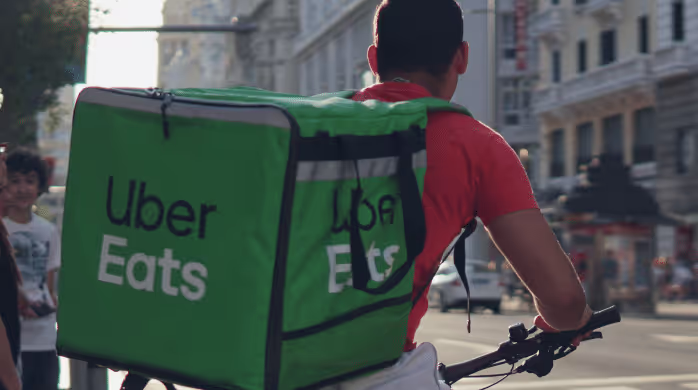
How to Make $1,000 a Week With Uber Eats in 2026 (Tips + Hourly Data)
In this blog, we'll explore the strategies and techniques that can show you how to earn $1000 per week as an Uber Eats delivery driver. We'll cover everything from optimizing your delivery zones and schedules to maximizing your tips and customer satisfaction. Whether you're a seasoned Uber Eats driver or just starting out, this guide will provide you with the insights and actionable steps to take your Uber Eats driver earnings to the next level.
Becoming an Uber Eats delivery partner can be a lucrative opportunity, especially if you're able to consistently earn $1000 a week. By understanding the platform, optimizing your delivery strategies, and focusing on customer satisfaction, you can maximize your earnings and turn Uber Eats into a reliable source of income.
We’ll cover the following topics to provide coaching and ideas to help you push your earnings up to that $1000 per week level:
What do Uber Eats drivers do?
Uber Eats drivers deliver prepared food most of the time, but they also might shop for and deliver goods from convenience outlets and grocery stores. The job is pretty simple. You get a request for an order, you drive to the restaurant or store to pick it up, and then you deliver it to the customer. If you already drive for Uber, you can choose to take orders for Uber Eats delivery any time.
If you’re not an Uber Eats driver yet, it’s pretty easy to become one. This Gridwise post tells you what you need to do if you want to sign up and start making money Uber Eats style. Many rideshare drivers welcome the chance to deliver food rather than people. This article from Nerdwallet covers the Uber Eats gig from that angle.
There are some sweet advantages to working with Uber Eats. In lots of cities you don’t even need to have a car. You can use a bike or a scooter, or even walk, to make your rounds. If you do use a car, Uber Eats’ requirements are a lot easier to meet than they are for Uber rideshare driving.
You also have a lot of flexibility. You can shop and deliver convenience items and groceries, but you don’t have to. And, like most driving gigs, you can choose your own hours, and map out the locations where you want to work.
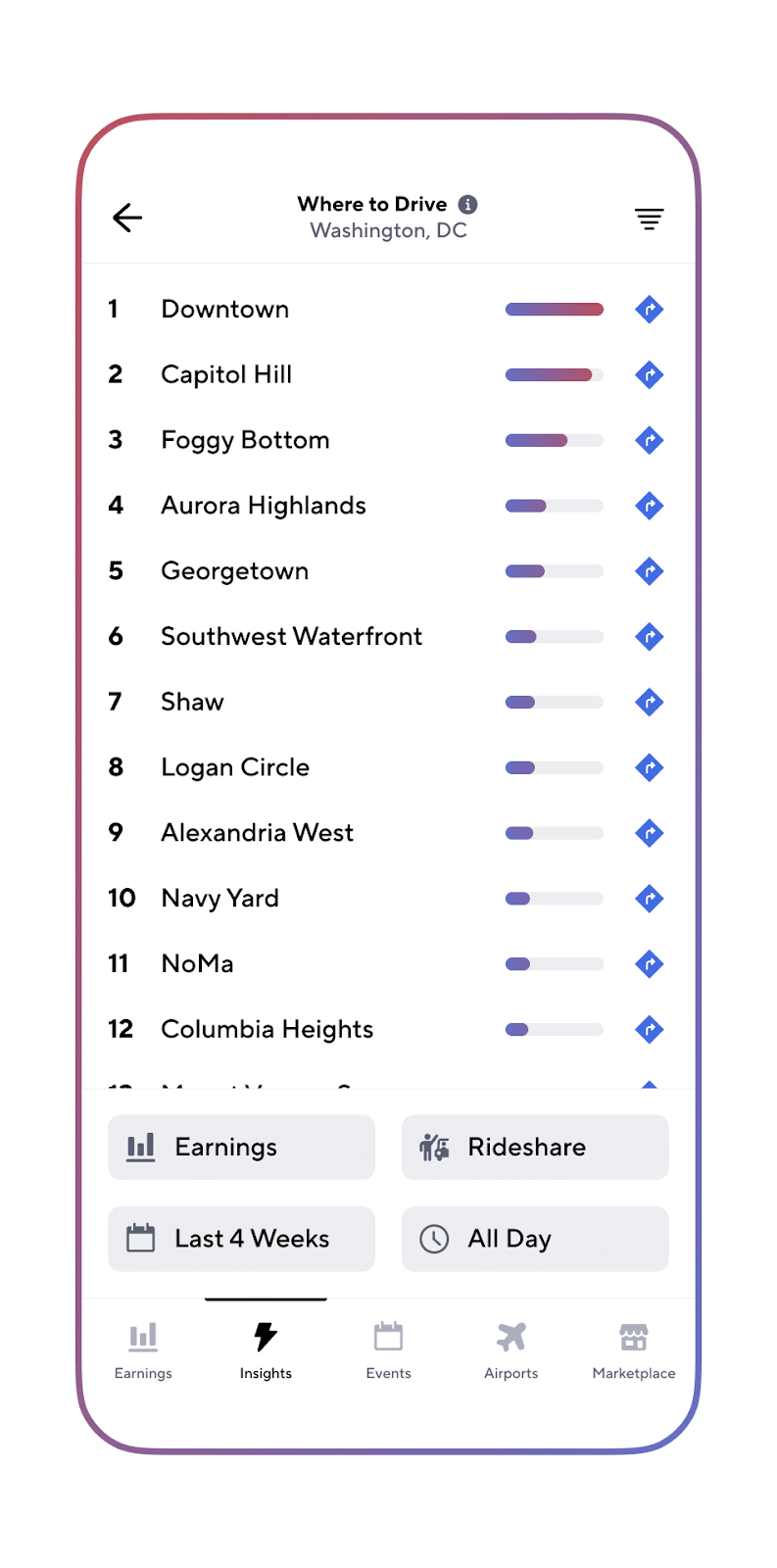
Use Gridwise features When to Drive and Where to Drive to help you figure out what work hours and which specific areas will be the most profitable for you. Real data from real delivery people will show you earning patterns for drivers in your town.
How much can you earn doing Uber Eats?
The honest answer to this question is: basically, as much as you want! It all depends on how many hours you put in and how strategic you are about your gig. Earnings vary from one area to another, as this article from Entrepreneur points out. To give you a baseline, let’s look at the earnings of Uber Eats drivers who tracked their earnings with Gridwise.
Remember that these numbers show us only average earnings. To make $1,000 a week with Uber Eats, you’re going to have to be better than average, and we’ll show you how. For now, though, it’s good to have these figures so you get a ballpark number of where to start.
How much do Uber Eats drivers make?
Gridwise data tell us the following:
- Monthly earnings average around $444.00 per month.
- Gross earnings per trip are between $9.00 and $10.00.
- Tips make up about 50% of most Uber Eats drivers’ income, which amounts to about $225.00 per month.
Is Uber Eats good money? It can be. While there are other gigs that pay more per trip, if you drive for Uber Eats, you’ll always be pretty busy.
https://datawrapper.dwcdn.net/HPAz8/3
You can also see that, unlike many other gigs, tips play a huge role in Uber Eats earnings.

With these numbers as a baseline, what can we say about how to earn $1,000 a week with Uber Eats? As we said in the introduction, it’s going to be a hustle, but it’s really possible. To figure out how to make the most money with Uber Eats, let’s start by looking at how many trips these “average” drivers made each month.
We know that average gross earnings were $444.00 per month, and drivers got around $10.00 per trip. That means they took 44 or 45 trips per month, which breaks down to 11 trips per week. That’s not a lot of Uber Eats delivery, is it?
The fact that Uber Eats drivers averaged so few trips shows us that many drivers use more than one app at the same time. This is called multi-apping, and you can learn more about it in this Gridwise post. If you want to answer the question of how much you can make with Uber Eats, then you need to stick with the app and keep plugging away at those orders. You also need solid strategies, as well as some inside tips and tricks.
How to make the most money on Uber Eats: Delivery driving tactics
Getting to that $1,000 a week with Uber Eats isn’t so hard when you remember that the drivers we saw making about $111 a week were only taking around 11 trips in the same time period. That’s not much at all! If you work the Uber Eats app like a boss, you’ll soon have many more trips than that, easily reaching the number needed to get you to $1,000 a week. Now, let’s get to some tactics you’ll need to make that kind of bank.
- Stay with the Uber Eats app, and track your earnings. Gridwise can easily do that for you. Simply sync your Uber Eats app with Gridwise, and you’ll be able to see how much you’ve earned with Uber Eats, what times were most profitable, and your average hourly pay. Racking up trips with Uber Eats has other benefits, including perks and bonuses that are awarded to top drivers.
- Leverage surge pricing and promotions. Surge pricing is applied when there is a lot of demand. When surge pricing is in effect, many of the trips you make will pay more than usual. Promotions are offered to drivers who complete a given number of trips in a certain time period. High traffic volume days, nights, and times give you these chances to get extra earnings. Challenging yourself to complete the right number of trips for promotions will add to the number of trips you can count on for big bucks, too. Learn more about Uber Eats surge pay, boosts, and promotions in this Gridwise blog post.
- Say yes to doubling up on orders. With Uber Eats, you can get back-to-back orders or receive batched orders. Back-to-back orders happen when you receive a new request while you’re on the way to deliver an original order. The Uber Eats app routes these trips automatically, so you won’t be sent out of your way.
Batched orders are Uber Eats’ way of bundling together orders from either the same restaurant, or two nearby eating establishments. You get money, and trip count credit, for all the orders you complete, plus customer tips, without having to make a bunch of separate trips.
- Turn on the charm and get bigger tips. Being nice really is part of the Uber Eats driver’s job, and getting tips is one way people who drive for Uber Eats make money beyond their basic pay.. Bring along those extra napkins and condiments, use equipment that keeps food and drinks at the right temperatures and prevents spilling, and consider your customers’ needs. If you deliver groceries, be extra careful with delicate items such as bread and eggs.
And, most important, follow your customers’ directions, and stay in communication with them if you are going to be delayed, or if you have questions about their order. This Gridwise post will tell how to get bigger tips as a delivery driver.
- Use even more charm to keep your ratings high. As an Uber Eats driver, you will be rated by the restaurant or store where you pick up the orders as well as the customers who are waiting for the deliveries. This two-way rating system is designed to keep you on your toes, so Uber can keep people satisfied with your service. Don’t worry, you get to rate them, too.
There’s another reason why your rating as a driver is important. It not only keeps you in good standing with Uber; it helps you to qualify for the Uber Eats Pro incentive program. To learn more about Uber Eats Pro, and what it takes to earn perks such as preferred services, discounts, and deals, check out this Gridwise blog post.
Smart business moves that seal the deal
Now that you know how to gobble up the deliveries you need to make $1,000 a week with Uber Eats, it’s going to be a breeze to get there. Let’s make it even easier, with business moves that boost your earnings and shrink your expenses. If you use these, it will also be easy to say yes when people ask, “Can you make good money with Uber Eats?”
Minimize expenses. Avoid racking up big fast-food bills by bringing your own food and beverages. You might not think you’re hungry when you first start your Uber Eats run, but once the aroma of pepperoni pizza, premium cheeseburgers, and piping hot fries start wafting through your car, that might change. Bring a sandwich or other healthy food from home, and buy bottled water in bulk to save tons of cash compared to what it costs to buy single servings.
Maximize tax deductions. Another way to minimize your expenses is to maximize your tax deductions. Start by tracking mileage with Gridwise.
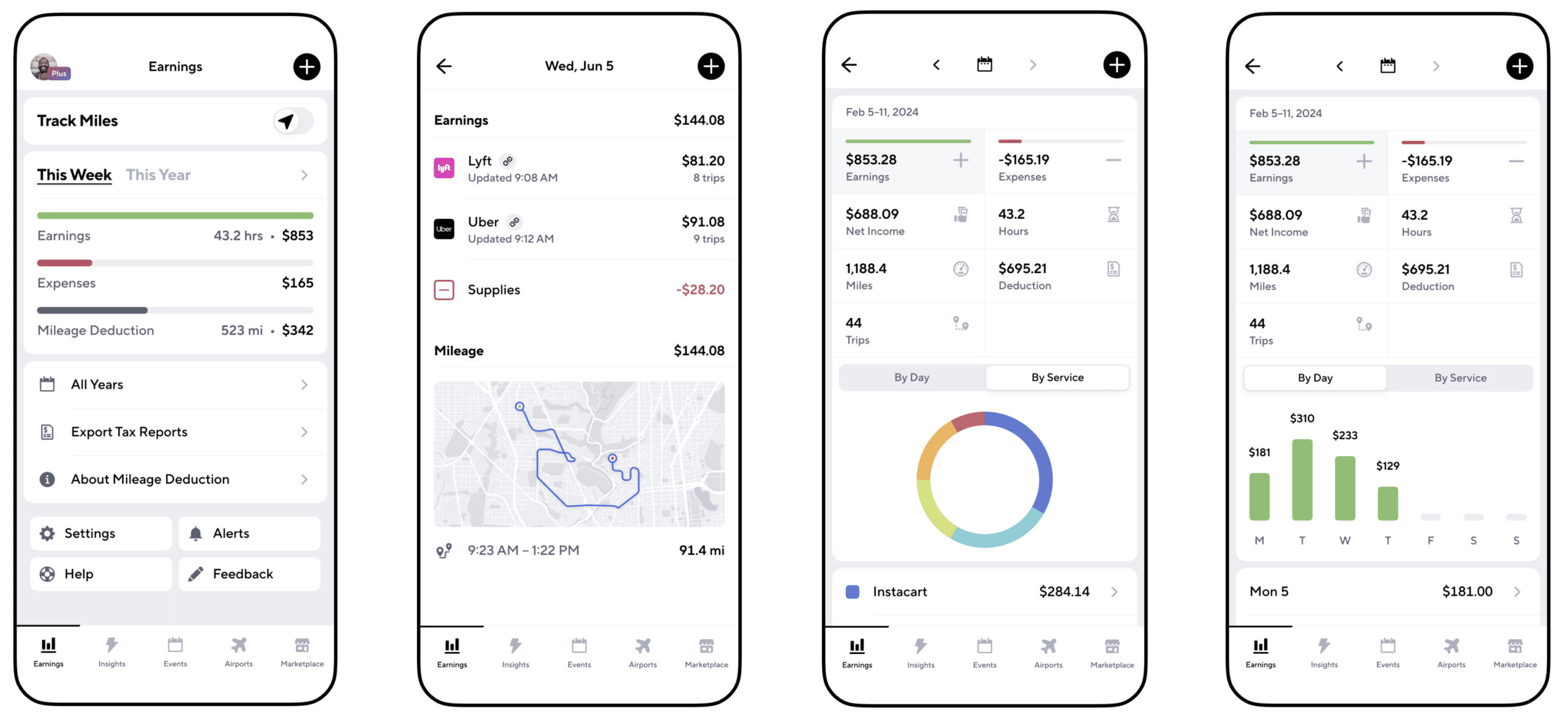
Gridwise App
Gridwise captures every deductible mile you drive, including the distance you cover between the trips your driving app records. Know what expenses you can deduct, and put them to work for you when tax time comes. Learn more about tax deduction strategies in the Gridwise Tax Guide for drivers.
Boost earnings with referrals
As an independent contractor, you’re probably looking for ways to make even more money than you can with Uber Eats. And most gig workers like you enjoy getting passive income. With Uber Eats, there’s a really easy way to do that, referrals!
All you need to do is find friends and encourage them to deliver for Uber Eats. If they make a certain number of deliveries within a specified time, you will get paid for doing nothing more than having them sign up under your referral code! Rates of pay vary by city, so check your Uber Eats app to find out what the current deal might be, and learn more about the referral program on the Uber Eats website.
Also remember: “friends” don’t have to be your best buds. Many delivery people carry cards with a QR code linking to their referral information, so just about anyone you encounter can join Uber Eats and boost your earnings. You could meet a source of passive income at the gas station, on social media, or at your high school reunion. The more you hustle, the more there is to gain, right?
Master the art of self-employment
As an Uber Eats driver, you’re an independent contractor. That means the company isn’t going to withhold your taxes, provide insurance, keep track of your earnings, or tell you about tax deductions. You’ll have to do all these things for yourself.
If you want to maximize your tax advantages, open an official business entity. You can incorporate (create a corporation) or you can work as a limited liability corporation (LLC). You can also work with a DBA (Doing Business As) arrangement, but the corporation or LLC will do a better job of protecting you from liability.
Establishing a corporation or LLC offers better tax advantages than being a sole proprietor. For instance, if you simply collect your earnings into your private account, you’ll be charged self-employment taxes in most states. And paying extra taxes is something we all want to avoid, within legal limits, as much as possible.
Every Uber Eats driver needs to learn about self-employment, and there are some great resources you can review. Check out the CareerOneStop website about self employment which will help explain the basics. You can also check with a professional tax accountant, or look other websites to learn more about actually creating a business.
Scope out your market
Look at the area around you to see where you’re likely to get the most deliveries. Where are all the restaurants? Where might people be more inclined to order deliveries? What hours do you want to drive? What activities might be going on around those times? Think about late-night and after-school times as well as breakfast, lunch, and dinner times.
Be realistic about the potential for your area and aware of new services opening up. For example, in New York, there is already a tab on the Uber Eats app that allows customers to order groceries. In our article about the best food delivery service to work for you’ll see that Uber Eats stacks up well against other delivery companies, mainly because of its potential for expanded opportunities for drivers to earn.
So, is Uber Eats good money? As we said, it isn’t an automatic guarantee that everyone will make $1,000 a week with Uber Eats. Trying out the suggestions we give you here, though, should put you on the right track! Go out there and start stacking up those orders and raking in some impressive earnings!
Get more inside information on Uber Eats in these posts from the Gridwise blog:
- The delivery driver guide: Using the Uber Eats app
- Everything you need to know about driving for Uber Eats
- Uber Eats Pro: What drivers need to know
- Looking for a different gig, part-time or full time job? Check out the Gridwise Job board.
Uber Eats FAQ
How does the Uber Eats platform work for drivers?
Uber Eats is a food delivery service that connects customers with local restaurants and independent delivery partners. As an Uber Eats driver, you'll receive notifications of nearby delivery requests, which you can accept and complete. The platform provides flexibility, allowing you to work on your own schedule and earn money based on the number of deliveries you complete.
What are the requirements to become an Uber Eats delivery partner?
To become an Uber Eats delivery partner, you'll need to meet certain requirements, such as having a valid driver's license, a registered vehicle, and passing a background check.
How can I choose the right delivery zone to maximize my earnings?
Selecting the right delivery zone can significantly impact your earnings, as some areas may have higher demand and better-paying orders. It's important to research and identify the zones in your area that tend to have the most consistent and lucrative delivery opportunities.
How can I take advantage of peak delivery hours and surge pricing?
Understanding peak delivery hours, such as mealtimes and weekends, and taking advantage of surge pricing can boost your earnings. Be aware of when demand is highest in your area and adjust your schedule accordingly to capitalize on these peak periods.
What are some tips for maximizing tips and customer satisfaction?
Providing excellent customer service and going the extra mile to ensure a positive experience can lead to more tips and repeat business. Prioritize communication, timeliness, and attention to detail to keep your customers happy and satisfied.
How can I set realistic weekly goals to reach my $1000 target?
To make $1000 a week with Uber Eats, it's essential to set realistic weekly goals and track your earnings and expenses. Start by determining your target earnings and breaking it down into achievable daily or weekly goals. This will help you stay on track and make adjustments as needed.
What are some strategies for efficient route planning and navigation?
Effective route planning and navigation can save you time and fuel, allowing you to complete more deliveries. Utilize mapping apps and take advantage of features like real-time traffic updates and turn-by-turn directions to find the quickest routes.
How can I balance my Uber Eats deliveries with other commitments?
Develop a schedule that allows you to capitalize on peak delivery hours while still maintaining a healthy work-life balance. Consider using tools like calendar apps to plan your availability and track your hours to ensure you're maximizing your earning potential without sacrificing your personal life.
What are the key considerations for maintaining my vehicle as an Uber Eats driver?
Keeping your car clean and well-maintained is crucial for maximizing your Uber Eats earnings. Regularly scheduled oil changes, tire rotations, and other preventive maintenance can help extend the life of your vehicle and minimize downtime. Additionally, budgeting for vehicle-related expenses, such as fuel, insurance, and repairs, will ensure you're accounting for these costs and maximizing your net earnings.
What are the tax obligations and legal considerations for Uber Eats drivers?
As an Uber Eats delivery driver, it's essential to understand the tax obligations and legal considerations that come with being an independent contractor. This includes properly reporting your earnings, deducting eligible business expenses, and making quarterly estimated tax payments. Additionally, you'll need to ensure you have the appropriate insurance coverage, such as personal auto insurance and possibly commercial auto insurance, to protect yourself and your vehicle while on the road making deliveries.

The Gridwise Job Board: Find Your Ideal Job or Gig Work
Gridwise is an essential assistant app created by gig workers for gig workers. Our mission is to support those engaged in gig work in every way possible. We understand how challenging it can be to deal with income instability, a lack of benefits, and job insecurity that often comes with gig work. The Gridwise app tracks and organizes earnings and expenses, and offers a wide array of discounts, deals, and services that make the lives of independent contractors easier and more rewarding.
We firmly believe it’s possible to make a viable living and create a gig experience that offers flexible hours, variety, and excitement. With issues such as consistent earnings and job security in mind, Gridwise is proud to offer a centralized platform that shows you how to find gig work and secure reliable opportunities. We’re proud to introduce the Gridwise Job Board.
The Gridwise Job Board: Key features
Because Gridwise is dedicated to serving the gig worker community, we’ve filled the Gridwise Job Board with useful features that won’t waste your precious time.
- Comprehensive listings. Find part-time, full-time, temporary, and per-task work. Drive or deliver with your vehicle, utilize an employer’s vehicle, or even find non-driving gig work.
- User-friendly interface. Find the jobs that are right for you with a tap of your screen.
- Verified opportunities. We vet the jobs before they are listed to ensure you’re getting high-quality job postings.
How to get more gig work, seasonal, part-time or full-time jobs with the Gridwise Job Board
Looking specifically for “gig work apps” or “gig jobs near me?” You’re in luck. Our filters and search functions send you directly to the listings you seek.
Here’s how it works.
- Access the Job Board via the Gridwise website.
- Search for jobs by type, location, and more.
- Select the job that interests you, and read all about it.
- Scroll through the description, and if it appeals to you, click “Apply for job.”
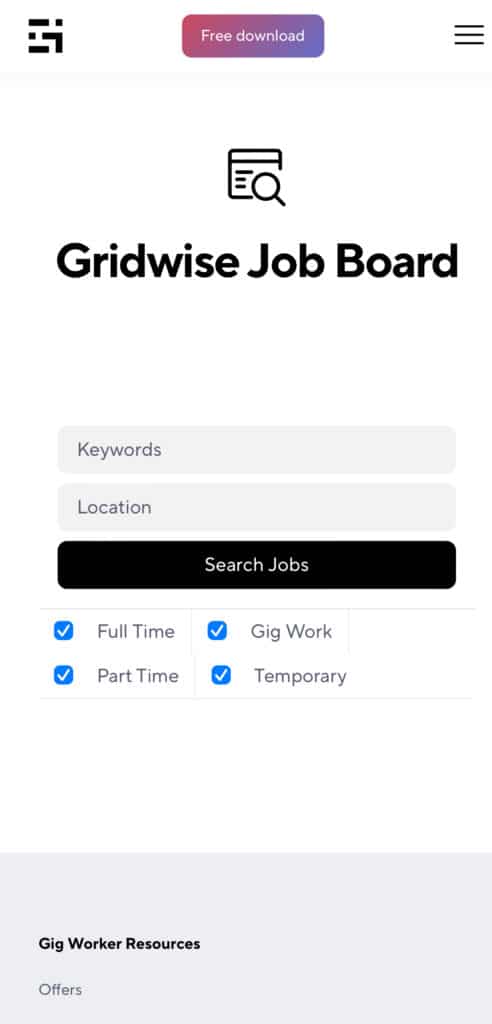
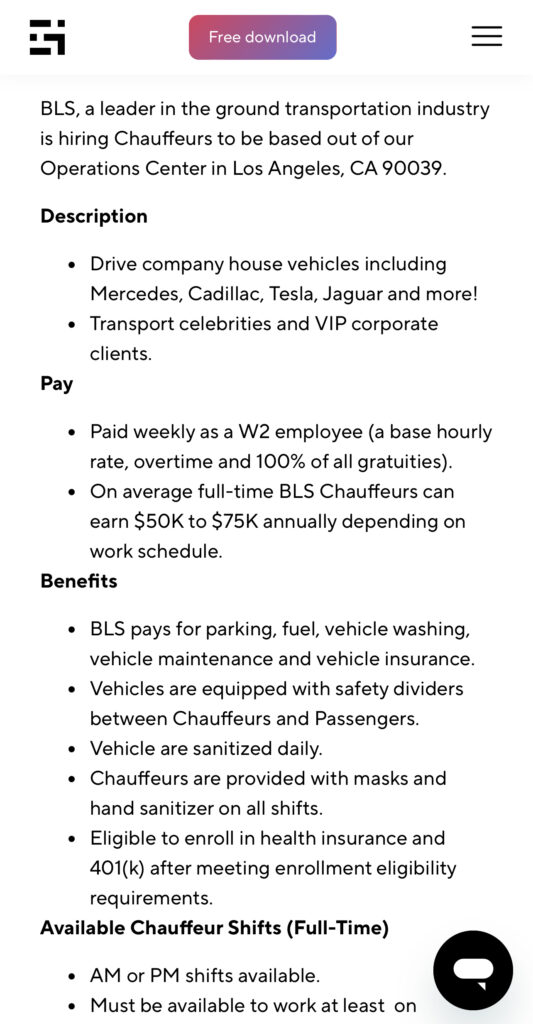
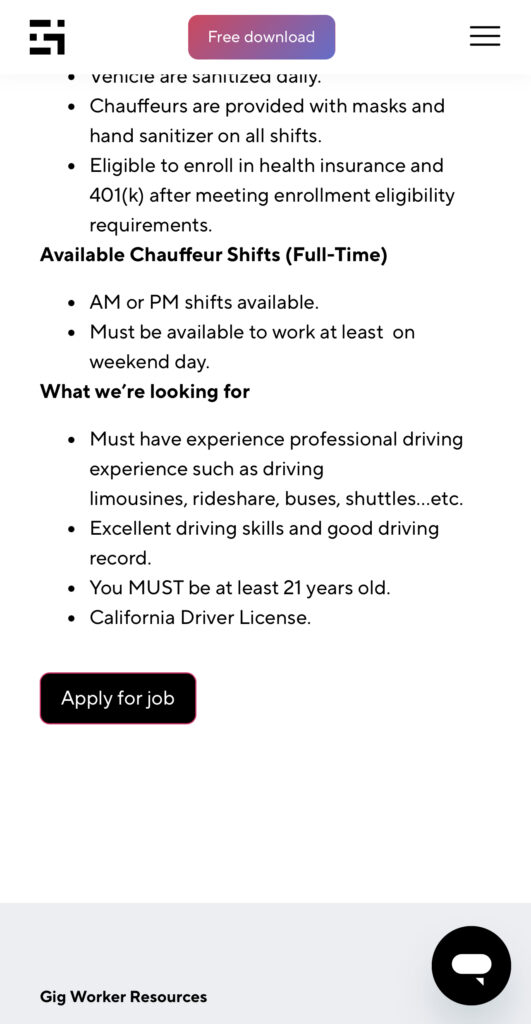
Many types of jobs are available. Adjust the search filter to see the full variety of opportunities that will let you cash in. Deliver food, set up catering, do rideshare driving, get paid for doing package delivery, and much more. You’ll find short-term gigs, long-term contracts, and part-time positions.
Perks of the Gridwise Job Board for gig workers
Gig workers who know how to make extra money will appreciate how the Gridwise Job Board lets you multiply your chances of bringing in big earnings. Here’s how:
- Increased stability. Use the Gridwise Job Board to find part-time or permanent jobs in addition to the part-time gigs you already have. Always keep a steady stream of earning opportunities flowing toward you.
- Flexibility and autonomy. Choose jobs that fit your schedule, work around other jobs and family duties, and still leave room for some fun in your life. Discover side hustles to supplement your full-time job, permanently or just for the season.
- Skill development. Find part-time work that lets you use a skill you already have, or try your hand at something new. It’s a smart way to develop a portfolio to showcase what you can do, or even to find permanent employment.
Get Gridwise and stay up to date on the Gridwise Job Board
Gig workers need plenty of information and assistance, and Gridwise is here to give it to you. Download the app and get essential features such as
- seamless earnings tracking
- mileage tracking
- expense recording, including notes
- low-cost and no-cost insurance benefits
- access to affordable medical, dental, vision, mental health, and alternative care
- professional services including legal and financial help
- deals and discounts
- weather, events, and traffic reports
- inside information on where and when to drive
More to know about gig work:

5 Best Mileage Trackers For Gig Drivers
Many drivers ask, “Do I really need a mileage tracking app?” The answer is simple: only if you want to have an accurate count of all the miles you can legally deduct from your taxable income! You might think your rideshare or delivery driving app has got you covered. After all, they do quite a good job of logging the miles you drive while you’re on a trip or delivery. But, if you want to have the best app to track mileage for Uber, Lyft, Doordash, Instacart, or the other apps you may use, you need more. Why is that?
Without a separate tracker, you’re missing the miles you drive in between pings. Did you realize that all the miles you drive, from the moment you begin your shift until it’s over (as long as you don’t drive several miles on a break to hang with your friends), are tax deductible! That means you need something besides your driving app to keep an accurate count of your travels. Read this Gridwise post to see how important it is to keep track of every deductible mile.
You won’t be surprised to hear that there’s an app for tracking miles. In fact, there are several of them. Here, we’re going to tell you about five top mileage tracking apps, and help you figure out which one is best for you.
Before we get to the list and identify the best mileage tracker app, let’s clarify what exactly a mileage tracking app is. According to G2.com’s technology glossary, mileage tracking is done for the purpose of keeping a log of mileage that is either reimbursable or tax deductible.
And yes, of course you can track your miles simply by taking readings on your odometer. But are you really prepared to account for how many miles you drove for personal reasons and subtract them from the total to get your business mileage? Even if you can remember all that and do the arithmetic, if you want an accurate reading of the miles you drive for business, and can therefore deduct, a mileage tracking app will save you a lot of trouble and prevent you from making costly errors.
Plus, as a gig driver, you have specific needs when it comes to a mileage tracker. Ideally, you’d be able to handle mileage tracking and several other functions all in one app. It can be maddening enough to deal with driving apps, particularly if you’re an avid multi-apper. You would want your mileage tracker app to help you keep account of other aspects of your business, including income, expenses, and inside information about the art of gig driving.
Not all mileage apps are equal, to be sure! Let’s look at five of the best apps to track mileage and figure out which is the best app to track mileage with Uber and Lyft, or what mileage tracker app is best for DoorDash.
1. Zoho Expense
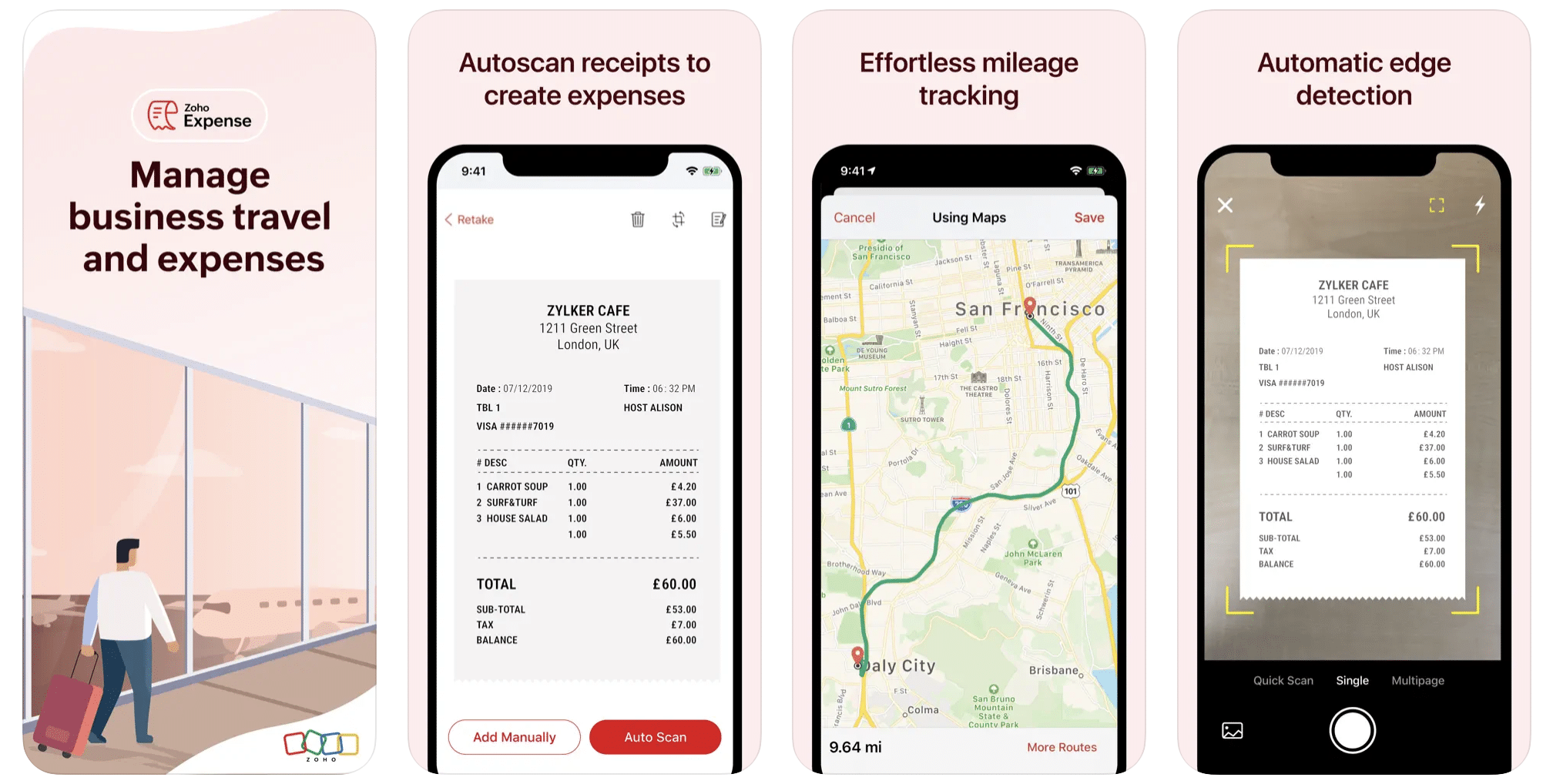
First up is Zoho Expense, which does exactly what its name says. This app is designed to allow companies to give employees a uniform way to create and submit expense reports. It can be used by individuals, including gig drivers, as well.
It includes a mileage tracker, as well as features that let you track other deductible expenses, including the ability to scan and record receipts.
Available on Android and Apple: Yes
Ratings: 4.8 stars on App Store, 4.7 stars on Google Play
Free Version: Yes
Subscription price: $3 per month, billed annually
Created specifically for gig drivers: No
2. Quickbooks Online
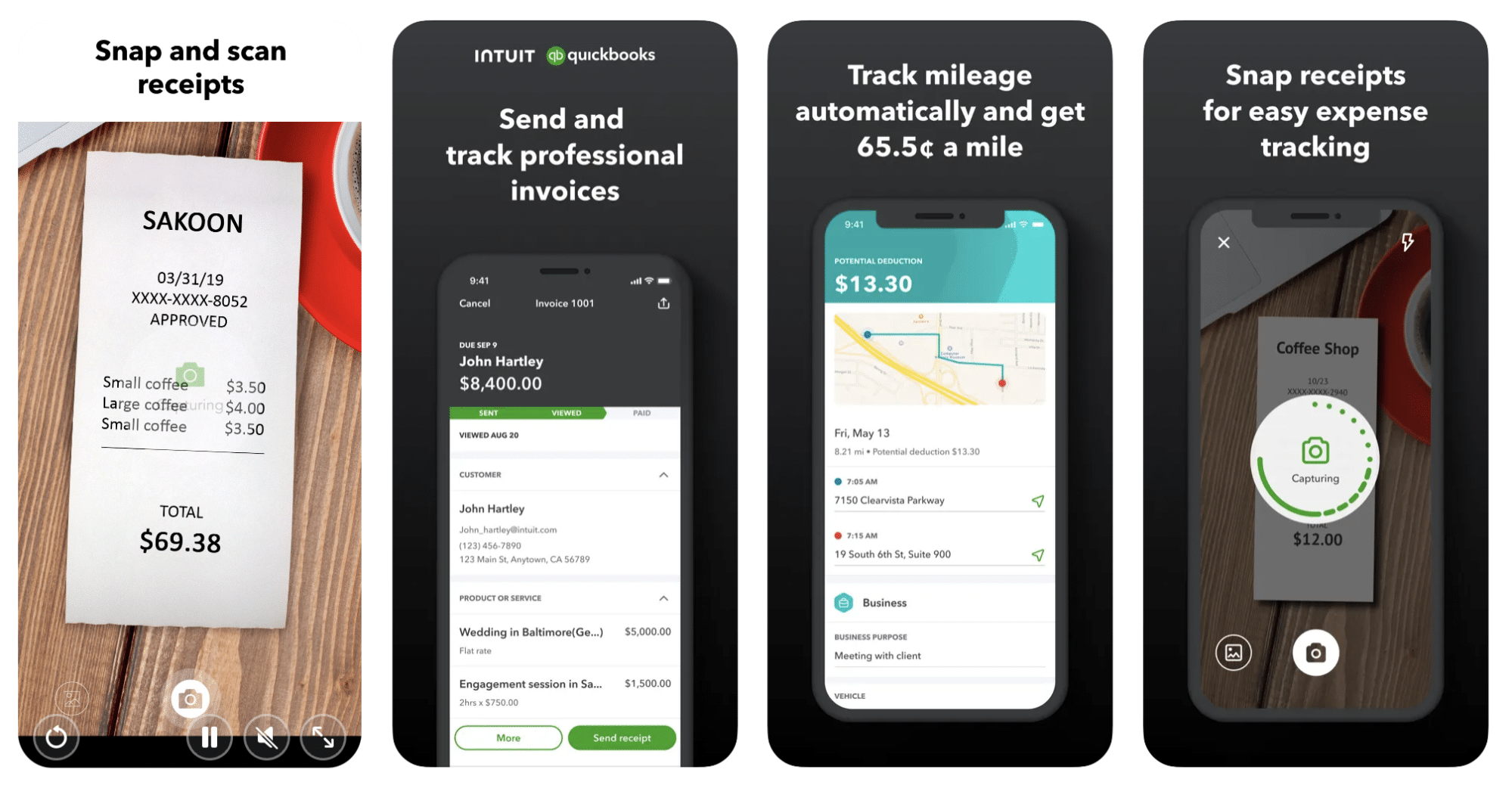
Quickbooks Online is a cloud-based app that allows you to track your mileage, earnings, and expenses. The information you enter can then be used to generate various reports that prepare you for tax time. It also allows you to create graphs that illustrate your cash flow, and includes a receipt scanner so you can instantly record deductible expenses. Quickbooks is popular, highly reliable, and designed mainly to help people keep track of their small businesses.
Available on Android and Apple: Yes
Ratings: 4.7 stars on App Store, 4.4 stars on Google Play
Free version: 30-day free trial
Subscription price: $15 per month for basic version if purchased for 3 months or more
Created specifically for gig drivers: No
Source: quickbooks.intuit.com
3. Shoeboxed
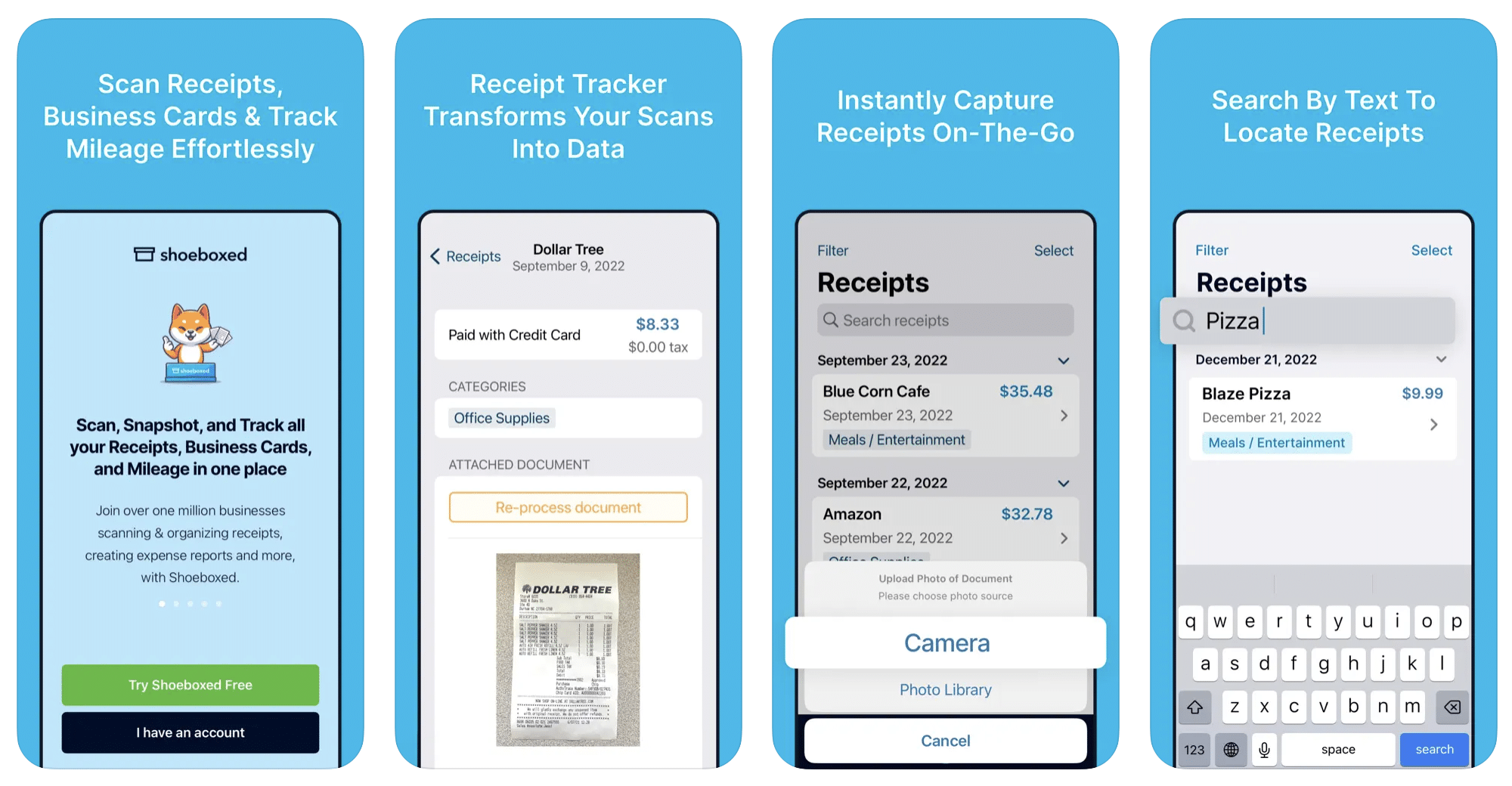
Shoeboxed started in 2007 as a service for scanning paper receipts into digital form. Now the app offers a free mileage tracker and has enabled users to scan receipts directly. It touts itself as the best mileage tracking app for DoorDash, but there are some elements missing that Dashers might like to have. While it provides features that record your expenses and prepare you for tax season, it doesn’t automatically track your earnings. The mileage tracker has a system where you can drop pins along your routes to make the tracking more precise, identifying those legs of a trip that you make for business purposes. The mileage tracker is “free” once you sign up for the basic version.
Available on Android and Apple: Yes
Ratings: 4.5 stars on App Store, 2.3 stars on Google Play
Free version: No
Subscription price: $18 per month for basic version
Created specifically for gig drivers: No
Source: blog.shoeboxed.com
4. Stride
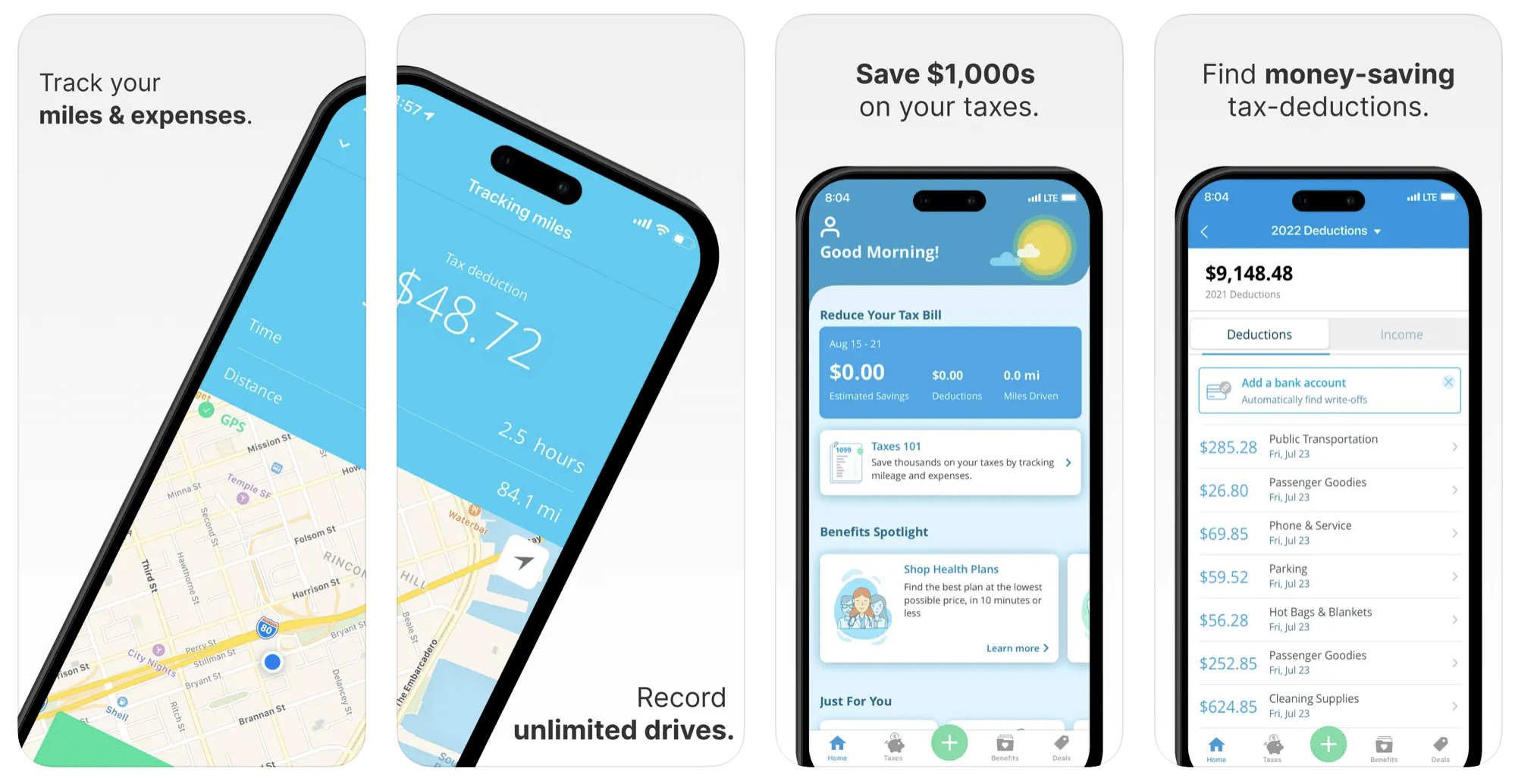
This free mileage tracker does a fair job of keeping track of the distances you rack up while gig driving, but it doesn’t automatically track earnings. It can be a big help, though, in tracking your expenses. You can link Stride to your bank account, and it will automatically scan your expenses to identify items you can potentially deduct. The app is totally free. This could make it the best free mileage tracker app, but there is a small price to pay. The app will persistently push you to consider various insurance plans that they are affiliated with. If you don’t mind that, this is a solid mileage tracker, even if it doesn’t track your earnings.
Available on Android and Apple: Yes
Ratings: 4.8 stars on App Store, 4.6 stars on Google Play
Free version: Yes
Subscription price: None. The app is free.
Created specifically for gig drivers: No
5. Gridwise
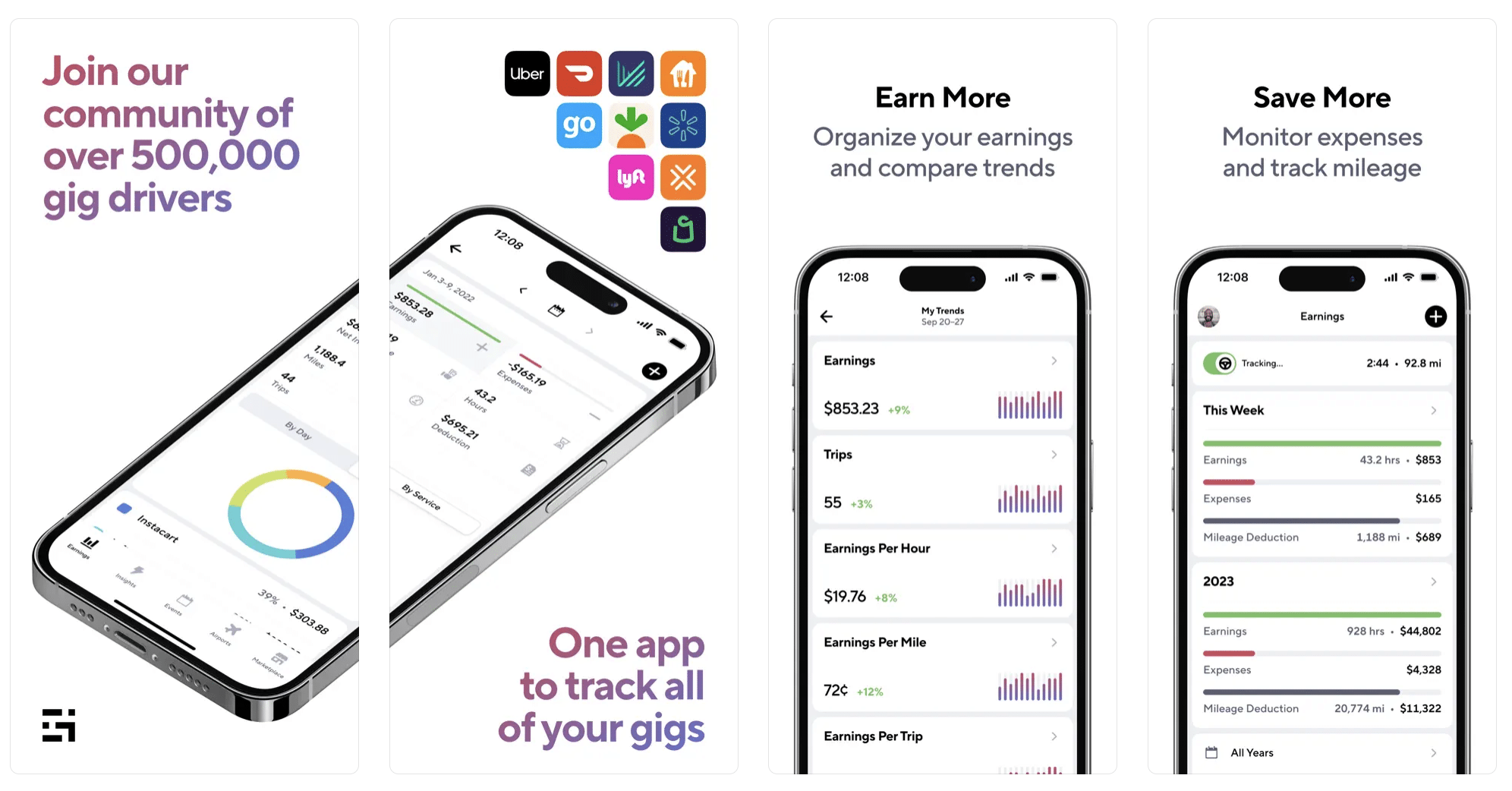
Gridwise has a free mileage tracker and free features that record your income and expenses. It gives you access to insurance and benefits, as well as insights about the best times and places to make the most money while gig driving. The Gridwise mileage tracker captures all the miles you drive while you’re on your driving shift, and it can be used if you have other trips you need to make which qualify as business travel.
Drivers love it because it is geared toward the needs of rideshare and delivery workers, providing free information about airport departures and arrivals, event start and let out times, weather, traffic, and more. The Gridwise Plus subscription adds value by providing additional insights and reports, discounts on benefits, the ability to export data in .csv format,, and more.
Available on Android and Apple: Yes
Ratings: 4.9 stars on App Store, 4.6 stars on Google Play
Free version: Yes
Subscription price: $9.95 per month for Gridwise Plus, or $95.99 per year (a $23.41 savings)
Created specifically for gig drivers: Yes!
What is the best mileage tracking app?
Now that we’ve checked them all out, we’re positive about the answer to that. Hands down, it’s Gridwise. Are we biased? You bet we are! But drivers love it too. Gridwise is the best mileage tracker app, and so much more. So many of the features are free, and the subscription to Gridwise Plus will pay for itself with additional insights to boost your earnings and deeper discounts on products and services.
Most important, Gridwise is designed specifically for gig drivers by experts who were once gig drivers themselves! Knowing what gig drivers need is a crucial step in creating an app that rideshare and delivery drivers can really use! Here are a few of the features, besides mileage tracking:
- seamless earnings tracking
- automatic, on/off toggle and manual mileage tracking
- mileage categorization
- airport, traffic, weather, and events information
- insights into where to drive and when to drive
- reports showing earnings across the platforms you use
- discounts on countless products and services for drivers
- additional resources for finding side gigs
- an informative and comprehensive blog
- affordable benefits, including insurance, medical, dental, and alternative practitioner discounts
- a community of drivers just like you
Don’t settle for just any app. Get the best mileage tracker, and so much more, from Gridwise!
How Much Do DoorDash Drivers Make Per Day?
One of the reasons gig driving jobs, including DoorDash food delivery, are so convenient is that you can make your own hours. The only set schedule you work is the one you’ve developed on your own, based on your market (because every market is different), your other responsibilities, your other gigs, and your nine-to-five job if you have one. Many gig drivers work multiple platforms, so working the right gigs at the right time for maximum profit is always a delicate balance. If you’re limited to only a few days to drive DoorDash, what are the best days to maximize DoorDash pay?
So when someone asks, “How much do DoorDash drivers make per day?” your response is, “It depends on what day of the week it is.”
Gridwise, though, has looked at the numbers, and we can tell you the best days. They come from over 500,000 Gridwise drivers who have downloaded the Gridwise app and tracked their earnings, mileage, and expenses. Gridwise aggregates and anonymizes this data and then presents it to drivers so that they can see trends in their business. If you want to maximize your DoorDash pay, this is the article you need to read.
How much DoorDash drivers make daily is not the only barometer of DoorDash earnings, though. There are also per-hour and per-delivery earnings. To look at all facets of DoorDash earnings, see the Gridwise blog post 2023 Doordash Earnings Report. You can also see another perspective of DoorDash earnings from another Gridwise blog post, DoorDash Driver Pay: What Do Dashers Earn in 2023?
How much do DoorDash drivers make per day?
Source: Gridwise Analytics. Graph also appears in 2023 Doordash Earnings Report.
Between Q1 2022, DoorDash gross daily earnings, including tips and bonuses, ranged in average from slightly more than $61.00 to more than $63 per day. The numbers are average and include both full-time and part-time drivers.
What is the best day to drive for optimum DoorDash pay?
BizFluent reports that Mondays and Tuesdays are the least busy days for restaurant delivery and takeout. Many independent restaurants are closed on one of these days for that reason. Conversely, you can also argue that Mondays aren’t bad because many people are in the doldrums from the weekend, and a delivered meal sounds like a heck of an idea. It depends on your market. And let’s not forget Monday Night Football and Thursday Night Football.
The weekends, starting on Friday night, are the busiest days. People like to start their weekend relaxing, and there is no better way to kick that off than with a great meal ordered in. When Saturday rolls around, it’s college games, and then Sunday is NFL day. You can learn more about the impact of football from this Gridwise blog post, The Impact of Pro Football Home Kickoff Games on Gig Mobility Demand.
The women in the house especially appreciate home delivery of meals. USA Today reported last year that 46% of the NFL fanbase is female. That’s even more pressure to open the DoorDash app.
There is one last reveal that you should know. According to SportsBusinessJournal.com, while sporting events dominate the airwaves and attract the most viewers, the president’s State of the Union address is number one. The Academy Awards (held on a Sunday night) comes in fourteenth. Don’t forget those other special events, including the Grammys, The Golden Globes, the Country Music Awards, and others.
Tips for maximizing DoorDash pay per day
Your earnings as a DoorDash driver are in your control. There are things you can do to make food delivery more profitable.
Slice and dice earnings for a better perspective
Daily DoorDash earnings are important, but it is also important to understand earnings from an hourly perspective (what would happen if a special event such as the Super Bowl lengthened the dinner hour?). You also need to ask yourself what it would do to earnings if you could squeeze in another delivery per hour? To get the answer to all these questions, check out the Gridwise blog post 2023 DoorDash Earnings Report.
Determine if DoorDash is the best choice in your city or region
It may not be. DoorDash certainly seems the best choice for a food delivery driver. DoorDash has dominated the food delivery platforms for several years, commanding 65% of the US food delivery market. That’s a far cry from second place Uber Eats, at 24% of the market. The other competitors, including Grubhub, are down in the single digits.
But food delivery is a competitive business and can vary from city to city. DoorDash has less than a 50% market share in San Diego, Los Angeles, Chicago, and New York, according to Ordering in: The Rapid Evolution of Food Delivery, a 2021 report by McKinsey. The report goes on to say,
Geographic competition among delivery platforms will be one of the most significant battlegrounds over the coming years. Rival platforms will continue to fight one another for customers, restaurants, and drivers in each individual market, potentially leading to further consolidation over time. This battle will extend into new verticals beyond restaurants, as platforms widen the scope of services they provide.
Look at the McKinsey report and see if your city is listed and how it looks for market share among the food delivery platforms. Depending on where you live, you might be better off delivering for another service. We should point out that the McKinsey report, dated September 2021, is more than two years old. The market for food delivery is constantly changing.
Don’t look at your DoorDash earnings from one perspective
It is necessary to see DoorDash earnings from a 360-degree perspective to fully understand how you can make more money. An excellent place to start is the recent Gridwise blog post 2023 DoorDash Earnings Report.
It is also important to understand and appreciate all aspects of Dasher earnings. Gridwise examines these perspectives in other blog posts:
- How much do DoorDash drivers earn per delivery?
- How much do DoorDash drivers earn per hour?
- How much do DoorDash drivers earn before tips?
Select the best hours for DoorDash pay
Food delivery is not a 24/7 job. Yes, there are those odd orders at 4:00 in the morning or 3:00 in the afternoon, but you can generally rely on lunch and dinner as your peak times.
- Lunch (11:30 am to 1:30 pm): 2 hours x 5 days a week = 10 hours, $200. Weekends tend to eliminate the business lunch crowd.
- Dinner (5:00 pm to 9:00 pm): 4 hours x 7 days a week = 28 hours, $560. Hours may vary for your region.
- Late night: 1.5 hours x 7 days a week = 10.5 hours, $210. You will get good results in this block if your territory includes colleges and universities.
- Total: 48.5 hours, $970
Chart initially published in How to Make $1000 a Week with DoorDash
The afternoon gap or after 9:00 pm is where multi-apping comes in. You can take advantage of afternoon rush hours or late nights by driving rideshare. You can also run two or three platforms simultaneously. Check out the Gridwise blog post on multi-apping, The Art of Multi-apping: How-Tos and Strategies for Gig Drivers.
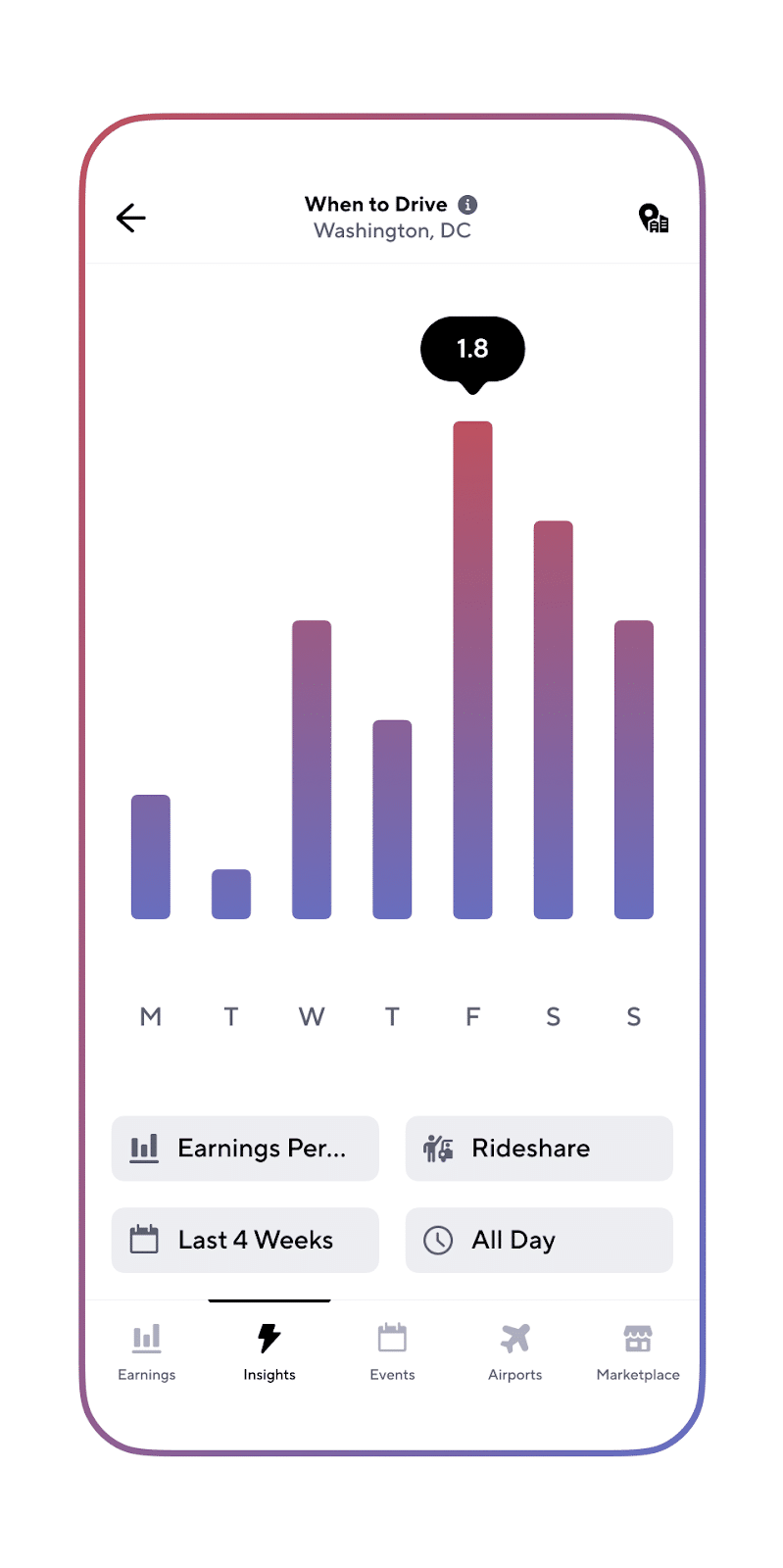
You can also look at the When to Drive and Where to Drive features on the Gridwise app, which provide you with the most up-date-date information in your region.
If you familiarize yourself with Amazon Flex, you can also squeeze in a delivery block from that company. Check out these recent Gridwise blog posts on the parcel carrier:
Make it easy for customers to tip you
Tipping waiters and waitresses is a US thing (not so much in Europe). Although many tip their food delivery driver, others don’t. You should make it easy for them. Spend a few dollars and have business cards printed, thanking them for their business, and include one with each delivery. You might even include your personal information for a few electronic cash-handling apps—PayPal, Zelle, Venmo, etc. DoorDash passes on 100% of tips to drivers, but some people don’t like to tip on the app.
Be bright and cheerful
You don’t always see the customer, but porch cameras are ubiquitous. You should always consider yourself to be on camera. From the moment you get out of the car, all the way to the door and back, you should exude enthusiasm and good cheer. Smile a lot! Optimism is catching, and people will reward their DoorDash driver for it.
Communicate with customers
Text customers along the way, giving them a running commentary on your progress. “Just got your order on my app, on the way to pick it up.” “Getting out at the restaurant.” “Headed for your place. Three minutes away.” People love communication, which is all the more true if something goes wrong, such as an order that needs correcting (especially if you caught the error) or problems with traffic.
Remember all the condiments
Some restaurants could be better regarding including extra ketchup or mustard. Make sure to drop in additional packets. Drop in an extra handful of napkins and some plastic forks, knives, and spoons. If you’re picking up beef dip sandwiches, ensure someone at the restaurant remembers the au jus.
Familiarize yourself with DoorDash incentives
DoorDash offers you ways to make more money. Learn about Peak Pay promotions, DoorDash Driver Challenges, and the Dash Now program—all described in a recent Gridwise blog post, DoorDash Incentives 2023: How Do They Work?
Download the Gridwise app
Gridwise is the place to go regarding the latest information on DoorDash or other food delivery, rideshare, and parcel delivery gig jobs. Download the Gridwise app and check out the When to Drive and Where to Drive features. You can also save money at tax time using the Gridwise mileage tracker, the best mileage tracker for gig drivers, and the Gridwise expense tracker.
Get more insights into DoorDash pay from Gridwise
Check out these Gridwise articles to learn more about DoorDash earnings:
How Much Do DoorDash Drivers Make Before Tips?
Food delivery is a service business, and in the US, it’s often customary to tip service workers, especially when there’s food involved. Food delivery drivers will tell you tips are a big part of their income. Are you wondering, How much do DoorDash drivers make before tips?
With inflation up as much as it has been, customers are paying more for food and are thus more apt to skimp when tipping their DoorDash driver. You have to earn those tips.
You can rely on Gridwise to give you real-world numbers. More than 500,000 gig drivers have downloaded the Gridwise app to track their earnings. Gridwise has aggregated these earnings from various gig platforms—including income from bonuses, incentives, and tips—to provide an accurate picture of DoorDash pay. You can view all the numbers in this recent Gridwise blog post, 2023 Doordash Earnings Report.
For another perspective on DoorDash aenings, you can also read another Gridwise blog post, DoorDash Driver Pay: What Do Dashers Earn in 2023?
Breakdown of DoorDash driver pay before tips
How much do DoorDash drivers earn? It all starts with base pay. That’s what you see on your app when you get the order. The time, the distance you need to travel, and the desirability of the order all go into computing base pay.
Top Dashers look for at least a dollar a mile in base pay. Some DoorDash drivers will only accept orders that are closer to two dollars. But other factors can increase this dollar amount.
How to enhance DoorDash pay
DoorDash pays beyond the base compensation through a couple of other ways.
Peak Pay.
Peak Pay is the equivalent of surge pay for rideshare drivers. When things get busy, the app will institute Peak Pay for DoorDash drivers. This is an add-on to the payment you see on the app when the order appears. Peak Pay differs depending on what region you drive in. Go to the Promotions tab on your app to see what your region pays. You can find out more about Peak Pay on the DoorDash website.
Challenges.
Challenges are a way DoorDash tries to keep its drivers loyal to the app. You will see a Challenge on your app, offering a bonus for a set number of deliveries completed in a certain amount of time. For instance, complete 15 deliveries in one night and receive a $20 incentive payment. You might also receive Challenge offers through SMS or email. To find out more about DoorDash Challenges, see the DoorDash website.
Average daily DoorDash driver earnings before tips
Source: Gridwise Analytics. Graph also appears in the 2023 Doordash Earnings Report.
Between Q1 2022 and Q3 2023, DoorDash driver gross daily earnings before tips ranged from about $30.50 to more than $32.00.
Tips are an important component of a food delivery driver earnings, but Gridwise realizes that the best drivers want to see the entire income picture, so we’ve collected and analyzed that data. See it all in this Gridwise blog post, 2023 Doordash Earnings Report.
The most common food delivery complaints from end consumers
A quick Google search can give you the most common complaints from end consumers about their food delivery experience. If you’re committing any of the following errors, as listed in this BusinessofApps.com article, it will affect your tips.
- Late deliveries (50%). Communication between the DoorDash driver and the end customer is critical. If the restaurant doesn’t have the order ready, or you encounter any other delay, text the customer and let them know.
- Wrong order (37%). Did you check the order to make sure it’s correct? You don’t have to open every dish or unwrap every sandwich, but at least ensure the number of items is right and the labels correspond with the order.
- Cold food or food that isn’t fresh (36%). This is usually the restaurant’s fault, but you can prevent cold food by making the delivery promptly and having enough thermal bags to hold everything.
- Driver needing directions (33%). Your GPS is usually correct, but some neighborhoods fall into a black hole with sketchy internet service. If you get a chance, check Google GPS against Waze.
- Food not arriving (26%). Restaurants drop the ball, or drivers who are multi-apping get distracted by a better opportunity to make money.
- Bad attitude of the driver (14%). Food delivery is a customer service job. This means a good mood all the time. Your parents paid a lot of money to straighten your teeth, so you should always show them off by smiling. Make sure you have a spring in your step. Porch cameras are ubiquitous these days, so even if you don’t have to contact the customer, act like you’re on top of the world. It’s contagious.
Another complaint that pops up regularly is drivers eating customer food. According to RestaurantBusinessOnline.com, 54% of customers have suspected a delivery driver of sampling their food. This is not an outlier report. Earlier this year, RetailBrew.com reported that 79% of food delivery drivers admitted to filching a few fries or other food from an order. Other accounts have that number a bit lower, but any percentage above zero is unacceptable. Don’t be surprised if restaurants start coming out with tamper-proof containers for food delivery.
Gridwise also provides you precise numbers on DoorDash earnings. We break it down to show you not only how tips matter, but how much drivers average per hour, per delivery, and per day.
- How much do DoorDash drivers earn per hour?
- How much do DoorDash drivers earn per delivery?
- How much do DoorDash drivers earn per day?
See all the information in this Gridwise blog post, 2023 Doordash Earnings Report.
How to earn better tips while driving for DoorDash
With tips comprising as much as 50% of DoorDash pay, doing whatever you can to increase them is imperative. With that in mind, what can you do to earn more?
Learn the restaurants in your area that are good for Dashers
We know that one of the chief complaints of customers is late orders or cold food. Some restaurants are poorly managed. Orders are never ready for the Dasher, and you’re left to cool your heels and surf TikTok. Other restaurants don’t package their food well. It’s either cold or smashed (that’s another customer complaint). When you see an order from a restaurant where you have had this experience, pass on it. Look for orders from restaurants that appreciate you and make the Dasher life easy.
Dress for success
You don’t have to wear a button-down and tie, but look nice. Too many food delivery drivers wear sleeveless T-shirts, cutoff sweats, and grungy sandals. Look like someone you would want handling your food.
Dress for specific events
Another version of this considers football, baseball, and basketball seasons. Wear the home team jersey. You can take a page from Robert Woldhuis. USA Today reported that he made $100,000 in one year delivering groceries for Shipt. Part of his schtick was wearing colorful wigs and outlandish costumes. Hey, it worked for Robert!
You’re judged by your attitude
Yes, maybe you had to shell out $300 for new front tires, or you just paid top dollar for gas. Maybe your significant other just moved out and took everything but one place setting so you can eat a meal. No one wants to know your problems, and they sure don’t want to see them reflected on your face. What they want to know is why that DoorDash driver is in such a good mood. It might motivate them to toss you a tip.
Surprise your customers
Take another lesson from top-earning grocery delivery people and give your clients something they didn’t expect. A pack of seeds for the lady of the house or small boxes of crayons for the kids goes a long way (you can get 250 packs of four crayons, each wrapped in cellophane, very inexpensively on Amazon). Make sure they’re visible by stapling them to the outside of the bag containing the food. You want to blow away customers with your service.
Deliver in the rain
No one wants to go out in the rain or snow, including customers and other DoorDash drivers. But you do, and you’re smiling the whole time. People will appreciate you—and usually tip you accordingly.
Watch YouTube videos, read the blogs
Other DoorDash drivers are hustling as hard as you, and sometimes they come up with good tip-earning ideas. Be the first to discover them. If you haven’t read the Gridwise blog post How to Make $1000 a Week with DoorDash, read it now.
Have a couple of electronic cash-handling accounts for tips off the app
Sometimes you get a group of people ordering off one person’s credit card, but another agrees to handle the tip. You want to make it easy for them. Print some cards with your PayPal handle, or Venmo, Cash App, or Zelle. You should have multiple ways that people can give you money.
What can be measured can be improved
Sign up for the Gridwise app, link to DoorDash, and monitor your earnings. Track your tip activity and see what works. Then do more of it. And while you’re at it, use the Gridwise app to track your mileage and expenses, and save at tax time. You can also check out When to Drive and Where to Drive, valuable features on the Gridwise app.
Take advantage of your free access to the Gridwise blog, a source for the most current information on gig driving, including DoorDash. Click over now to see a full review of DoorDash earnings in the 2023 Doordash Earnings Report, and also read this Gridwise blogpost, DoorDash Driver Pay: What Do Dashers Earn in 2023?
Get more earnings insights for DoorDash
Check out these Gridwise articles to learn more about DoorDash earnings:
How Much Do DoorDash Drivers Make?
Do you include DoorDash as one of the platforms for your gig driving activities? If so, then congratulations. DoorDash commands a 65% market share of the food delivery industry, more than two-and-a-half times larger than second-place Uber Eats (24%).
Even though you’re working for the top app on the food delivery platform, there is room to earn more. At Gridwise, we believe that what can be measured can be improved. That’s why we have broken down DoorDash earnings so that you can understand the numbers from every perspective. So when someone asks you “How much do DoorDash drivers make?,” you have the answer.
You can rely on the accuracy of Gridwise numbers. More than 500,000 gig drivers have downloaded the Gridwise app. They pair Gridwise to all their gig apps to monitor their earnings, spot trends, and see where they can improve. Gridwise aggregates these collective numbers into an industry-wide picture of earnings that’s not available anywhere else. This knowledge will improve your earnings.
How much do DoorDashers make per delivery?
Want to know more about how much DoodDash drivers make per delivery? Some drivers prefer to look at earnings on a per-delivery basis. Check out this article that gives you detailed information about per-delivery earnings and how to make more in this Gridwise post, How Much Do DoorDash Drivers Make Per Delivery?
How much do DoorDash drivers make per hour?
Many DoorDash drivers work full-time, and others work part-time, making it difficult to find common ground for comparing earnings. How much DoorDash drivers make per hour is the great equalizer. If you’re doing it all right, implementing the best tactics and strategies, you can tell by per-hour earnings. For a closer look, check out the Gridwise blog post How Much Do DoorDash Drivers Make Per Hour?
How much do DoorDash drivers make per day?
What are the best days of the week for maximizing DoorDash earnings? Look at the information on the chart. There might be some surprises. For a closer look, check out the Gridwise blog post, How Much Do DoorDash Drivers Make Per Day?
How Much Do DoorDash Drivers Make Before Tips?
Inflation affects everything, including how much customers pay for the food you deliver as a DoorDash driver. Sometimes that translates into smaller tips. This is a concern because tips make up a large part of a DoorDash driver’s earnings. See what DoorDash earnings look like before tips. Then click over to a recent Gridwise post, How Much Do DoorDash Drivers Make Before Tips?, where we include pointers for increasing those tips. You can also get a perspective on DoorDash driver earnings from another Gridwise blogpost, DoorDash Driver Pay: What do Dashers earn in 2023?
Download the Gridwise app
Gridwise is the #1 companion app for DoorDash drivers, and for all those that make their living as gig drivers. Besides monitoring your earnings from the various gig platforms you drive, the DoorDash app also has the best mileage tracker for gig drivers, as well as the best expense tracker in the industry. Gridwise also provides valuable information about where business is with their When to Drive and Where to Drive features.
Get more DoorDash Dasher earnings insights from Gridwise
Check out these Gridwise articles to learn more about DoorDash earnings:
How Much Do DoorDash Drivers Make Per Hour?
DoorDash hourly earnings are the great equalizer, an even playing field for comparing full-time and part-time drivers. For this reason, we are taking a close look at, how much do DoorDash drivers make per hour?
As we look at these numbers, you should know that they come from the over 500,000 gig drivers, both full-time and part-time, who have downloaded the Gridwise app. Gridwise aggregates and anonymizes the numbers to give you the best picture of DoorDash driver earnings.
This blog post has lots of good information, but if you want to know more, you can check out the Gridwise post 2023 Doordash Earnings Report. You can also compare your earnings to what other drivers earned in 2022 in this Gridwise blog post, DoorDash Driver Pay: What Do Dashers Earn in 2023? While this blog post focuses on how much DoorDash drivers make per hour, high-performing drivers find it important to understand all aspects of Dasher earnings. Gridwise examines these aspects in other blog posts.
- How much do DoorDash drivers earn per day?
- How much do DoorDash drivers earn per delivery?
- How much do DoorDash drivers earn before tips?
DoorDash driver earning numbers per hour
Source: Gridwise Analytics. Graph also appears in 2023 Doordash Earnings Report.
How much do DoorDash drivers make? DoorDash hourly earnings for the last seven quarters, ending in Q3 of this year, averaged $15.20 to $16.00 per hour. Notice that rates increased during the first and fourth quarters, which run concurrently with the football season and the holidays. We don’t see the same increases during March Madness or baseball season for DoorDash drivers (or Dashers, as DoorDash refers to them).
Food delivery is one of many gig driver jobs that sees a positive impact from football season. A recent Gridwise post, The Impact of Pro Football Home Kickoff Games on Gig Mobility Demand, shows a marked increase in rideshare business.
Keep in mind that these numbers represent the average. High-performing DoorDash Dashers, those in the 90th percentile, earn as much as $20 or more per hour. Dashers in the largest metropolitan areas earn even more. Becoming a high-performing driver may answer your question, Is DoorDash worth it?
As we said in the first paragraph, hourly earnings are the great equalizer between all DoorDash drivers, full- and part-time. For a different perspective on how to look at DoorDash earnings, see the Gridwise post, 2023 Doordash Earnings Report.
DoorDash driver earnings averages across cities per hour
{insert chart}
The per-hour numbers you saw in the first chart represent a national average. Earnings at all levels for gig drivers vary geographically, and Gridwise can break it down per city. The major metropolitan cities have the highest earning rates because of their sheer density. The volume and variety of restaurants also drive this higher rate.
Large suburbs, carpeted with homes, surround many of these cities. These smaller, densely packed communities attract many restaurants, too.
For those drivers not based in a major metropolitan area, DoorDash launched an Earn by Time feature for drivers this past June 27. Read about it in the Gridwise blog post Gig Worker News: DoorDash Offers Hourly Pay to Dashers.
Busiest times of the day for DoorDash drivers
- Lunch (11:30 am to 1:30 pm): 2 hours x 5 days a week = 10 hours, $200. Weekends tend to eliminate the business lunch crowd.
- Dinner (5:00 pm to 9:00 pm): 4 hours x 7 days a week = 28 hours, $560. Hours may vary for your region.
- Late night: 1.5 hours x 7 days a week = 10.5 hours, $210. You will get good results in this block if your territory includes colleges and universities.
- Total: 48.5 hours, $970
Chart initially published in How to Make $1000 a Week with DoorDash
Food delivery is not a 24/7 job. Yes, there are those odd orders at 4:00 in the morning or 3:00 in the afternoon, but you can generally rely on lunch and dinner as your peak times.
The exception to this is when there are major sporting events. These are more likely to carry the food delivery demand through a Saturday or Sunday afternoon. Also, remember that football is a weekend-long pursuit. College games are on Saturdays, professional games on Sundays, and football games on Monday and Thursday nights.
What do food delivery drivers do in the afternoon hours or after 9:00 pm? This is where multi-apping comes in. You can get in several hours of rideshare in the afternoon rush hour or late at night. Check out the Gridwise blog post on multi-apping, The Art of Multi-apping: How-Tos and Strategies for Gig Drivers.
If you familiarize yourself with Amazon Flex, for example, you can also squeeze in a delivery block from that company. Check out these recent Gridwise blog posts on the parcel carrier:
You can also see how hourly earnings fit into the wider perspective of DoorDash earnings in this blog post, 2023 Doordash Earnings Report.
Tips for maximizing hourly DoorDash driver earnings
As a DoorDash Dasher, there are some things you can do to increase your profits.
Take advantage of DoorDash double orders
There are scattered reports that the DoorDash app is good at doubling up on orders, meaning that you can, on your way to pick up an order, get a second order going in the same general direction. According to this Quora page on DoorDash double orders, drivers have mixed reviews of this. You can also read more about DoorDash double orders on the DoorDash website.
Communicate with the customer
It’s better to let the customer know in advance that there’s a hold-up at the restaurant or you’re stuck in traffic. Alternatively, they get upset, look for someone to blame, and the delivery driver becomes the likely target.
Double-check those orders
Make sure the restaurant gets the complete order. You don’t have to open dishes or unwrap sandwiches to verify what they are, but at least count the components and ensure nothing is missing. Someone might be counting on those onion rings.
Remember all the condiments
Some restaurants could be better regarding including extra ketchup or mustard. Make sure you include some. Drop in an extra handful of napkins and some plastic forks, knives, and spoons. If you’re picking up beef dip sandwiches, ensure someone at the restaurant remembers the au jus.
Familiarize yourself with DoorDash incentives
DoorDash offers you ways to make more money. Learn about Peak Pay promotions, DoorDash driver Challenges, and the Dash Now program—all described in a recent Gridwise blog post, DoorDash Incentives 2023: How Do They Work?
Work those tips
Tips are a significant source of income for DoorDash Dashers. If you do a lot of dashing, consider getting cards printed that thank people for allowing you to bring them their delivery. Include your information for PayPal, Zelle, or any of the other electronic cash-handling services. Some people would rather tip you directly. Drop one in every bag.
Check out Gridwise for more information on DoorDash
Visit the Gridwise blog and type “DoorDash” into the search bar. You’ll get a host of excellent blog posts about DoorDash. Recent ones include A Guide to Dashing: DoorDash for New Drivers vs. Experienced Drivers.
Download the Gridwise app
Gridwise is the place to go regarding the latest information on DoorDash or other food delivery, rideshare, and parcel delivery gig jobs. Download the Gridwise app and check out When to Drive and Where to Drive on the Gridwise app. You can also save money at tax time using the Gridwise mileage tracker, the best mileage tracker app for gig drivers, and the Gridwise expense tracker.
Gridwise also maintains one of the most authoritative blogs in the gig industry. Check out our recent blog post, 2023 Doordash Earnings Report, for a more encompassing look at DoorDash earnings, and once again, also read DoorDash Driver Pay: What Do Dashers Earn in 2023?.
Get more DoorDash Dasher earnings insights from Gridwise
Check out these Gridwise articles to learn more about Uber Eats earnings:
How Much Do Lyft Drivers Make Per Ride?
Are you making as much money as other Lyft drivers? Is it worth it for you to work for Lyft? Working alone as a Lyft driver sure does beat having a micromanaging supervisor breathing down your back, but there are some things you have to sacrifice.
One is the camaraderie that comes with working around your peers. From time to time, you may bump into other Lyft drivers and ask them things like how much they’re making per day. Sadly, you’ll rarely get any realistic intel, outside of their opinions about what Lyft driver earnings are like. But are they telling the truth?
Gridwise has data that reflects actual figures from other drivers, without the need to fact-check your airport cell phone lot buddies’ boasts, or to guess whether they drive the same way you do. On top of data, this article gives you tips for out-earning all your peers. Here are some questions we’ll shed light on:
What is Lyft driver base pay like?
Lyft calculates base pay by adding together the base fare plus the time and distance you will clock during the ride. Besides these variables, you’ll have to take into consideration bonus and tip pay, and your expenses, including gas, car maintenance, and job-related equipment. The wide range of base pay numbers account for differences in location, as well. A ride that takes place in New York or San Francisco, for instance, will be more profitable than a short ride in the suburbs of Butte, Montana.
Gridwise data illustrates base pay ranges across the country:
How much do Lyft drivers make per ride?
When you ask this question, you’re likely to get a whole lot of different answers. Business Insider asked a number of drivers, who reported figures ranging from $22 to $40 per hour. It’s hard to know how many rides a driver makes in an hour, and it can definitely vary. Other sources estimate that median per trip earnings hover around $10.
It’s important to look more closely at how much you’re making with every ride, and then you can begin to estimate how much you can make in a day. This data from Gridwise gives you actual numbers that reflect the nationwide experience of per trip earnings of Lyft drivers.
What cities offer the biggest per ride earnings?
Cities such as New York and Seattle have laws that set minimum wages for drivers, so on the whole, their per trip earnings will be high. Other cities, where demand is less and cost of living lower, will show per trip earnings for Lyft drivers that match that situation.
This data shows how much Gridwise drivers make per ride in key cities.
In all cities and in less populated areas as well, trips involving big events, rush hours, and bad weather will yield more profitable rides. Download Gridwise to get information about events, traffic, and weather when you need it most.
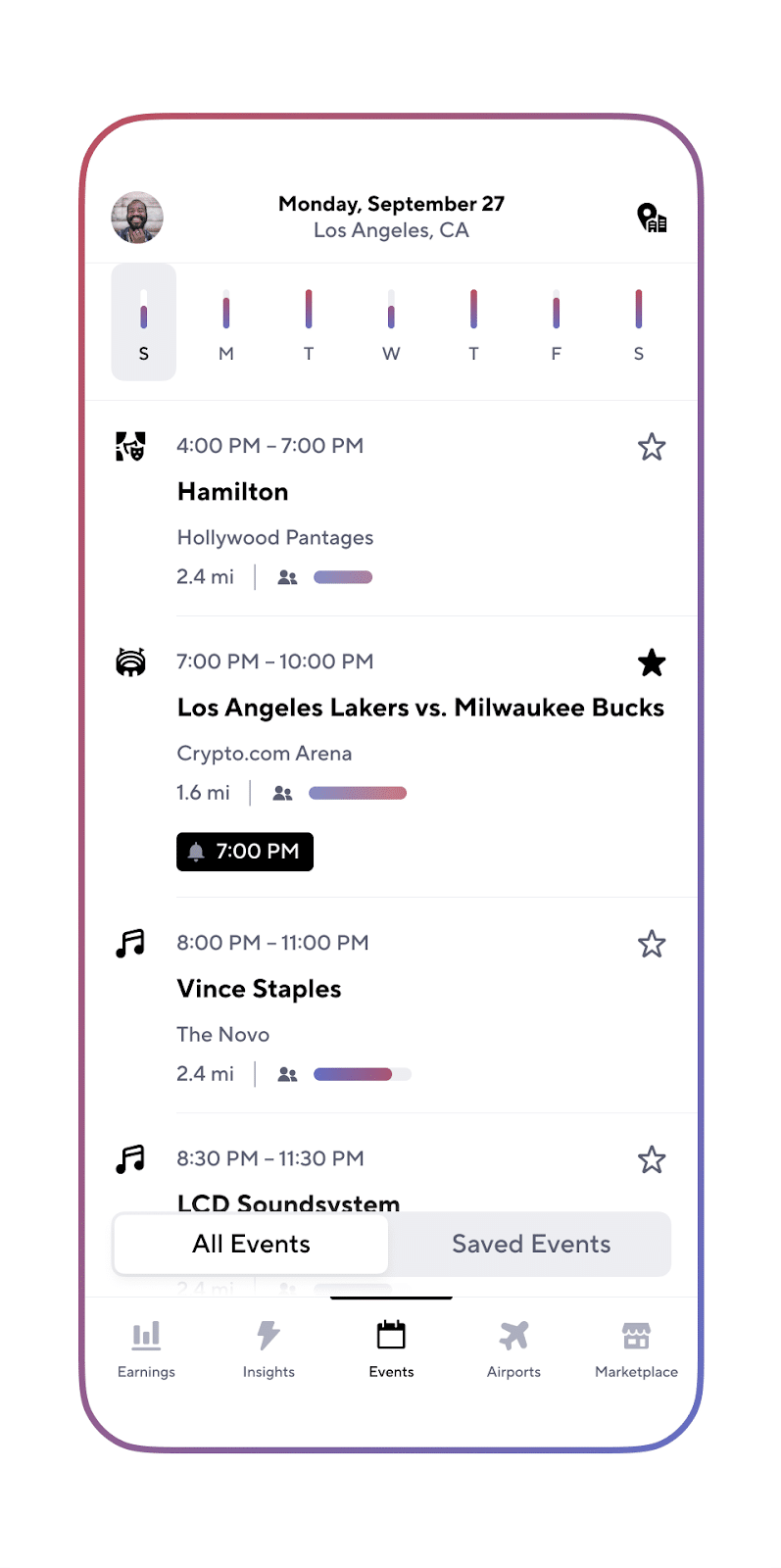
How can Lyft drivers make more with every ride?
When you work with Lyft, there’s a big difference between simply taking the rides as they come, and strategic driving. Here are some action items that are sure to help you make the most out of every ride you take.
- Download Gridwise and use When to Drive. Each ride you make will be more profitable once you know the best times to drive. When to Drive gives you intel that is sure to boost your earnings. It shows you the days and times when rides are really paying off.
- Use multi-apping to make the most of your time. When Lyft rides don’t come one after the other, you can jump on another app to keep your cash flow going.
- Work for more customer tips. By being efficient and pleasant, you’ll garner more tips from your passengers. Use these pointers and watch your earnings soar!
- Track your mileage and expenses. Your Lyft app only tracks the miles you travel while you’re on a ride. Download Gridwise to keep an account of the miles you drive in between. This lets you take full advantage of your deductible mileage allowance. Gridwise also tracks your other expenses, putting you in the perfect position for tax time.
More earnings insights for Lyft drivers

Mobility Data: What Gig Driver Loyalty Reveals to Investors
Uber Technologies, the parent company of Uber and Uber Eats, set the tone for gig platforms in early February when it posted a $1.87 billion profit for 2023.
That number comes on the heels of two years of solid growth figures. According to mobility data from Gridwise, Uber's trips increased 66.3% from Q1 2022 to the end of 2023. While not as high, Lyft's numbers rose 52.1%. DoorDash, the giant of the food delivery companies, saw trips soar 34% in almost the same period.
But investors and hedge fund managers know Uber’s profit comes at a cost. Uber’s annual numbers also revealed that the rideshare leader spent a whopping $529 million on driver incentives, which they label contra revenue. That’s more money that could have gone back to the bottom line.
How can investors tell if the gig platforms are wisely investing in boosting driver loyalty? How can Uber and the other gig platforms get ground truth data on what works? The answer lies in transportation analytics from the Gridwise Annual Gig Mobility Report.
Mobility data is a gateway to understanding gig driver loyalty
When evaluating a gig platform, investors should ask, “Do their programs attract and keep drivers?” Gig companies can quickly expand their apps to handle the added demand. It's more challenging, however, to scale the number of drivers needed to meet the demand. A shortage of available drivers leads to long waits for the customer. It can diminish the gig platform’s reputation and compel end users to seek other options, either driving themselves or using public transportation, and in the case of food delivery, picking it up themselves.
The various incentive programs gig platforms use to get and retain drivers include
- Driver referral bonuses—Many gig companies, especially rideshare, offer current drivers bonuses for referring new drivers. The amount of these bonuses and other requirements vary by region and the need for new drivers. In the past, they’ve been as high as $500, according to a post by SmartWallet.
- Guaranteed incomes—A gig company will guarantee a certain level of earnings for new drivers in a specified period. The gig company will make up the difference if the driver fulfills the requirements but does not reach the amount.
- Returning-driver incentives—Many drivers quit driving during the pandemic or for other reasons. The gig companies often email these drivers with a bonus offer for returning and meeting specific goals.
- Driver retention programs—The gig companies regularly offer bonuses to drivers for completing a specific amount of rides during a specified period or in a defined region. Examples of these include the Uber Quest bonus and Lyft Sprints.
These are the most common programs, but there are others. They all cost the gig platforms money (more than half a billion in Uber’s case), with some being more effective than others. Ground truth information in the form of mobility insights and delivery data paves the way for smarter, more equitable decisions by all stakeholders.
Why should investors be concerned about driver loyalty?
Driver loyalty translates into benefits for a gig platform, all of which can affect the bottom line. These benefits include
- a fleet of loyal drivers, which means the gig company can meet growing demand.
- increased driver loyalty, which means less money spent on driver incentives.
- drivers who are more likely to recommend the platform to others, resulting in lower acquisition costs.
- happy drivers, who are more likely to deliver better service, which reflects positively on the company and its brand.
Data analysis of driver earnings across all platforms
How much are drivers making across the various gig platforms? This chart, part of the Gridwise Annual Gig Mobility Report, provides accurate insight into that question.
Gross monthly earnings for gig drivers (rideshare and food delivery, 2022–2023)
ServiceGross Earnings (Avg, 2022)Gross Earnings (Avg, 2023)YoY Change (%, Gross Earnings)Work Hours (Avg, 2022)Work Hours (Avg, 2023)YoY Change (%, Work Hours)Uber$1,699.58$1,409.71−17.1%5856−2.9%Lyft$1,032.23$1,058.320.0255144-12.90%DoorDash$704.04$703.17-0.10%49500.032Instacart$661.60$606.50-8.30%3836-4.50%Uber Eats$558.49$472.72-15.40%2827-3.80%Grubhub$445.07$471.770.0625280.136
Source: Gridwise Analytics
It’s not all about compensation
The report also reveals what attracts drivers to gig work. Compensation actually comes in second place. What attracts drivers the most is the ability to have flexible hours.
The leading motivators in choosing gig driving work
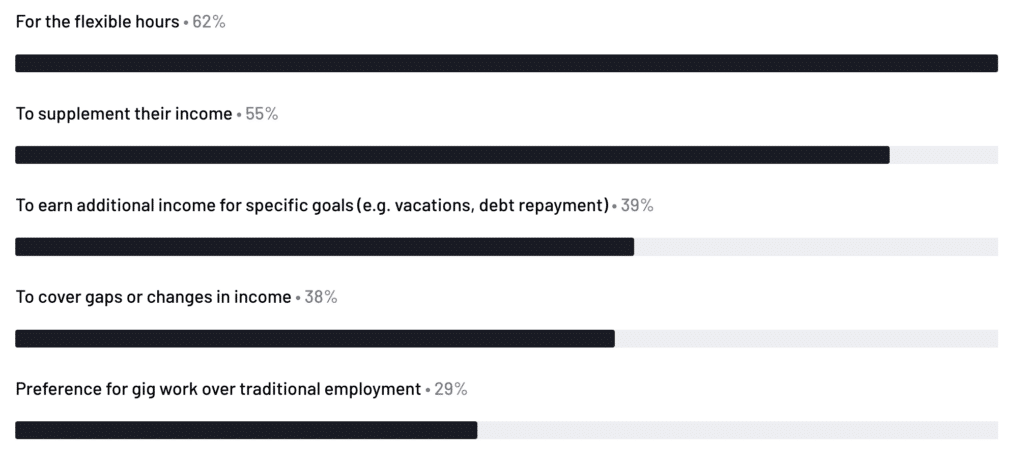
Source: Gridwise Driver Survey 2023
Gig driving is also increasingly seen as a permanent occupation. Almost half (45%) of drivers surveyed see it as a long-term plan.
The draw of multi-apping
The gig driver alternative to driver loyalty is multi-apping, the driver practice of operating and responding to several apps at once. There are several methods of multi-apping, all which affect driver loyalty in different ways.
- Multi-apping within a category—Drivers have apps open in the same category, such as rideshare, and pick and choose rides based on perceived profitability and other factors. According to a Gridwise blog post, Want to Improve Gig Driver Loyalty? Use Data to Stay Competitive, 31% of drivers multi-app.
- Multi-apping across categories—Drivers have apps open in rideshare and food delivery, again picking and choosing based on their preferences. According to the previously mentioned Gridwise blog post, 21% of drivers multi-app in this fashion.
- Switching between apps—Peak demand for food delivery is between 12:00 pm and 2:00 pm, and 5:00 pm and 9:00 pm. Some drivers work food delivery during those hours, and then switch to rideshare, which is often more profitable in the later evening hours.
Multi-apping is a tool that drivers use to increase profitability. Gig companies, however, would rather have drivers loyal to their platform. To encourage this, they often structure retention programs to encourage drivers to remain on the app to accept rides or orders. Uber Eats Pro and the DoorDash Top Dasher programs are examples of retention programs that encourage drivers to remain on one app.
The gig platforms also take other measures. Uber and Lyft often void Quests and Sprint promotions if a driver ignores a ride or turns off the app during a prescribed period.
Mobility data shows delivery wins the loyalty contest
Mobility data analysis in a Gridwise Analytics blog, Want to Improve Gig Driver Loyalty? Use Data to Stay Competitive, indicates delivery platforms get the highest driver loyalty ratings.
Here are some of the findings:
- From Q2 2022 and the beginning of Q3 2023, 60%–65% of DoorDash drivers drove strictly for that service platform.
- Between 45% and 50% of drivers were loyal to Instacart during that period.
- By the beginning of Q2 2023, Amazon Flex drivers who drove solely for that platform reached about 45%.
More broadly, data analysis shows that over 75% of drivers stick to one gig type during a working period. Only 24.3% of drivers switch between apps. Nevertheless, there remains a high level of interest in multi-apping, as data shows that 41.7% of drivers have experimented with different gigs.
The impact of tips on driver loyalty
Tipping is a big part of the gig driver economy. A recent review of gig driver platforms reveals that all allow the customer to tip the driver through the app, and all companies pass on 100% of the tips to the drivers.
Tipping serves two purposes:
- Tipping augments the driver’s income, and 78.4% of drivers agree that tips matter significantly to their overall income.
- Tipping also reinforces that drivers are doing a good job, with 68.6% of drivers indicating that tips affect their enthusiasm and job satisfaction.
What is interesting to note is the disparity between tips by rideshare drivers and those in food delivery. Rideshare drivers receive an average of about 10% of their income in tips, whereas food delivery drivers receive 51% of their income in tips.
Also notable is the frequency of tipping in the different categories:
- 28% of rideshare passengers give their drivers a tip.
- 74.5% of grocery delivery customers give their drivers a tip.
- 88.5% of food-service customers give their drivers a tip.
Investors can learn from Gridwise mobility insights
Mobility insights and transportation analytics can inform the decisions of investment researchers and hedge fund managers who are eager to provide healthy returns for their clients and investor base.
It's interesting to note that DoorDash and Instacart have a solid lock on market share in their categories, and their drivers have the highest monthly earnings. These same companies also have the highest driver loyalty rates in those categories, indicating that driver loyalty figures into the battle for market share in the gig industry.
Investors can also use Gridwise Analytics to determine whether the various platforms' driver incentive programs contribute to driver loyalty. Gig platforms with lower driver loyalty rates need to be using the most successful incentive programs.
Gridwise Analytics provides mobility data and transportation analytics, affording unique insights to companies involved in the broader transportation infrastructure, and demonstrating how people and goods move from one location to another. The data shows where trips originate, where they end, and the primary travel corridors. This data also reveals the success of the gig platforms in building market share and increasing driver loyalty.
Gridwise Analytics’ partners marvel at the data's clean nature, allowing them to integrate the findings into their existing datasets with little or no manipulation.
For a demonstration of how Gridwise Analytics' vehicle trip data can sharpen your transportation analytics, contact Gridwise Analytics.
Check out these articles to learn more about Gridwise Analytics:
How Much Do Lyft Drivers Make Before Tips?
Most passengers think that tips are optional, but for drivers they can make or break the profitability of their gig. Lyft passengers respect the company for its reputation as a gentler, more caring corporation than its competition. But is this friendlier corporate culture enough to make Lyft passengers tip generously?
Let’s examine real data from Gridwise drivers that tells us just how much Lyft drivers make as base pay and how important tips are for drivers.
What does Lyft pay look like? How much does base pay vary?
First of all, it’s important to note that the numbers most sources provide vary widely. Unlike the data Gridwise uses, earnings can be self-reported, yet not documented. Also, pay can differ depending on where drivers are, what hours they work, and how frequently they drive. Glassdoor, for example, says Lyft driver base pay ranges from $17–$29 per hour. Meanwhile, Solo Traveller estimates earnings before tips to be $15–25 per hour.
Lyft says that it has taken measures to increase driver pay before tips by compensating drivers for wait time and increasing their earnings on long trips. Has this had an impact on before-tip pay? This actual data from Gridwise shows trends in Lyft driver pay before tips:
What’s an average tip, and how can drivers do better?
As you might expect, tip amounts are dependent on the price of rides.That means drivers need to work harder to get riders to feel extra generous. To make this easier for riders, Lyft offers options to add a percentage of the cost of their rides either at the end of or after their trips.
Passengers can even set a default tip percentage that is added for all of their rides. This can definitely help to improve what Lyft drivers make per hour, or the daily rate Lyft drivers can expect.
Some sources say the average tip of $5 per ride is reasonable. This represents 25%–33% of a $15–$20 ride. In addition to tips, bonus pay that includes surge pricing and other incentives plays into the total add-ons to Lyft driver income. Data from Gridwise shows us what drivers can expect to earn before tips.
You can improve your chances for getting bigger tips by going out of your way to accommodate your customers. There are lots of ways to get more tips, and one of the best is to use Gridwise. You’ll get insight about your driving habits that puts you in the perfect position to increase your earnings and hang on to them.
Hot spots for the biggest tips
Tip and bonus amounts go up and down depending on a lot of different factors. One of the most important is location. The Lyft blog provides a thorough breakdown of regional tipping patterns and identifies some of the cities where you can expect to get bigger tips.
This Gridwise data shows median tip earnings in major cities. Once you see what “average” or “median” tip amounts are like in your area, you’ll know how much harder you’ll have to hustle to make the kind of income you want to get from your Lyft driving gig.
Maximize your tip earnings with shrewd strategies
Because tip earnings vary so widely for so many different reasons, it’s important to be aware of your particular situation and how it affects your prospects for getting extra compensation from your passengers. Here are some strategies you can deploy:
- Use When to Drive from Gridwise. Every driver needs to know at what times all the big tipping takes place. That’s why Gridwise developed this amazing resource. You’ll see what drivers are making in your area at different times of day, so you’ll be clued in on when you can get out there and make the most money—both in terms of basic pay and tips.
- Use multi-apping. Not sure if Lyft is the right app for you? Shop around! As an independent contractor, you’re entitled to work for any app you choose. Once you master the art of multi-apping, you’ll know which app is best for you, based on your needs and your schedule.
- Hang on to your earnings. Don’t let your cash flow get eaten up by excessive taxes. Use Gridwise to account for every deductible mile, and record every gig-related expense, to trim your tax bill. The Gridwise app keeps tabs on it all, and makes preparation for tax time a breeze.
Get more earnings insights for Lyft drivers
What Are Lyft Driver Earnings Like?
Finding out exactly what you can make driving for Lyft can prove to be a challenge. Everybody has an opinion, and it’s nearly impossible to figure out what the real numbers might be. The problem with a lot of the opinions offered is that they’re based on casual surveys and educated guesses coming from Lyft drivers.
The numbers you’ll see here are different. They come directly from Gridwise drivers, and are not doctored in any way. No one’s bragging or low-balling. Data doesn’t lie, and the whole truth is here in this post.
Lyft hourly earnings
The most common way to view earnings is by hourly rates, so let’s look at that first. These figures reflect average gross pay as recorded by drivers nationwide.
https://datawrapper.dwcdn.net/odnpc/5/
Get more detail about Lyft hourly earnings.
Lyft weekly earnings
To get a full idea of how easy it might be to earn a workable income by driving for Lyft, you need to see how much you are likely to make in a week. Remember that “a week” might mean a different number of days or hours for different drivers. This data comes from drivers nationwide, and reflects average weekly gross earnings.
https://datawrapper.dwcdn.net/2pk6G/2/
Get even further insight from looking at Lyft driver daily earnings.
Lyft monthly earnings
How do Lyft earnings stack up when we look at gross monthly earnings? Again, we need to consider how many hours, days, and weeks drivers are working, but these average figures give us the idea of how much you can earn in a month.
https://datawrapper.dwcdn.net/f01Xf/2/
Lyft average nationwide bonus pay + tips per month
The figure for gross pay includes bonus pay and tips, so it’s important to be aware of the trends of this key component of Lyft driver pay. Here’s what current trends show us about what you can expect from bonuses and tips in the course of a month.
https://datawrapper.dwcdn.net/84E1o/1/
Let’s look at how tips figure into total Lyft driver earnings.
Lyft average nationwide bonus pay + tips per hour
Lastly, this look at bonus pay and tips per hour will show you what to expect from these necessary boosts to base earnings on an hourly basis.
https://datawrapper.dwcdn.net/hz94e/1/
More insight into earnings for Lyft drivers
Work smarter. Earn more.
Whether you drive, deliver, or pick up shifts — Gridwise helps you track earnings, mileage, and performance so you stay in control of your work. Download the app and take charge today.
