Gridwise blog
Tips, insights, and advice to help you earn more and work smarter, whether you do gig work, hourly, or shift work.
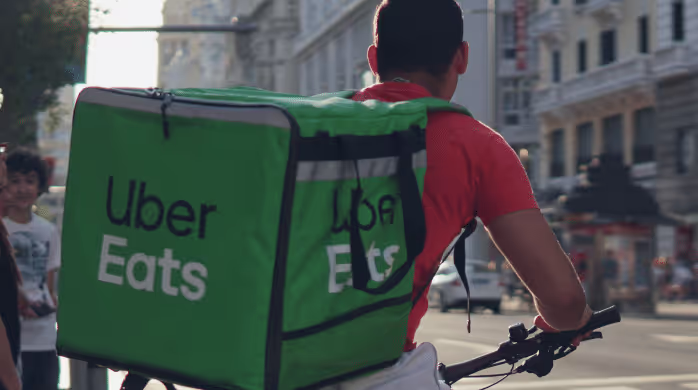
How to Make $1,000 a Week With Uber Eats in 2026 (Tips + Hourly Data)
In this blog, we'll explore the strategies and techniques that can show you how to earn $1000 per week as an Uber Eats delivery driver. We'll cover everything from optimizing your delivery zones and schedules to maximizing your tips and customer satisfaction. Whether you're a seasoned Uber Eats driver or just starting out, this guide will provide you with the insights and actionable steps to take your Uber Eats driver earnings to the next level.
Becoming an Uber Eats delivery partner can be a lucrative opportunity, especially if you're able to consistently earn $1000 a week. By understanding the platform, optimizing your delivery strategies, and focusing on customer satisfaction, you can maximize your earnings and turn Uber Eats into a reliable source of income.
We’ll cover the following topics to provide coaching and ideas to help you push your earnings up to that $1000 per week level:
What do Uber Eats drivers do?
Uber Eats drivers deliver prepared food most of the time, but they also might shop for and deliver goods from convenience outlets and grocery stores. The job is pretty simple. You get a request for an order, you drive to the restaurant or store to pick it up, and then you deliver it to the customer. If you already drive for Uber, you can choose to take orders for Uber Eats delivery any time.
If you’re not an Uber Eats driver yet, it’s pretty easy to become one. This Gridwise post tells you what you need to do if you want to sign up and start making money Uber Eats style. Many rideshare drivers welcome the chance to deliver food rather than people. This article from Nerdwallet covers the Uber Eats gig from that angle.
There are some sweet advantages to working with Uber Eats. In lots of cities you don’t even need to have a car. You can use a bike or a scooter, or even walk, to make your rounds. If you do use a car, Uber Eats’ requirements are a lot easier to meet than they are for Uber rideshare driving.
You also have a lot of flexibility. You can shop and deliver convenience items and groceries, but you don’t have to. And, like most driving gigs, you can choose your own hours, and map out the locations where you want to work.
Use Gridwise features When to Drive and Where to Drive to help you figure out what work hours and which specific areas will be the most profitable for you. Real data from real delivery people will show you earning patterns for drivers in your town.
How much can you earn doing Uber Eats?
The honest answer to this question is: basically, as much as you want! It all depends on how many hours you put in and how strategic you are about your gig. Earnings vary from one area to another, as this article from Entrepreneur points out. To give you a baseline, let’s look at the earnings of Uber Eats drivers who tracked their earnings with Gridwise.
Remember that these numbers show us only average earnings. To make $1,000 a week with Uber Eats, you’re going to have to be better than average, and we’ll show you how. For now, though, it’s good to have these figures so you get a ballpark number of where to start.
How much do Uber Eats drivers make?
Gridwise data tell us the following:
- Monthly earnings average around $444.00 per month.
- Gross earnings per trip are between $9.00 and $10.00.
- Tips make up about 50% of most Uber Eats drivers’ income, which amounts to about $225.00 per month.
Is Uber Eats good money? It can be. While there are other gigs that pay more per trip, if you drive for Uber Eats, you’ll always be pretty busy.
https://datawrapper.dwcdn.net/HPAz8/3
You can also see that, unlike many other gigs, tips play a huge role in Uber Eats earnings.

With these numbers as a baseline, what can we say about how to earn $1,000 a week with Uber Eats? As we said in the introduction, it’s going to be a hustle, but it’s really possible. To figure out how to make the most money with Uber Eats, let’s start by looking at how many trips these “average” drivers made each month.
We know that average gross earnings were $444.00 per month, and drivers got around $10.00 per trip. That means they took 44 or 45 trips per month, which breaks down to 11 trips per week. That’s not a lot of Uber Eats delivery, is it?
The fact that Uber Eats drivers averaged so few trips shows us that many drivers use more than one app at the same time. This is called multi-apping, and you can learn more about it in this Gridwise post. If you want to answer the question of how much you can make with Uber Eats, then you need to stick with the app and keep plugging away at those orders. You also need solid strategies, as well as some inside tips and tricks.
How to make the most money on Uber Eats: Delivery driving tactics
Getting to that $1,000 a week with Uber Eats isn’t so hard when you remember that the drivers we saw making about $111 a week were only taking around 11 trips in the same time period. That’s not much at all! If you work the Uber Eats app like a boss, you’ll soon have many more trips than that, easily reaching the number needed to get you to $1,000 a week. Now, let’s get to some tactics you’ll need to make that kind of bank.
- Stay with the Uber Eats app, and track your earnings. Gridwise can easily do that for you. Simply sync your Uber Eats app with Gridwise, and you’ll be able to see how much you’ve earned with Uber Eats, what times were most profitable, and your average hourly pay. Racking up trips with Uber Eats has other benefits, including perks and bonuses that are awarded to top drivers.
- Leverage surge pricing and promotions. Surge pricing is applied when there is a lot of demand. When surge pricing is in effect, many of the trips you make will pay more than usual. Promotions are offered to drivers who complete a given number of trips in a certain time period. High traffic volume days, nights, and times give you these chances to get extra earnings. Challenging yourself to complete the right number of trips for promotions will add to the number of trips you can count on for big bucks, too. Learn more about Uber Eats surge pay, boosts, and promotions in this Gridwise blog post.
- Say yes to doubling up on orders. With Uber Eats, you can get back-to-back orders or receive batched orders. Back-to-back orders happen when you receive a new request while you’re on the way to deliver an original order. The Uber Eats app routes these trips automatically, so you won’t be sent out of your way.
Batched orders are Uber Eats’ way of bundling together orders from either the same restaurant, or two nearby eating establishments. You get money, and trip count credit, for all the orders you complete, plus customer tips, without having to make a bunch of separate trips.
- Turn on the charm and get bigger tips. Being nice really is part of the Uber Eats driver’s job, and getting tips is one way people who drive for Uber Eats make money beyond their basic pay.. Bring along those extra napkins and condiments, use equipment that keeps food and drinks at the right temperatures and prevents spilling, and consider your customers’ needs. If you deliver groceries, be extra careful with delicate items such as bread and eggs.
And, most important, follow your customers’ directions, and stay in communication with them if you are going to be delayed, or if you have questions about their order. This Gridwise post will tell how to get bigger tips as a delivery driver.
- Use even more charm to keep your ratings high. As an Uber Eats driver, you will be rated by the restaurant or store where you pick up the orders as well as the customers who are waiting for the deliveries. This two-way rating system is designed to keep you on your toes, so Uber can keep people satisfied with your service. Don’t worry, you get to rate them, too.
There’s another reason why your rating as a driver is important. It not only keeps you in good standing with Uber; it helps you to qualify for the Uber Eats Pro incentive program. To learn more about Uber Eats Pro, and what it takes to earn perks such as preferred services, discounts, and deals, check out this Gridwise blog post.
Smart business moves that seal the deal
Now that you know how to gobble up the deliveries you need to make $1,000 a week with Uber Eats, it’s going to be a breeze to get there. Let’s make it even easier, with business moves that boost your earnings and shrink your expenses. If you use these, it will also be easy to say yes when people ask, “Can you make good money with Uber Eats?”
Minimize expenses. Avoid racking up big fast-food bills by bringing your own food and beverages. You might not think you’re hungry when you first start your Uber Eats run, but once the aroma of pepperoni pizza, premium cheeseburgers, and piping hot fries start wafting through your car, that might change. Bring a sandwich or other healthy food from home, and buy bottled water in bulk to save tons of cash compared to what it costs to buy single servings.
Maximize tax deductions. Another way to minimize your expenses is to maximize your tax deductions. Start by tracking mileage with Gridwise.
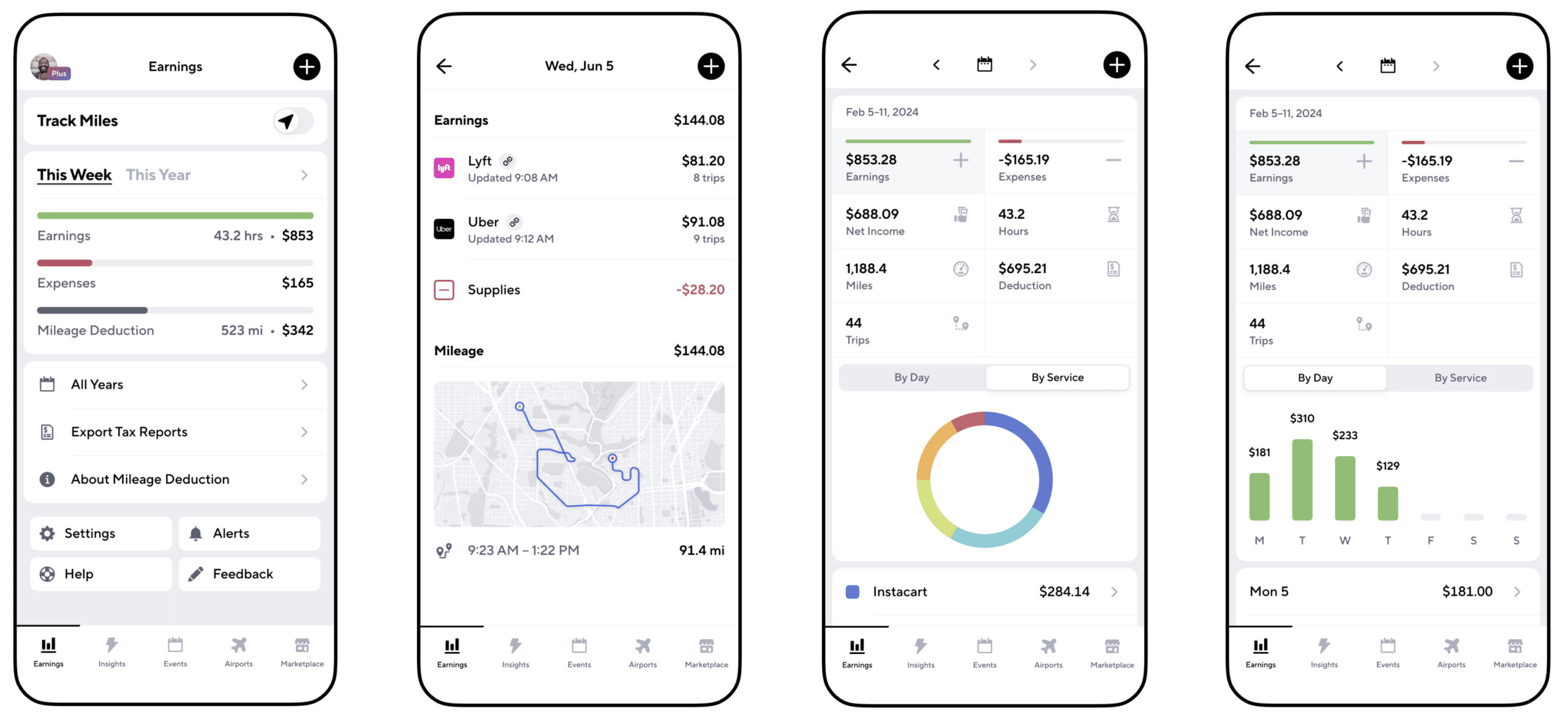
Gridwise App
Gridwise captures every deductible mile you drive, including the distance you cover between the trips your driving app records. Know what expenses you can deduct, and put them to work for you when tax time comes. Learn more about tax deduction strategies in the Gridwise Tax Guide for drivers.
Boost earnings with referrals
As an independent contractor, you’re probably looking for ways to make even more money than you can with Uber Eats. And most gig workers like you enjoy getting passive income. With Uber Eats, there’s a really easy way to do that, referrals!
All you need to do is find friends and encourage them to deliver for Uber Eats. If they make a certain number of deliveries within a specified time, you will get paid for doing nothing more than having them sign up under your referral code! Rates of pay vary by city, so check your Uber Eats app to find out what the current deal might be, and learn more about the referral program on the Uber Eats website.
Also remember: “friends” don’t have to be your best buds. Many delivery people carry cards with a QR code linking to their referral information, so just about anyone you encounter can join Uber Eats and boost your earnings. You could meet a source of passive income at the gas station, on social media, or at your high school reunion. The more you hustle, the more there is to gain, right?
Master the art of self-employment
As an Uber Eats driver, you’re an independent contractor. That means the company isn’t going to withhold your taxes, provide insurance, keep track of your earnings, or tell you about tax deductions. You’ll have to do all these things for yourself.
If you want to maximize your tax advantages, open an official business entity. You can incorporate (create a corporation) or you can work as a limited liability corporation (LLC). You can also work with a DBA (Doing Business As) arrangement, but the corporation or LLC will do a better job of protecting you from liability.
Establishing a corporation or LLC offers better tax advantages than being a sole proprietor. For instance, if you simply collect your earnings into your private account, you’ll be charged self-employment taxes in most states. And paying extra taxes is something we all want to avoid, within legal limits, as much as possible.
Every Uber Eats driver needs to learn about self-employment, and there are some great resources you can review. Check out the CareerOneStop website about self employment which will help explain the basics. You can also check with a professional tax accountant, or look other websites to learn more about actually creating a business.
Scope out your market
Look at the area around you to see where you’re likely to get the most deliveries. Where are all the restaurants? Where might people be more inclined to order deliveries? What hours do you want to drive? What activities might be going on around those times? Think about late-night and after-school times as well as breakfast, lunch, and dinner times.
Be realistic about the potential for your area and aware of new services opening up. For example, in New York, there is already a tab on the Uber Eats app that allows customers to order groceries. In our article about the best food delivery service to work for you’ll see that Uber Eats stacks up well against other delivery companies, mainly because of its potential for expanded opportunities for drivers to earn.
So, is Uber Eats good money? As we said, it isn’t an automatic guarantee that everyone will make $1,000 a week with Uber Eats. Trying out the suggestions we give you here, though, should put you on the right track! Go out there and start stacking up those orders and raking in some impressive earnings!
Get more inside information on Uber Eats in these posts from the Gridwise blog:
- The delivery driver guide: Using the Uber Eats app
- Everything you need to know about driving for Uber Eats
- Uber Eats Pro: What drivers need to know
- Looking for a different gig, part-time or full time job? Check out the Gridwise Job board.
Uber Eats FAQ
How does the Uber Eats platform work for drivers?
Uber Eats is a food delivery service that connects customers with local restaurants and independent delivery partners. As an Uber Eats driver, you'll receive notifications of nearby delivery requests, which you can accept and complete. The platform provides flexibility, allowing you to work on your own schedule and earn money based on the number of deliveries you complete.
What are the requirements to become an Uber Eats delivery partner?
To become an Uber Eats delivery partner, you'll need to meet certain requirements, such as having a valid driver's license, a registered vehicle, and passing a background check.
How can I choose the right delivery zone to maximize my earnings?
Selecting the right delivery zone can significantly impact your earnings, as some areas may have higher demand and better-paying orders. It's important to research and identify the zones in your area that tend to have the most consistent and lucrative delivery opportunities.
How can I take advantage of peak delivery hours and surge pricing?
Understanding peak delivery hours, such as mealtimes and weekends, and taking advantage of surge pricing can boost your earnings. Be aware of when demand is highest in your area and adjust your schedule accordingly to capitalize on these peak periods.
What are some tips for maximizing tips and customer satisfaction?
Providing excellent customer service and going the extra mile to ensure a positive experience can lead to more tips and repeat business. Prioritize communication, timeliness, and attention to detail to keep your customers happy and satisfied.
How can I set realistic weekly goals to reach my $1000 target?
To make $1000 a week with Uber Eats, it's essential to set realistic weekly goals and track your earnings and expenses. Start by determining your target earnings and breaking it down into achievable daily or weekly goals. This will help you stay on track and make adjustments as needed.
What are some strategies for efficient route planning and navigation?
Effective route planning and navigation can save you time and fuel, allowing you to complete more deliveries. Utilize mapping apps and take advantage of features like real-time traffic updates and turn-by-turn directions to find the quickest routes.
How can I balance my Uber Eats deliveries with other commitments?
Develop a schedule that allows you to capitalize on peak delivery hours while still maintaining a healthy work-life balance. Consider using tools like calendar apps to plan your availability and track your hours to ensure you're maximizing your earning potential without sacrificing your personal life.
What are the key considerations for maintaining my vehicle as an Uber Eats driver?
Keeping your car clean and well-maintained is crucial for maximizing your Uber Eats earnings. Regularly scheduled oil changes, tire rotations, and other preventive maintenance can help extend the life of your vehicle and minimize downtime. Additionally, budgeting for vehicle-related expenses, such as fuel, insurance, and repairs, will ensure you're accounting for these costs and maximizing your net earnings.
What are the tax obligations and legal considerations for Uber Eats drivers?
As an Uber Eats delivery driver, it's essential to understand the tax obligations and legal considerations that come with being an independent contractor. This includes properly reporting your earnings, deducting eligible business expenses, and making quarterly estimated tax payments. Additionally, you'll need to ensure you have the appropriate insurance coverage, such as personal auto insurance and possibly commercial auto insurance, to protect yourself and your vehicle while on the road making deliveries.

The Gridwise Job Board: Find Your Ideal Job or Gig Work
Gridwise is an essential assistant app created by gig workers for gig workers. Our mission is to support those engaged in gig work in every way possible. We understand how challenging it can be to deal with income instability, a lack of benefits, and job insecurity that often comes with gig work. The Gridwise app tracks and organizes earnings and expenses, and offers a wide array of discounts, deals, and services that make the lives of independent contractors easier and more rewarding.
We firmly believe it’s possible to make a viable living and create a gig experience that offers flexible hours, variety, and excitement. With issues such as consistent earnings and job security in mind, Gridwise is proud to offer a centralized platform that shows you how to find gig work and secure reliable opportunities. We’re proud to introduce the Gridwise Job Board.
The Gridwise Job Board: Key features
Because Gridwise is dedicated to serving the gig worker community, we’ve filled the Gridwise Job Board with useful features that won’t waste your precious time.
- Comprehensive listings. Find part-time, full-time, temporary, and per-task work. Drive or deliver with your vehicle, utilize an employer’s vehicle, or even find non-driving gig work.
- User-friendly interface. Find the jobs that are right for you with a tap of your screen.
- Verified opportunities. We vet the jobs before they are listed to ensure you’re getting high-quality job postings.
How to get more gig work, seasonal, part-time or full-time jobs with the Gridwise Job Board
Looking specifically for “gig work apps” or “gig jobs near me?” You’re in luck. Our filters and search functions send you directly to the listings you seek.
Here’s how it works.
- Access the Job Board via the Gridwise website.
- Search for jobs by type, location, and more.
- Select the job that interests you, and read all about it.
- Scroll through the description, and if it appeals to you, click “Apply for job.”
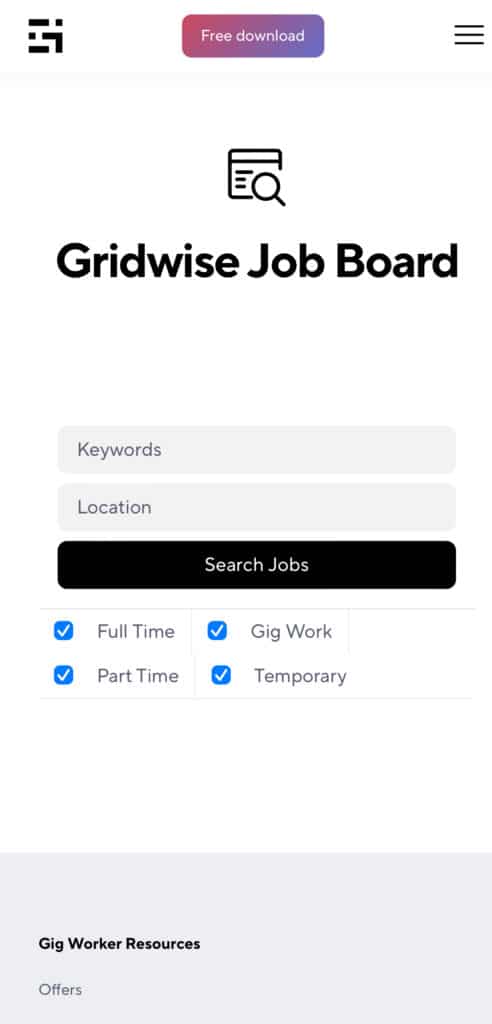
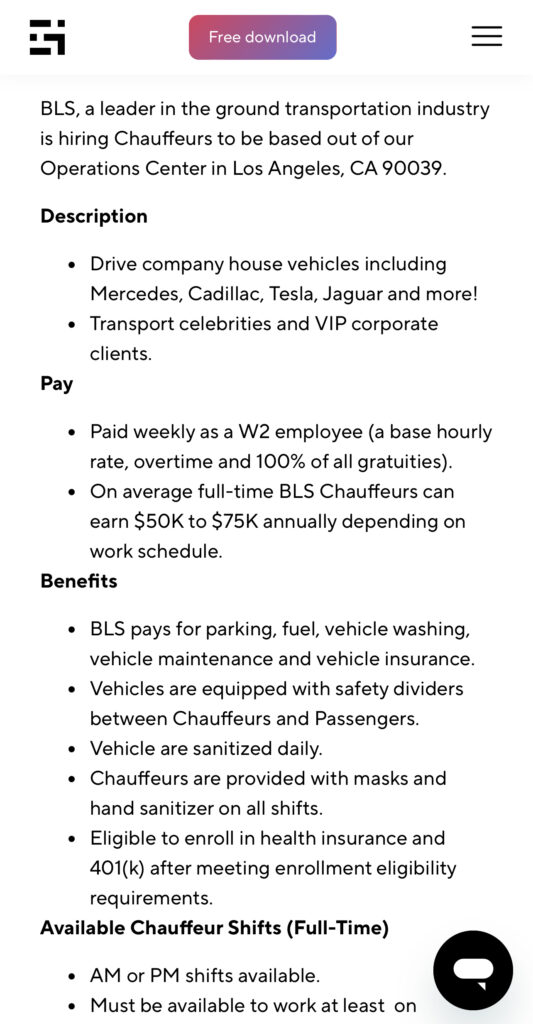
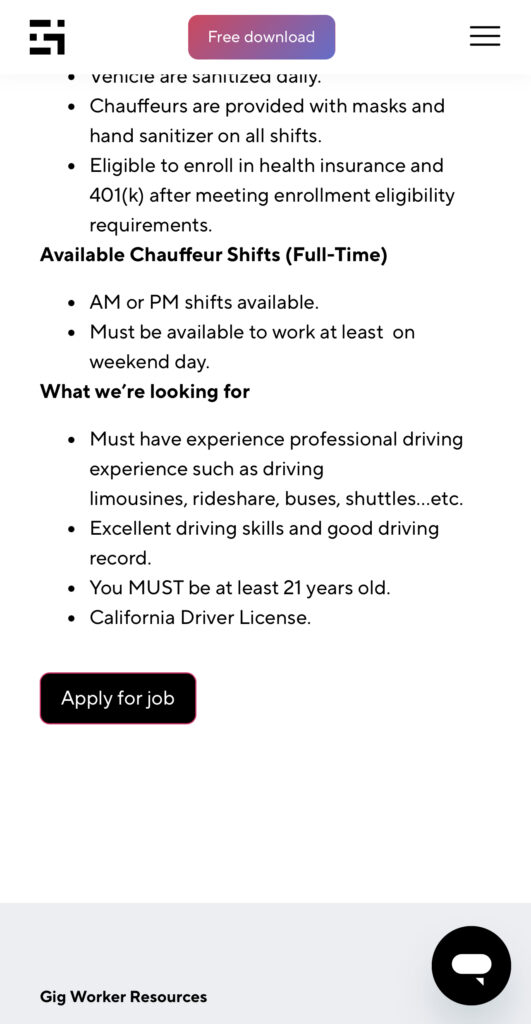
Many types of jobs are available. Adjust the search filter to see the full variety of opportunities that will let you cash in. Deliver food, set up catering, do rideshare driving, get paid for doing package delivery, and much more. You’ll find short-term gigs, long-term contracts, and part-time positions.
Perks of the Gridwise Job Board for gig workers
Gig workers who know how to make extra money will appreciate how the Gridwise Job Board lets you multiply your chances of bringing in big earnings. Here’s how:
- Increased stability. Use the Gridwise Job Board to find part-time or permanent jobs in addition to the part-time gigs you already have. Always keep a steady stream of earning opportunities flowing toward you.
- Flexibility and autonomy. Choose jobs that fit your schedule, work around other jobs and family duties, and still leave room for some fun in your life. Discover side hustles to supplement your full-time job, permanently or just for the season.
- Skill development. Find part-time work that lets you use a skill you already have, or try your hand at something new. It’s a smart way to develop a portfolio to showcase what you can do, or even to find permanent employment.
Get Gridwise and stay up to date on the Gridwise Job Board
Gig workers need plenty of information and assistance, and Gridwise is here to give it to you. Download the app and get essential features such as
- seamless earnings tracking
- mileage tracking
- expense recording, including notes
- low-cost and no-cost insurance benefits
- access to affordable medical, dental, vision, mental health, and alternative care
- professional services including legal and financial help
- deals and discounts
- weather, events, and traffic reports
- inside information on where and when to drive
More to know about gig work:

5 Best Mileage Trackers For Gig Drivers
Many drivers ask, “Do I really need a mileage tracking app?” The answer is simple: only if you want to have an accurate count of all the miles you can legally deduct from your taxable income! You might think your rideshare or delivery driving app has got you covered. After all, they do quite a good job of logging the miles you drive while you’re on a trip or delivery. But, if you want to have the best app to track mileage for Uber, Lyft, Doordash, Instacart, or the other apps you may use, you need more. Why is that?
Without a separate tracker, you’re missing the miles you drive in between pings. Did you realize that all the miles you drive, from the moment you begin your shift until it’s over (as long as you don’t drive several miles on a break to hang with your friends), are tax deductible! That means you need something besides your driving app to keep an accurate count of your travels. Read this Gridwise post to see how important it is to keep track of every deductible mile.
You won’t be surprised to hear that there’s an app for tracking miles. In fact, there are several of them. Here, we’re going to tell you about five top mileage tracking apps, and help you figure out which one is best for you.
Before we get to the list and identify the best mileage tracker app, let’s clarify what exactly a mileage tracking app is. According to G2.com’s technology glossary, mileage tracking is done for the purpose of keeping a log of mileage that is either reimbursable or tax deductible.
And yes, of course you can track your miles simply by taking readings on your odometer. But are you really prepared to account for how many miles you drove for personal reasons and subtract them from the total to get your business mileage? Even if you can remember all that and do the arithmetic, if you want an accurate reading of the miles you drive for business, and can therefore deduct, a mileage tracking app will save you a lot of trouble and prevent you from making costly errors.
Plus, as a gig driver, you have specific needs when it comes to a mileage tracker. Ideally, you’d be able to handle mileage tracking and several other functions all in one app. It can be maddening enough to deal with driving apps, particularly if you’re an avid multi-apper. You would want your mileage tracker app to help you keep account of other aspects of your business, including income, expenses, and inside information about the art of gig driving.
Not all mileage apps are equal, to be sure! Let’s look at five of the best apps to track mileage and figure out which is the best app to track mileage with Uber and Lyft, or what mileage tracker app is best for DoorDash.
1. Zoho Expense
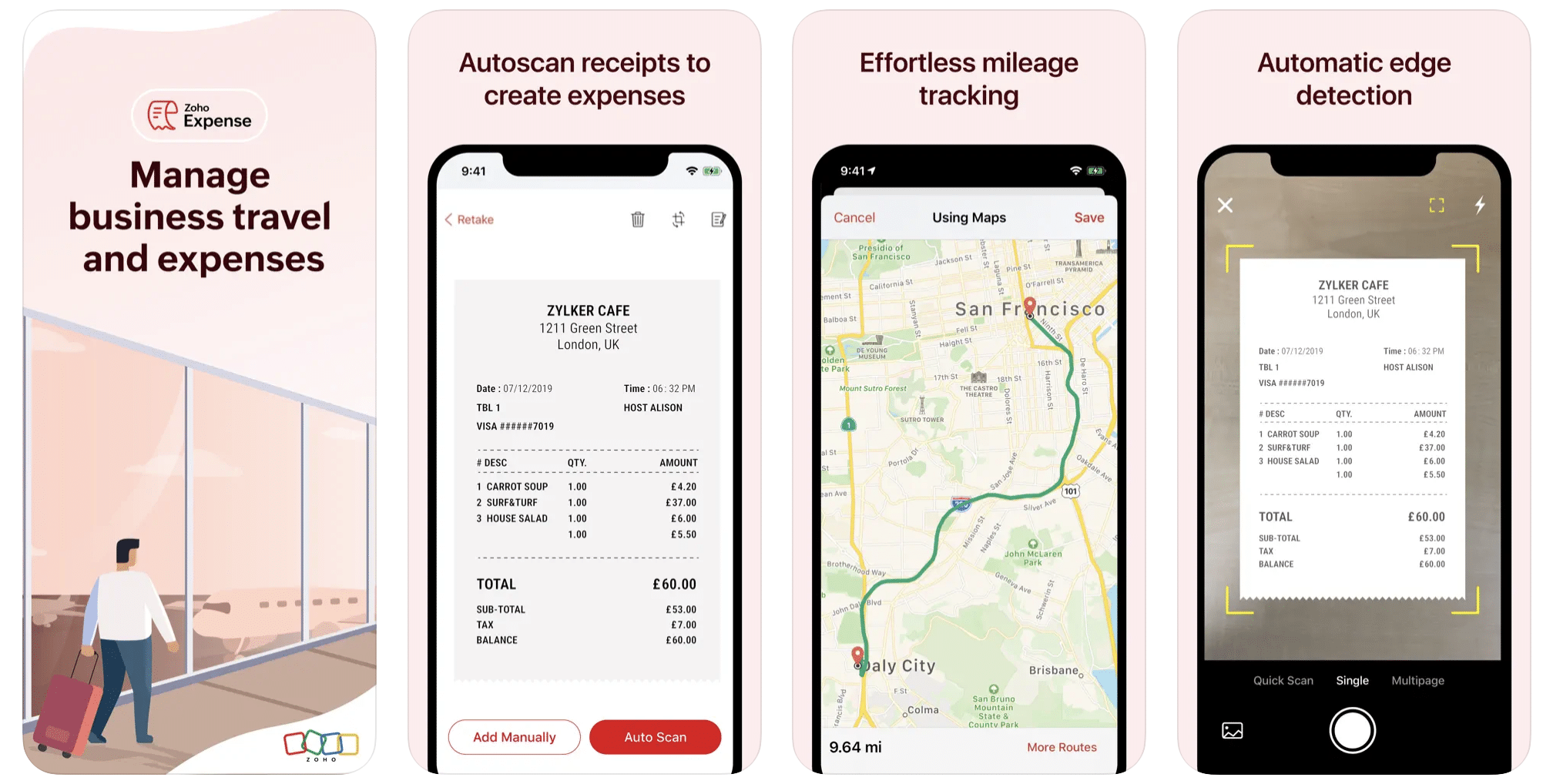
First up is Zoho Expense, which does exactly what its name says. This app is designed to allow companies to give employees a uniform way to create and submit expense reports. It can be used by individuals, including gig drivers, as well.
It includes a mileage tracker, as well as features that let you track other deductible expenses, including the ability to scan and record receipts.
Available on Android and Apple: Yes
Ratings: 4.8 stars on App Store, 4.7 stars on Google Play
Free Version: Yes
Subscription price: $3 per month, billed annually
Created specifically for gig drivers: No
2. Quickbooks Online
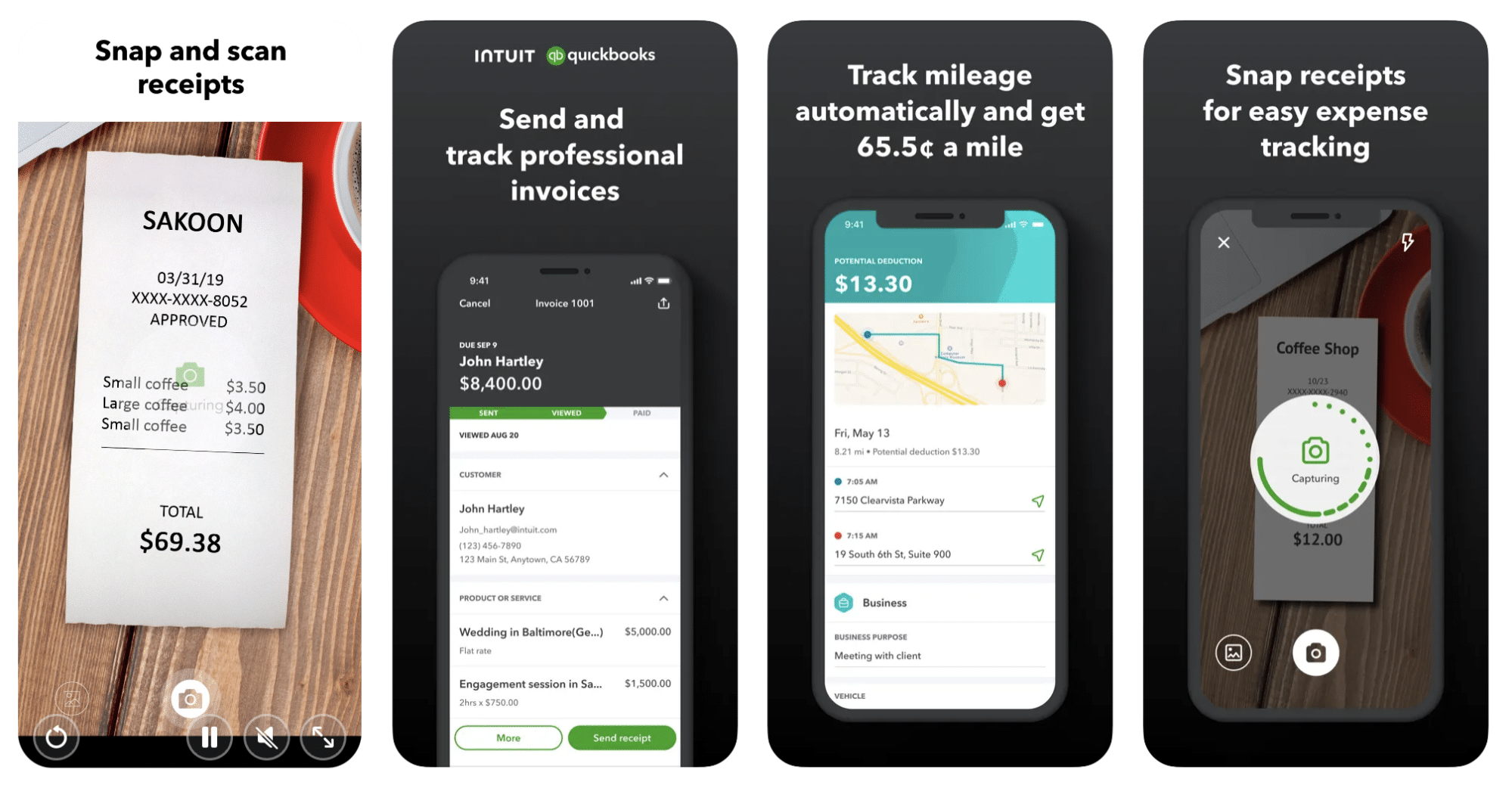
Quickbooks Online is a cloud-based app that allows you to track your mileage, earnings, and expenses. The information you enter can then be used to generate various reports that prepare you for tax time. It also allows you to create graphs that illustrate your cash flow, and includes a receipt scanner so you can instantly record deductible expenses. Quickbooks is popular, highly reliable, and designed mainly to help people keep track of their small businesses.
Available on Android and Apple: Yes
Ratings: 4.7 stars on App Store, 4.4 stars on Google Play
Free version: 30-day free trial
Subscription price: $15 per month for basic version if purchased for 3 months or more
Created specifically for gig drivers: No
Source: quickbooks.intuit.com
3. Shoeboxed
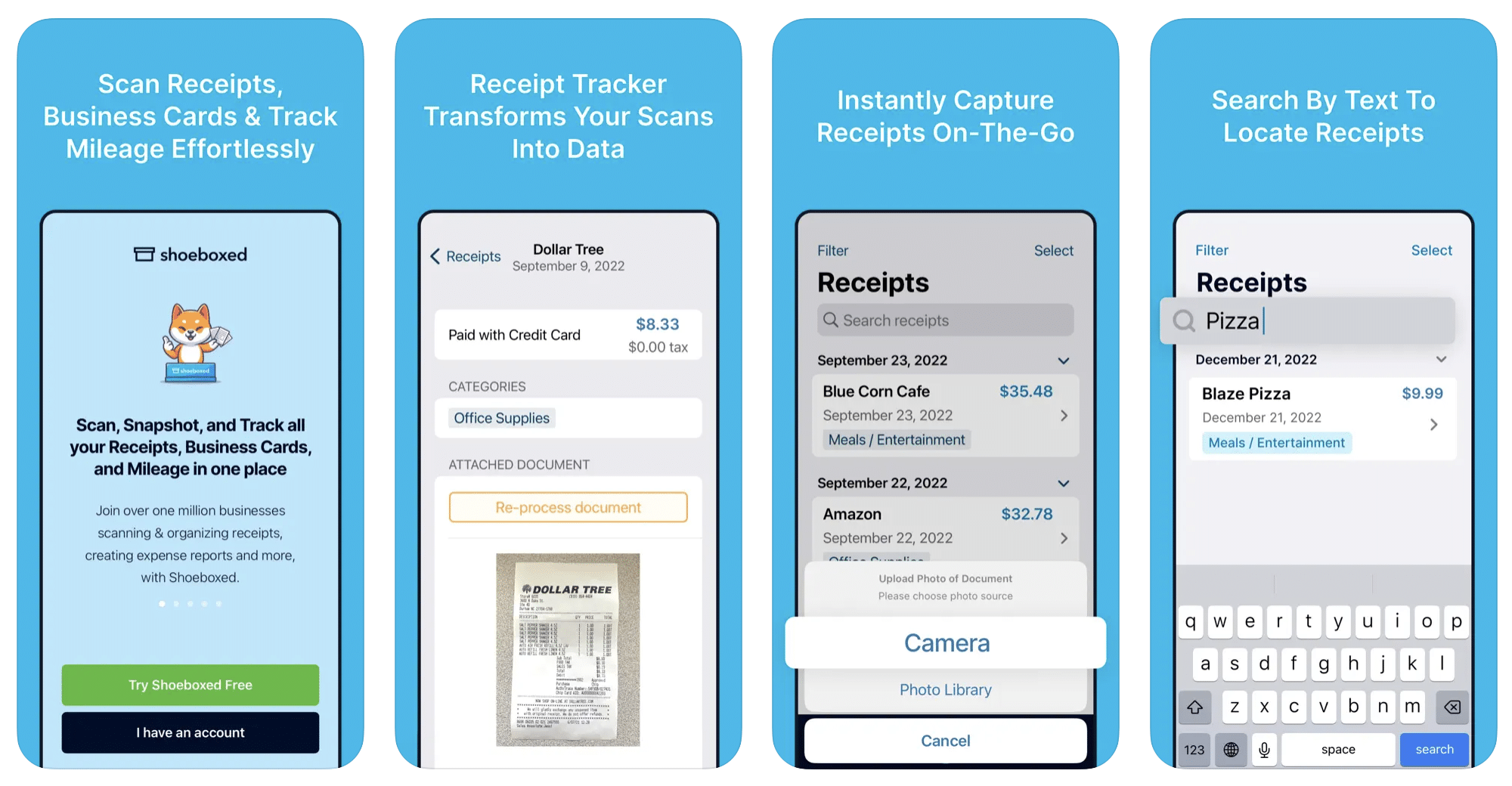
Shoeboxed started in 2007 as a service for scanning paper receipts into digital form. Now the app offers a free mileage tracker and has enabled users to scan receipts directly. It touts itself as the best mileage tracking app for DoorDash, but there are some elements missing that Dashers might like to have. While it provides features that record your expenses and prepare you for tax season, it doesn’t automatically track your earnings. The mileage tracker has a system where you can drop pins along your routes to make the tracking more precise, identifying those legs of a trip that you make for business purposes. The mileage tracker is “free” once you sign up for the basic version.
Available on Android and Apple: Yes
Ratings: 4.5 stars on App Store, 2.3 stars on Google Play
Free version: No
Subscription price: $18 per month for basic version
Created specifically for gig drivers: No
Source: blog.shoeboxed.com
4. Stride
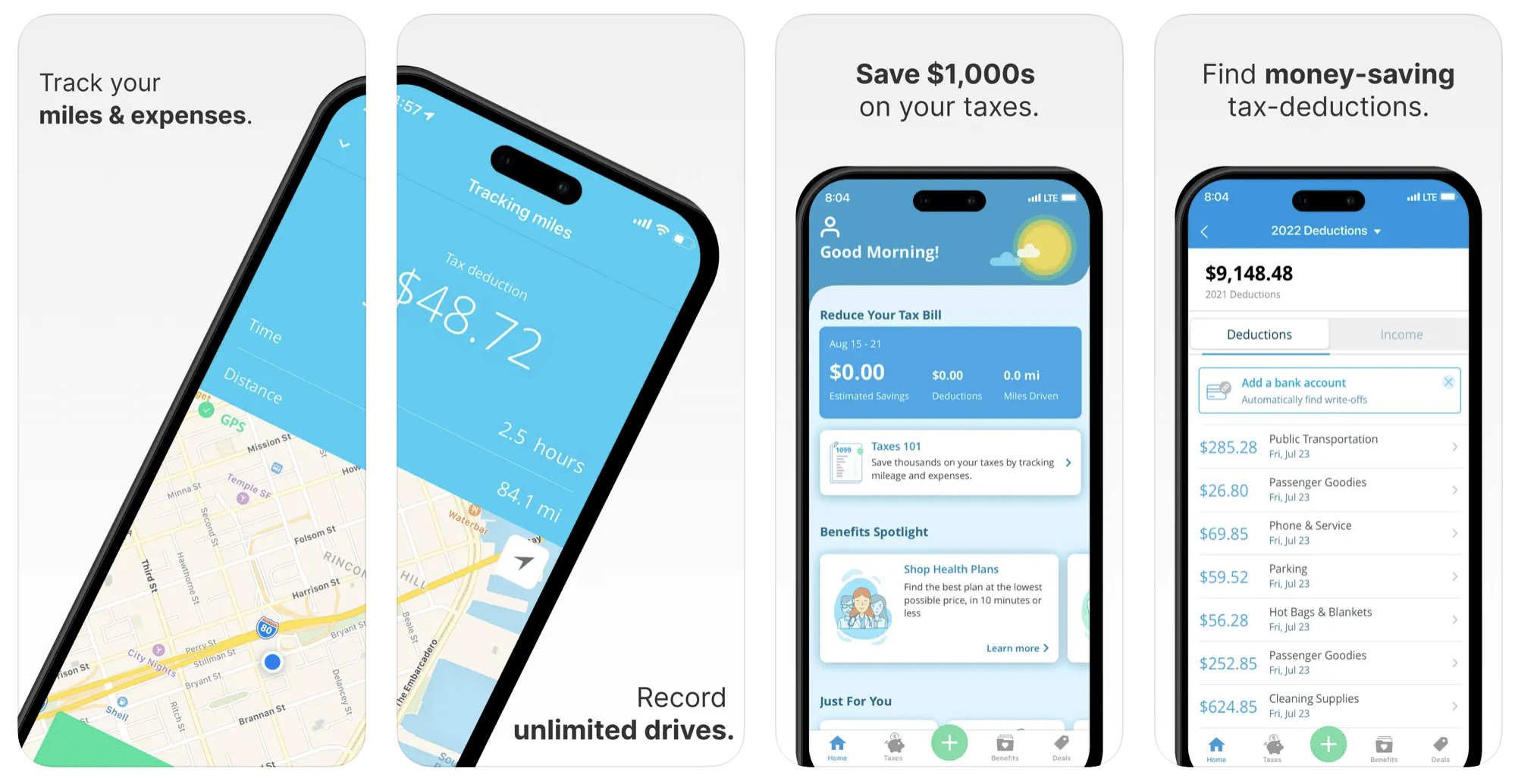
This free mileage tracker does a fair job of keeping track of the distances you rack up while gig driving, but it doesn’t automatically track earnings. It can be a big help, though, in tracking your expenses. You can link Stride to your bank account, and it will automatically scan your expenses to identify items you can potentially deduct. The app is totally free. This could make it the best free mileage tracker app, but there is a small price to pay. The app will persistently push you to consider various insurance plans that they are affiliated with. If you don’t mind that, this is a solid mileage tracker, even if it doesn’t track your earnings.
Available on Android and Apple: Yes
Ratings: 4.8 stars on App Store, 4.6 stars on Google Play
Free version: Yes
Subscription price: None. The app is free.
Created specifically for gig drivers: No
5. Gridwise
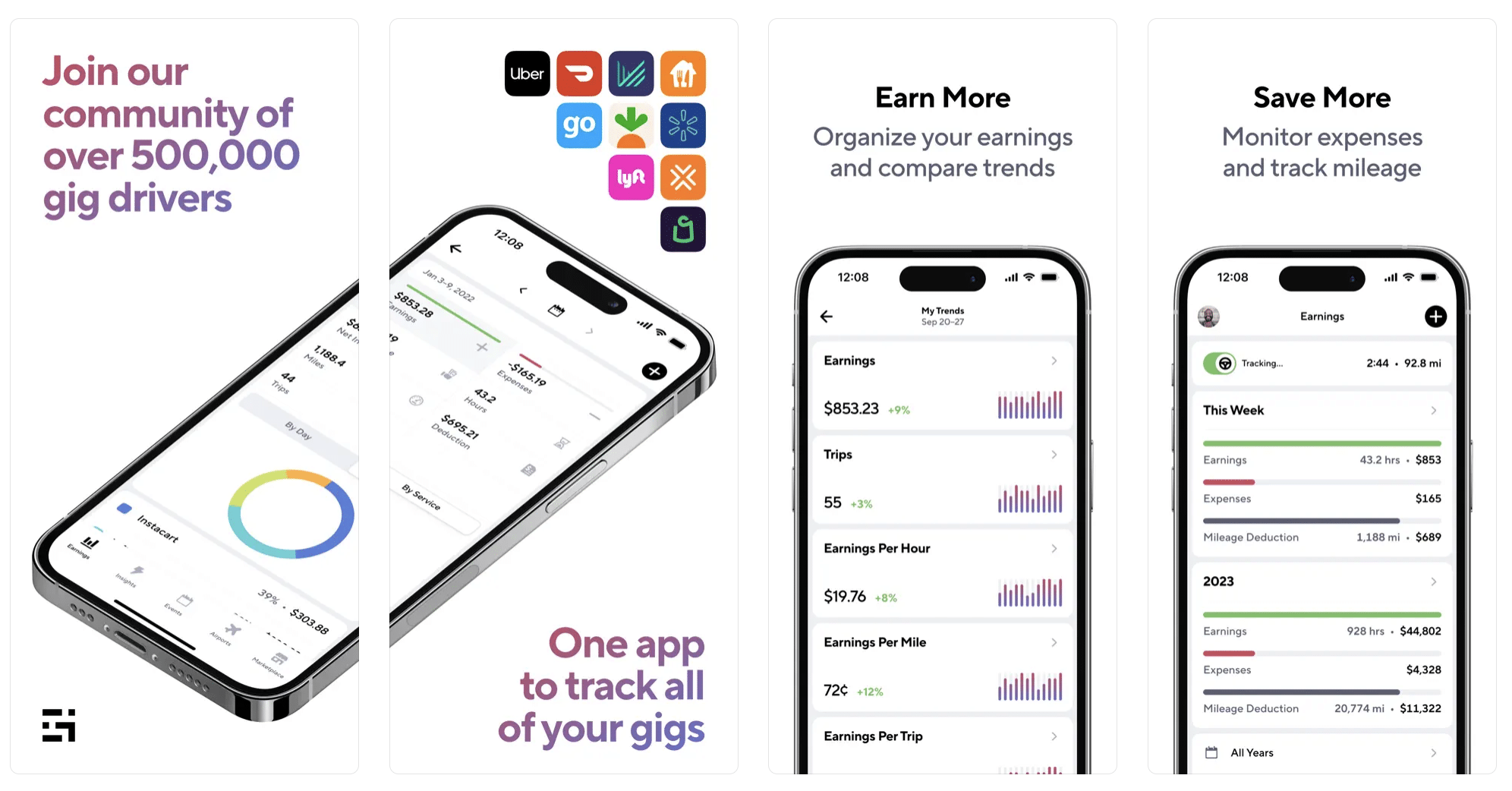
Gridwise has a free mileage tracker and free features that record your income and expenses. It gives you access to insurance and benefits, as well as insights about the best times and places to make the most money while gig driving. The Gridwise mileage tracker captures all the miles you drive while you’re on your driving shift, and it can be used if you have other trips you need to make which qualify as business travel.
Drivers love it because it is geared toward the needs of rideshare and delivery workers, providing free information about airport departures and arrivals, event start and let out times, weather, traffic, and more. The Gridwise Plus subscription adds value by providing additional insights and reports, discounts on benefits, the ability to export data in .csv format,, and more.
Available on Android and Apple: Yes
Ratings: 4.9 stars on App Store, 4.6 stars on Google Play
Free version: Yes
Subscription price: $9.95 per month for Gridwise Plus, or $95.99 per year (a $23.41 savings)
Created specifically for gig drivers: Yes!
What is the best mileage tracking app?
Now that we’ve checked them all out, we’re positive about the answer to that. Hands down, it’s Gridwise. Are we biased? You bet we are! But drivers love it too. Gridwise is the best mileage tracker app, and so much more. So many of the features are free, and the subscription to Gridwise Plus will pay for itself with additional insights to boost your earnings and deeper discounts on products and services.
Most important, Gridwise is designed specifically for gig drivers by experts who were once gig drivers themselves! Knowing what gig drivers need is a crucial step in creating an app that rideshare and delivery drivers can really use! Here are a few of the features, besides mileage tracking:
- seamless earnings tracking
- automatic, on/off toggle and manual mileage tracking
- mileage categorization
- airport, traffic, weather, and events information
- insights into where to drive and when to drive
- reports showing earnings across the platforms you use
- discounts on countless products and services for drivers
- additional resources for finding side gigs
- an informative and comprehensive blog
- affordable benefits, including insurance, medical, dental, and alternative practitioner discounts
- a community of drivers just like you
Don’t settle for just any app. Get the best mileage tracker, and so much more, from Gridwise!

What Is Uber Comfort? Requirements, Pay & Is It Worth It (2026)
If you drive for Uber and you have a newer vehicle, you might be sitting on extra earnings without even realizing it. Uber Comfort is a mid-tier ride option that pays drivers roughly 20% more per trip than UberX, and you don't need a luxury car or a commercial license to qualify.
But "more money per trip" doesn't tell the whole story. Comfort requests come in less frequently than UberX, which means the real question isn't just "how much does it pay?" but "is it actually worth it in my market?"
This guide covers everything you need to know: what Uber Comfort is, the exact requirements to qualify in 2026, how much more you can expect to earn, which cars are eligible, and an honest breakdown of whether it's worth pursuing.
Quick Answer: What Is Uber Comfort?
Uber Comfort is a ride tier that sits between UberX and Uber Black. Riders pay a premium for a better experience, a newer car, more legroom, a higher-rated driver, and the ability to set preferences for temperature and conversation level.
Here's the short version:
- Service tier: Mid-range, above UberX and below Uber Black
- Vehicle standard: Newer cars (7 years old or less) with at least 36 inches of rear legroom
- Driver standard: 4.85+ star rating and 100+ completed trips
- Pay premium: Approximately 20% more per trip than UberX (varies by market)
- Availability: 50+ US cities, primarily major metros
- How you get it: You don't apply separately. If you meet the criteria, Comfort ride requests automatically appear in your queue alongside UberX requests.
For drivers who already have a qualifying vehicle and a strong rating, enabling Comfort is essentially free money on top of your regular UberX earnings.
How Uber Comfort Works for Drivers
Unlike Uber Black or Uber Premier, there's no separate application process for Uber Comfort. Uber automatically evaluates your account against the eligibility criteria. If your car, rating, and trip count all qualify, Comfort ride requests start appearing in your driver app alongside your regular UberX requests.
Here's how the day-to-day works:
- Automatic enrollment. Once you meet all requirements, Uber enables Comfort on your account. You don't fill out a form or submit additional documents.
- Mixed ride queue. Comfort requests show up in the same queue as your UberX rides. You don't need to switch modes or choose one over the other.
- Toggle on or off. You can enable or disable Comfort in your driver preferences if you want to control which ride types you accept.
- Higher fare, same process. The ride experience is identical from your end, you pick up, drive, drop off. The rider pays more, and you earn more.
The key thing to understand is that Comfort is additive. It doesn't replace your UberX rides. It gives you access to an additional pool of higher-paying requests on top of what you're already getting.
What Riders Get with Uber Comfort
Understanding what riders expect helps you deliver the experience and protect your rating. When a rider selects Uber Comfort, they're paying a premium for:
- Extra legroom. A minimum of 36 inches of rear legroom, so passengers have more space than a standard UberX.
- A newer vehicle. Cars must be no more than 7 years old, so riders get a more modern, well-maintained ride.
- A highly rated driver. The 4.85+ rating requirement means riders are matched with experienced, well-reviewed drivers.
- Temperature and conversation preferences. Riders can indicate whether they want the car warm or cool, and whether they prefer a quiet ride or are open to conversation. These preferences show up on your screen before pickup.
This matters for you as a driver because Comfort riders have higher expectations. A messy backseat or ignoring their quiet-ride preference can lead to lower ratings, which could cost you Comfort eligibility entirely.
Uber Comfort Driver Requirements (2026)
To receive Uber Comfort ride requests, you need to meet three criteria simultaneously:
- Minimum 100 completed trips on the Uber platform
- 4.85+ star rating (maintained as a rolling average)
- An eligible vehicle that meets Uber's Comfort vehicle standards
All three must be true at the same time. A brand-new driver with a qualifying car but only 50 trips won't get Comfort requests. A veteran driver with 2,000 trips but a 4.80 rating won't either.
Vehicle Requirements for Uber Comfort
Your car is the biggest factor in Comfort eligibility. Here are the vehicle standards for 2026:
- Age: 7 years old or newer (for 2026, this means model year 2019 or later)
- Rear legroom: Minimum 36 inches of rear passenger legroom
- Doors: 4-door vehicle
- Seating: 5 or more passenger seats
- Air conditioning: Working AC in good condition
- Title status: No salvage or rebuilt titles
- Condition: Good exterior and interior condition, no significant cosmetic damage
The legroom requirement is what separates Comfort-eligible cars from the general UberX pool. Many compact sedans and subcompact cars don't hit the 36-inch threshold, even if they're brand new. Mid-size sedans, most SUVs, and minivans tend to qualify.
Which Cars Qualify for Uber Comfort in 2026?
Uber maintains a specific list of eligible vehicles that varies by city. Here are popular models that generally qualify for Comfort based on their legroom and other specs:
- Toyota Camry (2019+): Category: Mid-size sedan | Rear Legroom: 38.3 inches | Notes: One of the most common Comfort vehicles
- Honda Accord (2019+): Category: Mid-size sedan | Rear Legroom: 40.4 inches | Notes: Excellent legroom, popular choice
- Nissan Altima (2019+): Category: Mid-size sedan | Rear Legroom: 35.2 inches | Notes: Borderline, check your city's list
- Hyundai Sonata (2019+): Category: Mid-size sedan | Rear Legroom: 34.8-44.6 inches | Notes: Varies by generation
- Kia K5 (2021+): Category: Mid-size sedan | Rear Legroom: 35.2 inches | Notes: Check local eligibility
- Toyota RAV4 (2019+): Category: Compact SUV | Rear Legroom: 37.8 inches | Notes: Popular SUV option
- Honda CR-V (2019+): Category: Compact SUV | Rear Legroom: 40.4 inches | Notes: Strong legroom numbers
- Dodge Durango (2019+): Category: Full-size SUV | Rear Legroom: 38.6 inches | Notes: Also qualifies for UberXL
- Honda Odyssey (2019+): Category: Minivan | Rear Legroom: 38.4 inches | Notes: Dual UberXL + Comfort eligible
- Kia Soul (2019+): Category: Subcompact SUV | Rear Legroom: 38.8 inches | Notes: Surprisingly roomy for its size
- Subaru Outback (2019+): Category: Wagon/SUV | Rear Legroom: 39.5 inches | Notes: Comfortable all-around
- BMW 3 Series (2019+): Category: Luxury sedan | Rear Legroom: 35.2 inches | Notes: Check local list
Important: This table is a general guide. Uber's eligible vehicle list varies by city and is updated periodically. Always check your specific market using Uber's vehicle eligibility tool or contact Uber Support to confirm your car qualifies.
What Changed in 2026?
Uber periodically tightens its Comfort vehicle standards. The most significant recent change is the enforcement of the 7-year vehicle age requirement, which means the model year cutoff shifts forward each year.
For 2026, here's what changed:
- New cutoff: 2019 model year or newer. Vehicles from 2018 and earlier no longer qualify, even if they met previous Comfort standards.
- Annual eligibility reviews. Uber now updates the eligible vehicle list on a set schedule (the 2025 update took effect January 15, 2025), so drivers know in advance when their car will age out.
- Models that lost eligibility. Any 2018 or older vehicle that was previously grandfathered in has been removed. This affects drivers who bought or leased vehicles specifically for Comfort in prior years.
If your car no longer qualifies, here's what to do:
- Keep driving UberX. Losing Comfort eligibility doesn't affect your UberX status. You can continue earning on the platform.
- Check upgrade math before buying. Before purchasing a newer vehicle just for Comfort, calculate whether the earnings increase justifies the cost (more on this below).
- Consider Uber's vehicle marketplace. Uber partners with dealerships in some markets to offer vehicle programs for drivers.
- Look into the best cars for Uber that balance purchase price, fuel efficiency, and Comfort eligibility.
How Much Does Uber Comfort Pay?
The headline number is that Uber Comfort pays approximately 20% more per trip than UberX. But the actual premium varies by city, and the real-world earnings picture is more nuanced than that percentage suggests.
Here's how the premium breaks down in specific markets:
- New York City: UberX Fare (Example): $99.26 | Comfort Fare (Same Trip): $111.97 | Premium: ~13%
- Portland: UberX Fare (Example): $52.35 | Comfort Fare (Same Trip): $64.48 | Premium: ~23%
- Austin: UberX Fare (Example): $29.05 | Comfort Fare (Same Trip): $34.65 | Premium: ~19%
- Minneapolis-St. Paul: UberX Fare (Example): $23.57 | Comfort Fare (Same Trip): $29.54 | Premium: ~25%
The premium ranges from roughly 13% in high-fare markets like NYC to 25% in mid-size metros. Most drivers can expect somewhere in the 18-22% range on average.
Gridwise breaks down your earnings by ride type so you can see exactly how much Comfort adds to your bottom line.
Uber Comfort Pay vs. UberX Pay
On a per-trip basis, Comfort clearly wins. But earnings aren't just about per-trip pay, they're about trips per hour.
Here's the honest breakdown:
Per-trip advantage: If an average UberX ride in your market pays $15, the same ride as Comfort pays roughly $18. Over 10 trips, that's $150 vs. $180, a $30 difference.
Volume disadvantage: Comfort requests are less frequent than UberX. The pool of riders willing to pay the premium is smaller, which means longer gaps between Comfort-specific requests. As one driver resource puts it: "There is not enough demand for you to do only Uber Comfort rides."
Net hourly effect: In most markets, drivers running both UberX and Comfort see a marginal hourly increase, perhaps $1-3 more per hour, because Comfort rides are sprinkled into their regular UberX flow. In high-demand cities (NYC, LA, San Francisco, Chicago), the hourly bump can be more significant because there's a larger pool of premium riders.
The bottom line: Don't think of Comfort as a separate income stream. Think of it as a bonus on top of UberX. You'll still do mostly UberX rides, but every Comfort request that comes through pays you more for the same work.
Uber Comfort Pay vs. Uber Black Pay
If Comfort pays 20% more than UberX, why not go all the way to Uber Black?
Uber Comfort:
- Pay premium over UberX: ~20%
- Vehicle requirement: Mid-size sedan/SUV, 7 years or newer
- License requirement: Standard driver's license
- Insurance: Standard rideshare insurance
- Vehicle cost: $25,000-$40,000 typical
- Barrier to entry: Low (if you already have a qualifying car)
Uber Black:
- Pay premium over UberX: ~200-300% (2-3x more)
- Vehicle requirement: Luxury vehicle (black exterior, leather interior)
- License requirement: Commercial/TCP/livery license in most markets
- Insurance: Commercial insurance required
- Vehicle cost: $50,000-$90,000+ typical
- Barrier to entry: High
Uber Black earns dramatically more per trip, but the startup costs and licensing requirements put it out of reach for most drivers. Comfort is the best "upgrade" available to drivers who already have a qualifying car and don't want to invest in a luxury vehicle or navigate commercial licensing.
For a detailed breakdown of all three tiers, see our UberX vs. Uber Comfort vs. Uber Black comparison guide.
Does Uber Comfort Pay Enough to Justify a Car Upgrade?
This is the question every driver with an aging vehicle asks. Let's do the math.
Scenario: Your current car is a 2017 model that no longer qualifies for Comfort. You're considering upgrading to a 2022 model to regain eligibility.
- Monthly car payment for the upgrade: ~$400-$500/month
- Comfort premium per trip: ~$3 extra (on a $15 average UberX fare)
- Trips needed to break even: 133-167 Comfort trips per month
- Realistic Comfort trips per month: If 15-20% of your rides are Comfort requests, and you do 150 total trips/month, that's 22-30 Comfort trips
In this scenario, the Comfort premium alone covers less than a quarter of the car payment. The math rarely works out if the sole reason for upgrading is Comfort eligibility.
However, if you're already planning to replace your car for other reasons, it's unreliable, fuel costs are high, it's losing UberX eligibility soon, then choosing a Comfort-eligible model gives you upside at no additional cost.
The practical rule: Never buy a car just for Uber Comfort. But if you're buying a car anyway, buy one that qualifies.
Uber Comfort Availability: Where Is It Offered?
Uber Comfort is not available everywhere. It's currently offered in 50+ US cities, primarily major metropolitan areas. UberX, by comparison, operates in over 10,000 cities globally.
Know exactly what you earn. Gridwise auto-tracks your pay, miles, and expenses across every gig app in one place. Download for free →
Markets where Comfort is available include (but are not limited to):
- New York City
- Los Angeles
- San Francisco / Bay Area
- Chicago
- Atlanta
- Dallas-Fort Worth
- Houston
- Miami
- Washington, D.C.
- Seattle
- Portland
- Denver
- Minneapolis-St. Paul
- Phoenix
- Austin
- Boston
- Philadelphia
- San Diego
Uber also offers Comfort in select international markets, though availability and requirements vary by country.
Demand patterns to know:
- Highest demand: Business districts during weekday work hours, airports, hotels, and convention centers
- Moderate demand: Urban areas on weekend evenings, especially near upscale dining and entertainment districts
- Lower demand: Suburban areas, late night, and smaller metros
- Seasonal factors: Business travel drives weekday Comfort demand. Expect dips during holiday weeks when business travel drops, and peaks during conference seasons.
If Comfort isn't available in your city, it may be added in the future as Uber expands the program. Check the Uber driver app periodically for updates.
Uber Comfort vs. UberX: Key Differences for Drivers
Here's a side-by-side comparison of everything that matters:
UberX:
- Minimum trips: None
- Minimum rating: None specified
- Vehicle age: Up to 16 years (varies by city)
- Rear legroom: No minimum
- Vehicle condition: Standard
- Pay per trip: Base rate
- Ride demand: Highest of all tiers
- Availability: 10,000+ cities
- Rider expectations: Standard
- Best for: Consistent volume, any qualifying car
Uber Comfort:
- Minimum trips: 100 completed trips
- Minimum rating: 4.85+ stars
- Vehicle age: 7 years or newer
- Rear legroom: 36 inches minimum
- Vehicle condition: Higher standard expected
- Pay per trip: ~20% premium
- Ride demand: Moderate, market-dependent
- Availability: 50+ US cities
- Rider expectations: Higher (temperature, quiet preferences)
- Best for: Drivers with newer cars who want bonus earnings
The winning strategy: Run both. Don't turn off UberX to only accept Comfort rides, you'll sit idle too long between requests. Keep both enabled and let the algorithm assign you the highest-paying ride available at any given moment. Every Comfort ride that comes through is a bonus on top of your UberX baseline.
This is a key point that understanding how much Uber drivers actually make reinforces: consistency and volume matter more than chasing the highest per-trip rate.
Is Uber Comfort Worth It for Drivers?
Here's the honest answer, broken into three scenarios:
Yes, absolutely, if you already qualify. If you have 100+ trips, a 4.85+ rating, and a car that's on the Comfort list, enable it immediately. It costs you nothing, requires no extra effort, and every Comfort request you receive pays more than the equivalent UberX trip. There is no downside.
Maybe, if you're close to qualifying. If you have the right car but your rating is 4.82, or you have 80 trips completed, it's worth grinding toward eligibility. Focus on providing excellent service to push your rating up, and complete those remaining trips. The 4.85 threshold is achievable with consistent effort. Our guide on Uber driver requirements covers what you need to hit every benchmark.
No, if you'd need to buy a car for it. As we covered in the math above, the Comfort premium alone almost never justifies buying or leasing a new vehicle. If your current car doesn't qualify, keep driving UberX and wait until you're replacing your car for other reasons. Then choose a Comfort-eligible model.
The real answer: Enable Comfort if you can, then track your actual earnings to see whether it makes a meaningful difference in your specific market. Some drivers in high-demand cities see a noticeable bump. Others in smaller markets get so few Comfort requests that the impact is negligible. The only way to know is to look at your own data.
Enable Uber Comfort, then use Gridwise to track whether it's actually earning you more in your market. The data doesn't lie.
Tips to Maximize Uber Comfort Earnings
If you're already Comfort-eligible or working toward it, these strategies will help you get the most out of the tier:
1. Keep your car spotless. Comfort riders are paying for a premium experience. A clean interior, fresh-smelling cabin, and well-maintained exterior aren't optional, they're the baseline expectation. Consider investing in regular detailing.
2. Respect rider preferences every time. When a Comfort rider sets a quiet-ride or temperature preference, it shows up in your app before pickup. Follow it without being asked. Ignoring these preferences is the fastest way to collect low ratings and lose eligibility.
3. Drive during peak Comfort hours. Business travelers and professionals are the core Comfort audience. Weekday mornings (airport runs, commutes), weekday evenings (business dinners), and any time near airports, hotels, or business districts will yield the most Comfort requests.
4. Protect your 4.85+ rating aggressively. Your rating is a rolling average, and one bad week can drop you below the threshold. If you notice your rating dipping, focus on fundamentals: clean car, smooth driving, respectful communication, and prompt arrival.
5. Position yourself near high-demand areas. Airports, upscale hotels, business parks, and convention centers generate disproportionate Comfort demand. Positioning yourself near these locations during business hours increases your chances of landing a Comfort ride.
6. Track your earnings by ride type. This is where Gridwise becomes essential. Use it to compare your Comfort vs. UberX earnings on a per-hour and per-trip basis. If Comfort is adding meaningful income in your market, lean into the strategies above. If it's barely making a difference, don't stress about it, focus on volume instead. You can also compare your earnings across platforms to optimize your overall gig strategy.
7. Maintain your vehicle. Beyond cleanliness, keep up with mechanical maintenance. A check-engine light, squeaky brakes, or a rough idle will erode rider confidence and your ratings. Comfort riders notice details that UberX riders might overlook.
FAQ
How do I sign up for Uber Comfort?
You don't need to sign up separately. Uber automatically evaluates your account based on your trip count (100+ trips), star rating (4.85+), and vehicle eligibility. If you meet all three criteria, Comfort ride requests will begin appearing in your driver app alongside your regular UberX requests. You can check your eligibility status in the Uber driver app under your vehicle settings.
What is the minimum star rating for Uber Comfort?
The minimum rating for Uber Comfort is 4.85 stars. This is calculated as a rolling average of your recent trips. If your rating drops below 4.85, you'll temporarily lose access to Comfort requests until your rating recovers. Maintaining a strong rating requires consistent attention to vehicle cleanliness, driving quality, and rider preferences.
Can I do Uber Comfort and UberX at the same time?
Yes, and this is the recommended approach. When you're Comfort-eligible, both UberX and Comfort requests appear in your ride queue simultaneously. You don't need to choose one or the other. The Uber algorithm assigns you rides based on availability, and you'll receive a mix of both types. Running both maximizes your earning potential since you're never sitting idle waiting exclusively for Comfort requests.
Does Uber Comfort have surge pricing?
Yes, Uber Comfort is subject to surge pricing just like UberX. When demand exceeds supply in a given area, surge multipliers apply to Comfort fares as well. Since Comfort's base fare is already higher than UberX, a surging Comfort ride can be significantly more lucrative than a surging UberX ride. However, surge events for Comfort may not always align with UberX surges since the rider pools are different.
What happens if my rating drops below 4.85?
You'll lose access to Uber Comfort ride requests until your rolling average climbs back above 4.85. This doesn't affect your UberX eligibility, you can continue driving for UberX while working to improve your rating. Once your average returns to 4.85 or higher, Comfort requests will resume automatically. There's no penalty or waiting period beyond the rating recovery itself.
Is Uber Comfort available in my city?
Uber Comfort is available in 50+ US cities, primarily major metropolitan areas. The list includes New York, Los Angeles, Chicago, San Francisco, Atlanta, Dallas, Houston, Miami, D.C., Seattle, Portland, Denver, and others. Check the Uber driver app or visit Uber's eligible vehicles page and select your city to see if Comfort is offered in your market.
What's the difference between Uber Comfort and Uber Comfort Electric?
Uber Comfort Electric is a variant of Uber Comfort that specifically uses electric vehicles (EVs). It offers riders the same Comfort experience, newer car, extra legroom, highly rated driver, with the added appeal of a zero-emission ride. For drivers, Comfort Electric requires an eligible EV (such as a Tesla Model 3, Chevrolet Bolt, or similar) and meets the same driver requirements as standard Comfort (100+ trips, 4.85+ rating). Pay rates for Comfort Electric are generally comparable to or slightly higher than standard Comfort, and some markets offer additional EV incentives.
How many more trips do I need to qualify for Uber Comfort?
You need a minimum of 100 completed Uber trips. Check your trip count in the Uber driver app under your profile or earnings history. If you're close, focus on completing rides efficiently while maintaining strong ratings, both the trip count and the 4.85 rating requirement must be met simultaneously.
Can I lose Uber Comfort eligibility?
Yes, in two ways. First, if your star rating drops below 4.85, you'll lose Comfort access until it recovers. Second, if your vehicle ages out of eligibility (currently, cars must be 2019 model year or newer for 2026), you'll lose access when Uber updates the eligible vehicle list. The rating issue is recoverable; the vehicle age issue requires upgrading your car.
Uber Background Check: What to Expect & How Long It Takes
If you are applying to drive for Uber, the background check is the one step that makes most new applicants nervous. Whether you have a clean record and just want to know how long the process takes, or you have something in your past and want to know if it will prevent you from driving, this guide covers everything you need to know about the Uber background check in 2026.
We will walk through exactly what Uber screens for, how long each stage takes, what will disqualify you, how to check your status, and what to do if something goes wrong. If you are also looking at the full list of driver requirements, check out our guide on Uber driver requirements before you apply.
Quick Answer -- How Long Does the Uber Background Check Take?
The Uber background check typically takes 3 to 10 business days. Most applicants receive a decision within 5 business days.
Uber uses a third-party background check provider called Checkr to run all driver screenings in the United States. Checkr is nationally accredited by the Professional Background Screening Association (PBSA) and handles the criminal history search, driving record check, and identity verification on Uber's behalf.
Here is the typical timeline at a glance:
- Application submission and consent: Immediate
- SSN verification and identity check: 1-2 business days
- Criminal history search: 2-5 business days
- Motor vehicle records check: 1-3 business days
- Review and final decision: 1-2 business days
- Total (typical): 3-10 business days
Some applicants are cleared in as little as two to three days. Others, especially those with records in multiple counties or states, may wait two weeks or longer. We break down the reasons for delays further below.
If you want to understand the full sign-up process beyond just the background check, read our step-by-step walkthrough on how to become an Uber driver.
What Does Uber's Background Check Look For?
Uber's background check is a multi-layered screening that examines both your criminal history and your driving record. Here is what Checkr reviews on Uber's behalf:
Criminal history screening:
- County, state, and federal criminal records (using a 7-year lookback period in most states)
- National Sex Offender Public Website (NSOPW) registry
- International sanctions and watchlists
- Terrorism database screening
- SSN trace to confirm your identity and uncover addresses linked to your Social Security number
Driving record screening (Motor Vehicle Report):
- Valid driver's license verification
- Moving violations history
- Major driving offenses (DUI, reckless driving, hit-and-run)
- License suspensions or revocations
- At-fault accident history
According to Uber's own data, approximately 70% of applicants who are rejected are denied at the motor vehicle record stage, not the criminal background check. This means your driving history matters just as much as, if not more than, your criminal record.
The process includes county courthouse verification to confirm any flagged records, and final decisions undergo human review rather than being made entirely by an algorithm.
What Uber Does NOT Check
There are several things that Uber's background check does not screen for:
- Credit score or credit history: Uber does not pull your credit report
- Employment history: Your past jobs are not verified
- Education: Uber does not check degrees or certifications
- Drug testing: Uber does not require a drug test for rideshare or delivery drivers
- Immigration status beyond work authorization: If you have a valid SSN and driver's license, the check focuses on criminal and driving records
- Social media accounts: Your online presence is not part of the screening
This is important context for applicants who may be worried about factors that have nothing to do with Uber's actual screening criteria.
Uber's Annual Re-Screening and Continuous Monitoring
Your background check does not end when you are first approved. Uber re-runs criminal background checks on all active drivers every year. This annual re-screening catches any new offenses that may have occurred since your last check.
In addition to annual re-checks, Uber implemented continuous monitoring technology in 2018. This system automatically flags new criminal charges as they are filed in real time, not just at the annual review. If a disqualifying charge or conviction is detected, Uber immediately removes the driver's access to the platform.
Uber also participates in an Industry Sharing Safety Program with Lyft and HopSkipDrive. Under this program, drivers who are deactivated for serious safety incidents are flagged across platforms, preventing them from simply switching to another rideshare service.
What Disqualifies You from Driving for Uber?
This is the question that causes the most anxiety for applicants. The answer depends on the type of offense, how long ago it occurred, and the laws in your state. Here is a detailed breakdown based on Uber's stated policies.
Permanent Disqualifiers (No Time Limit)
Certain offenses result in a lifetime ban from the Uber platform. If you have a conviction for any of the following, you will not be approved to drive regardless of how long ago the offense occurred:
- Murder or homicide
- Sexual assault or sexual abuse
- Sex crimes involving minors
- Kidnapping
- Terrorism-related offenses
- Registration on the National Sex Offender Registry
These permanent disqualifiers are non-negotiable and cannot be appealed through the standard dispute process.
7-Year Lookback Disqualifiers
For most other serious offenses, Uber applies a 7-year lookback period. This means that if the conviction occurred more than seven years ago and you have had no subsequent offenses, it typically will not disqualify you. The 7-year window is consistent with guidelines from the Fair Credit Reporting Act (FCRA) and research showing significantly reduced reoffending risk after seven offense-free years.
Offenses that disqualify within the 7-year lookback window include:
- Felony convictions (assault, robbery, burglary, weapons charges)
- Violent misdemeanors
- DUI or DWI convictions
- Drug-related offenses (possession, distribution, manufacturing)
- Theft and fraud convictions
- Property crimes
Note that some states have shorter lookback periods. For example, California and New York limit criminal background checks to seven years by state law, while other states may allow longer lookback periods. Uber generally applies the 7-year standard nationwide, but state law takes precedence when it provides greater protections.
Driving Record Disqualifiers
Because the motor vehicle record check accounts for the majority of rejections, pay close attention to this section.
Major violations that typically disqualify you:
- DUI or DWI (also a criminal offense, flagged in both checks)
- Reckless driving
- Hit-and-run
- Driving on a suspended or revoked license
- Fleeing the scene of an accident
- Racing or speed contest violations
Accumulation of minor violations:
- Three or more moving violations in the past three years may result in disqualification
- Multiple at-fault accidents in recent history
- Patterns of unsafe driving behavior
The exact thresholds can vary by state and are subject to Uber's discretion. A single speeding ticket will not disqualify you, but a pattern of violations suggests a risk that Uber is unlikely to accept.
Pending Charges
If you have pending criminal charges that have not yet been resolved, your background check may be delayed or placed on hold until the case reaches a disposition. In some cases, Uber may deny your application while charges are pending, particularly if the charges involve violent or serious offenses.
If your charges are ultimately dismissed or you are found not guilty, you can reapply or request that Uber reconsider your application.
Uber Background Check Timeline (Stage by Stage)
Understanding what happens at each stage can help set realistic expectations while you wait.
Stage 1: Application Submission and Consent (Immediate)
When you submit your Uber driver application, you provide your full legal name, date of birth, Social Security number, and driver's license information. You also consent to the background check. This step is completed instantly as part of the sign-up process.
Stage 2: SSN Verification and Identity Check (1-2 Business Days)
Checkr uses your Social Security number to verify your identity and generate a list of addresses associated with your SSN. This address history determines which counties need to be searched for criminal records. If you have lived in many places, this step generates more searches and may take slightly longer.
Stage 3: Criminal History Search (2-5 Business Days)
This is typically the longest stage. Checkr searches criminal records in every county where you have lived, plus federal and state databases. Court systems that still rely on manual record searches (rather than electronic databases) can cause delays at this stage. If a potential match is found, Checkr performs courthouse verification to confirm the record belongs to you and is accurate.
Stage 4: Motor Vehicle Records Check (1-3 Business Days)
Checkr requests your driving record from your state's Department of Motor Vehicles. Some states provide electronic access and return results within hours. Others require manual processing. This step runs in parallel with the criminal history search, not after it.
Stage 5: Review and Decision (1-2 Business Days)
Once all searches are complete, Checkr compiles the results and assigns a status. If the result is "Clear," Uber typically approves you automatically. If the result is "Consider" (meaning something was found that may or may not disqualify you), a human reviewer at Uber makes the final decision.
Why Your Background Check Might Be Delayed
If your check is taking longer than 10 business days, one or more of these factors may be the cause:
- Multiple prior addresses: More addresses means more county searches, each with its own processing time
- Court backlogs: Some counties, particularly rural ones, still process records manually and may take weeks to respond
- DMV delays: Certain state DMVs are slower than others to return motor vehicle records
- Holiday and peak-season surges: Application volume spikes during the holidays and in early spring, which can create backlogs at Checkr
- Record discrepancies: If your name or date of birth matches someone else in a criminal database, additional verification is needed
- Pending charges: Unresolved cases may cause the check to be placed on hold
What to Do If Your Check Is Stalled
If your background check has been pending for more than two weeks, take these steps:
- Check the Uber Driver app: Go to Account and then Documents to see your current background check status
- Log in to the Checkr Candidate Portal: Visit candidate.checkr.com to see the detailed status of each component of your check
- Contact Uber Support: Use the Help section of the Uber Driver app to submit a request about your stalled background check. For more on reaching Uber's support team, see our guide on Uber driver support
- Contact Checkr directly: If the delay appears to be on Checkr's end, you can reach their candidate support team through the portal
Do not resubmit your application or create a new account. This will not speed up the process and may cause additional complications.
How to Check Your Uber Background Check Status
You can monitor your background check status through two channels:
In the Uber Driver app:
Open the app, go to Account, and then tap Documents. Your background check status will be displayed there. The app will also send you a notification when your check is complete.
Through the Checkr Candidate Portal:
Visit candidate.checkr.com and log in with the email address you used for your Uber application. The portal provides a more detailed breakdown of each individual check (criminal, driving record, identity) and their current status.
Background check status meanings:
- Pending: Your check is still in progress. One or more searches have not yet returned results.
- Clear: All searches are complete and no disqualifying records were found. You should be approved shortly.
- Consider: Checkr found something in your record, but it may not be automatically disqualifying. Uber will review and make the final decision.
- Suspended: Your check has been paused, typically because additional information or verification is needed.
What "Consider" Status Means
A "Consider" status does not automatically mean you are rejected. It means Checkr found a record that falls outside of "Clear" parameters, and Uber needs to make a judgment call.
Examples of records that may trigger a "Consider" status include:
- A misdemeanor conviction that is near the edge of the 7-year lookback window
- A charge that was dismissed but still appears in the database
- A driving violation that is borderline (for example, two moving violations in three years instead of three)
- A record that may belong to someone else with a similar name
Uber reviews "Consider" cases individually, applying their own internal policies along with applicable state and local fair chance laws. You may be approved despite a "Consider" result, or you may receive a pre-adverse action notice. The timeline for this additional review is typically 5 to 10 additional business days.
What to Do If Your Uber Background Check Fails
If your background check results in a denial, do not panic. You have rights under federal law, and errors on background checks are more common than most people realize. Here is the step-by-step process for challenging a failed background check.
Step 1: Read the Pre-Adverse Action Notice Carefully
Under the FCRA, Uber is required to send you a pre-adverse action notice before making a final decision based on your background check. This notice must include a copy of your background check report and a summary of your rights. Read every detail of the report carefully.
Step 2: Check for Errors
Common errors include:
- Records belonging to someone else with a similar name or date of birth (mixed files)
- Dismissed charges showing as convictions
- Expunged or sealed records that are still appearing
- Incorrect offense classifications (misdemeanor listed as felony)
- Records from the wrong jurisdiction
- Outdated information that should have aged out of the 7-year window
Step 3: File a Dispute Through the Checkr Candidate Portal
Log in to candidate.checkr.com and initiate a dispute. You will need to identify specifically which item on the report is inaccurate and why.
Step 4: Provide Supporting Documentation
Gather and upload any documents that support your dispute:
- Court records showing dismissal or expungement
- Certificate of rehabilitation
- Proof of identity (to resolve mixed-file issues)
- Official records from the court clerk showing the correct disposition
Step 5: Wait for Reinvestigation
Checkr is required by law to reinvestigate disputed items, typically within 30 days. They will contact the relevant courts and agencies to verify the information. If the dispute is upheld, the inaccurate information will be corrected.
Step 6: Contact Uber Directly
If Checkr upholds the original finding but you believe there are mitigating circumstances, contact Uber directly through the Driver app or support channels. While Uber is not obligated to override Checkr's findings, they may reconsider in some situations, particularly if the offense is old, minor, or subject to local fair chance ordinances.
Download Gridwise to start tracking your Uber earnings from your very first ride and find the highest-paying hours in your city.
Common Errors on Background Checks
Background check errors are surprisingly common. A study by the National Association of Professional Background Screeners found that a significant percentage of criminal records contain inaccuracies. Here are the most frequent issues:
- Name and date of birth confusion: If someone with your name and a similar birthday has a criminal record, it can end up on your report. This is called a "mixed file" and is one of the most common background check errors.
- Dismissed charges appearing as convictions: Court records do not always update promptly when charges are dismissed or reduced. The original charge may still appear in databases.
- Expunged records still showing up: Even after a court grants an expungement, the record may persist in third-party databases that have not been updated. You have the right to dispute these.
- Wrong jurisdiction or wrong person entirely: Especially common for people with common names, records from a different state or county may be incorrectly attributed to you.
If you encounter any of these issues, the dispute process described above is your path to resolution. The FCRA gives you strong protections, and Checkr is legally required to investigate and correct errors.
Can You Drive for Uber with a Criminal Record?
Yes, it is possible to drive for Uber with a criminal record, but it depends entirely on the type of offense and how long ago it occurred.
Records that generally will NOT disqualify you:
- Non-violent misdemeanors that are more than seven years old
- Arrests that did not result in a conviction
- Infractions and minor offenses (e.g., disorderly conduct, trespassing) outside the lookback window
- Expunged or sealed records (though they may need to be disputed if they still appear)
- Juvenile records (sealed in most states)
Records that WILL disqualify you:
- Any of the permanent disqualifiers listed above (murder, sexual assault, kidnapping, terrorism, sex offender registry)
- Felonies within the past seven years
- DUI/DWI within the past seven years
- Violent misdemeanors within the past seven years
The gray area:
Many applicants fall into a gray area where their record triggers a "Consider" status and Uber makes a case-by-case decision. Factors that may work in your favor include the age of the offense, evidence of rehabilitation, the nature of the offense (non-violent vs. violent), and local fair chance laws that limit what employers can consider.
The best approach is to simply apply and let the background check run. You will know the outcome, and if there is an error or you want to dispute the result, you have clear steps to follow. Not applying out of fear means you will never know whether you would have been approved.
If you are looking at multiple ways to earn, check out our breakdown of Uber driver earnings to see if the income potential makes sense for your situation.
Uber Background Check vs. Lyft and DoorDash
If you are applying to multiple gig platforms, which is a smart strategy, it helps to understand how their background check policies compare. All three major platforms use Checkr, but their policies are not identical.
Uber:
- Background check provider: Checkr
- Criminal lookback period: 7 years
- Driving record check: Yes (rideshare/delivery)
- Permanent disqualifiers: Murder, sexual assault, kidnapping, terrorism, sex offender registry
- DUI lookback: 7 years
- Continuous monitoring: Yes (since 2018)
- Annual re-screening: Yes
- Typical timeline: 3-10 business days
- Drug testing required: No
- MVR check strictness: High (70% of rejections)
Lyft:
- Background check provider: Checkr
- Criminal lookback period: 7 years
- Driving record check: Yes (rideshare/delivery)
- Permanent disqualifiers: Murder, sexual assault, kidnapping, terrorism, sex offender registry
- DUI lookback: 7 years
- Continuous monitoring: Yes
- Annual re-screening: Yes
- Typical timeline: 3-10 business days
- Drug testing required: No
- MVR check strictness: High
DoorDash:
- Background check provider: Checkr
- Criminal lookback period: 7 years
- Driving record check: Yes (Dashers who drive)
- Permanent disqualifiers: Similar, though specific list varies
- DUI lookback: 7 years
- Continuous monitoring: Limited
- Annual re-screening: Yes
- Typical timeline: 1-7 business days
- Drug testing required: No
- MVR check strictness: Moderate (delivery-focused)
Key differences to know:
- DoorDash may be more lenient for delivery-only roles because delivery drivers do not carry passengers, which changes the risk profile. Some offenses that disqualify you from Uber rideshare may not disqualify you from DoorDash delivery.
- Lyft's policies closely mirror Uber's due to the Industry Sharing Safety Program they participate in together. If you are deactivated from one for safety reasons, the other will likely know about it.
- DoorDash background checks tend to process faster because the delivery-only check may involve fewer components than a full rideshare screening.
The multi-platform strategy: If one platform rejects your application, it does not automatically mean the others will too. Each company makes its own decision based on its own policies. Applying to all three simultaneously is a reasonable approach, and since they all use Checkr, you will only go through one background check process that the platforms share (with your consent).
Download Gridwise to track all your gig earnings in one dashboard, Uber, Lyft, DoorDash, and more.
Tips for a Smooth Uber Background Check
While you cannot change your record, you can take steps to make the process go as smoothly as possible:
- Double-check your personal information: Make sure the name, date of birth, and SSN you provide on your Uber application exactly match your legal documents. Even small discrepancies can trigger delays.
- Have your documents ready: Your driver's license, vehicle registration, and insurance should all be current and valid before you apply. Missing documents will stall your application independently of the background check.
- Know your record before you apply: You can request a free copy of your own background check through annualcreditreport.com or directly through Checkr. Knowing what is on your record eliminates surprises.
- Check for expungement eligibility: If you have old charges that may be eligible for expungement or sealing in your state, consider pursuing that before applying. An expunged record should not appear on a background check (though you may need to dispute it if it does).
- Do not apply multiple times: Submitting multiple applications or creating duplicate accounts will not speed up the process and may flag your account for review.
- Be patient during peak periods: If you apply during the holiday season or early spring when many new drivers are signing up, expect longer processing times.
Ready to start the full sign-up process? Our guide on how to become an Uber driver walks you through every step. And if you are looking for a sign-up incentive, check the latest Uber driver sign-up bonus offers in your city.
FAQ
How long does the Uber background check take?
The Uber background check typically takes 3 to 10 business days. Most applicants receive a decision within 5 business days. However, factors like multiple prior addresses, court backlogs, and seasonal application surges can extend the timeline to two weeks or longer.
Can I drive Uber with a DUI?
It depends on how long ago the DUI occurred. A DUI conviction within the past seven years will typically disqualify you from driving for Uber. If your DUI is older than seven years and you have had no subsequent offenses, it generally will not appear on or affect your background check. State laws may also influence the lookback period.
Does Uber check my credit?
No. Uber does not check your credit score, credit history, or financial records as part of the driver background check. The screening focuses exclusively on criminal history, driving records, and identity verification.
What if my background check takes more than 2 weeks?
If your background check has been pending for more than two weeks, check your status in the Uber Driver app under Account and Documents. Also log in to the Checkr Candidate Portal at candidate.checkr.com for a detailed breakdown. If the check appears stalled, contact Uber Support through the app and consider reaching out to Checkr's candidate support team directly.
Can I drive for Uber with a misdemeanor?
In many cases, yes. Non-violent misdemeanors that are more than seven years old generally do not disqualify you. Misdemeanors within the seven-year window may or may not be disqualifying depending on the nature of the offense. Violent misdemeanors, drug offenses, and theft within the lookback period are more likely to result in denial. Each case is reviewed individually.
Does Uber do drug tests?
No. Uber does not require drug testing for rideshare drivers or delivery partners. The background check does not include a drug screening component. However, if you are reported for driving under the influence of drugs or alcohol while on the platform, Uber may deactivate your account and require you to pass a drug test before reinstatement.
How often does Uber rerun background checks?
Uber reruns criminal background checks on all active drivers annually. In addition, Uber uses continuous monitoring technology that flags new criminal charges in real time as they are filed, even between annual checks. If a new disqualifying offense is detected at any point, your access to the platform can be removed immediately.
Getting through the Uber background check is a straightforward process for most applicants. The key is knowing what to expect, being patient with the timeline, and knowing your rights if something goes wrong. Whether you are starting fresh or have a record in your past, the information above gives you everything you need to navigate the process with confidence.
Download Gridwise to track your Uber earnings, find peak hours in your city, and maximize your income across every gig platform you drive for.
For more on what happens if you run into account issues down the road, check out our deactivation appeal guide.

Uber Driver Support: How to Contact Help & Get Issues Resolved
You need help from Uber. Maybe a fare came in wrong, a payment is missing, or your account just got flagged. You don't want to read a 10-paragraph intro about the history of rideshare support. You want answers.
Here they are.
Quick Answer -- Uber Driver Support Phone Number
- Phone: (800) 593-7069 (available 24/7)
- Emergency / Safety Line: (800) 285-6172 (Critical Safety Response Line, 24/7)
- In-App: Open the Uber Driver app, tap Menu, then Help, then Call Support
That phone number, (800) 593-7069, connects you directly to Uber's driver support team. It is available around the clock, every day of the year. Typical hold times range from 1 to 5 minutes, though wait times can spike during peak hours and major service disruptions.
If you are dealing with an active safety emergency, call the Critical Safety Response Line at (800) 285-6172 immediately. That line is staffed 24/7 and is reserved for situations involving threats, accidents, or other urgent safety concerns.
For everything else, keep reading. The fastest path to a resolution depends entirely on the type of issue you are dealing with, and choosing the right support channel can save you significant time.
All Ways to Contact Uber Driver Support
Uber offers five main ways for drivers to get support. Each channel has different strengths, response times, and ideal use cases. Here is a breakdown of every option available to you.
Phone Support (800-593-7069)
Calling Uber driver support at (800) 593-7069 is the most direct way to speak with a live person. The line operates 24 hours a day, 7 days a week.
How to call:
- Dial (800) 593-7069 from any phone
- Or open the Uber Driver app, tap Menu, then Help, then Call Support to be connected directly
Typical wait time: 1 to 5 minutes during normal hours. Early morning calls on weekdays tend to have the shortest hold times.
Best for:
- Fare disputes and pay adjustments
- Payment and cashout problems
- Account access issues
- Questions about promotions, quests, or incentive pay
- Any issue that requires back-and-forth conversation
Phone support agents can pull up your trip history, adjust fares, and escalate issues in real time. If your problem involves Uber earnings discrepancies or missing pay, this is usually the fastest path to resolution.
In-App Chat / Messaging
Uber also offers text-based chat support through the driver app.
How to access it:
- Open the Uber Driver app
- Tap Menu
- Tap Help
- Select the relevant topic
- Tap the Chat option when prompted
Availability: Monday through Friday, 9 AM to 7 PM local time. Hours may vary depending on your market.
Best for:
- Non-urgent issues where you need a paper trail
- Documentation-heavy requests (uploading screenshots, providing written details)
- Following up on a previous support interaction
- Issues that require sending photos or attachments
Chat creates a written record of your entire conversation, which is valuable if you need to reference it later or escalate. Response times are generally a few minutes during business hours, though complex issues may involve delays between messages.
Greenlight Hub (In-Person or Video Chat)
Greenlight Hubs are Uber's physical support centers located in major cities across the United States. They provide face-to-face help with issues that are difficult to resolve over the phone. We cover these in much more detail in a dedicated section below.
How to access:
- In-person: Visit a Greenlight Hub location near you (appointment recommended)
- Video chat: Open the Uber Driver app, tap Menu, then Help, then Appointments, then Virtual Greenlight
- Book online: Visit uber.com/drive/contact to schedule an appointment
Best for:
- Document verification and upload issues
- Complex account problems
- Deactivation appeals
- Vehicle inspection questions
- New driver onboarding and orientation
If you are dealing with account deactivation, a Greenlight Hub visit, whether in person or via video, gives you the best chance of a thorough review. More on that in our guide to Uber background checks and the account review process.
In-App Help Articles
Uber maintains an extensive library of self-service help articles within the driver app.
How to access:
- Open the Uber Driver app
- Tap Menu
- Tap Help
- Browse by topic or search for your specific issue
Available: 24/7, no wait time
Best for:
- Quick answers to common questions
- Fare adjustments on recent trips (the automated process is often instant)
- Trip issue reporting
- Understanding policies, pay structures, and promotions
For straightforward fare adjustments, the in-app self-service tool is actually faster than calling. Tap the trip in question, select Report Issue, and follow the prompts. Many fare corrections are processed automatically within minutes.
Social Media
Which Support Channel Is Best for Your Issue? (Decision Guide)
Stop guessing which support method to use. This table matches common driver issues to the contact channel most likely to get you a fast resolution.
- Mid-ride emergency or safety threat: Best Channel: Emergency Line (call immediately) | Contact Info / Path: (800) 285-6172
- Safety incident (post-ride): Best Channel: Critical Safety Response Line | Contact Info / Path: (800) 285-6172
- Fare dispute or missing pay: Best Channel: In-app help (automated) first, then phone | Contact Info / Path: App: trip details, then Report Issue; or call (800) 593-7069
- Payment not received / cashout failed: Best Channel: Phone or in-app chat | Contact Info / Path: (800) 593-7069
- Account deactivation or suspension: Best Channel: Greenlight Hub (in-person or video) | Contact Info / Path: Book at uber.com/drive/contact
- Document upload or verification issue: Best Channel: Greenlight Hub | Contact Info / Path: Book at uber.com/drive/contact
- App technical issue or bug: Best Channel: In-app chat or help articles | Contact Info / Path: App: Menu, then Help
- Promotion or quest not applied: Best Channel: Phone support | Contact Info / Path: (800) 593-7069
- Rider complaint or false report: Best Channel: Phone support | Contact Info / Path: (800) 593-7069
- General question about policies or pay: Best Channel: In-app help articles | Contact Info / Path: App: Menu, then Help
The key principle: use automated self-service tools for simple fare issues, phone for anything requiring conversation, and Greenlight Hubs for document or account-level problems.
Common Uber Driver Issues & How to Resolve Them
Knowing which channel to contact is half the battle. Here is how to handle the most common issues drivers face, step by step.
Fare Adjustment / Missing Pay
Incorrect fares are one of the most common driver complaints. Maybe the app did not account for a route detour, a toll was missed, or the trip distance was calculated incorrectly.
Step-by-step resolution:
- Open the Uber Driver app and go to your Earnings tab
- Find and tap the trip in question
- Tap Report Issue or Get Help with This Trip
- Select Fare Review and describe the problem
- Submit the request, many adjustments are processed automatically within minutes
If the automated process does not resolve the issue, call (800) 593-7069 with the following ready:
- The trip date and time
- The trip ID (found in trip details)
- A clear description of why the fare is incorrect
- Screenshots if applicable
Tracking your Uber earnings independently gives you hard data to reference when disputing fares. Drivers who can cite specific mileage, time, and expected pay get faster resolutions.
Account Deactivation or Suspension
Account deactivation is stressful and time-sensitive, especially if driving is your primary income.
Step-by-step resolution:
- Check your email for a message from Uber explaining the reason for deactivation
- Review the reason carefully, common causes include low ratings, a failed background check, document expiration, or a safety report
- Contact a Greenlight Hub (in-person or video chat) to discuss your case and file an appeal
- Provide any supporting documentation or context they request
- Follow up in writing through in-app chat for a paper trail
Greenlight Hubs are the best channel for deactivation issues because they can review your account in detail and walk you through the appeals process in real time. Phone support agents have more limited ability to handle account-level reinstatements.
For a complete walkthrough of the appeals process, see our Uber Deactivation Appeal Guide.
Rider Complaint or Low Rating
Uber does not allow drivers to dispute individual trip ratings. However, you can contact support about false reports or fraudulent complaints from riders.
What you can do:
- Call (800) 593-7069 to report a false complaint and provide your side of the story
- Focus on maintaining your overall rating above 4.6 (the typical deactivation threshold)
- Review your ratings trends in the app to identify patterns
If a rider made a false report that resulted in a warning or account flag, call phone support with specific trip details and a clear, factual account of what happened. Agents can note your account and, in some cases, remove unwarranted flags.
Wondering whether the stress is worth it? Our analysis of whether Uber is worth it breaks down the real numbers.
Payment or Cashout Issues
If your weekly payment did not arrive or an Instant Pay cashout failed, start with these steps:
Step-by-step resolution:
- Open the Uber Driver app and go to Earnings, then Payment Activity
- Verify your bank account or debit card is correctly linked under Account, then Payment
- Check for any holds, pending verifications, or error messages
- If using Instant Pay, confirm your debit card supports instant transfers (not all cards do)
- If the issue persists, call (800) 593-7069 or use in-app chat with your payment details ready
Payment issues are usually resolved within one phone call. Have your bank name, last four digits of your payment method, and the specific transaction date ready to speed things up.
Document Expiration / Renewal
Uber requires current documents, driver's license, vehicle registration, insurance, and in some markets, vehicle inspection certificates. When a document expires, your ability to drive may be paused until you upload a valid replacement.
Step-by-step resolution:
- Open the Uber Driver app and go to Account, then Documents
- Find the expired or expiring document
- Upload a clear photo of the updated document
- Wait for verification (typically 24 to 48 hours, sometimes faster)
If your upload is repeatedly rejected or you are having trouble with the verification process, book a Greenlight Hub appointment. Hub staff can review your documents on the spot and troubleshoot upload issues immediately. This is far more efficient than going back and forth over chat.
For a full list of what Uber requires, see our guide on Uber driver requirements.
Download the free Gridwise app and see exactly what you are making. Gridwise shows your real pay per hour and per mile across every platform you drive for.
Tips for Getting Faster Help from Uber Support
Getting through to support is one thing. Getting your issue actually resolved is another. These tips will help you get better outcomes in less time.
1. Call during off-peak hours. Early morning on weekdays (before 9 AM) typically has the shortest hold times. Avoid calling during Friday and Saturday evenings when driver volume, and support demand, peaks.
2. Have your details ready before you call. Pull up the trip ID, exact date and time, fare amount, and any screenshots before you dial. Agents can help you faster when you come prepared.
3. Use in-app help first for fare adjustments. The automated fare review process is instant for many common adjustments. If it resolves your issue, you just saved yourself a phone call.
4. Book a Greenlight Hub video appointment for complex issues. Account deactivations, document problems, and multi-issue situations are handled much more effectively at a Greenlight Hub than over the phone. The video option means you do not need to live near a physical location.
5. Be specific and factual. Vague complaints like "my fare was wrong" get generic responses. Specific statements like "Trip ID 12345 on March 15 shows 8.2 miles but I drove 11.4 miles based on my GPS" get real action.
6. Follow up in writing after phone calls. After any phone resolution, send a follow-up message through in-app chat summarizing what was agreed. This creates documentation you can reference if the resolution does not stick.
7. Track your earnings independently. Drivers who use an earnings tracker like Gridwise have concrete data to support fare disputes and pay inquiries. When you can show exact miles driven, hours worked, and expected pay versus actual pay, support agents take your case more seriously.
Download the free Gridwise app: track every Uber trip and payment automatically so you always have the data you need when contacting support about fare disputes or missing pay.
Uber Greenlight Hubs -- What They Are & How to Use Them
Greenlight Hubs are Uber's dedicated, in-person support centers where drivers can get face-to-face help with account issues, documents, and more. They are one of the most underused, and most effective, support tools available to drivers.
What Services Greenlight Hubs Provide
- Document help: Upload, verify, and troubleshoot driver's license, registration, insurance, and inspection documents
- Account issues: Resolve account holds, flags, restrictions, and access problems
- Deactivation appeals: File and discuss deactivation appeals with a support specialist
- Vehicle inspections: Some locations offer or facilitate vehicle inspection services
- New driver orientation: Get help completing the sign-up process and understanding the platform
How to Find a Greenlight Hub
Visit uber.com/drive/contact and look for the Greenlight Hub locations section. You can also search within the Uber Driver app under Menu, then Help, then Appointments.
Appointment Requirements
Appointments are strongly recommended and, at many locations, required. Walk-in availability is limited and varies by location. To book an appointment:
- Visit uber.com/drive/contact
- Select your city and preferred location
- Choose an available date and time
- Confirm your appointment
Video Chat Alternative
If there is no Greenlight Hub near you, or if you prefer remote support, Uber offers a video chat option that connects you with a Greenlight Hub specialist virtually.
How to access video chat:
- Open the Uber Driver app
- Tap Menu, then Help
- Tap Appointments
- Select Virtual Greenlight
- Book an available time slot
This is an excellent option for drivers in smaller markets or rural areas who would otherwise have to drive hours to reach a physical hub.
Important Note on Availability
Many Greenlight Hub locations have closed in recent years as Uber has shifted more support online. Before planning a visit, always verify that your nearest location is still open and accepting appointments. The availability of both physical hubs and video chat slots can change, so check uber.com/drive/contact for the most current information.
Uber Driver Support Hours
Here is a quick reference for when each support channel is available:
- Phone support, (800) 593-7069: 24/7
- Emergency / Safety Line, (800) 285-6172: 24/7
- In-app chat: Monday, Friday, 9 AM, 7 PM (varies by market)
- Greenlight Hubs (in-person): By appointment, typical business hours
- Greenlight Hub video chat: By appointment, typical business hours
- In-app help articles: 24/7 (self-service)
- Social media (@Uber_Support): Responses typically within a few hours
If you need help outside of business hours, phone support and the in-app help articles are your only options. For true emergencies, the Critical Safety Response Line at (800) 285-6172 is always staffed.
FAQ
What is the Uber driver support phone number?
The Uber driver support phone number is (800) 593-7069. It is available 24 hours a day, 7 days a week. You can also call directly from the Uber Driver app by tapping Menu, then Help, then Call Support.
Is Uber driver support available 24/7?
Phone support at (800) 593-7069 and the Critical Safety Response Line at (800) 285-6172 are both available 24/7. In-app chat is available Monday through Friday, 9 AM to 7 PM in most markets. In-app help articles are available for self-service at any time.
How do I talk to a real person at Uber?
The fastest way to talk to a real person at Uber is to call (800) 593-7069. You can also initiate a call through the Uber Driver app by going to Menu, then Help, then Call Support. Typical wait times are 1 to 5 minutes.
What is a Greenlight Hub?
A Greenlight Hub is an Uber physical support center where drivers can get in-person help with document verification, account issues, deactivation appeals, and new driver orientation. They are located in major cities, and appointments are recommended. Uber also offers a virtual Greenlight Hub option via video chat for drivers who cannot visit in person.
How do I report a safety issue?
For an active emergency, call the Uber Critical Safety Response Line at (800) 285-6172 immediately. This line is available 24/7 and is staffed specifically for urgent safety situations. For non-emergency safety reports after a trip, use the in-app help feature: tap the trip, then Report Issue, and select the safety-related option.
How do I dispute a fare?
Open the Uber Driver app, go to your Earnings tab, tap the trip with the incorrect fare, and select Report Issue, then Fare Review. Many fare adjustments are processed automatically. If the automated process does not resolve it, call (800) 593-7069 with your trip ID, the date and time, and a description of the discrepancy.
What do I do if I'm deactivated?
Check your email for a message from Uber explaining the reason for deactivation. Then contact a Greenlight Hub, either in person or via video chat, to file an appeal. Greenlight Hub specialists have the authority to review your account in detail and guide you through the appeals process. Phone support has more limited ability to handle deactivation appeals.
Can I visit a Greenlight Hub without an appointment?
Walk-in availability is limited at most Greenlight Hub locations, and many require an appointment. It is strongly recommended that you book an appointment in advance through uber.com/drive/contact or through the Uber Driver app under Menu, then Help, then Appointments. This ensures you get a dedicated time slot and avoids a wasted trip.
Last updated: March 2026. Uber support phone numbers, Greenlight Hub locations, and chat hours are subject to change. We recommend verifying current details directly through the Uber Driver app or uber.com/drive/contact.

DoorDash Dasher Support: How to Contact Help & Resolve Issues
Need to reach DoorDash Dasher support right now? Here are your options:
- General Dasher support phone: (855) 431-0459 (24/7)
- Active delivery issues phone: (855) 973-1040
- Catering & large order support: (855) 811-7299
- Email: dasher-support@doordash.com
- Live chat: In the Dasher app, tap the "?" icon
Below, we break down every way to contact DoorDash Dasher support, which channel to use for which problem, how to resolve the most common Dasher issues, and what to do when support cannot help.
Quick Answer -- DoorDash Dasher Support Phone Numbers
If you are mid-delivery and need help immediately, call (855) 973-1040. This is the dedicated active delivery line, and it typically has the shortest wait times because it is reserved for Dashers with in-progress orders.
For all other issues, here are the direct DoorDash Dasher support phone numbers:
- General Dasher Support: Phone Number: (855) 431-0459 | Best For: Pay issues, account questions, background checks, customer complaints
- Active Delivery Support: Phone Number: (855) 973-1040 | Best For: Mid-delivery emergencies, wrong address, store closed, customer unreachable
- Catering & Large Orders: Phone Number: (855) 811-7299 | Best For: Problems with catering deliveries, Drive orders, or large order logistics
- Email: Phone Number: dasher-support@doordash.com | Best For: Non-urgent issues, payment disputes needing documentation, account questions
All phone lines are available 24 hours a day, 7 days a week.
All Ways to Contact DoorDash Dasher Support
DoorDash offers five distinct support channels for Dashers. Each one works best for different types of problems, and knowing which to use can save you significant time.
Phone Support
Phone support is your best option when you need to speak with a real person and explain a nuanced situation. DoorDash maintains three separate phone lines for Dashers:
- (855) 431-0459: General Dasher support. This is the main line for anything that is not an active delivery problem. Use it for pay discrepancies, account concerns, background check questions, and customer complaints. Available 24/7.
- (855) 973-1040: Active delivery support. Call this number when you are in the middle of a delivery and something goes wrong: the store is closed, the customer's address is wrong, or you cannot reach the customer. Because this line is dedicated to active deliveries, wait times are typically shorter.
- (855) 811-7299: Catering and large order support. If you are handling a catering order, a DoorDash Drive order, or any unusually large delivery, this is the right line. Agents on this line are trained specifically for the logistics of high-value orders.
Typical wait times: 2 to 10 minutes depending on time of day. Expect longer holds during the Friday through Sunday dinner rush (roughly 6 to 9 PM local time). For the shortest waits, call during early morning hours on weekdays.
Live Chat (24/7)
Live chat is often the fastest way to get help from DoorDash Dasher support. There are two ways to access it:
- In the Dasher app: Tap the "?" icon on any screen, then select "Dasher Chat" to connect with a live agent.
- Online: Visit help.doordash.com/dashers and look for the chat widget in the bottom-right corner of the page.
Typical wait time: Usually under 1 minute. Chat is available 24 hours a day, 7 days a week.
Best for: Quick questions, order issues during a delivery, payment inquiries, and any situation where you want a written record of the conversation. Chat transcripts can be useful if you need to reference what support told you later.
In-App Self-Help (During Deliveries)
When you are on an active delivery, the Dasher app includes built-in self-help flows that can resolve many common problems without waiting for a support agent at all.
To access in-app self-help:
- Tap the "?" icon on any screen while you have an active delivery.
- Select the issue that matches your situation.
- Follow the guided steps the app provides.
Self-help flows are available for:
- Wrong delivery address
- Missing or incorrect items at the restaurant
- Customer is unreachable
- Store is closed when you arrive
- Order is not ready after a long wait
Many of these issues resolve instantly. For example, if a store is closed, the in-app flow can cancel the order and issue you half-pay without requiring you to call or chat with an agent. Always try the in-app flow first for mid-delivery problems, it is often the fastest path to a resolution.
Email (dasher-support@doordash.com)
Email is the right channel when your issue is not time-sensitive and you need to include supporting documentation.
Response time: Typically 3 to 24 hours, though complex issues may take longer.
Best for:
- Payment disputes where you need to attach screenshots of your earnings breakdown
- Account questions that require review by a specialized team
- Situations where you want a formal written record of your communication
- Follow-ups to phone or chat conversations where the issue was not resolved
When emailing, include your Dasher ID, the order number (if applicable), a clear description of the issue, and any relevant screenshots. The more detail you provide upfront, the faster support can help.
DoorDash Dasher Support Hub
The DoorDash Dasher Support Hub is a self-service knowledge base where you can find answers to common questions without contacting support at all.
The Support Hub is organized by topic and covers:
- Dasher account management
- Payment and earnings questions
- How-to guides for using the Dasher app
- DoorDash policies and community guidelines
- Tax documents and 1099 information
Best for: Policy questions, learning how features work, downloading tax documents, and researching an issue before contacting support. The Support Hub is available 24/7.
Which Support Channel Is Best for Your Issue? (Decision Guide)
Not sure which support method to use? Here is a guide matching the most common Dasher issues to the recommended contact channel so you can get help as quickly as possible.
- Mid-delivery emergency (store closed, accident, safety concern): Recommended Channel: Phone or in-app "?" | Contact Info: (855) 973-1040
- Missing or incorrect pay: Recommended Channel: Live chat or phone | Contact Info: Chat via app or (855) 431-0459
- Account deactivation: Recommended Channel: Email + formal appeal | Contact Info: dasher-support@doordash.com (see our Deactivation Appeal Guide)
- Background check issue: Recommended Channel: Phone | Contact Info: (855) 431-0459 (learn more about DoorDash background checks)
- Tax document (1099): Recommended Channel: Support Hub or email | Contact Info: help.doordash.com/dashers
- Catering or large order problem: Recommended Channel: Phone (catering line) | Contact Info: (855) 811-7299
- App crash or technical issue: Recommended Channel: Live chat | Contact Info: Chat via app or website
- Customer complaint against you: Recommended Channel: Phone | Contact Info: (855) 431-0459
- Contract violation dispute: Recommended Channel: Phone + email follow-up | Contact Info: (855) 431-0459, then email documentation
- Customer unreachable during delivery: Recommended Channel: In-app "?" self-help flow | Contact Info: Tap "?" in the Dasher app
General rule: If you are mid-delivery, use the in-app "?" or call (855) 973-1040. For everything else, live chat is usually the fastest. Use email when you need a paper trail or must attach documentation.
Common Dasher Issues & How to Resolve Them
Knowing how to handle frequent problems before they happen saves you time and protects your Dasher account. Here are step-by-step resolution guides for the issues Dashers encounter most often.
Missing or Incorrect Pay
If your earnings for a delivery do not look right, start by checking the detailed breakdown before contacting support:
- Open the Dasher app and go to Earnings.
- Select the specific dash in question.
- Review the breakdown: base pay + tips + Peak Pay + any active bonuses.
- Compare this to what you expected based on the offer you accepted.
If you find a discrepancy:
- Note the order ID from the earnings detail screen.
- Take a screenshot of the earnings breakdown.
- Contact support via live chat or call (855) 431-0459.
- Tell the agent the specific order ID and explain exactly what is missing (for example: "Order #12345 shows $5.00 base pay but I accepted during a $2.50 Peak Pay window that is not reflected").
Tracking your earnings independently is one of the best ways to catch pay discrepancies early. Gridwise automatically tracks every DoorDash delivery and payment, so you always have your own records to reference when contacting support.
Customer Reported Order Not Delivered (Contract Violation)
A "contract violation" for an undelivered order is one of the most serious issues a Dasher can face. If a customer claims they never received their order and you did deliver it, act fast:
- Contact support immediately by calling (855) 431-0459 or using live chat. Do not wait, the sooner you dispute, the better.
- Provide evidence: GPS-tagged delivery photos are your strongest proof. If you took a photo at the door (which you should do for every single delivery), share it with the support agent.
- Check your delivery history in the app to confirm the GPS data matches the customer's address.
Prevention is everything: Take a clear delivery photo for every order, even hand-it-to-me deliveries (photograph the food at the door before the customer opens it). These GPS-tagged photos are your primary defense against false non-delivery claims.
If a contract violation leads to deactivation, you can file a formal appeal. See our complete guide to DoorDash deactivation appeals for the step-by-step process.
Store Closed or Order Not Ready
When you arrive at a restaurant and it is closed, or the order is nowhere near ready after an unreasonable wait:
- Do not just unassign the order. If you unassign, you take a hit to your completion rate and miss the chance to receive partial compensation.
- Tap the "?" icon in the Dasher app and report the situation through the proper in-app flow.
- For a closed store, the app will typically cancel the order and issue you half-pay for the trip to the restaurant.
- For an excessively long wait, you can report it through the app. In some cases, you will receive additional compensation for wait time.
Reporting through the proper channel protects your completion rate and ensures you get paid for the time you already invested.
Customer Unreachable / Wrong Address
When you arrive at the delivery address and cannot reach the customer:
- Use the in-app contact options first: Call and text the customer through the Dasher app.
- Start the in-app timer: If the customer does not respond, the app will initiate a 5-minute countdown timer. This timer is your documentation that you made a reasonable attempt.
- If the timer does not trigger automatically, contact support via the "?" icon or call (855) 973-1040.
- Once the timer expires, leave the food in a safe place (a covered area near the front door, out of direct sunlight if possible).
- Take a photo of where you left the food. This photo is your proof of delivery.
For a wrong address, contact support immediately. Do not deliver to a different address than what is shown in the app without support confirming the change, as this can create complications if the customer disputes the delivery.
App Crashes or Technical Issues
Technical problems with the Dasher app can interrupt your earnings. Here is how to troubleshoot:
- Force close the app completely (do not just minimize it, swipe it away from your recent apps).
- Check for app updates in the App Store or Google Play. An outdated app version is a common cause of crashes.
- Restart the app and see if the issue is resolved.
- If the problem persists, take a screenshot of any error messages before closing the app again. Then contact support via live chat (chat is better than phone for technical issues because agents can walk you through troubleshooting steps in real time).
- If the app is completely unusable and you have an active delivery, call (855) 973-1040 so support can help you complete or reassign the order.
Pro tip: Make sure your phone has sufficient storage space and that your operating system is up to date. Many Dasher app issues stem from low storage or outdated phone software rather than a problem with the app itself.
Tips for Getting Faster Help from Dasher Support
Support interactions go much more smoothly when you are prepared. These tips will help you get faster resolutions:
- Use live chat for most issues. It is available 24/7, typically connects you in under a minute, and gives you a written record of the conversation.
- Call (855) 973-1040 for mid-delivery emergencies. This dedicated line has shorter wait times than the general support number.
- Have your information ready before contacting support. Your Dasher ID, the order number, and screenshots of the problem will speed things up dramatically.
- Be specific. "Order #12345 shows $5.00 but should include the $2.50 Peak Pay that was active in my zone at 6:15 PM" gets resolved far faster than "my pay is wrong."
- Call during off-peak hours. Early morning on weekdays (before 10 AM) typically has the shortest phone wait times. Avoid calling during Friday through Sunday dinner rush.
- Take delivery photos for every single order. This is your best protection against false non-delivery claims and contract violations. It takes 5 seconds and can save your account.
- Keep your own earnings records. When you can show support your independent tracking data alongside the app's records, pay disputes get resolved faster.
Track every DoorDash delivery and payment automatically with Gridwise: so when you need to contact support about missing pay, you have the data to back it up. Gridwise calculates your real earnings per hour including mileage, so you always know your true profit.
DoorDash Dasher Support Hours
All DoorDash Dasher support channels are available around the clock, but response times vary depending on when you reach out.
- Phone, General (855) 431-0459: Availability: 24/7 | Typical Response Time: 2-10 minutes | Peak Wait Times: Friday-Sunday, 6-9 PM
- Phone, Active Delivery (855) 973-1040: Availability: 24/7 | Typical Response Time: 1-5 minutes | Peak Wait Times: Friday-Sunday, 6-9 PM
- Phone, Catering (855) 811-7299: Availability: 24/7 | Typical Response Time: 2-8 minutes | Peak Wait Times: Friday-Sunday, 6-9 PM
- Live Chat: Availability: 24/7 | Typical Response Time: Under 1 minute | Peak Wait Times: Rarely backed up
- Email: Availability: 24/7 submission | Typical Response Time: 3-24 hours | Peak Wait Times: Weekends may be slower
- Support Hub: Availability: 24/7 self-service | Typical Response Time: Instant | Peak Wait Times: N/A
Best times to call: Weekday mornings before 10 AM and late nights after 10 PM tend to have the shortest phone wait times. The worst times are Friday, Saturday, and Sunday evenings between 6 and 9 PM, when order volume peaks and more Dashers are contacting support simultaneously.
What to Do If Dasher Support Can't Help
Sometimes standard support channels do not resolve your issue. When you have contacted Dasher support and the problem remains unresolved, here are your escalation options:
- Ask to escalate to a supervisor or specialized team. During a phone call or chat, you can request that your case be transferred to a higher-level agent. Be polite but firm, and clearly explain why the initial resolution was inadequate.
- Follow up via email with a written record. Send a detailed email to dasher-support@doordash.com summarizing the issue, what support told you, why the resolution was insufficient, and what outcome you are requesting. Include screenshots, order IDs, and any reference numbers from previous support interactions.
- Seek community advice. The r/doordash_drivers subreddit is an active community of Dashers who have dealt with virtually every support issue. Searching past posts or asking for advice can reveal resolution strategies you may not have considered.
- File a Better Business Bureau (BBB) complaint. For unresolved payment issues, filing a BBB complaint against DoorDash often triggers a response from a specialized escalation team. DoorDash generally responds to BBB complaints within a few business days.
- Contact your state labor board. If you believe DoorDash owes you wages or has violated labor laws in your state, your state's Department of Labor can investigate. This is a last resort but an important one for legitimate wage disputes.
Important: Before escalating, make sure you have documented everything. Save chat transcripts, note the date and time of phone calls, and keep copies of every email. A clear paper trail makes escalation far more effective.
FAQ
What is the DoorDash Dasher support phone number?
The main DoorDash Dasher support phone number is (855) 431-0459, available 24/7. For active delivery issues, call (855) 973-1040. For catering and large order support, call (855) 811-7299.
Is DoorDash Dasher support available 24/7?
Yes. All DoorDash Dasher support channels, phone, live chat, and email, are available 24 hours a day, 7 days a week. The self-service Support Hub is also available around the clock. However, response times vary: phone wait times are longest during the Friday through Sunday dinner rush (6-9 PM), and email responses typically take 3 to 24 hours.
How do I talk to a real person at DoorDash?
The fastest way to speak with a real person at DoorDash is to call (855) 431-0459 for general support or (855) 973-1040 if you are on an active delivery. You can also connect with a live agent through the chat feature in the Dasher app by tapping the "?" icon and selecting "Dasher Chat." Chat typically connects you in under one minute.
How do I report a missing delivery as a Dasher?
If a customer claims they did not receive a delivery that you completed, contact DoorDash Dasher support immediately at (855) 431-0459 or through live chat. Provide the order number and any delivery photos you took (GPS-tagged photos are the strongest evidence). The sooner you dispute the claim, the better your chances of having any contract violation removed.
How do I get a contract violation removed?
Contact DoorDash support by calling (855) 431-0459 or chatting in the app as soon as you notice the violation. Provide evidence such as delivery photos, GPS data, and a clear explanation of what happened. If the violation is not removed through standard support, follow up via email to dasher-support@doordash.com with all documentation. For violations that lead to deactivation, see our DoorDash deactivation appeal guide.
Where do I find my 1099 tax form from DoorDash?
You can find your 1099 tax form through the Dasher app or the DoorDash Dasher Support Hub. DoorDash uses Stripe for tax form delivery, so you may also receive it via Stripe Express. 1099 forms are typically available by January 31 for the previous tax year. You will only receive a 1099 if you earned $600 or more in the calendar year.
What is the DoorDash Dasher support email?
The DoorDash Dasher support email is dasher-support@doordash.com. Email is best for non-urgent issues, payment disputes that require screenshots or documentation, and situations where you want a formal written record. Expect a response within 3 to 24 hours.
Can I go to a DoorDash office for in-person help?
No. Unlike Uber and Lyft, which operate driver hub locations in some cities, DoorDash does not have physical offices where Dashers can get in-person support. All Dasher support is handled remotely through phone, live chat, email, and the online Support Hub.
Track Your DoorDash Earnings Automatically
Dealing with DoorDash support is easier when you have accurate, independent records of every delivery and payment. Gridwise tracks your DoorDash earnings automatically, calculates your real hourly rate after expenses, and logs your mileage for tax deductions.
When you need to dispute a pay issue or provide documentation to support, having your own data makes all the difference. Download Gridwise for free and start tracking every dash today.
Want to know if DoorDash is worth your time? Check out our complete analysis of DoorDash driver earnings to see how it compares to other gig platforms. And if you are just getting started, do not miss our guides to DoorDash driver requirements and the latest DoorDash sign-up bonuses.

DoorDash Background Check: What to Expect & How Long It Takes
If you just applied to become a DoorDash Dasher, you are probably wondering what happens next with your background check. Maybe you are anxiously refreshing the Dasher app, or you have a past record and want to know if it will be an issue. Either way, this guide covers everything you need to know about the DoorDash background check in 2026, what gets checked, what can disqualify you, how long it takes, and exactly what to do if something goes wrong.
DoorDash requires every applicant to pass a background check before they can start delivering. The company uses a third-party screening service called Checkr to run these checks, and the process is largely automated. Understanding how it works takes most of the stress out of waiting.
Quick Answer -- How Long Does the DoorDash Background Check Take?
The DoorDash background check typically takes 5 to 7 business days. Some applicants are cleared in as little as 24 hours, while others may wait 2 to 3 weeks if there are complications.
Here is the short version:
- Best case: 1 to 2 business days (clean record, common name, single jurisdiction)
- Typical: 5 to 7 business days
- Delayed: 2 to 3 weeks (multiple jurisdictions, court backlogs, name mismatches)
- With disputes: Up to 30 additional days if you need to contest findings
DoorDash uses Checkr, the same background check provider used by Uber, Lyft, Instacart, and most major gig platforms. Checkr pulls records from multiple databases simultaneously, which is why the process is usually faster than traditional employment background checks.
If your check has been pending for more than 10 business days with no update, it is worth checking your status through the Checkr Candidate Portal (more on that below).
What Does DoorDash Check in a Background Check?
DoorDash's background check covers four main areas. Understanding each one helps you know what to expect and whether anything in your history might cause a delay or issue.
Criminal history search. Checkr searches county, state, and federal criminal records going back seven years. This includes felony and misdemeanor convictions, pending cases, and in some cases, arrests that led to charges. The seven-year lookback period is standard across most gig platforms and aligns with Fair Credit Reporting Act (FCRA) guidelines that many states follow.
National sex offender registry. DoorDash checks the national sex offender registry, which aggregates data from all 50 states. This is a permanent check with no lookback limitation.
Motor vehicle records (MVR). If you plan to deliver by car, DoorDash pulls your driving record from the DMV. This check looks at license status, moving violations, accidents, DUIs, and license suspensions. The depth of the driving record check typically covers the past three to seven years depending on the state.
SSN verification and identity check. Checkr verifies your Social Security number to confirm your identity and ensure the records they pull actually belong to you. This also helps flag potential identity issues early in the process.
What DoorDash Does NOT Check
There are several things that DoorDash's background check does not include:
- Credit history: DoorDash does not pull your credit report or credit score
- Employment history: Previous jobs are not verified
- Education: Degrees and school history are not checked
- Drug tests: DoorDash does not require drug testing as part of the application process
- Social media: Your online presence is not screened
- Civil court records: Lawsuits, small claims, and civil judgments are not part of the check
This is important to understand because many applicants worry about things that are simply not part of the screening. If you have bad credit, gaps in your employment history, or no college degree, none of that matters for DoorDash.
What Disqualifies You from DoorDash?
DoorDash does not publish a comprehensive public list of every disqualifying offense, but based on their stated policies and the experiences of thousands of applicants, here is what is known about their criteria.
Permanent Disqualifiers
Certain offenses will permanently prevent you from becoming a Dasher, regardless of how long ago they occurred:
- Sex offenses: Any conviction requiring sex offender registry listing
- Violent felonies: Murder, attempted murder, kidnapping, and other serious violent crimes
- Terrorism-related offenses: Any conviction related to terrorism
These are non-negotiable. DoorDash will not approve applicants with these convictions under any circumstances, and there is no appeal process for these specific categories.
7-Year Lookback Disqualifiers
The following offenses within the past seven years will typically result in a failed background check:
- Felony convictions: Most felony convictions within the lookback period
- DUI/DWI convictions: Driving under the influence charges
- Drug-related offenses: Possession, distribution, or manufacturing
- Theft and fraud: Including identity theft, robbery, burglary, and financial fraud
- Assault and battery: Non-fatal violent offenses
- Weapons offenses: Unlawful possession or use of firearms
It is worth noting that the seven-year window is measured from the date of conviction (or in some cases, the date of release from incarceration), not the date of the offense. Some states have their own rules about lookback periods that may be shorter than seven years.
Driving Record Issues
Since DoorDash involves operating a vehicle, your driving history matters. The following can lead to disqualification:
- Major violations: Reckless driving, hit-and-run, vehicular manslaughter, or racing
- Too many minor violations: An excessive number of speeding tickets, red light violations, or at-fault accidents within the past three years
- Suspended or revoked license: You must have a valid, active driver's license
- No valid license: Unless you are applying for bike or walking delivery in eligible markets
- Recent DUI/DWI: Appears on both your criminal and driving records
A single speeding ticket or minor fender bender is unlikely to be an issue. DoorDash is primarily looking for patterns of dangerous driving or major violations that suggest a safety risk.
"Consider" Status -- What It Means
Not every background check comes back as a simple pass or fail. Sometimes Checkr returns a "Consider" status, which means the screening found something in your record but it does not automatically disqualify you.
A "Consider" result is common for:
- Old misdemeanor convictions (especially non-violent ones)
- Charges that were dismissed but still appear in court records
- Expunged records that have not been fully removed from all databases
- Minor offenses that fall into a gray area
When Checkr returns a "Consider" status, it sends the report to DoorDash for a manual review. DoorDash then makes the final decision about whether to approve or deny you based on the nature of the offense, how long ago it occurred, and their internal policies.
This manual review can add several days to your timeline. If your status has been sitting at "Consider" for more than a week, it typically means DoorDash is still reviewing your case, not that you have been denied.
DoorDash Background Check Timeline (Stage by Stage)
Understanding the stages of the background check helps you know where you are in the process and what to expect next.
- Stage 1: Identity Verification: What Happens: Checkr verifies your SSN and confirms your identity | Typical Duration: 1-2 business days
- Stage 2: Criminal History Search: What Happens: County, state, and federal records are searched | Typical Duration: 2-5 business days
- Stage 3: Motor Vehicle Record Check: What Happens: Your driving history is pulled from the DMV | Typical Duration: 1-3 business days
- Stage 4: Final Review & Decision: What Happens: Results are compiled and a determination is made | Typical Duration: 1-2 business days
- Total: What Happens: End-to-end process | Typical Duration: 5-10 business days
Note that some of these stages run concurrently. Checkr typically initiates the criminal search and MVR check at the same time, which is why the total timeline is shorter than if each stage ran sequentially.
Why Your Background Check Might Be Delayed
If your background check is taking longer than expected, one of these factors is likely the cause:
Multiple jurisdictions. If you have lived in several states or counties, Checkr needs to search records in each one. Some rural counties still use paper records and require manual lookups, which can add days or even weeks.
Court record backlogs. County courthouses process record requests at different speeds. Understaffed courts or those with large backlogs can significantly slow things down, and Checkr has no control over this.
DMV delays. Some state DMVs are slower than others when responding to record requests. This is especially common during peak periods.
High application volume. DoorDash sees surges in applications during certain times of year, particularly around the holidays, the start of summer, and during economic downturns. Higher volume means longer processing times across the board.
Name or SSN issues. Common names can trigger additional verification steps. If your name matches someone else in criminal databases, Checkr may need to do extra work to confirm which records belong to you.
Holiday periods. Courts and government offices close during federal holidays, which pauses the parts of the background check that require pulling records from those agencies.
How to Check Your DoorDash Background Check Status
Waiting on a background check is frustrating, but you have two ways to check where things stand.
Option 1: Check the Dasher app. Log into the DoorDash Dasher app or the Dasher signup page. Your onboarding flow will show the current status of your background check. This is the simplest method, but it does not always provide granular detail.
Option 2: Visit the Checkr Candidate Portal. Go to candidate.checkr.com and log in with the email address you used for your DoorDash application. The Checkr portal gives you a more detailed view of your background check, including which specific screenings have been completed and which are still pending.
What Each Status Means
Here is a breakdown of every status you might see:
- Pending: What It Means: Your background check is still in progress | What to Do: Wait, this is normal, especially in the first week
- Clear: What It Means: You passed the background check with no issues | What to Do: You should be able to start dashing soon
- Consider: What It Means: Something was found, but it is not an automatic disqualification | What to Do: DoorDash is reviewing manually, wait for their decision
- Suspended: What It Means: The check has been paused, usually because additional information is needed | What to Do: Check your email for requests from Checkr and respond promptly
- Dispute: What It Means: You have filed a dispute and it is being investigated | What to Do: Checkr is reinvestigating, this can take up to 30 days
- Complete: What It Means: The process has finished and a final determination has been made | What to Do: Check DoorDash for the final approval or denial
If your status has not changed in more than 10 business days, contact DoorDash Dasher support for an update. You can also reach Checkr directly through their candidate portal if you believe there is an error.
What to Do If Your Background Check Fails
A failed background check is not necessarily the end of the road. DoorDash is required by the FCRA to follow a specific process before making a final adverse decision, and you have rights at every step.
Step 1: Review the pre-adverse action notice. Before DoorDash can formally deny you, Checkr must send you a pre-adverse action notice. This notice tells you that something in your background check may prevent your approval and gives you a copy of the report. Check your email (including spam and promotions folders) for this notice.
Step 2: Check for errors. Review the background check report carefully. Common errors include:
- Records that belong to someone else with a similar name
- Charges that were dismissed, reduced, or expunged but still appear
- Outdated information that should have aged out of the seven-year lookback
- Incorrect conviction details (wrong charges, wrong dates, wrong jurisdiction)
Step 3: File a dispute through Checkr. If you find any errors, file a dispute directly through the Checkr Candidate Portal at candidate.checkr.com. You can also initiate a dispute by responding to the pre-adverse action email. Be specific about what is wrong, vague disputes take longer to resolve.
Step 4: Provide documentation. Support your dispute with documentation whenever possible. This includes:
- Court records showing dismissal or acquittal
- Expungement orders
- Certificates of rehabilitation
- Proof of identity (if the records belong to someone else)
- Any court documents that contradict what appears on the report
Step 5: Wait for Checkr to reinvestigate. Checkr is legally required to reinvestigate disputed items, typically within 30 days. They will contact the original source of the record to verify its accuracy. If the dispute is resolved in your favor, Checkr updates the report and notifies DoorDash.
After a successful dispute, DoorDash re-evaluates your application based on the corrected report. This can add several weeks to your overall timeline, but it is worth doing if there are legitimate errors.
Download Gridwise to start tracking your DoorDash earnings from day one and find the best delivery hours in your market.
Common Background Check Errors and How to Fix Them
Background check errors are more common than most people realize. Here are the ones that come up most often and how to address them:
Name mismatches. If you have a common name (like James Smith or Maria Garcia), records from a different person with the same name can end up on your report. File a dispute and provide your full legal name, date of birth, and SSN to help Checkr separate your records from someone else's.
Dismissed or expunged charges still appearing. Court records are maintained by thousands of individual county clerks across the country. Even after a case is dismissed or expunged, it can take months for all databases to update. Provide your dismissal or expungement order when filing your dispute.
Outdated records beyond the lookback period. If a conviction is older than seven years and still appearing on your report, it should not be considered. Some states have even shorter lookback limits. Reference the specific age of the conviction and your state's laws in your dispute.
Wrong jurisdiction or charge details. Sometimes records are indexed incorrectly, showing the wrong charge level (felony vs. misdemeanor) or the wrong jurisdiction. Court documents from your case will help correct this quickly.
Does DoorDash Do Ongoing Background Checks?
Yes. DoorDash uses continuous background monitoring through Checkr, which means your criminal record and driving history are not just checked once at sign-up. After your initial background check clears, Checkr continues to monitor public records for new activity tied to your identity.
Here is what that means in practice:
- New criminal charges or convictions can trigger a re-check and potential deactivation
- Serious driving violations (DUI, reckless driving, license suspension) can be flagged in near real-time
- DoorDash receives alerts when new records appear, and they decide whether to take action
This continuous monitoring is why some Dashers are deactivated seemingly out of nowhere, a new charge or conviction triggers an automatic review. If you are deactivated due to a new background check finding, you will receive a notice explaining why and what your options are.
How to stay in good standing:
- Maintain a clean driving record
- Address any legal issues promptly
- If you have a pending case, be aware that a conviction could affect your Dasher status
- Keep your personal information current in the Dasher app so Checkr can reach you if needed
If you are deactivated due to a background check issue, refer to our deactivation appeal guide for step-by-step instructions on how to respond.
DoorDash Background Check vs. Other Platforms
If you are applying to multiple gig platforms, which is a smart strategy for maximizing your earnings, it helps to know how their background check policies compare. All four major delivery and rideshare platforms use Checkr, but their criteria and strictness vary.
DoorDash:
- Background check provider: Checkr
- Criminal lookback period: 7 years
- Driving record check: Yes (car delivery)
- Sex offender registry: Permanent bar
- DUI policy: Disqualifying (7 years)
- Felony policy: Case-by-case for older offenses
- Continuous monitoring: Yes
- Bike/walk option (no MVR): Yes, select markets
- Typical timeline: 5-7 business days
Uber:
- Background check provider: Checkr
- Criminal lookback period: 7 years
- Driving record check: Yes
- Sex offender registry: Permanent bar
- DUI policy: Disqualifying (7 years)
- Felony policy: Generally stricter
- Continuous monitoring: Yes
- Bike/walk option (no MVR): No
- Typical timeline: 3-10 business days
Lyft:
- Background check provider: Checkr
- Criminal lookback period: 7 years
- Driving record check: Yes
- Sex offender registry: Permanent bar
- DUI policy: Disqualifying (7 years)
- Felony policy: Generally stricter
- Continuous monitoring: Yes
- Bike/walk option (no MVR): No
- Typical timeline: 3-10 business days
Instacart:
- Background check provider: Checkr
- Criminal lookback period: 7 years
- Driving record check: Yes (delivery only)
- Sex offender registry: Permanent bar
- DUI policy: Disqualifying (7 years)
- Felony policy: Similar to DoorDash
- Continuous monitoring: Yes
- Bike/walk option (no MVR): No
- Typical timeline: 5-10 business days
A few important takeaways from this comparison:
DoorDash and Instacart tend to be slightly more lenient than Uber and Lyft for borderline cases, particularly older non-violent felonies. This is partly because delivery drivers have less direct contact with customers than rideshare drivers.
The bike and walking delivery option is unique to DoorDash in most markets. If your driving record is the problem but your criminal history is clean, you may be able to dash on a bike or on foot without an MVR check.
Since all platforms use Checkr, your background check results are often similar across the board. However, each company applies its own criteria to the results, which is why you might be approved by one platform and denied by another.
Applying to multiple platforms while you wait? Gridwise helps you compare earnings across DoorDash, Uber Eats, and more, so you can focus on the platforms that pay best in your market.
Can You Drive for DoorDash with a Felony?
This is one of the most common questions about the DoorDash background check, and the answer is: it depends on the type of felony and how long ago it occurred.
Here is the general framework:
Felonies older than seven years typically fall outside the lookback period and may not appear on your background check at all. In states with strict seven-year reporting limits, Checkr is not permitted to report convictions older than seven years, which means DoorDash would never see them.
Non-violent felonies within seven years are reviewed on a case-by-case basis. DoorDash has not published rigid criteria for these situations, but factors that may influence the decision include:
- The nature of the offense (drug possession is viewed differently than armed robbery)
- How recently the conviction occurred (six years ago vs. six months ago)
- Whether it was an isolated incident or part of a pattern
- Your state's laws regarding reporting and consideration of criminal records
Violent felonies within seven years are very likely to result in disqualification, though DoorDash has some discretion for less serious offenses that are classified as felonies in certain states but misdemeanors in others.
The best approach is to apply and see. DoorDash does not pre-screen applicants before running the background check, and the process is free, you have nothing to lose by applying. If you are denied, you will receive a pre-adverse action notice that tells you exactly what was found, and you will have the opportunity to dispute any errors.
Some states and cities have adopted "Ban the Box" or "Fair Chance" laws that further restrict how employers and gig platforms can use criminal history in hiring decisions. If you live in one of these jurisdictions, you may have additional protections.
For more details on all the requirements to get started, read our full guide on DoorDash driver requirements.
FAQ
How long does the DoorDash background check take?
The DoorDash background check typically takes 5 to 7 business days, though some applicants are cleared within 24 hours. If your check involves multiple jurisdictions, court record backlogs, or common-name verification, it can take up to 2 to 3 weeks. You can check your status anytime through the Checkr Candidate Portal at candidate.checkr.com.
Can I do DoorDash with a DUI?
A DUI within the past seven years will typically disqualify you from DoorDash. DUIs older than seven years generally fall outside the lookback period and may not appear on your background check. However, state laws vary on reporting periods, and DoorDash reviews cases individually. If your DUI conviction is close to the seven-year mark, the exact date of conviction matters.
Does DoorDash check my credit?
No. DoorDash does not check your credit history, credit score, or financial records as part of the background check. The screening is limited to criminal history, the sex offender registry, motor vehicle records, and identity verification. Bad credit, collections, or bankruptcy will not affect your DoorDash application.
Can I DoorDash without a driver's license?
Yes, in certain markets. DoorDash allows deliveries by bicycle and on foot in select cities. If you choose one of these delivery methods, you do not need a driver's license and the motor vehicle record portion of the background check does not apply. You will still need to pass the criminal background check and identity verification. Check whether your market supports bike or walking delivery when you sign up.
What happens if my background check is "Consider"?
A "Consider" status means Checkr found something on your record that does not automatically disqualify you but requires DoorDash to make a manual decision. This is common for old misdemeanors, dismissed charges that still appear in databases, or minor offenses in gray areas. DoorDash reviews these on a case-by-case basis. The manual review typically adds 3 to 7 additional business days to your wait time. You do not need to take any action unless DoorDash or Checkr contacts you requesting information.
Can I reapply after being denied?
DoorDash does not have a publicly stated reapplication waiting period. If you were denied due to an error on your background check, you can dispute the findings through Checkr and have your application reconsidered once the error is corrected. If your denial was based on accurate information, your best option is to wait until the disqualifying conviction falls outside the seven-year lookback period (if applicable) and then reapply. Some applicants have reported success reapplying after 6 to 12 months, particularly if their situation has changed.
Does DoorDash do drug tests?
No. DoorDash does not require drug testing at any point, not during the application process and not while you are an active Dasher. However, if you receive a drug-related criminal conviction while actively dashing, it could be flagged through continuous background monitoring and lead to deactivation.
Getting through the DoorDash background check is straightforward for most applicants. The process is automated, free, and typically wraps up within a week. If something comes up on your record, you have clear rights under the FCRA to review the findings, dispute errors, and have your case reconsidered.
The key is to be patient during the waiting period and proactive if something goes wrong. Check your status through the Checkr portal, respond quickly to any requests for information, and do not hesitate to file a dispute if you spot an error on your report.
Once you are approved and ready to start delivering, make sure you are set up to track your earnings from the very beginning. Knowing exactly what you make per hour, per mile, and per delivery is what separates Dashers who earn a side income from those who build a real business.
Download Gridwise to track your DoorDash earnings, find peak delivery hours, and maximize every mile you drive.
Looking for more DoorDash resources? Check out our guides on how much DoorDash drivers earn, DoorDash sign-up bonuses, and how to contact DoorDash Dasher support.
Thanksgiving Dilemma: Should Gig Drivers Hit the Road?
As Thanksgiving 2025 approaches, many gig drivers are asking a familiar question: Is it worth working during the holiday?
Last year’s discussions across Reddit and driver communities were divided. Some drivers described slow days and low pay, while others saw strong post-holiday surges that made the week worthwhile. The data from Gridwise’s 2024 reports paints a clearer picture, one that shows both the challenges and opportunities of the season.
Whether you drive for Uber, Lyft, DoorDash, or Instacart, understanding what happened in 2024 can help you make smarter choices this year.
Initial Concerns and the Thanksgiving Dip
In the days leading up to Thanksgiving 2024, drivers across forums and social groups voiced familiar frustrations: long waits, slow evenings, and the sense that the holiday week wouldn’t be worth the time on the road. While those experiences were real, the nationwide averages from 2024 show a more steady picture.
Trip pay for both Uber and Lyft stayed almost unchanged during Thanksgiving week. Lyft held level, and Uber saw only a slight dip before returning to a similar range the following week.
Nationwide Average Trip Pay (All Trips)
(Rideshare Pulse – Trip Pay, Nationwide)
- Lyft: $12.41 the week of Nov 11 to 17, $12.42 Thanksgiving week (Nov 18 to 24), $12.53 the week after (Nov 25 to Dec 1). That is +0.08% into Thanksgiving week and +0.89% after.
- Uber: $14.49 the week of Nov 11 to 17, $14.43 Thanksgiving week, $14.56 the week after. That is -0.41% into Thanksgiving week and +0.90% after.
Source: Gridwise
These small national shifts don’t always reflect what drivers feel on the ground. Any slowdown often comes from changes in routine, travel beginning earlier in the week, restaurants adjusting hours, and households planning meals at home. These patterns can make several days feel quieter even when nationwide averages remain stable.
Because markets behave differently, the most reliable way to understand Thanksgiving week in your area is by checking your own past trends inside the Gridwise App. Your November 2024 driving patterns, by app, by day, and by time of day, offer the clearest insight into how your city responds to the holiday.
The Post-Thanksgiving Surge
After a quieter Thanksgiving Day, many drivers hope for a strong rebound heading into the weekend. Nationwide averages from 2024 show a modest lift in trip pay the week after the holiday, with both Uber and Lyft increasing slightly from Thanksgiving week levels.
Lyft’s nationwide average rose by just under one percent, and Uber’s followed a similar pattern. While not dramatic at the national level, some cities experienced more noticeable shifts tied to return travel, shopping traffic, and people easing back into their routines.
Nationwide Average Trip Pay
(Rideshare Pulse – Trip Pay, Nationwide 2024)
- Lyft: $12.42 Thanksgiving week (Nov 18 to 24), $12.53 post-Thanksgiving (Nov 25 to Dec 1), a change of +0.89%
- Uber: $14.43 Thanksgiving week, $14.56 post-Thanksgiving, a change of +0.90%
Source: Gridwise
While these national changes were small, they don’t capture the differences drivers felt within their own cities. Markets with busy airports or active commercial districts often saw stronger post-holiday momentum than those with more subdued travel patterns.
Checking your own Thanksgiving weekend performance inside Gridwise, by app and by time of day, can help you determine whether the weekend after the holiday is typically worthwhile in your area.
Why Thanksgiving Feels Different for rideshare drivers
Thanksgiving week often feels unpredictable, and rideshare drivers aren’t imagining it. Several factors explain why Thanksgiving week looks like a “valley” in gig earnings data:
- Travel and Family Gatherings: Many people leave town or stay home, reducing local demand.
- Home Cooking: Food Delivery Orders Dip as More Families Prepare Meals at Home
- Business Closures: Fewer rides to offices, bars, and events during the holiday itself.
Equally predictable trends drive the recovery:
- Black Friday and Cyber Monday shopping boost deliveries and trips.
- Return travel fills airport routes again.
- Post-holiday fatigue drives more food delivery orders.
What stands out is that Thanksgiving doesn’t dramatically reshape nationwide trip pay, it simply shifts demand throughout the week. Because each city behaves differently, looking at your own driving patterns in Gridwise is the best way to understand how Thanksgiving typically plays out in your specific market.
Platform-Specific Resilience
While many drivers felt the effects of a slower Thanksgiving week, the nationwide averages for Lyft and Uber showed only small changes. Lyft remained almost flat throughout the week, and Uber dipped slightly before returning to a similar range the following week. These minimal shifts suggest that the holiday’s impact varies more by city and driver behavior than by platform.
In some markets, rideshare demand held steady thanks to early-week airport traffic or weekend shopping activity. In others, Thanksgiving Day brought a more noticeable slowdown. Delivery services also varied from place to place, depending on local dining habits and how quickly households returned to normal routines.
Because these patterns aren’t consistent across regions, it’s helpful to look back at how each platform performed for you last year. Using Gridwise to compare your Lyft and Uber activity from Thanksgiving 2024 can offer clearer guidance on where to focus your time during the holiday week in 2025.
Thanksgiving 2023: A Tale of Resilience in the Gig Economy
Looking back at Thanksgiving 2023 helps put last year’s patterns into perspective. Driver conversations that year echoed many of the same concerns, slower days, uneven demand, and uncertainty about whether working through the holiday was worthwhile. Yet, just as we saw in 2024, the period surrounding Thanksgiving showed signs of stability and recovery once the holiday passed.
Rideshare drivers who approached the week with flexibility often found ways to make it work, whether by leaning into early-week travel demand, focusing on delivery in specific neighborhoods, or returning to the road once activity picked back up over the weekend. The broader lesson from both 2023 and 2024 is that Thanksgiving tends to reshape the rhythm of the week rather than dramatically shift earnings overall.
The rideshare drivers who benefited most were those who understood how their market behaved, recognizing when activity typically slowed, when it returned, and which services held up better in their area. That same approach remains useful heading into Thanksgiving 2025.
How to Plan Your Thanksgiving 2025 Strategy
Every driver’s experience during Thanksgiving week is different, what works in one city or on one platform may look completely different somewhere else. Still, looking at how Thanksgiving 2024 unfolded reveals a few consistent patterns that can help guide your approach this year. These can serve as a starting point for building a strategy that fits your habits, location, and preferred services.
- Work earlier in the week (Mon to Wed): Travel activity often picks up before Thanksgiving as people head out of town. Check Gridwise trends for your local airport to see when outbound traffic builds.
- Take Thanksgiving Day easy, or stay flexible: Many markets see reduced ride and delivery volume on the holiday itself. If you stay online, use Gridwise's real-time demand view to identify areas with activity.
- Prioritize the weekend (Fri to Sun): Return travel and holiday shopping can create more consistent opportunities. Review your past Thanksgiving weekend in Gridwise to see which platforms performed.
- Use more than one app: Flexibility can help you adjust as demand shifts across services. Compare how each app behaves in your city through the week using your Gridwise history.
- Know your own patterns: Understanding your typical earnings and trip rhythm gives you better expectations. Use your Gridwise reports to see how your Thanksgiving 2024 results compared.
Source: Gridwise
While these patterns offer helpful context, the best strategy will always depend on your driving style and your city. Some markets tend to favor rideshare early in the week, while others rely more on delivery or return-travel demand after the holiday. By combining national context with your personal insights, you can design a Thanksgiving plan that’s informed and realistic for how you drive.
Key Takeaways
- Thanksgiving week can feel slower, but nationwide trip pay stayed fairly steady last year.
- The days following the holiday often bring more activity, especially in markets with strong return travel or shopping patterns.
- Using more than one app can help you adjust when demand shifts across services.
- Reviewing your own trends in Gridwise is the best way to understand how your city typically behaves during the holiday week.

Uber vs Lyft Pay in 2026: Which Pays More for Premium Rides?
If you drive a vehicle that qualifies for Comfort or Black rides, you’ve probably wondered which platform, Uber or Lyft, will help you earn the most. These higher-end ride options come with premium fares and a more selective passenger base, which can significantly impact your overall earnings.
Recent Gridwise insights show a clear pattern: Uber drivers tend to earn more on Comfort and Black rides than Lyft drivers do. The gap is particularly high in the higher-tier ride categories, where Uber’s pricing structure and rider demand provide drivers with more consistent access to profitable trips.
For those with eligible vehicles, these findings suggest that Uber’s premium ride tiers may currently offer greater earning potential and steadier demand than Lyft’s.
Why Compare Uber and Lyft Comfort/Black Payouts?
Comfort and Black rides pay more than standard trips, but they also attract a different type of passenger and require vehicles that meet specific standards. Many drivers buy or lease higher-end cars with these premium categories in mind, knowing they can open the door to better earnings opportunities.
If you’ve made that kind of investment, it makes sense to understand where your time brings the best return. Comparing Uber and Lyft payouts helps you decide which app deserves more of your focus, especially since both companies regularly adjust pricing, incentives, and market strategies.
When you understand how these payouts differ, you can make informed decisions about which trips fit your goals and how to get the most from the vehicle you’ve worked hard to qualify.
Vehicle Requirements: Are They the Same?
For Comfort and Black rides, Uber and Lyft set very similar standards for the vehicles that qualify. Both platforms prioritize newer cars with high-quality interiors and extra passenger comforts, such as additional legroom, smooth rides, and premium finishes.
Comfort rides usually include mid-sized sedans or SUVs that are only a few model years old and consistently receive high passenger ratings. These cars are meant to offer a quieter, more comfortable ride without being full luxury vehicles.
Black rides are in a different class. They require luxury models with black exteriors and interiors, as well as drivers who maintain a professional appearance and provide a higher level of service. These trips often appeal to business travelers and passengers who expect a top-tier experience.
If your car qualifies for Uber Comfort or Black, it almost always meets Lyft’s requirements for the same categories. In other words, the type of vehicle you drive probably won’t limit your earning potential on either platform. The real difference comes down to how each company structures its pay and how demand for premium rides varies in your market.
4. Uber vs Lyft: 2024 vs 2025 Earnings Comparison
The figures below show what we found after analyzing pay from both platforms. These averages represent total gross earnings per trip, including all rider payments, for Uber and Lyft Comfort and Black rides throughout 2024 and into 2025.
While both platforms saw fluctuations throughout the year, the overall trend is clear: Uber drivers consistently earned more per trip than Lyft drivers across the Comfort and Black tiers. The gap is especially noticeable in the higher-end ride types, where Uber’s pricing model and passenger demand helped boost payouts.
Lyft drivers still performed well in some areas, particularly during seasonal peaks, but Uber’s stronger, more consistent earnings suggest it has an edge in the premium market right now.
For drivers who already qualify for these higher-tier categories, this can be an essential factor when deciding where to focus their time.
Average gross pay per ride in Q3, 2024 vs 2025 (Uber vs Lyft).
- Standard: Lyft $12.09 in Q3 2024 and $11.95 in Q3 2025. Uber $12.75 in Q3 2024 and $13.01 in Q3 2025.
- Comfort: Lyft $20.00 in Q3 2024 and $20.48 in Q3 2025. Uber $21.61 in Q3 2024 and $21.30 in Q3 2025.
- Black: Lyft $31.75 in Q3 2024 and $28.96 in Q3 2025. Uber $39.47 in Q3 2024 and $39.08 in Q3 2025.
Driver Observations and Feedback
Many drivers have shared consistent observations about Uber’s premium ride tiers. Their firsthand insights help explain how Comfort and Black influence ride volume, fare consistency, and overall earning potential.
Uber Comfort: Higher Fares, Lower Volume
Uber Comfort offers riders newer vehicles with extra legroom and quieter experiences. For drivers, the category introduces a modest pay premium but often less consistent demand. As The Rideshare Guy notes:
“Per trip, you’ll earn more doing Uber Comfort but there is not enough demand for you to do only Uber Comfort rides.”. The Rideshare Guy
Drivers echo this trade-off in various discussions. While Comfort trips typically pay about 20 percent more than UberX rides, that higher fare is offset by fewer requests, particularly outside major metro centers.
Similarly, Ridester underscores the need for a newer vehicle and a high driver rating to qualify, both of which raise the cost of entry:
“Comfort pays higher fares than standard Uber rides, but you’ll need a newer car, a 4.85 rating or higher, and excellent passenger reviews.”. Ridester
Key takeaway: Comfort can yield better per-trip earnings, but drivers often maintain UberX access to fill downtime and stabilize income.
Uber Black: Premium Pay, Premium Costs
At the top of Uber’s service tiers, Uber Black continues to attract experienced drivers seeking higher fares and professional clientele. Yet drivers consistently highlight the steep costs and fluctuating demand that accompany this category.
“I’ve been driving for Uber Black for about two years now. On a good week, I can make upwards of $1,500. However, I also spend more on maintenance and gas for my SUV.”. Michael, Los Angeles (Apps UK)
“The tips are definitely better with Uber Black. I’ve had passengers tip me as much as $50 for a single ride. But there are also slow days where I barely make anything.”. Sophia, Chicago (Apps UK)
Driver income reports show a broad range: $60,000 to $120,000 in gross annual revenue, depending on market size and vehicle type (TinyGrab). However, Ridesharing Driver emphasizes that operating expenses, from insurance and licensing to downtime between premium rides, can sharply reduce net profits (Ridesharing Driver).
Key takeaway: Uber Black can deliver strong earnings and generous tips, but the higher overhead means profitability hinges on efficient scheduling, location strategy, and cost control.
Strategic Insights for Drivers Considering Premium Categories
Across both Comfort and Black, consistent themes emerge from driver experiences and Gridwise performance data.
Know exactly what you earn. Gridwise auto-tracks your pay, miles, and expenses across every gig app in one place. Download for free →
1. Understand your market dynamics. Premium ride categories perform best in areas with strong business travel, active airports, and event-driven demand. Recognizing these patterns allows drivers to plan hours more strategically.
2. Measure true profitability. Higher gross fares don’t always translate to higher take-home pay. Premium vehicles and commercial insurance raise expenses, widening the gap between gross and net income.
3. Maintain a flexible mix of ride types. Many drivers find that combining Comfort or Black rides with standard requests helps stabilize revenue during slower premium periods.
4. Prioritize service quality. Professionalism, vehicle presentation, and passenger comfort often lead to stronger tips and repeat riders.
5. Rely on local performance insights. Gridwise data pinpoints when and where premium categories generate the highest returns, enabling smarter driving schedules and market targeting.
Success in premium tiers depends not just on earning potential but also on strategic planning that understands when, where, and how to make those higher fares truly pay off.
How Gridwise Helps You Earn More on Comfort and Black Rides
Driving a high-end vehicle gives you access to premium rides, but knowing when and where to drive can make an even bigger difference in your bottom line. That’s where Gridwise comes in.
Here’s how Gridwise helps you drive smarter:
- Know exactly when and where to work. Get personalized insights that pinpoint your city’s busiest hours and neighborhoods so you can plan shifts around real demand.
- See which app pays better right now. Compare your Uber and Lyft earnings side by side to understand which platform gives you more substantial returns in your specific market.
- Track your actual performance. Monitor your hourly and per-ride averages to spot trends, adjust your schedule, and make each shift more efficient.
- Understand your real profit. Log mileage and expenses automatically so you always know what you’re actually taking home after costs.
These data-driven insights take the guesswork out of driving, helping you plan smarter routes, reduce downtime, and increase your overall earnings efficiency.
Gridwise shows your Uber vs. Lyft averages side by side, so you can see whether your own results match national trends.
Pro tip: Drivers who regularly use Gridwise’s data insights tend to earn significantly more per hour than those who rely on trial and error.
The Point?
For drivers with vehicles that qualify for Comfort or Black rides, Uber currently provides the stronger earning potential. The gap between Uber and Lyft widened slightly from 2024 to 2025, showing that Uber’s premium ride categories continue to deliver better returns for most drivers.
Still, the platform you choose is only part of the equation. What really determines your results is how you work. Understanding when demand peaks, where high-value trips start, and how your city’s ride patterns change over time can make all the difference in your weekly totals.
More resources for drivers

The Halloween Gig Driving Guide
The gig driving guide that all drivers need for halloween!
Halloween gig driving can be lots of fun, and it’s also a great time for gig drivers to make more money. With haunting going on for several days at a stretch, parties, parades, and other events will attract lots of business for rideshare and delivery drivers alike. You can probably go out as usual and still make a little more than you normally do, but why settle for that?
In this post, we’ll tell you how to make Halloween gig driving as rewarding as it is fun. We’ll talk safety, strategy, and how to earn bigger tips.
Rideshare earnings over Halloween
Last year, when Halloween landed on a Thursday (2024), rideshare drivers saw a strong jump in earnings.
Compared with typical October weeks, earnings were 3.5% higher the week before Halloween and 7% higher during Halloween week.
On Halloween night itself (Thursday, Oct 31, 2024), hourly pay surged +14% compared to a typical Thursday in October, as riders traveled to and from parties and events.
This year’s Friday Halloween means those same surges could extend through Friday night, Saturday, and even Sunday morning, potentially boosting weekend earnings by 10–15%.
| Time Period | Average Rideshare Earnings |
|---|---|
| Normal weeks | $639.20 |
| Week before Halloween | $661.70 |
| Halloween week | $707.90 |
Source: Gridwise
2024’s Halloween fell on a Thursday, creating a perfect setup for extended weekend activity, giving drivers more opportunity to earn from October 31 through November 3. The data shows that rideshare drivers benefited significantly from party and event-related travel, with a strong +7% week-over-week gain.
Rideshare earnings over Halloween
Delivery drivers also saw solid seasonal growth last year, +3.5% the week before Halloween and +6.8% overall during Halloween week.
On Halloween night (Thursday, Oct 31, 2024), delivery earnings per hour jumped +12% compared to a typical Thursday, as customers ordered food and supplies for parties and gatherings.
With the holiday on a Friday this year, deliveries may peak later into the evening and continue through the weekend.
| Time Period | Average Delivery Earnings |
|---|---|
| Normal weeks | $537.80 |
| Week before Halloween | $556.60 |
| Halloween week | $574.20 |
Getting in on the fun–and money–with Lyft or Uber on Halloween
From parents who want to keep their small ones dry and safe on the way to school events to hardcore party people who dive into the Halloween holiday spirit headfirst, you’ll come across many passengers during this super busy week.
Since so many will be super excited about this spooky season, the way you approach your halloween gig driving could make your customers extra generous and appreciative. Here are a few pieces of sound Lyft and Uber driver advice:
- Remain professional. Always greet your passengers as you would at any other time, and stay away from getting overly dramatic about acting like a scary zombie, axe murderer, or vampire, especially with young kids in the car.
- Offer treats. Even jaded business travelers on the way to the airport might enjoy a sweet Halloween treat. Put a smile on passengers’ faces by ensuring your offerings are in their original wrappings so they can feel safe eating them. You might want to offer bottled water, too. Super-high doses of sugar can make all goblins, big and small, mighty thirsty.
- Present your Halloween playlist. You’ll want to do this carefully, of course, but a subtly crafted sequence of songs appropriate to the season will make you stand out with your passengers, who’ll just have to tip you for your great musical taste.
- Decorate your car. A temporary Halloween wrap for the exterior or some subtle orange and white lights on the interior could make yours the car they all want to be in when they celebrate their Lyft or Uber Halloween holiday.
- Brush up on customer service skills and keep them in mind no matter what Halloween horrors you might encounter. This post from Gridwise will help.
- Check in with your company for further tips, tricks, and features you can use to make Halloween safe and profitable. Uber offers Halloween tips for drivers here, and you’ll find advice from Lyft for Halloween driving in this article on their website.
Costume and car safety tips on Halloween
Halloween costumes can be a fun way to get into the holiday spirit, but as a gig driver, safety must come first, both for you and your passengers.
- Dress up with discernment. If you decide to dress up, keep it to common-sense costume choices. Make sure your face is recognizable, and avoid makeup, clothing, or props that make seeing clearly or moving freely while driving difficult. If you don’t want to get too wildly creative, you can always assemble a Halloween costume for a Lyft or Uber driver! Slap a sign on your chest that says “Scary good driver,” and you’ll be good to go. (More tips below!)
- Costume Considerations for Safety: Avoid masks or large headpieces that block your view, and make sure your costume doesn’t interfere with the operation of your vehicle. Simple, easy-to-wear costumes like themed hats or shirts are great options. And don’t forget, your costume should still allow you to present yourself professionally to customers.
- Car Safety and Decorations: Decorating your car can add to the fun, but it’s important not to overdo it. If you’re putting up Halloween lights or adding decor inside your vehicle, ensure that none of it obstructs your mirrors, windows, or the operation of the vehicle. Opt for subtle touches like small orange lights or temporary window decals that you can remove easily after Halloween.
Delivery tricks to earn you treats
Is DoorDash busy on Halloween? You bet! People have to eat something besides candy at all those parties and parade pregaming sessions, right? This Reddit thread speaks to opportunities waiting for Halloween delivery drivers.
There’s every reason to expect delivery drivers to have their own kind of Halloween fun, and to profit from it, too. Here are some moves DoorDash, Uber Eats, Instacart, Shipt, and Grubhub drivers can make to share in this fun-filled holiday’s eerie, magical spirit.
- Carry treats for restaurant workers. You might see these people more than once a week, or you might have only one encounter with them ever. In either case, offering them a little something will keep them cheerier and get you better ratings from the restaurant.
- Follow the call of the Halloween spirit. If restaurant workers or customers seem to be celebrating, it’s fine to chime in with a spooky comment or quirky quip. But if it looks like the people you’re dealing with have no idea there’s anything special about this time of year, act like you always do, with friendliness, grace, and professionalism. Read more about how to be a 5-star delivery driver in this Gridwise blog post.
- Tread lightly through backyard Halloween displays. So many people get extremely serious about decorating their yards with blow-up ghosts, gravestones, skeletons, and witches. What’s fun the rest of the day can be downright treacherous for delivery drivers. A headlamp or other means of shining light on what’s underfoot might be called for, so you don’t hurt yourself or destroy a well-thought-out ghoulish (and garish) display. Keep your DoorDash Halloween safe and fun.
Halloween-Specific Customer Service Tips
Halloween gives drivers a unique opportunity to stand out and create a memorable experience for passengers and customers. Excellent customer service is key to higher ratings and bigger tips.
- Boosting Your Ratings: Go the extra mile this Halloween by getting into the spirit with friendly, light conversation about the holiday or complimenting customers on their costumes. Passengers appreciate a driver who engages with them, especially during festive times like Halloween. However, be mindful of your passenger’s mood, if they’re not in the Halloween spirit, it’s best to keep the conversation professional.
- Seasonal Treats for Tips: Offering candy or small, sealed treats to your passengers can earn you great reviews and bigger tips. Just be sure to offer items that are pre-packaged and safe to consume. A thoughtful, themed gesture like this can leave a lasting impression and increase your chances of positive feedback.
By focusing on seasonal customer service, you can turn Halloween into an opportunity for higher earnings through great ratings and tips.
Top Halloween Events in Major Cities for Gig Drivers
Halloween is all about knowing where the action is happening, and as a gig driver, you can position yourself to take full advantage of these high-traffic zones.
- Know the Hotspots: Major cities like New York, Los Angeles, and Chicago host some of the biggest Halloween events. Parades, block parties, and haunted houses all draw large crowds and create high demand for rides. Use Gridwise’s event calendar to track these events and plan your route accordingly. By focusing on areas with heavy foot traffic and event venues, you’ll maximize your earnings from both rideshare and delivery gigs.
- Balancing the Right Zones: Don’t put all your eggs in one basket by sticking solely to high-demand areas. Popular areas will attract a lot of drivers, which could lead to oversaturation. Use Gridwise to analyze traffic patterns and mix it up by also covering nearby neighborhoods where competition is lighter but demand is still solid.
By knowing where the top Halloween events are happening, you can make sure you’re always in the right place at the right time to get the best fares.
Know where to drive and when
Keeping track of events when you’re doing Halloween driving can be tricky. That’s why you’re so lucky to have Gridwise. It’s not just the best mileage tracking app out there. Use the Gridwise events calendar to see where the parades, shows, scare houses, and public parties are happening. Having this info at your fingertips will make it easy to put together a winning Lyft or Uber driving strategy, but Gridwise has even more to offer.
Gridwise features Where to Drive and When to Drive give you real-time data on where drivers are making the most in your neighborhood. Studying the patterns in these features will tip you off as to when the peak passenger and delivery traffic is humming and where to find the most business. With Gridwise, you get all this and a free mileage tracker, too!
Stay safe and keep clean
The truth about Halloween is that it can be fun, but there are hidden dangers and inconveniences you’ll want to beware of. Consider these tips for keeping yourself and your passengers safe, and for preventing damage to your vehicle:
- Identify your passengers and delivery customers. Dress some people in a costume, and they can get downright silly and, sometimes, even dangerous. Don’t be shy about asking a passenger who appears somewhat sketchy to remove their mask, so you can make sure you’re picking up the right person. Same goes for delivery. The word “trick” is very popular this time of year, and there could be a masked imposter hoping to pilfer that awesome spread of wings, burgers, and fries you’re carrying.
- Use in-app phone safety features. In case someone is acting out a Halloween stalker movie, you don’t want to become their prey. Your app most likely includes features that let a friend or family member follow your trips and know your whereabouts, and will let you contact emergency services with one swipe or tap. Get familiar with these features, and use them. It’s better to be overcautious than to find yourself in some real trouble.
- Demand full visibility. The chowderhead in your back seat dressed in a giant lobster costume might be cute and creative, but if the oversized claws are blocking your view, you’ll need to ask that they come off till the ride is over.
- Stay alert. Halloween is a very exciting time, particularly for children. Drive slowly and carefully, looking in as many directions as possible for people who might walk right in front of or behind your car. Make sure your lights are on at all times, even in the daytime, which really does help people notice there’s a car in their vicinity.
- Try a tarp. This sounds somewhat extreme, but if you’re creative, you can turn a protective seat cover into an enticing Halloween decoration for your car. You’ll want this for more than just the messes mentioned above. Glitter, face paint, green slime, and other costume components might look fabulous on your customers, but it’s not such a great look when they get ground into your upholstery. (More tips on keeping your car clean below!)
- Choose parking spots carefully. This one is mainly for you 5-star delivery drivers, but even rideshare drivers stopping for a quick bevvy or a bio break have to park somewhere. Remember that people still use Halloween as an excuse to soap windows and smash pumpkins. Avoid parking where they might be able to make this mischief with your car.
- Read more about safety for drivers in this Gridwise article, and additional safety tips for female drivers in this Gridwise blog post.
- Keep your cool. Even if you see a clan of kids TP-ing your pine trees when you come in from a long night, try to remember Halloween is all about the fun of being just a little bit naughty. That thing about everybody being “nice” all the time is for a totally different holiday.
How to Prep Your Car for Halloween Cleanups
With the excitement of Halloween, there’s always a chance for messes, whether it’s glitter from a costume or candy wrappers left behind by passengers.
- Halloween-Specific Car Prep: Equip your vehicle with essential cleaning supplies to handle any spills or messes quickly. Paper towels, disinfectant spray, air freshener, and trash bags are a must. These items will allow you to clean up any small accidents on the go without losing valuable driving time.
- Protecting Your Upholstery: To prevent costume glitter, face paint, or other Halloween accessories from damaging your seats, consider using temporary seat covers or a tarp (mentioned above). You can even turn this practical solution into a fun Halloween decoration by choosing themed covers that fit the spooky spirit.
- Carry daycare equipment for drunks. For many of the party-prone among us, Halloween is a huge opportunity to tie on more than a costume. Carry sick bags, a roll or two of paper towels, cleaning solution, and plastic garbage bags to take care of any spills or “upheavals” that might occur. Sparkling bottled water could be convenient to have on hand at times like this, too. And remember, if they make a mess, your passengers have to pay to clean it up. Claim with your company to cover detailing costs. Read this post about how to deal with drivers who are, er, “under the influence” for further helpful hints.
By prepping your car ahead of time, you can ensure that it stays clean and presentable throughout the busy Halloween season.
Managing Drunk Passengers During Halloween
As Halloween brings out the partygoers, it’s inevitable that rideshare drivers will encounter intoxicated passengers. Handling these situations properly is key to staying safe and ensuring a smooth ride.
- How to Handle Intoxicated Passengers: If you notice your passenger is drunk, stay calm and professional. Avoid engaging in arguments or encouraging excessive conversation. If the passenger is disruptive or potentially unsafe, don’t hesitate to end the ride early or pull over to a safe location. Politely ask them to leave the vehicle if necessary, and report any concerning behavior to the rideshare platform.
- Safety Features and Claims: Most rideshare apps come equipped with safety features, such as the ability to share your trip with family or friends. Be sure to activate these when you feel uneasy. Also, keep in mind that if an intoxicated passenger makes a mess in your vehicle, you can submit a cleaning fee claim through Uber or Lyft. Keep your vehicle equipped with cleaning supplies like paper towels, disinfectant, and air freshener to handle any accidents.
Managing drunk passengers safely will help you avoid potential problems and ensure a smooth Halloween shift.
Enjoy your Halloween driving, and may you avoid tricks and get many treats, especially tips! Be sure to bring Gridwise along for the ride to track your awesome earnings during this spooky holiday time!
Work smarter. Earn more.
Whether you drive, deliver, or pick up shifts — Gridwise helps you track earnings, mileage, and performance so you stay in control of your work. Download the app and take charge today.
