Gridwise blog
Tips, insights, and advice to help you earn more and work smarter, whether you do gig work, hourly, or shift work.
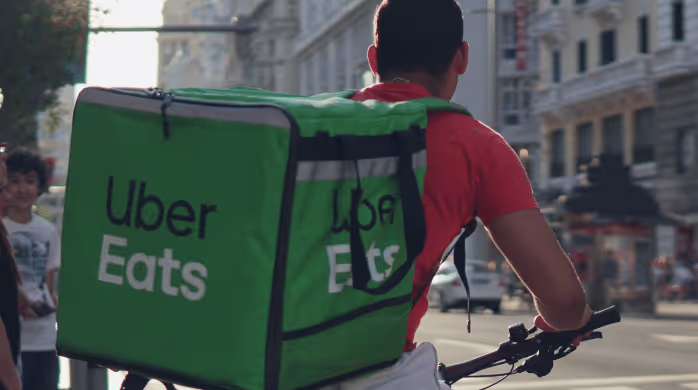
How to Make $1,000 a Week With Uber Eats in 2026 (Tips + Hourly Data)
In this blog, we'll explore the strategies and techniques that can show you how to earn $1000 per week as an Uber Eats delivery driver. We'll cover everything from optimizing your delivery zones and schedules to maximizing your tips and customer satisfaction. Whether you're a seasoned Uber Eats driver or just starting out, this guide will provide you with the insights and actionable steps to take your Uber Eats driver earnings to the next level.
Becoming an Uber Eats delivery partner can be a lucrative opportunity, especially if you're able to consistently earn $1000 a week. By understanding the platform, optimizing your delivery strategies, and focusing on customer satisfaction, you can maximize your earnings and turn Uber Eats into a reliable source of income.
We’ll cover the following topics to provide coaching and ideas to help you push your earnings up to that $1000 per week level:
What do Uber Eats drivers do?
Uber Eats drivers deliver prepared food most of the time, but they also might shop for and deliver goods from convenience outlets and grocery stores. The job is pretty simple. You get a request for an order, you drive to the restaurant or store to pick it up, and then you deliver it to the customer. If you already drive for Uber, you can choose to take orders for Uber Eats delivery any time.
If you’re not an Uber Eats driver yet, it’s pretty easy to become one. This Gridwise post tells you what you need to do if you want to sign up and start making money Uber Eats style. Many rideshare drivers welcome the chance to deliver food rather than people. This article from Nerdwallet covers the Uber Eats gig from that angle.
There are some sweet advantages to working with Uber Eats. In lots of cities you don’t even need to have a car. You can use a bike or a scooter, or even walk, to make your rounds. If you do use a car, Uber Eats’ requirements are a lot easier to meet than they are for Uber rideshare driving.
You also have a lot of flexibility. You can shop and deliver convenience items and groceries, but you don’t have to. And, like most driving gigs, you can choose your own hours, and map out the locations where you want to work.
Use Gridwise features When to Drive and Where to Drive to help you figure out what work hours and which specific areas will be the most profitable for you. Real data from real delivery people will show you earning patterns for drivers in your town.
How much can you earn doing Uber Eats?
The honest answer to this question is: basically, as much as you want! It all depends on how many hours you put in and how strategic you are about your gig. Earnings vary from one area to another, as this article from Entrepreneur points out. To give you a baseline, let’s look at the earnings of Uber Eats drivers who tracked their earnings with Gridwise.
Remember that these numbers show us only average earnings. To make $1,000 a week with Uber Eats, you’re going to have to be better than average, and we’ll show you how. For now, though, it’s good to have these figures so you get a ballpark number of where to start.
How much do Uber Eats drivers make?
Gridwise data tell us the following:
- Monthly earnings average around $444.00 per month.
- Gross earnings per trip are between $9.00 and $10.00.
- Tips make up about 50% of most Uber Eats drivers’ income, which amounts to about $225.00 per month.
Is Uber Eats good money? It can be. While there are other gigs that pay more per trip, if you drive for Uber Eats, you’ll always be pretty busy.
https://datawrapper.dwcdn.net/HPAz8/3
You can also see that, unlike many other gigs, tips play a huge role in Uber Eats earnings.

With these numbers as a baseline, what can we say about how to earn $1,000 a week with Uber Eats? As we said in the introduction, it’s going to be a hustle, but it’s really possible. To figure out how to make the most money with Uber Eats, let’s start by looking at how many trips these “average” drivers made each month.
We know that average gross earnings were $444.00 per month, and drivers got around $10.00 per trip. That means they took 44 or 45 trips per month, which breaks down to 11 trips per week. That’s not a lot of Uber Eats delivery, is it?
The fact that Uber Eats drivers averaged so few trips shows us that many drivers use more than one app at the same time. This is called multi-apping, and you can learn more about it in this Gridwise post. If you want to answer the question of how much you can make with Uber Eats, then you need to stick with the app and keep plugging away at those orders. You also need solid strategies, as well as some inside tips and tricks.
How to make the most money on Uber Eats: Delivery driving tactics
Getting to that $1,000 a week with Uber Eats isn’t so hard when you remember that the drivers we saw making about $111 a week were only taking around 11 trips in the same time period. That’s not much at all! If you work the Uber Eats app like a boss, you’ll soon have many more trips than that, easily reaching the number needed to get you to $1,000 a week. Now, let’s get to some tactics you’ll need to make that kind of bank.
- Stay with the Uber Eats app, and track your earnings. Gridwise can easily do that for you. Simply sync your Uber Eats app with Gridwise, and you’ll be able to see how much you’ve earned with Uber Eats, what times were most profitable, and your average hourly pay. Racking up trips with Uber Eats has other benefits, including perks and bonuses that are awarded to top drivers.
- Leverage surge pricing and promotions. Surge pricing is applied when there is a lot of demand. When surge pricing is in effect, many of the trips you make will pay more than usual. Promotions are offered to drivers who complete a given number of trips in a certain time period. High traffic volume days, nights, and times give you these chances to get extra earnings. Challenging yourself to complete the right number of trips for promotions will add to the number of trips you can count on for big bucks, too. Learn more about Uber Eats surge pay, boosts, and promotions in this Gridwise blog post.
- Say yes to doubling up on orders. With Uber Eats, you can get back-to-back orders or receive batched orders. Back-to-back orders happen when you receive a new request while you’re on the way to deliver an original order. The Uber Eats app routes these trips automatically, so you won’t be sent out of your way.
Batched orders are Uber Eats’ way of bundling together orders from either the same restaurant, or two nearby eating establishments. You get money, and trip count credit, for all the orders you complete, plus customer tips, without having to make a bunch of separate trips.
- Turn on the charm and get bigger tips. Being nice really is part of the Uber Eats driver’s job, and getting tips is one way people who drive for Uber Eats make money beyond their basic pay.. Bring along those extra napkins and condiments, use equipment that keeps food and drinks at the right temperatures and prevents spilling, and consider your customers’ needs. If you deliver groceries, be extra careful with delicate items such as bread and eggs.
And, most important, follow your customers’ directions, and stay in communication with them if you are going to be delayed, or if you have questions about their order. This Gridwise post will tell how to get bigger tips as a delivery driver.
- Use even more charm to keep your ratings high. As an Uber Eats driver, you will be rated by the restaurant or store where you pick up the orders as well as the customers who are waiting for the deliveries. This two-way rating system is designed to keep you on your toes, so Uber can keep people satisfied with your service. Don’t worry, you get to rate them, too.
There’s another reason why your rating as a driver is important. It not only keeps you in good standing with Uber; it helps you to qualify for the Uber Eats Pro incentive program. To learn more about Uber Eats Pro, and what it takes to earn perks such as preferred services, discounts, and deals, check out this Gridwise blog post.
Smart business moves that seal the deal
Now that you know how to gobble up the deliveries you need to make $1,000 a week with Uber Eats, it’s going to be a breeze to get there. Let’s make it even easier, with business moves that boost your earnings and shrink your expenses. If you use these, it will also be easy to say yes when people ask, “Can you make good money with Uber Eats?”
Minimize expenses. Avoid racking up big fast-food bills by bringing your own food and beverages. You might not think you’re hungry when you first start your Uber Eats run, but once the aroma of pepperoni pizza, premium cheeseburgers, and piping hot fries start wafting through your car, that might change. Bring a sandwich or other healthy food from home, and buy bottled water in bulk to save tons of cash compared to what it costs to buy single servings.
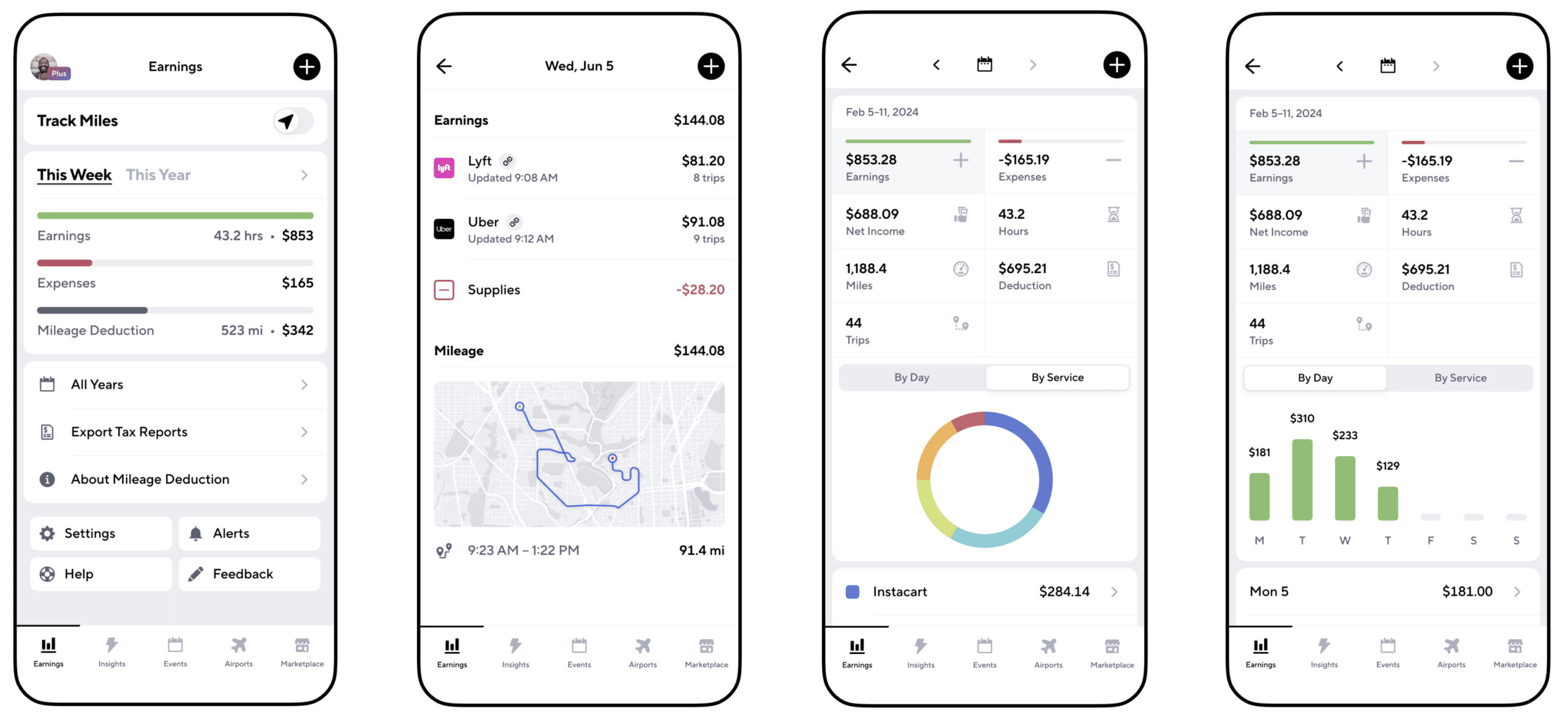
Maximize tax deductions. Another way to minimize your expenses is to maximize your tax deductions. Start by tracking mileage with Gridwise.
Gridwise App
Gridwise captures every deductible mile you drive, including the distance you cover between the trips your driving app records. Know what expenses you can deduct, and put them to work for you when tax time comes. Learn more about tax deduction strategies in the Gridwise Tax Guide for drivers.
Boost earnings with referrals
As an independent contractor, you’re probably looking for ways to make even more money than you can with Uber Eats. And most gig workers like you enjoy getting passive income. With Uber Eats, there’s a really easy way to do that, referrals!
All you need to do is find friends and encourage them to deliver for Uber Eats. If they make a certain number of deliveries within a specified time, you will get paid for doing nothing more than having them sign up under your referral code! Rates of pay vary by city, so check your Uber Eats app to find out what the current deal might be, and learn more about the referral program on the Uber Eats website.
Also remember: “friends” don’t have to be your best buds. Many delivery people carry cards with a QR code linking to their referral information, so just about anyone you encounter can join Uber Eats and boost your earnings. You could meet a source of passive income at the gas station, on social media, or at your high school reunion. The more you hustle, the more there is to gain, right?
Master the art of self-employment
As an Uber Eats driver, you’re an independent contractor. That means the company isn’t going to withhold your taxes, provide insurance, keep track of your earnings, or tell you about tax deductions. You’ll have to do all these things for yourself.
If you want to maximize your tax advantages, open an official business entity. You can incorporate (create a corporation) or you can work as a limited liability corporation (LLC). You can also work with a DBA (Doing Business As) arrangement, but the corporation or LLC will do a better job of protecting you from liability.
Establishing a corporation or LLC offers better tax advantages than being a sole proprietor. For instance, if you simply collect your earnings into your private account, you’ll be charged self-employment taxes in most states. And paying extra taxes is something we all want to avoid, within legal limits, as much as possible.
Every Uber Eats driver needs to learn about self-employment, and there are some great resources you can review. Check out the CareerOneStop website about self employment which will help explain the basics. You can also check with a professional tax accountant, or look other websites to learn more about actually creating a business.
Scope out your market
Look at the area around you to see where you’re likely to get the most deliveries. Where are all the restaurants? Where might people be more inclined to order deliveries? What hours do you want to drive? What activities might be going on around those times? Think about late-night and after-school times as well as breakfast, lunch, and dinner times.
Be realistic about the potential for your area and aware of new services opening up. For example, in New York, there is already a tab on the Uber Eats app that allows customers to order groceries. In our article about the best food delivery service to work for you’ll see that Uber Eats stacks up well against other delivery companies, mainly because of its potential for expanded opportunities for drivers to earn.
So, is Uber Eats good money? As we said, it isn’t an automatic guarantee that everyone will make $1,000 a week with Uber Eats. Trying out the suggestions we give you here, though, should put you on the right track! Go out there and start stacking up those orders and raking in some impressive earnings!
Get more inside information on Uber Eats in these posts from the Gridwise blog:
- The delivery driver guide: Using the Uber Eats app
- Everything you need to know about driving for Uber Eats
- Uber Eats Pro: What drivers need to know
- Looking for a different gig, part-time or full time job? Check out the Gridwise Job board.
Uber Eats FAQ
How does the Uber Eats platform work for drivers?
Uber Eats is a food delivery service that connects customers with local restaurants and independent delivery partners. As an Uber Eats driver, you'll receive notifications of nearby delivery requests, which you can accept and complete. The platform provides flexibility, allowing you to work on your own schedule and earn money based on the number of deliveries you complete.
What are the requirements to become an Uber Eats delivery partner?
To become an Uber Eats delivery partner, you'll need to meet certain requirements, such as having a valid driver's license, a registered vehicle, and passing a background check.
How can I choose the right delivery zone to maximize my earnings?
Selecting the right delivery zone can significantly impact your earnings, as some areas may have higher demand and better-paying orders. It's important to research and identify the zones in your area that tend to have the most consistent and lucrative delivery opportunities.
How can I take advantage of peak delivery hours and surge pricing?
Understanding peak delivery hours, such as mealtimes and weekends, and taking advantage of surge pricing can boost your earnings. Be aware of when demand is highest in your area and adjust your schedule accordingly to capitalize on these peak periods.
What are some tips for maximizing tips and customer satisfaction?
Providing excellent customer service and going the extra mile to ensure a positive experience can lead to more tips and repeat business. Prioritize communication, timeliness, and attention to detail to keep your customers happy and satisfied.
How can I set realistic weekly goals to reach my $1000 target?
To make $1000 a week with Uber Eats, it's essential to set realistic weekly goals and track your earnings and expenses. Start by determining your target earnings and breaking it down into achievable daily or weekly goals. This will help you stay on track and make adjustments as needed.
What are some strategies for efficient route planning and navigation?
Effective route planning and navigation can save you time and fuel, allowing you to complete more deliveries. Utilize mapping apps and take advantage of features like real-time traffic updates and turn-by-turn directions to find the quickest routes.
How can I balance my Uber Eats deliveries with other commitments?
Develop a schedule that allows you to capitalize on peak delivery hours while still maintaining a healthy work-life balance. Consider using tools like calendar apps to plan your availability and track your hours to ensure you're maximizing your earning potential without sacrificing your personal life.
What are the key considerations for maintaining my vehicle as an Uber Eats driver?
Keeping your car clean and well-maintained is crucial for maximizing your Uber Eats earnings. Regularly scheduled oil changes, tire rotations, and other preventive maintenance can help extend the life of your vehicle and minimize downtime. Additionally, budgeting for vehicle-related expenses, such as fuel, insurance, and repairs, will ensure you're accounting for these costs and maximizing your net earnings.
What are the tax obligations and legal considerations for Uber Eats drivers?
As an Uber Eats delivery driver, it's essential to understand the tax obligations and legal considerations that come with being an independent contractor. This includes properly reporting your earnings, deducting eligible business expenses, and making quarterly estimated tax payments. Additionally, you'll need to ensure you have the appropriate insurance coverage, such as personal auto insurance and possibly commercial auto insurance, to protect yourself and your vehicle while on the road making deliveries.

The Gridwise Job Board: Find Your Ideal Job or Gig Work
Gridwise is an essential assistant app created by gig workers for gig workers. Our mission is to support those engaged in gig work in every way possible. We understand how challenging it can be to deal with income instability, a lack of benefits, and job insecurity that often comes with gig work. The Gridwise app tracks and organizes earnings and expenses, and offers a wide array of discounts, deals, and services that make the lives of independent contractors easier and more rewarding.
We firmly believe it’s possible to make a viable living and create a gig experience that offers flexible hours, variety, and excitement. With issues such as consistent earnings and job security in mind, Gridwise is proud to offer a centralized platform that shows you how to find gig work and secure reliable opportunities. We’re proud to introduce the Gridwise Job Board.
The Gridwise Job Board: Key features
Because Gridwise is dedicated to serving the gig worker community, we’ve filled the Gridwise Job Board with useful features that won’t waste your precious time.
- Comprehensive listings. Find part-time, full-time, temporary, and per-task work. Drive or deliver with your vehicle, utilize an employer’s vehicle, or even find non-driving gig work.
- User-friendly interface. Find the jobs that are right for you with a tap of your screen.
- Verified opportunities. We vet the jobs before they are listed to ensure you’re getting high-quality job postings.
How to get more gig work, seasonal, part-time or full-time jobs with the Gridwise Job Board
Looking specifically for “gig work apps” or “gig jobs near me?” You’re in luck. Our filters and search functions send you directly to the listings you seek.
Here’s how it works.
- Access the Job Board via the Gridwise website.
- Search for jobs by type, location, and more.
- Select the job that interests you, and read all about it.
- Scroll through the description, and if it appeals to you, click “Apply for job.”
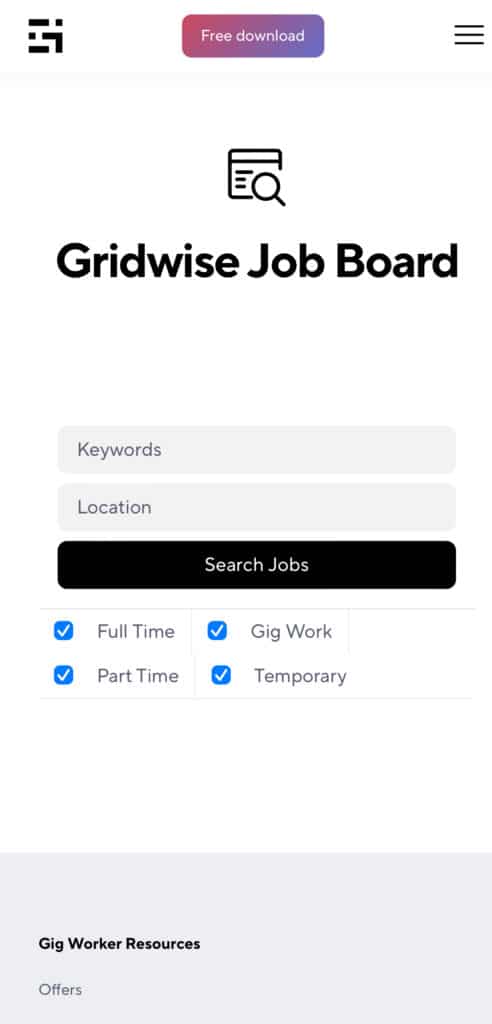
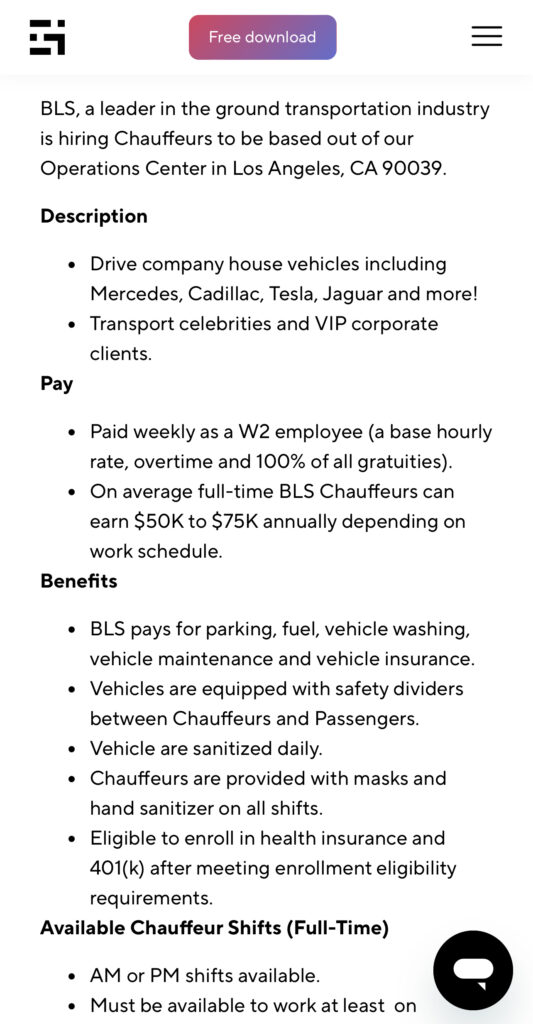
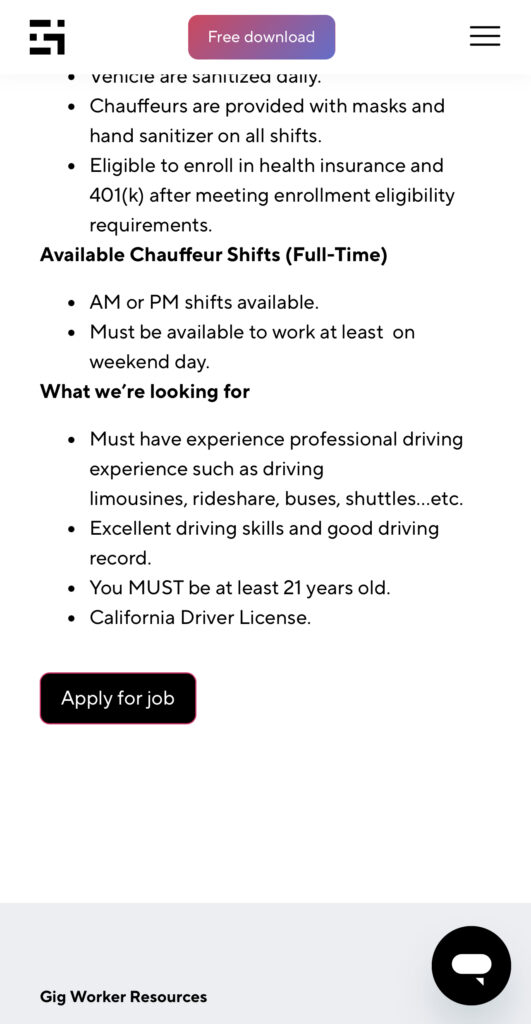
Many types of jobs are available. Adjust the search filter to see the full variety of opportunities that will let you cash in. Deliver food, set up catering, do rideshare driving, get paid for doing package delivery, and much more. You’ll find short-term gigs, long-term contracts, and part-time positions.
Perks of the Gridwise Job Board for gig workers
Gig workers who know how to make extra money will appreciate how the Gridwise Job Board lets you multiply your chances of bringing in big earnings. Here’s how:
- Increased stability. Use the Gridwise Job Board to find part-time or permanent jobs in addition to the part-time gigs you already have. Always keep a steady stream of earning opportunities flowing toward you.
- Flexibility and autonomy. Choose jobs that fit your schedule, work around other jobs and family duties, and still leave room for some fun in your life. Discover side hustles to supplement your full-time job, permanently or just for the season.
- Skill development. Find part-time work that lets you use a skill you already have, or try your hand at something new. It’s a smart way to develop a portfolio to showcase what you can do, or even to find permanent employment.
Get Gridwise and stay up to date on the Gridwise Job Board
Gig workers need plenty of information and assistance, and Gridwise is here to give it to you. Download the app and get essential features such as
- seamless earnings tracking
- mileage tracking
- expense recording, including notes
- low-cost and no-cost insurance benefits
- access to affordable medical, dental, vision, mental health, and alternative care
- professional services including legal and financial help
- deals and discounts
- weather, events, and traffic reports
- inside information on where and when to drive
More to know about gig work:

5 Best Mileage Trackers For Gig Drivers
Many drivers ask, “Do I really need a mileage tracking app?” The answer is simple: only if you want to have an accurate count of all the miles you can legally deduct from your taxable income! You might think your rideshare or delivery driving app has got you covered. After all, they do quite a good job of logging the miles you drive while you’re on a trip or delivery. But, if you want to have the best app to track mileage for Uber, Lyft, Doordash, Instacart, or the other apps you may use, you need more. Why is that?
Without a separate tracker, you’re missing the miles you drive in between pings. Did you realize that all the miles you drive, from the moment you begin your shift until it’s over (as long as you don’t drive several miles on a break to hang with your friends), are tax deductible! That means you need something besides your driving app to keep an accurate count of your travels. Read this Gridwise post to see how important it is to keep track of every deductible mile.
You won’t be surprised to hear that there’s an app for tracking miles. In fact, there are several of them. Here, we’re going to tell you about five top mileage tracking apps, and help you figure out which one is best for you.
Before we get to the list and identify the best mileage tracker app, let’s clarify what exactly a mileage tracking app is. According to G2.com’s technology glossary, mileage tracking is done for the purpose of keeping a log of mileage that is either reimbursable or tax deductible.
And yes, of course you can track your miles simply by taking readings on your odometer. But are you really prepared to account for how many miles you drove for personal reasons and subtract them from the total to get your business mileage? Even if you can remember all that and do the arithmetic, if you want an accurate reading of the miles you drive for business, and can therefore deduct, a mileage tracking app will save you a lot of trouble and prevent you from making costly errors.
Plus, as a gig driver, you have specific needs when it comes to a mileage tracker. Ideally, you’d be able to handle mileage tracking and several other functions all in one app. It can be maddening enough to deal with driving apps, particularly if you’re an avid multi-apper. You would want your mileage tracker app to help you keep account of other aspects of your business, including income, expenses, and inside information about the art of gig driving.
Not all mileage apps are equal, to be sure! Let’s look at five of the best apps to track mileage and figure out which is the best app to track mileage with Uber and Lyft, or what mileage tracker app is best for DoorDash.
1. Zoho Expense
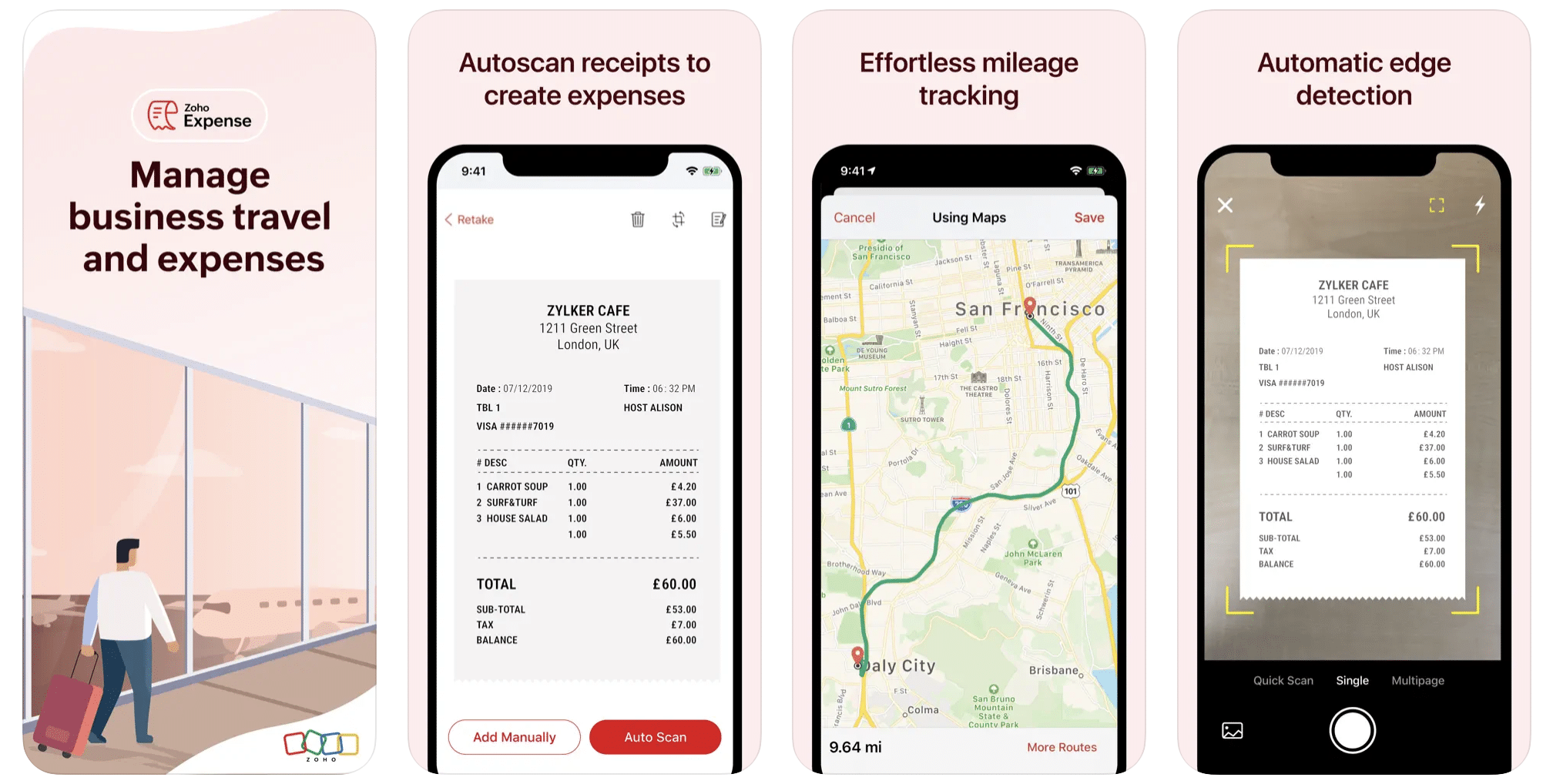
First up is Zoho Expense, which does exactly what its name says. This app is designed to allow companies to give employees a uniform way to create and submit expense reports. It can be used by individuals, including gig drivers, as well.
It includes a mileage tracker, as well as features that let you track other deductible expenses, including the ability to scan and record receipts.
Available on Android and Apple: Yes
Ratings: 4.8 stars on App Store, 4.7 stars on Google Play
Free Version: Yes
Subscription price: $3 per month, billed annually
Created specifically for gig drivers: No
2. Quickbooks Online
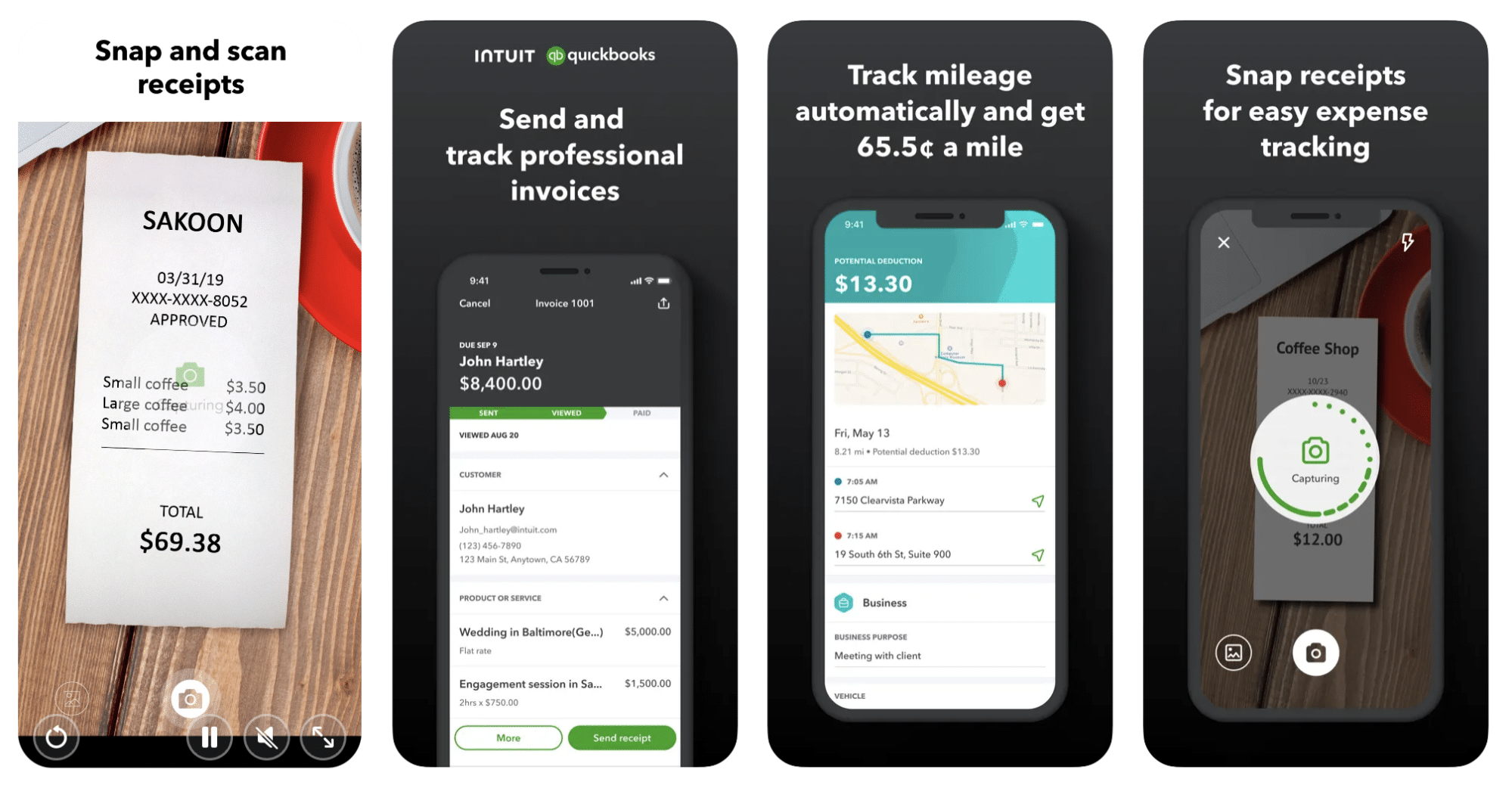
Quickbooks Online is a cloud-based app that allows you to track your mileage, earnings, and expenses. The information you enter can then be used to generate various reports that prepare you for tax time. It also allows you to create graphs that illustrate your cash flow, and includes a receipt scanner so you can instantly record deductible expenses. Quickbooks is popular, highly reliable, and designed mainly to help people keep track of their small businesses.
Available on Android and Apple: Yes
Ratings: 4.7 stars on App Store, 4.4 stars on Google Play
Free version: 30-day free trial
Subscription price: $15 per month for basic version if purchased for 3 months or more
Created specifically for gig drivers: No
Source: quickbooks.intuit.com
3. Shoeboxed
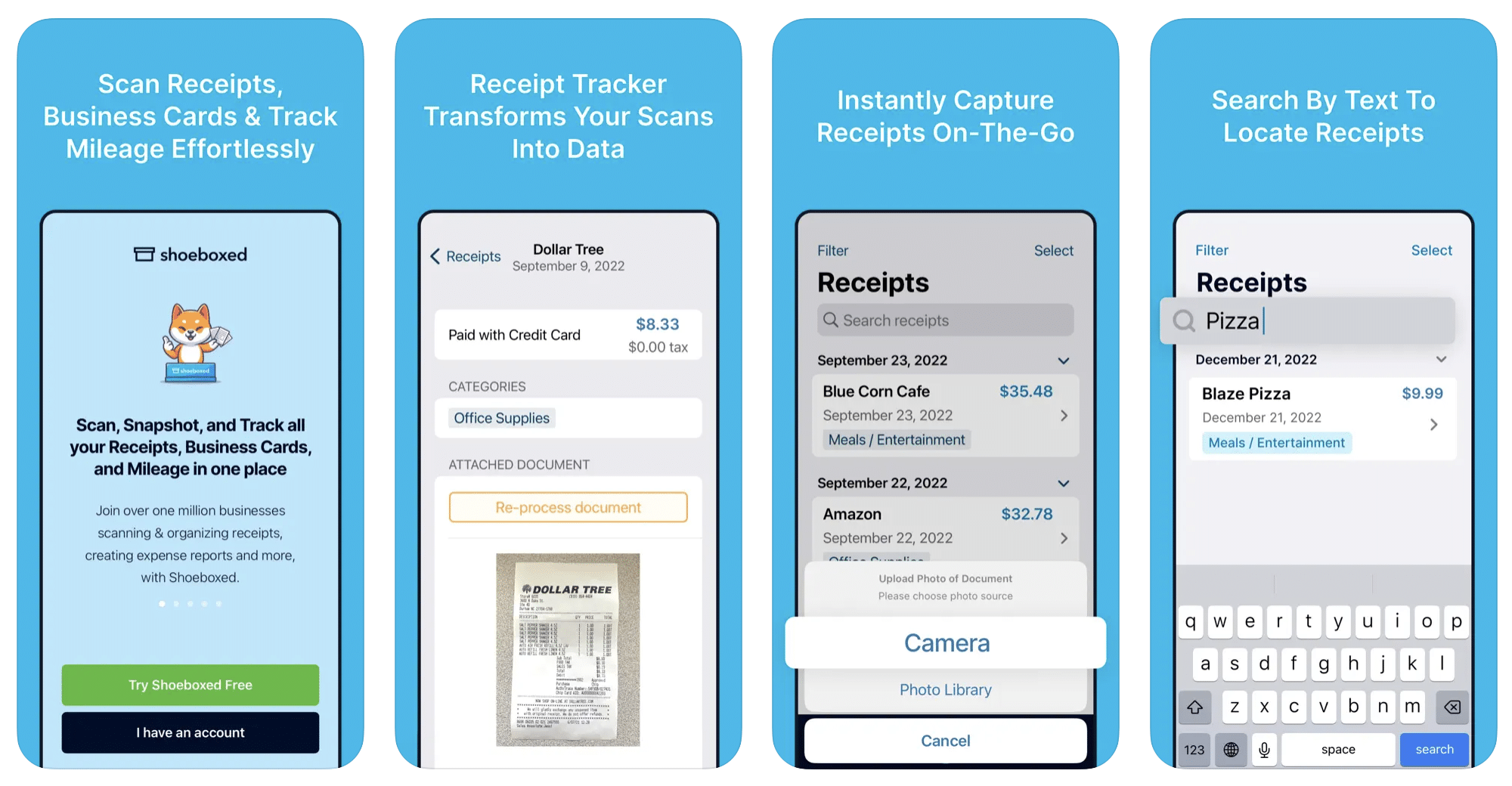
Shoeboxed started in 2007 as a service for scanning paper receipts into digital form. Now the app offers a free mileage tracker and has enabled users to scan receipts directly. It touts itself as the best mileage tracking app for DoorDash, but there are some elements missing that Dashers might like to have. While it provides features that record your expenses and prepare you for tax season, it doesn’t automatically track your earnings. The mileage tracker has a system where you can drop pins along your routes to make the tracking more precise, identifying those legs of a trip that you make for business purposes. The mileage tracker is “free” once you sign up for the basic version.
Available on Android and Apple: Yes
Ratings: 4.5 stars on App Store, 2.3 stars on Google Play
Free version: No
Subscription price: $18 per month for basic version
Created specifically for gig drivers: No
Source: blog.shoeboxed.com
4. Stride
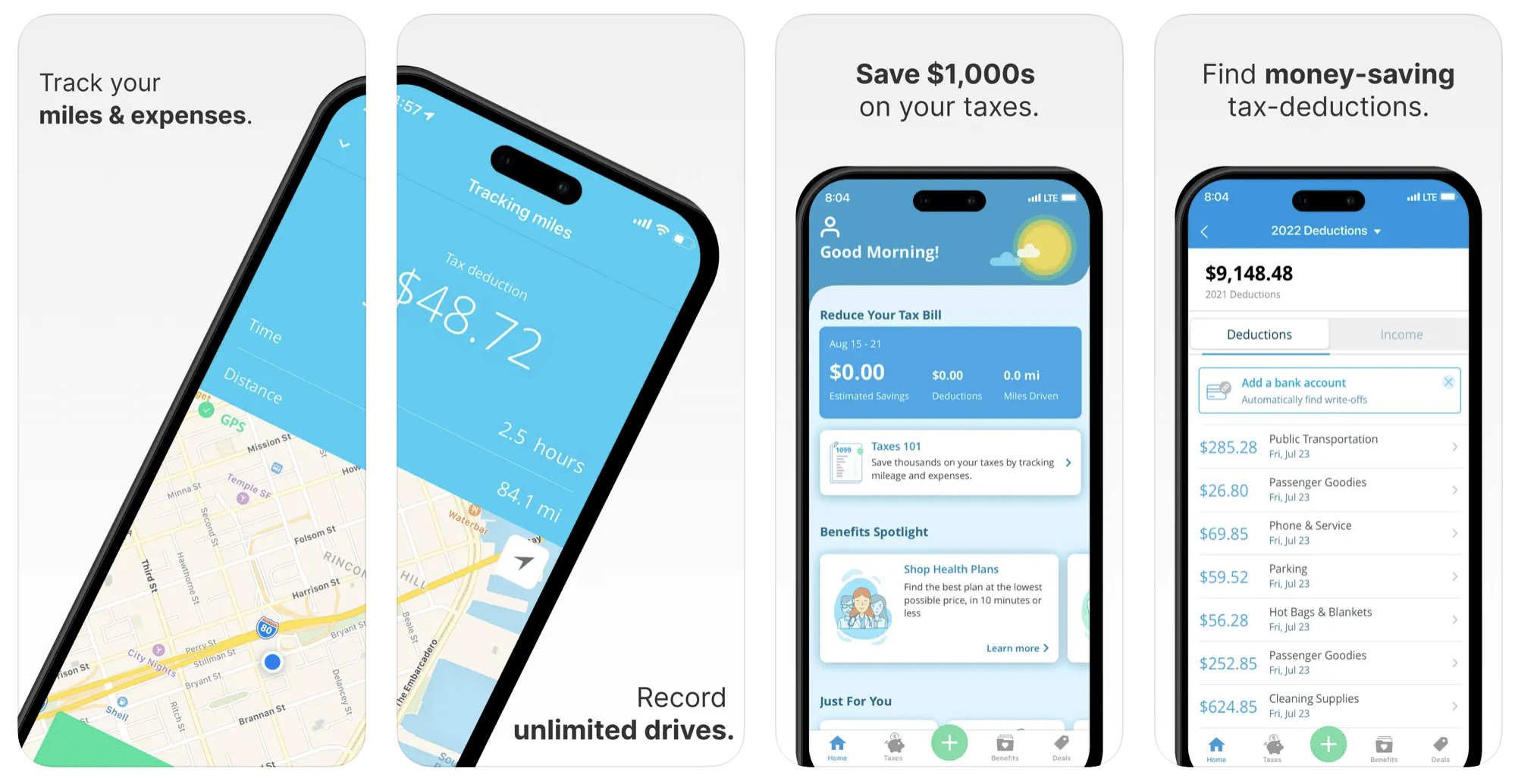
This free mileage tracker does a fair job of keeping track of the distances you rack up while gig driving, but it doesn’t automatically track earnings. It can be a big help, though, in tracking your expenses. You can link Stride to your bank account, and it will automatically scan your expenses to identify items you can potentially deduct. The app is totally free. This could make it the best free mileage tracker app, but there is a small price to pay. The app will persistently push you to consider various insurance plans that they are affiliated with. If you don’t mind that, this is a solid mileage tracker, even if it doesn’t track your earnings.
Available on Android and Apple: Yes
Ratings: 4.8 stars on App Store, 4.6 stars on Google Play
Free version: Yes
Subscription price: None. The app is free.
Created specifically for gig drivers: No
5. Gridwise
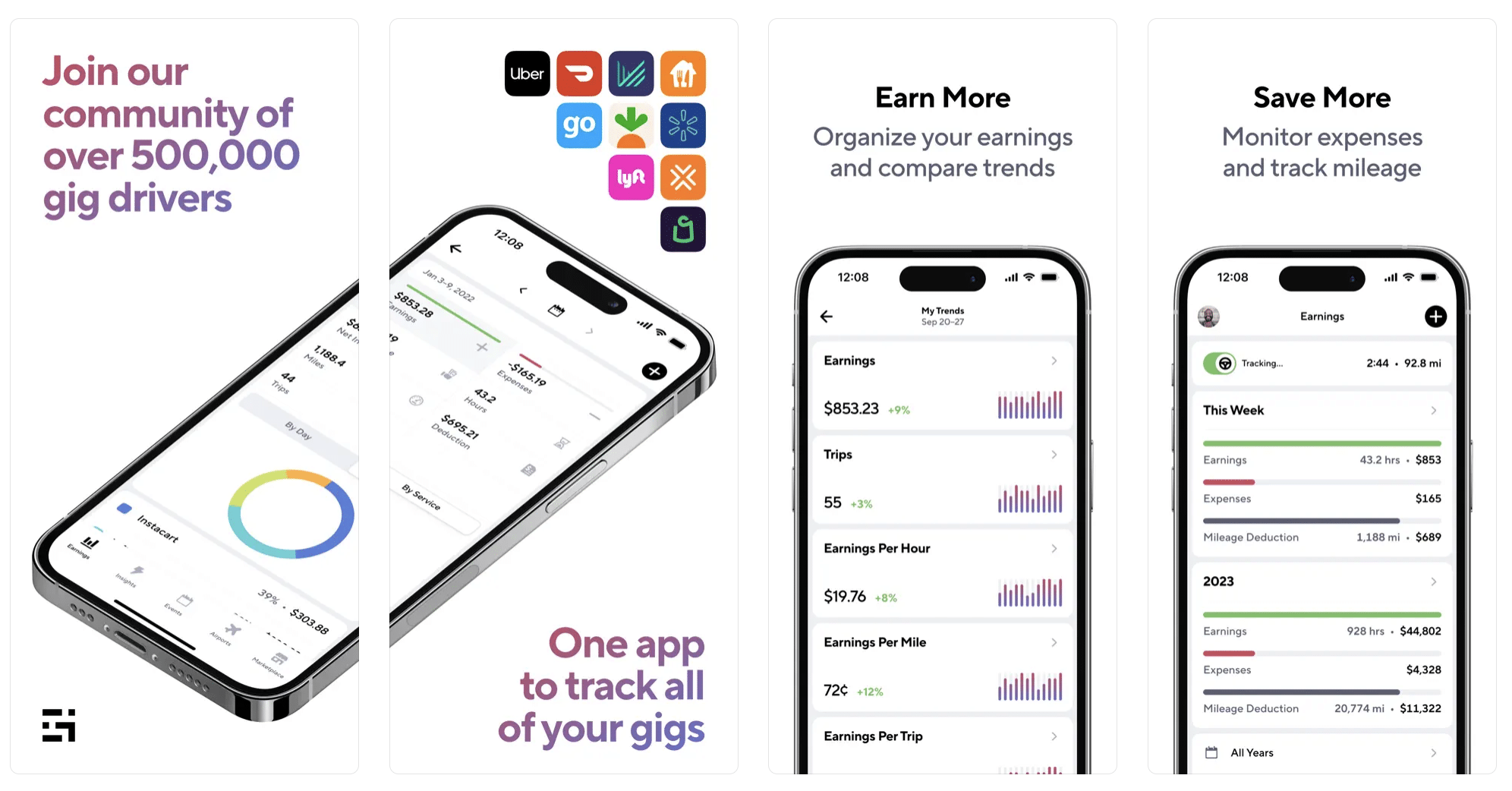
Gridwise has a free mileage tracker and free features that record your income and expenses. It gives you access to insurance and benefits, as well as insights about the best times and places to make the most money while gig driving. The Gridwise mileage tracker captures all the miles you drive while you’re on your driving shift, and it can be used if you have other trips you need to make which qualify as business travel.
Drivers love it because it is geared toward the needs of rideshare and delivery workers, providing free information about airport departures and arrivals, event start and let out times, weather, traffic, and more. The Gridwise Plus subscription adds value by providing additional insights and reports, discounts on benefits, the ability to export data in .csv format,, and more.
Available on Android and Apple: Yes
Ratings: 4.9 stars on App Store, 4.6 stars on Google Play
Free version: Yes
Subscription price: $9.95 per month for Gridwise Plus, or $95.99 per year (a $23.41 savings)
Created specifically for gig drivers: Yes!
What is the best mileage tracking app?
Now that we’ve checked them all out, we’re positive about the answer to that. Hands down, it’s Gridwise. Are we biased? You bet we are! But drivers love it too. Gridwise is the best mileage tracker app, and so much more. So many of the features are free, and the subscription to Gridwise Plus will pay for itself with additional insights to boost your earnings and deeper discounts on products and services.
Most important, Gridwise is designed specifically for gig drivers by experts who were once gig drivers themselves! Knowing what gig drivers need is a crucial step in creating an app that rideshare and delivery drivers can really use! Here are a few of the features, besides mileage tracking:
- seamless earnings tracking
- automatic, on/off toggle and manual mileage tracking
- mileage categorization
- airport, traffic, weather, and events information
- insights into where to drive and when to drive
- reports showing earnings across the platforms you use
- discounts on countless products and services for drivers
- additional resources for finding side gigs
- an informative and comprehensive blog
- affordable benefits, including insurance, medical, dental, and alternative practitioner discounts
- a community of drivers just like you
Don’t settle for just any app. Get the best mileage tracker, and so much more, from Gridwise!
How Much Do Lyft Drivers Make Per Day?
Are you making the most money you can with your Lyft driving gig? The best way to find out is to discover what Lyft earnings are like, and what you can expect to make from a day’s work. Let’s explore some numbers to provide more insight into your Lyft gig, and consider some advice for maximizing your daily earnings.
What are Lyft earnings like per day?
Some sources state that Lyft drivers will have to work 6–8 hours to earn from $96–$136 in any given 24-hour period. The accuracy of a figure such as this depends on a lot of factors, including who is reporting the numbers, the driver’s geographic location, and how well the data is curated to ensure that it reflects a true picture of a Lyft driver’s day.
Most of the figures we see come from a general consensus derived from surveys that have been conducted by employment companies, or even the rideshare and delivery apps themselves. These don’t always tell the whole story, or provide accurate data, about driver earnings. At best they are guesstimates.
Lyft driver pay is calculated by adding tips and bonuses to base pay, which is what Lyft charges for the ride minus the “take” Lyft keeps for their part in making the rides happen. This is the gross amount of driver pay, meaning that expenses for gas, car maintenance, and the like aren’t accounted for.
The biggest variable involved in calculating daily pay is solid information about hourly earnings, and how long drivers’ shifts actually are. How many hours would be considered “a day” for the typical Lyft driver? Some drivers work full time, at least 8 hours a day, while others have more sporadic hours, possibly varying their hours from one day to the next, or perhaps by using more than one app at a time during the day.
These variables may or may not be taken into account when calculating daily earnings. It’s most likely that the numbers are averaged out so that “a day” consists of an average number of daily hours.
What do the numbers say about Lyft daily earnings?
Some drivers claim they make much more, while others report much lower daily earnings. Data from Gridwise reflects actual earnings information from drivers just like you, so it creates a more realistic picture of Lyft daily earnings.
This picture of Lyft daily earnings reflects the experience of drivers nationwide, but there is more to the story.
No matter where you live, it pays to know where events, traffic jams, and weather problems might be. Download Gridwise to get specific information about these items, plus airport information for your locality.
Pick your best days to drive for Lyft
Your Lyft driving day might be two hours or as many as ten, but if you want to optimize your driving time, it’s wise to choose the best days to drive. Lots of factors combine to create the best days. Most authorities will say that early mornings, along with Friday and Saturday nights, are the times when drivers can make the most money.
This might be a good general guideline, but it isn’t the whole story. What if you can’t arrange your schedule so you’re available to drive at these times? Or what if these patterns don’t hold true in your area? You need more detailed information that applies directly to you.
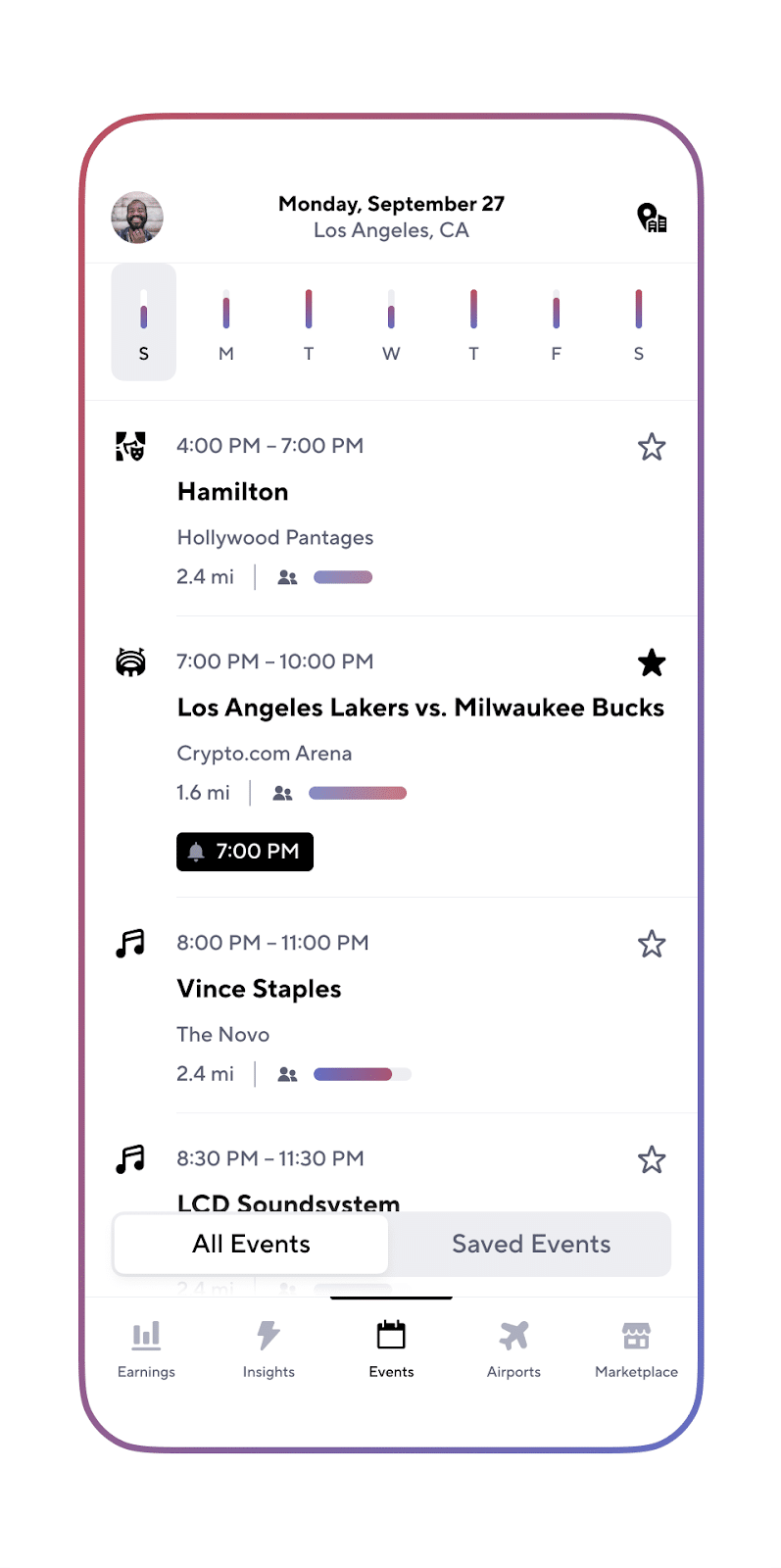
You get exactly that with When to Drive from Gridwise! This amazing in-app feature gives you actual data about real Lyft drivers in your area. You’ll be able to see the best times of day to drive, as well as the days when drivers are making the most money in the places where you drive.
Maximize your daily Lyft earnings with these pointers
- Download Gridwise and use When to Drive. Driving for Lyft isn’t complicated, but it’s far more profitable when you use this powerful tool to maximize your daily earnings.
- Use multi-apping to increase your odds for success. If you notice Lyft business lulls on certain days, consider using different apps to fill in the gaps.
- Track your mileage and expenses. Hang on to more of your money and be in good shape for tax time. Download Gridwise to catch those deductible in-between miles your app doesn’t count, and enter your expenses to minimize your taxable income.
Get more earnings insights for Lyft drivers
How Much Do Lyft Drivers Make Per Hour?
Are you a Lyft driver, or are you considering getting started with this popular driving gig? If so, it’s only reasonable to wonder How much do Lyft drivers make per day? Or how much do Lyft drivers make per hour? Gridwise has the numbers, and we reveal them here, along with other helpful information.
Lyft driver earnings per hour
Estimates of what Lyft drivers make are all over the board. Salary.com lists Lyft hourly earnings between $15 and $23, while Glassdoor’s figures range from $19 to $33 per hour. Gridwise figures are based on actual driver earnings, and here’s what they tell us:
While hourly earnings have had their ups and downs over the course of the last several months, actual earnings demonstrate that Lyft can be a very solid source of hourly earnings.
Hourly Lyft earnings across key cities
Gridwise data tells us a lot about how much Lyft drivers earn. The Gridwise figures we’ve already shown you reflect average earnings nationwide. It makes sense that the actual hourly earnings where you are located may vary. Drivers make the most money, for instance, when they live in a big city such as San Francisco.
The busiest times of day to drive
Location is just one of the reasons it’s not easy to pinpoint exactly how much the average Lyft driver makes per hour. The times of day that you choose to drive will also have a big effect on what you earn.
Daily averages can give you some idea about when the best times to work your Lyft gig might be, but there is a more effective way to know for sure when demand for Lyft rides is high where you live and work.
With When to Drive from Gridwise, you’ll be equipped with up-to-the-minute information, as well as historic data, that show you what real drivers are making at different times of day in your area.

You might get messages from your app that try to get you to go to certain areas for surge pricing or boosted rates, but this Gridwise feature is different. Because it’s based on actual data from real drivers, When to Drive directs you to the spots where you know you can consistently make the most money.
Download Gridwise now to get personalized and more detailed information about the best places to drive. Upgrade to Gridwise Plus to get granular detail that will truly boost your Lyft earnings!
How to maximize your hourly earnings with Lyft
You need to strategize in order to make sure you’re making the most money per hour as possible, and you also need to know what you can do to keep as much of it as possible. Make your Lyft driving gig as profitable as you can with these savvy tips.
Use When to Drive from Gridwise. Get actual data from real drivers so you can plan your gig to make the most of each and every hour you work.
Master multi-apping. Maybe the times you can drive aren’t always the most profitable ones. Keep making money by switching between apps. One of the biggest perks of being an independent contractor is the freedom you have to work as many gigs as you can humanly handle. That means you can multiply your earnings with multi-apping. Business Insider is very much aware of this growing trend, and you should be too.
Track your mileage and deductible expenses. Adding up all your deductible expenses is crucial if you want to keep more money at tax time. An accurate count of every mile you drive on your gigs, for every trip and the time in between, is crucial if you want to deduct the IRS 2024 $0.67 per mile allowance from your income. That number really adds up, so track every mile and record your deductible expenses with the Gridwise app
Get more earnings insights for Lyft drivers

Car Depreciation Tax And Gig Driving: How Does It Work?
*Gridwise does not provide tax, legal, or accounting advice. This material has been prepared for information purposes only, and is not intended to provide, and should not be relied on for tax, legal, or accounting advice. You should consult your own tax, legal, and accounting advisors before filing your return.
Who would think, when it comes to your car you’d want to learn how to appreciate a thing like depreciation? That old adage about a car losing a certain percentage of its value the moment it leaves the lot is true, and on its face, that sounds bad. But unless you’re planning to resell your vehicle in the near future, you can use depreciation to your advantage.
How would you do that? The amount of depreciation your car racks up each year can be deducted from your taxable income and reduce the amount you owe on your tax return. In this post, we’ll explain this thoroughly, show you the best ways to calculate and claim depreciation on your vehicle, and help you reduce your taxes!
Vehicle depreciation: What it is and why it matters to gig drivers
Your car is an asset. Surely you noticed how valuable it is when you went to pay for it! Fortunately, the IRS also recognizes it to be an asset. This can allow you to view that lost value as you drive off the lot in a totally different way.
How does car depreciation work for tax? You can subtract the value your vehicle loses over time from your taxable income! The more mileage and wear and tear a vehicle accrues, and the more it becomes outmoded by new technology, the greater the amount of depreciation you can deduct. This is a piece of information that, as a gig driver, you can learn to thrive on. Although your car is bound to depreciate faster than average, because you drive so much, you can at least get credit for it in the form of a hefty tax deduction.
The IRS allows drivers to spread the depreciation of their vehicles over a car’s “useful life,” or the amount of time it takes for a car to lose all of its original value. In general, the IRS allocates five years for most vehicles. You might be able to get more depreciation in less time, though, depending on the method you use.
Methods to minimize tax time madness
There are two ways to get your car depreciation tax calculator up and running, via different methods of accounting for the depreciation of your vehicle. The first method is the standard mileage deduction.
What is the standard mileage deduction method?
Each year, and sometimes more often, the IRS sets a rate that corresponds to the amount you can deduct for every mile you drive while doing your driving gig. For 2023, the IRS standard mileage rate is 65.5¢ per mile. This rate bundles all the expenses you pay to operate your vehicle, from gas and registration to depreciation. If this is the first year you are using your car for business, the IRS wants you to use this method.
To use the standard mileage deduction, you will take the number of miles you drove for your gig, and any other mileage you accrued for your business, and multiply it by the standard mileage rate. Note that you must know the number of miles you drove for business and deduct only those miles. You can estimate the percentage of your total miles driven for business, but it’s far more accurate to use a mileage tracker, such as Gridwise.
Furthermore, it’s worth noting that, since you have a “home office,” you can also deduct the miles you drive to and from your driving gig. This is not the same as commuting costs, which are not tax deductible. Tracking mileage becomes especially important here, because while your driving apps record the miles you drive while you are on a trip or delivery run, they don’t count the miles you drive to and from your home base to where you begin driving for the apps.
This can become quite costly. Let’s take just one day’s worth of numbers to illustrate how this might work. Say you drove 100 miles on your shift, but went 15 miles in each direction to travel to and from your home base. Based on the 2023 standard deduction rate, you would have $65.50 to deduct according to your apps. But unless you used an app such as Gridwise to track all the miles you traveled going to and from your shift, you would have missed $19.65 in additional deductions, representing your journey to and from home base, just for that one day!
The IRS standard deduction method is good for gig drivers because of the way it pays for the many miles rideshare and delivery drivers put on their cars. But do the IRS estimates equate to what it truly costs to operate a car for rideshare or delivery—or is there a better way?
What is the actual expense method?
If your driving gig is in its second year of business or later, you can opt to delineate the allowed actual expenses related to operating your vehicle for business, tally them up, and deduct them from your taxable income. You are discouraged from using this method until your second year. Even then, it’s worth calculating your deduction by the standard mileage method and the actual expense method to see which one puts you at a greater advantage.
Why use this method? If your mileage isn’t particularly high, such as if your driving gig is in a big city where you don’t drive very far, this method might save you more money. Also, if you only do rideshare or delivery driving on a very part time basis, you may benefit from using this way of calculating your vehicle-related tax deductions.
Using this method, you need to track your expenses for
- fuel
- oil
- repairs
- ties
- insurance
- registration fees
- licenses
- depreciation (or lease payments, if your lease permits you to use the car for business)
As you can see, that’s a lot to keep track of. Fortunately, there’s Gridwise Tax Help powered by Keeper. Keeper helps you to categorize these costs, and even searches your bank transactions to identify deductible items you may have neglected to record. Keeper also lets you scan receipts, so you don’t have to worry about scrambling to find annoying little scraps of paper in your car’s console or glove box.
To use the actual expense method, you also have to determine what percentage of the mileage you accumulated over the course of the year was due to your driving gig. Then, after you total all the expenses, you use the percentage you determined to deduct just the portion of your car’s use that was dedicated to business.
Before you get that far, though, you’re going to have to know how to calculate and report vehicle depreciation.
“How do I claim car depreciation on tax returns?”
First things first: Determine the depreciable basis.
Before you begin to calculate the amount of depreciation you can deduct from your taxable income, you’ll need to determine the depreciable basis, or the total cost of your vehicle. This amounts to the cost of the vehicle plus taxes and fees paid at the time of purchase. For example, if you buy a vehicle for $17,000, and the taxes and fees were $2,500, the total depreciable basis would be $19,500.
Once again, you could only use the whole $19,500 if you used your vehicle for work all of the time. If you didn’t, you must calculate the percentage of use for business, and base your actual depreciable basis on that percentage of the total depreciable basis. This is where tracking your work mileage comes in. When you have an exact record of the precise number of miles you clocked for business use, you can easily calculate the right percentage.
Choose your depreciation calculation method.
There are two ways to calculate the depreciation of your vehicle.
- MACRS (Modified Accelerated Cost Recovery System)
This system was put into place to encourage business owners to purchase more equipment. It permits you to deduct a larger portion of your vehicle’s value in the early years of ownership. You must use your vehicle for business 50% of the time or more to use MACRS. Also, to use this method, you will need a MACRS table like this one, provided by Keeper.
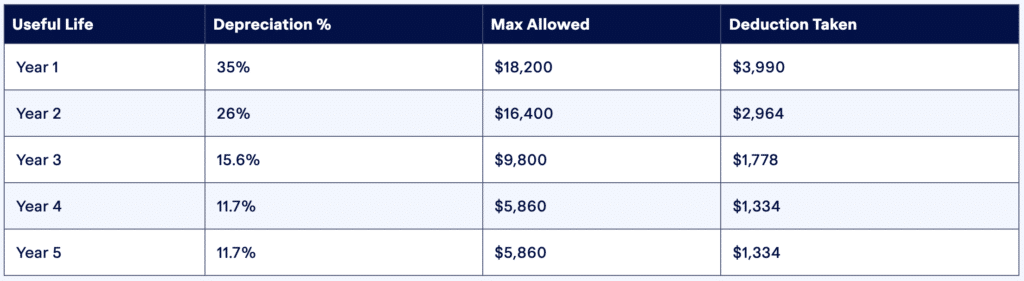
Keeper’s blog post on this subject will give you step by step instructions and detailed explanations about car depreciation and MACRS. Before you file, make sure that the table you use is in line with current IRS regulations. This IRS publication describes how to depreciate property in detail. In addition to your vehicle, you may want to depreciate other items you use for business, such as your phone or computer.
- Straight depreciation
This method of depreciation is easier to calculate and must be used if you use your vehicle for business less than 50% of the time. You simply take the depreciable basis of your vehicle, and divide it out over five years, which is the expected useful life of the asset. This article from Motley Fool describes this method and also gives step by step instructions.
Get the right forms.
IRS Form 4562 must be used to report depreciation on your vehicle and other equipment. The form may be filled online, or you can print it and complete it manually.
Note that if you’re depreciating an SUV, truck, or other heavy vehicle, different rules apply. These regulations, and other ways of taking deductions, are special case strategies.
Special case car depreciation tax deduction strategies
Section 179 of the IRS code allows for accelerated depreciation. To maximize your write-offs in the first year of using your vehicle, you can use this method by simply deducting the entire cost of the vehicle. This could be quite advantageous if you intend to use your car for only one year. It can also offer a boost to your take-home pay in your first year of business, giving you time to get your driving gig up to full speed.
Just like with MACRS, you must use your vehicle 50% or more of the time for business to qualify for accelerated depreciation under Section 179. For 2023, the maximum deduction allowed for a car is $10,200.
If you own an SUV or another vehicle weighing 6,000 pounds or more, the maximum deduction allowed under Section 179 beginning in 2023 is $26,200, and the 50% usage rule applies. If you purchase an even larger vehicle, weighing 14,000 pounds or more, or have a vehicle that is modified to seat just a driver with a cargo section, you may be able to deduct 100% of your vehicle’s cost in its first year. This article from Block Advisors provides further details.
Bonus depreciation is another incentive for business people to buy more equipment, and it can add to your deduction. Until recently, businesses used bonus depreciation rather than Section 179. Beginning in 2023, bonus depreciation amounts will get progressively lower, as this form of depreciation is phased out.
For 2023, however, you can still get a rather substantial first-year deduction by combining Section 179 and bonus depreciation.
If you’re curious about all the ways the IRS allows you to deduct from your income based on the business use of your vehicle, take a look at this IRS document. You can also learn more in this Gridwise post on how to choose your mileage deduction method.
Keep more of your money with expert help
Knowing what you can deduct, and how to do it, can really help you hold on to your hard-earned cash. As you can see, one of the things you’ll need to do is keep solid records of your mileage and expenses, so you will be able to document your claims when it comes time to take all those deductions.
Gridwise is the best mileage tracker for gig drivers, because it logs every mile you drive on every shift. All you need to do is start tracking when you begin driving, and Gridwise will do the rest.
Gridwise Tax Help powered by Keeper is a service you can’t afford to be without. Designed just for gig drivers by tax experts, this powerful app not only tracks your expenses, it helps you to find them!
Simply link Keeper to your bank account, and the app will search your transactions for items you can deduct. Remember, depreciation is only one thing you can subtract from your taxable income. You can also include items you might not have thought of, as listed on the Keeper blog.
These include
- delivery equipment
- subscriptions to music services
- refreshments for passengers
- car washes and detailing
- productivity apps—like Gridwise!
Remember, Gridwise users receive 30% off the Keeper app, and Gridwise Plus users get 50% off! The winning combination of Gridwise and Keeper is sure to make it easier for you to keep more of your money, and after all, that’s why you do gig driving in the first place!
Download Gridwise and get Gridwise Tax Help powered by Keeper today!

How Much Do Uber Eats Drivers Make Per Hour?
As soon as they find out you drive for Uber Eats, curious friends and family will want to know: “What’s the Uber Eats driver hourly rate?” There’s a lot to learn about what you can make as an Uber Eats driver. This post delivers the data you need to answer them and offers tips on how to make your hourly take with Uber Eats bigger than it already is.
Here’s how we’ll serve it all up:
Uber Eats hourly earnings
The answer to the question of how much Uber Eats drivers make per hour is, “It depends on who you ask.” ZipRecruiter estimates that it’s around $18 per hour. Meanwhile, Indeed.com claims it’s more like $23. These figures are based on reports from people who say they’ve worked for Uber Eats, but how accurate are they?
Gridwise has real data that reflects actual driver experience. Our drivers report Uber Eats hourly gross earnings ranging from roughly $13–$16. This includes base pay, tips, incentives, and bonuses. You can also get more data about what Uber Eats drivers make before tips.
And, just in case you’re wondering, most Uber Eats drivers can expect to see about $7 or $8 of their gross hourly pay as bonuses and tips. That’s a big proportion of the gross earnings, to be sure. This Delivery Driver Guide from Gridwise tells you how to get better tips with smart strategies.
All these earnings numbers are based on nationwide reports, but actual earnings will vary from one region to another. In some places, earnings might even be below the minimum or above the maximum shown here. It’s worth examining regional differences to get a better feel for how much money you can make with Uber Eats in your particular locale.
It’s interesting, also, to take a look at Uber Eats Monthly Earnings.
Busiest (and best) times to drive for Uber Eats
If you’ve done any gig driving, you already know that there are certain times of the day and night that yield a better hourly rate than average. So if you want to make more than the run of the mill Uber Eats driver, you need to know when these times are.
Where would you get this information? Your Uber Eats app won’t really tell you more than where they want you to go to pick up and deliver orders. And because other drivers will be getting the same info from the Uber Eats app, you’re going to have a lot of competition.
Gridwise gives you a better way to find out when the busiest and best times to drive for Uber Eats are, with information that’s specific to your area.
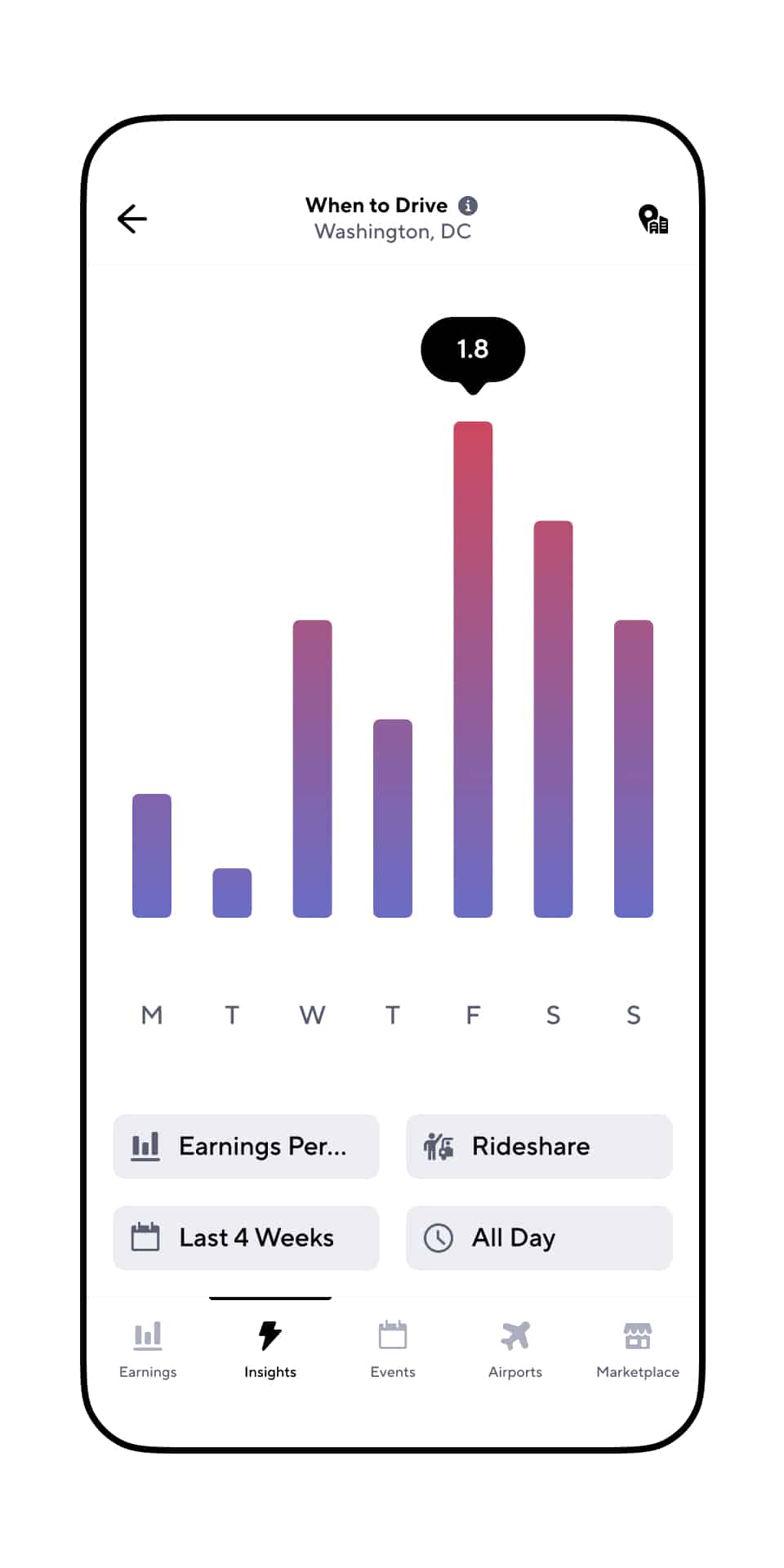
Get the Gridwise edge that will show you when the best times to deliver for Uber Eats actually are when you download the app.
Tips for making more money with Uber Eats
Every driver wants to know how to make more money, right? Learn how much you might make, and use these tips that will help you get more from your Uber Eats gig:
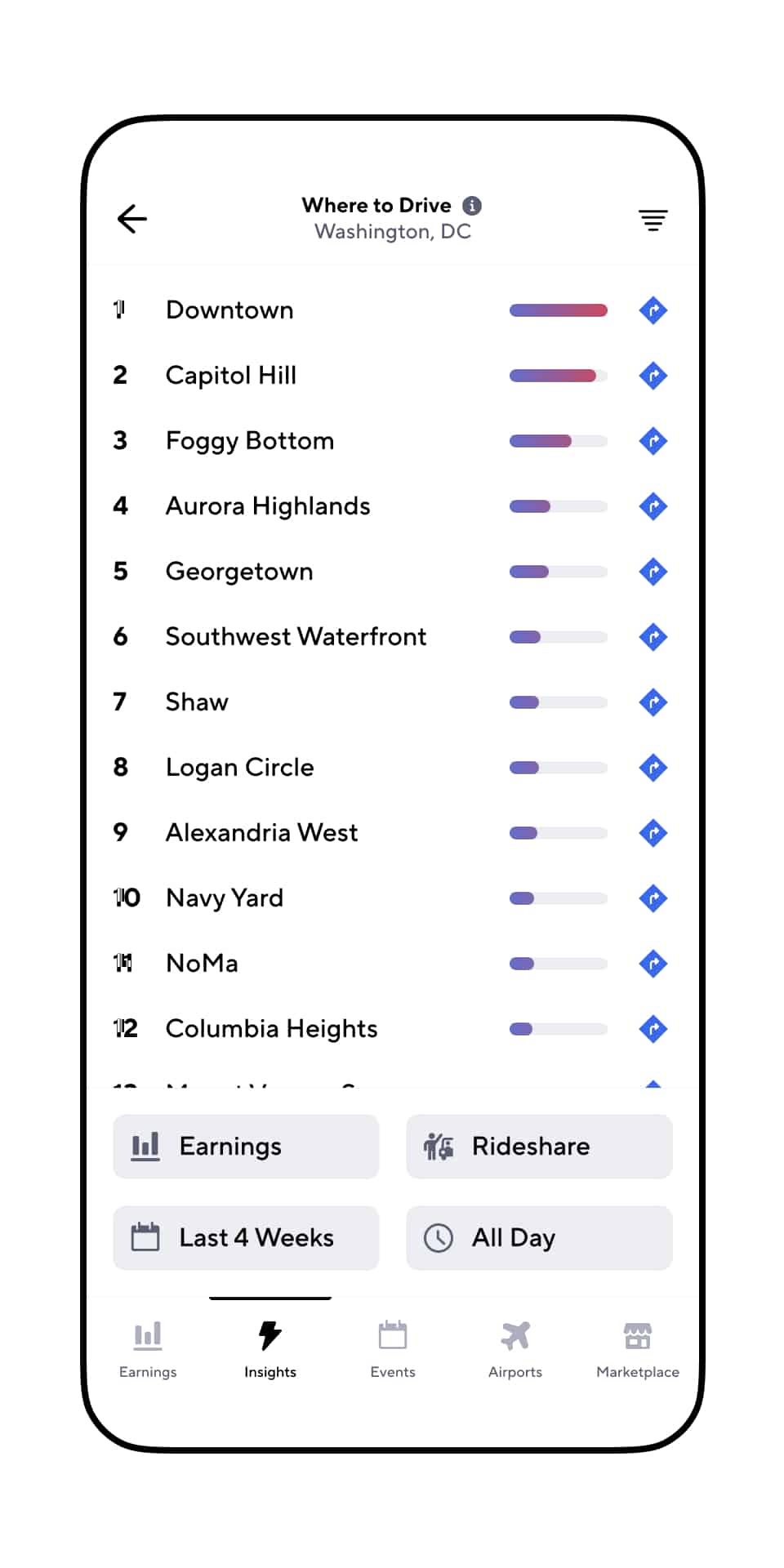
Use Where to Drive from Gridwise. Optimize the time you spend on the road with insight that comes from drivers in real time.
Learn the art of multi-apping. During lulls in food deliveries, or when you simply feel like doing some rideshare driving, get in on the multi-apping game. Use more than one app, and answer the pings that make the most money for you. Get savvy to the process. Master the art of multi apping!
Track your mileage and other deductible expenses with Gridwise. Gridwise doesn’t just help you earn more money; it helps you keep more. Use the Gridwise app to track every mile you drive for your gig, including in-between delivery times. Record other expenses as well, and you’ll be all ready for tax time!
Average Uber Eats hourly pay in key US cities
Demand for delivery drivers, as well as pay, varies from one place to the next. Scroll through this info from Uber to discover the cities and other areas that are in need of new drivers.
How much will you make driving for Uber Eats in your area? Gridwise data give us a closer look at various earning levels among different cities and regions.
How much do Uber Eats drivers earn in NYC?
In the bustling streets of New York City, the demand for food delivery is as dynamic as the city itself. Uber Eats drivers in NYC find themselves navigating through traffic-laden avenues and tight alleyways to bring meals to customers. On average, these diligent drivers earn around $13.96 per hour. However, earnings can fluctuate based on several factors, including the time of day, the number of deliveries completed, and the presence of surge pricing during peak hours. Additionally, New York's high cost of living and operating expenses such as fuel and vehicle maintenance may impact overall take-home pay for Uber Eats drivers in the city.
How much do Uber Eats drivers earn in LA?
Los Angeles, known for its glitz, glamour, and sprawling metropolitan landscape, is also a hotbed for food delivery services. Uber Eats drivers in LA typically earn an average of $18.93 per hour, which is a reflection of the city's extensive marketplace and the high demand for delivery services. It's important to note that earnings in LA may be influenced by factors such as the specific area within the city, time spent in traffic, and the efficiency of route planning. Additionally, special promotions and events in LA may occasionally boost earning potential for drivers.
How much do Uber Eats drivers earn in Chicago?
Chicago, the Windy City, with its rich culinary scene, creates ample opportunities for Uber Eats drivers. On average, they earn approximately $14.05 per hour while delivering everything from deep-dish pizza to gourmet sandwiches. Earnings in Chicago may vary widely due to weather conditions, which can affect the number of orders and the ease of delivery. Additionally, Chicago's diverse neighborhoods offer different levels of demand, which can influence how much a driver makes on any given day.
How much do Uber Eats drivers earn in Dallas/Fort Worth?
In the Dallas/Fort Worth area, known for its barbecue and Tex-Mex cuisine, Uber Eats drivers play a key role in connecting residents with their favorite local eats. On average, drivers earn about $13.92 per hour. The sprawling nature of the Dallas/Fort Worth metroplex means that drivers may cover larger distances, which can impact earnings and expenses. Seasonal events and local sports games can also lead to surges in demand, presenting opportunities for drivers to increase their hourly take.
How much do Uber Eats drivers earn in Miami?
Miami's vibrant culture and bustling nightlife contribute to a steady stream of food delivery orders. Uber Eats drivers in Miami earn, on average, $12.05 per hour. Miami's tropical weather and year-round tourist influx mean that there can be consistent work for delivery drivers. Nonetheless, it's important for drivers to consider the cost of vehicle upkeep due to the city's humid climate and occasional severe weather, which can affect overall profitability.
In all these cities, it's essential for potential and current Uber Eats drivers to consider the whole picture: while average hourly earnings provide a snapshot, actual take-home pay will depend on individual strategies, the hours chosen to work, and local market conditions. It's also worth noting that these figures are before expenses and taxes, which drivers need to manage as independent contractors.
Get even more information about Uber Eats Earnings in this Gridwise Report.
Additional insight into Uber Eats earnings
Want to know more about Uber Eats earnings? Be sure to check out:

How Much Do Uber Eats Drivers Make Before Tips?
Getting tips from customers is a big part of working with Uber Eats. In this article, we’ll investigate just how large of a slice Uber Eats earnings are due to tips by seeing what Uber Eats earnings would be like without them. Learn more about Uber Eats earnings.
Breaking down base pay before tips
What do Uber Eats earnings look like? EmpowerHustle.com reports the Uber Eats base pay rate is around $2.00. This rate might be higher if a variable such as distance, time, or demand exceeds what is “normal” for Uber Eats orders in your area.
According to The Courier Network, Uber Eats’ app base pay calculations are made from the following factors:
- Picking up the order
- Dropping off the order
- The distance you must drive
- The estimated time it will take to execute the delivery
- Trip supplements for large orders, the need to shop, or demand for deliveries
The Courier Network article says that the range for base pay can be anywhere from $0.50 to upwards of $10.00, depending on where you’re driving, in addition to the factors listed above. What does Uber Eats pay look like?
Here is what Gridwise data tells us:
Fortunately, there is more to Uber Eats pay before tips than just the base amount Uber pays for each order. Drivers benefit from bonuses and incentives such as Boosts and Quests. Boosts offer additional pay for driving at busy times. Quests reward drivers for completing a given number trips over a set number of days.
It’s interesting to compare earnings before tips with gross daily earnings.
What Uber does to inspire customers to tip
There’s no doubt that good tips keep Uber Eats drivers happy, and Uber itself does its best to make sure customers know how important it is to give good tips. Uber offers explanations of how the app encourages customer tipping.
Customers can tip
- when they place their orders
- at the time of delivery
- up to 30 days later through viewing order history
Customers should get the hint with all those chances to reward drivers for good service. Uber’s policy for reminding customers to tip has improved over time, and works rather well.
Tips: Average and median rates nationwide
One thing is certain: if you want to make the most out of driving for Uber Eats, you will want to know how much you can expect to draw down in tips. Business Insider offers suggestions about tipping delivery drivers. Their findings indicate that for most people, a tip in the amount of $4.00 is sufficient.
Ask any delivery driver, and they’ll tell you that tips are a crucial part of their income. They would hope to do better than that. This is especially true for large orders and deliveries that involve inconveniences such as traffic or difficult access to the customer’s door.
Tipping is very much a function of regional variants. People living in big cities such as New York, Los Angeles, and Chicago are used to tipping, so they’re likely to be generous. Others who are already noticing how much they’ve had to fork out for a delivery fee might not be so liberal with adding more to the cost of their meals.
Let’s see what data from Gridwise tells us about Uber Eats driver bonus pay and tips.
You may also be interested in learning how much Uber Eats drivers make per hour.
How to get bigger tips
Keep your Uber Eats rating high. Customers pay attention to your Uber Eats driver rating. If it’s outstanding they’re likely to believe you deserve a big tip.
Use professional equipment. Customers can tip before, during, and after their delivery. If you carry their orders in bags and beverage holders that help maintain the items’ temperatures and prevent them from spilling, you stand a good chance of being tipped accordingly.
Read the Gridwise blog. The Gridwise blog has a wealth of articles designed to help delivery drivers do better, including details about what equipment you need and how to generally please your customers. This Delivery Driver’s Guide is a great way to start.
Become totally familiar with the Uber Eats app. Because communication is so crucial to the way your customers perceive you, always keep them up to date on your status. To do this right, you’ll need to learn how to use about the Uber Eats app.
Be customer service oriented. In a world where service levels seem to be in terminal decline, customers notice it when you go out of the way to please them. Pick up those extra straws and napkins, and follow their delivery directions to a T. Every delivery counts, when you consider your earnings figures by delivery.
More insight into Uber Eats earnings
Check out these Gridwise articles to learn more about Uber Eats earnings:

How Much Do Uber Eats Drivers Make Per Delivery?
Delivering for Uber Eats can be rewarding, but you have to make the most of each and every delivery. To do that, it’s wise to know how much Uber Eats drivers can expect to earn for each order they pick up and drop off for their customers. So How much do Uber Eats drivers make?
Here, we tell you how much Uber Eats drivers make per delivery and provide real data from actual Gridwise drivers. Here’s what you’ll discover:
Base pay ranges for Uber Eats
Route4Me gives a 2022 figure of $9.37 per request but notes that it’s difficult to nail down the average pay per delivery for Uber Eats. This is due to the way Uber Eats pay is calculated, as well as differences owing to geographic location. You can get some insight by taking a look at earnings per day. In different regions, pickup and drop-off rates vary, and so do the prices people pay for restaurant foods.
According to The Courier Network, Uber Eats’ app base pay calculations are derived from the following factors:
- Picking up the order
- Dropping off the order
- The distance you must drive
- The estimated time it will take to execute the delivery
- Trip supplements for large orders, the need to shop, or demand for deliveries
The range for base pay can be anywhere from $0.50 to upwards of $10.00, depending on these factors. This base pay data from Gridwise drivers shows the average “before tips” figure per delivery.
How much Uber Eats drivers make per delivery
There is more than just base pay that goes into an Uber Eats delivery. Tips are a large part of driver earnings; plus surge pricing and boosts can add on the per delivery earnings. The Uber website provides a breakdown and explains the components of Uber Eats driver pay. Gridwise also has data that tell you how much Uber Eats drivers make overall.
While we can speculate how much drivers make per delivery, based on these and other factors, Gridwise has true and accurate data from actual drivers that will give you a much clearer picture. Here is what Gridwise data tells us drivers are making per delivery.
You’ll also want to consider Uber Eats earnings per hour.
Tips for making the most out of each delivery
Making the most money per day as possible while driving for Uber Eats is easy, if you create a strategy that works for you. Heer are some tips:
Use When to Drive from Gridwise. Don’t waste time driving around waiting for pings on your Uber Eats app. Get deeper and more personalized insight about Uber Eats deliveries in your area.
Switch services when business is slow. Be flexible. When Uber Eats is slow, you can work with other apps. Multi-apping is sure to keep your cash flow going, and keep your cash flow going.
Strive to get more tips. Tips are a big part of Uber Eats driver earnings, and you need to put in the effort to earn them. This Gridwise blog post offers ideas for getting bigger tips on every delivery you make.
Track and record deductible expenses. Track your miles and record your expenses with Gridwise, and you’ll keep more of your money at tax time. The Uber Eats app doesn’t cover every deductible mile, but Gridwise will do that for you—automatically! Download the Gridwise app and avoid overpaying when tax time comes around.

It just takes a little research to discover-how to be a good delivery driver. Start by finding out how much, on average, Uber drivers can make. If you use extra strategy and skills, you could make $1000 a week delivering for Uber Eats.
More Uber Eats earnings insights
Find out more about Uber Eats earnings:
How Much Do Uber Eats Drivers Make: 2024 Earnings Report
Do you deliver for Uber Eats? Are you thinking about it? If so, then you need to know just how much Uber Eats drivers make. When it comes to getting this information, there are probably as many opinions as there are drivers, but what are the facts? This Gridwise Earnings Report for Uber Eats is based on actual data from real drivers.
We’ve gathered up all the goods on Uber Eats earnings, and no matter how you want to slice it, you’ll get what you’re looking for right here from the Gridwise blog. Check out our charts, and get more details about hourly, daily, weekly, monthly, and tip pay from individual articles.
Gridwise data for Uber Eats hourly earnings reflect average gross earnings, as reported by drivers nationwide. This is an important figure to look at, because it provides a fair and generic picture of what a driver can expect to make per hour, no matter how many hours are spent delivering.
Uber Eats hourly Earnings by quarter
Get more detailed information about Uber Eats hourly earnings.
Remember, when you look at these figures for weekly earnings, that they will vary based on how many hours a driver works in a week. With some drivers being more full time than others, we won’t see the maximum amount of earnings possible. The more you work, as you know, the more you’ll earn.
Uber Eats weekly earnings by quarter
Like the weekly figures, monthly earnings numbers don’t necessarily reflect what a full-time driver would make delivering for Uber Eats. You will make more money, obviously, when you put in more hours.
Uber Eats monthly earnings by quarter
How much can Uber Eats drivers realistically expect to earn per month, and why? Read this article about monthly Uber Eats earnings for all the details.
Bonus pay and tips make up a rather large portion of Uber Eats earnings. Here you an see the average amount of bonus pay and tips that were earned by the month and by the hour.
Uber Eats average nationwide bonus pay + tips per month by quarter
Uber Eats average nationwide bonus pay + tips per hour by quarter
The impact of bonus pay and tips is clear when we consider Uber Eats pay before tips.
Maximize Your Earnings: The Gridwise Advantage for Uber Eats Drivers
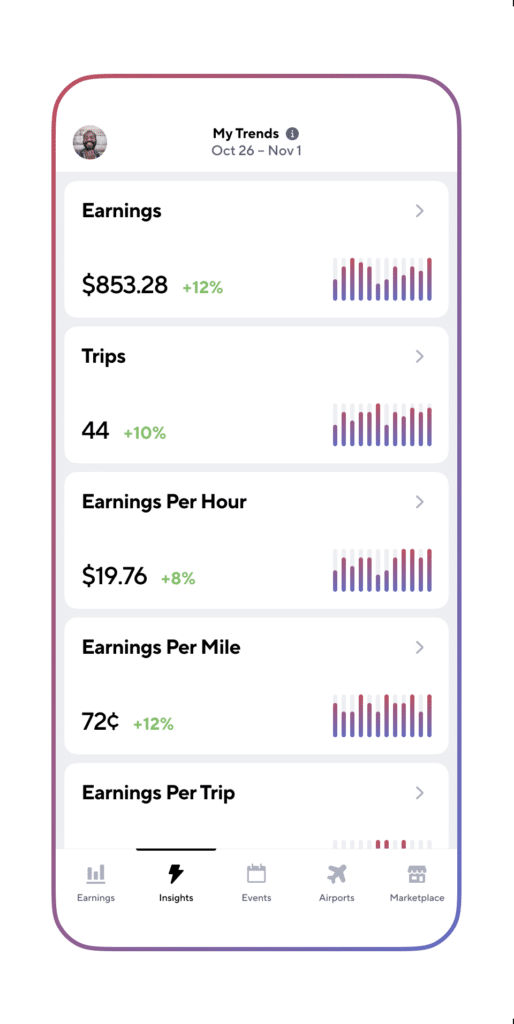
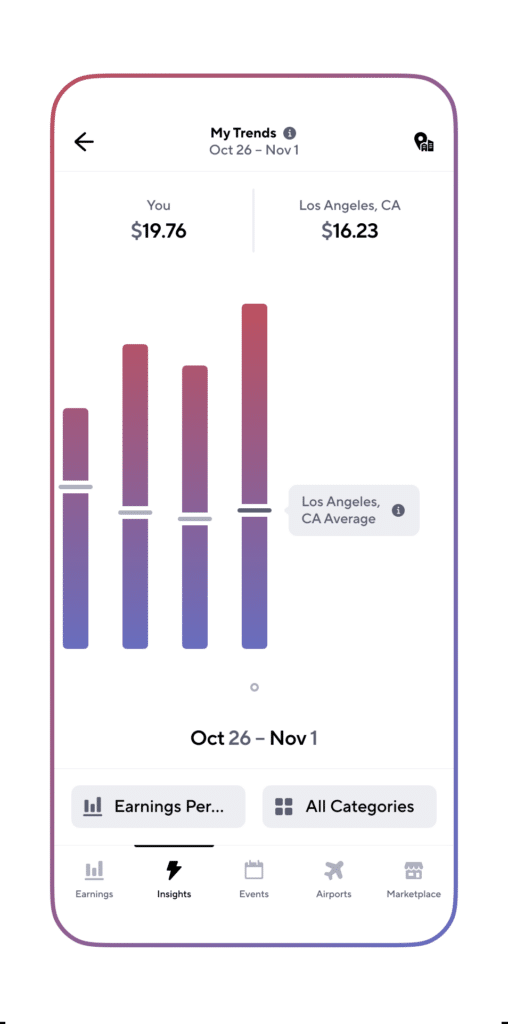
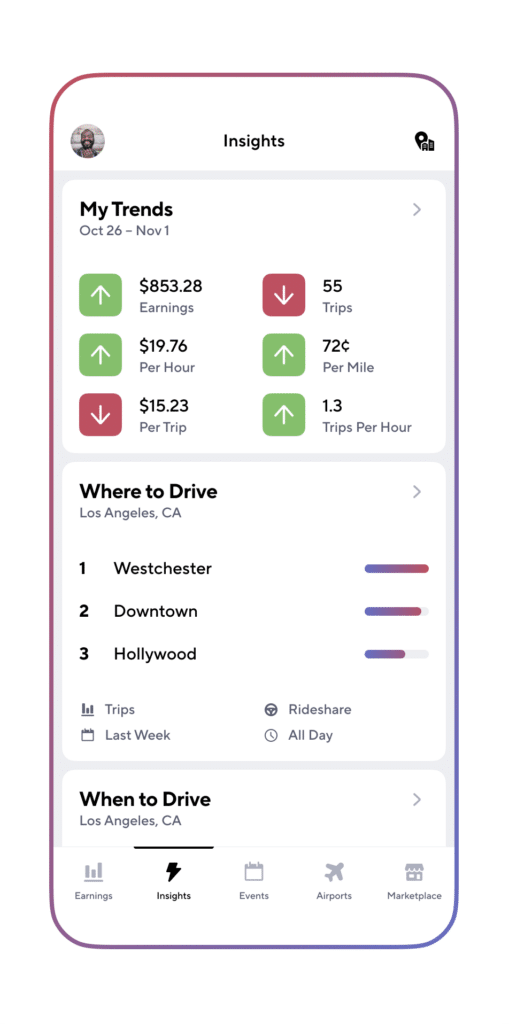
As an Uber Eats driver, you know that every delivery, every mile, and every minute counts. That's why it's crucial to have the right tools in your arsenal to ensure you're not just working hard, but also working smart. Enter Gridwise – your ultimate gig-driving companion. With exclusive insights and real driver data at your fingertips, Gridwise doesn't just paint a generic picture; it offers a personalized roadmap to maximizing your earnings.
More Uber Eats Earnings Insights
Find out more about Uber Eats earnings:

How to Make More Money on Uber
Many Uber drivers judge their performance in the new year based on milestones. How much do they earn in the first week of January? How much do they earn in the first month? What is their hourly rate? How much do they make per trip?
They also look for new answers. Every savvy gig driver wants to know how to make more money on Uber. The first thing you can do is download the Gridwise app. We’ll discuss it later, but you should do it now. You can also check out a recent Gridwise blog post, How Much Do Uber Drivers Make in 2023?
This piece provides you with the most up-to-date figures on how much does Uber pay.
How much does Uber pay?
We have discussed previously that in 2023 Uber drivers experienced a decrease in pay overall. This graph backs it up. There are many reasons this decrease happened, but there are two that stand out.
BusinessInsider.com reported that the total number of Uber drivers ballooned to more than 5 million in 2022, an increase of 31%. This increase in drivers translates into two things:
- a smaller piece of the pie. More drivers are competing for the same passengers.
- a decrease in average earnings. Newer Uber drivers earn less owing to the time it takes to learn the strategies and techniques used by more experienced drivers.
As a result, by Q3 2023 Uber driver earnings dropped more than $100 per week from Q1 2022. Keep in mind that these numbers represent a combination of the earnings of part-time and full-time drivers.
How to make more money on Uber
But despite this earnings decrease, some Uber drivers make much more. How do they make more money on Uber? They’ve developed strategies and tactics that allow them to find the most profitable rides. They’ve also learned the secrets to 5-star service that results in generous tips.
What are these tactics? Let’s look at some of the most popular and profitable secrets for how to make more money on Uber.
Always have a passenger
An empty car makes no money. You should always plan to have a passenger in the back seat. Take the example of many full-time Uber drivers who go into the city on weekdays and work the profitable morning rush hour. They get up early with the goal of catching an airport ride that pays their way into the metro area. From there, a few runs to area hotels, and then another airport pickup takes them into the downtown area. Repeating this routine every morning will help you reach the $100 mark on your Uber app as early as possible. Use the Gridwise When to Drive feature to increase your chances of always having a passenger
Learn how to work the surges
When passenger demand exceeds the number of Uber drivers available, Uber implements surge pricing. Uber driver fees increase by a multiplier. Surges are represented on your Uber app by a heat overlay, starting with orange and getting darker as the demand intensifies. The greater the demand, the darker the cloud and the greater the multiplier. If you’ve been an Uber driver for any length of time, you learn to predict when and where the surges will happen. Popular surge times are morning and evening rush hours, when the bars close at night, and special events. You can often double your fare during a surge, and sometimes more.
Don’t chase surges
Surges are transitory. As soon as inexperienced Uber drivers see the orange and red clouds gathering on the app screen, they head for that area. It takes only a few minutes for the passenger–driver imbalance to correct itself, and the surge, and the price increases that came with it, disappear.
A better tactic is to note where and when you see surges and position yourself to take advantage of them when they happen. Ideally, when you turn on your app, you want to be right in the middle of a red cloud. Read this Gridwise article about chasing surges. It’s dated, and some of the things have changed, but the overall philosophy remains sound.
Drive during the busy hours
Busy times vary, depending on the region, but ride demand is often the greatest during morning and evening rush hours, Friday and Saturday evenings, and during events. If your region has a theater and performing arts district, know when performances are letting out. Those weekend matinee shows can be ride generators. The same goes for sporting events and concerts. Surges are most likely to happen during these busy periods.
The Gridwise app includes two invaluable features, Where to Drive and When to Drive, which can give you directions to spots where there are plenty of rides. You can see these features when you download the Gridwise app now for free.
Look at the numbers
More than 500,000 gig drivers have downloaded the Gridwise app. In addition to the invaluable services featured on the app, Gridwise aggregates and anonymizes the numbers to show what drivers are earning by the hour, by the trip, by the week, and by the month. Some drivers go as far as downloading the files into an Excel spreadsheet for better analysis. They can see how many hours they worked and how many miles they drove. By comparing your numbers to those on Gridwise, you can see when you’re ahead of the curve.
Be choosy about the rides you take
There is a strategy among Uber drivers in which they concentrate on quality rides over quantity. This is much easier now that Uber has gone to up-front fares, showing drivers how much they will earn on a specific ride and their destination. Armed with that knowledge, drivers often pass on a ride when the destination takes them someplace where, when they drop off their passenger, they know from previous experience they will have to drive some distance before they get another ride. This strategy has also become more popular now that Uber (and Lyft as well) have relaxed their ride acceptance requirements.
Driver education opportunities
The internet is full of opportunities for Uber drivers to learn about how to make more money. The Gridwise blog is a source of driver tricks and tactics, gleaned from the top Uber drivers. There is lots of information out there. Pick the best ideas, the ones most applicable to your market and driving style, and start earning more money.
Try Uber Eats
One of the nice things about being an Uber driver is that you automatically qualify as a driver for Uber Eats. There are time slots when Uber Eats might earn more than driving Uber rideshare. It’s worth a try to see if your market is one of those areas. Discover the interesting possibilities in this recent Gridwise blog post, How to Make $1000 a Week with Uber Eats.
Learn to multi-app
There are many drivers that work more than one platform at a time, a practice referred to as multi-apping. This allows you to get rides from Uber and Lyft. Many drivers also venture into food delivery. Check out a recent Gridwise blog post, The Art of Multi-apping: How-Tos and Strategies for Gig Drivers.
Investigate the other gig platforms
Your goal is to maximize your time behind the wheel. It doesn’t make sense to have the Uber platform open when you could make more money working on Amazon Flex (How to Make $1,000 a Week with Amazon Flex) or Roadie (The Ultimate Guide to Being a Roadie Driver).
Pay attention to mileage and expenses
The miles you put on your car are the single biggest source of tax write-off. The standard mileage deduction allowed by the IRS (as of 2023) is 65.5 cents per mile. If you put 30,000 miles a year on your car as a full-time Uber driver (not an unrealistic number), that translates to a tax deduction of $19,650! Any supplies you buy—water, gum, a flashlight—are tax deductible, too. The Gridwise app includes the best mileage tracker for Uber drivers and also an expense tracker. These tools will save you lots of money and lots of time when you do your taxes.
Work those tips
Tips as an Uber driver can be as much as 11% to 14% of your income, according to Gridwise Analytics, so it’s always good practice to do the things that compel your passengers to give a little extra. Here is a quick list of the things drivers can do to earn tips.
- Keep your car clean, inside and out. Passengers may not comment on your shiny car, but they will take note of those empty water bottles rolling around the floorboard.
- Dress nicely. It shows you respect your passengers.
- Open and close car doors for your passengers whenever possible.
- Have a great selection of music. Jazz and big band are always appreciated, even by the young kids.
- Carry charging cords for both iPhone and Android phones. Carry a few extra, too, as they have a habit of growing legs and walking off.
- Have a supply of gum and breath mints on hand.
- Have bottles of water available.
- Although you will seldom get a request, when someone needs a toothpick, they are forever grateful. The ones individually wrapped in cellophane are the best.
- If you know the area where you’re driving, have the names of a couple of good restaurants at the ready.
- Be a good conversationalist. HINT: People like it when someone listens to them.
- If it’s after sunset and you’re a male driver, let women passengers know that you’ll watch them get safely inside. This almost always gets a tip.
There’s a lot more you can do to earn tips, but most of it comes down to common sense and being a nice person. For more detail on the suggestions mentioned here, read this recent Gridwise blog post, 12 Ways Rideshare Drivers Can Earn More Tips.
How can Uber drivers use Gridwise to earn more?
One of the most important tips is to download the free Gridwise app and link it to all your gig-driving platforms. The Gridwise app tracks your earnings, allowing you to see trends and patterns that can pay off with more earnings. Gridwise also has the latest information on business at the airports, concerts, and other special events.
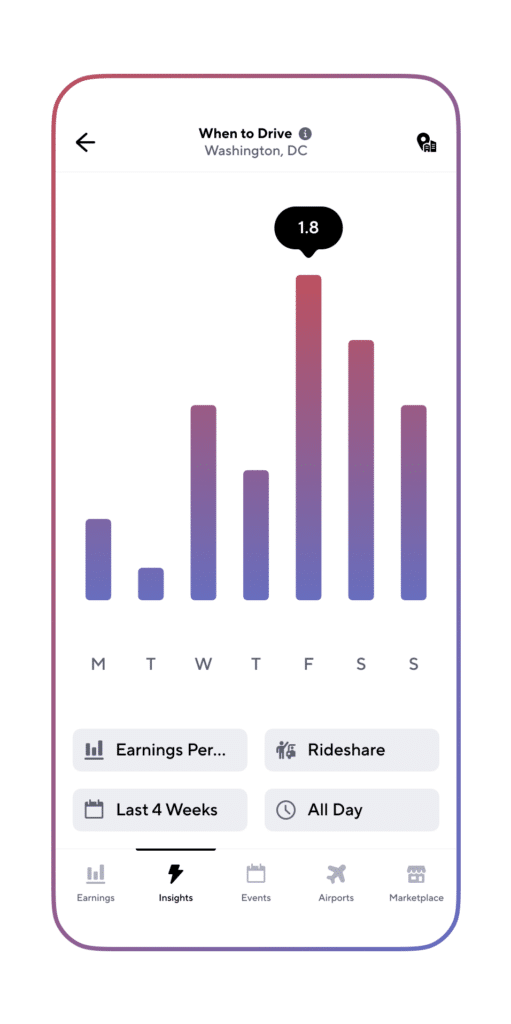
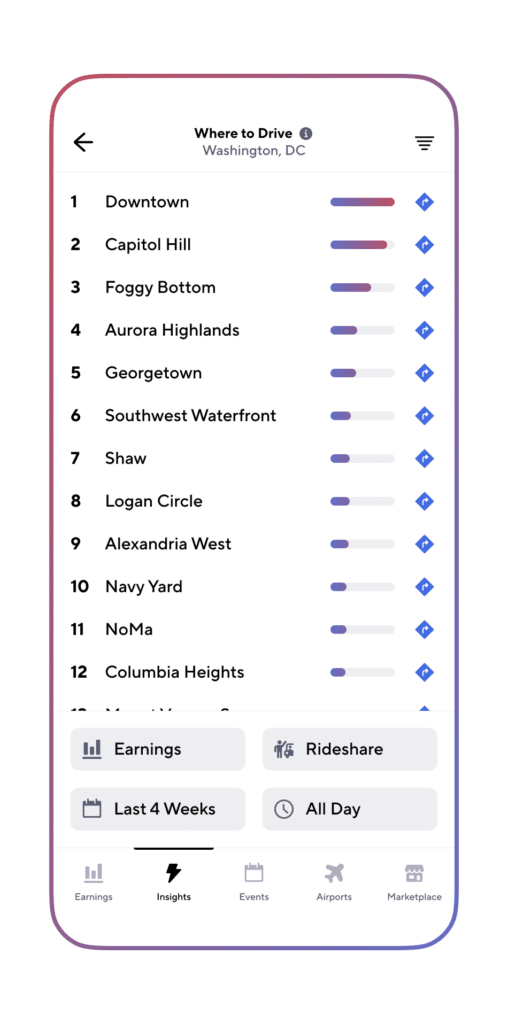
Check out these Gridwise articles to learn more about Uber driver earnings:
Work smarter. Earn more.
Whether you drive, deliver, or pick up shifts — Gridwise helps you track earnings, mileage, and performance so you stay in control of your work. Download the app and take charge today.
