Gridwise blog
Tips, insights, and advice to help you earn more and work smarter, whether you do gig work, hourly, or shift work.
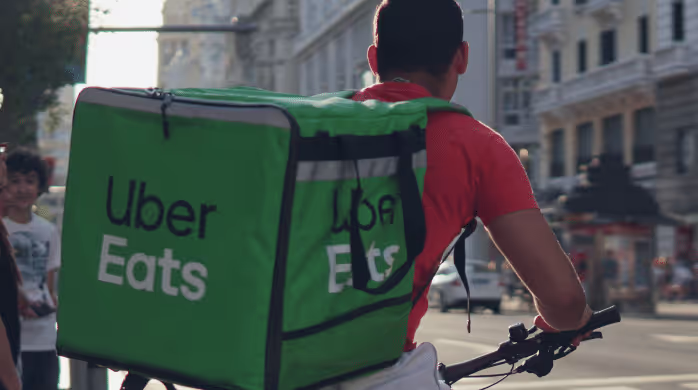
How to Make $1,000 a Week With Uber Eats in 2026 (Tips + Hourly Data)
In this blog, we'll explore the strategies and techniques that can show you how to earn $1000 per week as an Uber Eats delivery driver. We'll cover everything from optimizing your delivery zones and schedules to maximizing your tips and customer satisfaction. Whether you're a seasoned Uber Eats driver or just starting out, this guide will provide you with the insights and actionable steps to take your Uber Eats driver earnings to the next level.
Becoming an Uber Eats delivery partner can be a lucrative opportunity, especially if you're able to consistently earn $1000 a week. By understanding the platform, optimizing your delivery strategies, and focusing on customer satisfaction, you can maximize your earnings and turn Uber Eats into a reliable source of income.
We’ll cover the following topics to provide coaching and ideas to help you push your earnings up to that $1000 per week level:
What do Uber Eats drivers do?
Uber Eats drivers deliver prepared food most of the time, but they also might shop for and deliver goods from convenience outlets and grocery stores. The job is pretty simple. You get a request for an order, you drive to the restaurant or store to pick it up, and then you deliver it to the customer. If you already drive for Uber, you can choose to take orders for Uber Eats delivery any time.
If you’re not an Uber Eats driver yet, it’s pretty easy to become one. This Gridwise post tells you what you need to do if you want to sign up and start making money Uber Eats style. Many rideshare drivers welcome the chance to deliver food rather than people. This article from Nerdwallet covers the Uber Eats gig from that angle.
There are some sweet advantages to working with Uber Eats. In lots of cities you don’t even need to have a car. You can use a bike or a scooter, or even walk, to make your rounds. If you do use a car, Uber Eats’ requirements are a lot easier to meet than they are for Uber rideshare driving.
You also have a lot of flexibility. You can shop and deliver convenience items and groceries, but you don’t have to. And, like most driving gigs, you can choose your own hours, and map out the locations where you want to work.
Use Gridwise features When to Drive and Where to Drive to help you figure out what work hours and which specific areas will be the most profitable for you. Real data from real delivery people will show you earning patterns for drivers in your town.
How much can you earn doing Uber Eats?
The honest answer to this question is: basically, as much as you want! It all depends on how many hours you put in and how strategic you are about your gig. Earnings vary from one area to another, as this article from Entrepreneur points out. To give you a baseline, let’s look at the earnings of Uber Eats drivers who tracked their earnings with Gridwise.
Remember that these numbers show us only average earnings. To make $1,000 a week with Uber Eats, you’re going to have to be better than average, and we’ll show you how. For now, though, it’s good to have these figures so you get a ballpark number of where to start.
How much do Uber Eats drivers make?
Gridwise data tell us the following:
- Monthly earnings average around $444.00 per month.
- Gross earnings per trip are between $9.00 and $10.00.
- Tips make up about 50% of most Uber Eats drivers’ income, which amounts to about $225.00 per month.
Is Uber Eats good money? It can be. While there are other gigs that pay more per trip, if you drive for Uber Eats, you’ll always be pretty busy.
https://datawrapper.dwcdn.net/HPAz8/3
You can also see that, unlike many other gigs, tips play a huge role in Uber Eats earnings.

With these numbers as a baseline, what can we say about how to earn $1,000 a week with Uber Eats? As we said in the introduction, it’s going to be a hustle, but it’s really possible. To figure out how to make the most money with Uber Eats, let’s start by looking at how many trips these “average” drivers made each month.
We know that average gross earnings were $444.00 per month, and drivers got around $10.00 per trip. That means they took 44 or 45 trips per month, which breaks down to 11 trips per week. That’s not a lot of Uber Eats delivery, is it?
The fact that Uber Eats drivers averaged so few trips shows us that many drivers use more than one app at the same time. This is called multi-apping, and you can learn more about it in this Gridwise post. If you want to answer the question of how much you can make with Uber Eats, then you need to stick with the app and keep plugging away at those orders. You also need solid strategies, as well as some inside tips and tricks.
How to make the most money on Uber Eats: Delivery driving tactics
Getting to that $1,000 a week with Uber Eats isn’t so hard when you remember that the drivers we saw making about $111 a week were only taking around 11 trips in the same time period. That’s not much at all! If you work the Uber Eats app like a boss, you’ll soon have many more trips than that, easily reaching the number needed to get you to $1,000 a week. Now, let’s get to some tactics you’ll need to make that kind of bank.
- Stay with the Uber Eats app, and track your earnings. Gridwise can easily do that for you. Simply sync your Uber Eats app with Gridwise, and you’ll be able to see how much you’ve earned with Uber Eats, what times were most profitable, and your average hourly pay. Racking up trips with Uber Eats has other benefits, including perks and bonuses that are awarded to top drivers.
- Leverage surge pricing and promotions. Surge pricing is applied when there is a lot of demand. When surge pricing is in effect, many of the trips you make will pay more than usual. Promotions are offered to drivers who complete a given number of trips in a certain time period. High traffic volume days, nights, and times give you these chances to get extra earnings. Challenging yourself to complete the right number of trips for promotions will add to the number of trips you can count on for big bucks, too. Learn more about Uber Eats surge pay, boosts, and promotions in this Gridwise blog post.
- Say yes to doubling up on orders. With Uber Eats, you can get back-to-back orders or receive batched orders. Back-to-back orders happen when you receive a new request while you’re on the way to deliver an original order. The Uber Eats app routes these trips automatically, so you won’t be sent out of your way.
Batched orders are Uber Eats’ way of bundling together orders from either the same restaurant, or two nearby eating establishments. You get money, and trip count credit, for all the orders you complete, plus customer tips, without having to make a bunch of separate trips.
- Turn on the charm and get bigger tips. Being nice really is part of the Uber Eats driver’s job, and getting tips is one way people who drive for Uber Eats make money beyond their basic pay.. Bring along those extra napkins and condiments, use equipment that keeps food and drinks at the right temperatures and prevents spilling, and consider your customers’ needs. If you deliver groceries, be extra careful with delicate items such as bread and eggs.
And, most important, follow your customers’ directions, and stay in communication with them if you are going to be delayed, or if you have questions about their order. This Gridwise post will tell how to get bigger tips as a delivery driver.
- Use even more charm to keep your ratings high. As an Uber Eats driver, you will be rated by the restaurant or store where you pick up the orders as well as the customers who are waiting for the deliveries. This two-way rating system is designed to keep you on your toes, so Uber can keep people satisfied with your service. Don’t worry, you get to rate them, too.
There’s another reason why your rating as a driver is important. It not only keeps you in good standing with Uber; it helps you to qualify for the Uber Eats Pro incentive program. To learn more about Uber Eats Pro, and what it takes to earn perks such as preferred services, discounts, and deals, check out this Gridwise blog post.
Smart business moves that seal the deal
Now that you know how to gobble up the deliveries you need to make $1,000 a week with Uber Eats, it’s going to be a breeze to get there. Let’s make it even easier, with business moves that boost your earnings and shrink your expenses. If you use these, it will also be easy to say yes when people ask, “Can you make good money with Uber Eats?”
Minimize expenses. Avoid racking up big fast-food bills by bringing your own food and beverages. You might not think you’re hungry when you first start your Uber Eats run, but once the aroma of pepperoni pizza, premium cheeseburgers, and piping hot fries start wafting through your car, that might change. Bring a sandwich or other healthy food from home, and buy bottled water in bulk to save tons of cash compared to what it costs to buy single servings.
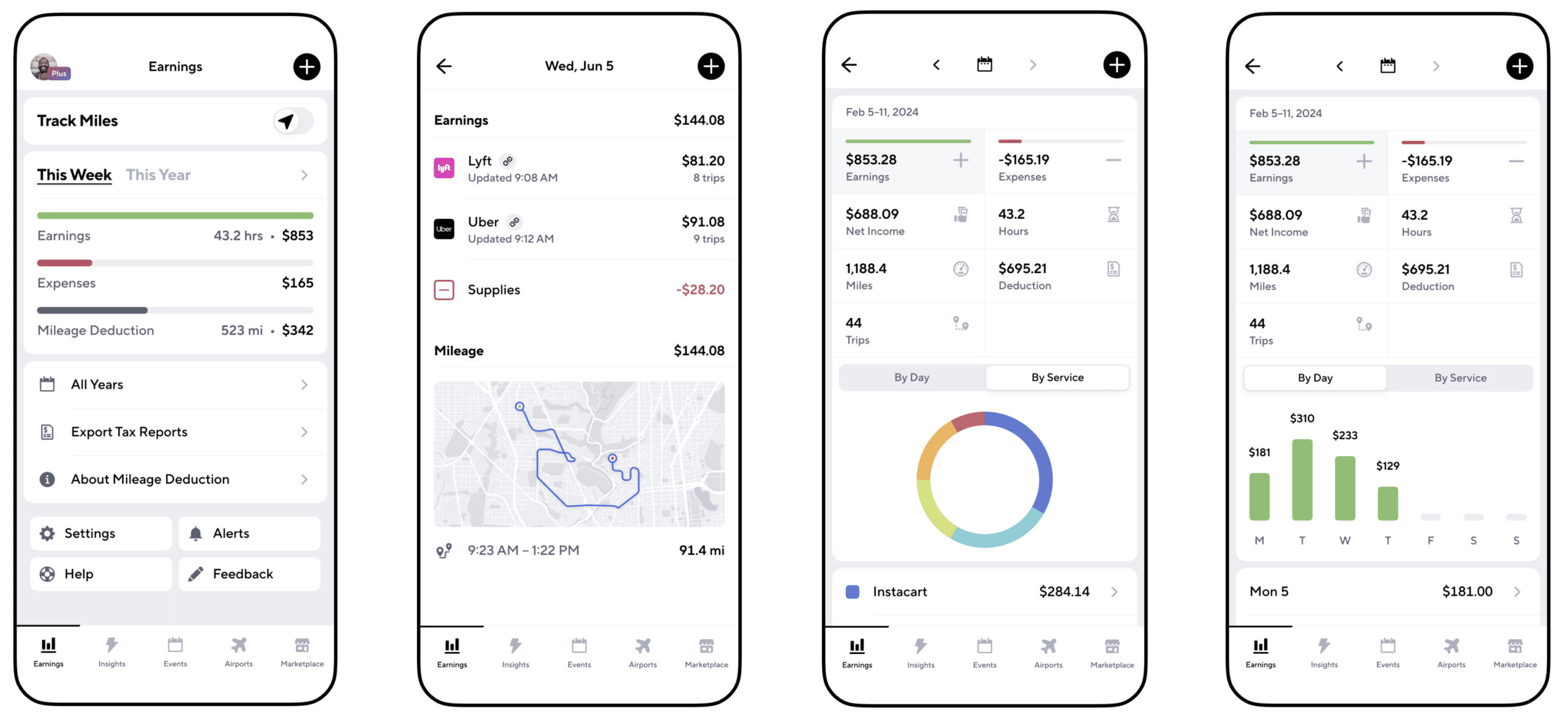
Maximize tax deductions. Another way to minimize your expenses is to maximize your tax deductions. Start by tracking mileage with Gridwise.
Gridwise App
Gridwise captures every deductible mile you drive, including the distance you cover between the trips your driving app records. Know what expenses you can deduct, and put them to work for you when tax time comes. Learn more about tax deduction strategies in the Gridwise Tax Guide for drivers.
Boost earnings with referrals
As an independent contractor, you’re probably looking for ways to make even more money than you can with Uber Eats. And most gig workers like you enjoy getting passive income. With Uber Eats, there’s a really easy way to do that, referrals!
All you need to do is find friends and encourage them to deliver for Uber Eats. If they make a certain number of deliveries within a specified time, you will get paid for doing nothing more than having them sign up under your referral code! Rates of pay vary by city, so check your Uber Eats app to find out what the current deal might be, and learn more about the referral program on the Uber Eats website.
Also remember: “friends” don’t have to be your best buds. Many delivery people carry cards with a QR code linking to their referral information, so just about anyone you encounter can join Uber Eats and boost your earnings. You could meet a source of passive income at the gas station, on social media, or at your high school reunion. The more you hustle, the more there is to gain, right?
Master the art of self-employment
As an Uber Eats driver, you’re an independent contractor. That means the company isn’t going to withhold your taxes, provide insurance, keep track of your earnings, or tell you about tax deductions. You’ll have to do all these things for yourself.
If you want to maximize your tax advantages, open an official business entity. You can incorporate (create a corporation) or you can work as a limited liability corporation (LLC). You can also work with a DBA (Doing Business As) arrangement, but the corporation or LLC will do a better job of protecting you from liability.
Establishing a corporation or LLC offers better tax advantages than being a sole proprietor. For instance, if you simply collect your earnings into your private account, you’ll be charged self-employment taxes in most states. And paying extra taxes is something we all want to avoid, within legal limits, as much as possible.
Every Uber Eats driver needs to learn about self-employment, and there are some great resources you can review. Check out the CareerOneStop website about self employment which will help explain the basics. You can also check with a professional tax accountant, or look other websites to learn more about actually creating a business.
Scope out your market
Look at the area around you to see where you’re likely to get the most deliveries. Where are all the restaurants? Where might people be more inclined to order deliveries? What hours do you want to drive? What activities might be going on around those times? Think about late-night and after-school times as well as breakfast, lunch, and dinner times.
Be realistic about the potential for your area and aware of new services opening up. For example, in New York, there is already a tab on the Uber Eats app that allows customers to order groceries. In our article about the best food delivery service to work for you’ll see that Uber Eats stacks up well against other delivery companies, mainly because of its potential for expanded opportunities for drivers to earn.
So, is Uber Eats good money? As we said, it isn’t an automatic guarantee that everyone will make $1,000 a week with Uber Eats. Trying out the suggestions we give you here, though, should put you on the right track! Go out there and start stacking up those orders and raking in some impressive earnings!
Get more inside information on Uber Eats in these posts from the Gridwise blog:
- The delivery driver guide: Using the Uber Eats app
- Everything you need to know about driving for Uber Eats
- Uber Eats Pro: What drivers need to know
- Looking for a different gig, part-time or full time job? Check out the Gridwise Job board.
Uber Eats FAQ
How does the Uber Eats platform work for drivers?
Uber Eats is a food delivery service that connects customers with local restaurants and independent delivery partners. As an Uber Eats driver, you'll receive notifications of nearby delivery requests, which you can accept and complete. The platform provides flexibility, allowing you to work on your own schedule and earn money based on the number of deliveries you complete.
What are the requirements to become an Uber Eats delivery partner?
To become an Uber Eats delivery partner, you'll need to meet certain requirements, such as having a valid driver's license, a registered vehicle, and passing a background check.
How can I choose the right delivery zone to maximize my earnings?
Selecting the right delivery zone can significantly impact your earnings, as some areas may have higher demand and better-paying orders. It's important to research and identify the zones in your area that tend to have the most consistent and lucrative delivery opportunities.
How can I take advantage of peak delivery hours and surge pricing?
Understanding peak delivery hours, such as mealtimes and weekends, and taking advantage of surge pricing can boost your earnings. Be aware of when demand is highest in your area and adjust your schedule accordingly to capitalize on these peak periods.
What are some tips for maximizing tips and customer satisfaction?
Providing excellent customer service and going the extra mile to ensure a positive experience can lead to more tips and repeat business. Prioritize communication, timeliness, and attention to detail to keep your customers happy and satisfied.
How can I set realistic weekly goals to reach my $1000 target?
To make $1000 a week with Uber Eats, it's essential to set realistic weekly goals and track your earnings and expenses. Start by determining your target earnings and breaking it down into achievable daily or weekly goals. This will help you stay on track and make adjustments as needed.
What are some strategies for efficient route planning and navigation?
Effective route planning and navigation can save you time and fuel, allowing you to complete more deliveries. Utilize mapping apps and take advantage of features like real-time traffic updates and turn-by-turn directions to find the quickest routes.
How can I balance my Uber Eats deliveries with other commitments?
Develop a schedule that allows you to capitalize on peak delivery hours while still maintaining a healthy work-life balance. Consider using tools like calendar apps to plan your availability and track your hours to ensure you're maximizing your earning potential without sacrificing your personal life.
What are the key considerations for maintaining my vehicle as an Uber Eats driver?
Keeping your car clean and well-maintained is crucial for maximizing your Uber Eats earnings. Regularly scheduled oil changes, tire rotations, and other preventive maintenance can help extend the life of your vehicle and minimize downtime. Additionally, budgeting for vehicle-related expenses, such as fuel, insurance, and repairs, will ensure you're accounting for these costs and maximizing your net earnings.
What are the tax obligations and legal considerations for Uber Eats drivers?
As an Uber Eats delivery driver, it's essential to understand the tax obligations and legal considerations that come with being an independent contractor. This includes properly reporting your earnings, deducting eligible business expenses, and making quarterly estimated tax payments. Additionally, you'll need to ensure you have the appropriate insurance coverage, such as personal auto insurance and possibly commercial auto insurance, to protect yourself and your vehicle while on the road making deliveries.

The Gridwise Job Board: Find Your Ideal Job or Gig Work
Gridwise is an essential assistant app created by gig workers for gig workers. Our mission is to support those engaged in gig work in every way possible. We understand how challenging it can be to deal with income instability, a lack of benefits, and job insecurity that often comes with gig work. The Gridwise app tracks and organizes earnings and expenses, and offers a wide array of discounts, deals, and services that make the lives of independent contractors easier and more rewarding.
We firmly believe it’s possible to make a viable living and create a gig experience that offers flexible hours, variety, and excitement. With issues such as consistent earnings and job security in mind, Gridwise is proud to offer a centralized platform that shows you how to find gig work and secure reliable opportunities. We’re proud to introduce the Gridwise Job Board.
The Gridwise Job Board: Key features
Because Gridwise is dedicated to serving the gig worker community, we’ve filled the Gridwise Job Board with useful features that won’t waste your precious time.
- Comprehensive listings. Find part-time, full-time, temporary, and per-task work. Drive or deliver with your vehicle, utilize an employer’s vehicle, or even find non-driving gig work.
- User-friendly interface. Find the jobs that are right for you with a tap of your screen.
- Verified opportunities. We vet the jobs before they are listed to ensure you’re getting high-quality job postings.
How to get more gig work, seasonal, part-time or full-time jobs with the Gridwise Job Board
Looking specifically for “gig work apps” or “gig jobs near me?” You’re in luck. Our filters and search functions send you directly to the listings you seek.
Here’s how it works.
- Access the Job Board via the Gridwise website.
- Search for jobs by type, location, and more.
- Select the job that interests you, and read all about it.
- Scroll through the description, and if it appeals to you, click “Apply for job.”
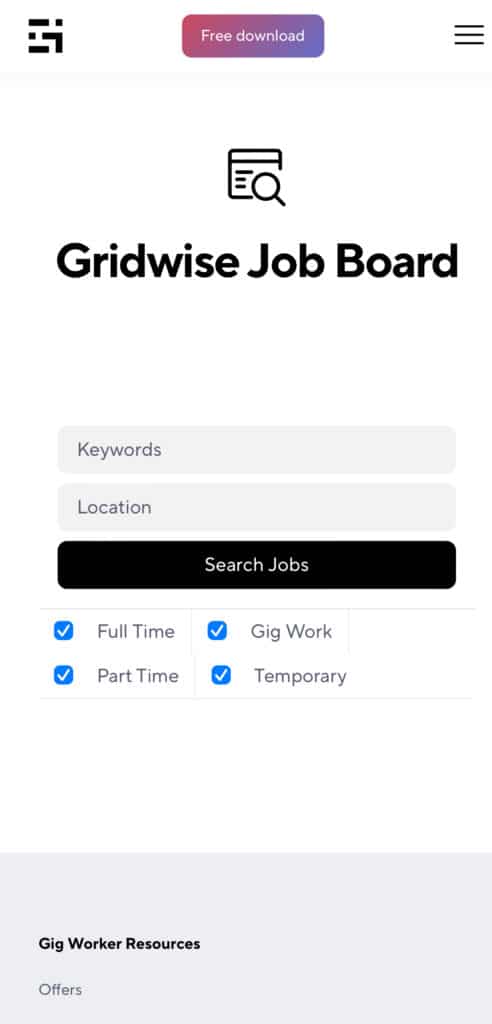
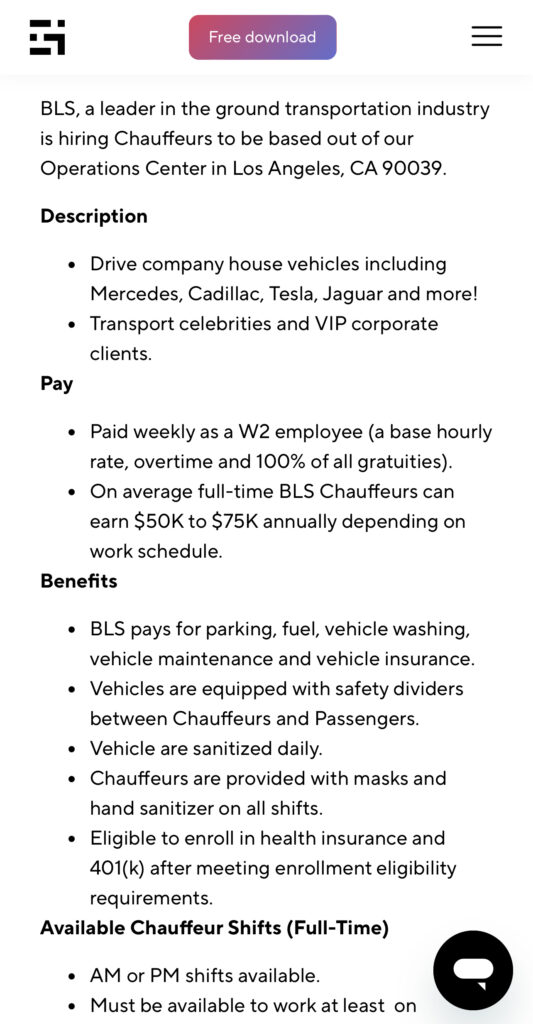
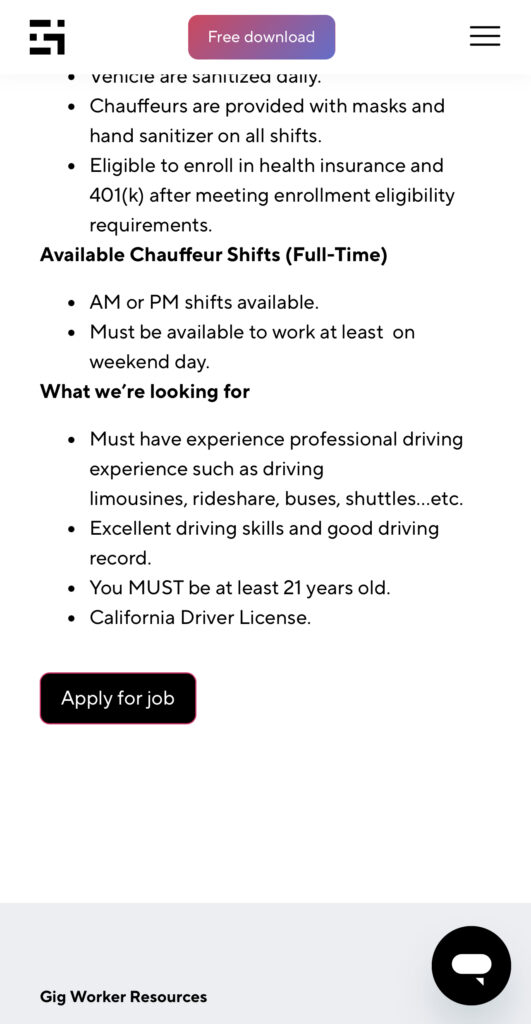
Many types of jobs are available. Adjust the search filter to see the full variety of opportunities that will let you cash in. Deliver food, set up catering, do rideshare driving, get paid for doing package delivery, and much more. You’ll find short-term gigs, long-term contracts, and part-time positions.
Perks of the Gridwise Job Board for gig workers
Gig workers who know how to make extra money will appreciate how the Gridwise Job Board lets you multiply your chances of bringing in big earnings. Here’s how:
- Increased stability. Use the Gridwise Job Board to find part-time or permanent jobs in addition to the part-time gigs you already have. Always keep a steady stream of earning opportunities flowing toward you.
- Flexibility and autonomy. Choose jobs that fit your schedule, work around other jobs and family duties, and still leave room for some fun in your life. Discover side hustles to supplement your full-time job, permanently or just for the season.
- Skill development. Find part-time work that lets you use a skill you already have, or try your hand at something new. It’s a smart way to develop a portfolio to showcase what you can do, or even to find permanent employment.
Get Gridwise and stay up to date on the Gridwise Job Board
Gig workers need plenty of information and assistance, and Gridwise is here to give it to you. Download the app and get essential features such as
- seamless earnings tracking
- mileage tracking
- expense recording, including notes
- low-cost and no-cost insurance benefits
- access to affordable medical, dental, vision, mental health, and alternative care
- professional services including legal and financial help
- deals and discounts
- weather, events, and traffic reports
- inside information on where and when to drive
More to know about gig work:

5 Best Mileage Trackers For Gig Drivers
Many drivers ask, “Do I really need a mileage tracking app?” The answer is simple: only if you want to have an accurate count of all the miles you can legally deduct from your taxable income! You might think your rideshare or delivery driving app has got you covered. After all, they do quite a good job of logging the miles you drive while you’re on a trip or delivery. But, if you want to have the best app to track mileage for Uber, Lyft, Doordash, Instacart, or the other apps you may use, you need more. Why is that?
Without a separate tracker, you’re missing the miles you drive in between pings. Did you realize that all the miles you drive, from the moment you begin your shift until it’s over (as long as you don’t drive several miles on a break to hang with your friends), are tax deductible! That means you need something besides your driving app to keep an accurate count of your travels. Read this Gridwise post to see how important it is to keep track of every deductible mile.
You won’t be surprised to hear that there’s an app for tracking miles. In fact, there are several of them. Here, we’re going to tell you about five top mileage tracking apps, and help you figure out which one is best for you.
Before we get to the list and identify the best mileage tracker app, let’s clarify what exactly a mileage tracking app is. According to G2.com’s technology glossary, mileage tracking is done for the purpose of keeping a log of mileage that is either reimbursable or tax deductible.
And yes, of course you can track your miles simply by taking readings on your odometer. But are you really prepared to account for how many miles you drove for personal reasons and subtract them from the total to get your business mileage? Even if you can remember all that and do the arithmetic, if you want an accurate reading of the miles you drive for business, and can therefore deduct, a mileage tracking app will save you a lot of trouble and prevent you from making costly errors.
Plus, as a gig driver, you have specific needs when it comes to a mileage tracker. Ideally, you’d be able to handle mileage tracking and several other functions all in one app. It can be maddening enough to deal with driving apps, particularly if you’re an avid multi-apper. You would want your mileage tracker app to help you keep account of other aspects of your business, including income, expenses, and inside information about the art of gig driving.
Not all mileage apps are equal, to be sure! Let’s look at five of the best apps to track mileage and figure out which is the best app to track mileage with Uber and Lyft, or what mileage tracker app is best for DoorDash.
1. Zoho Expense
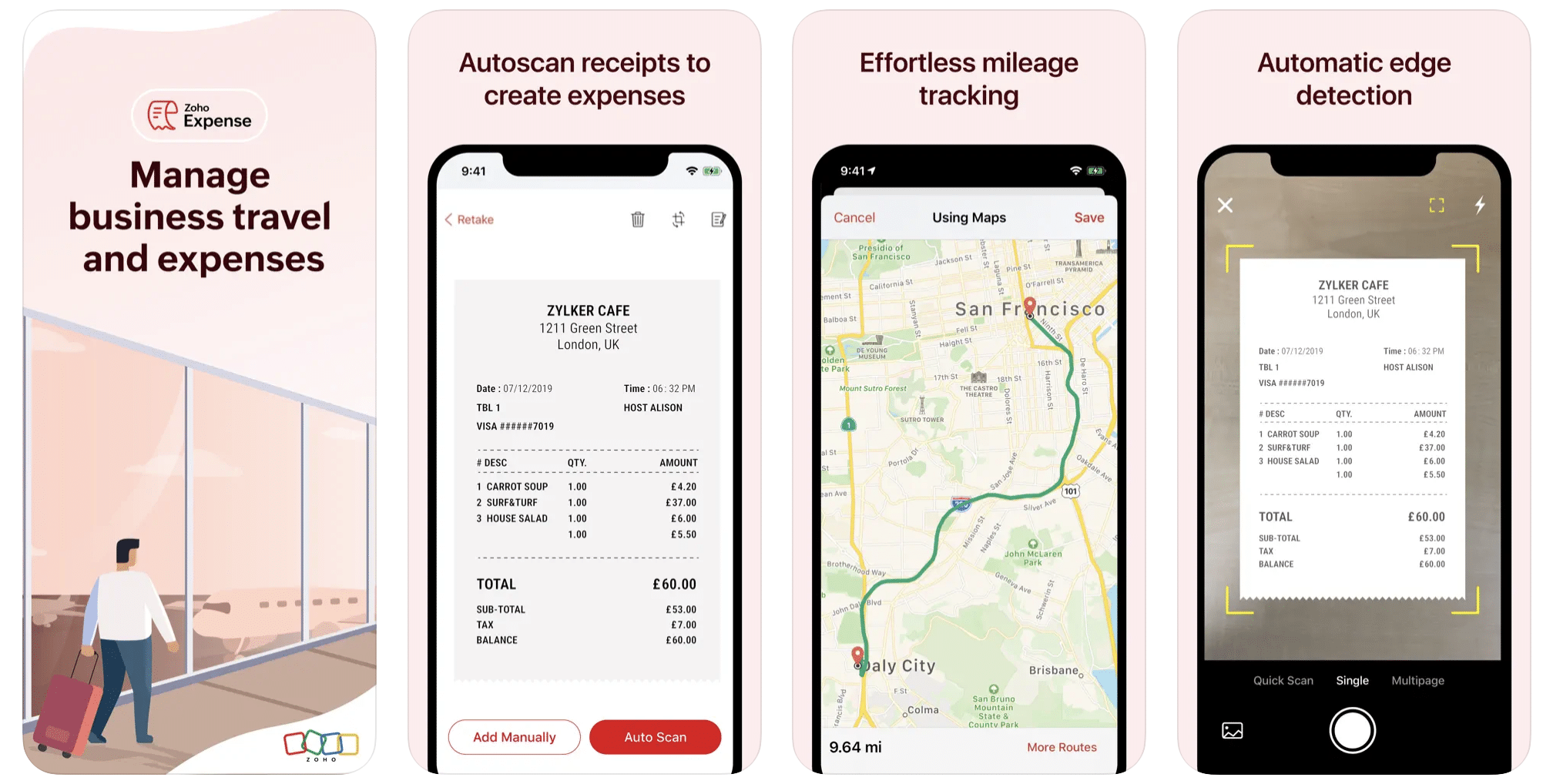
First up is Zoho Expense, which does exactly what its name says. This app is designed to allow companies to give employees a uniform way to create and submit expense reports. It can be used by individuals, including gig drivers, as well.
It includes a mileage tracker, as well as features that let you track other deductible expenses, including the ability to scan and record receipts.
Available on Android and Apple: Yes
Ratings: 4.8 stars on App Store, 4.7 stars on Google Play
Free Version: Yes
Subscription price: $3 per month, billed annually
Created specifically for gig drivers: No
2. Quickbooks Online
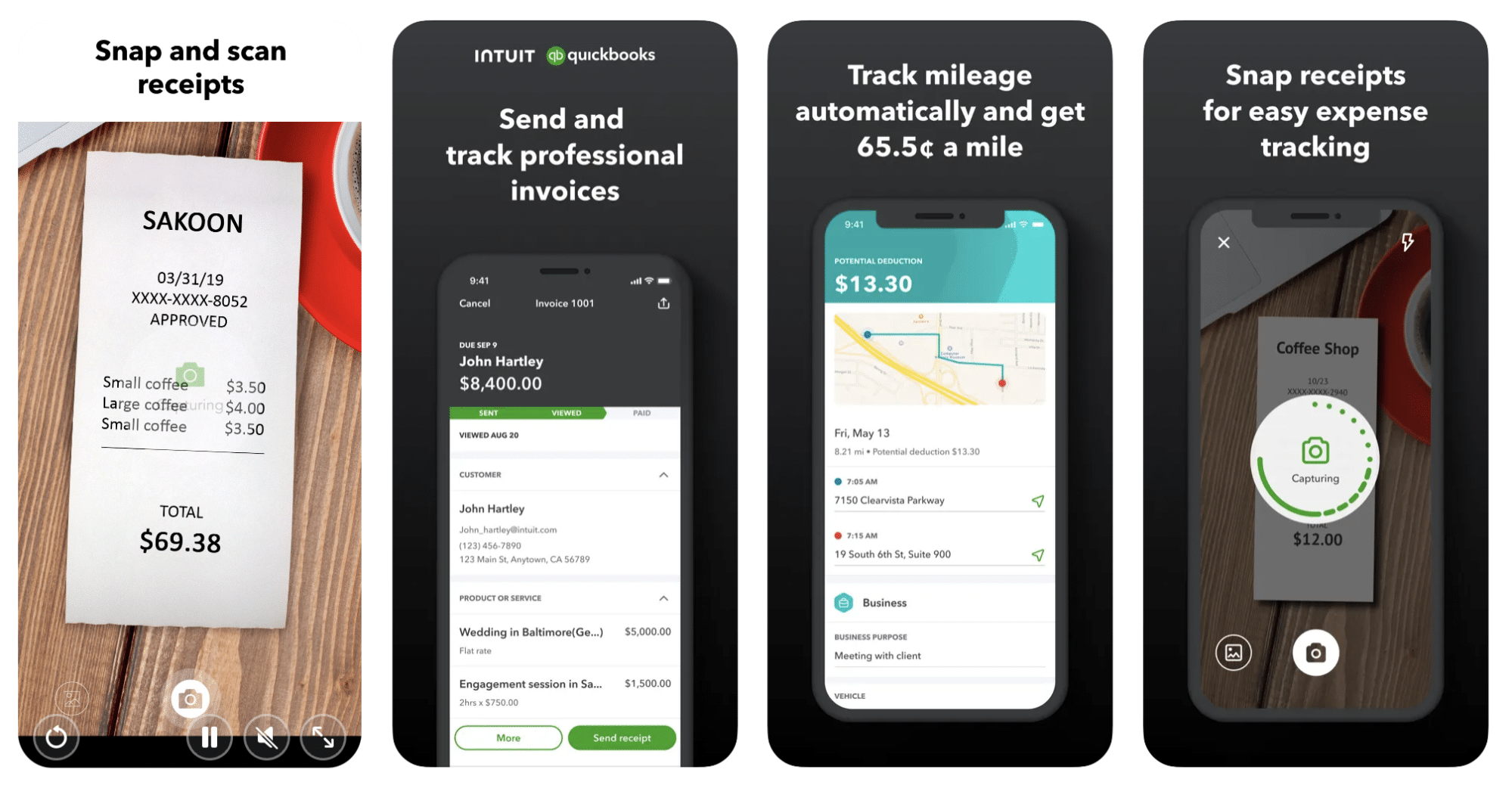
Quickbooks Online is a cloud-based app that allows you to track your mileage, earnings, and expenses. The information you enter can then be used to generate various reports that prepare you for tax time. It also allows you to create graphs that illustrate your cash flow, and includes a receipt scanner so you can instantly record deductible expenses. Quickbooks is popular, highly reliable, and designed mainly to help people keep track of their small businesses.
Available on Android and Apple: Yes
Ratings: 4.7 stars on App Store, 4.4 stars on Google Play
Free version: 30-day free trial
Subscription price: $15 per month for basic version if purchased for 3 months or more
Created specifically for gig drivers: No
Source: quickbooks.intuit.com
3. Shoeboxed
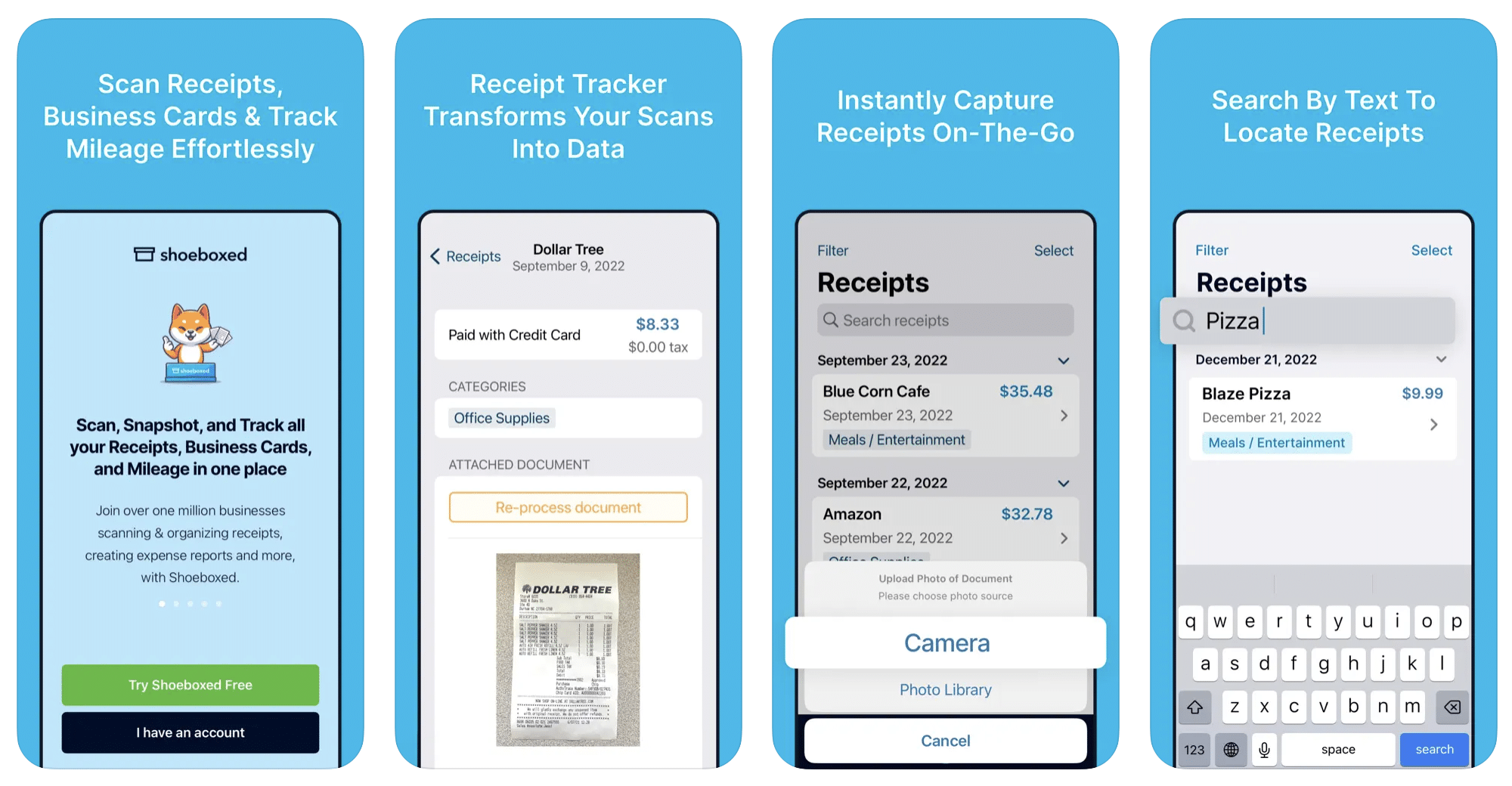
Shoeboxed started in 2007 as a service for scanning paper receipts into digital form. Now the app offers a free mileage tracker and has enabled users to scan receipts directly. It touts itself as the best mileage tracking app for DoorDash, but there are some elements missing that Dashers might like to have. While it provides features that record your expenses and prepare you for tax season, it doesn’t automatically track your earnings. The mileage tracker has a system where you can drop pins along your routes to make the tracking more precise, identifying those legs of a trip that you make for business purposes. The mileage tracker is “free” once you sign up for the basic version.
Available on Android and Apple: Yes
Ratings: 4.5 stars on App Store, 2.3 stars on Google Play
Free version: No
Subscription price: $18 per month for basic version
Created specifically for gig drivers: No
Source: blog.shoeboxed.com
4. Stride
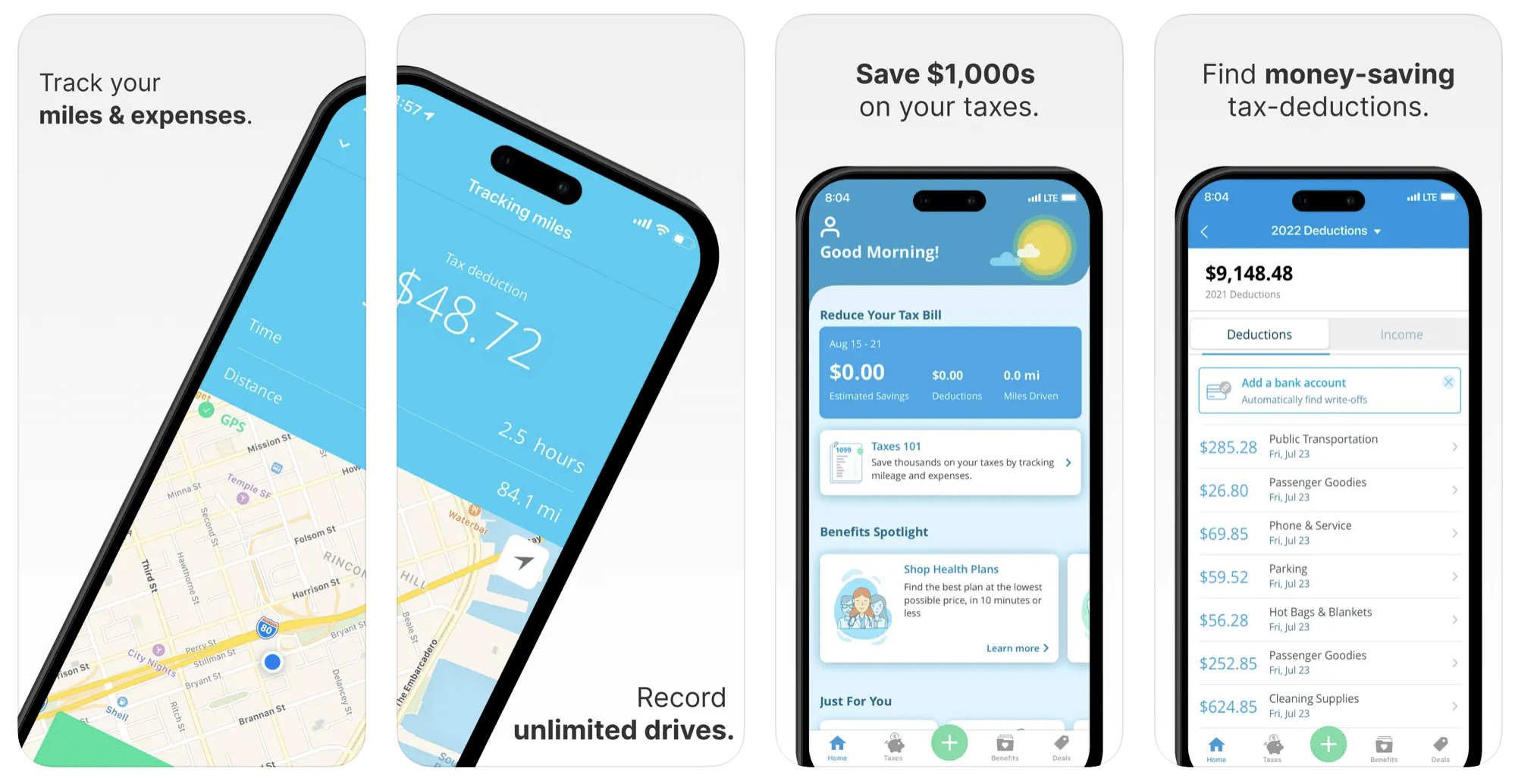
This free mileage tracker does a fair job of keeping track of the distances you rack up while gig driving, but it doesn’t automatically track earnings. It can be a big help, though, in tracking your expenses. You can link Stride to your bank account, and it will automatically scan your expenses to identify items you can potentially deduct. The app is totally free. This could make it the best free mileage tracker app, but there is a small price to pay. The app will persistently push you to consider various insurance plans that they are affiliated with. If you don’t mind that, this is a solid mileage tracker, even if it doesn’t track your earnings.
Available on Android and Apple: Yes
Ratings: 4.8 stars on App Store, 4.6 stars on Google Play
Free version: Yes
Subscription price: None. The app is free.
Created specifically for gig drivers: No
5. Gridwise
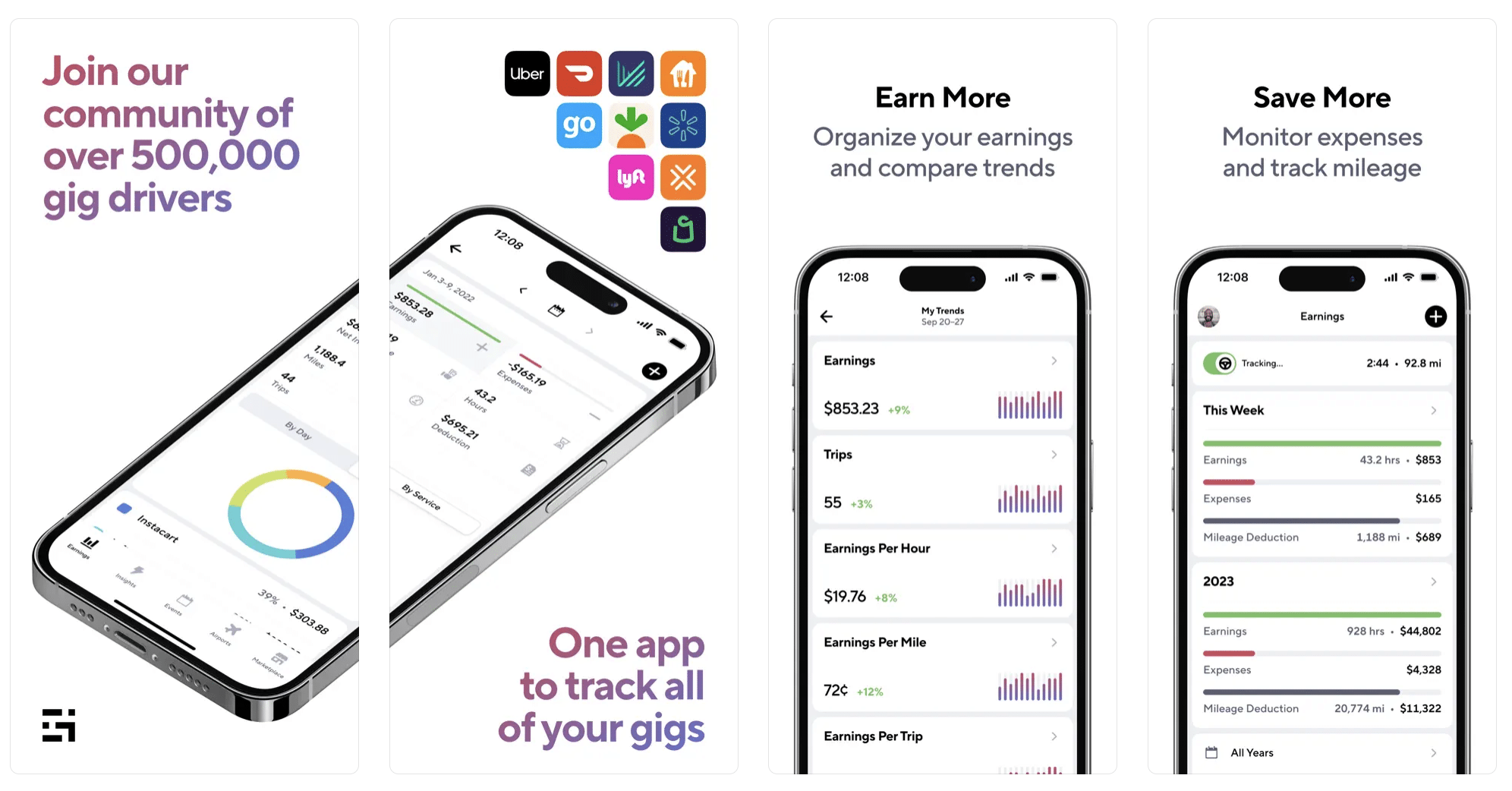
Gridwise has a free mileage tracker and free features that record your income and expenses. It gives you access to insurance and benefits, as well as insights about the best times and places to make the most money while gig driving. The Gridwise mileage tracker captures all the miles you drive while you’re on your driving shift, and it can be used if you have other trips you need to make which qualify as business travel.
Drivers love it because it is geared toward the needs of rideshare and delivery workers, providing free information about airport departures and arrivals, event start and let out times, weather, traffic, and more. The Gridwise Plus subscription adds value by providing additional insights and reports, discounts on benefits, the ability to export data in .csv format,, and more.
Available on Android and Apple: Yes
Ratings: 4.9 stars on App Store, 4.6 stars on Google Play
Free version: Yes
Subscription price: $9.95 per month for Gridwise Plus, or $95.99 per year (a $23.41 savings)
Created specifically for gig drivers: Yes!
What is the best mileage tracking app?
Now that we’ve checked them all out, we’re positive about the answer to that. Hands down, it’s Gridwise. Are we biased? You bet we are! But drivers love it too. Gridwise is the best mileage tracker app, and so much more. So many of the features are free, and the subscription to Gridwise Plus will pay for itself with additional insights to boost your earnings and deeper discounts on products and services.
Most important, Gridwise is designed specifically for gig drivers by experts who were once gig drivers themselves! Knowing what gig drivers need is a crucial step in creating an app that rideshare and delivery drivers can really use! Here are a few of the features, besides mileage tracking:
- seamless earnings tracking
- automatic, on/off toggle and manual mileage tracking
- mileage categorization
- airport, traffic, weather, and events information
- insights into where to drive and when to drive
- reports showing earnings across the platforms you use
- discounts on countless products and services for drivers
- additional resources for finding side gigs
- an informative and comprehensive blog
- affordable benefits, including insurance, medical, dental, and alternative practitioner discounts
- a community of drivers just like you
Don’t settle for just any app. Get the best mileage tracker, and so much more, from Gridwise!
Purolator: A Fresh Way To Get More Rideshare Tips
When you get into your vehicle, which of your five senses hits you first? Let’s face it. “The nose knows” when it comes to sniffing out how pleasant a ride is going to be. And how pleasant a ride is will dictate how much your passengers tip you.
Do you want to know how to earn more as a gig driver? Start making the best impression possible on your customers from the time they step into your car. The best way to begin creating a pleasant ride is to get your car to smell fresh and clean at all times. How can you do that?
Forget those little widgets that snap into your car’s vents or those heavy-handed air freshener sprays. They don’t work anymore effectively than the paper pine trees some old-school drivers still have dangling from the rearview mirror. On top of that, those items have their own smell, and their pungent aromas might not please your passengers one bit. Many a Lyft driver and Uber driver have received low-star ratings due to the way their cars’ overly-aggressive air fresheners affected their passengers. What you should be looking into is your vehicle’s cabin air filter. A cabin air filter keeps pollutants out of your vehicle’s ventilation system to help improve the quality of the air you breathe while you drive. But not all filters are created equal.
With Purolator, you have a range of cabin air filters to choose from. But the top of the line is the PurolatorBOSS® Premium Cabin Air Filter with Febreze Freshness. This high-tech, electrostatically charged, micro-woven cabin air filter takes care of all the nasty odors you can imagine with its carbon fibers. It also reduces and eliminates
- virus aerosols
- pollen
- dust
- microscopic particles
Plus, the highly efficient particulate layer blocks up to 99% of fine particles like road dirt, brake dust, soot, pollen, and other inert allergens from entering your vehicle's cabin – all while optimizing air flow through the HVAC system.
While the filter packs odor protection, it’s unscented, so only fresh, clean air flows through your vehicle. With odor elimination like that, you don't have to worry about the stinky city smell blasting at your passengers! This will make any rideshare driver breathe a (pleasant smelling) sigh of relief!
The PurolatorBOSS® Premium Cabin Air Filter optimizes airflow through your car’s HVAC system and also prevents growth of mold and bacteria on the filter. You can rest easy, knowing you have further protection from these potentially dangerous irritants. You will no longer be inhaling road dirt, brake dust, soot, or smoke coming from outside your vehicle, either. What a relief!
As you can see, the PurolatorBOSS® Premium Cabin Air Filter is not just good for you; it’s great for your customers. This Gridwise post shows that a clean car is the #1 way for drivers to earn more tips. The way your vehicle smells is something riders notice immediately. The lack of any noticeable, let alone unpleasant, odors will win kudos for your car, and tips for you!
Is this going to cost you a fortune? Not at all. The Purolator BOSS® is reasonably priced and so easy to install, you can get it working on your next coffee or bathroom break. In fifteen minutes or less, you’ll be enjoying the protection and pleasure of clean, fresh air circulating through your vehicle at all times. And for all gig drivers, right now they are offering a $5-off coupon on Amazon! Learn more here.
There’s absolutely no reason to drive around in a vile-smelling vehicle any longer! Put a PurolatorBOSS® in your car today, and treat yourself to a continuous stream of clean, fresh air!
Certain trademarks used under license from The Procter & Gamble Company or its affiliates.
Gridwise Challenge: Win $500 In Gas With Gridwise Plus!
Who doesn’t want help with paying the painful prices at the pump? Gridwise is giving away $500 in gas to one lucky driver who has Gridwise Plus. Simply be a Plus member during the month of June and you’ll be eligible for the drawing, which will take place on July 1, 2023. Not a Plus member yet? Sign up for Gridwise Plus through this link.
If you’re not a Gridwise Plus member yet, you need to hear why it’s such a good idea to become one. A shot at $500 in gas is a powerful motivation in and of itself, but that’s just one of the perks you get when you become a Gridwise Plus member. Here are some more:
- Boost delivery earnings by up to 30%
- Advanced insight stats. See your fellow drivers’ earnings per mile and per trip, over various time increments.
- Earnings insights by time of day. Check out the most productive times to work.
- 24-hour airport arrivals and departures volume, plus individual flight information, including delays. Find out when to hit the airport anytime of the day.
- Unlimited event reminders. Keep up with all the important happenings in the area.
- Save up an additional $3,000/year in mileage tax deductions
- Get more out of your mileage deduction. Gridwise tracks all your miles, whether you’re on a trip or in between trips, so you get a bigger mileage deduction!
- Gain access to over $1,000 in driver benefits
- Gridwise Gas: Save at least 2¢ per gallon on your fuel, all the time.
- An extra $5000 in no-cost insurance coverage, plus an additional 5% off quarterly plans
- 15% off your first Gridwise Rental
- 50% off tax preparer services from Gridwise Tax Help powered by Keeper
- 33% off your subscription to CarAdvise maintenance and mechanic finder services
- No ads!
You get all these great features and offers, plus first dibs at future deals and discounts—and the inside scoop on the ever-expanding range of functionality Gridwise Plus develops to serve rideshare and delivery drivers like you. With all these perks, programs, and discounts, you can’t afford not to sign up for Gridwise Plus.
Now that you’re ready to take your shot at the $500 gas giveaway from the Gridwise Plus driver challenge, here are the rules.
- Become eligible by:
- Signing up for the Gridwise Plus.
- Please note, you will become eligible only after the 7 day trial ends. The trial must be enabled on or before 6/23 to qualify.
* If you are currently a Gridwise Plus member, you are automatically eligible.
- Complete your entry into the $500 gas Gridwise Plus driver challenge.
- Sign up to participate through this link.
- Go online to track your mileage with Gridwise during your shifts.
You receive 1 entry in the giveaway for every 5 shifts you track with Gridwise. Any additional multiples of 5 shifts you track will give you more chances to win. For example, tracking 10 shifts, gets 2 entries; 15 shifts buys you 3 entries, etc.
The winner will be announced at our drawing on July 1, 2023. Will you be the one who gets the big prize? There’s only one way to find out!
Sign up for Gridwise Plus, get out there, and start tracking!
$500 worth of gas could be yours!
*To be eligible for participation in the Gridwise Plus Driver Challenge, the Gridwise drivers must be on a paid subscription to Gridwise Plus, annual or monthly, during the period of June 1, 2023, to June 30, 2023. Gridwise drivers who are accessing Gridwise Plus through a 7-day trial are not eligible to participate. Drivers who sign-up for the Plus membership must do so before June 23rd to get through the 7-day trial before the end of the challenge. Participation in the form of tracked shifts will only count towards challenge entry if they are tracked between June 1, 2023, at 12:00:00 AM (local time) through June 30, 2023 at 11:59:59 PM (local time) through the Gridwise app.
Rideshare And Delivery News: Minnesota Proposes Minimum Pay for Uber Lyft Drivers
Update: This bill was vetoed by MN Governor Tim Walz as of June 2023.
Do you want Uber, Lyft, DoorDash, and other companies to be required to pay you a minimum wage and other benefits, or are you content working as an independent contractor? The ongoing Uber driver California battle involving Proposition 22 isn’t the only gig worker conflict in the country anymore. Many states and cities are grappling with the question, Are Uber drivers employees, and if they’re not, should they be?
Nothing makes Uber news and Lyft news faster than activity surrounding the controversy over how drivers are treated by the companies, and how companies might be regulated from one state to the next. Now Minnesota has new Uber laws in process that, if passed, would impose several measures on Uber and Lyft, and change the way they are required to treat drivers.
Will this legislation go all the way through, and if it does, what does it mean for the Transportation Network Companies (TNCs) you drive for, and for gig workers in Minnesota and elsewhere? Let’s begin by examining what the bill contains.
If passed by the state legislature and signed by the governor, the new Minnesota law will require the TNCs to
- pay Uber and Lyft drivers a minimum of $1.85 per mile and $0.25 a minute while drivers are on a trip, and $1.25 per mile and $0.10 per minute to pick up a rider if they are more than five miles away. These fares would also be subject to increase due to inflation.
- provide insurance for drivers, covering up to $1 million in medical costs and expenses, $500,000 for disability, and 75% of lost wages. These insurance provisions would be in effect whenever the driver is logged into the network, even if they are not accepting rides.
- institute clearer policies regarding driver deactivation.
While these stipulations in the third version of the bill reflect lower minimum costs for insurance and driver payments, the companies maintain that the bill’s passage and ultimate enactment would destroy their ability to do business in Minnesota.
Joel Carlson, a lobbyist for Uber, noted that even these lower minimum rates and benefits would lead to unreasonably high customer prices. Soaring costs for rides would decimate demand for the companies’ services, along with the jobs that the gig driving apps provide. The companies may also be forced to reinstate drivers they have deemed to be unsafe, which would, according to Carlson, be a public safety hazard.
Drivers maintain that the companies’ share of their fees has increased over the years, and that’s made it difficult to sustain a reasonable living driving as a Lyft or Uber independent contractor. In addition to issues related to compensation, drivers also have concerns about their personal safety while on the job, and the ease with which the companies can deactivate them.
In its present iteration, neither the companies nor the drivers are fully satisfied with the bill’s provisions. The terms are still being negotiated, as is the matter of how far the state legislators supporting the bill will go to bring it to a vote before the current session closes. You can keep up with the latest updates on the Minnesota Legislature website.
Over the last few weeks, crowds of Uber and Lyft drivers have assembled outside the state capitol in order to cheer on the legislators who support this bill. Hundreds of them have formed a new group, the Minnesota Uber/Lyft Drivers Association, to advocate for new Uber regulations on the state and local levels.
How have driver advocacy groups fared in other states? Let’s start with the most prominent case.
Are Uber drivers employees in California? They are not, and when Proposition 22 passed in November 2020, voters indicated that’s the way they wanted it to stay. Various court actions between California state officials and the TNCs have ensued since then. However, as Gridwise reported in March of this year, the companies won the latest round of the fight over Proposition 22 in California.
The legislators in Minnesota seem to have noticed the foibles of the California situation and have taken a different tack in their attempt to come up with a new Uber agreement. They are using a model that resembles one that was put into effect in Washington state. Unlike Proposition 22 in California, the Uber bill in Washington didn’t involve the issue of whether the drivers should be classified as employees or independent contractors. The same goes for similar regulations imposed by the NYC Taxi and Limousine Commission (TLC).
Instead, the Washington state laws, NYC TLC regulations, and the Minnesota proposal place restrictions on the companies through minimum payments to the drivers. It’s worth noting that the Minnesota legislation has significantly higher rates than Washington does. Depending on the type of trip, the minimum rates there are $1.27 per mile and $0.37 per minute, even though the cost of living in Washington is much higher than it is in Minnesota.
While these high rates might not bode well for the ultimate passage of the Minnesota bill, at least in its current form, the strategy of avoiding the independent contractor vs. employee controversy just might well serve Minnesota legislators and the drivers that support them. However, if they do succeed at passing the bill, and getting it signed by a seemingly reluctant governor, there may be far fewer opportunities for Lyft and Uber drivers in Minnesota.
Read more about Proposition 22 and what it means for drivers in this Gridwise post, and learn about about global trends in drivers’ rights through this article from Gridwise.
No matter where you stand in the midst of this controversy, it pays to maximize your income by tracking your earnings and expenses, and get insight about when and where you can make the most money. Gridwise gives you all these features and more.
Until the TNCs are forced to offer you insurance and disability coverage, plus other benefits most employees receive, Gridwise has your back there, too. Learn more about Gridwise Benefits, and you’ll discover ways to protect yourself and save money as an independent gig driver.
Download Gridwise now!
8 Rideshare Services Drivers Should Know About
Friends and family might say you’re an Uber driver, but they probably don’t know you can do the same thing for other companies that work just like Uber. There’s a whole array of rideshare services looking for drivers like you. Each one has something different to offer, and as a driver, it’s important to be aware of all the options you have with regard to rideshare gigs.
This post is designed to clue you in to all the facts surrounding the companies you already know and to expose you to some other services that can make you more money. How many ride sharing companies are there, and why would you have a list of ride sharing companies?
You might be happy sticking with one of the bigger rideshare companies, but Gridwise figures show that drivers who make the most money drive for more than one app. In fact, [TK]% of drivers refuse to restrict themselves to just one service.There are a whole lot of rideshare driving options out there, and you can multi-app to make the most of them. Also, the ridesharing services you already work for might have opportunities you can use to expand your earning power.
Let’s see what’s out there for you.
Uber
By far the most popular rideshare service, Uber, has additional options that help drivers keep cash rolling in. There are different kinds of rides you can provide, including UberX, UberX Share, and Uber Comfort. On top of that, Uber drivers can deliver for Uber Eats, hit the grocery aisles for Shop & Pay, or deliver packages for Uber Connect. Learn more about driving and delivering for Uber on their website, and what it’s like to drive and deliver for Uber in these Gridwise blog posts:
- Become a 5-star Uber driver
- Uber Eats driver pay
- Recent updates to the Uber app
- Guide to the Uber Eats app
- Everything you need to know about driving for Uber Eats
- See how much Uber drivers made in 2022
What riders love: Convenience and popularity create consistent earnings, while the Uber Eats options add diversity and added opportunities.
What drivers love: The ability to switch from rideshare to delivery in one app.
Cities/states available: Just about everywhere! From Little Rock to Roswell, Uber has drivers at the ready. See Uber’s website for the full listing.
Lyft
This popular ride-sharing service sticks to what it knows best. While Lyft has experimented with both package and food delivery services, at present Lyft drivers focus on rideshare driving only. This has its good points. For example, Lyft drivers never have to worry about being interrupted by an unwanted request to deliver two hamburgers to a college dorm!
What riders love: Lyft is known for its customer-friendly culture and puts a high premium on rider safety.
What drivers love: Sophistication and performance of the Lyft app, plus popularity that keeps drivers working on the regular.
Cities/states available: Lyft currently operates in 321 cities across the US and Canada. See the entire list of cities on the Lyft website.
Learn more about what it’s like to drive for Lyft in these Gridwise blog posts:
How to be a 5-star Lyft driver
Wingz
Is this a new rideshare company that flies? Well, not exactly, but close enough. Wingz was founded in 2011, so it’s not new, but it started out by specializing in airport rides. The company has branched out since then, offering customers prearranged rides to doctor’s appointments, business meetings, concerts, games, and other big events. Wingz is great for drivers who want to know exactly when and where they need to be to serve their riders.
What riders love: The stress-easing convenience of booking far in advance and getting a flat-rate ride that is dedicated to taking them where they want to go.
.
What drivers love: Safety and familiarity, and knowing where customers are going before they take the trip. Wingz customers often repeat their requests also, so drivers get to know them and can stop worrying about picking up strangers.
Cities/states available: Wingz is available in several major US cities, mainly in the West. Check out the Wingz website to see the entire list.
Ziro
Ziro prides itself on advanced technology that improves the customer and driver experience. They deliberately discount the prices of their rides and collect only $1 per ride. That means drivers get to keep the rest. Also, customers are catered to with extra choices and perks such as customized entertainment options.
What riders love: Low fares, the ability to choose their drivers, and the backseat tablet that lets them take charge of the deejaying duties.
What drivers love: Working for a company that doesn’t take huge chunks out of their earnings and genuinely high-tech software that makes Ziro one of the most advanced rideshare platforms.
Cities/states available: So far Ziro’s operations are focused on the San Francisco Bay Area. There are plenty of cities in that sector being served, though. See all available locations in the Ziro service area on their website.
Via
If you want to help reduce traffic congestion in overcrowded urban centers, driving for Via gives you your chance. Via is built around the idea of combining rides by picking up various passengers who are going in the same direction. Passengers wait on a corner near their location, and the Via driver picks them up much like a bus would. They are then dropped off as close as possible to their destinations. Via is a big-city app, but many municipalities use Via’s transportation logistics software to improve the logistics of their public transportation services.
What riders love: The big dividend of sharing rides with other passengers: lower fares.
What drivers love: Ecologically sound, solution-based business model that delivers every driver’s favorite thing: higher earnings. This article from Gigworker.com confirms that via drivers earn 35%–43% more than Uber and Lyft drivers in the New York City market.
Cities/states available: As a big-city app, Via is available in just a few locations, such as New York, Los Angeles, and Washington, D.C. The full list of cities where Via is offered can be seen on the company’s website.
Curb
There really are still regular taxi cabs in many major cities, and the Curb app helps conventional taxi companies compete with “rideshare USA.” Potential passengers download the app and “hail” a cab right on their mobile devices. The fares are the same as any taxi ride and not subject to surge pricing the way rideshare trips are.
What riders love: Convenience of hailing a real taxi with a professional driver but without standing out on the corner in wind, rain, or searing heat, plus the ability to schedule rides in advance.
What drivers love: The ability for taxi drivers to stay relevant in a world where rideshare is establishing ever-increasing dominance of the market.
Cities/state available: As you might expect, Curb availability is restricted to larger cities where taxis are common. The full list of cities can be seen on the Curb website.
Arro
Affordable rides, plus accommodations for wheelchair accessibility, and a safety-first policy that ensures all cabbies are trained and approved to work with Arro make this app a NYC favorite. The Arro app features real-time information on driver location, so riders aren’t left waiting at the curb, hoping their cab will come any minute.
What riders love: The ability to put all their information into the app, eliminating the need to deal with the transaction in the cab, and the ability to use Arro’s app to pay even if they hailed their cabs with their own mighty hands.
What drivers love: Keeps the cabbies busy and allows them to be of service to people who have mobility challenges other cabs can’t accommodate. Are you a NYC taxi driver? Learn how to hook up with Arro on their website.
Cities/state available: Arro is an option in big cities such as Boston, Chicago, Houston, Miami, New York City, and San Francisco.
Myle
Conceived by a veteran NYC cabbie with a huge heart, Myle’s mission is to go just that much further to please customers. Hence, the name (pronounced “mile”). The company’s founder drove medical personnel to work when the subways were shut down during the pandemic. He then developed Myle to provide concierge services, public and micro-transit services, and medical transportation for 10% less than other rideshare companies.
What riders love: Finally finding a rideshare company that cares about them and their needs, at rates that are cheaper than other companies.
What drivers love: The ability to have steady work with high earnings and to perform meaningful acts of kindness for people who have special needs.
Cities/states available: New York City only. Learn more about Myle from this article on engadget.com
Make more money with multi-apping
If you wonder why we went to the trouble to list out all these rideshare services, here’s a clue. Multi-apping is the practice of working for more than one rideshare app. Because independent contractors like you are not bound to any one company, you don’t need to be confined to just one. That’s why we want you to know about all these great apps.
Multi-apping is a fairly easy way to multiply your chances for making money at all hours of the day. You can work Uber or Lyft at night, for instance, when people are out and about on the town, then switch to a gig such as Wingz or Myle when things are a bit more sedate. This increases your flexibility and means you can maneuver your driving gig to support you more fully than you might have thought possible.
Make Gridwise your gig driving assistant
If the thought of using multiple rideshare services makes your head spin, don’t worry. Help is here for you! The Gridwise app is the #1 assistant for rideshare and delivery drivers and is a perfect fit for those who multi-app. Simply sync the Gridwise app with your various delivery and rideshare services, and it will track your earnings and keep an account of all the mileage you clock while you’re on the job.
Gridwise puts all the data together so you can see which app is making you the most money, and also gives you ways to record your expenses. You can generate reports and graphs that give you a full picture of your gig driving business.
With your income and expenses all in one place, it’s easy to track your progress and streamline all your recordkeeping, making tax preparation a breeze. But that’s not all Gridwise has to offer. Check out these additional indispensable features:
Where to Drive and When to Drive: insight from real driver data that tells you where and when you can find the most beneficial business in your location
Gridwise Benefits: everything from affordable insurance, medical, dental, vision, and mental health care to discounts on car maintenance and legal and tax help
Gridwise Gas: discounts on gas that ensure you never pay full price to fill your tank again!
No matter which or how many rideshare services you choose to add to your driving gig, Gridwise will make your life easier and help you make more money.
Download the Gridwise app today!
Driving Towards Fairness: 5 Changes Gig Drivers Crave
Uber CEO Dara Khosrowshahi recently gave an interview to BusinessInsider.com. The topic was how Uber passengers can boost their rider ratings. It was a revealing read, but the most interesting quote came at the end, and it was more about Uber drivers and the need to be a smart business person.
"The biggest lesson for me was . . . it's hard, and just dealing with understanding how the app works, determining or choosing which trips to take and which trips not to take," Khosrowshafi said. "It's actually amazing how sophisticated you have to be to optimize your own earnings power."
So maybe the rideshare companies are listening to delivery driver complaints and rideshare driver complaints?
As a follow-up, Gridwise scoured conversations on Reddit and asked questions to both rideshare and delivery drivers about what they would change regarding their gig driving jobs. Some answers were predictable, while others reveal driver concerns about safety and the duplicitous behavior of customers.
In this blog post, we will look at the answers and discuss the ramifications. Topics include
- The problem of driver churn
- Rideshare driver complaints
- Delivery driver complaints
- Why is this information important?
- Gridwise’s new forum to voice these issues
So much was learned from this research into Reddit that Gridwise has now launched a subreddit. More about this later in the article.
The problem of driver churn
According to an article on Hypepotamus.com, Taken for a Ride: Why the Current Rideshare Model Is Broken, by at least one estimate, only about 4% of Uber rideshare drivers are still driving a year later, known as “driver churn.” Lyft faces a similar challenge. If the rideshare companies want to retain more drivers, they can do it best by listening to driver input on what works—and what doesn’t.
Rideshare and restaurant food delivery companies face increasing competition for drivers from companies such as Amazon Flex, Roadie, and Walmart Spark. According to the recent Gridwise blog post The Ultimate Guide to Being a Roadie Driver, Roadie drivers made $28.19 per hour in Q4 2022. Recent figures from Gridwise show Amazon Flex drivers making as much as $39 an hour in 2022. In a Gridwise blog post titled, Rideshare vs. Delivery: How Much Did Drivers Earn in 2022?, rideshare driver earnings for all quarters of 2022, according to Gridwise numbers, hover between $20 and $22 an hour.
Once you gain seniority as an Amazon Flex driver, you also get access to warehouses (and delivery routes) closer to home. This can drastically reduce the miles a driver needs to cover, especially compared to rideshare. Fewer miles traveled means lower expenses on fuel costs. Walmart Spark is a desirable position, evidenced by the waiting list for Walmart Spark jobs in many regions.
Rideshare and delivery driver request
Gridwise asked rideshare and delivery drivers for their opinion on Reddit about what they would like to see changed. Here are the answers from over 2,200 total votes from fellow rideshare and delivery drivers, company by company.
Uber
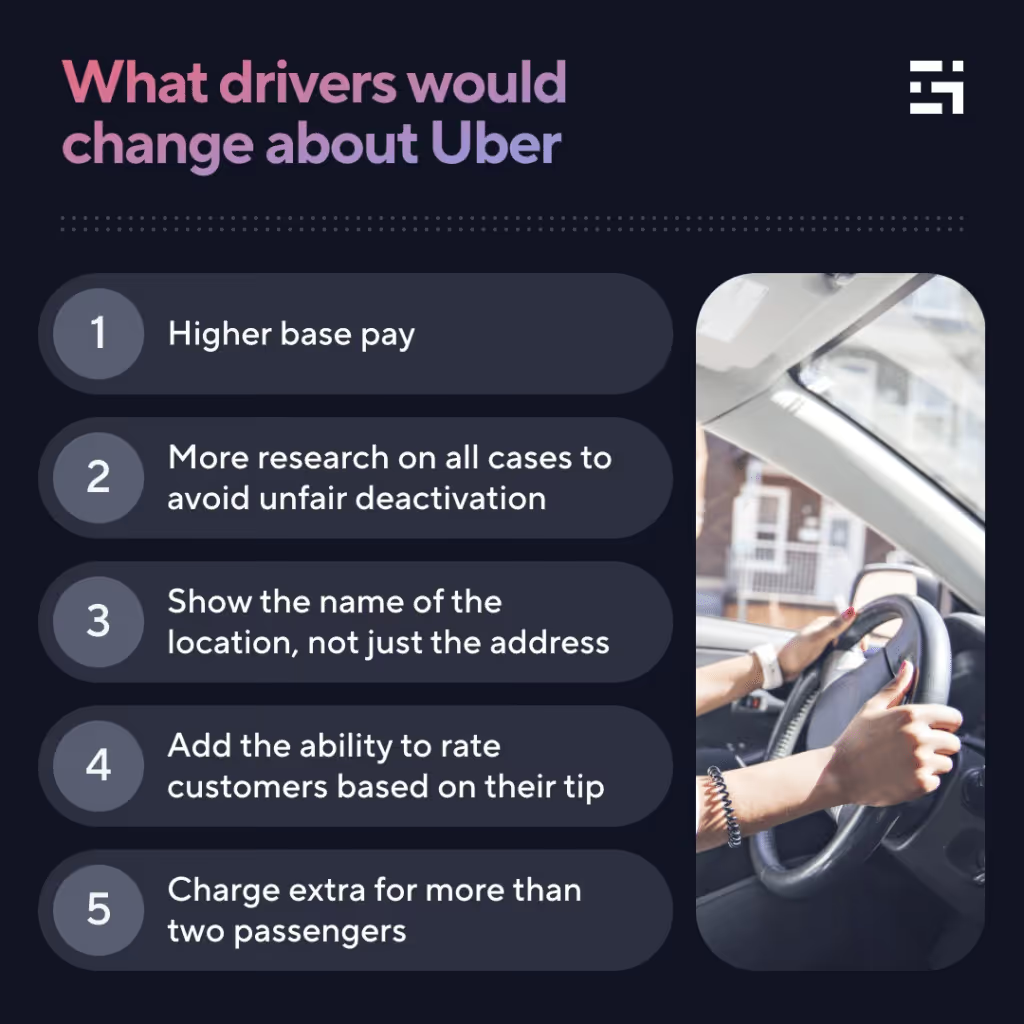
Insufficient base pay is at the top of the list of Uber driver complaints on Reddit. Drivers would also like to see a surcharge for more than two passengers. Other Uber driver grievances include unfair deactivations and the need for better research about those deactivations. Others asked about Uber driver app improvements, specifically to be able to see the name of a destination on the app, not just the address, and the ability to rate customers based on the amount of their tip.
Another article on BusinessInsider.com revealed how Uber CEO Dara Khosrowshahi anonymously signed up to drive for Uber to gain better insight into the challenges faced by drivers. Khosrowshahi was surprised at the number of passengers who were rude to drivers. Other passengers discussed personal problems and even confidential corporate information with their co-passengers as if he didn’t exist. Khosrowshahi admitted that it made him feel inferior.
The same Business Insider article stated, “Khosrowshahi's moonlighting was part of a bigger operation called ‘Project Boomerang’ that aimed to get more drivers back on the app.… The findings prompted Uber to create a single sign-up for both rides and deliveries, to allow drivers to see drop-off locations before pick-up, and to give drivers hundreds of millions of dollars in bonuses.”
Lyft
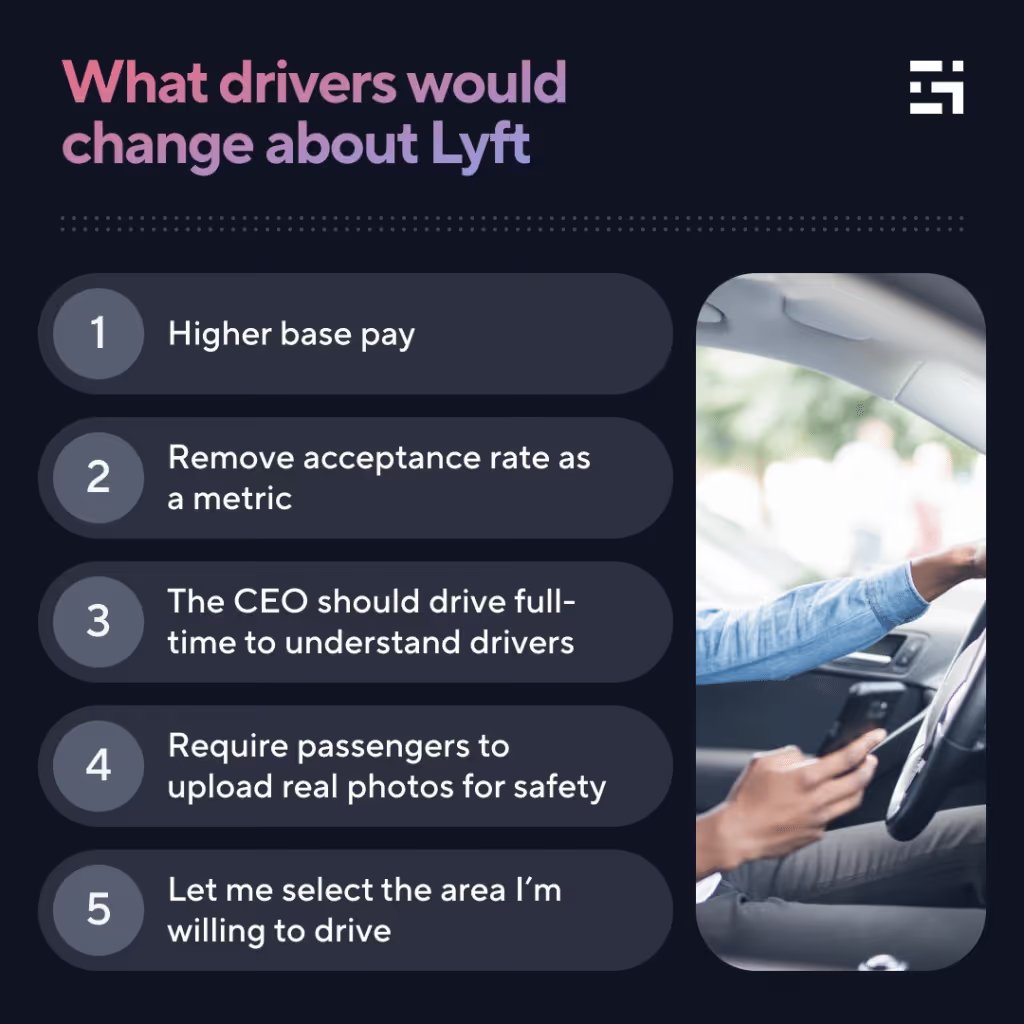
Wanting higher base pay is also at the top of Lyft driver complaints on Reddit, especially since Lyft drivers tend to trail their Uber counterparts in earnings on all levels. Drivers would also like to see an end of the acceptance-rate metric.
Driver safety is on the list of Lyft driver app improvements, too, as drivers indicated they want to see actual photos of passengers, along with the ability to select the area where they are willing to work.
Many drivers suggested that Lyft’s CEO should become a rideshare driver so he could better understand drivers, a request that likely emanated from the Business Insider article. The article also stated that Risher has “emphasized a need to streamline operations and get back to ‘better meeting the needs of riders and drivers’ in employee communications and public messaging.”
Delivery driver complaints
DoorDash
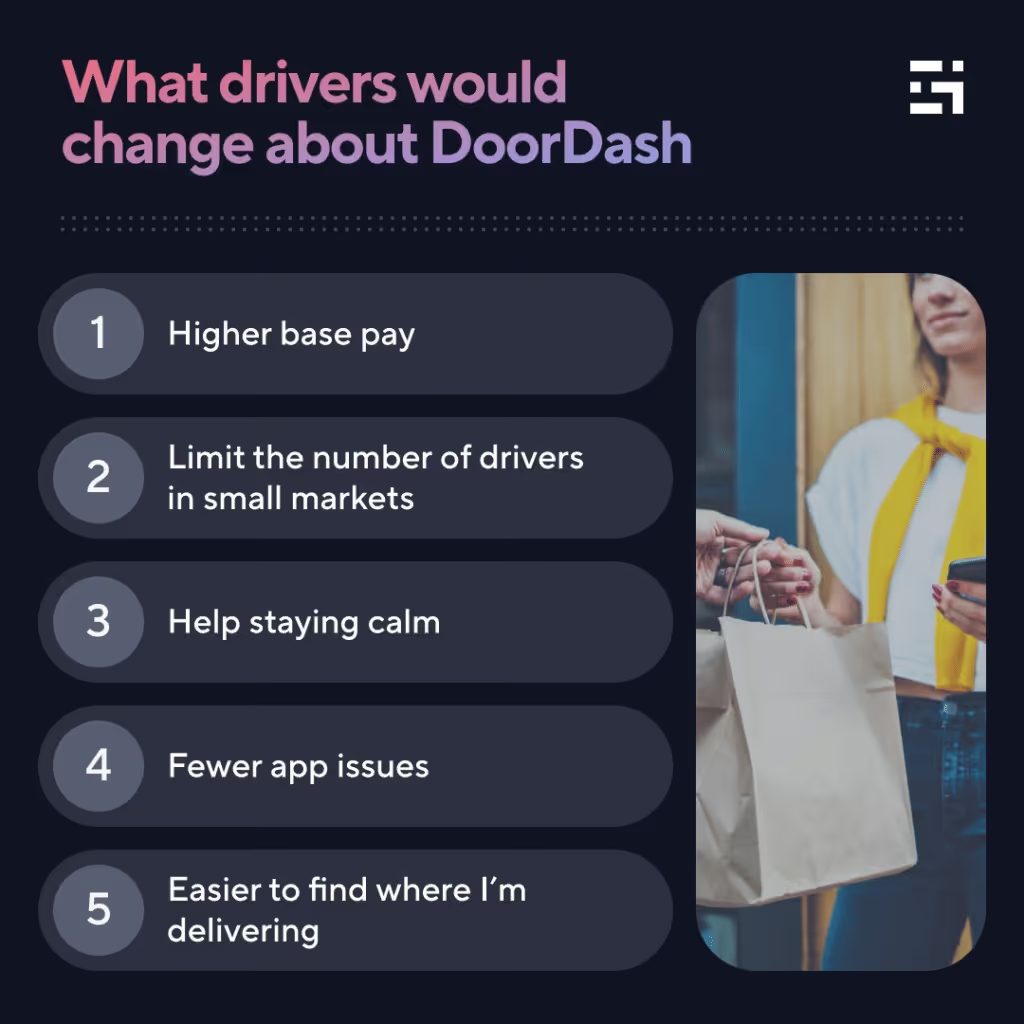
Higher base pay was again at the top of the list of DoorDash driver complaints. DoorDash drivers earned $15.30 an hour in Q1 2022, dropping to below $15.00 an hour for the remaining year. DoorDash driver earnings per trip are substantially lower than Uber Eats, DoorDash’s nearest competitor. DoorDash per-trip earnings were less than $8.00 for all of last year, while Uber Eats drivers earned well over $9.00 per trip. DoorDash drivers earn more per hour because they make more deliveries per hour. Driver saturation in some markets is a problem, though, as drivers commented that DoorDash could help them by limiting the number of drivers in smaller markets.
A complete look at DoorDash earnings is available on the Gridwise blog post Uber Eats vs. DoorDash Pay: How Much Did Drivers Earn in 2022?
DoorDash driver app improvements were another theme that appeared in the Reddit comments. Drivers complained about issues with the app and problems with navigation (“make it easier to find where I’m delivering,” was one suggestion). Many DoorDash drivers asked for help staying calm, an issue that could likely be solved if drivers had fewer app and navigation problems.
Uber Eats
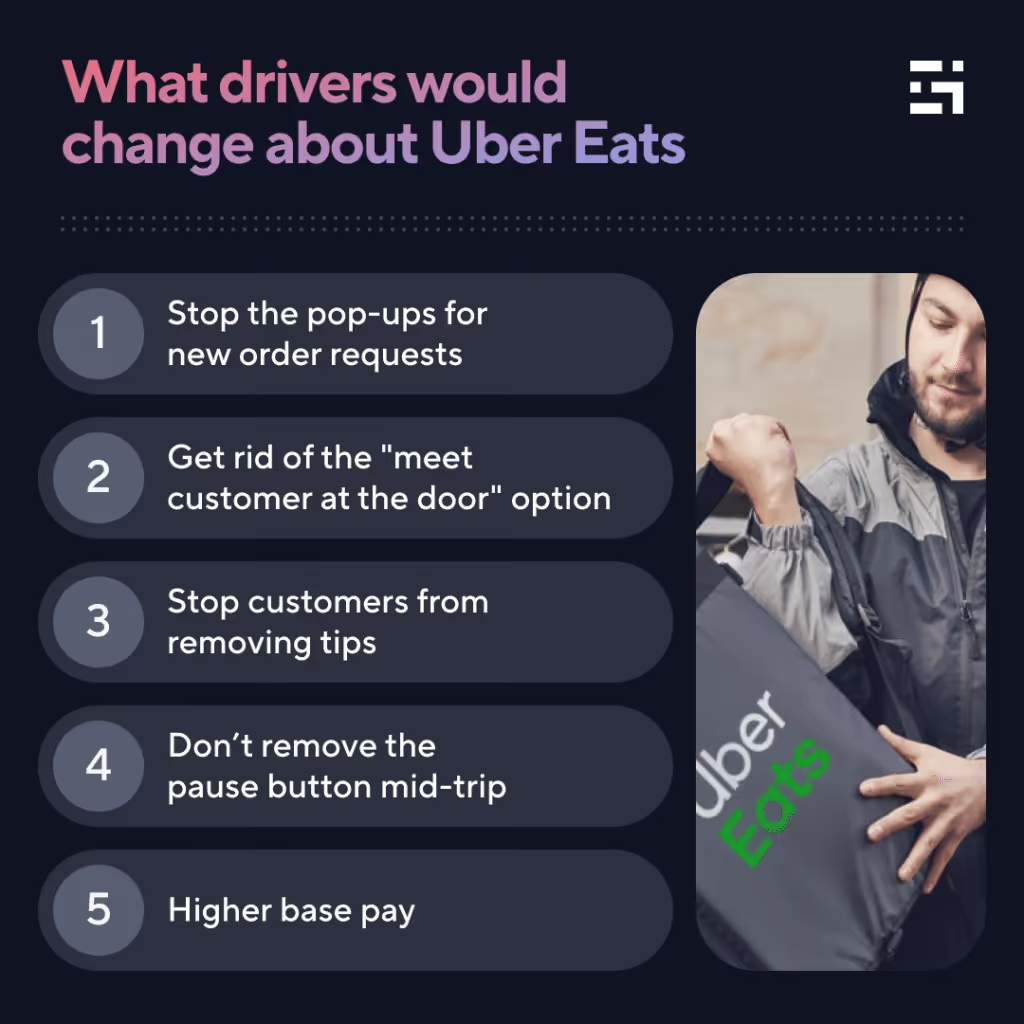
Yet again, higher base pay was the theme of many Uber Eats driver complaints. Uber Eats driver app improvements was another motif, as drivers want to end pop-ups for new order requests. Uber Eats safeguarded against this issue by having a “pause” button that drivers could activate if they got busy at a restaurant, but that feature disappeared from the app. Drivers would like to see it return.
Uber CEO Dara Khosrowshahi, during his incognito time as an Uber Eats driver, was alarmed at the customer practice of tip baiting. This topic also received mention in the Reddit responses. Tip baiting is when the Uber Eats customer indicates a handsome tip with the Uber Eats order as a lure for the driver to give over-the-top service. Afterward, the customer either substantially reduces the tip or completely removes it. According to a blog post by FinancialPanther.com, Uber Eats allows customers to change or delete the tip amount for up to one hour after delivery. DoorDash and Grubhub do not allow customers to change the tip after delivery, so tip baiting is not a problem for these drivers.
Given the CEO’s experience, it will be interesting to see if Uber changes customers’ ability to reduce the tip after delivery, which would put an end to tip baiting.
Grubhub
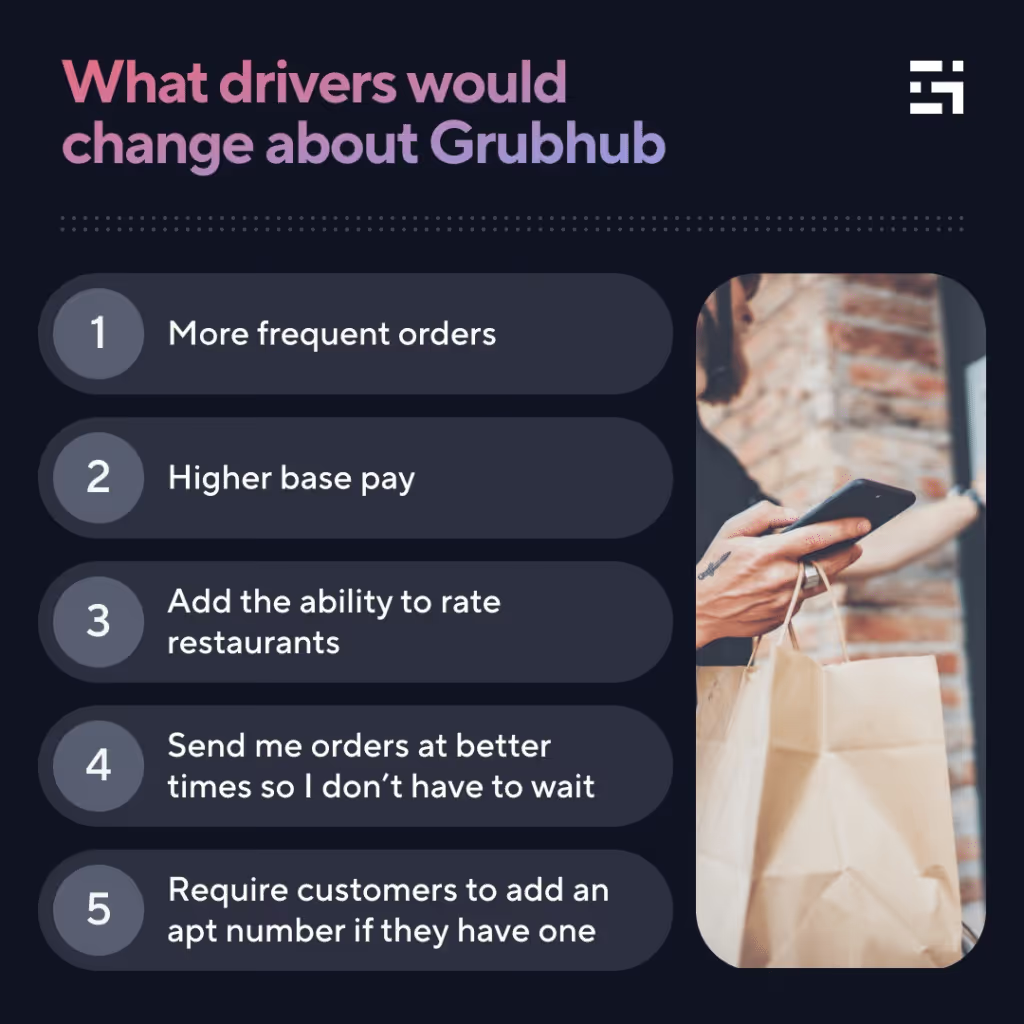
Grubhub drivers repeated the same concern as other gig drivers. Higher base pay was among the Grubhub driver complaints. Other complaints included the need for more orders and Grubhub refining the times the orders are sent, so drivers don’t have to wait for an excessive period at the restaurants.
Drivers also complained about not always getting an apartment number in their directions. When it came to Grubhub driver app improvements, drivers expressed a desire for a way to rate restaurants in the app.
Why is this information important?
Both Uber and Lyft are now publicly held companies, under pressure from stock owners to show a return, which often leads to cutting costs.
On May 6, 2023, the Motley Fool reported that 34 analysts followed by the Wall Street Journal gave Uber stock the highest possible rating. This is great news for Uber, but when you’re at the top, you have to work harder to stay there: Uber still needs to pay attention to drivers.
Lyft, however, faces challenges. Share prices dropped 19% on May 5 when the company announced what Reuters described as “a disappointing adjusted core earnings forecast.” The firm also announced corporate layoffs to free up cash, some of which Lyft said would go to maintaining driver earnings.
But as these companies grapple with making drivers, customers, and stockholders happy, it is essential that outside forces continue to remind them what can be done to improve the driver experience. Drivers are, after all, the backbone of the gig economy.
Each of the infographics in this article follows a dual trend. Rideshare and restaurant food delivery drivers are concerned about pay issues. They also express a consistent need to address issues with the apps and develop new features. Rideshare drivers are concerned about their safety. They want to see passengers post real photos to their profile on the app. Uber drivers want to know the name of the location, not just the address of where they are going.
Gridwise’s new forum to voice these issues
Gridwise launched a subreddit that gives drivers a forum for voicing these issues. Gridwise has been an unending support of gig drivers across multiple apps. The Gridwise app allows drivers to track their various gig activities and see when and where the profit centers are, and on which app. It also offers the best mileage tracker for gig drivers, regardless of which app they are using. Another portion of the app allows drivers to track expenses, an invaluable and money-saving feature at tax time, when drivers need to claim every deduction available to them.
Download Gridwise to check out all the invaluable features!
And have fun out there.
Delivery Driver Guide: Using The Uber Eats App
Want to become an Uber Eats driver? Before you get started, you’ll have to learn how to use the Uber Eats driver app. We put this post together to make that task easy for you. Here’s the outline:
- How to get started on the Uber Eats app
- Uber Eats app: layout and features
- Uber Eats earnings and payments
- Your driver ratings and how to keep them high
- Make Gridwise your Uber Eats partner
How to get started on the Uber Eats app
Before you do anything else, you’ll need to know what it takes to sign up for Uber Eats as a driver. Depending on where you live, you can deliver by car, scooter, bicycle, or even on foot.
Here are the requirements for each mode of transportation:
- Delivery by car: Be at least 19 years old, have a 2- or 4-door car, have a valid driver's license in your name and insurance for your vehicle, and submit your Social Security number so Uber can run a background check.
- Delivery by scooter: Be at least 19 years old, have a motorized scooter under 50cc, have a valid driver's license in your name, submit your Social Security number for a background check, and select “scooter” as your mode of transportation if it is available in your area.
- Delivery by bicycle or on foot: Be at least 19 years old, have a government-issued ID, submit your Social Security number for a background check, and select “bicycle” or “bicycle or on foot” as your mode of transportation if it is available in your area.
In all cases, you’ll need a bank account to link to your Uber earnings for deposit. You can also apply for the Uber Pro Card, which would give you a stand-alone account for your earnings.
If you meet the qualifications, you’re all set to become an Uber Eats driver. You can deliver food and packages, or you can take Shop & Pay orders. Those require you to go shopping for your customers, and then deliver the items to their doorsteps. Read more about Shop & Pay on the Uber website.
There’s not a separate app for Uber Eats, so it’s easy to figure out which app for Uber driver you need to get. If you’re already an Uber rideshare driver, getting started to deliver for Uber Eats is super easy. All you need to do is elect to receive deliveries within your app, and you will see the Uber Eats requests come in through the app. If you are not yet an Uber driver, you’ll need to download the Uber driver app. Get it for Android from the Google Play Store or for Apple at the App Store.
From there, it’s easy to sign up for Uber Eats driver. Enter all the required information, including your bank account and vehicle of your choice (if you’re going to use one), upload a nice photo of yourself, and submit. You will need to wait a few days for the background check to clear.
You will probably be notified by Uber that you are eligible to order an Uber Plus Card. This card enables you to pay for customer orders without using your cash or credit card. The customer still pays for the order; you simply use the Uber Plus Card to pay for it. Read more about the Uber Plus Card on the Uber website.
While you don’t have to order the Uber Plus Card, having it gives you an advantage: you’ll receive more requests for orders when your driver profile shows that you have the card. You will also need to remember to carry it with you whenever you want to drive for Uber Eats.
Once you are approved and ready to deliver, you will need to learn how to use the Uber Eats app.
Uber Eats app: layout and features
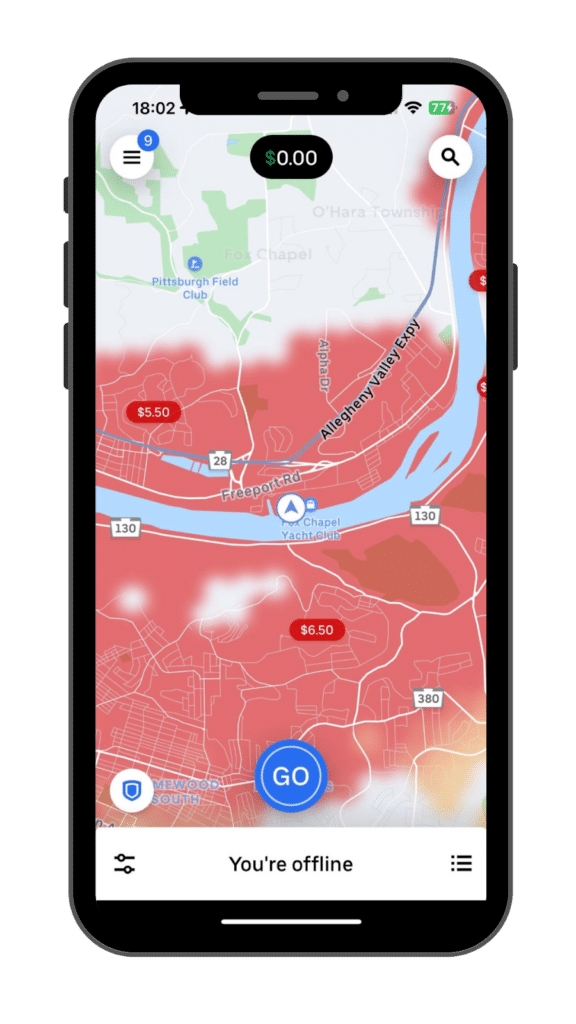
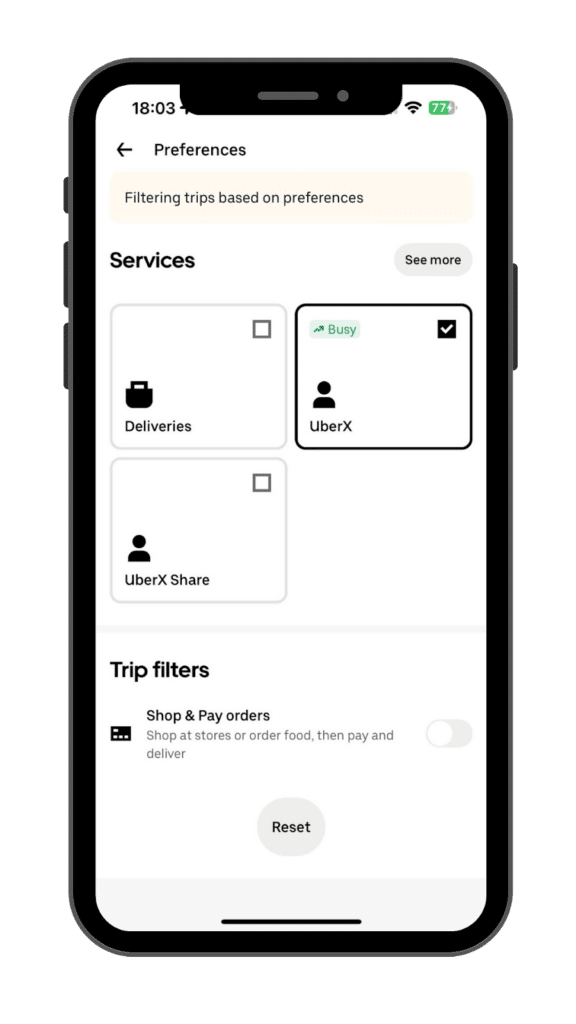
Fortunately, the Uber Eats app is easy to navigate. If you are qualified as a rideshare driver, you’ll need to specify which requests you are willing to take. From your home screen, tap on the two lines in the lower left-hand corner.
Under “Preferences,” check the boxes on the types of rides and/or deliveries you are willing to receive. Be very careful about this aspect of the app! Check it frequently to ensure that it’s set up to reflect your preferences. The app will sometimes default to make you available for more than one or all of the options. Of course, you can keep yourself open for everything if you wish, but that’s not always optimal. If you don’t want to take Shop & Pay orders, for instance, you’ll want to uncheck the Shop & Pay box, under “Trip filters."
Once you’re set up and ready to take orders, here are the steps to making money with Uber Eats.
- Click the blue “GO” button on the home screen, and wait for your first offer to appear.
- Either accept or decline the order, based on the time, distance, and pay being offered. You get to decide if it will be worth it for you.
- If you accept, the app displays a GPS map and directions taking you to the order pickup point. If you decline, you can wait for the next order to appear.
- Once you arrive at the pickup point, go inside to collect the order.
- When you have retrieved it, go back to your car and swipe or tap the app to indicate you’re ready to deliver.
- Another GPS map and set of directions will appear, showing you the way to the drop-off point.
- Once you arrive, pay close attention to the order instructions. The customer may want you to leave the items outside, or they might request you to summon them when you get there.
- When the delivery is complete, return to your vehicle and be ready to deliver the next order.
This sounds pretty simple, but it isn’t always that simple. There are things called “stacked orders,” where you might be asked to pick up more than one order from the same place or nearby locations at the same time, and deliver them to their destinations. Fortunately, the algorithm in the app calculates the best way for you to do that. Simply follow the directions, and you’ll be led through the most efficient delivery route.
For Shop & Pay orders, the process is pretty much the same, except rather than just picking up the orders, you’ll also have to shop for the items on the list your customer provides. The Uber Eats Shop & Pay app will offer substitutes for any items not available, if the customer has authorized that. Shop & Pay orders take more time, but they also pay very well. It’s best to experiment with all your options, and then decide when and how you will use your Uber Eats app.
In addition to this, there will be times when the people you deal with, both at the pickup and delivery points, will prove to be challenging. If you have an obvious problem, or if you want to report someone’s disrespectful behavior, you can contact Uber driver support. We will go into more detail about how to handle these situations later in this article. For now, let’s get back to the basics.
Beyond the delivery functions, the Uber Eats app offers other features you should know about, including
- safety provisions: instant access to 911 calls, the ability to record trips, and a way to have your loved ones track your travels as you go about your delivery duties
- tax information: a full annual earnings report on a 1099 you can use to prove your earnings when you file your taxes, plus earnings records for all your deliveries
- a destination filter: a way to ensure orders you take are along a given route, especially useful when you’re driving toward home at the end of your shift
- an extensive help section: provides information about using the app and delivering for Uber Eats, as well as contacting driver support
- a learning center: contains videos that show you how to use the app and map, and how to prepare your vehicle
- referrals: a way to earn money by recruiting friends to become Uber Eats drivers
- Uber Pro: a rewards program that offers priority treatment, deals, and discounts
- Uber Wallet: a record showing your account balance and your payout activity
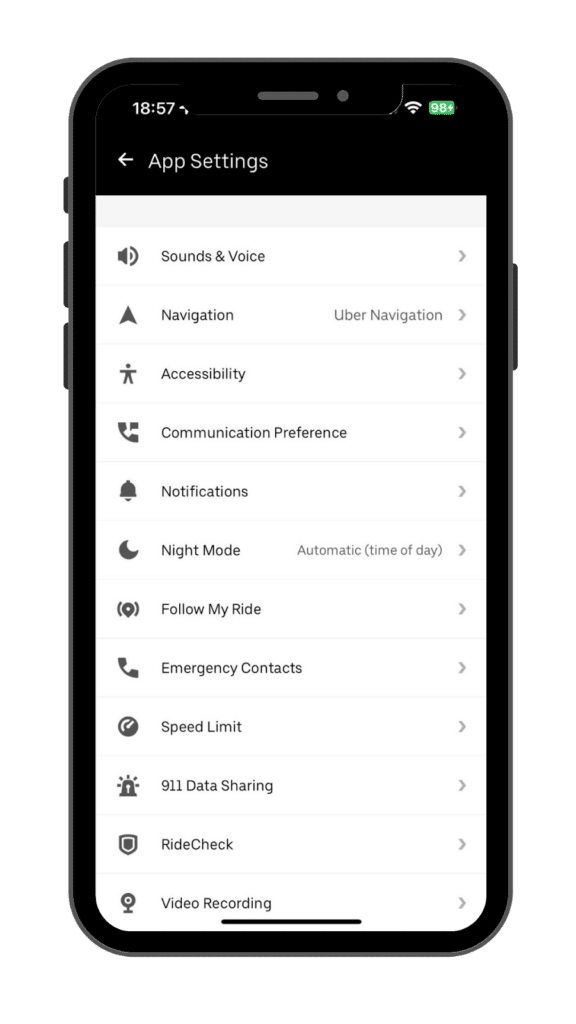
Something else you should know: if you don’t like the way Uber routes you, or you simply prefer another GPS app, you can connect it to your Uber Eats app under “App Settings” and “Navigation.”
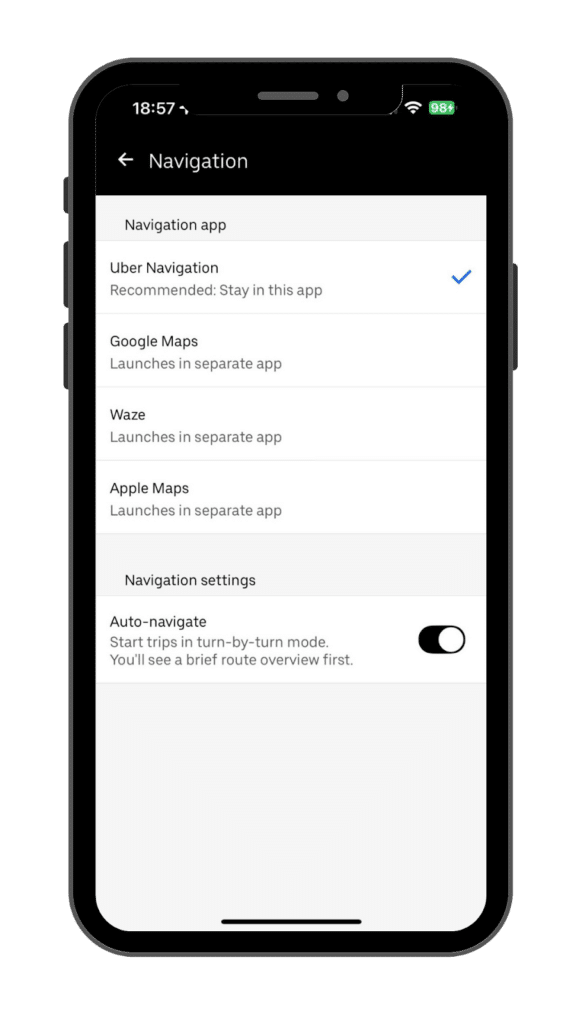
You might be excited about getting started, as many drivers are. Still, you should take your time so you can be sure that you know what you’re doing. Before you accept your first delivery, you should take some time to learn how to get around the Uber Eats delivery driver app, and set it up so that it is perfect for what you want to do.
Even if you’re very well prepared, it’s inevitable that you’ll learn even more by doing. If you make a few mistakes here and there, just chalk it up to experience. Before you know it, you’ll be an expert at using the app for Uber Eats driver(s).
Uber Eats earnings and payments
Uber Eats pay is comparable to what you get with other delivery gigs. This Gridwise blog post tells you how well Eats drivers fared last year, and this Gridwise article compares Uber Eats earnings with other delivery apps. As with many gig jobs, your Uber Eats gig can be as lucrative as you are willing to make it. Let’s look at the way you get paid with Uber Eats, and how that structure affects your earnings.
With Uber Eats, you get paid a base fare, any trip supplement, plus promotions and tips. The Uber algorithm is based mainly on the time and distance it’s expected to take you to complete the trip. Drivers get to keep 100% of the tips they receive. Read more details about the way Uber pays its Uber Eats drivers on the Uber website, And if you want to drill down, check out this article from Tech with Tech. It dishes all the details about the various ways the Uber algorithm interacts with customers, restaurants, and drivers.
You can see how much you earn on each shift right in your app. There are also monthly and weekly figures available, so you can see how much you’re earning, and set your goals according to how much more you will need to earn.
The very best way to track your earnings, though, is by getting your Uber Eats app to sync with Gridwise. The Gridwise app seamlessly tracks your earnings and compiles all the figures that matter most into slick, readable graphs.
You also have some options that you can set up with Uber, such as whether you want to pay for extra insurance through them, and whether you want to get your pay instantly or wait until Thursday of each week to receive the previous week’s earnings. View your earnings statements, including the status of any pending deposits, in your Uber Wallet.
Your Uber Eats driver ratings and how to keep them high
Driver ratings are an important part of maximizing your earning potential with the Uber Eats app. Every time you make a delivery, you get an opportunity to rate the restaurant from which you retrieved the order as well as the customer who received it.
And, in turn, they have the opportunity to rate you, with a thumbs up or a thumbs down. If you get a thumbs down rating, the Uber app will request further information about the delivery. Your ratings can definitely affect the way the Uber algorithm sees you as a driver.
If there is an incident between you and a restaurant worker or customer, and it’s reported, the app will no longer pair you for future orders. If you have an inordinate number of negative ratings, you will be asked to review remedial driving and delivery tips and/or get help from other drivers. If you don’t improve, you may lose access to the Uber Eats app. See more about this issue on the Uber website.
You can view your ratings on the app simply by tapping on your picture, then tapping on the rating to get more details about the way others see you and the way that you provide service. You can dispute a bad rating by contacting Uber driver customer service. In most cases, it pays to be proactive about dealing with it. If you can sense that a restaurant worker or customer is going to be unfair about the rating they give you, report the incident. This will show Uber that you are aware of the situation, and that your side of the story is worth listening to.
The best way to avoid suffering from bad ratings, though, is to keep yours high. Uber states that the main things customers want from Uber Eats delivery drivers are
- speed and efficiency
- courteous and respectful service
- appropriate handoff according to customer instructions
- communication about restaurant and traffic delays
Read this Gridwise blog post for more tips about keeping your ratings high.
Also keep in mind that you don’t have to do all of this alone.
Make Gridwise your Uber Eats partner
With Gridwise, you can get a leg up on all the things you need to do well in order to be the best Uber Eats driver in your town. Gridwise is the world’s best rideshare and delivery assistant. Why? Because it was made for drivers, by drivers. From traffic and weather alerts to event schedules and deep driver discounts, Gridwise is the ultimate Uber Eats partner.
Beyond the essentials that other apps offer, Gridwise gives you a whole lot more, including
mileage tracking: Track every mile you drive for Uber Eats, including the distances you cover going to and from your gig. You’ll want to log every last bit of deductible mileage when tax time comes.
earnings insights: Sync your Uber Eats app to Gridwise, and all your earnings will be seamlessly recorded and tabulated so you can analyze them from a wide array of different perspectives.
expense recording: Keep records of each and every expense you accrue while you’re driving for Uber Eats. Gridwise will tabulate those, as well, and make finding your deductions at tax time a breeze.
driver-focused blog: The Gridwise blog contains massively informative articles on everything from how to make more money with your gig to how to hold on to most of it at tax time.
inside info: Gridwise features Where to Drive and When to Drive show you where to find business for your gig, based on what drivers in your area are earning.
incredible benefits: Drivers need support when it comes to getting insurance, medical care, dental coverage, legal help, tax help, discounts on car maintenance, and more, and Gridwise Benefits deliver!
Unlock the power of Gridwise, and make the most of driving with the Uber Eats app.
Download Gridwise now.
More Uber Eats resources we think you will enjoy:
Gig mobility data: What it is and what it means for your business
The gig economy is here, and it’s taking over urban mobility in the form of ride-hailing and on-demand delivery.
Ride-hailing has become the new favorite transportation method for people of all ages. As evidence, we need look no further than the financial results of the two industry leaders.
Uber has grown from $5.4 billion in gross bookings during Q3 of 2016 to 18.1 billion in gross bookings during Q4 of 2019.
During the same period of time, Lyft also experienced astronomical growth. In Q1 of 2016 Lyft says it had 3.5 million active riders, and by Q4 of 2019 that number had grown to 22.9 million.
The explosive growth of ride-hail was not realized by other forms of traditional transportation. According to the 2020 Public Transportation Fact Book, while ride-hail has been on the rise, public transportation has been consistently decreasing since its peak in 2014.
Source: American Public Transportation Association, 2020 Public Transportation Fact Book, March 2020.
The 2020 COVID-19 pandemic has exacerbated the migration from public transportation to ride-hail.
Using Gridwise’s network of over 200,000 ride-hail and delivery drivers, we analyzed ridership trends during the 2020 COVID-19 pandemic. We could see that ride-hail usage had significantly declined, but riders have been quick to come back.
The same is not true of public transportation, however. Based on data from Apple’s Mobility index, public transportation has bounced back more slowly, and is once again on the decline.
But it isn’t just ride-hail that’s taking over urban mobility; the demand for food and grocery delivery has soared during 2020. According to DoorDash’s recently filed S-1, their business has more than doubled since Q1 of this year.
The emergence of gig mobility will bring new opportunities for firms across dozens of industries that understand the gig economy and the immense impact it will have on mobility. Those that don’t may miss out on staying relevant as mobility continues to change.
Let’s take a look at this emerging market and examine how gig mobility data can be used. We’ll cover:
- What gig mobility data is
- Who would find gig mobility data useful
- The challenges involved in using gig mobility data
- Why it’s critical that companies begin to understand gig mobility data
What is gig mobility data?
Understanding gig mobility data starts with understanding the meaning of mobility, which refers to the movement of people and goods.
Gig mobility services refers to ride-hail and on-demand delivery, such as food, grocery, and parcel services. Examples of these services include Uber, Lyft, DoorDash, Amazon Flex, and Instacart, among others.
Gig mobility data is a specialized form of mobility data; specifically, it’s data that is generated by ride-hail and delivery services. Gig mobility data helps us understand how people and goods move across on-demand delivery and ride-hailing services.
Gig mobility data makes it easy to understand supply patterns, demand patterns, gig driver wages, and gig service fleet efficiency. It helps us answer questions like:
- From where are people or goods originating?
- Where are people or goods going?
- What are the most common routes for traveling by gig-service vehicles?
- What is the density of delivery orders or passenger trips within a given city?
- How efficiently are gig mobility services utilizing their fleets, and what is their throughput?
- How much do gig-drivers earn, and on what platforms?
Who would find gig mobility data useful?
Gig mobility data is invaluable for businesses, researchers, regulators, and government entities of every conceivable type. They can use the data to analyze the exact ways mobility impacts their operations, and how they can adapt their goods and services to better cater to populations that rely on ride-hailing and delivery services.
Here are some of these entities, and how gig mobility data can benefit them:
Gig mobility service providers can see how services other than their own are routing trips and allocating resources.
Cities can leverage a multitude of gig mobility data to be positioned to build the smart cities of the future by informing themselves on how to better manage the curb, improve the flow of traffic, introduce new monetization models, and more.
Transportation organizations can better understand traffic patterns, get genuine wage information, and identify geographic areas where people might benefit from targeted economic development activity.
Financial service providers can view service-specific economics in addition to supply and demand patterns to make more informed investment decisions.
Real estate firms can leverage origin and destination patterns to better inform site selection, accomodate more innovative parking infrastructure, and figure out the right residential areas for their clients.
Autonomous vehicle operators can use utilization patterns, per trip/order economics, routing and traffic patterns, and more to determine areas of operation and program their vehicles for commercial purposes.
Labor organizations can leverage gig worker wage data to better inform wage standards and worker classification for gig economy workers.
Logistics and last-mile providers can use density of delivery routes and utilization data to optimize their last-mile efficiencies..
Electric vehicle-charging platform providers can discern where vehicles go most frequently and where they dwell to determine optimal site selection for charging stations.
Retail establishments can leverage origin and destination patterns to better inform site selection of new establishments.
Airports can plan more efficient traffic management systems, properly allocate curb space, and become capable of planning for realistic needs for parking and other services.
The challenges involved in leveraging gig mobility data
The biggest challenge businesses and other entities face when trying to leverage gig mobility data is accessibility.
At best, information about ride-hail and delivery has been scattered in several different places and almost impossible to access. Why? Because ride-hail and delivery companies don’t share this data.
Some general mobility data that details the general movement of vehicles in cities is available, but cannot provide additional context into the what or the why for how those vehicles are moving.
Current general mobility data can tell you that a vehicle is driving down the road. Gig mobility data can tell you where that vehicle is going, where it is coming from, the purpose of the trip, and the economics behind the trip.
In short, accessing gig mobility data that companies need for better decision making hasn’t been easy.
Until now that is.
How can I access gig mobility data?
Today, organizations can turn to Gridwise Analytics to understand supply patterns, demand patterns, and gig wages and efficiency in gig-mobility.
How?
We have built a network of over 200,000 rideshare and delivery drivers across the U.S., who leverage every major platform to provide analytics on how people and goods are moving across ride-hailing and delivery services.
Organizations can use data from Gridwise Analytics to gain a rich understanding of driver behavior available nowhere else.
If you’re interested in understanding gig mobility, don’t hesitate to reach out to data@gridwise.io to learn more.
Gridwise Challenge: Tracking Your Miles Could Win You $500!
Gig drivers can make an extra $500 cash in May! It’s called the Gridwise Mileage Tracking Challenge. Simplysign up on this Google formto participate and start tracking your miles with the Gridwise app. For every five shifts you complete and track your miles during the month of May, you receive one entry in the Gridwise Mileage Tracking Challenge. There are no limits to the amount of entries you can receive so make sure to track your miles every time you start a shift to maximize your odds!At the end of the Mileage Tracking challenge, Gridwise will randomly draw one lucky winner for a cash prize of $500! Don’t have the Gridwise app? Download it hereto join the challenge!Smart gig drivers know that tracking their earnings, expenses, and mileage is the best way to analyze their activity, maximize their income, and verify tax deductions—but doing so can be difficult and time-consuming.Not with Gridwise! Synchronize all your gig driving apps with Gridwise just once. The Gridwise app works in the background of your other apps, capturing earnings and expenses from each gig you work. The Gridwise app saves this data into organized formats so you can identify high-earning times and locations. Armed with this information, you can adjust your strategy accordingly and be more profitable.
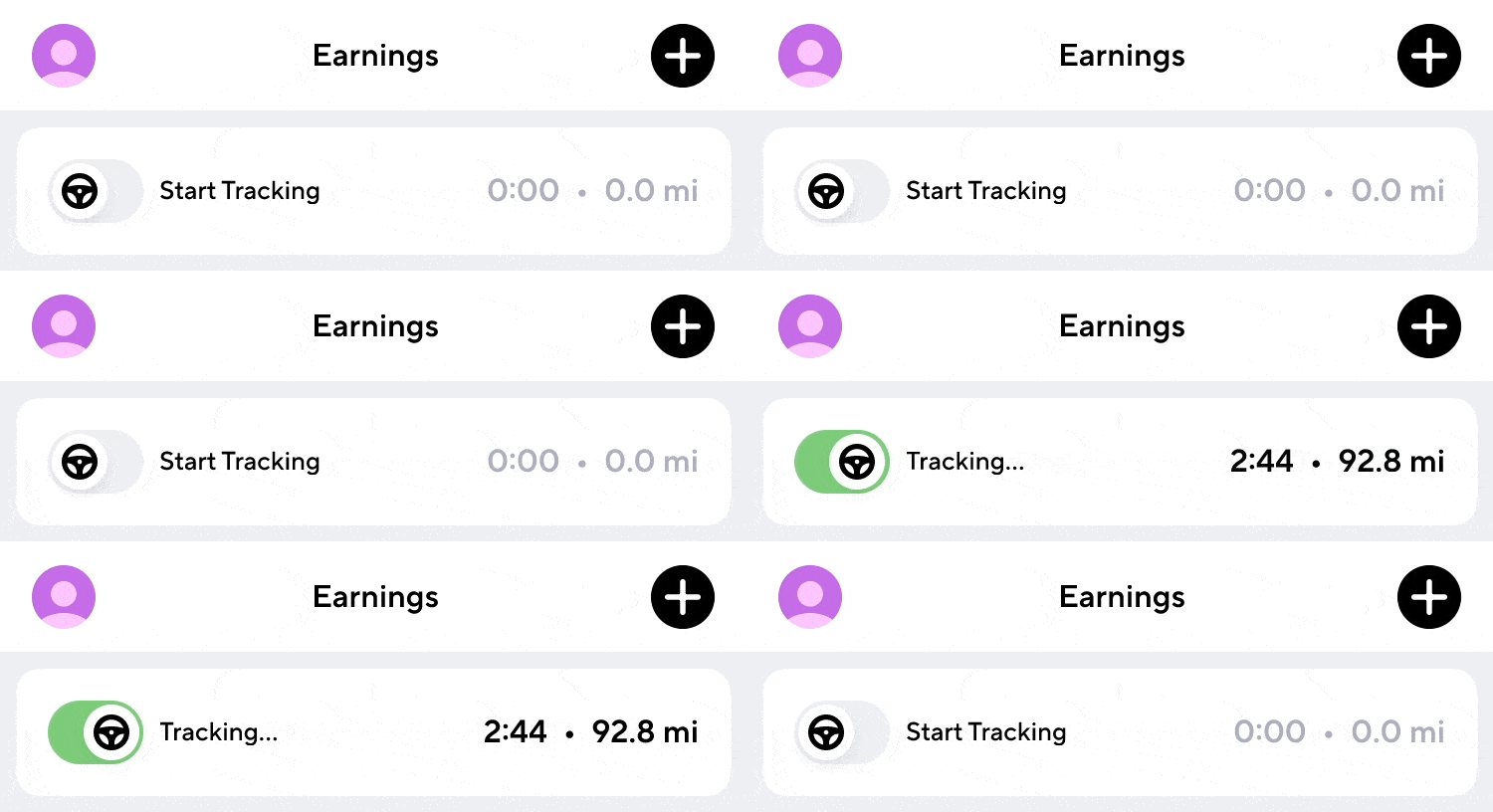
Smart gig drivers also use the Gridwise Mileage Tracker to accurately record all their gig driving miles for the maximum tax deduction. The gig driving apps track your miles only when you are on your way to pick up a passenger or delivery or when you are actively transporting. But did you know that the miles you accrue before you get your first ride or delivery and all the miles in between are also tax deductible?The Gridwise Mileage Tracker records all miles for later download into a database program, such as Excel, for easy handling. Taxes are a cinch, and given the current standard mileage deduction of 65.5 cents, drivers can save thousands in additional tax deductions. Turn it on at the beginning of your shift when you activate your other apps.The May Gridwise Mileage Tracking Challenge is open to all Gridwise users, as well as those who download and start using the app during the challenge. Only miles recorded in May 2023 are eligible. Entry is free. All participants, including both new and current Gridwise users,must sign up for the official Mileage Tracking Challenge found here. The winner will be randomly selected on June 1, 2023, from all registered participants.Don't have the Gridwise app? Download it here to join the challenge!Sign up now and start tracking those miles!
Work smarter. Earn more.
Whether you drive, deliver, or pick up shifts — Gridwise helps you track earnings, mileage, and performance so you stay in control of your work. Download the app and take charge today.
