Gridwise blog
Tips, insights, and advice to help you earn more and work smarter, whether you do gig work, hourly, or shift work.
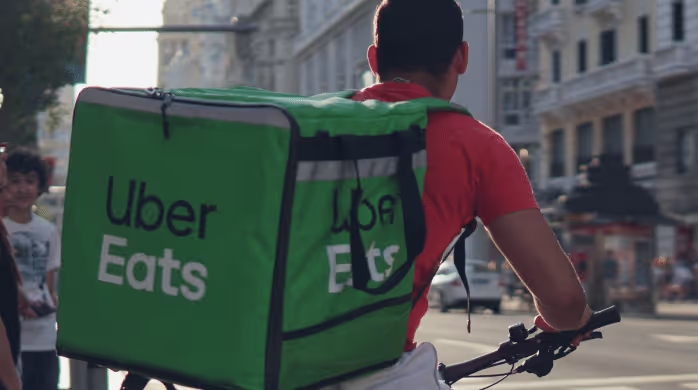
How to Make $1,000 a Week With Uber Eats in 2026 (Tips + Hourly Data)
In this blog, we'll explore the strategies and techniques that can show you how to earn $1000 per week as an Uber Eats delivery driver. We'll cover everything from optimizing your delivery zones and schedules to maximizing your tips and customer satisfaction. Whether you're a seasoned Uber Eats driver or just starting out, this guide will provide you with the insights and actionable steps to take your Uber Eats driver earnings to the next level.
Becoming an Uber Eats delivery partner can be a lucrative opportunity, especially if you're able to consistently earn $1000 a week. By understanding the platform, optimizing your delivery strategies, and focusing on customer satisfaction, you can maximize your earnings and turn Uber Eats into a reliable source of income.
We’ll cover the following topics to provide coaching and ideas to help you push your earnings up to that $1000 per week level:
What do Uber Eats drivers do?
Uber Eats drivers deliver prepared food most of the time, but they also might shop for and deliver goods from convenience outlets and grocery stores. The job is pretty simple. You get a request for an order, you drive to the restaurant or store to pick it up, and then you deliver it to the customer. If you already drive for Uber, you can choose to take orders for Uber Eats delivery any time.
If you’re not an Uber Eats driver yet, it’s pretty easy to become one. This Gridwise post tells you what you need to do if you want to sign up and start making money Uber Eats style. Many rideshare drivers welcome the chance to deliver food rather than people. This article from Nerdwallet covers the Uber Eats gig from that angle.
There are some sweet advantages to working with Uber Eats. In lots of cities you don’t even need to have a car. You can use a bike or a scooter, or even walk, to make your rounds. If you do use a car, Uber Eats’ requirements are a lot easier to meet than they are for Uber rideshare driving.
You also have a lot of flexibility. You can shop and deliver convenience items and groceries, but you don’t have to. And, like most driving gigs, you can choose your own hours, and map out the locations where you want to work.
Use Gridwise features When to Drive and Where to Drive to help you figure out what work hours and which specific areas will be the most profitable for you. Real data from real delivery people will show you earning patterns for drivers in your town.
How much can you earn doing Uber Eats?
The honest answer to this question is: basically, as much as you want! It all depends on how many hours you put in and how strategic you are about your gig. Earnings vary from one area to another, as this article from Entrepreneur points out. To give you a baseline, let’s look at the earnings of Uber Eats drivers who tracked their earnings with Gridwise.
Remember that these numbers show us only average earnings. To make $1,000 a week with Uber Eats, you’re going to have to be better than average, and we’ll show you how. For now, though, it’s good to have these figures so you get a ballpark number of where to start.
How much do Uber Eats drivers make?
Gridwise data tell us the following:
- Monthly earnings average around $444.00 per month.
- Gross earnings per trip are between $9.00 and $10.00.
- Tips make up about 50% of most Uber Eats drivers’ income, which amounts to about $225.00 per month.
Is Uber Eats good money? It can be. While there are other gigs that pay more per trip, if you drive for Uber Eats, you’ll always be pretty busy.
https://datawrapper.dwcdn.net/HPAz8/3
You can also see that, unlike many other gigs, tips play a huge role in Uber Eats earnings.

With these numbers as a baseline, what can we say about how to earn $1,000 a week with Uber Eats? As we said in the introduction, it’s going to be a hustle, but it’s really possible. To figure out how to make the most money with Uber Eats, let’s start by looking at how many trips these “average” drivers made each month.
We know that average gross earnings were $444.00 per month, and drivers got around $10.00 per trip. That means they took 44 or 45 trips per month, which breaks down to 11 trips per week. That’s not a lot of Uber Eats delivery, is it?
The fact that Uber Eats drivers averaged so few trips shows us that many drivers use more than one app at the same time. This is called multi-apping, and you can learn more about it in this Gridwise post. If you want to answer the question of how much you can make with Uber Eats, then you need to stick with the app and keep plugging away at those orders. You also need solid strategies, as well as some inside tips and tricks.
How to make the most money on Uber Eats: Delivery driving tactics
Getting to that $1,000 a week with Uber Eats isn’t so hard when you remember that the drivers we saw making about $111 a week were only taking around 11 trips in the same time period. That’s not much at all! If you work the Uber Eats app like a boss, you’ll soon have many more trips than that, easily reaching the number needed to get you to $1,000 a week. Now, let’s get to some tactics you’ll need to make that kind of bank.
- Stay with the Uber Eats app, and track your earnings. Gridwise can easily do that for you. Simply sync your Uber Eats app with Gridwise, and you’ll be able to see how much you’ve earned with Uber Eats, what times were most profitable, and your average hourly pay. Racking up trips with Uber Eats has other benefits, including perks and bonuses that are awarded to top drivers.
- Leverage surge pricing and promotions. Surge pricing is applied when there is a lot of demand. When surge pricing is in effect, many of the trips you make will pay more than usual. Promotions are offered to drivers who complete a given number of trips in a certain time period. High traffic volume days, nights, and times give you these chances to get extra earnings. Challenging yourself to complete the right number of trips for promotions will add to the number of trips you can count on for big bucks, too. Learn more about Uber Eats surge pay, boosts, and promotions in this Gridwise blog post.
- Say yes to doubling up on orders. With Uber Eats, you can get back-to-back orders or receive batched orders. Back-to-back orders happen when you receive a new request while you’re on the way to deliver an original order. The Uber Eats app routes these trips automatically, so you won’t be sent out of your way.
Batched orders are Uber Eats’ way of bundling together orders from either the same restaurant, or two nearby eating establishments. You get money, and trip count credit, for all the orders you complete, plus customer tips, without having to make a bunch of separate trips.
- Turn on the charm and get bigger tips. Being nice really is part of the Uber Eats driver’s job, and getting tips is one way people who drive for Uber Eats make money beyond their basic pay.. Bring along those extra napkins and condiments, use equipment that keeps food and drinks at the right temperatures and prevents spilling, and consider your customers’ needs. If you deliver groceries, be extra careful with delicate items such as bread and eggs.
And, most important, follow your customers’ directions, and stay in communication with them if you are going to be delayed, or if you have questions about their order. This Gridwise post will tell how to get bigger tips as a delivery driver.
- Use even more charm to keep your ratings high. As an Uber Eats driver, you will be rated by the restaurant or store where you pick up the orders as well as the customers who are waiting for the deliveries. This two-way rating system is designed to keep you on your toes, so Uber can keep people satisfied with your service. Don’t worry, you get to rate them, too.
There’s another reason why your rating as a driver is important. It not only keeps you in good standing with Uber; it helps you to qualify for the Uber Eats Pro incentive program. To learn more about Uber Eats Pro, and what it takes to earn perks such as preferred services, discounts, and deals, check out this Gridwise blog post.
Smart business moves that seal the deal
Now that you know how to gobble up the deliveries you need to make $1,000 a week with Uber Eats, it’s going to be a breeze to get there. Let’s make it even easier, with business moves that boost your earnings and shrink your expenses. If you use these, it will also be easy to say yes when people ask, “Can you make good money with Uber Eats?”
Minimize expenses. Avoid racking up big fast-food bills by bringing your own food and beverages. You might not think you’re hungry when you first start your Uber Eats run, but once the aroma of pepperoni pizza, premium cheeseburgers, and piping hot fries start wafting through your car, that might change. Bring a sandwich or other healthy food from home, and buy bottled water in bulk to save tons of cash compared to what it costs to buy single servings.
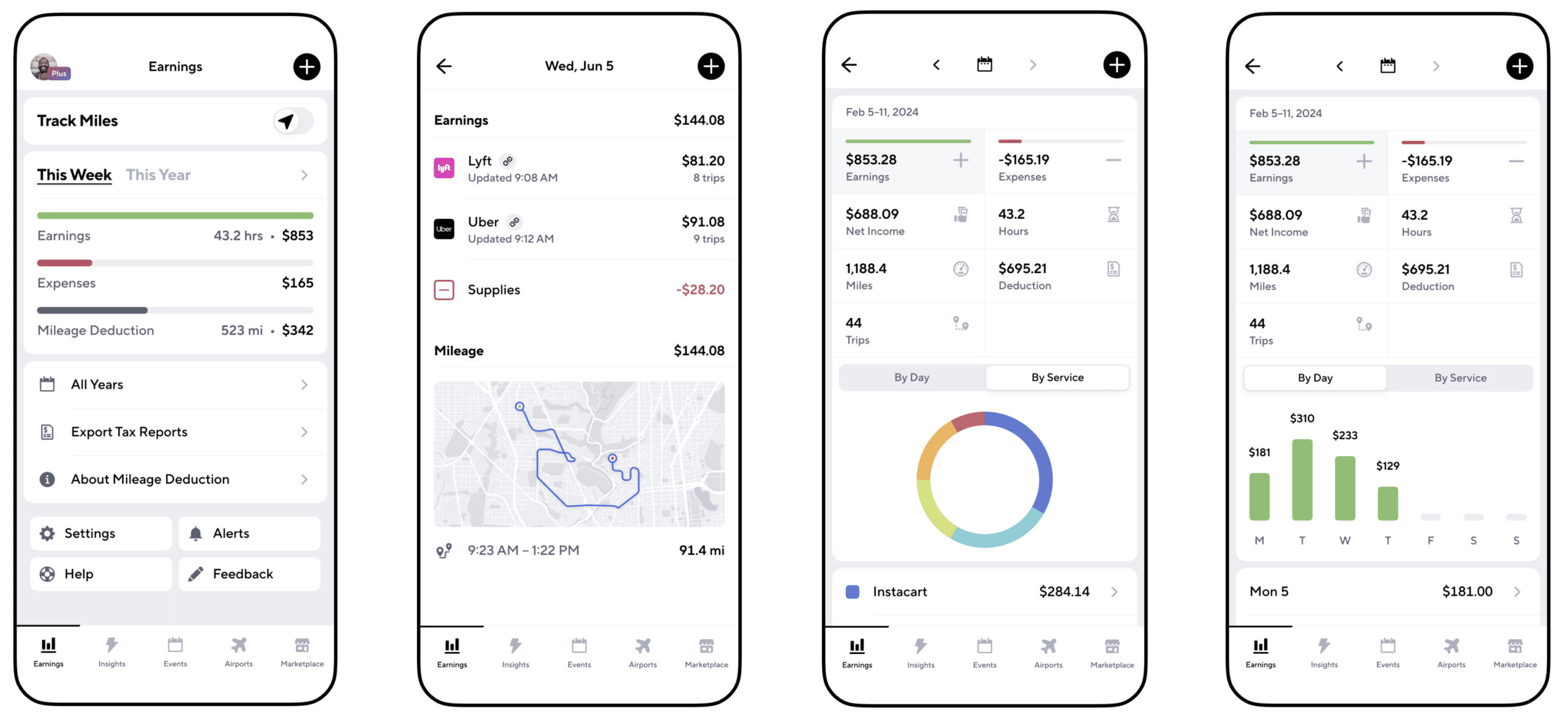
Maximize tax deductions. Another way to minimize your expenses is to maximize your tax deductions. Start by tracking mileage with Gridwise.
Gridwise App
Gridwise captures every deductible mile you drive, including the distance you cover between the trips your driving app records. Know what expenses you can deduct, and put them to work for you when tax time comes. Learn more about tax deduction strategies in the Gridwise Tax Guide for drivers.
Boost earnings with referrals
As an independent contractor, you’re probably looking for ways to make even more money than you can with Uber Eats. And most gig workers like you enjoy getting passive income. With Uber Eats, there’s a really easy way to do that, referrals!
All you need to do is find friends and encourage them to deliver for Uber Eats. If they make a certain number of deliveries within a specified time, you will get paid for doing nothing more than having them sign up under your referral code! Rates of pay vary by city, so check your Uber Eats app to find out what the current deal might be, and learn more about the referral program on the Uber Eats website.
Also remember: “friends” don’t have to be your best buds. Many delivery people carry cards with a QR code linking to their referral information, so just about anyone you encounter can join Uber Eats and boost your earnings. You could meet a source of passive income at the gas station, on social media, or at your high school reunion. The more you hustle, the more there is to gain, right?
Master the art of self-employment
As an Uber Eats driver, you’re an independent contractor. That means the company isn’t going to withhold your taxes, provide insurance, keep track of your earnings, or tell you about tax deductions. You’ll have to do all these things for yourself.
If you want to maximize your tax advantages, open an official business entity. You can incorporate (create a corporation) or you can work as a limited liability corporation (LLC). You can also work with a DBA (Doing Business As) arrangement, but the corporation or LLC will do a better job of protecting you from liability.
Establishing a corporation or LLC offers better tax advantages than being a sole proprietor. For instance, if you simply collect your earnings into your private account, you’ll be charged self-employment taxes in most states. And paying extra taxes is something we all want to avoid, within legal limits, as much as possible.
Every Uber Eats driver needs to learn about self-employment, and there are some great resources you can review. Check out the CareerOneStop website about self employment which will help explain the basics. You can also check with a professional tax accountant, or look other websites to learn more about actually creating a business.
Scope out your market
Look at the area around you to see where you’re likely to get the most deliveries. Where are all the restaurants? Where might people be more inclined to order deliveries? What hours do you want to drive? What activities might be going on around those times? Think about late-night and after-school times as well as breakfast, lunch, and dinner times.
Be realistic about the potential for your area and aware of new services opening up. For example, in New York, there is already a tab on the Uber Eats app that allows customers to order groceries. In our article about the best food delivery service to work for you’ll see that Uber Eats stacks up well against other delivery companies, mainly because of its potential for expanded opportunities for drivers to earn.
So, is Uber Eats good money? As we said, it isn’t an automatic guarantee that everyone will make $1,000 a week with Uber Eats. Trying out the suggestions we give you here, though, should put you on the right track! Go out there and start stacking up those orders and raking in some impressive earnings!
Get more inside information on Uber Eats in these posts from the Gridwise blog:
- The delivery driver guide: Using the Uber Eats app
- Everything you need to know about driving for Uber Eats
- Uber Eats Pro: What drivers need to know
- Looking for a different gig, part-time or full time job? Check out the Gridwise Job board.
Uber Eats FAQ
How does the Uber Eats platform work for drivers?
Uber Eats is a food delivery service that connects customers with local restaurants and independent delivery partners. As an Uber Eats driver, you'll receive notifications of nearby delivery requests, which you can accept and complete. The platform provides flexibility, allowing you to work on your own schedule and earn money based on the number of deliveries you complete.
What are the requirements to become an Uber Eats delivery partner?
To become an Uber Eats delivery partner, you'll need to meet certain requirements, such as having a valid driver's license, a registered vehicle, and passing a background check.
How can I choose the right delivery zone to maximize my earnings?
Selecting the right delivery zone can significantly impact your earnings, as some areas may have higher demand and better-paying orders. It's important to research and identify the zones in your area that tend to have the most consistent and lucrative delivery opportunities.
How can I take advantage of peak delivery hours and surge pricing?
Understanding peak delivery hours, such as mealtimes and weekends, and taking advantage of surge pricing can boost your earnings. Be aware of when demand is highest in your area and adjust your schedule accordingly to capitalize on these peak periods.
What are some tips for maximizing tips and customer satisfaction?
Providing excellent customer service and going the extra mile to ensure a positive experience can lead to more tips and repeat business. Prioritize communication, timeliness, and attention to detail to keep your customers happy and satisfied.
How can I set realistic weekly goals to reach my $1000 target?
To make $1000 a week with Uber Eats, it's essential to set realistic weekly goals and track your earnings and expenses. Start by determining your target earnings and breaking it down into achievable daily or weekly goals. This will help you stay on track and make adjustments as needed.
What are some strategies for efficient route planning and navigation?
Effective route planning and navigation can save you time and fuel, allowing you to complete more deliveries. Utilize mapping apps and take advantage of features like real-time traffic updates and turn-by-turn directions to find the quickest routes.
How can I balance my Uber Eats deliveries with other commitments?
Develop a schedule that allows you to capitalize on peak delivery hours while still maintaining a healthy work-life balance. Consider using tools like calendar apps to plan your availability and track your hours to ensure you're maximizing your earning potential without sacrificing your personal life.
What are the key considerations for maintaining my vehicle as an Uber Eats driver?
Keeping your car clean and well-maintained is crucial for maximizing your Uber Eats earnings. Regularly scheduled oil changes, tire rotations, and other preventive maintenance can help extend the life of your vehicle and minimize downtime. Additionally, budgeting for vehicle-related expenses, such as fuel, insurance, and repairs, will ensure you're accounting for these costs and maximizing your net earnings.
What are the tax obligations and legal considerations for Uber Eats drivers?
As an Uber Eats delivery driver, it's essential to understand the tax obligations and legal considerations that come with being an independent contractor. This includes properly reporting your earnings, deducting eligible business expenses, and making quarterly estimated tax payments. Additionally, you'll need to ensure you have the appropriate insurance coverage, such as personal auto insurance and possibly commercial auto insurance, to protect yourself and your vehicle while on the road making deliveries.

The Gridwise Job Board: Find Your Ideal Job or Gig Work
Gridwise is an essential assistant app created by gig workers for gig workers. Our mission is to support those engaged in gig work in every way possible. We understand how challenging it can be to deal with income instability, a lack of benefits, and job insecurity that often comes with gig work. The Gridwise app tracks and organizes earnings and expenses, and offers a wide array of discounts, deals, and services that make the lives of independent contractors easier and more rewarding.
We firmly believe it’s possible to make a viable living and create a gig experience that offers flexible hours, variety, and excitement. With issues such as consistent earnings and job security in mind, Gridwise is proud to offer a centralized platform that shows you how to find gig work and secure reliable opportunities. We’re proud to introduce the Gridwise Job Board.
The Gridwise Job Board: Key features
Because Gridwise is dedicated to serving the gig worker community, we’ve filled the Gridwise Job Board with useful features that won’t waste your precious time.
- Comprehensive listings. Find part-time, full-time, temporary, and per-task work. Drive or deliver with your vehicle, utilize an employer’s vehicle, or even find non-driving gig work.
- User-friendly interface. Find the jobs that are right for you with a tap of your screen.
- Verified opportunities. We vet the jobs before they are listed to ensure you’re getting high-quality job postings.
How to get more gig work, seasonal, part-time or full-time jobs with the Gridwise Job Board
Looking specifically for “gig work apps” or “gig jobs near me?” You’re in luck. Our filters and search functions send you directly to the listings you seek.
Here’s how it works.
- Access the Job Board via the Gridwise website.
- Search for jobs by type, location, and more.
- Select the job that interests you, and read all about it.
- Scroll through the description, and if it appeals to you, click “Apply for job.”
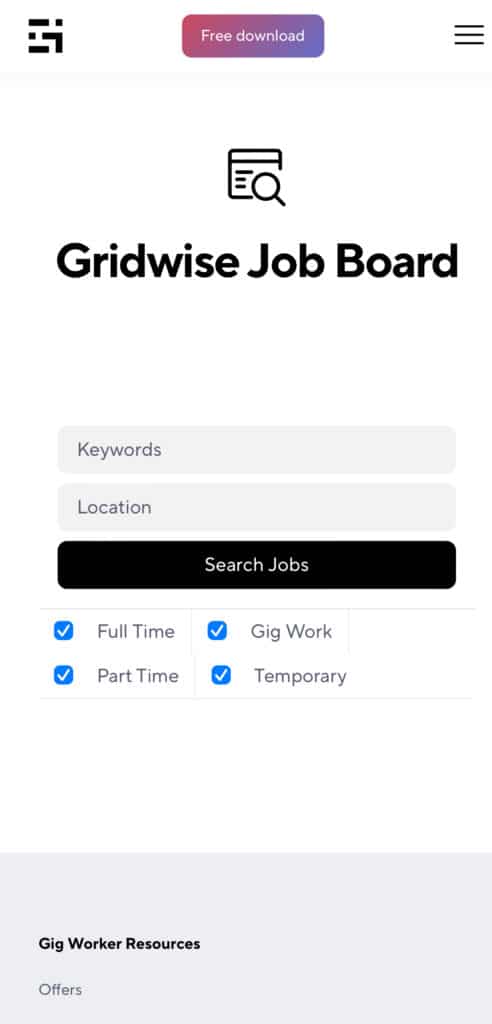
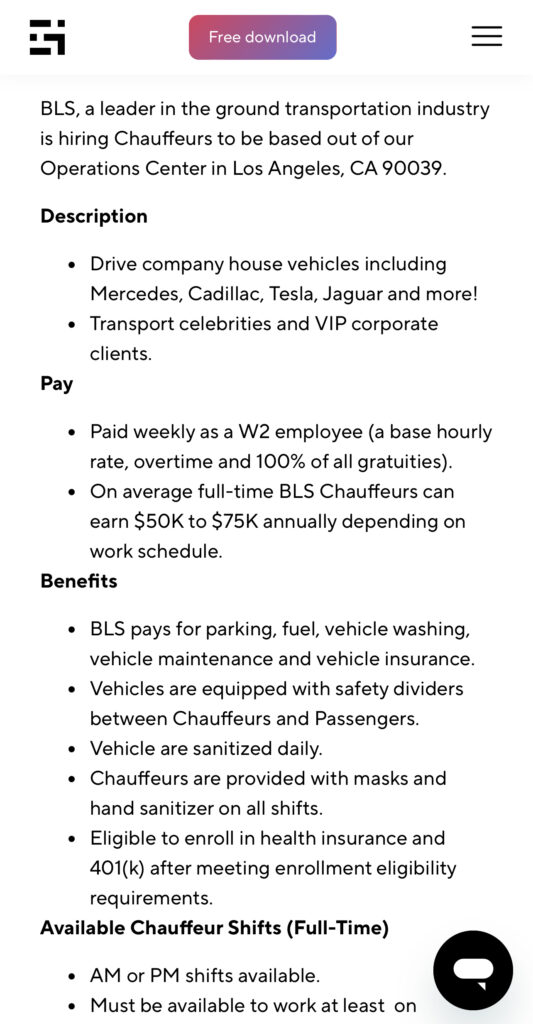
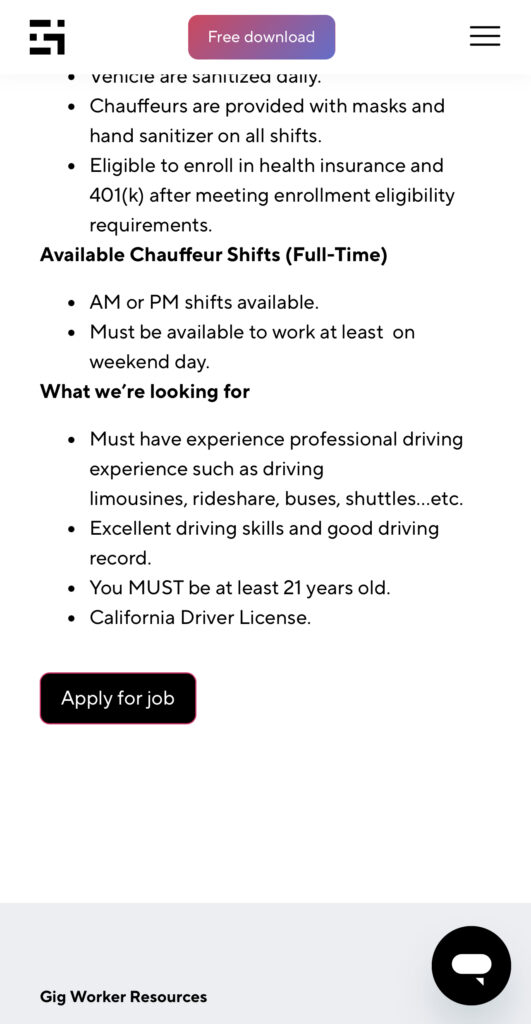
Many types of jobs are available. Adjust the search filter to see the full variety of opportunities that will let you cash in. Deliver food, set up catering, do rideshare driving, get paid for doing package delivery, and much more. You’ll find short-term gigs, long-term contracts, and part-time positions.
Perks of the Gridwise Job Board for gig workers
Gig workers who know how to make extra money will appreciate how the Gridwise Job Board lets you multiply your chances of bringing in big earnings. Here’s how:
- Increased stability. Use the Gridwise Job Board to find part-time or permanent jobs in addition to the part-time gigs you already have. Always keep a steady stream of earning opportunities flowing toward you.
- Flexibility and autonomy. Choose jobs that fit your schedule, work around other jobs and family duties, and still leave room for some fun in your life. Discover side hustles to supplement your full-time job, permanently or just for the season.
- Skill development. Find part-time work that lets you use a skill you already have, or try your hand at something new. It’s a smart way to develop a portfolio to showcase what you can do, or even to find permanent employment.
Get Gridwise and stay up to date on the Gridwise Job Board
Gig workers need plenty of information and assistance, and Gridwise is here to give it to you. Download the app and get essential features such as
- seamless earnings tracking
- mileage tracking
- expense recording, including notes
- low-cost and no-cost insurance benefits
- access to affordable medical, dental, vision, mental health, and alternative care
- professional services including legal and financial help
- deals and discounts
- weather, events, and traffic reports
- inside information on where and when to drive
More to know about gig work:

5 Best Mileage Trackers For Gig Drivers
Many drivers ask, “Do I really need a mileage tracking app?” The answer is simple: only if you want to have an accurate count of all the miles you can legally deduct from your taxable income! You might think your rideshare or delivery driving app has got you covered. After all, they do quite a good job of logging the miles you drive while you’re on a trip or delivery. But, if you want to have the best app to track mileage for Uber, Lyft, Doordash, Instacart, or the other apps you may use, you need more. Why is that?
Without a separate tracker, you’re missing the miles you drive in between pings. Did you realize that all the miles you drive, from the moment you begin your shift until it’s over (as long as you don’t drive several miles on a break to hang with your friends), are tax deductible! That means you need something besides your driving app to keep an accurate count of your travels. Read this Gridwise post to see how important it is to keep track of every deductible mile.
You won’t be surprised to hear that there’s an app for tracking miles. In fact, there are several of them. Here, we’re going to tell you about five top mileage tracking apps, and help you figure out which one is best for you.
Before we get to the list and identify the best mileage tracker app, let’s clarify what exactly a mileage tracking app is. According to G2.com’s technology glossary, mileage tracking is done for the purpose of keeping a log of mileage that is either reimbursable or tax deductible.
And yes, of course you can track your miles simply by taking readings on your odometer. But are you really prepared to account for how many miles you drove for personal reasons and subtract them from the total to get your business mileage? Even if you can remember all that and do the arithmetic, if you want an accurate reading of the miles you drive for business, and can therefore deduct, a mileage tracking app will save you a lot of trouble and prevent you from making costly errors.
Plus, as a gig driver, you have specific needs when it comes to a mileage tracker. Ideally, you’d be able to handle mileage tracking and several other functions all in one app. It can be maddening enough to deal with driving apps, particularly if you’re an avid multi-apper. You would want your mileage tracker app to help you keep account of other aspects of your business, including income, expenses, and inside information about the art of gig driving.
Not all mileage apps are equal, to be sure! Let’s look at five of the best apps to track mileage and figure out which is the best app to track mileage with Uber and Lyft, or what mileage tracker app is best for DoorDash.
1. Zoho Expense
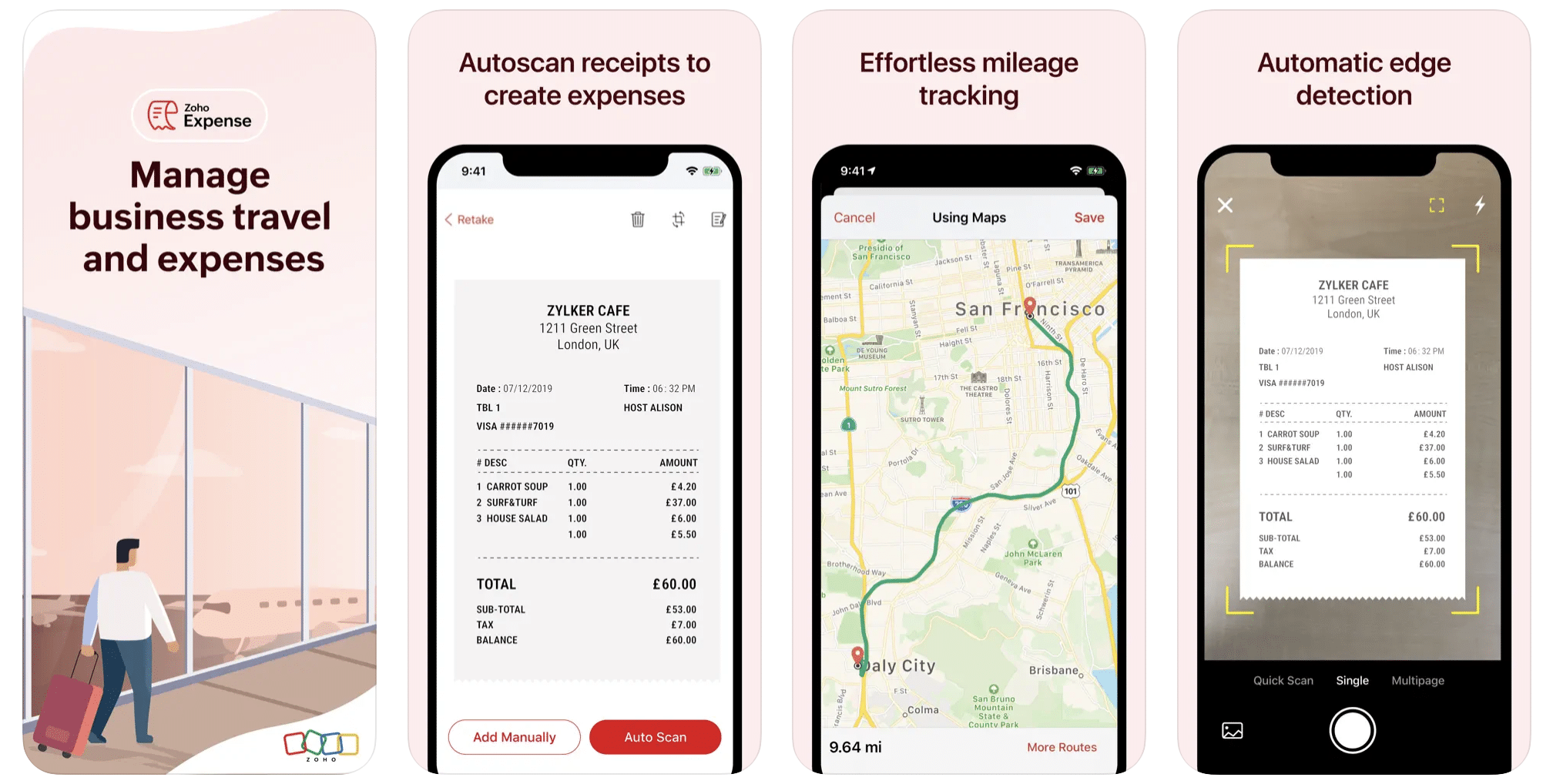
First up is Zoho Expense, which does exactly what its name says. This app is designed to allow companies to give employees a uniform way to create and submit expense reports. It can be used by individuals, including gig drivers, as well.
It includes a mileage tracker, as well as features that let you track other deductible expenses, including the ability to scan and record receipts.
Available on Android and Apple: Yes
Ratings: 4.8 stars on App Store, 4.7 stars on Google Play
Free Version: Yes
Subscription price: $3 per month, billed annually
Created specifically for gig drivers: No
2. Quickbooks Online
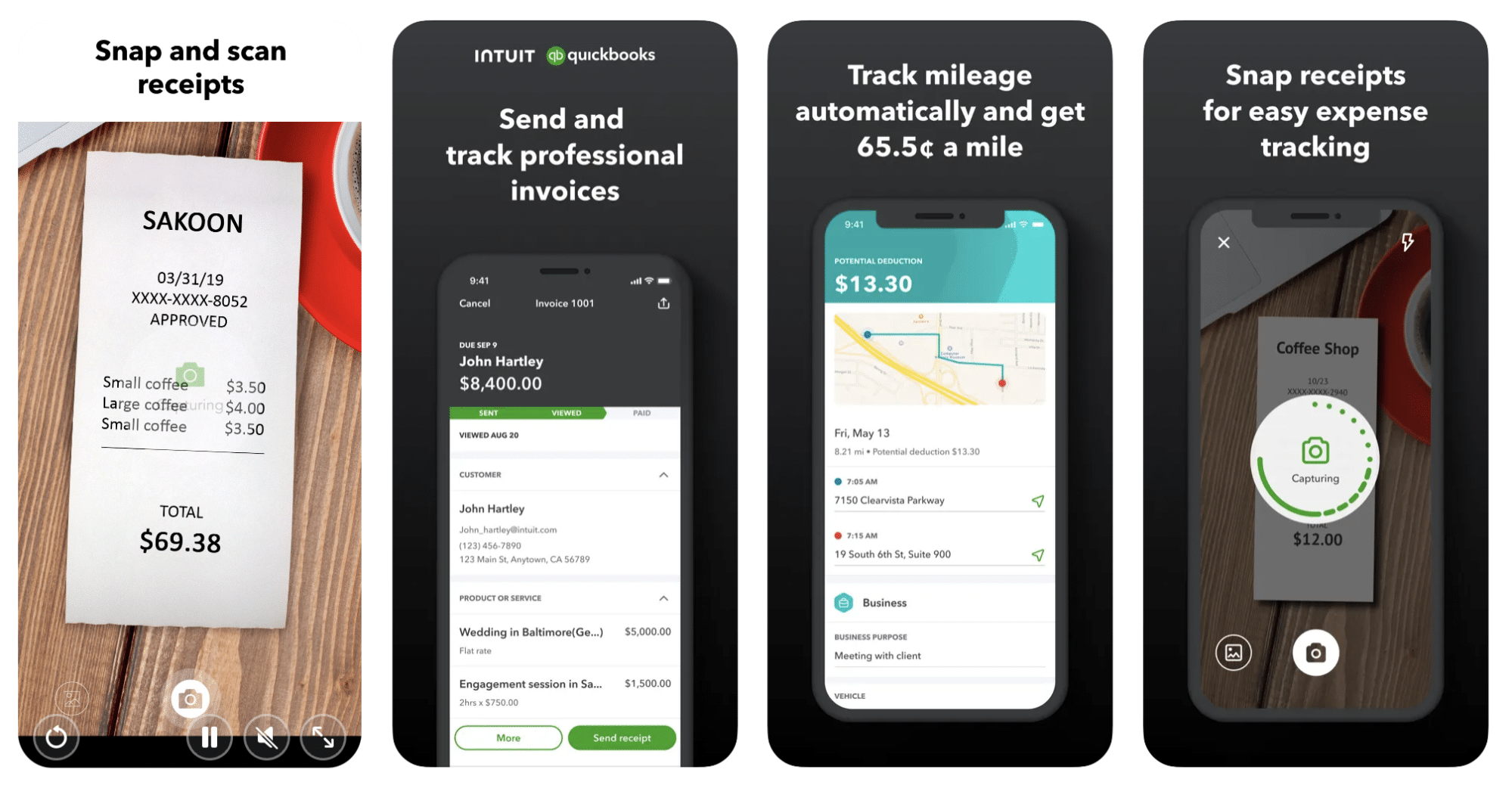
Quickbooks Online is a cloud-based app that allows you to track your mileage, earnings, and expenses. The information you enter can then be used to generate various reports that prepare you for tax time. It also allows you to create graphs that illustrate your cash flow, and includes a receipt scanner so you can instantly record deductible expenses. Quickbooks is popular, highly reliable, and designed mainly to help people keep track of their small businesses.
Available on Android and Apple: Yes
Ratings: 4.7 stars on App Store, 4.4 stars on Google Play
Free version: 30-day free trial
Subscription price: $15 per month for basic version if purchased for 3 months or more
Created specifically for gig drivers: No
Source: quickbooks.intuit.com
3. Shoeboxed
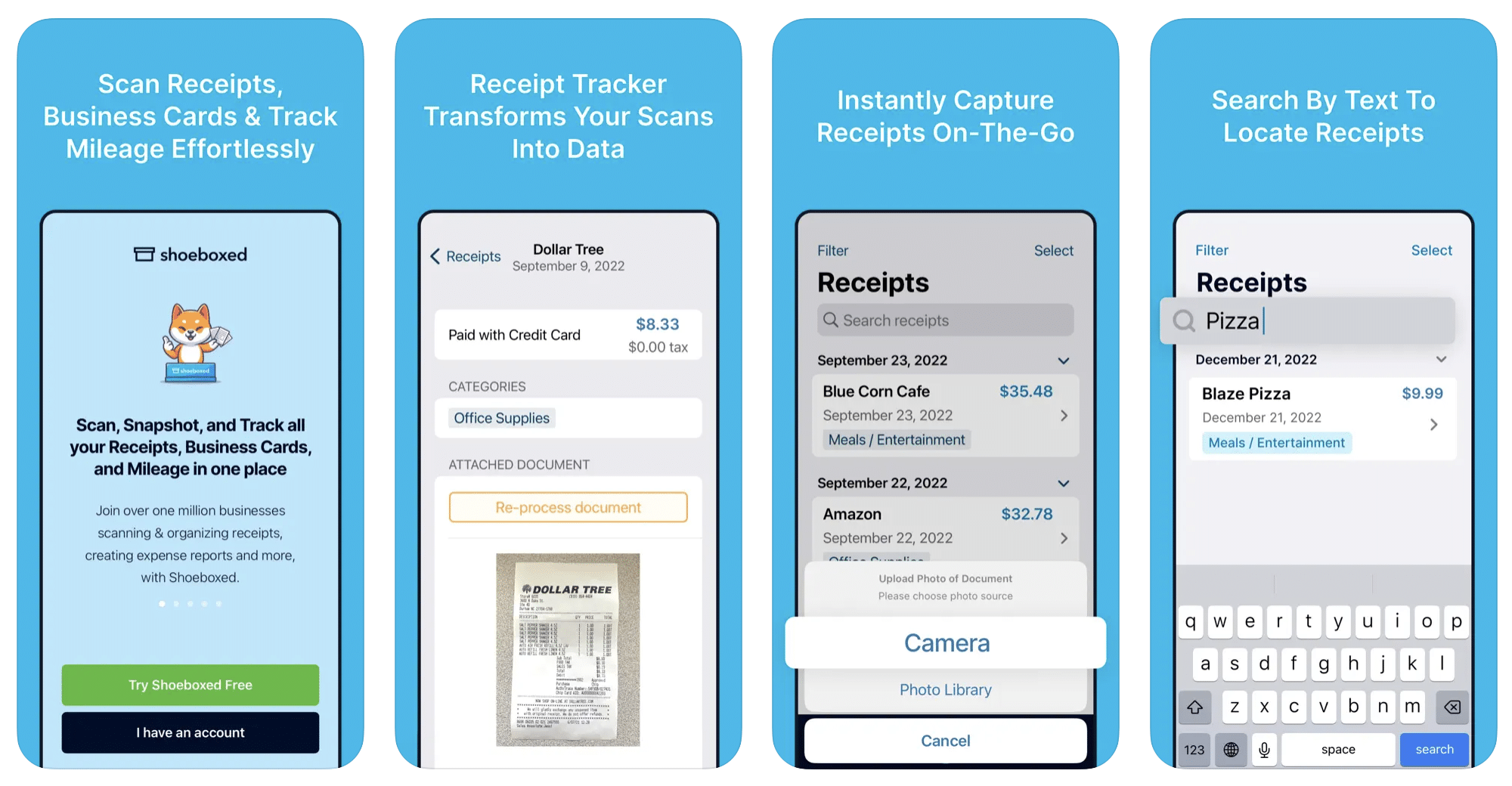
Shoeboxed started in 2007 as a service for scanning paper receipts into digital form. Now the app offers a free mileage tracker and has enabled users to scan receipts directly. It touts itself as the best mileage tracking app for DoorDash, but there are some elements missing that Dashers might like to have. While it provides features that record your expenses and prepare you for tax season, it doesn’t automatically track your earnings. The mileage tracker has a system where you can drop pins along your routes to make the tracking more precise, identifying those legs of a trip that you make for business purposes. The mileage tracker is “free” once you sign up for the basic version.
Available on Android and Apple: Yes
Ratings: 4.5 stars on App Store, 2.3 stars on Google Play
Free version: No
Subscription price: $18 per month for basic version
Created specifically for gig drivers: No
Source: blog.shoeboxed.com
4. Stride
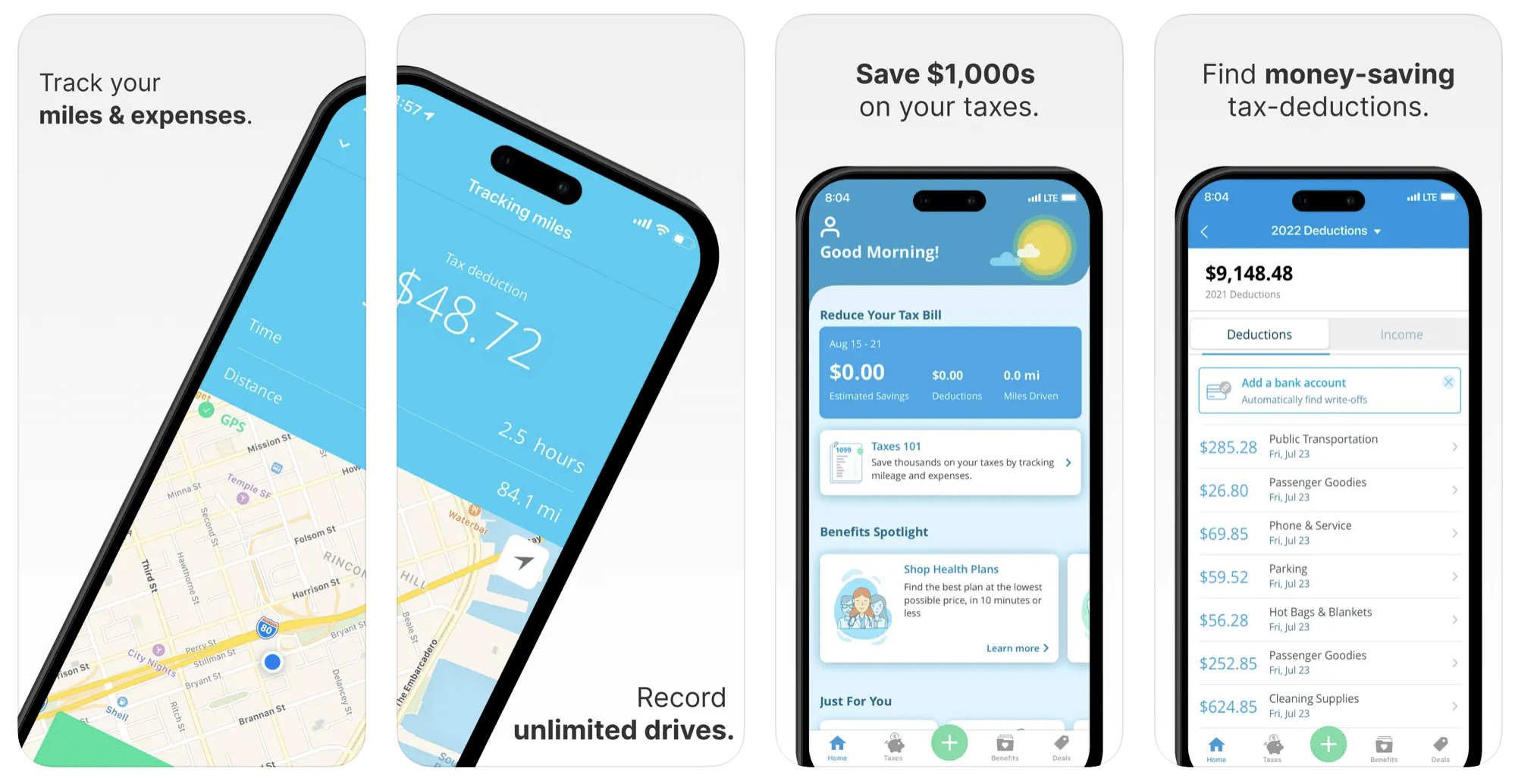
This free mileage tracker does a fair job of keeping track of the distances you rack up while gig driving, but it doesn’t automatically track earnings. It can be a big help, though, in tracking your expenses. You can link Stride to your bank account, and it will automatically scan your expenses to identify items you can potentially deduct. The app is totally free. This could make it the best free mileage tracker app, but there is a small price to pay. The app will persistently push you to consider various insurance plans that they are affiliated with. If you don’t mind that, this is a solid mileage tracker, even if it doesn’t track your earnings.
Available on Android and Apple: Yes
Ratings: 4.8 stars on App Store, 4.6 stars on Google Play
Free version: Yes
Subscription price: None. The app is free.
Created specifically for gig drivers: No
5. Gridwise
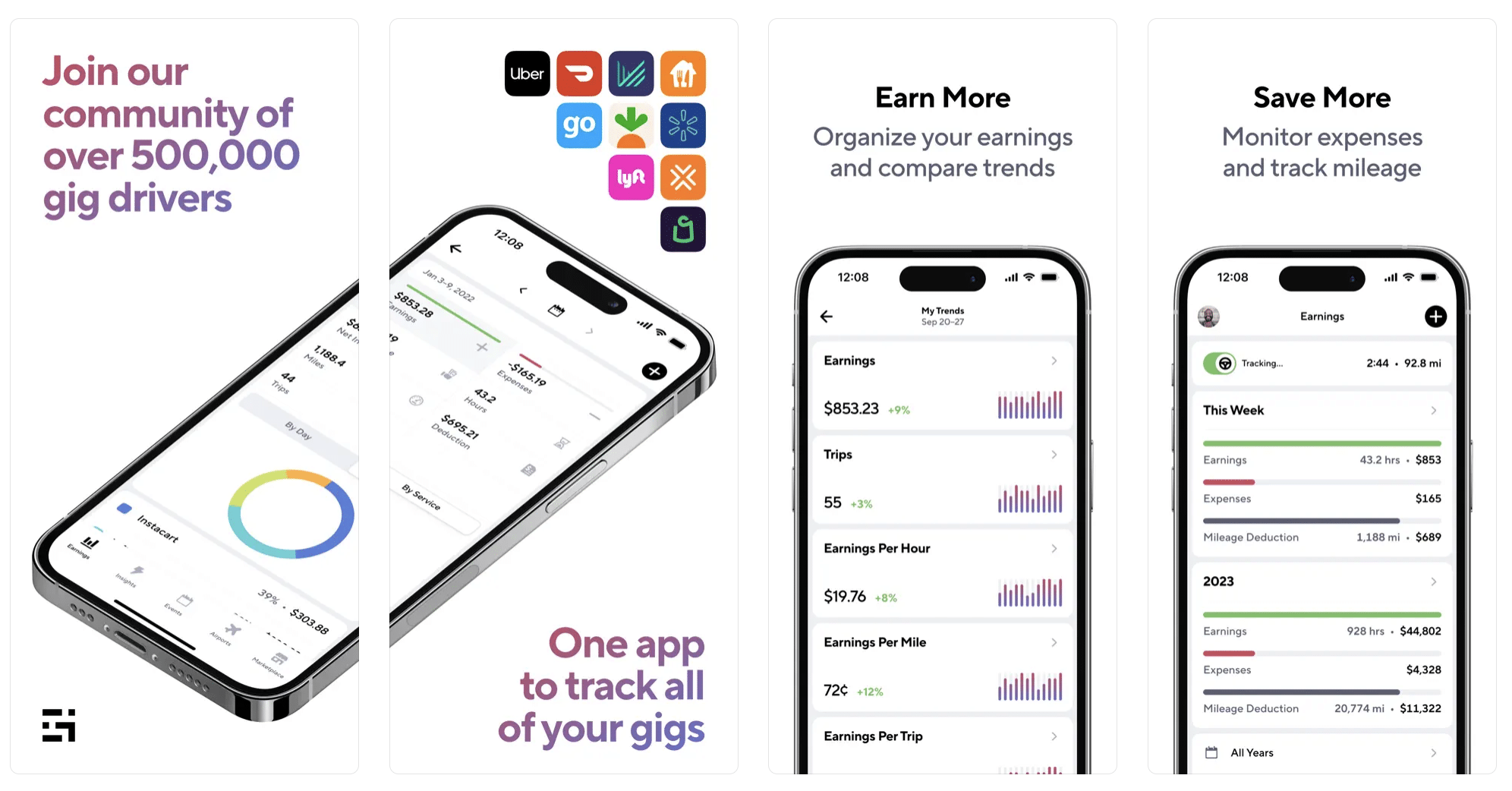
Gridwise has a free mileage tracker and free features that record your income and expenses. It gives you access to insurance and benefits, as well as insights about the best times and places to make the most money while gig driving. The Gridwise mileage tracker captures all the miles you drive while you’re on your driving shift, and it can be used if you have other trips you need to make which qualify as business travel.
Drivers love it because it is geared toward the needs of rideshare and delivery workers, providing free information about airport departures and arrivals, event start and let out times, weather, traffic, and more. The Gridwise Plus subscription adds value by providing additional insights and reports, discounts on benefits, the ability to export data in .csv format,, and more.
Available on Android and Apple: Yes
Ratings: 4.9 stars on App Store, 4.6 stars on Google Play
Free version: Yes
Subscription price: $9.95 per month for Gridwise Plus, or $95.99 per year (a $23.41 savings)
Created specifically for gig drivers: Yes!
What is the best mileage tracking app?
Now that we’ve checked them all out, we’re positive about the answer to that. Hands down, it’s Gridwise. Are we biased? You bet we are! But drivers love it too. Gridwise is the best mileage tracker app, and so much more. So many of the features are free, and the subscription to Gridwise Plus will pay for itself with additional insights to boost your earnings and deeper discounts on products and services.
Most important, Gridwise is designed specifically for gig drivers by experts who were once gig drivers themselves! Knowing what gig drivers need is a crucial step in creating an app that rideshare and delivery drivers can really use! Here are a few of the features, besides mileage tracking:
- seamless earnings tracking
- automatic, on/off toggle and manual mileage tracking
- mileage categorization
- airport, traffic, weather, and events information
- insights into where to drive and when to drive
- reports showing earnings across the platforms you use
- discounts on countless products and services for drivers
- additional resources for finding side gigs
- an informative and comprehensive blog
- affordable benefits, including insurance, medical, dental, and alternative practitioner discounts
- a community of drivers just like you
Don’t settle for just any app. Get the best mileage tracker, and so much more, from Gridwise!
How To Become a 5-Star Uber Or Lyft Driver
The SuperOffice blog sums it up best: “Customer experience is the new battlefield.”
This is as true for rideshare as it is for any other service business. Whether the passenger is deciding between Uber vs. Lyft doesn’t matter. What does matter is how a passenger was treated on their last rideshare. What was their experience? Did the driver play loud and annoying music? Was their driving erratic? Did they make off-color comments? Or was it a pleasant experience?
In the world of rideshare, customer experience translates into whether you are a 5-star driver. You can set the stage for a great customer experience in your rideshare car before you even meet the passenger. You do that with a 5-star rating. When a customer's app flashes that a driver has accepted their ride, and that driver has a 5-star rating, there is an expectation for a certain level of service.
Rider satisfaction is important, not just for your ratings but for tips, too. It is a vital part of your Lyft and Uber driver strategy. In fact, to drive Uber Black SUV and Uber Comfort, you must have a rating of 4.85 or higher.
In this blog post, we will address how you can get and keep a 5-star rating. Topics include
- Make customer service a goal of your Lyft or Uber driver strategy.
- The in-car experience.
- Other advice on ratings.
- Gridwise can help.
Make customer service a goal of your Lyft or Uber driver strategy
Doing so starts before your passenger even gets in the car.
Have a clean car
Your car is the next thing the passenger sees as you drive up, and from this, they continue to form an opinion. Is it clean? Does it shine? Do I want to ride in this car? A sparkling car goes a long way toward making a first impression.
Get your car washed regularly. DetailProPOS.com, a website in the car wash industry, reports that 51% of car wash users prefer in-bay automatics. These are drive-through car washes, including those as part of a gas station or stand-alone drive-through car washes. They are quick and easy. The driver never has to get out of the car. If you want to go a step further, carry a chamois in your trunk and give your car a quick wipe-down afterward.
PRO TIP: Car washes love to offer monthly passes. It creates cash flow and customer loyalty for them, and if you shop right, you can get a pass with unlimited washes. Ten minutes a day before each shift, and your car is always clean.
Don’t forget to give the inside a once over
Most car washes include a vacuum station. Take a few more minutes to hoover up the remnants of the previous night’s passengers. Get rid of all the empty water bottles, gum wrappers, and anything else cluttering the car.
Take the time to confirm the destination
The rideshare app displays the passenger’s destination, but it is always a good idea to verify it’s the correct destination. The customer's app saves the destinations they most frequently travel to. It is not unheard of for the customer to swipe the wrong destination, especially late at night when they’ve been out clubbing and had a few drinks.
The in-car experience
A great photo and a clean car are a good start. Now it’s time to focus on what the customer experiences inside your car.
Music: The great equalizer
Passengers almost always love music. The most successful drivers have found that an eclectic mix works best: jazz, swing, big band, blues, soul, and classic rock. Use one of the popular programs, such as Spotify or Amazon Music, to collect and curate different genres. Especially on longer rides, ask your passengers what they like.
PRO TIP 1: If you are driving a group of people to a concert, find out who the performers are and play them. Passengers consider it an excellent warm-up to the performance.
PRO TIP 2: One Southern California driver reported two songs that almost always generate a tip, A Boy Named Sue by Johnny Cash and, strangely enough, Tu es Partout by French singer Edith Phaff. “The last thing I ever expected to hear in a rideshare was Edith Phaff,” he recalled a passenger saying one night, as she handed him a $20 tip.
Gum, mints, and candy
These items are popular if you do airport runs. People get off the plane with dragon breath and are looking for something to freshen their mouth before that business meeting.
Toothpicks
When you pick up a passenger from a restaurant and they have a sesame seed caught between their teeth, there is not much else they can think about. The ones individually wrapped in cellophane are perfect. Passengers will be thankful.
Charging cords
Maintain a selection of charging cords for people who took too many videos and photos at the concert. They’ll need to recharge. Keep extras. Charging cords tend to walk away.
Water
Keep a case in your trunk. Leave a bottle or two in the back seat, and have another in the front seat that you can hand to the passenger who likes to ride shotgun. Make it a policy to check your car after every ride for empties or half-consumed bottles. They look uncool.
Consider yourself a tour guide
If you get lots of airport runs or passenger pickups at the downtown hotels, you’ll get people who have likely not spent much time in the area. They’ll want to know about the best restaurants and bars, the must-see attractions, and the most stunning sunsets. If you can give them answers and directions, they’ll remember you.
Be a great conversationalist
Most passengers are friendly and eager to talk. Send out a few feeler questions such as, “How is your day so far?” Other passengers will launch right into a full-blown conversation. They might even ask you how you like being a rideshare driver. If you are one of those drivers that find joy in meeting people and driving around the city, convey it to your passengers. People love to meet others who enjoy what they do for a living.
Practice the rules of great conversations. According to the Personal Excellence blog, these include
- Be genuinely interested in the person.
- Focus on the positive.
- Put the person in their best light.
- Respect. Don’t impose, criticize, or judge.
One of the interesting aspects of being a rideshare driver is anonymity. Because most passengers don’t expect to see you again, they will often tell you very personal stories. Every rideshare driver can tell you stories and what they’ve heard in their car. Be empathetic and respect their confidentiality.
Read the mood of the car
Some people don’t want to talk to the driver. Especially when there are two or three passengers, they would rather talk among themselves. Other passengers will tell you they would rather not talk, or they might have earbuds. You need to be sensitive to the mood of the car.
Learn basic phrases of the dominant second language in your region
People are impressed when you take time to learn their language, especially if you ask their advice on the proper greeting in a given setting (in some languages, for example, the smallest nuance can change the way you greet somebody or say something). There are several apps you can download on your phone for learning any number of languages.
Treat everyone as if they matter
Every passenger can leave a rating, and sometimes that passenger is the one you’d least expect to give you a rating, let alone a tip. Treat each passenger like they are the only passenger you’ve had that day, and that they matter.
Other advice on ratings
Show women passengers that you care about their safely
One rideshare driver, a father of daughters, watched as the women passengers he’d pick up in the evenings walked to their front door. He wanted to make sure they got in safely. “I quickly perceived that they were uncomfortable with me watching,” he said, “so I made it a point of explaining to them that I was making sure they got in safely.” The driver reported that as soon as he started explaining what he was doing, 75% of those women tipped, and his ratings crept up, as well.
Ask for a 5-star rating
There is an ongoing debate among drivers about whether it is a good idea to solicit tips. The subject draws strong feelings each way. There is nothing wrong, however, with soliciting a good rating when you feel it is appropriate. Try an innocuous request such as, “If you are so moved, it would be great if you could leave a 5-star rating on the app. It really helps me.” People are happy to comply.
Head off problems when you see them
We all get them, those passengers who can’t be pleased. Either they’re not happy with your route, or you didn’t drive fast enough to get them to an appointment they were late for in the first place. If you think they will leave you a bad rating, and it is unwarranted, send a comment to the rideshare company through the app. Do it right away so that you get your comments in first. The rideshare company is more apt to consider your story if you report your side first, especially if you otherwise have a good rating. Lyft explains how to do this on its website.
Give a helping hand
Pickups from the grocery store involve bags, and almost all airport passengers have a suitcase. A passenger will remember if you helped to load those bags of groceries, or hefted a suitcase into the trunk of your rideshare car. Opening the door whenever you can for passengers is also a nice touch.
Check out other Gridwise posts on boosting your ratings
At Gridwise we know that ratings are important. We have published other blog posts about the subject. Check out How to Improve Your Rideshare Driver Ratings, a blog post from last year. A few years ago we published another post, How Rideshare Drivers Can Start Conversations That Lead to Tips and 5-star Ratings.
How can you tell if you are delivering great customer service? Watch your ratings. In a more recent blog post, Gridwise revealed that tips average a little more than 10% of Lyft or Uber driver earnings. If you are making more, take that as a sign that you have high rider satisfaction.
Use rideshare driver tools to boost your earnings
Getting and maintaining a 5-star rating as a rideshare driver is challenging. It requires that you be at the top of your game every minute. Take some of the stress out of the job by knowing when to be on the road and where to drive to get rides.
Going to and from the airport to pick up passengers? Don't waste time waiting for rides during slow hours. Check out peak airport arrival/departure times so you know exactly when to be at the airport.
Not an airport driver? Stay up to date on the latest events in your area so you can catch passengers going to/from venues and bars.
Download Gridwise to earn more as a rideshare driver
And have fun out there.
10 Common Delivery Driver Mistakes To Avoid In 2023
So many people set out on a delivery driving gig believing that it’s going to be totally simple. True, it doesn’t take a super genius to be a successful delivery driver, but there are more than a few things you’ll need to think about.
Scads of articles and videos out there tell you all the different things you should do, but they don’t tell you everything. That’s why we put together this blog post. Whether you’re new to delivery or a seasoned pro, we figure it’s good to know what not to do. Here’s the list of 10 common delivery driver mistakes. Read them so you can avoid them!
- Delaying your deliveries
You might think you’re being thorough or extra careful, but the customer on the other end of your order is extra hungry and generally wants the goods delivered now. That means you have to work with a sense of urgency, and pay special attention to possible delays that could arise from traffic, weather, and unexpected events.
This can be solved by using an app like Gridwise to get real-time traffic and event reports. Get alerted to changes to your route so you can circumvent slow downs that your maps app might not be aware of.
- Careless (and illegal) parking
Nothing can send a delivery driver’s heart sinking faster than the sight of a parking ticket on the windshield, or worse, a tow truck pulling up to escort the vehicle to the pound. Parking is a big part of delivery driving, both picking up and dropping off, and it isn’t always easy to find a spot that’s as safe as it is convenient.
It’s a challenge to find legal parking just about everywhere, but it’s especially rough, and expensive, in cities. Here are some things you can do to avoid having to pay a fine and/or arrange to retrieve your car from that auto pound.
- Know your town’s parking rules. If you have to, drive around the areas where you’ll be working and study the signs. Don’t get caught unaware by the alternate side of the street parking rules, or limited parking based on hours of the day.
- Know your rights. The authorities aren’t always right, and they may ticket or tow you when they shouldn’t. What they’re not counting on is your caring enough to not pay the fine, plus the fact that your flexible hours allow you to spend all morning in traffic court. If you think you were wronged, don’t just pay the fine and suck up the towing and impoundment costs. Most drivers with honest stories can get fines waived with relative ease.
- Use a parking app. Even suburban hamlets have torn out their parking meters and moved on to taking payments through an app. These apps allow you to extend your parking time if you’re delayed and keep records you can use for your tax deductions. If you’re parked somewhere that still wants you to feed meters, carry plenty of change and log what you spend. Use Gridwise to record any parking fees that aren’t being picked up by a parking app.
- Forgetting the small stuff
Imagine that you’re the customer who ordered the food you’re picking up. They're going to want you to remember the extras, whether it be special burger sauce or extra au jus to complement a pricey prime rib dinner. If you arrive without the little things like these, as well as ordinary condiments, plastic forks, spoons, knives, or even chopsticks, your customer isn’t going to be happy.
That might mean you don’t get the tip you were hoping for, or you get a bad rating. There are many “little things” that amount to a big deal to your customers. Read this Gridwise blog post for more insight on how to improve your ratings and get bigger tips.
- Bringing a friend or Fido along for the ride
Can someone ride with you if you do DoorDash? The answer might surprise you. Technically, yes. The company’s policy is pretty loose. Its view, according to the DoorDash passenger policy, is that you are an independent contractor and you can choose how you execute the deliveries. With that said, having someone with you just for the company can be a mistake, especially if there’s an accident. Unless the other person also has a valid DoorDash account, they may not be able to benefit from any insurance coverage DoorDash might supply for bodily injury.
The DoorDash Independent Contractor agreement points out that you are responsible for paying anyone to whom you contract DoorDash tasks, such as getting someone to drop off orders for you. The Dasher agreement doesn’t say anything about bringing your dog, cat, ferret, or other pet with you, but it could be risky. How long, exactly, do you expect your pet to resist taking just a little taste of that big, juicy burger sitting on the back seat?
Also, companies are taking a more intense look at food handling practices, and mixing food and pets is a no-no when it comes to complying with most health codes.
In case you’re wondering about how these policies work with other companies and if there are differences among the various apps, you’ll find the independent contractor rules, which offer you the freedom to choose, are in effect for most of them. Still, it isn’t a great idea to bring others along, unless they too have an account with the company for which you are making deliveries. Also consider that they may want you to pay them.
- Negligent product handling
There are a few good reasons for being extra careful with the way you handle your customers’ orders.
- You could hurt yourself. Remember the stories about people being scalded by hot coffee? They weren’t making it up. You wouldn’t want to deal with hot liquids sloshing around without a proper beverage carrier or other secured container.
- You could cause an accident. Let’s say you pick up a pizza or an appetizer tray, and the big box seems to fit perfectly in your front seat. All seems to be safe until you need to make a quick turn or sudden stop. When that box goes sailing to the floor, and you reflexively jump to make a save, you might also lose control of your car. Obviously, you should not allow that to happen.
- You could ruin your customers’ orders. If you were to spill hot liquids on yourself or have a delicate order hit the deck, that product you’re delivering isn’t going to make it in an “as expected” condition. Your customer is going to be disappointed, and your apology won’t suffice.
Fortunately, there is an entire collection of equipment designed for the safe delivery of food and groceries. Read this Gridwise blog post to learn about some items you might want to carry along with you.
- Skipping insulation
Most food delivery companies will send you an insulated bag when you first start delivering. They also expect that you’re going to use it. No matter where you live or how perfect you keep your car’s cabin temperature, hot foods need to be delivered hot, and cold items need to retain their chilled state. This isn’t just a convenience. Food handling is a serious matter, and you don’t want to find yourself answering a complaint from someone who accuses you of delivering an item that’s no longer fresh or safe to consume.
Admittedly, the bags companies provide are not always the best quality, nor do they offer enough capacity for most orders. Invest in some insulated carrying bags of your own. Safety is worth the investment, and keeping food insulated is some of the best DoorDash driver advice you’re going to get.
- Sticking to a one-app gig
While loyalty is admirable, when it comes to delivery driving, it isn’t the wisest way to run your gig business. When people ask “How much do delivery drivers make?” they usually want to know what a single app pays drivers. Depending on where you are, you may not make enough working for one app to meet your earning goals.
However, most successful delivery drivers know that they can’t make bank on one delivery driving gig alone. DoorDash might be hot at lunchtime, but when evening rolls around, a different kind of app, maybe Shipt, Instacart, or even Uber or Lyft, might be a better source of income.
As long as you don’t bend or break the rules for your company’s app, working for more than one app, also known as multi-apping, can make you more money. So once you finish your Amazon Flex block, for example, you can be multi-apping DoorDash and Instacart. All you need is some fast thinking, your phone, and the tips and tricks you’ll find in this Gridwise post about multi-apping.
Learn more about the best delivery apps available, and get insight into how companies like Shipt and Instacart work for delivery drivers.
- Flubbing up while filing taxes
If you’re new at being an independent contractor, you need to learn about when to file taxes, and how to do it. There’s a lot more to it than you might think.
For example, you should file your taxes quarterly, estimating what will be due in the coming year based on what you made in previous years. You’ll get a one-year grace period so that you can establish a baseline for your earnings, but after that, you could be penalized for failing to file quarterly.
You will need to track your income. Knowing how much you make by the week and month will help you estimate what you might owe in quarterly taxes. Gridwise makes tax time a breeze.
When you sync your delivery apps to Gridwise, your earnings are seamlessly recorded for each shift. You can then retrieve the data and see the information illustrated by informative graphs. The Gridwise app will also allow you to enter earnings manually for as many services as you need.
You also have to know which of your expenses you can deduct from your income. This Gridwise article will fill you in on which expenses to track and log. They include
- mileage: Keep track of your mileage and deduct those accrued while driving for the various apps. Whether you’re looking for a free Grubhub mileage tracker or a Shipt mileage tracker, Gridwise has exactly what you need.
- incidental expenses: Snacks, fuel, car maintenance, and even windshield wiper fluid are expenses you incur as part of doing business—all of which can be deducted from your income.
Gridwise is the best mileage tracking app, but not just because it keeps an account of your miles while you’re on your delivery shifts. You can also use Gridwise to record your expenses as they occur. This saves you the need to fumble through a box of faded receipts for bottles of water, candy bars, and gasoline.
When you’re done tracking your earnings, mileage, and other expenses, Gridwise data can be exported to a spreadsheet or your preferred app to calculate your taxes. It's as easy as that!
- Being in the wrong places at the slowest times
If you want to be a successful delivery driver, you need a strategy. There are times when there’s just no explanation for the things that happen. For instance, you might think after school time would be a great block for you to deliver, but for some reason, nobody seems to be hungry.
What if you could have tools that tell you when and where the most money can be made on all the apps you use? Now it’s your turn to get a delivery—from Gridwise. Gridwise is much more than a mileage tracker for delivery drivers. It brings you features that provide inside information based on real drivers in your area.
With When to Drive you can see what times of day have been the most fruitful for drivers on all the apps. Where to Drive shows you where the real hotspots are in your city. Remember: your app shows you the high-demand areas it wants you to drive to. Where to Drive shows you where drivers are actually making the most money.
See when and where to drive in your area
- Exposing yourself to under-insurance
One of the scariest things about ditching a full-time job and diving into an independent contractor gig is losing the safety net of company benefits. You know you have to pay for car insurance, of course, but many gig drivers skimp on other forms of coverage, some of which they are quite likely to need one day.
Gridwise recognizes that the high cost of insurance can deter drivers from keeping themselves adequately covered. That’s why Gridwise Benefits was created for gig drivers. You can get low-cost coverage and services that cover all of your needs, including
- roadside assistance
- life and AD&D (accidental death & disability) insurance
- accident medical expense insurance
- critical illness insurance
- telemedicine
- vision and dental insurance
- teletherapy
- discounts on alternative medicine and chiropractic services
You can also insure your phone, get a car maintenance program, legal assistance, tax help, housing help, and more, at very low or no cost.
Start saving on your expenses now

2023 Car Maintenance Checklist For Rideshare And Delivery Drivers
It’s easy to neglect car maintenance schedules, especially when you’re trying to tend to your vehicle’s needs in between driving, delivering, and making good money. It’s possible to turn a blind eye to maintenance, pretending that your reliable four-wheeled friend will keep rolling no matter how many miles you drive; but eventually reality will hit—and in a rather unpleasant way. Can you say, “$500 car repair?”
Experienced drivers know how crucial car maintenance is, but even seasoned pros might not fully know all the things a vehicle needs. We compiled this comprehensive car maintenance checklist for gig drivers so you’ll know how to keep up to date with your vehicle’s maintenance needs. This way you can drive merrily on your gig while avoiding any threat of being bitten. Here’s what we’ll cover:
- car maintenance for gig workers
- the basic car maintenance checklist
- the rideshare and delivery driver checklist
- benefits of (and for) car care
Car maintenance for gig workers
Your car is the most important tool in your business. Every car owner must take responsibility in caring for their car, but gig drivers need to be downright obsessive about it. Realizing that car maintenance might be important is a good start, but if you need confirmation that it’s absolutely essential for you as a gig driver, consider the things proper car maintenance will bring you.
- safety: If you properly maintain your vehicle and know that the moving parts are in working order, you avoid potential disasters such as brake and steering failures, faulty tires, or an engine stalling because it’s gummed up with old oil.
- optimal car performance: When your car has all the attention it requires, you can be assured that factors such as low gas mileage and poor visibility won’t present problems.
- maximum resale value: Your maintenance records will be part of what any potential buyer will ask to see before negotiating on a price when the time comes to sell your car. If the buyer is sure the engine and other parts have been well-nurtured, the value of your car will remain high.
- time savings: Sure, it’s inconvenient to take a morning off to change your oil or run your car to the mechanic for inspection or a once-over. That’s nothing, though, compared to losing access to your car for a few days, a week, or more, should a small problem devolve into a major repair.
Car maintenance is extremely important, and yes, it does cost some money. There is help to make the burden for drivers a lot lighter. Check out Gridwise + CarAdvise and Gridwise + Forever Car for discounts on maintenance and a service plan that will help you cover any repairs you might require.
Now let’s look at the basic things you need to do to properly take care of your vehicle.
The basic car maintenance checklist
Oil changes
How often should I change my oil?
By far this is the most common and the easiest element of proper car care. Your vehicle manual will confirm the manufacturer’s exact recommendations for when to change the oil. The general rule of thumb, according to Kelly Blue Book, is about every 5,000 miles. Some cars, namely those that use synthetic oil, may be able to go up to every 7,000 miles, while others might need to be changed more frequently.
Is it important to use a certain type of oil?
If you expect to avoid high car maintenance bills, you must make sure your car is filled with the right grade of oil. This article from WonderfulEngineering.com puts it to you straight. Cars need oil like we need blood. When a person gets a transfusion with the wrong blood type, a life or death situation can be created.
It’s pretty much the same with your car. Using the wrong type of oil can cause oil leaks, mileage reduction, engine noise, engine problems in cold weather, and worst of all, engine damage. The viscosity, flow rate, and nature (natural or synthetic) of oil that your car needs are determined by the car manufacturer. Don’t deviate, or let anyone talk you into using an oil other than the one that is right for your car.
How do I learn how to change my car’s oil?
For many drivers the solution is to find a shop that specializes in oil changes, or to trust this important task to a reliable mechanic. You can find mechanics and auto stores near you, compare prices, and read reviews when you use Gridwise + CarAdvise. You can even schedule your appointment, and receive discounts of up to 40%!
If you’re more of a DIY person, then you’ll need serious instructions on how to perform an oil change. Although it’s not exactly rocket science, on your first try you may want to enlist the support of a friend experienced in changing oil. If that’s not possible, check out this article from AutoZone.com for step by step instructions and easy access to the supplies you’ll need (they do sell these things, after all). This video from Chris Fix is geared toward beginners and will show you how to change your own oil.
Tire rotation and wheel balancing
There’s a lot more to taking care of your tires than merely keeping them filled with air. Tires support your car. They’re involved in keeping you rolling, of course, but have you thought about their role in steering and braking your car? These functions are vital to your safety, as well as that of any passengers you might have along with you.
How important is it to rotate my tires?
Because tires have so many important jobs, they undergo a lot of wear and tear. However, they don’t all wear out at the same rate or in the same spots. That’s why you need to rotate your tires. The tires take turns being placed in different positions so they can wear more evenly.
If you fail to rotate your tires, here are some things you can expect:
- tire noise
- tire vibration
- steering wheel vibration
- uneven tread wear and/or voided tire warranty
How often should I rotate my tires?
Your manufacturer will recommend the exact frequency for tire rotation, which is usually around every 5,000 miles. There are suggested patterns to use to help facilitate the equal wear of all four tires. Front-wheel drive cars will need to have tires rotated in a different pattern than rear-wheel or all-wheel drive cars. If you do this job yourself, make sure you use the pattern that works best for your vehicle. This article from TireGrades.com says more about tire rotation and describes the different patterns. Even with this sage Lyft or DoorDash driver advice, though, it’s always best to confirm what you should do with your manufacturer or a trusted mechanic.
What about balancing my tires?
Balancing your tires is also a good idea if you want to avoid all the same problems you can get from neglecting to rotate them. Tire balancing consists of placing weights inside each tire to make sure they roll smoothly, without vibration.
You can balance your tires when you rotate them, but you may not need to. Check with your manufacturer, but it might be safe to wait to balance the tires every other time you rotate them, rather than each time.
Even if you’re diligent about caring for your tires, they’re bound to give out at some point. When you need to purchase new ones, use Gridwise Tires, and get $10 off each tire you buy.
Taking care of your brakes
Brakes are a high-cost item that absorb a lot of punishment. They should take high priority when it comes to car maintenance for gig economy workers. Brakes also comprise multiple components and can be very expensive to replace. That’s why it’s wise to be attentive to your brakes, and fix the small problems before they become huge ones.
An even more important reason to care for your brakes is safety. Losing control of your car can cause more problems than you can afford to deal with. It pays to keep your senses keen and to be faithful to your maintenance schedule.
How do I know if my brakes need attention?
You know your car better than typical car owners, so this part will be easy for you. The key words are listen, feel, and notice. Here are some signs that you might want to check your brakes or have a mechanic look at them:
- whistling, screeching, or grinding noises upon braking
- longer than usual stopping distance
- listing to one side when braking
- vibrations in the steering wheel when braking
and, in case you fail to notice these signs. . .
- illuminated brake warning light on dashboard
How do I maintain my braking system?
Prevention is protection, so it’s good to have a regular regimen for checking your brakes. Any good Uber driver advice is going to tell you that as a gig driver, the amount of starting and stopping you do puts extra demands on your brakes. Here are some tips for maintaining your brake system to get the most mileage possible from it:
- Keep your brake fluid at its optimal level.
- Perform occasional checks. If you can see your brakes through the wheels, check for pits and scratches.
- Look under your car. If there is rust, this could affect the brake lines, which could spell disaster for you.
- Check your brakes at least every 10,000 miles but preferably at the rate recommended in your manufacturer’s manual (yes, that’s something we should all read).
If you feel unsure about what a brake line looks like or whether your brake cylinder is getting a bit pitted or scratched up, use Gridwise + CarAdvise to find a reliable mechanic who knows what brakes are all about.
Keep your battery charged
Most cars operate on one 12V battery, but many others, such as hybrids and EVs, have additional batteries to tend to. Without a strong battery, you risk stalling and possibly not even starting, especially in cold weather. Although batteries work most of the time without complaint, it pays to check from time to time to ensure yours is in full working order.
How do I know if there’s something wrong with my battery?
Your battery fuels the electrical system of your car, so you may notice some signs of wear before you head out one morning to find it’s totally dead. Your lights might dim, your car may take an extra moment or two to turn over, and other unusual things can happen. You might get messages about your key fob not being recognized, or maybe your anti-theft system won’t kick in every time. Sometimes, the entertainment system acts up. Before you take your car in for expensive diagnostics, check on the health of your 12V battery.
How can I check the health of my battery?
First, find out the age of your battery. After about 4 years, you’ll probably begin to notice some issues. To run your own diagnostics, you’ll need a battery tester. This article from MechanicBase.com describes this process and recommends regular checks.
If you are completely new to this, you will need help. This video from Chris Fix will provide just that. You’ll see how to test and clean your connections, which is something most of us can do without a problem.
Diagnosing and/or changing a car battery can be daunting to those of us who don’t come close to gearhead status, and also expensive if the testing equipment needed has to be bought. Your mechanic can test your battery for a minimal charge.
It’s always good to do this periodically, based on manufacturer’s recommendations. Your battery will wear out faster if you take many short trips, without allowing the car to run long enough to adequately recharge.
If you do get caught without enough charge to keep your car going, you’ll need roadside assistance! Gridwise benefits has a roadside service program that’s simple to join and easy to love.
Cooling system concerns and maintenance
Who doesn’t want to keep this part of their car’s operation true to its name: “cool”? All cars create heat when their engines are running, but rideshare and delivery drivers really take their cars’ engines to the limit. Fortunately, cooling system maintenance is a breeze. Here are some things to consider.
Why worry about how “cool” my car is?
An overheated engine will cause far-reaching problems that can result in the complete failure of your engine. The coolant system runs fluids through the engine that keep it from overheating, and possibly even fusing. In colder climates antifreeze fluid prevents ice from forming inside the engine. If oil is akin to a car’s blood, the cooling system might be like the lymphatic system. It’s crucial to your car’s health, and you can’t neglect any signs that it needs your attention.
What are the signs of a cooling system in trouble?
You’ll know it’s time to take care of your cooling system if you notice
- overheating (usually indicated by a dashboard warning)
- leaks
- the smell of coolant fluid
- excessive consumption of coolant
How can I make sure my cooling system is in good health?
Keep your radiator full. Either check this yourself or have an automotive professional do it for you. Opening the radiator cap while the engine is hot is not a move you want to make. Depending on how much you use your car, and how hard the cooling system has been working, check periodically, as often as once a week. This video by ExpertVillage features Jeff Wong describing how to take care of your radiator’s needs.
Clean your radiator. You might be able to do this yourself; otherwise ask an expert to do it for you. Aim for about twice a year. You might want to schedule this, or do it yourself, at the same time you perform an oil change.
Flush the cooling system. About once a year, or at an interval your manufacturer recommends, your car’s cooling system should be flushed through with fluid to remove any debris or unhealthy fluid accumulation.
Taking care of your car’s transmission
Your car’s transmission can be a matter of life or death. You don’t want to be caught in a tight traffic situation, especially on a highway, only to find that your engine lacks the power needed to get you where you’re going safely.
How do I know my transmission needs attention?
The transmission system in your car is designed to allow it to move from one gear to another smoothly. When you go uphill or need to accelerate, it should shift down; and when you get to a comfortable cruising speed, it should shift up.
If these things stop happening, without fail you need to get your transmission to someone who can check it and diagnose your problem. There are other signs of transmission trouble, including
- bumping noises when the car is in neutral
- whining noises
- hesitation
- slipping gears
- leaking transmission fluid
This article from Toco Warranty goes into greater detail about these issues.
What can I do to ensure the health and longevity of my car’s transmission?
As you might imagine, your transmission needs fluid in order to operate the gear system with the least amount of friction possible. The transmission fluid is easy to access in most vehicles. It pays to check that it is at its optimal levelIt is also important to either change it or get it changed by a professional so that it doesn’t become dirty.
This video from Scotty Kilmer demonstrates how a typical car’s transmission fluid can be changed in a unique, yet practical and entertaining, way. As you can see, this is a job that might be best performed by a trusted professional. Use Gridwise + CarAdvise to find someone who gets under that car like there’s nothing to it, and doesn’t charge you an arm and a leg.
Prevent trouble with healthy belts and hoses
How do all the fluids get through the engine, and how does the engine make the wheels turn? A look under your hood will tell you that these important jobs rely on belts and hoses. There are many to consider, and if you expect to keep your car running well, you’ll need to check them regularly.
Why do I have to keep checking my belts and hoses?
When components of your car are absolutely integral to your car’s performance, not to mention your delivery or rideshare earnings, the answer is obvious. Taking care of these simple looking parts can prevent many a DoorDash car repair during a busy week or Amazon Flex fail in an unsafe area.
Failure to check your belts and hoses can result in
- snapping hoses
- unhooked belts
- total transmission, cooling system, or engine breakdown
Getting stranded with a problem related to belts and hoses can leave you waiting a long time for a tow, unless you have Roadside Service from Gridwise. If being roadside stranded isn’t enough to inspire you to make occasional checks, repairs for hoses and belts start at $200.
How will I know there’s a problem with a belt or hose?
Fortunately, belts and hoses normally take a long while before they break or become unhooked. You might notice leaks that result from holes in a hose in any one of your car’s systems, or there could be squeaking sounds that indicate a belt needs a bit of love.
If you want to avoid getting to this point, you can check your belts and hoses, or have a mechanic do it for you.
What belts and hoses can I check?
The most important belts, depending on the age of your car, have to do with getting your engine to move the car.
- In older cars, the timing belt synchronizes the operation of the camshaft and crankshaft so the pistons fire properly. If it’s worn or under-lubricated, engine damage can result.
- In newer models, the serpentine belt, or fan belt, connects the engine to just about every other system in your car. You don’t want this baby to break on you, either!
You’ll want to ensure the belts are working properly and don’t show tears or breaks.
Hoses, as you might imagine, carry all those precious fluids for the various systems in your car. They include
- heater hose
- fuel hose
- radiator hose
- brake fluid hose
- power steering fluid hose
Those of us who are unsure about how to find and evaluate hoses will probably want to leave this job to our trusty mechanic. Just in case you’d like to know more, you can read this article about belt maintenance, or watch this video from AskPatty.com about how to check your belts and hoses.
The rideshare and delivery driver checklist
Like we said in the introduction, ordinary drivers have enough car maintenance concerns, but gig drivers have many more. With all the stopping and starting, the hours on end of the engine running, driving around in all kinds of weather, and being ultra-dependent on a highly functional vehicle, delivery and rideshare drivers have an even greater need to ensure these and other car maintenance tasks get taken care of.
This Gridwise post outlining a car maintenance schedule every gig driver should follow itemizes all the factors that support a successful driving gig. From washer fluid and brake pad condition to windshield wipers and tire wear, this car maintenance schedule tells you how often tasks should be performed, and offers tips on other incidentals such as keeping your car clean and free of road salt during winter to prevent corrosion.
As a gig driver, you can’t afford to neglect your vehicle. Fortunately, it doesn’t have to be excessively costly.
Benefits of (and for) car care
There is a way both to prevent expensive car problems and prepare for them should they arise. Even those of us who are excellent at maintaining our vehicles will find problems that need to be addressed, or may even be surprised by a breakdown. There’s never a convenient time for a gig driver to be stranded, so that’s why you need Gridwise Benefits.
Here are some of the protection, deals, and discounts you will receive:
- savings of up to $50 a month with Gridwise Gas
- low cost, high quality roadside assistance
- flexible car rental plans
- opportunities to rent your own car for cash
- $10 off every tire you purchase
- great deals on used vehicles with the Gridwise auto-buying plan
- car maintenance help,repair shop reviews and selection, scheduling, and big discounts with Gridwise + CarAdvise
- a vehicle service plan that protects you against high-cost repairs, includes 44% off regular price
Gridwise Benefits helps you keep your car running so you can keep driving, delivering, and earning. Every gig driver needs to have the world’s best rideshare and delivery assistant.
IRS 2023 Mileage Rate Increase: Good News For Gig Drivers
It’s about time the gig driving community got some news that makes us smile. Gasoline and tons of other items have risen radically in price over the past year or two, and now, finally, there will be some relief. The IRS mileage rate increase for 2023 will definitely put a dent in the amount of taxes drivers have to pay, by boosting the amounts they can take as deductions from gross income. This is some of the best DoorDash, Lyft, and Uber news we’ve heard in awhile.
On December 29, 2022, the IRS announced a 3-cents-per-mile increase in the deductible mileage rate. This takes the gas mileage rate USA 2023 to 65.5 cents per mile. As a result, you get to keep more money in your pocket, possibly making it easier to afford all the other things you need and love in life. If you’re wondering how this compares to past years, 2021 was a mere 56 cents per mile.
The increase was inspired by the skyrocketing cost of fuel, and applies to EVs as well as hybrids and cars powered solely by gasoline. For all vehicles, the mileage deduction applies to miles driven for business purposes only. Drivers, of course, can track their mileage while they are on their shifts with the Gridwise app, to get an accurate count upon which they can base their deductions.
Based on data from Gridwise, consistent rideshare and delivery drivers can expect, on average, to save an extra $151.81 at tax time owing to the increase in the mileage rate. This will amount to about an 8% increase in your deductions, so make sure you track every mile. Learn more about how to put mileage tracking to work for you in this Gridwise blog post.
Here are the numbers, so you can see for yourself how substantial the savings will be:
On-trip deductionOff-trip deductionTotal deductionAvg. monthly deduction '22$104.82$51.13$155.96Avg. monthly deduction '23$113.24$55.37$168.61Yearly deduction '22$1,257.89$613.60$1,871.49Yearly deduction '23$1,358.90$664.41$2,023.31
Note: Once your business is established, there is the option of actually calculating the cost of using your vehicle for business. But for at least the first year you use your car for gig driving, the IRS says that generally, you will need to use the IRS gas mileage rate to calculate mileage deductions. You can see how you would use the actual expense method, which takes into account gas, oil, repairs, tires, insurance, registration fees, licenses, and depreciation in this article from IRS.
Taxes for gig workers: there’s more to know
If you’re an independent contractor and you think that all you have to do in order to comply with your tax requirements is file a return and pay taxes on or around April 15 each year, you need to keep reading. If this is your first year driving, or 2022 was your maiden voyage of sorts, you will be fine if you pay once at traditional tax time. Everyone gets a one-year grace period before they are required to do a bit more.
The “bit more” to 2023 tax news USA is that independent contractors, including gig drivers of all stripes, are expected to pay their taxes quarterly. They still file an actual return on traditional “tax day,” but factored into their total tax bill will be the quarterly payments submitted as estimated taxes throughout the year.
Indeed, paying gig economy taxes is much different from dealing with earnings from full-time corporate jobs. Here are some considerations to take into account.
- Estimating and paying quarterly taxes
To stay within the parameters required by the IRS, drivers who have been driving for more than a year must
- file a tax return for 2022, on or before April 18, 2023
- pay any taxes due for 2022, on or before April 15, 2023
- pay any penalties for inaccurately estimating your taxes, on or before April 15, 2023
- estimate taxes due for 2023
- pay the estimated taxes for the first quarter of 2023, on or before April 15, 2023
- pay estimated taxes for the second quarter of 2023, on or before June 15, 2023
- pay estimated taxes for the third quarter of 2023, on or before September 15, 2023
- pay estimated taxes for the fourth quarter of 2023, on or before January 15, 2024
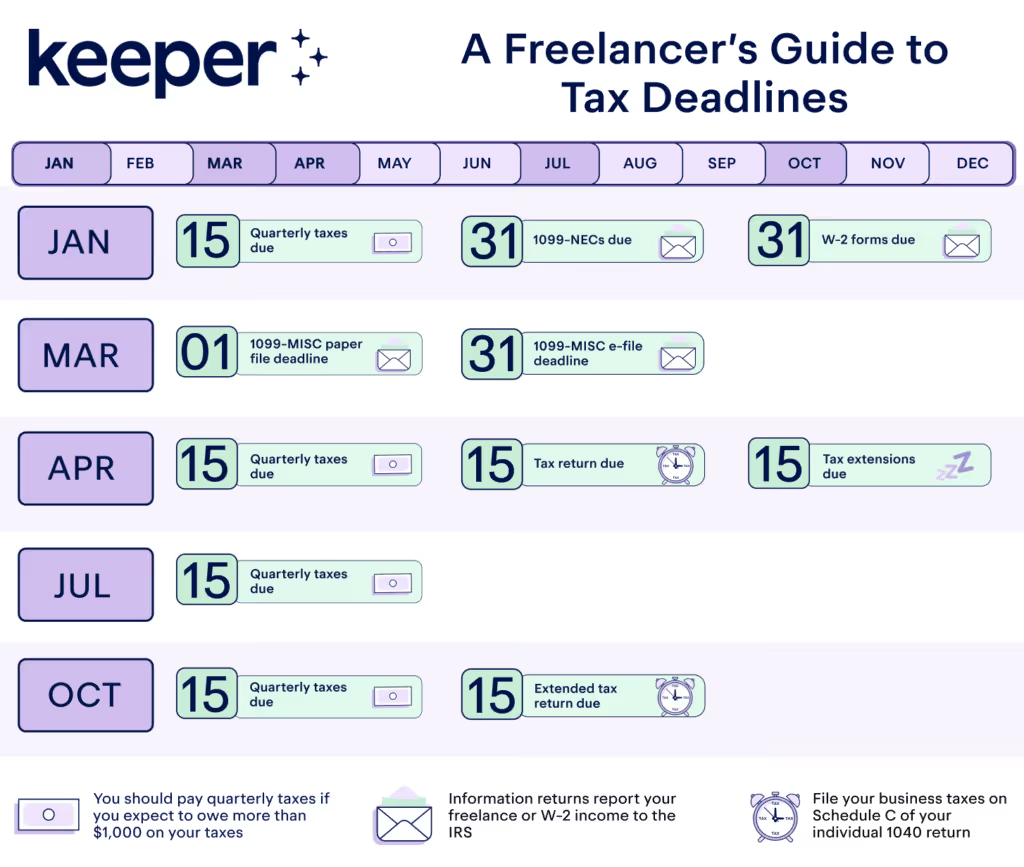
Keeper Tax, a tax filing service for independent contractors, has a handy calendar that visualizes each deadline.
- Accurately estimating income
You can and will be penalized for inaccurately projecting your income for a given year. The IRS Form 1040-ES can be used to estimate your taxes, but it’s always a good idea to consult with a tax professional to ensure that you’ve set up your estimated taxes properly, and that you’re paying them on time.
Where can you find a reasonably priced tax preparer?
Tax professionals who know their way around gig economy taxes can be there for you with a few taps on the Gridwise app. Powered by Keeper Tax, Gridwise Tax Help gives you access to a professional who can keep you in compliance with tax laws.
- Paying self-employment tax
If you process your gig driving earnings as personal income, you are required to submit self-employment taxes, which are similar to payroll taxes. If you have a Limited Liability Corporation (LLC) or another kind of corporate entity through which you process your earnings, you might be able to save on this expense.
- Paying state income tax
Most states tax the income of residents. It is your responsibility to find out if and how you need to file a return, including whether you need to estimate your taxes and file quarterly as an independent contractor. Do not underestimate the importance of paying state taxes. Like the IRS, your local state department of revenue is likely to have an army of auditors ready to flag your business and demand your payments—along with any penalties they might decide to add.
- Paying county or municipal tax
Many municipal entities, i.e. your city, town, borough, or township, collect earned income tax. You will need to check with your local government’s officials to determine whether this is the case, and find out how you can obtain a form to file your return and pay your taxes. This might not seem like a big deal when you look at it, but failure to pay taxes on the municipal level can put several nasty dents into your credit rating.
- Paying all other taxes
We know. Your head is already spinning, and you wonder how there could possibly be even more taxes to pay. It’s important to know that all the information above applies only to your gig driving income. You will need to consider other items such as estate, gift, sales, and employment taxes you might be required to pay for activities outside of your driving gig.
- Getting the right kind of help
How can you possibly know everything about tax deductions for gig workers, or how to pay self-employment tax? You could study it yourself, of course, but there’s no need to take time off earning money with your gig to do that. It’s always best to get professional help to make sure you get it right.
Gridwise is a great place to start. In addition to mileage tracking and reports on earnings and expenses, the app has helpful resources that will make filing your return and paying your taxes a snap! Gridwise Tax Help provides a service that’s some of the best Amazon Flex, Shipt, Instacart, and Uber news today.
Download Gridwise to get the best mileage tracking app for gig drivers. Not only will you have an accurate account of all the miles you use, you’ll get a ton of other must-have features.
Most important, you’ll get a discount on Gridwise Tax Help, powered by Keeper Tax. With this app designed to prepare gig drivers to accurately and economically file and pay their taxes, you’ll have
- access to your very own tax professional
- automatic receipt tracking
- automatic mileage reporting of shifts tracked with Gridwise
- advanced deduction finder, designed specifically for gig drivers
Regular Gridwise users will get Gridwise Tax Help powered by Keeper Tax at a 30% discount. Those who become Gridwise Plus users get a price reduction of 50%. Now that you know more about taxes for gig workers, there is an avalanche of good reasons to get the help you need. Tax time is coming, so don’t delay!
Download Gridwise now to start saving on taxes
How To Be A Rideshare Driver: A Gridwise Driver Guide
Rideshare was one of the first gig-driving jobs to go mainstream, starting with Uber in 2010, followed by Lyft in 2012. Drivers quickly found it to be a great part-time job, and others have turned it into a full-time gig. As of the beginning of 2022, drivers across the US averaged $22.67 per hour. In select cities, drivers made more than $30.00 an hour. Driver earnings for Uber and Lyft are close, and which company pays the most goes back and forth.
The secret to being a successful rideshare driver with one of these companies is developing a strategy of where and when to drive. Read on as Gridwise examines the rideshare business, looks closer at Uber and Lyft, and also tells you about some of the other options for rideshare drivers. We link to many recent articles on the Gridwise blog, all of them packed with information about how you can be a better rideshare driver.
Uber vs. Lyft: a rideshare company comparison
The first question for anyone contemplating a gig job as a rideshare driver is which company they should choose. Since the pay is so comparable, for most people it comes down to personal preference. Others report they have a friend who drives for one of the rideshare companies and they decided to go with the same company so they have someone to answer questions about the app and business. Here is a closer look at Uber and Lyft, as well as some of the alternatives.
- Gridwise looks at Uber and Lyft, their differences and similarities (including what drivers made in Q1 2022) and helps you decide Which Rideshare Service Should You Drive For [2022]? Also find out about Lyft and Uber driver requirements.
- There are also creative alternatives to rideshare driving. Check out A Rideshare Rival for Uber and Lyft.
Rideshare driver earnings and insights
To help in your decision, we take a closer look at Uber and Lyft drivers and the most recent figures on how much they make, as reported through the Gridwise app. We also examine the top cities to drive in and how drivers earn extra money through tips.
- This is the best info available on How Much Do Uber Drivers Make: Uber Driver Pay in 2022. Check it out to see how much Uber drivers earn per week.
- How much do Lyft drivers make a week? Read the latest Lyft data on How Much Are Lyft Drivers Getting Paid?
- Some cities are target-rich environments for rideshare drivers. A recent blog post, Top US Cities for Rideshare and Delivery Driving, examines the most profitable cities.
- For those who want an occasional break from rideshare, you can try package delivery with Amazon. Read about it in Amazon Flex Driver Pay Q1 2022: What Is Amazon Paying Their Drivers?
- The best drivers cash in on the tips. Learn how by reading How to Boost Rideshare Driver Earnings and Earn Bigger Tips.
Lyft and Uber driver advice: How to earn more as a rideshare driver
There are strategies and tactics to boost your earnings as a rideshare driver. Check out these articles.
- Gasoline is a major expense, but there are ways to save. Read this piece on 13 Ways to Save Money on Gas as a Rideshare or Delivery Driver.
- You can add to your bottom line by getting the right phone plan. Learn about it here in US Mobile: Affordable Phone Plans for Rideshare and Delivery Drivers.
- Passengers are motivated to tip the best drivers, and many of them make this decision based on driver ratings. Check out How to Improve Your Rideshare Driver Ratings.
- New riders don’t understand the need to regularly update their rideshare app. If you neglect this important task, you will see a drop in the rides directed to you. Learn about this tip and others in How to Earn More as a Rideshare Driver.
- Most drivers have a story about the biggest tip they ever got. Learn how to increase your income when you read 12 Ways Rideshare Drivers Can Earn More Tips.
- The smartest drivers save money on their cars. Read how in 4 Ways for Gig Drivers to Reduce Auto Costs.
- You can earn more as a rideshare driver by setting goals and using tools designed to help you get there. Read all about it in 3 Steps to Making More as a Gig Driver.
- Are you contemplating a break from rideshare and going to work in an Amazon gig job, or maybe you want to augment your Lyft or Uber earnings? There are strategies and tactics for Amazon Flex. Check out 13 Tricks to Earn More as an Amazon Flex Driver.
Insurance for rideshare drivers
New drivers hear that Lyft and Uber carry $1 million insurance policies and think they don’t have to worry. They didn’t read the fine print, though.
- You need to know when and where the rideshare company’s insurance covers you and the limits of that coverage. Not knowing can cost you lots of money. Learn more in Insurance Basics for Rideshare and Delivery Drivers.
- Delve into the topic a little deeper by reading about the 5 Common Insurance Mistakes Rideshare and Delivery Drivers Make.
- Every rideshare driver must know what is expected of them if the worst happens and they get into an accident. Gridwise covers the basics of What to Do If You're in an Accident as an Uber or Lyft Driver.
- Insurance isn’t just for your gig driving job. Learn about this vital topic at Health Insurance for Gig Drivers: Everything You Need to Know.
Vehicle advice for rideshare drivers
As a rideshare driver, your car is one of your most critical tools. Take care of it, and know about important options for having the best car for ridesharing.
- There are few things worse than a breakdown when you are ridesharing, especially if you have a passenger in the car. Learn how to keep your vehicle in top condition with The Car Maintenance Schedule Every Gig Driver Should Follow [2022].
- If you find yourself needing to buy a new car, which you plan on using for rideshare, make sure you get the best deal. Read all about it at How to Buy a Car to Drive for Rideshare (Uber and Lyft) Companies. By the time you finish, you’ll know all about Lyft and Uber vehicle requirements.
How to be safe as a rideshare driver
Every driver has stories about the things that have happened to them while ridesharing. Some are hilarious, others are scary. Despite the coverage in the media, if you look at the numbers, you’ll find violence against rideshare drivers is very rare. Nevertheless, you should be prepared.
- We’ve all seen the YouTube videos of attacks on rideshare drivers. Self-defense is a last resort, but you should know How to Protect Yourself as a Rideshare Driver.
- Road rage is a reality, and if you are a rideshare driver, you are on the road a lot. Learn How Rideshare and Delivery Drivers Can Protect Themselves from Road Rage Drivers.
- Finally, this is not as much of a danger as it is annoying and often disgusting. Learn How to Deal with Drunk Uber or Lyft Passengers.
Other advice for rideshare drivers
There are other valuable pieces of advice you can find on the Gridwise blog that don’t fit into any of the topics we’ve just covered. You should, however, be aware of them.
- If you are a rideshare driver in a major city, the airport is a frequent destination. Know the rules for the airports in your region. We give you some pointers in Airport Pickups: Rules for Uber and Lyft Drivers.
- Gig driving presents a unique set of challenges. Gridwise outlines a few and suggests ways to address them in 8 Common Gig Driver Problems and How to Fix Them.
- Has it occurred to you that you might be able to work for Uber and Lyft at the same time? Lots of drivers do. There is even a name for it. Read The Art of Multi-Apping: How Tos and Strategies for Gig Drivers.
- We all need a vacation, even gig drivers. Gridwise suggests some preparations in How to Plan for Vacations as a Rideshare or Delivery Driver.
Use tools to maximize your Uber/Lyft pay
As a new rideshare driver, or even if you’re a veteran, one of the best things you can do is stay organized and informed. Use a mileage and earning tracker to manage your income - like the free Gridwise mileage and earning trackers!
Drivers are staying informed on peak times and locations in their area with Where to Drive and When to Drive, as well as the best airport arrival and departure times.
Gas is eating into your income? Check out the Gridwise Gas program to save up to $50/month on gas!
And have fun out there.
Maximize your driver pay with Gridwise
Rideshare vs Delivery: How Much Did Drivers Earn In 2022?
It’s that time of year. Gridwise has crunched the numbers and gives you insight into how gig drivers did in 2022. Take a look to see how you did compared to other drivers!
In this post, we take a look at earnings across some of the major services and answer questions like:
- What did rideshare drivers earn in 2022?
- What did food delivery drivers earn in 2022?
- What did grocery delivery drivers earn in 2022?
- What is the prognosis for gig driving?
- What tools can drivers use to help them earn more?
What did rideshare drivers earn in 2022?
Here’s how earnings broke down for Lyft and Uber drivers from Q1 to Q4 2022. All numbers are reported on a median basis.
Hourly gross earnings for rideshare
- Lyft 2022: Q1 $20.05, Q2 $20.63, Q3 $19.03, Q4 $19.10
- Uber 2022: Q1 $20.65, Q2 $21.87, Q3 $20.78, Q4 $21.28
- Combined hourly earnings for 2021: Q1 $16.58, Q2 $19.67, Q3 $18.91, Q4 $13.81
These numbers show a solid increase in earnings for both Uber and Lyft compared to 2021, with Uber drivers about on par with Lyft drivers. These numbers make sense when we consider that this last year the US has been emerging from the worst pandemic most of us have seen.
Per-trip gross earnings for rideshare
ServiceQ1Q2 Q3Q4Lyft 2022$12.97$14.09$13.20$13.27Uber 2022$13.42$14.57$13.50$13.67
Uber earnings are higher, but not by much. Some drivers prefer to evaluate earnings this way, reasoning that squeezing in more rides per hour can boost earnings and efficiency.
Tip earnings per hour for rideshare
ServiceQ1Q2 Q3Q4Lyft 2022$1.56$1.76$1.74$1.78Uber 2022$2.09$2.27$2.19$2.10
This is where we start to see a wider discrepancy. Rideshare drivers typically earn 10% to 11% of their earnings in tips, but Lyft drivers aren't seeing that amount.
What did food delivery drivers earn in 2022?
Now let’s look at what food delivery drivers earned in 2022. We’ve included DoorDash, Grubhub, and Uber Eats. Again, all numbers are reported on a median basis.
Hourly gross earnings for food delivery
- DoorDash 2022: Q1 $15.31, Q2 $14.79, Q3 $14.68, Q4 $14.74
- Grubhub 2022: Q1 $14.25, Q2 $13.93, Q3 $13.44, Q4 $13.83
- Uber Eats 2022: Q1 $14.84, Q2 $13.83, Q3 $13.45, Q4 $14.01
DoorDash consistently leads the category for driver income, but only modestly. Uber Eats and GrubHub switch off the number two and three spots, and sometimes they’re pennies apart. Still, driver earnings for the services remain close.
Per-trip gross earnings for food delivery
Some food delivery drivers prefer to look at what they make on a per-trip basis. Here's how driver earnings per trip stacked up in 2022.
- DoorDash 2022: Q1 $7.94, Q2 $7.95, Q3 $7.82, Q4 $7.95
- Grubhub 2022: Q1 $10.45, Q2 $10.58, Q3 $10.19, Q4 $10.15
- Uber Eats 2022: Q1 $9.58, Q2 $9.70, Q3 $9.37, Q4 $9.28
Tip earnings per hour for meal delivery
- DoorDash 2022: Q1 $7.67, Q2 $7.56, Q3 $7.57, Q4 $7.43
- Grubhub 2022: Q1 $6.87, Q2 $6.60, Q3 $6.87, Q4 $6.34
- Uber Eats 2022: Q1 $6.93, Q2 $6.79, Q3 $6.73, Q4 $6.97
These numbers make sense when matched up to the hourly earnings of the drivers of these respective services. DoorDash drivers continue to receive the highest tips from customers, with Uber Eats and GrubHub going back and forth in the second and third spots. If DoorDash drivers are making more deliveries per hour than Grubhub and Uber Eats drivers, it would stand to reason that they would make appreciably more in tips.
What did grocery delivery drivers earn in 2022?
Instacart and Shipt are the two top companies in the grocery delivery business. According to sources, Walmart also represents a substantial part of the grocery delivery market, handled by Walmart Spark drivers.
Hourly gross earnings for grocery delivery
ServiceQ1Q2 Q3Q4Instacart 2022$14.78$14.14$13.44$13.84Shipt 2022$16.60$15.84$15.21$15.68
Shipt drivers make more hourly, which might be attributed to their bonus structure and because the Shipt app is more likely to give drivers double orders that they can fill at the same time.
Tip earnings per hour for grocery delivery
ServiceQ1Q2 Q3Q4Instacart 2022$6.46$6.34$6.24$6.34Shipt 2022$5.52$5.29$4.55$4.09
What is the prognosis for gig driving?
Rideshare
Rideshare gets the majority of attention. It’s been around longer than meal delivery and grocery delivery. It’s the most visible. We see cars with Uber and Lyft decals on the roads daily, numerous times a day. It has also disrupted more workers and industries, specifically taxicab drivers and airport limo drivers.
In addition, rideshare is more vulnerable to other influences. A recent article on CNN.com revealed that the Consumer Electronics Show in Las Vegas attracted 100,000 in-person attendees in early January 2023. A year earlier, when most cities were still in the thralls of the pandemic, attendance was only 45,000. Those extra people in Las Vegas meant a brisk rideshare business, and Las Vegas is a year-round trade show city, in addition to having a healthy tourist economy.
However, the Las Vegas Weekly reports that those tradeshow attendees and tourists will have more transportation choices within a few years. The Boring Company, owned by Elon Musk, built, owns, and operates a system of tunnels connecting the various buildings that make up the Las Vegas Convention Center. A fleet of Teslas moves more than 3,000 people an hour through the tunnels. There are plans to expand the network to all the city’s attractions, from Fremont Street to the Las Vegas Strip, to Allegiant Stadium where the Raiders play, and on to the airport. When completed, a passenger can make the seven-mile trip from Fremont Street to the airport for an anticipated price of $12.
That’s a lot of potential rideshare passengers that might go to another source for their transportation. Other cities are also developing transportation solutions that will affect rideshare. This is not an effort to eliminate rideshare, however; prudent city planners are always concerned with efficiently moving people around.
But rideshare has also become part of the fabric of society. The Las Vegas tunnel system will not go everywhere. There are places public transportation does not reach, regardless of where you live. Rideshare continues to fill this gap. It is last-mile delivery for human passengers. According to PolicyAdvice.net, a website reporting on money management, insurance, mortgage, loans, and investment, the global ridesharing industry, as of September 2022, was worth an estimated $61 billion and expects to nearly quadruple to $220 billion by 2025. About 25% of the US population uses rideshare at least once a month.
Drivers who stay with the job will continue to earn. Have a strategy for driving, and run your rideshare business as a business, controlling costs and taking advantage of tax deductions.
Your accumulated knowledge is an advantage. According to TheInformation.com, only about 3% to 4% of beginning new rideshare drivers are still ridesharing 12 months later. This turnover rate is known as “driver churn.” It is easy to get discouraged in the first few weeks; and for others rideshare is only a temporary source of income until they can find more permanent employment. If you have stuck it out for a year as a rideshare driver, you have gained a lot of wisdom, which gives you a really nice edge.
Food and grocery Delivery
The outlook for food delivery and grocery delivery is even better. According to many sources, including Statistica.com, that market will see a compounded annual growth rate of 12.33%, reaching a global total of $1.45 trillion by 2027. User penetration in the online food delivery segment is projected to reach 37.2% of the population in 2023.
Meal delivery is invigorated by a prepared food industry that is constantly innovating. There are countless ghost kitchens in urban and suburban areas, serving untold numbers of meals—and they are all delivery-only. Restaurant chains as diverse as Chuck E. Cheese and Applebees’ are operating separate brands out of the back door of their kitchens—also delivery-only. They are all using gig drivers in a big way.
The pandemic introduced people to meal and grocery delivery, and they found that they liked it.
What tools can drivers use to help them earn more?
Tremendous growth always brings tremendous change. Some things will stay the same - whatever service you drive for, you'll need to track your miles and earnings for taxes. And if you want to earn more, you'll need to know where to drive and the best times to drive for your gig apps to make the most money.
Gridwise tracks each mile you drive (not every app does!) and helps you max out your tax deduction, while also telling you where the demand is for deliveries and passengers.
Want to earn more?
Drive smarter with Gridwise
How To Maximize Gig Driver Earnings in 2023
A month or so ago, we hit that ceremonial time, the new year. You made resolutions. You’ll lose a few pounds. You’ll read more. You’ll be more efficient at work.
Wait a minute! Did we say work? Yes, we did. But you’re a gig driver. How can you be more efficient when you are at the mercy of a phone app? Questions abound: What's the best driver app for making money? What about other delivery jobs like Uber Eats and grocery delivery? How much do Instacart drivers make?
Hey! You’ve been reading these blog posts long enough to know that gig driving is more than just luck. Let’s rephrase that, and we’ll use a quote from baseball great Reggie Jackson, “Luck is a combination of talent and effort.”
That’s how you will maximize your gig-driving career this year: talent and effort. And perhaps by the end of this blog post, you’ll have the insight you need to maximize profits from Uber or Lyft, and possibly add some meal delivery to the mix.
In this blog post, we cover
- Developing a successful gig-driving mindset
- Preparing for success as a gig driver
- Taking advantage of other avenues to rideshare or food delivery success
- Sharing your knowledge about gig driving
- Refining your business acumen
- Trying a side hustle that’s completely different than gig driving
- Remembering the mindset
- Being a better driver with Gridwise
Developing a successful gig-driving mindset
First, and we don’t mean to get hippie-dippie here, but try perfecting your mindset.
One rideshare driver shared a strategy he developed.
“I live two valleys east of Los Angeles, 50 miles from LAX. I hit the road at 4:00 a.m., traveling the freeway along the foothills through those upper-middle-class neighborhoods, the ones most likely to generate rides to LAX. Nine times out of ten, I have a ride to LAX, or some other airport, within ten minutes of leaving the house. I turn on my app while I’m drinking my last cup of coffee, and half the time, I don’t finish it. I’m headed to the airport.”
This driver strategically placed himself in a good position for the possibility of an airport run, and it worked.
Preparing for success as a gig driver
What can you do to prepare for success as a rideshare driver? Think about the type of driver you are and your preferences. Do you like airports? Are you an event driver? How about rush hour? Do you like the rides generated by the nightlife and after-hours scene? These all require different strategies.
As a food delivery driver, you might work the dinner hour. But you find the local colleges or universities are great for late-night deliveries when students have returned to their dorm or apartment after a party, or they’re cramming for finals. Sporting events are huge. A food delivery service in Singapore saw orders double during the recent World Cup. The Super Bowl is right around the corner, followed by March Madness, the NBA finals, and baseball season.
Taking advantage of other avenues to rideshare or food delivery success
There are other ways you can increase your potential as a gig driver.
Social media
Websites, blogs, and YouTube channels about gig driving are easy to find. These sources are brimming tips and ideas to increase your earnings. They report on developments in the world of gig driving, from the latest on pay, government regulations, tax tips, and hacks that make ridesharing more successful. Start with the Gridwise blog.
Earn more tips
As a rideshare driver, ten to eleven percent of your earnings come from tips. Meal and grocery delivery drivers make more, often receiving as much as 50% of their income in tips. What can you do to increase your tips? Surprise and delight your passengers and customers. To learn more, check out recent Gridwise blogs The Gig Driving Jobs with the Highest Tips and 12 Ways Rideshare Drivers Can Earn More Tips.
Business cards
Spend a few bucks and print some business cards. Include your name, cell phone number (if you are comfortable sharing it), and information on how passengers or customers can tip you through three or four of the most popular cash apps (a preferred tipping method for some passengers and meal delivery customers).
Let your friends and neighbors know you’re a gig driver
Despite the popularity of rideshare, many people are hesitant to get in a stranger's car. You likely have friends and neighbors in that category. You can be their first rideshare driver. Set them up on the app and be with them when they make their first request. They may have to cancel a time or two before the algorithm selects them as the driver, but it usually only takes a few tries. You’ll be surprised how the word about your services can get out.
Try multi-apping, or refine your multi-apping strategies
There are apps that can help you multi-app more efficiently. Check out a recent blog post from Gridwise titled iPhone vs. Android: Which Is Better for Rideshare Drivers? Pay particular attention to the LG V60 ThinQ 5G Dual Screen (two screens mean you can run two apps).
Many drivers insist that multi-apping is the only way to go, whether you’re multi-apping rideshare, meal delivery, grocery delivery, or a combination of these.
Look into side gigs for delivery drivers
There are media companies that pay gig drivers to wrap their cars in vinyl ads, mount a sign on top, or offer games and music to their passengers through tablets. For a complete rundown on these opportunities, check out the Gridwise blog Sweet Side Hustles: Companies That “Ad” Value to Your Ride. Be careful, however. There are delivery and rideshare companies that do not permit wraps and electronic billboards, and in some cities and airports they’re banned. Regulations change all the time with new technologies, so be sure to do your homework.
Sharing your knowledge about gig driving
You are a veteran if you’ve been gig driving for more than six months. According to Business Insider, some companies relying on gig workers have a 500% annual turnover. As an experienced driver, you’ve learned things that you can pass on to new drivers. How can you do this?
Driver groups
There are tons of dgig driver communities on Reddit and Facebook. Gig drivers from all over ask questions about driving strategies, what tools to use, and share the struggles that drivers often encounter (drunk passengers, anyone?).
YouTube channels
Join the ranks of YouTube personalities sharing news and tips on gig driving. These channels can be monetized. You may not make a lot of money, but you can make some. Viewers are not expecting Technicolor videos with high-quality production. A cell phone camera in video mode is more than enough, and there are resources online that tell you how to make your videos better.
Blogs and websites
The most entrepreneurial YouTube video makers diversify their content into blogs, websites, and podcasts. Most of them talk about gig driving, but others expand their sphere into discussing car accessories, restaurants, local attractions, and any number of other things.
You can get into affiliate marketing, discussing products on your website, blog, or video. You get a commission when a viewer makes a purchase through a link on your website. There are affiliate marketing programs that pay you if someone merely visits a website from a link on your website. Research the web for articles about affiliate marketing, starting with this piece on BigCommerce.com.
Refining your business acumen
Ask yourself how much more of your money you could have kept in 2022 had you taken a business-like approach to your gig-driving activities. There are ways you can make more of your earnings stick to you.
Taxes
Are you deducting everything you can? The gig economy is new to everyone, including the IRS. As a result, rules are constantly changing. One significant deduction is the miles you put on your car—but drivers often don’t keep accurate records. The Gridwise app is the best mileage-tracking app for gig drivers. It does not stop at mileage, either. Anything you purchase in furtherance of your gig-driving activities is tax deductible, even your subscription to Gridwise Plus. You can learn more about how not to pay so much to the IRS by checking out another recent Gridwise blog post, The Tax Write-Offs All Gig Drivers Should Know.
Fuel
Gas prices are dropping from their previous highs, but the money you put into your gas tank is still one of your most significant expenses. The Gridwise app might be the best thing you can do to save on gas as a gig driver. Download the app, sign up for Gridwise Gas, and save up to $50 a month at the pump. There are other things you can do. Gridwise recently published a blog post titled 13 Ways to Save Money on Gas as a Rideshare or Delivery Driver.
Ratings
Have you ever passed on a ride because of the passenger’s rating on the app? Most drivers have. Passengers will also pass on drivers because of their ratings. Gridwise recently ran a blog post on keeping your ratings as high as possible. Check it out at How to Improve Your Rideshare Driver Ratings.
Trying a side hustle that’s completely different than gig driving
Do you have expertise in another area? Is there a way you can monetize it? In this age of the internet, just about everything you do can be turned into a profit center. A rideshare driver told of a chance stop he made at a yard sale.
“Sandwiched between posters of rock bands and inspirational quotes, I found a pair of framed and numbered prints of African wildlife. They were five dollars each. I know little about art, but I know that a numbered print means something. I bought the prints, took them home, and scanned the internet. I found a site that valued them at $400 each.”
That’s quite a profit. Many people make a tidy living finding collectibles at yard sales and reselling them. Go on YouTube and watch episodes of Antiques Roadshow and American Pickers.
You have a lot of behind-the-wheel experience if you are a gig driver. You can give driving lessons, or teach at a driving school.
If you are the type of driver who travels the city, you can review restaurants for a local magazine. For something different, you can review food trucks. The best part is that many of these activities dovetail into your gig driving.
Remembering the mindset
We said it at the beginning of this blog post. Amazing things can happen if you allow for the possibility, from getting a good parking space to having a good night as a gig driver to finding an invaluable piece of art or that little hole-in-the-wall restaurant that’s perfect for a review. A positive, confident, and optimistic mindset can work wonders.
Gridwise can help you be a better driver
Let’s step back from the side hustles and refocus on gig driving. Being able to track miles, expenses, and earnings all in one place is a crucial part of being a gig driver. Using tools that do that for free is what separates an efficient driver from the rest of the crowd.
Drivers who want to know the profitable times and places to drive are using Gridwise's Insights features to help them drive smarter, while tracking essential info like miles and earnings - for free!
Try out Gridwise's free mileage and earnings tracker now
DoorDash Driver Pay: What Do Dashers Earn in 2023?
What do you think? Have DoorDash earnings stayed solid, even now that more customers are eating in at restaurants and doing their own convenience store shopping? A look at the numbers that have come in for DoorDash driver pay tells us that customers’ appetites for delivery hasn’t slowed down much at all! Gridwise data show that DoorDash earnings have remained stable over the first three quarters of 2022.
In this post, we’ll answer all kinds of questions about DoorDash driver pay, including
- How much do DoorDashers make?
- How much do Dashers make per month?
- How does DoorDash pay you?
- Doodash pay in popular US cities
- How much do Doordashers make per hour?
- What makes driving for DoorDash worth it?
- How can you maximize DoorDash driver pay?
How much do DoorDashers make?
DoorDash drivers, or “Dashers” as they’re known, have had a very solid year in 2022. Median gross earnings remained at slightly less than $15.00 per hour for the second and third quarters. Dasher hourly pay was a few pennies less than Grubhub, and about $0.50 more than Uber Eats. If a Dasher clocks around 30 hours per week, then the answer to “How much do drivers make a week?” would be about $450, which isn’t bad at all!
How much do Dashers make per month?
When we ask “How much do drivers earn a month?” the answer tells us that not all Dashers are likely to be delivering full time. According to Gridwise data, Dashers made an average of only $223 per month from April to September of this year. That means the average driver was clocking just15 hours per month.
There could be many reasons for this. Many may see Dashing as a part-time gig and they could be using DoorDash as part of a multi-apping gig strategy. Check out this Gridwise post on the art of multi-apping, and you’ll see how that’s done.
DoorDash would be a good gig for those who benefit from multi-apping, as peak hours are clustered around mealtimes. It’s likely drivers who want to make more per month will engage in other driving gigs or another side hustle to make up the difference. Some might be doing DoorDash only at times when there are plenty of orders.
Doodash pay in popular US cities*
How much do DoorDash drivers earn in NYC?
- On average, DoorDash drivers in NYC earn $12.02 per hour.
How much do DoorDash drivers earn in LA?
- On average, DoorDash drivers in LA earn $16.34 per hour.
How much do DoorDash drivers earn in Chicago?
- On average, DoorDash drivers in Chicago earn $12.20 per hour.
How much do DoorDash drivers earn in San Francisco?
- On average, DoorDash drivers in San Francisco earn $15.49 per hour.
How much do DoorDash drivers earn in Houston?
- On average, DoorDash drivers in Houston earn $10.29 per hour.
*Doordash driver pay data cited is based on median average earnings.
How much do Doordashers make per hour?
The question, “How much do drivers make an hour?” isn’t really complete until we talk about tipping. DoorDash tips are usually a given. According to Gridwise data, Dashers raked in an average of $7.50 in tips per hour.
DoorDash tip numbers exceeded those of their food delivery competitors, including Uber Eats, Grubhub, Shipt, and Instacart. Maybe people are more familiar with DoorDash and like the service better, or it could be that Dashers receive more orders per hour than with other services. Either way, it appears that they make some decent cash with customer tips.
The app gives customers a chance to add a tip at the time of the order, and another opportunity once they receive their orders. There has been some controversy around DoorDash’s handling of driver tips. Learn more about the complaints, and how DoorDash addressed them, in this article from entrecourier.com.
How does DoorDash pay you?
The ways rideshare and delivery companies pay structure can be a key factor in their attractiveness to drivers. Dasher pay consists of the following:
- base pay: This is the contribution from DoorDash, which comes from the fee they charge the customer. The DoorDash Driver pay scale ranges from $2.00–$10.00, and is based on the estimated time, distance, and desirability of the order. DoorDash mileage pay can often make a small order seem well worth taking.
- promotions: Drivers can earn extra money on promotions that are offered for various reasons. Most of the time, the company will deploy them to get more workers to drive at peak times. Here are some examples:
- Peak pay is automatically added to orders when there is a lot of demand. This is the most common promotion you’ll see as a driver.
- Challenges give drivers the chance to earn more by completing a certain number of deliveries in a set amount of time. These incentives encourage drivers to become more efficient, and ultimately make DoorDash more appealing to customers.
- Guaranteed earnings are granted periodically, usually communicated by email or SMS, to DoorDash drivers. This offer promises that certain select drivers will earn a set amount of money within a set number of days, not including tips or other offers.
- tips: DoorDash, as we stated earlier, lets customers leave tips when they check out or after their order is delivered. Drivers keep 100% of their tips.
What makes driving for DoorDash worth it?
You probably have met at least one Dasher, if not at a party or in a class you both attend, then maybe when they brought your favorite burrito to the door. A lot of people drive for DoorDash, and there are good reasons. Here are a few.
- DoorDash is flexible. While you can schedule time blocks to work, it’s also possible, most of the time, for drivers to “Dash Now.” That means you can turn on the app and orders will come in. This works at peak times as well as when other drivers are less likely to schedule their shifts.
- DoorDash is a leader in the food delivery industry. Even if other companies go out of business, DoorDash will probably still be around. You see it in almost every town, and it serves most if not all restaurants and convenience stores in most areas. See how working with DoorDash vs. other delivery gigs compares in this Gridwise blog post.
- The DoorDash app and website are state of the art. DoorDash takes its business seriously and makes it easy for both customers and drivers to use their software. The app is easy to navigate, and the DoorDash website answers more questions than you could possibly think of.
- DoorDash earnings are relatively high. Although Dashers don’t earn as much hourly income as Amazon Flex, Lyft, or Uber drivers do, they make more than most of the drivers for other food delivery companies.
If you’re in search of more DoorDash driver advice, check out this article from Gridwise aimed at new and seasoned Dashers.
How can you maximize your DoorDash driver pay?
While DoorDash driver pay is somewhat high when compared to other food delivery gigs, no Dasher that wants to make more money will sit back and rest on their laurels. It not only pays to work as hard as you can, you can earn even more when you work “smart.”
What might this consist of? Here are some suggestions:
- Work for bigger tips. Doing more than just “your job” impresses most customers. Not only will you make more money, you’ll get more satisfaction from doing your work to the best of your ability. Read this Gridwise post for more ideas for getting bigger tips.
- Save on gas. When you’re a delivery driver, running up a high fuel bill is inevitable. Take advantage of money saving programs and challenge yourself to drive with fuel efficiency in mind. Here’s advice from Gridwise on ways to save on gas.
- Track your earnings. Get Gridwise and link it to your DoorDash account. Your earnings will be seamlessly recorded and placed into easy to read, informative graphs. Compare your earnings from month to month, or see what other drivers are making.

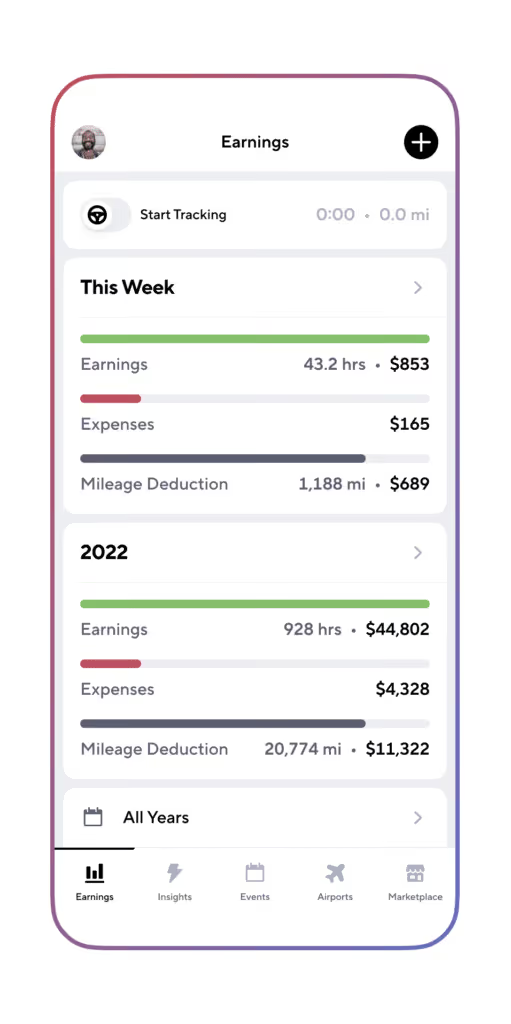
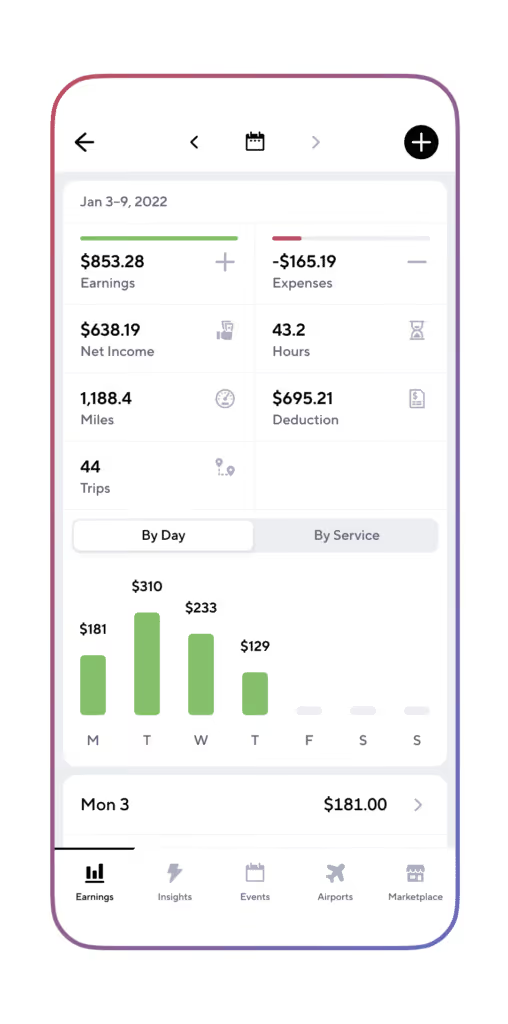
- Log your expenses. As an independent contractor, every Dasher has to keep an account of expenses such as mileage, fuel, and equipment. Gridwise is the best DoorDash mileage tracker because Gridwise is designed specifically for gig drivers. Not only can you track your total mileage, but for every app you sync with Gridwise, you’ll be able to see how much you’ve driven.
- Create a winning strategy. Don’t make your driving gig a process of trial and error. With Gridwise features Where to Drive and When to Drive, you can easily see when the peak hours for Dashing are in your area and choose your scheduled blocks or Dash Now option where and when there’s plenty of business to be had.
Gridwise also offers real-time information on weather, events, and traffic, which can save you from getting jammed up. There are also tons of deals and discounts for drivers that will make Dashing a high-earning dream!
Are you looking for more Doodash resources?
- Doordash Incentives 2023: How Do They Work?
- How to Earn $1000 a Week With Doordash
- A Guide to Dashing: DoorDash For New Drivers vs. Experienced Drivers
Download the Gridwise app now!
Work smarter. Earn more.
Whether you drive, deliver, or pick up shifts — Gridwise helps you track earnings, mileage, and performance so you stay in control of your work. Download the app and take charge today.
