Gridwise blog
Tips, insights, and advice to help you earn more and work smarter, whether you do gig work, hourly, or shift work.
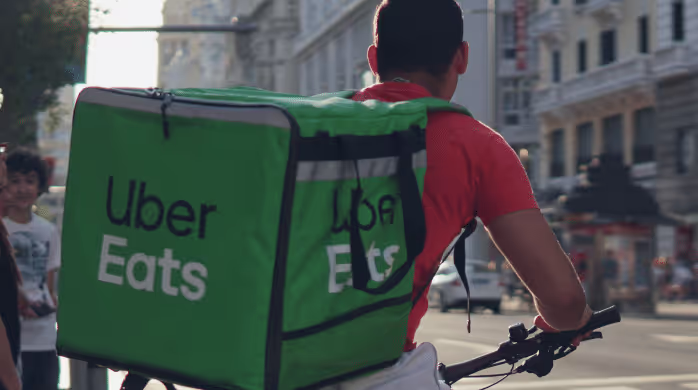
How to Make $1,000 a Week With Uber Eats in 2026 (Tips + Hourly Data)
In this blog, we'll explore the strategies and techniques that can show you how to earn $1000 per week as an Uber Eats delivery driver. We'll cover everything from optimizing your delivery zones and schedules to maximizing your tips and customer satisfaction. Whether you're a seasoned Uber Eats driver or just starting out, this guide will provide you with the insights and actionable steps to take your Uber Eats driver earnings to the next level.
Becoming an Uber Eats delivery partner can be a lucrative opportunity, especially if you're able to consistently earn $1000 a week. By understanding the platform, optimizing your delivery strategies, and focusing on customer satisfaction, you can maximize your earnings and turn Uber Eats into a reliable source of income.
We’ll cover the following topics to provide coaching and ideas to help you push your earnings up to that $1000 per week level:
What do Uber Eats drivers do?
Uber Eats drivers deliver prepared food most of the time, but they also might shop for and deliver goods from convenience outlets and grocery stores. The job is pretty simple. You get a request for an order, you drive to the restaurant or store to pick it up, and then you deliver it to the customer. If you already drive for Uber, you can choose to take orders for Uber Eats delivery any time.
If you’re not an Uber Eats driver yet, it’s pretty easy to become one. This Gridwise post tells you what you need to do if you want to sign up and start making money Uber Eats style. Many rideshare drivers welcome the chance to deliver food rather than people. This article from Nerdwallet covers the Uber Eats gig from that angle.
There are some sweet advantages to working with Uber Eats. In lots of cities you don’t even need to have a car. You can use a bike or a scooter, or even walk, to make your rounds. If you do use a car, Uber Eats’ requirements are a lot easier to meet than they are for Uber rideshare driving.
You also have a lot of flexibility. You can shop and deliver convenience items and groceries, but you don’t have to. And, like most driving gigs, you can choose your own hours, and map out the locations where you want to work.
Use Gridwise features When to Drive and Where to Drive to help you figure out what work hours and which specific areas will be the most profitable for you. Real data from real delivery people will show you earning patterns for drivers in your town.
How much can you earn doing Uber Eats?
The honest answer to this question is: basically, as much as you want! It all depends on how many hours you put in and how strategic you are about your gig. Earnings vary from one area to another, as this article from Entrepreneur points out. To give you a baseline, let’s look at the earnings of Uber Eats drivers who tracked their earnings with Gridwise.
Remember that these numbers show us only average earnings. To make $1,000 a week with Uber Eats, you’re going to have to be better than average, and we’ll show you how. For now, though, it’s good to have these figures so you get a ballpark number of where to start.
How much do Uber Eats drivers make?
Gridwise data tell us the following:
- Monthly earnings average around $444.00 per month.
- Gross earnings per trip are between $9.00 and $10.00.
- Tips make up about 50% of most Uber Eats drivers’ income, which amounts to about $225.00 per month.
Is Uber Eats good money? It can be. While there are other gigs that pay more per trip, if you drive for Uber Eats, you’ll always be pretty busy.
https://datawrapper.dwcdn.net/HPAz8/3
You can also see that, unlike many other gigs, tips play a huge role in Uber Eats earnings.

With these numbers as a baseline, what can we say about how to earn $1,000 a week with Uber Eats? As we said in the introduction, it’s going to be a hustle, but it’s really possible. To figure out how to make the most money with Uber Eats, let’s start by looking at how many trips these “average” drivers made each month.
We know that average gross earnings were $444.00 per month, and drivers got around $10.00 per trip. That means they took 44 or 45 trips per month, which breaks down to 11 trips per week. That’s not a lot of Uber Eats delivery, is it?
The fact that Uber Eats drivers averaged so few trips shows us that many drivers use more than one app at the same time. This is called multi-apping, and you can learn more about it in this Gridwise post. If you want to answer the question of how much you can make with Uber Eats, then you need to stick with the app and keep plugging away at those orders. You also need solid strategies, as well as some inside tips and tricks.
How to make the most money on Uber Eats: Delivery driving tactics
Getting to that $1,000 a week with Uber Eats isn’t so hard when you remember that the drivers we saw making about $111 a week were only taking around 11 trips in the same time period. That’s not much at all! If you work the Uber Eats app like a boss, you’ll soon have many more trips than that, easily reaching the number needed to get you to $1,000 a week. Now, let’s get to some tactics you’ll need to make that kind of bank.
- Stay with the Uber Eats app, and track your earnings. Gridwise can easily do that for you. Simply sync your Uber Eats app with Gridwise, and you’ll be able to see how much you’ve earned with Uber Eats, what times were most profitable, and your average hourly pay. Racking up trips with Uber Eats has other benefits, including perks and bonuses that are awarded to top drivers.
- Leverage surge pricing and promotions. Surge pricing is applied when there is a lot of demand. When surge pricing is in effect, many of the trips you make will pay more than usual. Promotions are offered to drivers who complete a given number of trips in a certain time period. High traffic volume days, nights, and times give you these chances to get extra earnings. Challenging yourself to complete the right number of trips for promotions will add to the number of trips you can count on for big bucks, too. Learn more about Uber Eats surge pay, boosts, and promotions in this Gridwise blog post.
- Say yes to doubling up on orders. With Uber Eats, you can get back-to-back orders or receive batched orders. Back-to-back orders happen when you receive a new request while you’re on the way to deliver an original order. The Uber Eats app routes these trips automatically, so you won’t be sent out of your way.
Batched orders are Uber Eats’ way of bundling together orders from either the same restaurant, or two nearby eating establishments. You get money, and trip count credit, for all the orders you complete, plus customer tips, without having to make a bunch of separate trips.
- Turn on the charm and get bigger tips. Being nice really is part of the Uber Eats driver’s job, and getting tips is one way people who drive for Uber Eats make money beyond their basic pay.. Bring along those extra napkins and condiments, use equipment that keeps food and drinks at the right temperatures and prevents spilling, and consider your customers’ needs. If you deliver groceries, be extra careful with delicate items such as bread and eggs.
And, most important, follow your customers’ directions, and stay in communication with them if you are going to be delayed, or if you have questions about their order. This Gridwise post will tell how to get bigger tips as a delivery driver.
- Use even more charm to keep your ratings high. As an Uber Eats driver, you will be rated by the restaurant or store where you pick up the orders as well as the customers who are waiting for the deliveries. This two-way rating system is designed to keep you on your toes, so Uber can keep people satisfied with your service. Don’t worry, you get to rate them, too.
There’s another reason why your rating as a driver is important. It not only keeps you in good standing with Uber; it helps you to qualify for the Uber Eats Pro incentive program. To learn more about Uber Eats Pro, and what it takes to earn perks such as preferred services, discounts, and deals, check out this Gridwise blog post.
Smart business moves that seal the deal
Now that you know how to gobble up the deliveries you need to make $1,000 a week with Uber Eats, it’s going to be a breeze to get there. Let’s make it even easier, with business moves that boost your earnings and shrink your expenses. If you use these, it will also be easy to say yes when people ask, “Can you make good money with Uber Eats?”
Minimize expenses. Avoid racking up big fast-food bills by bringing your own food and beverages. You might not think you’re hungry when you first start your Uber Eats run, but once the aroma of pepperoni pizza, premium cheeseburgers, and piping hot fries start wafting through your car, that might change. Bring a sandwich or other healthy food from home, and buy bottled water in bulk to save tons of cash compared to what it costs to buy single servings.
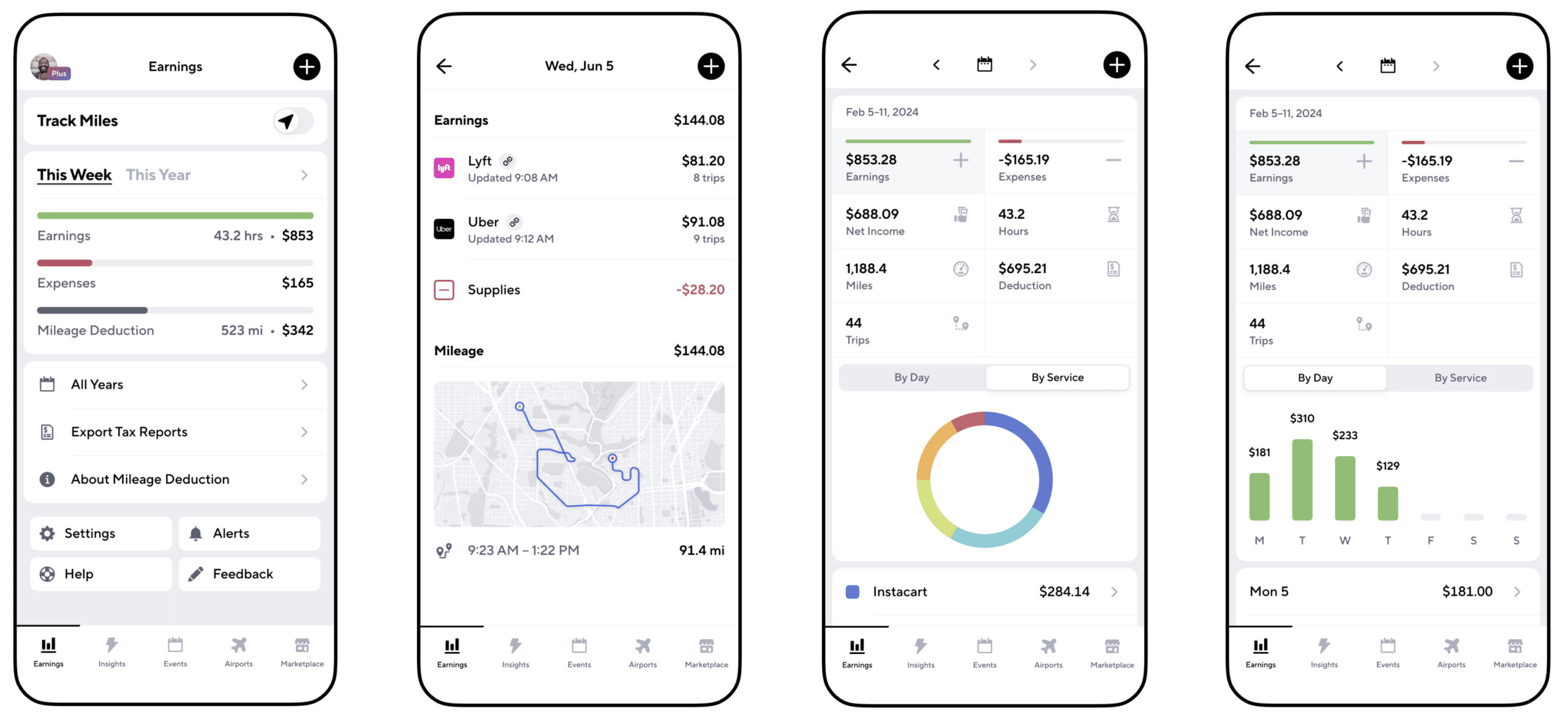
Maximize tax deductions. Another way to minimize your expenses is to maximize your tax deductions. Start by tracking mileage with Gridwise.
Gridwise App
Gridwise captures every deductible mile you drive, including the distance you cover between the trips your driving app records. Know what expenses you can deduct, and put them to work for you when tax time comes. Learn more about tax deduction strategies in the Gridwise Tax Guide for drivers.
Boost earnings with referrals
As an independent contractor, you’re probably looking for ways to make even more money than you can with Uber Eats. And most gig workers like you enjoy getting passive income. With Uber Eats, there’s a really easy way to do that, referrals!
All you need to do is find friends and encourage them to deliver for Uber Eats. If they make a certain number of deliveries within a specified time, you will get paid for doing nothing more than having them sign up under your referral code! Rates of pay vary by city, so check your Uber Eats app to find out what the current deal might be, and learn more about the referral program on the Uber Eats website.
Also remember: “friends” don’t have to be your best buds. Many delivery people carry cards with a QR code linking to their referral information, so just about anyone you encounter can join Uber Eats and boost your earnings. You could meet a source of passive income at the gas station, on social media, or at your high school reunion. The more you hustle, the more there is to gain, right?
Master the art of self-employment
As an Uber Eats driver, you’re an independent contractor. That means the company isn’t going to withhold your taxes, provide insurance, keep track of your earnings, or tell you about tax deductions. You’ll have to do all these things for yourself.
If you want to maximize your tax advantages, open an official business entity. You can incorporate (create a corporation) or you can work as a limited liability corporation (LLC). You can also work with a DBA (Doing Business As) arrangement, but the corporation or LLC will do a better job of protecting you from liability.
Establishing a corporation or LLC offers better tax advantages than being a sole proprietor. For instance, if you simply collect your earnings into your private account, you’ll be charged self-employment taxes in most states. And paying extra taxes is something we all want to avoid, within legal limits, as much as possible.
Every Uber Eats driver needs to learn about self-employment, and there are some great resources you can review. Check out the CareerOneStop website about self employment which will help explain the basics. You can also check with a professional tax accountant, or look other websites to learn more about actually creating a business.
Scope out your market
Look at the area around you to see where you’re likely to get the most deliveries. Where are all the restaurants? Where might people be more inclined to order deliveries? What hours do you want to drive? What activities might be going on around those times? Think about late-night and after-school times as well as breakfast, lunch, and dinner times.
Be realistic about the potential for your area and aware of new services opening up. For example, in New York, there is already a tab on the Uber Eats app that allows customers to order groceries. In our article about the best food delivery service to work for you’ll see that Uber Eats stacks up well against other delivery companies, mainly because of its potential for expanded opportunities for drivers to earn.
So, is Uber Eats good money? As we said, it isn’t an automatic guarantee that everyone will make $1,000 a week with Uber Eats. Trying out the suggestions we give you here, though, should put you on the right track! Go out there and start stacking up those orders and raking in some impressive earnings!
Get more inside information on Uber Eats in these posts from the Gridwise blog:
- The delivery driver guide: Using the Uber Eats app
- Everything you need to know about driving for Uber Eats
- Uber Eats Pro: What drivers need to know
- Looking for a different gig, part-time or full time job? Check out the Gridwise Job board.
Uber Eats FAQ
How does the Uber Eats platform work for drivers?
Uber Eats is a food delivery service that connects customers with local restaurants and independent delivery partners. As an Uber Eats driver, you'll receive notifications of nearby delivery requests, which you can accept and complete. The platform provides flexibility, allowing you to work on your own schedule and earn money based on the number of deliveries you complete.
What are the requirements to become an Uber Eats delivery partner?
To become an Uber Eats delivery partner, you'll need to meet certain requirements, such as having a valid driver's license, a registered vehicle, and passing a background check.
How can I choose the right delivery zone to maximize my earnings?
Selecting the right delivery zone can significantly impact your earnings, as some areas may have higher demand and better-paying orders. It's important to research and identify the zones in your area that tend to have the most consistent and lucrative delivery opportunities.
How can I take advantage of peak delivery hours and surge pricing?
Understanding peak delivery hours, such as mealtimes and weekends, and taking advantage of surge pricing can boost your earnings. Be aware of when demand is highest in your area and adjust your schedule accordingly to capitalize on these peak periods.
What are some tips for maximizing tips and customer satisfaction?
Providing excellent customer service and going the extra mile to ensure a positive experience can lead to more tips and repeat business. Prioritize communication, timeliness, and attention to detail to keep your customers happy and satisfied.
How can I set realistic weekly goals to reach my $1000 target?
To make $1000 a week with Uber Eats, it's essential to set realistic weekly goals and track your earnings and expenses. Start by determining your target earnings and breaking it down into achievable daily or weekly goals. This will help you stay on track and make adjustments as needed.
What are some strategies for efficient route planning and navigation?
Effective route planning and navigation can save you time and fuel, allowing you to complete more deliveries. Utilize mapping apps and take advantage of features like real-time traffic updates and turn-by-turn directions to find the quickest routes.
How can I balance my Uber Eats deliveries with other commitments?
Develop a schedule that allows you to capitalize on peak delivery hours while still maintaining a healthy work-life balance. Consider using tools like calendar apps to plan your availability and track your hours to ensure you're maximizing your earning potential without sacrificing your personal life.
What are the key considerations for maintaining my vehicle as an Uber Eats driver?
Keeping your car clean and well-maintained is crucial for maximizing your Uber Eats earnings. Regularly scheduled oil changes, tire rotations, and other preventive maintenance can help extend the life of your vehicle and minimize downtime. Additionally, budgeting for vehicle-related expenses, such as fuel, insurance, and repairs, will ensure you're accounting for these costs and maximizing your net earnings.
What are the tax obligations and legal considerations for Uber Eats drivers?
As an Uber Eats delivery driver, it's essential to understand the tax obligations and legal considerations that come with being an independent contractor. This includes properly reporting your earnings, deducting eligible business expenses, and making quarterly estimated tax payments. Additionally, you'll need to ensure you have the appropriate insurance coverage, such as personal auto insurance and possibly commercial auto insurance, to protect yourself and your vehicle while on the road making deliveries.

The Gridwise Job Board: Find Your Ideal Job or Gig Work
Gridwise is an essential assistant app created by gig workers for gig workers. Our mission is to support those engaged in gig work in every way possible. We understand how challenging it can be to deal with income instability, a lack of benefits, and job insecurity that often comes with gig work. The Gridwise app tracks and organizes earnings and expenses, and offers a wide array of discounts, deals, and services that make the lives of independent contractors easier and more rewarding.
We firmly believe it’s possible to make a viable living and create a gig experience that offers flexible hours, variety, and excitement. With issues such as consistent earnings and job security in mind, Gridwise is proud to offer a centralized platform that shows you how to find gig work and secure reliable opportunities. We’re proud to introduce the Gridwise Job Board.
The Gridwise Job Board: Key features
Because Gridwise is dedicated to serving the gig worker community, we’ve filled the Gridwise Job Board with useful features that won’t waste your precious time.
- Comprehensive listings. Find part-time, full-time, temporary, and per-task work. Drive or deliver with your vehicle, utilize an employer’s vehicle, or even find non-driving gig work.
- User-friendly interface. Find the jobs that are right for you with a tap of your screen.
- Verified opportunities. We vet the jobs before they are listed to ensure you’re getting high-quality job postings.
How to get more gig work, seasonal, part-time or full-time jobs with the Gridwise Job Board
Looking specifically for “gig work apps” or “gig jobs near me?” You’re in luck. Our filters and search functions send you directly to the listings you seek.
Here’s how it works.
- Access the Job Board via the Gridwise website.
- Search for jobs by type, location, and more.
- Select the job that interests you, and read all about it.
- Scroll through the description, and if it appeals to you, click “Apply for job.”
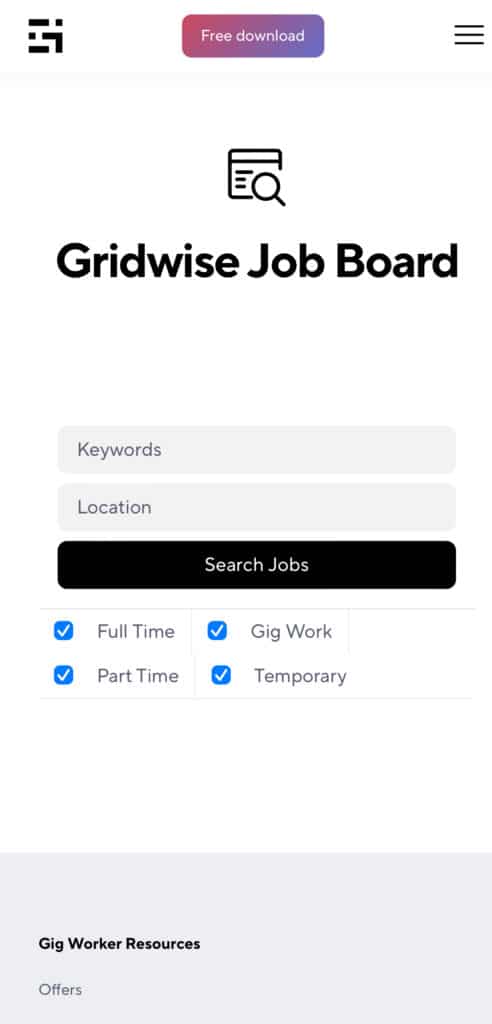
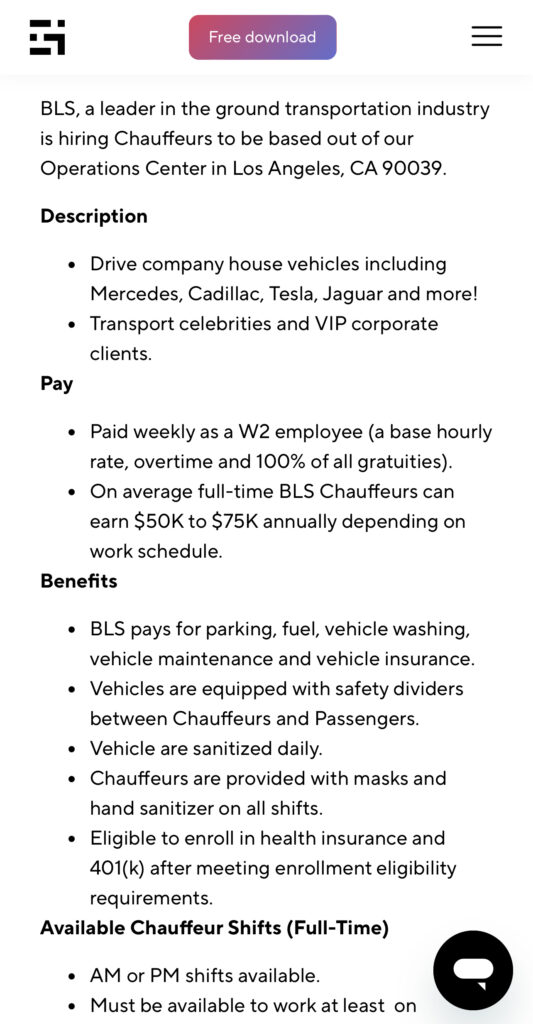
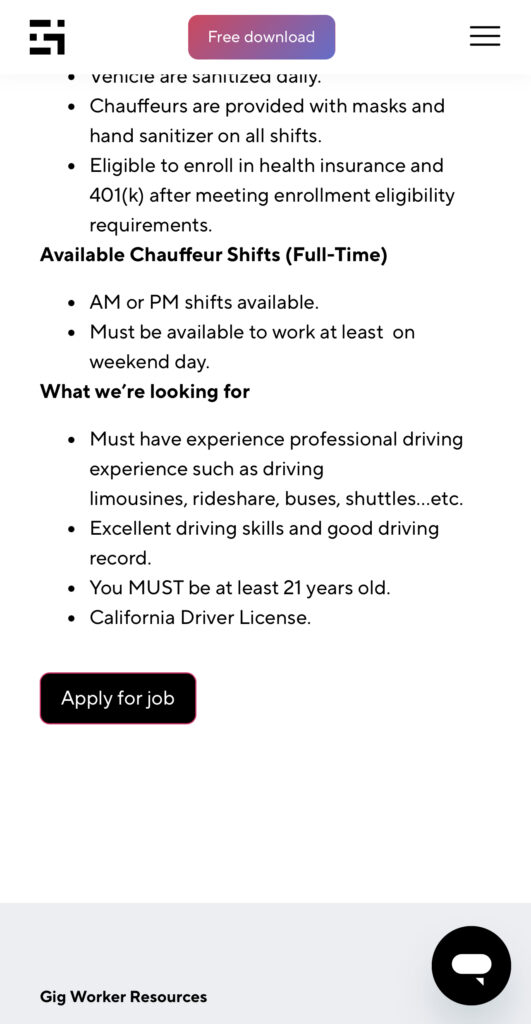
Many types of jobs are available. Adjust the search filter to see the full variety of opportunities that will let you cash in. Deliver food, set up catering, do rideshare driving, get paid for doing package delivery, and much more. You’ll find short-term gigs, long-term contracts, and part-time positions.
Perks of the Gridwise Job Board for gig workers
Gig workers who know how to make extra money will appreciate how the Gridwise Job Board lets you multiply your chances of bringing in big earnings. Here’s how:
- Increased stability. Use the Gridwise Job Board to find part-time or permanent jobs in addition to the part-time gigs you already have. Always keep a steady stream of earning opportunities flowing toward you.
- Flexibility and autonomy. Choose jobs that fit your schedule, work around other jobs and family duties, and still leave room for some fun in your life. Discover side hustles to supplement your full-time job, permanently or just for the season.
- Skill development. Find part-time work that lets you use a skill you already have, or try your hand at something new. It’s a smart way to develop a portfolio to showcase what you can do, or even to find permanent employment.
Get Gridwise and stay up to date on the Gridwise Job Board
Gig workers need plenty of information and assistance, and Gridwise is here to give it to you. Download the app and get essential features such as
- seamless earnings tracking
- mileage tracking
- expense recording, including notes
- low-cost and no-cost insurance benefits
- access to affordable medical, dental, vision, mental health, and alternative care
- professional services including legal and financial help
- deals and discounts
- weather, events, and traffic reports
- inside information on where and when to drive
More to know about gig work:

5 Best Mileage Trackers For Gig Drivers
Many drivers ask, “Do I really need a mileage tracking app?” The answer is simple: only if you want to have an accurate count of all the miles you can legally deduct from your taxable income! You might think your rideshare or delivery driving app has got you covered. After all, they do quite a good job of logging the miles you drive while you’re on a trip or delivery. But, if you want to have the best app to track mileage for Uber, Lyft, Doordash, Instacart, or the other apps you may use, you need more. Why is that?
Without a separate tracker, you’re missing the miles you drive in between pings. Did you realize that all the miles you drive, from the moment you begin your shift until it’s over (as long as you don’t drive several miles on a break to hang with your friends), are tax deductible! That means you need something besides your driving app to keep an accurate count of your travels. Read this Gridwise post to see how important it is to keep track of every deductible mile.
You won’t be surprised to hear that there’s an app for tracking miles. In fact, there are several of them. Here, we’re going to tell you about five top mileage tracking apps, and help you figure out which one is best for you.
Before we get to the list and identify the best mileage tracker app, let’s clarify what exactly a mileage tracking app is. According to G2.com’s technology glossary, mileage tracking is done for the purpose of keeping a log of mileage that is either reimbursable or tax deductible.
And yes, of course you can track your miles simply by taking readings on your odometer. But are you really prepared to account for how many miles you drove for personal reasons and subtract them from the total to get your business mileage? Even if you can remember all that and do the arithmetic, if you want an accurate reading of the miles you drive for business, and can therefore deduct, a mileage tracking app will save you a lot of trouble and prevent you from making costly errors.
Plus, as a gig driver, you have specific needs when it comes to a mileage tracker. Ideally, you’d be able to handle mileage tracking and several other functions all in one app. It can be maddening enough to deal with driving apps, particularly if you’re an avid multi-apper. You would want your mileage tracker app to help you keep account of other aspects of your business, including income, expenses, and inside information about the art of gig driving.
Not all mileage apps are equal, to be sure! Let’s look at five of the best apps to track mileage and figure out which is the best app to track mileage with Uber and Lyft, or what mileage tracker app is best for DoorDash.
1. Zoho Expense
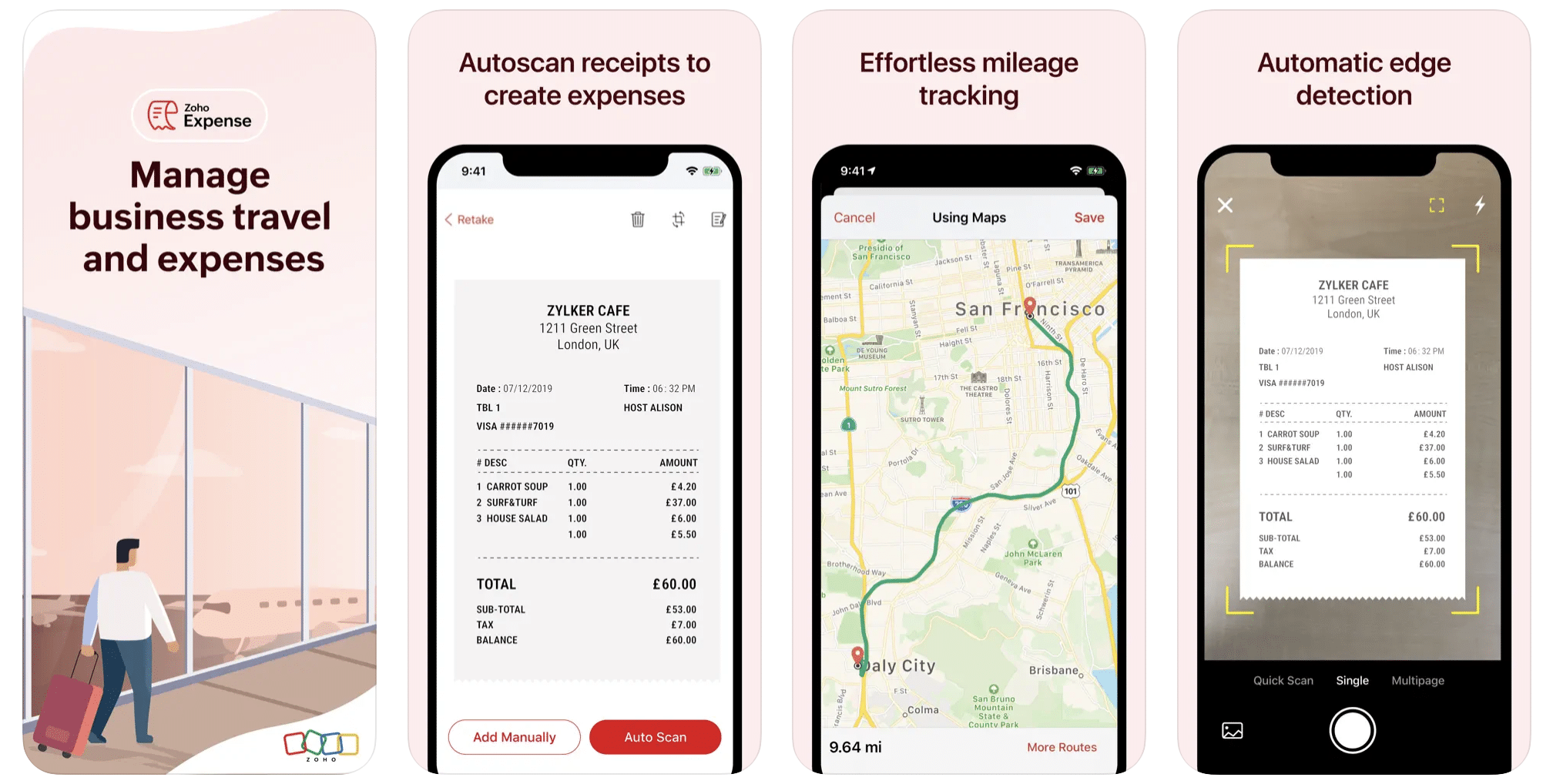
First up is Zoho Expense, which does exactly what its name says. This app is designed to allow companies to give employees a uniform way to create and submit expense reports. It can be used by individuals, including gig drivers, as well.
It includes a mileage tracker, as well as features that let you track other deductible expenses, including the ability to scan and record receipts.
Available on Android and Apple: Yes
Ratings: 4.8 stars on App Store, 4.7 stars on Google Play
Free Version: Yes
Subscription price: $3 per month, billed annually
Created specifically for gig drivers: No
2. Quickbooks Online
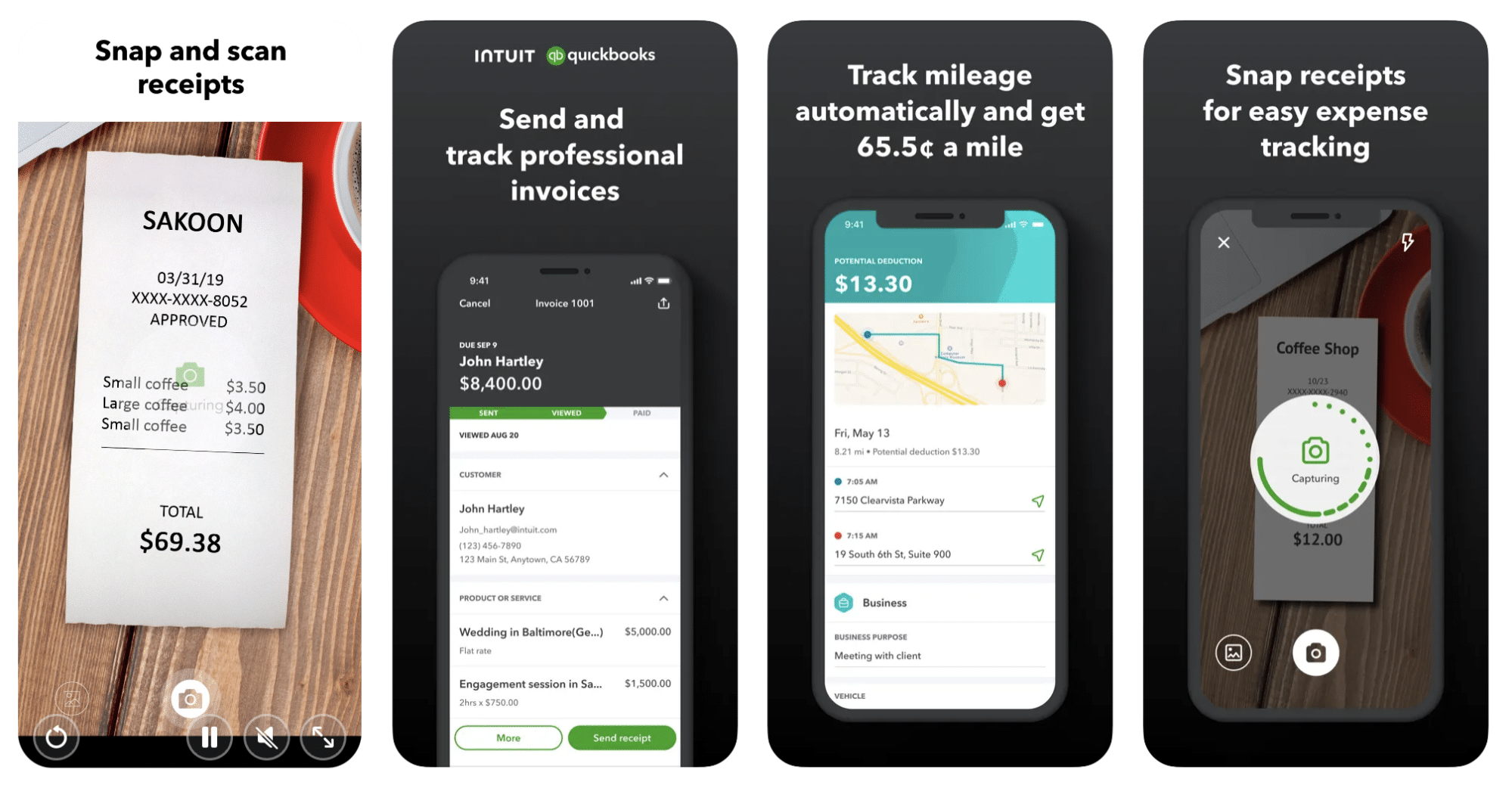
Quickbooks Online is a cloud-based app that allows you to track your mileage, earnings, and expenses. The information you enter can then be used to generate various reports that prepare you for tax time. It also allows you to create graphs that illustrate your cash flow, and includes a receipt scanner so you can instantly record deductible expenses. Quickbooks is popular, highly reliable, and designed mainly to help people keep track of their small businesses.
Available on Android and Apple: Yes
Ratings: 4.7 stars on App Store, 4.4 stars on Google Play
Free version: 30-day free trial
Subscription price: $15 per month for basic version if purchased for 3 months or more
Created specifically for gig drivers: No
Source: quickbooks.intuit.com
3. Shoeboxed
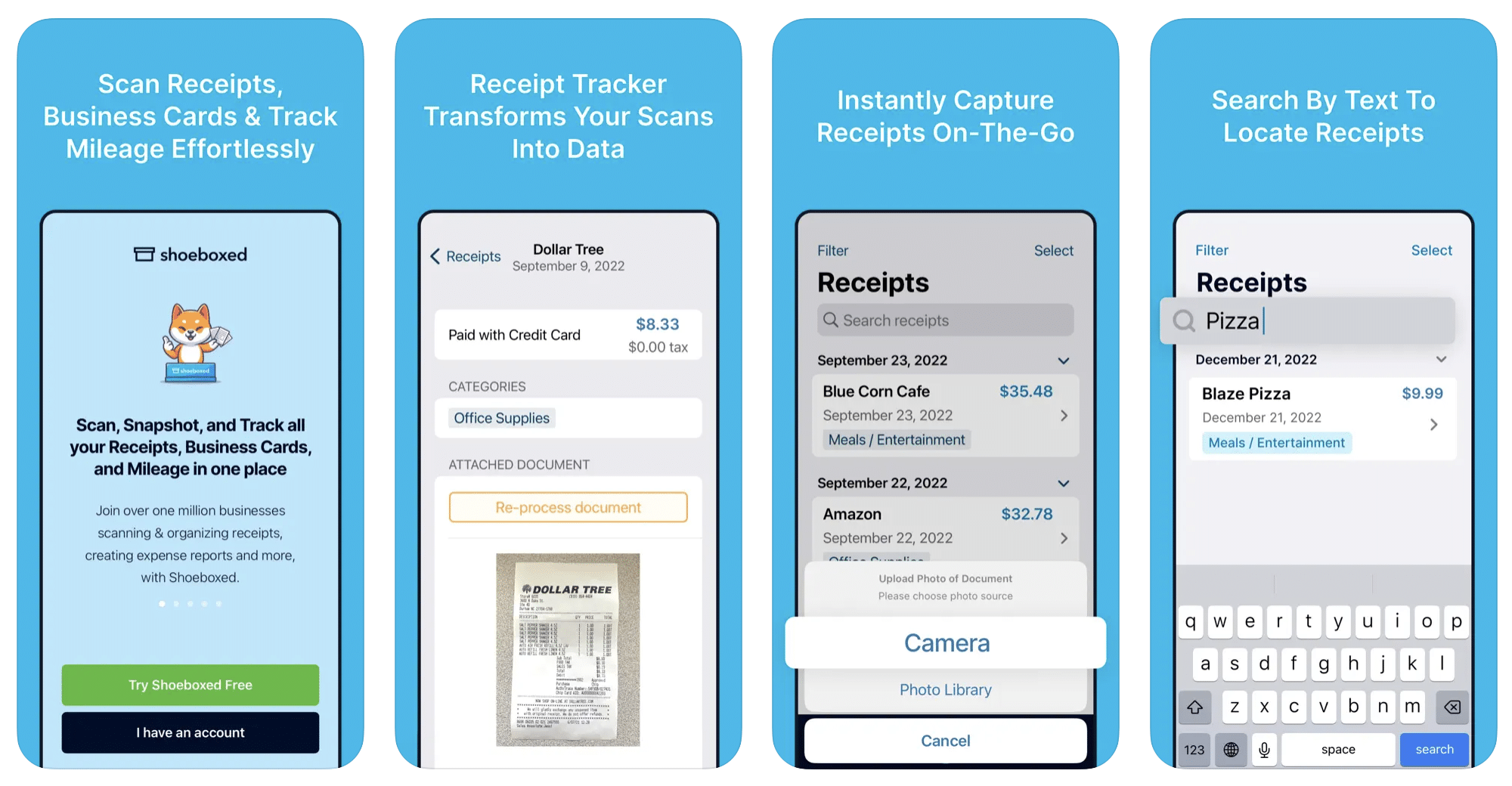
Shoeboxed started in 2007 as a service for scanning paper receipts into digital form. Now the app offers a free mileage tracker and has enabled users to scan receipts directly. It touts itself as the best mileage tracking app for DoorDash, but there are some elements missing that Dashers might like to have. While it provides features that record your expenses and prepare you for tax season, it doesn’t automatically track your earnings. The mileage tracker has a system where you can drop pins along your routes to make the tracking more precise, identifying those legs of a trip that you make for business purposes. The mileage tracker is “free” once you sign up for the basic version.
Available on Android and Apple: Yes
Ratings: 4.5 stars on App Store, 2.3 stars on Google Play
Free version: No
Subscription price: $18 per month for basic version
Created specifically for gig drivers: No
Source: blog.shoeboxed.com
4. Stride
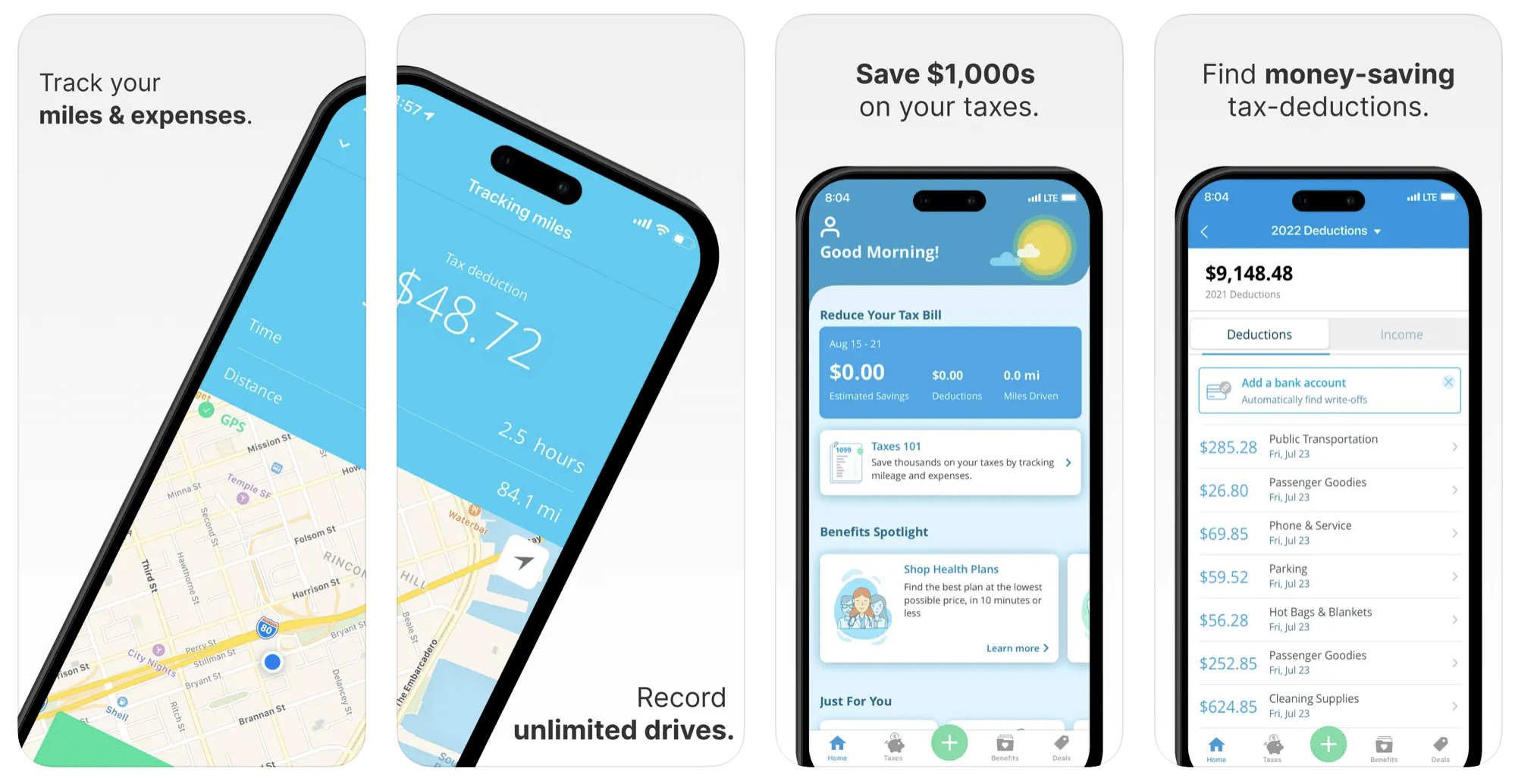
This free mileage tracker does a fair job of keeping track of the distances you rack up while gig driving, but it doesn’t automatically track earnings. It can be a big help, though, in tracking your expenses. You can link Stride to your bank account, and it will automatically scan your expenses to identify items you can potentially deduct. The app is totally free. This could make it the best free mileage tracker app, but there is a small price to pay. The app will persistently push you to consider various insurance plans that they are affiliated with. If you don’t mind that, this is a solid mileage tracker, even if it doesn’t track your earnings.
Available on Android and Apple: Yes
Ratings: 4.8 stars on App Store, 4.6 stars on Google Play
Free version: Yes
Subscription price: None. The app is free.
Created specifically for gig drivers: No
5. Gridwise
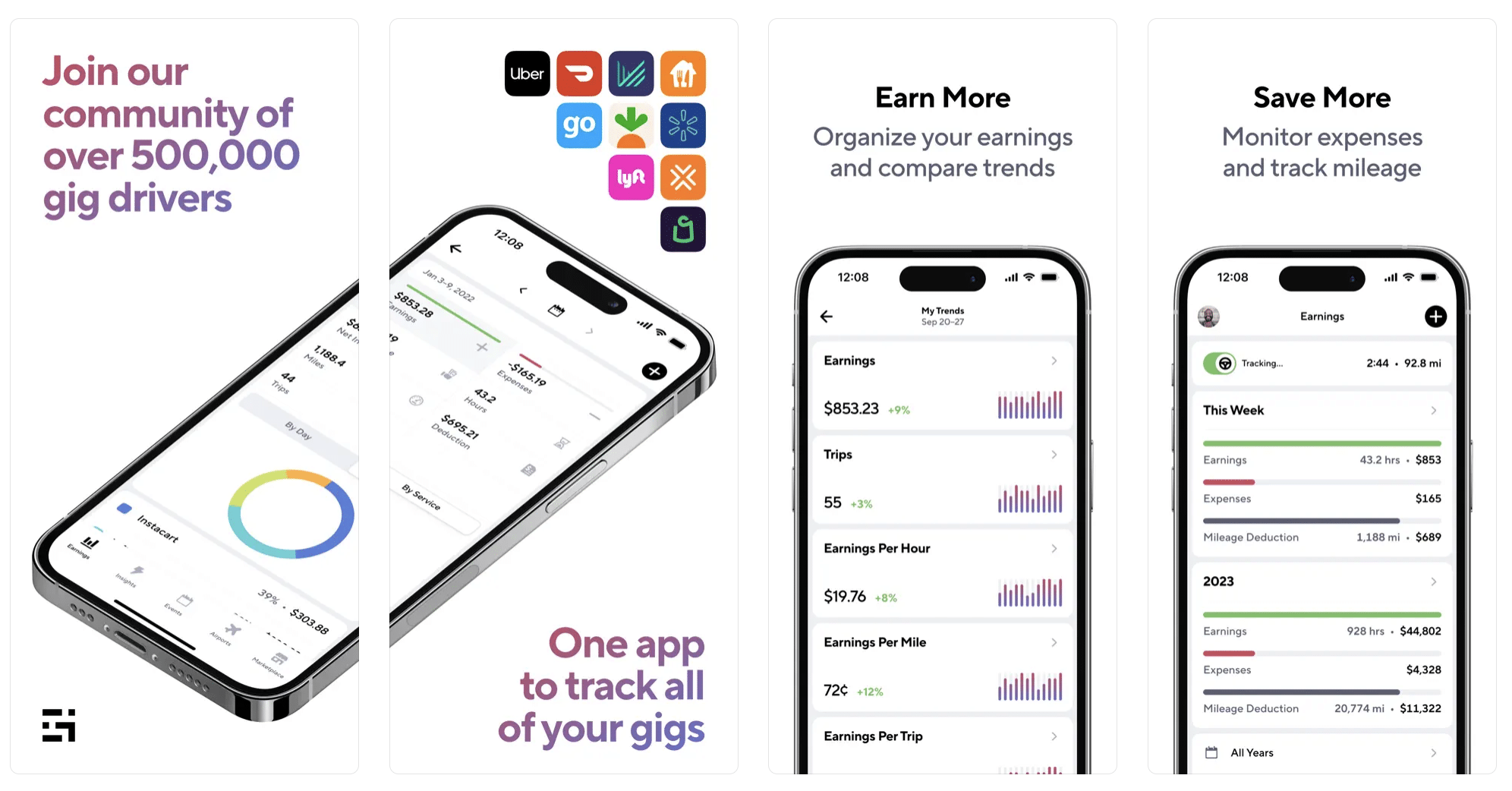
Gridwise has a free mileage tracker and free features that record your income and expenses. It gives you access to insurance and benefits, as well as insights about the best times and places to make the most money while gig driving. The Gridwise mileage tracker captures all the miles you drive while you’re on your driving shift, and it can be used if you have other trips you need to make which qualify as business travel.
Drivers love it because it is geared toward the needs of rideshare and delivery workers, providing free information about airport departures and arrivals, event start and let out times, weather, traffic, and more. The Gridwise Plus subscription adds value by providing additional insights and reports, discounts on benefits, the ability to export data in .csv format,, and more.
Available on Android and Apple: Yes
Ratings: 4.9 stars on App Store, 4.6 stars on Google Play
Free version: Yes
Subscription price: $9.95 per month for Gridwise Plus, or $95.99 per year (a $23.41 savings)
Created specifically for gig drivers: Yes!
What is the best mileage tracking app?
Now that we’ve checked them all out, we’re positive about the answer to that. Hands down, it’s Gridwise. Are we biased? You bet we are! But drivers love it too. Gridwise is the best mileage tracker app, and so much more. So many of the features are free, and the subscription to Gridwise Plus will pay for itself with additional insights to boost your earnings and deeper discounts on products and services.
Most important, Gridwise is designed specifically for gig drivers by experts who were once gig drivers themselves! Knowing what gig drivers need is a crucial step in creating an app that rideshare and delivery drivers can really use! Here are a few of the features, besides mileage tracking:
- seamless earnings tracking
- automatic, on/off toggle and manual mileage tracking
- mileage categorization
- airport, traffic, weather, and events information
- insights into where to drive and when to drive
- reports showing earnings across the platforms you use
- discounts on countless products and services for drivers
- additional resources for finding side gigs
- an informative and comprehensive blog
- affordable benefits, including insurance, medical, dental, and alternative practitioner discounts
- a community of drivers just like you
Don’t settle for just any app. Get the best mileage tracker, and so much more, from Gridwise!
Rideshare And Delivery Insurance In 2023
Too many drivers don’t find out until it’s too late that the auto insurance coverage they purchased for their vehicle doesn’t always cover damages that occur when delivery or rideshare driving. As a gig driver, you need to be aware not only of what the companies you drive for require of you, but what your average auto insurance policy will or won’t do for you in the event of an accident.
In this post, we explain the role insurance plays in your driving gig, and offer options that ensure you get all the protection you need. Here’s how we’ve lined things up:
- Why do drivers need rideshare and food delivery insurance?
- Don’t rideshare and delivery companies offer insurance?
- What exactly is rideshare insurance?
- How much is rideshare insurance?
- Where can drivers get affordable insurance?
Why do drivers need rideshare and food delivery insurance?
When you sign up with an app to drive or deliver, all you have to do is show that you carry an insurance policy on your vehicle. Theoretically, you’re good to go. But are you, really?
Start by asking, “Does being a rideshare driver affect my insurance?” In short, yes. When you put your car to work so that you can do a rideshare or delivery driving gig, the companies that insure you begin to look at the risk they’re taking in a different way. Now you’re not just driving to and from work, and here and there for social reasons. You’re going to be driving a lot, and no matter how careful you are, the extra driving time raises the probability that you will be in an accident.
Read your insurance policy carefully! If you have an average auto policy, it’s likely that there are limits to how much it will cover if you have an accident while you’re driving for rideshare or delivery. In some cases, your policy can be canceled if you have not revealed that you are using the vehicle to make money.
Don’t rideshare and delivery companies offer insurance?
It’s true that rideshare and/or delivery companies provide coverage for drivers, as well as any passengers that might be involved if you’re in an accident while you’re on the app. There are certain conditions, though, that you should know about.
Below we outline the three tiers of coverage offered by most apps, a framework borrowed from the Uber website. You need to check the insurance stipulations of all the apps you drive for to see exactly what coverage you will have in the event of an accident.
- When you go offline, or your driver app is off, you must rely on your individual insurance policy.
- When you go online and are available for rides or orders, the coverage is as follows:
- third-party liability if your personal auto insurance doesn’t apply
- $25,000 in property damage per accident
- $50,000 in bodily injury per person
- $100,000 in bodily injury per accident
- The following coverage applies when you are en route to pick up/drop off deliveries or executing a rideshare trip:
- $1,000,000 third-party liability
- contingent comprehensive and collision (excluding accidents occurring in New York State) up to the actual cash value of the vehicle, with a $2,500 deductible
While the coverage from Uber might be adequate in most cases, you should take note of the very high deductible ($2,500) involved. This can put you in a precarious financial position should you be unfortunate enough to experience an accident. It’s certainly something to consider when you weigh the pros and cons of investing in your own insurance coverage.
What are the advantages of rideshare insurance? There are more than a few, and once you learn about them, you’ll see why rideshare insurance is so important.
What is rideshare insurance?
Rideshare or food delivery car insurance is coverage over and above what your personal auto policy provides. It is known in the insurance business as an endorsement. It ensures that you will be covered in the event of an accident, even though you are using your car to make money. This article from Forbes.com gives a thorough overview of what rideshare insurance is, why you need it, and where you can find it.
Not every insurance company offers rideshare or delivery endorsements. You will have to check with your insurance company and shop around with others, so you can get an endorsement without paying unaffordable premiums.
For some gigs, especially Amazon Flex, commercial insurance is required. Most US drivers are covered by the commercial policy Amazon Flex holds. Drivers in the State of New York, however, must purchase their own commercial insurance; state law does not allow them to be covered by Amazon’s policy. Drivers overseas must also procure their own hire and reward insurance, which is the same or similar to a commercial policy.
Don’t get complacent, though, believing that working for Flex covers all your bases. You also need to have your personal auto policy, and you must tell your insurance company that you will be using your vehicle to deliver for Amazon Flex. If you don’t, just like with other driving gigs, you can wind up being charged with insurance fraud. Honesty really is the best policy, particularly when you’re working with insurance companies.
How much is rideshare insurance?
There is no straight answer to this question. Costs vary based on the state in which you live, and the particular insurance company that offers endorsements for rideshare and delivery drivers. In general, according to Nerdwallet, Mercury offers the endorsement for an extra $27 per month, and Safeco’s cost is “likely” under $10 per month. State Farm, Nerdwallet reports, charges as much as 10–20% of the premium above the basic rate.
If you can get an inexpensive policy, that is certainly to your advantage. However, it isn’t always possible to find a low cost auto policy whose underwriter is willing to add a rideshare endorsement. Often, drivers find that they have to take a more expensive policy, and then add on the cost of the endorsement.
Despite the possible expense, getting insurance for food delivery or rideshare is a wise investment. Relying on your rideshare or delivery company for extra coverage could mean you pay a deductible that exceeds what you would have paid for that extra insurance over the course of the entire year.
Accidents happen more frequently to rideshare and delivery drivers—the most obvious reason being that because they drive more, the probability of being involved in a traffic mishap is higher than for less mileage-intensive drivers. This article from Market Business News points out that delivery drivers who are under pressure to make the maximum number of trips within small time frames are particularly at risk. They are more likely to run red lights and ignore traffic signs, in hope of shortening their delivery times. Rideshare drivers, as well, may want to race from one ride to the next to maximize their earnings.
New business practices that companies have rolled out over the past year have put some delivery drivers under increased pressure. DoorDash, Gopuff, Gorilla, Joker, and other delivery services are competing for a market that demands delivery in 15 minutes or less. Read this Gridwise post to learn more about how this impacts driver safety, and the need for proper insurance coverage.
Where can drivers get affordable insurance?
When it comes to procuring auto insurance plus delivery or rideshare insurance, there’s a tremendous amount to consider. It’s important to put yourself in a position where you’re fully protected. This Gridwise post provides details about auto policies and what you need to ensure that you’re covered thoroughly.
Gridwise offers drivers the opportunity to find comprehensive and affordable auto insurance through the Gridwise Auto Insurance Marketplace, part of Gridwise Benefits.
While it’s possible to find fair deals on auto insurance with rideshare and delivery endorsements, it can still be quite costly. So now what do you do about the other kinds of insurance you might need? What if you can’t work for a while because your car is in the shop? Or what if you become disabled? Worse yet, what will your family do if you are separated from them by accidental death?
Gridwise has your back. We realize that you have to lay out a great deal of money for your gig driving business, and that as an independent contractor, you don’t receive company benefits that would cover concerns such as those just mentioned. Gridwise Benefits offers a full menu of insurance options along with medical, dental, and vision care. You can pick and choose the coverage you want, and pay very low prices for them. Gridwise has formed its own group, comprised of drivers like you, to receive maximum savings on insurance, including
- life insurance
- accidental death and disability insurance (AD&D)
- identity theft protection
- telemedicine
- dental insurance
- vision care insurance
- accident medical expense insurance
- critical illness insurance
- discounts on alternative medical treatments, chiropractic visits, and teletherapy
- a risk advisor that constantly monitors your home and personal safety
Gridwise designs programs and services specifically for gig drivers like you.
Pay less for insurance with Gridwise Benefits
The City of Seattle says ride-hail drivers earn $9.63 an hour Uber says $23.30. So who’s right
As concerns about driver pay and employment status have taken center stage, many cities and states are perplexed by a simple question: “How much do ride-hail drivers earn?”
Finding an answer should be simple.
You start by understanding how much drivers earn, then estimate how much money they spend on their driving business. From there, a few math calculations should give you a straightforward answer.
Simple enough, right?
Wrong.
As the City of Seattle is learning, estimating just how much ride-hail drivers make can be a complicated matter.
Just like cities and states across the country, the City of Seattle is investigating whether Seattle ride-hail drivers need a minimum wage standard, and if so, what that standard should be.
They turned to economists James A. Parrott, from the Center for New York City Affairs at the New School; and Michael Reich, of the University of California, Berkeley, and commissioned them to conduct a study of ride-hail wages. The study took place during the entire month of October 2019, and its goal was to determine just how much ride-hail drivers in Seattle were making.
Meanwhile, Uber and Lyft decided to conduct their own study. They hired a team from Cornell University that was led by economic historian Louis Hyman. The Cornell study was conducted during one week in October 2019, and was delivered to the City of Seattle about a week before the Parrott-Reich study was published.
As it turns out, the two studies produced vastly different results.
In their report, Parrott and Reich demonstrated that drivers were making much less than the minimum hourly wage for workers in Seattle, which is $16.39 per hour. Based on data they collected, Parrott and Reich calculated that after subtracting expenses, drivers earned approximately $9.73 per hour.
In stark contrast, the Cornell University study concluded that drivers in the Seattle market were netting $23.25 per hour — significantly more than the minimum hourly wage.
So who is correct here? And how could academic studies from two reputable institutions arrive at such different conclusions?
The disparities between these two studies boil down to data, and data-backed assumptions. In this report we will review the methodologies and findings of both studies, and do the following:
- Explain how differences in earnings data used by the two teams contributed to the vastly different results;
- Examine the differences between the two teams’ calculations of driver expenses;
- Provide a recalculation of driver earnings over the course of a few months, incorporating ground truth data obtained by Gridwise directly from drivers through our app.
Different earnings data leads to different results
One of the reasons Uber and Lyft claimed their study was the more fact-based of the two was the quality of their information.
The Cornell researchers who conducted the Uber/Lyft study used ground truth data obtained from 14,000 ride-hail drivers. The data wereharvested directly from the records of drivers operating on the Uber and Lyft platforms.
Unfortunately for Parrott and Reich, they did not have access to this ground truth data. According to media reports, they requested it, but were told by Uber and Lyft that due to reasons of confidentiality, the companies could not share the information.
With no access to ground truth data, Parrott and Reich had to rely on survey data from some 7,400 drivers in the Seattle market, and from that data they determined how much money drivers were making.
Although surveys can offer good insight, they are inherently less accurate than data obtained directly from the source. So, the survey data collected by Parrott and Reich provided an opening for Uber and Lyft to criticize the study. When it was released, Uber’s spokesperson was quick to offer a harsh, pointed critique. As a July 12, 2020 New York Times article states:
“Uber said the Parrott-Reich study “is based on incomplete data and flawed assumptions about drivers’ experiences that are unsupported by facts, evidence or reality.”
Different perspectives on driver expenses create wide variations
The two studies made very different assumptions about driver expenses, which led to radical differences in driver earnings calculations. We’ll explore these differences, and leverage our data to help shed light on what assumptions should be made.
Fuel
The Cornell and Parrott-Reich studies used a similar per-mile estimate for fuel expenses.
Cornell Study: Median price $0.089 per mile, based on the average price for gas in Seattle ($3.255) during one week in October 2019.
Parrott-Reich Study: $0.094 per mile, based on a variety of vehicles (including SUVs), an average MPG rate for cities over three years, and an average annual mileage of 35,000.
The two studies used different methodologies, but came to a similar result.
Maintenance
The Cornell and Parrott-Reich studies used a similar per-mile estimate for fuel expenses. In fact, unlike many other expenses, the Cornell study estimated per-mile maintenance expenses to be higher than the Parrott-Reich study did.
Cornell Study: $0.08 per mile, based on standards set by the American Automobile Association (AAA), using a car owned for five years averaging approximately 75,000 miles of use.
Parrott-Reich Study: $0.0646 per mile, based on actual driver surveys and standard numbers produced by Seattle area car dealers and service centers.
From this point forward, the two studies get further and further apart.
Insurance
While Parrott and Reich believe that insurance costs add up to $.07 per mile, the Cornell researchers did not include any per-mile expenses for insurance.
Cornell Study: Not included, because Seattle requires transportation network companies (TNCs) to provide it. This study maintains that supplemental insurance is “not a necessity.”
Parrott-Reich Study: $0.07 per mile, based on their driver survey.
Uber and Lyft assert that buying additional insurance is not necessary; however, many drivers do indeed purchase additional insurance for their ride-hailing businesses.
To be clear, drivers purchase outside insurance for good reason. If those who haven’t told their insurance companies about their ride-hail driving are involved in an accident, they can face stiff penalties. Drivers are also left uninsured in Periods 0 and 1 if they don’t buy additional insurance.
As flawed as survey data may be, we at Gridwise think understanding how many drivers purchase ride-hail insurance via a survey can be helpful.
We interviewed 734 ride-hail drivers and found that 40% do indeed purchase outside insurance.
This is to ensure they are protected during the periods of time when they don’t have passengers in the vehicle with them, as well as when they are driving outside the platform. Almost all insurance companies charge additional premium amounts for ride-hail drivers.
Here, it seems that having some per-mile expense for additional car insurance would be called for.
Vehicle Acquisition/Depreciation
The biggest single per-mile expense difference between the Cornell and Parrott-Reich studies is the cost of vehicle acquisition/depreciation.
While the Cornell study used a figure of just $0.02 per mile, the Parrott-Reich study used $0.23 per mile.
Cornell Study: $0.02 per mile. The researchers maintain that the ride-hail fleet does not reflect the same types of vehicles normally taken into consideration by the IRS when estimating depreciation. The vehicles most commonly used for ride-hail in Seattle tend to be less expensive, and thus, carry a lower loan or lease payment, and depreciate less. It is also assumed that the driver would have the car even if s/he were not driving for a TNC, so the expense is not due directly to driving for a TNC.
Parrott-Reich Study: $0.23 per mile. These economists used the price of acquisition rather than the price of depreciation. They acknowledge that drivers normally use up the value of a four-year car loan by driving more than they would without working for a TNC.
The key difference here is that the Cornell study assumes that drivers are likely to have their cars already, and spend most of their time driving recreationally, while the Parrott-Reich study assumes many drivers truly invest in their ride-hailing vehicle.
To get a better idea of how ride-hail drivers actually think about their vehicles, we can look to our latest Gridwise study.
We found that 47% of drivers purchased their vehicle strictly for their gig work, meaning most, if not all expenses for their vehicle should be allocated to business use, not personal use.
Our survey also found that of the time drivers are on the road, 71% of that time is spent driving for gig work. This again shows that much of the expense for their vehicle should be allocated to their business.
Cell Phone
The Cornell study does not take cell phone usage into account.
Cornell Study: This study does not take cell phone expenses into consideration when calculating driver expenses.
Parrott-Reich Study: $0.045 per mile, included because drivers require a recent vintage, large-format cell phone with an unlimited plan in order to efficiently perform their duties.
The Cornell study assumes that drivers will have the same cell phones and cell phone plans whether they were driving or not. Understanding how drivers adjust their cell phone expenses because they’re driving is difficult, but should be considered in future studies.
Vehicle Cleaning
The Cornell study does not take vehicle cleaning into account.
Cornell Study: This study does not take cleaning the driver’s car into consideration when calculating driver expenses.
Parrott-Reich Study: $0.04 per mile, included because drivers must keep their vehicles clean in order to ensure high ratings from riders.
While vehicle cleaning isn’t a huge expense, it is a real one for drivers.
While Gridwise is unable to leverage actual vehicle cleaning data for the purposes of this article, we can leverage data from a recent study. Of the 734 drivers we interviewed, more than 53% said they clean their cars every day, and another 27% clean their cars every few days.
Drivers clean their vehicles often because they understand how important having a clean vehicle is to keeping their ratings and tips high. As Ray, a driver in Boston, told Business Insider during an interview: “I want to make passengers feel good, because when they’re feeling good, I get more tips.”
Another driver, Al Castillo from New York City, is also serious about keeping his car clean. “When [passengers] see that your car is clean,” says Castillo, “they know that you know what you’re doing. When they see that, they just relax.”
Licensing Fees
The Cornell study does not take licensing fees into account..
Cornell Study: This study does not take licensing fees into consideration when calculating driver expenses.
Parrott-Reich Study: $0.16 per mile, included because of the regular and extra fees drivers must pay in Seattle.
The Parrott-Reich study lays out various vehicle expenses that only drivers would incur, including:
- A business license that is required by the City of Seattle ($110 per year)
- Washington State vehicle registration fees (estimated cost $148.25)
- TNC vehicle inspection fees ($55 per year)
The Parrott-Reich study also includes driver’s license and vehicle registration fees that drivers may incur whether they were ride-hail drivers or not.
Given that many of these fees are exclusive to ride-hail drivers, and many drivers would not have their vehicles if they were not ride-hail drivers, it seems appropriate to have some licensing fees accounted for in the per-mile expense calculation.
Health Insurance
The Cornell study does not take into account health insurance costs.
Cornell Study: This study does not take health insurance costs into consideration when calculating driver expenses.
Parrott-Reich Study: $0.1076 per mile, included because many drivers (27 percent) do not have health insurance, and an additional 37 percent have incomes low enough to qualify for Medicaid coverage. In the final report of the study, Parrott and Reich assert that drivers should be able to purchase life insurance, and the cost must be included as a driver expense.
In the City of Seattle, wages are calculated as follows:
Wages include salary, hourly pay, piece rate pay, commissions, and non-discretionary performance bonuses. Tips and employer payments toward medical benefits plans are not wages.
This definition makes it clear that Seattle’s $16.39 per hour minimum wage is to be calculated without medical benefits plans. Given this definition, it does appear that health insurance costs should be deducted as an expense as Parrott-Reich do in their study.
Independent Contractor Taxes
The Cornell study does not take into account independent contractor taxes.
Cornell Study: This study does not take independent contractor taxes into consideration when calculating driver expenses.
Parrott-Reich Study: $0.0835 per mile for payroll taxes, and $0.0112 per mile for the state business tax, included because TNCs view their drivers as independent contractors. Under this arrangement, taxes are a driver expense and must be paid, ultimately, out of driver gross earnings.
Ride-hail drivers would certainly not face independent contractor taxes if they were not drivers, so it does seem appropriate for these taxes to be included in driver expenses.
Recalculating the Parrott-Reich study using ground truth data
To address Uber’s and Lyft’s issue that the Parrott-Reich study does not use ground truth data, we’ve recalculated driver earnings using their formula and Gridwise’s ground truth data.
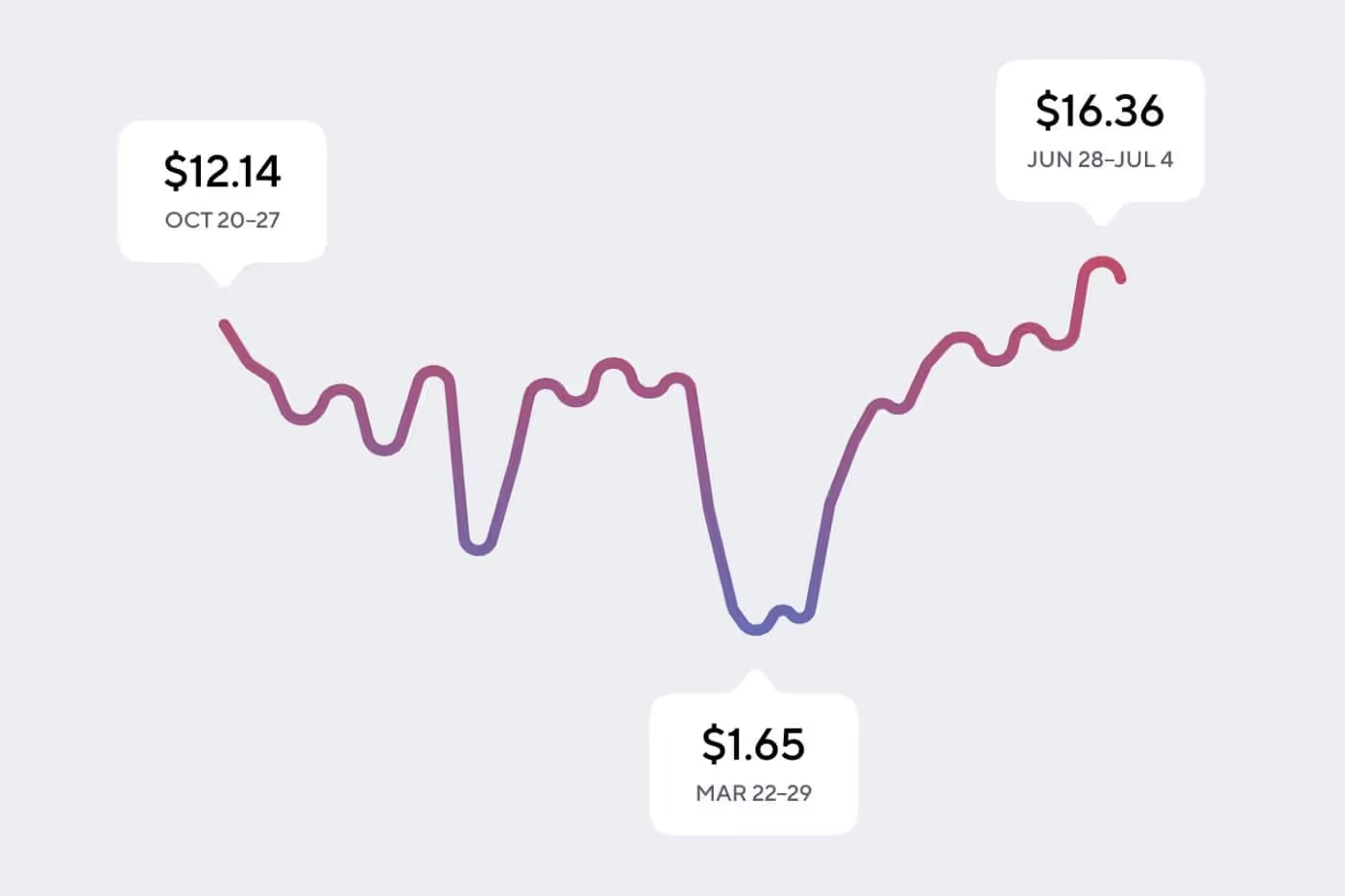
Additionally, we’ve calculated per-hour earnings not just for October 2019, but October 2019 through June 2020. This will better show the true earnings per hour, and frequent fluctuations of earnings per hour that drivers face.
See a Seattle week-by-week breakdown of ride-hail driver earnings below.
Please note that driver earnings plummeted in March 2020 because of COVID-19 — and then quickly rebounded to be even higher than pre-COVID-19 as the vast majority of drivers stopped driving even as demand somewhat rebounded.
How can cities and states gain a better understanding of ride-hail driver earnings?
Unfortunately for cities and states across the country, one-off surveys, studies, and interviews are inherently biased and can have holes easily poked in them. Without a significant amount of ground truth data across a wide timeframe, cities and states may find it difficult to convince policymakers they have the clean and accurate data.
As concerns about securing minimum hourly rates for ride-hail drivers continue to multiply, cities and states will need to be able to leverage the same ground truth data used by TNCs. Gridwise is uniquely positioned to provide ground truth data that will allow cities and states to build objective driver earnings models that stand up to scrutiny.
Gridwise is an independent data source that can be used to support labor studies related to gig-drivers, or even those related to understanding other ride-hailing and delivery insights such as utilization, origin and destination patterns, and much more.
Not only does Gridwise have insights for Uber and Lyft, but also for DoorDash, Uber Eats, Postmates, Instacart, and most other major gig service companies.
If you or your company would benefit from gaining access to ground truth ride-hailing and delivery analytics, reach out to us at data@gridwise.io.
What Uber And Lyft Drivers Need To Know About Driving Disabled Passengers
“It's not a faith in technology. It's faith in people.”—Steve Jobs
Uber and Lyft are technology companies, disseminating information to both passengers and drivers, bringing the two together thousands of times a day and allowing people to safely get to their destination. As with anything involving technology, though, things change and develop at audacious speed. Growth happens quickly, making it easy to overlook things.
One of the things that was overlooked as rideshare quickly grew was the way rideshare drivers, and the companies they worked for, addressed disabled passengers. It created a lot of bad feelings in the disabled communities.
This is where it comes back to faith in people.
The 2020 US Census Bureau reports that almost one in five Americans has a disability. There are those that rely on a wheelchair, walker, or crutches for support, but other disabilities include the sight-impaired, hearing-impaired, epileptic, depressed, and anxious (notice that not all of these disabilities are readily apparent).
It’s incumbent on drivers, as the front-line contact in the rideshare industry, to recognize these disabilities and create amazing experiences for these passengers, as they do for all their passengers.
In this blog post, we cover the following:
- Just a few bad experiences are enough.
- Lyft and Uber are proactive about how disabled passengers are treated.
- What can drivers do?
- You can make a difference.
- Gridwise can help.
Just a few bad experiences are enough
There have been several instances where the interactions between drivers for Lyft or Uber and disabled passengers were inexcusable. In 2019, Joshua Foster, a 35-year-old paraplegic from Concord, CA, called for a rideshare. Foster related what happened in an article on ABCNews.com.
"He looked at me and he just literally went, 'No-o-o-o-o-o. No. No. No. No. No. I can't do this,' " Foster recalled, shaking his head vigorously as the driver did. "I was like, 'Are you sure?'''
Foster tried to explain he didn't need help, that he could get in and out of the car himself.
"I was like, 'Hey man this is how it goes. I'm gonna hop on the seat, the wheels come off, the cushion comes off, I'll fold it and it sits right behind me 'cause, I drive my own self.'" Foster recalled saying. "He goes, 'No! Shut the door.' He just backed up and I'm like-- wow."
The Uber driver took off, leaving Foster in the driveway.
It’s enough to make any conscientious rideshare driver wince in shame and disbelief.
There have been other missteps. In July 2022, as reported by the New York Times, the justice department settled a lawsuit for more than $2 million with Uber over its alleged failure to adjust wait times for disabled passengers. Uber denied the claims in the settlement agreement, pointing to their efforts in adjusting wait times for disabled passengers and developing other programs for them.
TechCrunch reported that Lyft settled a lawsuit in 2020 involving drivers that would not accommodate passengers with folding wheelchairs. There have also been other legal actions against both companies.
Lyft and Uber are proactive about how disabled passengers are treated
The rideshare companies understand that in many cases drivers encounter situations for which they have not been prepared. It is difficult to enforce policies for hundreds of thousands of gig workers.
In the past few years, both companies have developed programs, including videos and other materials, for drivers who encounter disabled passengers.
They have also established policies. A Lyft or Uber driver refusing a disabled passenger can, in some cases, be deactivated from the platform.
Let’s take a closer look at the programs from Lyft and Uber for handicapped passengers.
Lyft
Policies have been developed by Lyft for handicapped passengers. These include
Foldable wheelchairs. Lyft requires drivers to transport passengers who use foldable mobility devices. They also inform drivers on their website that the law requires drivers to transport these passengers. Watch Lyft’s videos for how to fold these wheelchairs.
If you as a driver encounter a passenger in a wheelchair and you are not quite sure how to fold it, don’t hesitate to ask. This is a question a wheelchair-bound person regularly encounters.
Service animals. Lyft also has a video on service animals.
Wheelchair-accessible vehicles. Lyft has a wheelchair-accessible vehicle (WAV) program. Riders can register on the app. When they call for a ride, the options available (Lyft, Lyft XL, Lyft Black, etc.) to them also include Lyft ACCESS, which summons a wheelchair car. Lyft operates the program in nine US cities: Boston, Chicago, Dallas, Los Angeles, New York City, Philadelphia, Phoenix, Portland, and San Francisco. The program accepts both regular wheelchairs and motorized ones. No word if Lyft plans to roll out the program in additional cities.
According to a Lyft spokesperson, “Lyft estimates that over 3 million riders with a disability use the Lyft platform, eighty-two percent of riders with a disability report that Lyft has increased their independence, and 94% report that Lyft has increased their access to transportation.”
The spokesperson also states that those drivers who deny or otherwise discriminate against rides can be removed from the Lyft platform.
Lyft Assisted. Last year Lyft launched Lyft Assisted, a program that helps passengers with health challenges get to routine medical appointments. Lyft Assisted rides resulted in about 20% fewer no-shows than standard concierge healthcare ride services.
Uber
Wheelchair-accessible vehicles. Uber has a similar program to Lyft, also called WAV, which operates in eleven test cities, including Austin, Boston, Chicago, Houston, Los Angeles, New York, Philadelphia, Phoenix, Portland,San Francisco, and Washington, DC. Like Lyft, Uber’s WAV vehicles can accommodate both regular and motorized wheelchairs. Rates for the Uber WAV are similar to UberX.
Driver outreach. Uber’s website advises drivers that they must do everything possible to help transport disabled passengers, that it is both Uber policy and federal law.
Partnerships
To ensure their efforts answer the needs of the disabled community, both Uber and Lyft have partnered with the Open Doors Organization, a nonprofit based in Chicago that addresses accessibility issues for disabled people.
What can drivers do?
If you drive for any length of time, you'll probably get a rideshare request from a disabled passenger, specifically someone in a wheelchair. Let’s look at some guidelines to keep in mind.
- Pull as close to the curb or the person’s location as possible
This will make things easier for both you and your passenger. Disabled people are not purposely trying to make life difficult for rideshare drivers. Barriers, such as broken pavement, cannot be crossed.
Greet them as you would any other passenger
Most disabled people, especially those in wheelchairs, prefer to be treated the same as anyone else. That’s the best way to start.
- Ask the passenger for guidance
No one expects you to know everything. Chances are the disabled passenger has used rideshare before. They can help you through the process. Many disabled people can transfer themselves into your car. Most of them, however, need you to collapse or break down the wheelchair and put it in your trunk. If you ask, they can talk you through the process.
Expect that you will have to reverse the process when you arrive at their destination.
- Talk to the disabled person
Address the disabled person, even if they have a companion. No one wants to be ignored. Depending on the disability, communication might be difficult. Remember that a smile, a gesture, and a warm hello can go a long way. This is your opportunity to be awesome.
- Keep space in your trunk for a folded wheelchair
Given all the things a rideshare driver needs onboard in case of emergency (first aid kit, emergency road kit, etc.), there is often little trunk room left, but you always have space for suitcases for airport runs, so there should be enough room for a wheelchair.
- Keep in mind that not all disabilities are visible
Many people suffer from debilitating conditions such as depression, anxiety, or epilepsy—none of which may be readily apparent. And oftentimes these individuals do not communicate their disability. Be sensitive to this. Occasionally you may get a passenger that requests no communication. For some disabled people, getting through the day is a trying experience. They might need to take advantage of any chance to sit back and relax. Look for disabled bracelets on passengers that might clue you in to their disability.
- If you do have a medical emergency, call 911
Because not all disabilities are visible, and because disabled people don’t always reveal their conditions, there are occasional problems. If a passenger is having a medical issue, a seizure, or is otherwise non-responsive, don’t hesitate to call 911.
- Rideshare drivers must accommodate seeing-eye dogs and other service animals
These are well-trained animals that will usually sit or lay quietly on your car’s floorboard. Not allowing one in your vehicle is a violation of the law as well as the terms of service for both Uber and Lyft.
- Carry a blanket in your car
You might want to create a place for a service animal to lie, making them more comfortable while protecting your car from fur. A blanket can also be used to drape over a wheelchair in your trunk or back seat, helping to prevent damage. Carry a lint brush for removing fur, too.
- Accommodate special requests
For disabled people who suffer from migraines, even the most innocuous thing in your car can pose a problem. Individuals with allergic disorders might be sensitive to your air freshener. Others cannot tolerate loud music. Be prepared, too, that a disabled person might ask that you drop them off at a special entrance at their destination.
- At all times be patient
You will occasionally get a disabled passenger who has never used a rideshare, or does not go out much because of their disability. The process is as foreign to them as it is to you. Be patient and accommodating, knowing this ride may take more time than normal.
It is important to remember that a disabled passenger’s ride with you could be their first attempt at interacting with the world since becoming disabled.
You can make a difference
When it comes to Lyft and Uber handicapped transportation, one or two positive experiences can make an enormous difference.
"We need companies to provide and require accessibility training to its drivers that includes people with disabilities,” said Carol Tyson, a government affairs liaison for the Disability Rights, Education & Defense Fund, “and for the drivers to follow all the accessibility and nondiscrimination policies. Sometimes, drivers need to pull over to the curb and be patient when people with disabilities are trying to locate the car. We need more drivers with wheelchair-accessible vehicles and drivers that do not discriminate by giving lower ratings or canceling trips for wheelchair users or people with service animals, or any other protected class."
A training video by Lyft was more to the point when it told drivers, “You’re empowering these passengers to live more independent lives in an often difficult-to-navigate, fast-paced world.”
Gridwise can help
If you purchase things like blankets or first aid kits to have for your passengers, you can write those expenses off. Gridwise will keep your gig earnings, business expenses, and miles in one place.
Whatever you do, be kind and courteous to all passengers - and have fun out there!
The Gridwise Guide To Maximum Driver Earnings
“Make more money” is often at the top many rideshare driver’s wish list. It’s easy to earn just enough cash to get by, but if you want to achieve maximum driver earnings, you need a game plan. It’s just as crucial to know how to conserve your earnings and protect yourself from catastrophic losses as to devise strategies that lead to better driver ratings and tips.
Gridwise created this guide so you can easily pick out the topics that call to you. Then, all you need to do is click through to our articles packed with information and insight that can help you make more money.
Insurance for gig drivers
You might wonder why we’d kick off a guide about making money with a topic that usually results in you doing the opposite. Insurance can be a big ticket item, but you’ll be stuck with bills you’ll never pay in a thousand years if you’re caught without coverage. We’d say that makes insurance pretty important.
- Looking for a “just the facts” kind of piece that covers insurance basics? Here you can learn what drivers need, beyond Lyft or Uber driver insurance and what coverages delivery companies offer their drivers.
- Drivers make a lot of smart insurance-type moves, but they can also be led astray. This article helps you swerve away from the insurance-related mistakes gig drivers can make.
- Treat your driving gig like what it really is—your business! This basic business advice teaches you how to get your act together and eliminate losses that can hurt your bottom line.
Better Lyft driver ratings, bigger Uber driver tips, and bonuses for delivery drivers.
Here’s where things get slick and profitable! Possible add-ons to your basic Uber Eats driver pay or Amazon Flex driver pay may not be all that obvious. Once you start digging, you’ll find there are more ways to augment your earnings than you thought. From being the best driver possible to cash in on bonuses, perks, and referrals, you need to know a fair amount.
- Whether you do rideshare, delivery, or both, getting tips is no longer something “extra” that you may or may not get. You don’t have to kiss up to every customer for a few extra bucks, but you can develop a gift for making yourself irresistibly tippable with the ideas in this article.
- Every customer has a chance to rate you, so make sure they give you the stars you deserve! You’ll find insight here on how to keep your ratings high so you can benefit from top-notch treatment from future customers and get extra perks from the company you drive for.
- Amazon Flex drivers rarely see their customers, so tipping is unusual. The extra money is made with slick moves and heartfelt hustle, as you’ll see in this article.
Lyft and Uber driver strategy, plus best delivery trips
- Every city, town, or rural area has its own flavor, culture, and distinctive “personality.” What does your location have to do with the rideshare and delivery business? A lot. You’ll see when you check out the list of top places for rideshare and delivery driving.
- The best place to drive isn’t always a city or town. Old school companies such as UPS and FedEx are updating their business models to offer gig drivers new opportunities you can discover here.
- Nothing beats data collected from real drivers when it comes to finding the best places and times to drive. And yes, it’s possible to find out where exactly, and when, drivers make the most money in your area. Gridwise shows you where the cash is lurking, with aptly named features Where to Drive and When to Drive.
- When you set goals and stick to them, getting the income you want becomes much easier. Read about 3 steps to making more money as a gig driver, and see how setting your sights on what you want makes the elusive utterly achievable.
Delivery, Lyft, and Uber driver advice: Make the most of your app
You use your gig driving app every day, but do you take advantage of all its features? If you play your cards right, you can up the ante and redefine answers to questions like “How much does Uber Eats pay per delivery?” and “How much do Lyft drivers make a week?” The trick is to know every possible way you can generate multiple income streams and keep money flowing your way.
- If you think making $1000 a week with Instacart sounds impossible, you might change your mind when you see all the ways you can expand your Instacart earning power. It’s all about devising ingenious plans for your Instacart hustle.
- A simple-seeming gig like DoorDash can turn into a cash cow, if you learn how to work it right. Picking the right orders to accept is just one pro tip you’ll find in this article about maximizing DoorDash driver pay.
- Grubhub drivers bring home more bacon than they deliver when they deploy the proper strategies. Here you’ll see how to use driver promotions, scheduling, and location to make the most out of your Grubhub gig.
- That elusive $1000 a week for rideshare driving gets much easier to achieve when you follow the right Lyft and Uber driver advice. Here’s insight into sound, professional business practices and strategies that keep costs low and earnings high. That cool grand a week can be yours in a flash!
- If you want to know how to make more money with Uber Eats, this piece dishes all the details, including how to organize your business, control expenses, get bigger tips, and generate passive income with an effective referral strategy.
Multi-apping: Double (or triple) your chances for maximum earnings as a gig driver
Ever wonder what might happen if you were to use more than one app on a given shift? Let’s say you’re in a neighborhood where Uber Eats is slow, but Lyft driving is hot. Can you switch between apps? As long as you color within the lines, so to speak, you sure can! If you don’t violate any of the rules, or do things that lower your ratings by creating confusion or delays, working more than one app is a strategy that can definitely work in your favor.
- Food delivery drivers need to look at angles for earning more, because this gig is so dependent on making the most money in the least amount of time. There are lots of options that can be mixed into a sound food delivery strategy, as shown in this post.
- If you really want to get into multi-apping, you have to think it through and work out the kinks in the system by trial and error. In all cases, you need to know what each app can do and have an idea when and where they’re going to pay off, and what rules you need to follow. Read more about the art of multi-apping and how it adds to earnings.
Cut costs and earn more in your business
Saving on expenses is a sure way to boost the total amount of your earnings. There are plenty of costs you incur as a part of doing business, but they don’t have to take huge chunks out of your pay. Get savvy about saving money, and watch your incoming cash flow rush in.
- A big cost of doing business is your fuel bill. There are many ways to avoid wasting a bunch of money on gas. It’s good for the environment, as well as for you, to keep your fuel consumption down and your costs as low as possible. Here are 13 ways you can save on gas.
- There are a lot of costs involved in getting insurance, and the biggest one shows itself when you make mistakes when getting it or not having enough coverage. Discover the mistakes drivers make with insurance, so you can avoid them.
More ways to save money as a rideshare or delivery driver
When you’re an independent contractor, no one is going to pay you when you’re not working. You have to create your own funds for the things you’d expect to get from a lot of other jobs. How do you arrange for paid sick time, retirement savings, or vacations? We know you’re disciplined and smart enough to do these things right, but here’s some extra help.
- Start with these 4 smart ways for gig drivers to handle finances. You already know that managing your money as a gig driver is different than it would be in other job situations. Find out exactly what those distinctive factors are and how you can manage them to your best advantage.
- Vacation pay? Are you kidding? Your gig company might not have a plan to send you away for a well-deserved break, but you can create one of your own. This piece shows you how to put together a strategy for getting the vacation time you need, with no economic pain.
- Insurance is a big cost, but saving on it is easy, especially when you learn to avoid the mistakes gig drivers make with insurance. Once you discover exactly what you need and how to get it most economically, you’ll stop losing money by paying too much or taking risks that could leave you penniless.
- One way to gather up the funds to start a savings account is to stop wasting money on gas. Sure, prices are high, but there’s no need to lose your shirt every time you visit the pump. Here are some tips for saving on gas.
Vehicle-related advice for rideshare and delivery drivers
Without your vehicle, your job would be impossible. That’s why you have to pay special attention to getting the right ride for your gig, and then take care of it the same way you expect it to take care of you. Here are some suggestions for keeping you and your car rolling, so you can continue watching your earnings pile up.
- Rule #1 when you work a rideshare or delivery driving gig is never skimp on maintenance. Do it yourself or pay a professional, but do it. Check out this maintenance schedule every gig driver should follow, and decide which approach is going to work best for you.
- Buying a new car, or one that’s “new to you,” can be overwhelming. Get sound advice and suggestions about choosing the right vehicle to fit your rideshare or delivery gig.
- If you’re sick of using your own vehicle into the ground with your driving gig, you might want to rent one that’s perfect for the job. Here’s some information that tells you the dos, don’ts, and hows to secure a rental.
Tax tips for gig drivers
One of the most important and annoying, things drivers need to do is take care of their taxes. It can be challenging to do this on your own, but it gets easier when you use tax tips that apply specifically to gig drivers. From knowing what is deductible and tracking it, to finding the right kind of tax specialist to help you, there are a lot of territories to cover.
- The trick to keeping most of your money at tax time is knowing how much you can deduct for your business expenses. This piece fills you in on the tax write-offs all gig drivers should know.
- Your tax return should always be honest, legal, and complete. This guide to current tax changes will help you prepare for compiling your return, as will this feature that contains updates on important deductions.
- Income tax paperwork can be overwhelming for anyone, so qualified people to assist you should be right at your fingertips. When you’re a driver, having a tax pro with insight into your business is priceless. Here’s how you can get someone to help you with your filing, and maximize your deductions too.
- A big part of any driver’s tax deductions comes from the mileage they rack up while they’re on the job. Here you’ll find the different ways to track mileage, and get suggestions for keeping accurate and complete mileage figures that you’ll need for tax time.
Gridwise features that help you save money and earn more
No guide to maximum driver earnings would be complete without listing the many features Gridwise has to offer. The app is designed to help you gain control of your business, optimize your time on the road, and benefit from deals and discounts geared toward drivers. Here’s a list of features and links to articles that describe the many reasons why every smart gig driver needs the Gridwise app.
- Earnings tracking: Sync your driving apps to Gridwise and track your earnings, compare results, and keep records of your income.
- Mileage tracking: Use the best Uber and Lyft mileage tracker there is. Gridwise gives you the exact figures for all the apps you use.
- Driving strategy: Gridwise’s features Where to Drive and When to Drive point you to the places and times you can make the most money with the least effort.
- Gridwise benefits: Insurance, affordable health care, and discounts on car maintenance, phones, phone plans, banking, legal help, and more come as part of being a member of the Gridwise community.
- Driver information: Part of achieving maximum driver earnings is knowing what’s going on around you. Gridwise lists area events and airport activity, and alerts you to traffic issues, weather, and start and end times of games and concerts.
If you want to achieve maximum driver earnings, you can’t afford to run your driving gig without this amazing app!
Download Gridwise today!

What If You Forget To Track Your Miles On A Shift?
* Gridwise does not provide tax, legal, or accounting advice. This material has been prepared for information purposes only, and is not intended to provide, and should not be relied on for tax, legal, or accounting advice. You should consult your own tax, legal, and accounting advisors before filing your return.
It’s easy to make mistakes. And, if you’re new at rideshare or delivery driving, it’s really easy to miss out on some things all drivers need to know. As a driver, tracking mileage is super important. Why? Well, because as a gig driver, you are entitled to deduct the cost of your vehicle’s wear and tear —which is based on your mileage—from your taxable income.
This can result in huge savings on your tax bill. This Gridwise post gives you an idea of some of the numbers involved and how the IRS mileage rates compare from one year to the next. With the possibility of deducting 58.5 cents per mile for the first six months of 2022, and 62.5 cents per mile for the last six months of the year, you can see how tracking miles for taxes is a smart thing to do.
Even as a rookie driver, you have most likely racked up a whole lot of miles over the year. Obviously, from now on, you’re going to want to be meticulous about keeping a mileage log for taxes that accounts for each and every mile you drive in support of your gig. There are different ways of doing that, as this Gridwise article shows, and you’ll want to put them into practice for 2023. What can you do right now if, say, you forgot to log miles for Instacart or neglected to keep mileage records for your Shipt gig?
Recreating mileage logs the IRS will accept
If you find yourself asking “What if I didn’t keep track of my mileage?” the first thing to do is a “don’t.” Under no circumstances should you panic. While it’s true that you might have missed some of the miles you could have used to add to your deductions, you will still get a chance to create a mileage log for taxes.
You’ll have to come up with a reasonable and verifiable mileage estimate, of course. For instance, it wouldn’t be acceptable to use your total mileage for the year, because you’ve most likely used your vehicle for personal as well as business-related purposes. Mileage accrued for personal purposes is not tax deductible
Still, there are some ways to backtrack and put together mileage records that are good enough to please even the seemingly unforgiving IRS. They require you to bear the burden of proof and back up any claims you make about mileage used for business. The IRS statement on this policy can be found in this article. You will need to make a statement that is as truthful as it is accurate, so be very virtuous here!
The task of recapturing Uber, Lyft, or DoorDash mileage taxes drivers, but it can be done. You can start by going to the apps you drive for. In almost every case, they will have recorded the miles you clocked while you were rideshare driving and/or delivering. This is a good start, but it isn’t going to cover everything.
You’ll be missing the miles you drove in between your trips, as in leaving your car’s home base and making your way to where you get business, and driving home from a far flung food or passenger drop off. How can you recover your records of these miles? Here are some suggestions:
- Start with the mileage listed on the tax statement provided by your driving or delivery app.
- Take one month’s worth of trips, and calculate the mileage between trips (hint: access your trip logs in the apps you use). Then multiply by 12, or as many months as you drove for the year.
- In a similar way, calculate the mileage you accumulated driving to and from the places where you began working during an average month, and multiply by the appropriate number of months.
- Add on any trips you may have taken that were directly relevant to your rideshare or delivery work. These might include driving to the car wash or detailers, traveling to shop for equipment or supplies, or returning a cell phone or hat one of your passengers left behind.
- Describe how you put together your calculations and how they fulfill the burden of proof.
This article from Keeper spells out how to recapture your mileage records in additional detail.
Avoid rookie mistakes: Track each and every deductible mile
So you missed some deductible miles this year, and now you have to do a whole bunch of work to figure out how to track miles for taxes. Get on top of tracking your miles ASAP with Gridwise's top rated mileage tracker.
When you download the Gridwise app, you’ll see how it
- tracks your mileage automatically. All you need to do is log in at the beginning of your shift and log off when you’re done driving and delivering for the day.Let Gridwise log miles. The app captures every mile you travel on your trips and all the mileage you rack up in between.
- takes the pressure off. You won’t even have to think about looking through all your trips, estimating the miles you drove in between, and performing annoying calculations. Gridwise takes the stress out of your mileage tracking tasks.
- lets you keep more of your money. When you are able to track each and every mile eligible for deduction, you reduce your taxable income and hold onto as much of your earnings as possible.
- provides tons of features, offers, and support. Gridwise has been designed by drivers for drivers. Take advantage of income-boosting driving aids, special deals and discounts for drivers, and important information such as airport activity, traffic alerts, and weather reports.
Maximize your mileage deduction with Gridwise

CA Court Rules Uber Lyft Drivers Are Independent Contractors
There’s more news out of California regarding the independent contractor vs. employee status of rideshare and delivery drivers, plus an expansion of a key safety feature from Uber. Read on to keep up with all the latest Uber–Lyft news, with special attention to what it means to for drivers like you.
Court rules California initiative to keep drivers as contractors
On Monday, March 13, an appeals court overturned an earlier ruling from a lower court that declared Prop 22 was illegal. That means the rideshare and delivery companies can continue their practice of using the Lyft, DoorDash, and Uber independent contractor model for operating their businesses.
Proposition 22, voted in by California voters late 2020, exempts rideshare and delivery companies from abiding by AB 5, a state law that classified California gig workers as employees. This would have forced companies to supply insurance and other benefits to independent contractors had they not pushed to get Prop 22 passed. You’ll see a more comprehensive description of Proposition 22 and its impact on drivers in this Gridwise post.
Proposition 22 was challenged by the State, and in August 2021 the California Superior Court ruled it to be unconstitutional. This Gridwise post details that ruling. The rideshare and delivery companies appealed, and this most recent ruling went in favor of the independent driver status.
California Uber law doesn’t apply to all drivers, of course. Nonetheless, what happens with this back and forth between California State lawmakers and the companies gig workers use to earn their living can influence what happens in other states. Many gig workers believe there are positive points to being classified as employees, but just as many drivers have stated that they prefer the flexibility of working as independent contractors.
Fortunately for gig drivers, it’s possible to obtain insurance and benefits through other avenues that cater to the needs of independent contractors. Gridwise offers affordable and comprehensive options for drivers with Gridwise Benefits.
With this new decision from the appeals court, drivers will still be classified as contractors. That could change, should the State and/or the SEIU (Service Employees International Union) take the case to the California Supreme Court and win there. Stay up to date on the latest driver news by checking Gridwise's blog!
10 Business Tips For Rideshare And Delivery Drivers
When you signed up to become a rideshare driver, there were things you didn’t consider. Oh sure, you thought to yourself, I’m now a gig driver. What you probably didn’t realize is that you are now also self-employed. You’re running your own company. As the boss, there are some things which you need to pay attention to.
That you’re reading this blog post means you’re thinking ahead. Your job is not just about driving someone from point A to point B or delivering food. In this post, we bring you the top financial tips for working in the gig economy. These bits of wisdom make you a smarter businessperson.
We cover the following topics:
- Keep up on what’s happening in your selected gig.
- Always be evaluating.
- Set up a schedule.
- Track business expenses.
- Set up bookkeeping and get tax help.
- Protect yourself with insurance, or set up an LLC.
- Save for retirement.
- Prepare for the unknown.
- Always look behind and always look ahead.
- Use tools to drive smarter
Know the world is constantly changing
We see some of these changes coming, like the gradual transition to electric cars. There are others we don’t see, like in March of 2020 when the pandemic hit and the whole world screeched to a stop.
But you can train yourself to be prepared for the obvious, as well as the not-so-obvious.
1. Keep up on what’s happening in your selected gig
There are numerous blogs and YouTube channels devoted to gig driving. What are the latest developments? Are the rideshare companies releasing new incentive programs? What about the cost of fuel? How do you develop a driving strategy? Believe it or not, it isn’t all willy-nilly out there. The more you know about your business (remember, you are self-employed), the more profitable you can be.
Check out Airport Pickups: Rules for Uber and Lyft Drivers, or 13 Tricks to Earn More as an Amazon Flex Driver. Another blog worth checking out is FinancialPanther.com. Creator Kevin Ha is a gig-driving enthusiast, among other things, and he writes honest reviews. Kevin is also full of money tips to thrive in the gig economy.
2. Always be evaluating
This is closely related to no.1. There are a lot of gig driving jobs, and you should at least be familiar with the opportunities. As a driver, you might get burned out on food delivery, so having a familiarity with rideshare or package delivery gives you options for something else to do. Many drivers maintain a selection of three or four gig driving apps so that if they need to make a change, it’s seamless. They are already approved to drive that app, have the necessary inspections and paperwork, and know how it works.
Check out The Art of Multi-apping: How-Tos and Strategies for Gig Drivers, or Delivering for Gopuff: What Drivers Love about Gopuff.
3. Set up a driving schedule
Part of developing a strategy for gig driving is identifying the most profitable times to be on the road. This can vary depending on your particular gig, the region you drive in, and the kind of driver you are. A flexible schedule allows you to set up time for office hours when you can look after the business of rideshare driving, which includes bookkeeping, reviewing blogs and YouTube videos, and monitoring sites like Reddit and Quora. You can also check trends through the Gridwise app and study your gig activity for patterns that might warrant a change in strategy.
“I used to drive on Thursdays during the daytime in Los Angeles,” said one driver, “but then I noticed that Thursday evening business, when I was going home, was brisk. I checked around and discovered ‘thirsty Thursdays.’ Many people don’t work on Fridays, or they start their weekend on Thursday, and no self-respecting college student ever signs up for a Friday class. After a few weeks of reviewing the numbers, I found Thursday nights were far more profitable than Thursday daytime.”
Check out 3 Steps to Making More Money as a Gig Driver: Track Your Metrics, Set Goals, and Stash the Cash! to learn more.
4. Track business expenses
Everything you purchase in furtherance of your gig driving business is tax deductible. Everything. This includes seat covers, snacks for passengers, and a flashlight for checking early morning or nighttime addresses. Become a hoarder of receipts and don’t forget mileage. Track it mercilessly. The best way to do it is with the mileage tracking feature on the Gridwise app. It is the best Lyft and Uber mileage tracker, and it works for delivery drivers, too. Constantly evaluate your expenditures and look for less expensive alternatives.
Check out 4 Smart Ways for Gig Drivers to Handle Finances.
5. Set up bookkeeping and get tax help
If your financial control consists of going online every other day to see if you have money in your checking account, then you’re headed for trouble. The key to operating any successful business is keeping track of your dollars. If you check your records and see you have a scheduled car service coming up, that can affect your decision whether you want to take the weekend off or purchase that spiffy 360-degree dashcam—or maybe put it off for a while. Keeping track of expenses and income helps prevent those problems.
Keeping track of your money also means maintaining records for taxes. If you are knowledgeable about taxes, or you catch on quickly, entertain doing it yourself, but it might be a good idea to employ a competent tax person. You can also check the Gridwise app for tax help. It is designed specifically for gig drivers.
Check out Taxes for Rideshare Drivers, and How to Set and Achieve Goals as a Rideshare or Delivery Driver. Tip no. 3 in that blog post is particularly pertinent.
6. Protect yourself with insurance, or set up an LLC
It’s a litigious world. That’s a fact, and it is often unfortunate. Astute business owners make sure they have insurance coverage that is as all-encompassing as possible, without crossing the line into unneeded expenses. Although the rideshare companies cover drivers in the case of an accident, you need to read the fine print. You are not covered all the time when you are on the app. Car insurance for gig workers is important.
Most people carry the minimum coverage limits (it differs from state to state) for automobile insurance . You should consider increasing those limits, especially if you have set aside savings for retirement, you own a home, or your name is attached to an asset of considerable size. Some people are committed to the gig economy and have several different activities underway at once. It takes discipline and commitment. If you are as committed to gig work, you might consider setting up an LLC to further protect yourself and your assets.
Check out The Complete Guide to LLC Costs in California, and What to Do If You’re in an Accident as an Uber or Lyft Driver.
7. Save for retirement
It comes quicker than you think. Somebody has told you this before, and you didn’t believe it, but we are reinforcing it. Yes, the inheritance business is very profitable, but it is difficult to break into, and the work is not steady. The key to saving for retirement is to start, regardless of how old you are, and keep at it. While you are saving for retirement, you might also consider having a separate fund in the event you get sick and another fund for planning a vacation.
Check out 3 Steps to Saving for Retirement as a Rideshare or Delivery Driver, and The Best Reasons and Ways for Drivers to Invest.
8. Prepare for the unknown
This is a big one. You don’t know what you don’t know. Three years ago, only a few people knew the word pandemic. Now everyone knows it. If you were a rideshare driver in March 2020, you know that business dried up overnight. Rental companies recalled cars. The few drivers that went out installed shields between the front and back seats. It took a lot of fun out of rideshare. But for those eager and entrepreneurial drivers, opportunities such as Instacart became very profitable. The same with Uber Eats, DoorDash, and others.
The other catastrophe that could impact you is, if for some reason, you get suspended from the app you work for. This is the best argument for multi-apping and evaluating the viability of other gig driving opportunities. You can appeal your suspension if you think it is unreasonable, but in the meantime, you want your ability to transfer to another app to be as seamless as possible.
9. Always look behind and always look ahead
Any savvy business person is looking ahead. What’s the next trend over the horizon? A lot has been made of driverless vehicles. That could devastate the rideshare business, or maybe not. You never know. In 2019 there was a teachers’ strike in the Los Angeles Unified School District. Concern grew that 30,000 out-of-work teachers would oversaturate the ranks of gig drivers. We’ll never know because the strike ended six days later. You always need to look toward diversification. Some people believe strongly in multiple streams of income. Remember, you are self-employed and many of you work multiple gigs. That makes you an entrepreneur.
Review the last year. What did you do last year as a gig driver that worked? What didn’t work? When you worked on your taxes, did you catch yourself saying, “Geez, I wish I’d kept better track of my mileage" or "I wish I'd been more organized"?
10. Use tools to drive smarter
One of the best business moves you can make is to use Gridwise. Gridwise's free app keeps gig drivers organized with its free mileage and automatic earning trackers. It also offers essential resources for gig workers, no matter what gig app you drive for!
Drivers are also earning more and improving their driving strategy by using Gridwise to see peak times and locations to do rideshare or delivery.
Being a gig driver often means you don't have time to research the best benefits available - and even if you find health insurance for 1099 workers, it can be expensive. That's why Gridwise provides drivers with a carefully curated list of affordable gig driver benefits like roadside assistance, dental and vision insurance opportunities, and - gas discounts. Rideshare and delivery drivers save up to $50/month with the Gridwise Gas program!
Don't wait to make your business more profitable.
Download Gridwise now
And have fun out there.
Rideshare And Delivery News Recap: Strikes Gas Discounts For Drivers And Driver Safety
There’s a lot happening all over the planet, and the world of rideshare is rather busy, too. In this post, Gridwise has gathered the latest news about Uber drivers, Lyft news, and announcements from Doordash, so you can find it all in one place.
Uber and Lyft strike in Pittsburgh
Concerns about rideshare companies’ take rate and driver safety aren’t anything new, but Pittsburgh drivers made Uber and Lyft news when they held a demonstration and work stoppage. It was especially noticeable because it took place during a busy weekend encompassing Valentine’s Day and the Super Bowl.
Drivers don’t like the new upfront pricing policies both companies put into place in 2022. They claim passengers are shown the full cost of the ride before accepting it, while drivers only get to see how much they might earn from it. This new policy, they say, doesn’t allow drivers to see the full price. Allegedly, when drivers asked passengers how much they were paying, it appeared the companies were taking as much as 30–70% of the customers’ fares.
The companies, however, have a different perspective. They say their take is more like 20%, and that the average Uber driver made $34 per active hour, and Lyft drivers earned around $35 per engaged hour in the Pittsburgh area during the final quarter of 2022. In any event, the striking drivers want the companies to return to full disclosure of customer fares, so they can be sure the companies aren’t taking more than what they deem to be a fair share.
Safety was the other issue the strikers are eager to talk about. Now that two drivers have been killed in the Pittsburgh area over the past few years, protesters made it clear their grievances involve more than just a Lyft or Uber pay raise. Drivers’ demands include requiring Uber and Lyft passengers to register with a name that matches their state ID, and companies being more vigilant about customer background checks.
Spokespersons for both Uber and Lyft emphasized their focus on driver safety, and cited customer audits, stronger restrictions regarding IDs, and investments in new technology as some of the measures they have taken and will be taking in order to increase driver safety. You can read more about how to stay safe while driving in this Gridwise post.
The strike briefly removed the 100 drivers who participated from the pool of available rides on that busy weekend, and drew attention to issues that concern drivers everywhere.
UPS layoffs sting drivers as 5-year contract winds down
UPS, which was among the first big delivery companies to use part-time drivers, has been laying off “hybrid” workers—those who split their hours between delivery duties and warehouse work. This comes as a 5-year contract is about to be renegotiated with the Teamsters Union, which represents the drivers.
As of yet, the union has not acknowledged that the layoffs are taking place. UPS says that the layoffs are merely a part of seasonal adjustments. With the new contract coming up, it is difficult to see how this move is not an initial negotiation ploy on the part of UPS. It, not unlike its competitors such as FedEx and Amazon, is looking at declining revenues and rising costs.
It remains to be seen how strong the Teamsters Union, which is also faced with increased costs and declining assets, will be able to push back in the upcoming contract negotiations. Workers hope to at least be able to hold onto their jobs, and possibly gain more earnings.
New safety features for DoorDash drivers could make Dashing less stressful
With a slew of messages coming in through the app at all times, delivery driving can be distracting, as many Dashers will attest. But this latest DoorDash news could make them feel much safer. The delivery industry leader has added new safety features that will reduce the number of notifications Dashers receive while driving.
Some key notifications, such as a change in the delivery address, or reassignment of orders that time out during a trip, will still come through, as will come customer messages. However, customers waiting for their food will be notified that their Dasher may not be able to respond to their request while driving, and the response to any message might be delayed.
DoorDash is also beginning to roll out a one-touch response system, whereby a Dasher could send quick messages such as “still waiting for your order to be prepared,” or “on my way now,” with one click. This way, passengers can stay informed and still allow drivers to keep both hands on the wheel and both eyes on the road.
Further improvements to the DoorDash app will allow the driver to decline an order with one tap, or simply allow the request to time out. And, for new DoorDash drivers, there’s a feature that allows them to rehearse an actual delivery, by taking an order to their own abode, before going out to do the Dasher thing for real.
DoorDash, like many other companies, already has measures in place for drivers to get emergency help with one button. The DoorDash app uses reps from ADT, who can discreetly call for police or other personnel when a driver is in an unsafe spot. The next layer of safety, driver behavior, is covered through a partnership DoorDash has with an app that measures driving stats such as speed, brake usage, and distance traveled.
Customers want their food and groceries delivered fast, but DoorDash seems to recognize how important it is that delivery drivers stay safe while they go about their delivery duties.
DoorDash and Uber Eats can now charge SF restaurants more for delivery
In another win for delivery companies in their battle with government regulators are the developments that stand out as some of the most interesting DoorDash and Uber news today. Back in 2021, the San Francisco Board of Supervisors passed a bill that put a 15% limit on the commission food delivery apps could charge restaurants. Companies viewed this as being utterly unreasonable.
A month after the law went into effect, delivery companies sued the City and County of San Francisco on the grounds that the commission cap could harm customers, and that laws of this nature violated both state and federal constitutional provisions. Faced with this litigation, the San Francisco Board of Supervisors reversed course in July 2022, putting an end to the commission cap as of January 31, 2023.
Now restaurants in the area are subject to higher commissions, but charges won’t go up across the board. Both DoorDash and Uber Eats have instituted tiered pricing systems, adjusting rates according to how large an area the restaurant seeks to serve, and whether the restaurant wants to gain access to the delivery companies’ subscription customers. The tiers are 15%, 25%, and 30%, based on those factors.
This change in the way commissions are collected in San Francisco may or may not result in a DoorDash, Grubhub, or Uber pay raise, but it does give the companies a better chance of making profits. That means there will still be companies providing opportunities to gig drivers, which is always a good thing.
DoorDash’s new effort to support Dashers is a “gas”
Gas prices have been causing way too much worry over the last several months, and DoorDash recognizes the need to come to the assistance of its drivers. Dashers can benefit from the company’s partnership with GasBuddy, which shows them the nearest place to find gas at the lowest price.
At a time when drivers struggle to avoid having the cost of fuel eat up a large chunk of earnings, this is a gesture Dashers can appreciate. DoorDash benefits because when their drivers stay loyal to them, they can provide consistent and comprehensive services to the restaurants and customers who rely on them.
If you don’t drive for DoorDash and you’re experiencing lower gas price envy, don’t get too jealous. There’s some great news for Lyft, Grubhub, Instacart, Shipt, Amazon Flex, and Uber drivers! When you drive with Gridwise, you get Gridwise Gas, which is a special partnership with GasBuddy, just like Dashers get.
With Gridwise Gas, though, you have the additional option of subscribing to Gridwise Plus and getting guaranteed savings of 50 cents off each gallon for your first 100 gallons every month! For just $9.99 per month, your Gridwise Plus membership will pay you back in gas savings to the tune of $50 a month.
No matter what companies you drive for, when you join the Gridwise community, you get great features, deals, and discounts, each and every day.
Start saving more now
Work smarter. Earn more.
Whether you drive, deliver, or pick up shifts — Gridwise helps you track earnings, mileage, and performance so you stay in control of your work. Download the app and take charge today.
